The one thing I refuse to do on Father’s Day is to spend the day at the cemetery. I know that is some people’s idea of honoring one’s family members but it is not mine. I went on Friday and paid my respects to my father (whom this blog is dedicated to) and spent time remembering some of the good times we had in past. I dropped some cut flowers from our gardens (some of which he planted) and said a small prayer. Then I left.
My idea of honoring my father and spending Father’s Day with him is to do something that we would have shared together. We were always running around somewhere and exploring something new and doing something fun. That is how I wanted to honor him. By being active and giving him a toast at Sunday dinner.
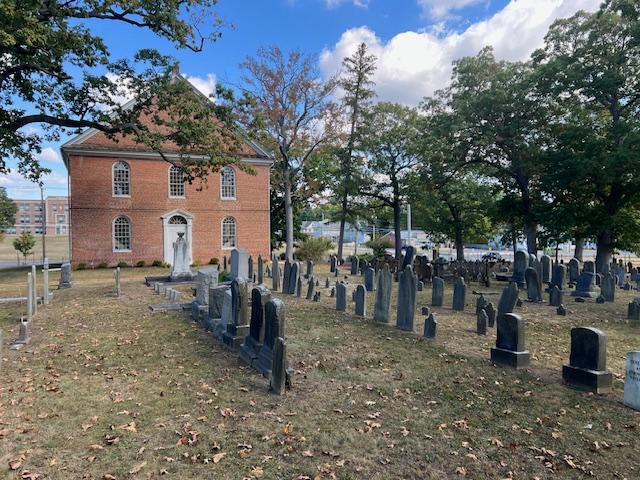
The Old Broad Street Presbyterian Church in its glory in the entrance to the historic cemetery
The Church and its historic cemetery.
When I was traveling to Salem and Cumberland Counties to visit historical sites, this was the last one on my list the first day of exploring. The Old Broad Street Presbyterian Church sits in the middle of a declining downtown in Bridgeton, NJ like a ghost of its former self. This graceful and elegant church is not used much anymore and sits like a majestic building overlooking a city that has passed it by.
The Church and its historic cemetery.
The church was built in 1792 for the growing Presbyterian congregation who was living in Bridgetown as it was called at the time. The brick walls and roof were completed but it would take another three years for the interior to be finished (Cumberland History.org).
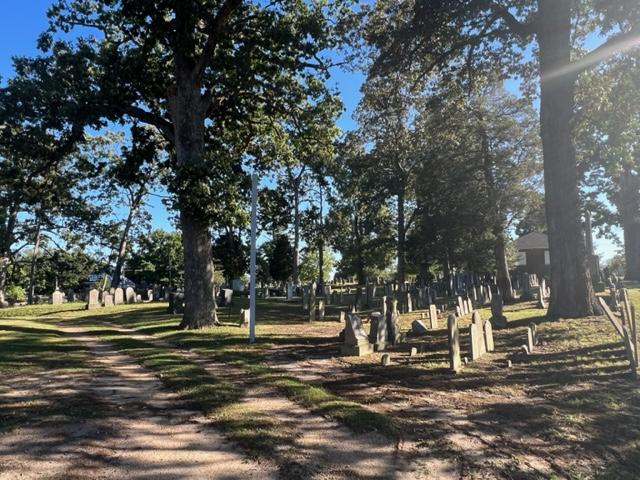
The historic family cemetery
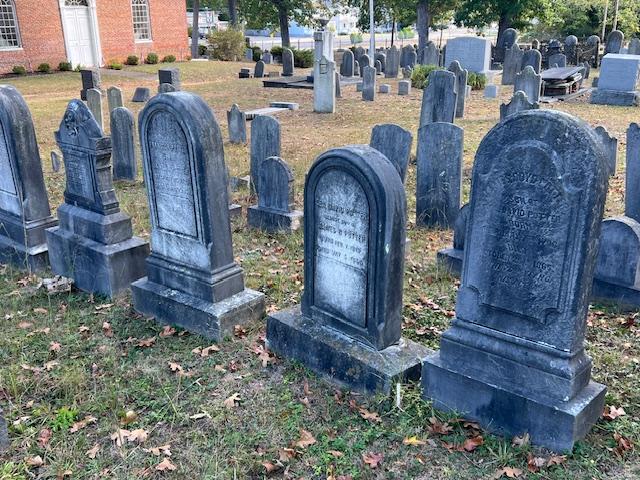
The cemetery is extremely interesting as you visit the historic tombstones and the family plots and try to figure out the connections. The biggest problem with the cemetery is that is has gotten very overgrown in parts of it. It needs a good mowing and the gravestones need to be cleaned as they are wearing away with the elements. It was hard to follow the historical listing but many famous residents and leaders of the community are buried here as well as members of the armed forces from the Revolutionary and Civil Wars and earlier.
The family plots at the cemetery
In some cases, when the families were buried together, it almost told the story of what happened within the family. I saw grave sites where the son or daughter either died in child birth or a disease or in battle and then the devastated parents followed a few years later which was a sad narrative. I saw this many times in the family plots. How many children died of diseases that today are solved by a pill.
The family plots
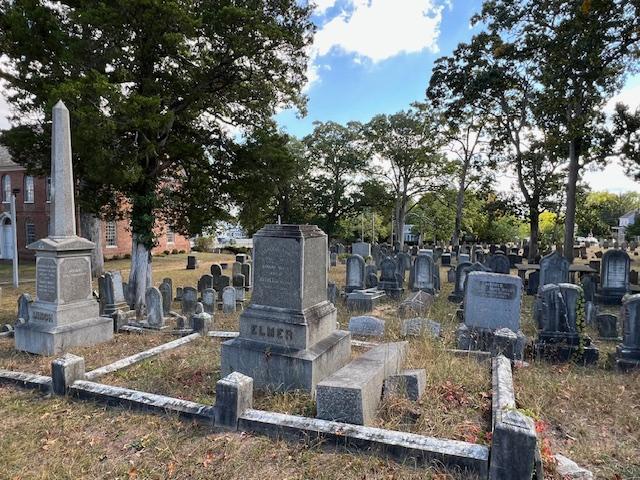
Some of the notable people buried in the cemetery are Ebenezer Elmer, who represented New Jersey in the United States House of Representatives from 1801-1807 and Jonathan Elmer, who represented New Jersey in the United States Senate from 1789-1791. Lucius Elmer, who represented New Jersey’s First congressional district from 1843-1845. Eilas Seeley, who was the Eleventh Governor of New Jersey serving in 1833. William G. Whiteley, who represented Delaware in the United States House of Representative from 1857 to 1861. Joseph Archibald Clark and Clement Waters Shoemaker, who were two of the founders of Cumberland Glass Manufacturing Company (Wiki).
The David Potter tomb
The history of the Broad Street Presbyterian Church and its cemetery:
(From Cumberland NJ Art.org)
For much of the 18th century in Bridgetown, which will eventually change its name to Bridgeton, there existed no church for Presbyterians, who were a large and growing segment of the local population. For church services, they were forced to conduct services in the Courthouse or travel to churches in Greenwich, Fairfield or Deerfield several miles away.
Family plots and crips
In 1792, about two acres of land were donated along King’s Highway, which was the main road from Bridgeton to Greenwich and ran along the south end of the church construction site. In 1800, this main route was relocated to the north and is today Broad Street (Route 49).
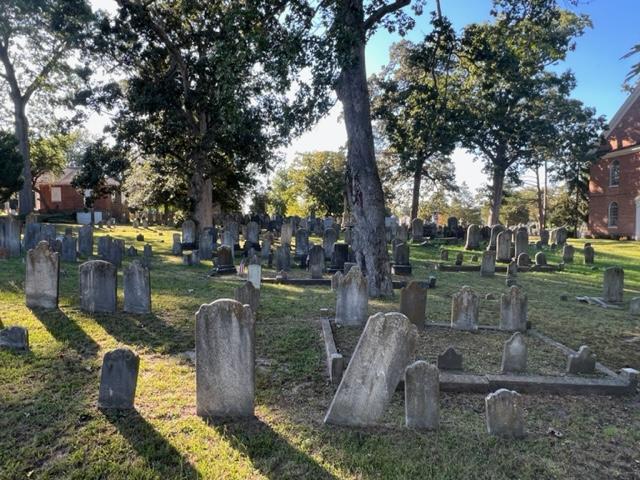
The cemetery grounds on a late summer afternoon.
The basic design of the Broad Street Presbyterian Church was set by it congregation and organizers who requested a masonry building with dimensions of at least forty by fifty feet. By December 1792, the brick walls and roof has been completed but it would take another three years for the interior to be finished.
The church in the early Fall of 2024
The design of the Broad Street Presbyterian Church is that of a meeting house, almost square in proportion. In the 17th and early 18th centuries, many American houses of worship were built in the meeting house form. This design was in contrast to the more formal churches of the period, which were more rectangular than square with an alter and/or communion table and pulpit approached by a long nave and often divided from the congregation by a railing. Broad Street Presbyterian Church has a tall pulpit, accessed by a winding stair and surrounded on three sides by pews so as many congregations as possible could attend and sit as close as possible to the preacher.
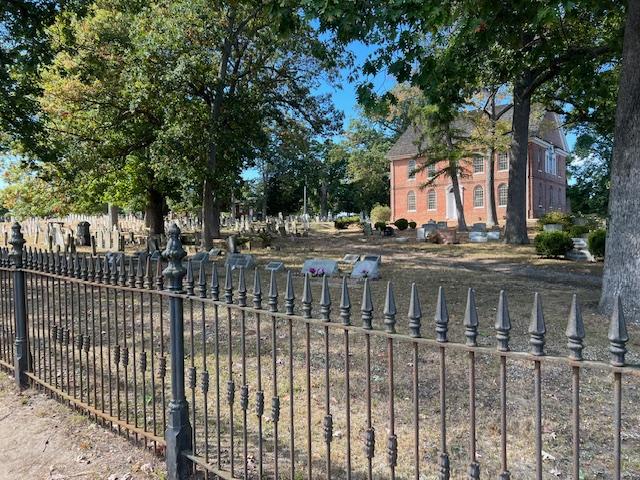
The beautifully designed church behind the fence
Above the pulpit is one of the most significant architectural features of the church, the Palladian window with its central window and semicircular arch flanked on each side by smaller windows and all unified by an entablature supported by columns. The name “Palladian” comes from the Venetian architect who originated the design, Andrea Palladio, who worked in 16th century.
The Elmer Family plot
Architects in the 17th and 18th centuries would travel from other parts of Europe to Italy to study architecture and they brought the Palladian style back to England and the American Colonies. Thomas Jefferson acquired an intense appreciation of Palladian architecture and used it extensively in his design for Monticello.
By 1835, the congregation had erected a new church but because the Broad Street church was surrounded by the cemetery, the congregation did not abandon or sell it but rather maintained it exactly as they left it, which is why today it is identified as one of the most pristine and unaltered examples of 18th century church architecture in the United States.
Today the Broad Street Presbyterian Church is used for special services and opened to the pubic by appointment. It is carefully maintained by the Presbyterian congregation of First Presbyterian Church located on Commerce Street in Bridgeton, NJ.
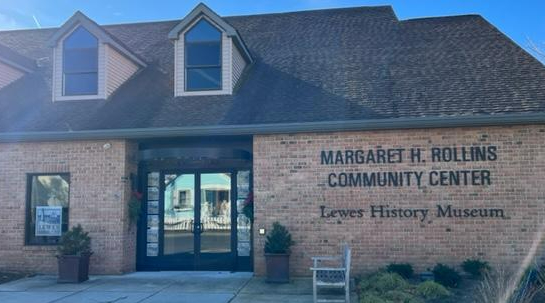
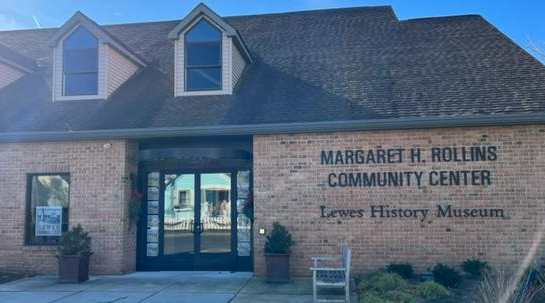
When I was visiting Rehoboth Beach, DE recently the museum I had wanted to visit in Rehoboth was closed for the day, so I remembered that there were a few museums in Lewes, DE, a small town right down the highway so I headed there and found the Lewes History Museum at 101 Adams Avenue. The museum was the old library which has since moved across the street.
The entrance to the museum
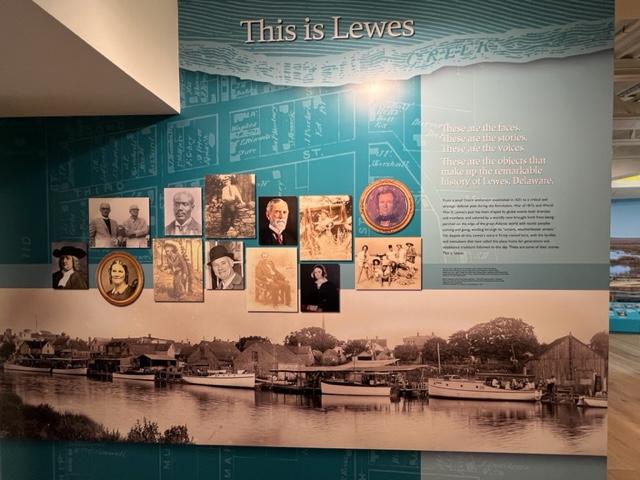
The museum is very interesting and well set up. The museum is one big room that is broken down in different sections which helps explain the history of the town. Each display moves you through the museum in a chorological order of how the town developed.
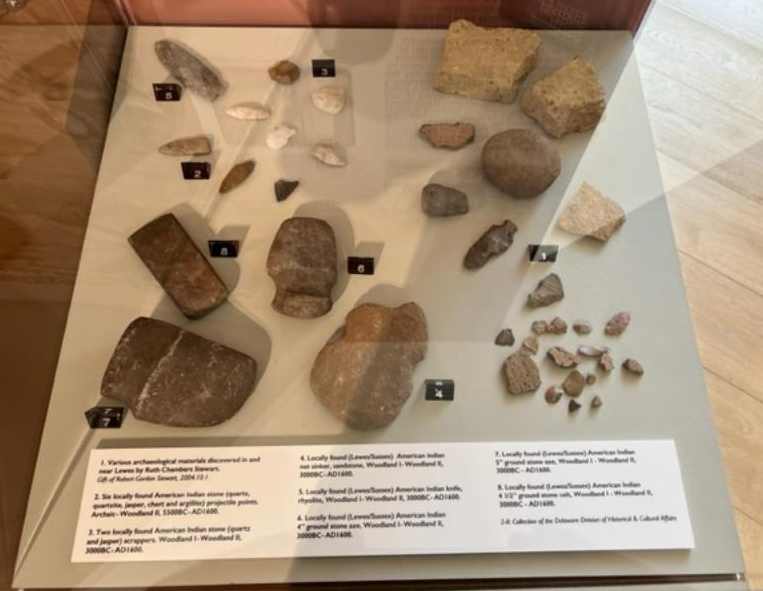
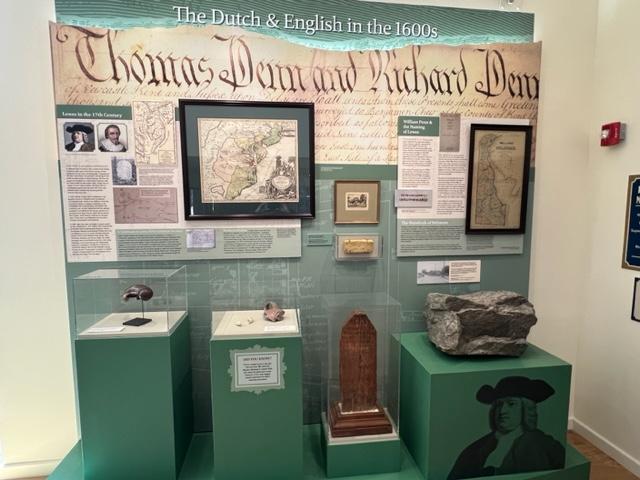
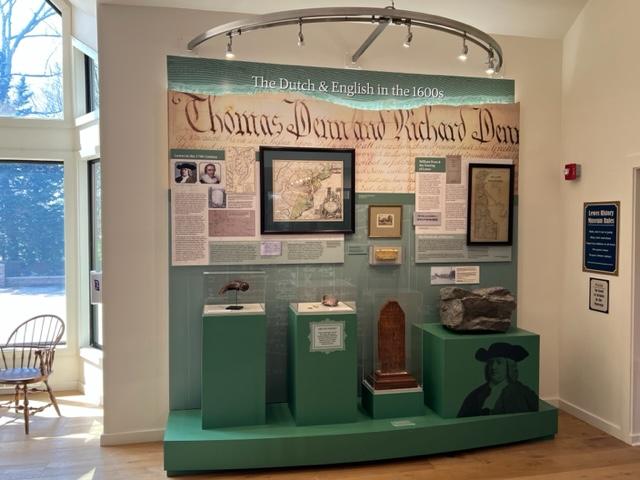
The museum starts with a display on early Native American history which then moves to the colonization of the Dutch and British in the area. There are all sorts of interesting artifacts that tell the story of the Revolutionary War by way of the residents.
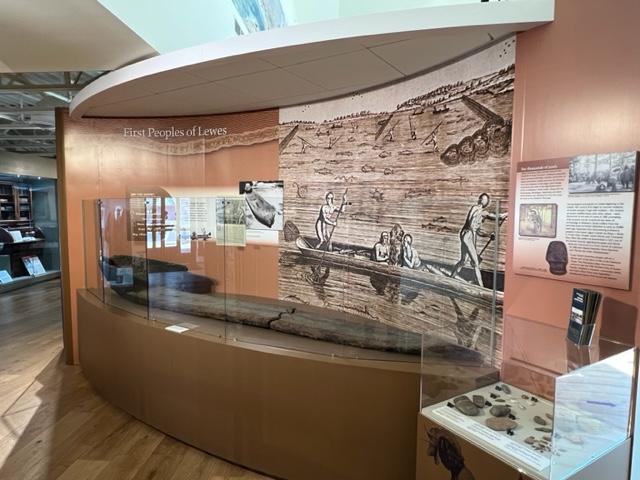
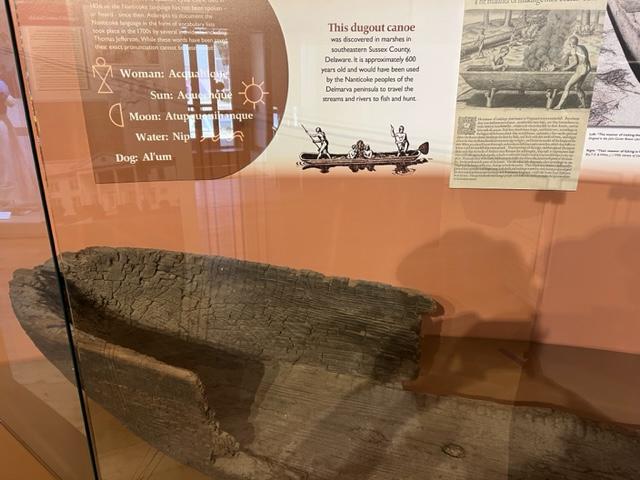
There are displays on the way homes were designed and decorated as well as the role that Lewes played during the war. There have been a lot of soldiers who had died in the war with their stories being told by the museum. There are also discussions about the interaction between the Native population with the colonists. The Native American collections featured the lives of the tribes that lived in the area of Lewes. They had found this canoe when dredging the area.
The Lewes History Museum’s displays are informative
Life in the Dutch colony was featured after the Native American display as the next group took over this area from the Native Americans. Delaware had been part of the original Dutch colony. When we were taking a tour and the guide said that technically Delaware was part of Maryland but the Dutch stood strong against the British at that time, the area stayed independent but not for long.
The Dutch Colony
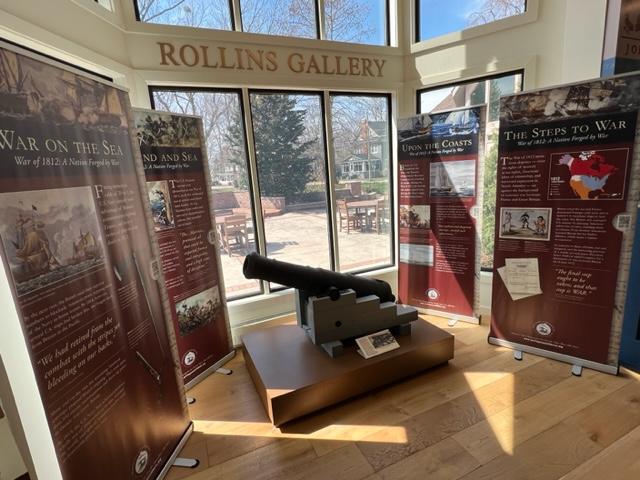
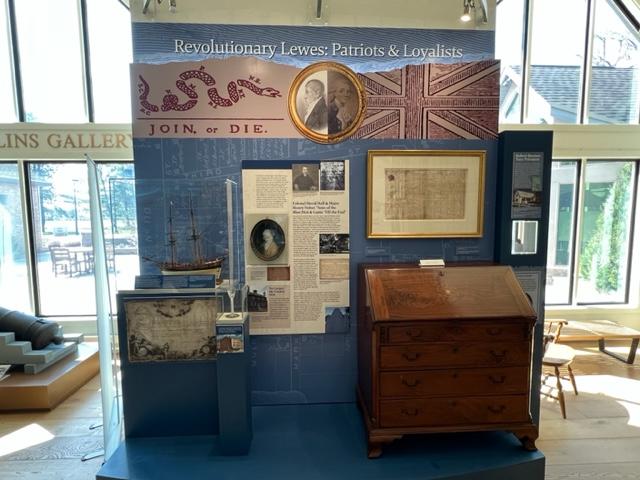
The Revolutionary War came to Delaware but it never saw the fighting that the other colonies saw. Still the state had to be on guard at all times and there were British War ships off the coast of Lewes that did do some damage.
Revolutionary War display
The displays held some interesting artifacts including a ‘toasting glass’ from the evening in Fraunces Tavern where George Washington said farewell to his troops. The docent said that he had kept the glass all those years and it was passed down from generation to generation until it made its way to the museum as a donation.
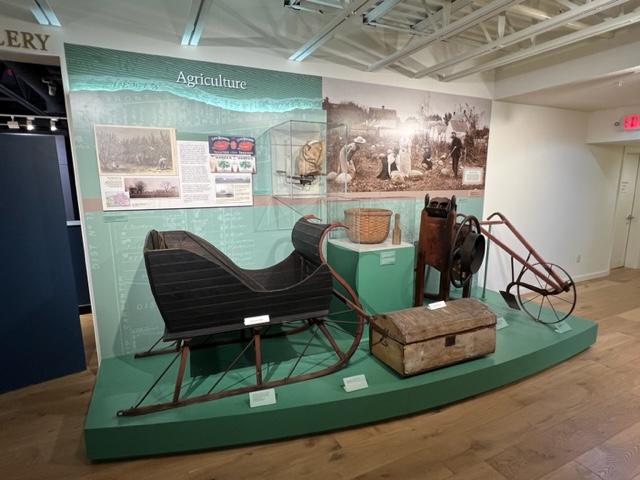
The Farming and Dairy industries played a role in Delaware’s history but because of the type of soil that Lewes had it was not meant for many crops. Wheat, some vegetables and the dairy industry played a role in the business of Lewes.
The Dairy and Agriculture industries of Lewes
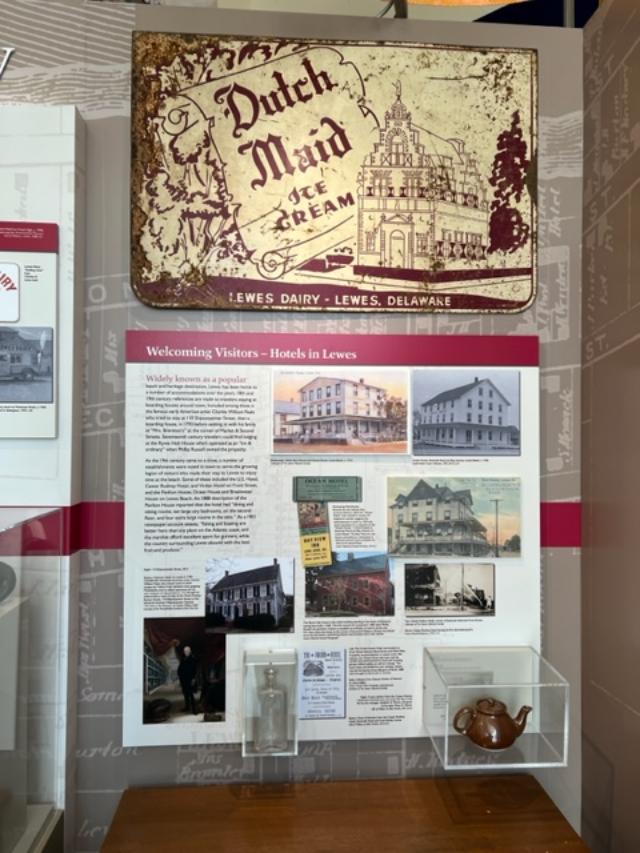
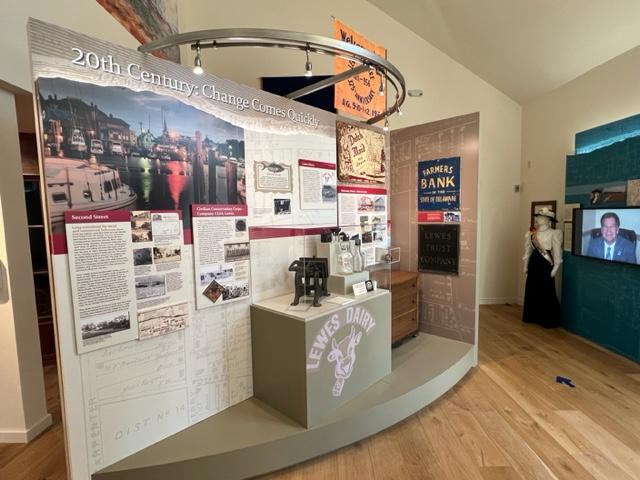
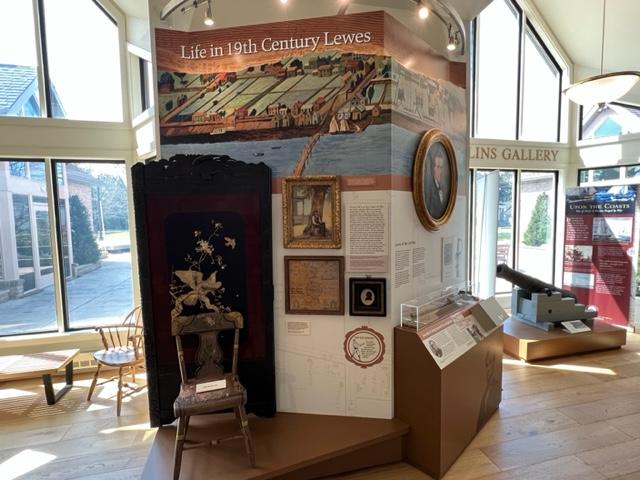
There is a section on the development of businesses and Lewes as a resort town. The section on Lewes developing as a resort town was interesting with the advent of ocean swimming, boating and beach recreation. There is also a section on 19th and 20th century business in Lewes that kept up with the times.
20th Century Business
19th Century Business
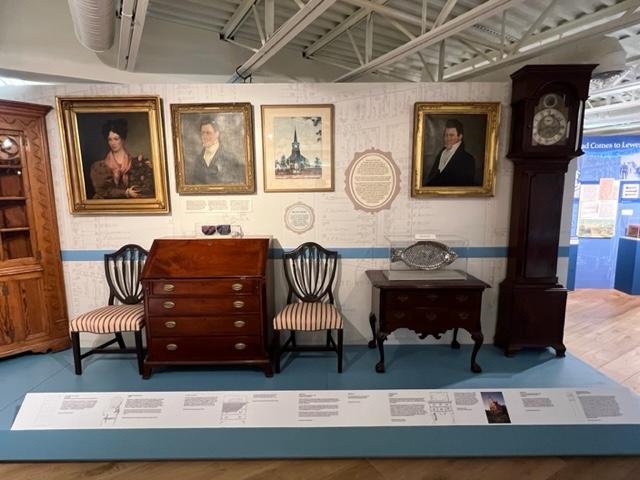
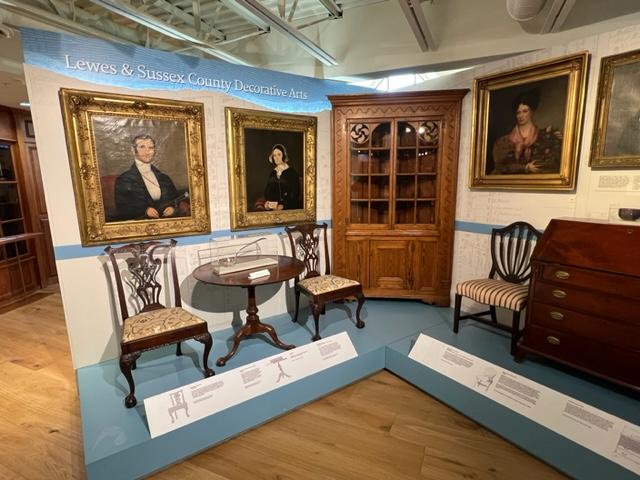
There was an interesting display on Victorian furniture and decorating for the home. The decorative arts section showed how Victorian families set up their homes and how status symbols like fine furniture and family portraits played an important role in society.
Display on Decorative Arts of the Home
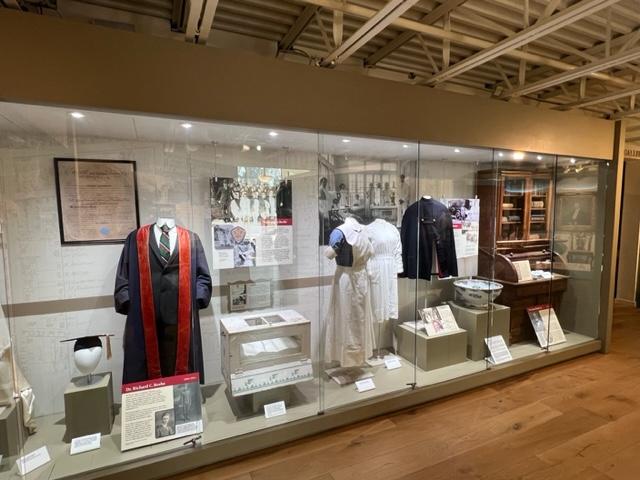
There was a detailed display on the Beebe family and the growth of their well-known hospital. The family started with three beds in a home to the giant hospital that it is today. You can read about the family members contributions both to the hospital and the community.
The history of the Beebe Hospital Family and the growth of the hospital
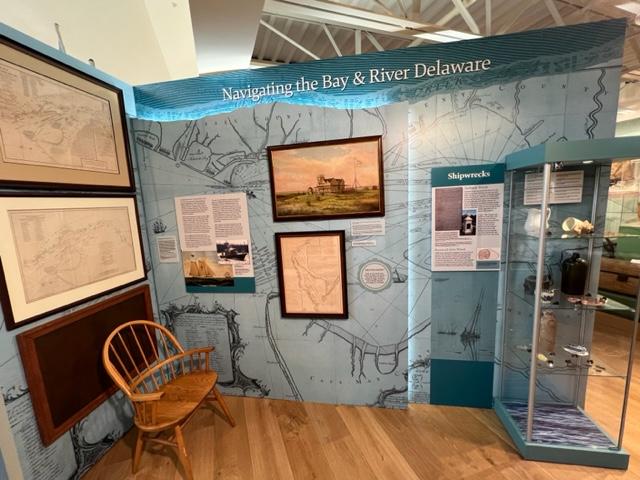
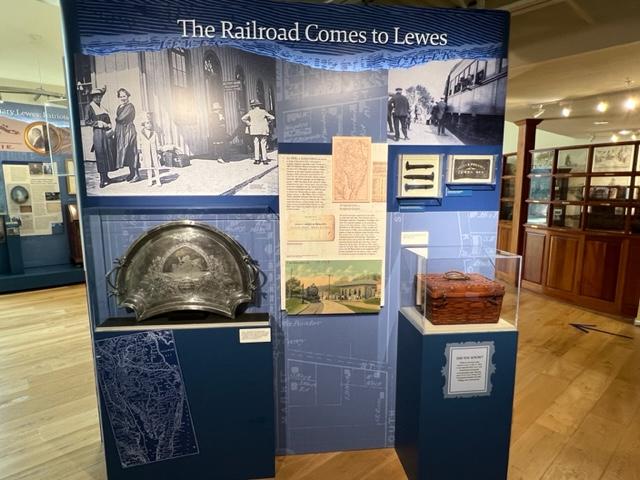
The area developed and entered the modern era with displays on Public Service, The shipping industry and the growth of the railroads in the area that helped open Lewes up as a resort. As the modes of transportation changed so did Lewes with each step.
The Shipping Industry
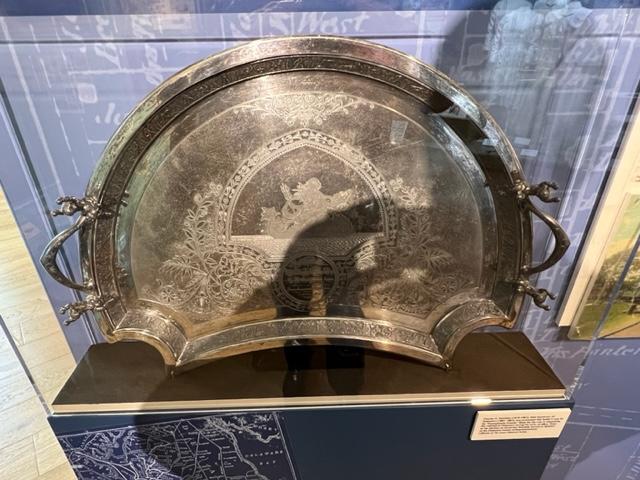
The presentation plate as part of the railroad display
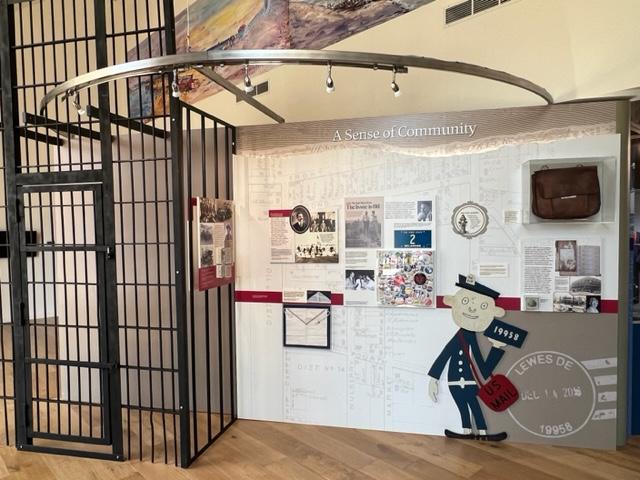
Public Service and a sense of community
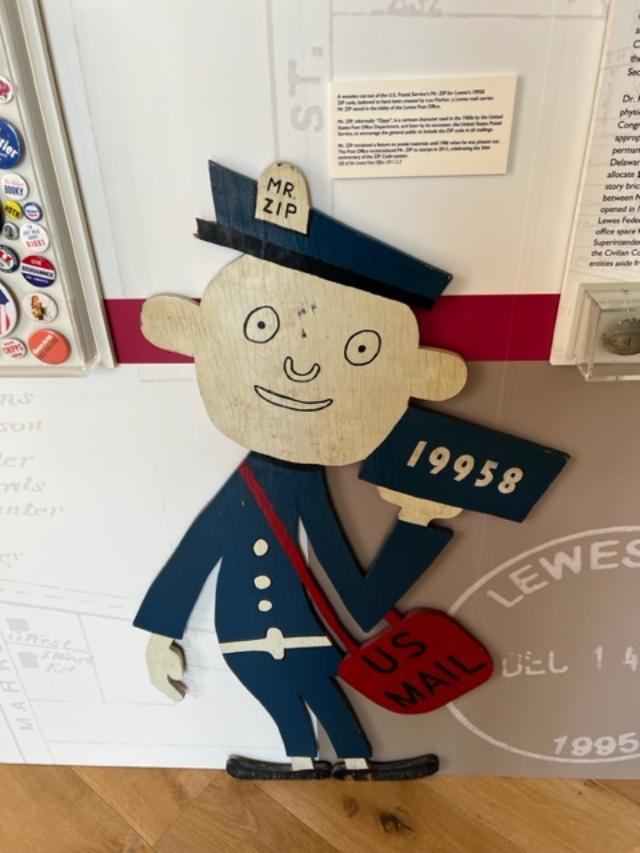
Zippy
The museum will take about an hour to comfortably walk through. It is a interesting and fun way to know the history of Lewes, De. The detail and interesting artifacts makes it a very engaging museum. The docents are really nice and helpful in explaining the displays.
The History of the Lewes History Museum:
(From the Museum website):
The Lewes History Museum is located in the Margarat H. Rollins Community Center at 101 Adams Avenue in Lewes, DE. For 54 years, The Lewes Historical Society has collected and preserved tens of thousands of historic artifacts, artwork, documents, maps and photos. Now it the support from the City of Lewes, a gift of $500,000 from the Ma-Ran Foundation and generous donations, this incredible collection is on continuous display at the Lewes History Museum.
The museum serves as the primary source of information about Lewes for visitors, researchers, students and residents. Enjoy ongoing exhibits featuring Lewe’ maritime history, decorative arts and artists, famous families of Lewes and how our region is seen through environmental change. The museum provides ongoing seminars, symposia and presentations along with a wing for community non-profit gatherings.
The popular Children’s Discovery Center is house inside the museum and is currently closed at this time. The Discovery Center offers an interactive, fun and educational experience for children of all ages. At the Center, children can experience 19th century Delaware by interacting in a replica general store and post office, playing around a scaled model of Cape Henlopen Lighthouse with a Morse code station, foghorn and reflecting lights. The Center also houses a Delaware River Pilots’ simulation module, a electronic table-top boat-building area and a lighthouse “keepers cottage”.
The community center is the centerpiece of the cultural campus in Lewes, including 18 miles of trails, a concert stage, parks, a children’s garden and the Lewes Public Library.
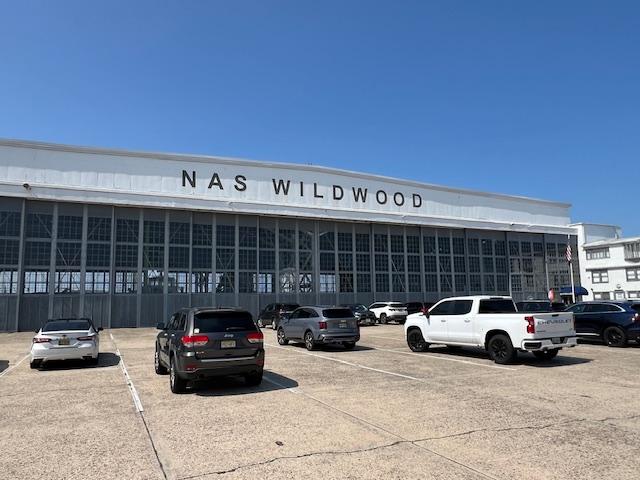
The Naval Air Station Wildwood Aviation Museum is located at the back of the Cape May Airport. Just follow the road to the back of the airport at 500 Forrestal Road in Hangar #1.
The front of the museum
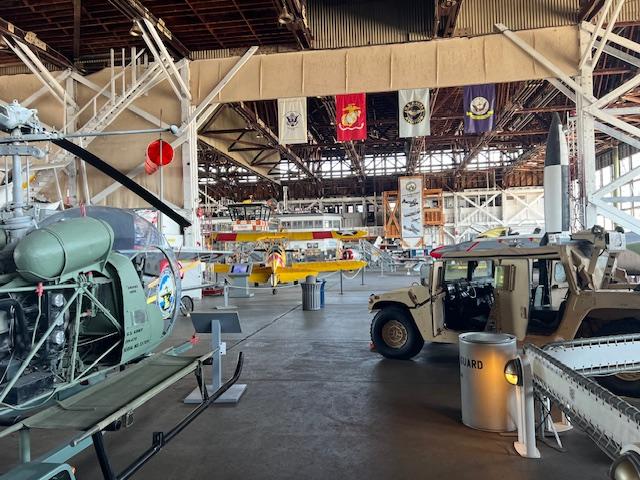
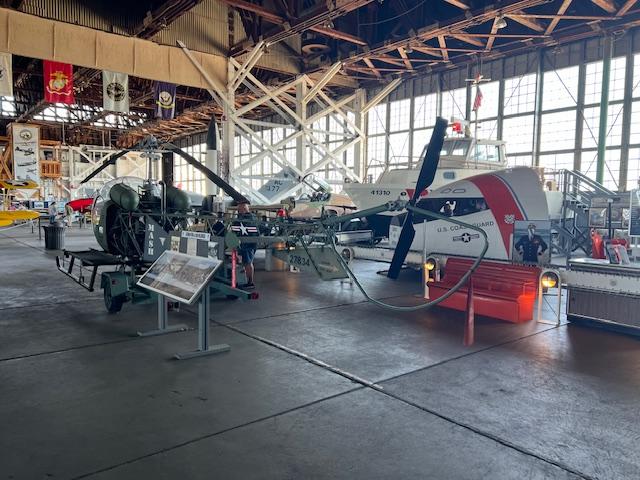
This interesting museum is a treasure trove of artifacts from WWII to today from jeeps to cars and trucks to airplanes. Some of the vehicles you can step into and see what it was like to ride these pieces of aviation history.
The main gallery of the Aviation Museum
There are several airplanes that with the assistance of the staff you can enter and see what air travel was like for these pilots. All the planes have been carefully restored and displayed for viewing and use by tourists. There is even a air traffic control tower you can enter and see how thing the functioning of the tower was done. These displays were interactive from the perspective of the people who once worked there.
The Hanger with plane displays
In the front of the museum as you enter, along the ways there is a display of the history of the Naval Hangar and how it developed and became part of the community. There were pictures of members walking the boardwalk in Wildwood and having a good time. There were stories of many interactions between the sailors and the locals and what an exciting time it was for everyone.
The history of the time as Wildwood Training Facility
Many local heroes stories were told all over the building of Navy personal from the area and the part that they played in the war years and when they returned. Each story board told of their early lives, how they got involved in the war, the roles that played and jobs that were accomplished and what their lives were like when they returned. The mindset of this generation is very different than from today.
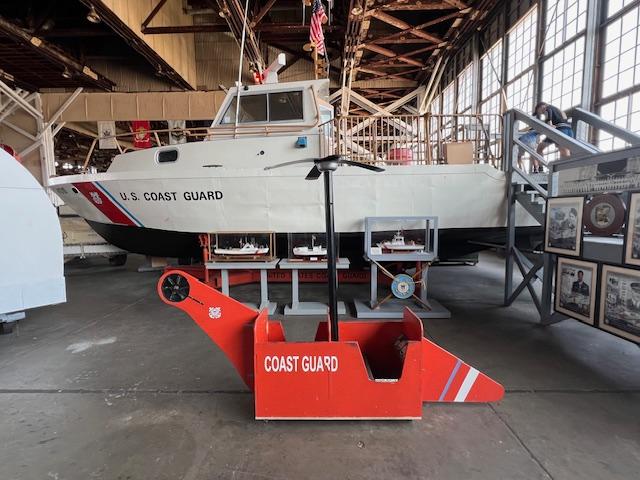
The Coast Guard display
What I really enjoyed was the documentary “Boatlift”, the story of the 9/11 rescue of thousands of people off Manhattan island on 9/11 (it was around the 20th Anniversary of the event when I toured the museum) and the bravery and involvement of boaters and sailors all over the New York maritime region. Hundreds of boats were involved in getting people to safety to New Jersey and other parts of the NYC. It was a lesson in selflessness and involvement in one of the darkest days of American history.
The main gallery of the museum
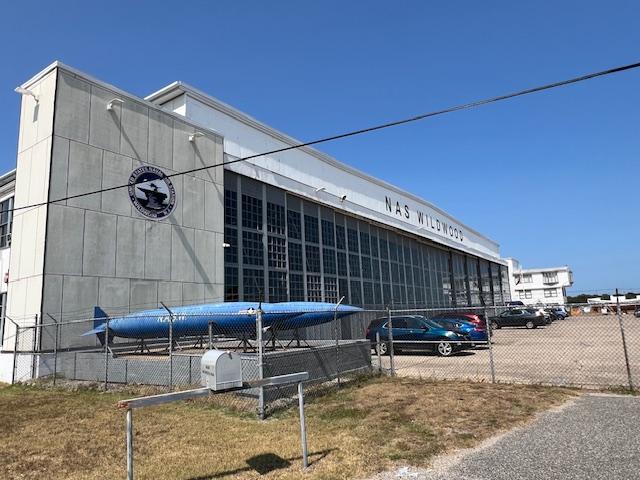
Outside the hangar, there are more planes to tour and equipment that is used. Each display is carefully explained of its role in the armed forces so take the time to read the plaques as well.
The outside of the hanger of the museum
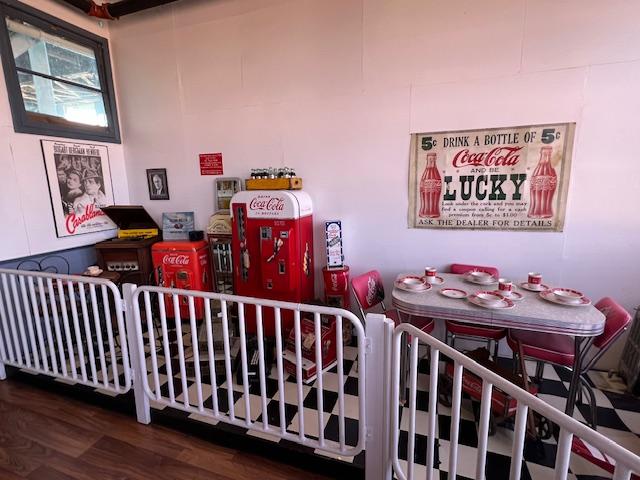
Inside the building towards the back, there is a display of commercial establishments and even the role of Coca Cola during the war and it being used in the ration boxes of the men and women fighting for our country. There were pictures of USO dances and get togethers and parties for the enlisted men.
The Coca Cola display during WWII
There is even a space shuttle piece to explore and admire showing our progression into different types of transportation over time. The museum has carefully displayed items so that there is an order to follow around the room to admire each piece. Take the time to look them over and read about them.
The MASH helicopter on display
This museum is an interesting step back in time to show the role New Jersey and Cape May County played during the war years and then going forward.
The main gallery of the Aviation Museum
The Mission of the Museum:
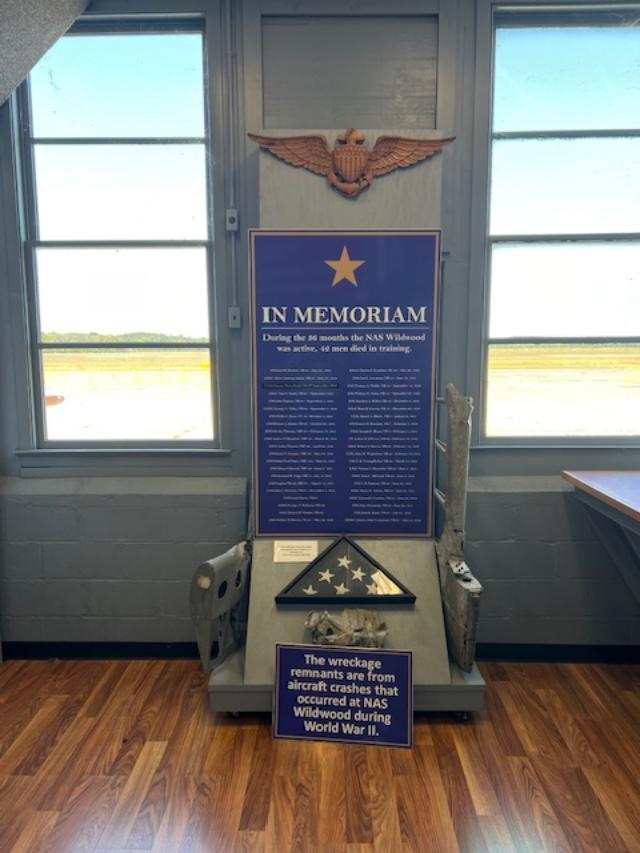
Restoring Hangar #1, educating the public on Cape May Country’s history during WWII and memorializing the 42 naval aviators who were training at the Naval Air Station Wildwood.
WWII Ends display
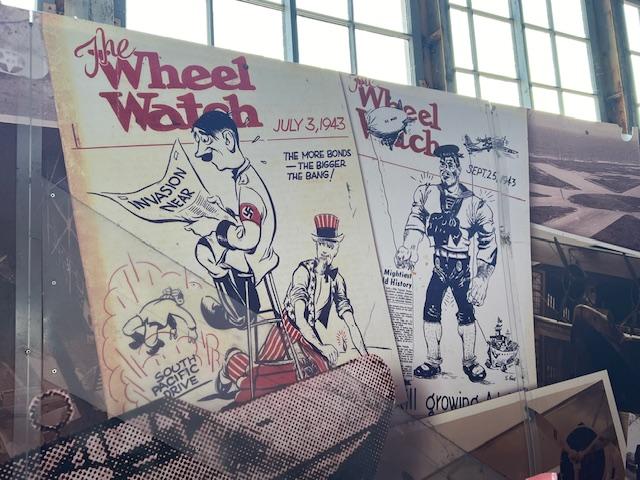
WWII Propaganda Posters
The History of the Naval Air Station Wildwood Aviation Museum:
(Taken from the Museum website)
WWII:
Following the outbreak of World War II, this all wood double wide aircraft hangar was assembled by the U.S. Navy in 1942 from a kit delivered via railroad. On April 1st, 1943, NAS Wildwood was commissioned as a training facility for dive bomber squadrons that would go on to fight in the Pacific. Between 1943 and 1945, activities included night flying and target practice over the Delaware Bay, reaching a peak of almost 17.000 takeoffs and landings in the month of October 1944. Before NAS Wildwood was decommissioned, 129 crashes occurred and 42 airmen died in training exercises.
The Memorial from the WWII
Following World War II, United States Overseas Airlines was operated out of Hangar #1, offering both national and international charter flights. The airline was owned by Dr. Ralph Cox, a dentist and U.S. navy pilot during WWII. Cox also used the hanger to display his collection of early automobiles and other transportation memorabilia including a steam locomotive.
1970-1990:
Southern Jersey Airways operated a commuter airline known as the Allegheny Commuter out of the Cape May Airport. The service was started by Captain Curt Young, ho was a bomber pilot during WWII. The Allegheny Commuter offered twenty-two daily flights between Atlantic City and Philadelphia as well as eight round trips out of Cape May.
1997-Present:
After many years of neglect, Hangar #1 was rediscovered by Dr. Joseph Salvatore and his wife, Patricia Anne, who acquired the building from Cape May County for $1.00. Listed on both the state and national registers of historic places, Hangar #1 is an exhibit in and of itself. Since 1997, the Salvatore’s and the NASW Foundation have worked hard to restore the hangar to its original condition. Today, Hangar #1 is open to the public as part of the NAS Wildwood Aviation Museum.















 Visiting a Museum: The Unique, Unusual, Obscure and Historical