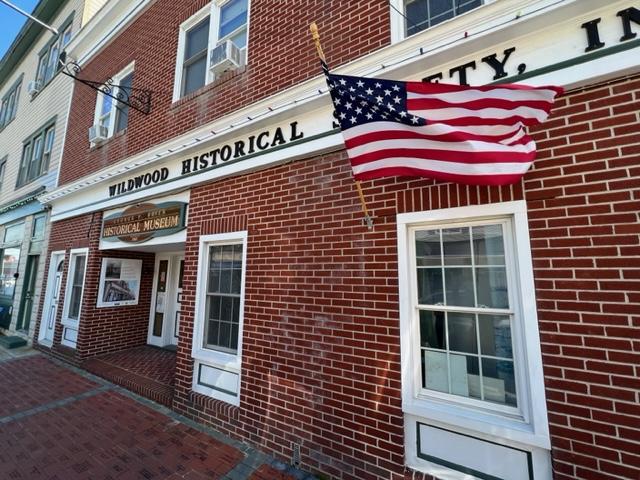
The Wildwood Historical Society at 3907 Pacific Avenue
I visited the Wildwood Historical Society George F. Boyer Museum (See review on TripAdvisor) when I was visiting Wildwood, NJ for a convention. It was a gloomy morning, and the museum is open from 9:00am-2:00pm. It is the perfect place to visit on a rainy day at the beach. When I revisited the museum in the summer of 2023, the museum was crowded with members of the fire service and their families visiting after the convention meetings.
The Front Gallery
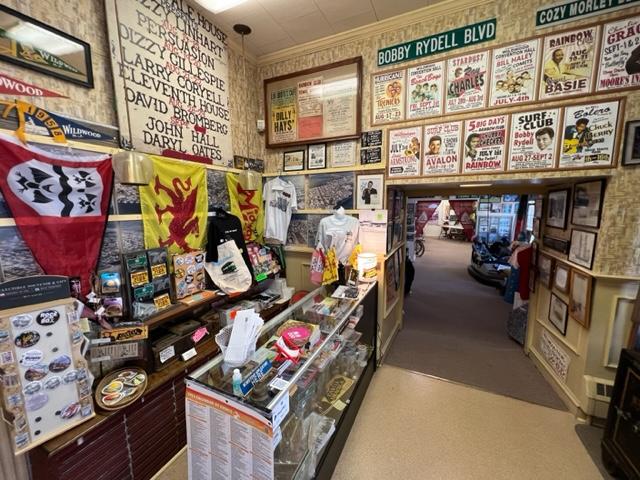
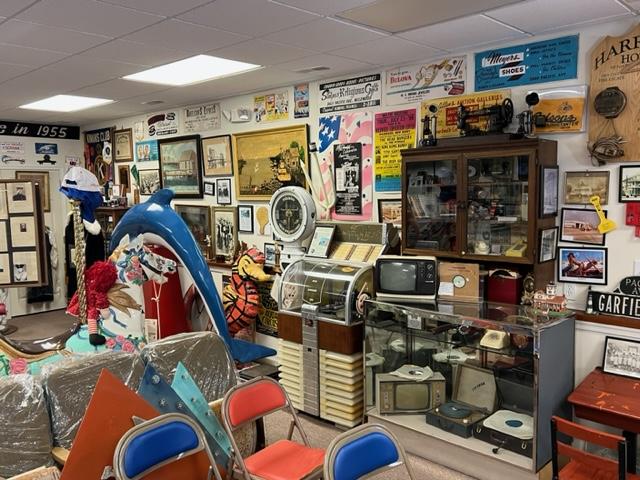
The central gallery on the Wildwood businesses.
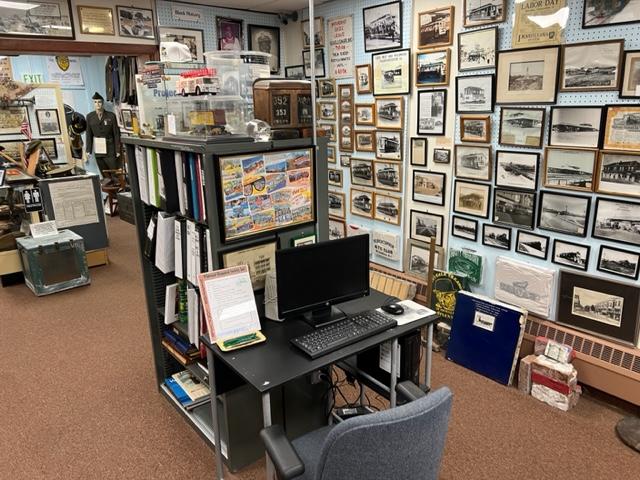
The back gallery of the museum
The museum is a treasure trove of artifacts of the history of the three towns, North Wildwood, Wildwood and Wildwood Crest. The history covers the original inhabitants when the Native Americans lived and fished in the area, the rise as a resort community especially its heyday in the 1950’s and 60’s as a solid middle class resort town and an extensive history of the police, fire department and schools as well as the town and its council people.
The Military display
The Fire display at the museum.
The fisherman’s display at the museum.
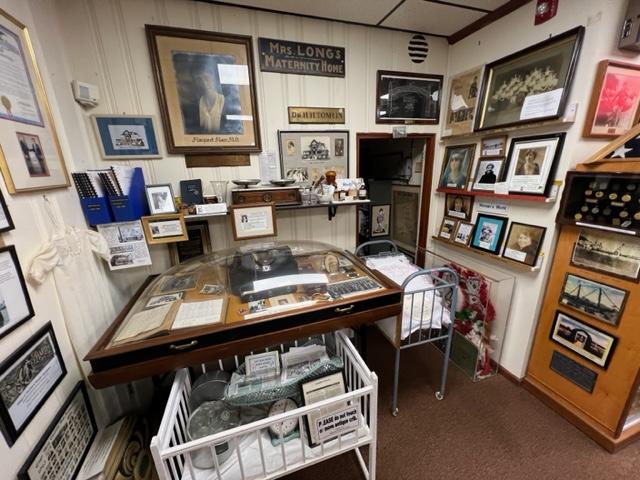
The doctor’s office display at the museum.
Each room of the museum is stacked with information, artifacts in case lines and the walls are lined with books, manuscripts and albums. The school history shows how integration worked even as far back as the turn of the last century and the development of the school system. There were books of graduation pictures, sporting events and band involvement.
The high school and public-school display.
There is a very interesting display of firefighting pictures especially of the amusement fires of the past and the rebuilding of the parks and piers. Take time to look at the artifacts in the hallways and pictures of the development of the parks. There are interesting pieces saved from the old parks.
The Dracula’s Castle display before the big fire at the park.
The Dracula’s Castle display
The Amusement Park and Dracula’s Castle display at the museum.
The artifacts from Dracula’s Castle
The display by Dracula’s Castle
There is even a section of restaurant menus and dishware from the well-known establishments of the past and many pictures of the hotels and motels of the ages. It showed how it went from a Victorian resort to the modern times of the sixties theme motels with art deco architecture. There was a real change after the war to a more middle-class customer who was depending on the automobile instead of the train system.
Popular businesses of the past
The Wildwood businesses of the past.
Artifacts from businesses from Wildwood’s past from restaurants to hotels.
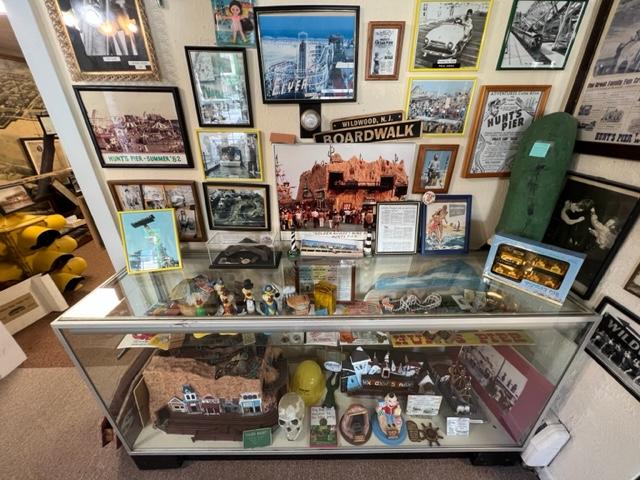
There is also a large section on the old amusement piers with pictures and artifacts from the old “Dracula’s Castle” park that burned down in the early 2000’s. There are signs, old tickets, small ride cars and prizes from the games from the piers. There is extensive detail to the display, and you have to look at all the pictures of the amusements at various points of history.
The Amusement gallery by Dracula’s Castle
The Amusement Park display of artifacts in fun and interesting. The museum admits they were lucky to save these items.
The “Dracula’s Castle Fire” was one of the biggest in Wildwood history.
Plan about two hours as you will lose track of time when looking at all the pictures and displays. It is a little packed in here but there is so much to see and take time to watch their videos which are fascinating and informative on the history of the town of Wildwood.
Artifacts and pictures from the old amusement parks that were once part of Wildwood’s glory.
Who was George F. Boyer:
George F. Boyer was born in Philadelphia in 1904. He came to Wildwood around 1932 and earned his living as a butcher, a merchant and a fireman. His real local fame, however, came from his role as the City of Wildwood’s first and only official historian. While serving with Wildwood fire department in 1959, he came across the stump of a tree (now known as the “W” tree) in the old city hall.
Running down the origin of the tree, sparked a tsunami of information as he talked to local residents and researched and collected old records. One thing led to another and in January of 1962, Boyer was appointed in the city’s newly established historical commission and became the first president of the Wildwood Historical Society.
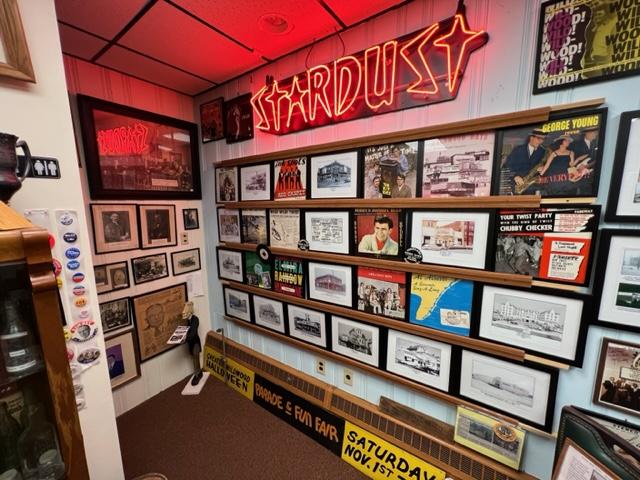
The Wildwood music and ‘Doo Wop’ display.
Tireless in his efforts to collect and preserve local artifacts, Boyer spoke to school and church groups as well as civic organizations, urging them to “act now. To gather those irreplaceable links with the past and preserve them for generations to come.”
A model of Wildwood in the Business Gallery at the museum.
Founded by Boyer, Wildwood’s first historical museum opened in 1963, on the second floor of the Municipal Building in October 1976, the City of Wildwood honored Boyer for his “long and devoted service” by renaming the museum, the George F. Boyer Historical Museum.
The museum sits proudly in Downtown Wildwood.
He passed away a month later but his legacy lives on. The museum, now located at 3907 Pacific Avenue, continues to welcome visitors and locals alike, just as it did a half century ago under Boyer’s care.
Household items of the past.
The non-profit museum is made possible thanks to volunteers who dedicate time to our cause. We always need volunteers. To learn about volunteering, drop in during our open hours, call us or fill the contact form on the website.
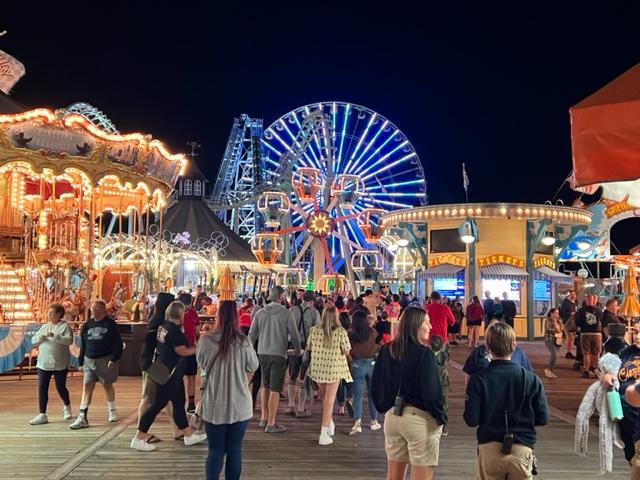
The Wildwood Boardwalk and amusements today.
Disclaimer: This information was taken directly from the History of the Wildwood Historical Museum website, and I give them full credit for the information. Remember that the museum has limited hours and the resort is seasonal so please call the above number for the times and dates when the museum is open.
Don’t miss this recently reopened and renovated museum by the shore. The Rehoboth Beach Museum is a treasure trove of artifacts on the history of the resort from a Methodist camp to modern times.
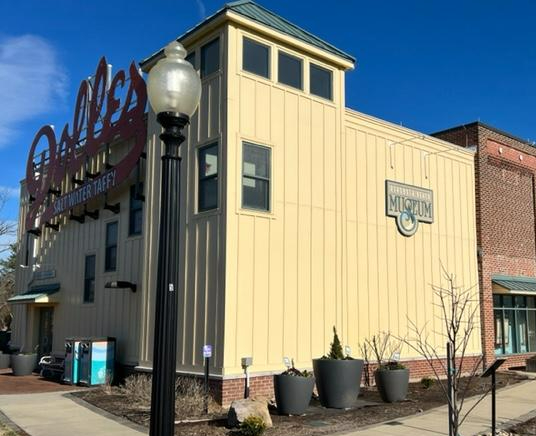
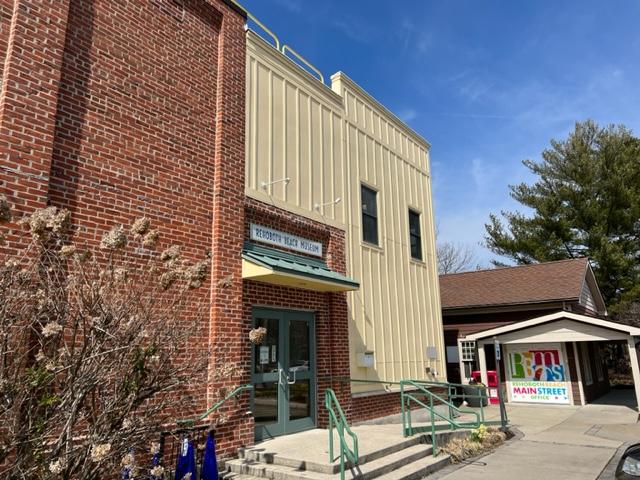
The Rehoboth Beach Museum 511 Rehoboth Avenue
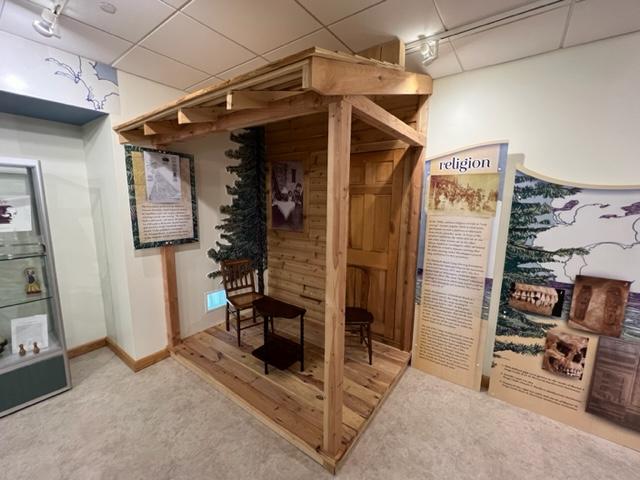
On the first floor, there are displays of early Native American artifacts with the history of the Native tribes that lived in the area. Take some time to look over how the tribes lived in the area and the influence they had before Rehoboth Beach became a Methodist Camp.
The entrance of the museum
There is the history of the Methodist camps and as an early Victorian resort.
The front gallery of the Rehoboth Beach Museum and its various displays
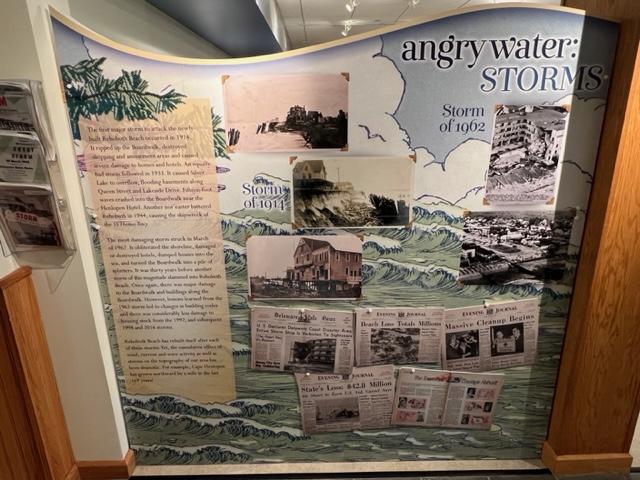
There are maps of the set up of the camps, how the resort developed from a Methodist Camp to the growth of the hotels and amusement areas. They also describe the growth of the Boardwalk and how storms over the years shaped the resort and rebuilding period.
Bathing Suits from the turn of the last century
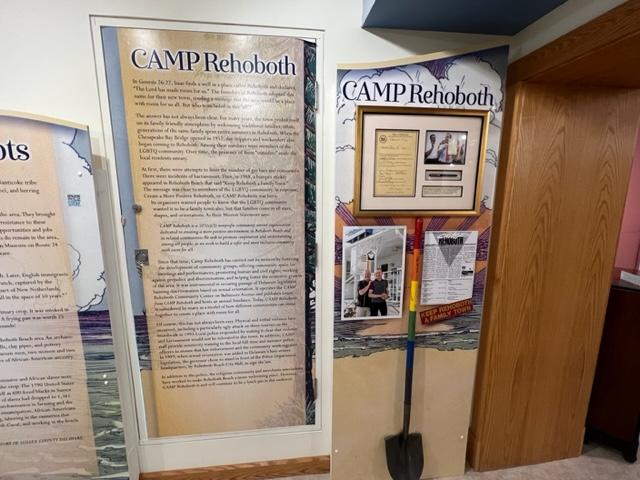
There are all sorts of items such as old post cards, bathing suits, beach items like shovels and pails, amusement items, historical items from all eras of the resorts including hotel and restaurant information and even the history of the LGBT community with the history of Camp Rehoboth.
Rehoboth Beach started as a Mormon Retreat
Camp Rehoboth has shown how much the resort has changed to include everyone
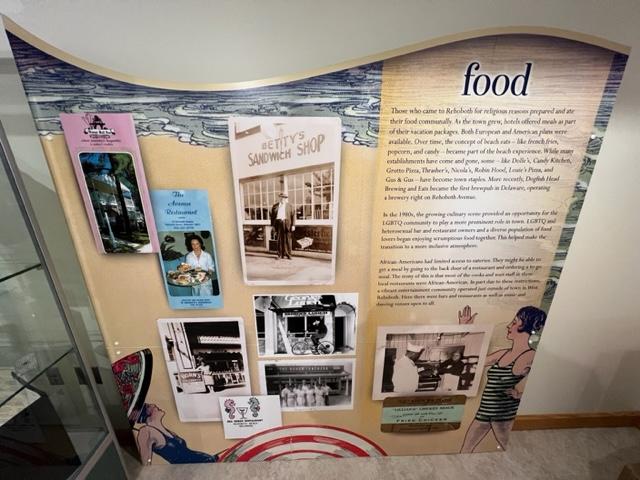
The museum also showcased the restaurants that once dotted the town, hotels that have since disappeared but left their dinnerware, menus and the events that once happened there. The development from a Methodist Camp to resort for the Philly and Washington DC crowd grew very quickly with the popularity of sunbathing and ocean swimming. As the hotels came, so did the restaurants and amusement areas. Rehoboth Beach morphed from a religious colony to one of family please and recreation.
Sand buckets at the Rehoboth Beach Museum
The growth of hotels in the area
The restaurant and food service industry grew as well to cater to the hungry crowds
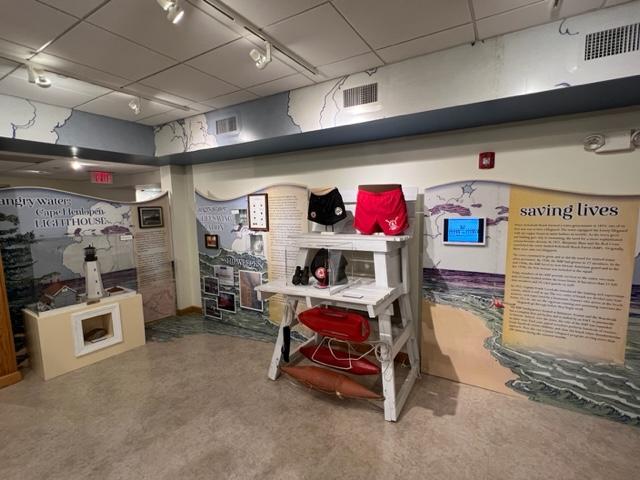
There was also a nice display and video on the Rehoboth Beach Rescue Squad and the development of the lifeguards that watch over the beaches. They showed the various squads over the last fifty years and it was interesting to see how many of them came back year after year.
The top floor is for special exhibits and when I was visiting there, the museum was displaying a needle point exhibition on early works and ‘starter kits’, which young girls would do to practice their needlepoint. There is a current exhibition on ‘Sea life by the Shore’.
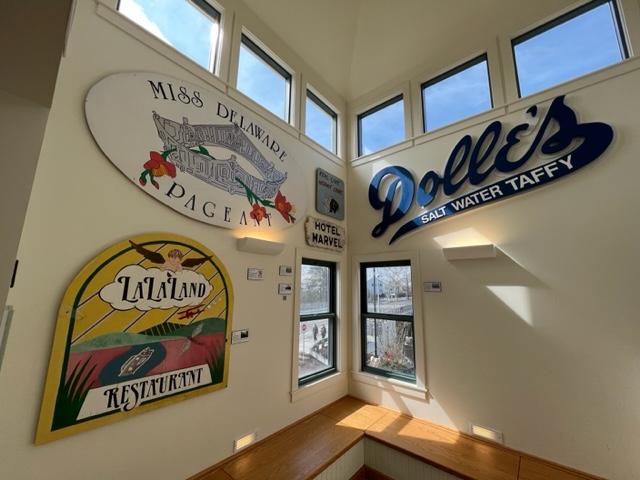
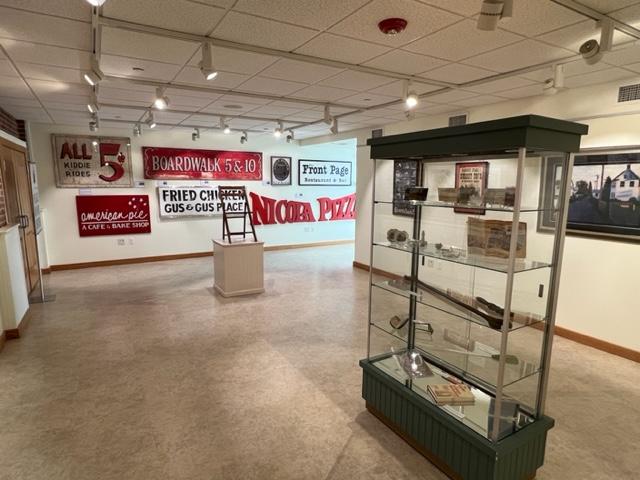
On recent visit, the museum displayed businesses of ‘Rehoboth Beach Past and Present’. It had a lot of old signs from businesses that have been in the resort for years.
The signs of the businesses in Rehoboth Beach DE
The second floor displays
A recent exhibition showed the disastrous “1962 Nor’easter” that destroyed most of the shoreline, all the boardwalk businesses including the Boardwalk and how the town rebuilt quickly to open by Memorial Day that year. Anything that had been along the coastline had been destroyed in this three day period in March of 1962. The Boardwalk looked like matchsticks.
The storms that have hit the resort
The museum also discusses the people who make Rehoboth Beach their home. This covers regular citizens who live here on a daily basis and tells their story. With the growth of the community so did civic minded people and people who represented the town during the wars. It has a nice display on the high school students and their participation in Rehoboth Beach.
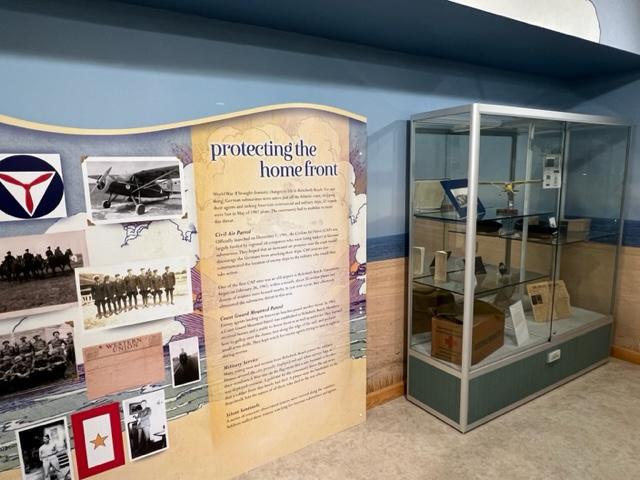
The Military display
The High School display
They offer exhibits, walking and bus tours, programs for adults and children, membership benefits and a gift shop.
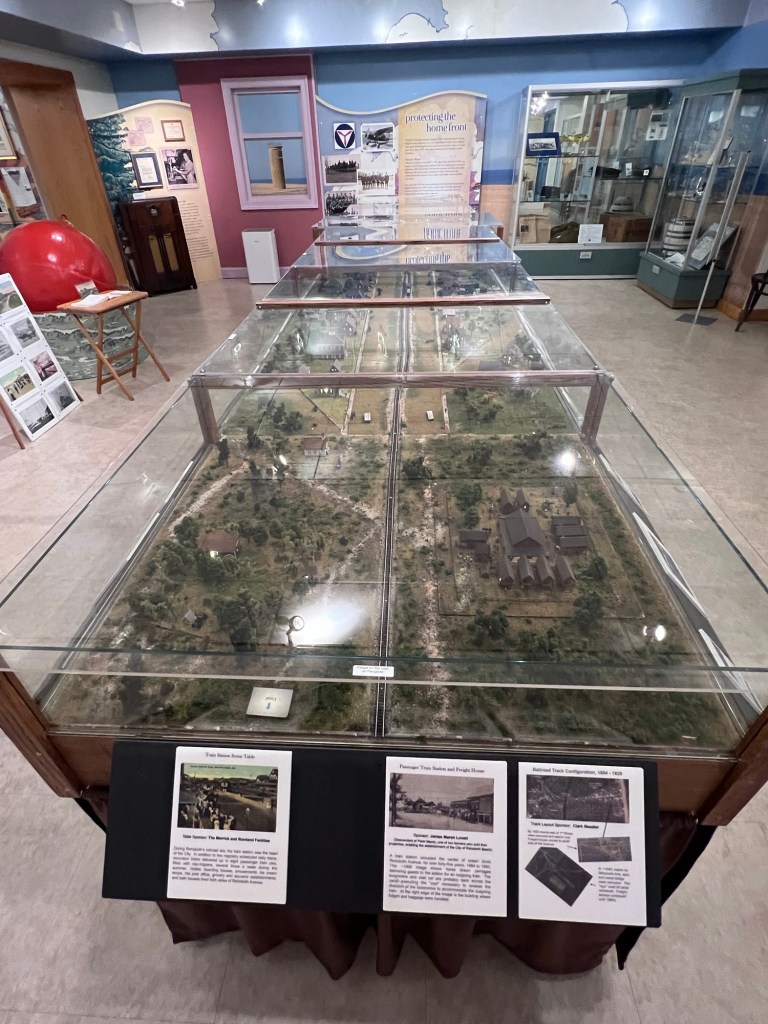
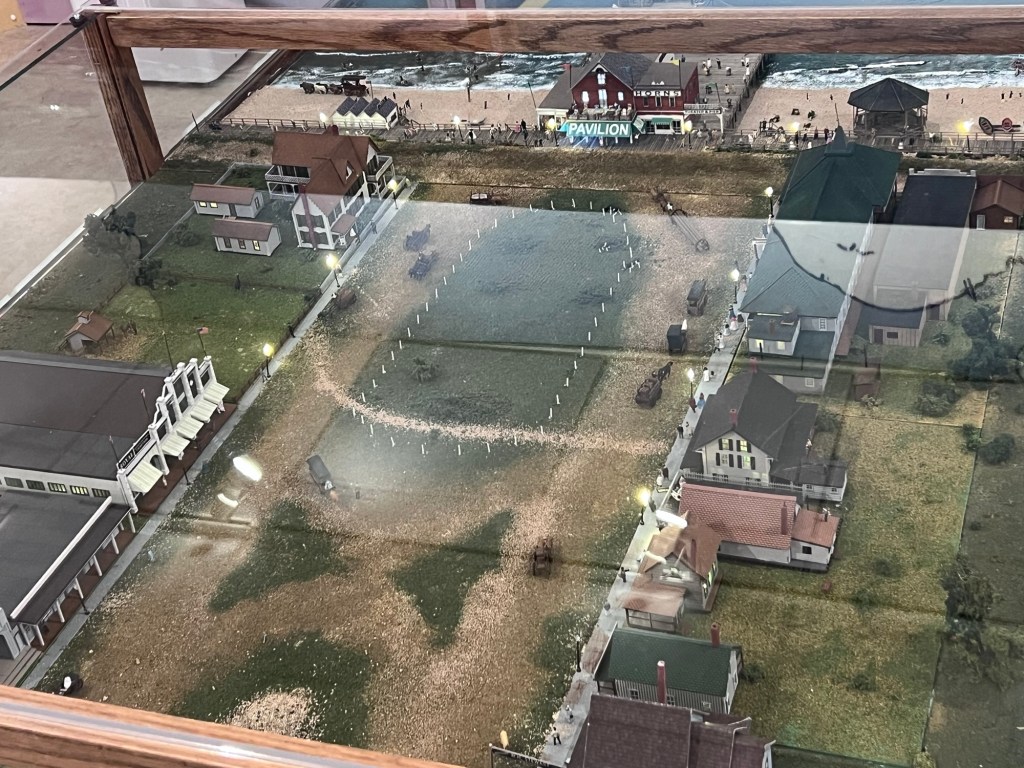
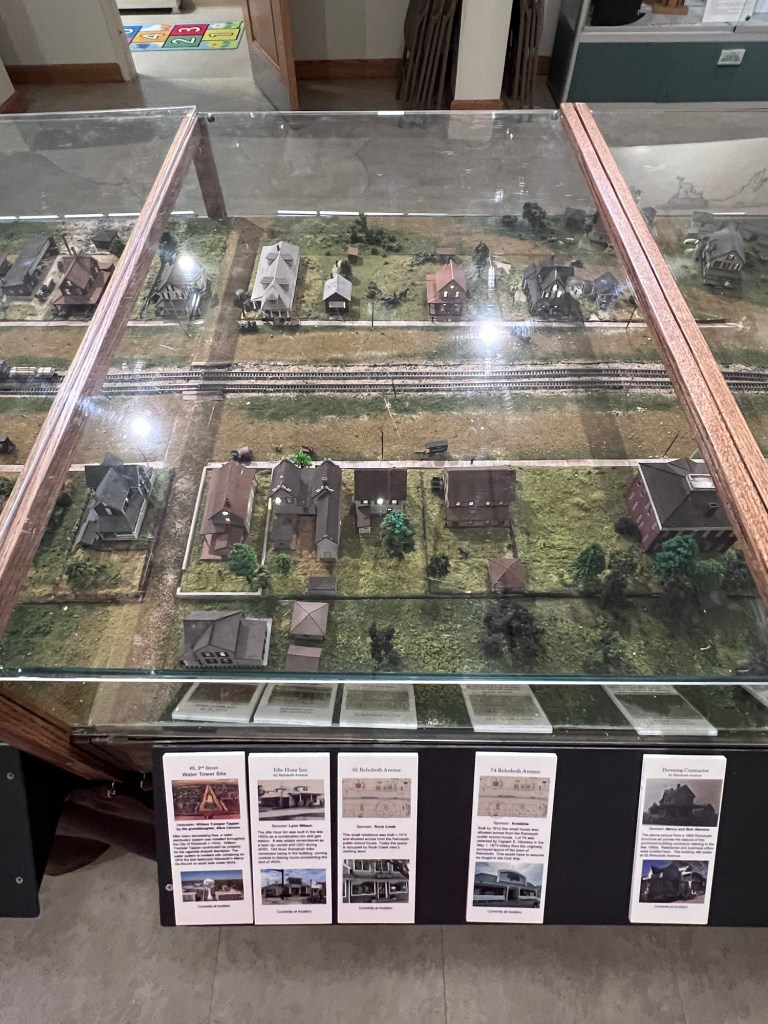
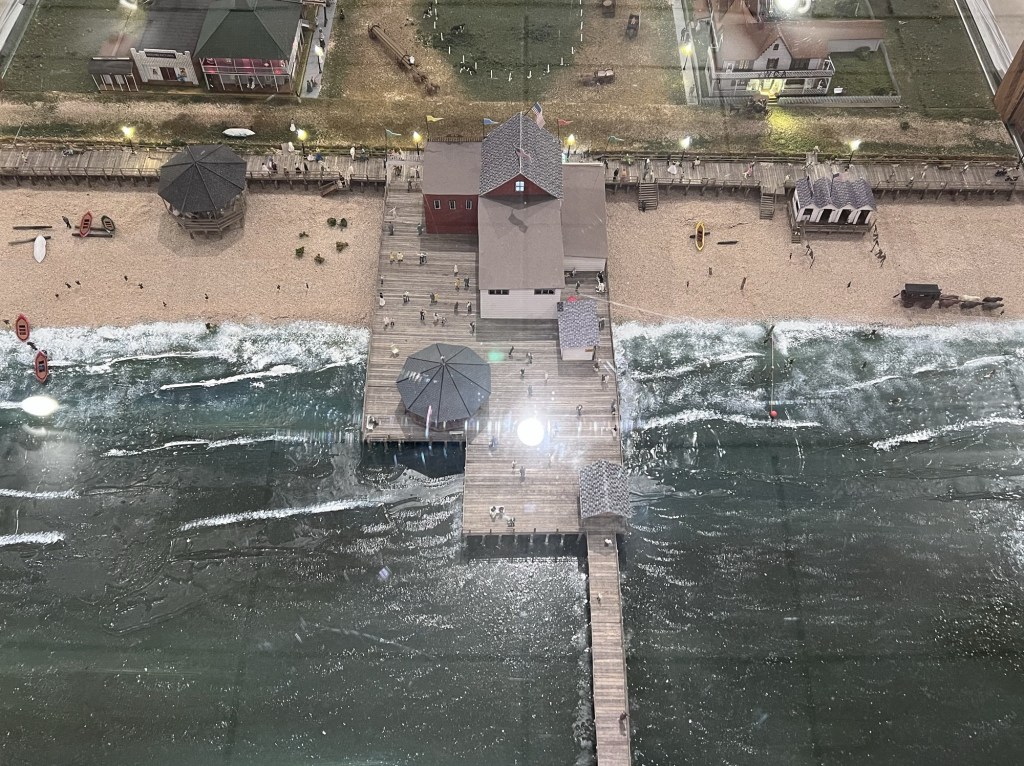
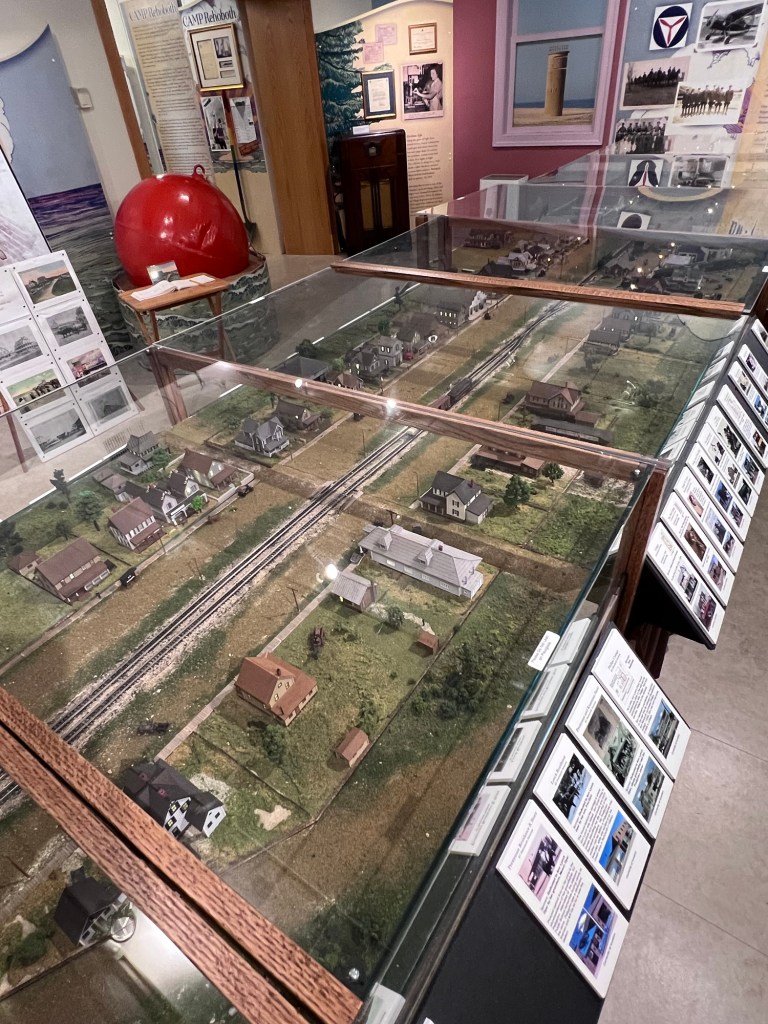
One of the newest displays that the museum is promoting is the diorama of Downtown Rehoboth Beach during the turn of the last century complete with lights and sounds and props moving.
The diorama at the Rehoboth Beach Historical Society
The details of the old beach community
The old homes that used to line the downtown
The very end of the road that faced the ocean
The diorama is a very nice addition to the museum collection
Several long time businesses closed in the downtown, Royal Treat Restaurant and Carlton Clothing and both businesses donated a lot of artifacts and family items from their establishments.
Royal Treatment Restaurant menu
Items from the now closed family restaurant
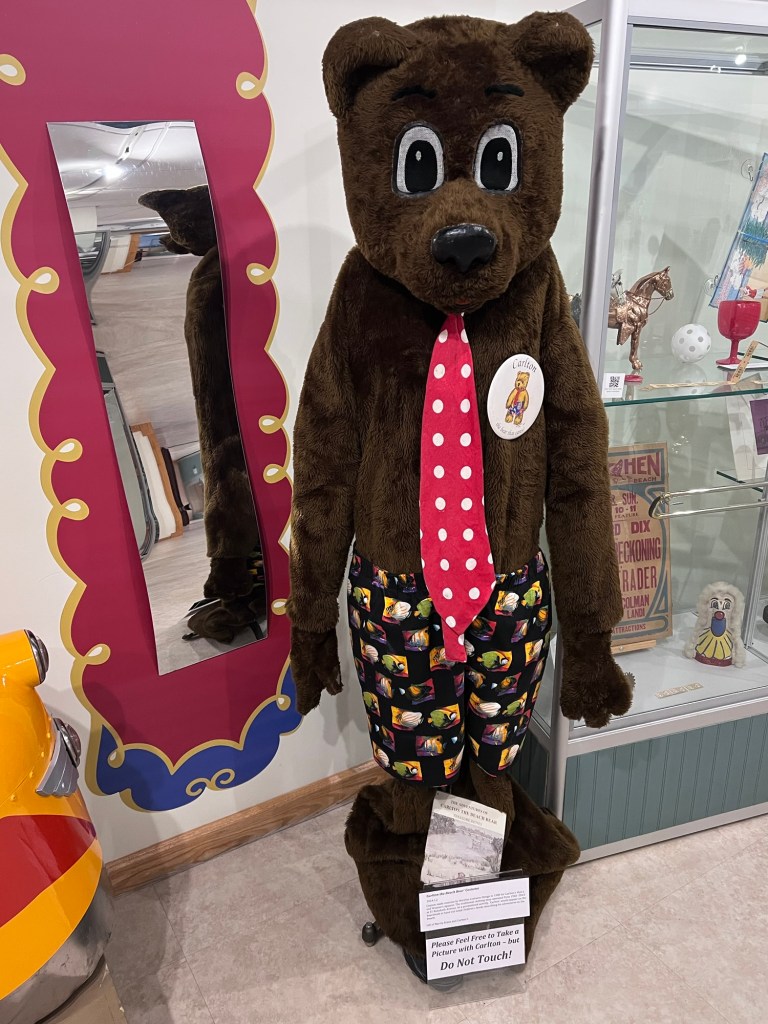
Carlton Clothing had been downtown since the 1960’s and they donated a lot of items to the collection. The bear costume was a promotional prop for the holiday season that Carlton’s used for families.
The Carlton Bear costume
The ‘Bear that Cares’ button on the bear
The sign for the display
Some new toys, games and prizes from the Boardwalk
There was also a lot of new family donations to the museum from families who lived in Rehoboth Beach. These items were part of local life in the area.
The new family donation display
The gift shop has a nice variety of items for sale that are beach themed. They sponsor the Annual Museum Beach Ball, a beach party on the first Saturday of August (Rehoboth Beach Museum).
The Gift Shop at the Rehoboth Beach Museum
The museum, founded in 1975, collects, preserves and displays artifacts and memorabilia tracing the history of the town’s 19th century Camp Meeting origins through its development into today’s popular summer resort (Rehoboth Beach Museum).
The museum also has a nice gift shop to buy gifts from Rehoboth Beach as well as a selection of beach magazines and books. Check it out.
Think of becoming a Friend of the Rehoboth Beach Museum.
Outside the museum, there is an interesting park along the canal with walking paths and a small dock to walk down. On a nice to it is a great way to cool off.
Grove Park Dock
The path that leads to the dock
The view of the canal behind the museum
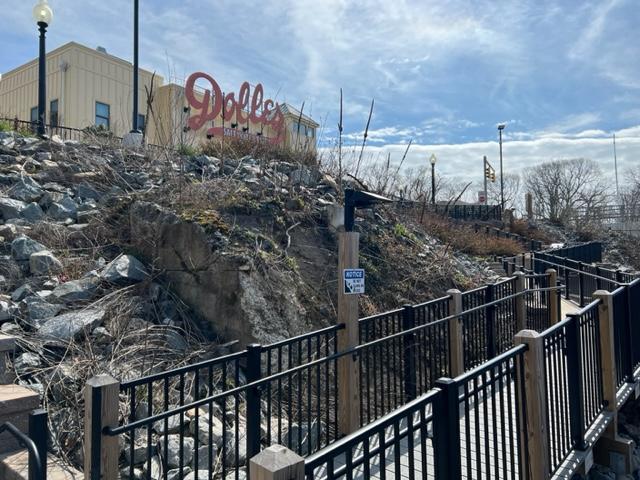
The iconic Dolles sign was moved here when the store closed on the Boardwalk
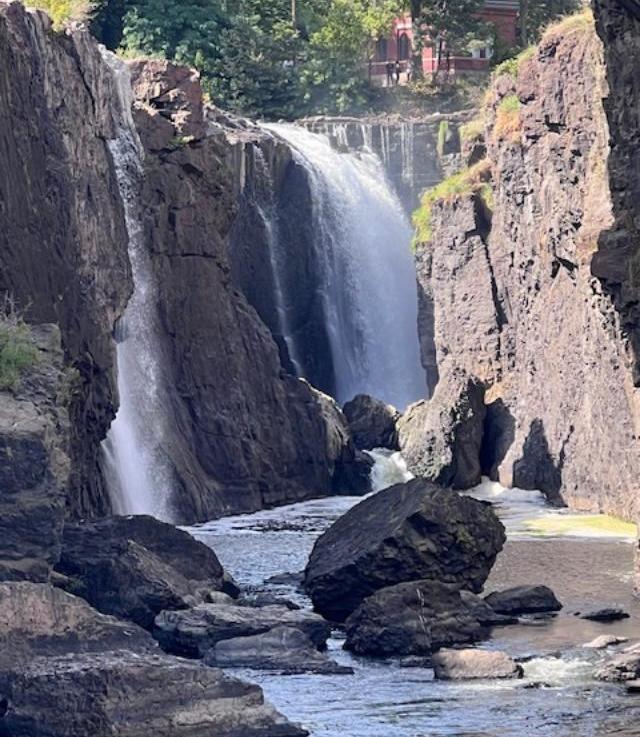
A trip to Paterson, NJ to see the Great Falls is an experience. Surrounded by the old mill buildings that once powered the Silk Industry that made Paterson world renowned, the Falls has been turned into a part of the National Park Service.
The renovation has now been completed that includes new landscaping and a large parking lot. The surrounding park is as impressive as the Falls.
The information sign by the falls
When walking the park, it is breathtaking to see how the Passaic River approaches the drop and then the water hitting the bottom of the cliffs. It is an impressive site of the how the Ice Age still plays a role in ‘Mother Nature’ in current times.
Take time to walk through the park and travel over the bridges and through the landscaped parks to see the Falls through all angles. It is a spectacular park that does not get the credit it deserves. Paterson, NJ still has its issues but it does have a lot of gems too.
History of the Falls-The Formation and early history:
Geologically, the falls were formed at the end of the last Ice Age approximately 13,000 years ago. Formerly the Passaic River had followed a shorter course through the Watchung Mountains near present-day Summit. As the glacier receded, the river’s previous course was blocked by a newly formed moraine. A large lake, called Glacial Lake Passaic, formed behind the Watchung’s.
The Falls in the Summer
As the ice receded, the river found a new circuitous route around the north end of the Watchungs, carving the spectacular falls through the underlying basalt, which was formed approximately 200 millions years ago. The Falls later became the site of a habitation for Lenape Native Americans, who called this homeland, ‘Acquackanonk’ and later for Dutch settlers in the 1690’s (Wiki).
History of Powering a Free Economy:
The history and power of the Falls
The Great Fall of the Passaic River drove the imagination of a young Alexander Hamilton to harness the power of water to manufacturer goods in the United States. The story of Paterson and the Great Falls is on of national importance. Here in 1792, Hamilton founded America’s first planned city of industry and innovation, helping to spur what would become the world’s largest and most productive economy (US Parks.org).
After the Revolutionary War, Hamilton, the first Secretary of the Treasury, knew this country needed to be economically independent. He led the founding of Paterson and the Society for Establishing Useful Manufacturers (S.U.M.), New Jersey’s first corporation.
The S.U.M. constructed America’s first multitiered waterpower system to attract entrepreneurs and workers who would manufacture goods and develop new inventions. A system of water channels or raceways, the most significant power system of the day, diverted water from the Passaic River above the falls to mills along its route (US Parks.org).
The old Power Plant at the Paterson Falls
Paterson became the manufacturing hub for locomotives, textiles, silk finishing and dyeing, machines tools, paper, sailcloth, twine and airplane engines. By the mid-1800’s, the city was home to the largest producers of locomotives in this country and nearly half of the nation’s silk trade, earning Paterson the nickname “Silk City”. Paterson is also the birthplace of the Colt Revolver and the prototype for the first operable submarine (US Parks.org).
The formation of the Falls
The S.U.M. fulfilled the vision of its founder for more than 150 years, moving the United States from an agrarian, slave-based economy to one based in industry and freedom. Paterson attracted successive waves of immigrant entrepreneurs, skilled craftsmen and workers, the ‘diversity of talents’ Hamilton had hoped would be drawn to America. Immigrants still settle here to pursue their ‘American Dream’ and to weave their threads into the storied fabric of Silk City (US Parks.org).
Visiting Paterson Great Falls:
Welcome to America’s first planned city of industry and innovation. Begin your visit at Overlook Park. View the iconic Great Falls and a monument to Paterson’s founder, Alexander Hamilton. Cross McBride Avenue to the Welcome Center where you can visit the facilities, purchase a gift and learn about tours and programs.
The beauty of the Falls
To get a close look at the river that powered Paterson to prominence, follow the path behind the hydroelectric plant over the Passaic footbridge to Mary Ellen Kramer Park. From there you can peek into Hinchliffe Stadium, one of the few remaining stadiums that hosted Negro League Baseball.
Come back across the river, follow the short loop trail along Upper Raceway Park, ending at the Ivanhoe Wheelhouse. Walk across Spruce Street and visit the Paterson Museum, a park partner.
Exhibits include textile machinery, the first Colt firearms, steam locomotives and the first prototype of a submarine.
Regularly scheduled guided tours of the park are available during the summer season. From fall through late spring, reservations are required for all guided tours. You may also download a self-guided tour or smartphone app from our partner, the Hamilton Partnership at http://www.millmile.org.
Accessibility: We strive to make our facilities services and programs accessible to all. For information go to a visitor center, ask a ranger, call or check our website.
Firearms: For firearms regulations, check the park website.
Disclaimer: This information was taken from the National Parks Foundation pamphlet and I give the parks system full credit for the information. Please check out their blogs and website on the falls for more information on visiting the park. The parking lot is currently going through a renovation so call in advance of visiting the falls.
I recently visited The American Labor Museum/Botto House National Landmark for the afternoon and learned a lot about the American Labor Union formations and the rights we now take for granted.
A group of us took the tour of the Botto House and learned of its history and its place in the Paterson Silk Strikes of 1913. The first floor which serves as the meeting room has pictures of the Paterson Silk Strike which lasted just over five months and since the Mayor of Paterson at the time would not let the strikers meet, the Botto’s agreed to let the strikers meet at their home which at the time was in a isolated section of Haledon.
The history of the Silk Strike in Paterson
The Mayor of Haledon was sympathetic to the Union cause and let them meet in the town. Their house was situated in the middle of a field so that the strikers could gather around the home and listen to speakers.
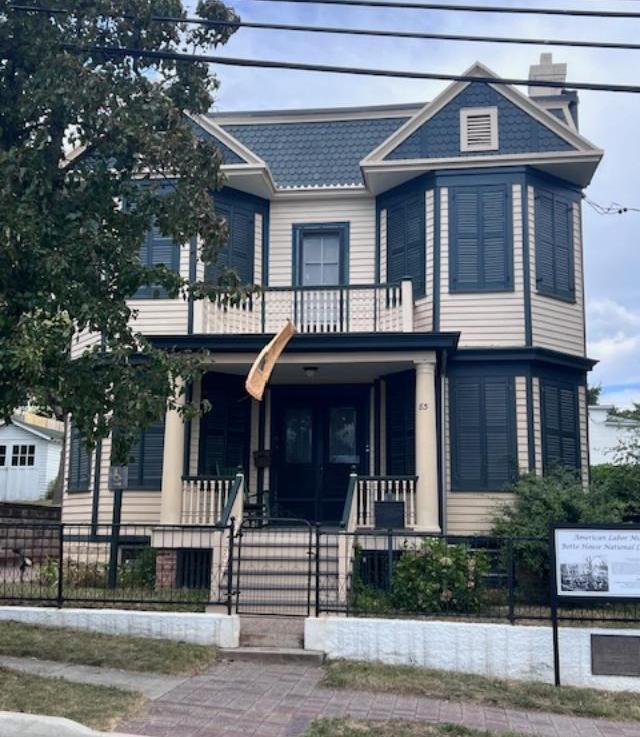
The Botto House during the Paterson Silk Strikes
From their balcony, speakers could talk to the strikers and keep everyone abreast of the situation. Here people gathered and picnicked together and worked together to get their rights heard.
From the main display room, you will tour the home of Pietro and Maria Botto. First stop is the kitchen where Mrs. Botto ran her household. She made extra money selling food to the strikers and arranging meals for Mr. Botto’s co-workers. The family family did what it could to make money for the family.
Mrs. Botto’s kitchen
The sink area
Here she made meals for her family, did her jarring and preserving and the washing was done. Then a tour of the dining room, bedroom and the palour area where the family met and greeted people. The upstairs was formerly two apartments that were built to help ‘pay the bills’.
The Botto House Kitchen
The upstairs is now the display space where a display on the Dock Workers Union is currently being shown. We got to stand on the second floor balcony where so many speeches were made.
The backyard area
We took the back stairs to the backyard where the family had the grape arbor, root cellar where the preserves were kept and the boccie ball court. It seemed the family was very social at the time and self-sufficient.
The root cellar and Vineyard
Things turned bad for the family when both Mr. And Mrs. Botto both passed away two years after the strike. The strike could have taken its toll on the family or the fact that Mr. Botto could not find a job after the strike was over. No one knows.
It is an interesting tour of how one family opened their home to an important cause and it made a difference in the success of the strike and getting it resolved.
The history of the Botto’s:
The museum headquarters was the home of an immigrant family of industrial workers whose story is a fascinating one. In many ways, the telling of their saga is a doorway for museum visitors to step through and make connections with their own ethnic backgrounds.
The European Heritage:
Pietro and Maria Botto hailed from the region of Biella, Piedmonte, Italy. This area, at the foothills of the Alps, was a leading textile producer of linen and wool. The mountainous area was home to a fiercely independent people who, for centuries, wove cloth in their homes on looms which they owned.
The Industrial Revolution forced weavers to give upon cottage-based production to seek employment in large shops or mills. the displacement of workers by mechanized looms and weavers’ lack of economic independence caused people in Biella (as in other European textile areas where Paterson’s workforce originated) to embrace new ideas about worker rights and to be a vocal workforce wherever they roamed.
Pietro decided to leave Italy because he was made eligible for a second draft into the army at the recently united Kingdom of Italy (Italy had quadrupled its army at that time to strengthen unification and to acquire African colonies). A skilled weaver who also painted church interiors, Pietro brought his wife, Maria and daughter, Albina (born 1889) on the long voyage to America in 1892.
The Botto’s settled in crowded West Hoboken, New Jersey (today’s Union City), where they worked in silk mills for 15 years until they had saved enough money to afford a home for their growing family. The family now included three more daughters, Adelia (born 1894), Eva (born 1895) and Olga (born 1899). In 1908, the Botto’s moved to Haledon, a tiny community, growing up along the streetcar line from Paterson, where many other country folk from Biella had already settled.
The Botto’s home became a focal point for a dramatic slice of history in 1913 when the epic Paterson Silk Strike broke out. Pietro was on strike with 24,000 fellow silk workers when massive and constant arrests forced the workers to consider the independent borough of Haledon as a location for great outdoor rallies. Mayor William-Brueckmann guaranteed the safety of the workers and Pietro offered his home as a meeting place for the strikers.
The Botto’s courageous stand allowing their home to be so closely identified with the strike stemmed from a belief in the rights of the common man. During the strike, Pietro and his family played host to the social and labor leaders who were the idols of the working person at that time. After the strike, the family had to very circumspect about employment in the mills, with one of the daughters denying her family name to avoid blacklisting by an employer.
The large house and spacious hillside gardens are a tribute to the family’s combined labor. Pietro and his daughters worked 10-12 hour days, 5 1/2 days a week in the mills. The eldest daughter began mill work at age 11 and the youngest at age 13.
On Sundays, the usual day of rest, the girls helped their mother serve patrons of the resort aspect of the property. Maria ran a large household, feed boarders during the week and the scores of people on Sunday and did piecework from mills; she died in 1915 at the age of 45.
Pietro lived until 1945, a beloved father and grandfather to a growing clan.
History of the House and Land:
The house in Haledon, NJ
The total environment of the Botto House National Historic Landmark reflects the ethic origin of this family of silk workers from the Piedmonte (Biella) area of Italy and the development of housing in early streetcar suburbs. It is representative of the sensitive use of small landholdings in American urban areas by various European immigrant groups.
The Botto family purchased Block X, Lots 38, 39 and 40 in 1907 from Alexander King, a real estate speculator. King himself purchased a large parcel of land from the Cedar Cliff Land Company, a group of Paterson industrialist and business leaders who were quick to see the advantages of selling cheap land to workers in Haledon. The completion of a horse-drawn trolley line in 1872 allowed for expansion of residential and recreational areas outside of the City of Paterson, a major American industrial center.
The Botto House sign
(Information from American Labor Museum: Botto House National Landmark, a Brief History)
The Period Rooms:
The Front Hall
The front entrance hall light fixture is original to the house. One of the restoration tasks yet to be carried out is the replacement of embossed wallpaper on the walls which was made to look like the carved leather coverings in the homes of the rich.
The front hallway
The Kitchen:
The kitchen was a major center of activity in the household. The large coal and gas range dominates the room. It was used as a heating source as well as for cooking foods. A table provided the space for food preparation; a cupboard stored pots, pans and dishes; an icebox kept food items cold (the root cellar, located in the garden was also used for cold food storage) and a sink for dishes and a tub for laundry utilities indoor plumbing-certainly a recent innovation for working class households.
The kitchen
Even with the convenience of indoor plumbing and the gas range, the kitchen was the scene of virtual non-stop labor for Maria Botto and her daughters. In addition to meals prepared for the family, the Botto’s fed a noon meal to extra people during the week, there were workmen without families, who rented rooms and come from the mills for a hot dinner.
On Sundays, the Botto women prepared food for as many as 100 people who came to recreate on the property. This, of course, provided on additional income for the family.
The Botto family’s foodways reflected their home region of Biella, Piedmonte, Italy. Piedmontese cooked scorned tomato sauce, preferring wine and chicken broth to accompany such staple foods as polenta (corn meal), risotto (rice) and tortellini, a pasta. Generally, rosemary, sage, and other herbs were used in cooking and grown outside in the garden. The herbs also had medicinal uses.
The kitchen sinks
Some of the artifacts placed around the kitchen are the copper put used to cook polenta (purur), meat grinder, fish scale, orange juice squeezer, coffee grinder (from a German immigrant household), rug beater, mousetrap and wall calendars which were used by working people as decorations.
The Botto women were generally charged with kitchen duties. Maria Botto hired a German woman to do the wash. One special job was reserved for Pietro, stirring the polenta and cutting it with a string.
The Dining Room:
The dining room was another work area for the family. Here the family and the ‘boarders’ dined. Here Maria ‘picked’ silk on a frame, located in the corner of the room under the window, examining the bolts of broadsilk brought from the mill for imperfections.
The Dining room
This was another task to bring income to the household. Maria used the sewing machine to make clothes. The table reflects a setting for the family and ‘boarders’, placed with dishes, silver-plated utensils and a condiment set.
The Dining Room
The sideboard, table chairs and sewing machine are family pieces. The lighting fixtures in this room as in the rest of the house were powered by gas. As is typical in the area, paintings were hung by string from a picture rail as the walls were made of plaster.
The Sideboard
The small painting shows sheep, which provide the wool upon which textile manufacture was based, against the backdrop of the Alps. The large sketched portrait of Pietro Botto in later years was produced by his grandson and professional artist, Richard Botto. On the side of the room hang pictures of the Botto daughters in their wedding attire.
The Dishes in the sideboards
The Bedroom:
This room, which was actually the girls bedroom has been recreated to resemble where Maria and Pietro slept. The dresser is set with brushes, combs and mirrors that are from the period. The Botto’s slept in a brass bed.
The bedroom at the home
Swimsuits and other clothing hang in the wardrobe. A travelling trunk rests on the floor next to the wardrobe. Next to the window hangs a photograph of Mr. and Mrs. Guala of Biella, Italy. Next to the wardrobe hangs the elaborately framed photograph of Adalgiso Valle of Paterson, NJ, a jacquard card cutter.
The Bedroom
The Parlor:
The most formal room in the house, the parlor was used for guests, weddings and wakes. Dominating is the oak mantle with its columns and mirror top. It surrounds a fireplace where, in the winter, a gas heater was attached to a pipe behind the hearth. The clock had to be wound every day and chimes on the half-hour.
The parlor
The photographs on the shelf are Maria’s sisters in Italy (right) and the three eldest Botto daughters (left). Members of the Bocchio family of Biello, Italy are pictured in the photograph to the left of the mantle.
The Parlor and decorations
The furnishings in the house
Other Rooms:
The area making up the library on the first floor was a sitting room and bedroom for the family. The Botto daughters rented the two apartments upstairs when they first married and started their families and other non-family members served as renters through the years. The bathroom on the first floor is the approximate size of the original but today has modern fixtures and is not meant to be part of the restoration.
(From the American Labor Museum/Botto House National Landmark)
The Labor Day display of the Union history:
Labor display
Labor Display
History of Paterson:
The City of Paterson was founded in 1792 as America’s first planned industrial city. Alexander Hamilton, Elias Boudinot and other members of The Society for the Establishment of Useful Manufactures chose the Great Falls of the Passaic River as the ideal site for a manufacturing center. The Falls provided water power, while the river provided transportation upstream and down.
During the 19th Century, Paterson flourished. It became known as “Silk City” and “The City” with an Arm of Iron in a Sleeve of Silk for the silk mills and locomotive works that made their homes here. Immigrants flocked to the city at first from England, Switzerland. Germany and France and later from Southern and Eastern Europe. Many found jobs in the mills and a few took their place among the captions of industry.
(Mill Worker…Mill Owner-Botto House Museum)
The gift shops
Disclaimer: This information was taken directly from The American Labor Museum/Botto House National Landmark pamphlets. This museum is one of the few historical sites dealing with the Labor Unions in the United States and plays a huge role in workers rights today.


































 Visiting a Museum: The Unique, Unusual, Obscure and Historical