Tag: vistingamuseum.com

Boscobel House & Gardens                                                   1601 Route 9D                                                                Garrison, NY 10524

Boscobel House & Gardens 1601 Route 9D Garrison, NY 10524

Boscobel House & Gardens

1601 Route 9D

Garrison, NY  10524

(845) 265-3638

http://www.boscobel.org

Open: Sunday-Monday 9:30am-5:00pm (closes 4:00pm between November and January 5th) The house is only open between April and the beginning of January.

Fee:  Adults $18.00/Seniors $15.00/Children (5-18) $9.00/Children (under 5 years old) Free (This is for house and Garden/Garden tours are different and depend on the season. Please check the website)

My review on TripAdvisor:
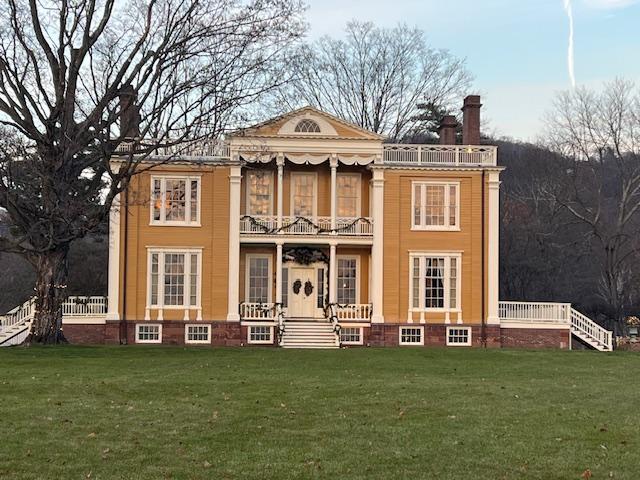
The front of Boscobel during Christmas time.
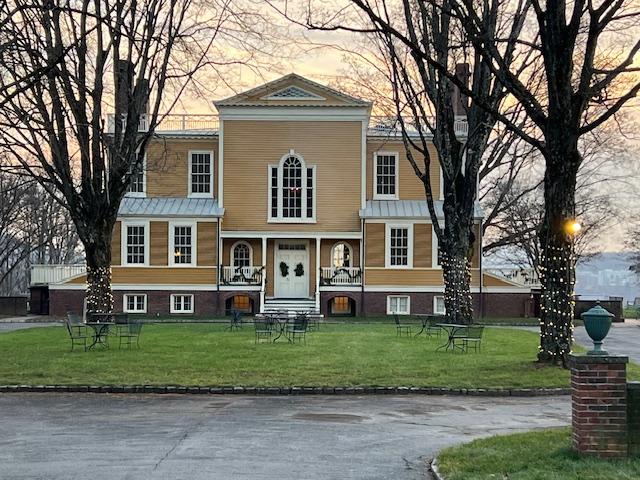
the back of the house at Christmas time.
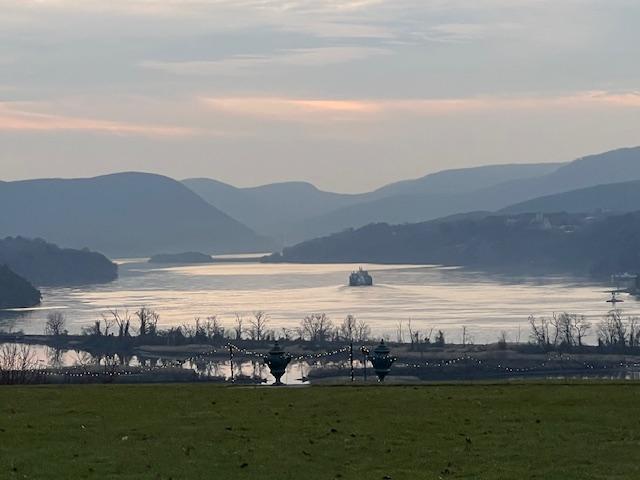
The view from the back of the house of the Hudson River.
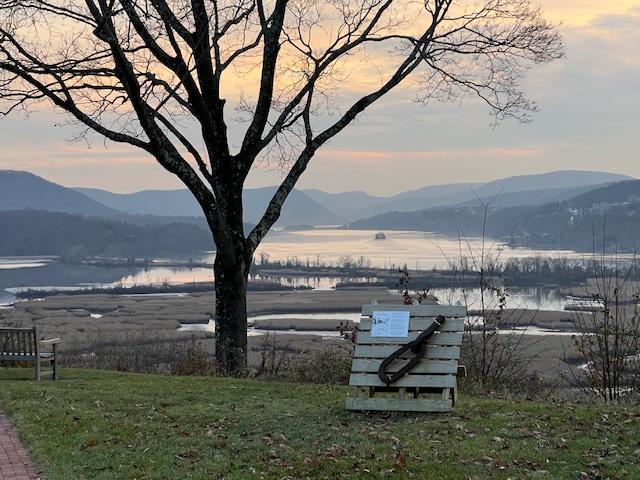
The view from the back of the house at twilight.
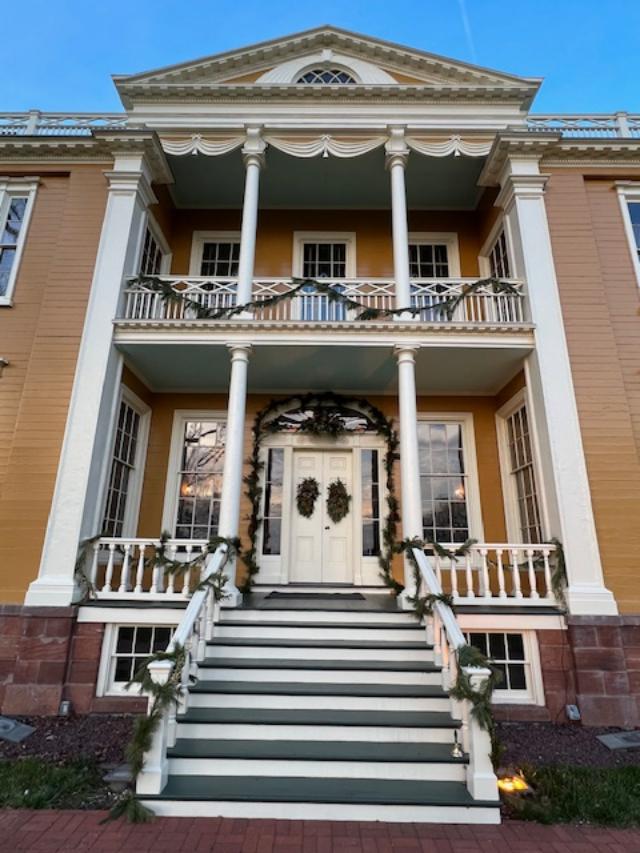
Entering the house for the evening “Candle Light” walking tour.

I recently visited the Boscobel House and Garden for their Christmas decorations and for a tour of the house at the holidays. Like most houses of its time period (the house was built in 1806), it was Post-Revolutionary War and the decorations would not have been that lavish as in the Victorian times. In 2023, the house had “Evening Hours” where you could take a self-guided tour and then come back to the Visitors Center for pastries, candy and hot drinks of Apple Cider and Hot Chocolate. These were the best nights to attend. For $25.00, you got to take your time in each room and talk with a docent about the history of the house.
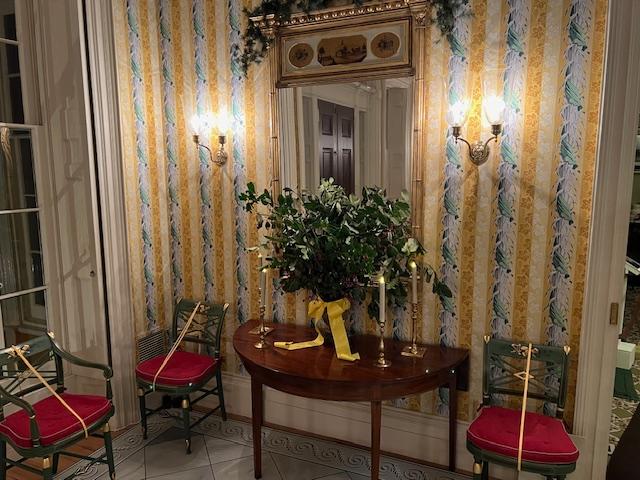
The Grand Hallway display Boscobel
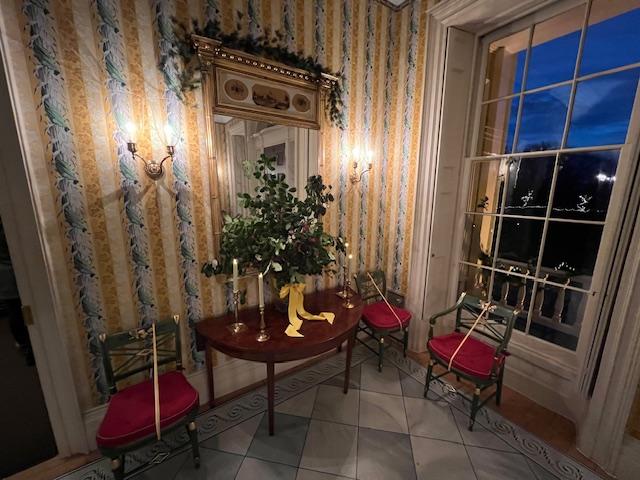
The floral displays in the Grand Hallway were amazing.

The Boscobel Grand Staircase in the Great Hall.

When you enter the house from the front entrance, you enter the Grand Hall with its winding staircase decorated in garland, flowers and lights. The Grand Hall was also once used for balls and informal dances. Decorated for the holidays, the Great Hall was dazzling for the Christmas holiday season.

The Great Hall decorated to the hilt for the holidays.

The house was tastefully decorated with garlands and mistletoe along the archways inside the foyer and with holly and mistletoe inside the house. Some of the tables were set for afternoon tea and entertaining in the Front Drawing Room and there was a small table Christmas tree which were just coming into vogue after the War of 1812. The Front Drawing Room was also set for entertaining as would be done in the holidays months in the later 1800’s.
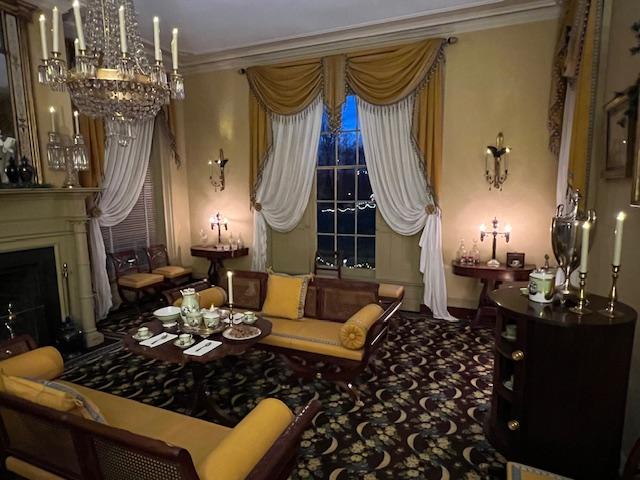
The Front Drawing Room just off the Great Hall.
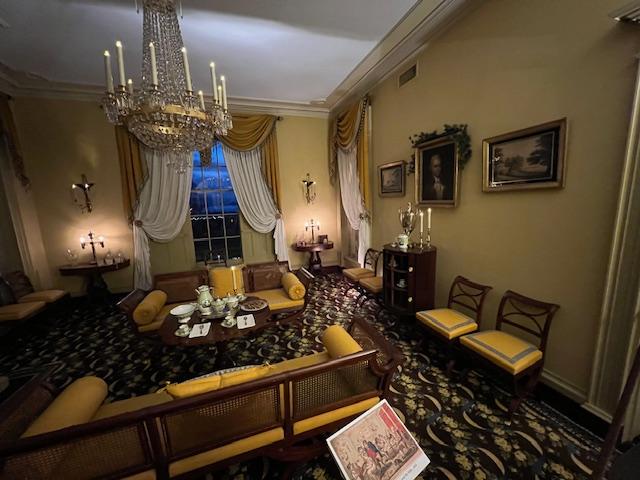
The Front Drawing Room set for tea during the holidays.
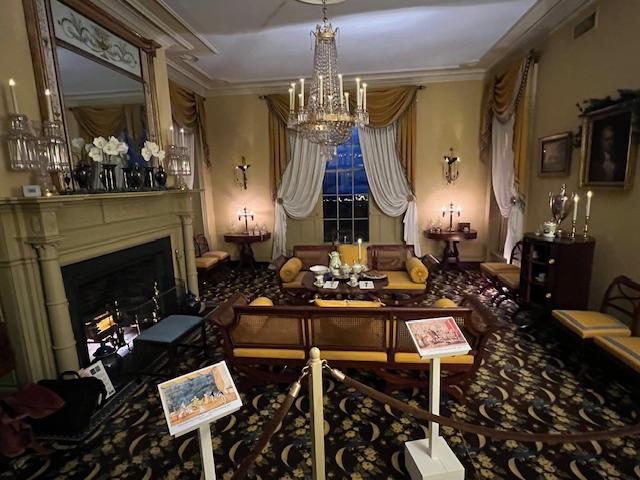
The Front Drawing Room

The Front Drawing Room is where guests would be received when they entered the house. They would be entertained until the Dyckman’s were ready to greet visitors. Tea and refreshments would be served here while they waited. After the guests would be received, if they were going to stay for the afternoon or evening, they would move to the Back Drawing Room for games, entertainment and conversation before moving on to the Dining Room for the main meal.

The Drawing/Music Room is where Mrs. Dyckman would have received guests and where informal entertaining would have happened. There was also musical instruments and player music boxes on display.
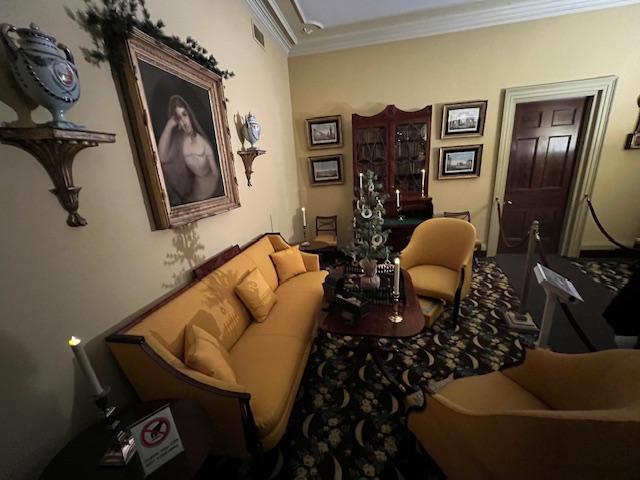
The Back Drawing Room with the Table tree.
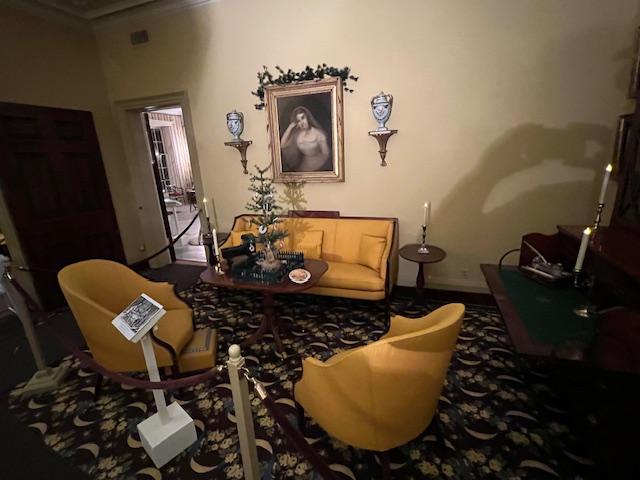
The Back Drawing Room with the portrait of Mrs. Dyckman.
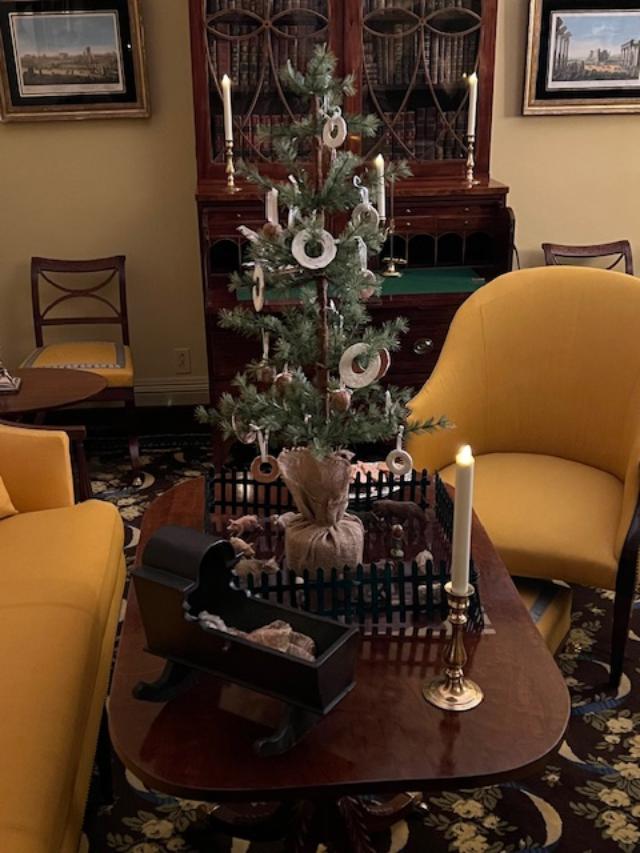
The Table Top tree in the Back Drawing Room.

Our tour guide, Sam, was fantastic and I hope when you tour the house he is your guide. I was impressed with his knowledge of the house and of the Dyckman family. I had not realized that they were related to the Dyckman Farmhouse family in Inwood (See my review and write ups on the Dyckman Farmhouse here on VisitingaMuseum.com and MywalkinManhattan.com: https://wordpress.com/post/visitingamuseum.com/771)

He told the story of Mr. Dyckman, who had the house built, how he made his fortune, how he died young without ever living in the house and then his son and his wife dying around the same time. The son-in-law then squandered the fortune with a series of bad investments and the house was foreclosed. It sat empty and was falling apart until a group of local citizens saved it. The house is now back in its full beauty and furnished in period furnishings to reflect the time that the house was built. The tour then guides you from the Front and Back Drawing Rooms to the Main Dining Room, where the real entertaining would take place.

The Main Dining Room was set for a Christmas dinner circa 1830’s and 40’s with the elaborate dishes, crystal and silver and laded with the foods of the holiday season. Meals would take several hours and many courses and would be accompanied by good conversation and maybe some music.

The Formal Dining Room’s table was set for a holiday dinner. The candles had been lit (they were electric) and the room had a warm glow to it. The windows must have let in natural light so earlier meals must have been quite nice when in the summer months the sun shined inside the room. There was custom made china set on the places and there was family silver next to it. The side boards were made by Sheraton and the cut glass had been imported from England.
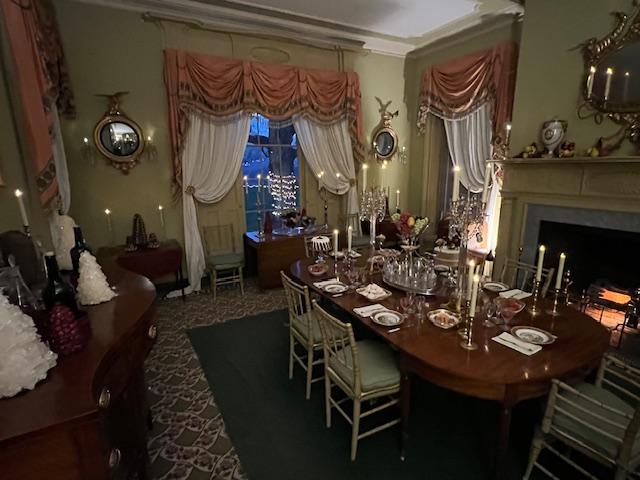
The formal Dining Room set for Christmas dinner.
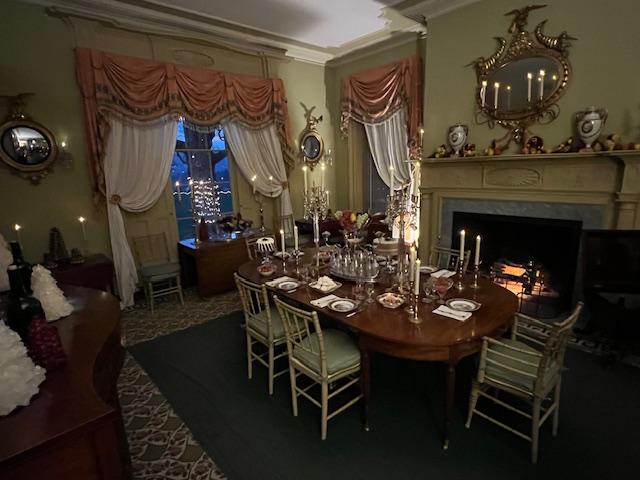
Another view of the Dining Room.
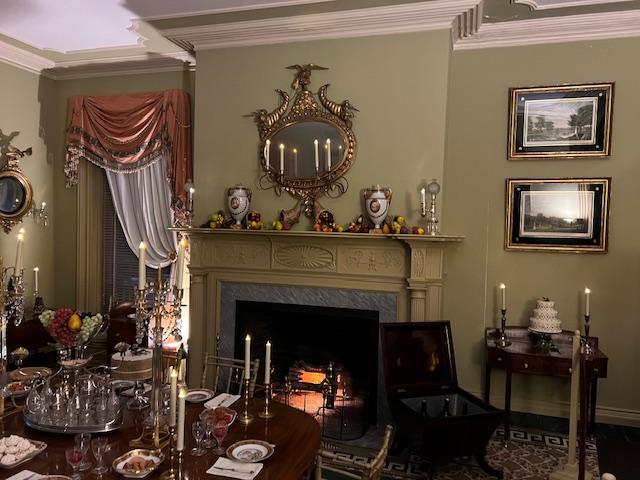
The fireplace in the Dining Room decorated for the holidays.

The Christmas desserts for dinner in the Dining Room at Boscobel.

In the back of the Dining Room was the dumbwaiter and the service area, The Warming Room, where items would be finished once they came up from the basement kitchen. They would be plated, decorated and served from this area and the timing would have had to be precise so the food did not arrive cold into the Dining Room.
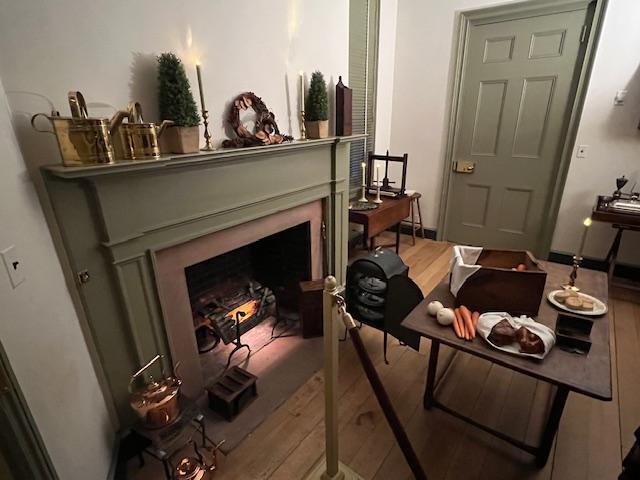
The Warming Room where meals would be finished before serving.
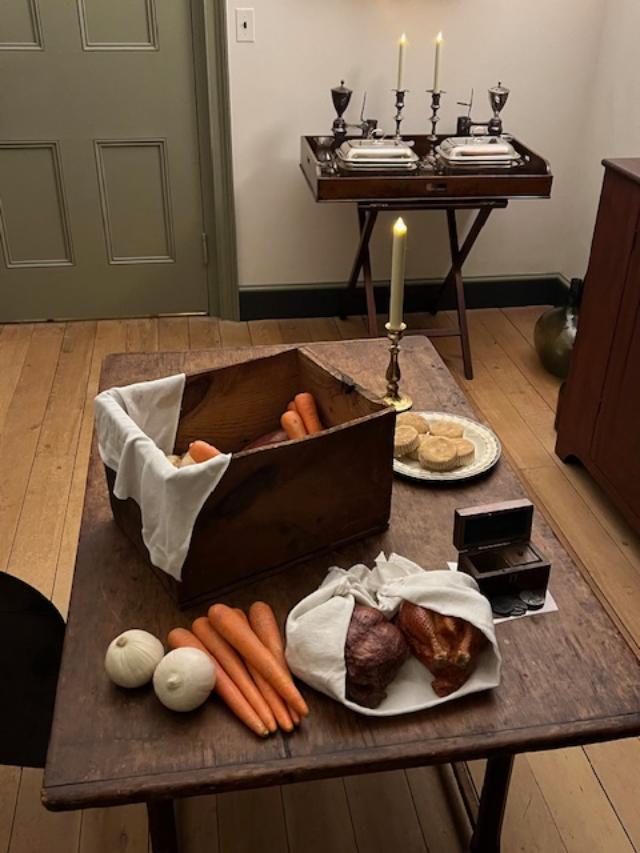
Items to be served at meals in the Warming Room.

We then toured the back areas of the Warming Room, where all the food would have finished and plated. The room had all sorts of gadgets to keep the plates warm and where all the silver and china would have been kept. After the tour of the downstairs was finished, it was time to climb the Grand Staircase to the rooms in the second floor of the home.
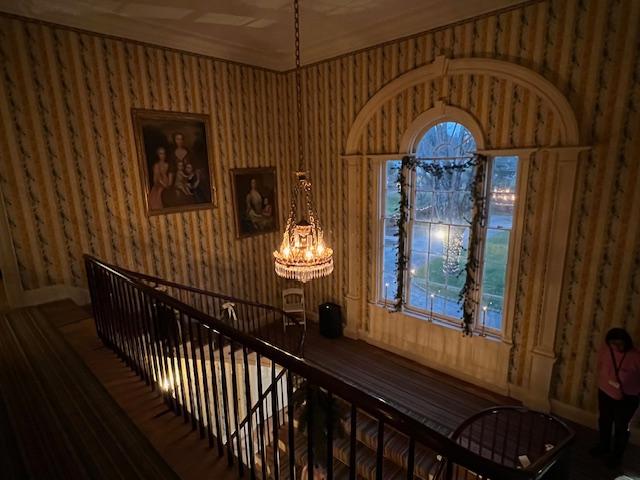
The Grand Staircase to the second floor bedrooms.
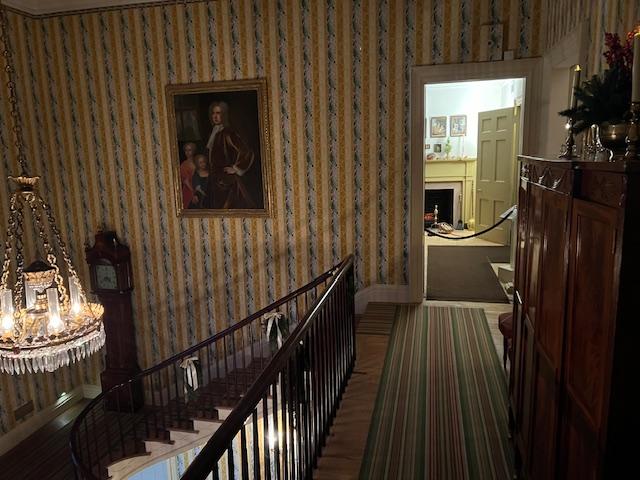
The other side of the Grand Staircase.
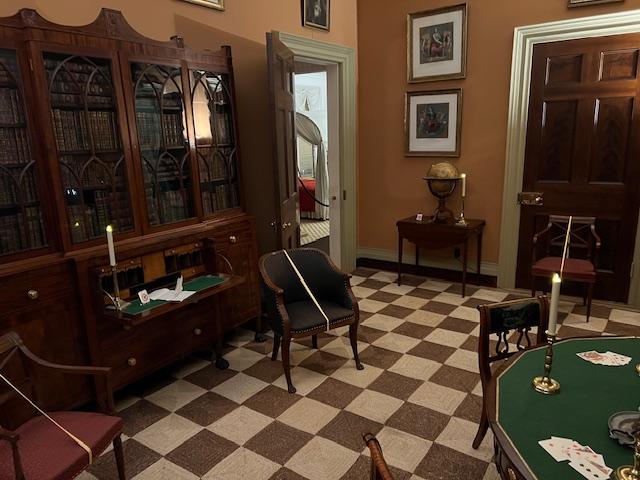
The second floor Landing at the top of the steps is where all the bedrooms were concentrated.
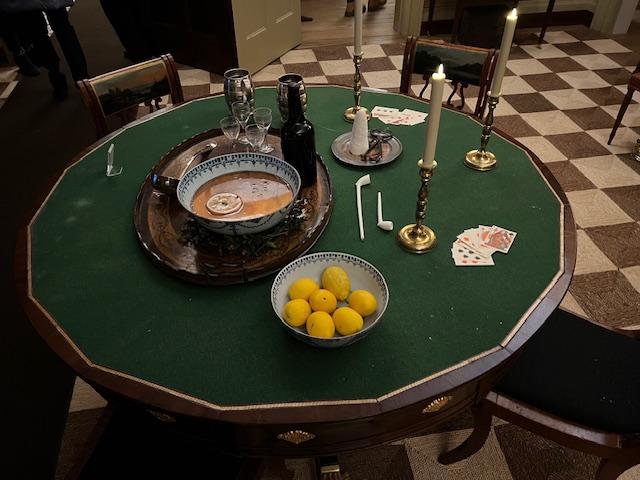
The Card Table at the top of the Landing in Boscobel.

We then toured the upstairs bedrooms, where we learned the family would have ‘camped out’ in for the cold winter months. I was surprised to learn that the whole front of the house was closed off and the upstairs bedrooms would have been sealed off with fireplaces to keep them warm and the cloth hangings around the bed to keep out the drafts. Both mother and son’s bedrooms were nicely furnished with period furniture.
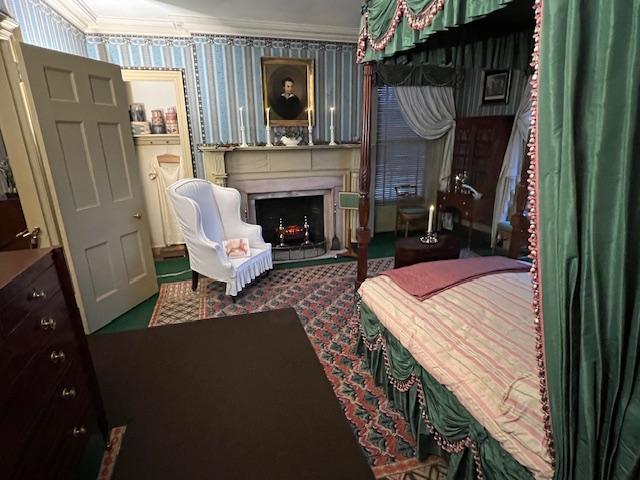
The Mrs. Dyckman’s bedroom at Boscobel.
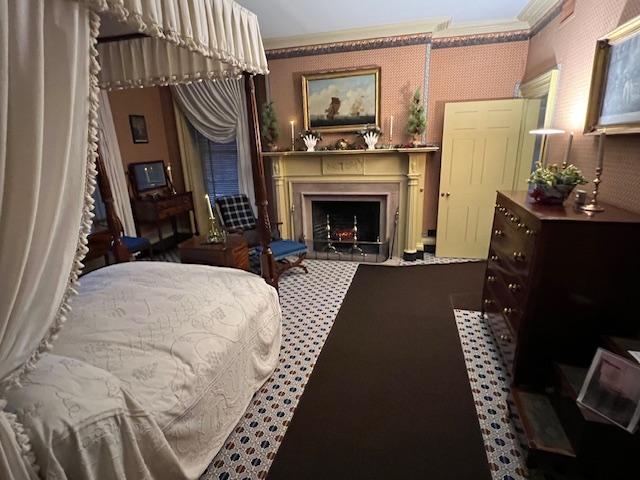
Peter Dyckman’s Room on the second floor

Peter Dyckman’s Room at Christmas time.
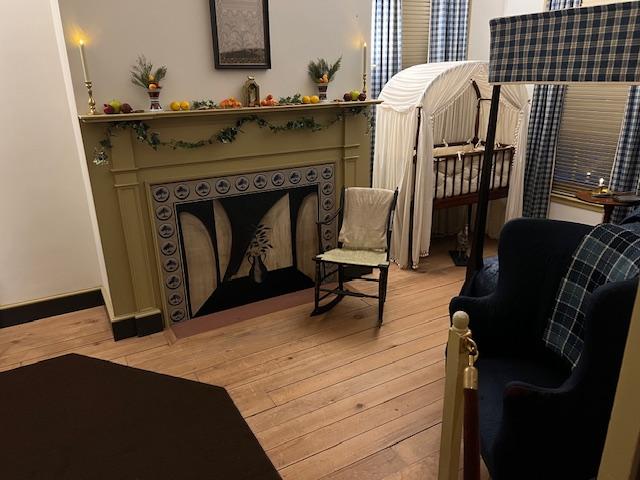
Sills Dyckman’s Room with the nursery.

Sill’s Dyckman’s Room at Christmas time.
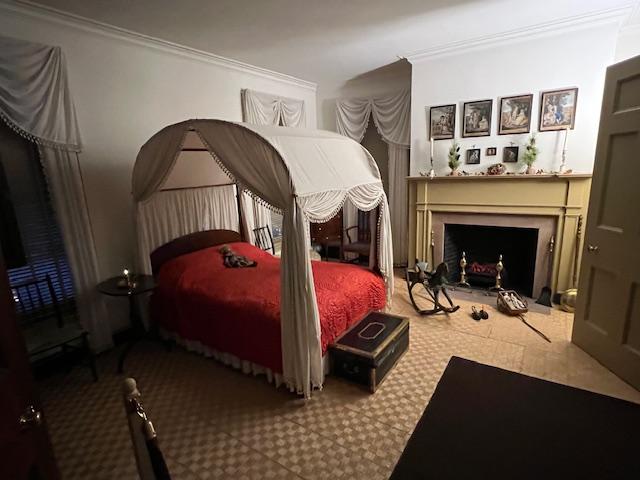
The guest room

The Guest Room at Christmas time.

Our last stop was the kitchen in the basement back area of the house where all the food would have been prepared and brought up to the Butler’s Pantry. There were all sorts of kitchen equipment for roasting, baking and boiling. You could tell that it was not easy work cooking these elaborate meals without the modern conveniences that we take for granted today. These cooks had a tougher time with the stoves and fireplaces as a source of cooking.
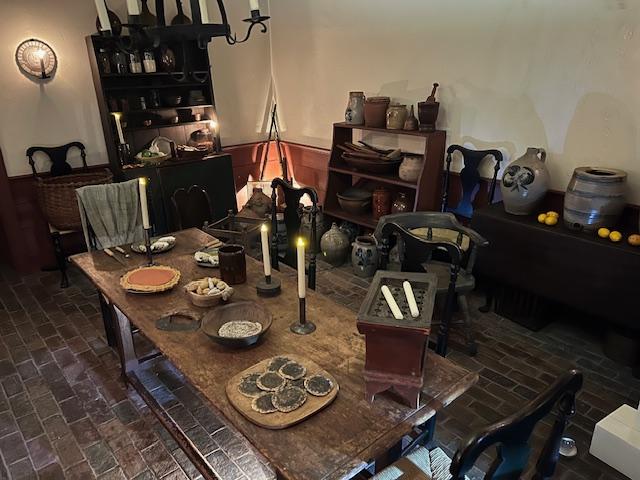
The Dyckman kitchen preparing Christmas dinner.
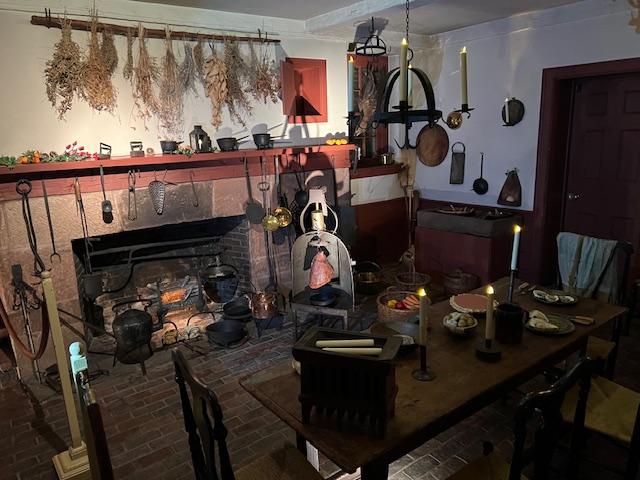
The Dyckman basement kitchen during the holidays.
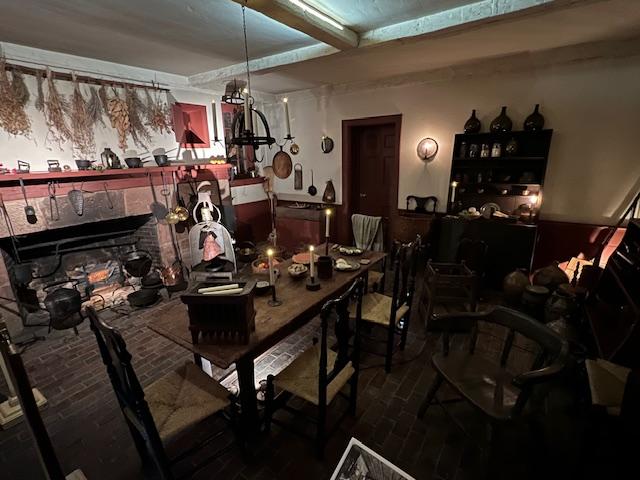
The kitchen during the Christmas
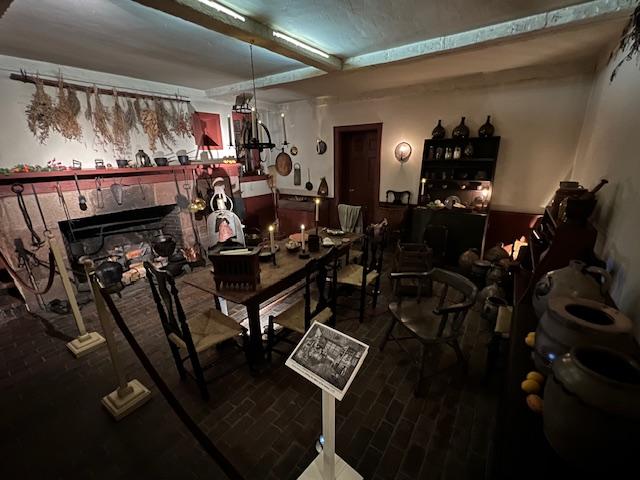
The Dyckman Kitchen where the servants were preparing a holiday dinner.

In the lower level gallery, there was an exhibition of miniature displays by artist Helen Bruce. She created these tiny diorama’s that are on display. She was quite clever in the details.
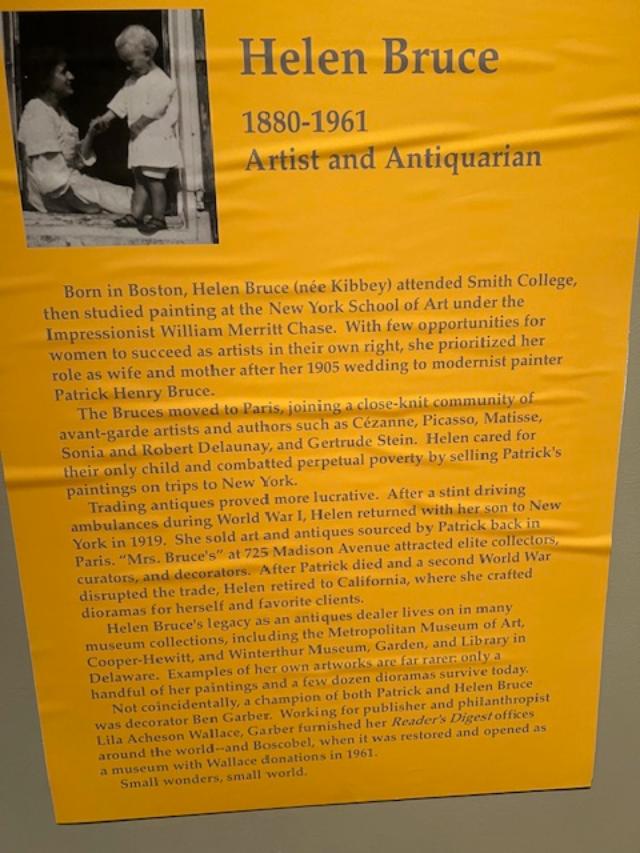
Bio on Artist Helen Bruce
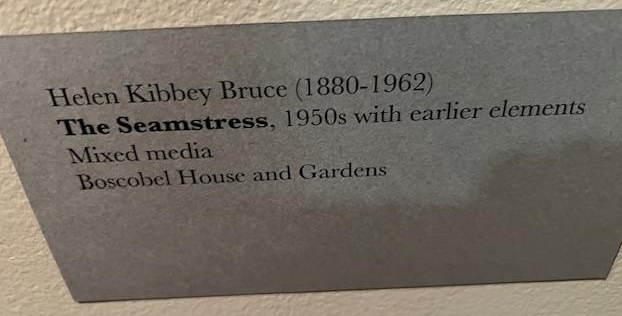
‘The Seamstress’ by Helen Bruce
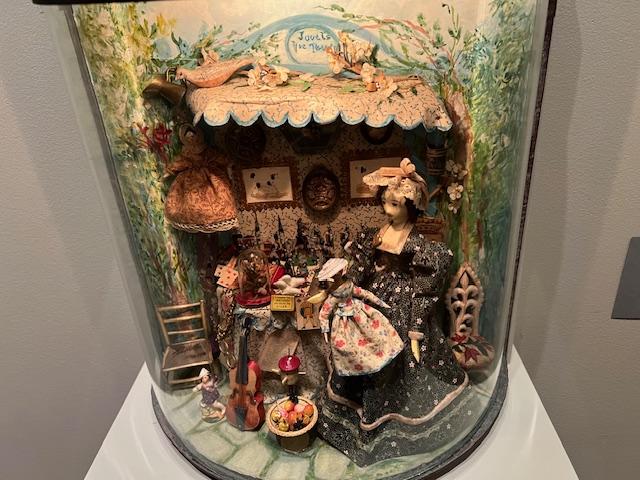
‘The Seamstress’ by Helen Bruce

‘The Toy Shop’ by Helen Bruce
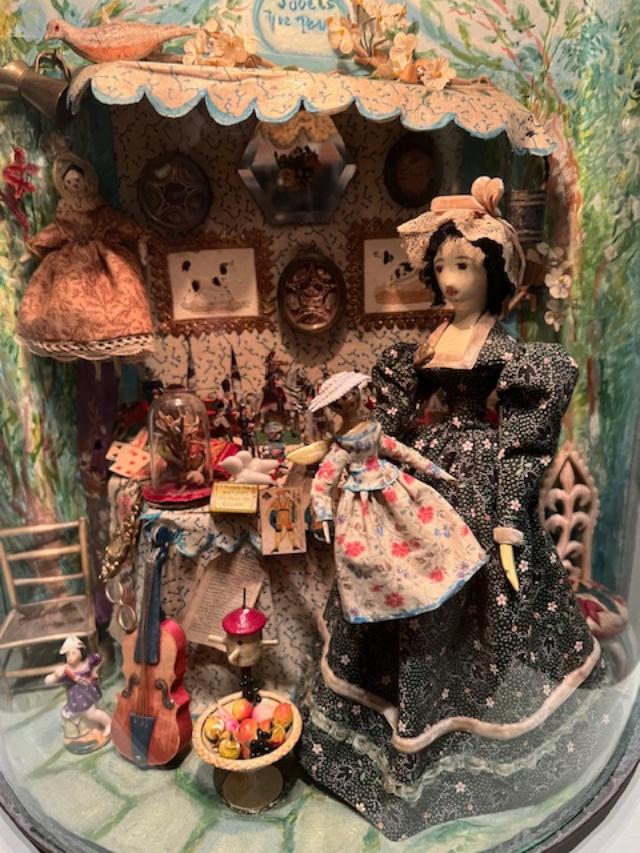
“The Toy Shop” by artist Helen Bruce.
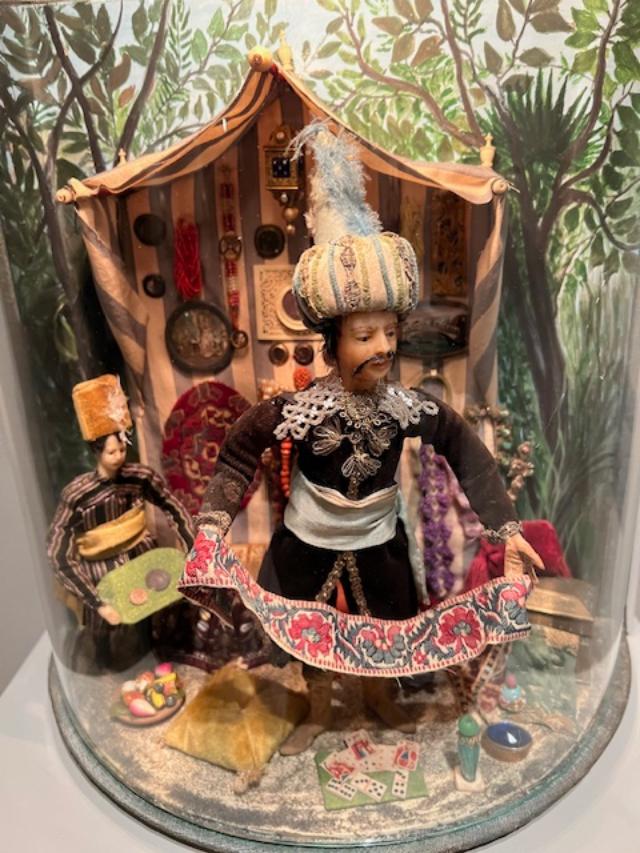
“The Rug Merchant” Artist Helen Bruce.

“Seamstress” by artist Helen Bruce.

The gallery was lined with a series of these diorama’s and each was very detailed in their appearance.

After the self-guided tour was over, I was able to walk around the property and see the gardens. At night the gardens were all lit with Christmas lights and the trellises were done with garland.
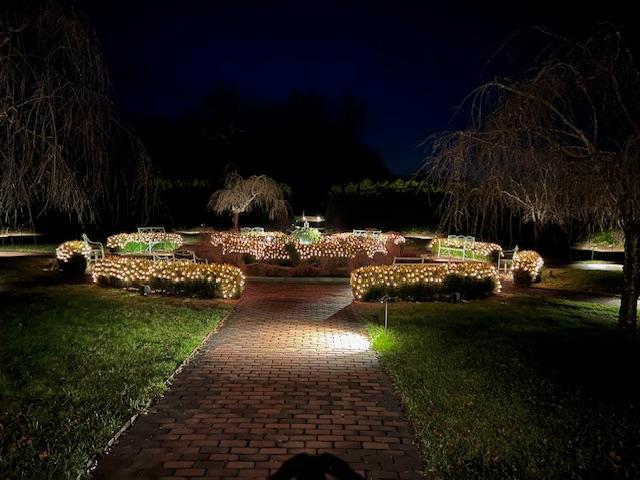
Boscobel’s Gardens at night during Christmas.
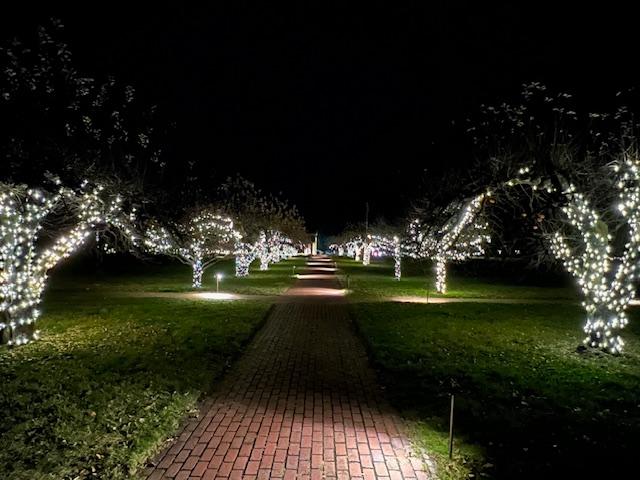
The walkway through the gardens.
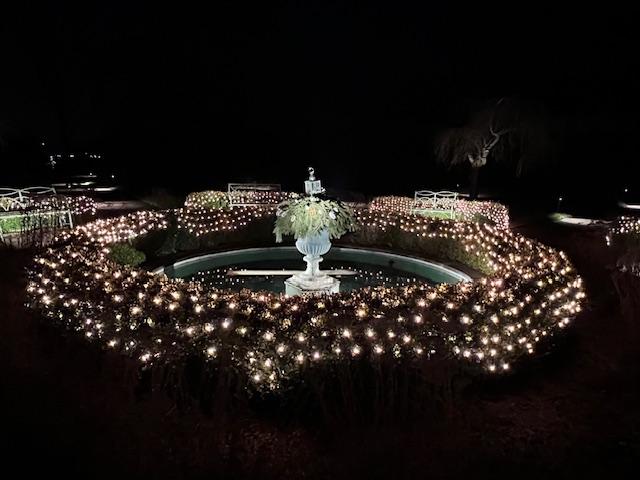
The fountain at Boscobel is decorated to the hilt.
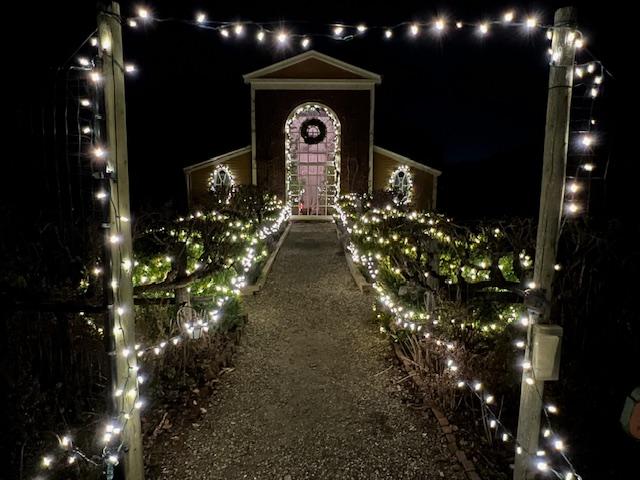
The Herb Garden at night.
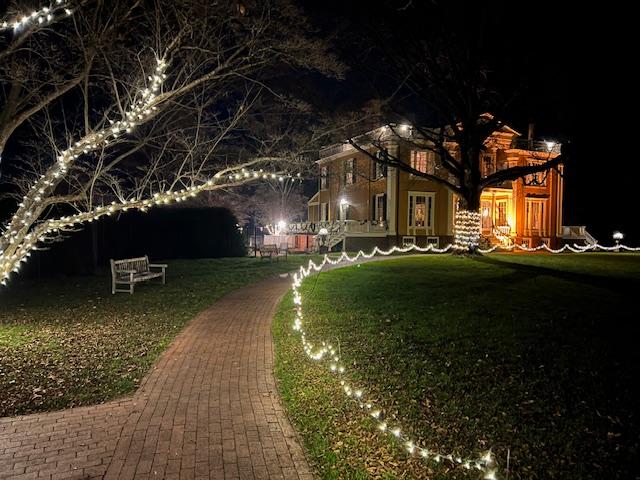
The Front of Boscobel at night.
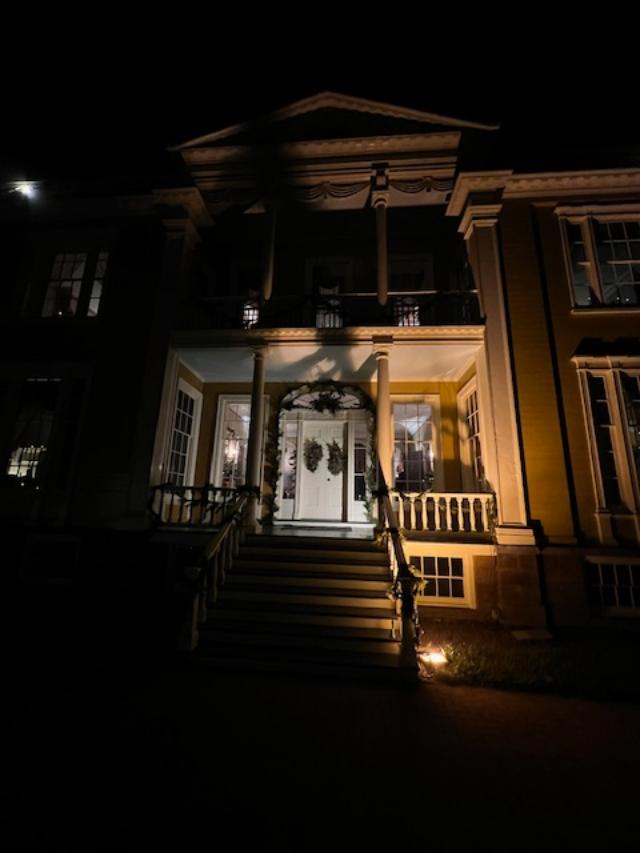
The front of Boscobel at night when I left the house.
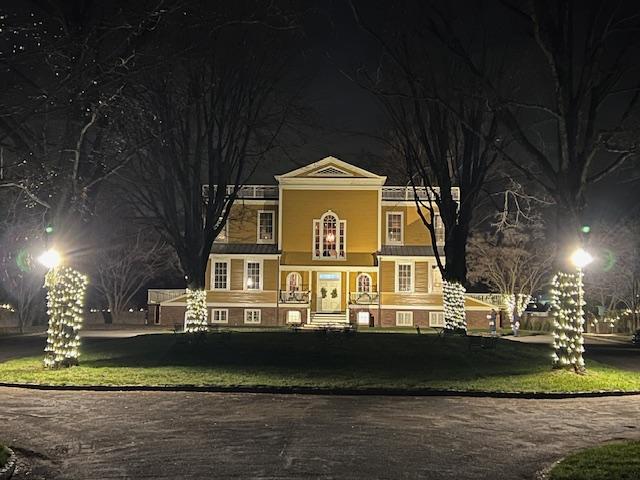
The back of the house on the way back to the Gift Shop.

When I toured the house in 2019, what I thought was a nice touch at the end of the tour in the kitchen area was that Sam served us cold apple cider and small gingerbread men which I thought was special keeping with the house’s tradition of a place of entertainment. I thought it was gracious and very much welcome.

When I went to the evening Open House in 2023, the gift shop was serving refreshments when we returned from our self-guided tour. They were serving Hot Chocolate, Hot Apple Cider, Doughnuts, cakes, cookies and Christmas candy while we walked around the Visitors Center.

The Gift Shop at Christmas time.

The Gift Shop at Christmas time.

It really was an interesting tour and I will have to return in the summer months.

History of Boscobel House & Gardens:

States Morris Dyckman was a descendant of a German-Dutch family whose roots in New York stretched back to 1662. During the American Revolution, he was a Loyalist serving as a clerk in the British army’s Quartermaster Department. In 1779, he accompanied his quartermaster superiors to England and for the next decade he rebutted the government allegations that the quartermasters had engaged in profiteering. (As the keeper of the department’s ledgers, he well knew how they had fattened their purses, assets Dyckman’s biographer James Thomas Flexner). The officers were eventually cleared, largely because of Dyckman’s testimony. They rewarded him with an annuity.
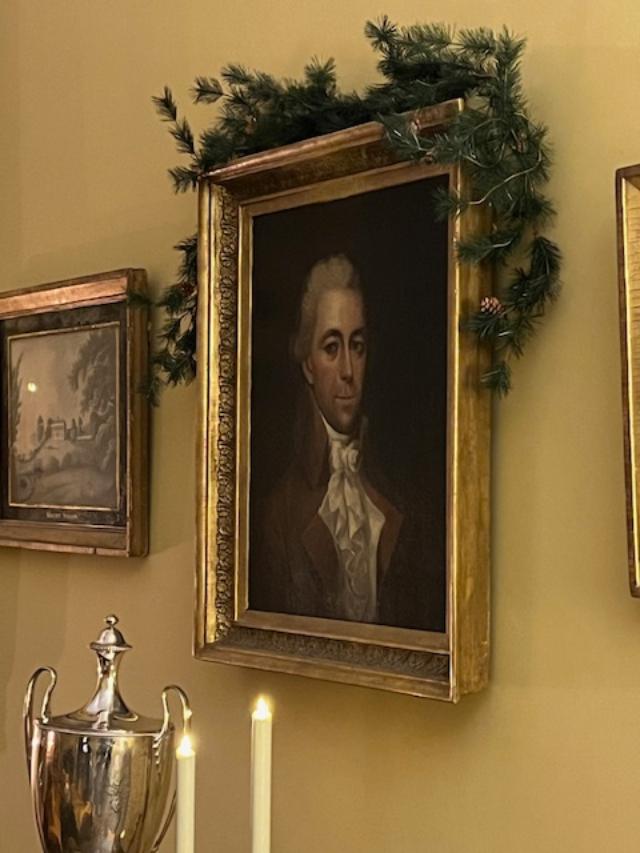
The portrait of States Dyckman in the Front Drawing Room.

Dyckman returned to America in 1789 after a general amnesty of Loyalists had been declared. Five years later, he married Elizabeth Corne, a member of a distinguished New York family and 21 years his junior. Dyckman returned along to England in 1800 to settle problems with the payment of his annuity. The trip lasted nearly four years but was a success. He returned a rich man worth more than seven million dollars today. Before he left England, he bought many items for the house including silver, china, glass and books for his library.

The architect for the house was unknown but records show that Mr. Dyckman had some influence in the design of the house. Mr. Dyckman died in 1806 at age 51 and the house had only had the foundation finished at time. His 30 year old wife, Elizabeth finished the house in 1808 with the help of her husband’s cousin, William Vermilyea. She furnished the house and added to its inventory. She and her son, Peter lived in the house upon finishing it. She lived in the house until her death in 1823 and her son, Peter died the following year in 1824 at age 27. The house stayed in the family until about 1899 and then was foreclosed on. According to the guide, the house had not been updated at that point and was falling apart. The house had a series of absent owners over the next few years and then sat empty. It was bought by Westchester County in 1924 and the grounds were turned into a park.

Boscobel House & Gardens in winter

In 1945, the park was acquired by the Veterans Administration for a hospital and the owners took care of the exterior for a time. By 1954, the house was considered an excess on the budget and was being sold for $35.00 for demolition.

The house was saved by Historian Benjamin West Frazier and some friends of his who raised about $10,000 to have the house moved and dismantled to save ‘this treasure’. The house was stored in pieces until 1955, when Lila Acheson Wallace, the co-founder of Readers Digest became involved in the project.

She purchased the land that the house now sits on and devoted her time and money to have the house restored and worked with the curators of the Metropolitan Museum of Art, where she was a donor to help restore the house into its period design with landscaped gardens and period furniture. In 1959, she commissioned the firm of Innocenti & Webel to create the gardens that surround the house. The house opened to the public in 1961.

(This information was taken from the Boscobel Museum Booklet and I give them full credit for the information)

Blairstown Museum 26 Main Street/                                     Friday the 13th Museum                                                           27 Main Street                                                                       Blairstown, NJ  07825 (Closed January 2023)

Blairstown Museum 26 Main Street/ Friday the 13th Museum 27 Main Street Blairstown, NJ 07825 (Closed January 2023)

Blairstown Museum

26 Main Street

Friday the 13th Museum

27 Main Street

Blairstown, NJ  07825 (Closed January 2023)

(908) 362-1371

http://www.Blairstownmuseum.com

https://blairstownmuseum.com/

Open: Sunday-Thursday Closed/ Friday & Saturday 11:00am-5:00pm

Fee: Free but a donation is suggested

My review on TripAdvisor:

https://www.tripadvisor.com/Attraction_Review-g46308-d11627031-Reviews-Blairstown_Museum-Blairstown_New_Jersey.html?m=19905

The Blairstown Museum closed in January 2023.

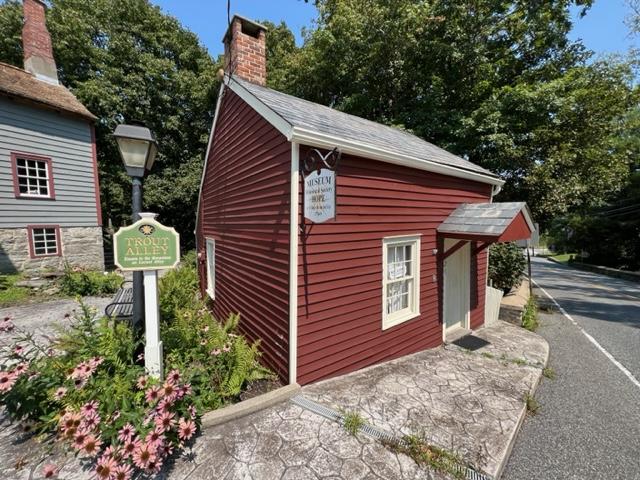
*To all you Friday the 13th fans, some sad news that I was out in Blairstown, NJ on Friday the 13th, October 2023 and found out from one of the downtown merchants that both the Blairstown Museum and the Friday the 13th Museum are both permanently closed. They were really nice museums when they were open. You can visit the Hope Historical Society in downtown Hope, NJ which is where the scene where Annie gets the ride from the trucker driver. It is open from 1:00pm-4:00pm on Sundays but has no Friday the 13th memorabilia in it. Just the history of Hope, NJ. Big sorry!

https://www.hopenjhistory.com/

The Hope Historical Society in Hope, NJ.

My review on TripAdvisor:

https://www.tripadvisor.com/Attraction_Review-g46518-d23805634-Reviews-Hope_Historical_Society-Hope_New_Jersey.html

The Blairstown Museum is a facility housing the history of the town of Blairstown and the surrounding area. The interesting part of this museum is that it is not run by the town but by a local couple, Janette and Frank Iurato, who moved to the area in 2013 and took an interest in the history of the town. The museum was founded in 2015 and opened in 2016. The museum is actually two different museums.

The first one is the Blairstown Historical Museum that covers the history of the town. This museum concentrates on the history of the founding of the town and the residents in it. While I was visiting, there was an interesting exhibition on the Blair Family who had married into the Charles Scribner Publishing family and a little history behind the two families. There was another exhibition on John Insley Blair, one of the residents and a self-made businessman and entrepreneur, for whom the town and the private school are named after.

Blairstown Museum III

The Howell and Dutot exhibition

Another exhibition was on local resident, Robert Parsons Howell, who had moved to Havana, Cuba at the turn of the last century. The exhibition was on the development of the early railroads. There was an exhibition on the early resort history of the area by the Delaware Water Gap by Hotelier Antoine Dutot, who ran the Kittatinny Hotel resort in the late 1880’s. The last exhibition was on the history and creation of Victorian furniture. The exhibition discussed how it was created and how it developed.

Blairstown Museum II.jpg

The museum has changing exhibitions

The second museum is across the street is the Friday the 13th Museum at 27 Main Street and that museum is dedicated to the movie “Friday the 13th” that was shot in the town in 1979.

The Friday the 13th Museum at 27 Main Street

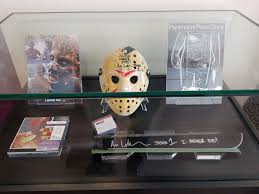
This part of the museum is dedicated to the first film and subsequent films. The couple is collecting artifacts from the films (which there were not much since it was shot on location). On display are items signed by stars of the first film, Adrienne King and Ari Lehman, picture stills from the film and what I thought was interesting were the bar stools from the luncheonette from the second scene of the film and the original ‘Diner’ sign from the Blairstown Diner before the restaurant’s renovation.

Friday the 13th VI

“Friday the 13th” from 1980

What is also nice is that the Iurato’s have a small gift shop with items made by local artists that the have the iconic logo with the ‘Jason Mask’. This part of the museum opened on September 13th of 2019 and the ribbon cutting was done by various members of the cast and crew of the film.

Blairstown Museum IV.jpg

The ‘Friday the 13th’ exhibition

Both of the museum’s are still collecting artifacts so support their collections but the Iurato family has done a nice job preserving the history of the town and dedicating a whole new branch of the museum to the “Friday the 13th” franchise.

Friday the 13th V

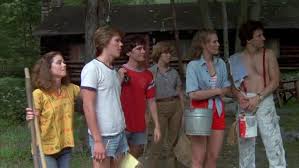
The cast of the original 1980 film “Friday the 13th”

It is interesting as well to just walk around the town and recognize where the opening scenes of the film were shot. The museum is in the second scene of the film when ‘Annie’ does her walk around the town.

If you are a fan of the film, it is a fun place to stop by when visiting Blairstown, NJ.

The entrance of the Friday the 13th Museum

Please visit my blog on the Friends of the Lodi Memorial Library on the 35th Anniversary of the film “Friday the 13th” that we ran at the library in 2015:

https://wordpress.com/post/mywalkinmanhattan.com/228

My opening discussion for the event before showing the film:

My interview with Lodi, NJ Donald Stein, who was a scout master who worked both at Camp NoBeBoCa and who assisted the Blairstown Fire Department on the film:

Don’t miss reading the blog on the event that we ran on November 13th, 2015.

The History of the Blairstown Museum:

(This information was taken from the museum’s website and I give them full credit for it)

When the Iurato family moved to Blairstown in 2013, they were surprised to find that the township did not have a museum honoring its founders. New residents did not have a central place where they could learn about the people and businesses that shaped the town’s past, how to be good stewards of Blairstown’s Historic District and the rural beauty left in their care.

Originally, the family’s intention for the property at 26 Main Street was to rent the first floor space to a business that would complement the Historic District’s businesses, add to the tourism appeal and increase the overall foot traffic of the area. They were overwhelmed by the amount of people that enthusiastically suggested they establish a museum.

Following eighteen-months of renovations, artifact collecting, historic research, networking with local historians and establishing a non-profit organization, the Blairstown Museum, located at 26 Main Street, opened to rave reviews. On October 1, 2016, nearly 600 people attended the Grand Opening Celebration. Since then, the Museum has offered hundreds of exhibitions, events, programs and tours and has received local, state and federal recognition.

Supported by “Friday the 13th” Franchise Fans, on September 13, 2019, the Museum opened a second location at 27 Main Street to house a year round Friday the 13th exhibition. The Grand Opening Ceremony was attended by Ari Lehman, Tom McLoughlin, Jason Brooks, Vincent DiSanti, Dave Brown and hundreds of fans.

The Museum’s Vision Statement:

In fulfillment of our mission, we have adopted the following Vision Statement: “The Blairstown Museum will be a vibrant social, cultural and economic centerpiece of the town and will be regarded as an entertaining and worthwhile tourist destination. The Museum will be a resource for residents, visitors, historians and educators. The Museum will preserve and catalog important objects and documents and will use those items to provide educational and cultural programs for the public.”

Blairstown Museum.jpg

The Blairstown Museum

The Museum’s Mission Statement:

The Blairstown Museum’s mission is to acquire and collect; research and document; protect and preserve and exhibit and promote the unique history and heritage of the Township of Blairstown for the benefit of residents and visitors. Founded by the Iurato family and managed by a group of dedicated individuals, the Museum is house in a 19th Century building, known as the last remaining structure of “Roy’s Row”.

As the only independent public museum in the Township of Blairstown, the Blairstown Museum is an IRS Certified 501(c)(3), all volunteer, non-profit charitable organization tasked with the responsibility of caring for thousands of items which illustrate the history of the township and its inhabitants, including former resident and founder John Insley Blair. In an effort to help foster heritage tourism throughout the region, our collections are used to interpret the area’s history through permanent and changing exhibits and to educate the public about our history through programs, resource materials and events.

Blairstown Museum staff are charged with providing professional care to the collection, employing standards established by the American Alliance of Museums for the storage, care and exhibit of artifacts in its custody. Historic exhibits are on display on a rotating basis throughout the year. We are committed to expanding the digital display of our collection, in a manner that makes it available as a teaching tool for students, teachers and historians.

Disclaimer: This information on the Blairstown Museum was taken from their website and I give them full credit for the information.

The Introduction of the film from 1980 “Friday the 13th”:

Annie arrives in Blairstown:

Here are the sites from Downtown Blairstown, NJ.

These are some of the sites from the film in Downtown Blairstown, NJ in January 13th, 2023:

Downtown Blairstown, NJ:

Where Annie walked in the beginning of the film January 13th, 2023

The Blair Academy Park that Annie passed by in January 13th, 2023.

Downtown Blairstown, NJ on January 13th, 2023

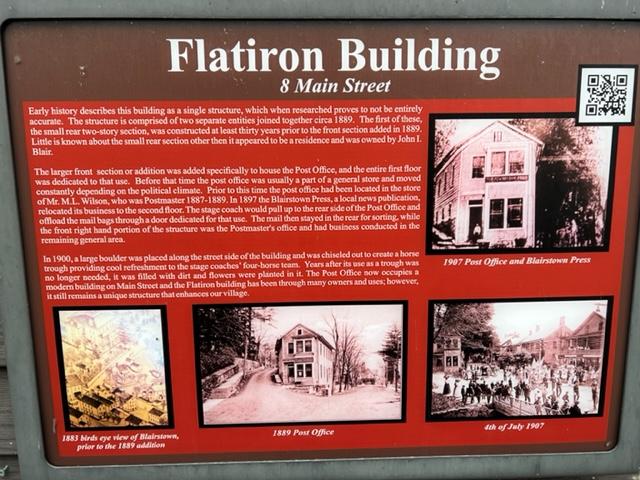
Flatiron Building in the film

The Flatiron Building where Annie walked down the hill on January 13th, 2023

The Blairstown Water Building on January 13th, 2023.

Blairstown Water Building in the downtown

Walking through the Water Building where Annie walked.

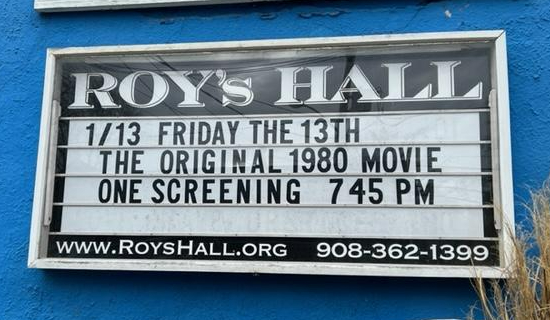
The theater where Annie passed on her way to the cafe just below Blair Academy

The movie was showing on Friday the 13th January 2023

The Blairstown Historic District downtown

Downtown Blairstown, NJ

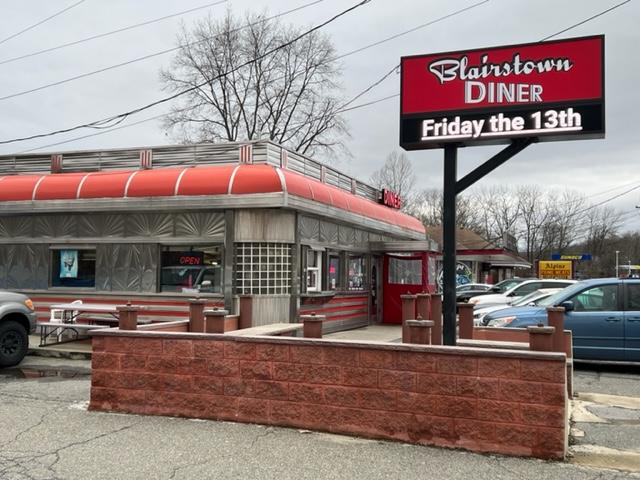
Blairstown Diner at 53 Route 94

https://www.blairstowndiner.com/

My review on TripAdvisor:

https://www.tripadvisor.com/Restaurant_Review-g46308-d848990-Reviews-Blairstown_Diner-Blairstown_New_Jersey.html?m=19905

The Blairstown Diner for Friday in 13th

The burgers at the Blairstown Diner are fantastic.

Volunteer Firemen’s Hall & Museum of Kingston                                                    265 Fair Street                                                                          Kingston, NY 12402

Volunteer Firemen’s Hall & Museum of Kingston 265 Fair Street Kingston, NY 12402

Volunteer Firemen’s Hall & Museum of Kingston

265 Fair Street

Kingston, NY  12402

(831) 331-0866

https://kingstonvolunteerfiremensmuseum.weebly.com/

Open:  The hours vary by the season so please look to the website for the openings. School groups please call for an appointment.

Fee: Free but donations accepted

My review on TripAdvisor:

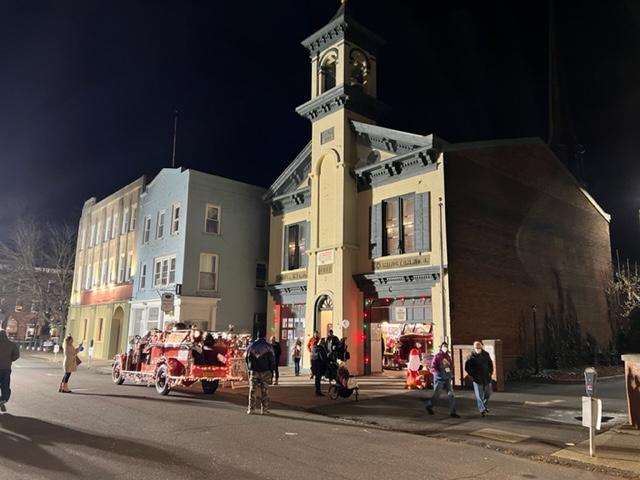
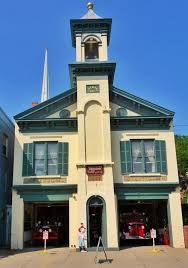
The Kingston Volunteer Museum during the ‘Kingston Snowflake Festival’

https://www.tripadvisor.com/Attraction_Review-g48003-d3367598-Reviews-Volunteer_Fireman_s_Hall_Museum_of_Kingston-Kingston_New_York.html?m=19905

The antique fire truck outside the firehouse during the Kingston “Snowflake Festival”

I was recently visiting Kingston, NY for an event and while walking around the downtown the doors of the Volunteer Firemen’s Hall & Museum of Kingston was open for visitors. Even if you are not a fire fighter it is such an interesting museum on the history of fire fighting and the role the Kingston Fire Department had in the formation of the City of Kingston.

Kingston Firemen's Museum II.jpg

The early horse drawn fire equipment

The museum welcoming people to the Kingston “Snowflake Festival” in 2022

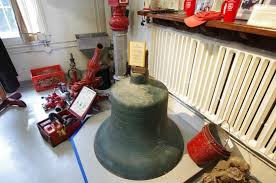
On the main floor is four pieces of equipment from various stages of the department. The engines are from the turn of the last century featuring horse drawn ladders and steam engines and then the latest equipment from the early teens and twenties from the automotive stage. Each piece of equipment has been carefully maintained and is in pristine shape.

The museum decorated for Christmas for the recent “Kingston Snowflake Festival”

It is interesting to see how different each rig is at that stage of its history but how much has not really changed with the use of the equipment when fighting a fire.

The bay area of the old firehouse with the antique equipment

One of the more interesting pieces in the collection is the beautifully detailed Parade piece from the late 1800’s (circa around 1890’s) which has gorgeous details and intricate craftsmanship work to it. This interesting piece of equipment was the pride of the department on parade day and is one of the few of its type in the country.

The Fire Department Parade Piece

Along the walls is all sorts of pictures of old fires, men who were once members of the department, ribbons and awards, old systems for calling for firemen from the horns that used to sound the alarms to the more modern telegraph equipment to the current paging systems.

The roster upstairs

Kingston Firemen's Museum III.jpg

The fire department equipment pieces

Upstairs you can visit the furnished headquarters of a firehouse circa 1890’s to 1920 with vintage furniture, decorations and composites of firemen long ago. There is even a mannequin of a fire fighter sliding down a pole that leads to the first floor. Here and there are more decorative equipment pieces, furnishings and awards.

The upstairs of the Kingston Volunteer Museum

The museum has a little something for everyone and if you are interesting in knowing more of the history of the fire service and want to hear the stories by members current and retired from the Kingston Fire Department, then the Volunteer Firemen’s Hall & Museum is the place to visit.

Kingston Firemen's Museum IV.jpg

Old decorations from fire equipment at the Volunteer Firemen’s Hall & Museum

History of the Museum and Fire Fighting in Kingston, NY:

Ulster County has a remarkable over 350 year history of noble fire fighting. See it up-close and personal at the Volunteer Firemen’s Hall & Museum of Kingston.

The award case upstairs at the firehouse

When Kingston City Hall burned on June 4th, 1927, the third alarm was sounded from the building’s own bell tower before it crashed to the ground. Fire calls in Kingston today are answered through the 911 system with a three minute response time. Ever watched a TV show about firemen and their firehouse? The ‘squawk’ to a call is unmistakable.

The upstairs in the firehouse

Seven volunteer fire companies and the Exempt Association of Kingston recognized the importance of preserving and protecting firematic artifacts as well as establishing a meeting hall for volunteer fire organizations in Kingston and Ulster County. They were charged with finding a permanent home and signed a lease with the City of Kingston for Fair Street’s historic circa 1850 Wiltwyck Fire Station and the rest is history.

The Ladies Auxiliary and rosters

Walk through the large wooden doors to the home away from home of the 19th century firefighters.

Kingston Firemen's Museum.jpg

The old Kingston, NY firehouse that now houses the museum

Disclaimer: this information was taken directly from the Volunteer Firemen’s Hall & Museum of Kingston pamphlet and I give them full credit for it. Please check out their website for more information.

The living area upstairs in the firehouse decorated for Christmas

Hamilton-Van Wagoner House Museum                     971 Valley Road                                              Clifton, NJ 07013

Hamilton-Van Wagoner House Museum 971 Valley Road Clifton, NJ 07013

Hamilton-Van Wagoner House Museum

971 Valley Road

Clifton, NJ  07013

(973) 744-5707

https://www.cliftonnj.org/256/Hamilton-House-Museum

Open: Sunday 9:00am-5:00pm/Monday & Tuesday Closed/Wednesday-Saturday 9:00am-5:00pm

Fee: Suggested Donation $5.00

My review on TripAdvisor:

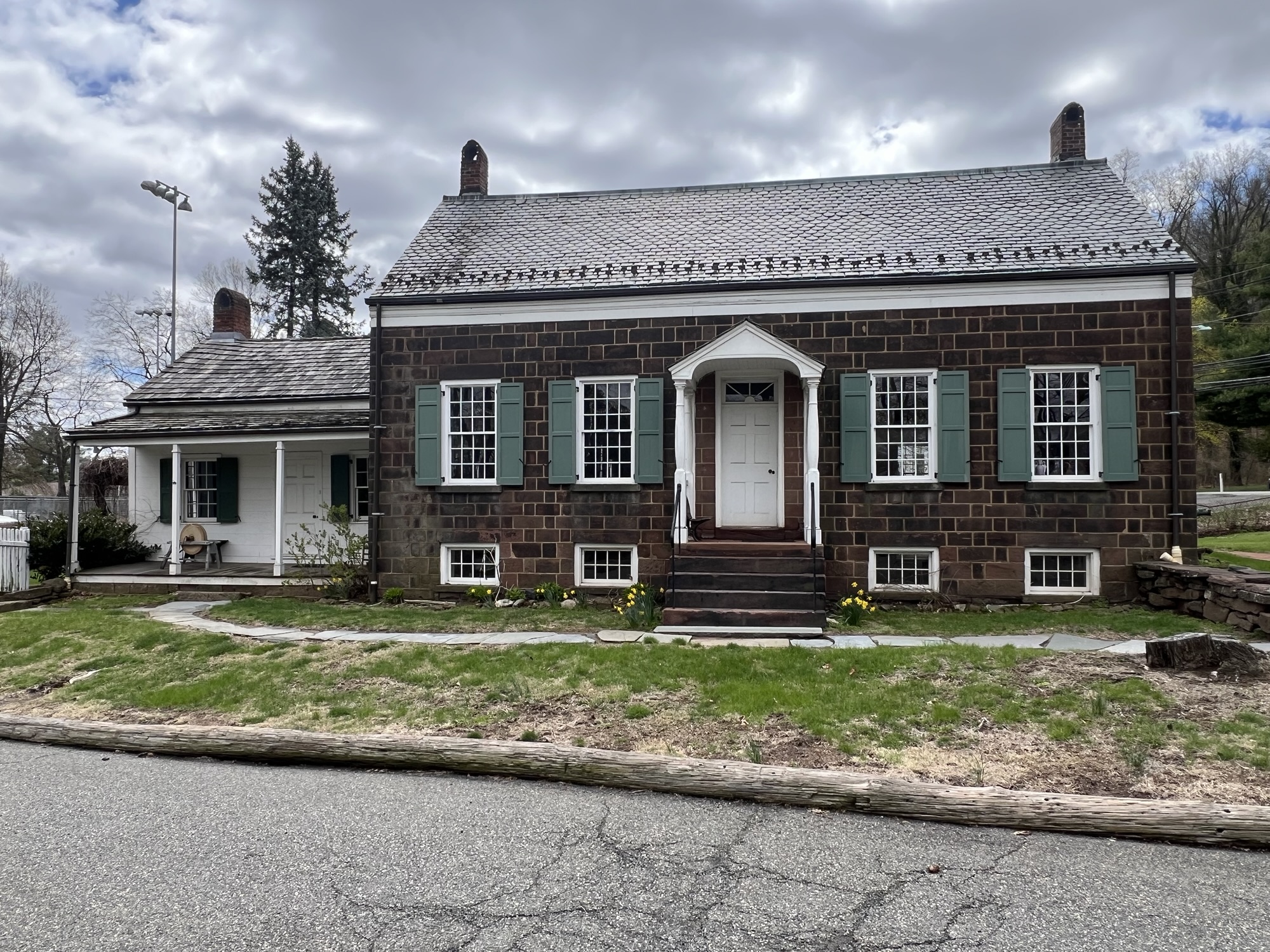
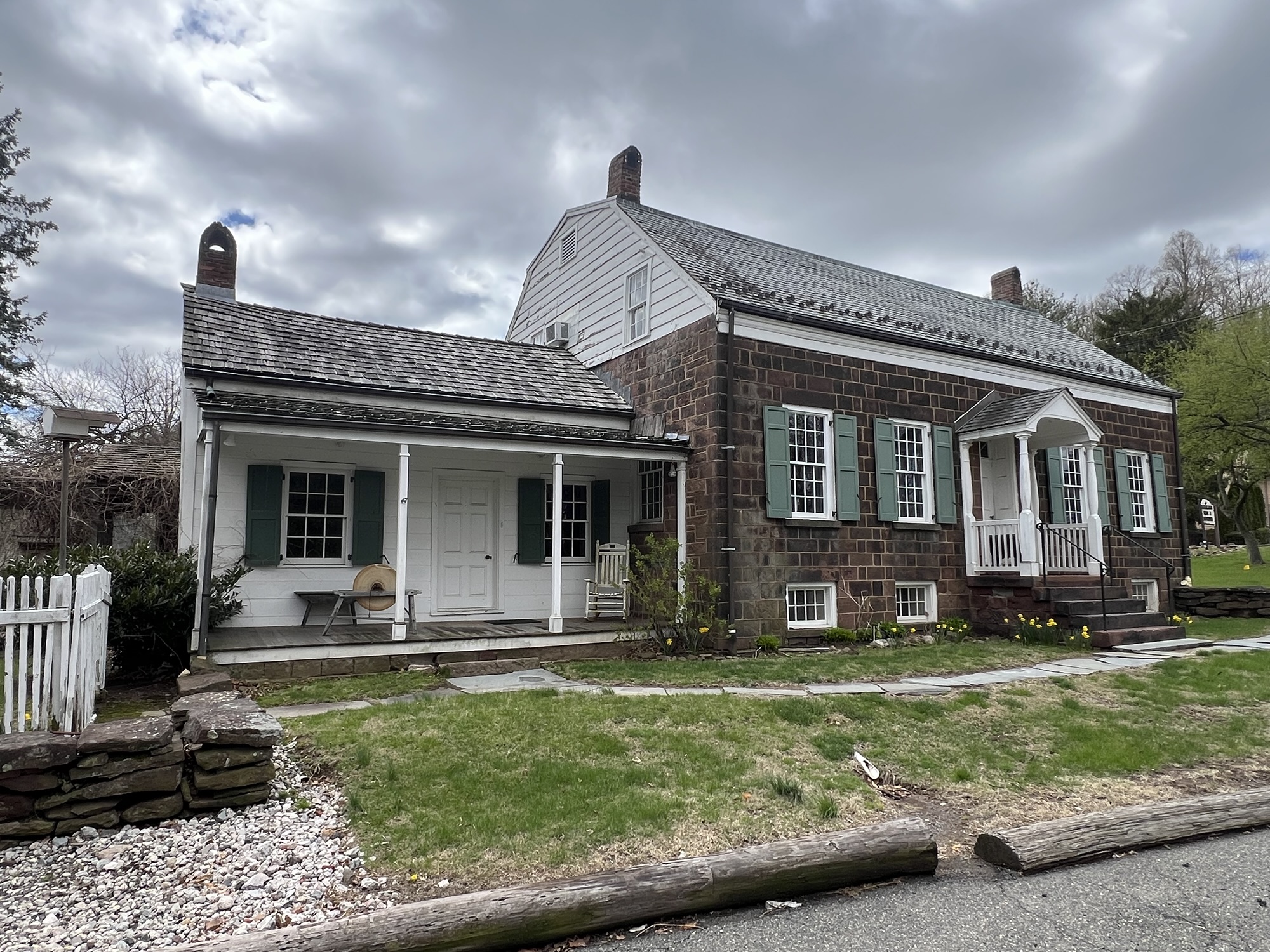
 The front of the Hamilton House in the early Spring

I visited the Hamilton House Museum this afternoon which is right down the road from Montclair State College and sits at the border of the Clifton-Montclair border. The interesting part of the house location is that it still sits the farm land of the Van Wagoner Family but the house was moved from its location to the current one because of the building of Route 46 in 1973.

The front of the house in the Spring

When talking with curator, the house is going through a transition from the City of Clifton ownership to the County of Passaic Historical Society’s site. They are currently cataloging every piece in the house and putting it online. They want to view the collection to see what they can work with within the home.

Each room represents a different time in the history of the house. There is a living room from the Victorian age, the kitchen is from the late 1700’s to the early 1800’s and the dining room is from the mid-1800’s. These rooms are furnished to represent a certain time in the house.

There will be many revisions in the future for the house so there are some changes on the way. The upstairs is currently being used for storage and there will be revision there as well. I got a quick tour of the rooms with the curator and he said there will be more changes in the future as they catalog each piece. The grounds are currently being replanted.

The Hamilton House Museum sits at the Clifton and Montclair border

The house is one of the last examples of early 19th century stone houses in Passaic County. The house was built in 1817 by John and Ann Vreeland and then passed to the Van Wagoner family. It changed hands a few times until 1856 when the Hamilton Family bought the house (no relationship to Alexander Hamilton). The house remained in the Hamilton Family until 1972 when the last living relative died and no one in the family wanted possession of the house (Tour Guide & Wiki).

The oldest section of the house

That’s when the City of Clifton bought the house from the family of its historic value. The house was added to the National Register of Historic Places on May 13th, 1982 (Wiki).

The outside grounds of The Hamilton House Museum

The Grape Arbor on the grounds of the Hamilton House

History of the Hamilton House:

(taken from the City of Clifton website)

This 18th Century Dutch gambrel-roofed homestead was once the home of the Van Wagoner and Hamilton families. This basic of the house does not greatly differ from its Dutch antecedents.

The sturdy one and one half story cut sandstone structure, flanked by a grainery, spring-house and gardens reflects almost two hundred years of American history. It brings back memories of an uncluttered horizon with farms, orchards, fresh brooks, forest full of game and filled with scent of wildflowers.

Hamilton House & the Clifton Community:

Although the City of Clifton was incorporated in 1917, a community had existed since 1679. Prior to 1917, the area was known as Acquackanonk Township and included parts of : Little Falls, Passaic, Paterson and West Paterson.

The Indian Chief Captahem deeded 11,000 acres to the early Dutch settlers on the shores of the Passaic River. Predominately rural, this sparsely populated village thrived and grew.

The farmhouse was presented to the City of Clifton by the developers of the late Henry Hamilton. The Hamilton family had bought the 96 acre property in 1856 and for over 100 years until the death of Mr. Hamilton in 1970, it had been the family home.

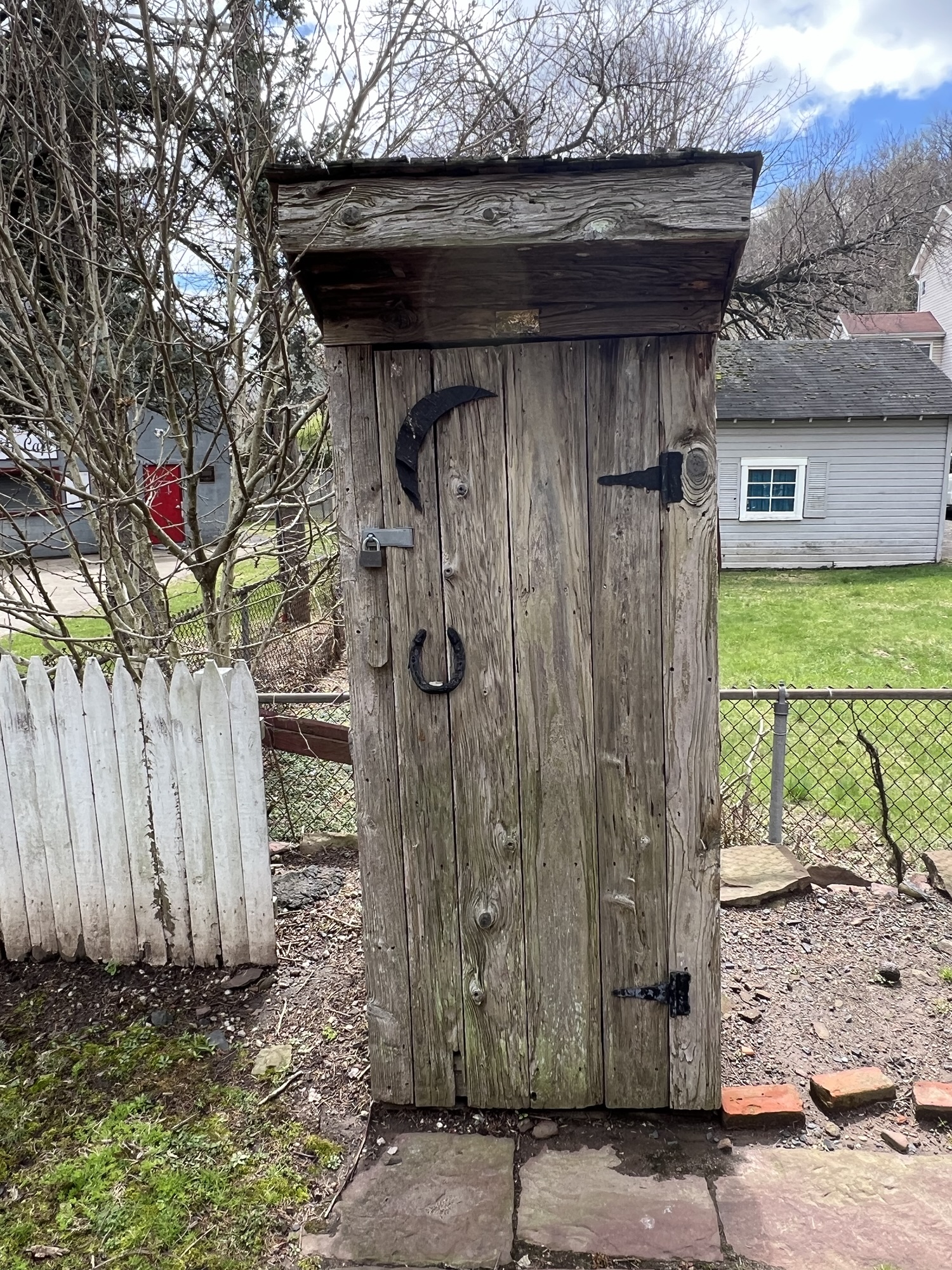
The old outhouse in the back of the property

Current Location and Future Plans:

The house was moved to its present location in Surgent Park in 1973. Infinite plans have been taken with examination and documentation of the building’s structural elements. Extensive research has been conducted including the records and treasured memories of Miss Caroline Hamilton as well as: Artifacts, Deeds, Manuscripts, Maps, Photographs and Wills.

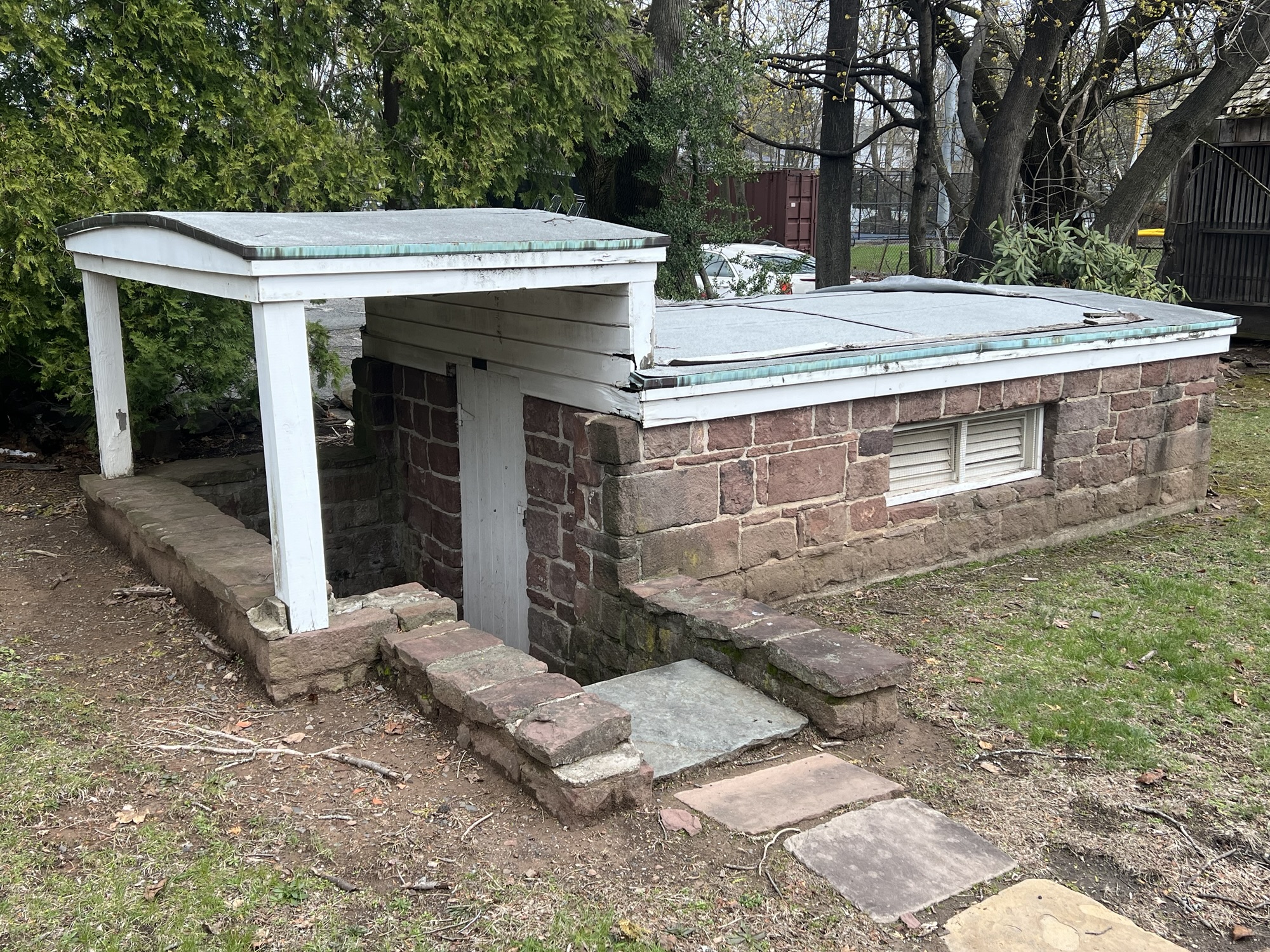
The old Ice House on the property

Scheduling Tours:

The museum is opened for tours on Sunday from 2:00pm-4:00pm (except on holidays). The house is going through a transition right now with the change over.