Tag: Small Museums of New Jersey

Somers Mansion                                                  1000 Shore Road                                             Somers Point, NJ 08244

Somers Mansion 1000 Shore Road Somers Point, NJ 08244

Somers Mansion

1000 Shore Road

Somers Point, NJ 08244

(609) 927-2212

https://www.nj.gov/dep/parksandforests/historic/somersmansion.html

Somers Mansion

Open: Sunday 9:30am-3:30pm/Monday-Friday Closed/Saturday 9:30am-3:30pm

Admission: Free

My review on TripAdvisor:

https://www.tripadvisor.com/ShowUserReviews-g46825-d5970174-r844645596-Somers_Mansion-Somers_Point_New_Jersey.html?m=19905

The Somers Mansion at 1000 Shore Road

(There is no indoor picture taking allowed)

The mansion sign

I visited the Somers Mansion, the three story former home to five generations of the Somers Family. The mansion sits on a buff overlooking the bay and the bridge to the barrier island where Ocean City is located. The original part of the house was built in 1725 and in 1920 the last family members moved from the home and deeded it to the town. The modern additions of the home have been stripped off so you see the original house.

The historic marker of the home when it was donated by the family

I have to say that I was very disappointed with the condition of both the house and of the rooms and displays inside the house. There was not much to see. The lower level of the home has the main room with the hearth known in most early homes as the “Keeping” or “Everything” room where all the cooking, household chores and socializing was done because of the warmth of the fire.

Here and there were pieces of furniture but nothing labeled or decorated to make the room look ‘period’. Just old furniture here and there to fill the space. Some of the original family china was in the cupboards built into the walls.

The upstairs which must be reached by a rope bannister lead up a narrow stairs to two upstairs bedrooms. The home is not handicapped safe. The front bedroom had a fireplace with a small side room that held spinning wheels and some children’s furniture. There was not much to see in the upstairs.

The tour guide did not offer much in the way of information on the house and the only period pieces of the Somers family that were left inside the house were a chest, a clock, some of the china that was in the side cabinents and a bedwarmer.

Outside the house the Somers Point Garden Club planted a period garden of fruits and vegetables on the back lawn and lead tours of the gardens.

The Somers Mansion Kitchen Garden

The Garden Club planted fruits and vegetables that would have been grown in the time periods of the late 1700’s to early 1800’s. You can walk amongst the beds to see the plantings.
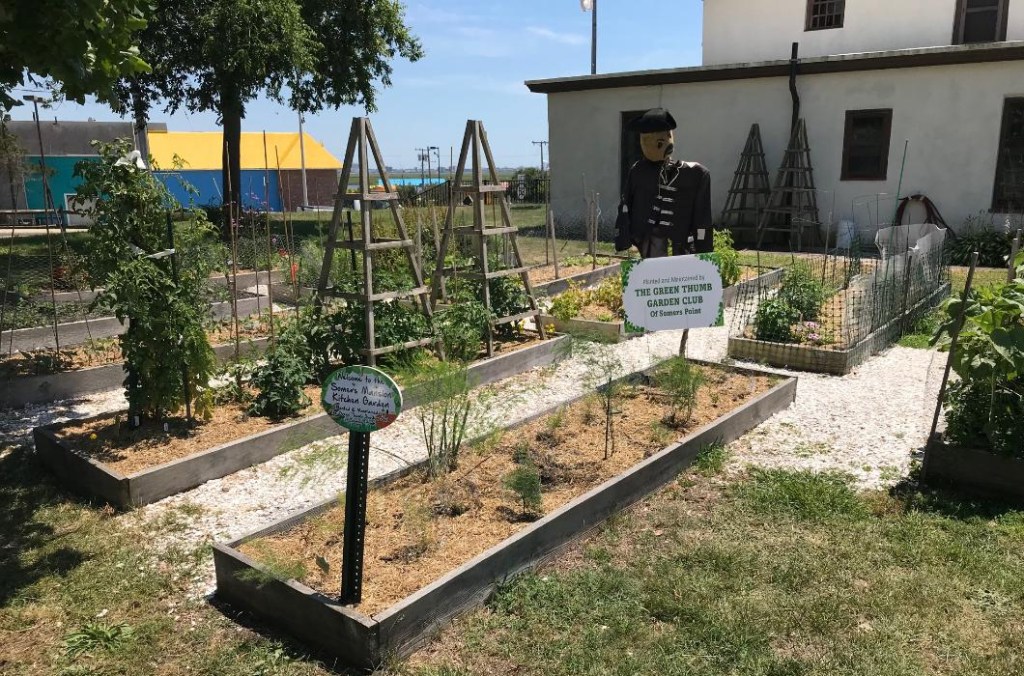
Somers Mansion Kitchen Garden planted by the Garden Club

The whole tour takes less than a half hour and it is more impressive from the outside. You are also not allowed to take pictures of the house for security reasons.

The History of the Somers Mansion:

(From the NJ State Historical Site.com):

The mansion and surrounding city bear the name of the family who owned and occupied the house for 200 years.

The original mansion after it was stripped of the modern additions

The Somers Mansion, a three story home constructed of brick in the Flemish bond pattern, sits overlooking the Great Egg Harbor Bay at Somers Point. In the late 1600’s, the property which surrounds the mansion was acquired by John Somers, who operated a ferry service across The Great Egg Harbor Bay to Cape May. He referred to it as Somers Plantation and Somers Ferry and the surrounding settlement, the olders in what became Altantic County and then Somers Point in the mid-18th Century.
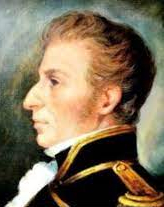
Master Commandant Richard Somers

https://en.wikipedia.org/wiki/Richard_Somers

http://www.richardsomers.org/

The mansion is considered to be the oldest existing house in Atlantic County, predating the County itself. His son, Richard, the first of the family to be born in New Jersey, built what is now referred to as the mansion by 1726. That year the local Society of Friends (Quakers) used the home for a meeting and memorialized it in their minutes, making the earliest recorded date of the home’s existence.

By the end of the 19th century, the mansion’s architecture had been added to and changed to reflect a Victorian style. The house remained in the Somers Family until 1937 when it was deeded by Florence Hayday Brooks and Lulu Hayday Smith, daughters of Hannah Hayday Somers to the Atlantic County Historical Society for the purpose of creating a permanent memorial to the Somers family.

In 1941, it was transferred to the State of New Jersey, dedicated on September 26th, 1942 and in the early 1940’s was restored to its colonial appearance as a Works Progress Administration (WPA) project. Laborers for the WPA both renovated the surviving furnishings and conducted a historical restoration, including the elimination of rooms and architectural details dating to the 19th century. The site was added to the National Register of Historic Places in 1970 and is now a State Historic site.

The Somers Family burial ground further down off Shore Avenue off New York Avenue

A Short History of Somers Point:

(From the Trail of Richard Somers pamphlet)

https://en.wikipedia.org/wiki/Somers_Point,_New_Jersey

Somers Point was originally settled by John Somers, an Englishman and practicing Quaker, who bought the land from Thomas Budd. Early names for the area were Somerset Plantation, Somers Ferry and Somers Plantation named after the first settlers in 1693. The land purchased originally covered all of Somers Point, part of Linwood and went into Egg Harbor Township. In the early years, it was part of Gloucester County, because Atlantic COunt had not yet been named.

The name “Somers Point” was adopted in 1750. It was a seafaring town and sloops, schooners and barges were built in the many shipyards located along the Greate Egg Harbor Bay, Greate Egg Harbor River and Patcong Creek.

The estate overlooking the bay

The Sooy Boatworks was located on Shore Road and the completed ships were rolled on logs down Shore Road to Delaware Avenue and then down to the bay. Shipbuilding and life along the waterways was a very important part of life in early Somers Point.

The statue of Robert Somers in Robert Somers Park

Hancock House State Historic Site                                              3 Front Street                                                                 Hancocks Bridge, NJ 08038

Hancock House State Historic Site 3 Front Street Hancocks Bridge, NJ 08038

Hancock House State Historic Site

3 Front Street

Hancocks Bridge, NJ 08038

(856) 935-4373

https://nj.gov/dep/parksandforests/historic/hancockhouse.html

https://www.facebook.com/FOHHNJ/

https://en.wikipedia.org/wiki/Hancock_House_(Lower_Alloways_Creek_Township,_New_Jersey)

Open: Sunday 1:00pm-4:00pm/Monday-Tuesday Closed/Wednesday-Saturday 10:00am-12:00pm/1:00pm-4:00pm

Admission: Free but donation suggested

My review on TripAdvisor:

https://www.tripadvisor.com/Attraction_Review-g46491-d14113448-Reviews-Hancock_House-Hancocks_Bridge_New_Jersey.html

The Hancock House

I took an extensive tour one weekend of historical sites of southern New Jersey to see how the lower part of the state was impacted by the Revolutionary War and one of the most important sites was the Hancock House. The family was extremely prominent not just in Salem, NJ but in New Jersey politics as well.

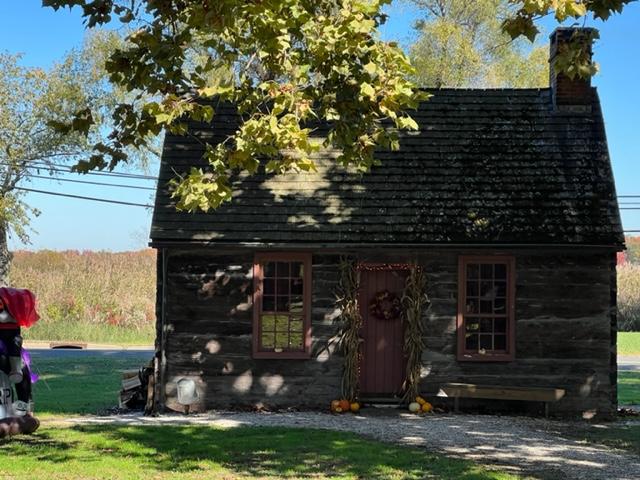
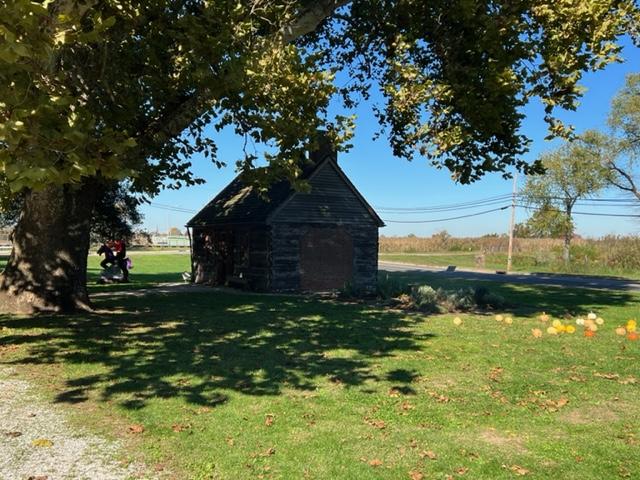
The Hancock House and grounds during the early Fall 2022

The house once stood on an very busy road between Salem and Bridgeton and where most commerce passed by. When I was taking the tour, you could see that the house was built in two parts. When I was listening to the lecture I found that the side of the house that faced the road had once been a leased space for a tavern.

The tavern section of the house that faces the road

This commercial enterprise brought in income for the family. Later on when the Hancock family sold the house in the early 1800’s, they sold it to the tavern keeper. After he and his family sold the house, it went on to various owners before the State of New Jersey bought it in the 1930’s.

Recreation of the Tavern section of the house

A copy of the old menu at the Tavern

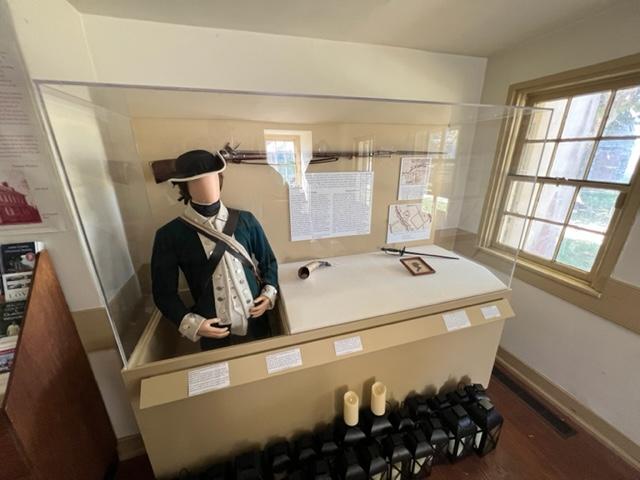
There are no family heirlooms in the house and while some of the rooms have period pieces and are decorated to show how the family might have lived at the time as well as how the tavern functioned, many rooms in the house needed some direction on what they wanted to say about living at the time. There needed to be more artifacts to complete the look of the room.

The Downstairs at the Hancock House:

The example of the main bedroom downstairs was used for business as well. The room was furnished with period furniture.

The downstairs bedroom at the Hancock House. The built in shelves are the only thing from the Hancock family

The Kitchen area was set for dinner and functioned as the Dining Room as well,

The kitchen set for lunch

The kitchen area for entertaining

The old kitchen at the Hancock House

The Dining Room at the Hancock House:

The Living Room

The Living Room at the Hancock House

The Gallery at the Hancock House with artifacts from the era.

The Gallery at the Hancock House

The Upstairs at the Hancock House:

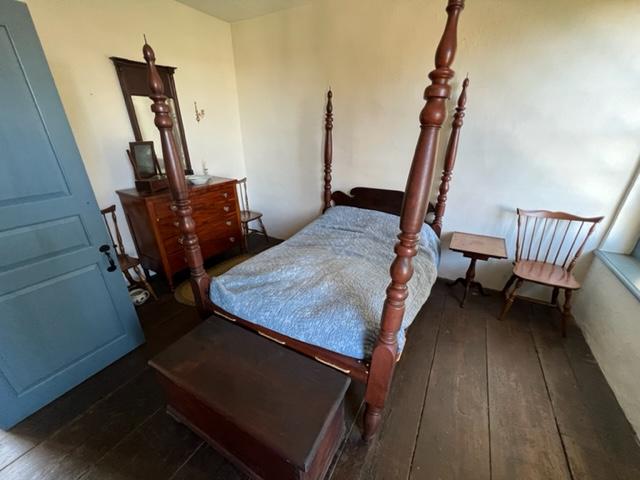
The upstairs bedrooms were an example of that. One of the rooms was fully furnished to look like a period bedroom while the other had a mish-mosh of decorations and furniture. There needed to be more to capture the time period of the house.

The upstairs bedroom is the only one furnished upstairs

Still, the house was steeped in history and it was fascinating to hear what the tour guide said about the goings on during the war years to the family. Many of the rooms also could have used a good plastering and painting to bring them back to life.

When I visited the Hancock House in October of 2022, they were having a Halloween festival with pumpkin patches, face painting, watching the film “The Legend of Sleepy Hallow” by Disney films. The kids were engaged with all sorts of activities and there would be Trick or Treating on Halloween day.

Halloween festivities at the Hancock House

The pumpkin patch at the Hancock House for Halloween

Halloween festivities at the Hancock House

History of The Hancock House:

(from The Hancock House Pamphlet)

The story of the Hancock House begins in 1675 when John Fenwick, a lawyer and Quaker from England, arrived in West Jersey (now Salem Country), With land purchased two years earlier, he established the first permanent English Settlement here, called “Fenwick’s Colony,” and founded the town of Salem. Eager to populate the area with skilled, industrious individuals, he advertised the area’s assets by stating, “if there be any terrestrial “Canaan” ’tis surely here, where the Land floweth with Milk and Honey.”

The Hancock House sits on property that was purchased from John Fenwick in 1675 by William Hancock, an English showmaker. Upon his death, the property passed to his wife and then to his nephew, John Hancock.

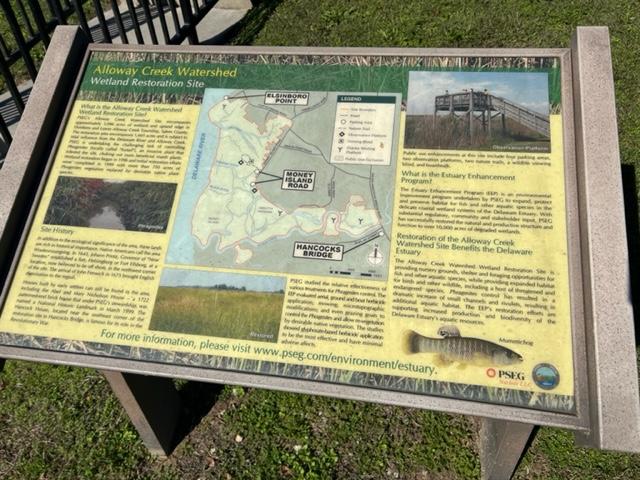
John’s inheritance of approximately 500 acres made him a major landholder in Fenwick’s Colony. he contributed to the development of the area by building a bridge across Alloways Creek in 1708. Now known as “Hancocks Bridge,” it permitted passage on an important highway between Salem and Greenwich and gave the settlement its name.

The site of the Hancock Bridge

When John Hancock died in 1709, he left his property to his son William. William became a Justice of the Peace for Salem County and served in the Colonial Assembly for 20 years.

The site of the historic Hancock Bridge

In 1734, William and his wife, Sarah built the Hancock House. Their initials (WHS) and the construction date (1734) can be seen in the brickwork on the house’s west elevation.
Upon his death in 1762, William left his house to his son, William who succeeded him in the Assembly and became His Majesty’s Judge of the County Court for the County of Salem. It was this William who figured in the massacre of March 1778.

The Hancock House remained in the family until 1931, although the extent to which the house was used as a private residence and the property farmed is uncertain. There is evidence to suggest a section of the house was leased for a tavern during the 18th & 19th centuries.
A recreation of the old Tavern section of the home

The State of New Jersey acquired the Hancock House for $4,000 in 1931 and opened it as a museum in 1932.

The Smoke House at the Hancock House property:

The Historic Significance of the house:

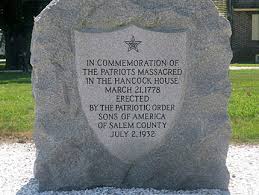
Historic Marker at the Hancock House

The Architectural Significance:

The Hancock House earned a place in history on the fateful day in March 1778.

The Hancock House

Yet the story of its architecture also is important. With its distinctive patterned and wall brickwork, simple lines and little ornamentation, it reflects the building traditions of the Quaker’s English Homeland.

The land around the Hancock House

Other elements of this architectural style include Flemish bond brickwork; a pent-roof that wraps around the front and back of the house; simple entrance steps; interior paneling and the use of such local materials as Wistarburg glass.

The Hancock House

The Hancock House property:

Whippany Railway Museum                                    1 Railroad Plaza                                         Whippany, NJ 07981

Whippany Railway Museum 1 Railroad Plaza Whippany, NJ 07981

Whippany Railway Museum

1 Railroad Plaza

Whippany, NJ 07981

(973) 887-8177

Front Page

https://www.facebook.com/WhippanyRailwayMuseum/

Open: Sunday 12:00pm-4:00pm/Monday-Saturday Closed/Seasonal

Admission: Please check the website for seasonality

My review on TripAdvisor:

https://www.tripadvisor.com/Attraction_Review-g46925-d3395271-Reviews-Whippany_Railway_Museum-Whippany_Morris_County_New_Jersey.html

The Whippany Railway Museum

I have to say that I was very impressed by the Whippany Railway Museum. It was not one of those usual train museums with bric-a-brac and posters and a uniform here and there. The museum building itself is a highly organized history of the rail system not just in New Jersey but all over the country. It showcases how New Jersey played a big role in the growth of the rail system and how transportation has changed over the last 100 years.

The museum welcoming you to the museum

The museum displays were highly organized and well documented with all sorts of equipment of how a train functions, lighting equipment for the outdoors, and indoor dining, menus and manners for a time when rail was a form of luxury travel. It shows the progression from just transportation for the movement of product to a sleek way to travel from destination to destination.

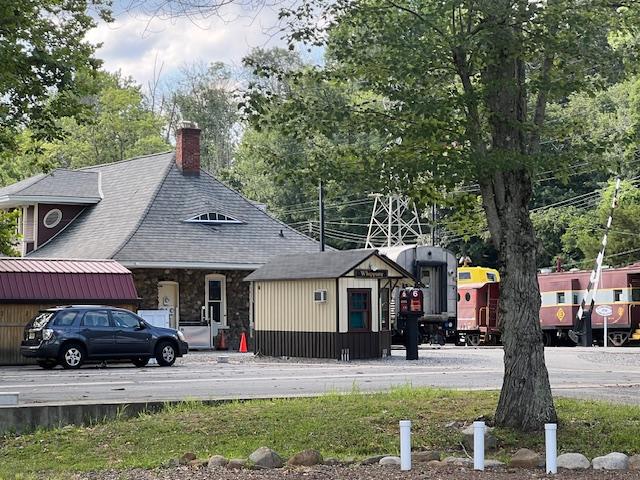
The Whippany Railway Museum at 1 Railroad Plaza

There are all sorts of everyday items that show how maintenance of the trains have changed over the years and the modernization of the railcars. They have a display on lighting that has changed over the years and the way that communication was done between the trains and the staff. Even the uniforms have not really changed too much over the years.

Race is touched on with the advancement of Blacks in the Pullman coaches as porters and later supervisors. There was even a discussion on the strikes for better pay and working conditions. I thought it was interesting about the discussion of being called a “George”, which was a term for George Pullman, the owner and developer of the luxury cars. It might have been meant as a compliment but came off as a slur. It showed a progression in the field that in some ways has not changed.

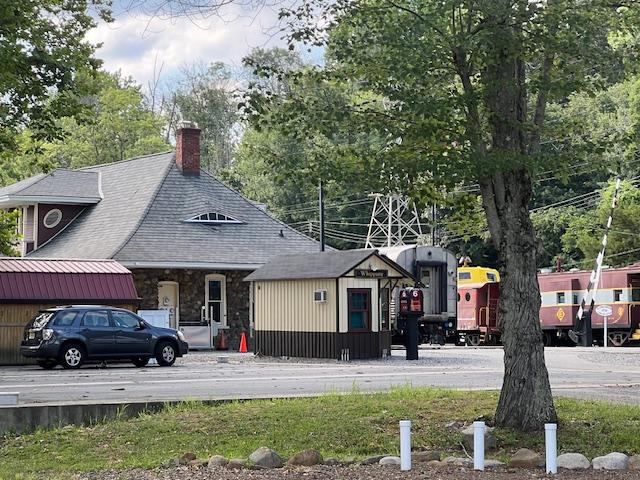
The historic railyard with all the cars you can visit

The museum also showed that rail life could be lonely and not the best in working conditions for anyone which is why the unions became so powerful in later years. It also showed the ingenuity of how the rails conquered the West and opened the country up for development. With each stop, towns developed, and populations have changed. You see how this has been affected even today as rail is not as popular as it once was, and these small towns are dying off.

The entrance to the museum

Where the museum really shines and where I saw the most pride is in the rail cars that have come to the yard over the years and have been carefully restored. The Southern Railway No. 385 built in 1907 for faster freight service, the Texaco Fireless Cooker No. 7240 built in 1937 for industrial switching duty and one of the newest steam locomotives still surviving, the U.S. Army No. 4039 built in 1942 for WWII service are just some of the cars on display (Whippany Railway Museum pamphlet).

The inside of the luxury car

The railcar that most impressed me was the Lackawanna Railroad Subscription Club Car No. 2454 that was once known as the “Millionaires Express” (Whippany Railway Museum). The mahogany paneled car carried businessmen from New York City through towns in the middle of New Jersey. What I thought was interesting was the people who rode it (Christie Todd Whitman’s father was a member) and the fact that you had to ‘buy’ the seat, which meant that no one could ever sit in ‘your chair’ if you were not there. This car ran for 72 years finally retiring out in 1984 (probably due to the recession and changing times).

The inside of the museum

I ended up spending about three hours at the museum due to a very detailed tour by one of the volunteers named Mike. He gave the most interesting hour-long tour of each car and how they were renovating it and carefully restoring each one to its historical integrity. He was so detailed and when the other volunteers chimed in with their stories as well, made it a fascinating tour of the whole yard.

When you are visiting the museum, allow time to take this every intensive and detailed tour of the museum grounds and just don’t concentrate on what’s inside the building. The museum spreads out all over the yards and take the time to explore each car and learn its history. It is an educating and fascinating way to spend the afternoon.

The museum modernizes:

The Whippany Museum under new directions

The History of the Whippany Museum:

(From the museum website)

The story of the Whippany Railway Museum began many years ago when the Morris County Central Railroad (MCC) first opened to the public on May 9th, 1965, at Whippany, NJ. On that exciting day a half-century ago, former Southern Railway steam locomotive No. 385 departed Whippany for Morristown, NJ with the MCC’s first trainload of over 400 passengers. At the end of the day over 1,500 people had traveled on a nostalgic trip into railroading’s colorful past. For the next 15 years until it ceased operations in 1980, the MCC would carry on this excellent tradition, leaving memories for untold hundreds of thousands of visitors that would last a lifetime.

The Morris County Central was founded by a New Jersey aerospace technician, the late Earle H. Gil, Sr. of Parsippany. His idea of running steam excursion trains was formed in the late 1950’s when conventional steam railroad operations were fading fast. Gil hoped that a financially successful heritage railroad would justify the great expense involved in keeping one of these magnificent machines alive.

Having acquired No. 385 in 1963 from the 16-mile-long Virginia Blue Ridge Railway (VBR) in rural Piney River, VA, the MCC ran an outstanding operation through the woodlands of suburban New Jersey. In 1966, Gil acquired another VBR steam locomotive, No. 4039 a former US Army 0-6-0 switcher that was soon added to the MCC’s roster of vintage steam-era equipment.

Threatened by development of the property alongside the Whippany Station, the Morris County Central RR saved the Whippany Freight House from demolition in June 1967 by having it moved across four sets of tracks to a site opposite the station building. Originally used by our predecessor organization, Morris County Central Railroad Museum, this classic railroad freight house is now the headquarters of the Whippany Railway Museum.

The Morris County Central was a fine example of what a conscientious group was able to accomplish, with moderate resources and good taste in the preservation of operating steam. It proved that trains, steam locomotives and haunting whistles continue to linger in the minds of the American public.

Fifty years on, the Whippany Railway Museum continues the tradition and proves that it is indeed possible to have a quality operation through much hard work by its dedicated group of volunteers and the tremendous support of the visiting public.

(From the Museum Pamphlet):

Here you can visit the restored, 1904 freight house with its outstanding collection of rail and transportation artifacts and memorabilia. There are dozens of historic railcars and exhibits on view. We are proud to feature the largest collection of American-built standard gauge steam locomotives displayed in New Jersey.

Marvel at one of the oldest steam locomotives in America, the Southern Railway No. 385 built in 1907 for fast freight service, Texaco Fireless Cooker No. 7240, built in 1937 for industrial switching duty and one of the newest stream locomotives still surviving, the U.S. Army No. 4039, built in 1942 for World War II service.

Union Schoolhouse & Union Church and Burial Ground/Washington Township Historical Society 6 Fairview Avenue                                              Long Valley, NJ 07853

Union Schoolhouse & Union Church and Burial Ground/Washington Township Historical Society 6 Fairview Avenue Long Valley, NJ 07853

Union Schoolhouse & Union Church and Burial Ground/

Washington Township Historical Society

6 Fairview Avenue

Long Valley, NJ 07853

(908) 876-9696

https://www.wthsnj.org/

https://br-fr.facebook.com/wthsnj

http://www.pathwaysofhistorynj.net/19.html

Open: Sunday 2:00pm-4:00pm/Monday-Saturday Closed

Admission: please call site

My review on TripAdvisor:

https://www.tripadvisor.com/Attraction_Review-g46583-d24075223-Reviews-Union_Schoolhouse_Union_Church_And_Burial_Ground-Long_Valley_Morris_County_New_Je.html

A Video on the Washington Township Historical Society

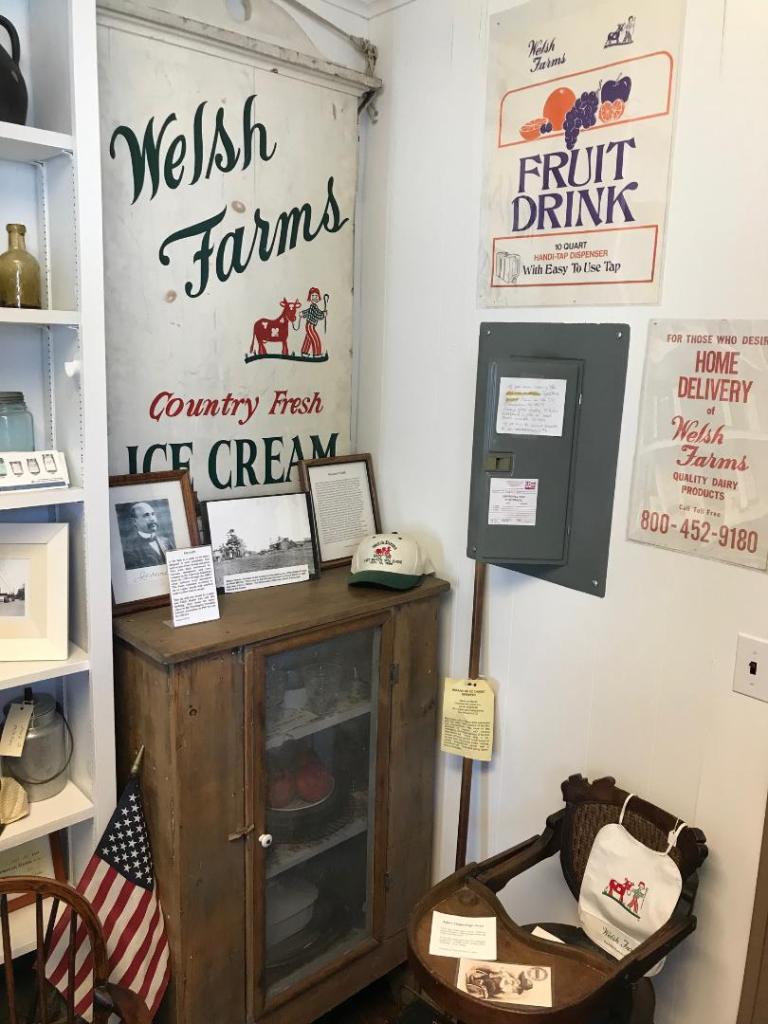
I came to the Washington Township Historical Site as part of Morris County’s “Pathways of History” tour and visited the Union Schoolhouse Museum and then the Union Church and Burial Ground that is located right next door on the same property. This sleepy little town was once a bustling manufacturing site with the sawmill and Ghrist around the corner and the Welsh Farms Ice Cream factory up the street from the site.

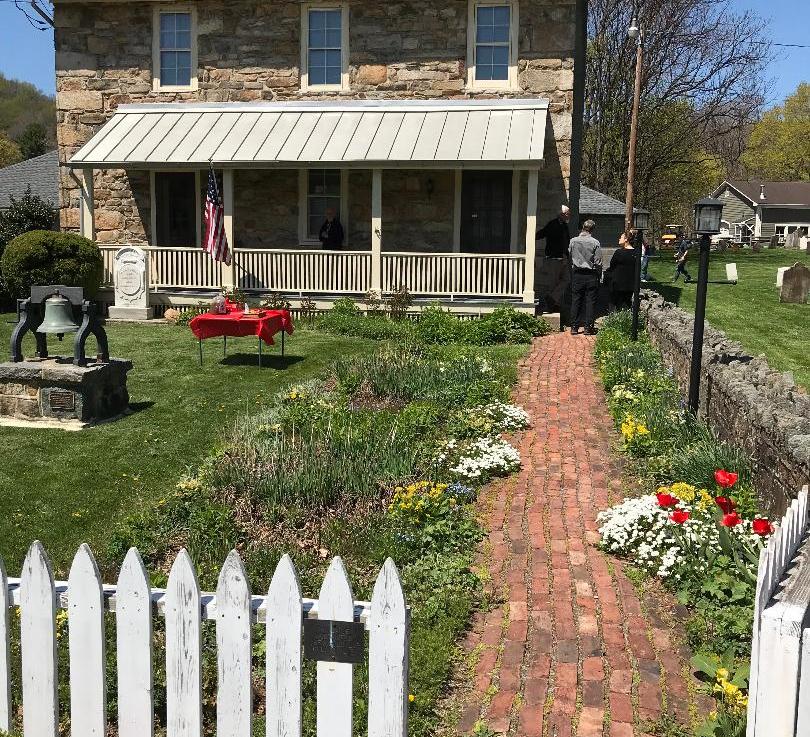
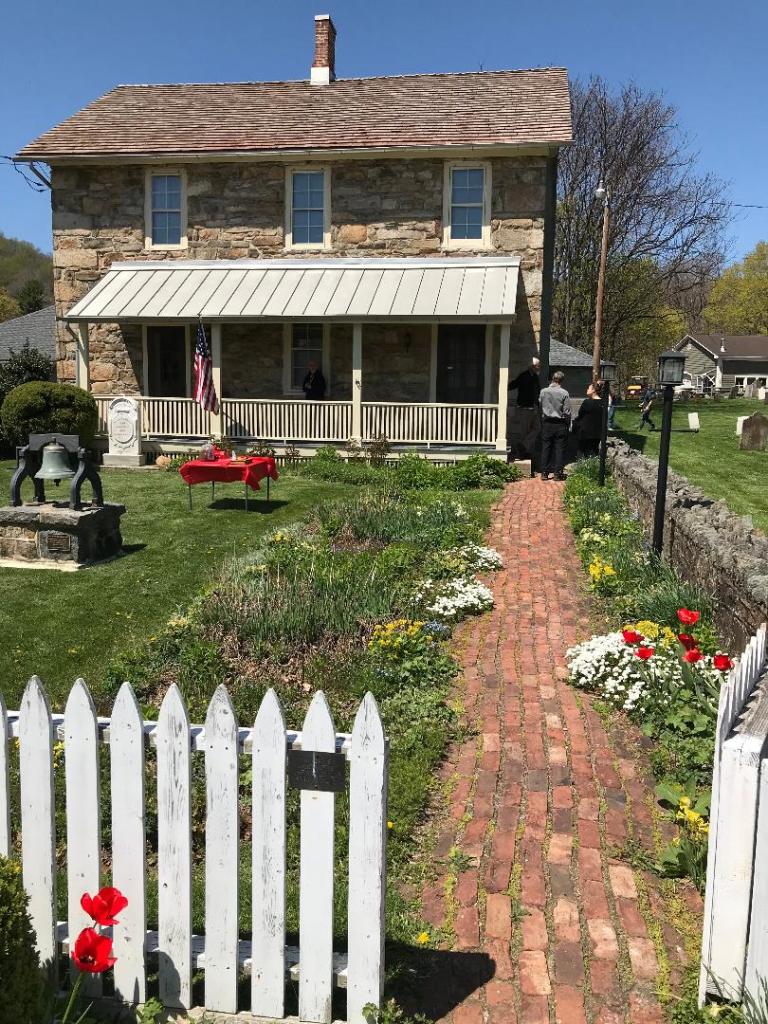
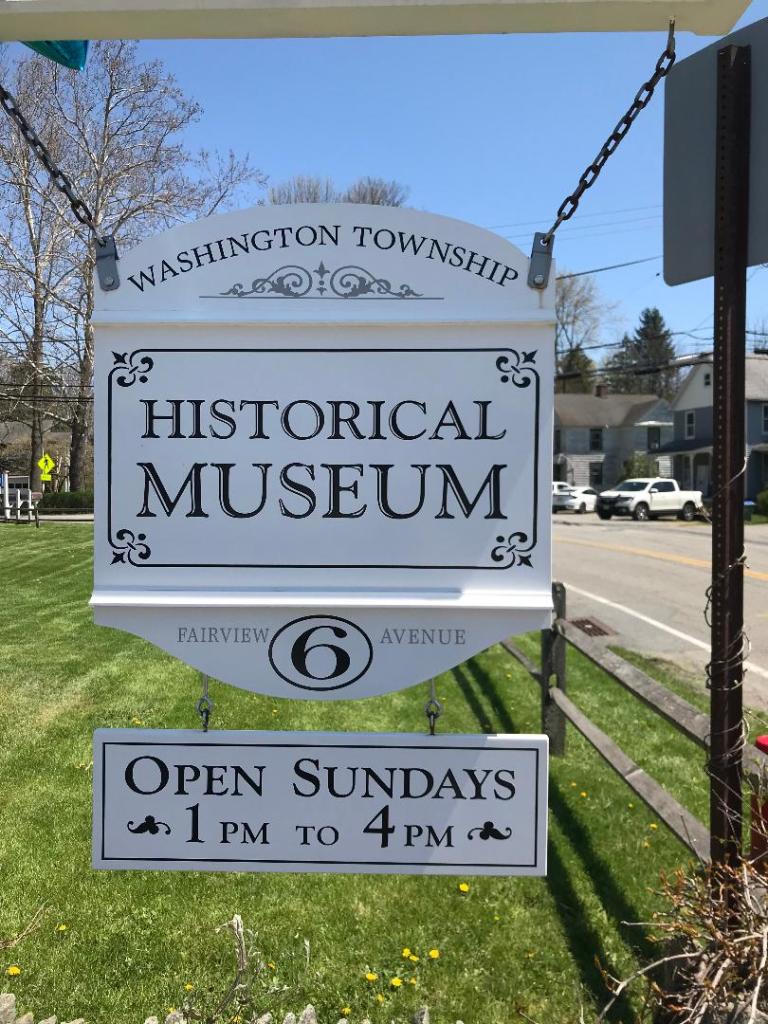
The Union Schoolhouse Museum at 6 Fairview Avenue

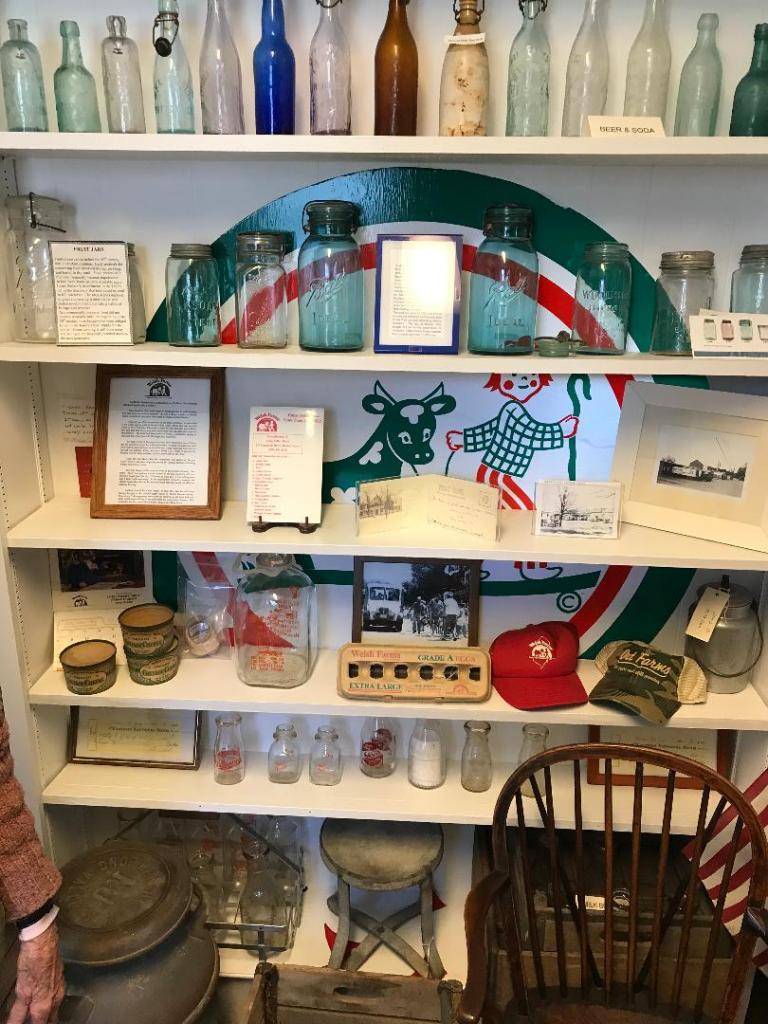
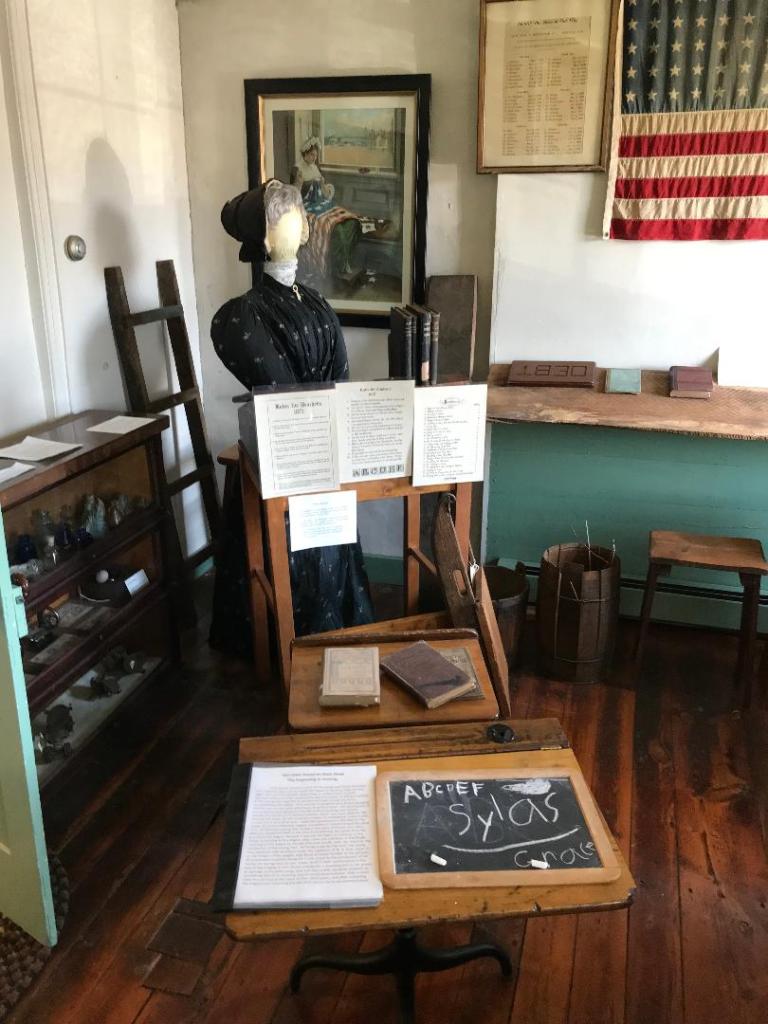
The museum, which was once the town’s schoolhouse, is an engaging site that showcases how the town developed over the last two hundred years. On the bottom floor, the society has Native American artifacts, period furniture and clothing and in the back of the museum is a full display of the original Welsh Farms Ice Cream factory. The Welsh’s were a very prominent family from the area.

The Welsh Farms Ice Cream Factory display

Some of the old bottles and equipment from the factory

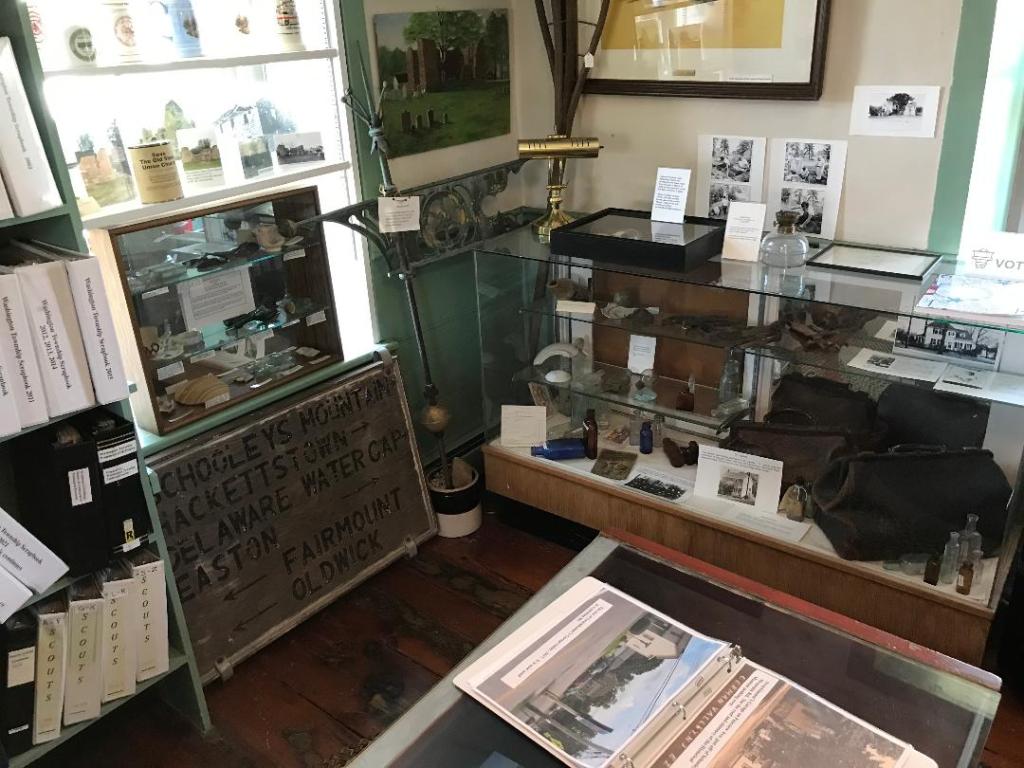
The second floor of the museum has a display of town memorabilia from different businesses, farming equipment from the area’s agricultural past and pictures of businesspeople and prominent citizens of the town. It shows how the commercial past of the community kept evolving.

Display of the town memorabilia

To the side of the second floor is a display of a period schoolroom from the time that the building served as a school of the local population. You can see that not much has changed over the years.

School rooms of the past are not too different from today

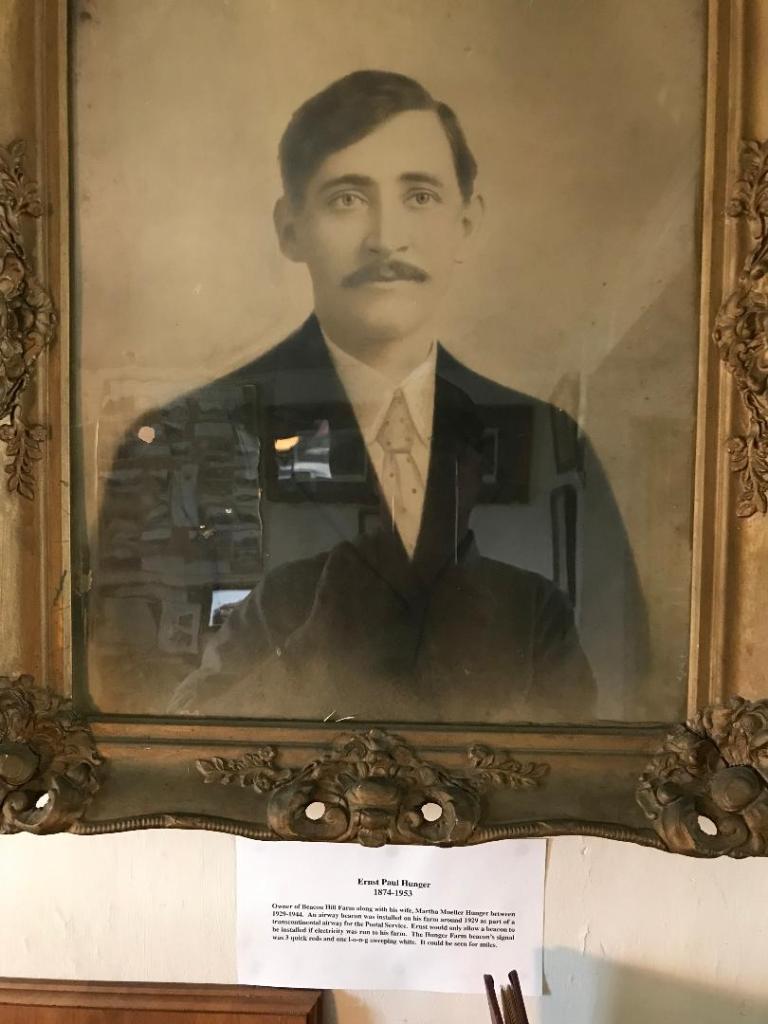
The one thing that creeped me out was a picture of a local businessman from the 1800’s who looked exactly like the actor, Blake Ritson, who plays “Oscar Van Rijin” in the TV show “The Gilded Age”. These men are almost 100 years apart and he looks like the actor from that exact time period.

The picture is of local businessman Ernest Paul Hunger

This picture is of actor Blake Ritson who plays “Oscar Van Rijin” in “The Gilded Age”

I had to take this picture because everyone says you have a twin from the past and I can tell that these two men look exactly alike in the same clothing. What is really interesting is that they are the same age at the same time period. Like that picture of the gentleman from the 1880’s that looks exactly like actor Nicolas Cage, I think there is some weird time travel here. It is almost like the film “Time after Time”.

After touring the whole museum, I went next door to visit the church and the cemetery for a tour. When I exited the museum, I had not really noticed the beauty of the gardens that surrounded the museum. The local garden club had done a great job in landscaping and planting the walled garden around the museum. In the early Spring, it was a colorful display of flowers.

The walled garden was so colorful in the early spring

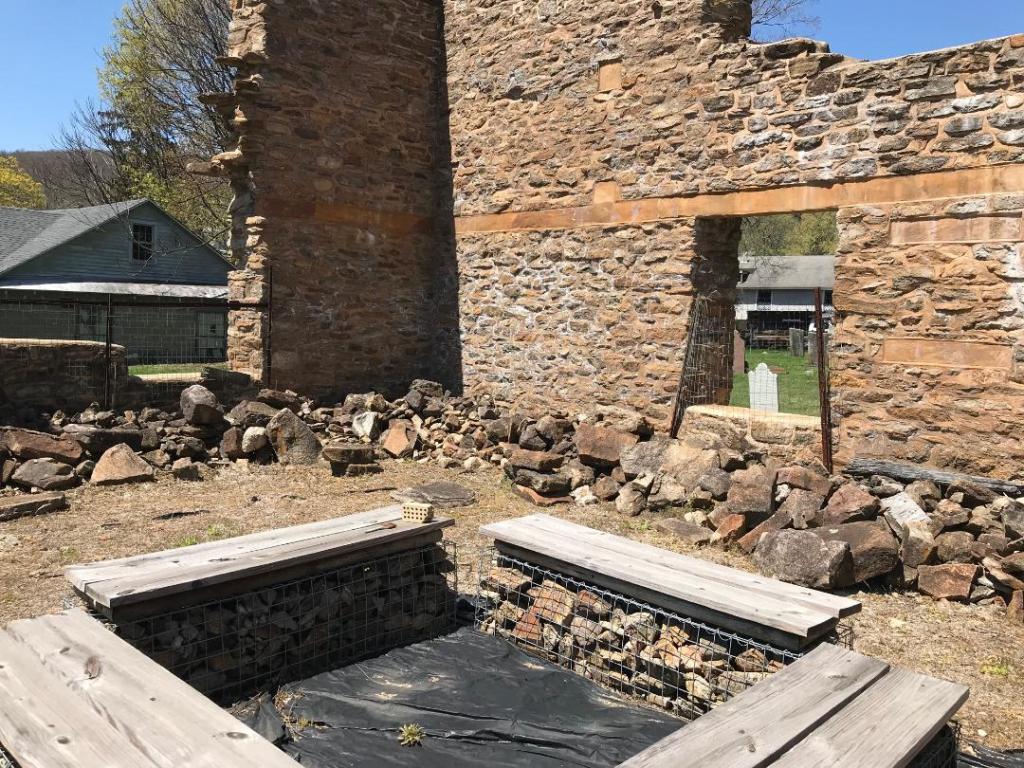
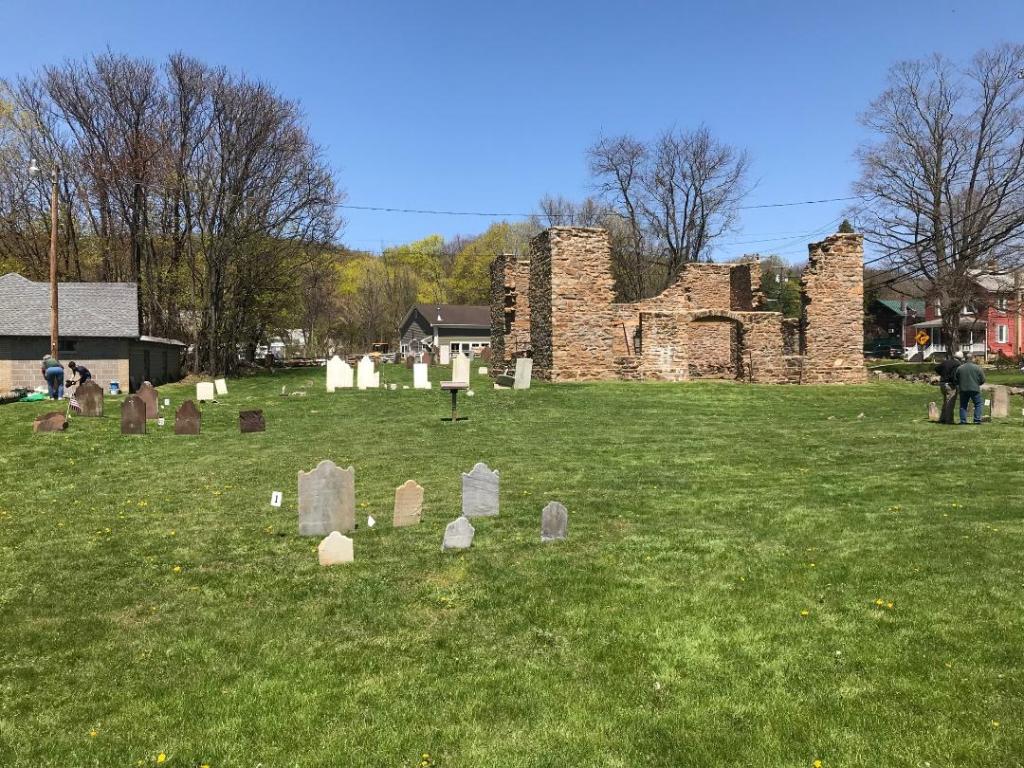
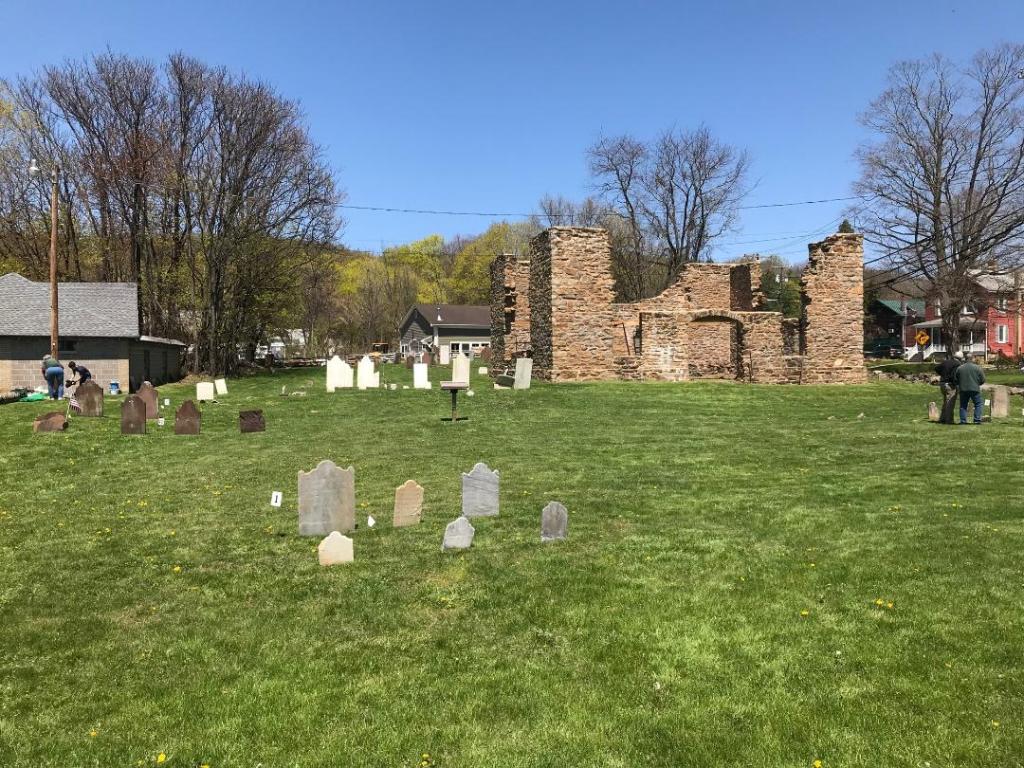
The cemetery walk was intriguing in that you got to walk through the ruins of the old church and get to see how it was once constructed. It gave me insight of how big these churches were at one time and building construction was in early colonial New Jersey.

The ruins of the old Union Church

The Union Church surrounded by the cemetery

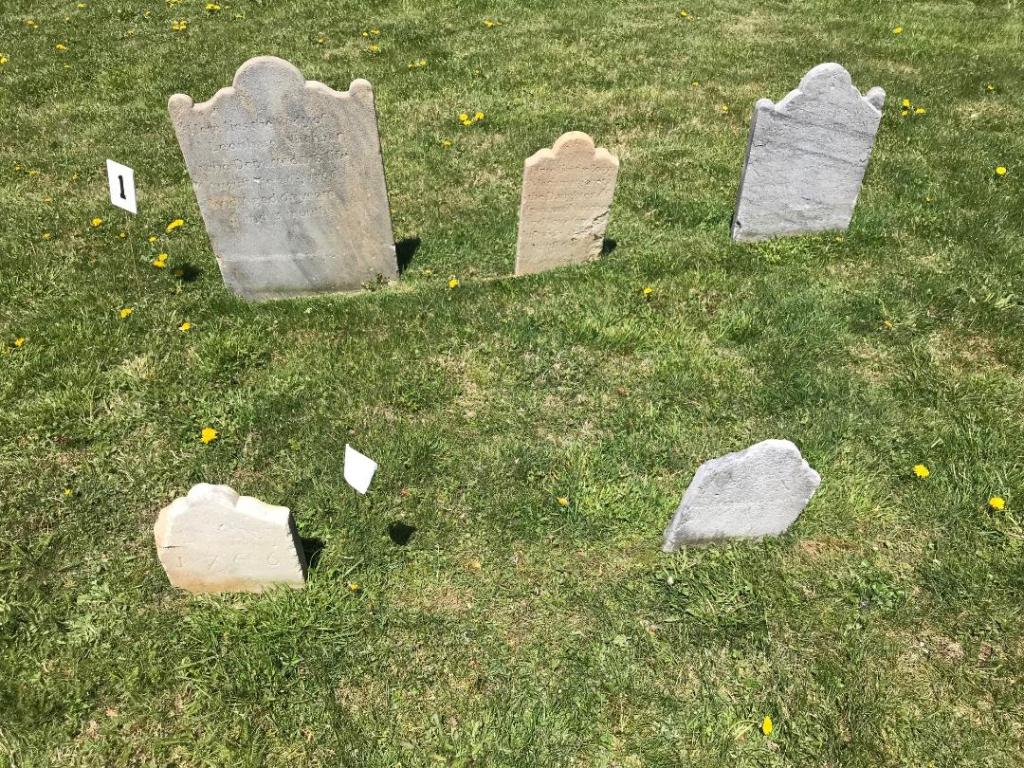
When we visited each family’s plot, there was a discussion about what contributions that everyone made to the town and their place in society. What was interesting was that the volunteers were cleaning the tombstones with tombstone cleaner, and I had wondered when we were taking the tour why they looked so new. There is a lot of care of the people of this cemetery.

The Welsh Farm Family plot at the Union Church was just cleaned

The whole site is an interesting look into the community’s past by a group of volunteers who give it their all to make the site interesting, historical, visually engaging to the visitor and offer a surprise or two into history that you may not know of New Jersey. One the warm, sunny day that we visited the site, it made it even nicer to walk around and have the time to soak it all in.

When you visit the Union Schoolhouse and Union Church and Burial Ground take the time out to take the formal tour of the site. It is very informative to a past that is not so different from today. It offers a lot of insight of people’s lives of this community.

The history of the Union Church and Cemetery Site:

(From the Washington Township Historical Society pamphlet)

Mission: To bring together people interested in the history of Washington Township, Morris County, NJ and promote a better appreciation of our American heritage.

The history of the site:

European settlement had begun in Long Valley by 1730. The early settlers, primarily from Germany and Holland, came fleeing religious persecution, an oppressive tax burden and hoping for a better life in America.

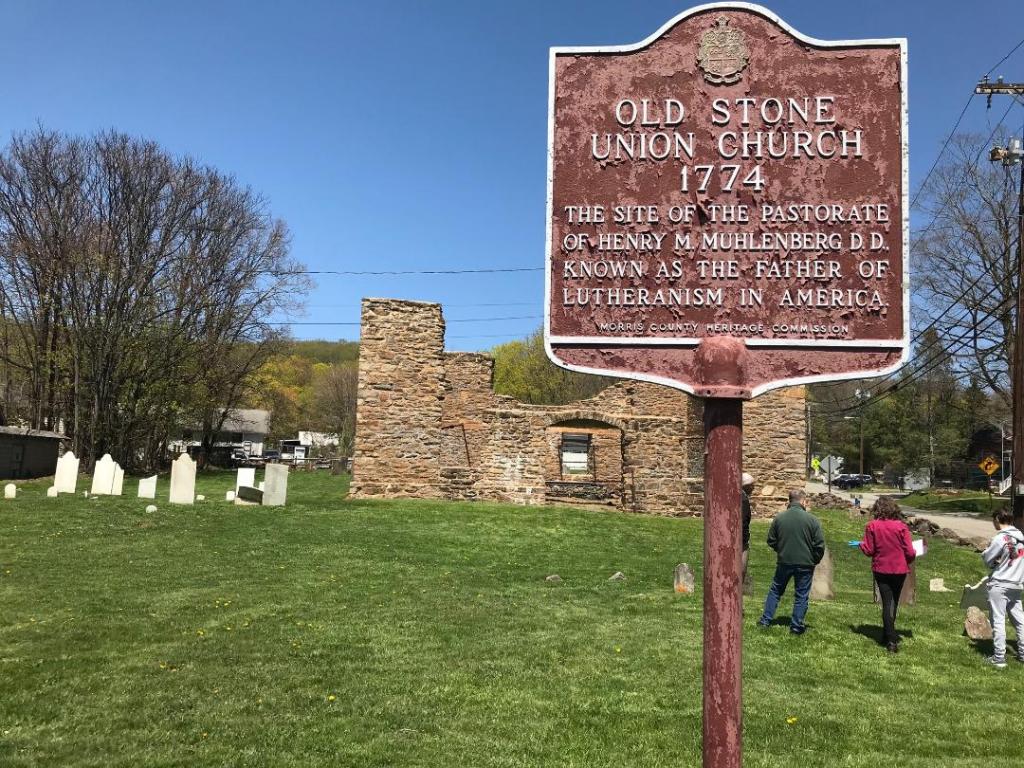
In 1749, a joint log meeting house had been built near the site of the Stone Church by the Zion Lutherans and Dutch Reformed Congregations. During these early times the congregations were served either by preachers from these churches or by laymen. One of the ministers of the time was Henry M. Muhlenberg, who has been called the Father of the Lutheran Church in America. His son, John Peter also ministered to the Raritan Valley before 1772. In 1776, John left his church in Virginia to raise and lead a regiment in the American Revolution, serving with distinction and retiring as a brevet major general.

On February 4th, 1774, the Dutch Reformed and German Lutheran congregations drew up articles and agreements that provided for the building of a joint meetinghouse. “Whereas we the members of the Evangelical Reformed Congregation and we, the members of the Evangelical Lutheran Congregation are willing to build a meeting house jointly, “Acted the 4th day of February 1774, which is testified to by: Henry Muhlenberg Jr., deputy director of Zion’s Welsch; Diedric Strubel; Conrad Rorick; Casper Eick; Anthon Waldorf; Adam Lorenz; Philip Weis; Christopher Karn; Leonard Neighbour; Roulof Roulofsen; John Schwackhammer; Andrew Flock.”

Let the Building Begin:

According to local tradition, the stone used to construct the building of the meetinghouse, the people of the two congregations turned out in a body to cart the stone. It had been a previous agreement, that whoever on the day appointed, should bring the first load, should receive the honor of having his horse decorated with flags and ribbons. The story goes that Judge David Welsch, then 17, secretly loaded his wagon and hid it that night. The next day, wagons came like thunder from all parts of the valley. Although David Welsch was confident of winning, he was almost beaten. Before he could unload his wagon, all of German Valley was on the ground.”

A Stately and well built structure:

A description of the Stone Church was given during a sermon by Reverend Alfred Hiller in July 1876. He said, “it was a heavy gallery on the one side and across each end; the entrance on one side (south), under the gallery and on the opposite side (north) was the pulpit, one of the Jack in the Pulpit style, with sounding board suspended above. There is no chimney on the church, in the center of the church, a space about eight feet square was made with a dirt floor and on the square a great mass of charcoal was burned, the congregation getting for their share at least the smell of the fire.”

The Old Stone Church today

Historic photographs indicate the building had a clipped-gable or jerkin-head roof with roof ridge parallel to the longer north and south walls. The two-story church, three bays wide and two bays deep, featured a wide and two bays deep, featured a wide central entry surmounted by a segmental arch, as were the windows. The walls were of coursed rubble stone construction, pointed with a white lime-rich mortar, except on the south or front elevation which was stuccoed and “penciled” with white pointing to replicate regular ashlar stone. However, this may have been a later 19th century embellishment.

Decline:

In 1832, both congregations decided to separate houses of worship. Since that time the Old Stone Church has stood abandoned and surrounded by the graves of the early congregants. Despite efforts at stabilization between the 1960’s and the 1980’s, the deterioration continued until recent efforts spearheaded by the members of the Washington Township Historical Society with permission of The Zion Lutheran and Long Valley Presbyterian Churches have improved this.

The Old Stone Church with the cemetery surrounding it