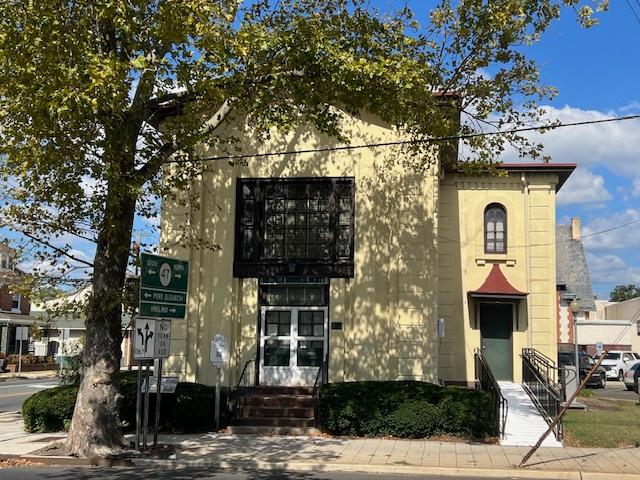
The Millville Historical Society at 200 East in tv Main Street
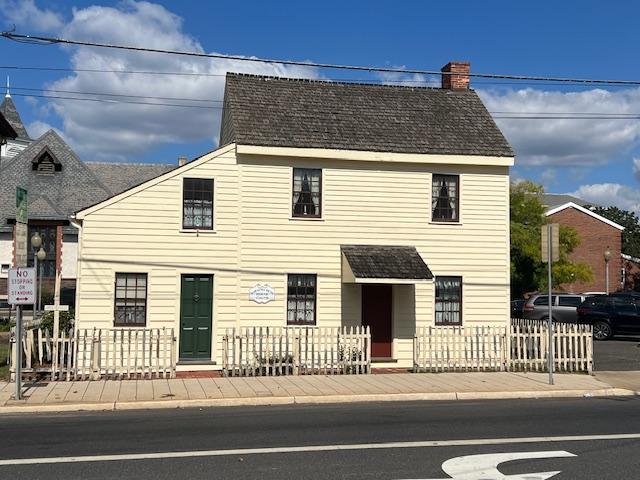
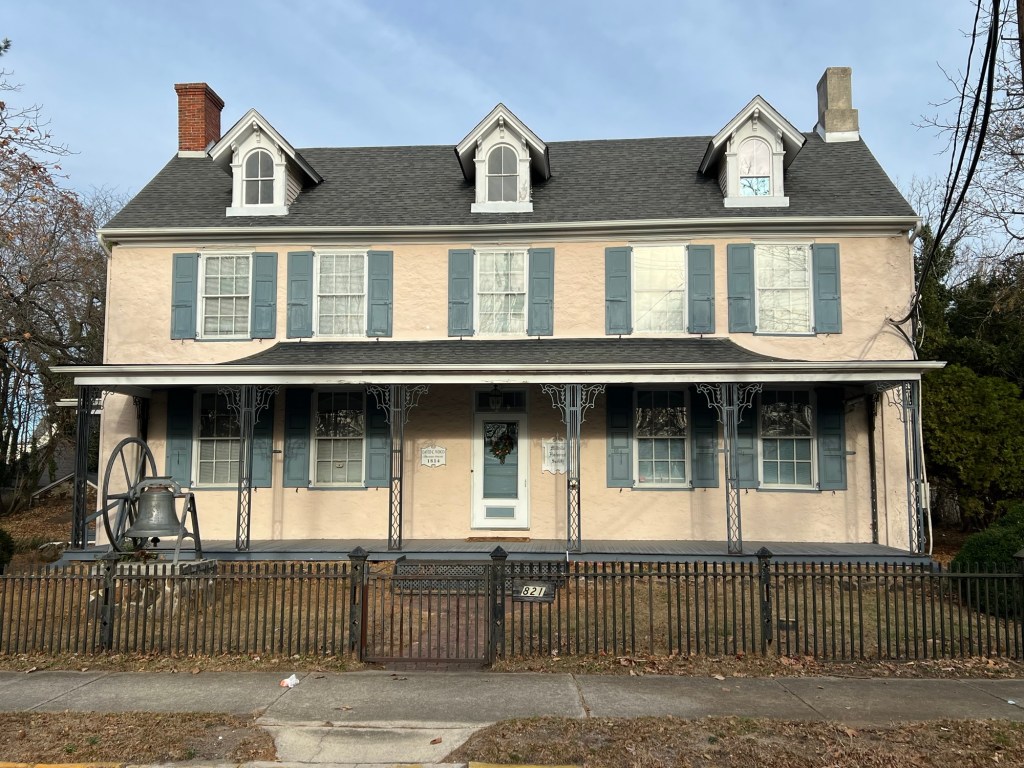
The Baracha-Dunn House right next door to the Historical Society is open for touring.
History of the museum:
(from the museum’s website)
The Millville Historical Society has been preserving Millville, New Jersey’s past for over nine decades. Incorporated in 1927, the organization’s headquarters and archives depositary is located in the historic 1857 Millville Bank at 200 E. Main St., Millville.
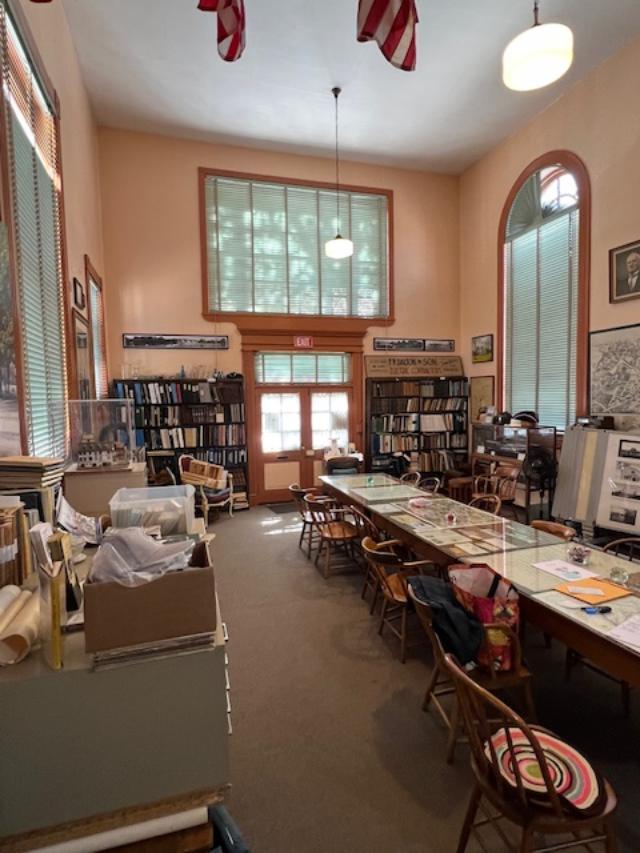
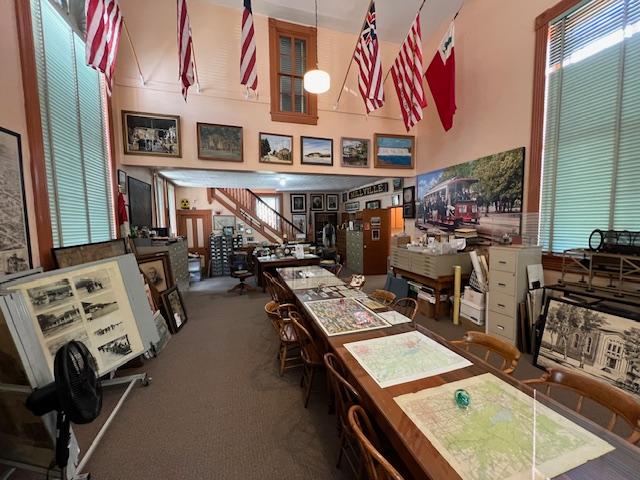
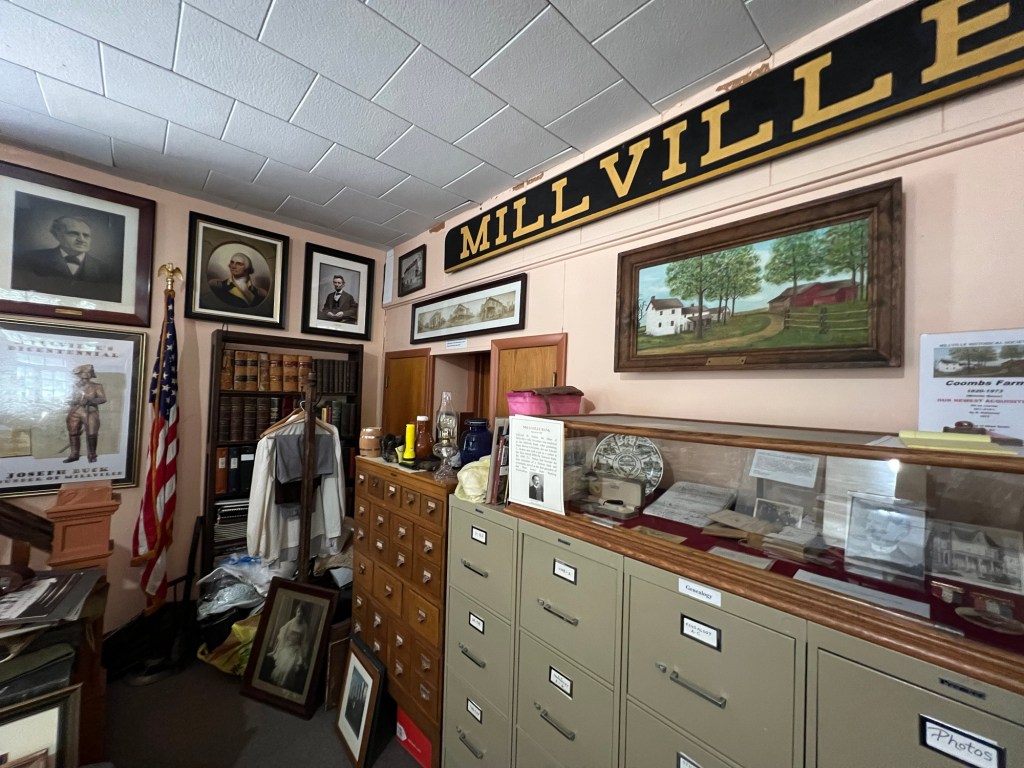
The main gallery of the Millville Historical Society
The Society has been entrusted with the care of three of Millville’s most historic structures: the 1857 Bank building at 200 E. Main Street, the 1798 Baracha Dunn House, and the 1814 Wood Mansion House.
Admission to all buildings is free. Donations are gratefully accepted.
The main gallery of the Millville Historical Society from the front door
I recently visited the Millville Historical Society and got to tour the museum and the historical home next door. The main part of the museum is built inside a historic bank that the Society took over in the 1970’s. All the displays are showcased around the museum.
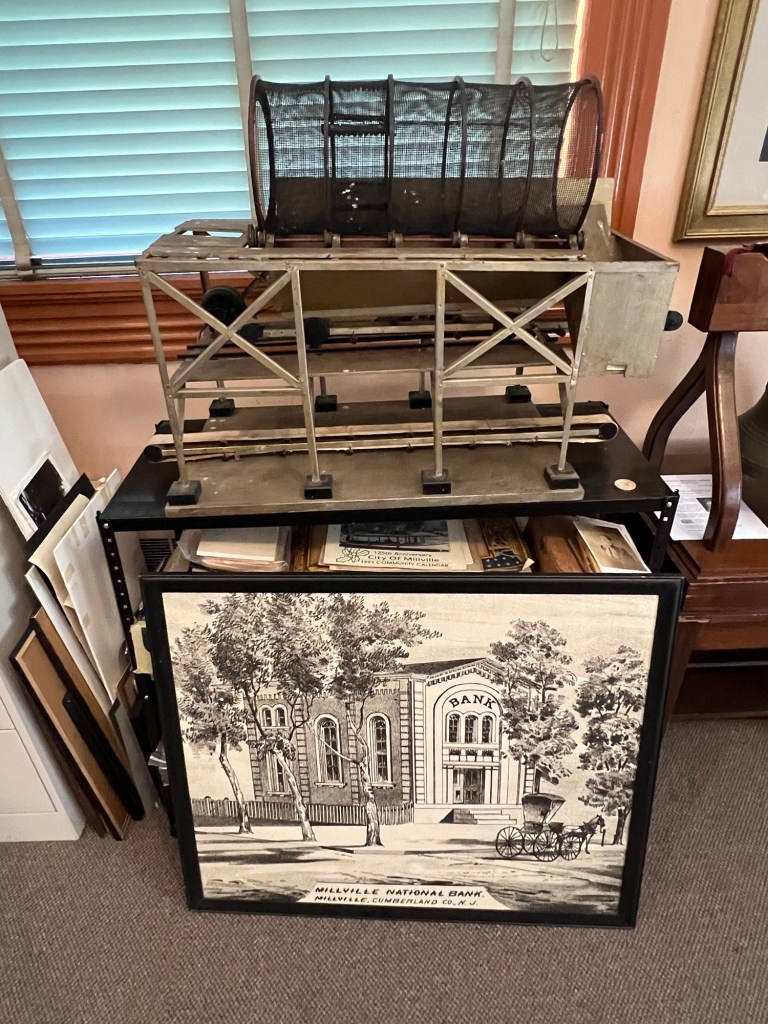
The original picture of the Millville National Bank during the turn of the last century
One of the first displays you will see is the original drawing of the bank. This beautiful historic building sits on the very edge of the downtown as you enter Millville. On the top of the display was a model of a sand separator that was in the creation of glass which the area was known for in the previous century.
The historic map of Downtown Millville, NJ
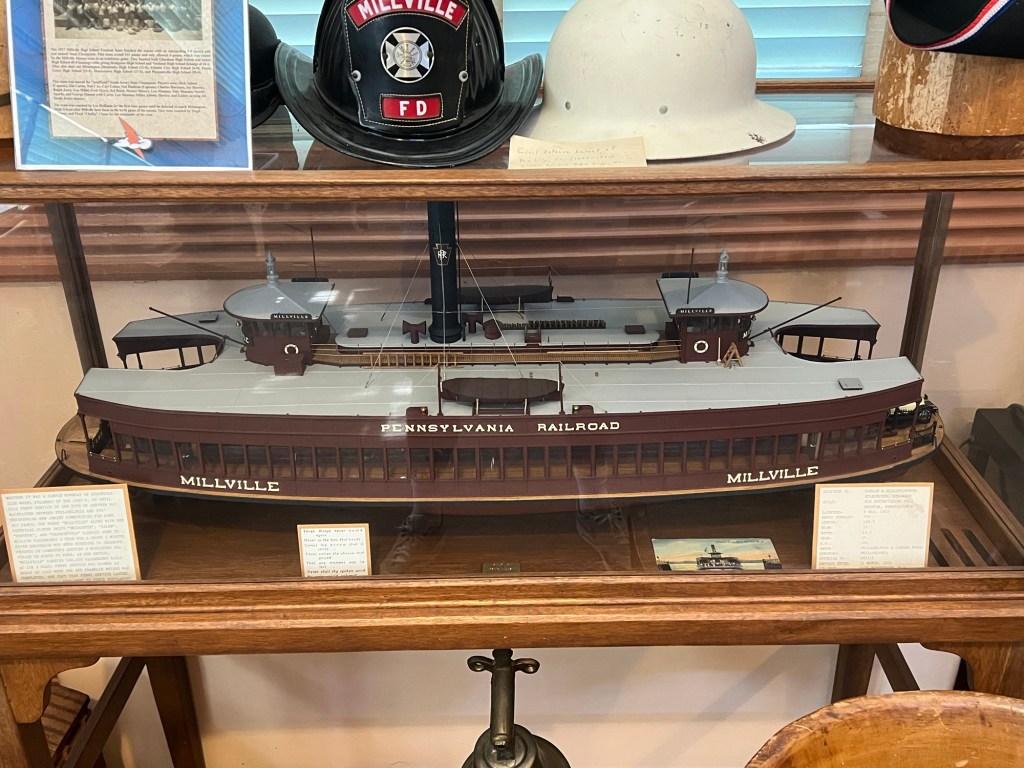
Another display has a model one of the major ferries that once ran in Millville.
The model of the Millville
The ferry that once ran in the area
The pictures of when the boat was christened
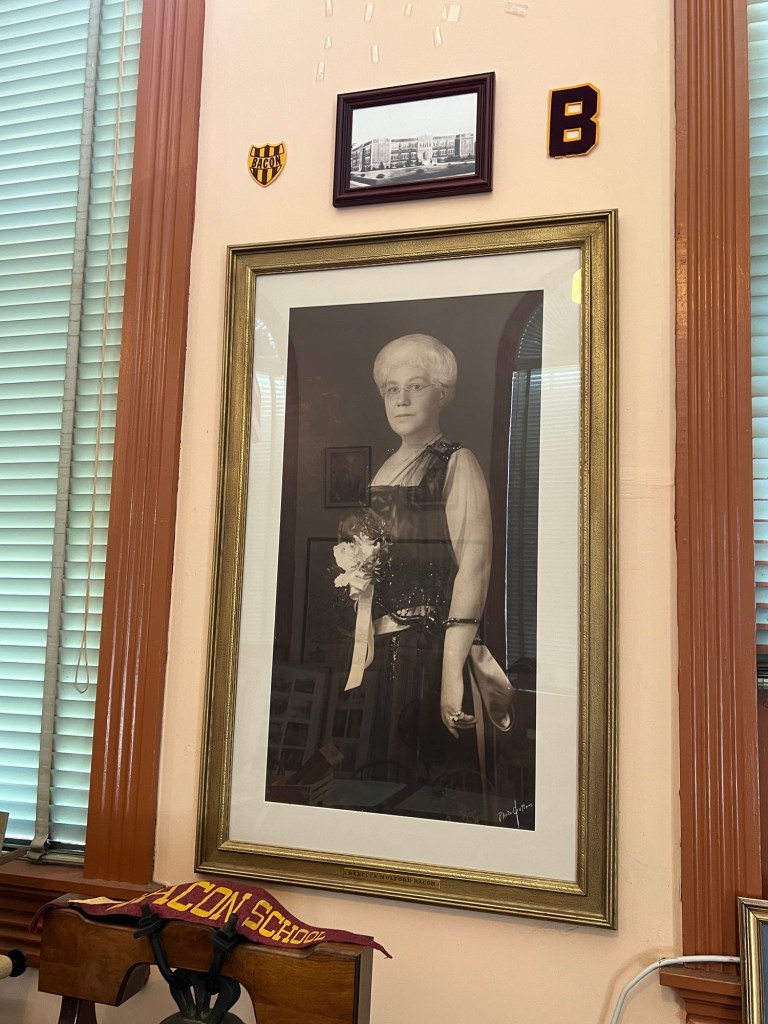
There was school display with one of the old bells of the school’s in Millville and a picture of one of its long serving principles, Rebecca Mulford Bacon.
The bell from the schoolhouse
Principal Rebecca Milford Bacon
The Principal’s plaque
The museum houses the recorded history of the town and the genealogy of the town and its citizens for people to research.
The Research Library along with more artifacts
After I toured the displays along the perimeter of the museum, I had a tour of the Baracha-Dunn House next door which was part of the historical society’s complex. These historic buildings were built in the late 1700’s and the addition in the early 1800’s. The tour takes you through both the main house and the later addition both upstairs and downstairs.
The Barack’s-Dunn house was open for a tour
The entrance the house from the street
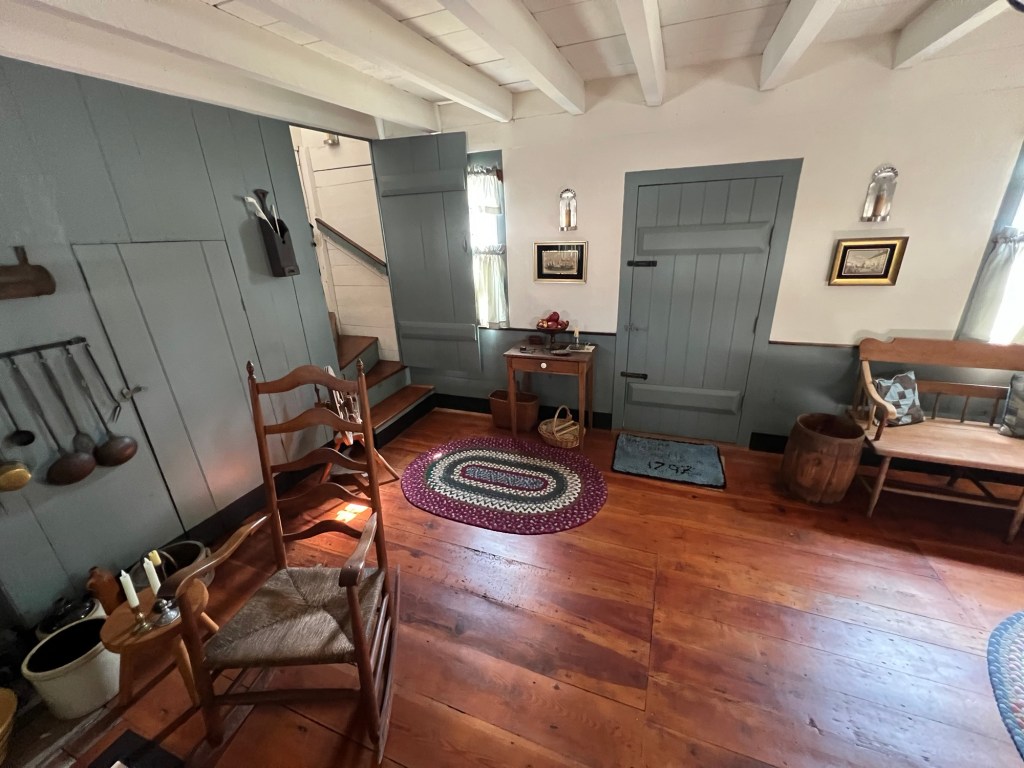
The main room of the original house with the hearth in the main room for cooking and for heat in the house
The hearth is the center of the house
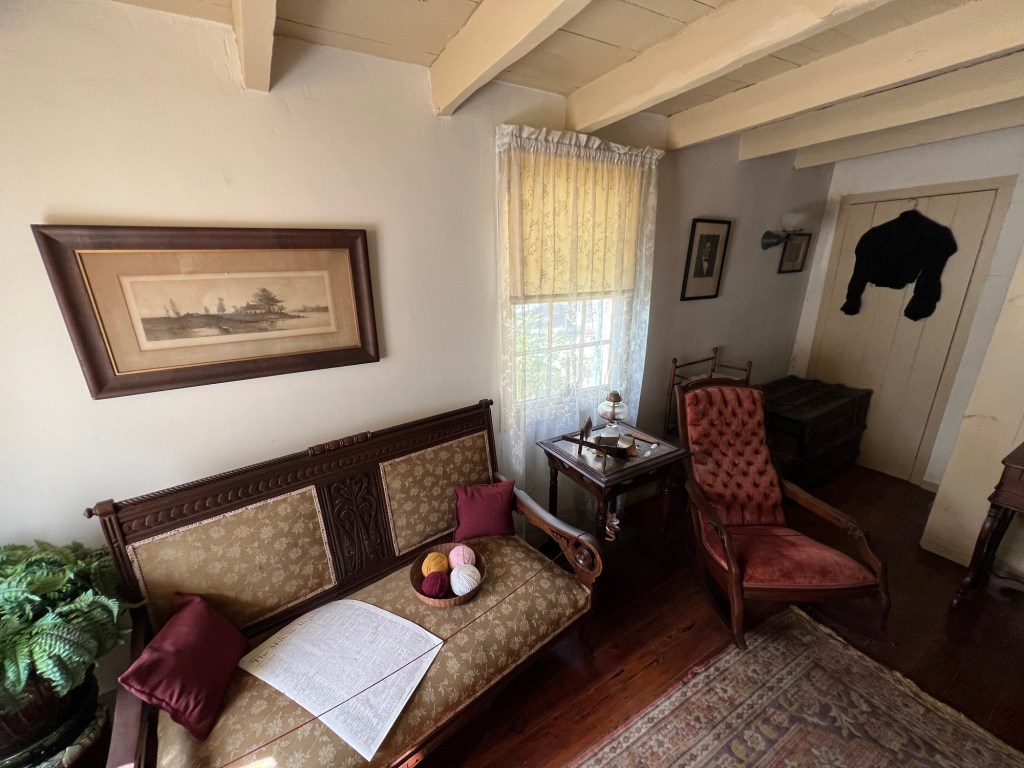
The Living Room of the main home
The Living Room of the home
The Living Room
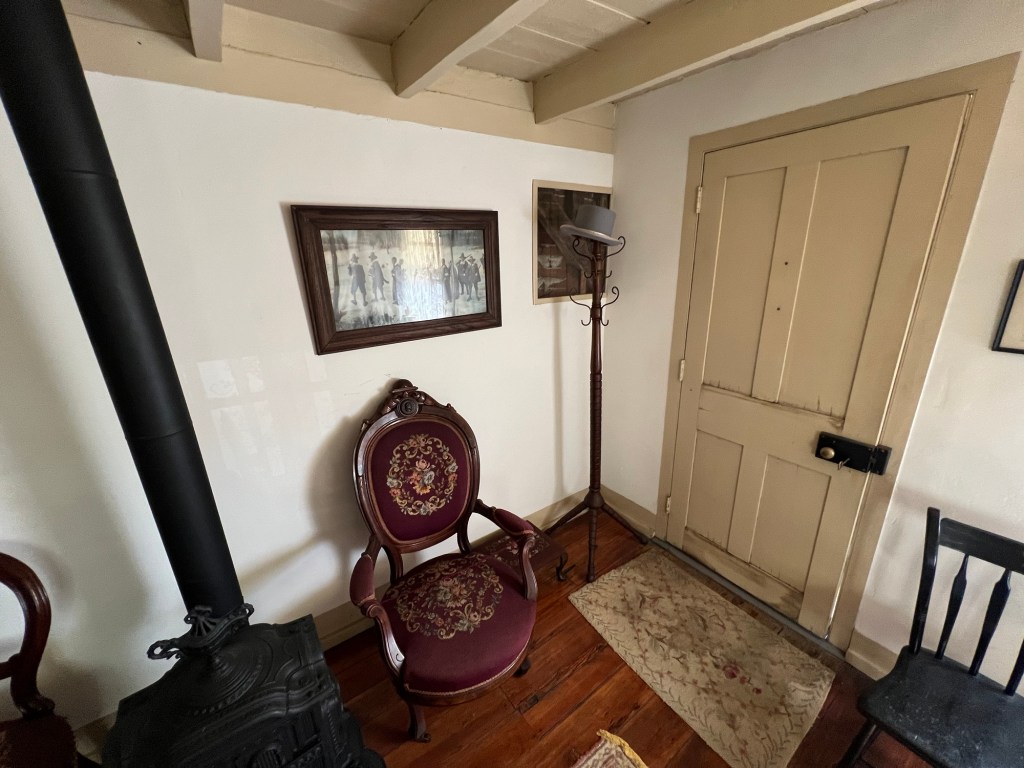
The other side of the house which was the later addition to the home offered more rooms.
The Living Room from the main door
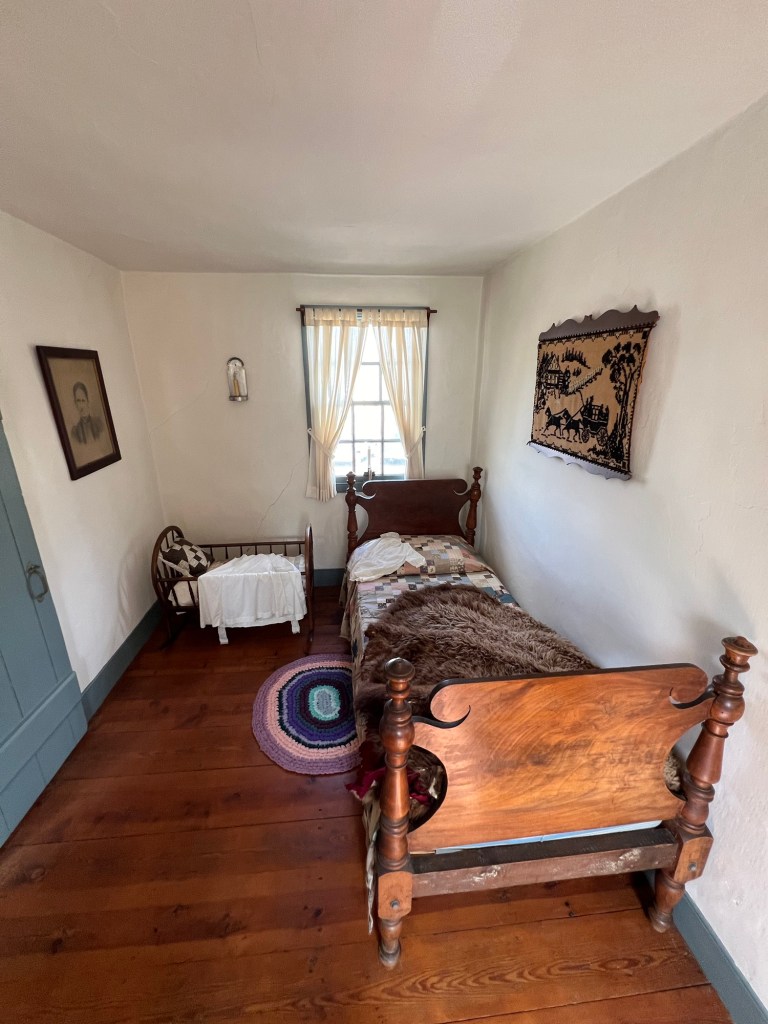
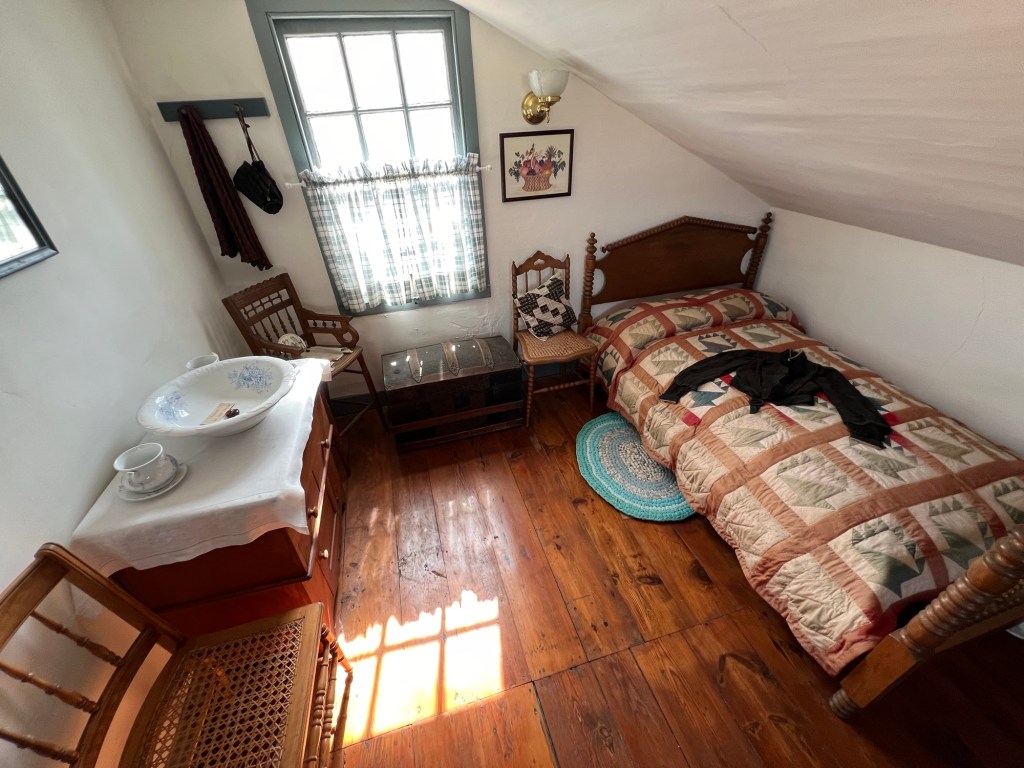
We walked up the narrow stairs to the second floor to the bedrooms. Each small room on the second floor was furnished with period furniture.
The bedroom on one side of the house
The second floor bedroom the leads to the attic
The second floor bedroom
This room led to the connected room on the other side of the floor
The small room on the second floor
The bedroom on the second floor
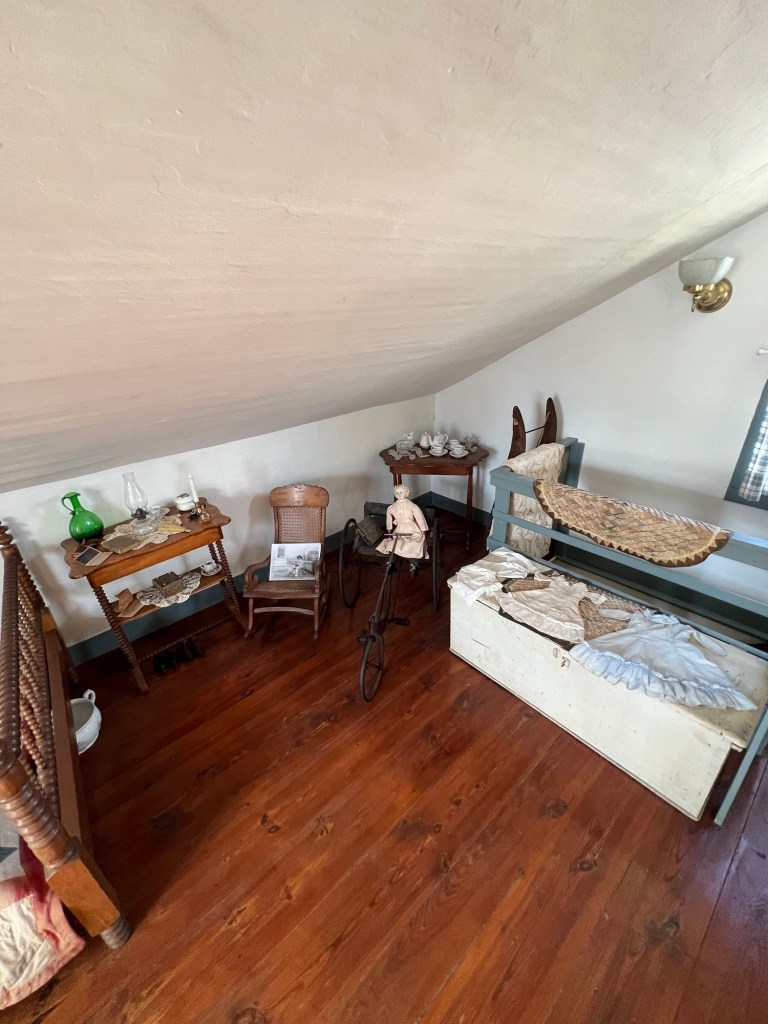
The Children’s room display of toys, furniture and clothing
The display of Children’s item
The house really showed life in the early parts of the 1800. The home’s period furniture decorates all the rooms in this home. The museum has another historical home in the downtown area that was closed that day. The museum offers a glimpse of Millville in its past.
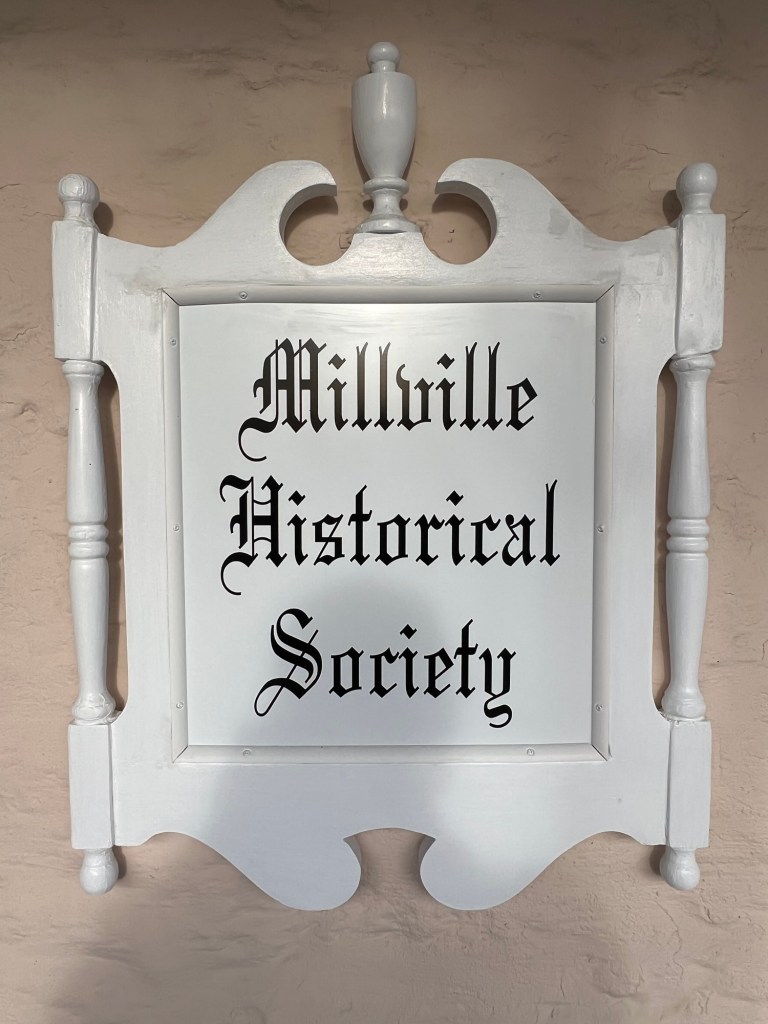
The historical sign outside the museum
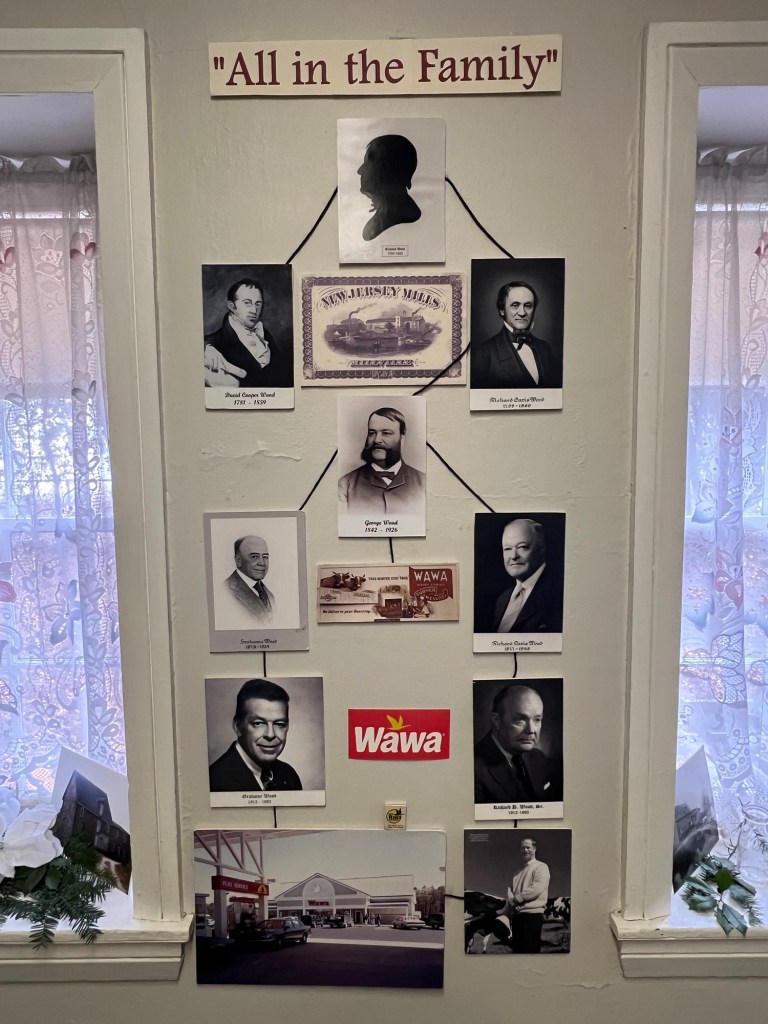
On my second trip to the Millville Historical Society, I was able to visit the Wood Mansion from 1814. The home had been home to generations of the Wood family, the founders of Wawa, among other businesses.
The Wood Family Mansion
The Historical Society Museum sign
The David Wood Historical sign
The Living Room decorated for the holidays
The Victorian Christmas tree in the formal parlo
The Christmas decorations in the Living Room
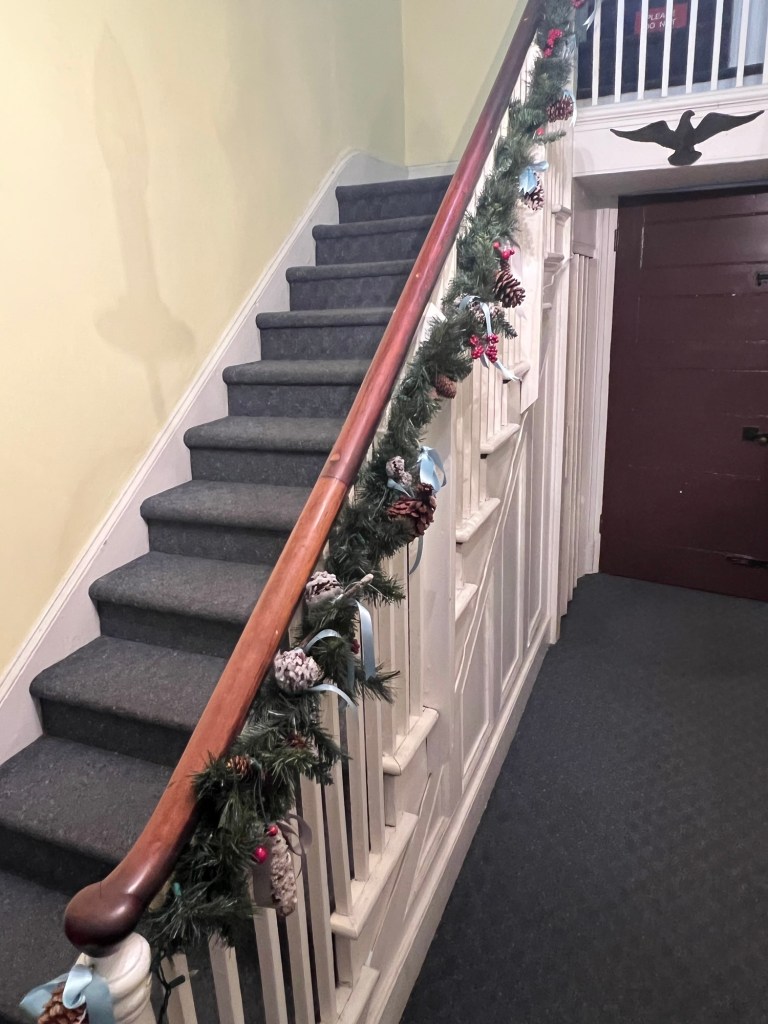
Th bannister decorated for the holidays
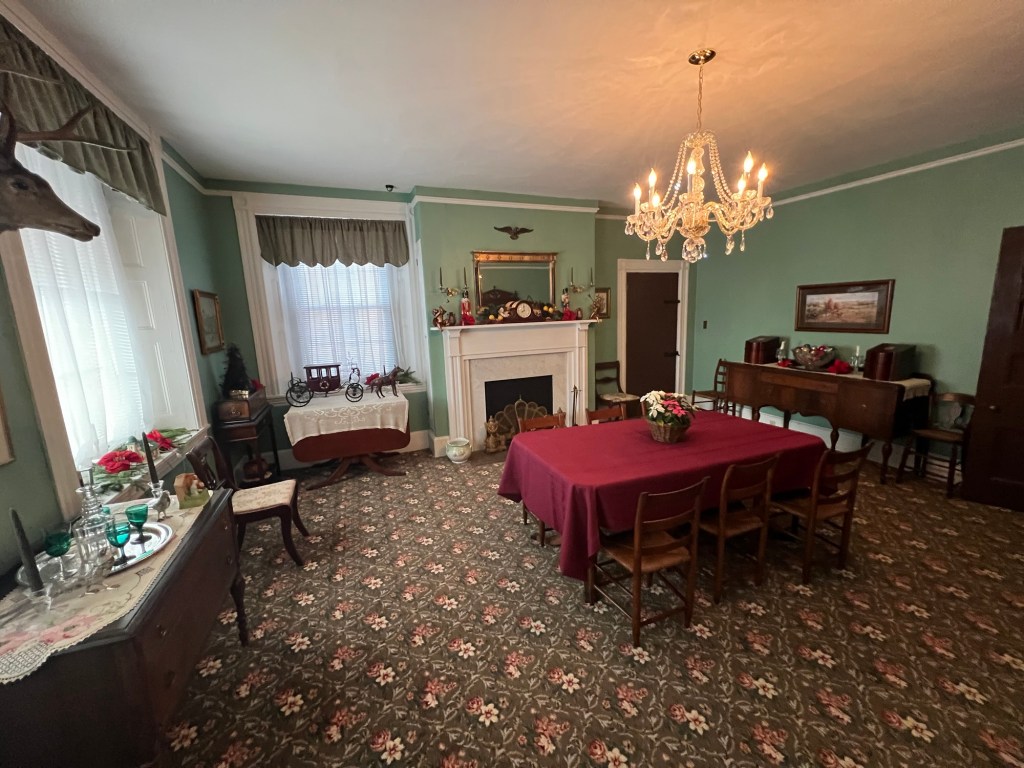
The Dining Room decorated for the holidays
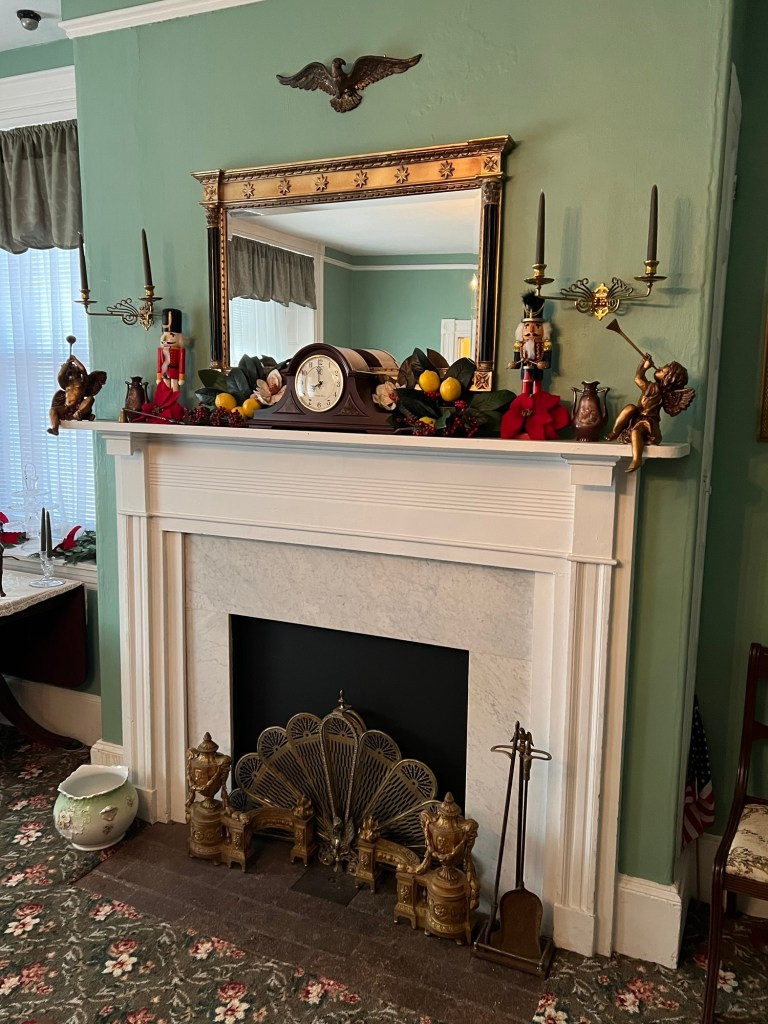
The mantle in the Dining Room decorated for the holidays
The dish-ware area
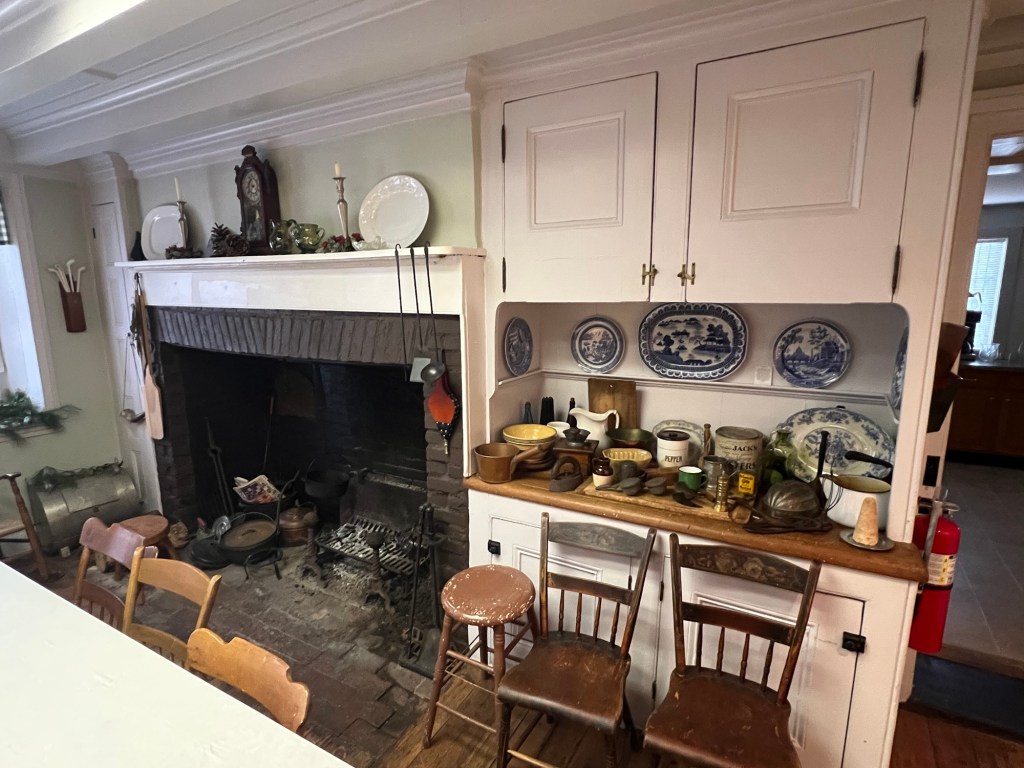
The kitchen fireplace
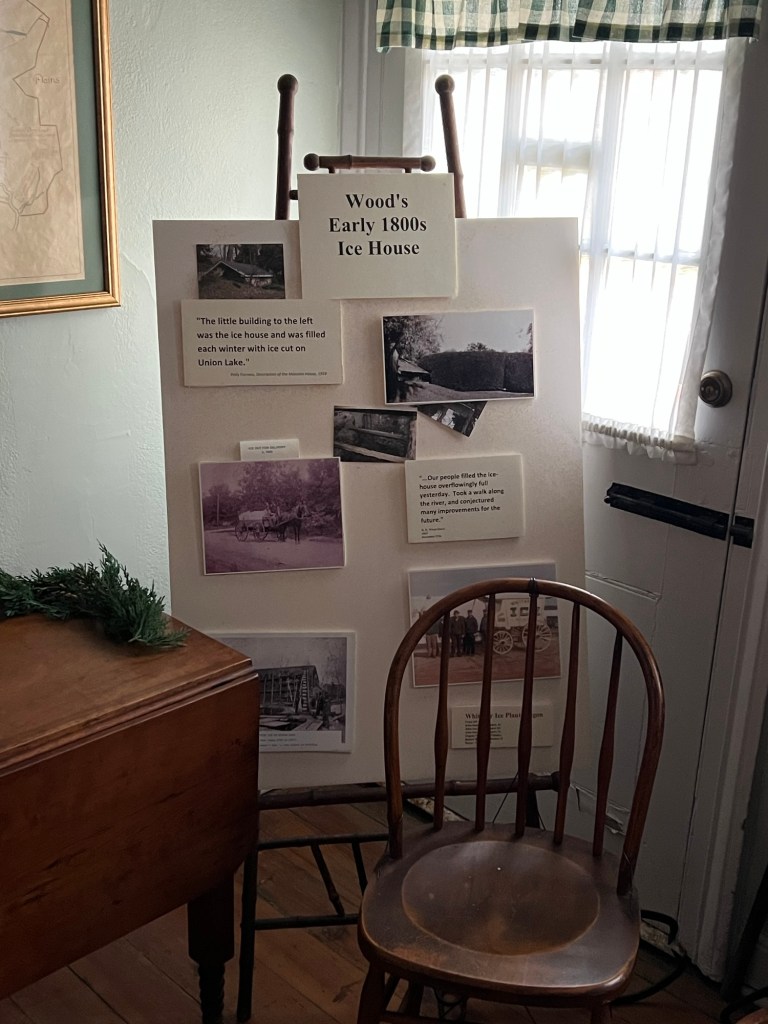
The Ice House display under renovation
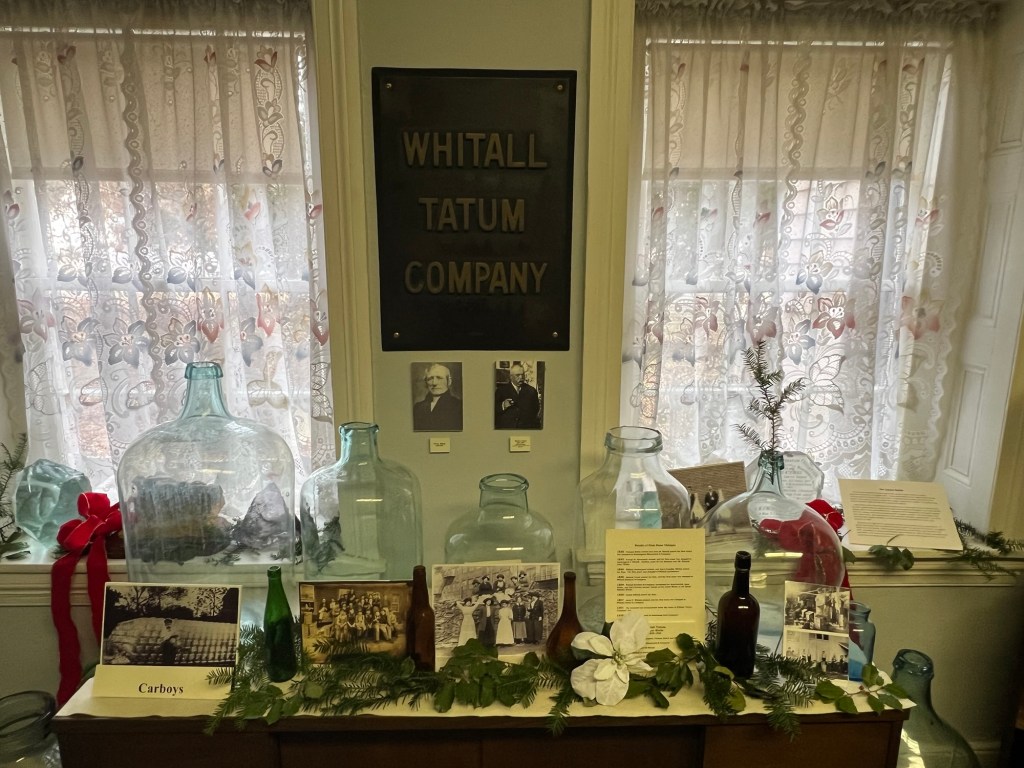
The Whitall Tatum glass display
The Whitall Glass display
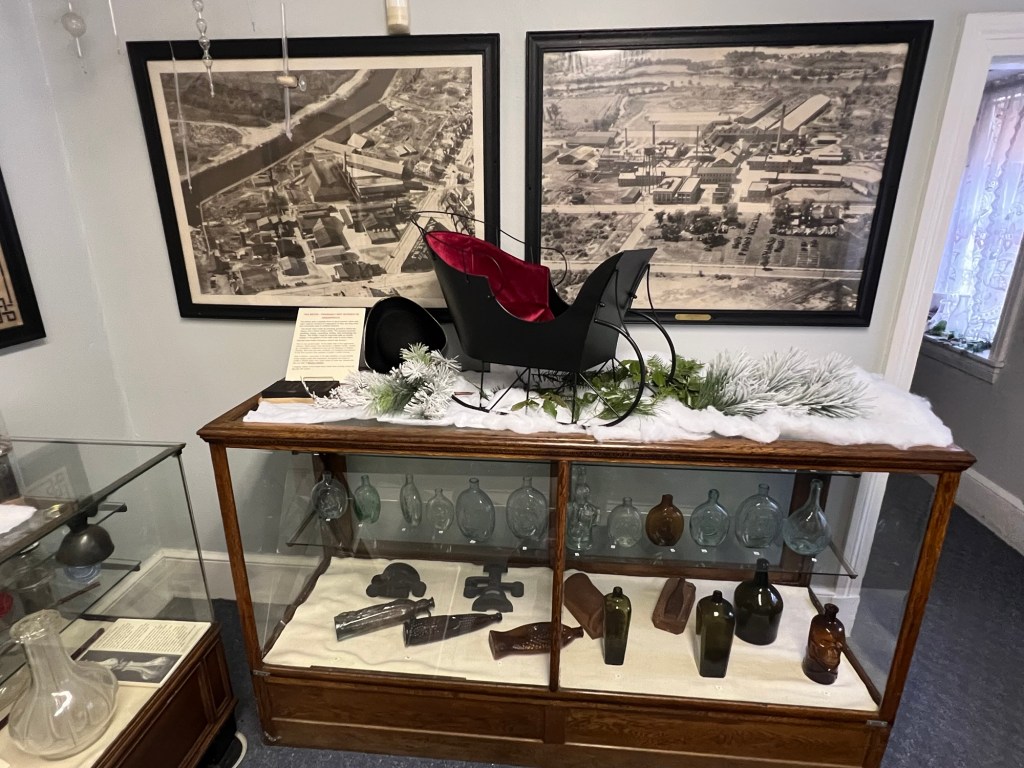
The glass display
The Wood family tree and the progression of the business of the family
The local amusement park display
The local factory display
Pictures of the mansion since 1814
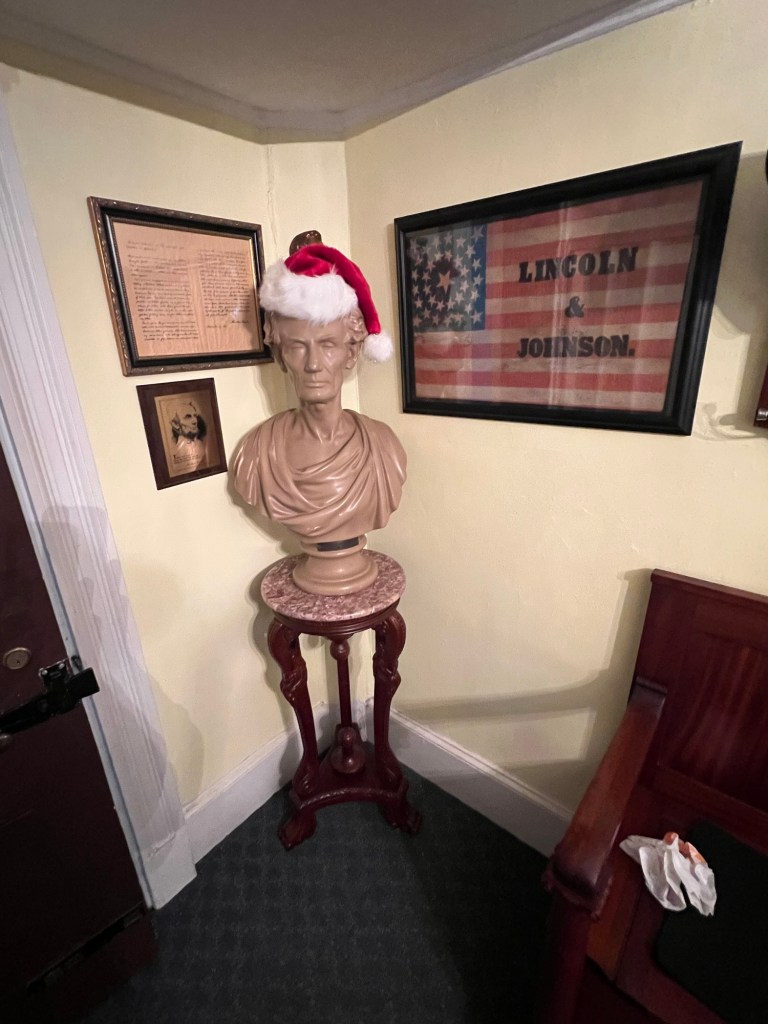
The Lincoln display
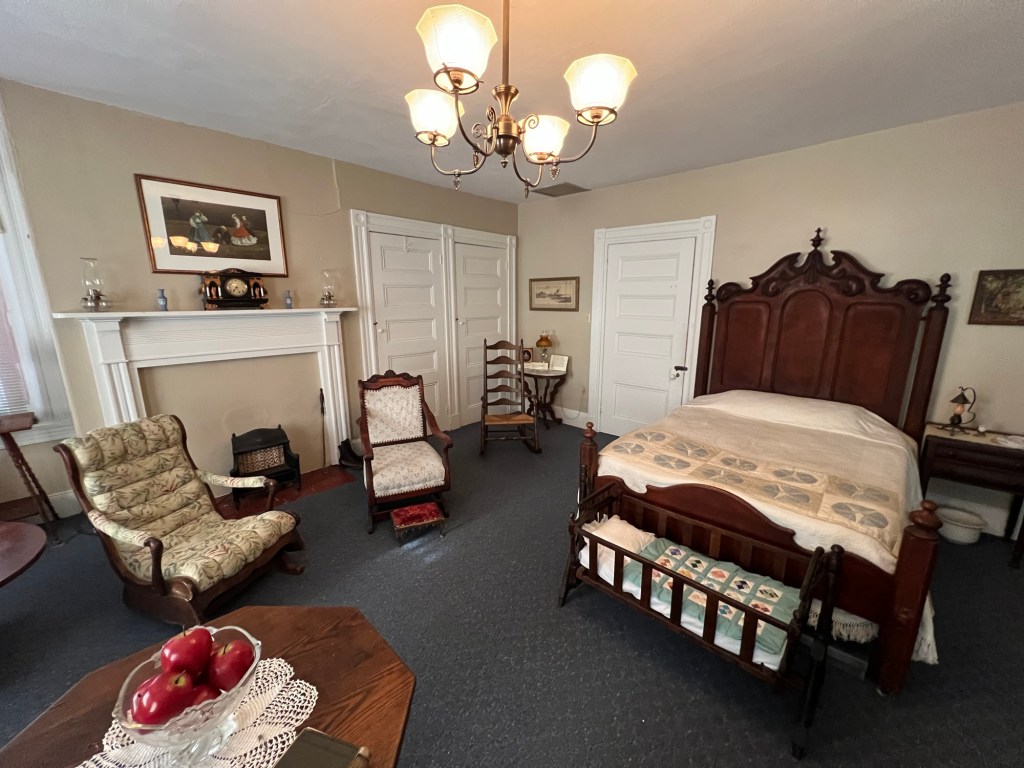
The main bedroom
The main bedroom
The Children’s display
The Children’s Toy Display
The Children’s Toy display
The Trolley display
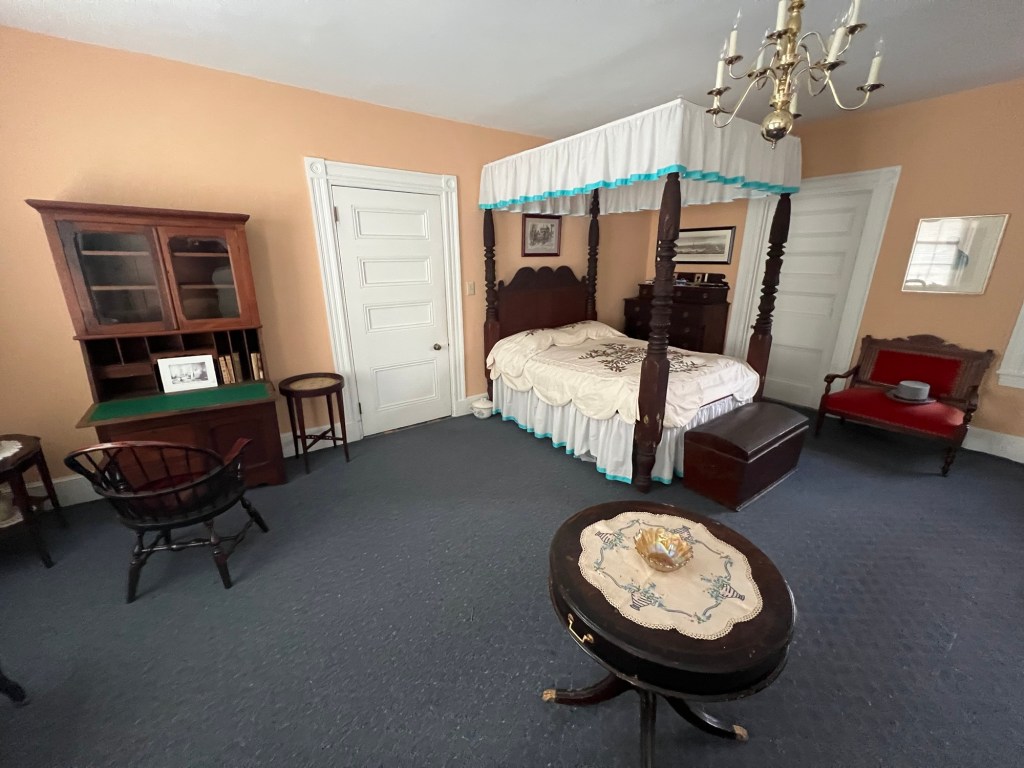
The other Bedroom display
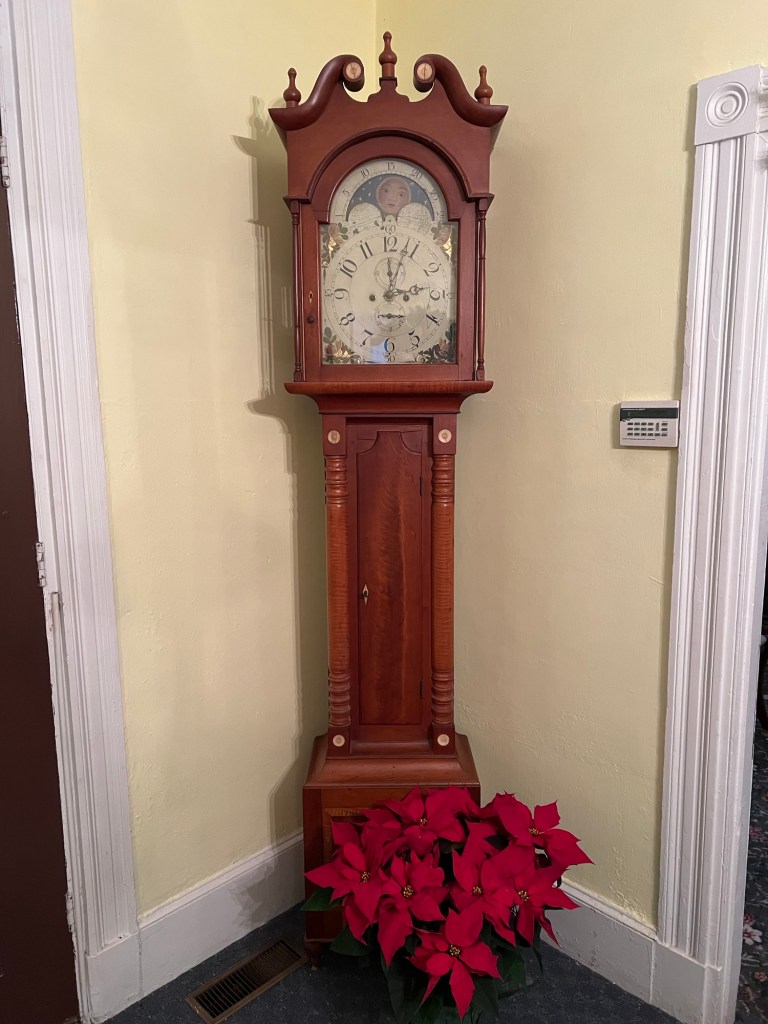
This beautiful Grandfather clock was made Salem, NJ
The beautiful display on the front door when you leave the house. Everything had been decorated for the holidays
The Borough of Rockaway Historical Museum at 199 West Main Street
The sign that welcomes you to the museum
When I visited the Borough of Rockaway Historical Museum, I like probably everyone else got the Rockaway Township Historical Society and Museum mixed up with the Borough of Rockaway Historical Committee and Museum. One is in the Township of Rockaway and one is in the Borough of Rockaway which are two different towns.
That was confusing enough and the fact that Google had them as closed on the Google website (which I changed). I was lucky to get there with just over an hour to visit the museum.
The museum was worth the trip. Located in Downtown Rockaway, NJ, the museum was near all the restaurants and shops downtown plus a historic cemetery at the Presbyterian Church. The whole museum you can see in an hour so it was just perfect.
The front gallery of the museum
The front gallery is dedicated to town history and the Morris Canal. The Morris Canal was the reason for the growth in this area of New Jersey and was built on the wealth of the farmers crops, coal and light manufacturing. Items were then sent to New York City and Philadelphia.
The railroads would change this later but would be where the early growth of this area would come from.
Pictures of the Morris Canal in the area
Pictures of the early Morris Canal in Rockaway, NJ
Artifacts of early Rockaway history including bottles and newspapers
WWII listing of Veterans lost in the war
The second small gallery showcased former businesses of the Town of Rockaway, NJ from the Downtown merchants to the larger, more commercial businesses. Most do not exist anymore.
The businesses of old Rockaway and the surrounding area
Artifacts from the McKinnon Axe Factory
The businesses with high school memorabilia
The McKinnon Axe Factory
The McKinnon Ace factory was once a major employer and manufacturer in the town. Long out of business, the museum has lots of pictures and artifacts from the company.
Artifacts from the McKinnon Axe Factory
Artifacts from the McKinnon Axe Factory
Old businesses from Downtown Rockaway
Most of these old businesses do not exist anymore but their memories live on in these displays with artifacts from a lot of these businesses.
Old businesses in the Rockaway
The Beaver Brook Dairy Farm
In the back gallery, the museum had more displays of the high school and displays on the history of the Rockaway Police and Fire Department. There was historical maps of the area and a small Military display. They even had an original land deed from one of the earliest settlers living in the area.
There were even pictures of the old quarry of the town that once sat behind the museum. It shows how the town keeps changing.
The display of Rockaway High School memorabilia
Graduation and Washington trip photos
The Military display and historic maps of Rockaway
A closer look at the Military display and the local hero’s of the town. The display showcased some of the residents in town who made important contributions to the military effort including a Four Star General.
The historic map of early Rockaway Village
The Military, Fire and Police Department displays
Artifacts and memorabilia from the Fire and Police Departments of Rockaway
The display of Rockaway schools and pictures of the City Fathers who ran the Borough of Rockaway
The old quarry that sat behind the historical society that is now Recreational space and ball fields showing how the town keeps changing
This little hidden gem is located just off the main downtown and should not be confused with the Historical Society of the Township of Rockaway, which is another town with it’s own Society.
There is a lot to see at the museum and is a nice way to get to know a little about the history of the area. This includes local family history as well.
The Jackson Family land deed of one of the old families of Rockaway
Walking around Downtown Rockaway, NJ after the tour of the museum:
Around the corner in Downtown Rockaway is the First Presbyterian Church of Rockaway at 35 Church Street, where members of three Jackson family members and many original settlers were buried.
The old cemetery behind the church were many original families are buried
The history of the First Presbyterian Church of Rockaway’s Historical Cemetery:
(from the church website)
Part of the present-day cemetery was believed to be an old Native American burial ground. Colonial settlement took hold here in Rockaway, Morris County New Jersey, around the year 1720, and considerable business formed around 1730 with the building of the Job Allen Sr. Iron Works. Tradition states that this particular spot was selected as a burial ground by the earliest families. On March 2, 1758, the Presbyterian Church was founded and organized. The first Meeting House constructed of wood, was built in 1758-60, primarily by Job Allen Sr. Job Allen Jr. would complete the construction of the Meeting House some 36 years later in 1794. The present church sanctuary was built in 1832.
The original church property consisted of 10 acres and 30 perch, which used to cover property west of Wall Street, and also included property across the street from the present church. Some of the earliest settlers whose grave sites are unknown and forgotten can be under the large church parking lot or even under some of the cemetery roads.
On September 27th, 1773, David Beaman: a founding member, deacon, chorister, elder of the Rockaway Presbyterian Church, was voted “to take care of the burying yard, to tell people where to bury their dead, and to advertise it through the parish.” This makes him the first sexton at the Rockaway Presbyterian Church. Ironically, David Beaman is buried in a grave that was never marked. He passed away in 1802 and has a cenotaph in the cemetery. Thomas Conger became sexton in 1797. Revolutionary War veteran, David Gordon, became sexton in 1802. People used to call him “the old sexton.” His broken tombstone bears the same inscription. He held the position as sexton for over 30 years. He died in 1852 at the age of 92 years and 10 months. In 1832 William Wear became the sexton for the “new church”, having “the privilege of tilling and pasturing the graveyard.” After his service there was Silvanus Howell in 1840, in 1845 Samuel Garrigus, then John B. Kelsey and Fredrick Star, then David Hamilton in 1858, Joseph H. Beach in 1864, then John Gordon Mott (David Gordon’s grandson) in 1875, who held the position for an astounding 47 years! He was also the first sexton who kept accurate records. He was assisted by William Rogers and Peter Beatty in the last few years of his tenure. Peter Carlyon followed John Gordon Mott in 1923 retiring in 1955. The oldest gravestone is dated April 8th, 1762. David Estill lost his beloved wife Mary at the age of 24 years.
There are estimated to be 47 Revolutionary War veterans buried here, including a Hessian Soldier named Leopold Zindle (d. 1821), some accounts say around 100 people buried here participated in the conflict. The Morris County- New Jersey Militia’s highest ranking officer, Brigadier General William Winds is buried in the small knoll behind the church. He was also elected as one of three delegates from Morris County to the New Jersey Convention which ratified the Constitution of the United States for the state of New Jersey in 1788. He died in 1789.
There are 16 War of 1812 veterans interred in the cemetery, 6 War of 1812 “peace time era” service members of the Morris County N.J. Militia, 132 Civil War veterans, 13 Spanish American War veterans, 89 WWI veterans, as of December 2021 there are 168 WWII veterans, 41 Korean War veterans, 20 Vietnam War veterans resting in peace. There are approximately 7,000 people interred in the cemetery.
In 1861 – 1865 the cemetery was surveyed and plotted, and walkways and roads were constructed. In 1933 part of George W. Stickle’s will was bequeathed to the cemetery. Part of the money was used to erect the iron spiked fence that surrounds half of the property (from the church website).
The section of the Jackson family plots
The Jackson family plot in the cemetery
The museum is a treasure trove of information of Rockaway’s and central New Jersey’s past. It is interesting to see how the area had changed and how it will continue to progress in the future.
On the recommendation of the head of the museum, who was also a town Councilman, I walked down into the downtown area to have lunch. I stopped at Anthony’s Pizzeria at 51 West Main Street for lunch. I just wanted a slice of pizza.
The historic building at the crossroads of Downtown Rockaway at 51 West Main Street
Anthony’s Pizzeria at 51 West Main Street has been in business for 45 years and a town staple.
I ordered a slice of pizza and a Coke and while I was talking to the owner, I looked into the pizza case and saw an unusually large slice of Cheese pizza. He explained it was their specialty stuffed pizza and it had everything in it from ham, pepperoni, sliced meatballs, onions, peppers and olives etc.
When I told him I was not thrilled with cooked vegetables on pizza, he insisted I try a slice and cut me a piece to try complimentary. He was a good salesman. He warmed it up and I have to say that I was pretty impressed by it. The layers of ingredients give it its complex and combination of spicy and tangy flavors
There is a lot in that slice of pizza
I have to say that I was impressed by it. I would have left out the olives but still it had a unique flavor and with a small side of their homemade red sauce makes a perfect meal onto itself. The pizza here is excellent, the service is really friendly and the prices are really reasonable.
It was almost like COVID never happened. It’s nice to know that some restaurant owners are not gouging. My lunch here was excellent.
It really was a nice afternoon in Downtown Rockaway, NJ even on a gloomy afternoon.
The Mount Tabor Historical Society at 32 Trinity Place
The Historical Society and the gardens
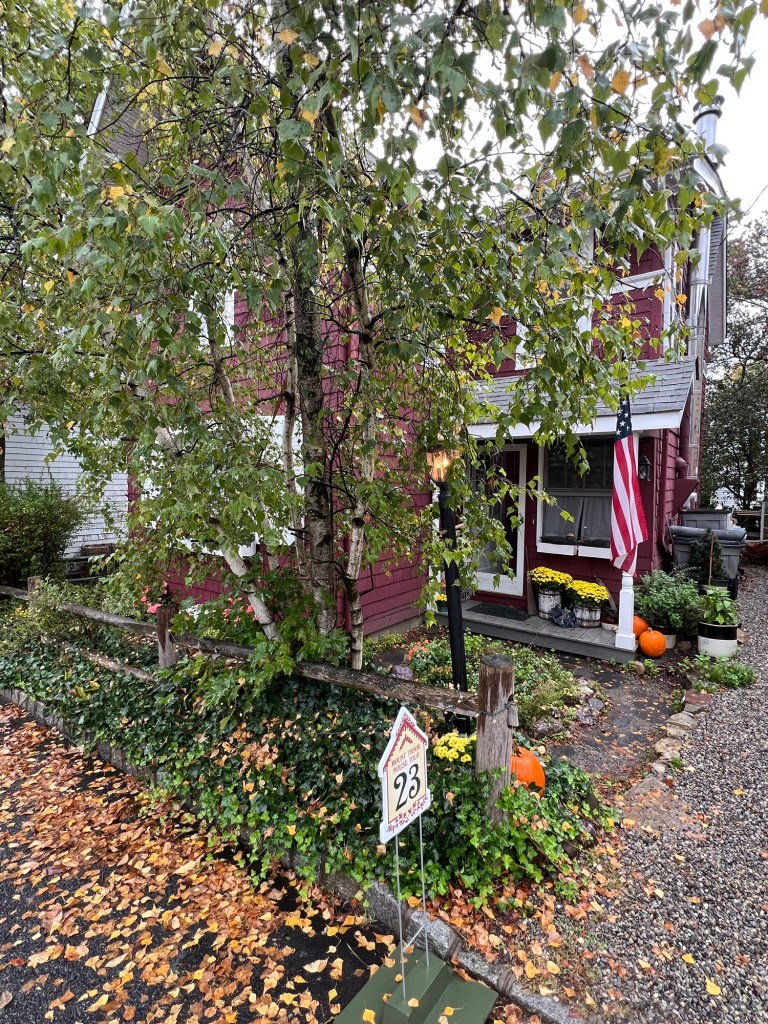
I went on the Mount Tabor House and garden walking tour in late September on a rather gloomy Saturday and I had a wonderful time. It may have been gloomy out but the museum could not have been more interesting and the people who opened their homes could not have been nicer.
The tickets were $35.00 at the door which I thought was very fair for this fundraiser. They had transportation from the elementary school to the site and back that ran on a continuous basis from 11:00am to 4:30pm when the tour was over.
The sign by the bus tour stop
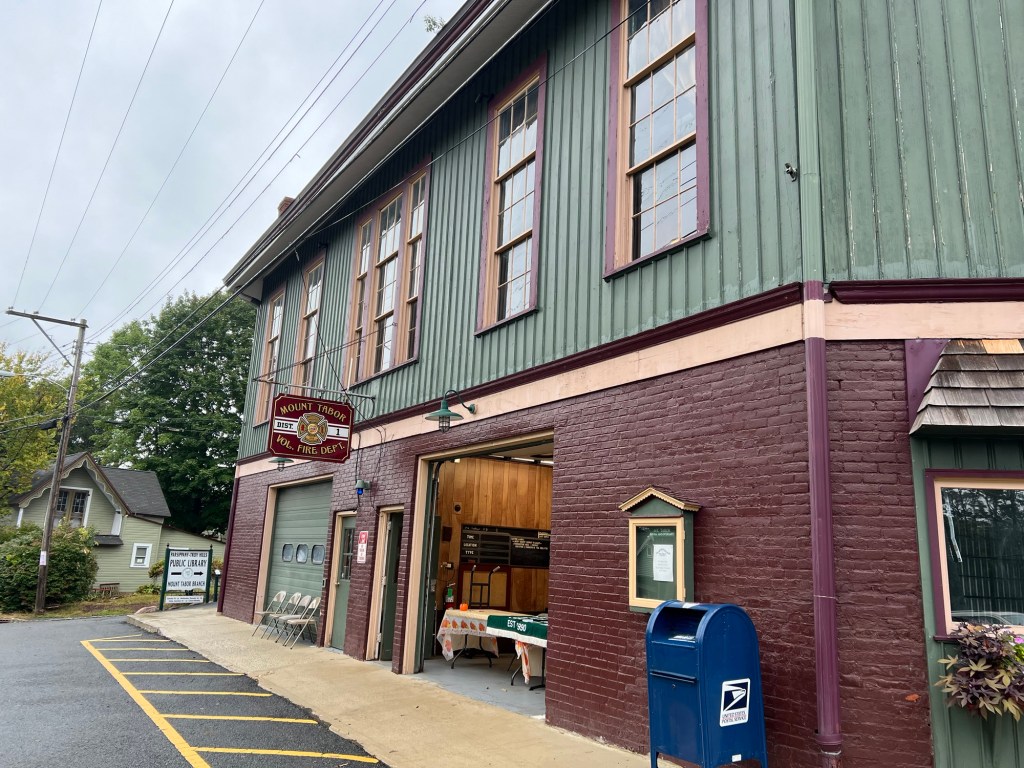
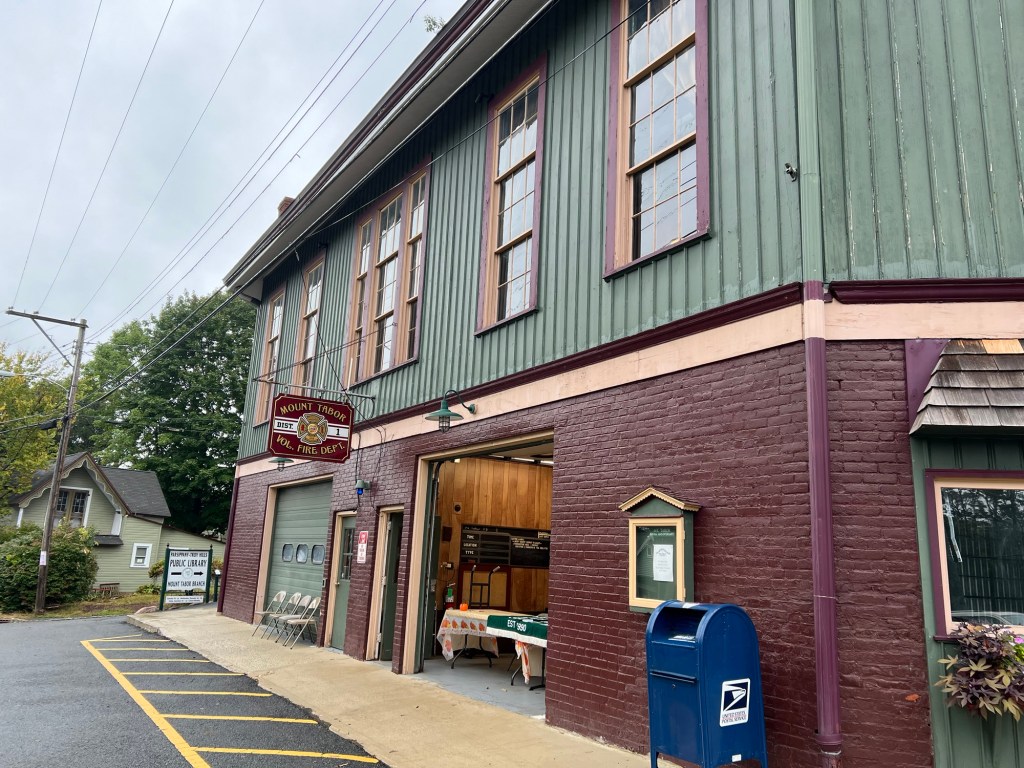
The first stop where we bought the tickets was the old Mount Tabor Fire House
When we arrived in the historic Mount Tabor neighborhood, this had once been a summer Methodist Camp. The planned community still has the original layout of the tent community and plots of land that the houses had been built on since old camp closed.
The center of the community was Trinity Park, a beautifully landscaped park
My first stop on the tour was the old Tabernacle, the original gathering place and hall where the religious services took place.
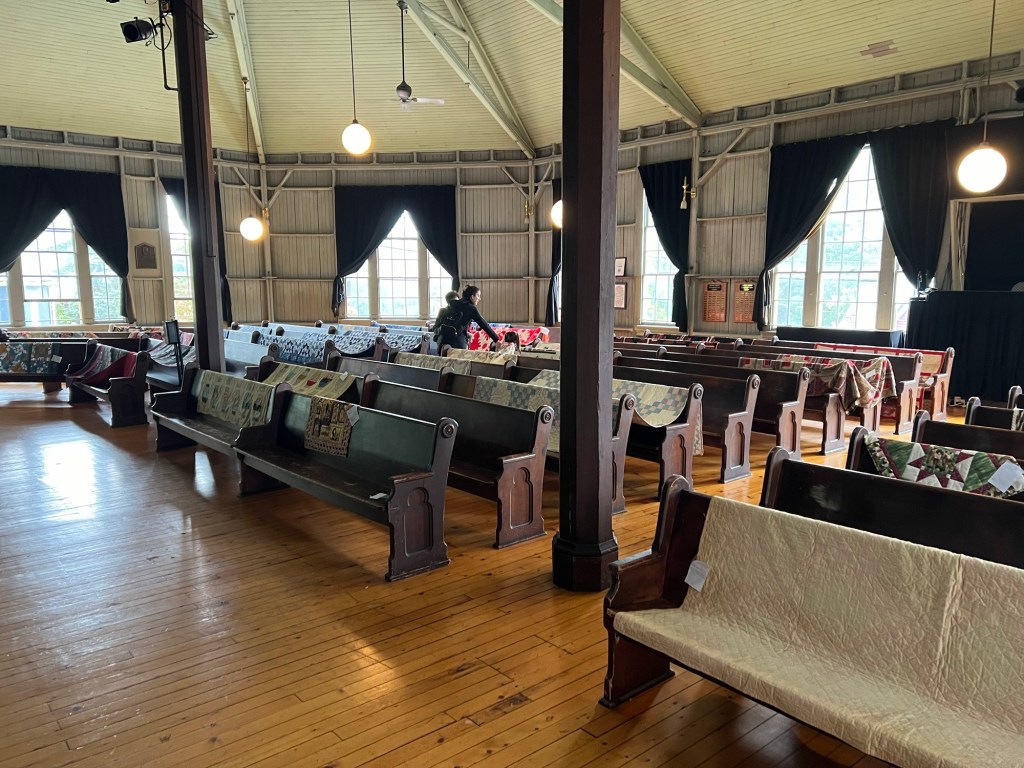
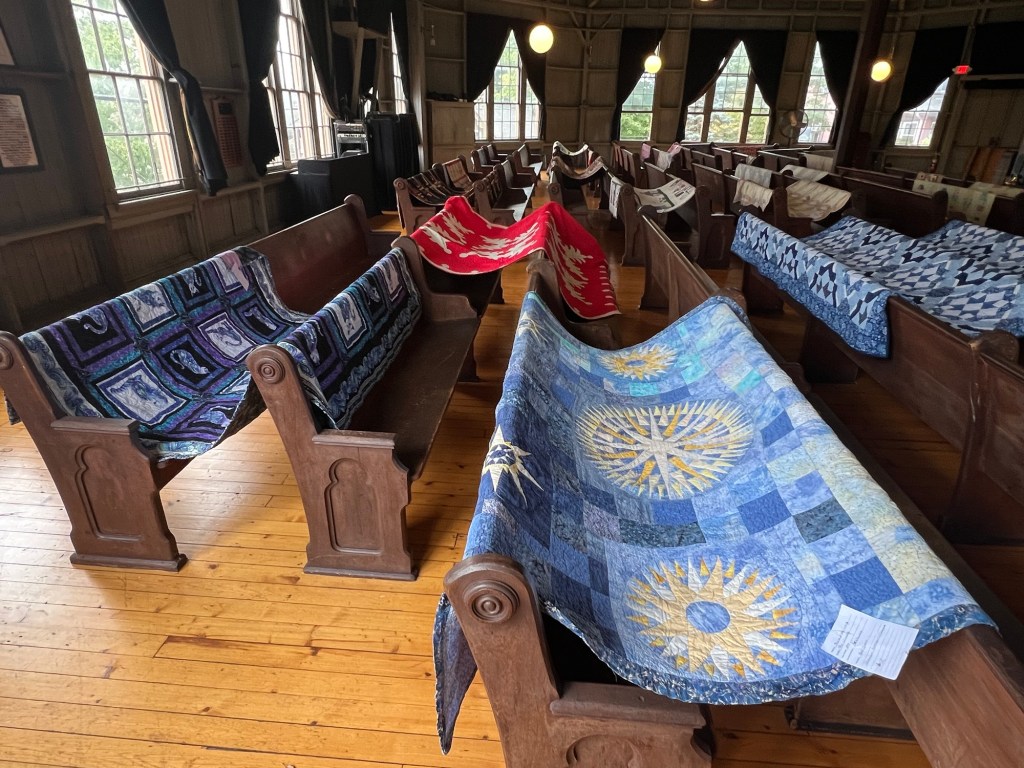
The inside of the Tabernacle, now being used for the quilt show for the tour
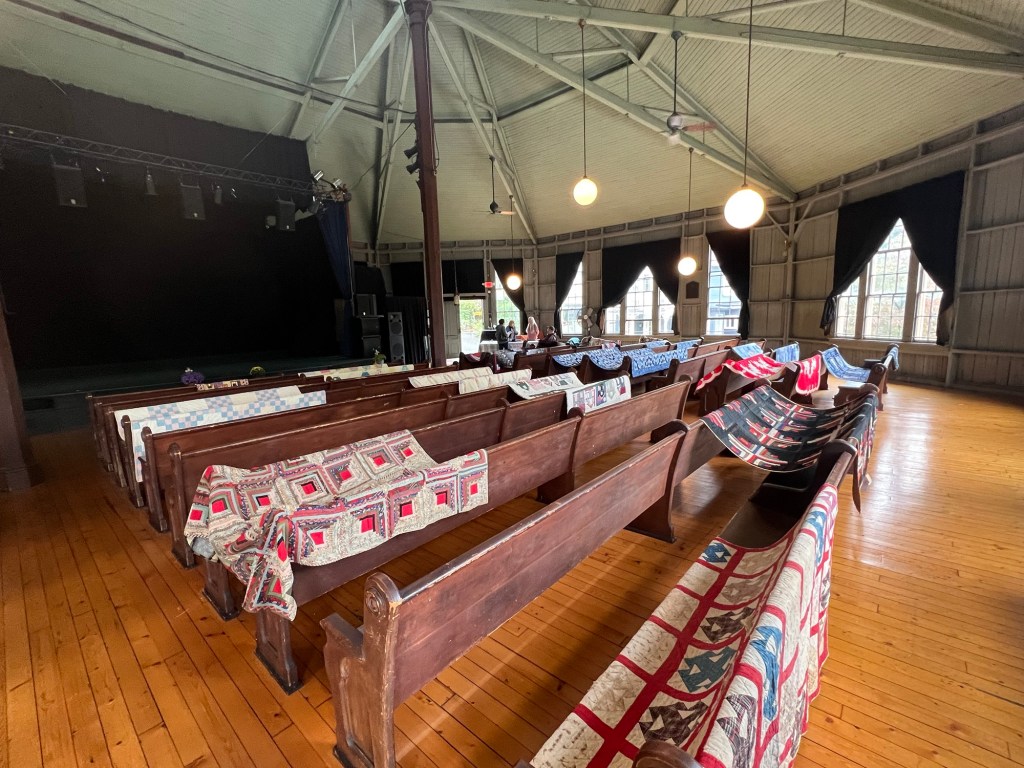
The Quilts were displayed on all the pews
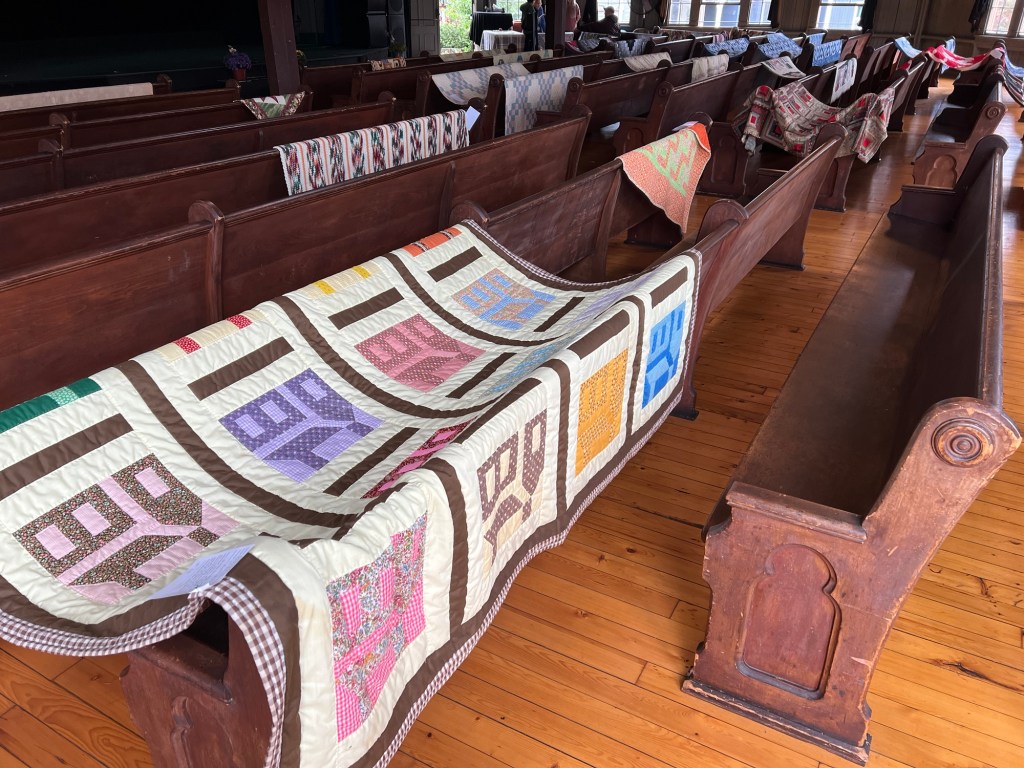
The quilts were all handmade, some really colorful and beautifully stitched. It was a really impressive show of artistry.
The beautiful quilts on display
The colorful quilts on display
After I left the Tabernacle display, I headed up to the Mount Tabor Historical Society Museum for a tour of the museum and gardens. It was located on Trinity Park.
The Mount Tabor Historical Society on the eastern side of Trinity Park
The museum is part of triplex with a private home in the two other former homes. They are undergoing a renovation right now
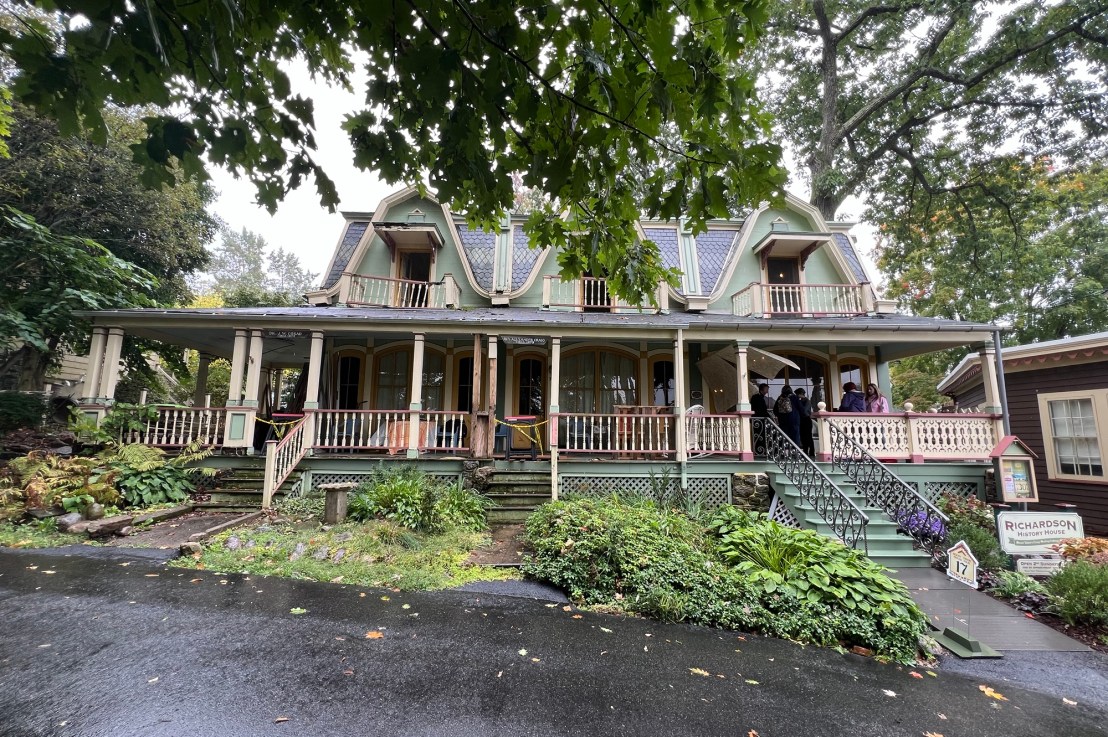
The J. Smith Richardson History House (1873): A Camp Meeting Cottage Museum
(from the museum website)
The Mount Tabor Historical Society is privileged to share our historic community, founded as a post-Civil War permanent Camp Meeting ground, and the Richardson History House – a Camp Meeting Cottage Museum. The 1873 History House invites visitors to travel back to another era and see what it was like to spend a summer “camp meeting style” in the cottage of J. Smith and Lydia Richardson.
The parlor area in the home of Mr. Richardson
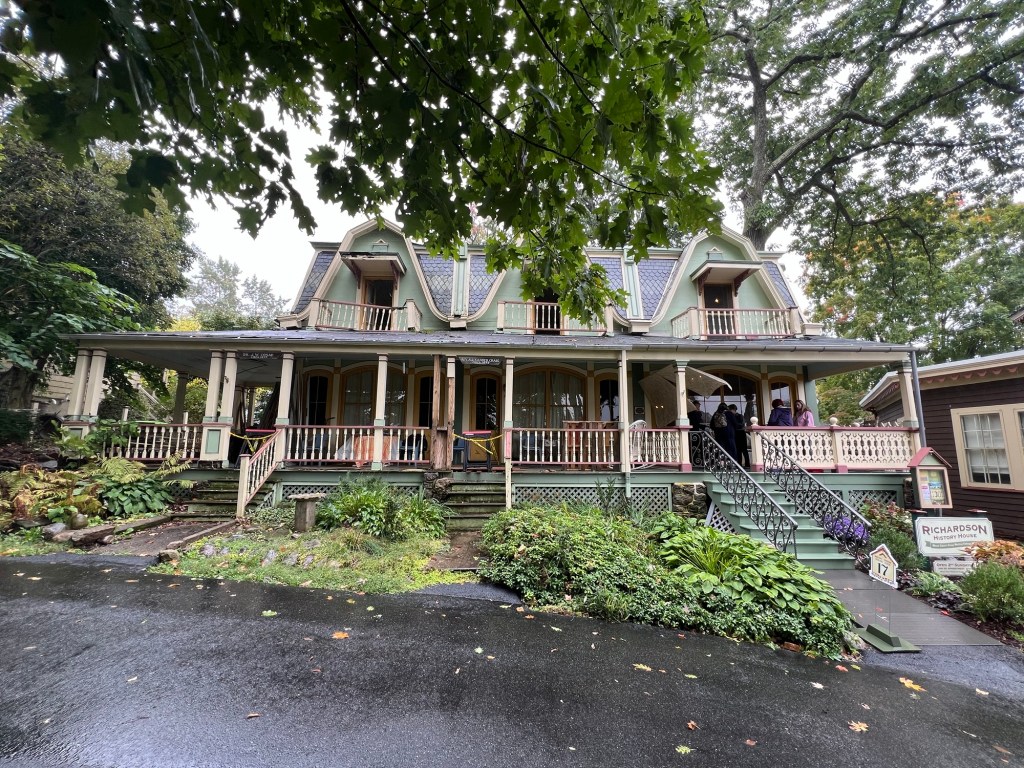
The home on the furthest to the left of the building is the museum, once home to the Richardson family, who were part of this Methodist retreat.
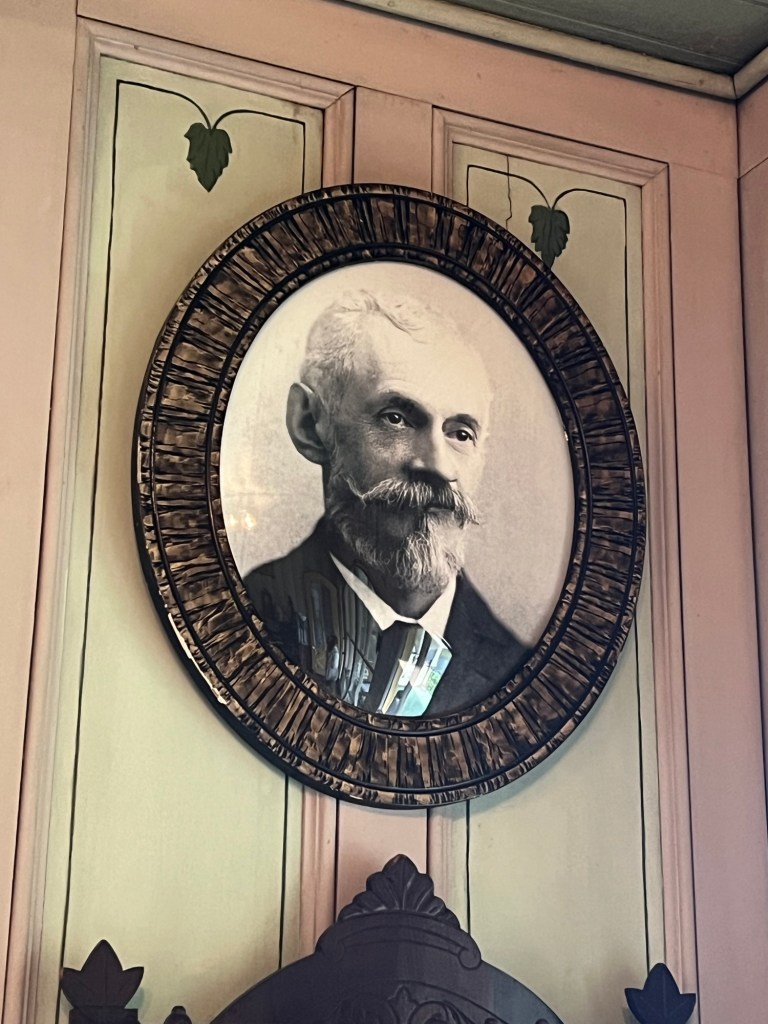
Mr. Richardson’s portrait hangs proudly on the wall overlooking the parlor of the home
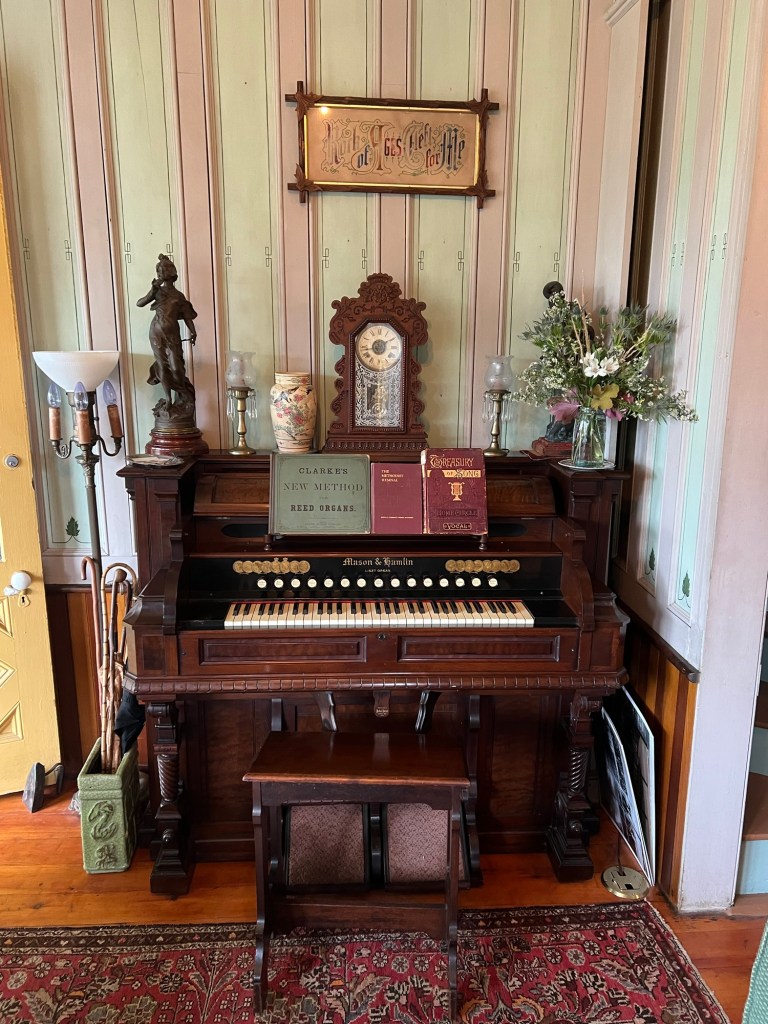
The homes pipe organ that was used to entertain the family
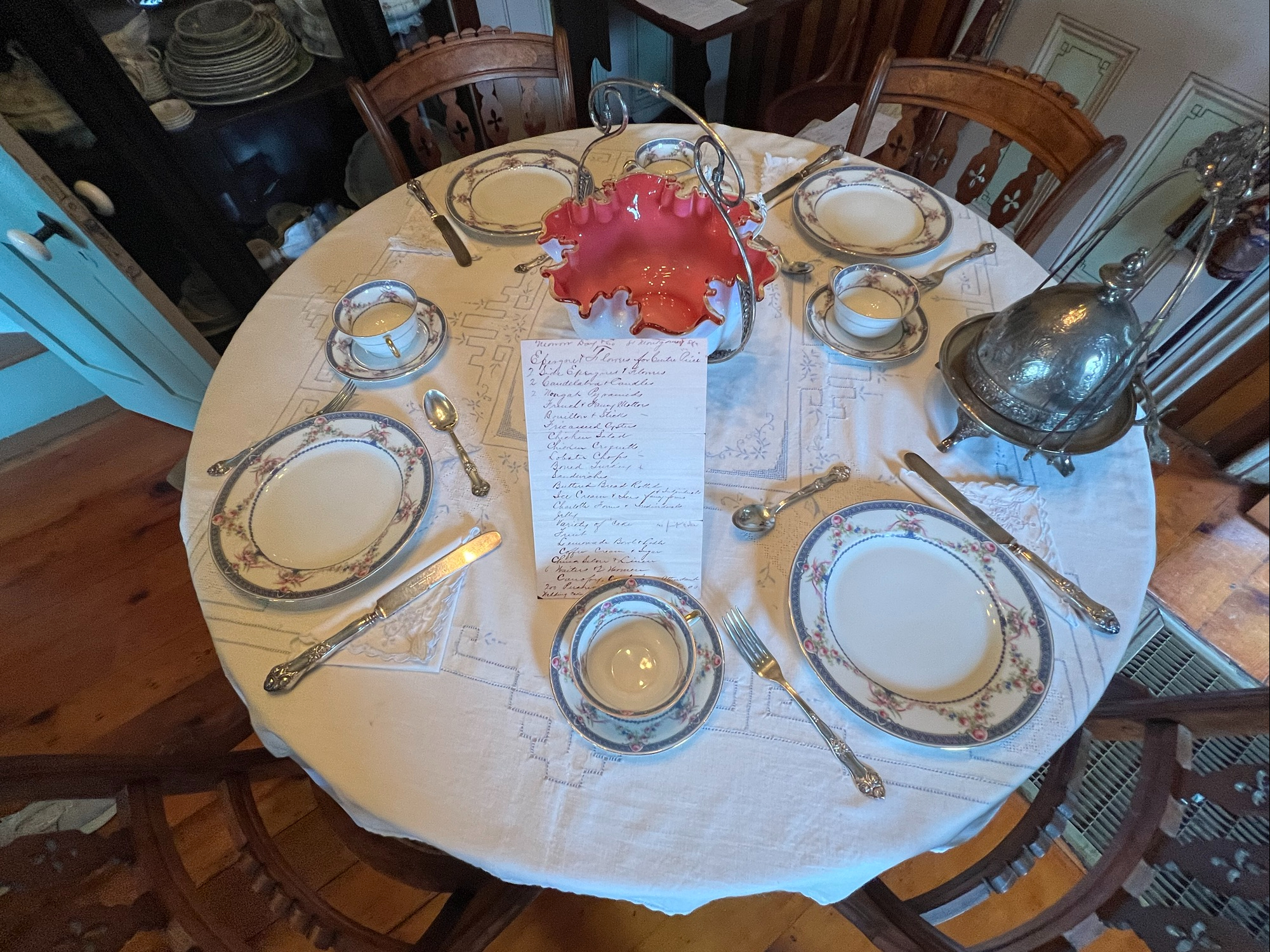
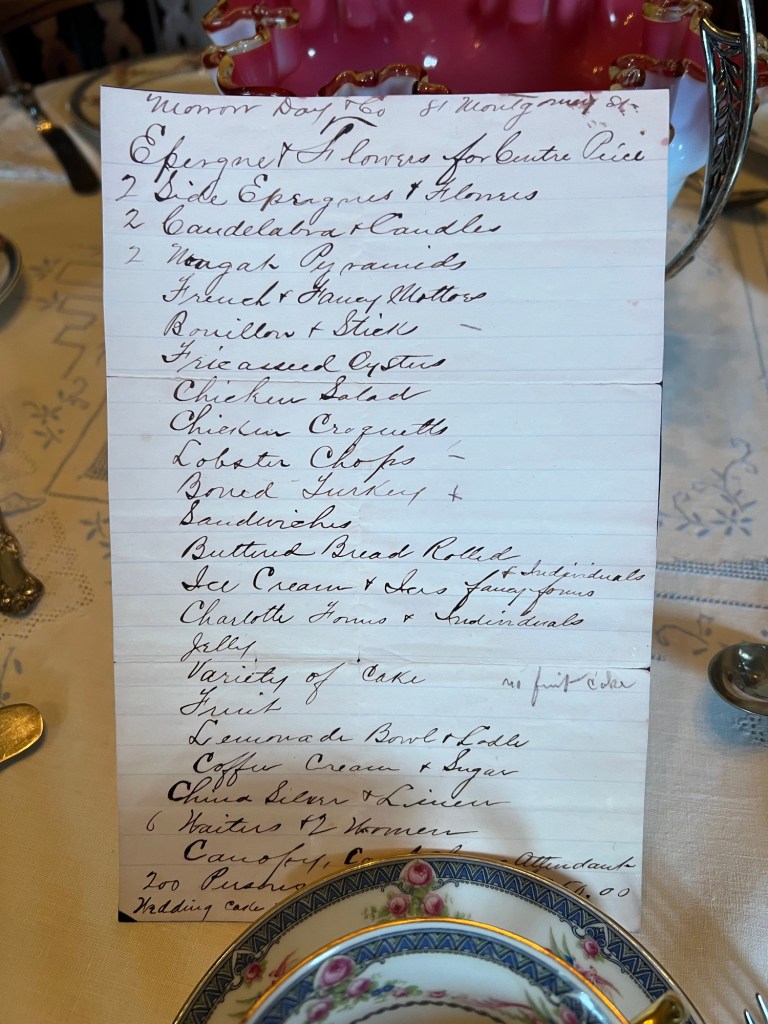
The table was formally set with period China in the Dining Room that was shared with the parlor area. The tour guide told me that the family kept meticulous records of everything and on the table was the wedding menu of Mr. Richardson’s daughter’s wedding.
The Dining Room table set for dinner
The beautiful Victorian China
The bride’s Wedding menu. You can tell they ate well that afternoon
The brides wedding was pretty elaborate for the time and you could tell by the menu they ate pretty well that afternoon.
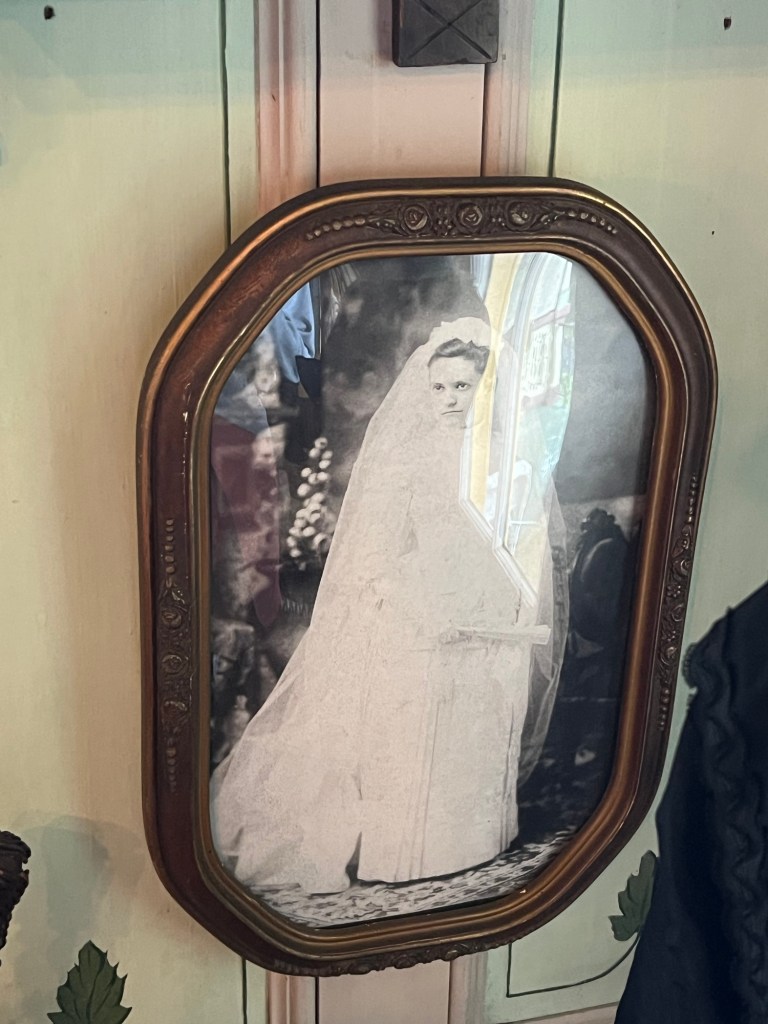
The bride’s Wedding photo hangs proudly in the parlor
The family heirloom, the bureau, sits proudly in the corner of the room
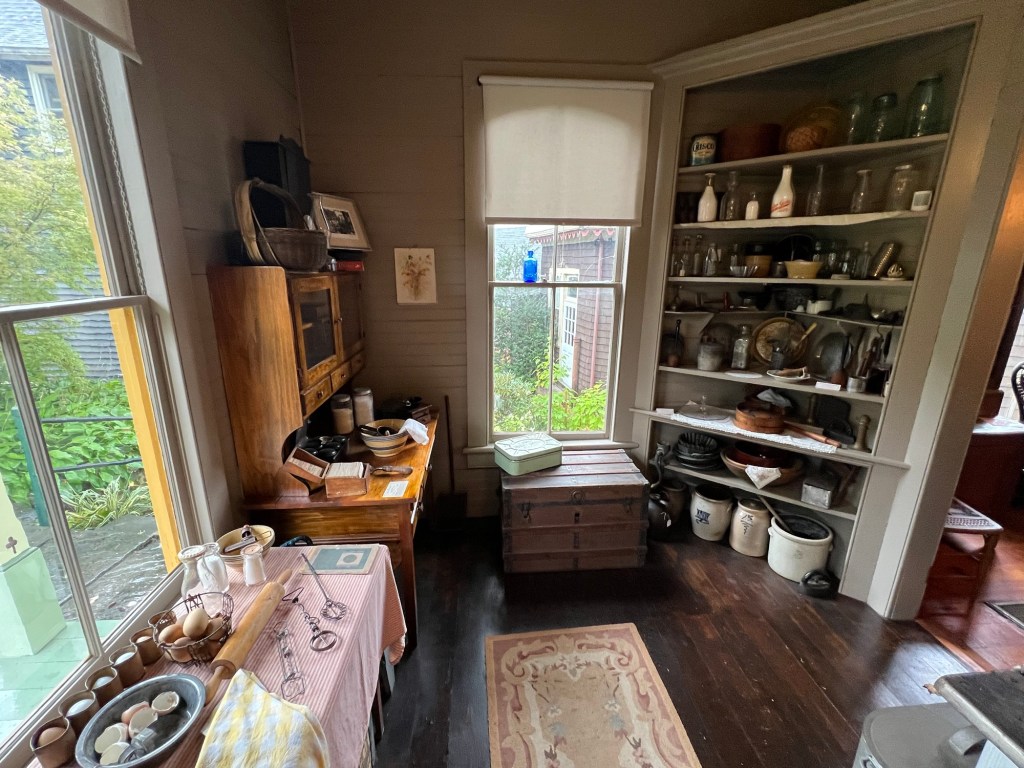
The family did not leave much behind but this bureau is the one piece of furniture that the family owned. It now holds serving pieces and dinner items. The kitchen is small but has all the modern convenes of the time including a range coal stove and an ice box, which were pretty elaborate for the time.
The kitchen of this small summer home
The shelves with all the cooking and storage materials
There are all sorts of baking materials, cooking utensils and items to cook full meals for the household.
Baking and measuring items
Items for baking
The historic map of the Mount Tabor Camp Ground was hung in the kitchen
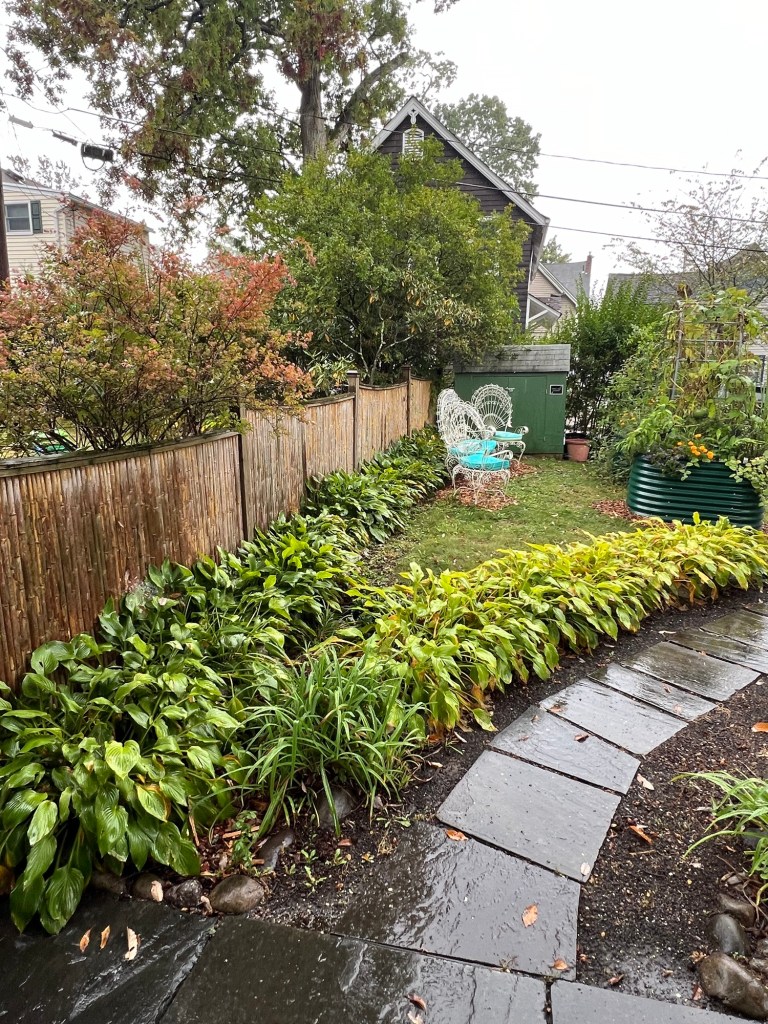
Off the kitchen door was a beautiful garden and a landscaped walkway
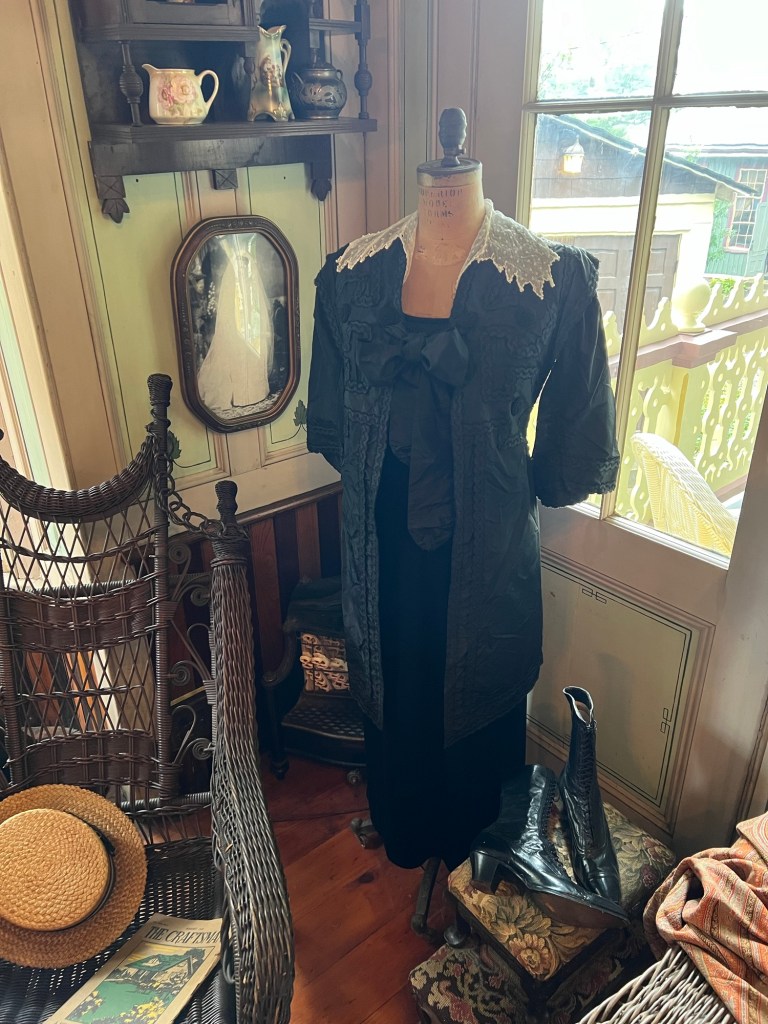
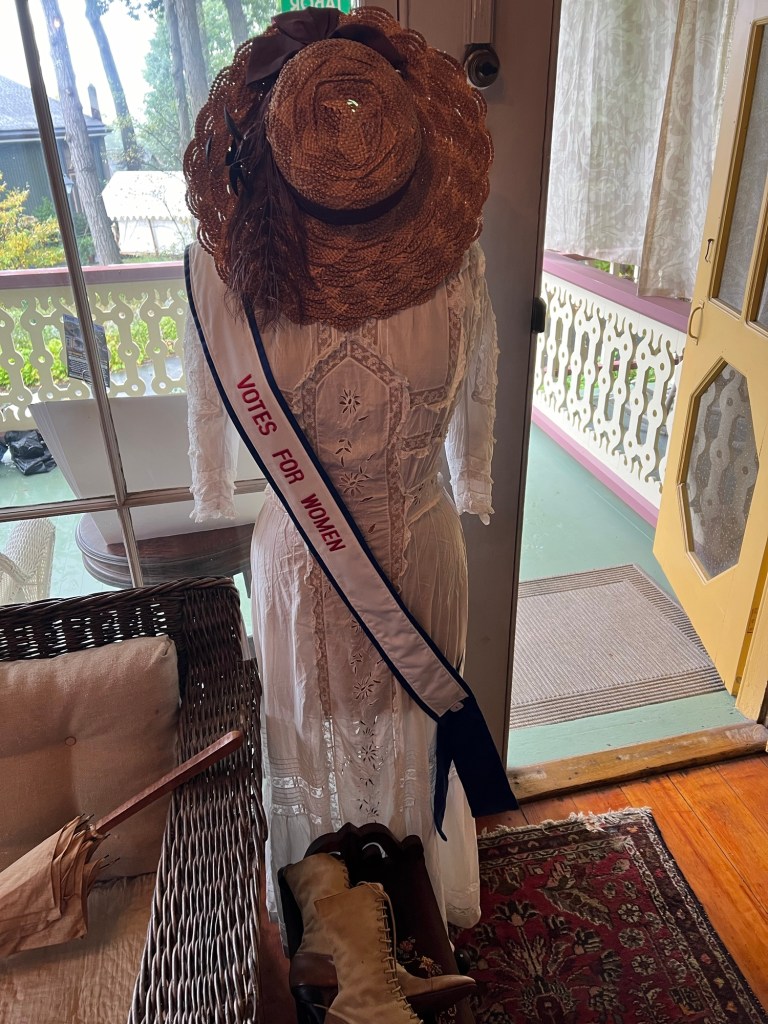
Some vintage clothing was on display in the parlor
Vintage women’s clothing on display in the front parlor
I took a trip up the narrow stairs to the upstairs bedrooms and bathroom. I discovered that the house was much bigger than I thought. There was a nice size bathroom at the top of the steps.
For a small house, the bathroom was nice sized
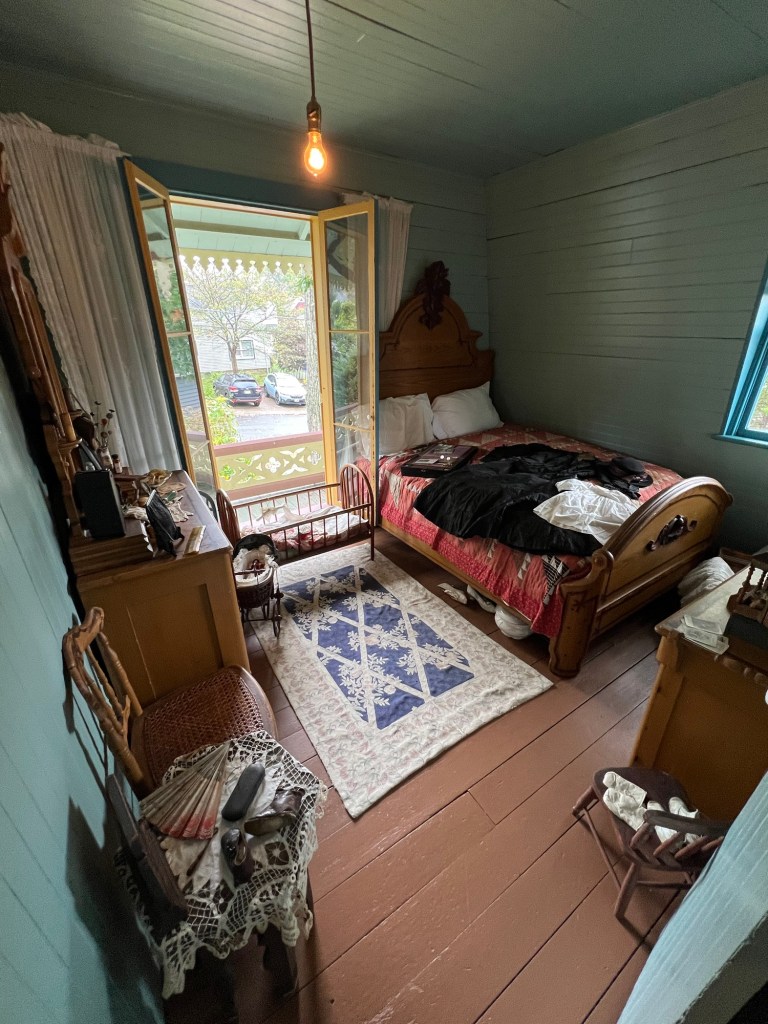
The main bedroom was nice in size and also had a nice breeze from the window
The rooms were decorated with period furniture and bric a brac of the period. On the bed, lay funeral clothing of a family member in morning.
The clothing of someone in morning
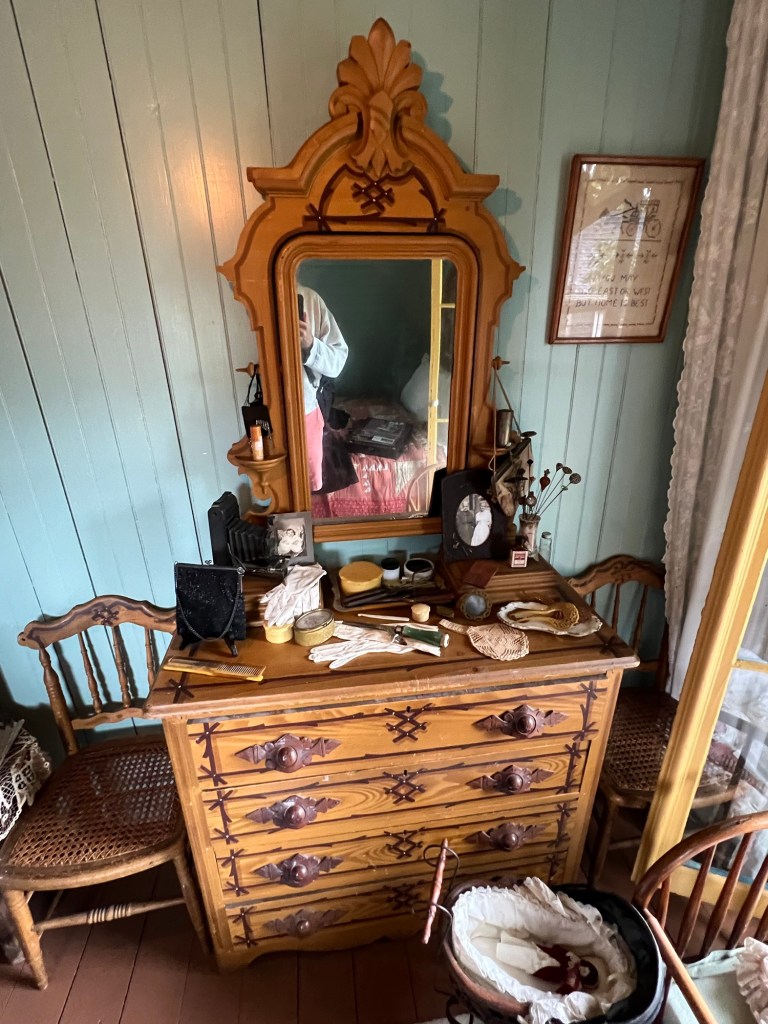
The family bedroom set also returned to the house when donated back from the Richardson family
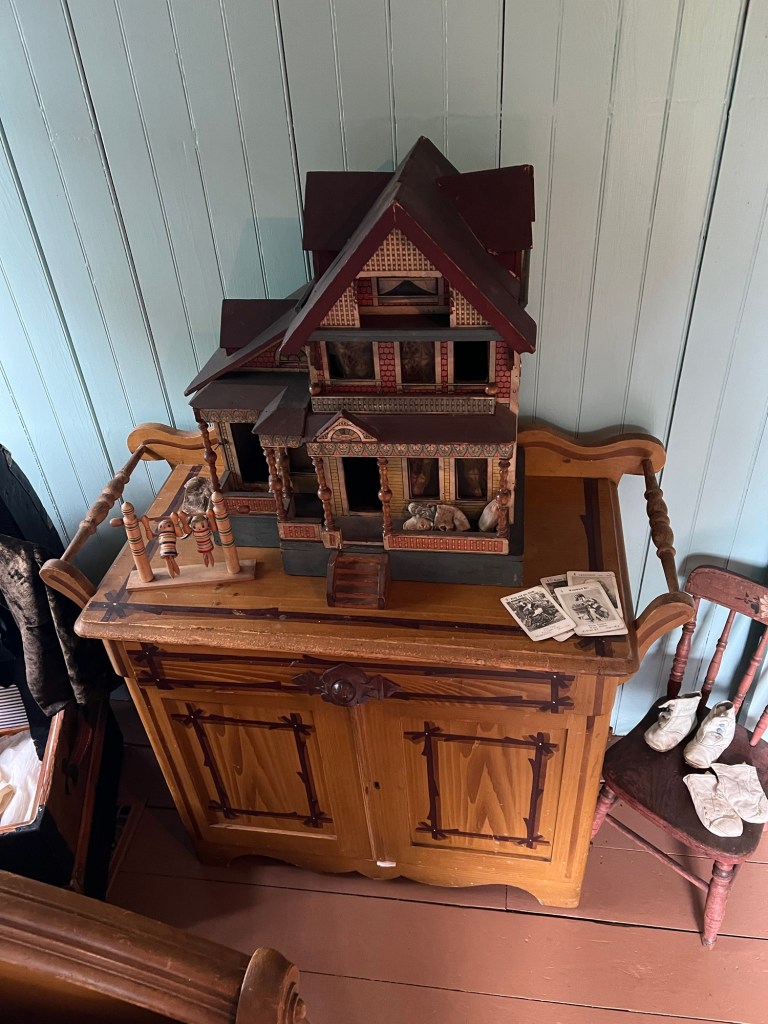
This gorgeous dollhouse was to the side of this bedroom with its tiny furniture and miniature decorations
The other bedroom was a little smaller but again was nicely furnished.
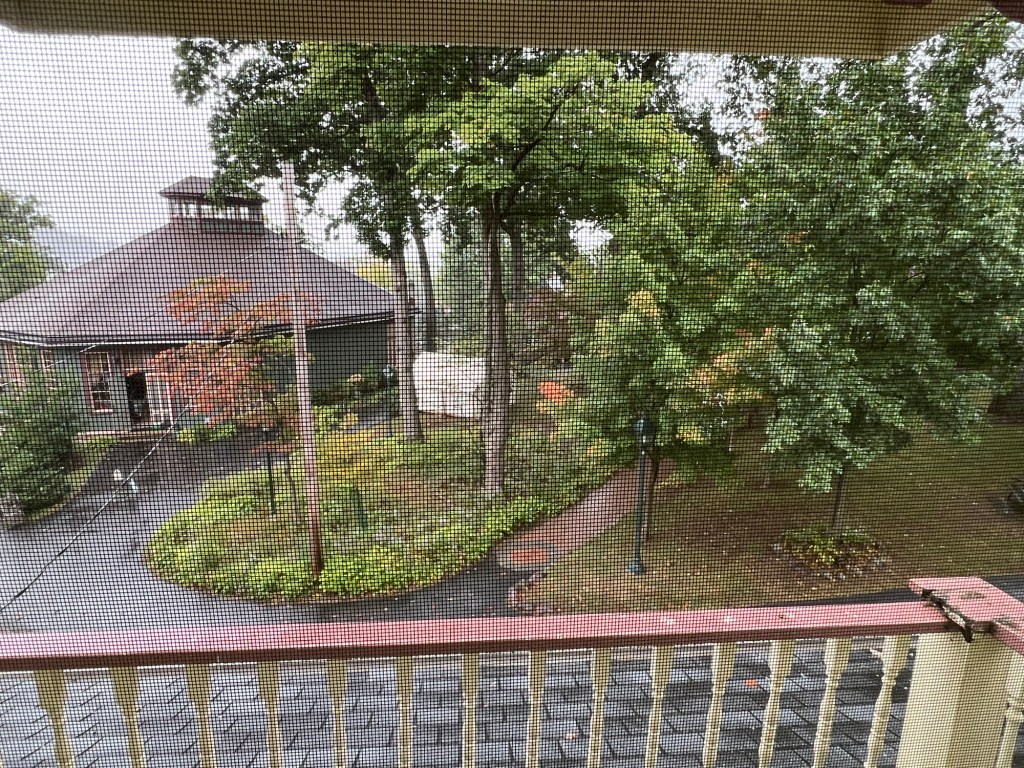
The view from the upstairs bedroom of the garden below
The second bedroom was a bit smaller and contained vintage clothes and toys
Family heirlooms, clothing and toys
The doll carriage for some lucky child
A sewing kit not too dissimilar from my grandmother’s
Baby dolls asleep on the second floor bedroom
The view from the parlor overlooking the Tabernacle
The Trinity Garden in the middle of historic district
The History of the Mount Tabor Methodist Camp:
(from the Society website)
Mt. Tabor, New Jersey, is a fine example of a 19th century community. Established in 1869 as a Methodist summer camp meeting ground, Mt. Tabor is now a full-time residential community.
While walking through Mt. Tabor, one can see Victorian cottages, complete with gingerbread, and several historic community buildings. Trinity Park is still a busy and central focus of the community. In addition to residences surrounding the park are three octagon structures. The Mt. Tabor branch of the Parsippany library occupies one of them, once known as the Ebenezer Pavilion. The Bethel, a pavilion erected in 1873 and enclosed in 1886, is used as a community meeting hall. Historic displays are featured in the Bethel the day of the annual house tour. The Tabernacle, built in 1885, is used to host large community events, including concerts. The fountain in Trinity Park is a close replica of the original fountain erected in 1875.
Throughout the 1870s and 1880s, private cottages were built at a rapid rate, while some summer residents stayed in tents. By the turn of the 20th century, more than 200 cottages were built, making Mt. Tabor a lively summer resort. The Depression and World War II brought some changes to Mt. Tabor: during these times when families could no longer afford two houses, the cottages were turned into year-round dwellings.
Mt. Tabor is still a special community. Its historic heritage is being preserved and its community is full of good will and participation. There are many events each year, including Children’s Day, an annual Holiday Craft Fair, House Tour, and concerts. The many active committees in town include the Garden Club, Historical Society, and Children’s Day Committee. Mt. Tabor also has a golf course and country club.
In 2001 we celebrated the reconstruction of a decorative iron arch at the entrance to Mt. Tabor closest to Dickerson Rd. at Rt. 53. The original arch was in place around the turn of the 20th century, and the reproduction was a project of the Mount Tabor Historical Society and the Beautification Committee of the Camp Meeting Association. It was completed in June of 2001, and helps one to visualize how Mt. Tabor appeared to people arriving by train, as many did. This project was made possible by contributions from individuals, from the Camp Meeting Association, and from money the Mt. Tabor Historical Society raises from events such as the annual House Tour.
Taking the Walking tour sponsored by the Society:
After the tour of the museum, I started my tour of the houses and gardens of the historic district. In the gloomy weather, I walked all the streets in the neighborhood visiting as many stops as I could.
As the rain subsided, I was able to walk around the neighborhood without juggling an umbrella. I wanted to see the gardens and parks first while the weather nice.
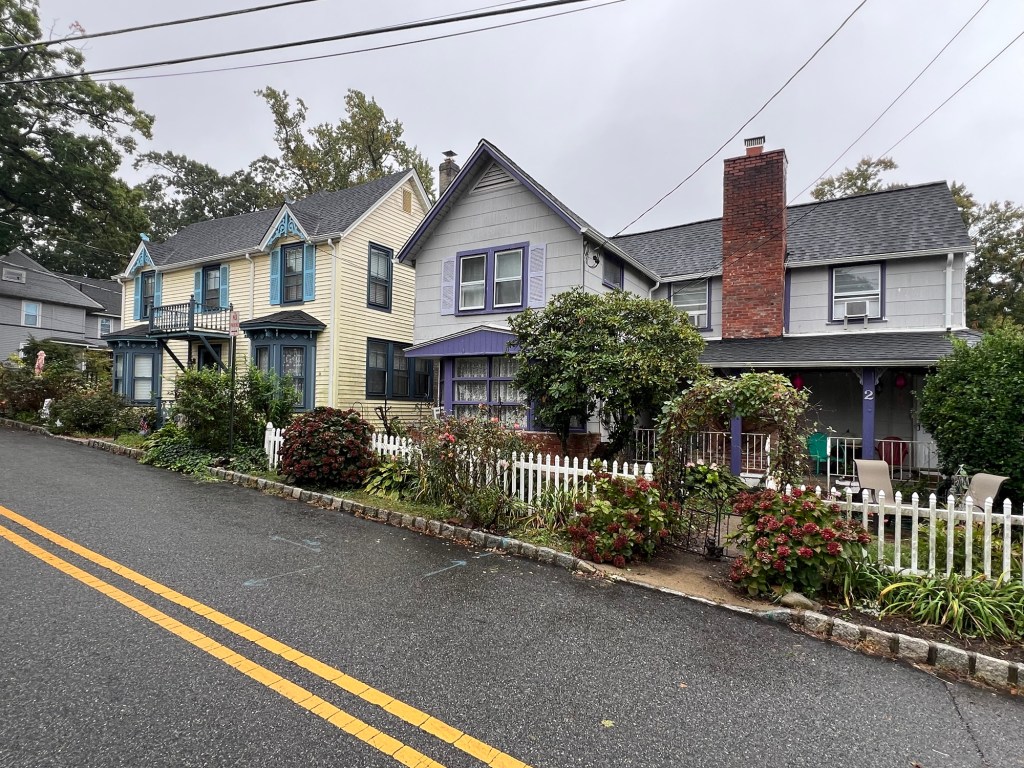
I loved walking around the neighborhood and admiring the homes
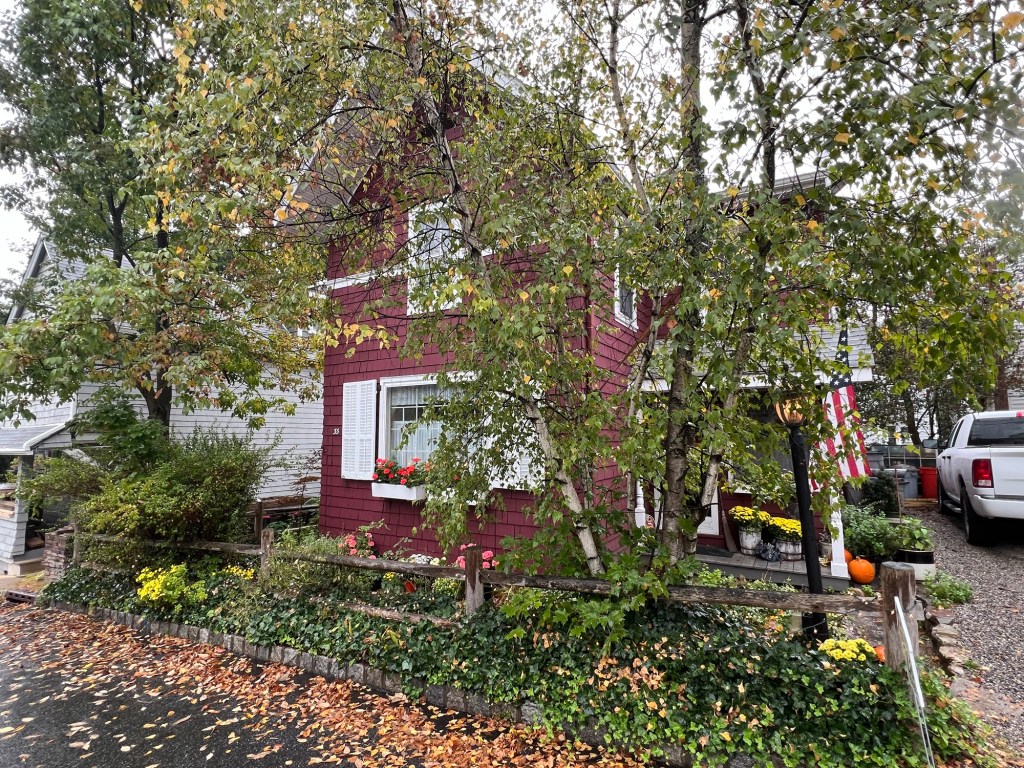
I walked up Strowbridge Avenue to make my first stop to see this whimsical front garden of this beautiful Victorian house.
The garden in front of 6 Strowbridge Avenue
The figures and small structures of this magical garden. I thought I would see ferries and elf’s walking around the yard.
The details of the front of 6 Strowbridge Avenue
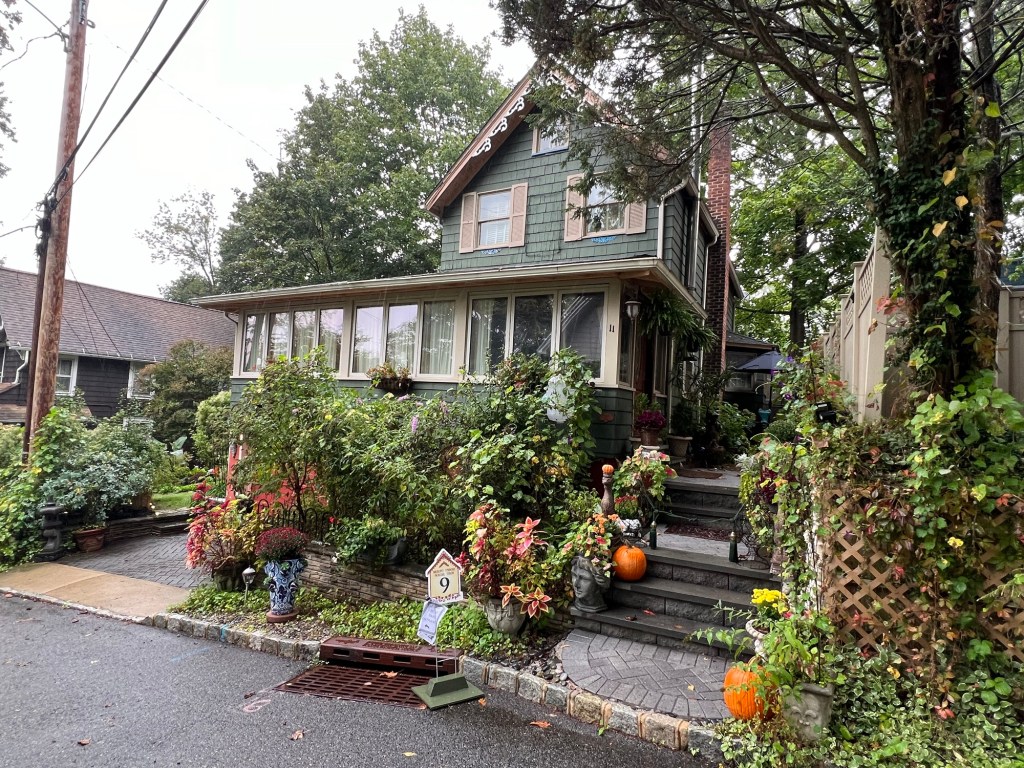
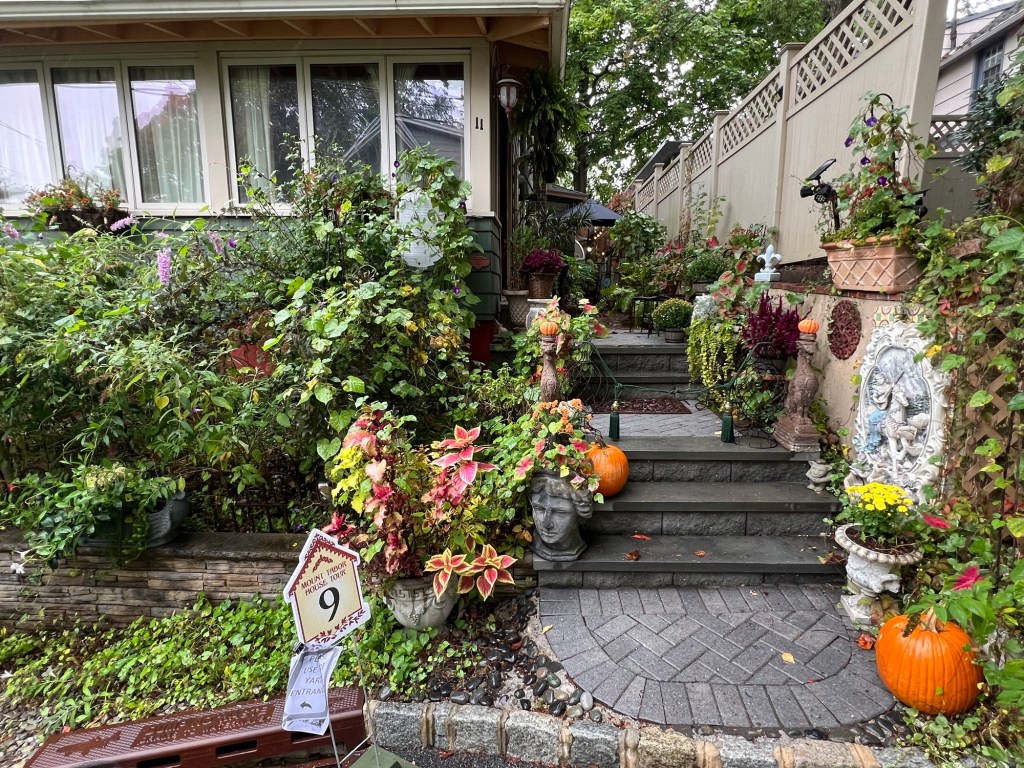
The next house garden I visited 11 Sommerfield Avenue and this yard was hidden from the road to see its many surprises.
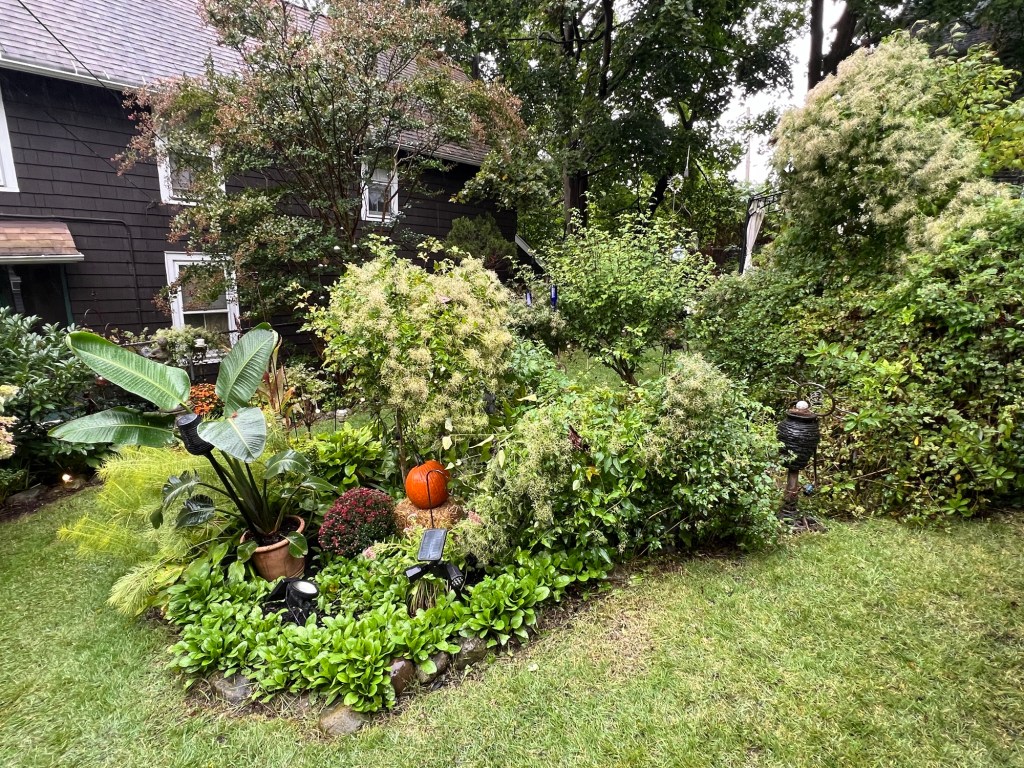
The front garden of 11 Sommerfield Avenue
The creative detail of the on just one side of the house
As you enter the garden, its theme was the Fall and Halloween
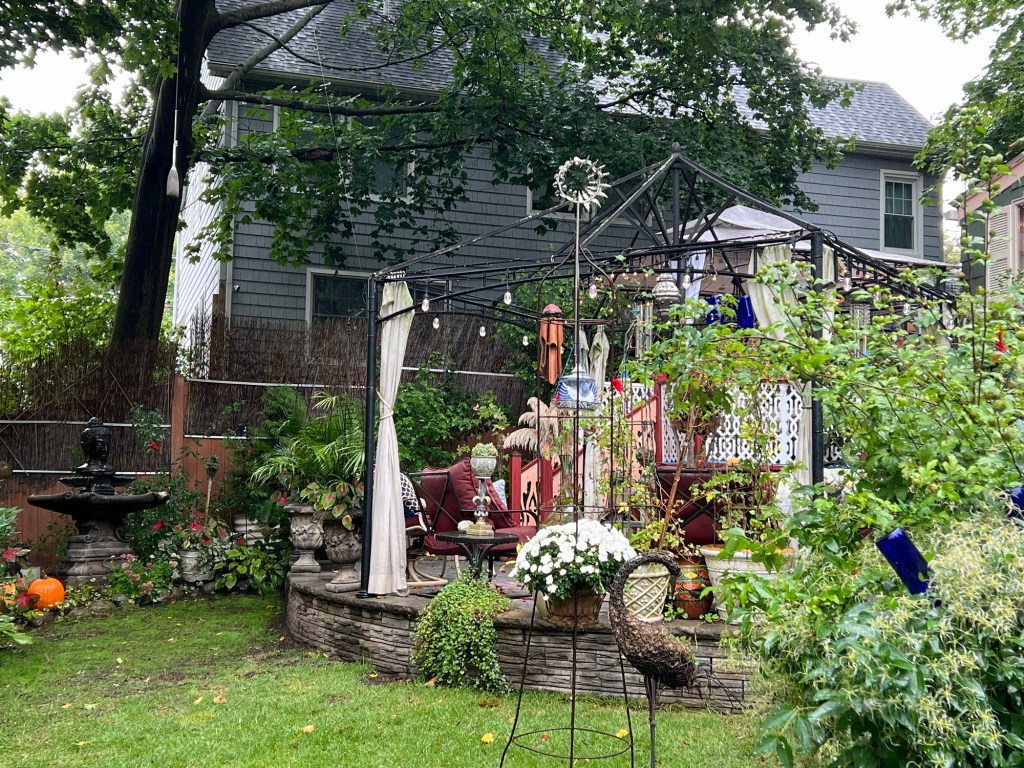
The water features and fountains of their background
The background fountains, water features and patio that make this backyard enjoyable
The new cottage home of 33 Embury Place
I walked down Embury Place to visit a last minute addition. I was surprised when the owner told me that six people once lived in the house. I saw the loft space and bunk beds that made this house work as a family home.
The elegance of 33 Embury Place
I walked down Morris Avenue, which is the heart of the complex and then walked up the “golden stairs” to West Park Place to next set of gardens and parks. The gardens in front of 12 West Park Place may not have been as elaborate as other homes but was nicely landscaped which complimented Mother Nature.
The gardens in front of 12 West Park Place
The gardens in front of 12 West Park Place
Across from these creative gardens is St. James Park, which sits in the middle of the complex. The park was gloomy with the rain drizzle so I really could not appreciate it. Still I could see how engaging the park must be in nice weather.
St. James Park
The Labyrinth in St. James Park
I made my way back down the stairs and made a walk down Morris Avenue to visit more homes. I noticed that time was running out and I only had an hour to visit this part of the neighborhood.
Trinity Park in full bloom when the rain stopped
Looking down the street down Whitfield Place during the tour of homes
A stuffed bear on display at 60 East Morris Street
The family who opened their home at 60 East Morris Street had a beautiful home. They invited us into their home, had a fire going on their patio and served us homemade cookies and apple cider which I thought was a nice touch. I saw this whimsical bear in one of the bedrooms.
71 Morris Avenue is the home of artist Gabriella D’Italia and her family
The artist’s work on the walls and her collection of puppets
The last set of gardens that I visited were at 36 Boehm Avenue. The rain had stopped and I was able to visit the gardens and not feel rushed.
The yard at 36 Boehm Avenue.
The yard at 36 Boehm Avenue where gold fish I thought were a nice touch
I saw this point of creativity at 26 Whitfield Place
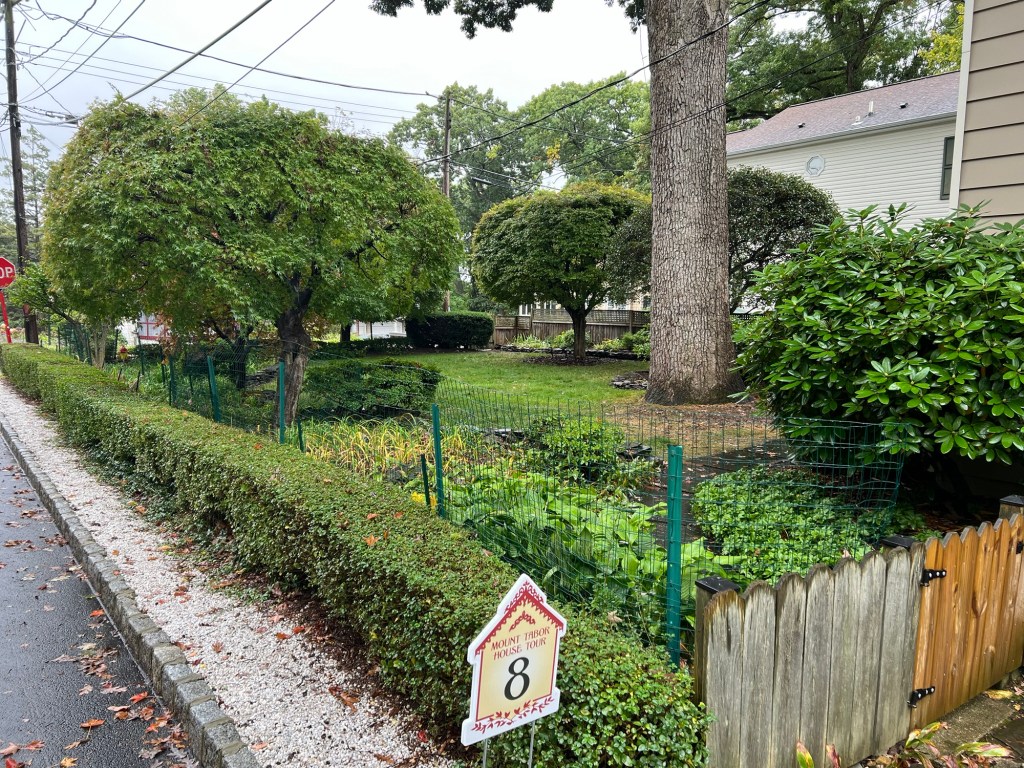
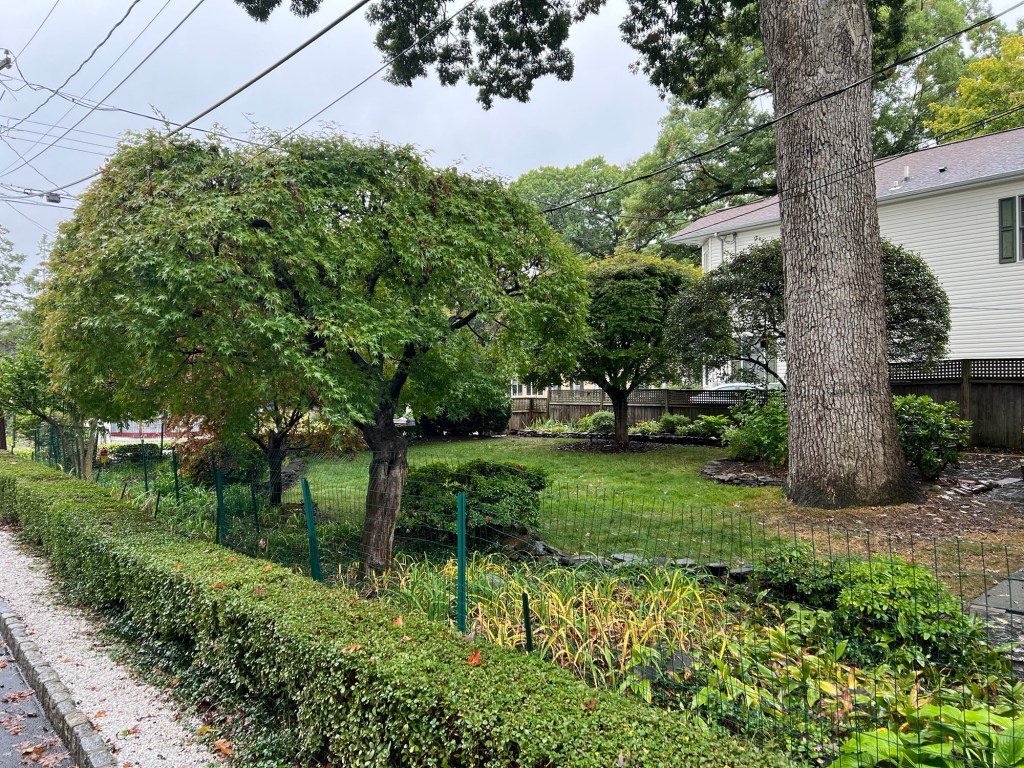
When I finished the tour, I explored the area around Trinity Park. I walked around the park around the Pollinator Garden and admired the foliage.
The gardens at the start of the Fall
The map of the historical sign of the complex
The historic marker of the complex
The historic buildings around Trinity Park
The Gazebo in the park
The Methodist church on Simpson Avenue
The old Firehouse where we checked in
The old Camp office
It really was a wonderful walking tour and I learned a lot about the old Mount Tabor site. This was an eye opener of how a former Methodist camp becomes a desirable historical neighborhood that everyone wants to live in. The museum was an interesting look on how people lived in the past here and the walking tour showed how modern times living here that not much has changed. People still making these small charming houses home. This walking tour in Mount Tabor, NJ is every September.
After the tour for lunch:
After the tour was over, I stopped into Downtown Denville, NJ right down the road, which is right off Route 46 and Route 80 for a late lunch. Denville has a very nice downtown with lots of restaurants and stores. Even on a gloomy afternoon, most everything was open. I checked out by Advantage Dining site and found Second Half on Main at 5 East Main Street. This contemporary bar/pub had all the TV’s going for the football game and a packed bar. I ate in the dining room section of the restaurant and was able to stretch out in one of the booths.
The Second Half of Main Street Street at 5 East Main Street in Downtown Denville, NJ
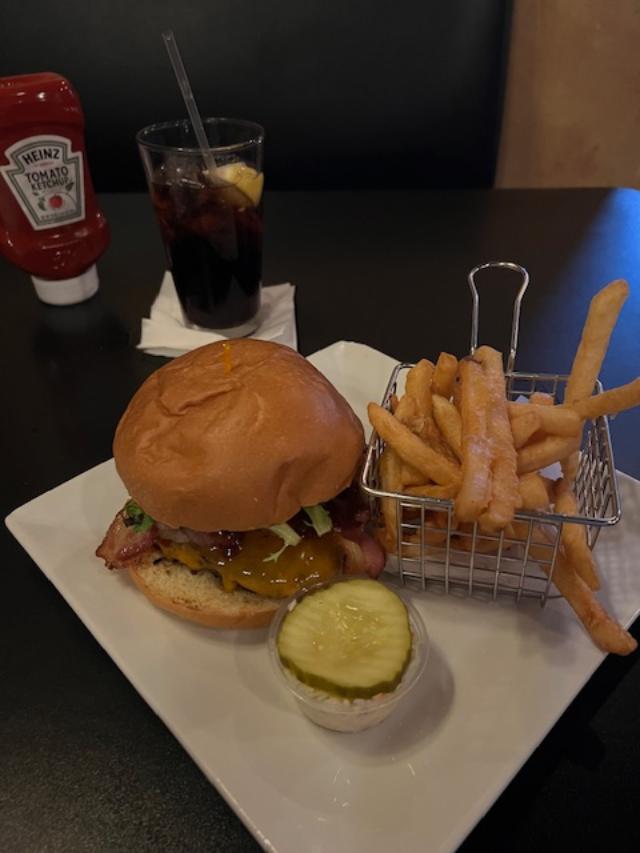
The restaurant is a lively place and the bar area was busy. The menu has a nice selection of salads, burgers, pastas and large entrees with a nice beer listing. It got cold and miserable outside and it was the perfect burger day. I chose the Texas Burger with Bacon, BBQ sauce and sharp Cheddar Cheese and that hit the spot. What I liked about Second Half on Main is the prices are very fair. The burgers will run you around $15.00 and they include the French Fries, something you do not see in the Hudson River Valley or Bergen County anymore. They pull the a la Carte routine since COVID.
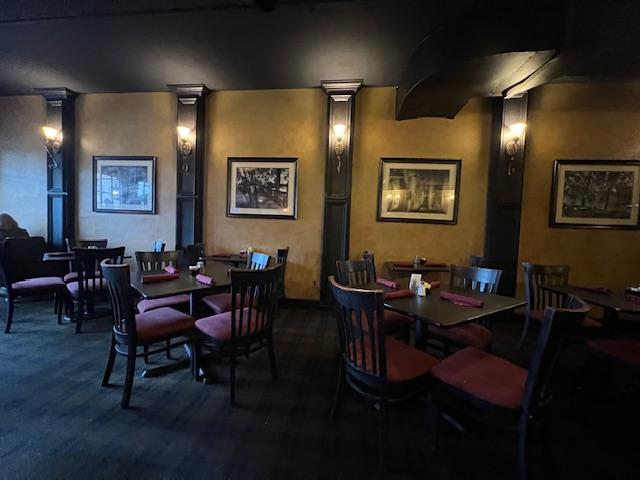
The Dining Room area at Second Half on Main
The burgers here are excellent. Perfectly cooked, stacked with ingredients and are juicy. The fries were also perfectly cooked. On a cool gloomy day, the burger hit the spot. If you are touring in the area, I highly recommend the restaurant. After lunch if the weather is nice, check out Downtown Denville.
The Texas Burger and French Fries at Second Half on Main
The Texas Burger and Fries is the perfect meal on a cool day
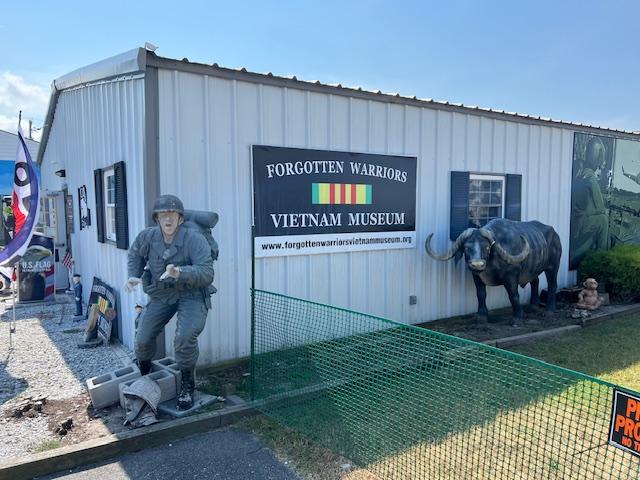
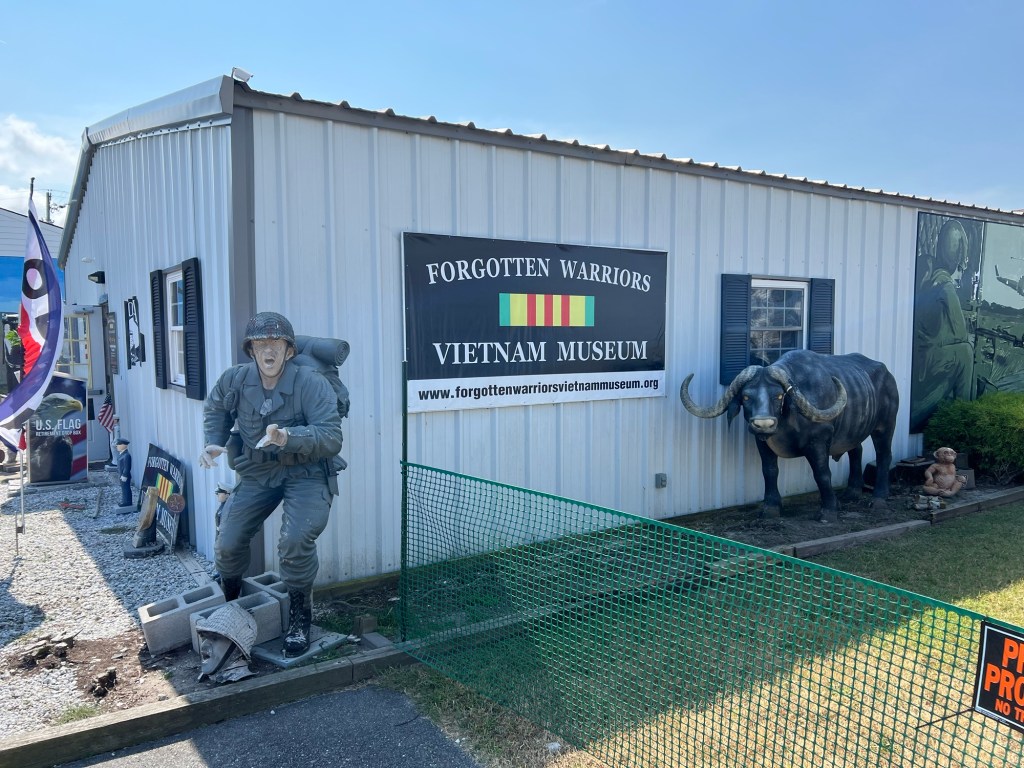
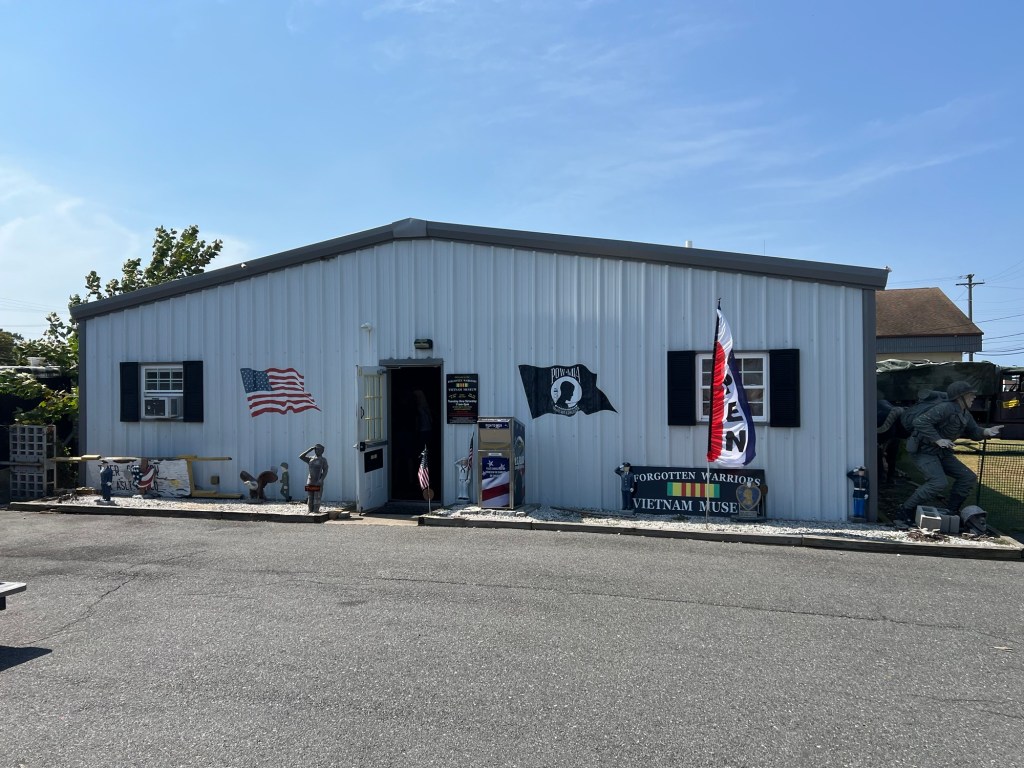
The front of the Forgotten Warriors Vietnam Museum at 529 Forrestal Road
The entrance to the museum
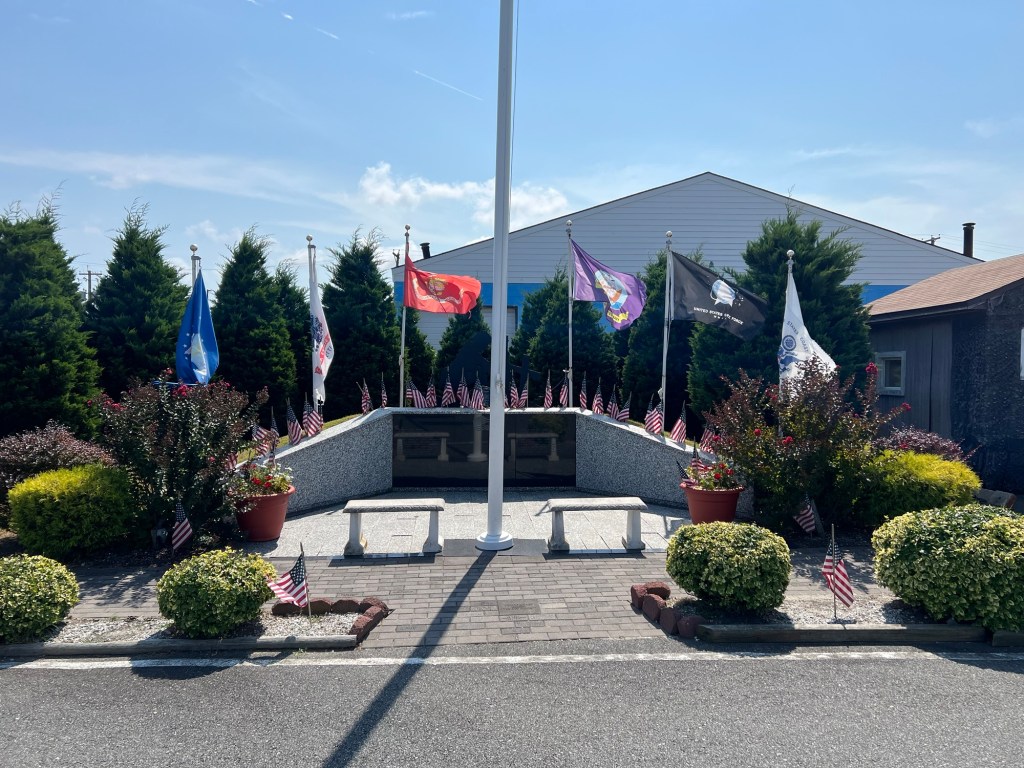
The Vietnam Veterans Memorial outside the museum has the names of those who fought in the war
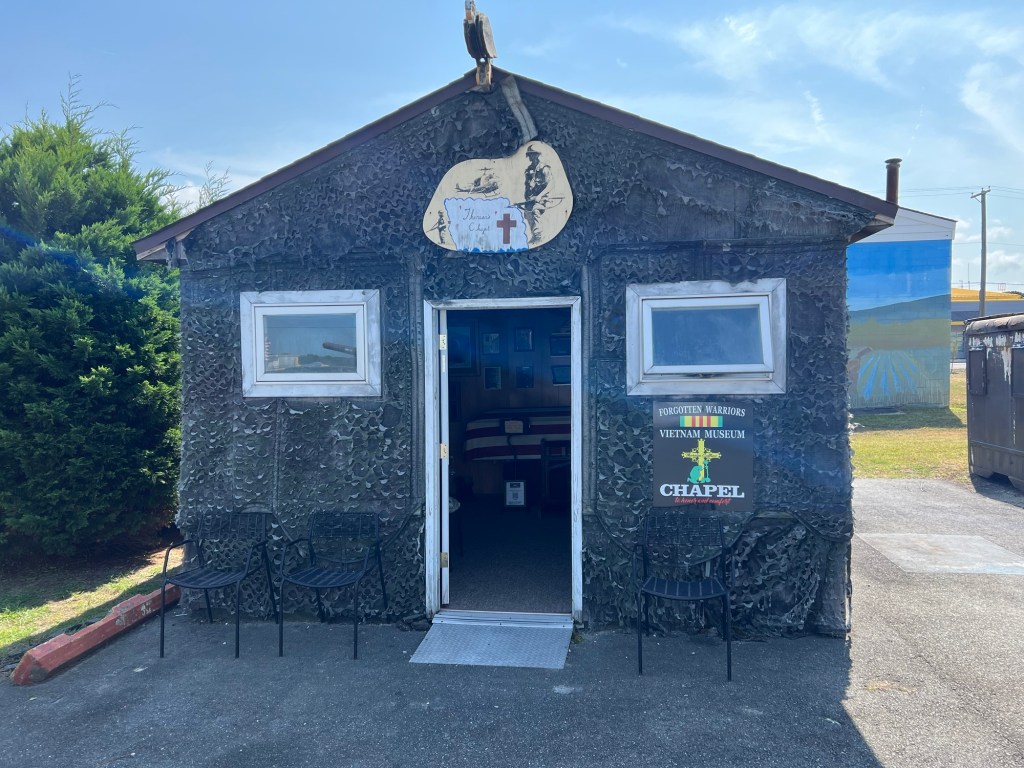
The museum’s Chapel dedicated to the Veterans
The Chapel is dedicated to those who lost their lives in the Vietnam War and is a very emotional display of the value of a soldier during the war years.
The History of the museum:
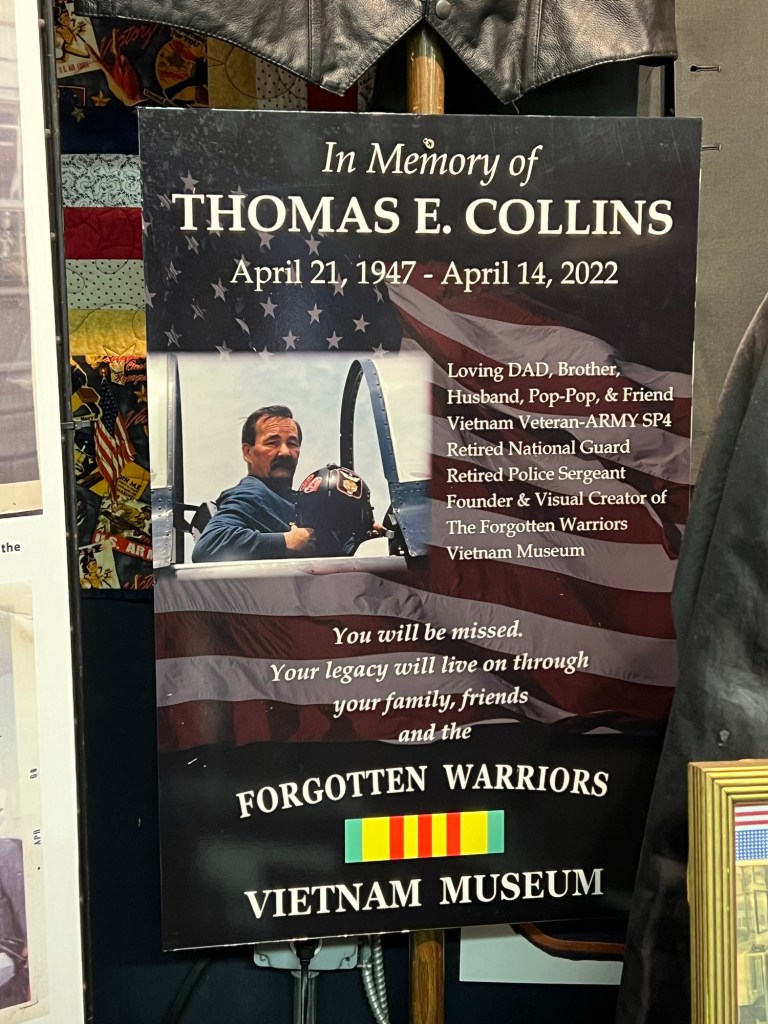
The museum was created in 2008 by the late Vietnam Veteran Thomas E. Collins. His committed passion for over 15 years to create a unique, realistic, educational experience to live on the memory of the men and women who fought in the war.
The museum honors and protects the thousands of men and women’s legacies and artifacts on the museum that will not be forgotten. The museum continues to preserve and welcome home veterans, their families and educate future generations.
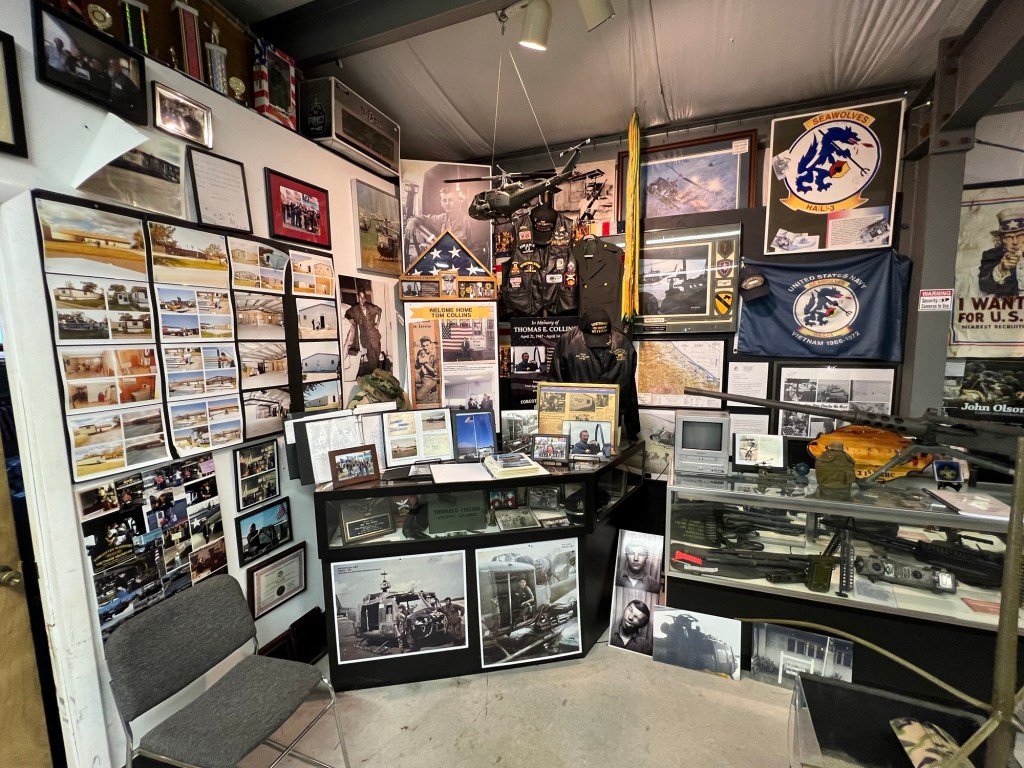
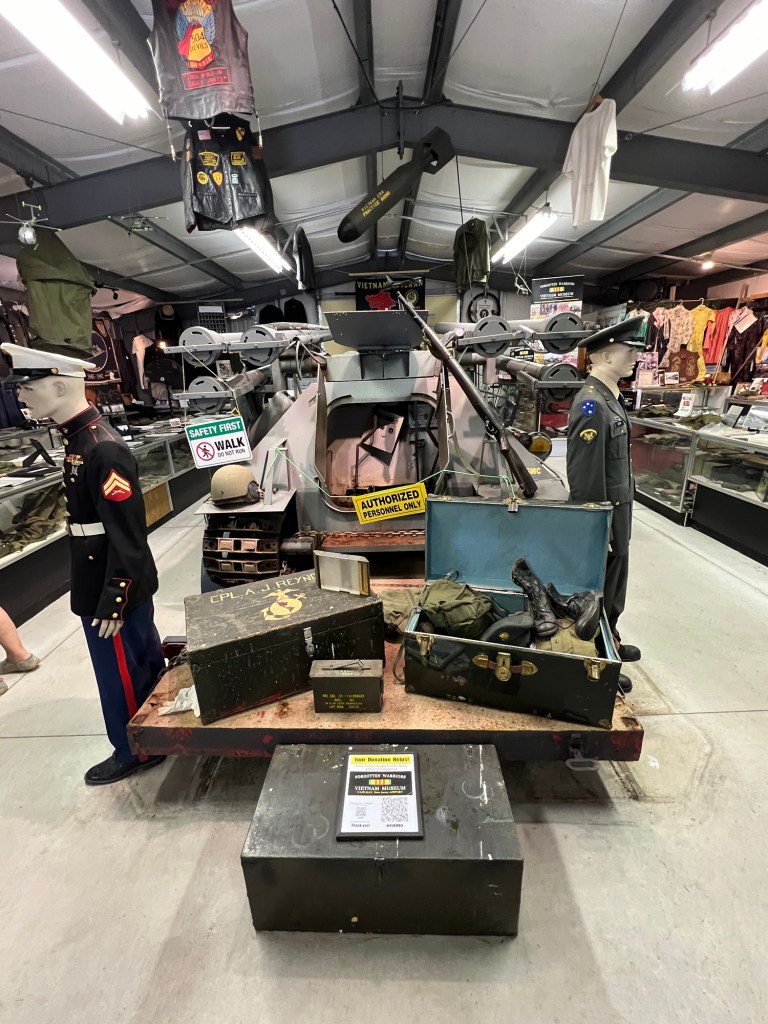
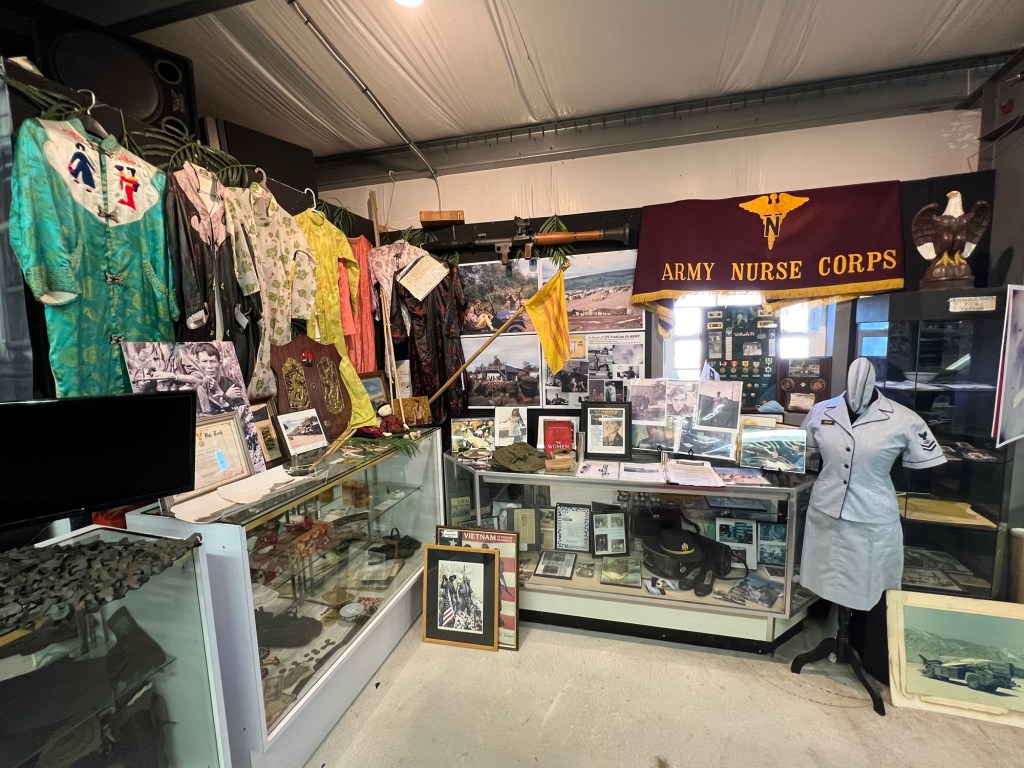
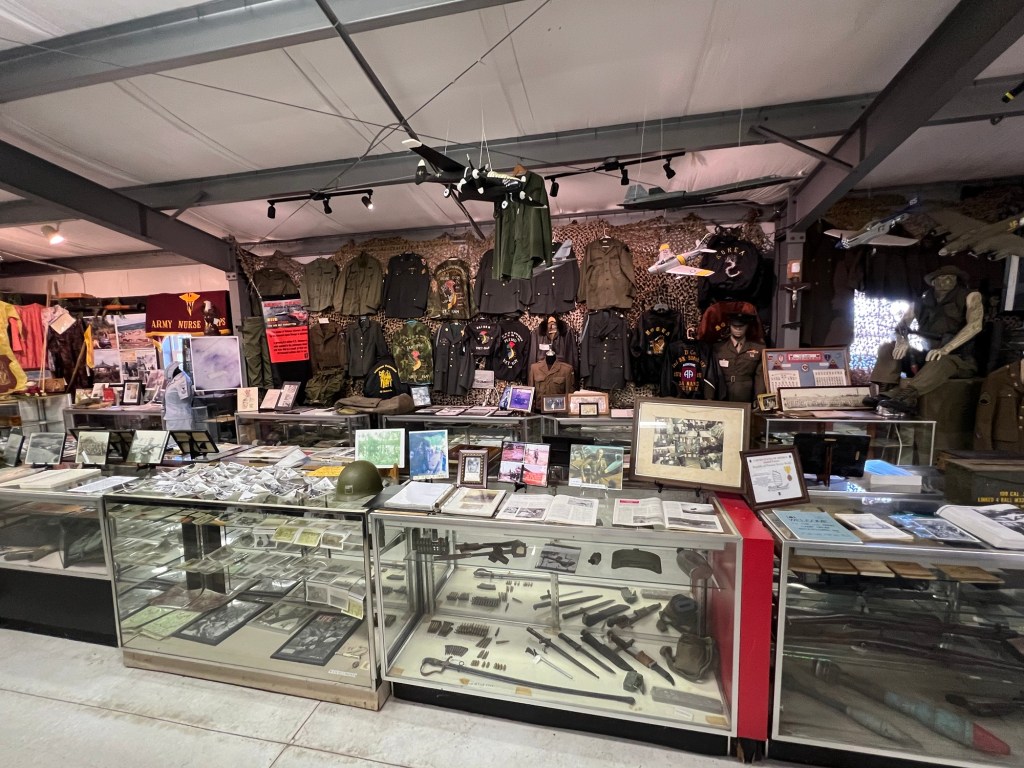
This one room museum is packed with information and memorabilia from the war years.
The display in honor of Thomas R. Collins
The main gallery of the museum
In Memory of Thomas E. Collins
Very touching memory to the founder of the museum, Thomas E . Collins.
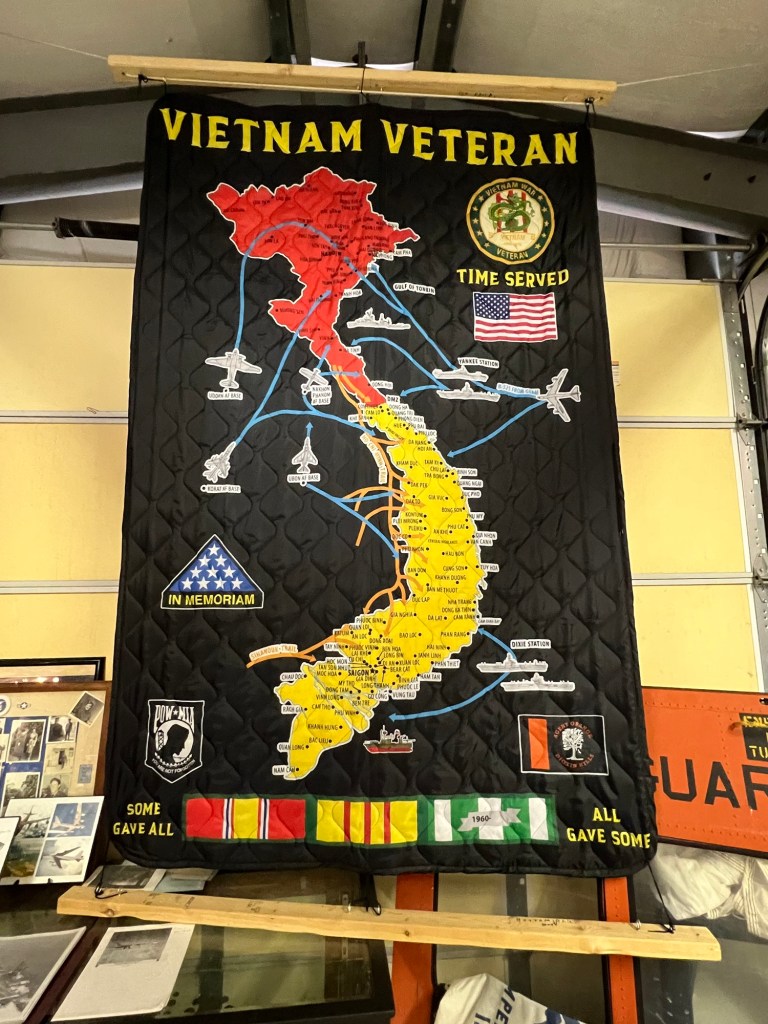
The map of North and South Vietnam at the time of the war
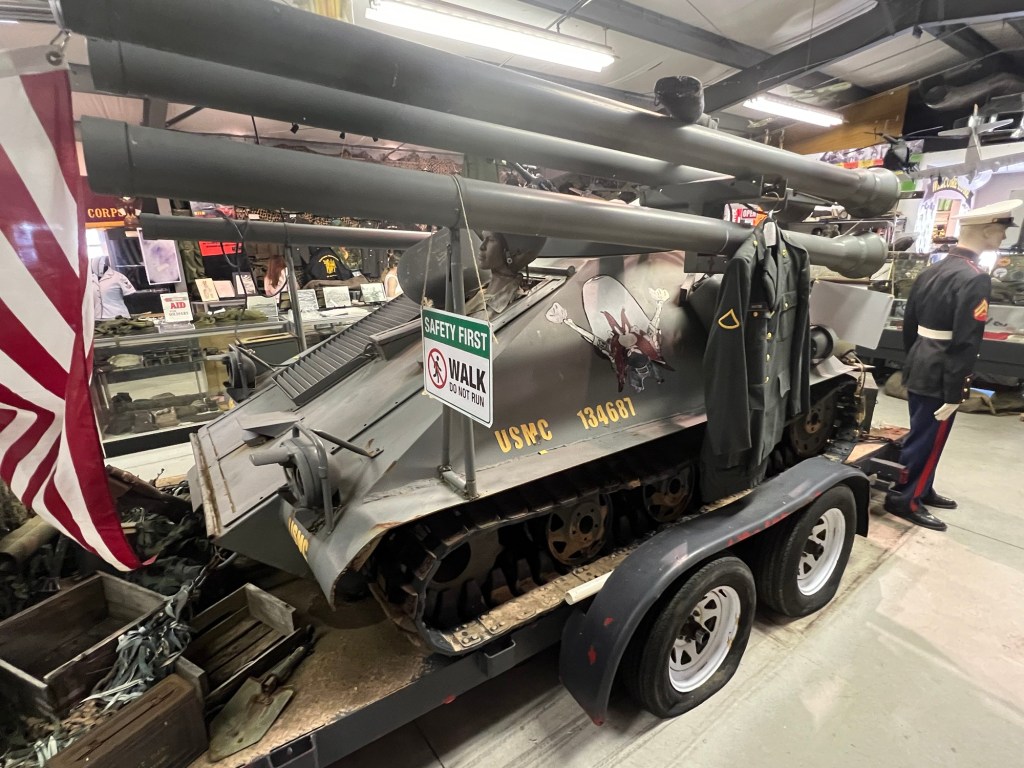
The equipment and artifacts from the Vietnam War
One of the small tanks inside the museum
The outfits warn in Vietnam during the war by the natives and the nurses
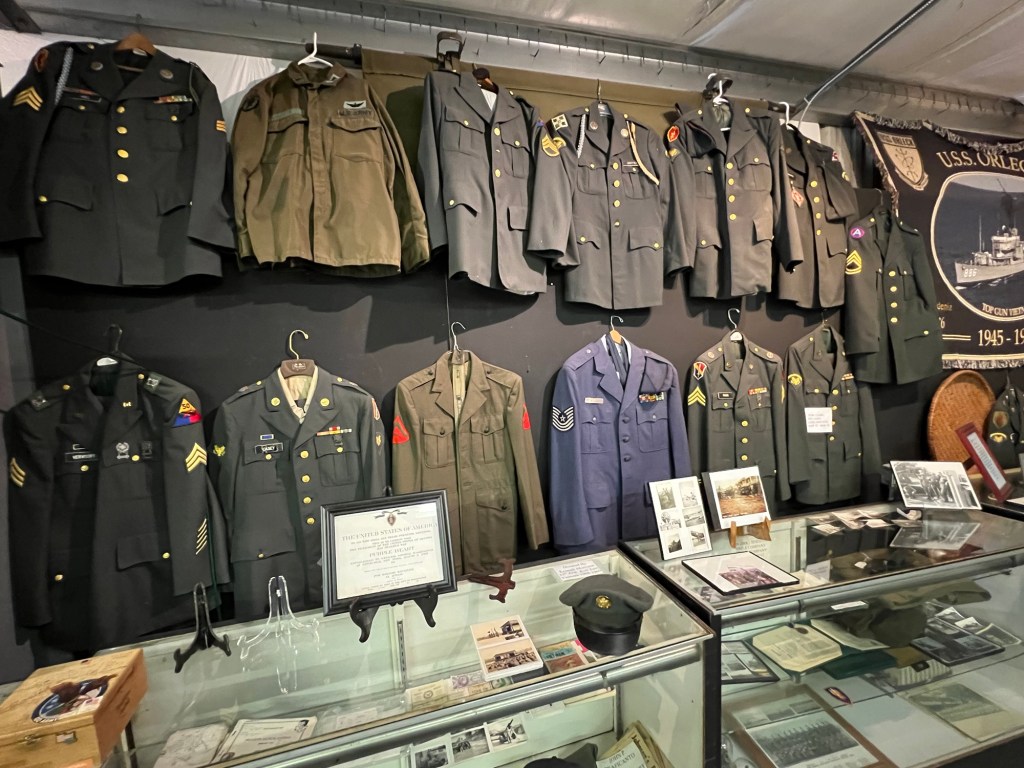
Various weapons and uniforms on display
Array of uniforms that had been used in the war
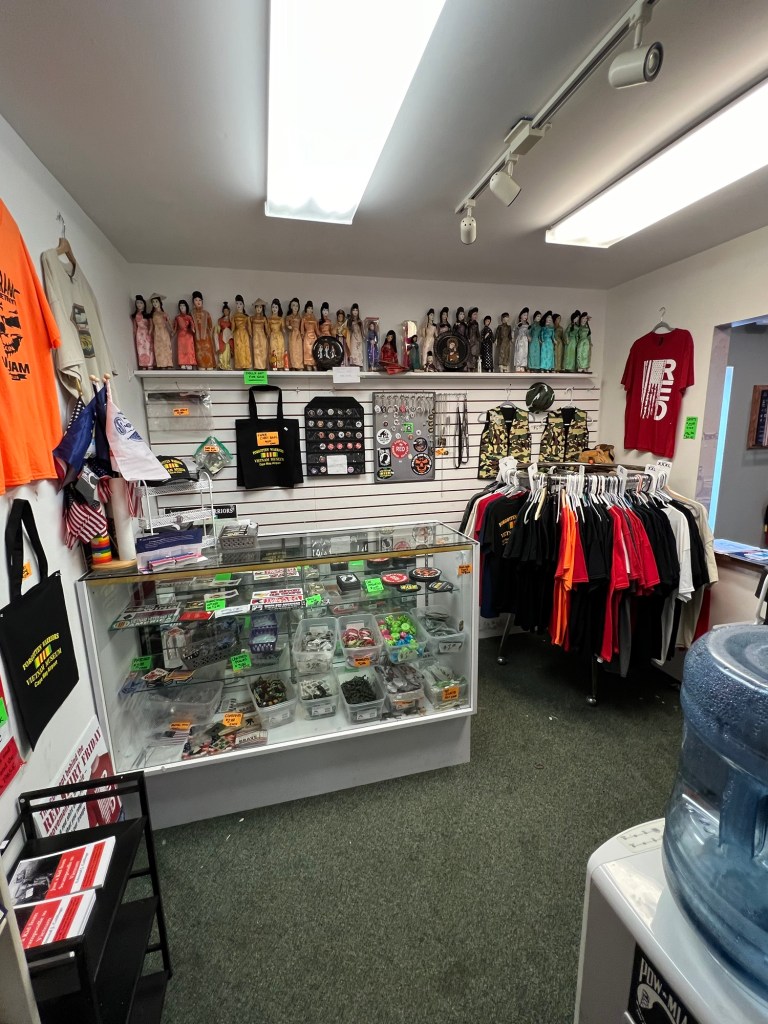
The gift shop by the entrance of the museum has some interesting gift items.
This museum is a very touching memorial to all those who have served during the war in Vietnam and some fascinating items in the collection to see and observe.



















































 Visiting a Museum: The Unique, Unusual, Obscure and Historical