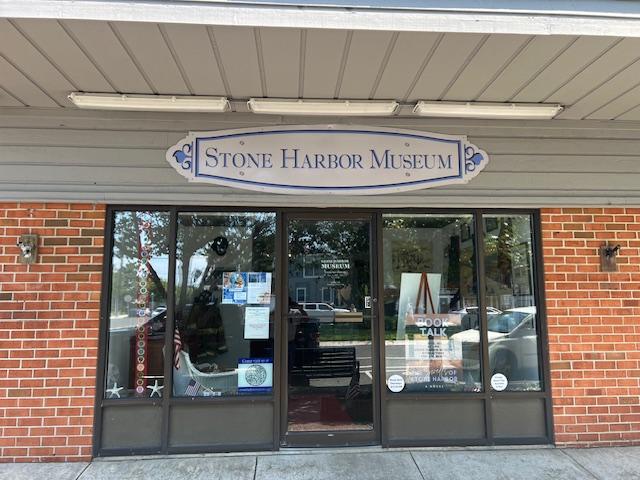
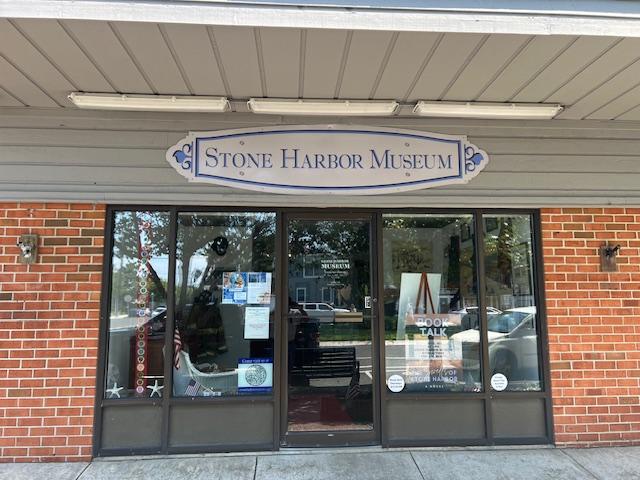
The entrance to the Stone Harbor Museum at 9410 Second Avenue
On a recent trip to the Jersey Shore, I took an long drive down the coastline visiting small historical museums of the shore towns and they gave me an interesting perspective of how these towns were developed from the time of Native American fishing and hunting villages to the advent of railroads and Victorian hotels to the modern development of the town today. Stone Harbor, NJ has had an interesting path since its development in the late 1800’s.
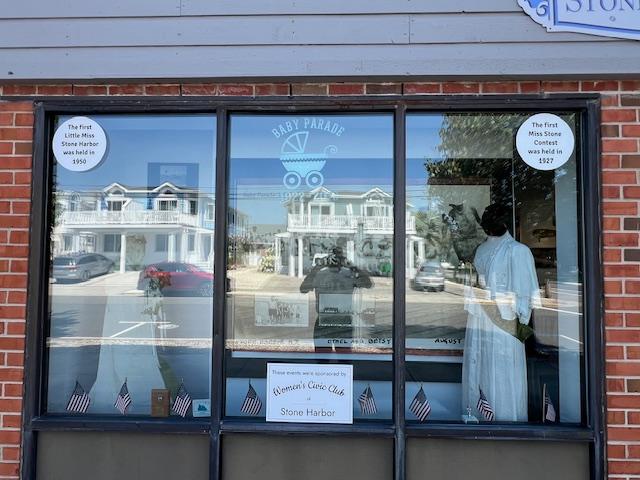
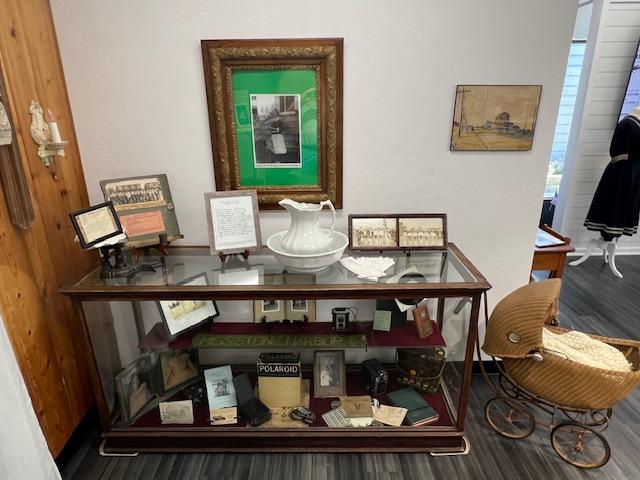
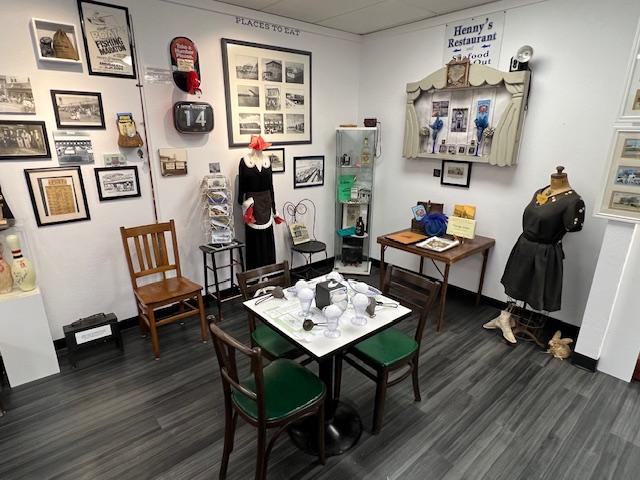
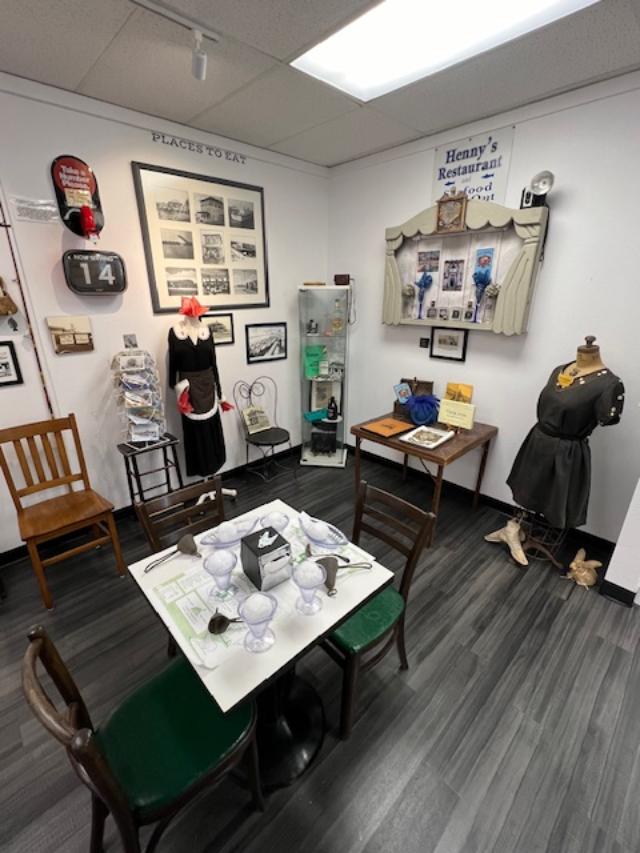
The Stone Harbor Museum display from the Women’s Civic Club of Stone Harbor
The Stone Harbor Museum was founded in 1996 by a group of involved residents who wanted to showcase their town’s history. The current museum was opened in 2016 and has many different exhibitions going on, some permanent and others are seasonal and keep rotating within the museum. When you walk in, the museum is divided by sections and displays of their museum.
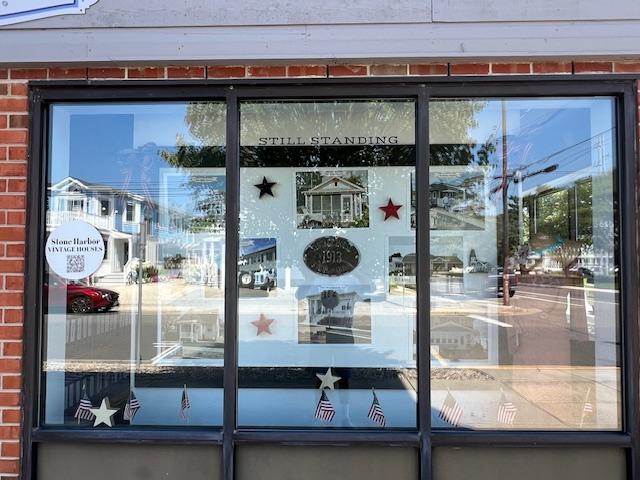
The Stone Harbor Museum Historical Window
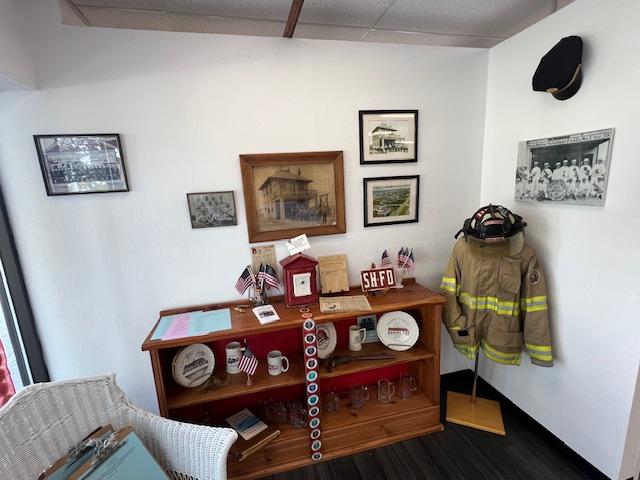
Leading into the entrance, there was a very interesting exhibit on “9/11” for the Twentieth Anniversary of the event by a Chief from the Stone Harbor Fire Department. It was a series of articles from local and national papers, some artifacts and information on the fire service. It was a very touching reminder of what fire fighters did that horrible day.
The Stone Harbor Fire Department display in 2024 (the 9/11 exhibit closed a year later)
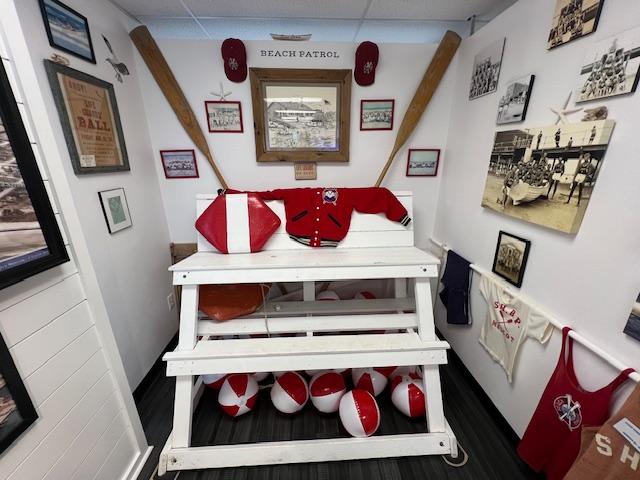
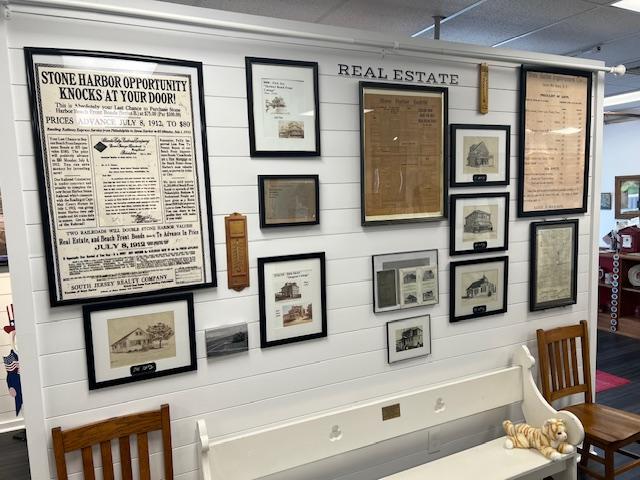
There were many displays on the history of Stone Harbor with the Stone Harbor School System and the Borough of Stone Harbor exhibiting artifacts. Interesting pictures and items of the Stone Harbor Beach Patrol were proudly displayed which I noticed from my many stops at various historical societies on the Jersey Shore is very much a part of the town culture. These teams take their competitions amongst the towns very seriously with events like boating and swimming.
The Stone Harbor Beach Patrol display
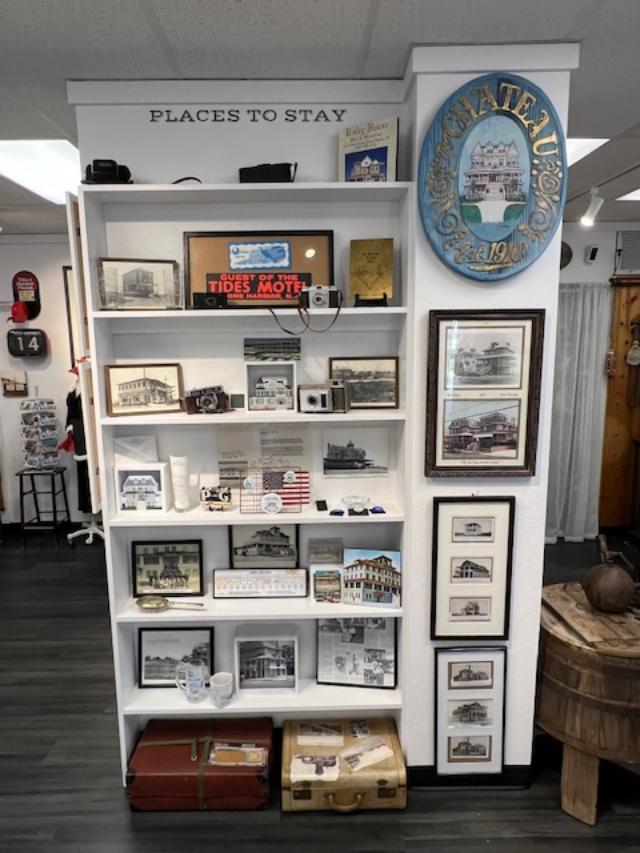
There were many pictures of old homes at a time when the town was a Victorian beach resort and people came to the Jersey shore for extended vacations. You could see the progression of the town over a century from a seaside resort to a permanent residential town. The architecture has significantly changed over the years to slightly smaller homes but no less impressive all over the town.
The Stone Harbor Hotels
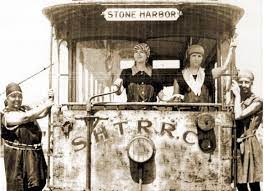
There were extensive pictures and displays of the importance of the rail system and the role it played in the growth of the area and to all shore communities. Its history pretty much ended with the advent of the Model T and the growth of cars to the Jersey shore. Soon the modern highways made the rail system obsolete.
Ladies at the shore enjoying a ride
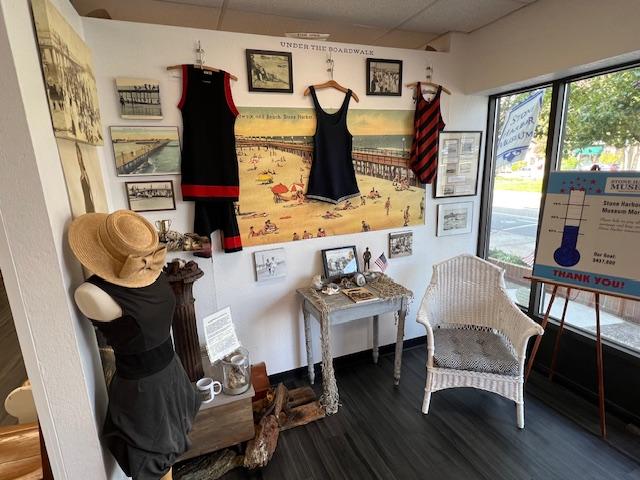
Still there are many displays of ‘fun in the sun’ and the growth of beach activities and recreation with the growth of sun bathing, swimming, boating and fishing. People’s leisure time was growing and the Jersey shore filled their time with sun bathing and swimming. The changes of attitude in swimwear have been tremendous especially from the one piece and hats to the modern bikini in just 80 years.
Swimwear at the turn of the last century
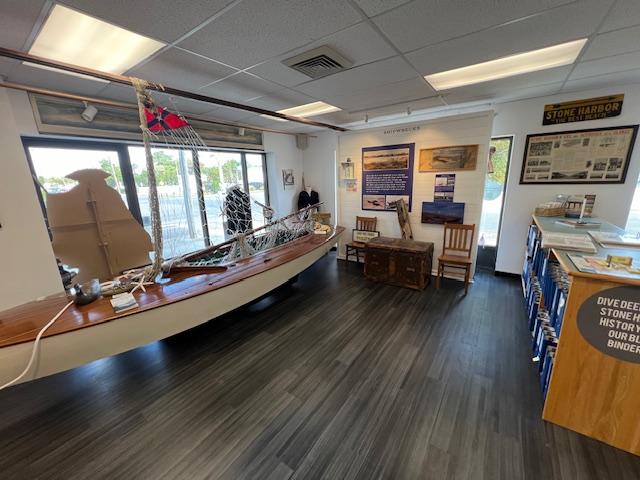
There were pictures and artifacts from various shipwrecks off the coast of the town. It showcased the maritime history of the town and of the Jersey shore in general. It showed the importance of the town in a era of trade that is long gone. This shipping lines too became obsolete as rail service replaced them.
The main gallery of the museum
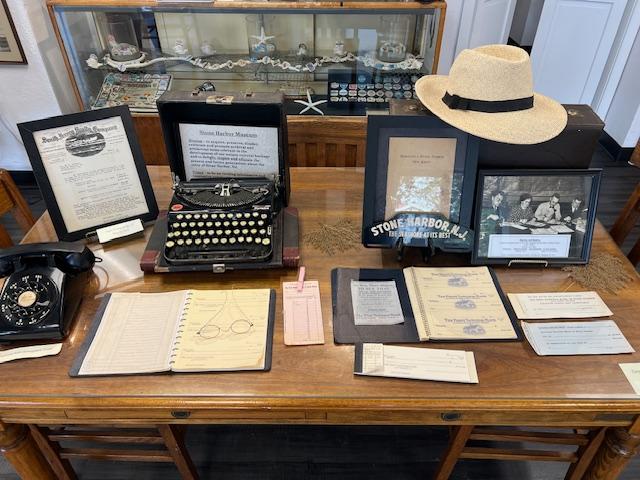
There was a interesting collection of items entitled Church and Faith of all the churches in the town that played such a important role in the social life of the turn of the last century. This was a time before TV, radio, the advent of movies and especially the Internet. This was at time when people’s social life revolved the social life of places of worship.
The Office Display
In the center of the museum there is an extensive library with shelves lined with notebooks full of pictures and historical details neatly bound. This is the records of the town and the citizens who have lived here over the years.
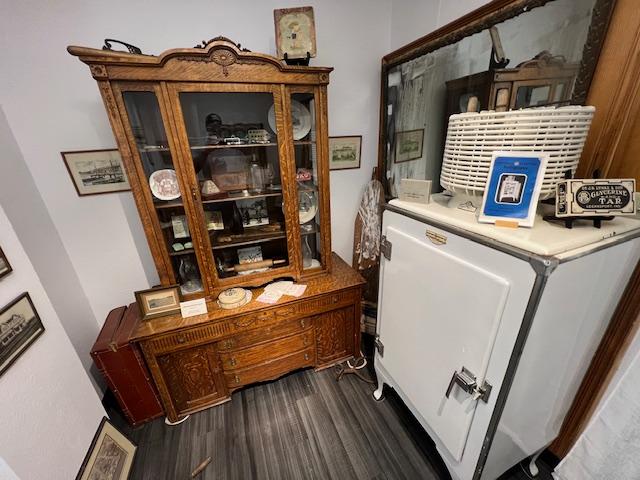
Artifacts from the town
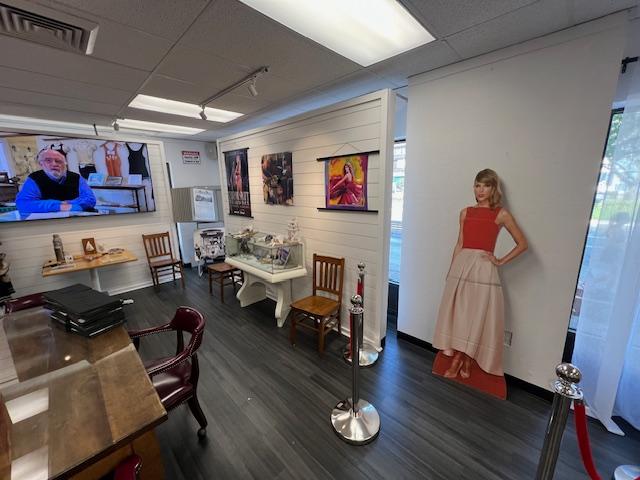
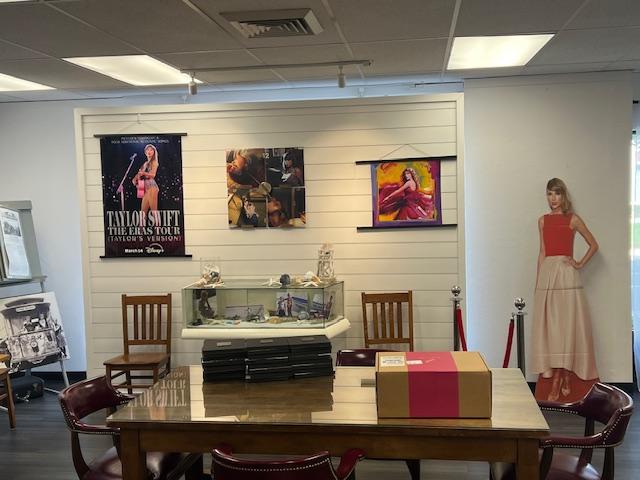
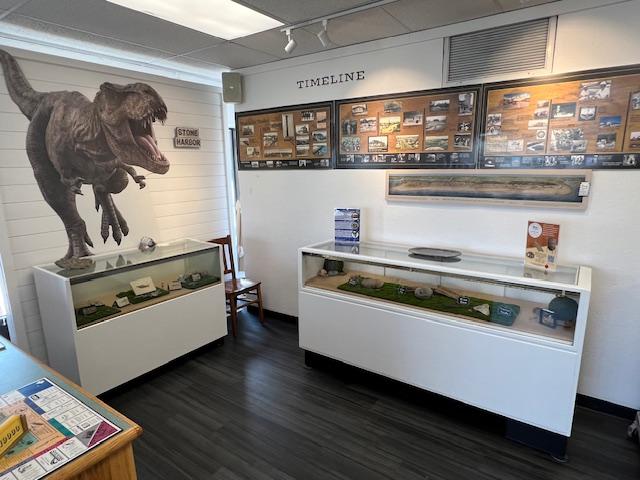
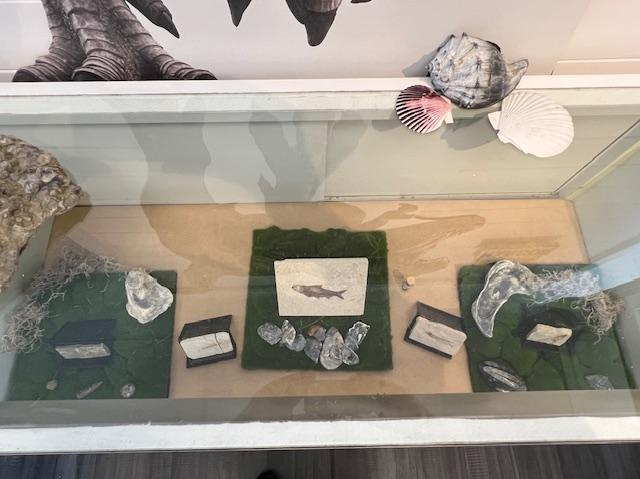
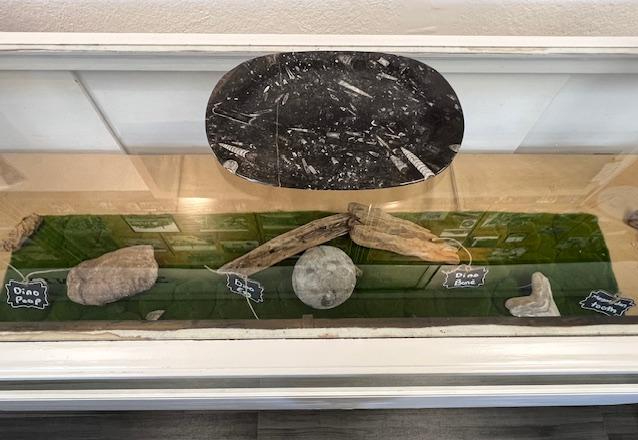
The two big displays right now for kids has been the Taylor Swift, the famous singer, display of items that her family donated to the museum. It seems that she summered here as a child and played in the local clubs. The other was the dinosaur bone display of items found locally in the area and around New Jersey. The museum has a popular scavenger hunt for the kids where they have to find items on display.
The new Taylor Swift display on the years she vacationed here
The Taylor Swift exhibition
The Dinosaur Display
The Dinosaur display
The Dinosaur display
The one thing I liked about the museum is that it does not overwhelm you when you are visiting. The exhibits are detailed but compact. You learn a lot about the town with enough information and artifacts but you can still enjoy the display in about twenty minutes to about a half hour. The whole museum takes about an hour to two hours to visit maybe more if you are really enjoying yourself.
The staff could not have been nicer and take such pride in the museum. The afternoon I visited the museum one of the long time residents who volunteers at the museum was able to share her knowledge of the town. For a small town, it is chockful of interesting history.
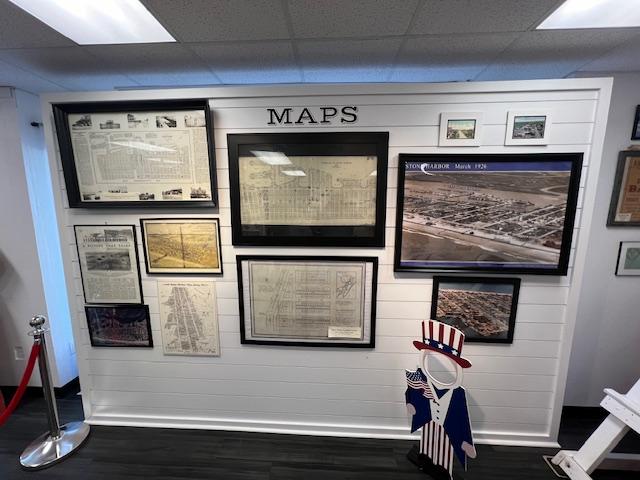
The Maps display
The Stone Harbor Museum History:
(from their website and pamphlets)
The Mission:
To acquire, preserve, display, celebrate and promote archival and artifact items relevant to the development of our unique cultural heritage and to delight, inspire and educate the present and future generations about the story of Stone Harbor, NJ.
The Vision:
To be inviting, informative and innovative community resource that is recognized and respected as the place for exploring and celebrating rich cultural heritage of Stone Harbor, NJ.
I took my first trip down to the Kearney House in Alpine, NJ and was able to walk the grounds, visit the Alpine Landing and see the amazing views of New York and of the Hudson River. This spot gives you breathtaking views upstream of the surrounding Hudson River. The house was closed but the vegetable gardens were full of late Fall produce and the gardens could have used some weeding. I will have to wait until the house opens up again.
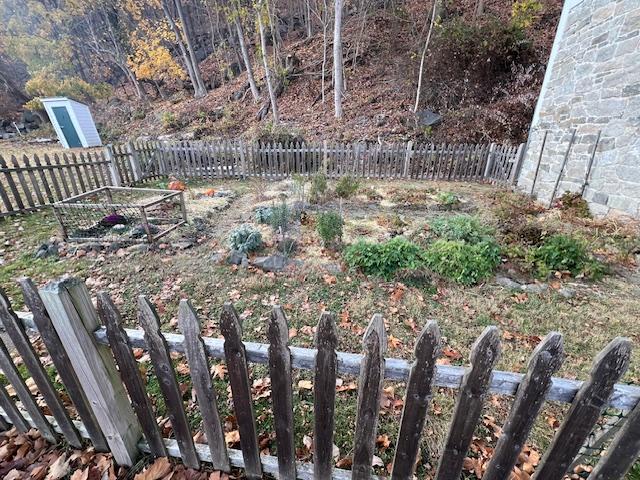
The Vegetable Garden in the Fall of 2024 at the Kearny House
I recently visited the Kearny House of their Fall event “Punch & Pie at Mrs. Kearny’s Tavern”. That was an interesting night. First let me say that it is pitch black in that park. The Alpine Basin has no lights in the park and you will be in the dark the whole trip down the hill. I had a minor incident travelling down the hill so take it slow.
The Kearny House at dusk in the Fall of 2024
The Historic sign for the Kearny House at the Alpine Landing
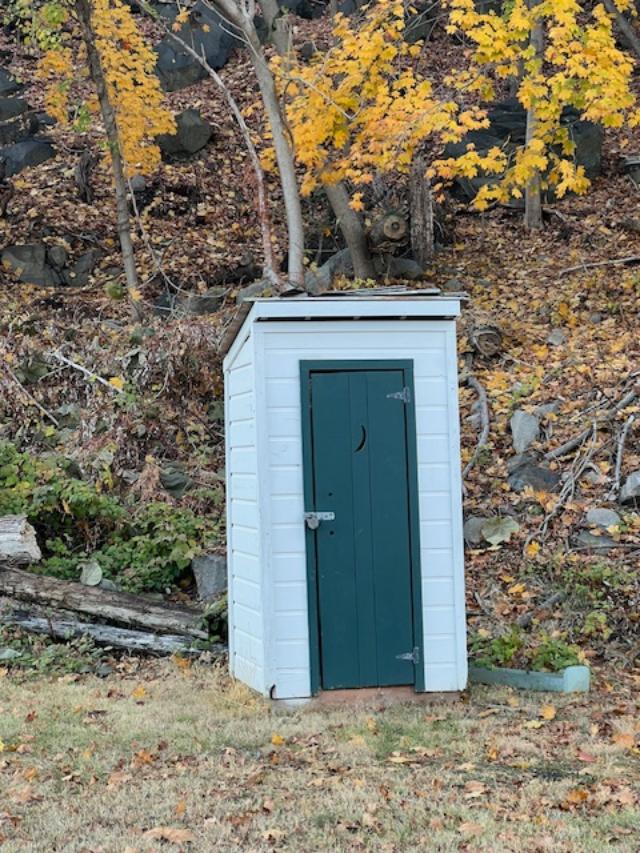
The outhouse on the grounds
Once I was down for the event, it was interesting and fun night. Tavern musician, Thaddeus MacGregor, entertained us with all sorts of songs for the evening and there was storytelling by the gentleman who runs the historical site.
Tavern musician, Thaddeus MacGregor, performing at the Kearny House for the “Thanksgiving Music and Hot Cider” event
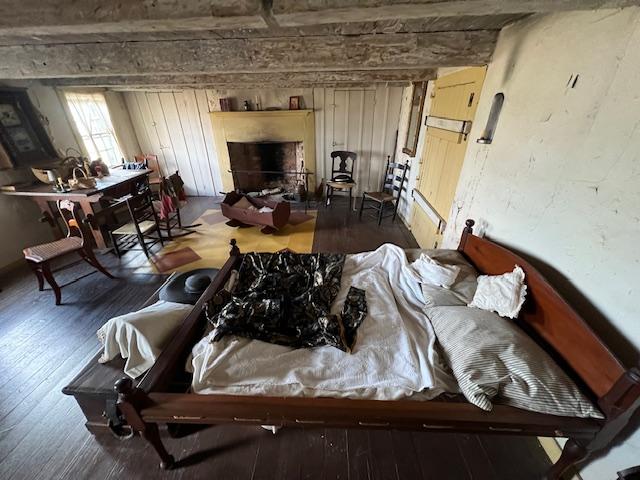
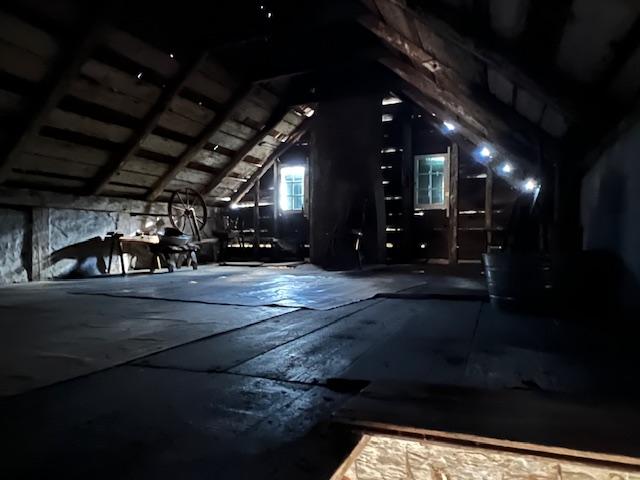
There was a candlelight tour of the house, so we got to see the second level with the upstairs bedroom, the attic area which really was drafty and the room above the new addition that is used for storage. The area was once heated by fireplaces and since the downstairs had a fire lit, the whole house was nice and warm. They had once of the original rope beds that had been tied and antique toys.
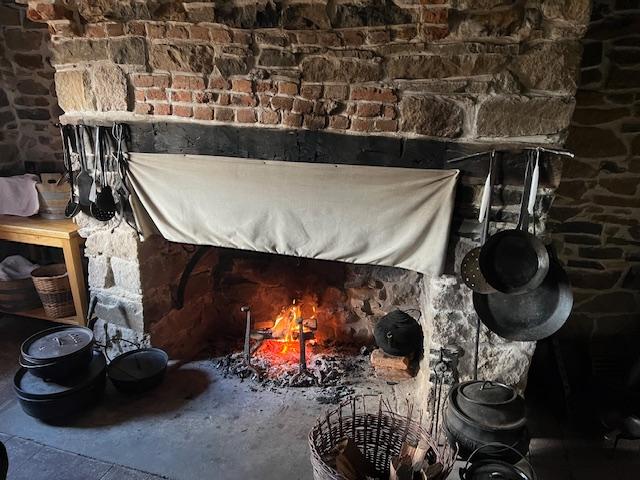
The hearth of the kitchen keeps everyone warm as the stones warm the house
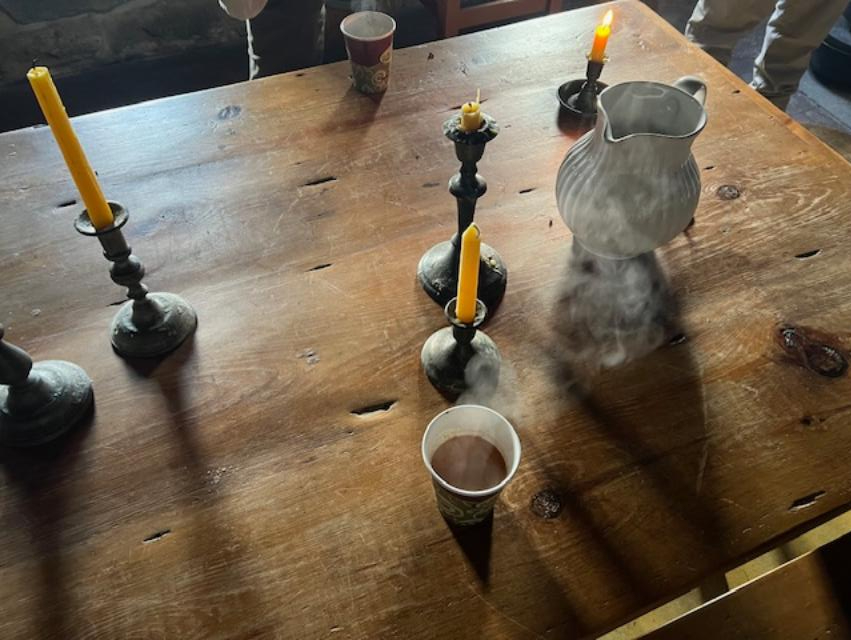
The Dining Room table in the during the “Hot Cider” party
The first floor had the fireplace lit and the whole room was illuminated by candles which made the room very warm and cosy. It was interesting to see one of these homes that has no electricity and how it operates. It must have been very interesting to live at time.
The Dining Room during the day
The delicious hot cider at the Thanksgiving event at the house
The Dining Room at the Kearny House
What calmed me down after a long night was the delicious homemade pies that they served at the event. They had a strawberry rhubarb and apple that were just delicious. So flaky and filled the freshest fruit. It really cheered me up. They also had cheeses, roasted peanuts and a hot spiced cider to drink. I could have used something stiffer but it was still nice to drink and had the most wonderful flavor. Overall it was a nice night of desserts and snacks and good storytelling and the view of New York City was incredible.
The house illuminated by candlelight during the afternoon in the Fall
Do not venture into this park at night! Please take it slow down the hill to the landing. My suggestion is to do a dry run when it is light out so you know where you are going.
The History of the Kearney House:
(I credit this to the Kearney House pamphlet and Wiki)
The Kearney House was built in the 1760’s by the Blackledge family and was the home of Maria Blackledge, who was the daughter of Benjamin Blackledge, who lived in the home with her husband, Daniel Van Sciver.
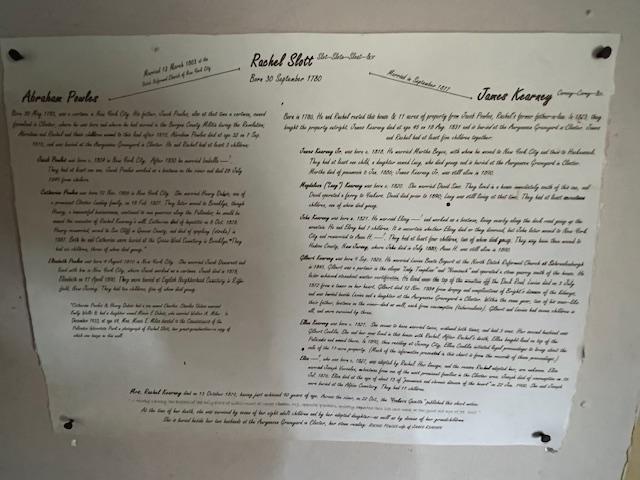
The Kearny Family tree
Maria Blackledge father, Benjamin Blackledge, was an educator and public official, who taught Dutch citizens the “Kings English”. He was the first clerk of Harrington Township, NJ and served as Justice of the Peace and Judge of the County Court of Common Pleas and elected to the assembly of Bergen County, NJ. Mr. Blackledge’s wife, Caroline Tallman (Cathalyntie Tallema), was the daughter of Dowe Hermanszen Tallema and Maritie Haring, of the prominent Haring family of which Harrington, NJ was named after (Wiki).
Mrs. Kearny’s portrait inside the house
The house was built in this location when the farmers of Closter, NJ built the Closter Dock Road through a pass in the cliffs to the Hudson River so they could deliver their goods to New York City. The house was most likely built to be a dockmaster’s house to supervise the busy river landing.
The Blackledge-Kearney House when it was on the waterfront
The house was purchased in 1817 by James and Rachel Kearney. With them were their three children from Rachel’s first husband, Abraham Powles, who died two years earlier. James and Rachel then had five children of their own. Rachel also adopted a daughter.
They had thought that General Cornwallis had used the home as his headquarters but they found this was not true
Mr. Kearney died in 1831 and Mrs. Kearney used the home as a tavern. The northern part of the house was expanded in 1840 to house the tavern part of the building. Besides offering food and spirits, Mrs. Kearney’s tavern served as a meeting place for the captains and crews of the sailing vessels that arrived and departed daily from the docks here and for the local workforce of quarrymen, dock workers and tradesmen.
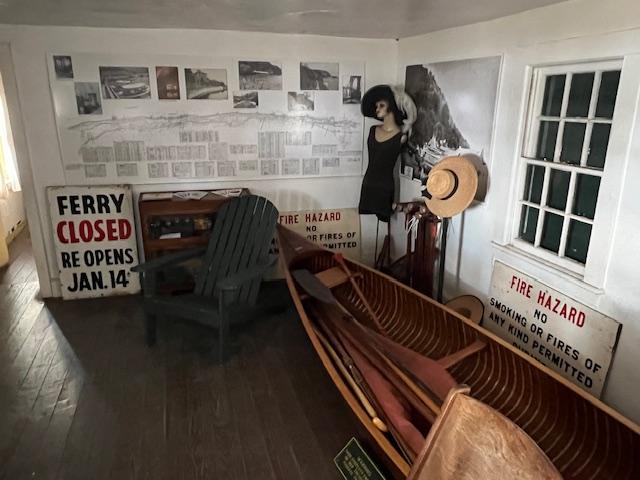
The Upstairs bedroom gallery
The upstairs bedroom gallery
The upstairs room in the new addition may have been for lodgers staying at the tavern.
The Kearney House Attic room that was used for her children
The Palisades Interstate Park Commission bought the house in 1907 after Rachel’s death in 1897 and in 1909 had the big porch built as a grandstand for a dedication ceremony for the new park. Through the 1920’s, the Commission used the house as a police station. The house is now open to the public on select weekends and holidays for touring and special events.
The upstairs bedroom gallery with artifacts from the park
The property offers beautiful views of Yonkers, NY and the Bronx and from the Alpine Landing especially in the coming Fall, amazing views of the foliage and of the cliffs surrounding the Hudson River.
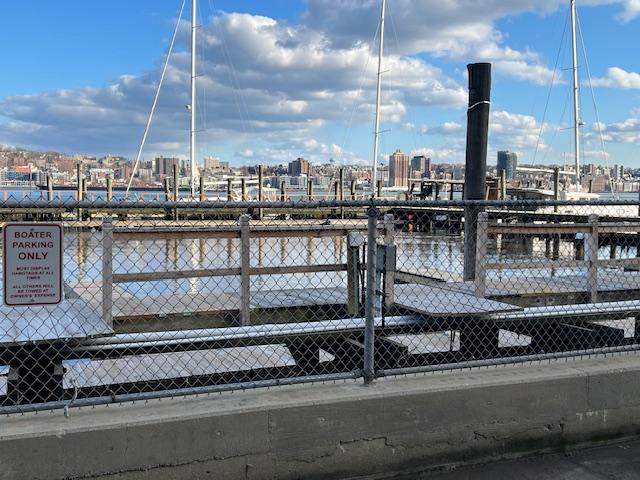
Alpine Boat Basin by the Kearney House
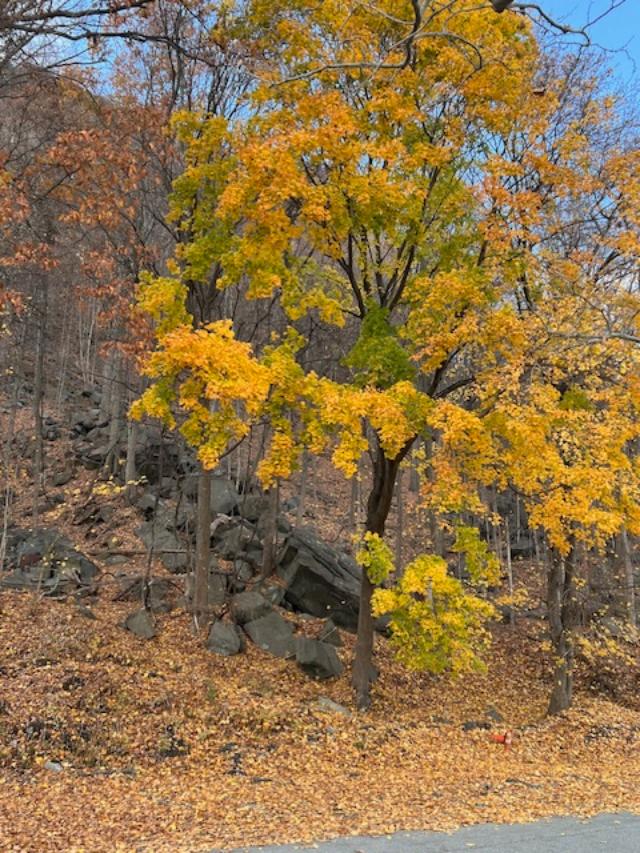
The Alpine Park in the Fall of 2024
The Summer of 2025:
In the summer months, the house was open on Thursday nights for music, games, and summer refreshments. The event ‘Behind the Times at Mrs. Kearney’s Tavern’, was an evening of touring the house and grounds, musically entertainment on the lawn and story telling to end the evening.
Entering the Palisades Interstate Park
The Hudson Riverside and beach area
The park on the Hudson River
The park is breathtaking in the summer months, and everything was lush and in bloom. The views of New York clear as day and the boat basin was busy with people entertaining on their boats and coming in and out of the small harbor.
The park during the Summer of 2025
The park in full bloom that evening
The history of the Kearney House history
The Kearney House and lawn area
The Kearney House was open this evening for one of their many Summer special events. All the windows were open to take advantage of the cool breeze and air the house out on this hot July evening.
The Kearney House from the front lawn
The house getting ready to arriving guests
The tiny barn shed off to the side of house
The waterfall in the back of the house
The tiny shed and hilly woods behind the house
The side of the house and the vegetable garden
The garden with vegetables and herbs
The Vegetable Garden was growing all sorts of vegetables and herbs of the time period and some flowers as well.
The outhouse on the property
The river view of the house
The front of the house with the windows open for river breezes
The inside of the house was cool and welcoming. The hosts of the event had both icy water and Lemonade for guests and slices of sweet watermelon. We were welcomed and offered our choice of beverages and then just relaxed and enjoyed our refreshments that cooled us down for the evening.
Our hostess graciously greeted us and welcomed us to the house
The kitchen set for guests to the tavern
Enjoying summer refreshments
Talking with other guests
It was so nice to just sit back and relax and enjoy the cool breezes coming off the Hudson River. The lemonade really hit the spot.
The cool breezes from the back window
After my snack in the tavern, I toured the upstairs. The two upstairs bedrooms are Mrs. Kearney’s bedroom and the guest room on the other side of the hall.
Mrs. Kearney’s bedroom
The guest room was once used for visitors now holds all their artifacts
This bathing beauty greets you on the second floor
The attic area was far too hot to tour but I had visited it last winter after I had attended visited for a post holiday tour. I did get to tour the upstairs patio and enjoy the breezes outside.
The patio on the second floor
What a view of the river!
The view as the entertainment was about to start
Outside, Thaddeus McGregory started his concert on the front lawn
Thaddeus McGregory singing ‘ Beautiful Dreamer’
Then the Revolutionary War era games took place out on the lawn outside the lawn.
Fee: Combination Rock Collecting & Museum: Adults $15.00/Children 3-16 $10.00/Seniors (65+) and Veterans $12.00; Museum Only: Adults $10.00/Children 3-16 $8.00/Seniors & Veterans $9.00. See packages on the website.
I recently visited the Franklin Mineral Museum on a trip to Sussex County wanting to learn more of the mining history of New Jersey. I never realized that the mines were so close to my home in Bergen County. I have to admit though that the museum is a little dated with the typed signs and no video information on the exhibits. What is lacks in modern QR codes and Virtual Reality it makes up in depth of collection and historical artifacts.
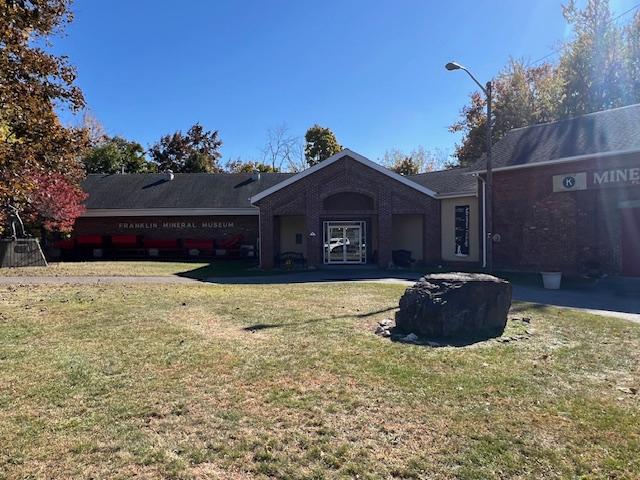
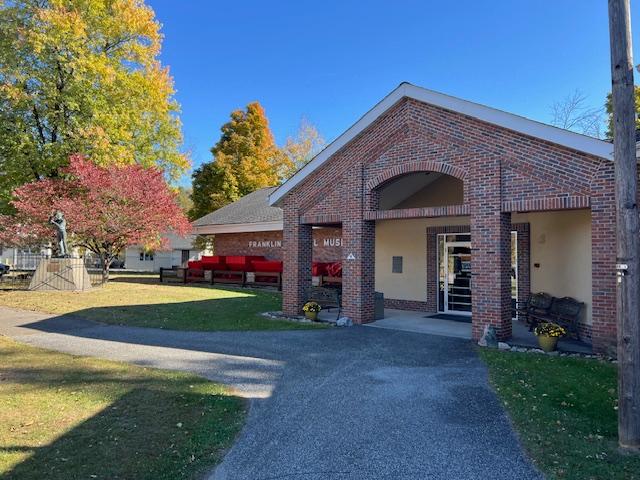
The historical sign outside the museum
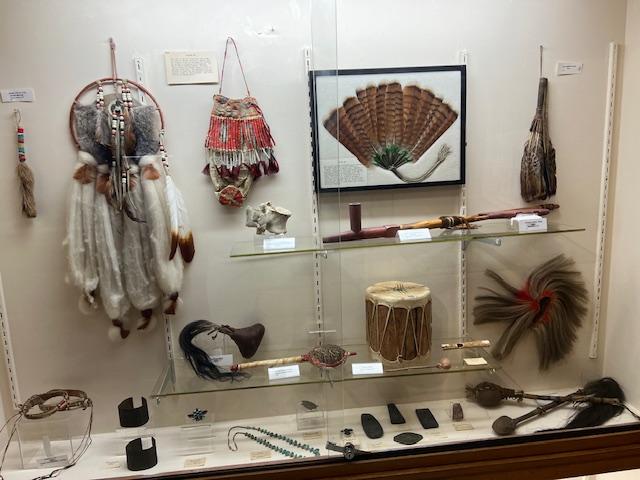
Where the museum shines though is in its depth of display, the interesting artifacts that the museum contains with both fossils and Native American pieces. It really shows the extent of Paleontology in the State of New Jersey and how the make up of the Earth and its history is shown in the displays. Many of the fossils have been found all over the State. The Native American pieces were from both North and South American with a impressive selection of Pre-Columbian art.
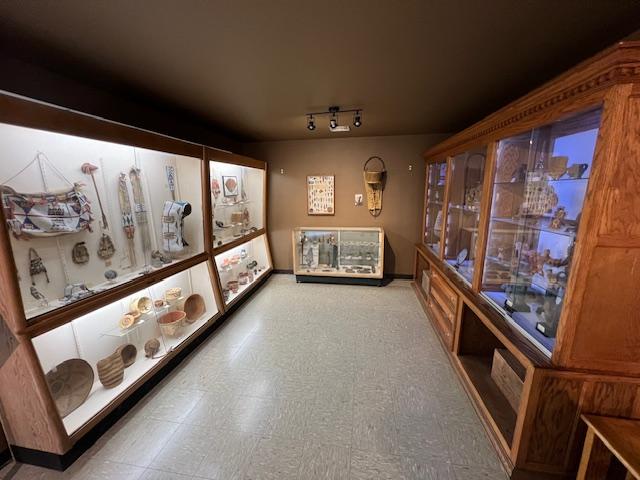
The Native American Gallery with pieces from all over the Americas
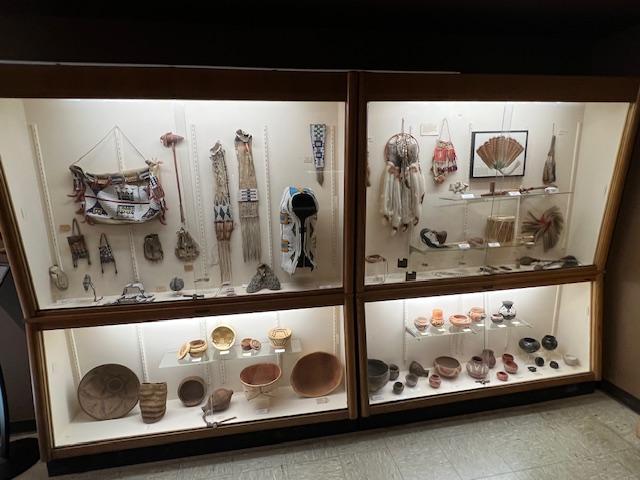
The Native American collection
The beauty of some of the artifacts
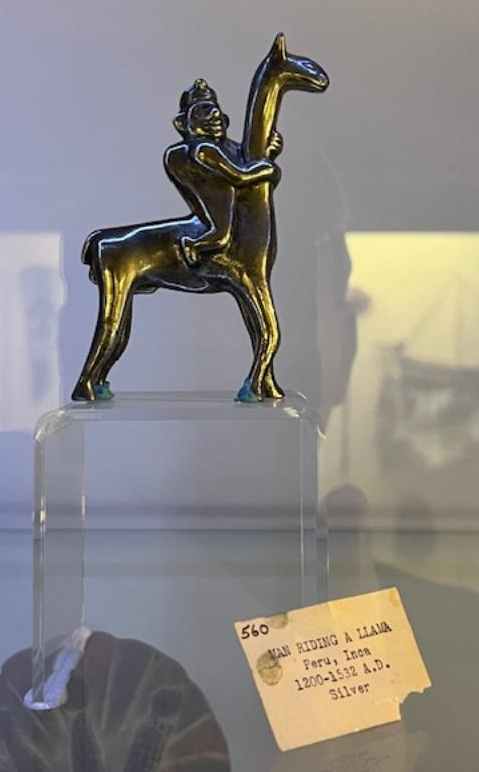
This piece of Inca silver impressed me as most of these artifacts were melted down for the minerals by the Spanish
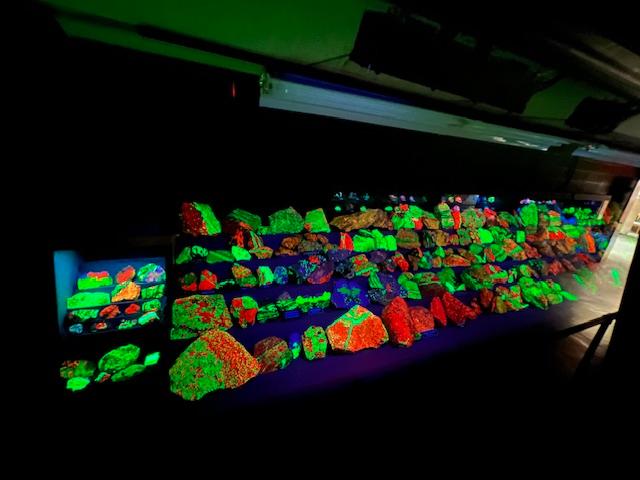
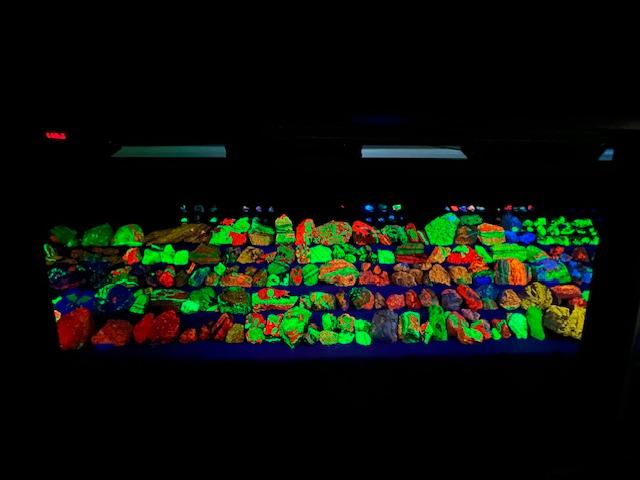
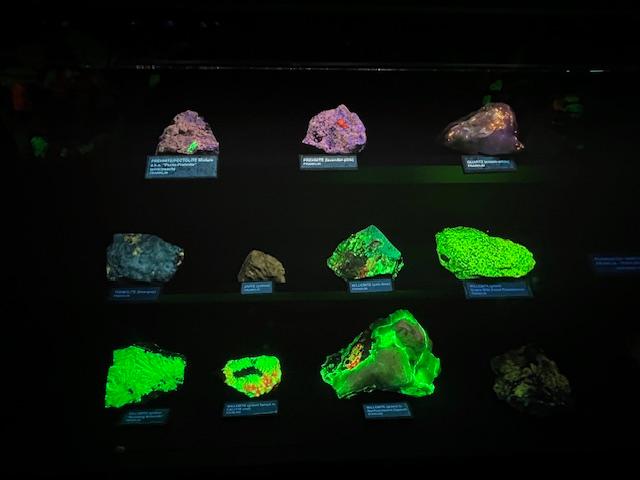
Two of the exhibits that I thought stood out that you must see is the “Fluorescent Room”, which when left alone when the lights go out is an illumination of colors due to the fluorescent make up of the minerals in the rocks. It displays all the colors of the rainbow. When the lights go back on they just look like ordinary rocks. Take time when the lights are out to really look at the colors of the stones. I was told that the blue or violet ones are the rarest.
The Fluorescent Room before the lights got out
The gallery with the lights off when the magic happens
The Collection in full view
Samples of the mineral’s as they glow
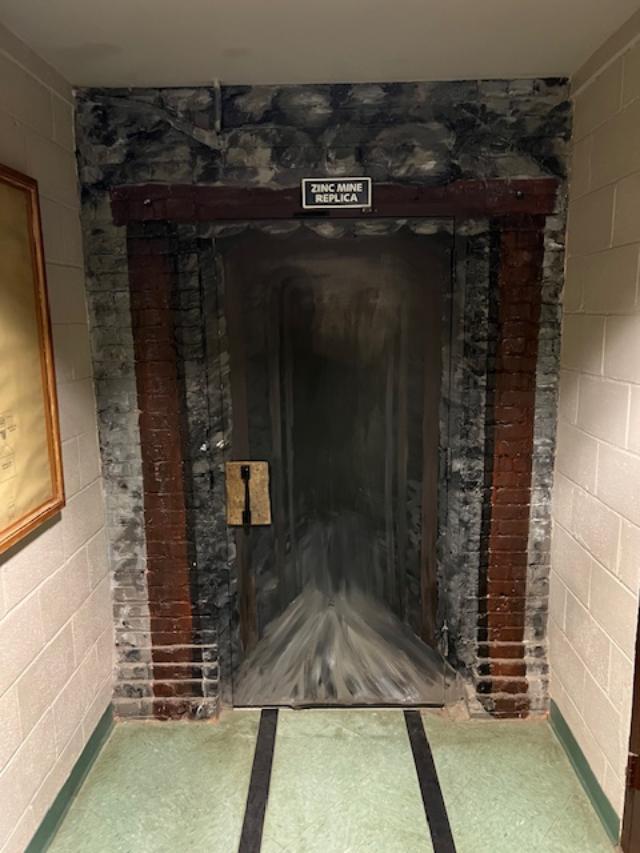
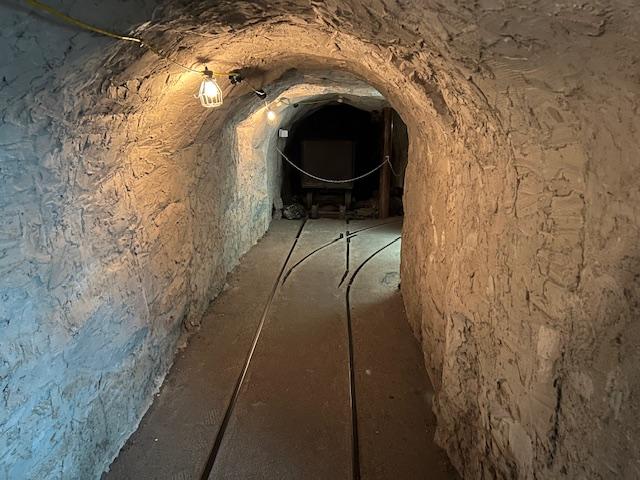
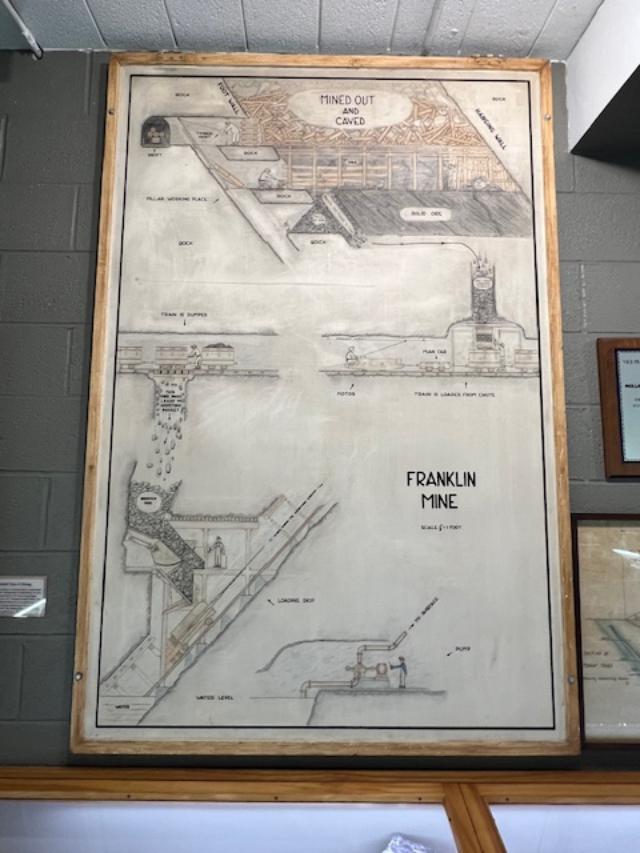
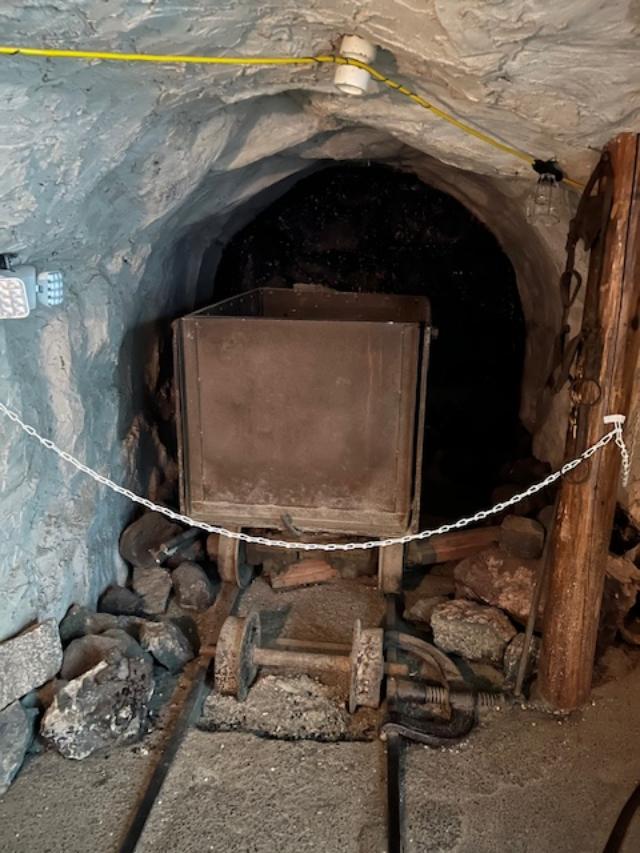
Another stand out display is the simulated “Mine Replica” that takes you in a tunnel and then maze of the make up of working in a mine complete with ladders down the lower tunnels, a working office of the foreman, the mine car tracts and displays on how miners went about there business. It shows how hard and dangerous the mining industry is and was back then to today. Try to see this display first as it takes time to tour.
The Mine entrance
The simulated mine walk through
The Franklin Mine sign
The simulated mine walk
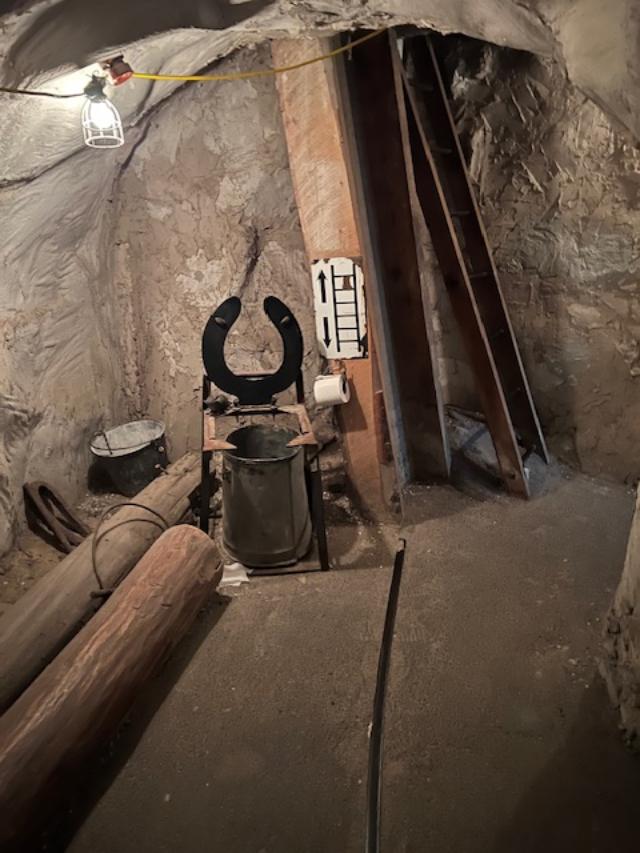
The toilet area of the mine
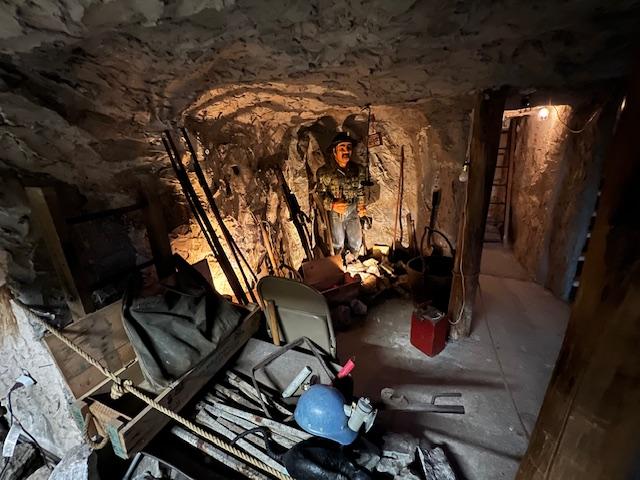
The miners at work in the mine simulation
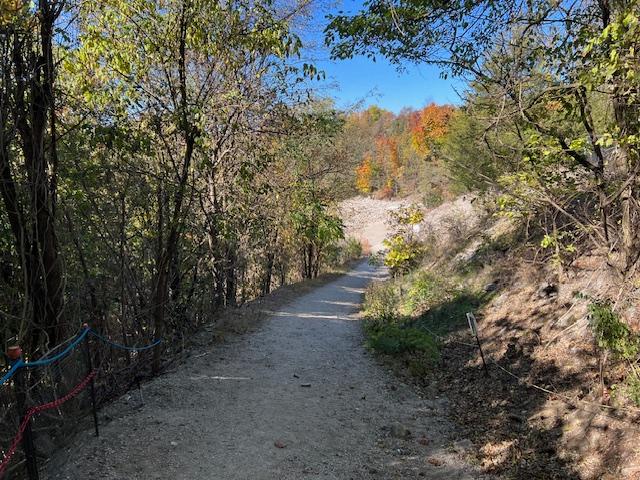
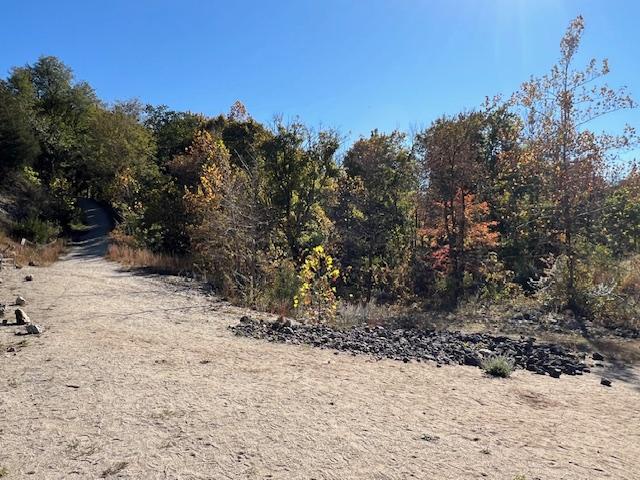
Before you go inside to the museum, take some time to look through the quarry for rocks and minerals. You are given a bag to keep your specimens and there is a fluorescence light to check if you found anything. At first I thought this was just for little kids but later discovered that I found some ‘glowing rocks’ that I could take home and I found this fascinating. I never knew these types of rocks existed in New Jersey.
The Path to the Quarry area where the minerals were located
The path to the quarry area
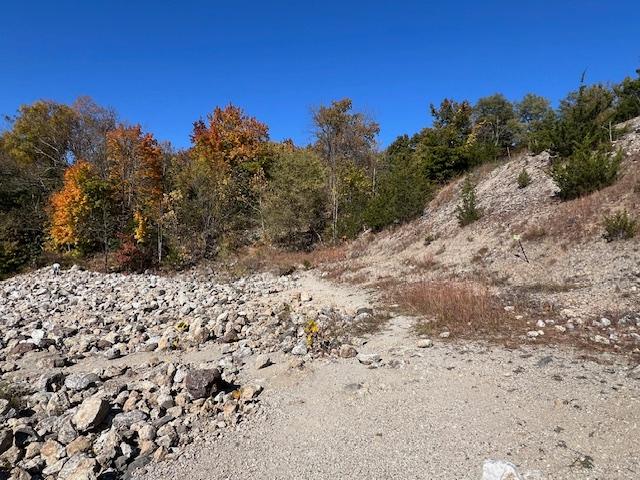
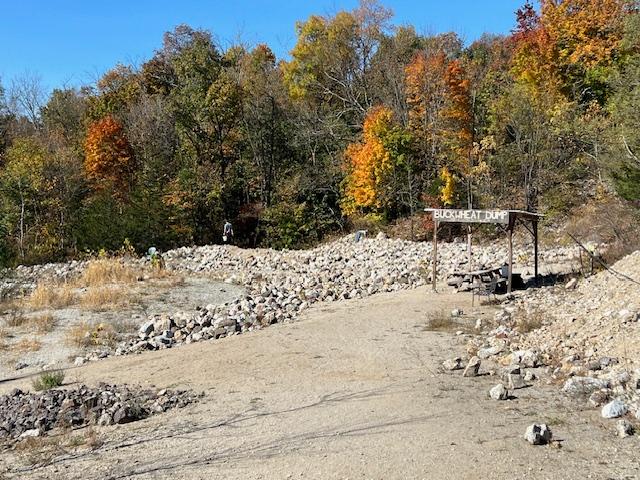
The quarry area where you can collect specimens of minerals
The quarry was busy in the afternoon
The beauty of the quarry in the Fall of 2024
Give yourself about three hours to really explore these rooms and it will give you a clear indication of how New Jersey formed as a State and its role in the evolution of the Earth. There are some really interesting displays to see and read about.
History of the Museum & Mines:
(This information was provided by the Franklin Mineral Museum pamphlet)
Due to the depletion of zinc and other ores the Franklin Mine closed operations in 1954. In preservation of the mining heritage the local Kiwanis Club started an annual mineral show donating the funds to charitable causes. Popularity of the show lead to the formation of the Franklin Mineral Museum, a non-profit educational museum, incorporated July 1, 1963, which is governed by a board of trustees and powered by a dedicated staff. Of note: Although the Kiwanis Club is no longer involved with the museum, the original sign still hangs over the outside door to the mine replica.
The former Buckwheat engine house, thought to be the hoist house that supplied the power to lift the mined ore from the Buckwheat open pit was donated to the museum in 1963. The mine replica was installed and made a permanent display inside the hoist house. Of note: Around 1940, the original replica was a modular unit displayed at the local community center “Neighborhood House” and was used to show the miners’ families how they worked inside the mine. Prior to being reconstructed inside the engine house the modular replica was used at the NJ Zinc Company for the purpose of training mine rescue workers.
A mineral repository was also added in 1963 to the museum. The first mineral exhibit was donated by the NJ Zinc Company to the Kiwanis Club for display in the then permanent mine replica. The collection consisted of 71 specimens and mill samplings, including 11 fluorescents. The first mineral exhibit was later used as a traveling exhibit is displayed in the “Local Mining District Mineral” room of the museum. (Of note: The collection was originally on display in 1920 at the local high school and then moved around to several other locations, then the Neighborhood House in 1940.
On October 9, 1965, the Franklin Mineral Museum opened to the public. On June 20, 1968, the State of New Jersey declared the Borough of Franklin, NJ “The Fluorescent Mineral Capital of the World”. The discovery of more than 200 varieties of minerals from the working mines brought forth the great phenomena of mineral wonders from this area, particularly brilliant fluorescent minerals. On September 24, 1971, the State of New Jersey declared the Franklin Mineral Museum an Historic Site. Today this museum houses the most comprehensive display of local fluorescent minerals in the world.
The Museum is broken down into several rooms and displays:
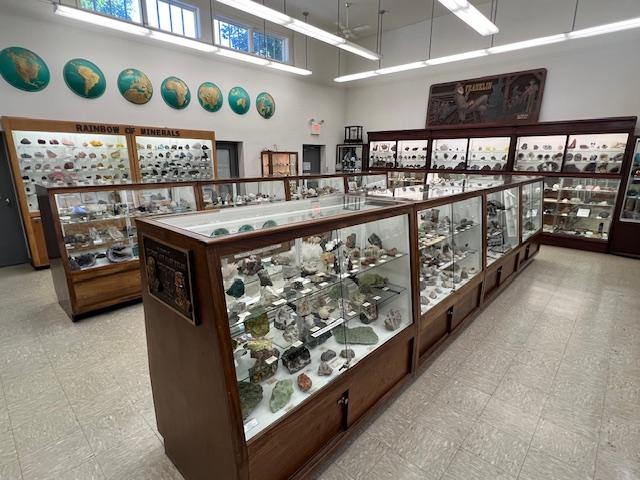
World Minerals “Welsh Hall”:
*There are approximately 6000 world-wide specimens and some from outer space.
*The three rock types are displayed. Igneous, metamorphic and sedimentary.
*Displays include meteorites, solidified lava, a volcanic bomb, pumice the floating rock, gold and birthstones in natural and gem forms.
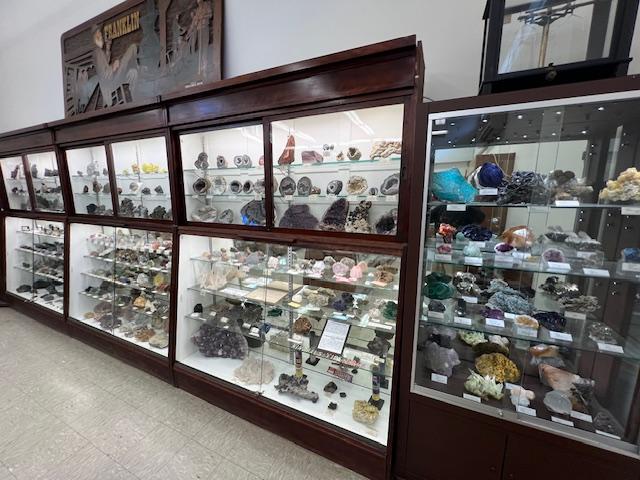
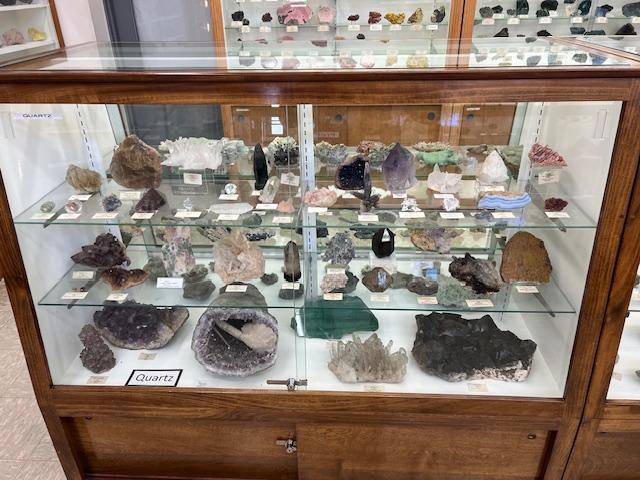
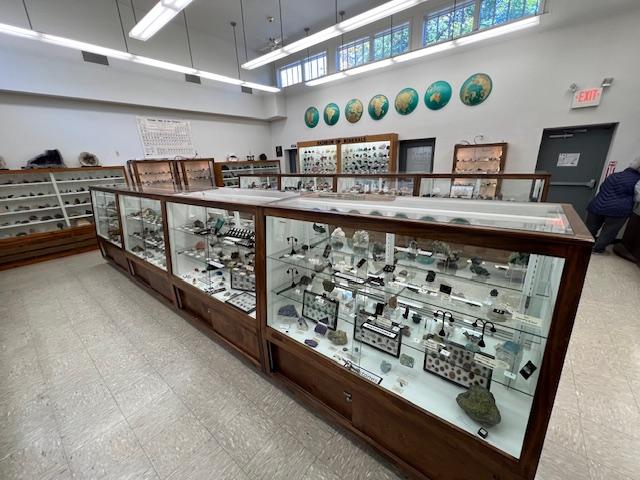
The Mineral Room
The Mineral Room
*The hollow rocks called geodes are formed from air bubbles in lava and often contain crystals. (Wilfred Welsh, a former teacher from Saddle River, NJ and his wife, Mary, collected and donated the majority of specimens in this room. This collection represents the passion they had for minerals. New specimens are continually added to this exhibit).
The Mineral Room
“Mine Replica”:
*In the lower level, left tunnel, the can in the alcove represents the miners’ “bathroom”. If a miner showed up late for work it was his job to carry the cans at the end of the shift (Where the expression “Going to the Can” comes from).
‘Hitting the can’
*This area contains the “Wall of Zinc”. The exhibit demonstrates the layers of various zinc ores that may have been visible in the mine.
*The original ore cars were pulled by mules.
*The miners of the 1800’s used candles & oil wick lamps on top of their helmets. Later in the 1900’s the carbide light was used to do away with candles. Water dripping on carbide produced acetylene gas which provided better light.
*Rats were prevalent in the mines. They stole lunches out of the metal lunch boxes if not locked. Most importantly they were very good indicators of cave-ins and provided early warning signs.
*The office exhibit represents that of a NJ Zinc scientist. This exhibit and open display area with “Sam” show mining artifacts. “Sam” is the original miner statue that stood outside of the museum, now replaced by a bronze statue sculptured by Carey Boone Nelson.
*Upstairs show the stope and pillar mining used in the 1900’s
*The large drill weighed 300 pounds and took two men to operate.
*The man cage (mine elevator) delivered men to their work levels inside the mine. A signal bell was rung to alert the operator.
Artifacts:
The artifacts of Native American, Artic & Aztec tribes, representing various regions are displaying in this exhibit.
“Fossils & Artifacts”:
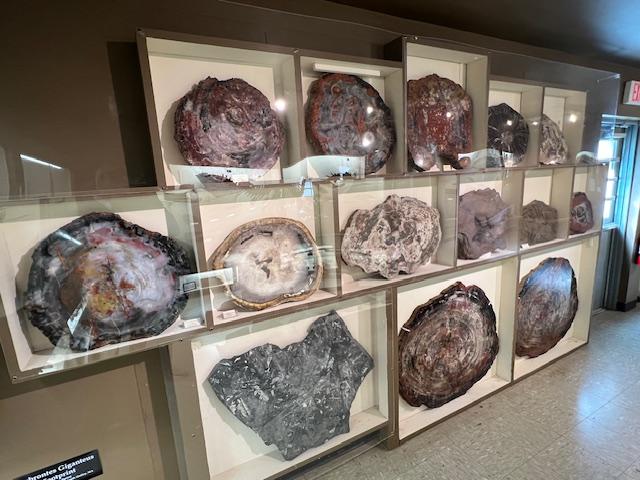
*Petrified wood, the large circles along the wall are slices of fossilized tree trunk. The wood has been replaced with mineral over a long period of time. The tree rounds are estimated to date back to the Triassic Age 230 million years ago.
*The dinosaur footprint is from a Grallator, that roamed NJ. Grallator means “stilt walker”. This was a herding dinosaur known only from its fossilized footprints. Grallator-type footprints have been found in formations dating from the late Triassic through to the early Cretaceous periods. It is said to have up to five toes.
*The large bone is from a Mastodon. Mastodons are an extinct group of mammal; species related to elephants. They inhabited North and Central America during the late Miocene or late Pliocene up to their extinction at the end of the Pleistocene 10,000 to 11,000 years ago. Their genus name is Mammut and they are members of the order Proboscidea. They lived in herds and were predominately forest dwelling animals.
*Coprolite is fossilized dinosaur dung.
*The giant shark tooth is from the Megalodon one of the largest most powerful predators. It is an extinct species of shark that lived approximately 28 to 1.5 million years ago, during the Cenozoic Era. Fossil remains suggest that this giant shark reached a maximum length of 46-59 feet. Some believe that the Megalodon still swims in the deep waters today and are larger in size than originally thought.
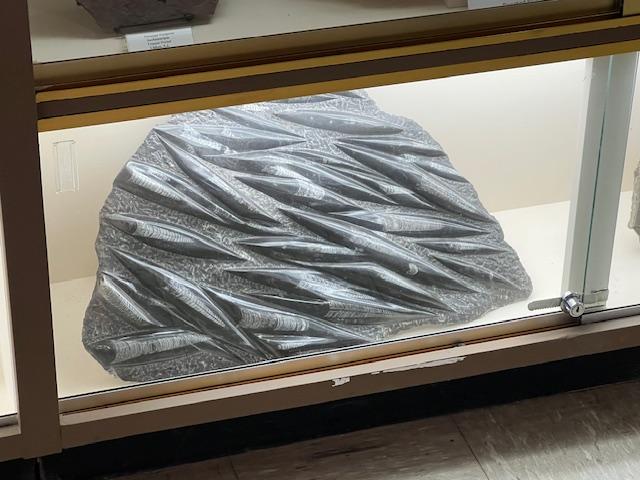
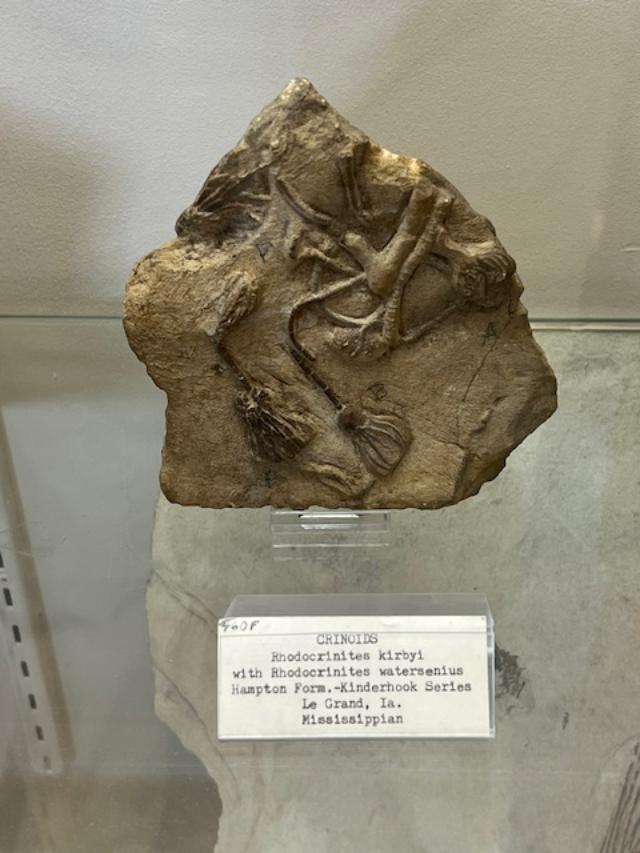
The Fossil Room
The Fossil Room
The Fossil Room
The Fossil Room
The Fossil Room
The Fossil Room
*Trilobites are extinct arthropods, distant relatives of modern lobsters, horseshoe crabs and spiders. Trilobites existed for approximately 300 million years. They lived from the Lower Cambrian Period (521 million years ago) to the end of the Permian (240 million years ago). Trilobites were probably the first life forms with complex eyes with some species having hundreds of individual lenses per eye.
“Fluorescent Room”:
The Fluorescence of the Franklin ores was discovered accidentally in the early 1900’s. Sparks from primitive electrical equipment in the mines caused the rocks to glow. Sparking equipment in the mines caused the rocks to glow. Sparking equipment was built and the fluorescents were used to follow ore zones and to monitor the quality of mill concentrates. Later, fluorescence was used to determine if exploratory drill holes were close to the ore body. If the holes would glow red. Calcite further from the holes had no fluorescence.
The Fluorescent Room
The reason why some minerals fluoresce is because of the impurities in the mineral. The ultraviolet light rays dislodge and excite electrons from their orbits in a molecular structure of the mineral and in their efforts to get back in the orbit, the electrons give off energy in the form of light.
Fluorescence refers to the emission of visible light from a substance being irradiated by ultraviolet light which the human eye can not see.
In the displays:
The large exhibit displays some of the finest fluorescent minerals from the local mining district, shown under shortwave ultraviolet light. Most local fluorescent minerals look fairly ordinary in natural light and only fluoresce under shortwave ultraviolet light. The exhibit on the opposite wall identifies local specimens in alphabetical order under shortwave ultraviolet light. Only a few local minerals fluoresce under long wave ultraviolet light, some of which are displayed in the first case you enter.
“Local Mining District Mineral Room”:
*Every mineral on display is from the local mining district of Franklin or Sterling-Hill.
*Several geological events produced the wealth of mineral species found in this area.
*The first one mined in Franklin was magnetite iron ore. Searching for more magnetite, zinc was discovered.
The Mineral Room
The discovery of zinc in the minerals franklinite, willemite and zincite brought on a new era of mining. Between 1848 and 1897 several small companies began underground zinc mining and continued to do so until the great consolidation of 1897.
In 1897, these smaller companies consolidate to from the New Jersey Zinc Company which operated in Franklin until 1954 and then closed after exhausting the mineral resources available.
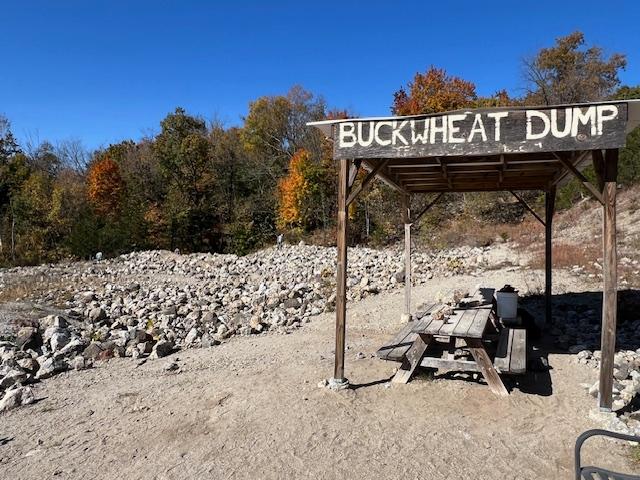
The Franklin open cut “surface mining” with an underground opening to the mine is across the street and currently under water. The open cut was originally named the “Buckwheat Mine”. The “buckwheat dump” is the collecting area of the museum, comprised of discarded rock from that mine.
*The mine produced 22 million tons of ore worth 500 million dollars.
*Many uses for Zinc include sunscreen, pennies, paint, batteries…
*Solid zinc bars are on display in this room.
In this exhibits:
*The left side of the room as you walk in, displays various species of local minerals. The primary economic ores mined were willemite, franklinite and zincite. See a sample that contains all of these minerals in “High Grade Franklin Ore” located on the floor next to the Franklinite Crystal model.
Willemite: Colorless to white, gray, flesh-red, dark brown, honey-yellow, apple-green, blue, Fluorescent (green) under shortwave ultraviolet light.
Franklinite: is an oxide mineral. Commonly occurs with willemite, calcite and red zincite forming small black octahedral crystals. Franklinite was only found here in the local mining district until recently.
Zincite: A mineral form of zinc oxide. Its crystal form is rare in nature except at the Franklin and Sterling Hill Mines. The hexagonal crystal is red-colored (mostly due to iron and manganese) and associated with willemite and franklinite. Some zincite fluoresces yellow under long wave light.
*You can collect for these mineral species on the “buckwheat dump” located on the property of the museum.
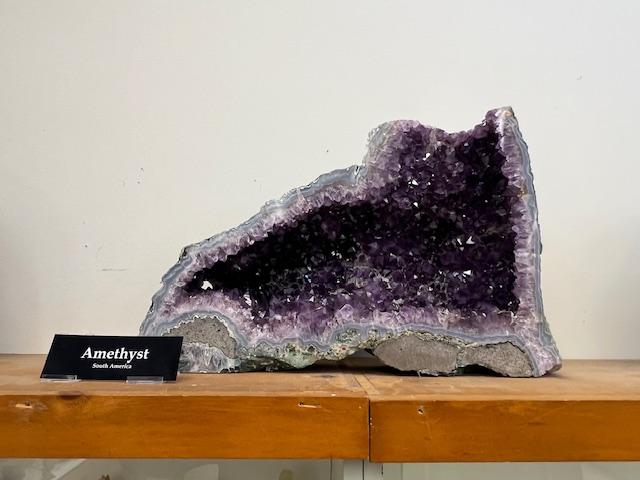
Amethyst on display
*On display are small amounts of gold found here.
*The corner floor display consists of local common rocks and minerals some of which contain iron. There was an iron furnace located at the now Police station at the edge of the Franklin pond. Most of the iron mined here was called magnetite. Magnetite is highly magnetic.
Some minerals on display are on loan from various institutions and major universities. We have out minerals on display in museums all over the world. The majority of the specimens are acquired through donations or purchased for the betterment of the museum.
The Mineral Room
As of this publication, the Franklin-Sterling ore deposits have produced 359 different mineral species about 10% of all those known to man. More mineral species than anywhere else on earth, 19 of these are unique to the area, 92 of which are fluorescent.
(This information on the museum and on their displays is taken from the Franklin Mineral Museum pamphlet and I give the museum full credit for the information. Please check the website for more information about programs at the museum.)
Open Wednesday-Sunday 12:00pm-5:00pm/Monday & Tuesday Closed
Fee: Non-Member Adults $12.00/Seniors (65+) and Students with ID $10.00/Members and Children under 12 Free
I have made many trips to the Montclair Art Museum over the years and have always found it to be a very interesting and engaging museum. The curators mount fascinating exhibitions sometimes from the permanent collection and sometimes from traveling shows.
The galleries are smaller and more compact so the exhibitions are not over-whelming like in the bigger museums. You can see each exhibition in about forty-five minutes to an hour and you will still see a lot. There are also smaller exhibition spaces which specialize in one artist and you might see about a dozen pieces.
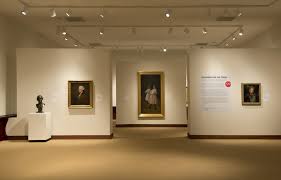
There are two exhibitions going on currently in the museum. One is “Constructing Identity in American”, which is a permanent collection show of more than 80 paintings, sculptures and works on paper that will address a variety of characteristics that contribute to one’s sense of self, including civic, cultural, artistic, religious, professional and sociopolitical identities, sense of place and personal space and non-conformity. This exhibition goes far beyond portraits to explore other aspects of sense of self (Museum pamphlet).
“Constructing Identity in America” exhibit
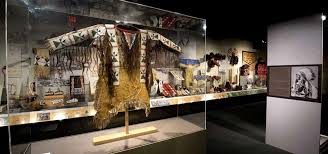
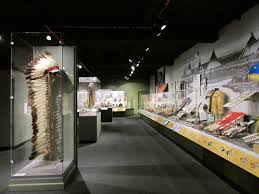
The other exhibition is called “Undaunted Spirit: Art of Native North America” which focuses on the Native American culture from Prehistoric times to the modern era. It , seems that by the end of the Civil War the Victorians were collecting art and objects of the Native Americans fearing that their cultural was disappearing. There is a lot of focus on pottery, both modern and pre-colonial, clothing construction, jewelry making with turquoise and silver and basket-making which was all the rage at the turn of last century. I like the modern aspects of the art as they are ushering a new era of artists of the southwest and giving them a voice. Take time to look at the detail work of the show.
“Undaunted Spirit: Art of Native North America” exhibit
History of the Montclair Art Museum:
(This information was provided by the Montclair Art Museum)
Mission Statement: The Montclair Art Museum, together with its Vance Wall Art Education Center, engages our diverse community through distinctive exhibitions, educational programs and collection of American and Native American Art. Our mission is to inspire and engage people of all ages in their experience with art, including the rich inter-cultural and global connections throughout American history and the continuing relevance of art to contemporary life.
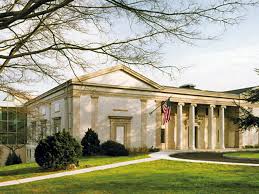
The Montclair Art Museum
Vision, Values and Diversity Statement:
After 100 years of service, MAM is recognized as the leading American art museum and community art school in Northern New Jersey. As a organization, we value: artistic inspiration, diversity of voices, individual and group creativity and the importance of all arts to a civil, inclusive and forward-thinking society.
We respect and welcome individual differences and strive to maintain an environment that fosters productivity, creativity and individual satisfaction by celebrating the diversity of race, gender, nationality, age, religion, sexual orientation and physical abilities.
Native American Galleries
During our second century, we will invigorate our collections and curatorial presentations; expand our educational services audience; support artists, their work and connections; pursue productive institutional partnerships and embrace new media and technology. We will also secure MAM’s financial stability and preserve its facilities and other assets in a prudent and sustainable way.
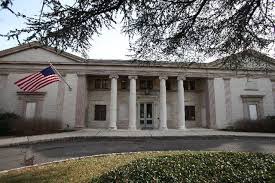
A notable community institution with an international reputation, the Montclair Art Museum (MAM) is still located in the same-though now thrice expanded-building in which it opened in 1914. Situated amid a beautiful tree-lined residential area of Montclair New Jersey, just 12 miles west of New York City, the Museum is esteemed for its holdings of American and Native American Art, its exhibitions, its family and public programs and its art school. It welcomes more than 65,000 visitors annually.
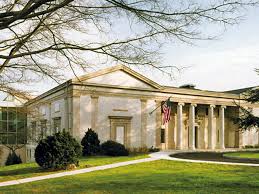
The entrance of the Montclair Museum
The Museum was a pioneer: one of the country’s first museums primarily engaged in collecting American Art (including the work of contemporary non academic artists) and among the first dedicated to the study and creation of a significant Native American art collection. This pioneering spirit still reverberates in the Museum’s pursuit and presentation of high-quality art that characterize and celebrates American’s diversity, including the recent launch of its Contemporary Art Program, in 2010, providing MAM an opportunity to showcase dynamic contemporary work and expand the Museum’s contemporary art holdings. A main showcase dynamic contemporary work and expand the Museum’s Contemporary holdings.
A main feature of the MAM program is to explore the interplay between historical and contemporary art to our understanding of the larger historical context in which art is created, presenting work that is being challenging and accessible. A key component of the Contemporary Art Program is it New Direction exhibition series of solo artists, established in 2011. Artists featured in the series include Marina Zurch, Saya Woolfalk, Spencer Finch and Sanford Biggers. Most recently in Spring 2015, MAM presented its largest and most ambitious exhibition of contemporary art to date, “Come as You Are: Art of the 1990’s”.
From its founding, the Montclair Art Museum has maintained a vital presence in its surrounding community. The Museum’s collection began with gifts from prominent Montclair residents that included both American and Native American art, laying the foundation for the Museum’s holdings. MAM’s Inness Gallery is one of the only galleries in the world dedicated to the work of America’s greatest landscape painter, who spent the last nine years of his life in Montclair, from 1885 onward and who drew inspiration from the local landscape. Other well-known artists followed in his footsteps, cementing Montclair’s reputation as an intellectual center and artist’s colony, a reputation its retains to this day.
Mam’s collection has grown to over 12,000 works. The American collection, which started with a gift of 36 paintings from William T. Evan’s, comprises paintings, prints, drawings, photographs and sculpture dating from the 18th century to the present and features excellent works by Benjamin West, Asher B. Durand, John Singer Sargent, Edward Hooper, Georgia O’Keeffe, Andy Warhol and Roy Lichtenstein as well as younger and emerging artists such as Louise Lawler, Chakaia Booker, Whitfield Lovell and Willie Cole.
The museum’s superb holdings of traditional and contemporary American Indian art and artifacts, New Jersey’s largest, represent the cultural achievements in weaving, pottery, wood carving, jewelry and textiles of indigenous Americans. The collection was begun by Annie Valentine Rand and carried on by her philanthropic daughter Florence Rand Lang, one of the Museum’s founders and continues to grow with philanthropic daughter Florence Rand Lang, one of the Museum’s founders and continues to grow with commissioned works, gifts and purchases that celebrate the vitality and modernity of traditional forms and beliefs. Among the contemporary American Indian artists represented are Tony Abeyta, Dan Namingha, Jaune Quick-to-see Smith, Allan Houser , Bently Spang and Marie Watt.
Equally important for its community presence and its reputation are the Museum’s public and family programs and art school, serving everyone from toddlers to senior citizens. Collaborations with numerous cultural and community partners bring artists, performers and scholars to the Museum on a regular basis.Guests have included Holland Cotter, John Elderfield, Bill T. Jones, Jeff Koons, Faith Ringgold, Winfred Rembert, Kiki Smith, Philip Pearlstein, Shirin Neshat and Lorna Simpson. More than 10,000 K-12 students from 190 school districts visit the Museum every year. Free Family Days, a Family Lab, MAM Park Bench, Home School Days and Birthday Art Parties allow families to experience art in variety of different ways. As the New Jersey affiliate of the Scholastic Art & Writing Awards, MAM opens opportunities to creative teenagers to gain national recognition for their work. The Museum also provides programs for seniors and special needs individuals-such as the hearing impaired and people with Alzheimer’s as well as training for teachers in the arts.
MAM’s art school, now the Yard School of Art, has been an integral part of the Museum’s life nearly from the beginning. It was founded in 1924 just 10 years after the Museum itself and has operated continuously since then offering courses year-round to kids, teens, adults and seniors. Courses cross a broad range of the artistic spectrum, including drawing, painting, collage, pastel, printing making and illustration. In 2011, the school launched two new areas: a Ceramics Studio and a Digital Media Lab.
In 2014, MAM celebrated its Centennial with a yearlong program of activities, which included a Birthday Party on January 15, exactly 100 years from the day of its founding that attracted thousands of visitors. In honor of the Centennial the Museum also commissioned internationally renowned artist Spencer Finch to create a site-specific installation that has transformed the Museum’s facade, making it a more inviting point of entry.
The first institution in New Jersey designed as a museum and one of the first in the nation to be accredited by the American Association of Museums, the Montclair Art Museum as it marks its Centennial, continues to seek novel ways, through its exhibitions, educational programs and outreach efforts to inspire and inform its growing and ever more diverse audiences.
(This information on the history of the Montclair Art Museum was taken from their website and I give the Museum full credit for the history of the Montclair Art Museum).




















 Visiting a Museum: The Unique, Unusual, Obscure and Historical