Tag: Small Museums and Galleries

Galleries at Fairleigh Dickinson University-University Hall                                                          1000 River Road                                                        Teaneck, NJ 07666

Galleries at Fairleigh Dickinson University-University Hall 1000 River Road Teaneck, NJ 07666

Galleries at Fairleigh Dickinson University-University Hall

1000 River Road

Teaneck, NJ 07666

(201) 692-2801

Open: Sunday Closed/Monday-Friday 10:00am-5:00pm

Admission: Free but donations accepted

My review on TripAdvisor:

University Hall on the Fairleigh Dickinson Campus 1000 River Road

The entrance to the museum

The entrance to the Art Gallery

I recently visited the Galleries at Fairleigh Dickinson University and I walked through the new exhibition of being featured by artists Cordelia Barney and Makenna Savnik who are local artists to New Jersey. This was an interesting gallery with walls lined with whimsical art.

The Galleries Museum is located on the first floor of the University Building next to the art Department.

The works by the artists lined the walls

The history of the Arts Department at Fairleigh Dickinson University:

(from the University website)

In September 2018, Fairleigh Dickinson University inaugurated the School of the Arts, a robust center of learning for students who seek arts training grounded in a real-world framework. Today, the School of the Arts is a thriving and exciting community fostering talented students and faculty who are dedicated to a wide variety of artistic expression. 

School of the Arts students participate in an innovative curriculum that combines a strong liberal arts education, hands-on creative work, valuable opportunities for internships, and an integrated new approach to arts entrepreneurship.

Outstanding and nationally recognized artists and authors empower our students to reach their full creative potential through speaking engagements, workshops, art shows, and performances. School of the arts students are connected to a network of professional mentors and colleagues who help jump-start their careers. Our Florham Campus features a beautiful and inspiring landscape where students can collaborate across disciplines and flourish while the Metro Campus is located closely to Manhattan. Graduates will be equipped to thrive in today’s — and tomorrow’s — complex interconnected world.

The works by Cordelia Barnet

https://www.linkedin.com/in/cordelia-barnet-1b70a4222/

The art works by artist Cordelia Barnet were whimsical and fun with bright colors and inviting patterns. These were the works that stood out in her part of the exhibition.

‘The Flags that Represent Us’ by artist Cordelia Barnet

The sign for the art

The work ‘How would Botticelli See Me?’

The sign for the art

Cordelia Barnet also did an interesting collection of works with Cats as a theme. These were the ones that stood out to me.

The work ‘Hold up the Pinnacle’

The sign for the event

The work ‘Sleeping with the Fishes’

The sign for the work

The works on the other side of the Gallery were by artist Makenna Savnik. Her works were interesting in the repeated symbols and characters she created.

The works by artist Makenna Savnik

https://art.kunstmatrix.com/en/artwork/1232822/makenna-savnik/makenna-savnik

These were the works that stood out from her exhibition:

The work ‘Autumn Trees #2’

The sign for the work

The work ‘Lion # 3’

The sign for the work

The work ‘Sad Clown Bear with Yellow Stars’

The sign for the work

Future shows will be a combination of both professional and student shows. It is a very interesting little gallery with unique art.

It will be interesting to see what future shows the college’s art department will do next.

The Latin Cultural Mask Exhibition outside the gallery

The exhibition of masks

The historic Banta House on the campus

The historic marker

The historic marker of the Banta House

Art & Design Gallery at FIT                                                    227 West 27th Street                                                               New York City, NY 10001

Art & Design Gallery at FIT 227 West 27th Street New York City, NY 10001

Art & Design Gallery at FIT

227 West 27th Street

New York City, NY 10001

(212) 217-4683/4570

https://www.fitnyc.edu/life-at-fit/campus/gallery/index.php

https://www.fitnyc.edu/academics/academic-divisions/art-and-design/index.php

Open: Sunday-Saturday 9:00am-5:00pm

Admission: Free Donations Accepted

My review on TripAdvisor:

The entrance to the Art & Design Gallery at FIT at 227 West 27th Street

The exhibition space showcases the work of students, faculty, and distinguished alumni, as well as invited guest artists. This new gallery space is located at the entrance of the Pomerantz main building and the back room exhibition space. This features smallers theme shows and showcases the talents of the FIT professors, professionals and Alumni. The shows are constantly rotating offering a fresh approach to contemporary art.

The Current Exhibition:

Creative Industry: 
The Alumni Journey
Lobby and Gallery

Diverse in medium, this exhibition spotlights the career trajectories of several illustrious FIT alumni, highlighting their innovations and interesting journeys through the creative industries. Co-curated by Troy Richards, dean for the School of Art and Design, and Alumni Relations’ Kseniya Baranova, the work on display features photography, fashion, video, weaving, wallpaper, graphic design, and painting.

“Unconventional Minds at Work: 15 Years of HUE, The FIT Alumni Magazine

The showcased art designs

Artwork “Matter 2008” by artist Susanne Tick

The sign of artist Susanne Tick’s work

Artwork from “Unconventional Minds at Work”

Artwork from “Unconventional Minds at Work”

Artwork from “Unconventional Minds at Work”

Resurgence: 
The Ingenuity of Artisan Work and 
Hand-crafted Objects
Lobby and Gallery

‘Resurgence’ showcases the ingenuity of artisan work and hand-crafted objects from textiles, jewelry, and decorative accessories. Contributors to this show include FIT alumni, faculty, and students, as well as finalists from the 2022 Global Eco Artisan Awards, a recognition given by the AGAATI Foundation.

Artwork of “Resurgence”

The Gallery at FIT during one of the current exhibitions

The latest exhibition is on the A. Beller & Company clothing line. The designs on display are from 1900-1930 and many of the designs are from the ‘flapper’ era.

The A. Beller & Company exhibition

The A. Beller & Company designs.

The Bio on the manufacturer

The A. Beller & Company designs from 1910-1930.

The A. Beller & Company designs from 1910-1930.

The A. Beller & Company designs from 1910-1930.

The A. Beller & Company designs from 1910-1930.

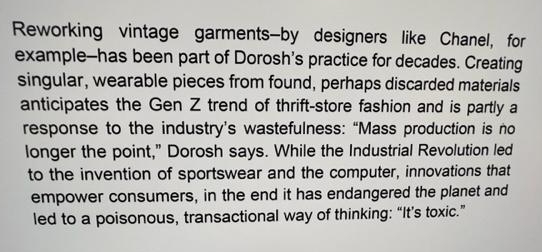
The museum also did a piece on how Generation Z is reworking vintage clothing designs and reworking them into modern clothing.

The Generation Z gallery of designs.

The write up on reworking of vintage clothing.

Some of the clothing designs.

The new exhibition in September 2023 was “The Unwearable Art” exhibition:

With the tag line “A fashion line no one would dare wear.”

The fashions were very unusual to say the least but unique in every way.

The entrance to the gallery.

“Today-I’m Wearing Uncertainty”

the “Today-I’m Wearing Uncertainty” design sign.

“Today-I’m Wearing Flare Intensity”

The “Today-I’m Wearing Flare Intensity” sign.

“Today-I’m Wearing Something Life Threatening.”

The sign “Today-I’m Wearing Something Life Threatening”

“Today-I’m Wearing Physical Pain”

The sign for “Today-I’m Wearing Physical Pain”

The “Wearing Uncertainty” exhibition offers a different look at fashion, and it’s influences on costumes.

The new “Squishables” exhibition at the Gallery at FIT focuses on therapeutic stuffed animals with themes that the students created as teams. Each one has several colorful soft animals and figures with it. It is a colorful and whimsical display. The exhibition shows how plush toys become an essential tool in coping with anxiety, stress, grief and isolation a person might feel at a time of their lives. This exhibition opened in May of 2024.

The sign on the new exhibition “Squishable”.

The “Unicorn Cafe” display.

The “Under the Sea” display.

The “Graveyard” Halloween display.

The “Alchemy Lab” display.

The “Farm” display.

The “Squishables” Gallery exhibition.

The new exhibition “Squishables” is based on a therapeutic stuffed animal that is created by the students.

The “Denim Devine” exhibition is the Senior Project of the graduates.

The “Denim Devine” exhibition in 2024. This exhibition was created by graduating students to design a wardrobe that was made of entirely of denim. These are their original designs and creations.

The “Denim Devine” entrance.

The winners of the “Denim Devine” exhibition.

The “Denim Devine” display.

The back gallery of “Denim Devine”.

I loved this Disney inspired dress in the exhibition.

One of my favorite dresses from the exhibition.

Another very original design in the exhibition.

Another original design that I liked in the exhibition.

The picture boards for the exhibition and other exhibitions.

The Gallery is free and open to the public.

Atlantic County Historical Society                       907 Shore Road                                              Somers Point, NJ 08294

Atlantic County Historical Society 907 Shore Road Somers Point, NJ 08294

Atlantic County Historical Society

907 Shore Road

Somers Point, NJ 08294

(609) 927-5218

https://www.atlanticcountyhistoricalsocietynj.org/

https://www.facebook.com/AtlanticCountyHistoricalSociety/

Open: Sunday-Tuesday Closed/Wednesday-Saturday 10:00am-3:30pm

Admission: Free

My review on TripAdvisor:

https://www.tripadvisor.com/Attraction_Review-g46825-d24142996-Reviews-Atlantic_County_Historical_Society-Somers_Point_New_Jersey.html

The Atlantic County Historical Society at 907 Shore Avenue

The Atlantic County Historical Society

I recently visited the historical sites of Somers Point and took my time to tour the Atlantic County Historical Society, which tells the story of life in Atlantic County from the beginnings to today with a major concentration the early history of the County with the Native American Lenape Indians and into the late 1700’s and 1800’s with the founding of the town, the Revolutionary and Civil Wars, shipbuilding, fishing and the start of the Victorian Age. Each floor has interesting displays that sometimes have been over-decorated with too many objects.

When you walk in the door, you enter the library where people study the history of the town and their geneology. There are stacks of books, periodicals and town records with people to help you research your work.

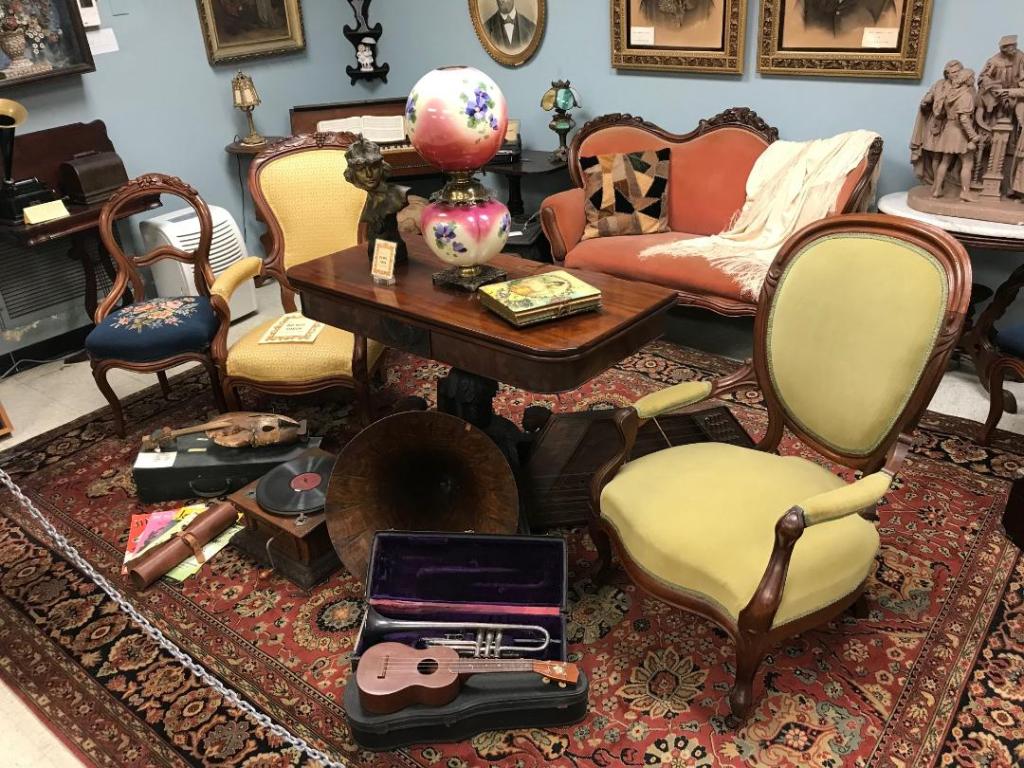
As you head downstairs, you will see the various displays that have been set up on life in Atlantic County through the ages. Most of the artifacts in the displays are from the late 1800’s to the early 1930’s. The displays represent the home life of middle to upper middle class Americans at the time. There are parlor sets with musical intruments for entertainment, family portraits, writing sets and living and dining room bric-a-brac. The museum portrays the life of properious residents of the area.

The Middle to Upper Middle Class parlor of Americans in the late 1800’s

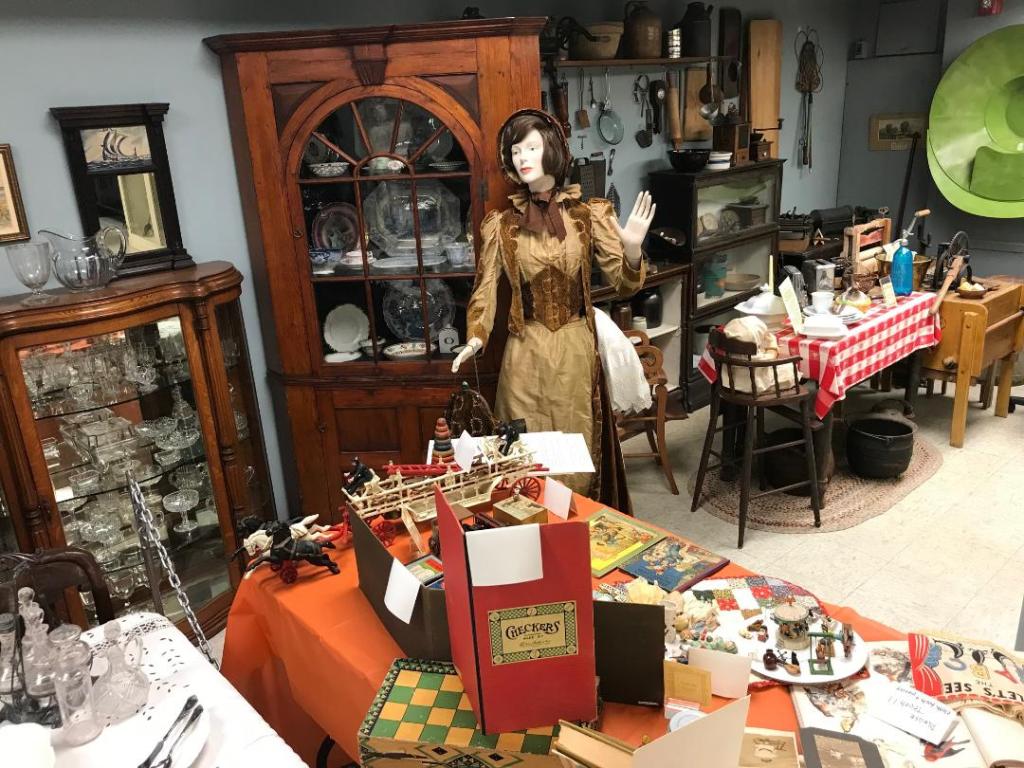
The Dining Room set and dishes of a 1920’s Atlantic County family with all sorts of kitchen and play items for engagement for the family through the years.

The display really shows that entertaining since those times has not changed over the years except that today that things are less formal. China, crystal and silver were your way of showing your status in the community. Today’s generation is not so apt to do this.

Early phonographs, lightbulbs and inkwells for writing

Lifestyle was a big part of people’s lives during these time periods so the way you dressed and presented yourself was a big part of who you were. With the advent of ocean swimming, outdoor recreation and weekend activities that came with the push of the unions. You can see that leisure became a big part of the Victorian’s lifestyle.

One thing that emphisis was put on was children and their well-being. We see the start of children’s education, their health and livelihoods and their playthings. The Victorians especially worked hard to give children a better life than the workhouses and factories that children had been subjected to in the previous century. There was a push to make children well-behaved ‘little adults’.

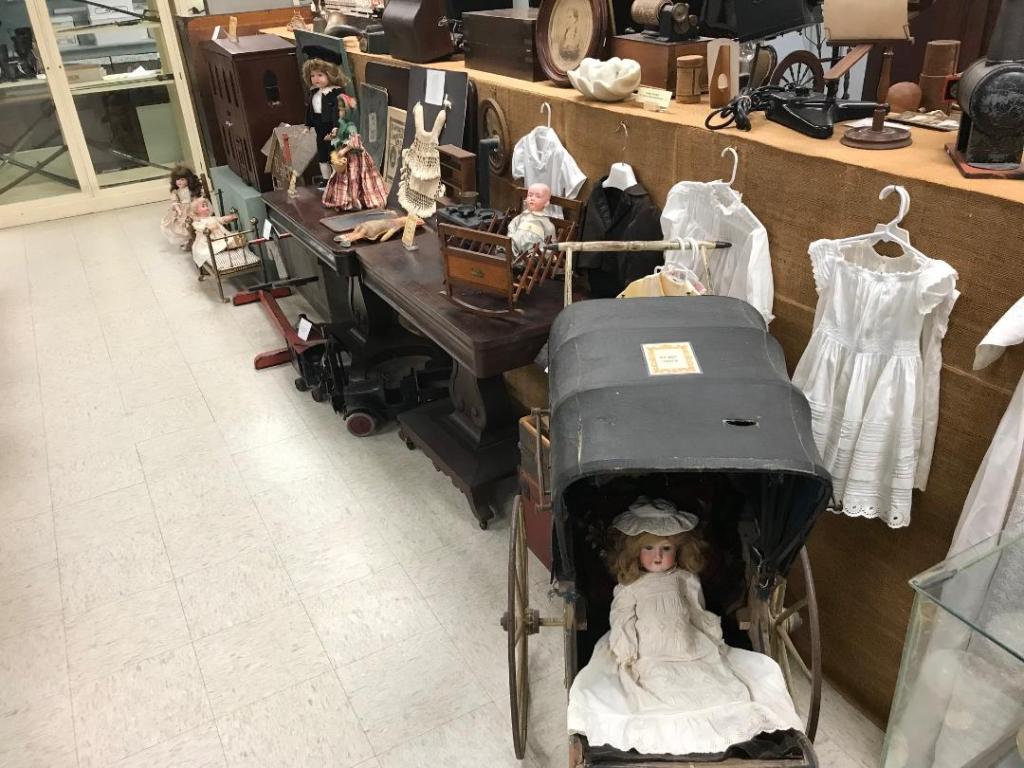
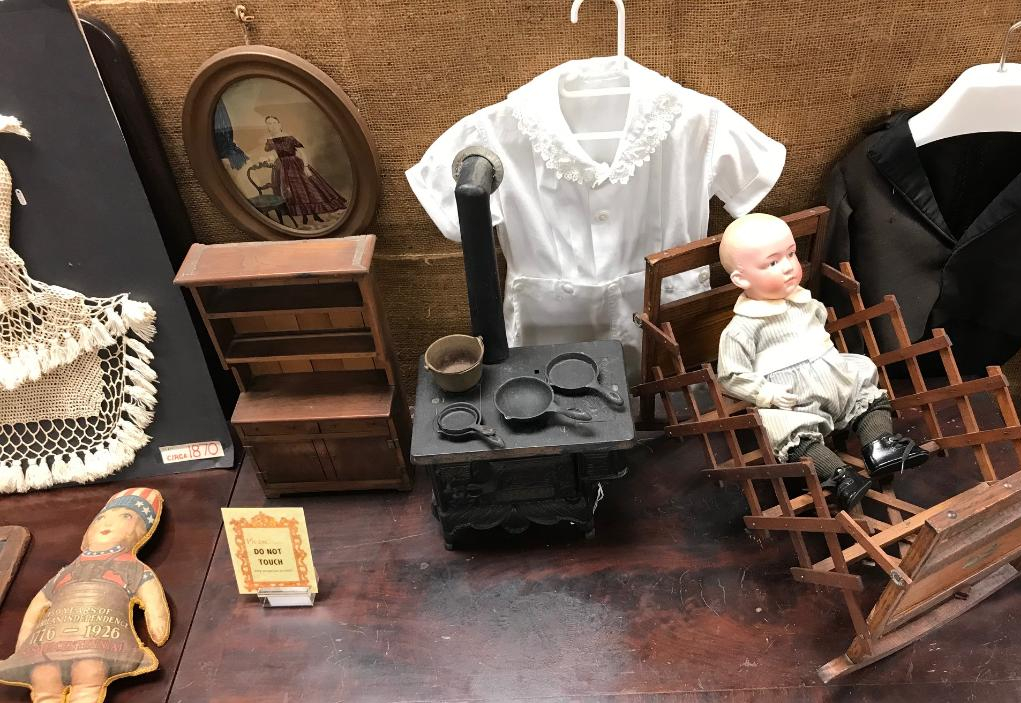
Children’s playthings and clothes were a big part of Victorian children’s lives

Children’s Playthings

Children’s dolls and playthings represented the house and to prepare for household responsibilities

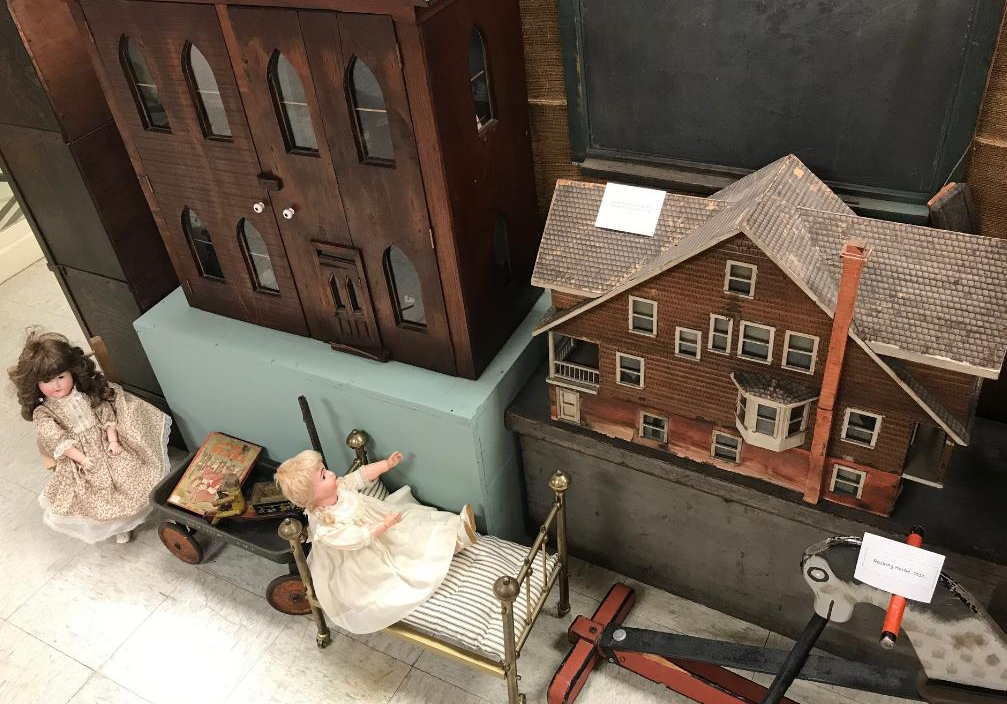
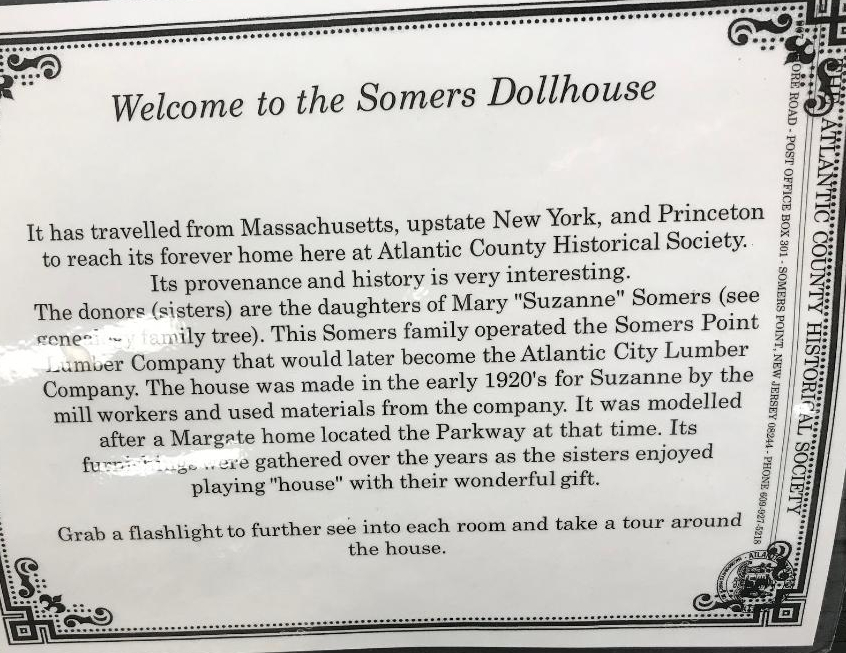
The Somers Family dollhouse that was built for the Somers family’s daughters
The Somers Dollhouse was a special gift to two young girls of the noted family who played with this their entire childhoods. Notice the detail to the this wonderful dollhouse.

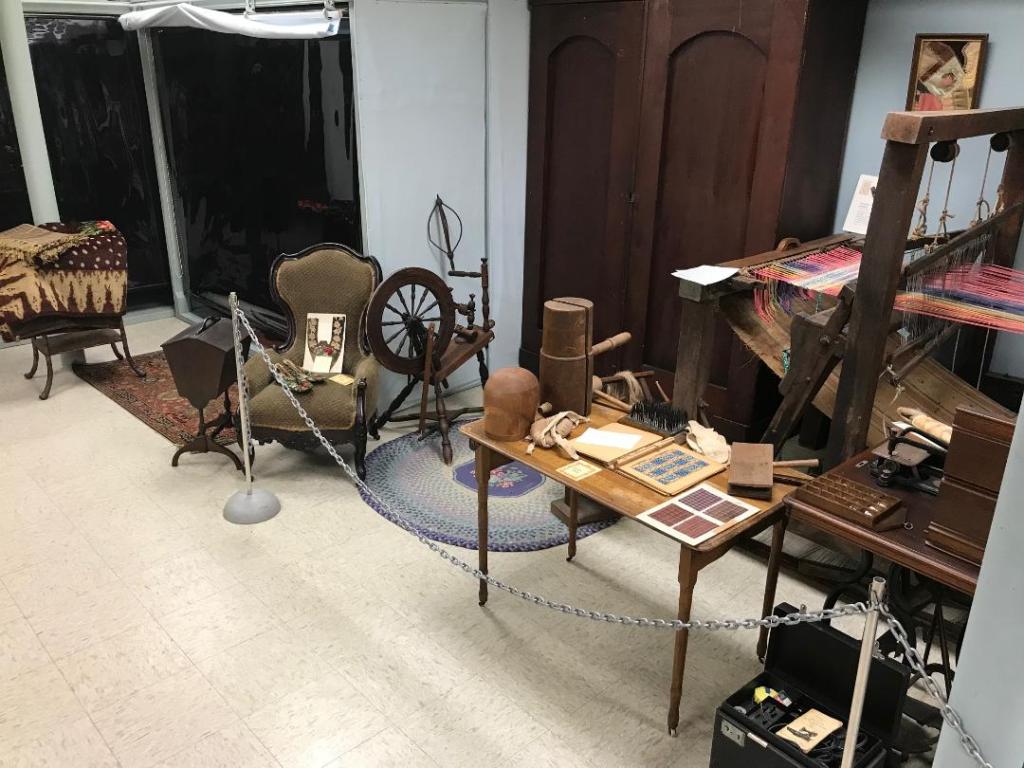
People were expected to do their chores at home such as cooking, washing, dressmaking and taking care of the house. Before electricity this was not an easy task made even more difficult by the Victorian expectations of propriety and cleanliness.

The spinning wheels represented cloth and clothes making of the late 1700’s and the loom of rug making for home decoration before the advent of the department stores. Butter churning and ice cream making were all day chores.

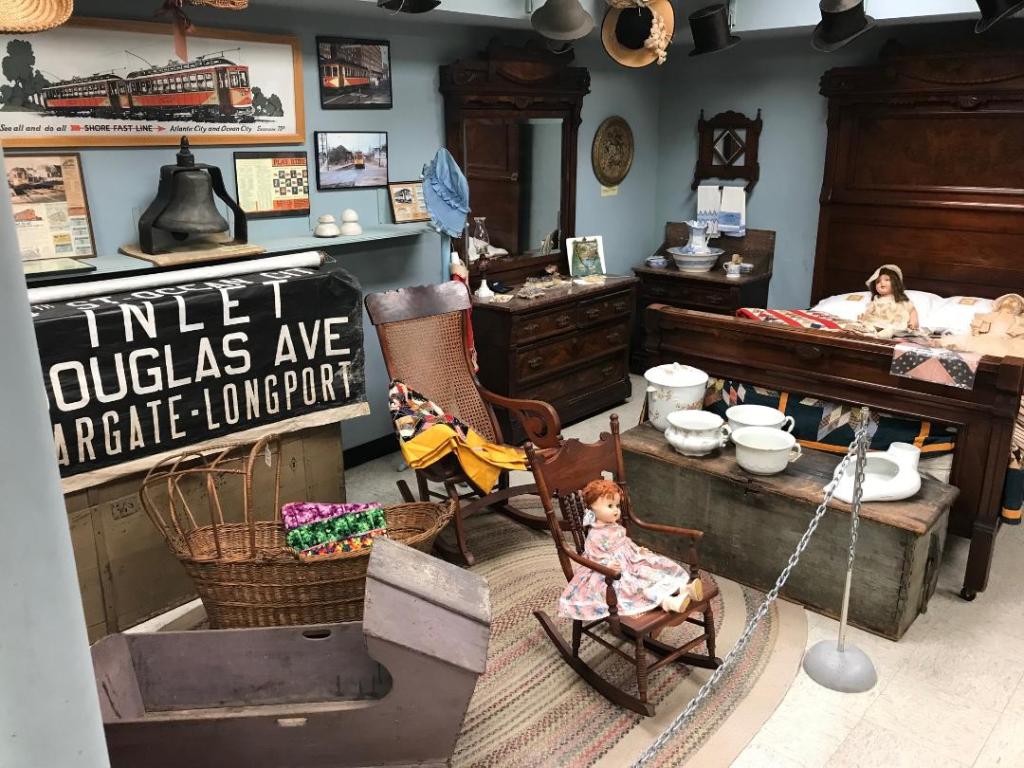
Home decoration was a big part of home life. The house was where the family spent their time and Victorians especially liked to room for everything including the bedrooms. This is where privacy was king if you could afford it. In the era of ‘children were seen and not heard’, if family members could have their own rooms that was paramount.

The kitchen was king and entertainment was taken seriously. Things had to look and seem a certain way.

The Victorian Bedroom was a place of rest and leisure for the married couple
Victorians believed in grooming and good manners

There was also a large collection of vintage clothing, quilts and bedding, hats and gloves and walking sticks to show the dressing the middle and upper middle class citizens.

Manufacturing was also a big part of the community and shipbuilding was one of the businesses by any waterfront community that was important.

The shipbuilding and fishing displays on the third floor

The Third floor is dedicated to industry of the area with fishing and shipbuilding a very important part of any waterfront community. Tourism which was a new thing in the industrial age and people having weekends off to enjoy themselves discovered these new shore communities for swimming, sunning, staying at hotels and ocean dining.

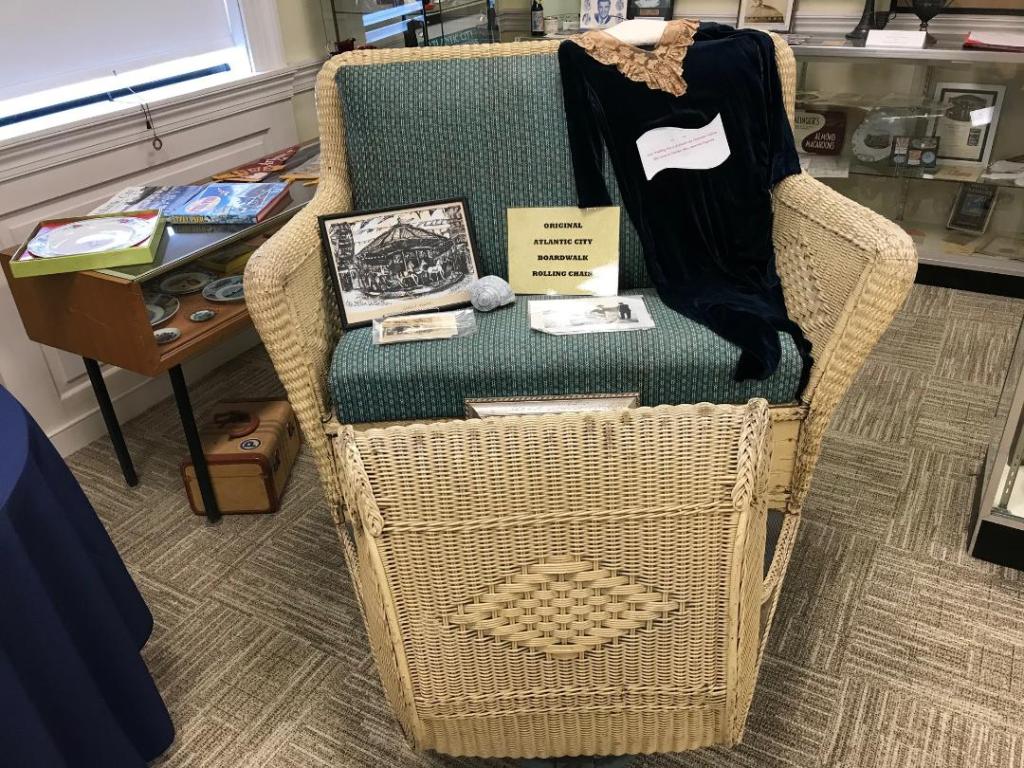
Resort ware and a rolling chair from Atlantic City’s boardwalk

The last display on the third floor was the office set up of Senator Frank “Hap” Farley, whose innovations and protections of the shore and transportation to various parts of the state opened it up for development and tourism.

Senator Frank “Hap” Farley

https://en.wikipedia.org/wiki/Frank_S._Farley

The office of Frank S. “Hap” Farley was a testiment to a well spent time in government

The upstairs galleries is also a place where groups meet and discussions and lectures are held. There really is something for everyone at the Society.

There is more to see and do here and take your time to visit all the displays and take a tour of everything. It is also an enjoyable rainy or hot sunny day alternative to the beach. You will learn a lot about Atlantic County and the history of New Jersey here.

The History and Mission Statement of the Atlantic County Historical Society:

(From the Society website)

Mission:

The mission of the Atlantic County Historical Society is to encourage the study of local history and genealogy and to disseminate this information to our members and the general public.

To fulfill our mission, the Society publishers an annual journal of local history and genealogy as well as a quarterly newsletter. Other means include programs, lectures, field trips, partnerships with local libraries and school districts, library and museum interpretative exhibitis and guided tours of the circa 1790 oysterman’s farmhouse, the Risley Homestead, in Northfield, New Jersey.

History of the organization:

The Atlantic County Historical Society is an independent, non-profit, tax-exempt membership organization. Originally founded in 1913 to collect and preserve the history of Atlantic County and southern New Jersey, the organization was incorporated as the Atlantic County Historical Society in 1915. In 2006, the Society was briefly renamed the Atlantic Heritage Center, but the original name was restored in 2011.

The Society opened its library and museum at the current location in 1968. In 2017, an extensive renovation project added additional space for the museum and to provide handicapped accessibility. The Risley Homestead site was bequeathed to the Society in 1989 by Virginia Risley Stout. She and her husband were the last to live in this historic building, of which portions date back to 1790. The building is listed on the State and National Registers of Historic Places.

Atlantic County Historical Society and Risley Homestead are registered trade names of Atlantic County Historical Society.

Yale University Art Gallery                                 1111 Chapel Street                                              New Haven, CT 06510

Yale University Art Gallery 1111 Chapel Street New Haven, CT 06510

Yale University Art Gallery

1111 Chapel Street

New Haven, CT 06510

(203) 432-0600

https://artgallery.yale.edu/

Open: Sunday 10:00am-6:00pm/Monday-Thursday Closed/Friday 5:00pm-8:00pm/Saturday 10:00am-6:00pm

My review on TripAdvisor:

https://www.tripadvisor.com/Attraction_Review-g33851-d104343-Reviews-Yale_University_Art_Gallery-New_Haven_Connecticut.html

On trips to New Haven, CT in 2021 and 2025 for the Yale-Cornell game, I had enough time after the game to visit one of the University’s art museum’s that was located down the road from the stadium, the Yale University Art Museum. This four story museum displays the history of art from all over the world. It is by no means a small museum gallery and you will need more than one afternoon this very detailed museum.

The Yale University Art Gallery at 1111 Chapel Street

I started on the first floor with their Ancient Art galleries featuring items from digs that the university sponsored over 100 years ago. There are works from the Ancient Near East, Egypt and Europe from tiles from Mesopotamia to small idols from Egypt and funeral pieces from Europe beautifully displayed and lit.

The Ancient Arts Galleries

Babylonian Tiger

Palace carving of a genie

The gallery showed the level of sophistication of these societies and the advancement thousands of years ago. This lead to the Middle Ages Gallery showing the change of art after the fall of the Roman Empire.

The Ancient Galleries were a favorite of mine

The Ancient Galleries

The Ancient Galleries

In 2021, I raced through most of the other floors because I had an hour before the museum closed. I concentrated on the first floor and then went upstairs to see the special exhibition.

I next ventured next to the “On the Basis of Art: 150 Years of Women at Yale”, a current exhibition that showcased the work of Alumni of the Fine Arts School of Yale whose works were influencing the art community all over the world.

The “On the Basis of Art” exhibition

The show “showcases and celebrates the remarkable achievement of an impressive roster of women artists who have graduated from Yale University. Presented on the occasion of the two major milestones, the 50th Anniversary of coeducation at Yale College and the 150th anniversary of the first women students at the University, who to study at the Yale School of the Fine Arts when it opened in 1869.

The exhibition features works draws entirely from the collection of the Yale University Gallery that span a variety of media, such as painting, sculpture, drawings, prints, photography and video since 1891(Yale University website).

The exhibition spread over several galleries displaying all sorts of interesting art. What I enjoyed most was some of the contemporary drawings and sculpture. Their works were colorful and bold some of which I was impressed with the message the works were trying to portray. Some I understood and some I had to take a second look.

One of the works that really captured my attention was the work of a Black media artist from the 1970’s and her views of racism of always feeling like the only one in the room. It was a sensitive and very emotional viewpoint of a educated and sophisticated woman who always felt marginalized. It was a very honest approach to the work and you felt for her.

The Contemporary Galleries

In 2025, I had a quick tour of the ‘Nusantana’ exhibition of textiles from Southern Asia.

The display sign for the ‘Nusantara’ exhibition

The entrance to the ‘Nusantara’ Indonesian textiles exhibition

The exhibition:

(from the Yale Art Gallery website)

Nusantara: Six Centuries of Indonesian Textiles presents one of Southeast Asia’s most significant artistic accomplishments: woven textiles. Exploring the ancient interisland links found in this culturally diverse maritime region, the exhibition features a wide array of textiles from the 14th to the 20th century drawn from the Yale University Art Gallery’s exceptional holdings—from the batiks of Java to the ikat of Sumba, and from ceremonial cloths and ritual weavings to clothing, shrouds, and architectural hangings.

Especially remarkable are several early textiles that are intricately patterned with tie-dyed designs, while select three-dimensional objects, such as sculptures, headgear, and combs, are also included to provide context. Nusantara—from the original name for the Indonesian archipelago—offers a broad overview of the rich imagery and technical mastery of this remarkable art form.

The textile display

The textile display

For the last half hour in the museum, I was able to quickly tour the each of the other galleries touring the Contemporary Galleries, the Asian Galleries, admiring some of the idols on display and then taking a quick tour of the African Galleries admiring masks and statuary.

I started with a quick tour of the Asian Galleries.

The Asian Galleries

The Asian scrolls in the Asian Gallery

The Asian Gallery

The Asian Gallery

I then toured the Contemporary Galleries with the modern approach to painting.

The Contemporary Gallery

The Contemporary Gallery

They even had a Basquiat in the collection

I rushed through the Middle Ages Gallery as all the religious art has always creeped me out.

The Middle Ages galleries

I then toured the African Collections.

The African Collection

The African Collection

The African Collection

The African Gallery

One of the interesting pieces I saw in the collection

The last collection I toured was the Indo-Pacific Art collection.

The description of the Gallery

The gold art from the collection

The interesting textiles

There is a lot to see here

You will need more than an hour to tour this museum and admire its works. I will be back in the future.

History of the Museum:

(from the Museum’s website)

The Yale University Art Gallery collects, preserves, studies and presents art in all media, from all regions of the globe and across time. The museum’s exceptional collection, numbering nearly 300,000 objects, is the core of its identity. It sustains and catalyzes all we do.

Exploring the galleries

Founded in 1832, The Gallery is the oldest university art museum in America. Today, it is a center for teaching, learning and scholarship and is a preeminent cultural asset for Yale University, the wider academic community and the public. The museum is open to all, free of charge and is committed to engaging audiences through thoughtful, creative, and relevant exhibitions, programs and publications.

The Museum’s Collection:

The Gallery’s encyclopedic collection can engage every interest. Spanning one and a half city blocks and three buildings, the museum features more than 4,000 works on display as well as a rooftop terrace and a sculpture garden.

The Pacific Rim Collection

Galleries showcase artworks from ancient times to the present, including vessels from Tang-dynasty China, early Italian paintings, textiles from Borneo, treasures from American art, masks from West Africa, modern and contemporary art, ancient sculptures, masterworks by Degas, Van Gogh and Picasso and more

The Museum Gift Shop