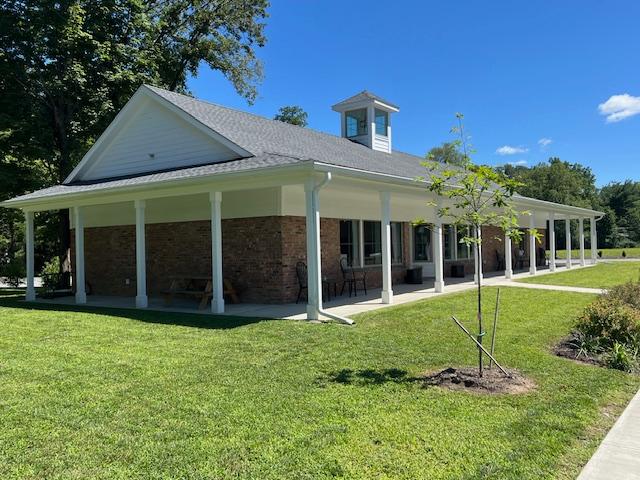
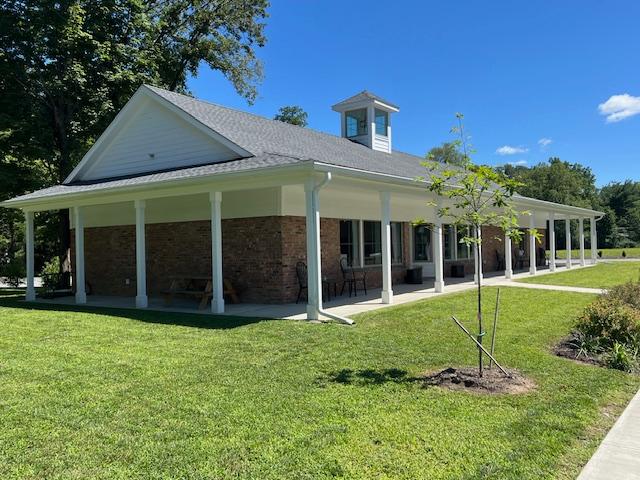
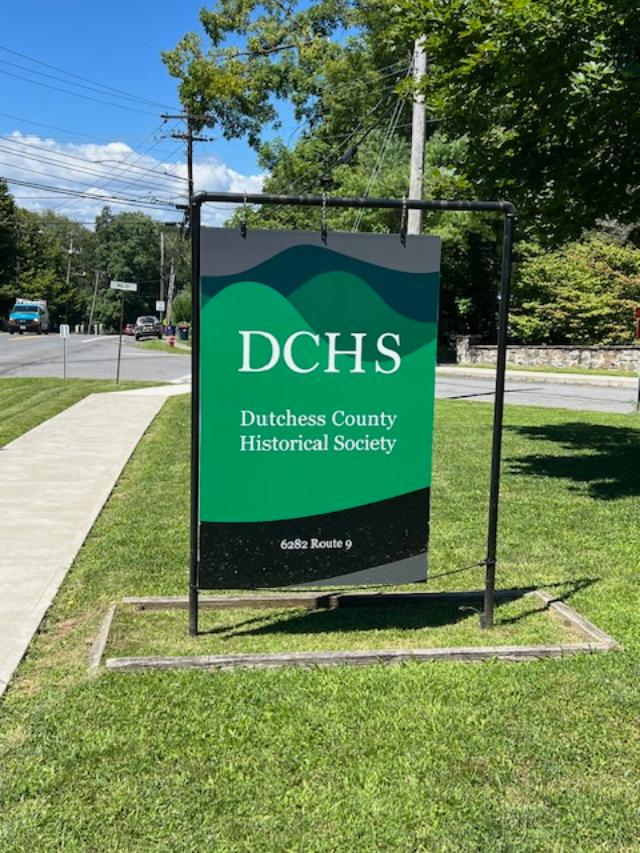
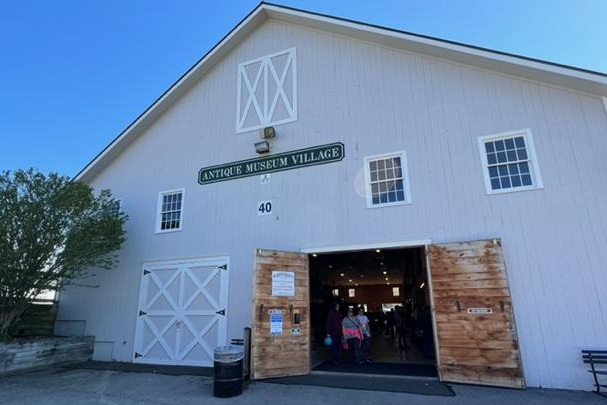
The Dutchess County Historical Society at 6282 Route US 9 in Rhinebeck, NY
I recently visited the new Dutchess County Historical Society in Rhinebeck from its old home in Downtown Poughkeepsie. The new museum has a light and airy feel about it with new exhibitions being mounted and a new library being set up for research. The museum just opened for viewing so it is still in its early stages for displaying artifacts.
The Dutchess County Historical Society
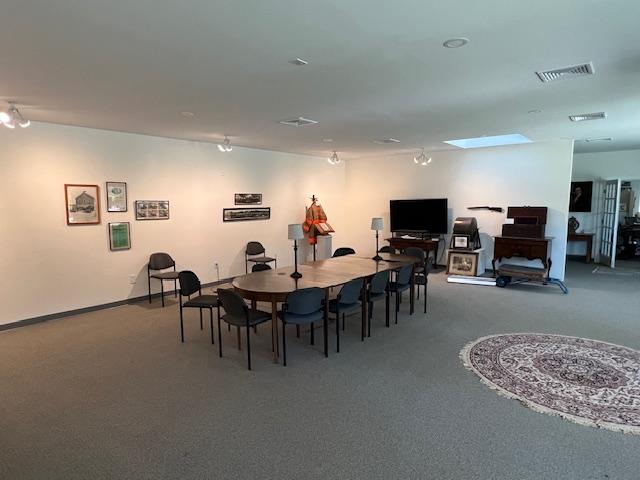
The Main Gallery at the museum
The Mission of the Dutchess County Historical Society:
The Dutchess County Historical Society is committed to being the most meaningful source of Dutchess County history, a commitment in place since its 1914 founding.
We do this through the responsible archival stewardship of tangible objects and the energetic interpretation and presentation of local history to the public.
We are proud to be known for our community outreach through a wide range of publications, awards, exhibits, programs, talks, writings, videos and oral histories.
Online and traditional exhibitions, lectures, awards, conferences and special presentations round out Dutchess County Historical Society programming for members and our local communities.
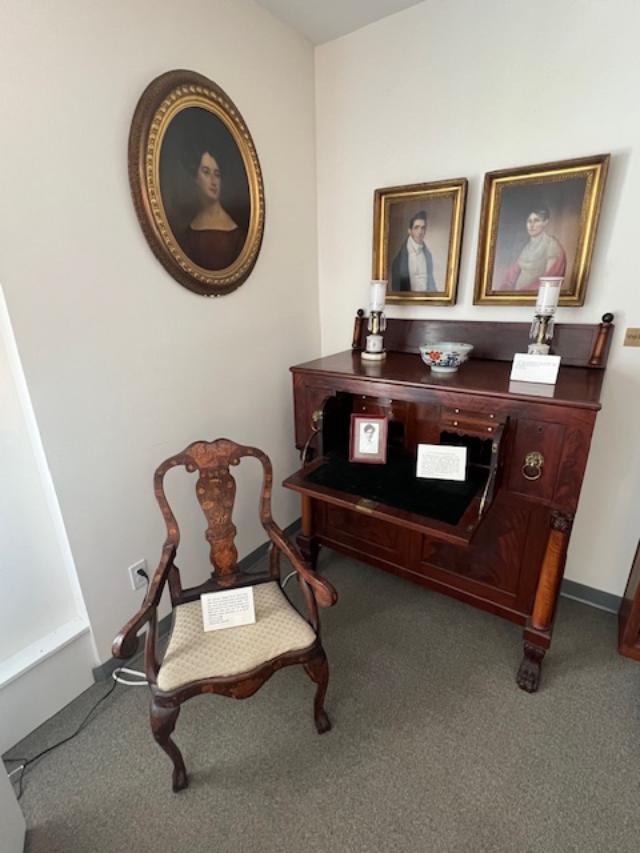
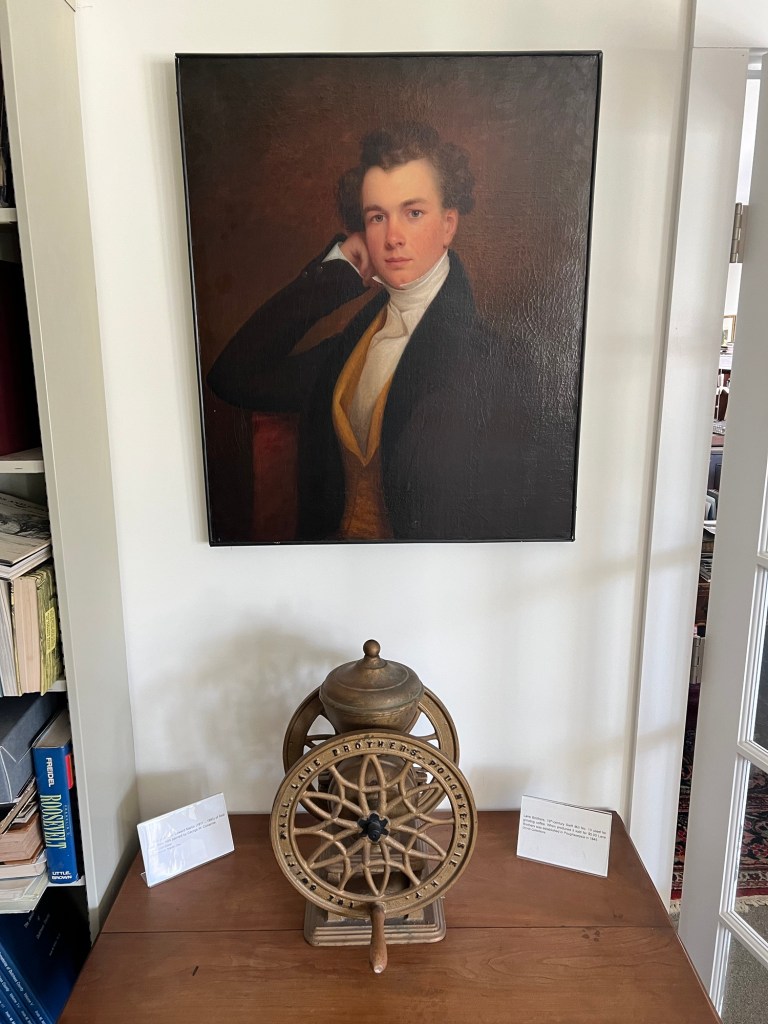
Portraits of local residents and antique furniture
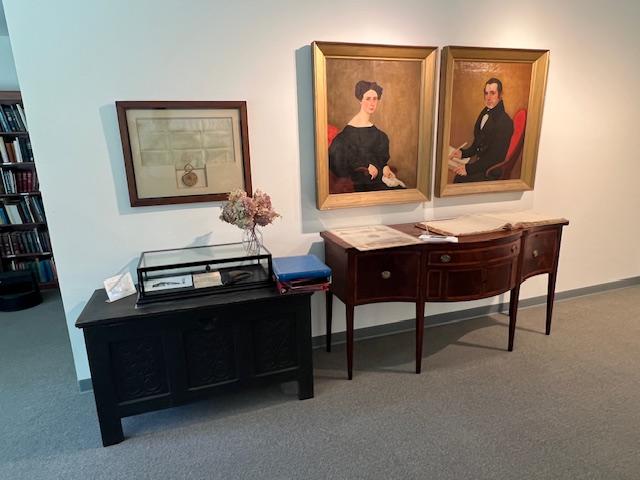
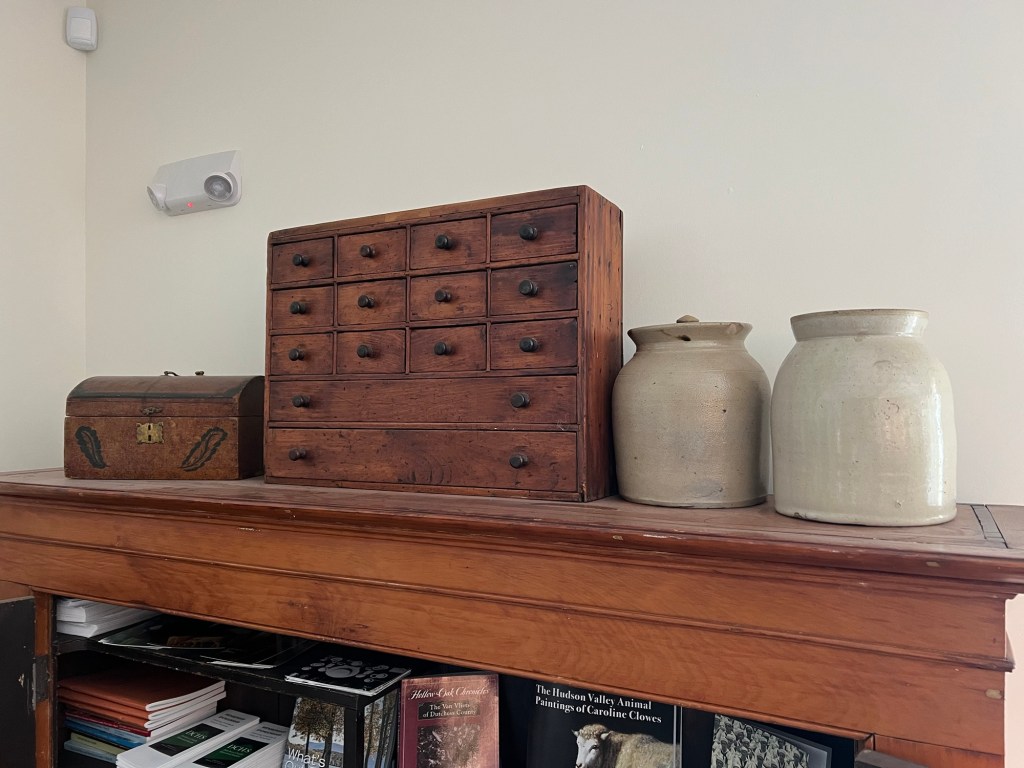
Some of the new permanent collection on display are family portraits, antique furniture, historic documents and local artifacts from towns all over Dutchess County. Much of these items were donated by the families that live in the area.
The portraits of local residents and historical documents in the collection
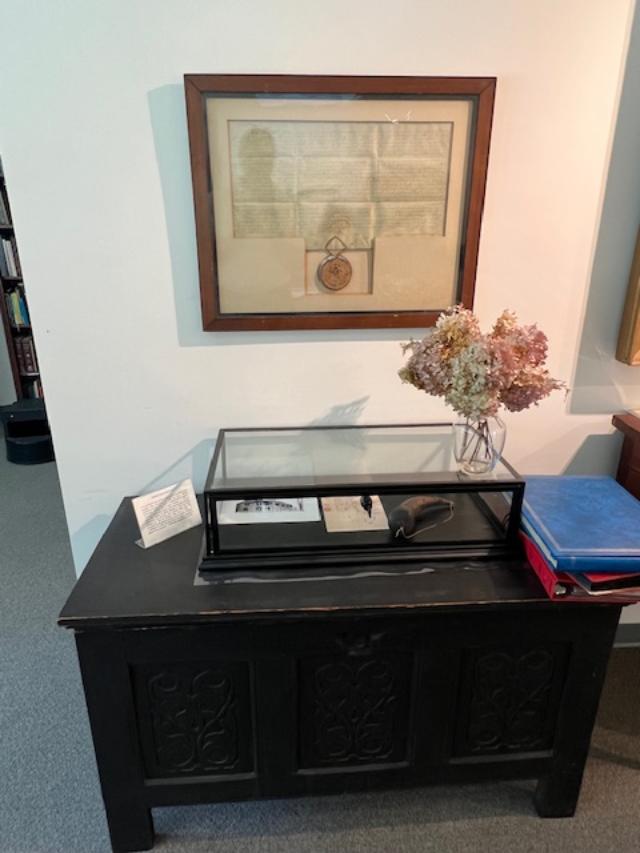
Historical Documents of Dutchess County with the original seals
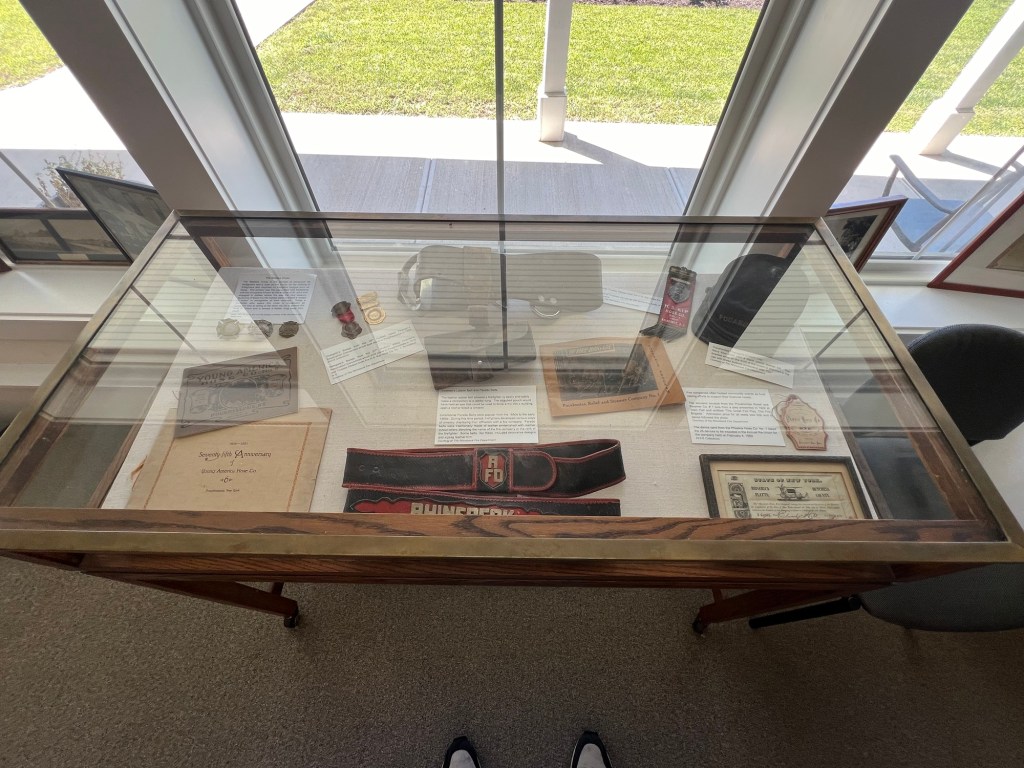
The first exhibition that is being mounted in partnership with the Rhinebeck Fire Department is the history of the fire service in Dutchess County. Since part of the exhibition was being moved to the new fire museum at the Dutchess County Fair Grounds for the upcoming Dutchess County Fair, I got to see only a portion of it at the museum.
The exhibition “The History of the Dutchess County Fire Service”:
The exhibition shows the progression and growth of the fire service in Dutchess County since the time the Dutch lived in this region. The collection reflects the direction of these departments since the end of the Civil War and how much and how little the equipment has changed.
Fire department artifacts including documents and equipment
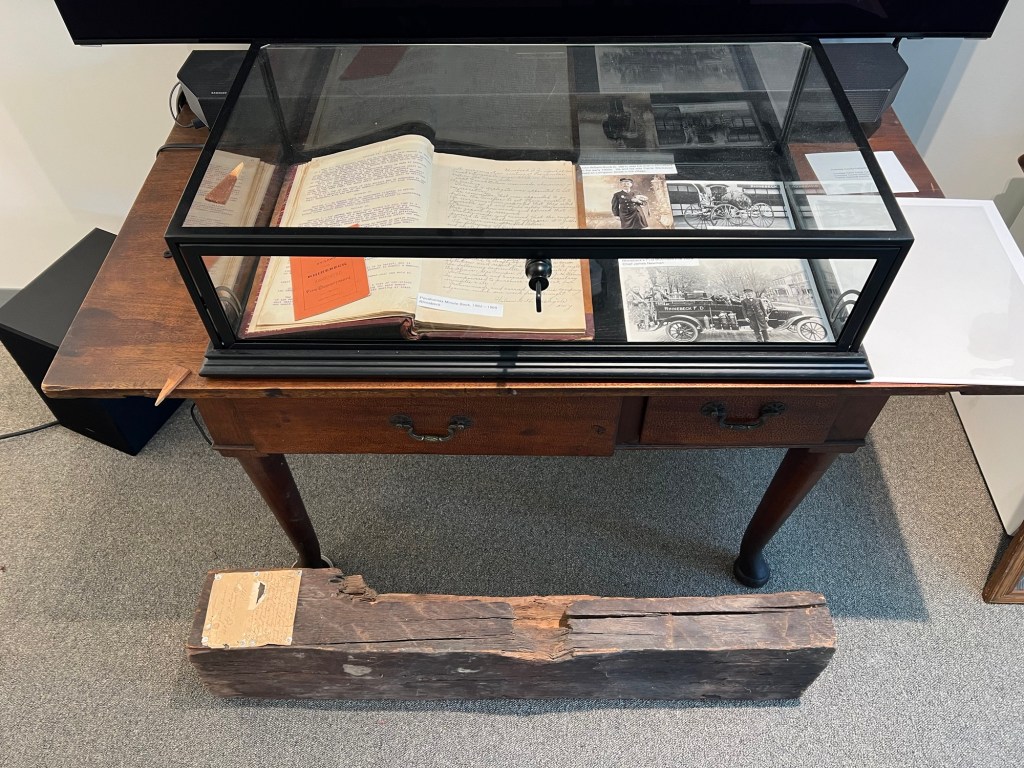
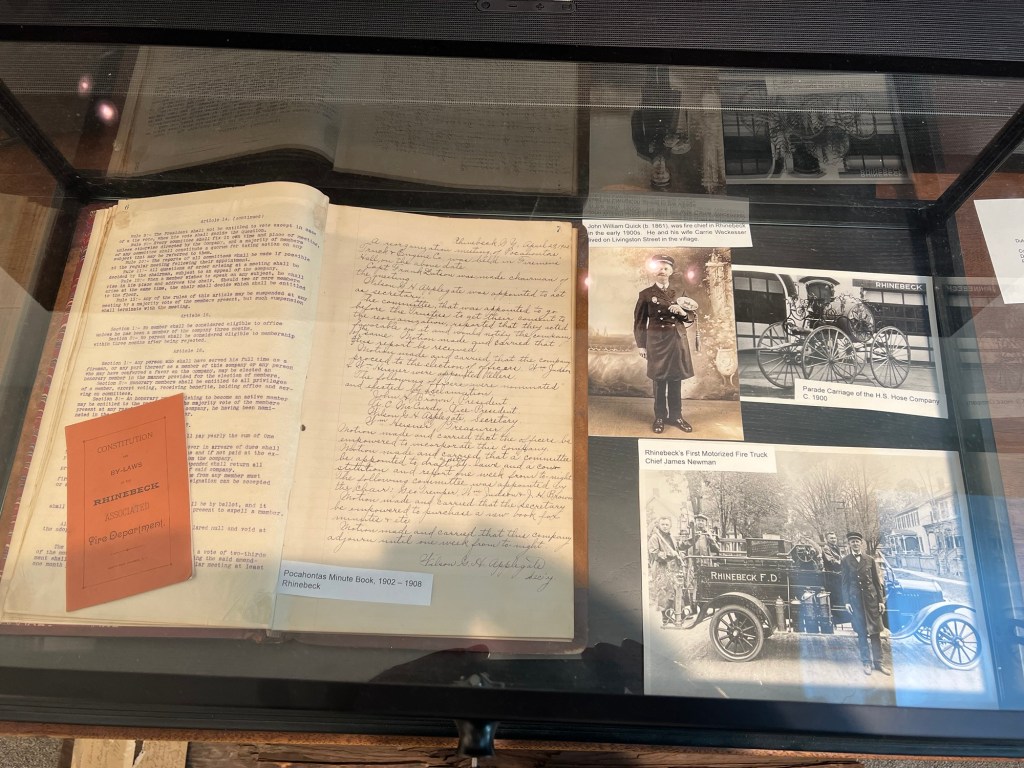
Fire service pictures and documents and a beam from Henry Livingston’s mansion that got shelled by the British (this sits below the display case)The pictures and documents on display
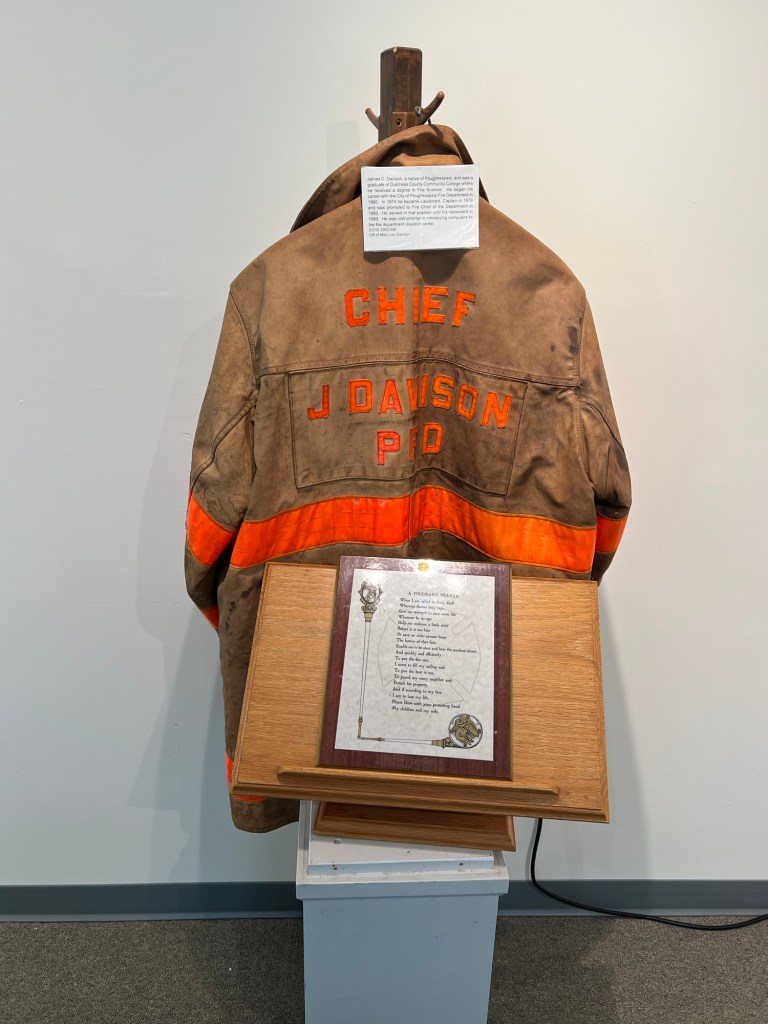
Fire Department jacket
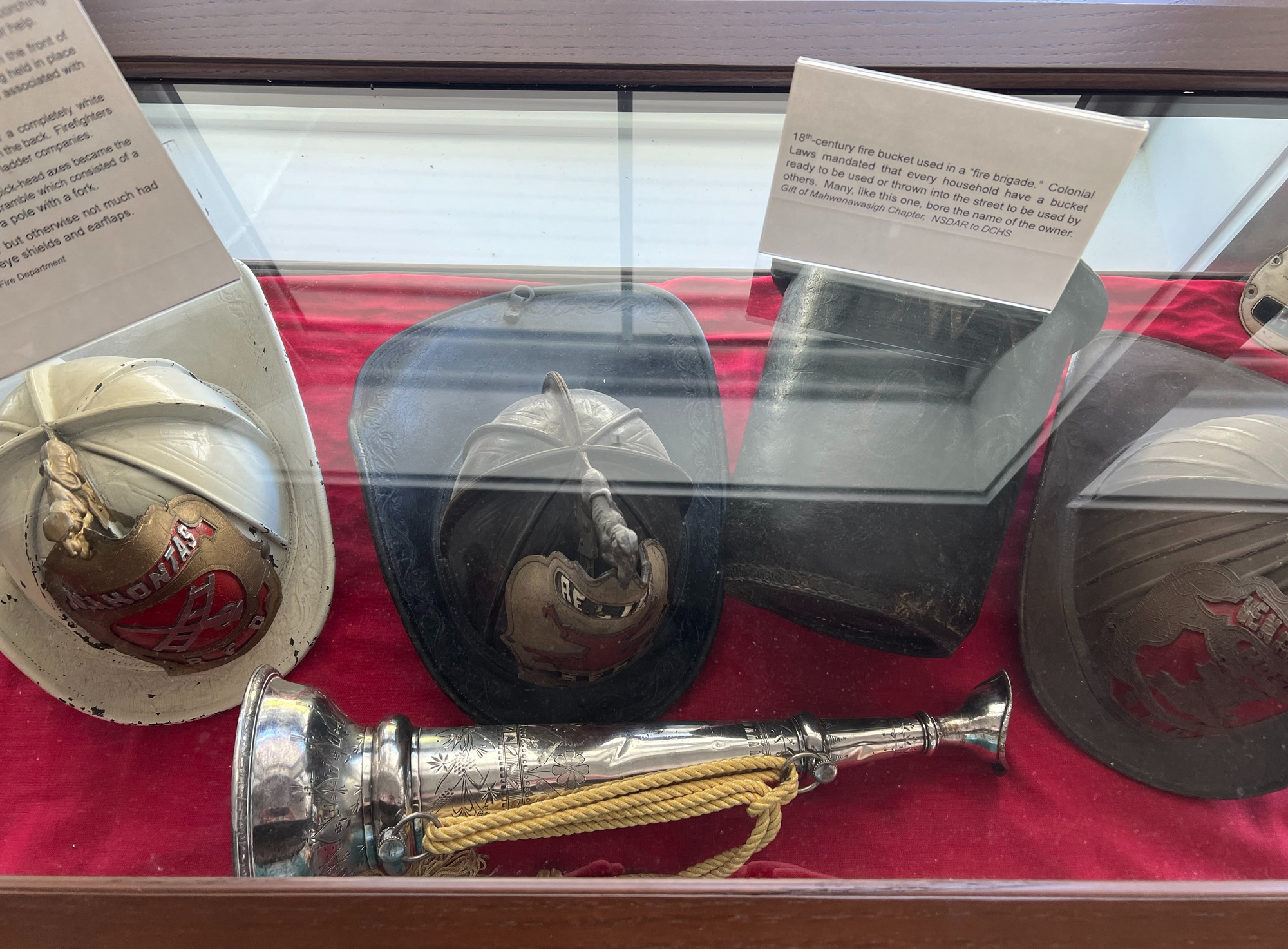
Helmets and trumpets used by fire departments in the past
What was interesting about the exhibit was the depth of items of the past that each firefighting and the story they tell.
The Permanent Collection:
The remaining displays along the walls of the museum as set up continues tell the story of Dutchess Counties past and the families that lived here.
Family heirlooms
Household and Business items
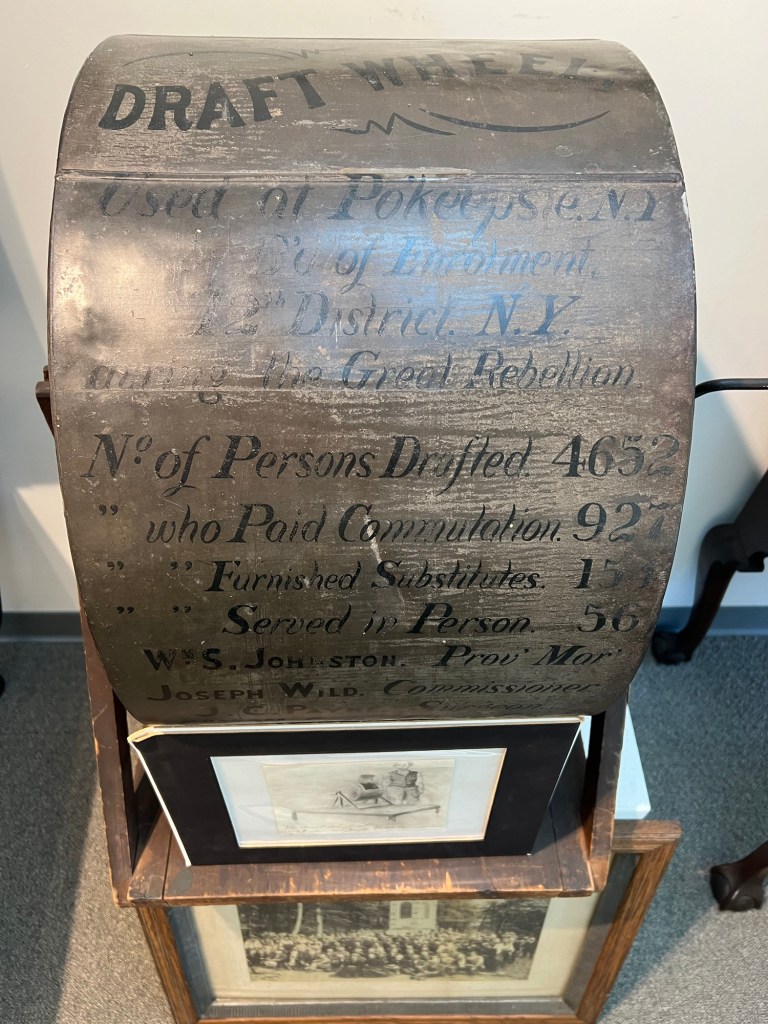
An old Draft card machine
There will be more displayed of the treasure trove of items in the museum’s collection, so it gives people a chance to see the past of the County on display and how it differs from current life to playing its part in the County’s future. There will be a lot more to do and see in the museum going forward.
The Putnam History Museum at 63 Chestnut Street in Cold Spring, NY.
Don’t underestimate the size of the this museum packed with interesting exhibitions and information. It is really a terrific local museum that tells the story of the local community. I was very impressed.
The Putnam History Museum sign on Route 9.
The Mission of the Museum:
(From the Museum website)
The mission of the Putnam History Museum is to collect, preserve, interpret, and present the history of Putnam County, Philipstown, the West Point Foundry, and the Hudson Highlands. Through exhibitions, programs, and events, the museum uses its collections to engage the community with the vibrant history of our region, and to foster greater understanding of the role it has played in the growth of our nation.
The Current Exhibitions:
December 2023:
Indigenous Peoples in Putnam County
This exhibition explores Lenape and Wappinger culture in Putnam County, with a special focus on the Woodland period when these cultures flourished in the Hudson Valley. In addition to sharing Lenape stories—past and present—the exhibition features important artifacts and replicas including stone tools, stone points, pottery sherds, and a dugout canoe.
The Indigenous Peoples Exhibition:
(Funded in part by the Community Foundations of the Hudson Valley, American Historical Association, and the Cold Spring Lions Club. Image courtesy of the Staten Island Museum).
This exhibition was interesting in that it explained the local tribe of Lenape Indians who lived in the area before the Dutch and the contribution that they made to the community and their history in the area. The day to day lives of the tribes was shown in the various displays from the way they fished and hunted in the community. The dug out canoe the museum found out recently was a reproduction of the original. For years the curator explained to me the museum thought it was the real thing. Very detailed and very interesting exhibition.
Locally found Arrowhead Collection
The history of Indigenous people in the Hudson River Valley.
History of the Lenape Indians
The reproduction of the Lenape Canoe on display.
West Point Foundry
There is a permanent Foundry exhibition on display at PHM. It includes photographs, artifacts, paintings, maps, and videos highlighting the Foundry related objects within the PHM collection, including a fully restored 10-pounder Parrott Rifle.
The Foundry Exhibition is a permanent exhibition in the museum.
The map of the former foundry’s in the area.
I never realized that the Town of Cold Springs, NY was such a productive foundry area between all the wars. Many ironworks dotted the community which is now an upscale community just outside New York City. The foundry’s created many items that helped the ‘war machine’ such as train parts and cannon balls along with many modes of transportation.
The Foundry exhibition.
The objects of the Foundry.
The various sizes of cannon balls created by the local foundry’s.
The Foundry Painting “Foundry”
The “Foundry” painting sign.
The West Point Foundry part of the exhibit.
The West Foundry sign of the exhibition.
The West Point Foundry during the war.
A Brief History of Julia Butterfield
Born in 1823, at age 18 Julia Lorillard Safford married Frederick James, a broker and banker in New York City. They lived on Fifth Avenue and in 1852 built a magnificent stone village house in Cold Spring that was named Cragside because it had been constructed on a hillside strewn with rocks. It was surrounded by elaborate gardens, lawns, orchards and fields, according to Trudie Grace, author of “Around Cold Spring”. Haldane High School now occupies the site of Cragside, and a gatehouse built in 1866 still stands at the foot of Cragside Drive as a private residence.
The Julia Butterfield Exhibition
Frederick James died in 1884. Two years later, Julia married Daniel Butterfield, a Civil War general who is credited with composing “Taps” and whose father co-founded American Express. He lived until 1901. When Julia died in 1913, her estate (was) estimated to be worth $3 million, or about $75 million today.
This permanent exhibition of a local woman who supported her community and deserves much respect and admiration for the contributions to Cold Springs showed her immense generosity. I wish there was more people like her in every community.
Bequests by Julia Butterfield in her 1913 will, with current values:
YMCA – $2.32 million ($62M) Julia L. Butterfield Memorial Hospital – $150K ($4.6M) Union College, Schenectady – $100K ($3M) Julia L. Butterfield Memorial Library – $60K ($1.85M) Home for the Relief of Respectable Aged Indigent Females – $20K ($616K) Association for the Aid of Crippled Children – $10K ($308K) St. Mary’s Episcopal Church (for parsonage) – $10K ($308K) Association of New York Day Nurseries – $5K ($154K)
The library, a Georgian Revival building, was constructed on the foundation of the old Dutch Reformed Church and dedicated in 1925. The hospital, finished the same year, was built, many believed, because one of Julia’s sons had died after a fall from a horse and she felt he might have survived if a hospital had been closer.
The Catskill Borscht Belt Museum at 90 Canal Street.
The museum sign
This museum will be the talk of the Hospitality Industry. The Catskill Borscht Belt Museum is in its beginning stages with the building bought and the renovations going on. The museum has not opened fully to the public yet as it is still in development and will not open until 2025.
The temporary main gallery
The museum is opened now with a pop-up exhibition on the resorts of the Catskill region “Vacationland: Catskill Resort Culture 1900-1980” with the rise of these resorts that catered to the thriving Jewish, Italian, Irish and Black middle classes who were barred from the resorts of the WASP elite. These were all inclusive hotels that catered to families who would spend summers together until a new generation of travelers developed with air travel, air conditioning developed and assimilation of the population by the 1980’s.
The main gallery of the pop up exhibition.
The exhibition shows how the Depression era generation spent their hard earned dollars and created an enclave where they thrived and enjoyed themselves. It was the type of vacation that we only see today at all inclusive resorts like Sandals and Club Med and on cruise ships.
The Main Gallery pop up exhibition “Vacationland”
The era of travel with the family ended in the 1980’s with women going to work, different educational standards and more people going to college and the change in the work schedule. This on top of the blatant discrimination of that era being ‘smoothed over’ time. People had more options and it was obvious from the timeline that the younger generation wanted different vacations from their parents.
The food service at the hotels
This will be a very interesting museum when it is completed and opened. For now, we get a teaser of what is to come. I am looking forward to it.
History of the Borscht Belt and of the Museum:
(from the museum website)
Curatorial Mission
The Borscht Belt Museum will not solely focus on entertainment, glamour and design. Its curatorial mission will include weightier themes and narratives embodied by the era; the antisemitism that spurred the creation of a Jewish vacationland, the refuge the Catskills provided to African-Americans, Irish-Americans, L.G.B.T.Q. and other communities, and the forces of assimilation and tolerance that eventually helped fuel the grand resort era’s decline.
The Hotel Exhibit on the places of that era.
In addition to its permanent core exhibition, the museum will have space for temporary and visiting shows, ensuring the institution delivers fresh interest to audiences and remains culturally relevant over time. The Catskills continues to serve as a refuge for all – an ethos that will find voice in the museum’s curatorial mission.
A Home with History
Beginning with a pop-up exhibit in July 2023, the Borscht Belt Museum will make its home at 90 Canal Street, in Ellenville, N.Y. The museum building is a glorious Neo-Georgian gem built in 1928 for the Home National Bank. For more than a half century the bank helped nurture hundreds of local hoteliers and bungalow colony owners whose ambitions, grit and self-sacrifice defined the resort era.
The Borscht Belt Museum will illuminate and celebrate the golden age of the Catskills resort era, when millions of urban dwellers sought refuge in the mountains of upstate New York, leaving deep imprints on mainstream American culture, from stand-up comedy and comfort food to mid-century modern design and popular concepts of leisure.
The permanent museum will open in 2025. A pop-up exhibit, Vacationland! Catskills Resort Culture 1900-1980, will welcome visitors beginning in early July 2023 through the end of the summer.
The hotels of the “Vacationland” exhibition.
History of the Borscht Belt:
(from the museum website)
No Hebrews Entertained”
The Borscht Belt was born out of bigotry. At the turn of the 20th century, hotel advertisements in the region often used phrases like “No Hebrews Allowed” and “Gentiles Only” to keep out Jewish patrons. This 1902 advertisement from the Brooklyn Daily Eagle features The Nichols in Liberty, N.Y.
In a delicious twist of history, a Jewish family by the name of Grossinger would later purchase the hotel and absorb it into the sprawling and iconic resort complex that bore their name.
The Borscht Belt
The region came to be called the Jewish Alps, Solomon County or more often, simply The Mountains. But another expression, the Borscht Belt, so-named for the hearty beet soup born in Eastern Europe, has had more staying power. What began as a patchwork of Jewish-owned farms whose proprietors took in summertime boarders to make ends meet grew into a sprawling constellation of all-inclusive resorts, hotels and more modest bungalow colonies and kuchalayns – establishments with shared kitchens.
The larger, more successful establishments like Kutsher’s, The Concord and The Nevele had thousands of rooms, nightclubs, indoor pools and ski slopes – and in the case of Grossinger’s, its own airstrip and post office.
The Dress Code and pool standards of the era at the hotels.
End of the Resort Era
Then, seemingly out of nowhere, many of the hotels began to falter, and by the 1980s, all but a handful were gone. It’s hard to pinpoint a single factor in the resort era’s demise, but cheap airfares, air conditioning and an easing of the antisemitism that spurred the Borscht Belt’s creation all conspired against establishments that were barely profitable in the best of times. Assimilation also played a role. Younger Jews simply craved more “modern” forms of leisure that did not remind them of their immigrant parents and grandparents. As the flow of guests began to ebb, the cost of drawing top-notch entertainment, keeping lobbies up to date and guest rooms looking fresh became prohibitive.
Changing tastes
Today, most of the big hotels have been demolished or swallowed by nature. A few have found new life among the expanding communities of Hasidic Jews. But the legacy of the Borscht Belt era lives on in the all-you-can eat buffet of a Carnival Cruise, the barbed quip of a stand-up comic and the very notion of the American vacation.
The Catskills Borscht Belt Museum will preserve and honor that legacy so sit back, savor that plate of chopped liver and stay tuned for more about this quintessential American story.
The final scene from the movie “Dirty Dancing” based on that era.
Open: When the fairgrounds are open Spring, Summer and Fall for events
Admission: Free
My review on TripAdvisor:
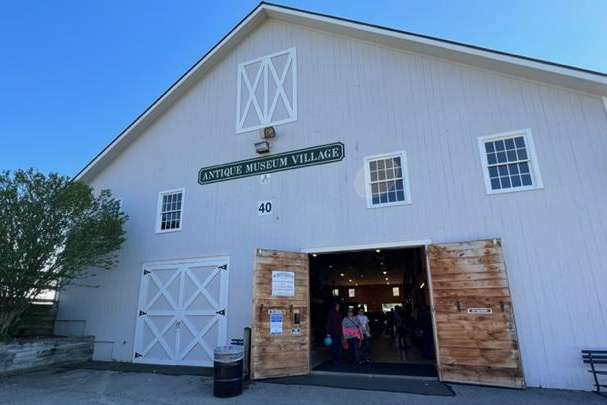
The Century Museum Village inside the Dutchess County Fairgrounds
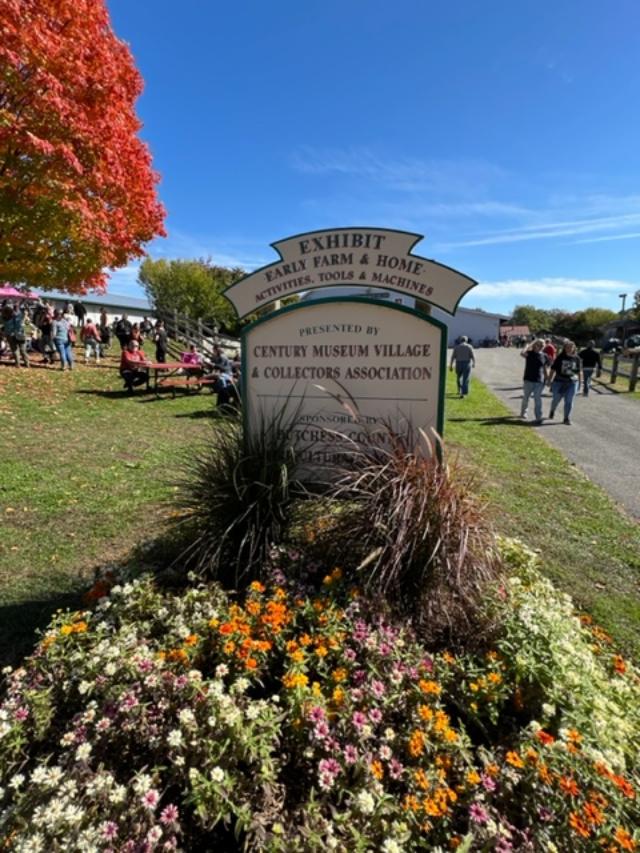
The front gardens of the museum
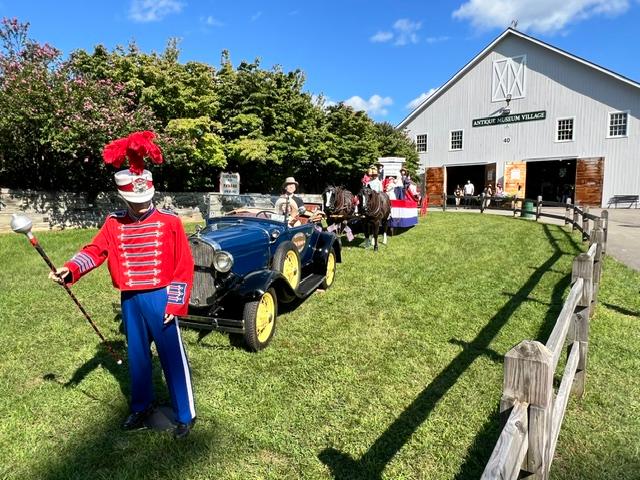
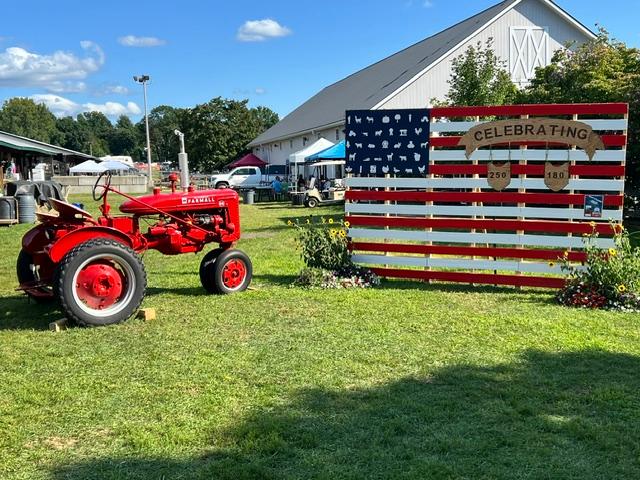
The museum display in the Summer of 2026 for the 250th Anniversary of the United States
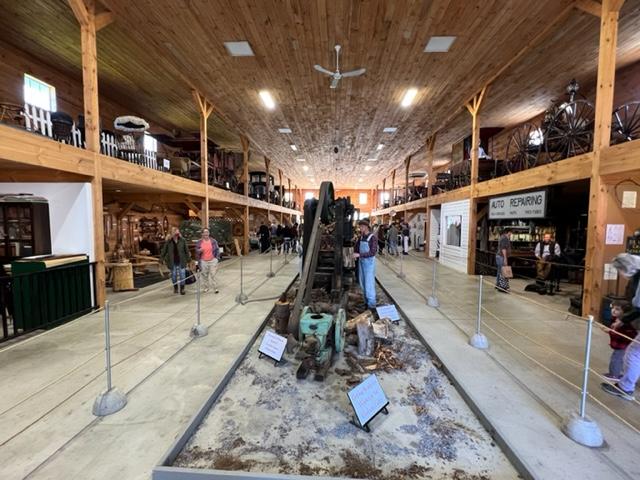
When the Dutchess County Fairgrounds are open for the season for big events in the Spring, Summer and Fall, the fairgrounds open their historical museums that are located on the property. These include the School House Museum and the Train Station Museum and the when the volunteers are there the Dutchess County Volunteer Firemen’s Museum. The main museum is the Century Museum Village, a look at rural life in Dutchess County at the turn of the last century.
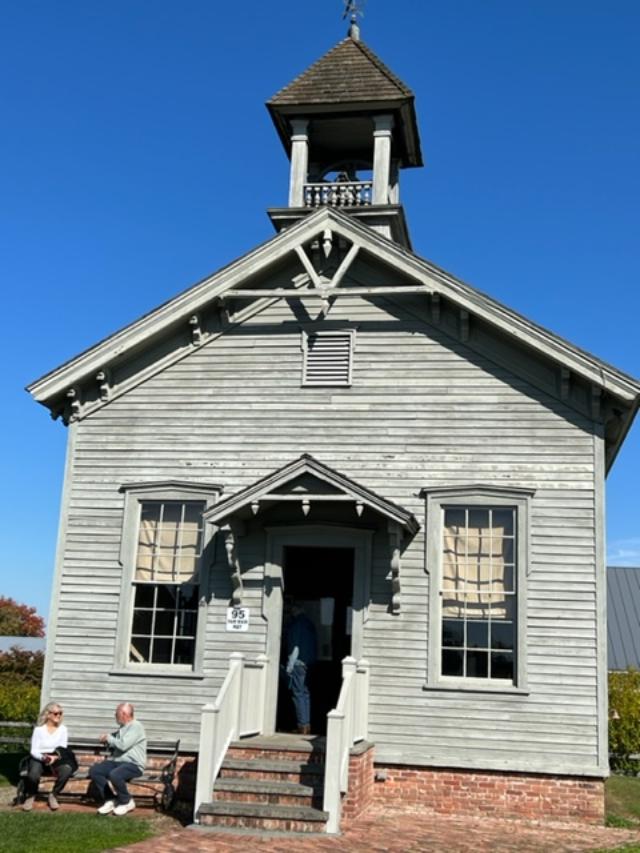
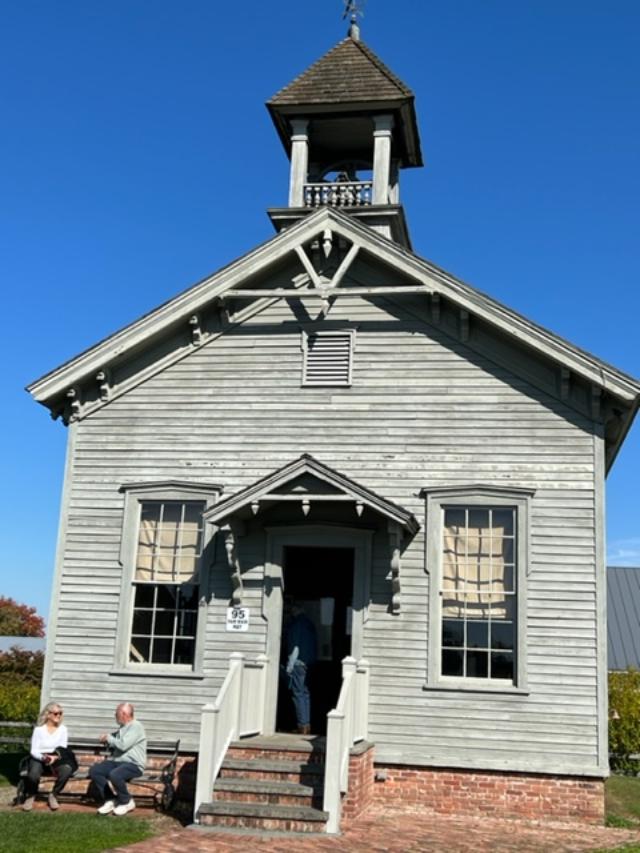
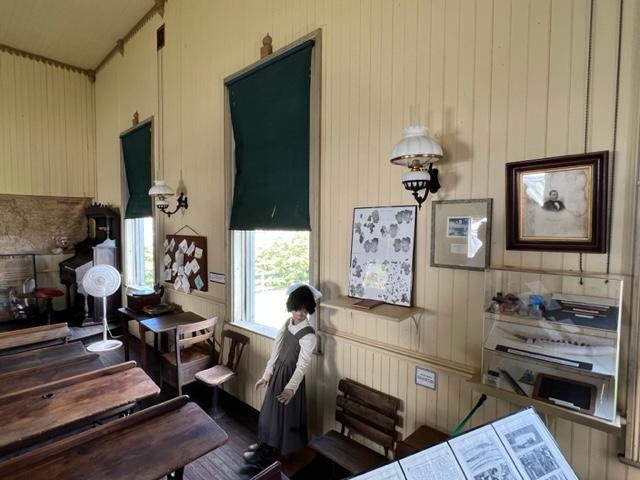
The Schoolhouse Museum in the Century Museum Village
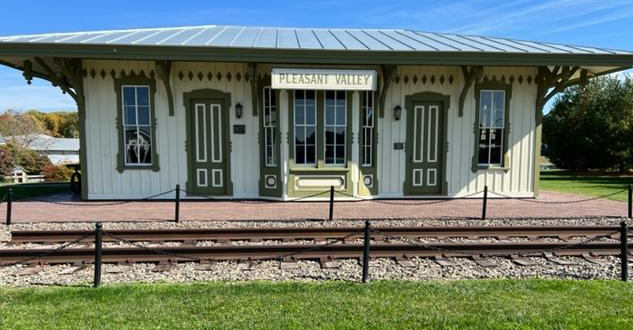
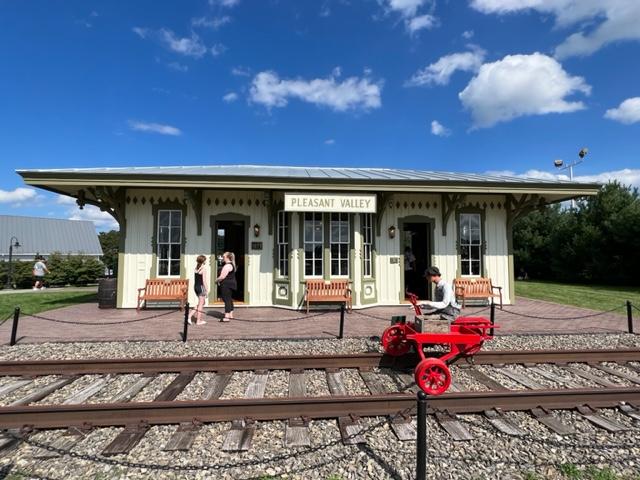
The Train Station Museum at the Century Museum Village
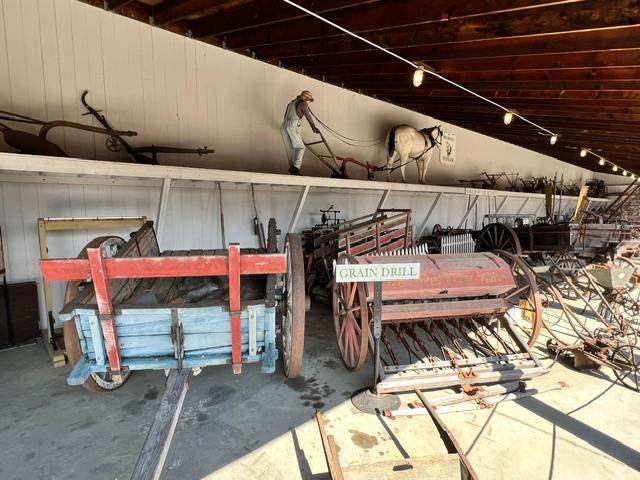
The Century Museum Village gives an interesting look of the changes in life in rural communities all over the United States until the start of WWII. Farming communities had their own way of life, their own clubs and organizations and traditions that were different from City residents. Life on the farm was productive but hard work. As time rolled on, modern conveniences found their way to these communities but as we see by all the machinery, there was still a lot of work to done.
As you progress through the different displays and dioramas, you can see how life improved over time. Progress swept through these communities between WWI and WWII and with the spread of the second industrial revolution after WWII and the change of the consumer market. The advent of the modern highways, the newly built suburbs and movement out of the cities changed these regions even more.
The entrance of the museum and the various dioramas
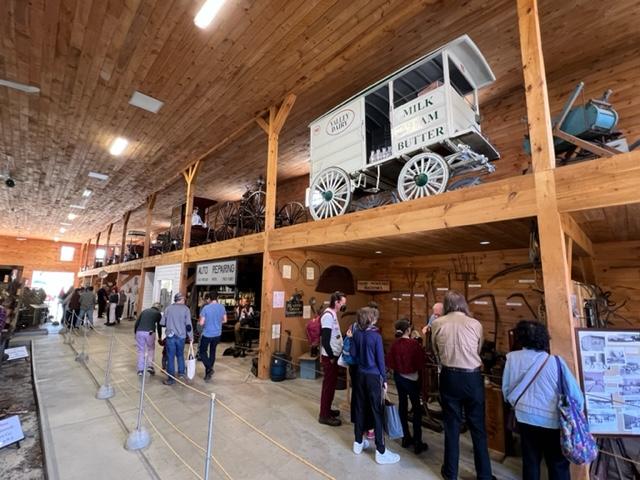
The museum is lined with different displays of life in the rural community and the advancements made in these communities between about 1880-1930.
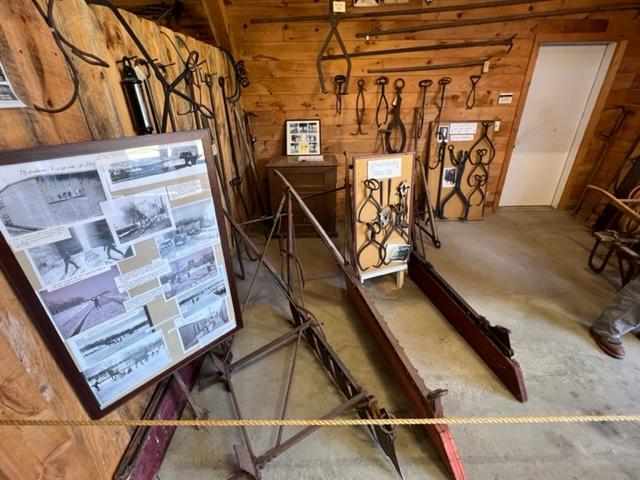
The Advancement in farming practices and equipment
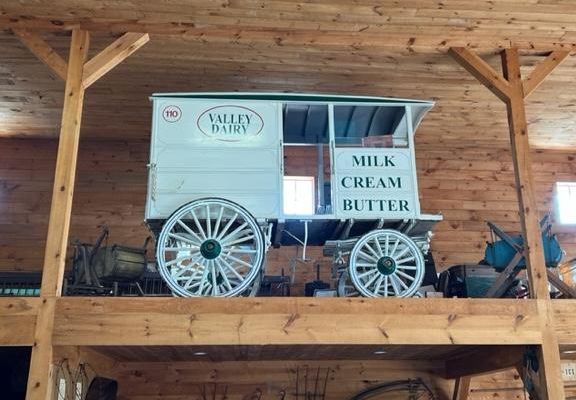
The Milk Man buggy
Ice block industry for refrigeration
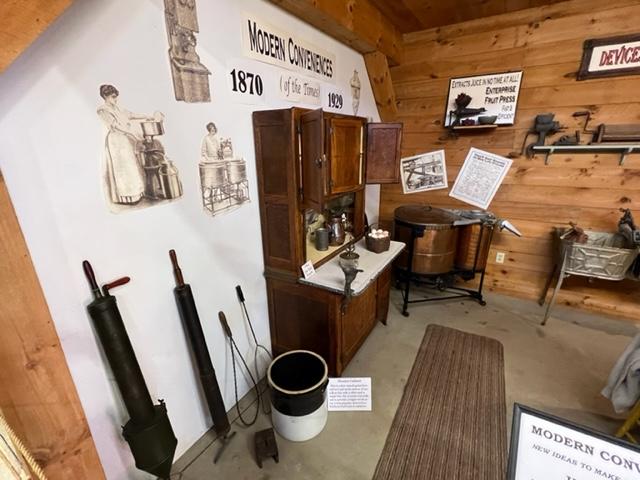
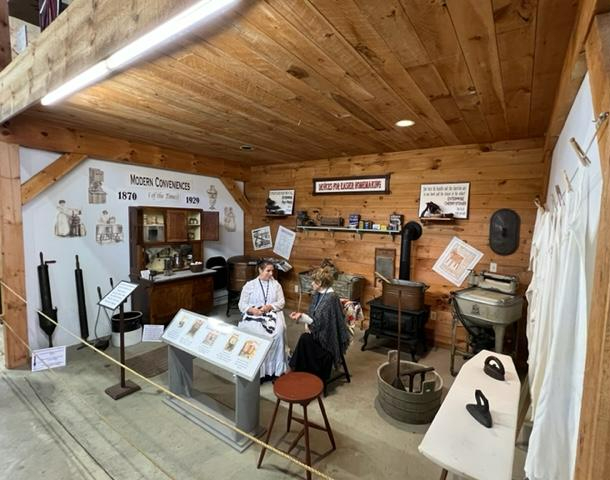
The household for the farmhouse wife started to become easier with new machinery to help around the house. Modern ways of washing clothes, cooking food and cleaning the house started to make life a bit easier in the household. This left time for a social life and to tend to other things around the house.
The Modern Conveniences of the home
The modern household items to make life easier from 1870-1929
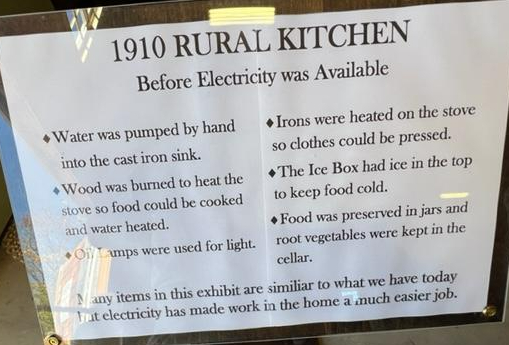
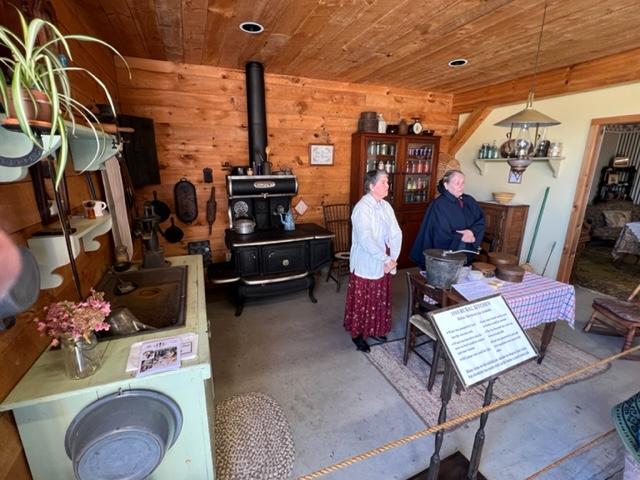
The modern kitchen before electricity came out to the country was still run by coal and wood. Modern electricity would not start until after WWI and even then was not available to everyone. Cooking and washing had gotten easier but still required some work on a everyday basis.
The Kitchen in the Country
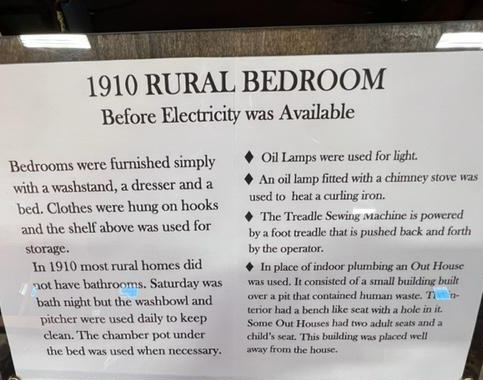
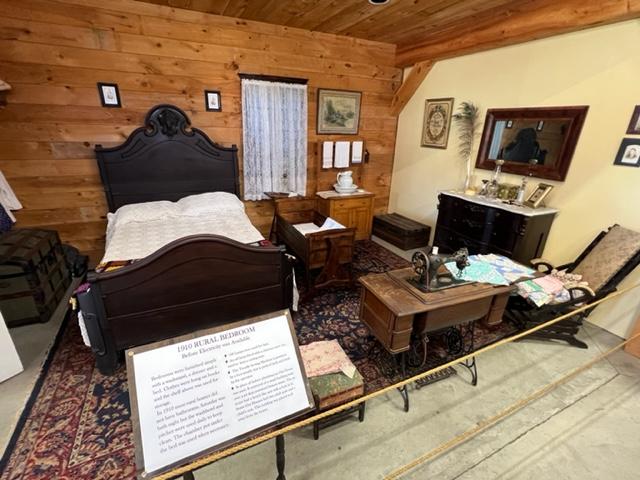
The home decor had changed after the Civil War to WWI with the changes in mass production and industrialization. Furniture, rugs, lamps and pictures had become available in all makes and sizes for sale both through catalogs and General stores or maybe a trip to the City to a Department store. People were able to furnish their homes nicer due to mass production and changes in quality of home furnishings.
The Rural Bedroom
Bedrooms have not changed much since then
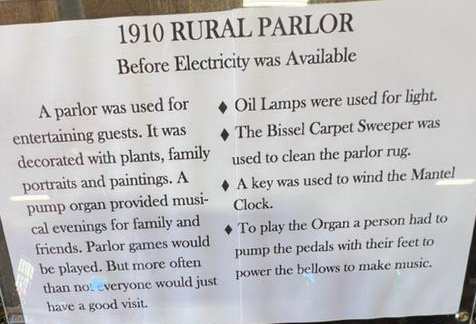
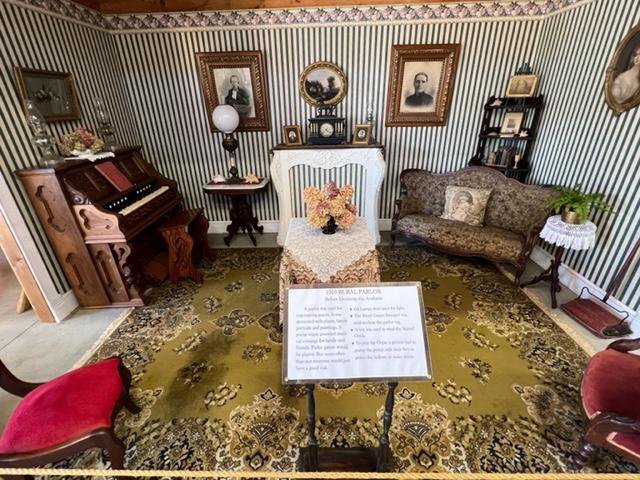
The idea of the Parlor is equivalent to our modern Living Room. It is usually the room that all socializing is done in, where the family’s best furniture and knick-knacks were placed. It was the nicest room in the house.
The Rural Parlor
The finest home furnishes and the pride of the home was displayed in the parlor.
Both inside and outside the home there would be changes in the way people lived over a fifty year period. There would be changes in plumbing, carpentry and printing. Modernization would change the way people did their jobs and the way they interacted with their customers.
Modern Machinery
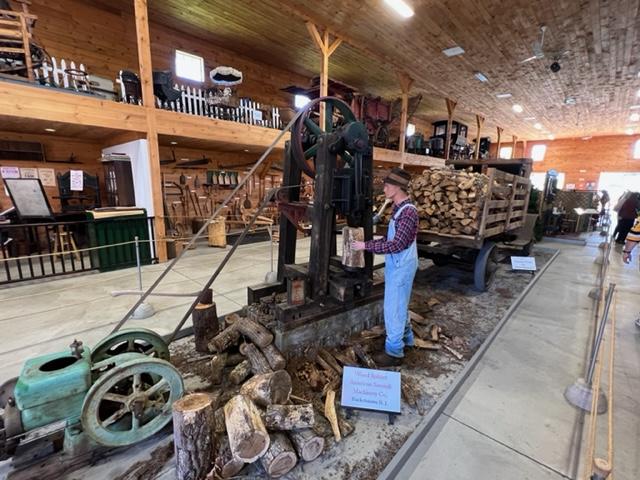
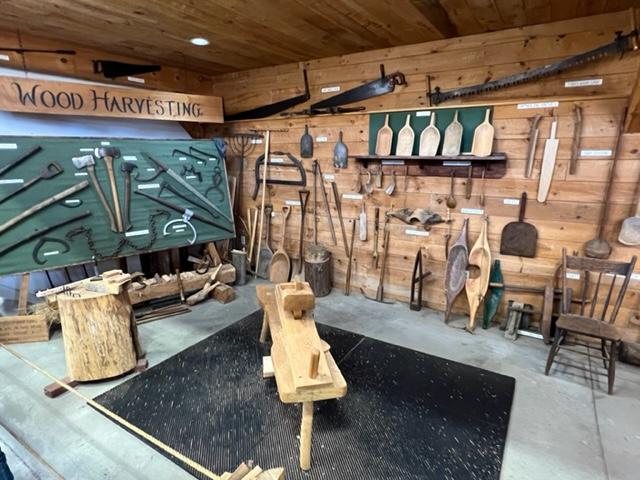
A better way to chop wood
Modern pump processes
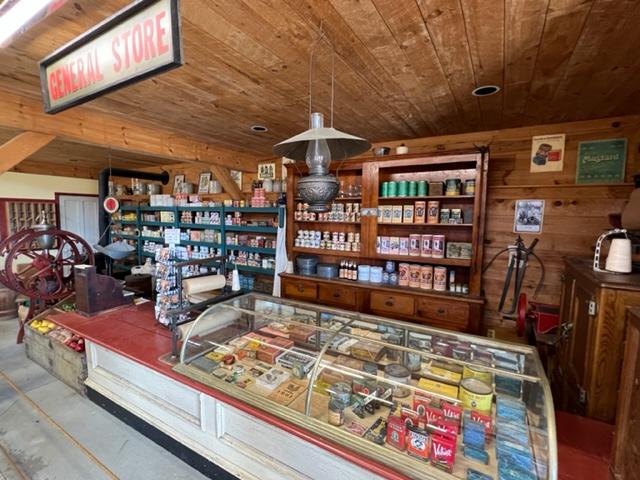
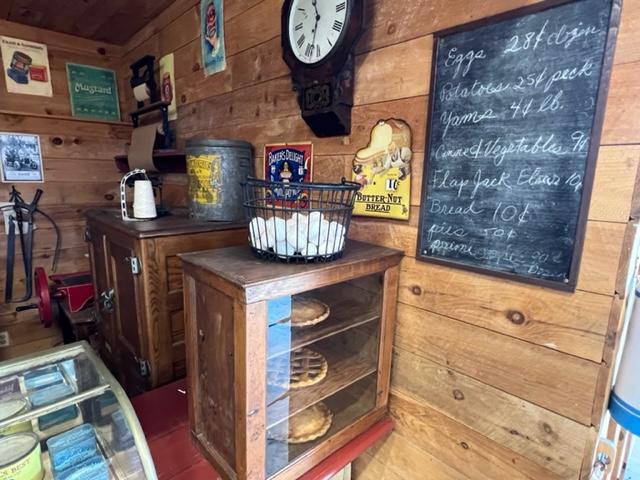
Shopping was beginning to change after the Civil War as well. The days of people making everything at home was not longer necessary as more and more consumer items became available. Clothing, dishes, toys and hardware could be bought at the General store along with prepared and bakery items. It made life for the rural housewife easier.
The General Store
Prepared items in the General Store
The bakery items and things for sale at the General Store
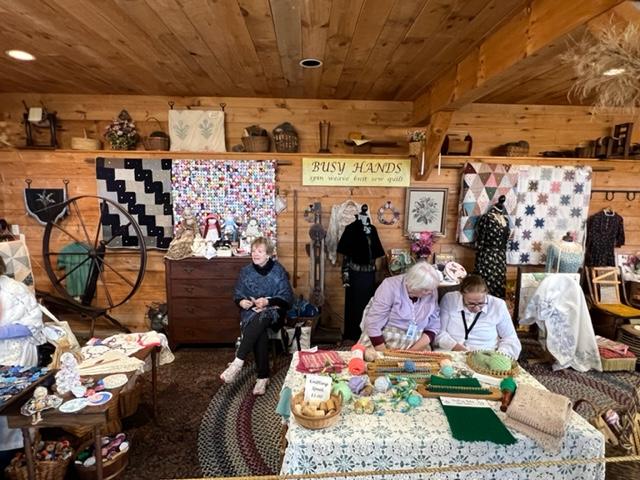
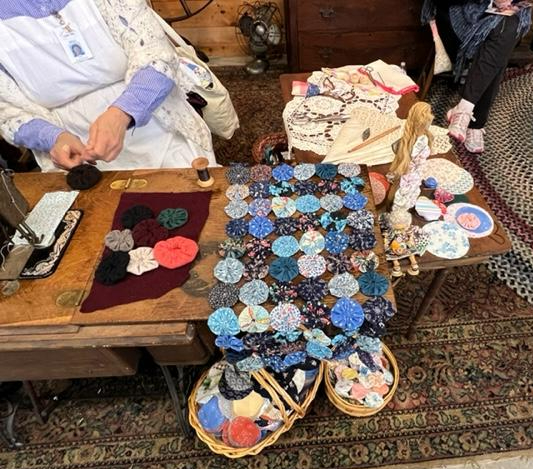
Quilting has always been a social affair with women meeting and gossiping while working on projects on their own or one big project for the home.
Women working together making quilts and sewn items for the home.
Crocheting for the home
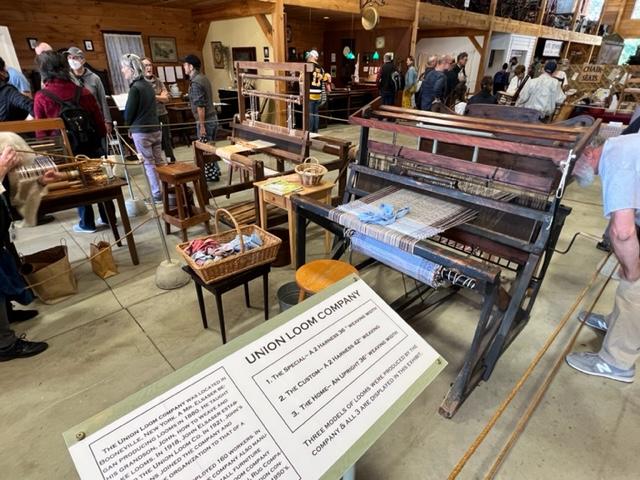
Use of Looms for clothing and rugs
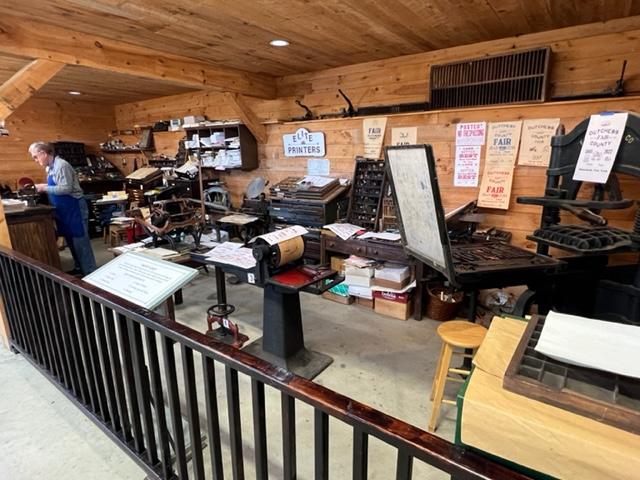
Modern printing took a turn as more modern machines made it easier to produce printing items for playbills, newspapers and magazines. The end of the WWI our modern magazines were being created. The way trades were changing more modern equipment was being used in every industry.
The Printing Press as things start to automat
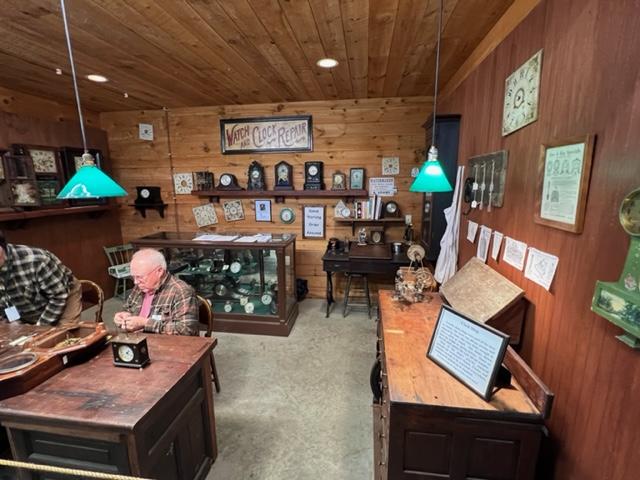
The Clock Maker
Wood Harvesting
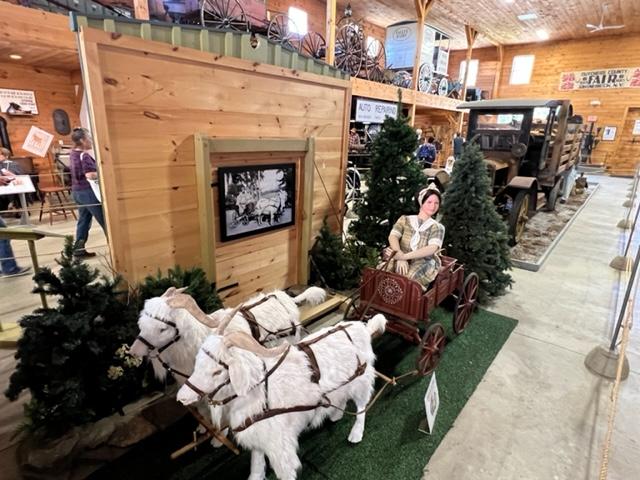
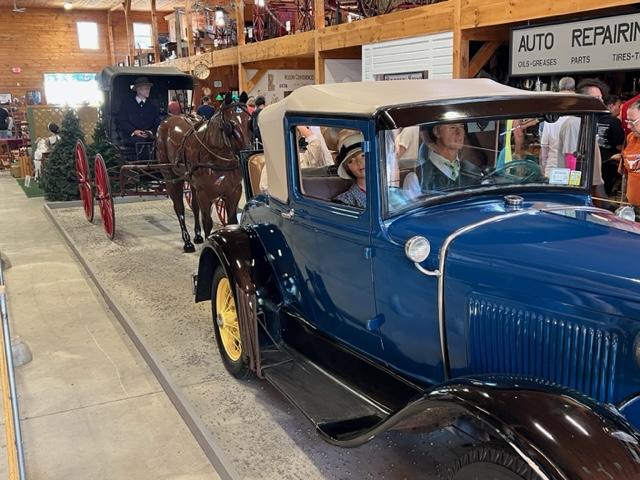
Transportation continued to improve as we moved from the horse and buggy to the modern carriage to the automobile. Improvements continued when mass production started with the Model T Ford and just kept improving. Still even today we like the idea of horse drawn carriages and sleigh rides as a traditional part of our past that we like to maintain especially during the holidays.
Horse Drawn carriages and Model T’s
The Modern modes of transportation
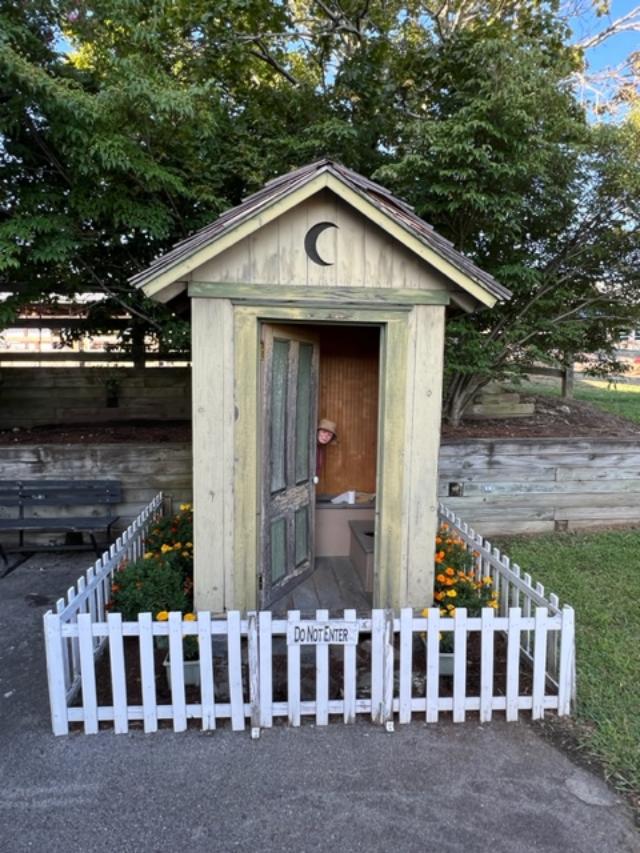
The Outhouse
The School House Museum:
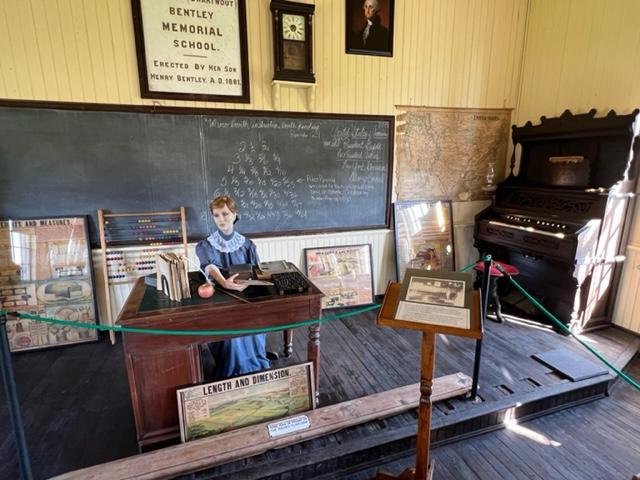
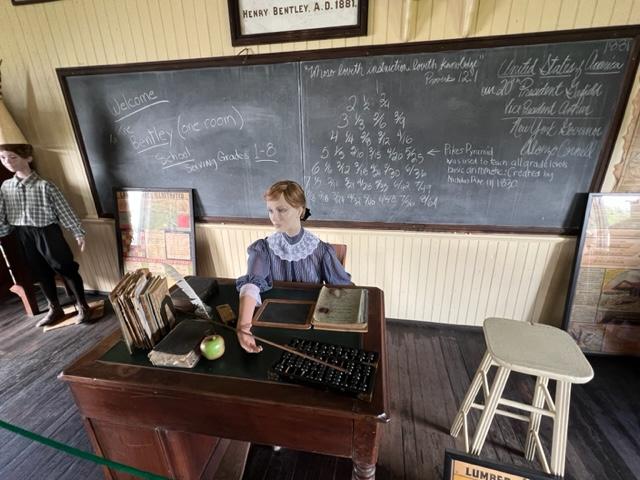
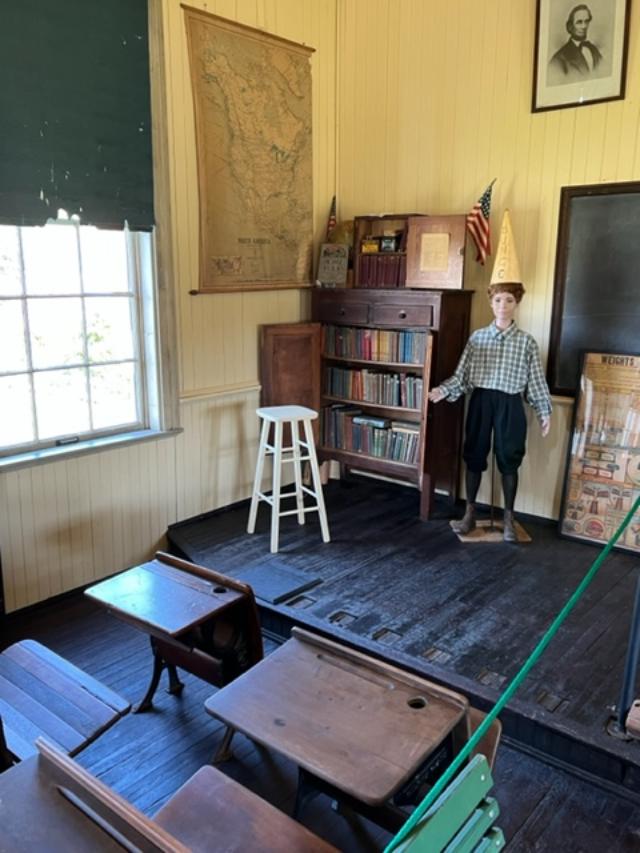
The Modern School has not changed much since its rural past. I just think you can’t hit a student with a ruler anymore and I could not see a student with a Dunce cap in today’s politically correct world. The blackboard has not gone out of style as well as a teacher teaching the next generation.
The One Room School House Museum
The school room set up still remains the same to a certain point.
The Teacher still leads the class
I don’t think would happen to the modern student
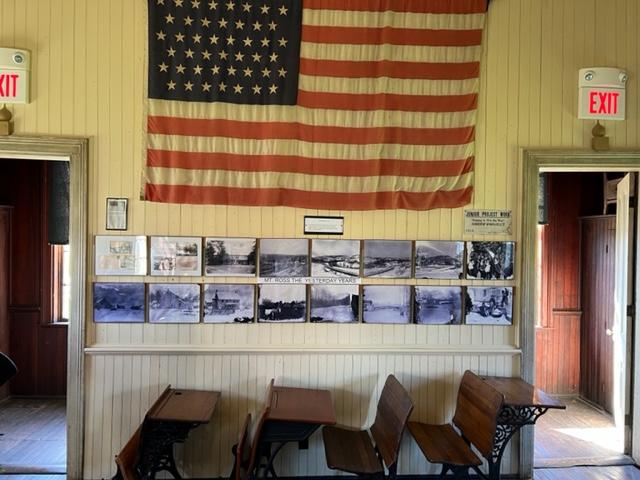
The One Room School House set up.
The Schoolhouse Museum
As the museum shows us, somethings have changed and some things remain the same. At some point, we did things right.
The Train Museum
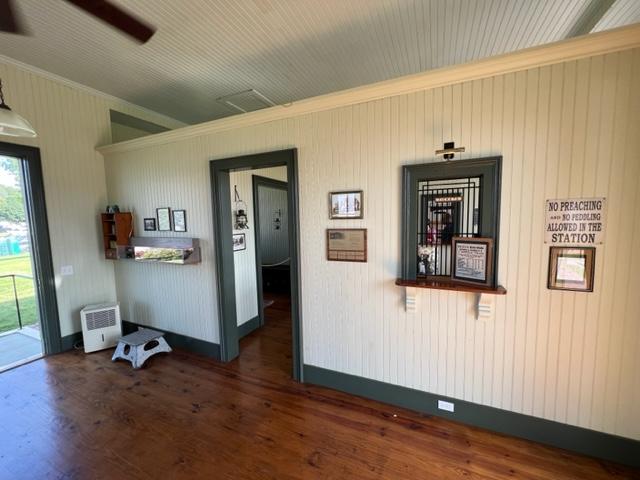
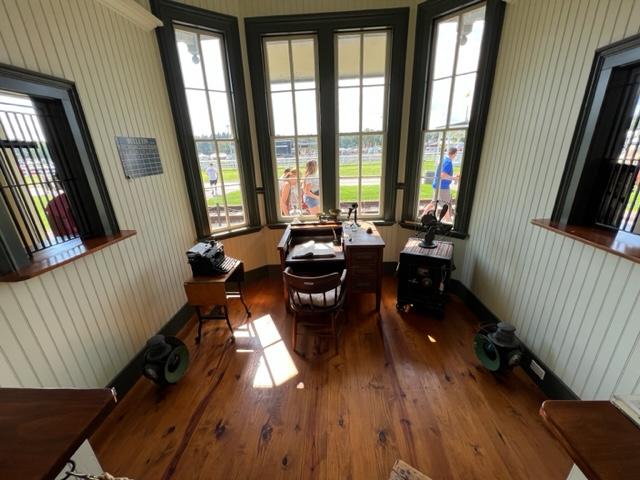
The Pleasant Valley Train Museum at the fairgrounds is a simulated train station that was moved here from the old site. Inside it has been renovated to reflex train travel at the turn of the last century with artifacts from the time period from the late 1800’s to the early 1900’s. You get to see what life was like for the station manager and passengers at that time.
The Pleasantville Train Museum at the Dutchess County Fairgrounds
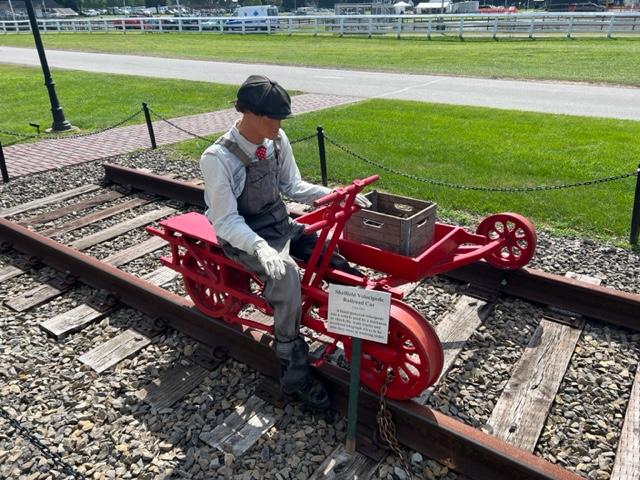
The hand cart at the turn of the last century.
The inside of the train station.
The train manager’s office at the Train Museum.
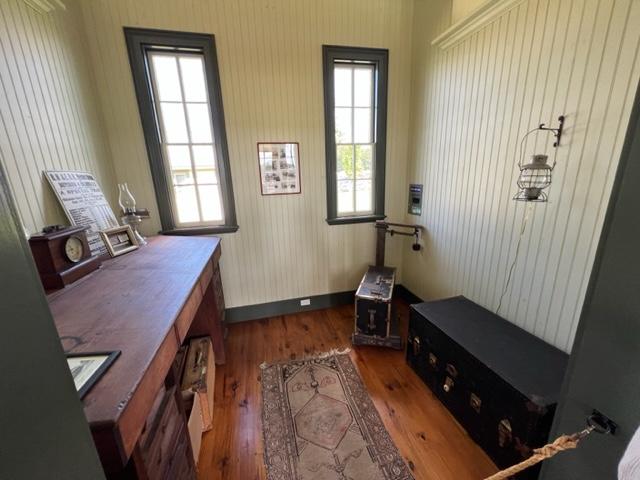
The Luggage Room at the Train Museum.
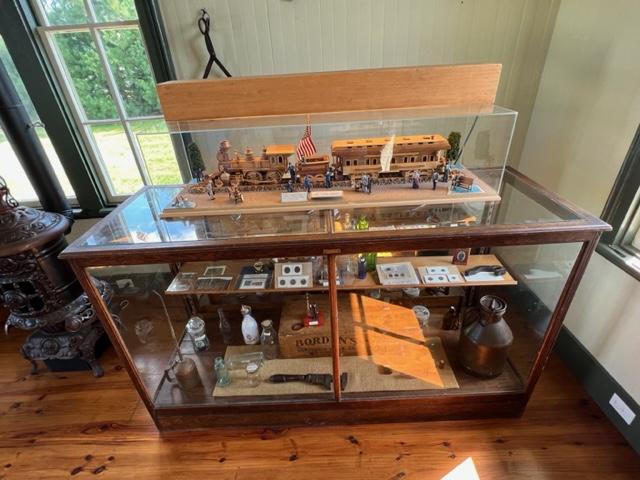
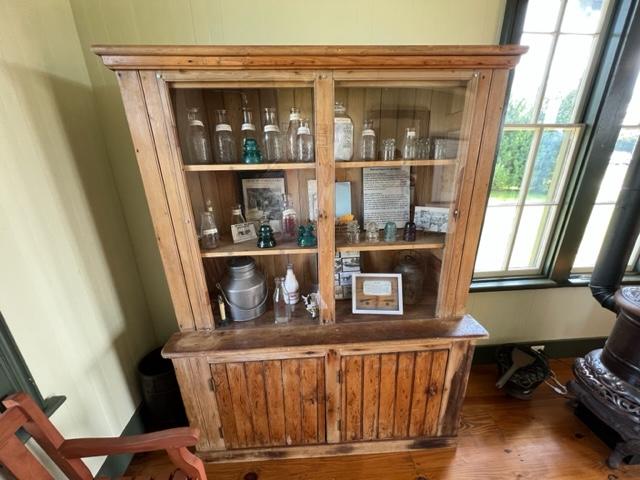
Artifacts at the Train Museum.
Artifacts from the train lines at the Train Museum
The series of buildings are a look at rural life in Dutchess County between the Civil War and WWI. Some things have changed and some have stayed the same.
Outside the museum, there is all sorts of farm equipment and displays of engines
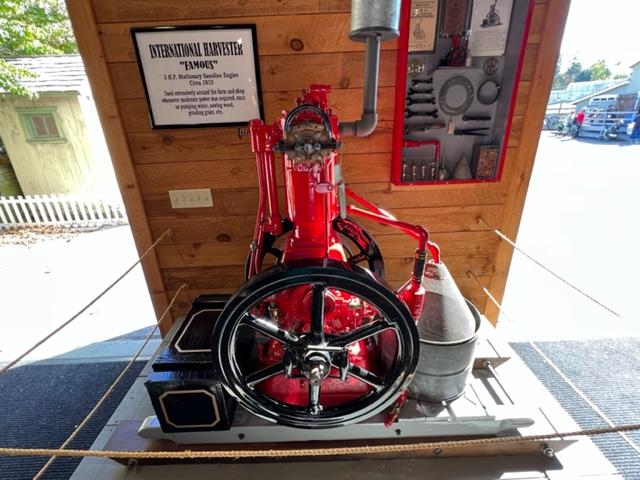
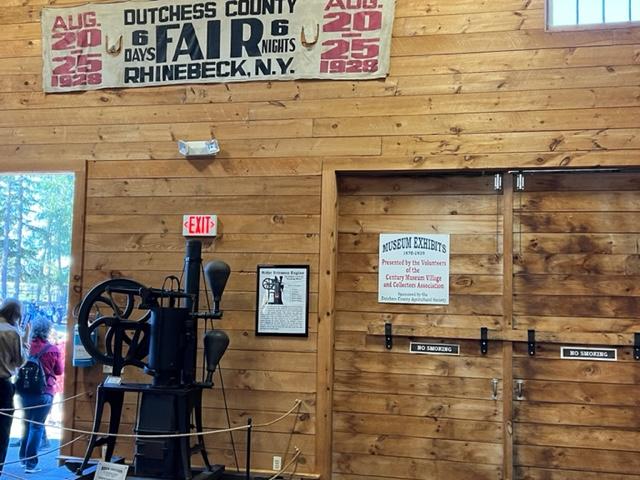
The engine demonstrations on the side of the museum showing the latest technology in the turn of the last century
The museum had a demonstration of the engines and farm equipment on the afternoons I visited the museum over the years and it is very interesting how these early machines were powered with these early gas generated engines.
The museum’s 250th Anniversary of the United States display outside the museum