Tag: NY Historical Sites

Clermont State Historic Site                          County Route 6                                    Germantown, NY 12526

Clermont State Historic Site County Route 6 Germantown, NY 12526

Clermont State Historic Site-New York Parks & Recreation

Route 6 (Off Route 9G)

Germantown, NY  12526

(518) 537-6622

https://parks.ny.gov/historic-sites/16/details.aspxhttp:/clermontstatehistoricsite.blogspot.comwww.friendsofclermont.org

https://www.friendsofclermont.org/

Open: April 11-October 31 Wednesday-Sunday 10:30am-4:00pm/November 1-

December 22/Saturday & Sunday 10:30am-3:00pm

Please call in advance due to seasons and weather conditions

Fee: Adults $7.00/Seniors and Adults $6.00/Children Under 12 and Members Free

My review on TripAdvisor:

https://www.tripadvisor.com/Attraction_Review-g47780-d263704-Reviews-The_Clermont_Mansion-Germantown_New_York.html?m=19905

Clermont Manor Estate off Route 9 in Clermont, NY

I enjoy coming up to Germantown to visit the Clermont Mansion at any time of the year especially at Christmas time. I came for a tour of Clermont in the Christmas season of 2019 (pre-COVID) to tour the home. The old mansions of the Hudson River Valley show their real beauty at this time of the year.

The Clermont Library decorated for Christmas

In 2020, the home closed like everything else for COVID and because of extensive renovations on the property and in the home, did not open again until June of 2023. I came up finally in July of 2023 for another tour of the home. The mansion looked very refreshed and bright on a blue, sunny afternoon. The grounds were in full bloom and everything looked so green.

The views of the river when you arrive

Walking around Clermont is like walking through a history book. To think you are walking around the very rooms that family members who wrote the Declaration of Independence, were Governors and Ambassadors from our country and who owned most of Upstate New York lived is really incredible. The Livingston Family did so much for the United States in the formation of this country is a testament to the family.

Once you arrive at the Visitors Center and pay for your tour, you will have time to walk around the exhibition of the history of the family in the old stables. Here you will learn about the family who built and lived in this wonderful home. The family lived here for seven generations and like most families over time when the money depleted, they had to move out. The last daughter of the family, Honoria, sold the estate to the State of New York as a park. The upkeep got to be too much for the family.

The Visitor’s Center display on the family

The family story boards in the old stables

The history of the estate and the Livingston family in the Visitor’s Center

The history of the estate

The tour 2019 was wonderful because of the one on one conversation I had with my tour guide, Molly. It was the same in 2023 when Aaron took me on a one on one tour of the mansion. We started in the entry hallway where the family hang many of the family portraits and the long hall lead to wonderful views of the Hudson River.

The Entrance Hall of Clermont

Just off to the right of the front entrance of the home (the front entrance faces the river not the back entrance where you start the tour) is the Receiving Room. This was the room in 2023 during my summer tour of the house. The Receiving Room is where guests would wait to be welcomed by family members or people would call on the family and leave their calling cards.

The Receiving Room was also used as a Music Room as well

The Receiving Room was decorated for the holidays in 2019 with more beautiful views of the river and a very interesting clock on the mantle that there are only two in the world. This clock represented the first balloon launch in France and this was the clock where the balloon went up. In France was the other clock with the balloon going down. I thought that was pretty interesting.

Clermont III.jpg

The Balloon Clock on the mantle decorated for Christmas

Our next stop was the Library which seemed very homey and relaxing. It looked like a room that a family would want to spend their time in after a long day. The windows faced the river and the formal gardens at that time and let in a lot of light. The room was decorated with a elegant tree and looked like the family was ready to walk in and join us for the holidays.

The Library of Clermont

The Office/Library on the first floor

Next it was off to the formal Dining Room where the portraits of Margaret Beekman Livingston (a VERY distant relative of mine by marriage) and her husband, Robert Livingston hung. She had saved these along with the grandfather clock before her first house was burned by the British during the war years. It was set for Christmas lunch when the family would dine together.

Clermont V.jpg

The Clermont Dining Room is very elegant at Christmas. This is in 2019 (pre-COVID)

In the summer months, the room was pretty plain with no set up on the table. The Dining Room has just had some renovation work so the walls and ceiling looked really nice.

The Clermont Dining Room in the summer of 2023

The Dining Room portraits

Margaret Beekman Livingston’s Wedding portrait in the Dining Room

Robert Livingston’s Wedding portrait in the Dining Room

We also toured where the food was prepared and prepped from the kitchen to the Dining Room, which was all done in organized fashion. I was told by the tour guide that for the most part the family lived here year round unlike some of the other mansions who only lived here during certain times of the season.

The Kitchen at Clermont

We took a walk upstairs to see the upstairs bedrooms and see where the third Mrs. Livingston lived. I thought it was interesting that she had two beds in her room in which neither was big enough to accommodate her. One was the main bed and the smaller one was a Day bed when she wanted to take a nap but did not want to mess up her main bed.

The last Mrs. Livingston’s bedroom until the 1960’s

We then toured what had been Honoria’s and Alice’s bedroom when they were children and then became the Guest Room. It still looked like a Children’s Room.

The Daughter’s/Guest Bedroom

Then it was back down to the formal hallway for the end of the tour. The one thing I have to say about Clermont is that it looks like someone’s home not some grand mansion like the Mills or Vanderbilt mansions that looked like they for a moment time or only for a season. This family lived here all the time.

The upstairs bathroom was one of the remodeling features

The family lived here until the 1960’s when upkeep of the estate got to be too much for the family and it was sold to the state. The New York Park is now maintained by the New York State Park system.

The Gardens:

The formal gardens were in bloom when I got there that weekend. Since the house opened in June most of the Spring plantings were already gone but the Summer plantings were in full bloom. There were three gardens on the property, two of which had been brought back to nature, the Wilderness Garden and the South Spring Garden and then the Walled Garden was well maintained and planted.

The Wilderness Garden was well-maintained and planted with natural plants

The South Spring Garden

The South Spring Garden has given way to nature

The Walled Garden was the most formal of all the gardens

The Walled Garden

The Walled Garden

The Walled Garden

The Walled Garden

The Walled Garden

In the Fall, I went back up to Clermont for the Ghost Tour and the foliage was amazing, but the rain knocked a lot of it off. Still the colors were glorious.

Clermont in the Fall of 2023

The formal gardens in the Fall

The formal gardens in the Fall

The gardens in the Fall.

The I toured the rest of the estate and saw the ruins of the other mansion, Arryl, that is on the other side of the parking lot and then saw the ruins of the Old House and the Root Cellar.

The Ice House

The Root Cellar

The flowers by the Root Cellar

View of the Hudson River

The History of Clermont:

The name Clermont derives from “clear mountain” in French and was inspired by the view of the Catskill Mountains across the Hudson River from the estate.

The front of Clermont that faces the Hudson River

The estate was established by Robert Livingston following the death of his father, the first Lord of the Manor was inherited by the eldest son, Philip Livingston, 13,000 acres in the southwest corner later named Clermont was willed to Robert. The original house was built around 1740.

The path leading to the main house

Robert Livingston of Clermont died on June 27, 1775 and the estate passed to his son, Robert, who was known as ‘Judge Livingston’ to distinguish him from his father. Judge Livingston was a member of the New York General Assembly from 1759 to 1768, served as Judge of the admiralty court from 1760 to 1763 and was a delegate to the Stamp Act Congress of 1765. He married Margaret Beekman, daughter of Colonel Henry Beekman. Their son, Robert R. Livingston, later known as “Chancellor”, served on the committee that drafted the Declaration of Independence. Judge Robert died about six months after his father, on December 9, 1775.

Burning and  Rebuilding:

In October 1777, British ships sailed upriver from New York City in support of General John Burgoyne who was north of Albany. That same force had already stormed two forts in the Hudson Highlands and burned Kingston, New York. Major General John Vaughan led a raiding party to Clermont and burned Livingston’s home because of the family’s role in the rebellion.

The history of the ‘famous’ Robert’s of Clermont

Margaret Beekman Livingston rebuilt the family home between 1779 and 1782. Robert R. Livingston became the estate’s most prominent resident. Chancellor Livingston administered the oath of office to President General Washington, became Secretary of Foreign Affairs and negotiated the Louisiana Purchase.

Margaret Beekman Livingston

He also partnered with Robert Fulton in 1807 to create the first commercially successful steamboat on the Hudson River, the North River Steamboat (later known as the Clermont) which stopped at the house on its inaugural trip.

Robert Livingston in the famous Gilbert Sullivan painting.

The home’s final Livingston owners were John Henry Livingston and his wife, Alice. They added to the home and greatly valued the homes important historical role. The Livingston’s built second mansion on the property known as Arryl House, which burned down in 1909. The ruins of Arryl House are still visible at the south end of the property.

The burnt ruins of Arryl Mansion on the other side of the property.

The Arryl Mansion in the Fall of 2023

Alice Livingston was responsible for creating many of the landscaped gardens that are continued to this day. Following John Henry’s death, Alice turned the Mansion and property over to the State of New York in 1962 so that all the people of New York could enjoy it.

The landscaping around the old Ice House

The house is now a New York State Historic Site and was designated a United States National Historic landmark in 1972. It is a contributing property to another National Historic Landmark, the Hudson River Historic District. Although locate in the town of Clermont, its mailing address is in the nearby town of Germantown.

The views from the back of Clermont to the Hudson River

(This information is a combination from the Clermont Website and Wiki and I give them full credit for this information. Please check the website above for more information on the site and its activities through their Friends site.)

The Clermont Grounds

The Fall in the Hudson River Valley is one of the most brilliant times to visit and the foliage is so colorful. The constant rain knocked a lot of it down already but all around the house their were still signs of the reds, golds and oranges. I came up for the Ghost Tours which the mansion resumed this year to sold out crowds.

The Clermont Estate in the Fall.

The river front of the estate in the fall.

The Hudson River in all its glory.

The Ghost Tour of the estate:

The Ghost Tour took us on a tour through the house to meet the costumed characters throughout the mansion. The mansion was decorated for the Halloween and with the lights dimmed, it gave the house an eerie appearance to it.

When I arrived at the estate, the house loomed in the distance in its it glories with the golden colors of autumn.

Jack-a Lanterns lined the pathways and lit the way to the house.

We were greeted with fresh Apple Cider Doughnuts and Apple Cider from a local farm in Kingston, NY.

We were also treated to old fashioned Halloween candy with Mary Janes, Tootsie Rolls and other treats.

We started our tour at 7:00pm at twilight with the lanterns lit and the house waiting in the distance.

The hallway was decorated for Halloween.

First we met an embittered Robert Livingston (who over acted)

We stopped in the haunted Living Room to talk to the maid.

We met the ghost of Janet Livingston Montgomery in the Parlor.

Then it was off to the Dining Room to meet the last inhabitant of the house, Janet Livingston.

Margaret Beekman Livingston guarding the Dining Room.

On the way to the kitchen, we met Captain Kidd, the Livingston children and the last owners of the house on the way out the back door to end the tour. The whole tour took less than an hour.

We exited the house through the kitchen and out the door to a moon lit night with jack-a-lanterns taking us back to the Visitors Center. The night had fallen in the early evening at the mansion as we were the second to last tour of the evening and the moon had come out giving the sky a ominous and spooky look about it.

I visited again for the Christmas Open House in early December to see the decorations. I had not been there since 2018 and wanted to see how things had changed for the winter months. Everything was decked out for Christmas. The rooms were decorated but not in an over the top way as some of the other Hudson River homes.

The Clermont Estate at Christmas time.

The Clermont Estate at Christmas time.

The Front porch at Christmas time.

The Christmas tree on the porch.

Even the logs on the porch were decorated for the holidays.

The entrance foyer from the stairs.

Upon entering the front door, you could see the beauty and simplicity of the Christmas holidays in the early 1800’s before Victorian traditions took over and the house was overdone with decorations. Garland, Holly and simple pine trees adorned the rooms and welcomed everyone to the Christmas Holiday Open House sponsored by the Friends of Clermont. The home was nicely decorated for the holidays circa 1840’s.

Entering the Front Door at Clermont at Christmas.

The wreath was beautiful on the door.

Livingston Painting in the foyer

The Sugar Spun Clermont Sculpture.

Painting in the Foyer of Robert Livingston

Portrait of Margaret Livingston in the Foyer.

The holiday display.

The Office of Clermont

The Table Top tree in the Office.

The Library was set for Christmas morning with a large tree, homemade presents from the family and a morning of Christmas cheer. The views from the windows would have shown the beautiful views of the river.

The Library at Clermont

The Clermont Library at Christmas time.

The Christmas tree in the library.

The Library decorations.

Library decorations.

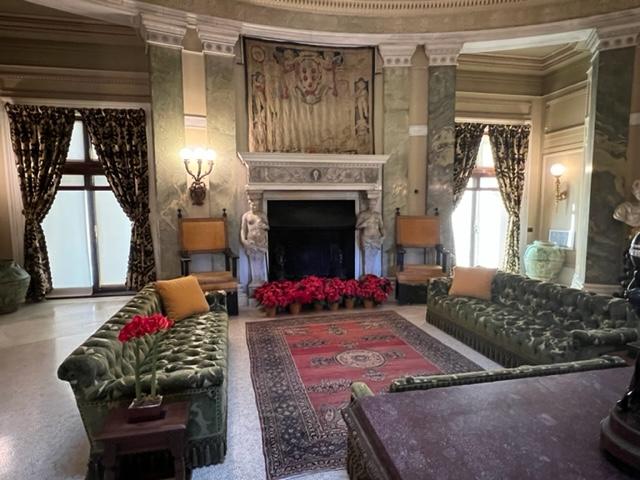
The Living Room was set for Afternoon Tea and for greeting guests who would have entered through the front door right off the main hallway.

The Living Room decorated for Christmas.

The Living Room was set for Afternoon Tea.

The portrait of Robert Livingston in the Living Room.

The portraits of Alida and Robert Livingston.

The Dining Room was not set for dinner but in anticipation of the holidays. The elegant runners, china, crystal and silver were off to the side awaiting the servants to set the table and prepare for Christmas dinner.

The Dining Room decorated for the holidays.

Holiday display in the Dining Room.

The Wedding Painting of Margaret Beekman Livingston in the Dining Room.

The family’s private bedrooms were decorated with garland and a small tree in the foyer.

Heading to the Second Floor of Clermont.

The view of the foyer from the upstairs.

The Livingston girls Bedroom.

The Livingston girl’s doll adorns the room.

The Christmas tree in the upstairs Foyer outside the bedrooms.

The Gingerbread House display in the Foyer.

When touring the kitchen which is located to the side of the house, the counters and tables were filled with all the delicious foods that would have been served at Christmas. Roasts, Trifles, Cakes and Pies would have been served by the staff for holiday get togethers and dinners at the mansion.

The Kitchen staff preparing the family’s Christmas dinner feast.

Preparations for Christmas dinner for the family.

Preparing Christmas dinner in the kitchen at Clermont.

After the Christmas Open House tour was over, the Friends sponsored Marshmallow roasting on the front lawn of the mansion and refreshments and talks up at the Visitors Center.

Roasting Marshmallows over the firepit on the mansion’s grounds after the walking tour of the mansion.

Christmas cookies, Apple Cider and Classic Candies in the Visitors Center ended the tour and the Open House for the day.

After the tour was over, I toured the gardens, which were dormant at the time and the grounds along the Hudson River. The views were just amazing and the gardens awaited the coming of the Spring when flowers would be blooming again.

Both the Open Houses at Halloween and at Christmas are a lot of fun and very special at Clermont. The Friends of Clermont do a nice job depicting the holidays and how the family would have celebrated them.

In the Summer of 2024, I took a special Garden Tour of the Livingston Gardens. A new Lead Gardener had been hired by the State of New York and she was starting to renovate the gardens. So we took a tour of the four gardens near the mansion. While we toured the estate grounds, we visited the South Spring Garden, the Walled Garden, the Children’s Garden and the Cutting Garden to see how they were progressing. The staff here is doing a good job bringing these gardens back to life to how Alice Livingston envisioned them.

The first was the South Spring Garden which is closest the house. This was built when the stairs to the side of the home were built and one of Alice Livingston’s first gardens.
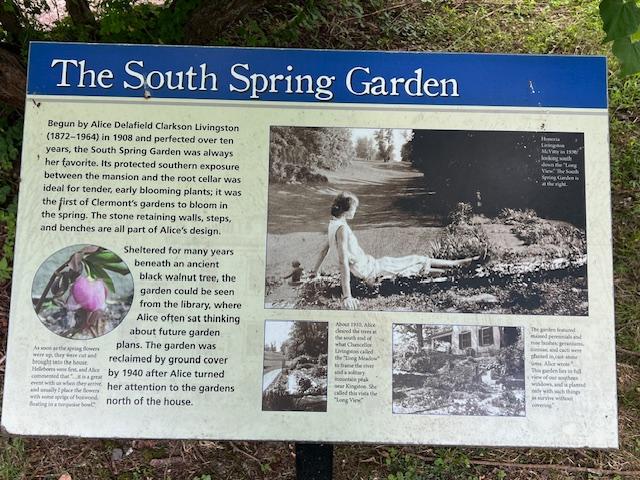
The South Spring Garden sign

The South Spring Garden in Summer 2023

The South Spring Garden being cleaned up in Summer 2024

The grown in wall of the South Spring Garden
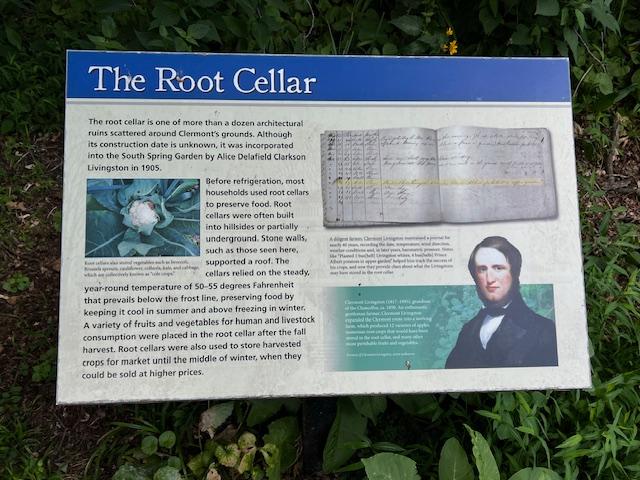
The Root Cellar sign

The Root Cellar remains by the South Spring Gardens

The flowers in the South Spring Gardens

The sign for the Walled Garden

The Walled Garden
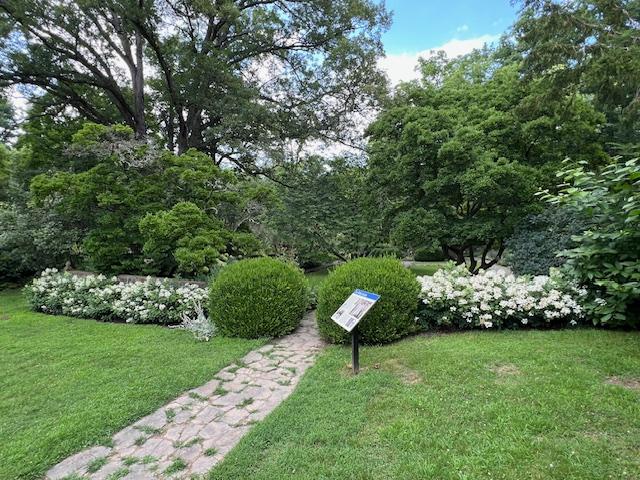
The Walled Garden
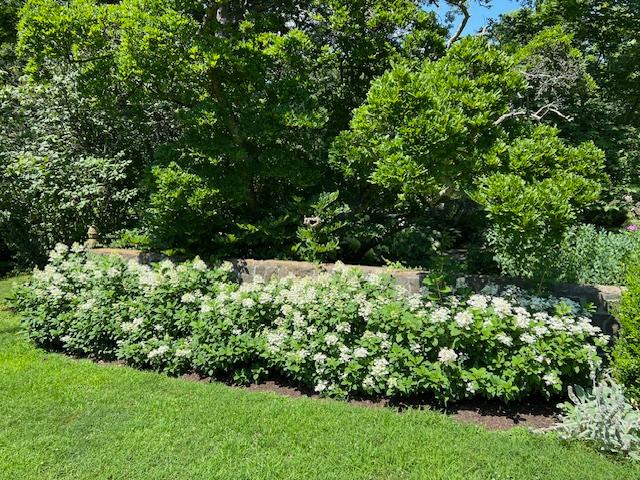
The Walled Garden

The Walled Garden

The Walled Garden Statuary

The Walled Garden

Then we visited the Wilderness Gardens that were just beyond these and they also had been brought back to life by the gardeners. This was to be a transition from the formal gardens to the woods.

The Wilderness Gardens:
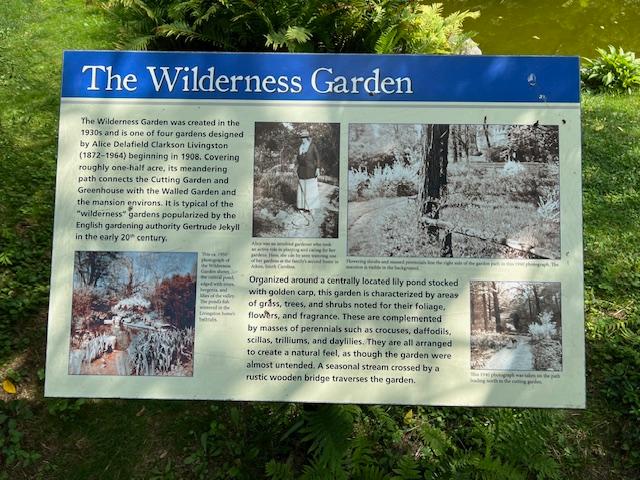
The Wilderness Gardens sign

The Wilderness Gardens
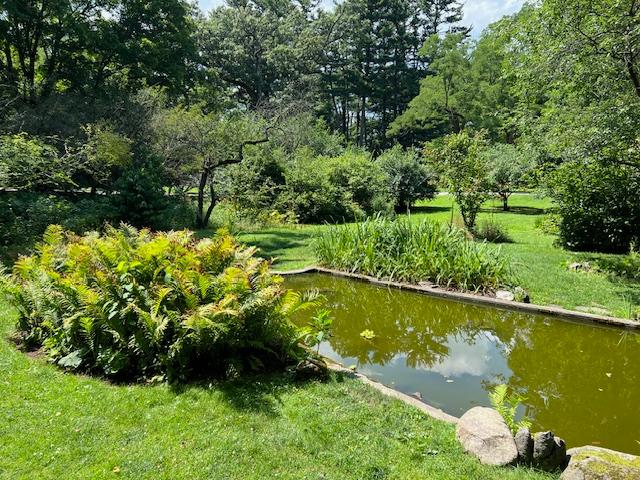
The Wilderness Gardens

The we visited the Children’s Garden and the Cutting Gardens which were the newest gardens on the estate. The Children’s Garden playhouse had just been renovated and the beds had been replanted.
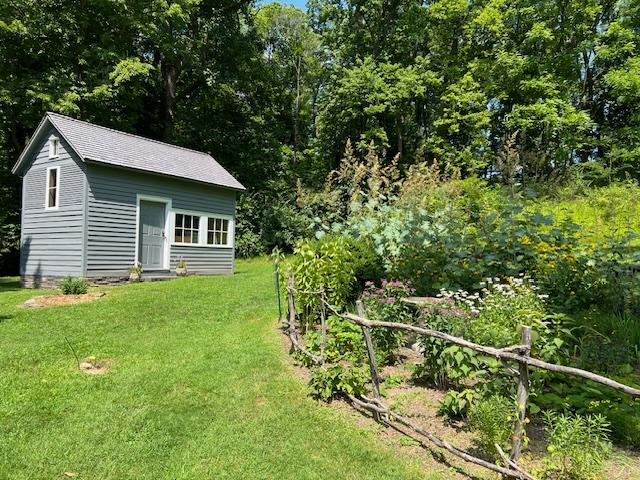
The Children’s Garden with the Children’s playhouse
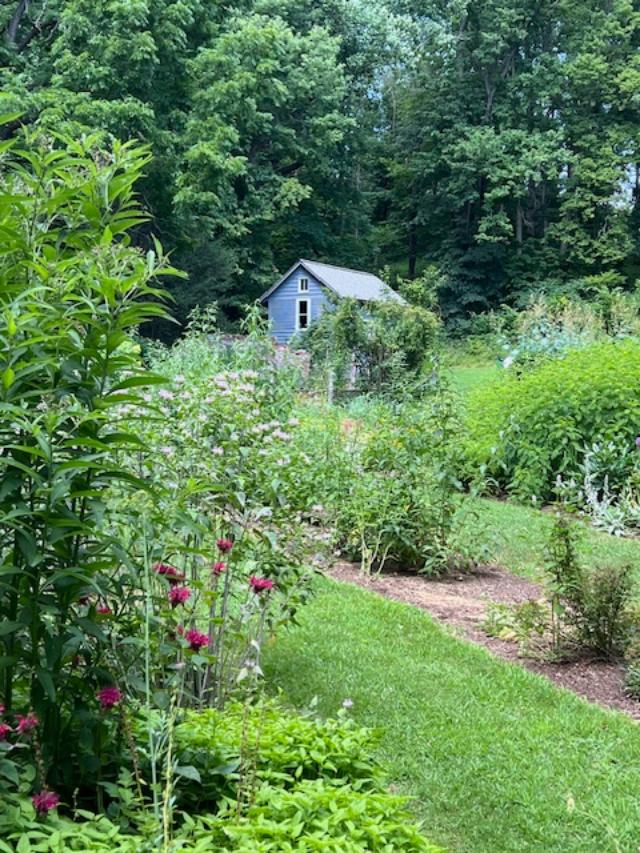
The Children’s Garden from the entrance

The Children’s Garden Garden

The Children’s Garden

The Cutting Gardens were created so that Alice Livingston could grow the types of flowers that would decorate the house at various points in the season. These gardens have been brought back to their original purpose and the flowers and assortments that have been planted are colorful and the fragrances are so nice. On a beautiful day, walking amongst the beds is so nice and relaxing.

The Cutting Garden

The Cutting Garden

The Cutting Garden

The Cutting Garden trellis

The bridge between the Walled Gardens and the Children’s and Cutting Gardens

The Gardens Tour was very informative. Alice Livingston’s love of flowers and how they accented the house were her pride and joy. The Cutting Garden were all the flowers that she used to decorate the house with and the Children’s Gardens taught her daughters responsibilities and knowledge of horticulture.

The biggest problem in recent years is how to maintain all these gardens. This takes a lot of effort and work to weed. plant and prune these beds and make them look nice. The new gardener hired by the State and her team of two staff and volunteers are doing a nice job cleaning out the old beds and replanting and pruning all the plants and bushes that were already there. You can tell by the pictures there is a lot more to do but the gardens are on their way back to their original look.

After touring the mansion at Christmas time in December 2023, I visited Downtown Germantown, which itself was decorated for the both holidays.

Downtown Germantown, NY decorated for the Christmas holidays.

Exploring Germantown, NY:

Downtown Germantown during the Christmas holidays.

Downtown Germantown at the Christmas holidays.

Downtown Germantown for the Christmas holidays and church service.

After the tour in July 2024 for the Summer Garden tour, I revisited Germantown again to see what it was like during the summer months. It is a very active and historical downtown with nice restaurants and shops, a wonderful gourmet grocery store and beautiful historical churches. It is a nice place to spend the weekend when touring the mansions in Columbia and Duchess Counties.

Germantown in the Summer of 2024:

Downtown Germantown, NY in the summer
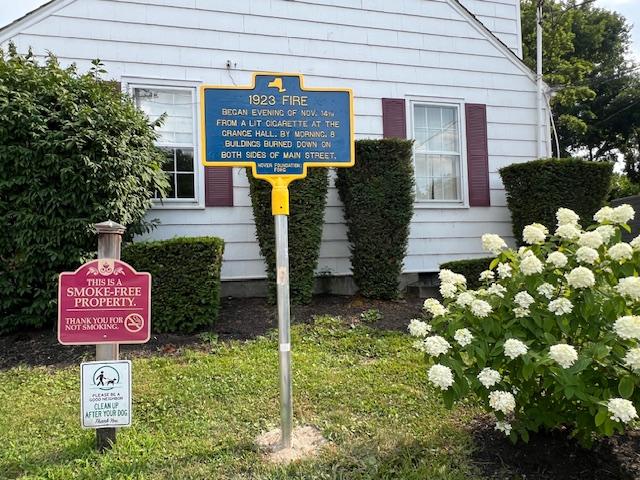
The town square and historical sign

The Inn downtown
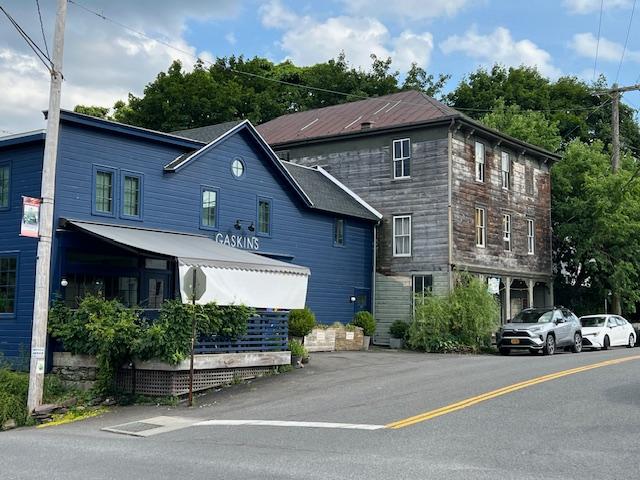
The restaurant row of Germantown with Gaskin’s in the background
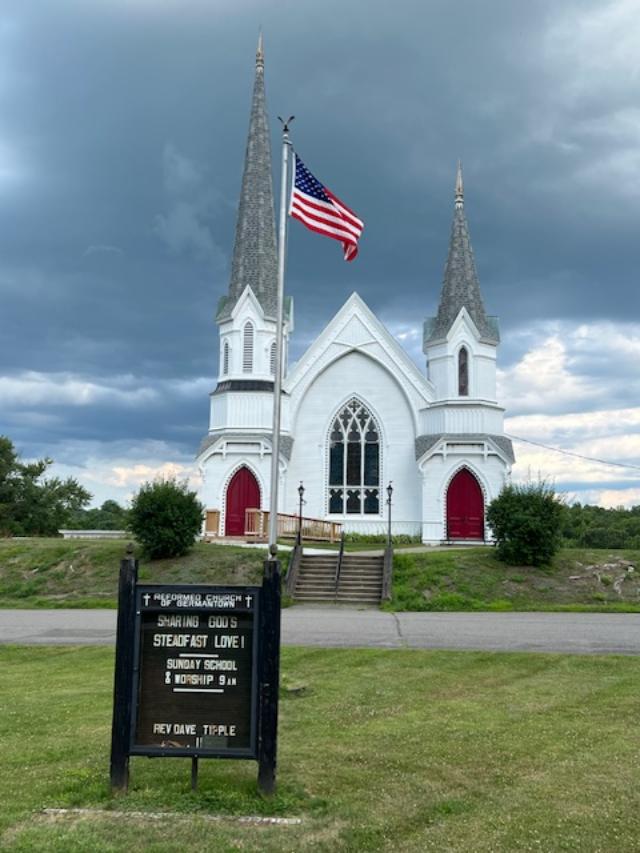
The Reformed Church of Germantown. For some reason the clouds started to roll in after a sunny day.

The church grounds across the street

Germantown is a small town that keeps changing as more people from the City move up to the Hudson River Valley. A lot of the buildings in town are becoming art galleries, furniture shops and new restaurants. With each season, there are more changes coming to the town.
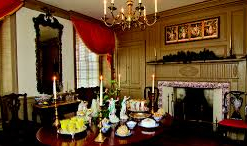
Van Cortlandt Manor                                                                  5 Riverside Avenue                                                           Croton-on-the-Hudson, NY 10502

Van Cortlandt Manor 5 Riverside Avenue Croton-on-the-Hudson, NY 10502

Van Cortandt Manor

5 Riverside Avenue

Croton-on-the-Hudson, NY  10502

(914) 366-6900

Open: See website for seasonal hours

My review on TripAdvisor (Manor and Pumpkin Blaze):

https://www.tripadvisor.com/Attraction_Review-g47560-d116391-Reviews-Van_Cortlandt_Manor-Croton_on_Hudson_New_York.html?m=19905

A trip to the Van Cortlandt Manor in Croton-on-the-Hudson is an interesting step back into the Colonial history of this country. During the summer, there is an interesting walking tour of the home offered usually from the end of July to Labor Day. Then the house is closed to prepare for the huge ‘Pumpkin Blaze’ during the months of October and November and then the house is shut down until the spring.

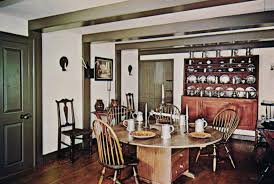
The house tour is interesting because it shows the home as a working farm and place of commerce for the family. This was not a weekend home for the family working in the City but crops being grown for shipping, vibrant gardens that supplied the house and a small tavern for travelers along the Albany Post Road as well as a place for shipping goods down the rivers.

van-cortlandt-manor-1.jpg

Van Cortlandt Manor

The home is furnished in the most modern furnishings of the time and you can see how the house reflected the needs of the family at that time. It was more of a home than a luxurious place to entertain. The furnishes are practical, very in fashion of the time and nicely decorated.
van-cortlandt-manor-ii.jpg

The Dining Room

The tour of the kitchens and storage areas show that even in what was the modern era was not such easy living without servants. The estate was somewhat self-contained with animals and provisions being raised on the land and there is even an area where fabric such as flax and cotton where spun and made into clothing.

Van Cortlandt Manor III.jpg

The kitchen dining area

The upstairs bedrooms show that the linens were under lock and key even with the servants and that the rooms were well-appointed and comfortable. A lot of the family heirlooms still reside in the house and it gives you a perfect look at what life must have been like when the family lived here.

Don’t miss the gardens as well. Some have been over-grown because of the lack of volunteers but still you can see the beauty of the flowers and trees around the house. The house sits right on the cross between the Croton and Hudson rivers and even though it is now grown in, you can see that the house stood at one of the busiest sections of Upstate commerce.

The Pumpkin Blaze-Hudson Valley Historical Association:

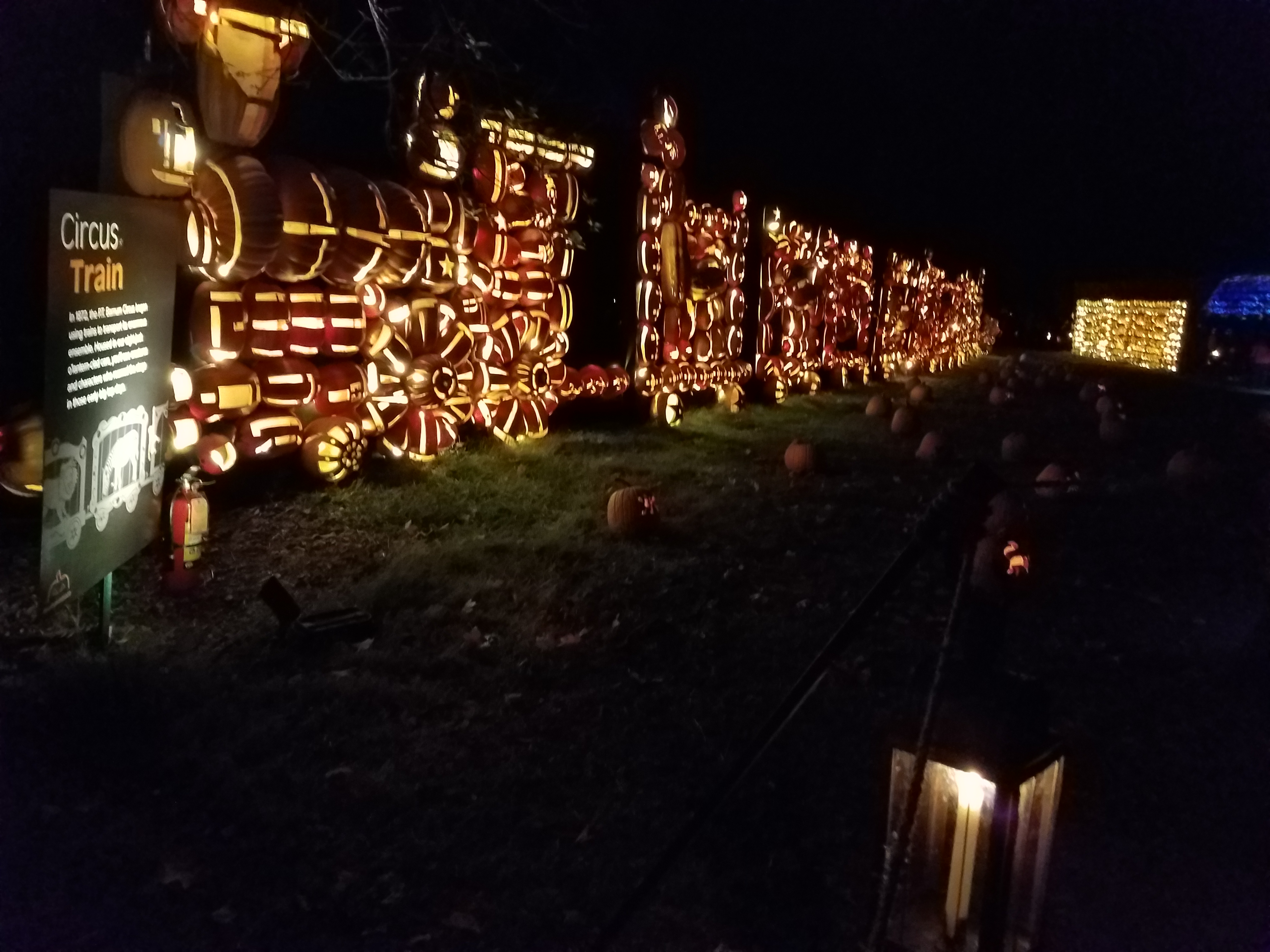
During the months of Halloween, there are thousands of pumpkins that line the walks and beautiful displays to see along the paths of the estate and the river. This event is sponsored by the Hudson Valley Historical Association and is one of their biggest fundraisers. Don’t miss this annual event every fall.

The Blaze is amazing!

The Pumpkin Blaze in 2019:

371.jpg

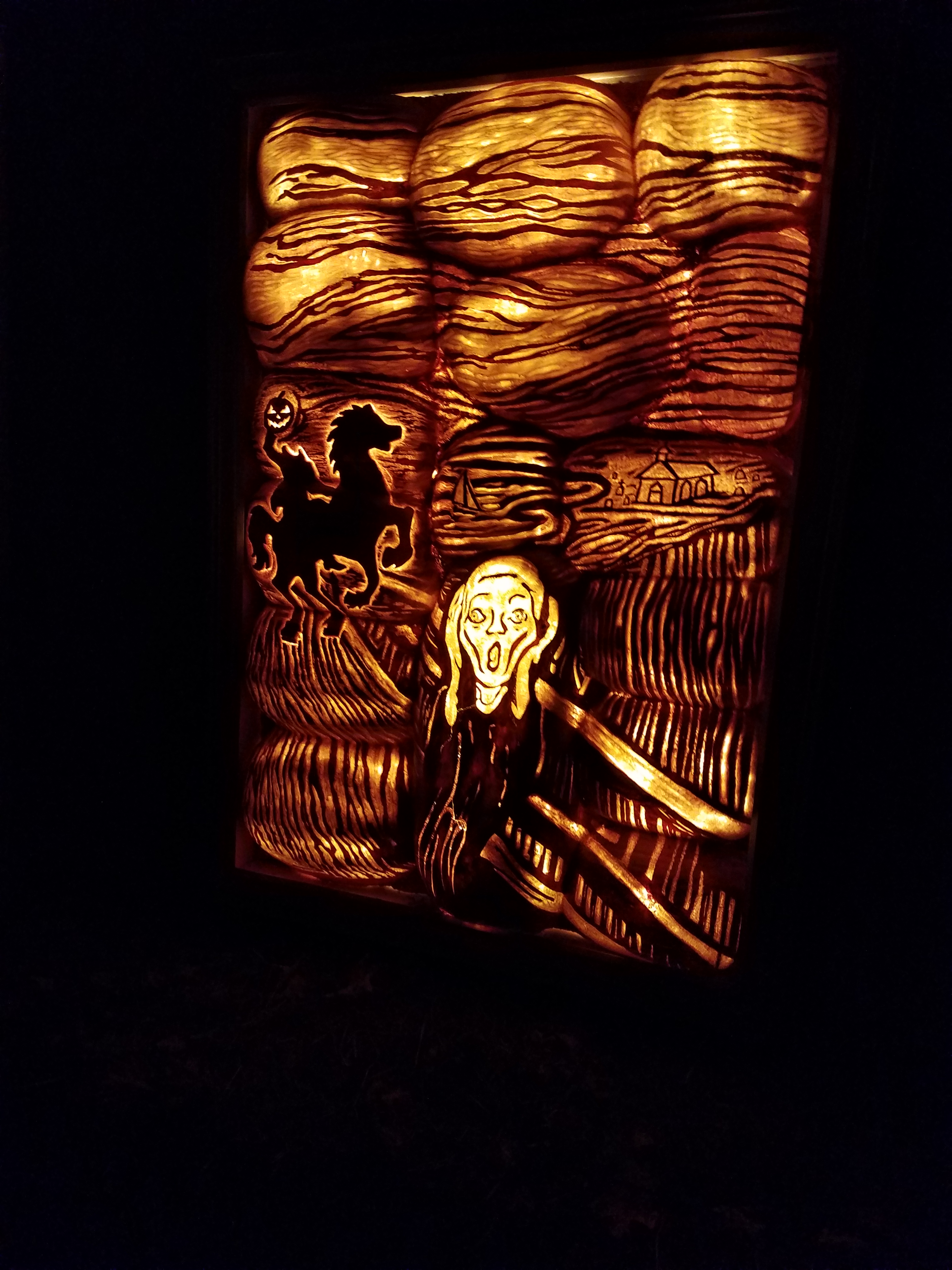
Some pictures from the MoMA Pumpkin Museum:

368

Their version of “The Scream”:

366
393

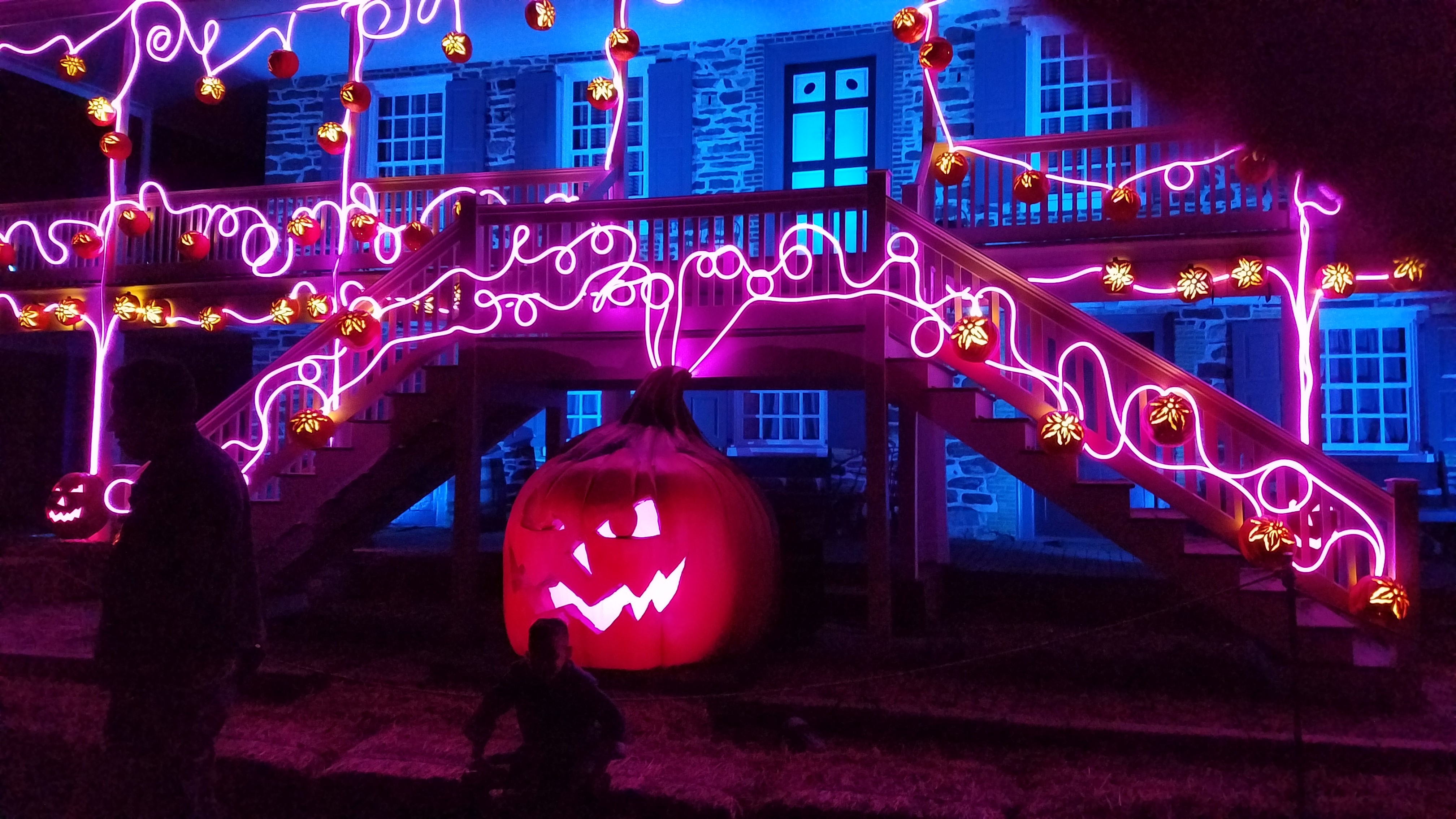
The Van Cortlandt Manor ablaze with lights and sounds

406

Justin Watrel at the Pumpkin Blaze

412

My Aunt and I at the Pumpkin Blaze in 2019

The Pumpkin Blaze in 2022:

Entering the Pumpkin Blaze in 2022

Pumpkins greeting you in all shapes and sizes

The Pumpkin Planetarium at the Pumpkin Blaze

Pumpkin Bee Hive

The “Terror Zee Bridge” at the Pumpkin Blaze

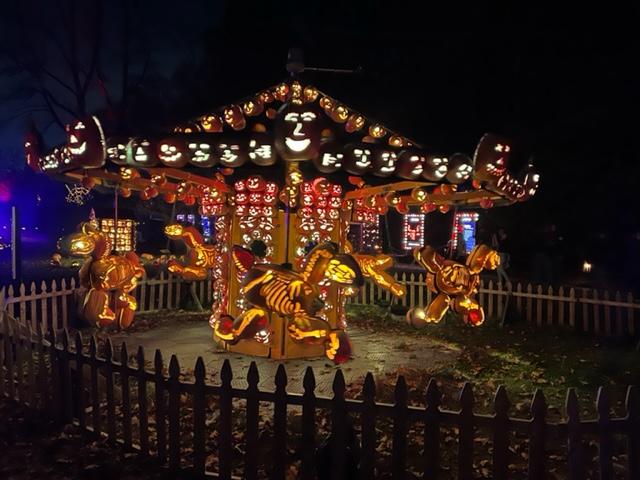
The Pumpkin Carousel

The Pumpkin Fire Services

The Headless Horseman is the theme of many October festivals in the Hudson River Valley

The History of the Van Cortlandt Manor:

By Royal Charter, Van Cortlandt Manor was originally a 86,000 acre tract granted as a patent to Stephanus Van Cortlandt in 1697 by King William III, stretching from the Hudson River on the west to the first boundary line between the Province of New York and the Colony of Connecticut, on the east, twenty English miles in length by ten miles in width in shape nearly a rectangular parallelogram forming, “The Manor of Cortlandt”.

The massive holding was acquired by direct purchase from the Indians, in part by Stephanus van Cortlandt, a native born Dutch gentleman of New York and in part by others whose titles he subsequently bought, this tract together with a small tract on the west side of the Hudson River opposite the promontory of Anthony’s Nose, which he also purchased from the Indians.

The Manor House was built sometime before 1732 but was not any owner’s principal residence until a grandson, Pierre Van Cortlandt, moved there in 1749. At the time the manor house was on a 1000 acre portion of the original tract.

Pierre brought his family to the estate in 1749 and established the manor into it most vibrant days, according to some. During this period, the manor was operating an apple orchard, dairy farm, a bee house, a kiln, a tavern and a carpenter and blacksmith shops. Van Cortlandt Manor was a self-sustaining community while Pierre and his family resided in the estate. At this time, tensions leading to the Revolutionary War were building and the manor would become a place of wartime retreat.

Pierre sided with the colonies and the manor was used to assist the Continental Army, using its resources to make food and supplies. Pierre was involved with military legislature and his son Philip was a soldier for the Continental Army. Eventually Pierre and his family vacated the manor in the thick of war. The manor was ransacked by the British Army and left in poor standing. Philip, becoming a brigadier general by the war’s end, returned and along with his sister, Catherine, brought the manor back to working order.

Van Cortlandt Manor became an essential stop on the route from New York to Albany in the years that followed the war. The mills were once again thriving and provided the community and travelers with food, supplies and lodging. Pierre and his wife did not return until 1803 once the manor was in full working order again. The manor was passed down in the family until it was sold to a non-relative, Otis Taylor in 1945. By this time, the property had lost its luster and was not the flourishing estate it had once been.

In 1953, John D. Rockefeller Jr. purchased the property and began restoring the manor to previous prominence. In 1961, Van Cortlandt Manor became registered as a National Historic Landmark.

Disclaimer: This information on the history of the house was provided by Wiki and I give them full credit on the information.

Places to Eat:

Located in the ShopRite Mall next to the Blaze:

The food at New Happy Garden in the Shoprite Mall is excellent and you can sit down in the restaurant. It is the perfect place for lunch or dinner before or after the Blaze. Their Lo Mein and General Tso’s Chicken are excellent. Please read my reviews on TripAdvisor.

New Happy Garden

440 South River Side Avenue

Croton on the Hudson, NY  10520

(914) 271-7888/8268

https://www.menupix.com/westchester/restaurants/3212099/Dong-Happy-Garden-Menu-Croton-On-Hudson-NY

Open: Sunday 12:00pm-9:00pm/Monday Closed/Tuesday-Saturday 11:00am-10:00pm

My review on TripAdvisor:

https://www.tripadvisor.com/Restaurant_Review-g47560-d4616434-Reviews-Dong_Happy_Garden-Croton_on_Hudson_New_York.html?m=19905

Fort Delaware                                                      5516 NY Route 97                               Narrowsburg, NY 12764

Fort Delaware 5516 NY Route 97 Narrowsburg, NY 12764

Fort Delaware

5516 NY Route 97

Narrowsburg, NY  12764

(845) 252-6660

http://sullivanny.us/Departments/ParksRecreation/FortDelaware

Open: Last Weekend in June until Labor Day Weekend (repairs will be made on the facility after that until next year) Friday-Sunday 10:00am-5:00pm (last tour at 4:00pm) and Monday (Labor Day) 10:00am-5:00pm

Fee: Adults $7.00/ Seniors (62+) $5.00/ Children 4-12 $4.00/Veterans with ID and Children under 5 with adults Free. Special rates for school groups and group tours

My review on TripAdvisor:

https://www.tripadvisor.com/Attraction_Review-g48227-d3386995-Reviews-Fort_Delaware_Museum-Narrowsburg_Catskill_Region_New_York.html?m=19905

 The front of the recreation of Fort Delaware

Fort Delaware is a recreation of an old fort that used to be located on the Pennsylvania side of the Delaware River. It is a great place to take children who like to learn from ‘hands on history’ and watch Blacksmiths, Candle makers and farmers wives perform chores and show the way of life at a time before the Revolutionary War.

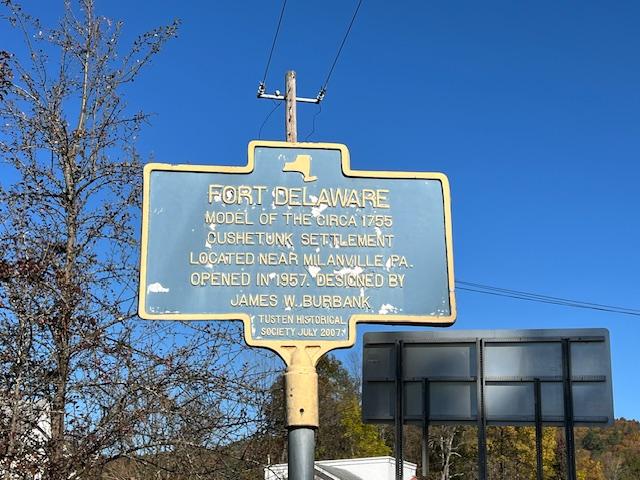
Fort Delaware historic sign

According to one of the actors I was talking to who was the Blacksmith, this type of fort would not be one people would have lived in full time. It was meant more for when the Native Americans would have attacked the settlement, which he said only happened once and for the most part the settlers and the Native Americans got along well.

As you tour the fort, you will see all the things that were done to support the settlement from  raising poultry and cows, candle stick making, the process to weave wool and flax from the raw materials, to weaving and spinning yarn to the process of making clothes and the work of the Blacksmith in making nails, axes and shoeing for horses.

The historic marker of the fort

Inside each of the little cabins, it will show the life inside and outside the fort at that time period including living quarters, a small school, workman’s shops and where the members of the fort did their business for trade. You can also walk the outside  decks that overlook the river to see how the gunneries worked and where the munitions were held.

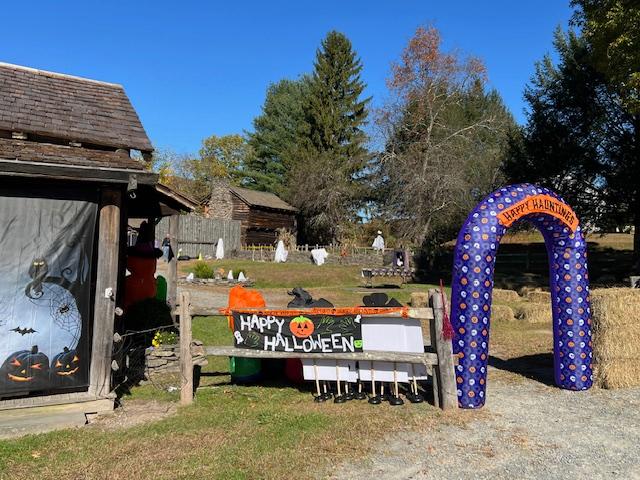
The front of the fort being decorated for Halloween

You can see the entire fort in about an hour and for small children, I think they would find it fascinating. For teenagers, unless they like history, I don’t think they would find it that interesting.  Leave yourself about an hour for touring.

Fort Delaware III

The inside living quarters


History of the Museum:

The Fort Delaware Museum is a recreation of the original fort and was built in 1957 by James W. Burbank, the second Sullivan County historian. Burbank was fascinated with the history of the settlement which at the time was called Cushetunk. He was influenced by the Davy Crockett craze at the time in the 50’s and wanted the fort to be a money making venture. He added things like pillories and stocks which were popular at the time. He ran Fort Delaware from 1957 to 1970 when he sold it to the County. The County of Sullivan runs it under the Department of Parks, Recreation and Beautification (History of Fort Delaware-RecordonLine.com).

The sign that welcomes you to the fort

History of the Fort:

(From the County of Sullivan Parks & Recreation Department)

Much attention is paid to the people who settled the main cities of New York but those who decided to take on the wilderness are often forgotten. At Fort Delaware, the daily life of the wilderness settler is explored through exhibits, crafts, demonstrations and tours. The Fort is a reconstruction of the original frontier settlement of the Cushetunk settlement on the Delaware River, with its stockades and stout log homes, which offered the only protection from hostile Native Americans and later English troops. The Fort consists of a small settlement entirely surrounded by high log walls or stockades. During your visit, you will see the blockhouse (where arms and ammunition were stored), settlers cabins, a spinning, weaving and barn loom area, blacksmith shop, candle-making shed and much more. Period-dressed interpreters demonstrate 18th century life skills, including: cooking, baking bread, animal care, dipping candles and the firing of a 1/2 pound British swivel cannon.

Background of the Fort:

Fort Delaware is a representation of the first white settlement on the Upper Delaware River called Cushetunk. Today’s Fort represents the development of the settlement over a thirty year period. The original settlers were farmers who came primarily from Central Connecticut and were of English descent. They were searching for more land because it had become too crowded in Connecticut to suit colonial farming techniques. A group of Connecticut men formed “The Delaware Company” and became proprietors. In the traditional New England way of land distribution they owned the land and either sold or leased it to farmers moving into this frontier, these proprietors moved their families to the frontier and never sold their land. The Delaware Company purchased land from the Lenape Indians, with the first deed signed in 1754.

The land purchased was a 10 mile long strip along both sides of the Delaware River (situate in modern day New York and Pennsylvania). Procedures for filing land claims were very different in the 18th Century. Also at that time, the States of Pennsylvania and New York were engaged in a boundary dispute , disputes of other colonies really didn’t matter much to those early Connecticut farmers, so they claimed the land for Connecticut! They called their community “Cushetunk”. To those white settlers, it sounded like what the Lenapes were calling the place. KASH-ET-Unk or “a place of red stone hills”.

By 1760, there were thirty cabins, a gristmill and a sawmill. Each spring saw the arrival of more people willing to hack a new life out of the frontier. These people faced hardships they probably never conceived of in Connecticut. Indian attacks, the remote wilderness, rough winters and the possibly that farming this land would not sustain them. They came into the area during the French and Indian Wars (1755-1763). In 1761, a stockade was erected around three homes to serve as protection for the entire settlement against attack. In 1763, the settlement was attacked by a Lenape war party. The lower part of the settlement was destroyed with no known survivors. By the time the war party moved up the settlement, people had gathered into the Fort for protection. The attackers were held off with two casualties among the settlers.

It is this Fort, which is represented today at Fort Delaware even though it was known as “the lower fort” during the 18th Century. Another Fort was situated in the upper part of the settlement. The Fort was never used as a Military post, only for civilian protection. In 1764, a rafting business was introduced into the community and became very successful. It brought cash into the community on a steady basis and Cushetunk experienced a lot of development. In the years between the French and Indian Wars and the American Revolution, the fort was abandoned as the threat of Indian attack decreased and people began building what they called “fair houses”. The period of the American Revolution (1775-1783) was a turbulent time for the people of Cushetunk. Generally, the inhabitants were “Tories” (or those who were loyal to the Crown). However, there were also a handful of patriots or Whigs as well.

As time went on neighbors became hated enemies. Many residents of Cushetunk took up arms for the British and Continental armies. Some fought with local militias. In some instances families were torn, brothers fighting on opposing armies. There were many occurrences in the settlement of neighbors (who once depended on each other for survival) fighting, looting and even murdering each other. Some of the Patriots from the settlement fought not far from their homes at the Battle of Minisink on July 21, 1779. After the Revolution, the Patriots returned victorious to reclaim their land and many loyalists left to settle in Canada. Today the descendants of these early settlers can still be in the area.

The fort being decorated for a Halloween event

(This information on the history of Fort Delaware and the settlement was taken from the County of Sullivan Department of Parks and Recreation and I give them full credit on the information. Please see the attached website for more information on the Fort).


The Vanderbilt Mansion & Estate National Historic Site                                                        4097 Albany Post Road                                                          Hyde Park, NY 12538

The Vanderbilt Mansion & Estate National Historic Site 4097 Albany Post Road Hyde Park, NY 12538

The Vanderbilt Mansion & Estate

National Historic Site

4097 Albany Post Road

Hyde Park, NY  12538

(845) 229-7770

http://www.nps.gov/vama

https://www.nationalparks.org/explore-parks/vanderbilt-mansion-national-historic-site

TripAdvisor Review:

https://www.tripadvisor.com/Attraction_Review-g60801-d105845-Reviews-Vanderbilt_Mansion_National_Historic_Site-Hyde_Park_New_York.html?m=19905

I have visited the Vanderbilt Estate many times over the years and every time I visit I learn something new about the family and about the property. It takes many visits to truly see the beauty of the house and grounds.

The Vanderbilt Mansion foyer on the first floor decorated for the holidays

I found the best time to visit is in the late Spring as the buds are coming in and Christmas time when the house is decorated for the holidays. It is quite spectacular. The holiday tour is amazing and after Thanksgiving, make a special trip to the Hudson River Valley and go mansion hopping as all the houses are decorated for the holidays.

The Christmas tree in the library of the Vanderbilt Mansion

The tour will take you to three floors of the house: the first floor with the living room, dining room, parlors, and studies. Then there is the second floor with Fredrick, Louise and the guest family and single women rooms. The last floor you will visit is the basement workrooms, servant quarters and kitchen.

On the first floor is the formal dining room and the library, the offices of both Fredrick and Louise for their social and business obligations and the formal receiving foyer of the home. Things were decorated for the Christmas holiday season and it gave a very festive appearance.

The Library was set up for the Christmas holidays

The other side of the Library for the Christmas holidays

The house was only used about four months out of the year, being used in the Spring and then again in the Fall from the end of September to right after Thanksgiving and then the family would go to New York City for the social season. After Louise’s death, Fredrick sold his other houses and moved here permanently. The house was used full time and Fredrick must have enjoyed his time here.

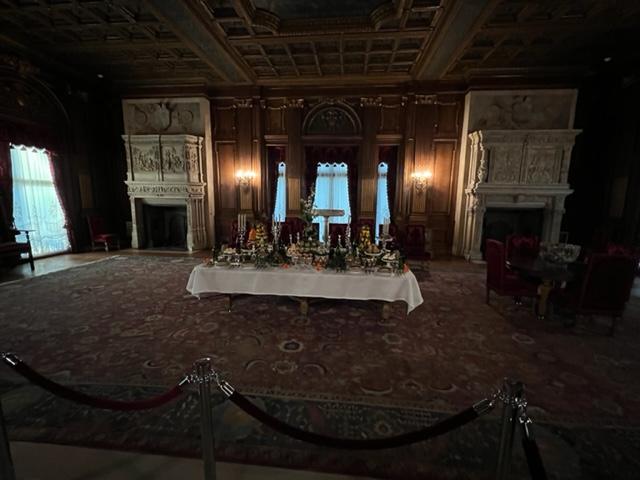
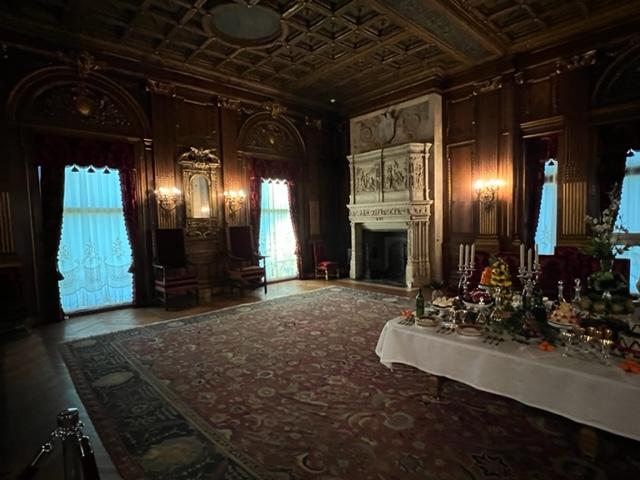
When she was alive, they used to have a very active social life and were active in local affairs. The formal dining room was used for parties and get togethers. For the holiday season, the room was decorated for a formal Christmas dinner.

The Dining Room set for holiday dinner

The beautiful fireplaces and paneling of the Dining Room

The Dining Room table set for the Christmas holidays

The formal staircase takes you up the to the bedrooms and the formal baths. The house was one of the first in the community to have electricity and hot and cold running water with all modern plumbing.

The stairs were wide and long due to the ladies dresses of the time

The artwork on the walls and landings was just breathtaking

The artwork on the landings and hallways is magnificent

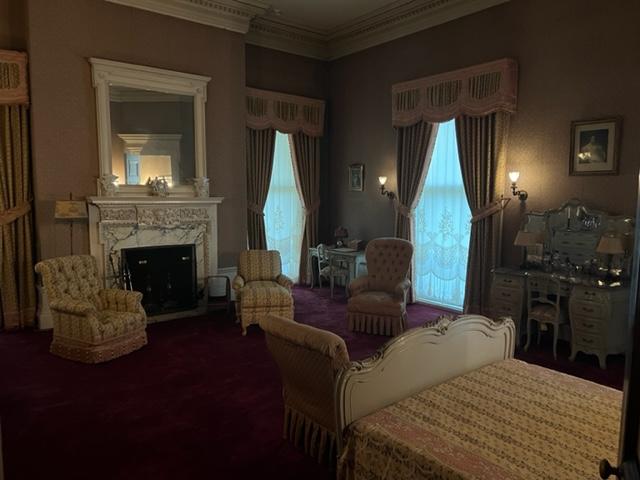
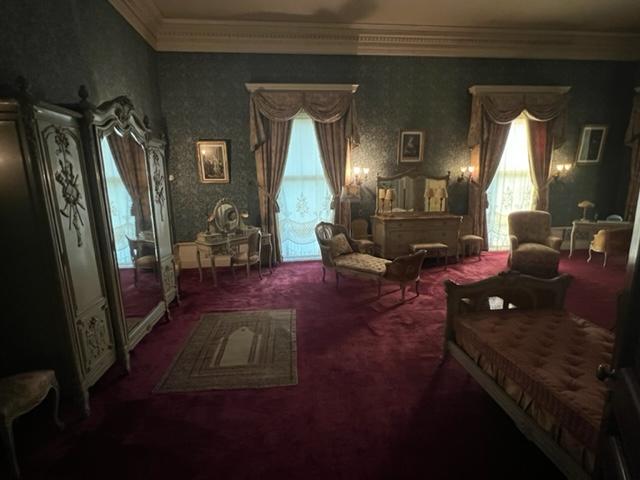
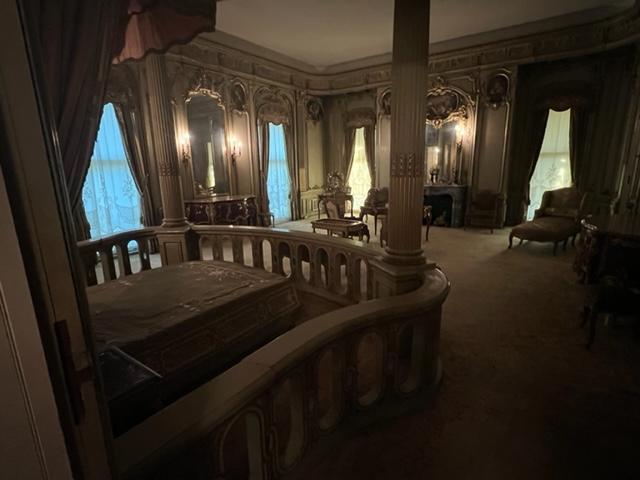
The bedrooms on the second floor are as elaborate as the rest of the house. While Fredrick’s bedroom was very plain in comparison to Louise’s who designed her bedroom after Marie Antoinette’s that she saw at Versailles. The room has a railing around it.

Louise’s Bedroom was based on what she saw in Europe.

Fredrick’s bedroom is less formal

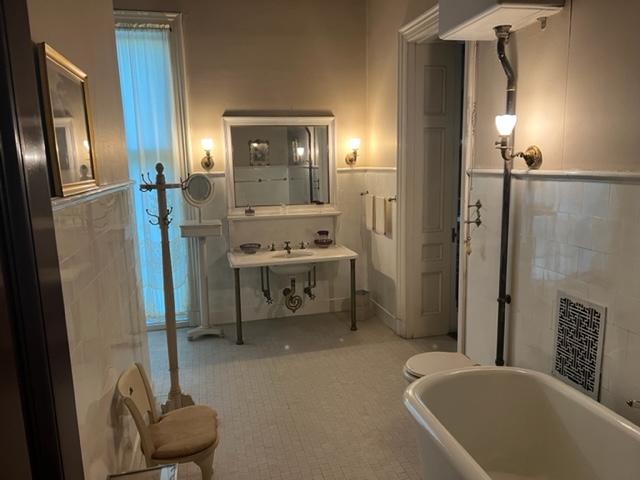
The Bathroom with its modern plumbing and lighting

The elaborate rooms of the Vanderbilt Mansion

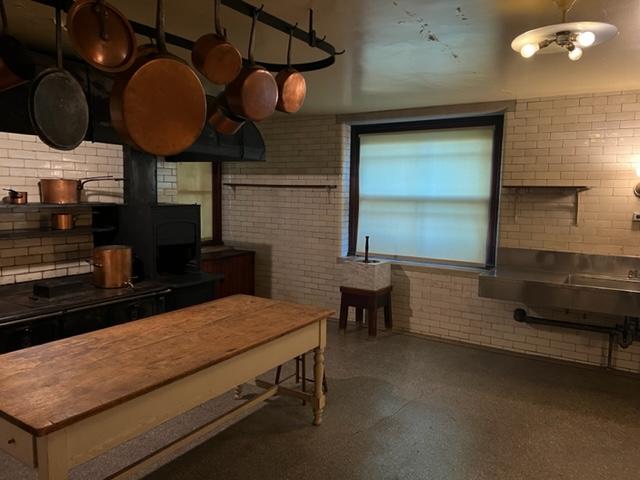
The household had a staff of over thirty people to attend to the household and grounds with their formal gardens. The kitchen staff had a well attended kitchen to work with and according to the tour guide, the staff was well treated at the Vanderbilt mansion. Fredrick was a good boss and provided well for his loyal staff.

The basement kitchen of the Vanderbilt Mansion

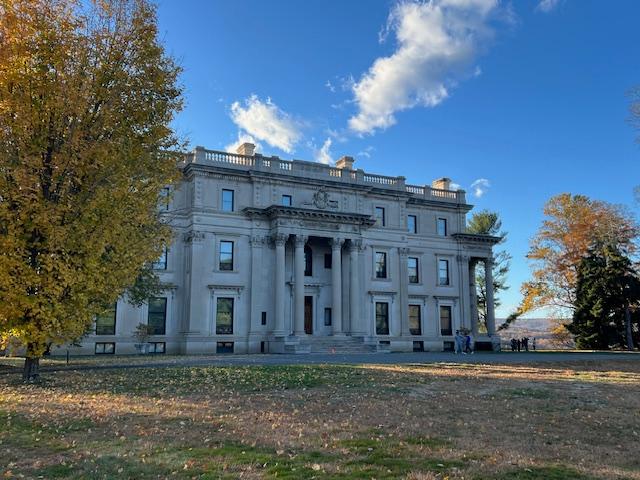
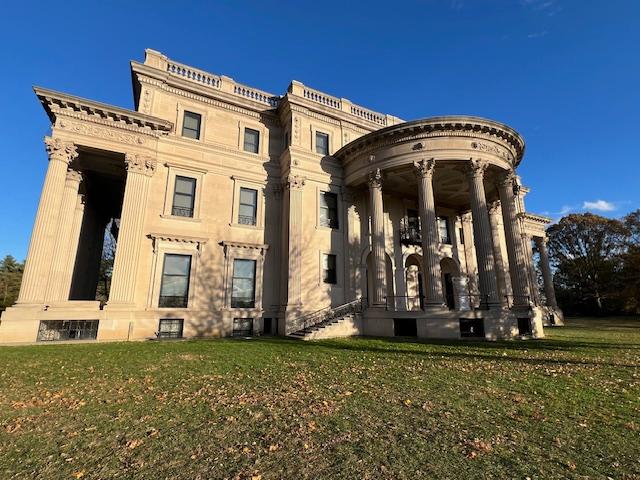
Touring the Vanderbilt Mansion at the Christmas holidays is always a treat but if you miss it, you can go during the year and still the elaborate rooms and beautiful grounds during the summer months. Take time to walk around the extensive lawns and gardens.

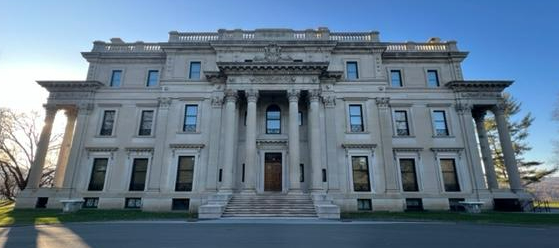
The Vanderbilt Mansion in the Fall of 2024

The Vanderbilt Estate in the Fall of 2024

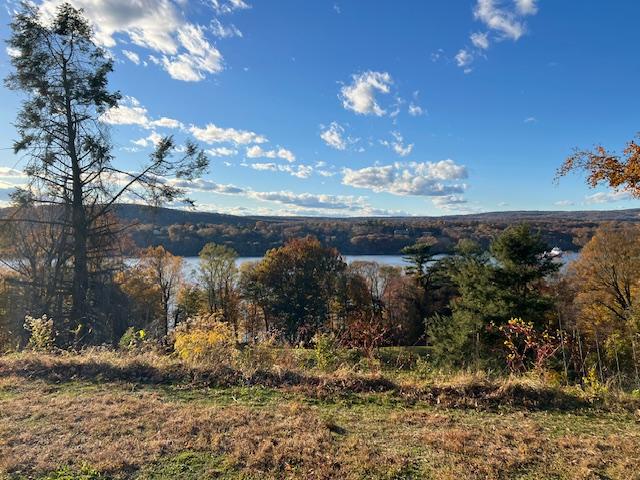
The back of the mansion facing the Hudson River

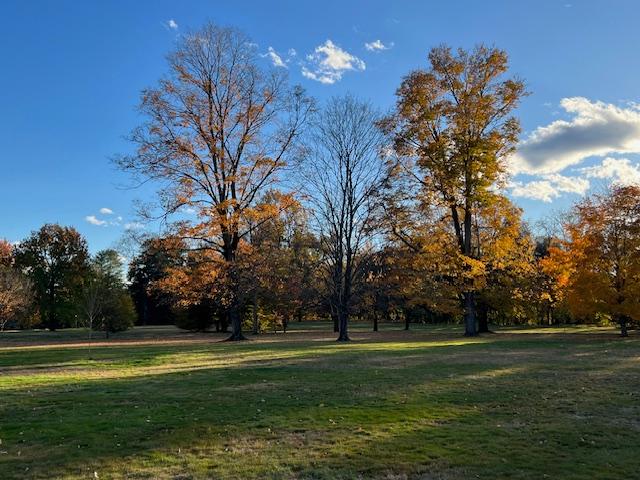
The estate grounds in the Fall of 2024

The estate in the Fall of 2024

History of the Vanderbilt Mansion:

The Gilded Age, the period following the Civil War to the turn of the century, was a time of unparalleled growth in industry, technology and immigration. Captains of industry, men like Cornelius Vanderbilt, Andrew Carnegie, J.P. Morgan, John D. Rockefeller and others who amassed unimaginable wealth, while the average annual income in the US was around $380, well below the poverty line.

The term “Gilded Age” was coined by Mark Twain and Charles Dudley Warner in their 1873 book, The Gilded Age: A Tale of Today. The term refers to the process of gilding an object with a superficial layer of gold to improve its appearance. Established millionaires viewed nouveau riche families like the Vanderbilt’s, who flaunted their wealth by building ostentatious  homes, throwing extravagant balls and using their money to buy social prominence, as gilded-all show, no substance.

Cornelius “Commodore” Vanderbilt (1794-1877) rose from poverty to become a shipping and railroad tycoon. He turned a 100 dollar loan from his parents into a multi-million dollar fortune and left the bulk of his money to his eldest son William.

William expanded the railroad operations doubling the Vanderbilt fortune in just eight years but his eight children lived lives of excess, extravagance and self-indulgence. They built 40 opulent mansions and country estates and entertained lavishly, largely depleting the family money.

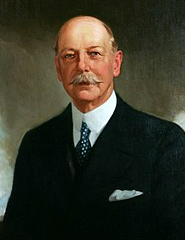
Fredrick William Vanderbilt later in life

In 1895, William’s son, Fredrick (1856-1938) and his wife, Louise (1854-1926) bought Hyde Park to use its their spring and fall country estate. McKim, Mead & White, America’s top architecture firm, designated the mansion in the neoclassical style with Beaux-Arts ornamentation and incorporated the latest innovations: electricity, central heating and indoor plumbing.

They added the Pavilion, a coach house, power station, gate houses, two new bridges over Crum Elbow Creek, boat docks, a railroad station and extensive landscaping. Many of the mansion’s contents were bought in Europe from wealthy families who had fallen on hard times. Furnishings and construction coast totaled around $2,250,000.

Louise Vanderbilt

Hyde Park was in many ways self-sustaining, providing food and flowers for the family’s needs here and at their other homes. When the Vanderbilt’s were in residence, as many as 60 staff worked here. Staff lived on or near the property and attended to the grounds and extensive farm. Personal staff traveled with the Vanderbilt’s and lived in the mansion with the family. Seasonal laborers were hired from the community and lived in the servants’ quarters.

The Vanderbilt Mansion in Hyde Park, NY in Fall 2024

The Vanderbilt Estate in Fall 2024

Fredrick, a quiet man, preferred to avoid social occasions but Louise loved to entertain, throwing lavish weekend parties with horseback riding, golf , tennis and swimming followed by formal dinners and dancing.

When Louise died in 1926, Fredrick sold his other houses and returned to this estate for the last 12 years of his life. He was active in business, directing 22 railroads until his death in 1938. His estate totaled $76 million, over 1.2 billion today. Gilded Age estates like this flourished in the 1890’s until the income tax (1913), World War I (1914) and Great Depression (1930’s) made their upkeep all but impossible.

The couple had no children and left the Hyde Park mansion to Louise’s niece, Margaret Louise Van Alen, who tried to sell the estate but there were no buyers. Her neighbor, Franklin D. Roosevelt, suggested she donate the estate to the National Park Service as a monument to the Gilded Age. She agreed and the Vanderbilt Mansion National Historic Site opened to the public in 1940.

The farmlands were not part of the donation and remain in private hands. The lavish mansion and its contents remain virtually unchanged from the time the Vanderbilt’s lived here.

(The National Park Foundation pamphlet)

The Vanderbilt Family History:

1650: Jan Aertsen Van Der Bilt is the first Vanderbilt ancestor known to reside in American.

1794: Cornelius “Commodore” Vanderbilt born on Staten Island, New York City, to Cornelius and Phoebe Hand Vanderbilt.

1810: Cornelius borrows $100 from parents and buys first two-masted sailing barge to start a ferry service from Staten Island to Manhattan.

1817: Cornelius captains a steamship for Thomas Gibbons and assists in legal battle against steamship monopolies, opening the way for his own shipping business.

1821: William Henry Vanderbilt, one of 13 children and first son, born Cornelius and first wife Sophia.

1830’s-1840’s: Cornelius expands shipping empire, begins railroad management.

1841: William marries Maria Kissam. They have eight children.

1851: Cornelius’ Accessory Transit Company provides shorter, cheaper transportation from New York to San Francisco. He gains national prominence.

1856: Fredrick, sixth child, is born to William and Maria

1861-65: During the Civil War, Cornelius donates steamship to the Union Navy. Receives Congressional Gold Medal. Acquires and consolidates rail lines in the Northeast and Midwest.

1870’s: Cornelius consolidates two core companies, creating New York Central & Hudson Railroad. William slashes cost, increases efficiency, turning it into one of the most profitable large enterprises in America.

1871: Cornelius opens Grand Central Depot on 42nd Street, New York City, the largest train station in North America

1877: Cornelius dies. William inherits most of his father’s fortune, nearly $100 million, to great displeasure of his siblings.

1878: Fredrick graduates from Sheffield Scientific School (Yale). Marries Louise Anthony.

1885: William dies, leaving an estate of $195 million to his eight children.

1895: Fredrick and Louise purchase the Hyde Park estate.

1899: Grand Central Depot is enlarged and becomes Grand Central Station.

1904-13: The new Grand  Central Terminal (GCT) is built in sections on Depot site.  Design insures trains are not delayed.

1926: Louise dies.

1938: Fredrick dies, leave the Hyde Park estate to niece Margaret Louise Van Alen.

1940: Vanderbilt Mansion National Historic Site established.

1949: 65 million passengers pass through GCT, equivalent 40% of the American population.

1950: Glory days of rail travel end.

1967: GCT designated New York City landmark, saving it from demolition.

1968: New York Central merges with Pennsylvania Railroad to form Penn Central.

1970: Penn Central files for bankruptcy and is dissolved by the courts.

1994: Metro-North takes over the GCT operation and restores it to 1913 splendor.

(The National Park Foundation pamphlet)

A legacy of landscape design:

The estate’s landscape was first developed by Dr. Samuel Bard, who died here in 1821. In the European picturesque style, he planted exotic plants and probably the gingko tree, one of the continent’s oldest dating back to 1799. Bard’s son, William sold the to his father’s medical partner, Dr. David Hosack, who built the first formal gardens and greenhouses. After his death, the estate was broken up. Later Walter Langdon Jr. reunited the estate, laid out the formal garden’s and hired Boston architects to design a gardener’s cottage, tool houses and garden walls. These structures, the only ones to pre-date Vanderbilt ownership, still exists. Vanderbilt redesigned the formal gardens and planted hundreds of trees and shrubs. On weekends, Fredrick and Louise liked to walk through the gardens twice a day. Today the landscape, restored to its 1930’s appearance, encompassing five acres of tiered gardens, gravel paths, shady arbors, ornate statues and bubbling fountains.

(The National Park Foundation pamphlet)

Disclaimer: This information comes directly from the National Park Service pamphlet of the Vanderbilt Estate and I give the author full credit on the information. Please refer to the National Park System website for any further information on the site as the hours vary during the different times of the year.