Tag: nj museums

Atlantic County Historical Society                                      907 Shore Road                                              Somers Point, NJ 08294

Atlantic County Historical Society 907 Shore Road Somers Point, NJ 08294

Atlantic County Historical Society

907 Shore Road

Somers Point, NJ 08294

(609) 927-5218

https://www.atlanticcountyhistoricalsocietynj.org/

https://www.facebook.com/AtlanticCountyHistoricalSociety/

Open: Sunday-Tuesday Closed/Wednesday-Saturday 10:00am-3:30pm

Admission: Free

My review on TripAdvisor:

https://www.tripadvisor.com/Attraction_Review-g46825-d24142996-Reviews-Atlantic_County_Historical_Society-Somers_Point_New_Jersey.html

The Atlantic County Historical Society at 907 Shore Avenue

The Atlantic County Historical Society

I recently visited the historical sites of Somers Point and took my time to tour the Atlantic County Historical Society, which tells the story of life in Atlantic County from the beginnings to today with a major concentration the early history of the County with the Native American Lenape Indians and into the late 1700’s and 1800’s with the founding of the town, the Revolutionary and Civil Wars, shipbuilding, fishing and the start of the Victorian Age. Each floor has interesting displays that sometimes have been over-decorated with too many objects.

When you walk in the door, you enter the library where people study the history of the town and their geneology. There are stacks of books, periodicals and town records with people to help you research your work.

As you head downstairs, you will see the various displays that have been set up on life in Atlantic County through the ages. Most of the artifacts in the displays are from the late 1800’s to the early 1930’s. The displays represent the home life of middle to upper middle class Americans at the time. There are parlor sets with musical intruments for entertainment, family portraits, writing sets and living and dining room bric-a-brac. The museum portrays the life of properious residents of the area.
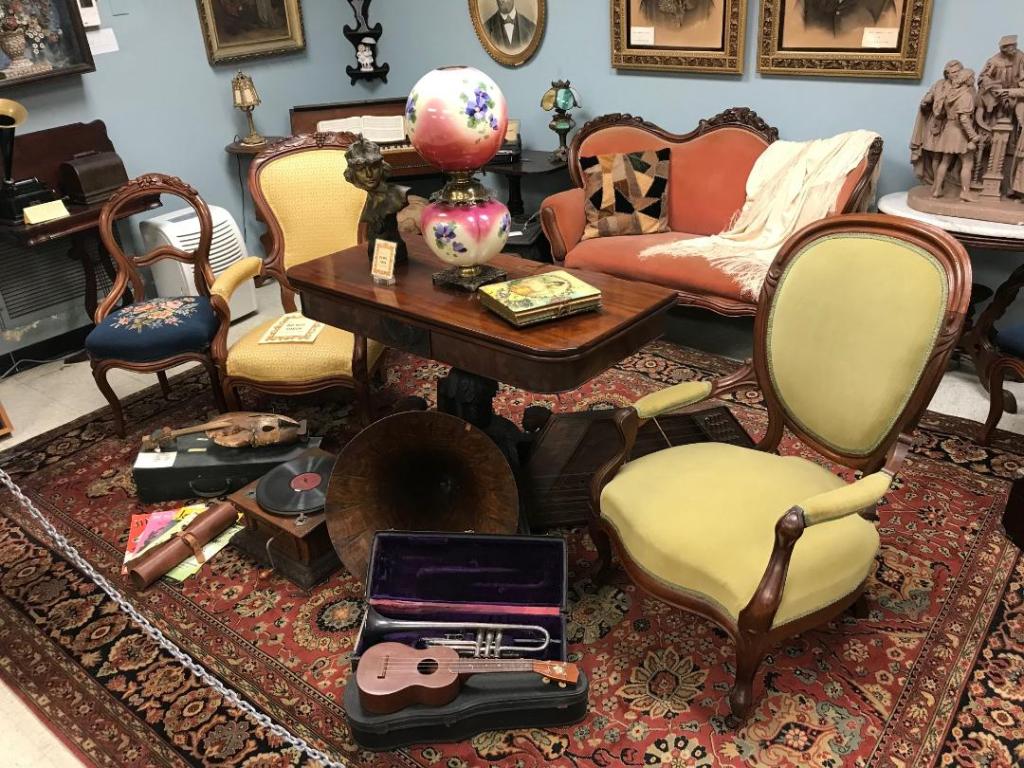
The Middle to Upper Middle Class parlor of Americans in the late 1800’s

The Dining Room set and dishes of a 1920’s Atlantic County family with all sorts of kitchen and play items for engagement for the family through the years.

The display really shows that entertaining since those times has not changed over the years except that today that things are less formal. China, crystal and silver were your way of showing your status in the community. Today’s generation is not so apt to do this.

Early phonographs, lightbulbs and inkwells for writing

Lifestyle was a big part of people’s lives during these time periods so the way you dressed and presented yourself was a big part of who you were. With the advent of ocean swimming, outdoor recreation and weekend activities that came with the push of the unions. You can see that leisure became a big part of the Victorian’s lifestyle.

One thing that emphisis was put on was children and their well-being. We see the start of children’s education, their health and livelihoods and their playthings. The Victorians especially worked hard to give children a better life than the workhouses and factories that children had been subjected to in the previous century. There was a push to make children well-behaved ‘little adults’.
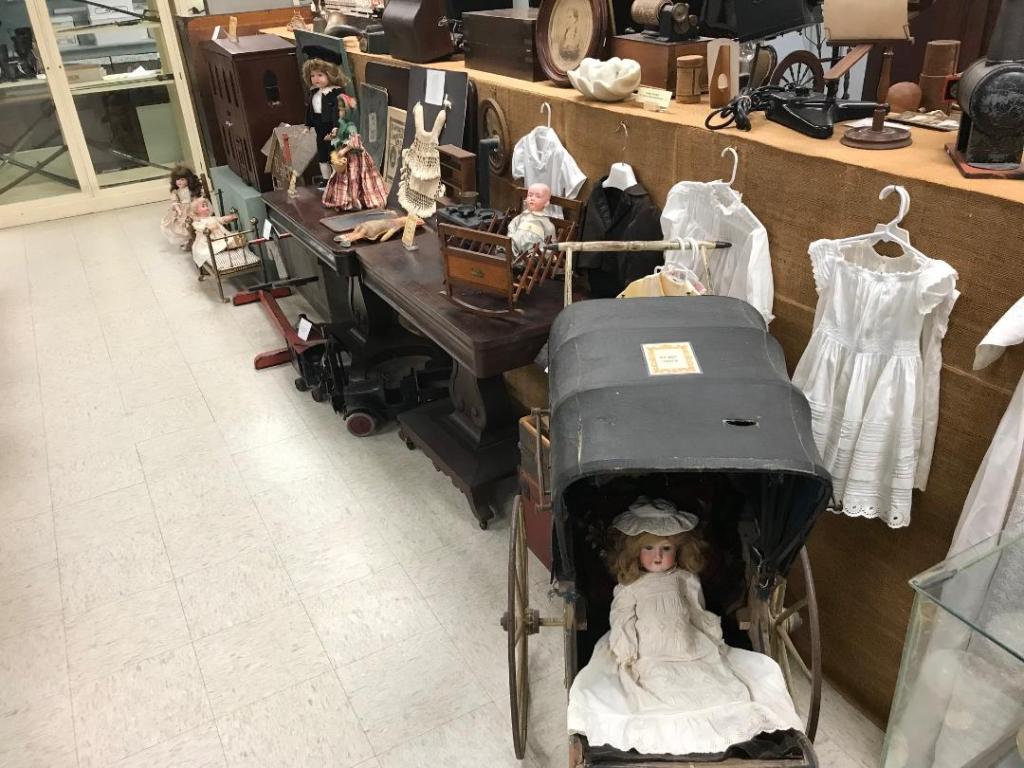
Children’s playthings and clothes were a big part of Victorian children’s lives
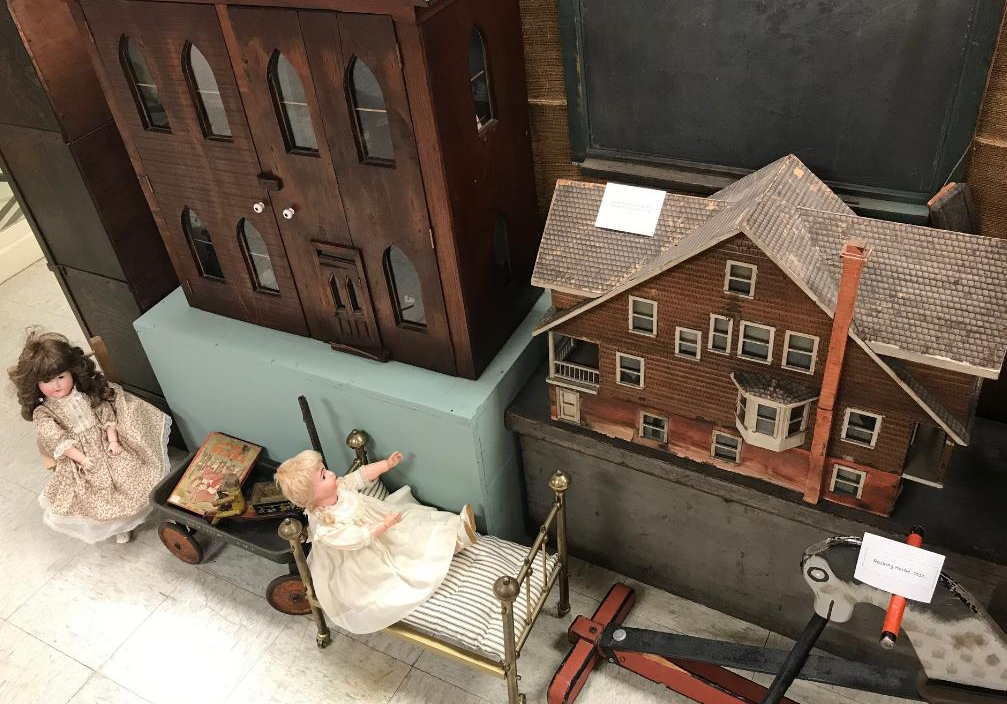
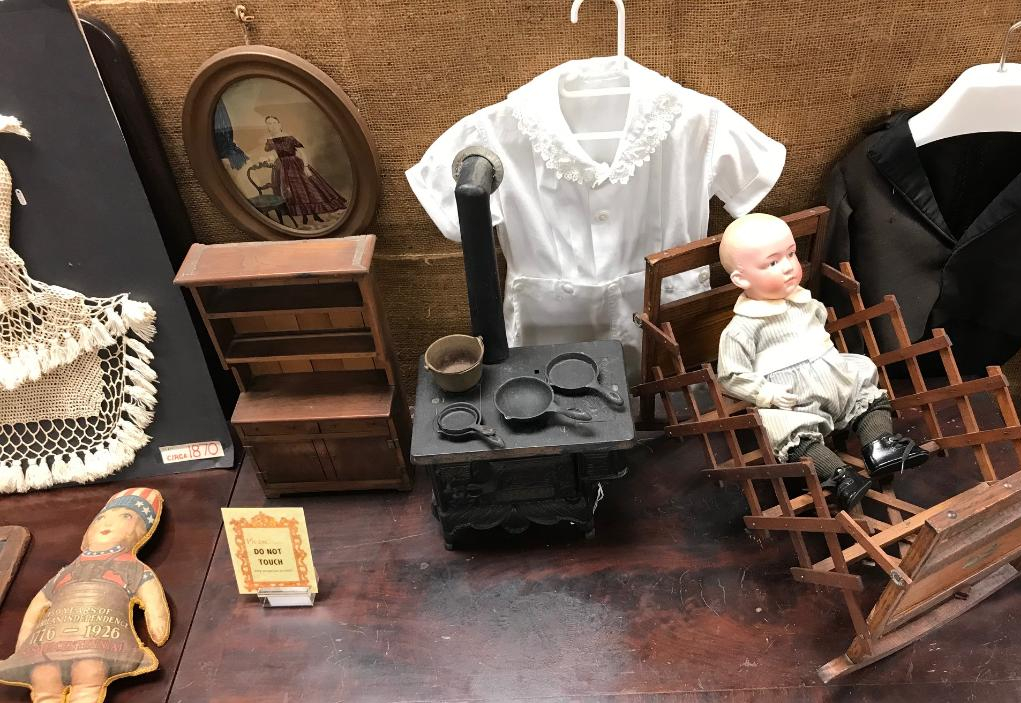
Children’s Playthings

Children’s dolls and playthings represented the house and to prepare for household responsibilities
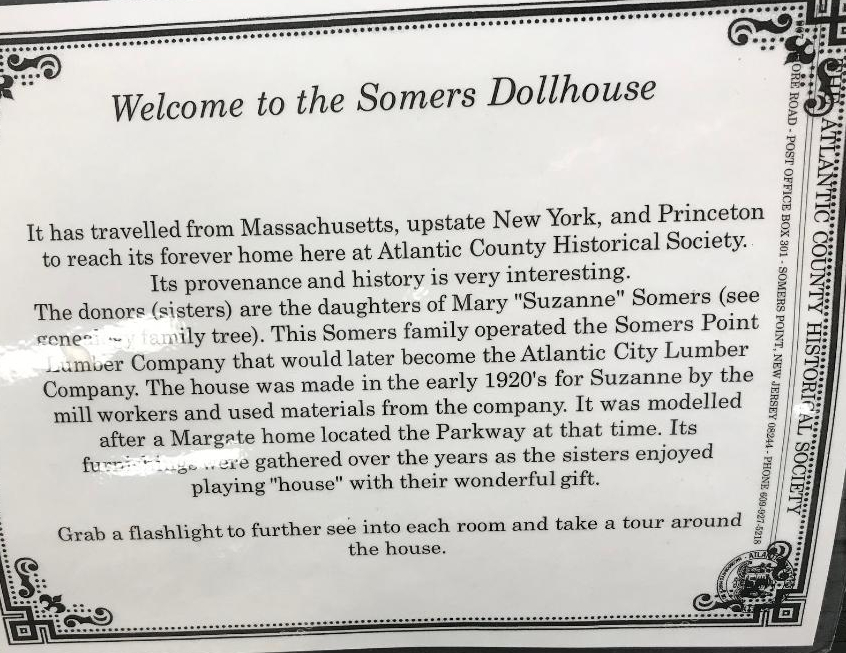
The Somers Family dollhouse that was built for the Somers family’s daughters
The Somers Dollhouse was a special gift to two young girls of the noted family who played with this their entire childhoods. Notice the detail to the this wonderful dollhouse.

People were expected to do their chores at home such as cooking, washing, dressmaking and taking care of the house. Before electricity this was not an easy task made even more difficult by the Victorian expectations of propriety and cleanliness.
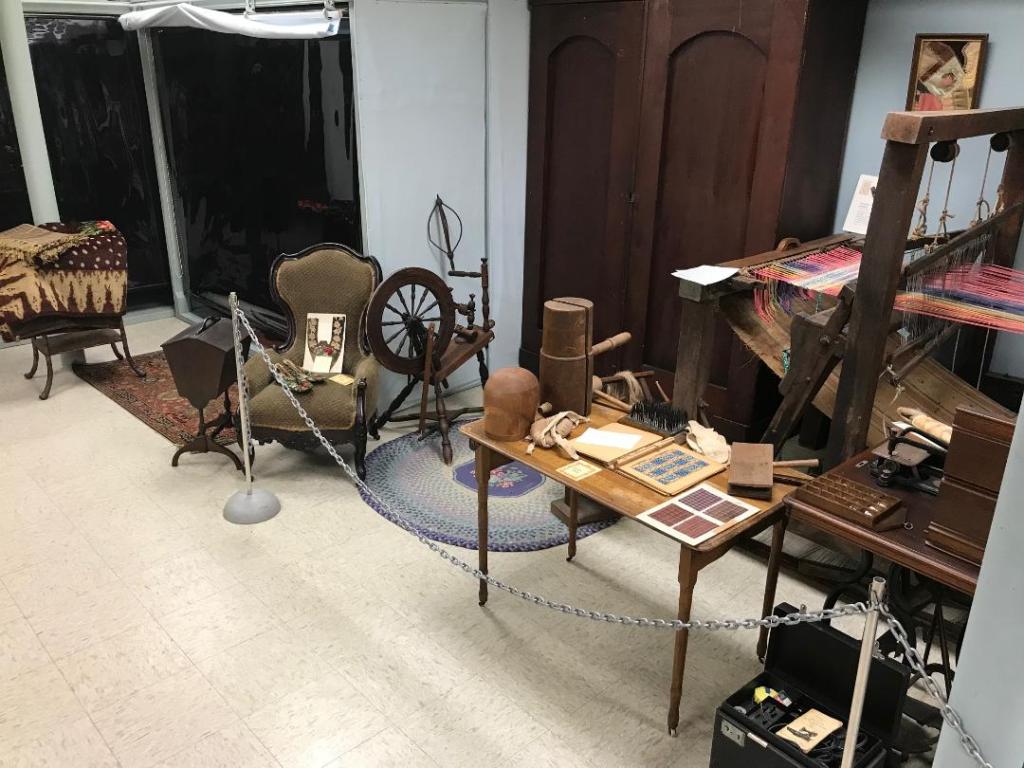
The spinning wheels represented cloth and clothes making of the late 1700’s and the loom of rug making for home decoration before the advent of the department stores. Butter churning and ice cream making were all day chores.

Home decoration was a big part of home life. The house was where the family spent their time and Victorians especially liked to room for everything including the bedrooms. This is where privacy was king if you could afford it. In the era of ‘children were seen and not heard’, if family members could have their own rooms that was paramount.
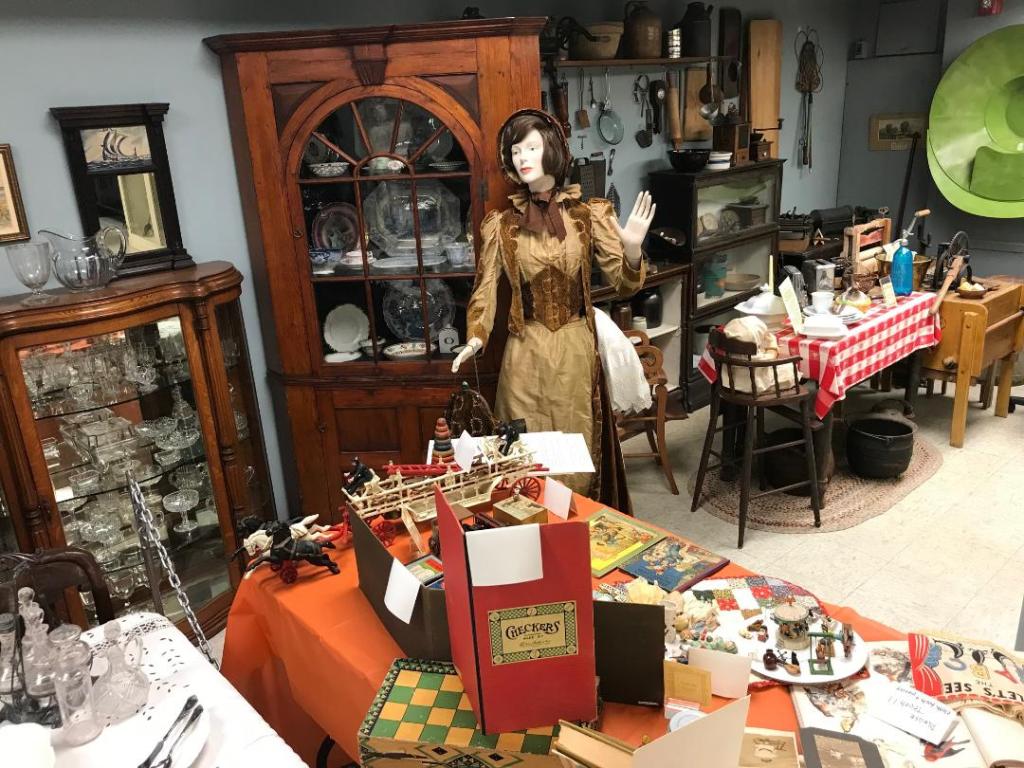
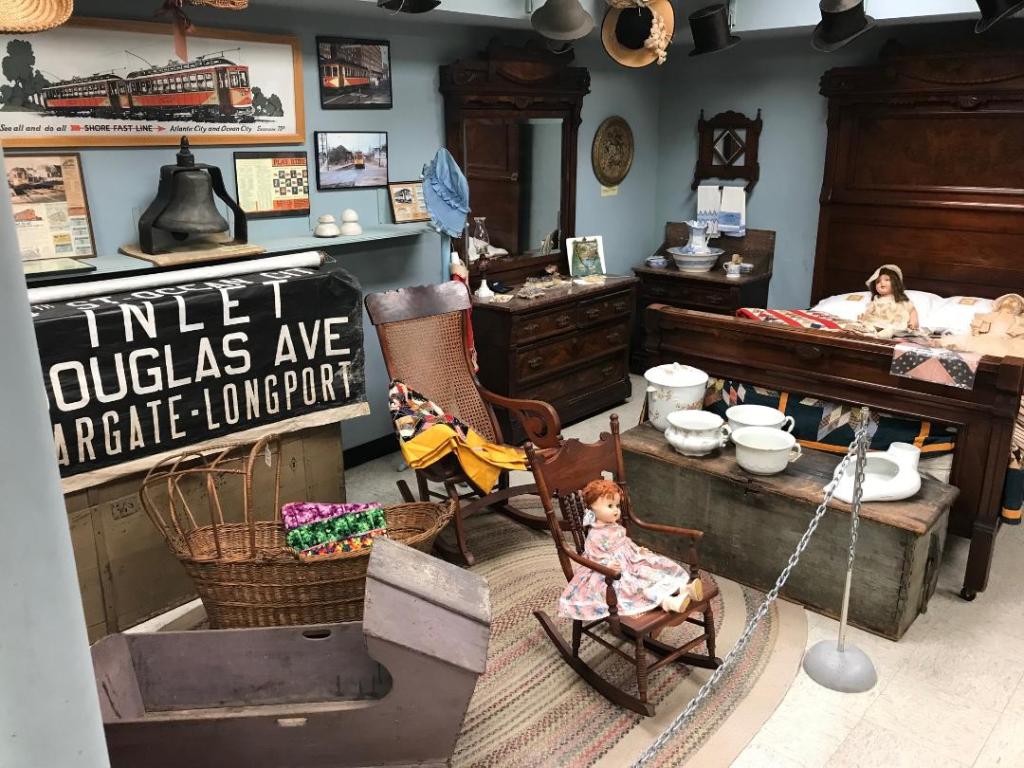
The kitchen was king and entertainment was taken seriously. Things had to look and seem a certain way.
The Victorian Bedroom was a place of rest and leisure for the married couple
Victorians believed in grooming and good manners

There was also a large collection of vintage clothing, quilts and bedding, hats and gloves and walking sticks to show the dressing the middle and upper middle class citizens.

Manufacturing was also a big part of the community and shipbuilding was one of the businesses by any waterfront community that was important.

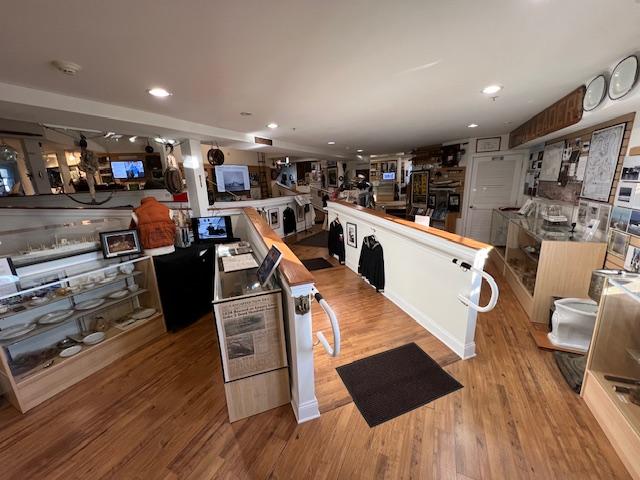
The shipbuilding and fishing displays on the third floor

The Third floor is dedicated to industry of the area with fishing and shipbuilding a very important part of any waterfront community. Tourism which was a new thing in the industrial age and people having weekends off to enjoy themselves discovered these new shore communities for swimming, sunning, staying at hotels and ocean dining.
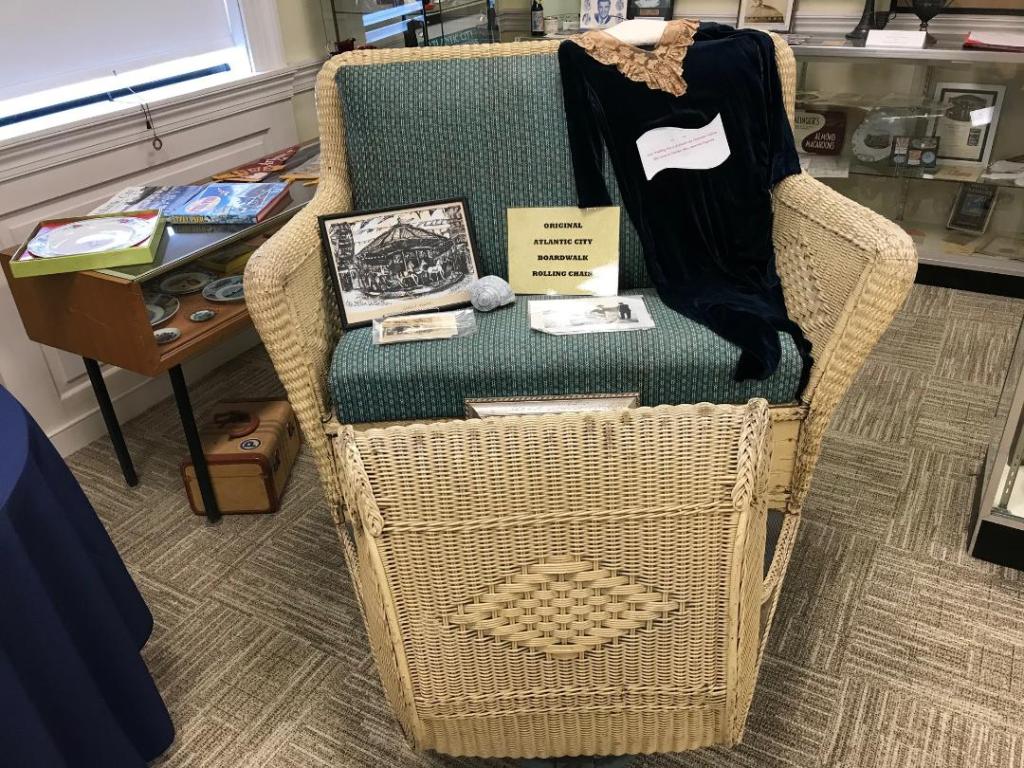
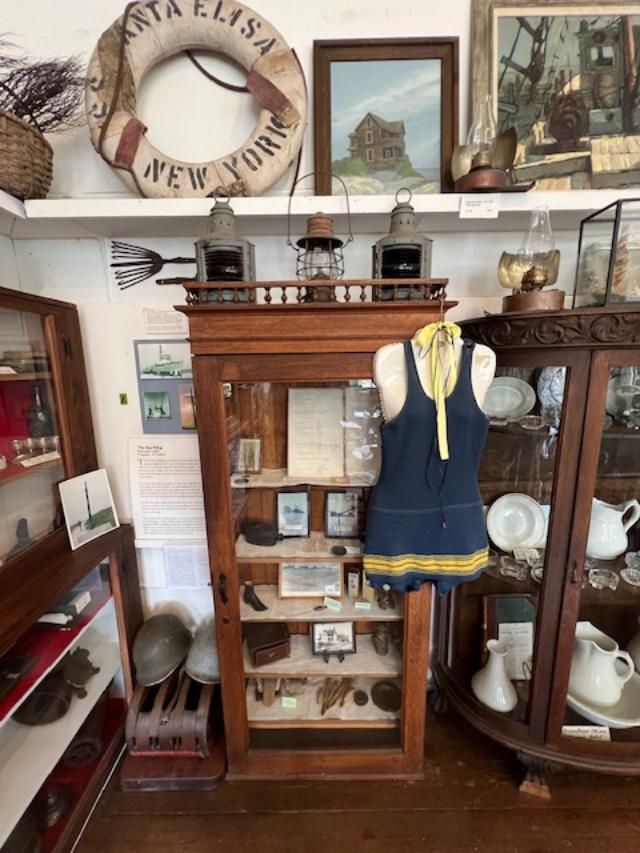
Resort ware and a rolling chair from Atlantic City’s boardwalk

The last display on the third floor was the office set up of Senator Frank “Hap” Farley, whose innovations and protections of the shore and transportation to various parts of the state opened it up for development and tourism.

Senator Frank “Hap” Farley

https://en.wikipedia.org/wiki/Frank_S._Farley

The office of Frank S. “Hap” Farley was a testiment to a well spent time in government

The upstairs galleries is also a place where groups meet and discussions and lectures are held. There really is something for everyone at the Society.

There is more to see and do here and take your time to visit all the displays and take a tour of everything. It is also an enjoyable rainy or hot sunny day alternative to the beach. You will learn a lot about Atlantic County and the history of New Jersey here.

The History and Mission Statement of the Atlantic County Historical Society:

(From the Society website)

Mission:

The mission of the Atlantic County Historical Society is to encourage the study of local history and genealogy and to disseminate this information to our members and the general public.

To fulfill our mission, the Society publishers an annual journal of local history and genealogy as well as a quarterly newsletter. Other means include programs, lectures, field trips, partnerships with local libraries and school districts, library and museum interpretative exhibitis and guided tours of the circa 1790 oysterman’s farmhouse, the Risley Homestead, in Northfield, New Jersey.

History of the organization:

The Atlantic County Historical Society is an independent, non-profit, tax-exempt membership organization. Originally founded in 1913 to collect and preserve the history of Atlantic County and southern New Jersey, the organization was incorporated as the Atlantic County Historical Society in 1915. In 2006, the Society was briefly renamed the Atlantic Heritage Center, but the original name was restored in 2011.

The Society opened its library and museum at the current location in 1968. In 2017, an extensive renovation project added additional space for the museum and to provide handicapped accessibility. The Risley Homestead site was bequeathed to the Society in 1989 by Virginia Risley Stout. She and her husband were the last to live in this historic building, of which portions date back to 1790. The building is listed on the State and National Registers of Historic Places.

Atlantic County Historical Society and Risley Homestead are registered trade names of Atlantic County Historical Society.
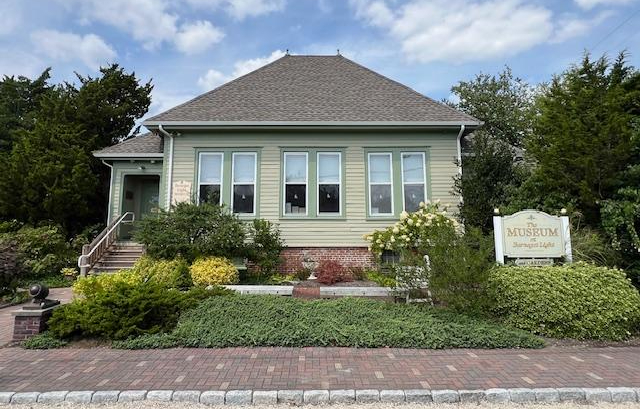
Barnegat Light Museum/The Edith Duff Gwinn Gardens                                                                   501 Central Avenue                                                        Barnegat Light, NJ 08006

Barnegat Light Museum/The Edith Duff Gwinn Gardens 501 Central Avenue Barnegat Light, NJ 08006

Barnegat Light Museum/The Edith Duff Gwinn Gardens

501 Central Avenue

Barnegat Light, NJ 08006

(609) 494-8578

Open: July and August Sunday-Saturday 10:00am-4:00pm/June-October 10:00am-4:00pm/Seasonal

Fee: Donation to the museum

https://barnegatlightmuseum.org

My review on TripAdvisor:

https://www.tripadvisor.com/Attraction_Review-g46285-d8548161-Reviews-Barnegat_Light_Museum-Barnegat_Light_Long_Beach_Island_New_Jersey.html?m=19905

The Barnegat Light Museum at 501 Central Avenue

I was on Long Beach Island for the afternoon and had wanted to visit the Barnegat Light Museum on my last trip to the island but it was closed for the afternoon. When I checked the site to see if it was open this weekend, I found that it was and since I had to be in Beach Haven that afternoon I made it my first trip.

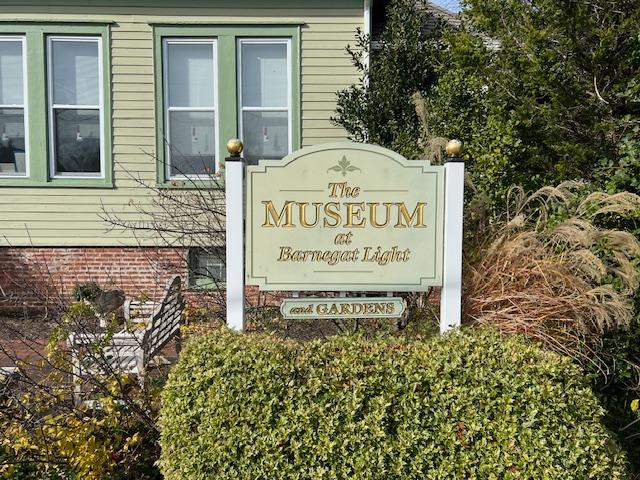
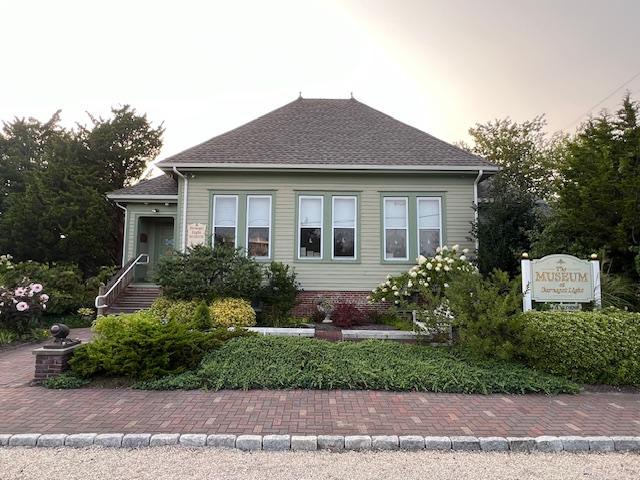
The Barnegat Light Museum sign in the off season.

The museum is now open ‘by appointment only’ in the off season, so I called the number provided and the President of the Museum Board opened the museum up for me and gave me a personal tour. What an interesting little museum packed with information and artifacts.

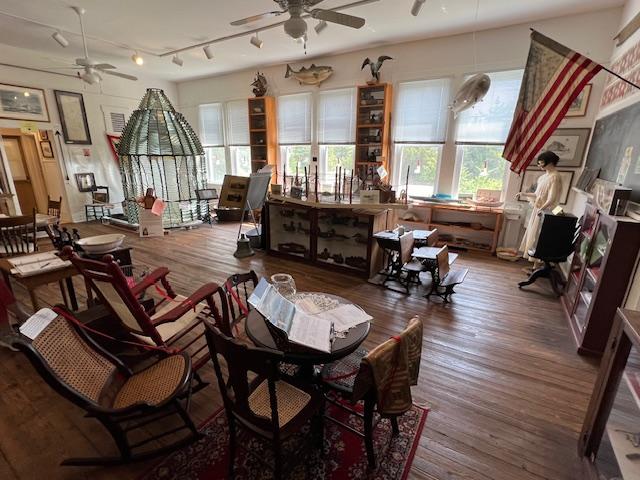
The Barnegat Light Museum main gallery

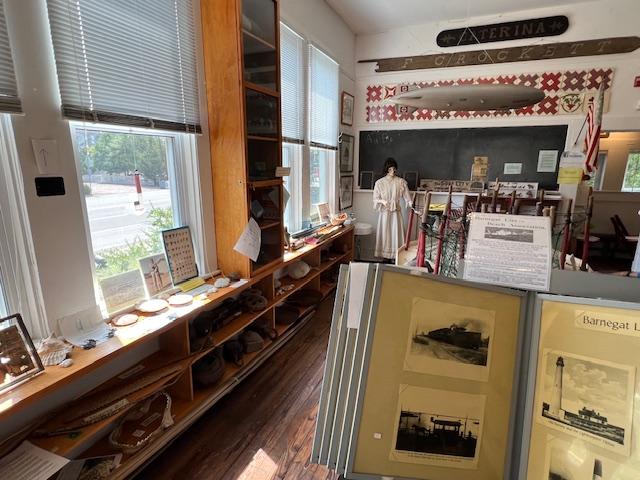
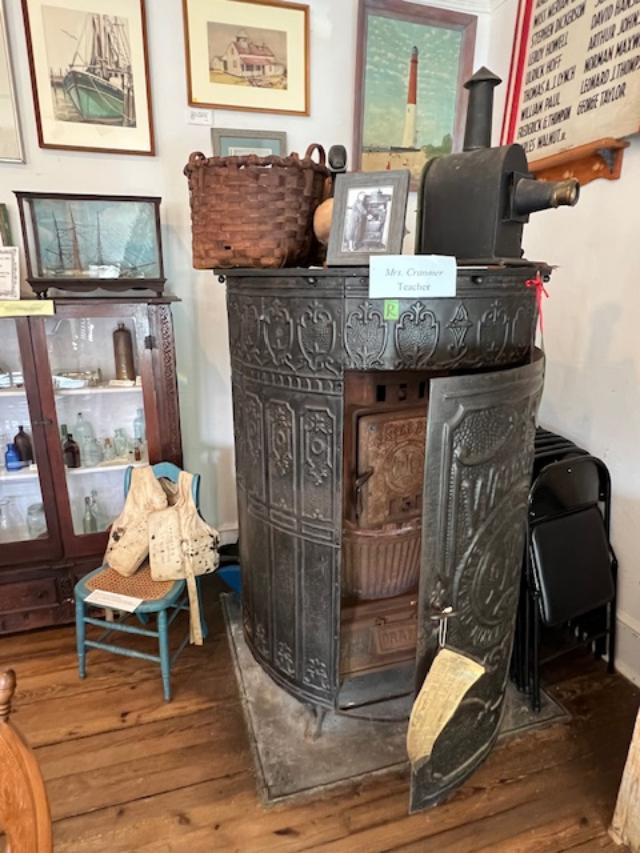
The museum is a former one room school house that was built in 1903 and used by island school children until 1954. The building still houses the original heating unit, a coal burning furnace and books of the children’s notes from school that had been handwritten (now typed) of current events and school notes.

The main gallery of the Barnegat Light Museum

The main gallery of the museum

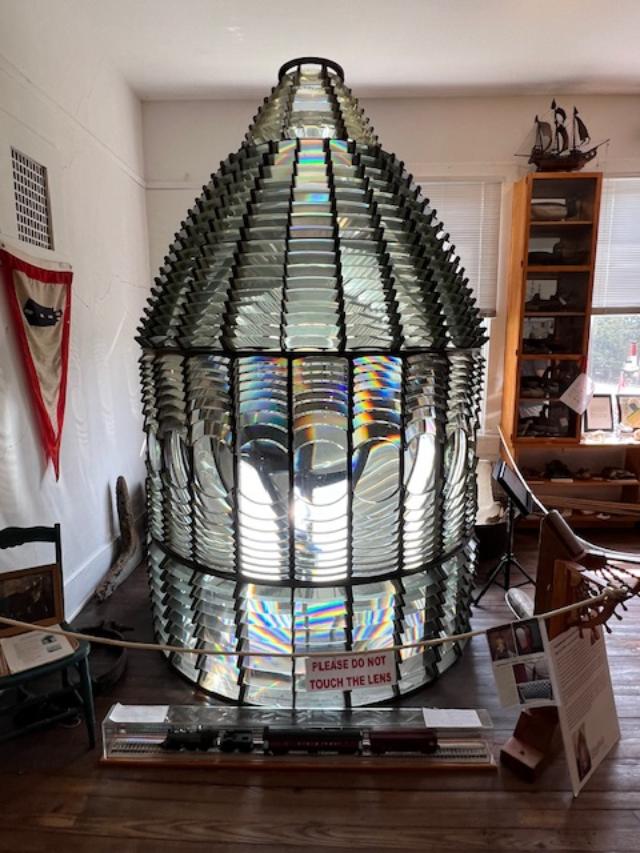
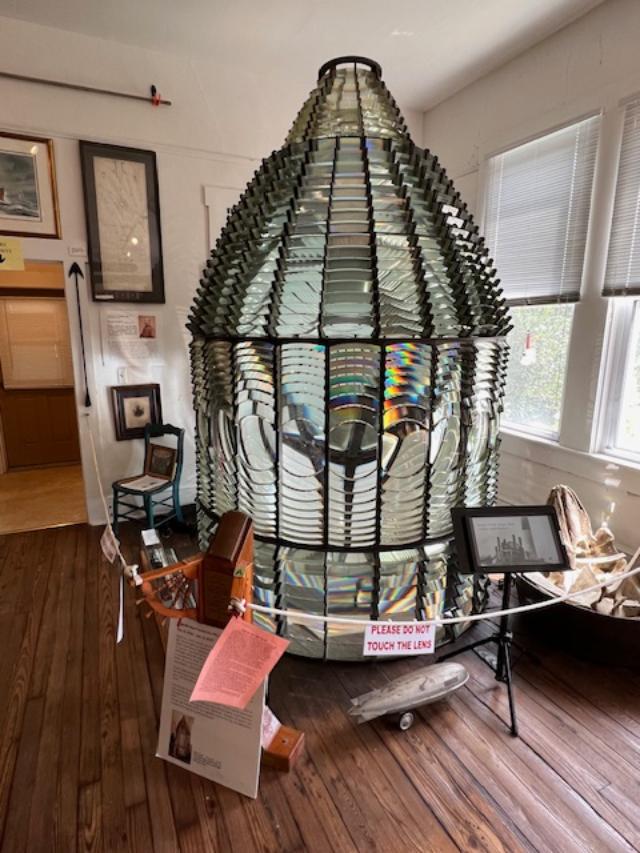
The main attraction is the original light, a 1052 prism lens, for the Barnegat Lighthouse on display since 1927. The glass panels and sheer size and beauty of light shows how it was once the beacon for ships along the New Jersey coast. It had been brought to museum after moving around to various places over the years.

The original Barnegat Light for the Lighthouse

The Lighthouse and light display in the museum

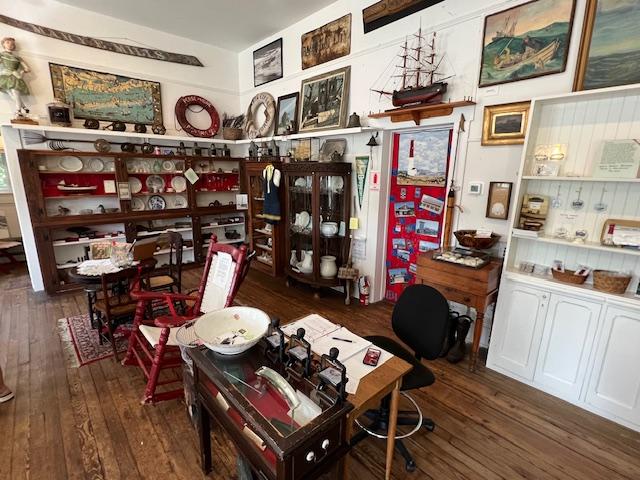
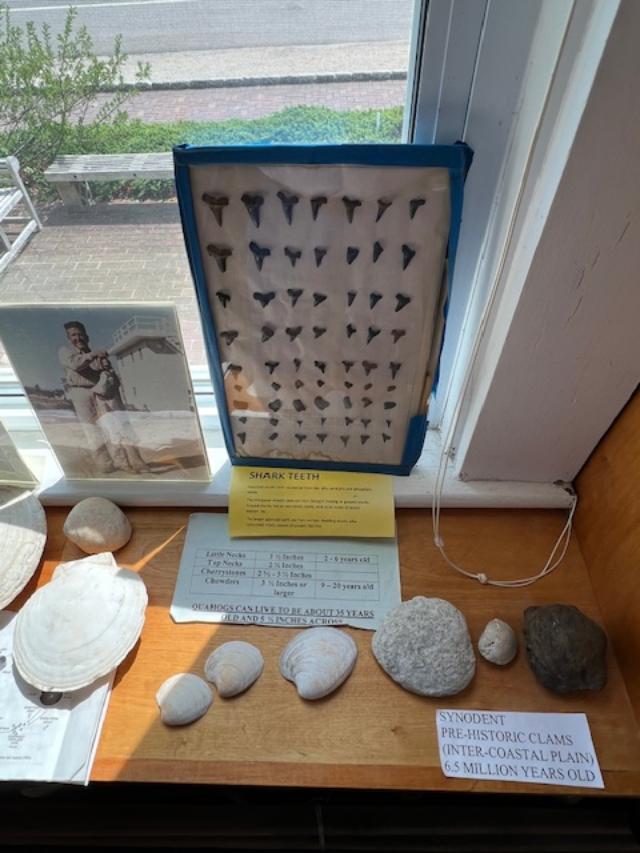
Along the walls are all sorts of local artifacts such as dinosaur bones that had been found in the bay and donated to the museum (the president of the museum said today there are certain laws on this), local housewares from families that lived on the island and various types of fishing equipment.

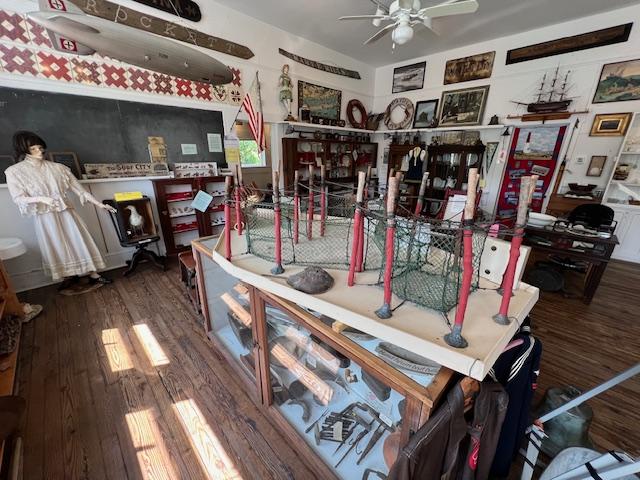
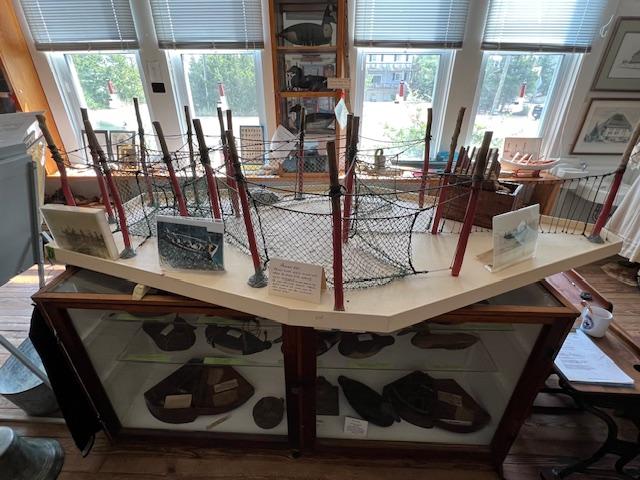
Display cases filled with local fishing artifacts and net configuration for ‘Pound Fishing’

Shark Teeth, Native American Artifacts and prehistoric fossils

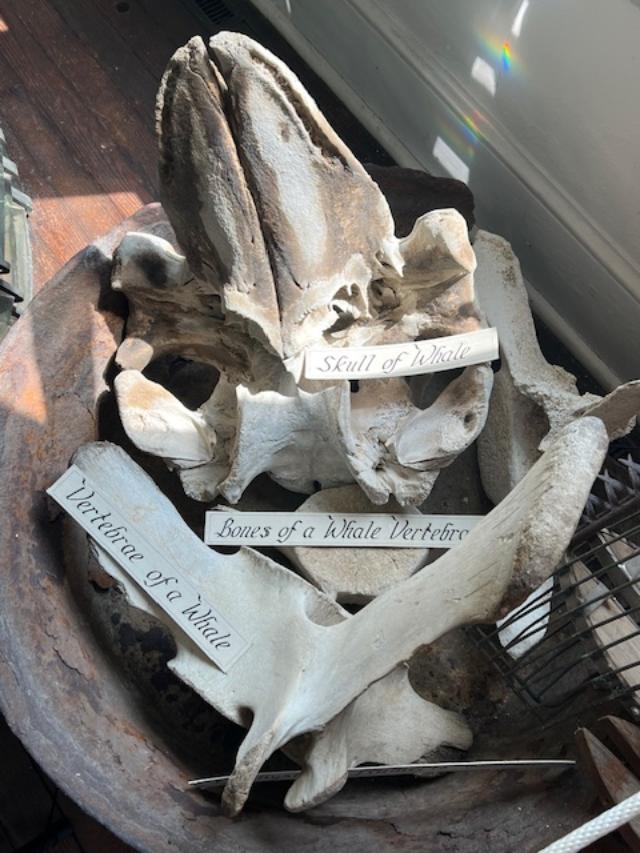
There is even a mini display of ‘Pound Fishing”, which is a series of poles and nets are used to catch the fisherman’s prey. This small display shows how it is constructed and used to catch the fish. There is an extensive display of Duck decoys, showing the island’s past and present as a hunting ground for water fowl. The displays come in all colors and types of ducks. There is also an interesting display of whale vertebrae and other fishing displays.
The Whale Vertebrae exhibit

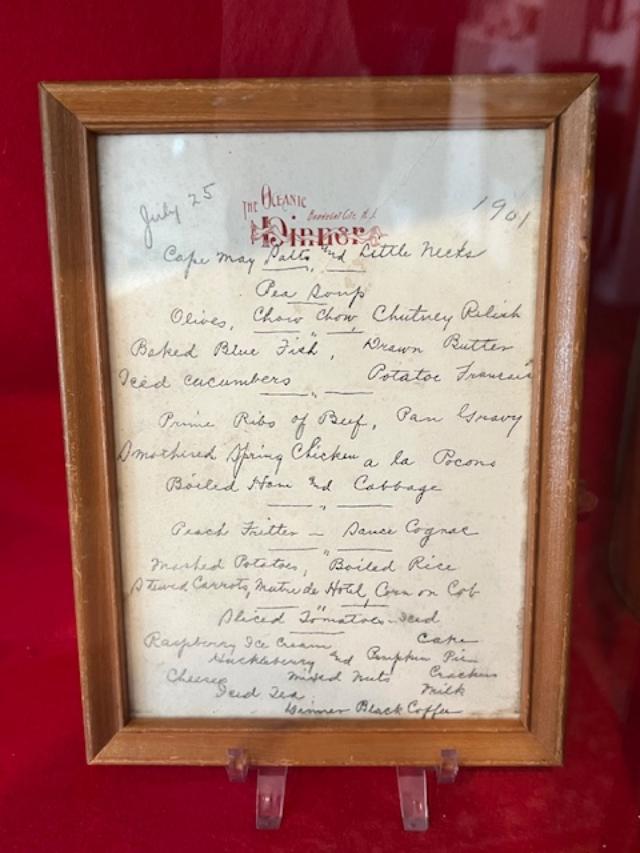
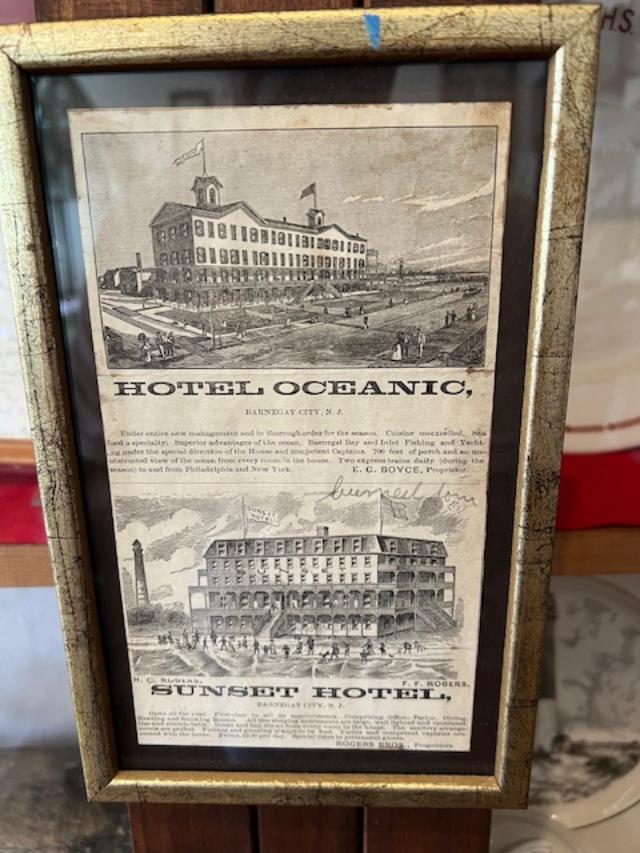
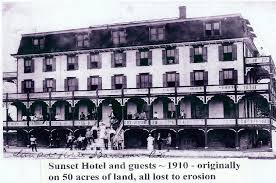
There is an extensive history of the resort hotels that used to be on this part of the island that had been effected by the changing tides of the island. Like the old lighthouse and lighthouse keepers home, one of the hotels just gave way to erosion. This part of the island just keeps shifting.

The Resort and Hotels display of menus

The Resort and Hotels display-The former hotels

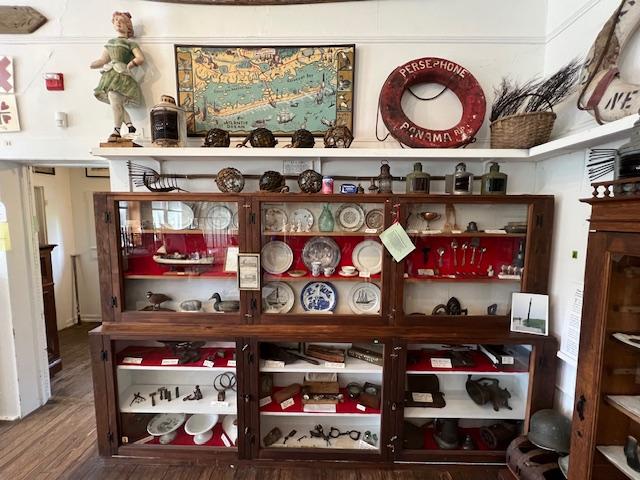
The Resort and Hotels display-Dishware and resort artifacts

Hotels disappeared because of shifting tides

Water sports and fishing displays

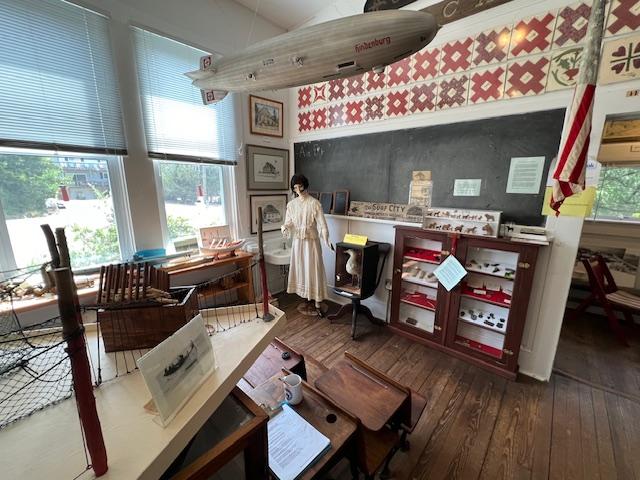
Since the building was once home to Barnegat Light’s School house, the original furnace is still in the building along with a display of items from old schools in the area.

The School gallery

The Schoolhouse Gallery

The schoolhouse furnace

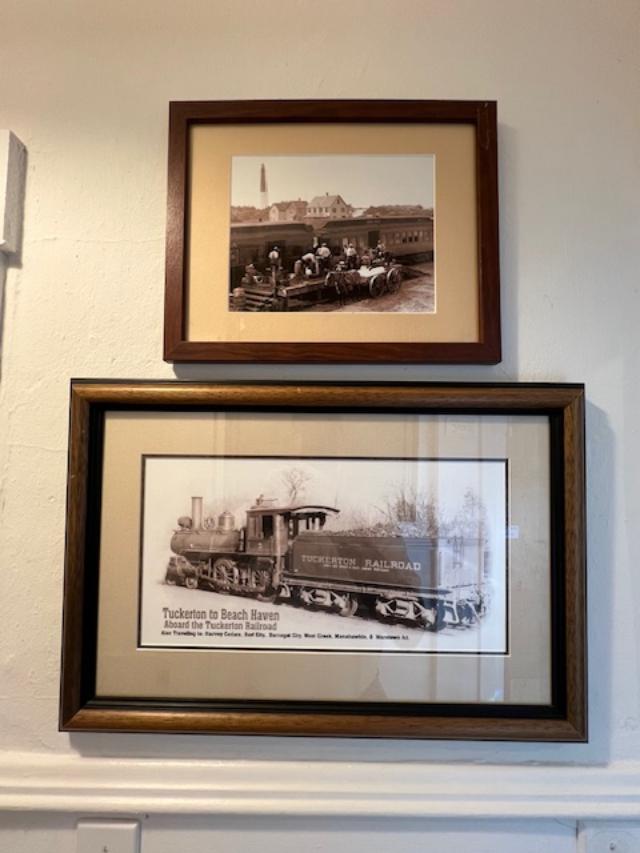
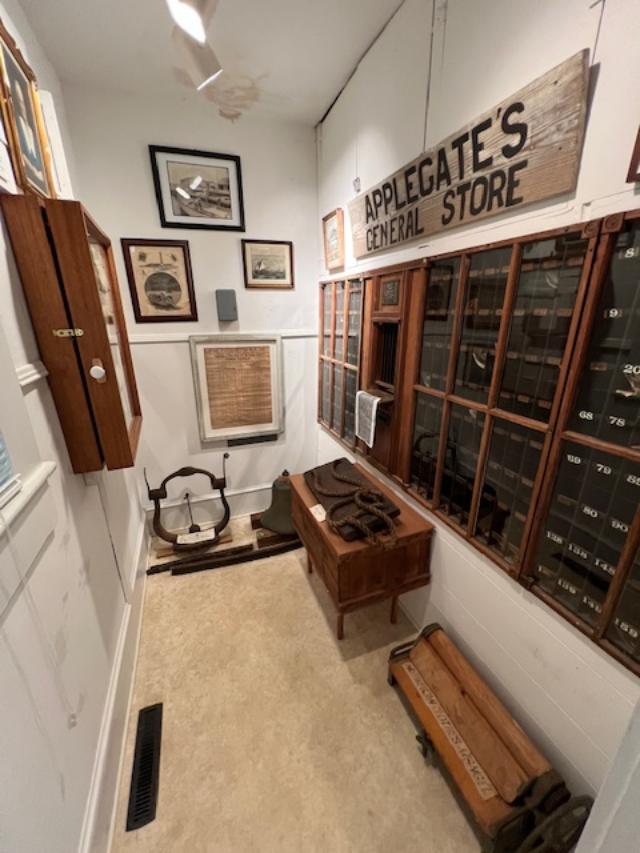
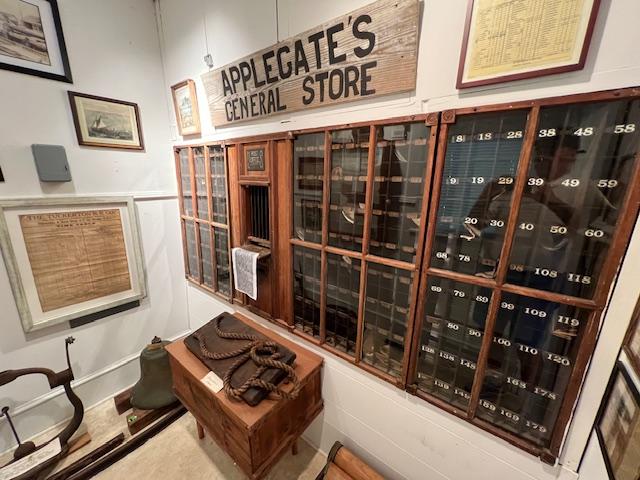
The retail trade in the early part of the century leading from the old railroad track to the island was the local General Store. The railroads were a big part of the growth of this area until automobiles to the shore became the preferred mode of transportation.

The railroad display

The General Store exhibit

The General Store exhibit

The Edith Duff Gwinn Gardens behind the museum in all seasons:

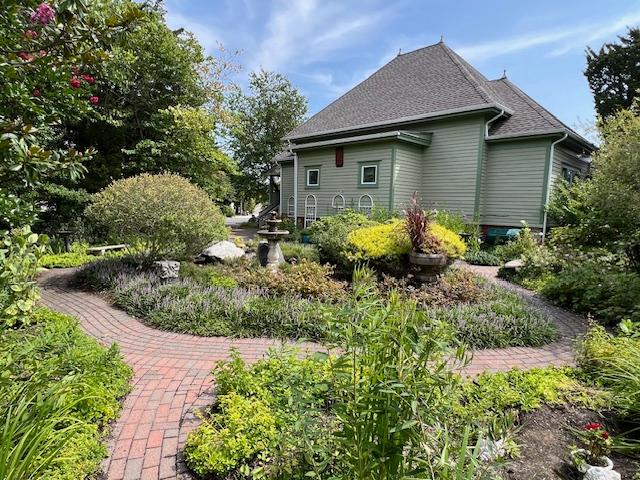
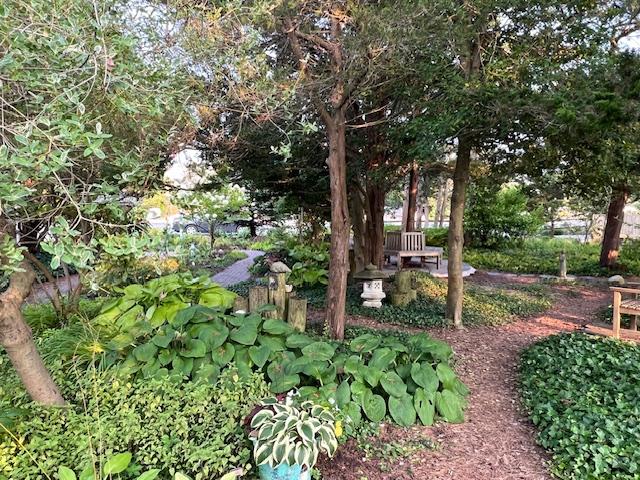
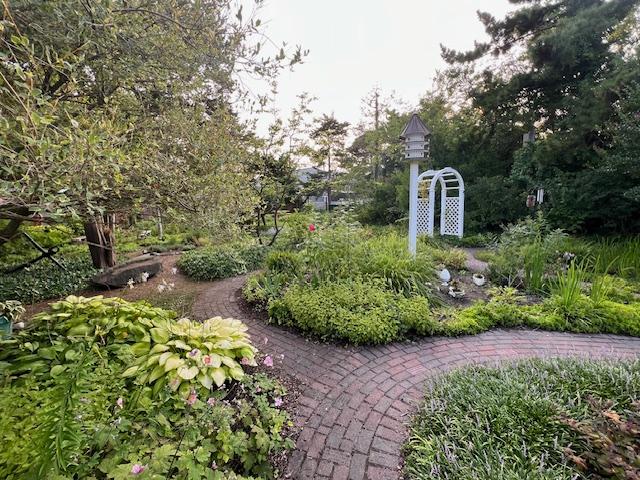
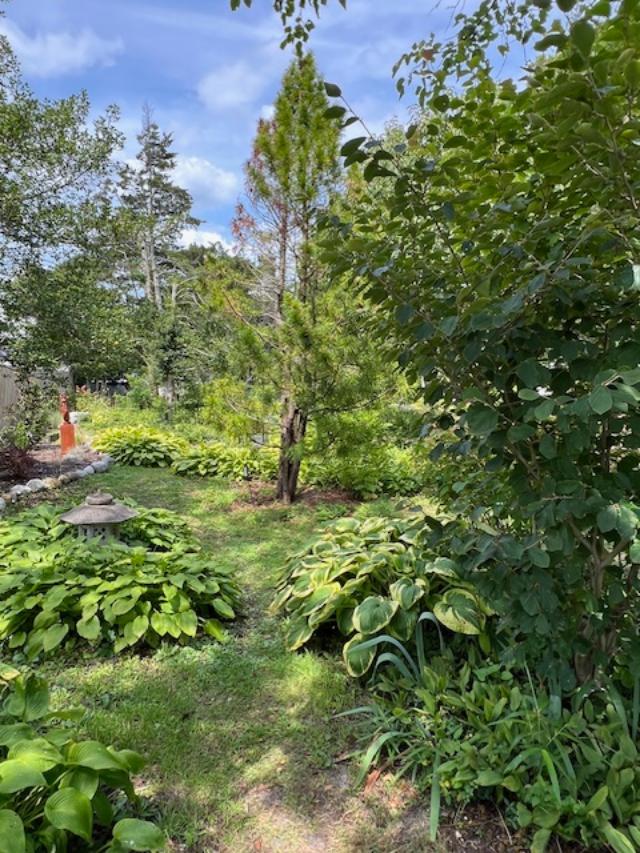
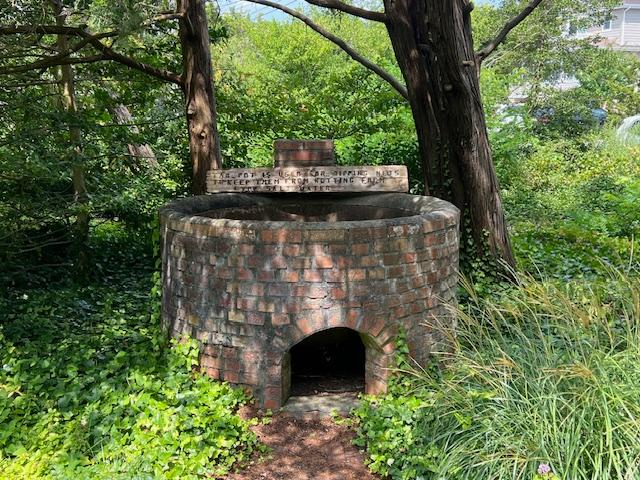
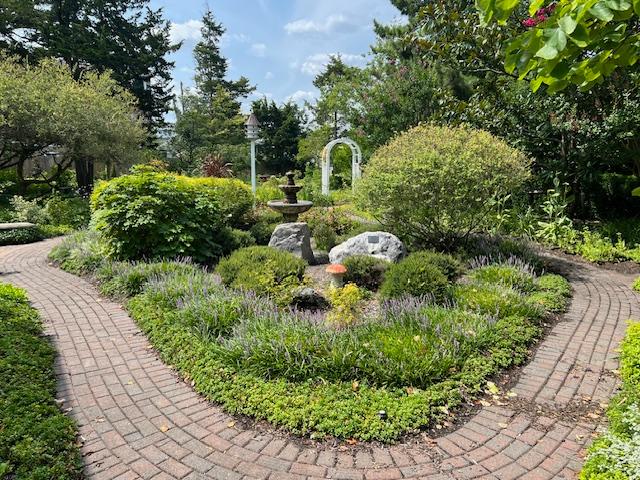
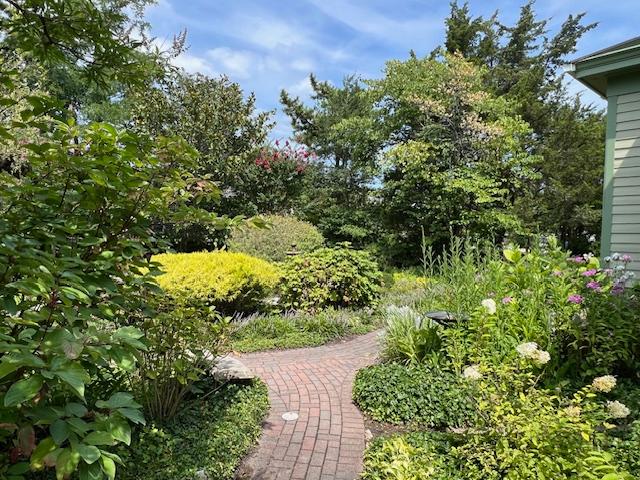
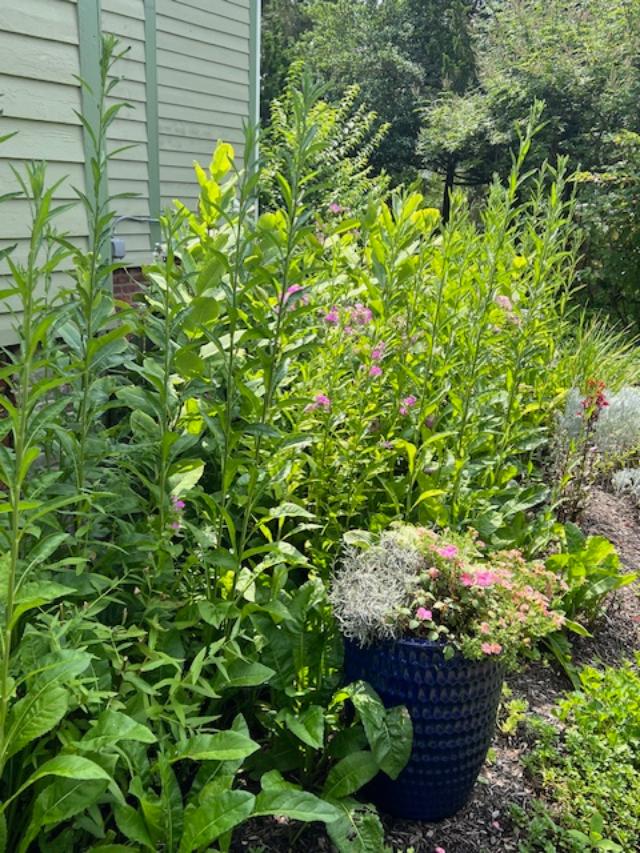
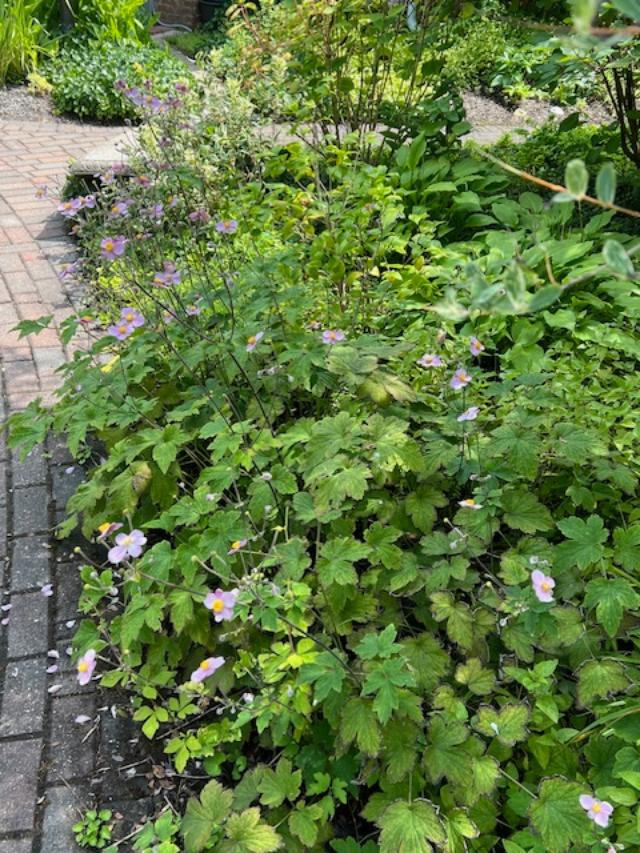
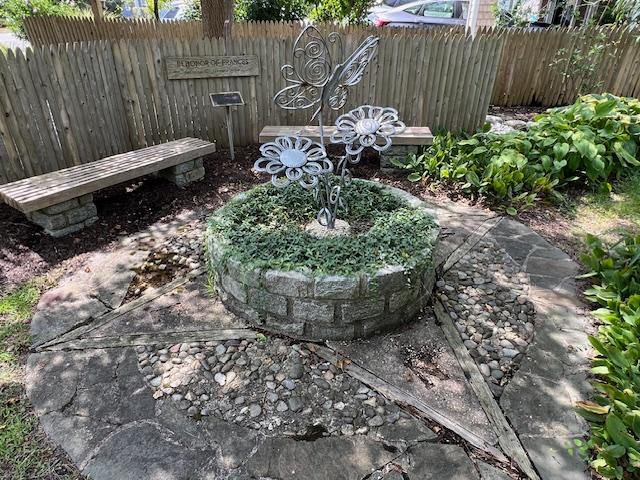
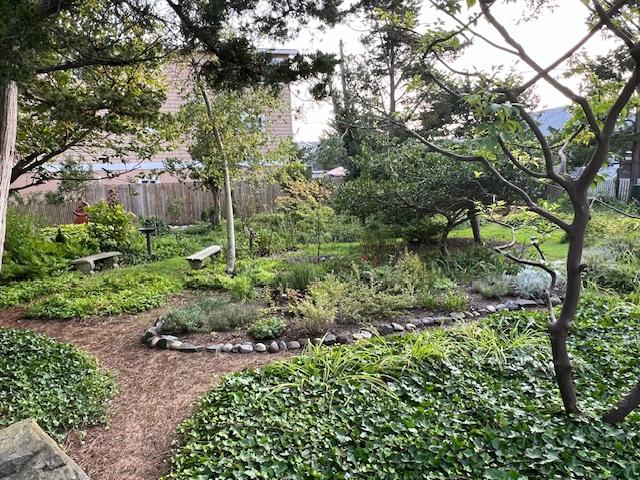
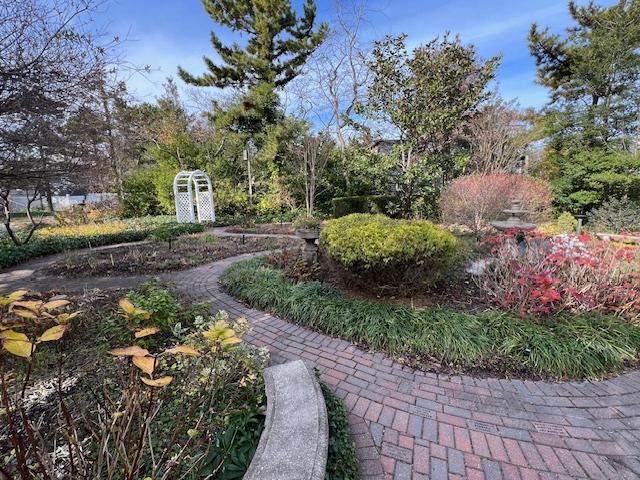
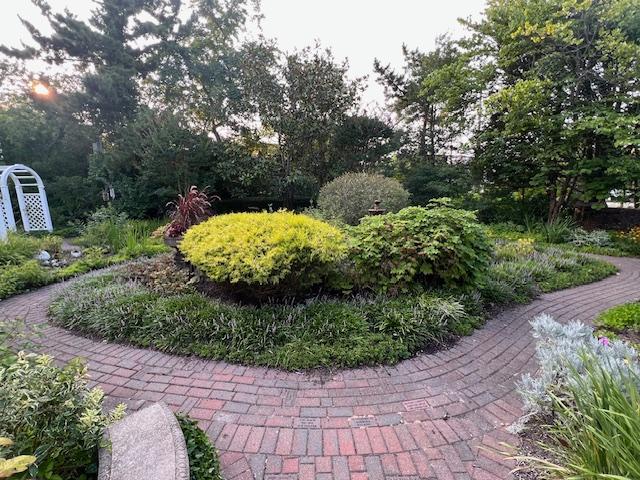
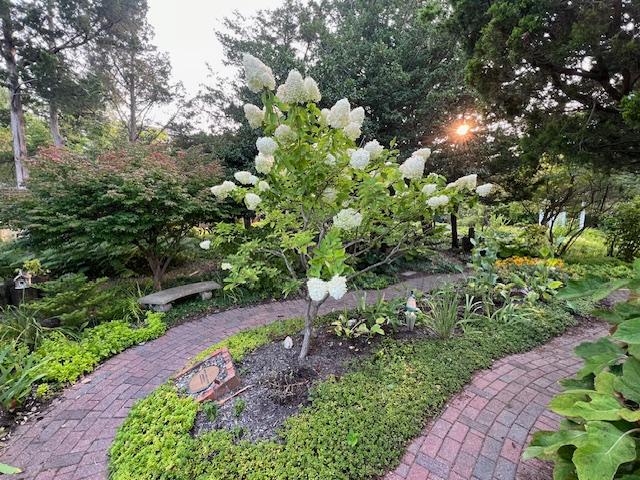
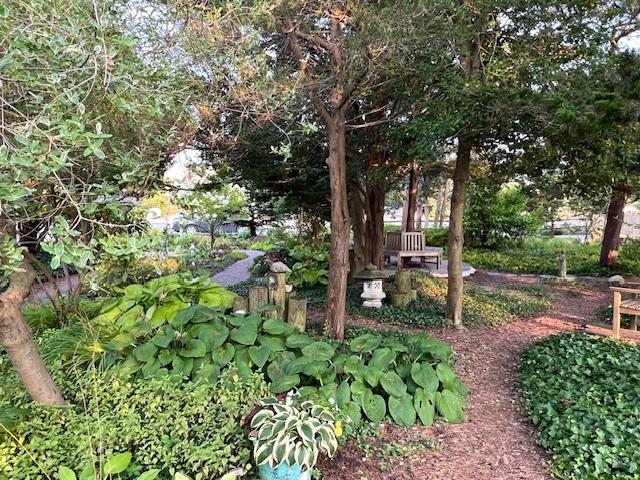
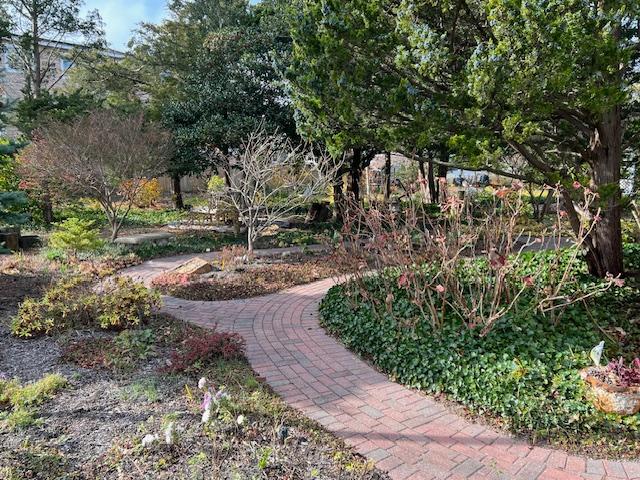
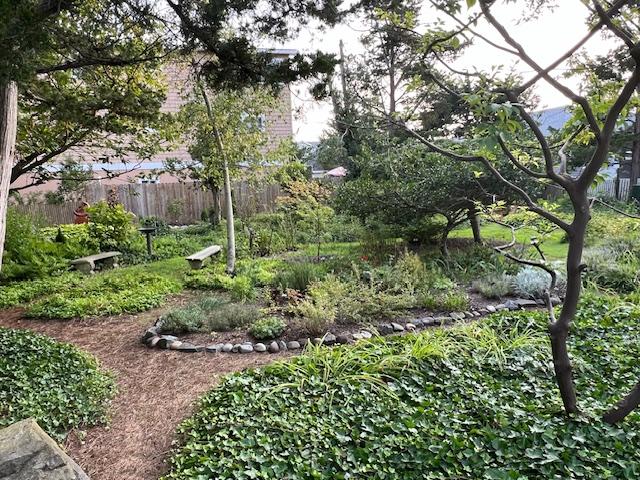
One beautiful benefit of the museum is the beautiful gardens that surround the museum, The Edith Duff Gwinn Gardens. The pathways are maintained by the Long Beach Island Garden Club. These wondering paths surround the property and especially elegant looking in the back of the building.

The Gardens from the back of the museum

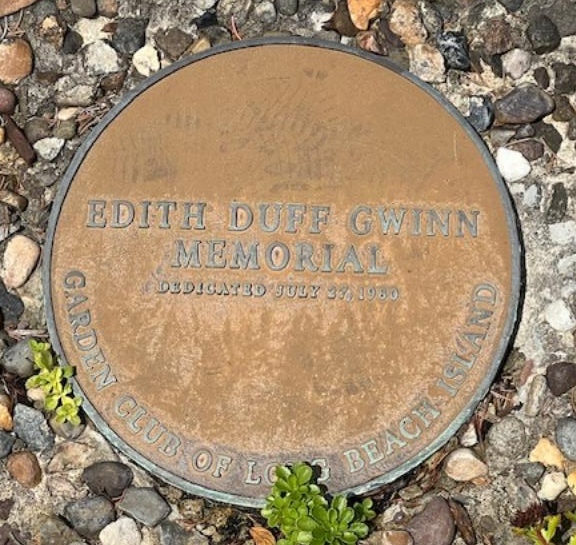
The Garden plaque to Edith Duff Gwinn

The Edith Duff Gwinn Gardens are on the side and behind the museum

The Edith Duff Gwinn Gardens that surround the museum are maintained by the Long Beach Island Garden Club. The gardens are at their peak in the late Spring and early Summer months. The paths are filled with seasonal flowers and shrubs.

In the off season, you can visit the museum by calling ahead and you can schedule an appointment with the staff of volunteers that work at the museum.

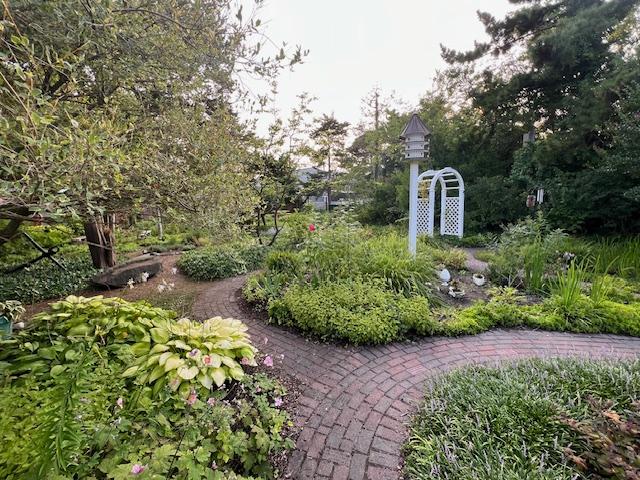
The Gardens in the late Summer of 2024

The Beehive

The Gardens in the late Summer of 2024

The Gardens in the late Summer

The Gardens in the late summer

The Garden paths are filled with colorful flowers and plants

The back of the Gardens and the seating area

The back of the Gardens

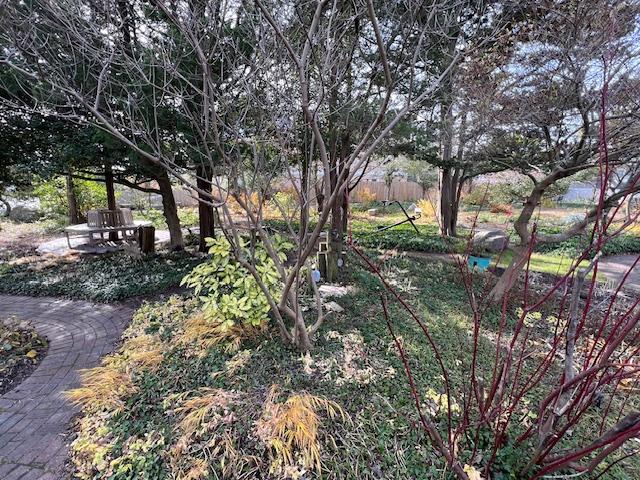
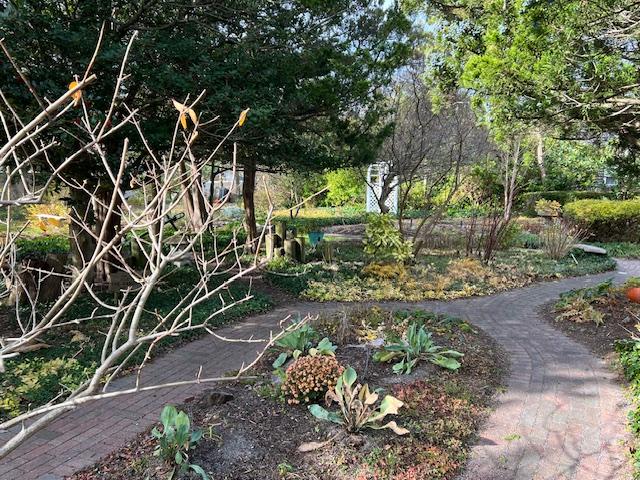
The Gardens also looked beautiful in the late fall when I arrived for the early holiday activities in Viking Village. I was able to walk around when the museum was closed for the season.

The Gardens during the late fall:

The Gardens during the late fall:

The Gardens during the late fall:

The Gardens during the late fall:

The gardens around Halloween time

The gardens in the Spring and Summer are quite spectacular and the volunteers do a nice job with the landscaping around the museum.

The gardens in the early Summer of 2024

The Gardens in the Summer of 2024

The Gardens in the Summer of 2024

The Gardens in the Summer of 2024

The gardens are really nice in the summer months

Both on the personal tour and when the museum is open during the summer months, the museum is a real treat both inside and out. This small museum is chock full of information not just on Barnegat Light but on the areas development for tourism and business.

It is such an interesting piece of Jersey Shore history.

New Jersey Maritime Museum                                   528 Dock Road                                                 Beach Haven, NJ 08008

New Jersey Maritime Museum 528 Dock Road Beach Haven, NJ 08008

New Jersey Maritime Museum

528 Dock Road

Beach Haven, NJ 08008

(609) 492-0202

https://www.facebook.com/NJMaritimeMuseum/

Open: Sunday-Saturday 10:00am-4:00pm (Check by season)

My review on TripAdvisor:

https://www.tripadvisor.com/Attraction_Review-g46292-d1881647-Reviews-Museum_of_NJ_Maritime_History-Beach_Haven_Long_Beach_Island_New_Jersey.html?m=19905

I made a special trip to Beach Haven, NJ recently to visit the NJ Maritime Museum which had gotten some interesting write ups online. The museum covers many aspects of the maritime history of Long Beach Island and the surrounding Jersey Shore and the State of New Jersey.

The NJ Maritime Museum at 528 Dock Road in Beach Haven, NJ.

Each of the rooms are packed with pictures, artifacts and explanations of all the events. The front room has a lot of information of ship wrecks, both local and from all over the state.

The Front Galleries of the NJ Maritime Museum.

There is a large story board of the 1916 Shark attacks that inspired the book and movie, “Jaws” including the clippings from the paper and pictures of the cemetery where the victims were buried. It was a very detailed display of the incident.

The front section of the museum has the display of the “Morro Castle” fire.

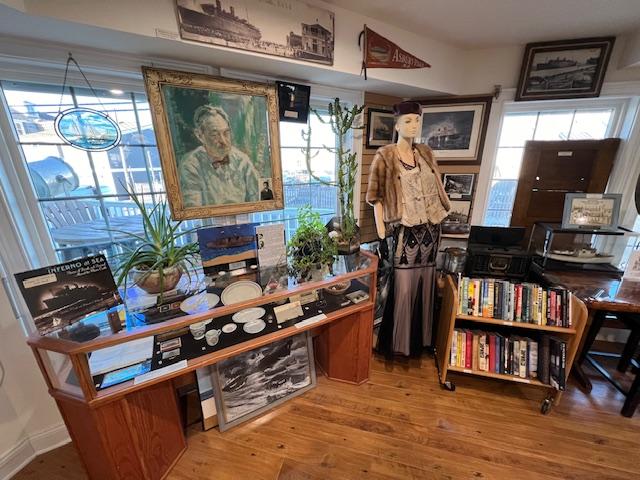
In the back room of the first floor the room is dedicated to the 1934 “Morro Castle” luxury liner disaster where incompetence from the crew and staff lead to the burning of the ocean liner on its way back from Havana to New York at the height of the Depression and twenty years after the Titanic Disaster. The displays included menus, artifacts from the ship, witness accounts and a movie on the disaster being shown in a loop.

The Morro Castle Fire exhibition.

Natural disasters are covered as well with storms that have reeked havoc to the Jersey Shore over the last hundred years including the recent Hurricane Sandy which was the perfect storm. The pictures show the disaster that have hit Long Beach Island and the rebuilding over the years.

The history of Diving exhibition on the second floor.

There is a lot of local history with pictures of the all the luxury resorts that used to be on the island and its role in the development of the area as an early resort town through the railroads as well as the history of the local “Women’s Surf Fishing Club” and pictures of the club members over the years.

The second floor galleries.

The second floor is dedicated to the local Coast Guard history and rooms full of artifacts from local shipwrecks and the history of the local maritime history and fishing industry.

The Andrea Dora exhibition on the second floor.

The New Jersey Maritime history is in full display here

For such a small museum, the museum is packed with all sorts of interesting information on the New Jersey Shore line.

The History of the NJ Maritime Museum:

On a 1983 episode of the television program “Prime Time”, Jim O’Brien did a segment on New Jersey Shipwreck Diving, interviewing Bob Yates and Deb Whitecraft. During that interview, Deb spoke of her quest for knowledge about different wrecks and New Jersey maritime disasters. She also stated that she had started collecting this information and other items pertaining to New Jersey Maritime History and that she hope to one day have a place to display her collection. On July, 3rd, 2007, Deb’s lifelong ambition came to fruition when the Museum of New Jersey Maritime History opened its doors.

In the years between the program and the museum opening, Deb actively pursued her quest, working with other New Jersey maritime historians and amassing a sizable collection of shipwreck files and artifacts. This collection comprised almost all of the museum’s material when it opened. In the years since it opened, the museum has grown at amazing rate, thanks to the donations and loans from the diving community and the public in general.

The second floor galleries.

Although the museum was built entirely with private funds, it is now a registered non-profit entity and deed restricted to remain so. It operates entirely on donations and is staffed by a small group of dedicated volunteers. The museum is open all year long, Friday through Sunday in the off-season and seven days a week during the summer.

(NJ Maritime Website History)

The NJ Maritime Museum Mission:

The Museum of New Jersey Maritime History Inc. is a museum and research facility organized exclusively for educational purposes within the meaning of Section 501(c)(3) of the Internal Revenue Code. The corporation’s educational purposes include, among other things, providing a facility for the public display of historic maritime artifacts, books and documents. The display of such collections, preserved and exhibited under professional museum standards will encourage maritime research and promote the education of the public about New Jersey’s rich maritime history.

The museum is really interesting.

(NJ Maritime Museum pamphlet)

Day One Hundred and Sixty-Five: Bergecco-Parc Consulting Inc. presents “From Revolution to Renewal-Exploring Historic Bergen County, NJ”          Essentials of Marketing Class Project-Bergen Community College                                           April 27th, 2020

Day One Hundred and Sixty-Five: Bergecco-Parc Consulting Inc. presents “From Revolution to Renewal-Exploring Historic Bergen County, NJ” Essentials of Marketing Class Project-Bergen Community College April 27th, 2020

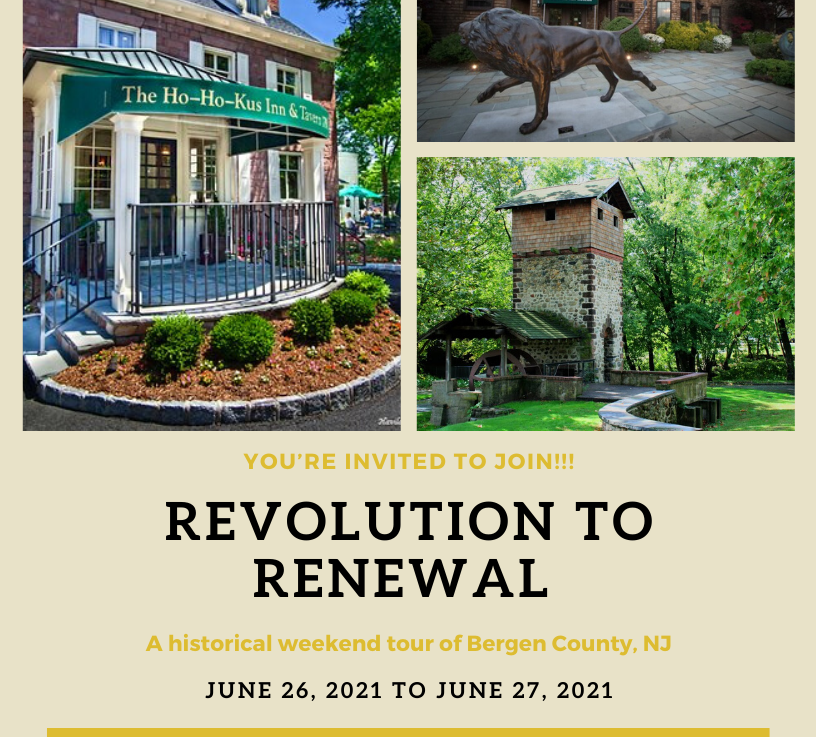
To all your history buffs, please visit Bergen County, NJ for interesting experience of visiting our historical sites and restaurants. Check out our Team Project from Bergecco-Parc Consulting Inc. “From Revolution to Renewal-A Historical Tour of Bergen County”.

Professor Justin Watrel, CEO & Co-Founder Bergecco-Parc Consulting Inc.

jwatrel's avatarmywalkinmanhattan

I had the most interesting semester for Spring Term at the college where I work. Everything started off fine. We had classes in the the afternoon, good discussions on Marketing and had a very successful Team Project marketing the Lyndhurst Snack Shop, the new Bulldog Cafe, for business (See Day One Hundred and Fifty-Nine in MywalkinManhattan.com):

https://wordpress.com/post/mywalkinmanhattan.com/12969

BCC Bulldogs

The Bulldog Cafe on the Third Floor of the Bergen Community College Campus

https://www.facebook.com/gdsbulldogcafe/

My review on TripAdvisor:

https://www.tripadvisor.com/Restaurant_Review-g46586-d20210133-Reviews-Bulldog_Cafe-Lyndhurst_New_Jersey.html?m=19905

The Project I gave the students:

BCC-Bergecco-Parc Consulting Inc. Snack Shop Project 2020

I had just handed out the next Team Project, “From Revolution to Renewal: Exploring the  Historic Bergen County”, a major tourism project I wanted to the students to work on for the remainder of the semester the week before the break. I had the students to break up into groups and get to know one another and get their game plans…

View original post 3,084 more words