Tag: NJ Historical Sites

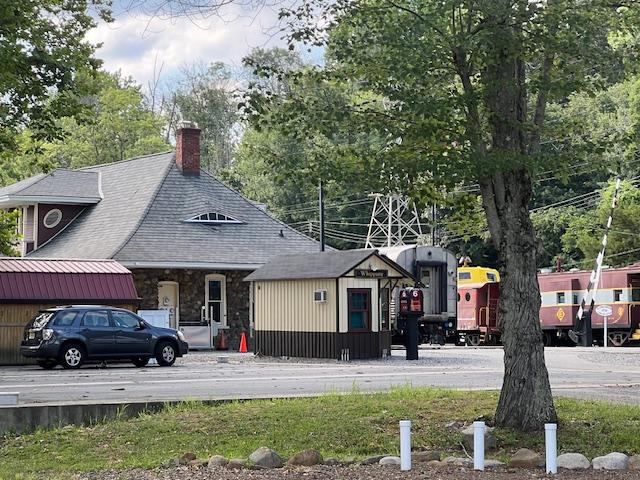
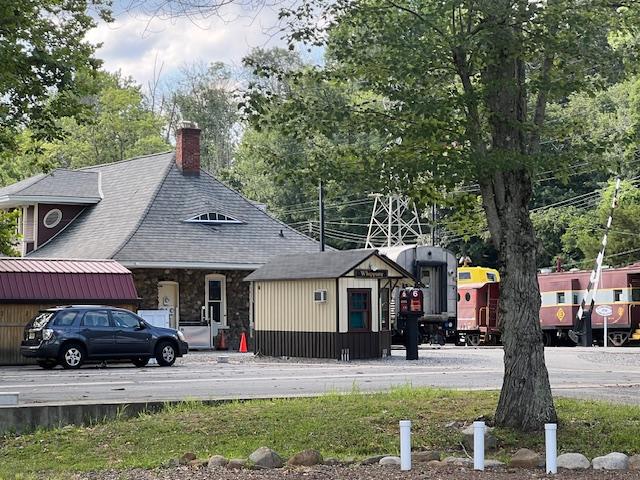
Whippany Railway Museum                                    1 Railroad Plaza                                         Whippany, NJ 07981

Whippany Railway Museum 1 Railroad Plaza Whippany, NJ 07981

Whippany Railway Museum

1 Railroad Plaza

Whippany, NJ 07981

(973) 887-8177

Front Page

https://www.facebook.com/WhippanyRailwayMuseum/

Open: Sunday 12:00pm-4:00pm/Monday-Saturday Closed/Seasonal

Admission: Please check the website for seasonality

My review on TripAdvisor:

https://www.tripadvisor.com/Attraction_Review-g46925-d3395271-Reviews-Whippany_Railway_Museum-Whippany_Morris_County_New_Jersey.html

The Whippany Railway Museum

I have to say that I was very impressed by the Whippany Railway Museum. It was not one of those usual train museums with bric-a-brac and posters and a uniform here and there. The museum building itself is a highly organized history of the rail system not just in New Jersey but all over the country. It showcases how New Jersey played a big role in the growth of the rail system and how transportation has changed over the last 100 years.

The museum welcoming you to the museum

The museum displays were highly organized and well documented with all sorts of equipment of how a train functions, lighting equipment for the outdoors, and indoor dining, menus and manners for a time when rail was a form of luxury travel. It shows the progression from just transportation for the movement of product to a sleek way to travel from destination to destination.

The Whippany Railway Museum at 1 Railroad Plaza

There are all sorts of everyday items that show how maintenance of the trains have changed over the years and the modernization of the railcars. They have a display on lighting that has changed over the years and the way that communication was done between the trains and the staff. Even the uniforms have not really changed too much over the years.

Race is touched on with the advancement of Blacks in the Pullman coaches as porters and later supervisors. There was even a discussion on the strikes for better pay and working conditions. I thought it was interesting about the discussion of being called a “George”, which was a term for George Pullman, the owner and developer of the luxury cars. It might have been meant as a compliment but came off as a slur. It showed a progression in the field that in some ways has not changed.

The historic railyard with all the cars you can visit

The museum also showed that rail life could be lonely and not the best in working conditions for anyone which is why the unions became so powerful in later years. It also showed the ingenuity of how the rails conquered the West and opened the country up for development. With each stop, towns developed, and populations have changed. You see how this has been affected even today as rail is not as popular as it once was, and these small towns are dying off.

The entrance to the museum

Where the museum really shines and where I saw the most pride is in the rail cars that have come to the yard over the years and have been carefully restored. The Southern Railway No. 385 built in 1907 for faster freight service, the Texaco Fireless Cooker No. 7240 built in 1937 for industrial switching duty and one of the newest steam locomotives still surviving, the U.S. Army No. 4039 built in 1942 for WWII service are just some of the cars on display (Whippany Railway Museum pamphlet).

The inside of the luxury car

The railcar that most impressed me was the Lackawanna Railroad Subscription Club Car No. 2454 that was once known as the “Millionaires Express” (Whippany Railway Museum). The mahogany paneled car carried businessmen from New York City through towns in the middle of New Jersey. What I thought was interesting was the people who rode it (Christie Todd Whitman’s father was a member) and the fact that you had to ‘buy’ the seat, which meant that no one could ever sit in ‘your chair’ if you were not there. This car ran for 72 years finally retiring out in 1984 (probably due to the recession and changing times).

The inside of the museum

I ended up spending about three hours at the museum due to a very detailed tour by one of the volunteers named Mike. He gave the most interesting hour-long tour of each car and how they were renovating it and carefully restoring each one to its historical integrity. He was so detailed and when the other volunteers chimed in with their stories as well, made it a fascinating tour of the whole yard.

When you are visiting the museum, allow time to take this every intensive and detailed tour of the museum grounds and just don’t concentrate on what’s inside the building. The museum spreads out all over the yards and take the time to explore each car and learn its history. It is an educating and fascinating way to spend the afternoon.

The museum modernizes:

The Whippany Museum under new directions

The History of the Whippany Museum:

(From the museum website)

The story of the Whippany Railway Museum began many years ago when the Morris County Central Railroad (MCC) first opened to the public on May 9th, 1965, at Whippany, NJ. On that exciting day a half-century ago, former Southern Railway steam locomotive No. 385 departed Whippany for Morristown, NJ with the MCC’s first trainload of over 400 passengers. At the end of the day over 1,500 people had traveled on a nostalgic trip into railroading’s colorful past. For the next 15 years until it ceased operations in 1980, the MCC would carry on this excellent tradition, leaving memories for untold hundreds of thousands of visitors that would last a lifetime.

The Morris County Central was founded by a New Jersey aerospace technician, the late Earle H. Gil, Sr. of Parsippany. His idea of running steam excursion trains was formed in the late 1950’s when conventional steam railroad operations were fading fast. Gil hoped that a financially successful heritage railroad would justify the great expense involved in keeping one of these magnificent machines alive.

Having acquired No. 385 in 1963 from the 16-mile-long Virginia Blue Ridge Railway (VBR) in rural Piney River, VA, the MCC ran an outstanding operation through the woodlands of suburban New Jersey. In 1966, Gil acquired another VBR steam locomotive, No. 4039 a former US Army 0-6-0 switcher that was soon added to the MCC’s roster of vintage steam-era equipment.

Threatened by development of the property alongside the Whippany Station, the Morris County Central RR saved the Whippany Freight House from demolition in June 1967 by having it moved across four sets of tracks to a site opposite the station building. Originally used by our predecessor organization, Morris County Central Railroad Museum, this classic railroad freight house is now the headquarters of the Whippany Railway Museum.

The Morris County Central was a fine example of what a conscientious group was able to accomplish, with moderate resources and good taste in the preservation of operating steam. It proved that trains, steam locomotives and haunting whistles continue to linger in the minds of the American public.

Fifty years on, the Whippany Railway Museum continues the tradition and proves that it is indeed possible to have a quality operation through much hard work by its dedicated group of volunteers and the tremendous support of the visiting public.

(From the Museum Pamphlet):

Here you can visit the restored, 1904 freight house with its outstanding collection of rail and transportation artifacts and memorabilia. There are dozens of historic railcars and exhibits on view. We are proud to feature the largest collection of American-built standard gauge steam locomotives displayed in New Jersey.

Marvel at one of the oldest steam locomotives in America, the Southern Railway No. 385 built in 1907 for fast freight service, Texaco Fireless Cooker No. 7240, built in 1937 for industrial switching duty and one of the newest stream locomotives still surviving, the U.S. Army No. 4039, built in 1942 for World War II service.

Obadiah La Tourette Grist and Sawmill/Washington Township Land Trust                 12 East Mill Road                                               Long Valley, NJ 07853

Obadiah La Tourette Grist and Sawmill/Washington Township Land Trust 12 East Mill Road Long Valley, NJ 07853

Obadiah La Tourette Grist and Sawmill/Washington Township Land Trust

12 East Mill Road

Long Valley, NJ 07853

(908) 876-5986

https://www.njskylands.com/hsmillob

Open: See their website/Seasonal

My review on TripAdvisor:

https://www.tripadvisor.com/ShowUserReviews-g46583-d24070163-r839124039-Obadiah_La_Tourette_Grist_Saw_Mill-Long_Valley_Morris_County_New_Jersey.html?m=19905

Video on the Obadiah La Tourette Grist & Sawmill

I visited the Obadiah La Tourette Grist & Sawmill during a visit to Long Valley, NJ for Morris County’s “Pathway to History” tour and this was one of the most unusual and interesting sites on the tour. The mill was once one of the most active businesses in the area. The Mill processed and packaged flour for the areas farmers making it one of the most profitable businesses in the region. By the end of WWII, the Mill was itself was becoming antiquated and larger producers could make the product for far less money and the business closed.

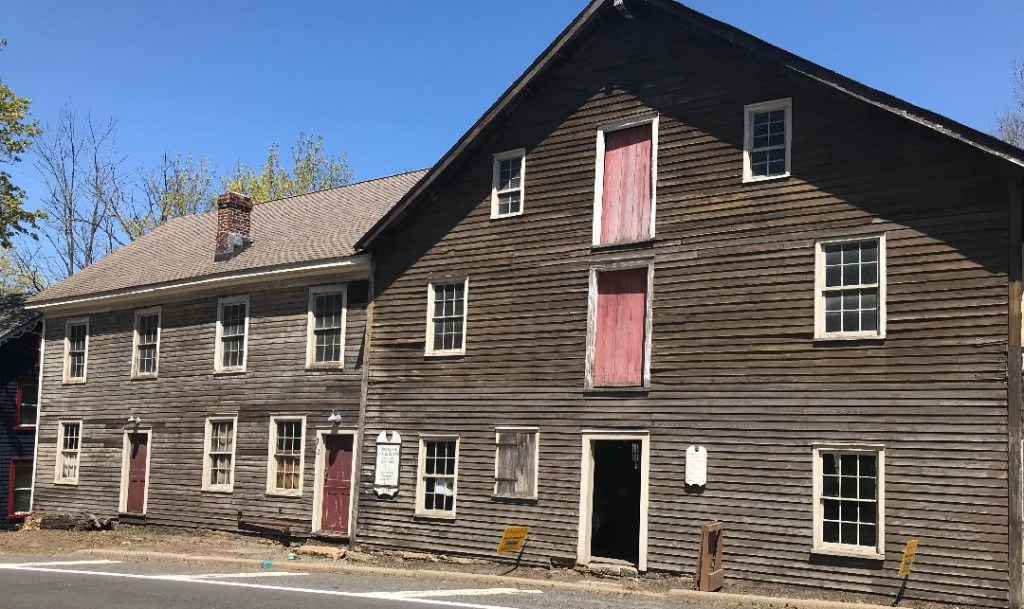
The Obadiah La Tourette Mill

The entrance of the Obadiah La Tourette Grist and Sawmill

The Mill itself it is getting a renovation, and, on the tour, I took, you could visit all three floors of the Mill and see how the product was made. On the first floor is where some of the processing took place.

The first floor now greets you where it once served as the Receiving area

The wheat was brought in, processed and milled. One of the machines is still in the building. This is where the raw product was brought in for processing into flour.

Processing the flour

The bottom level is where are all machinery is where the power source of the stream moved all the equipment along.

The power source of the stream below moved the wheels to process the flour

This was really interesting because the stream still lies underneath the mill and you can see the flow of water throughout the bottom of the building as it had over 100 years ago. This is how Mother Nature did her part before electricity.

History of the Obadiah La Tourette Mill Restoration:

(From the Washington Trust Pamphlet)

The Mill was built in circa 1750 and owned by Philip Weise. The Mill was essential to the economy and development of German Valley and the surrounding agricultural community. For much of its history, it was the most successful business in the village, grinding grain and producing flour and animal feed. A sawmill was located behind the grist mill during the 1800’s.

Originally powered by two water wheels, the mill was converted to turbine power by owner Obadiah La Tourette in the 1870’s. Milling operations continued until the early 1940’s. Most of the machinery remains, reflecting the history of milling over 200 years.

The stream is the power source of the Mill

In 1991, the Washington Township Land Trust purchased the condemned building and embarked upon its restoration with the aid of volunteers, grants and generous donations. The current scope of work is being funded by a grant from the Morris County Historic Preservation Trust Fund. It includes the restoration of structural framing, soffit trim, doors and siding of the street facade; restoration of some first-floor beams and joists and restoration of thirteen windows.

The Mill in 1993

The History of the Washington Township Land Trust:

(From the Washington Trust Pamphlet)

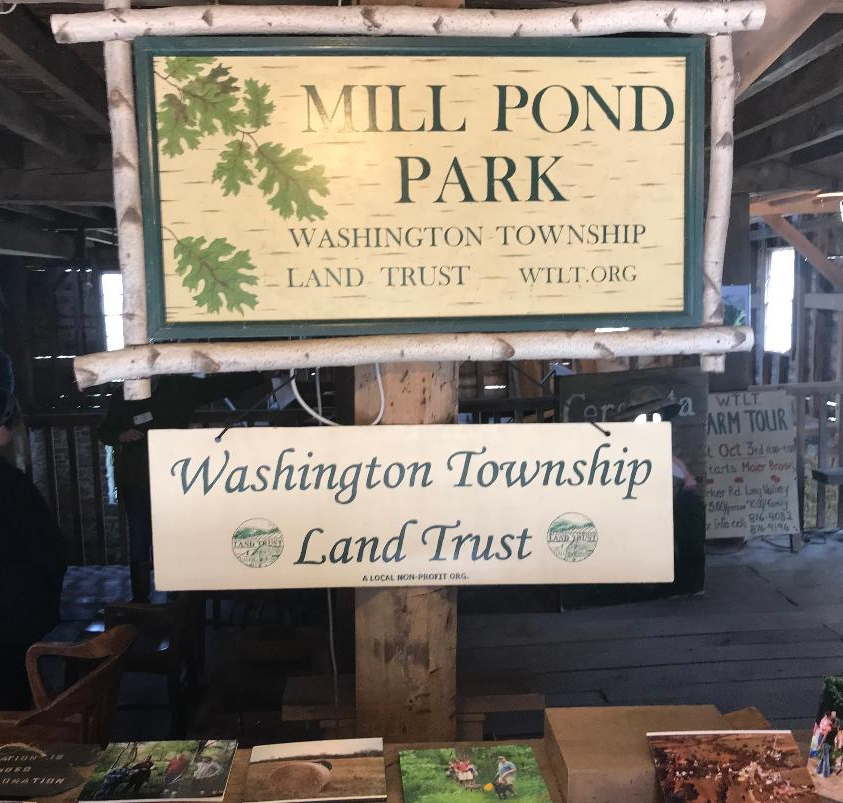
The Washington Township Land Trust of Morris County, NJ was organized in 1990 and incorporated in 1991 as a 501 (c) (3) non-profit corporation. It is exclusively for charitable, educational and scientific purposes, to protect and preserve the lands, watercourses, ponds, streams and structures which contribute to the natural beauty and rural character of Washington Township.

To achieve this, the Land Trust acquires interests in land through purchase or donation, manages land uses for the benefit of the public and makes itself available to the Township of Washington to assist in the stewardship of public lands and easements.

In 1991, the Land Trust acquired the Obadiah La Tourette Mill and the surrounding ten acres of land, now preserved as a wetlands park. A portion of the park has been set aside as a memorial garden for Helen Andrews, a longtime resident of Long Valley and wife of Stan Andrews. The Land Trust also administers the issuance of easement markers for Washington Township and may in the future expand its operation to the monitoring of easements.

The Land Trust provides education to the public on various preservation issues such as conservation easements and other topics of value. Lastly, the Land Trust works with other land trusts, open space groups and conservation organizations to provide an organized approach to meet our common goals.

Washington Township Land Trust

P.O. Box 4

Long Valley, NJ 07853-0004

Phone: (908) 876-5986

wtlandtrust@gmail.com

Florham Park Historic Preservation Commission/Little Red Schoolhouse & Hancock Cemetery                                                              203 Ridgedale Avenue                                                     Florham Park, NJ 07932

Florham Park Historic Preservation Commission/Little Red Schoolhouse & Hancock Cemetery 203 Ridgedale Avenue Florham Park, NJ 07932

Florham Park Historic Preservation Commission/Little Red Schoolhouse & Hancock Cemetery

203 Ridgedale Avenue

Florham Park, NJ 07932

https://www.facebook.com/pages/category/Community-Organization/Little-Red-Schoolhouse-438800069660078/

Open: See Website/Seasonal

My review on TripAdvisor:

The Little Red Schoolhouse Museum

I visited the “Little Red Schoolhouse” Museum in Florham Park as part of the Morris County’s “Pathways to History” event that is held every May. This interesting little museum showcases the town’s historical collection of items from the 1800’s and 1900’s dealing with all aspects of town life.

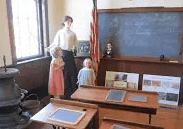
In the back there is a small classroom set up keeping with the theme of the building. This lets students who are visiting the building of their counterpart’s early education with desks, ink wells and chalk boards that have not changed that much over the years.

Not much has changed in the modern classroom over the years

There is early century clothing, farming equipment from the town’s farming past and event Native American objects found in the town and in private collections. Other items included decorative items from the home including dishware, home products and furnishings. Each section of the museum is divided up by lifestyle.

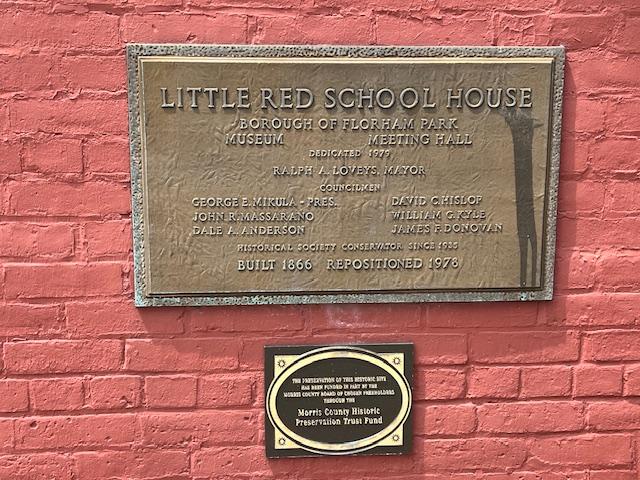
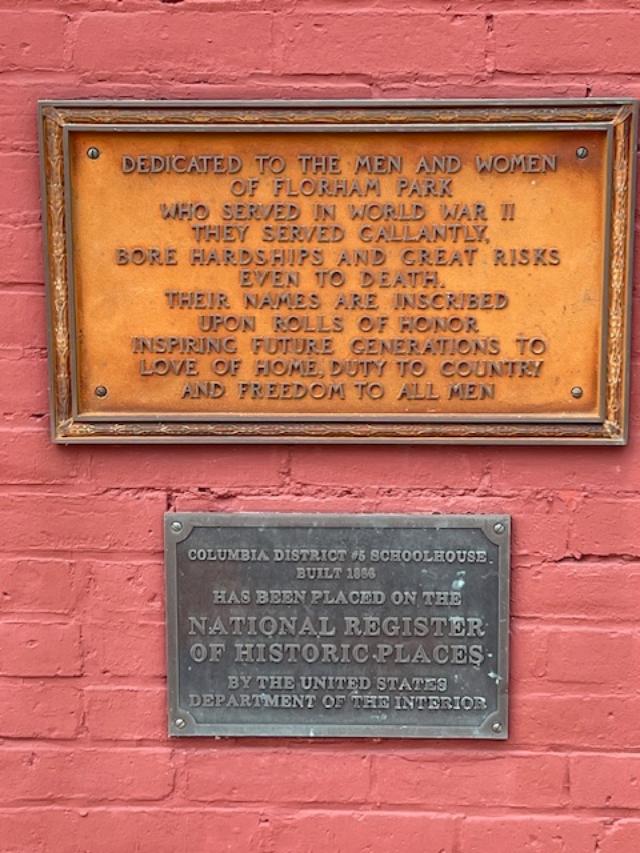
The museum’s historic plaque

The docents that day explained that the items were reflect the town’s past and some came from families that have been in town for years. The museum reflects the community spirit of town’s past. It explains that times have progressed but not changed too much over the years.

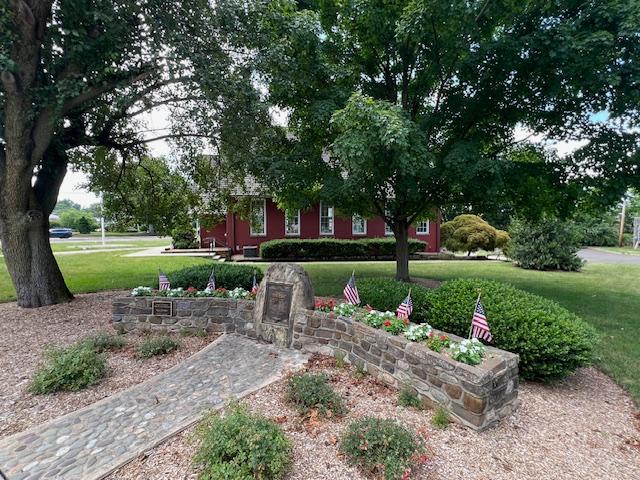
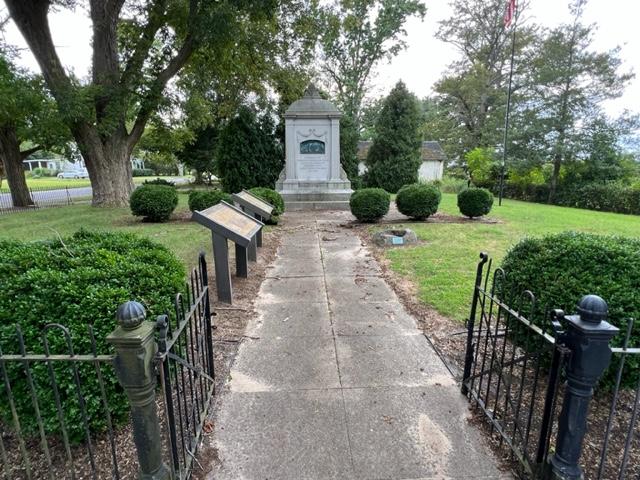
The Veteran’s Monument outside the museum

History of the Little Red Schoolhouse Museum:

(From the Museum Website)

By Kat Kurylko, Research Assistant

In 1830, the residents of Columbia, now Florham Park, sought to improve their thriving farming and broom-making community by establishing a public school for the local children. Therefore, a small schoolhouse, Columbia School #5, was built on the corner of Columbia Turnpike and Ridgedale Avenue and dedicated it on February 17th, 1831. Schooling at the “little red frame building” prospered and so by the 1850’s, the building was “in condition of dilapidation rendering it unfit to be occupied” due to overcrowding.

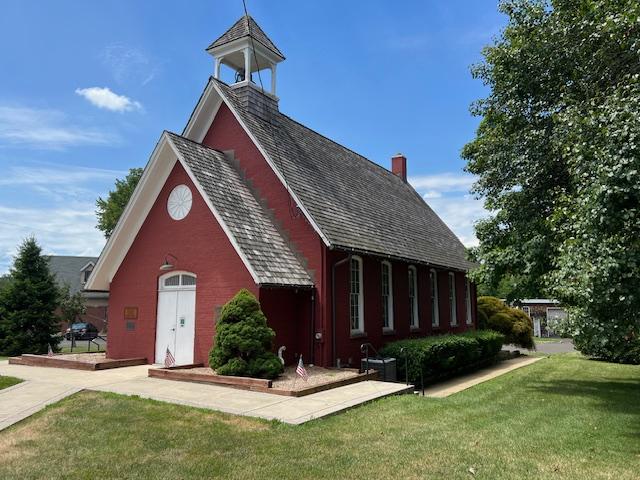
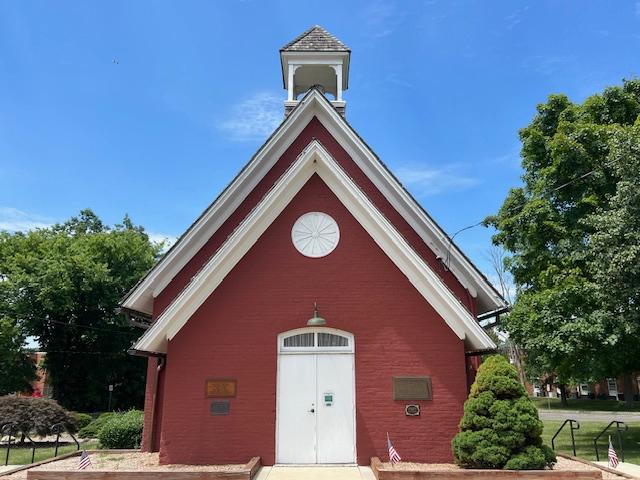
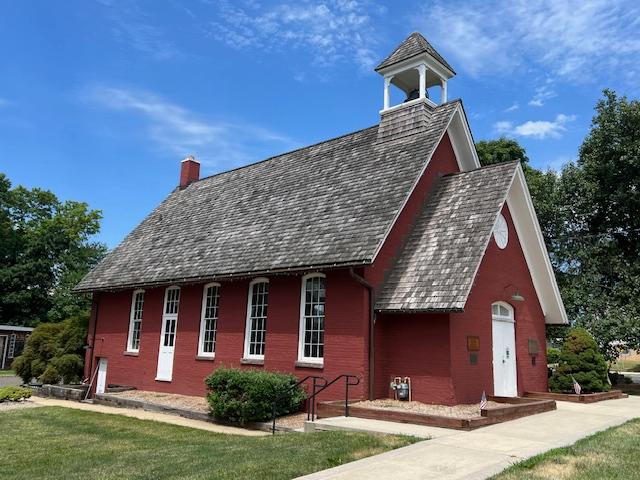
The schoolhouse from the front

On March 1st, 1867, nearly 50 children attended their first class in a new one-room brick schoolhouse. The use of brick added prestige but great expense to the project, accounting for nearly half of the budget. The new building was designed based on principles found in Henry Barnard’s book, “School House Architecture. Much like Thomas Kirkbride’s progressive hospital designs (illustrated locally at Greystone Park Psychiatric Hospital), Barnard’s method School attendance continued to grow and by 1914, a four-room annex building, which could accommodate 78 students was built on the school’s property and the earlier brick building served as an auditorium. Eventually, the community outgrew both buildings and in 1934, the borough’s current middle school was constructed.

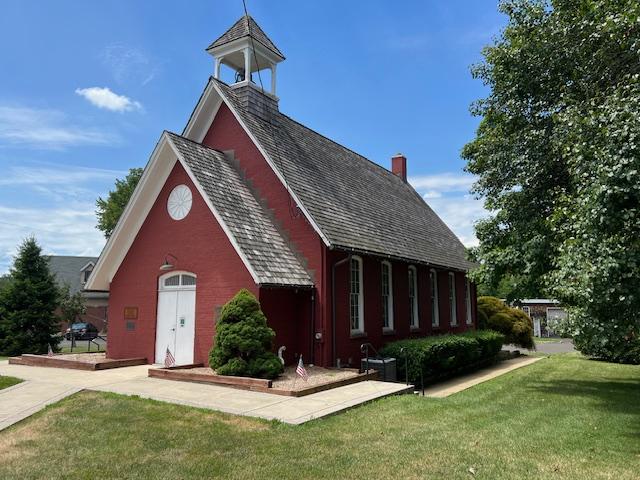
The schoolhouse from the side view

Founded in the 1930’s to preserve the “Little Red Schoolhouse”, the Historical Society of Florham Park now operates the building as a museum. A source of great pride for the local community, the building stands in nearly the same location on the corner of Columbia Turnpike and Ridgedale Avenue, although moved back to accommodate the expansion of Columbia Turnpike. Listed on the NJ and National Registers of Historic Places since the early 1970’s, today the building serves as a reminder of the community’s rural roots.

The “Little Red Schoolhouse” Museum historic plaques

(From the Morris County site):

The Little Red Schoolhouse & Museum:

Florham’s Park’s iconic Little Red Schoolhouse was built in 1866 at a cost $2,250. Its open belfry and gable-end entrance instantly identify it as a typical 19th century one-room schoolhouse. The Italianate one-story narrow red brick masonry building is an architectural marvel with its steep roof, tall windows and elaborate arches.

Inside, part of the museum is set up as a 19th century classroom, where small groups can enjoy a lecture. The museum has a variety of artifacts from the 1800’s and 1900’s, vintage school desks and broom-making equipment. Its location at the historic crossroads of Florham Park has remained a key reminder of the borough’s rural origins. The schoolhouse is a stop each fall on the free “Pathways of History” event (which I was on that day I visited).

Of Special Note:

*In 1978, the schoolhouse was moved back several yards to accommodate the expanded Columbia Turnpike.

*The schoolhouse is also known as Columbia School District Number 5 Schoolhouse.

*The schoolhouse is the borough’s icon, appearing on the town flag, letter head, website and public works and first responder vehicles.

Barnegat Lighthouse State Park                                           208 Broadway                                             Barnegat, NJ 08006

Barnegat Lighthouse State Park 208 Broadway Barnegat, NJ 08006

Barnegat Lighthouse State Park

208 Broadway

Barnegat, NJ 08006

(609) 494-2016

https://www.state.nj.us/dep/parksandforests/parks/barnlig.html

Open: Sunday-Saturday 8:00am-8:00pm

Fee: Free off season/ Check Website

My review on TripAdvisor:

https://www.tripadvisor.com/Attraction_Review-g46285-d286497-Reviews-Barnegat_Lighthouse_State_Park-Barnegat_Light_Long_Beach_Island_New_Jersey.html?m=19905

I was able to visit the Barnegat Lighthouse State Park on a recent trip to Long Beach and what a beautiful park with wonderful views of the inlet and of the Atlantic Ocean.

The Barnegat Lighthouse in the fall 2023.

The view of the lighthouse from the parking lot in the summer months

The lighthouse through the woods in the Summer of 2024

In 2020, the lighthouse was closed because of COVID so I had to wait in the future to climb the stairs which is noted for people who like to explore lighthouses but still you are able to admire the building from the outside. In the fall of 2023, the lighthouse was opened for limited hours during the fall after Labor Day weekend and I was able to climb all 216 stairs in ten minutes.

The Barnegat Lighthouse on the inlet side of the park

The paths around the dunes in the summer months

The beginning of the dunes in the winter months

The dunes in the summer months

The dunes in the fall

The beginning of the dunes path as you leave the lighthouse.

The start of the path in the summer months

The start of the path in the Summer of 2024

The pathway through the dunes

There is a walking path through the bush areas of dunes. In all season, you can admire the trees and what is left at this point of the season of flowering plants. It was interesting to read how these species survive the ocean and salt air. It is amazing how these plants can survive the storms and how they keep the beach from eroding.

The pathway through the Dunes

Path through the Dunes woods

The turn by the beaches

The Maritime Forest Trail is a 1/5 mile long, self-guided loop through one of the last remnants of maritime forest in New Jersey. The forest, which is dominated by black cherry, sassafras, eastern red cedar and American Holly, which is an important resting and feeding area for migratory birds on their long journey to and from their breeding areas (Park Literature).

The pathway through the dunes

The path in the summer months

Walking through the pathway

It is also the home for migrating birds. There were all sorts of ducks swimming around and there a a bird that looked like a crane who looked like it was getting vain from all the pictures that people were taking of it.

The pathway leading back to the lighthouse.

Walking through the pathways

The pathway from a distance

The Dunes woods at its thickest point

The Inlet Movement sign on the pathway

Exiting the woods

Exiting the woods near the entrance of the light house path

The park has a 1033 foot concrete walkway that the fisherman use and people were sitting along the benches watching people fish and boaters come and go from the inlet. The walkway was a nice place to see the waves crash along the sides of the park.

The lighthouse and the walkway.

The pathway out to the bunker

The pathway during the Summer of 2024

The bunker that protects the shoreline and the lighthouse.

The bunker and the lighthouse

Following the pathway to the bunker head

I just saw a lot of dumb people walking along the wet rocks with waves crashing by which is not smart. Still you got great views of Seaside Park and the Atlantic Ocean from this part of the park. It is fun watching the fisherman casting lines, sharing stories and the fishing boats in the distance go out to sea close to the beach.

The view of the Barnegat inlet from the top of the lighthouse.

The boats on the inlet on a cool December day

The boats passing by

On a nice day take the time to walk through the nature trails and the dunes that face the ocean. It is a small but interesting trail with all sorts of native plants and a very nice description that the park gives you about each and their place at the shore. Each has a place with the wild life and the migration patterns for birds on their way to their next home. It shows what an important place that New Jersey serves for wildlife.

The inlet and dunes from the top of the lighthouse.

I revisited the park in November of 2021 and on a very windy day, the lighthouse was open and I finally made my way to the top. It was quite a hike up those narrow stairs on a extremely windy day but I made it to the top in about fifteen minutes. Along the way, there was small landings with sweeping views of the ocean.

The view of Barnegat Light from the Barnegat lighthouse in 2023.

Once to the top, there was a landing that surrounded the top of the lighthouse with views of the park and lagoon areas and the surrounding tip of the island. The strong winds prevented me from staying there too long plus there was not much space to move around and you felt like you were caged in but the views were spectacular. I made it down in ten minutes since there were only six other people there.

The view of all of Long Beach Island from the Barnegat Lighthouse in November 2023.

I finally got back to Long Beach Island in November of 2023 and was able to tour the lighthouse and the grounds again with time on my hands. The COVID restrictions had been long lifted and even in the off season the lighthouse was busy with people climbing to the top of it and taking pictures and then admiring the grounds.

The Barnegat Lighthouse from the approach.

It gave me a chance to really spend time inside the lighthouse, walking through the dunes pathway, exploring the bunker and the surrounding park. I also took time to admire the statuary and read the signs. During COVID when the lighthouse was open, you felt rushed not to be around anyone. Now I was able to converse with people as I walked up and down the stairs and in the park. Walking through the dunes you can just relax and enjoy nature in the quiet sense. It was nice of them to finally open the lighthouse where we could just enjoy it again.

The History of Barnegat Lighthouse State Park:

Barnegat Lighthouse State Park, located on the northern tip of Long Beach Island along the New Jersey Atlantic coastline, is one of New Jersey’s most recognized landmarks and a veteran of service to seafarers for 68 years. The park is easily accessible from the Garden State Parkway by taking exit 63 and following Route 72 east to Long Beach Boulevard northbound.

The Barnegat Lighthouse in the fall of 2023.

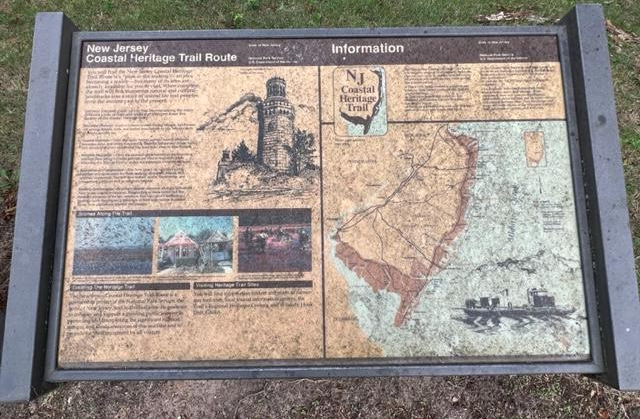
Park visitors can picnic, sunbathe, fish, bird watch, climb the historic lighthouse (post COVID), walk the Interpretive Center (post COVID) and enjoy the seashore. Swimming, however is not permitted. Barnegat Lighthouse is included as a maritime site on the New Jersey Heritage Trail Route (Barnegat Lighthouse State Park Pamphlet).

The Massacre of Long Beach during the Revolutionary War.

Barnegat Lighthouse stands on the south side of Barnegat Inlet, The inlet was named “Barendegat” or “Breakers Inlet” by early Dutch explorers because of the large cresting waves that made navigation difficult. The site of the lighthouse was considered on of the most important “change of course” points along the eastern seacoast for vessels sailing to New York from Europe. Sailors depended on Barnegat Lighthouse as a navigational aide to assist them in reaching their posts and to avoid the dangerous shoals that extended from the shore.

The historic marker at the lighthouse.

In 1834, the U.S. Congress appropriated $6,000 to establish a lighthouse as Barnegat Inlet. The lighthouse was completed and placed into service in July of 1835. At only 40 feet tall with a non-blinking light, the first lighthouse at Barnegat Inlet was a miserable failure doing little to reduce the number of shipwrecks. In 1856, guided by recommendations from then Lieutenant George G. Meade of the U.S. Army Bureau of Topographical Engineers, Congress appropriated another $60,000 to construct a “first class light” at Barnegat Inlet.

The Lieutenant George Meade statue outside the lighthouse.

Lieutenant Meade drew up the plans and Lieutenant W.S. Raynolds supervised the construction of the new lighthouse. On the night of January 1, 1859, the majestic new Barnegat Lighthouse was lit for the first time. Its first order Fresnel lens, at 175 feet above sea level was so powerful that it could be seen for 19 nautical miles.

The Lighthouse keeper statute.

The Lighthouse keeper listing

The maritime plaque outside the pathways

The lens was made in 1856 by Henri Le Paute of Paris, France from glass produced at the famous furnace at St. Gobian. The beehive-shaped Fresnel lens is six feet in diameter, ten feet high and is formed from over 1,000 separate glass prisms and twenty four bull’s eye lenses mounted in a brass frame.

The lens frame at the top of the lighthouse.

It weighs nearly five tons. Today the lens is on display in the Barnegat Light Historical Museum on Central Avenue and 5th Street in Barnegat Light, New Jersey. For hours of operation, please call the museum at (609) 494-8578.

The lens at the Barnegat Light Museum around the corner from the lighthouse.

Turned by a clockwork mechanism, the lens rotated once every four minutes. The speed of the rotation and the 24 individual beams of light from the 24 bull’s eye lens gave Barnegat Lighthouse it’s characteristic” of one flash every ten seconds.

The old light is on display at the Barnegat Light Museum down the road

At the turn of the century, due to the encroaching sea and seemingly inevitable collapse, the Lighthouse Board considered abandoning Barnegat Lighthouse and replacing it with a lightship anchored off the coast. The popularity of the lighthouse as a landmark caused the Lighthouse Board to reconsider their plan and to erect temporary measures to hold back the sea. Later, local residents raised two thousand dollars to construct permanent jetties to protect the lighthouse.

In 1926, Barnegat Lighthouse and surrounding property were transferred from the Federal government to the State of New Jersey… to maintain this reservation for historical purposes and for the preservation of the lighthouse tower. The lighthouse was decommissioned and replaced by the Barnegat Lightship in 1927. Barnegat Lighthouse State Park opened to the public in 1957.

A bust of General George G. Meade was unveiled at the dedication ceremony in honor of his distinguished service during the Civil War as the Commanding General of Federal troops at the Battle of Gettysburg and for his role at Barnegat Lighthouse.

The sign that welcomes you to the park all year round.

Today, the beloved Barnegat Lighthouse is shining again thanks to the Friends of Barnegat Lighthouse State Park who purchased a new lens that casts a single beam visible up to 22 nautical miles. The new light was illuminated at a ceremony on January 1, 2009 exactly 150 years to the day that it was originally lit in 1859 with over 1200 people witnessing the lighthouse becoming an official aid to navigation once again.

The lighthouse and the park in its glory

Sunset at the lighthouse

Sunset at the lighthouse

(This information comes from a combination of the Barnegat Lighthouse State Park pamphlet and website/Wiki-I give them full credit for the information provided).