Tag: Justin Watrel

Poster House                                                         119 West 23rd Street                                          New York, NY 10011

Poster House 119 West 23rd Street New York, NY 10011

Poster House

119 West 23rd Street

New York, NY 10011

(917) 722-2439

https://www.facebook.com/posterhousenyc/

Open: Sunday 10:00am-6:00pm/Monday-Wednesday Closed/ Thursday-Saturday 10:00am-6:00pm

Admission: Adults $12.00/Children Over 18/People with Disabilities/Students & Educators/Veterans $8.00. Children under 18 and Members are free (please check website for changes)

My review on TripAdvisor:
https://www.tripadvisor.com/Attraction_Review-g60763-d17794247-Reviews-Poster_House-New_York_City_New_York.html

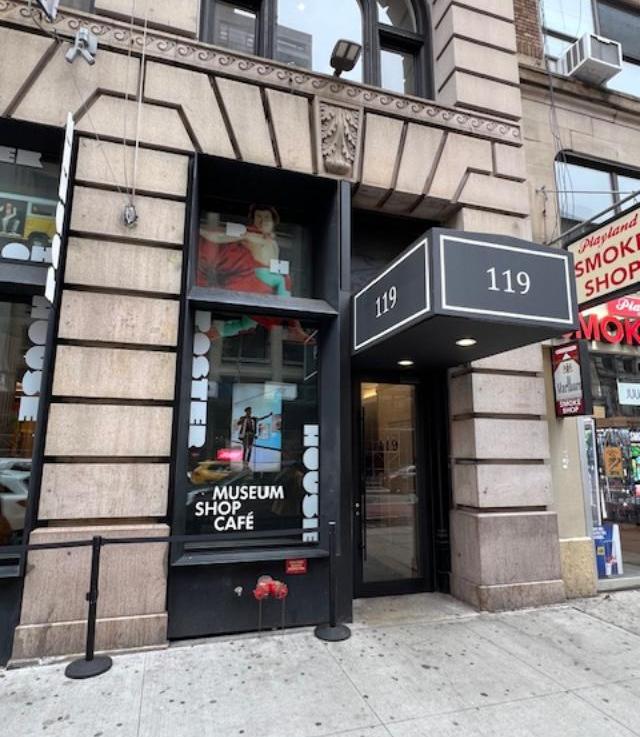
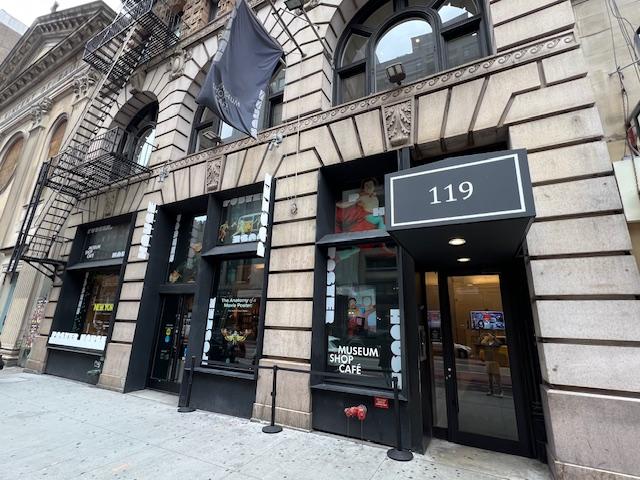
The Poster House Museum at 119 West 23rd Street.

The Poster House is a little gem of a museum that I must have passed many times and never knew it was a museum. I had never heard of this museum before. The Poster House is dedicated to the history and art of posters and how they impact our lives as a way of communication. I got a chance to see the whole museum in about two hours.

The first exhibition on the first floor of the museum was “Utopian Avant-Guard: Soviet Film Posters of the 1920’s”, a retrospect on the film industry during the Silent Era. It was a time with the fall of the Czar and the coming of Communism where artists tried to shape the new face of Communism before the rigidity of the party controlled the whole film industry from the end of Silents until the Fall of Communism in the early 1990’s.

“The Utopian Avant-Guard: Soviet Film Posters of the 1920’s” exhibition

During the early years of the Communism, the country was going through radical changes that were not facing the rigid standards of the future Communist Party. Artists and film makers were getting their creativity from the West from countries in Europe and the United States. The creative class got to experiment with film and adapted what they saw to their own markets. This did not last long as Communism took hold and then started to control the content that was shown in the country. This continued from the Silent Era until the mid 1990’s when Communism fell.

Movie Poster from the 1920’s: ‘Six Girls Seeking Shelter’ from 1928

There were two interesting exhibitions on the lower level on artist and poster maker Ethel Reed. The exhibition was a collection of her work for magazines, books and film. She handled all sorts of mediums and was prominent for many years in the industry until her work fell out of fashion and her behavior became erratic with addiction.

“Ethel Reed: I am my own Woman”

The last exhibition that I toured was “Experimental Marriage: Women in Early Hollywood”, women whose role in in the film industry included writers, directors and producers. It showed how the influential women were in the industry before it became corporate. It also showed how actors had a lot of say in their films and the themes of the films were more female based. As things got concentrated in California and became more unionized, it became more of ‘Good Old Boys’ network as the industry became more streamlined.

“Experimental Marriage: Women in Early Hollywood” exhibition

What I liked about the museum is that it showed the politics from all angles and explained its progression and future in these industries.

The museum also has a nice gift shop and bookstore and a small restaurant, Café des Affiches.

History & Mission of the Poster House:

(From the Museum website)

The Poster House is dedicated to presenting the impact, culture and design of posters, both as historical documents and contemporary visual communication.

Through temporary exhibitions, a growing permanent collection and educational events, Poster House explores the enormous impact of posters on society and culture and how they have been adapted to contemporary use. As the first poster museum in the United States, The Poster House provides a space for inquiry for all those interested in design, advertising and public interventions with an aim to improve design literacy among the general public.

Posters explore:

*Mass communication and persuasion

*the intersection of art and commerce

*control of the public domain

Poster House was founded in 2015 with an eye towards filling a long-acknowledged gap in the New York cultural landscape for accessible art and design. After several years of planning and construction, Poster House opened its doors on June 20th, 2019.

Poster House is proud to receive support from the New York State Council of the Arts. Poster House is an affiliate member of the International Vintage Poster Dealers Association.
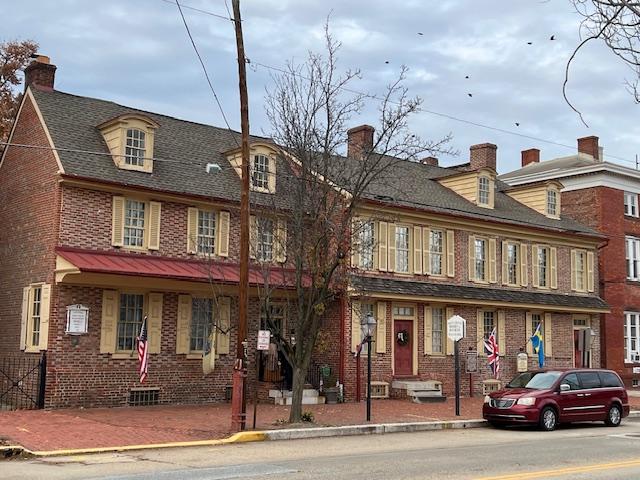
Day Two Hundred and Forty Visiting the Historical Sites of Southern New Jersey in Cumberland, Cape May and Salem Counties-A Local Journey on Father’s Day Weekend                                                             June 18th-19th, 2022

Day Two Hundred and Forty Visiting the Historical Sites of Southern New Jersey in Cumberland, Cape May and Salem Counties-A Local Journey on Father’s Day Weekend June 18th-19th, 2022

Grab your tour book and get in the car to visit all these wonderful sites. There is so much to see and do in Historical Southern New Jersey!

The Salem Historical Society

The Salem Fire Museum

jwatrel's avatarmywalkinmanhattan

The one thing I refuse to do on Father’s Day is to spend the day at the cemetery. I know that is some people’s idea of honoring one’s family members but it is not mine. I went on Friday and paid my respects to my father (whom this blog is dedicated to) and spent time remembering some of the good times we had in past. I dropped some cut flowers from our gardens (some of which he planted) and said a small prayer. Then I left.

My idea of honoring my father and spending Father’s Day with him is to do something that we would have shared together. We were always running around somewhere and exploring something new and doing something fun. That is how I wanted to honor him. By being active and giving him a toast at Sunday dinner.

I had gotten a pamphlet on the historical sites…

View original post 8,238 more words

The Doll House at the Boulevard Circle                    Hasbrouck Heights, NJ 07604

The Doll House at the Boulevard Circle Hasbrouck Heights, NJ 07604

The Doll House at the Boulevard Circle

Hasbrouck Heights, NJ 07604

No phone number

Open: Sunday-Saturday 24 hours you can visit

My review on TripAdvisor:

The Doll House at the Boulevard Circle in Hasbrouck Heights, NJ

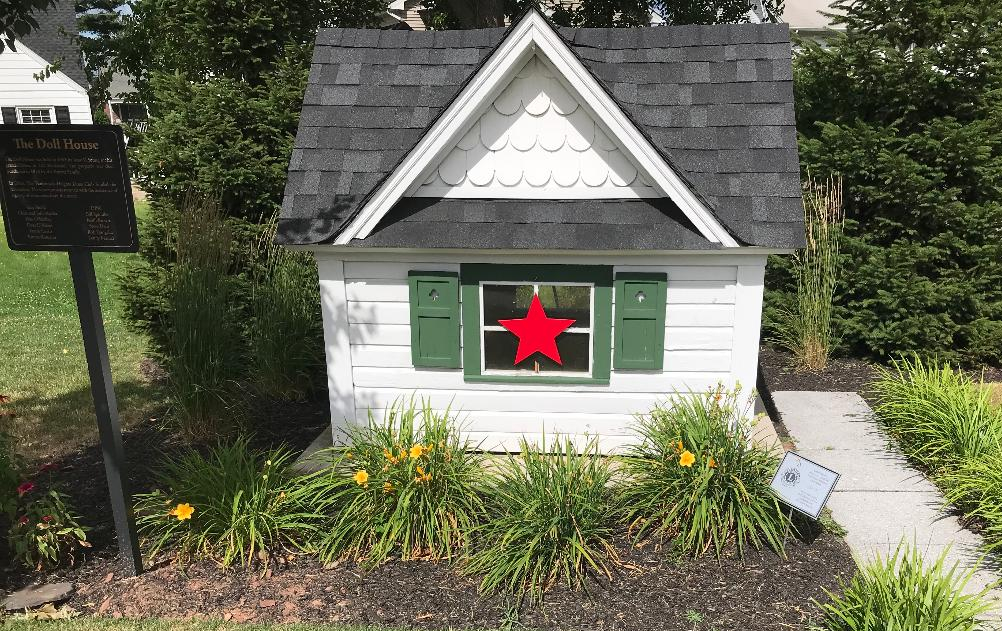
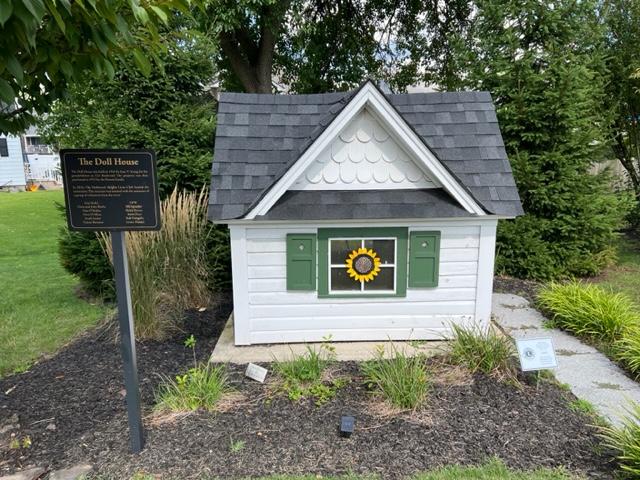
The Little Doll House on the Boulevard Circle in Hasbrouck Heights has been a landmark in town almost eighty years. The little house stood in the back of 122 Boulevard since I had moved into town in 1988 and was always painted the same way as the Neil Parrott Reality Company.

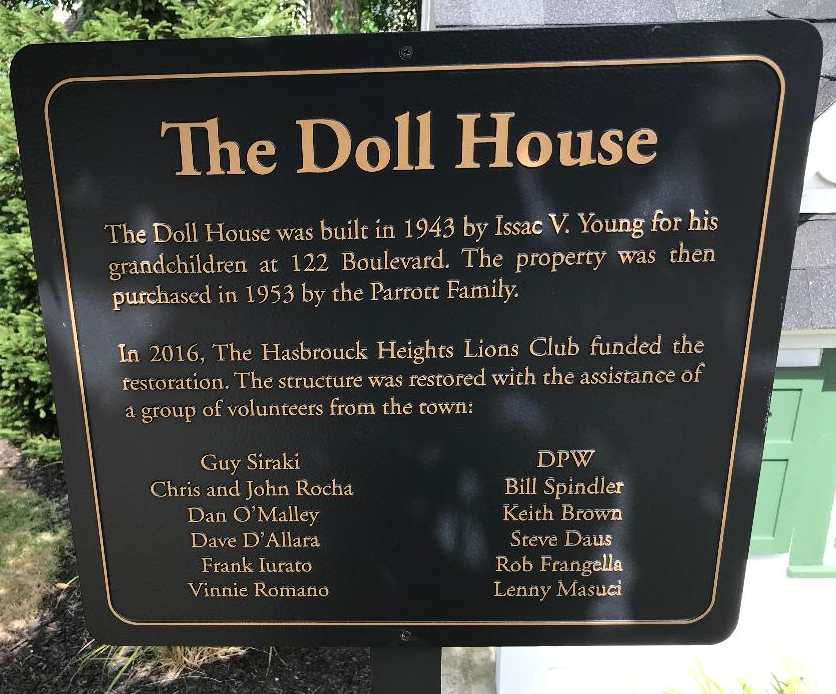
The Doll House was built in 1943 by owner Issac V. Young for his grandchildren and then the house was purchased by Neil Parrott for the family realty business. It was used as a playhouse for client’s children while their parents’ conducted business inside the office.

The Historical sign at the Circle in Hasbrouck Heights, NJ

Neil Parrott Realty closed back in the early 2000’s and the Doll House was overgrown with vines and was in disrepair. When the new owners bought the house, they were approached by members of the community to see what they were going to do with the Doll House. When it looked like they were going to demolish it, a group of citizens wanted to save it and restore it.

The restoration was funded by the Hasbrouck Heights Lions Club and conducted by a group of citizens from Hasbrouck Heights fixed the Doll House and placed it on town land so that the colorful landmark can be shared by everyone driving into Hasbrouck Heights.

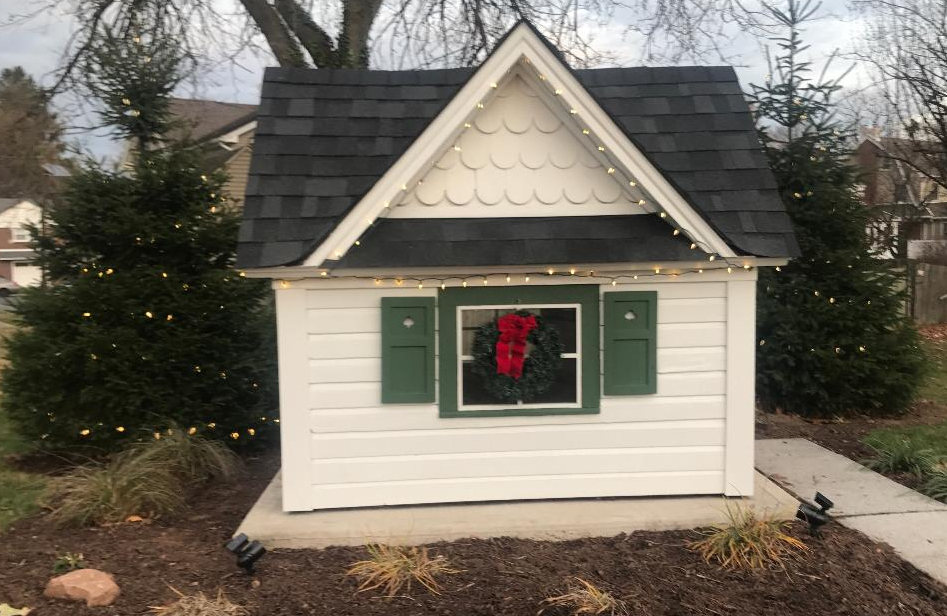
The Doll House in Hasbrouck Heights at Christmas time

The committee decorates the Doll House for all the holidays.

We want to thank all the members of the Hasbrouck Heights community for putting the effort together to take care of this fun and whimsical landmark.

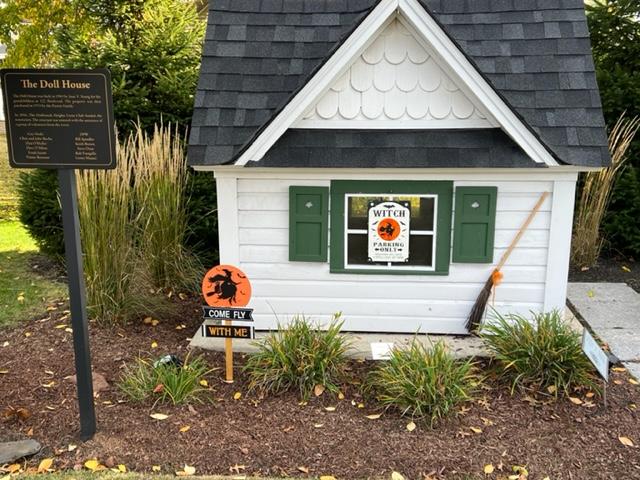
The Doll House at Halloween 2022

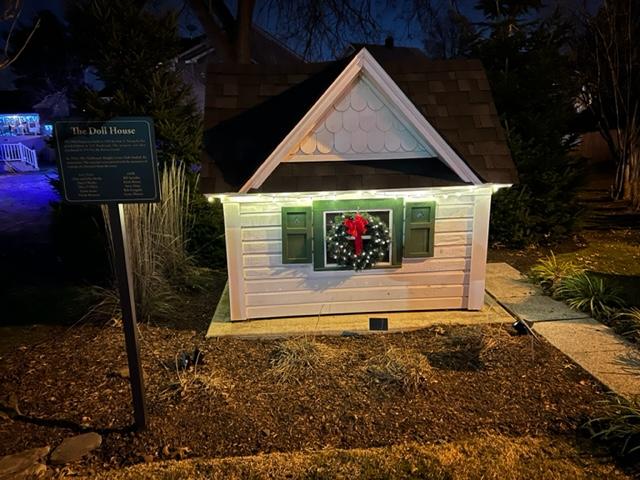
The Dollhouse at Christmas 2022

The Dollhouse decorated for the Christmas Holidays in 2022

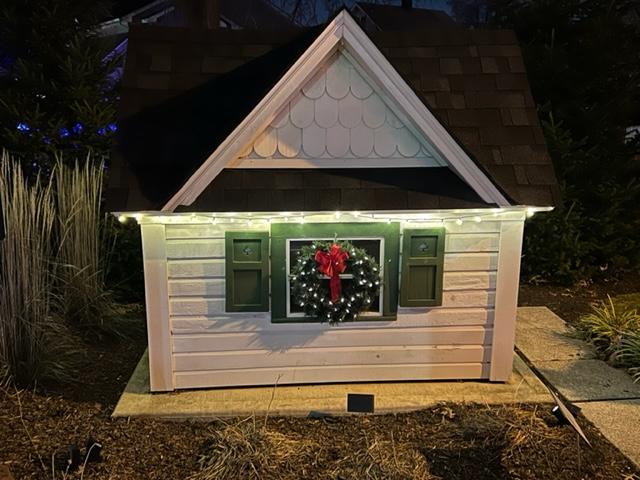
The Dollhouse in the Summer of 2023.

Fort Mott State Park                                                                454 Fort Mott Road                                                                Pennsville, NJ 08070

Fort Mott State Park 454 Fort Mott Road Pennsville, NJ 08070

Fort Mott State Park

454 Fort Mott Road

Pennsville, NJ 08070

(856) 935-3218

https://www.nj.gov/dep/parksandforests/parks/fortmottstatepark.html

https://www.facebook.com/FortMott

Open: Sunday-Saturday 8:00am-7:30pm/Please see their website for seasonal hours

Admission: Free

My review on TripAdvisor:

https://www.tripadvisor.com/Attraction_Review-g46726-d6775079-Reviews-Fort_Mott_State_Park-Pennsville_New_Jersey.html

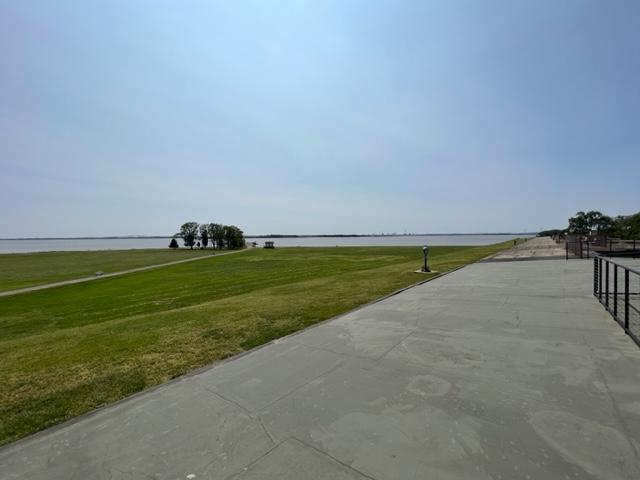
After touring Finns Point Lighthouse in the front of the park, I drove to the back of Fort Mott State Park to tour the rest of the park and explore the old fort. Talk about a real surprise and a a real treat. Talk about views of the Delaware River. On a sunny afternoon, the sun really reflects off the water and makes the most amazing light show.

I walked up the Parapet, the massive concrete wall that used conceal the guns that protected the bay and the river. It was a impressive piece of construction and you could see where the guns had been mounted. You could climb up and down the stairs to get from one part to the other and enjoy the views.

The gunnery

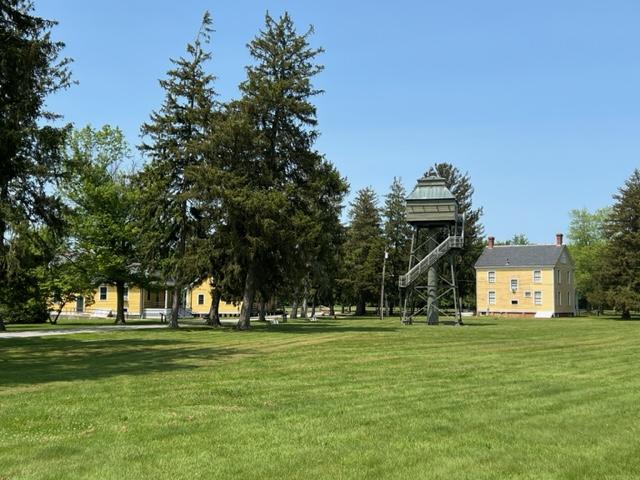
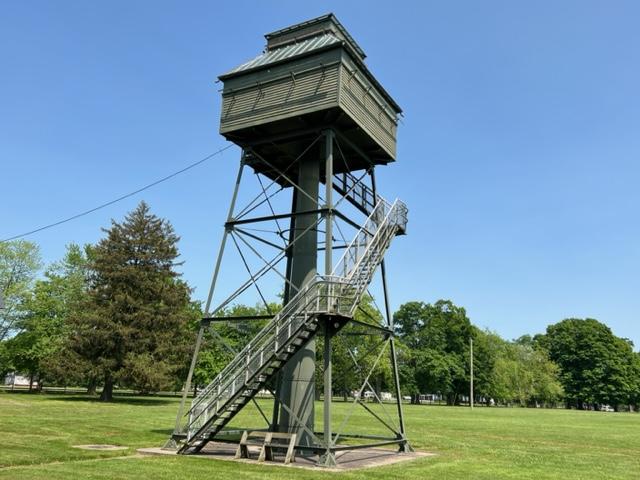
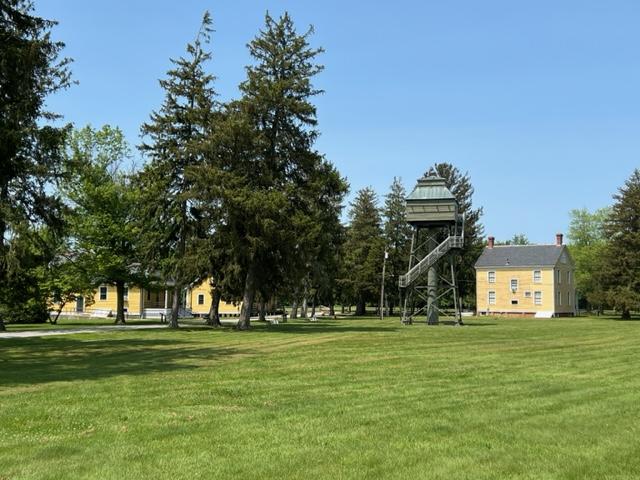
I passed the old Western Fire Control tower that was closed for the day and open by appointment only. That must have offered some spectacular views.

The Western Fire Control Tower

I then toured the Visitors Center and saw all the artifacts from the war, a timeline of the Fort and the history of the fort. Take time to look at each case and you will see how the fort developed, the types of things used at the fort and the people who were stationed here and their stories. It also offers bathrooms.

The best part of the Fort Mott State Park is just walking around the lawn and enjoying the sunshine and river breezes on a hot day. The blue skies with the sunshine gives you a sense that it was not just a place of protection but Mother Nature lending her hand to offer a spectacular location to just stop and wonder what would it been like if something happened here during the war. Would it withstood the assault?

The best part of the park is just to walk around the lawns and enjoy the river views.

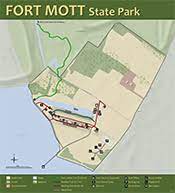
Map of Fort Mott State Park (NJ State Parks.org)

The History of Fort Mott:

(From the Fort Mott State Park Pamphlet-New Jersey Division of Parks and Forestry State Park Division)

Fort Mott, an Endicott-era fortification was built as part of the federal government’s late 19th century plan to defend the Delaware River. Today it serves as a state park where visitors can tour the remains of the historic fort. The cultural and historic features of this park and its recreational facilities provide a unique blend of activities for the park visitors.

The views from Fort Mott of the Delaware River

Fort Mott State Park is included as a point of interest on the New Jersey Coastal Heritage Trail. A Welcome Center for the trail accommodates displays defining Fort Mott’s place in history and the maritime environment. Fort Mott State Park is on the Delaware River at Finn’s Point in Salem County, New Jersey. This 104-acre park is six miles south of the Delaware River Memorial Bridge, off New Jersey Route 49.

The Finn’s Point Reservation was purchased by the United States Government in the late 1830’s. Originally called “The Battery At Finn’s Point”, the proposed fortification was one of a three-fort plan to protect growing industries and shipping along the Delaware River. Plans for Finn’s Pint specified eleven-gun emplacements with twenty guns and a mortar battery with six complacements. With Fort Delaware on Pea Patch Island in operation since the early 1820’s and the nation involved in the Civil War, the construction of the Battery at Finn’s Point was delayed until 1872. At that time, only two-gun emplacements and five magazines in the mortar battery were completed before construction was halted due to budgetary constraints.

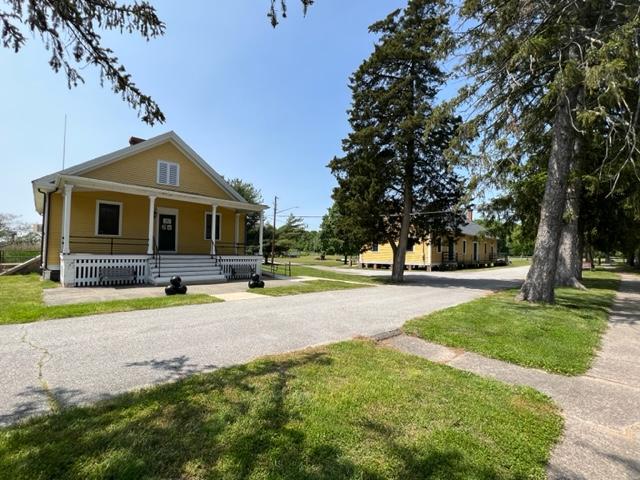
The headquarters buildings

With advancements in military technology made during and after the Civil War, the United States defenses were dangerously inadequate. In 1885, President Grover Cleveland, at the request of Congress, appointed the Endicott Board, named after its Chairman William Endicott, the Secretary of War. The board, which consisted of both military men and private citizens, studied the existing coastal defenses and developed a coastal defense plan for the United States. This plan determined where defenses and developed a coastal defense plan for the United States. This plan determined where defenses should be built or improved, the order in which the work would proceed, the quantity and type of guns that would be placed at each fort and other considerations.

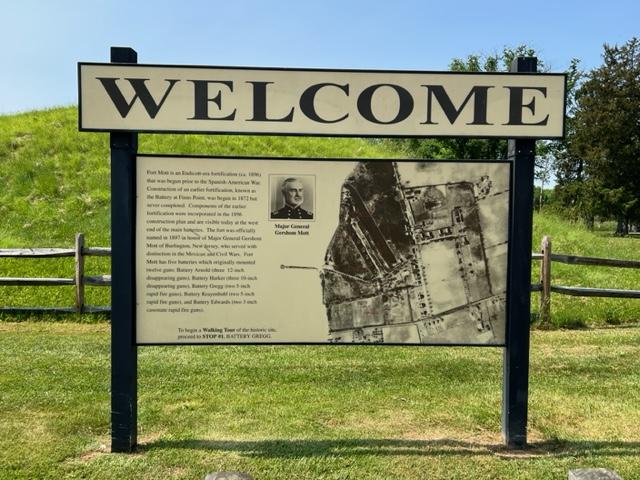
The signage

The main defense concept of the Delaware River was dispersion of armaments into three separate fortifications. The original plan for the Battery at Finn’s Point was abandoned and construction of new fortifications began in 1896 in anticipation of war with Spain, the Spanish-American War. This fortification was officially renamed Fort Mott on December 16th, 1897, to honor Major General Gershom Mott. Mott, a native of Bordentown, NJ was a decorated veteran of the Mexican American and Civil Wars. Fort Delaware was upgraded, and construction of Fort DuPont began during this same time period.

The signage

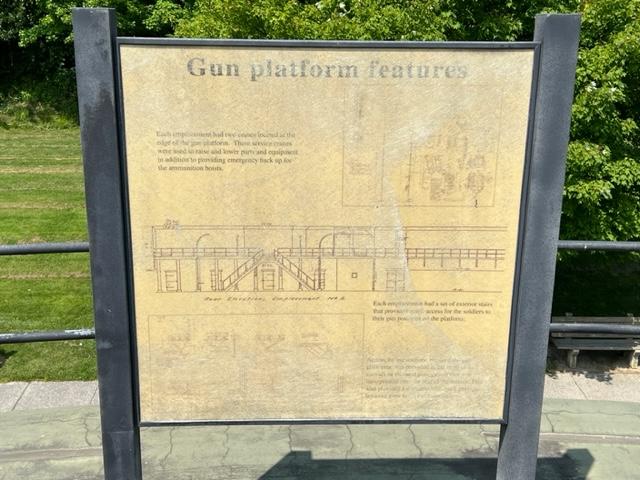
At Fort Mott, large caliber weapons, three 10 inch and three 12-inch guns were installed on disappearing carriages. The gun emplacements were located behind a 750 foot long and 35-foot-thick concrete and earthen embankment, which was sloped to form the ‘parapet’ wall. These guns had an effective range of seven to eight miles and shot projectiles that weighed 617 and 1000 pounds respectively. Beneath the six-gun platforms were powder and shell magazines, ammunition hoists, a telecommunications system and an electric generating station. Two batteries each with 5-inch rapid fire guns and one battery with two 3-inch rapid fire guns were also part of the defenses, designed to counter fast moving smaller warships which might evade the large caliber guns. They also protected the fort from potential land attack. Fort Mott was a completely modern installation for its time period.

The Fort Mott headquarters

Two steel control towers were later built to improve aiming of the guns. Observers stationed in the towers, in conjunction with plotting room personnel, directed the gunfire of the 10 inch and 12 inch guns. The tower near the river on the northern end of the emplacement was built in 1902 and was used to aim the 12 inch guns of Battery Arnold. The tower near the park office was built in 1903 to help aim the 10 inch guns of Battery Harker.

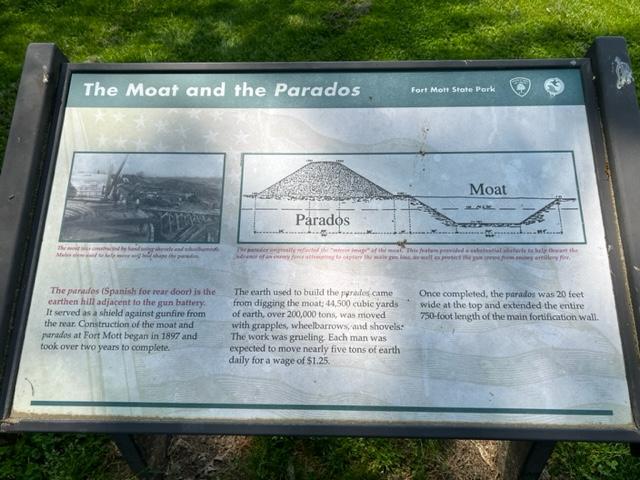
Behind the main emplacement are the parados and the moat. ‘Parados’ is Spanish for rear door. These provided the rear defenses for the fort. The parados was constructed using the fill from the moat. Landscaping around the military reservation helped camouflage Fort Mott from attack by potential enemy ships.

Fort Mott was self-contained military community. The post had over 30 buildings, including two large barracks, non-commissioned and officer’s housing, a hospital, a post exchange, a library, a guard house, a stable, YMCA and a school for the soldier’s children. The Delaware River was the main transporation infrastructure for Fort Mott; munitions, supplies and construction materials arrived at the fort by barge.

WIth the construction of Fort Salisbury near Milford, Delaware shortly before WWI, Fort Mott, Fort Delaware and Fort DuPont became obsolete. The three forts remained active defense installations until after WWII, when they were phased out. Troops were regularly stationed at Fort Mott from 1897 to 1922. The federal government maintained a caretaking detrachment at the fort from 1922 to 1943. During this time, Fort Mott’s guns were dismantled and sent to various locations.

Visiting Fort Mott

Fort Mott was declared “surplus property” in 1943. Finn’s Point National Cemetery (dedicated a National Cemetery on October 3rd, 1873 because of the Confederate prisoners of war buried there) was separated from Fort Mott at that time. In 1947, the State of New Jersey purchased Fort Mott, as a historic site from the federal government. On June 24th, 1951, it was opened to the public as Fort Mott State Park.