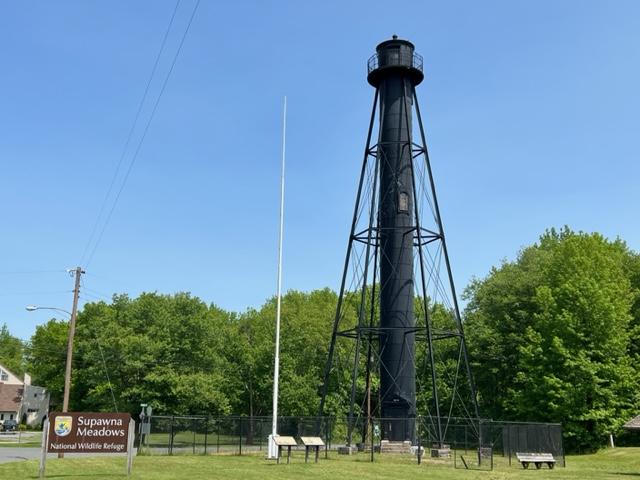
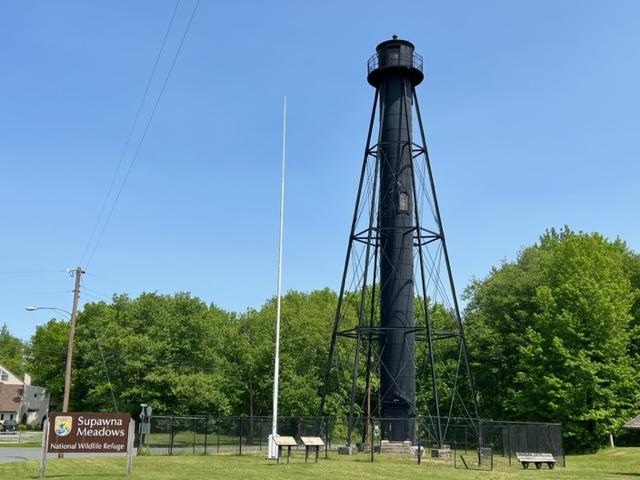
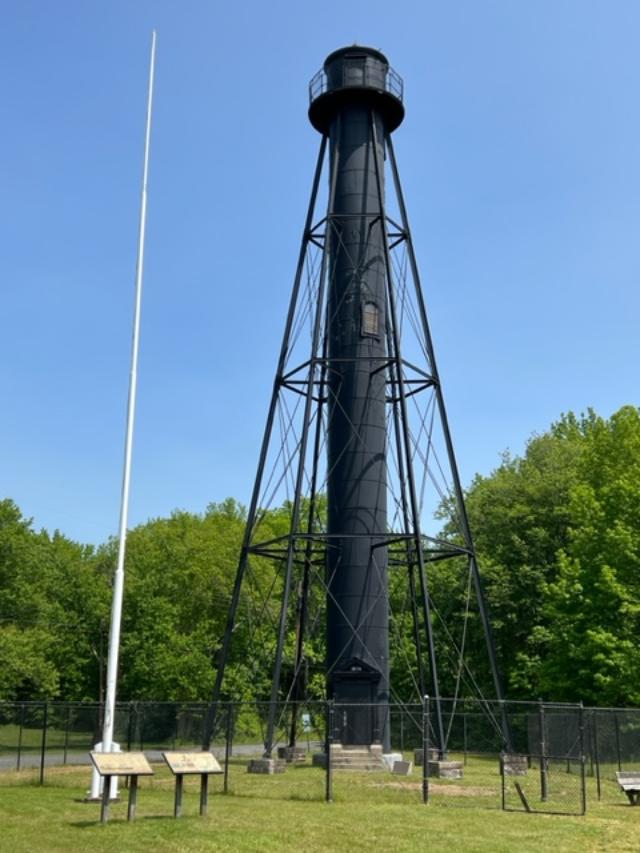
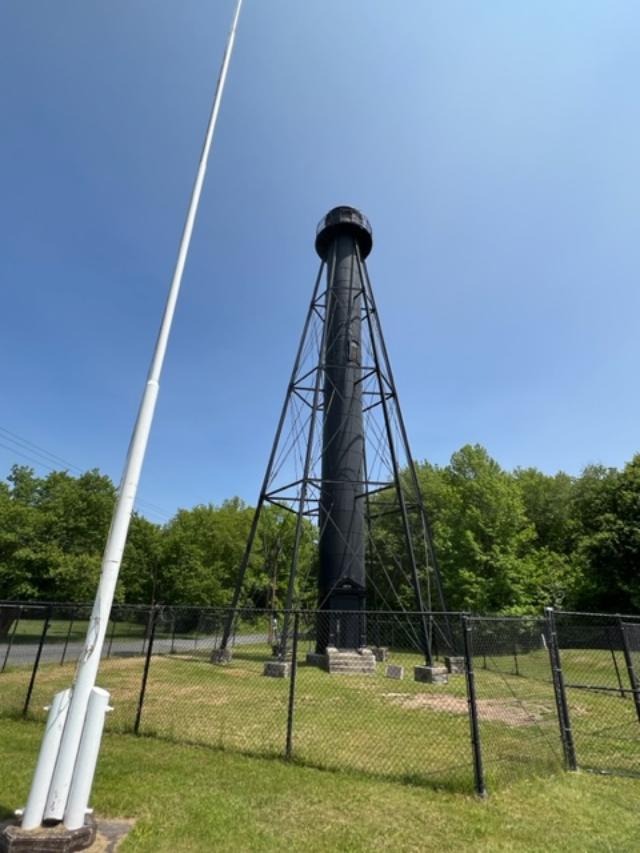
The Finns Point Lighthouse is located in the Fort Mott State Park and the afternoon that I was there which was the third Sunday of the month of June, it was not open. In fact, it looked like it had never opened for the day.
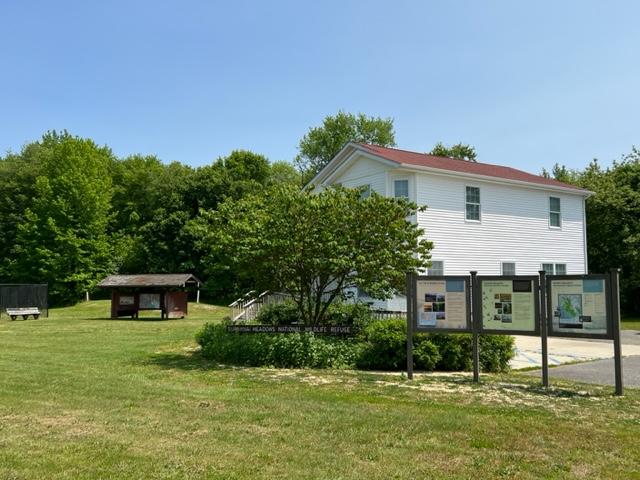
The gift shop/information center had a sign from 2019 with the hours of operation and the steps were not well cared for and the gardens around the building were over-grown. The lighthouse itself is behind a fence that you can look at but not enter and from what I read online is not open even when it should be if it is too hot or too cold because conditions inside can be impossible. The lighthouse and the Visitors Center will reopen for the 2023 season.
The Finns Lighthouse Visitors Center is now open in 2023
Still, the lighthouse has a majestic look to it and must have some views when it is open. If it is not open, take time to visit Fort Mott and the State Park, which offers spectacular views of Delaware Bay and the surrounding grounds. Take time to explore the fort and the where the guns were mounted. Very interesting.
Fort Mott also has a very good Visitors Center and small museum inside to see the history of the fort, artifacts from the fort and from the war years and all sorts of interesting information on the area.
The Finns Point Lighthouse
The History of the Finns Point Lighthouse”
(From the Friends of the Finns Point Lighthouse website-modified):
(Please read the above Friends Website for the complete history in detail of the ligthouse)
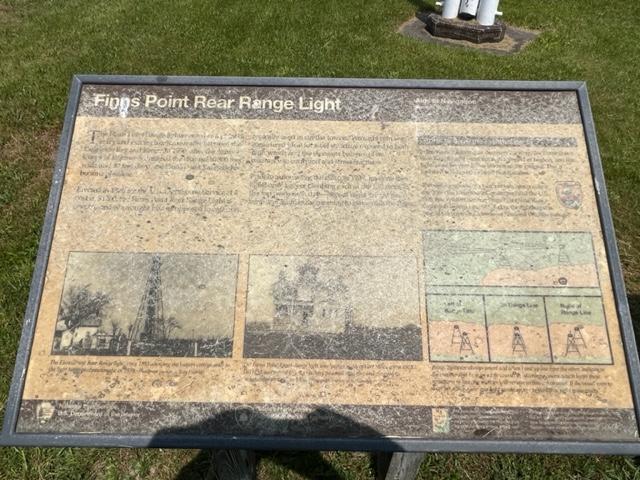
Soon after the 1638 landing of the Finnish colonists near the present site of Wilmington, DE, a small group of settlers crossed over to the east bank of Delaware River, where the land was though to be more fertile and established farms. One group selected land near the sweeping turn in the Delaware River and this area remains known to this day as Finns Point.
By an act of Congress in 1875, $55,000 was set apart for two pairs of range lights to help vessels transition from Delaware Bay into the Delaware River. Port Penn Range, located in Delaware, would guide traffic along the shipping channel from Ship John Shoal to Ready Island, while Finns Point Range would help vessels continue upriver, passing between Reedy Island and Baker Shoal.
Lt. Colonel William F. Reynolds of the U.S. Corps of Engineers oversaw construction of the front and rear range lights at Finns Point. The front light was located near the banks of the Delaware River and was displayed from a frame dwelling of the following description: “one and one half stories high with shingle roof, double weather-boarded on outside and lathed and plastered inside. Its rests on stone walls founded on wooden piles. The first story is divided into three rooms with the hall and stairways to the second floor and cellar and shed over the back door, porch and bay window in the front. The second story is divided similarly to the first, with a step ladder to lantern on the third floor, a gallery supported by brackets surrounds the lantern on front and sides.”
The illuminating apparatus for the front light was a fourth order range lens manufactured by Barbier & Fenestre in Paris, which focused the light from a fourth-order Funk Heap Lamp with one wick. In 1882, a “wooden screen painted white, with open spaces so as to show horizontal stripes” was placed atop the front lighthouse’s red tavern room to make the structure more conspicuous during the day. The daymark was removed in 1897.
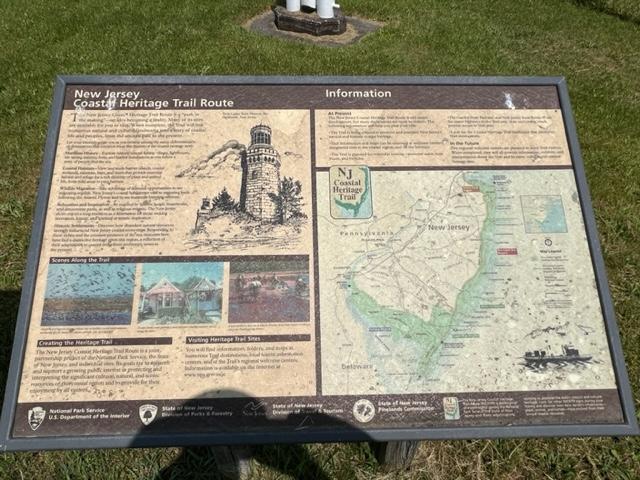
The lighthouse sign
Three acres of land, roughly one and a half miles inland from the front light, were purchased from Joshua and Mary Dickinson on April 20th, 1876, as the site for the rear range light. To provide a focal plane higher than that of the front light, the project plans called for a tall, wrought iron tower to be used for displaying the rear light. The Kellogg Bridge Company of Buffalo, NY was contracted to manufacture the components of the wrought tower, which were then transported to Salem, NJ by railcar. From Salem, teams of mules pulled large wagons loaded with pieces of the iron tower to the construction site.
A frame keeper’s dwelling was built just west of the tower, along with a wood-framed privy and an oil house. The first keeper of Finns Point Rear Range Light was Edward Dickerson, who started serving on December 8th, 1876, even though the light was not lit until April 2nd, 1877.
The lighthouse sign
Fast forward to the 1970’s when the old dwelling was razed because it was unsafe, but locals showed an interesting in the lighthouse and having it moved. Resident Betty Husarik formed the “Save the Lighthouse Committee”. They faulted in moving the lighthouse but placed it on the National Register of Historic Sites in 1978.
In 1981, the committee set out to Washington DC to meet with their local congressman and the drive resulted in a contract for $33,600 being signed between the US Fish and Wildlife Service, on whose land the tower now stood and K & K Painting Company of Baltimore to have the tower repairs, sandblasted and painted. An open house was held at the tower on October 14th, 1984 to honor the determined effort shown by the “Save the Lighthouse Committee” and others in restoring the tower.
Today it is opened for limited tours and special events.
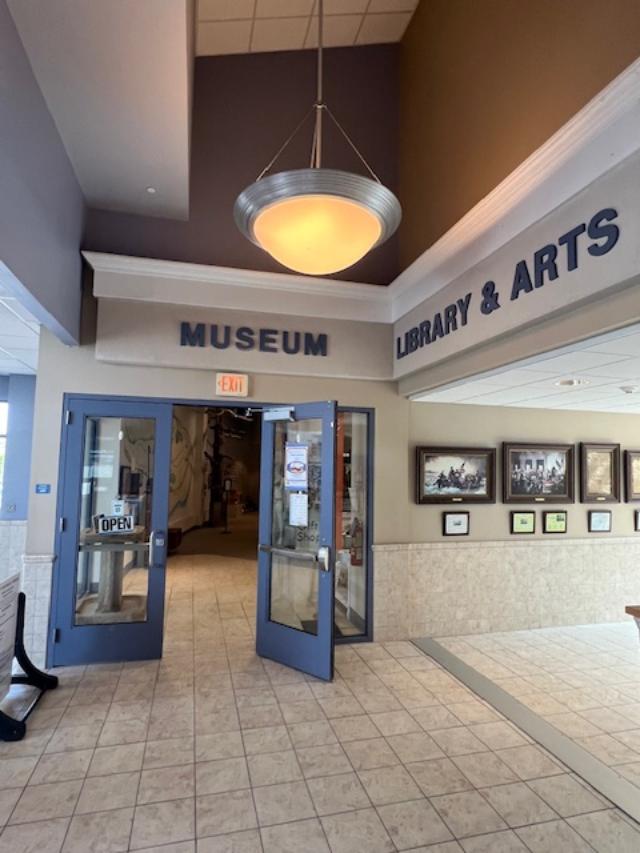
The entrance to the museum is inside the Municipal Building and Library 1735 Simpson Avenue
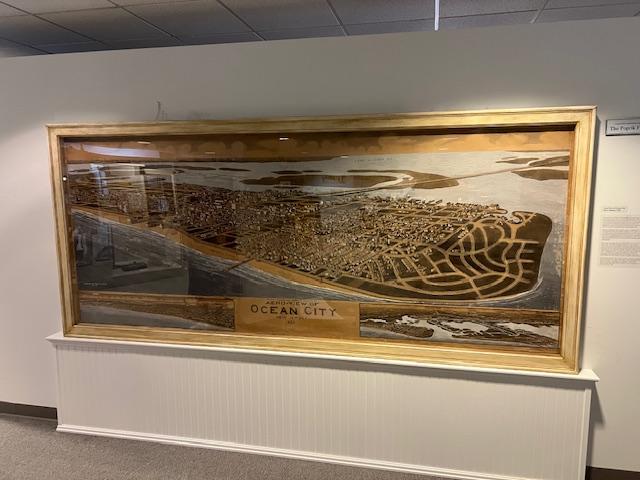
The original map of Ocean City, NJ
I made a trip to many of the beach towns at the Jersey Shore recently visiting the small historical societies that explain the history and development of these small towns. It is amazing to see how they have developed in just 150 years from Native American fishing villages to thriving vacation spots and permanent residential districts. Ocean City, NJ itself has an interesting history.
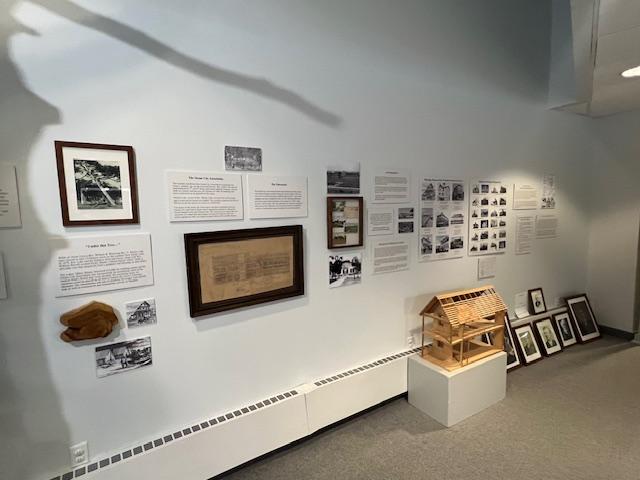
The entrance gallery with the history of the town
As you enter the museum from the back of the library, you are warmly greeted by a docent who will explain the museum to you. Then you will follow a semicircle through the exhibitions in a genealogical order from when the town was founded to modern times and events.
The first exhibition is called “From Hunting Ground to the Modern Resort:
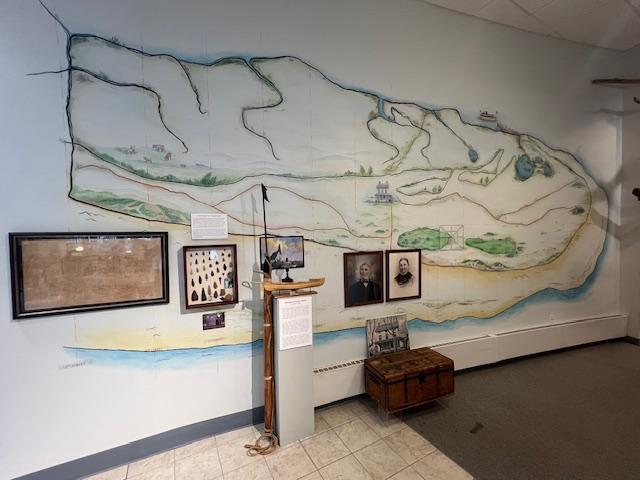
The early history from the time the Native Americans used the shore line for fishing and hunting to the history of the Miller family who owned parts of the island. The exhibit explained how the Miller family owned this section the island and how it was developed. These were the early years of the island until the coming of the Methodist colony.
The original map of the barrier island and artifacts of the local Native American tribes
The second Exhibition was “The Founders and the Early Years”:
In 1879, four Methodist ministers came to Ocean City to develop a Summer Colony and resort for their members based on Christian values. This lead to the development of the “Blue Laws” in which some traces are found today. The displays discussed the how the resort moved into modern times and how this development shaped the resort as it is today. There are interesting pictures of the development of the Camp in the turn of the last century.
The early growth of the island as a resort
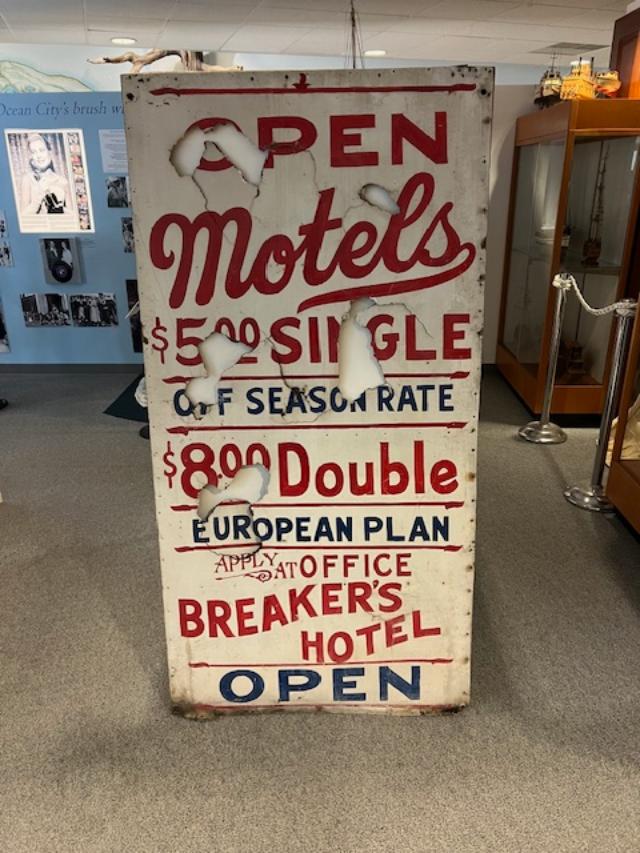
Early Motel sign
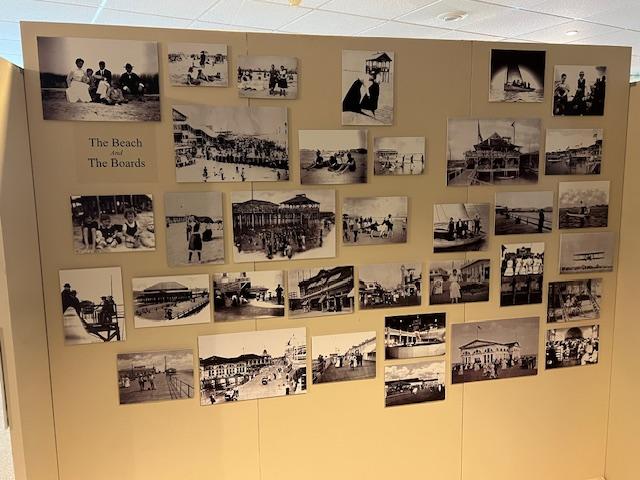
The early Bathing exhibition
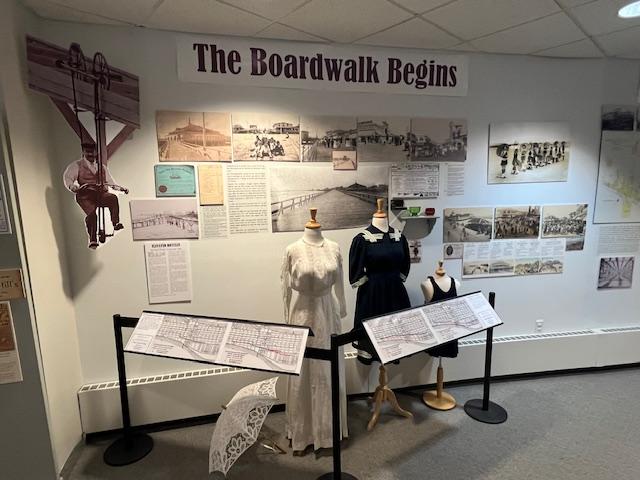
The third Exhibition was “The Boardwalk”:
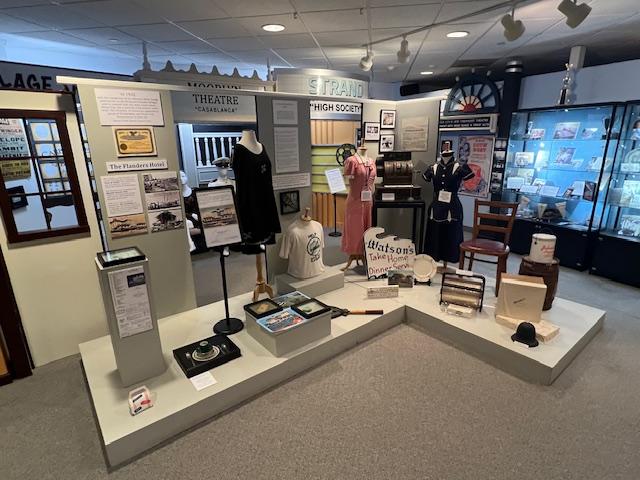
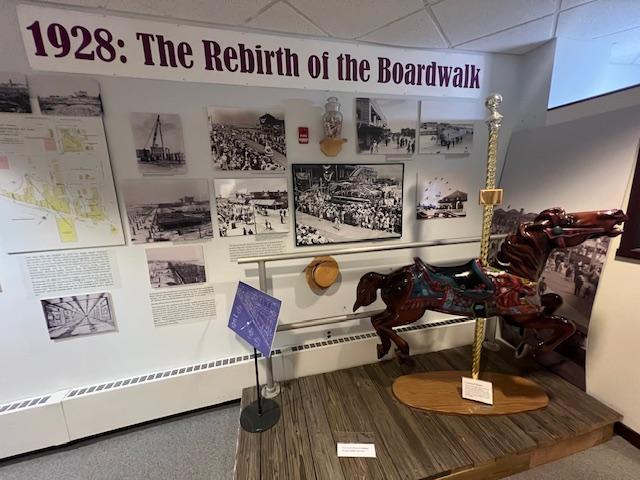
The development of the first Boardwalk in 1887 to give access to the shoreline lead to early development around it. You could follow the developments of many versions of the Boardwalk over the years due to storms and development. There were displays of old movie theaters that used to dot the Boardwalk along with other family businesses that opened over the years. Old hotels that have since closed or being used for other uses had their histories told. The Flanders Hotel’s history was displayed.
The Boardwalk rebuilt into its present form
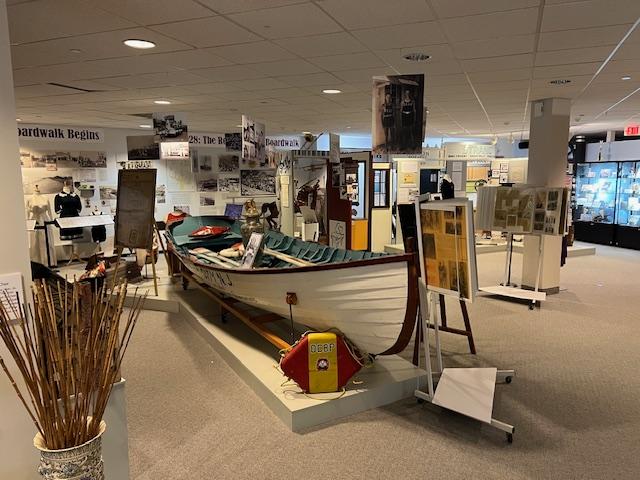
The Boardwalk in the beginning
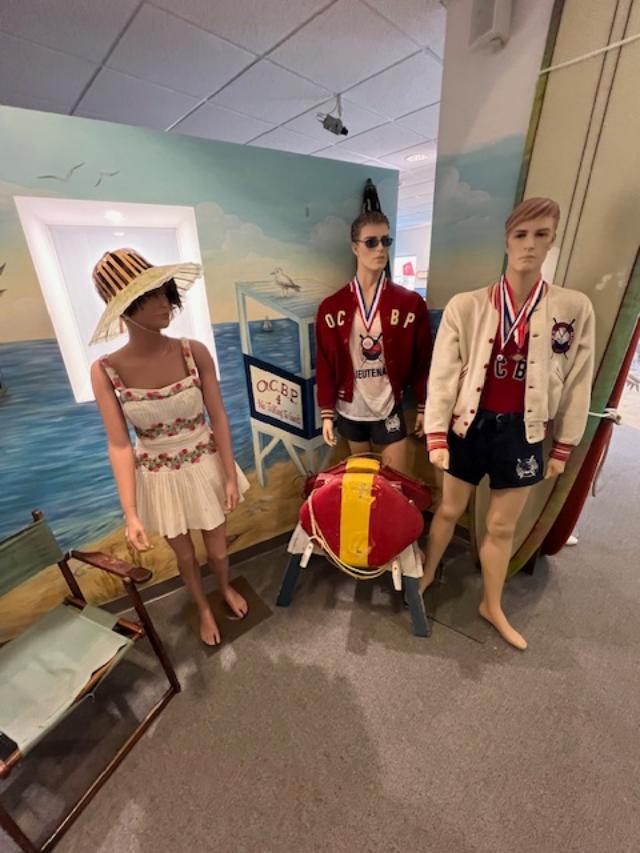
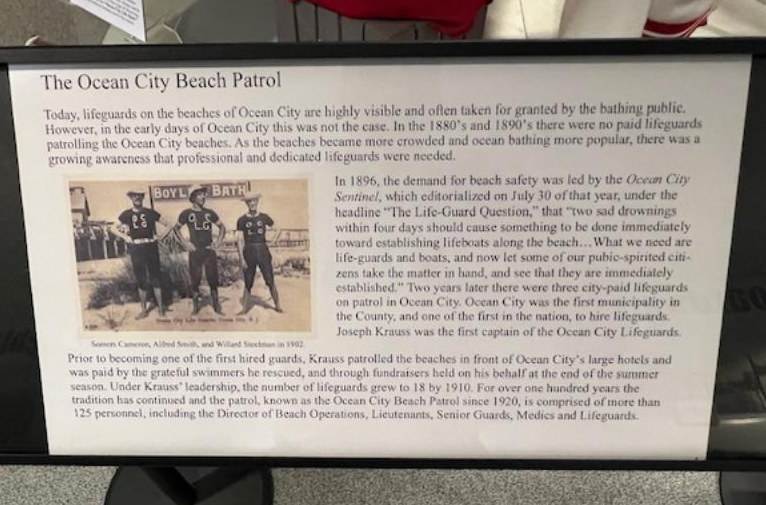
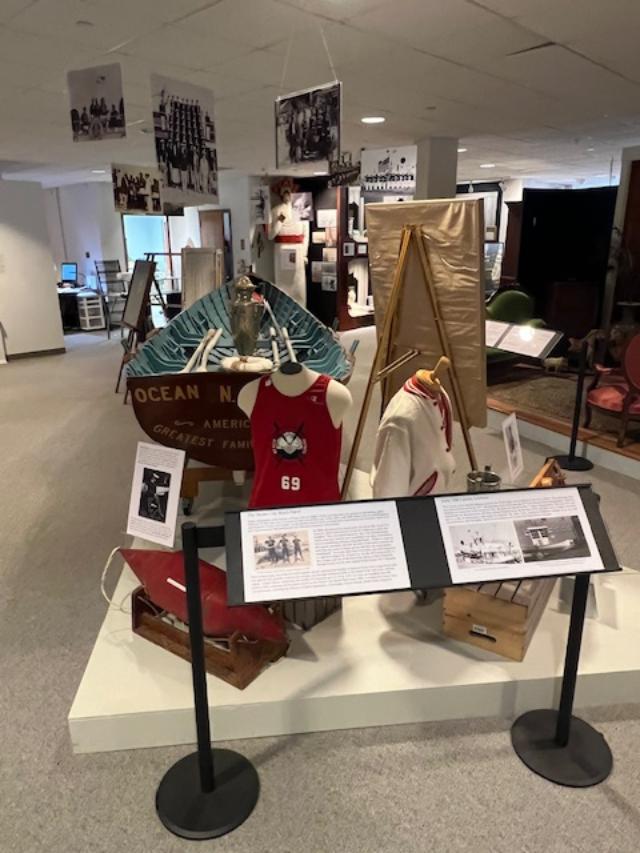
The Beach Patrol display
The Beach Patrol sign
The Ocean Patrol exhibition and artifacts
The forth Exhibition was “The Sindia”:
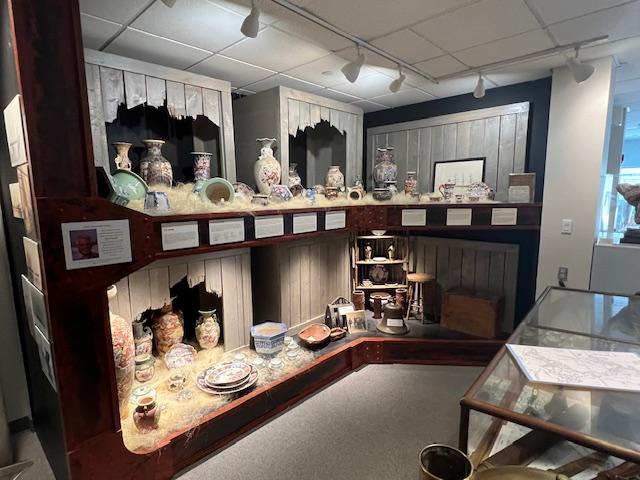
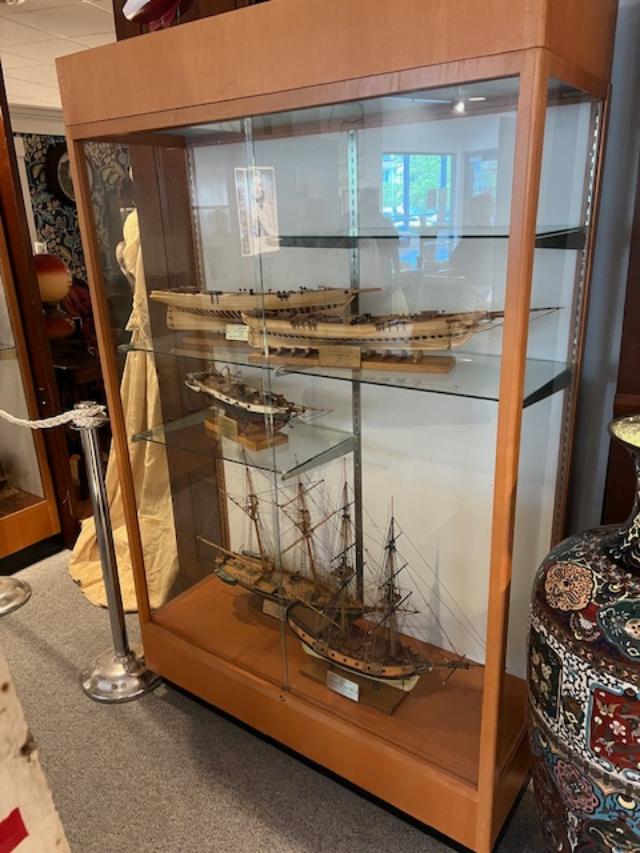
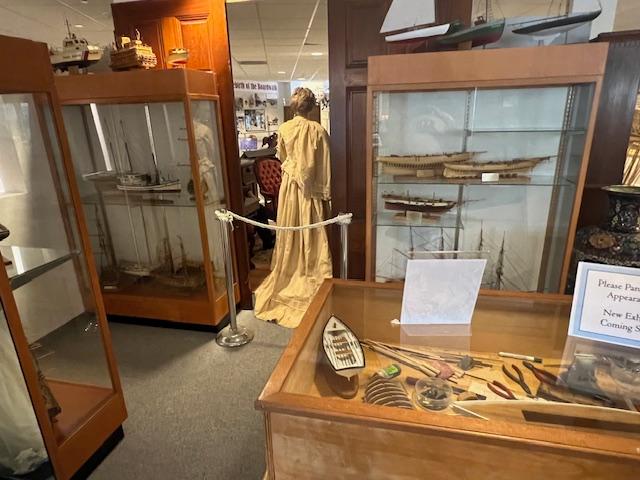
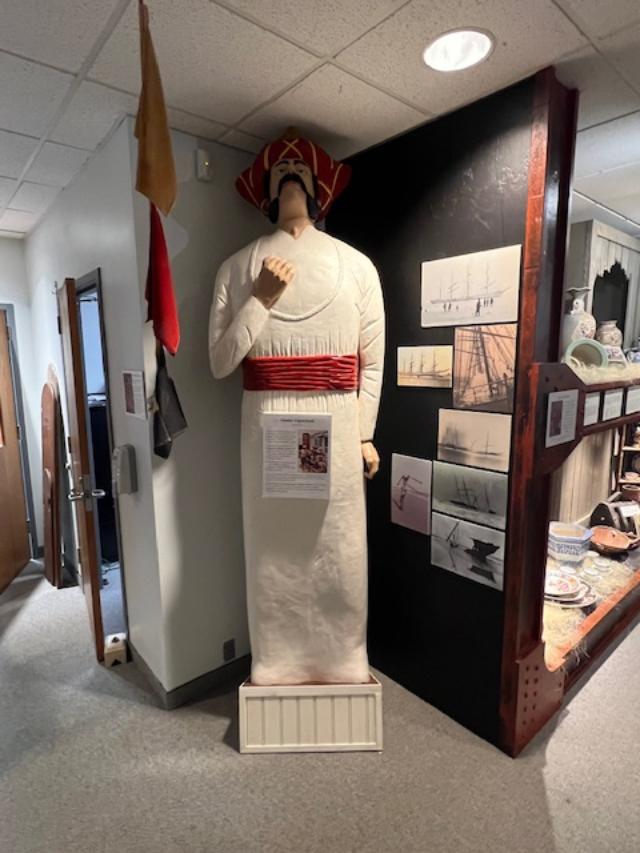
The Sindia was a shipwreck off the coast of Ocean City that ran aground in 1901. It still lies off the coast but many of the artifacts of the wreck are displayed here. There is all sorts of bottles, dishware and other household and decorative items displayed here. There is also an interesting display of model ships.
The Porcelain artifacts
The model ship display
The model ship display
The ship mass display
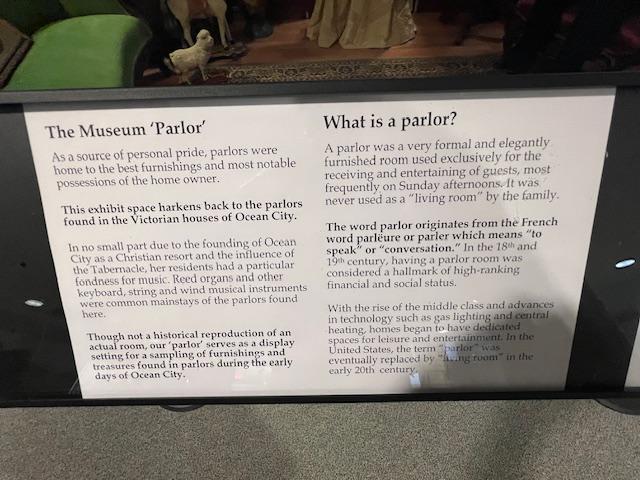
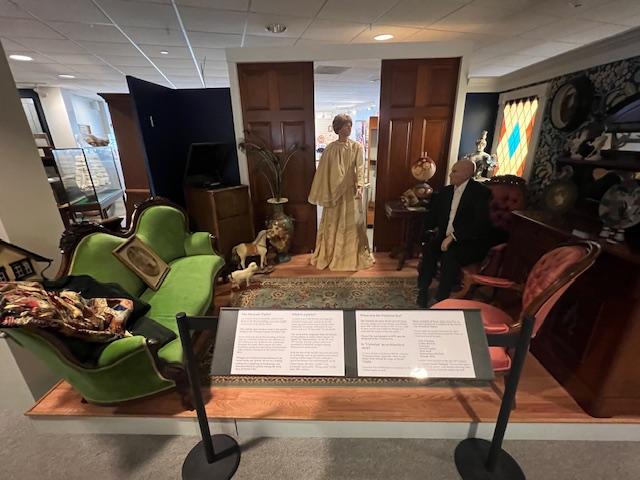
The museum Parlor exhibition
The museum Parlor exhibition
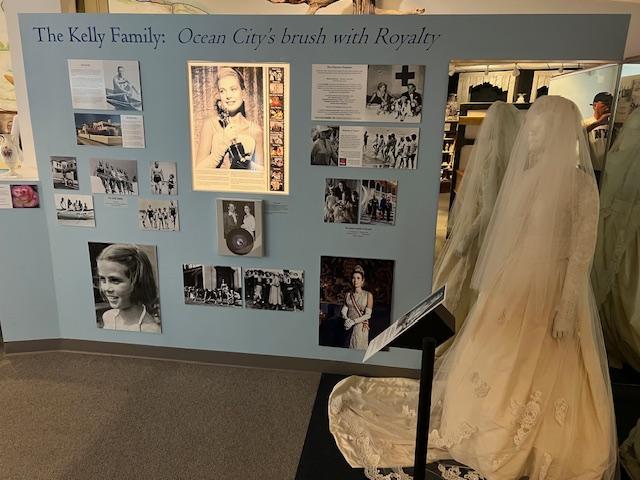
The last Exhibition was on actress Grace Kelly and her family:
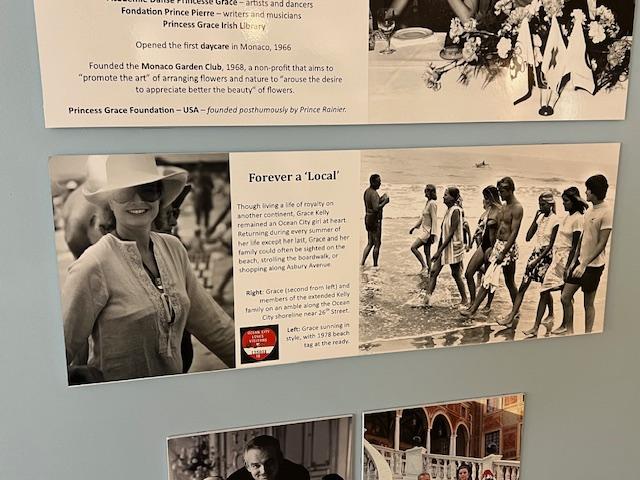
Princess and Actress Grace Kelly used to vacation with her family in Ocean City from the time she was a little girl until her death. I never realized that her father was an Olympic Rower and used to row at the Jersey Shore. Her brother was a lifeguard for the town as well. There are all sorts of family pictures of her and her siblings growing up here. What I thought was interesting was she bought her royal family to the Jersey shore to vacation with her family and there were pictures before she passed enjoying her time here. That I thought was very interesting that she never forgot her roots.
The Grace Kelly exhibition
The Princess and Movie Star never forgot her roots
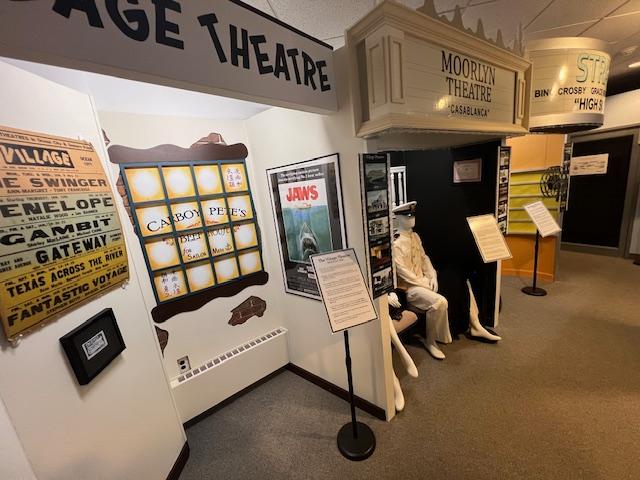
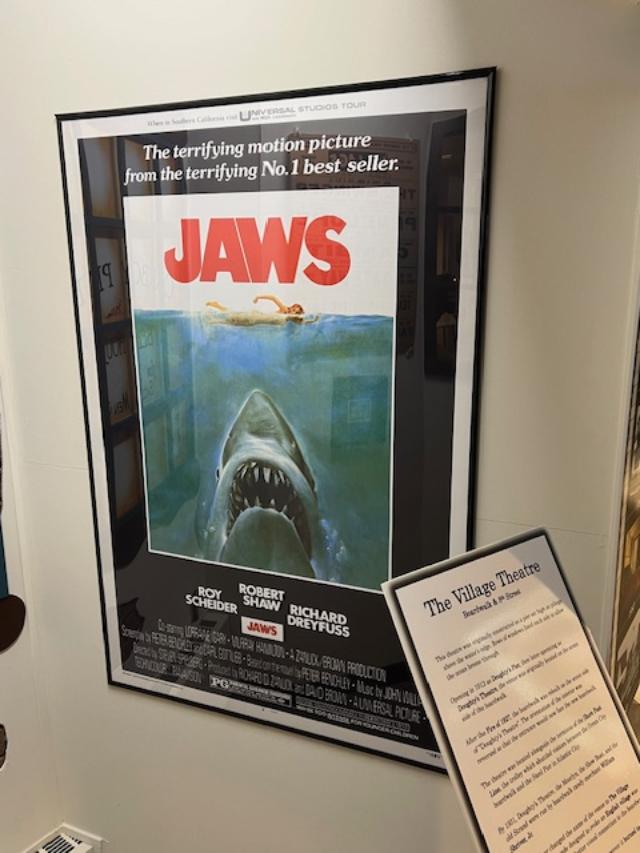
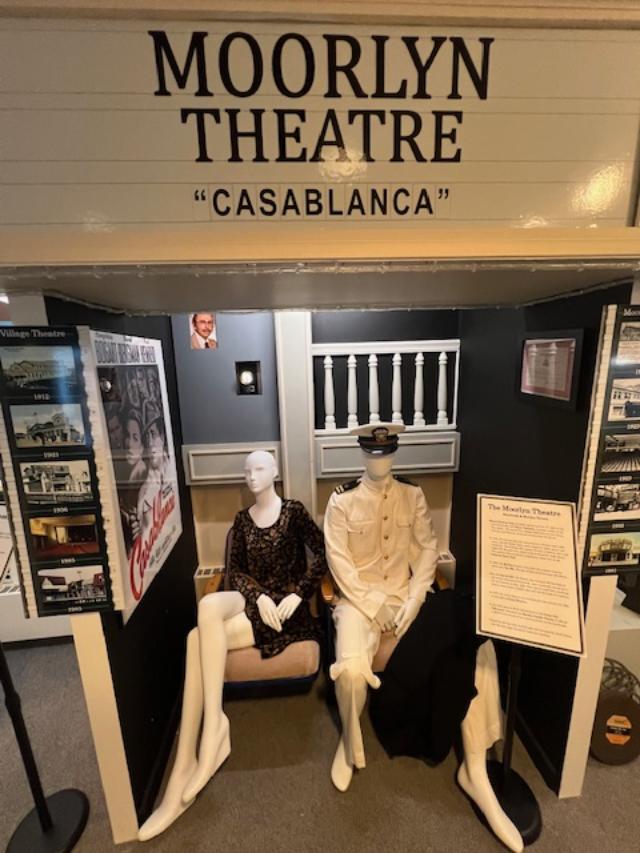
There was a special exhibition on the local theaters that once used to dot Ocean City, NJ:
The history of movie theaters in Ocean City, NJ
The Village Theater exhibition
The theaters of Ocean City, NJ
It was an interesting look at the development and then the closure of the local theaters that had become a part of everyone’s lives.
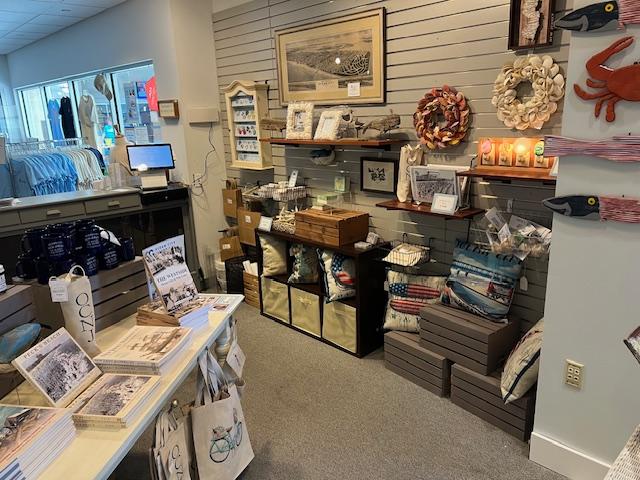
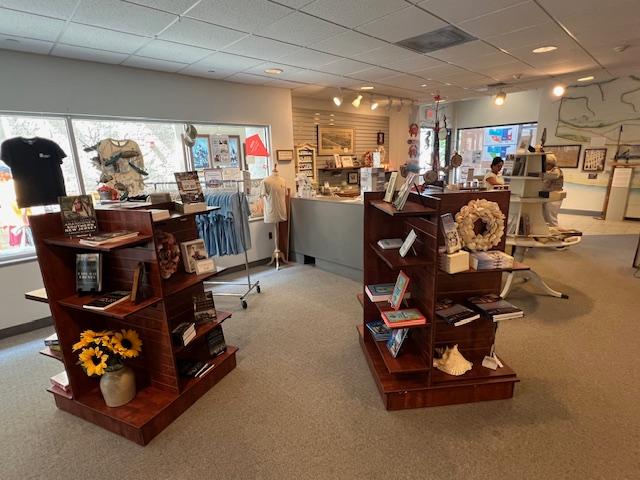
Don’t miss their nice gift shop that has all sorts of decorative items and jellies and honey.
The Gift Shop at the Museum
The Gift Shop
History of the Museum:
(from the Museum’s Website)
The Ocean City Historical Museum is a nonprofit 501(c) 3 corporation established in April of 1964. It was created by a group of enthusiastic volunteers with the support of the local government. The purpose of the Museum is to preserve the city’s history for future generations for both visitors and residents.
The first museum was located on the first floor of the old elementary school at 409 Wesley Avenue. It was only open during the summer of its first full year, as the building was still being used as a school. In July of 1965, it was opened for year round visitors when the school moved to its new location. The museum moved to its current location at the Ocean City Community Center at 1735 Simpson Avenue in 1990.
Mission:
The mission of the Ocean City Historical Museum is to delight, inspire and educate the public about the story of Ocean City, NJ and to collect, preserve and promote items relevant to its heritage, traditions and memories.
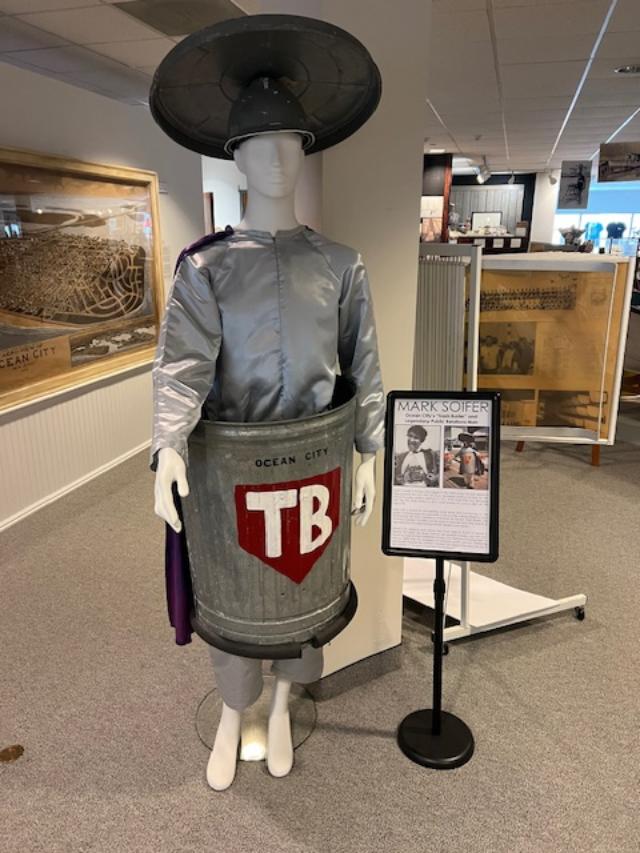
The Recycle Man display
Vision:
The Vision of the Ocean City Historical Museum is to be an inviting, informative and innovative community resource that is recognized and respected as the place for exploring and celebrating the rich history and heritage of Ocean City, NJ.
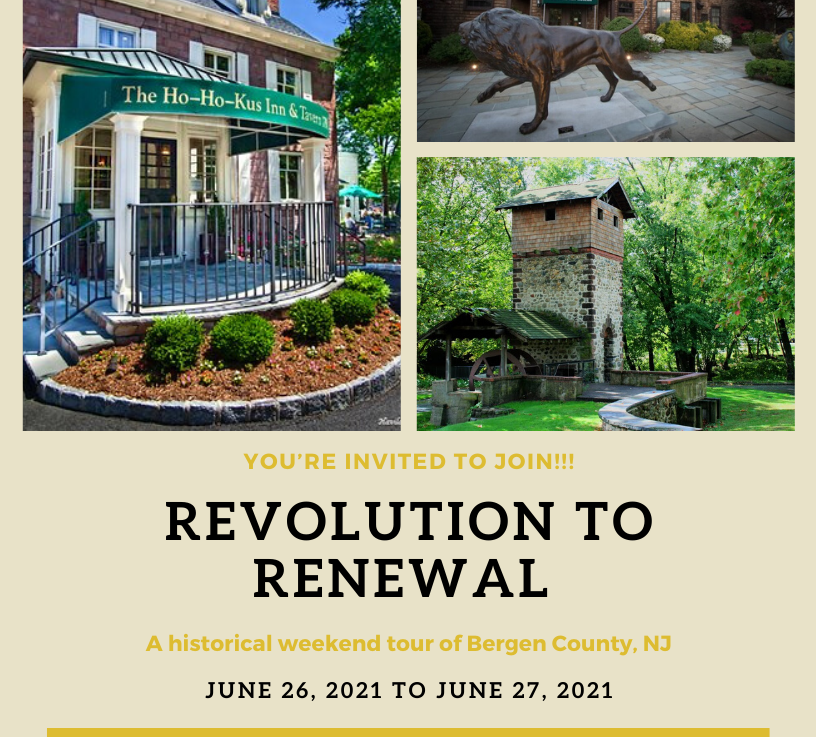
To all your history buffs, please visit Bergen County, NJ for interesting experience of visiting our historical sites and restaurants. Check out our Team Project from Bergecco-Parc Consulting Inc. “From Revolution to Renewal-A Historical Tour of Bergen County”.
Professor Justin Watrel, CEO & Co-Founder Bergecco-Parc Consulting Inc.
I had the most interesting semester for Spring Term at the college where I work. Everything started off fine. We had classes in the the afternoon, good discussions on Marketing and had a very successful Team Project marketing the Lyndhurst Snack Shop, the new Bulldog Cafe, for business (See Day One Hundred and Fifty-Nine in MywalkinManhattan.com):
I had just handed out the next Team Project, “From Revolution to Renewal: Exploring the Historic Bergen County”, a major tourism project I wanted to the students to work on for the remainder of the semester the week before the break. I had the students to break up into groups and get to know one another and get their game plans…
The Old Paramus Reformed Church at 660 East Glen Avenue
I have toured the Old Paramus Reformed Church at 660 East Glen Avenue in Ridgewood, NJ many times during the year. I have been on cemetery walks and talks during the summer. I have had Christmas services at the church during the Epiphany. I have also toured the grounds during Halloween when the Ridgewood Historical Society had lead tours at the church.
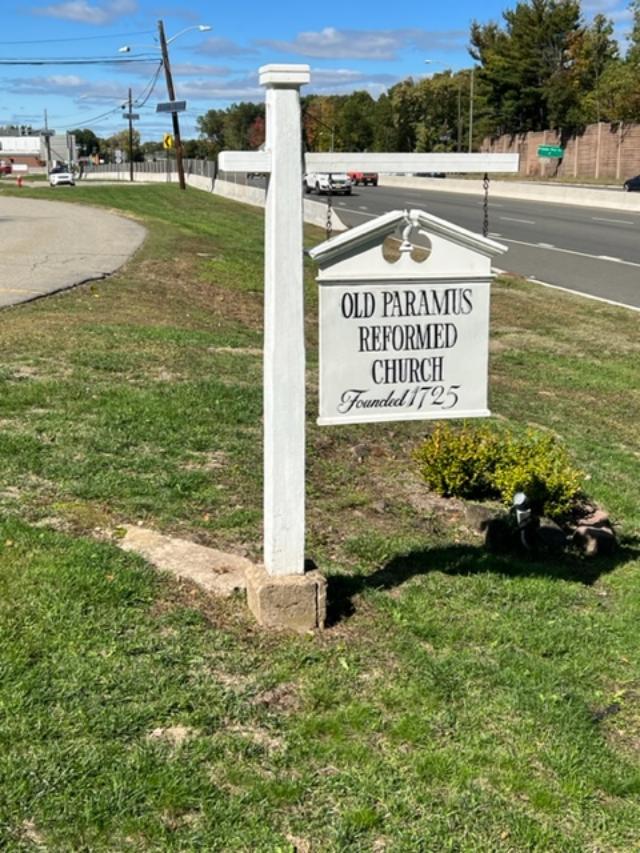
Signage from Route 17
During the Christmas holiday season I was so busy that I was not able to visit my local church. So when I was able to celebrate the Epiphany, I visited the Old Dutch Reformed Church in Ridgewood, NJ. The Church is one of the oldest in both Bergen County, NJ and the State of New Jersey. It is especially beautiful during the holidays. I love coming here because it just reminds you of Christmas and what a church should look like during the holidays. It looks like a Currier & Ives woodcut during the holiday season. The congregation does a nice job decorating it.
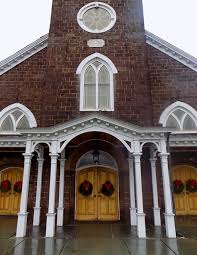
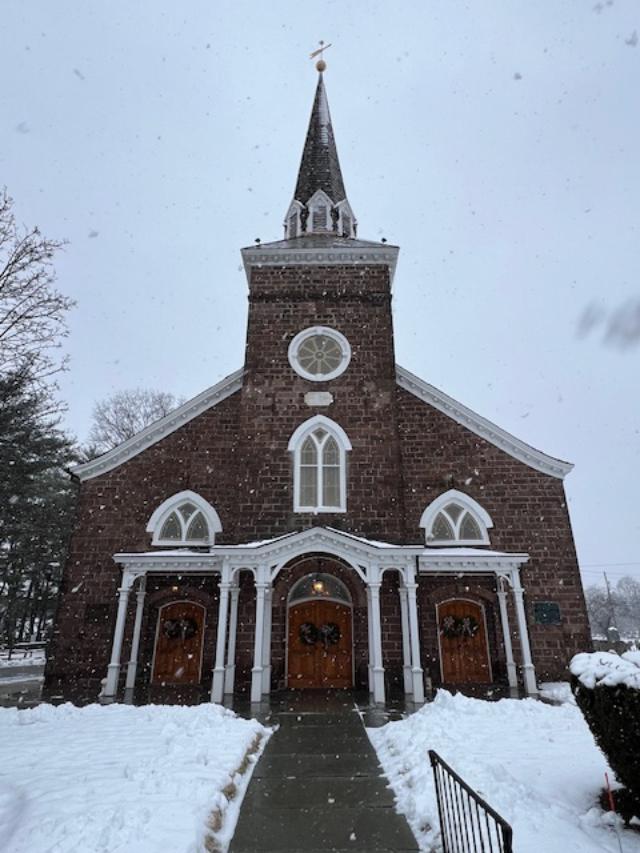
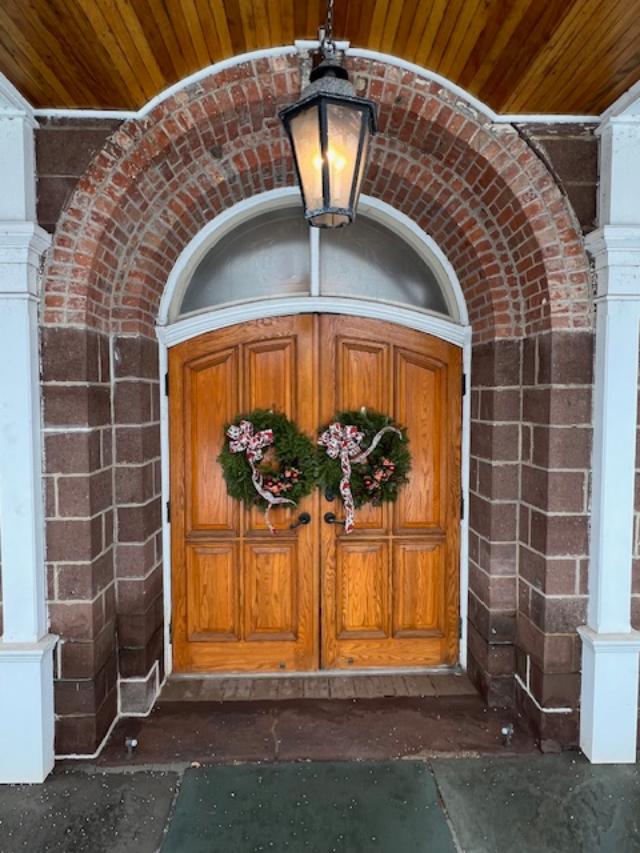
The entrance to the Old Paramus Reformed Church at Christmas time
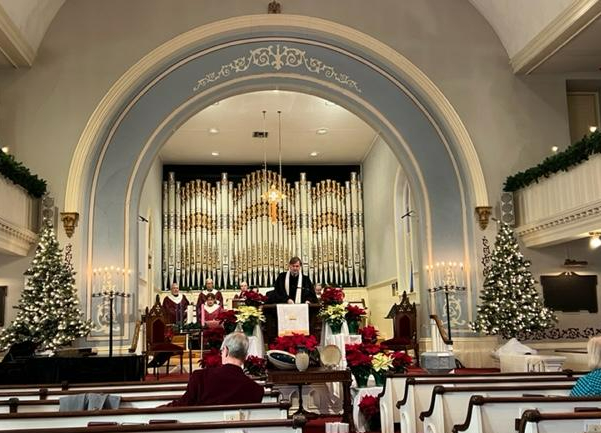
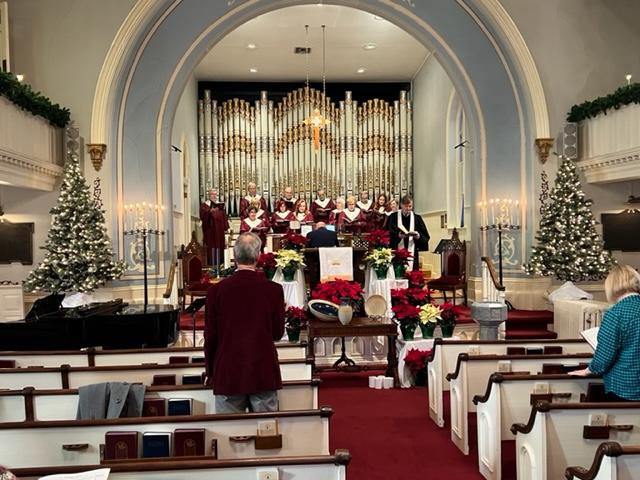
It really was a nice service with music, the choir singing Christmas hymns and a bell service. It reminded me of my years at the Dutch Reformed Church in Woodstock, NY when I celebrated Christmas there. The whole church was decorated in holly and garland with Christmas trees in the corners and white candles lit in the corner.
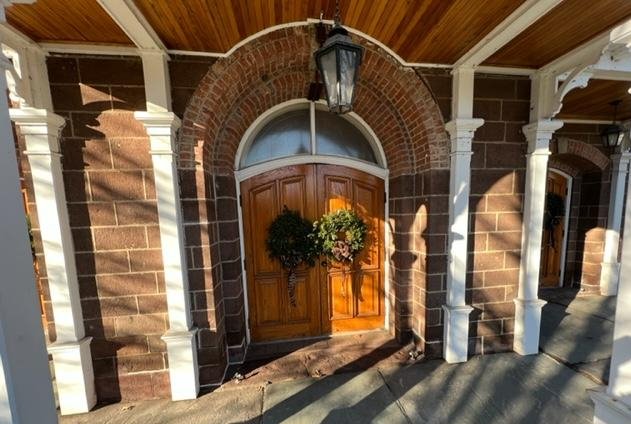
The entrance of the church in 2023 for Epiphany services.
The Inside of the Old Paramus Reformed Church for the Epiphany holidays in 2023.
The interior of the church during Epiphany services 2022
The start of the Epiphany Services January 8th, 2022
The Choir singing during church services at the Epiphany services
The beautiful decorations at Christmas time at the Paramus Reformed Church
The Front Alter with the Poinsette tree.
The Poinsette tree at the Alter.
What I liked after the service was over was that everyone walked up to me to greet me. I was one of the younger people in the church and I guess that they were happy to see some young blood. The congregation is so welcoming as I think they want newer members to join and I have to say that the services there are very inspiring and though provoking.
The outside of the church during the Epiphany in 2023. It looked like it was out of a Currier & Ives woodcut.
The doorway of the church at Christmas time.
I find that message very positive and very contemporary in an environment that may seem old-fashioned to some. It is called manners, curtesy and a sense of spiritualism that is lacking in the world today. They make the church so welcoming again.
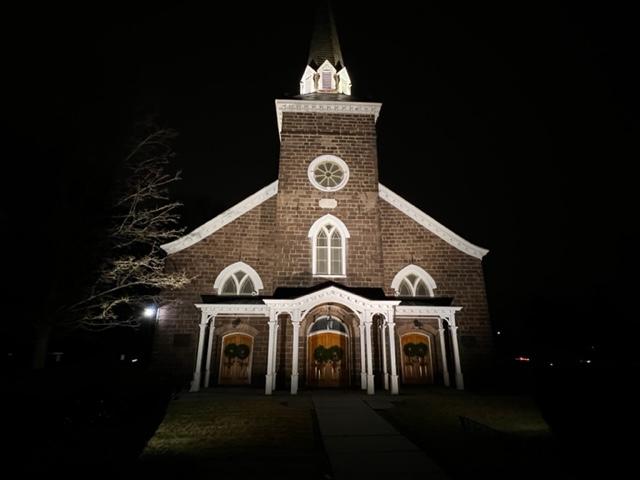
Paramus Reformed Church at nighttime during Christmas 2022
Paramus Reformed Church during night time Christmas services
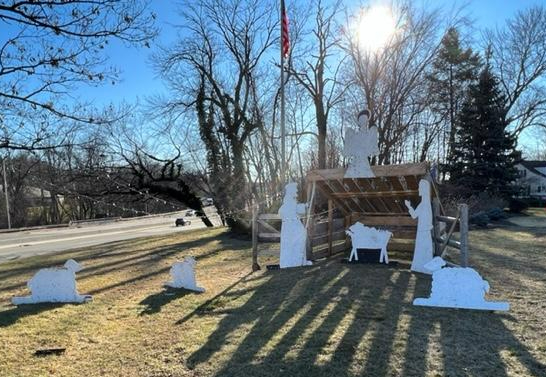
Nativity scene at the Paramus Reformed Church during Christmas 2022 at night
The Nativity scene during the day
The services there are very nice and I thought the church with its wooden benches and older architecture made the service even more special. It was a combination of the decoration, the music, the songs and the friendliness of the congregation that made the last day of the 12 Days of Christmas special for me.
This church makes a statement when passing it on Route 17 South.
I visited in 2024 the Easter service which was a nice change of pace. I really liked the service of the Reformists and the Reverend here is super nice and very inspirational.
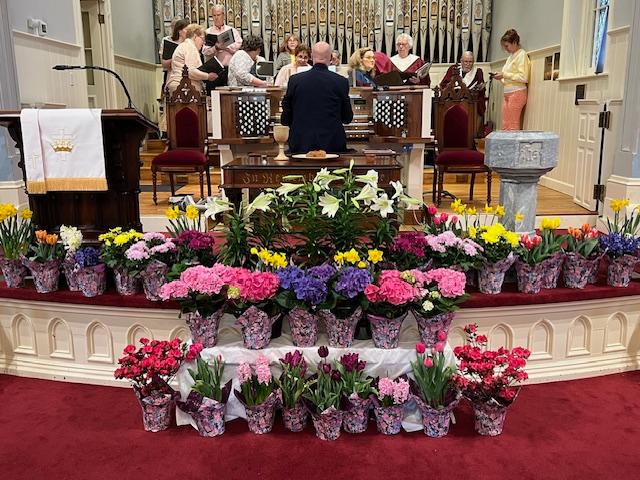
The Choir preparing for the Easter Mass in 2024.
The beautiful flower assortment at the church during the Easter service.
The floral cross on Easter 2024 during the church service.
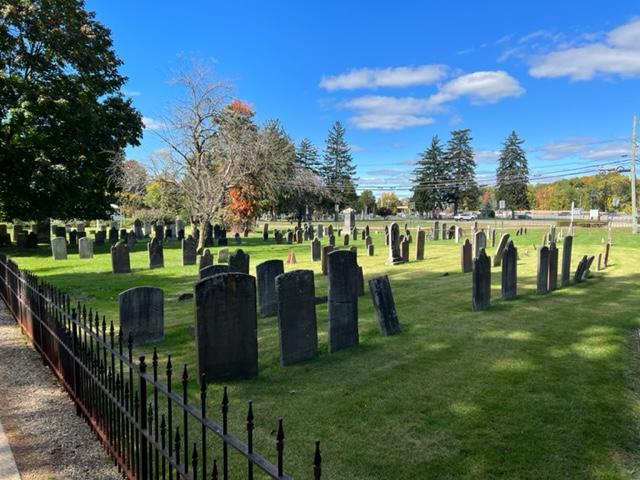
I had also been to the church a few years prior for a private cemetery walk through the back part of the church looking at the old tombstones, The church is the burial place of many of Bergen County’s original settlers so the headstones are very old. Some of the tombstones were made of sandstone and the other of shale. Many had not survived the weather after all these years.
The cemetery at the Old Paramus Reformed Church is an interesting place
The interesting part of the pre-Halloween walk was that the tour guide from the Ridgewood Historical Society told us the reason the cemetery was shaped the way it was today. The cemetery was placed around the original church and when the new church was built in 1800, the newer part of the cemetery was created. It is interesting to walk amongst the graves and look at all the names of the original families of Bergen County that included the Haring’s, Zabriskie’s, Terhune’s, Blauvelt’s, Van Ripper’s and Demarest’s.
The cemetery at the Old Paramus Reformed Church
The cemetery guide at the Old Paramus Reformed Church
Touring through these historical graveyards is a step back in time. History was made by the people buried here who contributions in the shaping of the Revolution and Civil Wars shaped not just Bergen County and New Jersey but the whole country as well.
The Conklin Family
The Banta Family
The Snyder family
If you get a chance to tour the church or the grounds you will know the reason why this is such a special church. Maybe it was the church’s rich history in Bergen County. It is a really special place during all the holidays.
I returned to church services for the Epiphany in 2025 and I always enjoy the welcoming service and the choir at the church. It is also still decorated for the holidays. Some places do forget that there are Twelve Days of Christmas.
The church decorated for the Christmas holidays
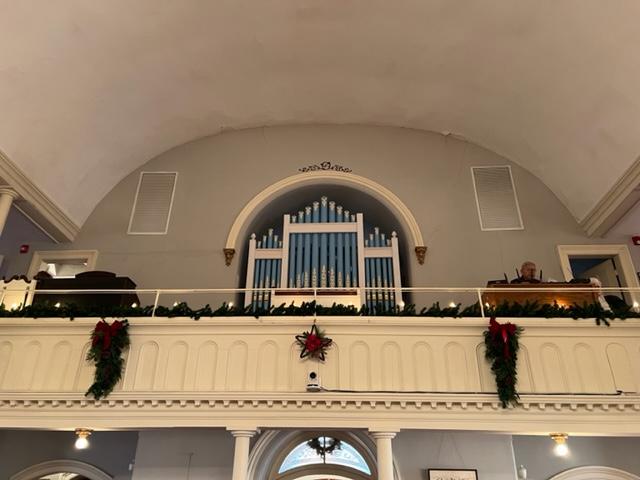
The organ area beautifully decorated
The choir practicing before the service
The History of the Old Paramus Reformed Church of Ridgewood, NJ:
(from the Church website)
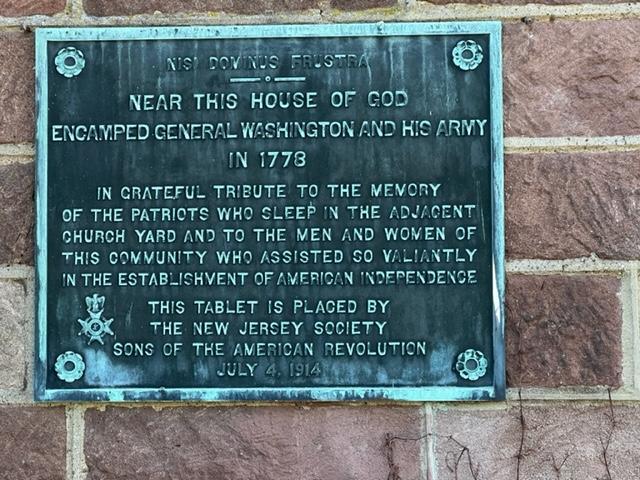
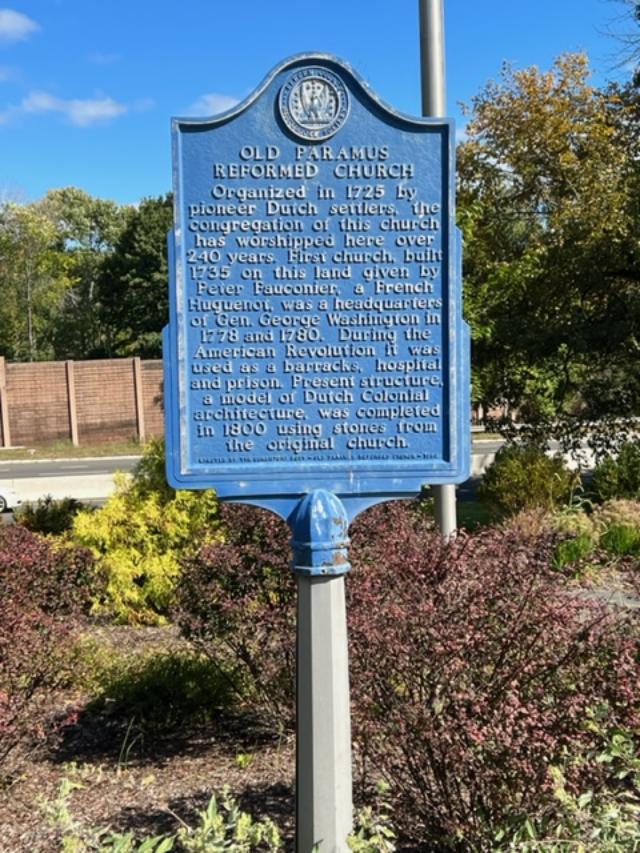
The Old Paramus Reformed Church has a rich past. The congregation was formed in the year 1725. During the American Revolution, the Paramus Church was the site of a Continental Army military post for four years during which clashes between American and British forces tool place. It was also in the original church building that General George Washington held a session of the court-martial of General Charles Lee who disobeyed order at the Battle of Monmouth in 1778. Washington had his headquarters here at the church a total of ten times during various days from 1778-1780.
Other noted Revolutionary War figures such as Alexander Hamilton, the Marquis de Lafayette, Anthony Wayne, Richard Henry Lee and Aaron Burr also were here from time to time during the war. From early colonial times, slaves were members of the church congregation, the upper galleries on both sides being designed for their use during services.
The present church building was built in 1800. An interesting feature is that the pews are numbered. The members of earlier days rented them on an annual basis. The most expensive were numbers 50-57 at $52.00 per year while the least expensive were numbers 38-100 at $4.00 per year> Needless to say, the less expensive pews are at the rear of the sanctuary.
On each side of the pulpit, there are three pews placed at right angles to the rest of the pews in the church. These were reserved for the Elders and Deacons (on the left and right respectively). These persons collectively are known as the Consistory, which is the governing board of the church. It was their duty to sit in these pews each Sabbath with their Bibles and copies of the day’s sermons to check on the “Domine” as to his conduct of the service as well as sticking to his sermon!
That tradition (as to seating) was kept alive for many years in Old Paramus by members of the Consistory who sat in the first pew facing the pulpit each Sunday. The only similar practice in use today is that the Elders serving Communion sit in the first rows on either side of the center aisle.
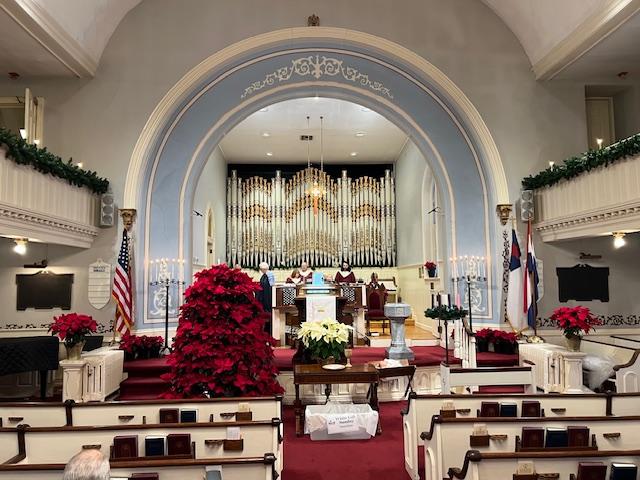
The decorated organ pipes in the rear of the chancel (choir loft) behind the pulpit date back to 1892. In that year, they were installed when the church received the gift of a new organ from a congregation member.
The inside of the Old Paramus Reformed Church
At the top of the arch the pulpit, there is a Dove of Peace. The dove is made of wood and is hand-carved. The exact date of origin of the dove is unknown. One authority claims that, “The bird is an eagle and was a donation by Dr. Garrett D. Banta in 1800.” Records from the Consistory minutes read: 1874, August 3rd: Resolved that the Consistory thankfully recognize the kindness of Mrs. Catherine Wessella for repairing and regilding the Dove, which has been a part of the decoration of the old church.
There are three flags on the pulpit-the American flag, the Christian flag and the flag of The Netherlands, the last representing our Dutch heritage. In a similar vein, for many years the Dutch flag was flown under the American flag on the staff in front of the church. Today only the American flag is flown on the flag pole.
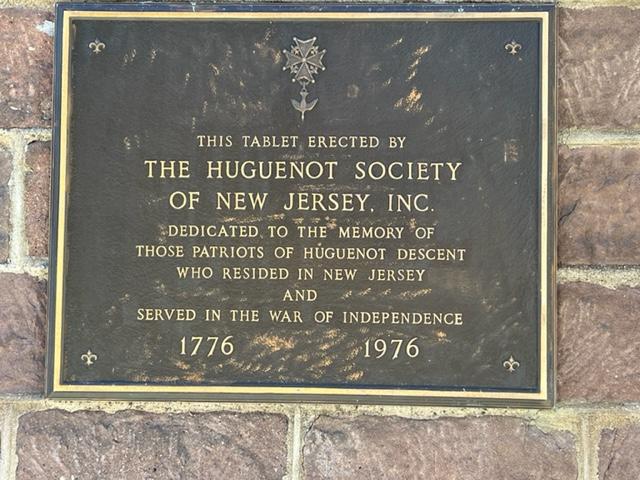
There are several plaques on the inside walls of the church. Some honor the ministers and others honor the various Consistories since 1725. Another just inside the front door notes that this church has been placed on the National Register of Historic Places. In display cases you will find various bits of memorabilia concerning our history.
When attending Old Paramus Reformed Church, you will have come to a warm and comfortable historic church to your whole being.
The Chandelier and the upper pews at the church during Epiphany services in 2024.
On the church campus, you will find modern Educational Building which houses the church offices and facilities need for Christian nurture. Another building is the one-room church like schoolhouse. This building houses the Ridgewood Historical and Preservation Society and is known as The Schoolhouse Museum. It was built in 1872 and was used as a school until 1905. It contains many items of historical note to this area. Make it a point to visit this museum during visiting hours. You should find it to be a very interesting and reward visit.
The signage of the historical landmark status
So what kind of church is Old Paramus Reformed Church? It is affiliated with the Reformed Church in America, the oldest Protestant denomination with a continuous ministry in America. The first church was established in New York City, then known as New Amsterdam in 1628. The Collegiate Churches presently represent the origins of that original Congregational. The best known is Marble Collegiate Church, which is where Dr. Norman Vincent Peale was the minister for fifty-two years. The Reformed Church in America (RCA) is an historic denomination coming out of the Reformation when the Church was “re-formed” and re-organized according to the teachings of the Word of God, the Bible. The Reformed Church of is Biblical in doctrine, semi-liturgical in worship. Presbyterian in government and evangelical in practice.
This year, Old Paramus Reformed Church celebrates 295 years of God’s Loving Spirit. Come join us next Sunday at 10:00am. We would be most happy to see you and you will surely feel rewarded for the experience.
(Disclaimer: This information was taken from the Church’s history and I give them full credit for the information).
















 Visiting a Museum: The Unique, Unusual, Obscure and Historical