Tag: Exploring the Hudson River Valley

Putnam History Museum                                       63 Chestnut Street                                               Cold Spring, NY 10516

Putnam History Museum 63 Chestnut Street Cold Spring, NY 10516

Putnam History Museum

63 Chestnut Street

Cold Spring, NY 10516

(845) 265-4010

https://www.putnamhistorymuseum.org/

My review on TripAdvisor:

https://www.tripadvisor.co.uk/Attraction_Review-g47508-d2252339-Reviews-Putnam_History_Museum-Cold_Spring_New_York.html

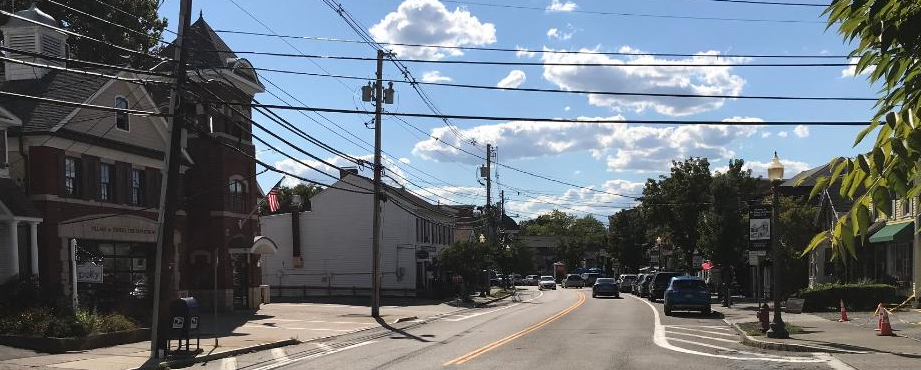
The Putnam History Museum at 63 Chestnut Street in Cold Spring, NY.

Don’t underestimate the size of the this museum packed with interesting exhibitions and information. It is really a terrific local museum that tells the story of the local community. I was very impressed.

The Putnam History Museum sign on Route 9.

The Mission of the Museum:

(From the Museum website)

The mission of the Putnam History Museum is to collect, preserve, interpret, and present the history of Putnam County, Philipstown, the West Point Foundry, and the Hudson Highlands. Through exhibitions, programs, and events, the museum uses its collections to engage the community with the vibrant history of our region, and to foster greater understanding of the role it has played in the growth of our nation.

The Current Exhibitions:

December 2023:

Indigenous Peoples in Putnam County

This exhibition explores Lenape and Wappinger culture in Putnam County, with a special focus on the Woodland period when these cultures flourished in the Hudson Valley. In addition to sharing Lenape stories—past and present—the exhibition features important artifacts and replicas including stone tools, stone points, pottery sherds, and a dugout canoe.

The Indigenous Peoples Exhibition:

(Funded in part by the Community Foundations of the Hudson Valley, American Historical Association, and the Cold Spring Lions Club. Image courtesy of the Staten Island Museum).

This exhibition was interesting in that it explained the local tribe of Lenape Indians who lived in the area before the Dutch and the contribution that they made to the community and their history in the area. The day to day lives of the tribes was shown in the various displays from the way they fished and hunted in the community. The dug out canoe the museum found out recently was a reproduction of the original. For years the curator explained to me the museum thought it was the real thing. Very detailed and very interesting exhibition.

Locally found Arrowhead Collection

The history of Indigenous people in the Hudson River Valley.

History of the Lenape Indians

The reproduction of the Lenape Canoe on display.

West Point Foundry

There is a permanent Foundry exhibition on display at PHM. It includes photographs, artifacts, paintings, maps, and videos highlighting the Foundry related objects within the PHM collection, including a fully restored 10-pounder Parrott Rifle.

The Foundry Exhibition is a permanent exhibition in the museum.

The map of the former foundry’s in the area.

I never realized that the Town of Cold Springs, NY was such a productive foundry area between all the wars. Many ironworks dotted the community which is now an upscale community just outside New York City. The foundry’s created many items that helped the ‘war machine’ such as train parts and cannon balls along with many modes of transportation.

The Foundry exhibition.

The objects of the Foundry.

The various sizes of cannon balls created by the local foundry’s.

The Foundry Painting “Foundry”

The “Foundry” painting sign.

The West Point Foundry part of the exhibit.

The West Foundry sign of the exhibition.

The West Point Foundry during the war.

A Brief History of Julia Butterfield

Born in 1823, at age 18 Julia Lorillard Safford married Frederick James, a broker and banker in New York City. They lived on Fifth Avenue and in 1852 built a magnificent stone village house in Cold Spring that was named Cragside because it had been constructed on a hillside strewn with rocks. It was surrounded by elaborate gardens, lawns, orchards and fields, according to Trudie Grace, author of “Around Cold Spring”. Haldane High School now occupies the site of Cragside, and a gatehouse built in 1866 still stands at the foot of Cragside Drive as a private residence.

The Julia Butterfield Exhibition

Frederick James died in 1884. Two years later, Julia married Daniel Butterfield, a Civil War general who is credited with composing “Taps” and whose father co-founded American Express. He lived until 1901. When Julia died in 1913, her estate (was) estimated to be worth $3 million, or about $75 million today. 

This permanent exhibition of a local woman who supported her community and deserves much respect and admiration for the contributions to Cold Springs showed her immense generosity. I wish there was more people like her in every community.

Bequests by Julia Butterfield in her 1913 will, with current values:

YMCA – $2.32 million ($62M)
Julia L. Butterfield Memorial Hospital – $150K ($4.6M)
Union College, Schenectady – $100K ($3M)
Julia L. Butterfield Memorial Library – $60K ($1.85M)
Home for the Relief of Respectable Aged Indigent Females – $20K ($616K)
Association for the Aid of Crippled Children – $10K ($308K)
St. Mary’s Episcopal Church (for parsonage) – $10K ($308K)
Association of New York Day Nurseries – $5K ($154K)  

The library, a Georgian Revival building, was constructed on the foundation of the old Dutch Reformed Church and dedicated in 1925. The hospital, finished the same year, was built, many believed, because one of Julia’s sons had died after a fall from a horse and she felt he might have survived if a hospital had been closer.

(Adapted from a 2018 Highlands Current article)

Fred J. Johnson House/The Friends of Historic Kingston Gallery                                                      63 Main Street                                               Kingston, NY 12402

Fred J. Johnson House/The Friends of Historic Kingston Gallery 63 Main Street Kingston, NY 12402

Fred J. Johnson House/The Friends of Historic Kingston Gallery

63 Main Street

Kingston, NY 12402

(845) 339-0720
My review on TripAdvisor:

https://www.tripadvisor.com/Attraction_Review-g48003-d8546539-Reviews-The_Fred_J_Johnston_Museum-Kingston_Catskill_Region_New_York.html

Admission: $10.00/Members are free

Hours: Sunday-Thursday Closed/Friday-Saturday 11:00am-4:00pm (May-October)

The Fredrick J. Johnson Museum and the Friends of Kingston

About Friends of Historic Kingston

We are a not-for-profit organization founded in 1965 whose members share a common mission: preserving and promoting the local history and landmarks of Kingston, New York.

Our Mission

The Friends of Historic Kingston champions our unique architectural, historical and cultural legacy and shares it with residents of all ages of the Kingston community and with visitors to the Hudson Valley.

What We Do

The exhibition at the Fredrick J. Johnson Museum and at the Friends of Kingston Gallery was “Still Standing”. How the Friends have saved many historical buildings in Kingston, NY from destruction. This contribution from the members of the Friends organization have saved many historical sites in the city that make up the character of the City of Kingston. These contributions have helped developed the historical sections of the city and made them the desirable destination they are today (FOHK website).

“Still Standing”

The Louw-Borgardus Ruins that have been saved and preserved by the Friends that are located on the edge of Downtown Kingston in the Stockade section of the city. This is an example of the Friends efforts to restore these treasures that would have otherwise disappeared.

The rest of the exhibition can be seen in the Friends of Kingston Gallery. The walls were lined with homes and businesses that were served by the conservation efforts of the Friends organization.

The Friends of Kingston Gallery to the right and the Fred Johnson Museum is to the left. These are open seasonally.

House & Gallery

The Friends offers changing exhibits, house tours, guided walk tours of the Stockade and Rondout Historic Districts, special events and publications related to the stories of the city of Kingston (FOHK website).

The “Still Standing” exhibition:

“Still Standing” exhibition: The Sharp Burying Ground

“Still Standing” exhibition: The Office of Simeon and William B. Fitch

“Still Standing” exhibition: The Pieter Cornelise Louw House

After walking through the “Still Standing” exhibit and noting the structures that had been saved.

The Fred J. Johnston House

A Treasury of American Decorative Arts

Fred J. Johnston (1911-1993)
Antiquarian and Preservationist

The Fred J. Johnston House located in the heart of the Stockade District, Kingston, New York is a classic Federal style clapboard house. It was built circa 1812 as the residence for John Sudam (1782-1835) and his family. Sudam was a prominent attorney, New York State Senator and New York State Regent. In the 1880’s, the house was acquired by the Van Leuven family. In 1938, the site was to be sold, the building razed and a gas station constructed. Although the home was in a deteriorated condition, Fred J. Johnston, a local antiques dealer bought the house to save it from demolition.

 The front room gallery of the Fredrick J. Johnson Museum

Johnston devoted the remainder of his life to restoring the property for use as his home and antiques shop. Under his care, the house became a visual landmark of uptown Kingston which was listed on the Stockade National Historic District Register in 1975. When Johnston died in 1993, he left the property to the Friends of Historic Kingston.

The Reception Room of the Johnson Museum

In fulfilling our mission, Friends of Historic Kingston maintains the integrity of the property and continues this unique preservation story by displaying the house and its contents as they were left by Fred J. Johnston. A visit to the Johnston House today is very much like the singular experience his clients enjoyed while shopping for antiques. The tour of the house is an immersion in the taste and connoisseurship of antiquarian Fred J. Johnston who celebrated America’s material past (FOHK Website).

Portraits of Mr. and Mrs. Perry who were local residents.

I was lucky enough to get a private tour of the house with a seasoned docent who I toured the house with that afternoon. We went room by room and she told me the story of how the museum came about. Fred Johnson had been an antiques dealer who filled the house with furniture and objects of art for sale and the rooms became his showroom. Both his unmarried sister and his mother moved into the house and helped entertain and run the household. So, the business became a family affair. Both his mother and sister lived with him until they died.

The Johnson Living Room

What I thought was unique about the museum was the whole house was for sale. The docent told me that one day his sister came home and found that her bed had been sold. As we toured the house, I could still see tags on all the furniture. The contents were still marked for sale.

The Johnson family kitchen

The stairs to the upstairs bedrooms

The house still holds much of the Johnson Collection of antiques and upon the death of his sister, the home became a museum to maintain this very unique collection of objects.

Mr. Johnson’s mother’s bedroom

Mr. Johnson’s sister’s bedroom

The Guest Bedroom

Mr. Johnson’s bedroom

After we toured the very tasteful and stylish upstairs, we went back downstairs to tour the outside gardens. The docents did a very nice job with the landscaping of the house and the gardens were beautifully maintained. It was a nice way to get some fresh air and sunshine while admiring the beds.

The back of the Johnson House Museum and the back gardens.

The Johnson Museum Gardens

The back of the Johnson House from the gardens

After the touring the whole house, we were able to take one last look at the first floor and all the beautiful antiques that filled the rooms. The museum gives you the perspective of not just how the Johnson family must have lived but how people had lived in past centuries.

The house is also beautifully decorated and maintained by the staff of docents and members of the Friends and is a wonderful view of the past.

Day Two Hundred and Forty-Five Exploring the Historical sites of Fishkill, NY- A Local Journey                                             August 7th and 14th, and December 10th, 2022

Day Two Hundred and Forty-Five Exploring the Historical sites of Fishkill, NY- A Local Journey August 7th and 14th, and December 10th, 2022

Don’t miss touring the historical sites of the Fishkill, NY area and then touring the local downtowns for something to eat.

There is lots to do and see in Fishkill, NY

There’s lots to do and see in Wappinger Falls, NY as well

Don’t miss these two wonderful downtowns and all the historical sites, parks, farms and wonderful eating establishments in the surrounding area. It makes a wonderful afternoon.

Christmas at the Brinkerhoff House

The Brinckerhoff House decorated for Christmas tea fundraiser

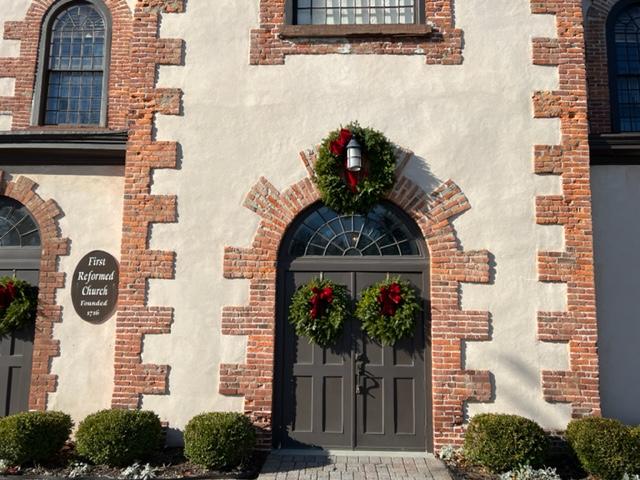
The First Reformed Church of Fishkill decorated for the Christmas holidays

jwatrel's avatarmywalkinmanhattan

I love visiting the Hudson River Valley so any event or tour that I can go on is an excuse to come up here. I had visited all the sites that I wanted to see on a trip two weeks earlier but wanted to see them in more detail plus I wanted to take some pictures. The weather finally broke, and it was a much more pleasant 83 degrees as opposed to the 96 degrees the trip before. That makes the trip much nicer.

I asked my aunt along so that we could share in the experience, and I could use her phone to take pictures of the all the sites. It is a much nicer trip when you have someone along who enjoys these things. The one nice thing about traveling to the Fishkill, New York area is that it is only an hour away and a straight run…

View original post 3,354 more words

Hessel Museum of Art-Bard College Campus                         33 Garden Road                                                                  Annandale-On-Hudson, NY 12504

Hessel Museum of Art-Bard College Campus 33 Garden Road Annandale-On-Hudson, NY 12504

Hessel Museum of Art-Bard College Campus

33 Garden Road

Annandale-On-Hudson, NY 12504

https://ccs.bard.edu/museum

Open: Sunday 11:00am-5:00pm/Monday-Tuesday Closed/Wednesday-Saturday 11:00am-5:00pm

My review on TripAdvisor:

https://www.tripadvisor.com/Attraction_Review-g29820-d1069234-Reviews-Hessel_Museum_of_Art_at_Bard_College-Annandale_on_Hudson_New_York.html

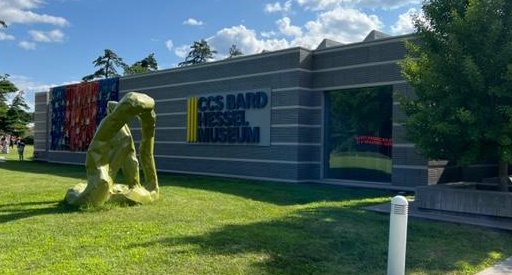
The Hessel Museum on the Bard Campus

When I was visiting Rhinebeck for the recent Sheep and Wool Festival (See day One Hundred and Forty-Nine on “MywalkinManhattan.com), I decided to visit Bard College and their contemporary art museum, the Hessel Museum. When approaching the museum, it almost appears to be a fortress with several large pieces of contemporary sculpture on the grounds outside the building.

Day One Hundred and Forty-Nine:

https://wordpress.com/post/mywalkinmanhattan.com/10723

Once upon entering the museum, you are greeted by many welcoming volunteers who will check your vaccination card and ID and your mask and then you can enter the museum for viewing. At the time I was there, NY State still had a lot of their mandates.

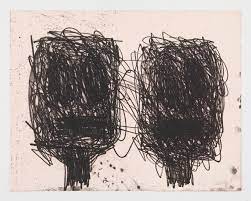
There were a couple of interesting exhibitions going on when I visited. The first one I visited that afternoon was “Closer to Life: Drawings and Works on Paper in the Marieluise Hessel Collection”, which was many of the works of the founder of Bard’s private collection that had been donated to the school. I have to admit that the works were very contemporary with lots of squiggles and political themes.

The show piece from the exhibition

Many of the works you had to look at a second time to try to find the meaning in them. I was having a tough time relating the titles to the works. Reading the exhibits press release, the exhibition said “Hessel’s dedication to the depiction of the human figure as an essential act of examining the self and social relations. The exhibit focuses, with a few exceptions, on drawing as a discrete, stand-alone practice and preoccupation of artists rather than as a tool to create studies for works in other mediums. Drawing is a way of thinking and the intimacy of the act is echoed in much of the subject matter depicted in the exhibition (Museum website).

Ms. Hessel traveled extensively and had relationships with many artists along the way, who touched on the themes of the day. She traveled from Germany to Mexico City and then onto New York City at different phases of her life and it shows in the collection that she amassed. The collection twists and turns in its theme from room to room.

The opening exhibition room of the “Closer to Life” exhibition

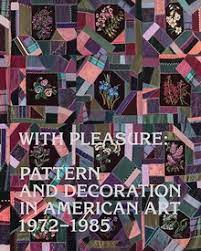
The other exhibition I toured was the current “With Pleasure: Pattern and Decoration in American Art 1972-1985” which was an interesting exhibition of design of the home and space which seemed to be an art movement in the early to mid 1980’s that I never noticed when I was in high school and college. It seemed that home design went from the home furnishings to a form of art.

The “With Pleasure: Pattern and Decoration in American Art 1972-1985” logo

This I had seen the artist’s starting to design things like dishware and placemats for everyday use and in things like wallpaper from the dining room. There was a cross over in home design as artists became more commercialized and their work showed up on walls and floors. It is not too different today with people like Martha Stewart and her paint and home furnishing collections or Halston designing for JC Penny with the Halston II Collection.

Some of the art was quite colorful

The art in those galleries really looked something you would find in the average person’s home in the era. Some of the ‘over the top’ really looked like it belonged on a rug or on wallpaper. As the exhibition’s literature stated, “the exhibition examines the Pattern and Decorative movement’s defiant embrace of forms traditionally coded as feminine, domestic, ornamental or craft based and thought to be patterns and arranging them in intricate, almost dizzying and sometimes purposefully gaudy designs” (Exhibition literature).

I returned to the Hessel Museum in the summer of 2023 and they were having some performance art out on the lawn when I got there (I was wondering why there were not parking spaces). One guy walked up to me complaining how lousy it was and it did not make sense. I told him that that was contemporary art for you. It’s not supposed to make sense. He just smiled.

I toured the two new exhibitions that were being shown at the museum.

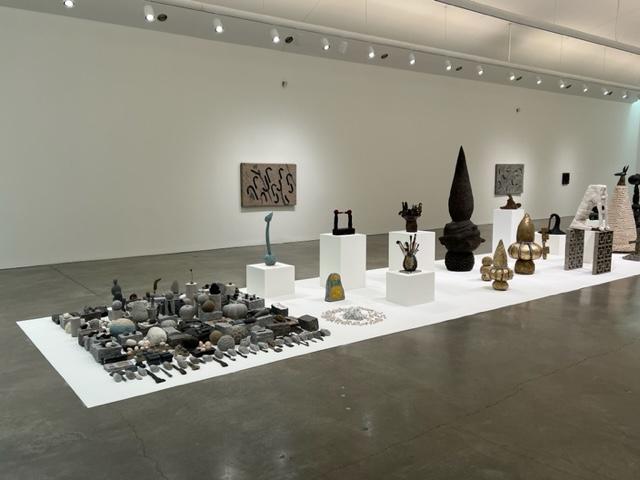
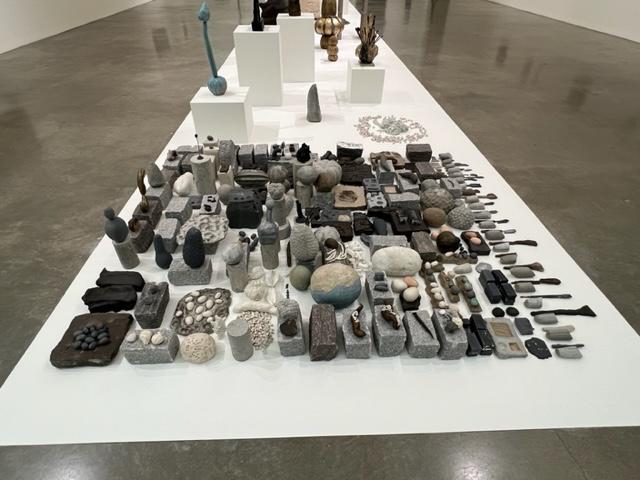
Artist Erika Verzutti had her “New Moons” exhibition

The first exhibition was by Artist Erika Verzutti with her “New Moons” exhibit. Frankly, I did not get here work. It made no sense to me. I was not sure what she was going after. I read her exhibit work and did not see any planetary connections. There were a few pieces that I thought were colorful and pretty creative in the works of the exhibition but the rest of it I just did not understand. I could tell the security guards were bored because no one was coming into this part of the museum.

“New Moons” exhibition piece

The main gallery of the “New Moons” exhibition

I thought this piece was very interesting

The “Indian Theater: Native Performance, Art and Self-Determination since 1969”

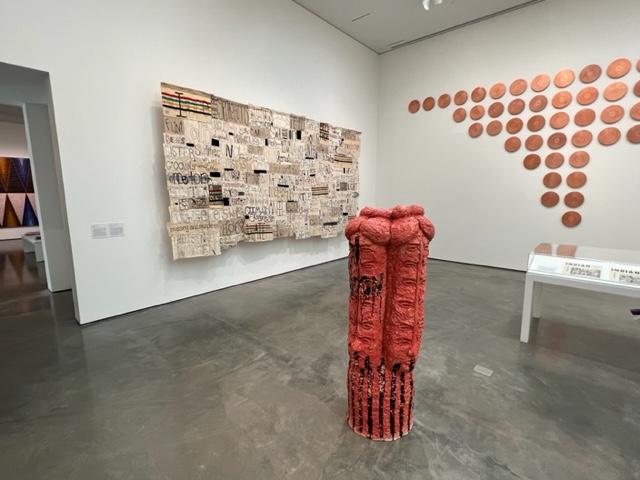
The other exhibition was the “Indian Theater: Native Performance, Art and Self-Determination since 1969”. Outside the museum they were showing the performance from the exhibition (the one that the patron was complaining about) and inside, the works were very contemporary and again some of the works did not make much sense to me. There were a few standouts though that I thought made a statement.

One of the galleries from the “Indian Performance” exhibition

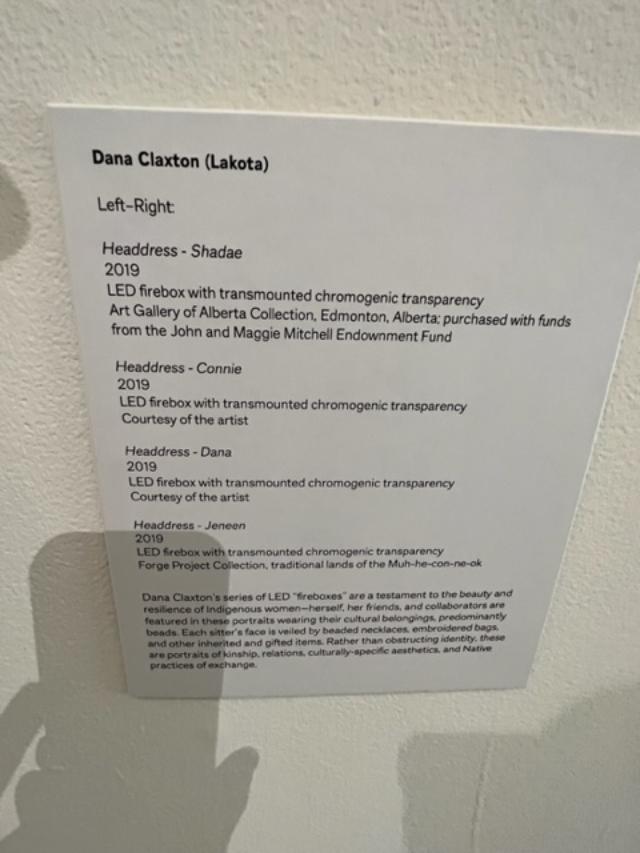
“Indian Headdress” by artist Dan Claxton (Lakota)

Artist Dan Claxton (Lakota)

“Counterblaste” by artist Gabrielle L’Hirondelle Hill (Metis) was interesting

Artist Gabrielle L’Hirondelle Hill (Metis)

Both exhibitions in the summer of 2023 were a little far reaching even for me who likes contemporary works. I think it is in the eye of the beholder but I like the fact that the Hessel Museum brings these works to the public. They do make you think.

The Hessel Museum doesn’t offer just interesting art but it approaches it in a thought-provoking way, asking the patrons to see beyond not just what is on the walls but think about the exhibit from the era in which the art is from and ask ‘does this still ring true today’. The Hessel asks us to think ‘out of the box’ and look at their works from different perspectives.

Some I understood and some I didn’t but I still enjoyed wondering the galleries and exploring the art on its terms. I think that’s what contemporary or just art in general does. We need to think about it. The museum also has a nice little gift shop to explore.

The History of the Hessel Museum:

About CCS Bard:

Established in 1990, the Center for Curatorial Studies (CCS Bard) is an incubator for experimentation in exhibition-making and the leading institution dedicated exclusively to curatorial studies-a discipline exploring the historical, intellectual and social conditions that inform curatorial practice.

The Center for Curatorial Studies has several interconnected parts:

The Hessel Museum of Art, built in 2006, presents experimental group exhibitions and monographic shows and also draws from the Marieluise Hessel Collection of Contemporary Art, comprised of more than 3,000 objects collected contemporaneously from the 1960’s to the present day. The Hessel Museum is open and free to the public. Public sculptures by Franz West, Cosima von Bonin and other artists surround the Museum. Please see the museum page for more details.

CCS Bard hosts a range of public events throughout the year. All events are free and open to the public. Please see upcoming events on the website.

The CCS Bard Archive provides access to a wide range of primary materials documenting the history of the contemporary visuals arts and the institutions and practices of exhibition-making since the 1960’s. Please see our research center page for further details.

The Graduate program in Curatorial Studies is an intensive course of study in the history of contemporary art, the institutions and practices of exhibition making and the theory and criticism of contemporary art since the 1960’s. Throughout its over thirty-year history, the program has actively recruited perspectives underrepresented in contemporary art and cultivated a student body representing a diverse spectrum of backgrounds in a board effort to transform the curatorial field. Please see the school page for further details.

The Center for Curatorial Studies is part of Bard College and located on their Annandale-on-Hudson campus. Bard acts at the intersection of education and civil society, extending liberal arts and sciences education to communities in which it has been undeveloped, inaccessible or absent. Through its undergraduate college, distinctive graduate programs, commitment to the fine and performing arts, civic and public engagement programs and network of international dual-degree partnerships, early colleges and prison education initiatives, Bard offers unique opportunities for students and faculty to study, experience and realize the principle that higher-education institutions can and should operate in the public interest. For more details on the Bard College, please see their website.