Open: Please check the website for the times they are open.
Admission: Free but donations accepted
My review on TripAdvisor:
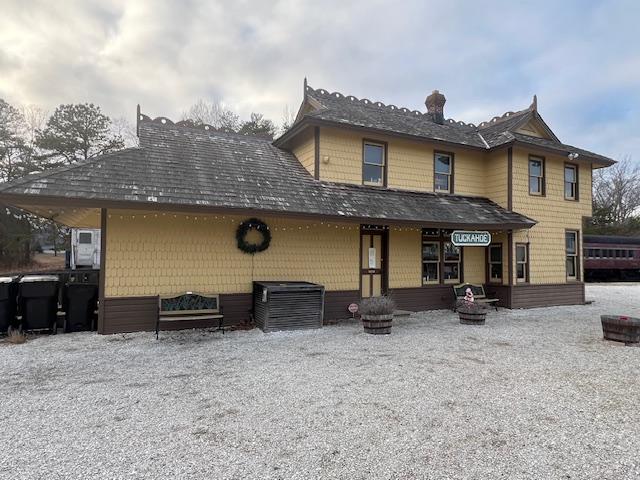
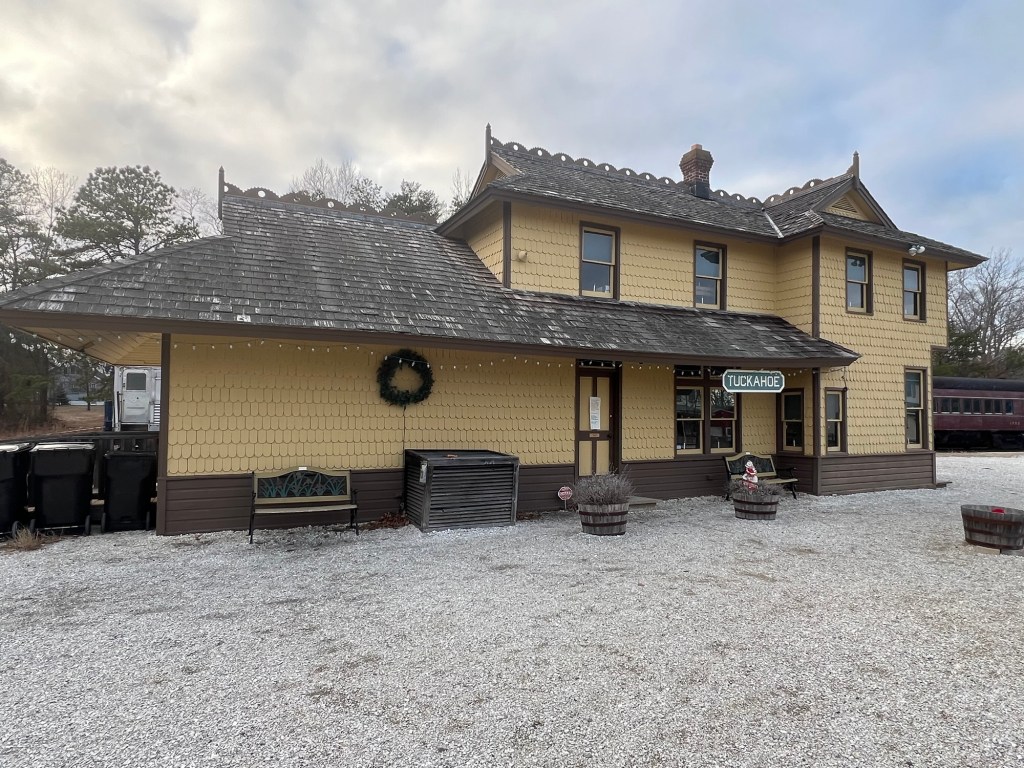
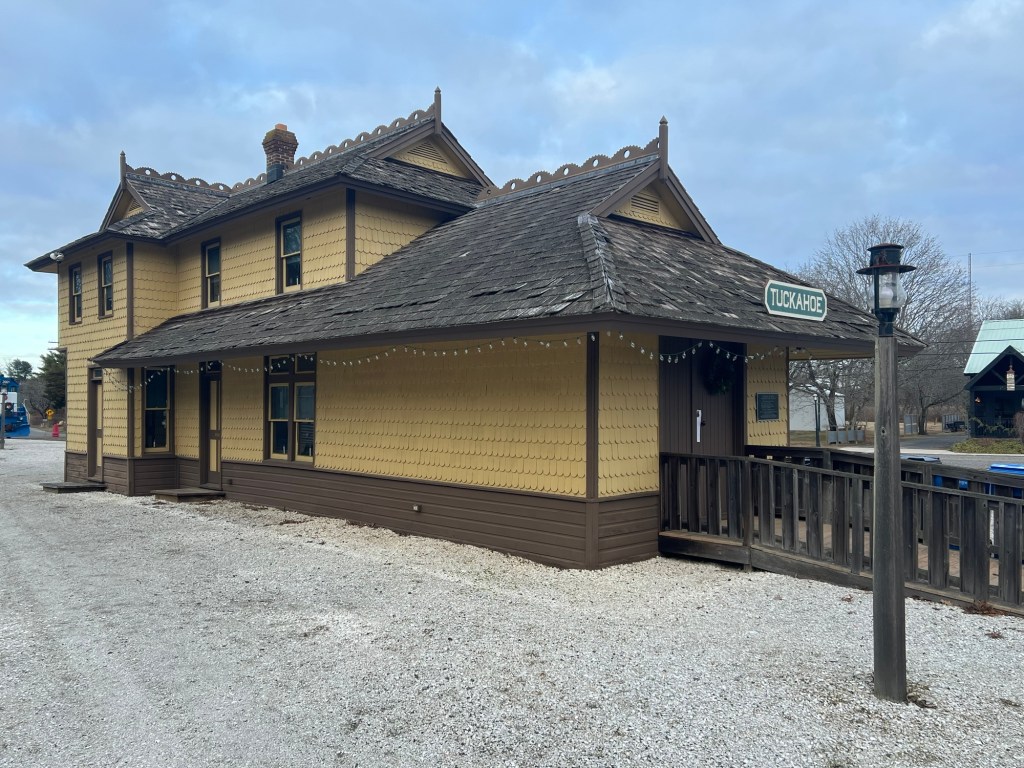
The Tuckahoe Train Station at Mill Street and Railroad Avenue
I visited the Tuckahoe Train Station during Christmas of 2024. The holiday events were long over but the station was still decorated for the holidays. In the Summer of 2025, I arranged a full tour of the station museum and the rail yard.
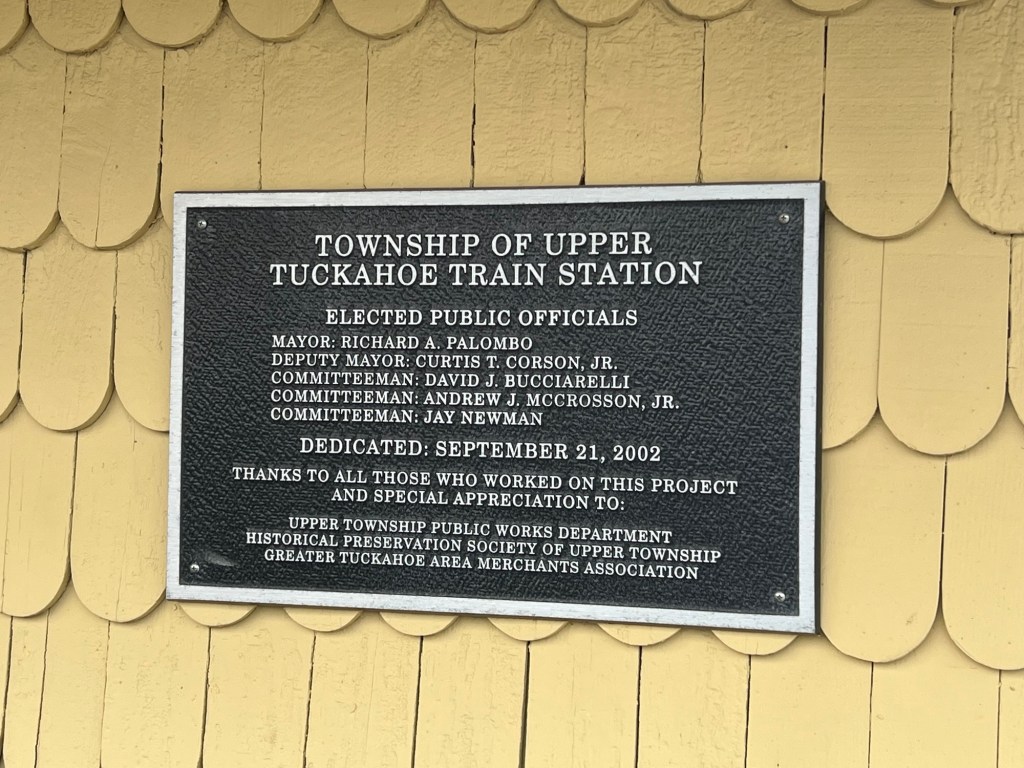
The station’s historic sign
The station’s historic sign
The station was once the hub of the area and visitors would depart from cities like New York and Philadelphia. The trains stopped running to this area in 1981.
The train station from the front of the building in the winter of 2024
The station again in 2025
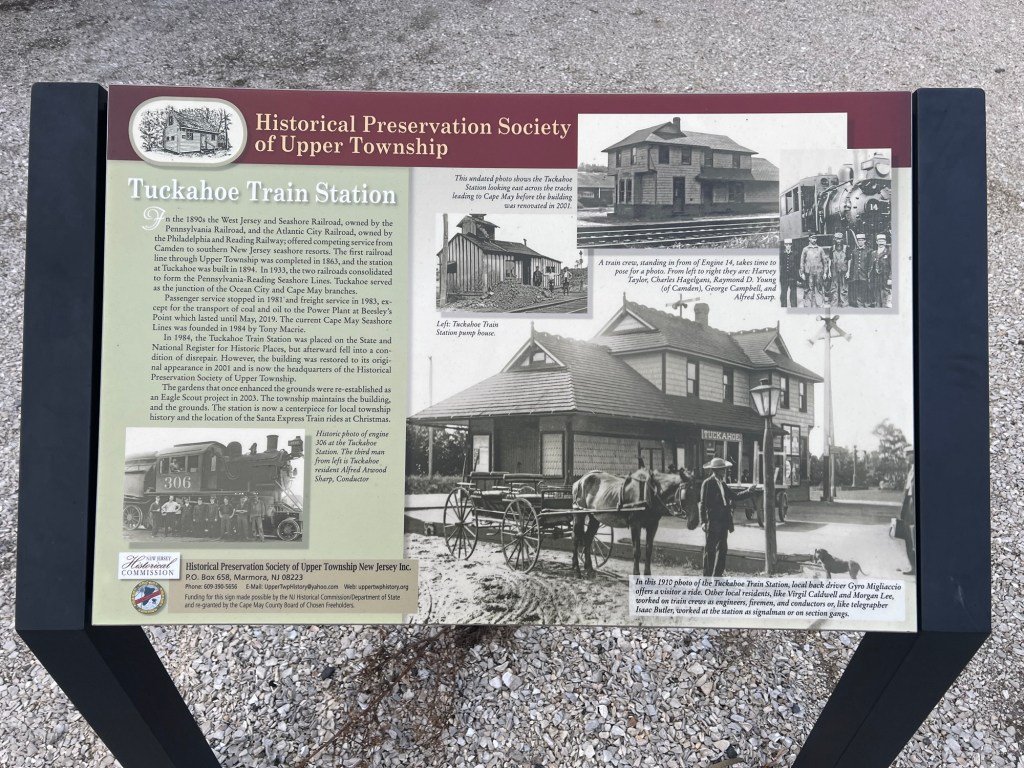
The train station history
The Summer of 2025:
My tour of the train station started with the history of the station and the development of the train station and transportation to the area. The coming of the railroad meant the development of the area as a resort town bringing hundreds of visitors each summer.
The tour started at the inside of the station and took me through the first and second floors of he old station house.
The first floor of the Tuckahoe Train Station
The Ticket a room is now the gift shop
The display cases of memorabilia from the station days
The classic train sets
Ticketing and travel materials
The entrance to the baggage Room
The Baggage Room
The old Ticketing Room
The Ticketing window
The old seating area in the Ticket Room. The tour guide told me that unions version of the benches was built brand new to match the antique one. I could not tell the difference.
The pot belly stove that kept everyone warm in the winter months
The next room over was the Waiting Room where there were more artifacts to see.
The Waiting Room
The seating in the Waiting Room
Then we toured the upstairs where the Conductor’s office and bedroom were located.
The Conductors office on the second floor
The conductor’s uniform
The we moved on to the Conductor’s living quarters when at the station working. This type of work had so much more to it in the days when rail travel was the way to go.
The Rail Conductor’s bedroom
The simple bedroom was enough so the conductor could get some rest
The artifacts from the turn of the last century
After we toured the entire building with the docent really giving me the thorough tour and history on the station and its artifacts, we went outside to discuss the trains.
We headed outside to tour the individual trains and their history. This once major shore hub has quieted down with the reduction in rail transportation due to cars.
The outside of the train station and its collection of train cars.
The train station outside where the cars are located
The Blue Comet Beach Train
The Blue Comet was once the ultimate in luxury travel when you came to the shore. This once ‘grand dame’ of travel is being renovated by the museum.
The Showman’s Car
The Pennsylvania Starline
The long line of train cars
The train cars being renovated
The Beach trains
The last part of these interesting and engaging tour was a tour of the Signal and Control Building, where all communications for the railway took place.
The Control and Signal Building
The inside where controls and repairs take place
The signal board to the train turnaround at the Y
The full tour of the Tuckahoe Train Station Museum will give you a glimpse of a once vibrant rail head and the life of visitors down the shore. The inner workings of a train station at that time are on full display here.
The History of the Tuckahoe Train Station Museum:
(from the museum website)
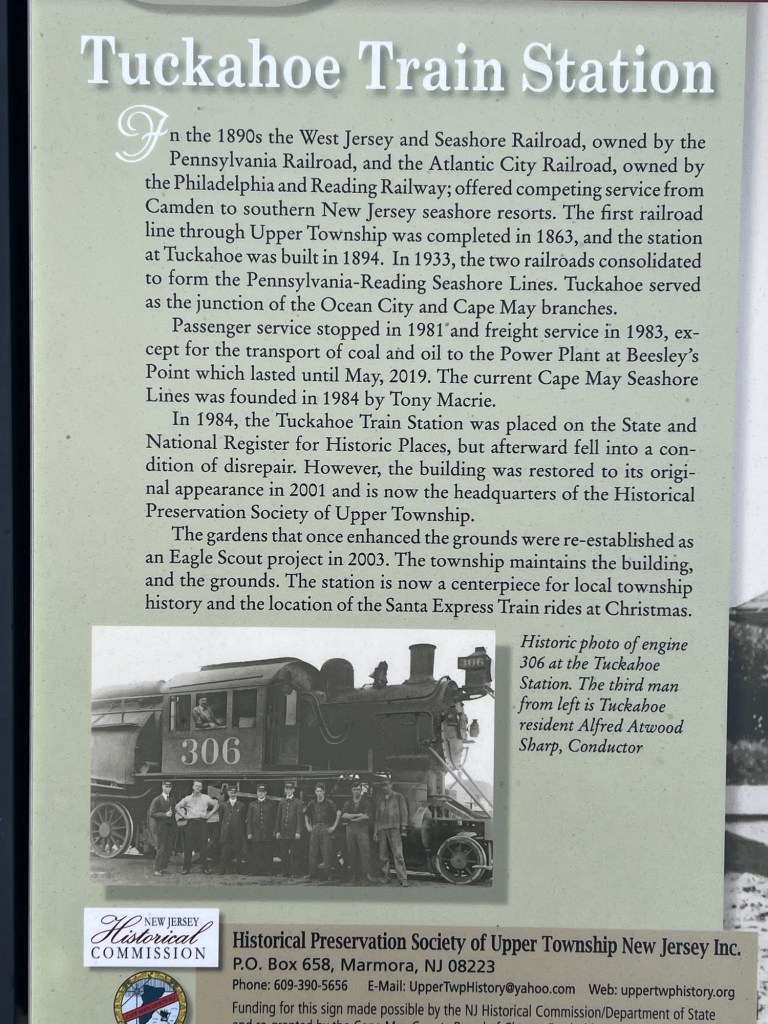
n the 1890’s the West Jersey and Seashore railroad, opened by the Pennsylvania Railroad, and the Atlantic City Railroad, owned by the Philadelphia and reading railway, offered competing service from, Camden to southern New Jersey seashore resorts. The first railroad line through Upper Township was completed in 1863, and the station at Tuckahoe was built over 30 years later in 1894. In 1933 the two railroads consolidated to form the Pennsylvania-Reading Seashore Lines. Tuckahoe served as the junction of the Ocean City and Cape May branches.
Passenger Service stopped in 1981 and soon after, freight service halted in 1983 except for the transport of coal and then oil to the power plant at Beesley’s Point. which lasted until May, 2019. The current Cape May Seashore Lines was founded in 1984 by Tony Macri.
In 1984, the Tuckahoe Train station was placed on the State and National Register for Historic Places, but afterward fell into a condition of disrepair. However, the building was restored to its original appearance in 2001 and is now the headquarters of the Historical Preservation Society of Upper Township.
‘The gardens that once enhanced the grounds were established as an Eagle Scout Project in 2003. Today, the township maintains the building and the grounds. The station is now a centerpiece for local township history and the location of the Santa Express Train rides at Christmas.
I found the tour fascinating of how this museum was once the hub of transportation for this section of the Jersey Shore.
Open: Please call for a appointment and special tour
My review on TripAdvisor:
The front of the schoolhouse
The entrance to the property
The historic marker
The outside sign
The Friendship School was an interesting look at early rural education where students of various ages would be educated together.
The hours would vary with the growing seasons and students would be educated in the basics to educate them to the next level.
During the school day, children would have various chores to do such as gather wood, collect water, mind the fire and watch the day’s lunch. It would be a full day for both the teacher and the students.
My tour guide confirmed that nothing was easy during the school day and children had a lot of responsibility for what went on in their lives.
The tour was an interesting look at the lives of children of that period of time and the education they received.
The history of the Friendship School:
(from the Museum’s website)
This historic property contains the circa 1930 Friendship School, a circa 1900 privy, and a circa 1917 coal storage shed. The Friendship School was originally donated in 1976 by William Wells, grandson of Enoch Clouting to the Upper Township Bicentennial Committee during a time when Upper Township was particularly interested in its earliest buildings.
The historic plaques
The school’s hand pump
The committee, headed by the late Curtis T. Cordon, evolved to become the nucleus of the Historical Preservation Society of Upper Township (HPSUT) in 1977. Virginia M. Wilson was its’ first President.
The history of the Friendship School begins when it was incorporated in May of 1831 with Jonathon Corson, Lewis Corson, and Seth Young as trustees. The students’ tuition was paid for by parents in 1830, but by 1869, public funding for schools was established. In the 1862-63 school year, 52 students crowded into this 15’x 20’ structure, and of those students in the teacher’s roll book, 24 were Corsons!
The grounds of the school grounds
The school itself is standing on its fourth known location! It was originally located 6 houses southeast of its present location. It was used for classes until it was replaced with a larger building in the 1860’s.
The abandoned school house later owned by resident, Lot Corson, became known as “Lot’s Temple” because church services were held there. Then, it was moved to Enoch Clouting’s farm where a corn crib was placed on one side. It is Enoch’s grandson who kindly donated the school.
The barn on the grounds
The school building was in extreme disrepair when it was moved from the Clouting property to the corner of Ocean Ave. and Shore Road. According to an undated news article, “mere fragments of the (original) building remained” although “some of the heavier corner posts were salvaged.”
The school’s outhouse (pricey)
The historic sign
Nevertheless, restoration of this Friendship School was researched and planned by Kyle Fleetwood of Tuckahoe and James Wilson of Marmora; with assistance from Matt Unsworth, Robert Entirkin, Curtis Corson III, Somers Corson, Marshall “Ted” Behr, Guy Himmelberger, Harry “Hap” Folger and other members of the Bicentennial Committee. It was completed in 1980.
All replacement wood matched the original in size and material and great care was taken to restore it to its original appearance. Locally sourced materials for the restoration/reconstruction came from the Van Vorst sawmill in Petersburg, the Hess sawmill in South Seaville and the Brewer sawmill in Dennisville. Benches donated by Myra Clouting Biggs, were reproduced by Matt Unsworth.
The inside of the school house
The teacher’s desk is a reproduction also made by Matt Unsworth. Hardware for the building was hand-wrought by Robert Entrikin of Petersburg. Although it does not qualify for the State and National Registers listing because it retains little original historic building fabric, the building is important to the historical time line of Upper Township.
The schoolbooks and school equipment
Also on this site are two old frame buildings: a circa 1900 privy donated from the property of the Seaville School on Kruk Drive and a circa 1917 coal/storage shed donated from the Palermo School on Route 9. The coal storage shed, was donated by Wes and Doris Nickerson with Jim and Nancy Siegrist helping with its restoration. It was added to the property in 1993. Three three-seat privy (outhouse) from the old unused Seaville School was donated by Sharon Kruk in honor of her father, and was restored by Lewis Albrecht and Jim Siegrist. It is a work of art (with a French style roof), but is non-functional.
The school room reproduction
A special item, the cedar flag pole, from which flew a U.S. flag that flew above the capitol in Washington, DC, was donated by former Deauville Inn owners, Walter and Gloria Carpenter in December of 1983. (Since replaced)
The school bell and flag
The Friendship School was dedicated on September 10, 1983 by Virginia M. Wilson, President of the Historical Preservation Society of Upper Township, Upper Township Mayor Leonard Migliaccio, HPSUT members: Ebbie Unsworth and her son, Matt Unsworth, and guest speaker, New Jersey State Senator, James R. Hurley.
The children would collect water and fire wood for the class room during the school day
The reproduction of the school
Upper Township continues to own and manage the property and the school, while HPSUT members manage the inside and its activities. Each Upper Township Kindergarten class is invited to the annual Kindergarten Day to learn what a student classroom life is like in a one room school house in the early
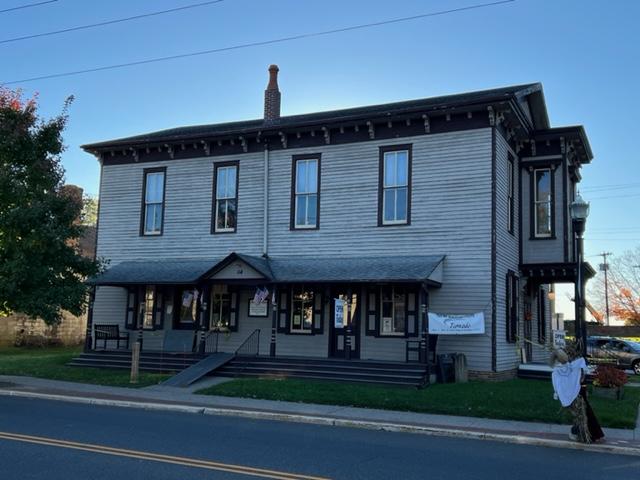
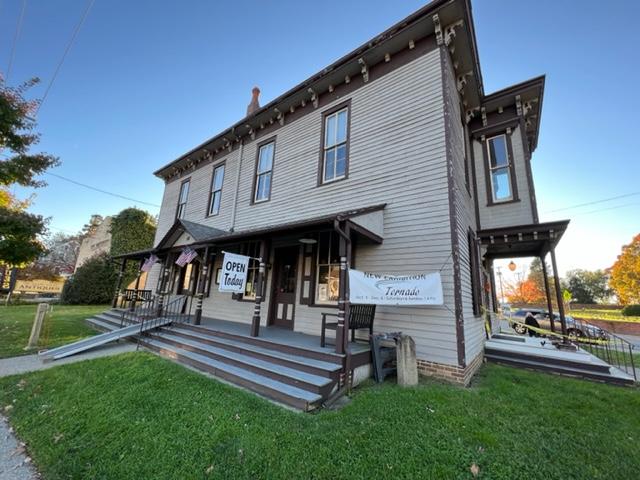
The Old Town Hall Museum/Harrison County Historical Society
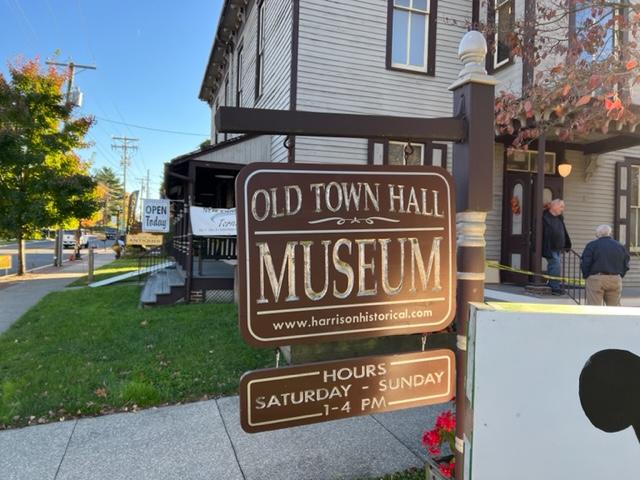
The Harrison Township Historical Society/Old Town Hall Museum
Former Exhibition in 2023:
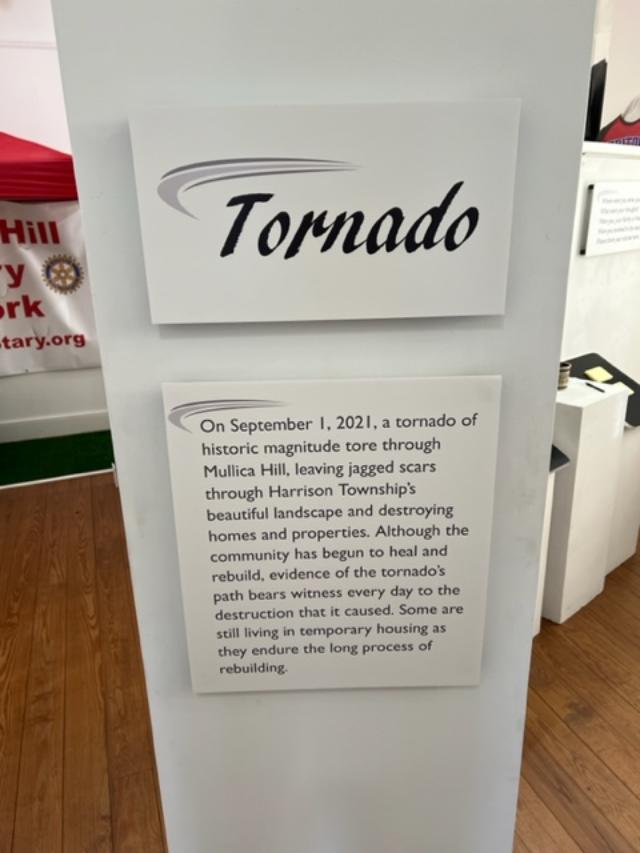
TORNADO
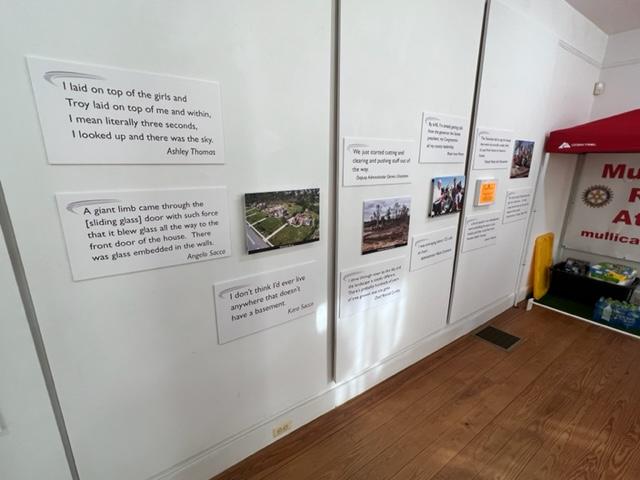
This new exhibition commemorates the 2021 Hurricane Ida Tornado through first-person narratives, artifacts, video and photography.
The Mission of the Old Town Hall Museum/Harrison Township Historical Society Inc.:
(from the Museum pamphlet)
Since its founding in 1971, the Harrison Township Historical Society has presented exhibitions, events, programs and publications focusing on the heritage of South Jersey in Mullica Hill’s Old Town Hall that was built in 1871.
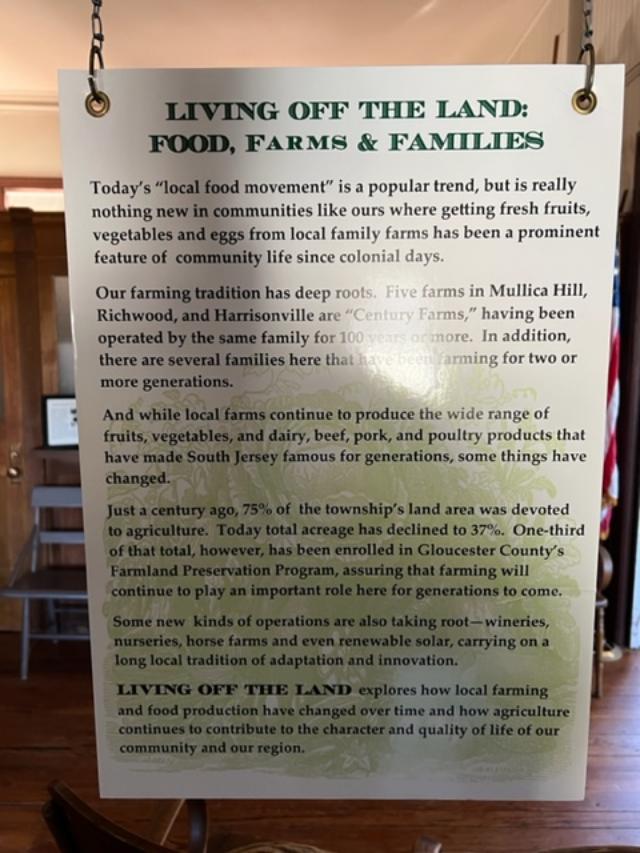
The Stone Age in Harrison Township and Living Off the Land: Food, Farms and Families, explore the region’s Paleo-Indian heritage and our local foodway and farming traditions. The Raccoon Valley General Store and the Harrison Academy Schoolroom recreate two rural institutions.
We also present seasonally changing special exhibitions, student programs and unique special events like the annual Groundhog Dinner (featuring local sausage-“ground” hog!) and the popular Mullica Hill Ghost Walk in October. Visit https://www.harrisonhistorical.com/ for news and information.
Come and experience our Heritage!
Our History:
(from the Museum website)
In 1971 the Township Committee of Harrison Township under the leadership of Mayor Philip J. Reuter, appointed a committee whose purpose was to form a historical society that would lead a community effort to preserve and provide a new purpose for Mullica Hill’s historic Old Town Hall.
Since that time the Harrison Township Historical Society has successfully met this initial charge, not only preserving the building (a key contributing structure in the Mullica Hill National Register Historic District), but also establishing a museum that has won state and national awards for its exhibitions, programs and publications.
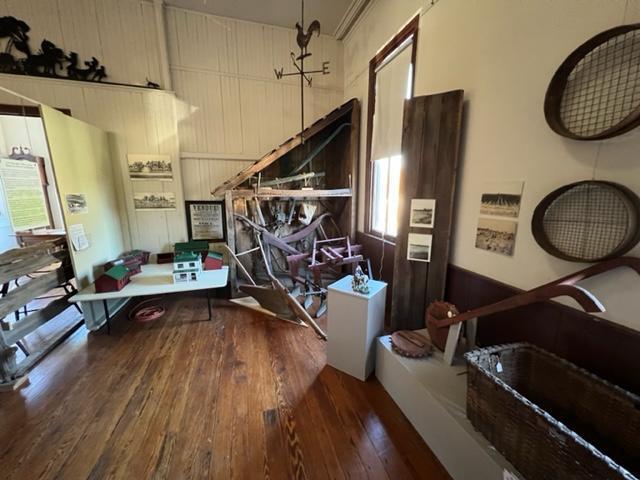
The “Living off the Land” exhibition shows life on the farm in Southern New Jersey. This exhibition shows life on a South Jersey farm from the late 1600’s to today with some of the equipment, commercial items and furniture showing the lifestyle on the farm. This first floor exhibition gives us a peek at what life is like in the day of a farming family.
The main room on the first floor of the museum is broken down into sections. In the special gallery space is the exhibition “Tornado” about the tornado that hit the surrounding area during Hurricane Ida in 2021. The exhibition gives first hand accounts of what happened and people’s experiences and the clean up.
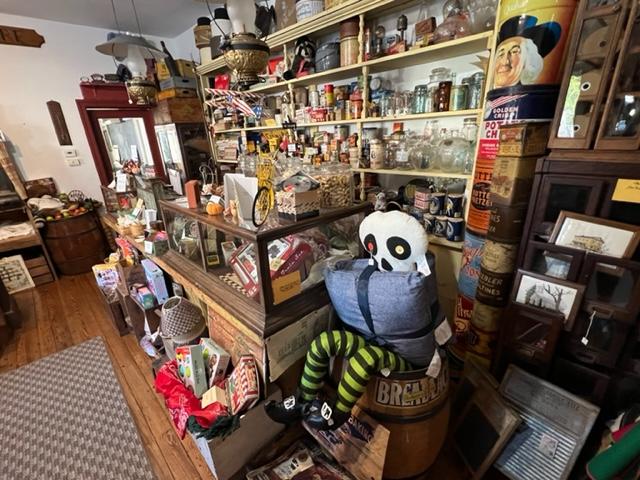
In the Main Room when you enter is the Raccoon General Store and the Harrison Academy schoolroom showing what life was like in rural Southern New Jersey.
Raccoon General Store:
All sorts of everyday items were sold in the General Store which was also a gathering place for the town’s citizens. This is where you would catch up with your neighbors at a time before telephones.
Everyday items would be found in the General Store
Everything could be bought at the General Store for the house with special trips into the City during the holidays or for special occasions
Household items at the General Store
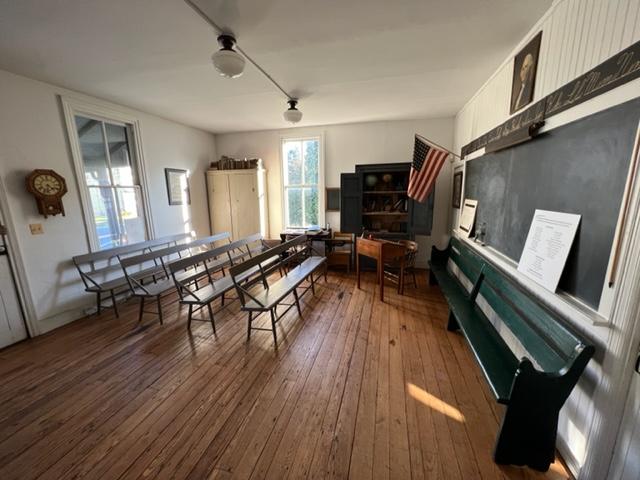
In the back of the General Store is the exhibition of the Harrison Academy Schoolhouse showing teaching in rural New Jersey up until about 60 years ago. These rural communities had the one room school in some cases up until WWII. As the areas developed, the regionalized school system came into play and these small schools became of thing of the past.
The schoolroom set up has not changed much over the last 100 years
The room was still heated by the potbelly stove
The Teacher’s Desk, the globe and picture of the President still exists in the classroom today
In the center room is the old Post Office, another fixture of the town’s social life. This was located in Mullica Hill up until fifty years ago.
The Mullica Hill Post Office
The entrance to the hall with the Post Office and Farm Equipment
The facade of the old Post Office
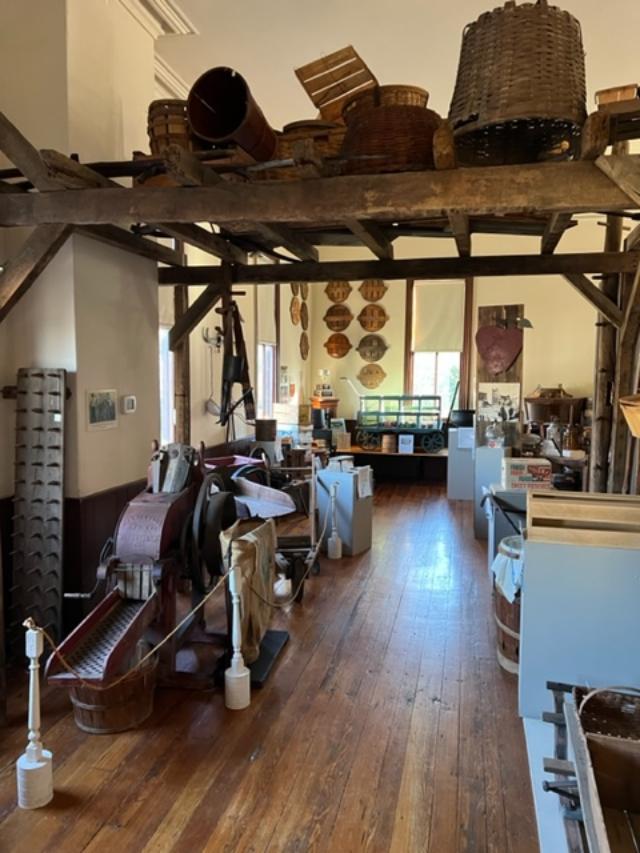
The back part of the exhibition is the farm equipment that would be used in commercial farming. The processing and packaging of fruits and vegetables would have been done when the harvest was being picked and getting ready for markets in New York, Philadelphia and Newark. Fruits and vegetables were packaged on the farm and readied for market.
Life on the farm was not always easy
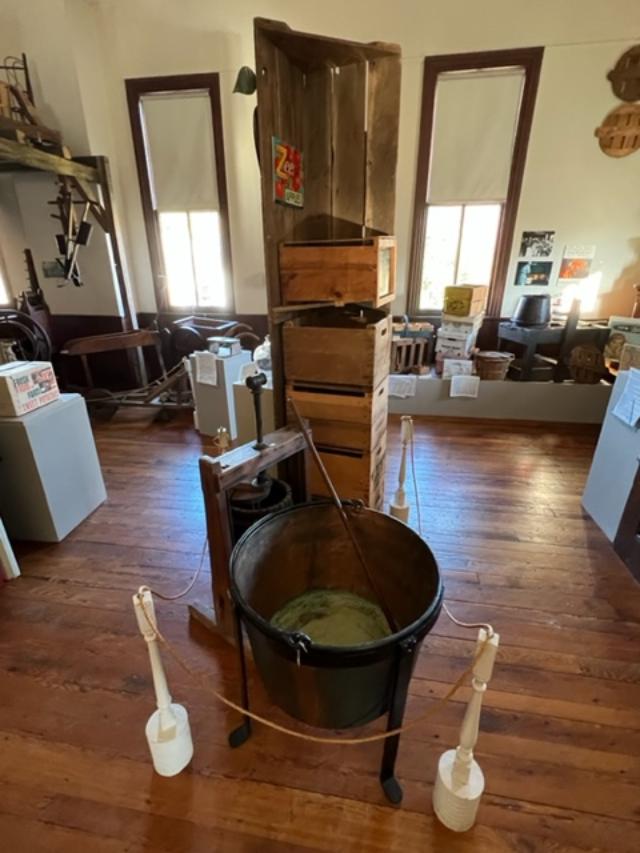
All sorts of equipment for processing fruits and vegetables is on display
All the bailing and shifting equipment needed on a farm
Business advertising
Packaging fruits and vegetables for the market
Life on the Farm
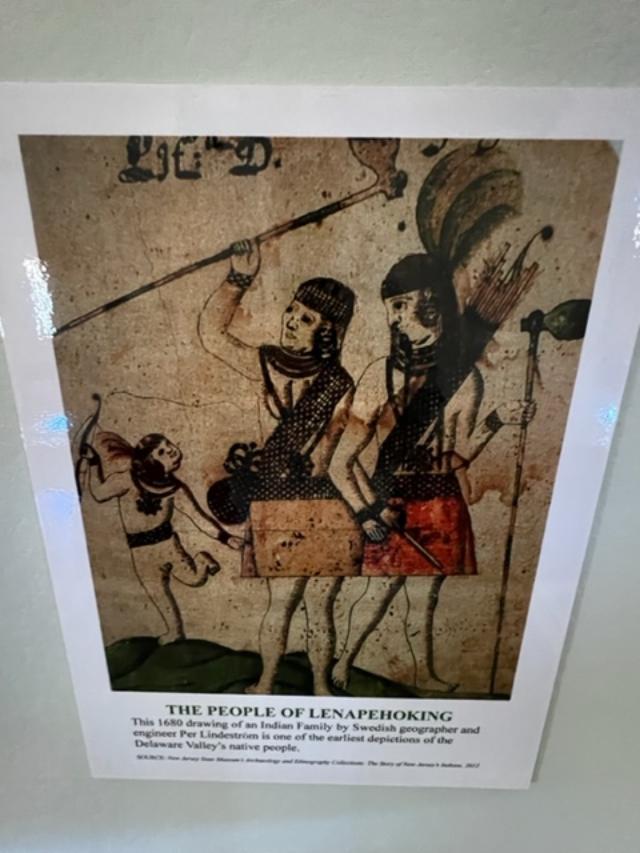
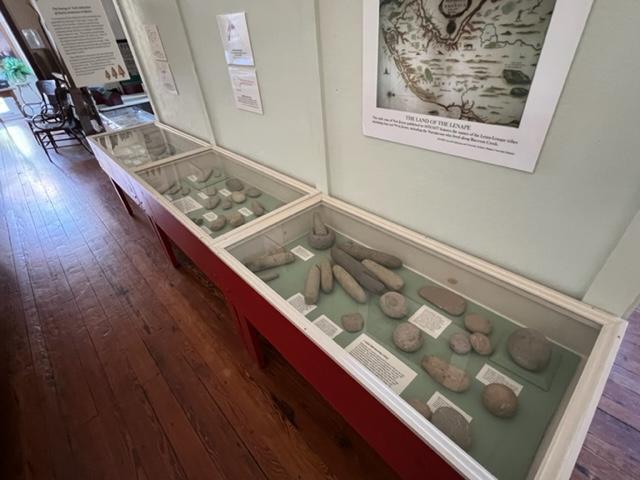
The second floor also provides not just a look into the life of the farming family but at the Native American’s life in the area before the colonist settlement.
The artifacts of the Native American Lenape Indians
The local Native Americans the Lenapehoking
Day to day equipment and home products of the Native Americans
Arrowheads from New Jersey and beyond
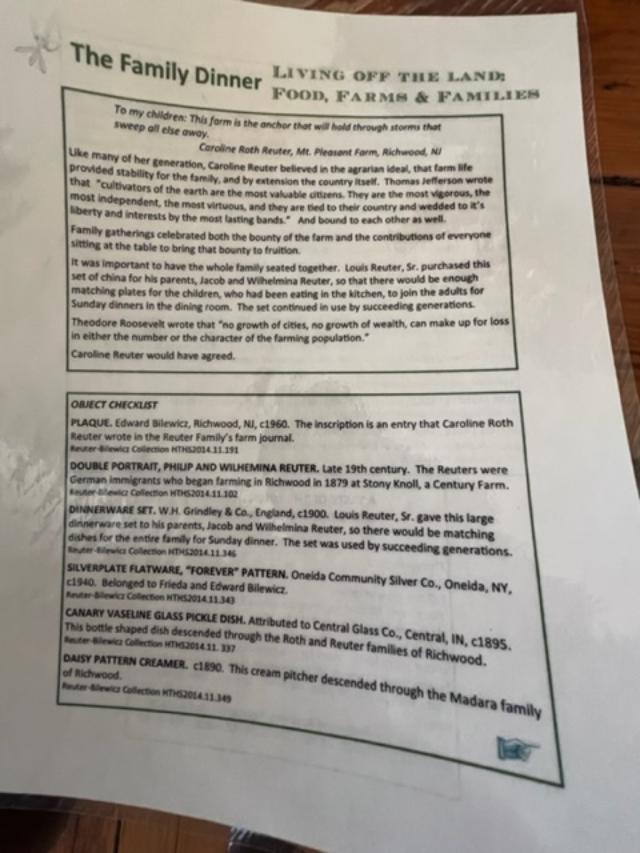
Family life on the farm included the family dinner
Meals would have included churning butter, gathering eggs, milking cows, processing apples for cider, baking and pickling.
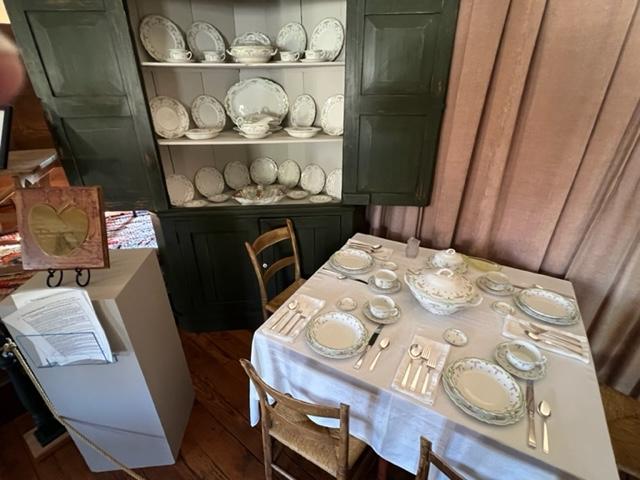
Preparing for a meal would have meant the best linens and china would come out of storage and placed on the table.
Families sat down together on Sundays to eat and enjoy each others company.
More processing of household items
The museum shows that not much has changed over the years but with the advent of modern technology with cars, the telephone and electricity, life on the farm changed but not by much. Traditions and processing crops still had to be done just differently. Life in America was going to change by the beginning of the Twentieth Century and this way of life would be part of the ‘myth’ of small town living. This still does exist in some parts of the rural country.
In early October of 2024, I came across the sign for the Ghost Haunted Walk that the Historical Society was sponsoring in Mullica Hill and decided to take an early holiday break and drive down to South Jersey for this event. I made the day of it visiting other sites around the area. Then I drove into Mullica Hill and joined everyone on a very interesting look back on the community’s past. It seems there’s a lot of haunted spots in town.
Downtown Mullica Hill the night of the walk
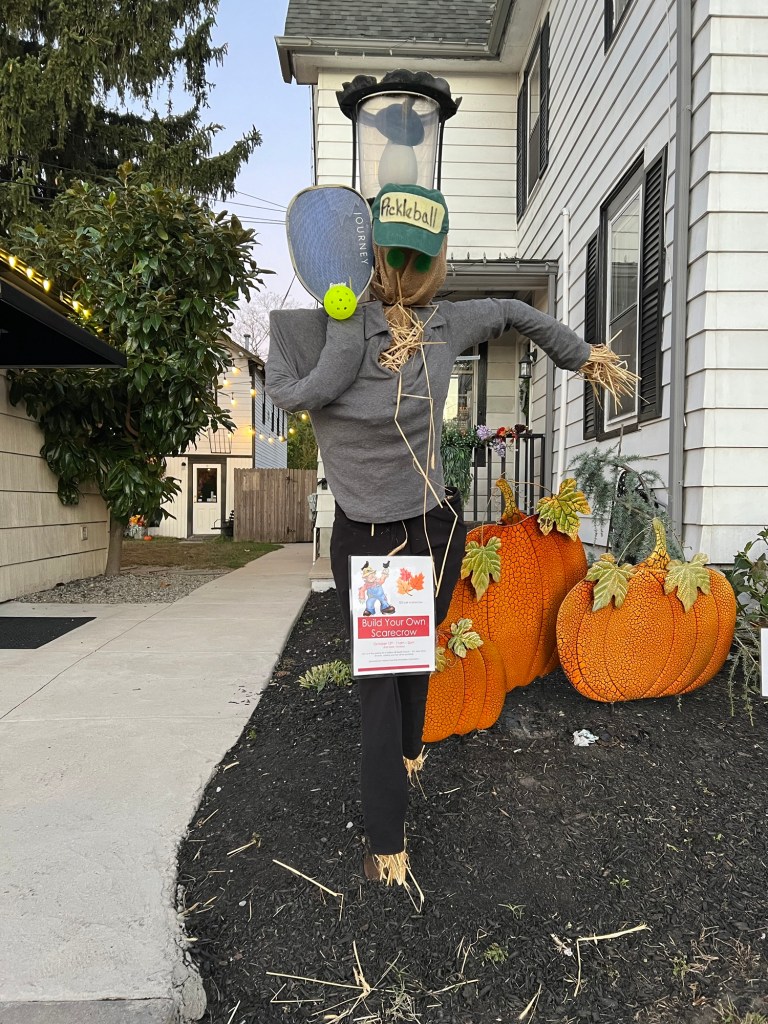
The downtown was dotted with scarecrows
The foliage was just starting to change but like Octobers in the past five years it has been warmer and greener further into the month.
The tee shirts of the event being sold at the start of the tour
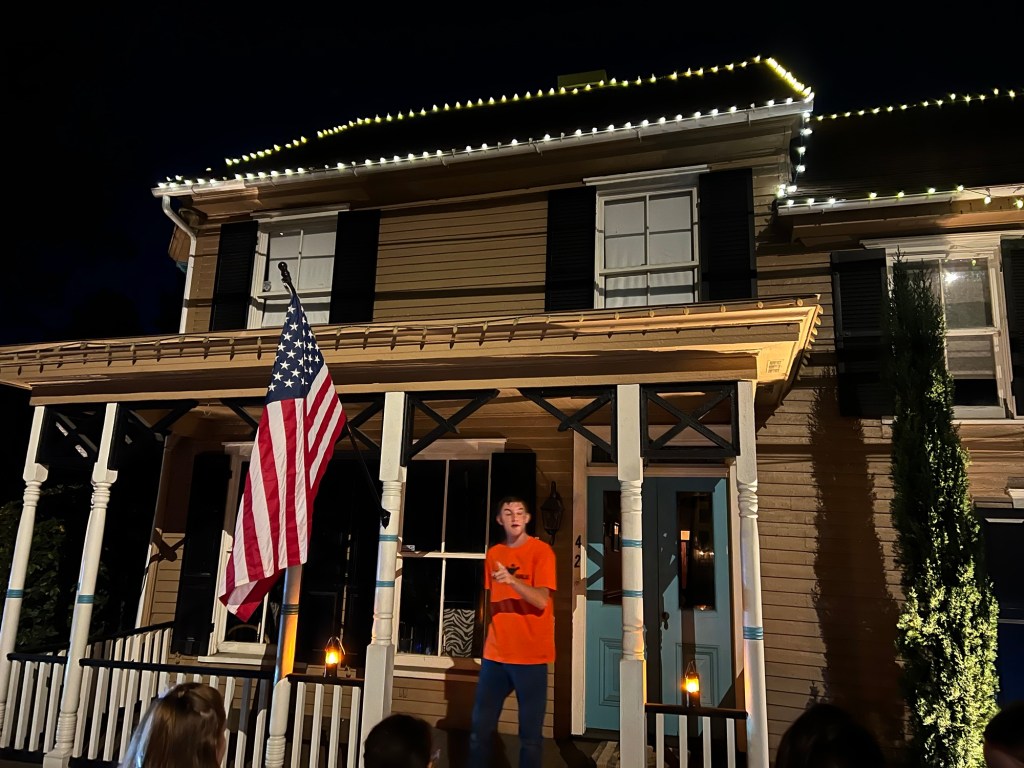
Our tour guide at the start of the tour
The scarecrows on the tour
We walked many stops in the downtown that was steeped in history even before the Revolutionary War.
The Hanging Barn where a worker hung himself
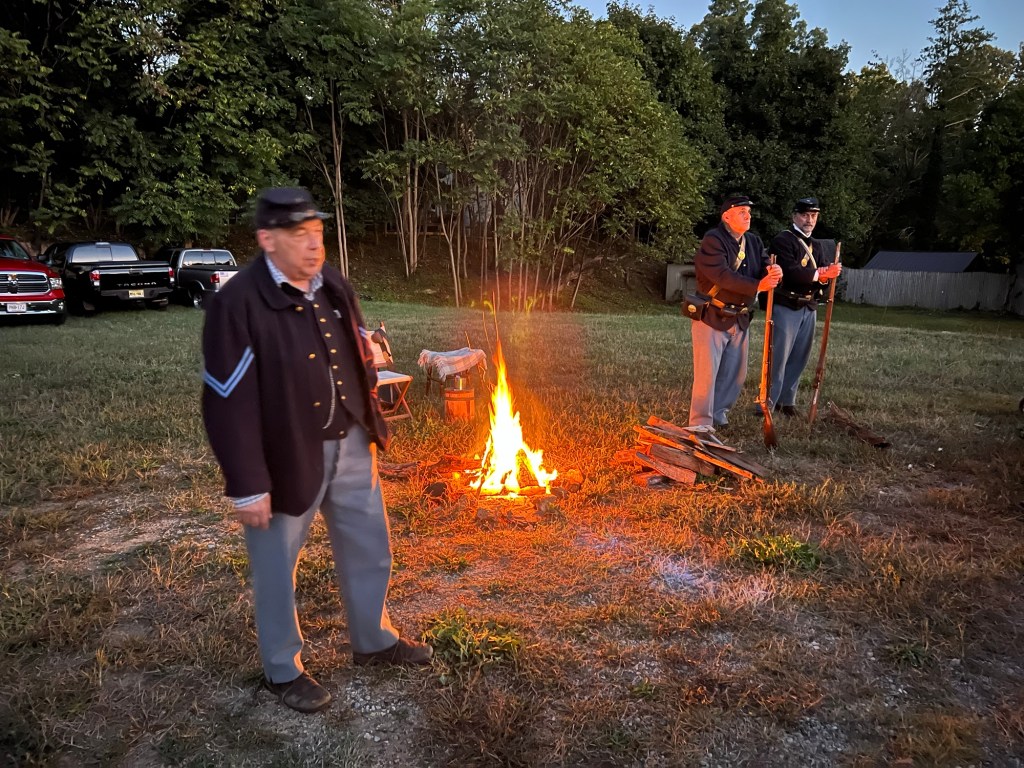
The history of the 12th Infantry some buried in the town
The Haunted St. Stephen’s Church downtown
The inside of the church where angels were seen
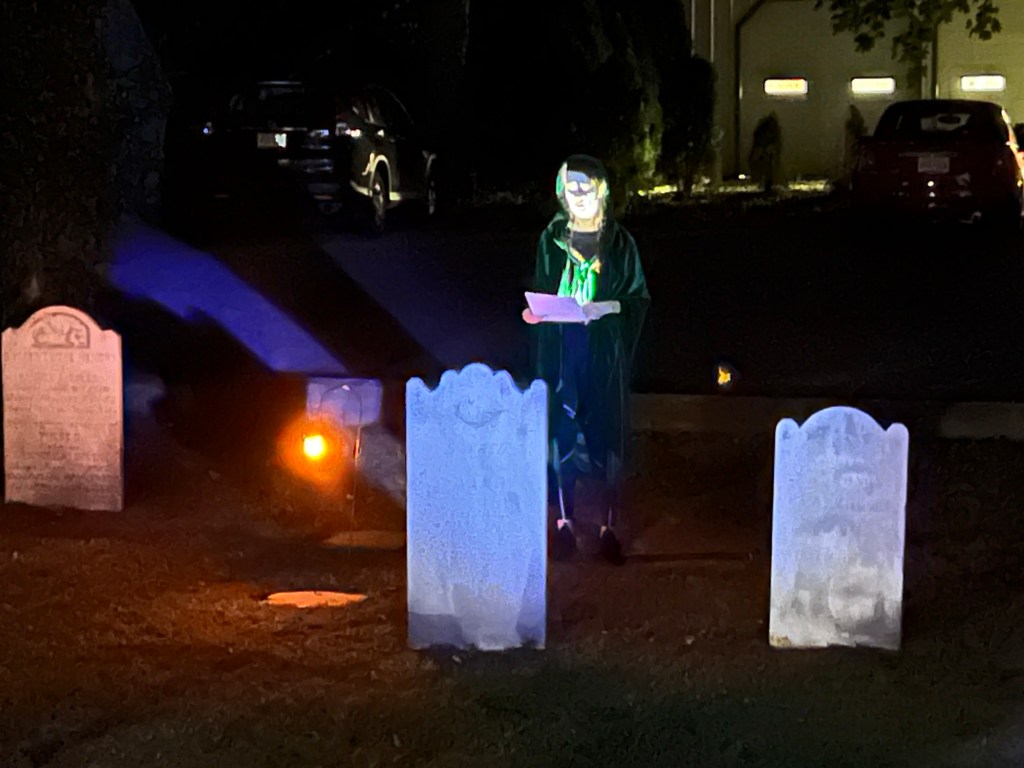
The graveyard talk in the back of the church
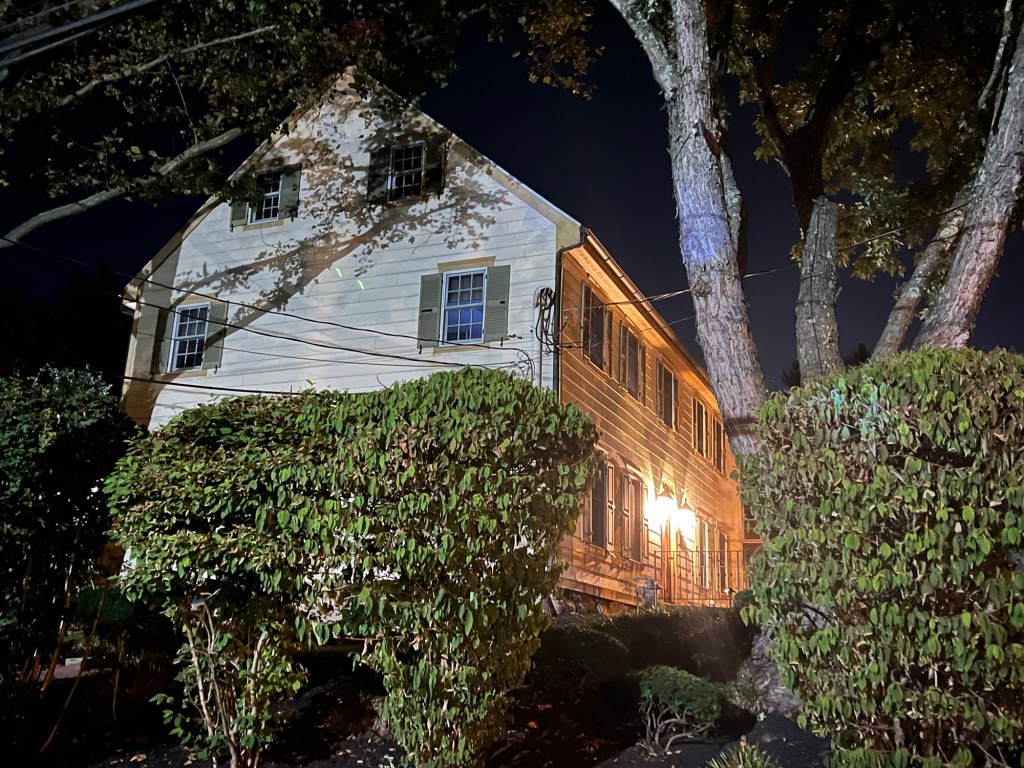
The Haunted House where multiple ghosts have been seen
Another haunted house
The Mullica family home is haunted
Another haunted house in town
After the tour was over, I toured the Mullica Hill Historical Society after the tour to see the new ‘Taverns and Temperance’ exhibition in 2024 on the local watering holes of the 18th and 19th centuries of which only two exist.
The Last Call exhibition
The history of taverns and their purpose
The interesting artifacts from the exhibit
The ‘Last Call’ exhibition was a look on how taverns were such an important part of socialization at a time when there were no movies, internet, phones and newspapers were limited. Still there was a strong resistance to people drinking which still reflects to our Puritan past.
There was nothing wrong with having a drink but there was a sense of taking it too far. Still this attitude is reflected today. It is still interesting though how one or two of these taverns have carried over into the Twenty First century. They are still welcoming guests today and that proves the socialization of these establishments and how important they are in our lives.
After the Haunted Tour:
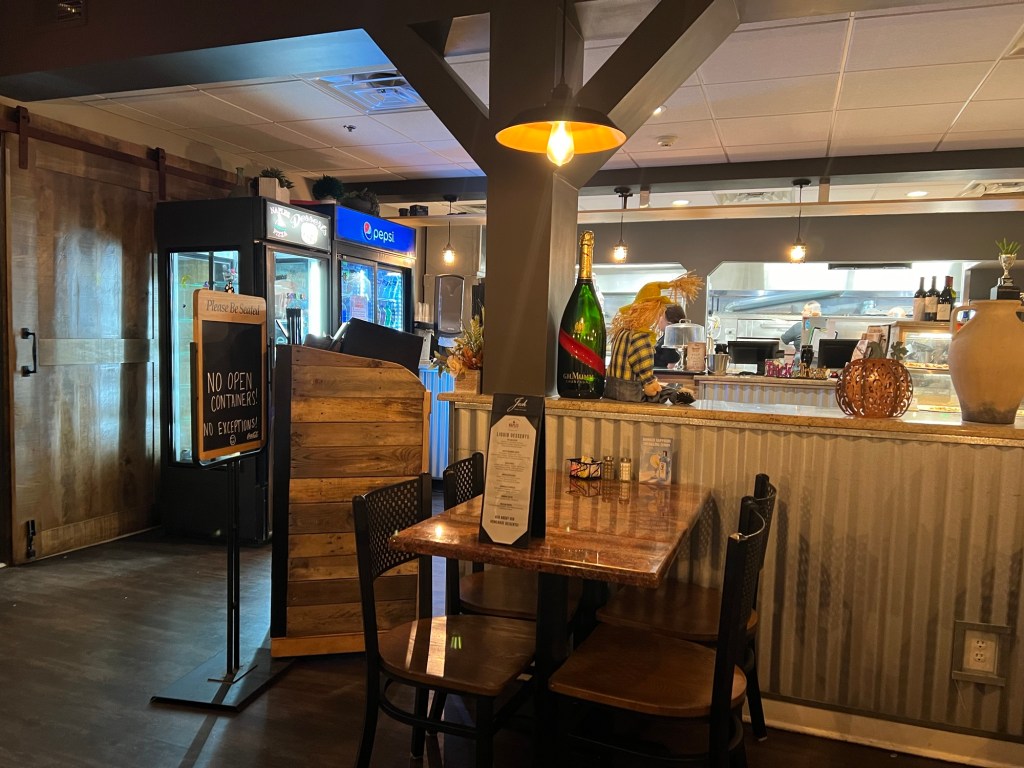
After the tour was over and I had a nice visit with the museum, it was almost 9:00pm and I wanted to eat something. Two small tacos and two doughnuts are hardly a proper lunch for someone. By 9:00pm though, the whole town had rolled up its sleeves. Even the restaurant where the tour started was closing at 9:00pm. I was shocked as there were people inside still ordering. The host said the kitchen was closing and if I knew what I wanted I could sit down.
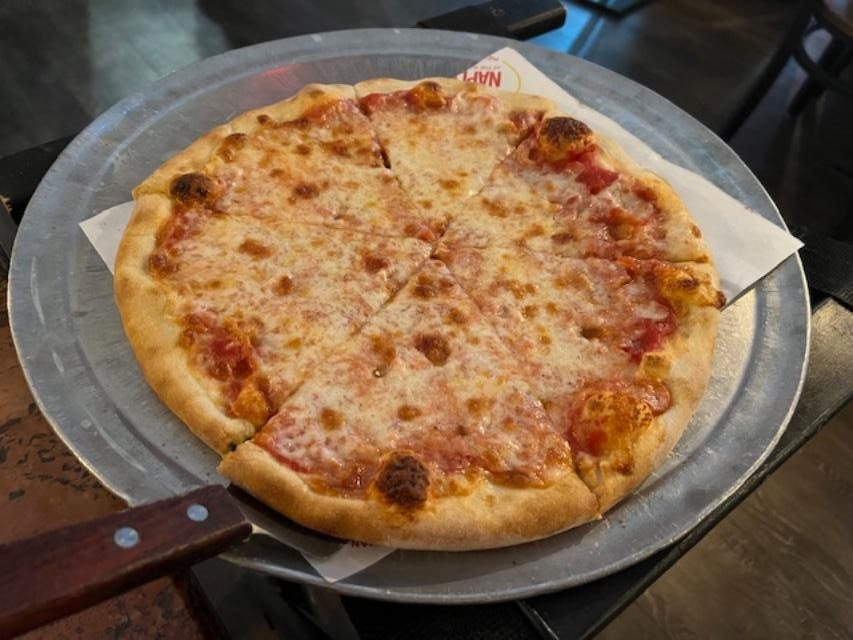
That was not much of an offer especially at their prices and I made my way down to Naples, the pizzeria and Italian restaurant where I had parked. They were open until a normal 11:00pm on a Friday night (I still do not understand restaurants that close at 9:00pm on a Friday or Saturday night. This part of the COVID scare is over and things are pretty much back to normal).
I went to the host stand and they seated me quickly. Tours were still going on and as I ate my dinner, the place really filled up when I finished because there was no place left to eat in town. (Not a good business decision). I really enjoyed Naples. Not only was it a lively environment with the games going on and a very active bar scene but the food was really good as well and very reasonable.
Naples at the Warehouse at 1 South Main Street in Mullica Hill, NJ
Between the Haunted Walk through town and the interesting discussions at each stop to the trip to the museum after the tour, the Haunted Walking Tour of Mullica Hill, NJ was well worth the trip down to South Jersey. It was such an interesting look at the town I would not have known from the many times I have visited the town. The Volunteers did a great job with this event.
It is a great little museum with a lot to see on two floors.
History of the Museum:
Fun Facts:
*People have been living in present day Harrison Township for over 10,000 years.
*Harrison Township originally included South Harrison and the western edge of Elk.
*The Township was named after President William Henry Harrison.
*There is a village called Mullica Hill in Finland.
*The first air shipment of fresh produce in the US took off from here.
The one thing I refuse to do on Father’s Day is to spend the day at the cemetery. I know that is some people’s idea of honoring one’s family members but it is not mine. I went on Friday and paid my respects to my father (whom this blog is dedicated to) and spent time remembering some of the good times we had in past. I dropped some cut flowers from our gardens (some of which he planted) and said a small prayer. Then I left.
My idea of honoring my father and spending Father’s Day with him is to do something that we would have shared together. We were always running around somewhere and exploring something new and doing something fun. That is how I wanted to honor him. By being active and giving him a toast at Sunday dinner.
























 Visiting a Museum: The Unique, Unusual, Obscure and Historical