Tag: Exploring Historic Ulster County

Klyne Esopus Museum                                         764 Route 9 West                                             Ulster Park, NY 12487

Klyne Esopus Museum 764 Route 9 West Ulster Park, NY 12487

Klyne Esopus Museum

764 Route 9 West

Ulster Park, NY 12487

(845) 338-8109

https://www.esopushistorymuseum.org/

https://www.facebook.com/EsopusHistoryMuseum/

Open: Sunday-Monday 11:00am-4:00pm/Tuesday-Thursday Closed/Friday-Saturday 11:00am-4:00pm

Admission: Free but donations are taken to offset costs

My review on TripAdvisor:

https://www.tripadvisor.com/ShowUserReviews-g48749-d26495761-r908410891-Klyne_Esopus_Museum-Ulster_Park_Catskill_Region_New_York.html?m=19905

The Klyne Esopus Museum is the home of the Town of Esopus Historical Society and is a treasure trove of information of early life in the Hudson River Valley and the role this small town played in the shaping of American society in this region. There are all sorts of displays on early American life, cottage industries that made the community grow and its role in the modern age.
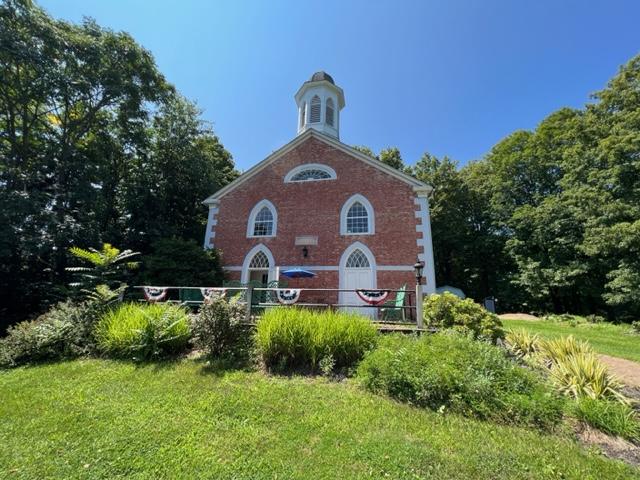
The Klyne Esopus Museum at 764 Route 9 West

The sign welcoming visitors to the museum.
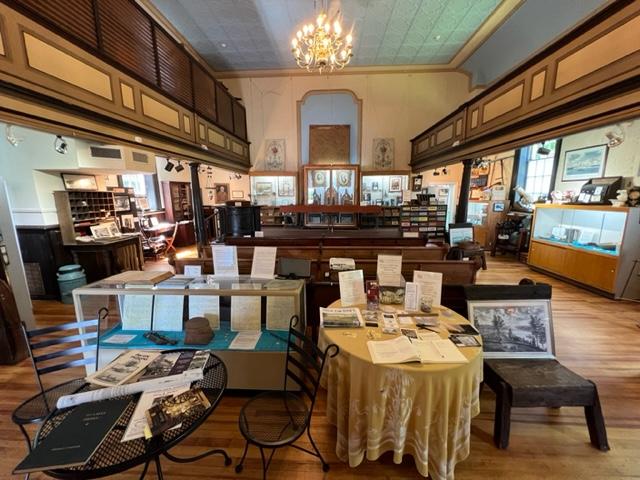
The Main Gallery at the Museum

The museum’s main gallery is surrounded by cases displaying the story of the area depicting the various aspects of industry, commerce, agriculture and domestic activities of the town’s residents. Former residents of note that are featured are Sojourner Truth, John Burroughs and Alton Parker to name a few. year a curated exhibition focusing on a special theme is centrally featured. These are some of the exhibits that are showcased at the museum:

The Native American exhibit:

The exhibit has an interesting collection of arrowheads, fishing and household items that were used by the local tribes who once lived in the area.

The display of arrowheads and fishing items
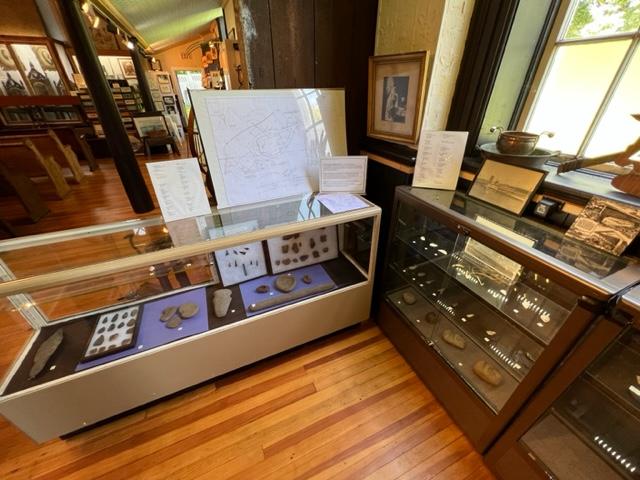
The extensive display of Native American fishing and household items.

The Apple industry:
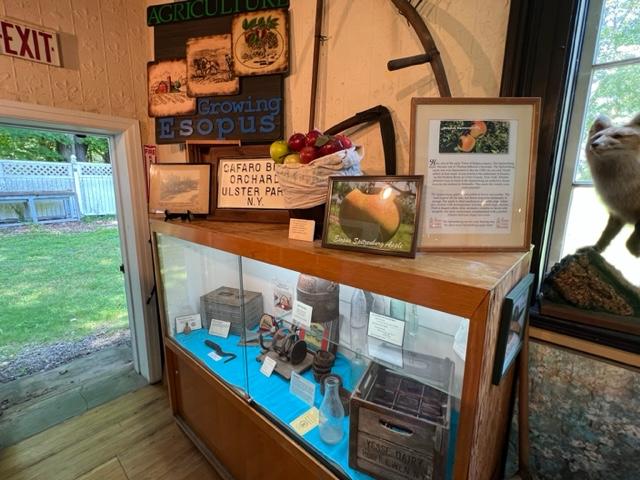
The local Apple industry was a major part of the economy in the late 1800’s and early 1900’s. The apple, the “Esopus Spitzenburg” was developed in Esopus. The Dutch had developed the agricultural industry of the area that supplied New York City with seasonal fruits and vegetables.
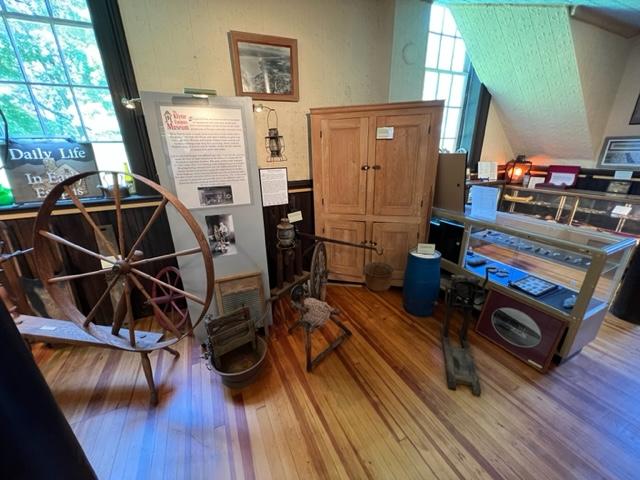
The Dutch Farming Industry and the development of local harvests

With the community based by the Hudson River and transportation being such a big part of the local economy, the displays on shipping and the local lighthouses were prominent at the museum. The display has all sorts of pictures and artifacts from the era of steamboat transportation down the Hudson River.
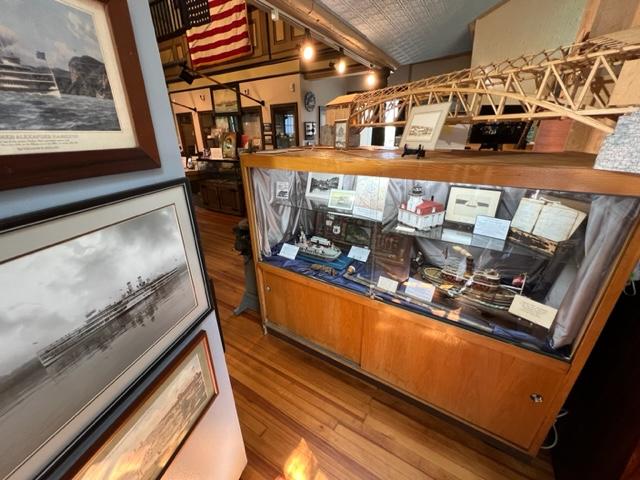
The Lighthouse and Shipping Industry

There were displays on famous residents such as Sojourner Truth and John Burroughs and their role in the community.

The artifacts and display on Sojourner Truth

https://en.wikipedia.org/wiki/Sojourner_Truth
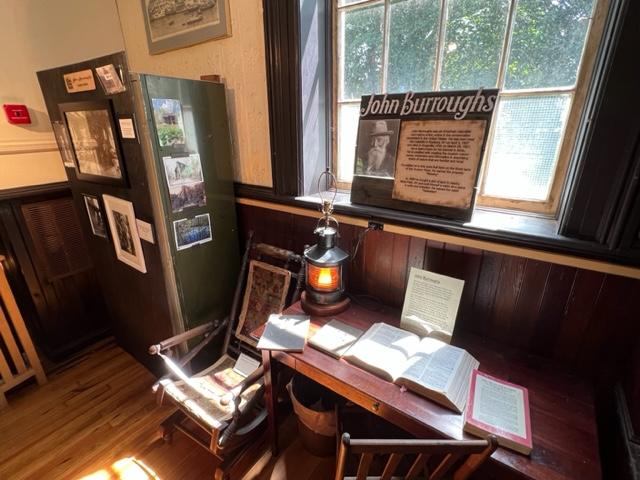
The artifacts and display on John Burroughs

https://en.wikipedia.org/wiki/John_Burroughs

The church is also featured pictures of clergy and their families, the history of the church and the decor of items that used to adorn the church when it was a place of worship. There is a large display on church history in the back of the museum.
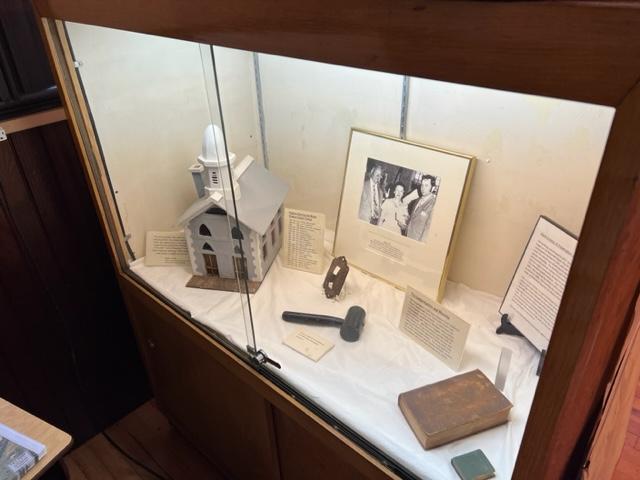
The Church display of its history

The local veterans are prominently displayed at the museum as was showing the spirit and support of the wars and battle. It also shows the townspeople participation and dedication in the war effort.
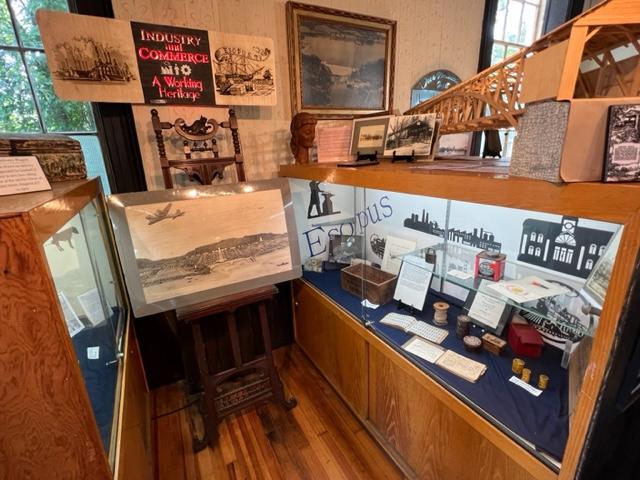
The World War II exhibition

Recreation and leisure are a big part of the Hudson River Valley society and items such as ice skates, swimming and boating show how people enjoyed their free time. This still plays out today. Household items were also displayed as well showing life at that time.
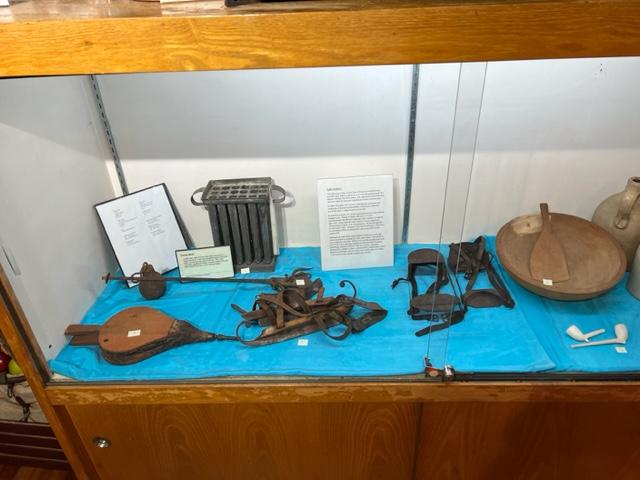
Household and Recreation items on display

The History of the museum:

(From the website and pamphlet)

The Klyne Esopus Museum that is located in Ulster Park, NY is housed in the former Dutch Reformed Church, which is a charming country church built in 1827. It served the community for over 175 years and replaced a smaller building built in 1792 originally located 1000 ft. to the north.  The church closed in 1965. The governing body of the church scheduled the building for demolition.

Faced with this reality, the former members of the congregation and the larger community rallied to preserve the building.  In 1969, a group known as the Klyne Esopus Historic Preservation Committee formed. Formal incorporation of the group took place in 1970.  After 17 years of fundraisers, repairs to the building, preserving and collecting, the museum finally opened to the public. In 2002, the building became designated a State and National Historic Landmark. 

The historical society museum opened to the public in 1984, offering a variety of exhibits about the culture, commerce and history of the Town of Esopus. The town is typical of rural America but it unique in many ways. Its geographic location and topography have spawned a variety of industries, resulting in a rich history and a diverse population.

The Klyn Esopus Museum is the Historical Society of the Town of Esopus. Its goal is to preserve, interpret and disseminate the history of the town. By fostering an awareness of the past and providing a repository for the artifacts and memorabilia of its former residents, it enables present and future generations to identify and appreciate times gone by. Today, a small, committed group of volunteers is working to make history meaningful and relevant to visitors of all ages. 

The Senate House                                                                      296 Fair Street                                                                Kingston, NY 12401

The Senate House 296 Fair Street Kingston, NY 12401

The Senate House

296 Fair Street

Kingston, NY  12401

(845) 338-2786

http://www.palisadeparksconservancy.org

http://senatehousekingston.org/

Open: Sunday 1:00pm-5:00pm/Wednesday-Saturday 10:00am-5:00pm (April 15-October 31). Open by Appointment only (November 1-April 14)

Fee: Adults $4.00/Seniors (62+) $3.00/Children under 12 and under Free

My review on TripAdvisor:

https://www.tripadvisor.com/Attraction_Review-g48003-d3225491-Reviews-Senate_House_State_Historic_Site-Kingston_Catskill_Region_New_York.html

The recently reopened Senate House in 2023

I recently spent my afternoon at the Senate House and Museum in Kingston, NY taking a tour of the museum and the House next door. The Senate House itself had just finished its renovation and the gardens were in full bloom in 2023. It was a quiet afternoon, and I was the only patron for most of the afternoon. The grounds were full of beautiful foliage and flowers, so it was nice to walk around the grounds.

The Senate House story board

The Senate House had just reopened in 2023 after almost a four year renovation and because of the closure during COVID. The grounds are very pretty and well-landscaped and the outside has had a lot done to the gardens. The house was built for merchant Abraham Van Gaasbeek and his family. It stayed in the family for generations.

The Senate House at 296 Fair Street

We were able to tour the inside of the house and see the renovations that the State of New York made on this important structure. The home has been renovated by the state but the tour guide told us not with the historical integrity it should have had. It was not to the total interpretation of the life in the house. Still, it told the story about the people that lived there.

The Senate House Kitchen

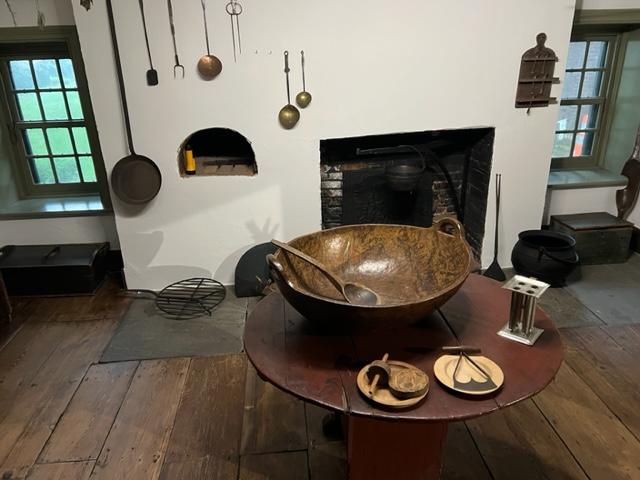
Here you see the beehive oven, the working fireplace and many household items including waffle makers, cookie molds and candle making tools. The daily household tasks would be time consuming.

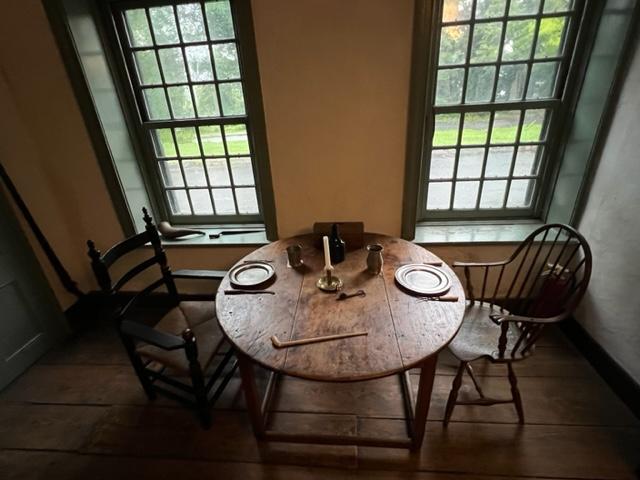
The Dining Space

The bedroom

In the original part of the house, the dining space and bedroom would be in a one room section of the home and as the family got larger, the house was added on to on both sides.

The Parlor

The Parlor was the fanciest room in the house with the best furnishings, decorations and a place of social interactions with guests. This rooms was for adult use at that time.
The Meeting Room for the leaders in change.

This was the room where plans by the patriots were made that changed the course of New York and the rest of the country. Now that the Senate House home is open again, you get a feel for what these people must have went through in developing the country during the Revolutionary War years.

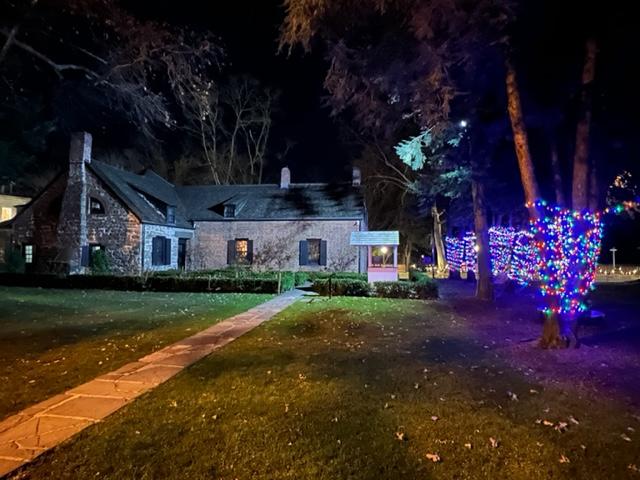
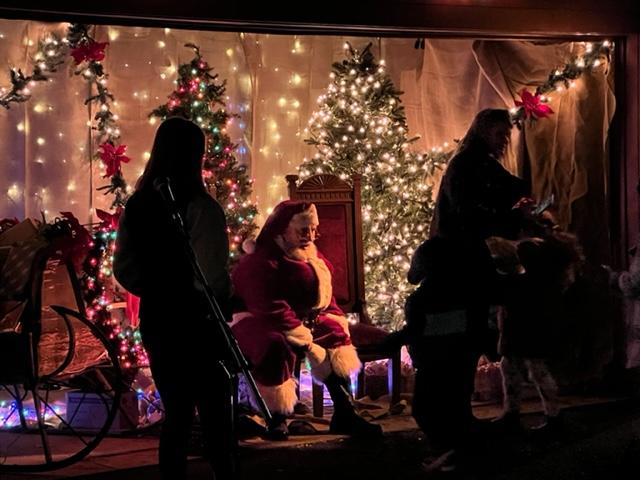
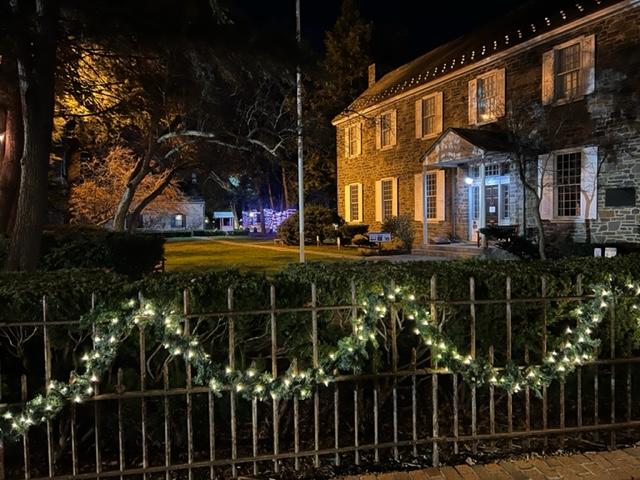
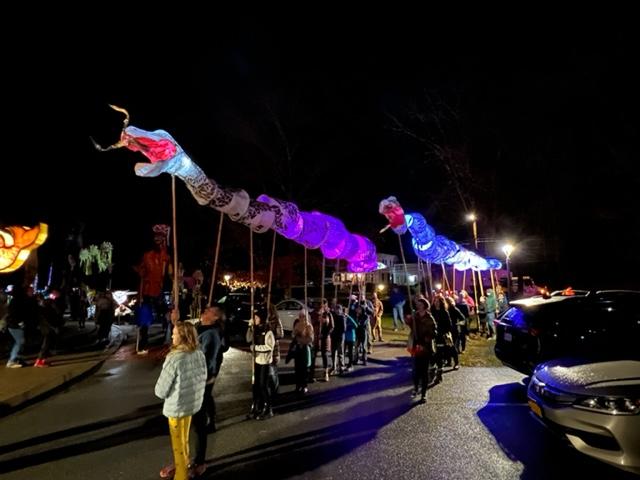
When I visited the Senate House at the holidays for the “Snowflake Festival”, it was still closed for renovation but the grounds were open for touring, music and for a visit with Santa. It was a magical night on the grounds of the historical site and people had a nice time that evening. The grounds and the other buildings were decked out for the holidays.

The Senate House decked out for the Christmas holidays at the “Kingston Snowflake Festival” in 2022

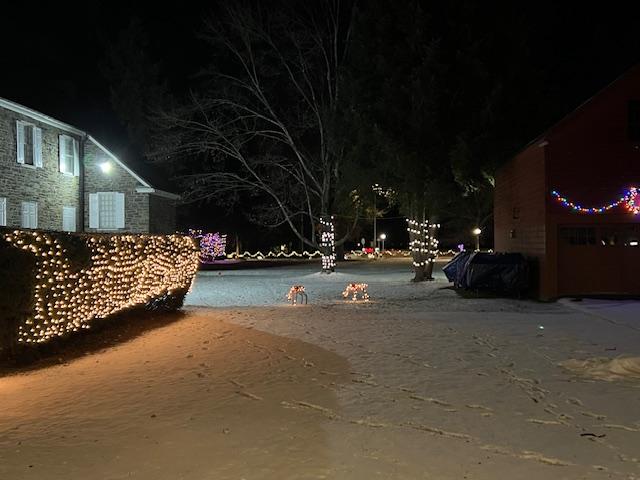
The Senate House property decorated for the Kingston Snowflake Festival in 2022

Santa’s visit at the Senate House property in 2022

The history of the Kingston Stockade section of the city.

The main part of the park is the Senate House Museum, which is broken into three sections. The right side of the museum is the history of the City of Kingston and the matching artifacts. There is a description of manufacturing, merchant class and its military prominence. Here I learned about the growth of Kingston and its founding, its strategic spot on the Hudson River in the early colony, its role as diplomats to the Native Americans, which was not so pleasant and its growth after the war.

The first floor exhibitions on early life in Kingston

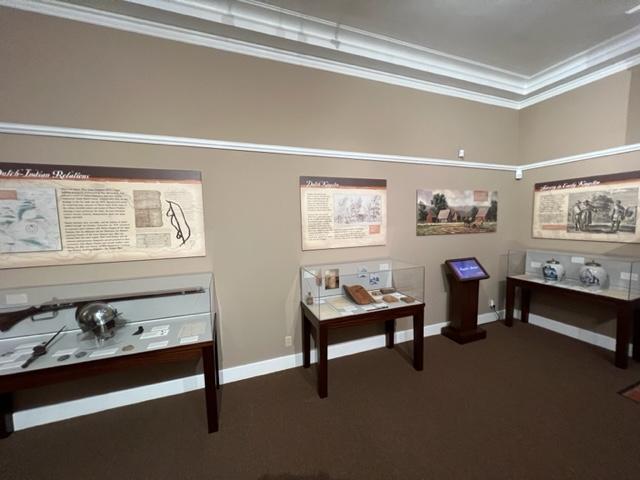
The history of the City of Kingston is described with the Native American settlements and the trade with the Dutch, the unsettling relationships that the two groups had with each other, the War years, the growth of industry and trade in early New York and manufacturing in the area.

The Native American exhibition

Early manufacturing and life in Kingston

The Artist’s sign

The Vanderlyn Exhibition of artist John Vanderlyn’s art

Artist John Vanderlyn’s works are featured on this part of the museum.

The left side of the museum is dedicated to the locally born artist, John Vanderlyn. His paintings line the walls of the museum of the artist at different stages of his career. His work was ahead of its time for the area, and it was noted in the collection that he forced himself to commission portraits to survive. His works advanced for the time because of his studying abroad now line the walls of the best museums in the country.

The exhibition of John Vanderlyn’s portraits

Artist John Vanderlyn’s bio in the museum

Members of the extended Vanderlyn family portraits

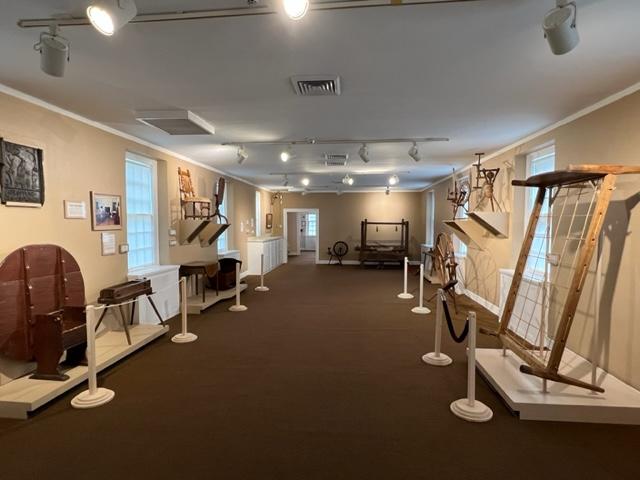
The second floor holds the furniture that is not historically correct with the Senate House and comes from different time periods. There is furniture, beds and chairs, spinning wheels, chamber pots and all sorts of accessories for the home and their uses in everyday life. Vintage furnishings with explanations on their use are a big part of the exhibit.

Artifacts from the past are displayed here

The everyday items used to spin material and create clothing

The Loughran House next door houses more of the furniture of the house and has a new exhibition “Back to the Future: The Evolution of Senate House”. This houses artifacts from the house.

The Senate House property during the “Kingston Snowflake Festival” in 2022

The Senate House property during Christmas 2024

The Senate House property during Christmas 2024

History of the Senate House:

(From Wiki/Office of Parks, Recreation and Historic Preservation pamphlet)

Amidst the turmoil of a British military invasion in the fall of 1777, the elected representations of rebellious New Yorkers met in Kingston to form a new state government. While convened in Kingston in September and October, New York’s first Senate met in the simple stone house of merchant Abraham Van Gaasbeek.

Here they adopted a system comprising of a senate, assembly, governor and judiciary that still exists today. Every one of the assembled delegates risked his life and property by being so openly disloyal to the Crown. Indeed, all were forced to flee for their lives when the British attacked and burned Kingston on October 16th.

While convened in Kingston in September and October, New York’s first Senate met in the simple stone house of Abraham Van Gaasbeek, a prosperous merchant trader who had suffered financial losses as a result of the war and personal losses in the recent deaths of his wife, Sara, his daughter and infant granddaughter. It was Sara’s grandfather, Wessel Ten Broeck, who built the original section of the house in 1676.

At first called Wiltwyck, Kingston was the third “city” established in the Dutch Colony of New Netherland. Planned and developed by the Dutch Governor Peter Stuyvesant in 1656, the town was renamed Kingston after the colony was seized by the English in 1664.

Wessel Ten Broeck’s one room Dutch style house was enlarged by succeeding owners in the 18th century. Each change reflected the increasing fortunes of the Ten Broeck/Van Gaasbeek family and demonstrated a gradual acceptance of English styles and customs over the persistent influence of the early Dutch. Kingston at the time of the American Revolution was still a noticeably “Dutch” town and most of its citizens supported the American cause. British Major General John Vaughan justified his destruction of the city because it was a “nursery for almost every villain in the country.”

In 1887, to recognize Senate House’s role in the formation of New York State, New York State acquired the property, which quickly became a vital community museum. A two-story Museum Building was constructed in 1927 to house and display the site’s burgeoning collection. Among its treasures are: major works by John Vanderlyn and other members of the Vanderlyn family of Kingston. The museum also includes the site’s popular new exhibit: “Kingston Stockage: New Netherlands’ Third City,” discussing Kingston’s early history.

(New York State Park History)

Senate House V

The Kingston Stockade: The City’s formation from the beginning

Historic Old Dutch Church                                                      272 Wall Street                                                               Kingston, New York 12401

Historic Old Dutch Church 272 Wall Street Kingston, New York 12401

The Historic Old Dutch Church

272 Wall Street

Kingston, New York  12401

(845) 338-6759

Church office Hours 10:00am-3:00pm weekdays (845) 338-6759

http://www.olddutchchurch.org

info@olddutchchurch.org

*Note from the Blogger: this church is where every year the ‘Sinterklaas Committee’ has there annual fundraiser. The inside is beautifully decorated for the holidays and the food is wonderful. Check out the Sinterklaas Rhinebeck, NY website for more special events.

TripAdvisor Review:

https://www.tripadvisor.com/Attraction_Review-g48003-d7232701-Reviews-Old_Dutch_Church-Kingston_New_York.html?m=19905

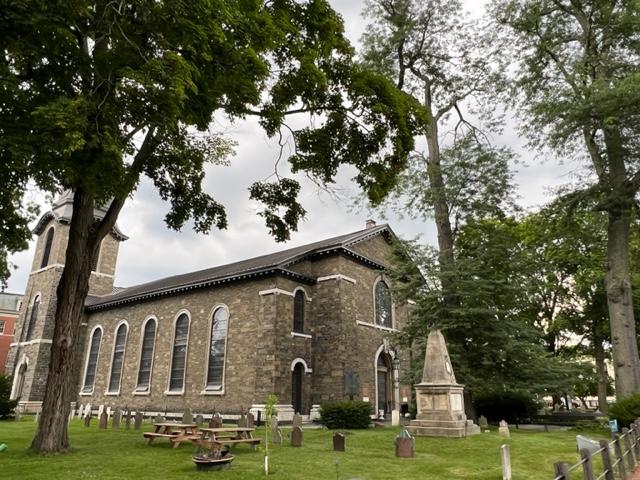
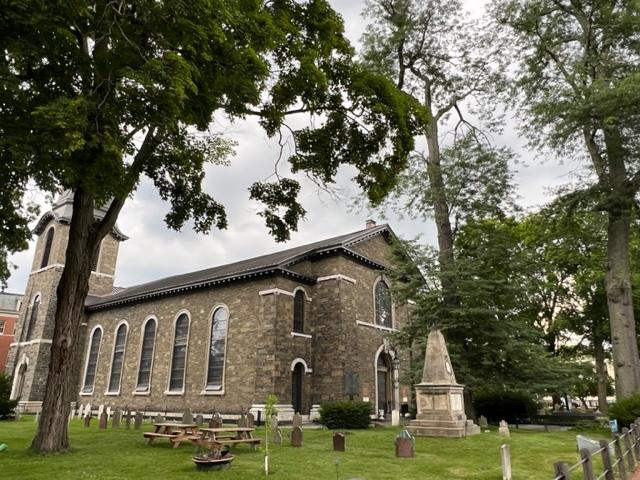
The Church during the Summer months

The Old Dutch Church cemetery during the day.

I recently attended the Annual “Cemetery Walk” of the Old Dutch Church in Kingston, NY, where they have actors playing famous people who are buried at the church.

The cemetery during the day

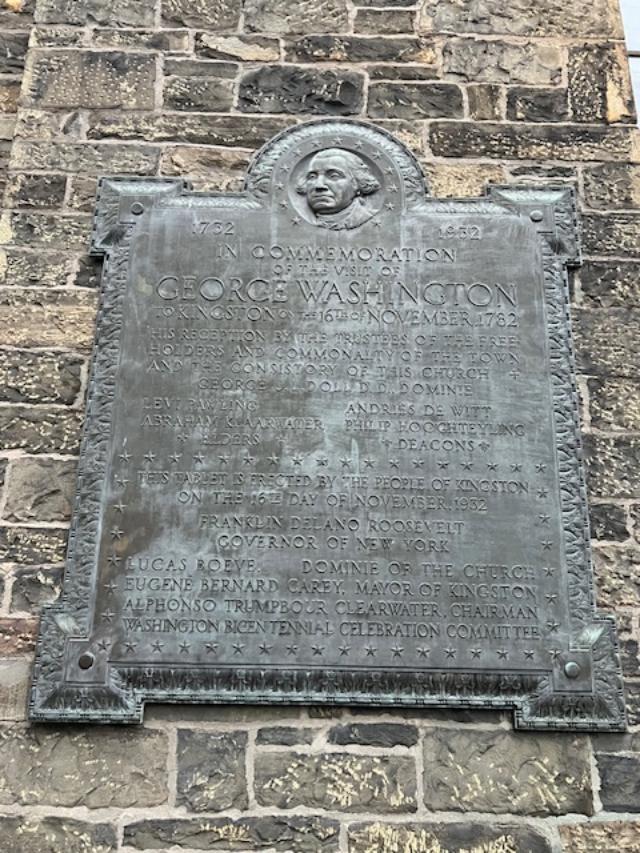
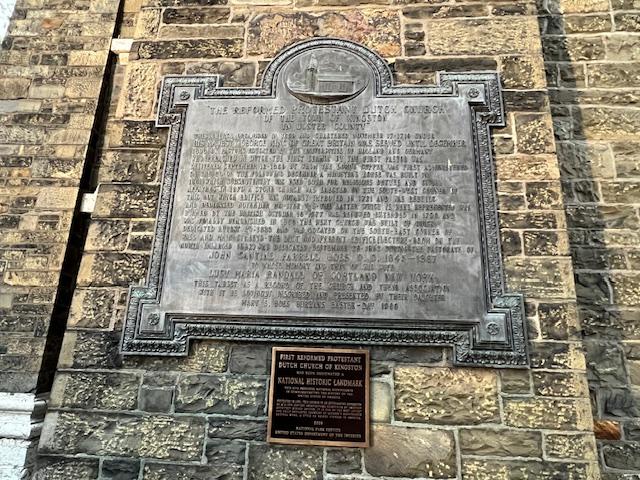
The historic plaques outside the entrance to the church

The historic plaque outside the entrance of the church

The Cemetery Walks during Halloween:

We went through the cemetery and one by one we met actors who played the roles of Sadie and Elsie Reher, whose family owned the bakery in the Kingston Roundout, Jenny, slave who was living in Upstate New York at the time of slavery in New York, Calvert Vaux, the famous landscape artist of Central and Prospect Park fame, who also designed many homes and buildings, Emily Chadbourne, the art collector, philanthropist and socialite. To round off the cast there was Rachel Hasbrouck, the landowners and Father Devine, a spiritual leader of the 1930’s.

The Cemetery Walk at the Old Dutch Church in Kingston, NY

We spent about fifteen minutes with each character and than would hear the cow bell and move onto the next character. It is a lot of walking around a cemetery in the dark and a few people could not handle it.

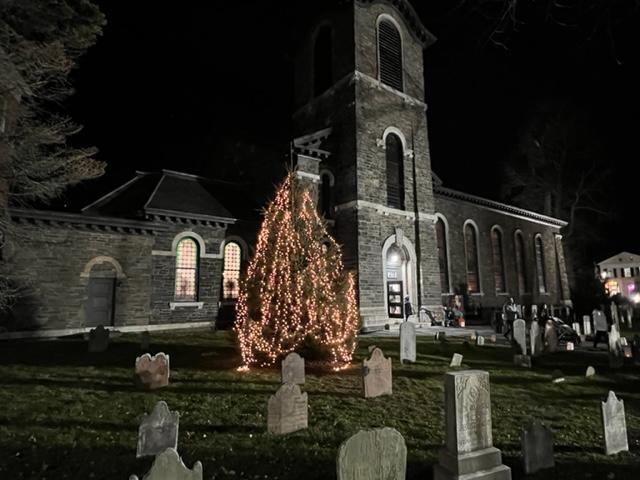
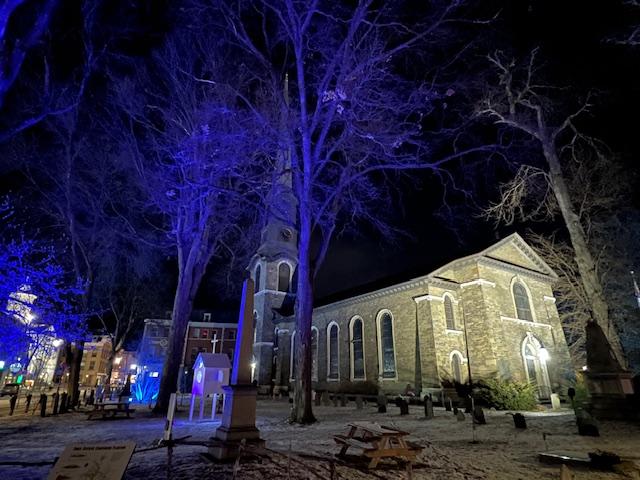
The graveyard is scary but inviting at night

The only problem with the event was that the actors took it upon themselves to relate their characters to modern times and what is going on in the world today and I did not take a tour to hear their political views. That put a damper on the evening. They are supposed to stay in the era their character was born into. The tour covered three centuries of residents of Kingston, NY.

The graveyard at night

Sinterklaas Fundraisers:

Take some time to come to the church during daylight hours and see the cemetery on your own time. It is very interesting and gives you a perspective on the role of the church from colonial to modern times.

I also had been up to the church many times for Sinterklaas fundraisers, where we were treated to Dutch “Sweets & Treats” along with a visit from Sinterklaas (Santa Claus). It was always a nice night of music and entertainment.

The Sinterklaas fundraiser “Sweets & Treats” used to be held at the Old Dutch Church in Kingston, NY.

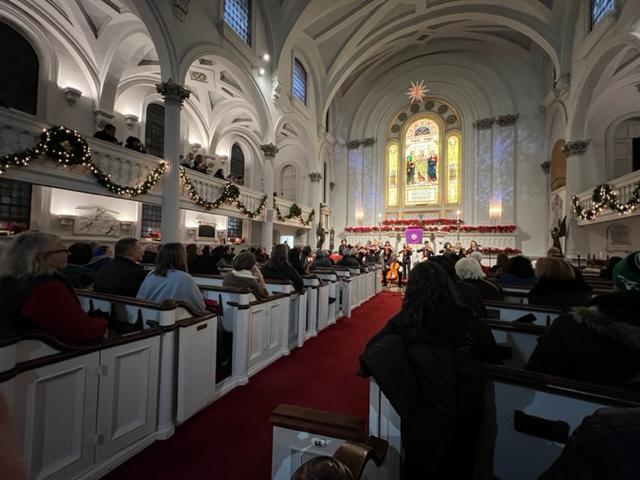
During the recent “Snowflake Festival” in 2022, the church was the host to many groups of fiddlers. The whole church was decked out for the Christmas holidays. Both inside and outside the church was decorated for the Christmas holiday season. It was just gorgeous.

The front of the church during the Kingston Snowflake Festival in 2022

The Dutch Reformed Church’s Christmas tree was very traditional at the Snowflake Festival.

The fiddlers packed the church for the concert. It was nice to see the church during the Christmas holiday season which was decked out with traditional holiday decorations. The concerts were a lot of fun and the groups were excellent.

The fiddler groups entertained us that night

The History of the Old Dutch Church of Kingston, NY:

(from the church website)

The Front of the Old Dutch Church

Founded in 1659, the Old Dutch Church is often referred to as “Kingston’s Cathedral”. The present structure was designed by Minard LeFever and built in 1852. Architect Calvert Vaux said of this design, “I cannot change a thing without impairing the exquisite unity. It’s ideally perfect.”

The church and the cemetery

Organized in 1659:

*Sixth Oldest Reformed Church in North America.

The Old Dutch Church from the front

*Archives containing Baptism and Marriage Records dating back from 1660 to present.

*The Land on which the church stands was a gift from Peter Stuyvesant.

*Fifty Reformed Churches in the Hudson Valley, New Jersey and Pennsylvania trace their roots to Old Dutch Church, Kingston.

The War Memorial at the Old Dutch Church

*The ancient churchyard is the resting place of 1400 early settlers, including 77 Revolutionary War veterans and first New York Governor and two-time Vice-President, George Clinton.

The churchyard and the George Clinton grave

*Inside in the church: the magnificent Tiffany Window above the pulpit; bronze angels and the spectacular Moeller Organ.

*Visitation site of both Queen Juliana and Queen Beatrix of the Netherlands.

Tours and information talks given by Old Dutch Church guides are available by appointment.

Sunday Morning Worship: 10:30am

Old Dutch Church Kingston NY II

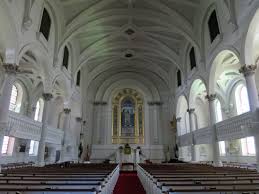
The inside of the church

The church during the recent ‘Kingston Snowflake Festival”

The Church during Christmas in 2024:

The church on a quiet evening during December 2024

The church decorated at Christmas time

The front of the church at night

*Disclaimer: this information was taken from the Old Dutch Church pamphlet. The church is the site of the annual fundraiser for the Sinterklaas festival every November. Please check out the Sinterklaas festival calendar every year for updates. The church cemetery is worth the visit alone with all the unique and historical people buried here.