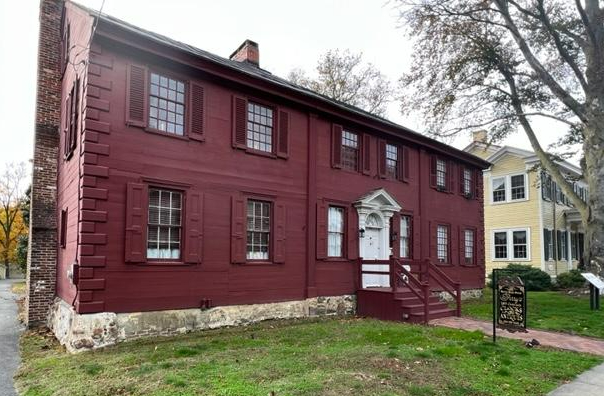
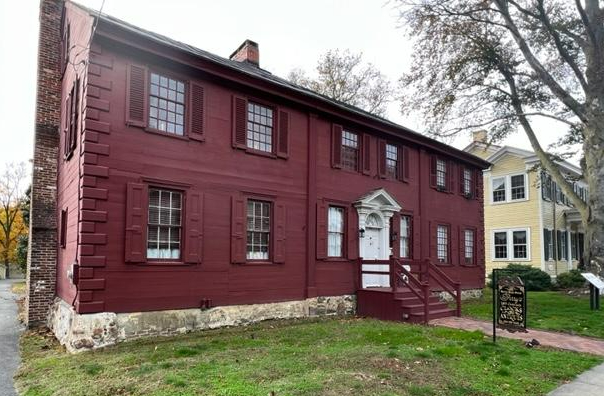
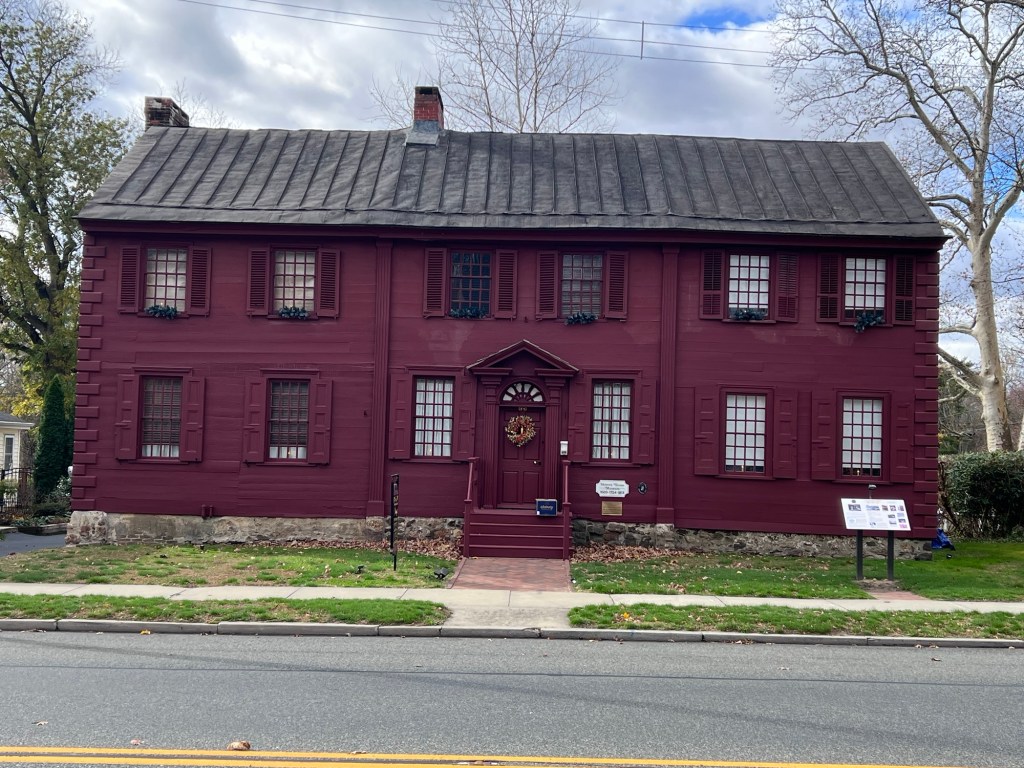
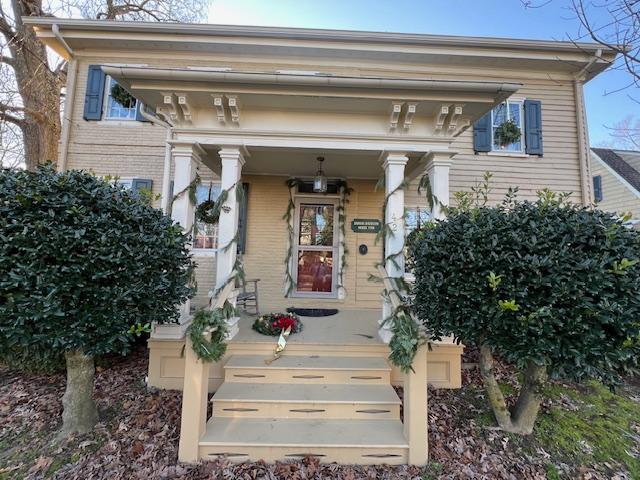
The Shivers House at 68 North Main Street in Woodstown, NJ
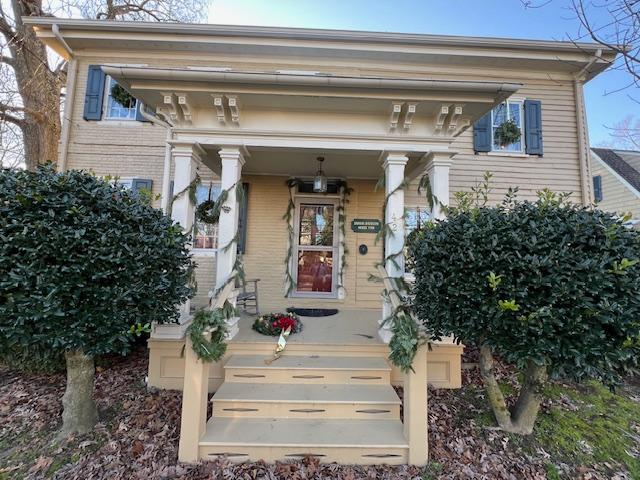
The front of the Shivers House Museum at 68 Main Street from across the street
I got a personal tour of the Shivers House Museum and the Sign of Key Tavern, which is attached to the main house of the Shivers Family. The first part of the tour was of the Sign of Key Tavern, which consisted of The Hearth Room, where all the cooking took place and the Cage Bar room, where meals would be eaten and used for socialization.
I could see that the family business was very popular at the time when transportation was slower and these areas in the early 1700’s were barely populated. So this became the focal point of the communities. These taverns were part of the communication and transport systems of the country up until the Revolutionary War.
Later, family members built the the main house of which the tavern would be attached and thus began the home’s transformation to modern times. The house from the outside has a more symmetrical appearance but these changes on the outside altered the historic inside.
The History of the Shivers House:
In 1668, John Shivers at the bequest of King William of England was given thousands of acres to promote the hamlet development with what was then known as West Jersey.
Upon arrival, Shivers constructed on the property, utilizing Native American labor, a dam and saw mill on what would become Woodstown Lake. From here he milled the timber for his tavern. The tavern, The Sign of the Key, operated for 65 years on the corner of what is today Routes 40 and 45. Travelers could sleep, eat meals, communicate and trade furs from the area. After Shivers death, it was moved to its present location by his son, Samuel, as an addition to the current house.
The Shivers family owned the house through marriage through the Nineteen century.
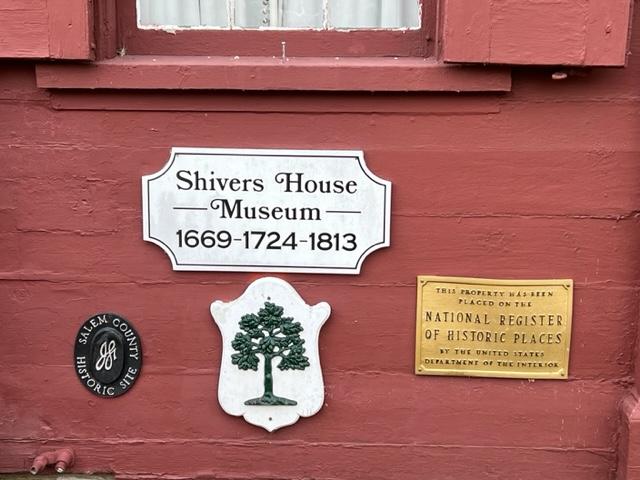
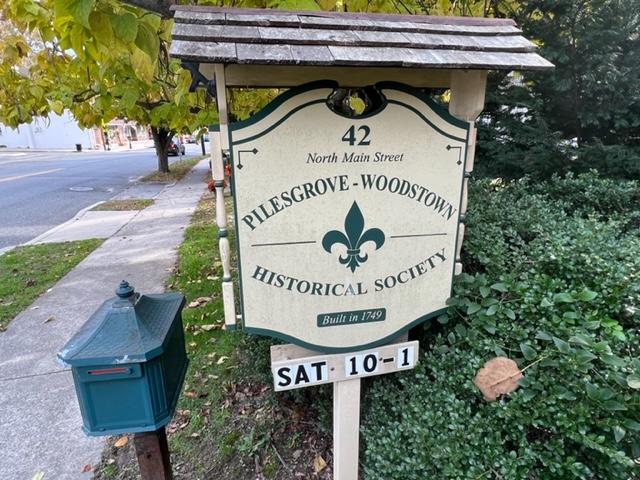
The outside sign of the house
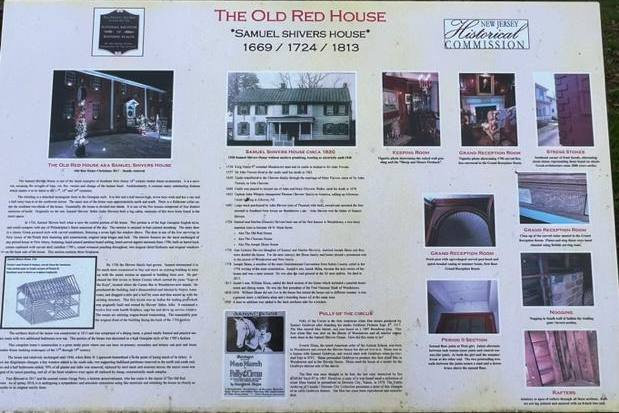
The informational sign on the history of the home and construction
The sign of the clock repair and antique shop business inside the house
(Much of the following research comes from owner Gregg Perry’s personal research on the house and family and from the personal tour Mr. Perry gave me of the house and grounds).
The first part of the house tour I took was of the old tavern section of the house. This had once been in a different area and moved here by the family and connected to the newly built house around 1726 when Tavern owner, John Shivers died.
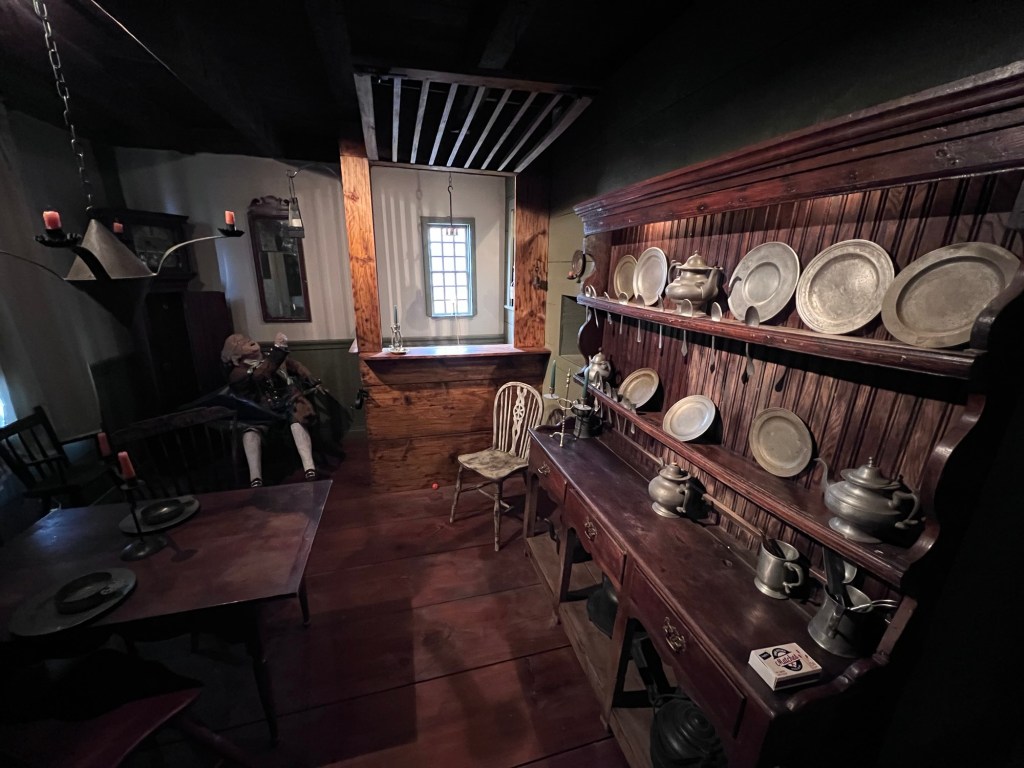
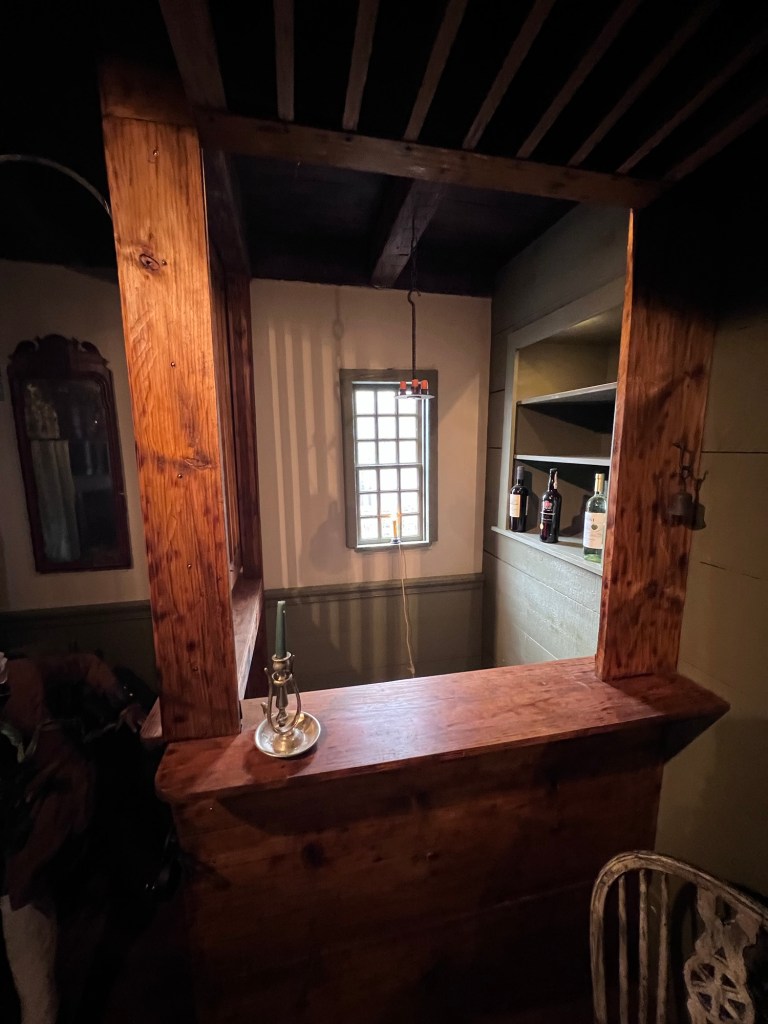
The Cage Bar/ Dining room
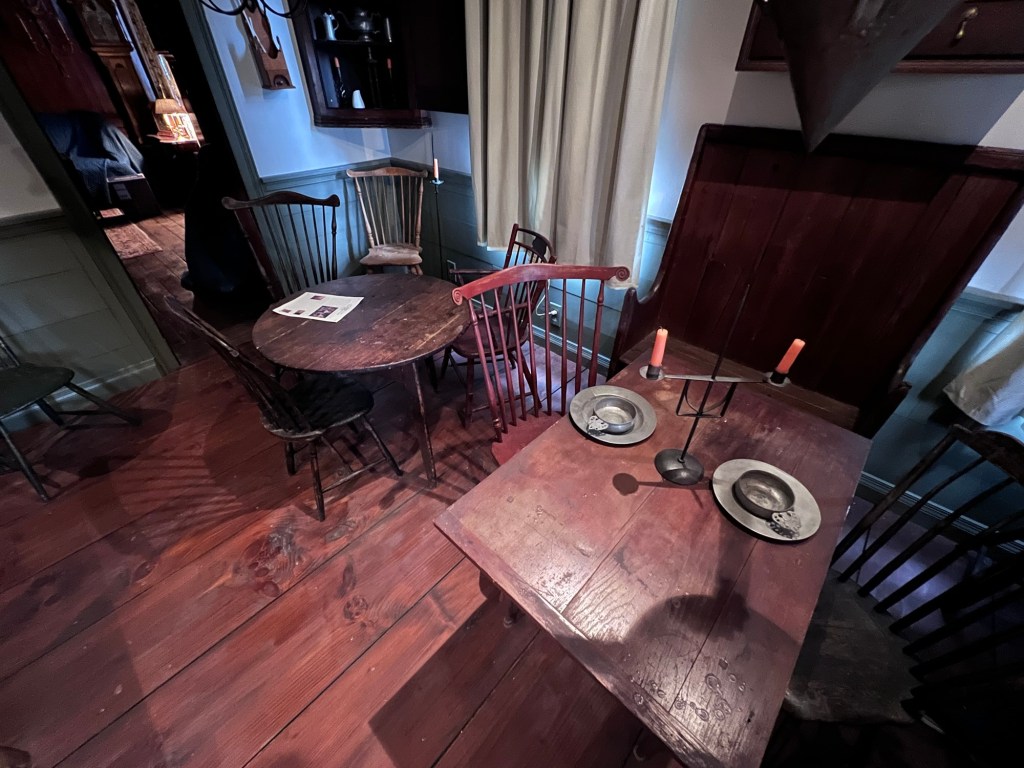
The Dining Room area
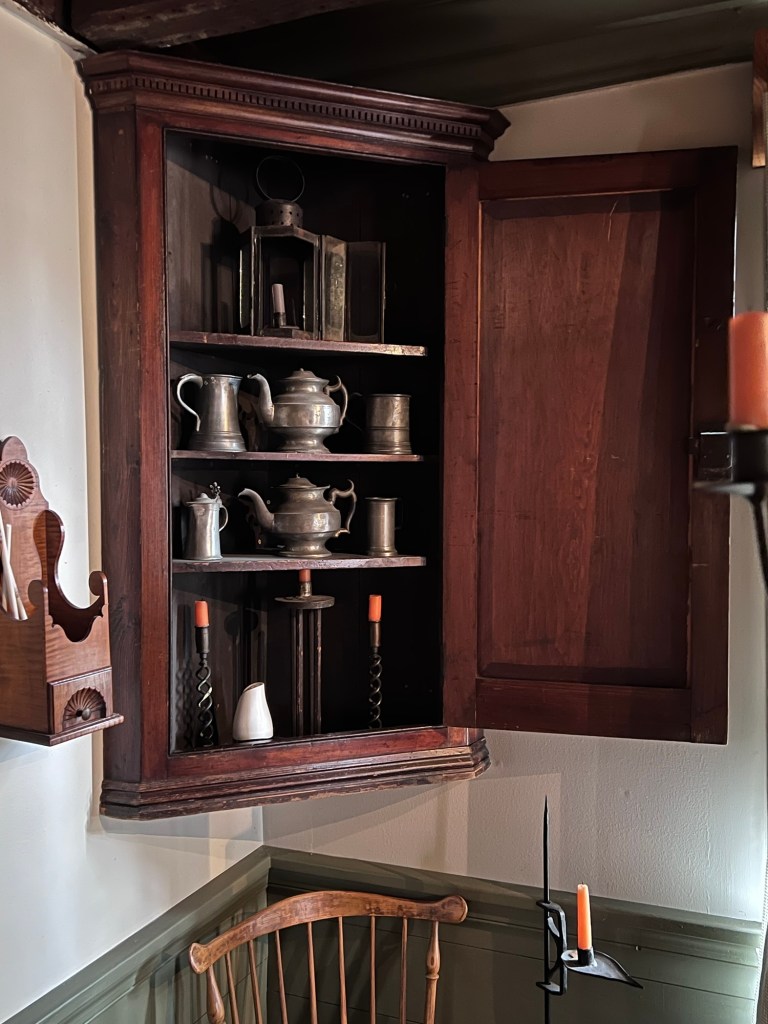
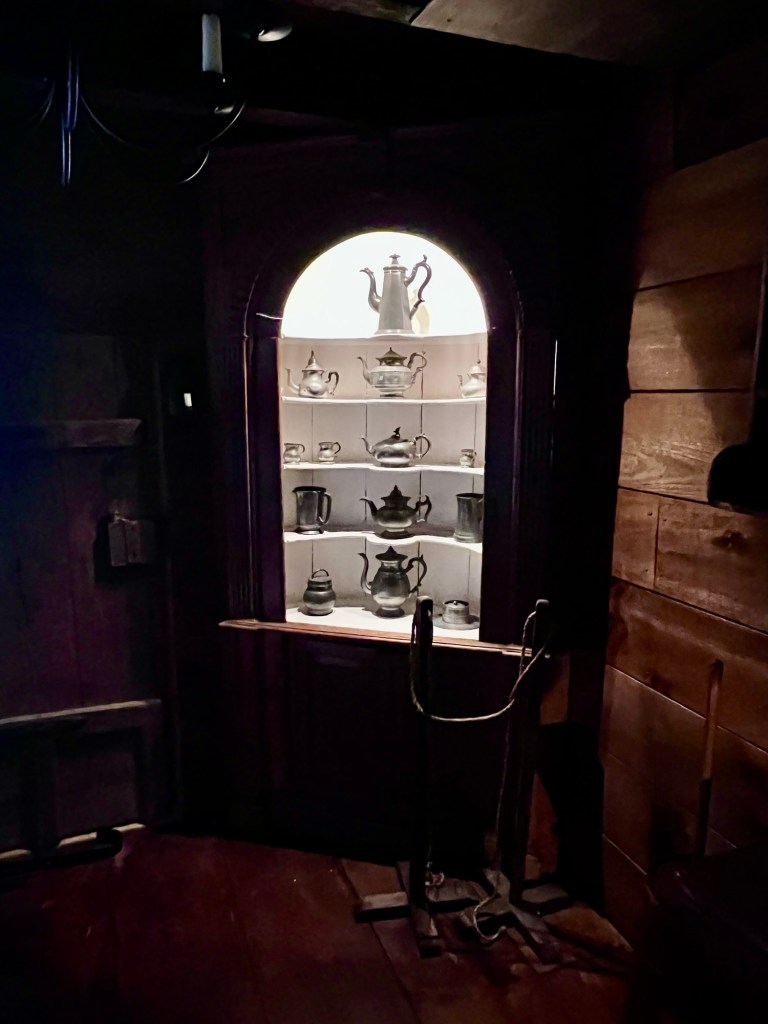
The pewter materials in the Dining Room
The tavern was open in 1669 for business. The tavern has been here open for business from 1669 to 1720 until John Shivers died. The first part of the building served as the Kitchen area with an open hearth for cooking and serving. Meals were prepared here as well as keeping the building warm for guests who might stay overnight upstairs.
The second part of the building served as the Dining Room for the old Tavern. Visitors would have their meals served here and converse and socialize in this room. There is a rebuilt Cage Bar for serving alcohol. The old Tavern section of house has since been restored and has period furnishings and decorations.
The Cage Bar in the Tavern Room
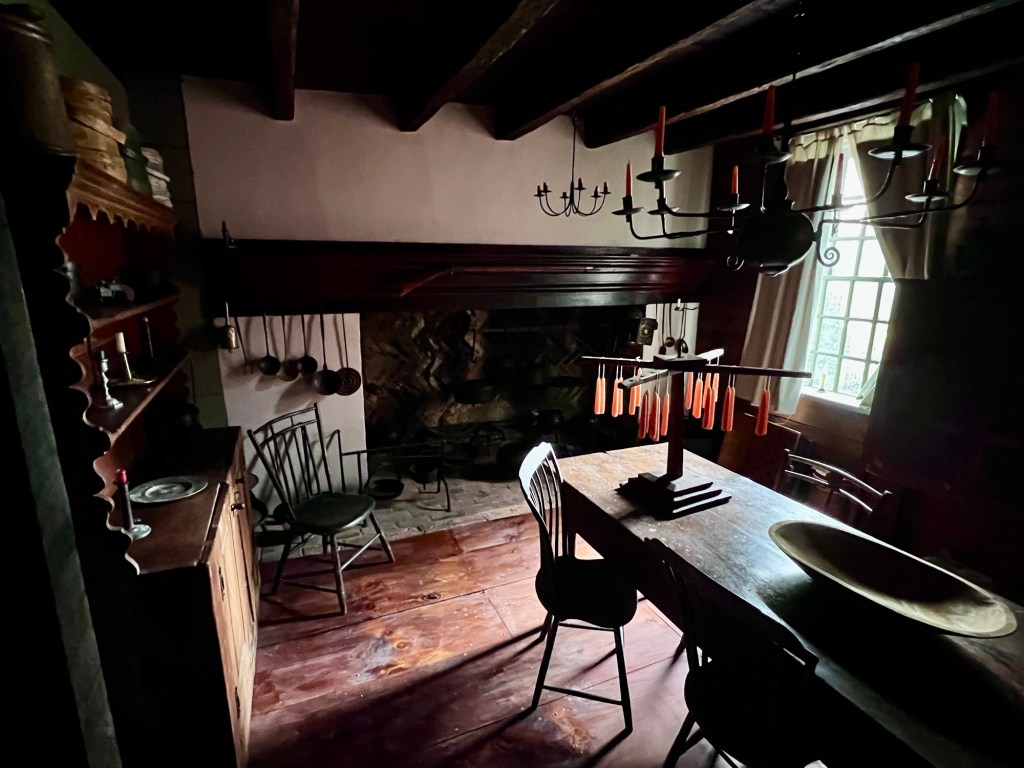
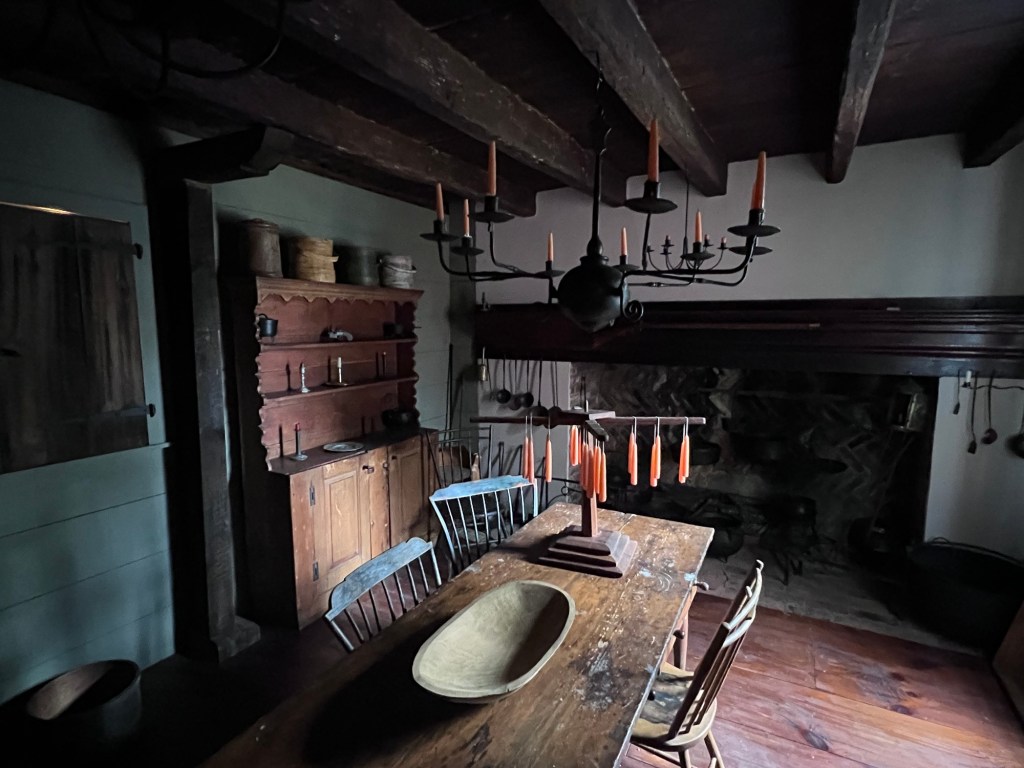
The Tavern kitchen
The Hearth of the Kitchen is eleven feet wide by three feet deep by five feet high in opening containing two mobile cranes. The back firebox bricks are laid in a herringbone style pattern. A tavern hearth of this dimension would have allowed the cook to have multiple fires going in the firebox (Gregg Perry research).
The Kitchen of the Tavern
This is the room where all meals were prepared and served. It was also used as the central heating for the tavern in colder weather. It is decorated in period furnishings and pewter ware decorates the walls. This would have been used in serving at that period in the 1700’s.
The pewter materials
For the price of a penny today, a patron could have his choice of a tankard of ale or hard cider and a plate of whatever the entree was of the day as well as have the option to spend the night on the floor of the second floor with a burlap blanket. They could also have the horse fed and boarded if needed. The tavern had been in business in one form or another until the 1930’s when it closed for business during the Great Depression (Gregg Perry research).
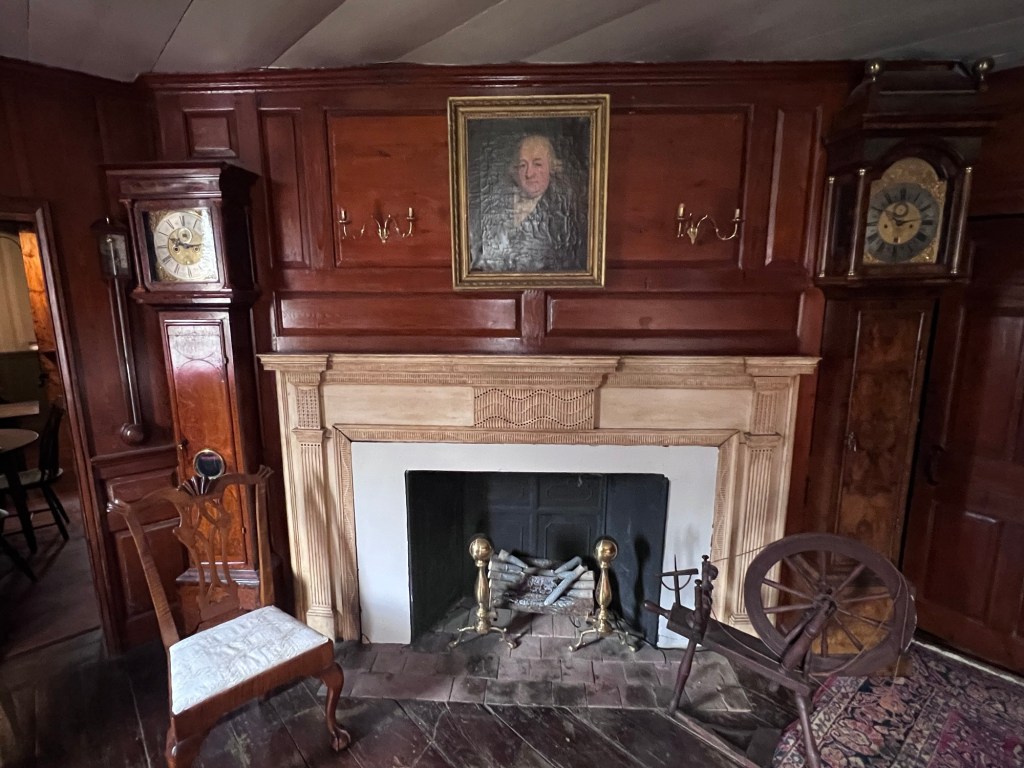
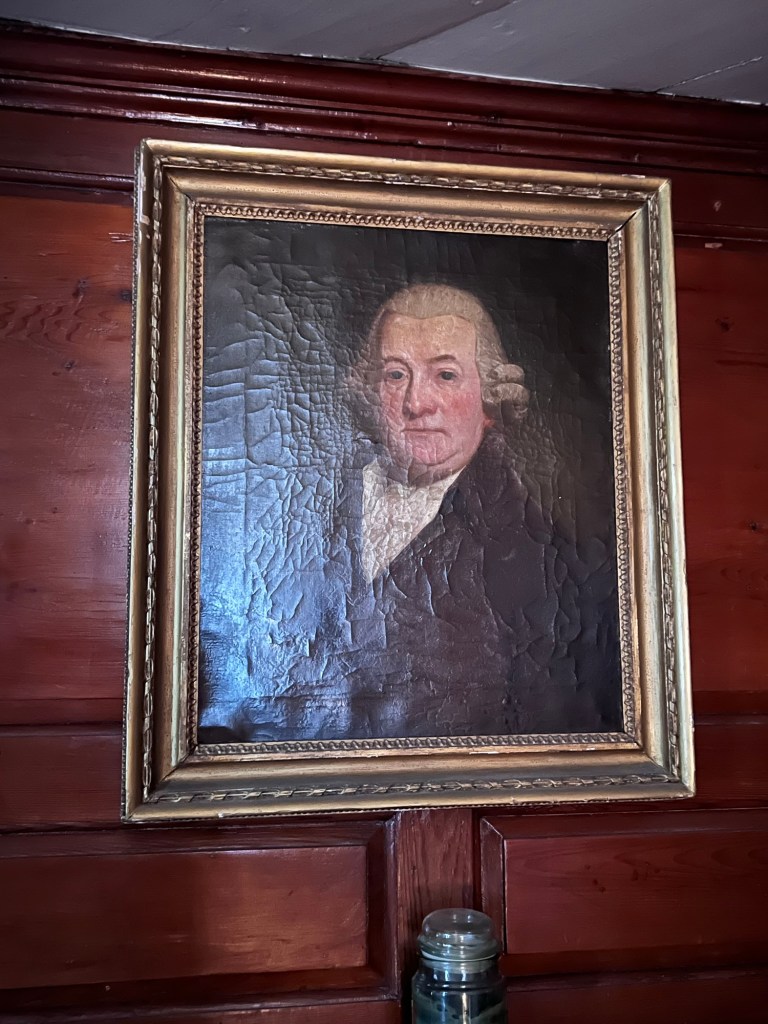
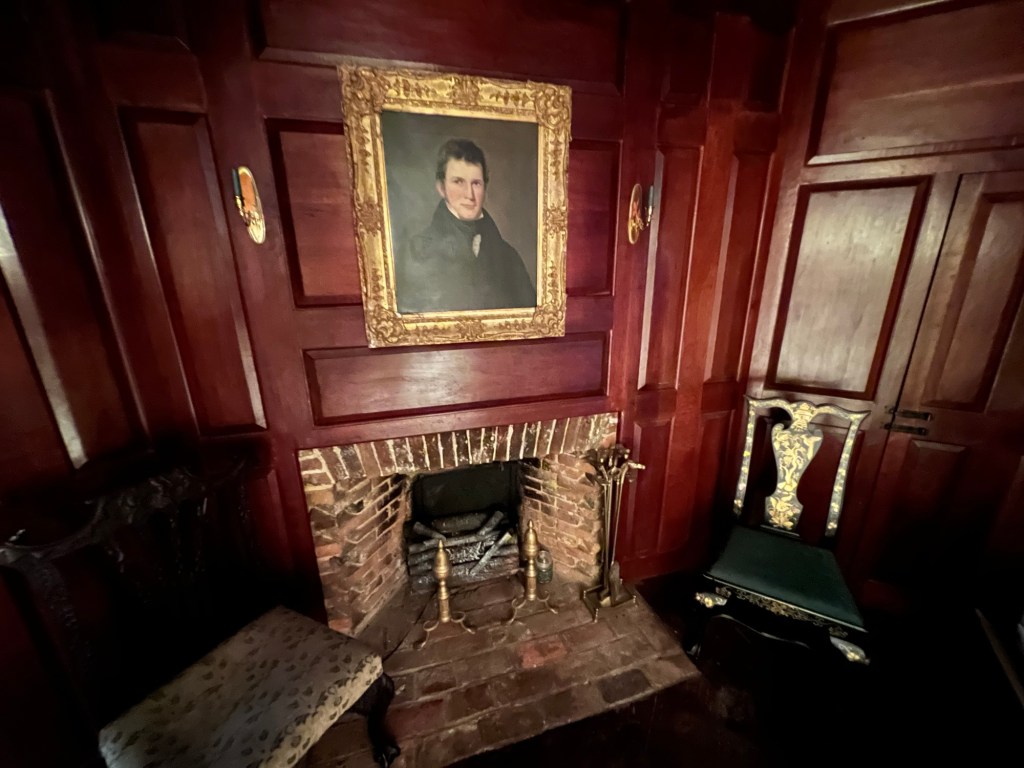
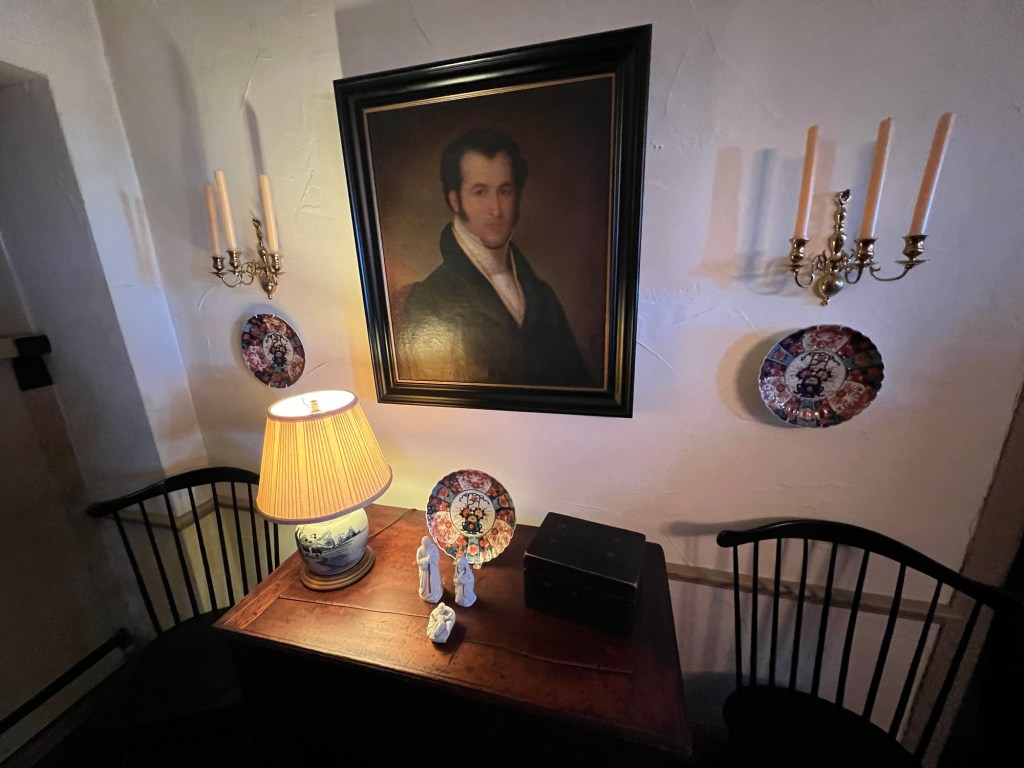
The Main Part of the house was build 1723. This section of the home was built by John Shivers, whose portrait sits above the mantle.
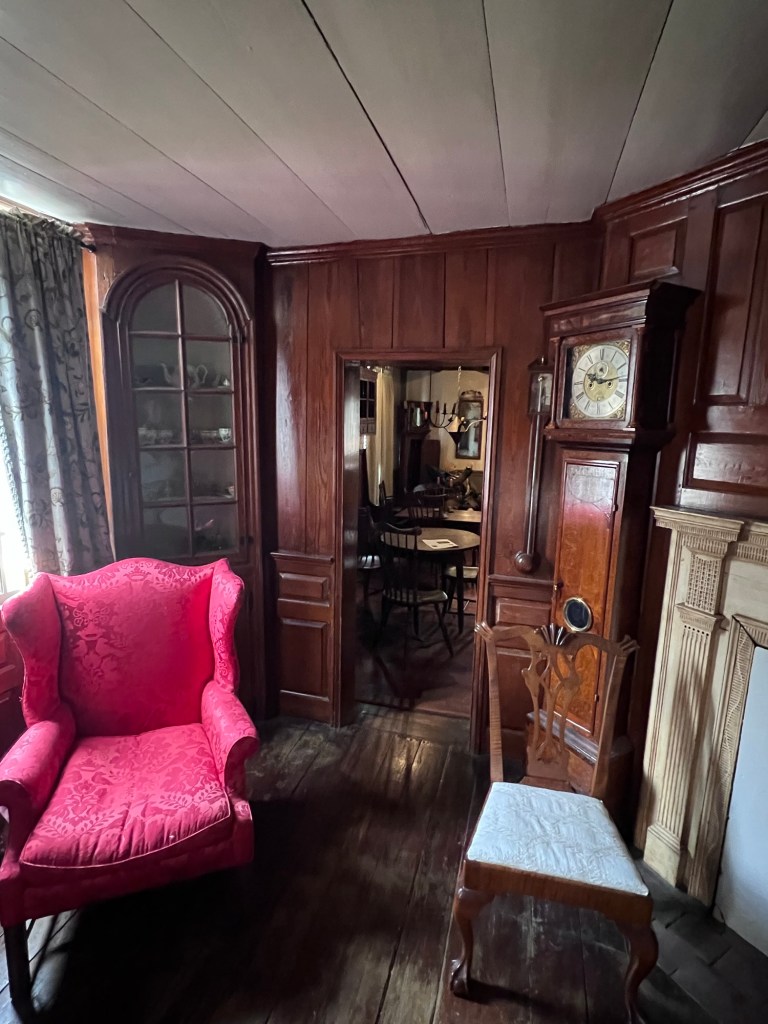
The Grand Reception Room
The Grand Reception Room was built to impress visitors to the house and for entertaining for this prominent family. As the family accumulated wealth and social prominence in the area, the house was meant to impress people with its large fireplaces and tall ceilings.
The Portrait of John Shivers in the Grand Reception Room
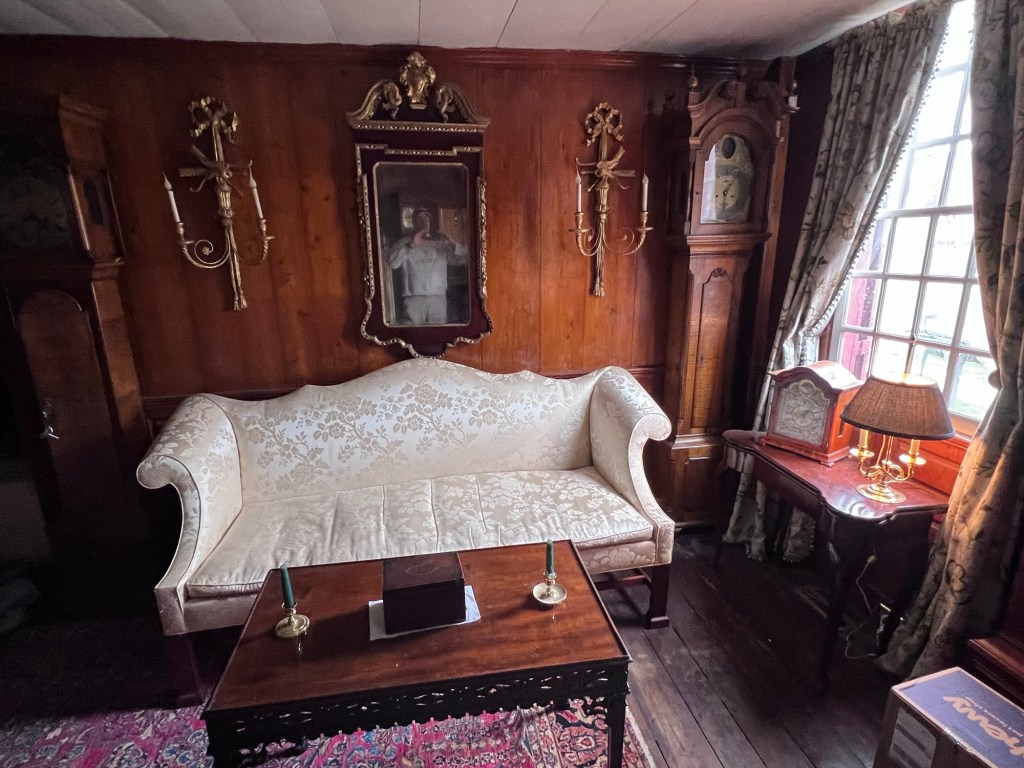
The Grand Room
Much of the period furniture of the room has been restored back to its original form and the woodwork to the room is from the original house. Period clocks and decorations are from that period and part of the owners collection.
The Grand Room looking into the old Tavern
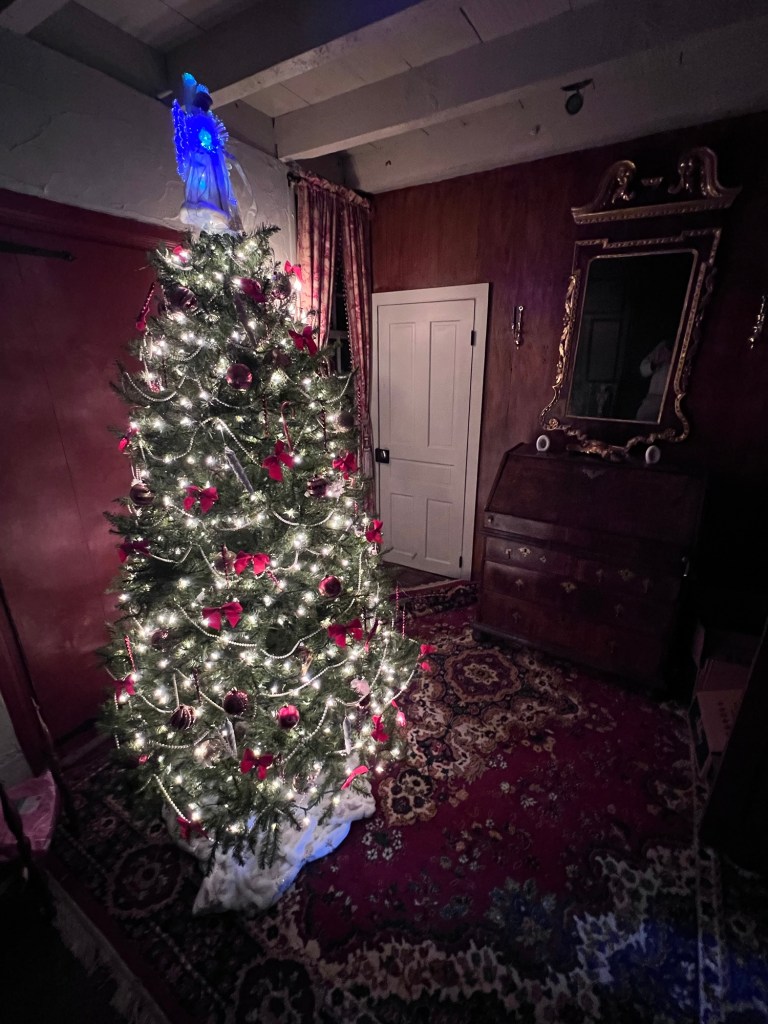
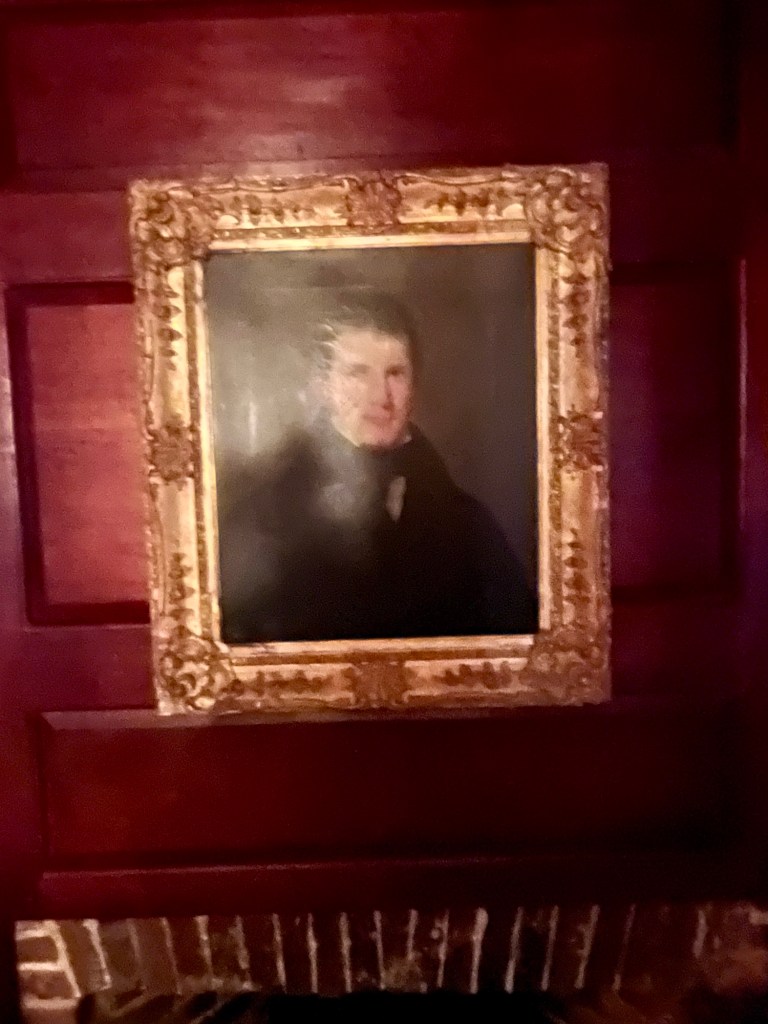
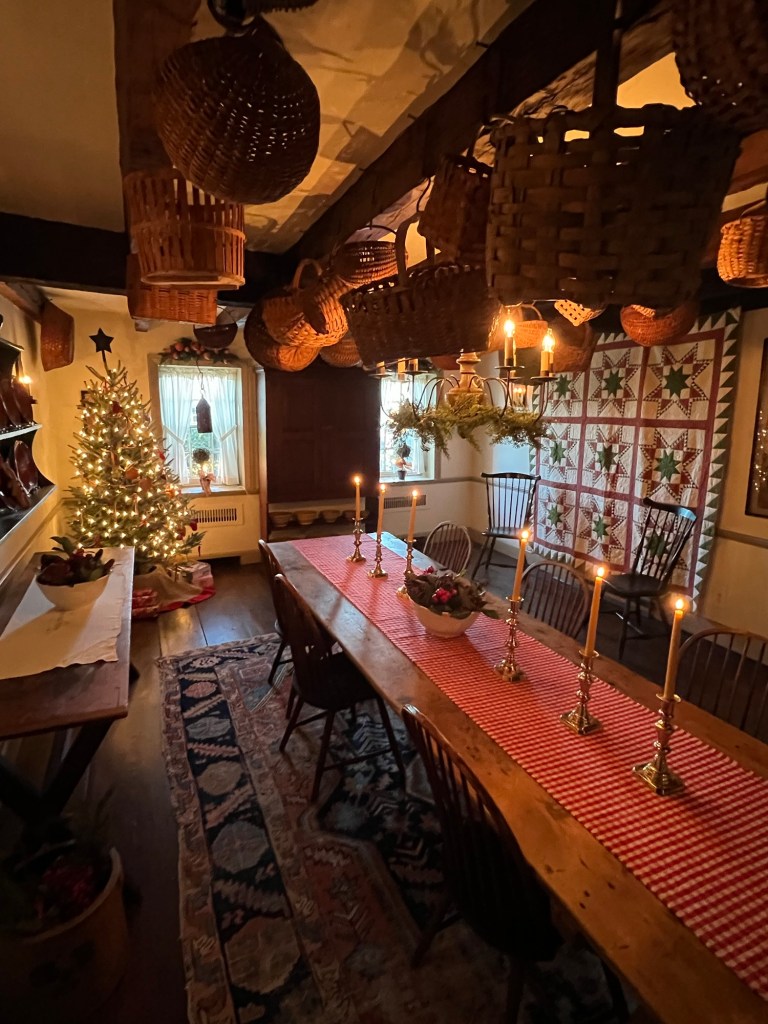
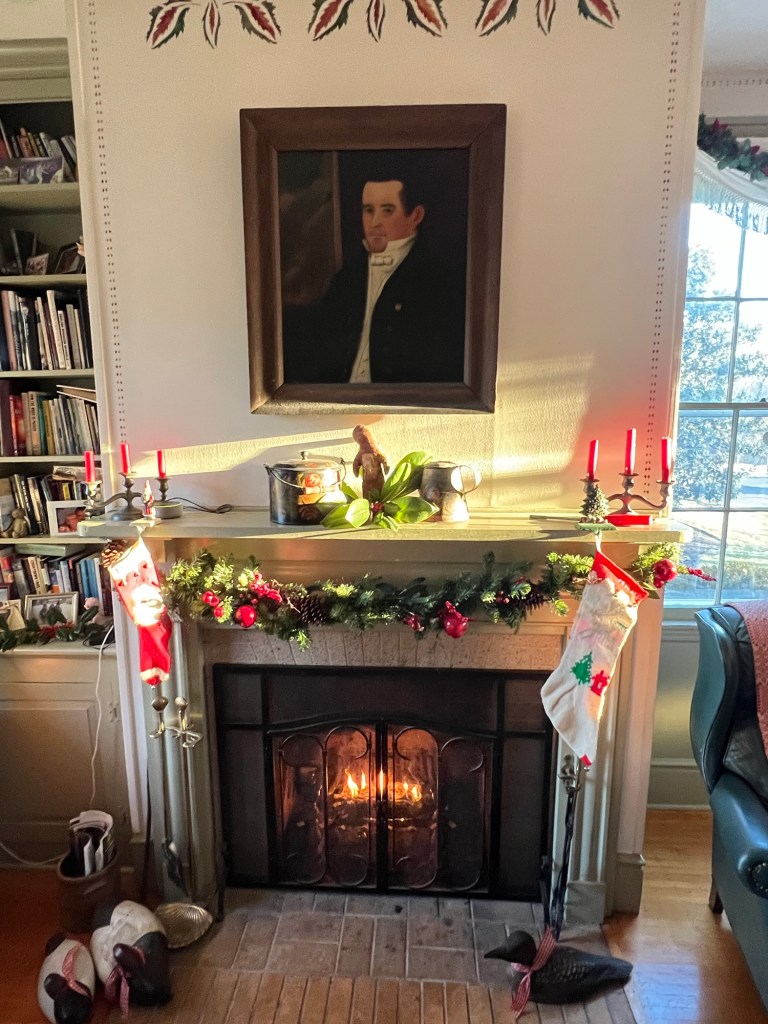
In the back of the Grand Reception room is the Keeping of Family Room where things were less formal. The room had been set up for Christmas. In the Keeping Room is the portrait of Samuel Shivers, John Shivers son above the fireplace.
The Keeping Room
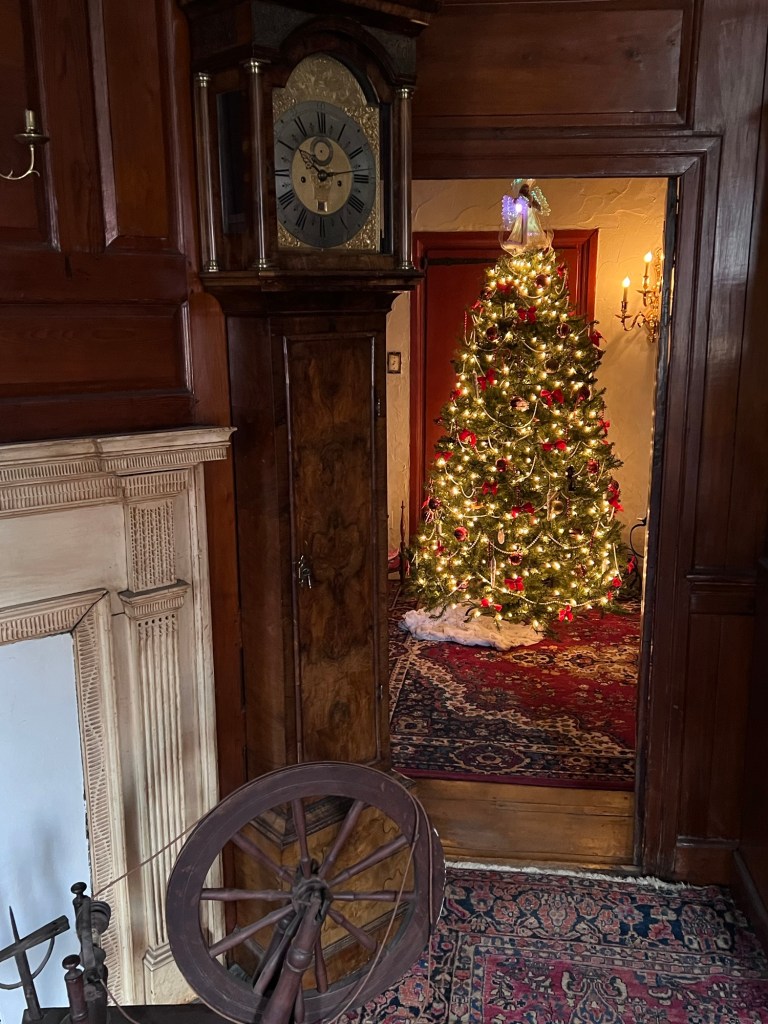
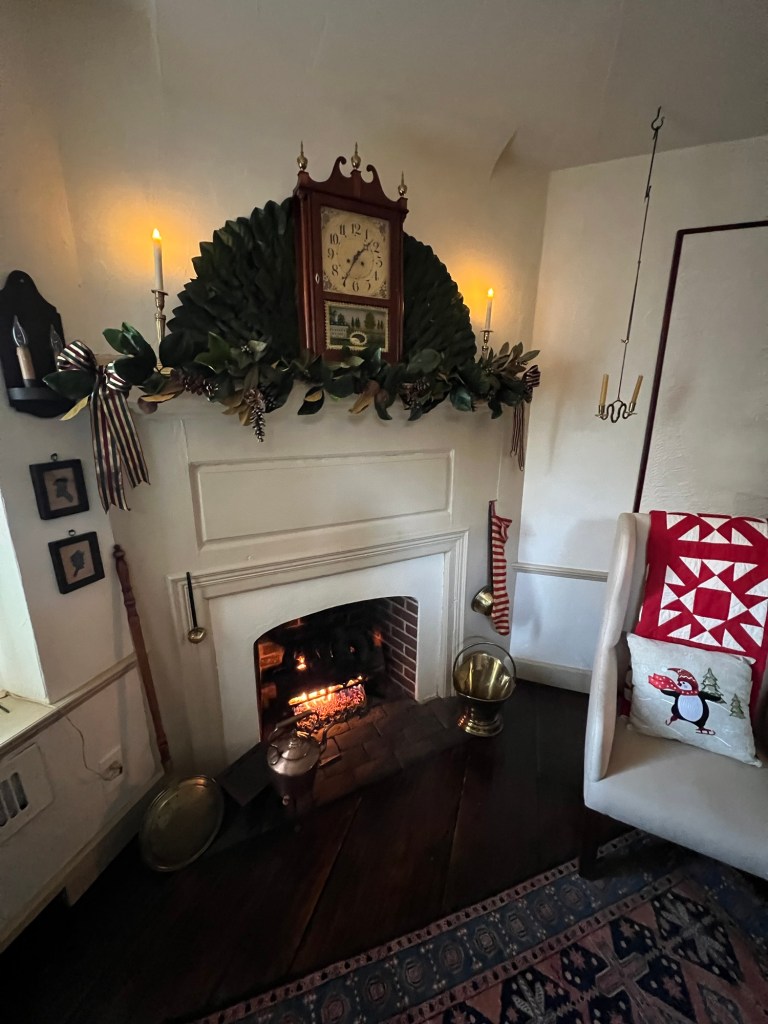
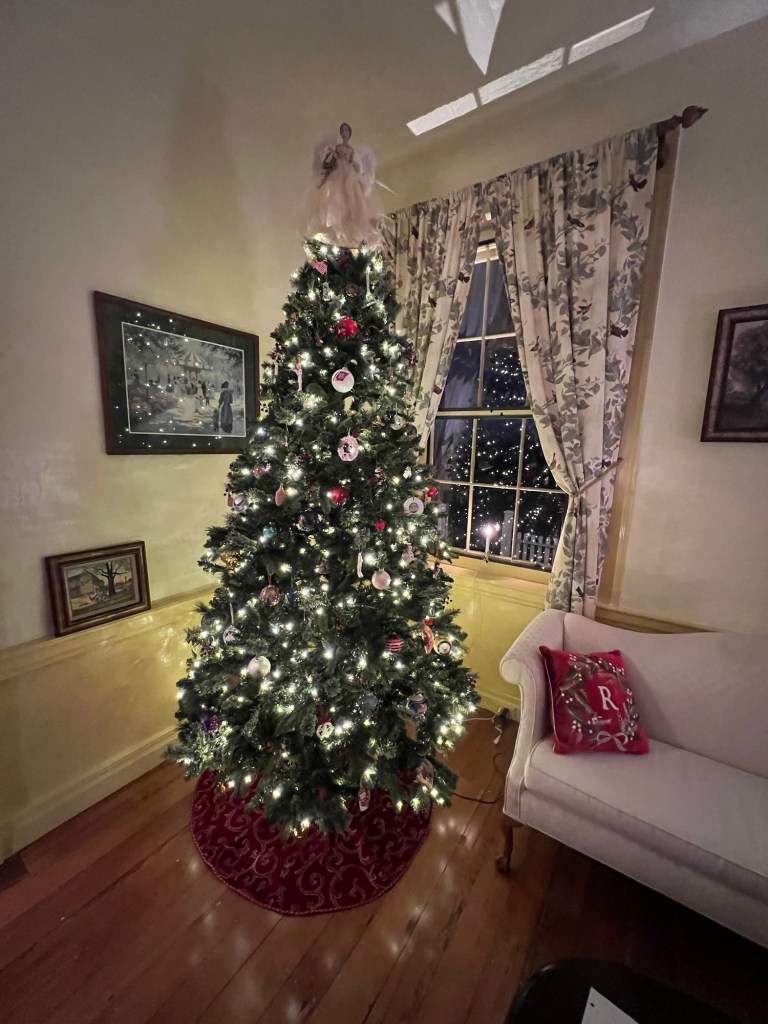
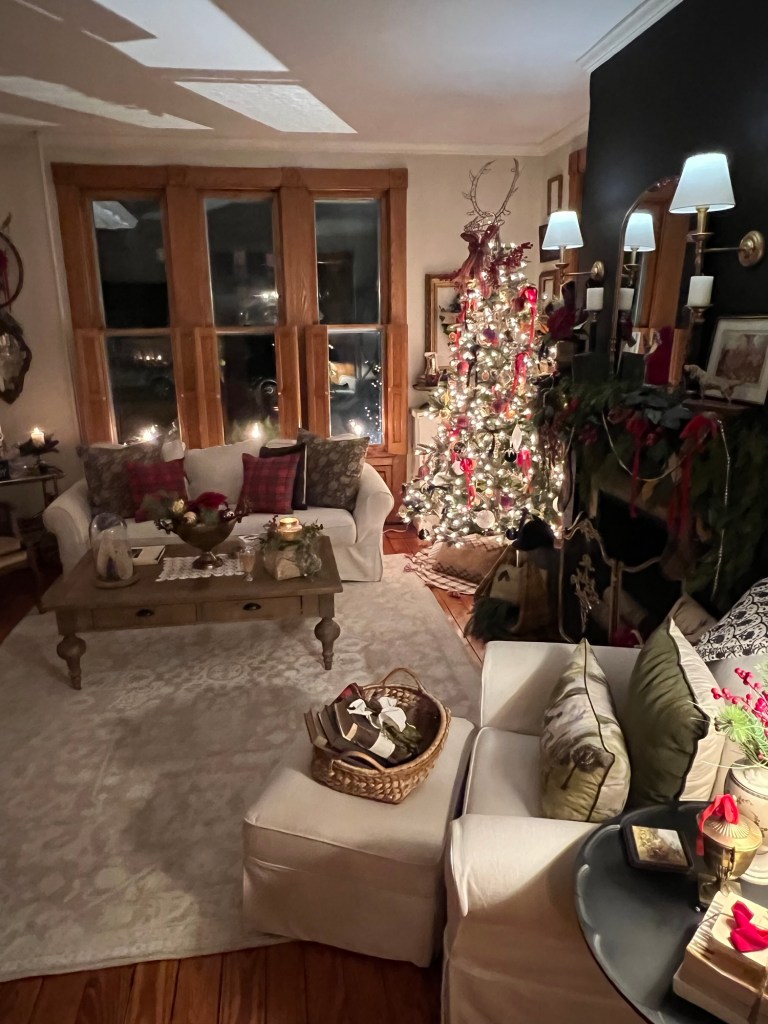
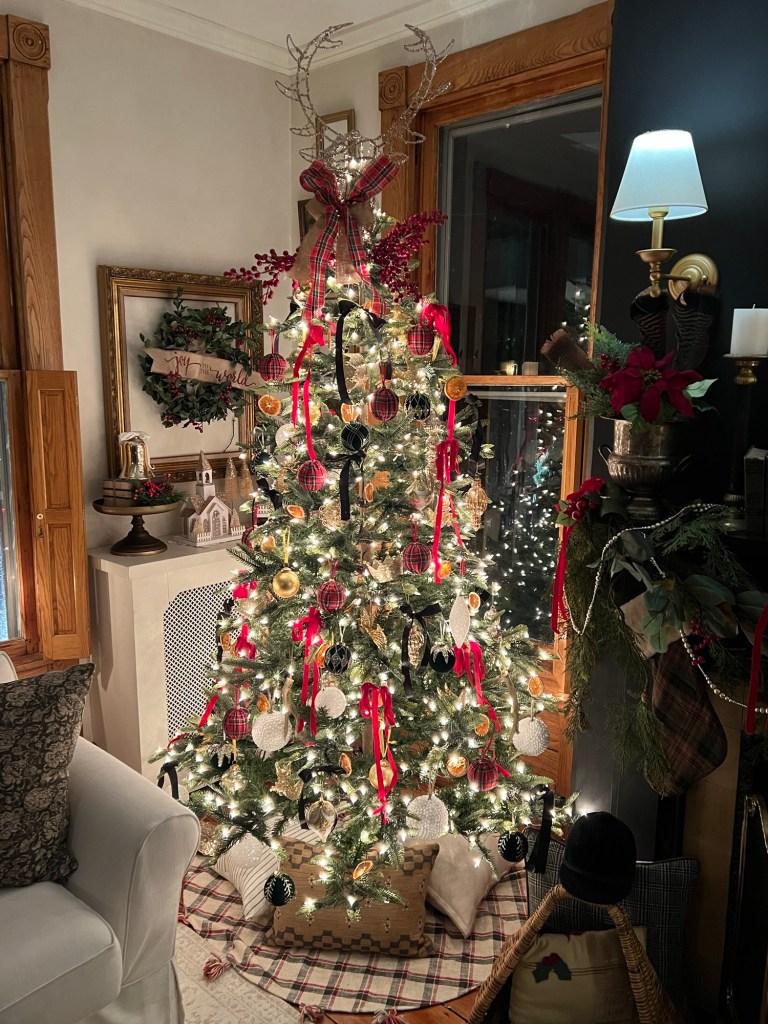
This cosy room was set up and lit for the holidays. The lights put a nice glow on the original woodwork.
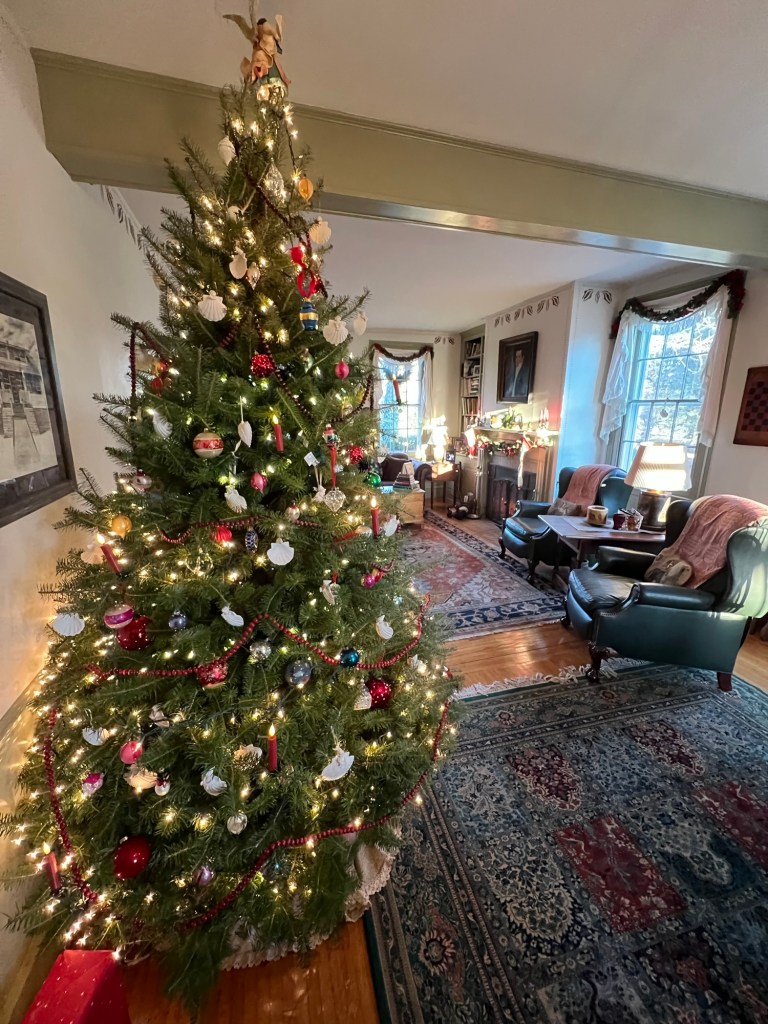
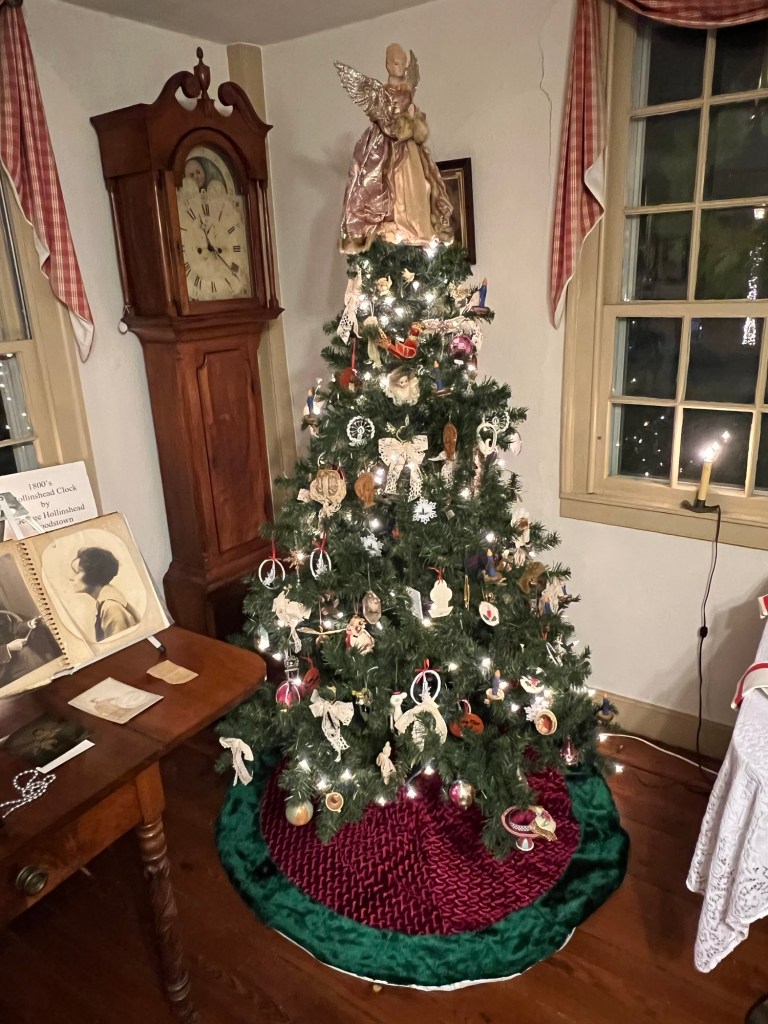
The Keeping Room at Christmas
Samuel Shivers painting in the Keeping Room
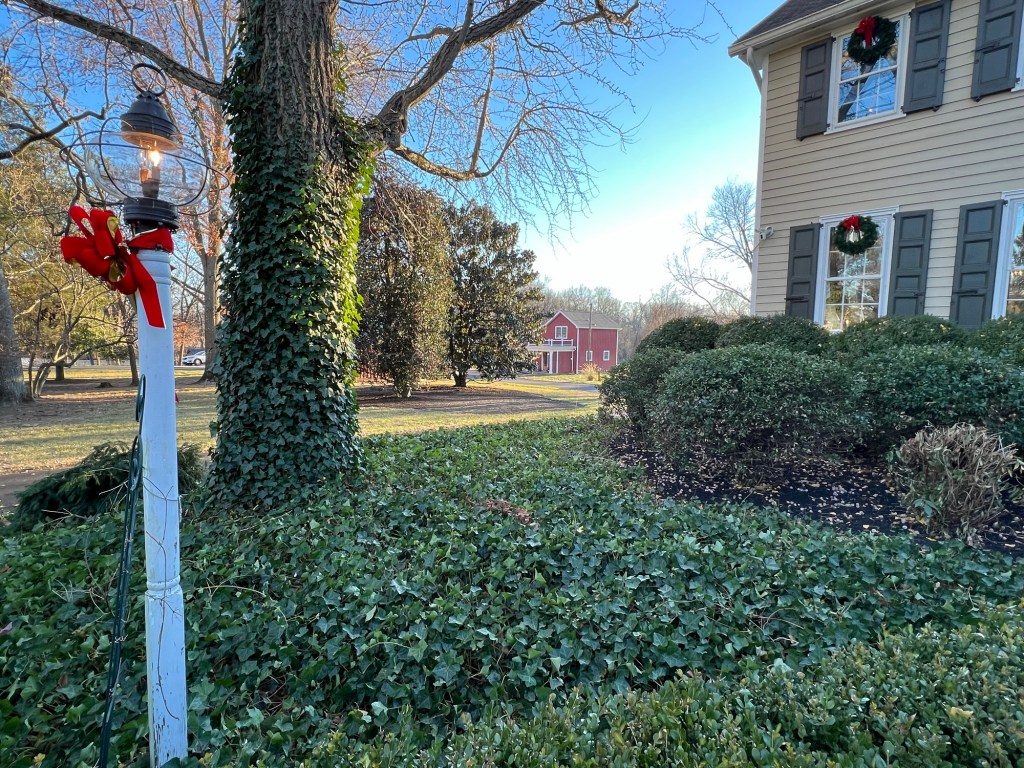
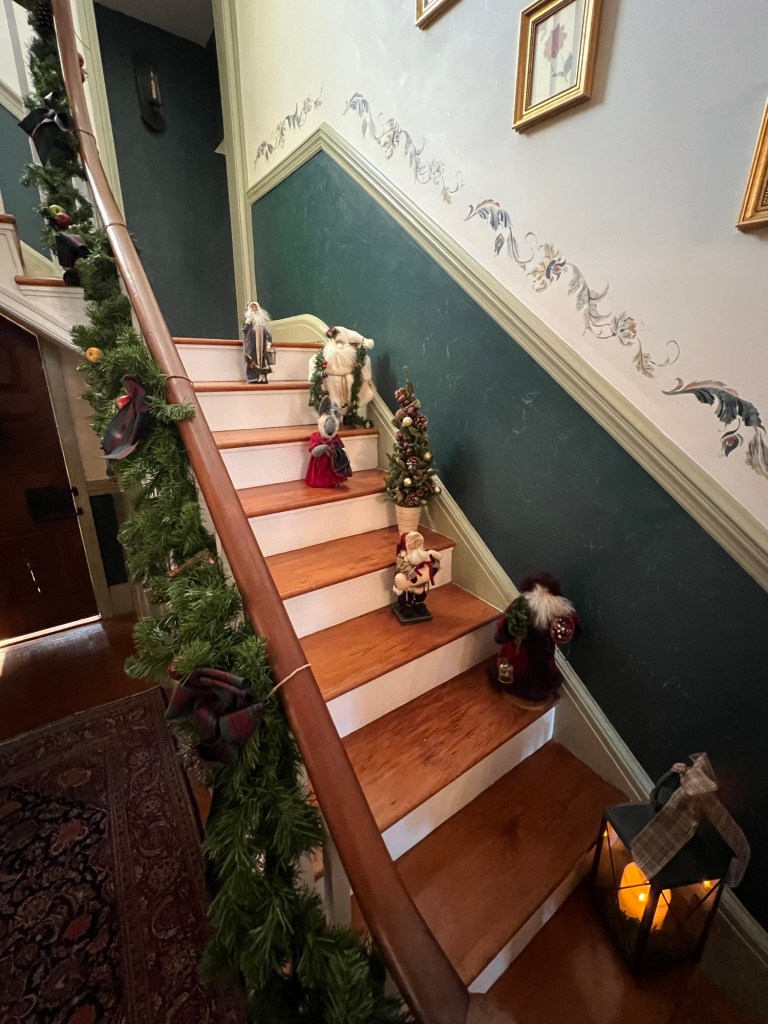
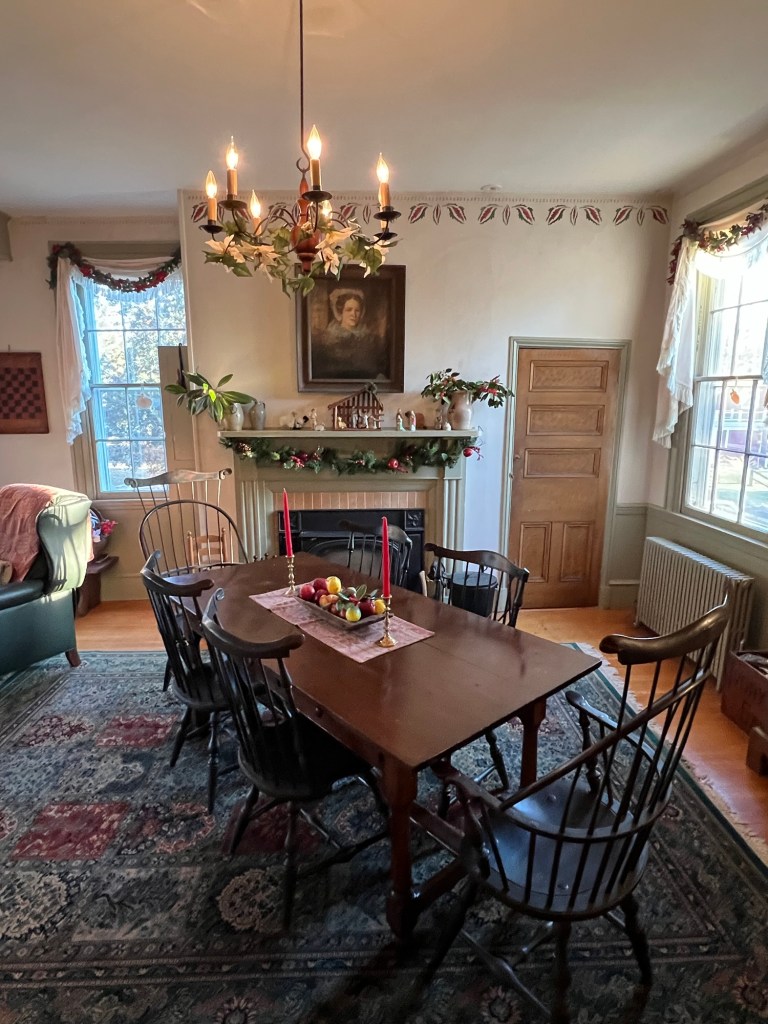
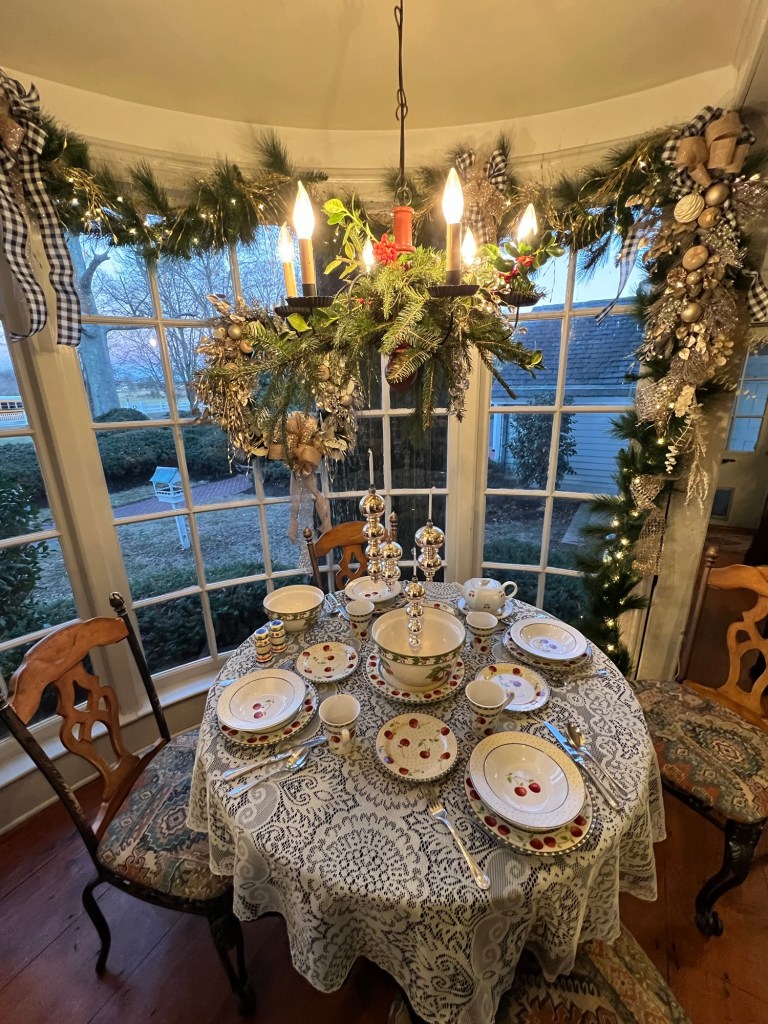
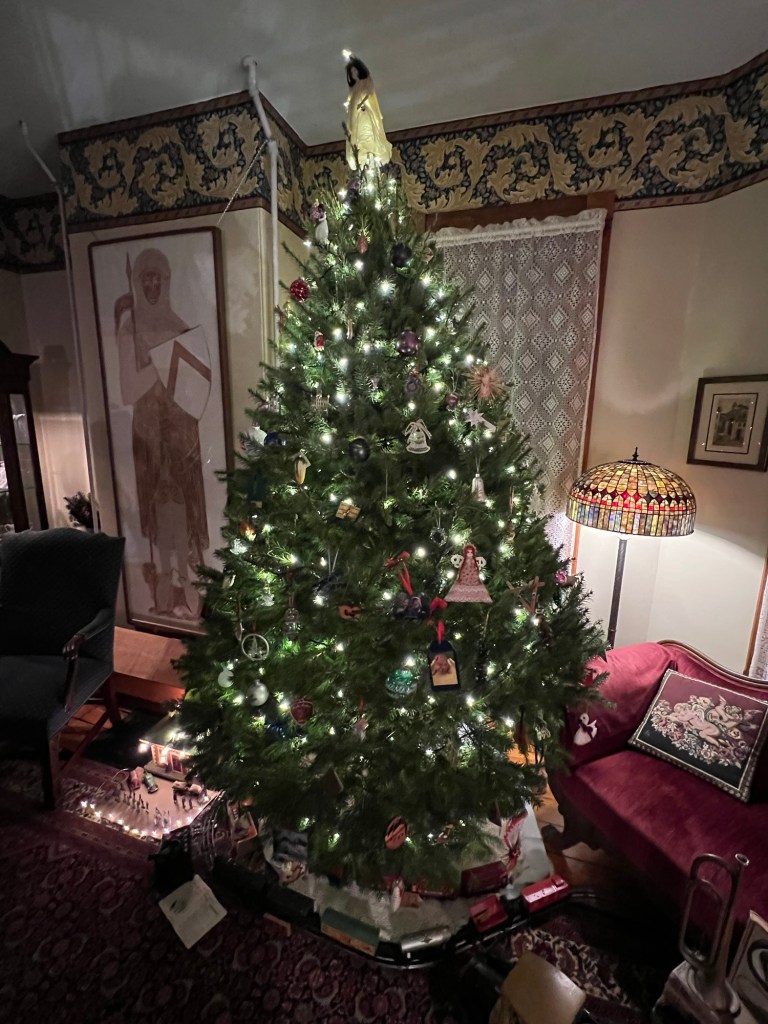
The house decorated for the Christmas holiday season
The Mission of the Pilesgrove-Woodstown Historical Society:
To preserve and advance interest in and awareness of the history and heritage of the Borough of Woodstown and Pilesgrove Township by properly procuring, preserving and maintaining the art, artifacts and documents that relate to the cultural, archaeological, civil, literary, genealogical and ecclesiastical history of the local community. We welcome researchers and provide them with any available material.
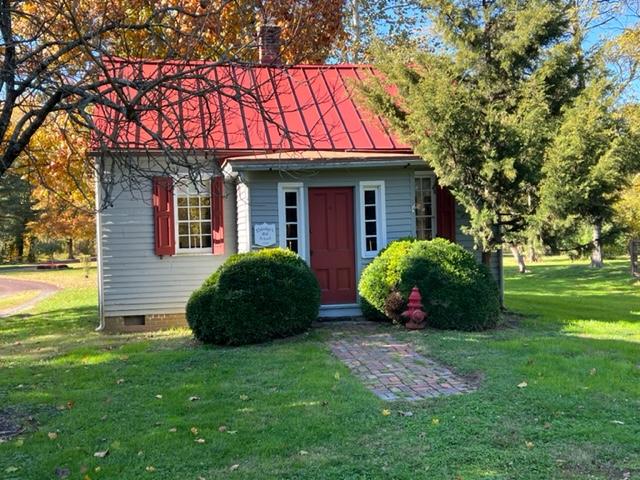
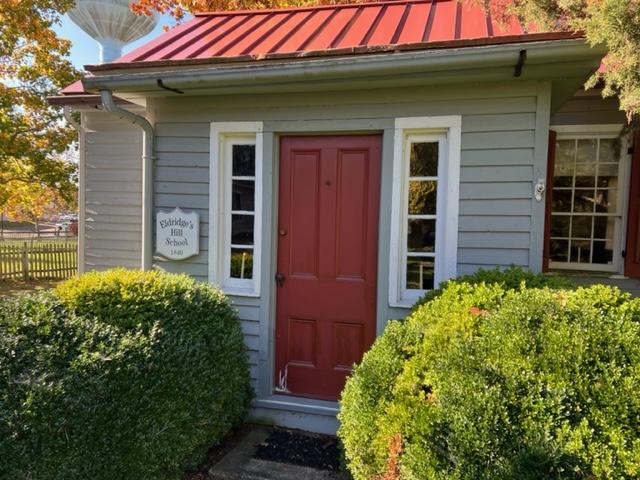
On the site is the 1840’s one room schoolhouse that was moved from Eldridge’s Hill in the 1970’s and is open for touring during museum hours. The organization hosts quarterly presentations and participates with the Candlelight Tour on the first Friday of December.
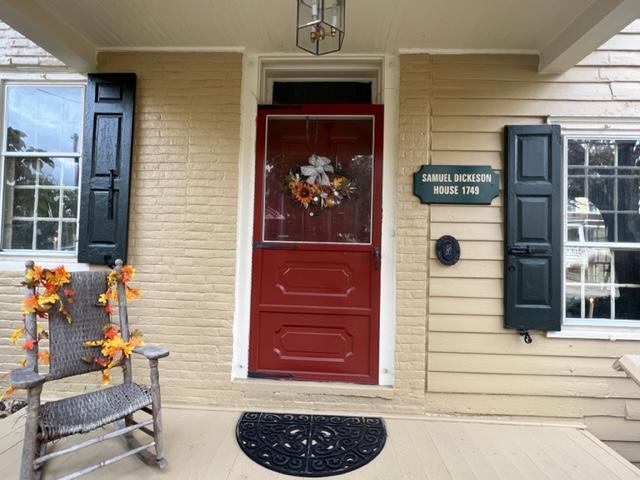
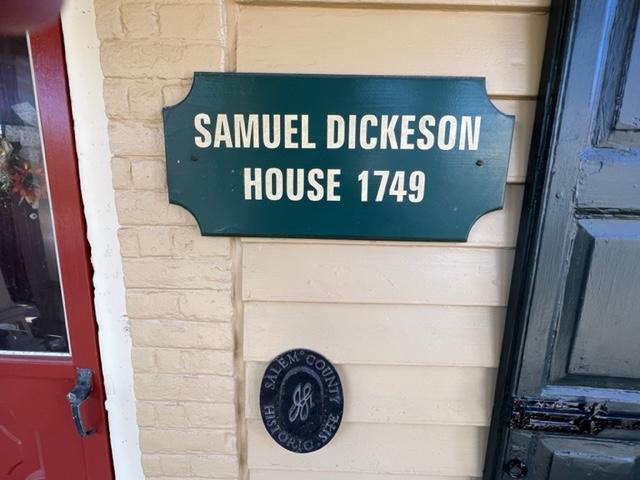
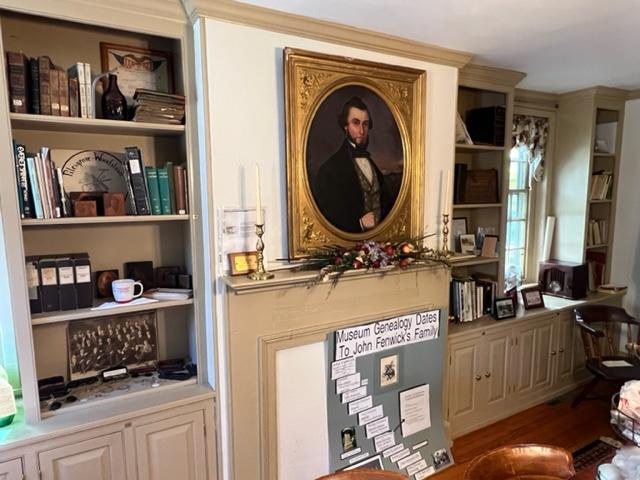
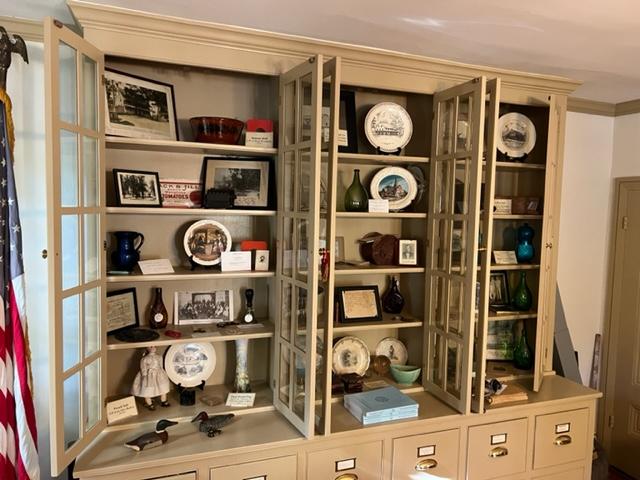
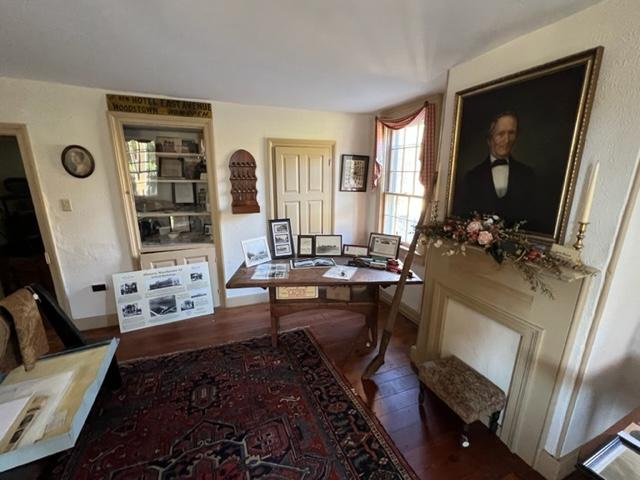
Touring the house is a wonderful experience and I got an excellent tour from a member of the Board of Directors who took me on a full tour of the house and grounds. She explained that the volunteers take a lot of pride in the home, the displays and the artifacts and antiques that make up the décor of the house. The tour starts in the Library which is to the right of the entrance. This is where people can research their families and the towns’ histories. The house was originally owned by the Dickerson family and had changed hands many times over the years.
The Library:
This display has the portrait of John Fenwick and the family tree
The Library:
The Library:
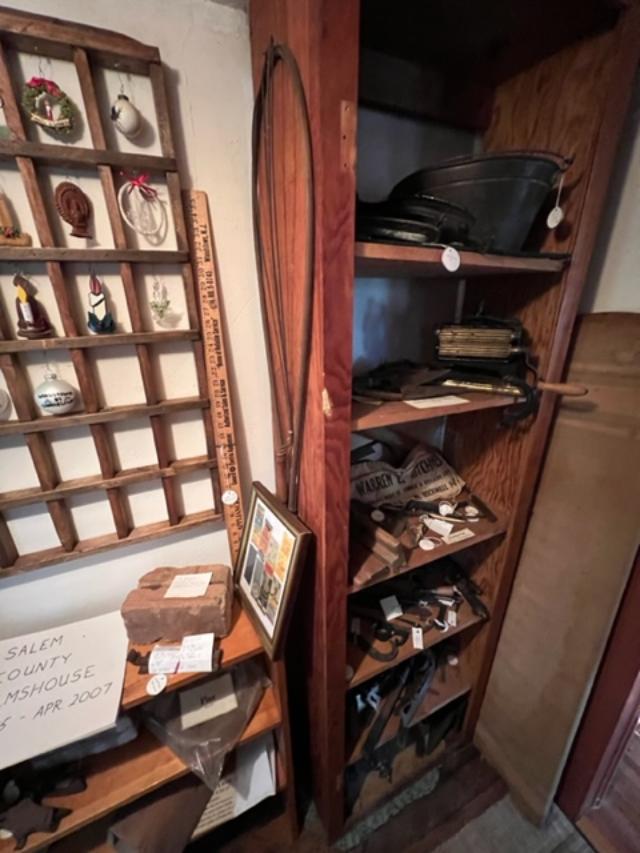
The collection of books and manuscripts is held in the library of the home. Patrons can do their research on their family trees and on the local towns here.
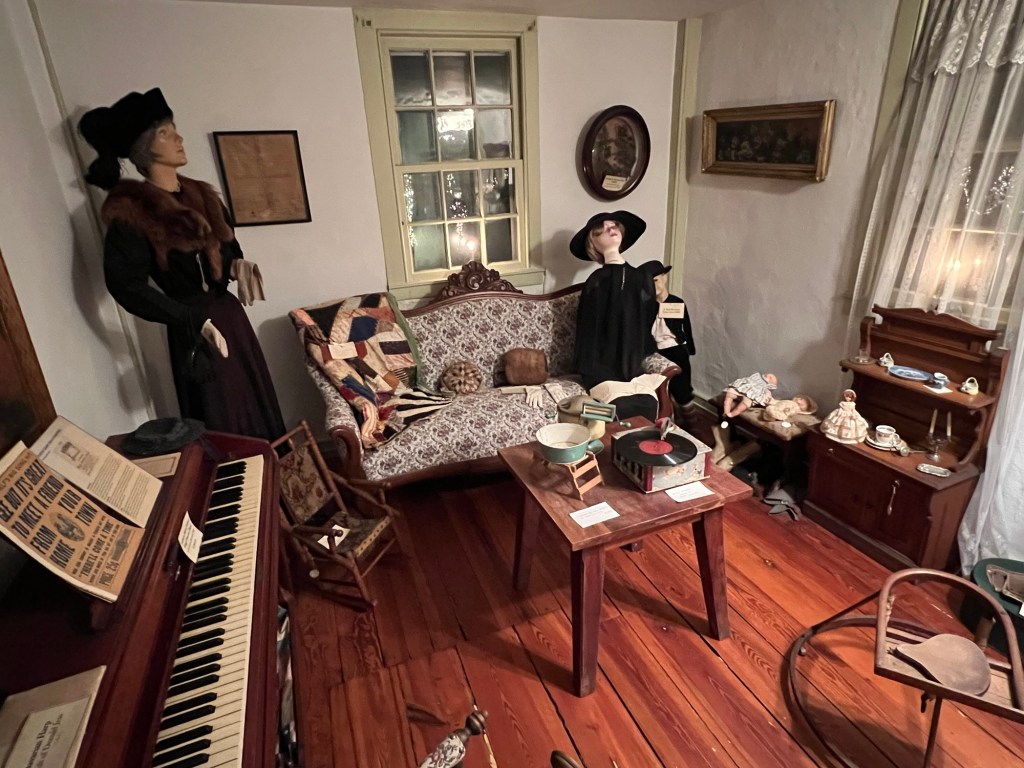
The Living Room:
The Living Room:
The Living Room:
The Living Room:
The Living Room:
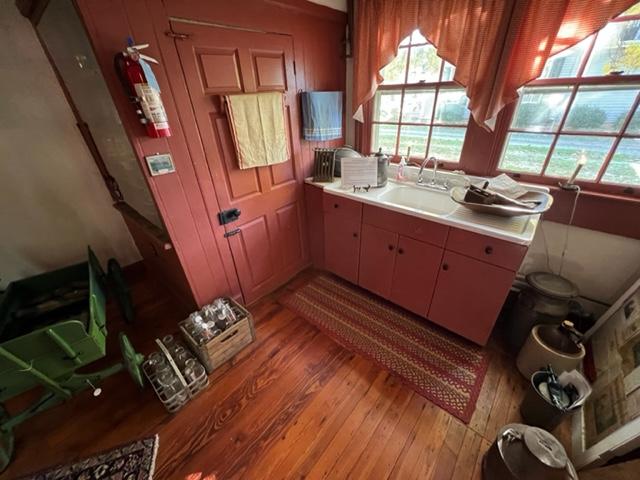
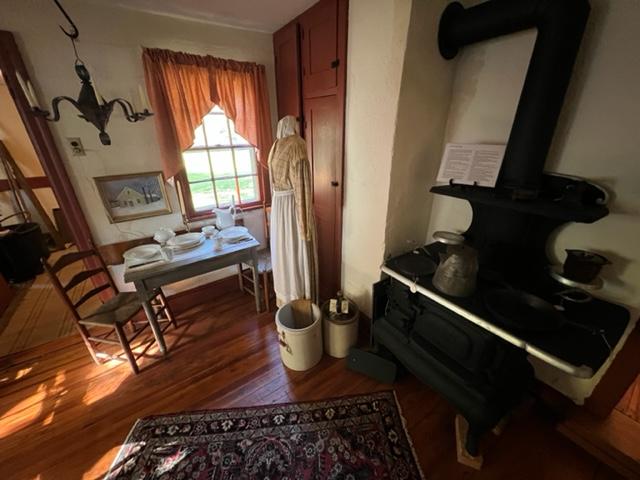
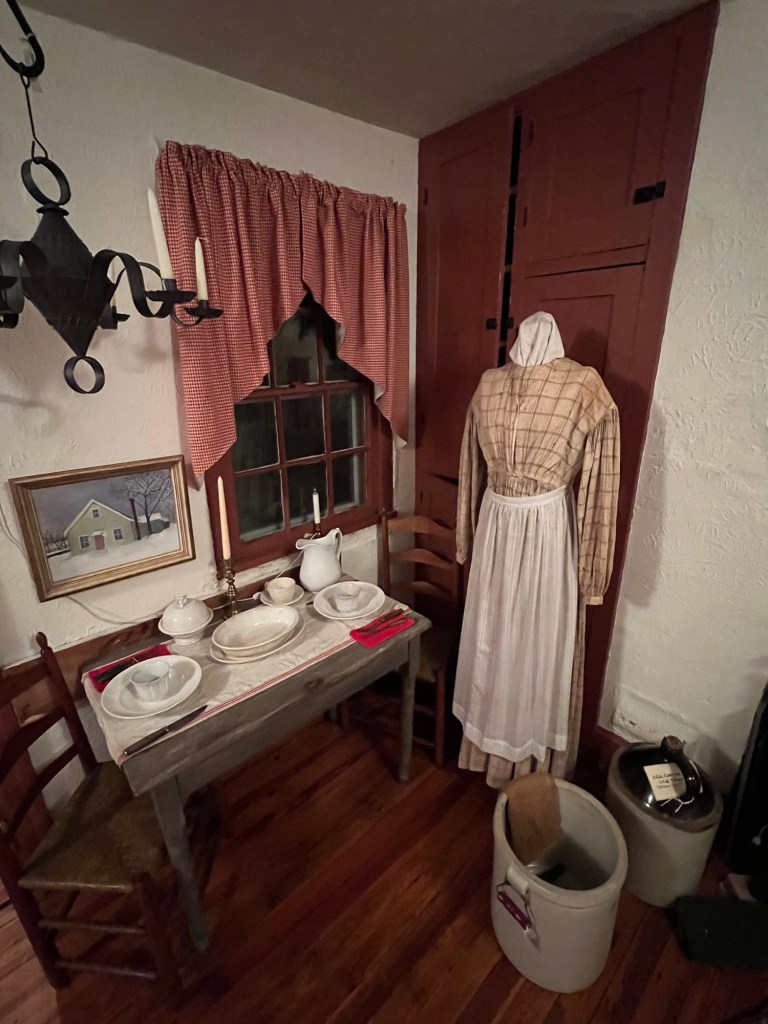
The Kitchen:
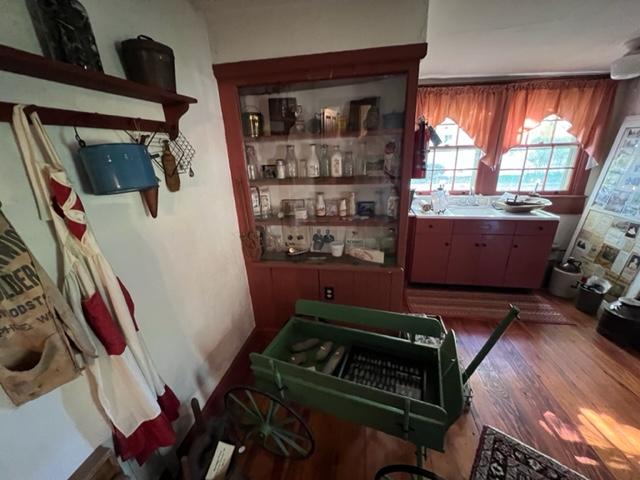
The kitchen had been modernized over the years but still retains its historic look to it.
The Kitchen:
The Kitchen:
The Kitchen:
The kitchen:
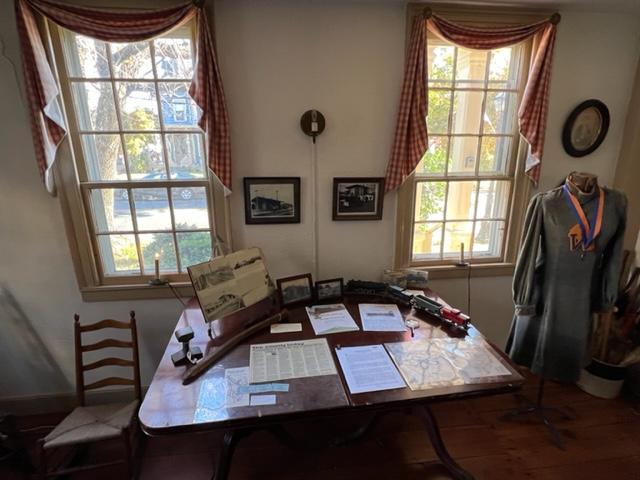
The Military Room:
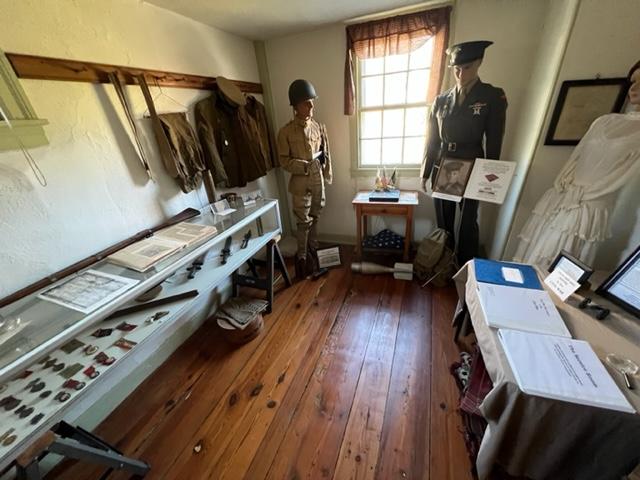
Memorabilia from the Veterans of Foreign Wars
The Upstairs Bedrooms:
The Upstairs bedroom:
The Upstairs bedroom:
The Upstairs bedroom:
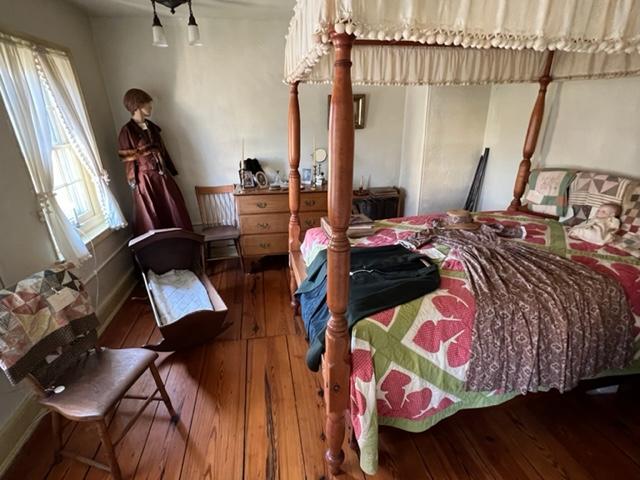
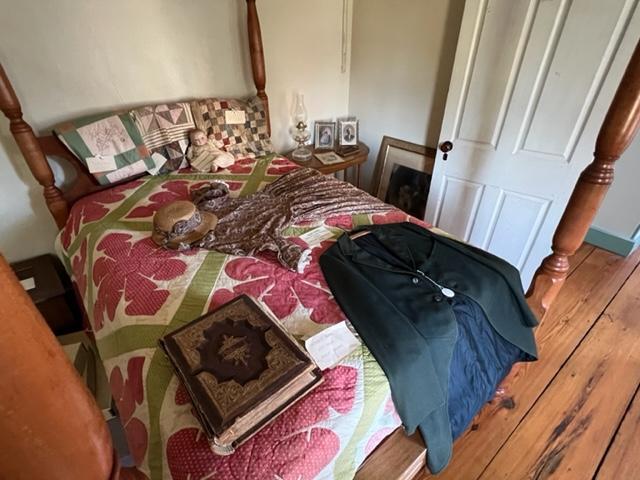
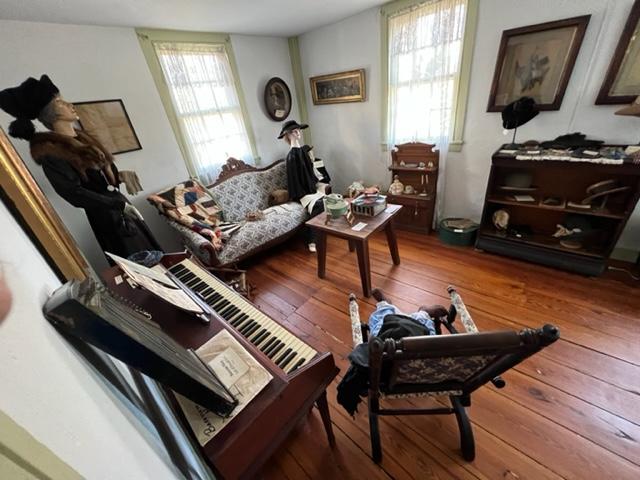
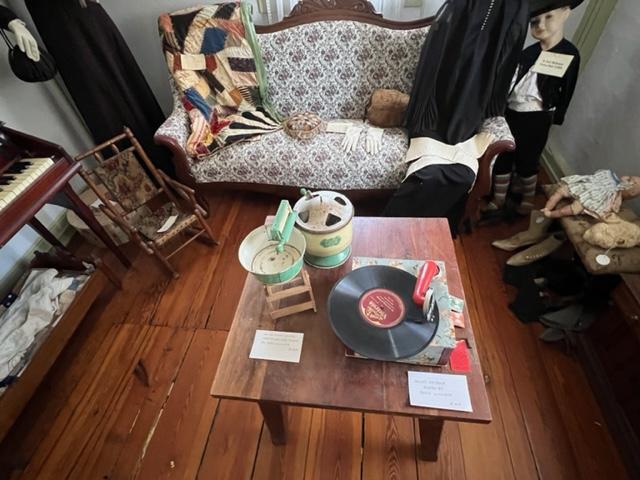
The upstairs bedroom has lots of children’s toys, clothes and musical instruments.
The Upstairs bedroom:
The Upstairs bedroom:
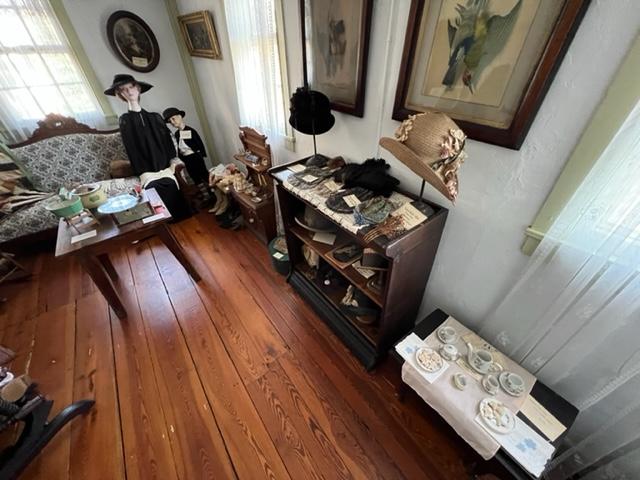
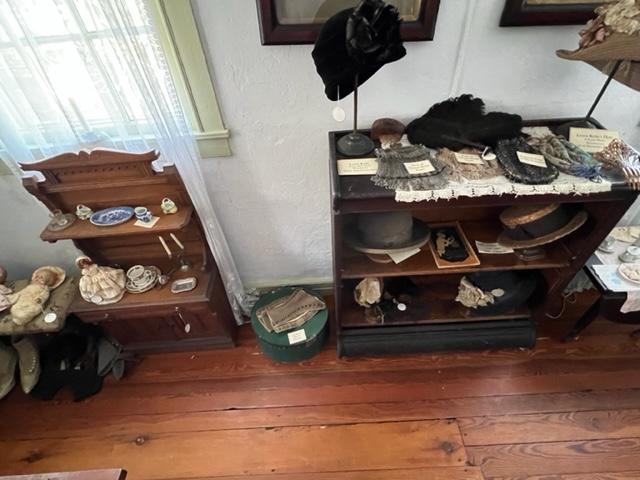
The hats and toy collections in the home.
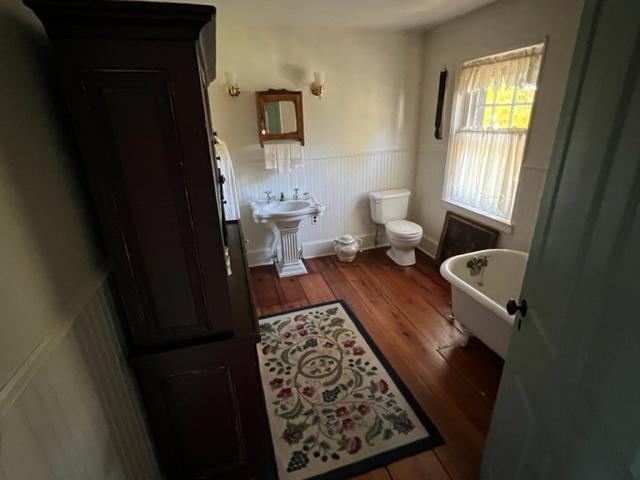
The Bathroom:
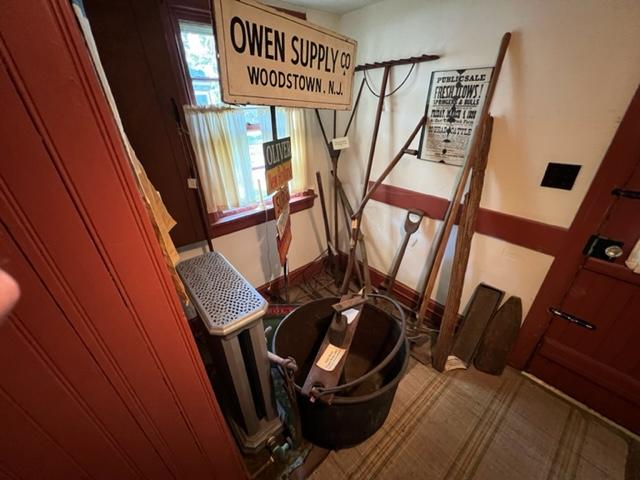
The Commercial section of the home:
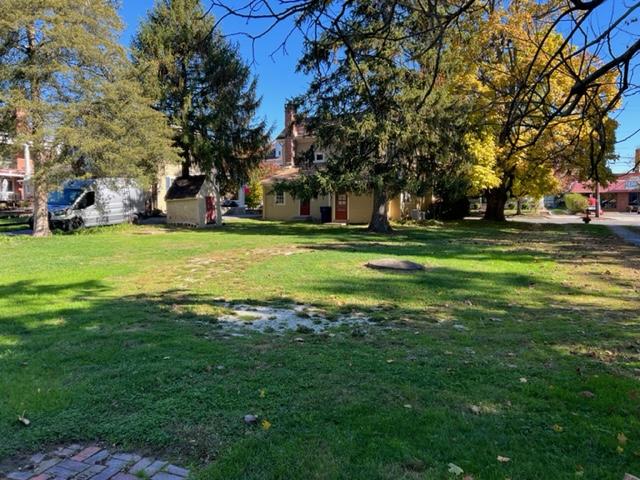
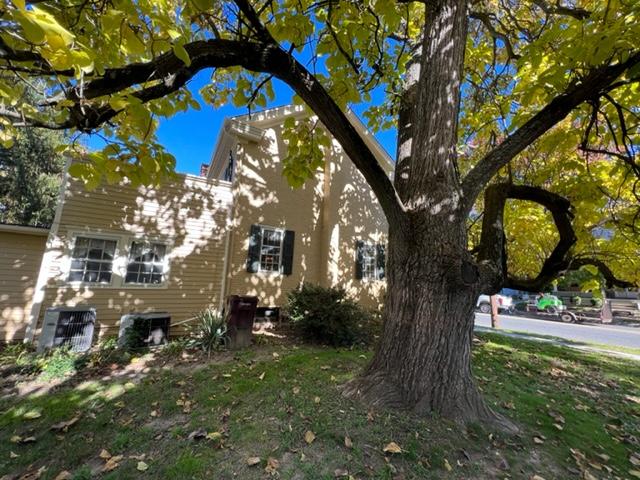
The outside grounds have a wonderful lawn area where the foliage was in full hilt when I was visiting and in the back of the home is the schoolhouse from the 1840’s. This was locked for the day, but I could see the classroom set up of an old-fashioned school room that has not changed all that much since that period.
The Schoolhouse on the society’s property
The Schoolhouse
The property behind the house was beautiful and well-kept with colorful foliage.
The house is well maintained, beautifully displayed with artifacts and there is a lot to see and do here. I just wish this wonderful site was open more often so that people could enjoy these wonderful artifacts and displays.
The Society when decorated for Christmas 2023
Some of the special programs that the society has run:
“David Crockett, Scout and Adventurer” on March 26th, 2023:
The Pilesgrove-Woodstown Historical Society is presenting a free program for the community titled ” David Crockett, Scout and Adventurer.” There are many stories about “Davy” Crockett. Our speaker, Mr. Douglas Jones, in period clothing, will be sharing many and will have time for questions. The date is Sunday, March 26th, 2023 at 2:00 pm in the Woodstown Friends Meeting House, 105 North Main Street, Woodstown, N.J. 08098 (this is down the road from the Historical Society). The meeting house is handicap accessible with a sound system and onsite parking. All are welcome. For more information or questions, call 609-313-7534.
Special Event on May 21st, 2023
The Pilesgrove-Woodstown Historical Society Quarterly Program, on Sunday, 2:00 pm, May 21st, 2023 is titled “Liberty, Loyalty, Libations, Love and Remembrance.” The hosts, Jan and John Haigis, from “PastTimePresent” will be setting stories to music and song from Memorial Day Celebrations of our United States History.
This free program will be held in the Woodstown Friends Meeting House, 104, North Main Street, Woodstown, N.J. 08098 is suitable for all ages, all are invited. The Meeting House is handicap accessible with on site parking available. For any questions or information call 609-313-7534.
‘The Woodstown by Candlelight’ Christmas Holiday House Tour:
I returned to Woodstown this December for the Annual Pilesgrove-Woodstown Christmas Holiday House Tour and it was a really amazing event. I had a wonderful time. I did not realized it until the tour was over that this was the first time they had extended the tour through Pilesgrove and used the buses to go out to four of the additional homes.
That lead to some challenges like people being left at homes and not being picked up. It also led to other folks missing parts of tours of the homes because they stopped the transportation too early to get people around. So there are some hiccups that will have to be worked out for next year.
We had gotten left on our last house on the tour by forty-five minutes and did not leave until someone called the woman running the event and we got the bus back to pick us up. That made us an hour late for the regular tour in Woodstown but I was still able to see most of the homes on the listing. It all worked out in the end and I had a ball.
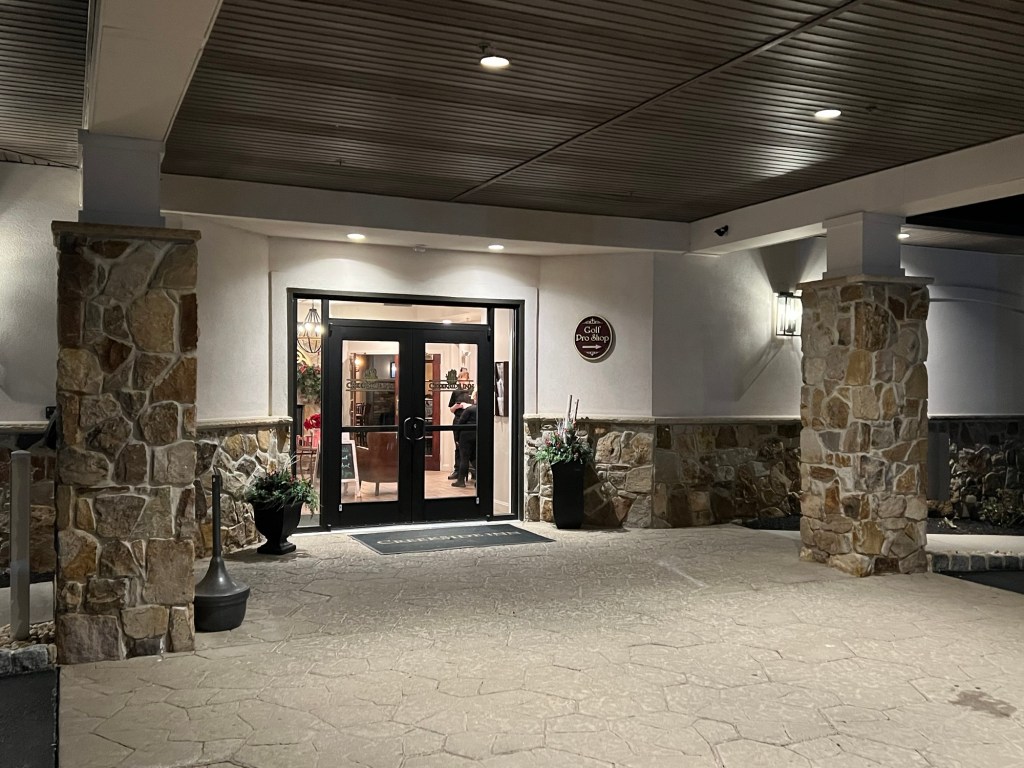
The Creekside Inn at 197 East Avenue in Woodstown, NJ
I started my tour at the Creekside Inn in Downtown Woodstown, where the tour would start and I would be taking the bus with the group of people I would be touring with that afternoon. I checked in and there was over an hour before my tour began, so I stopped for lunch at the restaurant in the Creekside Inn and what a nice choice it was for lunch.
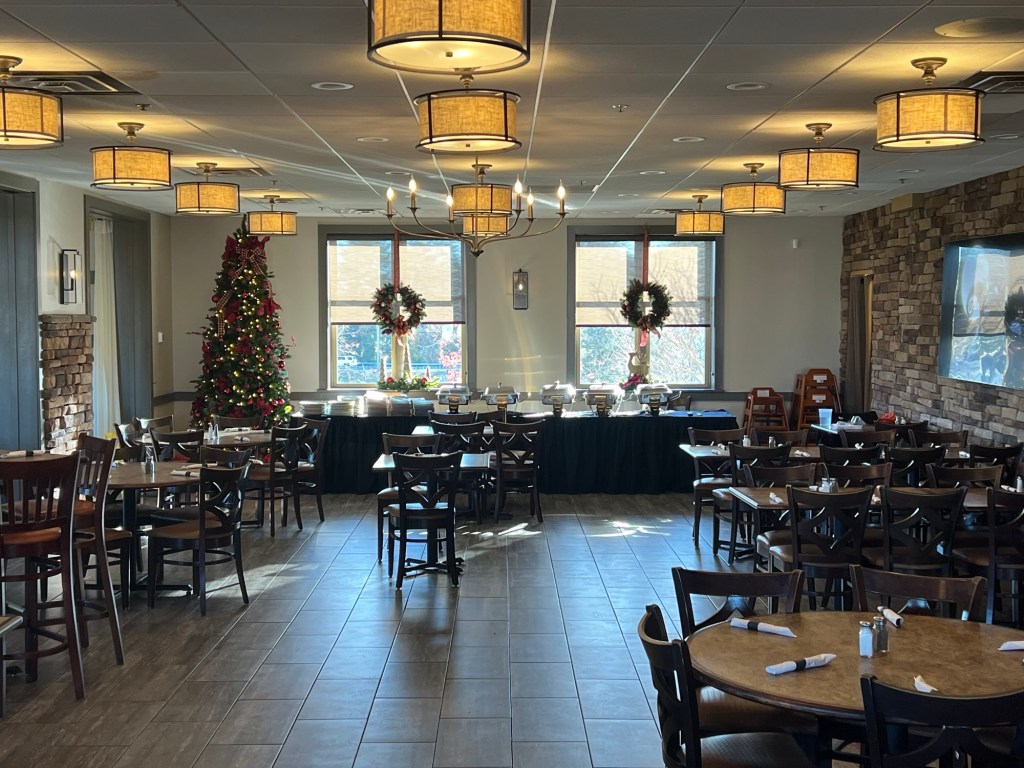
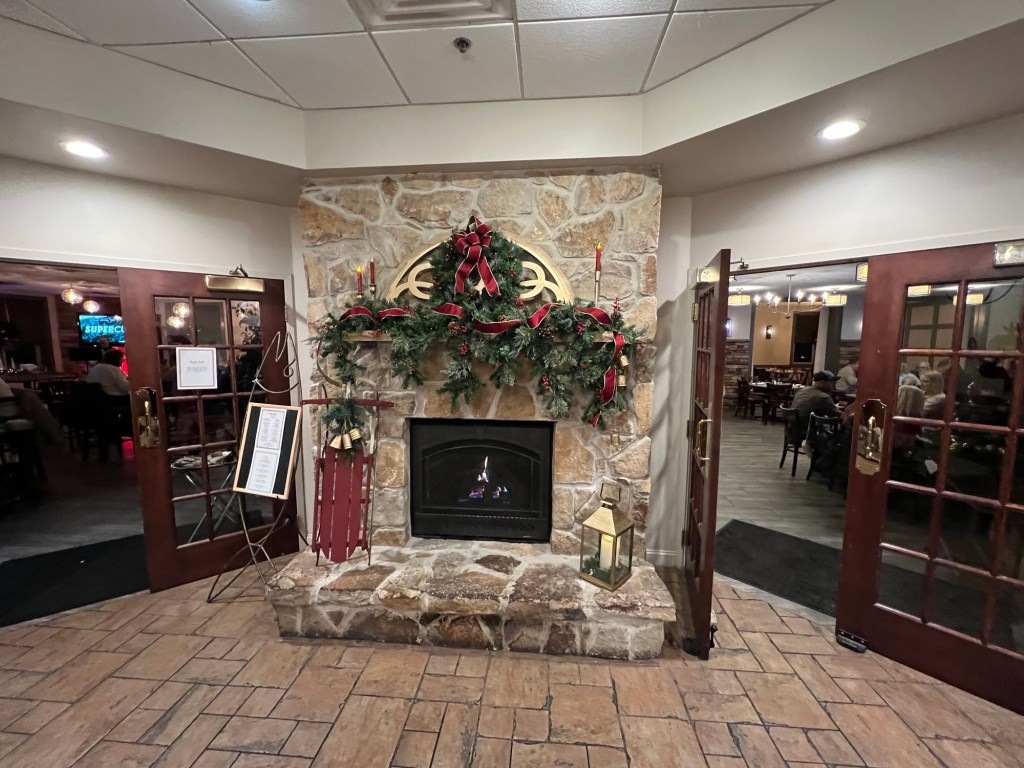
The restaurant was so nicely decorated for the holidays
They had a nice holiday buffet set up for dinner
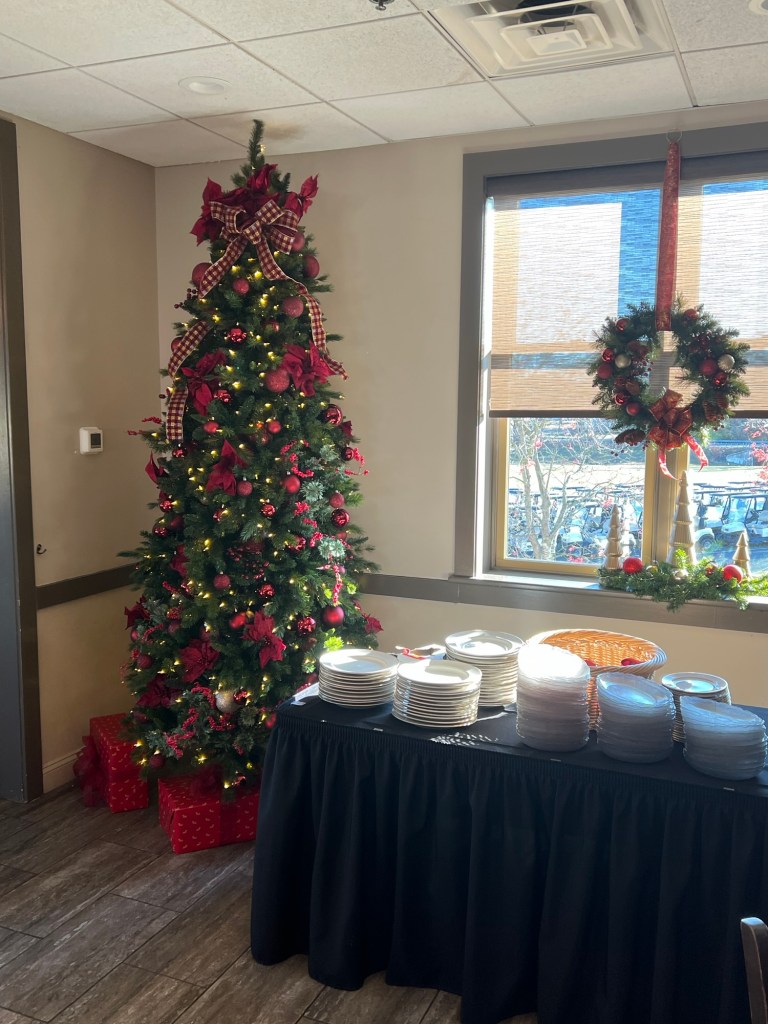
The restaurant was so beautifully decorated for the Christmas holidays with garland and lights and two Christmas trees. It really put me in the holiday spirit and I started to relax. I had the most wonderful lunch.
The Grilled Cheese with Tomato and Bacon with a side salad
I ordered on the recommendation of the waitress the Grilled Cheese Sandwich on sourdough bread with bacon and beefsteak tomato with a side salad. It was the best lunch for a long day of touring. The sandwich was homey and crisp and I loved the combination of flavors. It would get me through the rest of the afternoon of touring.
I highly recommend the Grilled Cheese with Bacon and Tomato here
The lobby of the Creekside Inn
I was just finishing my lunch when the woman from the Historical Society came in and announced that the tour was going to start and we had better finish. I would stop in later after the tour.
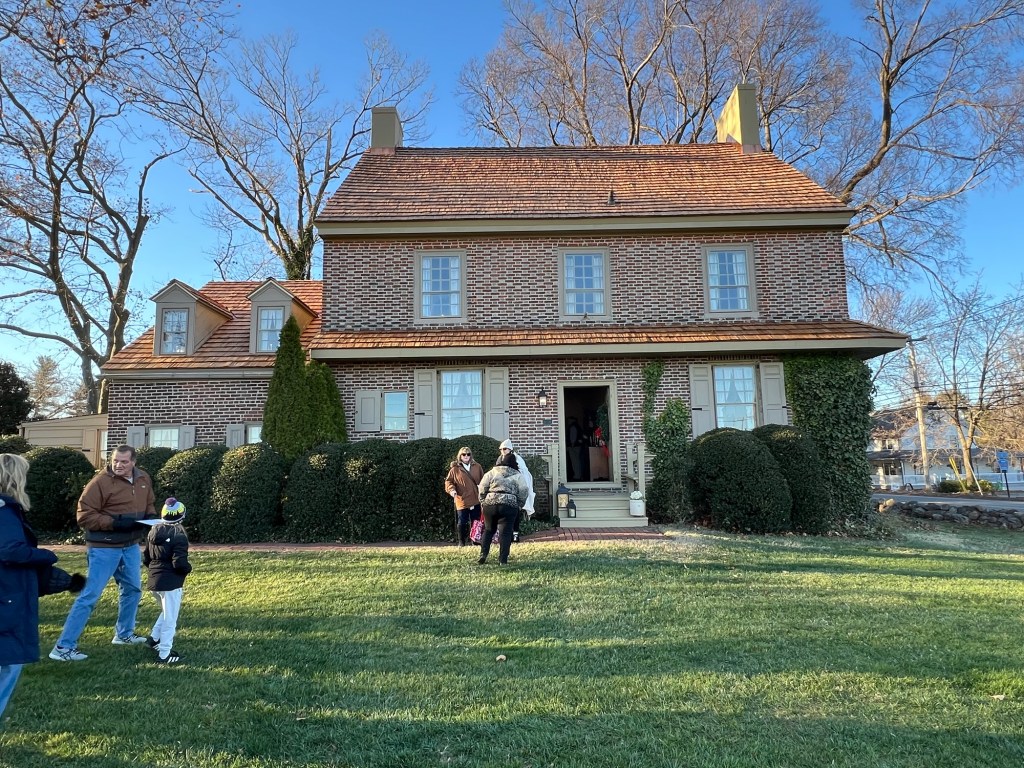
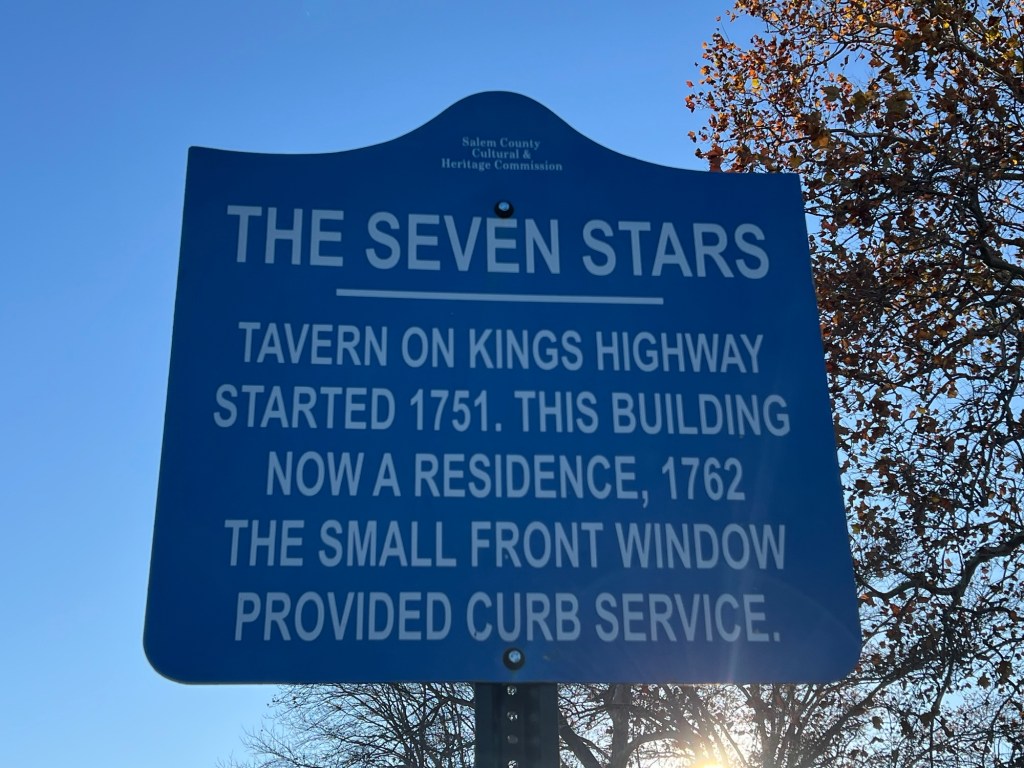
I got on the bus with everyone on my tour to get to the first stop which was The Seven Star Tavern in Pilesgrove, NJ. The main portion of the home was built as a tavern in 1762. In 1805, with the changes in transportation and the community for farming, it became a farmhouse. It has served as a private home since 1941 (Tour handbook).
The Seven Star Tavern at 1349 Kings Highway in Pilesgrove, NJ
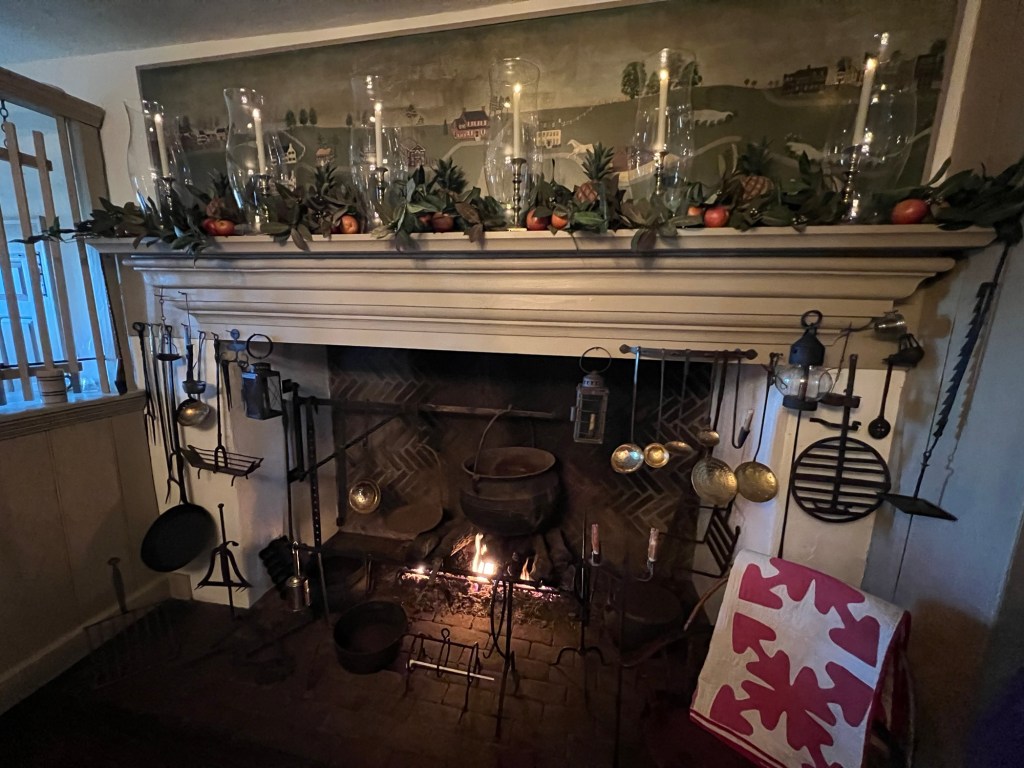
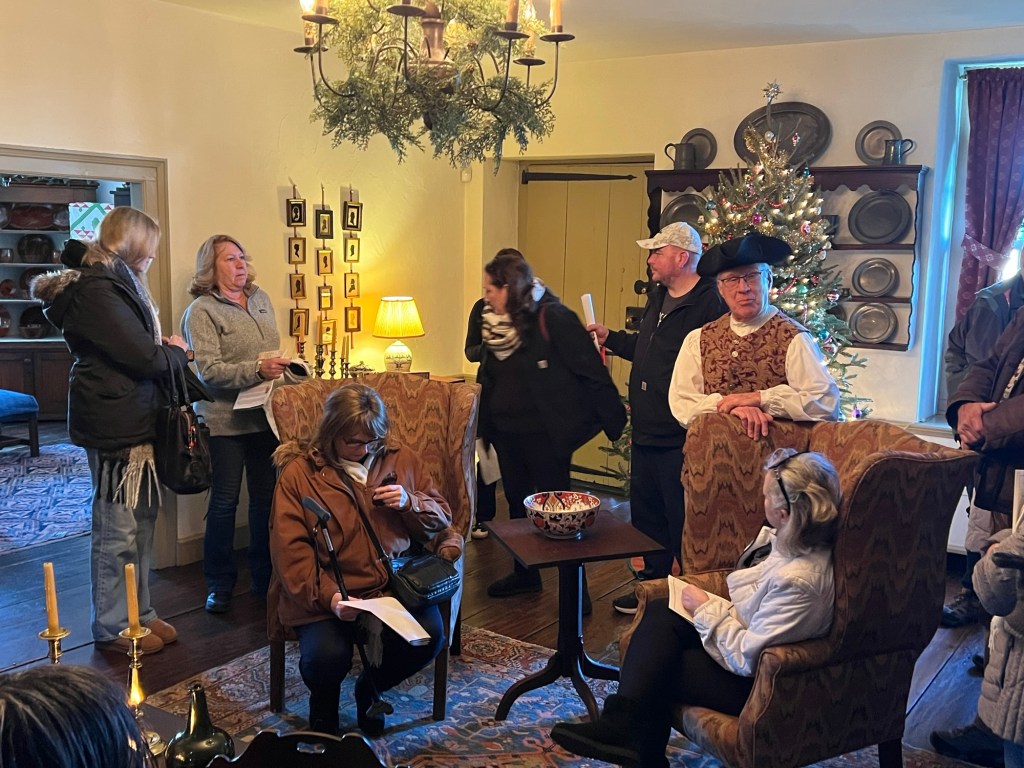
The decorations in the old tavern which is now the Living Room
Our group at the Seven Stars Tavern with the owner who was in Revolutionary War costume
The Living Room at the Seven Stars
The second room with a fire going
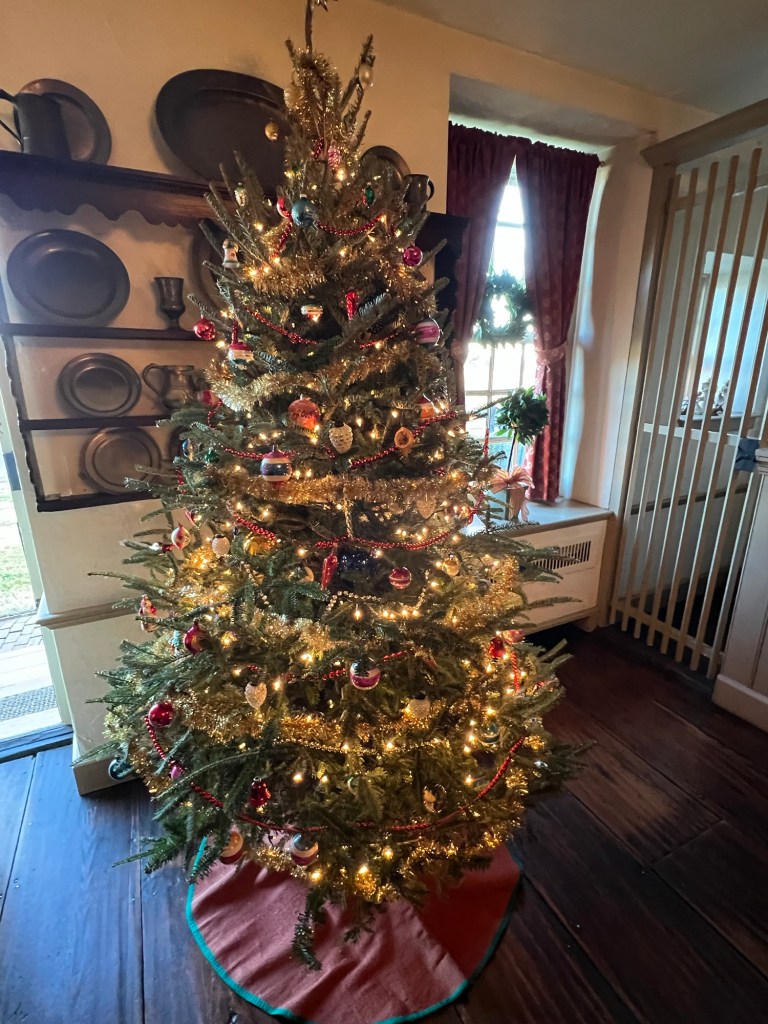
The Christmas in the Living Room
The Kitchen at the Seven Stars Tavern
The back of the home’s decorations
The Seven Stars Tavern house before we left
The Seven Stars Tavern was interesting in that you can see that it is a home but you can see that when you are inside how it was a tavern at one time.
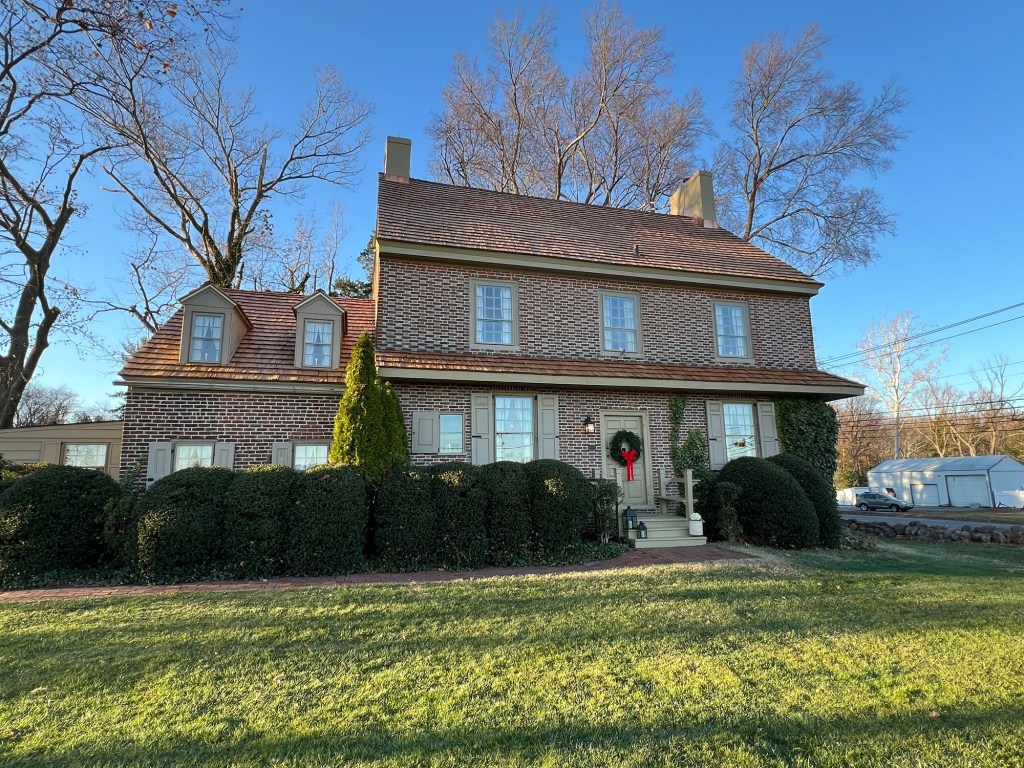
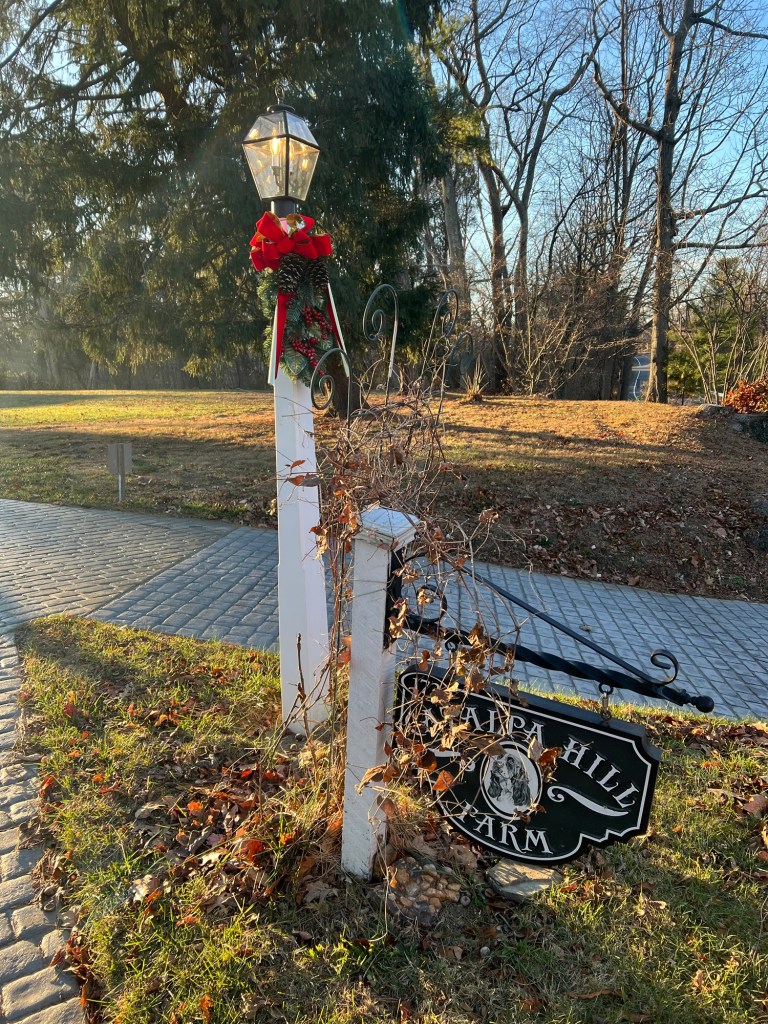
Our next stop was the Catalpa Hill Farm, which had been in the same family for almost two hundred years. The property was beautifully decorated for the holidays. The farm was owned by the Lippincott family for almost 200 years until it was sold in 1999 to the current owners, the Valentes (Tour handbook).
The entrance sign to the farm
Our group starting the tour of the farm
The property was beautifully landscaped
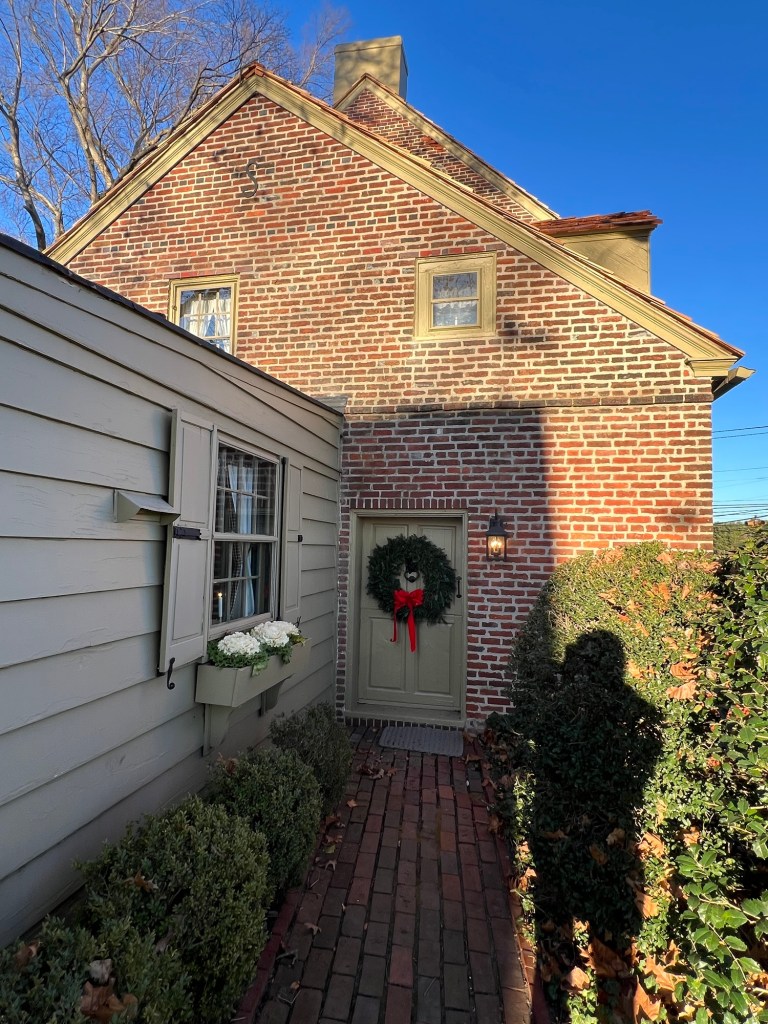
The entrance to the home
The Dining Room of the home
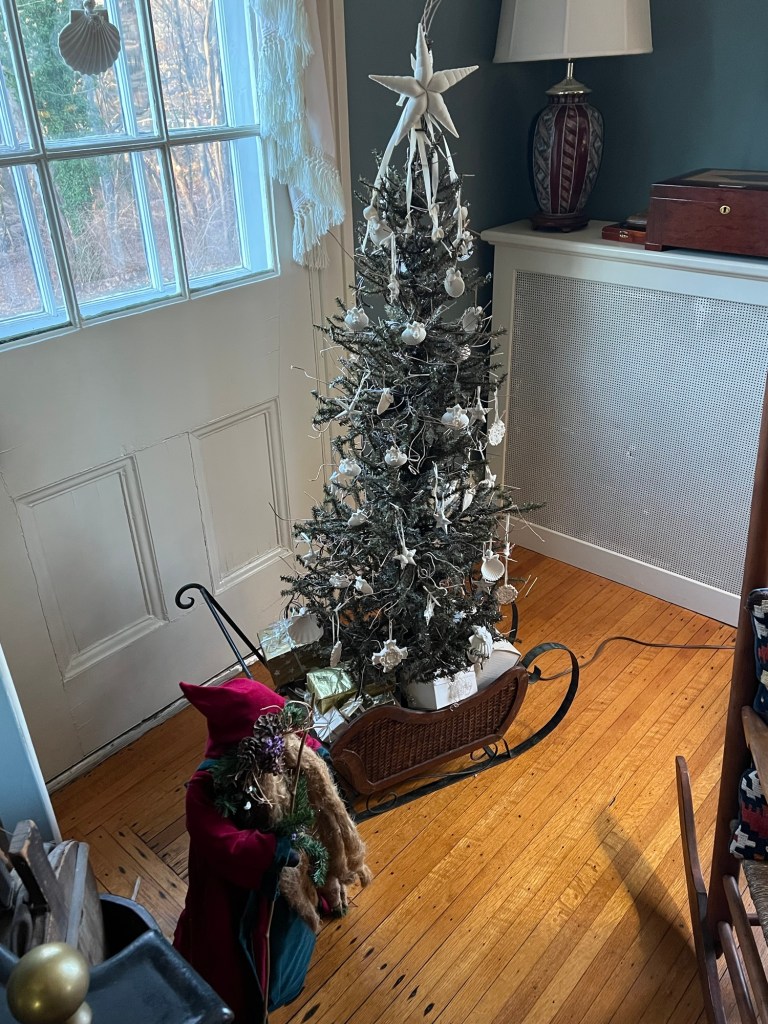
The Christmas tree in the Living room
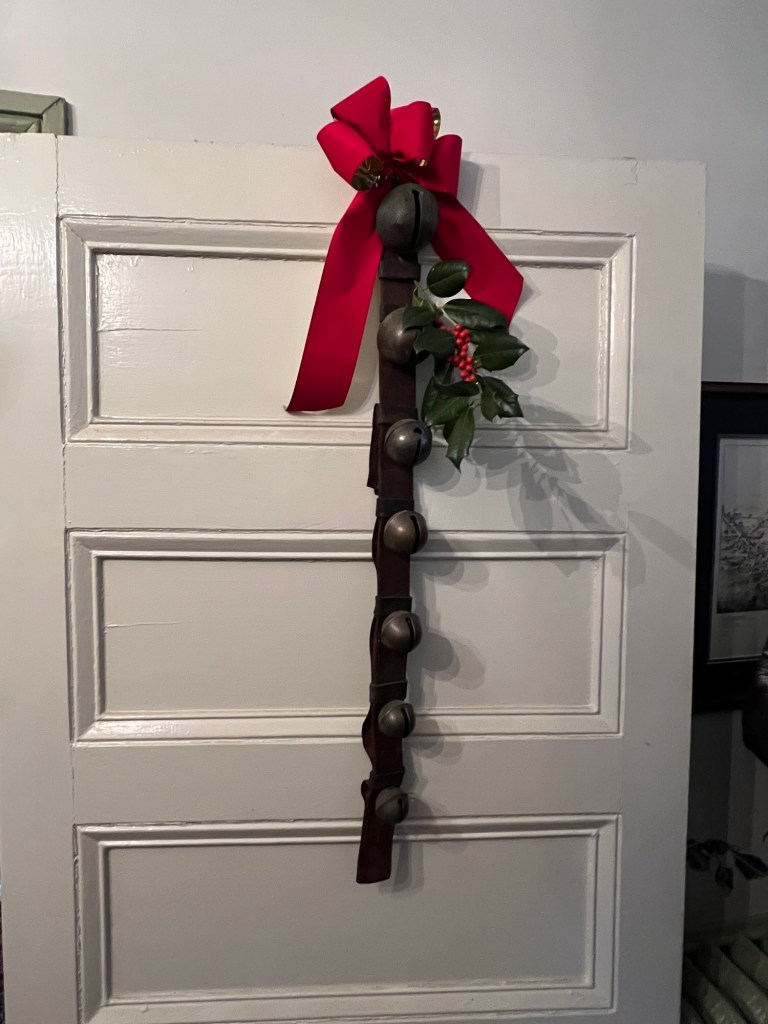
Sleigh bells on the door
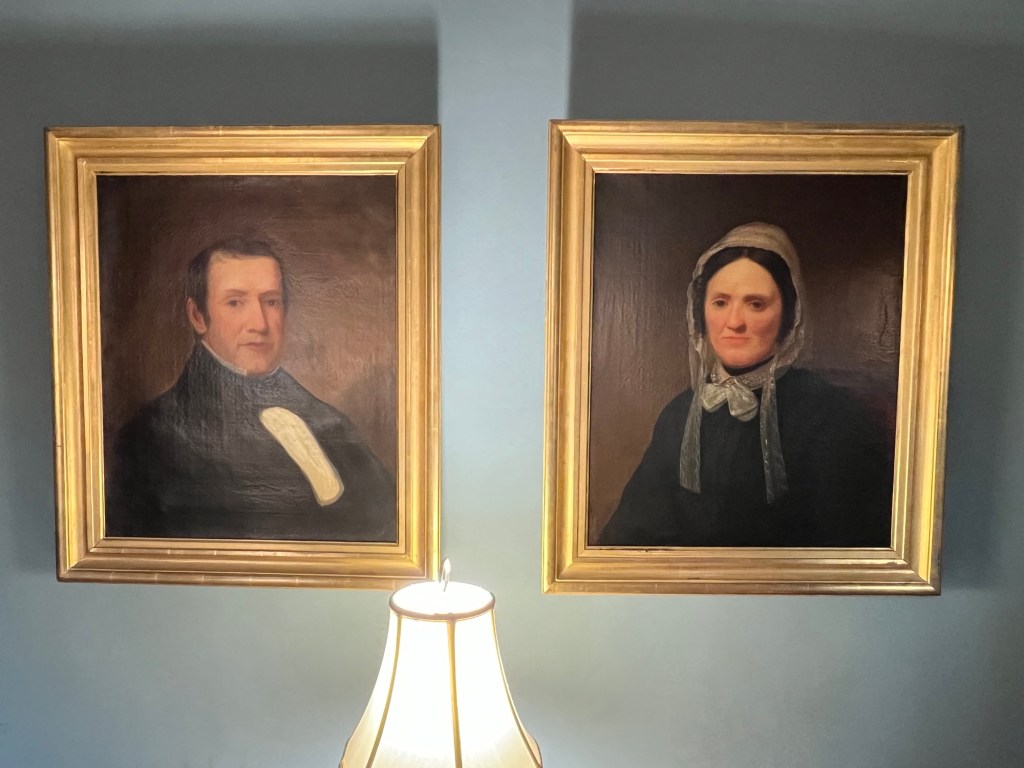
A family portrait above the working fireplace
More family portraits
The Christmas tree in the kitchen
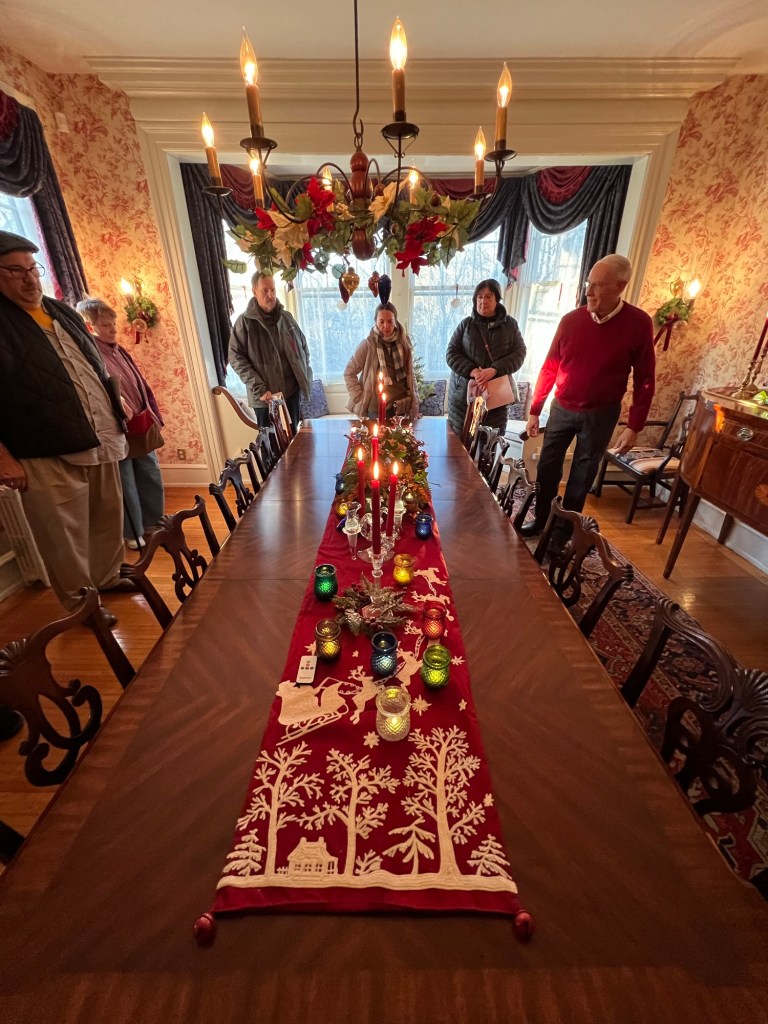
The formal Dining Room table in the Dining Room set for Christmas
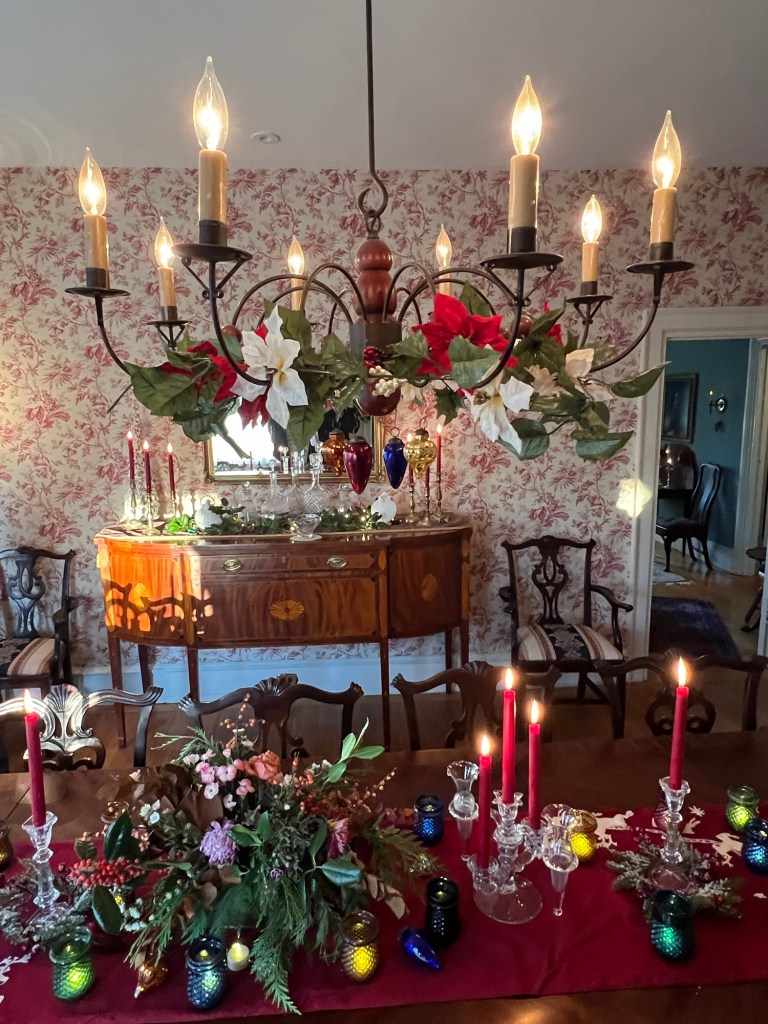
The middle part of the Dining Room
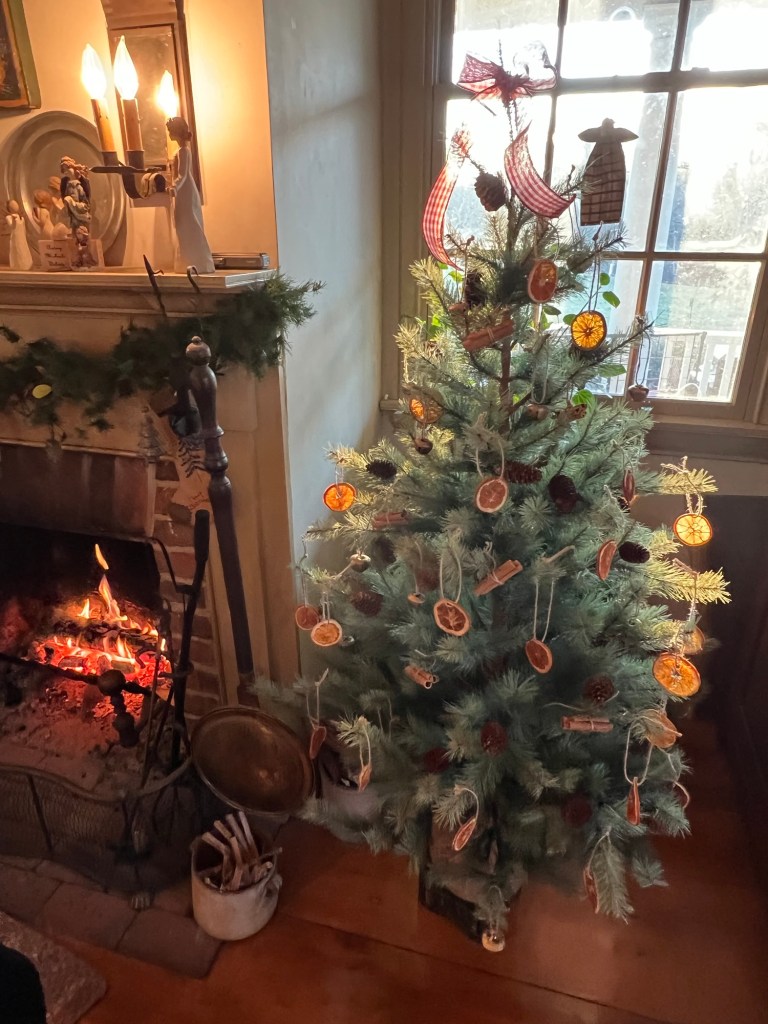
The second Christmas tree in the Dining Room
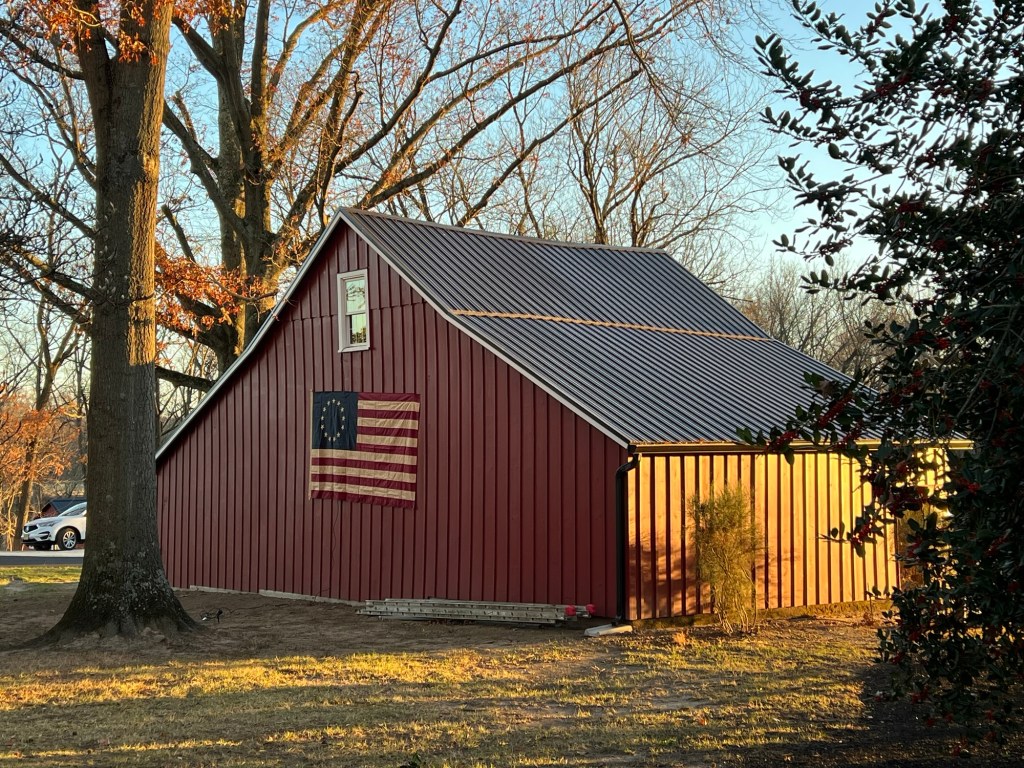
The barn in the back yard
The front of the house at sunset when we left for the next house
Our next stop on the tour was The Zigo Farm which was built in the 1860’s. This ‘gentleman’s farm’ is based around the Colonial Home which was fully renovated and expanded in the 1950’s by the Costello family. The current family bought it in 2013 and added the stables in the back for their rescue horses.
The entrance to the Zigo Farm
The front of the Zigo Farm
The Christmas tree in the entrance was of the home
The kitchen dining area
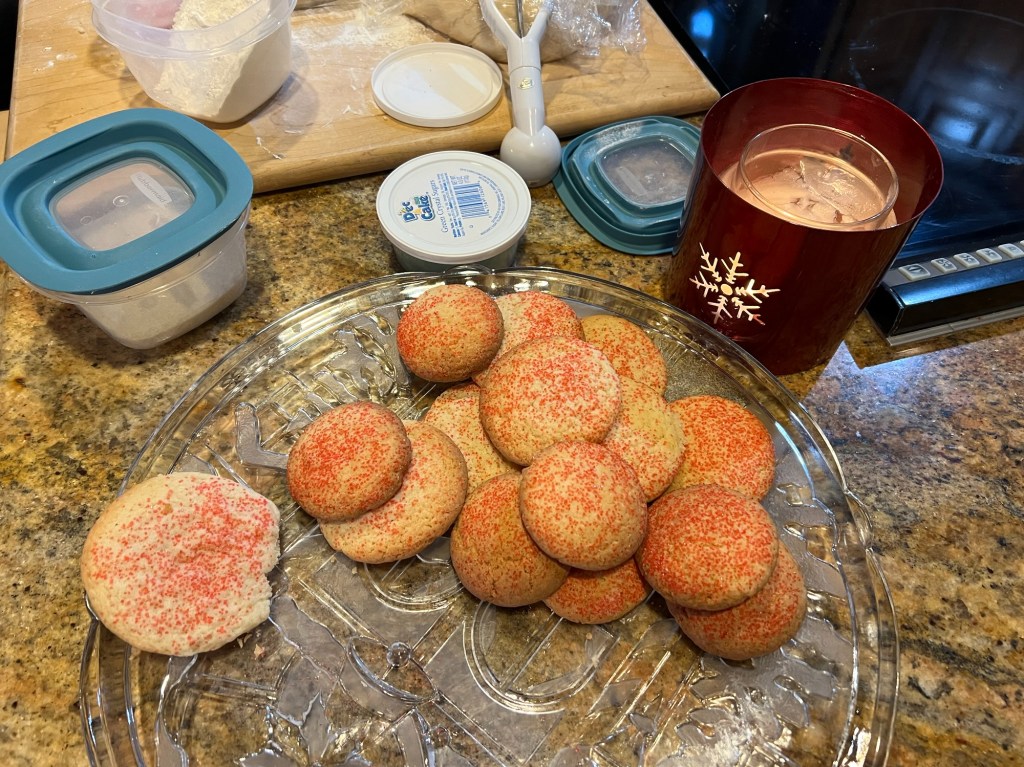
While we in the kitchen, our host’s mother was helping prepare homemade cookies for all of us and I thought this was a very nice touch. While the tour went on, I stayed in the kitchen and talked with the ladies as I enjoyed some of the cookies. These freshly baked treats were really popular on the tour.
The homemade cookies in the kitchen
We then toured the rest of the house which was very tastefully decorated for the holidays. We toured both the Living Room and the Dining Room. I stopped and talked to our hosts parents while everyone took a hay ride through the grounds.
The Dining Room of the Zigo Farm
The Living Room of the house
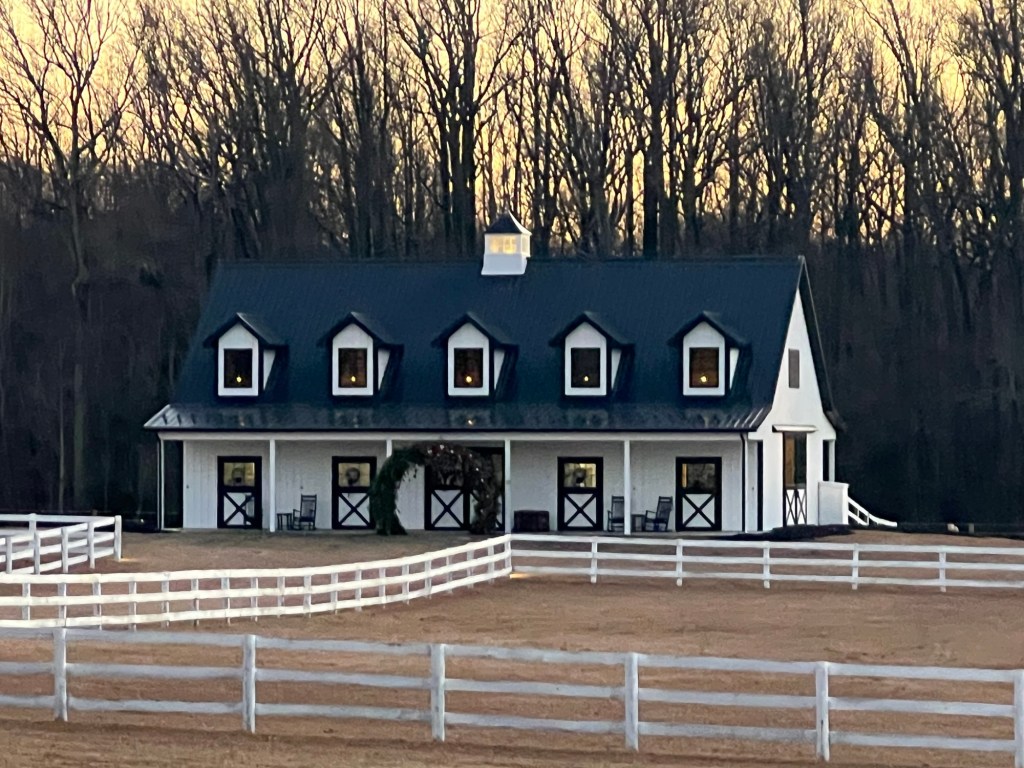
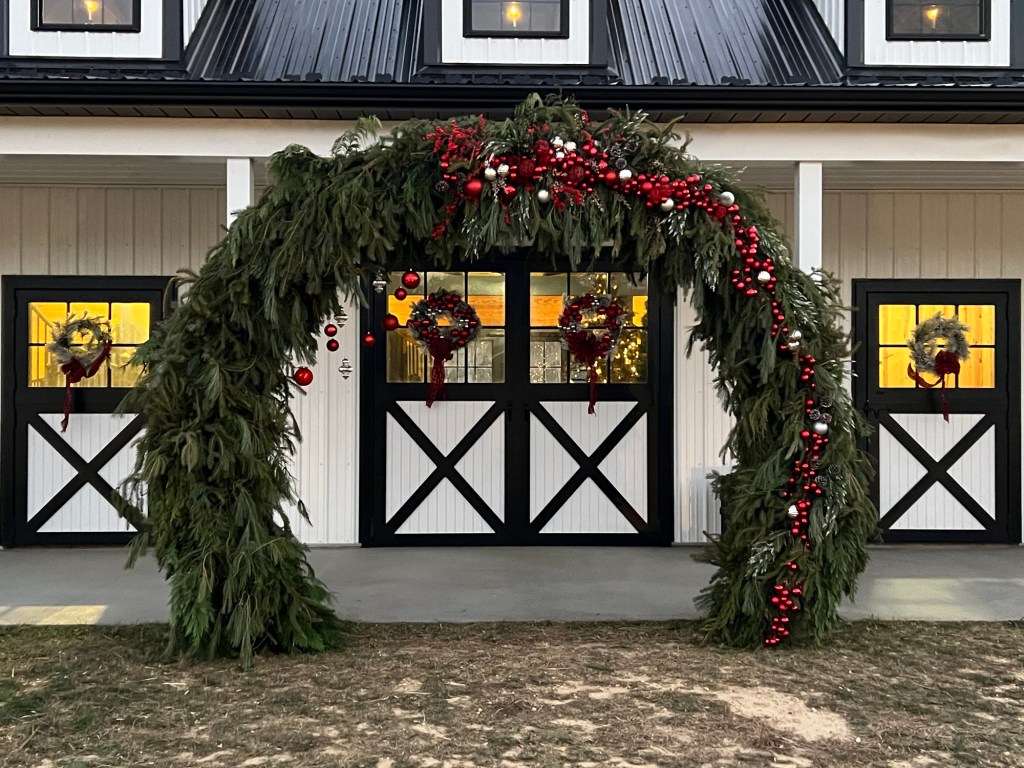
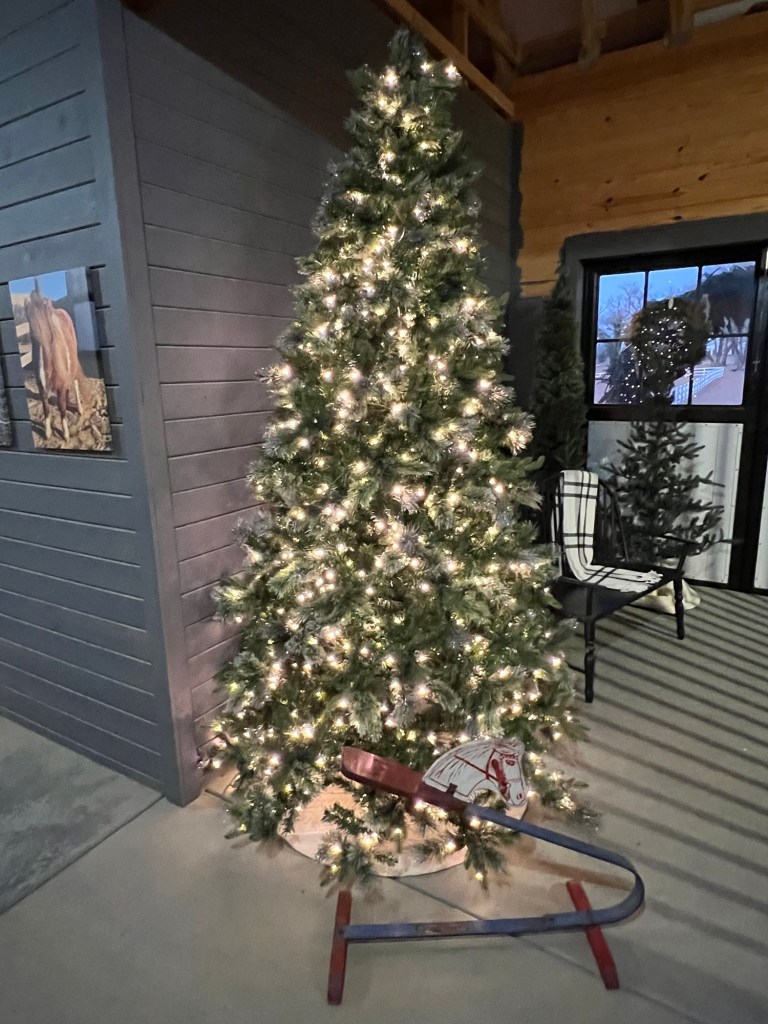
I then caught up with the rest of the group at the stables, which were also nicely decorated for the holidays. The grounds were also decorated for the upcoming holidays. The lighting and the sunset made the property glow.
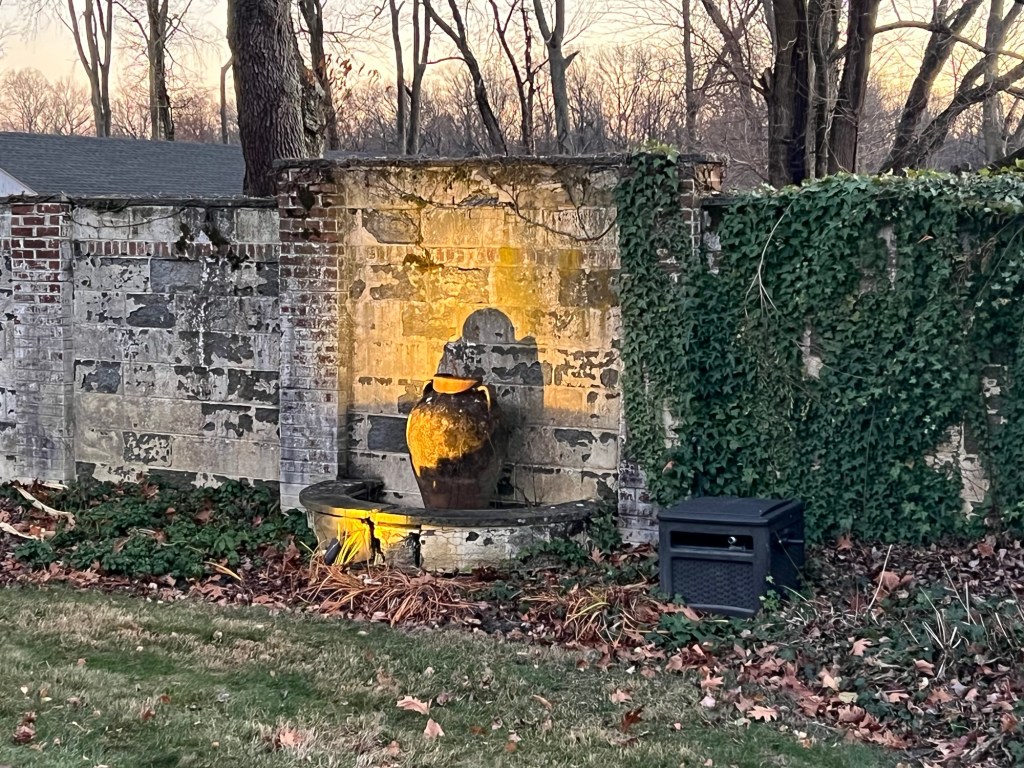
The Walled Gardens
The Stables on the property
The Christmas decorations at the stables
The beautiful Christmas tree at the stables
The tour of the farm and its stables were really impressive and the farm was decorated from top to bottom with impressive decorations.
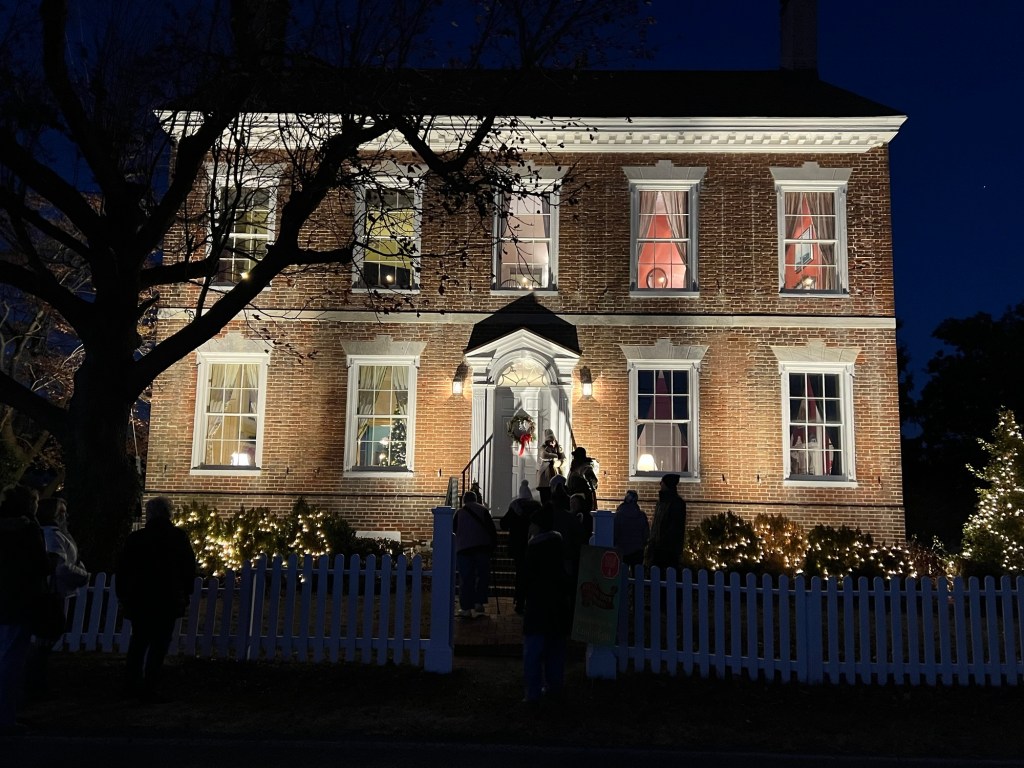
The last stop on the bus tour before we went back to town was at the ‘Morgan’s Folly House’ at 2 Layton Avenue, which was built in 1804 by Samuel Morgan in the Federal Colonial style. It was considered a very large home at its time and somewhat pretentious which earned it its nickname “Morgan’s Folly” for being so out of place. The home today has been fully renovated by the current family.
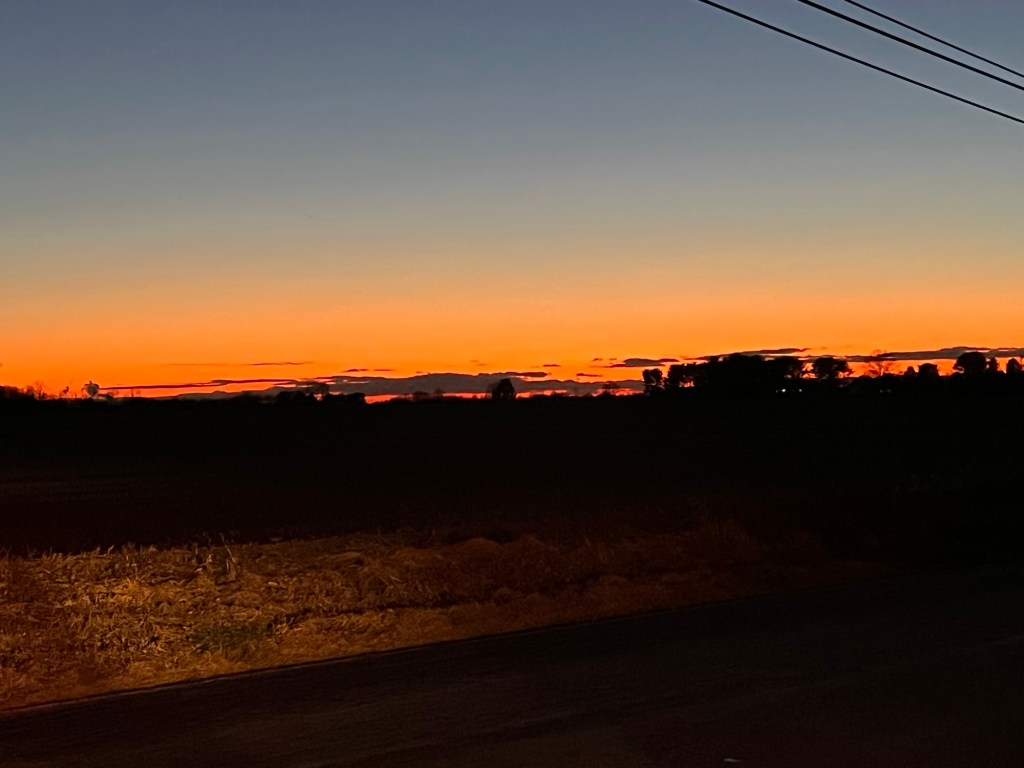
The beautiful sunset on the fields
The front of the Morgan’s Folly House decorated for the holidays
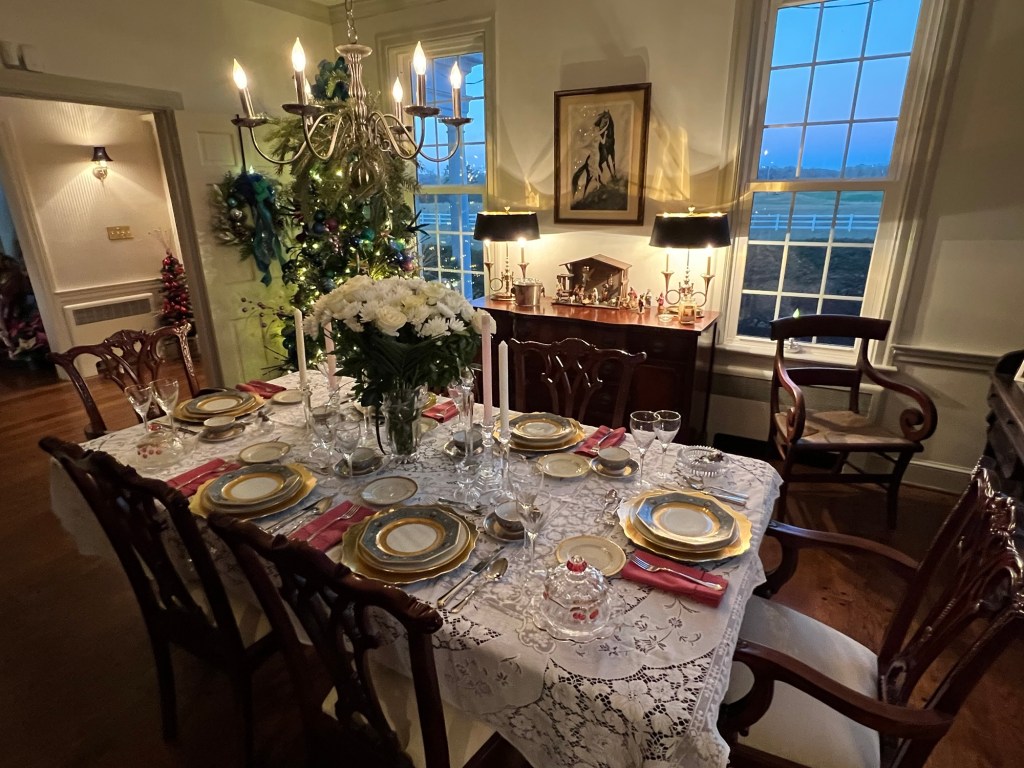
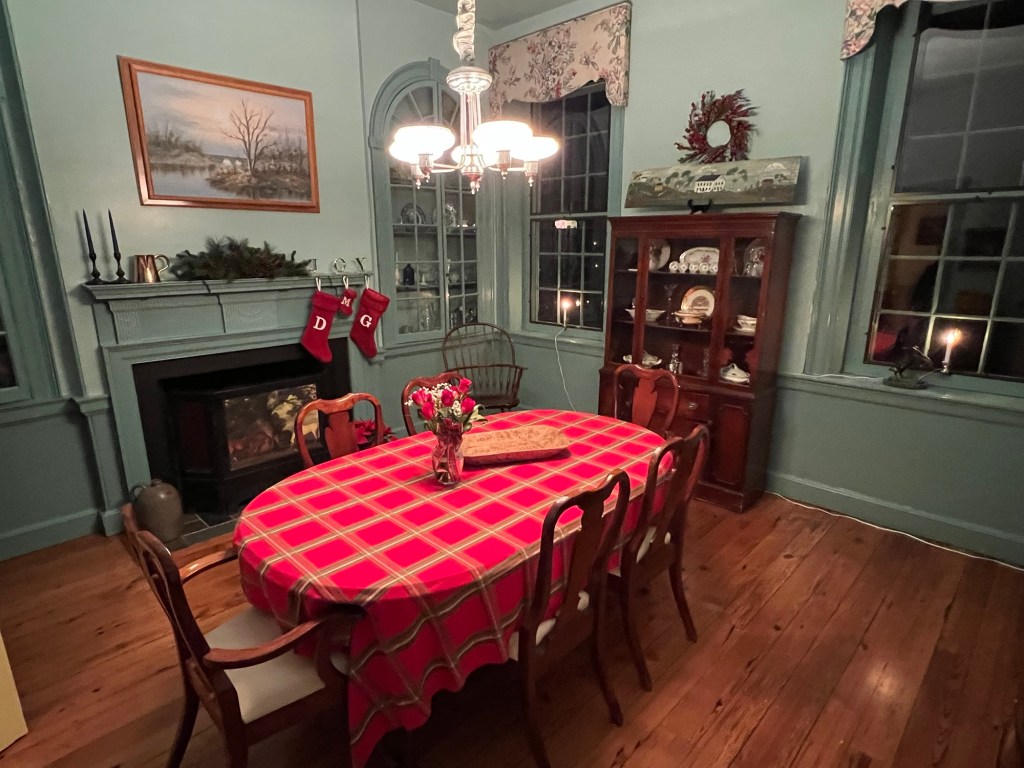
The Dining Room at the Morgan’s Folly House.
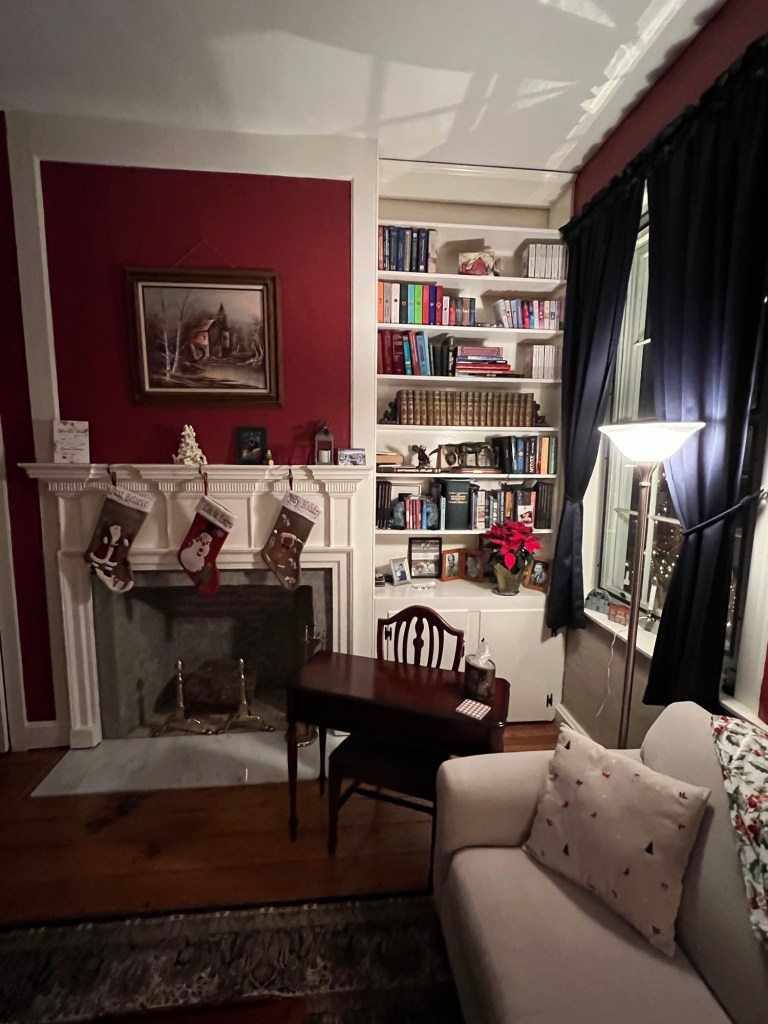
The Living Room at Morgan’s Folly
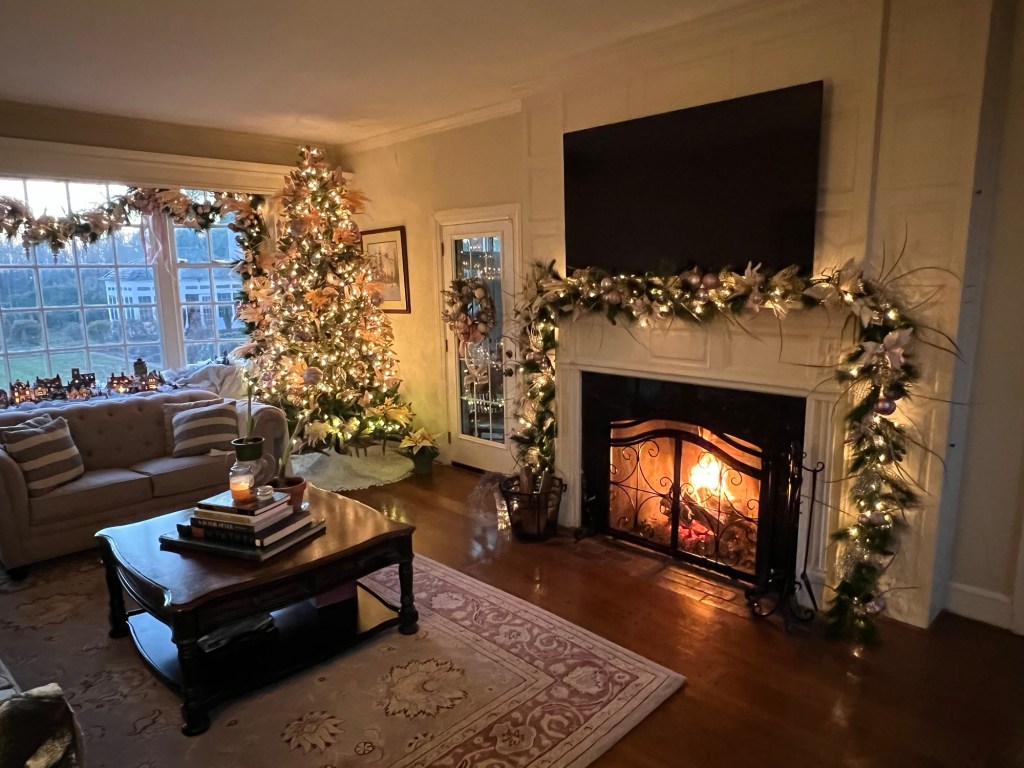
The Christmas in their Living Room
The historical beauty of the renovated upstairs
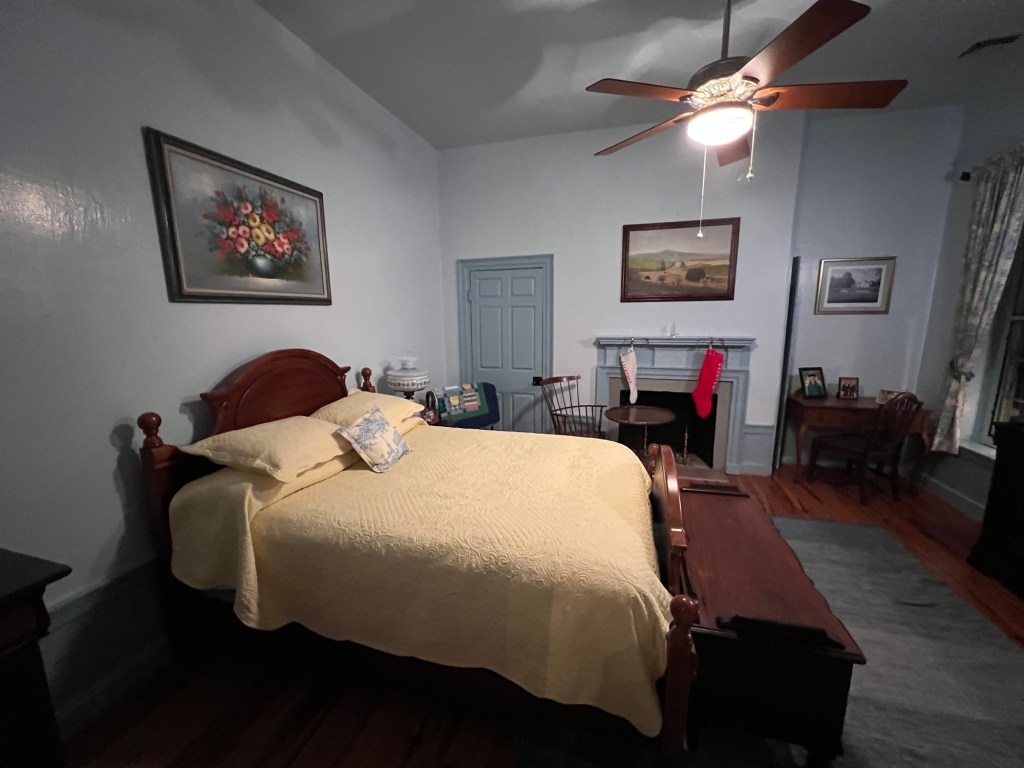
One of the upstairs bedrooms decorated for the holidays
It was funny because we were at Morgan’s Folly house for about forty-five minutes when we all started wondering where our bus was and finally someone in our group called the woman in charge to send a bus for us. The owners kidded with us that we could spend the night if we wanted.
It ended up that one of the bus drivers had been released for the evening and they forgot we were still touring. The poor bus driver was beside himself. I thought they really needed to work on this for next year. One group missed the second half of the tour and the second group was left at the last house. Not a good thing.
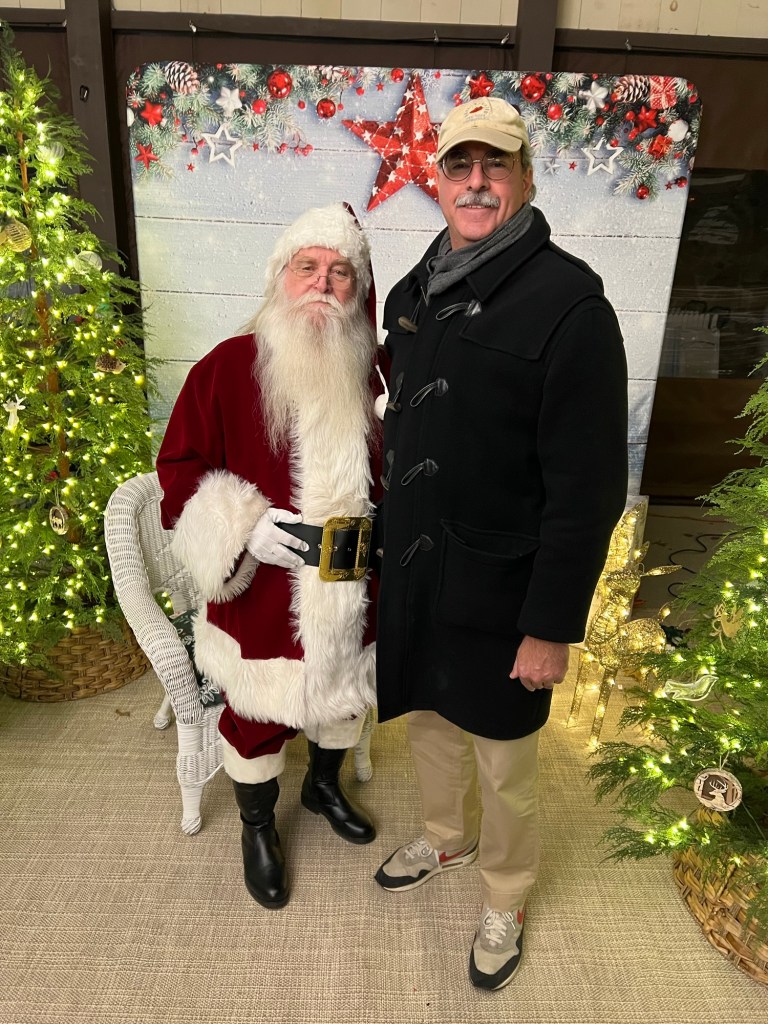
When we finally got back to Woodstown, we arrived back at the Creekside Inn for dinner. I was still stuffed from lunch and walked around the Crafts Fair that they set up. There in the middle of the Fair was Santa sitting there looking bored. I walked up to him and asked him honestly why people were getting so rude.
He did not miss a beat and told me honestly that it was the way they were raised and how it starts at home. This guy was so earnest and honest about what he said that I listened to rest of the conversation with such interest. We talked for a bit more and when I left I said to him, “ I just wanted to let you know that I still believe in you.” That seemed to make him very happy.
Me with Santa-I swear he made me believe again
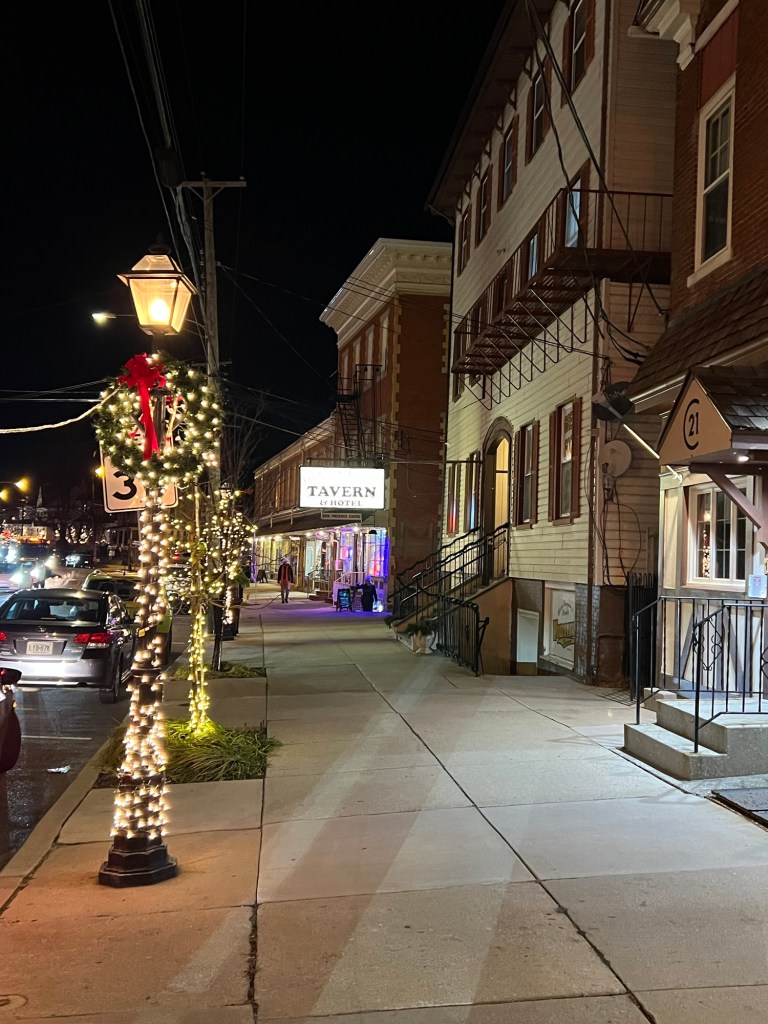
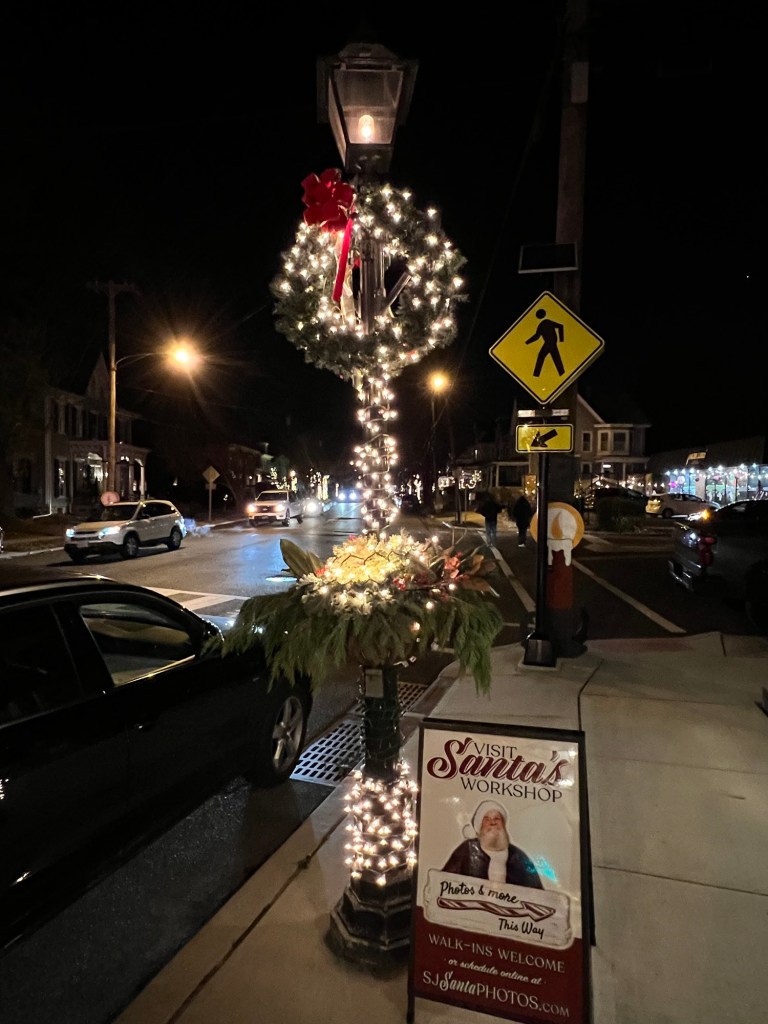
I then moved on to touring Downtown Woodstown’s decorated homes. The whole downtown was so beautifully decorated for the holiday.
Downtown Woodstown, NJ decorated for Christmas
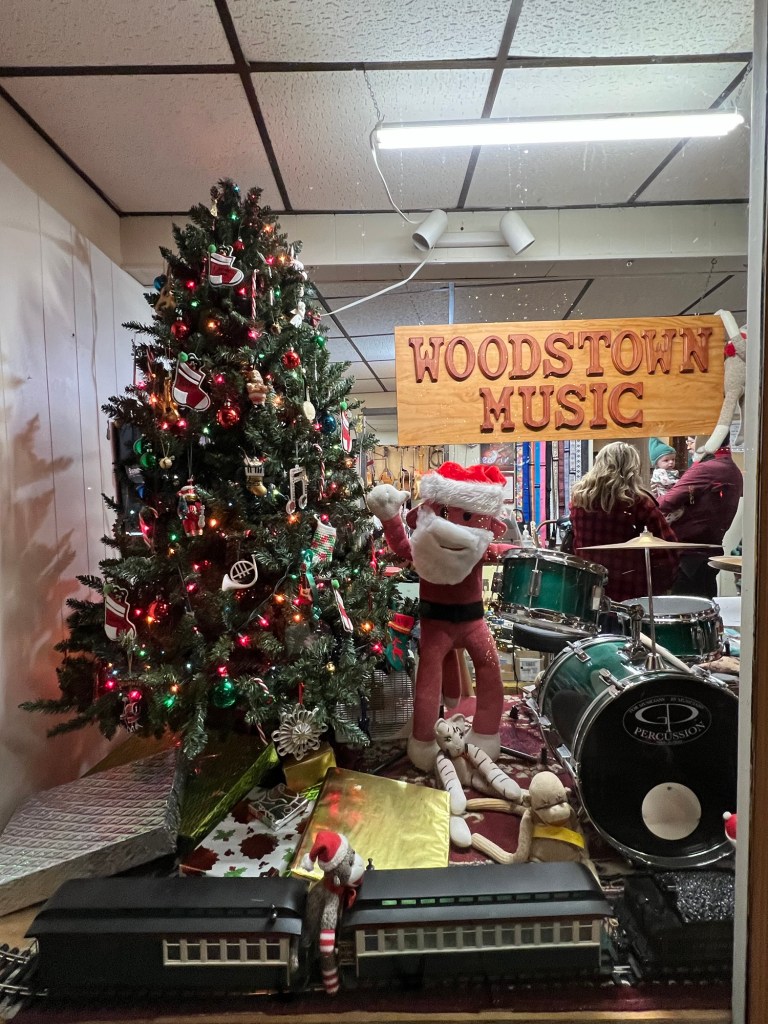
Downtown windows decorated for the holidays
Downtown Woodstown, NJ decorated for the holidays
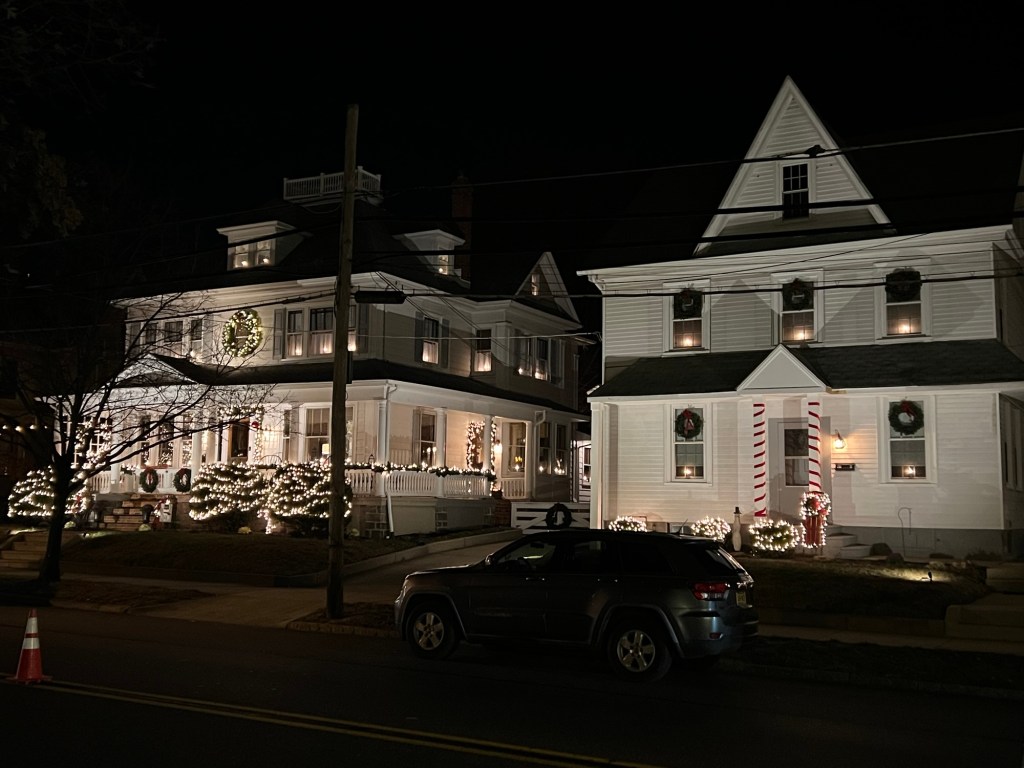
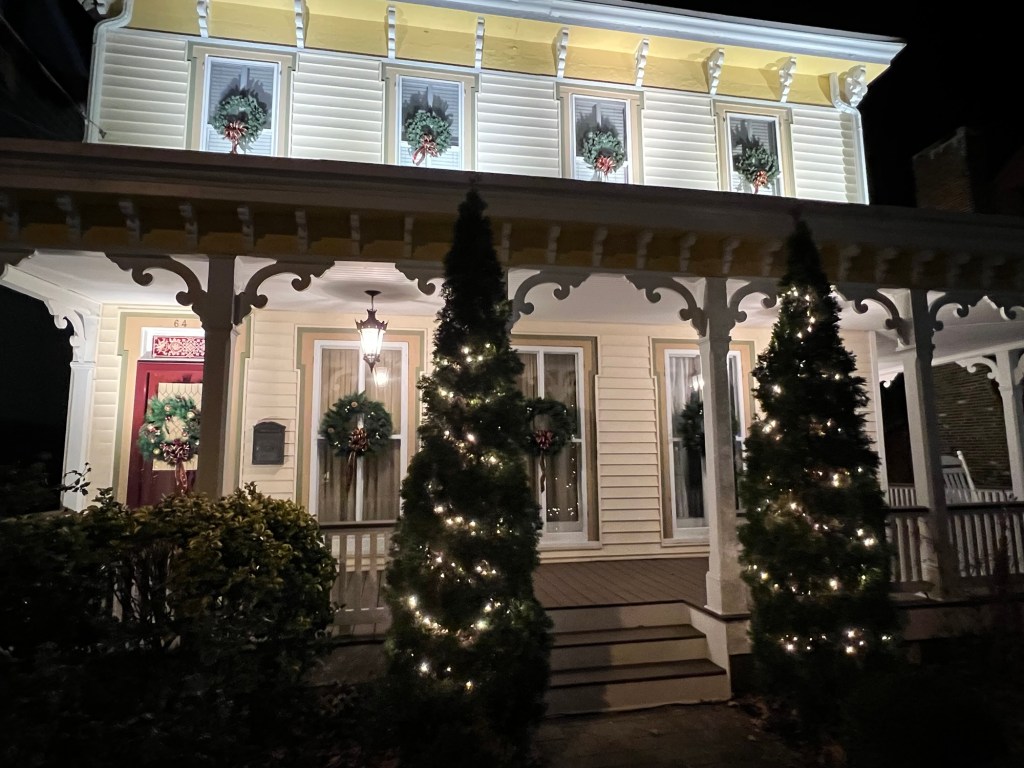
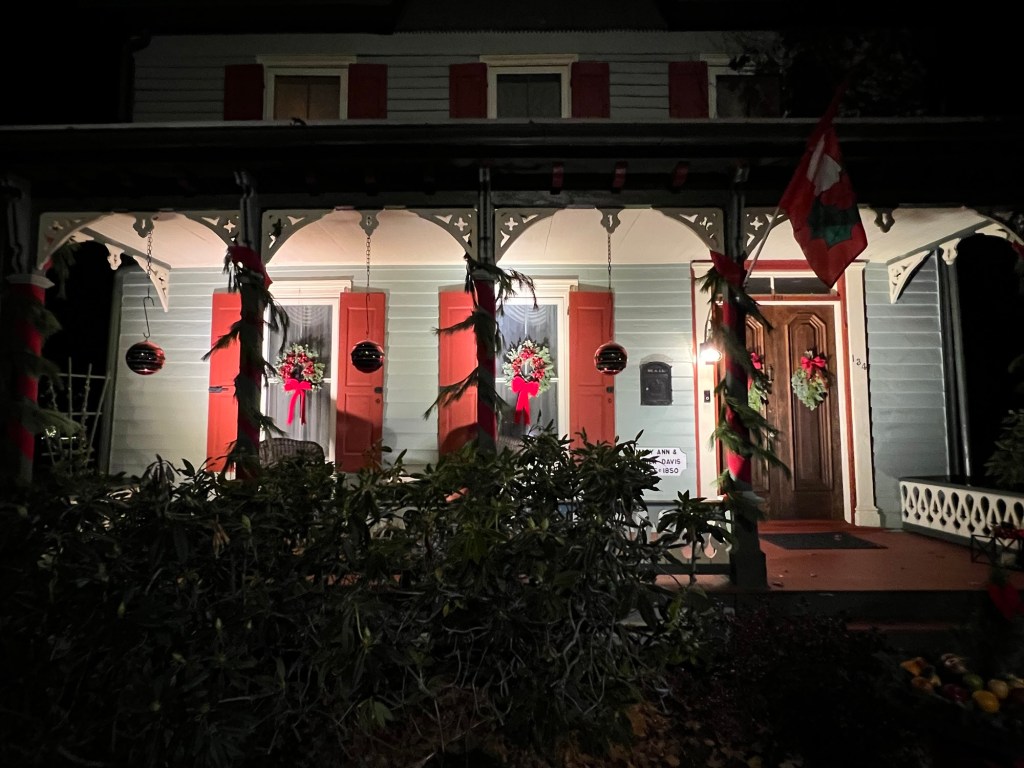
The downtown homes decorated for the holidays
Decorated houses downtown
Decorated house in Woodstown
Decorated house in Downtown Woodstown
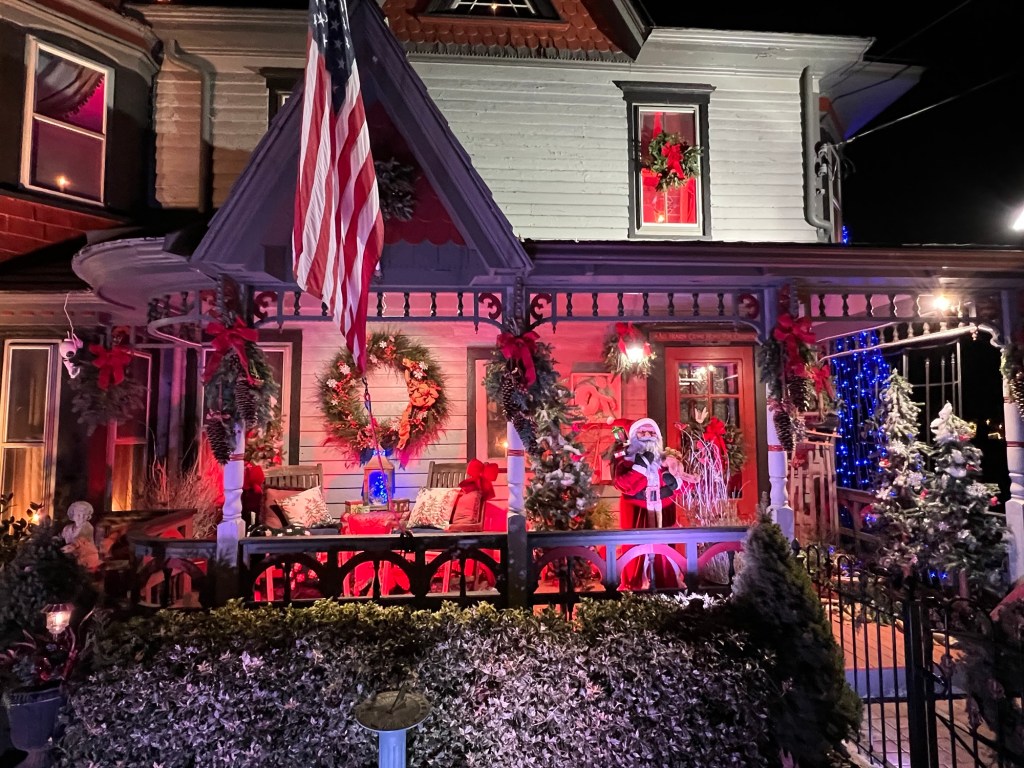
On the side of this house, they had the most interesting light show with a blue Christmas tree:
The first house on the tour was the Bobbitt House, which seemed to be a very popular house on the tour. I could see why, with its turn of the century style rooms and gorgeous decorations.
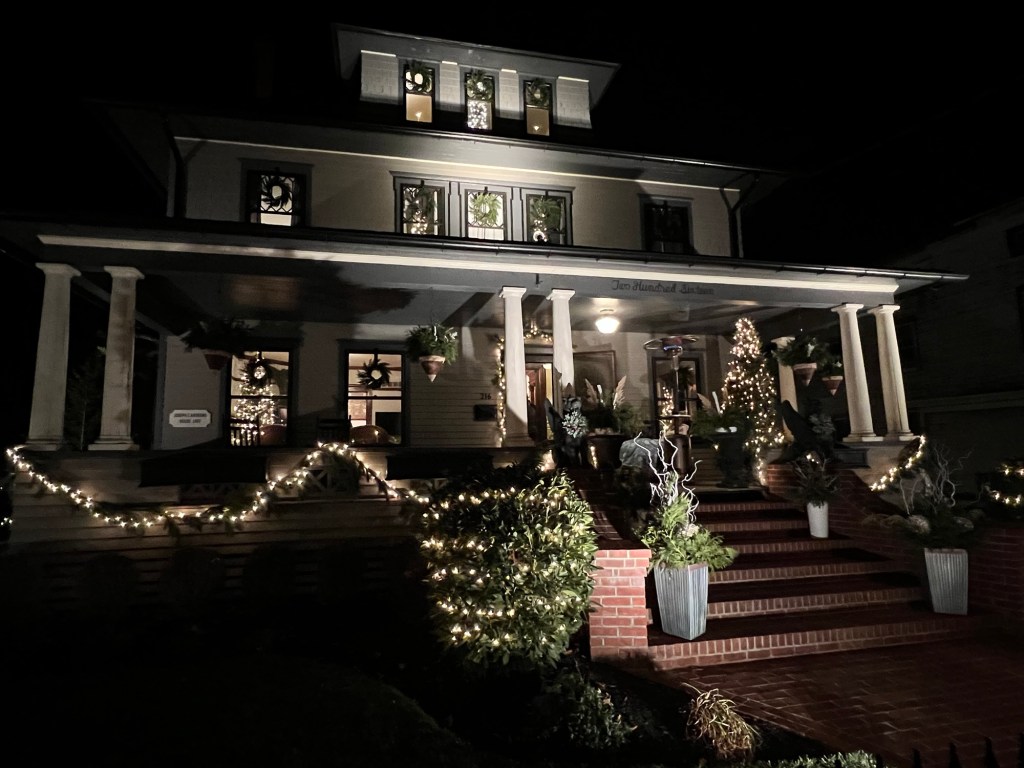
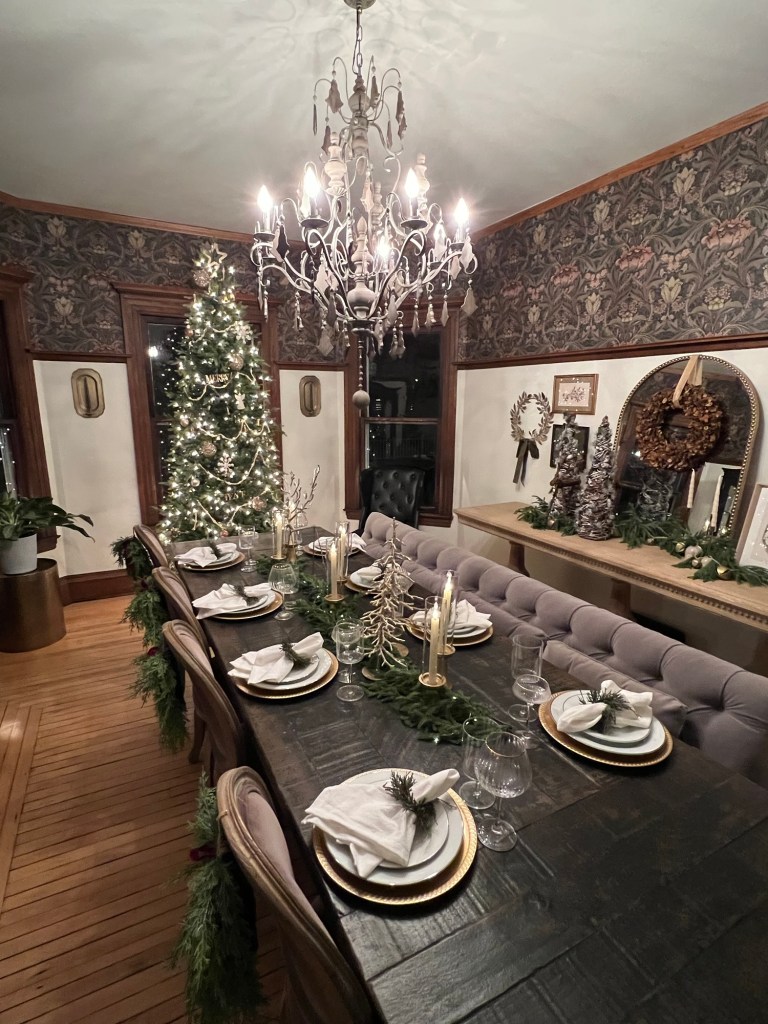
The Bobbitt House at 216 North Main Street in Woodstown, NJ, the home of Bruce and Lori Bobbitt. The home has some of its original cherry, chestnut and oak woodwork and the original stained-glass windows. The home was beautifully decorated for the holidays.
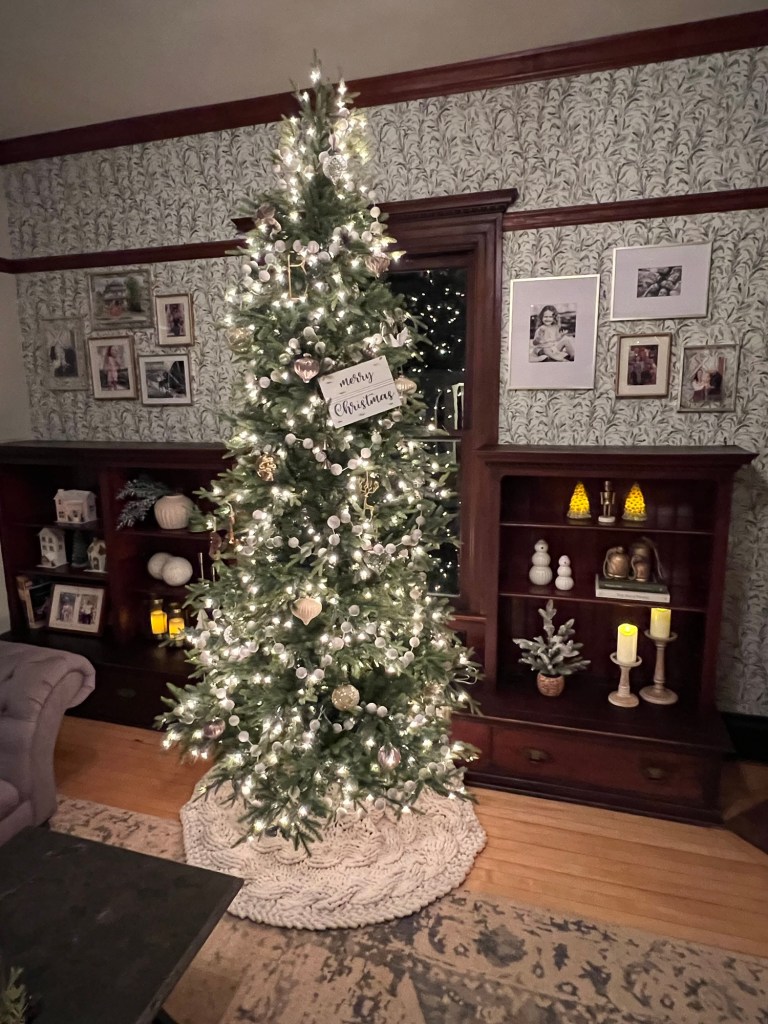
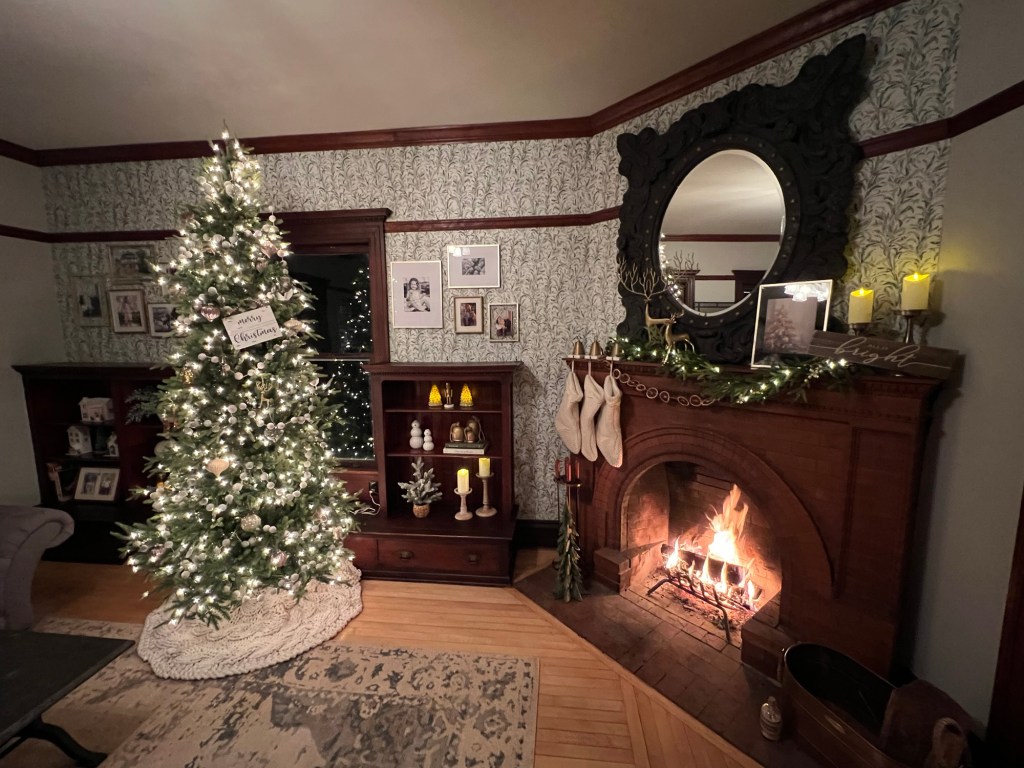
The Christmas tree in the Bobbitt House Parlor
The Parlor of the Bobbitt House
The Dining Room at the Bobbitt House
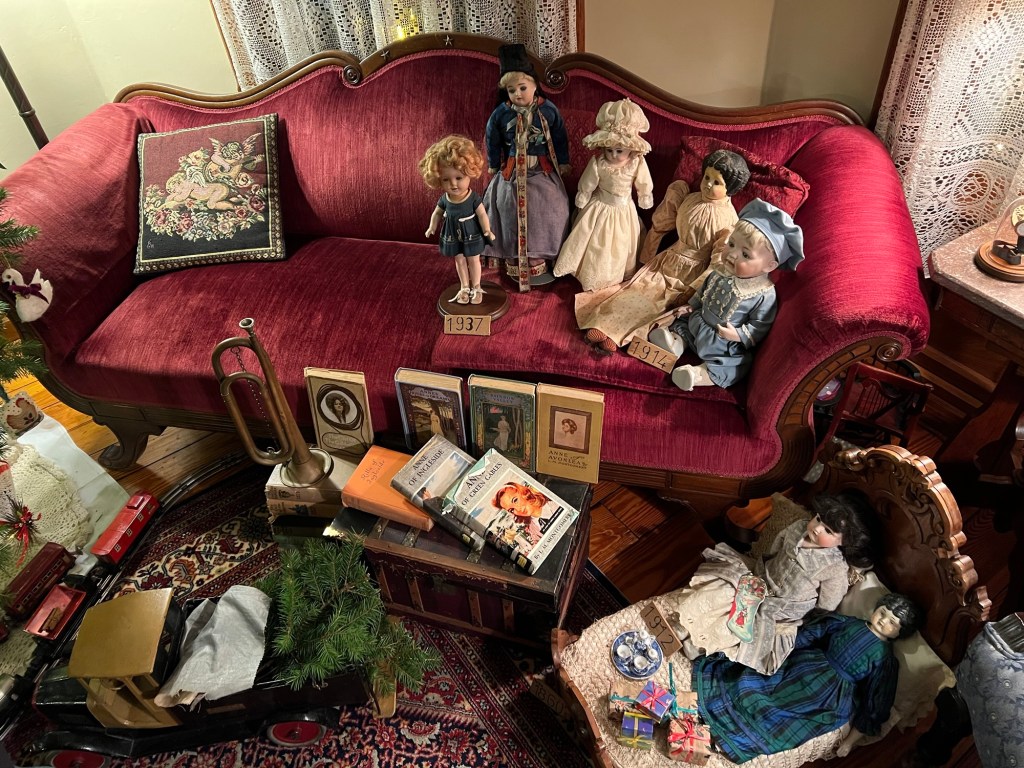
The doll collection at the Bobbitt House
The Christmas tree in the Living Room
After the tour of the Bobbitt House, I walked to the next home across the street. We toured through the home quickly as it was so crowded, and it was tough to get around. I stopped at the Ellwood Davis House, which is a Colonial Revival home built in 1906.
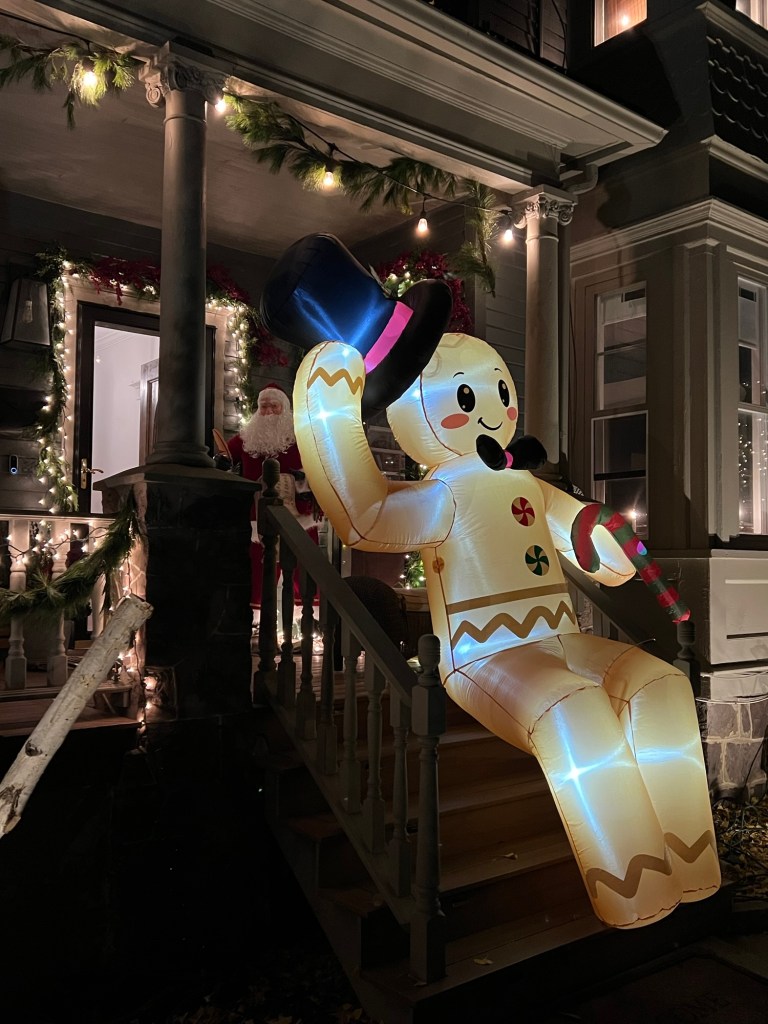
The decorations and the giant gingerbread man welcomed us to the home
What I thought was really nice was that that the young girl who lived here performed Christmas songs for the people that stopped by and even in the cold, it was so entertaining and really put me in to the holiday spirit.
Video of the girl playing Christmas songs on here piano:
I stopped by the Pilesgrove-Woodstown Historical Society for a quick tour of the museum. The docents wanted to fill our minds with all sorts of facts and all I wanted to do is look at the decorations around the old home. The first floor was nicely decorated for the Christmas holidays.
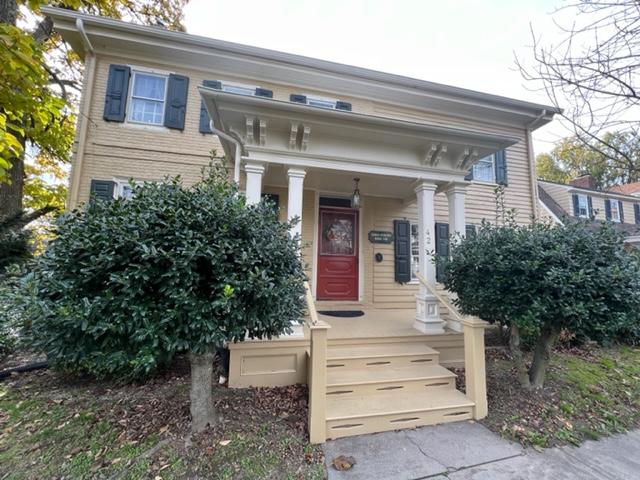
The Pilesgrove-Woodstown Historical Society at Christmas time
The old fashioned kitchen in the Historical Society
The upstairs bedroom at the Historical Society
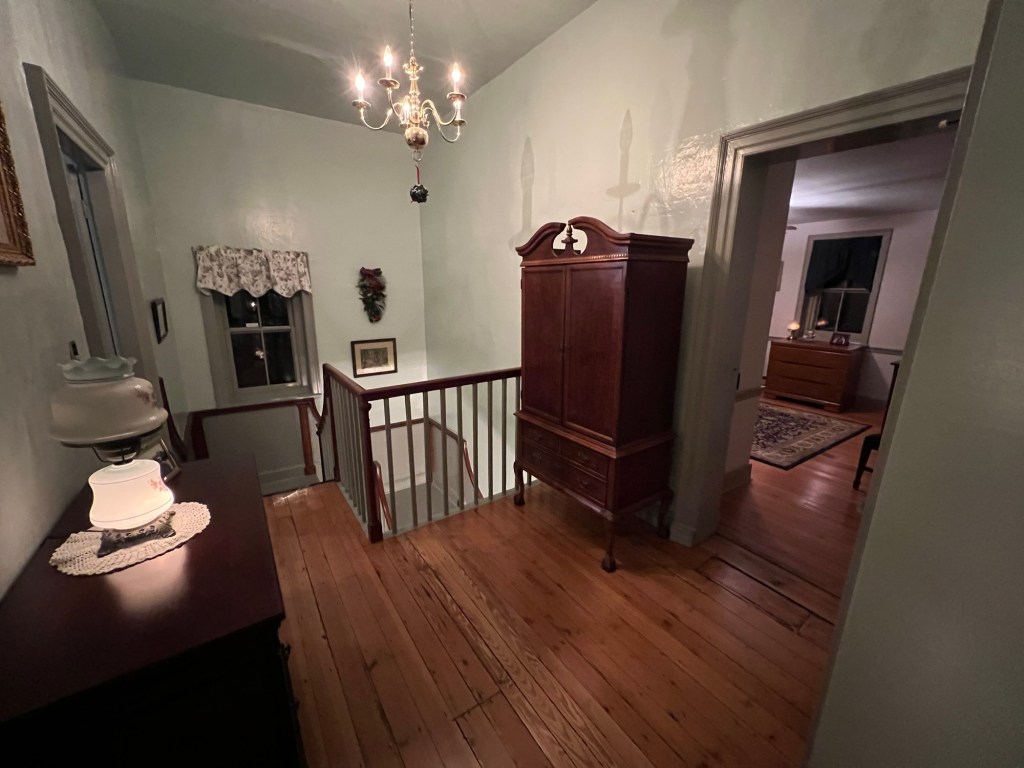
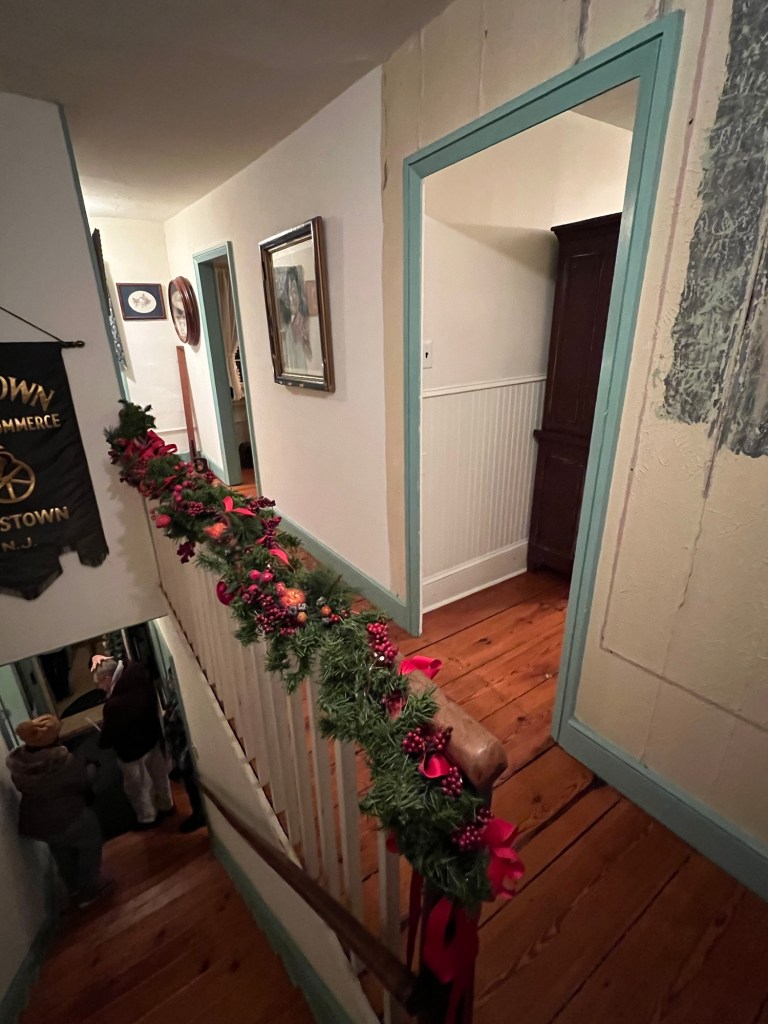
The upstairs decorated for the holidays
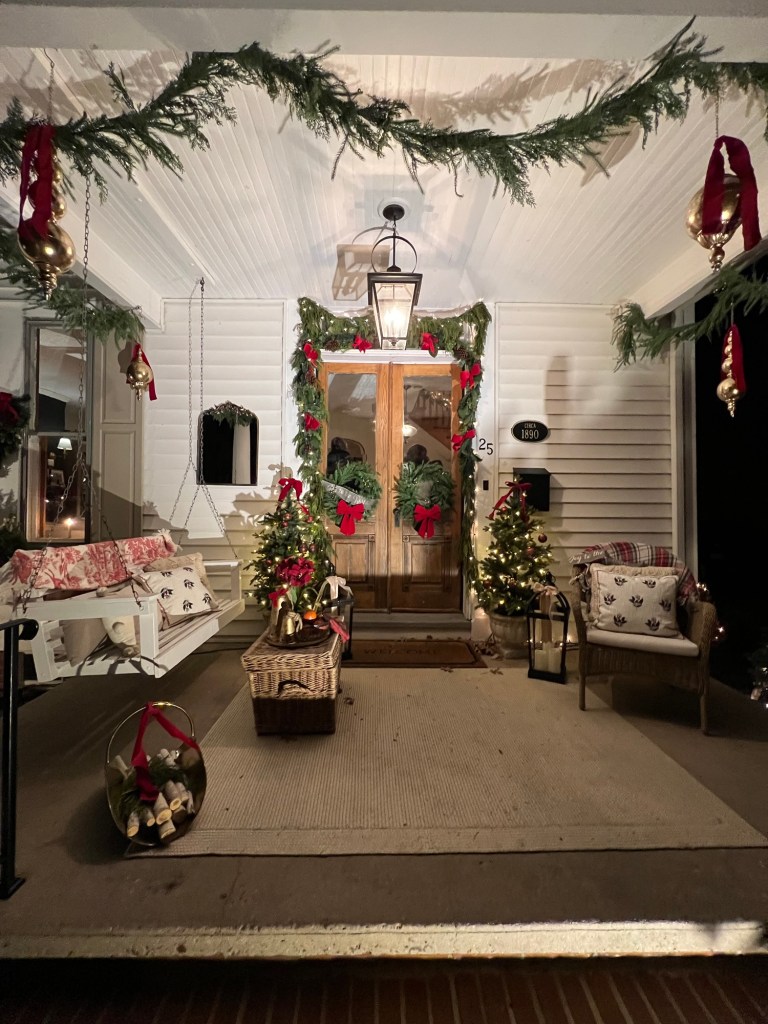
After I left the historical society, I had time for one more house before the evening ended and I made my way down to the Melissa Dolan House. The home was originally owned by the Presbyterian Church and had been the minister’s home with his wife. The house was built around 1890 and had some the original floors, fireplaces and pocket doors.
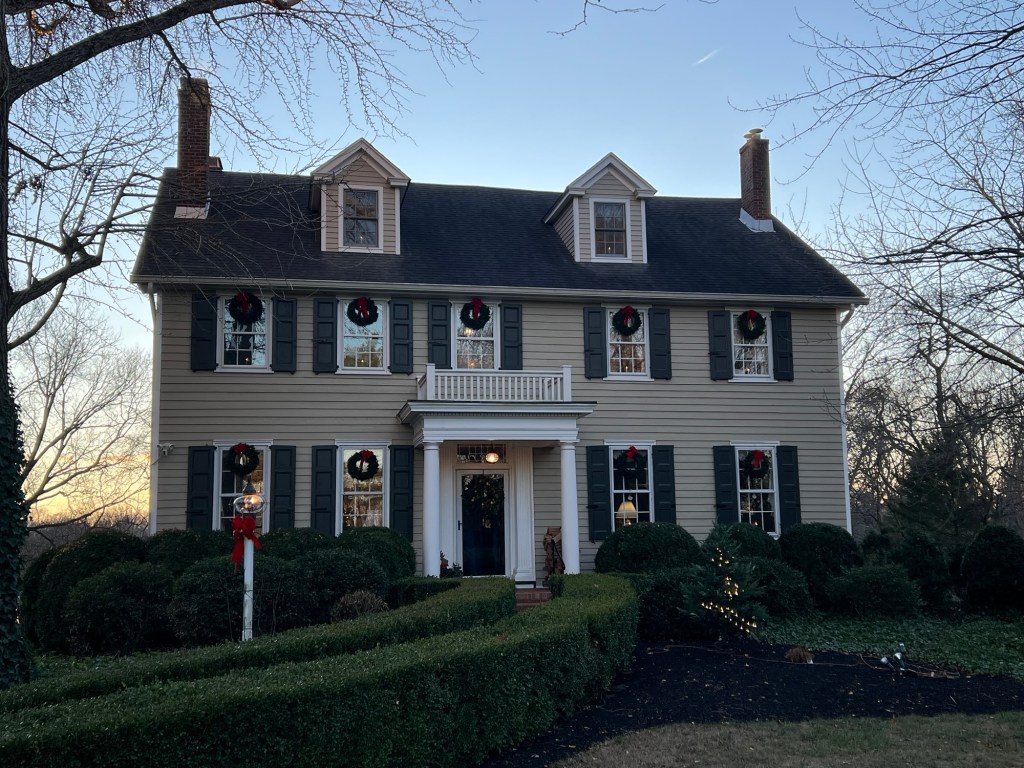
The front of the Dolan House at 25 Bowen Avenue
The beautiful Living Room during Christmas
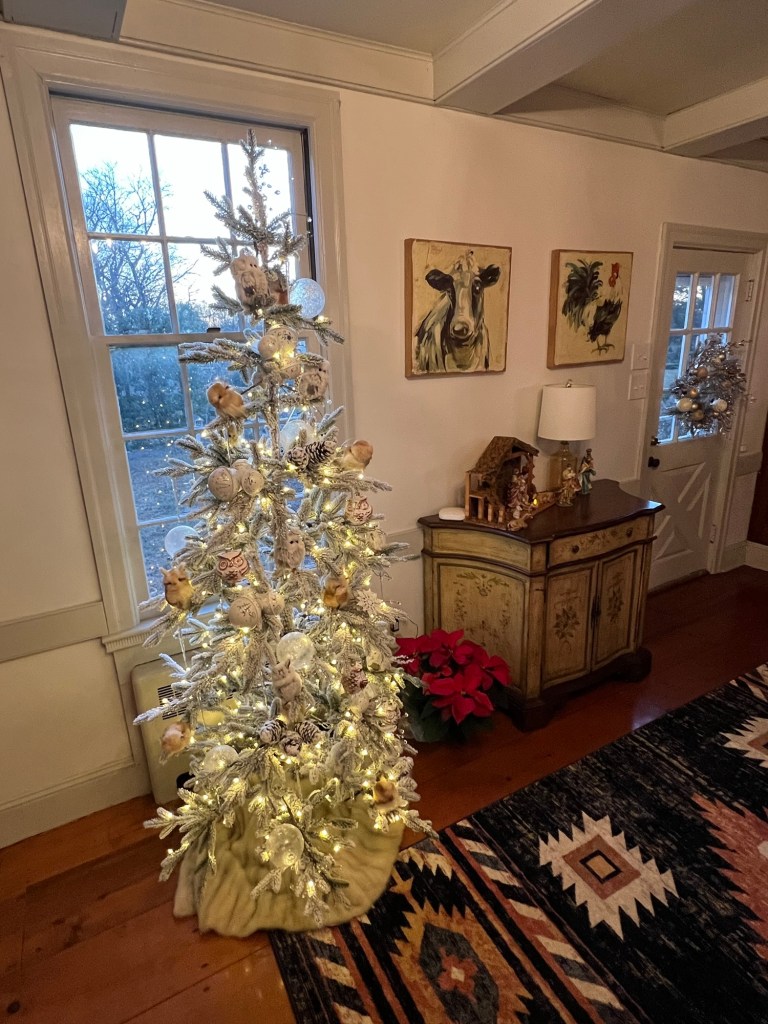
The Christmas tree in the Living Room
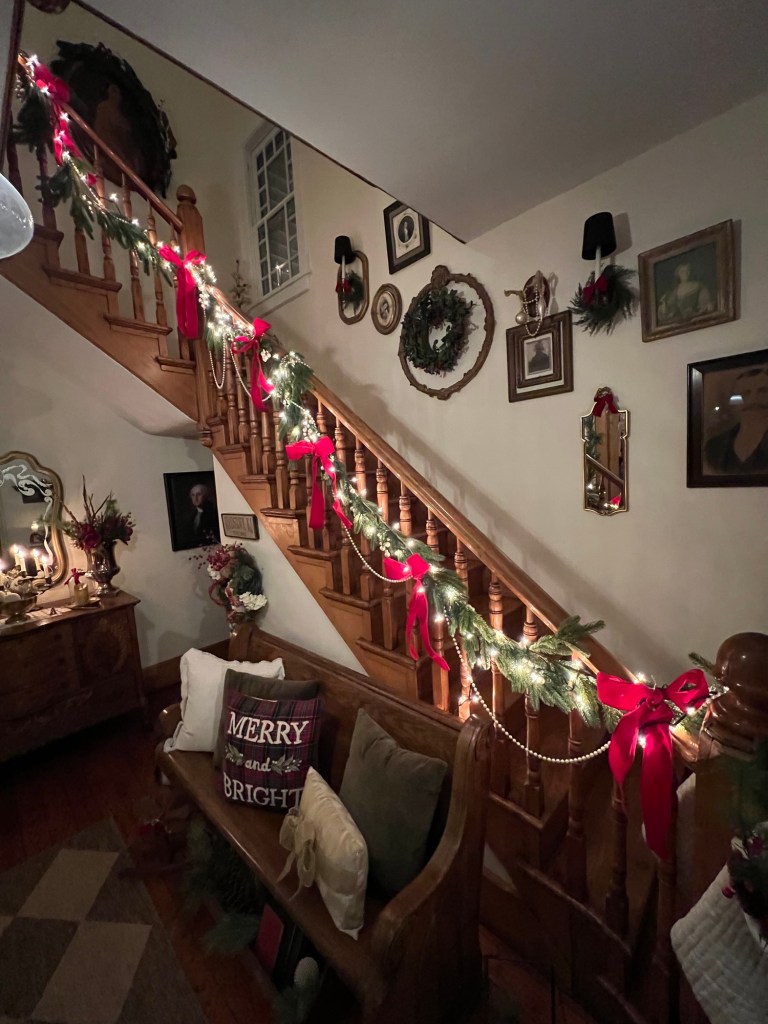
The banister decorated for the holidays
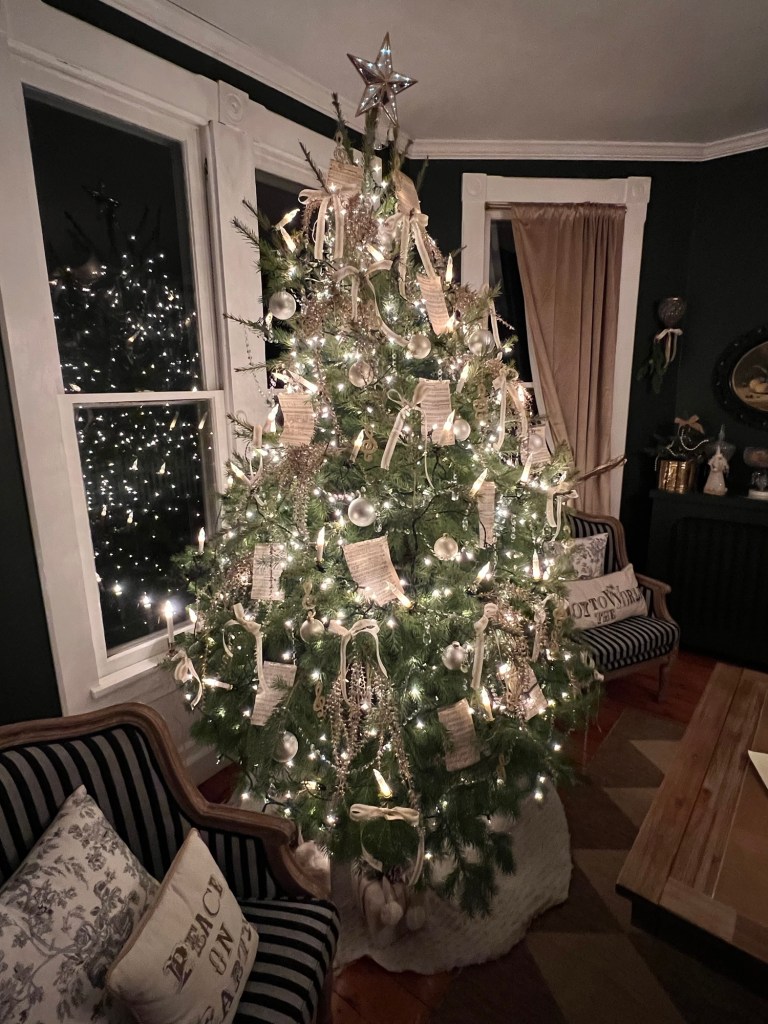
The Christmas tree in the back room of the home
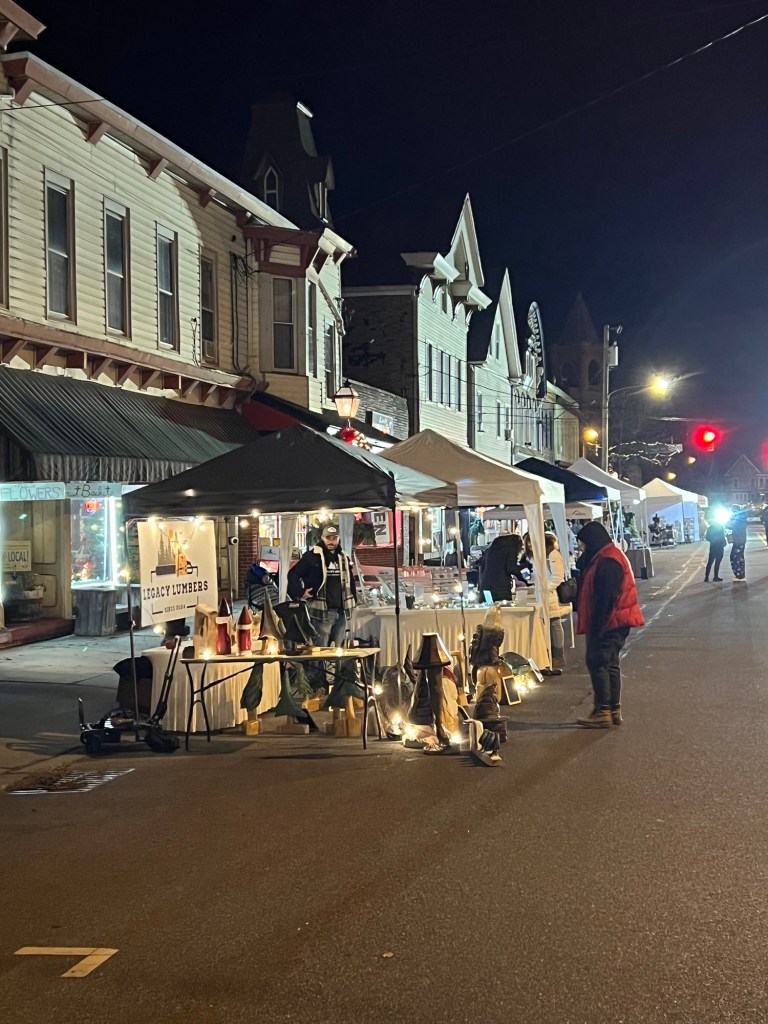
After the house tours were finishing up for the evening, I made my way back downtown and walked through the last of the vendors who were still open. At the Craft Market they had set up, there were vendors selling all sorts of gourmet foods like chocolate, ice cream and jellies plus all sorts of crafts. They stayed open to the last of the crowds still milling around until about 9:30pm.
I made my way back by one of the last busses back to the Creekside Inn and drove back to Salem for the evening. It was freezing by this point and I just wanted to relax.
The Craft Market in Downtown Woodstown, NJ
The Salem River Inn was really quiet when I returned around 10:00pm. I got a wonderful night’s rest and prepared for breakfast the next morning and the second house tour that would take place in Salem, NJ the next day.
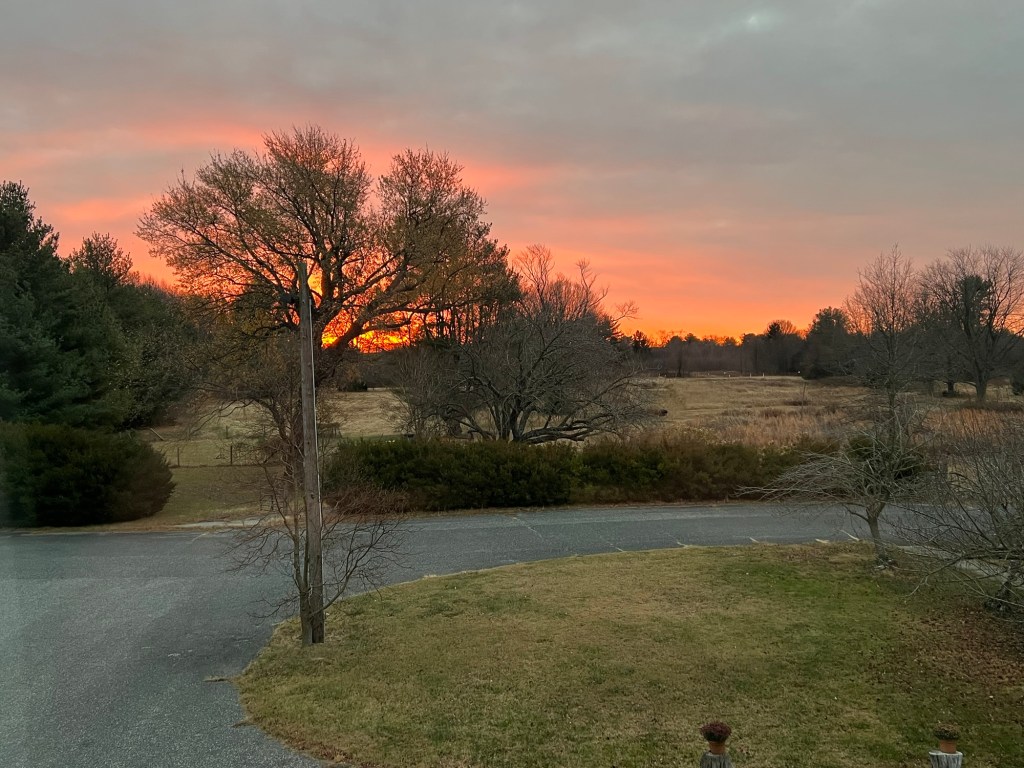
The sunrise view from the Meadow Room at the Salem River Inn
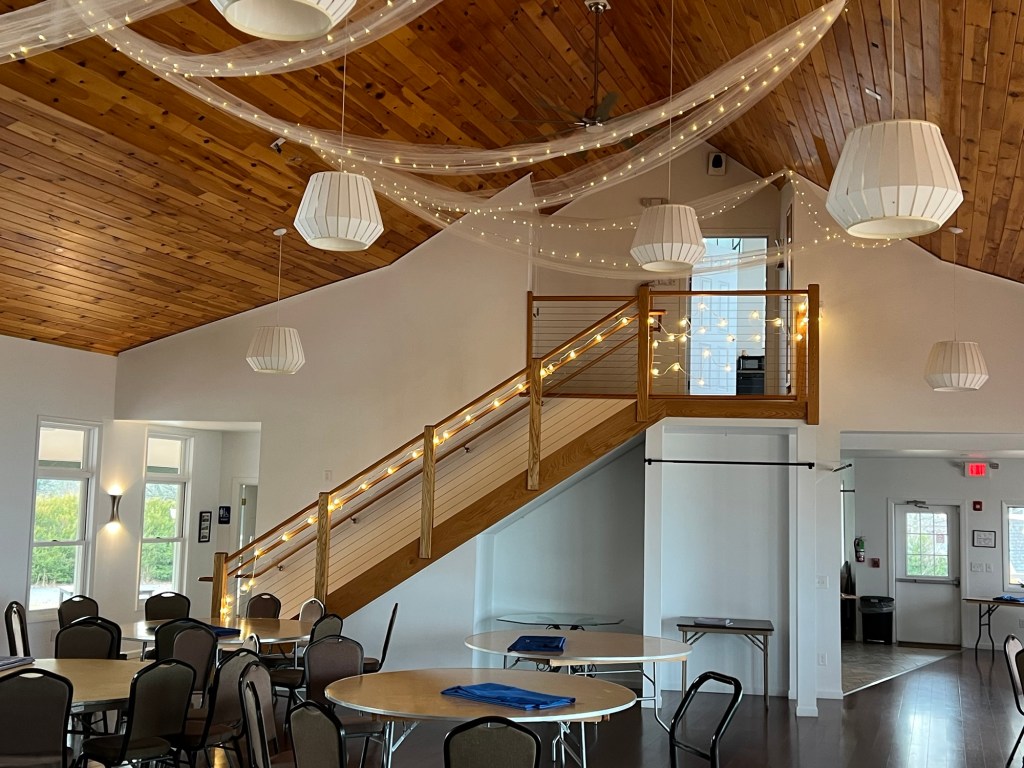
The decorations being prepared for a wedding the next day
Breakfast overlooking the Delaware Bay
Breakfast overlooking the patio
It was a nice way to end the event with a wonderful breakfast and a lot of good memories from the night before. Don’t miss visiting Woodstown and Pilesgrove at the Christmas holidays. It is a very special place to relax and enjoy the coming of Christmas.
The one thing I refuse to do on Father’s Day is to spend the day at the cemetery. I know that is some people’s idea of honoring one’s family members but it is not mine. I went on Friday and paid my respects to my father (whom this blog is dedicated to) and spent time remembering some of the good times we had in past. I dropped some cut flowers from our gardens (some of which he planted) and said a small prayer. Then I left.
My idea of honoring my father and spending Father’s Day with him is to do something that we would have shared together. We were always running around somewhere and exploring something new and doing something fun. That is how I wanted to honor him. By being active and giving him a toast at Sunday dinner.
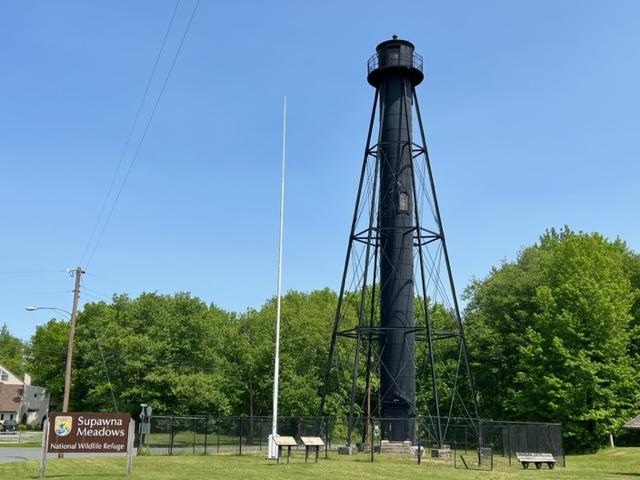
After touring Finns Point Lighthouse in the front of the park, I drove to the back of Fort Mott State Park to tour the rest of the park and explore the old fort. Talk about a real surprise and a a real treat. Talk about views of the Delaware River. On a sunny afternoon, the sun really reflects off the water and makes the most amazing light show.
I walked up the Parapet, the massive concrete wall that used conceal the guns that protected the bay and the river. It was a impressive piece of construction and you could see where the guns had been mounted. You could climb up and down the stairs to get from one part to the other and enjoy the views.
The gunnery
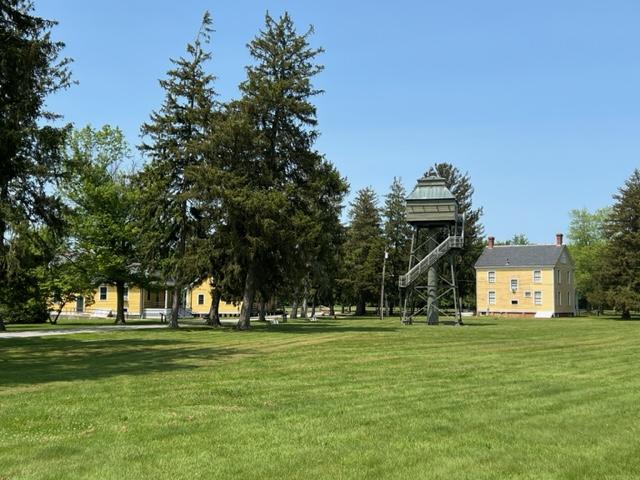
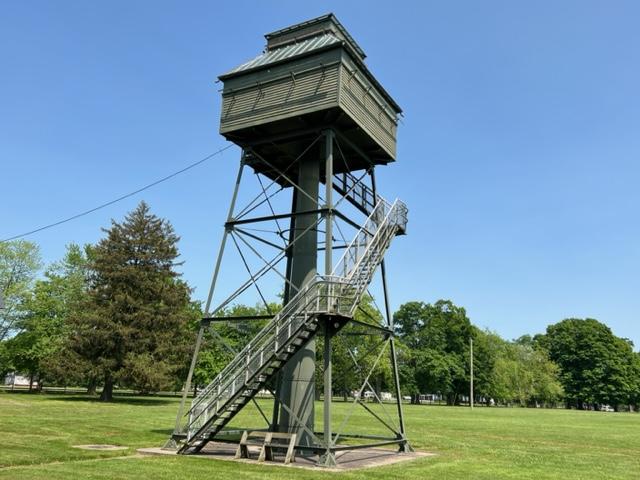
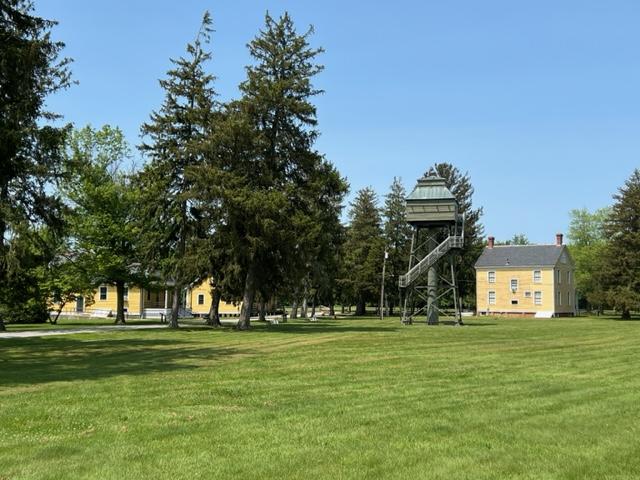
I passed the old Western Fire Control tower that was closed for the day and open by appointment only. That must have offered some spectacular views.
The Western Fire Control Tower
I then toured the Visitors Center and saw all the artifacts from the war, a timeline of the Fort and the history of the fort. Take time to look at each case and you will see how the fort developed, the types of things used at the fort and the people who were stationed here and their stories. It also offers bathrooms.
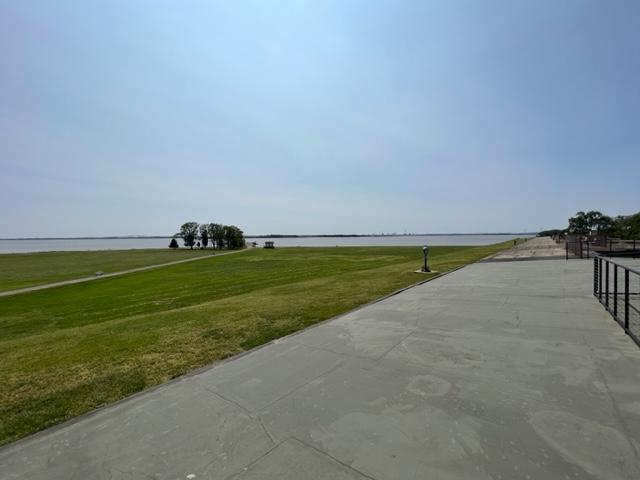
The best part of the Fort Mott State Park is just walking around the lawn and enjoying the sunshine and river breezes on a hot day. The blue skies with the sunshine gives you a sense that it was not just a place of protection but Mother Nature lending her hand to offer a spectacular location to just stop and wonder what would it been like if something happened here during the war. Would it withstood the assault?
The best part of the park is just to walk around the lawns and enjoy the river views.
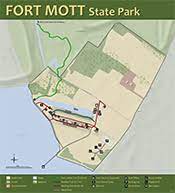
Map of Fort Mott State Park (NJ State Parks.org)
The History of Fort Mott:
(From the Fort Mott State Park Pamphlet-New Jersey Division of Parks and Forestry State Park Division)
Fort Mott, an Endicott-era fortification was built as part of the federal government’s late 19th century plan to defend the Delaware River. Today it serves as a state park where visitors can tour the remains of the historic fort. The cultural and historic features of this park and its recreational facilities provide a unique blend of activities for the park visitors.
The views from Fort Mott of the Delaware River
Fort Mott State Park is included as a point of interest on the New Jersey Coastal Heritage Trail. A Welcome Center for the trail accommodates displays defining Fort Mott’s place in history and the maritime environment. Fort Mott State Park is on the Delaware River at Finn’s Point in Salem County, New Jersey. This 104-acre park is six miles south of the Delaware River Memorial Bridge, off New Jersey Route 49.
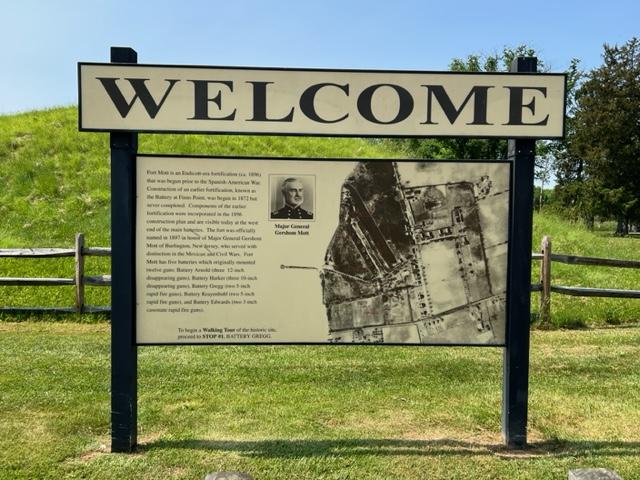
The Finn’s Point Reservation was purchased by the United States Government in the late 1830’s. Originally called “The Battery At Finn’s Point”, the proposed fortification was one of a three-fort plan to protect growing industries and shipping along the Delaware River. Plans for Finn’s Pint specified eleven-gun emplacements with twenty guns and a mortar battery with six complacements. With Fort Delaware on Pea Patch Island in operation since the early 1820’s and the nation involved in the Civil War, the construction of the Battery at Finn’s Point was delayed until 1872. At that time, only two-gun emplacements and five magazines in the mortar battery were completed before construction was halted due to budgetary constraints.
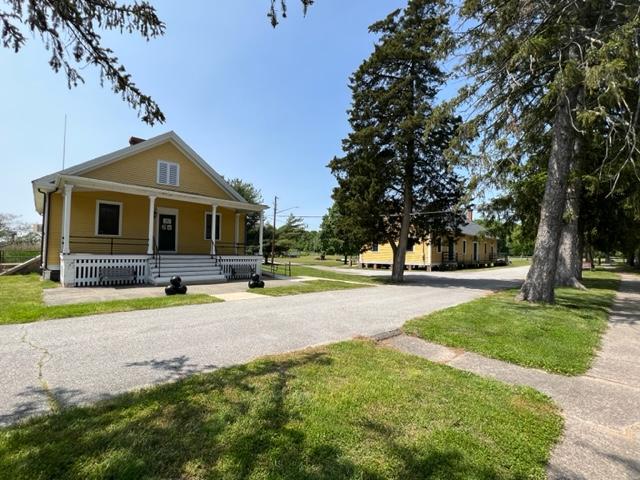
The headquarters buildings
With advancements in military technology made during and after the Civil War, the United States defenses were dangerously inadequate. In 1885, President Grover Cleveland, at the request of Congress, appointed the Endicott Board, named after its Chairman William Endicott, the Secretary of War. The board, which consisted of both military men and private citizens, studied the existing coastal defenses and developed a coastal defense plan for the United States. This plan determined where defenses and developed a coastal defense plan for the United States. This plan determined where defenses should be built or improved, the order in which the work would proceed, the quantity and type of guns that would be placed at each fort and other considerations.
The signage
The main defense concept of the Delaware River was dispersion of armaments into three separate fortifications. The original plan for the Battery at Finn’s Point was abandoned and construction of new fortifications began in 1896 in anticipation of war with Spain, the Spanish-American War. This fortification was officially renamed Fort Mott on December 16th, 1897, to honor Major General Gershom Mott. Mott, a native of Bordentown, NJ was a decorated veteran of the Mexican American and Civil Wars. Fort Delaware was upgraded, and construction of Fort DuPont began during this same time period.
The signage
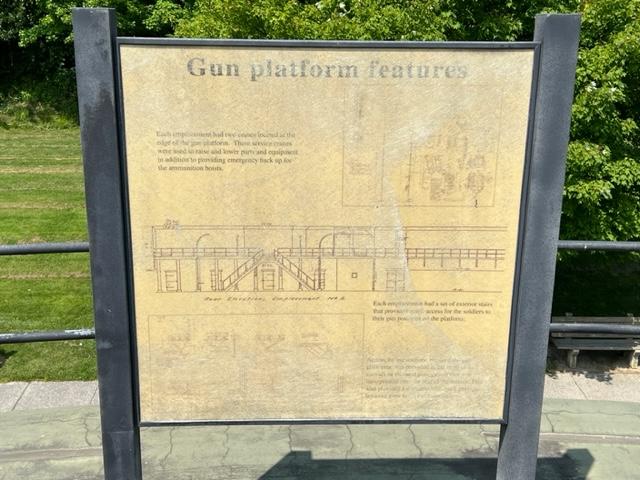
At Fort Mott, large caliber weapons, three 10 inch and three 12-inch guns were installed on disappearing carriages. The gun emplacements were located behind a 750 foot long and 35-foot-thick concrete and earthen embankment, which was sloped to form the ‘parapet’ wall. These guns had an effective range of seven to eight miles and shot projectiles that weighed 617 and 1000 pounds respectively. Beneath the six-gun platforms were powder and shell magazines, ammunition hoists, a telecommunications system and an electric generating station. Two batteries each with 5-inch rapid fire guns and one battery with two 3-inch rapid fire guns were also part of the defenses, designed to counter fast moving smaller warships which might evade the large caliber guns. They also protected the fort from potential land attack. Fort Mott was a completely modern installation for its time period.
The Fort Mott headquarters
Two steel control towers were later built to improve aiming of the guns. Observers stationed in the towers, in conjunction with plotting room personnel, directed the gunfire of the 10 inch and 12 inch guns. The tower near the river on the northern end of the emplacement was built in 1902 and was used to aim the 12 inch guns of Battery Arnold. The tower near the park office was built in 1903 to help aim the 10 inch guns of Battery Harker.
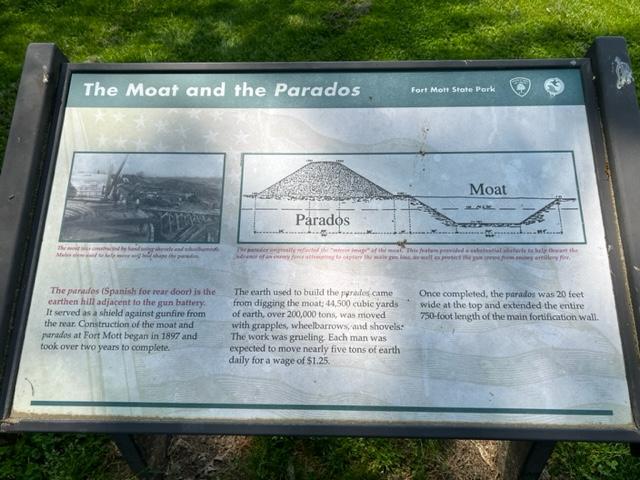
Behind the main emplacement are the parados and the moat. ‘Parados’ is Spanish for rear door. These provided the rear defenses for the fort. The parados was constructed using the fill from the moat. Landscaping around the military reservation helped camouflage Fort Mott from attack by potential enemy ships.
Fort Mott was self-contained military community. The post had over 30 buildings, including two large barracks, non-commissioned and officer’s housing, a hospital, a post exchange, a library, a guard house, a stable, YMCA and a school for the soldier’s children. The Delaware River was the main transporation infrastructure for Fort Mott; munitions, supplies and construction materials arrived at the fort by barge.
WIth the construction of Fort Salisbury near Milford, Delaware shortly before WWI, Fort Mott, Fort Delaware and Fort DuPont became obsolete. The three forts remained active defense installations until after WWII, when they were phased out. Troops were regularly stationed at Fort Mott from 1897 to 1922. The federal government maintained a caretaking detrachment at the fort from 1922 to 1943. During this time, Fort Mott’s guns were dismantled and sent to various locations.
Visiting Fort Mott
Fort Mott was declared “surplus property” in 1943. Finn’s Point National Cemetery (dedicated a National Cemetery on October 3rd, 1873 because of the Confederate prisoners of war buried there) was separated from Fort Mott at that time. In 1947, the State of New Jersey purchased Fort Mott, as a historic site from the federal government. On June 24th, 1951, it was opened to the public as Fort Mott State Park.









 Visiting a Museum: The Unique, Unusual, Obscure and Historical