
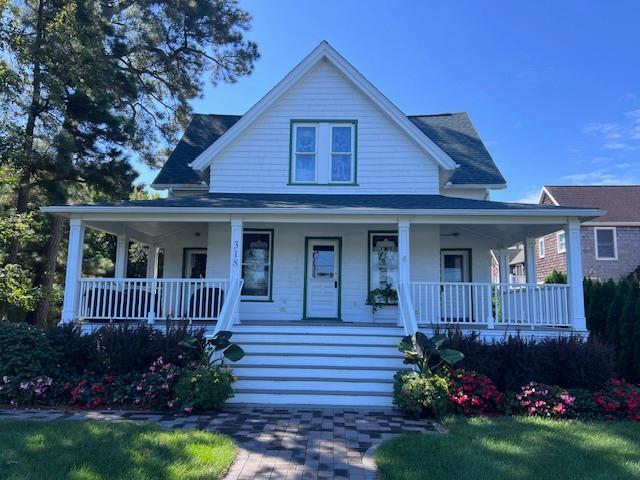
Dinker-Irvin Museum
318 Garfield Parkway
Bethany Beach, DE 19930
https://www.townofbethanybeach.com/110/Town-Museum
https://en.wikipedia.org/wiki/Dinker-Irvin_House
https://visitsoutherndelaware.com/listing/bethany-beach-dinker-irvin-museum
My review on TripAdvisor:

The front of the museum
History of the Museum:
(from the museum website)
Located across from Central Park at 318 Garfield Parkway, this beautifully restored cottage offers visitors an immersive experience of an historically significant early 1900’s home and a glimpse of what life was like during the early days of the town. It is one of the few remaining original cottages in Bethany Beach and the oldest public building in town. It served as a U.S. Post Office from 1922-25.

The sign in the front

The historic sign

The backyard of the home
I arranged a personal tour with members of the Board of the Dinker-Irvin House Museum and I got to see one of the few remaining shore homes from the turn of the last century.
The Virtual tour of the Museum
Sneak Peek view of the museum
The History of Bethany Beach
The Dinker-Irvin House is an example of early beach living on the Delaware coast. This small home was just enough space for a family to live comfortably at the shore for the summer season before and after it was a religious retreat.

The antiques of the time period in the front entrance
This interesting little shore home shows life in early Bethany Beach similar to the development of shore communities up and down the Eastern seaboard first as religious retreats then with the changes of the modern work week with leisure travel.
The history of the cottage:

The background of William Dinker, the original owner of the home

Mr. Dinker’s family history. The house was first owned by the Dinker family and then the Irwin family.
The Irwin family history

The second family, the Irvin’s buys the home

The history of the development of the museum
The front of the museum building was dedicated to the history of beach life in Bethany. This was complete with bathing outfits and the history of swimming for pleasure. One covered up at the shore to show respect and modesty.

The bathing costumes from the turn of the last century

Life at the beach
Swimming at the shore would change a lot in the next 100 years.

Life Guard uniform
The modern life guards were developed in response to the increasing tourism and modern ocean swimming. In 1942, the beach community got its first female life guard, Marjorie Townsend Bramhall Slaughter. Her two sons would follower her into the profession.

The first female life guard in Bethany Beach
The start of tourism in Bethany Beach started first with ship then by rail and then by car. As the modern highways brought more people to the shore, the town continued to progress.

Early tourism and travel to Bethany Beach
The kitchen was original to the house and some of the original items to the home are on display. As small as the house was meals were still a serious affair at the shore. Fresh fish, fruits and vegetables were all available at farm stands as they are today.

The kitchen of a beach town

The kitchen of a beach home

The ice box of the turning of the last century

The hand pump

The kitchen items, foods and recipes
The kitchen provided a look of what was in the pantry at the time. The kitchen even included recipes for meals that would have been popular at the time.

The house served as the post office at that time
The house once served as the post office for the community.

The collection travel postcards in the museum’s collection. This shows the progression of working people at the time and how leisure travel became popular first with the railroads and then by car.

The Horse Racing in the area

The Chautauqua Assembly records on display

The development of religious communities at the beach
The museum gives a glimpse of the past of this diverse beach community from its development as a religious retreat to its development as the modern resort of today.
 Visiting a Museum: The Unique, Unusual, Obscure and Historical