
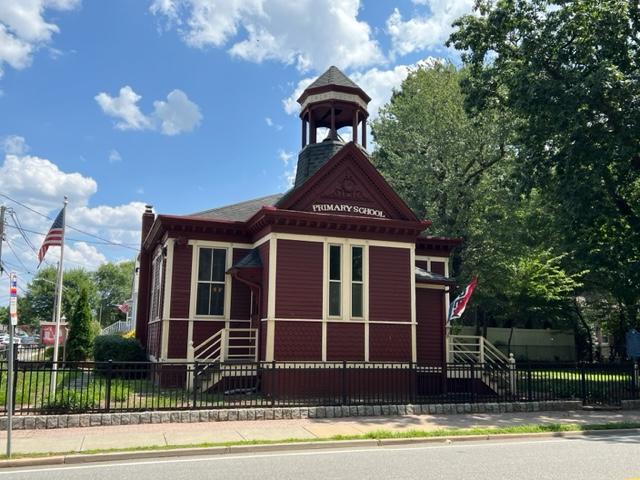
Little Red Schoolhouse Museum of Lyndhurst, NJ at 400 Riverside Drive
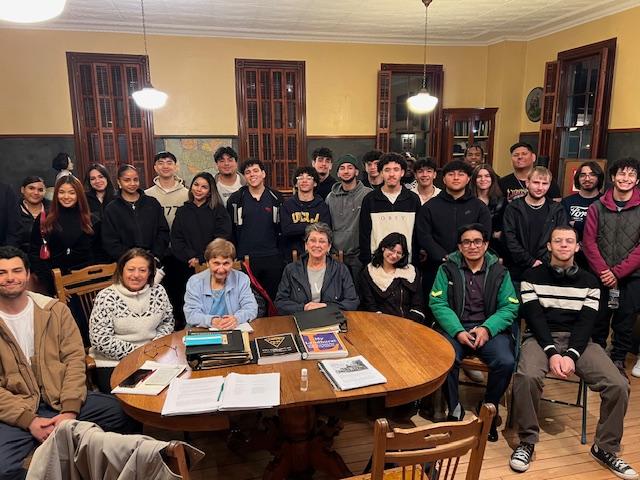
The Bergecco-Parc Consulting Inc. Lyndhurst Team the night of the visit.
Discovering hidden historical and cultural gems in Manhattan & Beyond
Tag: BergencountyCaregiver.com
Little Red Schoolhouse Museum of Lyndhurst, NJ at 400 Riverside Drive
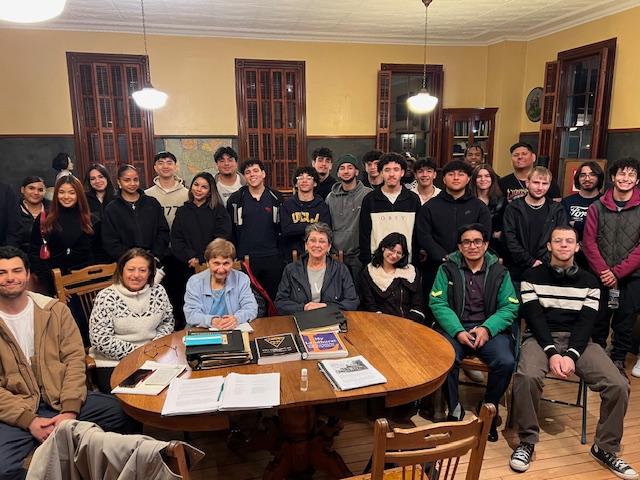
The Bergecco-Parc Consulting Inc. Lyndhurst Team the night of the visit.
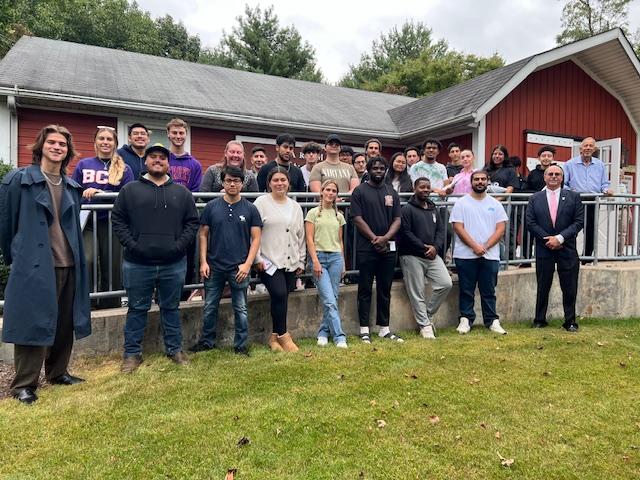
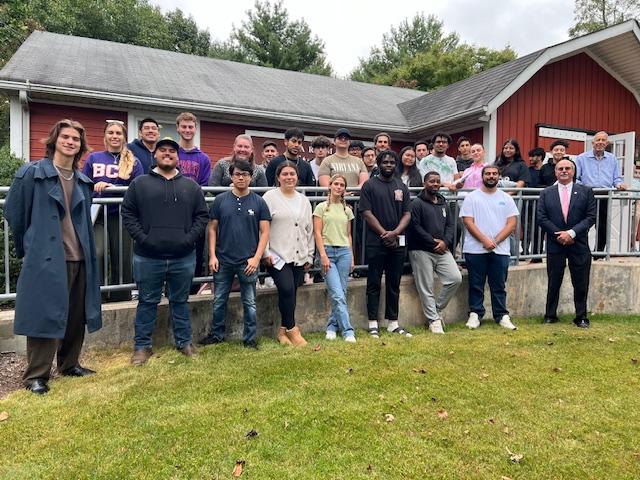
Our Corporate Team Picture at the Behnke Museum
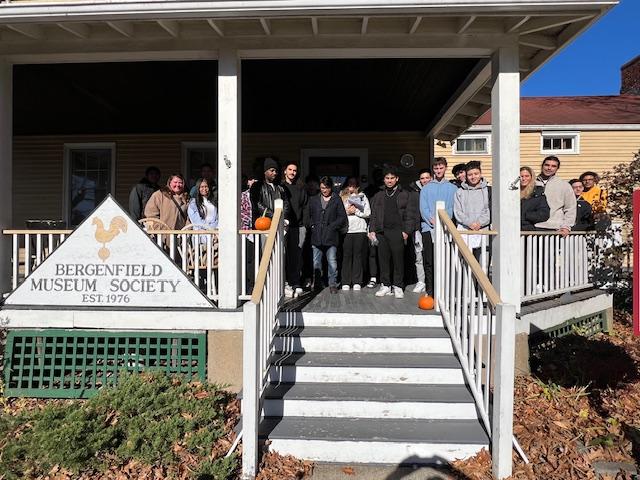
Our Corporate picture at the Bergenfield Museum
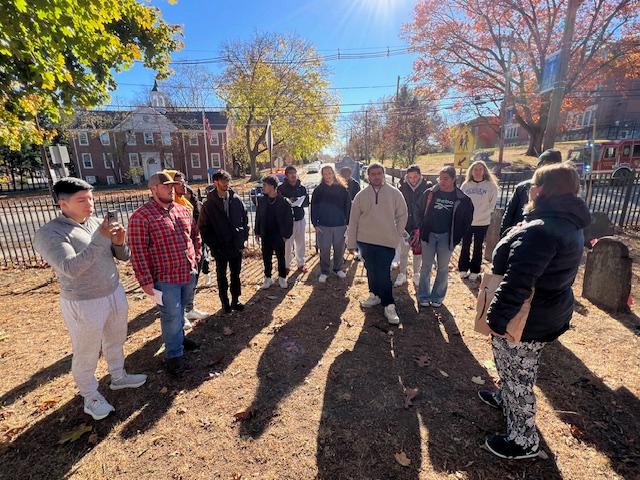
Our Corporate picture at the South Presbyterian Church graveyard while on the tour of it.
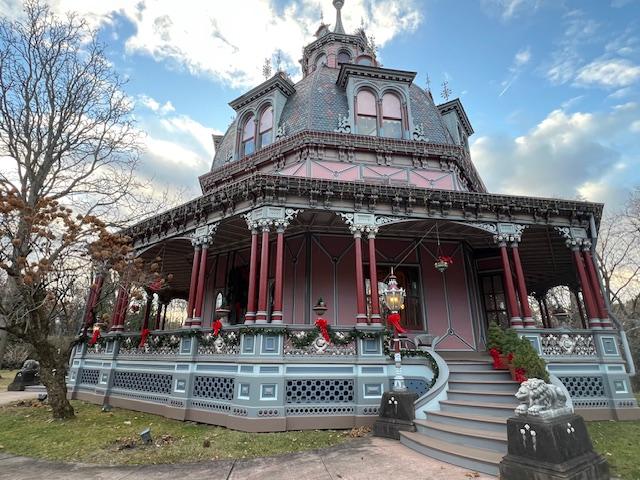
The Armour-Stiner Octagon House
45 West Clinton Avenue
Irvington, NY 10533
(914) 817-5763
https://en.wikipedia.org/wiki/Armour%E2%80%93Stiner_House
Hours: Sunday-Saturday Seasonal please check their website
Admission: Depends on the Tour/Times of the year-Please check the website
My review on TripAdvisor:
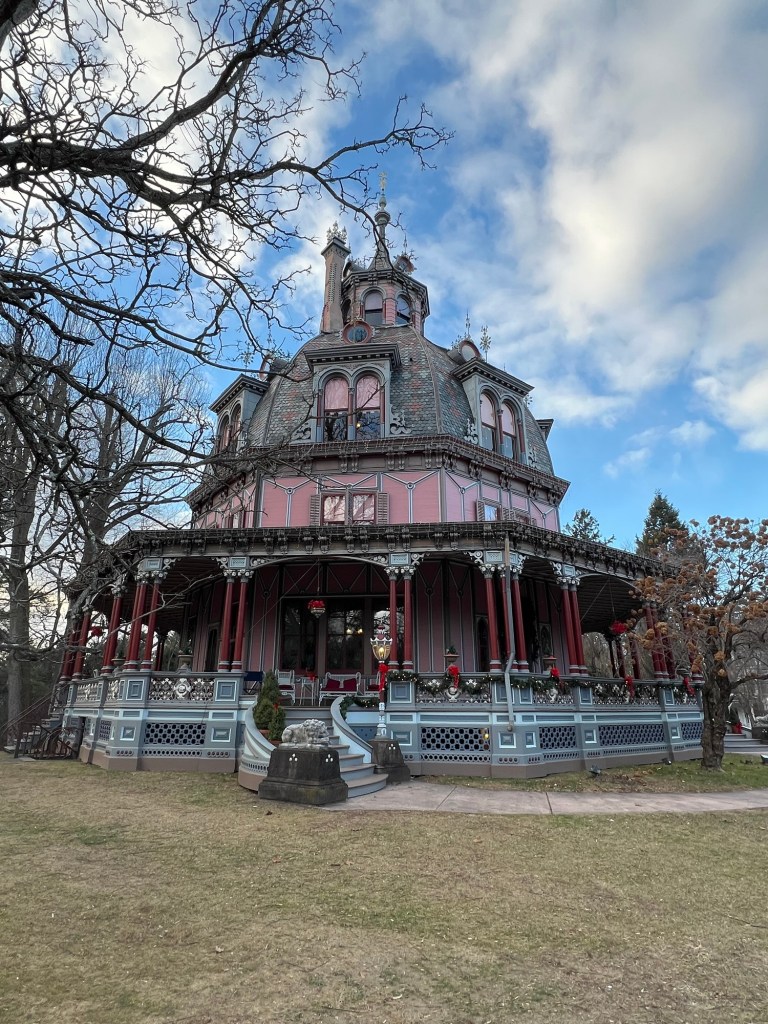
The outside of the house during the Christmas holidays
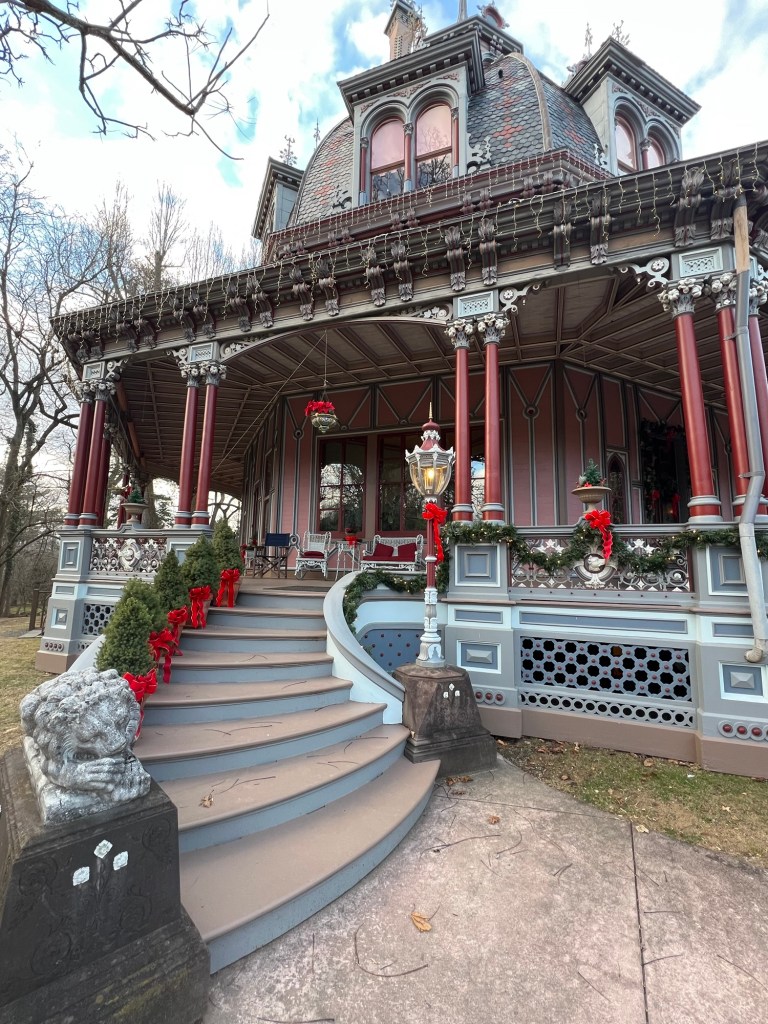
The outside of the house decorated for Christmas
The tour of the Amour-Stiner Octagon House was so amazing. The house was decorated to the hilt for the Christmas holidays but done tastefully and not over the top. All the decorations enhanced the house and its beauty.
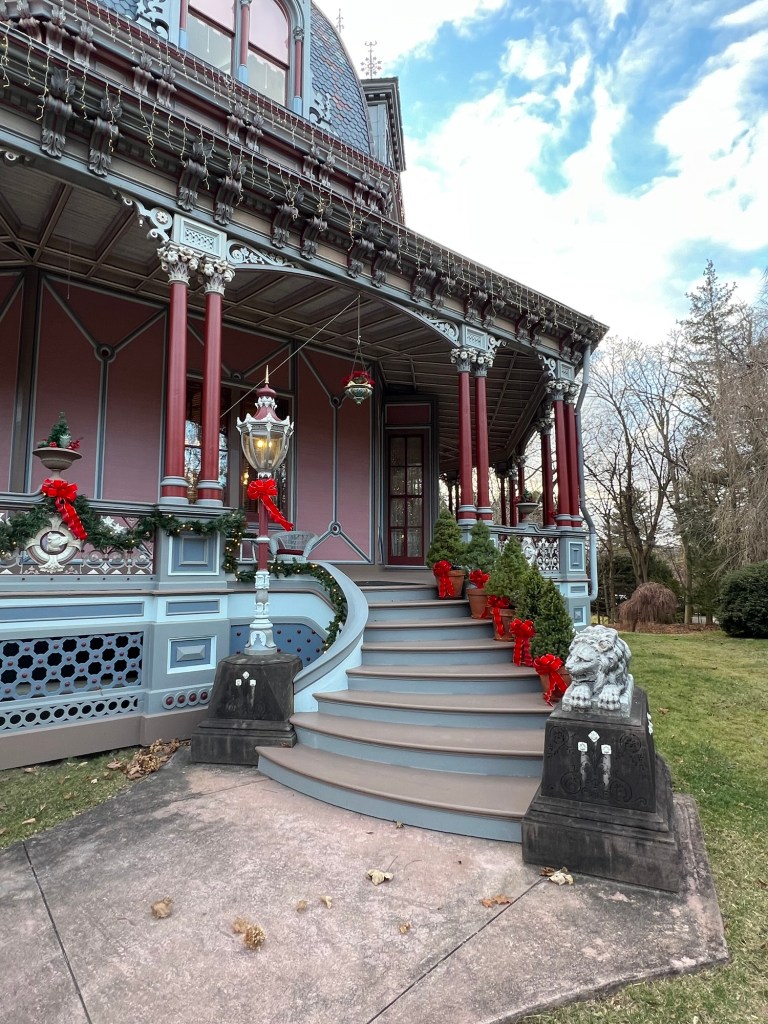
The other side of the porch decorated for Christmas
History of the House:
(From the Visit Westchester County blog):
The Armour-Stiner Octagon House is one of the most visually unique homes in the world. It is the only known residence constructed in the eight-sided, domed colonnaded shape of a classic Roman temple. The Octagon House was originally built in the 1860s following the precepts of Orson Squire Fowler, a phrenologist, sexologist, amateur architect and author of The Octagon House, a Home for All. Fowler advocated octagonal instead of rectangular houses on the supposition that the shape enclosed more space, created rooms which received more sunlight and had greater accessibility to each other (Visit Westchester blog).
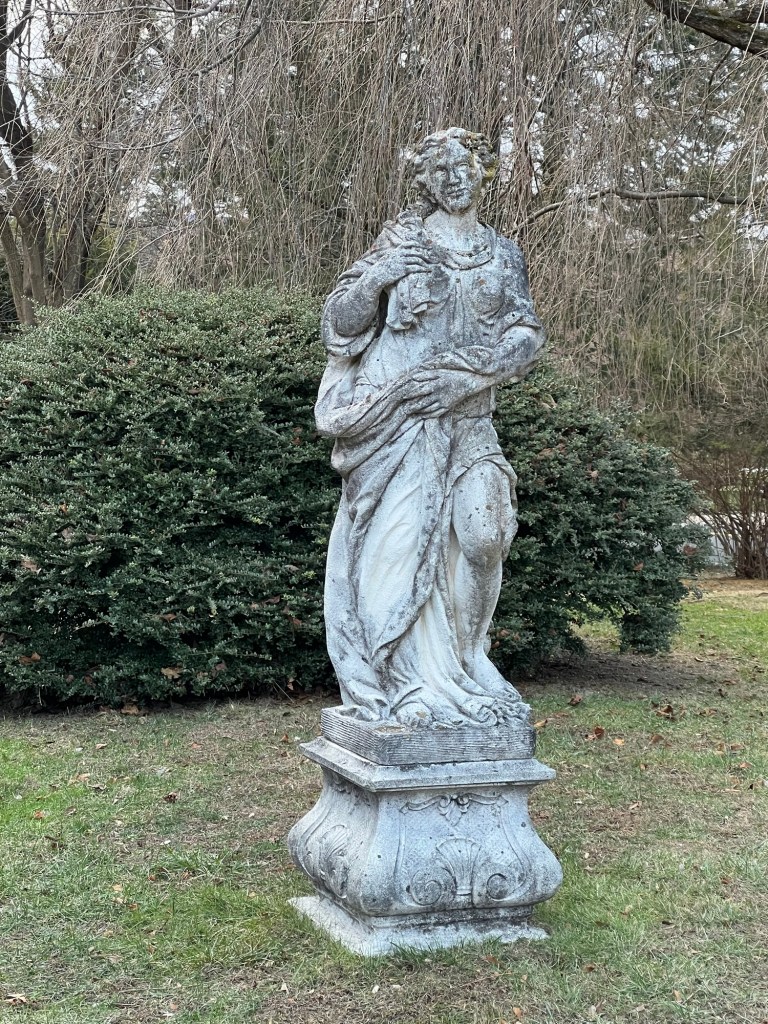
The statuary in the yard
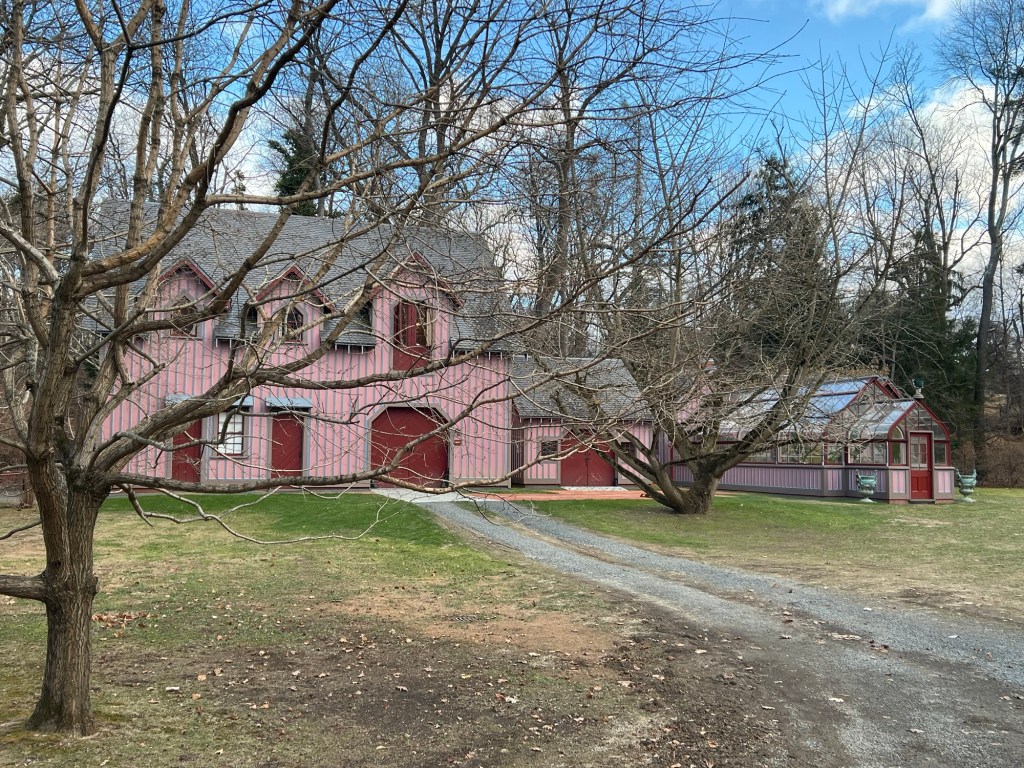
The carriage and greenhouse on the yard
The family currently live in the Carriage House and use the Greenhouse so these were not in the tour.
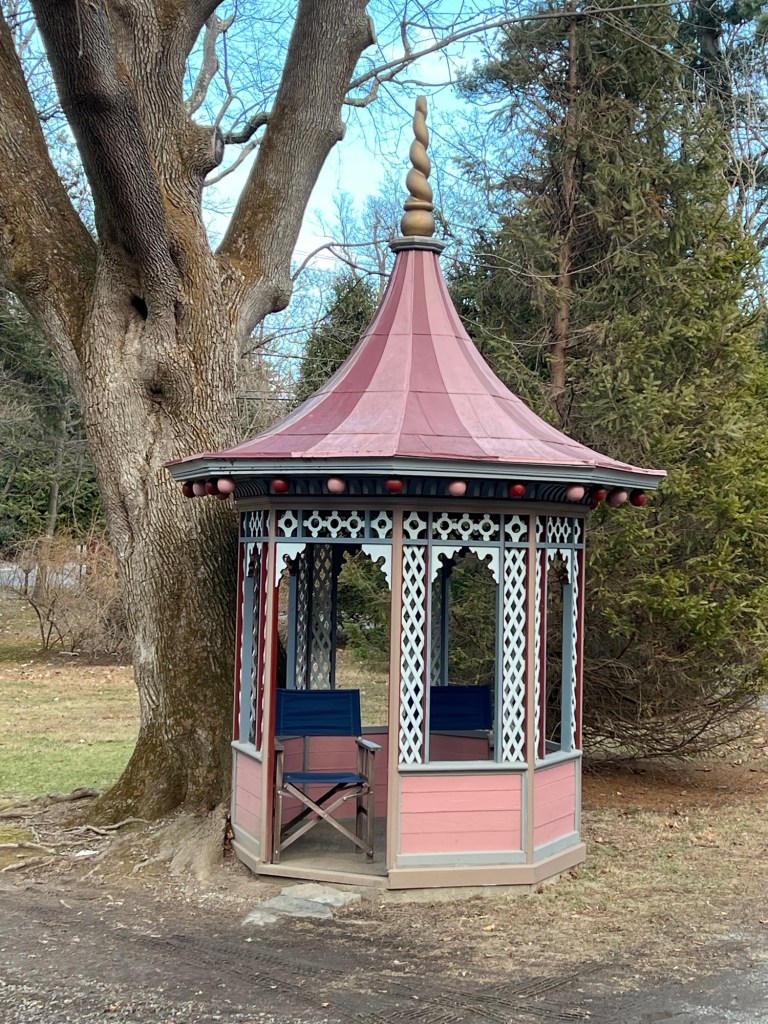
The Gazebo in the front yard
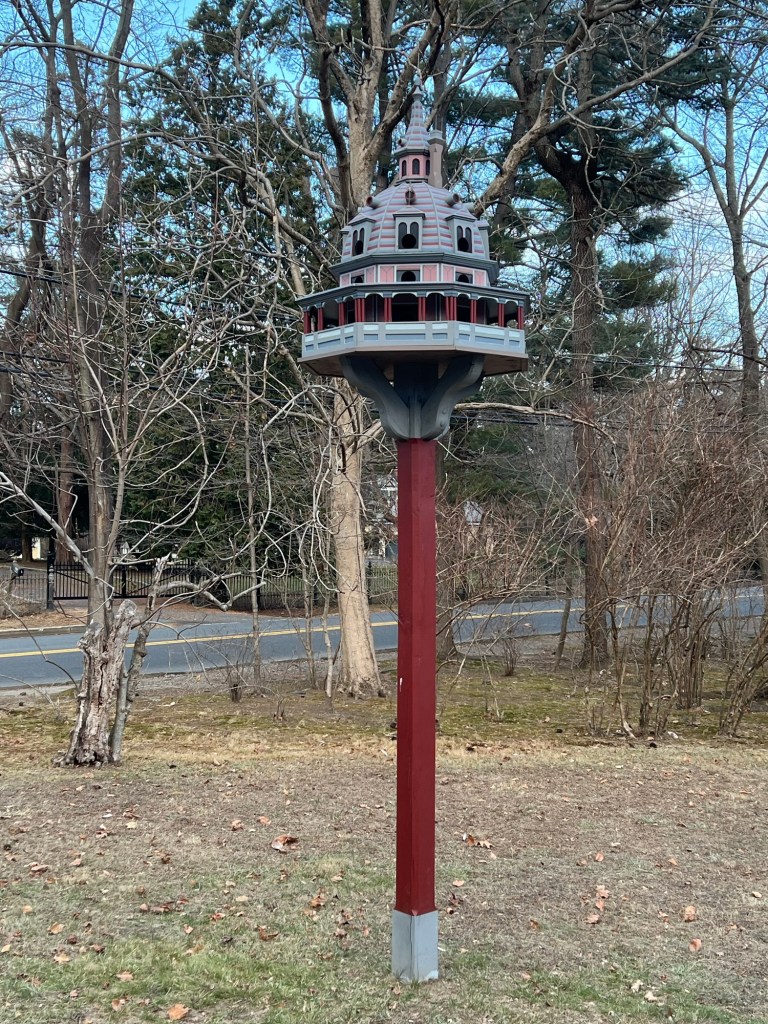
The Birdhouse that looks like the house
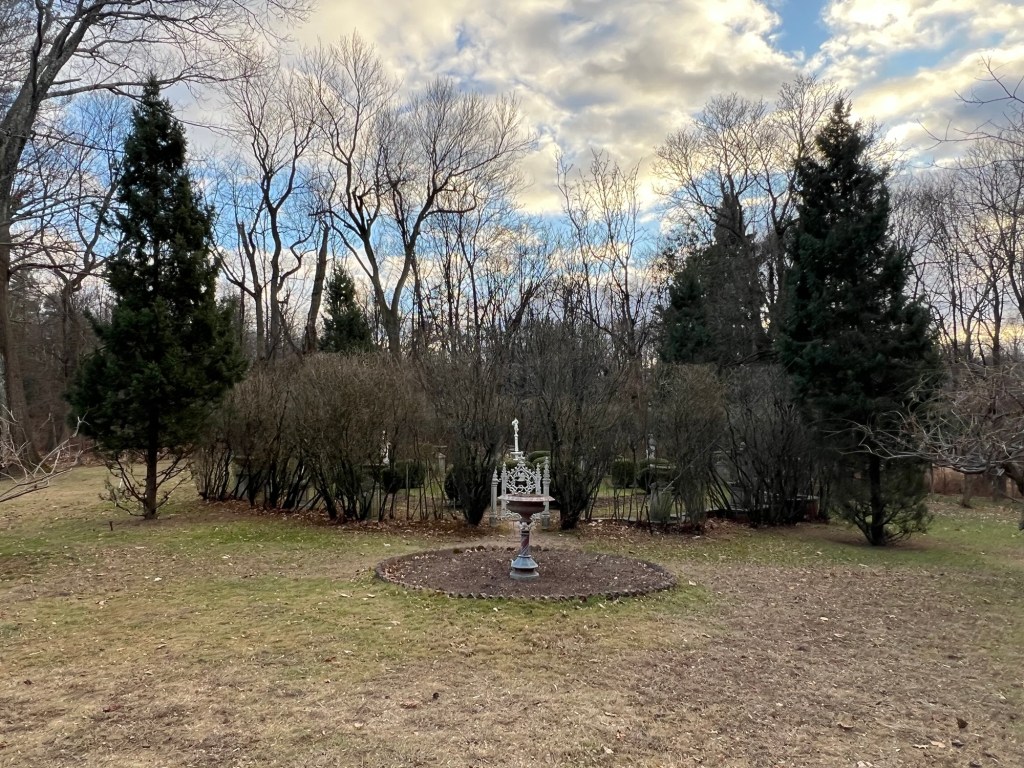
The formal gardens that are dormant this time of year
The grounds will be amazing when the Spring comes and everything is in bloom.
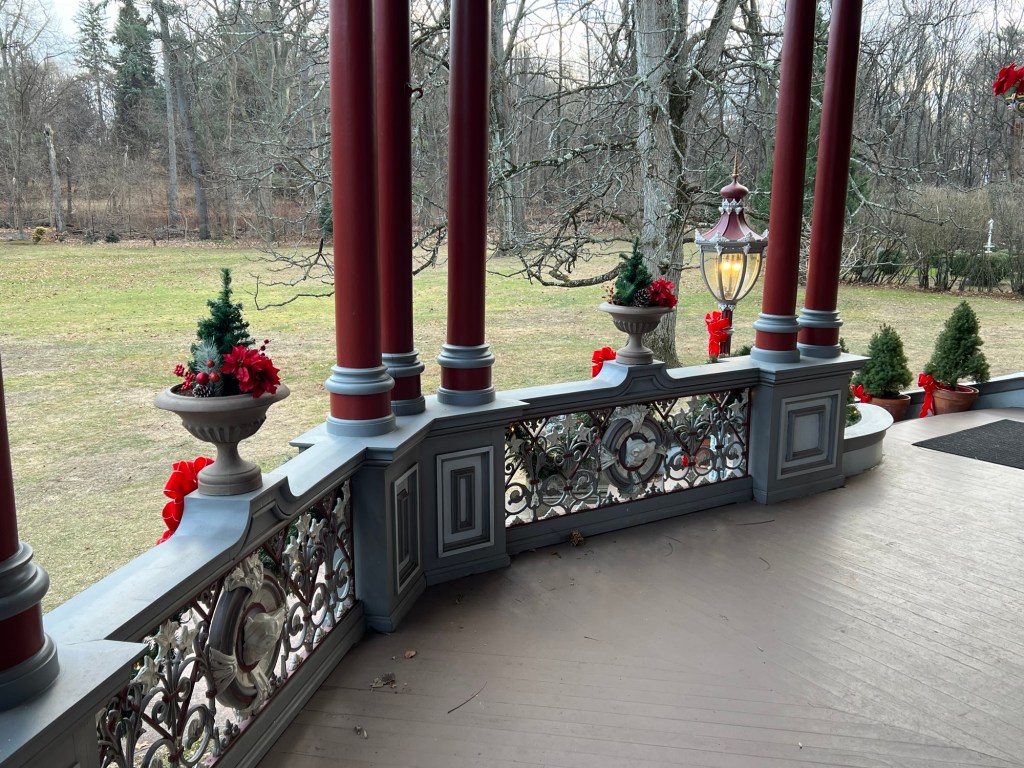
The porch was so beautifully decorated for the holidays
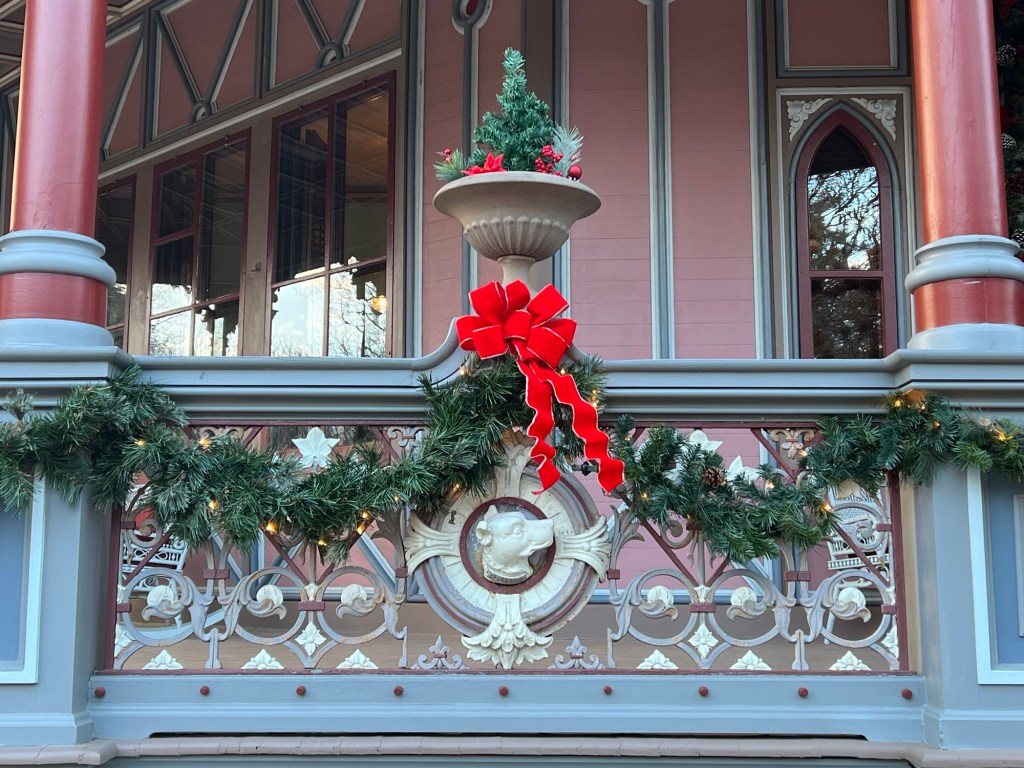
The railing for the porch
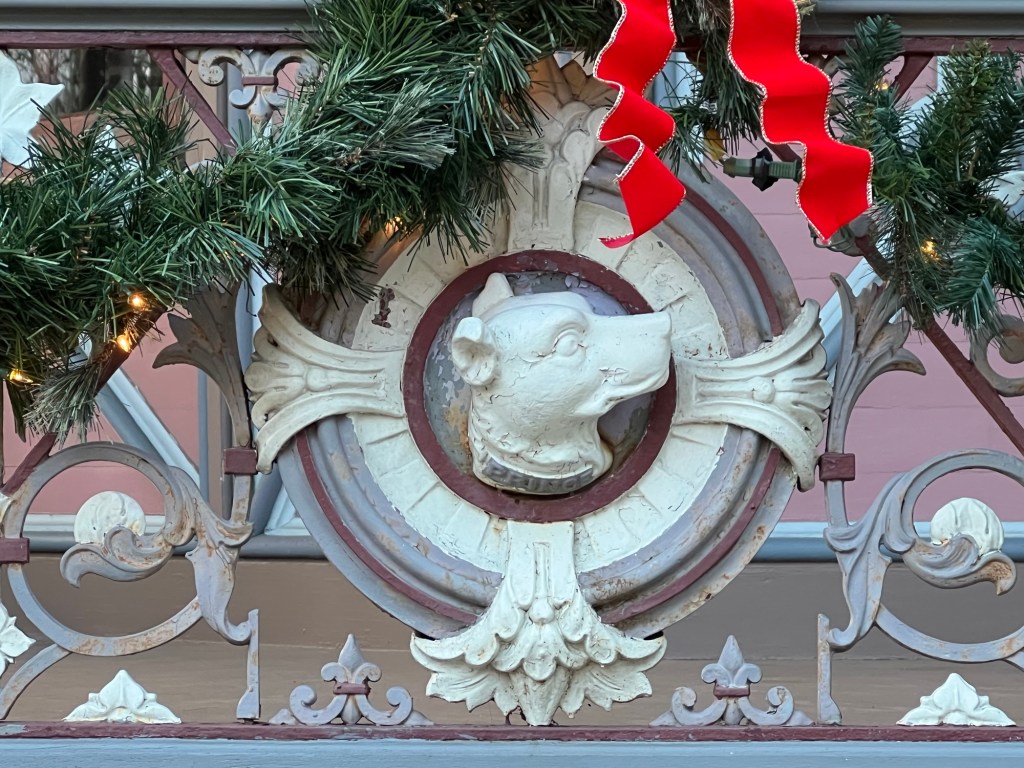
The insignia of the porch
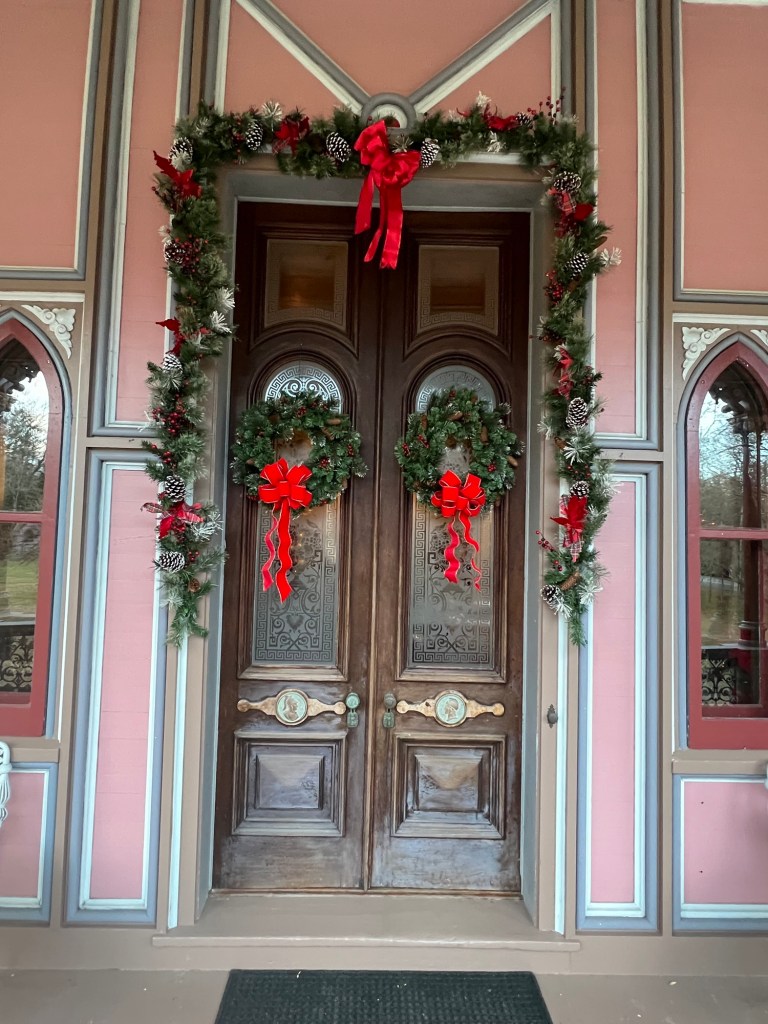
The front door so beautifully decorated for the holidays
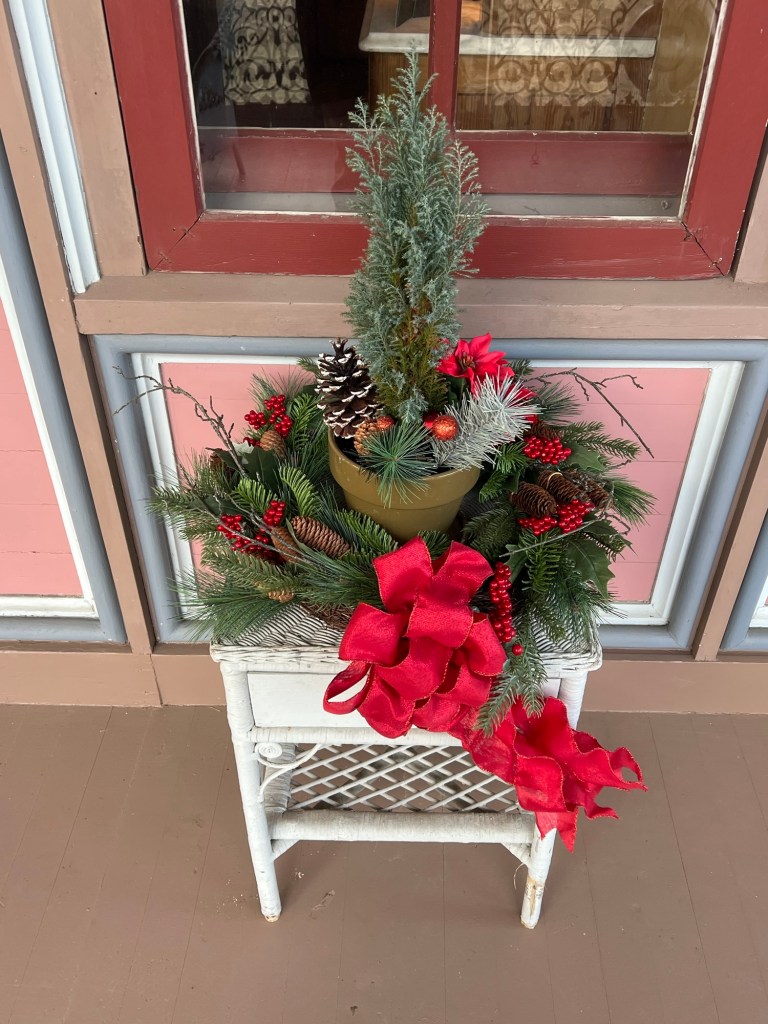
The planter decorations around the porch
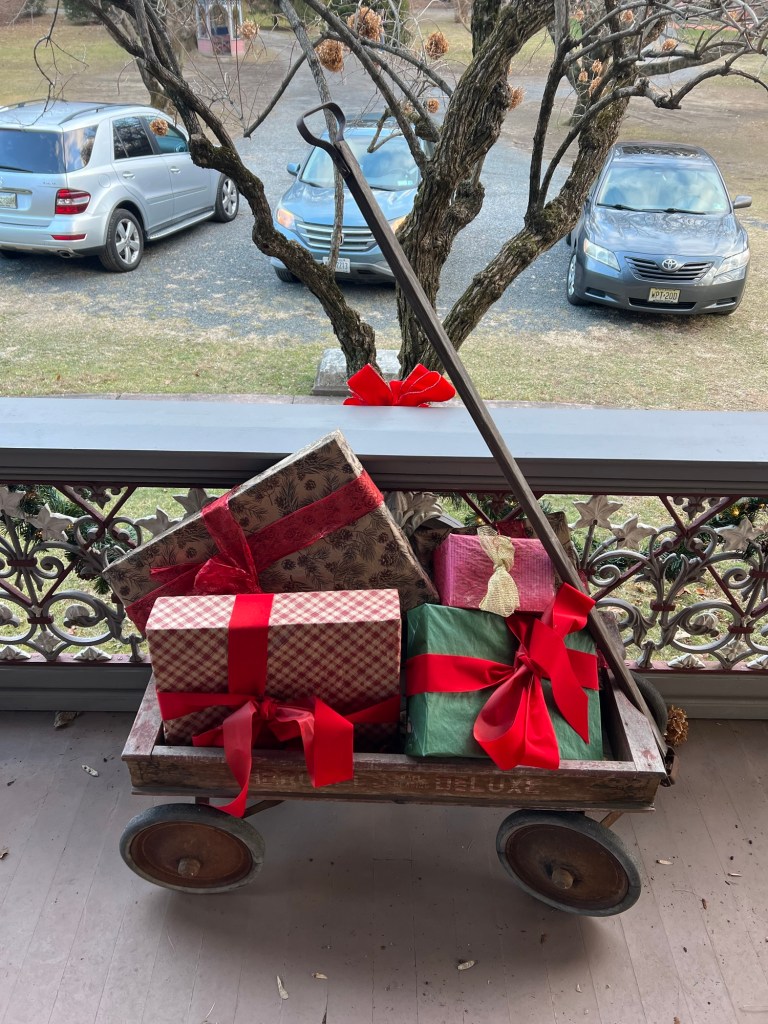
The decorations around the porch were really whimsical
History of the House:
(From the Visiting Westchester blog)
In 1872, the house was purchased by Joseph Stiner, a prominent New York City tea merchant. His alterations created the present lyrical structure. The exterior embellishments are extraordinarily festive with floral detailing in the cast iron cresting and railings and elaborately carved wood scrollwork and capitals – all painted in shades of rose, blue, violet and red. The interiors are equally decorative with painted and stenciled ceilings, trim with gold, silver and bronze leaf and unique eight-sided motifs in the plasterwork, woodwork and etched glass (Visiting Westchester blog).
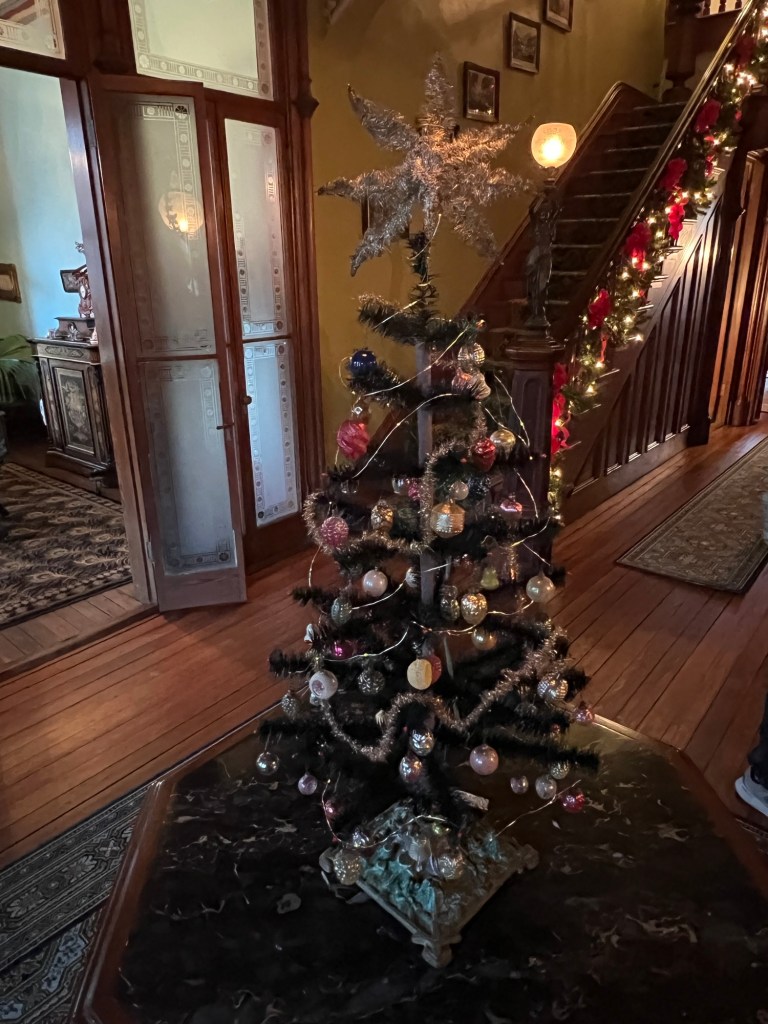
Walking into the entrance foyer to see the Table Tree of the early German period
Each floor was decorated with lights, garland and a series of large and small Christmas trees. The ornaments were all of the period included glass ball, homemade paper ornaments and some flowers and other plantings.
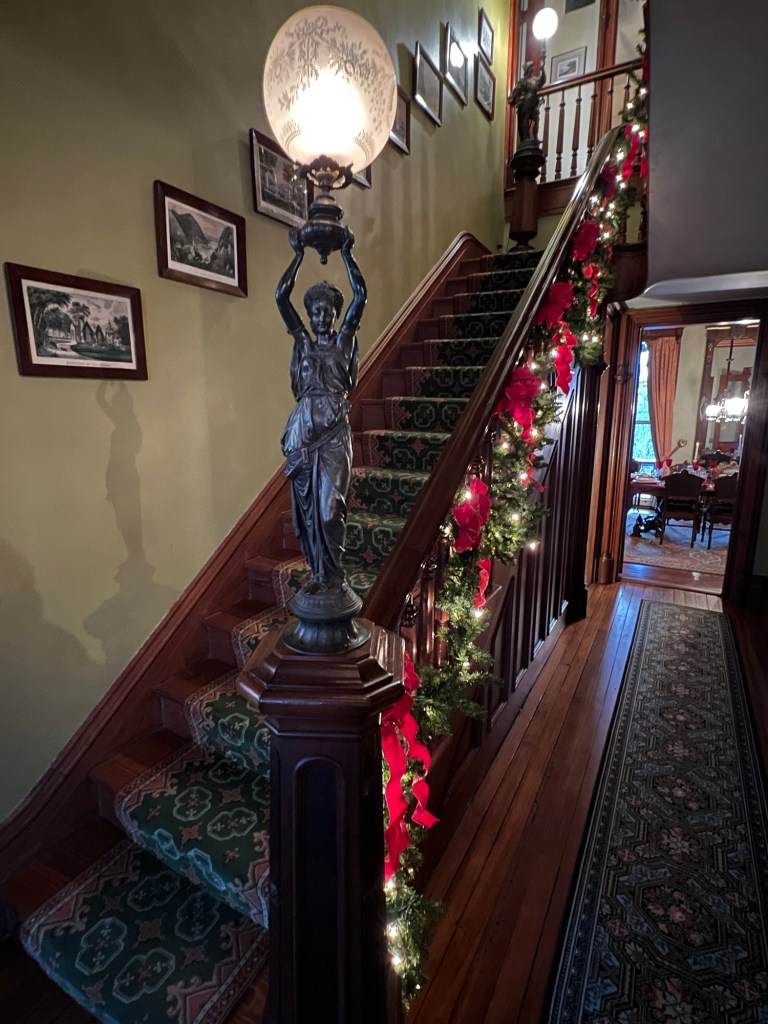
The staircase in the main foyer was decked out either garland and lights
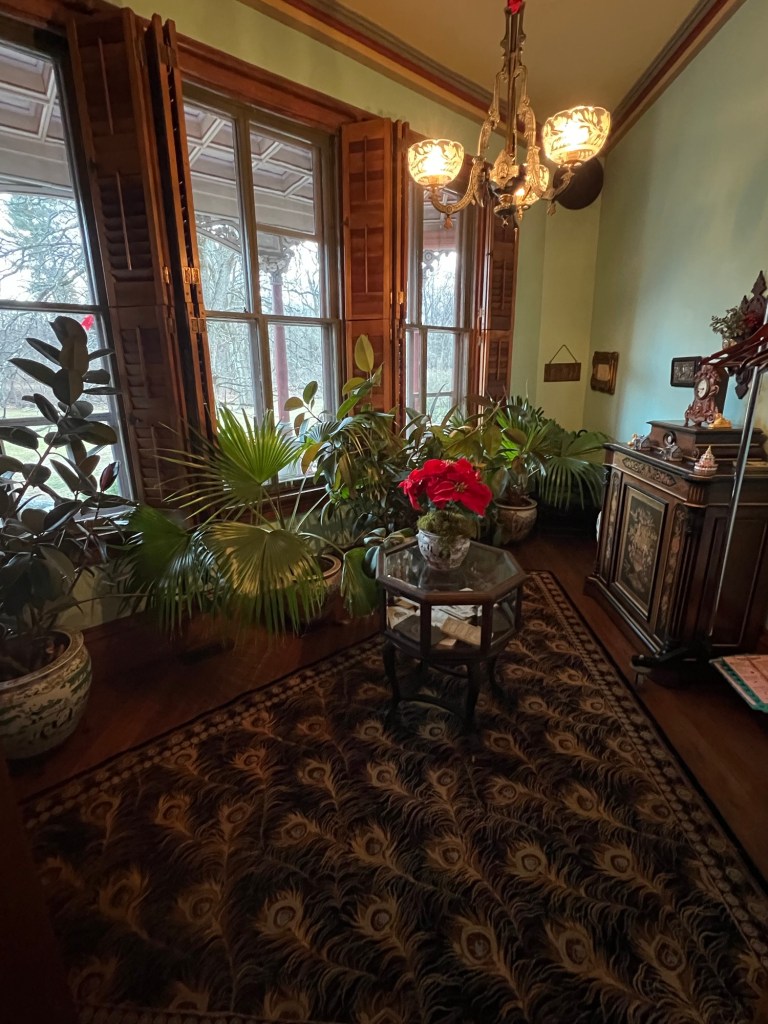
The Arbotorium in one side of the hallway
Normally even in Victorian times a house would not be this decorated but the volunteers did a wonderful job accenting each room.
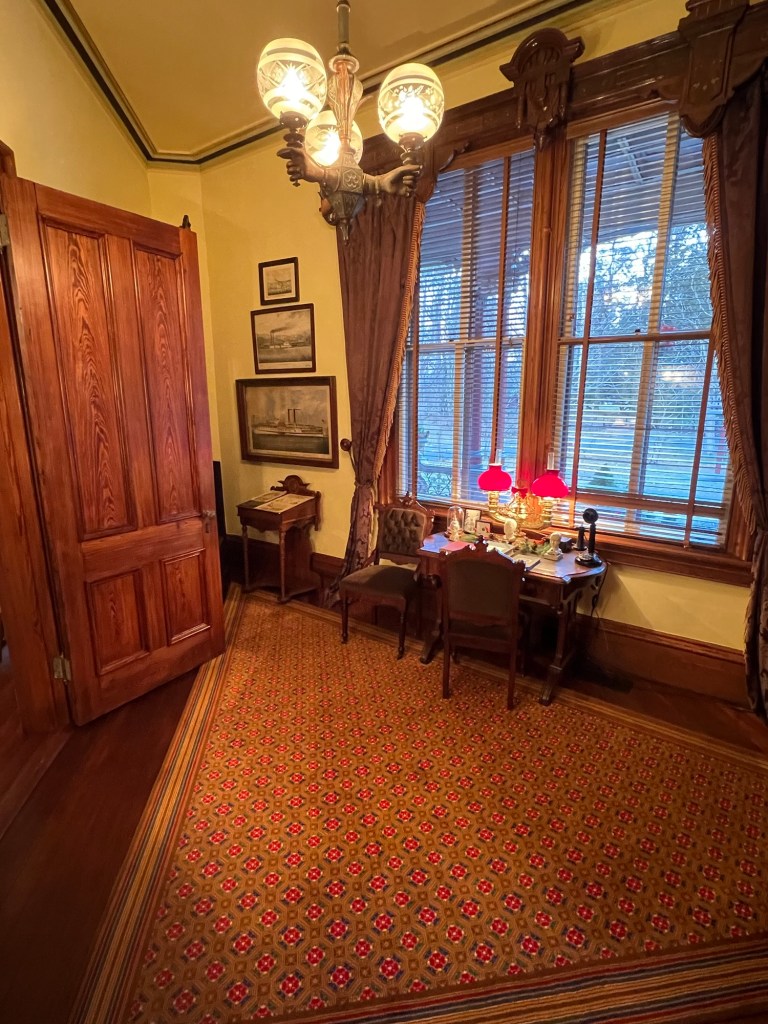
The small office to the other side of the main foyer
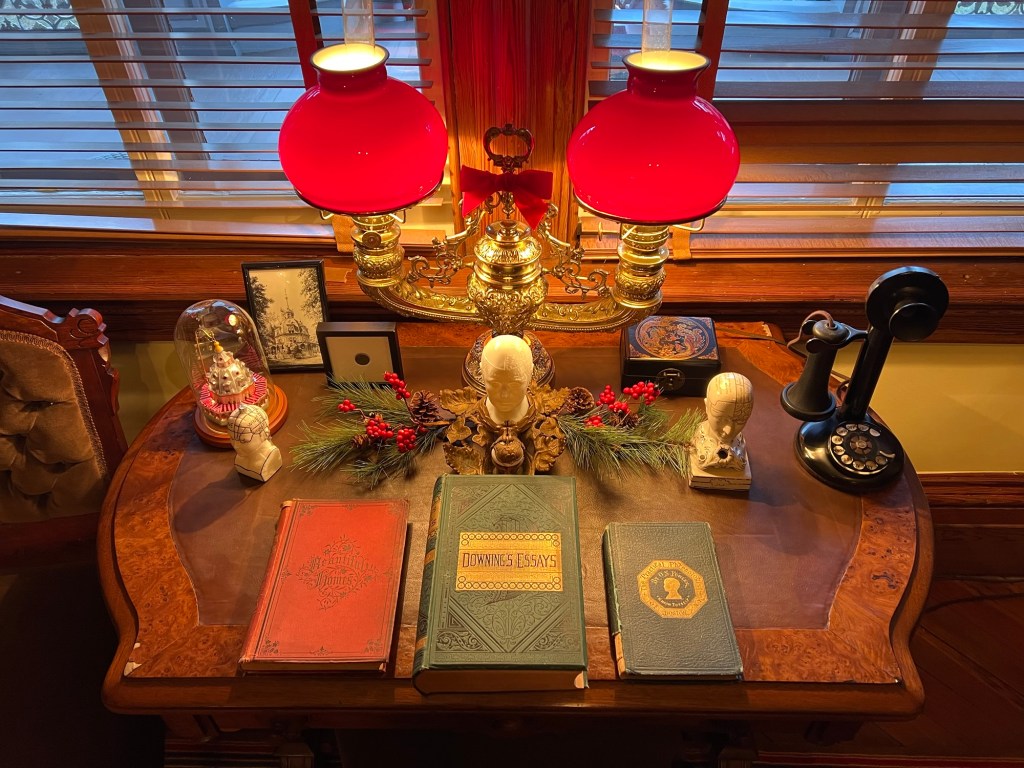
The beautiful details of the office on the first floor
We then moved into the formal parlor where the family would have entertained everyone before dinner. The room was decorated with a beautiful tree and garlands.
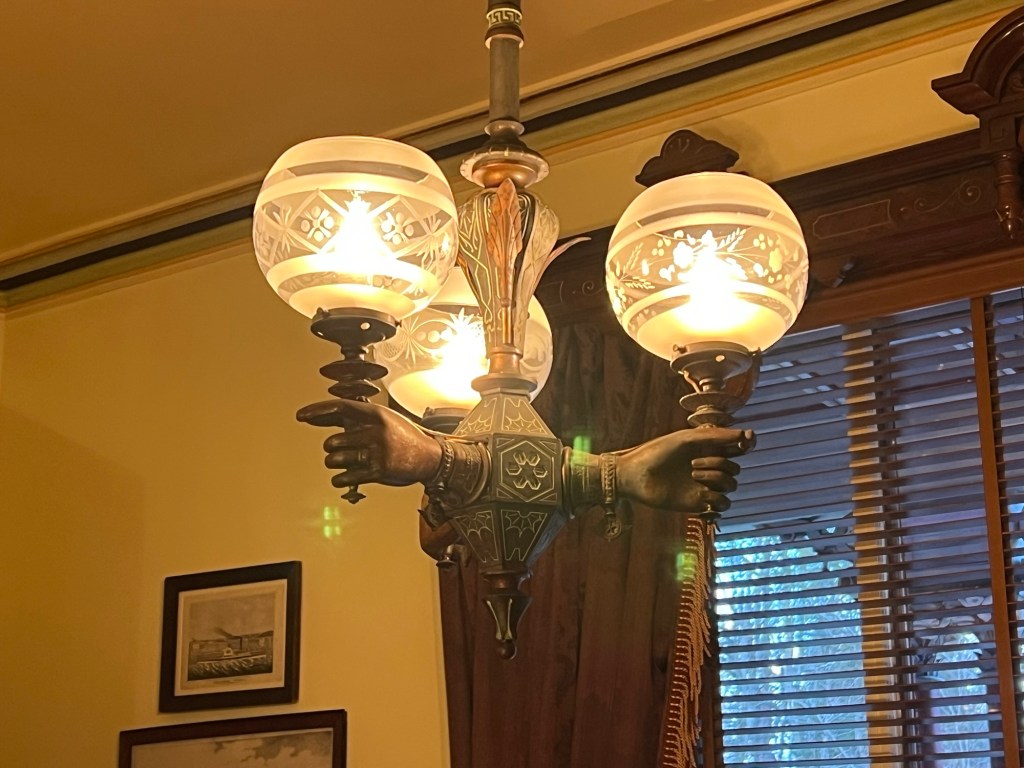
The hand chandelier in the study
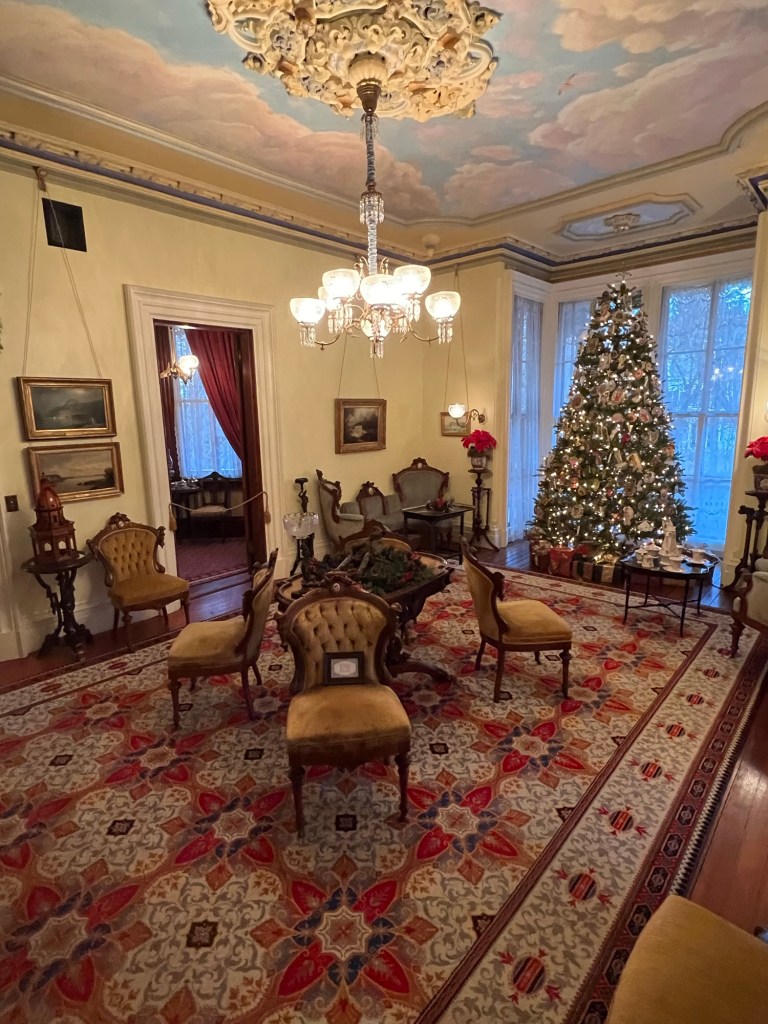
The formal Parlor
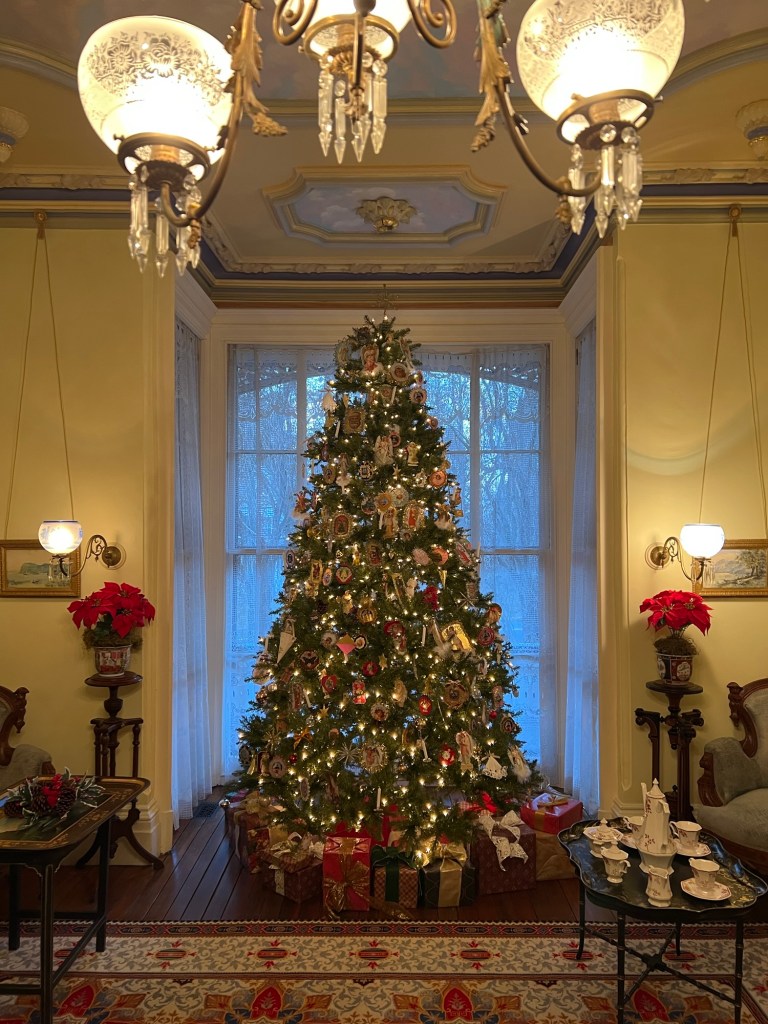
The Christmas tree in the formal parlor
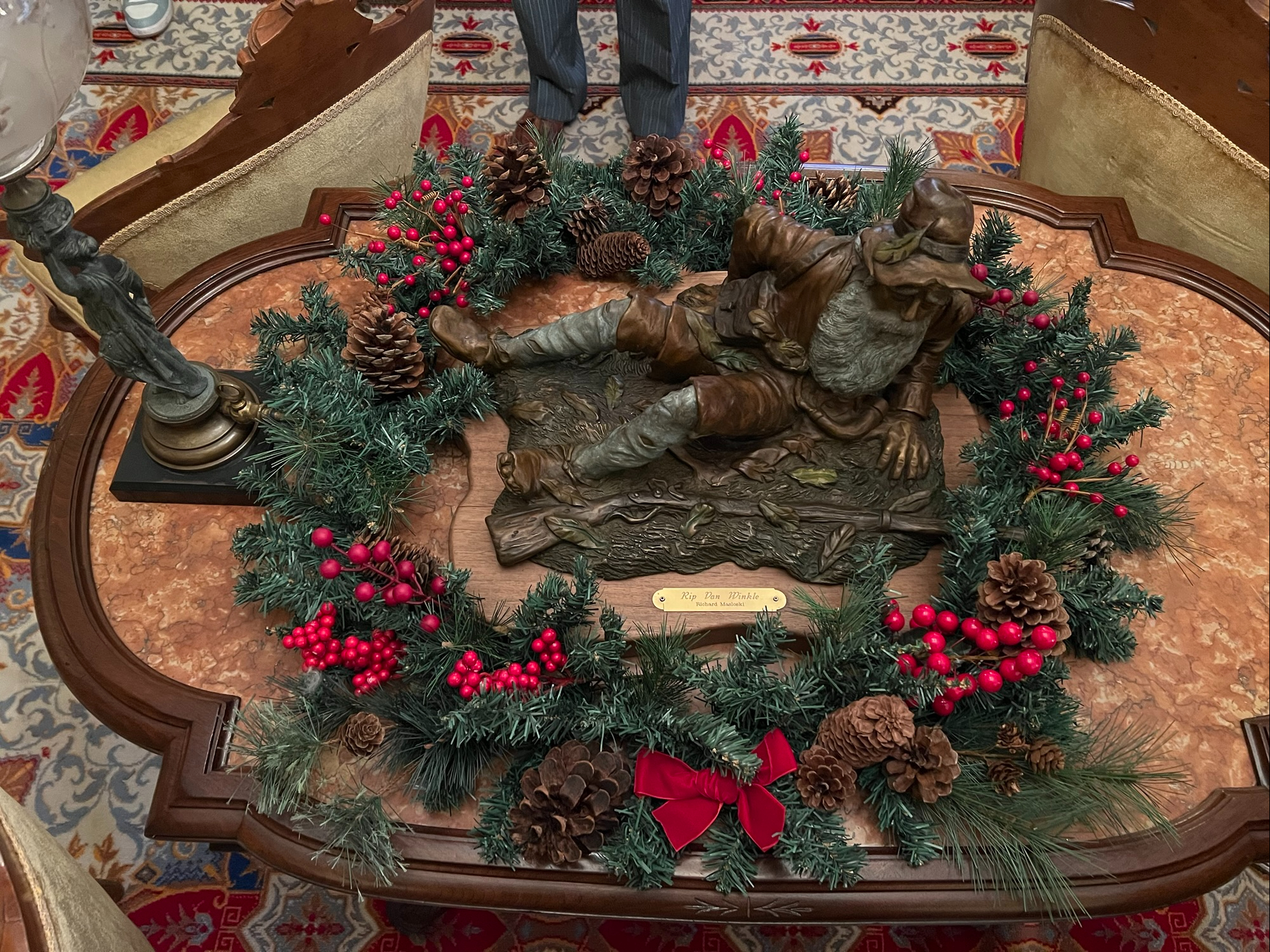
The formal table decorations of the Parlor
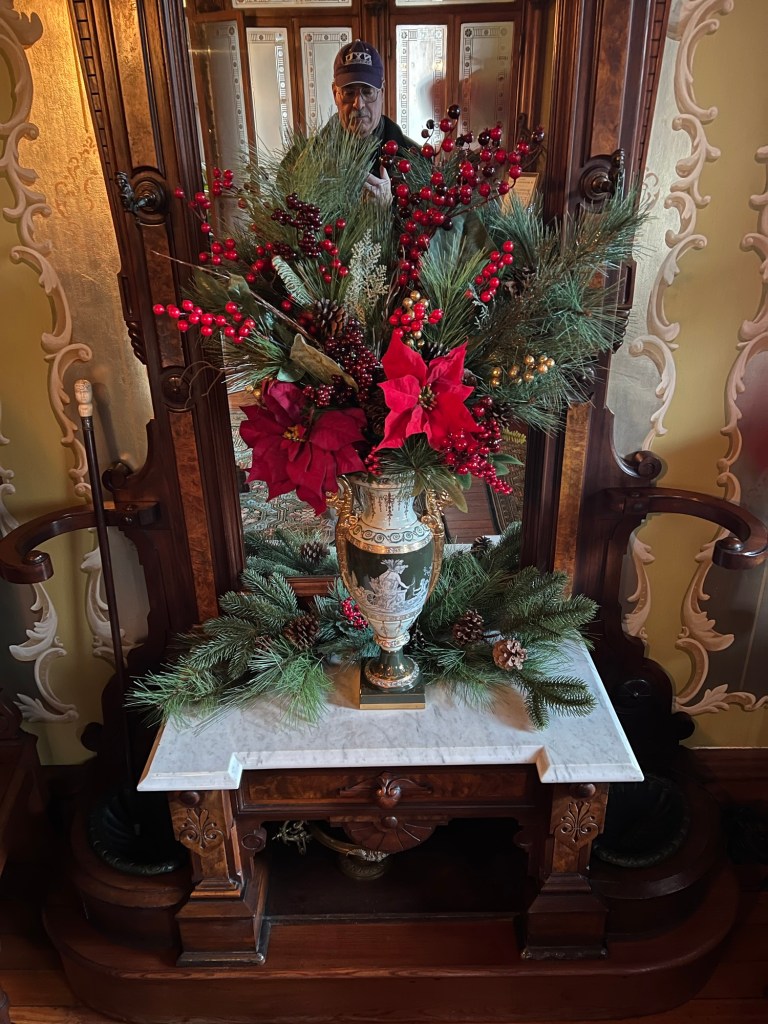
The elaborate decorations on the side table
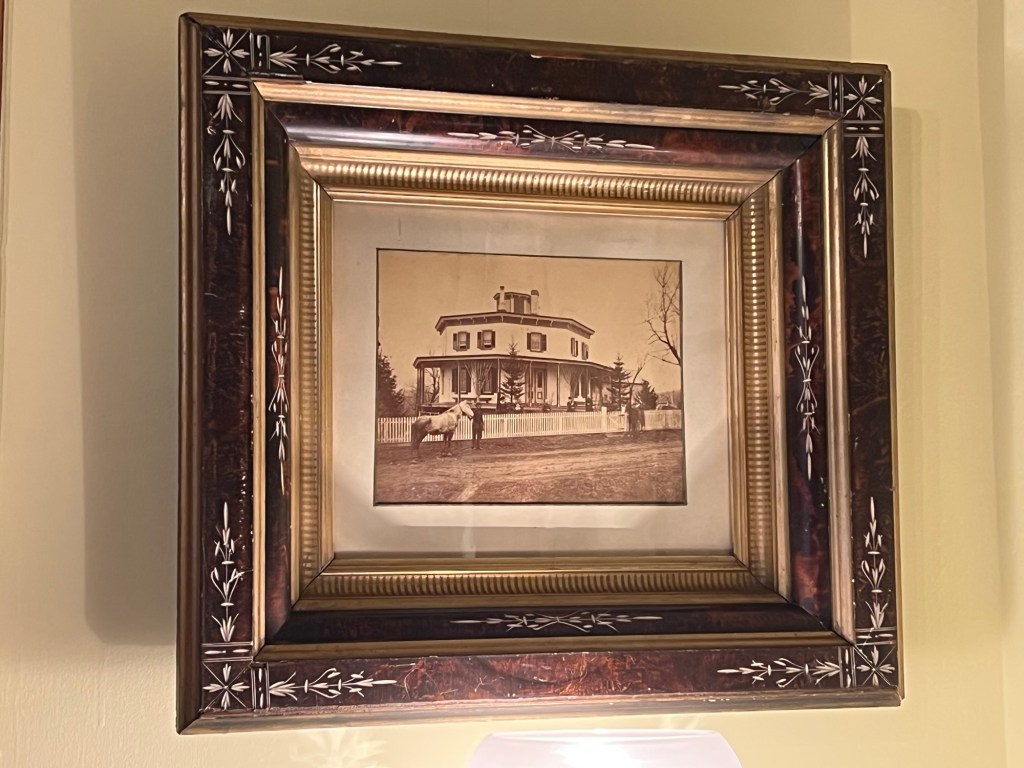
The picture of the original house when it was completed
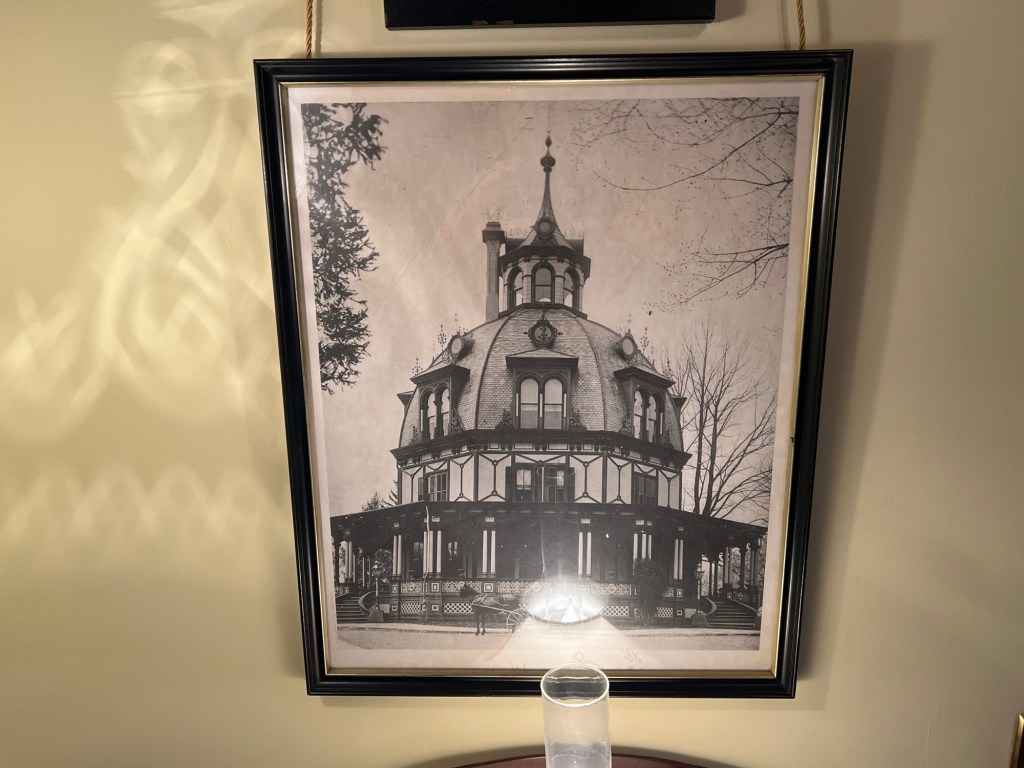
The house when Mr. Stiner bought it and added the dome
We next moved into the formal Dining Room that was set for Christmas lunch. The Victorians followed a lot of the English traditions of multi-courses and Christmas poppers at the table.
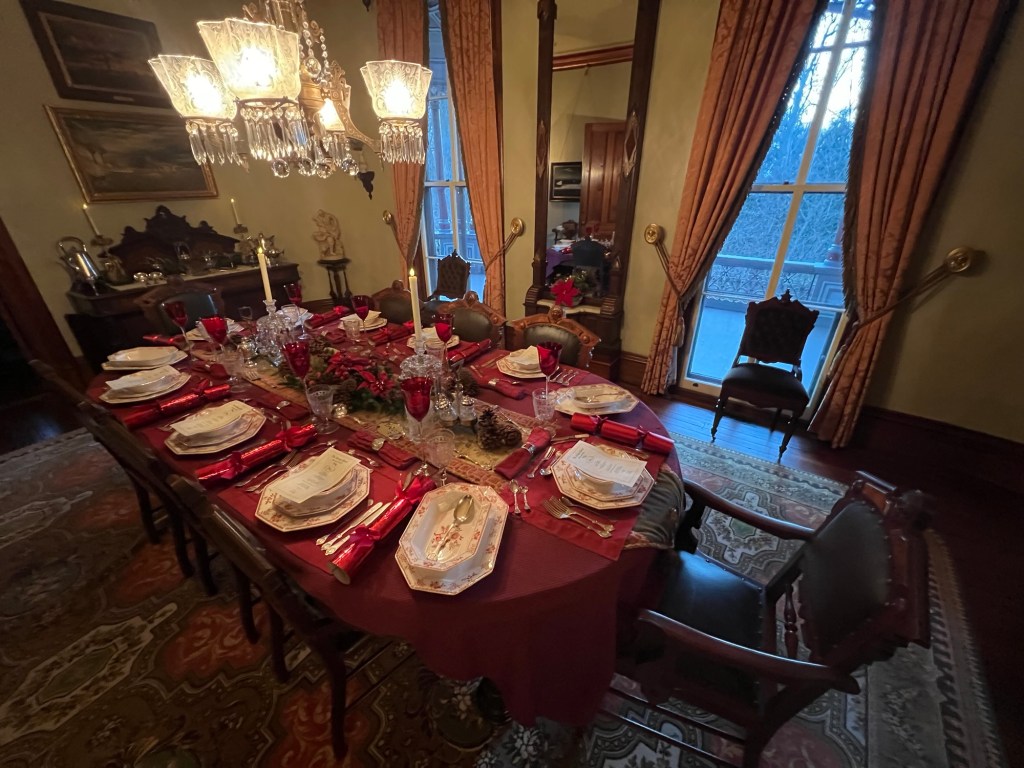
The Dining Room set for Christmas luncheon
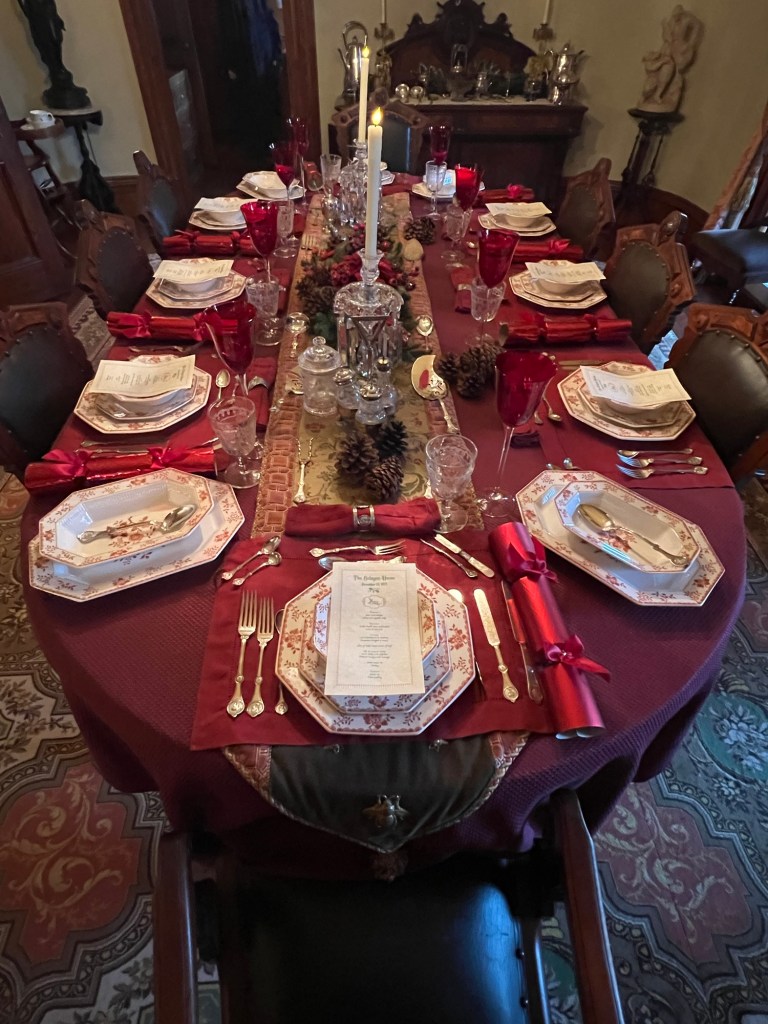
The table beautifully set for the holidays
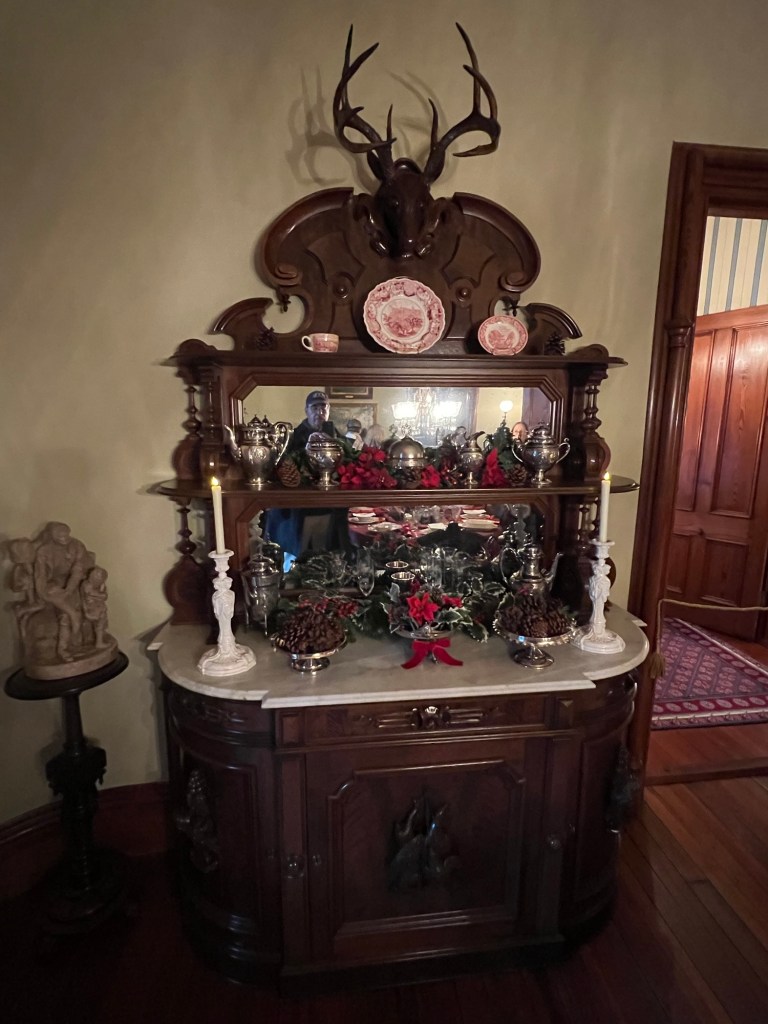
The sideboards decorated and stocked for the holidays
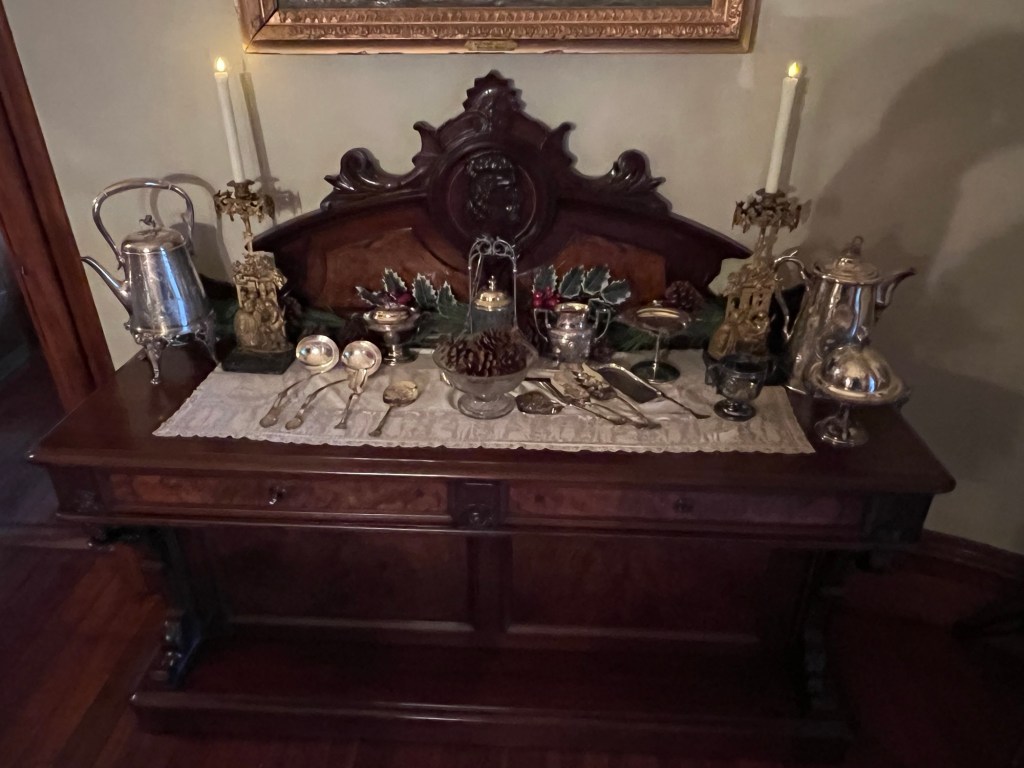
The service silverware ready for use for the Christmas meal
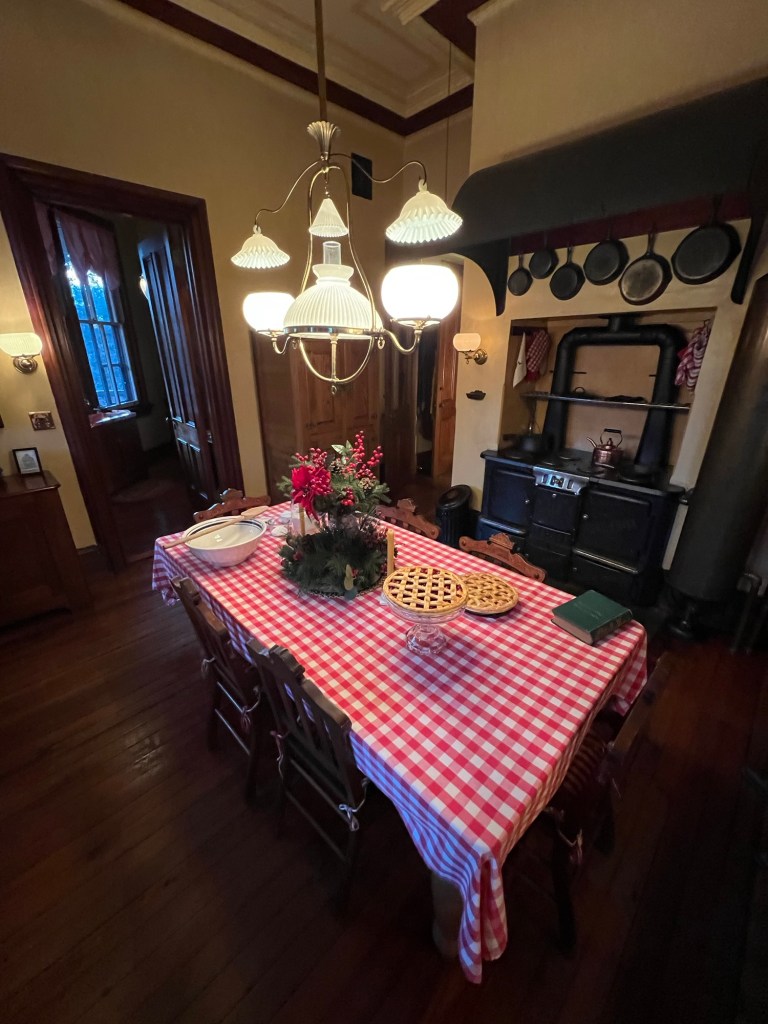
We then moved onto the kitchen where the feast would be prepared
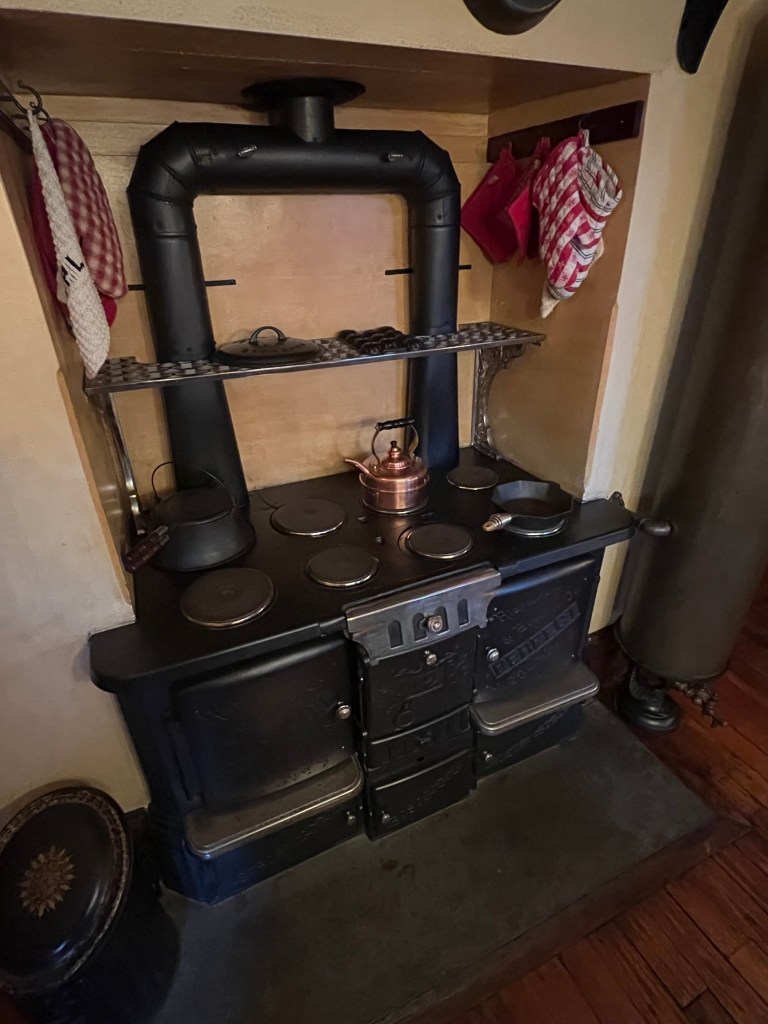
The working stove from the original house
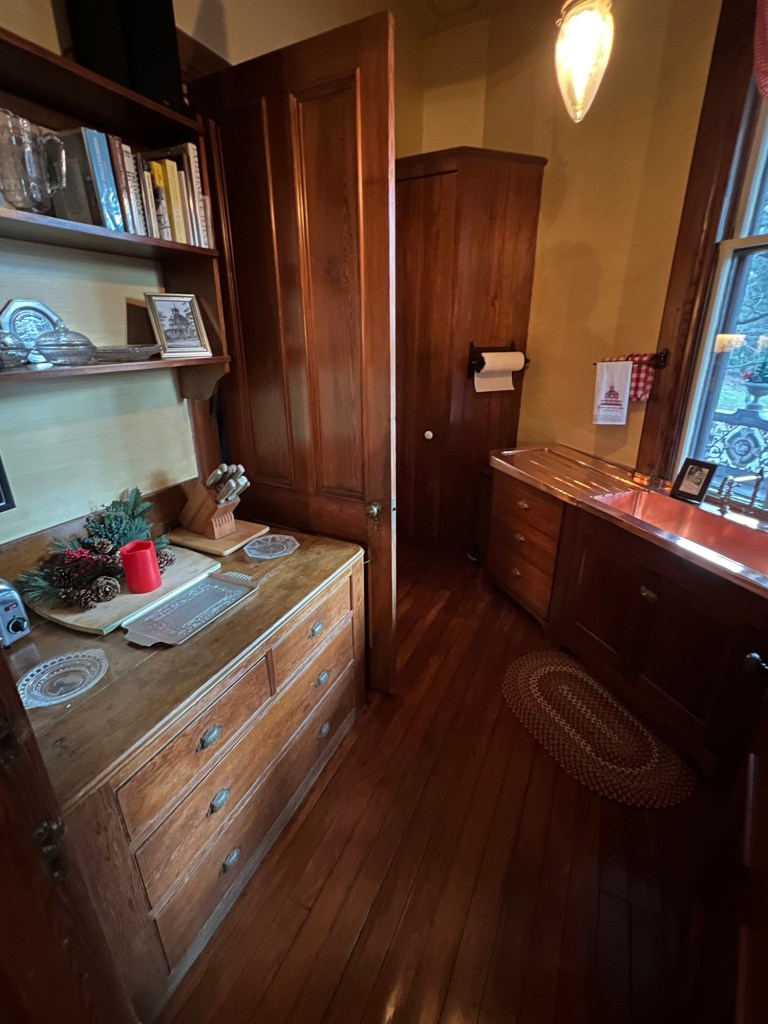
The sink and toilet prep areas
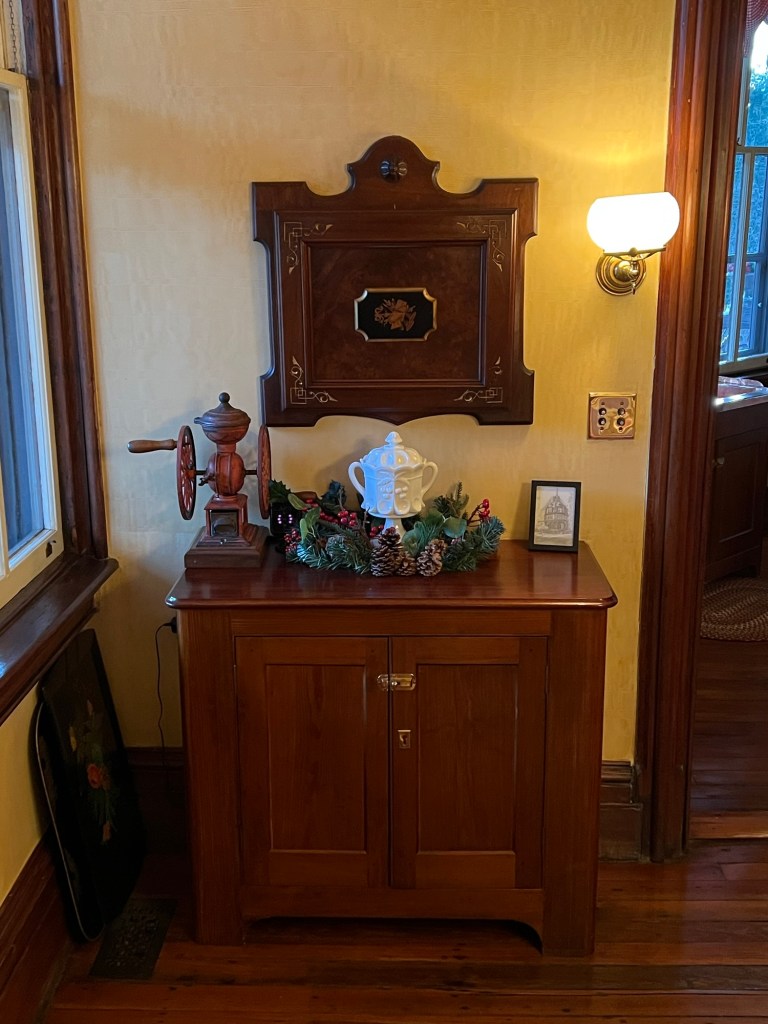
The side board with the coffee grinder
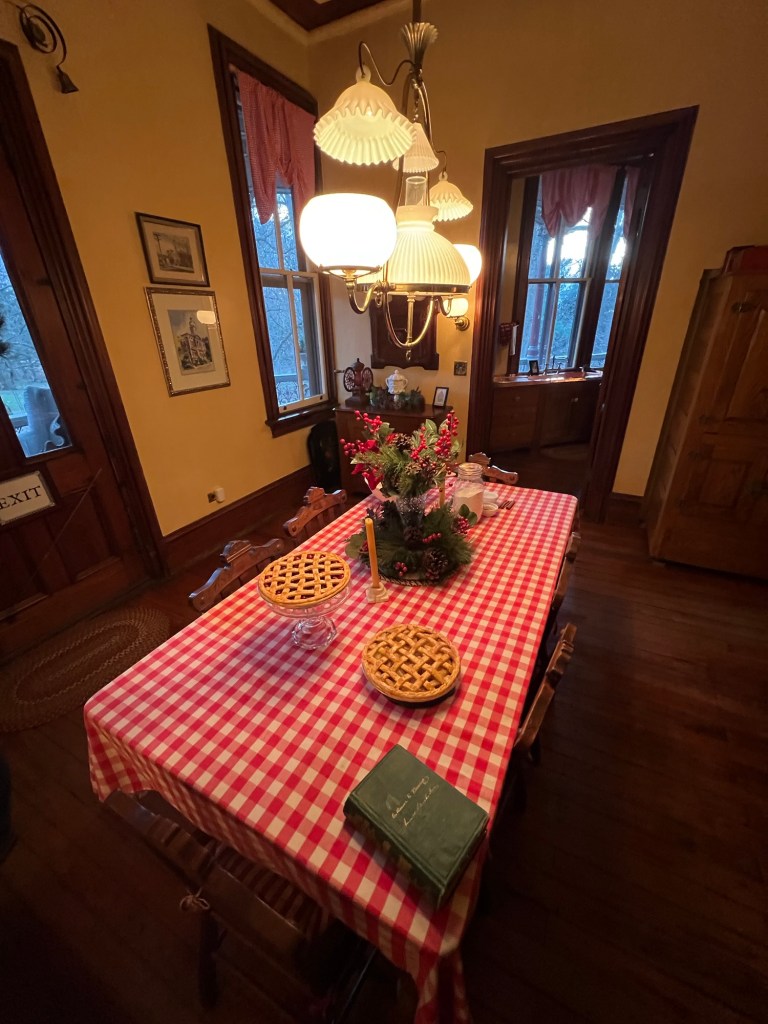
The Kitchen area with cookbook and desserts
We then left the more public areas of the house to the family’s living quarters. This was the experience extreme and not the exception in Victorian times to have this much room.
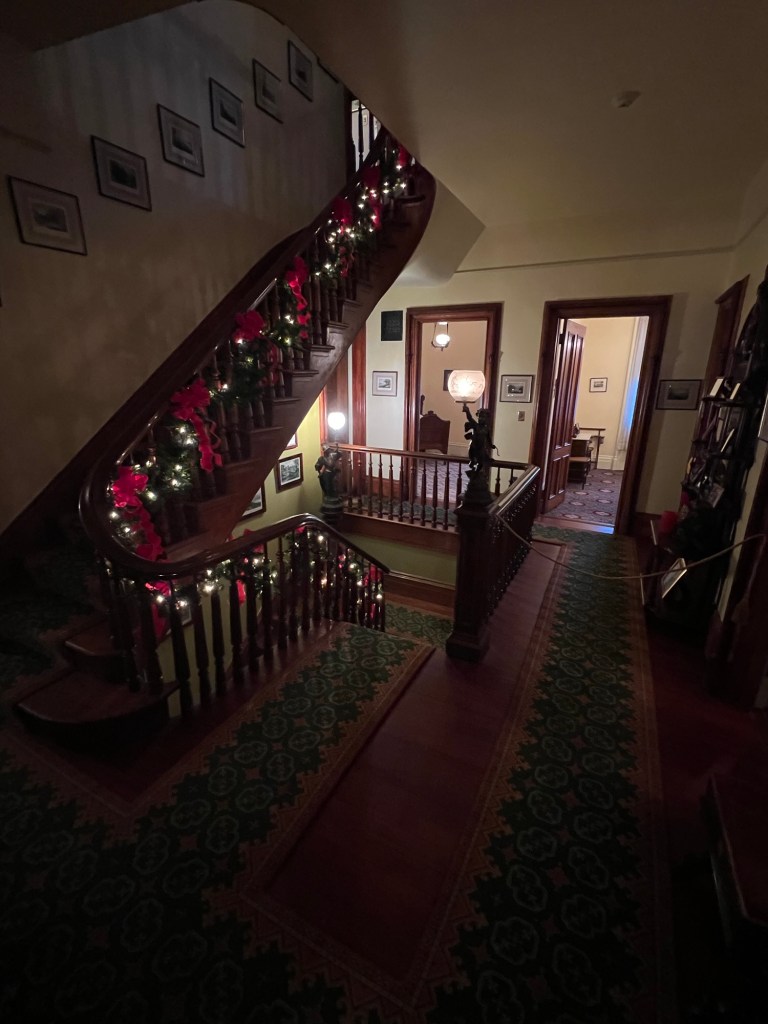
The second floor Reception Room where the family would have gathered for more casual events
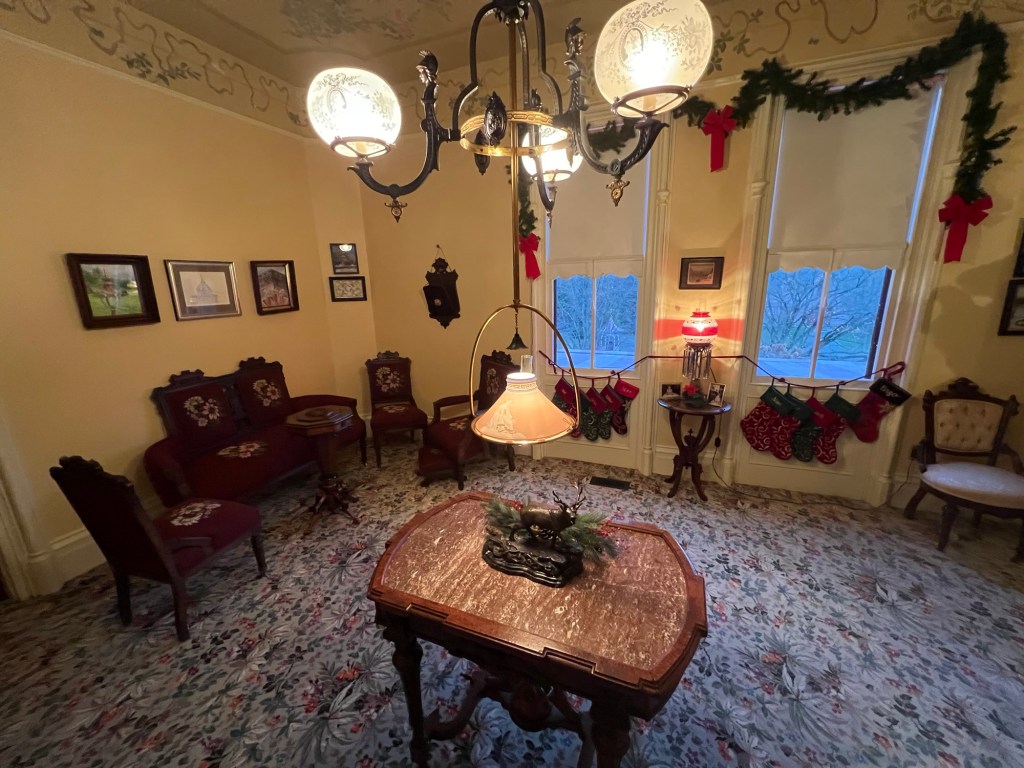
The Second Floor Reception Room
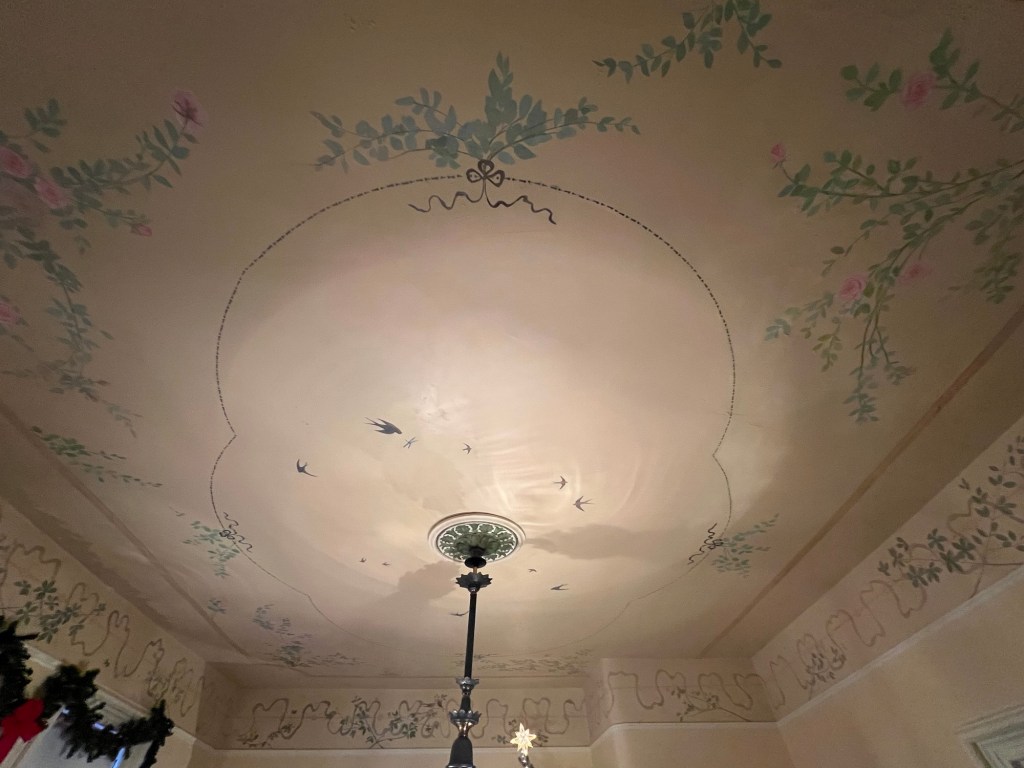
The ceiling is the only original part of the house left intact by each owner. It has been cleaned and restored to its original beauty.
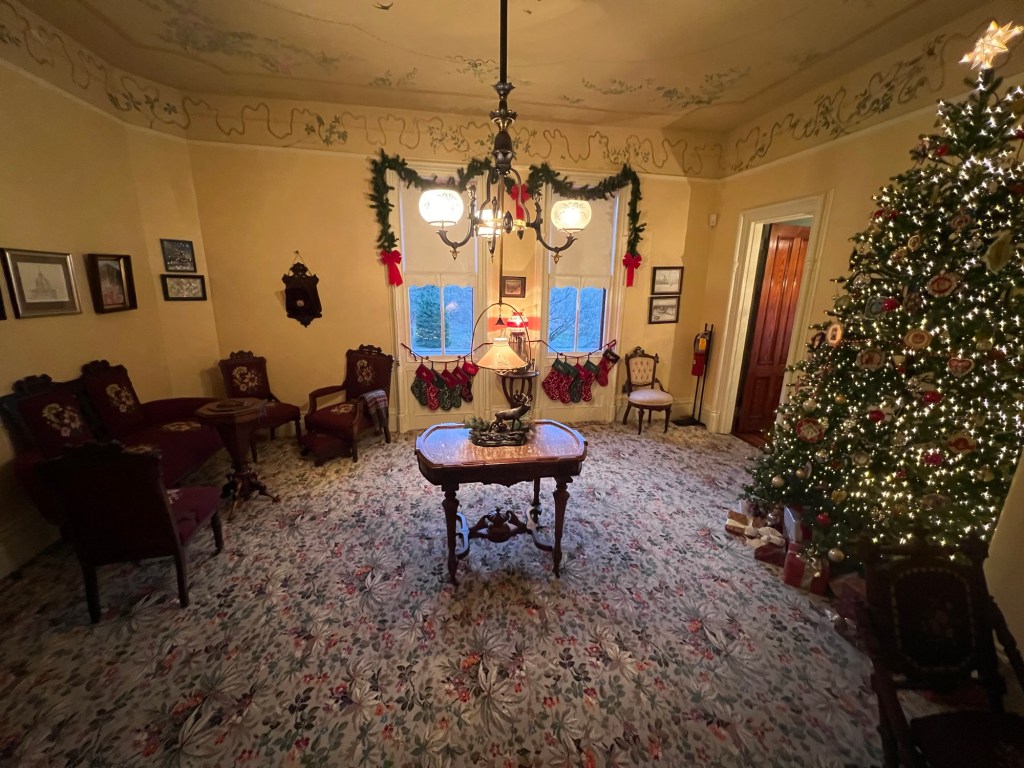
The room beautifully decorated for the holidays
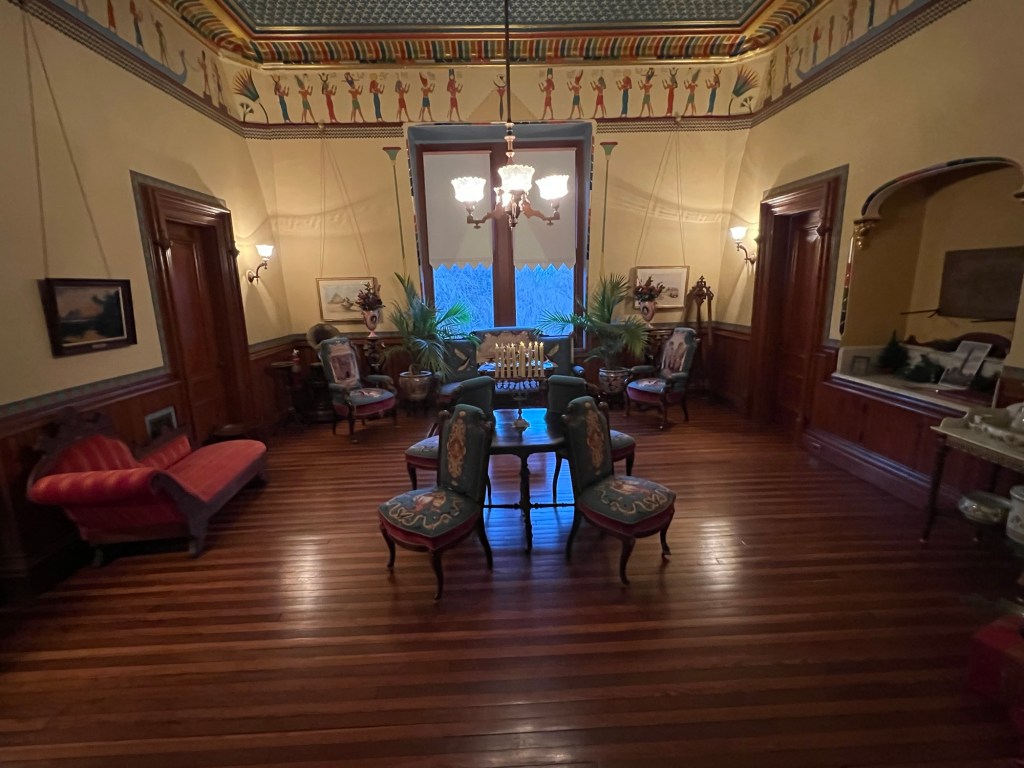
The Egyptian Room which was once a wellness
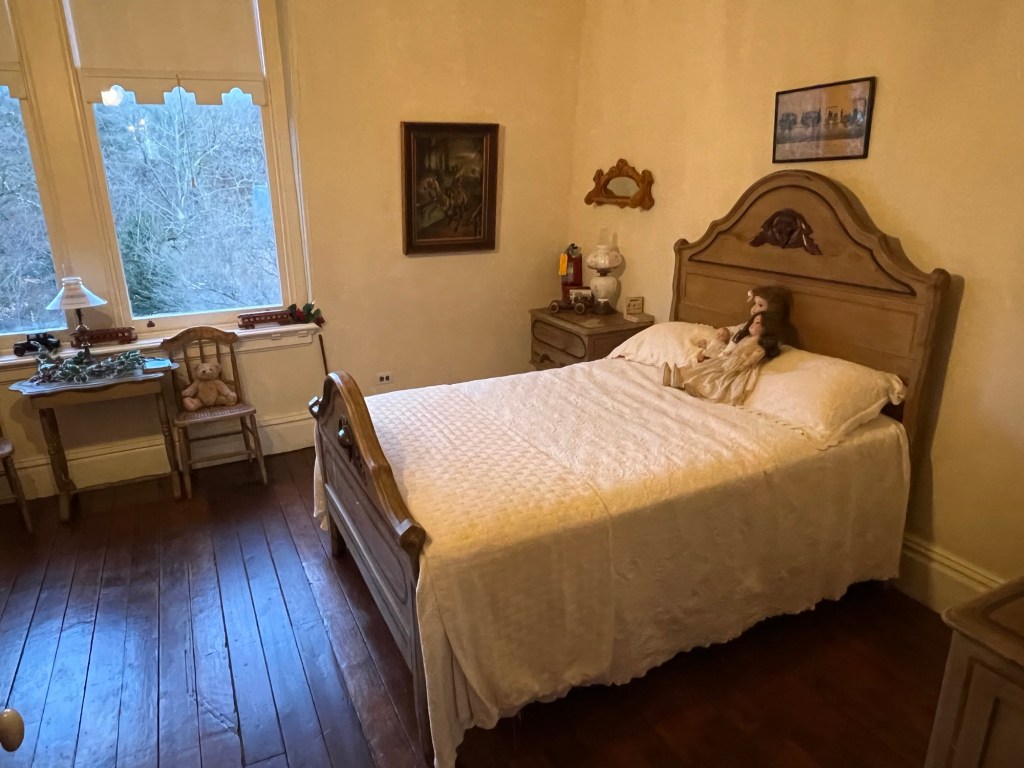
One of the upstairs bedrooms ready for guests
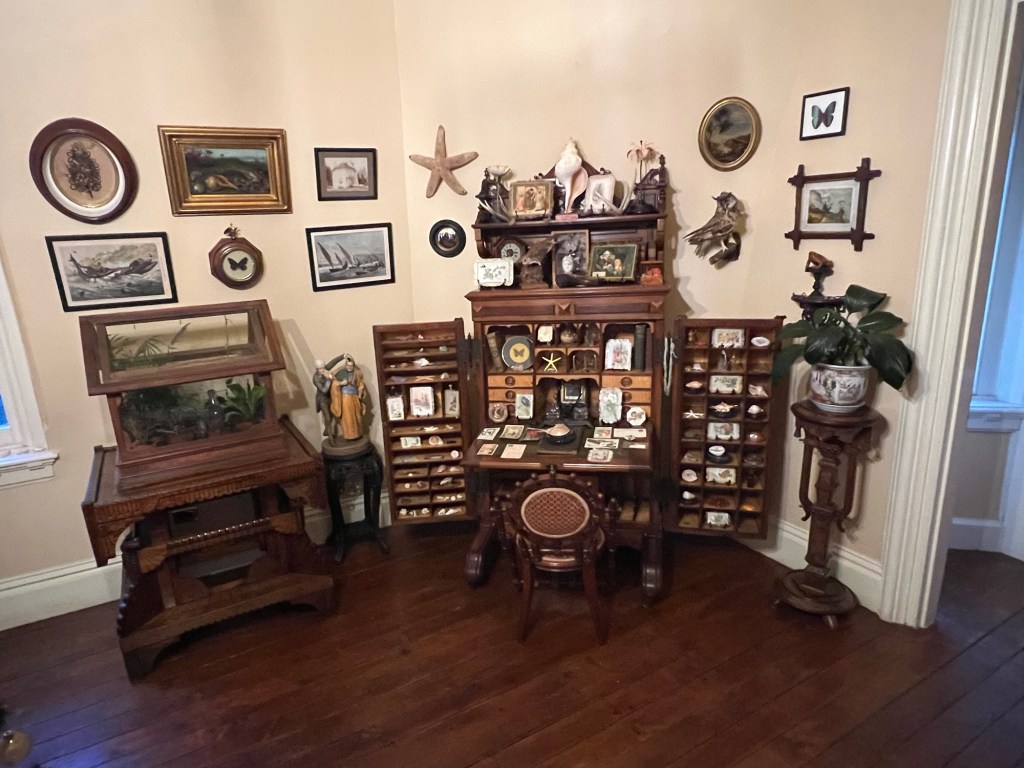
The Curio Room was a place where Victorians showed off their collections from their travels. These small items were displayed to show off the places they had been and some of the collections they were forming along the way.

The Table tree in the Curio room
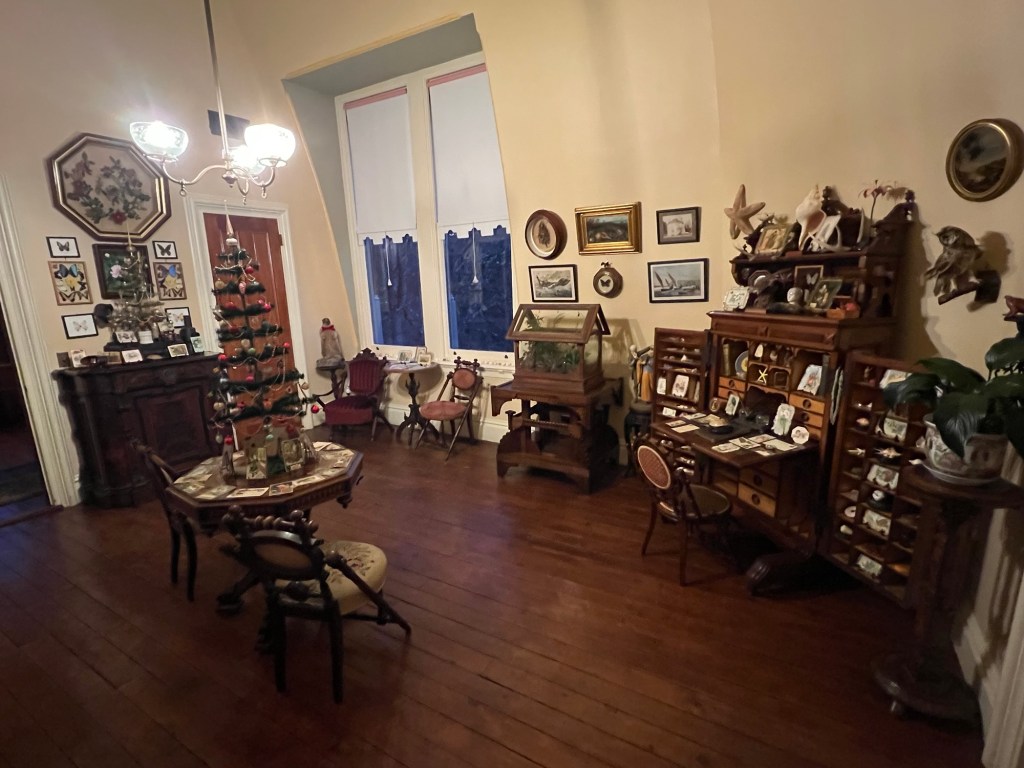
All the interesting collections in the Curio Room
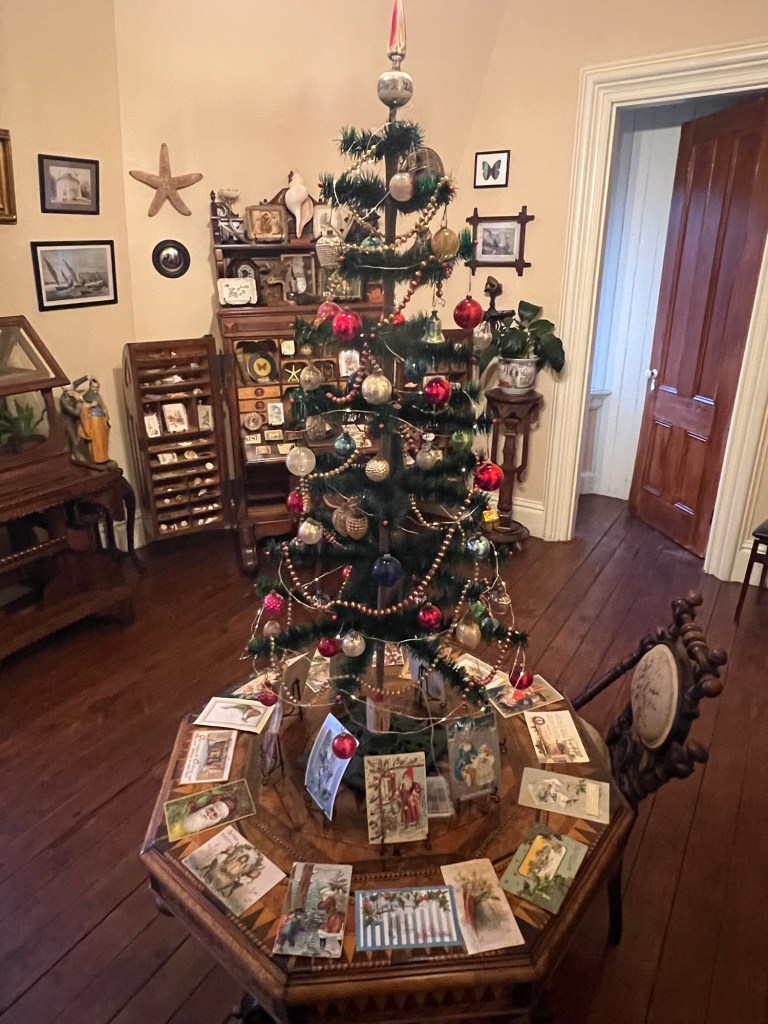
Even the small tree is covered with antique ornaments and old Christmas cards
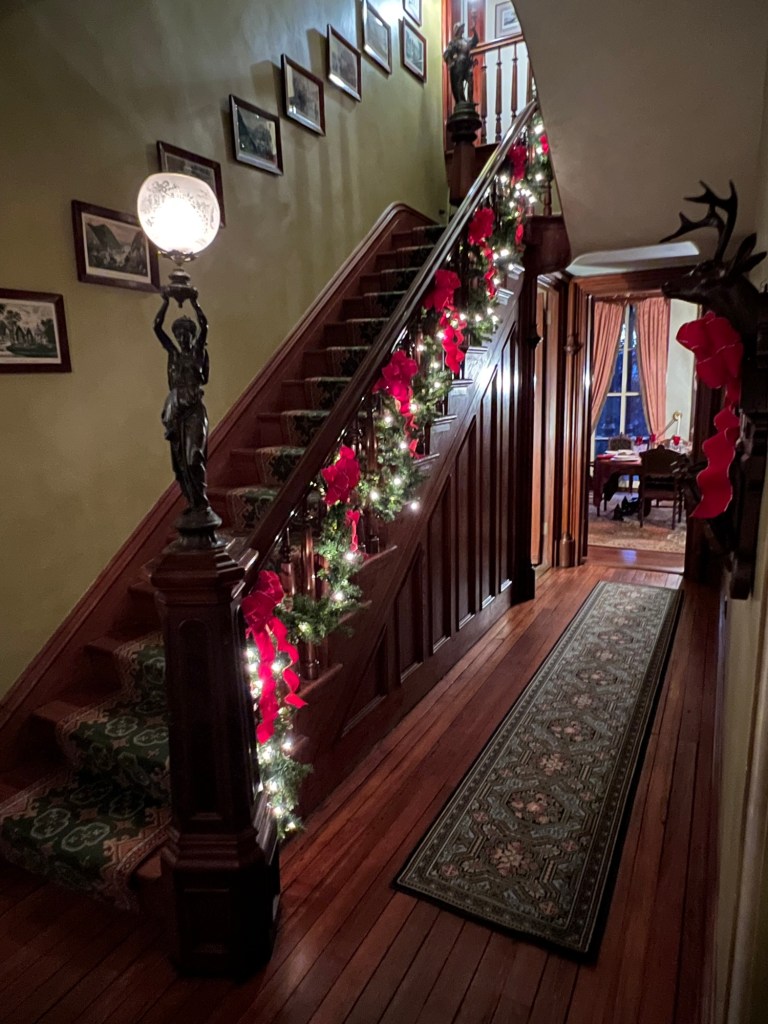
The third floor landing
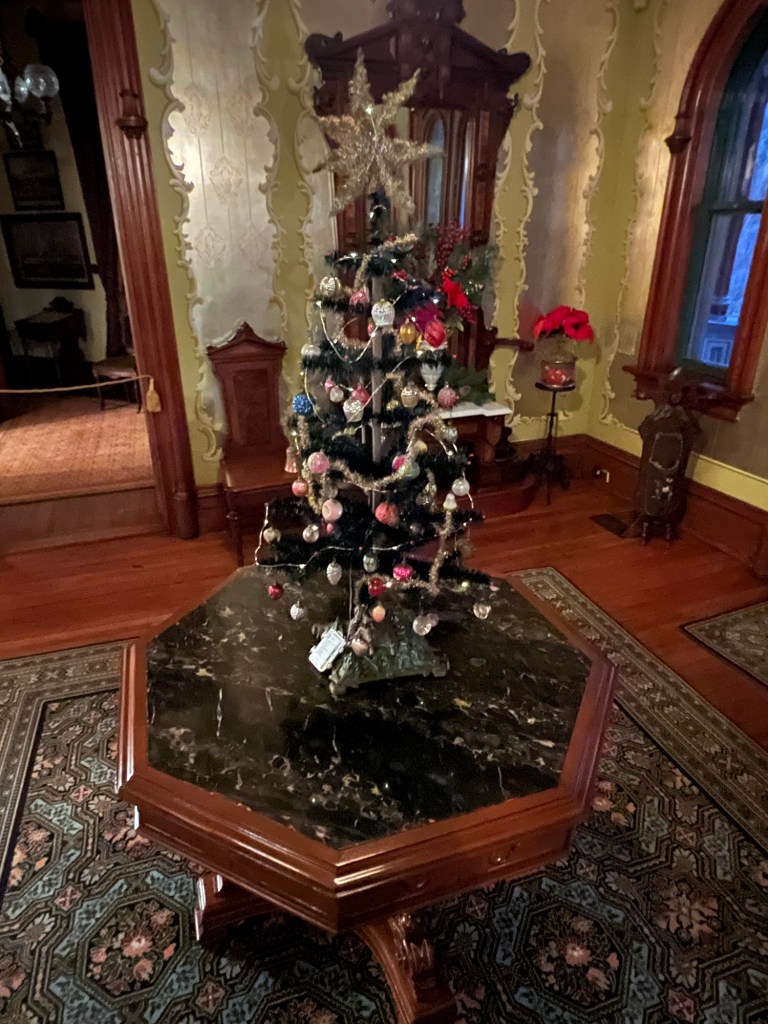
The Table tree in the landing
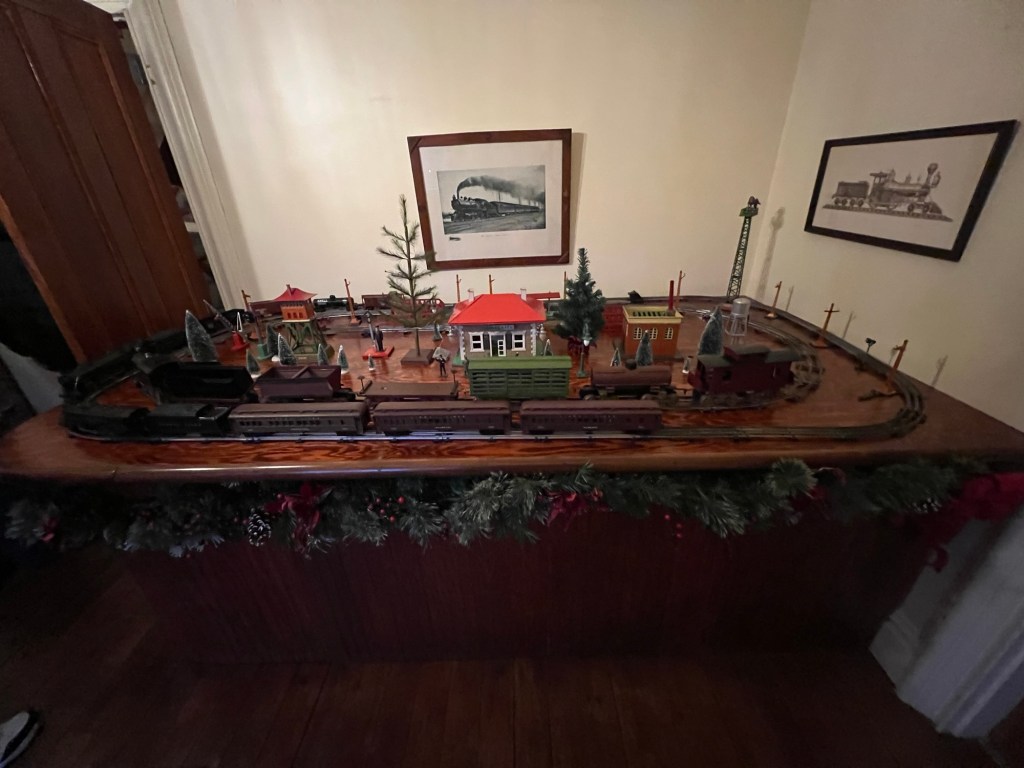
The antique train set
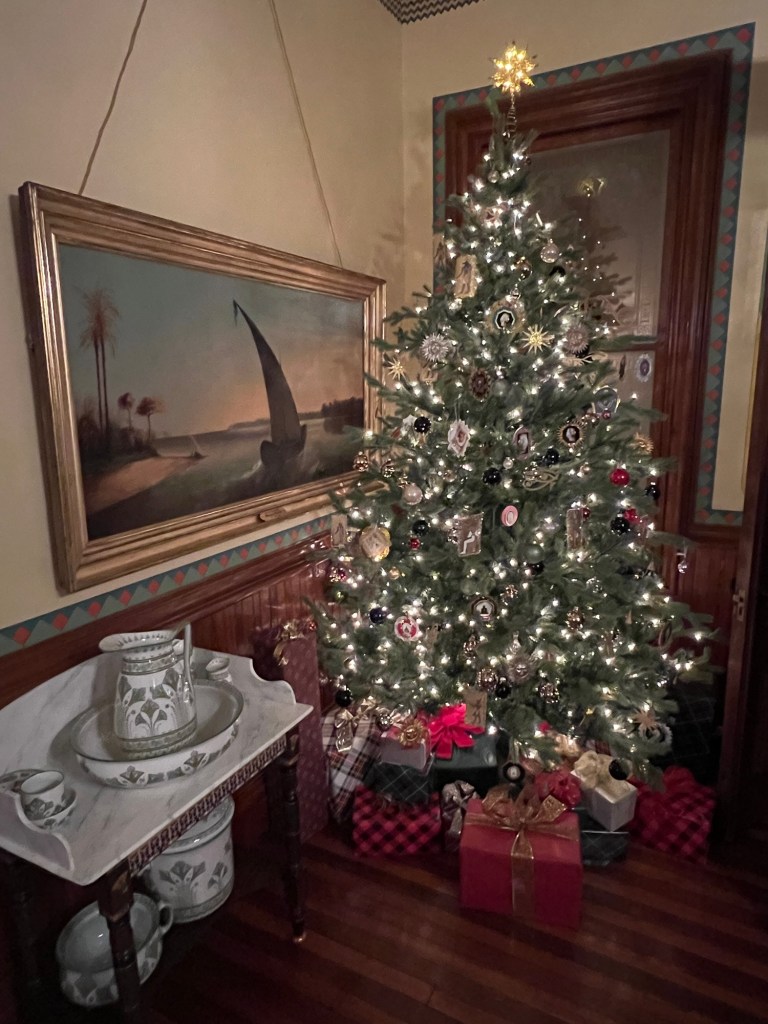
The Christmas tree on the third floor
Above is on the third floor, we could peek upstairs and see the bottom of the dome that had been added by Mr. Stiner. The was interesting. We made our way back downstairs to finish the tour and wrap up our discussion.
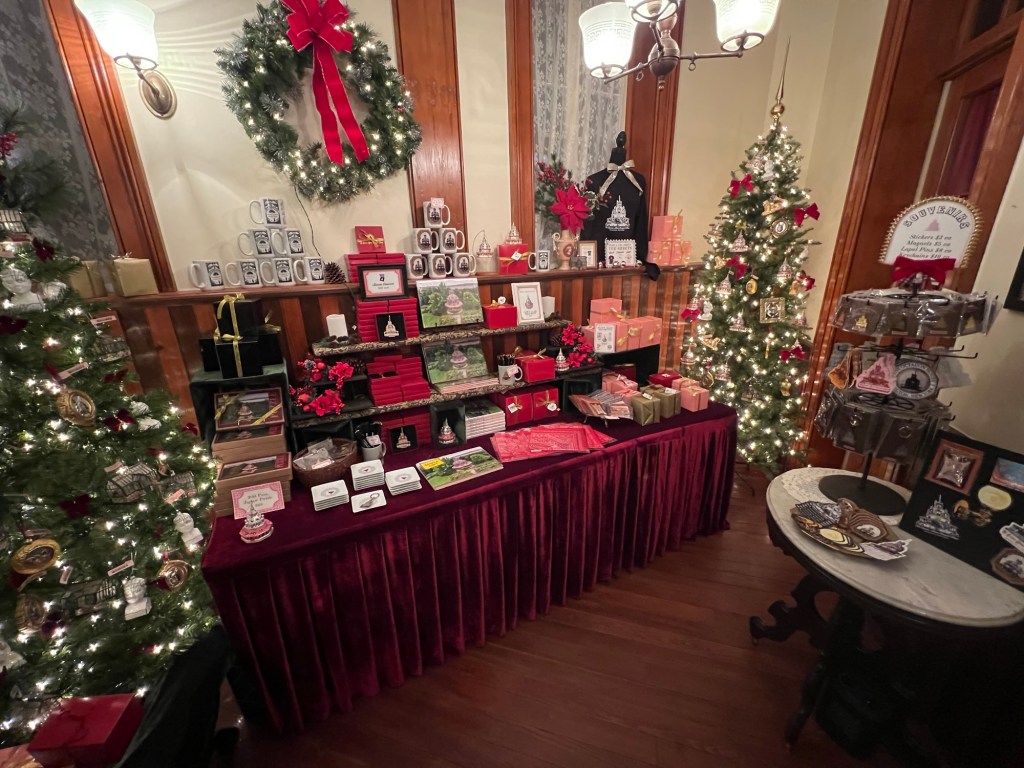
The Gift Shop
As you exit the house, there is an interesting Gift shop stocked with ornaments, toiletries, stationary and other gift items. This is where we concluded our tour.
The house and grounds were lit when we left and everything was so nicely decorated for the holidays.
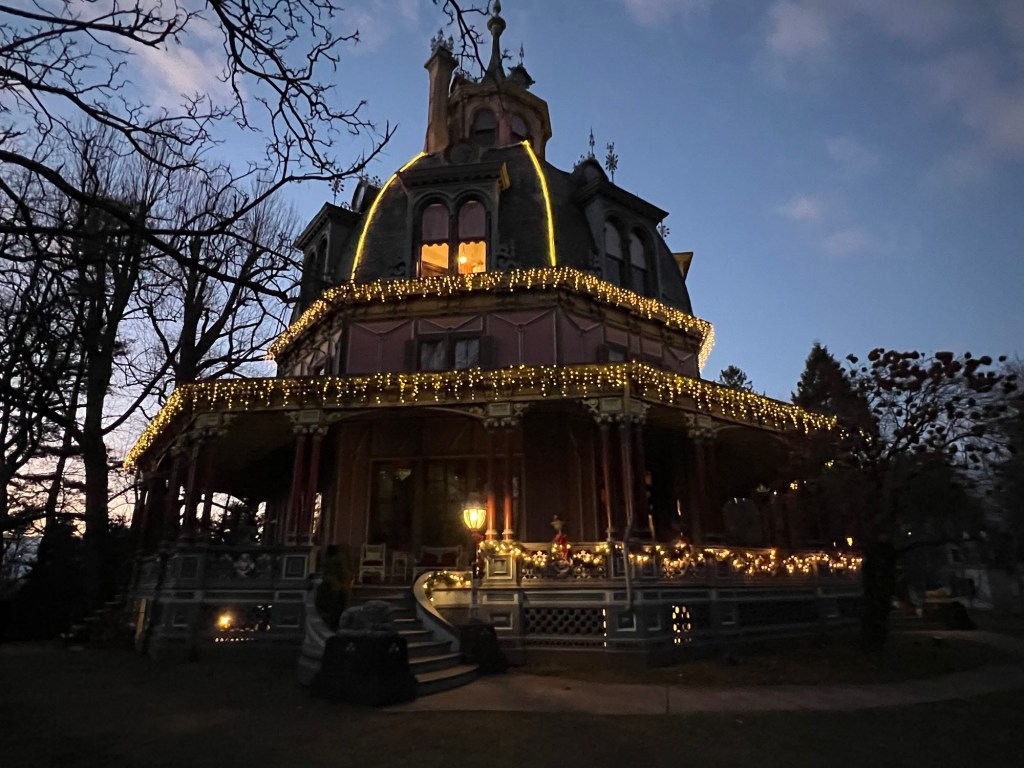
The house fully lit at twilight
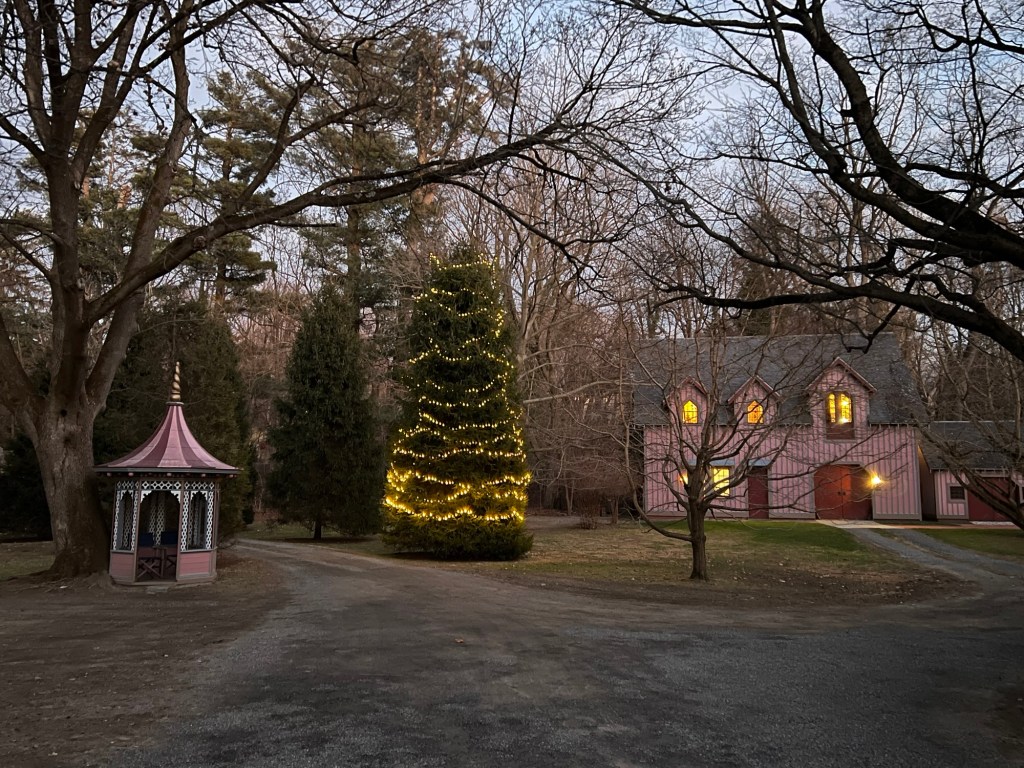
The Carriage House and grounds at twilight
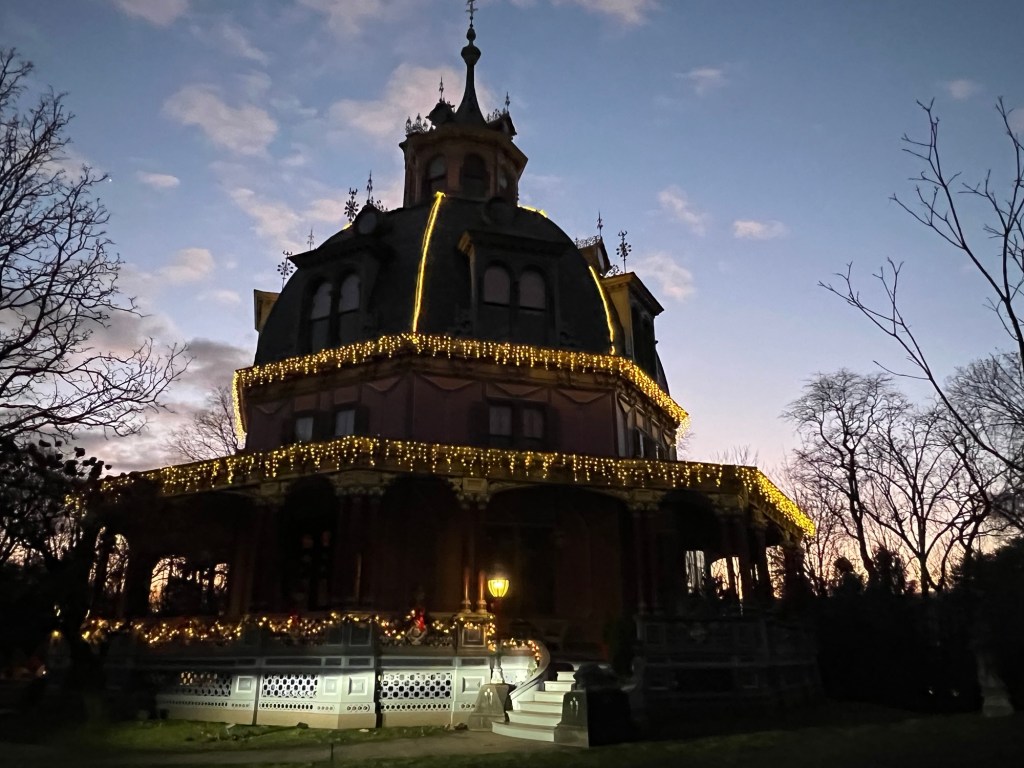
The house at closing time was picturesque
Touring the Amour- Stiner Octagon House is a step back in time to when society was slower and life a bit more gentle. you relished life and slowed down to enjoy it.
The Irvington Historical Society presentation on the Armour-Stiner Octagon House
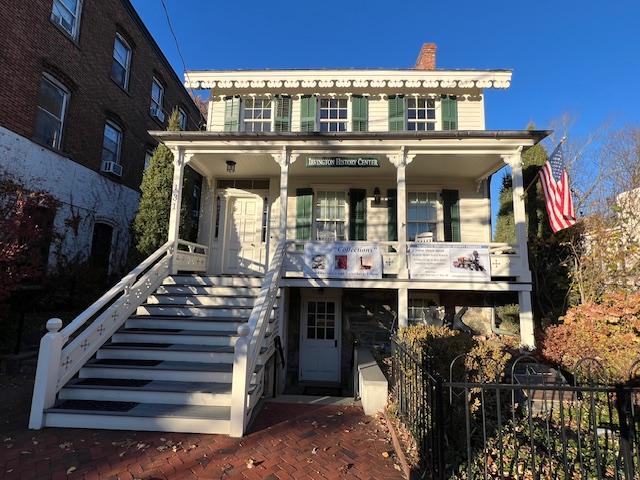
Irvington Historical Society
131 Main Street
Irvington, NY 10533
(914) 591-1020
https://www.instagram.com/irvingtonhistoricalsociety/
https://www.facebook.com/IrvingtonHistoricalSociety/
Open: Sunday-Wednesday Closed/Thursday 1:00pm-4:00pm/Friday Closed/Saturday 1:00pm-4:00pm
Admission: Free but donations are accepted
My review on TripAdvisor:
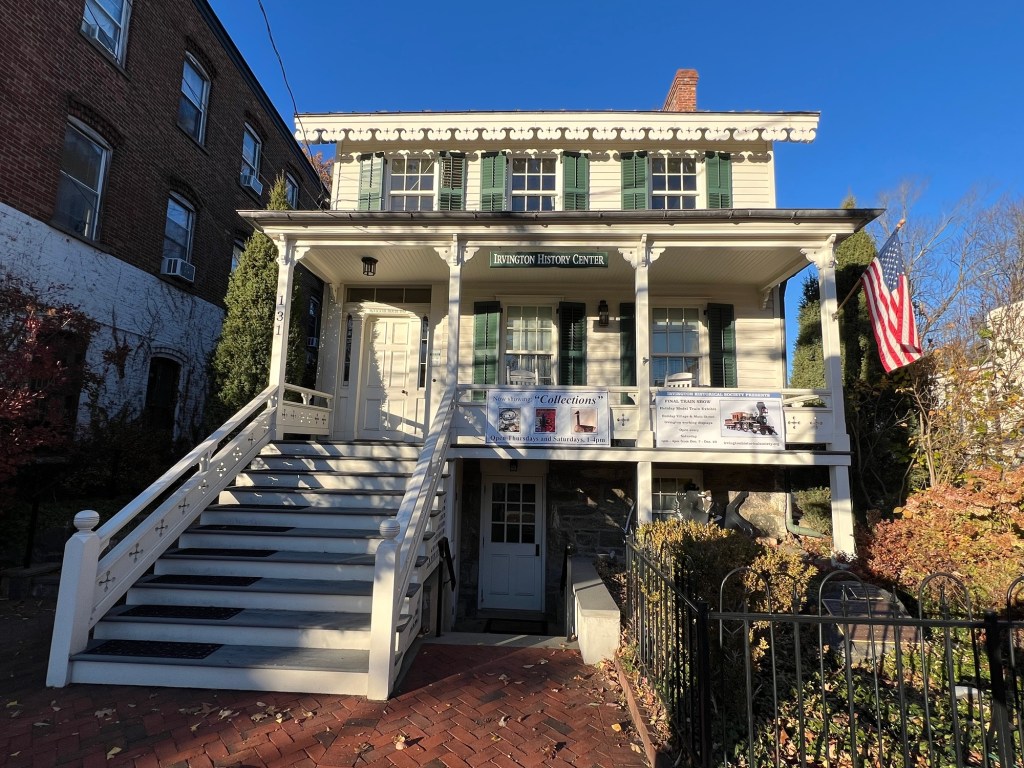
The Irvington Historical Society at 131 Main Street
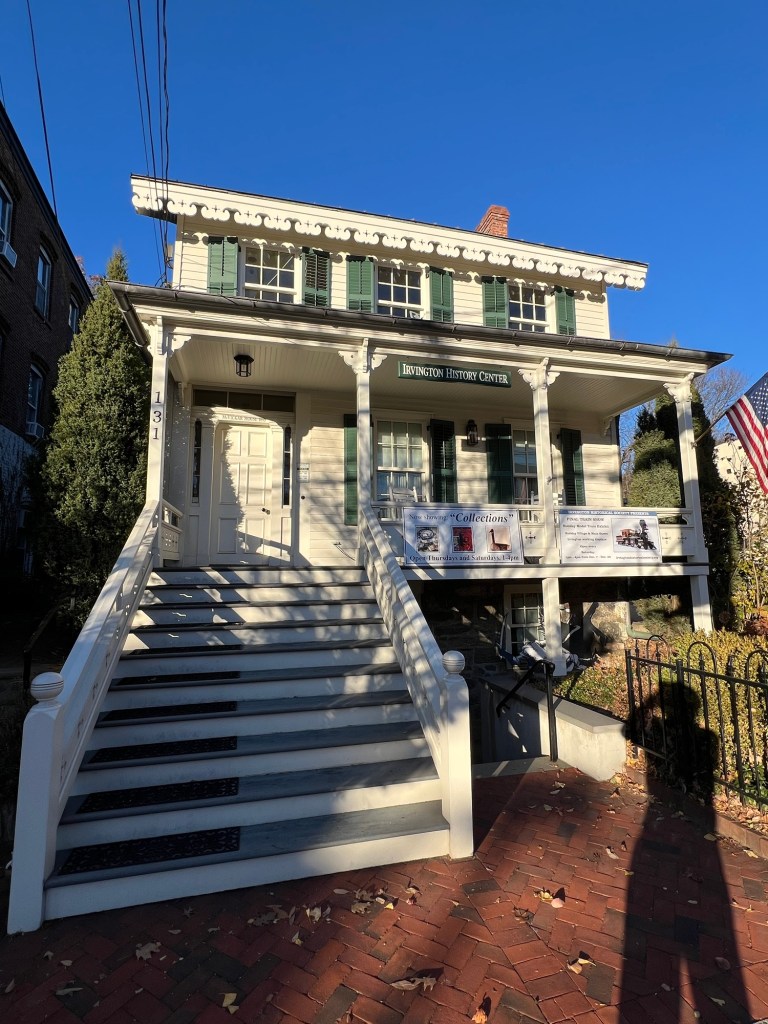
The Society building in the Fall
The Mission Statement of the Irvington Historical Society:
(From the Society website)
The Irvington Historical Society was founded in 1972 as a direct result of renewed interest in the history of our village during the Irvington Centennial Celebration. The mission of the society is to discover, collect, organize, preserve and make accessible all variety of material which serves to illustrate and explain the history of the village and its people. Through lectures, programs, publications, and exhibits, we attempt to share that history with residents and friends. The Society is also dedicated to the preservation of the historical, architectural, and cultural heritage of the Village.
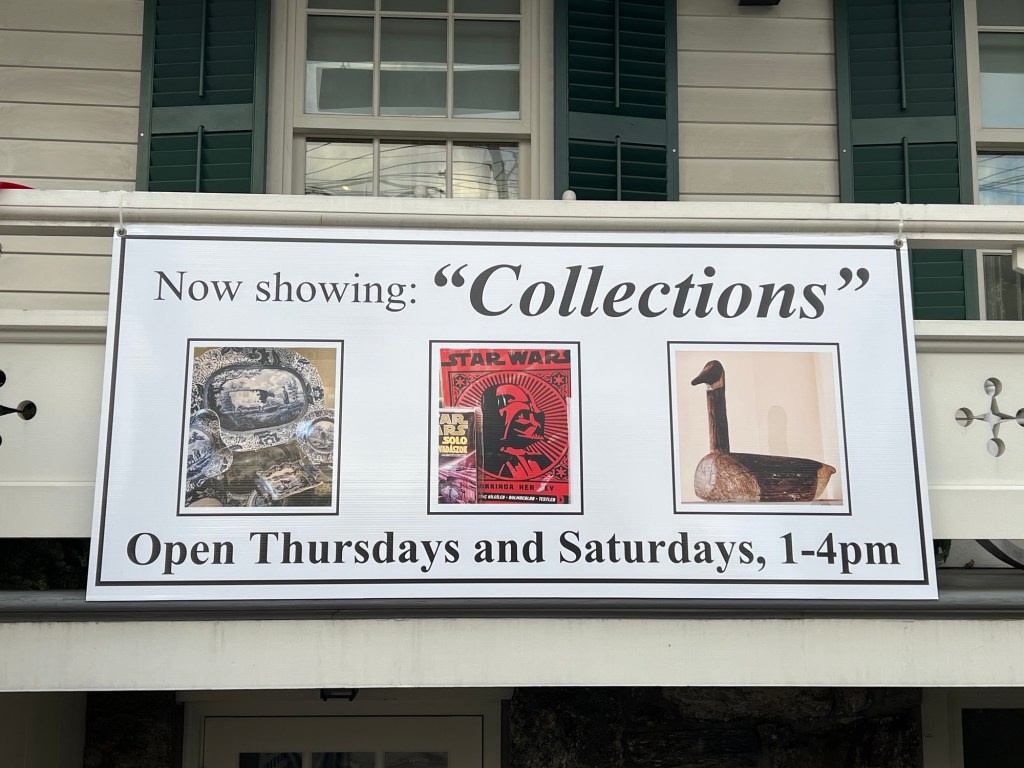
The ‘Collections’ exhibition on residents of Irvington, NY personal collections shown at the museum
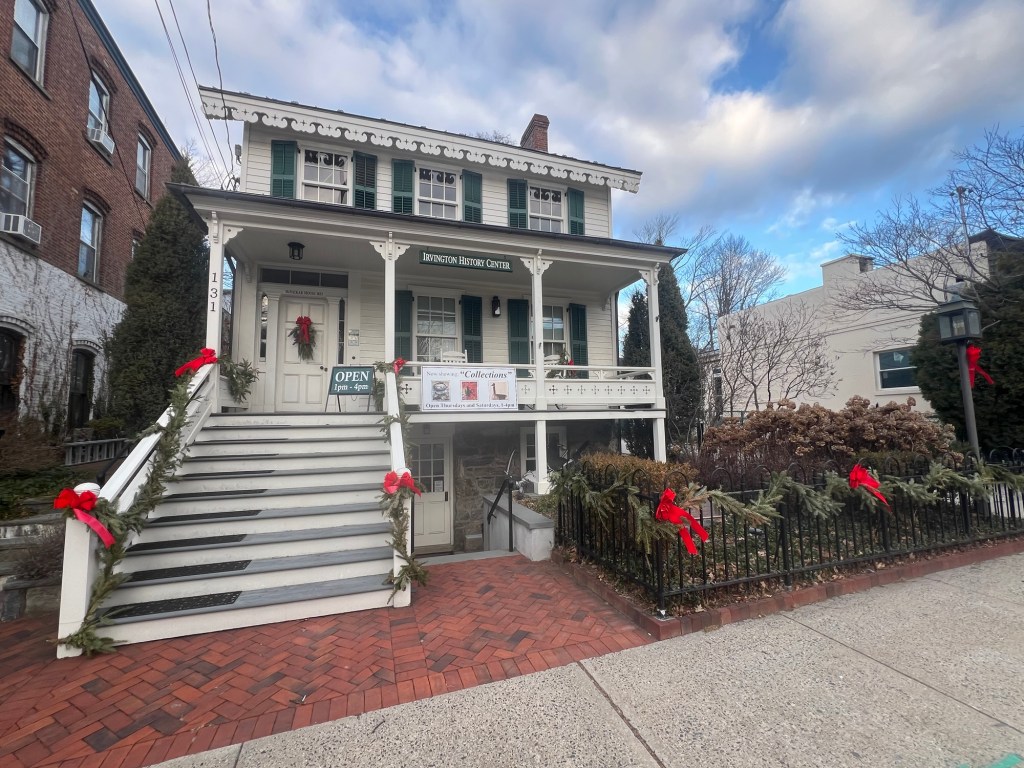
The museum decorated for the holidays
The History of the Museum’s McVickar House headquarters:
(from the Society website)
The McVickar House, a Greek Revival frame house, stands on land that was originally part of the farm of William Dutcher. In 1812, Justus Dearman, a New York City merchant, purchased the southern half of the Dutcher farm, 144 acres extending eastward from the Hudson River. In 1849, Dearman sold his property to Gustavis Sacchi for $26,000. Sacchi immediately resold the property to Franklin C. Field, a partner in the firm Jay and Field in New York City. Field had the property sub-divided into individual building lots establishing the village of Dearman. On April 25, 1850, these lots were publicly auctioned at the Merchant’s Exchange in New York City.
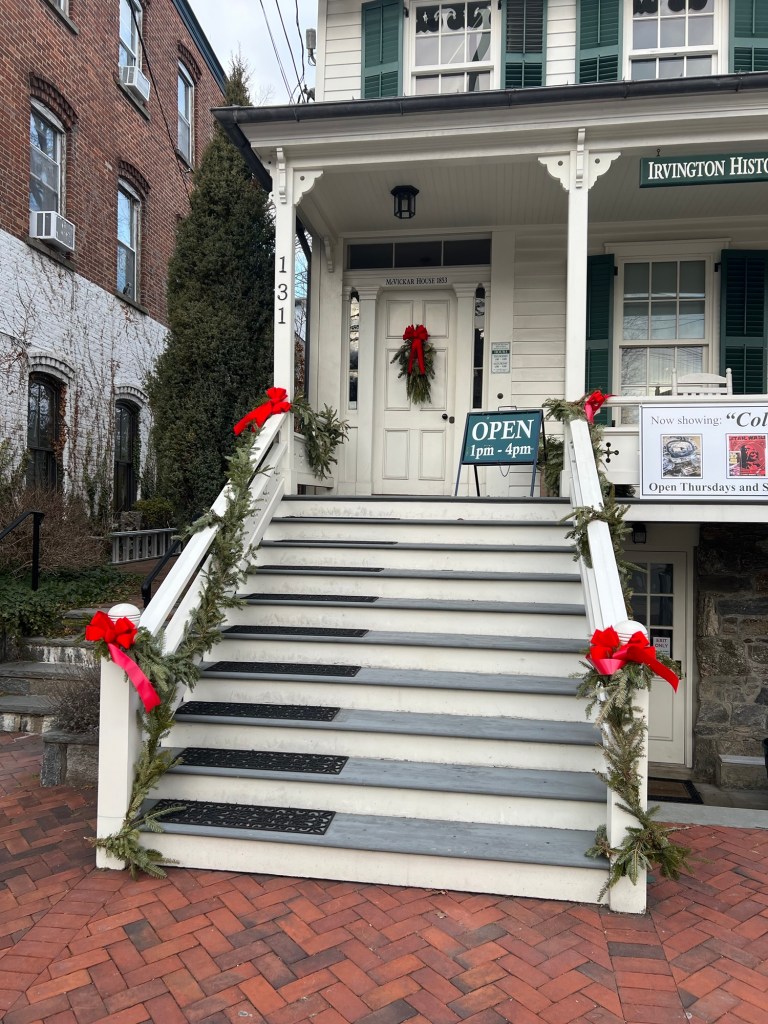
The museum decorated for the holidays
(From the Society website)
Building Lot #246, along with several others, was ultimately sold to the Rev. John McVickar. McVickar was born in New York City on August 10, 1787, into a wealthy merchant family. He was considered a brilliant student, graduating from King’s College (now Columbia) at the age of 17 in 1804.
In 1811, he took orders in the Protestant Episcopal Church and became a dynamic leader in the Episcopal Diocese of New York for over fifty years. He married Eliza Bard in 1809, and they had nine children, only three of whom survived McVickar’s death in 1868.
In 1817, McVickar was appointed professor of moral philosophy, rhetoric and belles-lettres at Columbia. He was superintendent of the Society for Promoting Religion and Learning in New York, served twice as acting president of Columbia, authored several books, and served as chaplain to the United States forces at Fort Columbus, Governor’s Island from 1844 to 1862. McVickar moved to Irvington in 1852 becoming a neighbor to his good friend Washington Irving.
Two of the lots McVickar purchased, along with several lots donated by McVickar’s cousin, John Jay, were to serve as the site of a chapel school, later to become St. Barnabas Episcopal Church. McVickar’s son, William Augustus McVickar, was appointed Missionary to Dearman in August of 1852, and on the August 17, 1852, the cornerstone was laid for the chapel school.
The Church of St. Barnabas was incorporated in 1858, and Reverend William A. McVickar served as the Rector of the Church until 1867. In 1870, William A. McVickar, who had inherited Building Lot #246 after the death of his father, sold the property to John Dinkel, a local merchant.
Dinkel was a grocer who in the 1870’s had a store on the corner of Main Street and Broadway. Dinkel sold the McVickar property in 1872 to Patrick Cannon whose daughter Mary later owned the property. Mary married Chester R. Doremus who owned Doremus Carriage Factory located next door to the McVickar house. In 1935, Mary sold the McVickar House property to John Fallon who in turn sold the property to Con Edison in 1957 so that they could build a small substation behind the house. The house was rented until 1992, but after the last tenant moved out, it fell into disrepair.
In 2002, the Village of Irvington acquired the property for the home of the Irvington Historical Society. A major fundraising effort was undertaken by the Society to support the renovation and restoration project. The Irvington History Center at the McVickar House opened in November 2005, and the McVickar House is listed on the National Register of Historic Places.
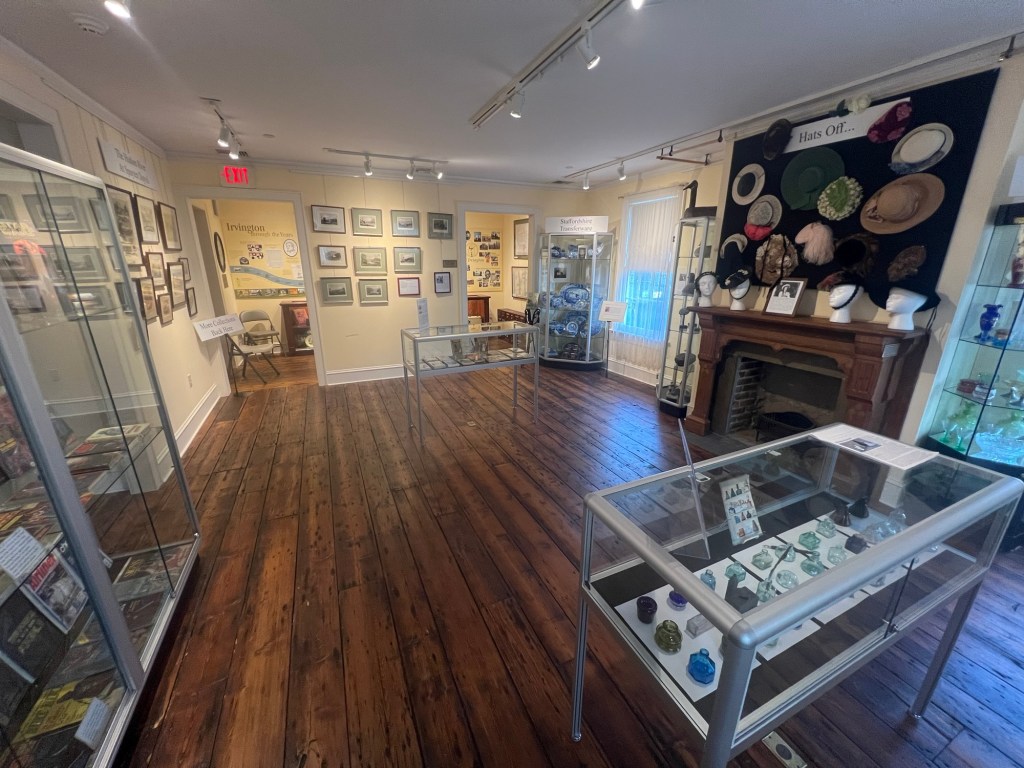
The main gallery of the Irvington Historical Society . The ‘Collections ‘ exhibition is to the front and the small permanent collection is towards the back.
The “Collections” exhibition was very interesting exhibition. Each display is unique to each of the residents who donated their collections for the exhibition. There was sets of china, artwork from the Hudson River Valley, items like duck decoys, a collection of hats, a collection of minerals and a selection of books. There was even a collection of Star Wars items. It was a nice exhibition of unique items. The exhibition will be rotating with other collections.
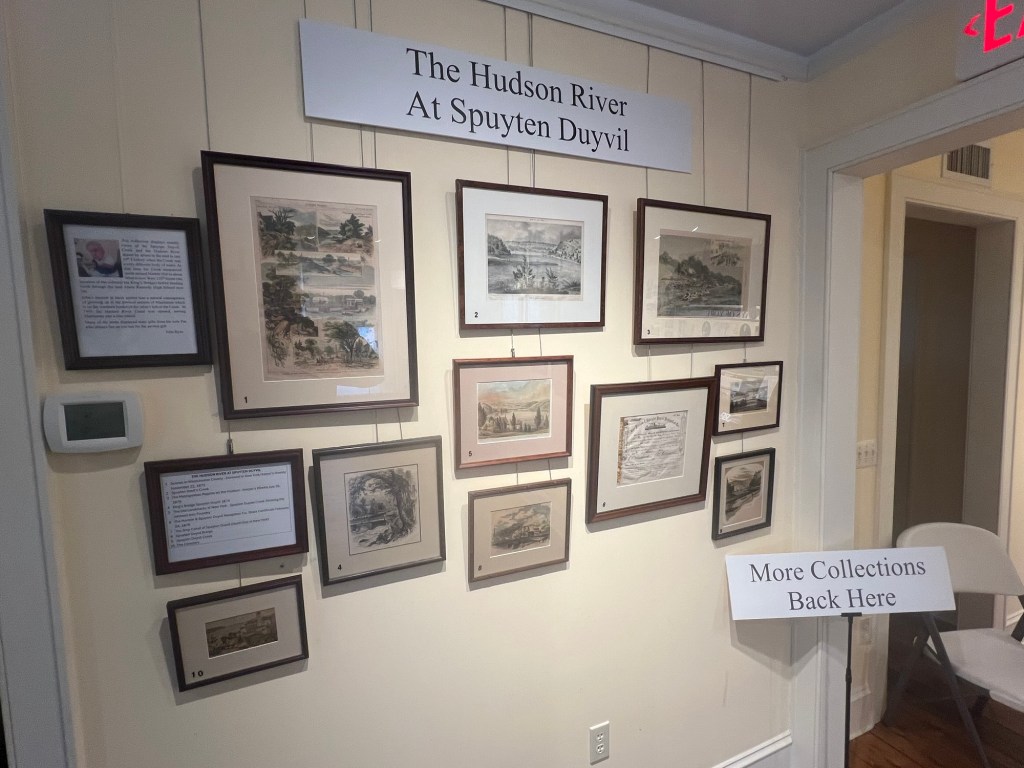
The collection of Hudson River art by a local resident gives a glimpse of the romantic side of the Hudson River Valley before development
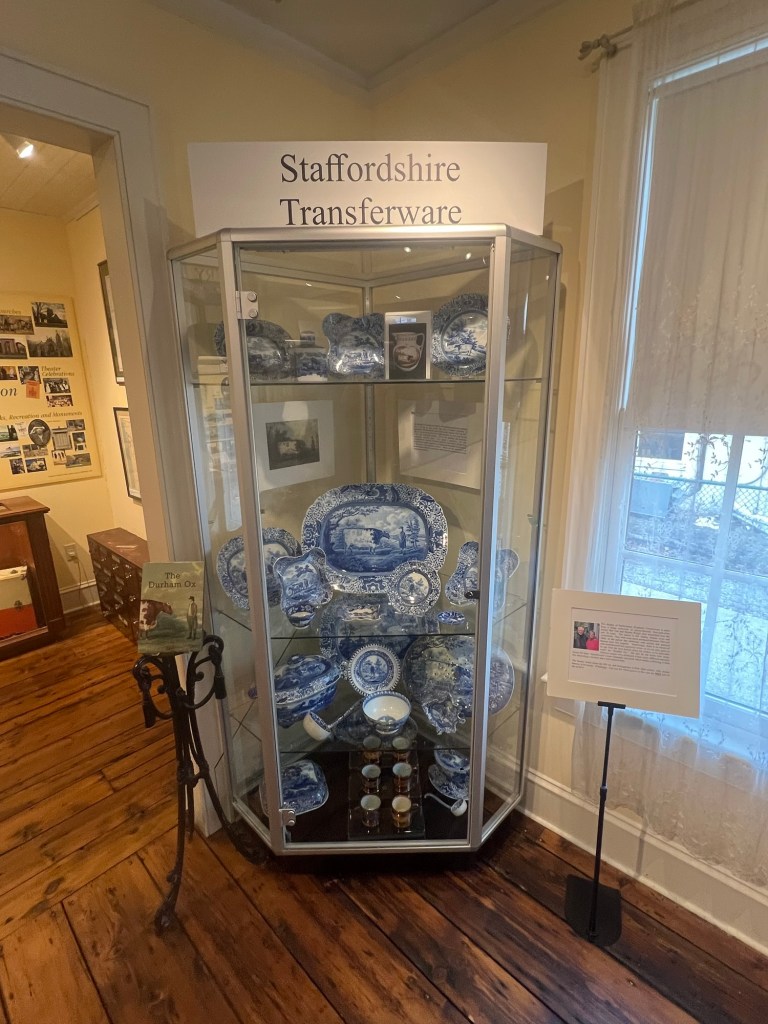
A collection of English Staffordshire China
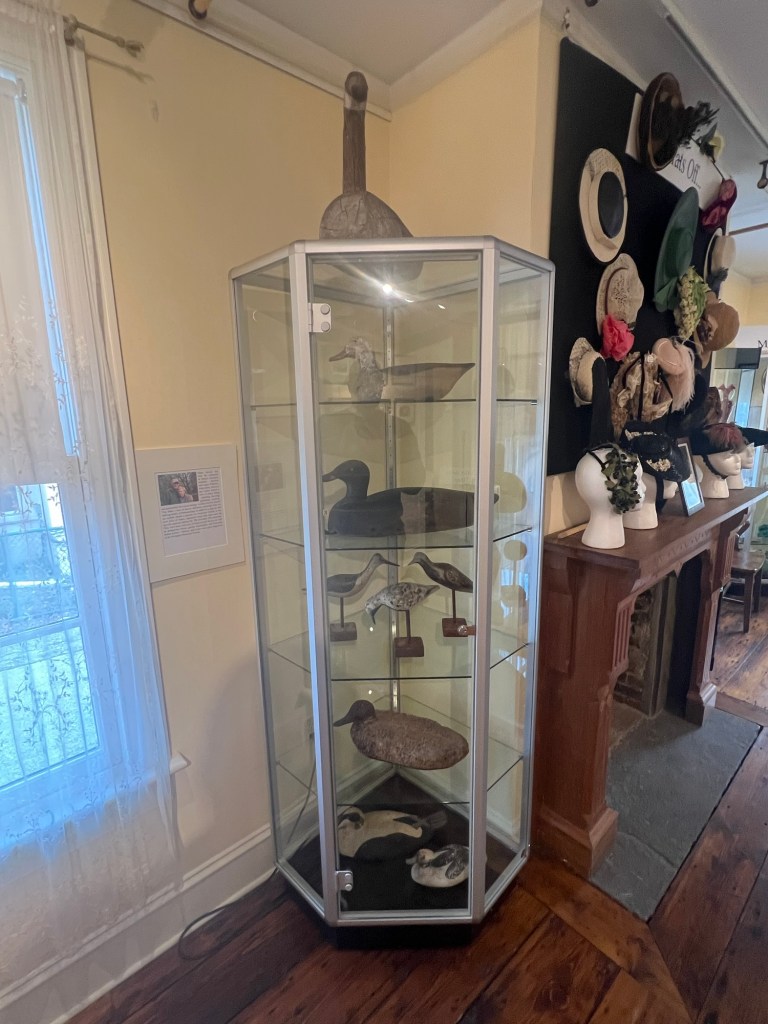
A collection of Duck Decoys
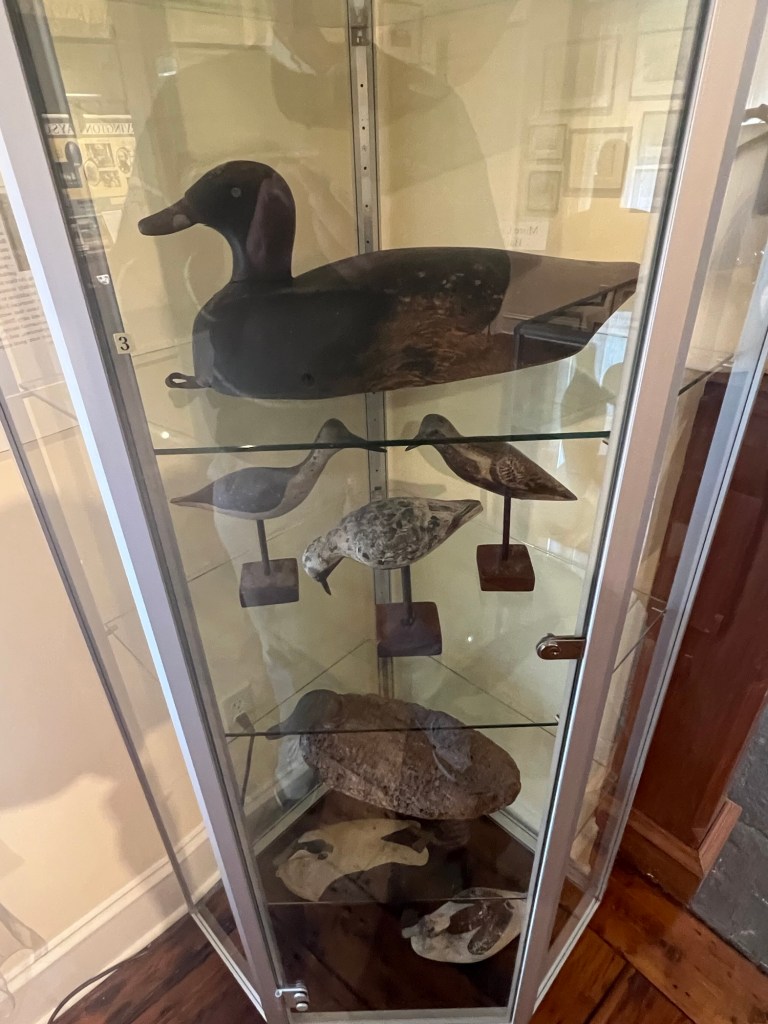
The Duck Decoys are from all eras
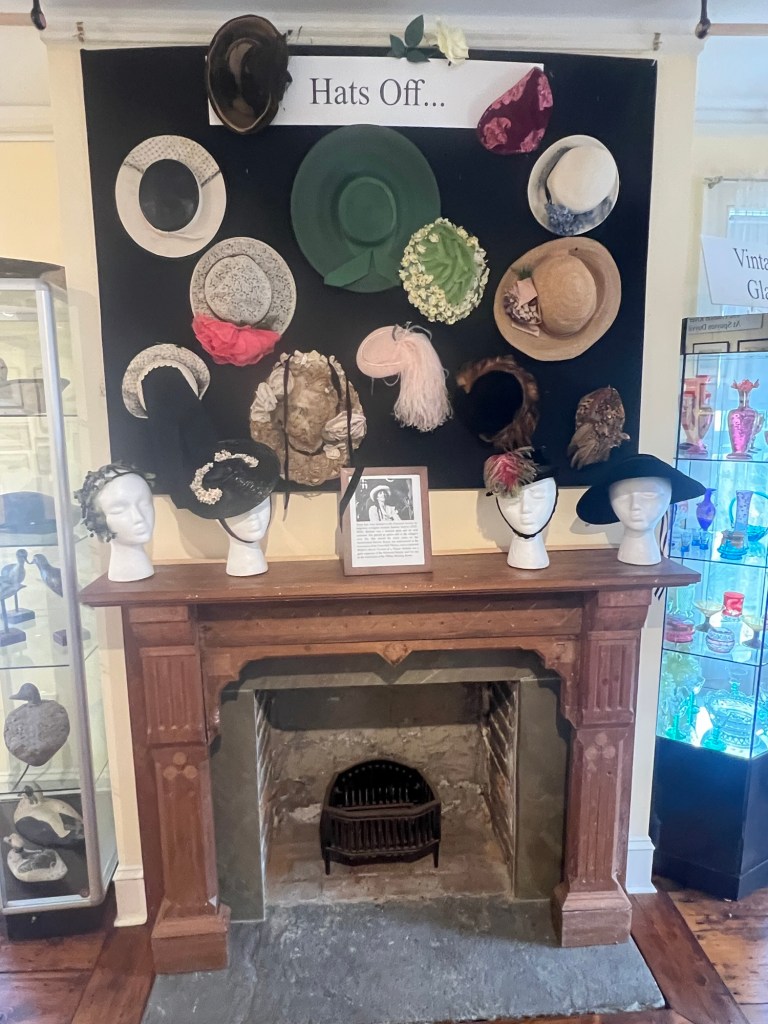
One resident’s Hat Collection which represents many different eras of style and change of function
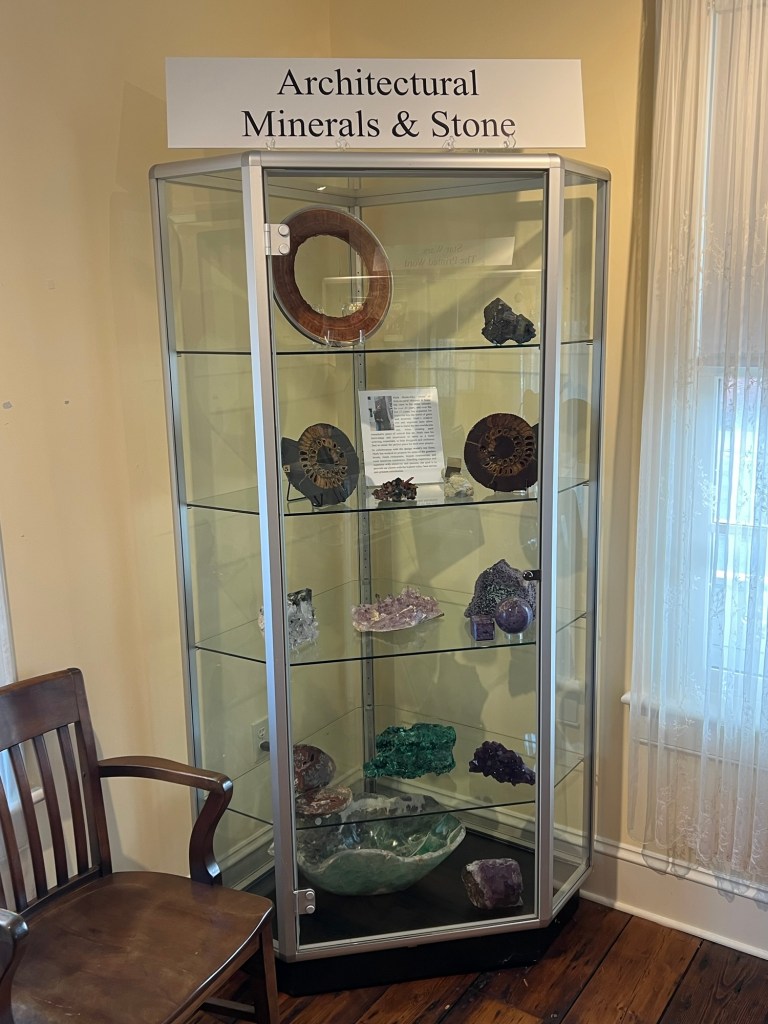
One resident’s collection of Minerals and Stones
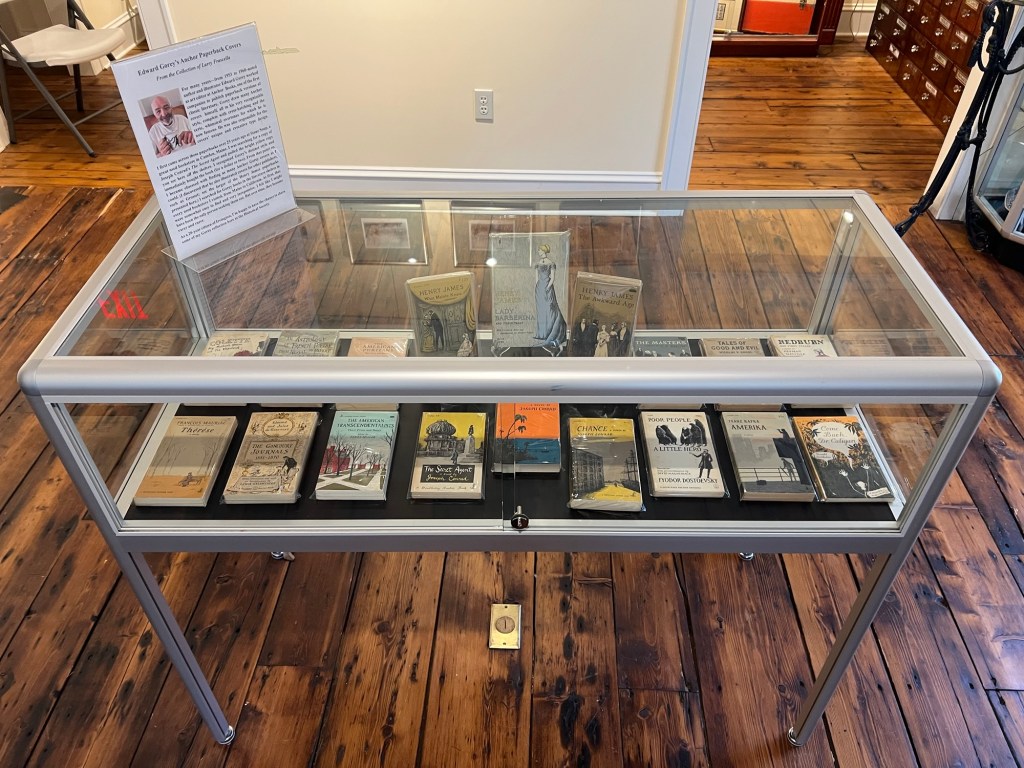
One resident’s collection of Anchor paperback covers
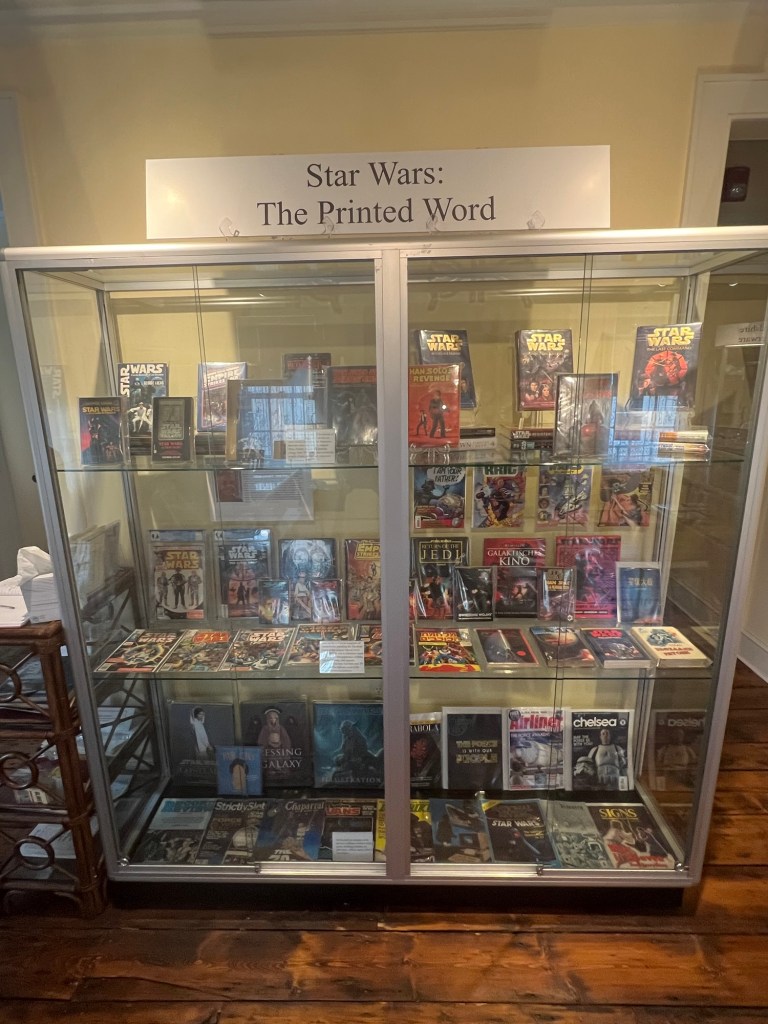
An extensive collection of ‘StarWars’ memorabilia
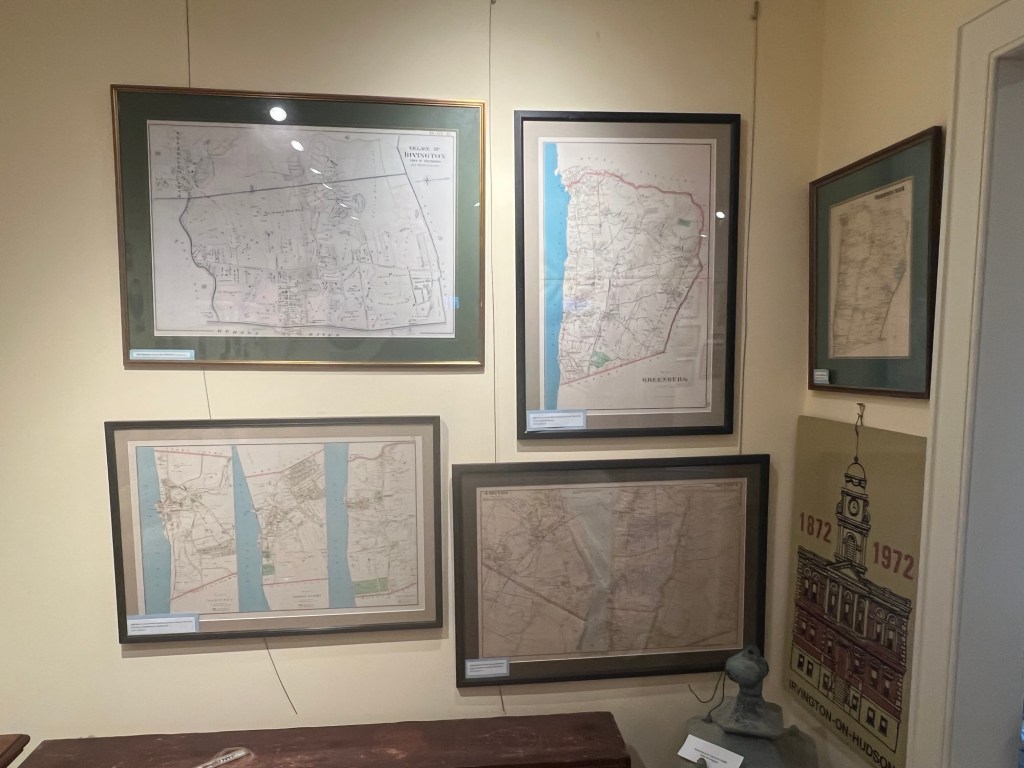
A collection of area Maps
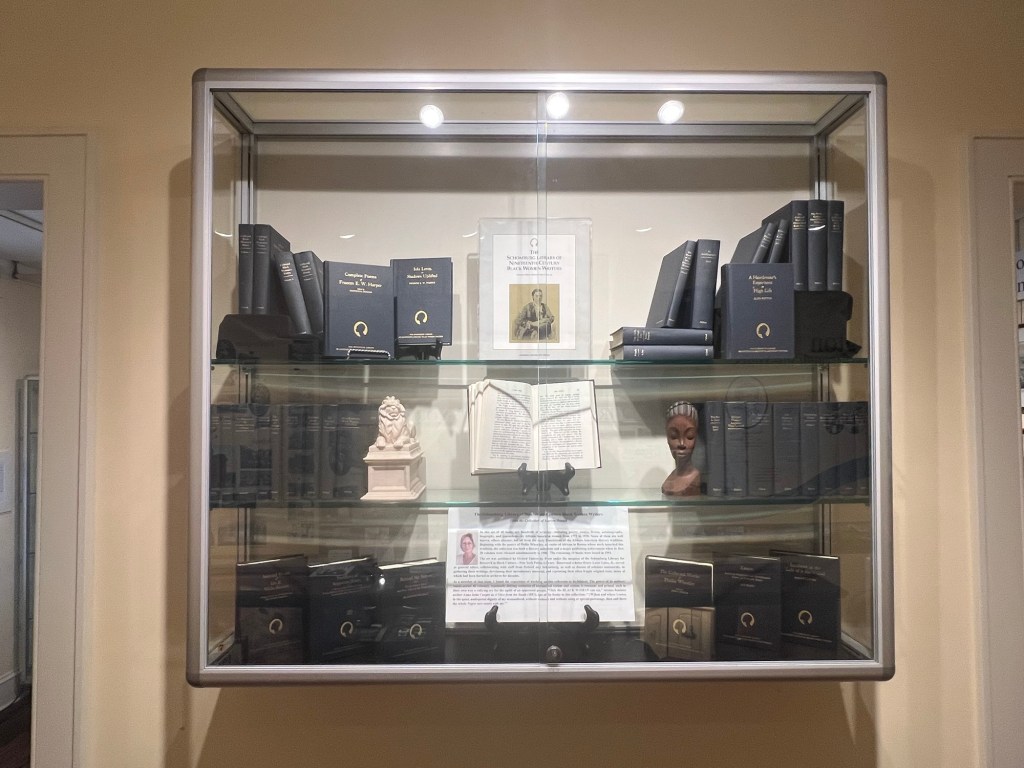
A collection of the works of Black Women Writers
The back part of the Gallery holds the Permanent collection of artifacts on display. This is a road map of the development and the colonialization of Irvington. It has from its place as home to the Lenape Indians to the Dutch trade settlements and then the prominent residents who have lived in the area. It is a fascinating look at the community and how it is evolving.
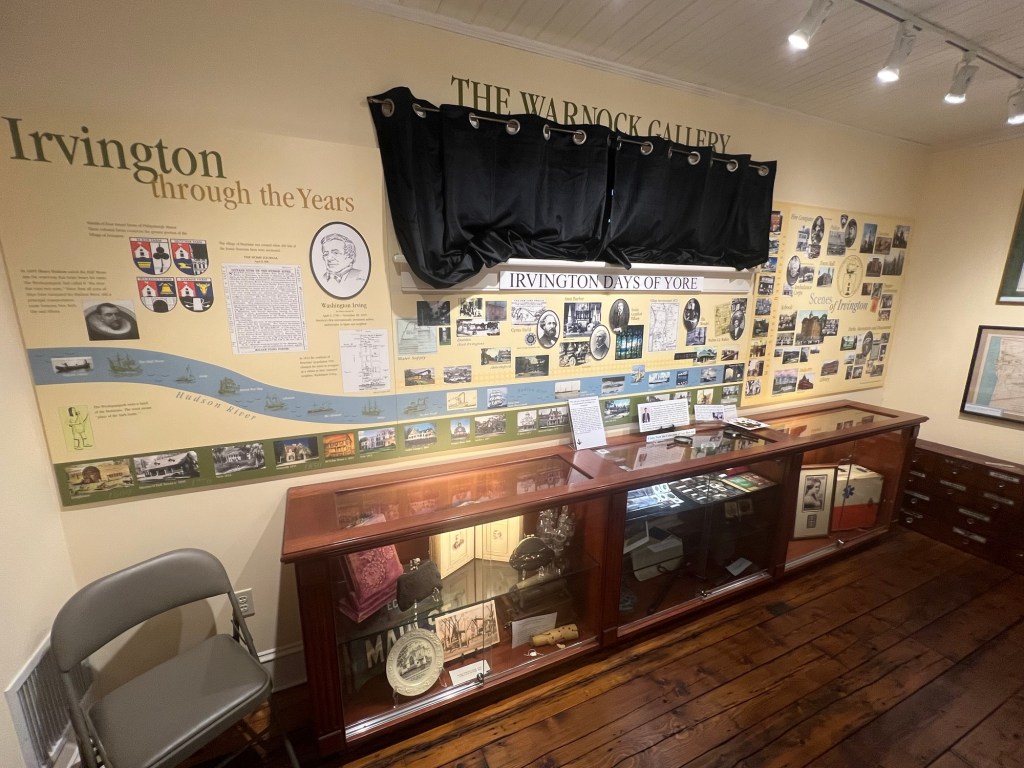
The Permanent Collection of the Irving Historical Society
The latest exhibition that I visited was on The Irvington Gazette, their local paper.
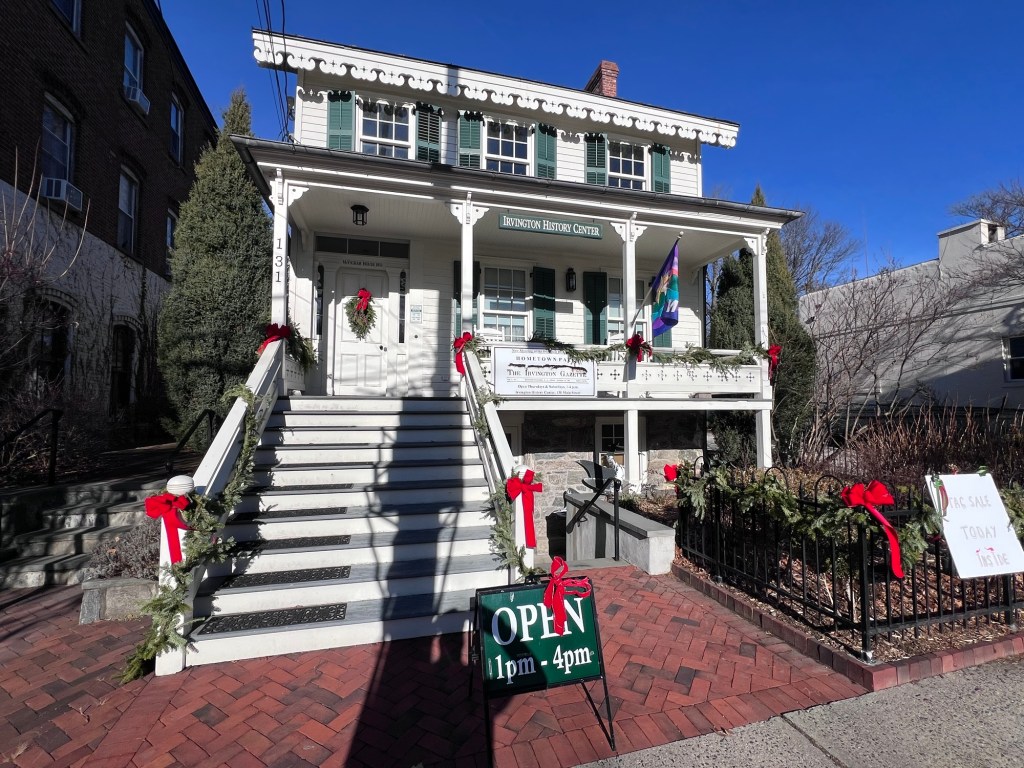
The museum is always so beautiful during the Christmas holidays
When I returned to the museum in December of 2025, the new exhibition that was on display was the history of The Irvington Gazette Gazette, the local paper. It is a testimony to the power of local news. This is the importance of local newspapers.
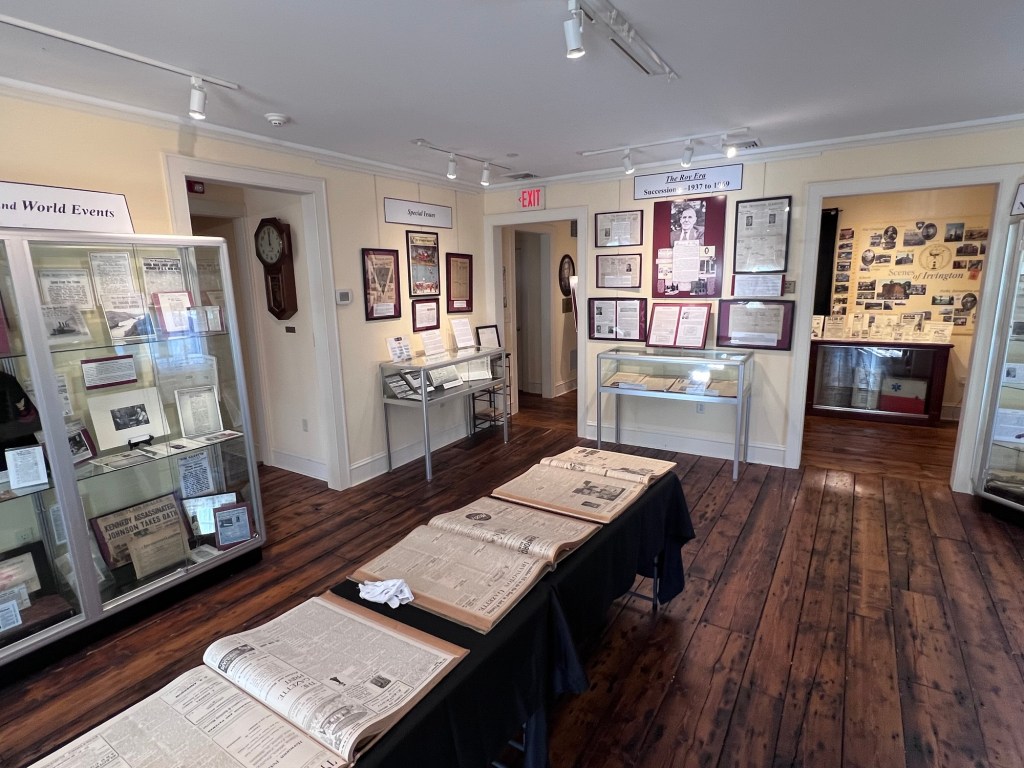
The Irving Gazette exhibition
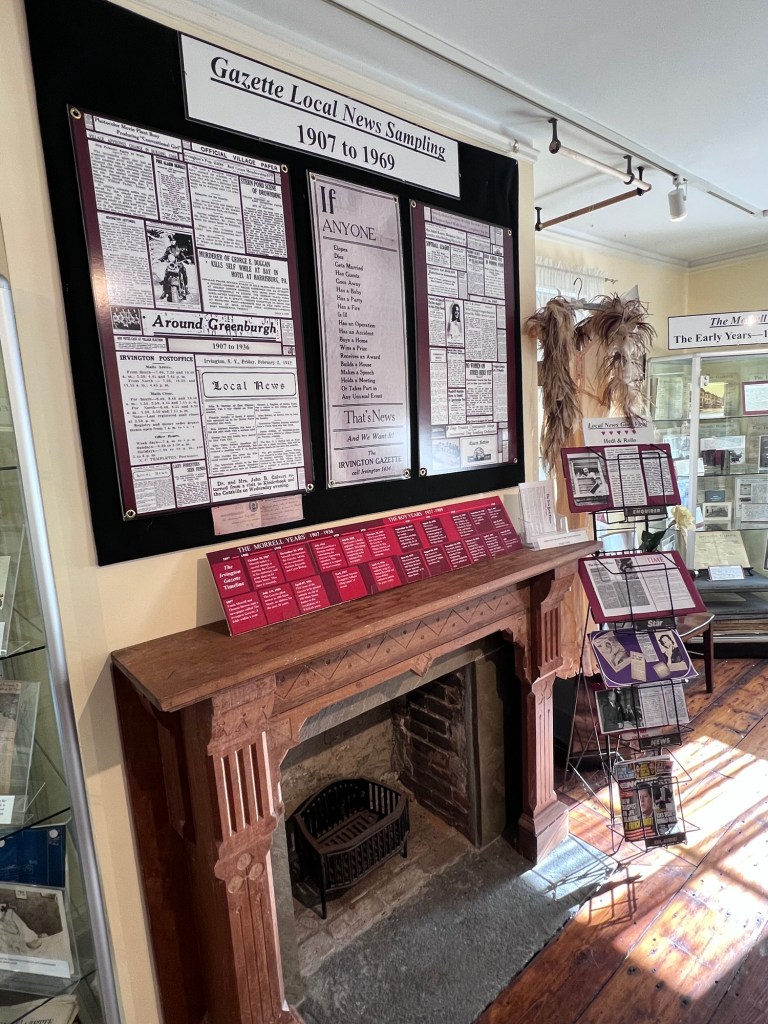
The exhibition up close
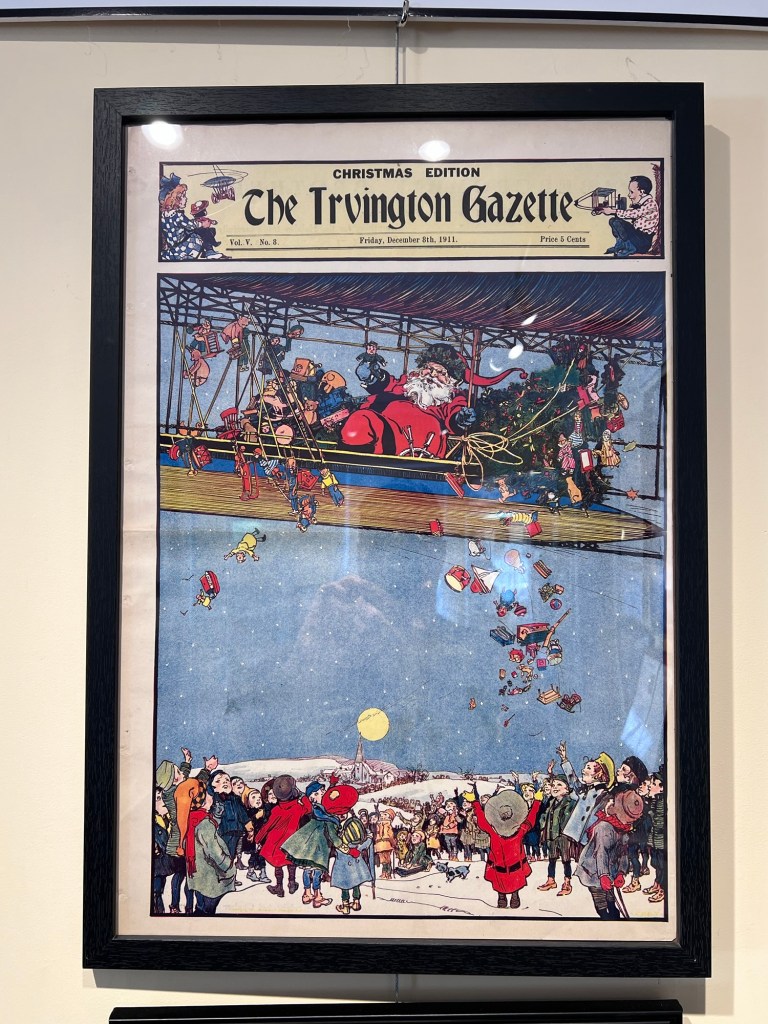
The first issue of The Irvington Gazette in color
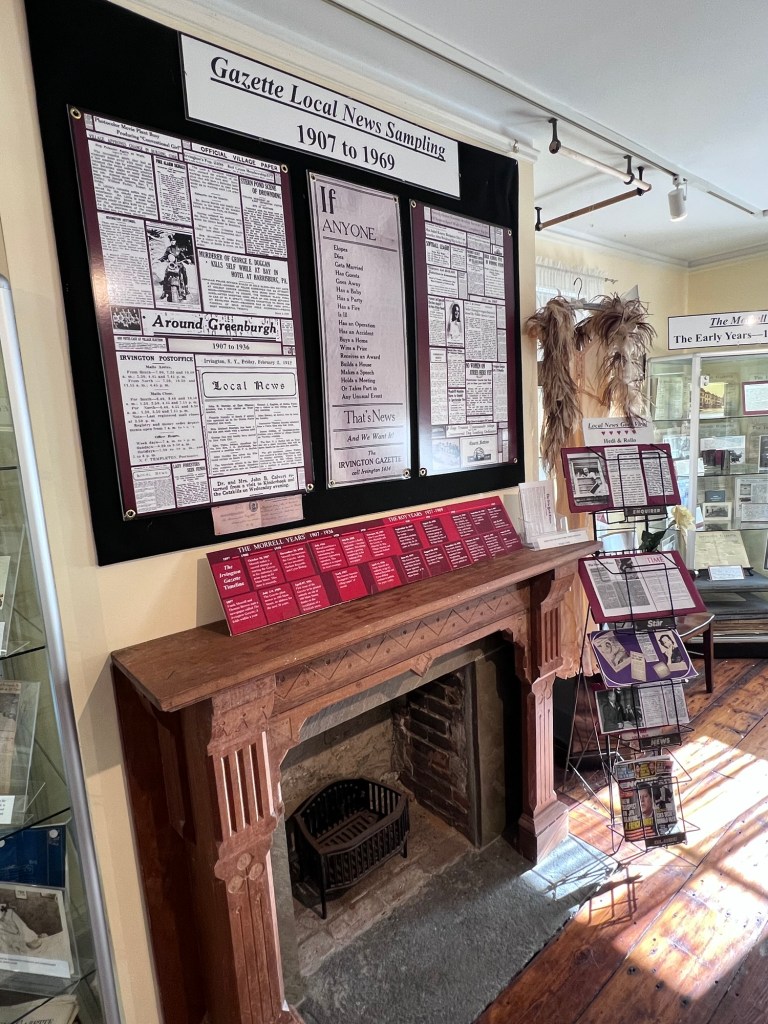
The collection of different stories
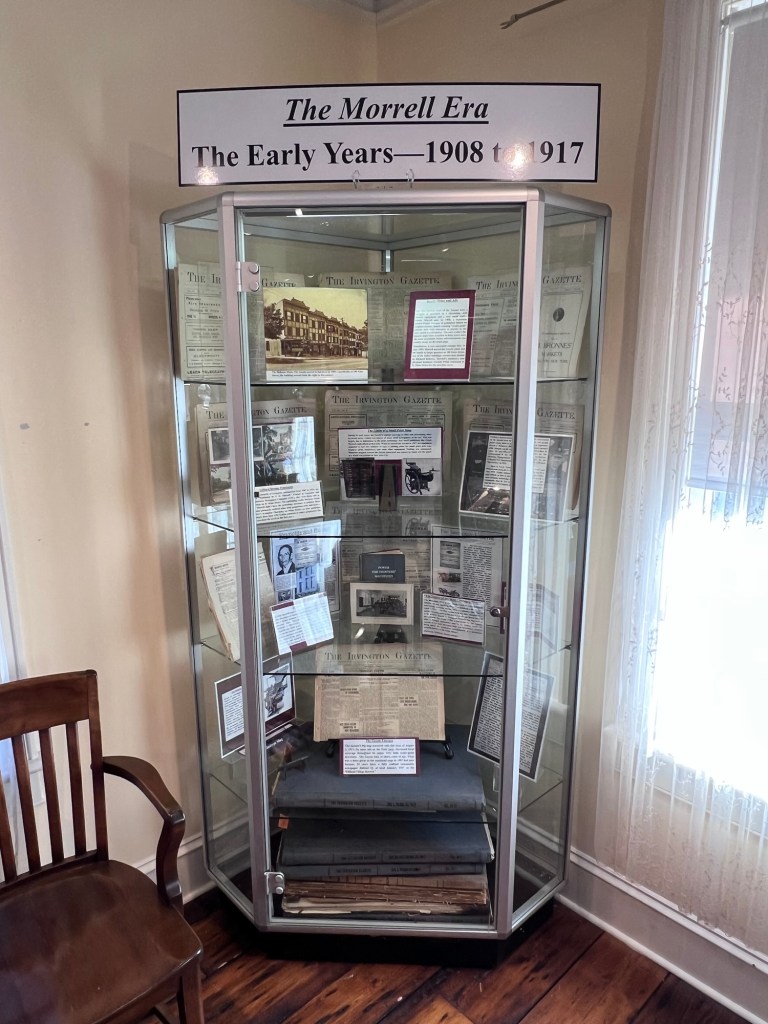
The collections of stories
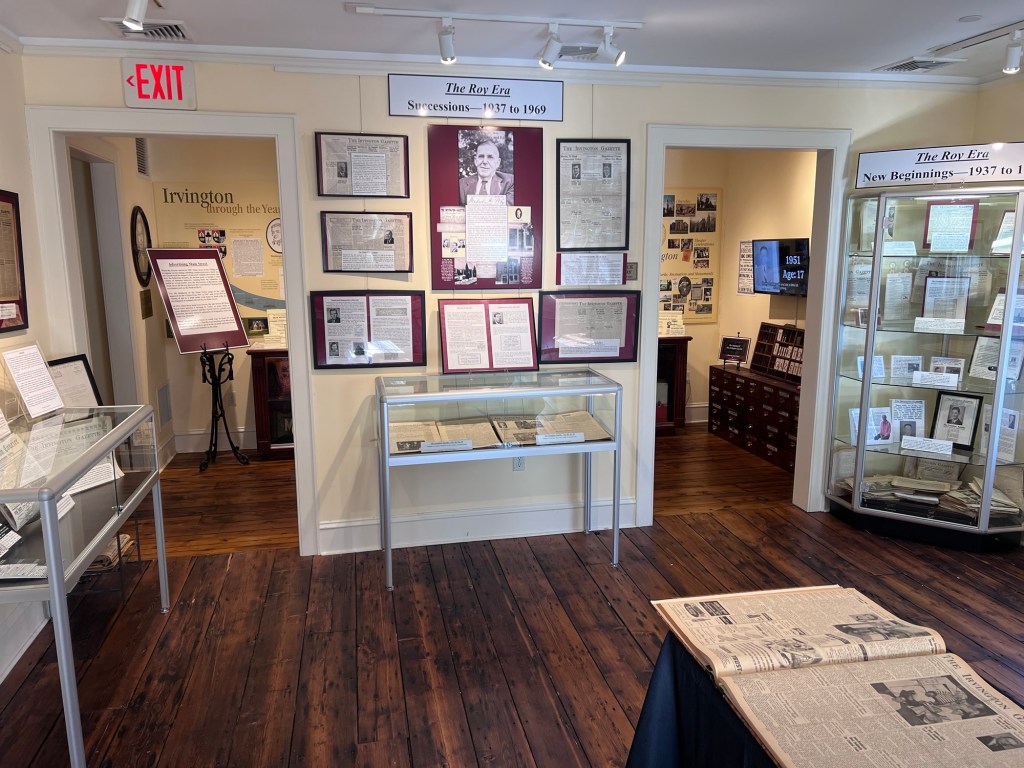
The collection of stories
The story of the Town of Irvington, NY:
(from the Society website)
I took these pictures of the Irvington when I visited around both Halloween and Christmas. People in the downtown area love to decorate for the holidays.
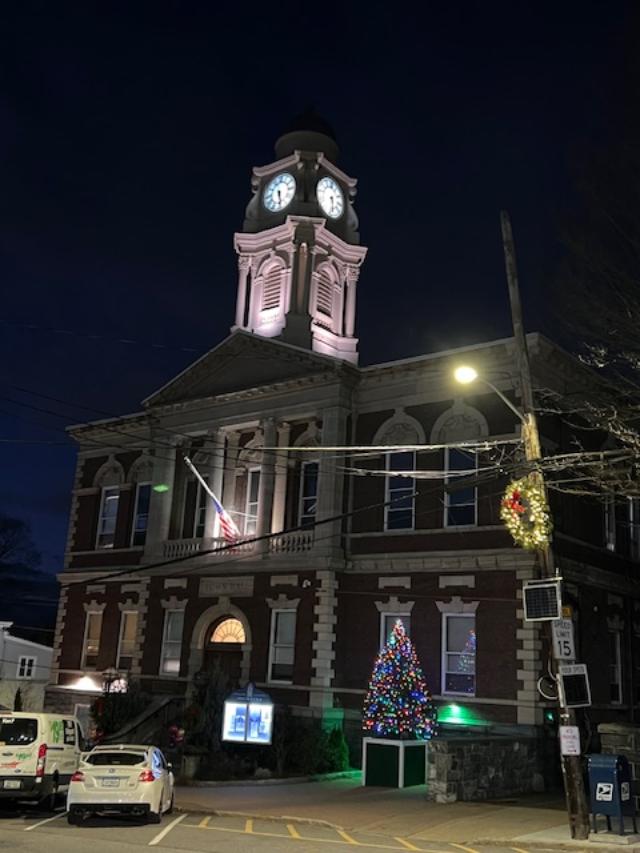
The Town of Irvington, NY during the Christmas holiday season
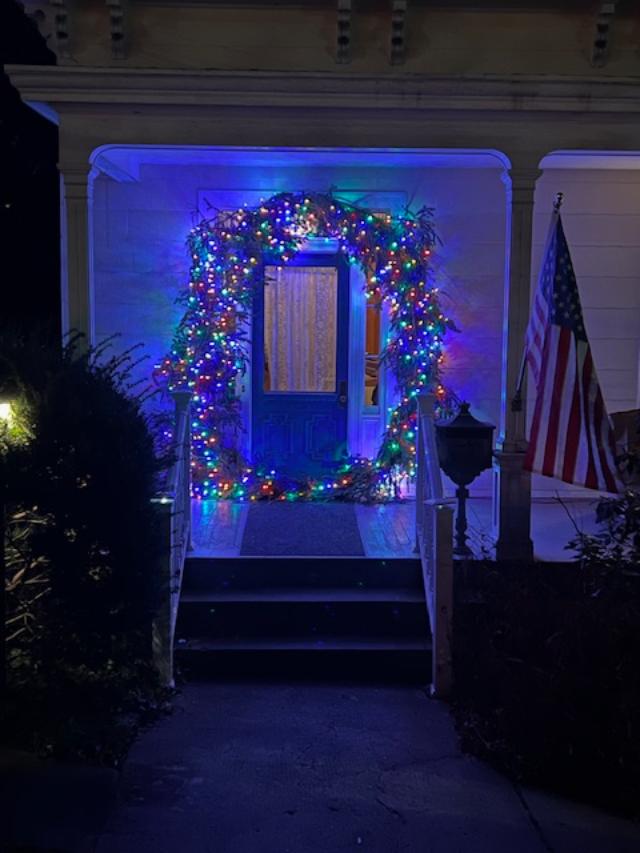
The beautiful decorations of the residents of the Downtown in Irvington, NY
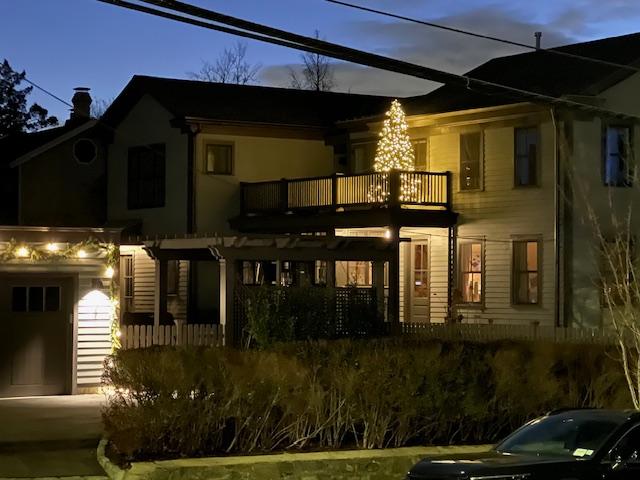
Downtown Irvington NY during Christmas
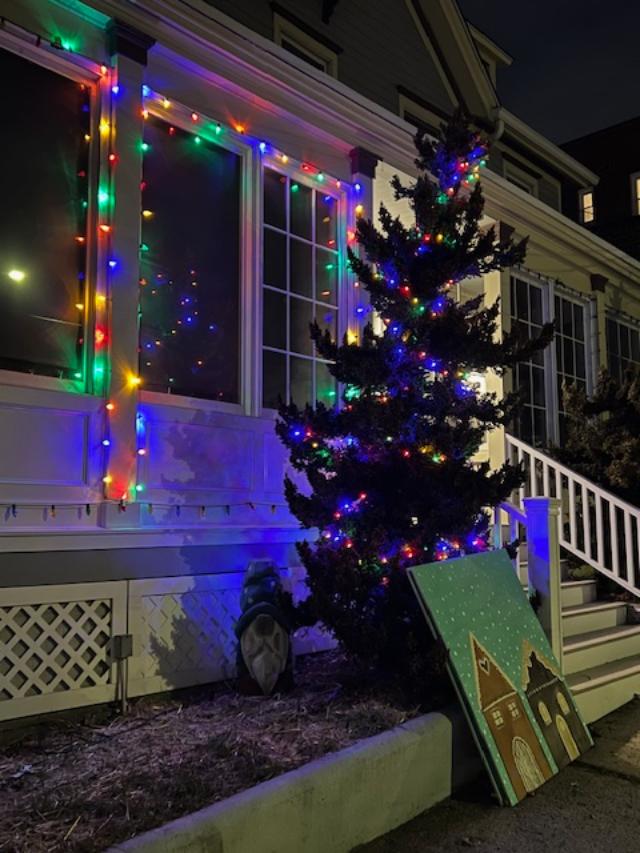
The houses decorated for the Christmas holidays
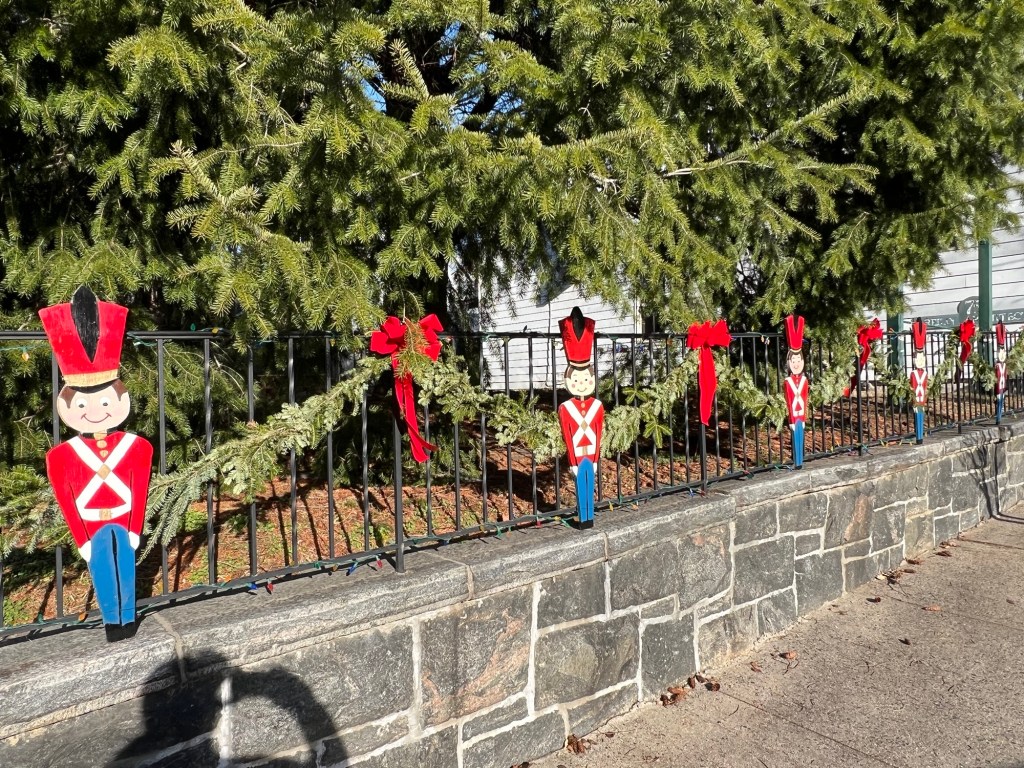
The declarations downtown in 2025
The Village of Irvington, resting on the Eastern Shore of the Hudson River twenty-two miles north of New York City, has a rich history. Originally the home of the Wecquaesgeek, an Indigenous people of the Wappinger Tribes, it later became farmland during periods of Dutch and English control. Irvington and its local residents played a critical role in the Revolutionary War as part of the Neutral Grounds between English and Colonial forces.
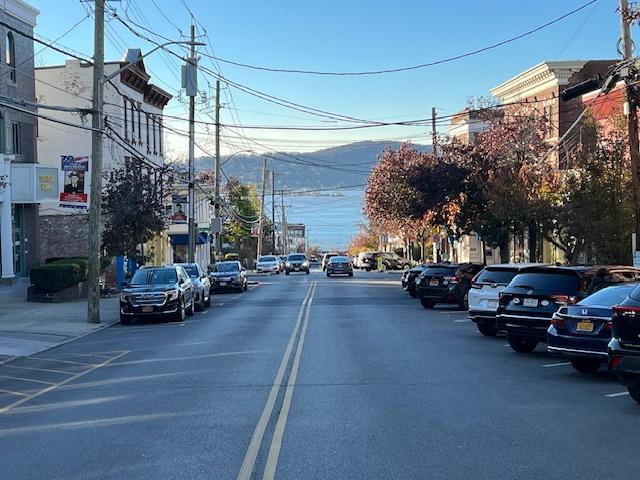
The beauty of Downtown Irvington, NY during the Fall
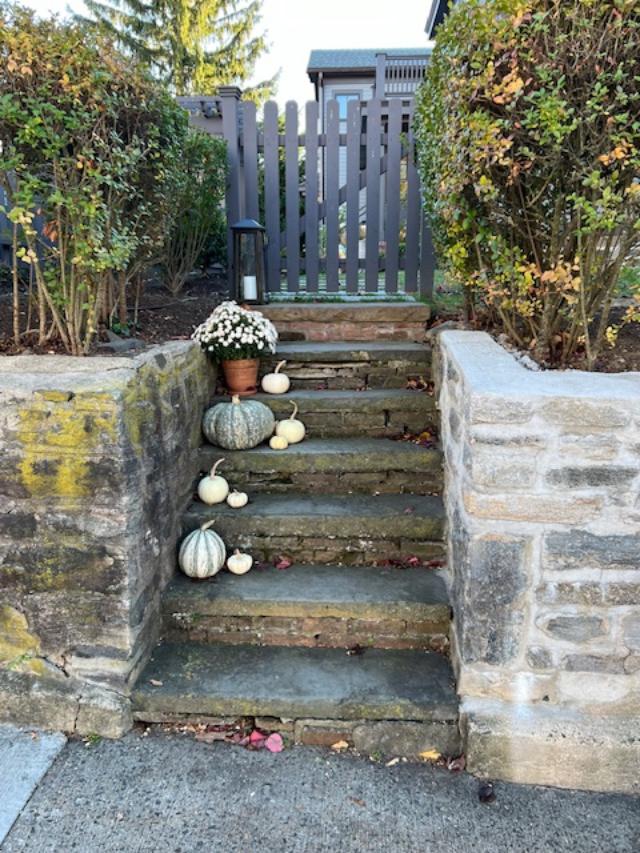
The decorations for the Halloween holidays
The arrival of the Hudson River Rail Road in 1847 led to the founding of the Village, the breakup of the traditional tenant farms, and a growing population. Because of its physical beauty and proximity to New York City, Irvington became a favored place for country estates in the latter half of the 19th Century and the beginning of the 20th Century. As those estates began to be sold off for development before World War II, Irvington evolved into the scenic, beautiful, and vibrant residential community it remains today.
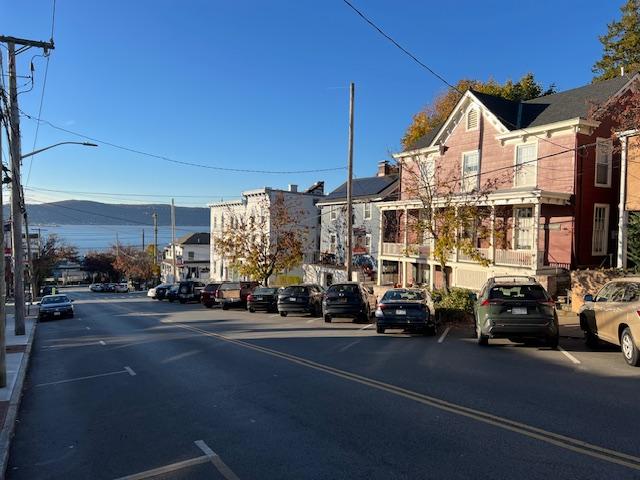
Downtown Irvington, NY in the Fall looking over the Hudson River
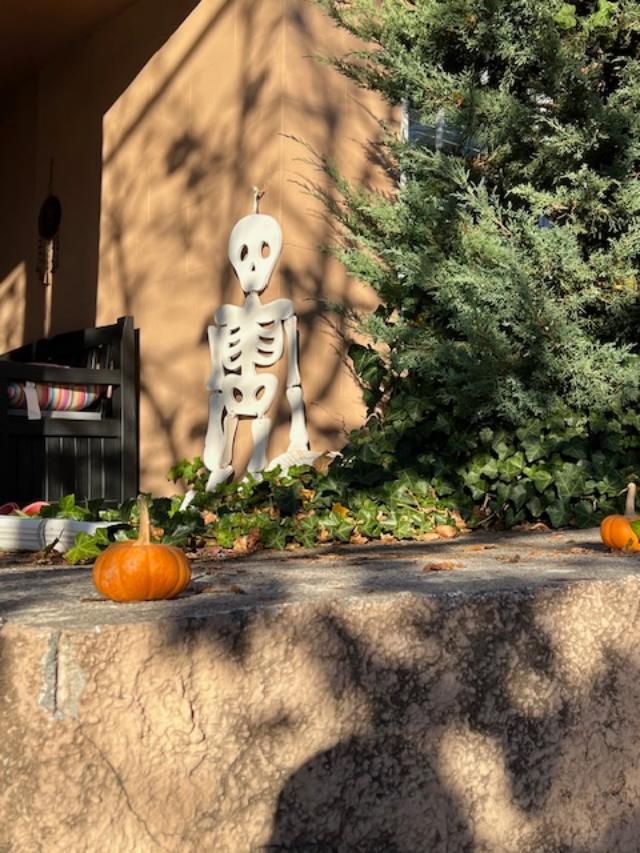
Downtown Irvington, NY during Halloween
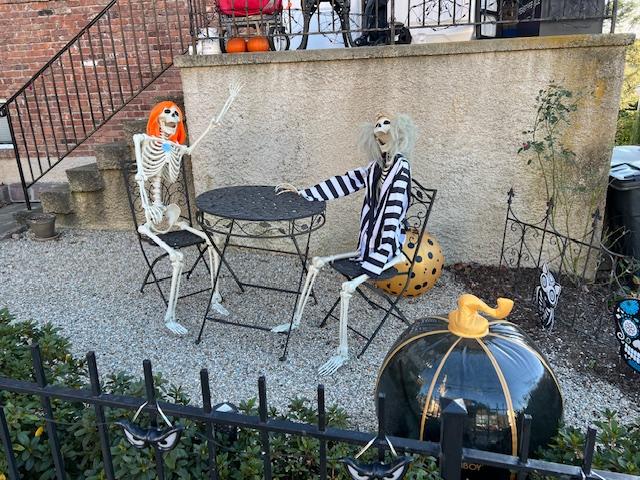
Halloween decorations in Downtown Irvington, NY
The paper’s first color print for Christmas
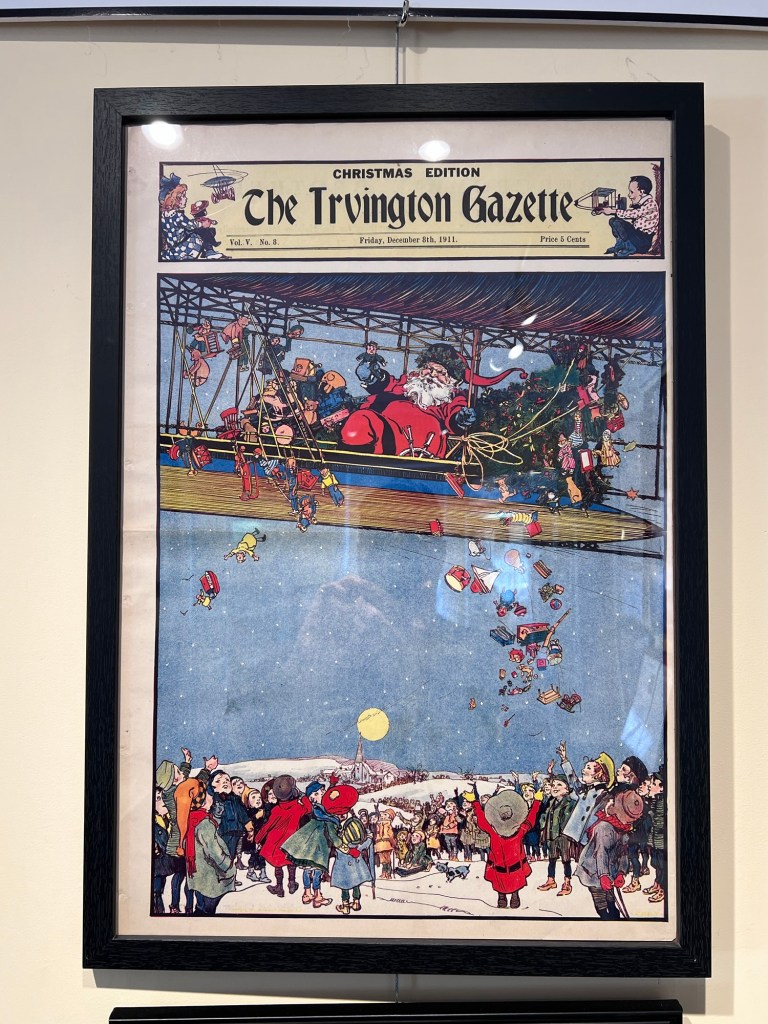
Irvington, NY is a beautiful
Place to visit during both the Halloween and Christmas holidays. The town and its residents know how to decorate for the holidays.

Downtown Irvington at Christmas
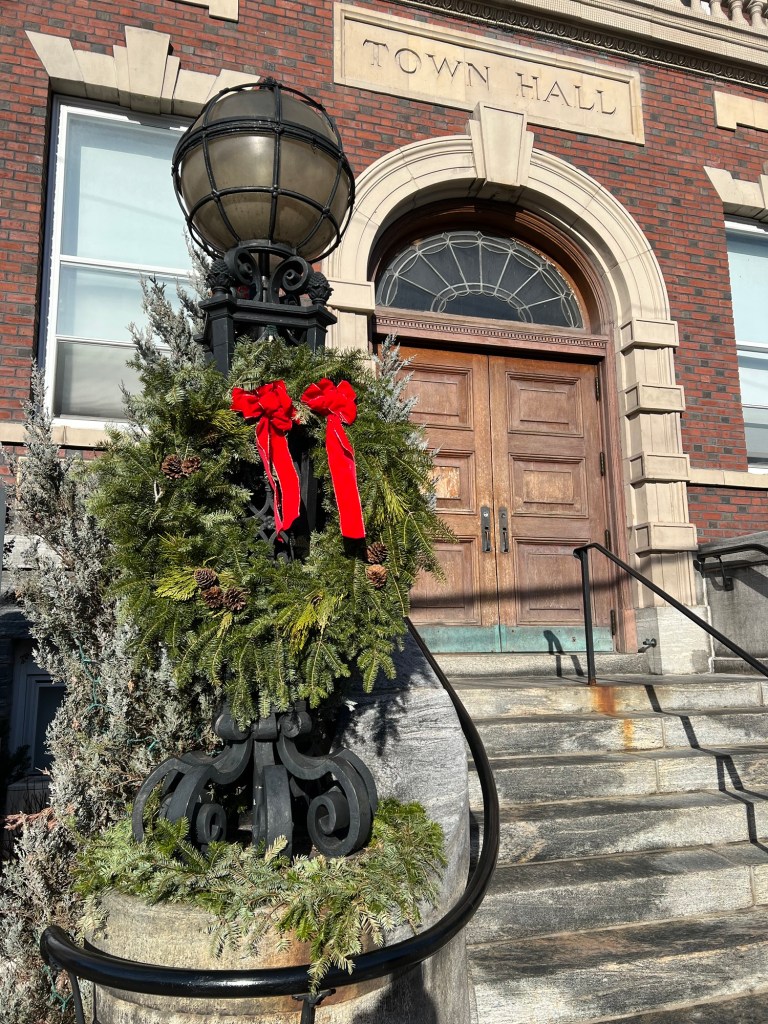
City Hall decked for the holidays
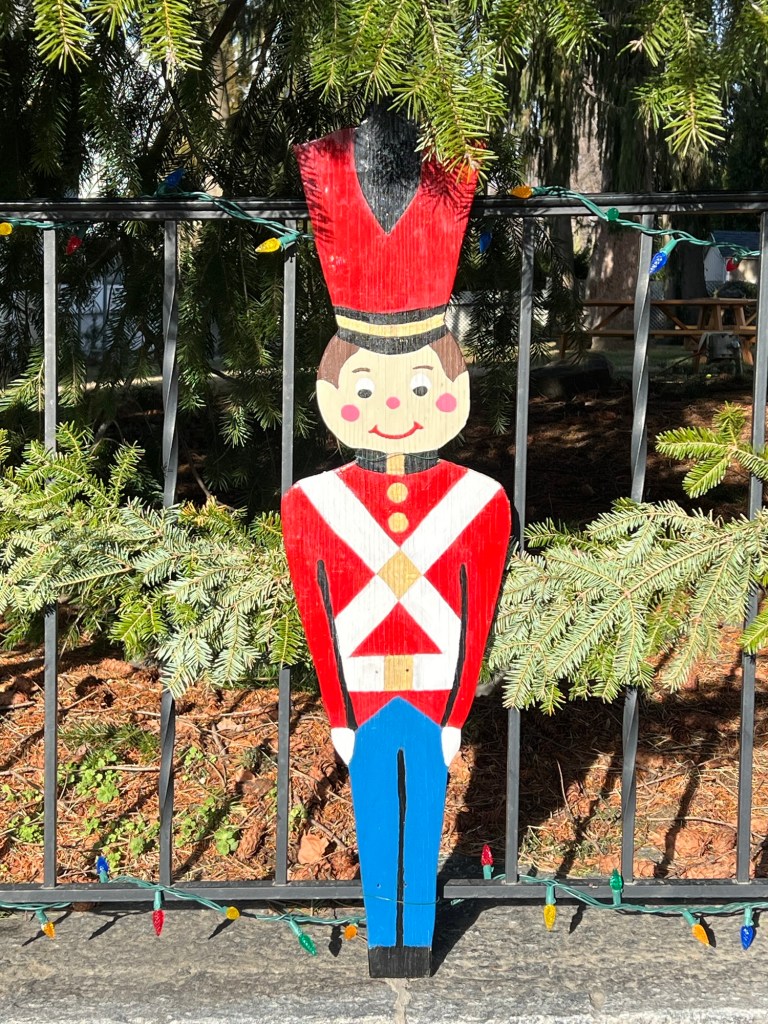
Toy soldiers wink and smile all through the holidays
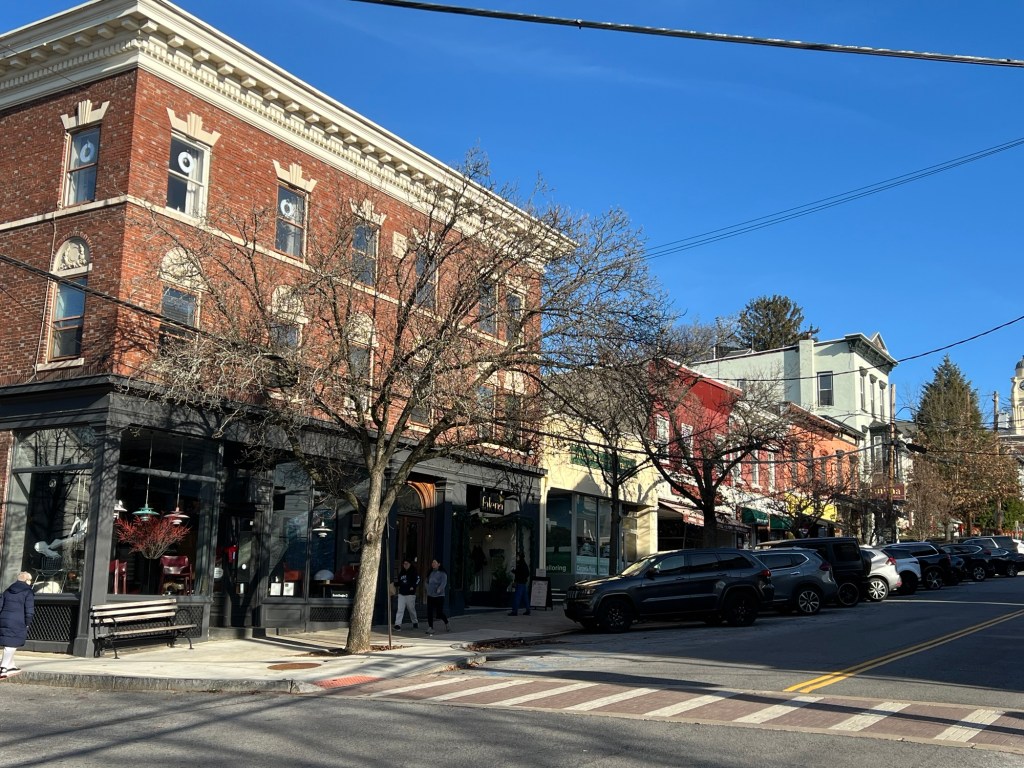
Downtown Irvington decked out for Christmas
 Visiting a Museum: The Unique, Unusual, Obscure and Historical