Our special ‘Members Only” nights at the Met are a lot of fun!
I had just finished Finance class at NYU and I needed a break. I could tell that my Professor wanted to leave early as well and the whole class was lost on learning the Income Statement so it was a perfect time to end the class for the evening.
I had signed up for the ‘Private Members Night’ on Valentine’s Day thinking that people would not attend this event on Valentine’s Day. Boy was I wrong! The museum was packed with people all over the museum. Since the whole museum was not open (the Roman and Greek Galleries on the first floor with the American Wing to the back being open and upstairs it was the Special Galleries and the Impressionist Wing), the areas of the museum including the restaurants and gift shops filled with members dining…
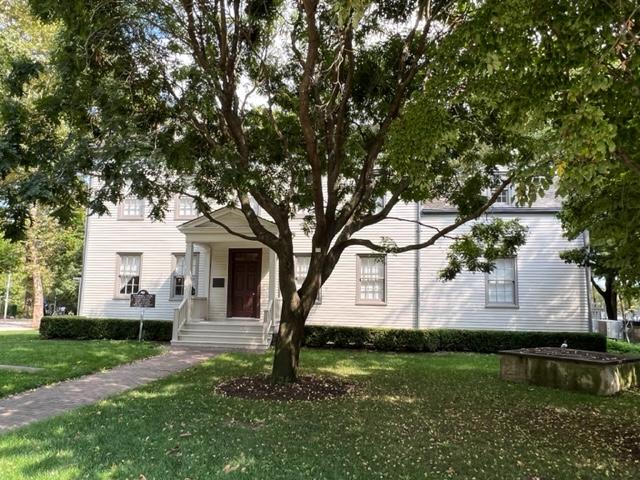
The Blackwell House on Roosevelt Island finally opened for tours after a major renovation of the house. When I had visited Roosevelt Island the last time in 2017, the house was corded off and was not open for touring. It had looked like it was falling apart from the inside out.
Historical Landmark sign
The home has now gone through a major renovation. The grounds outside were beautifully landscaped and gave the house a very warm and welcoming entrance to the property. In the middle of the summer, the flowers and trees were all in bloom and it was a nice view from the street. The house is conveniently located in the middle of the island, so it is not far from the tram and the subway.
The historical plaque in front of the house
I have to say that I was a little disappointed with the tour of the house what there was of it. The house had gone through a renovation but not a historic restoration, so the house is not a period piece with historic displays of furniture and art objects. It was like touring a modern home. I felt like I was walking through a 1980’s McMansion.
The new Living Room at the Blackwell House is not very historical.
When you enter the front hall, there is a reproduction of a portrait of Captain Blackwell, who was a Captain in the Revolutionary War. The house was built in 1796 for James Blackwell and added to in 1804, when the family fortunes had improved after the war.
The portrait of General Blackwell
The island had been ‘patented’ to Captain John Manning by British Governor Nicolls in 1668. Before the Dutch had arrived, the island had been used by the Native Americans for hunting and fishing. The island had been inherited by the captain’s stepdaughter, Mary Manningham Blackwell and her husband, Jacob Blackwell, thus named Blackwell’s Island, upon his death. The island passed to her children, James and Jacob. The island was sold to the City of New York in 1823 (Roosevelt Island history).
The historical pictures in the hallway of Roosevelt Island
All around the first floor, which is the only floor you can visit, there are all sorts of reproductions of historical maps and pictures of the island. The tour guide who had lived on the island his whole life, told me that the house had always been in disrepair and the local kids had thought it was haunted.
Now you can walk the grounds around the house and admire the beauty of the home from the outside. The only thing historical that I saw inside is when the tour guide opened the door to the cellar and showed me the stones that made up the foundation of the home. They had been quarried locally and still had the look of that time period.
The grounds of the Blackwell House
The home is nice for a quick tour but do not expect much from the history side of the house.
The Museum of the City of New York at 1220 Fifth Avenue
I have been a member of the Museum of the City of New York for almost twenty years and what I love about the museum is that its concentration is to be everything about New York City and what makes the City so great. Its development from a Dutch Colony to the Modern Metropolis that it is today. It covers the history so well that they created a permanent display entitled “New York at its Core”, an extensive history of the City from its start as being colonized by the Lenape Indians as a fishing and hunting set of villages on the island.
The “New York at its Core” exhibition (MCNY)
Each display takes you through a different point in the history of the development of the City and how each era brought dramatic changes to the fabric of the City from immigration over the years to the fires that leveled the original City and the raise of Wall Street and the Arts to make New York City the Capital of the World. The almost bankruptcy of the City in 1975 to the attacks on 9/11 have really shaped the direction and change in the City to the COVID-19 pandemic reshaping it again. We see how New York City continues to survive. The exhibition is now updated to add the COVID pandemic to the fabric of what is happening in New York City now. This exhibition will continue to evolve over the coming years.
The entrance to “Timescapes”
The film “Timescapes” in the basement theater again tackles the issues of a changing City since its development and the City continues to morph over time. The movie narrated by Stanley Tucci tells the story of New York from the time of the Dutch settlement to the attacks of 9/11 and like “New York at its Core” the issues that come about after every event. The film is shown five times a day and do take the time to see it when visiting the museum.
A tiny clip of “Timescapes” from the Museum of the City of New York
Just recently I attended a special event at the Museum to honor the Founding Members of the “Talking Heads” Chris Frantz and Tina Weymouth and their groundbreaking film “Stop Making Sense”. I was lucky to get tickets because the second I saw this on the museum listing I bought the tickets immediately. The event sold out quickly.
‘Talking Heads’ founders Chris Frantz and Tina Weymouth
The event was discussion with the creators of the group and how the Talking Heads emerged as a popular group through the 1980’s and 90’s. I have to admit that the two of them have not changed much but looking a bit older. They enchanted the audience with their time with the group and some new things they have in the works. After a quick Q & A, we watched their popular concert film “Stop Making Sense”.
We had such a good time at the event, the I wrote about it for my blog, “MywalkinManhattan.com”:
Day Two Hundred and Eight: Private Members nights at the New York Museums:
On another recent trip, I visited the exhibition “New York New Music 1980-1986” which was an exhibition on the development of the music scene after the Disco era was over and the rise of MTV. You had a combination of Club Music, Hip Hop, New Wave and the English Wave from Australia and New Zealand coming into the United States plus a resurgence of Rock and Roll after years of the “Disco Duck”. The exhibition highlighted the music of Debbie Harry and Blondie, Run DMC, Cyndi Lauper and Madonna and the rise of music videos. The exhibition brought me back to my last years of high school and my college years as I remembered all these groups.
The “New York-New Music 1980-1986” exhibition
Over the years I have seen exhibitions on everything from the Bankruptcy exhibition of New York City and the rise of crime, the Gilded Era with Alice Claypoole Vanderbilt’s “Electric Light” dress that she wore to Alva Vanderbilt’s famous ball and the wonderful toy exhibitions of early playthings. I have also been to many lectures at the museum with guests such as former Brooklyn President Marky Markowitz.
In 2023, I visited the museum for the first time in months and was able to see the “Gingerbread House Bakeoff” exhibition of well-known and amateur bakers in New York City. The exhibition was a hold over from Christmas and it was interesting to see the detailed gingerbread houses that were on display.
There two that I really liked. One was of Madison Square Park at Christmas time and looked like the pictures I had just taken of the park.
Bryant Park at Christmas time in gingerbread
Christmas scene in New York City
The next exhibition I wanted to see before it closed was the “Food in New York” exhibition. It could have been a little more detailed than what I saw. I thought it was going to have more of the development and history of food in New York and how it pertains to today. It was more artwork related to modern food industry trends. It was interesting but not what I thought it was going to be.
‘Food in New York’ exhibition
Some of the artwork really stood out on the display. I like the Hispanic Ice Carts which you see all over Washington Heights and East Harlem during the warmer months.
Ice Cart “Pimp My Piragua” byt artist Miguel Luciano
Artist Miguel Luciano
“Twilight” by artist Suzanne Anker
The effects of pollination of crops and the loss of bees shown here.
Artist Suzanne Anker
The latest exhibition that I visited on a Members walking tour was the “New York Now: Home” exhibition that opened in the Spring of 2023. The exhibition is based on what the photographers perspective of what a ‘home’ is and how you live through it. There were photos of family events, life outside the home, what a family is, is it your birth family or friends that have become family? There were also some great shots of people taken during the COVID lockdown and how the home became the center point of their lives and sanity. Each photographer gave a different way of looking at these points.
‘New York Now: Home: A Photography Triennial’
The exhibition write up
There were many terrific artists displayed in the exhibition but these are the five that I thought stood out the most:
Photographer and Artist Anders Jones work on the loss of bodegas in his neighborhood due to gentrification.
Artist Anders Jones work at the Museum of the City of New York
I think the museum was looking for a more political and environmental view of food in New York City as opposed to the history and development. It still was an important issue. It also showed all the urban, community and roof gardens that are becoming part of the urban landscape. It is interesting how people are using space to grow food for the benefit of everyone. It was an interesting perspective.
The museum is really all things New York.
The museum also has a series of talks in movies shot around or about New York City. On a recent trip to the museum I attended the retrospect of director Walt Stillman and his 1998 film “The Last Days of Disco”, which had been a huge hit when it came out. The director talked about the change in times from the 1970’s to the 1980’s and the shift in behavior of the population. There was a moment of time when “Disco was King” and going out was all the rage after years of Vietnam era. Studio 54 led this charge and when it closed in 1980, the party was over.
In conversation with director Walt Stillman the night of the retrospect.
The original trailer for the film.
The Q & A at Lincoln Center for the 20th anniversary of the film.
The series of films deal with the subject matter of New York City and what makes it a special place.
I recently went to see the new Art Deco City-New York exhibition on a private tour. The curator for the show toured us through the era after WWI and during the Depression. Things got more simplistic and cleaner.
You had a youth revolution that wanted to get away from Victorian values and with the lack of resources and money during the Depression, everything became more clean lines, less embellishment and more modern looking.
The exhibit ‘Art Deco City New York’
The bulk of the exhibition came from the collection of Cosmetic owner, Ronald Lauder, who contributed his Art Deco post card collection. Years of collecting showed all of us the changes not just in architecture but attitudes in travel and living. Gone were the bulky and elaborate in was simplistic and clean designs with a fresh approach.
The main gallery with Art Deco post cards
This perspective was shown in the 1939 World’s Fair, where a look to the future showed optimism and a look at new possibilities.
The 1939 World’s Fair
The outfits of that era also represented women and their freedoms from the Victorian era and the excesses. Gone were the days of corsets and bustles and in was the freedom of movement to the modern working woman who have to work to support her family. This reflected in the social life too.
Dresses from the 1930’s
Rockefeller Center and the Empire State Building were the big projects of that era. It showed the optimism and show of the possibilities of the modern era during the Depression and kept people working.
Models of Rockefeller Center
The exhibition was very interesting and informative and shows up in the modern era today.
The latest exhibition I attended was “Songs of New York”, a tribute to the rich music scene of the five boroughs through the ages.
The Exhibition sign for “Songs of New York”
The exhibition delves into the rich history of everything from New Wave to Hip Hop to Rock and Jazz. The interactive exhibition has you stepping on a Borough symbol and you hear its rich history of music.
The interactive display on the third floor
The opening remarks from the curator at the opening night
The reception with drinks and snacks for members
Pictures from ‘Look Magazine’ from the collection
Photographs from Allan Tannenbaum
The career of Allan Tannenbaum
The photos of Janette Beckmann of the ‘Hip Hop’ scene with the start of the careers of LL Cool J and Run DMC
The exhibition packs a lot of information into a small space where the members were able to enjoy the music of New York City.
I went to an Educator’s Night for the new ‘Above Ground’ exhibition on the street art collection of Artist Matin Wong. The artist collected the street art of the 1980’s after the Crash of 1987 slowed the demand for this art.
The ‘Above Ground’ exhibition
The sign from the exhibition
The works in the exhibition
The work ‘Futura’
The sign for ‘Futura’
The works by artist Keith Haring
The works in the galleries were creative and colorful. These artists sending a message with their works.
The art of the exhibition
The art of the exhibition
The gallery displaying the works
The work by artist Quik
The artist’s write up
The exhibition works were from the period of the mid to late 1980’s and these works Martin Wong bought after the Crash of 1987 to help sustain his artist friends whose sales dried for street art. The collection was donated to the museum after the artist’s passing in 1994 (Museum pamphlet).
I recently returned to the museum for a special evening event for photographer Ebet Roberts
The special event for music photographer Ebet Roberts
The evening was a discussion of the artist’s works from the 1970’s and 80’s. What I thought was interesting is how she seemed to fall into it as an artist with newspapers interested in seeing her photographs.
The photographer, Ebet Roberts with the museum curator
The photographer discussing her work
One of her well known works of a musician couple from the 1970’s
The talk was very interesting as she fell into the profession of just taking pictures of bands while attending the events as reporting. Then the papers wanted to see what pictures she had taken. Liking how she captured the groups in a more human fashion, she continued to take more pictures. This led to private sessions and behind the scenes works, capturing the events before and after a concert. It was a very interesting talk.
These are the types of events that make the museum unique and special.
The History of the Museum of the City of New York:
(From the Museum of the City of New York website/Wiki):
The Museum of the City of New York is a history and art museum that was founded in 1923 by Henry Collins Brown. The red brick building with marble trim was built between 1929-30 and was designed by architect Joseph H. Freedlander in the neo-Georgian style with statues of Alexander Hamilton and DeWitt Clinton by sculptor Adolph Alexander Weinman, which face Central Park from niches in the facade (Wiki).
The museum was originally located in Gracie Mansion, where available space was limited. One of the first exhibitions was “Old New York” in 1926. This took place in the Fine Arts Building on West 57th Street. The success of the project led to a search for a new, permanent headquarters for the museum (Wiki).
A design competition was held between five invited architects and the Colonial Revival design by Joseph H. Freelander was chosen. The City donated the site on Fifth Avenue and the funds for the construction of the museum was raised by public subscription. The original plans for the museum’s building were scaled back as a result of the Wall Street Crash of 1929. The building was finished and dedicated in 1932.
In 2000, there was talk by then Mayor Rudy Giuliani to move the museum to the historic Tweed Courthouse near City Hall but that was over-turned by the incoming Mayor, Michael Bloomberg. In protect the museum director, Robert R. McDonald resigned.
In coming new museum director, Susan Henshaw Jones, planned an extension to the museum and it was completed in 2008. The extension including renovating the existing gallery spaces and adding a new pavilion. New displays and a remounting of valuable artifacts were done to give the museum a refreshed look. In 2011, the Museum of the City of New York temporarily took over operation of the South Street Seaport Museum which itself reopened in 2012 (Wiki).
The museum has a collection of over 1.5 million objects including many items from the 19th and early 20th centuries including paintings, prints, costumes, decorative objects, furniture and an extensive collection of toys. There are also extensive collections of police and fire items as well as shop models, rare books and manuscripts (Wiki).
The Museum of the City of New York in the early Spring
I love coming to the Metropolitan Museum of Art for the Private Members Nights. It is one of the perks that I enjoy of being a member for the last thirty years. The museum closes at 5:30pm to the general public and we as members get to roam certain parts of the hall on our own for almost three hours. It gives us a chance to visit halls that we have not seen or have not visited in a while and have special discounts in the restaurants and gift shops. There are also special lectures and talks in all the galleries and it is nice to talk to the curators and docents.
I just like the time that I can stroll around the museum at my own pace. We have the same thing when it is open to the public but here you are with other members who really are…





 Visiting a Museum: The Unique, Unusual, Obscure and Historical