

Walkway Across the Hudson State Historic Park
87 Haviland Road
Highland, NY 12528
(845) 834-2867
https://parks.ny.gov/parks/178/details.aspx
Open: Sunday-Saturday Dawn to Dusk/Office Open 8:00am-4:30pm Daily
Fee: Vehicle Fee $5.00/Educational Programs Adults $5.00/Students $2.00
My review on TripAdvisor:

The history of Walkway over the Hudson River
This is the best way to experience seeing the Hudson River by walking on top of it. It is especially nice on a beautiful day.
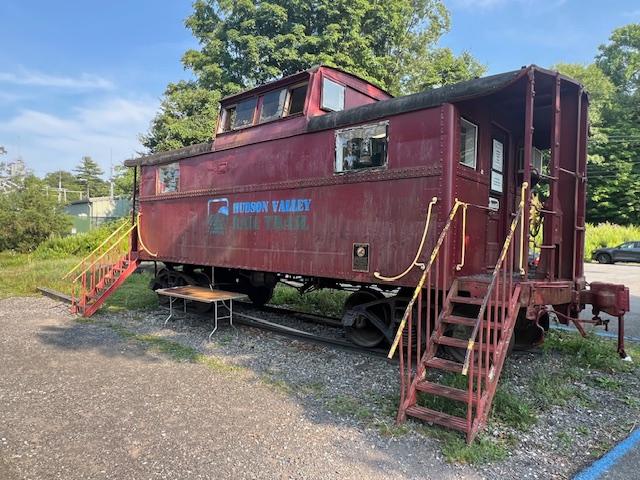
The rail car from the entrance to the Walkway by the Highland Park side of the walk
The day I walked over the “Walkway over the Hudson” it was a rather cool September day in the last days of the summer but still it was a spectacular day to see the river with blue skies and sunshine. I also revisited the Walkway in July of 2024 and the views are just as amazing when everything in full bloom.

The history of the bridge that crosses the Hudson River

The start of the walk by the Highland NY side of the bridge
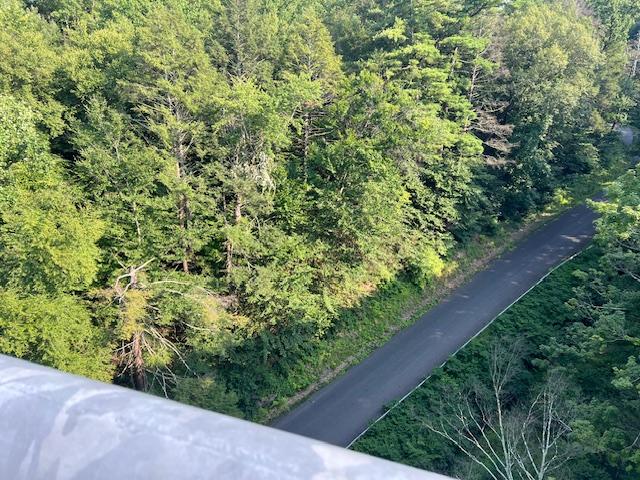
The views from the bridge on the Highland NY side
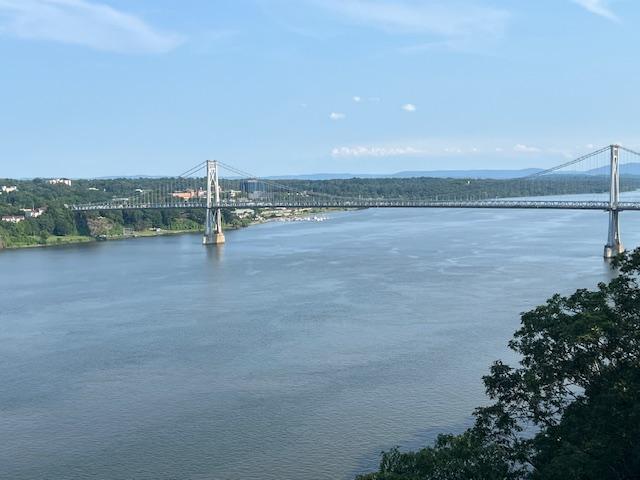
The views of the Mid Hudson Bridge

The views of Poughkeepsie and Hyde Park
On both sides of the bridge, there are small parks to sit and relax. There are signs all over the bridge to tell the story of the bridge and the people who helped save it. The best part is to just sit around the rails and see the views of the Hudson River. On the Poughkeepsie side of the river, you have the entrance to the Little Italy section of city right near the riverfront. Since my initial walk, three of the restaurants have closed since COVID.

The historic sign at the halfway point
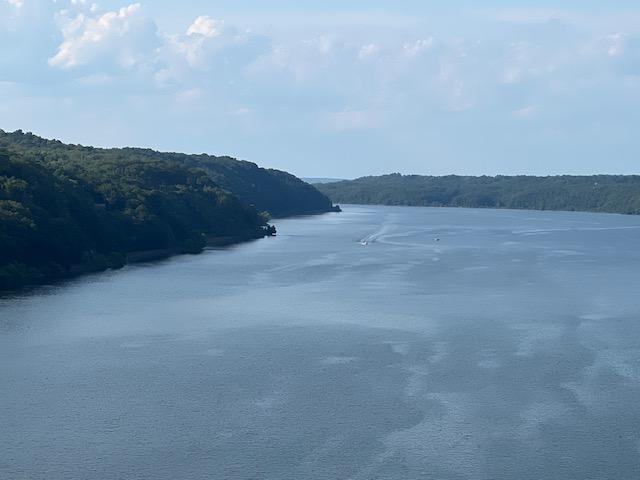
Looking up the Hudson River to the north of the bridge
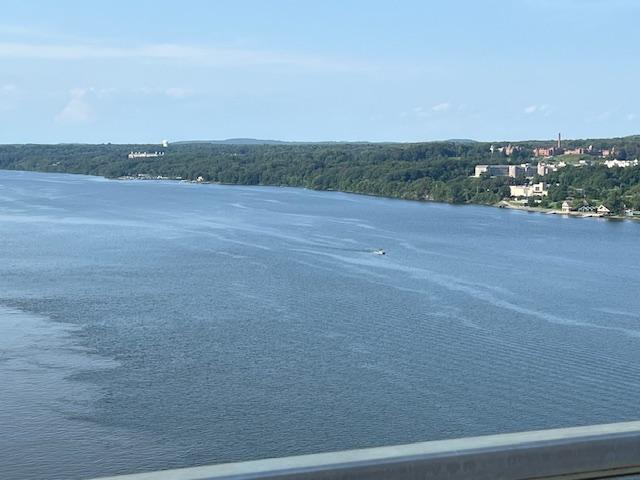
Looking north to Hyde Park, NY

Looking south down the Hudson River
What is nice too is when you are leaving the Walkway is that you can tour Little Italy and Downtown Poughkeepsie. The Riverfront area of the City is changing quickly and new bars and restaurants are opening.
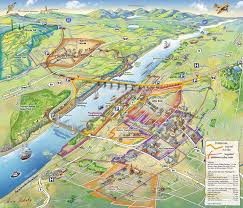
The towns and neighborhoods to visit after leaving the Walkway in Poughkeepsie and Highland NY
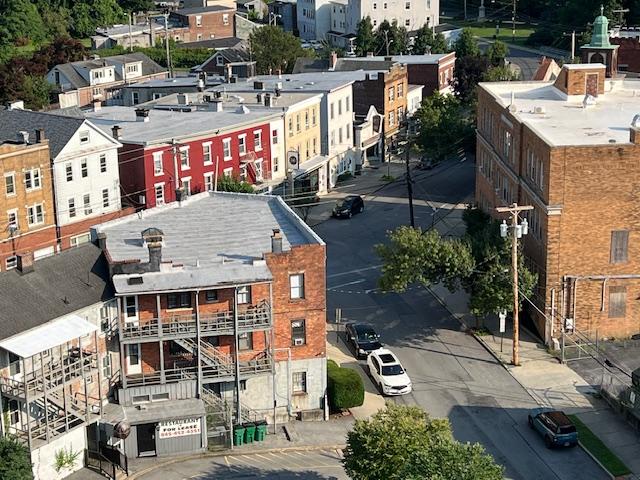
The Little Italy section of Poughkeepsie from the Walkway over the Hudson
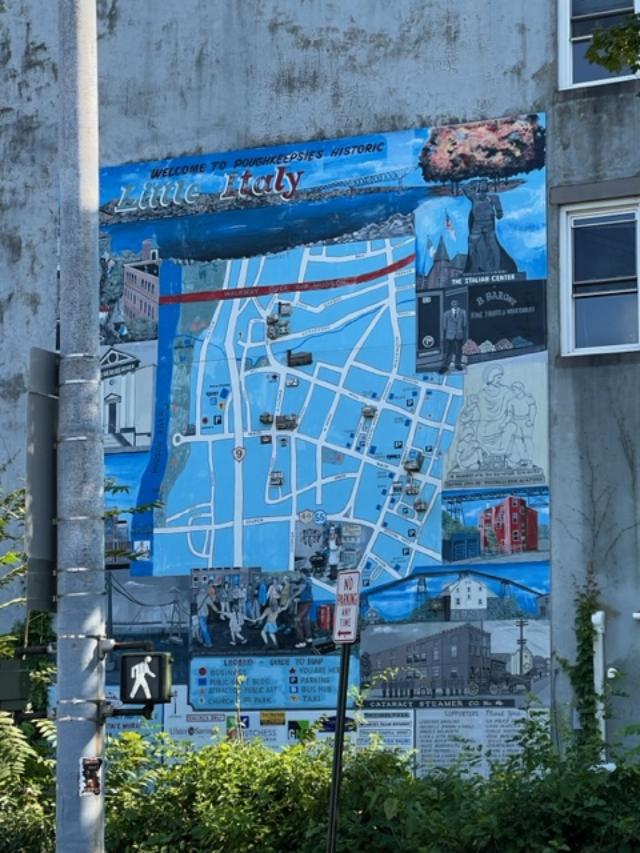
The sign in Little Italy in Poughkeepsie
The history of the ‘Walkway Across the Hudson’:
The bridge now known as the Walkway Over the Hudson opened in 1889 as the Poughkeepsie-Highland Railroad Bridge to transport western raw materials to eastern industrial centers. Rosendale cement was used in the original construction of the piers. At the same time of its opening, it was the longest bridge in the world.
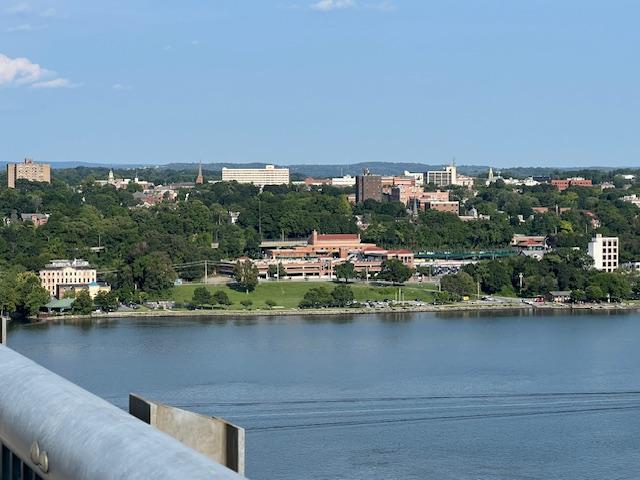
Downtown Poughkeepsie in front of me
In addition to freight trains, the bridge hosted passenger trains connecting Boston, New York, Harrisburg, Philadelphia, Baltimore and Washington as early as 1890. Trolley cars termed “rapid transit” were modified to run on both trolley and railroad tracks and served tourists, students and shoppers (from New Paltz to Lucky Platt’s). Special West Point Football trains ran from 1921-1930. Circus trains, milk trains, trains for hogs and cattle-the uses were varied and the impact was huge. At its peak as many as 3,500 rail cars crossed the bridge each day.

The waterfront of Poughkeepsie
There were two sets of tracks until 1918 when gauntlet track, also called interleaved track, was installed to handle the weight of diesel locomotives. It was removed in 1958.
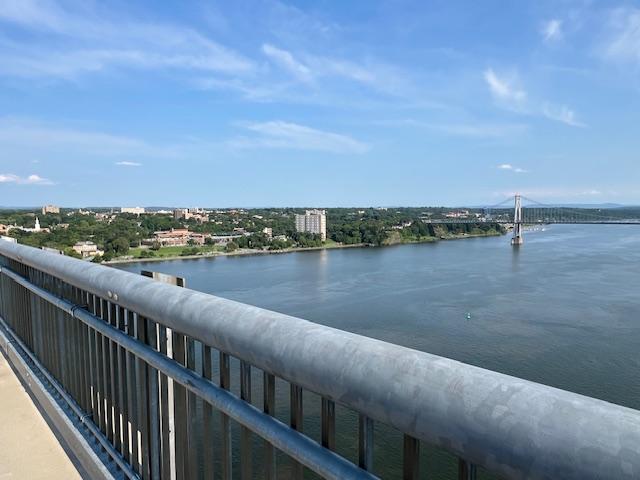
Looking south down the Hudson River
During World War II the bridge was painted black to make it less visible in the event of an attack. Painting continued until the 1960’s. The high quality of the steel used in the original construction does not need to be painted. Metal experts during reconstruction stated that the absence of paint in fact helped keep the steel in the good condition it is in today.

The Poughkeepsie waterfront
The fire that destroyed the tracks in 1974 was probably started by a spark from a train’s brakes. From Carleton Mabee’s ‘Bridging the Hudson’, page 247: “An hour after a Penn Central train with 100 cars crossed the bridge on May 8, 1974, a thick cloud of black smoke hung over the bridge. Wooden ties were smoldering and wooden walkways were burning, fanned by a moderate breeze. Because Penn Central had no guards or maintenance men on the bridge at the time, the fire was not quickly reported. When firemen arrived at the site, they found they could not easily pump water up to the top of such a high bridge.

Downtown Poughkeepsie from the bridge near the waterfront
When firemen arrived arrived at the site, they found they could not easily pump water up to the top of such a high bridge. When they tried turning on the water to flow into the bridge. When they tried turning on the water to flow into the steel pipe which ran the length of the bridge, a line meant to help fight fires, they found that because it had not been drained the previous winter, it had burst at several points-Penn Central had known it but had not repaired it.”

View from the bridge on the Poughkeepsie side right near Little Italy
It was rebuilt and re-opened in October 2009 as the Walkway Over the Hudson State Historic Park thanks to the efforts of a dedicated friends group, the Dyson Foundation, many donors and New York State.
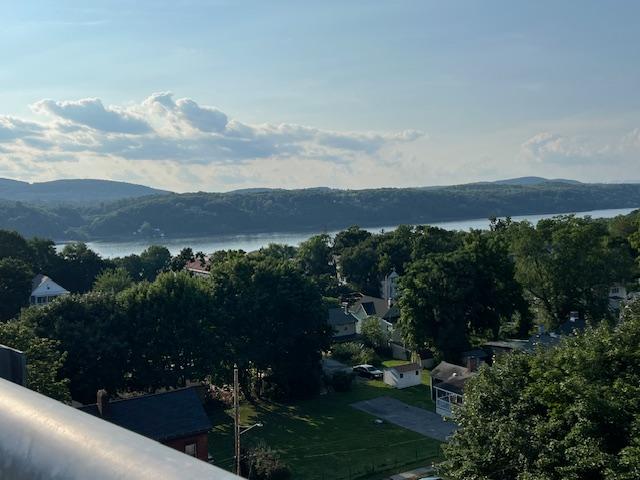
The Highland Park side of the bridge at dusk
At 212 feet above the Hudson River, this 1.28 mile linear park boasts scenic views north to the Catskills and south to the Hudson Highlands.

The Walkway is amazing on a sunny day
The Walkway is part of the Hudson Valley Rail Trail Network and was inducted into the Rail-Train of Fame in 2016, it connects Ulster County’s Hudson Valley Rail Train to the William R. Steinhaus Dutchess Rail Trail.
The ADA compliant 21 story glass elevator provides seasonal access from Poughkeepsie waterfront at Upper Landing Park a short walk from the Metro North train station.
The Walkway welcomes more than 500,000 visitors annually from all over the world who enjoy walking, cycling and running amidst its scenic beauty.
Today, the Walkway is operated and owned by NYS Office of Parks, Recreation and Historic Preservation and the NYS Bridge Authority it is open year round, offering programs, events and tours made possible through membership and donations to the Walkway organization.
(This information was taken from the Walkway over the Hudson website and pamphlet and I give them full credit for all of this information).
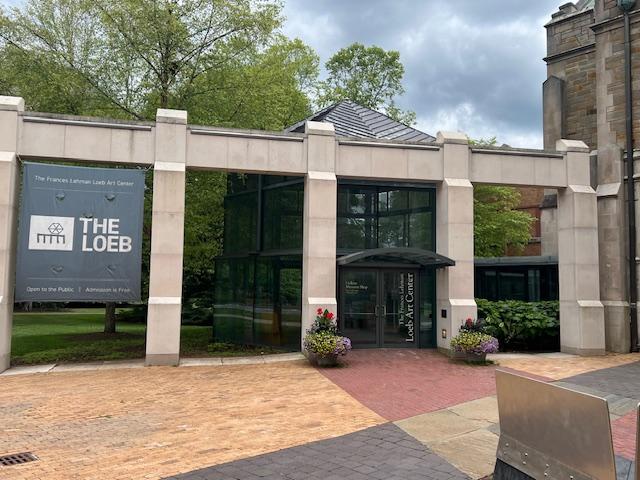






 Visiting a Museum: The Unique, Unusual, Obscure and Historical