Category: Walking Downtown Cape May, NJ

The Garrett Family Preserve at Cape Island Creek 801 Wilson Avenue                                                       Cape May, NJ 07204

The Garrett Family Preserve at Cape Island Creek 801 Wilson Avenue Cape May, NJ 07204

The Garrett Family Preserve at Cape Island Creek

801 Wilson Avenue

Cape May, NJ 07204

(908) 879-7262

https://www.nature.org/en-us/get-involved/how-to-help/places-we-protect/garrett-family-preserve-at-cape-island-creek/

My review on TripAdvisor:

https://www.tripadvisor.com/Attraction_Review-g46341-d7190574-Reviews-Garrett_Family_Preserve-Cape_May_Cape_May_County_New_Jersey.html

While I was searching for the Cape May Maritime Museum, I made a detour into a parking lot and came across the Garrett Family Preserve

The sign that welcomes you to the park

Visiting the Preserve:

(from the Cape May Visitor website)

The Nature Conservancy protects the 180-acre Garrett Family Preserve situated between Seashore Road and Cape Island Creek, offering a tranquil setting for walking, picnics, painting, biking, and observing nature.

The preserve offers six trails ranging from 0.2-0.5 miles in length, and a two-mile perimeter loop along the forested edge–four miles in total. Explore year-round on foot or by bicycle. Sights vary by season, with bird migration peaking in the spring and fall, and the wildflower field blooming from May through July. Beginning in late August into the fall, Monarch butterflies stop here to feed before their journey south.

Preserve amenities include a mobile bird blind, welcome kiosk, shaded pavilion with picnic tables, benches and picnic tables along the trails, and three adjustable art easels. From November 1st to March 1st, leashed dogs are welcome. Because this is a preserve, the Nature Conservancy does not provide trash receptacles. Be sure to take anything you’ve brought with you.

The size of the preserve

The history of the Garrett Family

History of the Preserve:

(From the Nature Conservatory website)

Originally slated for development, TNC acquired the property in 2000, as the preserve offered an unusual opportunity to manage a significant piece of land for migratory songbirds, whose stopover habitat, especially at the southern tip of the peninsula, has been all but wiped out.

In 2013, the generosity of the Garrett family enabled TNC to further protect Cape Island Creek for future generations by acquiring crucial land, improving and stewarding habitat, performing coastal research and installing enhanced visitor amenities.  

After reading some of the history of the preserve, I decided to take a walk down the paths. I ended up walking down several paths that took me through woods and many natural gardens. I could see by how dry everything was how the lack of rain was affecting the preserve.

The pathways leading to different parts of the preserve

Following the pathways through the preserve

My first stop was the picnic area and rest stop

The Insect Hotel

The Insect Hotel

The description of the insect hotel

I thought this was an interesting concept of creating a place for insects to have a breather. It is a place of reproduction and in helping pollinate the preserve.

The fields of plants and wildflowers that make up the preserve

The flowering plants and wildflowers in the fields

Each of the paths took me through different parts of the preserve that were wooded or with meadows or an array of wildflowers that attracted birds, butterflies and bees.

The batches of wildflowers in the meadow

The Salt Marsh part of the Preserve was filled with more wildflowers that had bees and butterflies swarming them.

The Salt Marsh Habitat

The sign for the Salt Marsh Habitat

The the pathways though the meadows

The fields of flowers and plants in the marsh area

Th e next section of the preserve I visited was the Wildflower Meadows

The Wildflower Meadows in the late summer

The Wildflower Meadows paths

As I left this part of the preserve, I took many paths around the park lands. There are all sorts of fields of flowers and woods to shade the way during touring the preserve.

Going on the different trails throughout the preserve

I walked down the paths to the Bird Habitat area

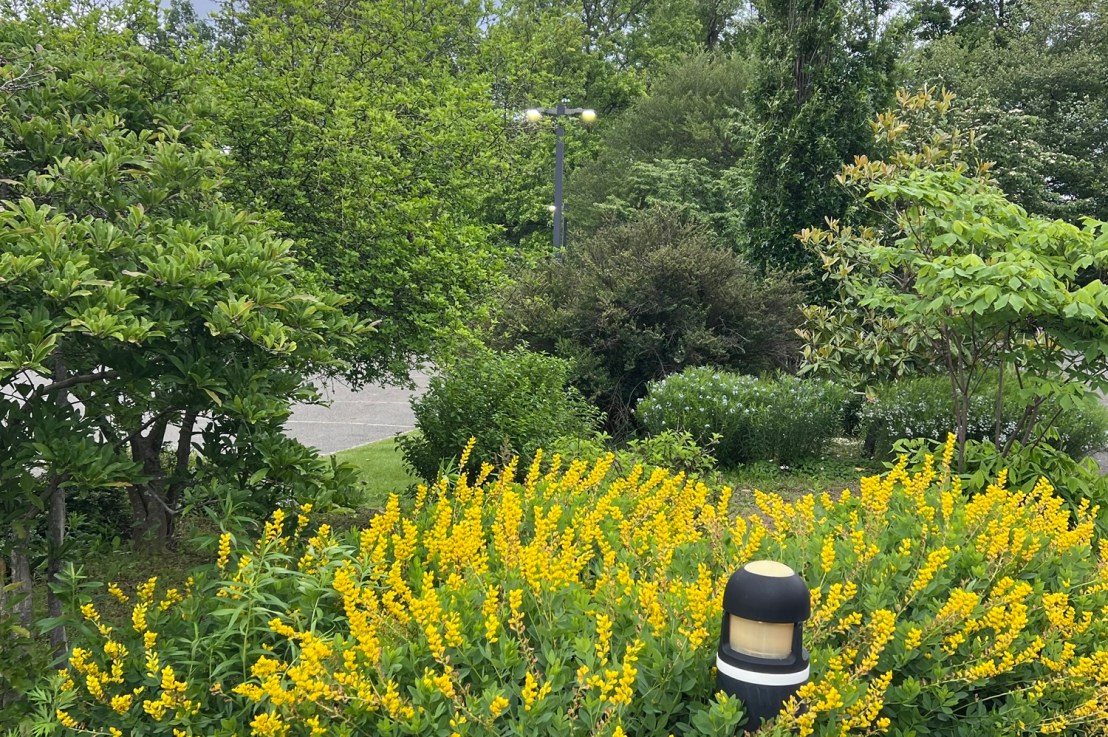
The golden rod flowers attract all sorts of bees and butterflies

Flowering Honey Suckle

Beautiful flowering plants in the woods area

The colorful paths of flowers that lined the Bird Sanctuary

This all led to the end of the trails and a wrap up of how the pollinators work. How the plants, insects and birds play a role in nature.

The last thing I saw at the preserve was this butterfly sculpture by the parking lot

The history of the Garrett family

The park changes its complexity with each season. What I noticed at the end of the summer with no rain is how dry the fields were and the trees were changing colors early because the lack of moisture.

It will be interesting to see the preserve in the Spring and early Summer in the future. It was a nice walk through the preserve.
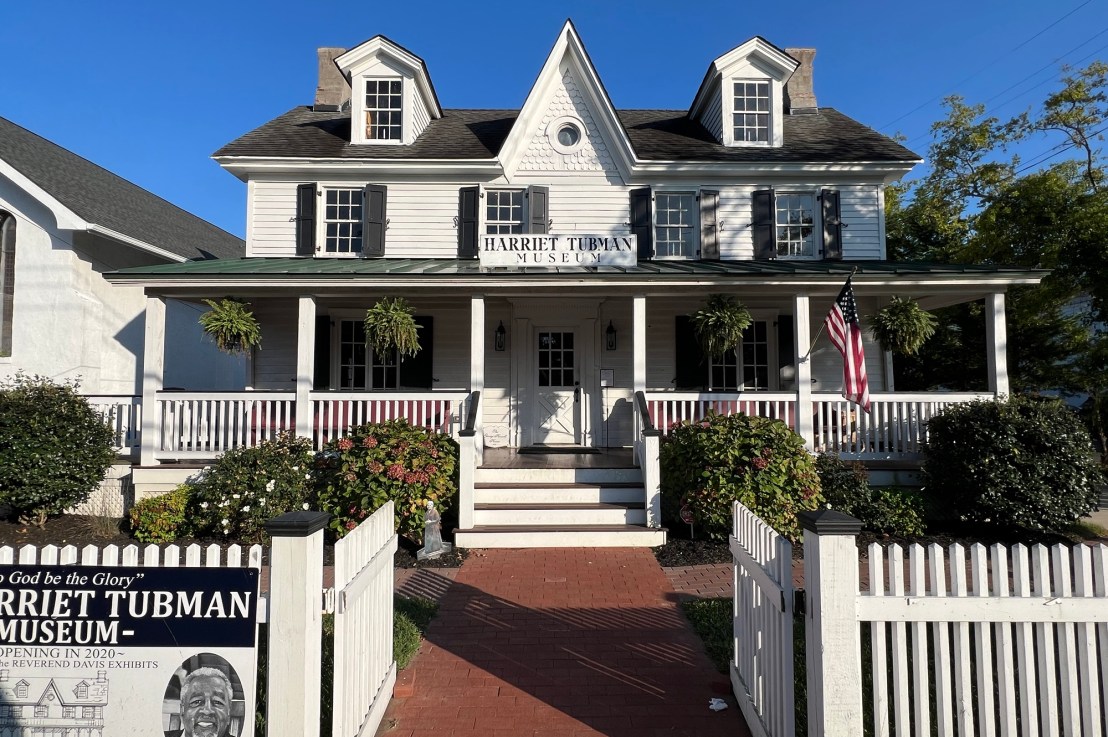
Harriet Tubman Museum of New Jersey            632 Lafayette Street                                                       Cape May, NJ 08204

Harriet Tubman Museum of New Jersey 632 Lafayette Street Cape May, NJ 08204

Harriet Tubman Museum of New Jersey

632 Lafayette Street

Cape May, NJ 08204

Open: Sunday 2:00pm-4:00pm/Monday-Tuesday Closed/Wednesday-Saturday 11:00am-4:00pm (Check the website for the seasons)

My Review on TripAdvisor:

https://www.tripadvisor.com/Attraction_Review-g46341-d23550005-Reviews-Harriet_Tubman_Museum-Cape_May_Cape_May_County_New_Jersey.html

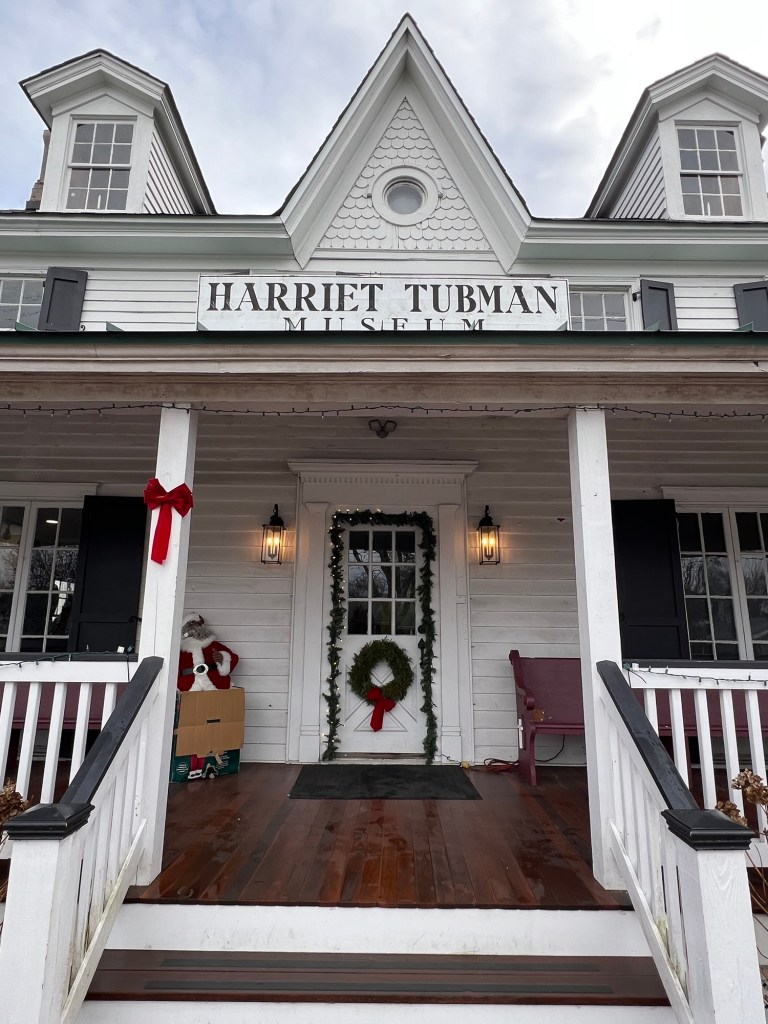
The entrance to the Harriet Tubman Museum of New Jersey

The History of the Museum and House it is located in:

(From the Museum website):

Lafayette street and Franklin Street: the center of abolitionist activism in Cape May

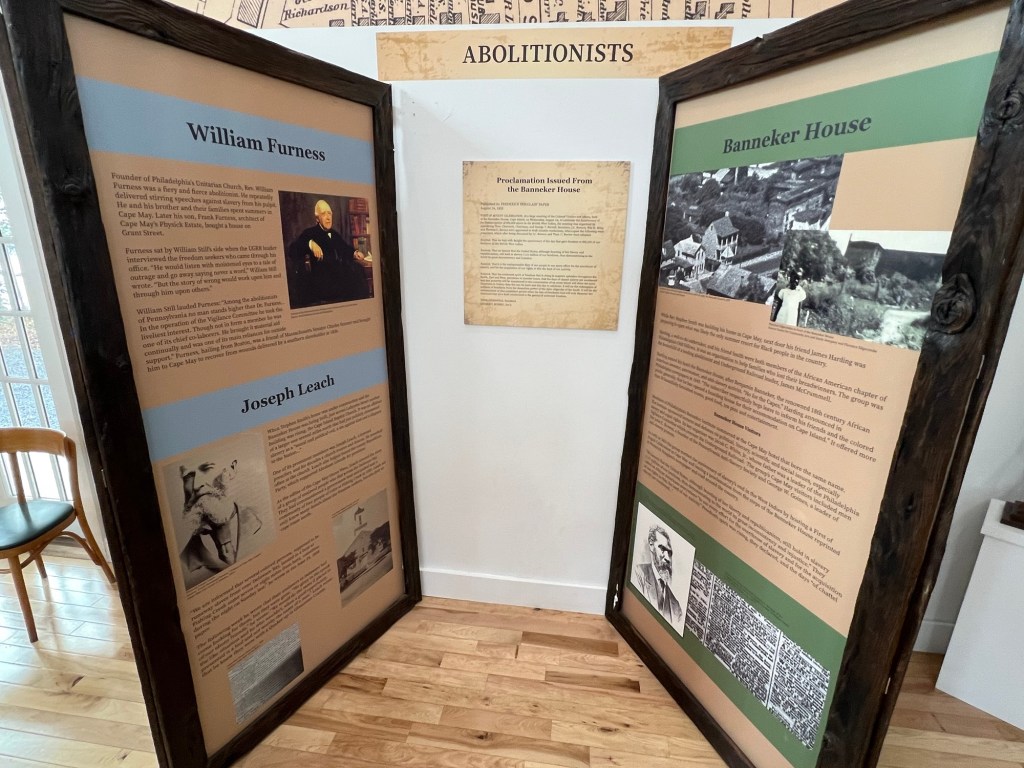
The Harriet Tubman Museum building is located on a block that anti-slavery activists called home in Cape May. Lafayette Street and Franklin Street became a center of abolitionist activity centered around three important buildings developed in 1846.

The Stephen Smith House stands at 645 Lafayette Street, across from the site of the Harriet Tubman Museum, where Stephen Smith built his summer home in 1846. Smith was a founder of the Pennsylvania Anti-Slavery Society.

The Banneker House was next to the Stephen Smith House. The Banneker House became a first-class hotel and one of the only summer resorts for free Black people in the country and was developed by James Harding, a friend of Stephen Smith.

The white Baptist Church was located directly across the street from the Stephen Smith House and Joseph Leach frequently preached there. Leach was a political leader and editor of the Ocean Wave newspaper, where he often wrote accounts of enslaved people that fled to Cape May. The congregation of the church issued a strong condemnation of slavery.

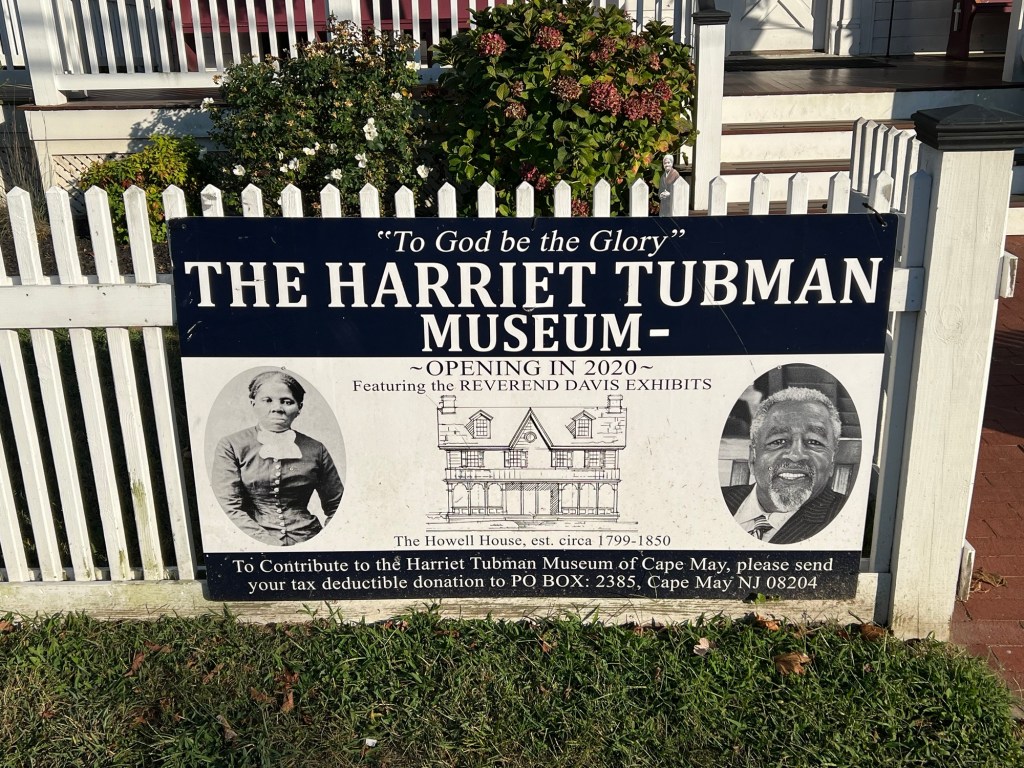
The sign that welcomes you

The Museum at Christmas time

Santa greets you at the door

Cape May: A nexus between North and South

(from the museum website):

Cape May played a pivotal role in the fight to end slavery. Several historic figures critical to the fight against slavery spent their summers in Cape May.

The children’s dolls at the entrance

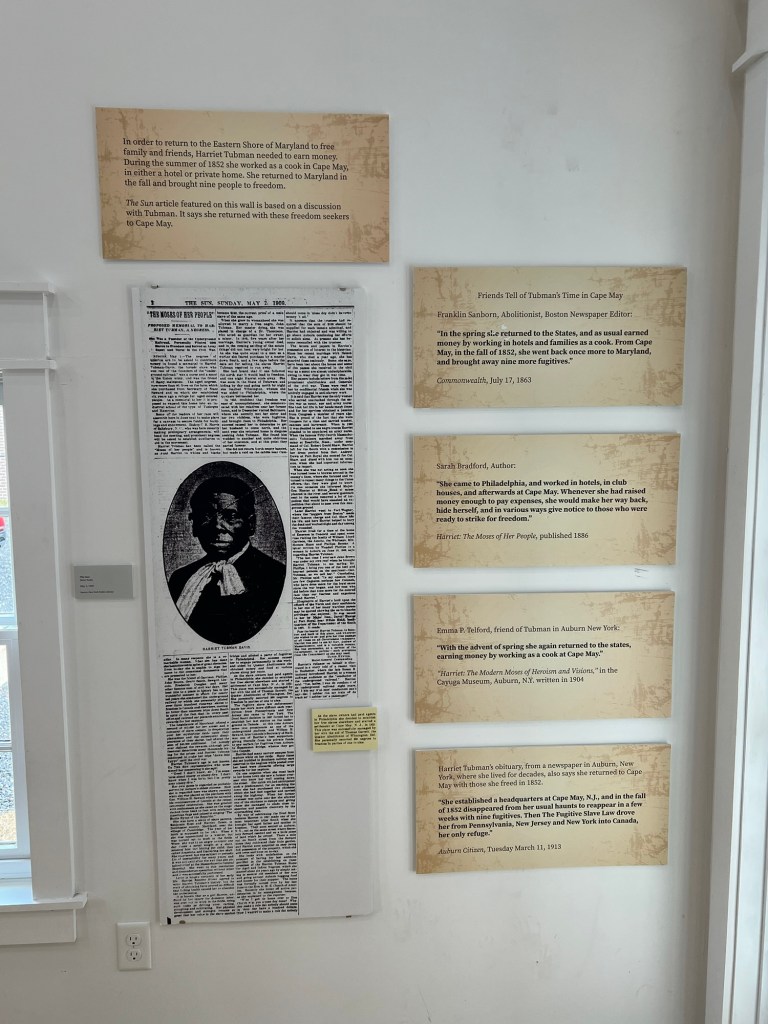
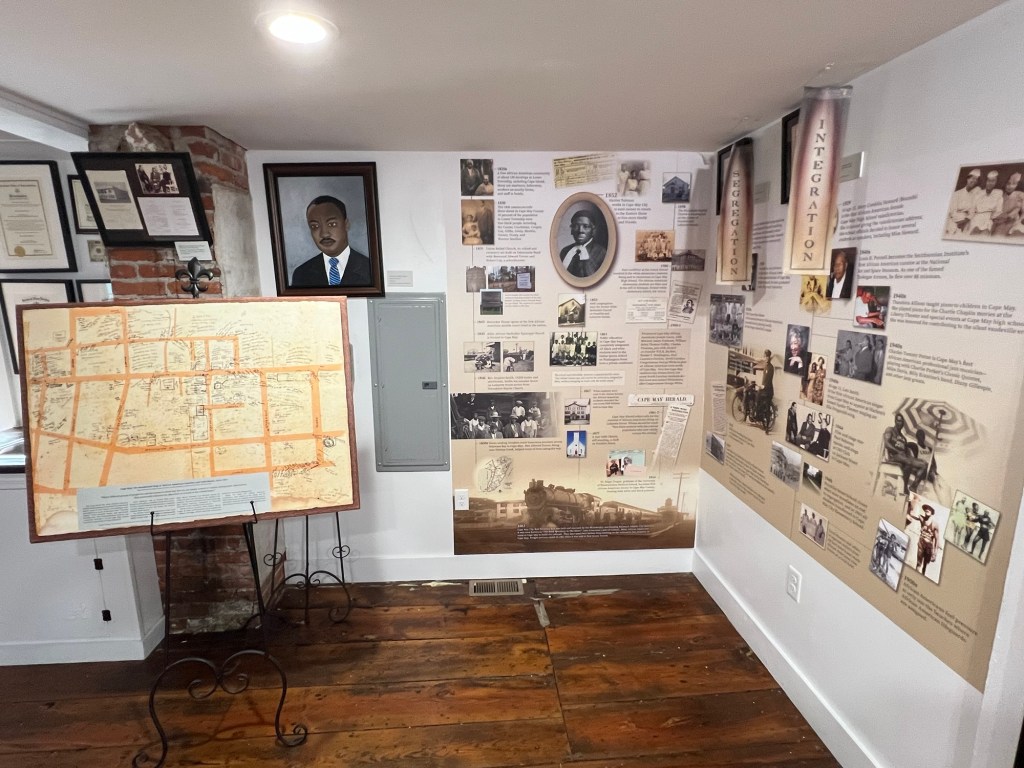
I visited the Harriet Tubman Museum when I was in Cape May and this small museum tells two different stories. It tells of Harriet Tubman’s time living in Cape May as a cook before her return down South and about the Free Black community in Cape May that built their own Society within the community. Their businesses catered to both Black and White residents of Cape May.

The museum tackles several different topics including the life of Harriet Tubman in Cape May when she lived here as a cook, earning money and probably developing a strategy for helping enslaved people reach their freedom through the Underground Railroad. It discusses the success many Black residents found as business owners in Cape May and the surrounding towns.

The last topic the museum discusses in the affects of Integration and Segregation on society in general and its causes and results. There is no one solution to this as we as a society cause this by our own actions.

The History of Business’s owned by Blacks in that era of Cape May

The freed black population settled in the Cape May area and opened many businesses that contributed to the whole population. This developed into many successfully run businesses by Free Slaves and residents of New Jersey.

The history of Harriet Tubman in Cape May

(From the museum website):

Harriet Tubman’s life and work in Cape May

Harriet Tubman lived in Cape May in the early 1850s, working to help fund her missions to guide enslaved people to freedom. After her initial journeys conducting freedom seekers to Canada, her friend and abolitionist leader Franklin Sanborn wrote, “She returned to the states, and as usual earned money by working in hotels and families as a cook. From Cape May, in the fall of 1852, she went back once more to Maryland, and brought away nine more fugitives.” The New Jersey Historical Commission says she spent two other summers in Cape May.

Life of Charles Sumner in Cape May, NJ

https://en.wikipedia.org/wiki/Charles_Sumner

https://www.britannica.com/biography/Charles-Sumner

The history of Abolitionists in Cape May and in New Jersey. Being so close to the border, New Jersey was a big part of the Slavery Underground. Even during the Civil War, Delaware was a more neutral state of the South.

The story of the Abolitionist Movement and William Furness

https://en.wikipedia.org/wiki/William_Henry_Furness

History of the war years and the people who shaped it

The progressions of Blacks in that era

The affects of Segregation and Integration in a society that does not always see eye to eye. This attitude unfortunately still survives into today. There is the history of Harriet Tubman’s life as a child into adulthood.

The stories of Integration and Segregation in that era

Harriet Tubman, Activist and Transporter

https://en.wikipedia.org/wiki/Harriet_Tubman

Many voices told at the museum

The museum offers many voices and stories about life before, during and after slavery and its part in the shaping of New Jersey. Since New Jersey was the last Northern state to abolish slavery on January 23rd, 1866.

The History and End of Slavery in New Jersey:

(From the website of the New Jersey Department of State-Historical Commission website)

New Jersey, The Last Northern State to End Slavery

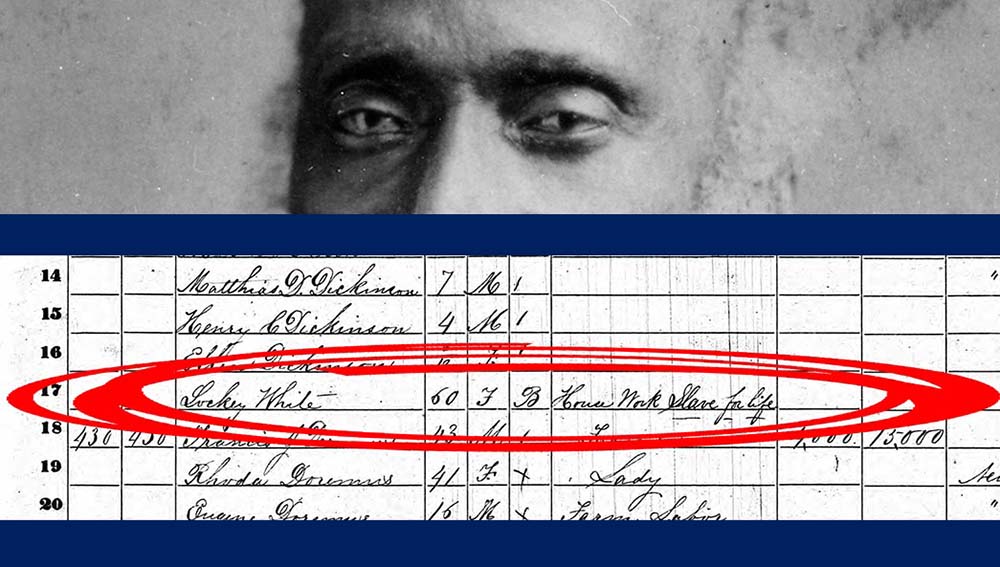
Image collage: Peter Lee who may have been illegally enslaved as a young man by the Stevens Family in Hoboken, NJ, and Lockey White’s 1860 census entry indicating that she was a 'slave for life'.
Image collage: Peter Lee who may have been illegally enslaved as a young man by the Stevens Family in Hoboken, NJ, and Lockey White’s 1860 census entry indicating that she was a “slave for life.”

By Noelle Lorraine Williams,
Director, African American History Program
The New Jersey Historical Commission

This year forty-seven states including New Jersey will observe Juneteenth (also known as Freedom Day or Emancipation Day) as a state holiday—a holiday that commemorates when enslaved Blacks in Galveston, Texas learned that they were, in fact, freed by President Abraham Lincoln’s Emancipation Proclamation two and half years earlier. The date was June 19, 1865. Juneteenth then is a holiday of celebration and a mournful remembrance of deep injustice and loss. It reveals the injustice of slavery and the legal repression of African American freedom, extending beyond the nineteenth century.

But we must remember that there were still enslaved Black men and women in New Jersey even after Juneteenth. Imagine, New Jersey’s death grip on slavery meant that until December 1865, six months after enslaved men, women, and children in Texas found out they were cheated of their freedom, approximately 16 African Americans were still technically enslaved in New Jersey.

But Why and How?

While there were many Black, mixed-race, and white people in New Jersey who fought against slavery, most legislators refused to condemn the institution. Profits from slaveholding organizations had built and maintained the state’s major cities and regional centers like Newark and those in Bergen County.

Lincoln’s 1863 Emancipation Proclamation did not free enslaved African Americans in the Northern States; it freed only those in the mostly southern “rebellious states.” Two years later, New Jersey bitterly refused to ratify the Thirteenth Amendment, the United States Constitutional Amendment that abolished slavery and involuntary servitude across the country.

Slavery’s final legal death in New Jersey occurred on January 23, 1866, when in his first official act as governor, Marcus L. Ward of Newark signed a state Constitutional Amendment that brought about an absolute end to slavery in the state. In other words, the institution of slavery in New Jersey survived for months following the declaration of freedom in Texas.

To understand this historical development, one needs to take a step back to 1804 when New Jersey passed its Gradual Abolition of Slavery law—an act that delayed the end of slavery in the state for decades. It allowed for the children of enslaved Blacks born after July 4, 1804 to be free, only after they attained the age of 21 years for women and 25 for men. Their family and everyone else near and dear to them, however, remained enslaved until they died or attained freedom by running away or waiting to be freed.

In a period when the average life expectancy was 40 years old, the 1804 law essentially took more than half of these people’s lives to satisfy the economic and political demands of New Jersey enslavers.

In essence, Juneteenth, not only marks the day African Americans in Texas realized that they had been robbed of two years of their freedom, following the Emancipation Proclamation. It also commemorates all of our ancestors here in New Jersey who were the last Blacks in the North to be ensnared in that bloody institution.


The New Jersey Historical Commission (NJHC), a division of the New Jersey Department of State, is a state agency dedicated to the advancement of public knowledge and preservation of New Jersey history.

The creation of the Harriet Tubman Museum

The Museum of Fine Arts & Popular Culture                       507 Washington Street Unit 104                                            Cape May, NJ 08204

The Museum of Fine Arts & Popular Culture 507 Washington Street Unit 104 Cape May, NJ 08204

The Museum of Fine Arts & Popular Culture

507 Washington Street Unit 104

Cape May, NJ 08204

(609) 334-8592

https://museum-of-fine-arts-popular-culture.business.site/

https://www.capemay.com/play/category/museums-and-galleries/

Open: Sunday-Tuesday 10:00am-4:00pm/Wednesday Closed/Thursday-Saturday 10:00am-4:00pm

My review on TripAdvisor:

https://www.tripadvisor.com/Attraction_Review-g46341-d23745752-Reviews-Museum_Of_Fine_Arts_Popular_Culture-Cape_May_Cape_May_County_New_Jersey.html

The Museum of the Fine Arts & Pop Culture at 507 Washington Street Unit 104

The Museum of Fine Arts & Pop Culture

The Museum features unusual takes on traditional art and shows it from a Surrealist viewpoint. The owner of the museum says that he wants the museum to engage the visitor. The works makes you think about what the artist is trying to say and how to interpret their work. The art is very unusual.

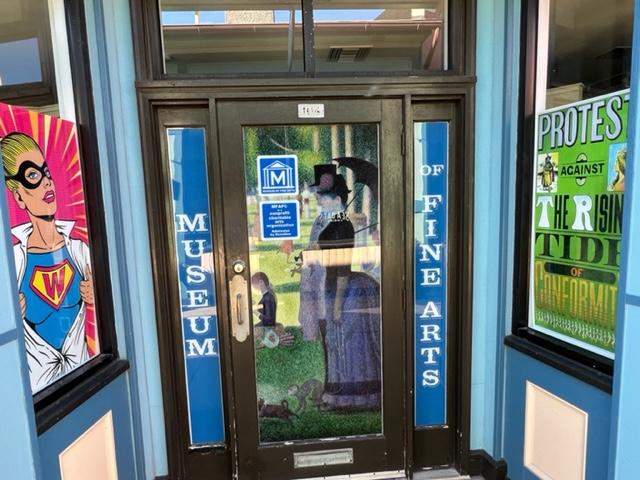
The entrance to the museum and posters in the windows.

The entrance of the museum and the posters that line the windows.

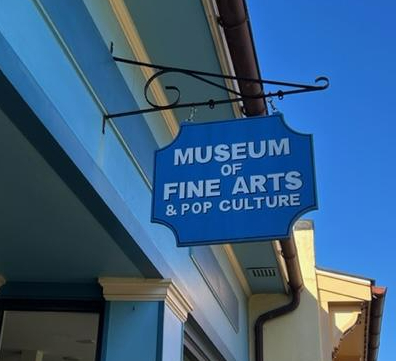
The sign that welcomes you to the museum.

What makes the museum interesting is that all the art is made by the collective that the museum is part of and the works are all original interpretations of what the artist feels and what they are trying to portray.

Some pieces are interpretations on famous artworks and others are original ideas and thought of what the artist is trying to interpret. I thought some the works strange until I got some idea of what it was all about. Some of the work just stands on its own. You really have to look each work a second time.

The Gallery of the Museum of Fine Art & Popular Culture.

The museum is in one gallery and looks more like an Art Gallery than a museum. The works are not sale but should be. You can see the whole museum in about an hour. When visiting the Washington Mall in Cape May it is worth the visit to be challenged by the art at the museum.