
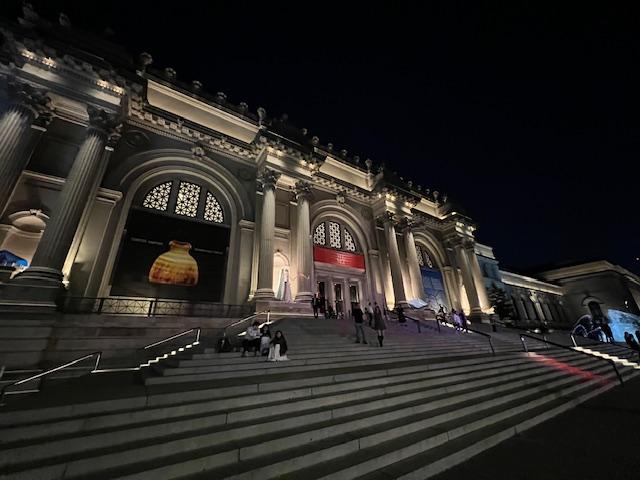
The Met at night.
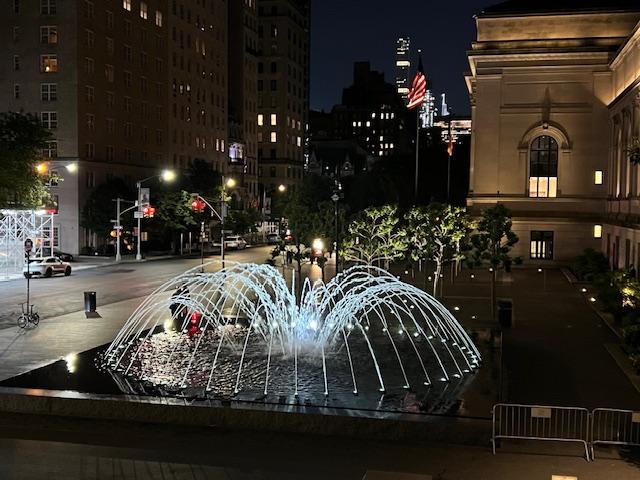
The Met at night after the Private Members Night.
Discovering hidden historical and cultural gems in Manhattan & Beyond
Category: Walking Around Manhattan
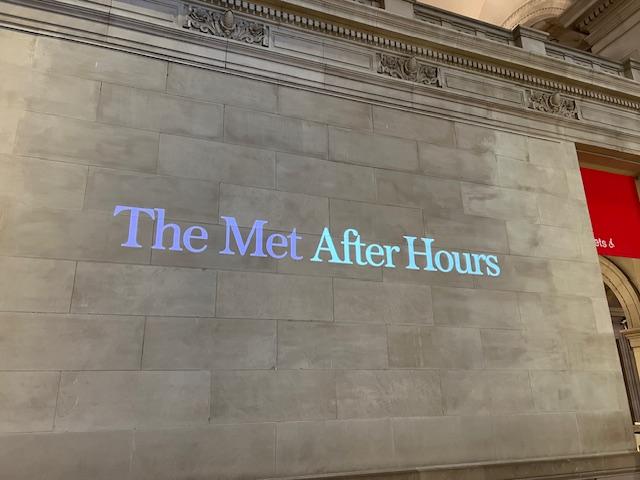
The Met at night.
The Met at night after the Private Members Night.

One World Trade Center Observatory
285 Fulton Street
New York, NY 10007
(844) 696-1776
Open: Sunday-Saturday 9:00am-9:00pm (hours change seasonally)
Admission: See the website for prices depending on individual and group prices seasonally
My review on TripAdvisor:
Though it is not a museum, it is a view of the world. I had been to the original World Trade Center three times before 9/11 and the views were just amazing. There is nothing like it as the Empire State Building’s are a bit different.
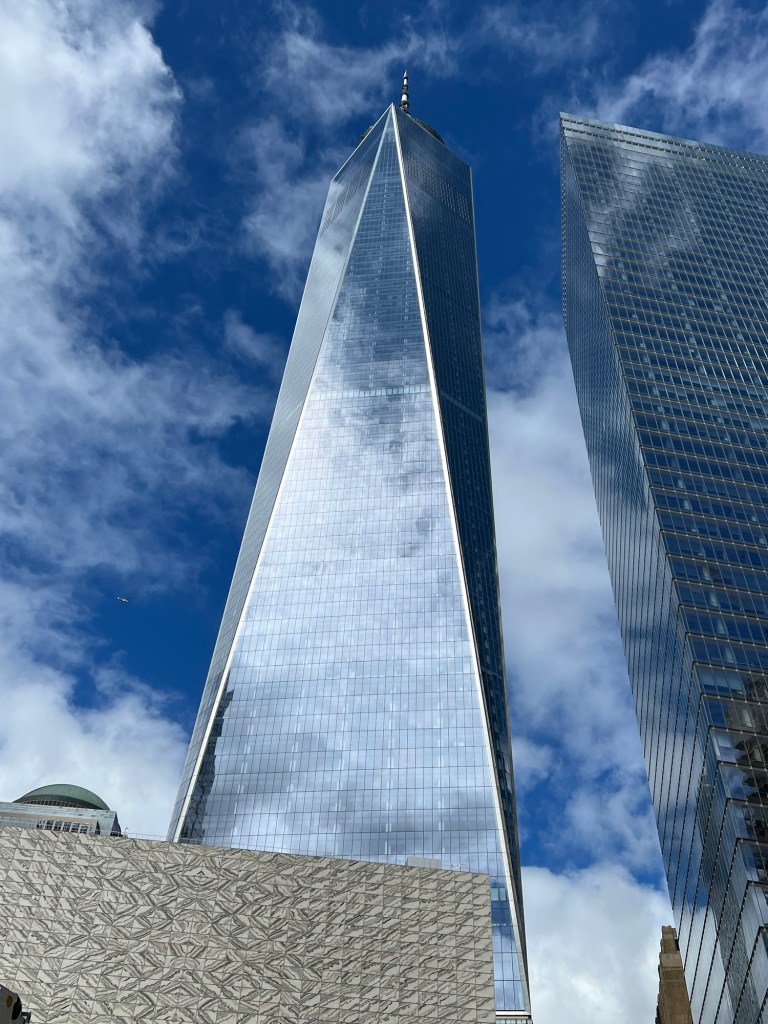
https://www.officialworldtradecenter.com/en/local/things-to-do/one-world-observatory.html
The building itself is very impressive to visit (quite frankly I would NEVER want to work here) but with its past leery of anything else. Too many people died on this site and I would not want to work in an office here no matter what company. I would want a parachute in my office at all times. Still this was going to be my second trip to the top of the building since 2015 when I visited with my best friend, Kris.
I had won two tickets to the Observatory from a contest at NYU and had set VIP tickets to skip the line to go to the top. At 10:00am in the morning, there was no line to skip. I went right to the top with not that many people there at that time. If you get there early in the morning in the off season, there are no crowds.
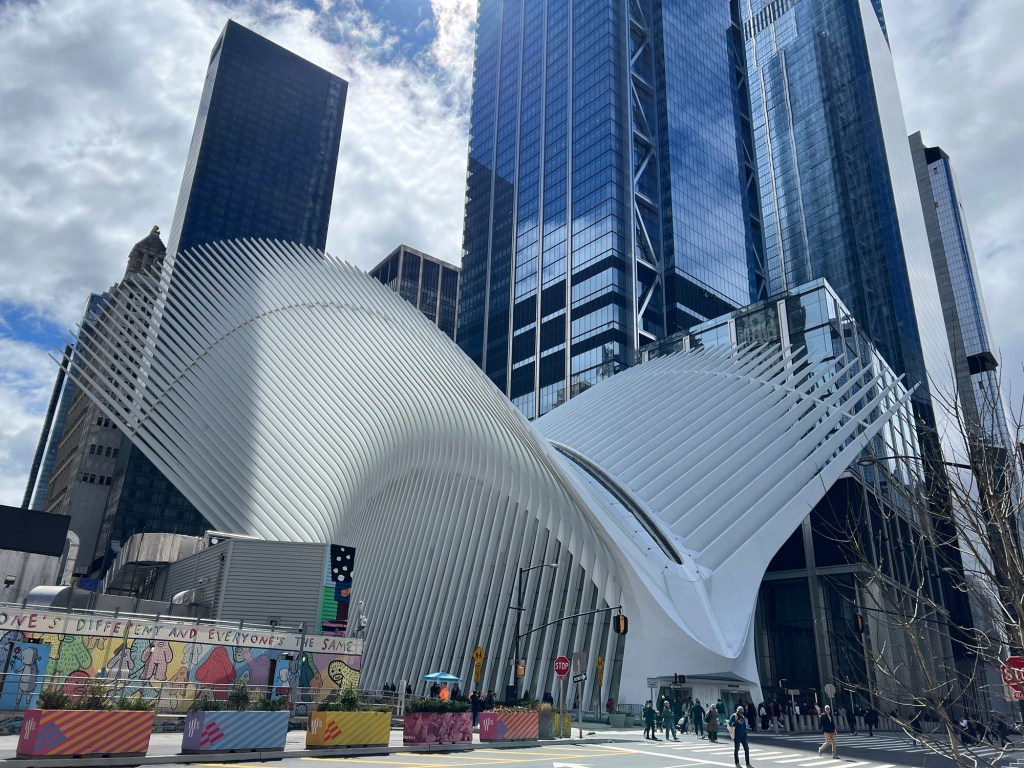
The site is still so impressive. This is the Occulus right by the Tower.
One World Observatory is at the top of the tallest building in the Western Hemisphere, One World Trade Center. The Observatory is located on the 100th, 101st, and 102nd floors encompassing over 125,000 square feet. You’ll take an incredible Sky Pod Elevator ride to the top. Once aloft guests can explore three levels of the Observatory filled with innovation and inspiration. One World Observatory offers views of New York City’s iconic sights, surrounding waters, and iconic skyline – amazing 360 views for up to 45 miles in every direction (One World Trade Center website).
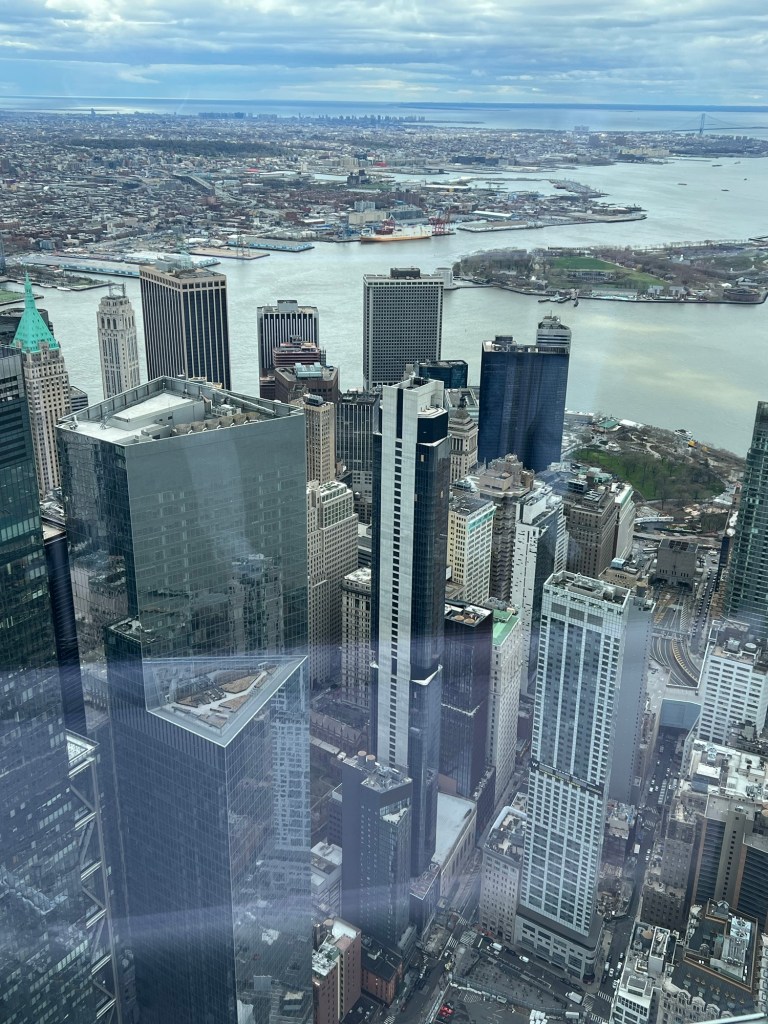
The views from the top are so impressive of downtown and Governors Island.
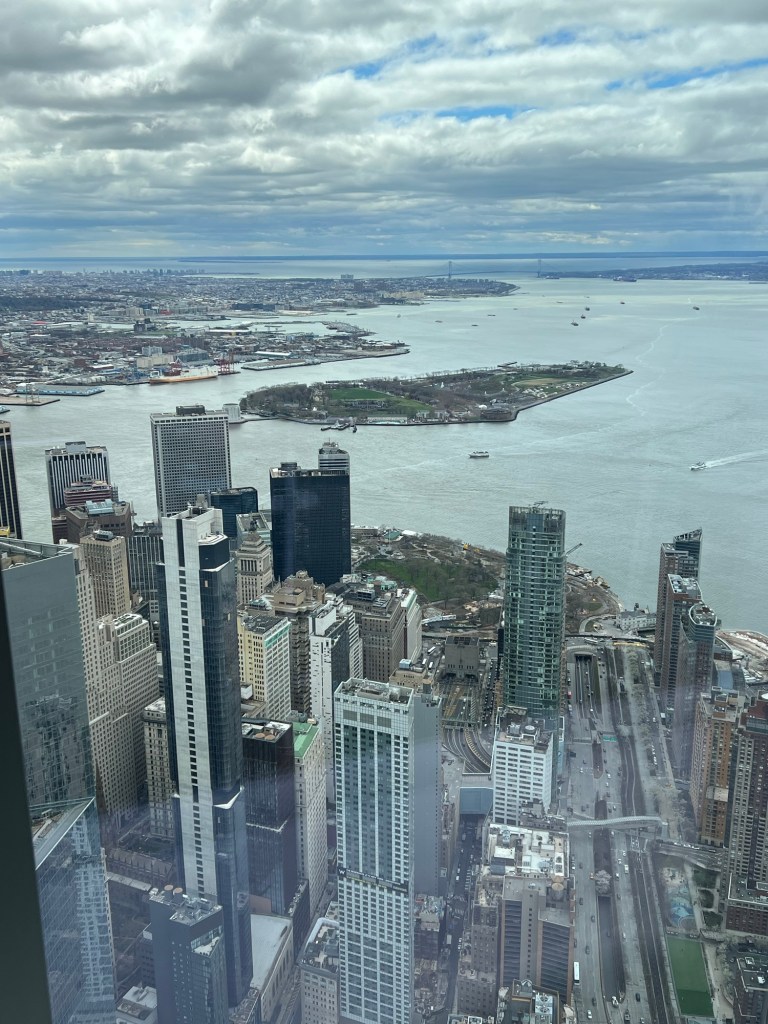
Governors Island in the foreground and lower Manhattan. This is the original colony.
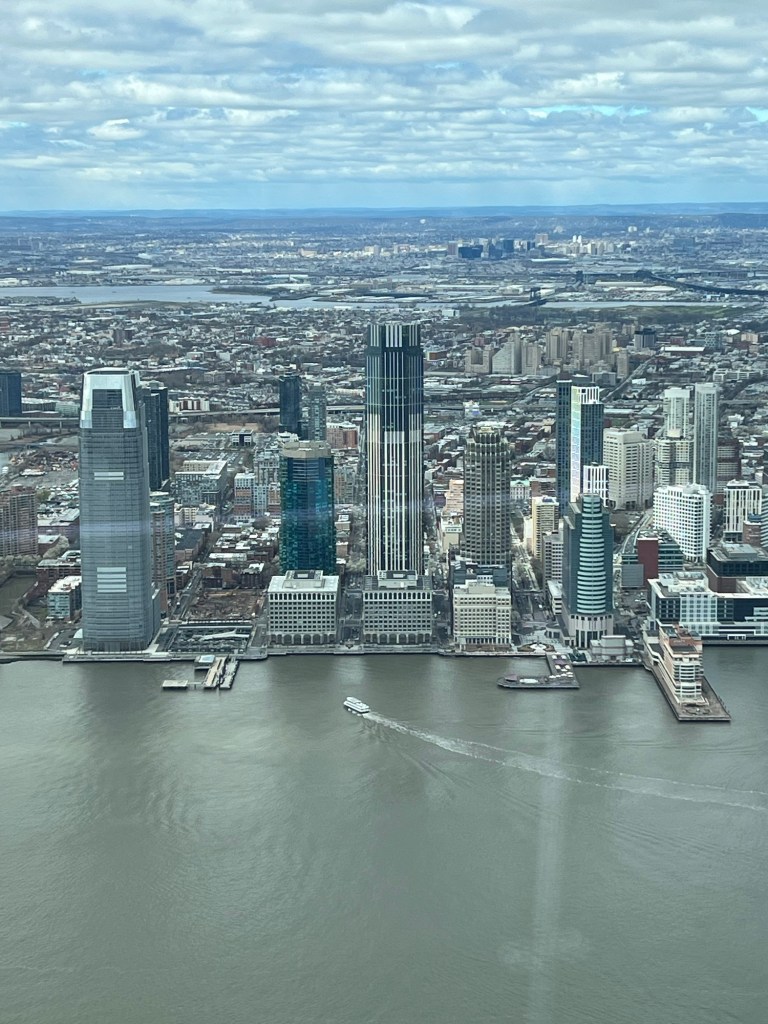
The views of Downtown Jersey City and the Waterfront are so spectacular.

The Statue of Liberty seemed so close.

The views of Downtown Brooklyn were amazing.
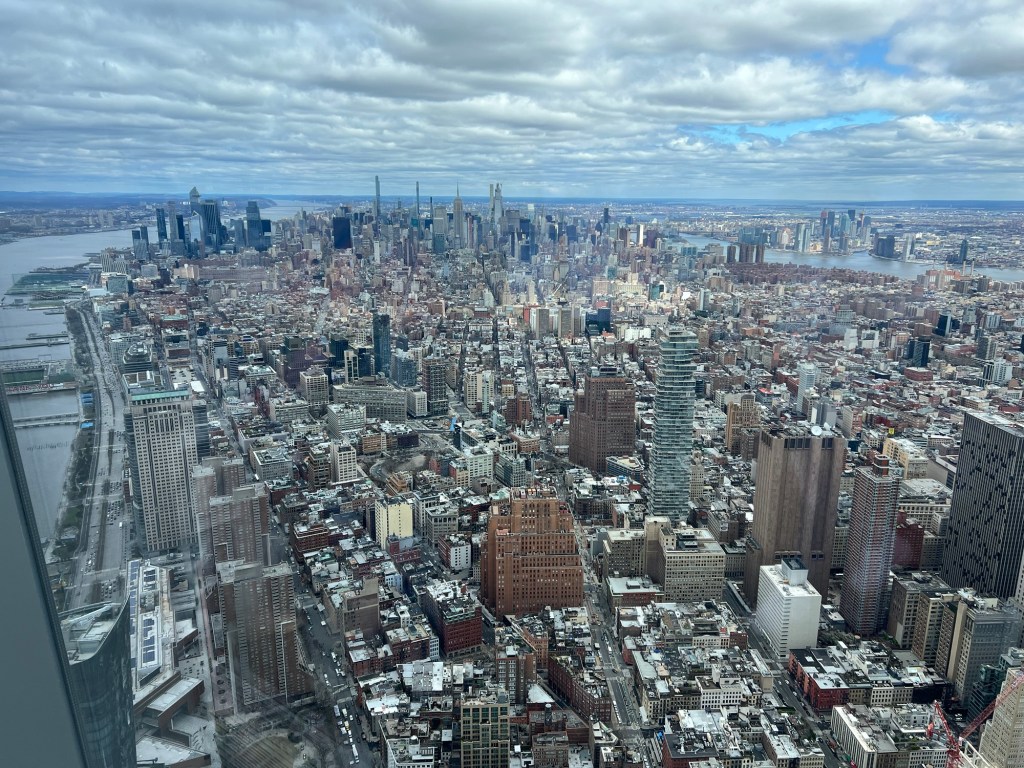
Midtown was so impressive on a clear day. You can see all the way up to Central Park.

Even the Battery was so impressive from this vantage point along the Hudson River.
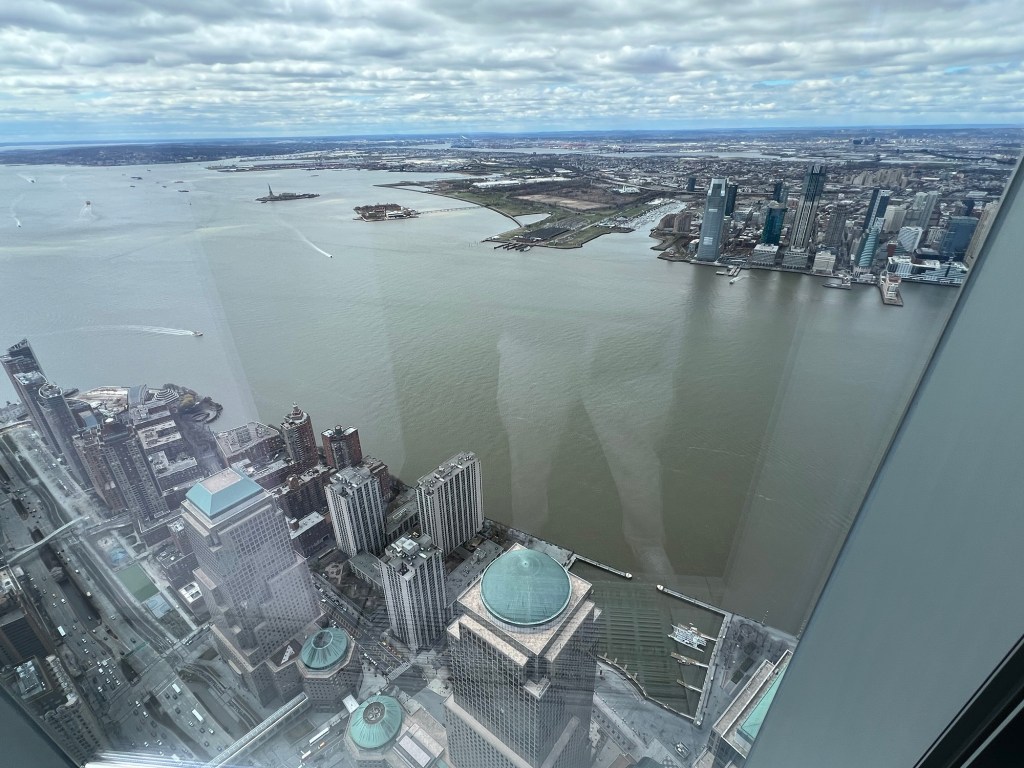
Another shot of the Battery and Jersey City.
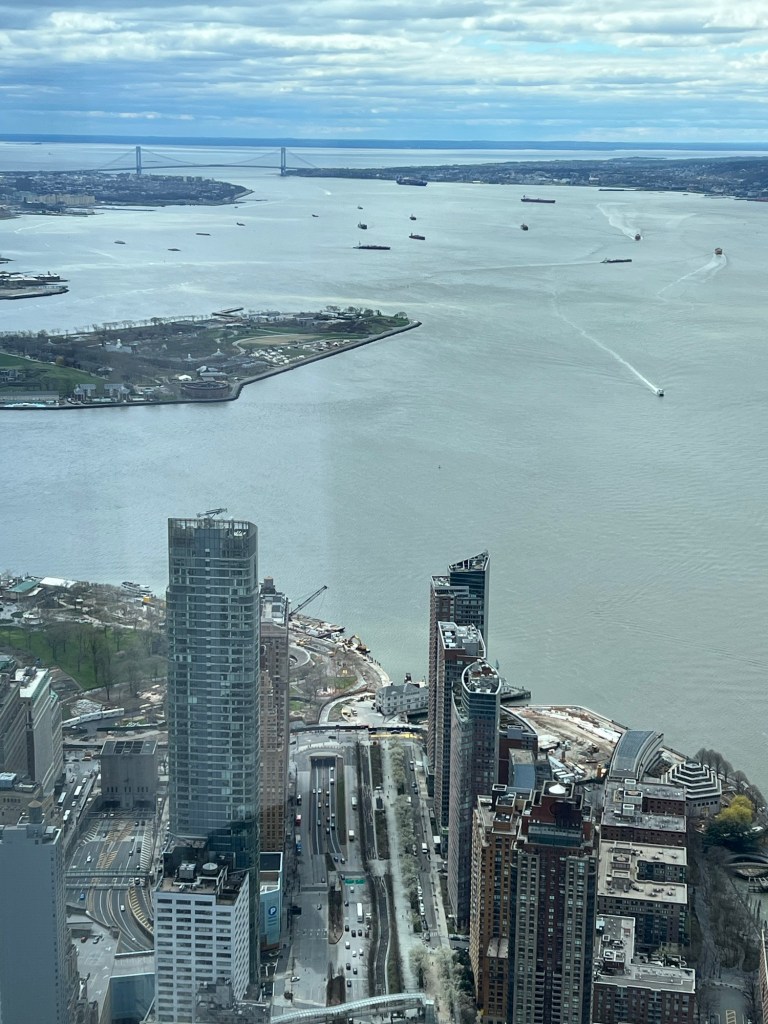
The views of New York Harbor are spectacular.

The Oculus and the Memorial Pools of the 9/11 Memorial from the top of the Observatory.
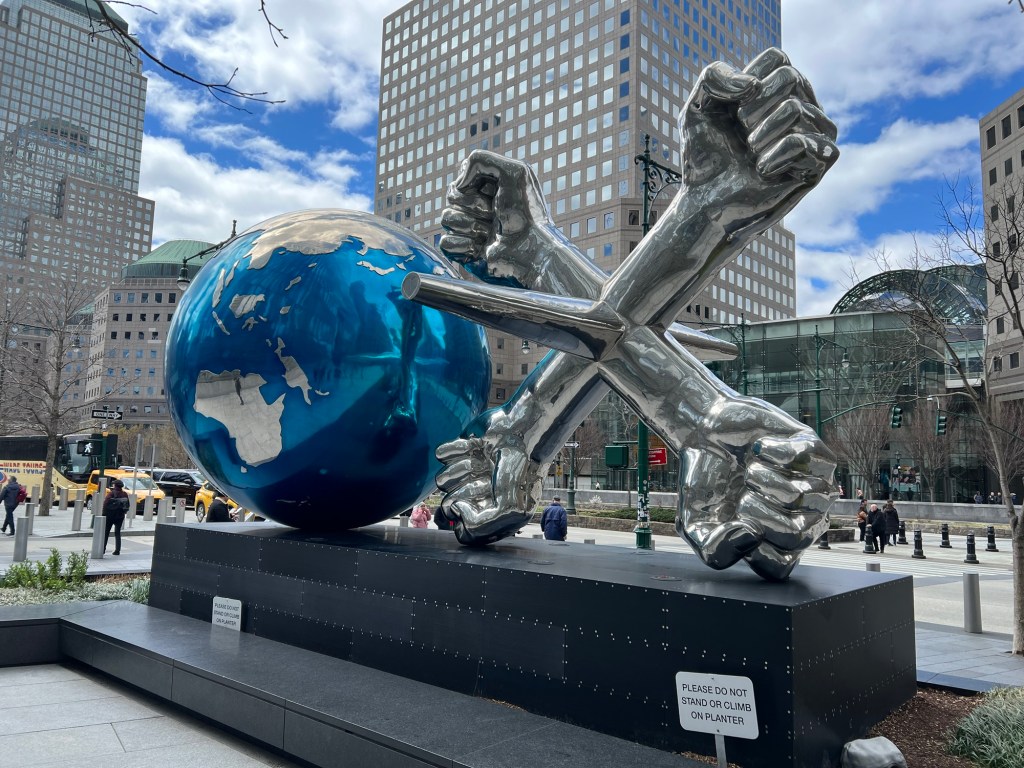
This interesting sculpture, XO World Project, is at the entrance when you leave the building.
The XO World Project was created by artist Daniel Anderson, features two sculptures, “XO PLAY” and “XO WORLD,” that encourage peace and love around the world. “XO PLAY,” on display in the Oculus, depicts children playing a game of jacks, symbolizing childhood innocence and harmony with the world. “XO WORLD,” on display just outside One World Trade Center at West Plaza, features a 12-foot “Jack” from the game of Jacks with an “X” representing “love” in universal sign language and “O” representing the world (World Trade Center website).
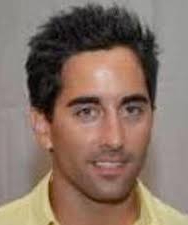
Artist Daniel Anderson
https://www.danielandersonart.com/
Contemporary abstract sculptor and painter Daniel Anderson was born and raised in Pompton Plains, New Jersey. His interest and passion for art began at an early age and led him to be recruited and to receive a scholarship to attend the College of Visual & Performing Arts at Syracuse University in New York. He continued his formal education in Florence, Italy, and was the sole artist from New York City selected to participate in an annual residency program in Melbourne, Australia (Artist’s website).
The sculpture is a visual expression of the powerful message of equality, unity, peace, and love. This use of iconography and symbolism is meant to connect with the hearts and minds of the masses as it is intended to motivate, activate, and further progress humanity (Artist’s website).
“As our society faces unprecedented challenges stemming from a global pandemic, economic recovery, racial inequity, and territorial conflicts, World Peace Day offers the perfect backdrop to unveil these two inspiring sculptures intended to bring people together,” said Anderson (Business Wire.com)

The view from the bottom when you leave.

The view from the 9/11 Memorial Park.
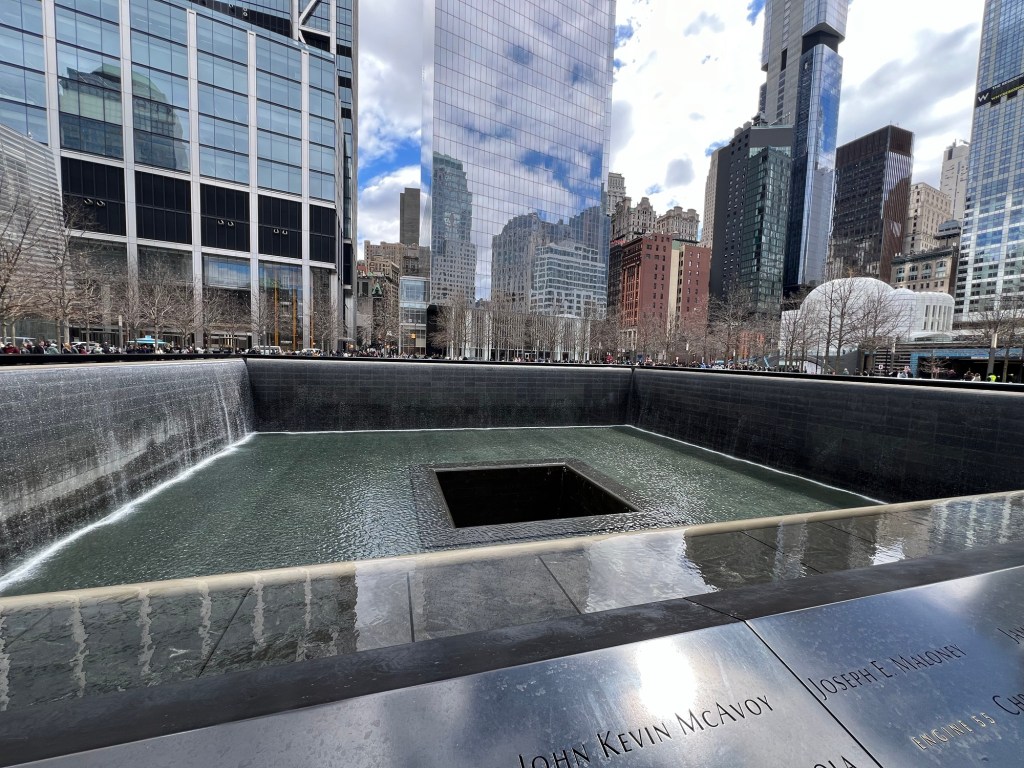
The 9/11 Memorial Pools which are the footprint of the original Trade Center Buildings.
https://www.911memorial.org/visit/memorial/about-memorial
This memorial still gets me choked up with what happened here over twenty years ago. I still see flags and flowers of near loved ones names along the edges of the pools. It is nice that family members still remember their family here.
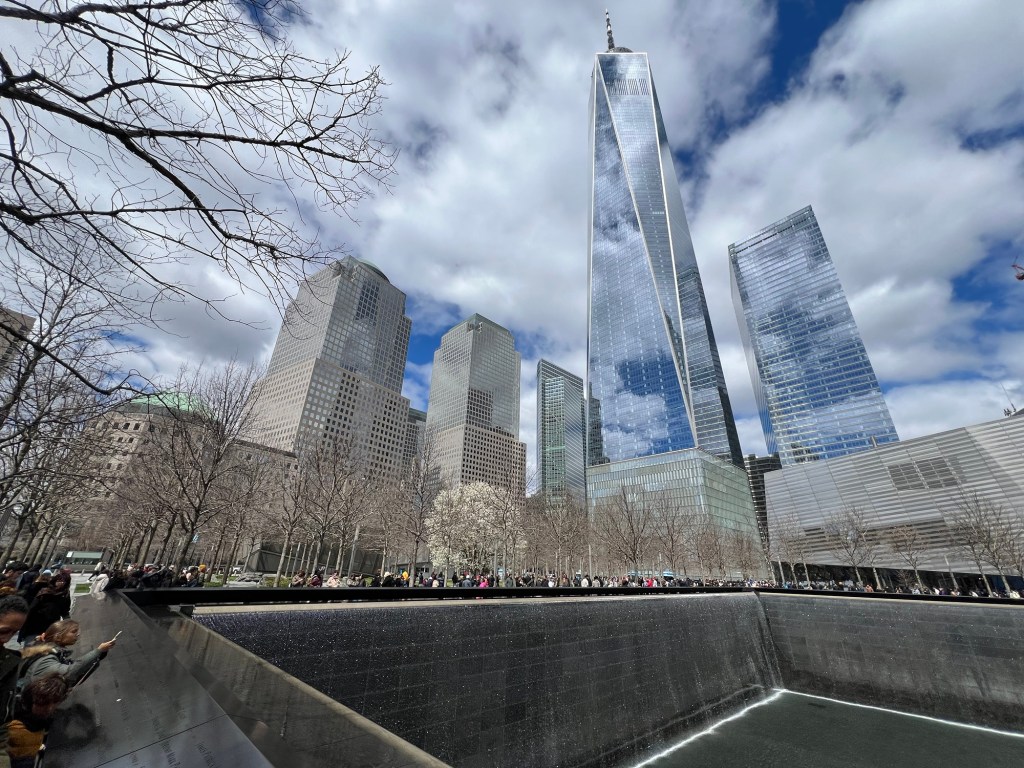
The skyline of the park from the Memorial pools.
The pools are reminder of time when the world went mad. Those feelings are still simmering under the surface of society today.

Merchant’s House Museum
29 East 4th Street
New York, NY 10003
(212) 777-1089
Open: Sunday 12:00pm-5:00pm/Monday-Wednesday Closed/Thursday-Saturday 12:00pm-5:00pm
Admission: Adults $15.00/Seniors (over 65) and Students $10.00/Members are free/ Special Guided tours are $20.00
My review on TripAdvisor:

The Merchant House at 29 East 4th Street in NoHo

The Historic Plaque

The house is part of the NYCParks system
(from the museum’s pamphlet):
The Merchant House Museum, the former home to four generations of the Treadwell family, was built in 1832 and is designed in the late Federal style of brick and marble. When the house was built, elegant Greek Revival style rowhouses of red brick and white marble flanked the tree lined streets of this fashionable residential enclave, known then as the Bond Street Area.
The house was the home of wealthy merchant, Seabury Tredwell, his family and their four servants. Over the next 98 years, the family lived there and saw the neighborhood and the city grow, change and prosper. In 1936, after the death of the last living relative, the house opened as a museum, complete with Tredwell family’s original furnishings and personal possessions.
At the Midcentury, cast iron made its first appearance and commercial buildings and factories came to dominate the area. By the century’s end, it would be a commercial district with the Tredwell’s being the last holdouts of the area. The house was saved by the last relative’s grand nephew who bought the home to preserve it as a museum.
The home is now part of the NoHo Historic District that includes about 160 buildings, 11 of which are distinguished as individual NYC landmarks
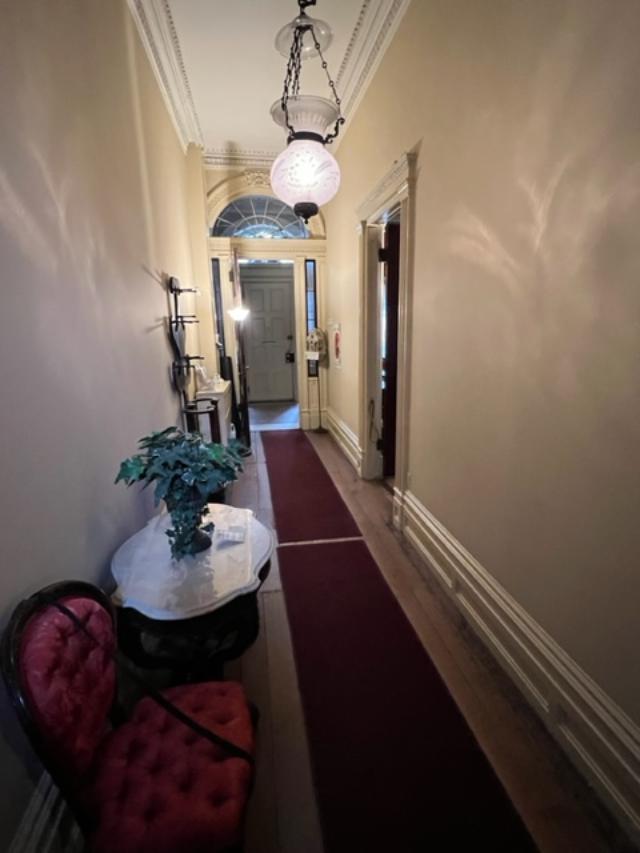
The Entrance Hallway where you would be greeted when you enter the house
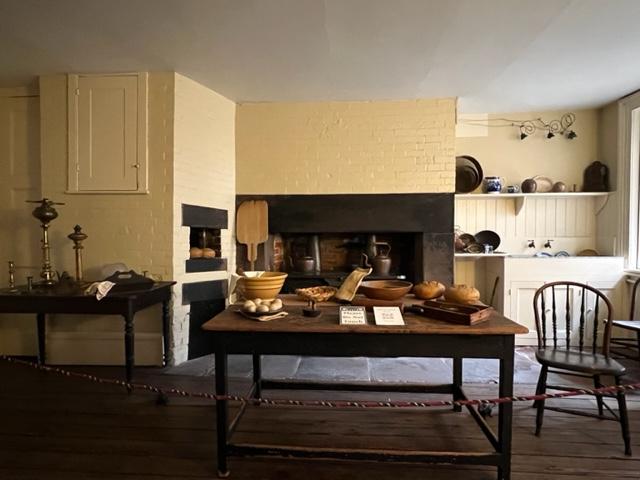
The Merchant House Kitchen ready for dinner to be prepared
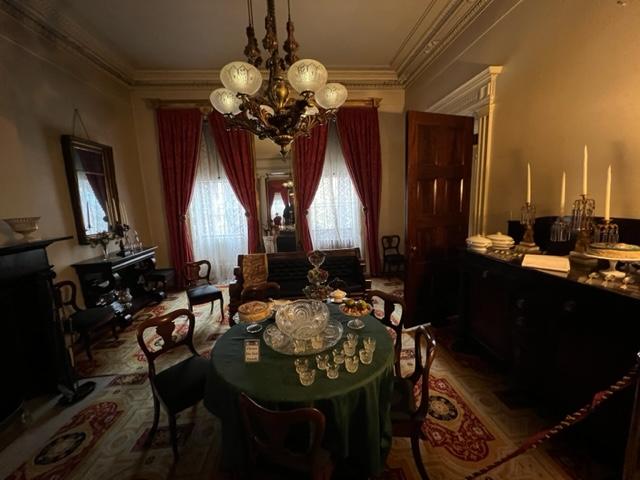
the Dining Room was set for the Dutch New Year gathering
The Christmas holidays were not a big tradition in the early 1830’s when the house was built. The Dutch tradition of visiting on New Year’s Day and making calls to your friends was what many fashionable families would do to socialize with their neighbors. Tea, Coffee and punch would be served along with cakes, sweets and savories. These calls would only last about ten to fifteen minutes before you would move onto the next house. This tradition continued until Victorian times when homes were spread further apart and the family Christmas celebrations with gift giving and a Christmas tree came into fashion due to Queen Victoria and the spread of English and German traditions.

The punchbowl ready for guests on New Year’s Day

Refreshments ready for the New Year’s Day gathering
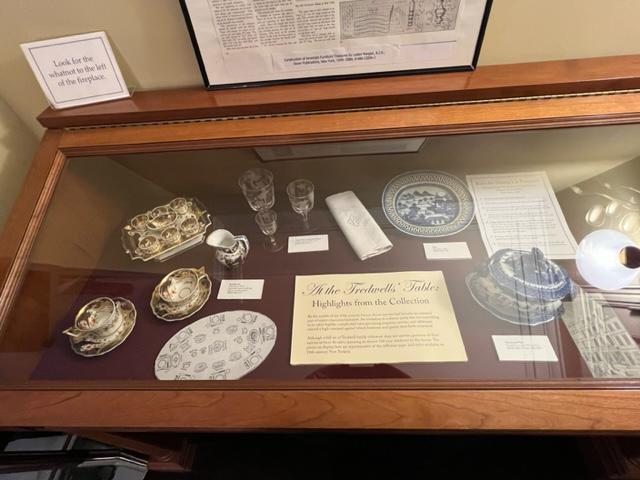
The broken pieces of the china collection of the Treadwell family. There is not a full collection of china that the family had to entertain with for formal affairs. They also did not have any china or silver of the family’s. I think that this might have been passed down to the heirs.

The Parlor of the Merchant House Museum

The piano in the Parlor of the home
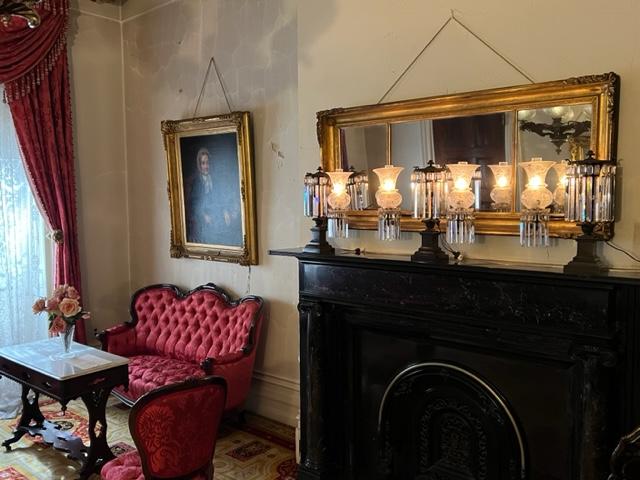
The fireplace in the Parlor
The Parlor is where the family would gather after meals for entertainment and to converse with guests. This would be the main part of the house for socializing as the formal dining room and living rooms would be used for more formal affairs.

The Living Room in the Merchant House
The stairs are rather narrow and steep when you are heading upstairs to the bedrooms so you have to hold on to the rails. The bedrooms are normal size by today’s standards but back then they were pretty big plus people had their own rooms. They were nicely furnished with family heirlooms and antiques.

Mr. Treadwell’s bedroom

The portrait of Mr. Treadwell in his bedroom

Mrs. Treadwell’s bedroom
In Victorian times, the wealthy would have separate bedrooms for the husband and wife. Bedrooms would not just be a place to sleep but they were also a place of business where the family members would do their paperwork, write correspondence and arrange social events. Also, in the case of birthing, the child would be in the bedroom with their mother.

The “Valentine’s Day Card” exhibition “19th Century Valentines: Confections of Affection” on the second floor is part of the house’s extensive collection. ‘Delicate and lacy, these expressions of love celebrate the whimsy and romance of the Golden Age of Valentines’ (from the pamphlet).
The Children’s bedrooms on the third floor were closed off and used as offices for the staff so I made my way up to the Servant’s Quarters on the top floor. These people really got their exercise climbing those stairs up and down every day. The stairs seemed to get more narrow as you headed higher and God forbid there ever be a fire. You would be trapped up there with no way out.
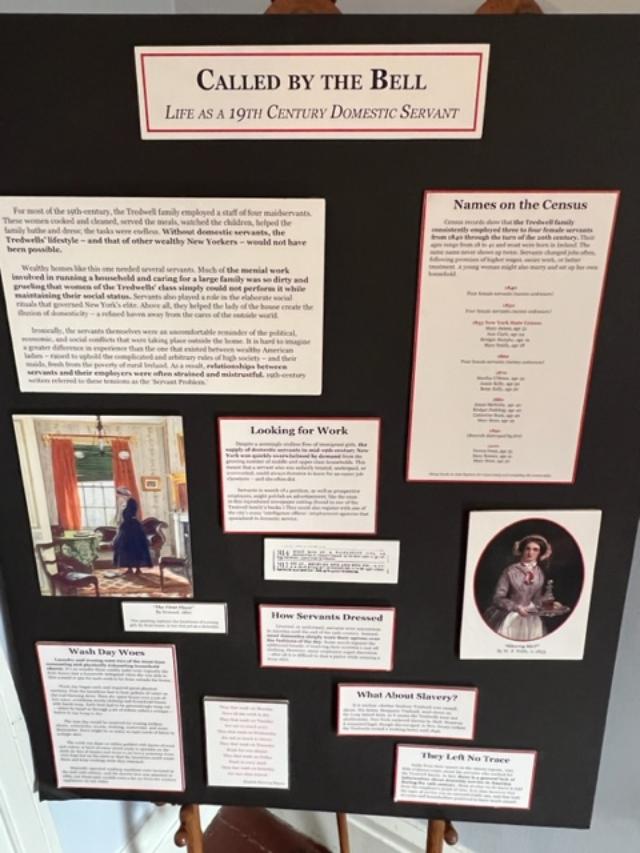
The Servants Room on the fourth floor
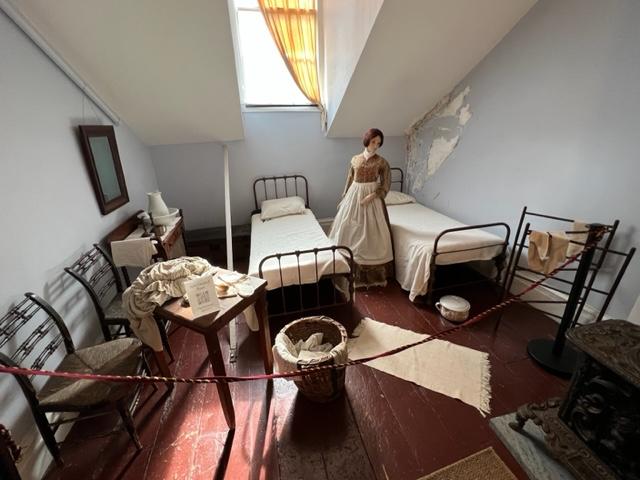
The Servants Room on the fourth floor was pretty spare

Looking for the paranormal

Looking for a ghost on the fourth floor
During October, the museum hosts “Gaslight Ghost Tours”, where you tour the home by candlelight. There have been strange noises in the house ever since Gertrude Tredwell passed in 1934. She had been born in the house in 1840 and lived here until she was 93. She had never married and now it is said that her spirit is still part of the home (museum pamphlet).
After viewing the Servants Quarters and not finding any ghosts, I headed back downstairs to the main hallway leading into the house. There I saw the timeline of the family and all the family members that had lived in the house. It seemed that the last living relative, Gertrude, died in the house in 1934 and her grand-nephew bought the house and all its debts at the height of the Depression to preserve the home as a museum. Talk about insight! The nephew knew how important this home would be one day.
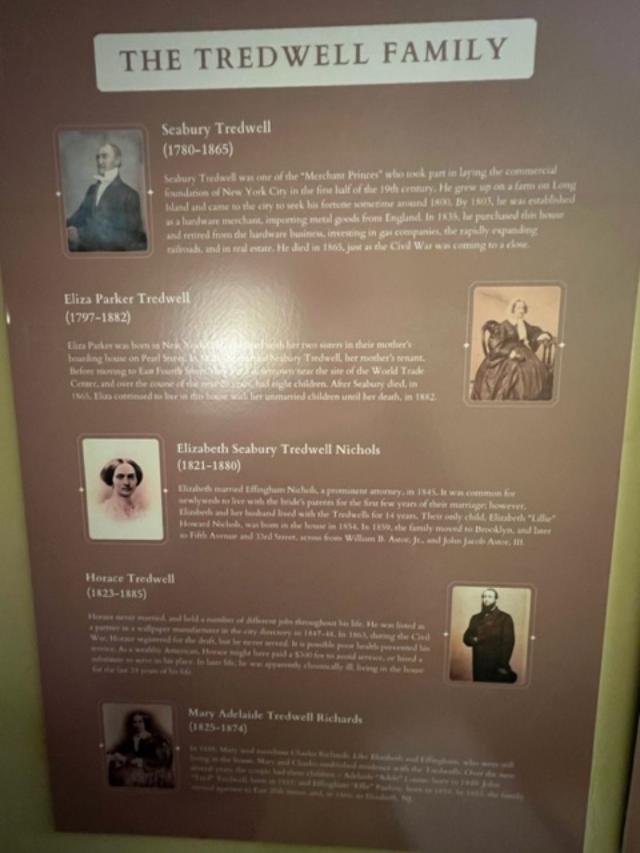
The Treadwell family tree in the hallway downstairs
The last part of the tour was the gardens in the back of the home. It was not a formal yard but a well landscaped walled in garden with a small fountain in the back of the gardens. The flowers were just starting to come up and there were crocuses and daffodils One of the curators was the Master Gardener for the property and did a nice job landscaping the property.

The back of the Merchant House Museum in the late Winter in the Gardens
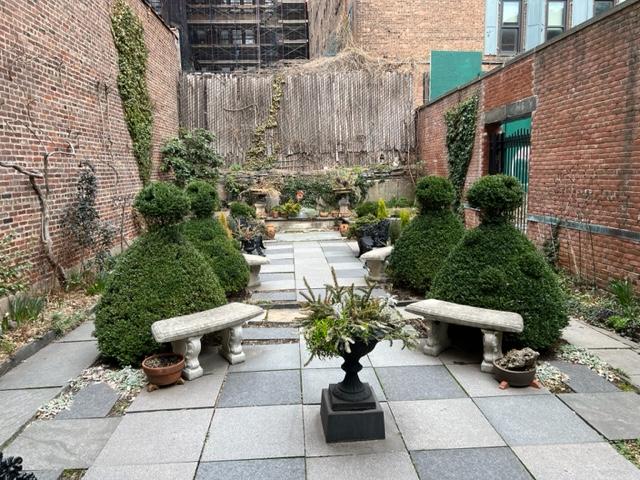
The Gardens of the Treadwell house in the late Winter

The fountain at the gardens was off but now means to come back in the late Spring
There is a more formal tour a couple of times a day of the home but that is by reservation only and there is a separate fee. The holidays offer more themed tours on Halloween and Christmas. The Candlelight tour of the hour for Halloween is really intriguing.

The Merchant House Museum at night before Halloween
I recently went on the Haunted House tour at the Merchants House for Halloween in 2023 and that was interesting. We walked the first two floors of the house in the dark by candlelight hearing stories about the family.
Costumed characters greeted us in every room but none of us saw a ghost. Still the house had a creepy feeling to it as we walked room by room discussing the lives and deaths of the Treadwell family. We started off in the Parlor on the first floor with displays of seances and ghost pictures dotting the displays.

The display of seances and ghost pictures.
It can be a bit spooky walking through a house by flashlight, but the docents made the conversation interesting and fun. We got to hear about all the haunted tales of the house. A highly suggestive tour around Halloween.
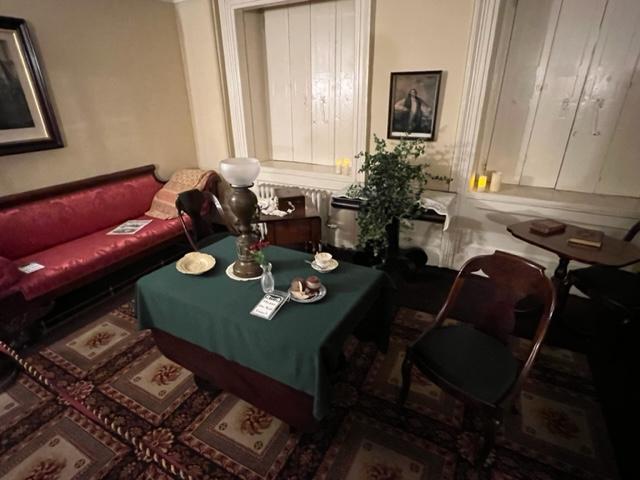
The Parlor at night on the Candlelight tour of the house on Halloween.
The home is very engaging at Christmas time as well as you are welcomed into the Treadwell Home for the Christmas holidays with their annual Christmas Eve Reception and preparations for Christmas lunch. The house was decked out in garland and bows with several Christmas trees in the room. The house was very festive for the holidays and you were welcomed into the world of 19th century New York City at the holidays.
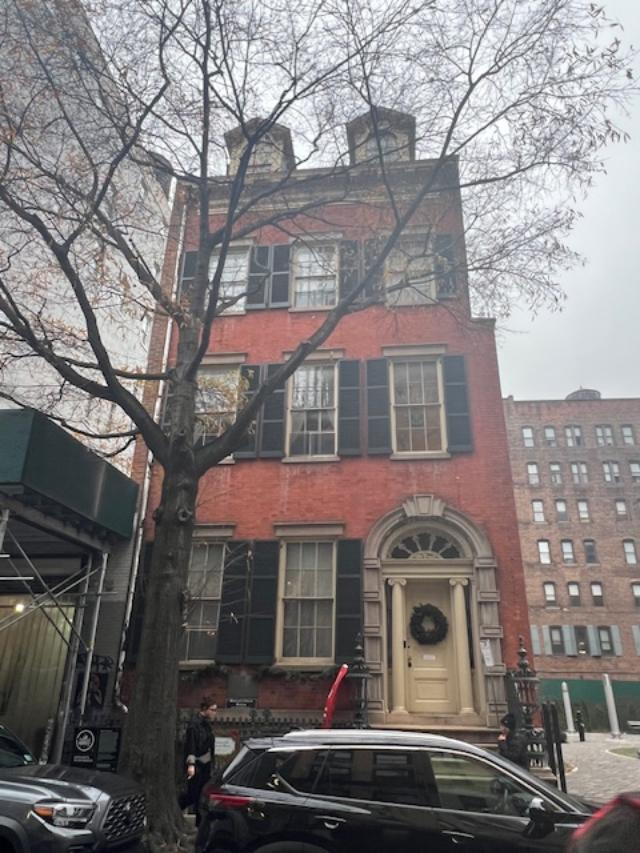
The Merchant House at the Christmas Holidays.

The outside of the house decked out for the holidays.
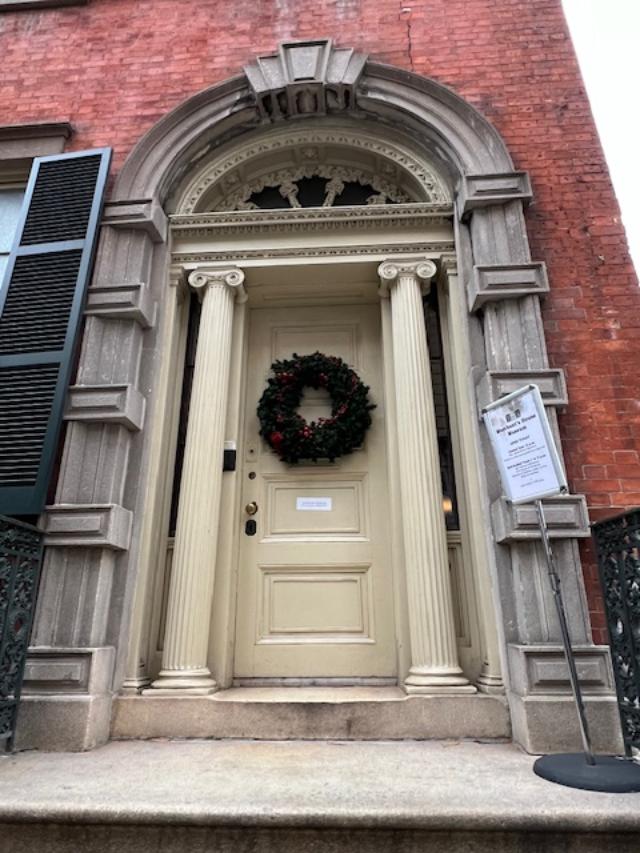
You are welcomed to the home at Christmas time.
We started our tour in the gardens which had gone dormant for the season but still you could see the greens in the bushes and the pine trees. It had been a warm morning in the low 50’s with a treat of rain but later that afternoon. For now, it had just been gloomy. We had a nice conversation about the house and its history even though we could barely hear the tour guide as he talked so softly.
We next toured the kitchen where the cooks were busy cooking and baking for the Christmas holidays. The 19th Century was all about manners, traditions mostly Dutch and entertaining. The Treadwell’s were people who both entertained the neighbors and their family as well. So there would be teas, receptions, open houses and then the formal Christmas Eve festivities and then Christmas lunch after church service the next day.

The holiday meal being cooked in the downstairs kitchen.

Christmas dinner with the Treadwell’s must have been special.
We moved next to the upstairs parlor that was set for receiving guests from the neighborhood. The Treadwell’s like most families at that time received guests for New Year’s Day punch and refreshments as the men of the neighborhood made their social calls during the holiday season. This tradition stopped around the time of the Civil War when families during the Industrial Revolution acquired money and people did not want to ‘entertain just anyone’.
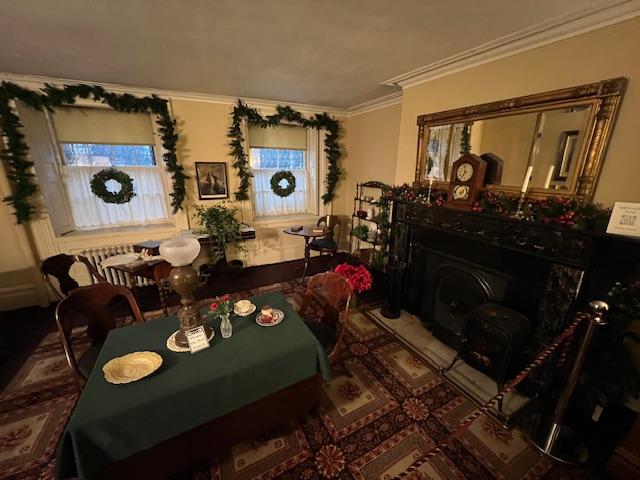
The Parlor by the front door ready to received guests for the holiday season.
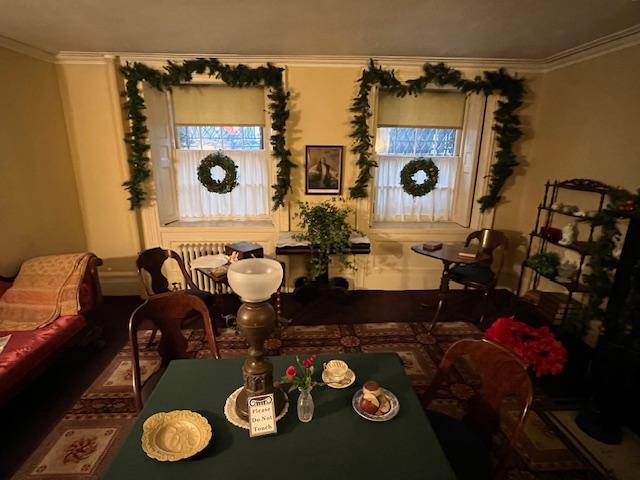
The Parlor on the first floor receiving guests for New Year’s Day.

The mantle was beautifully decorated for the holidays.
We next toured the formal Dining Room and Living Room on the second level where the family entertained relatives and friends for the holidays. It must have been some celebration as the Dutch traditions disappeared and the Victorian rules and elaborate traditions started some still practiced today. Now we call it the “Norman Rockwell” and “Martha Stewart” standards.

The formal Living Room with the Table Tree decorated for the holidays. The Table Tree was the precursor for the modern Christmas tree.

The tree is the focal part of the room.

The fireplace was decked out for the holidays as well.
The Dining Room was set for the Christmas Eve Open House and in preparation for receiving guests in the formal room. The finest silver, china and crystal would have been used to show off the family position in the neighborhood and was meant to impress.

The Dining Room was set for receiving guests for the Open House.
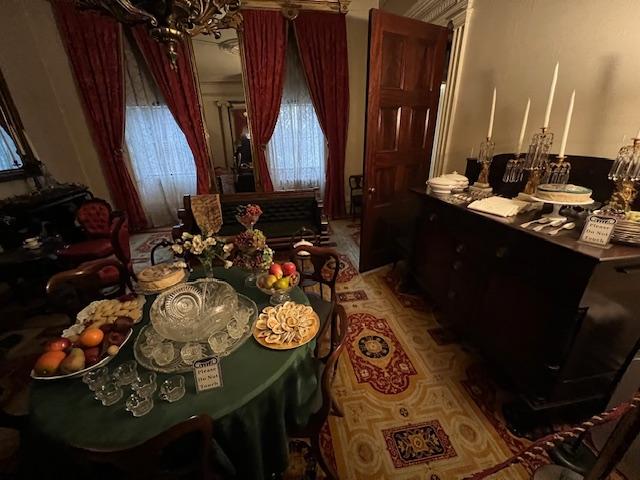
The Dining Room set for a feast.
The family would receive guests all day, replenishing foods so that there was plenty for everyone who visited. Women would be busy all day entertaining neighborhood men who would be calling all day long.

The bannisters were beautifully decorated with garland.

During the Victorian Age gift giving during the holidays became very important.
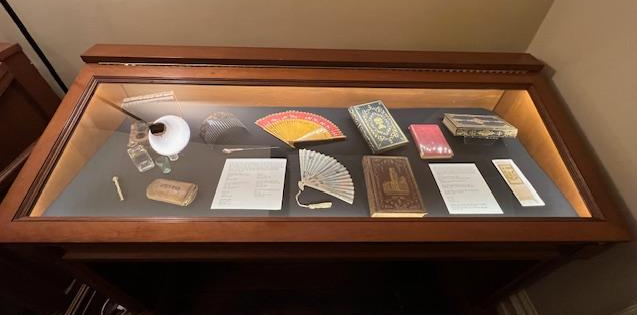
Christmas presents of the Victorian Age.
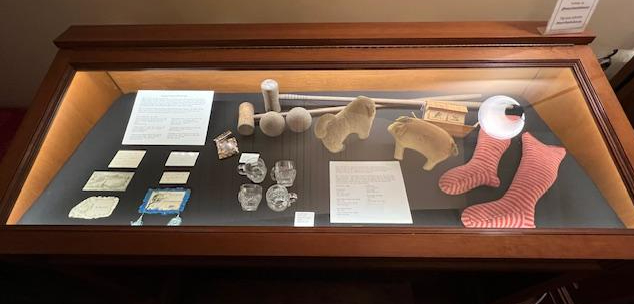
Gifts of the Victorian Age.
We then toured the upstairs bedrooms and saw how they decorated. The rooms were nicely decorated for Christmas. I have never seen rooms decorated like this for the holidays.

Mrs. Treadwell’s bedroom
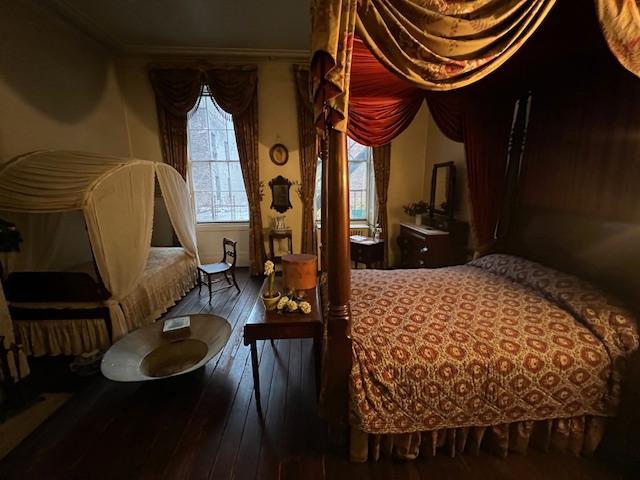
Mrs. Treadwell’s Bedroom

Mr. Treadwell’s bedroom
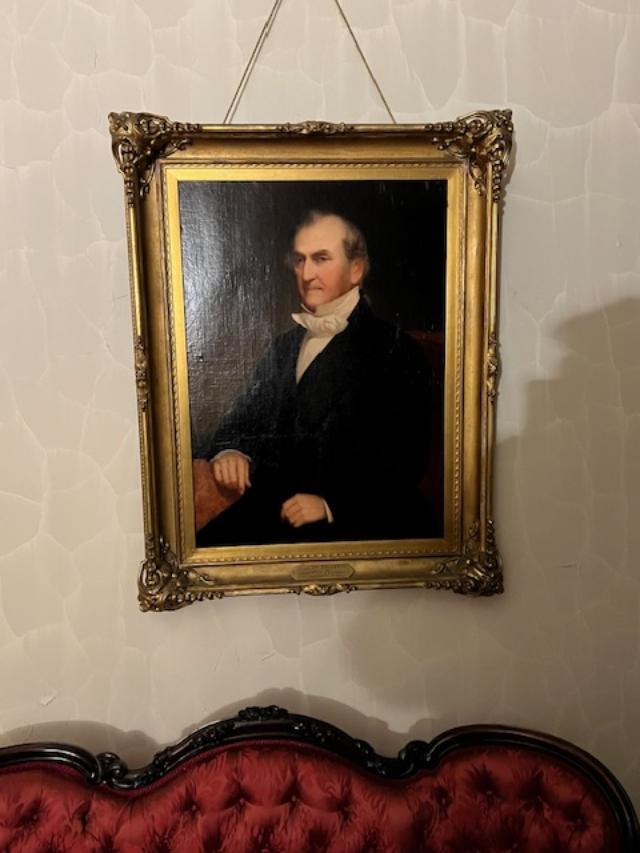
Mr. Treadwell’s portrait in the bedroom standing guard.
It was an interesting look at both Edwardian and Victorian times in New York City.
The New Year video on celebrations on the “New Year’s Day Visiting” day
During the Summer months, the Merchant House Museum is hosting a series of “Music in the Garden” concerts. The first one I attended was in June 2024 with Flutist Cheryl Pyle. What a nice relaxing evening in the gardens that were all in bloom.
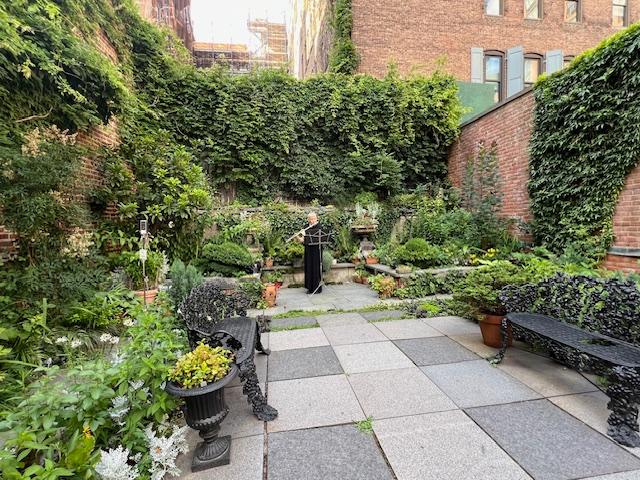
The gardens were in full bloom that June evening
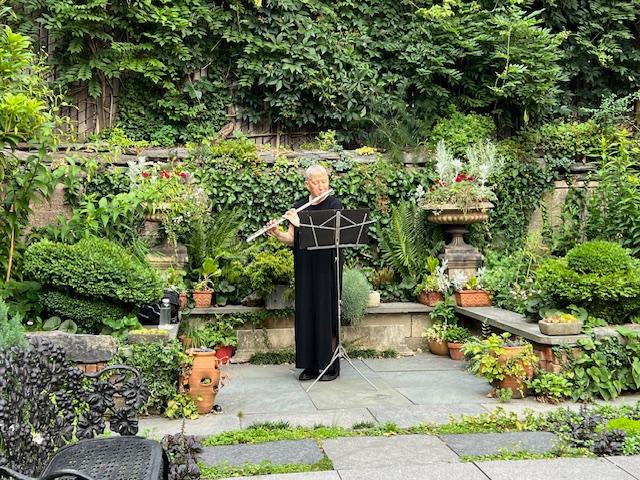
Flutist Cheryl Pyle performing in the gardens that evening
https://cherylpyle.bandcamp.com/
The gardens are this hidden gem in the neighborhood. The volunteers have done such a beautiful job taking care of this marvelous historic site.

The gardens looking at the back of the house with the wine and snacks and information table

The gardens closer to the back entrance of the house

The left side of the back garden

The right side of the gardens

The entrance to the gardens from the park next door
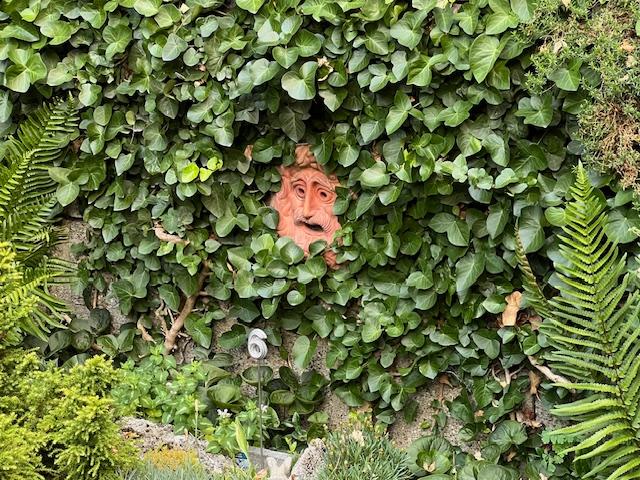
The fountain staring back at us in the gardens

This little bird even joined us in the garden for the concert and stayed and listened contently
The museum is currently having a fight to keep construction away from the home. The ten-year battle to keep a hotel from being built has been a problem for the museum. The foundation and structure of the home are in danger due to the fragile state of the building. The Landmark Preservation Commission of New York is researching and looking over the proposal.
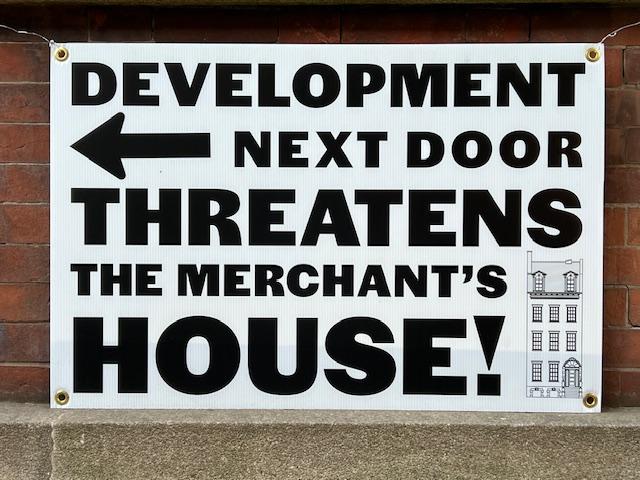
The museum now has to defend itself from building next door
The museum is a perfect way to see how residents of a Upper Middle Class family lived in Pre-Victorian times and show the last vestiges of the neighborhood when it was a fashionable section of the City.

Museum of the City of New York
1220 Fifth Avenue
New York, NY 10029
(212) 534-1672
https://www.facebook.com/MuseumofCityNY
Open: Sunday-Monday 10:00am-5:00pm/Tuesday-Wednesday Closed/Thursday 10:00am-9:00pm/Friday-Saturday 10:00am-5:00pm
Admission: Adults $20.00/Seniors over 65 $14.00 (with ID) and Children under 19 and Members are Free; please check website for updates.
My review on TripAdvisor:

The Museum of the City of New York at 1220 Fifth Avenue
I have been a member of the Museum of the City of New York for almost twenty years and what I love about the museum is that its concentration is to be everything about New York City and what makes the City so great. Its development from a Dutch Colony to the Modern Metropolis that it is today. It covers the history so well that they created a permanent display entitled “New York at its Core”, an extensive history of the City from its start as being colonized by the Lenape Indians as a fishing and hunting set of villages on the island.

Each display takes you through a different point in the history of the development of the City and how each era brought dramatic changes to the fabric of the City from immigration over the years to the fires that leveled the original City and the raise of Wall Street and the Arts to make New York City the Capital of the World. The almost bankruptcy of the City in 1975 to the attacks on 9/11 have really shaped the direction and change in the City to the COVID-19 pandemic reshaping it again. We see how New York City continues to survive. The exhibition is now updated to add the COVID pandemic to the fabric of what is happening in New York City now. This exhibition will continue to evolve over the coming years.

The entrance to “Timescapes”
The film “Timescapes” in the basement theater again tackles the issues of a changing City since its development and the City continues to morph over time. The movie narrated by Stanley Tucci tells the story of New York from the time of the Dutch settlement to the attacks of 9/11 and like “New York at its Core” the issues that come about after every event. The film is shown five times a day and do take the time to see it when visiting the museum.
Just recently I attended a special event at the Museum to honor the Founding Members of the “Talking Heads” Chris Frantz and Tina Weymouth and their groundbreaking film “Stop Making Sense”. I was lucky to get tickets because the second I saw this on the museum listing I bought the tickets immediately. The event sold out quickly.

‘Talking Heads’ founders Chris Frantz and Tina Weymouth
The event was discussion with the creators of the group and how the Talking Heads emerged as a popular group through the 1980’s and 90’s. I have to admit that the two of them have not changed much but looking a bit older. They enchanted the audience with their time with the group and some new things they have in the works. After a quick Q & A, we watched their popular concert film “Stop Making Sense”.
We had such a good time at the event, the I wrote about it for my blog, “MywalkinManhattan.com”:
Day Two Hundred and Eight: Private Members nights at the New York Museums:
https://wordpress.com/post/mywalkinmanhattan.com/20227
On another recent trip, I visited the exhibition “New York New Music 1980-1986” which was an exhibition on the development of the music scene after the Disco era was over and the rise of MTV. You had a combination of Club Music, Hip Hop, New Wave and the English Wave from Australia and New Zealand coming into the United States plus a resurgence of Rock and Roll after years of the “Disco Duck”. The exhibition highlighted the music of Debbie Harry and Blondie, Run DMC, Cyndi Lauper and Madonna and the rise of music videos. The exhibition brought me back to my last years of high school and my college years as I remembered all these groups.

Over the years I have seen exhibitions on everything from the Bankruptcy exhibition of New York City and the rise of crime, the Gilded Era with Alice Claypoole Vanderbilt’s “Electric Light” dress that she wore to Alva Vanderbilt’s famous ball and the wonderful toy exhibitions of early playthings. I have also been to many lectures at the museum with guests such as former Brooklyn President Marky Markowitz.
In 2023, I visited the museum for the first time in months and was able to see the “Gingerbread House Bakeoff” exhibition of well-known and amateur bakers in New York City. The exhibition was a hold over from Christmas and it was interesting to see the detailed gingerbread houses that were on display.

There two that I really liked. One was of Madison Square Park at Christmas time and looked like the pictures I had just taken of the park.

Bryant Park at Christmas time in gingerbread

Christmas scene in New York City
The next exhibition I wanted to see before it closed was the “Food in New York” exhibition. It could have been a little more detailed than what I saw. I thought it was going to have more of the development and history of food in New York and how it pertains to today. It was more artwork related to modern food industry trends. It was interesting but not what I thought it was going to be.

‘Food in New York’ exhibition
Some of the artwork really stood out on the display. I like the Hispanic Ice Carts which you see all over Washington Heights and East Harlem during the warmer months.

Ice Cart “Pimp My Piragua” byt artist Miguel Luciano

Artist Miguel Luciano

“Twilight” by artist Suzanne Anker
The effects of pollination of crops and the loss of bees shown here.

Artist Suzanne Anker
The latest exhibition that I visited on a Members walking tour was the “New York Now: Home” exhibition that opened in the Spring of 2023. The exhibition is based on what the photographers perspective of what a ‘home’ is and how you live through it. There were photos of family events, life outside the home, what a family is, is it your birth family or friends that have become family? There were also some great shots of people taken during the COVID lockdown and how the home became the center point of their lives and sanity. Each photographer gave a different way of looking at these points.

‘New York Now: Home: A Photography Triennial’

The exhibition write up
There were many terrific artists displayed in the exhibition but these are the five that I thought stood out the most:

Photographer and Artist Anders Jones work on the loss of bodegas in his neighborhood due to gentrification.

Artist Anders Jones work at the Museum of the City of New York
http://www.andersphotography.net/

Artist and Photographer Maureen Drennan

Artist Maureen Drennan’s work
Artist Maureen Drennan

Artist Gail Halaban works

Artist Gail Halaban’s work is a peek hole into peoples lives
https://www.gailalberthalaban.com/

Artist Gail Halaban

Artist and Photographer Neil Kramer

Artist Neil Kramer’s work during the COVID lockdown and life with his mother and Ex-wife
Artist Neil Kramer
https://www.thepictorial-list.com/2021-photographers/neil-kramer


Artist and Photographer Paul Moakley

Artist Paul Moakley’s works
Artist Paul Moakley

I think the museum was looking for a more political and environmental view of food in New York City as opposed to the history and development. It still was an important issue. It also showed all the urban, community and roof gardens that are becoming part of the urban landscape. It is interesting how people are using space to grow food for the benefit of everyone. It was an interesting perspective.
The museum is really all things New York.
The museum also has a series of talks in movies shot around or about New York City. On a recent trip to the museum I attended the retrospect of director Walt Stillman and his 1998 film “The Last Days of Disco”, which had been a huge hit when it came out. The director talked about the change in times from the 1970’s to the 1980’s and the shift in behavior of the population. There was a moment of time when “Disco was King” and going out was all the rage after years of Vietnam era. Studio 54 led this charge and when it closed in 1980, the party was over.

In conversation with director Walt Stillman the night of the retrospect.
The series of films deal with the subject matter of New York City and what makes it a special place.
I recently went to see the new Art Deco City-New York exhibition on a private tour. The curator for the show toured us through the era after WWI and during the Depression. Things got more simplistic and cleaner.
You had a youth revolution that wanted to get away from Victorian values and with the lack of resources and money during the Depression, everything became more clean lines, less embellishment and more modern looking.

The exhibit ‘Art Deco City New York’
The bulk of the exhibition came from the collection of Cosmetic owner, Ronald Lauder, who contributed his Art Deco post card collection. Years of collecting showed all of us the changes not just in architecture but attitudes in travel and living. Gone were the bulky and elaborate in was simplistic and clean designs with a fresh approach.

The main gallery with Art Deco post cards
This perspective was shown in the 1939 World’s Fair, where a look to the future showed optimism and a look at new possibilities.

The 1939 World’s Fair
The outfits of that era also represented women and their freedoms from the Victorian era and the excesses. Gone were the days of corsets and bustles and in was the freedom of movement to the modern working woman who have to work to support her family. This reflected in the social life too.

Dresses from the 1930’s
Rockefeller Center and the Empire State Building were the big projects of that era. It showed the optimism and show of the possibilities of the modern era during the Depression and kept people working.

Models of Rockefeller Center
The exhibition was very interesting and informative and shows up in the modern era today.
The latest exhibition I attended was “Songs of New York”, a tribute to the rich music scene of the five boroughs through the ages.

The Exhibition sign for “Songs of New York”
The exhibition delves into the rich history of everything from New Wave to Hip Hop to Rock and Jazz. The interactive exhibition has you stepping on a Borough symbol and you hear its rich history of music.

The interactive display on the third floor

The opening remarks from the curator at the opening night

The reception with drinks and snacks for members

Pictures from ‘Look Magazine’ from the collection

Photographs from Allan Tannenbaum

The career of Allan Tannenbaum

The photos of Janette Beckmann of the ‘Hip Hop’ scene with the start of the careers of LL Cool J and Run DMC
The exhibition packs a lot of information into a small space where the members were able to enjoy the music of New York City.
I went to an Educator’s Night for the new ‘Above Ground’ exhibition on the street art collection of Artist Matin Wong. The artist collected the street art of the 1980’s after the Crash of 1987 slowed the demand for this art.

The ‘Above Ground’ exhibition

The sign from the exhibition

The works in the exhibition

The work ‘Futura’

The sign for ‘Futura’

The works by artist Keith Haring
The works in the galleries were creative and colorful. These artists sending a message with their works.

The art of the exhibition

The art of the exhibition

The gallery displaying the works

The work by artist Quik

The artist’s write up
The exhibition works were from the period of the mid to late 1980’s and these works Martin Wong bought after the Crash of 1987 to help sustain his artist friends whose sales dried for street art. The collection was donated to the museum after the artist’s passing in 1994 (Museum pamphlet).
I recently returned to the museum for a special evening event for photographer Ebet Roberts

The special event for music photographer Ebet Roberts
The evening was a discussion of the artist’s works from the 1970’s and 80’s. What I thought was interesting is how she seemed to fall into it as an artist with newspapers interested in seeing her photographs.

The photographer, Ebet Roberts with the museum curator

The photographer discussing her work

One of her well known works of a musician couple from the 1970’s
The talk was very interesting as she fell into the profession of just taking pictures of bands while attending the events as reporting. Then the papers wanted to see what pictures she had taken. Liking how she captured the groups in a more human fashion, she continued to take more pictures. This led to private sessions and behind the scenes works, capturing the events before and after a concert. It was a very interesting talk.
These are the types of events that make the museum unique and special.
The History of the Museum of the City of New York:
(From the Museum of the City of New York website/Wiki):
The Museum of the City of New York is a history and art museum that was founded in 1923 by Henry Collins Brown. The red brick building with marble trim was built between 1929-30 and was designed by architect Joseph H. Freedlander in the neo-Georgian style with statues of Alexander Hamilton and DeWitt Clinton by sculptor Adolph Alexander Weinman, which face Central Park from niches in the facade (Wiki).
The museum was originally located in Gracie Mansion, where available space was limited. One of the first exhibitions was “Old New York” in 1926. This took place in the Fine Arts Building on West 57th Street. The success of the project led to a search for a new, permanent headquarters for the museum (Wiki).
A design competition was held between five invited architects and the Colonial Revival design by Joseph H. Freelander was chosen. The City donated the site on Fifth Avenue and the funds for the construction of the museum was raised by public subscription. The original plans for the museum’s building were scaled back as a result of the Wall Street Crash of 1929. The building was finished and dedicated in 1932.
In 2000, there was talk by then Mayor Rudy Giuliani to move the museum to the historic Tweed Courthouse near City Hall but that was over-turned by the incoming Mayor, Michael Bloomberg. In protect the museum director, Robert R. McDonald resigned.
In coming new museum director, Susan Henshaw Jones, planned an extension to the museum and it was completed in 2008. The extension including renovating the existing gallery spaces and adding a new pavilion. New displays and a remounting of valuable artifacts were done to give the museum a refreshed look. In 2011, the Museum of the City of New York temporarily took over operation of the South Street Seaport Museum which itself reopened in 2012 (Wiki).
The museum has a collection of over 1.5 million objects including many items from the 19th and early 20th centuries including paintings, prints, costumes, decorative objects, furniture and an extensive collection of toys. There are also extensive collections of police and fire items as well as shop models, rare books and manuscripts (Wiki).

The Museum of the City of New York in the early Spring
 Visiting a Museum: The Unique, Unusual, Obscure and Historical