Category: VisitingaMuseum.com

The Lewes Maritime Museum at the Cannonball House                                                                     118 Front Street                                                                   Lewes, DE 19958

The Lewes Maritime Museum at the Cannonball House 118 Front Street Lewes, DE 19958

The Lewes Maritime Museum at the Cannonball House

118 Front Street

Lewes, DE 19958

(302) 645-7670

https://www.historiclewes.org/visit/society-properties/cannonball-house.html

Open: Sunday-Monday Closed/Tuesday-Saturday 10:00am-4:00pm

Admission: $5.00 (this includes admission to the Lewes History Museum)

My review on TripAdvisor:

https://www.tripadvisor.com/Attraction_Review-g34028-d1382665-Reviews-Cannonball_House-Lewes_Delaware.html

My blog on The Lewes Historical Society:

https://visitingamuseum.com/tag/lewes-cannonball-house/

Our Mission:

The Lewes Maritime Museum at the Cannonball House at 118 Front Street

The Lewes Historical Society promotes and advocates the preservation, interpretation, and cultural enrichment of the Lewes region, through museum exhibits, educational programs, historical research, and publications.

About The Lewes Maritime Museum at the Cannonball House

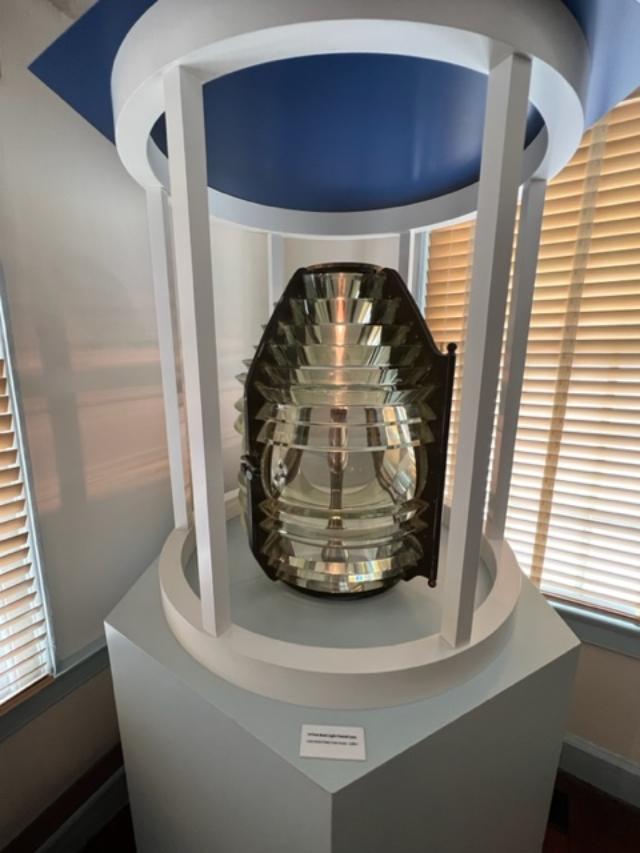
The Cannonball House was built c. 1765 and was once the home of Gilbert McCracken and David Rowland, pilots for the Bay & River Delaware. The Cannonball House has come to symbolize not only the Society, but the town of Lewes as well; previous uses included a restaurant, a laundry store, and, for a time, the mayor’s office. Harkening back to the town’s rich nautical heritage, the Cannonball House is the home of The Lewes Historical Society’s Maritime Museum. Nationally important pieces of maritime art and memorabilia are displayed in the house, including the Fresnel Lens of Fourteen Foot Bank Light. The exhibition of Breaking Britannia’s Grasp is also housed in the museum and is included in your admission.

Featured in many works on Delaware, the Cannonball House is a rare example of a Lewes house remaining on one site its entire existence. The Cannonball House was featured on the 2003 Lewes Business Directory (Lewes Historical Society website).

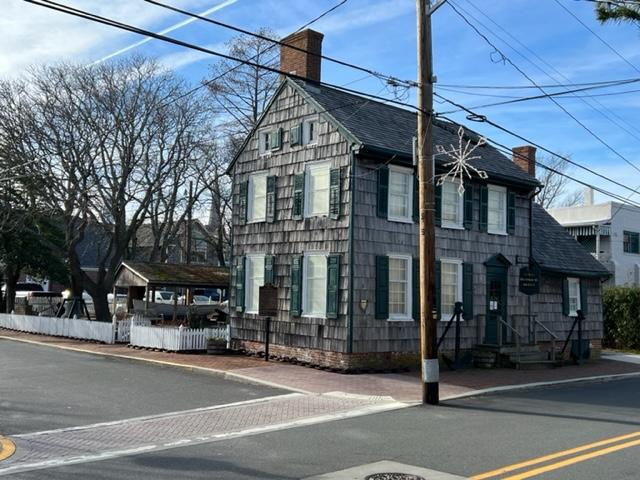
The front of the museum

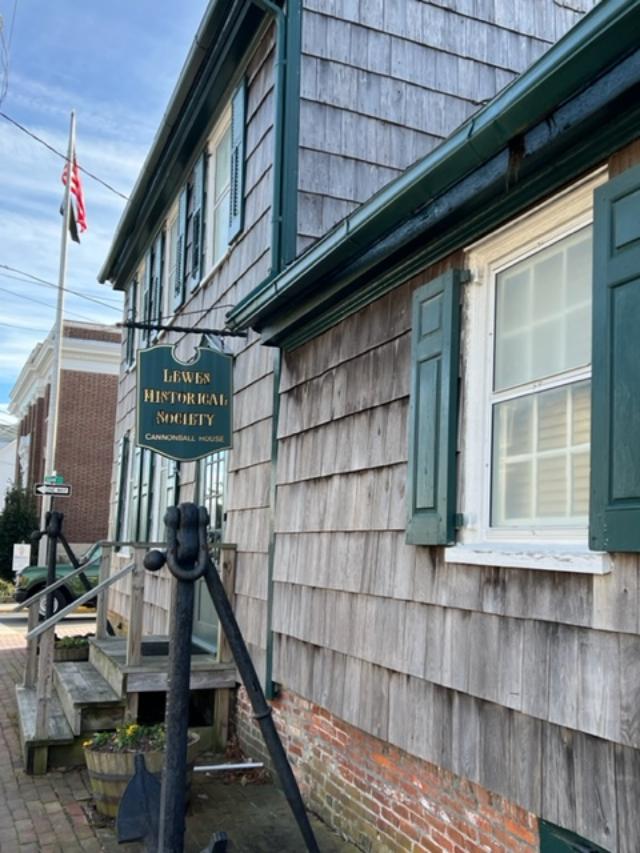
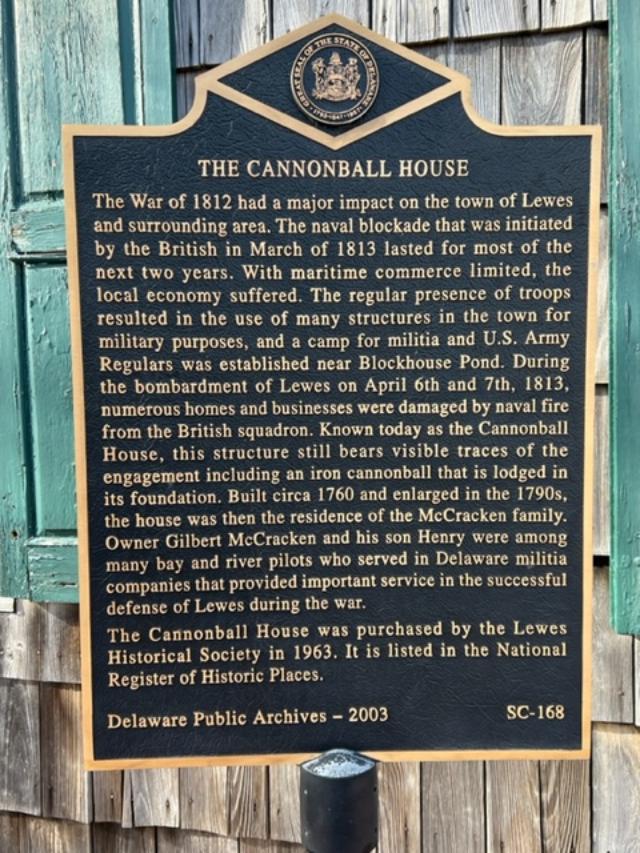
Historic Marker

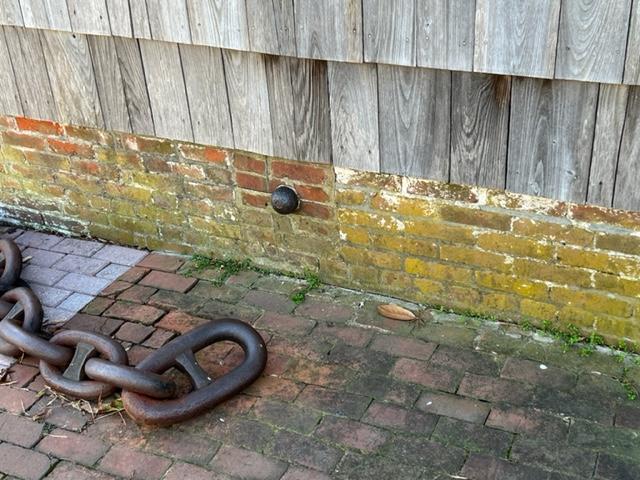
The Cannonball at the house (recreation)

On April 5, 2003, the Cannonball House was honored by the State of Delaware for its close association with the Bombardment of Lewes by the British on April 6th and 7th, 1813 and as the home of two heroes of those fateful days, Gilbert McCraken and his son Henry, both Pilots of the Bay & River Delaware.

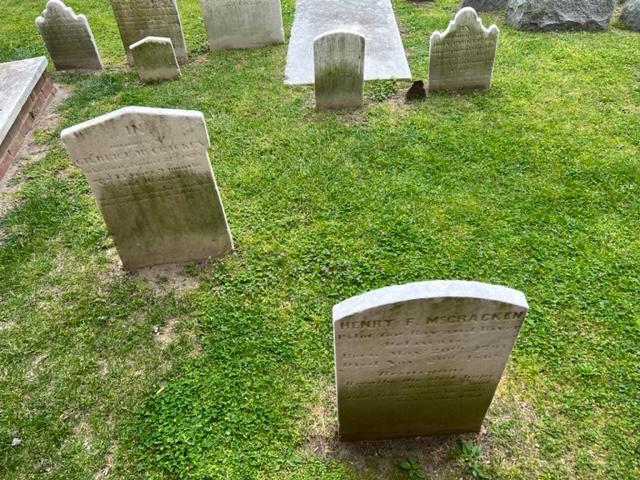
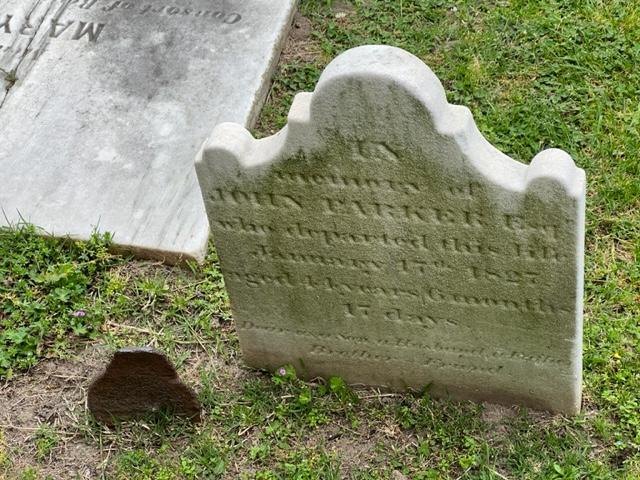
The Gilber and Henry McCraken burial site in downtown Lewes

The tip of the anchor that Henry McCraken was buried with in the Episcopal Church cemetery.

The War of 1812 Park, across Front Street from the house and site of one of the two forts that defended Lewes during the bombardment, was also recognized. Gilbert & Henry McCracken served in a volunteer militia composed primarily of Delaware Pilots that defended Lewes until the end of the war in 1815 (Lewes Historical Society website).

Perhaps the two most famous landmarks in Lewes are the Zwaanendael Museum and the Cannonball House. Many visitors come to town seeking the famous house with a cannonball still in its side, yet many are unaware of how close the house was to being lost. During the summer of 1961, several Lewes citizens expressed concern that the town was losing its character as its old homes were slowly being lost. They were especially concerned about the plight of what they knew as the Capt. David Rowland House – an ancient one with a distinguished history; built prior to the revolution, it had been the home of generations of river and bay pilots and had been scarred by cannon fire during the War of 1812 (Lewes Historical Society website).

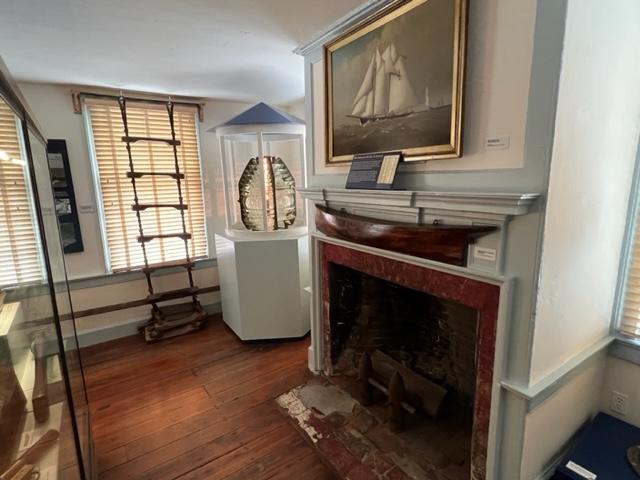
The inside of the Lewes Maritime Museum at the Cannonball House has many exhibitions to view.

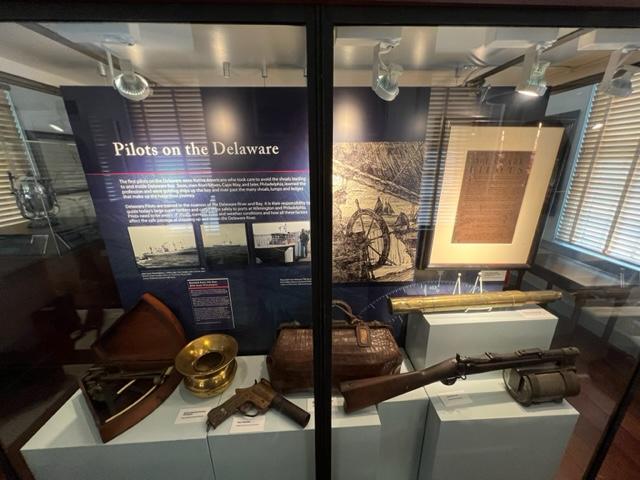
the Pilots display inside the Cannonball Museum

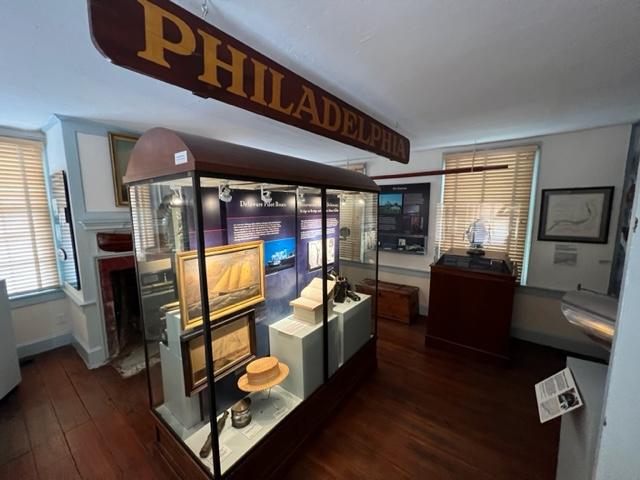
The Philadelphia exhibition

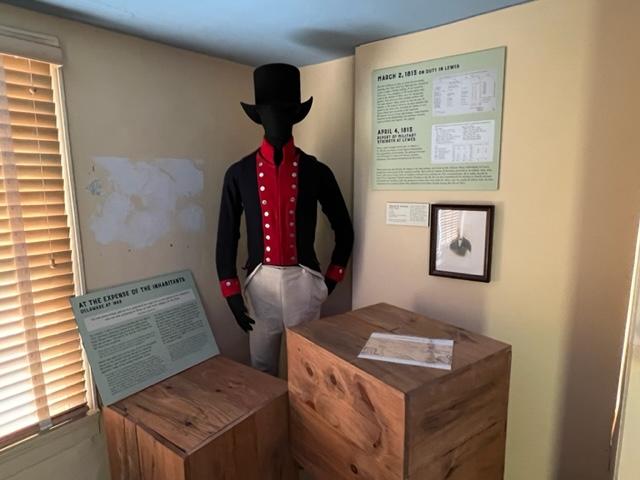
Display at the museum

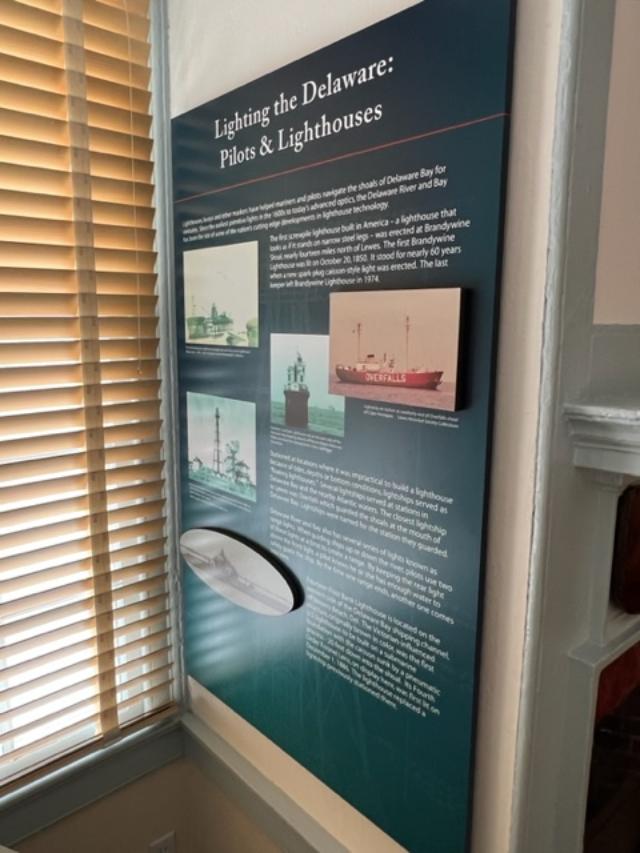
The lighthouse display

The lighthouse light

The lighthouse display

The Shipping Display

Object from the Shipping Display

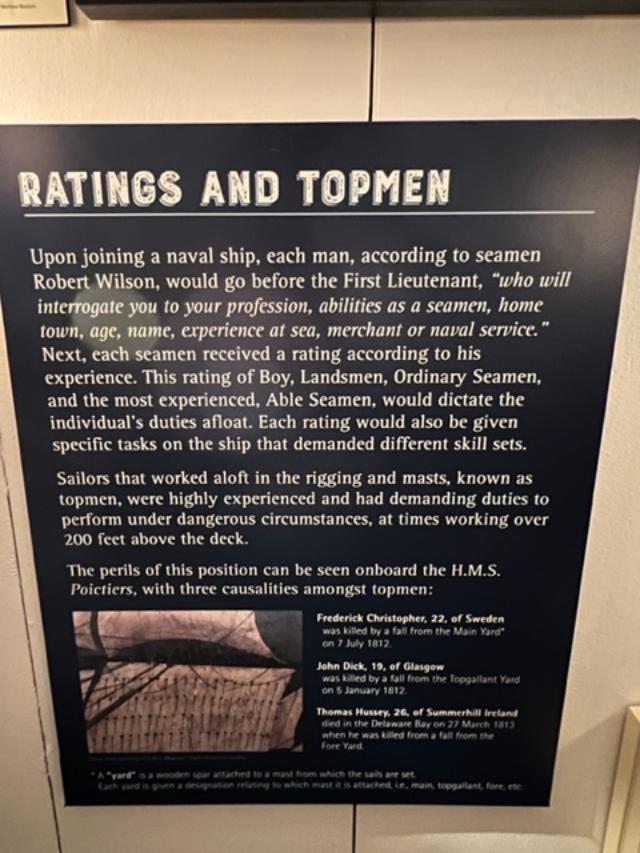
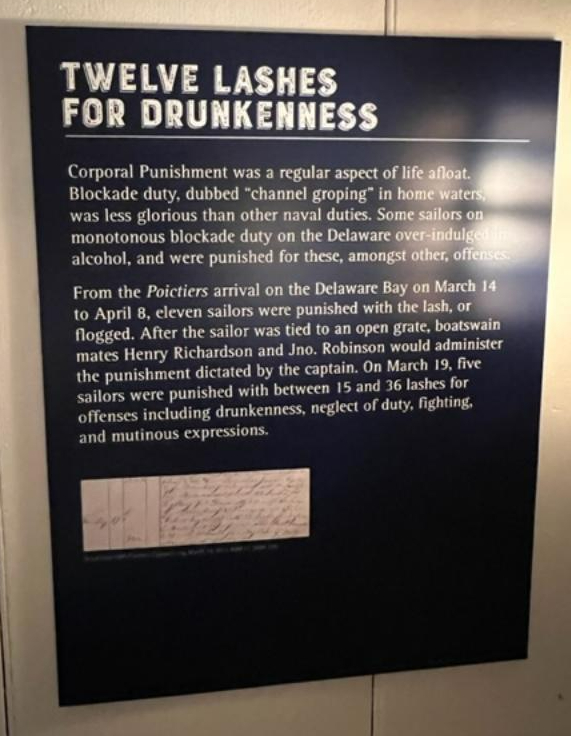
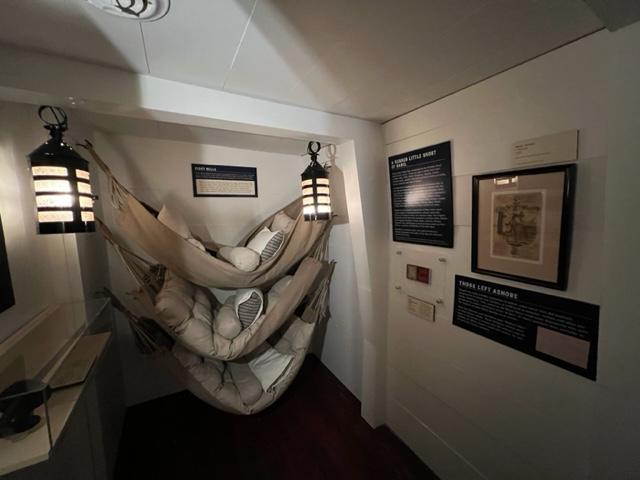
The museum had a display about life at sea. This included the bunking of sailors in the hull at that time. This was interesting look at life at that time.

The signs

The signs

Life on the ship

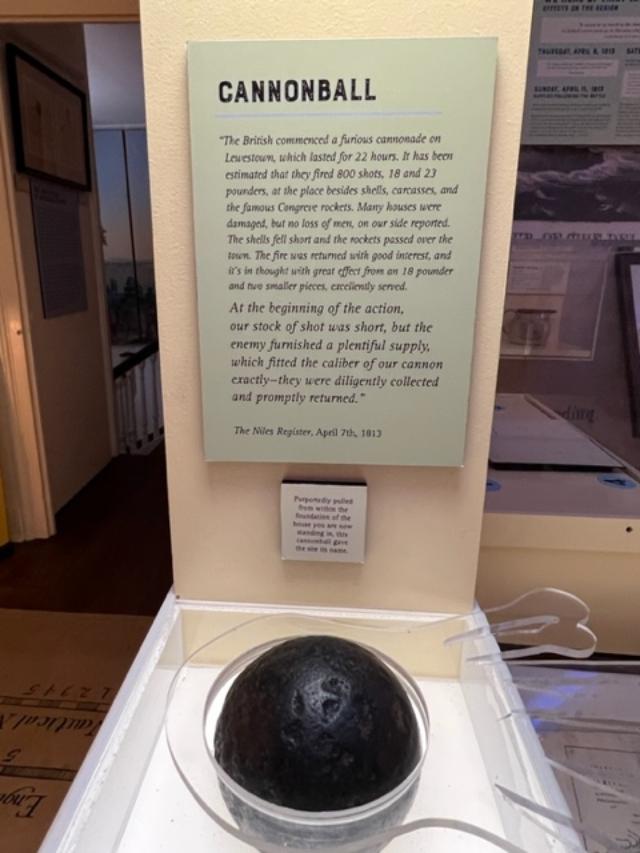
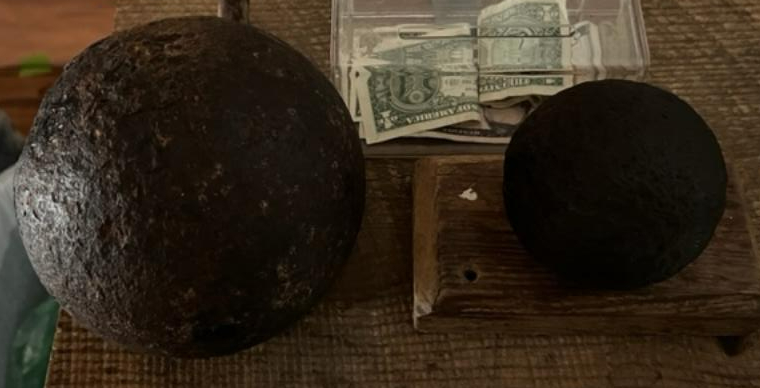
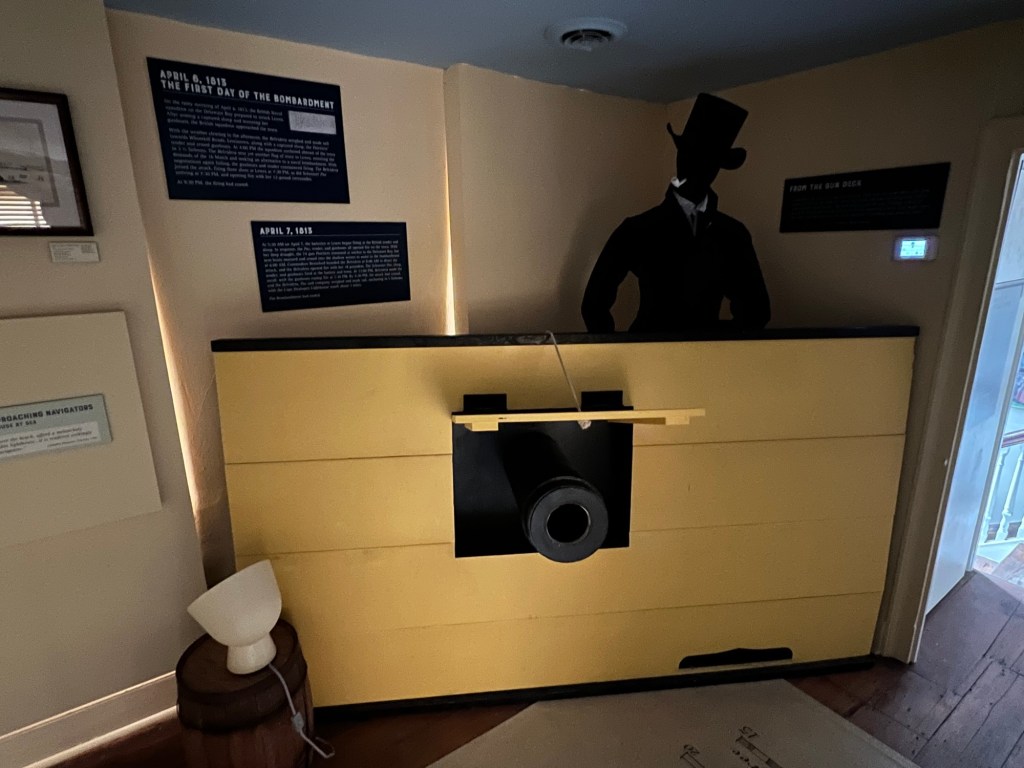
Still the most famous pieces in the museum is the cannonballs.

The Cannonball that hit the house

Cannonballs dredged from the canal.

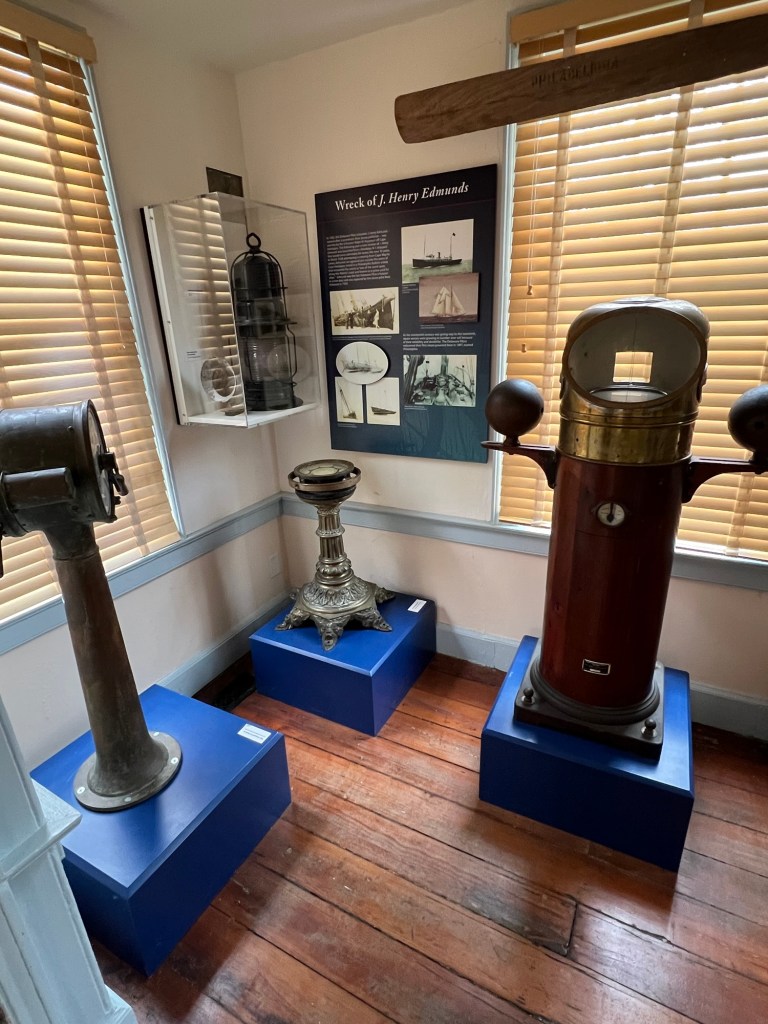
The second floor ‘Henry Edmonds’ artifacts

Wreckage artifacts on the second floor

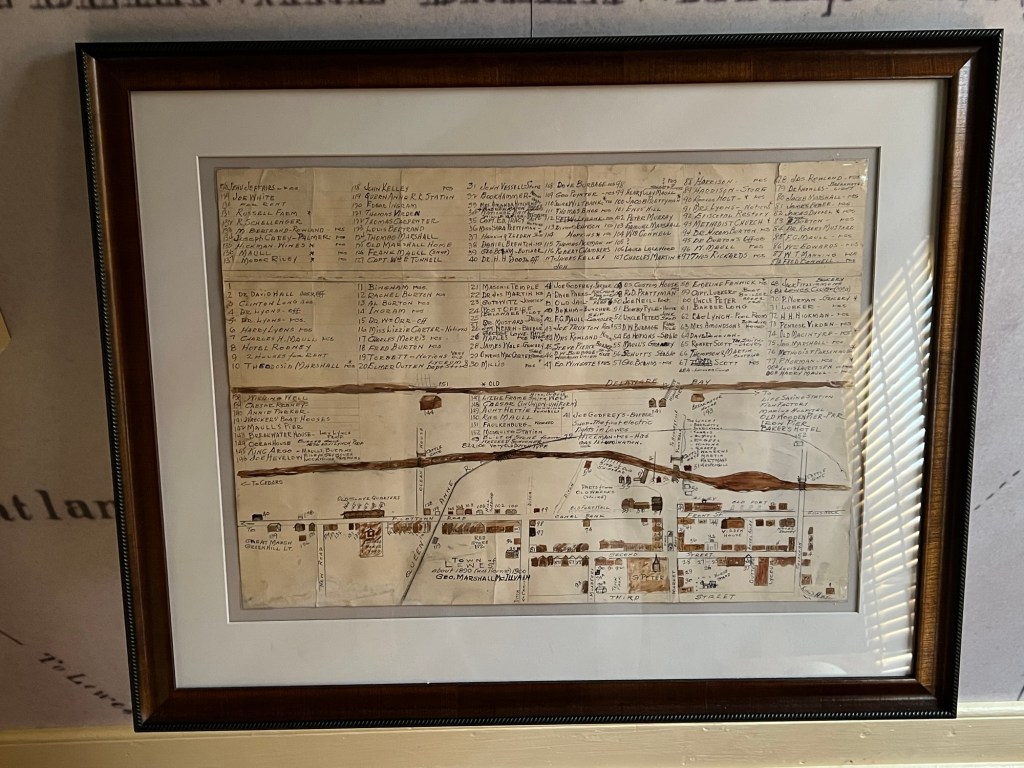
Downtown Lewes map

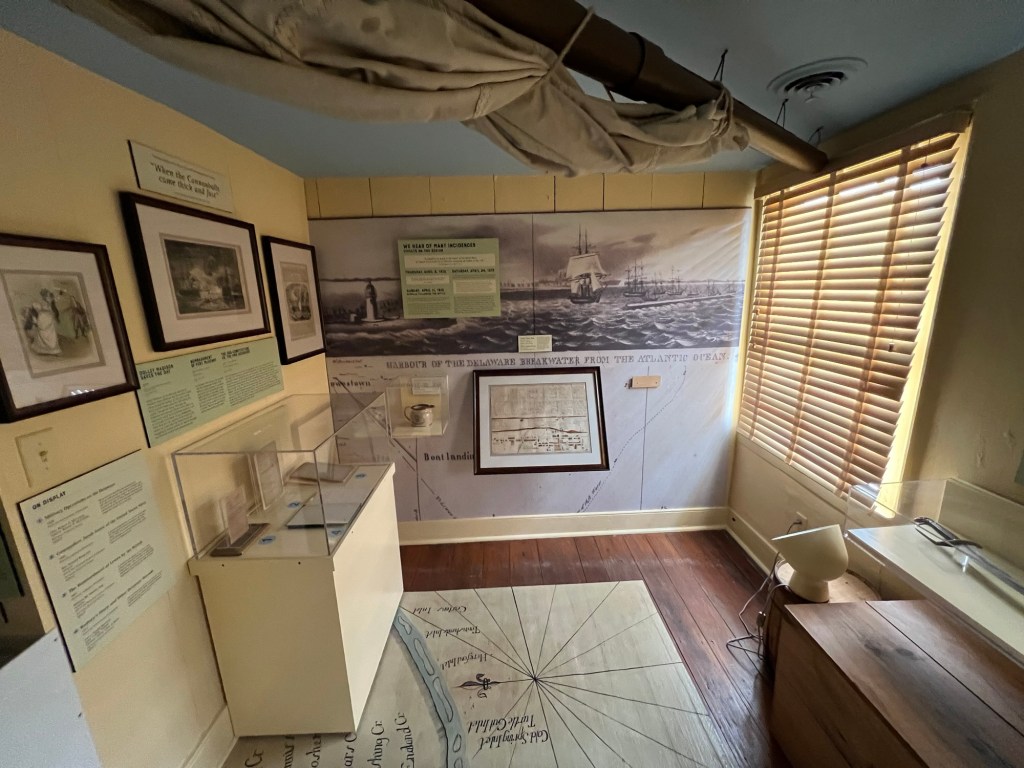
Ship attacks

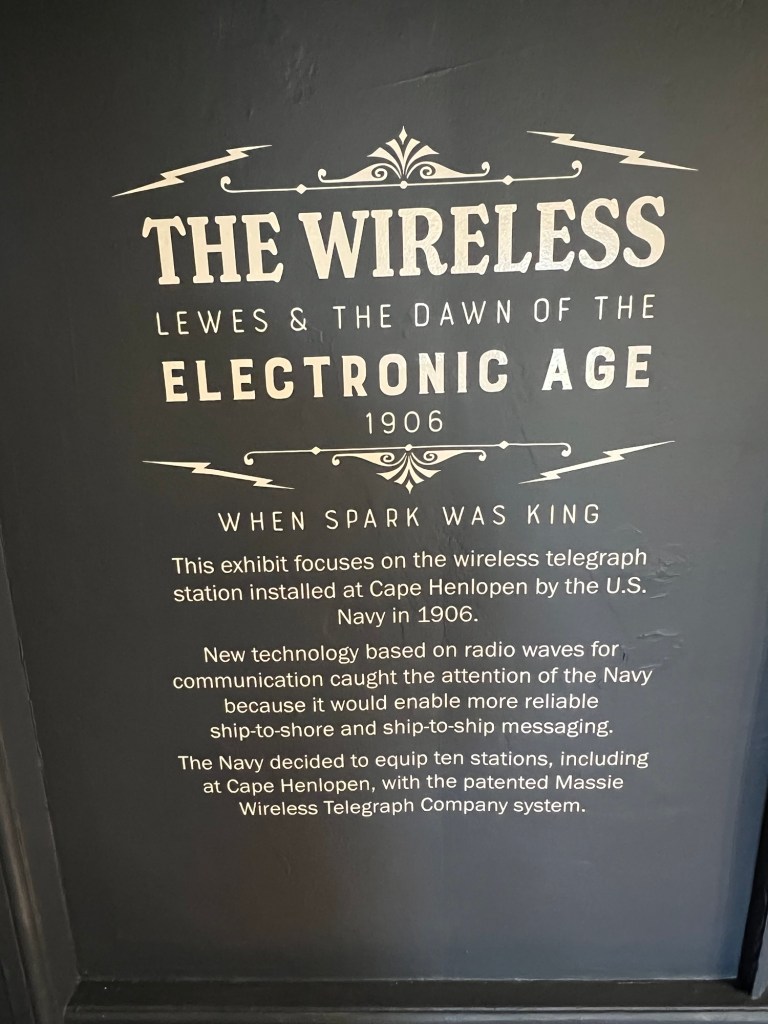
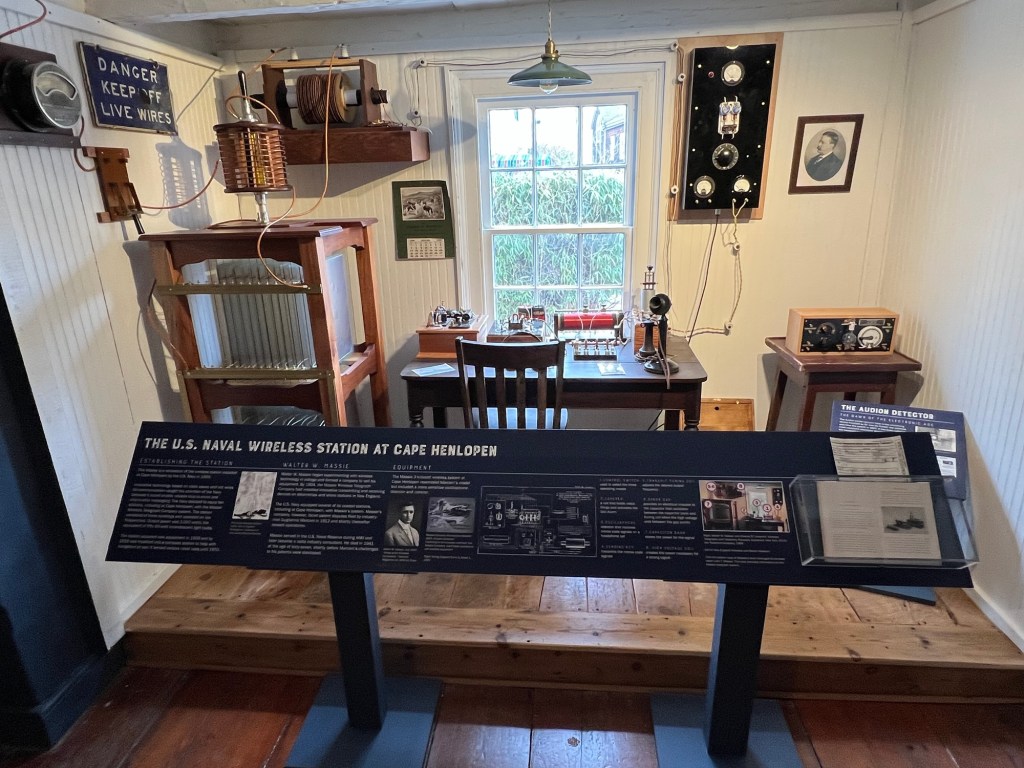
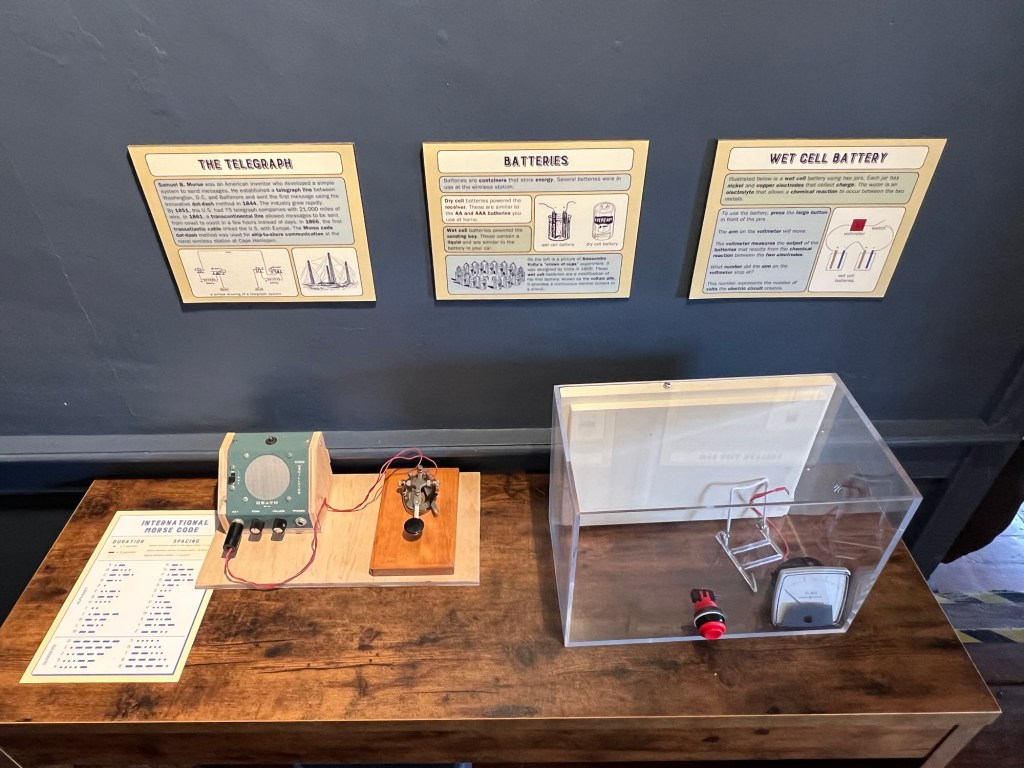
The New “Wireless Age” exhibition

The ‘Wireless Age’ exhibition

The ‘Wireless Age’ exhibition

The ‘Wireless Age’ exhibition

The Children’s exhibition for the ‘Wireless Age’

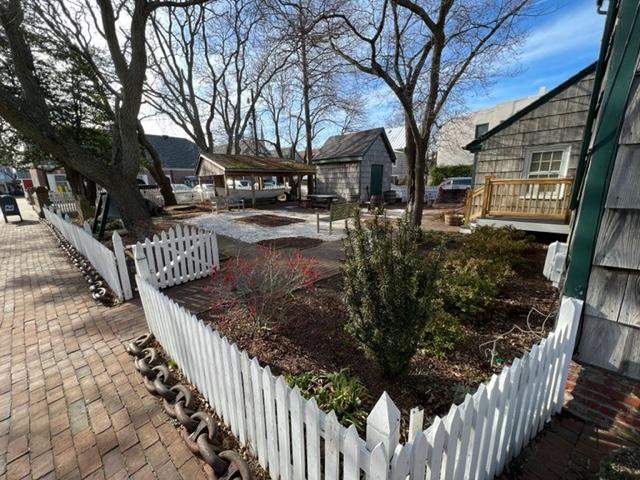
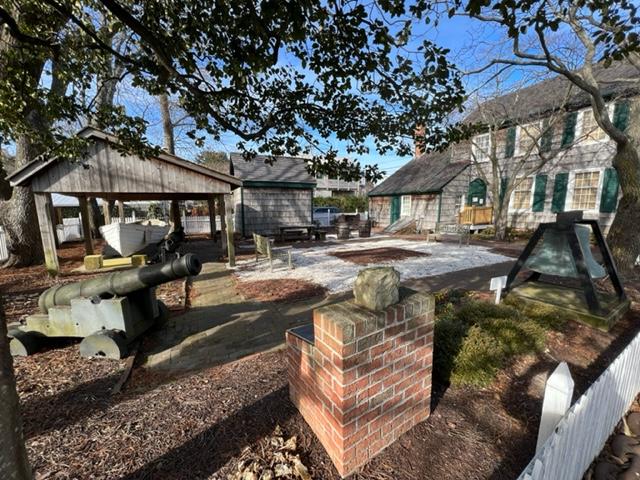
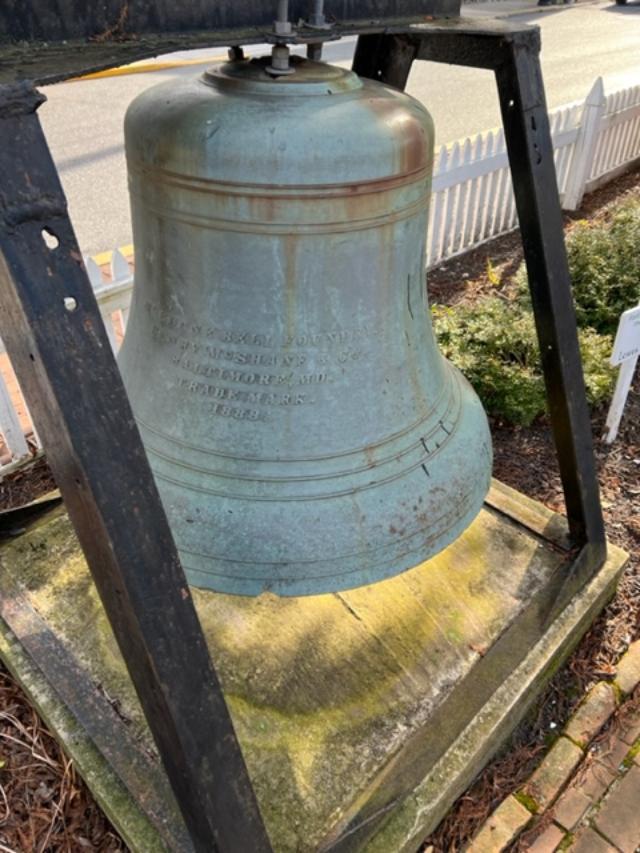
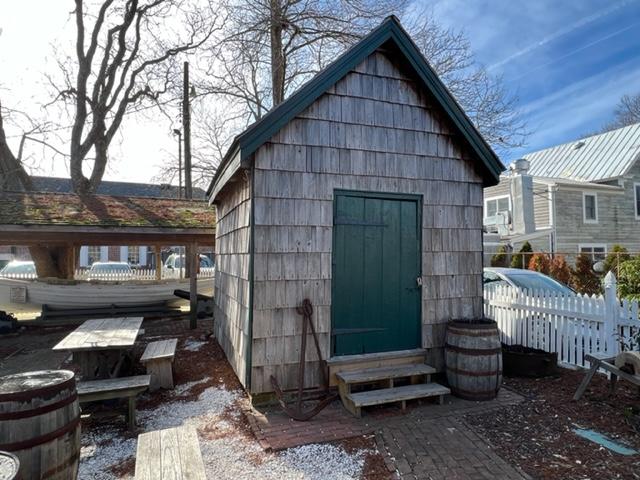
The Grounds of the Lewes Maritime Museum at the Cannonball House have all sorts of artifacts on the outside of the property include bells, boats and buildings. Take time during the season to walk the grounds and look over all the items in the garden.

The museum courtyard

The museum courtyard

The bell

The ice house in the courtyard

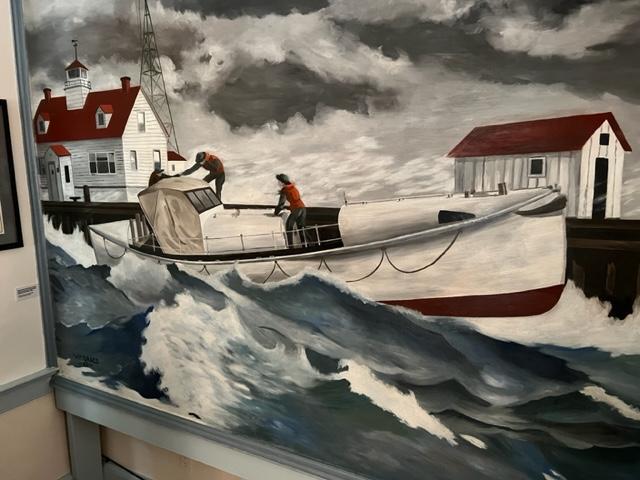
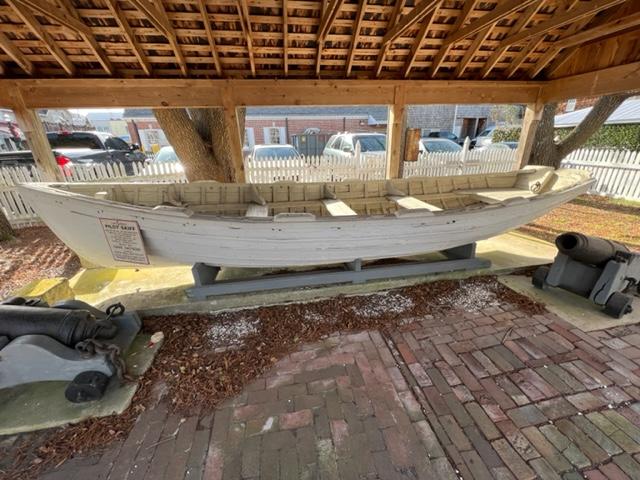
The Rescue Boat

One night they met on Pilottown Road and decided something needed to be done right then and there – at that moment The Lewes Historical Society was formed. Members were sought, funds raised, and the property was acquired – the historic Burton-Ingram House on Second Street. Two years later in 1963, the young historical society had raised the money to purchase the Rowland House, also commonly called the Cannonball House in honor of its scars from the infamous Bombardment of Lewes (Lewes Historical Society website).

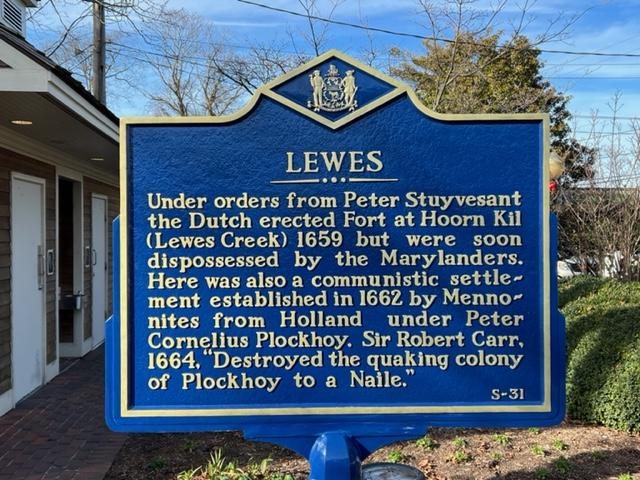
The Historical Marker of Lewes, DE

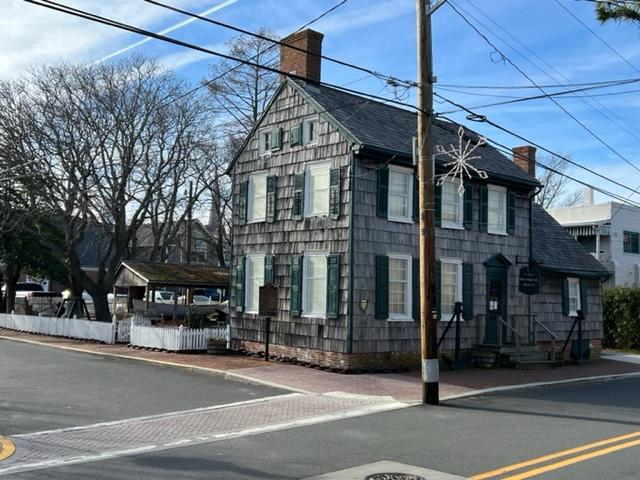
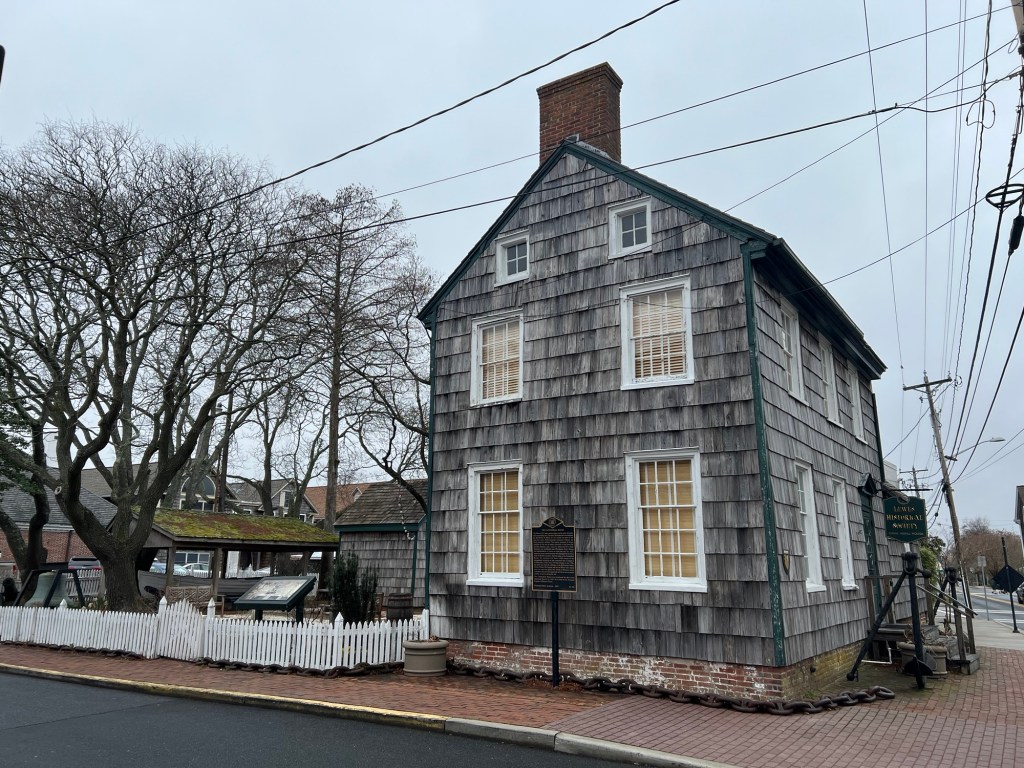
The museum in the early Spring

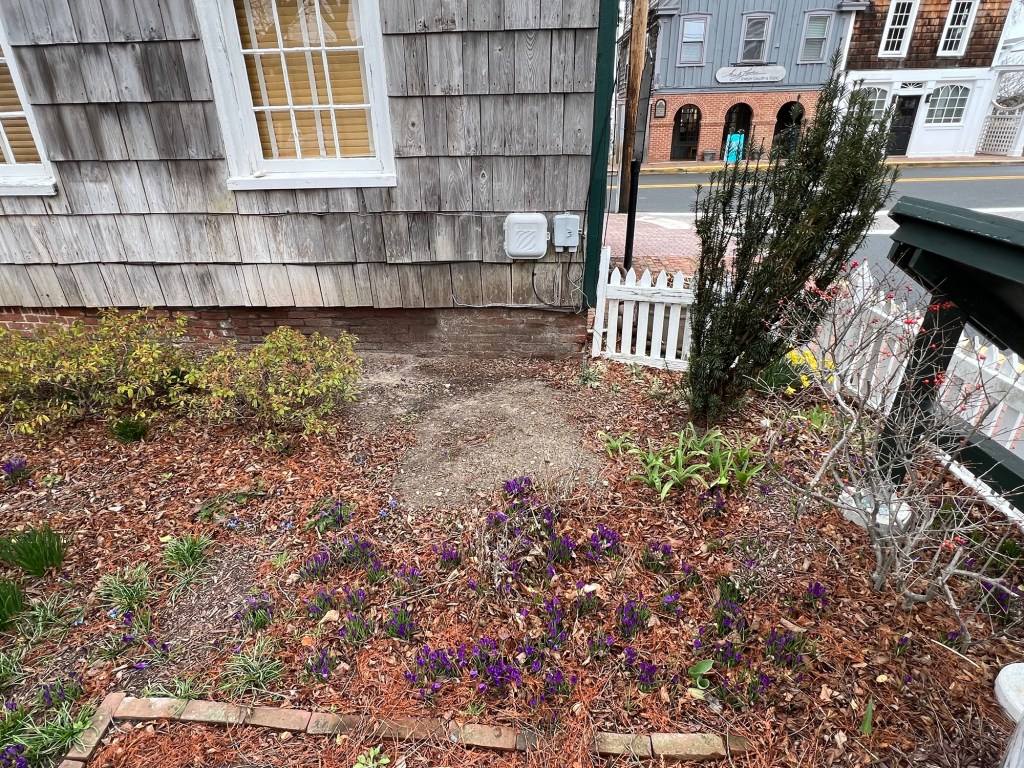
The grounds in the early Spring

The Donald & Barbara Tober Exhibit Room/Conrad N. Hilton Library-The Culinary Institute of America Campus 1946 Campus Drive                                                               Hyde Park, NY 12538

The Donald & Barbara Tober Exhibit Room/Conrad N. Hilton Library-The Culinary Institute of America Campus 1946 Campus Drive Hyde Park, NY 12538

The Donald & Barbara Tober Exhibition Room/Conrad N. Hilton Library-The Culinary Institute of America Campus

1946 Campus Drive

Hyde Park, NY 12538

(845) 452-9600

https://library.culinary.edu/ciaexhibits

Open: When the library is open. Please check the website.

Admission: Free

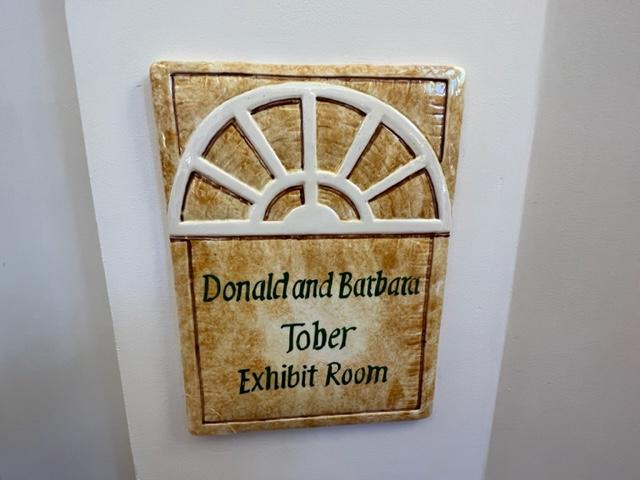
The Donald & Barbara Tober Exhibit Room plaque inside the Conrad N. Hilton Library hallway

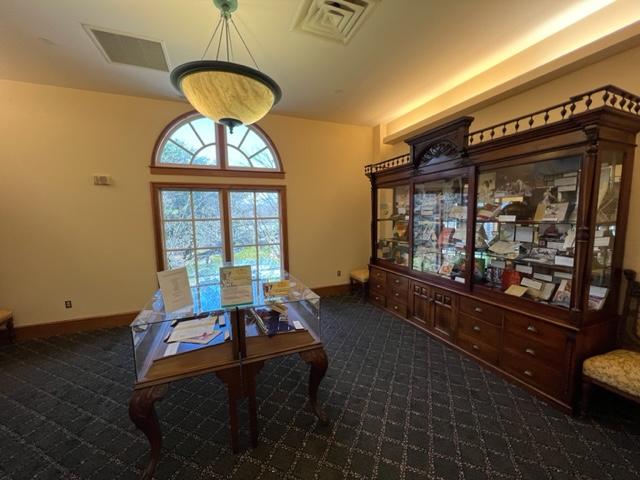
The Donald and Barbara Tober Exhibit Room is on the main floor of the Conrad N. Hilton Library. The exhibit room is open to the CIA community and to the public. The exhibition room has ongoing displays of culinary themed exhibits that cover topics involving the culinary world and food service. This is run by both the college and by students. It is not quite a museum but more of a display room of artifacts that are held by the Conrad N. Hilton Library and its archives.

The Hallway exhibition

The Hallway exhibition

The two display cases are in the main entrance of the Conrad N. Hilton Library and hold more of the exhibition. These are displays of industry pamphlets and flyers plus menus and equipment.

The library exhibition of China pieces

The Menu Collection:

The Tober Room Exhibition space

The CIA’s menu collection began in the small library at the New Haven campus and was used as a reference tool by the culinary students.  By 1978, then in Hyde Park, the library had amassed a file of over 3,000 menus which were openly available to students and used regularly in their studies.  These menus still remain in the collection and are known as the “Original CIA Menu Collection.” They provided the foundation for the growing menu collection that was later added to by many prominent menu collectors and friends of the CIA.

Seth Bradford and Edward S. Dewey Menu Collection

Roland Chenus Menu Collection

Craig Claiborne Menu Collection

Roy Andries de Groot Menu Collection

This collection of nearly 800 menus, acquired by the CIA in 1984, were collected by the culinary writer and critic, Baron Roy Andries de Groot (1910-1983), during the course of editing his column, “A Moveable Feast,” for Esquire Magazine. The menus date primarily from the 1960s and 1970s and are from major U.S. cities (many from New York City), as well as Canada, France, Belgium, Spain, Puerto Rico, Hong Kong, and Thailand. Some menus include supplemental materials, as well as annotations by de Groot or his staff noting the date of visit, names of other guests, the chef’s name, and his evaluations and/or ratings.

Herbert Ernest Menu Collection

In 1987, Herbert Ernest donated to the CIA over 300 menus collected by his father, Semy Ernest. The menus date from 1889-1977 and include menus from restaurants and clubs in New York City, Boston, Indianapolis, Los Angeles, and San Francisco; international menus from France and Germany; and several menus from on board the Santa Magdalena ocean liner. This collection is rich in pre-1920 menus.

Greenebaum Menu Collection

The Greenebaum Menu Collection was donated to the CIA by Henry Greenebaum in 1989.  Greenebaum’s father, Michael H. Greenebaum, started the collection and it was continued by his two sons, Henry and Richard. It includes menus from 1905-1988, many international and many from railroads and ships.  Several menus are signed by the chef or proprietor.

Auguste Guyet Menu Collection

Donated to the CIA in 1989, this personal menu collection from Chef Auguste Guyet includes over 200 menus, mostly from France. The earliest are a Restaurant Julien special event menu and a Waldorf-Astoria wine list for the 27th annual banquet of the Hotel Association of New York City, both from 1906.

Bruce P. Jeffer Menu Collection

Bruce P. Jeffer donated his collection of 2,500 menus to the CIA in 2013. Jeffer, a California lawyer and wine connoisseur, began collecting menus during his travels as a child. The menus date from 1950s-1990s. Much of the collection is international menus from over 70 countries on 6 continents. A selection of these were featured in an exhibit in the Conrad N. Hilton Library in August 2013.

George Lang Menu Collection

George Lang, restaurateur and author, donated his personal collection of over 3,000 menus to the CIA in 1989. Many of these menus are international, including often under-represented countries such as Australia, Cuba, Hong Kong, Hungary and the Philippines. Although most menus date from 1950s-1970s, the earliest two menus are from Hotel Knickerbocker in New York City, 1907.

Vinnie Oakes Menu Collection

In 2000, Vinne Oakes donated his collection of over 200 menus to the CIA. The collection is strong in menus from restaurants in Nevada, as well as ship menus from the 1960s.

John Edward Oxley Menu Collection

Chapman S. Root Menu Collection

The Chapman S. Root Menu Collection of nearly 10,000 menus was donated by The Root Company in 2000. The largest collection recieved so far, it includes menus from almost every state (strongest in California, Florida and Nevada), and several foreign countries. The bulk of the menus date from 1960s-1980s, although the earliest are from 1878. Over 3,000 U.S. Railroad menus are an important highlight of the collection.

Chapman S. Root’s grandfather, Chapman J. Root, designed the classic green, ridged Coca-Cola bottle in 1915. At his grandfather’s death in 1945, Chapman S. Root inherited Associated Coca-Cola Bottling Plants, Inc. He traveled a great deal, mostly by car or train, and amassed an enormous menu collection. Friends, knowing of his interest, also contributed to his collection.

Jacob Rosenthal Menu Collection

Jacob Rosenthal, former president of the Culinary Institute of America, donated nearly 500 menus to the CIA menu collection. The bulk of these menus are from food and wine societies in the 1960s-1970s, including Confrerie des Chevaliers du Tastevin, Confrerie de la Chaine des Rotisseurs, and the International Food & Wine Society.  Also of note are several international menus from the 1930s-1950s.

Smiley Family Menu Collection

The Smiley Family Menu Collection was donated to the CIA in 1982 and 1993, a gift of Mohonk Mountain House. (The Smiley family are the founders and proprieters of the Mohonk Mountain House in upstate New York.) Three generations of Smileys traveled the world, by land and by sea, and collected menus along the way. This collection is rich in pre-1920 menus; menus from historically world-renowned resorts including Laurel-in-the-Pines (Lakewood, N.J.), Haverford Court (Pennsylvania) and Hotel Colonial and Royal Vicotoria Hotel (Nassau, Bahamas); beautifully-illustrated ship menus; and a selection of early menus from Mohonk Mountain House.
Lois Westfall Menu Collection

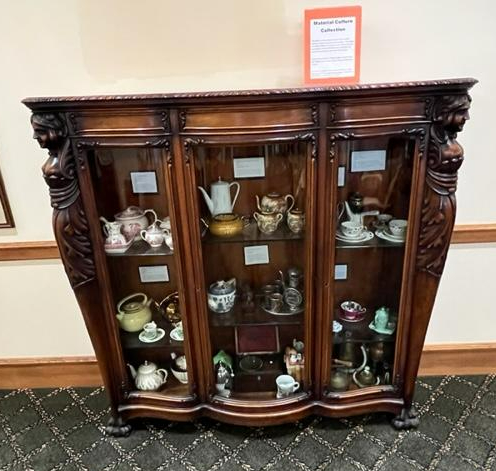
The display case in the main library showcases the collection of China and Silverware and decorative objects that are in the collection.

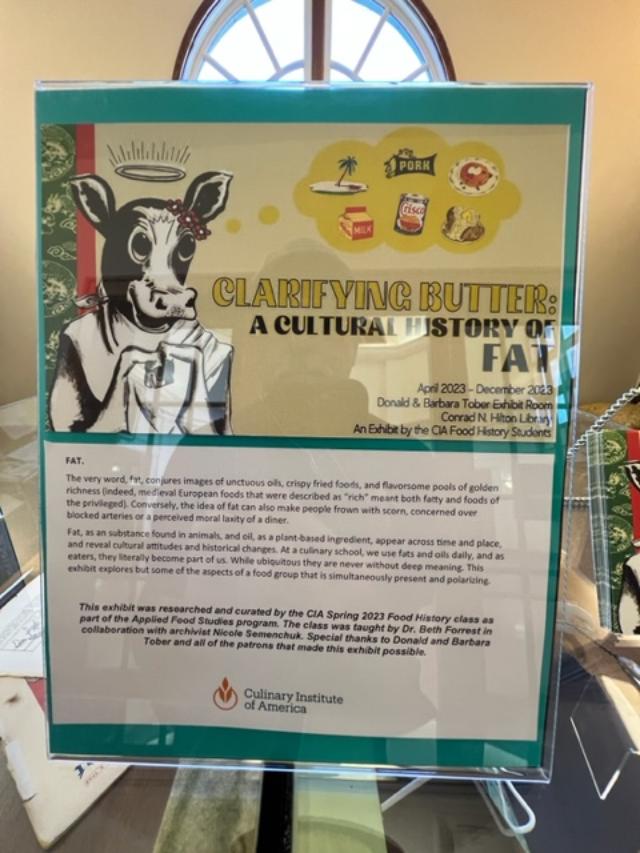
The Tober Room exhibition on “Fat” at the Conrad N. Hilton Library on the CIA campus

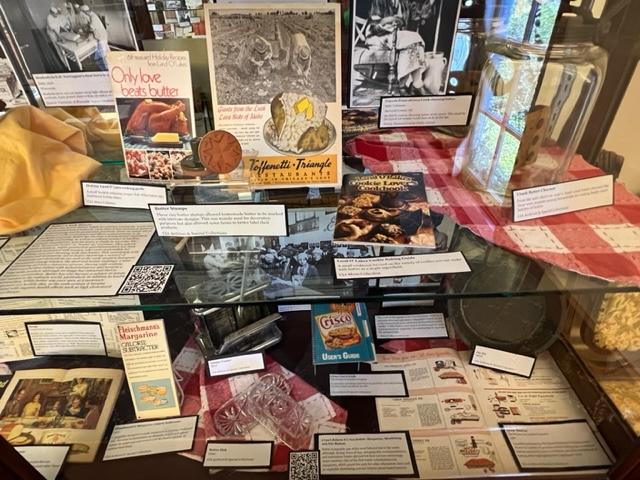
The exhibition that they were showing when I came up to visit was “Clarifying Butter: A Cultural History of Fat”. There were a lot of recipes, objects and equipment to make butter, understand the use of fats in cooking, recipes, menus and corporate information.
The description of the exhibition:

FAT. The very word, fat, conjures images of unctuous oils, crispy fried foods and flavorsome pools of golden richness (indeed, medieval European foods that were described as “rich” meant both fatty and foods of the privileged). Conversely, the idea of fat can also make people frown with scorn, concerned over blocked arteries or a perceived moral laxity of a diner.

Fat. as an substance found in animals and oil, as a plant based ingredient, appear across time and place and reveal cultural attitudes and historical changes. At a culinary school, we use fats and oils daily and as eaters, they literally become part of us. While ubiquitous they are never without deep meaning. This exhibit explores but some of the aspects of a food group that is simultaneously present and polarizing.
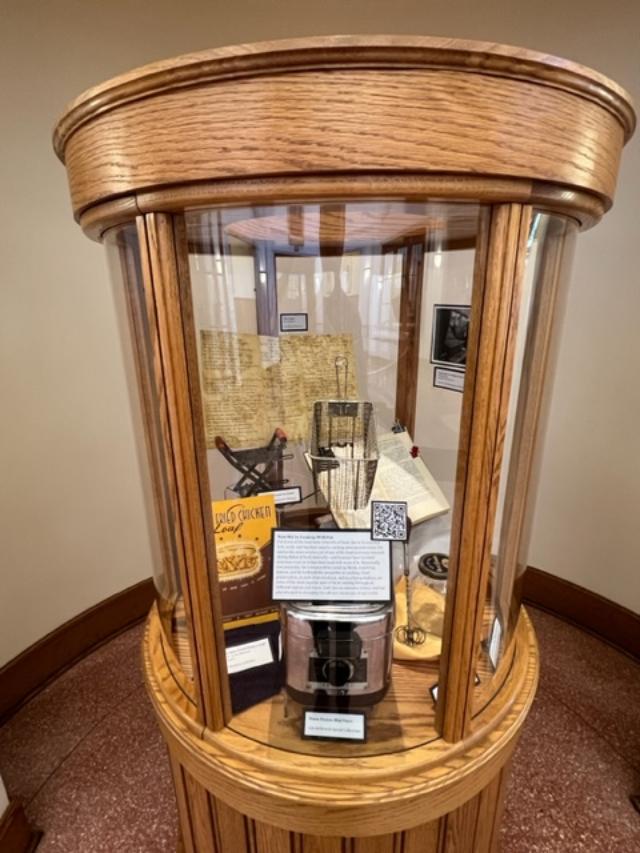
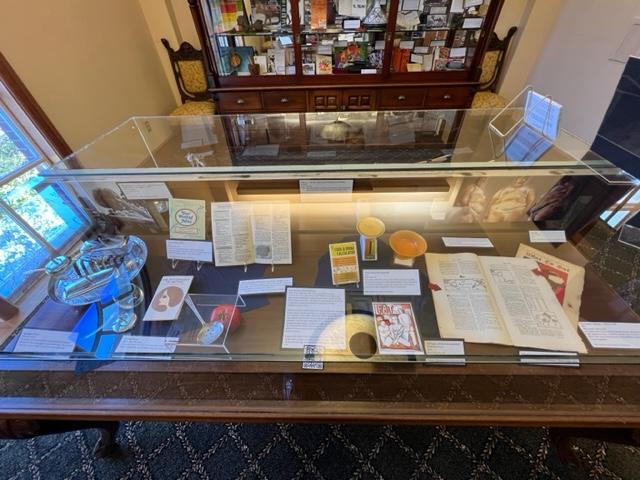
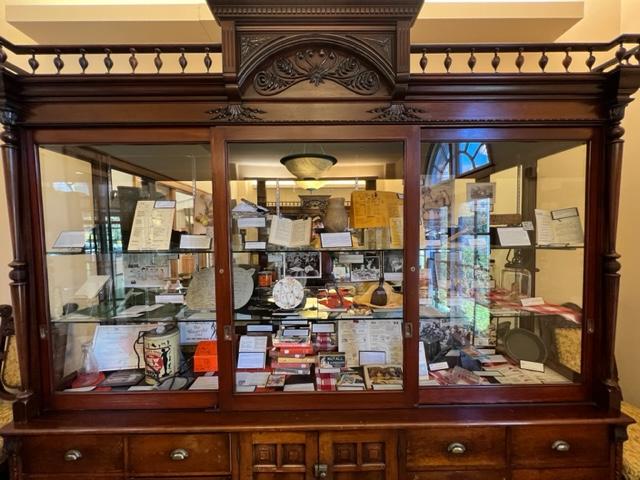
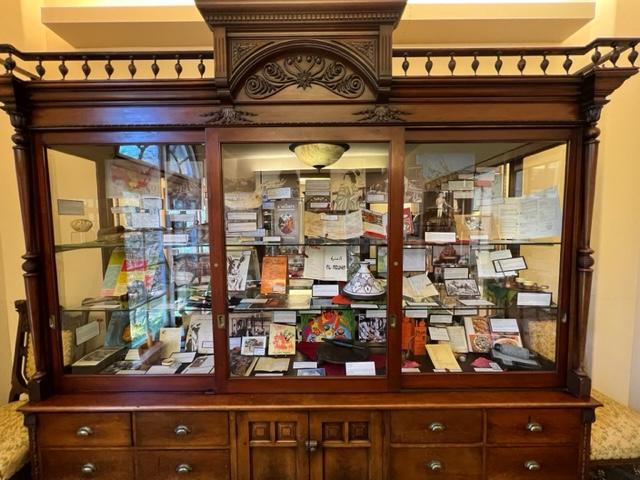
Both the two display cases and the middle display case were set with all sorts of information through the ages of the subject of fat, fried foods and items used to produce and make them.
The Display Cases in the Tober Room

The Display Cases in the Tober Room

The exhibitions here are very detailed and display over a hundred years of culinary arts research. The displays are revolving every quarter. The room is off to the right of the entrance to the library and is open for free to the public. It is a wonderful way to learn the aspects of food than in one of the best culinary libraries in the world.

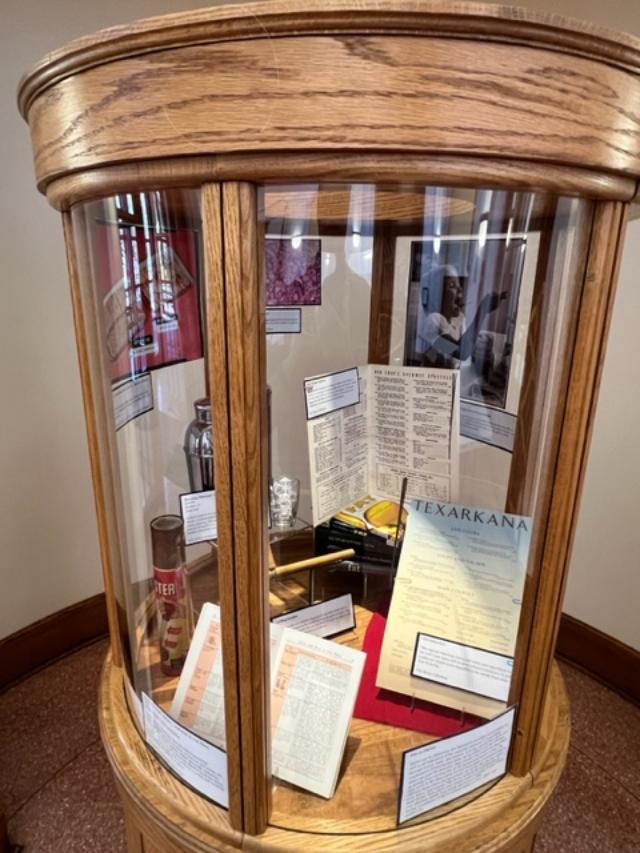
A close up shot of the display case.

Day Two Hundred and Sixty-Two: Traveling to the Brooklyn Botanic Garden to see the Crocuses on the Hill, Snowdrops, Ironweed flowers and other flowering plants, Daffodil Hill, the Magnolia Plaza, the Cherry Blossoms, the Cranford Rose Garden and the Lotus Pools                                     March 30th, 2023 (again in March 12th & 22nd,  May 29th, August 6th, 2024 and May 10th, 2025)

Day Two Hundred and Sixty-Two: Traveling to the Brooklyn Botanic Garden to see the Crocuses on the Hill, Snowdrops, Ironweed flowers and other flowering plants, Daffodil Hill, the Magnolia Plaza, the Cherry Blossoms, the Cranford Rose Garden and the Lotus Pools March 30th, 2023 (again in March 12th & 22nd, May 29th, August 6th, 2024 and May 10th, 2025)

The entrance to the gardens in the Summer of 2022

If you want to see some of the most beautiful sites in New York City during the Spring months when Mother Nature truly works her magic then I would suggest going to the Brooklyn Botanic Garden to see Daffodil Hill and Magnolia Plaza.

The sign when entering Daffodil Hill in the Brooklyn Botanic Gardens

https://www.bbg.org/

My review on TripAdvisor:

https://www.tripadvisor.com/ShowUserReviews-g60827-d103900-r884200309-Brooklyn_Botanic_Garden-Brooklyn_New_York.html?m=19905

My review on VisitingaMuseum.com:

https://wordpress.com/post/visitingamuseum.com/2785

This is when everything is in full bloom during the early Spring. There is nothing like it and it is so breathtaking with a quiet elegance. On this clear and sunny Thursday afternoon, the gardens were quiet so I had plenty of time to take pictures and enjoy the beautiful views.

I finally got the gardens in the early Spring to see the crocuses, the Snowdrops and the Ironweed flowers that come in the early Spring just as the Daffodils were just coming out. These sensitive flowers are only in bloom a short time and I wanted to see them. They are just beautiful when you see them up close.

The Garden was ablaze with the colors of almost a thousand purple crocuses that lined the hills on the Prospect Park side of the lawns in 2024. Beautiful purple and while colors were in full bloom and Mother Nature shined in the COVID era with all of us socially distanced but still enjoying the park.

Crocus Hills ablaze in purple in 2024

The purple crocuses in full bloom in 2024.

The beautiful purple crocuses in full bloom.

While I was taking pictures of the crocuses, I walked around the gardens and came across the Snowdrops and the Ironweed flowers were also in bloom. These sensitive flowers are only in bloom for just about two weeks. To see them in the gardens in the late Winter is a real treat. They sometimes are in bloom in early and you have to see them quickly before they disappear in the ground.

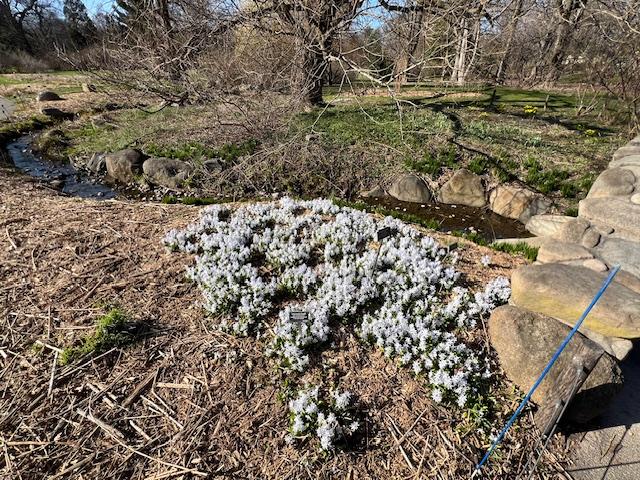
The Snowdrops in full bloom in the gardens in 2024.

The Snowdrops up close.

The Ironweed just as beautiful. To see these graceful flowers in bloom are a real treat.

The Ironweed flowers in bloom right by the stream.

The Ironweed flowers in full bloom.

An Azalea that was early blooming in the garden in 2024.

Daffodil Hill at the Brooklyn Botanic Garden

Hundreds of Trumpet Daffodils are in bloom on a hill just off the Japanese Gardens flanked by hundred-year-old trees and it just plays into the backdrop of the greens and browns of the trees and lawns. I can’t tell you on a beautiful sunny day how breathtaking it is just to sit and admire these elegant flowers. It really is a site to see.

Daffodil Hill in full bloom

I love the way these hundreds of flowers make such a beautiful statement and there is such a burst of colors between the yellows and oranges of the daffodil flowers. This only lasts for about two weeks and then the flowers hibernate again.

The side view of Daffodil Hill from the walkway

Daffodil Hill just off the Japanese Gardens

Daffodil Hill is right next to the Magnolia Plaza that was also in peak bloom when I was at the gardens. The trees of the Magnolia Plaza bloom the last week of March and these delicate trees petals do not last more than a week. When I got close enough to them to take pictures, I noticed that some of them were starting to curl already.

The area between Magnolia Plaza and Daffodil Hill

Not all the trees were in bloom yet but these delicate trees are very sensitive to the weather and I have noticed that the petals don’t last as long. Most of the trees were in full bloom but there was not much a smell to the trees. Still everyone was taking pictures in every direction between the Magnolia trees and Daffodil flowers.

The Magnolia Plaza in full bloom

The sign in the Magnolia Plaza

The edge of the Magnolia Plaza

The pathways in the afternoon

The Magnolia trees make such a bold and colorful statement

The array of colors in the Magnolia Plaza

The Magnolia Plaza facing Daffodil Hill in the distance

The Sundial in the middle of the Magnolia Plaza

After taking dozens of pictures of the Magnolia Plaza and Daffodil Hill, I walked over to the Rock Garden. There were not many flowers in bloom there yet as they come out later in the month. There was still an array of daffodils and a few crocuses still in bloom. The Rock Garden was quiet and perfect to walk around in as I had this part of the garden to myself.

The Rock Garden in the early Spring

The Rock Garden in the early afternoon

I headed to the northern part of the garden and visited the Japanese Gardens, where the cherry blooms started to bloom. These graciously landscaped gardens were created in the traditional Japanese form with a combination of trees and shrubs to balance the garden.

Entering the Japanese gardens from the path

The Japanese Gardens pool with traditional buildings

The Japanese Gardens in the early Spring

Returning at the height of the Cherry Blooms was just breathtaking. This view only rivals the beauty of Newark, NJ and Washington DC.

The magnificent Cherry Blossom lawn in April 2024.

People relaxing and enjoying the beautiful afternoon under the Cherry trees.

The beauty of the trees.

The Cherry Blossom at peak form.

I came back after the Cherry Blossoms had fully bloomed and were now gone and the Bluebells were in full bloom. It had been a cold and rainy Spring and it had been miserable to be outside. Not on the May weekend in 2025. The weather was spectacular and sunny. The Gardens were packed on Mother’s Day weekend and these beautiful blue flowers were the star of the day.

The sign welcoming you to the gardens

The flowers were just amazing

The seas of purple and green

They have really expanded their space over the years

The flowers put on quite a show that day

There is a real beauty to the gardens

The flowers were at the peak of bloom

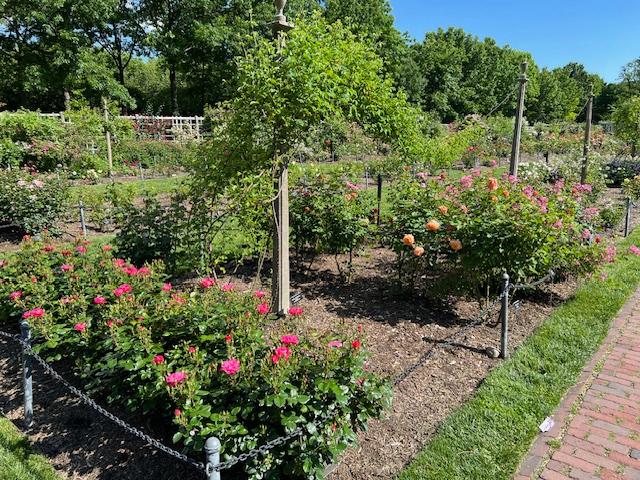
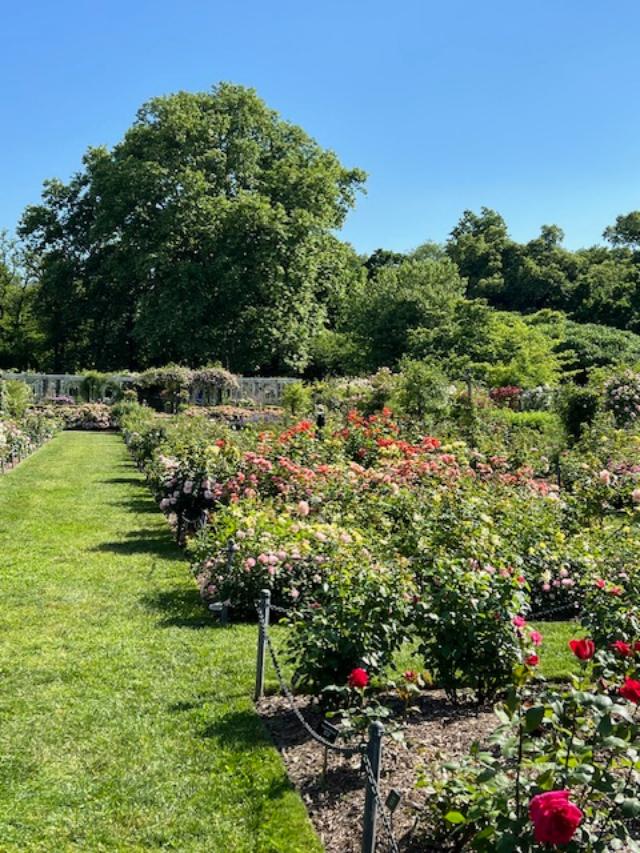
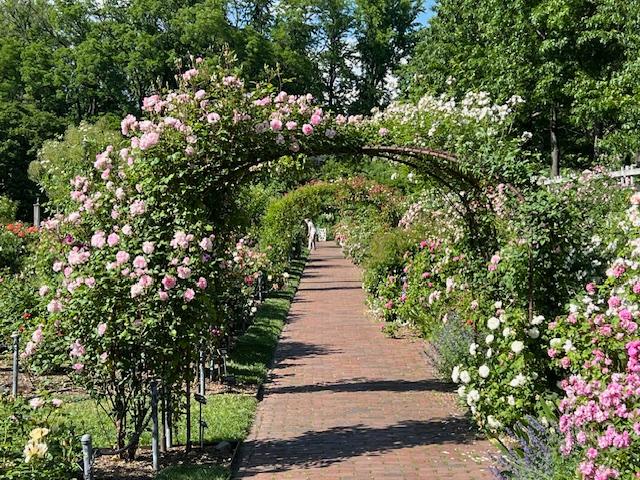
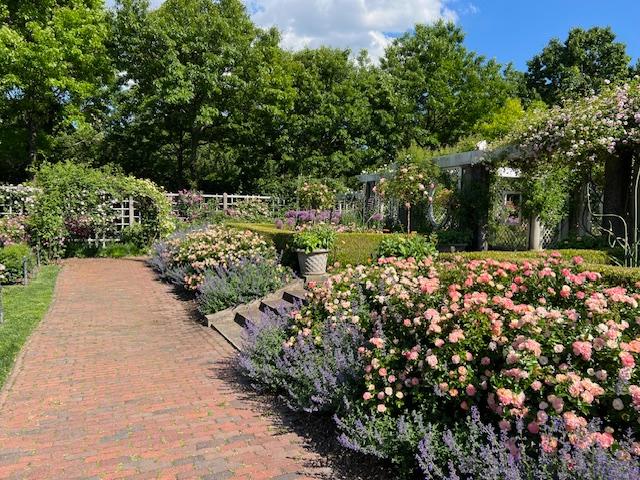
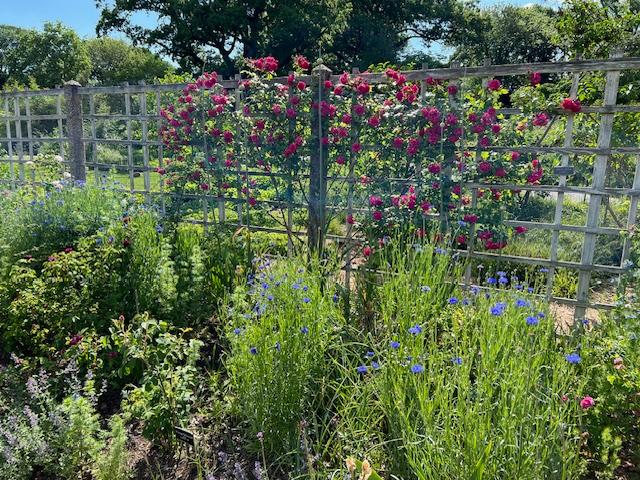
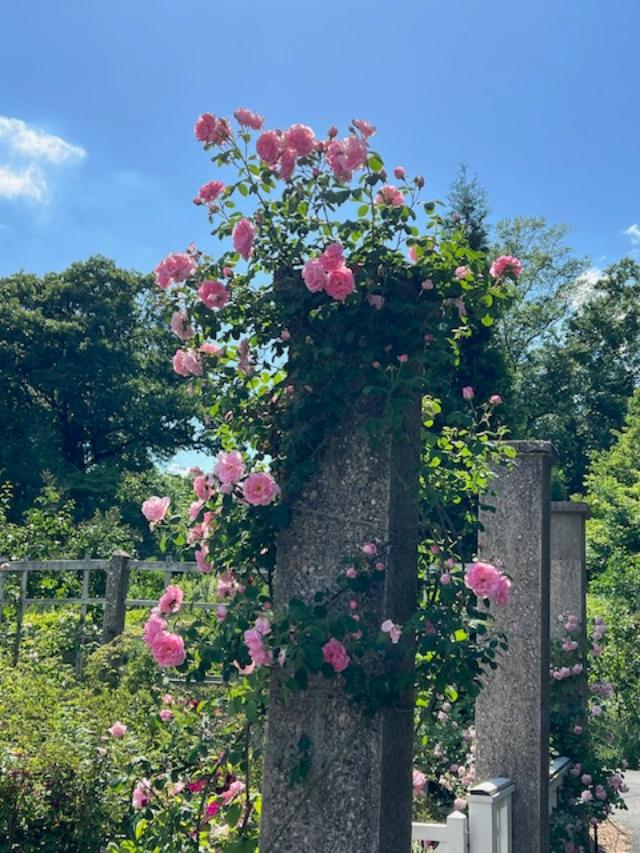
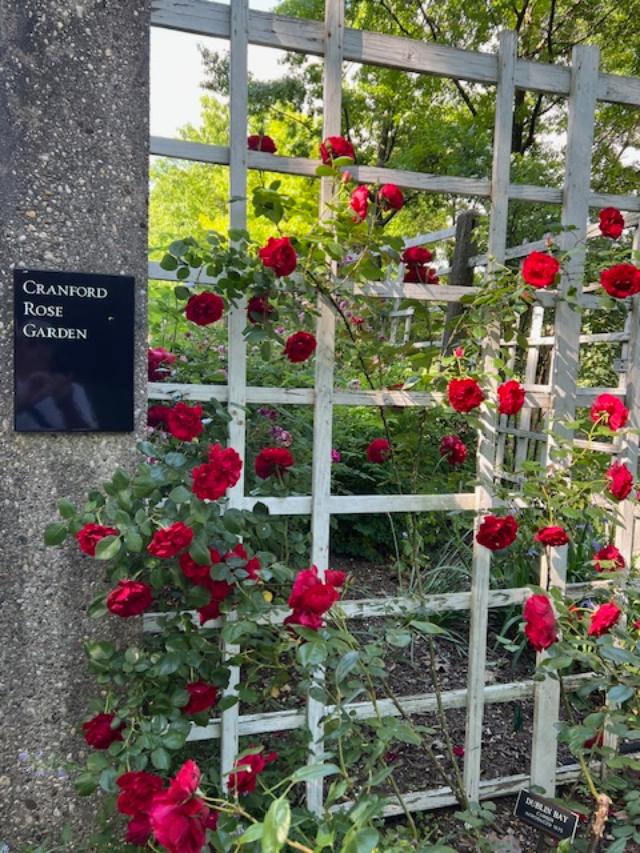
The Cranford Rose Garden was in full bloom two and a weeks before the Annual “Rose Night” that celebrates the blooms of the roses in the gardens. By the time the event would happen, most of the blossoms would be gone. So I visited the gardens again in late May after college had ended and I was in between classes. The roses were glorious to say the least and the colors, smells and the way they grew all over the trellises and fences made quite the effect. I was lucky that I went during a week day and the gardens were quiet.

There is nothing like the Cranford Rose Garden when it is in full bloom. The smells and colors are fantastic and the beauty is something timed by Mother Nature. The roses grow at different stages and it looks so gorgeous during the late Spring.

Entering the Rose Gardens in the Spring of 2024

The front of the gardens in bloom

The front beds of the Rose Garden

The front of the Cranford Rose Garden in full bloom

The trellises in full bloom

The trellis in full bloom

Walking along the paths to the back part of the gardens.

The back part of the gardens

Roses along the trellises

Exiting the back of the gardens into the Cherry Blossom Lawn

The back entrance to the Cranford Rose Garden.

If you can get to the gardens in early June, I would suggest a special trip to see the roses. This special time of the year only lasts about three weeks and then like the rest of the flower displays in the gardens are gone until the next year. The gardens are now maturing for the summer months with lots of greenery and are still a nice place to relax and walk around or just sit and enjoy the views.

The Cherry Blossom Lawn after the cherry blooms are gone.

The flowers of the garden’s Marsh area.

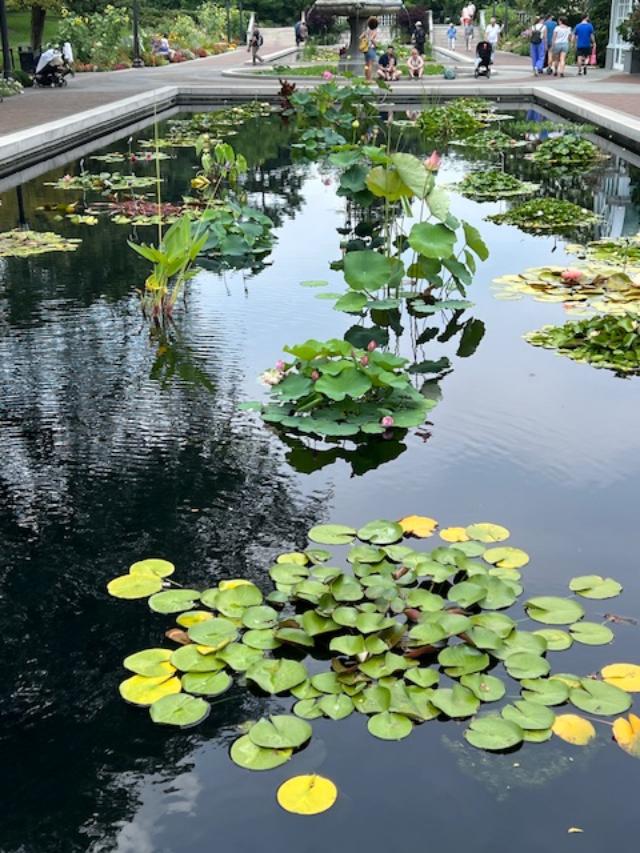
I came to the gardens in late July to see the Lotuses in the Lotus Pools when they were in bloom and when they are at their peak, they are so colorful and elegant. I now know why the Egyptians worshipped them.

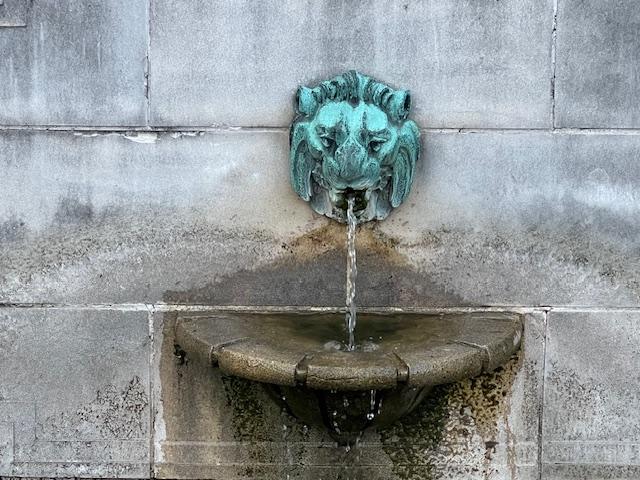
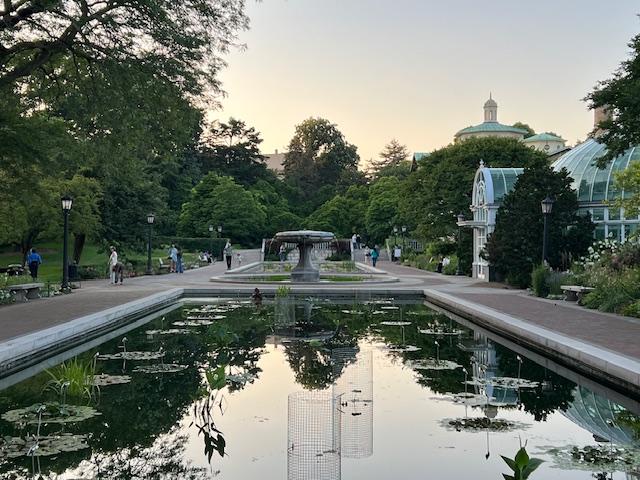
The Lion Fountain greets you as you enter the pools

The video on the fountain:

The Lotus Pools

The Lotus Pools

The Lotus Pools

The Yellow Lotus in the pools

The Pink Lotus in the pools

The Cherry Blossom Fountain in bloom

The Cherry Blossom Fountain in bloom

Before I left the gardens for the afternoon, I stopped in the gift shop and looked around. They have some wonderful things to buy including a section of Brooklyn made products. There is also an array of plants, books and decorative products to buy.

The Gift Shop at the Brooklyn Botanic Gardens

The Brooklyn made products and book selection at the Brooklyn Botanic Gardens

After my visit to the gardens, I stopped at Bahn Mi Place at 824 Washington Avenue for lunch. I had one of their classic Bahn Mi sandwiches with ham and pate on a chewy hard roll. The food here is consistently good and their sandwiches are excellent.

Bahn Mi Place at 824 Washington Avenue

https://banhmiplacebklyn.com/

My review on TripAdvisor:

https://www.tripadvisor.com/Restaurant_Review-g60827-d8530850-Reviews-Banh_Mi_Place-Brooklyn_New_York.html?m=19905

My review on DiningonaShoeStringinNYC@Wordpress.com:

https://wordpress.com/post/diningonashoestringinnyc.wordpress.com/2187

The Classic Banh Mi sandwich at Banh Mi Place

You have to order the sandwich with a Medium spicy sauce. It adds to the complexity

The sandwiches are excellent. The flavors of the fresh vegetables and meats with the spicy sauce makes complex flavor. The bread is fresh and chewy and don’t be fooled by the size of the sandwich. It is larger than I thought and very filling. See my review on both TripAdvisor and DiningonaShoeStringinNYC@Wordpress.com.

I took my lunch and ate on the steps near the Brooklyn Museum and just enjoyed the afternoon. I people watched and enjoyed the cool, sunny weather. It was nice to escape from classes for a couple of hours and just relax and not think about school or work. It has again become a bit stressful between the two but I will handle everything.

I look forward to this time in the gardens and is one of the reasons why I keep my membership. I love to look at the hundreds of daffodils in bloom and watching as they sway in the wind and just want to look beautiful. It is the most amazing site every Spring.

You do have to time your visits so that you see all these beautiful flowers at each time.

Happy Easter!

Day Two-Hundred and Thirty-Two Visiting Washington DC for the Cherry Blossom Festival April 15th and 16th, 2022 (Again on April 2nd, 2023)

Day Two-Hundred and Thirty-Two Visiting Washington DC for the Cherry Blossom Festival April 15th and 16th, 2022 (Again on April 2nd, 2023)

Visiting the Cherry Blossoms and museums in Washington DC.

The Cherry Blossoms finally bloomed in 2023

jwatrel's avatarmywalkinmanhattan

Well after seven years of trying to get to DC for the Cherry Blossom Festival I finally got down to the city to get to the tidal basin to see the display. It looks like it will be eight years as almost all the cherry blossoms disappeared almost two weeks earlier. All the leaves were long gone and as I overheard another tourist say to a friend that she was disappointed that she had not known and most of the trees were bare.

The Tidal Basin in April 2023

The festival was in its second week and most of the trees had gone green. I found out later from the Internet that they peaked on March 21st and right after that we had all that rain. It probably knocked the petals off after that.

The festival ran through April 16th, 2022 (the peak of the blooms was March 21st)

View original post 6,628 more words