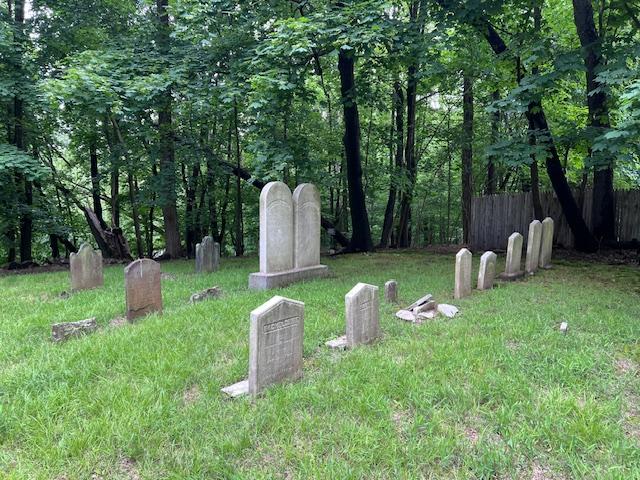
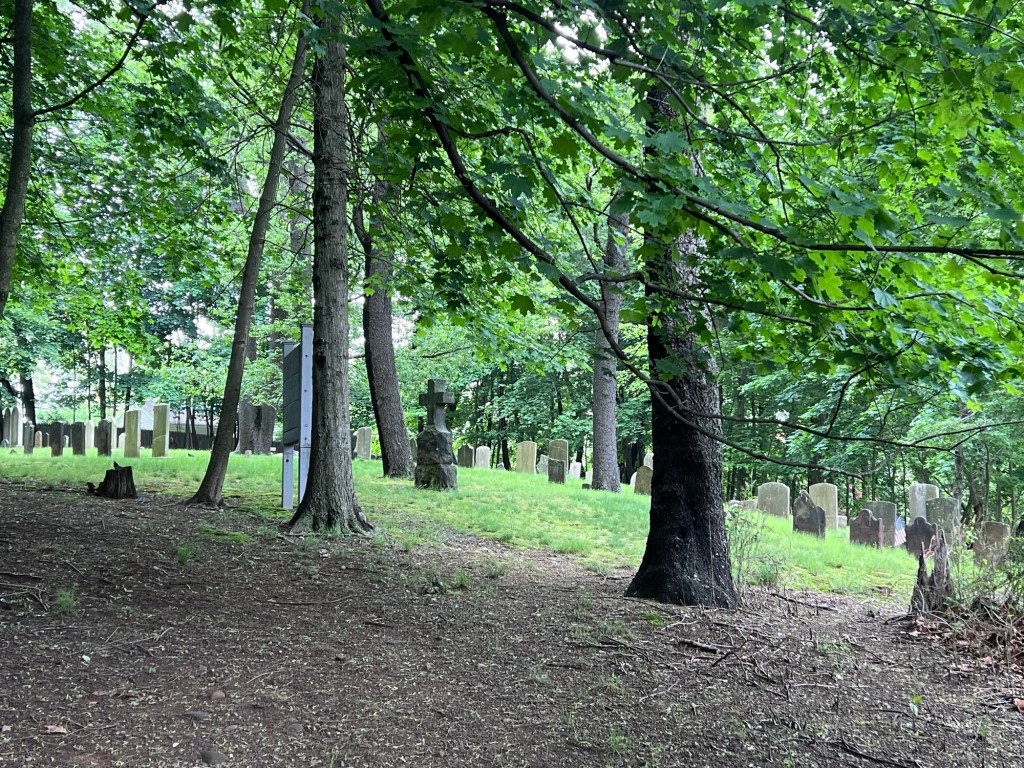
The Old Burying Ground known also as the Blauvelt Cemetery, is an interesting look at the burial rights of prominent farming families of early Bergen County and their forgotten legacy of their contributions to building not just the County to our Country as well.
Many of these families intermarried over time combining properties and farms that over time since the turn of that last century, have become lost corners of our county’s history due to growth after WWII of suburban communities.
It is interesting to see who the movers and shakers of these communities of the past whose descendants were still live in Bergen County. The sad part is that these distant family members may not know their own family history enough to visit these tiny pieces of history that hold members who fought in the Revolutionary War and contributions to the growth of businesses with names that have been reduced to well known street addresses. A lot of history lies in these tiny plots that dot Bergen County. Here you can see the ‘ghosts’ of the past and walk past their graves to hear their stories.
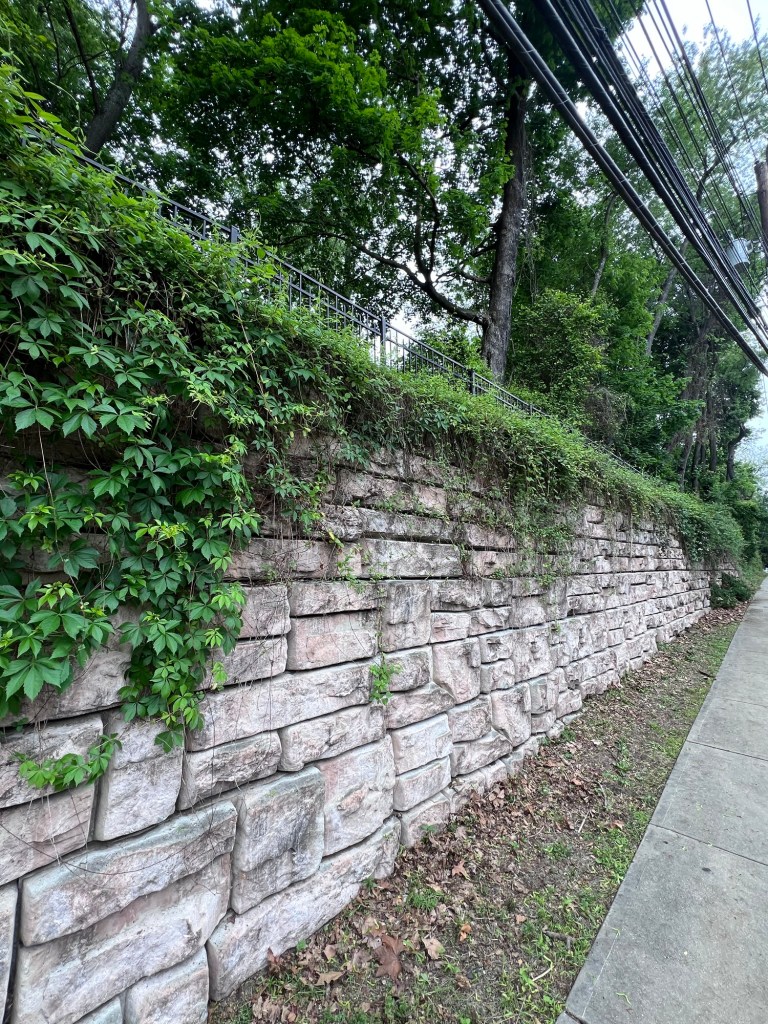
The entrance to the cemetery
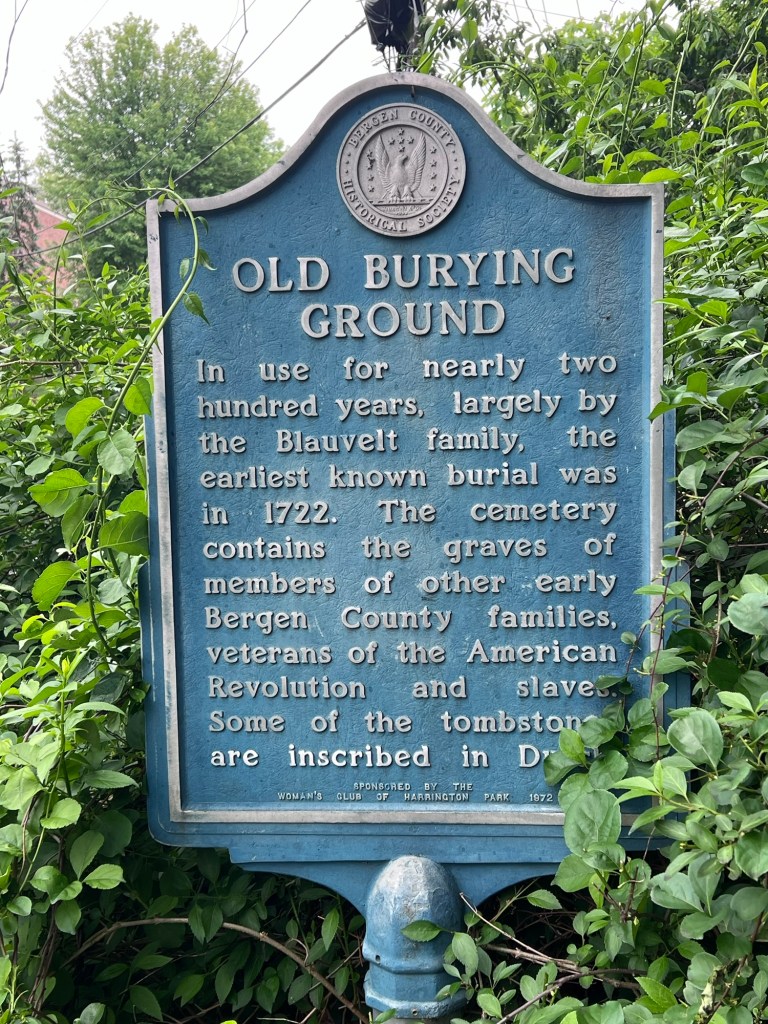
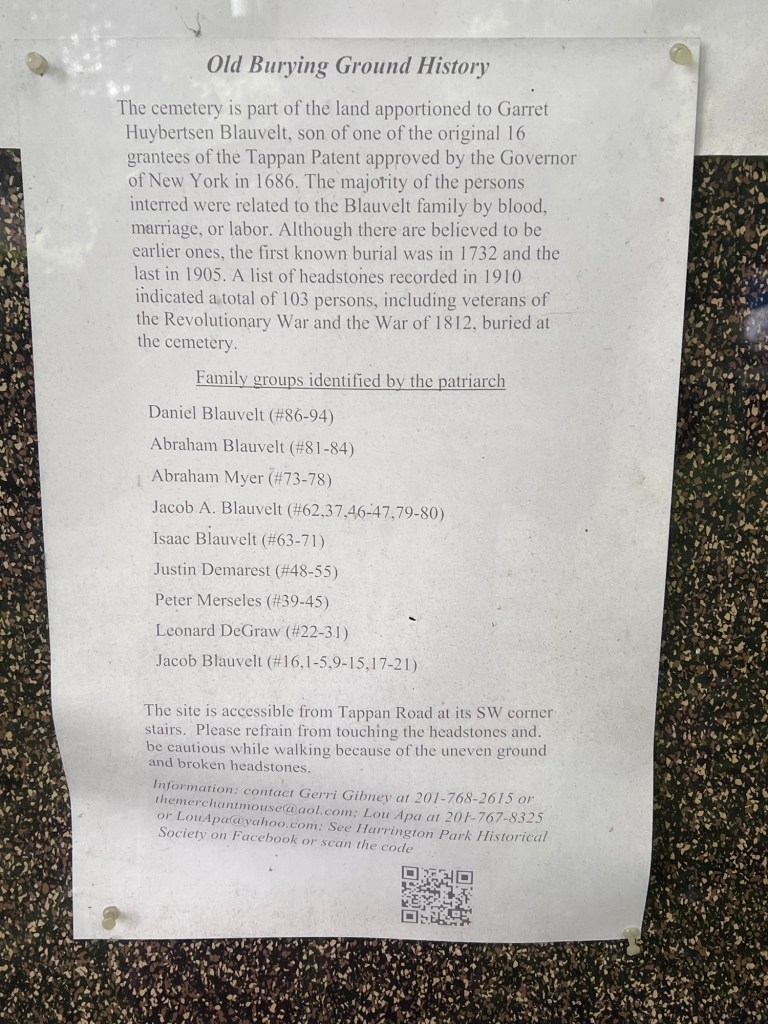
The History of Burying Ground:
(from the Harrington Park Historical Society)
In use for nearly two hundred years, largely by the Blauvelt family, the earliest known burial was in 1722. The cemetery contains the graves of members of other early Bergen County families, veterans of the American Revolution and slaves. Some of the tombstones are inscribed in Dutch.
The description of the family plots
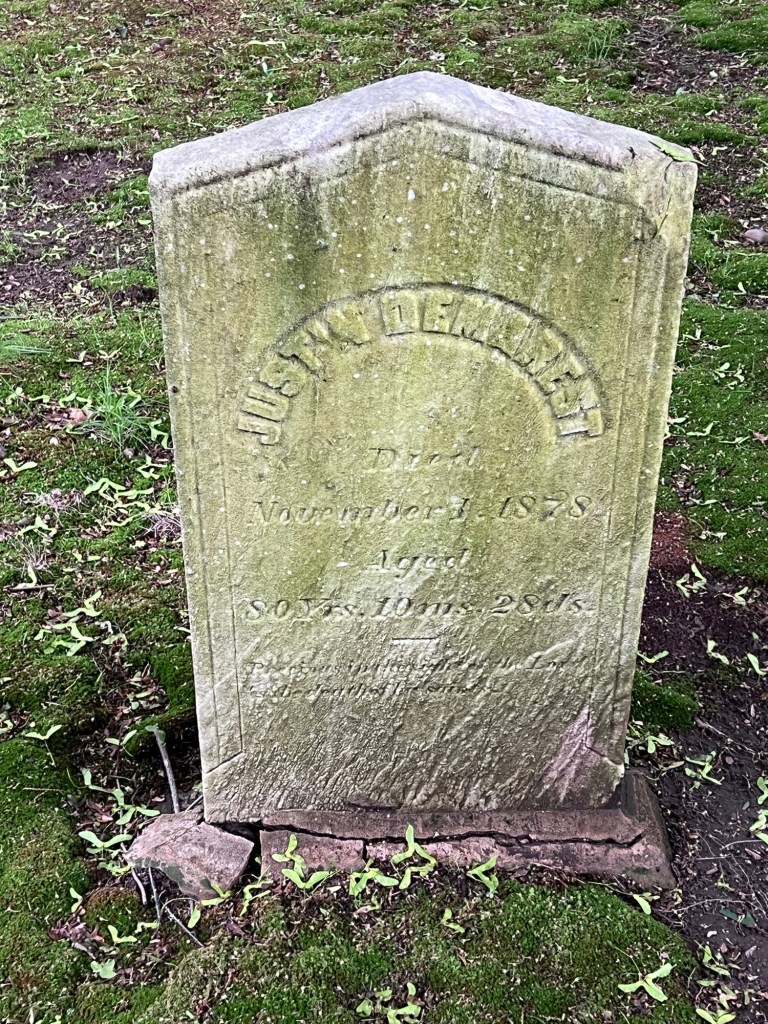
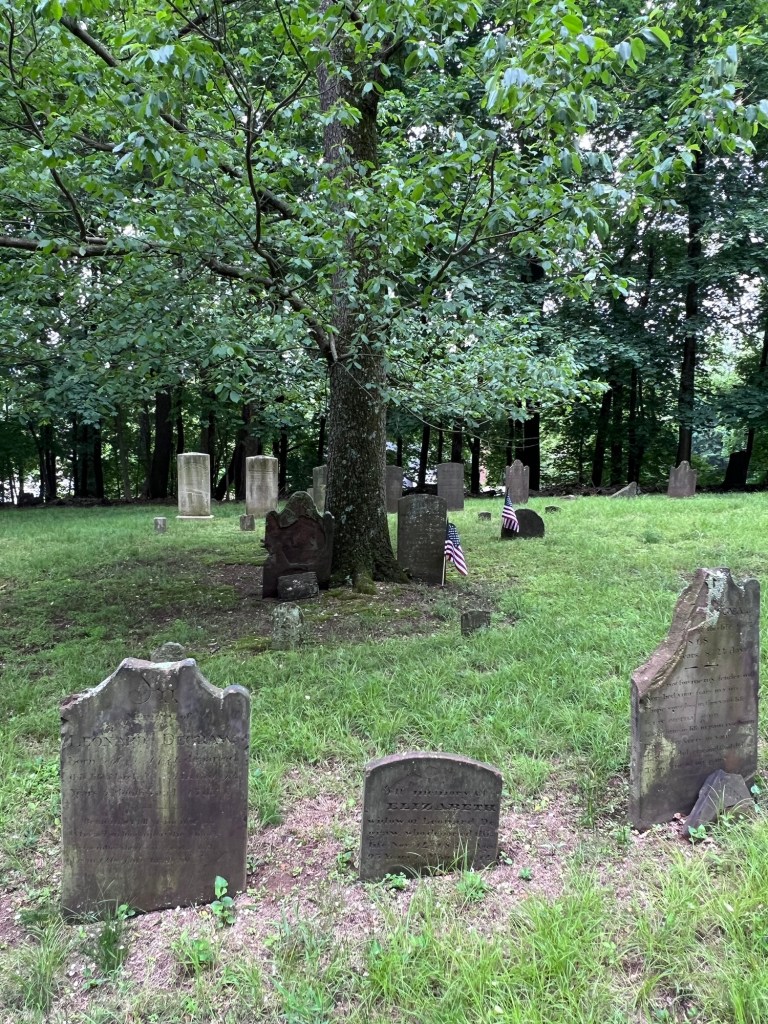
The grave of Patriarch Justin Demarest
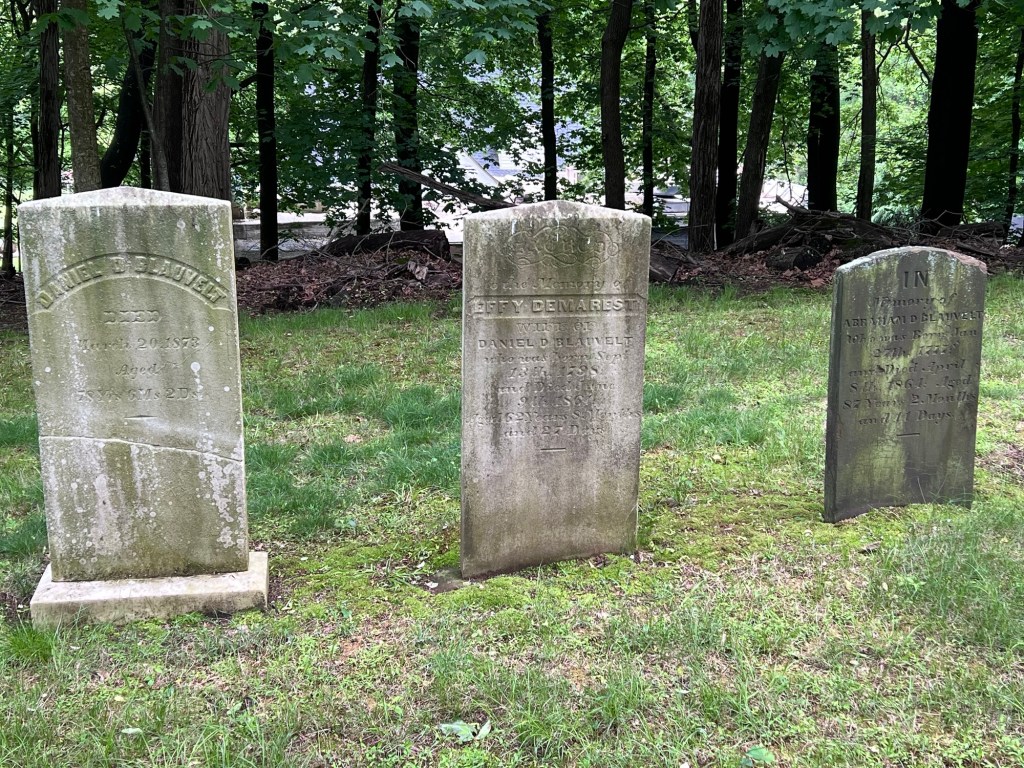
The Blauvelt family plot of Patriarch Daniel Blauvelt
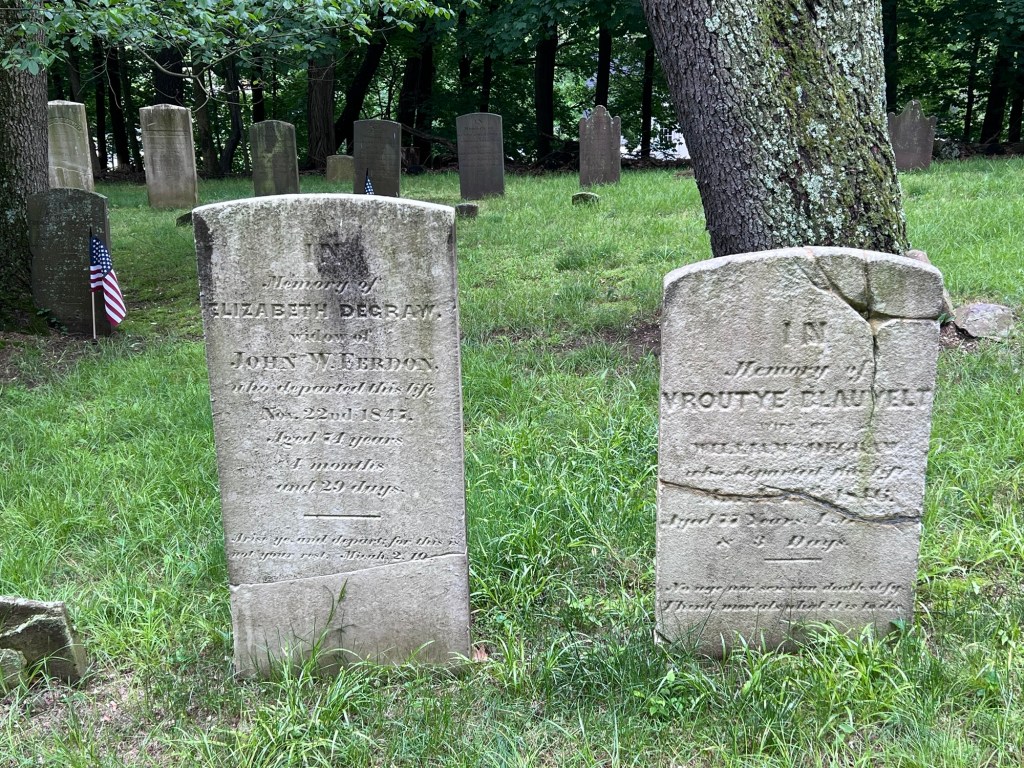
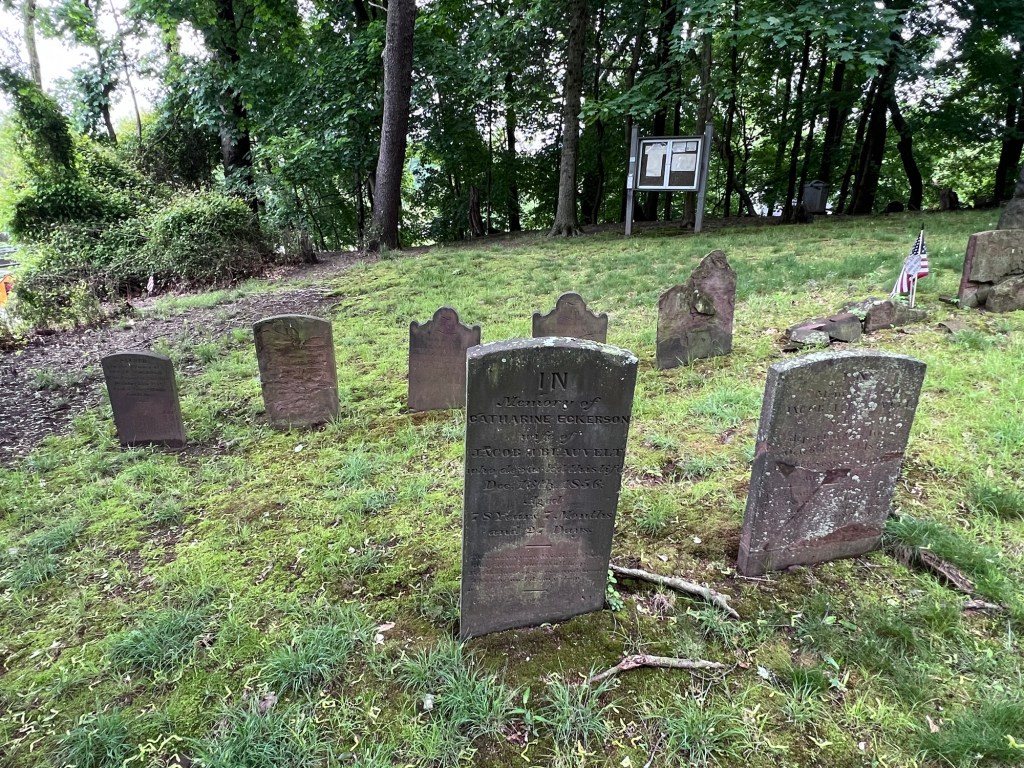
The graves of members of the Blauvelt and DeGraw families
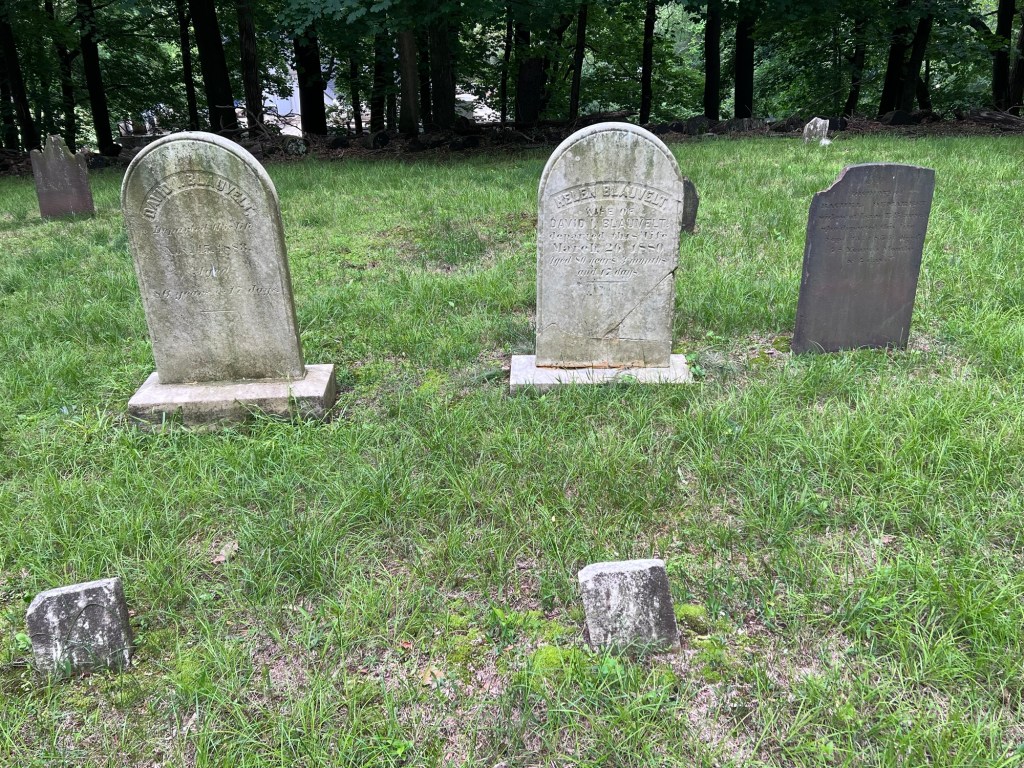
The graves of David and Helen Blauvelt
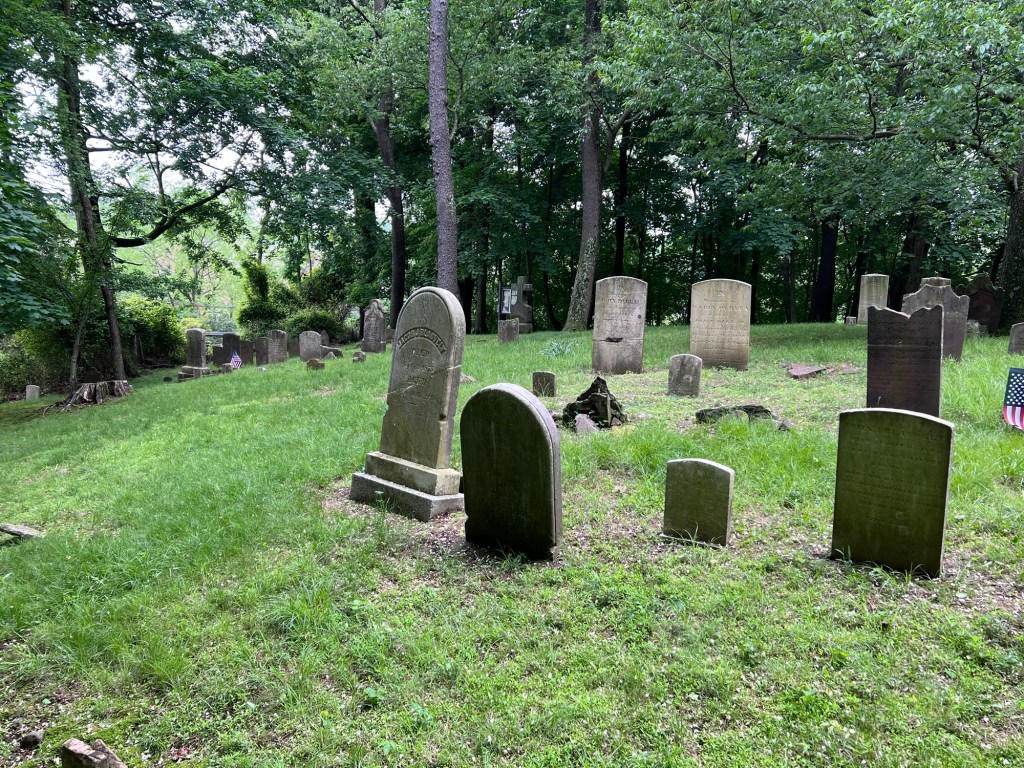
The middle of the Blauvelt family plot
The cemetery from the other side of the Blauvelt family plot
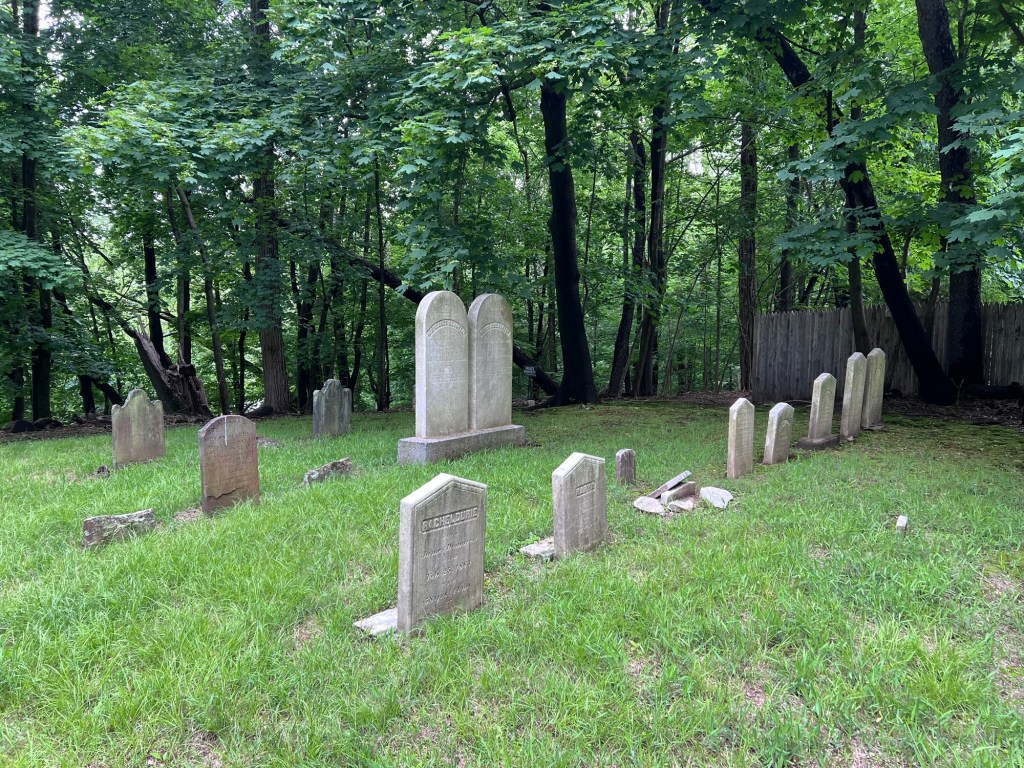
The Blauvelt and Demarest family plots (damaged tombstones)
(From the Harrington Park Historical Society)
Abraham Quackenbush (1768-1854) and his wife, Elizabeth Myers (1770-1807)) are part of the Abraham Myers family burial plot at the Old Burying Ground. In the middle of the 18th century, Abraham Myers received a royal charter from King George III to build a grist mill on the Hackensack River which his grandson John Bogert later operated, and it thereby became known as “Bogert’s Mill.”
The Myers family members interred in the plot are Abraham Myers, his wife Cathrena Nederman, daughter Cathrena, daughter Elizabeth and Abraham Quackenbush, son John Myers and wife Rebecca Durie.
The Blauvelt-Eckerson-DeGraw family graves
Patriarchs David and Helen Blauvelt family plot
Video on the Cemetery from the Harrington Park Historical Society
The 1740 Miller-Kingsland House-Boonton Historical Society
445 Vreeland Avenue
Boonton, NJ 07005
Open: For special events and the Pathways Tours-Contact Boonton Historical Society
My review on TripAdvisor:
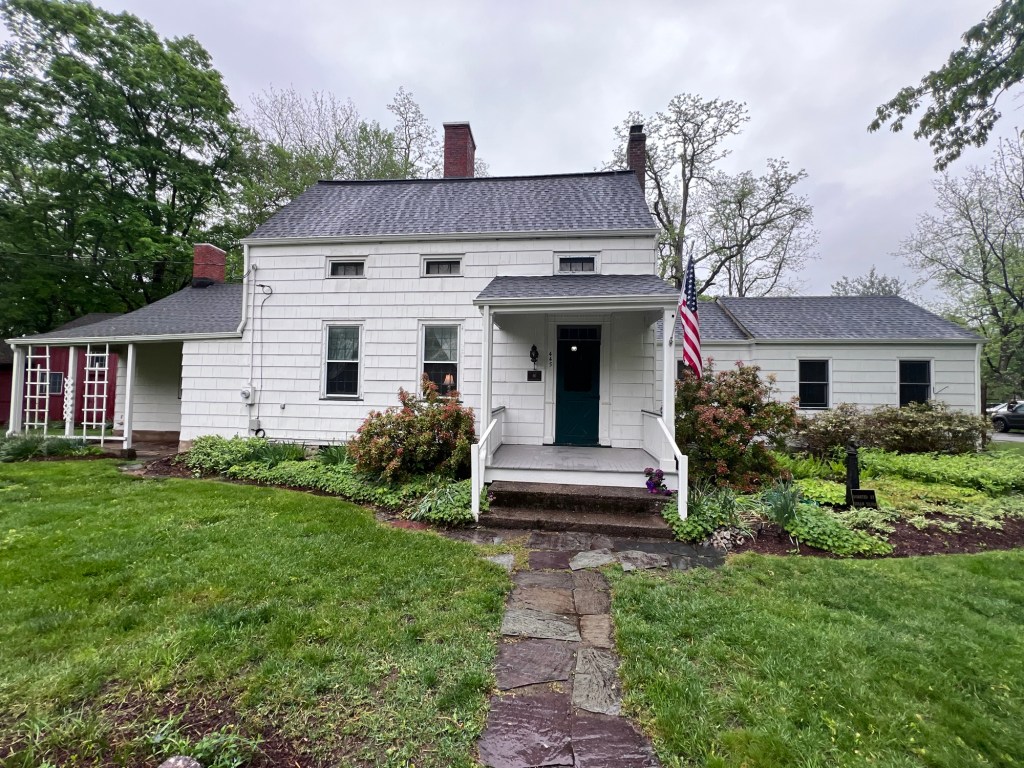
The Miller-Kingsland Homestead at 445 Vreeland Avenue
I went to visit the Miller-Kingsland Homestead, which is part of the Boonton Historical Society, during the Morris County’s Pathway’s tour and discovered a beautiful little historical home situated on picturesque piece of property. I saw by the signs that the grounds were maintained by the local Garden Club, who did a wonderful job landscaping the grounds.
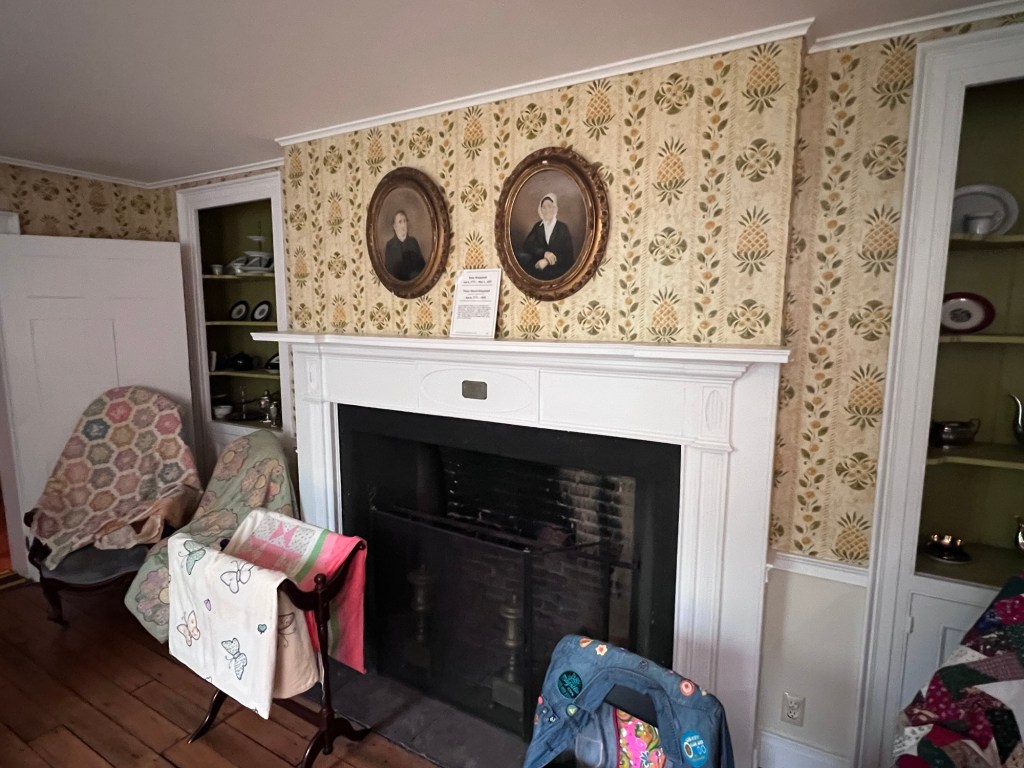
The Living Room in the extension on the house
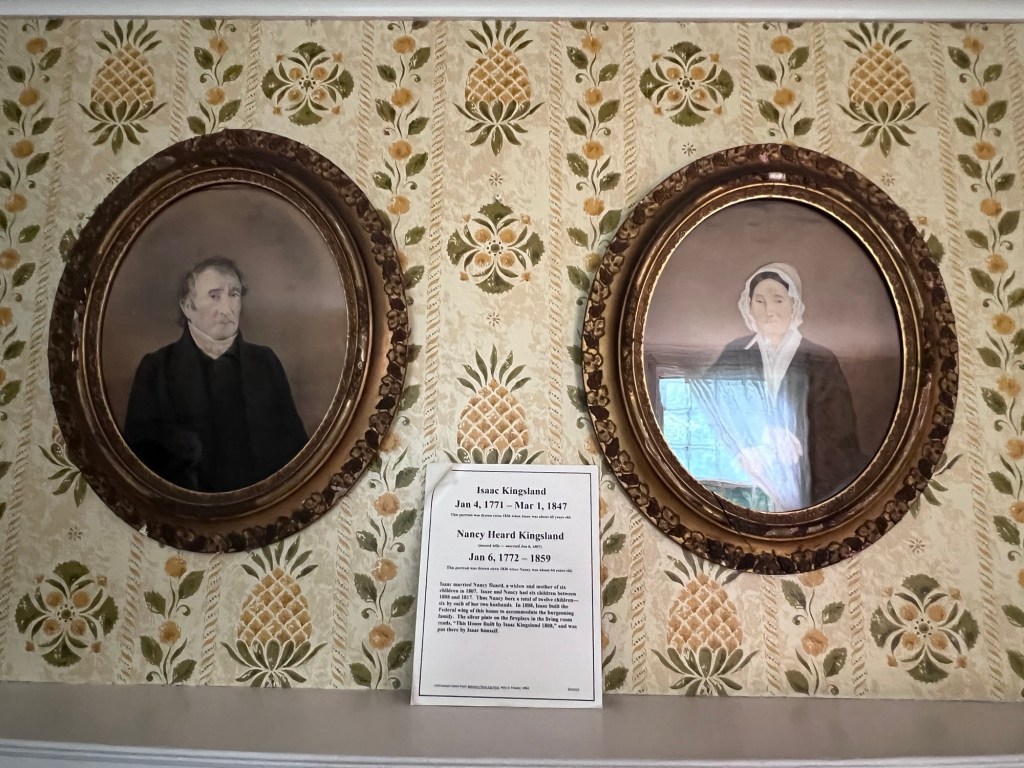
The portraits of Mr. & Mrs. Kingsland
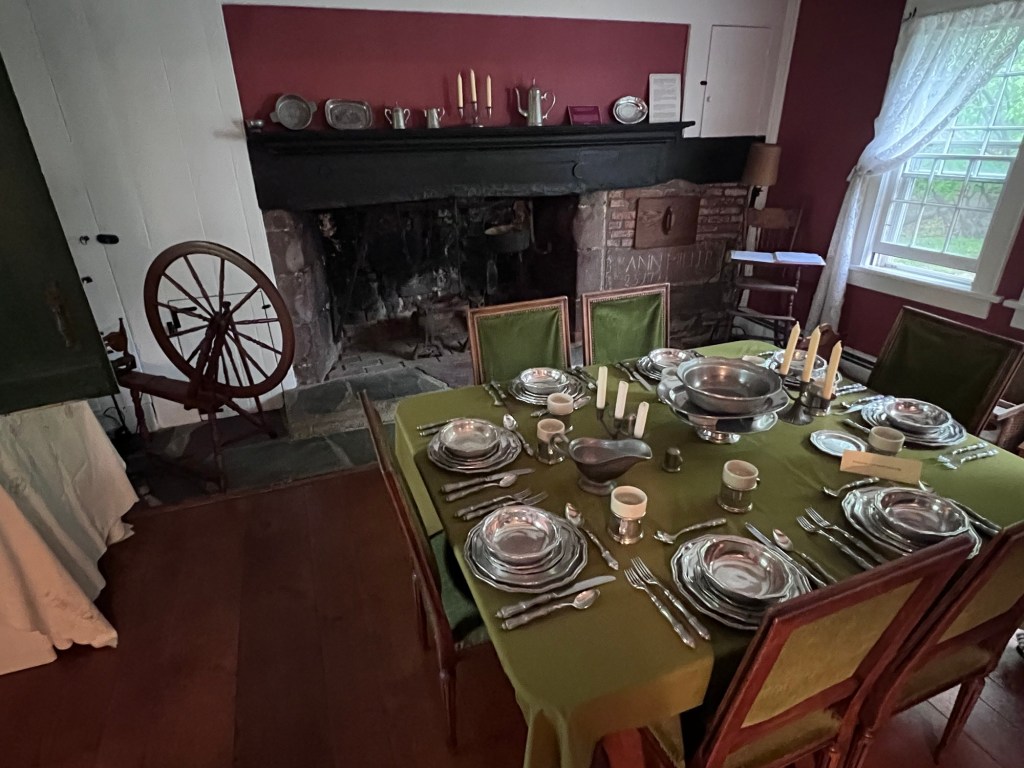
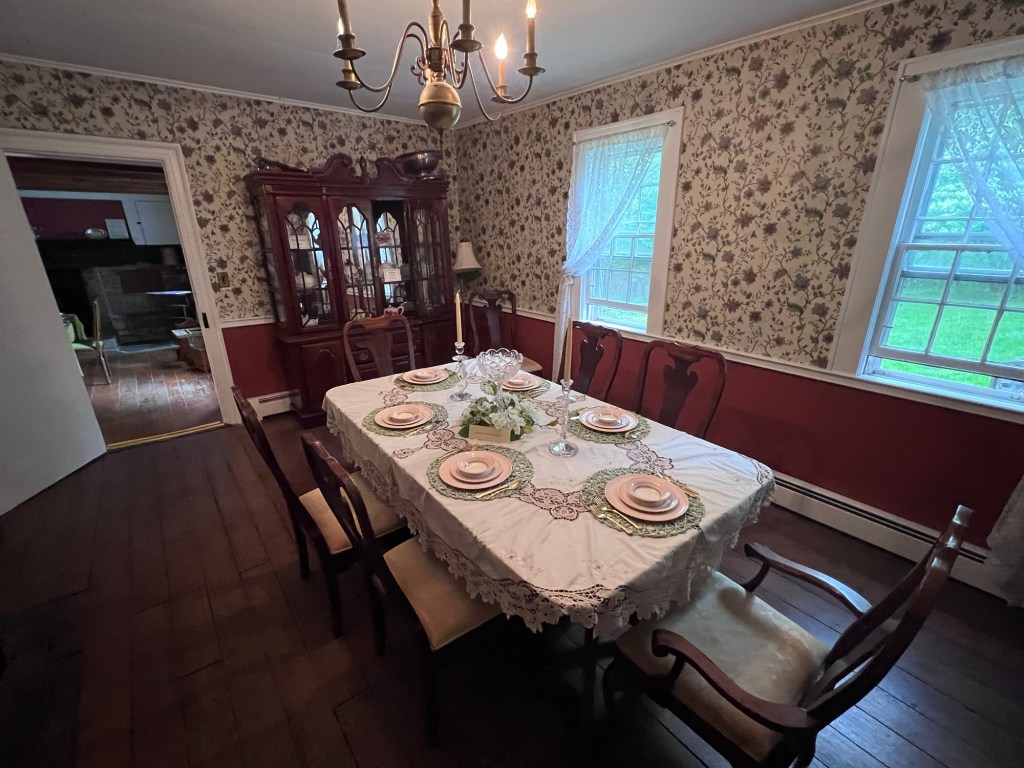
The Dining Room in the old section of the home
The historic home is filled with period furnishings and decorations, none it seems local to the home. Still you can see how the home has changed over the years with additions and renovations. The older part of the home is now part of the Dining Room.
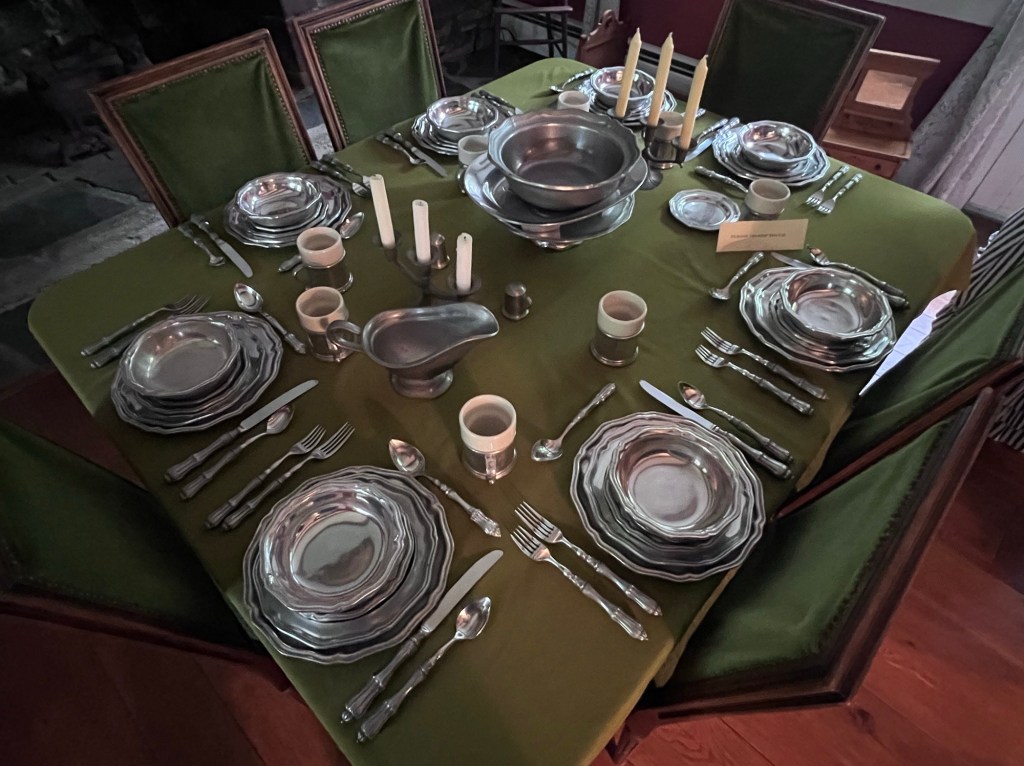
The Pewter ware collection on the Dining Room table
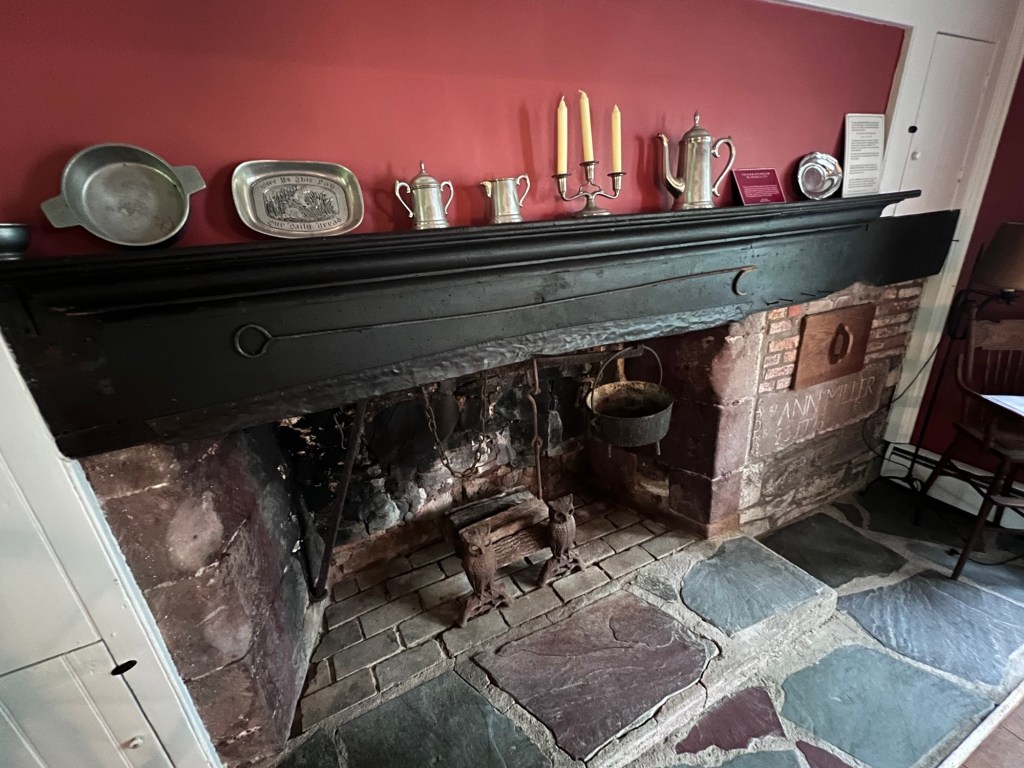
The fireplace in the original house kitchen now in the Dining Room
The formal Dining Room in the extension of the house
The formal Dining Room in the newer section of the home
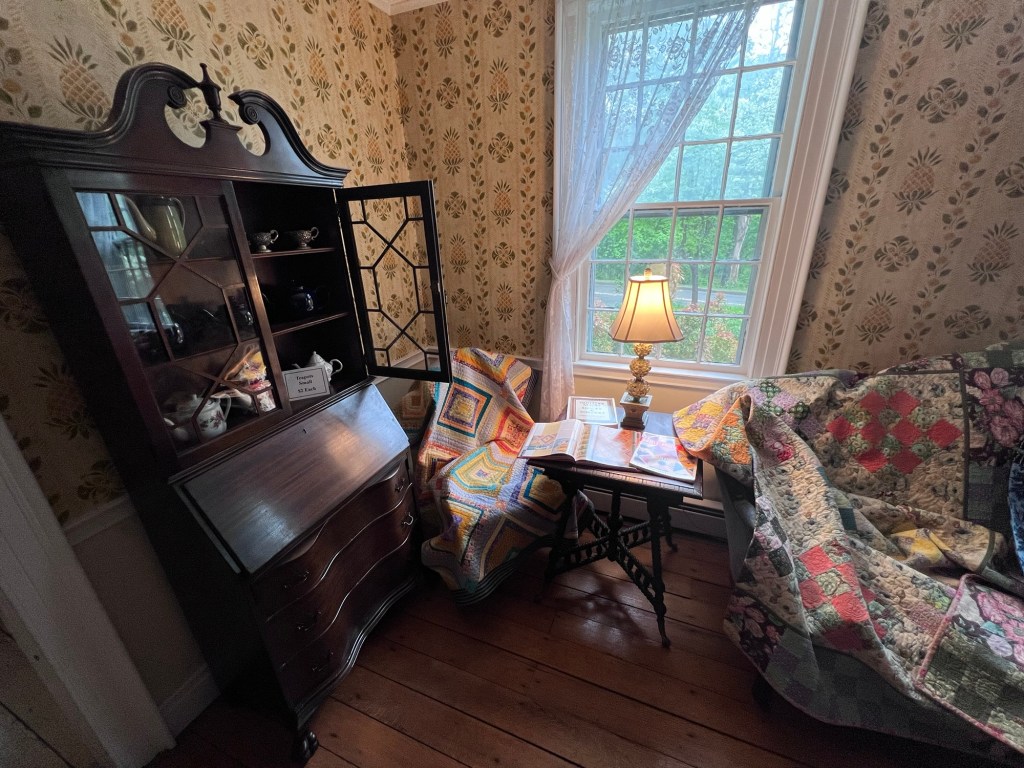
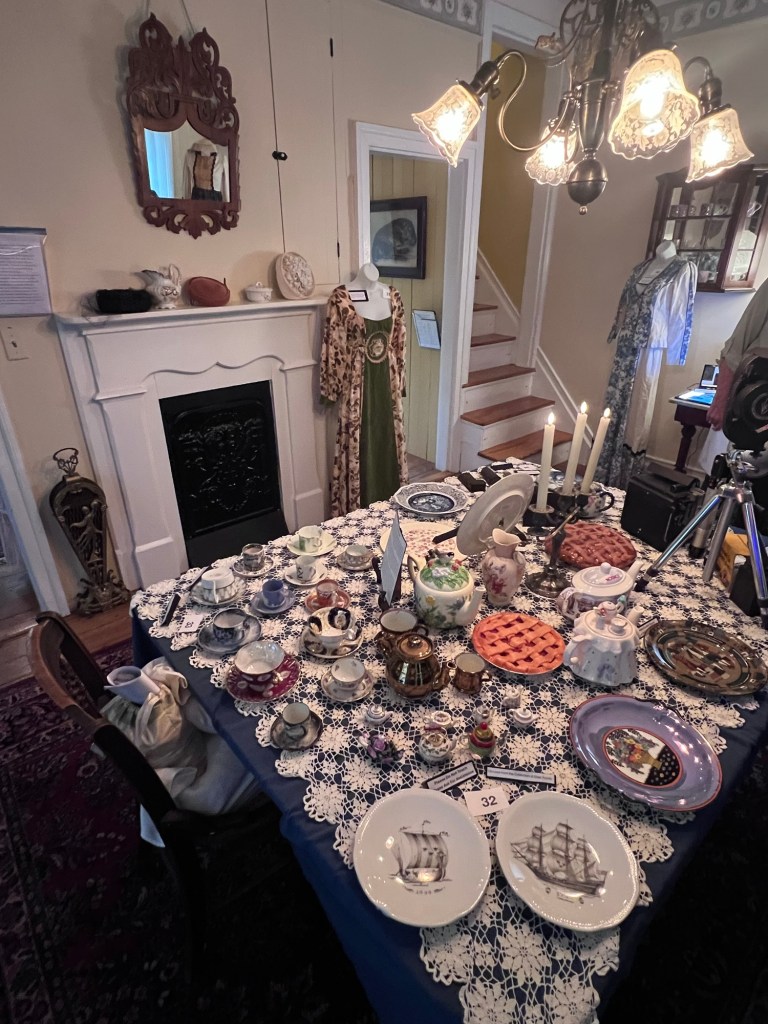
The antique China Closet with Teapots
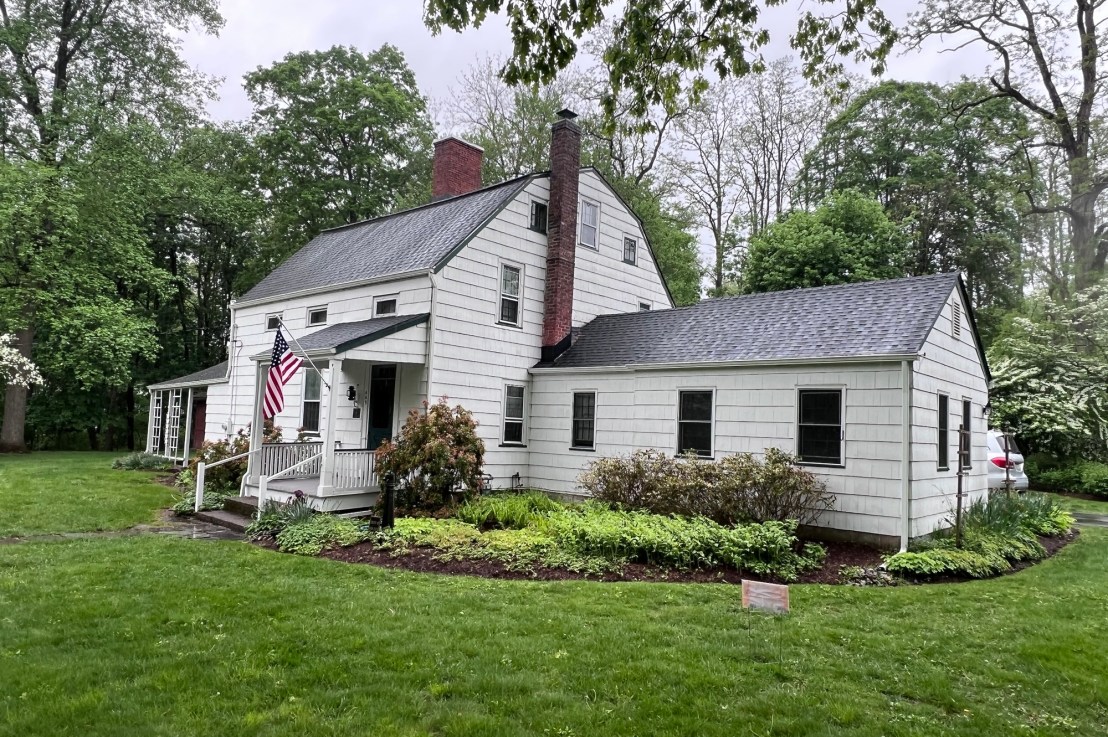
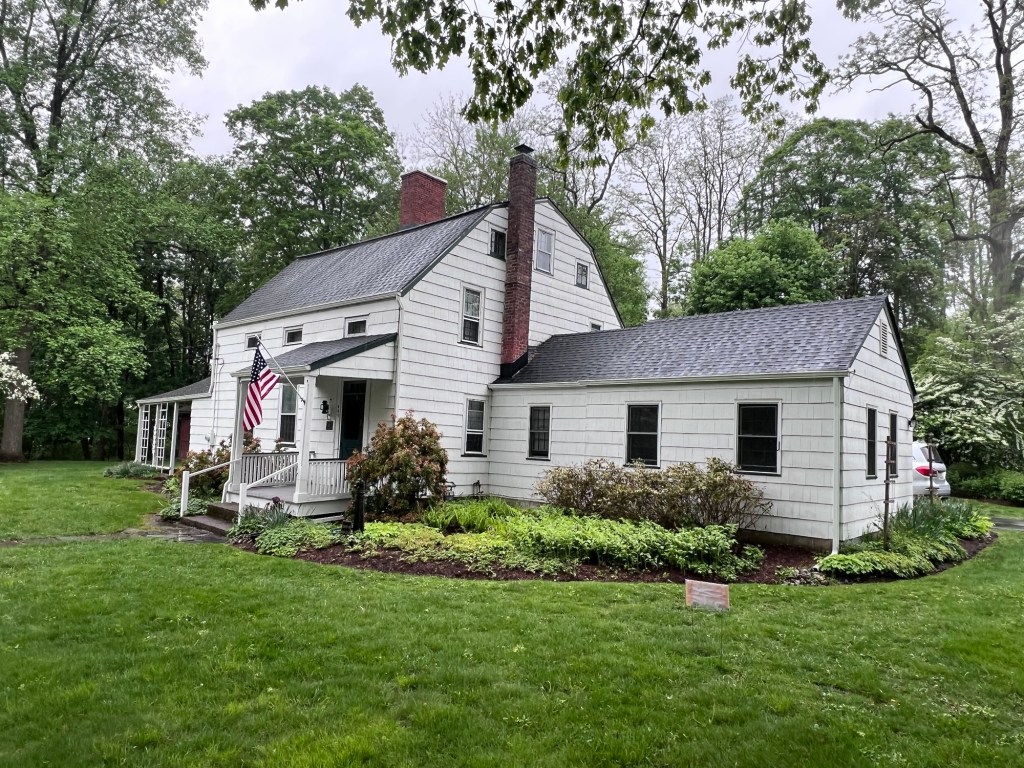
The outside of the house
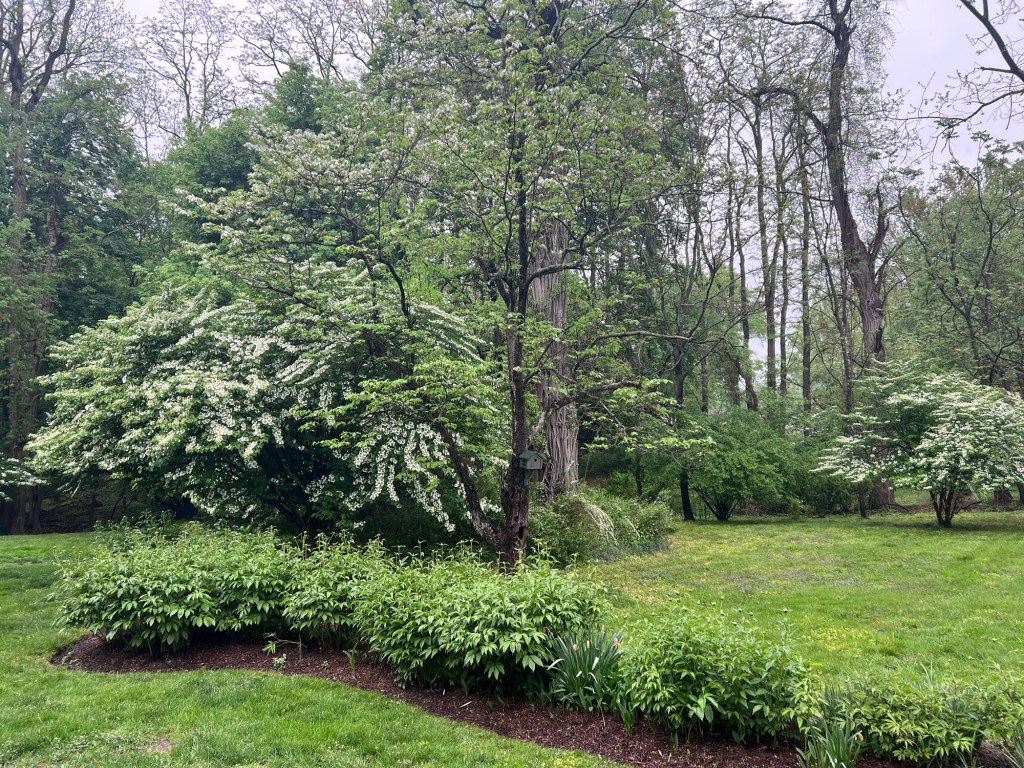
The grounds of the home
The house sits on a quiet bend in the road and the properties landscaping was just beautiful. Even on this gloomy, rainy day, it was nice to walk around quickly and admire the flower beds and the lawn.
The grounds of the home
The outside gardens of the home in the Spring
The History of the home:
(From the Boonton Historical Society Pathways Tour Book and Wiki):
When Isaac Kingsland purchased the property on Vreeland Avenue from Jacob Miller c 1798, he began a dynasty that would include four New York City lawyers, a comptroller of the City of New York, a Civil War aide to General Benjamin Butler, a college president, three nuns, and a troupe of nationally known marionettes. Similarly, the property itself went from small to large to small again, from the home of farmers, a carpenter and a blacksmith, to a boarding home for horses and the headquarters and studio premises for a company of touring entertainers (Boonton Historical Society).
The Miller-Kingsland House is the oldest recorded home in Boonton. The original Dutch house was one-room with a sleeping attic, built by Johannes Miller around 1740. This room, which is complete with a large cooking fireplace and beehive oven, makes up the west wing of the current structure. The property was sold to Isaac Kingsland in 1798. He added the two and one-half story main section in 1808. It features Dutch style and a gambrel roof (Wiki).
The Miller-Kingsland house sits on a beautiful wooded landscape with a stream flowing through it. The property today comprises some 2.5 acres including the historic frame house and a barn. It is the oldest recorded house in Boonton and is listed on the NJ and National Registers of Historic Places (Boonton Historical Society).
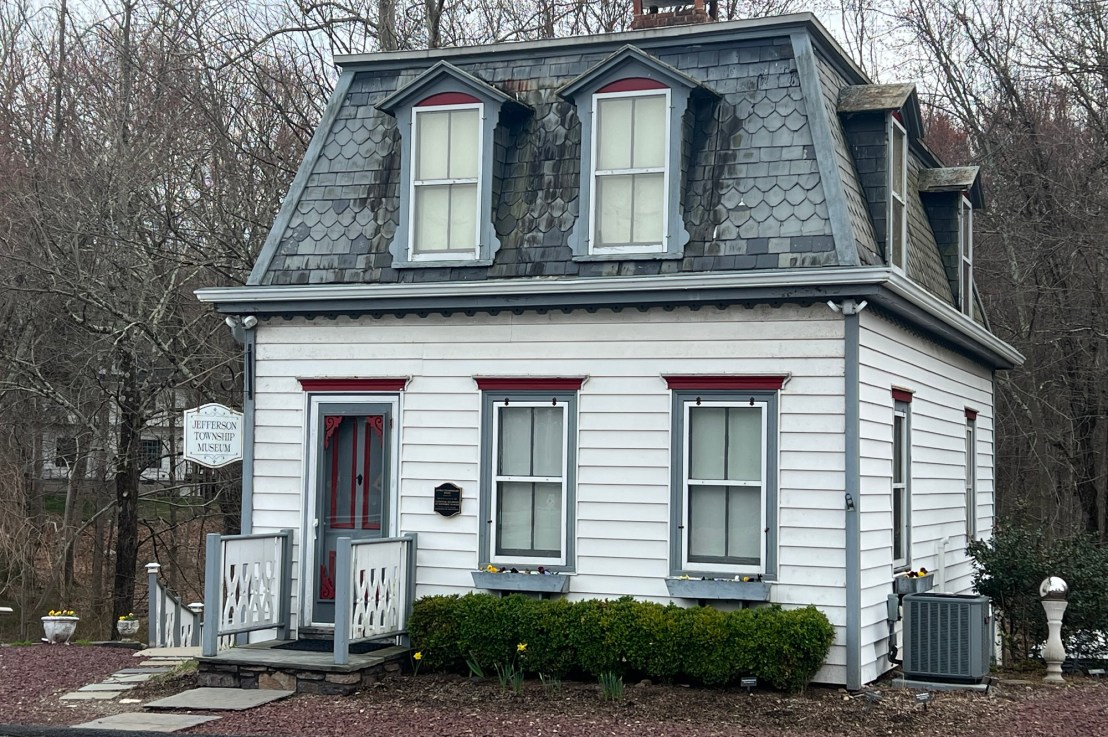
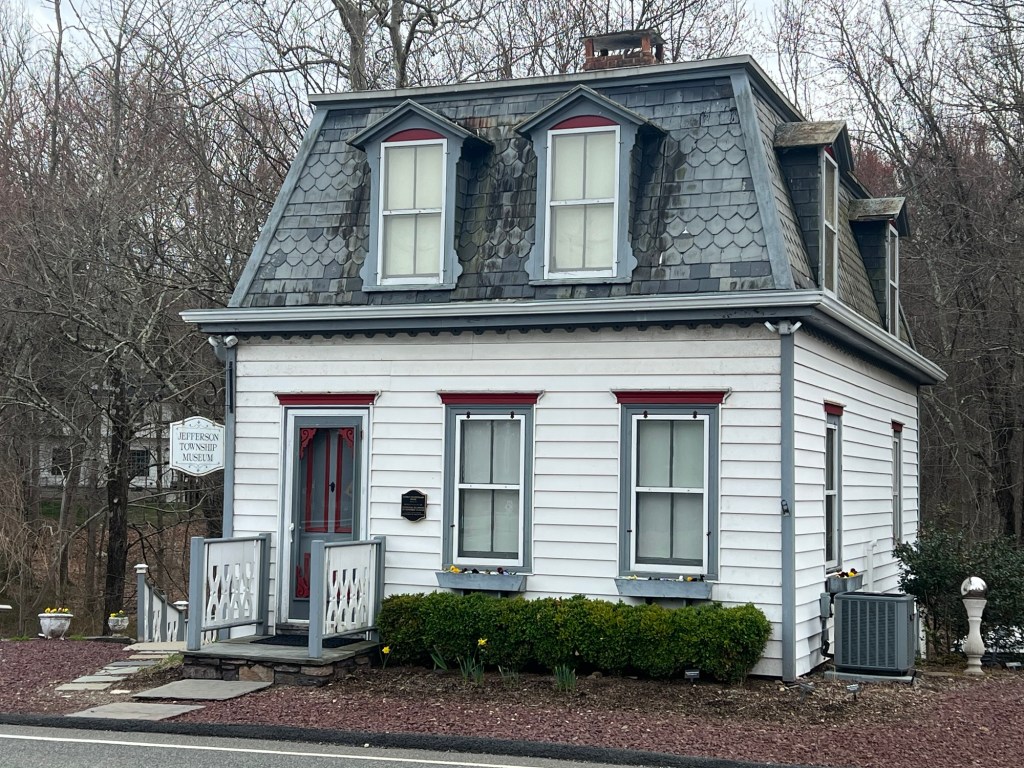
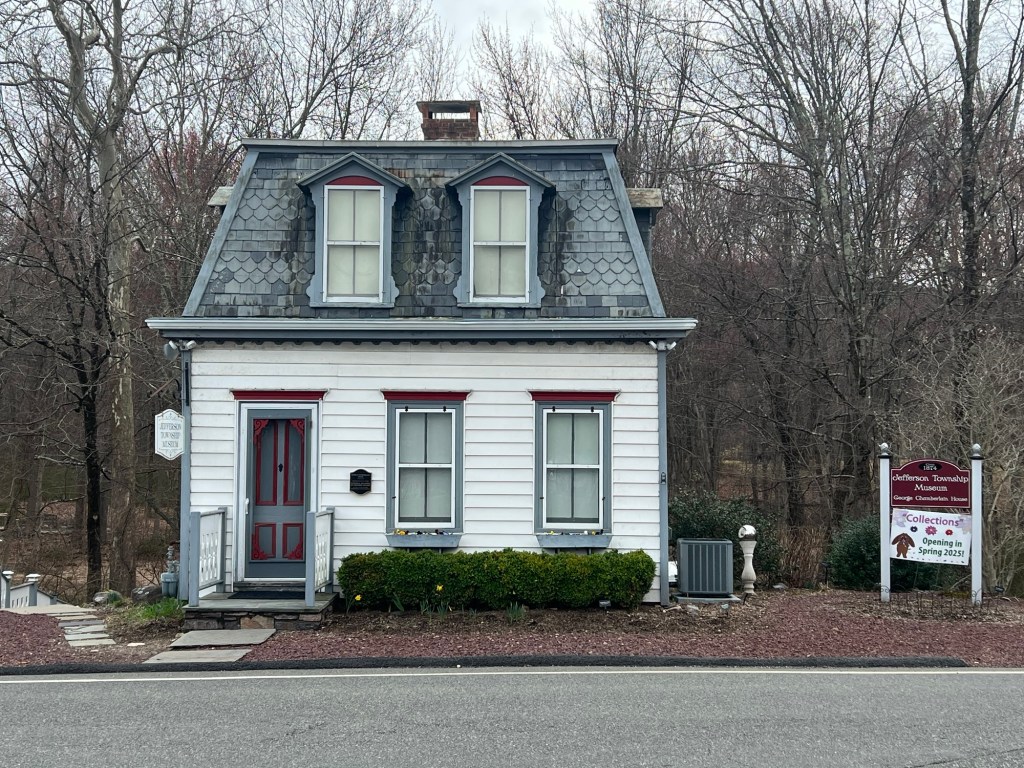
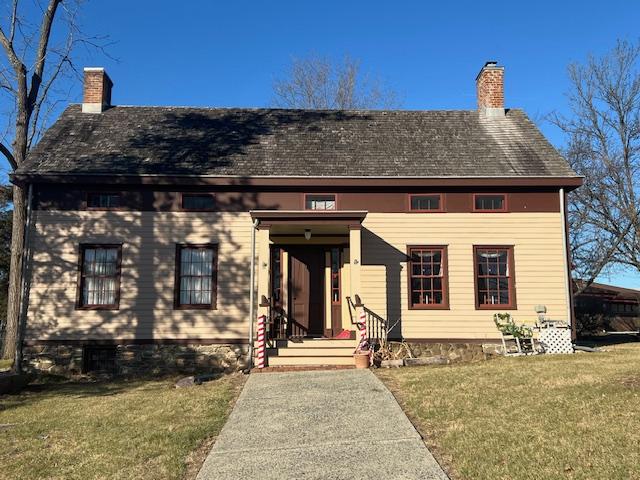
The front of the Jefferson Township Museum at 315 Dover Milton Road
The Mission Statement for the Museum:
(from the Museum website)
The George Chamberlain House, known as the Jefferson Township Museum is designed as an interpretation of lifein thelast quarter of the 1800s. Each room reflects how the Chamberlains, the original family might have lived during that period of time.
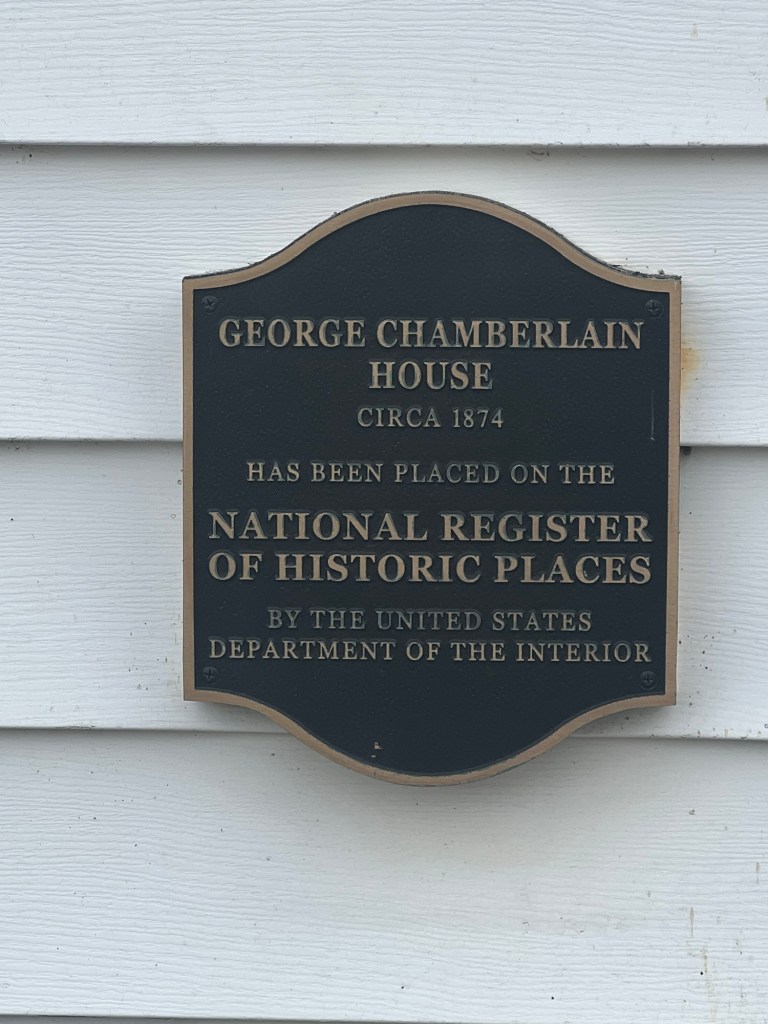
The historic sign of the George Chamberlain House
The History of the Museum and of the George Chamberlain House:
(from the museum website)
In the 1870s, Amos Chamberlain, a resident of Milton Village built a second house. His son, George, married Ruth Elizabeth Speaker in 1874 and moved into the new house on Dover-Milton Road. Two children, Raymond and Archie were raised in the house and attended school in the Milton Village. The family was in residence until the 1890’s. For many years afterwards, the house was home to various families who rented from the Chamberlain family.
In 1960 the Chamberlain house was purchased by the Friends of the Library. They began the task of refurbishing the building into a library. For the next nineteen years it functioned as the Violet Riker Library. When the new Jefferson Library was built, the township acquired the building and under the supervision of local resident, Emily Panek renovation began.
With a $15,000 grant and $27,000 raised from the township the renovation began in 1982. Much of the labor was donated. Walls were sandblasted and the chestnut floors were repaired. A large hole in the front door was repaired. The windows were all repaired by hand. The rear left liter broke and water came in through the back wall. After two years of work, the building became the Jefferson Township Museum and home to the Jefferson Township Historical Society. It remained as such with little interior or exterior change until 2005.
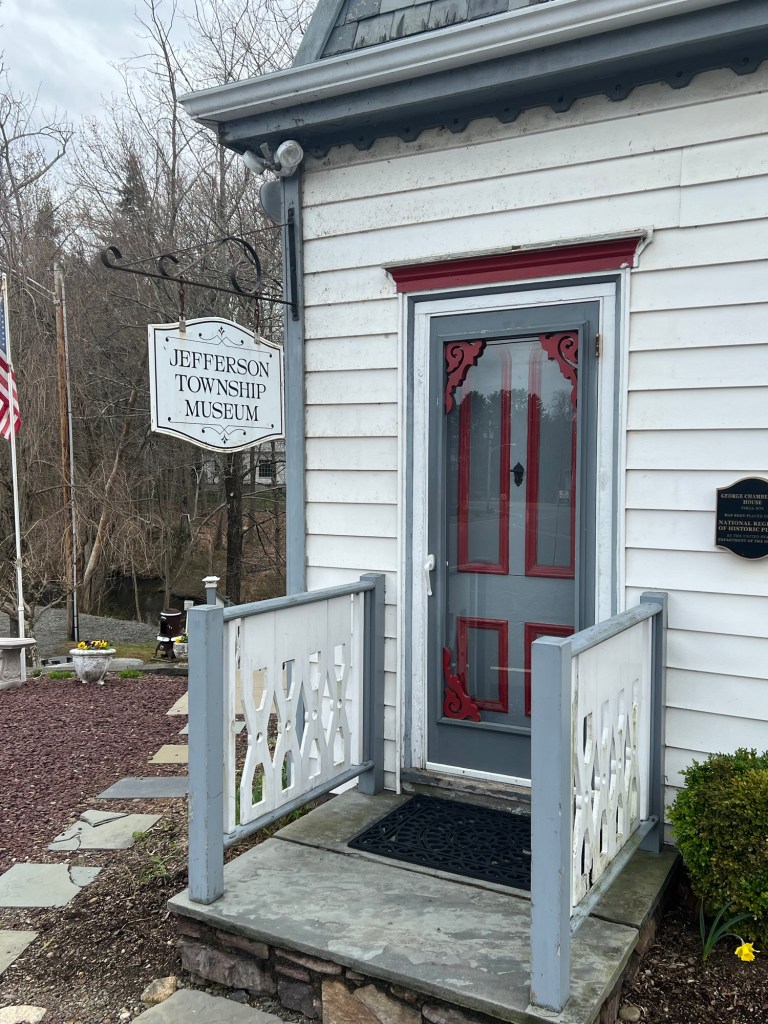
The front door of the house
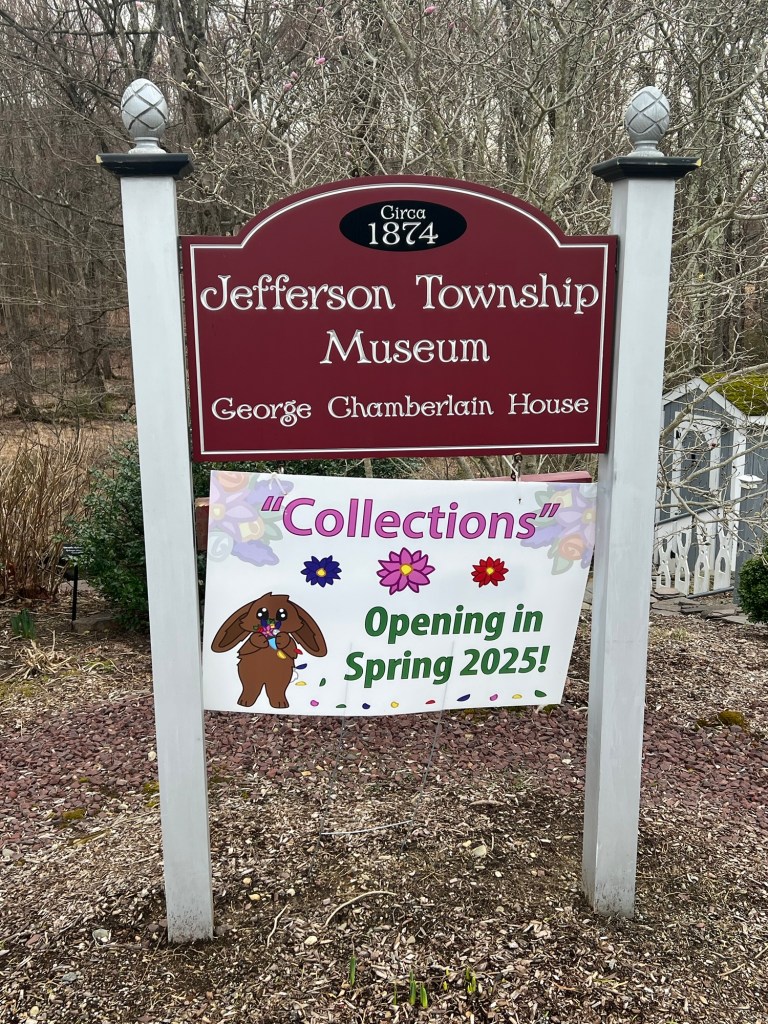
The museum sign
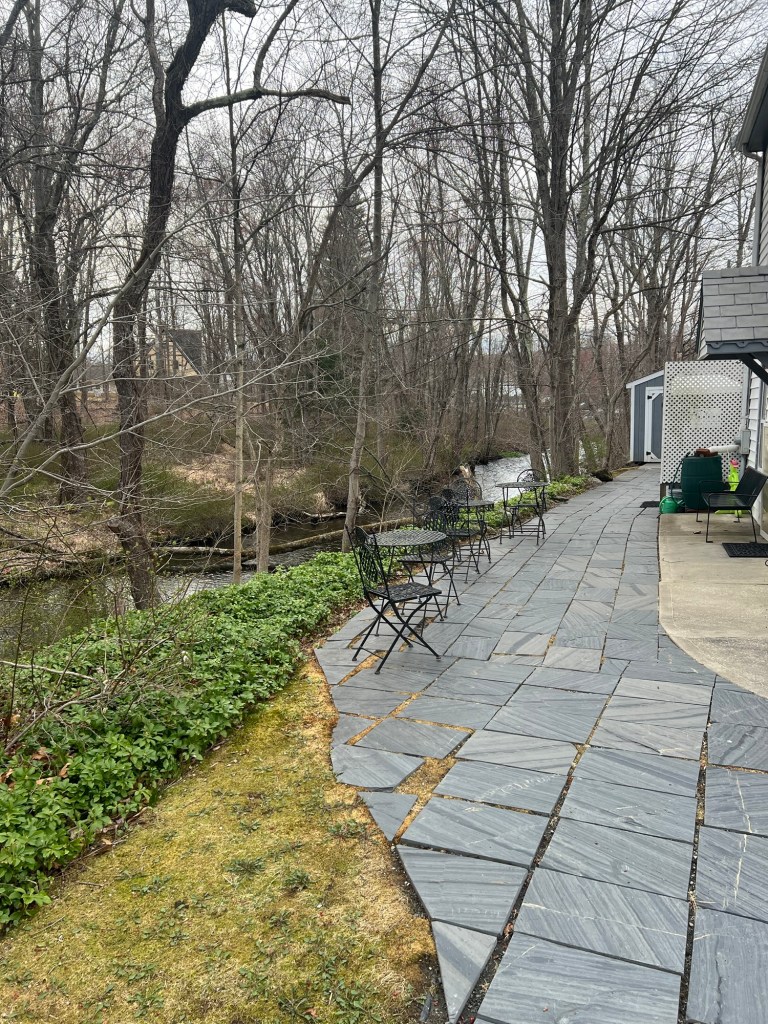
The back of the museum by the stream
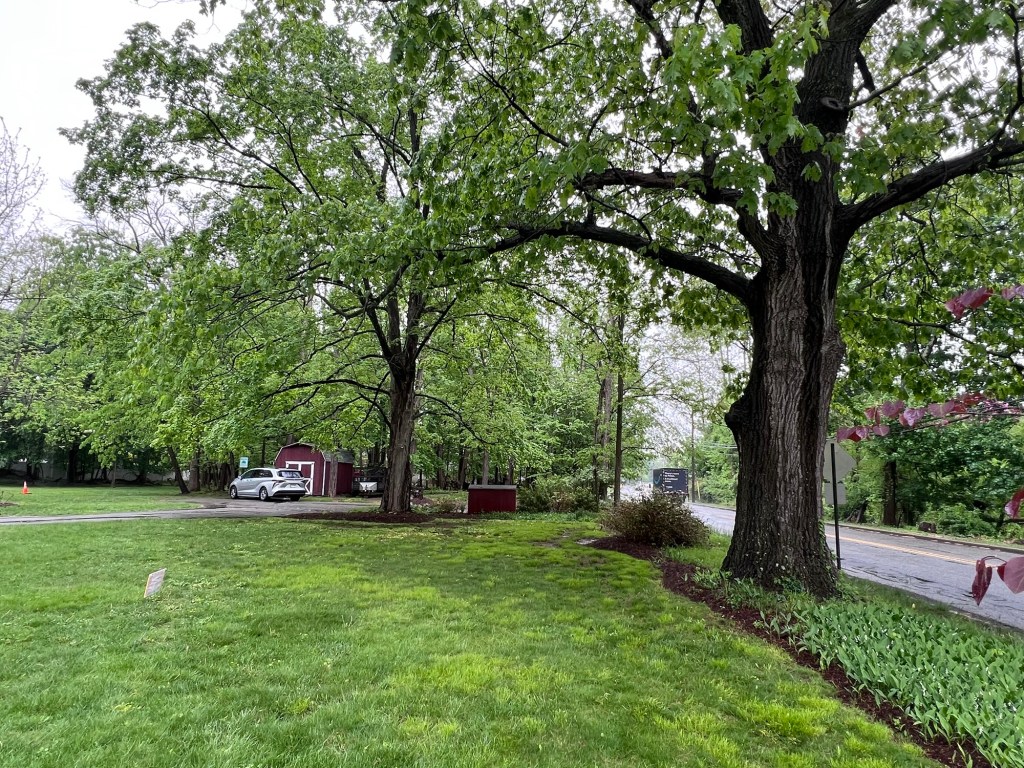
The house faces a beautiful woods and stream and has the most amazing views. It must be even nicer when everything is in bloom.
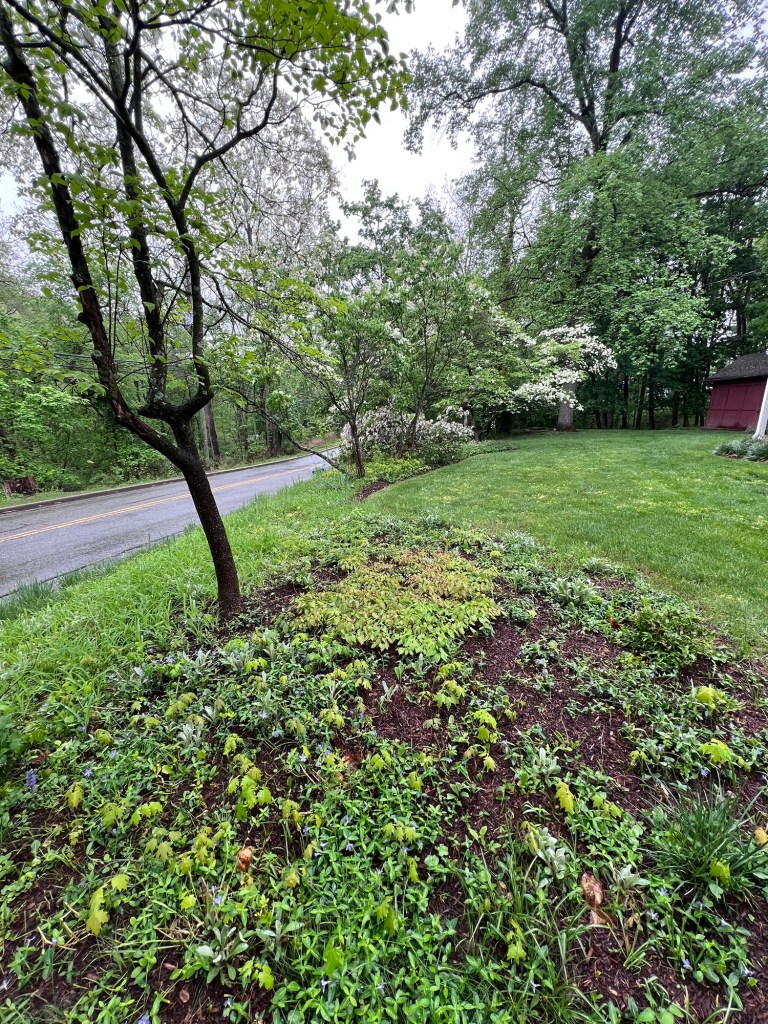
The house gardens in the early Spring
The historic home museum front the street
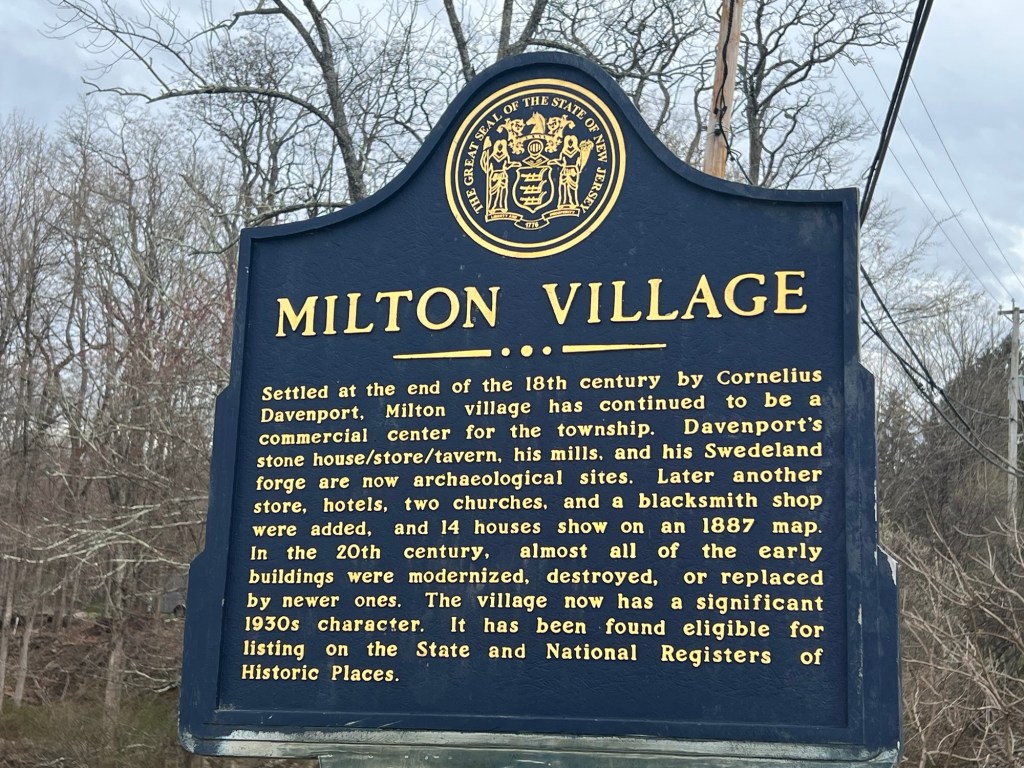
The historic Milton Village sign
The area that surrounds the house is very small and the original village is mostly gone.
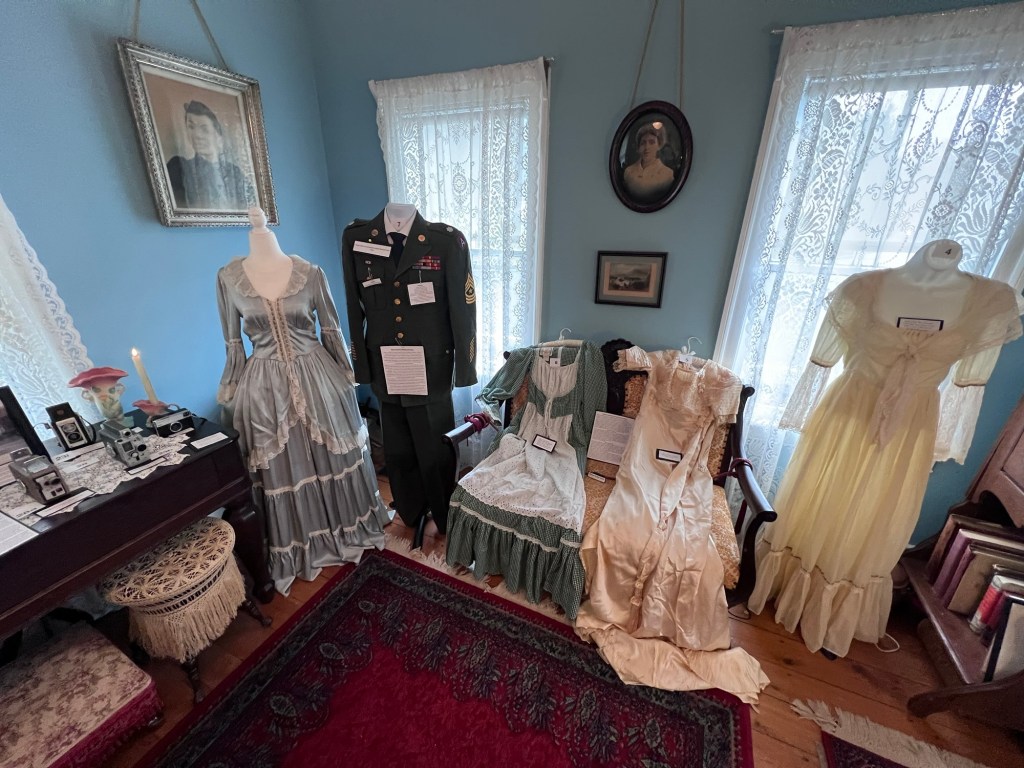
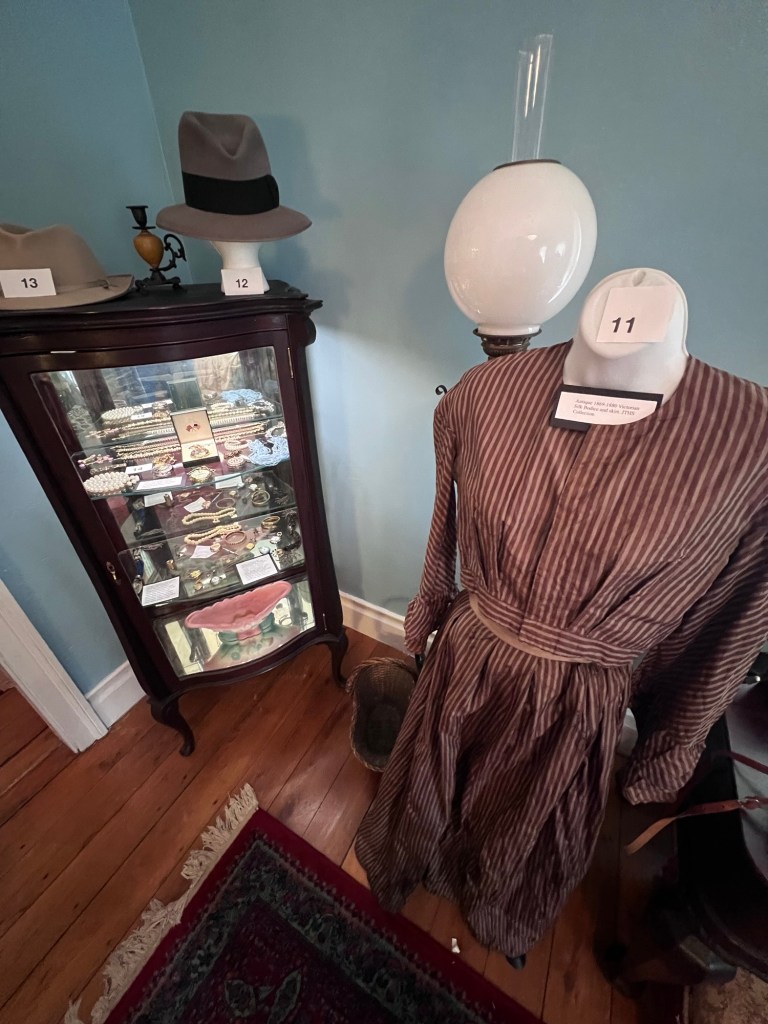
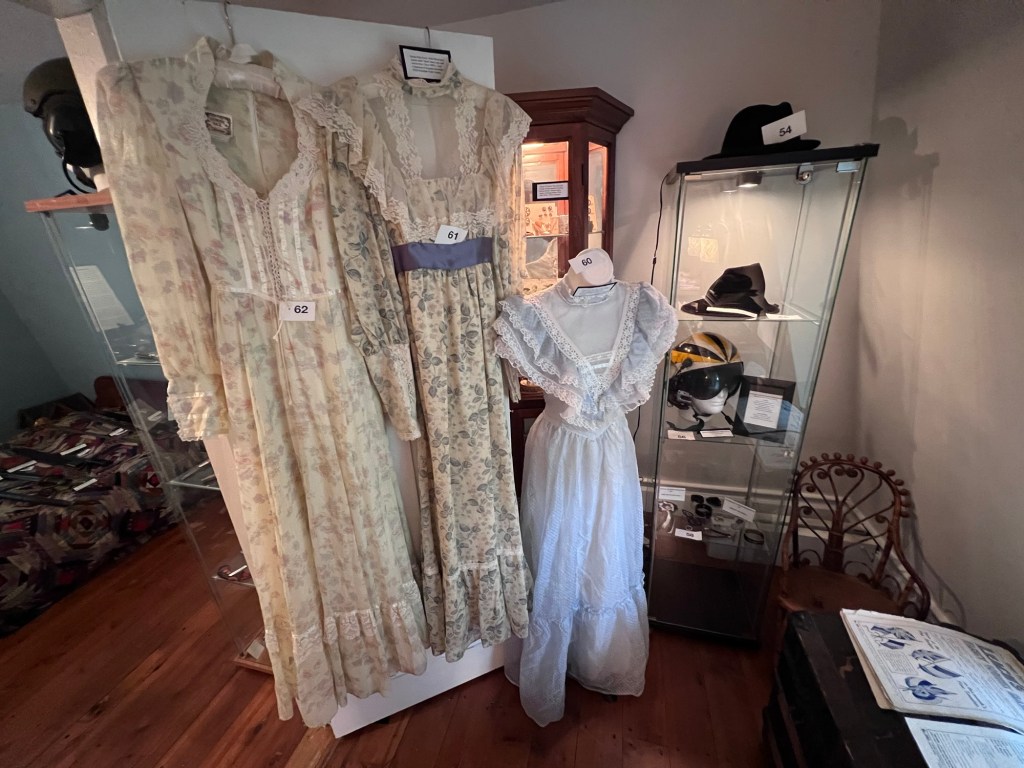
The Dress Collection on display at the museum.
The collection of dresses on display
The day of the Pathways tour for Morris County, the house had members in costume walking around the house explaining the history of the house and family. Each room had its own series of decorations and exhibits. There was garment display all around the house with different types of dresses, hats and jewelry. One member displayed his antique camera collection.
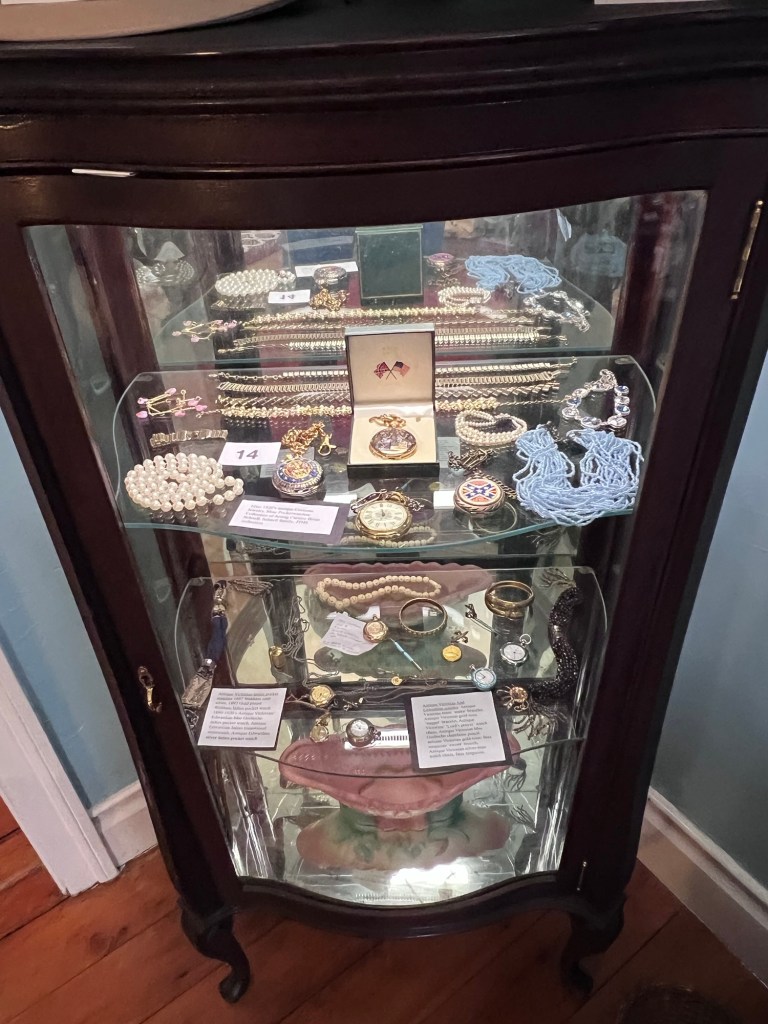
The Clothing Collection with a display of jewelry
The Jewelry and Pocket watch collection
The had a wonderful display of antique costumes jewelry and cameos on display in the case.
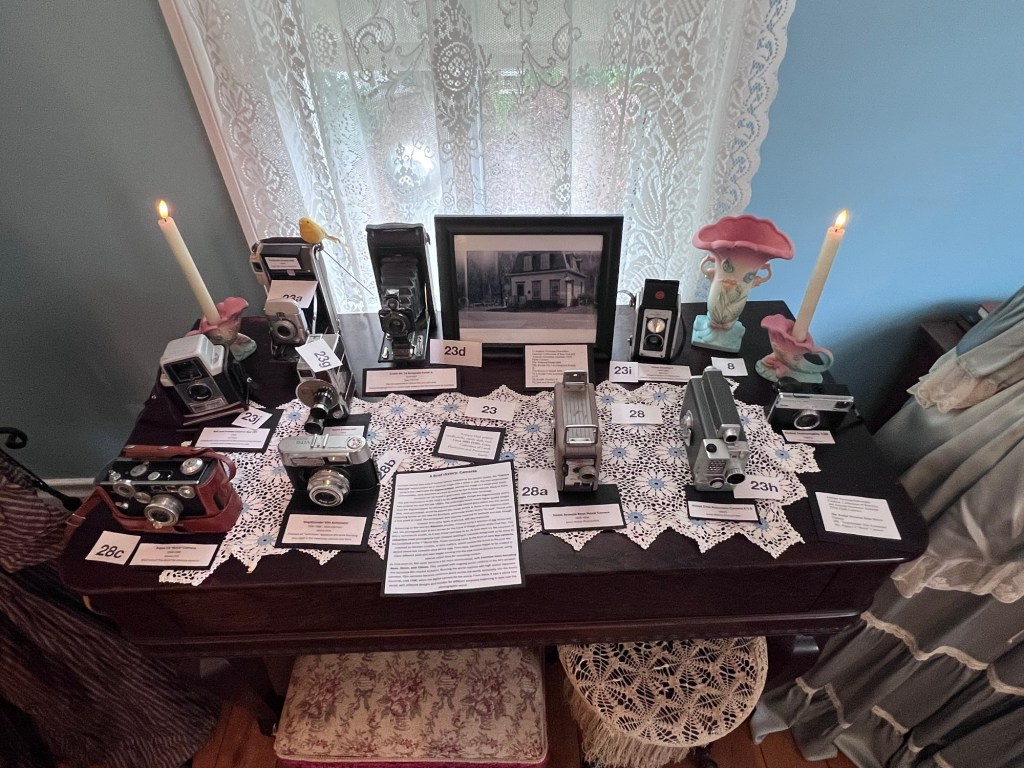
Collection of Cameras through the past century
One member displayed his extensive set of cameras and antique photography equipment and was on hand to talk to people about it.
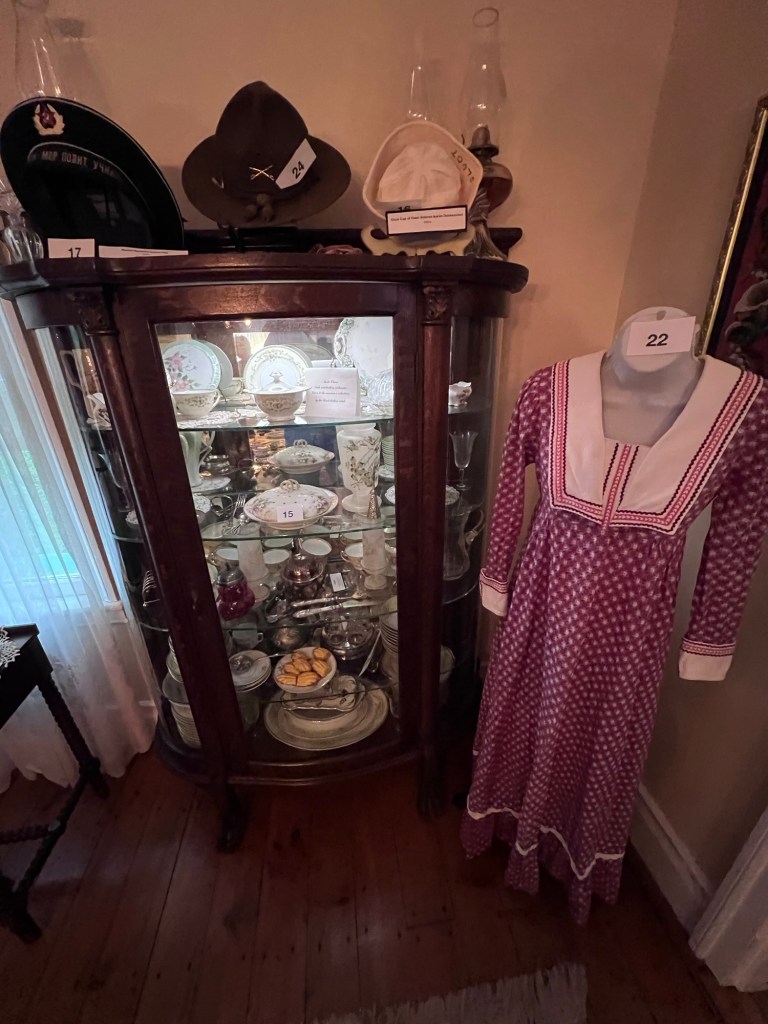
Collections of Antique China and textiles at the museum
Collection of Vintage China and Teapots in the Dining Room of the home
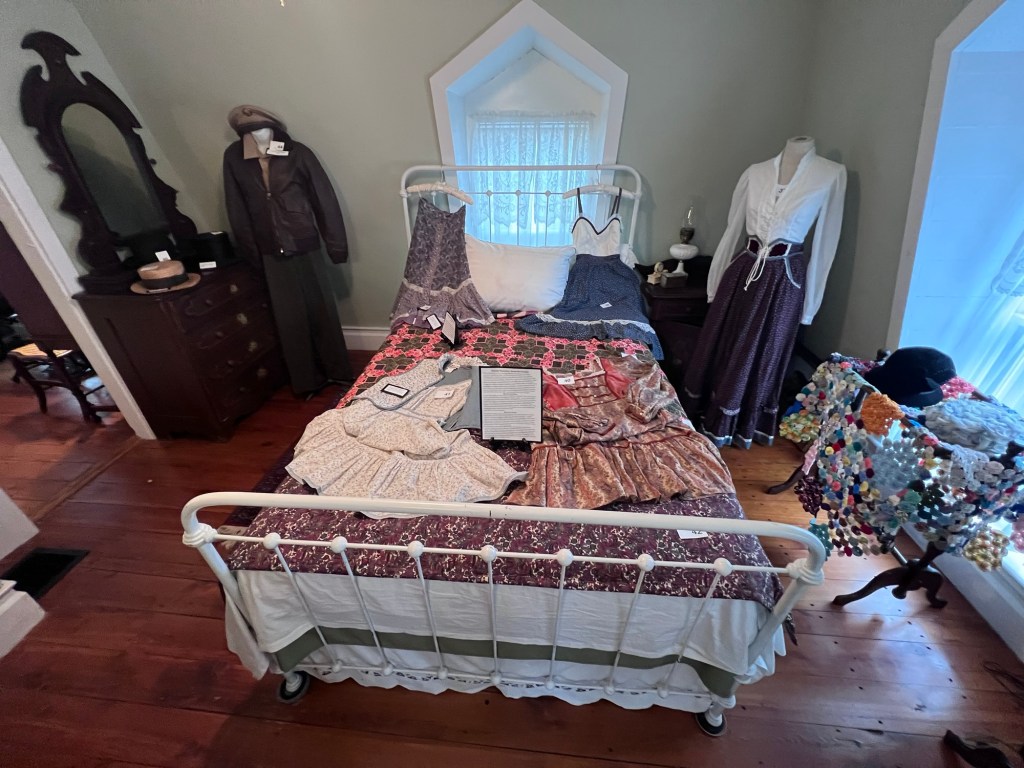
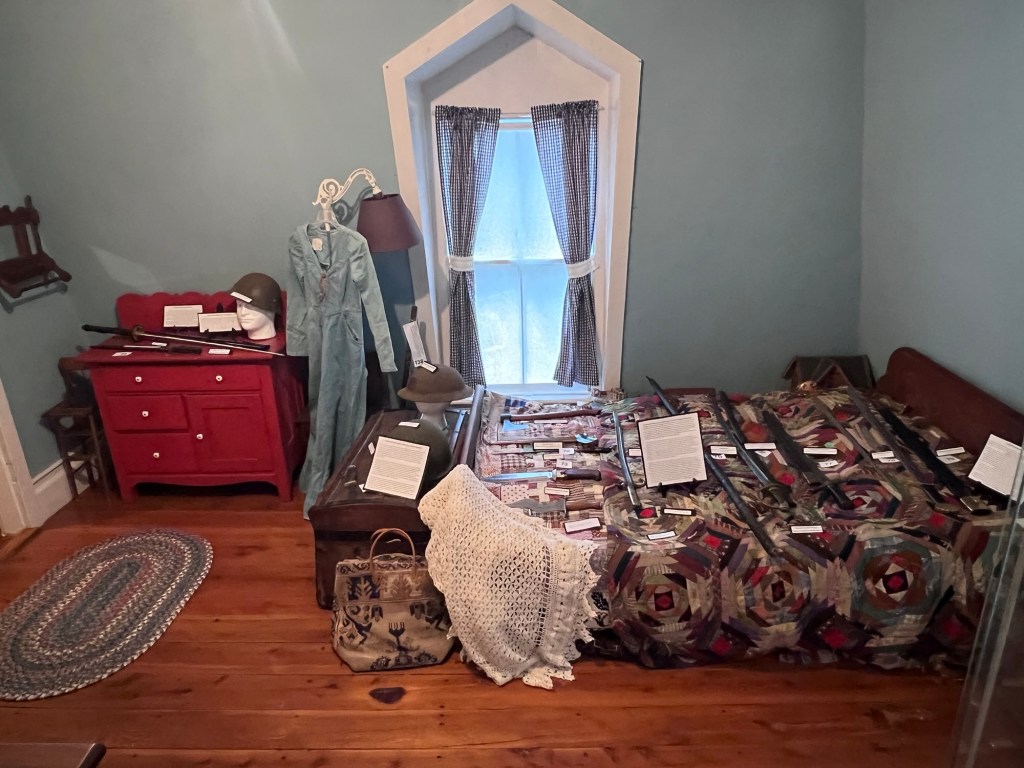
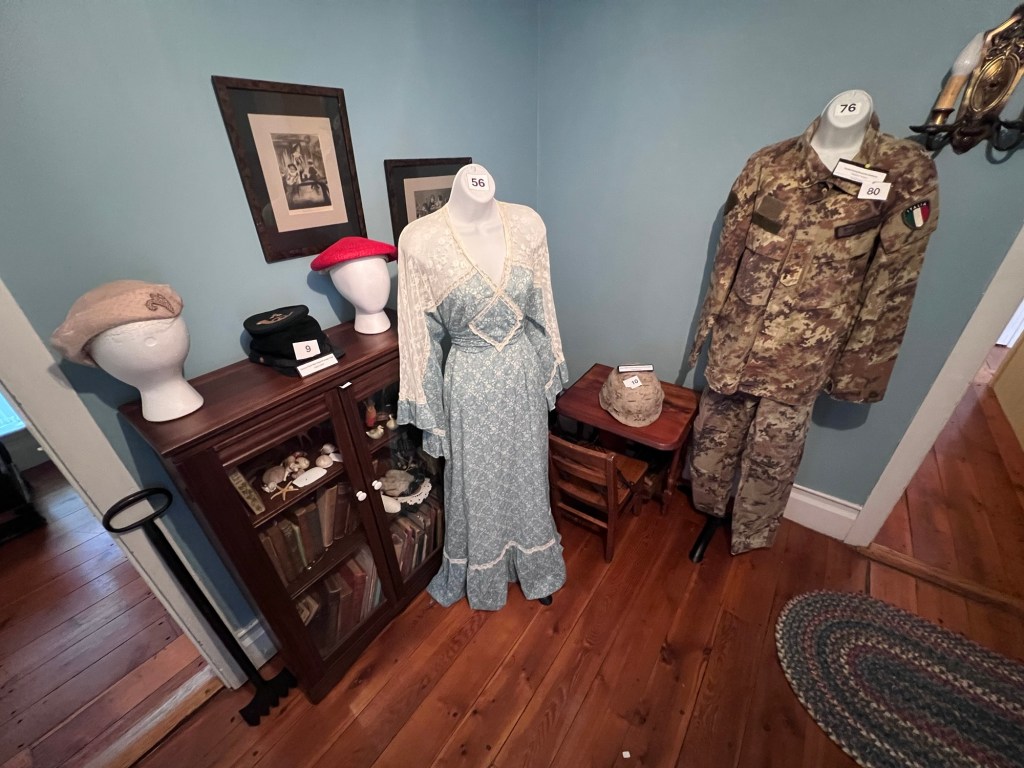
The upstairs bedrooms had a collection of textiles and Millinery
The three upstairs bedrooms had the continued collection of dresses and hats on display.
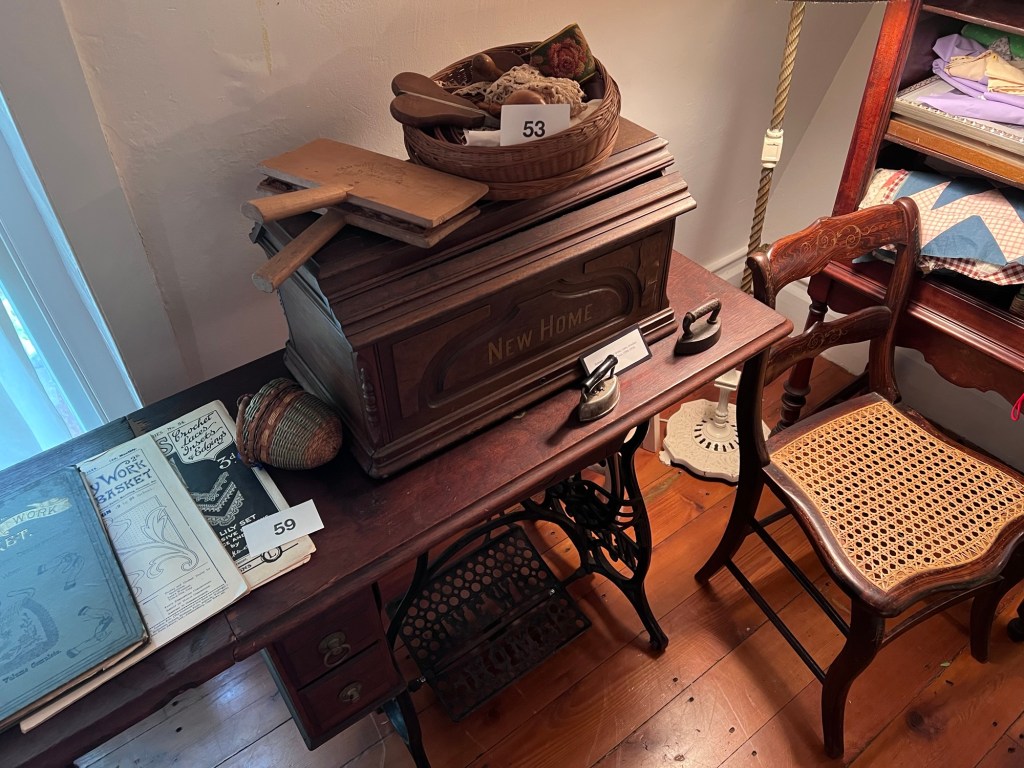
The antique sewing machine in the upstairs bedrooms
The Collections of Textiles upstairs
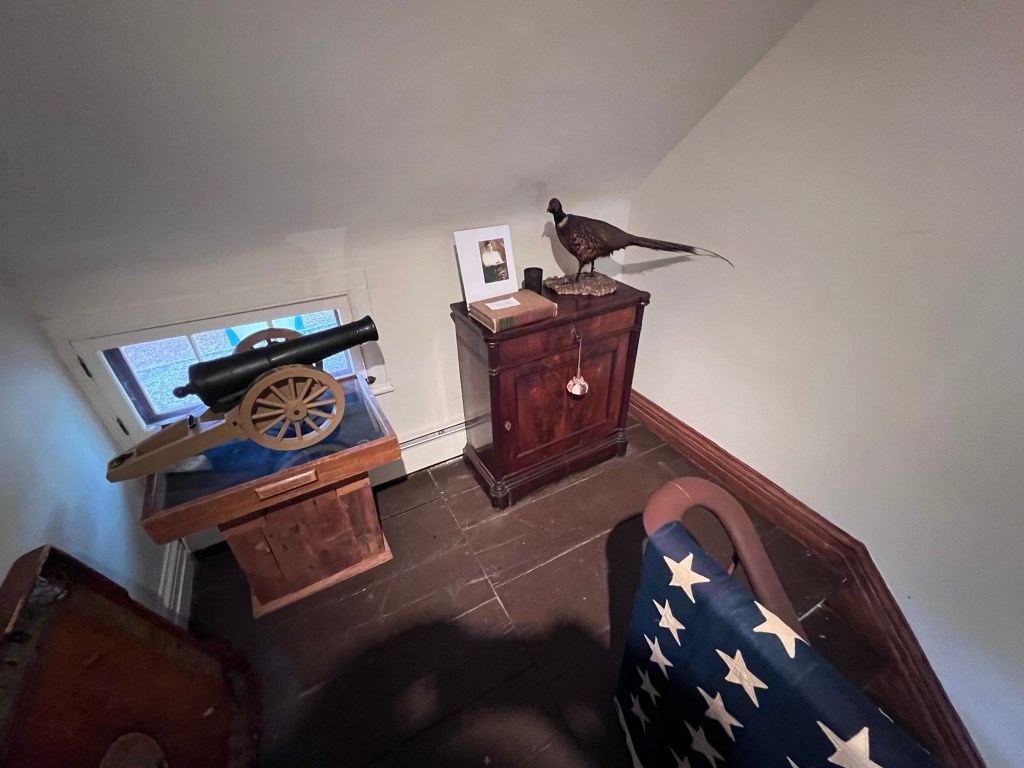
Collection of weapons in the bedroom
The collection of Costumes and Millenary
The wonderful little museum was packed with all sorts of wonderful things to see. Each of the rooms are decorated with vintage furniture and period decorations on top of the displays of clothing and textiles so there is a lot to see in the house.
The docents could not have been nicer or more welcoming that afternoon. The museum is only open at certain times of the month so you need to watch their social media to see when the museum is open.
The History of the Parsippany Historical and Preservation Society:
(from the Society website)
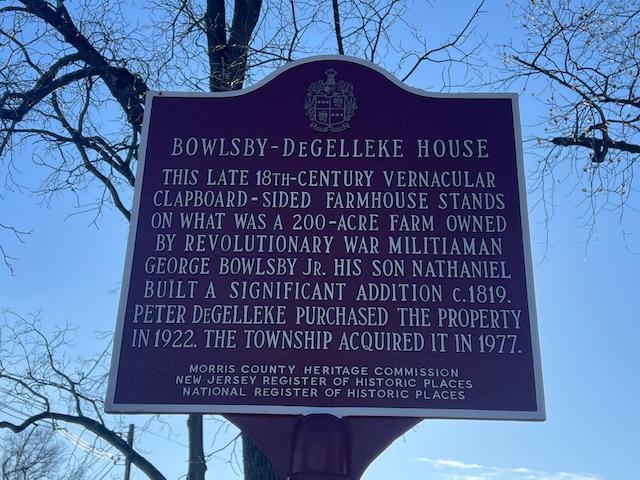
The Bowlsby / DeGelleke House is a one and a half story, clapboard-sided farmhouse set on a stone foundation. The house was built by George Bowlsby, Jr., c.1790. Originally constructed as a 3-bay façade, an 1819 2-bay addition to the right of the door resulted in a central entrance appearance. The porch was constructed in the Greek Revival style in the 1850 renovation.
A center hallway runs from the front door to the rear door of the house and contains a mid- Victorian open staircase to the second floor and stairs to the basement. On either side of the hallway are two interconnecting rooms. The left (west) side contains a front parlor with a simplified Greek Revival fireplace and a small back room. The right (east) side of the house contains a dining room and a kitchen. Original floorboards remain, with a replacement floor in the kitchen.
Three second floor bedrooms were added when enlarged in 1819. In c.1920, walls were added to create two more bedrooms. An existing front bedroom was changed to a bathroom. The kitchen was also modernized, but still utilized a hand water pump from a cistern in the cellar.
In 1977, the house was purchased by the Township from the estate of Alethea DeGelleke, to be used as The Parsippany Historical Museum. In 1978, the building was added to the State and National Historic Registers. Restoration was completed in 2008 with grants from the Morris County Historic Preservation Trust and the Township’s Open Space Program.
The historic marker for the house
Mission Statement
(from the Society website)
The purposes of the Parsippany-Troy Hills Historical and Preservation Society are to:
*Encourage an appreciation for, and an understanding of, the history of the Township of Parsippany-Troy Hills by holding meetings at which historical lectures, entertainments, discussions, and other programs are scheduled; by marking historical sites, roads, trails, and building; by publishing work concerned with historical research; by working with school administrators and teachers to encourage the study of local history, and by engaging in other appropriate activities; *to seek out, to collect, and to collate material which may help to reveal and illustrate the history of the Township of Parsippany-Troy Hills in terms of exploration, settlement, and development; * to cooperate with public and private agencies in providing for the preservation and for the display of historic sites and materials; * to conduct or encourage archaeological investigations in the Township of Parsippany-Troy Hills; * to hold title to real and personal property of historical interest of significance that the Society may acquire; * to hold title to moneys or instruments acquired for the purpose of furthering and/or maintaining the Society’s properties. History of the Society
The Society was incorporated on June 8, 1998. Since that time the Society has worked toward the mission of preserving and interpreting the Township’s history and historic structures. The Society works with the Township to open the Township’s historic sites, including the Parsippany Museum, also known as the Bolwsby / DeGelleke House, the Smith / Baldwin House, Old Littleton Schoolhouse and the Forge Pond and Dam property. The Society also sponsors programs that highlight the history of the Township and are held at one of the Townships historic properties.
The Society is a 501(c)(3) non-profit organization.
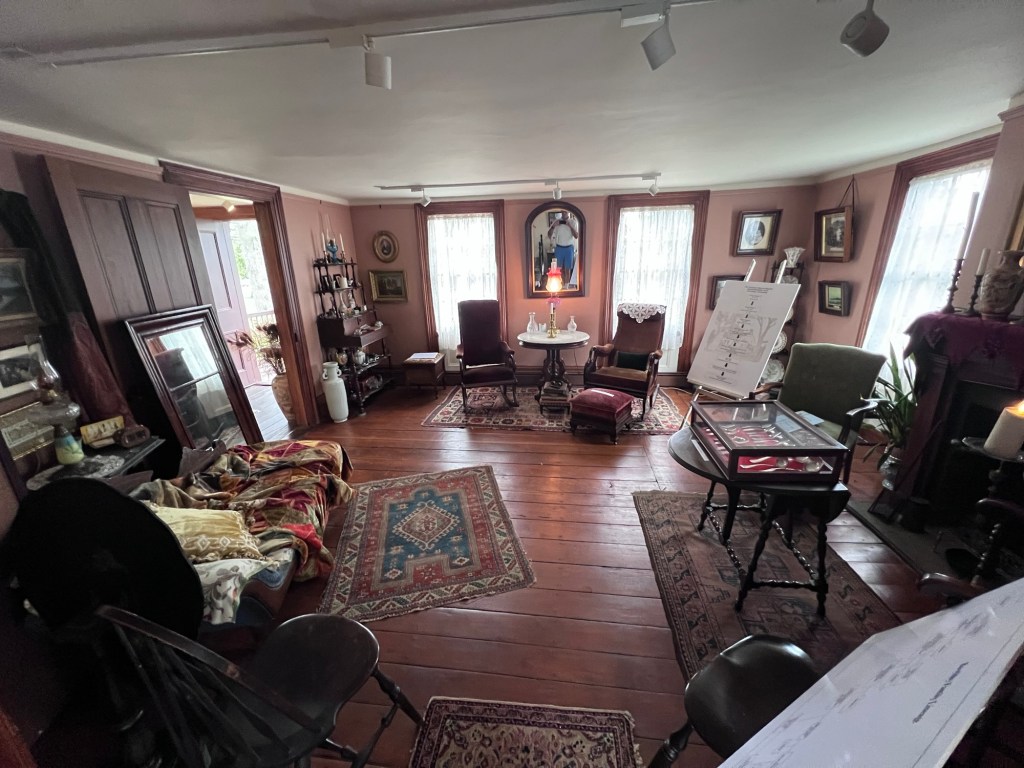
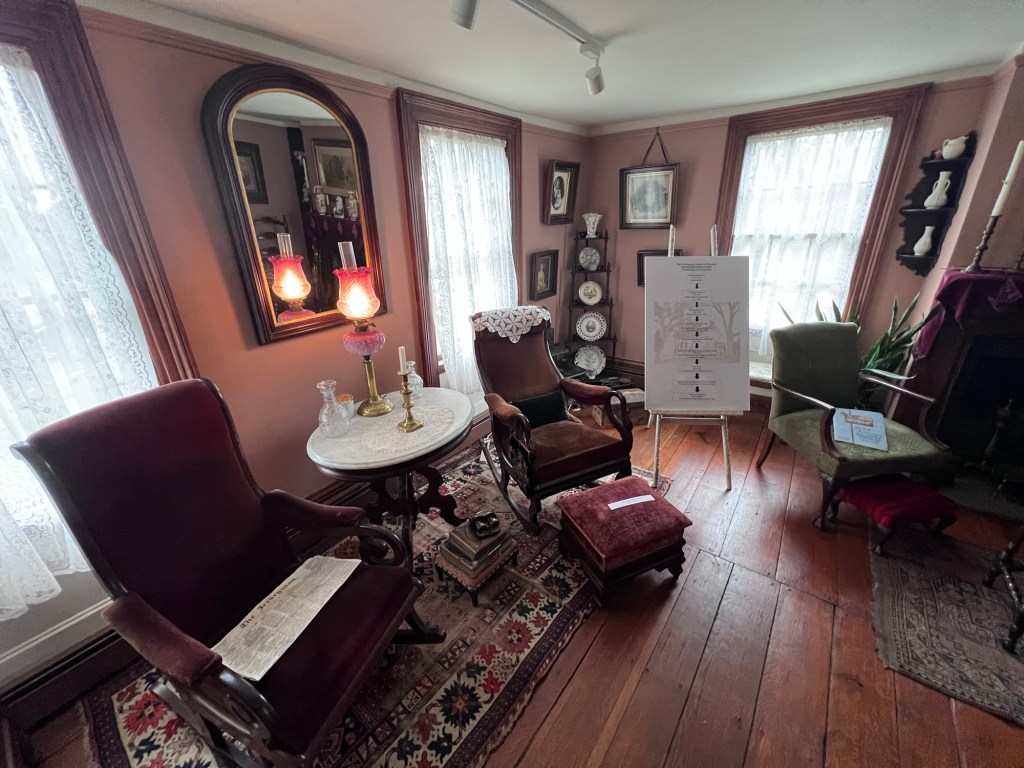
The Living Room of the house
I visited the Bowlsby-DeGelleke home during Morris County’s Pathways tour recently and discovered an interesting historic home that had been in the Bowlsby family for many generations while farming hundreds of acres of land in this area. The tour guide explained that while the house may have been small, the influence of this family was felt around the community.
The front sitting area
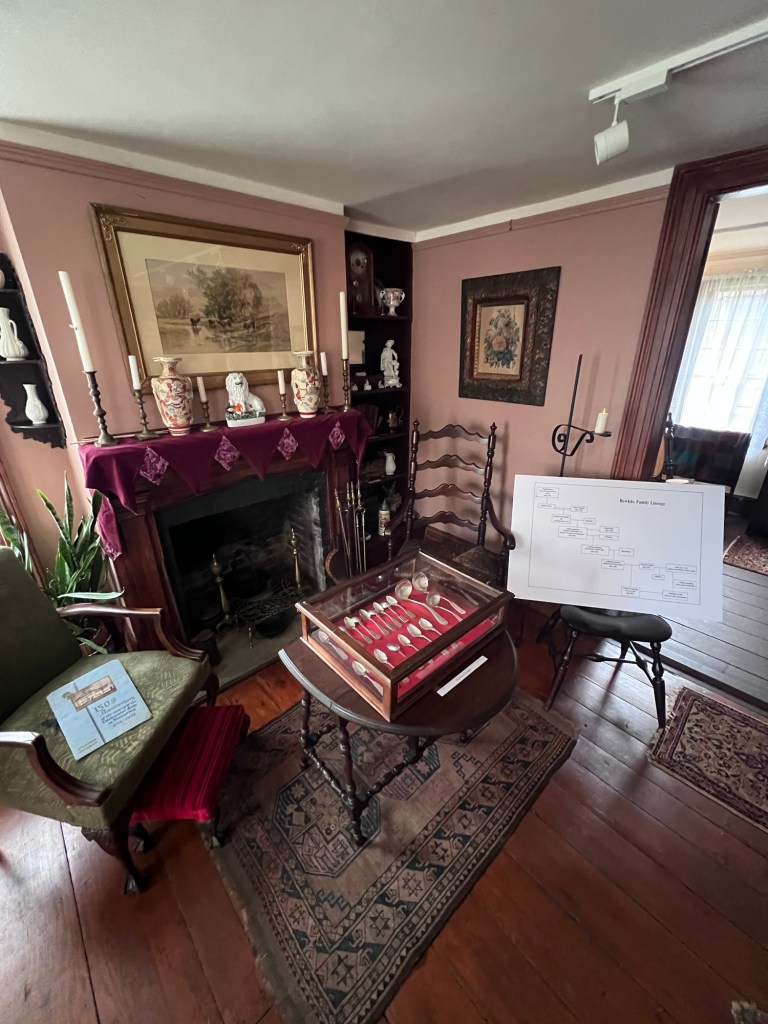
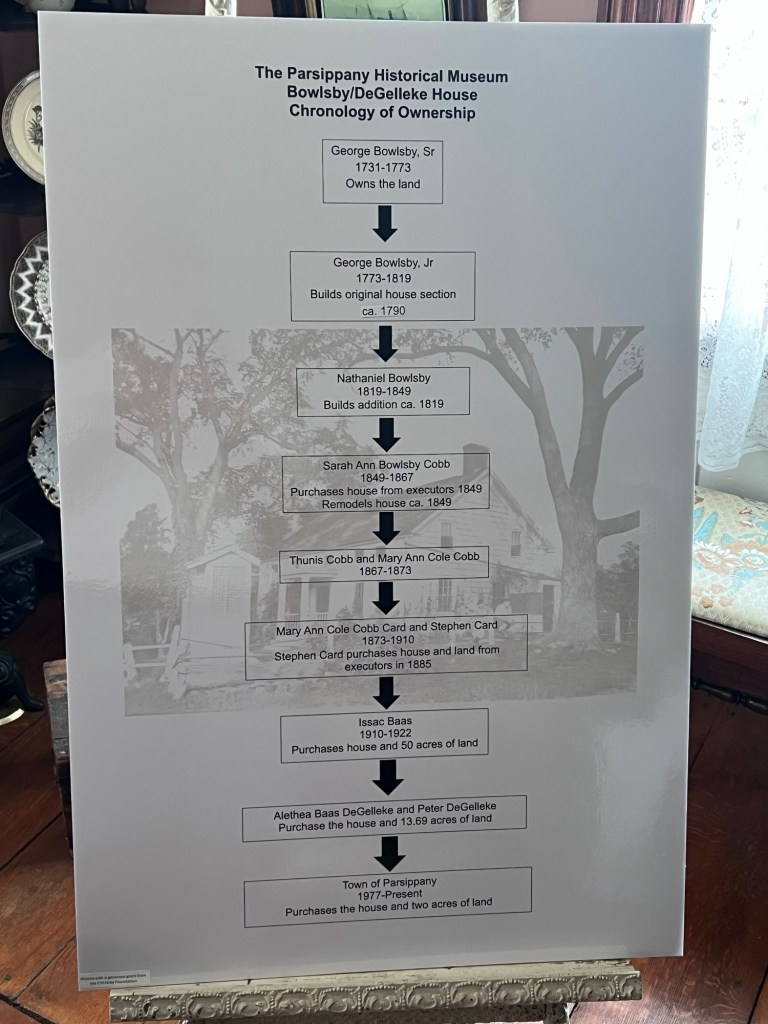
The fireplace in the room with silver collection and the family tree
The Bowlsby Family tree
You could see by the family tree that house and land stayed in the family from the mid 1700’s to 1910, with the farmland being broken up with each generation inheriting a piece of the overall farm.
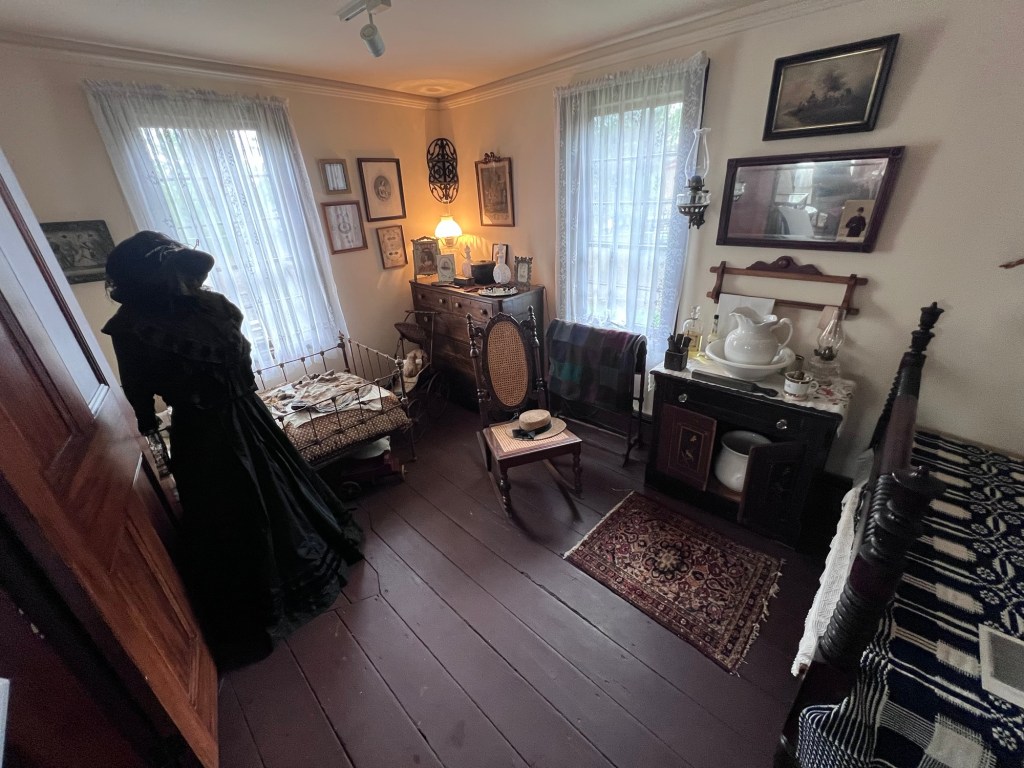
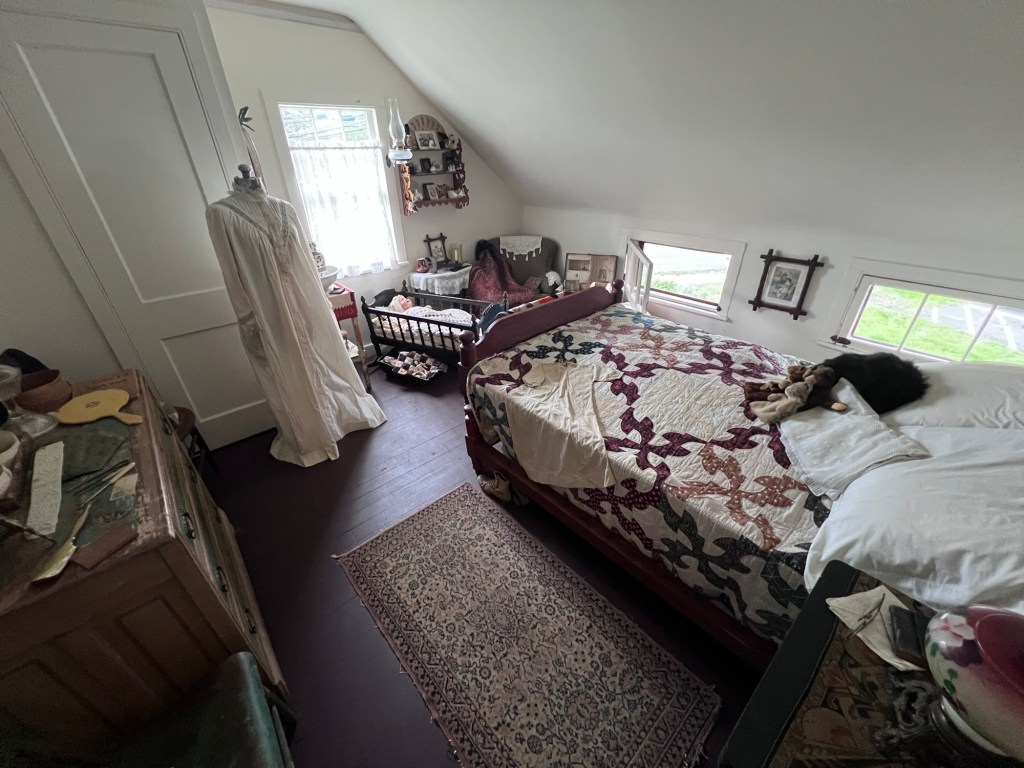
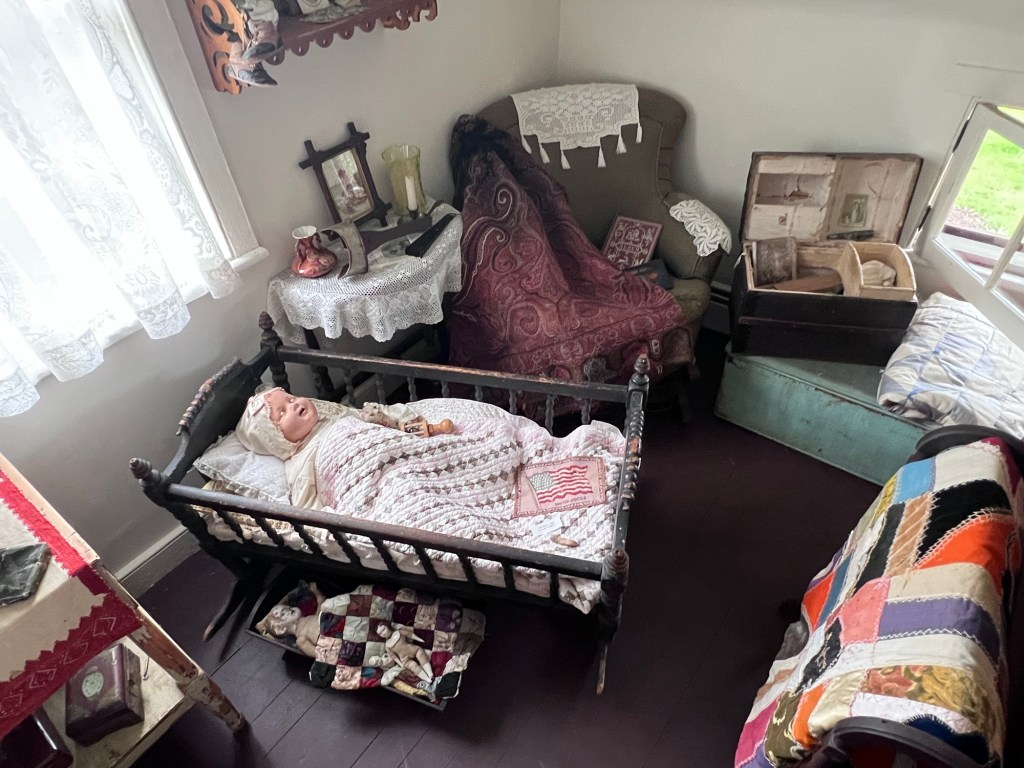
The back bedroom and nursery
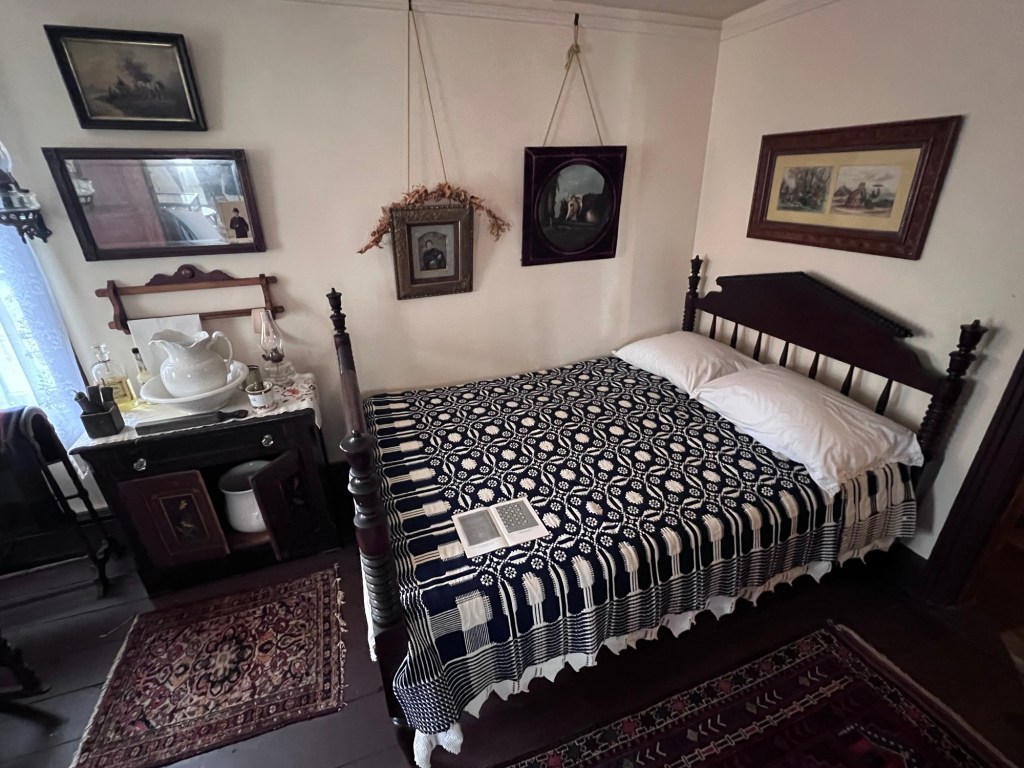
The back bedroom on the first floor behind the Living Room
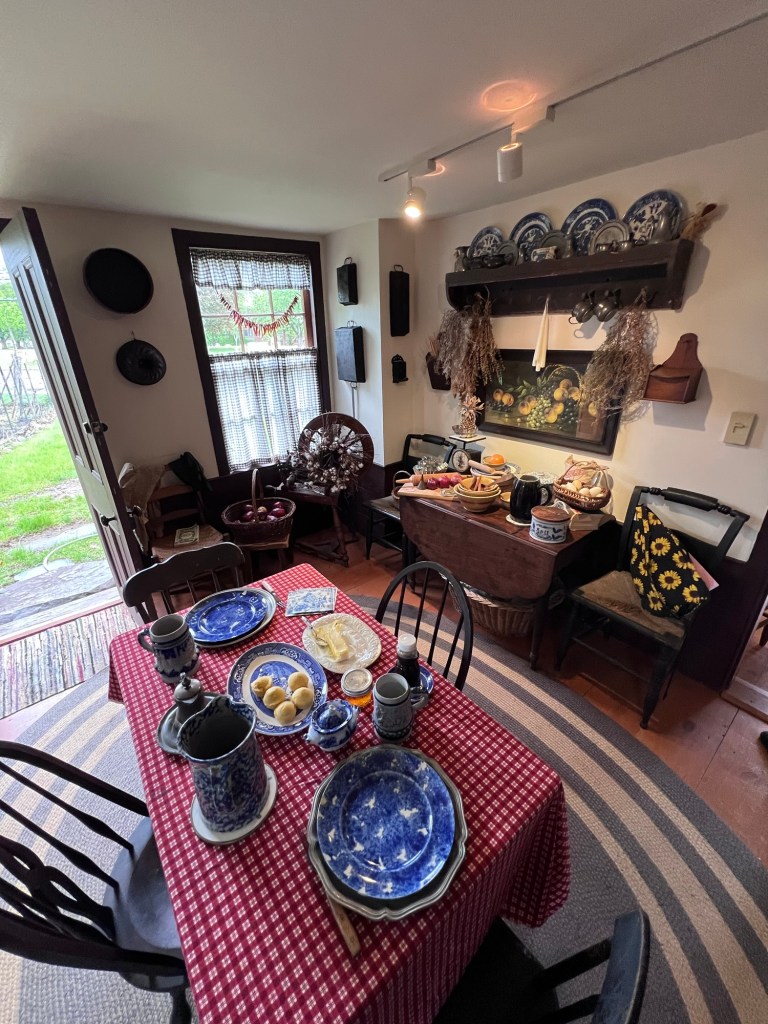
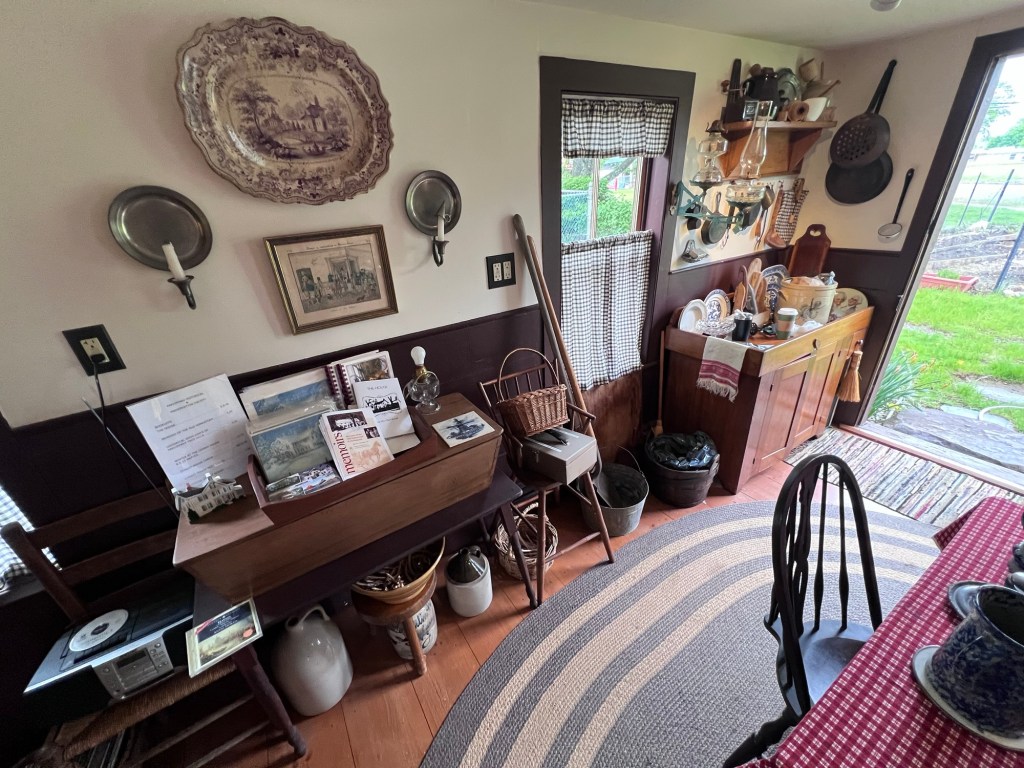
The kitchen in the back of the first floor
I thought they did a wonderful job decorating the kitchen to reflect different time periods.
The kitchen wares and items needed for everyday life
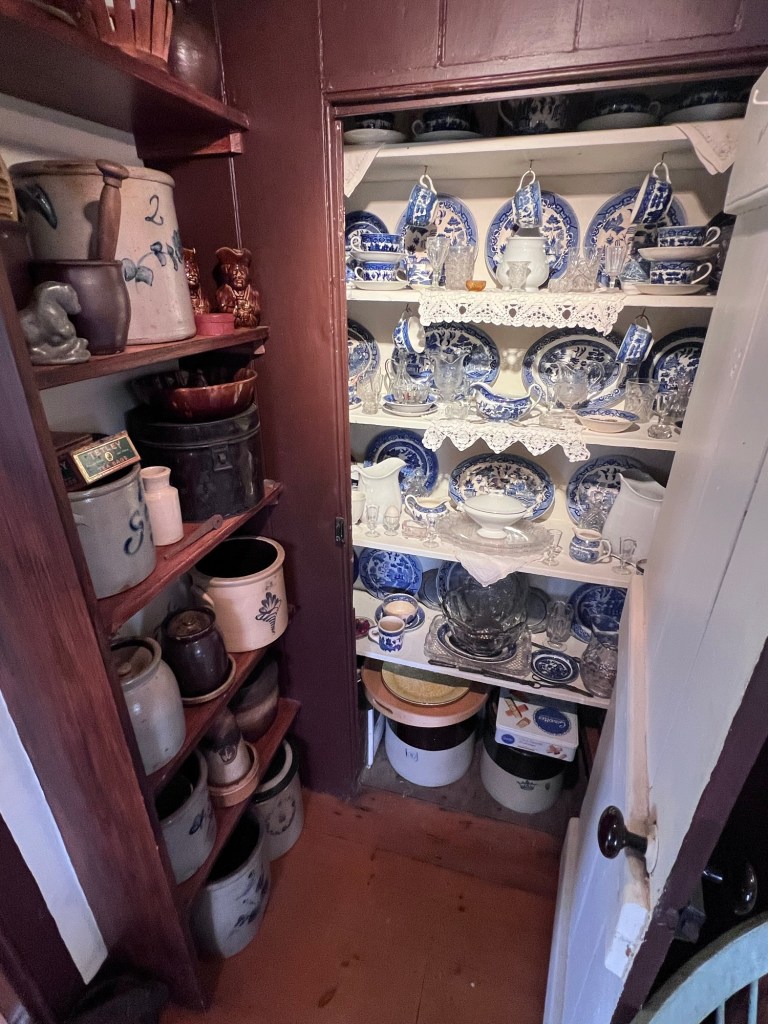
Family China and crockery in the kitchen
The China pattern shown here was not the family’s but close to what the family would have owned and entertained with for meals.
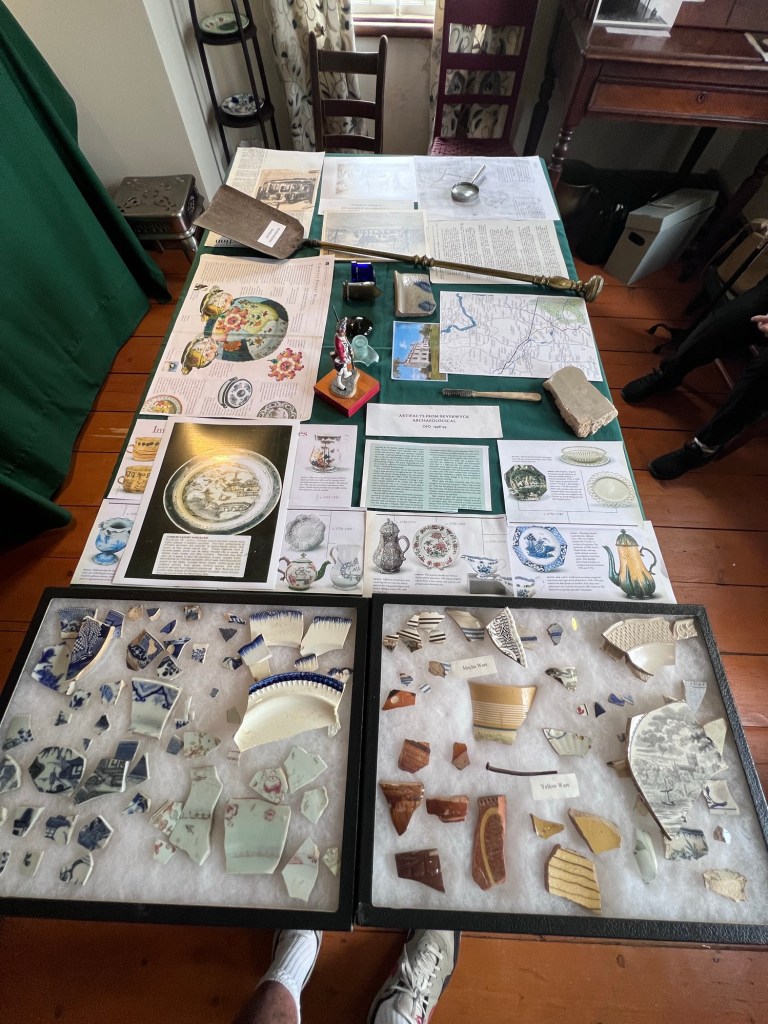
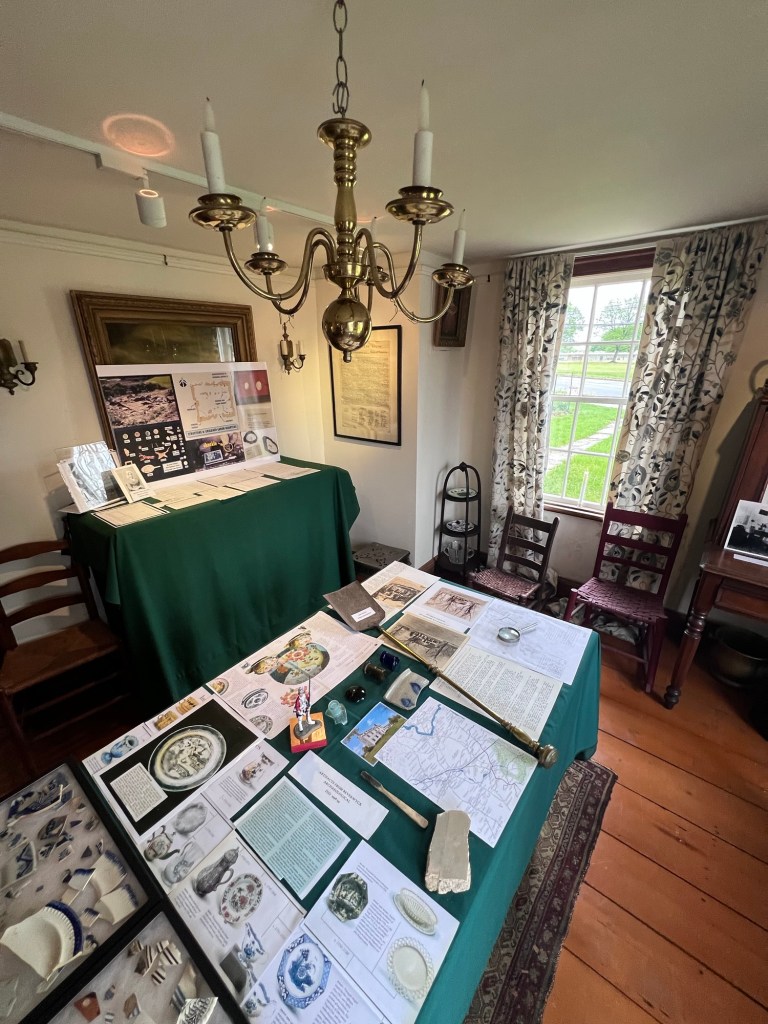
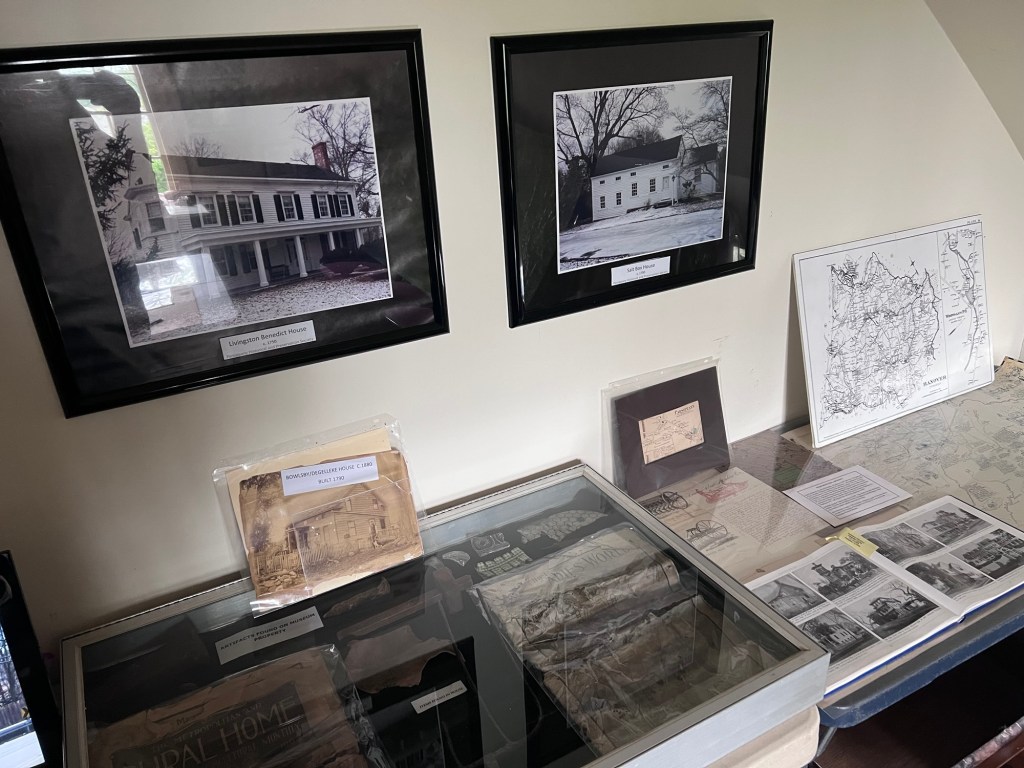
Artifacts found on property and at a dig site at an old mansion in town
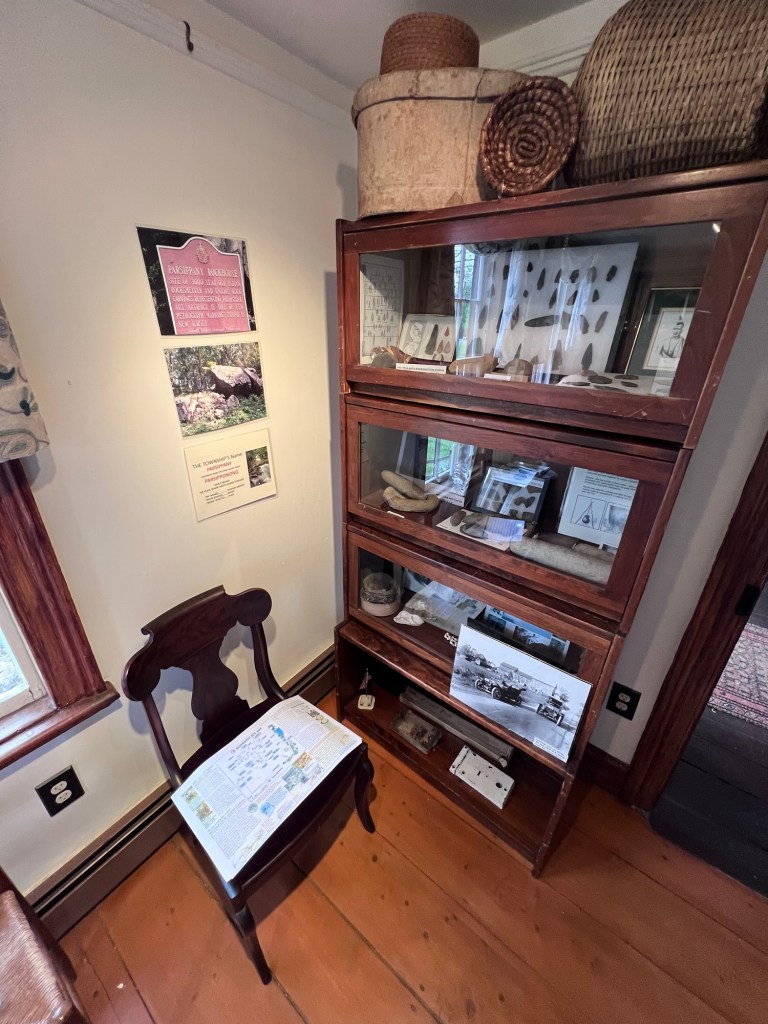
Native American artifacts and weaved baskets from the local area
Information on the local area and items from the dig
The second floor Children’s room display
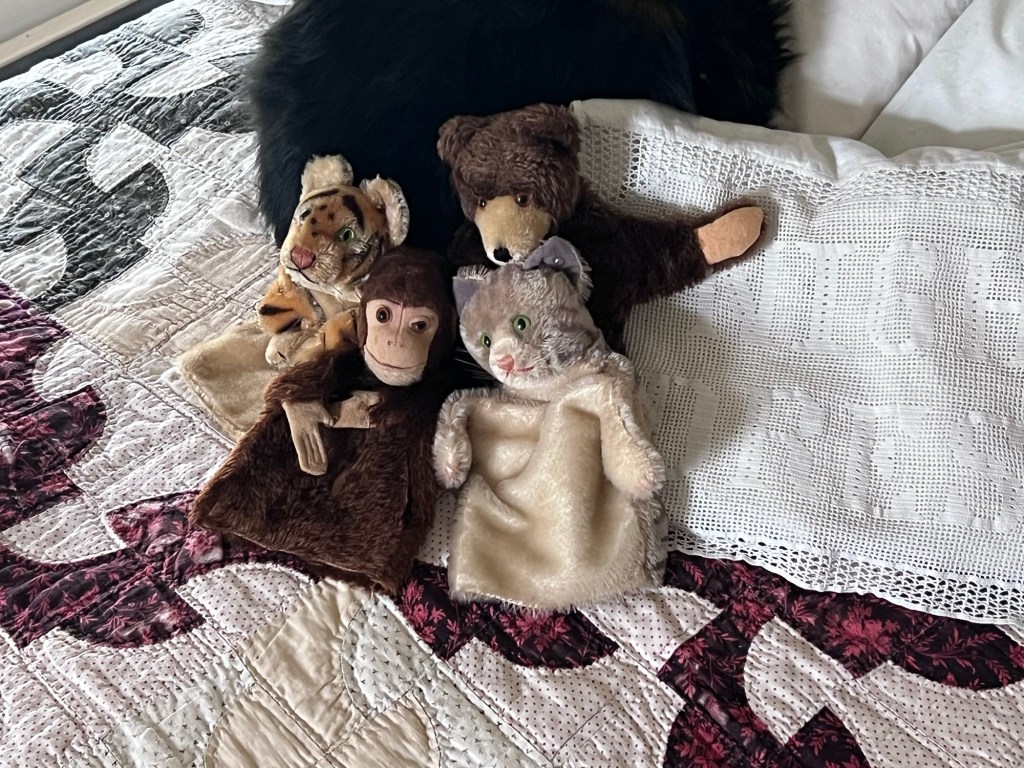
I loved the Children’s Room with the vintage toys and furniture. This interpretation would have been for a wealthy or upper middle class child. I loved the selection of dolls and games throughout the room.
The toys and doll display in the second floor room
The toys on display in the second floor room
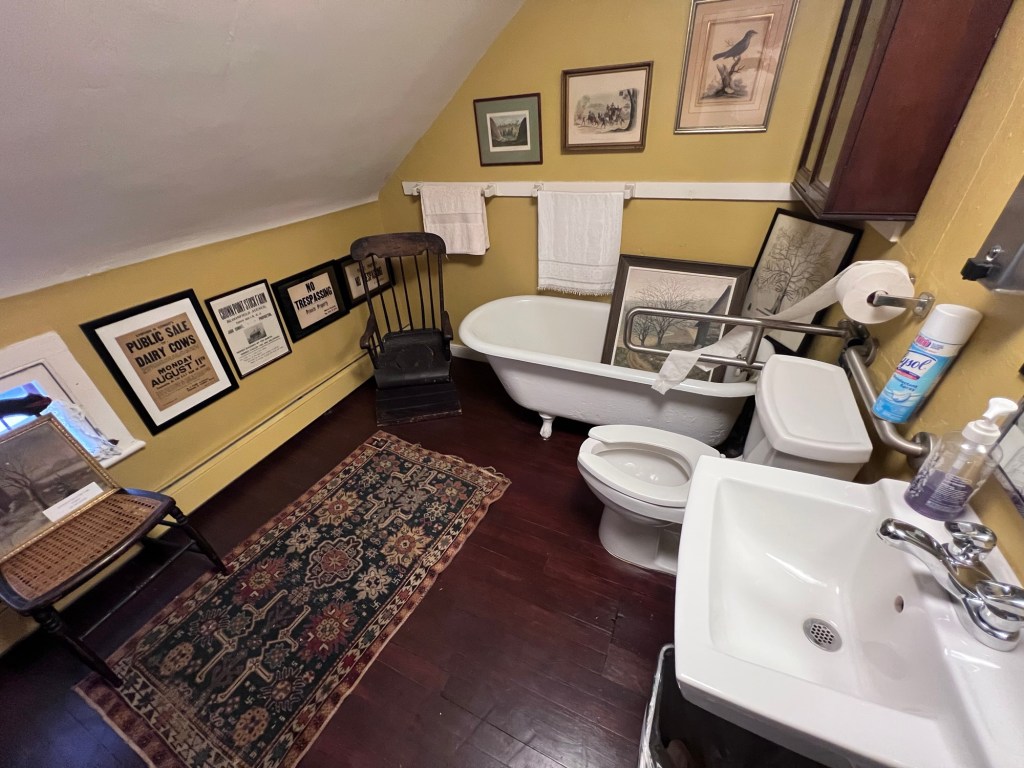
The second floor bathroom
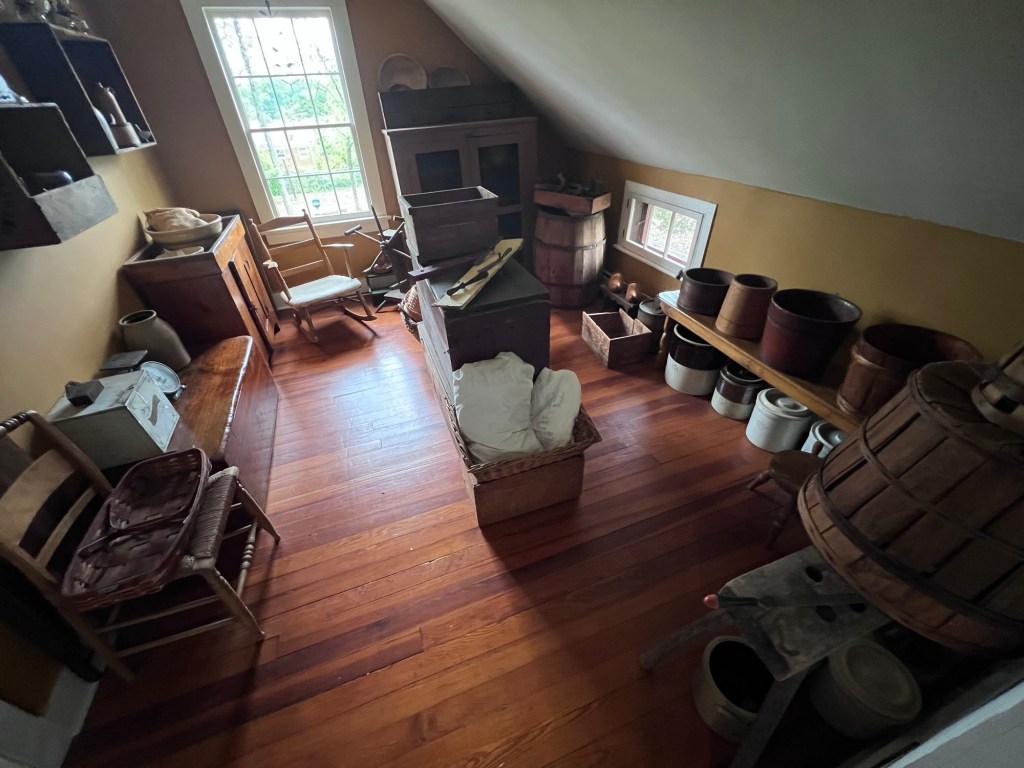
The second floor farm items of baskets and pots. Item used on the farm.
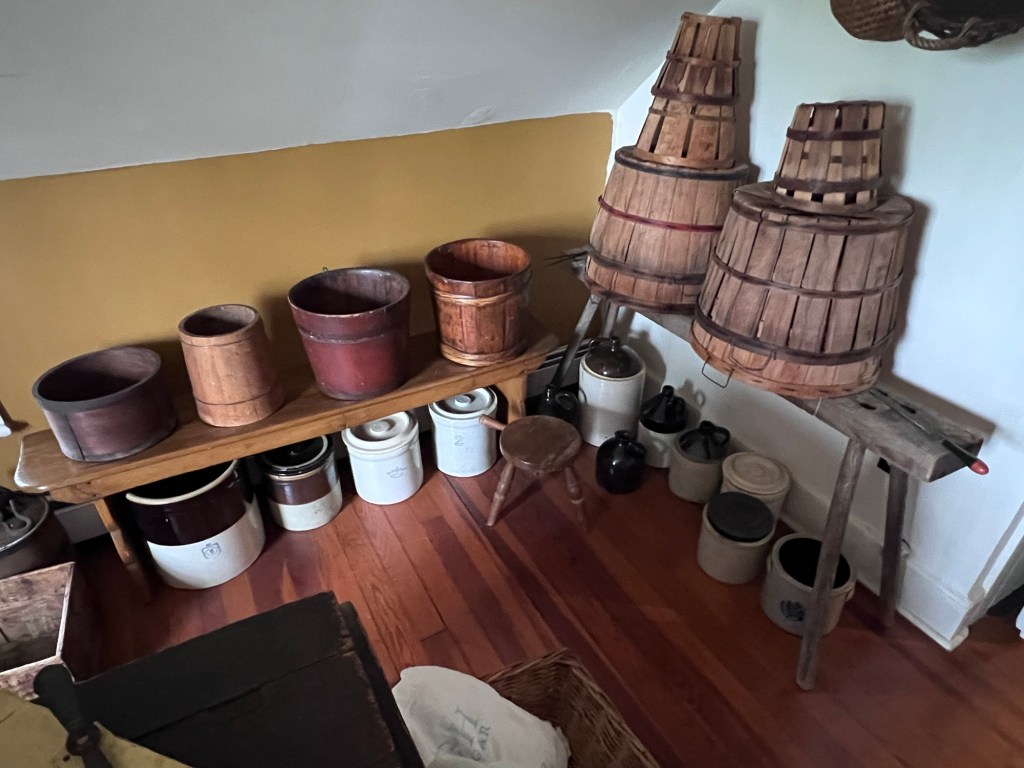
The baskets and crockery used on a farm
This display reminds visitors that this was still a working farm until up to about a hundred years ago.
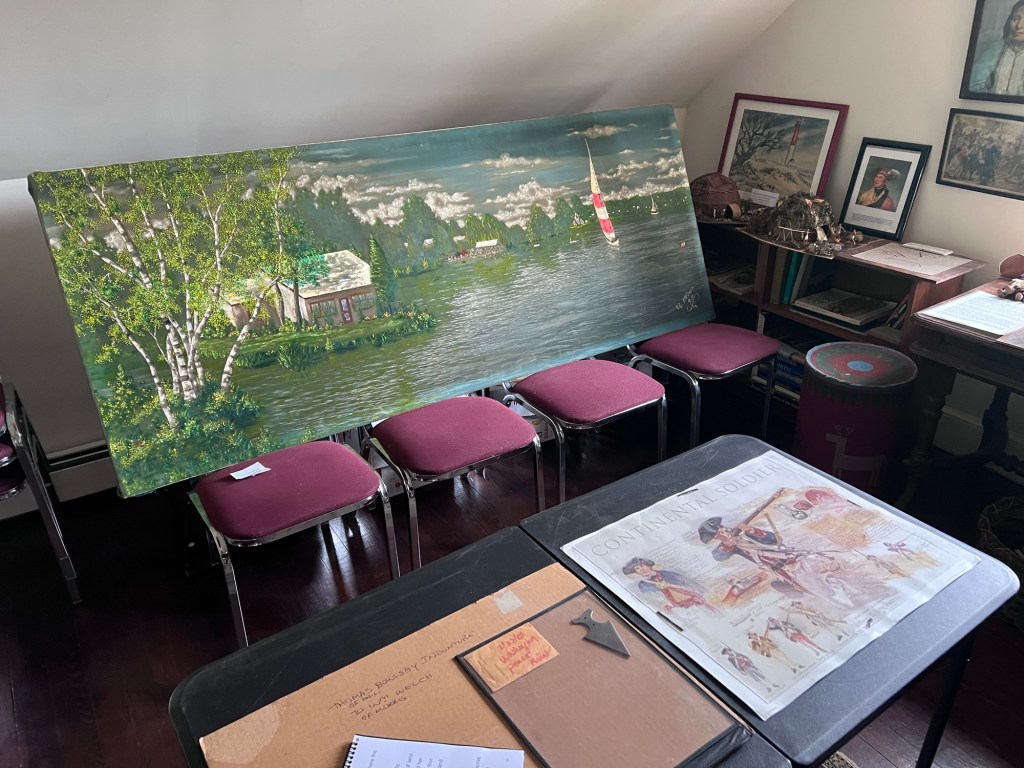
Paintings and artwork on display in the house
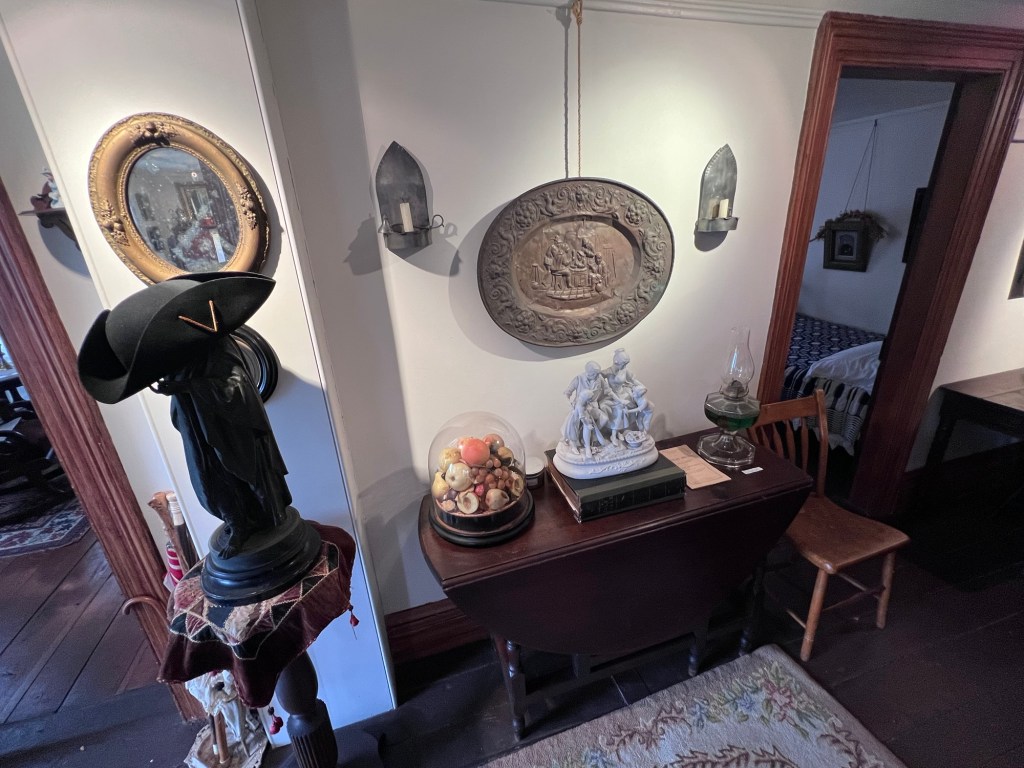
Artifacts in the hallway from the first to the second floor
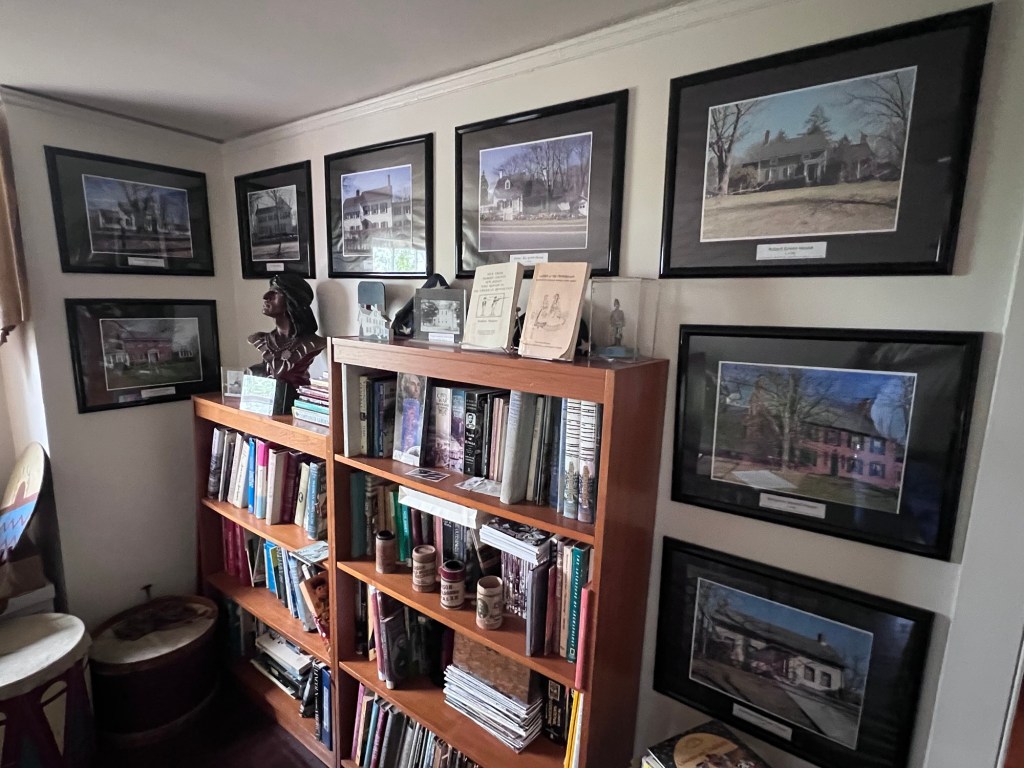
The display of local historical homes and their history
Local historical homes
Artifacts at the bottom of the stairs in the foyer as I left
The house had been in the family for almost five generations until it had been sold to another family who in turn owned it for another set of generations. The memory of this family still lives on in this wonderful museum.



 Visiting a Museum: The Unique, Unusual, Obscure and Historical