Category: Small Museums and Galleries in New York State

Fort Delaware                                                      5516 NY Route 97                               Narrowsburg, NY 12764

Fort Delaware 5516 NY Route 97 Narrowsburg, NY 12764

Fort Delaware

5516 NY Route 97

Narrowsburg, NY  12764

(845) 252-6660

http://sullivanny.us/Departments/ParksRecreation/FortDelaware

Open: Last Weekend in June until Labor Day Weekend (repairs will be made on the facility after that until next year) Friday-Sunday 10:00am-5:00pm (last tour at 4:00pm) and Monday (Labor Day) 10:00am-5:00pm

Fee: Adults $7.00/ Seniors (62+) $5.00/ Children 4-12 $4.00/Veterans with ID and Children under 5 with adults Free. Special rates for school groups and group tours

My review on TripAdvisor:

https://www.tripadvisor.com/Attraction_Review-g48227-d3386995-Reviews-Fort_Delaware_Museum-Narrowsburg_Catskill_Region_New_York.html?m=19905

 The front of the recreation of Fort Delaware

Fort Delaware is a recreation of an old fort that used to be located on the Pennsylvania side of the Delaware River. It is a great place to take children who like to learn from ‘hands on history’ and watch Blacksmiths, Candle makers and farmers wives perform chores and show the way of life at a time before the Revolutionary War.

Fort Delaware historic sign

According to one of the actors I was talking to who was the Blacksmith, this type of fort would not be one people would have lived in full time. It was meant more for when the Native Americans would have attacked the settlement, which he said only happened once and for the most part the settlers and the Native Americans got along well.

As you tour the fort, you will see all the things that were done to support the settlement from  raising poultry and cows, candle stick making, the process to weave wool and flax from the raw materials, to weaving and spinning yarn to the process of making clothes and the work of the Blacksmith in making nails, axes and shoeing for horses.
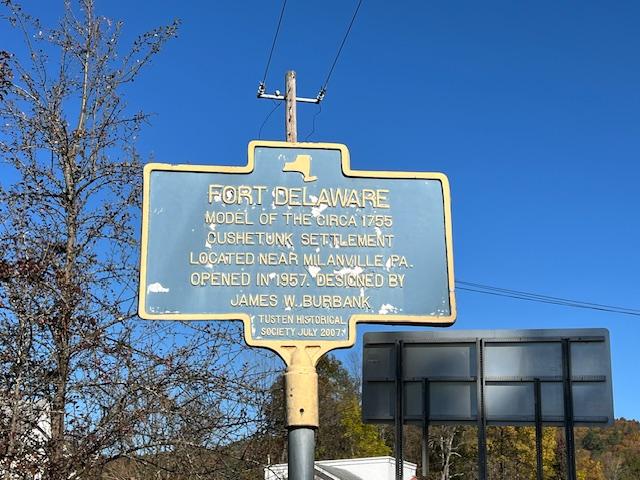
The historic marker of the fort

Inside each of the little cabins, it will show the life inside and outside the fort at that time period including living quarters, a small school, workman’s shops and where the members of the fort did their business for trade. You can also walk the outside  decks that overlook the river to see how the gunneries worked and where the munitions were held.

The front of the fort being decorated for Halloween

You can see the entire fort in about an hour and for small children, I think they would find it fascinating. For teenagers, unless they like history, I don’t think they would find it that interesting.  Leave yourself about an hour for touring.

Fort Delaware III

The inside living quarters


History of the Museum:

The Fort Delaware Museum is a recreation of the original fort and was built in 1957 by James W. Burbank, the second Sullivan County historian. Burbank was fascinated with the history of the settlement which at the time was called Cushetunk. He was influenced by the Davy Crockett craze at the time in the 50’s and wanted the fort to be a money making venture. He added things like pillories and stocks which were popular at the time. He ran Fort Delaware from 1957 to 1970 when he sold it to the County. The County of Sullivan runs it under the Department of Parks, Recreation and Beautification (History of Fort Delaware-RecordonLine.com).

The sign that welcomes you to the fort

History of the Fort:

(From the County of Sullivan Parks & Recreation Department)

Much attention is paid to the people who settled the main cities of New York but those who decided to take on the wilderness are often forgotten. At Fort Delaware, the daily life of the wilderness settler is explored through exhibits, crafts, demonstrations and tours. The Fort is a reconstruction of the original frontier settlement of the Cushetunk settlement on the Delaware River, with its stockades and stout log homes, which offered the only protection from hostile Native Americans and later English troops. The Fort consists of a small settlement entirely surrounded by high log walls or stockades. During your visit, you will see the blockhouse (where arms and ammunition were stored), settlers cabins, a spinning, weaving and barn loom area, blacksmith shop, candle-making shed and much more. Period-dressed interpreters demonstrate 18th century life skills, including: cooking, baking bread, animal care, dipping candles and the firing of a 1/2 pound British swivel cannon.

Background of the Fort:

Fort Delaware is a representation of the first white settlement on the Upper Delaware River called Cushetunk. Today’s Fort represents the development of the settlement over a thirty year period. The original settlers were farmers who came primarily from Central Connecticut and were of English descent. They were searching for more land because it had become too crowded in Connecticut to suit colonial farming techniques. A group of Connecticut men formed “The Delaware Company” and became proprietors. In the traditional New England way of land distribution they owned the land and either sold or leased it to farmers moving into this frontier, these proprietors moved their families to the frontier and never sold their land. The Delaware Company purchased land from the Lenape Indians, with the first deed signed in 1754.

The land purchased was a 10 mile long strip along both sides of the Delaware River (situate in modern day New York and Pennsylvania). Procedures for filing land claims were very different in the 18th Century. Also at that time, the States of Pennsylvania and New York were engaged in a boundary dispute , disputes of other colonies really didn’t matter much to those early Connecticut farmers, so they claimed the land for Connecticut! They called their community “Cushetunk”. To those white settlers, it sounded like what the Lenapes were calling the place. KASH-ET-Unk or “a place of red stone hills”.

By 1760, there were thirty cabins, a gristmill and a sawmill. Each spring saw the arrival of more people willing to hack a new life out of the frontier. These people faced hardships they probably never conceived of in Connecticut. Indian attacks, the remote wilderness, rough winters and the possibly that farming this land would not sustain them. They came into the area during the French and Indian Wars (1755-1763). In 1761, a stockade was erected around three homes to serve as protection for the entire settlement against attack. In 1763, the settlement was attacked by a Lenape war party. The lower part of the settlement was destroyed with no known survivors. By the time the war party moved up the settlement, people had gathered into the Fort for protection. The attackers were held off with two casualties among the settlers.

It is this Fort, which is represented today at Fort Delaware even though it was known as “the lower fort” during the 18th Century. Another Fort was situated in the upper part of the settlement. The Fort was never used as a Military post, only for civilian protection. In 1764, a rafting business was introduced into the community and became very successful. It brought cash into the community on a steady basis and Cushetunk experienced a lot of development. In the years between the French and Indian Wars and the American Revolution, the fort was abandoned as the threat of Indian attack decreased and people began building what they called “fair houses”. The period of the American Revolution (1775-1783) was a turbulent time for the people of Cushetunk. Generally, the inhabitants were “Tories” (or those who were loyal to the Crown). However, there were also a handful of patriots or Whigs as well.

As time went on neighbors became hated enemies. Many residents of Cushetunk took up arms for the British and Continental armies. Some fought with local militias. In some instances families were torn, brothers fighting on opposing armies. There were many occurrences in the settlement of neighbors (who once depended on each other for survival) fighting, looting and even murdering each other. Some of the Patriots from the settlement fought not far from their homes at the Battle of Minisink on July 21, 1779. After the Revolution, the Patriots returned victorious to reclaim their land and many loyalists left to settle in Canada. Today the descendants of these early settlers can still be in the area.
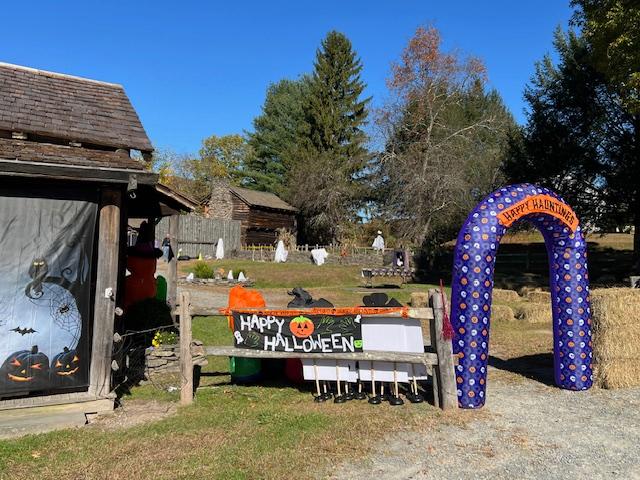
The fort being decorated for a Halloween event

(This information on the history of Fort Delaware and the settlement was taken from the County of Sullivan Department of Parks and Recreation and I give them full credit on the information. Please see the attached website for more information on the Fort).


Firefighting Museum of Dutchess County                             P.O. Box 2435                                                                      Poughkeepsie, NY 12601

Firefighting Museum of Dutchess County P.O. Box 2435 Poughkeepsie, NY 12601

Firefighting Museum of Dutchess County

(Antique Firehouse & Firefighting Museum)

P.O. Box 2435

Poughkeepsie, NY  12601

https://dchsny.org/firemuseum/

https://www.facebook.com/DutchessCountyFirefightingMuseum/

My review on TripAdvisor:

The new home of the Dutchess Firefighting Museum at the Dutchess County Fairgrounds

I recently visited the Dutchess County Fair in August of 2024 and discovered that they finally built the new Firefighting Museum of Dutchess County in the Century Village complex of the fairgrounds. This will only be open when the fairgrounds are open. It replaced the tent display that had been part of the fair since 2022.

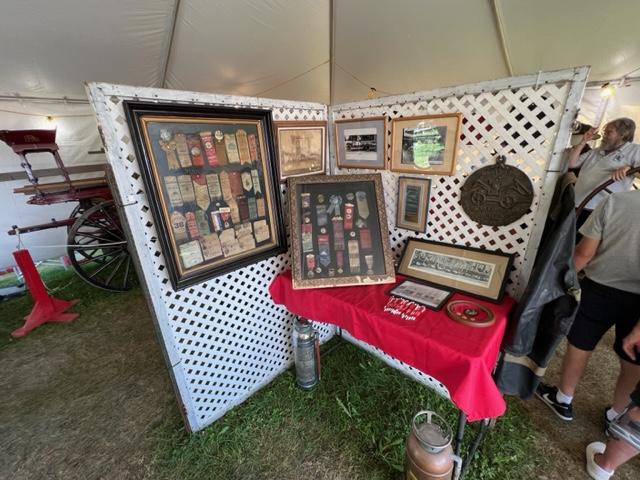
The old tent museum that was a temporary display

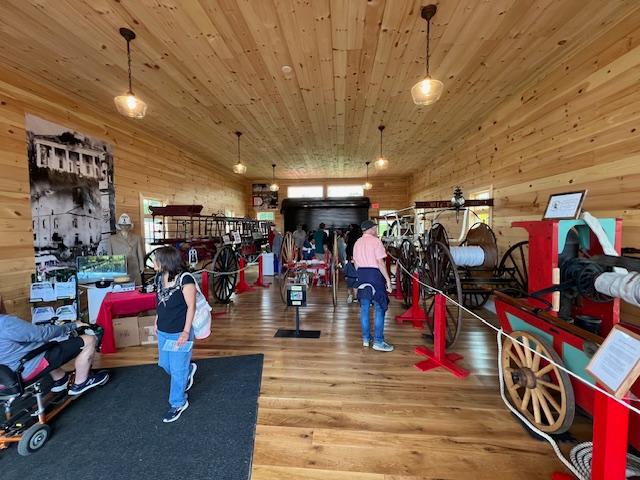
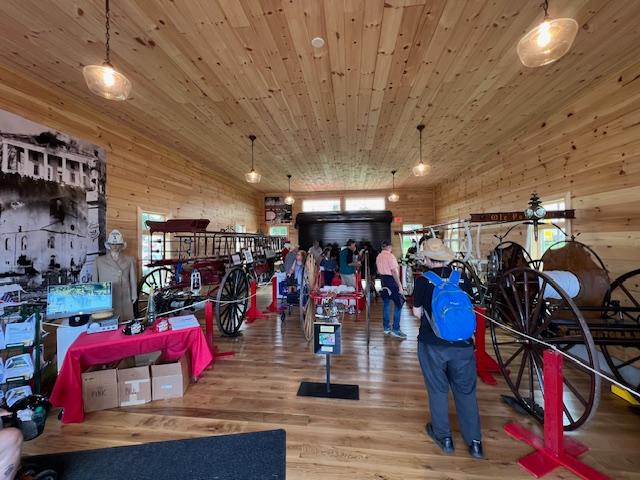
The Firefighting Museum of Dutchess County (Dutchess County Firefighting Museum) is finally open and houses all the memorabilia and artifacts for fire companies all over Dutchess County. I met fire fighters from companies all over Dutchess County who are dedicated in showing the history of their departments and of fire fighting over the years. The museum had just opened in August 2024 so all the displays have not been mounted yet. They should be ready for future events at the fairgrounds.

The firefighting equipment of the museum visited by many firefighters from the area and their families

The Dutchess County Fairgrounds Management had proposed to build them a new building on the Fair Grounds with the stipulation that it remain open when the fair grounds are being used and closed when they are not being used. It will be part of the Century Museum Village & Collectors Association to include a reproduction of a late 19th Century firehouse and museum of firefighting memorabilia.

Firefighting artifacts at the front of the museum

The Parade Celebration cart with uniform for parades.

Firefighting artifacts at the new museum

The antique firehouse will join the Pleasant Valley Railroad Station, the Mount Ross Schoolhouse, the Washington Hollow Fair Judging Gazebo and the Century Museum.

Dutchess County Firefighter Museum II

Dutchess County Firefighters Museum logo

The new museum has an interesting combination of equipment, medals, horns and firefighting objects from the 1800 and 1900’s. It really is an interesting way to see how firefighting from the past relates to today and how much really has not changed. There were three different pieces of equipment on display: an old Ladder Truck from the 1890’s, a pumper from 1902 and an old hose bed that must have been around 1896.

The Pine Plains FD Ladder Truck

The old pumper on display

The handheld hose bed

There were old fire horns used long before traditional fire whistles and modern pagers, firefighting ribbons and awards, old buckets and hoses for moving water and lots of pictures of old fires. The members were explaining to me that they take the objects out at all sorts of town and county functions to promote the museum.

Old Fire Medallions from the old fire insurance days when these were placed on the houses

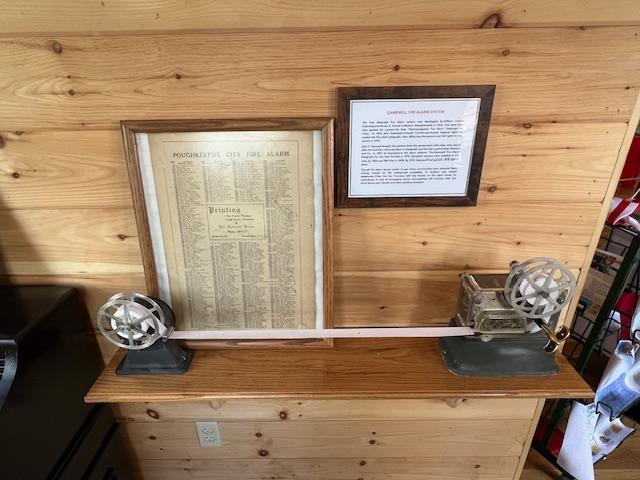
The roll call of fire fighting in Poughkeepsie, NY

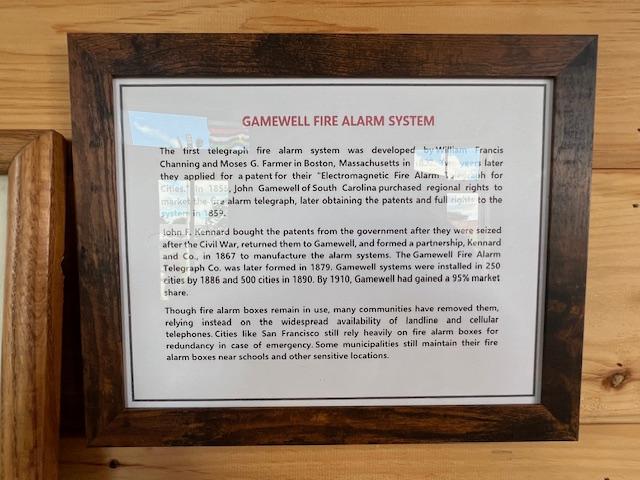
The Gamewell Fire Alarm System

History of the Dutchess County Firefighting Museum:

(from the museum pamphlet)

The Dutchess County Agricultural Society Inc. (DCAS) and the Century Museum Village & Collectors Association will be growing The Antique Village, located on the Dutchess County Fairgrounds which will include a reproduction of a late 19th Century Firehouse and museum of Firefighting memorabilia.

Firehouse artifacts in the museum

The Antique Firehouse will join the Pleasant Valley Railroad Station, the Mt. Ross Schoolhouse, Washington Hollow Fair Judging Gazebo and the Century Museum.

This grouping of special buildings on the Fairgrounds has been dedicated to preserving life in the late 1800’s in Dutchess County and sharing it with the over 500,000 visitors to the Dutchess County Fairgrounds over the course of the year.

The awards of the fire service from the old museum that will be displayed at the new museum soon

The Firehouse Project Research and artifact collection is underway, and the Fairgrounds is committed to adding to Dutchess County’s Fire Service history.

The project cost is $300,000 and was raised from funds all over Dutchess County, NY. This year’s fair the association was proud to open this museum as part of the Century Village on the fairgrounds.

The history of the Dutchess County Fire Service on video.

Special Firefighting “Coins” have been minted commemorating different fire stations, historic Dutchess County firefighting events and the dream of the Antique Fire Station and Museum. You can be a part of this exciting project by purchasing coins or making a tax-deductible donation.

The fire truck in front of the museum at the Dutchess County Fairgrounds

Disclaimer: This information is taken directly from the Antique Firehouse & Firefighting Museum of the Dutchess County Fair Grounds, and I give them full credit for it. The above picture is of the original proposed design for the museum and will be changed once the new building is built.

The new museum will house many more exhibitions in the future

Dia: Beacon                                                               3 Beekman Street                                           Beacon, NY 12508

Dia: Beacon 3 Beekman Street Beacon, NY 12508

Dia: Beacon

3 Beekman Street

Beacon, NY  12508

(845) 440-0100

https://www.diaart.org/visit/visit/diabeacon-beacon-united-states

https://www.diaart.org/visit/visit

Open: Sunday & Monday 11:00am-6:00pm/ Closed Tuesday & Wednesday/Thursday-Saturday 11:00am-6:00pm

Fee: General Admission $20.00/Seniors $18.00/Students $12.00/Children 11-5 $5.00/Free to Children under 12

My review on TripAdvisor:

https://www.tripadvisor.com/Attraction_Review-g47291-d273538-Reviews-Dia_Beacon-Beacon_New_York.html?m=19905

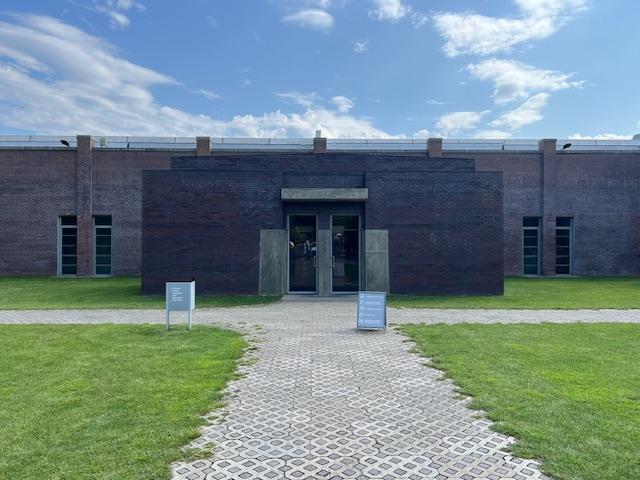
 The front of the Dia: Beacon

I visited the Dia: Beacon in Beacon, NY many times and I have to say that is an interesting space to display art and the pieces themselves make a statement. The museum is sited on thirty-one acres on the banks of the Hudson River and is adjacent to ninety acres of riverfront parkland. The museum is located in a former printing plant built in 1929 by Nabisco (National Biscuit Company) (Wiki). The space square footage gives the museum the opportunity to display larger statement pieces of well known artists.
The history of the Dia: Beacon:

(from the museum website)

The Dia: Beacon presents Dia Art Foundation’s collection of art from the 1960’s to the present as well as special exhibitions, performances and public programs. The Dia invited artist Robert Irwin to conceive the master plan for a twenty-century museum that retained the original character of the factory’s interior spaces, Irwin also designed seasonally changing garden throughout the surrounding landscape. Following the renovation, the Dia: Beacon was added to the National Register of Historic Places (Dia: Beacon Museum).

Dia Art Foundation:

(from the museum website)

Founded in 1974, Dia Art Foundation is committed to advancing, realizing and preserving the vision of artists. In addition to Dia: Beacon, Dia maintains a constellation of iconic, permanent artworks and installations in New York City, the American West and Germany (Dia Museum). 

Each of the galleries are devoted one artist’s work and these galleries make their own statements. There is also a really nice bookstore and gift shop on the extension of the museum and small restaurant.

It is nice to just walk around in your own time and visit each of the galleries. Plan about two hours to see the whole museum. It is an interesting place to see contemporary art in a gallery that is devoted to one artist at a time. The outside grounds of the museum and the parking lot makes it own statement. There is not much parking so plan on getting there early or later in the afternoon.

The museum has clean lines and big halls and a minimalist landscaping

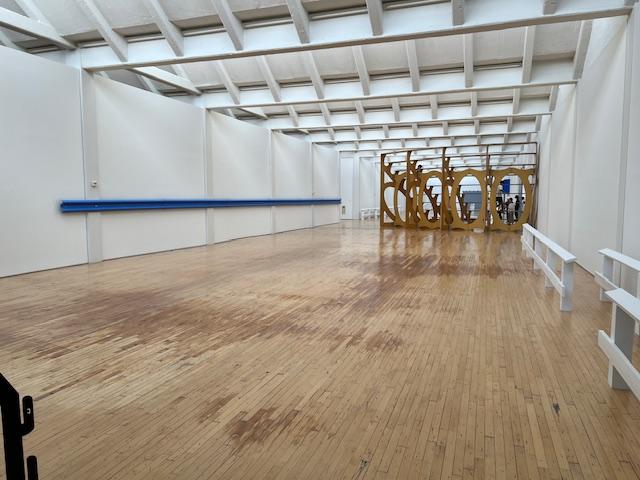
The one thing about the Dia is that the works are quite large and pack a bold statement.  The museum uses a combination of both American and Foreign artists and their works make a bold statement. The museums galleries are large and airy and can show larger works of art. The museum shows many of the artists largest pieces of work.

The inside of the Dia: Beacon’s large galleries

These larger pieces were interactive

Inside the museum, many contemporary artists are featured each season. Many of their larger works were featured in their galleries. While the shows rotate collections of many artists, these were the pieces that stood out to me on my visits to the museum over the years.

The Artists I most admired and their works that most stood out to me:

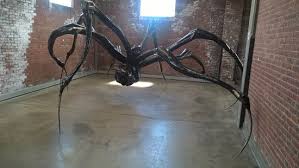
Artist Louise Bourgeois has displayed some interesting sculptures that dominate the upper floors. One of the most fascinating pieces was that of a large spider that dominates the corner of the floor.

Dia Beacon II

This Louise Bourgeois work is a rather creepy piece of art like something out of the movie “It”.

https://en.wikipedia.org/wiki/Louise_Bourgeois

https://diaart.org/collection/collection/bourgeois-louise-crouching-spider-2003-l-2007-012

In Bourgeois’s works on view in these galleries, organic formations fuse with the inorganic materiality of the media in which they are rendered, be it marble, wood, or bronze. The artist’s repertoire of materials spans traditional media and new textures, such as latex and synthetic resin. In her work, representation often entails the creation of a surrogate for the body and its suffering organs (Dia: Beacon museum website).

Artist Dan Flavin has some interesting light sculptures on display along the walls and floors of the gallery. Things are made of long fluorescent lights of various colors.

Dia IV

Artist Dan Flavin’s light sculptures

https://en.wikipedia.org/wiki/Dan_Flavin

After 1963 Flavin’s work was composed almost entirely of light, in the form of commercially available fluorescent tubes in ten colors (blue, green, pink, red, yellow, ultraviolet, and four whites) and five shapes (one circular and four straight fixtures of different lengths). Initially arranging these fixtures in varying autonomous configurations, Flavin increasingly made work in relation to architecture, such as his monumental barriers that physically block a passageway or segment of a space with light (The Dia: Beacon museum website).

In the main gallery as you walk in are the large geometric shapes of artist Charlotte Posenenske who created these pieces in various colors and shapes. These pieces line the floors and walls.

Dia III

The geometric shapes of Artist Charlotte Posenenske

https://en.wikipedia.org/wiki/Charlotte_Posenenske

https://www.diaart.org/exhibition/exhibitions-projects/charlotte-posenenske-exhibition

Embracing reductive geometry, repetition, and industrial fabrication, she developed a form of mass-produced sculptural Minimalism that addressed the pressing socioeconomic concerns of the decade by circumventing the art market and rejecting established formal and cultural hierarchies. Posenenske employed playful conceptual devices to oppose compositional hierarchy and invite the collaborative engagement of the public in the continual reconfiguration of her variable sculptures (The Dia: Beacon website).

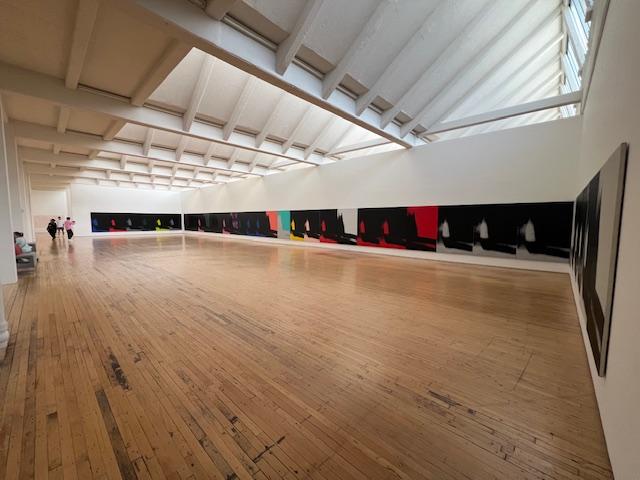
Artist Andy Warhol has one of his largest works displayed in the main gallery on the first floor.

The artist Andy Warhol gallery

https://en.wikipedia.org/wiki/Andy_Warhol

The large Andy Warhol piece

What I loved about the work by Warhol was the continuous colorful pattern of the work and the way it wrapped around the room. The pattern took form in many colors and showed consistency and balance.

A single painting in multiple parts, Shadows is one of Warhol’s most abstract works, yet one that cohesively synthesizes key elements of his practice, including film, painting, photography, and screen-printing. Originally commissioned by Dia and acquired in 1979 for a solo exhibition at 393 West Broadway in New York, Shadows includes a total of 102 canvases; the final number of canvases on view in each installation is determined by the dimensions of an existing exhibition space (The Dia: Beacon museum website).

Artist Senga Nengudi Gallery

https://www.sengasenga.com/

American artist Senga Nengudi had a some interesting works on display, one resembling melted ‘freeze pops’, which I thought was rather clever. Her large works took liquid forms and were colorful and spontaneous. These large works had lots of color and looked whimsical and fun.

One of Artist Senga Nengudi works

I thought this was a large ‘freeze pop’

One of her non-liquid works

Made of everyday materials such as vinyl, water, nylon, sand, dry-cleaning bags, lint, paper, and tape, Nengudi’s installations are at once proxies for bodies and sites for performance. The works accommodate a variety of cultural references from African, Japanese, and South Asian rites to Western avant-garde art. Characteristic of her openness to multiplicity, the artist, born Sue Ellen Irons, has assumed pseudonyms that inflect her creative identities as sculptor (Senga Nengudi), painter (Harriet Chin), photographer (Propecia Leigh), and writer (Lily Bea Moor) (The Dia: Beacon museum website).

Some of the other works that I liked as I walked around the museum:

Displayed on the first floor of the Dia: Beacon

Another interesting work on the first floor

The large galleries and open air space give patrons a chance to walk around the works and really get a feel for what the artists are trying to express. You really get to see the art up close and that is why I like the way they display their art. We can engage with each piece and develop our own meaning from it.

The grounds and the proximity to the river gives the museum a picturesque spot. It is nice to walk around the lawn on a warm day and enjoy the paths around the museum. The museum also has a very interesting gift shop featuring many books and gifts. The small restaurant can be pricey but offers a place for a light lunch or a quick snack.


Historic Huguenot Street                                       81 Huguenot Street                                            New Paltz, NY 12561

Historic Huguenot Street 81 Huguenot Street New Paltz, NY 12561

Historic Huguenot Street

81 Huguenot Street

New Paltz, NY  12561

(845) 255-1889

http://www.huguenotstreet.org

info@huguenotstreet.org

My review on TripAdvisor:

https://www.tripadvisor.com/Attraction_Review-g48245-d288641-Reviews-Historic_Huguenot_Street-New_Paltz_New_York.html?m=19905

Plan your visit:

For current information on guided tours, group tour reservations, school groups, special events or accessibility, call (845) 255-1660 or visit http://www.huguenotstreet.org.

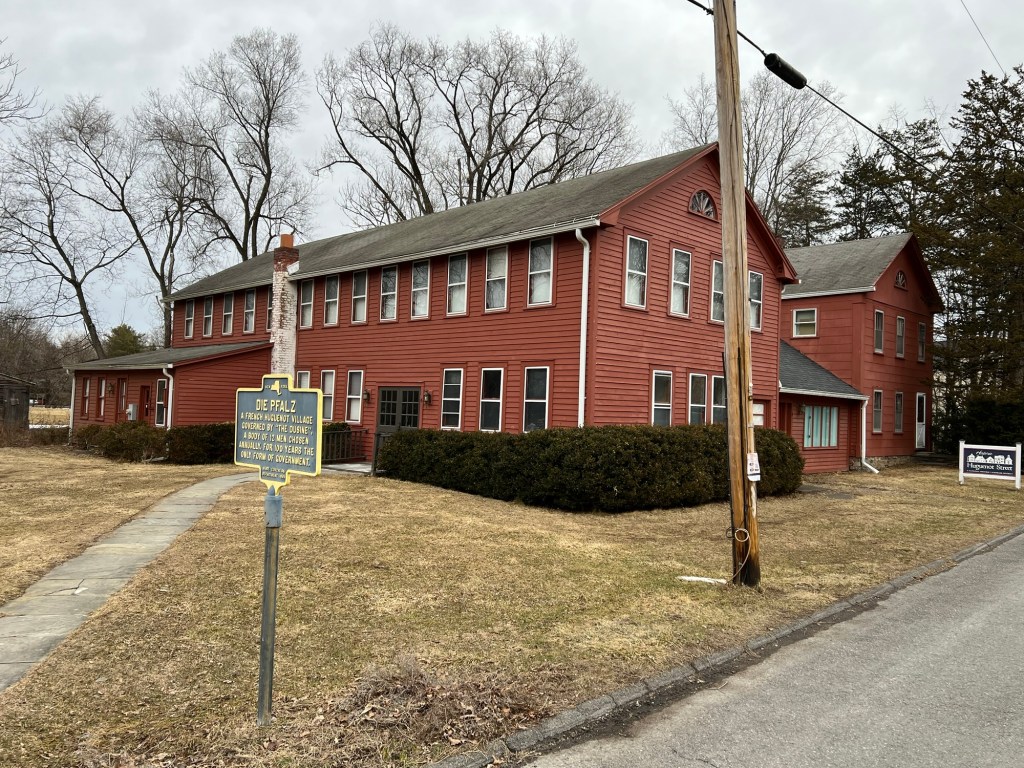
The history of Slavery in the area

App:

Our free Walking Tour mobile app features histories of the houses on the street with archival photos as well as photos of the house interiors and the collection pieces within. Mobile users can download the app on both the App Store and Google Play.

The entrance to the site

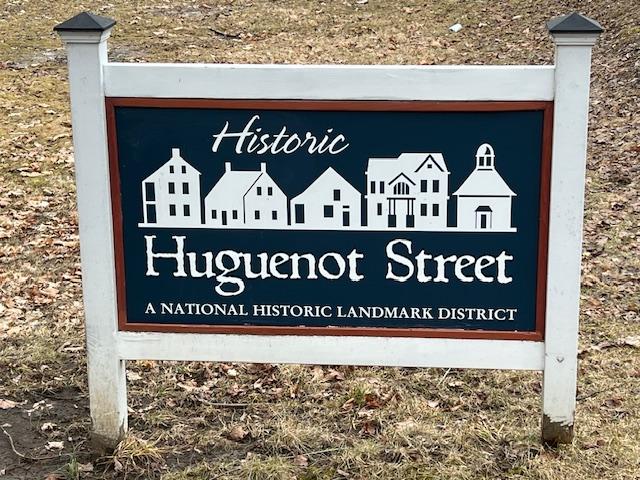
The historic sign at the entrance

History of the site:

At our 10 acre National Historic Landmark District, visitors experience more than 300 years of history through the lens of a French Huguenot community as it evolved over time. Guided tours begin with an introduction to the pre-colonial Munsee Esopus landscape dating back 7000 years and the religion, culture and architecture of New Paltz’s earliest European settlers and enslaved Africans. The experience continues as guests visit fully furnished houses reflecting unique human narratives and changing tastes across the Colonial and Federal periods, through the Gilded Age and into the early 20th century.

(Promotional Materials)

I visited Historic Huguenot Street one afternoon after visiting here about five years earlier during the holidays. The houses are easy to tour and the street is blocked so that you can walk amongst the houses.  There are tours every half hour when the site is open. Here you can tour inside the houses instead of just the grounds. On a nice day, it is interesting to look over the architecture of the homes.

Make sure that you take time to look at the historical cemetery by the church at the end of the block. Some of the original settlers are buried here. It is also nice to tour around the Waykill River.

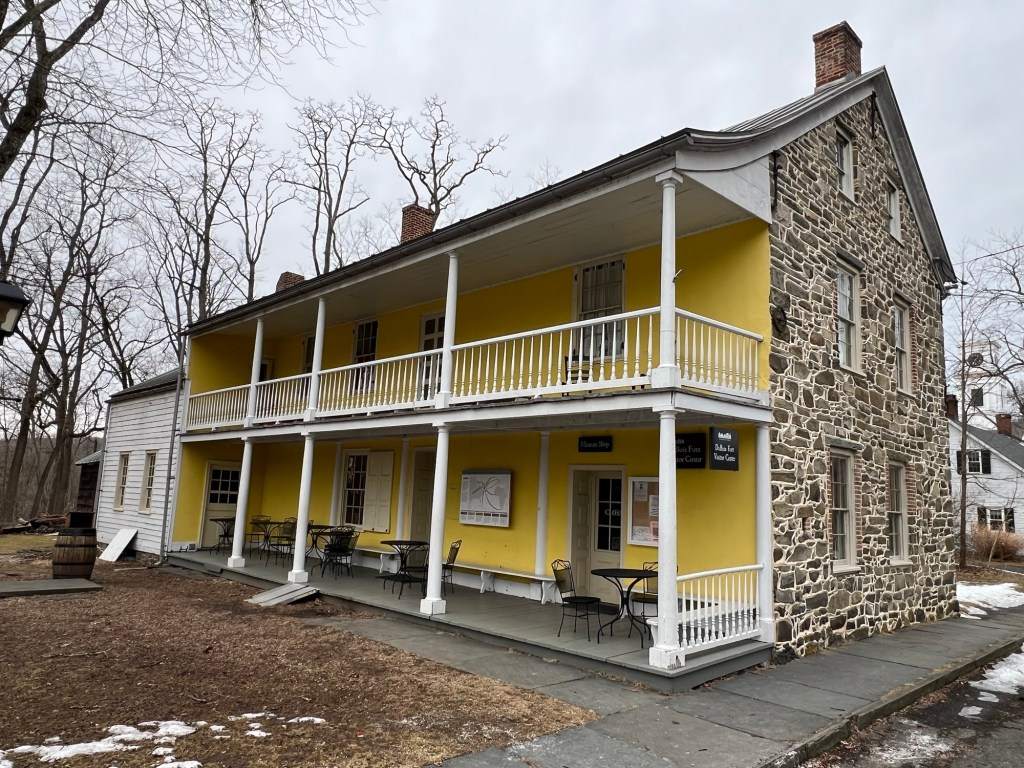
Take the extra time to visit the gift shop and see the information video on the site and look over the literature of the site.

The area has a pretty interesting history.

The map of the site

History of the Huguenot Street Historic District:

The site is owned and operated by Historic Huguenot Street (HHS), which was founded in 1894. In 1899, Historic Huguenot Street purchased the Jean Hasbrouck House as the first house museum on the street. In the 1950’s and 60’s, the organization and related family associations purchased most of the remaining stone houses in the district and subsequently opened them as museums. These acquisitions were funded in large part by descendants of the original Huguenot founders. Their family associations play a key role in supporting the institution today.

The Individual Houses:

Bevier-Elting House:

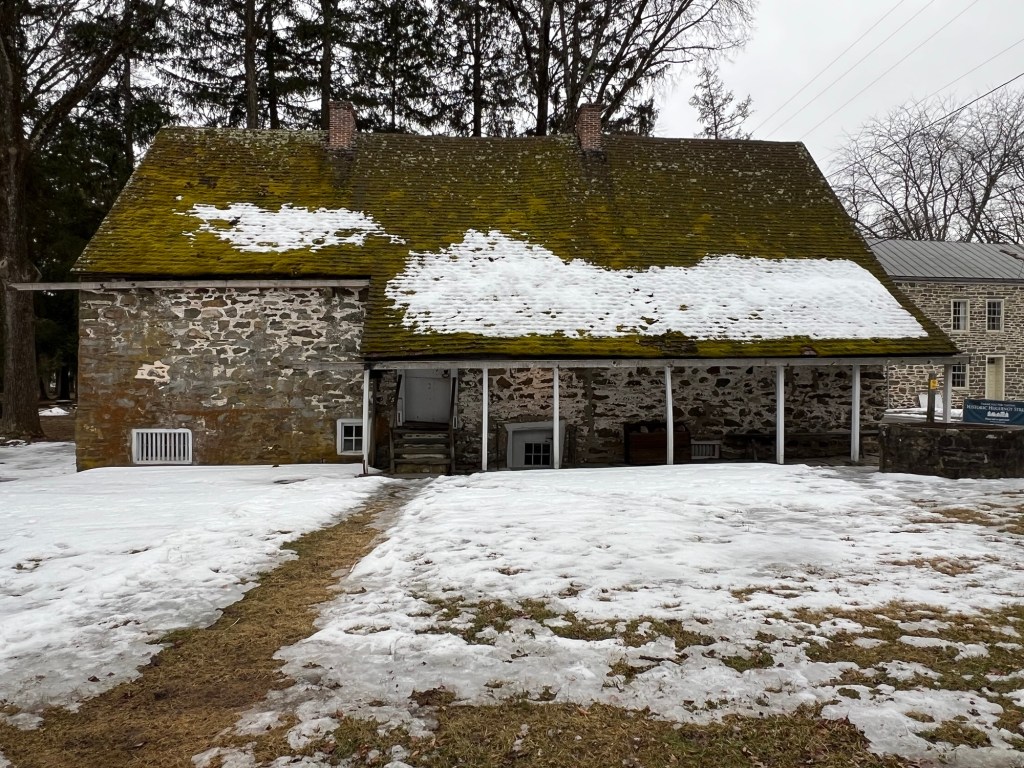
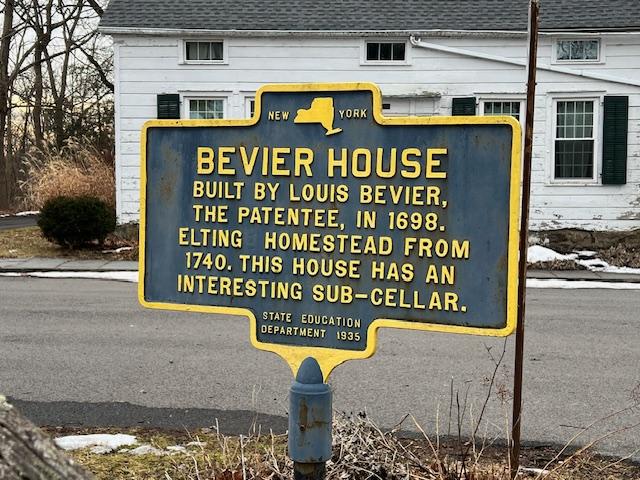
Dating to the early 18th century, the house was originally a one room building built with the narrow or gable end facing the street-then the prevailing style of the low countries of Northern Europe. Two expansions were built later as was a small cellar that was used to house African slaves. The house was built by the Beiver family, one of the founding families and subsequently sold to the Dutch Elting family.

The Historic Marker

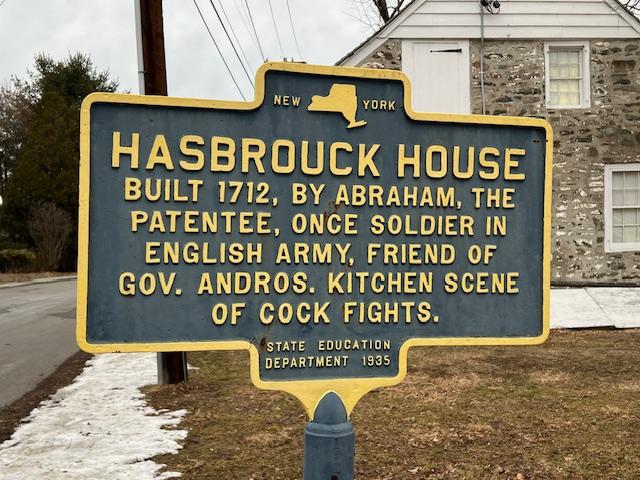
Abraham Hasbrouck House:

https://www.huguenotstreet.org/hasbrouck

The Abraham Hasbrouck House

The Hasbrouck House at Christmas

The structure as the Abraham Hasbrouck House was built in three phases in the 1720’s and 30’s. The first of the house-the center room-was constructed in 1721 by Daniel Hasbrouck, the son of Abraham Hasbrouck the patentee. The date 1721 is based on recent dendrochronology, which is a process by which wooden structural members are dated. This house represents a New World innovation in Dutch-style architecture. The initial houses in the Dutch region of New York, such as New Amsterdam, Albany and Kingston were built in the tradition of Dutch cities with the gable-ends to the street, which conserves street frontage. The basic structure of the house consists of a series of H-bents which spread the weight of the house across the entire expanse. The original one room house exhibited several defining elements of Dutch architecture, the jambless fireplace being the principal and most recognized feature in the house. Recently re-opened to the public in July 2012 following a restoration and reinterpretation focusing on the life of Widow Wyntje.

The Abraham Hasbrouck House Historic Marker

Jean Hasbrouck House:

https://en.wikipedia.org/wiki/Jean_Hasbrouck_House

The Jean Hasbrouck House

The Jean Hasbrouck House at Christmas time

Also built in 1721 by Jean’s son Jacob (and perhaps incorporating elements of an early home built by New Paltz founder Jean Hasbrouck), this home is an excellent example of Hudson Valley Dutch architecture and the showpiece of Historic Huguenot Street. A National Historic Landmark in its own right, it boasts the only remaining original jambless fireplace of any of the Huguenot Street houses and is one of the few surviving examples in what was formerly the New Netherland.

In 2006, the north wall of the house was carefully dismantled, repaired and reconstructed. Reproduction Dutch-style casement windows were installed. Interior restoration followed, resulting in a house that is an excellent example of how a comfortable family in the region lived in the mid-18th century.

Jean Hasbrouck House Historic Marker

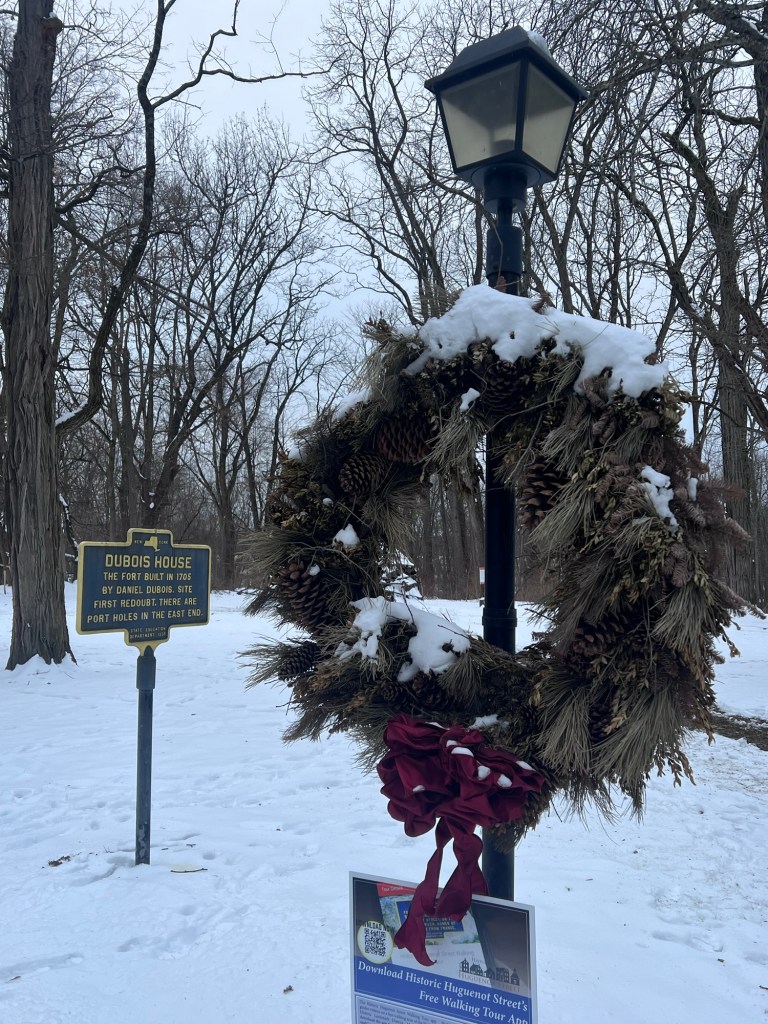
DuBois Fort:

https://www.huguenotstreet.org/visitor-information

The DuBois House/Fort

The DuBois House at Christmas time

Built circa 1705 for the DuBois family, it might have served as a fortified place for the small community if needed. Originally a smaller 1 1/2 story structure, this building was expanded to its current size in the late 1830’s. Some historians and antiquarians believe that the presence of “gun ports” made it a fort but there is no evidence of the presence of any such portholes before the 19th century. The DuBois Fort currently serves as the orientation center and gift shop as well as a location for special events. Guest can purchase their admission tickets and memberships at this building. Over the last 300 years, it has also been used as a residence and a restaurant.

The DuBois House historic marker

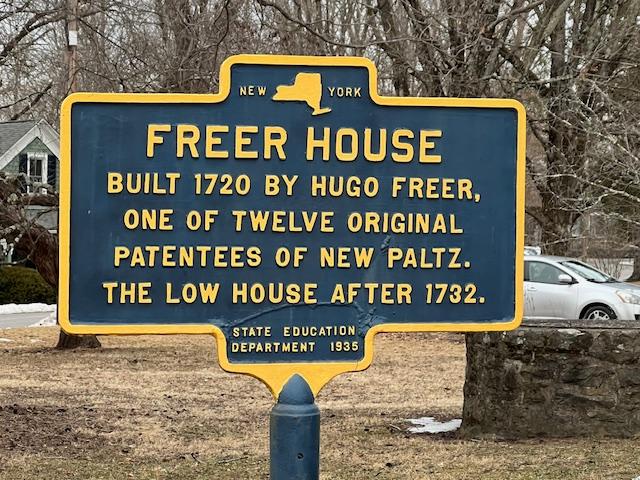
Freer House:

https://www.huguenotstreet.org/freer

https://home.cc.umanitoba.ca/~sfreer/huguenot.html

The Freer House

The Freer House at Christmas time

The Freer House is one of the six 18th century stone houses owned by Historic Huguenot Street. It was altered in various points in its approximately 250 years of occupancy with its most recent major alterations occurring in 1943 when it was purchased by Rev. John Wright Follette, a direct descendant of it s original builder, Hugo Freer. Over the years, the interior was modernized into a 20th century idea of a colonial home. This structure is not currently open to the public.

The Freer House Historic Marker

Deyo House:

https://www.huguenotstreet.org/deyo

https://cdm16694.contentdm.oclc.org/digital/collection/elting/id/375

The Deyo House

The original portion of the house was built around 1720 by Patentee Pierre Deyo. It began as a one room house was subsequently expanded to two rooms and ultimately to three when a stone addition was added off the rear by Pierre’s grandson Abraham. Circumstances for this house changed dramatically when at the height of the Colonial Revival movement, two descendants of Pierre Deyo, Abraham and Gertrude Brodhead, inherited the house.

The Deyo House at Christmas

Wanting to live on the street of their ancestors but also wanted a modern, gracious home that reflected their affluence, the Brodheads partially dismantled the original stone house and build a grand Queen Anne home around it in 1894. They also significantly changed their surrounding property in essence changing a small village farm into a handsomely appointed and landscaped mini estate.

The house passed out of Deyo family ownership in 1915. It was a private home until 1971, when it was purchased by the Deyo-Family Association and donated in order to be opened to be opened to the public as a house museum. The home was most recently restored in 2003 and features circa 1915 interiors.

The patentee Pierre Deyo died in 1700, so couldn’t have built the house in 1720 as stated. Per the plaque mounted outside the house it was built in 1692.

The Deyo House Historic marker

Crispell Memorial French Church:

https://www.huguenotstreet.org/crispell

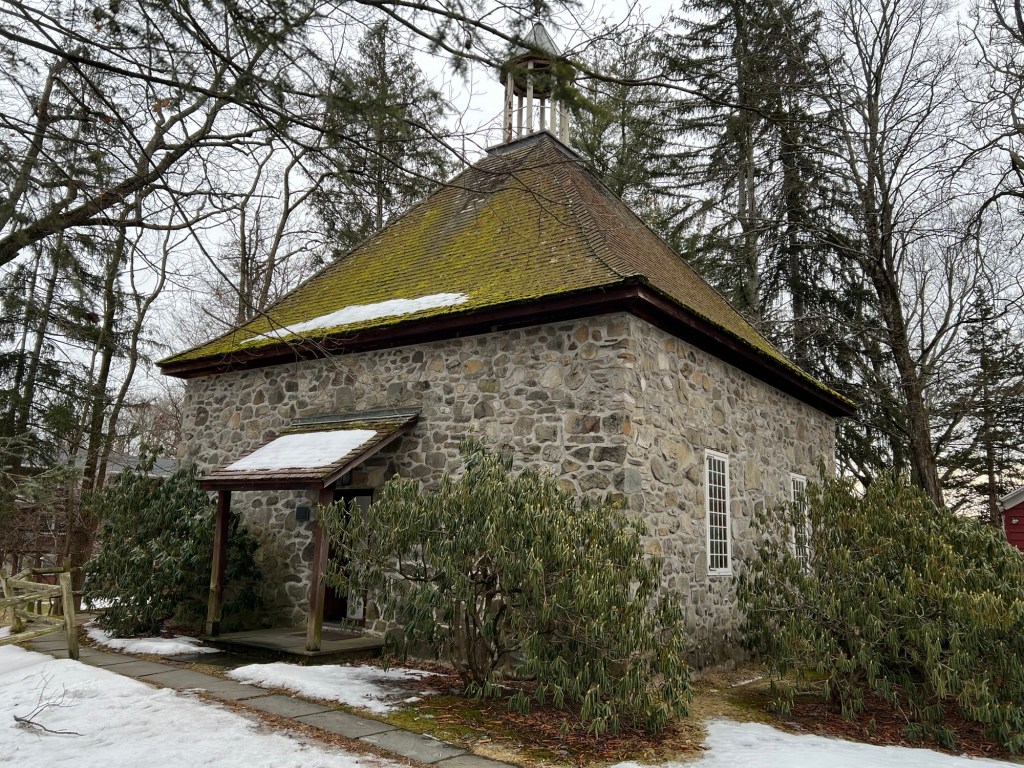
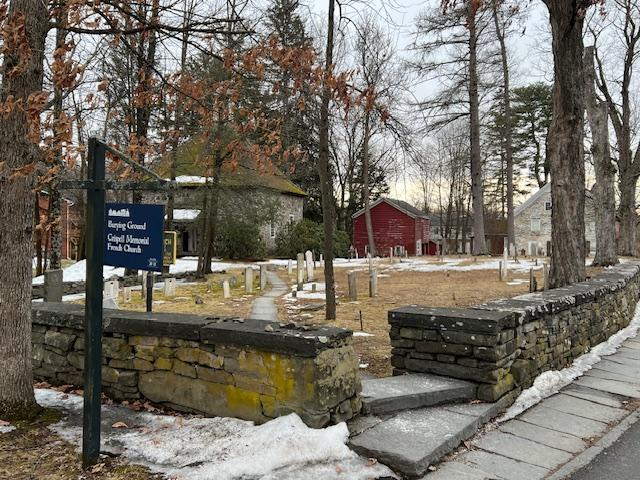
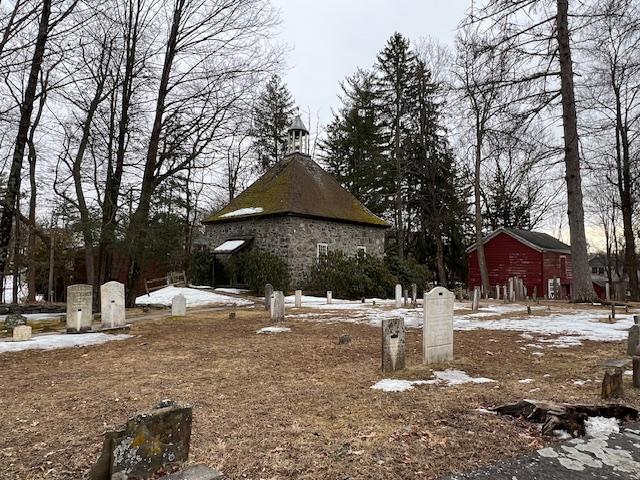
Since the community’s founding, there have been four sanctuaries built on what is today called Huguenot Street. The French-speaking Protestants who settled in New Paltz built their first church in 1683-a simple log building. This was replaced in 1717 with a straightforward, square stone building that reflected the permanence of the settlement. This existing building in the burying ground is a highly conjectural reconstructed of the 1717 building near its original location.

The Historic Walloon Church

As the New Paltz community increased in size throughout the 18th century, a larger church became necessary. A second stone church was built down the street in 1772. When it became too small, it was demolished and replaced by a third church built in 1839. This church survives today and is home to an active Reformed congregation.

The Church and the graveyard

The reconstructed church is named in honor of Antoine Crispell, one of the twelve founders or patentees of New Paltz and a direct ancestor of Franklin Delano Roosevelt. It was built as the result of a fundraising campaign led by the Crispell Family Association. The Crispell Family Foundation opted to create this reconstruction church in their ancestor’s honor. It was completed in 1972.

The 1717 church was designed to reflect Reform thinking; the pulpit was placed in a central location and the pews were placed so that everyone could see and hear more equally. This expressed the concept that each person had a direct relationship with God, rather than one mediated through a church hierarchy.

LeFevre House:

https://www.huguenotstreet.org/lefevre

https://www.townofnewpaltz.org/historic-preservation-commission/news/the-josiah-p-lefevre-house-generations-of-history

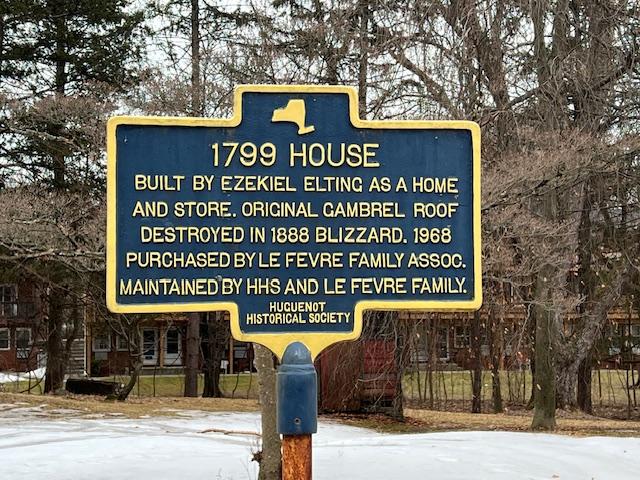
Built int 1799 by Ezekiel Elting, a prosperous merchant who was born in the Bevier-Elting House, this stone and brick building is quite different from the earlier stone houses on Huguenot Street. Its Georgian-style architecture reflects the transition of New Paltz from a French and Dutch settlement to an Anglo-American community and increasing refinement in architecture in this period as settlements matured. The house shows the changes in architectural style from the early 18th century. This house reflects the several changes in the society and home life of New Paltz in the early 19th century.

The Elting-LeFevre Historic Marker

Deyo Hall:

https://www.poughkeepsiejournal.com/story/news/local/2014/12/09/dateline-deyo-hall-history/20146611/

https://www.facebook.com/deyohall/

Deyo Hall

Formerly a glass factory, Deyo Hall is the site of event and meeting facilities and public restrooms. Collections storage is housed in this building.

The New Paltz Historic Market

Roosa House Library and Archives:

https://mapcarta.com/W304906815

Located in the Roosa House, the Library and Archives at Historic Huguenot Street is a research facility devoted primarily to the history and genealogy of the Huguenot and Dutch settlers of the Hudson Valley. It also functions as a general repository for local history, regardless of ethnicity or religious persuasion. The collections consist of family genealogies, church, cemetery and bible records, wills and deeds, census records, genealogical periodicals, county histories and publications relating to Huguenot ancestry. Genealogists, local historians and other interested parties can access the collections by appointment. The colorful paint replicates the original colors of the house in 1891.

Native American presence on Huguenot Street:

Historians and archaeologist have learned more about the continuing relations between the Esopus, the original inhabitants of the area and the Huguenots. Some results of research can be found at the HHS site at “Relations between the Huguenots of New Paltz, NY and the Esopus Indians (http://www.huguenotstreet.org/library_archives/exhibits_research/Indian_affairs.html). The “Before Hudson” exhibit, currently on view at the DuBois Fort Visitor Center, shows some of the highlights of archaeological excavation in our area with artifacts dating back 6,000-8,000 years ago.

Historic Huguenot Street III.jpg

Indian Wigwam

Christmas at Historic Huguenot Street:

https://www.huguenotstreet.org/holiday

Historic Huguenot Street Christmas

(This information from the homes is from Wiki

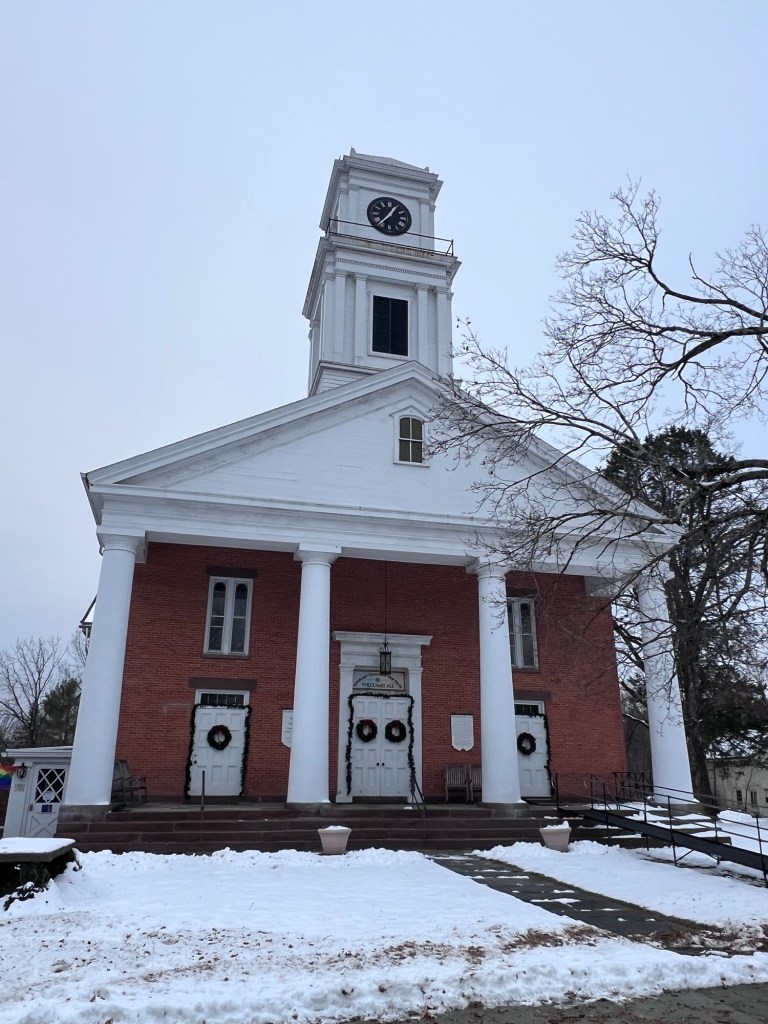
The Presbyterian Church during the Christmas season