The Tuckerton Museum and the Seaport at 120 West Main Street in Tuckerton, NJ
The entrance to the complex from Route 9
The entrance to the Tuckerton Seaport complex on a sunny Saturday morning
The complex was once a bustling fishing and shipping area that has now been preserved as a cultural site with tours, a series of restaurants and a museum.
The Mission of the Museum:
(from the Tuckerton Seaport Museum website)
Our mission at the Tuckerton Seaport is to preserve, present and interpret the rich maritime history, artistry, heritage and environment of the Jersey shore and the unique contributions of its baymen.
The dock area by the coffee shop
The artwork by the parking lot and coffee shop
I walked over to the main building which served as both the gift shop and museum. It was funny that the gift shop took both the first two front rooms of the museum. I had to look behind shirts to see the displays.
The docks and touring boats by the museum
The Seaport Tuckerton Museum at 120 West Main Street
The History of the Complex:
(from the Tuckerton Museum website)
Originally launched as the Barnegat Bay Decoy and Baymen’s Museum, the Tuckerton Seaport has evolved over the past twenty-two years into a community museum and community center occupying 40 acres located along historic Tuckerton Creek in Tuckerton, New Jersey. Tuckerton Seaport benefits from a prime location at the center of the Jersey shore, easily accessible via Exit 58 on the Garden State Parkway. Tuckerton Seaport works as a coastal cultural center to bring folklife traditions of the past and present to life through programs on land and water.
The museum was just opening up as I arrived and the staff was busy getting everything ready so I just walked around the museum. It is an interesting museum on New Jersey’s nautical past and the growth of the shipping and trading that went on in the turn of the last century. The museum also showed the bustling fishing industry that still exists today.
The Giant Chicken greets you at the door
The Giant Chicken was a road stop symbol of the White Way Farm Market and a tourist attraction
I thought it was rather cute and could see why people stopped
The view from the front porch of the museum was spectacular on this sunny day
The exhibit at the museum ‘Museum in the Making’, which is a through look at Tuckerton, its past and its contributions to the growth of New Jersey
The first room also served as a bustling gift shop with the main attraction this carving of the ‘Jersey Devil’
A display of Duck Decoys
A collection of woodcarvings of fisherman
The popular businesses that once lined Route 9 up and down the shore area
Displaying life down the shore in that era with quilting and sewing
The display of wood carvings and artwork on the first floor
The artworks made of driftwood by local artists
The driftwood art display on the first floor
The rooms both on the first and second floor were displayed by themes of Lenape Indian life at the shore, the Dutch and English traders, growth of shore farming, shipping and trade and fishing industries and the development of tourism in the area with steamships and the railroads.
The first room in the museum is a detailed look at the life of the Lenape and the froth of the fishing industry
The early life at the Jersey shore
The Native American display
The first part of the early development of Tuckerton started as the fishing and hunting grounds of the Native Americans until the settlement of the Dutch
The history of the Lenape
The arrival of the Europeans started the bustling shipping and trade industries that supplied the home country
With the growth of industry and farming many people started businesses to supply the population
Some started popular businesses that lasted over a century
E. Walter Parsons Jr. had a very successful fishing business that was in the family until 1984
With the rich soil in the area, local farmers worked the land providing fruits and vegetables for the growing population
Early farming equipment on display
The second floor galleries depicted the developing life at the shore with creating of modern life saving for the shipping and fishing industries and with coming of railroads, the bustling tourism industry with the change of leisure travel after the Civil War and the Industrial Revolution.
The second floor rail transportation display
The second floor display on shipwrecks off the Jersey coast
The development of modern Life Saving procedures
With storms at sea and affecting life in the area, as it still does today, there was a growth and development of modern Live-saving procedures and rescue methods.
The Life Saving exhibit
The use of the Lyle Gun in rescues
The series of pulleys and wenches are still used today in different forms. They had to create a safe way to rescue people not just from storms but accidents as well.
The Life Saving and Rescue display
Rescue display
The railroad made its way to the Jersey shore bringing tourists from both New York and Philadelphia and bustling North Jersey. This opened the area up to tourism as leisure travel grew at the end of the nineteenth century.
One example of a visiting tourist was the Cinderella Cramer display with long distance travel to the shore.
The first female passenger of the Tuckerton Railroad
Getting the rail ticket
Tourism developing at the Jersey shore
The Cinderella Cramer display representing that eras travels to the shore with Victorian standards and use of steamer trunks
Packing the steamer trunks for the long journey
Artifacts from the shore
Life at the shore still had its perils as it does today with storms affecting development and shifting shore lines
The lighthouse light display
The museum once served as a beacon for shipping and the top level served as a lookout. Today you can walk upstairs and enjoy the views.
Traveling up the tower stairs
On this beautiful sunny and clear morning that I visited, the views were spectacular.
The view of the port area of the complex
The view of the inlet and Lake Pohatcong across from Route 9
My video of the views from the top of the lookout
The Tuckerton Seaport Museum tour was a very thorough look at the community and its development over the last three hundred years. The exhibits showed the progress the community has made and where it is headed in the future as the shore communities keep changing.
With the economy, the rise of AI, climate change and overall population growth toward the shore, it will be interesting to see the changes of the future.
Leaving the museum complex at the end of the trip
Tuckerton has an interesting past as a shipping and fishing destination and now you can tour the buildings and see what life was like back then and there it is moving in to the future today.
Admission: Adults $12:00/Children $10.00/Military $10.00/Members and Children under 3 Free
My review on TripAdvisor:
Entering from the highway, I was surprised at this interesting place of nature and how the Institute is not just part of the community but how it integrates itself into the fabric of helping understand how Mother Nature plays a part in benefiting everyone in this shore community from cleaning the water, sustaining wildlife and preventing flooding.
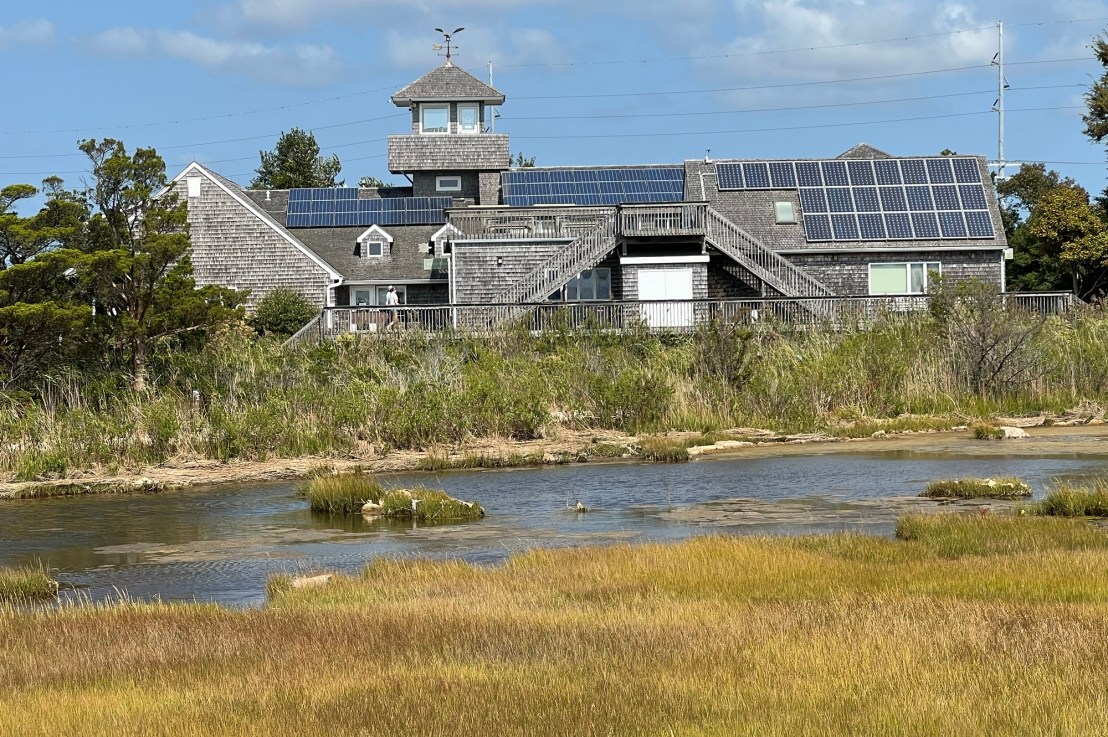
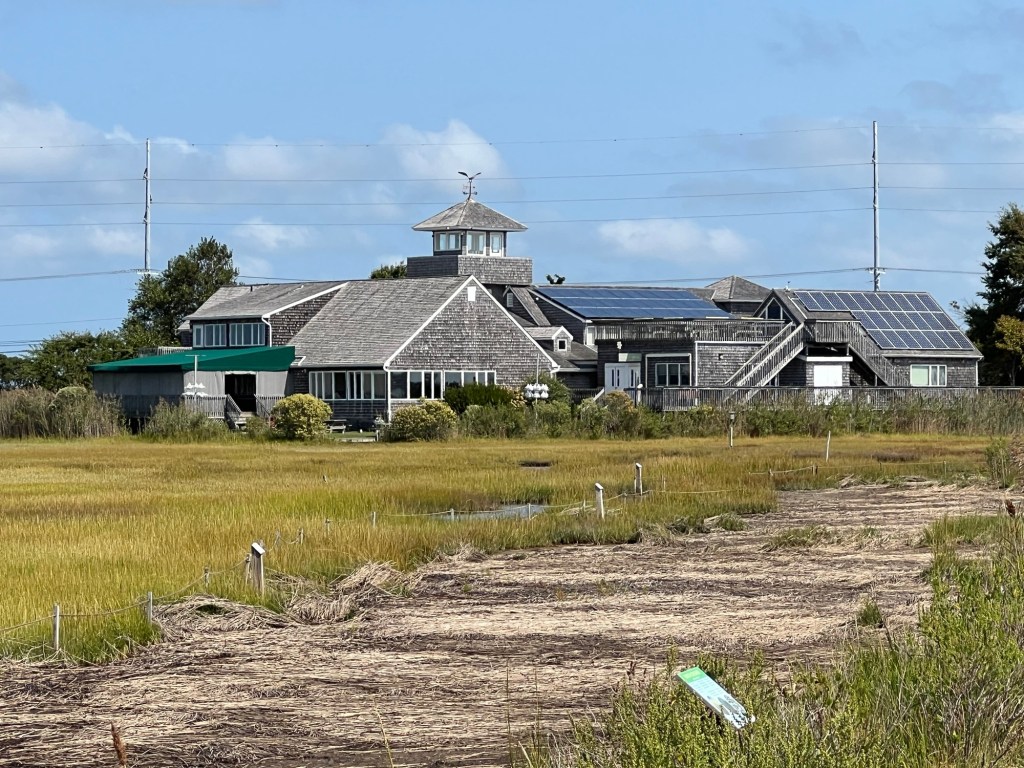
The front of the Wetlands Institute in Stone Harbor, NJ
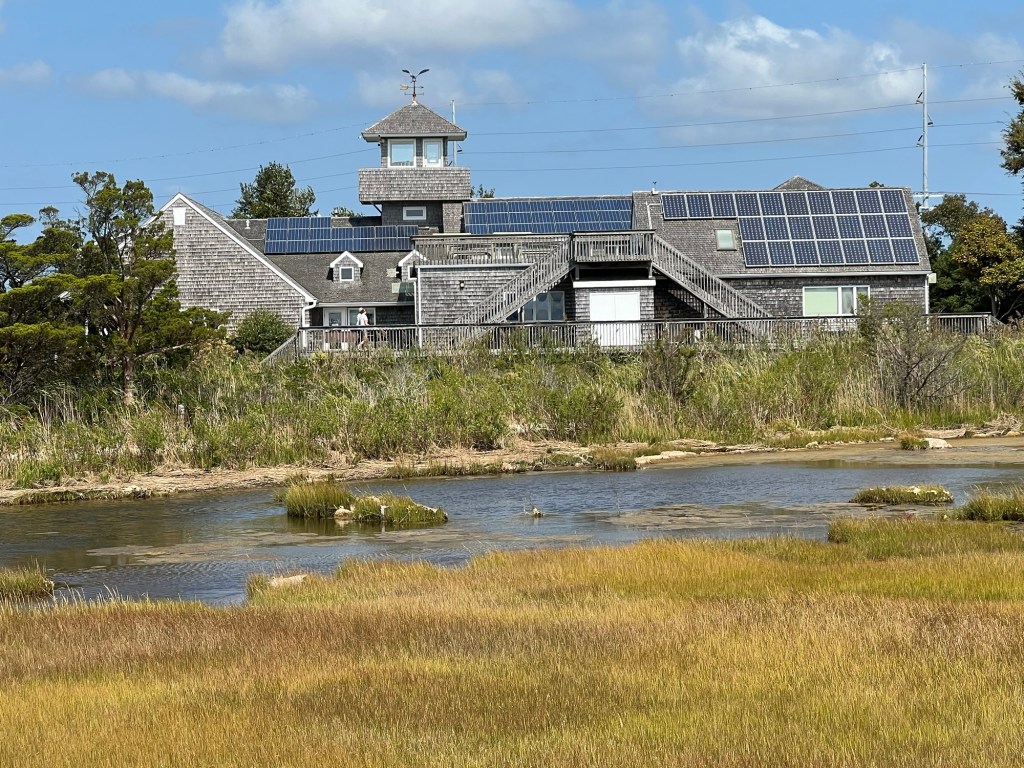
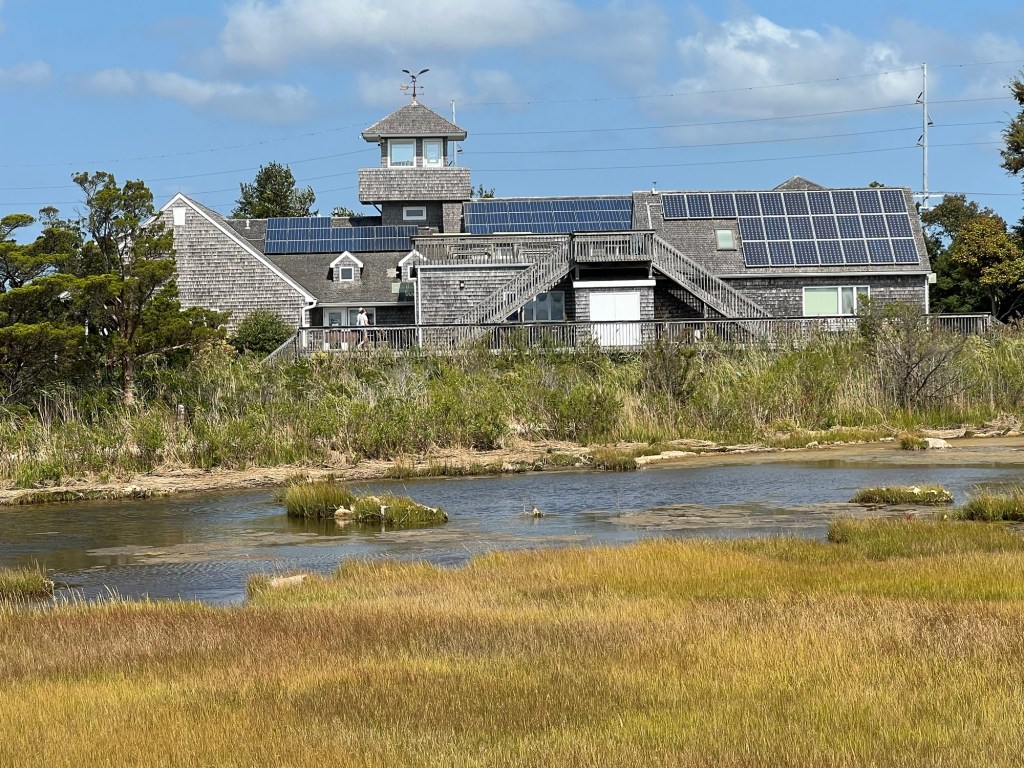
The back of the Institute from the salt marshes
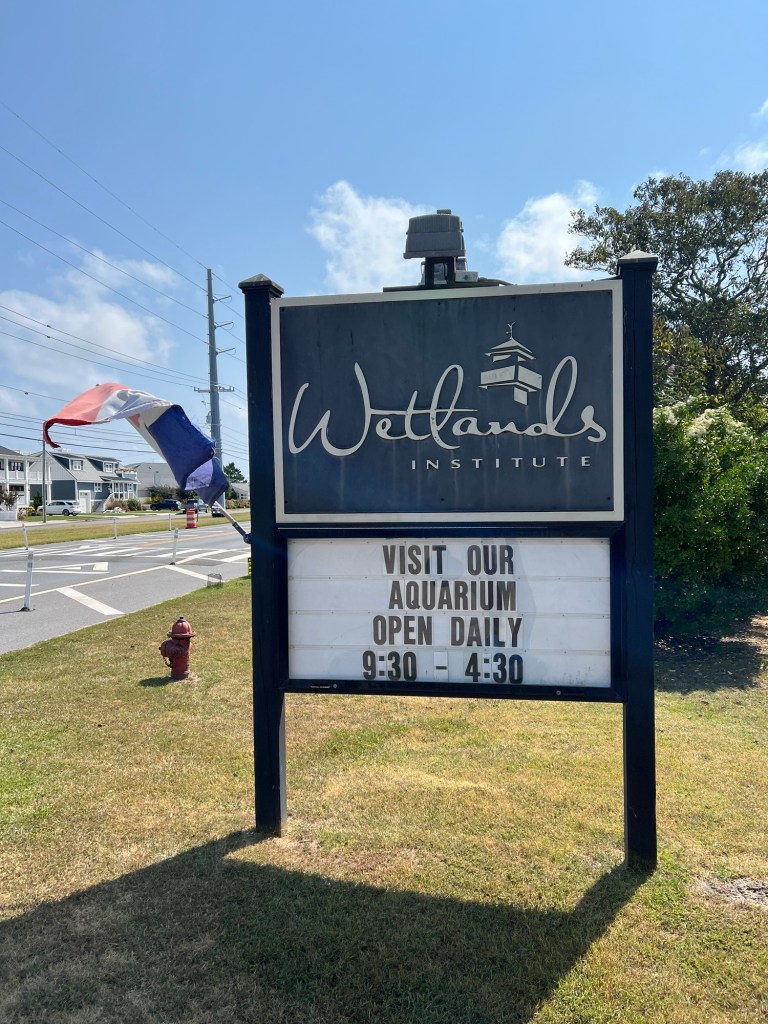
The sign that welcomes you inside
You would almost miss the Institute without the sign
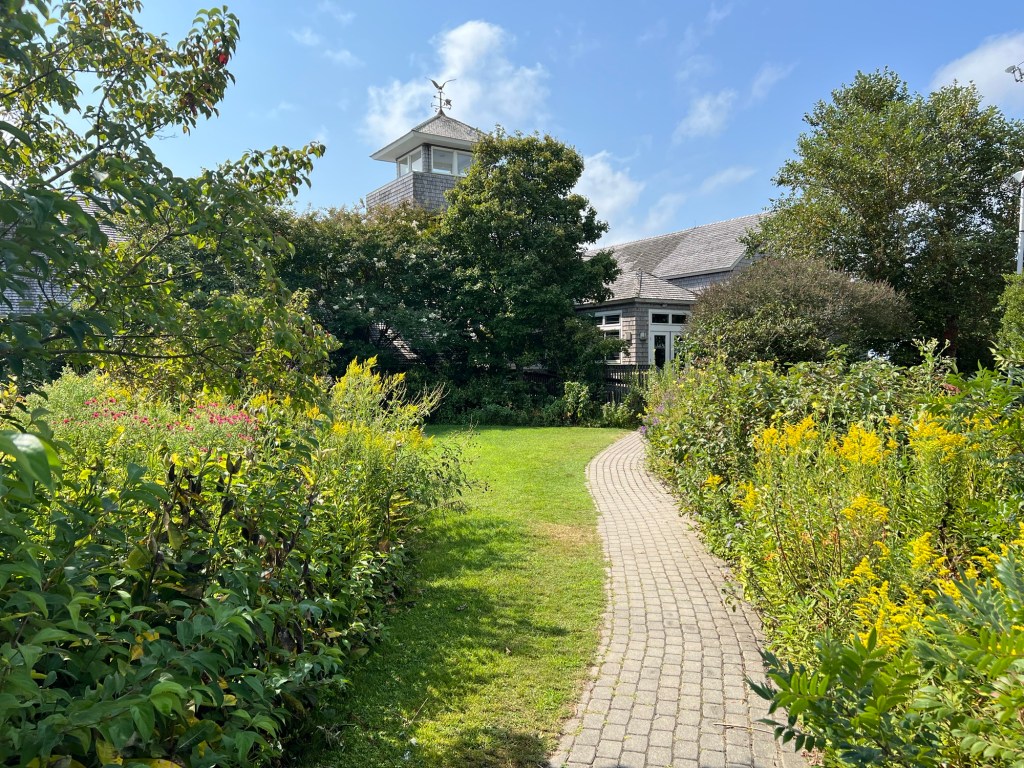
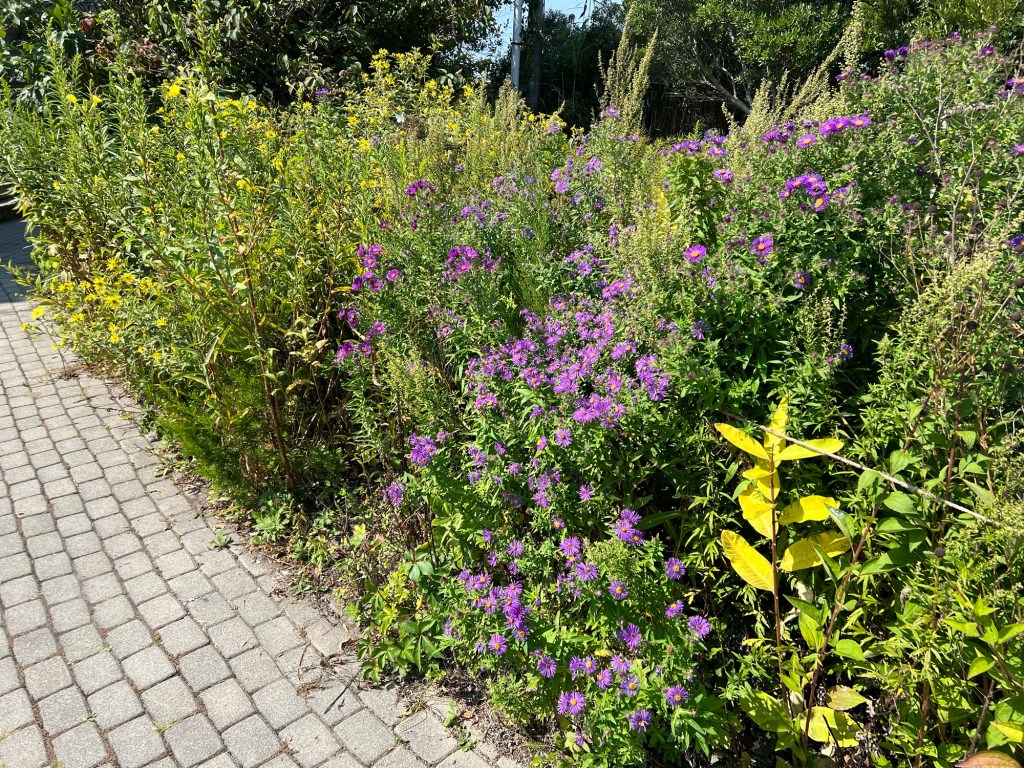
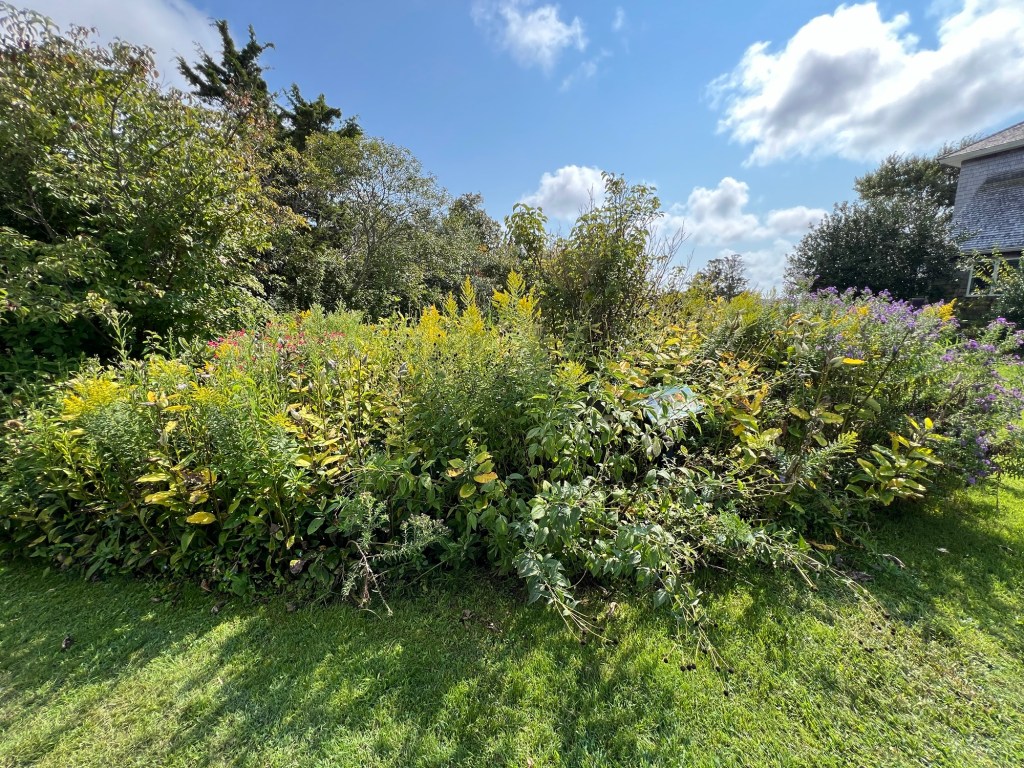
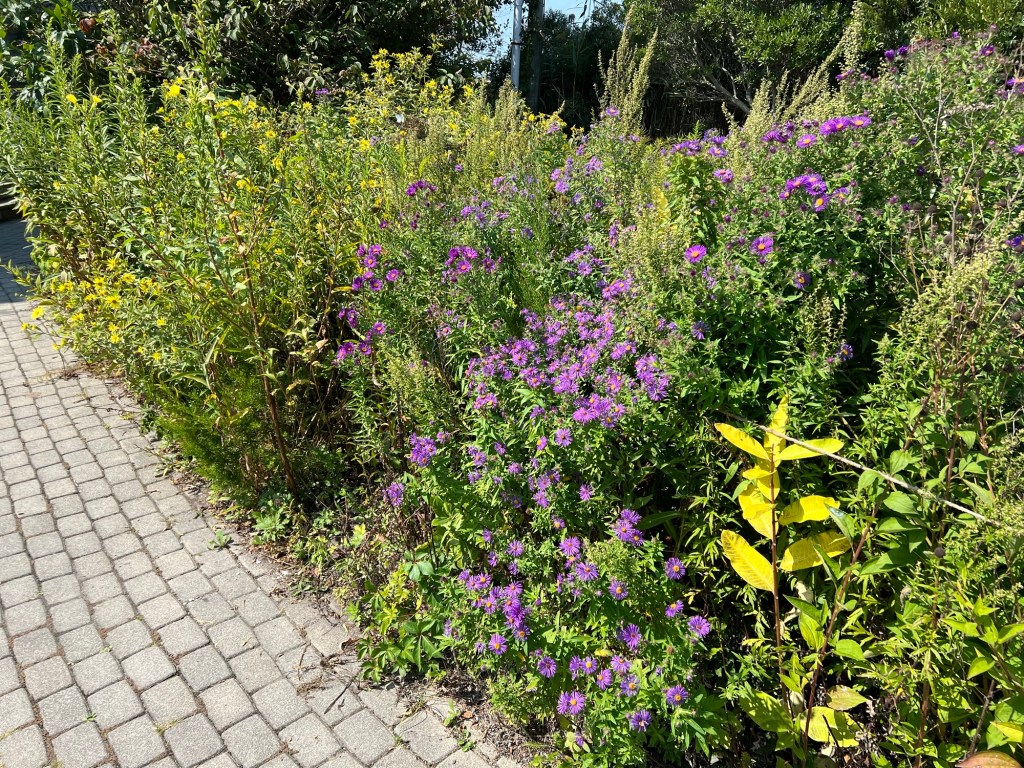
The beautiful gardens in the front during the summer months
The Institute’s gardens in the front of the building during the summer months
The History of the Wetlands Institute:
(From the Institute’s website)
The Wetlands Institute was founded by Herbert Mills in the late 1960s, thereby fulfilling his life-long vision of creating a world-class research, education and conservation center at the Jersey Shore that would educate people of all ages about the beauty and wonders of the coastal environment, and the importance of that environment to their daily lives. His dream was to inspire everyone to want to conserve and sustain that environment forever.
Herb loved birds and nature all his life. In fact, he joined the National Audubon Society at the age of seven. Many of his maturing years were spent as an executive in the glass and canning industries of South Jersey. During those years he further developed his abiding interest in conservation issues, so much so that he left the business world in 1967 to became the Executive Director of the World Wildlife Fund. In 1969, under his leadership, the World Wildlife Fund purchased 6,000 acres of salt marsh in Middle Township. 34 of those acres became the site of the Wetlands Institute’s facility. The rest were held by the World Wildlife Fund until being transferred to New Jersey’s Green Acres Program. Herb also raised the funds for the design and construction of our main building which was designed by Malcolm Wells, a world-renowned and environmentally-oriented architect.
Our building was officially dedicated on September 16, 1972. Herb Mills’ friend and the international president of the World Wildlife Fund, Prince Bernhard of The Netherlands was the keynote speaker (the Institute website).
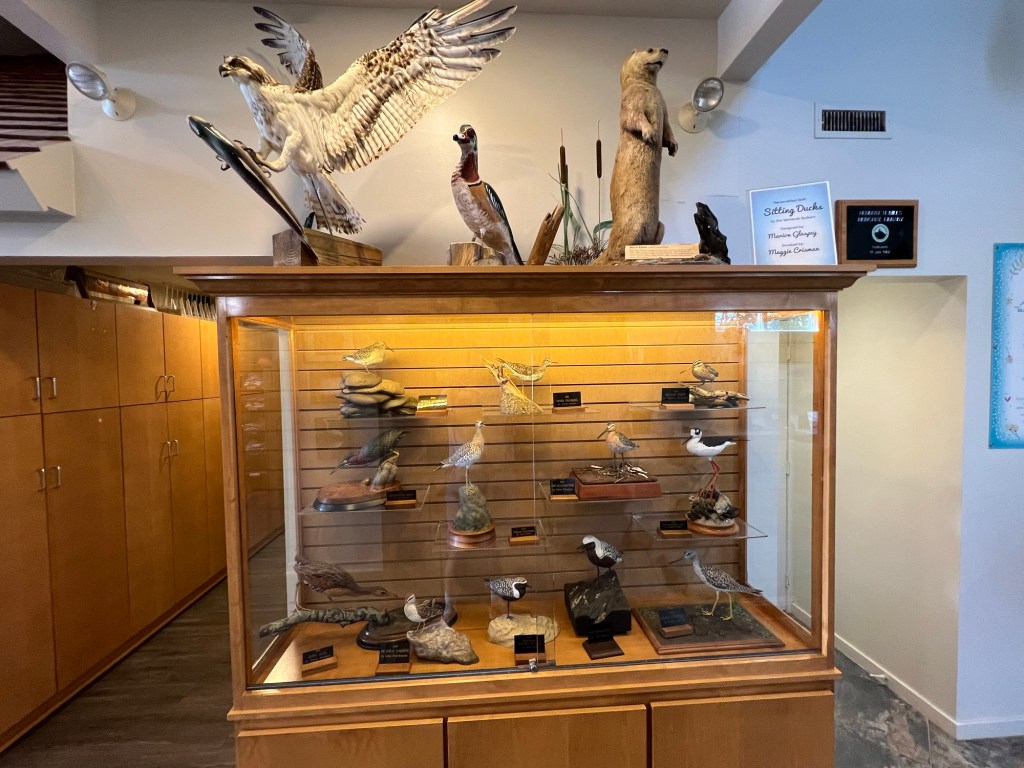
The bird exhibition at the entrance of the Institute
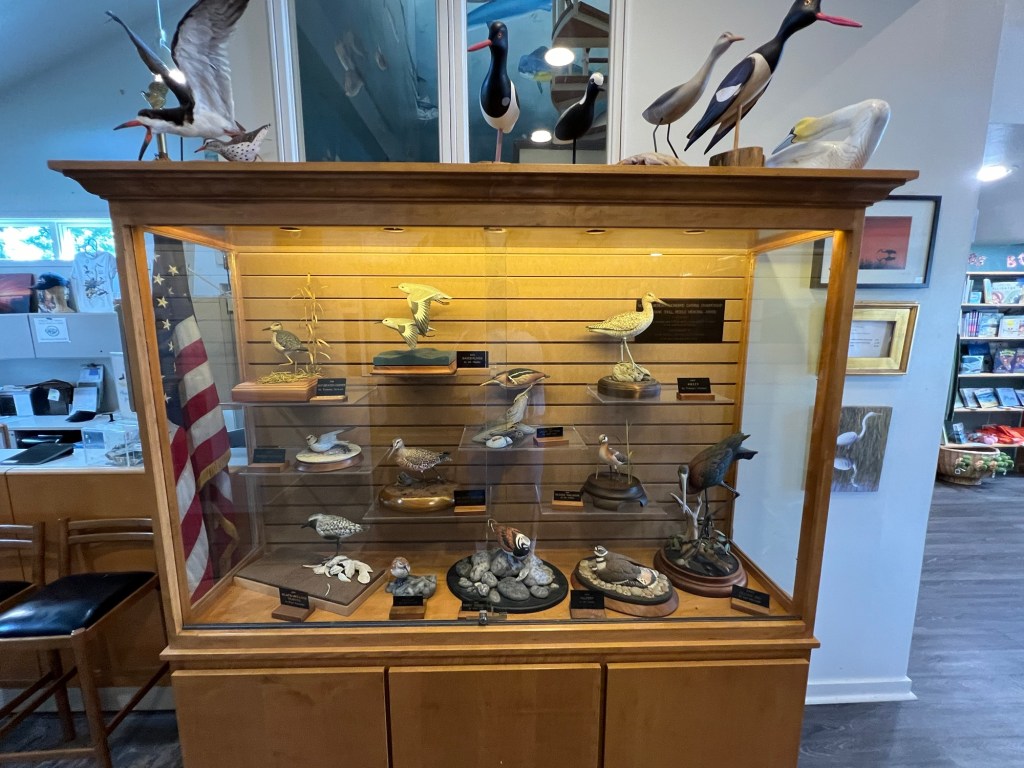
The other bird exhibition in the hallway
Later History:
(from the Institute Website)
In its earliest years the Institute was run by Lehigh University under a dollar-a-year lease. That relationship continued beyond Herb Mills’ untimely death at the age of 62 on October 21, 1972 while addressing an ornithology meeting at Cornell University, barely a month after the Institute’s dedication ceremony.
After a few years, however, the Institute and Lehigh parted company amicably. The late Marion Glaspey, a shy but very determined woman, succeeded Herb Mills as Chairman of the Board and guided the Institute for several difficult years as the Institute struggled to become a self-sustaining, independent entity, and garner and maintain the kind of financial support that is vital to any nonprofit organization. In addition to being totally dedicated to the Institute, Marion was a talented artist and photographer, teaching classes in both subjects, and–most significantly–she was a passionate gardener (she’s the “Marion” for whom our Marion’s Garden is named). She remained on our Board of Trustees until her death in 2000.
Through Marion’s leadership and that of her successors, the Institute has evolved to become a leader in coastal environmental education, research, and conservation. At present the Institute is supported almost entirely by funds from private sources, receiving only an occasional government grant for a special project.
My visit to the Institute in the Summer of 2024:
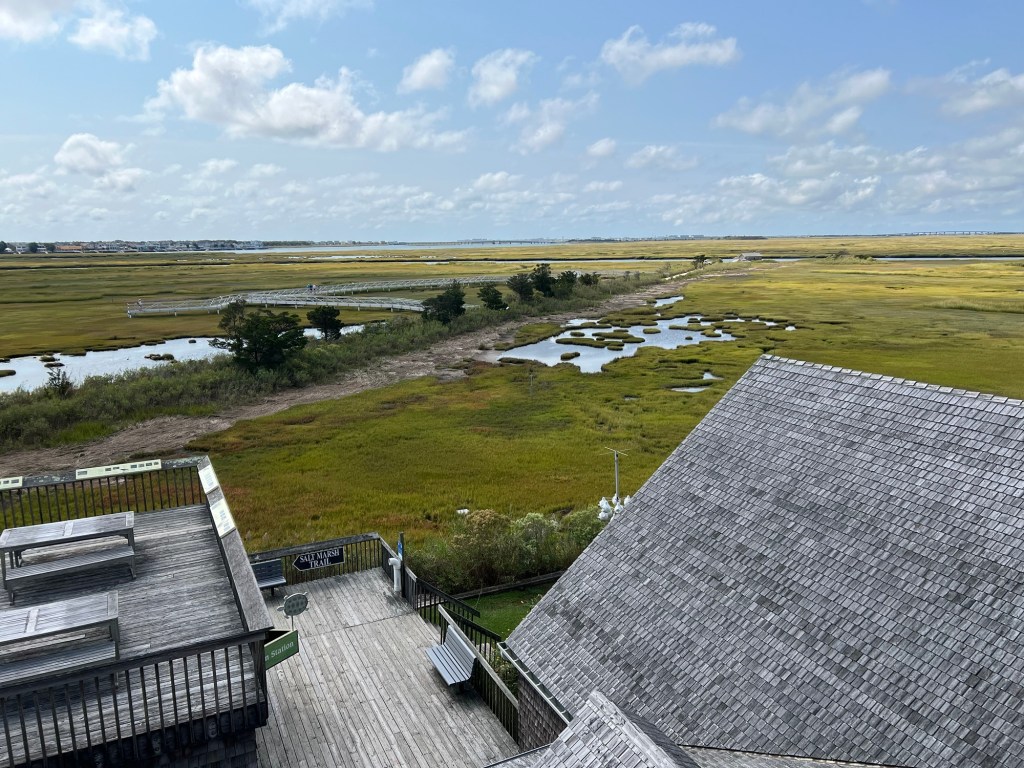
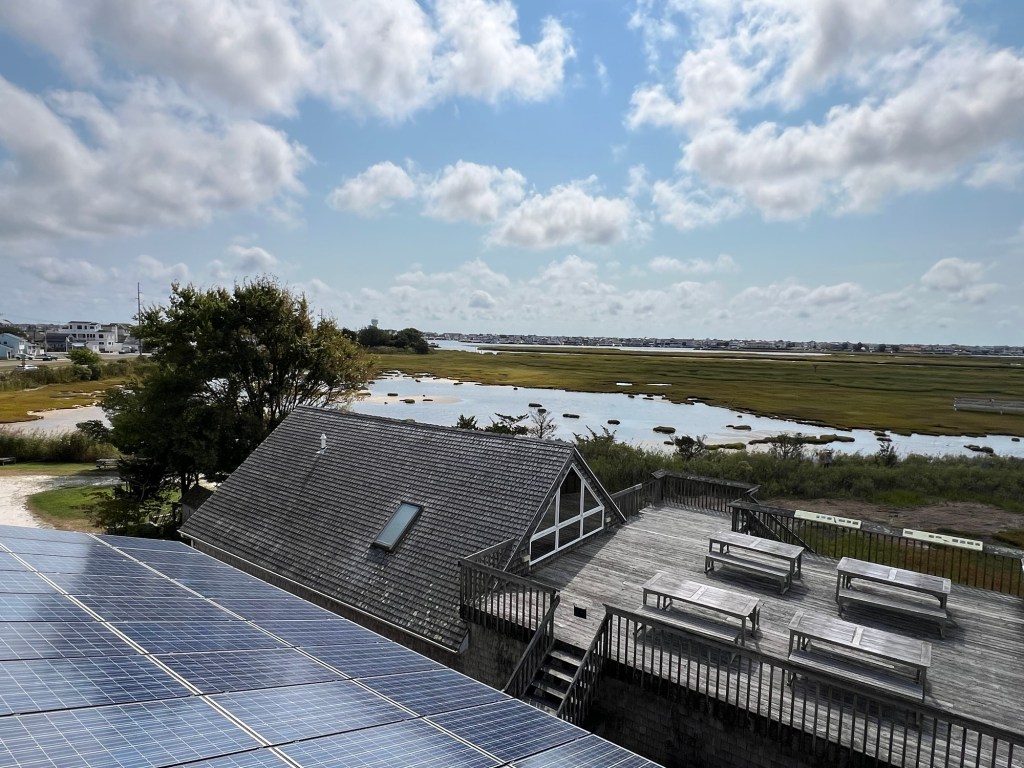
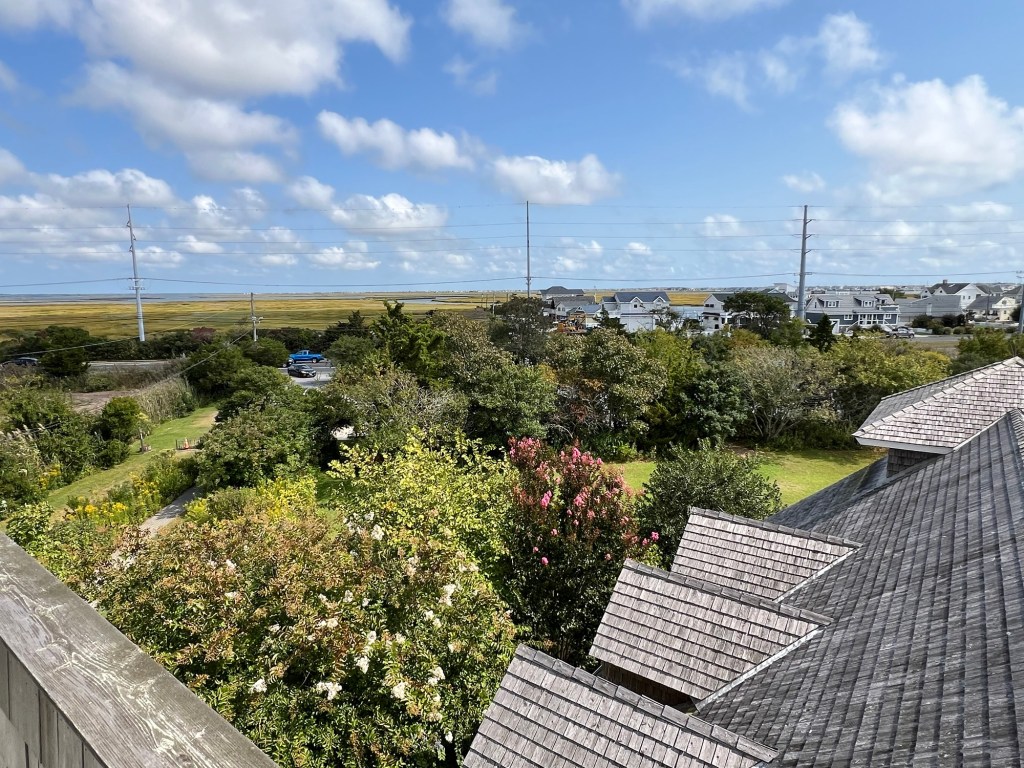
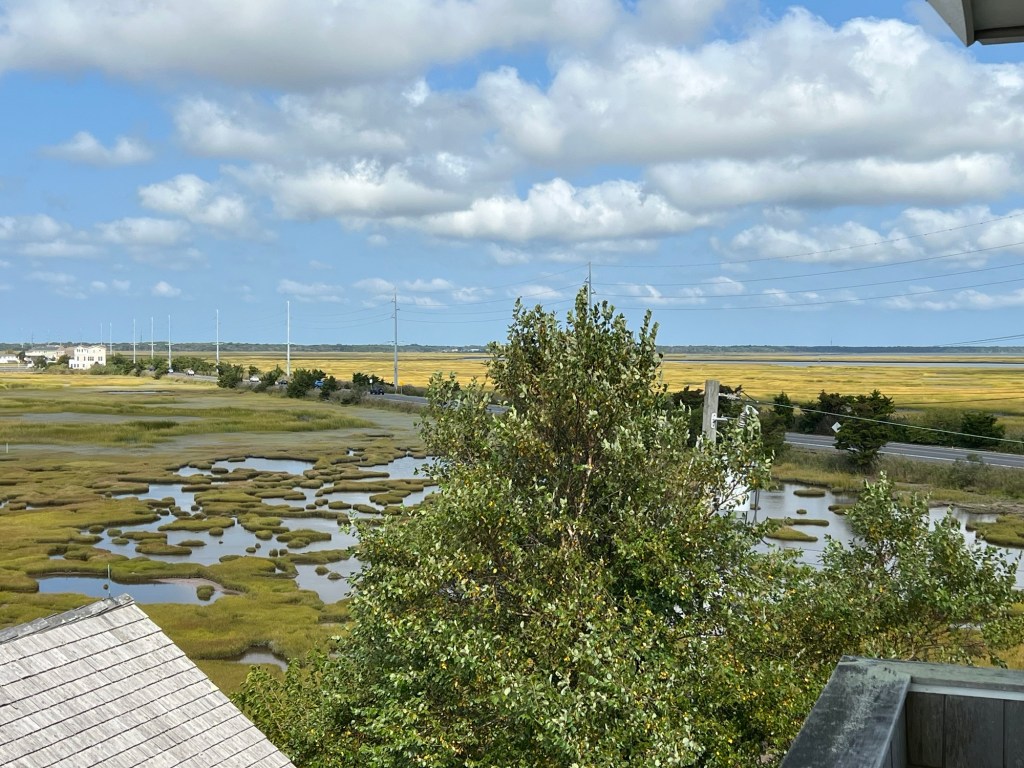
The first stop on the tour of the facility was walking up to the observation deck at the top of the building to view the salt marshes below. It gave an overview of the area that the Institute is trying to protect. The top floor observation gives a clear view of the marshes that surround the town of Stone Harbor and how these acres of area help both the natural population as well as the human population both residing in this beach community.
The view of the Wetlands between the barrier islands and the mainland
The Wetlands closer to the main road
The view of the front of the building and its colorful gardens
The Wetlands that line the highway out of Stone Harbor
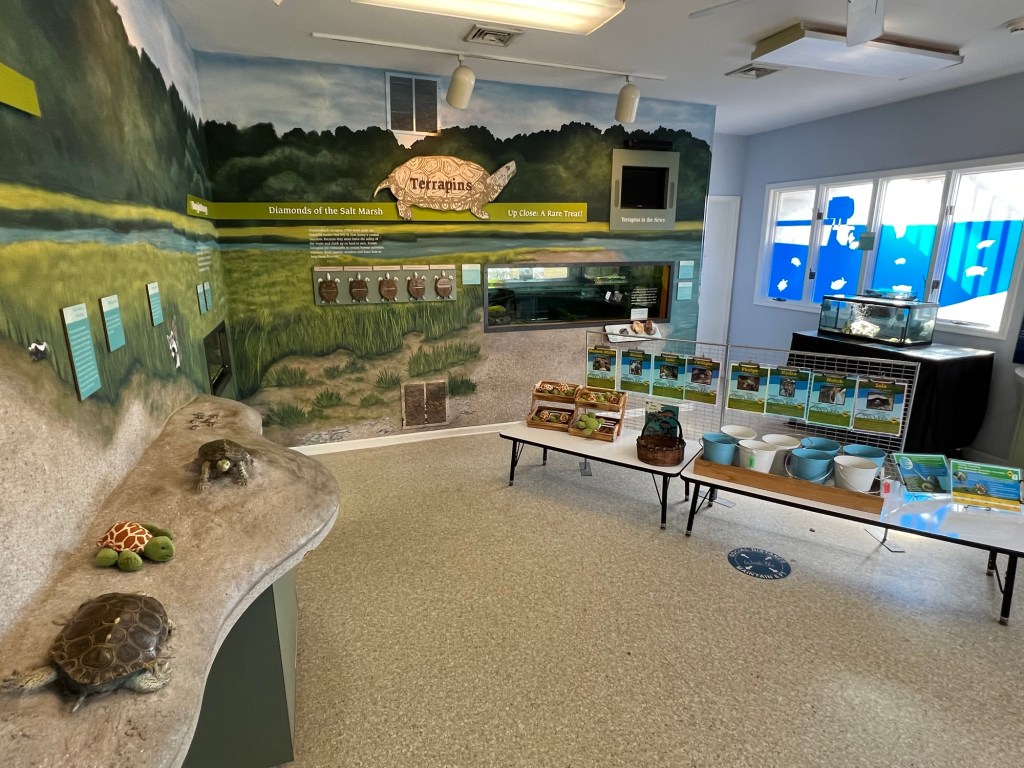
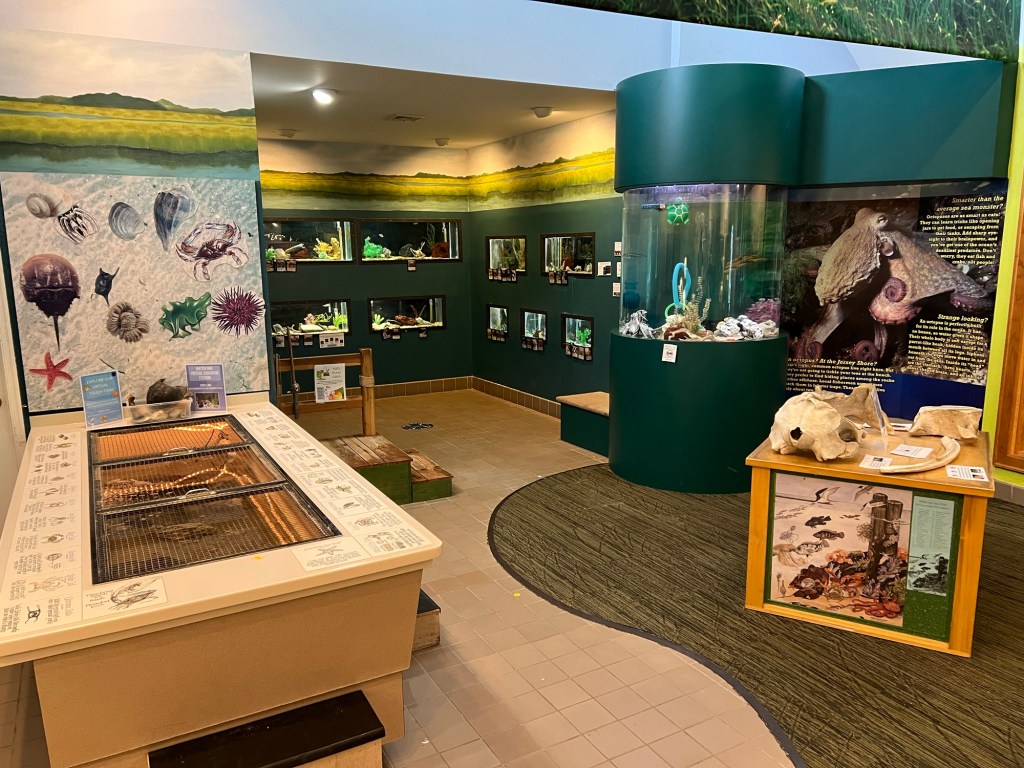
When you leave the deck area and head back downstairs, there is wonderful little aquarium that houses the background of the local fish, crabs and wildlife that are part of the ecosystem that make the salt marshes such an important part of this shore community. One side of the aquarium is dedicated to the local Terrapin turtle whose habitat has long been affected by human encroachment. This conservation effort is ongoing.
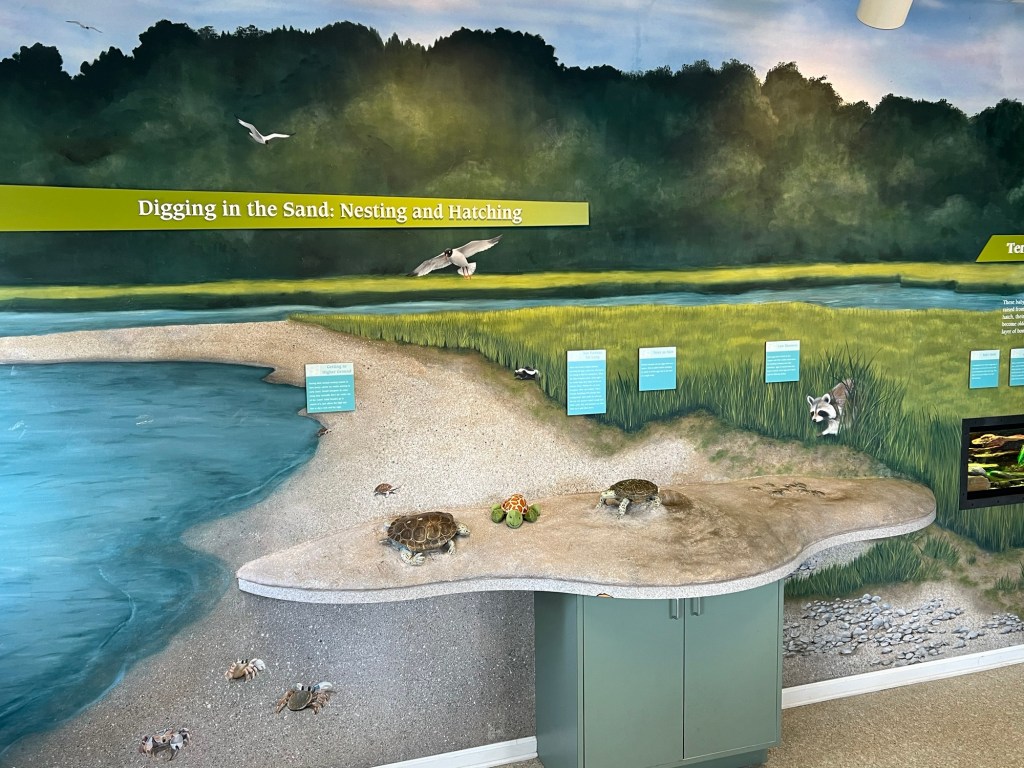
The first room in the complex of rooms is the Terrapin Turtle exhibit showing the habitat of this local creature and its importance in the ecosystem.
Conservation Programs at The Wetlands Institute
(from the Institute website)
Concerns about the local terrapin population led Dr. Roger Wood, former Director of Research at The Wetlands Institute, to establish the Terrapin Conservation Project in 1989. The project has grown and broadened in scope to become the Coastal Conservation Research Program (CCRP), where undergraduate interns work closely with research scientists at The Wetlands Institute on a wide variety of research and conservation projects, including terrapin conservation. Since 1989, over 200 college and university students from more than 100 academic institutions have participated in the program.
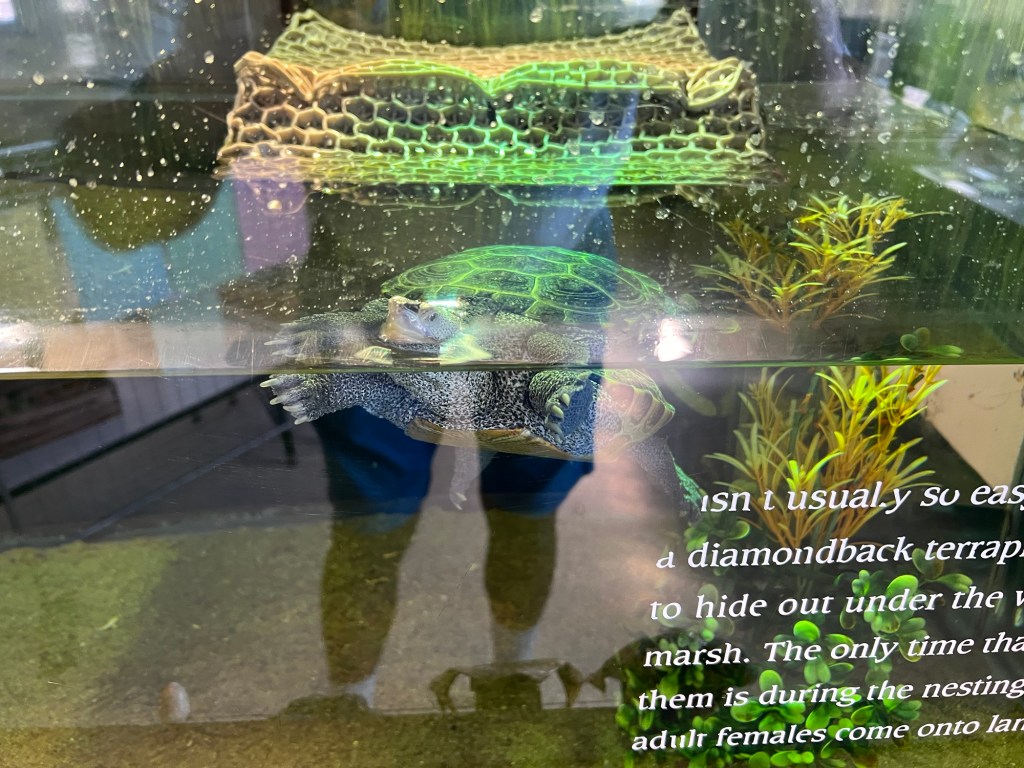
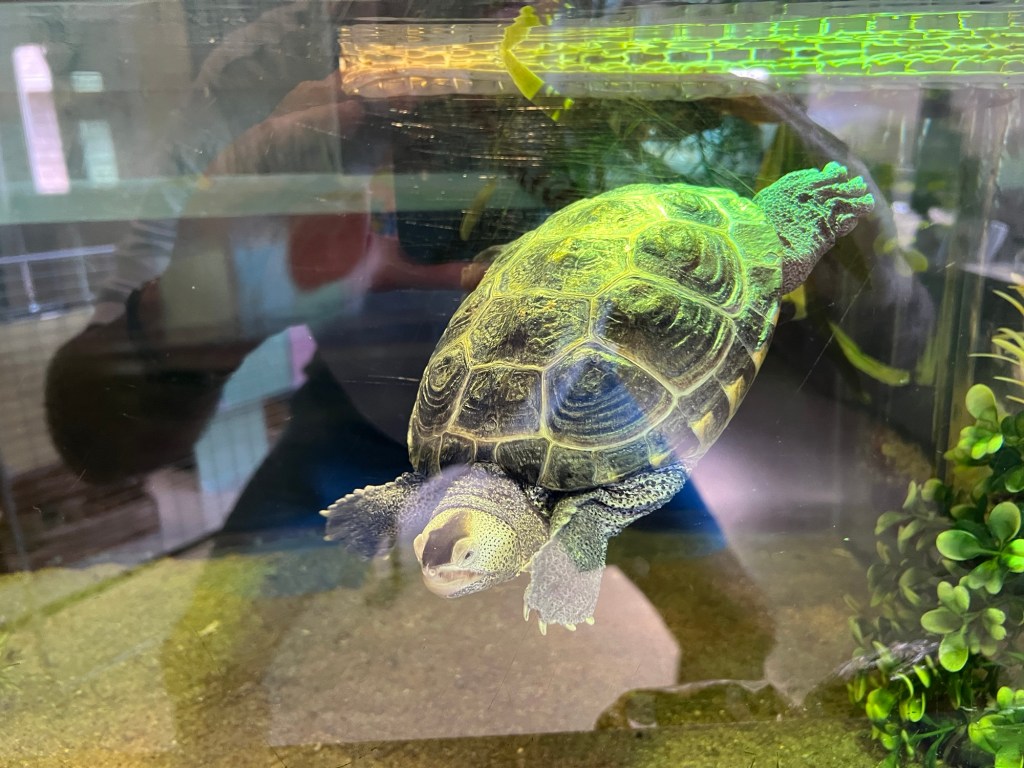
The turtles will just stare at you as walk their display
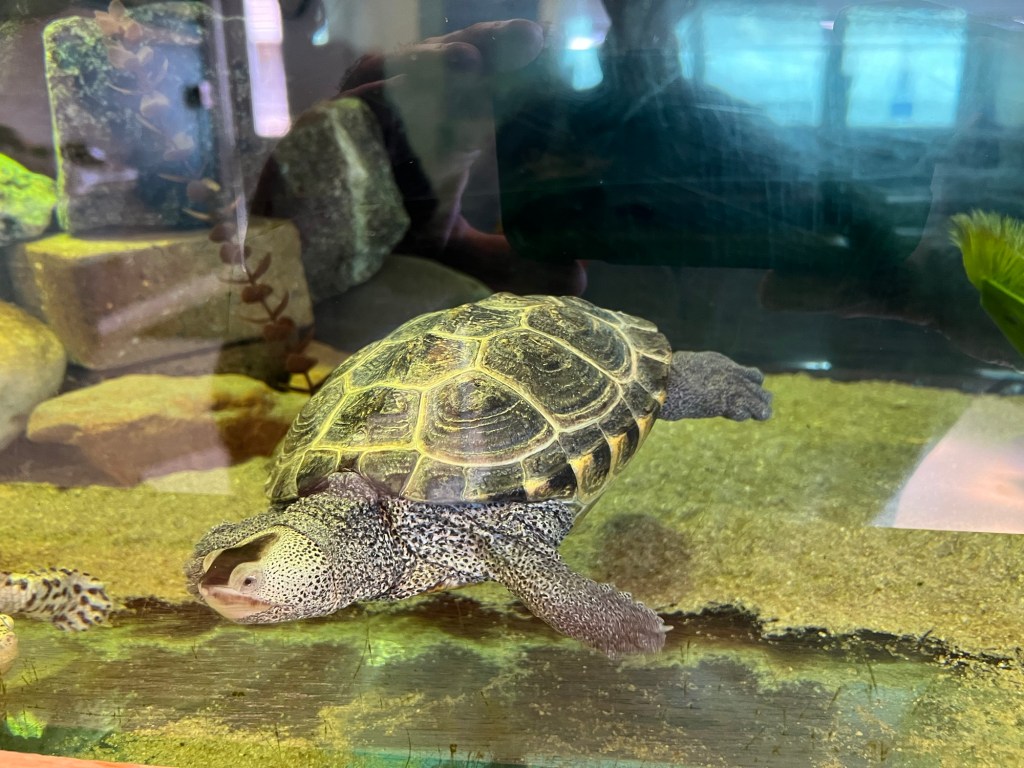
The turtles swimming around
The turtles in a recreation of their habitat
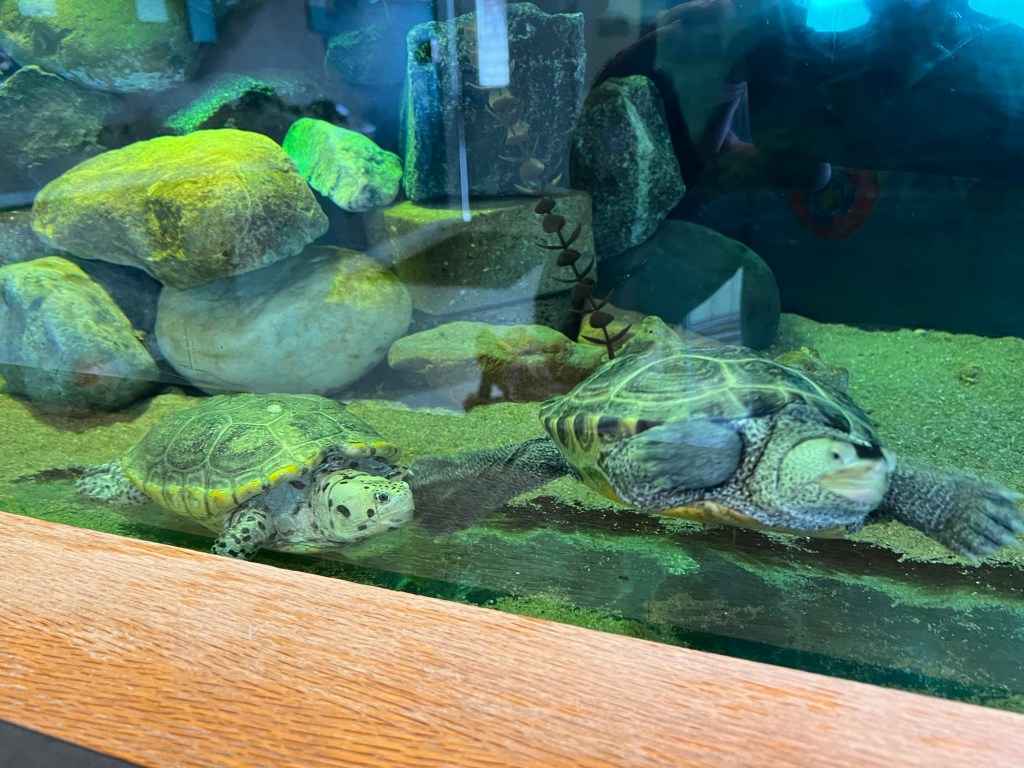
The turtles in captivity interacting with one another in the tanks
These playful turtles are just part of the chain of ocean animals under study and conservation at the Institute and it is interesting to see to their interaction with each other and then watch us from the other side of the tank to see the human observation.
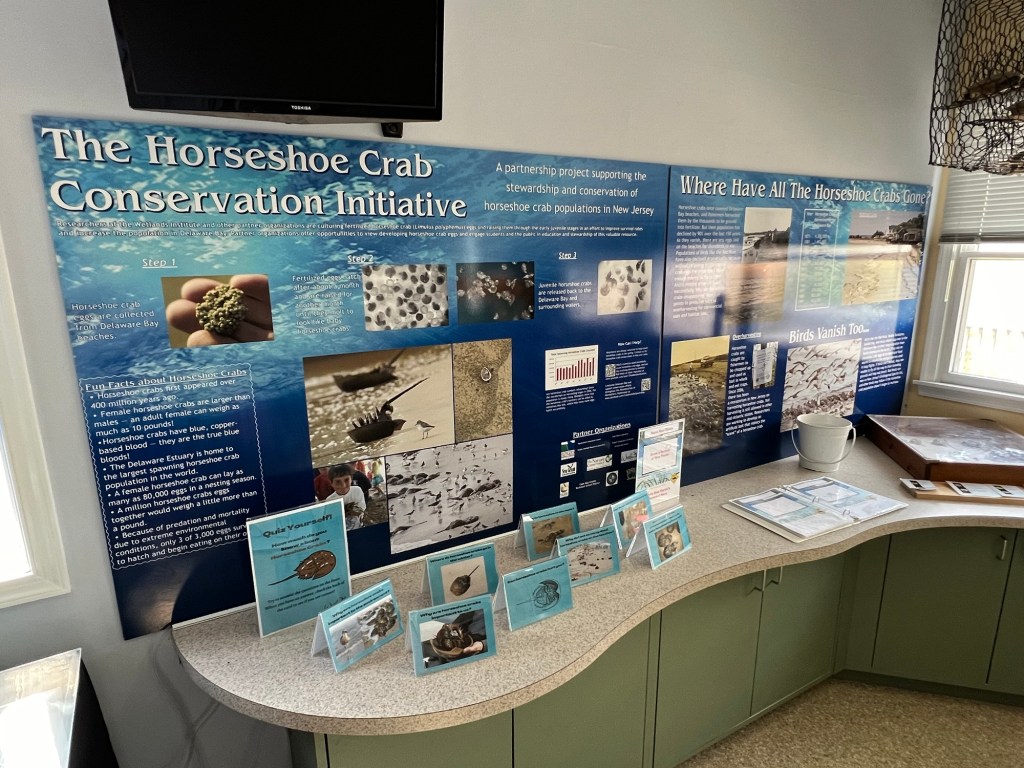
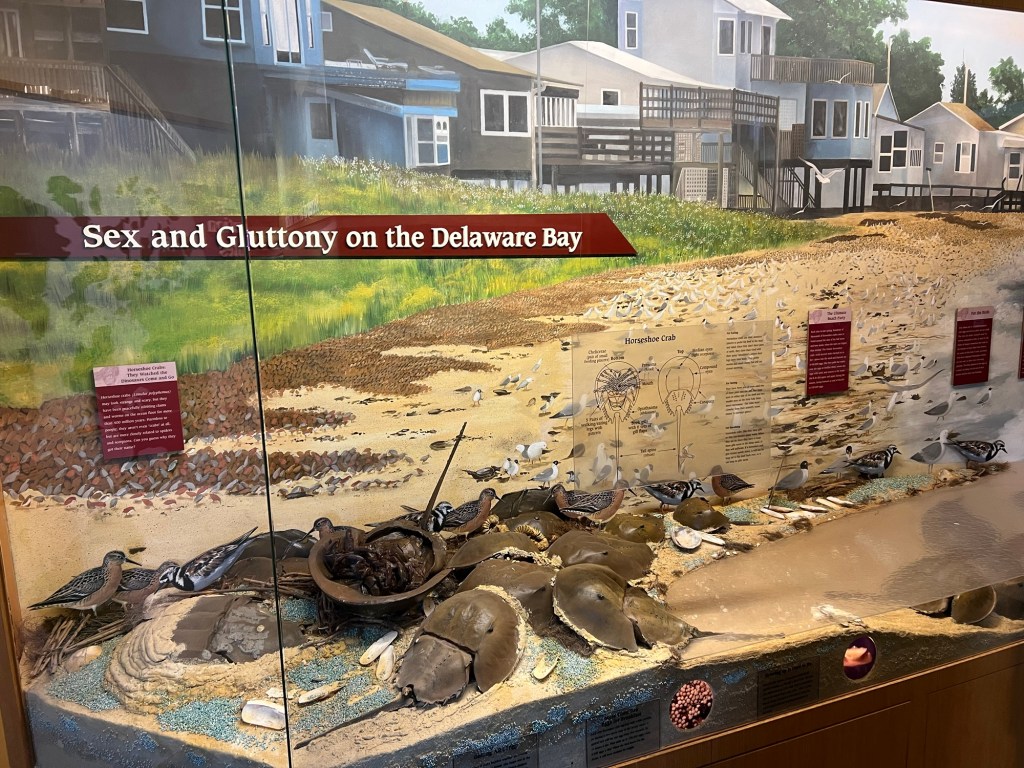
The next exhibition was the Horseshoe Crab conservation tank. The Horseshoe Crab holds a very important role in the ecology of the shore.
The Efforts with Horseshoe Crab Conservation:
(from the Institute website)
In an effort to address the Delaware Bay Horseshoe Crab situation, The Wetlands Institute has embarked on a statewide partnership project to support the stewardship and conservation of Horseshoe Crab populations in New Jersey. As part of this partnership, The Wetlands Institute collects fertilized Horseshoe Crab eggs with the proper permits from spawning beaches along the Delaware Bay and rears the eggs under controlled conditions in our aquarium. After about a month, eggs hatch and newly born Horseshoe Crabs are maintained in their culture tanks. Enclosed in this cultured environment and free of predation, aquaculture dramatically increases Horseshoe Crab survival both before and after the first molts. These small crabs are kept in culture tanks until they are ready to begin feeding, and then are released at their respective egg collection locations.
The Horseshoe Crab exhibit
The Nesting exhibition
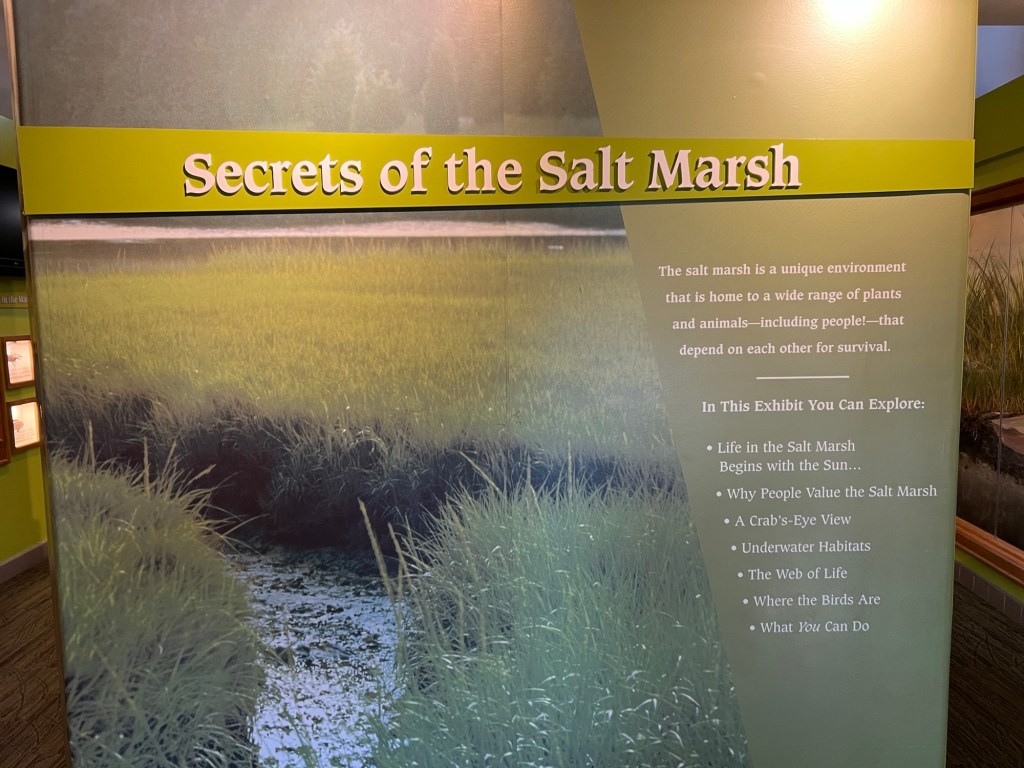
The Salt Marsh exhibition
The exhibit on how shore development is affecting wildlife and the ecosystem
The aquarium was very interesting as the exhibits were not there for amusement but to show the wildlife that lives in our oceans and how they interact with one another.
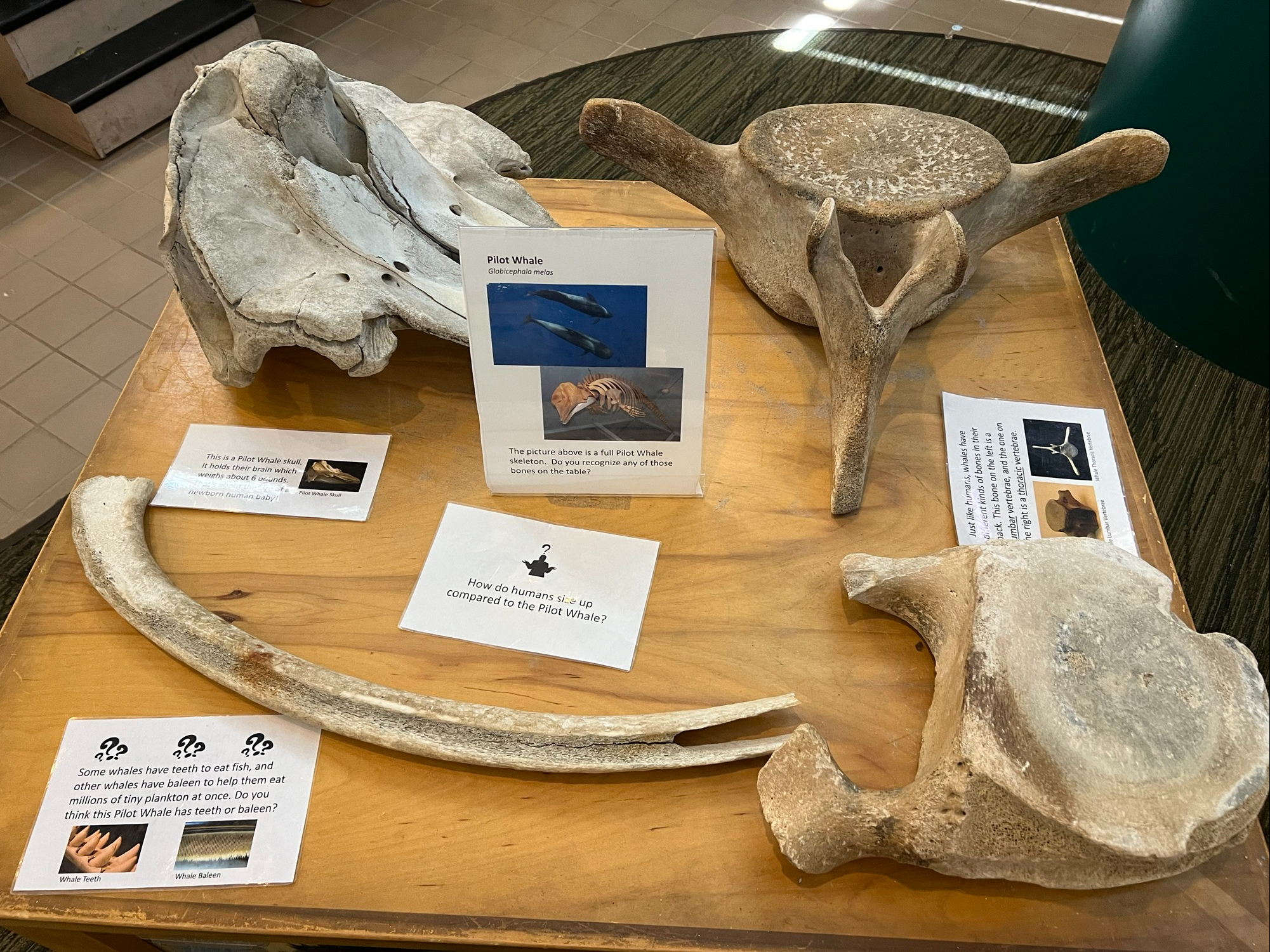
The Whale bone exhibition
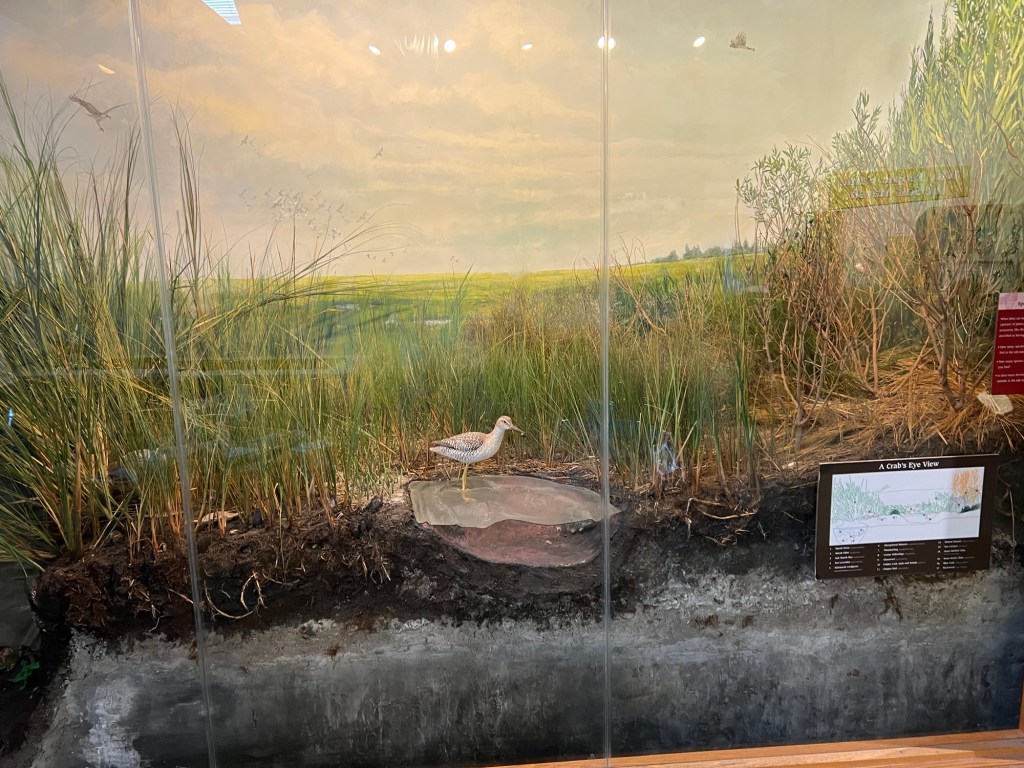
The exhibit on Shore birds and their home at the shore
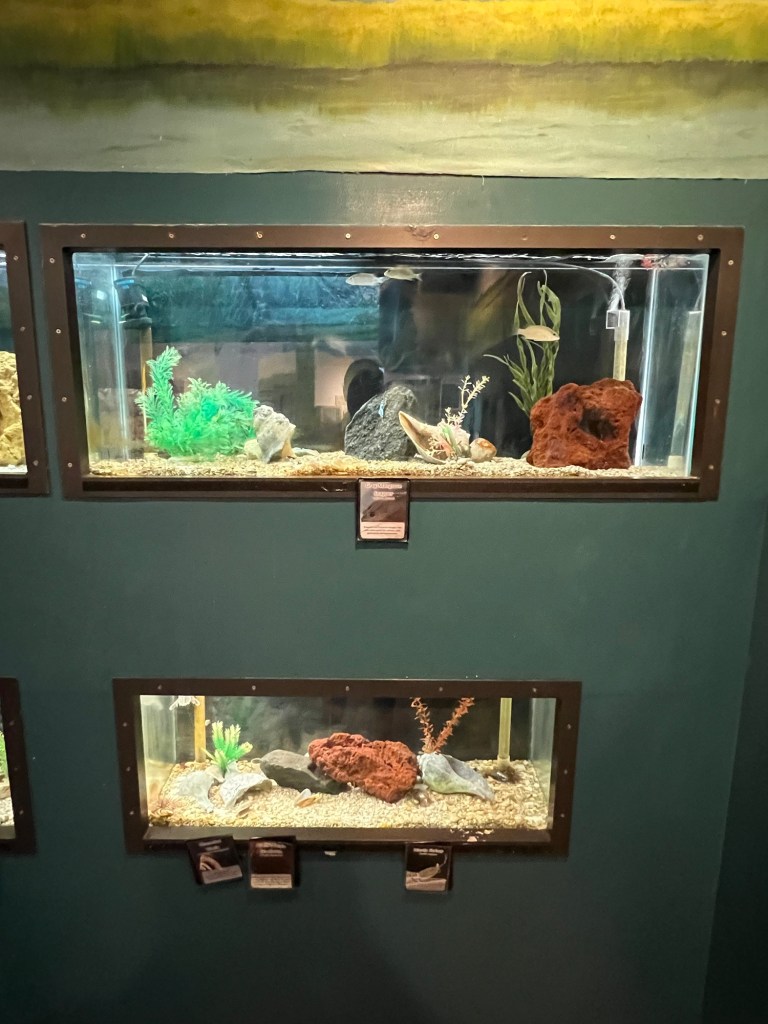
The Aquatic tanks are the interaction we have to the aquatic population. I am sure many of the fish in the exhibition are not native to New Jersey or the Atlantic still it was fun observing them.
The tanks showed the importance of marine life in our beaches and oceans
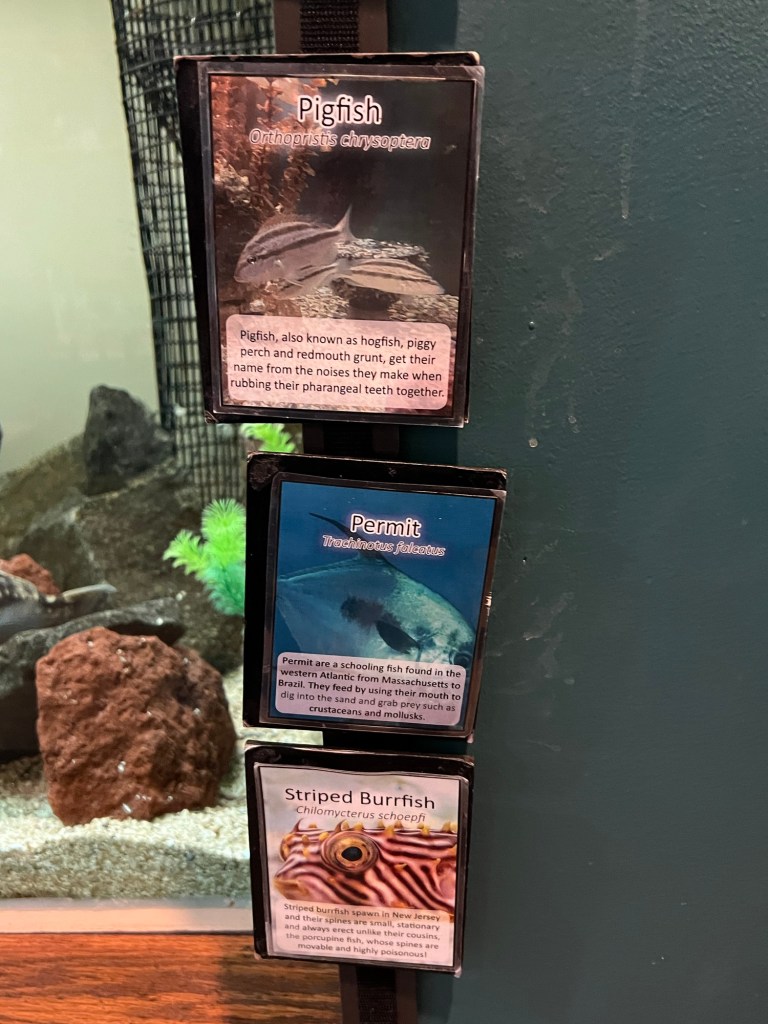
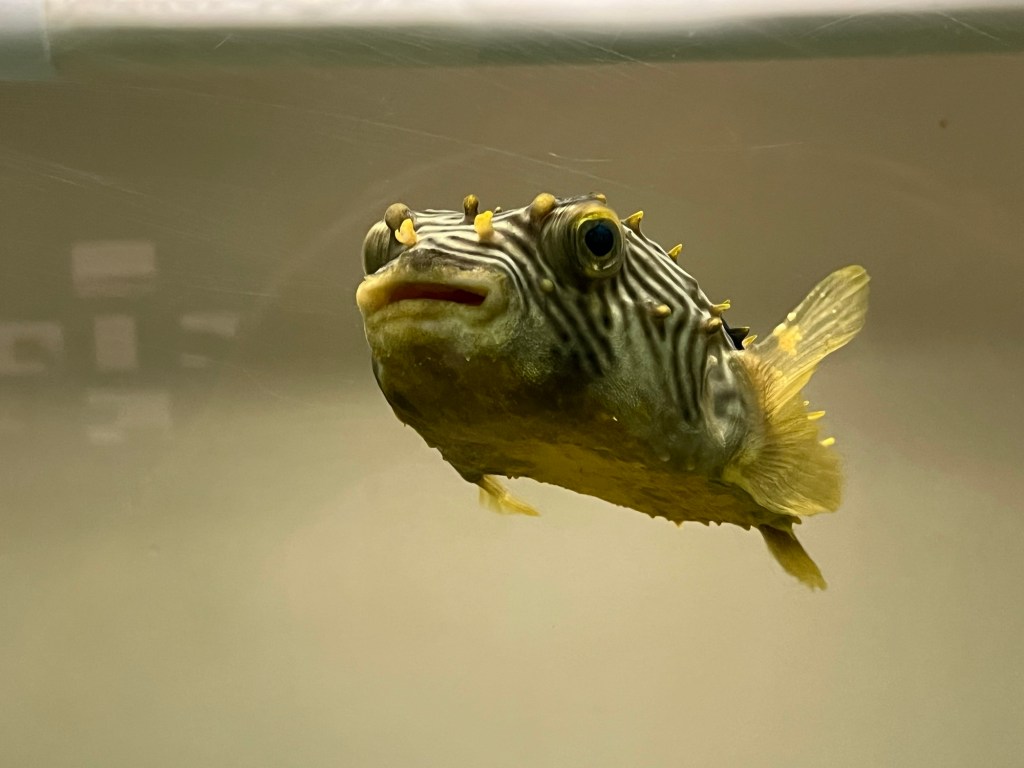
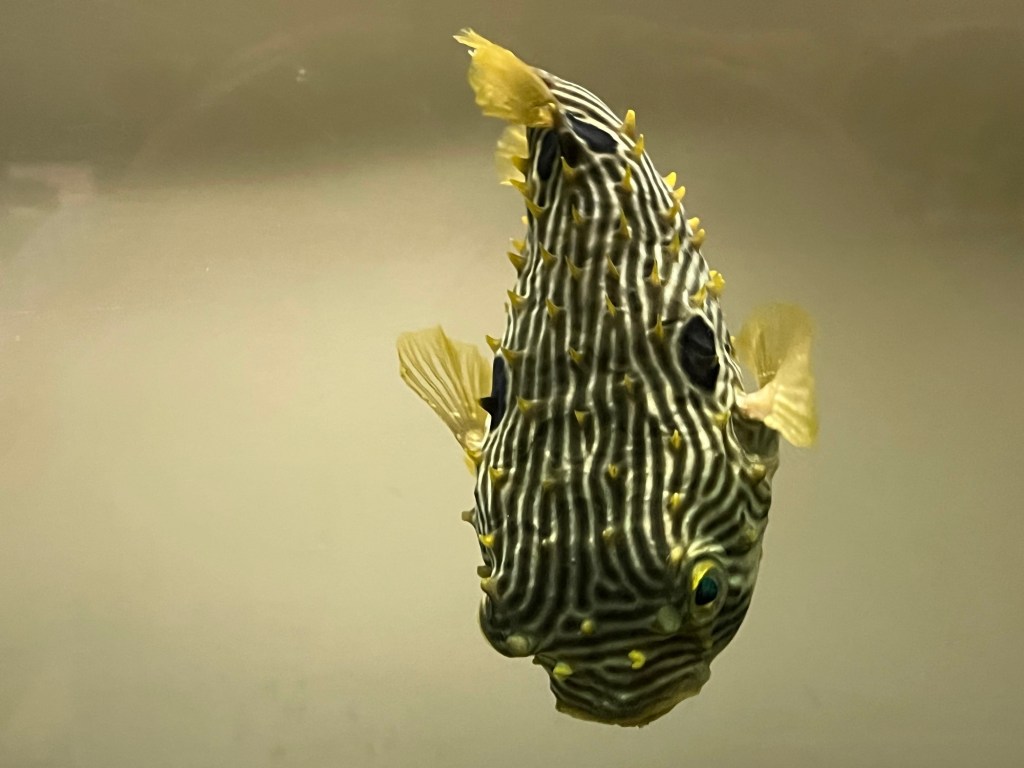
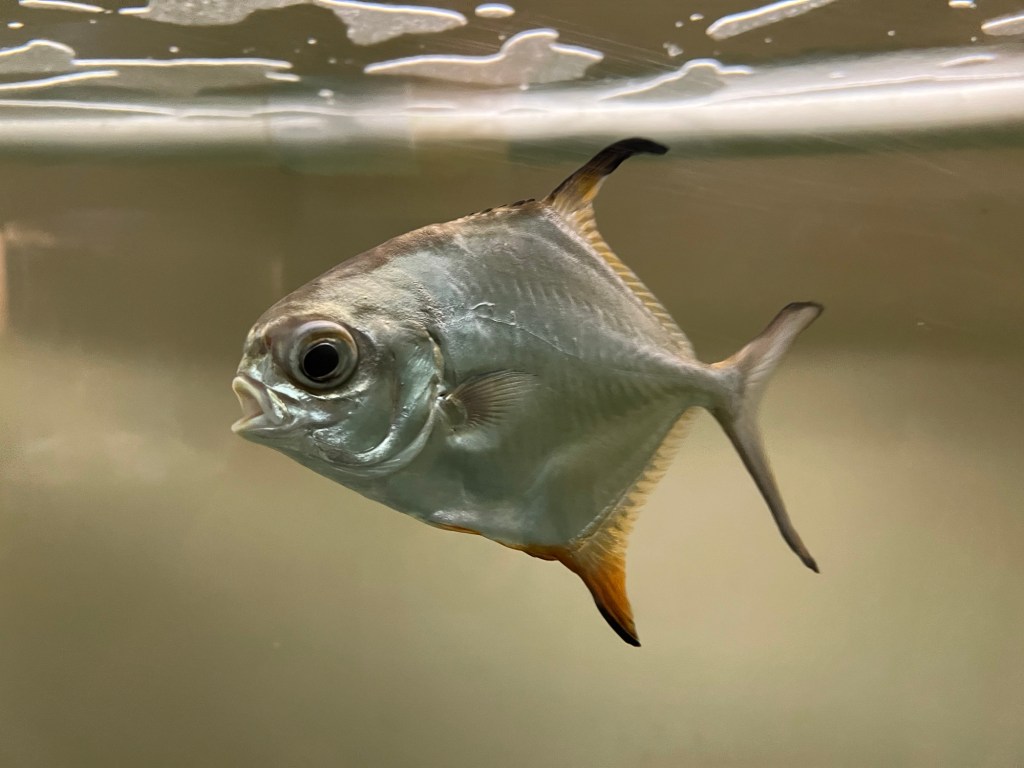
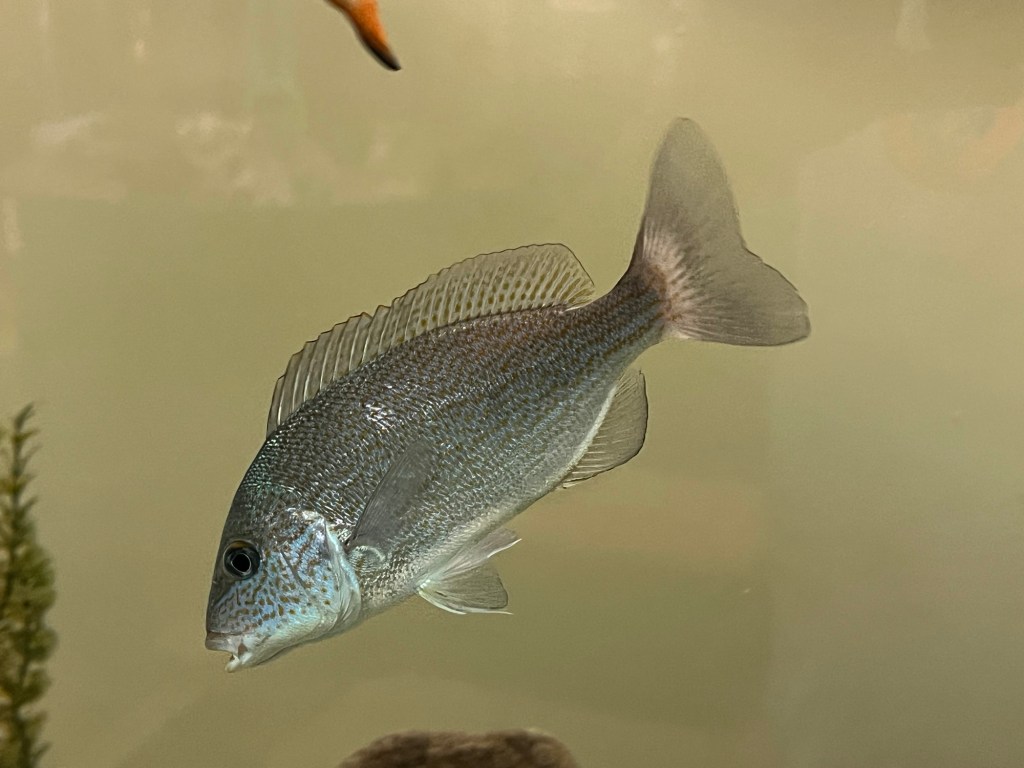
Some of the types of fish in our oceans: the Striped Burrfish, Permit, and Pigfish
The Striped Burrfish
The Stripped Burrfish
The Permit fish
The Pigfish
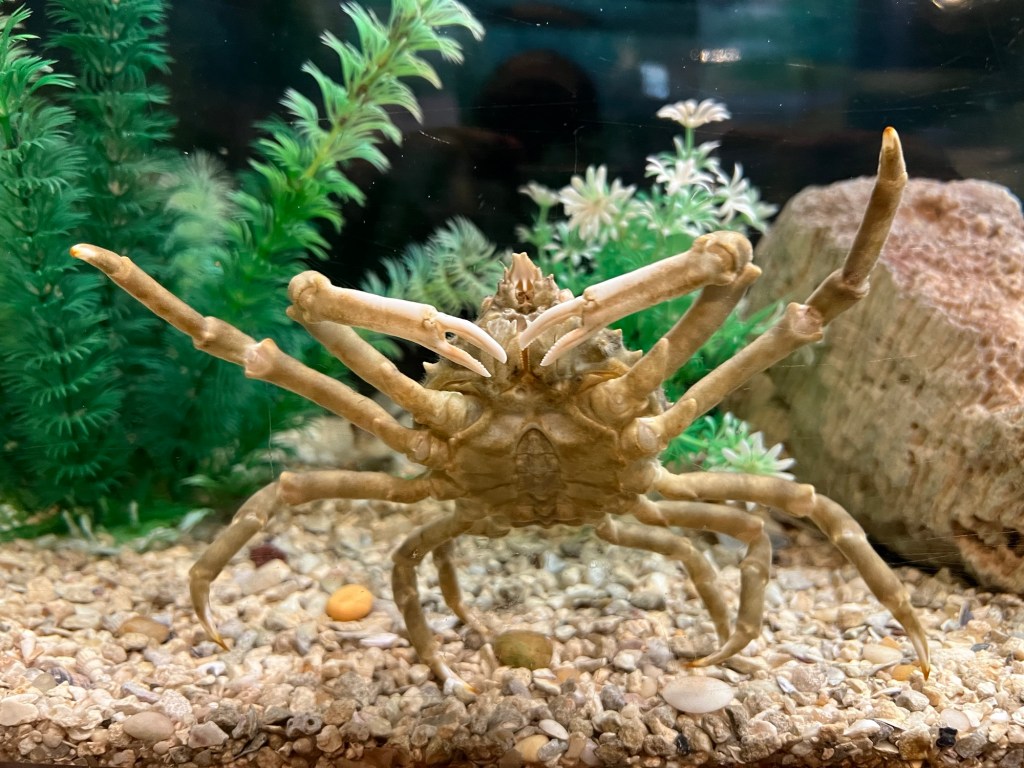
The next tank over held the very active Spider Crab, who seemed to follow my every move.
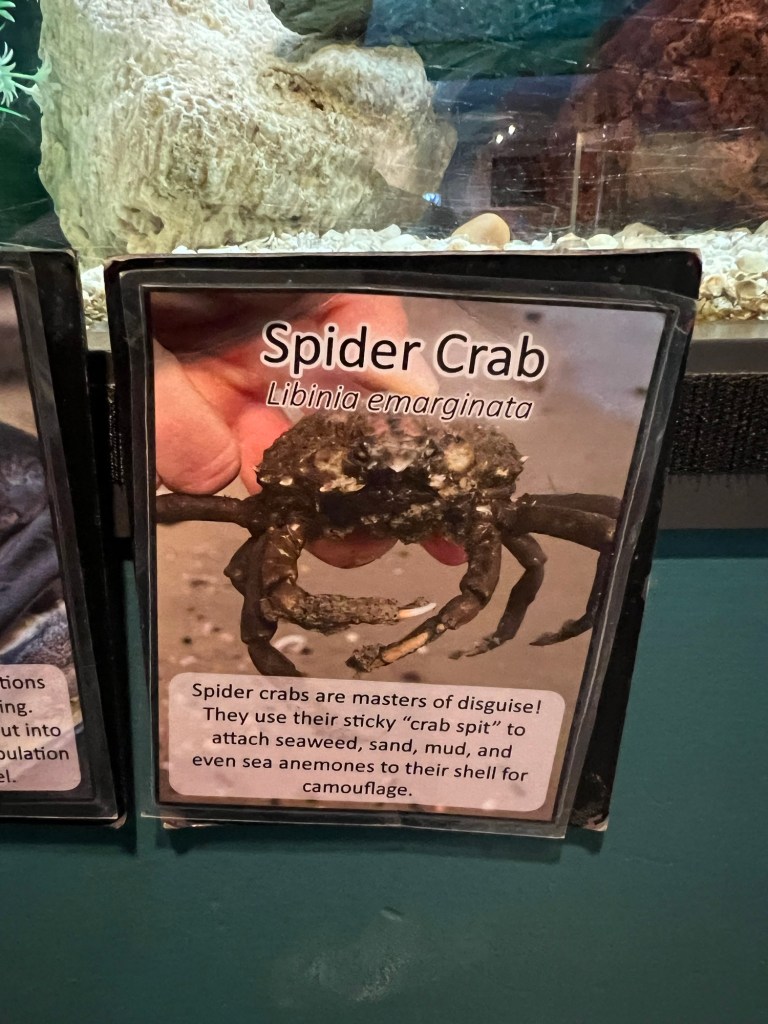
The sign at the tank of this very playful crab
This guy was following me around the tank
The aquarium was interesting because the fish seemed to be very jaded of being around humans. They seemed so used to seeing us it does not faze them.
I then toured the salt marshes outside. The Institute has a series of paths and walkways where you can view the marshes and see the cause and effects these natural areas. It was a beautiful warm sunny day when I visited and it was relaxing to just walk along the paths and just take it all in.
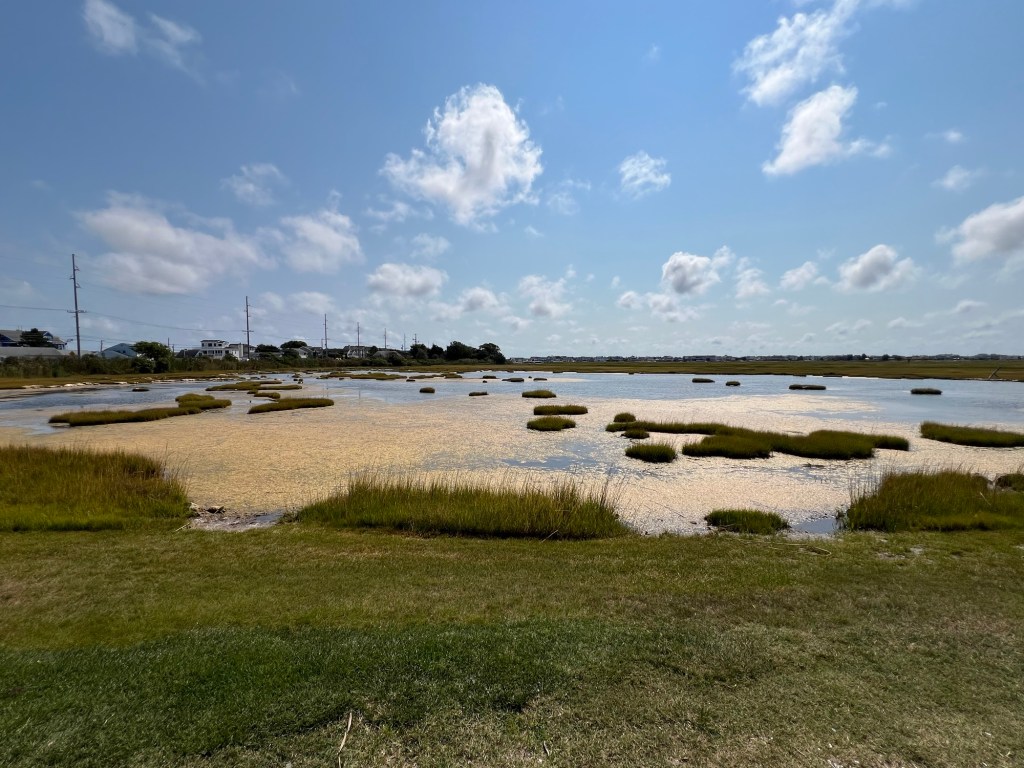
The view of the salt marshes from the back of the Institute
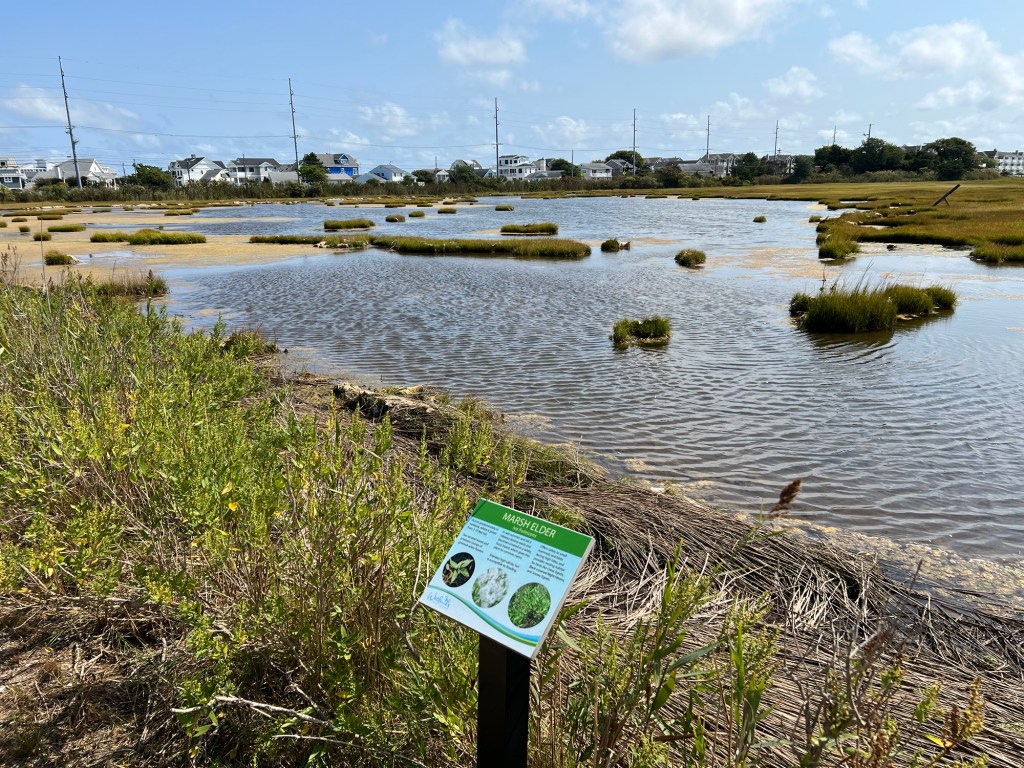
A closer view of the marshes from the paths
Coastal Sustainability and Wetland Health
(from the Institute Website)
The Coastal Sustainability and Wetland Health program began with efforts to document the impact of sea level rise on marshes and marsh-dependent species. The health of coastal bird and diamondback terrapin populations is intricately linked to the condition of coastal marsh systems; as a result, monitoring changes in the local population size, behavior, and breeding success of these animals can help us perceive changes within the salt marsh itself. Our work is also increasingly focused on the monitoring of marsh restoration and habitat creation projects. Through beneficial reuse of dredged sediments, we aim to protect the marsh platform from conversion or drowning, and to create elevated coastal bird and terrapin nesting habitat. In order to understand the response of wildlife to these projects, and to document how sea-level rise and coastal flooding are impacting local populations, we are carrying out surveys of marsh-dependent species on The Wetlands Institute property and other restoration sites (Institute website).
The Marsh Field sign
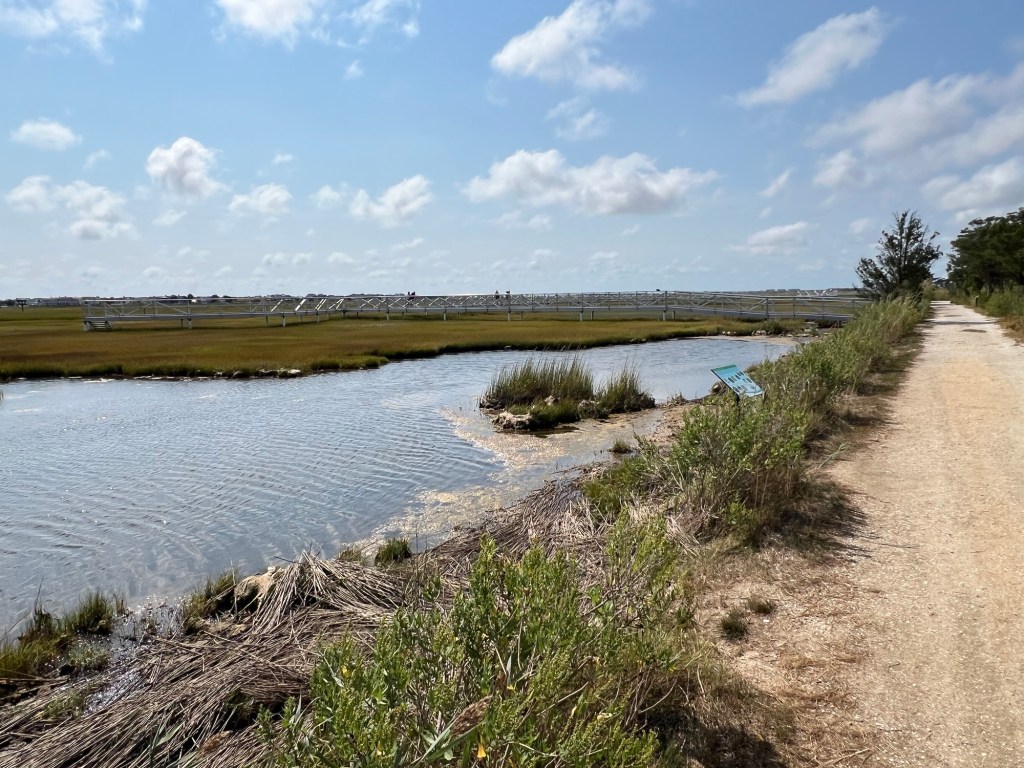
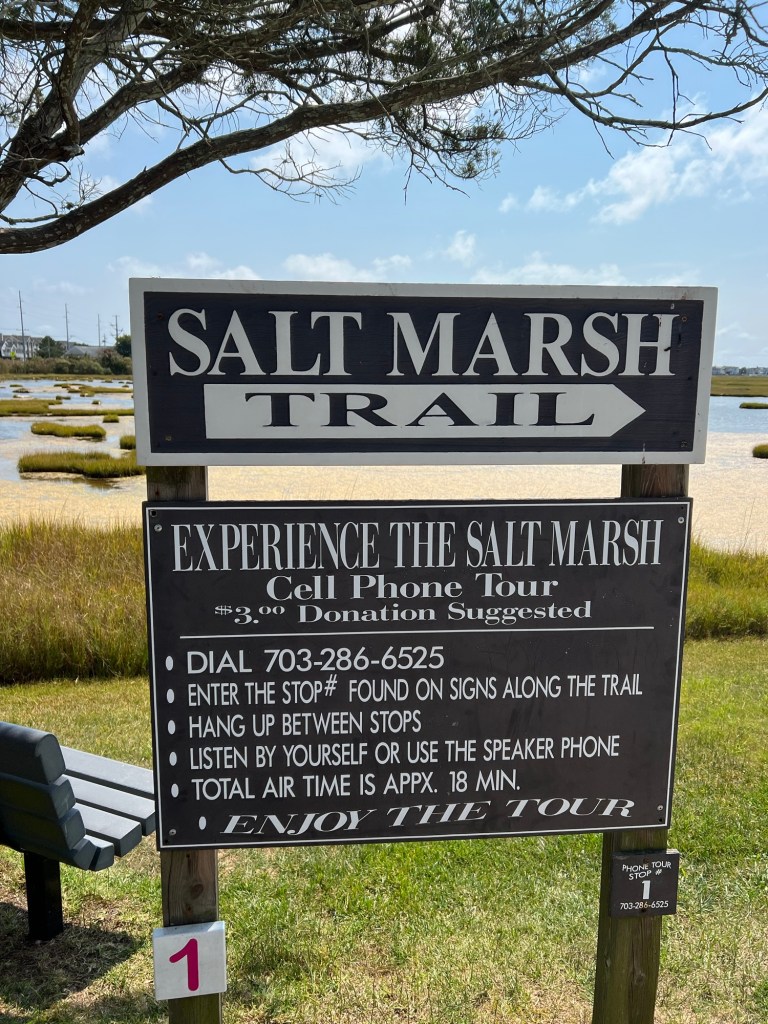
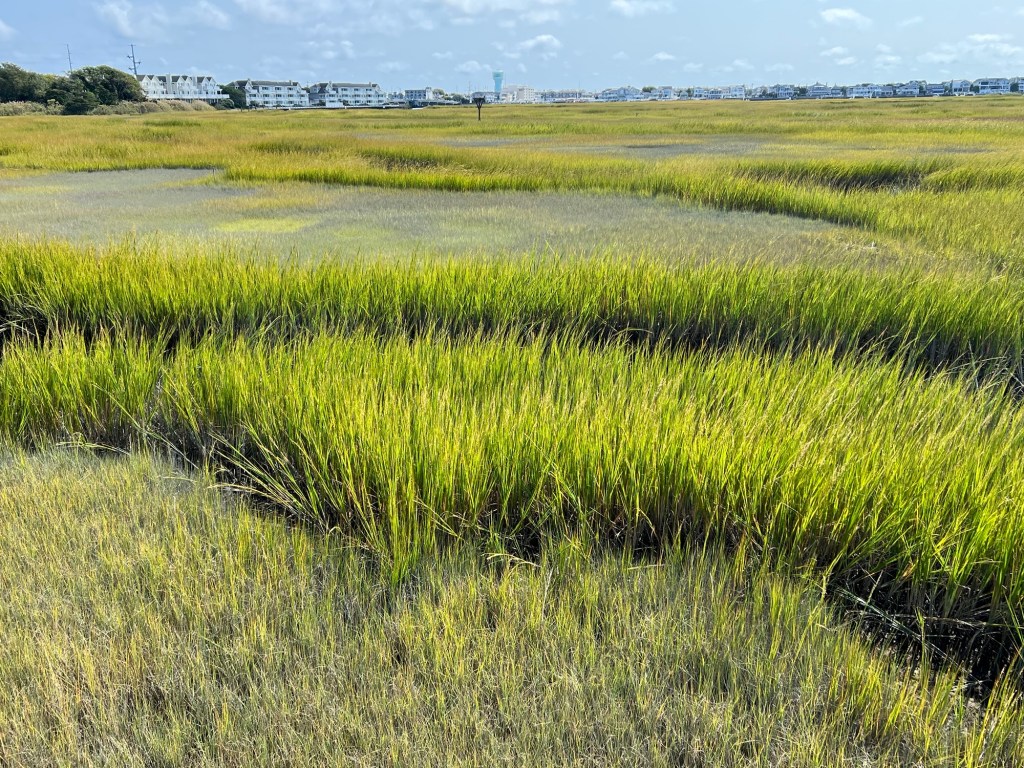
The Salt Marshes
The back of the Institute from the Salt Marshes
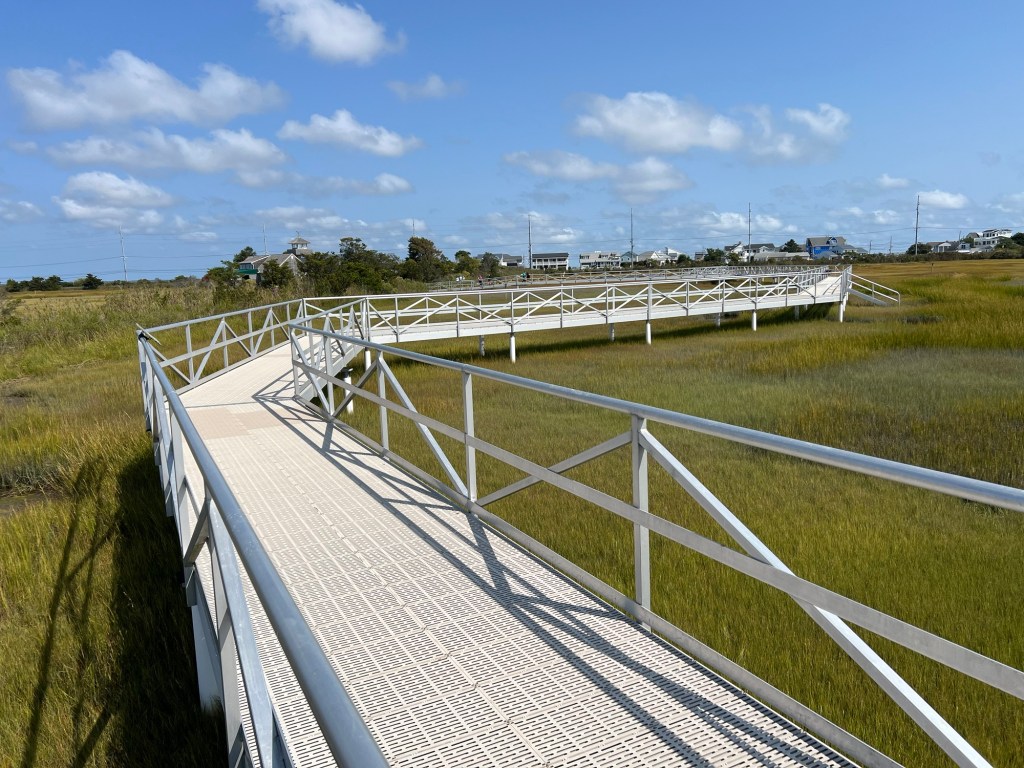
The Institute has a complete elevated walkway where you can walk through the marshes and observe the area.
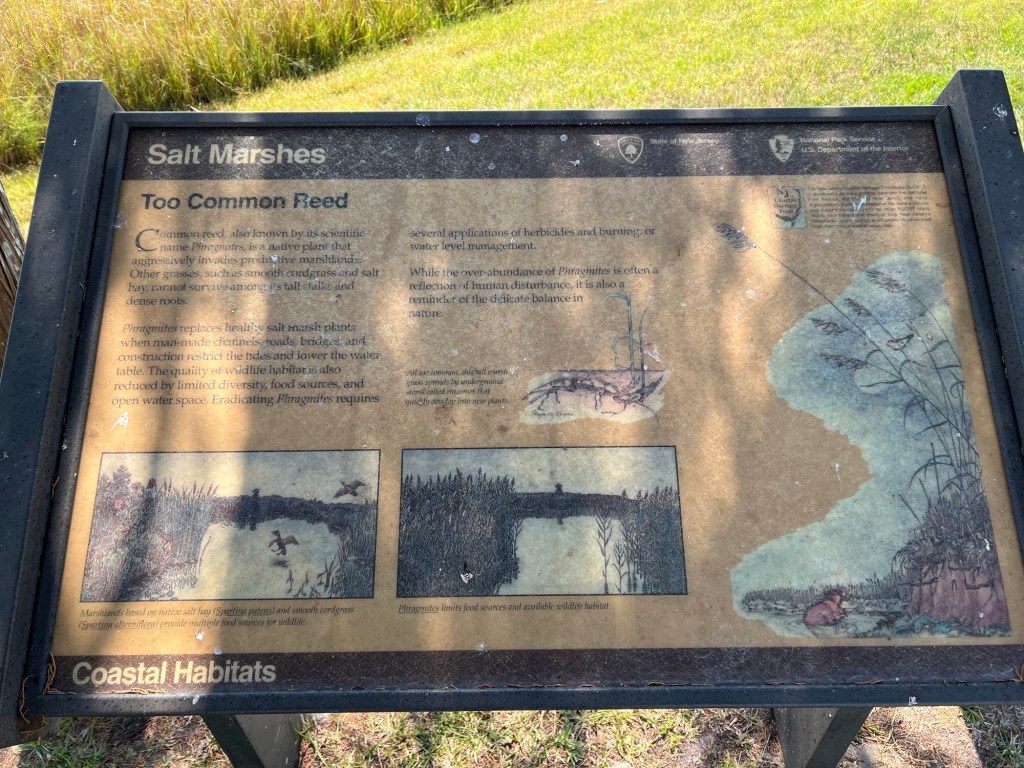
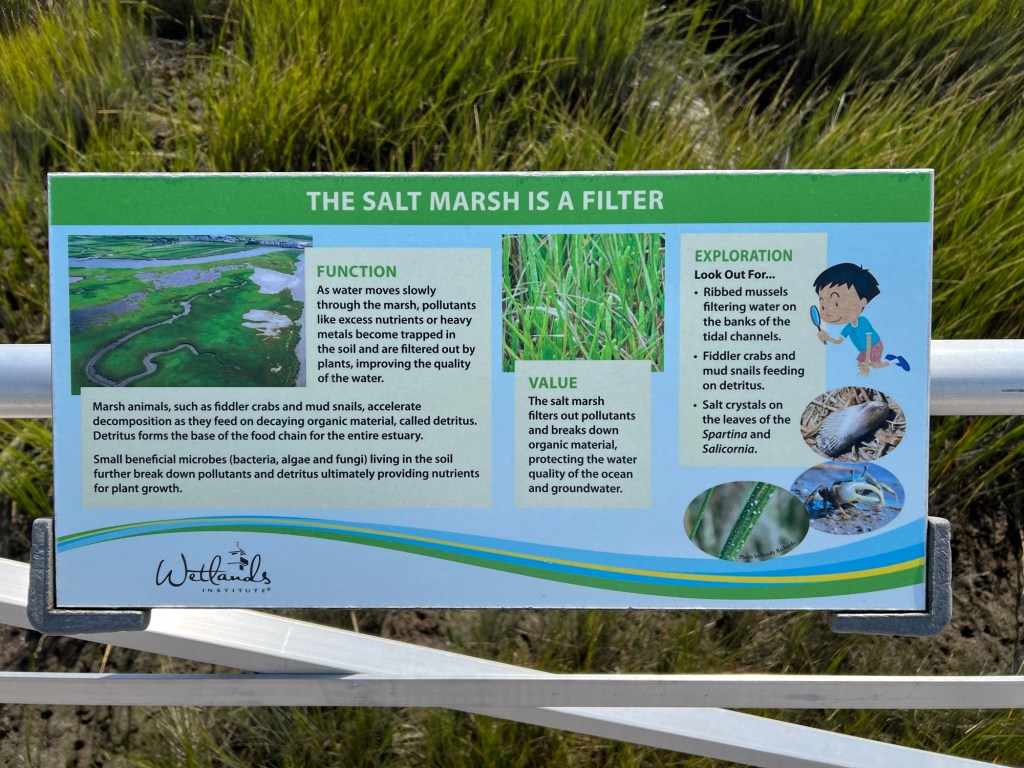
The sign explaining your walk through the marshes
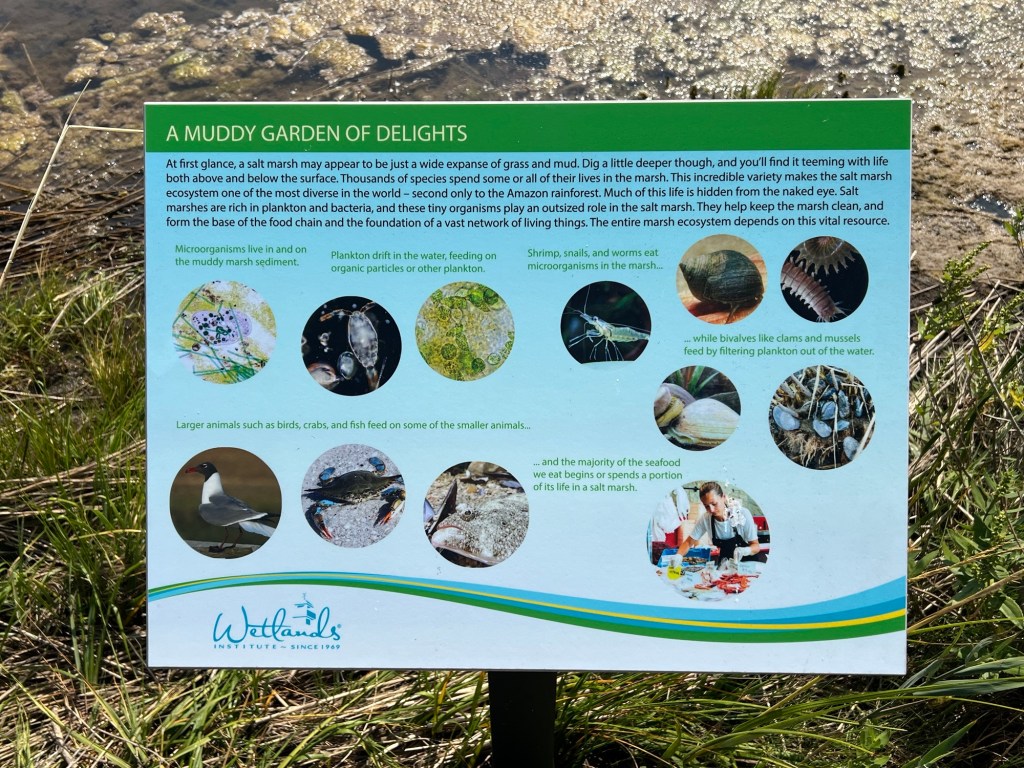
The possible animals and fish you will see on the walk
Plan to take the time to walk through the pathways on a nice day and observe the salt marshes. You will not see many animals or fish but you know they are there. It is interesting to see the town of Stone Harbor in the distance and realize how much these marshes help the human population without them knowing it. Not just are they beautiful to look at but how what an important role in the environment they play.
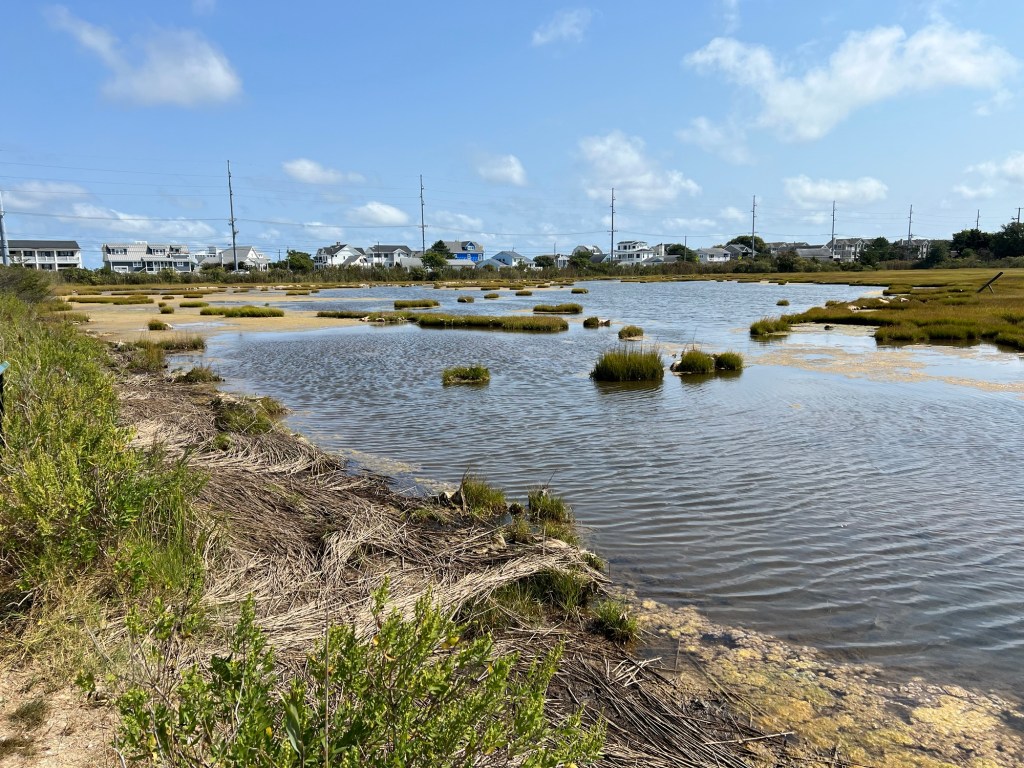
The beautiful view of the marshes
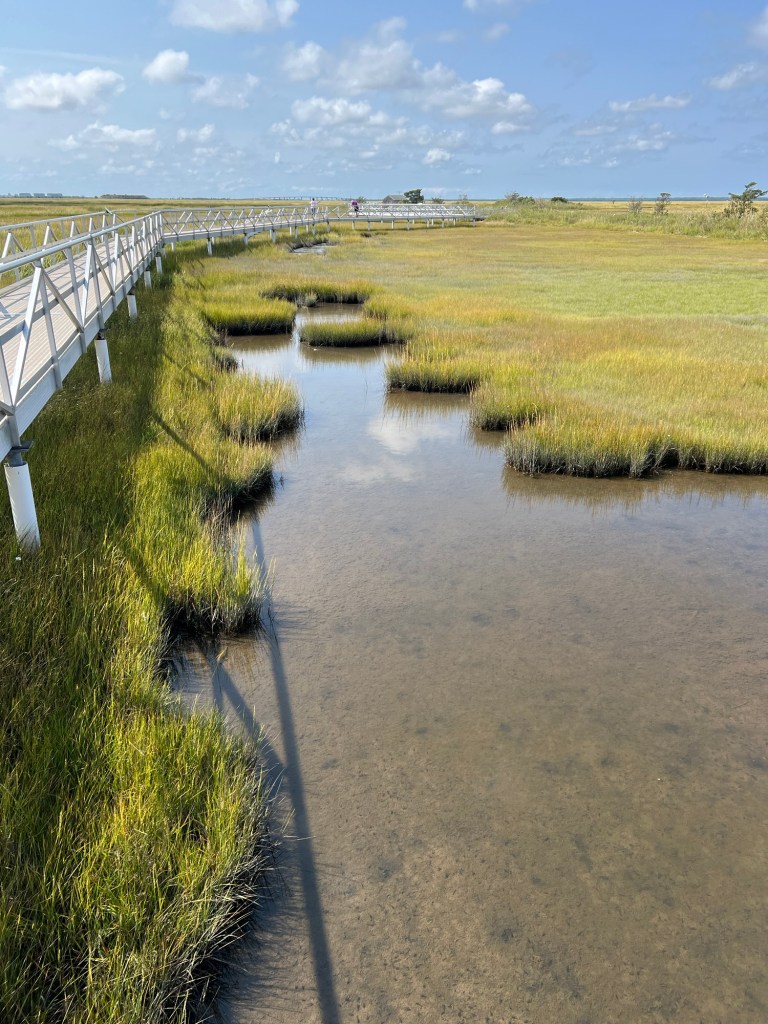
The elevated walkway goes through the marshes and offers excellent views
The marshes from the walkway
The effects of a healthy marsh
The breathtaking views of the marshes
When you finish the walk of the pathways and the elevated walkway, this leads you back to the Institute.
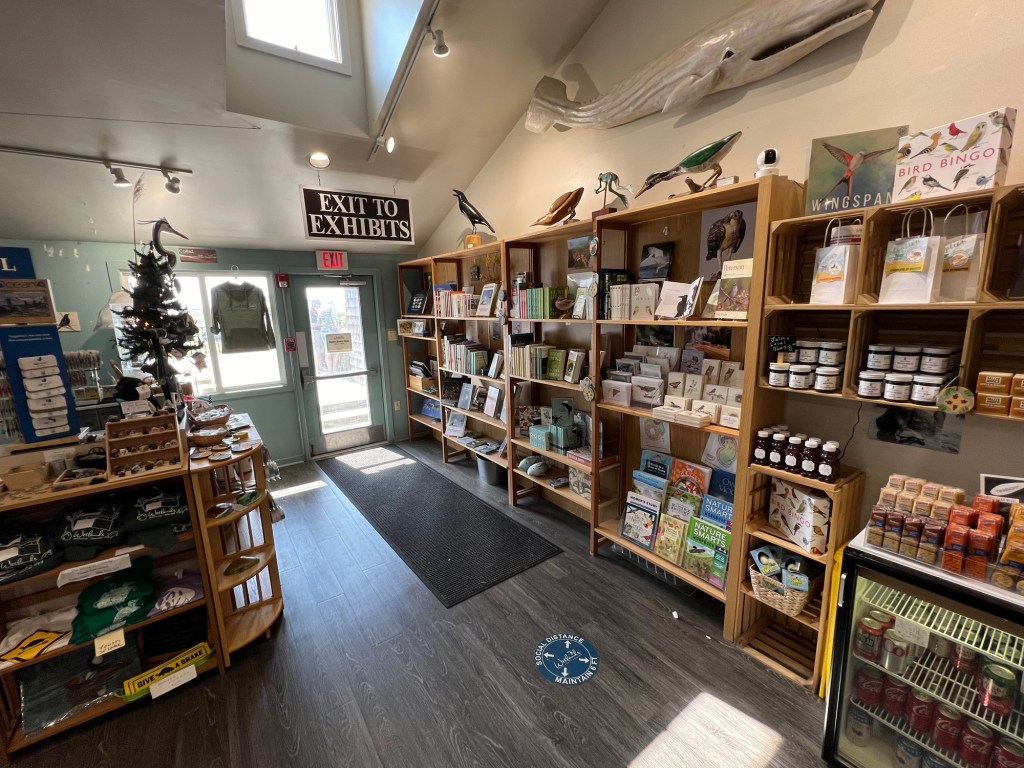
Don’t miss a trip to their terrific gift shop with all sorts of fun items and nautical gifts. I bought a delicious jar of the local beach plum jelly. That was a treat. There are all sorts of interesting gift items in the store from gifts from local farms to items dealing with conservation and nature to children’s items. This benefits the Institute and its mission.
Don’t miss one last stroll through their gardens on the way out the door.
What I liked about the Wetlands Institute was that it was engaging, entertaining and educational all at the same time. You walk out with a lesson learned of the positive efforts being made to save the environment in a way that does preach but first shows the cause and the effect and with simple efforts made can benefit everyone.
The Lake Hopatcong Historical Museum is right on the lake
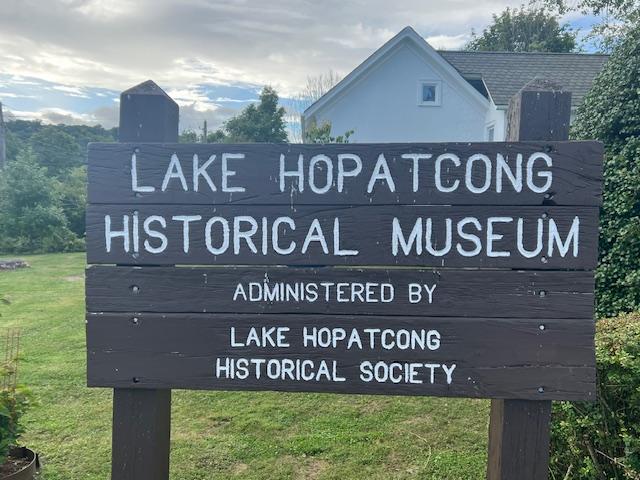
The museum sign inside the park
I recently visited the Lake Hopatcong Historical Museum and learned so much from this lake community with its resort past and development from a artist colony to a hotel and amusement resort from the late 1880’s to WWII to the residential community it has become today. It really does show how transportation has shaped and developed vacation resorts not just in New Jersey but in the Metropolitan area.
The development of the railroad lines into the area bringing visitors from the large urban areas to the development of the automobile and it developed the hotel industry to modern jet travel which led to the decline of the area as a resort and becoming the lake community it is today, the museum guides you through the early history and the important visitors that became part of the community. While there are still traces of the old resort here and there, the rich history of the Lake Hopatcong shows us how time marches on in all places.
On the first floor is the Lenape Native American display and the description of the first residents of the area. There was all sorts of household and fishing items on display at the museum when Native Americans lived in this area in the warmer months.
The Lenape settlement in the Lake Hopatcong district
As the area settled and Dutch and English settlers pushed out the Native Americans, the area became settled with farmers and fisherman and with the opening of the Morris Canal as part of the lock system, a transportation head. The opening of the Morris Canal brought new business and new opportunities to the area.
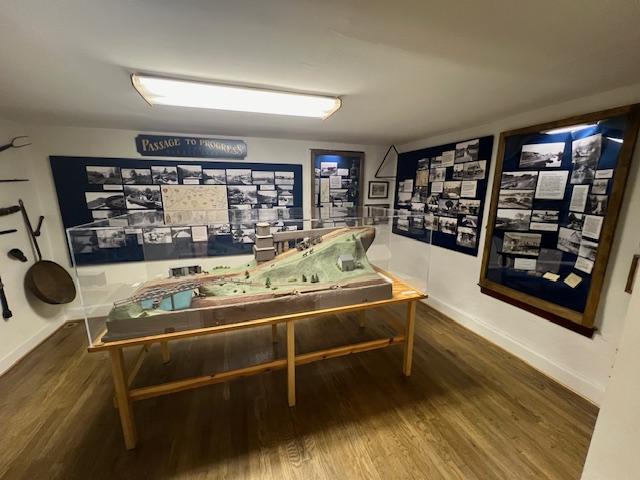
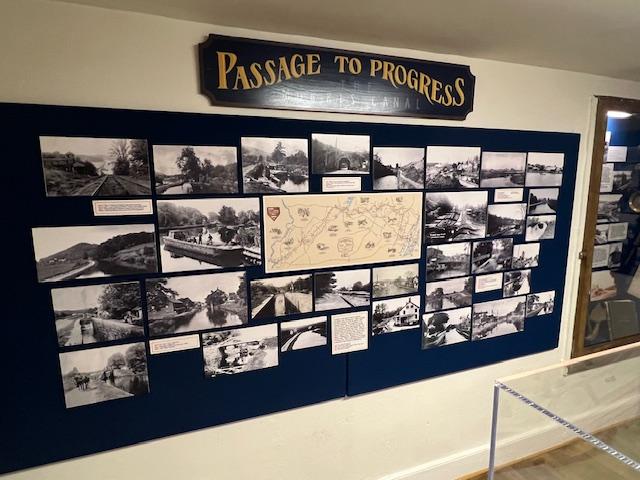
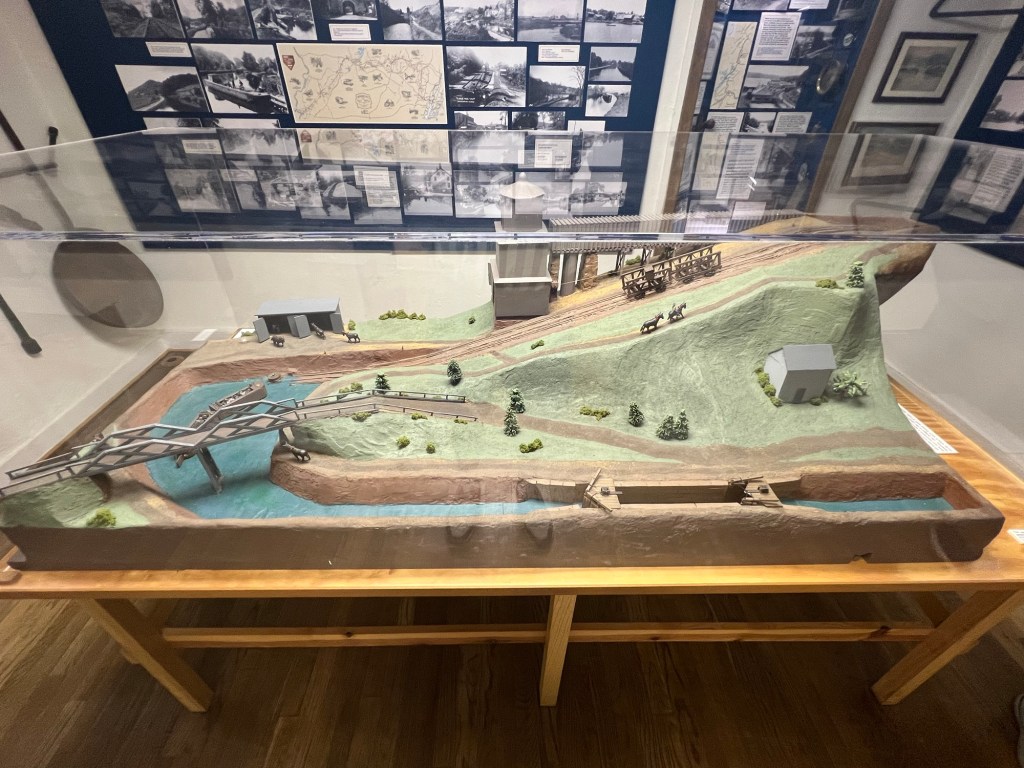
The Morris Canal display at the museum and the development of the shipping industry in the area
The Morris Canal in its years of use
It was after the Civil War and the affluence of the Industrial Age transformed this area with the advent of the railroads passing through the community. Five day work weeks and weekends off for pleasure opened up this lake community first to boarding houses and then the building of luxury hotels for longer stays. Residents from the urban areas would come to the ‘country’ for fresh air, swimming and recreation.
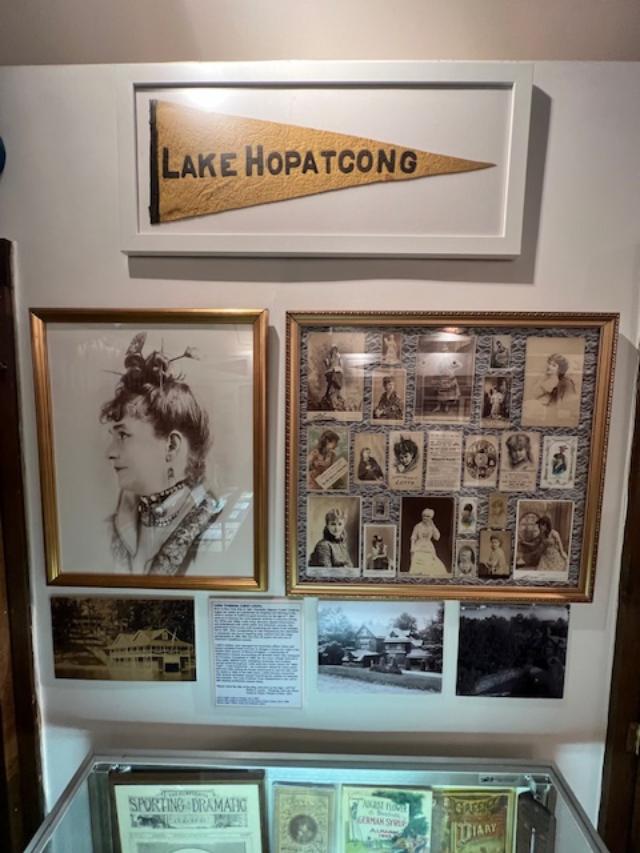
The Hotel and Resort development of Lake Hopatcong
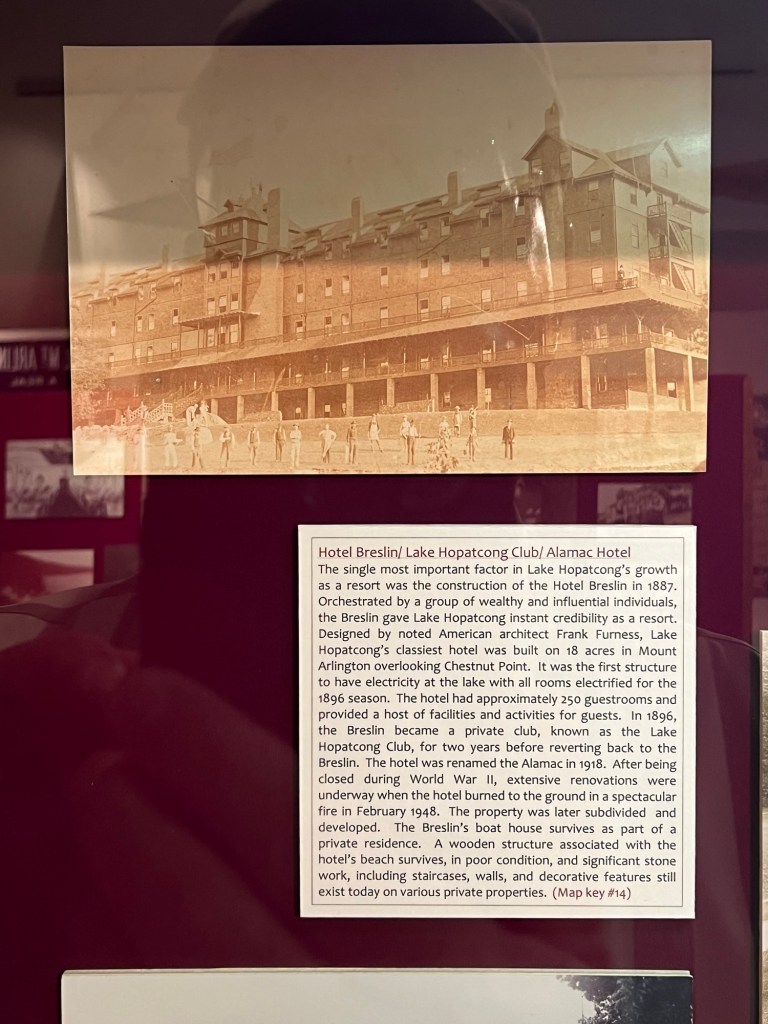
The development of the lake region for hotels
The hotel industry at Lake Hopatcong
The resort development signs
The advent of WWI
The aftermath of WWI
The growth of the resort community
The resort displays
With people staying at the resorts, they needed more to do than just swimming, boating and fishing. Families would arrive and from there was the development of the amusement industry. This would start with pleasure gardens, carousels and games which led to the creation of Noland’s Point and Bertrand Island Amusement parks. Noland’s would be the victim of the Depression as such a small area did not need two amusement parks and Bertrand Island would continue on until 1983 as times and tastes changed and investment was not put into the park. In its day though, it was a place of fun and merriment.
The history of Noland’s Point
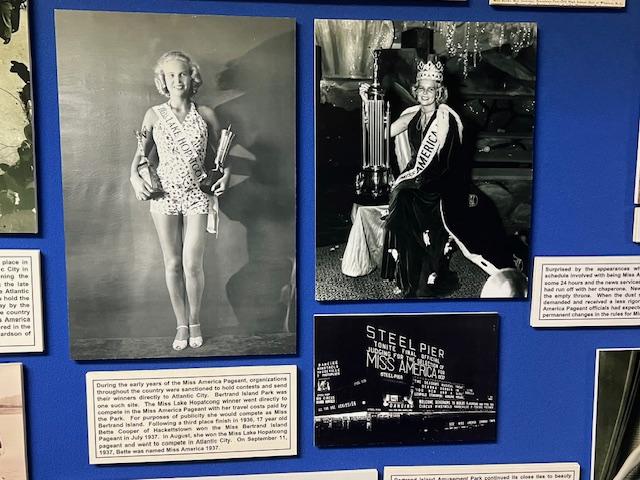
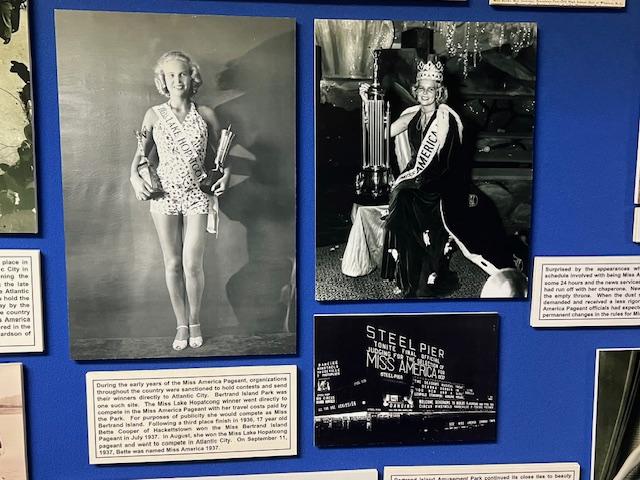
Bertrand’s Island became the center of amusement and fun and the park remained a mainstay of the area for almost 100 years. With the building of bigger and more elaborate parks such as Great Adventure and the growth of shore communities, these inland smaller parks were bypassed by time. While still popular, they did not hold the attention of the Baby Boom and Gen X crowds who wanted new parks to visit. Still the memories of warm summer evenings and our first Miss America from New Jersey, Bette Cooper, the former Miss Bertrand’s Island, still hold true today.
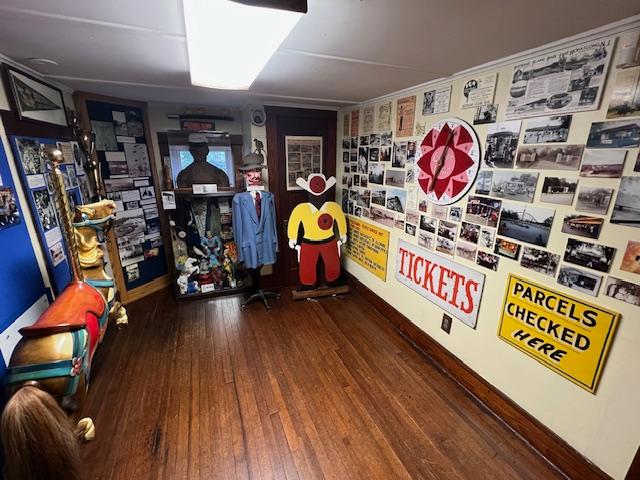
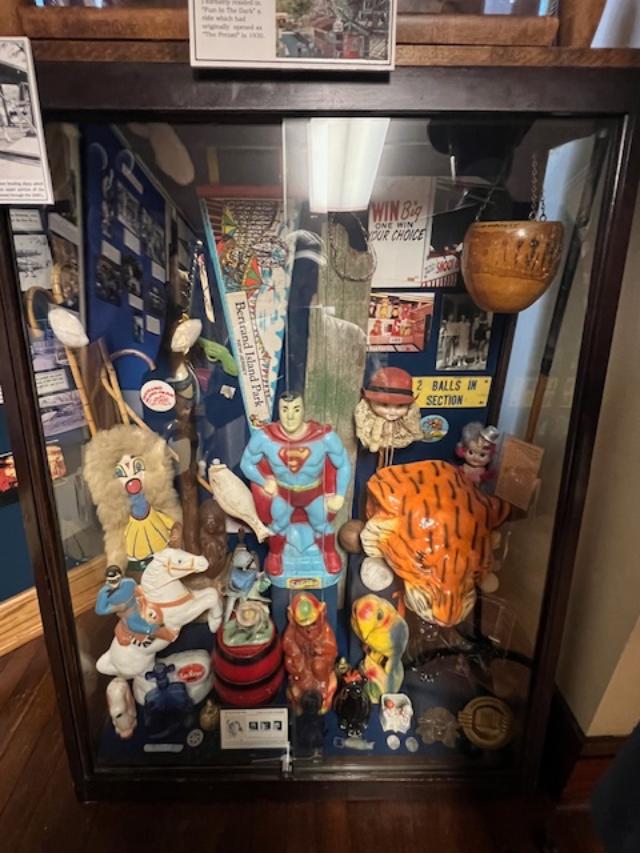
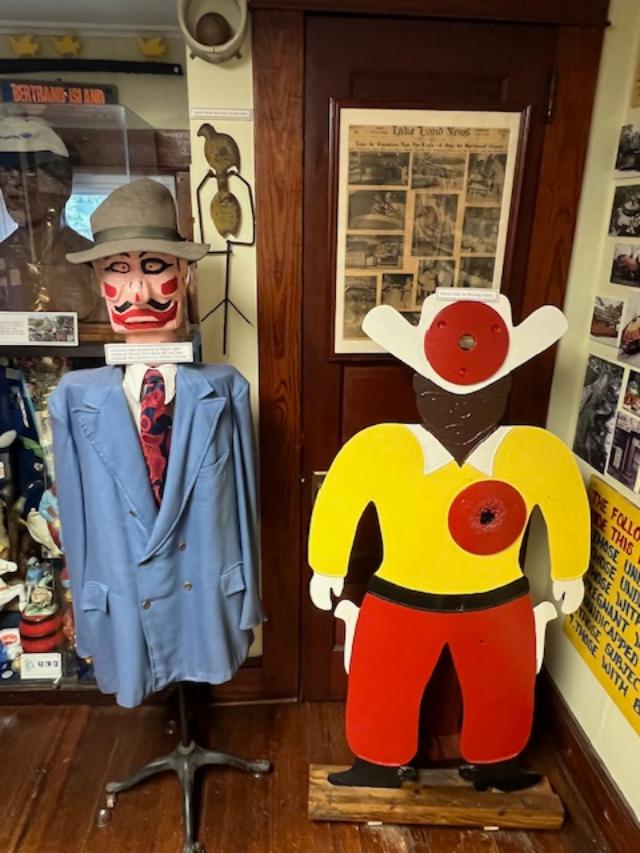
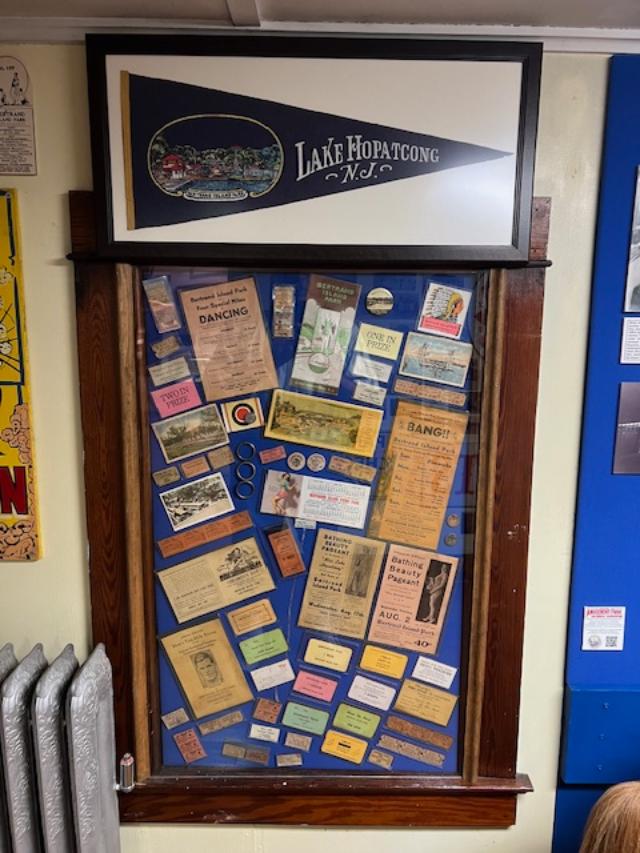
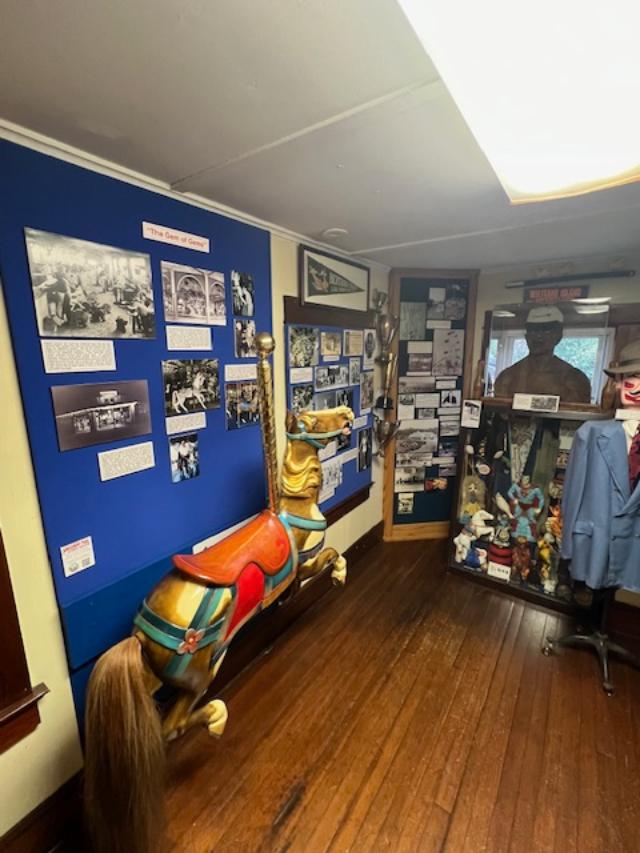
The Bertrand Island Amusement Park display was the most interesting in the museum
Bertrand’s Island display
Prizes won at the park
Part of the rides and games at the park
Games and rides
The Miss Bertrand Island Beauty Contest
Miss Bertrand Island, Bette Cooper, Miss America 1937
The museum tells many interesting stories of the lake district and the displays are very detailed and interesting to read. There is a treasure trove of artifacts and historical items at the museum to admire and reminisce about for those who had visited in the past. The museum is a wonder book of a time between the wars before air travel changed everything that a trip to the lake region was a place for vacationing and for long days of relaxation.
Plan about two hours to really visit the museum and share in its rich history.
Mission Statement
(from the museum website)
Our mission is to collect, house and preserve artifacts and documents relating to the civil, political, social and general history of Lake Hopatcong and to encourage the education and dissemination of information about Lake Hopatcong’s history.
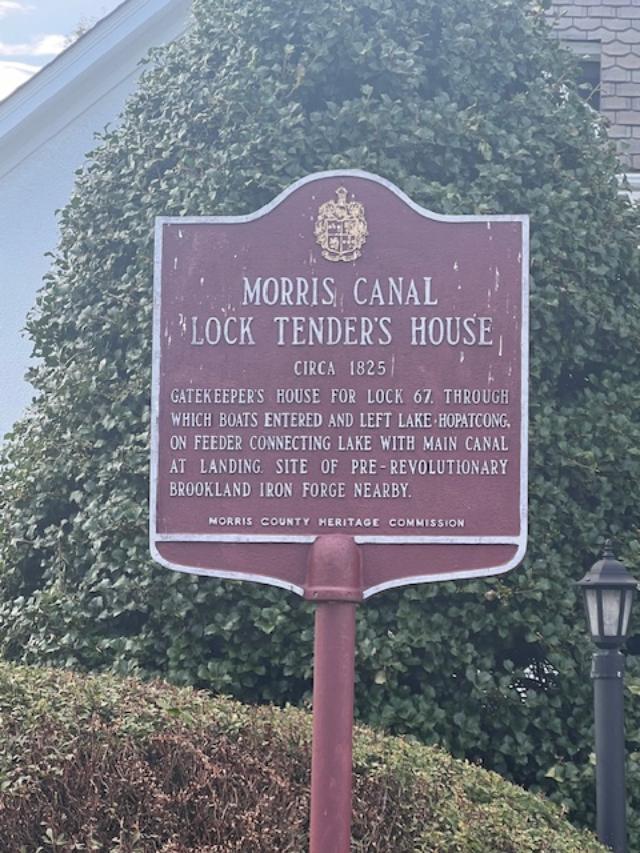
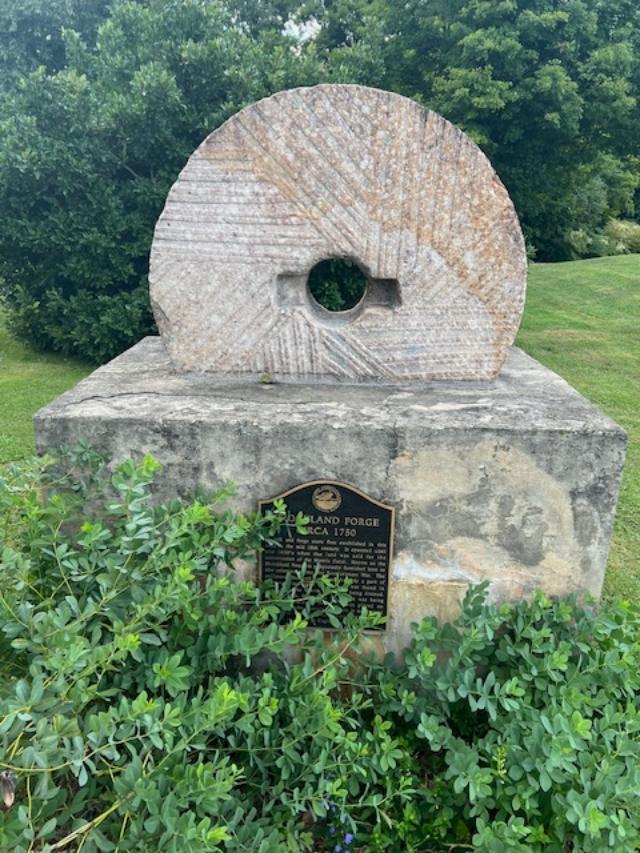
The historic plaque for the house
History of the Museum:
(from the museum website)
Since 1955, our organization has housed, cared for, and displayed items relating to the unique history of New Jersey’s largest lake. With some 750 members, it is one of the largest historical groups in the State of New Jersey. Our four major programs regularly sell out at 200 attendees and our museum has been recognized as one of the finest small museums in the state.
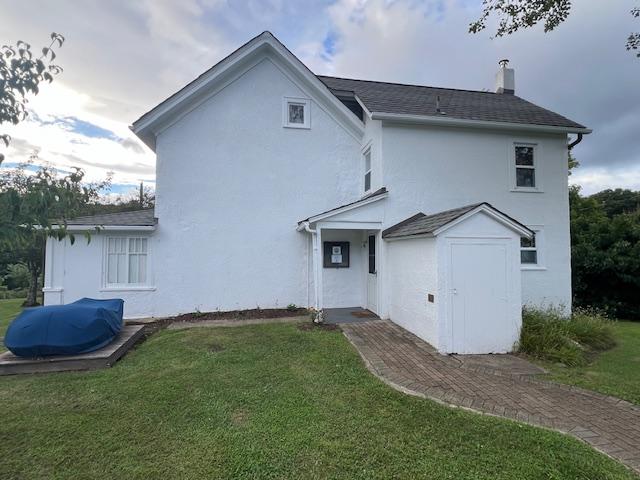
The front of the museum. This is the former Lock Keepers home
The concept for a historical organization at Lake Hopatcong took shape in spring of 1955 when an article in the Lake Hopatcong Breeze declared “It has been suggested that we have a museum at Lake Hopatcong to house the many interesting treasures pertaining to the history of our lake and vicinity….” The July issue reported much interest in the idea of a museum and the Lake Hopatcong Businessmen’s Association asked Alice Apostolik, editor of the Lake Hopatcong Breeze newspaper, to continue investigating the concept.
The front of the museum from the parking lot of the park
The interest fostered led to the formation of the Lake Hopatcong Historical Society on August 10, 1955. With eight people in attendance, an organizational meeting was held at Langdon Arms (where Gatwyn’s Restaurant is now located on Route 15). Dues were established at $2.00 per year with life membership set at $20.00. Langdon Arms was set as the society’s official headquarters, but it was agreed that the monthly meetings should be rotated to other areas of the lake, such as the Hopatcong House, a hotel formerly on Lakeside Boulevard in Hopatcong where The Liquor Factory’s building is now located.
Part of the lock equipment at the lake
The first regular meeting of the newly formed historical society was held in September 1955 at the Ehrlich’s “rathskeller,” which originally served as famed inventor Hudson Maxim’s observatory and ice house and is the small stone tower which still stands off Sharp’s Rock on the west shore of the lake. From the beginning, the goal was to establish a museum for the lake. In the late 1950’s, a group of members had dreams of buying Hudson Maxim’s house shortly before it was torn down. Alas, the plan to purchase the property for $11,000 failed by a single vote of the officers and trustees. In the early 1960’s, an effort was made to buy the old Landing Post Office building, an odd octagonal structure which once sat near the traffic light at Landing. This plan also failed and while the Lake Hopatcong Historical Society was an active organization during these early years, it would take some ten years from the organization’s founding before a suitable building could be located and agreement reached.
Artifacts and mementoes from the museum at the entrance
In the early 1960’s the State of New Jersey moved forward with plans for a new administration building at Hopatcong State Park. The park had been founded on land which was previously owned by the Morris Canal and Banking Company. When the canal was abandoned in the 1920’s, the 98 acres around the Lake Hopatcong dam were set aside as a state park. The Messinger family which had long operated the Morris Canal lock at this site, lived in the stone house just above the lock and dam. With the removal of the canal lock in 1924 and the construction of a modern dam, Rube Messinger became the first dam and park superintendent. He and his family continued to live in the same house. Following World War II, the park began to be more formally developed. Cottages along the lakefront were removed, the beach was greatly expanded, and a new entrance and parking lot were added. The old lock tender’s house was converted into an office for the state park, but as the popularity of the park grew, it became apparent that a larger and more modern building was needed for administration. In July 1963, plans were announced for the construction of a new $125,000 administration building.
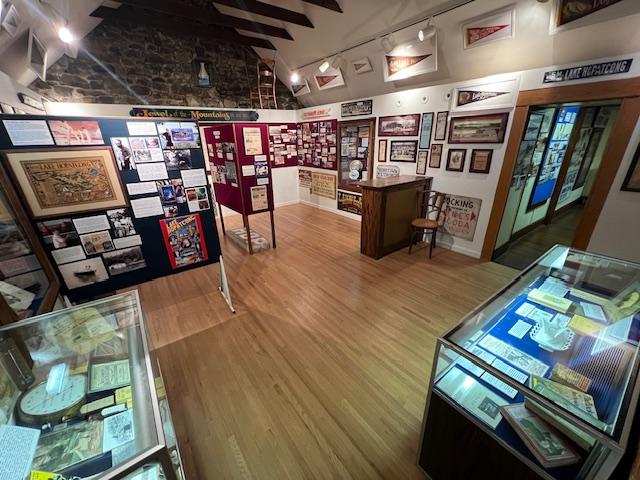
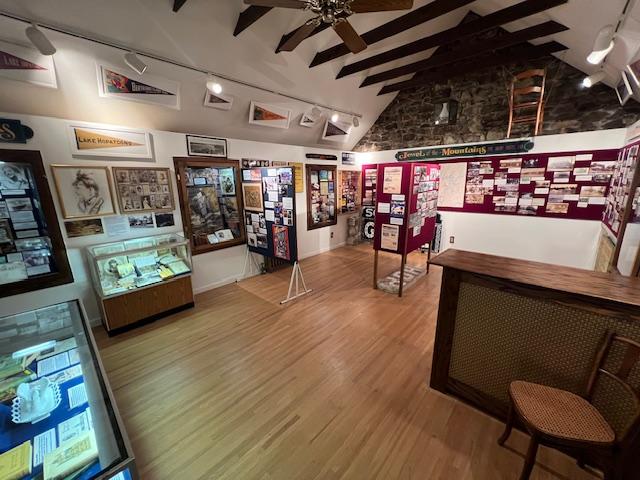
The first floor gallery of famous residents and of the resorts
At first it appeared that the old lock tender’s house would be torn down. The Lake Hopatcong Historical Society swung into action to acquire use of the building for a museum. After a prolonged negotiation, agreement was finally reached on a lease with the State of New Jersey in the spring of 1965. Volunteers from the Lake Hopatcong Historical Society then gave the building the tender loving care it desperately needed and set about collecting memorabilia and artifacts from the community to fill their new building. On September 11, 1965, the dream of a museum at Lake Hopatcong was realized as the public was invited to an Open House celebration. Over the ensuing years, the museum collection has grown through wonderful donations and acquisitions so that it now totals over 11,000 images and several thousand other items of memorabilia.
The Bertrand Park display of the amusements on the lake
Before the museum opened, the Lake Hopatcong Historical Society held frequent meetings at local restaurants, hotels, and community rooms. There were also outings and trips for members. Once the museum opened, the organization began hosting many events in their new building. As the organization grew, outside venues were once again needed. In the early 1990’s the museum settled on four major programs per year with featured venues over the years including the Jefferson House, The Arlington, Lake Hopatcong Yacht Club, St. Jude’s Church, and the Palace Theatre. Programs started selling out in the late 1990’s and have continued their popularity since. One thing that has changed is the cost. Dinner programs in the early 1970’s were $6.00 per person!
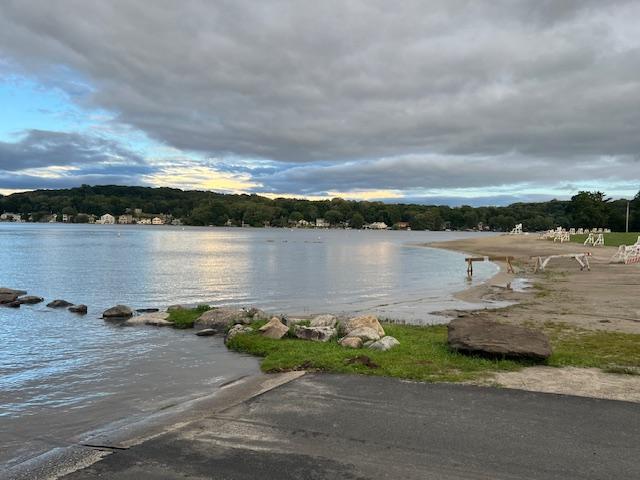
The lake homes from the park
From the eight individuals who attended the first meeting in August 1955, the society had grown to some 150 members by the time the museum opened. Today, with some 750 members, the organization remains loyal to its mission “to collect, house and preserve artifacts and documents relating to the civil, political, social and general history of Lake Hopatcong and to encourage the education and dissemination of information about Lake Hopatcong’s history.”
Major Archival Topics
(from the museum website)
The Lake Hopatcong Historical Museum maintains collections on the following topics and individuals relating to Lake Hopatcong’s history:
Ans Decker & Decker Fishing Lures
Barnes Brothers Boats
Bertrand Island Park
Bertrand’s Park Amusement area
Bette Cooper, Miss America 1937
Miss Bette Cooper, Miss Bertrand Island and Miss America 1937
Breslin Park
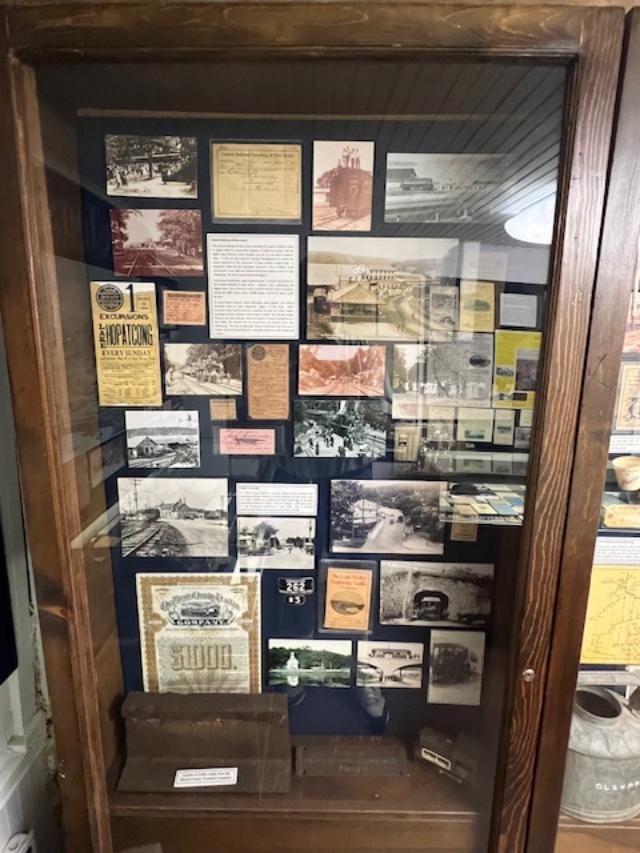
Central Railroad of New Jersey
Cornelia Gilissen
Florence Morse Kingsley
Francis Himpler
Fred Jacoby & Jacoby Boat Works
Garret Hobart
George G. Green
Hopatcong
Hudson Maxim
Ice Houses & Harvesting
Joe Cook
Lackawanna Railroad
Lake Hopatcong Angler & Breeze Newspapers
Lake Hopatcong Yacht Club
The Lake Hopatcong Yacht Club
Lakeside Theatre
Landing
Lenape
The Lenape Display of life around the lake region
Loretta Montez
Lotta Crabtree (Miss Lotta)
The actress Lola Crabtree display
Morris Canal
Morris County Traction Company
Mount Arlington
Nolan’s Point
Nolan’s Point Amusement Park
The Noland’s Point Amusement Park
Northwood
Ogden Mine Railroad
Owen McGiveney
Palace Theatre, Netcong
P.J. Monahan, Illustrator
Rex Beach
River Styx
Sam Goodman, Lifeguard
Shanna Cumming
Shippenport
Skate Sailing Association of America Archives
Thomas Walsh
William J. Harris, Photographer
Woodport
The History of the LakeRegion:
(from the Museum pamphlet)
Located in a rustic 19th century building which served as a lock tender’s house on the Morris Canal, the Lake Hopatcong Historical Society Museum offers an entertaining and enlightening look at the history of New Jersey’s largest lake.
The beach section of this lake park
Step back to a time when the lake was actually two bodies of water and the Lenape lived along the shores. Learn about the building of the famous Morris Canal and the forming of modern day Lake Hopatcong, its main source of water.
Lake Hopatcong
The Morris Canal display at the museum
Travel back to the era when the Lake was a tourist Mecca and some 40 hotels and rooming houses graced its shores.
The hotel display
Relive the days when thousands flocked to Bertrand Island Amusement Park for dancing and ‘nickel nights’.
Bertrand Island Amusement Park
In the age before jets, before air conditioning and before super highways, Lake Hopatcong was a major northeast resort. Within easy reach of large cities to the east, the Lake’s size and setting at over 900 feet above sea level made it the perfect destination. From the 1880’s through the 1930’s, the Lake welcomed thousand each year, including leaders of government, industry and entertainment.
The history of the Hotel Breslin
Low daytime temperatures and cool evenings made Lake Hopatcong a welcome respite from the urban centers to the east. Although other northwestern New Jersey towns were developed as resorts during this time, Lake Hopatcong quickly outdistanced its rivals in popularity.
The popularity of Bertrand Island
While these other resorts shared Lake Hopatcong’s proximity to the urban centers of the East, they could not match the lake’s size or the ease with which to reach it by rail. The museum is located on the grounds of Hopatcong State Park on Landing, New Jersey. The museum’s hours are seasonal so please check the website for hours.
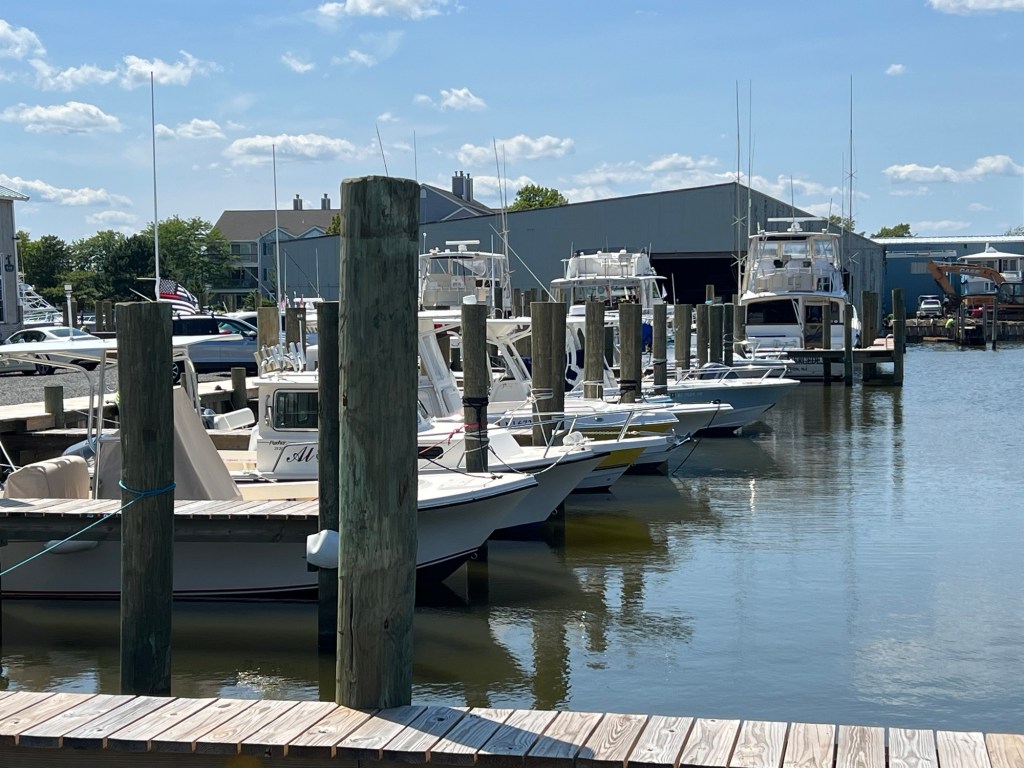
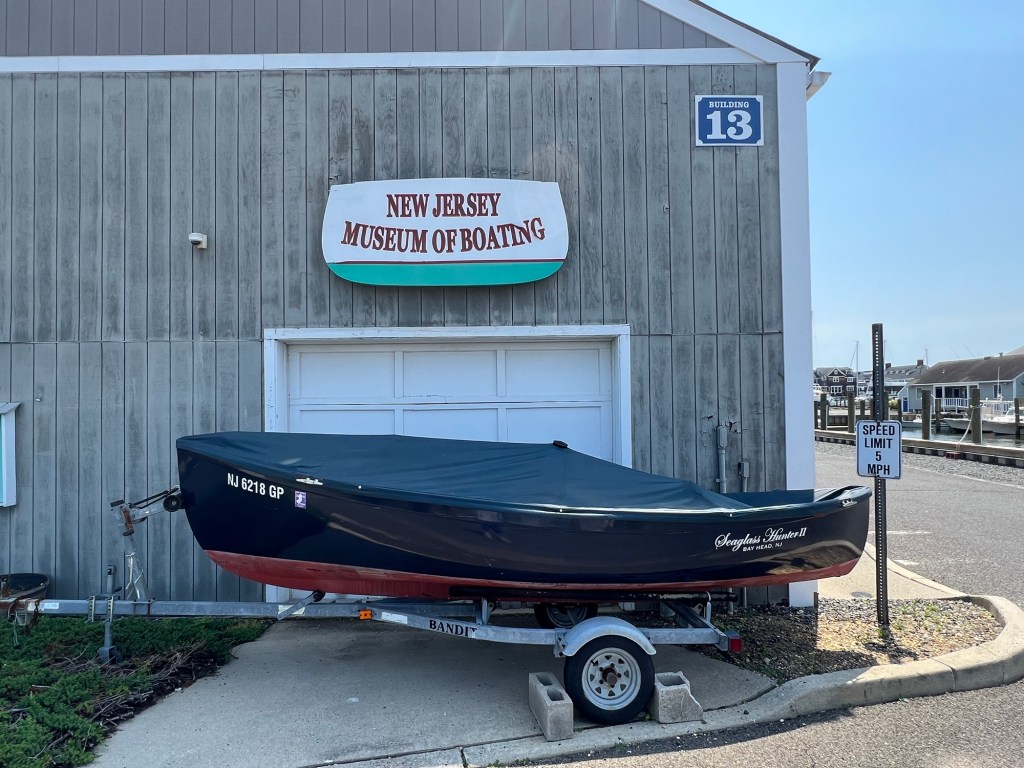
The Johnson Boat Yards just outside the museum where you can see all the private pleasure boats
The Museum’s Mission:
(From the museum’s pamphlet)
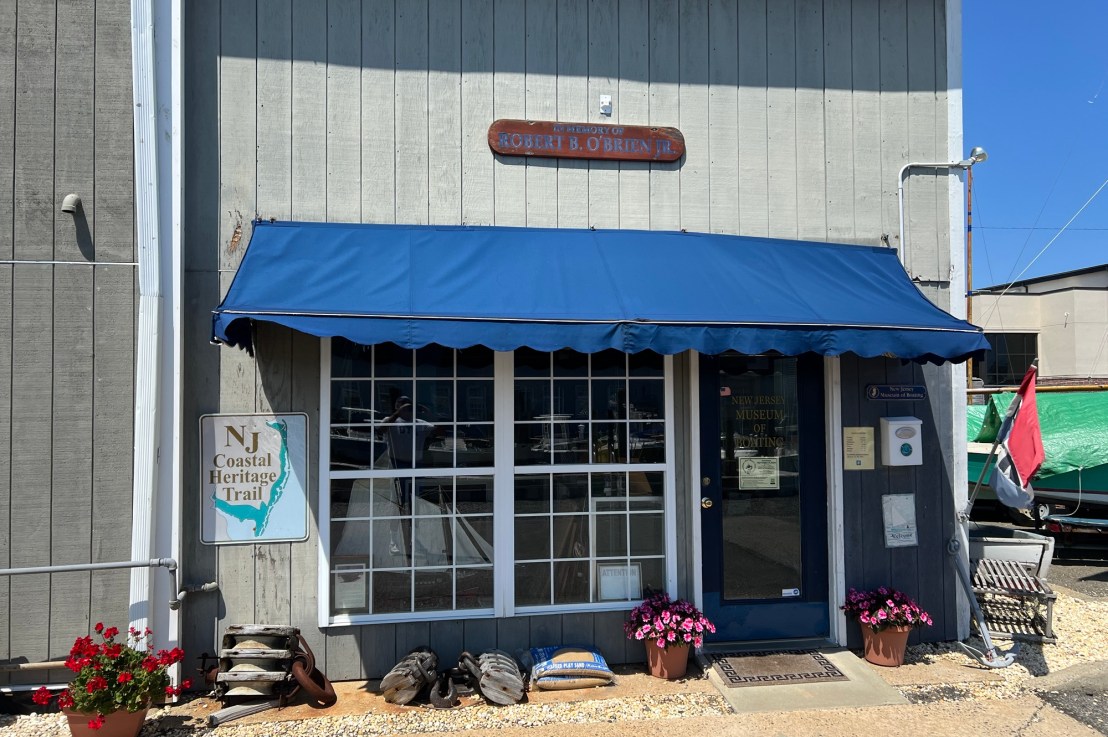
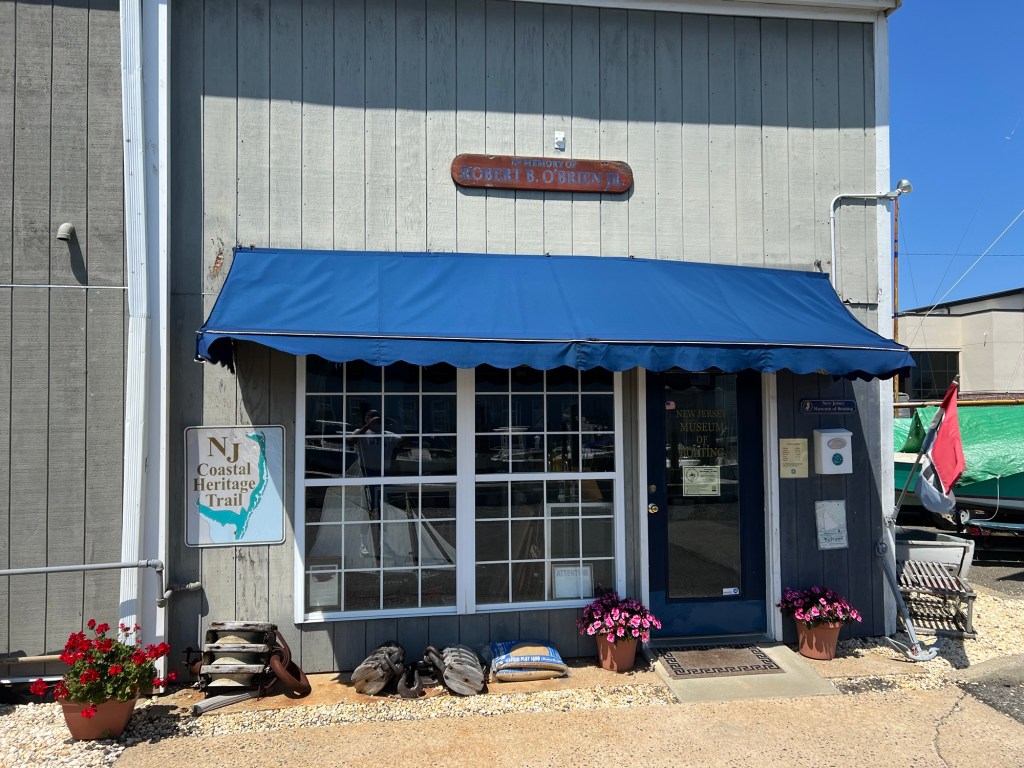
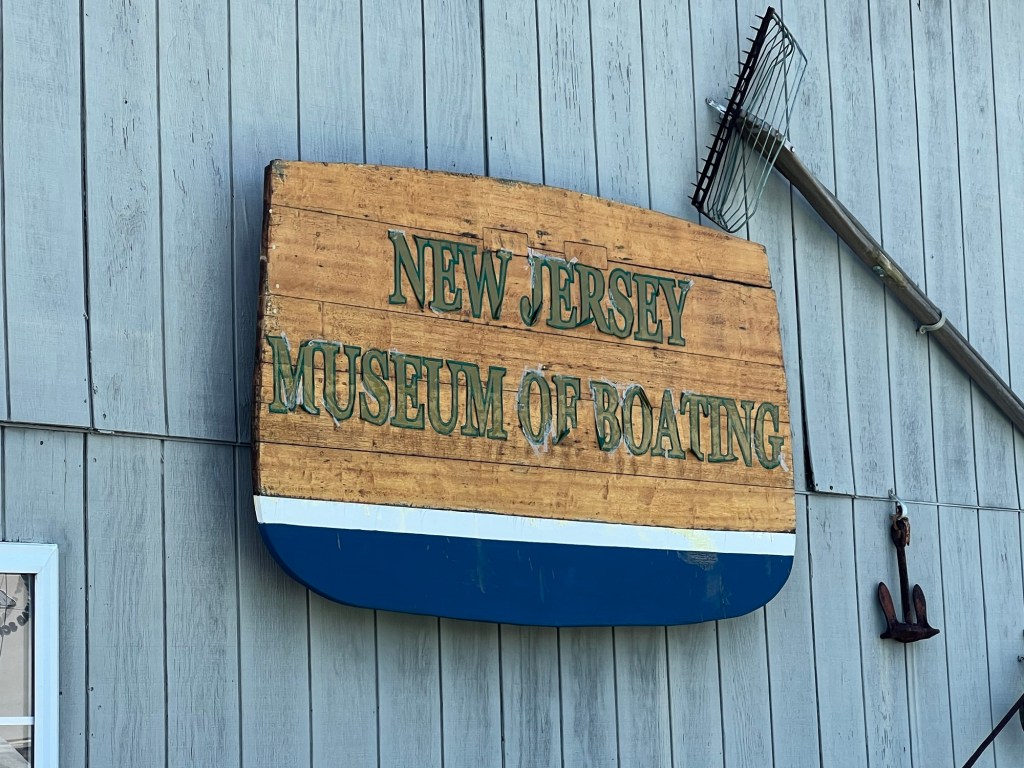
The mission of the New Jersey Museum of Boating is to celebrate our state’s rich maritime history. We are committed to educating, preserving, interpreting and presenting the boats built in New Jersey and the related marine equipment and materials traditionally used in the process.
‘Boats N’ Kids’ is part of the charter we are endeavoring to educate today’s youth on the history of boating in New Jersey. We offer several programs for children which include basic boating safety and intern programs during the spring and summer. Visit the website or call our number for more details.
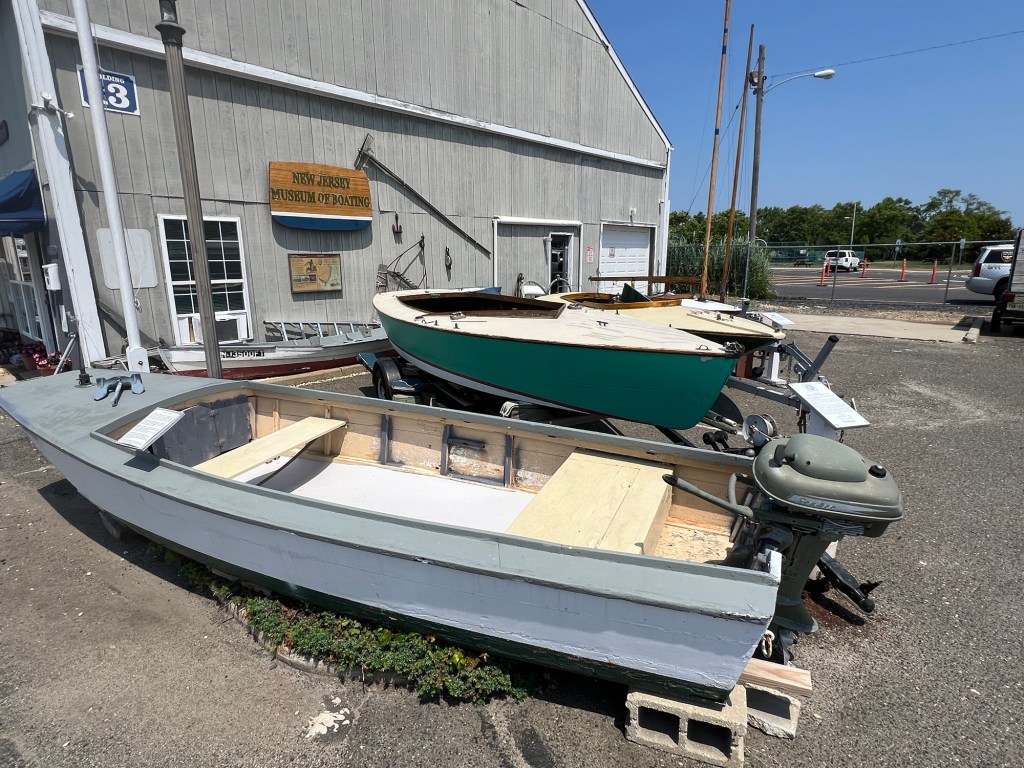
The boat display outside the museum
In 2002, the museum became the newest destination on the New Jersey Coastal Heritage Trail, achieving recognition by the National Park Service for the historic value of its collection and location.
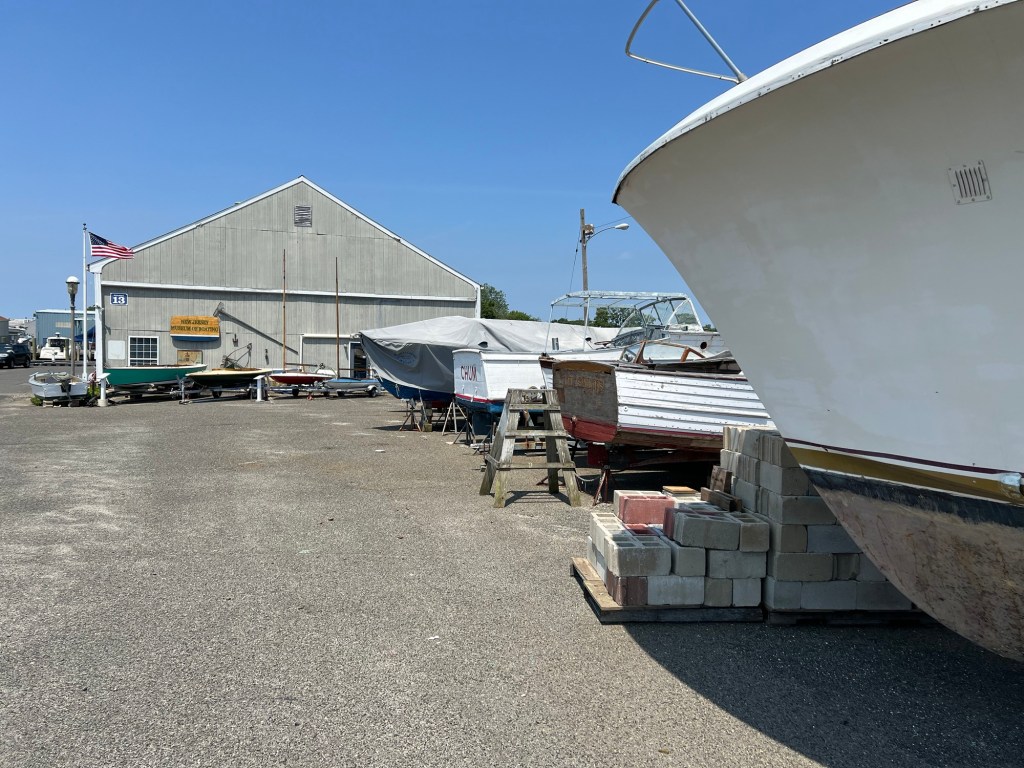
The display of marine vessels outside of the museum
As part of our Charter, we are committed to the education of today’s youth on the history of boating in New Jersey. In that regard, the museum has developed a multi-faceted program to invite students from New Jersey’s elementary and high schools for information tours of the museum.
The display of boats just outside of the museum
My visit to the Museum:
While I admired all the boats outside the museum and the Johnson family Boat Works Marina and all the pleasure boats, all the nautical displays were in the inside of the museum.
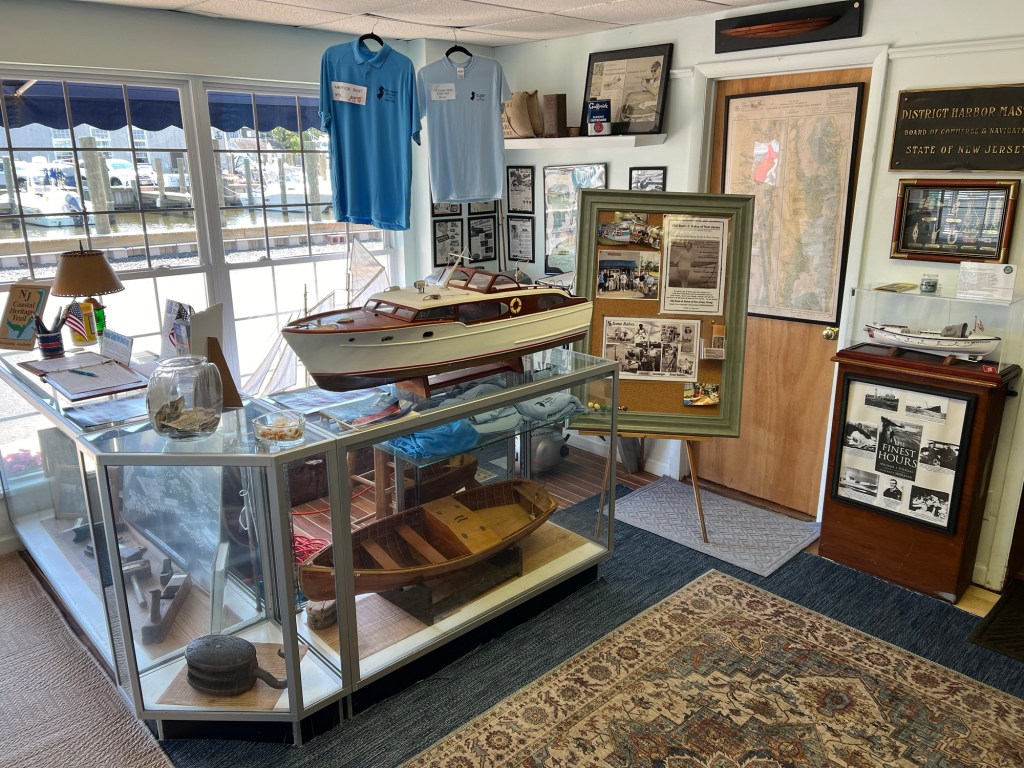
The inside of the museum offers a gift shop and an introduction to the museum’s mission on the history of Boating
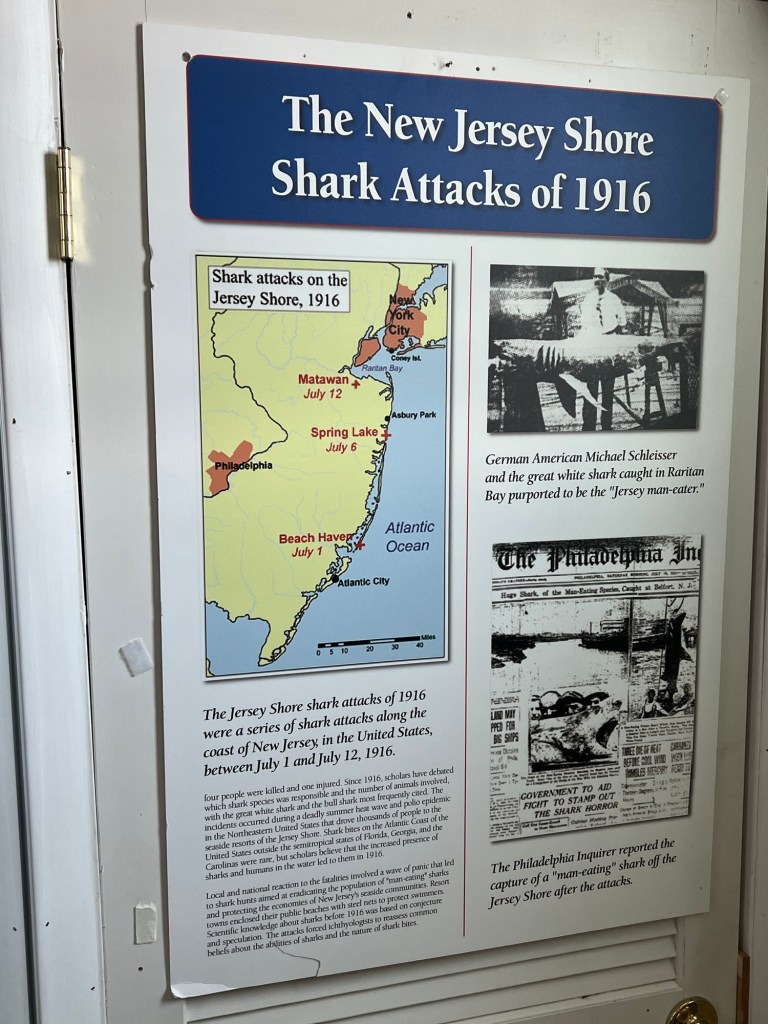
One of the first displays describes the famous shark attacks at the Jersey shore in 1916 as summer beach bathing was becoming popular. These were noted in the film ‘Jaws’.
The New Jersey Shark Attacks of 1916
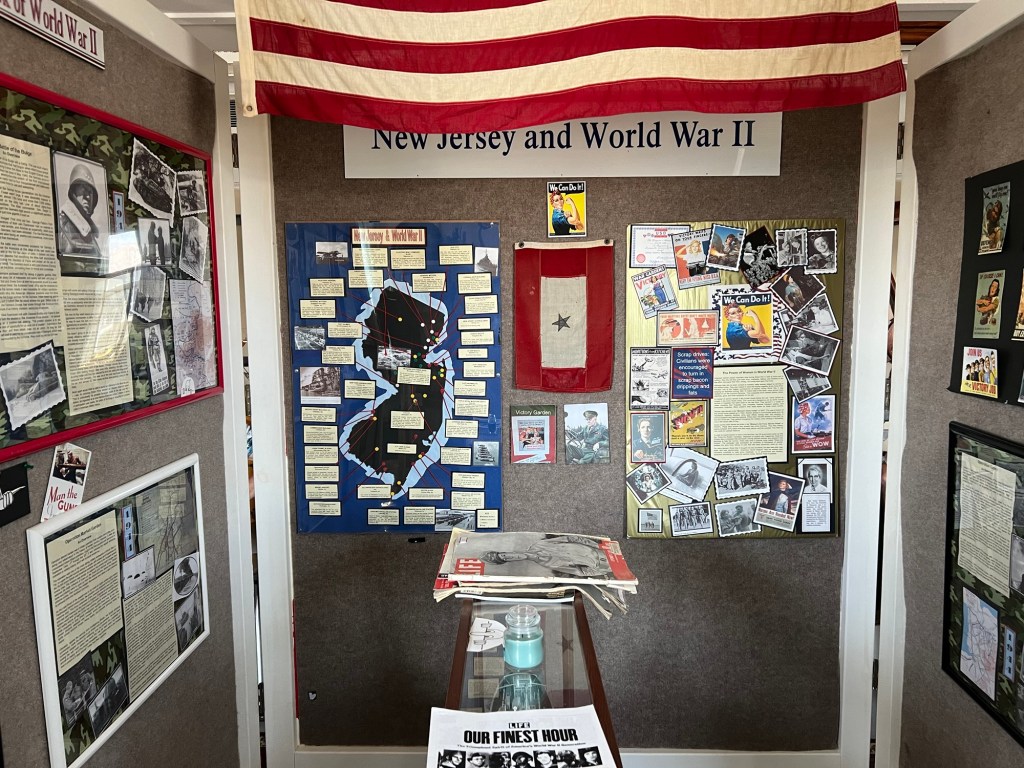
The next display I visited was the World War II display to our veterans and their contributions from the State of New Jersey. There had been many sightings of enemy submarines on the Jersey shore.
The detailed display on our State’s contribution to the ‘Great War’
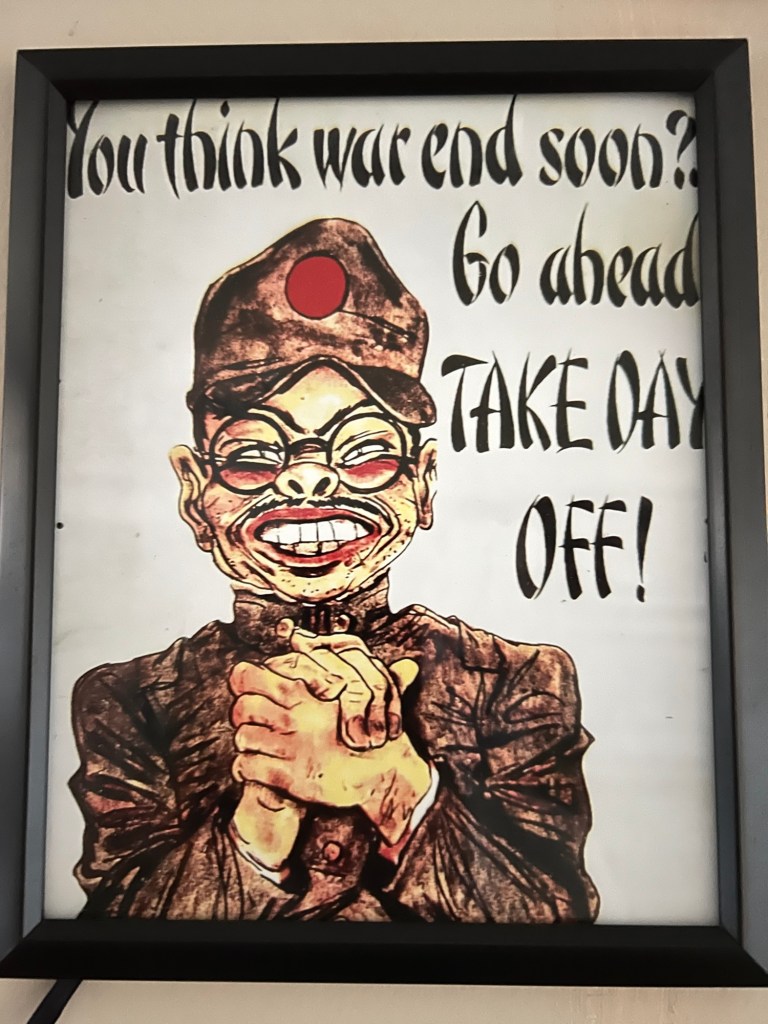
War propaganda poster that would be considered racist today but effective back then.
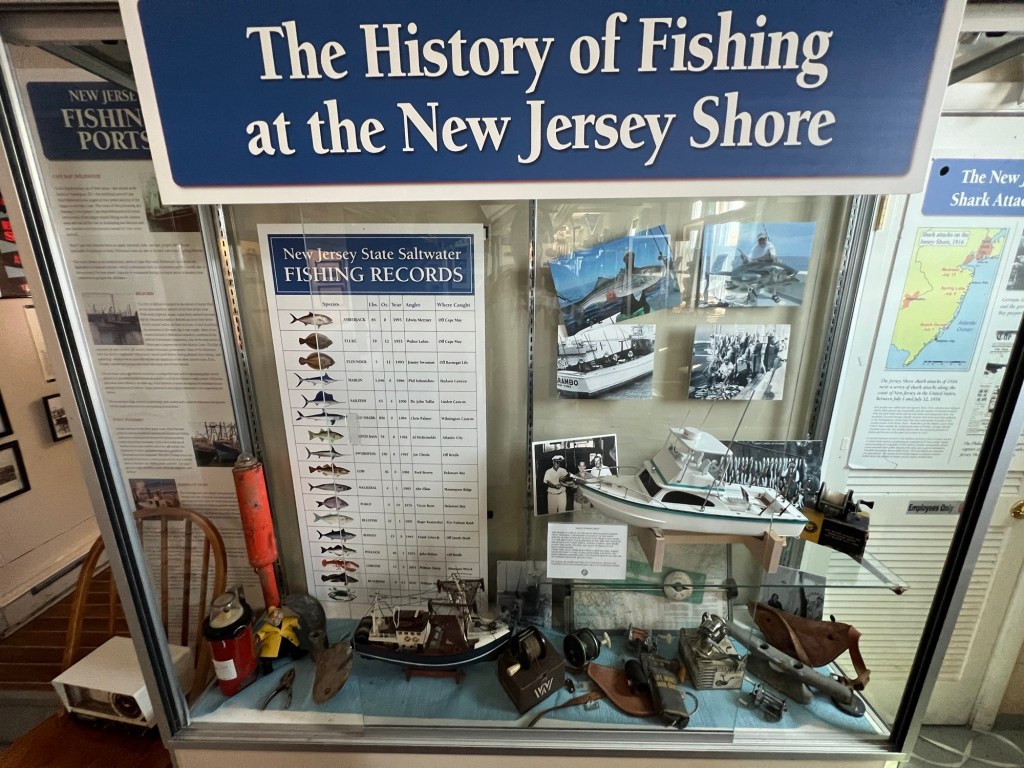
The next display was on the history of the fishing in the state. We have had and still have some of the best fishing on the East Coast both for pleasure and commercially.
Some of the contributions of our fishermen in New Jersey
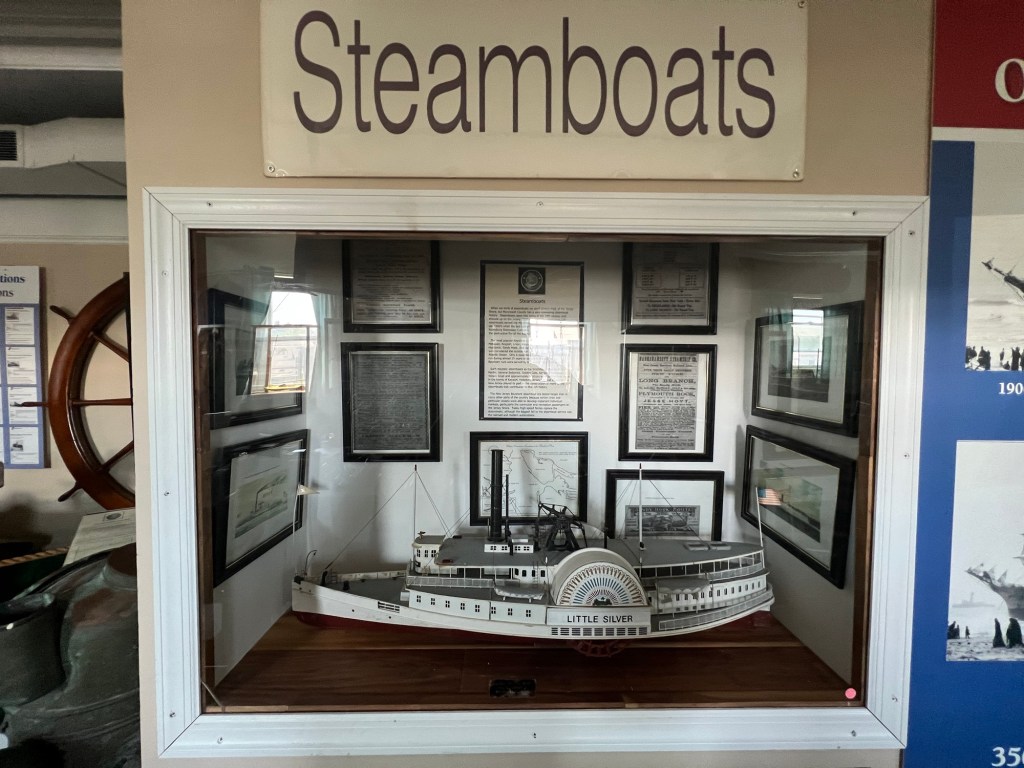
There was also a big contribution to the steam engines from New Jersey as well.
The ‘Steamboats’ exhibition
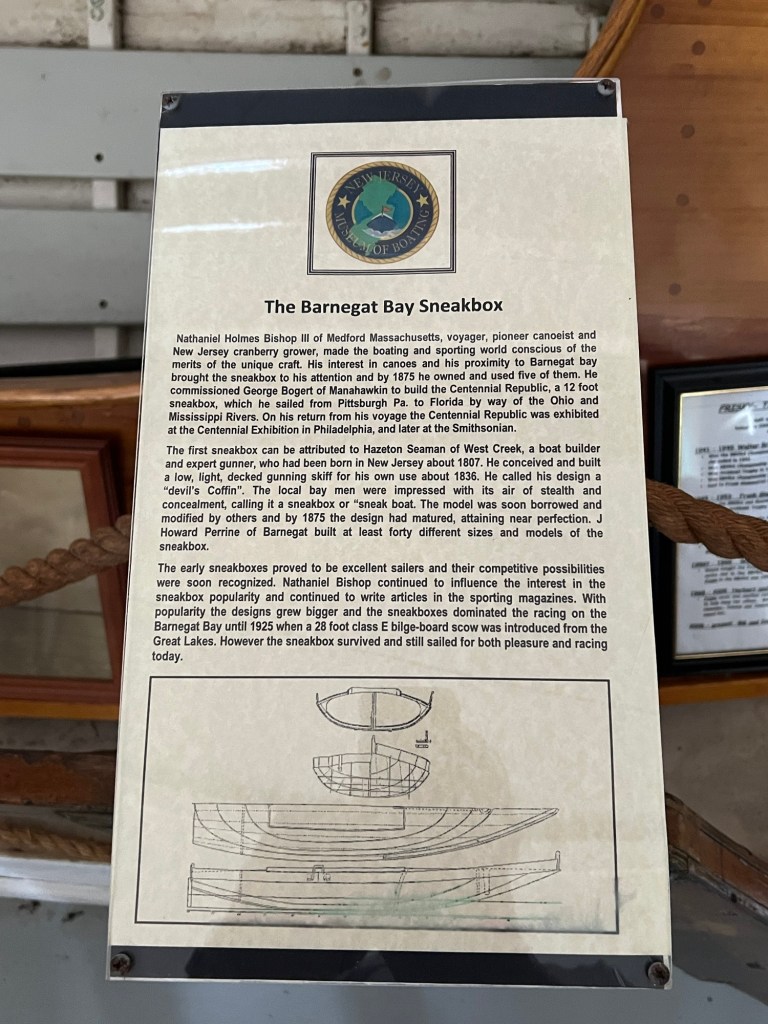
The Sneakbox sign
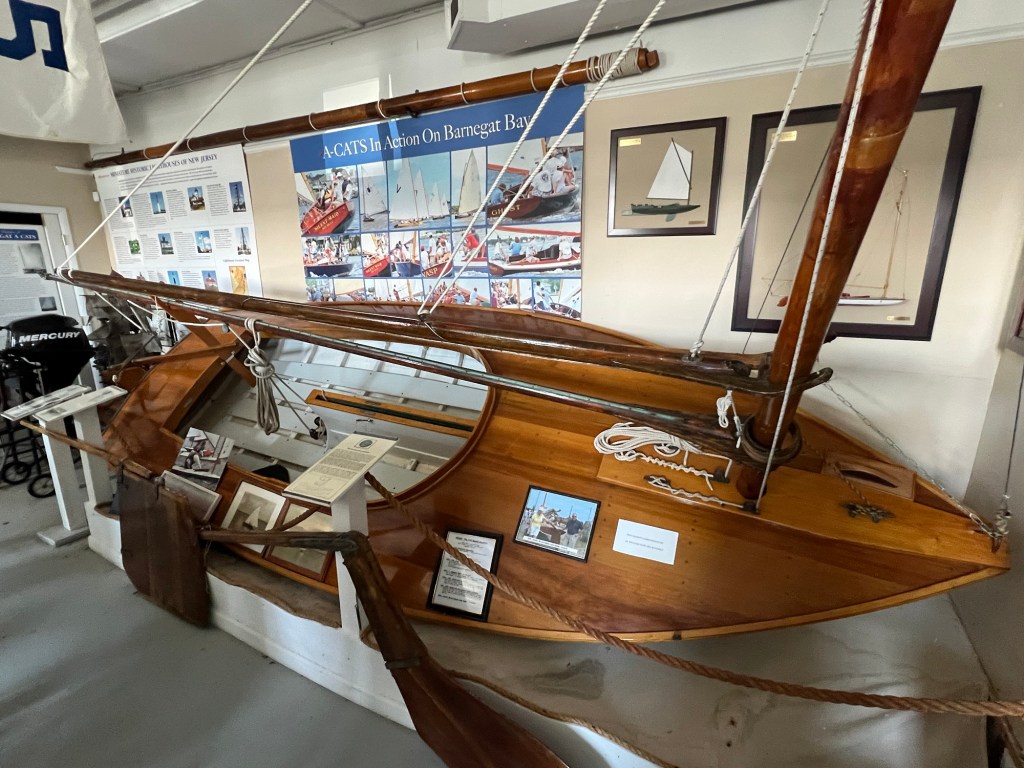
On display as well was the ‘Frisky’. The ‘Frisky’ is the first ‘Beaton Built’ sneakbox. It was built in 1941 by David Beaton & Sons which won numerous championships in the 1940’s and 1950’s (museum pamphlet).
The ‘Frisky’ sneakbox
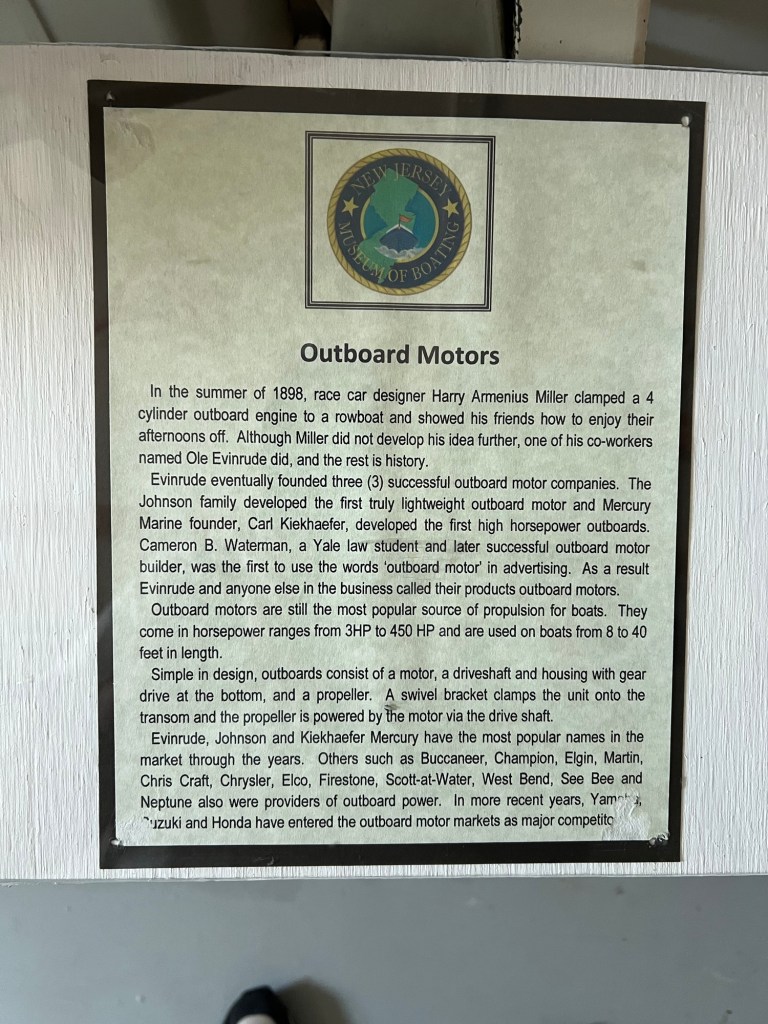
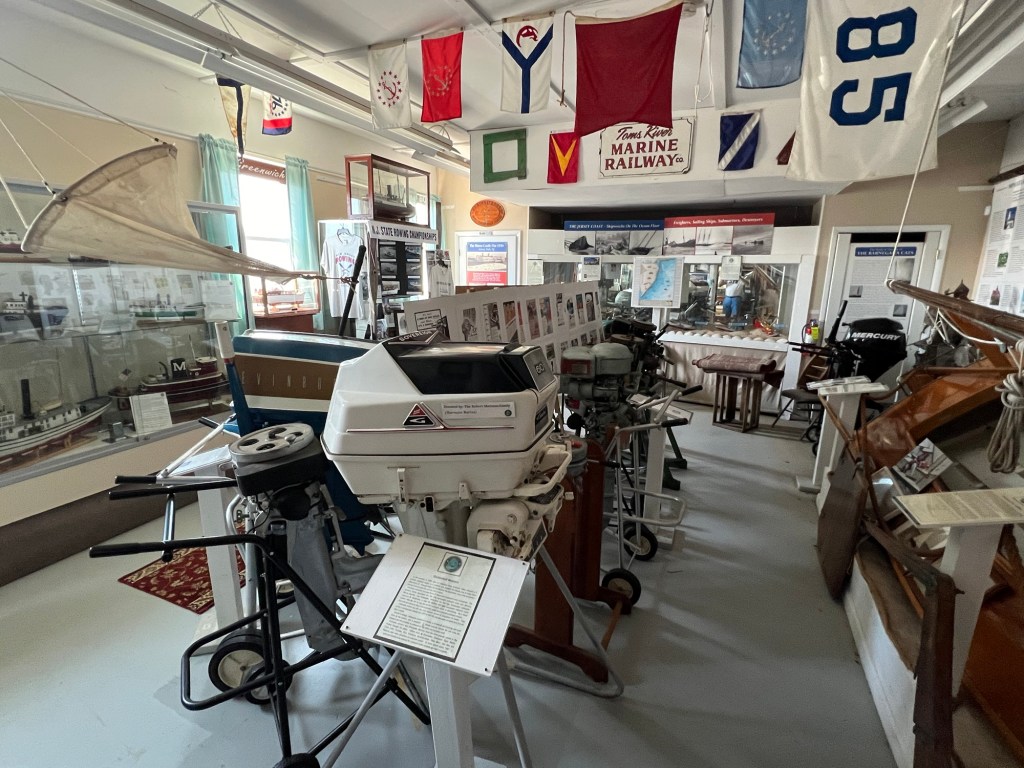
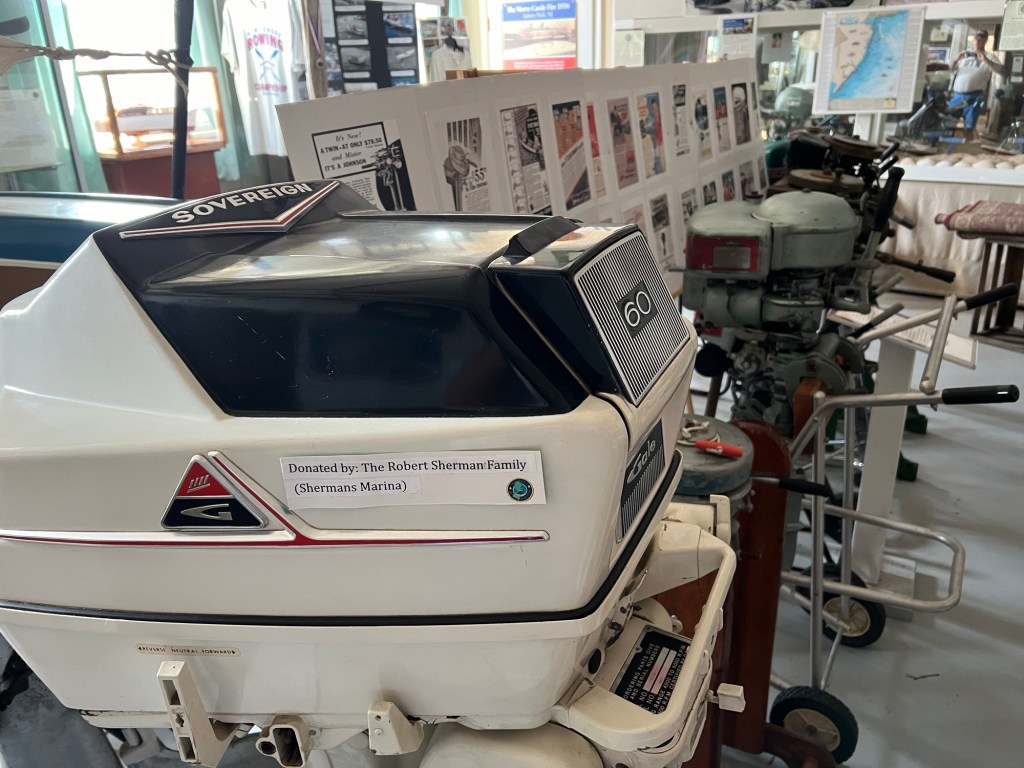
In the back of the museum, there was a display of vintage outdoor motors which powered boats over the years.
The exhibition sign for the Vintage Motor exhibition
The sign for the “Vintage Motor” exhibition
The Vintage Outdoor Motor display
The outdoor motors from times past
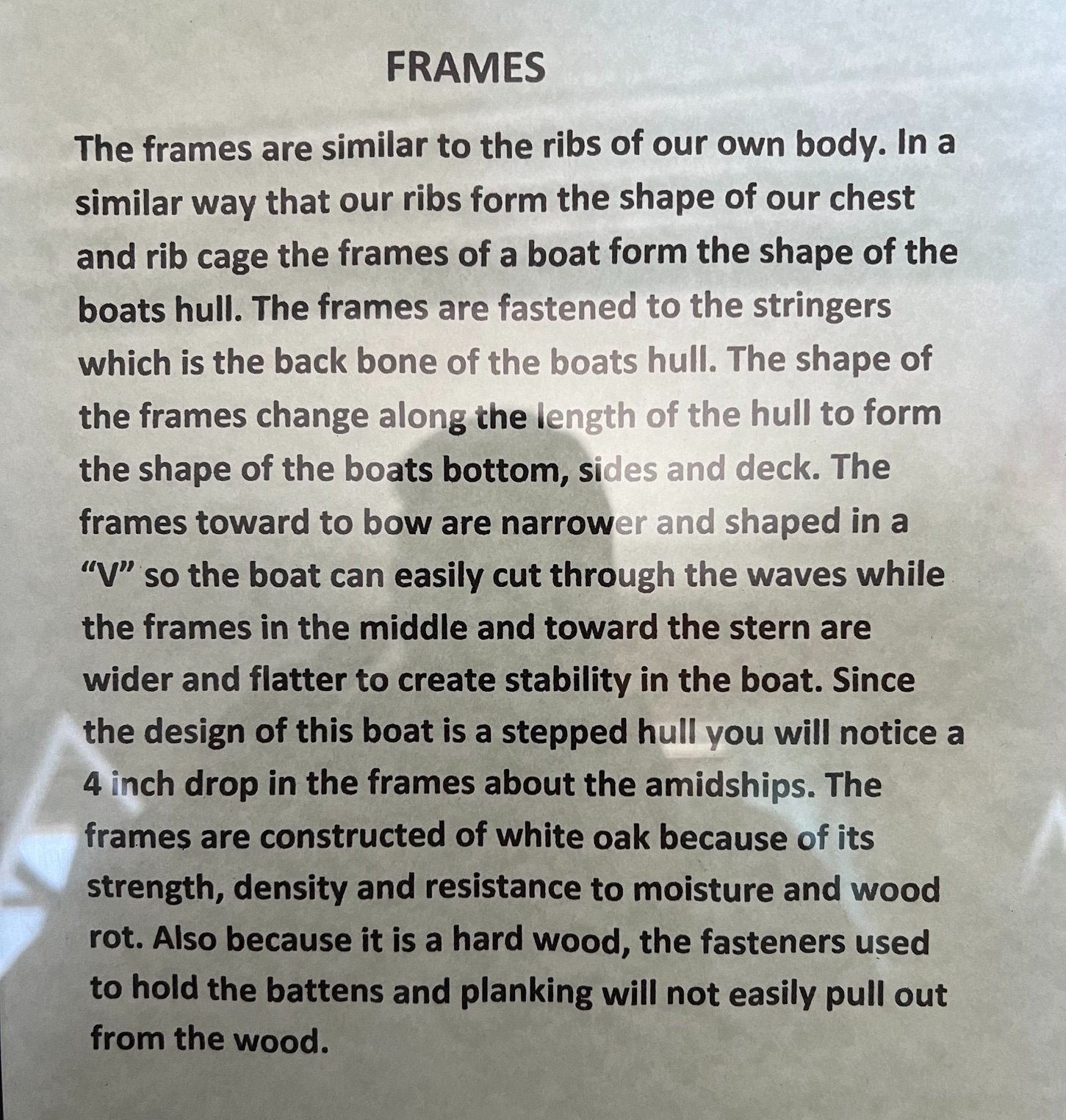
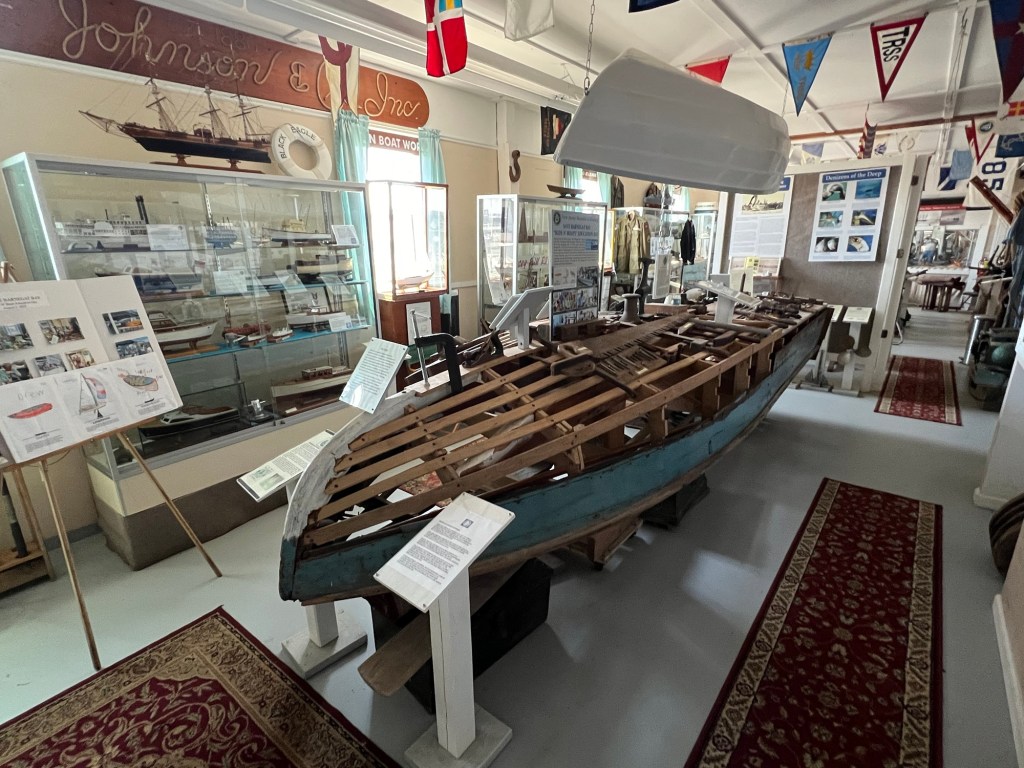
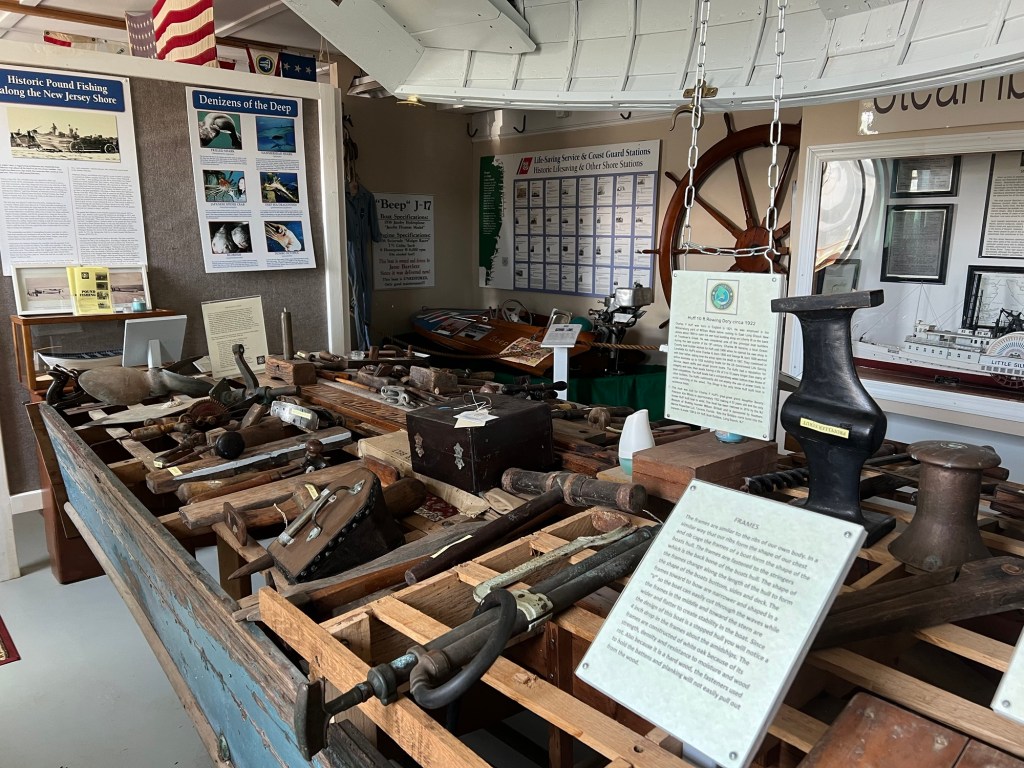
In the front of the museum you will see the ‘Frame’ exhibition and all the tools to build a boat.
The ‘Frames’ sign
The ‘Frames’ display
A closer look at all the tools for the construction of a boat
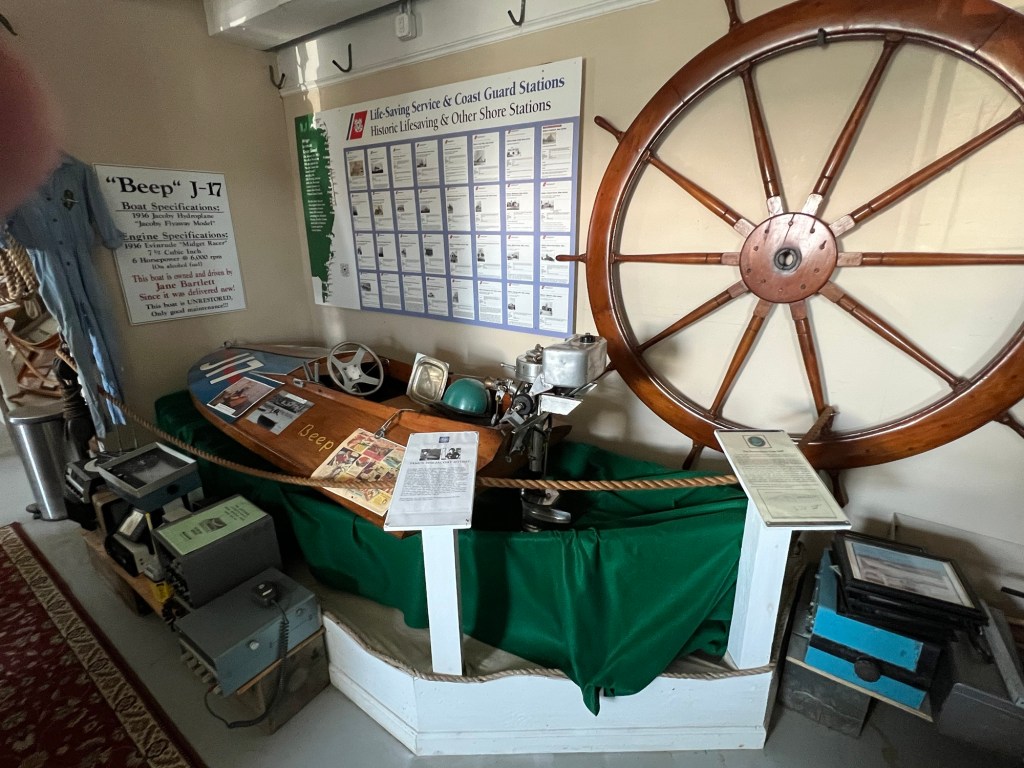
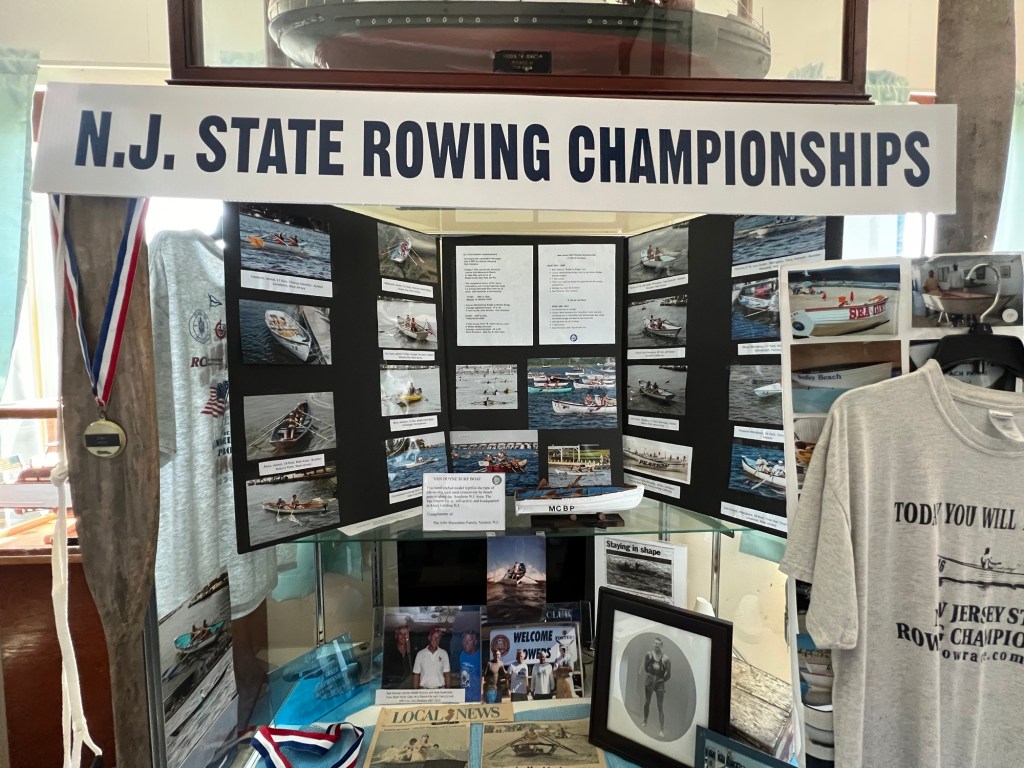
There were also smaller displays around the museum such as the NJ Coast Guard display and the NJ State Rowing Championship’s to show the nautical activities that are going on in the State of New Jersey.
The Coast Guard station display
The NJ State Rowing Championship display
The New Jersey Museum of Boating offers a wealth of information on New Jersey’s nautical past, present and future place in history.
























 Visiting a Museum: The Unique, Unusual, Obscure and Historical