Category: Historic Homes of Pennsylvania

Smith Mansion Historical Museum                                    101 South Main Street                                           Mahanoy City, PA 17948

Smith Mansion Historical Museum 101 South Main Street Mahanoy City, PA 17948

Smith Mansion Historical Museum

101 South Main Street

Mahanoy City, PA 17948

(570) 773-1034

https://www.facebook.com/groups/2203971582/posts/10160483727871583

https://www.mahanoyhistory.org/mahanoy-1973.html

Open: Appointment only by owner

Admission: Small Donation for restoration of the house

My review on TripAdvisor:

https://www.tripadvisor.com/ShowUserReviews-g53087-d33088953-r1003860232-Smith_Mansion_Tour-Mahanoy_City_Pennsylvania.html?m=19905

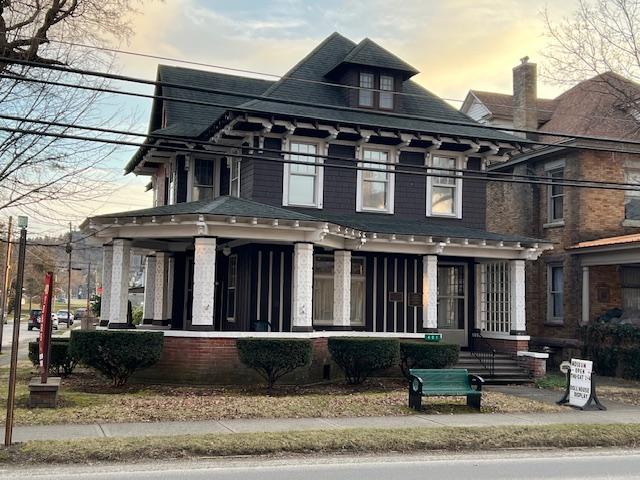
The front of the Smith Mansion

The historic plaque in the front of the home

The porch sitting area as you wait for your hosts to greet you

We were warmly greeted by our hosts and owners of the home. I had not realized that this is a private home and less of a museum. The only way to see the inside of the mansions by private arranged tour or when the owners have an open house either at Halloween or Christmas.

The History of the family and their fortunes:

(from WordPress.com article by Kubek: Project)

By the turn of the century, John Žinčak Smith had become the most accomplished Carpatho-Rusyn businessman and community leader in Mahanoy City, and in 1908, Smith moved his family from their modest West Centre Street home to this monumental mansion at the corner of South Main and East Spruce Street. Built at a cost of $40,000, the mansion included fourteen rooms, four chandeliers, wooden cabinets, and a number of stained glass windows (Mahanoy Area 2004, 15). 

Just as he changed his name from Ioann Žinčak to John Smith nearly 30 years earlier, his move from the predominantly Slavic, Catholic West End to the Anglo-Saxon, Protestant East End symbolized his meteoric rise from his humble origins to the economic elite of the region.

However, not all Carpathian-Rusyn Americans viewed Smith’s prosperity favorably. One parishioner penned an anonymous letter to the Carpathian-Rusyn newspaper Postup (The Progress) that sharply criticizes Smith as “a former nobody who wants to stand on the brow of the Rusyn people in America.” The author implies that Smith is embarrassed by being Carpathian-Rusyn, for “he doesn’t speak Rusyn with his children at home” and “is ashamed of his father’s last name” (“From Mahanoy City, PA: Our Chairman” 1908: 3).

We started our tour of the house in the main Living Room and foyer. This is one of the most welcoming houses and you can tell it was designed for entertaining and for a large family to live and enjoy.
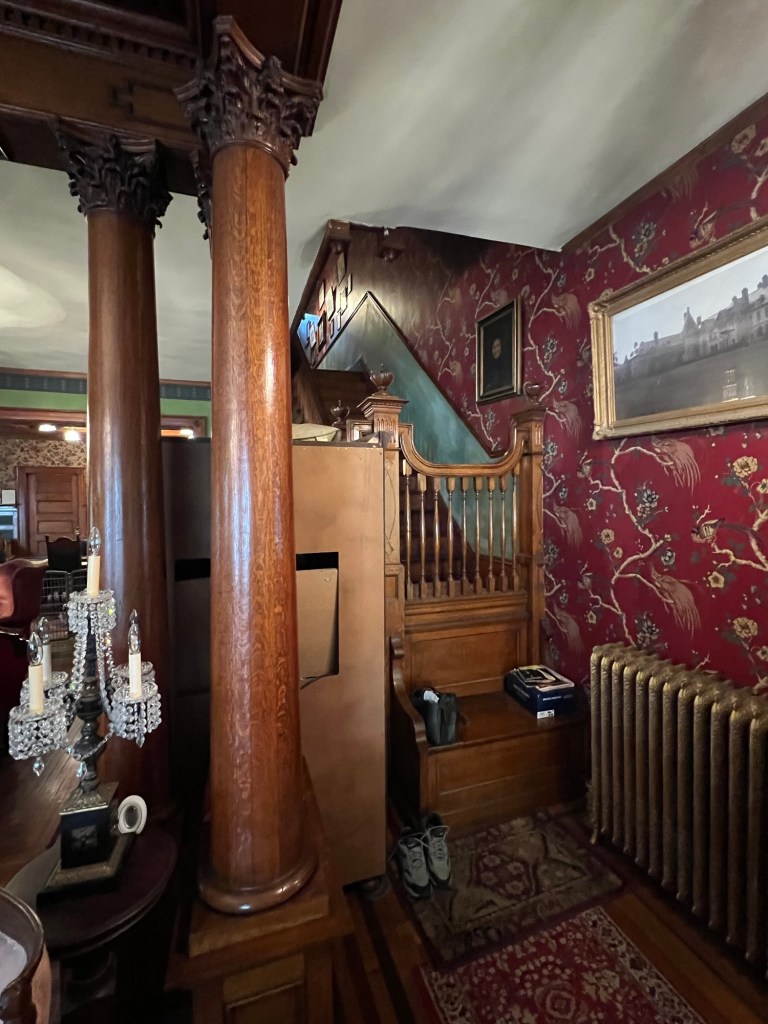
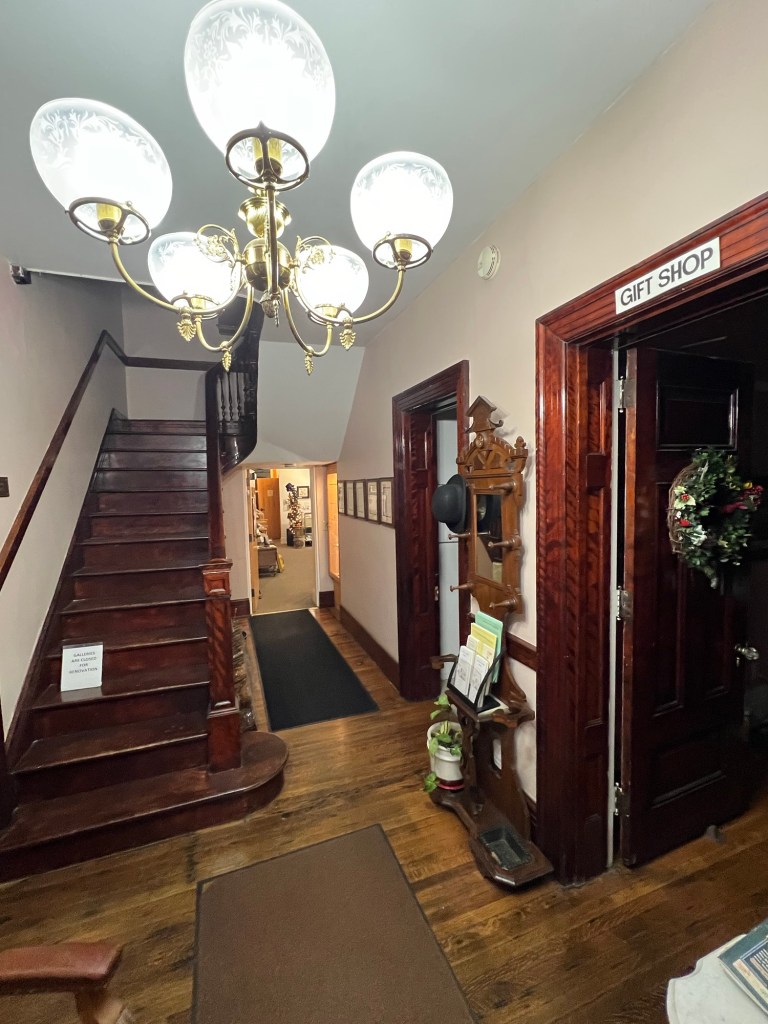
The foyer of the house as you enter the home

On the first floor of the home was the formal Living Room and Dining Room of the home. The very energetic small dogs of the owners welcomed us as well.

The formal Living Room

The house still has all its beautiful and ornate moldings and fixtures. The owners told us when the family moved out, robbers had come in and stole the mansions elaborate fixtures and chandeliers so they had to replace them.
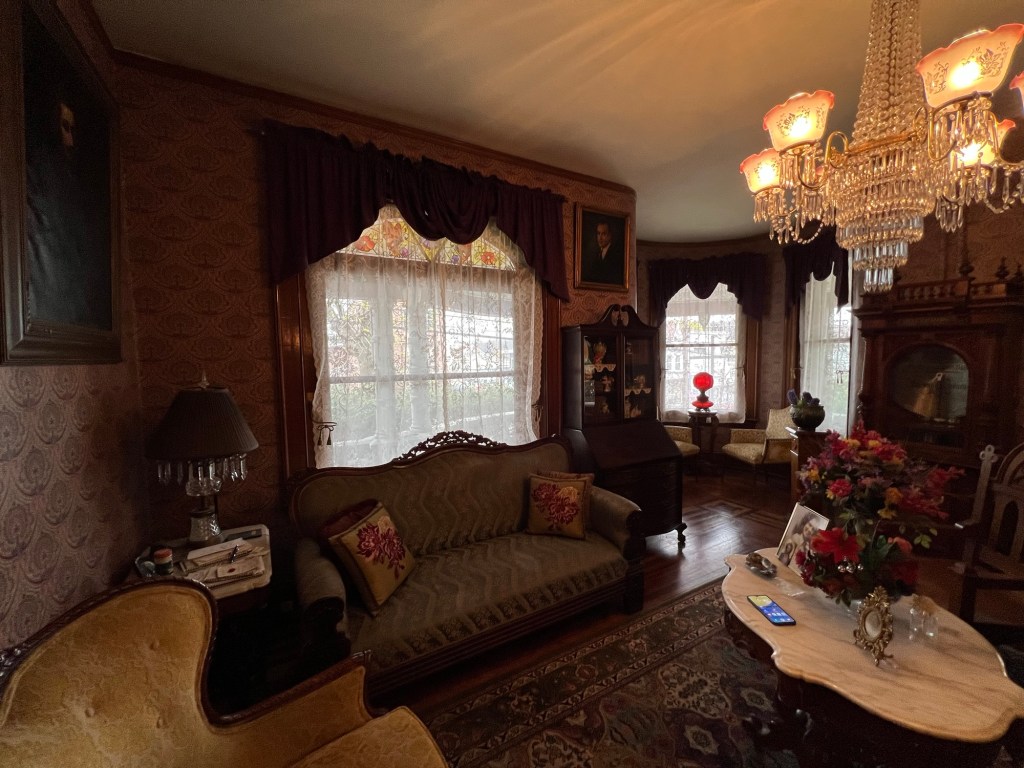
The green couch is the only thing outside some family portraits and pictures still original to the house

The portrait of Mr. Smith in the Living Room

The portrait of Mrs. Smith in the Living Room

The owners had collected the most beautiful antique and period furniture over the years which decorates all the rooms. Every piece of furniture and decoration fits each room perfectly. From the elaborate window treatments to the beautifully maintained fireplace, the room may be formal but it is still very comfortable and cosy. The house from the time you walk in has a very welcoming feel to it.

The formal Dining Room

The formal Dining Room is set for formal tour and at the holidays. For today, the owners tiny dog greeted us and wanted to play. The details on these chairs were just spectacular. What a design.

All the moldings are original to the house and all the furniture is beautifully carved and elaborate. The owners told us said the chandelier they picked fit perfectly in the room.
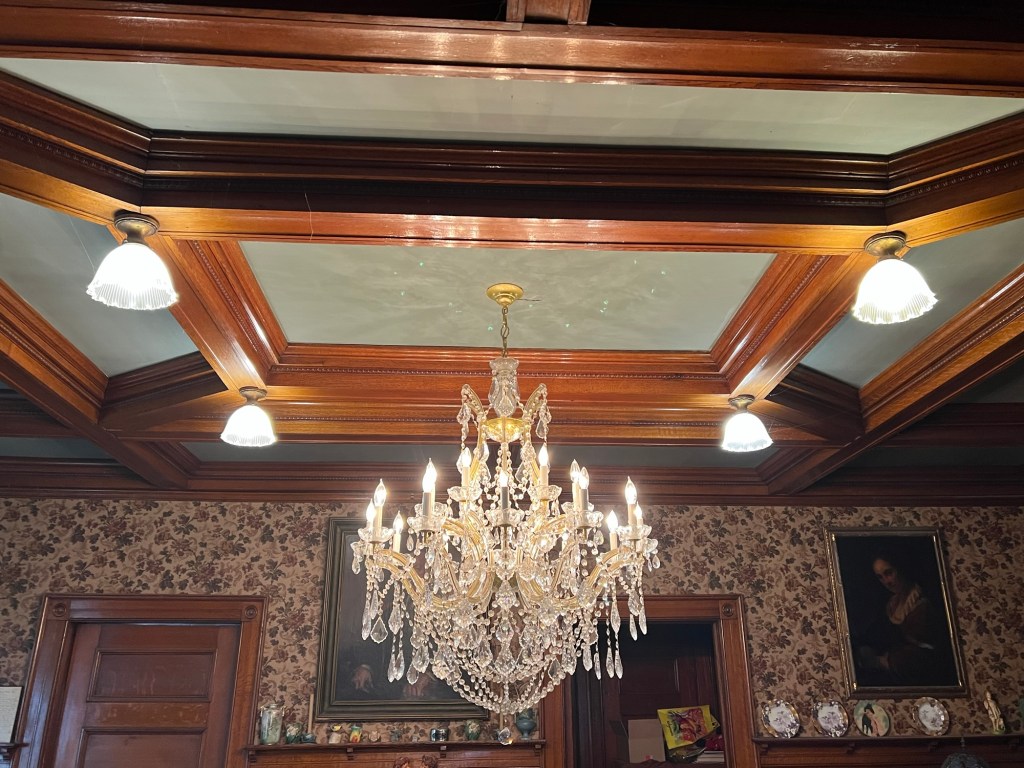
The Dining Room chandelier and the original wood moldings

The window seat of the Dining Room lets in lots of light

The Dining Room may be formal but with all the windows the room lets in lots of natural light and with seating around the room it still feels welcoming and less formal.

We moved from the first floor to the second floor where the library and some of the bedrooms were located.

The staircase to the second floor with the elegant carved staircase

The family portrait of Mr. Smith’s mother greets you up the stairs

In the hallway of the second floor were photos and portraits of the family members which the third generation of the family did not want and sold to the current owners. It is amazing what family will not want of their own past.

Photos of the third generation of Smith’s who moved out of the area. These are of the children and grandchildren of the Smith’s
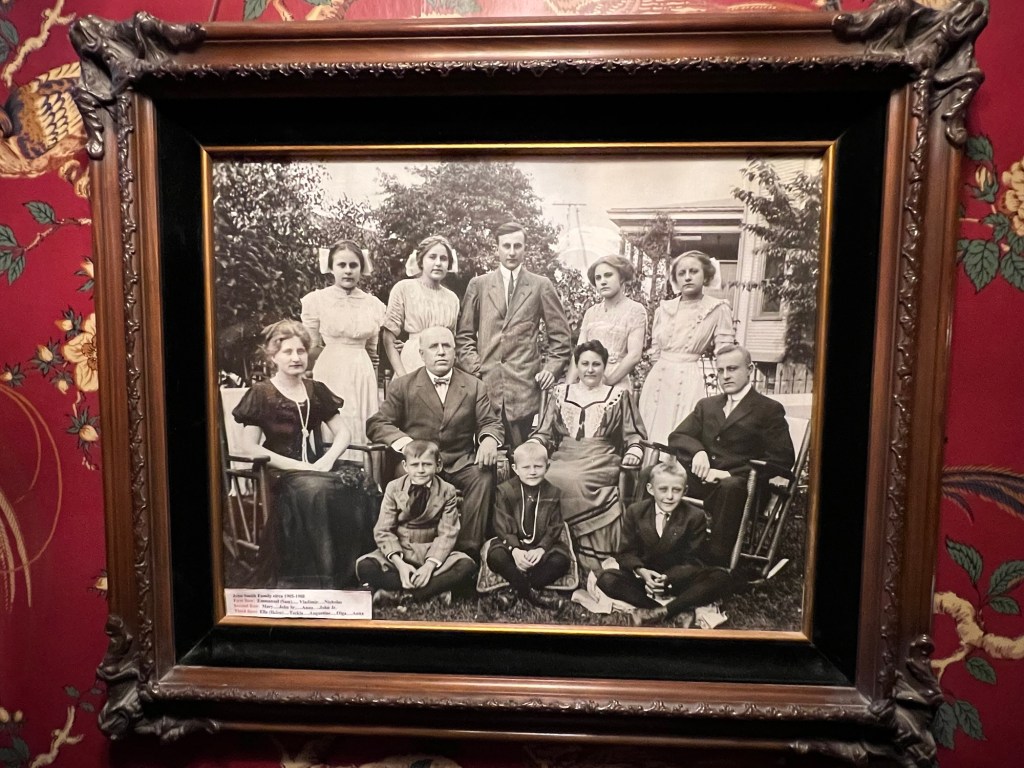
The Smith family photo in the late 1890’s

The Smith family again in the 1930’s

Our next room of the tour was the library where the owners books, paperwork and more art was located.

The second floor library

The work space, book shelves and the alcoves give the room that homey touch

The Alcove in the library looks over the City

The Library with the music boxes

The owners opened this music box and played for us

The video of the music:

The Library is such a great room just to sit and read, think and relax. I could see why they love it so much.

We then walked to the third floor and we toured the Tower Room, which really has an amazing view of the city. You could see all over town from here. The inside garden in the Tower Room is so beautiful and receives so much sun.

The Tower Room is one of the sunniest rooms of the house.

This room on the third floor of the mansion has the best views of Mahanoy City and looked like Mr. Smith’s message to the town that he had arrived. You could see all over town from this window. Now the room is used as a type of greenhouse for beautiful potted plants and flowers perfect with all the sunlight. This is one of the nicest room in the house.
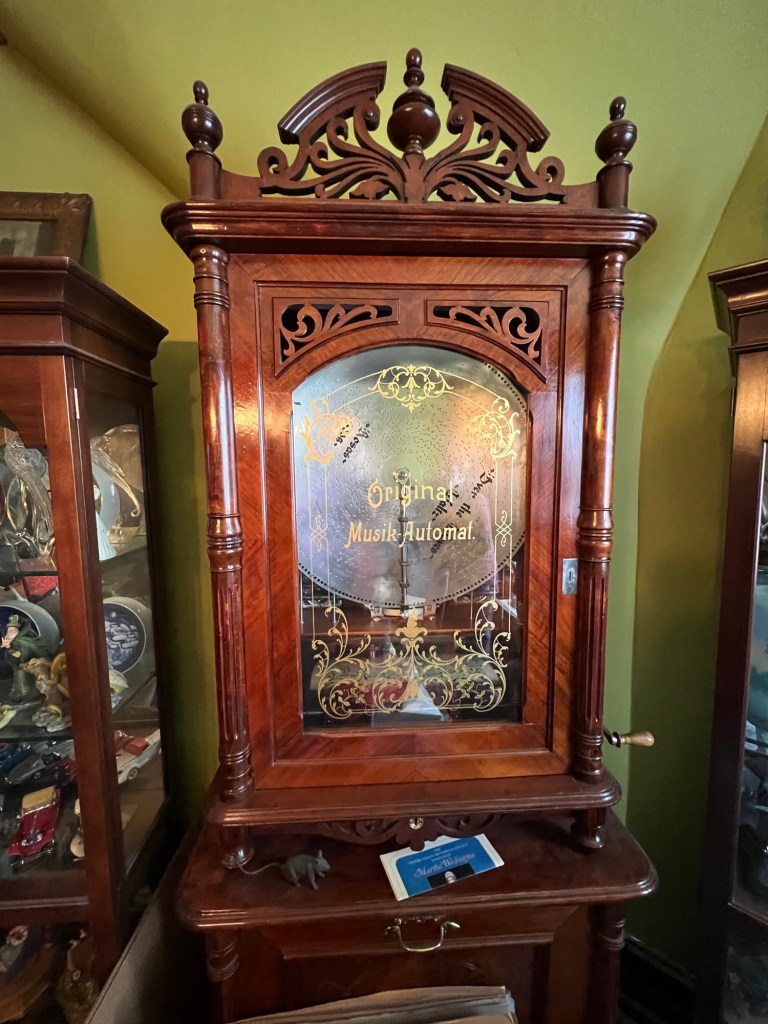
The Curio Room where the owners keep their collections of knick-knacks and decorative items that line the shelves and tables of the house, there was another music box. One of the owners collected these treasures over the years and the house has lots of examples of these beautiful antiques that were created before radio and records.

The Music box playing:

The music box was once in a hotel lobby

The owners explained that part of the third floor is used for storage and for their collections. There were all sorts of small sculptures and assorted Knick-knacks that decorate rooms lining the shelves. The owners had done and amazing job on the upkeep of this beautiful home.

The last part of the tour was we went outside on this sunny morning to see the outside gardens. They were impressive for such a small space. The flowers were just starting to bloom and the trees were starting to bud over this cold patch of the early Spring. This weekend was the first weekend where the weather had been nice and started to warm up.
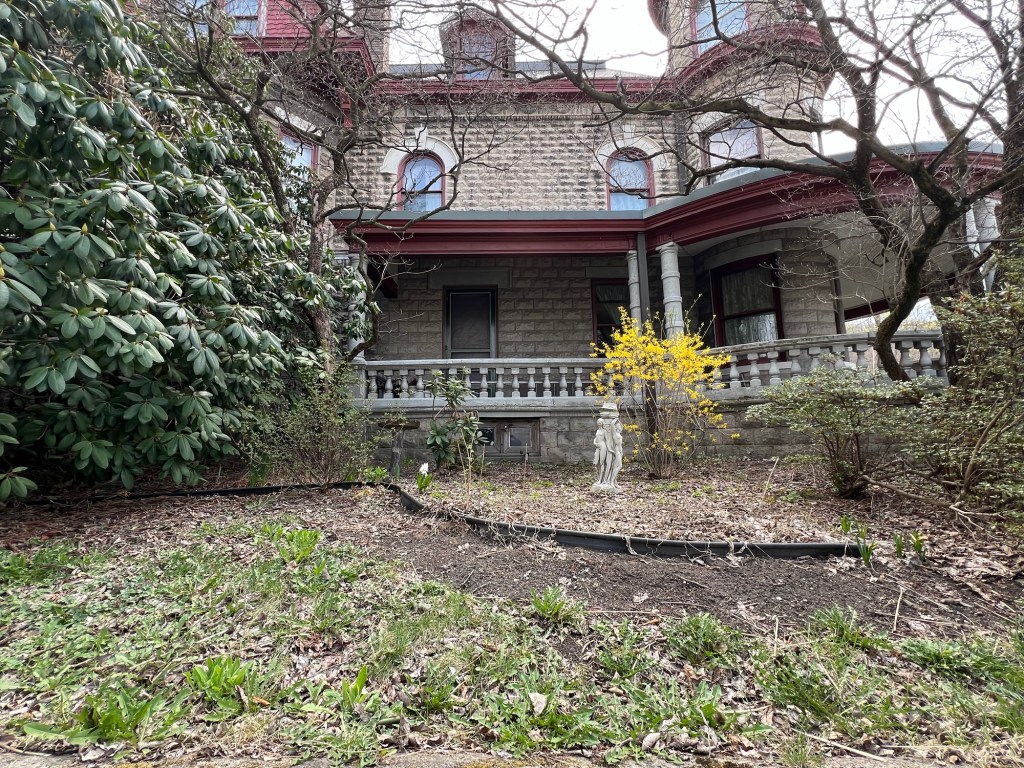
The garden in front of the house just as Spring was starting

The back walled garden and fish pound

The owners own the two homes next door to the mansion and have combined the back gardens. So they had this small fish pond stacked with Japanese fish and walls covered with vines. There is a small gazebo so that you can sit and relax outside in the warmer months.

The other side of the backyard garden just as Spring started
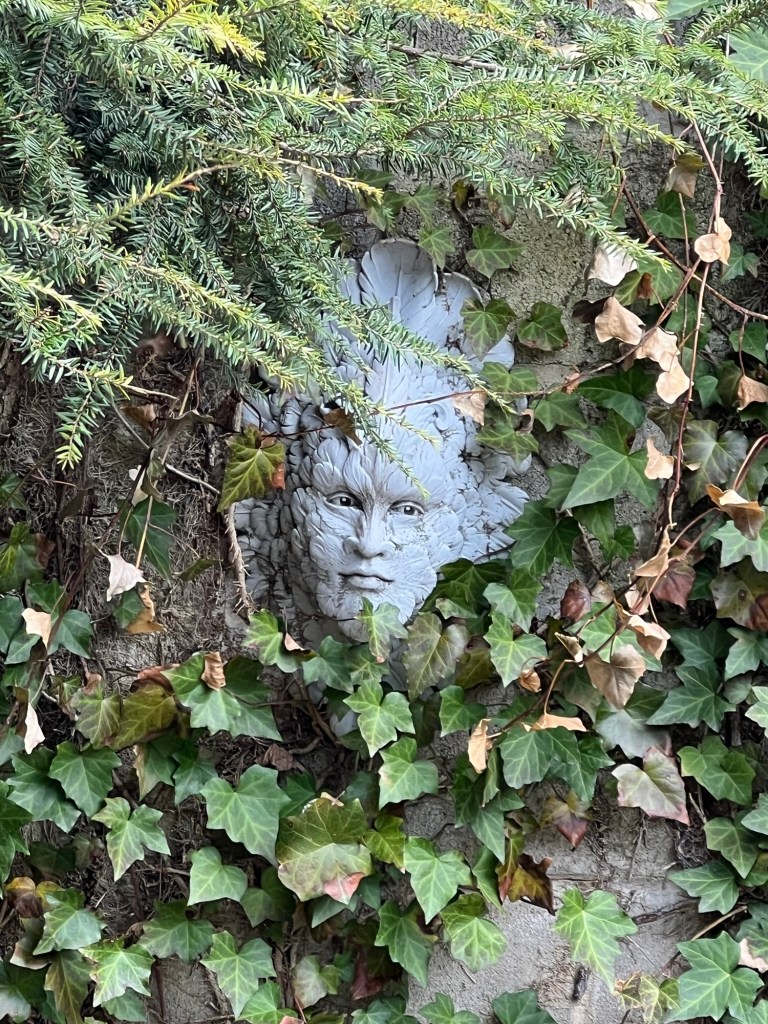
Faces pop up between the vines of the walked garden
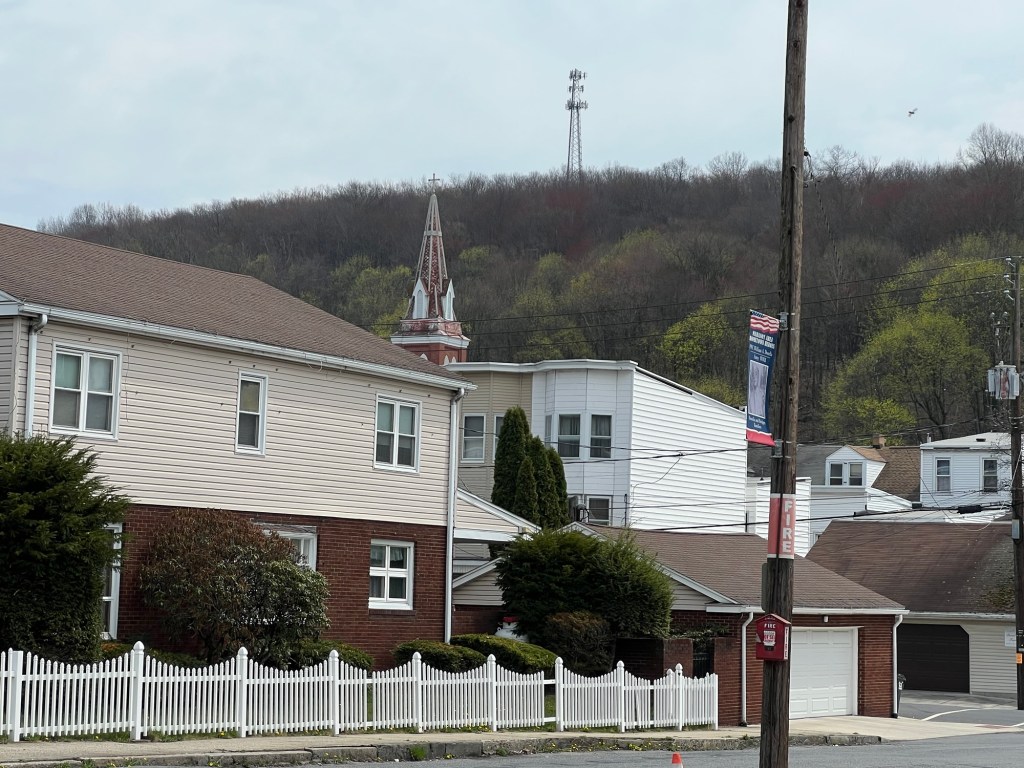
The views of the downtown from the house

The tour concluded in the gardens. The owners were explaining how much more beautiful the gardens are in the late Spring and Fall.

The tour was wonderful and the owners could have not been more gracious with their time. They also explained how they will be opening their home again to the public during the holidays during Christmas and hopefully Halloween and how I should come back to visit.

The formal tour of the Smith Mansion again is by private tour only except at holiday Open Houses and can be arranged through the owners of the home. It really is an interesting look at areas industrial past and what life in local society must have been like at that time. It also shows how things change over time and fortunes are made and lost and business and families move on.

It was a wonderful afternoon of stepping back into the past.

Punxsutawney Historical & Genealogical Society 401 West Mahoning Street                 Punxsutawney, PA 15767

Punxsutawney Historical & Genealogical Society 401 West Mahoning Street Punxsutawney, PA 15767

Punxsutawney Historical Society & Genealogical Society

401 West Mahoning Street

Punxsutawney, PA 15767

(814) 938-2555

https://www.punxsyhistory.org

https://www.facebook.com/Punxsyhistory

Open: Sunday-Wednesday Closed/Thursday-Saturday 1:00pm-4:00pm

My review on TripAdvisor:

https://www.tripadvisor.com/Profile/R4960NKjustinw/mediabatch/12467166?m=19905

My blog on Exploring Punxsutawney, PA for Groundhog’s Day:

https://mywalkinmanhattan.com/category/exploring-punxsutawney-pa

The Lattimer Mansion at 401 West Mahoning Street, home to the main collection.
The sign welcoming you to the Society.

The Bennis Mansion across the street at 404 West Mahoning Street houses the furnishings, household items and dollhouse displays.

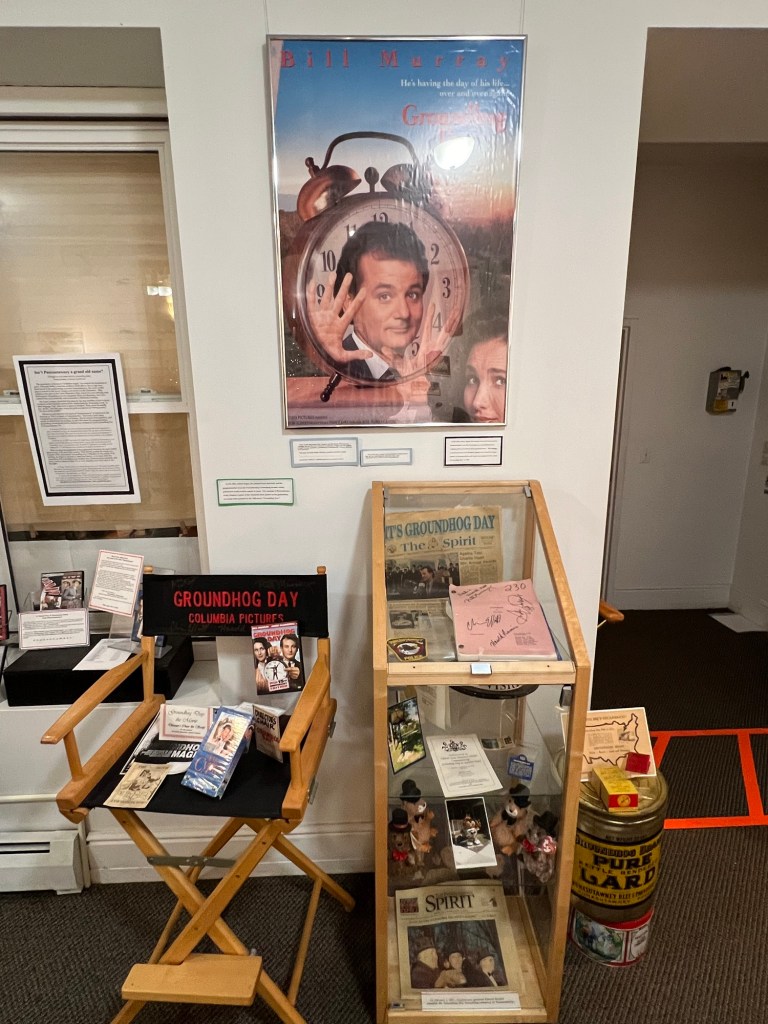
It had been eight years since I had visited the historical society and the organization has created a lot of interesting displays. The museum was busy during the Groundhog’s Day celebrations and there was a lot to see and do. They have an interesting display on the history of the movie “Groundhog’s Day” including a original script from the film. Since the film is being shown in establishments all over town, it is fascinating what the society was able to collect from the filmmakers over the years. They also have the history of the Groundhog’s Club as well and their development over the years.

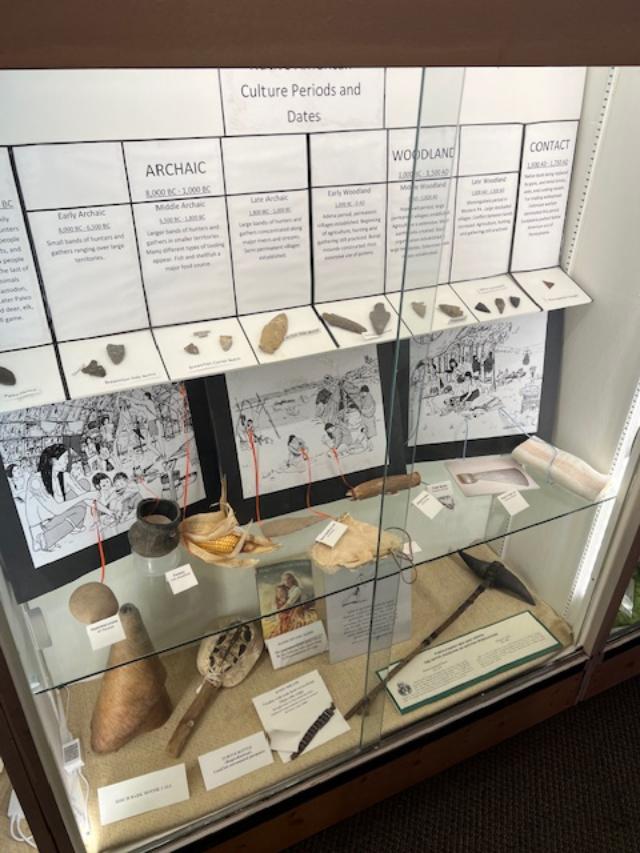
The Native American and Coal Mining displays show the development of the area along the old Indian trails and how it gained it population and wealth due to the mines. When the mines closed after the war, the fortunes of the area changed. The Groundhogs Festivities have really brought this back.

The Bennis Mansion across the street shows life in Victorian times to a once wealthy and prominent family in Punxsutawney. Each room is decorated with period furnishings and decorations. There is also a Dollhouse Exhibit going on from December 2023 through February 2024.

The Founding of the Museum (from the Society website):

The Society was begun in 1978 with the primary purpose of preserving the history of the Punxsutawney Area.

The entrance to the Lattimer Mansion and entrance to the museum.

The Mission of the Society (from the Society website):

The purpose of the Society shall be to receive, collect and preserve the historical and genealogical records and artifacts of the area; to maintain a library and museum for their perpetuation and care; to encourage the preservation and restoration of material things and places that are of historical significance to the area; to exhibit artifacts of historical, genealogical and cultural value; to educate persons about subjects of historical, genealogical and cultural significance.

The Main Gallery:

The history of the town, its businesses and the people who live here.

The main gallery entrance of the museum.

The Front Gallery Groundhog Club history.

History of the Historical Society (The HGSP website):

The Punxsutawney Area Historical and Genealogical Society has an extensive museum complex. There are many rooms full of historical artifacts from the area which include displays of:​

  • Native American history and artifacts
  • early settler tools and utensils
  • regional lumbering history
  • area coal mining and coke production history
  • local railroading history
  • quilts, clothing and decorative arts from Punxsutawney’s “Early Days” through the “Boomtown” era to our recent past
  • uniforms and artifacts documenting military, public and community service history
  • radios and early televisions
  • photographic documentation of the region’s history
  • Punxsutawney Groundhog Day history
  • old photographs
  • old postcards​

​Exhibits in the Griffiths’ Galleries of the Lattimer House include: “Punxsutawney Area Legacy of Artists & Artisans” which tells the history of the region through the eyes of past photographers, painters and illustrators, sculptors and crafters.​

The founding of the Groundhog’s Club.

Groundhogs Day uniform for its members.

Displays in the Bennis House highlight other area artists, past and present, as well as the varied ethnic background which helped form our community.​

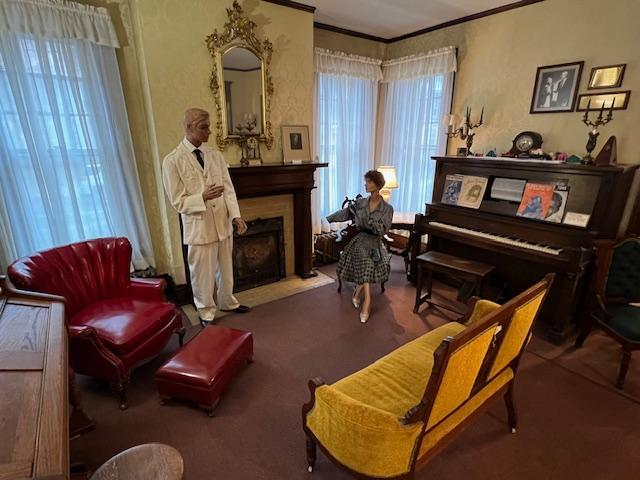
The Bennis House Living Room display

The founding of the town displays.

The Founders Display

The Founding of the town.

Snyder Hill Schoolhouse

The Snyder Hill Schoolhouse is located on Snyder Hill just south of town. It is a restored country schoolhouse.​

The Snyder School was typical of the one- or two-room country schools used years ago. From 1886 to 1959 (73 years) the school provided education for hundreds of children, many of them living today. It was the sole means of education for most of our rural population.​

A one-room school consisted of eight grades and one teacher willing to accept hard and trying work. Usually overworked, the teacher undertook to teach as many thirty or more pupils in the eight grades. Younger children learned from older children, as in a large family.​

The Snyder Hill Schoolhouse has been restored with old desks, books and other materials that were used during the time this type of school existed. Snyder Hill Schoolhouse is surrounded by woods and rolling farm land. Your first steps inside are on hardwood floors. The only source of heat was a large pot-bellied stove that was once covered in the winter with little mittens being dried by the fire. The boys and girls each had their own separate cloakroom on either side of the main entrance. Chalk boards with the day’s lessons lined the front wall behind the teacher’s desk; all of this can be experienced during your visit. The school is open by appointment for individuals or tours.

The history of the movie “Groundhog’s Day”:

Posters and script from the film.

The script from the film.

The film was not shot here but in Woodstock, IN. Only some of the travel shots as you are entering town made the film.

The making of the film “Groundhogs Day”.
The 2024 reunion in Chicago for “Harold Ramis Day” in Chicago.

The town history:

The history of Groundhog’s Day in Punxsutawney, PA

The Groundhog Display.

History of the Native Americans in the area (Society website):

Punxsutawney’s Groundhog legend pre-dates the area’s first white settlers. The first inhabitants of the area, the Delaware Indians, shared in the Punxsutawney “Groundhog” roots with their own Indian version of “legend and lore.”

The Native American display at the museum.

Punxsutawney was originally a campsite halfway between the Allegheny and Susquehanna rivers. It is located on the earliest known trail to the East, the Shamokin path. The area was, at times, occupied by Shawnee or Delaware Indians and, sometimes, by Senecas or Iroquois.

According to the original “Creation” Story of the Delaware Indians, the “Lenni Lenape” (or original people), who were their forebears, began life as animals in “mother earth” and emerged centuries later to hunt and live as men. Thus it was that Oijik (Wejak), or Wojak, which was carried over to us as “‘Woodchuck”, came to be recognized as the “grandfather” of the earliest known inhabitants of this area.

The Native American display at the museum.

Although the area previously served as a “border” between Indian nations, the displaced Delawares settled in large numbers about 1723 because of the pressures from white men in the East and Iroquois intrigue. The main move toward the west followed between l740 and l760 as the result of further pressure.

It was during this period that an lndian sorcerer first appeared in various forms and attacked travelers from the East. He was hunted and killed in combat by a young chief. His body was burned to destroy the “evil medicine” but miraculously turned to searing sandflies, or “ponksad,” which plagued the area and the Indians. From that time the Indians called the location, ” Ponksaduteney,” which meant the “town of the sandflies.” The sandflies are now gone, but the “ghost of the spelling” is with us to stay.

The Native American display at the museum is quite extensive. There are many interesting artifacts.

The displays at the Museum:

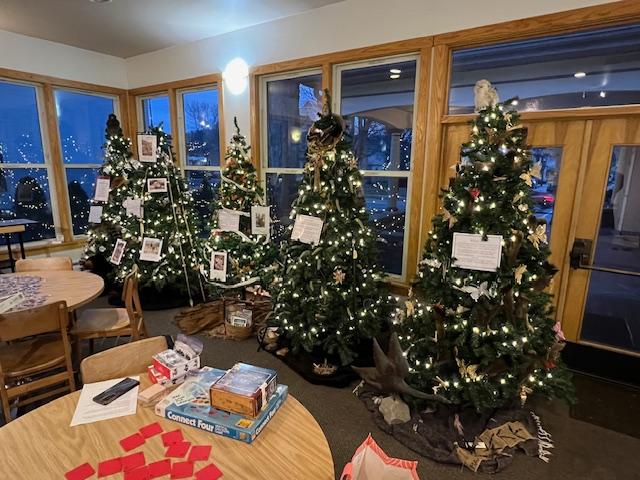
As part of the Christmas celebration in 2023 and held over for Groundhog’s Day is the Native American Christmas tree display. The theme was dedicated to the Native Americans from the area.

The Christmas tree display dedicated to the Native Americans.

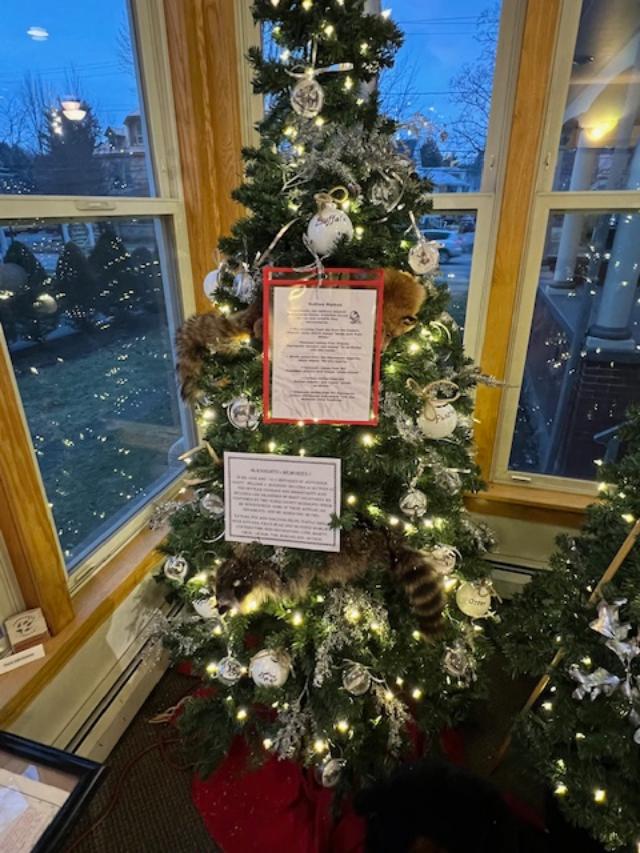
The beautiful decorations on the tree.

The sign describing the tree and its decorations.

Across the street at the Bennis House, the museum had a display of Dollhouses and the different houses that had been donated over the years to the museum.

The history of the Bennis House (from the Society pamphlet on the Bennis House history):

Edward C. McKibbon, secretary of the Punxsutawany Iron Works, purchased this town lot from the James E. Mitchell estate in 1901. T.E. Bennis purchased the McKibben property located on the corner of West Mahoning Street and Morrison Avenue in 1918. Members of the T.E. Bennis family occupied the house until 1982. In 1902, Mr. McKibbon contracted with E.J. Lawrence to build the house, which he first occupied in 1903.

The Bennis House display of the Log Cabin made with Lincoln Logs. In the cases are collections of china patterns over the years. In the Parlor are a portrait of Jefferson County Judge William P. Jenks, son Punxsutawney’s of first settlers, John and Mary Barclay Jenks. The dress from 1866 was worn by Mary Rebecca Jenks, the daughter of Judge William P. and Sarah C. Jenks.

The family china in the displays.

The Gingerbread House in the Parlor on the first floor.

The Bennis House Living Room on the first floor.

Dorothy Bennis Cooney, the youngest daughter, donated the house and property to the Punxsutawney Area Historical & Genealogical Society in 1982. The house has served as a place to display artifacts of Punxsutawney’s history since that time. The house is designed in a “Craftsman Style” with a Swiss influnence. When the Society received the house, the previous owner advised that it had been designed by a “Famous New York Architect”. (PHS Society)

On display in the entry-way is a unique piece of furniture which accommodated the need of visitors for a place to hang hats and coats and to store items.

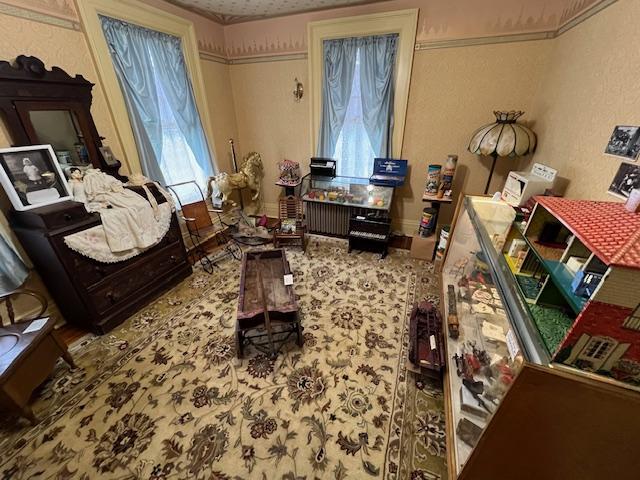
The Second floor of the Bennis House has a wonderful display of Children’s Toys.

The Children’s Room with the display of the Fisher Price Doll House. The toys range from the 1850’s through the 1960’s.

The Toy display on the second floor.

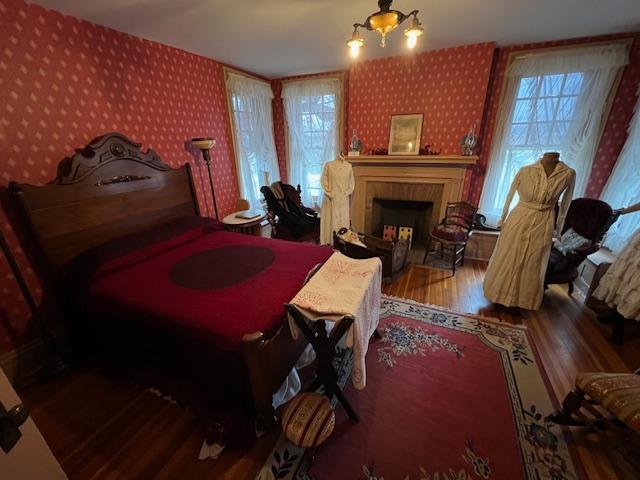
The Bennis House second floor bedroom.

The Military Room on the second floor has all sorts of interesting uniforms on display.

The upstairs room dedicated to religious artifacts and furnishings.

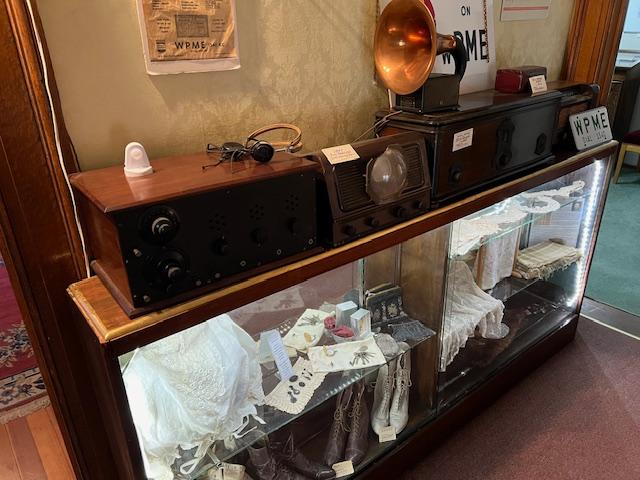
The clothing and Electronics display on the second floor. These items range from the 1850’s to 1930.

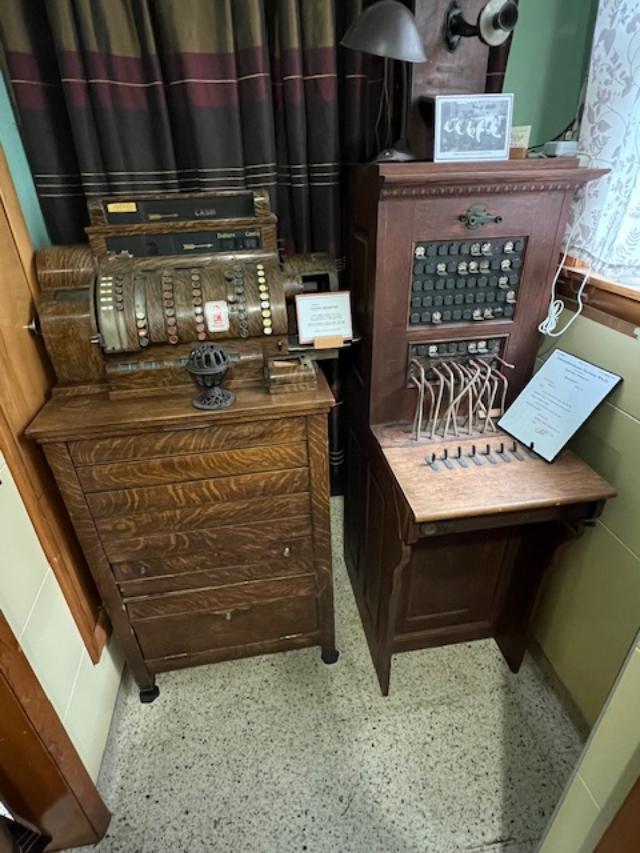
The Cash Register and switchboard machine on the second floor. The cash register was originally used in Loeb’s Store and last used in Harl’s Shoe Store. The switchboard operation was from Punxsutawney.

After the tour is over, you have to visit their gift shop in the Lattimer House.

The two homes house an interesting display of life in Punxsutawney over the years and the artifacts represent life from the early 1800’s to the 1960’s. If you are interested in more than the history of Groundhog’s Day, the society offers that and so much more.

Betsy Ross House                                                    239 Arch Street                                      Philadelphia, PA 19106

Betsy Ross House 239 Arch Street Philadelphia, PA 19106

Betsy Ross House

239 Arch Street

Philadelphia, PA 19106

(215) 619-4026

Betsy Ross House

Admission: Adults $7.00/Children-Seniors-Military $6.00/Audio Tour Add $2.00-Please check Website

My review on TripAdvisor:

https://www.tripadvisor.com/ShowUserReviews-g60795-d144052-r793537657-Betsy_Ross_House-Philadelphia_Pennsylvania.html?m=19905

The Betsy Ross House Museum at 239 Arch Street

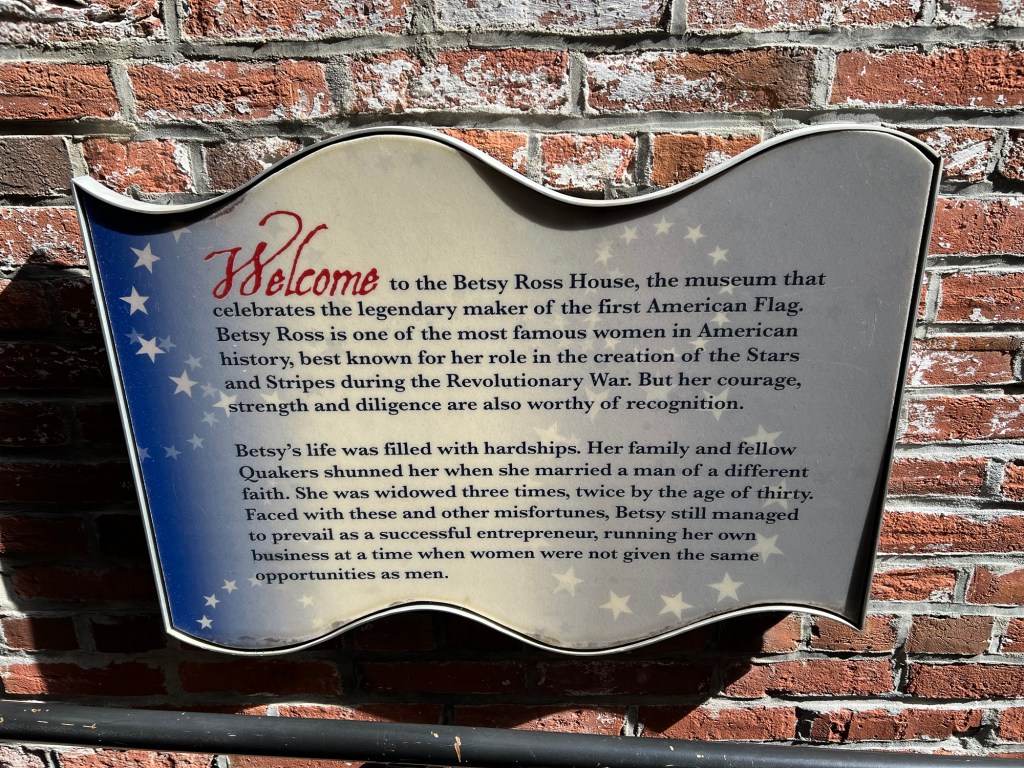
I visited the Betsy Ross House Museum when touring the small museums of Old Town Philadelphia. What an interesting historical site. You felt like you were invited into Betsy Ross’s house by Betsy Ross herself.

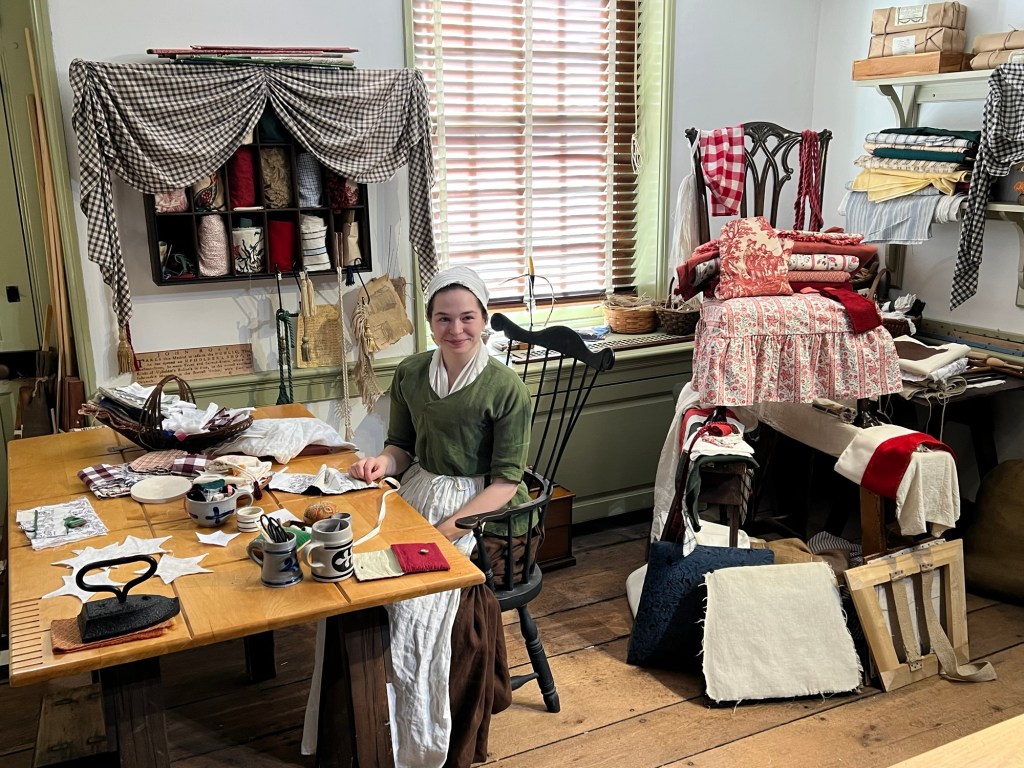
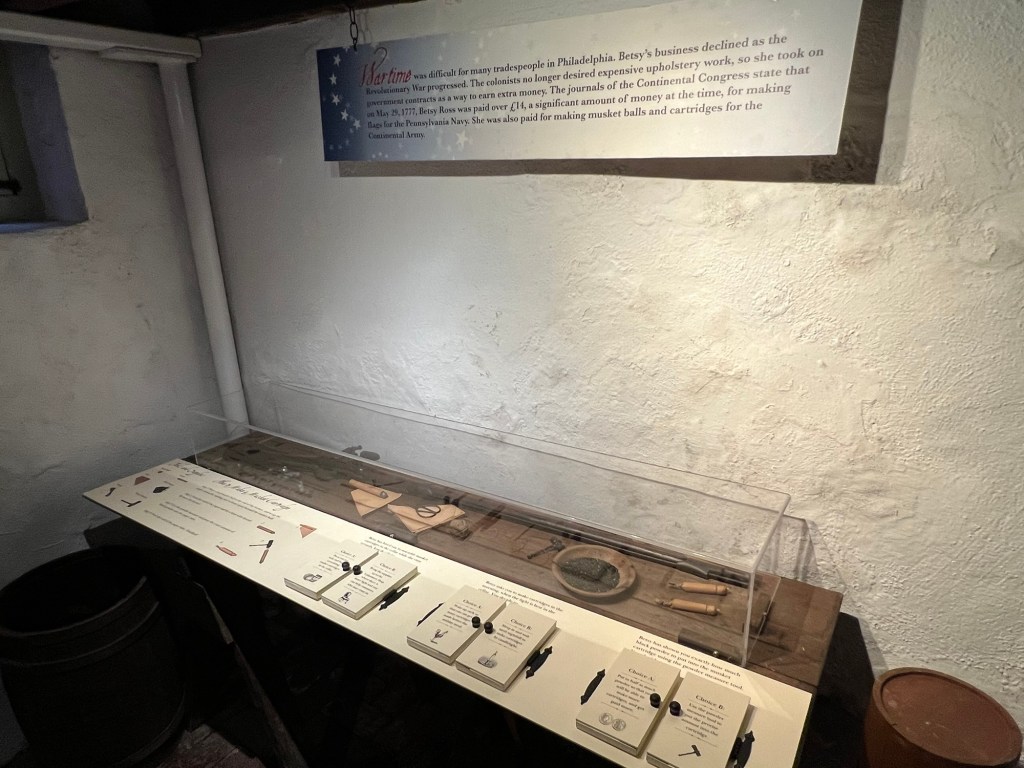
Betsy Ross was an upholsterer and ran her business dealings from the front of the house where her small showroom and workroom were located to the street level. Many people in Philadelphia had this work arrangement where the business was in the front of the home and then living quarters were in the back or up above.

In the showroom area, an actress playing Betsy Ross, was there answering all our questions and she was very interesting. When she had been approached to design and create the flag, she had never made a flag before. The actress explained that she had to keep making flags ‘under the wraps’ so that Loyalist would not shut the business down during the war. Her business pretty much was shut down during the War years as people did not have the money or time for her work. I really felt like I was talking to the real person in that time.

The tour will only take about an hour but you will learn so much about business and living arrangements in homes at that time and of the family who lived there. I never knew much about Betsy Ross herself and her husbands and children from different marriages. So you will learn a lot about the family themselves and the lives that she lived with each of them.

It is an interesting tour if you have interest in the American Flag origins and the Revolutionary War.

The History of the Betsy Ross House Museum:

The building at 239 Arch Street, now known as the Betsy Ross House, was built over 250 years ago. The front portion of the house was built around 1740 with the stair hall (or piazza) and the rear section added 10 to 20 years later. The structure is a variation of a ‘bandbox’ or ‘trinity’ style home, with one room on each floor and a winding staircase stretching from the cellar to the upper floors.

The building’s front façade, with a large window on the first floor to display merchandise and it proximity to the Delaware River, made it an ideal location for a business. The house served as both a business and a residence for many different shopkeepers and artisans for more than 150 years. The first floor front room was used as the workshop and showroom. The business owner and his or her family lived in the rest of the home.

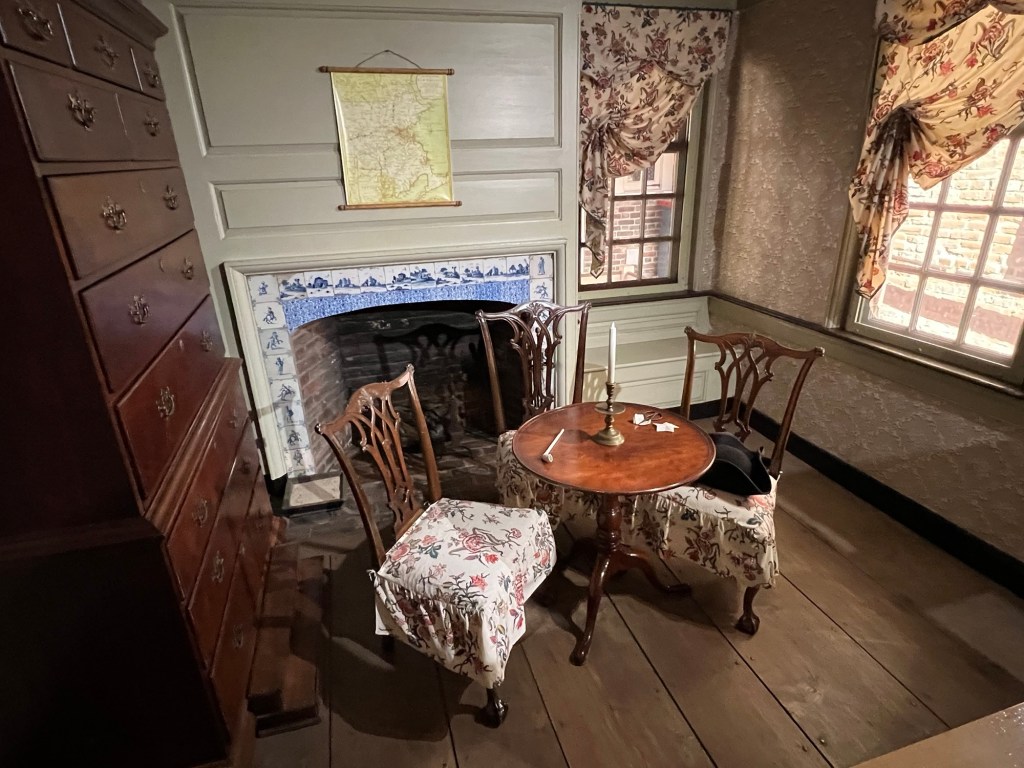
The sitting room recreation

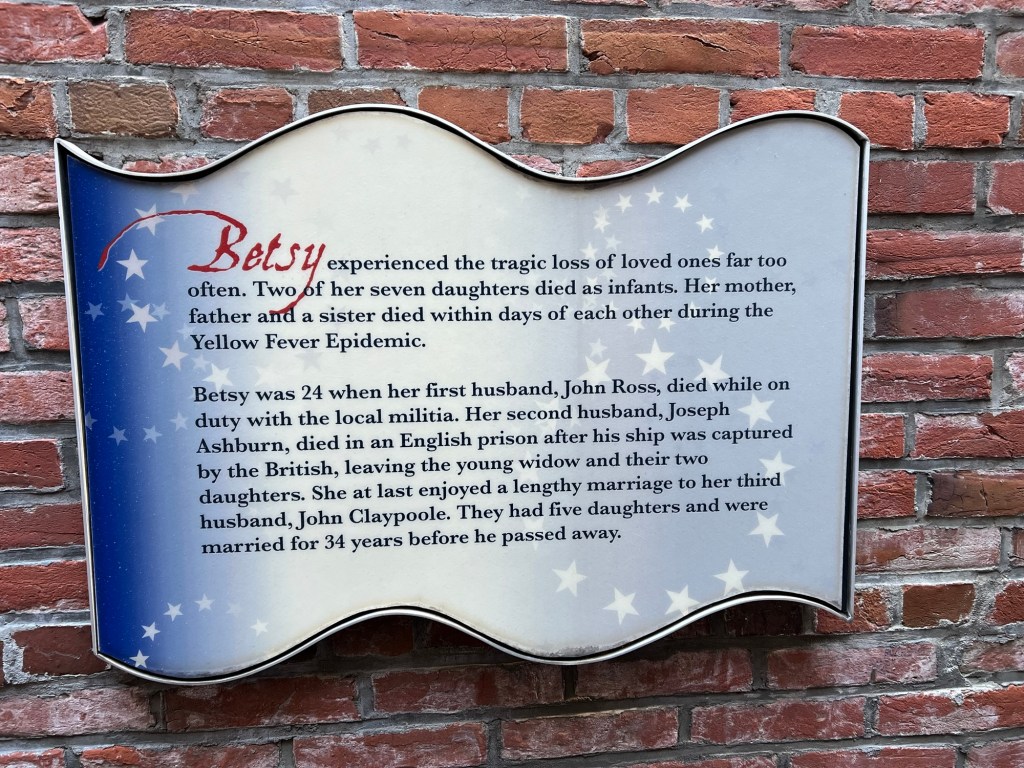
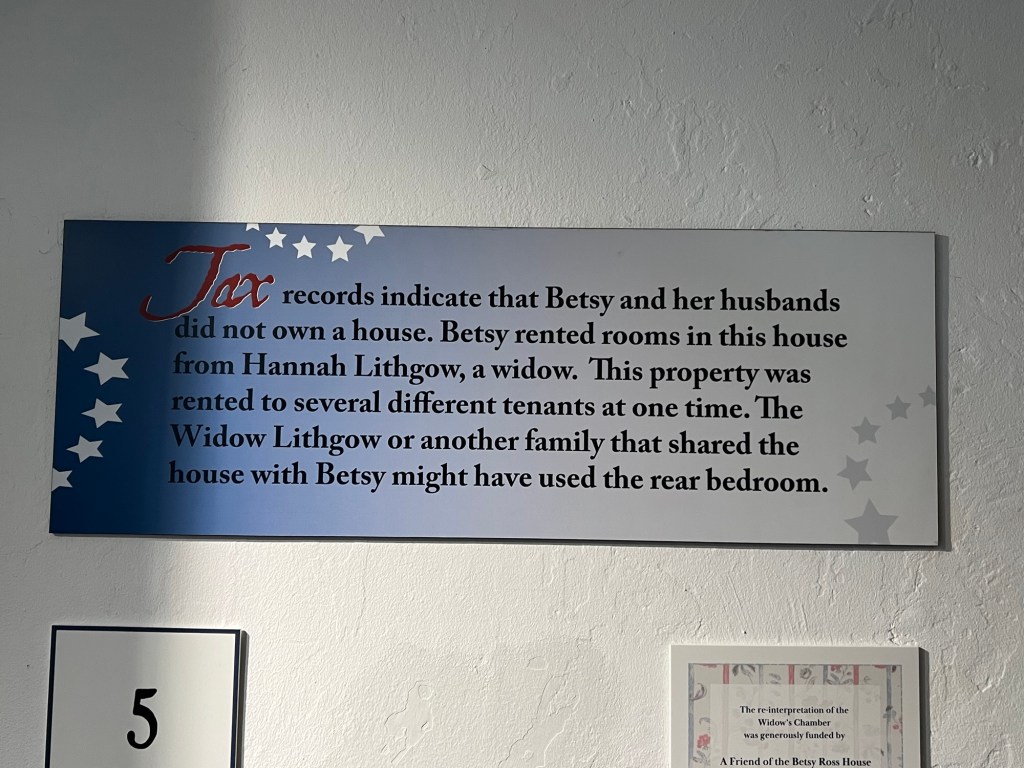
When you enter the house, you will be able to visit all the rooms of the house and the kitchen area on the lower level. The interesting part of this self guided tour is that you learn that the house was not owned by Betsy Ross or any of her three husbands. They rented the rooms out from a widow who owned the house at the time and that there had been other people living at the home at the time. Each of the rooms were rented and lived in by other family members.

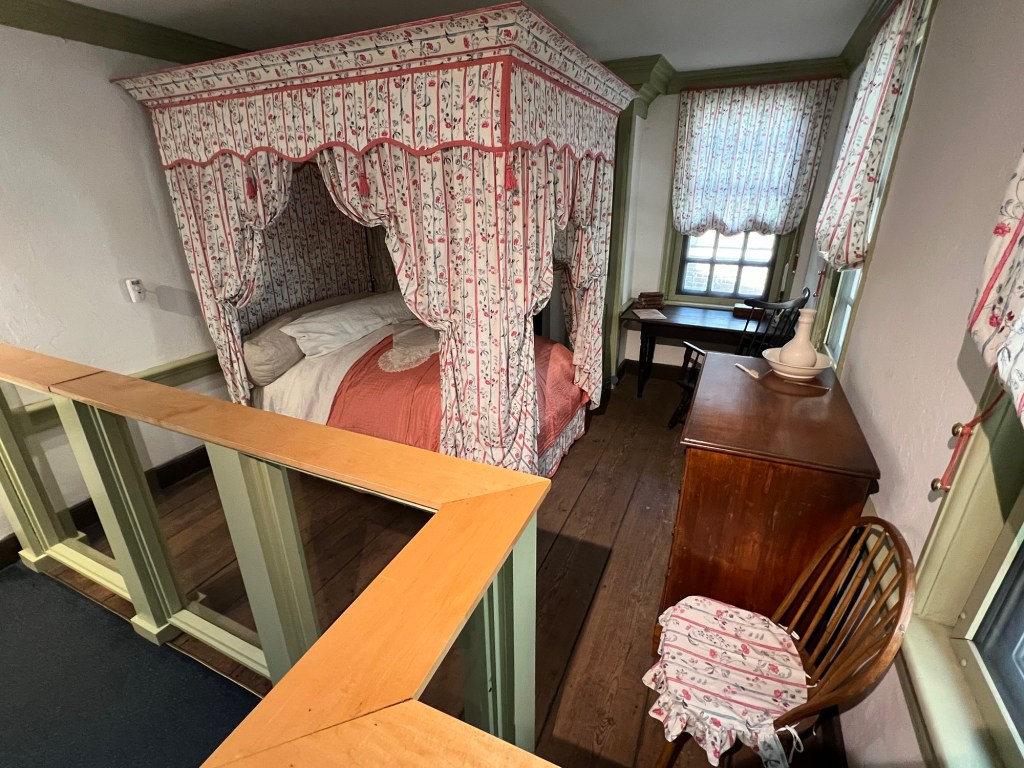
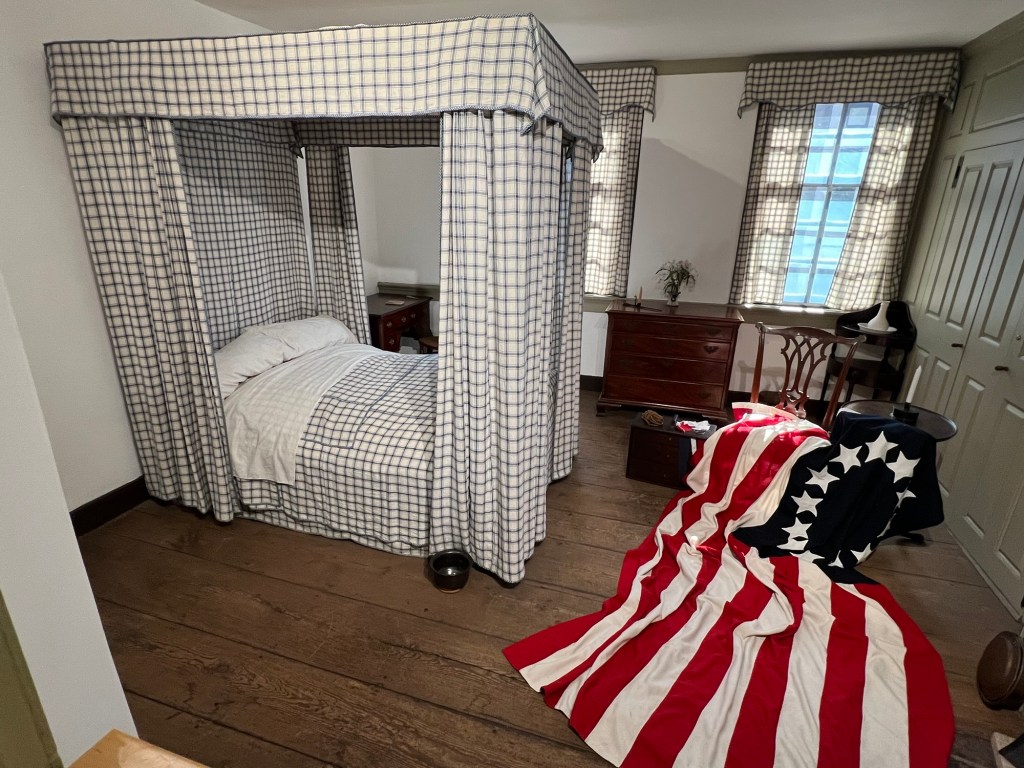
In each of the upstairs rooms, there are recreations of what the family living arrangements were and how they were decorated. The bedrooms were furnished with vintage furniture of the time and items used in every day life.

A period bedroom in the house

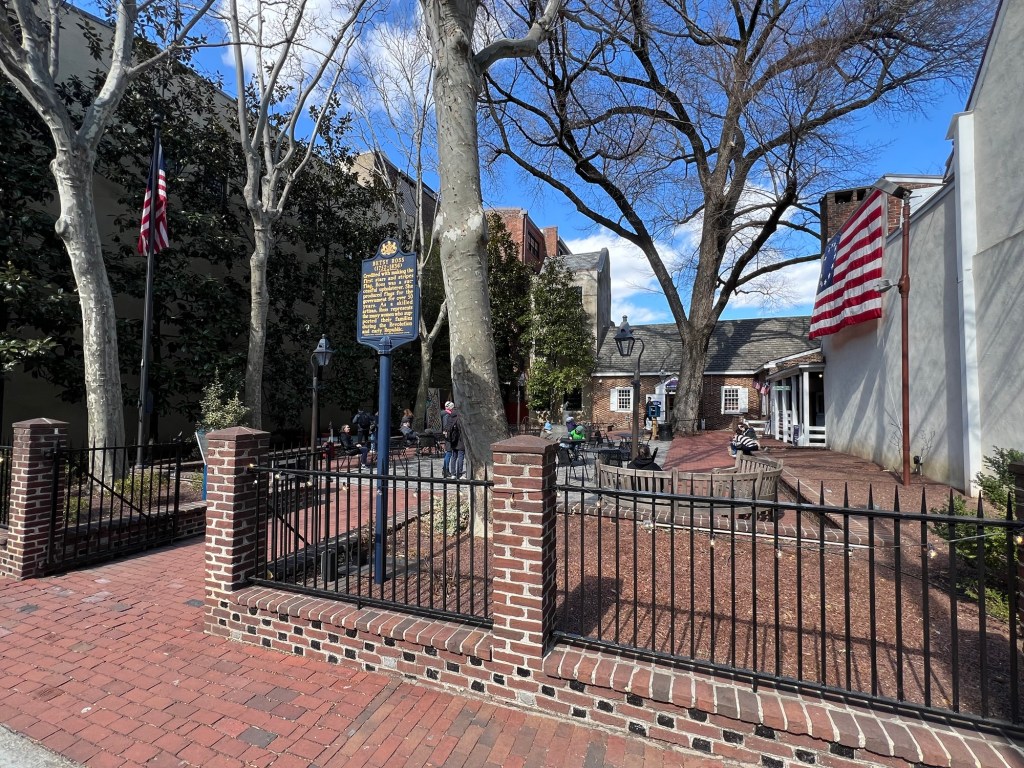
The house and museum is broken up into different sections. When you walk into the museum complex, you will get to visit a very patriotic gift shop stocked with Revolutionary War memorabilia. Out side the gift shop is the formal gardens and the courtyard which is a nice place to relax and enjoy the weather.

The courtyard of the house

The role of Betsy Ross during the Revolutionary War

The story of the flags creation

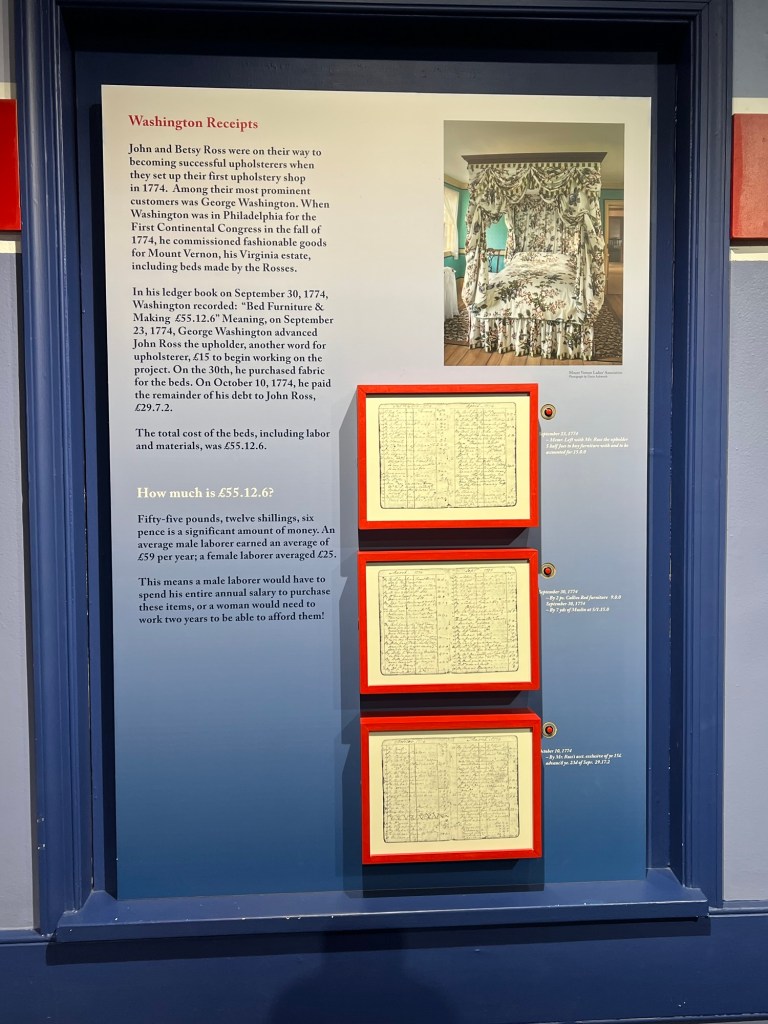
George Washington had done personal work with the Ross’s before the war

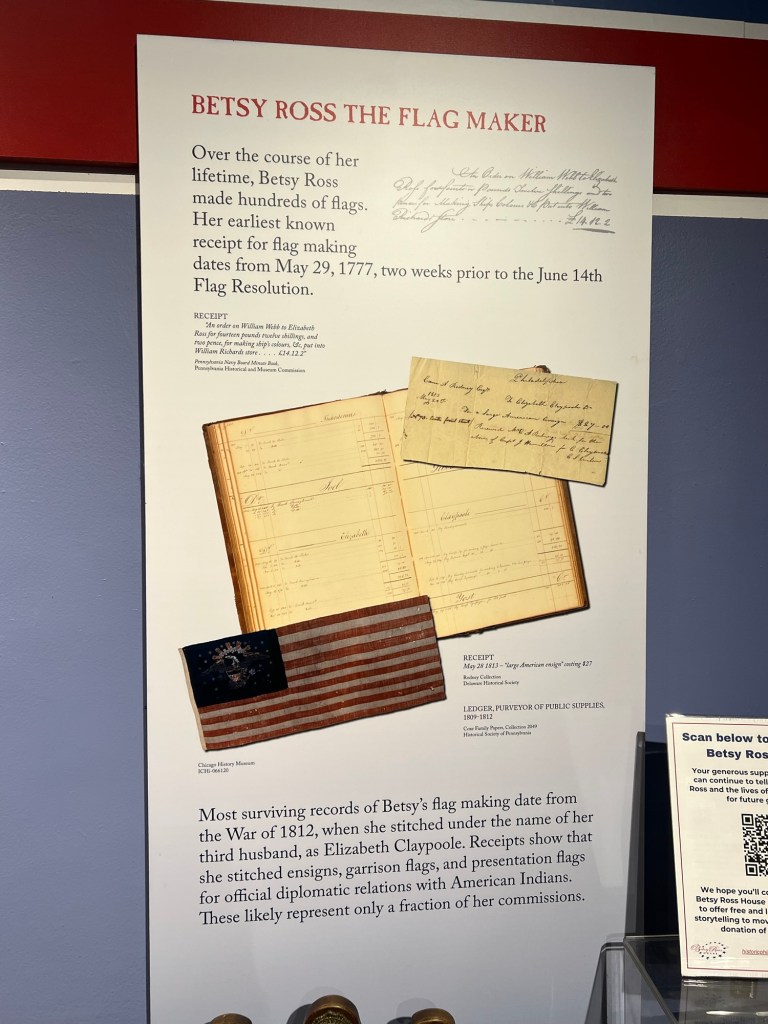
When she became a flag maker

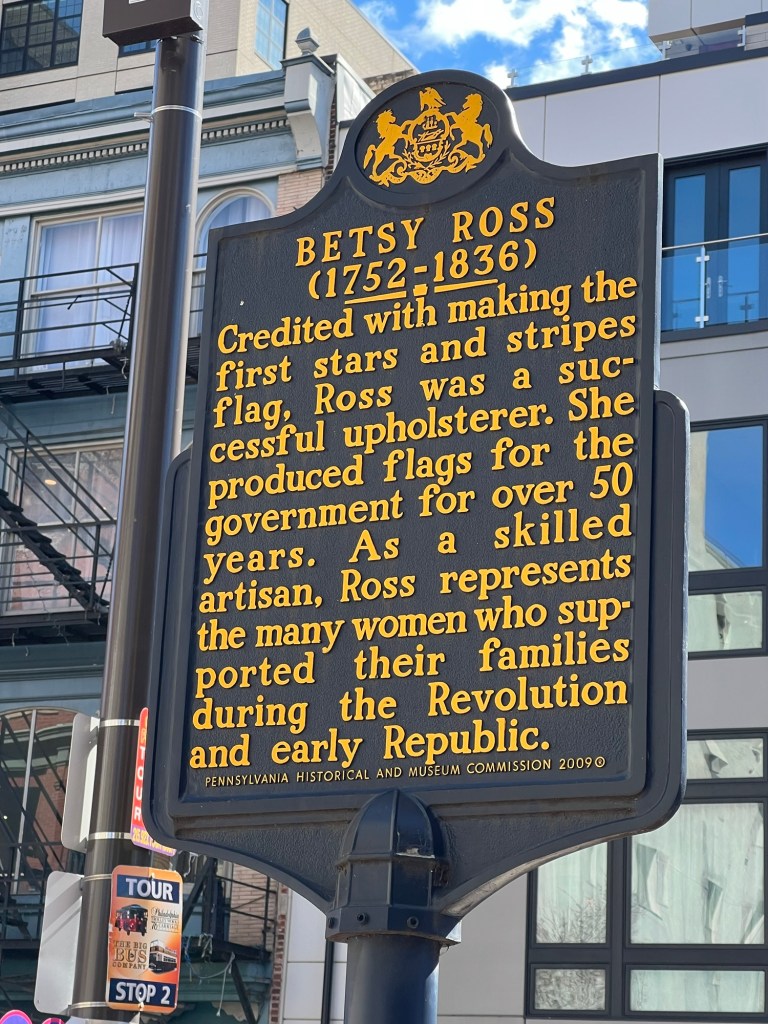
The historic marker on the house

The courtyard of the home

Historic Marker One

Historic Marker Two

Historic Marker Three

The Parlor area where Betsy Ross would have met her clients

The recreation of the parlor area

What the meeting would have looked like

Another look at the parlor

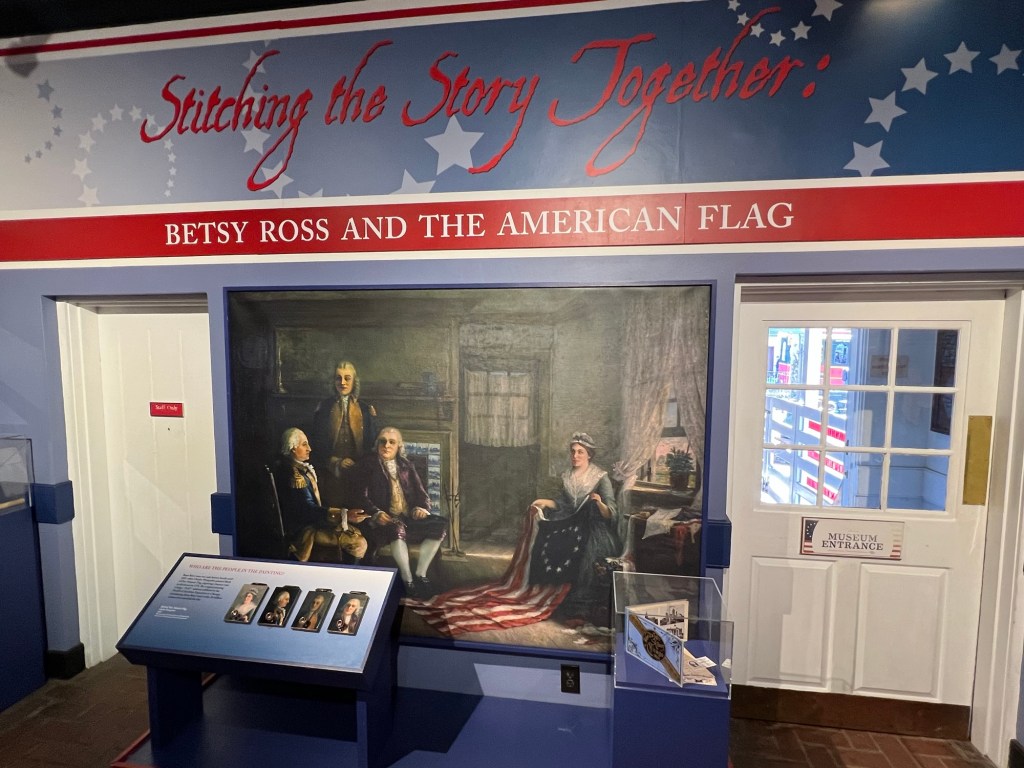
The story of the creation of the flag

A view of the upstairs bedrooms

The house was a rented space for the Ross family

A better view of the upstairs bedroom

The Betsy Ross bedroom with a recreation of the flag

The bedroom where the flag was created

At the end of the tour we could talk to Betsy Ross herself and ask her questions about her life and her business. The actress who played Betsy asked all our questions in historic terms and to contemporary living. She was able to talk to us on her career and family and her visit from General Washington. She continued working until she was 76 years old.

Meeting Betsy herself while she talked about her life

The Kitchen and Laundry area of the house:

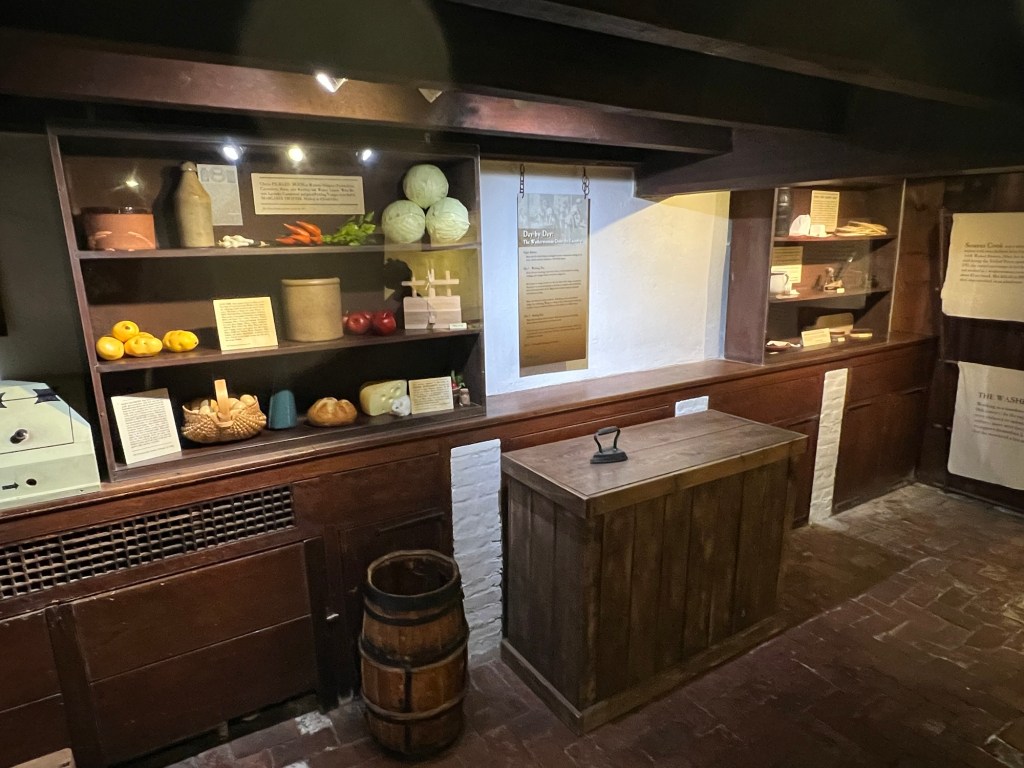
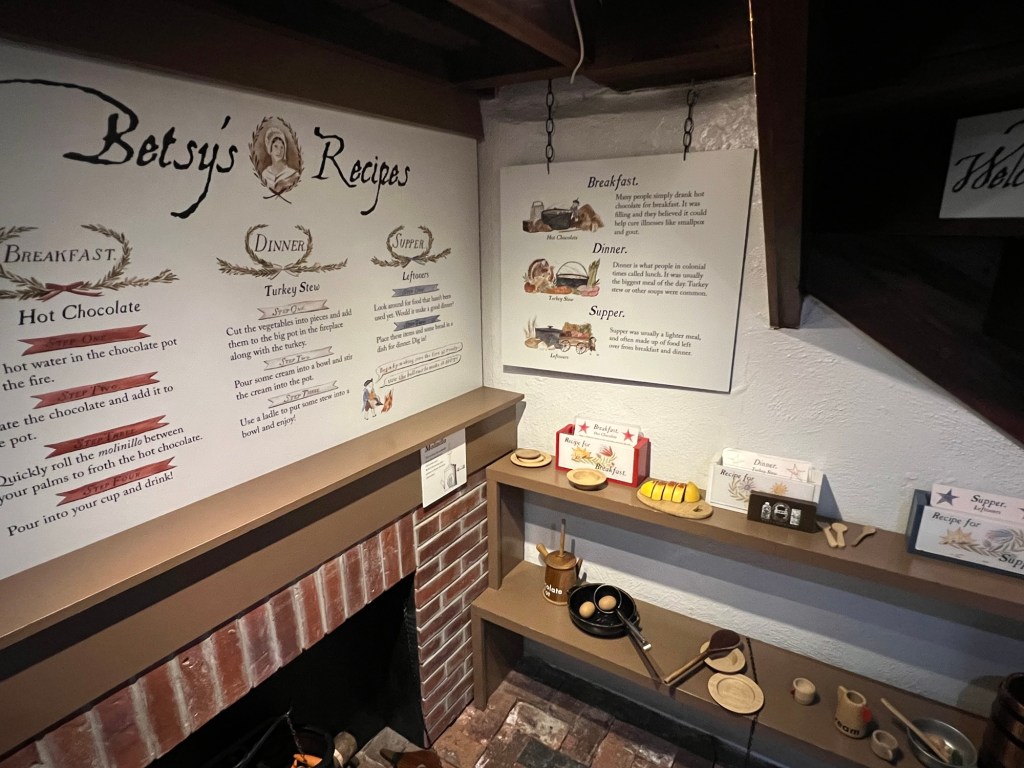
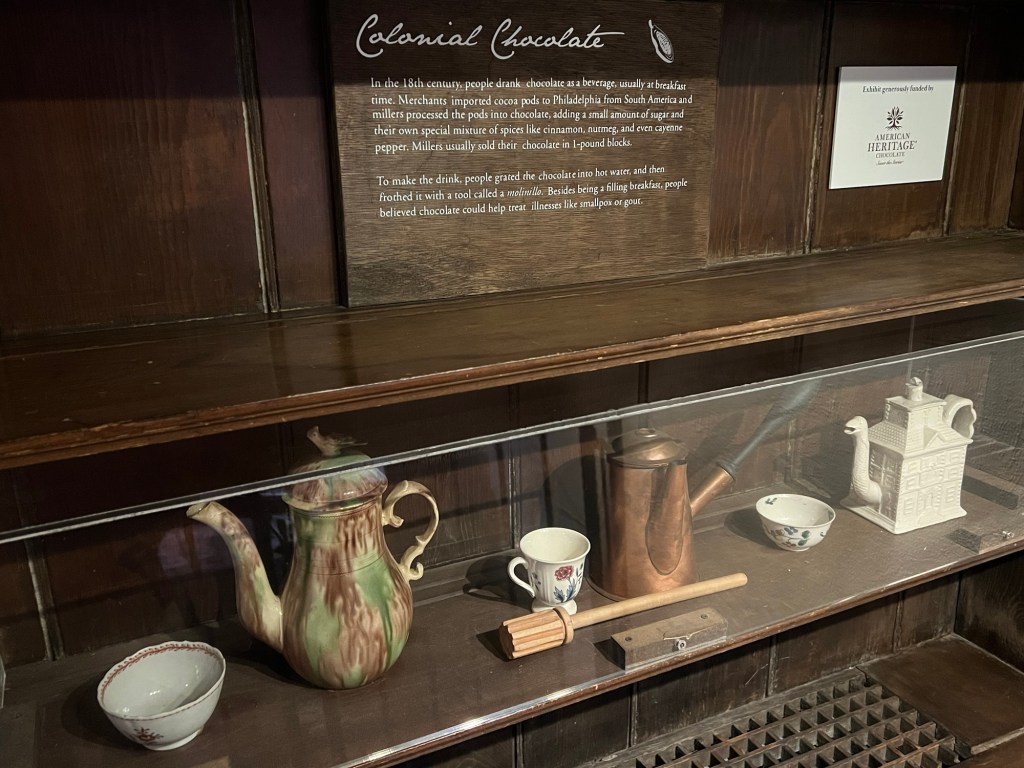
The kitchen area was for family cooking and was stocked with items that would have been in day to day process of preparing meals.

The Kitchen tour

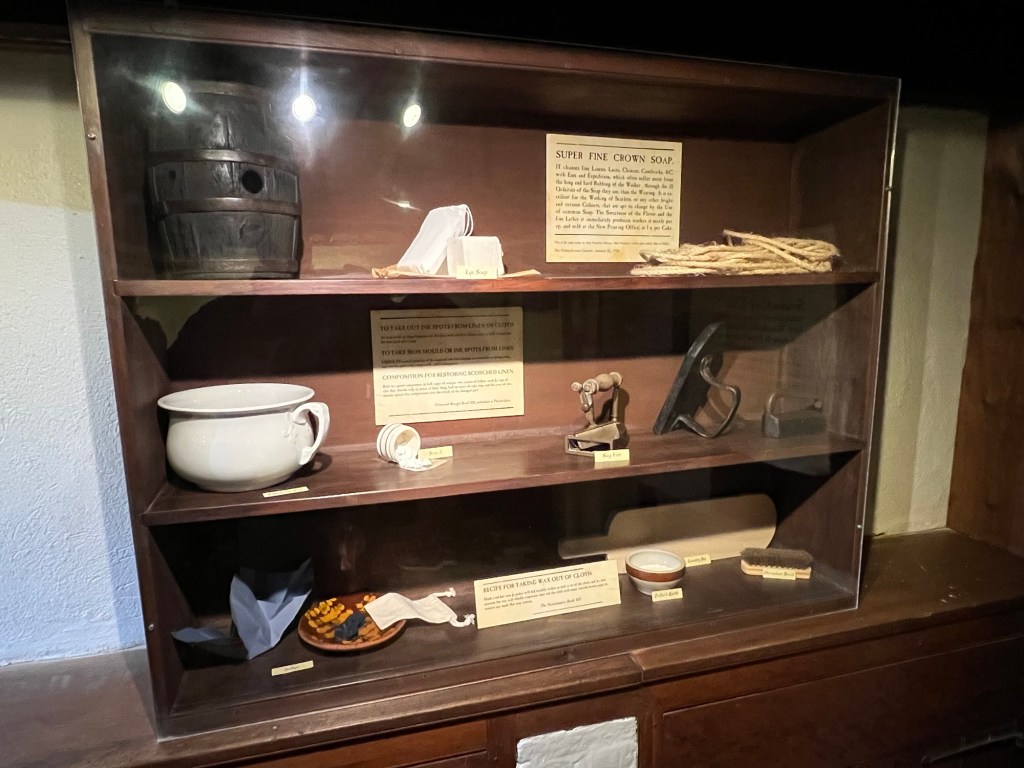
Kitchen and bath equipment

The job of a Laundress

The role of the household

Cooking in the household

Betsy Ross’s life in business

The kitchen equipment

The kitchen area of the house

By the late 19th century, most of the other colonial era buildings that once stood on this block of Arch Street, had been torn down and replaced with large industrial buildings and warehouses. Many people feared that Betsy’s home would meet the same fate.

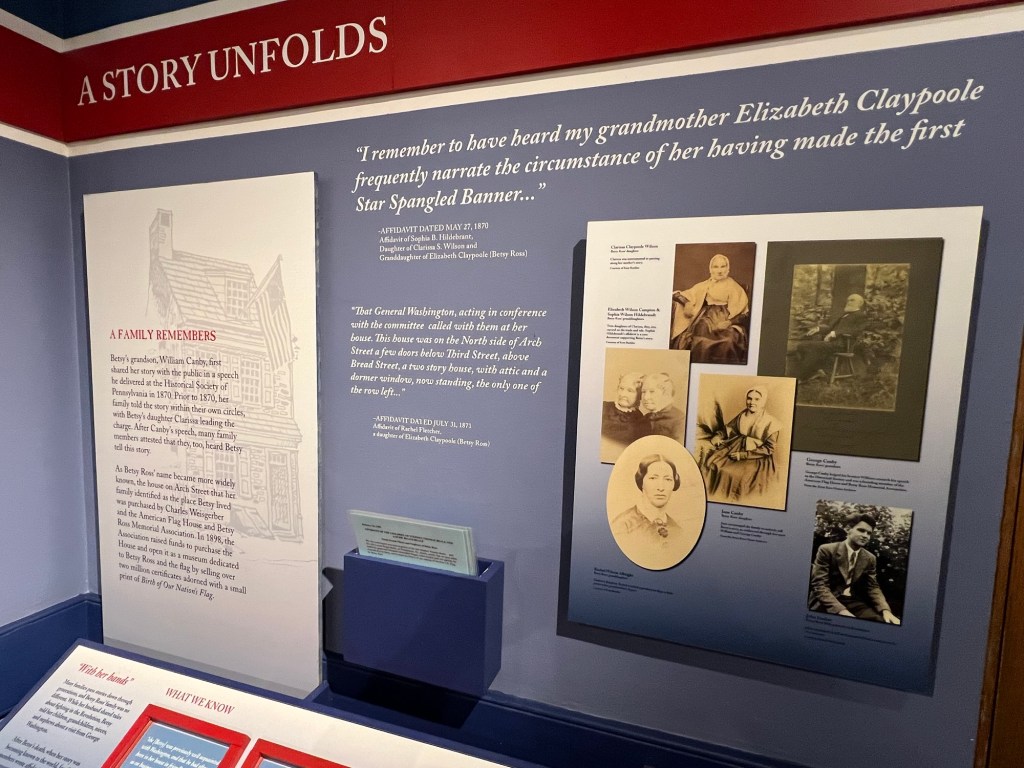
In 1898, a group of concerned citizens established the American Flag House and Betsy Ross Memorial Association to raise money to purchase the house from the Munds, the people who resided there, to restore it and open it as a public museum in honor of Betsy Ross and the first American Flag.

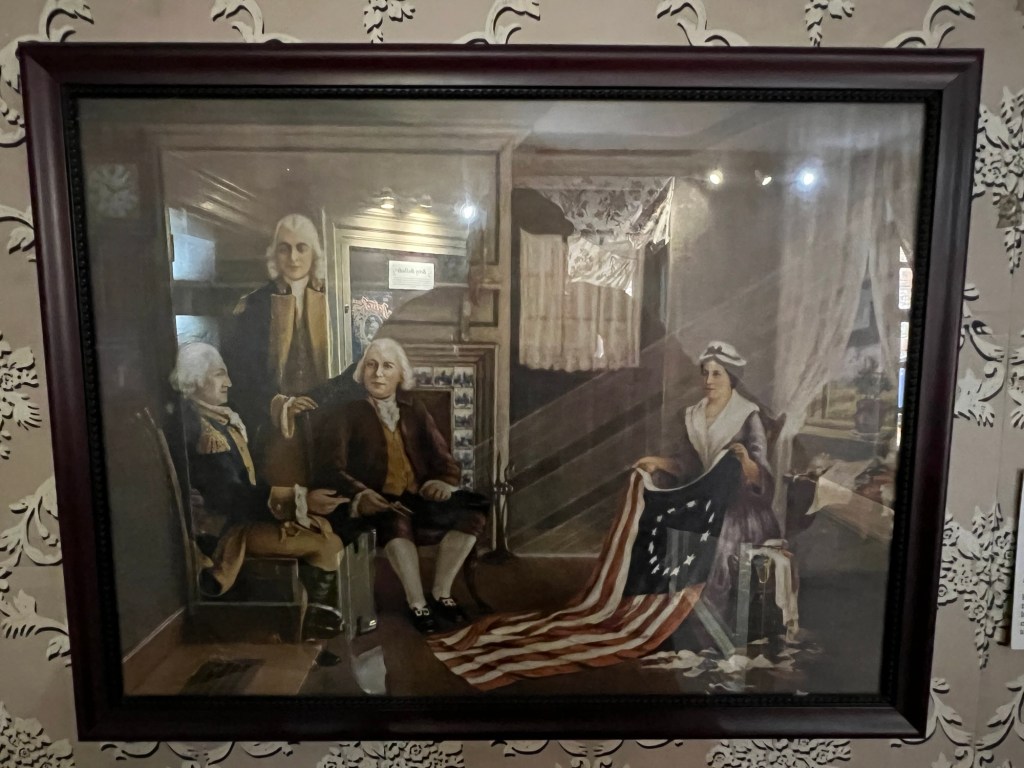
Charles Weisgerber was one of the founding members of the Memorial Association. In 1892, he painted Birth of Out Nation’s Flag, a 9′ x 12′ painting that depicts Betsy Ross presenting the first American flog to George Washington, Robert Morris and George Ross.

To raise money to purchase the house, members of the American Flag House and Betsy Ross Memorial Association sold lifetime memberships to the organization for 10 cents. Each donor received a membership certification imprinted with an image of Birth of Our Nation’s Flag. Individuals were encouraged to form ‘clubs’ of thirty members. The person who formed the club would receive a ten-color chromolithograph of the Weisgerber painting, suitable for framing, in addition to certificates for each club member.

Weisgerber moved his family into the upstairs floor of the home in 1898 and immediately opened two rooms to the public. The first floor front room was a souvenir shop and the room in the back of the house where the meeting between Betsy Ross and the Flag Committee was said to have occurred, was open for visitors to view.

The courtyard of the home when you leave the house

The grave of Betsy Ross

The historic marker outside the home

The Restoration of the Betsy Ross House:

The American Flag Hose and the Betsy Ross Memorial Association wanted to protect the house from fire and other dangers. They purchased the two properties on the west side of the house in 1929, in hopes of creating a civil garden. When the Great Depression hit, tourism and donations to the house slowed and much of the work on house and courtyard were delayed.

In 1937, structural changes and general wear and tear on the house led to the dire need for restoration work. A. Atwater Kent, a Philadelphia radio mogul, offered to pay up to $25,000 for the restoration of the house. Historical architect, Richardson Brognard Okie was commissioned to do the work.

Under Okie, the house’s original architectural elements were spared wherever possible. When the original components could not be reused, materials were obtained from demolished homes from the same period. A small structure containing a boiler room and a restroom was constructed in back of the original house with Revolutionary War era bricks.

In the historic house, three hidden fireplaces were uncovered, the front stairway and dormer were replaced and the door leading from the kitchen to the back of the house was restored. The most notable change, however, was to the front of the house. The doorway in the front of the building was moved from the western to the eastern corner and a new window was installed. Construction was completed and all eight rooms of the house were open to the public on Flag Day, June 14th, 1937.

By the 1940’s, the Betsy Ross House began to look like the place we recognize today but the Association’s work was not complete. A. Atwater Kent worked with the Association to pay off its final debts on the property. The entire property, including the historic house and courtyard was given to the City of Philadelphia in 1941.

In 1965, an annex building was added to the property and in 1974, the courtyard was renovated and the fountain was added. Two years later, the remains of Betsy Ross and her third husband, John Claypoole were moved from Mount Moriah Cemetery in Yeadon, PA to the garden on the west side of the Betsy Ross House courtyard.

In 1965, a private non-profit organization, Historic Philadelphia Inc. began leasing the property from the City of Philadelphia and continues to manage the site. The Betsy Ross House remains dedicated to its mission of preserving the historic site and interpreting the life of Betsy Ross, a working class, 18th Century tradeswoman. Visitors can view six period rooms, including the only interpretation of an 18th century upholstery shop in the country. The rooms are furnished with period antiques, 18th century reproductions and objects that belonged to Betsy Ross and her family. Highlights of the collection include Betsy Ross’s walnut chest on chest, her Chippendale chair, her eyeglasses and her bible.

(Betsy Ross House Museum website/Wiki/Pamphlet)

The historic district of ‘Old Town’

Firemen’s Hall Museum                                                           147 North Second Street                                            Philadelphia, PA 19106

Firemen’s Hall Museum 147 North Second Street Philadelphia, PA 19106

Firemen’s Hall Museum

147 North Second Street

Philadelphia, PA 19106

(215) 923-1438

https://www.facebook.com/firemanshall/

Open: Sunday & Monday Closed/Tuesday-Saturday 10:00am-4:00pm

Admission: Free but donations are appreciated

My review on TripAdvisor:

https://www.tripadvisor.com/ShowUserReviews-g60795-d146195-r793538286-Fireman_s_Hall-Philadelphia_Pennsylvania.html?m=19905

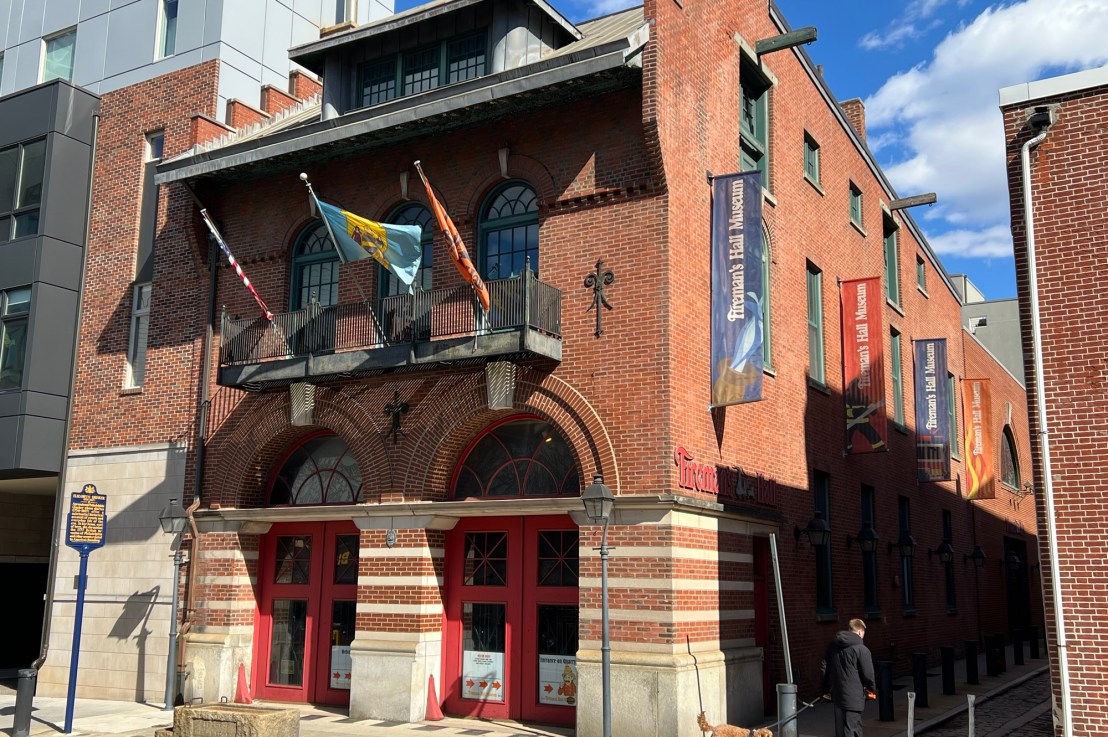
Firemen’s Hall at 146 North Second Street

When touring around Old Town Philadelphia, I came across the Fireman’s Hall Museum dedicated to the Philadelphia Fire Department and its history and place in the City of Philadelphia. What I found interesting about the museum is the detail that the museum has on the history of fire fighting not just in the City of Philadelphia but in the United States. The City of Philadelphia is the birthplace of the volunteer fire company and where Benjamin Franklin started the first fire company.

The entrance

You can see the development of the fire service from the early bucket brigades where neighbors helped neighbors by keeping buckets of water in front of their houses in case of a fire. You can see the actual buckets that were used as well as the early fire markers that were attached to homes to recognize who was covered by fire insurance and where the fire fighters would go when a fire broke out.

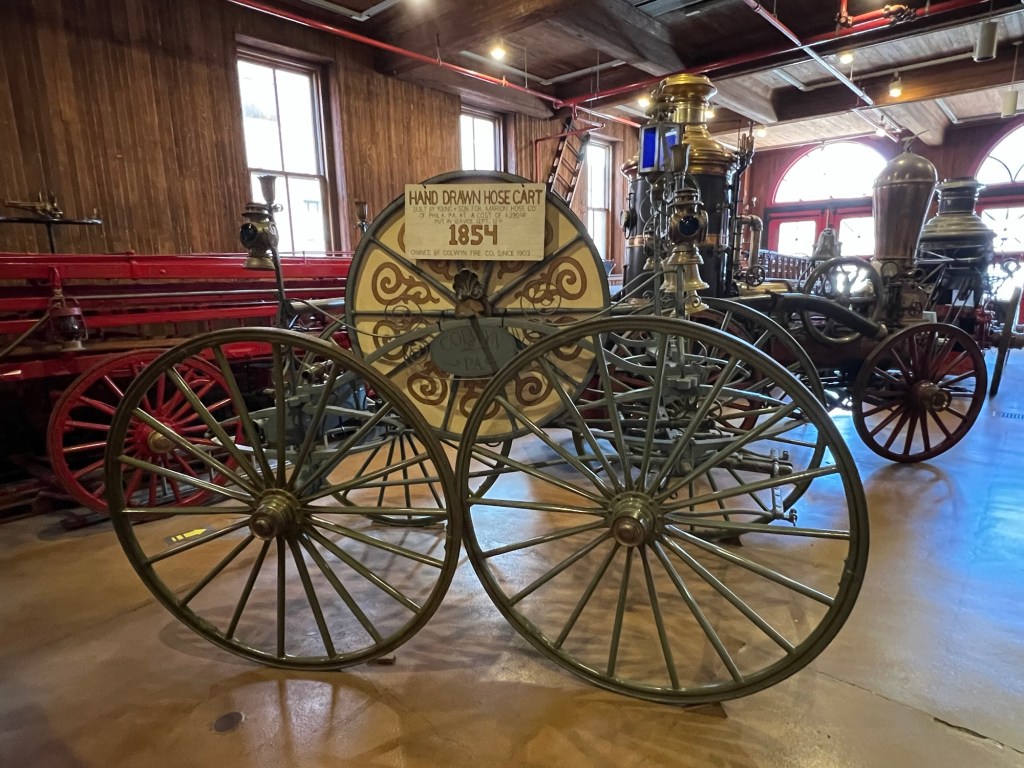
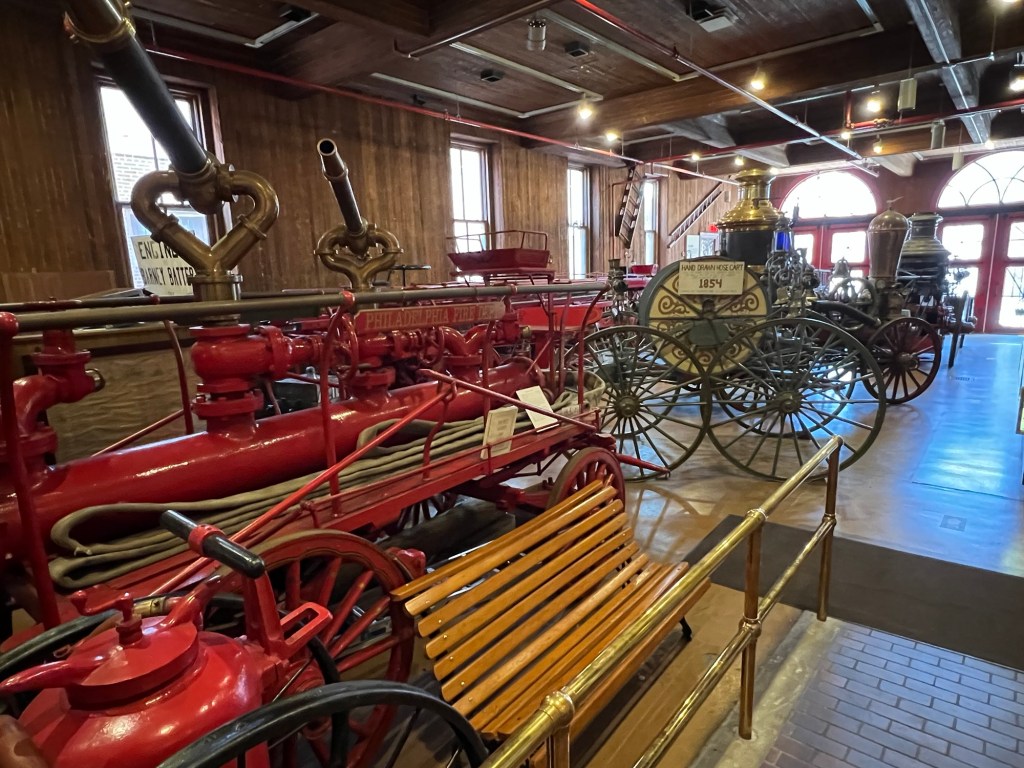
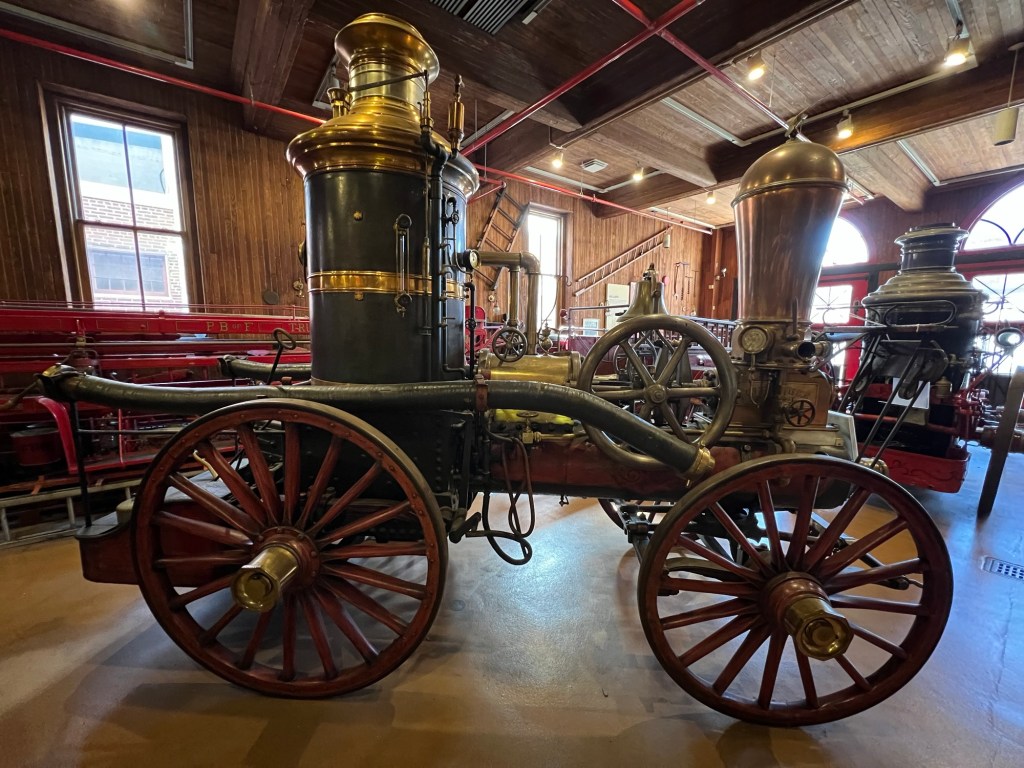
Walking through the fire house downstairs, you can see how the fire equipment developed from the early horse drawn pumpers and ladder carts, to the decorative hose beds, to the early steam engines to the turn of the last century beginnings of the motorized cars.
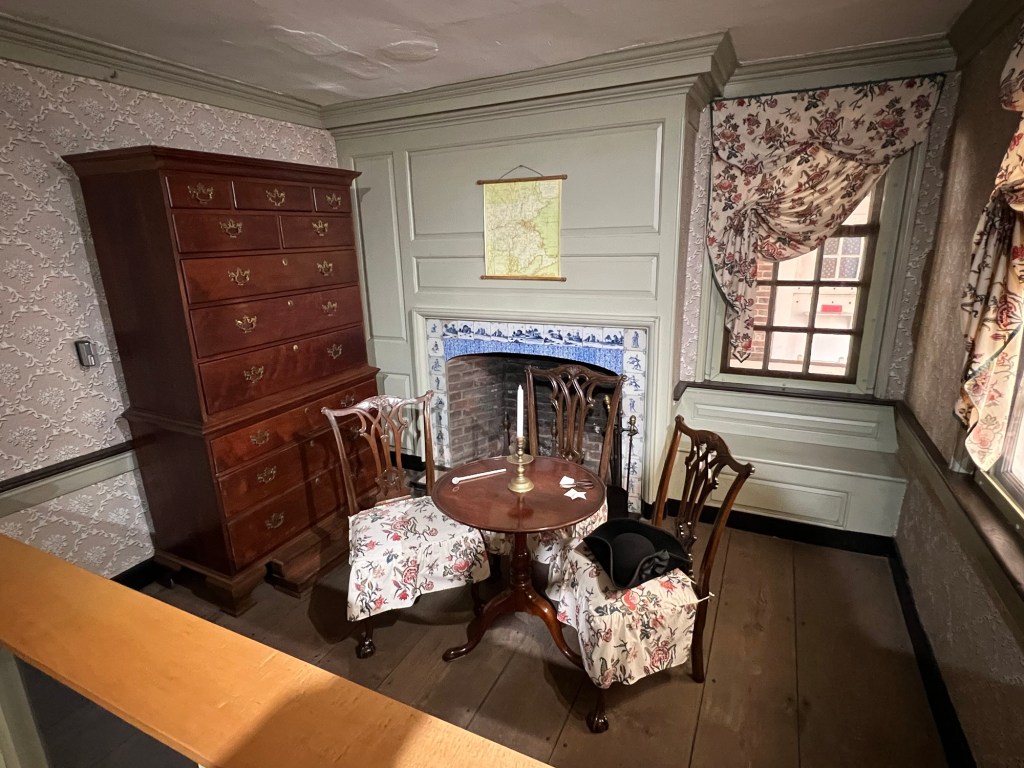
The advancement of the steam equipment in the fire service

Information on the Firemen’s Hall Museum:

The Firemen’s Hall Museum presents and preserves the history of firefighting in Philadelphia, paying tribute to its firefighters, both paid and volunteer through the museum’s exhibits, public programs and award ceremonies:

*Play our ‘when to call 9-1-1’ game.

*Inspect the first-class collection of hand drawn, horse drawn and motorized apparatus.

*Take the opportunity to ‘steer’ a fireboat.

*View models of early equipment, hand tools, fire markers and other firefighting memorabilia.
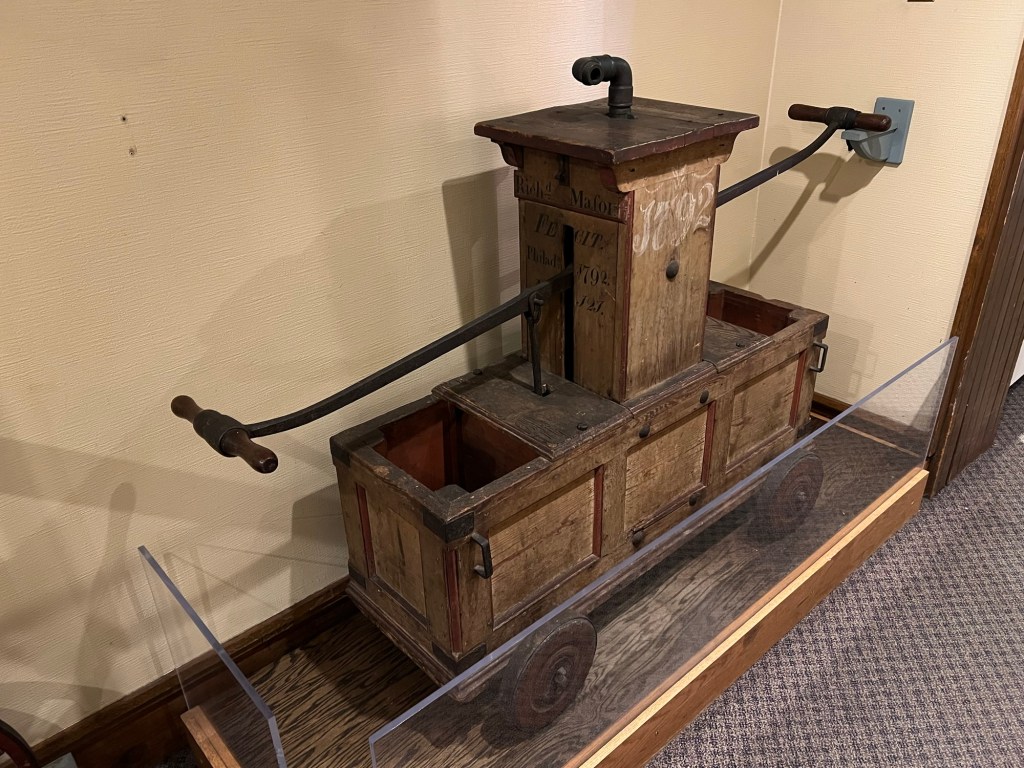
*Reflect upon our memorial exhibits.

*Hear discussion on the former segregation of the Philadelphia Fire Department and its history.

*See the 9/11 display

The museum occupies a restored fire house built in 1902 and contains one of the premier collections of fire apparatus, firefighting tools, uniforms, photographs, prints and fire masks. The museum interprets the history of firefighting in Philadelphia through its collections. Explore 18th century hand drawn engines, 19th century horse drawn steamers and motorized apparatus of the 20th century.

The decorative hose beds that were used for parades

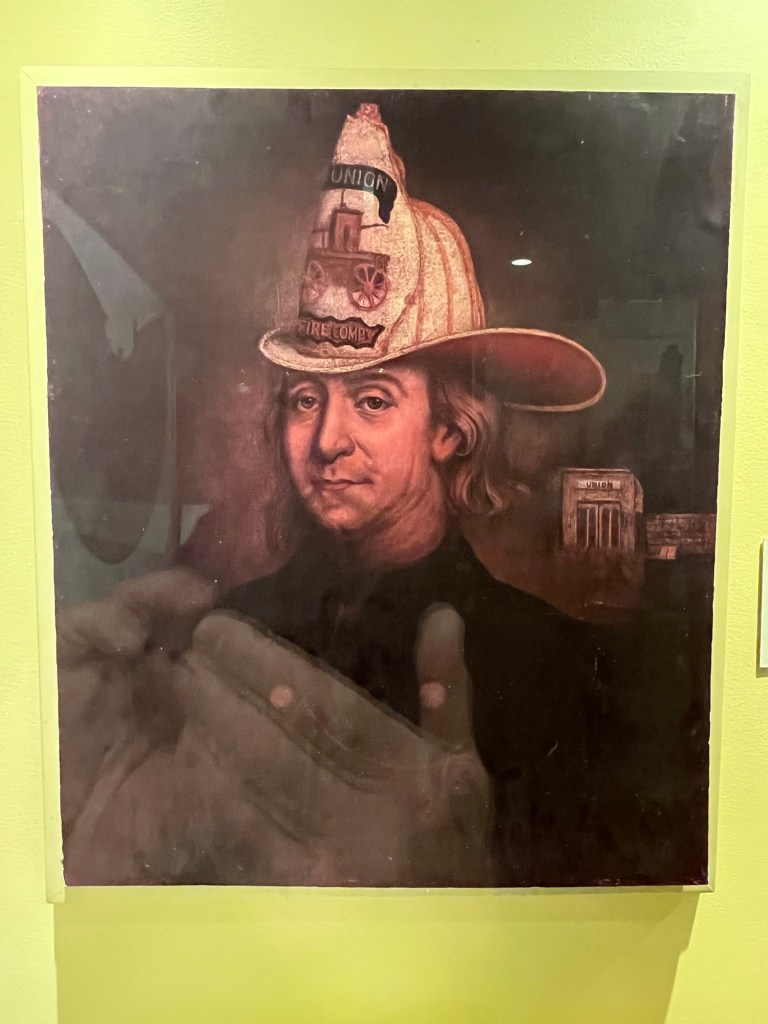
Philadelphia is the birthplace of the first volunteer fire companies in the United States and Patriot Benjamin Franklin founded the first volunteer fire company, The Union Fire Company in 1736.

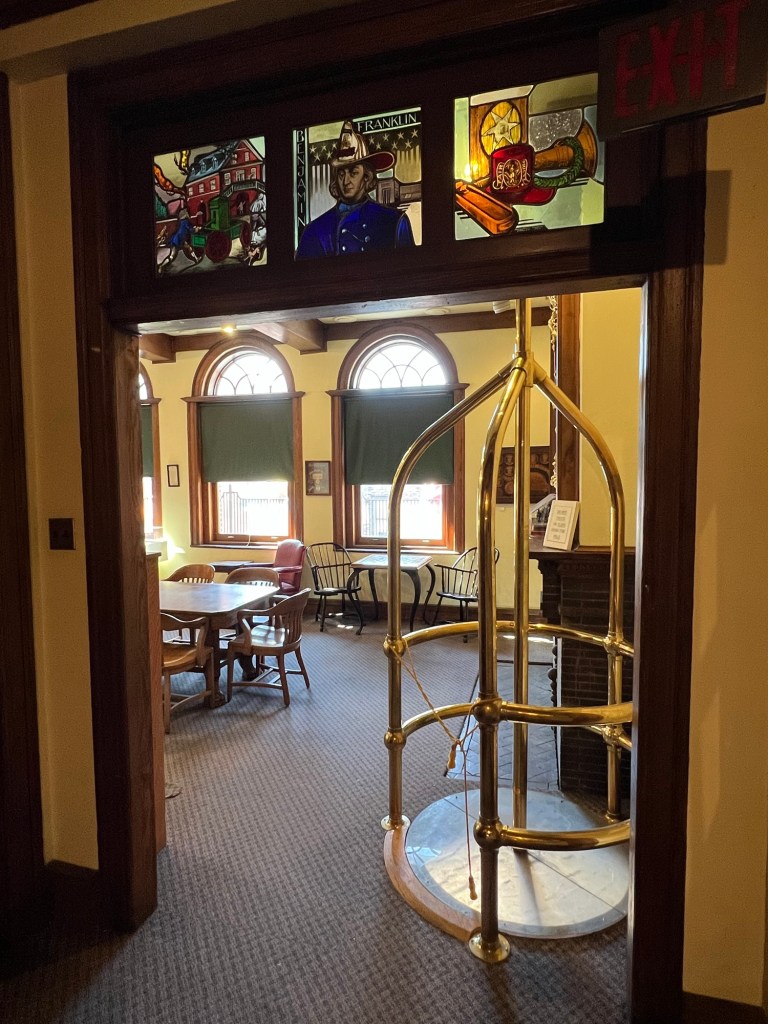
Firefighter Benjamin Franklin

The second floor gallery

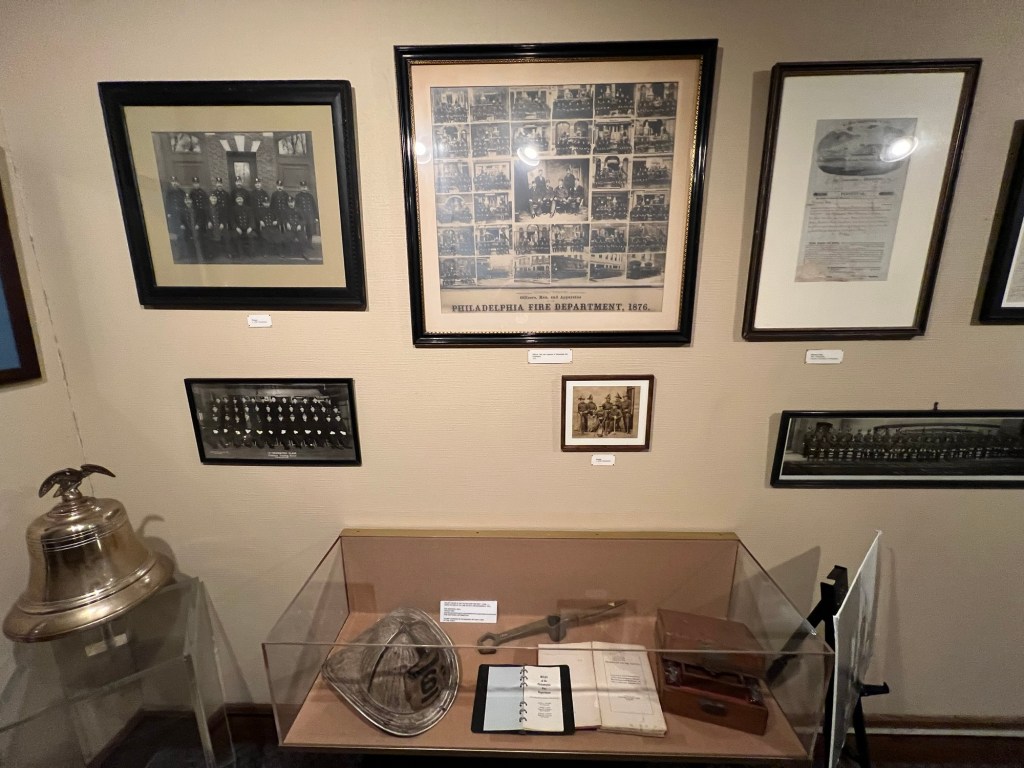
The second floor displays old equipment, the development of bunker gear and the helmets and the advancement of fire fighting equipment from the fire ax to the halogen tool. There are all sorts of fire markers from the history of the old fire insurance companies, a recreation of a fire chief’s office and pictures of old fires and how they were fought around the City of Philadelphia.

The historical marker to the fire house where the museum is located

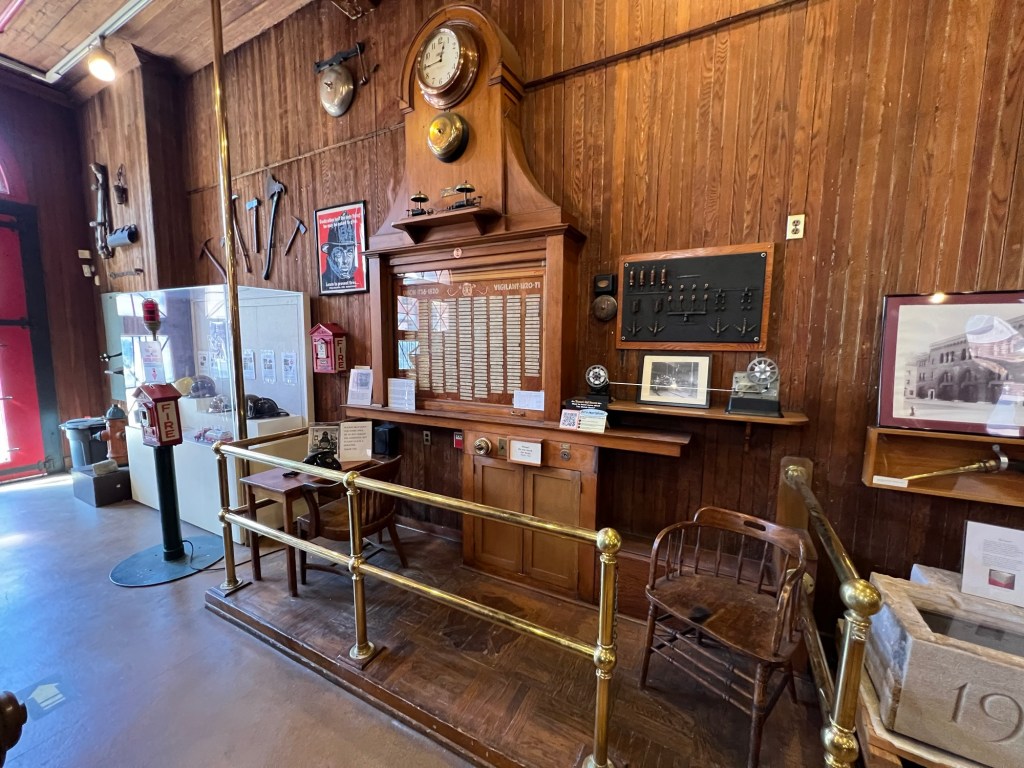
Firefighting artifacts as you enter the second floor

The second floor gallery

The second floor gallery

The Firefighter stained glass window

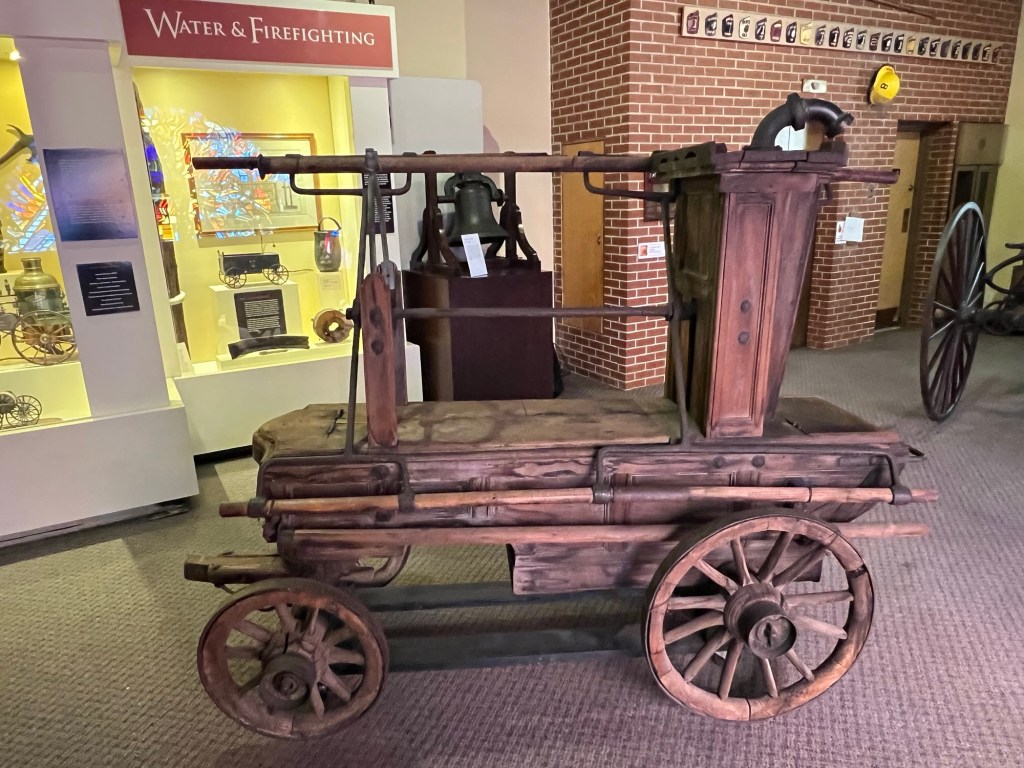
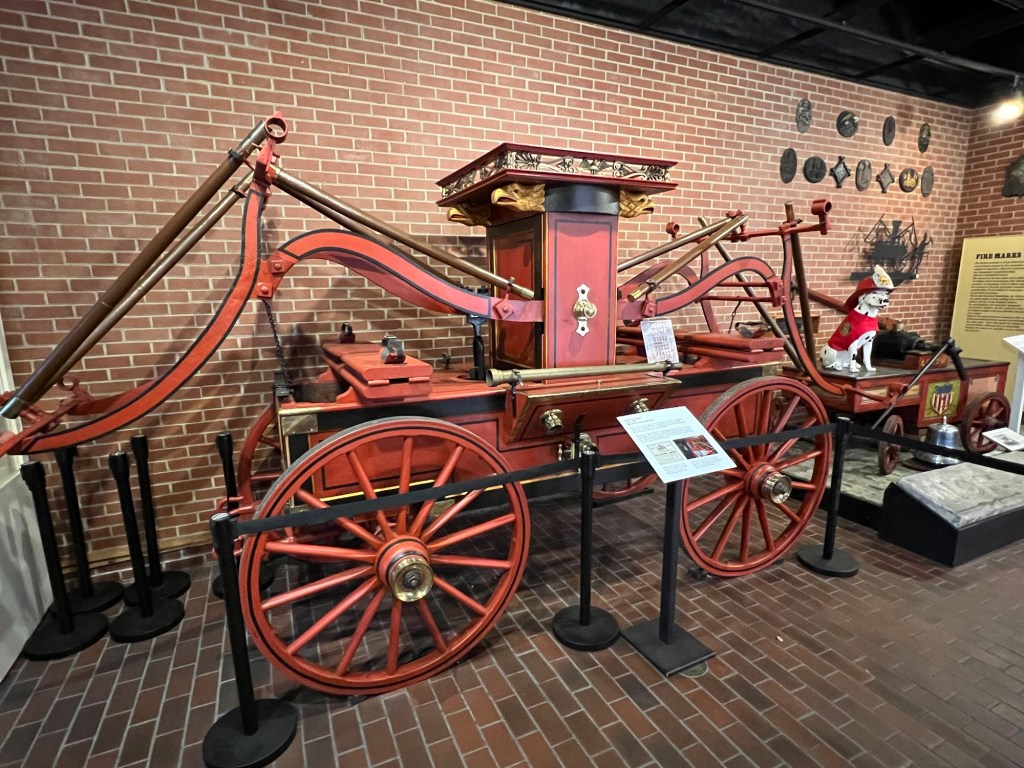
The old fashioned pumper

Old fashioned hose bed

Good Will Firehouse marker

Firehouse bell

Water equipment

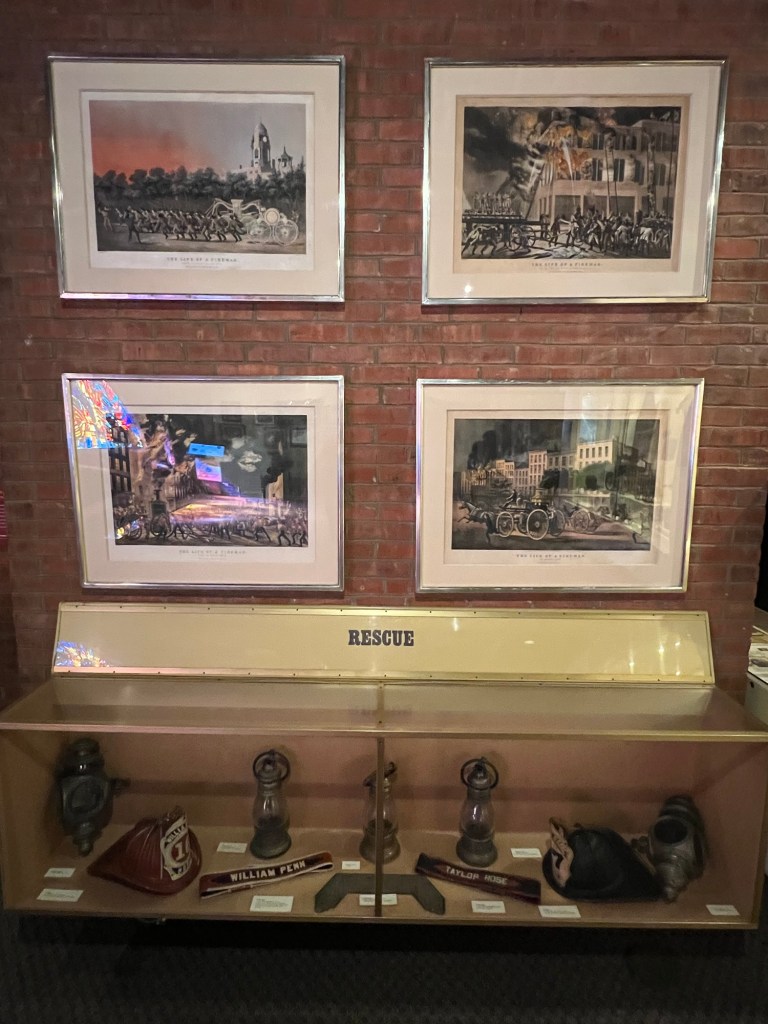
Rescue equipment

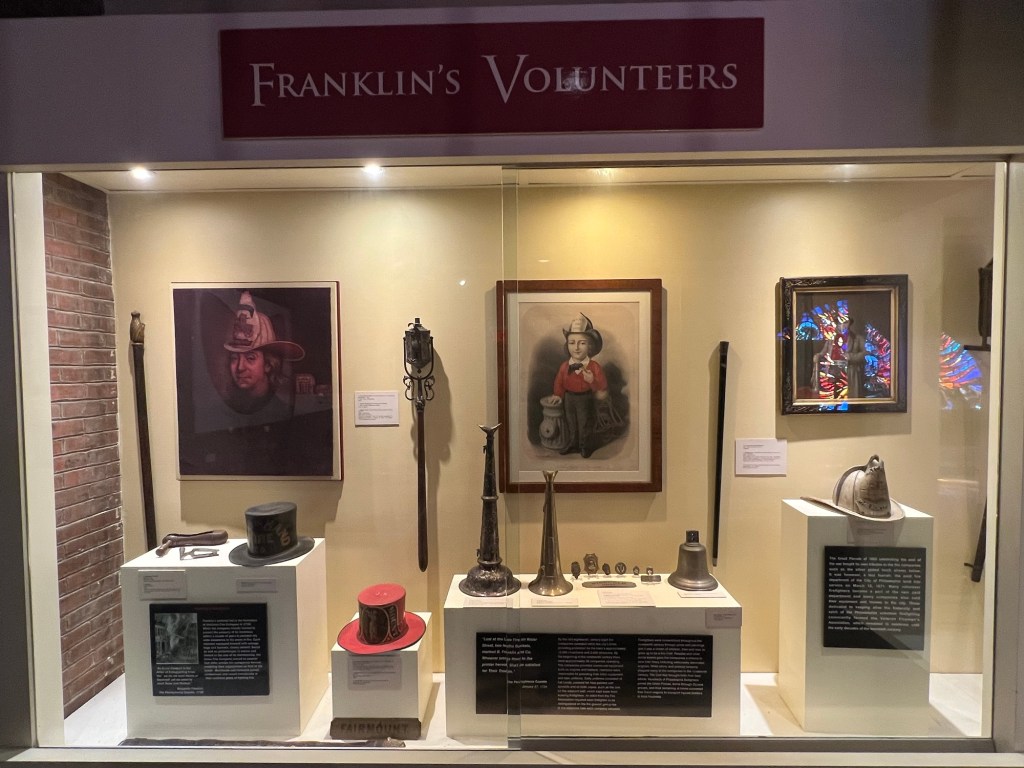
Benjamin Franklin Fire Department history

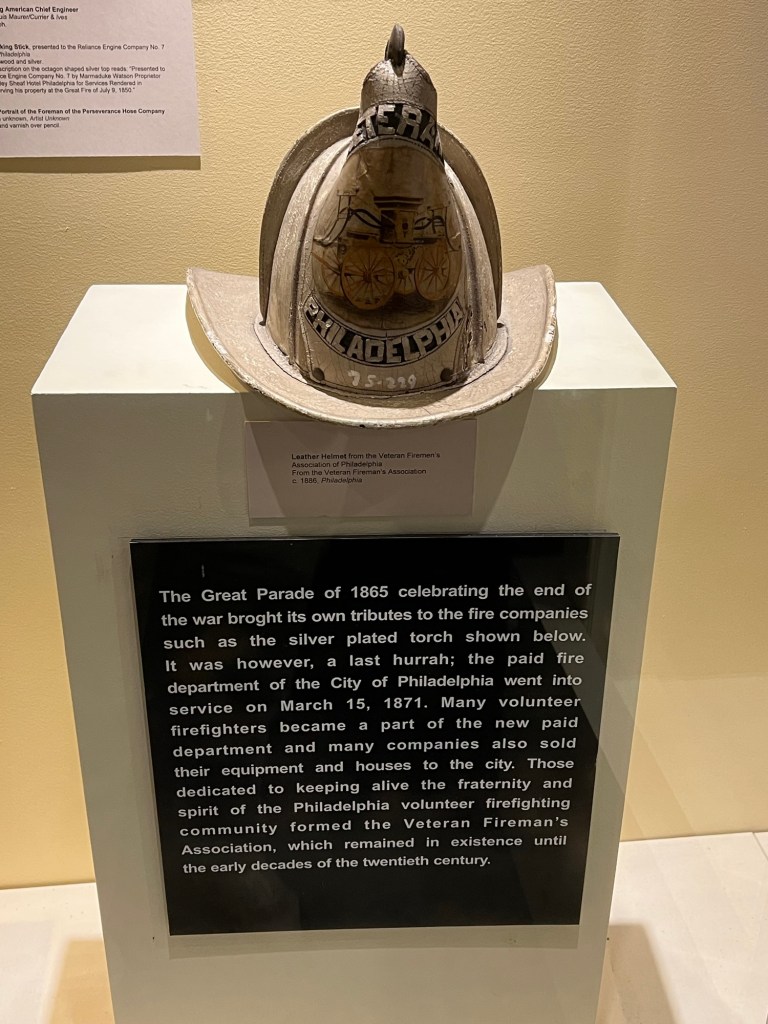
Memories of the Great Parade

The artifacts of the ‘Great Parade’

The ‘Tale of Three Cities’ parade

Old fashioned Hand Engine

The sign for the Hand Engine

Fire Medallions for the home and business

Fire Medallions

Flat A

Flat A sign

Chief Office display

The second floor meeting rooms and sleeping quarters

Chief’s Office artifacts

Chief’s office display

Water Rescue display

The history of famous fires in Philadelphia

The patch board of all the Philadelphia companies

Old fashioned Pumper on the main level

The museum is also manned by members of the Philadelphia Fire Department and many members visit the museum when they are off duty to explain things and talk about the fire service in the City.

The museum is free to tour but donations are accepted and needed to maintain this wonderful museum that supports the City of Philadelphia’s fire service.

The equipment floor display

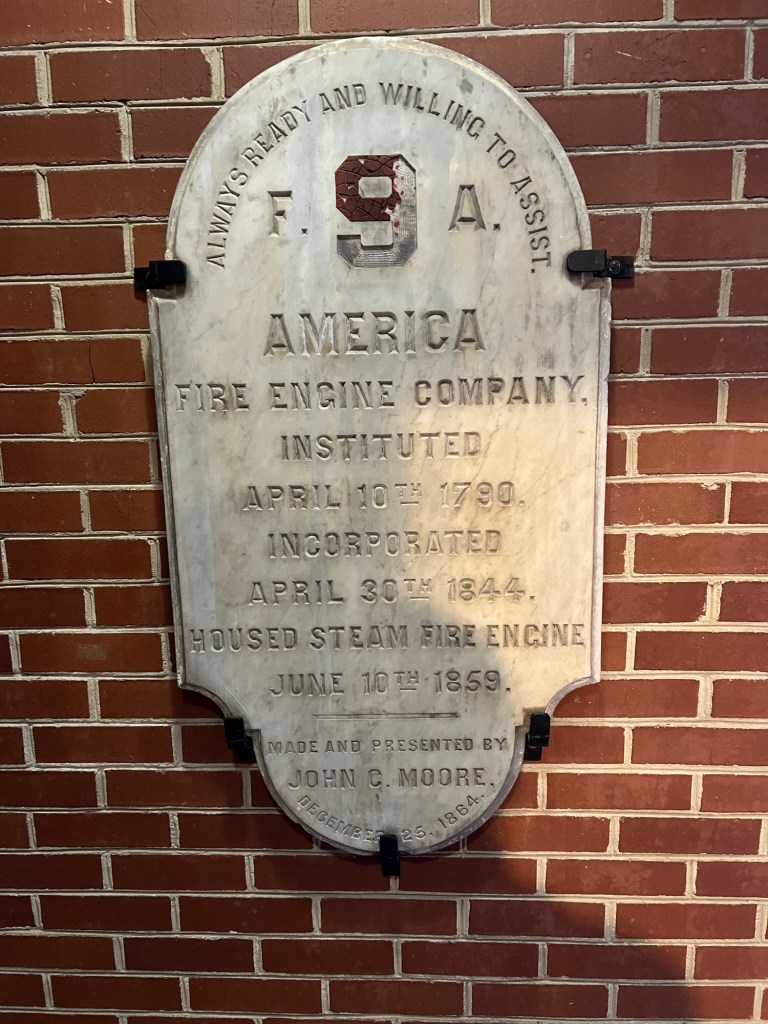
The history of Engine 9 firehouse which is now the museum

Parade equipment Hose Bed

Antique steam engine

The antique equipment on the first floor

The Pumpers, Engines and Hose Beds

The firehouse alarm board

The fire bell at the museum

The Gift Shop:

They also have a great gift shop where all sorts of patches from the different fire companies are sold and other sorts of fire department items.

The gift shop at the entrance of the museum

The outside of the museum when I left that afternoon

Through interactive and hands on exhibits, the Fireman’s Hall Museum educates and promotes sound fire prevention practices.

(Fireman’s Hall Museum pamphlet)