Category: Historic Homes of New Jersey

Ferromonte Historical Society of Mine Hill-Bridget Smith House                                           124 Randolph Avenue                                              Mine Hill, NJ 07803

Ferromonte Historical Society of Mine Hill-Bridget Smith House 124 Randolph Avenue Mine Hill, NJ 07803

Ferromonte Historical Society of Mine Hill-Bridgit Smith House

124 Randolph Avenue

Mine Hill, NJ 07803

(973) 989-7095

http://ferromonte.org/

Open: Sunday-Friday Closed/Saturday-Select Saturdays during the Spring and Summer Season-See website

Admission: Free but donations are accepted

My review on TripAdvisor:

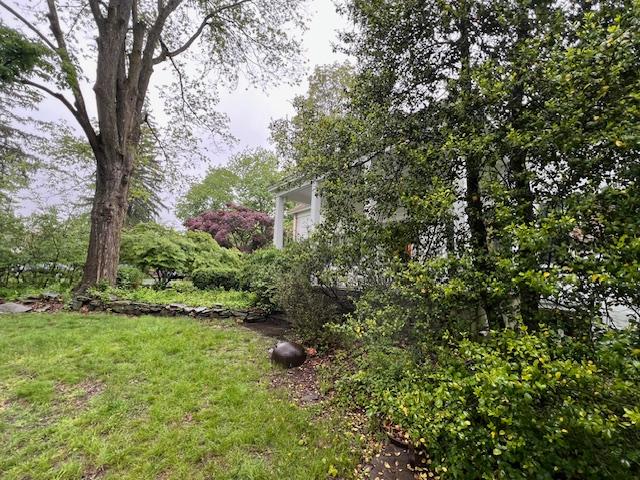
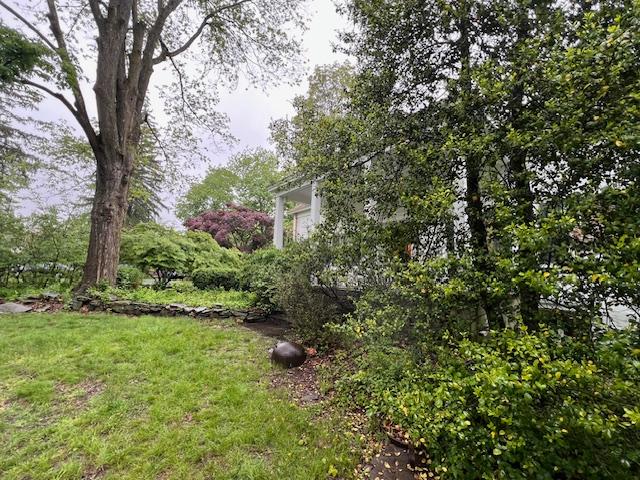
The Bridget Smith House from the road

I went to visit the Bridget Smith Homestead Museum run by the local historical society and the house was an interesting step back into time when mines were located all over this region. The original house itself was built around 1855 as housing for people working in the mines and the house was bought by the namesake woman in 1879, when as a widow she moved in with her children. When she died in 1907, the house was rented to Ida and Jesse Mc Connell and Ida ended up living here for 78 years before she died in 1993 at 103. After she passed, descendants from the Smith family donated the home to the town as a historical site (Bridget Smith Home Historical website).

The Bridget Smith House

The house is an early example of mining life in the area. It was practical and cost effective to families. Being a two story/two home structure, the main two rooms were on the first floor with a heating unit on the bottom and a large room on the second floor for sleeping. My tour guide told me at one time, one family lived in one of the sides of the house with six kids. I am not sure how that all worked out.
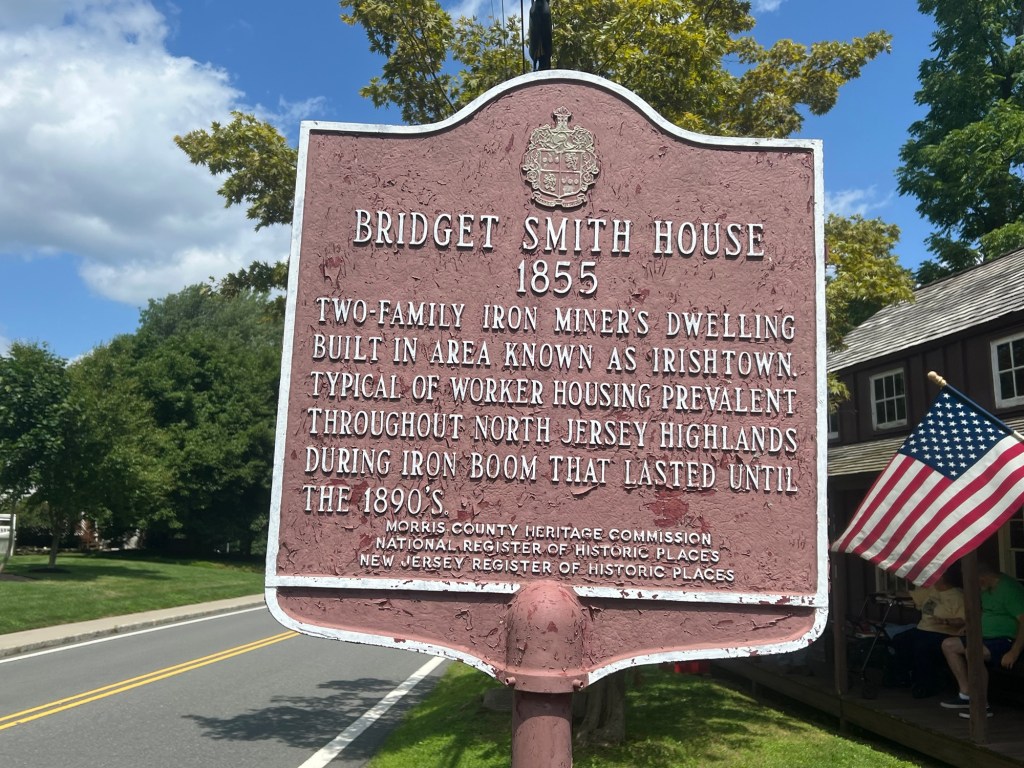
The historic sign on the property

History of the area:

From the late 1700‘s to the late 1800‘s, New Jersey was one of the major iron producers in America. The northwestern part of the state, known as the “highlands” was an important iron mining area. In the 1840‘s Irish settlers came to America for work. On August 10 1854, an Irish settler named Thomas Malona (later spelled Maloney) purchased a 30×150 lot in the “Irishtown” section of Mine Hill and built a house on it (Bridget Smith House website).

The information sign that welcomes you

Little changes have been made to the structure since the mid 1800‘s. Electricity was added in the 1940‘s and running water was added in the 1980‘s. In 1993 the great grand-children gave the house to Mine Hill for $1 to be preserved as the “Bridget Smith Homestead”. Restoration began soon afterward and work continues to this day (Bridget Smith House website).

The Dickerson family of the Dickerson Mines
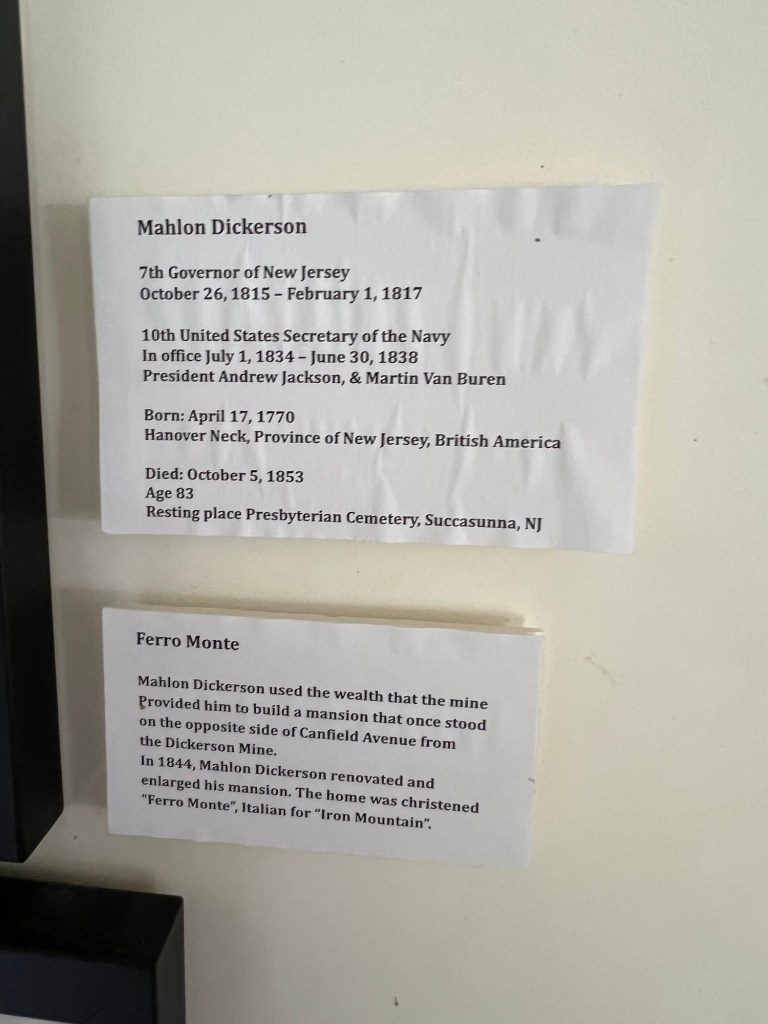
The sign on the Dickerson family

The grave of Mahlon Dickerson in the Orchard Street Cemetery
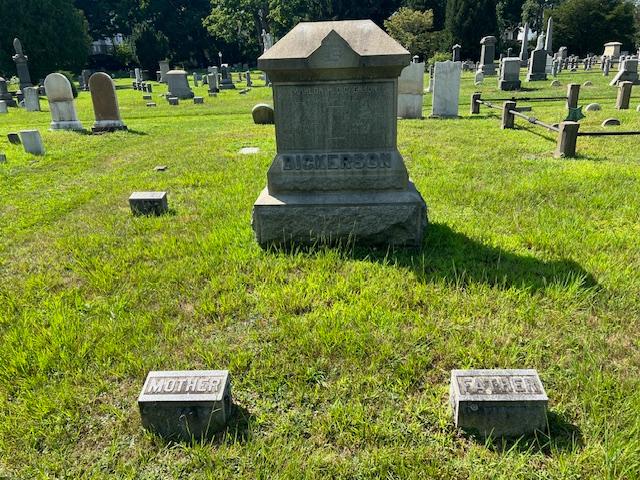
The Dickerson Family plot at the cemetery

The history of the mines in the area

This area of New Jersey was and still is rich in ore and the amount of mines in the area made this a vibrant area for industry. When it was not longer cost effective or the mines ran out of ore that could be reached, the mine was sealed off. As the industry wore off so did the area and people moved on.
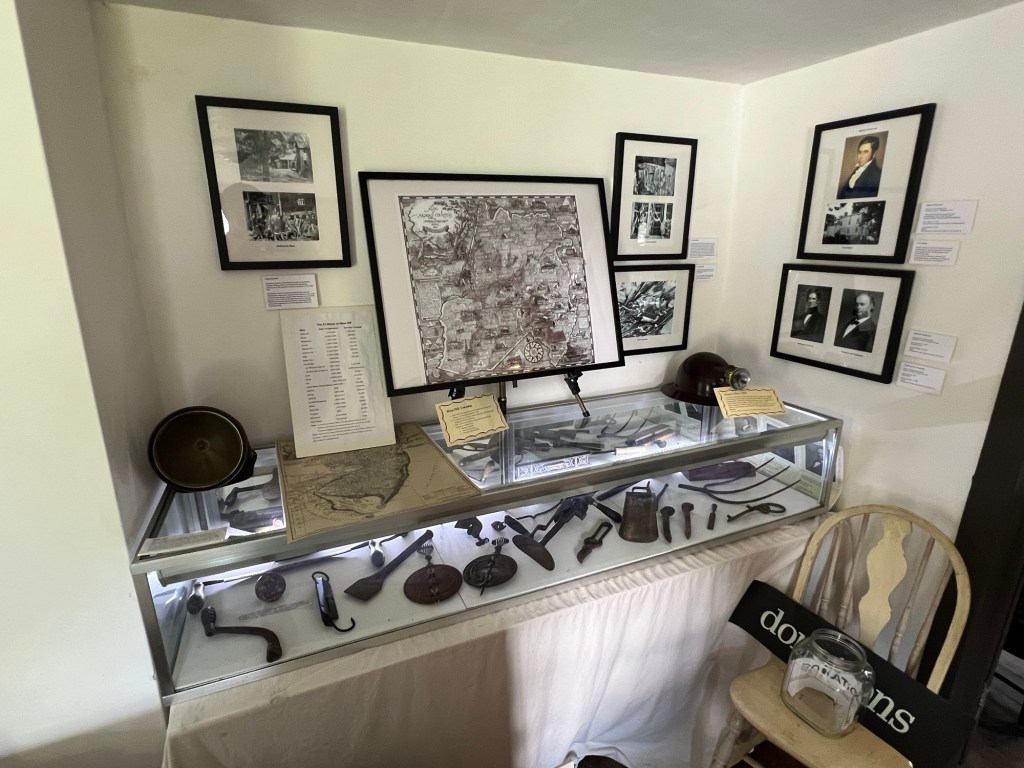
Mining and work equipment

Items inside the house and office and some iron ore samples

Miner’s lamp-examples of mining equipment
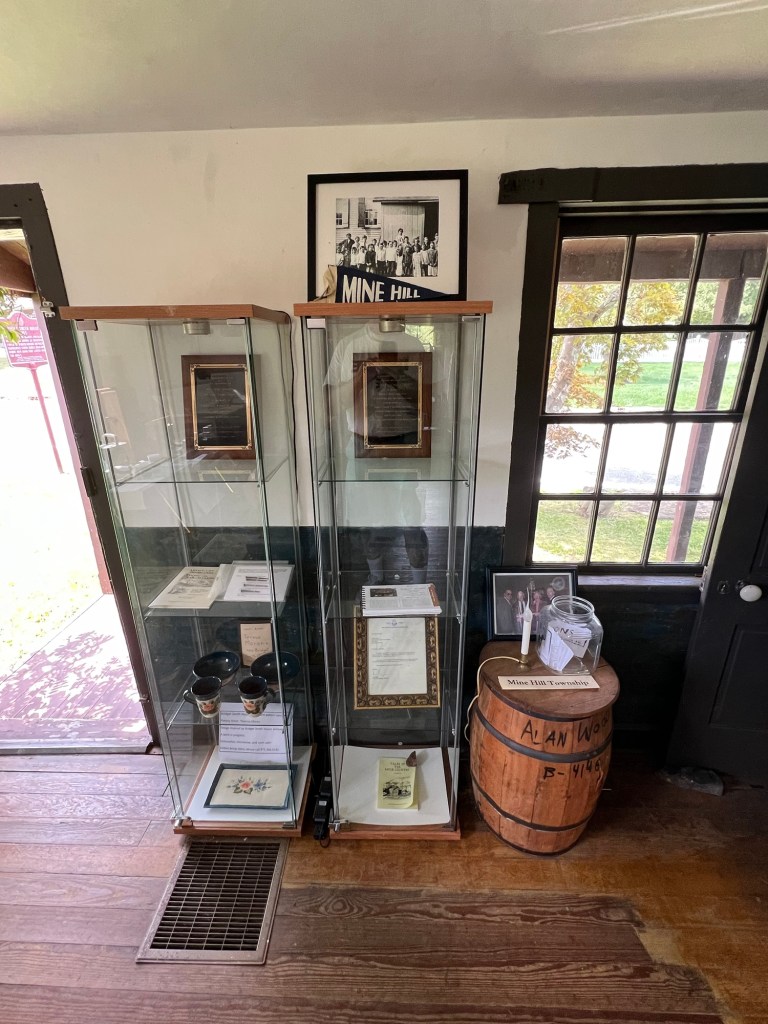
Paperwork and accolades
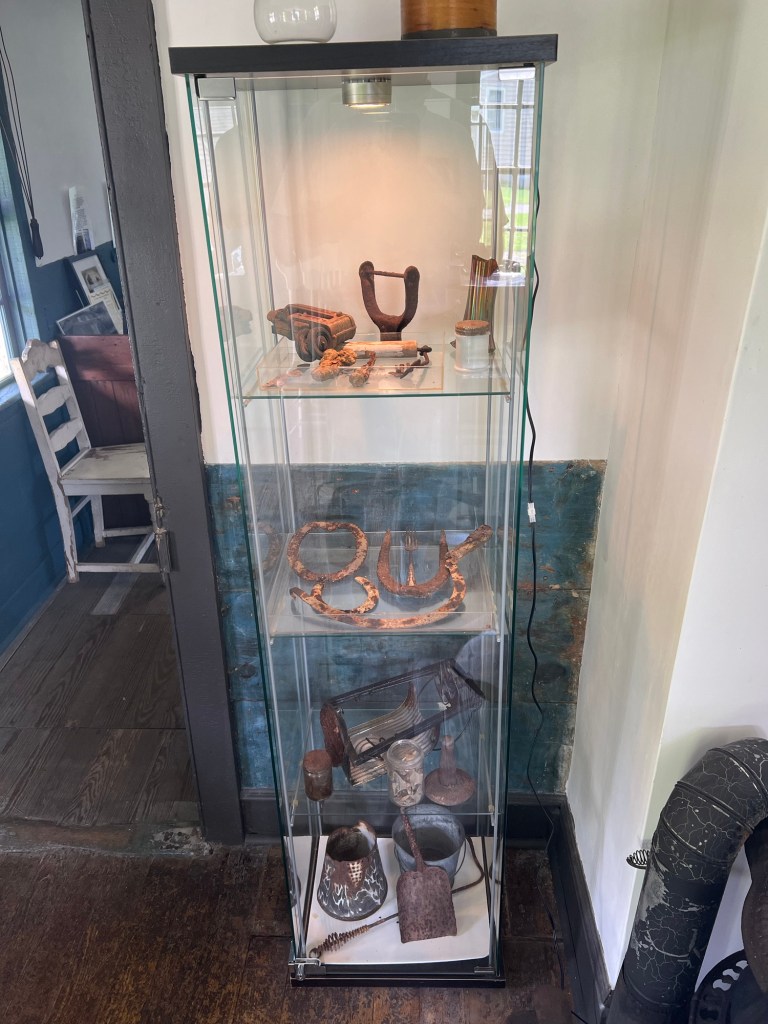
Use of horses and donkeys at the mines
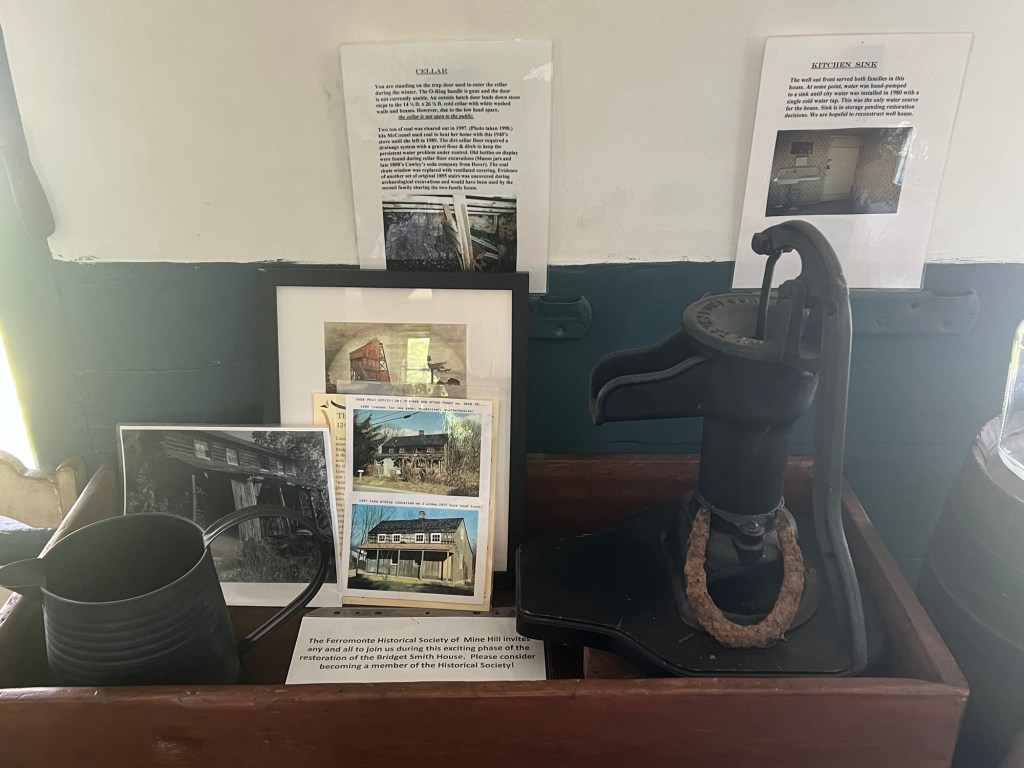
The original view of the house and its renovation as a museum
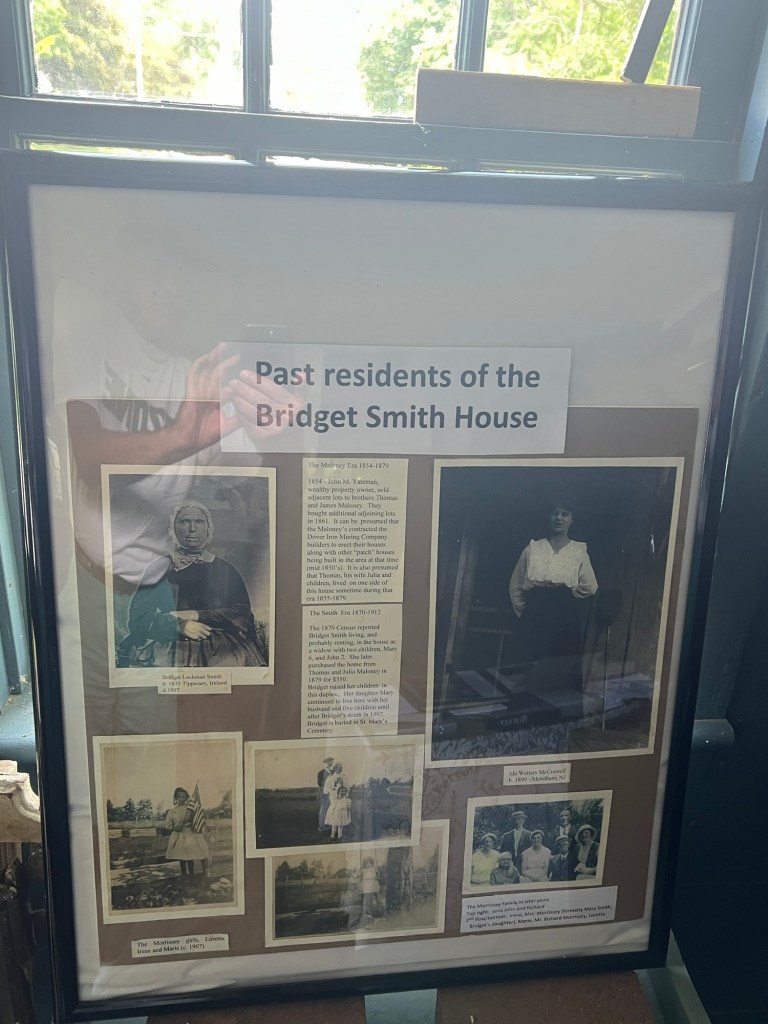
The former residents of the house and their stories

In 1879 the house was sold for $300 to Bridget Smith (1835-1907) a young widow with two children. Smith and her late husband John, who was killed in the mines, lived in Mine Hill since 1860. Bridget Smith lived in the house until her death in 1907. In 1912, the house was rented to a young couple, Jessie and Ida McConnell. Ida McConnell lived in the house for the next 78 years. She died in the late 1990’s at the age of 103 (Bridget Smith House website).

The back room on the other side of the house

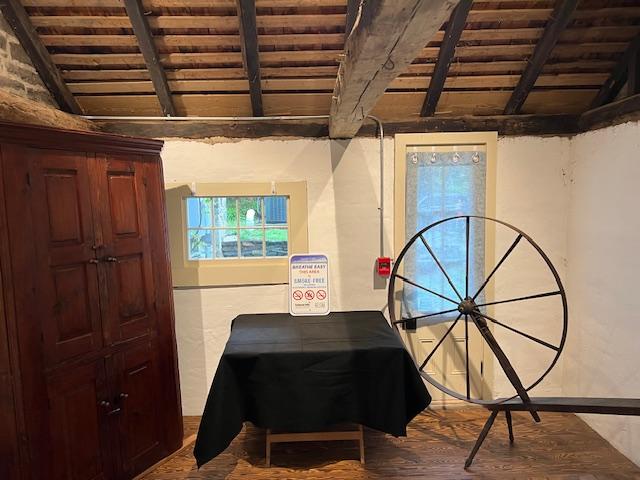
Some of the equipment to make cloth

Family life at the house
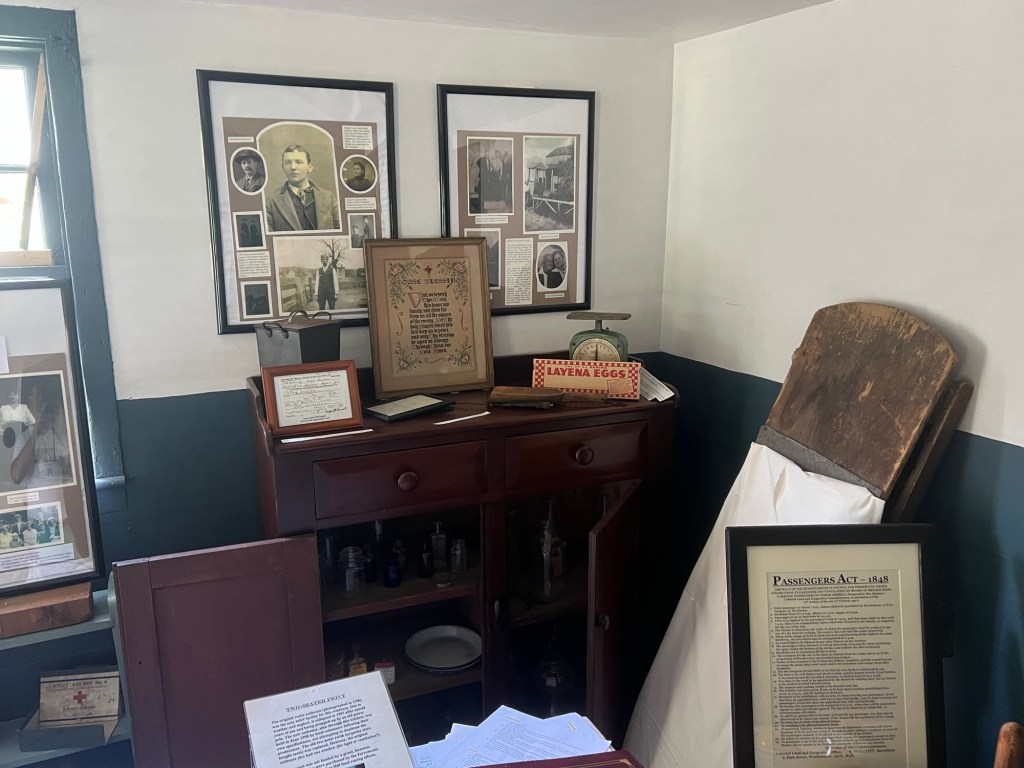
Family items
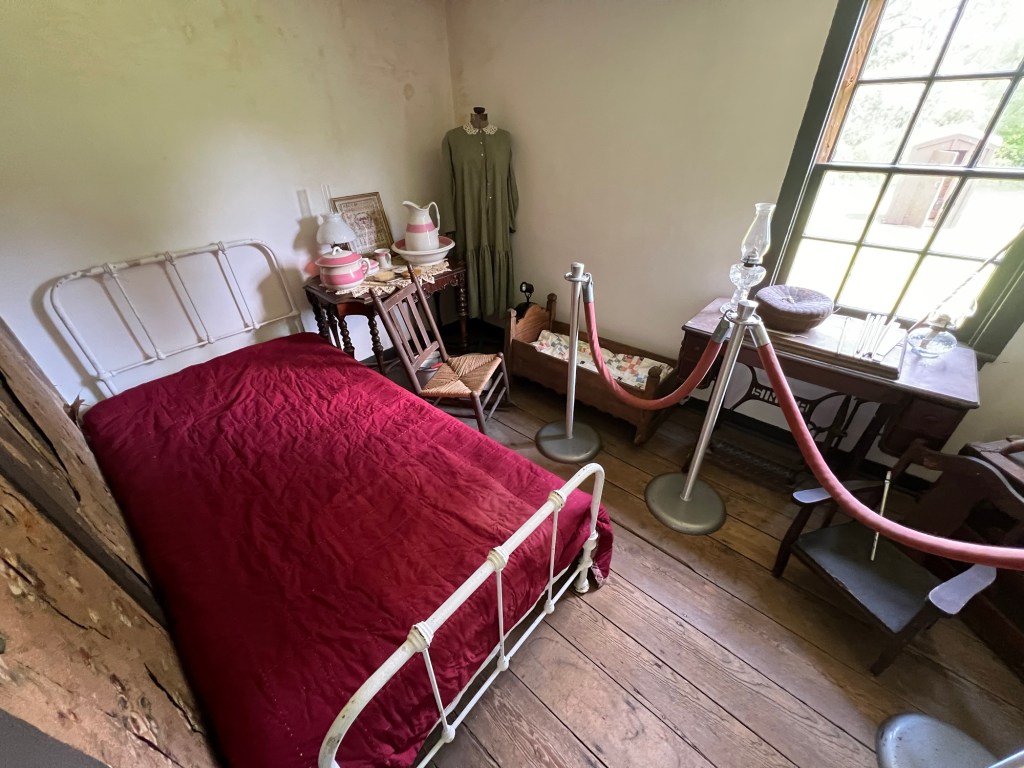
An example of a miner’s bedroom

The backyard of the Bridget Smith house with the outhouse
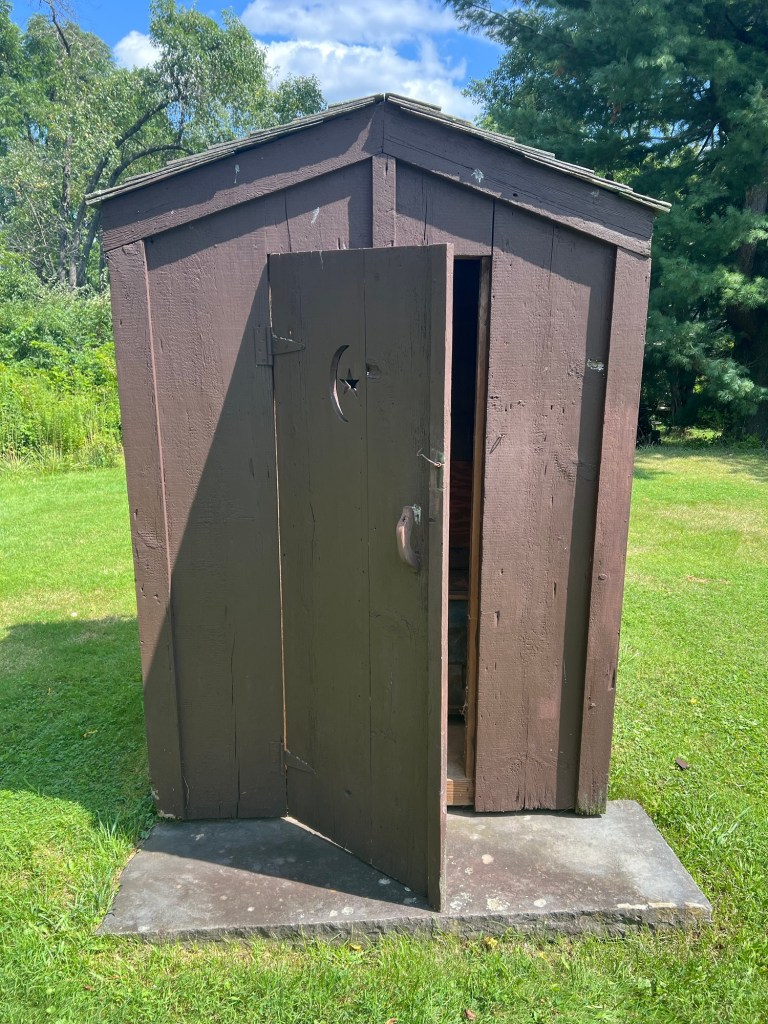
The two seat outhouse in the back of the house
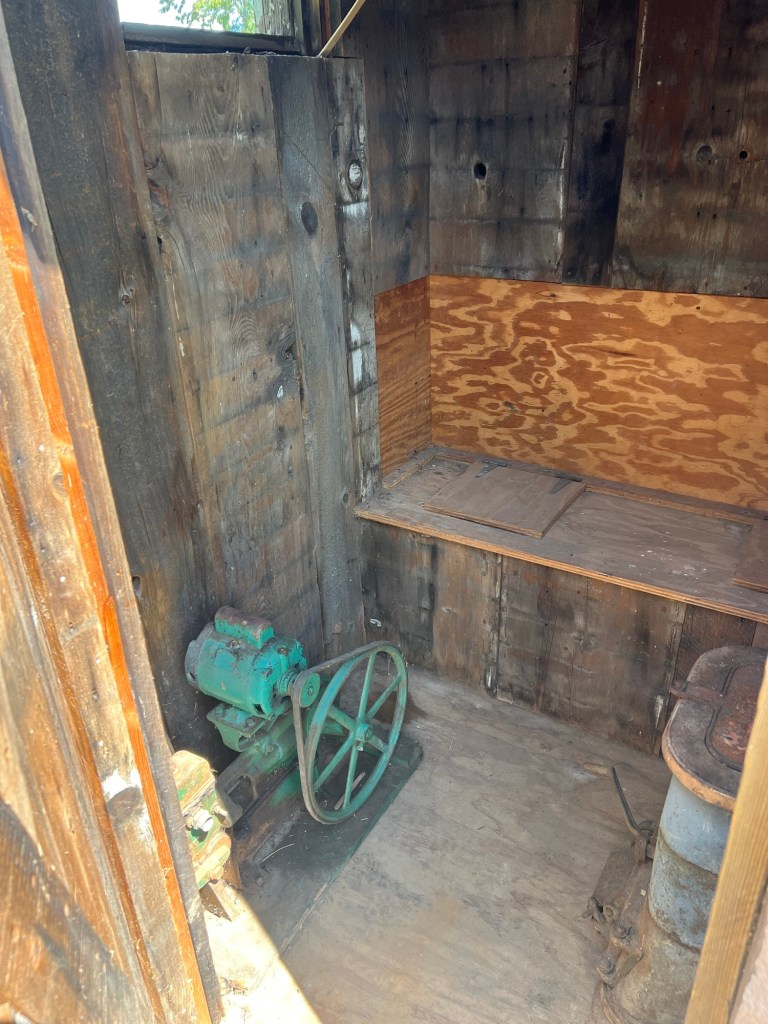
The inside of the outhouse is heated
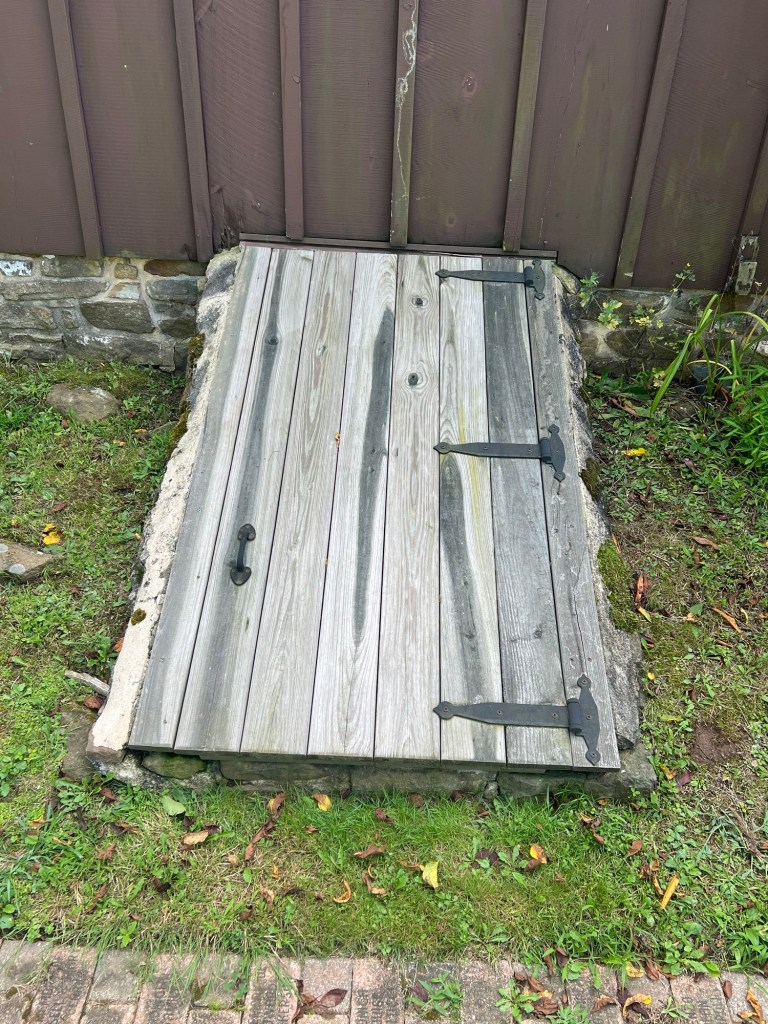
The entrance to the basement
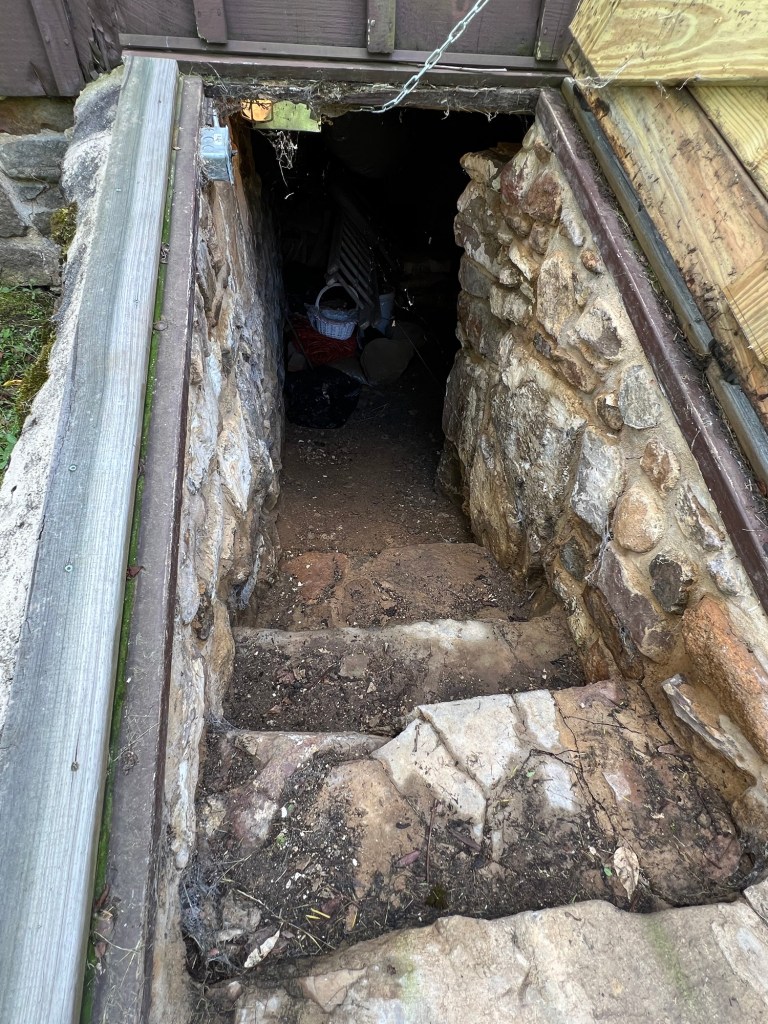
The entrance to the basement was filled with cobwebs (Don’t go down there)

The house is part of the Women’s Heritage Trail

The house is listed on the New Jersey and National Registers of Historic Places. It is also part of the New Jersey Women’s Heritage Trail. The museum is operated by the Ferromonte Historical Society (Bridget Smith House website).

The house tour when the site is open in a look into the life of a mining family before and after the Revolutionary War and how the area changed with the ups and downs of the industry. It is also a glimpse into the life of early New Jersey family and watching a community progress into the modern era.

Martin Berry House                                              581 Route 23 South                                     Pompton Lakes, NJ 07444

Martin Berry House 581 Route 23 South Pompton Lakes, NJ 07444

Martin Berry House

581 Route 23 South

Pompton Lakes, NJ 07444

https://www.facebook.com/MartinBerryHouse

My review on TripAdvisor:

https://www.tripadvisor.com/ShowUserReviews-g46748-d27729087-r949875094-Martin_Berry_House-Pompton_Plains_Morris_County_New_Jersey.html?m=19905

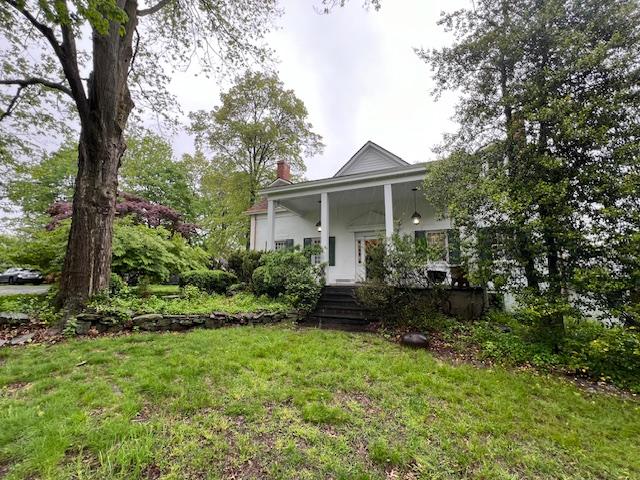
The Martin Berry House from the top of the hill at 581 Route 23 South. It is on a road hidden from the highway.

When I went to visit the Martin Berry House for the “Pathways to History” tour, I found it impossible to find. The Google Map has it in the middle of a parking lot in front of the strip mall along the highway and there is no pathway to the home from the parking lot. What you have to do is go the street behind the mall, head up the hill and make a right down a gravel road and there is the house at the end of the street.

There is not much parking here but with an isolated home like this, the Historical Society needs to put some things in place before they start having events here. The Society had bought the house not too long ago and there is still some renovation work that is being done, so the Society is in its first stages of opening the house to the public. It has some nice revolving displays and an interesting Colonial kitchen. The gardens are also beautiful when in bloom. Visiting the house in the future will offer many surprises.

(From the website of the Martin Berry House and the Pequannock Township Historical Society):

The Martin Berry House, or MBH, was built
on this spot in about 1720. The original house was
smaller than what you see here. This is the the
result of the second major enlargement or
renovation of the original construction as well as
later renovations and remodeling.

The Martin Berry House from the gardens.


The MBH is owned by the Township of
Pequannock and operated in partnership with the
Pequannock Township Historical Society (PTHS).
PTHS was formed in 2015 out of a movement that
was original called the Friends of the Martin Berry
House that had itself been initiated in 2014 to
support the Township in its efforts to acquire the
MBH.

The Martin Berry House Furniture display in May 2024.

When the Friends organized as the PTHS, it
was decided that a broader vision was needed so
that both the house and its context could be
preserved and interpreted.

The Martin Berry House Art Exhibition during the “Pathways to History” tour 2024.

The Martin Berry House Living Room.

The PTHS is an all volunteer and membership
-based organization with a mission to preserve,
interpret, and promote the history and diverse
heritage of Pequannock Township. We are working
to preserve and maintain historic buildings, sites,
and collections, and to create and present programs,
exhibitions, publications, and other activities for the
public that celebrate and interpret the history and
heritage of Pequannock Township and neighboring
communities. Our primary activities at this point,
though, are centered around the preservation,
restoration and management of the MBH as an
historic learning center and living museum (MBH website).

The Martin Berry House gardens in bloom in the Spring of 2024.

The preservation of the MBH began with
Eleanor and Charles Bogert purchased the house the
2.75 acres of land that surrounds it today in 1951.
Lovers of history and historic buildings, it was their
intent to restore the house as a Dutch Colonial
manor. Along with the slow and laborious efforts of
restoring the house, they raised three children,
briefly operated an antique shop, gave tours for local
school and scout groups and became active in
organizations such as the Highlands Historical
Society.

The Colonial kitchen section of the home.

Their intent was to restore the MBH and to
provide it to Pequannock Township as a museum.
In the winter of 2014 Mrs. Bogert informed
the Pequannock Town Council and Township
Historian that she was ready to begin the process for
selling the MBH to Pequannock Township. Township
Historian Ed Engelbart and the Pequannock
Township Historic District Commission began
generating support and The Friends of the Martin
Berry House emerged in June (MBH website).

Martin Berry House Colonial kitchen and displays.

The Township submitted an application to
and then received a matching grant from the Morris
County Historic Preservation Trust Fund to purchase
the home in 2015 and then contracted with HMR
Architects for a Preservation Plan.

The Colonial Kitchen display in the old Dutch Kitchen.

The Plan was received in the winter of 2016.
It recommended that the Township complete the
purchase of the MBH and provided information
regarding its renovation and interpretation. Final
negotiations began with Mrs. Bogert and the sale
was completed in January 2017. Negotiations then
began with the PTHS on a management agreement
that was adopted and signed in September 2017 in
time for the PTHS to open the MBH to visitors for
the Pathways of History Tour.

The history of the Martin Berry House and renovation.

The History of the house:

(from The Martin Berry House historical pamphlet)

In 1695 and 1696, a group led by Captain Arent Schuyler, Major Anthony Brockholst and six others including Samuel Berry, negotiated purchase of the land from both the Lenape Tribal Americans and the East Jersey Board of Proprietors. The land was later divided to eight separate owner including Samuel’s son Martin Berry born in 1693, who acquired the property and likely built his fine home sometime after his marriage to Maria Roome in 1720.

Historian Emil R. Salvini noted that Martin built his house of stone, with walls two feet thick for insulation, set into the hillside facing south, typical of the Dutch homes of the period. Its has six bedrooms, two center halls, shallow fireplaces to reflect the heat back into the rooms, servants quarters and a massively framed Gambrel room built without the benefit of a ridgepole.

Besides being a successful and prosperous farmer, Martin served in positions of community leadership, both as a deacon and later elder in the newly established Dutch Reformed Church which was built in 1736 and was accessible via “Martin’s ford” across the river from his farm. The house passed out of the Barry family in 1862 during the Civil War.

Lincoln Park Historical Museum                          141 Main Street                                              Lincoln Park, NJ 07035

Lincoln Park Historical Museum 141 Main Street Lincoln Park, NJ 07035

Lincoln Park Historical Museum

141 Main Street

Lincoln Park, NJ 07035

https://www.lincolnpark.org/373/Historical-Society

https://www.facebook.com/groups/lincolnparkhistory

My review on TripAdvisor:

https://www.tripadvisor.com/ShowUserReviews-g46872-d27729149-r949879836-Lincoln_Park_History_Museum-Towaco_Montville_Morris_County_New_Jersey.html?m=19905

Lincoln Park History Museum at 141 Main Street

The entrance of the Museum off the Main Street.

As part of the Morris County “Pathways to History” tour I visited the small Lincoln Park History Museum just off the downtown. This colorful and well lit little museum is packed with information on the development of the town. The transformation took place with the form of transportation that changed the area starting with the Morris Canal running through then the railroad system and then the advent of the automobile. This area is still quite sleepy even though its located just an hour outside of New York City.

Lincoln Park History Museum, located at the original 1922 Library building. Lincoln Park, or as once known, Beavertown, is small in geographic nature but has a rich and diverse history. The museum’s goal is to rediscover the town’s past and celebrate / preserve the history, which sadly, at times, is lost and forgotten.

The history of the town’s police and fire departments

Join us and discover our past which includes: dinosaurs, native American artifacts, revolutionary roads /houses, civil war hometown hero, part of the Morris Canal path, part of the Boonton Line Railroad branch, airport, major flood events, some Hollywood film locations and of course our townsfolks who sacrificed in war, volunteers (fire department, police, first aid, pal, scouting etc.), all who made Lincoln Park a wonderful town to grow up in and formed pride and sense of community (Pathways Tour website).

The history of the Morris Canal that ran through the town before the railroads.

The Morris Canal was an important part of the town’s development.

Learn how the town transformed from a small crossroad in the American revolution to a canal stopping point with incline plane, lock and hotel. Learn how it progressed from farming to resort area to commuting town and transform to what it is today. The town keeps growing.

The day the Railroad came to town and it changed everything! On December 14, 1870 the first passenger train stopped at Beavertown. School was closed that day so the students could witness this momentous occasion. The following year Beavertown’s name was changed to Lincoln Park. This event, started a large and long transformation of the town. Prior to this, the town was all farmland and the few businesses in town centered on support of the Morris Canal. Once the railroad came, the transformation started (Pathways Tour website).

Small industries were created which used the train system for shipping freight and the population started to grow. In the earlier 1900s advertisements were placed in New York /Brooklyn newspapers advocating the benefits of country living. City folks would come by train for the summer and enjoy river activities and many of these folks became permanent residents. During this time the Morris canal was slowly fading away, not able to compete against the railroad. Soon, it was feasible to commute daily from Lincoln Park to New York by train and the population continued to grow along with more business to support the population (Pathways of History Tour of Morris County website).

Lincoln Park’s Farming past and Business District.

Lincoln Park’s town history of schools, fire and police departments.

The museum only takes about an hour to visit but take the time to see all the displays and talk to the docents. The town really has an interesting history.

Bergecco-Parc Consulting Inc. presents: “The Bergen 250: Visiting the Garretson Forge & Farm in Fairlawn, NJ-A Historical Walking Tour”

Bergecco-Parc Consulting Inc. presents: “The Bergen 250: Visiting the Garretson Forge & Farm in Fairlawn, NJ-A Historical Walking Tour”

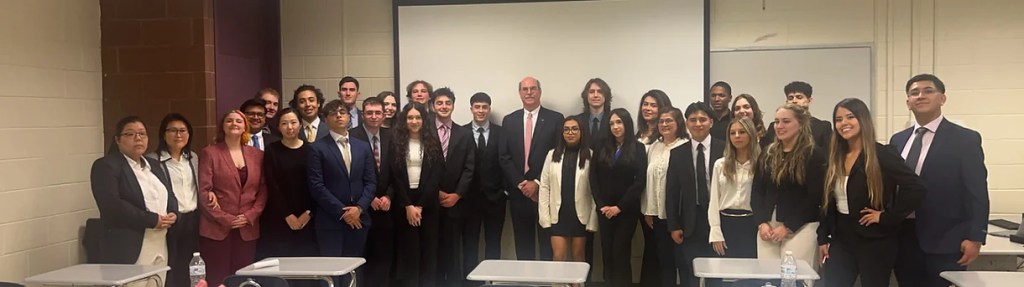
The Bergecco-Parc Consulting Inc. Paramus Team: “Bergen 250: Visiting the Garretson Forge & Farm” 2024.

The Garretson Forge & Farm at 4-02 River Road in Fair Lawn, NJ.

https://www.facebook.com/GarretsonFarm

Every semester I challenge my Business 101-Introduction to Business students to a project. This year we promoted the Garretson Forge & Farm for the “Bergen 250”, the 250th Anniversary of the Revolutionary War in Bergen County, NJ. Our concentration was on the historical Garretson Forge & Farm in Fair Lawn, NJ. The students had to create a series of events to promote the site and they did an excellent job with the project!