Category: Exploring the Island of Manhattan

Merchant’s House Museum                                                         29 East 4th Street                                                                     New York, NY 10003

Merchant’s House Museum 29 East 4th Street New York, NY 10003

Merchant’s House Museum

29 East 4th Street

New York, NY 10003

(212) 777-1089

Open: Sunday 12:00pm-5:00pm/Monday-Wednesday Closed/Thursday-Saturday 12:00pm-5:00pm

Admission: Adults $15.00/Seniors (over 65) and Students $10.00/Members are free/ Special Guided tours are $20.00

My review on TripAdvisor:

https://www.tripadvisor.com/Attraction_Review-g60763-d285699-Reviews-Merchant_s_House_Museum-New_York_City_New_York.html

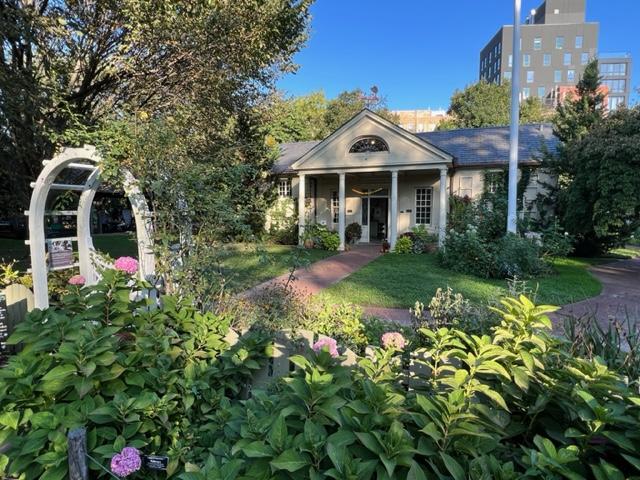
The Merchant House at 29 East 4th Street in NoHo

The Historic Plaque

The house is part of the NYCParks system

(from the museum’s pamphlet):

The Merchant House Museum, the former home to four generations of the Treadwell family, was built in 1832 and is designed in the late Federal style of brick and marble. When the house was built, elegant Greek Revival style rowhouses of red brick and white marble flanked the tree lined streets of this fashionable residential enclave, known then as the Bond Street Area.

The house was the home of wealthy merchant, Seabury Tredwell, his family and their four servants. Over the next 98 years, the family lived there and saw the neighborhood and the city grow, change and prosper. In 1936, after the death of the last living relative, the house opened as a museum, complete with Tredwell family’s original furnishings and personal possessions.

At the Midcentury, cast iron made its first appearance and commercial buildings and factories came to dominate the area. By the century’s end, it would be a commercial district with the Tredwell’s being the last holdouts of the area. The house was saved by the last relative’s grand nephew who bought the home to preserve it as a museum.

The home is now part of the NoHo Historic District that includes about 160 buildings, 11 of which are distinguished as individual NYC landmarks

The Entrance Hallway where you would be greeted when you enter the house

The Merchant House Kitchen ready for dinner to be prepared

the Dining Room was set for the Dutch New Year gathering

The Christmas holidays were not a big tradition in the early 1830’s when the house was built. The Dutch tradition of visiting on New Year’s Day and making calls to your friends was what many fashionable families would do to socialize with their neighbors. Tea, Coffee and punch would be served along with cakes, sweets and savories. These calls would only last about ten to fifteen minutes before you would move onto the next house. This tradition continued until Victorian times when homes were spread further apart and the family Christmas celebrations with gift giving and a Christmas tree came into fashion due to Queen Victoria and the spread of English and German traditions.

The punchbowl ready for guests on New Year’s Day

Refreshments ready for the New Year’s Day gathering

The broken pieces of the china collection of the Treadwell family. There is not a full collection of china that the family had to entertain with for formal affairs. They also did not have any china or silver of the family’s. I think that this might have been passed down to the heirs.

The Parlor of the Merchant House Museum

The piano in the Parlor of the home

The fireplace in the Parlor

The Parlor is where the family would gather after meals for entertainment and to converse with guests. This would be the main part of the house for socializing as the formal dining room and living rooms would be used for more formal affairs.

The Living Room in the Merchant House

The stairs are rather narrow and steep when you are heading upstairs to the bedrooms so you have to hold on to the rails. The bedrooms are normal size by today’s standards but back then they were pretty big plus people had their own rooms. They were nicely furnished with family heirlooms and antiques.

Mr. Treadwell’s bedroom

The portrait of Mr. Treadwell in his bedroom

Mrs. Treadwell’s bedroom

In Victorian times, the wealthy would have separate bedrooms for the husband and wife. Bedrooms would not just be a place to sleep but they were also a place of business where the family members would do their paperwork, write correspondence and arrange social events. Also, in the case of birthing, the child would be in the bedroom with their mother.

The “Valentine’s Day Card” exhibition “19th Century Valentines: Confections of Affection” on the second floor is part of the house’s extensive collection. ‘Delicate and lacy, these expressions of love celebrate the whimsy and romance of the Golden Age of Valentines’ (from the pamphlet).

The Children’s bedrooms on the third floor were closed off and used as offices for the staff so I made my way up to the Servant’s Quarters on the top floor. These people really got their exercise climbing those stairs up and down every day. The stairs seemed to get more narrow as you headed higher and God forbid there ever be a fire. You would be trapped up there with no way out.

The Servants Room on the fourth floor

The Servants Room on the fourth floor was pretty spare

Looking for the paranormal

Looking for a ghost on the fourth floor

During October, the museum hosts “Gaslight Ghost Tours”, where you tour the home by candlelight. There have been strange noises in the house ever since Gertrude Tredwell passed in 1934. She had been born in the house in 1840 and lived here until she was 93. She had never married and now it is said that her spirit is still part of the home (museum pamphlet).

After viewing the Servants Quarters and not finding any ghosts, I headed back downstairs to the main hallway leading into the house. There I saw the timeline of the family and all the family members that had lived in the house. It seemed that the last living relative, Gertrude, died in the house in 1934 and her grand-nephew bought the house and all its debts at the height of the Depression to preserve the home as a museum. Talk about insight! The nephew knew how important this home would be one day.

The Treadwell family tree in the hallway downstairs

The last part of the tour was the gardens in the back of the home. It was not a formal yard but a well landscaped walled in garden with a small fountain in the back of the gardens. The flowers were just starting to come up and there were crocuses and daffodils One of the curators was the Master Gardener for the property and did a nice job landscaping the property.

The back of the Merchant House Museum in the late Winter in the Gardens

The Gardens of the Treadwell house in the late Winter

The fountain at the gardens was off but now means to come back in the late Spring

There is a more formal tour a couple of times a day of the home but that is by reservation only and there is a separate fee. The holidays offer more themed tours on Halloween and Christmas. The Candlelight tour of the hour for Halloween is really intriguing.

The Merchant House Museum at night before Halloween

I recently went on the Haunted House tour at the Merchants House for Halloween in 2023 and that was interesting. We walked the first two floors of the house in the dark by candlelight hearing stories about the family.

Costumed characters greeted us in every room but none of us saw a ghost. Still the house had a creepy feeling to it as we walked room by room discussing the lives and deaths of the Treadwell family. We started off in the Parlor on the first floor with displays of seances and ghost pictures dotting the displays.

The display of seances and ghost pictures.

It can be a bit spooky walking through a house by flashlight, but the docents made the conversation interesting and fun. We got to hear about all the haunted tales of the house. A highly suggestive tour around Halloween.

The Parlor at night on the Candlelight tour of the house on Halloween.

The home is very engaging at Christmas time as well as you are welcomed into the Treadwell Home for the Christmas holidays with their annual Christmas Eve Reception and preparations for Christmas lunch. The house was decked out in garland and bows with several Christmas trees in the room. The house was very festive for the holidays and you were welcomed into the world of 19th century New York City at the holidays.

The Merchant House at the Christmas Holidays.

The outside of the house decked out for the holidays.

You are welcomed to the home at Christmas time.

We started our tour in the gardens which had gone dormant for the season but still you could see the greens in the bushes and the pine trees. It had been a warm morning in the low 50’s with a treat of rain but later that afternoon. For now, it had just been gloomy. We had a nice conversation about the house and its history even though we could barely hear the tour guide as he talked so softly.

We next toured the kitchen where the cooks were busy cooking and baking for the Christmas holidays. The 19th Century was all about manners, traditions mostly Dutch and entertaining. The Treadwell’s were people who both entertained the neighbors and their family as well. So there would be teas, receptions, open houses and then the formal Christmas Eve festivities and then Christmas lunch after church service the next day.

The holiday meal being cooked in the downstairs kitchen.

Christmas dinner with the Treadwell’s must have been special.

We moved next to the upstairs parlor that was set for receiving guests from the neighborhood. The Treadwell’s like most families at that time received guests for New Year’s Day punch and refreshments as the men of the neighborhood made their social calls during the holiday season. This tradition stopped around the time of the Civil War when families during the Industrial Revolution acquired money and people did not want to ‘entertain just anyone’.

The Parlor by the front door ready to received guests for the holiday season.

The Parlor on the first floor receiving guests for New Year’s Day.

The mantle was beautifully decorated for the holidays.

We next toured the formal Dining Room and Living Room on the second level where the family entertained relatives and friends for the holidays. It must have been some celebration as the Dutch traditions disappeared and the Victorian rules and elaborate traditions started some still practiced today. Now we call it the “Norman Rockwell” and “Martha Stewart” standards.

The formal Living Room with the Table Tree decorated for the holidays. The Table Tree was the precursor for the modern Christmas tree.

The tree is the focal part of the room.

The fireplace was decked out for the holidays as well.

The Dining Room was set for the Christmas Eve Open House and in preparation for receiving guests in the formal room. The finest silver, china and crystal would have been used to show off the family position in the neighborhood and was meant to impress.

The Dining Room was set for receiving guests for the Open House.

The Dining Room set for a feast.

The family would receive guests all day, replenishing foods so that there was plenty for everyone who visited. Women would be busy all day entertaining neighborhood men who would be calling all day long.

The bannisters were beautifully decorated with garland.

During the Victorian Age gift giving during the holidays became very important.

Christmas presents of the Victorian Age.

Gifts of the Victorian Age.

We then toured the upstairs bedrooms and saw how they decorated. The rooms were nicely decorated for Christmas. I have never seen rooms decorated like this for the holidays.

Mrs. Treadwell’s bedroom

Mrs. Treadwell’s Bedroom

Mr. Treadwell’s bedroom

Mr. Treadwell’s portrait in the bedroom standing guard.

It was an interesting look at both Edwardian and Victorian times in New York City.

The New Year video on celebrations on the “New Year’s Day Visiting” day

During the Summer months, the Merchant House Museum is hosting a series of “Music in the Garden” concerts. The first one I attended was in June 2024 with Flutist Cheryl Pyle. What a nice relaxing evening in the gardens that were all in bloom.

The gardens were in full bloom that June evening

Flutist Cheryl Pyle performing in the gardens that evening

https://cherylpyle.bandcamp.com/

The Concert that evening for everyone to enjoy too!

The gardens are this hidden gem in the neighborhood. The volunteers have done such a beautiful job taking care of this marvelous historic site.

The gardens looking at the back of the house with the wine and snacks and information table

The gardens closer to the back entrance of the house

The left side of the back garden

The right side of the gardens

The entrance to the gardens from the park next door

The fountain staring back at us in the gardens

This little bird even joined us in the garden for the concert and stayed and listened contently

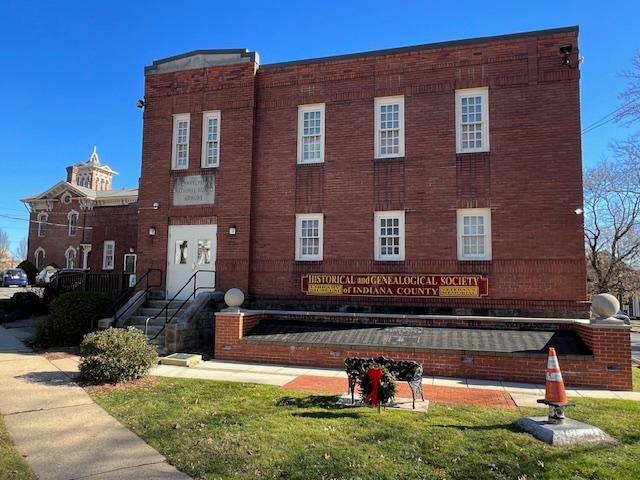
The museum is currently having a fight to keep construction away from the home. The ten-year battle to keep a hotel from being built has been a problem for the museum. The foundation and structure of the home are in danger due to the fragile state of the building. The Landmark Preservation Commission of New York is researching and looking over the proposal.
The museum now has to defend itself from building next door

The museum is a perfect way to see how residents of a Upper Middle Class family lived in Pre-Victorian times and show the last vestiges of the neighborhood when it was a fashionable section of the City.

Art & Design Gallery at FIT                                                    227 West 27th Street                                                               New York City, NY 10001

Art & Design Gallery at FIT 227 West 27th Street New York City, NY 10001

Art & Design Gallery at FIT

227 West 27th Street

New York City, NY 10001

(212) 217-4683/4570

https://www.fitnyc.edu/life-at-fit/campus/gallery/index.php

https://www.fitnyc.edu/academics/academic-divisions/art-and-design/index.php

Open: Sunday-Saturday 9:00am-5:00pm

Admission: Free Donations Accepted

My review on TripAdvisor:

The entrance to the Art & Design Gallery at FIT at 227 West 27th Street

The exhibition space showcases the work of students, faculty, and distinguished alumni, as well as invited guest artists. This new gallery space is located at the entrance of the Pomerantz main building and the back room exhibition space. This features smallers theme shows and showcases the talents of the FIT professors, professionals and Alumni. The shows are constantly rotating offering a fresh approach to contemporary art.

The Current Exhibition:

Creative Industry: 
The Alumni Journey
Lobby and Gallery

Diverse in medium, this exhibition spotlights the career trajectories of several illustrious FIT alumni, highlighting their innovations and interesting journeys through the creative industries. Co-curated by Troy Richards, dean for the School of Art and Design, and Alumni Relations’ Kseniya Baranova, the work on display features photography, fashion, video, weaving, wallpaper, graphic design, and painting.

“Unconventional Minds at Work: 15 Years of HUE, The FIT Alumni Magazine

The showcased art designs

Artwork “Matter 2008” by artist Susanne Tick

The sign of artist Susanne Tick’s work

Artwork from “Unconventional Minds at Work”

Artwork from “Unconventional Minds at Work”

Artwork from “Unconventional Minds at Work”

Resurgence: 
The Ingenuity of Artisan Work and 
Hand-crafted Objects
Lobby and Gallery

‘Resurgence’ showcases the ingenuity of artisan work and hand-crafted objects from textiles, jewelry, and decorative accessories. Contributors to this show include FIT alumni, faculty, and students, as well as finalists from the 2022 Global Eco Artisan Awards, a recognition given by the AGAATI Foundation.

Artwork of “Resurgence”

The Gallery at FIT during one of the current exhibitions

The latest exhibition is on the A. Beller & Company clothing line. The designs on display are from 1900-1930 and many of the designs are from the ‘flapper’ era.

The A. Beller & Company exhibition

The A. Beller & Company designs.

The Bio on the manufacturer

The A. Beller & Company designs from 1910-1930.

The A. Beller & Company designs from 1910-1930.

The A. Beller & Company designs from 1910-1930.

The A. Beller & Company designs from 1910-1930.

The museum also did a piece on how Generation Z is reworking vintage clothing designs and reworking them into modern clothing.

The Generation Z gallery of designs.

The write up on reworking of vintage clothing.

Some of the clothing designs.

The new exhibition in September 2023 was “The Unwearable Art” exhibition:

With the tag line “A fashion line no one would dare wear.”

The fashions were very unusual to say the least but unique in every way.

The entrance to the gallery.

“Today-I’m Wearing Uncertainty”

the “Today-I’m Wearing Uncertainty” design sign.

“Today-I’m Wearing Flare Intensity”

The “Today-I’m Wearing Flare Intensity” sign.

“Today-I’m Wearing Something Life Threatening.”

The sign “Today-I’m Wearing Something Life Threatening”

“Today-I’m Wearing Physical Pain”

The sign for “Today-I’m Wearing Physical Pain”

The “Wearing Uncertainty” exhibition offers a different look at fashion, and it’s influences on costumes.

The new “Squishables” exhibition at the Gallery at FIT focuses on therapeutic stuffed animals with themes that the students created as teams. Each one has several colorful soft animals and figures with it. It is a colorful and whimsical display. The exhibition shows how plush toys become an essential tool in coping with anxiety, stress, grief and isolation a person might feel at a time of their lives. This exhibition opened in May of 2024.

The sign on the new exhibition “Squishable”.

The “Unicorn Cafe” display.

The “Under the Sea” display.

The “Graveyard” Halloween display.

The “Alchemy Lab” display.

The “Farm” display.

The “Squishables” Gallery exhibition.

The new exhibition “Squishables” is based on a therapeutic stuffed animal that is created by the students.

The “Denim Devine” exhibition is the Senior Project of the graduates.

The “Denim Devine” exhibition in 2024. This exhibition was created by graduating students to design a wardrobe that was made of entirely of denim. These are their original designs and creations.

The “Denim Devine” entrance.

The winners of the “Denim Devine” exhibition.

The “Denim Devine” display.

The back gallery of “Denim Devine”.

I loved this Disney inspired dress in the exhibition.

One of my favorite dresses from the exhibition.

Another very original design in the exhibition.

Another original design that I liked in the exhibition.

The picture boards for the exhibition and other exhibitions.

The Gallery is free and open to the public.

Lower Alloways Creek Historical Society                              736 Smick Road                                                                     Salem, NJ 08079

Lower Alloways Creek Historical Society 736 Smick Road Salem, NJ 08079

Lower Alloways Creek Historical Society

736 Smick Road

Hancocks Bridge, NJ. 08079

(856) 935-3666

https://www.facebook.com/LacHistoricalMuseum/

https://www.lowerallowayscreek-nj.gov/about/pages/historic-log-cabin

Open: Sunday 1:00pm-4:00pm (Third Sunday of the Month)/Monday-Saturday Closed-Open Six times a year for special events

Admission: Free but donations are accepted

My review on TripAdvisor:

https://www.tripadvisor.com/Profile/R4960NKjustinw/mediabatch/12228970?m=19905

The Historical Society:

Situated in a beautiful rural setting, the Log Cabin is restored in the same manner as the local Quakers lived in the 1700’s. The site houses a barn full of antique farm implements as well as many items used in the local industries of Lower Alloways Creek.

Salem’s County’s maritime history is documented in a unique floating cabin which is complimented with a collection of fishing and trapping memorabilia. The site also features an outhouse, carriage shed and the last canning house that was left in the Township.

The buildings on the grounds and the outhouse

History of the house:

The main house is very unique. The addition to the house was built in the mid 1800’s and is furnished from that time period. This was added to the log cabin that has been reconstructed on the site. The early parts of the log cabin date back to before the Revolutionary War.

The first-floor parlor

The Kitchen in the main house

Washing clothes in the house

How to wash clothes until WWII

The second-floor bedroom

The Bonnet collection

The second floor bedroom

The Attic Room

The toys and playthings of the Attic Room

The house has an extensive collection of antique toys and dolls and furniture.

The dolls

The dolls

The Hat collection at the home.

(Information from the museum website):

Part of the house is an old log cabin with an addition added on later. Although the date of the original construction is unknown, the cabin has been restored and reconstructed in much the same manner as local Quakers would have lived in the 1700’s. Because the air had deteriorated so many of the logs, it was impossible to save the entire original structure.

The log cabin section of the house.

The log cabin and the later addition.

All the wood used in the reconstruction of this cabin came from the woods in Lower Alloways Creek that are owned by the Township. The hand-hewn logs are white oak. The wide floorboards are pine The fireplace and foundation were built from Jersey sandstone that had been donated by John Hassler.

The inside of the log cabin and hearth.

The Hearth during the event

The Historical site also features a log cabin, carriage shed and barn, many antique farm implements, a two-seater “outhouse” and an old fashion hand water pump.

The Outhouse

The hearth of the log cabin

The loft section of the log cabin on the second floor of the home.

There is also an original Can House, with a working line shaft, a floating cabin, both of which were originally built in Lower Alloways Creek.

The historic Can House.

The historic Can House

Some of the interesting programs that the society hosts:

Line Shaft: the historic line shaft in action as it powers a variety of machines.

Outdoor sportsmen: view displays of fishing and trapping, hunting gear, decoys, floating cabins and turkey call demonstrations.

Model Trains: all aboard an exciting display of model trains.

Old time engines: South Jersey Gas Engine Club proudly presents their collection of “Hit or Miss” engines.

The Farm equipment and working engines at the “Old Time Engine Day” in September 2023 was an interesting mix of old farm equipment, household equipment and everyday items run by an engine in the early 1900’s. It was a very interesting display on how we have come in manufacturing and the museum did a nice job on the displays.

The working farm equipment at the Lower Alloways Creek Historical Society

The Farm Engine equipment

The Farm Engine equipment

The Farm Engine equipment

The Farm Engine equipment

Video on the display:

The Farm Engine equipment

Farm Day: Come and see antique tractors and a variety of farm equipment. See the progression of farm equipment throughout the centuries.

Retired farm equipment in the barn

The barn

Farm Equipment in the barn.

Some of the equipment and refreshments in the barn.

The barn equipment during my visit in 2025

Indian Arrowheads on display in the barn

Cabin Cooked Pie Day:

There is nothing better than a freshly baked pie in a fireplace. In November 2025, I returned to the museum for ‘Pie Day’. There were various pies, chestnuts and soup being cooked in the log cabin fire place that afternoon. It was interesting to see cooking procedures from a hundred years ago.

I visited the museum and got to watch the volunteers cook all sorts of goodies in the fire. It is interesting how foods were cooked and tested for doness over a wooden fire. The coordination of cooking times and temperatures.

The Log Cabin goodies that afternoon

Visitors choose from Apple or Pumpkin pies, Roasted Chestnuts, Buttery Popcorn, Chocolate Chip cookies or Stuffed Cabbage Soup, all cooked fresh in the pots on the open fire hearth which also warmed the house on a cool afternoon. The museum was even selling a cookbook, Down Jersey Cookbook on some of the recipes being used in this part of New Jersey.

Cooking pies, soup, chestnuts and popcorn in the fireplace

The pies, Chestnuts and soups being cooked in the Open Hearth

It was interesting how the pies were cooked in the cast iron equipment and then laid out to cool. They came out of the oven steaming hot and sat to cool before being sliced.

The freshly baked Pumpkin pie

Freshly baked Apple pie

Freshly baked Apple pie. Yum!

Stuffed Cabbage Soup in a cast iron pot

The thick Stuffed Pepper Soup

Freshly Roasted Chestnuts from the fireplace

The pots and pans in the fire

It was fun watching the foods being cooked right on the spot they way they would have over a hundred years ago. It was even more fun to eat them. I learned a thing or two about the culinary arts this afternoon and it was so nice to sit in a warm kitchen by the fire on a cool November afternoon.

The delicious Fall goodies cooked in the hearth

Farm supplies kept cool in the barn

It was really a homey event at the museum, with good food and wonderful conversation with residents of the community. All in a room warmed by a fire in a working fireplace. I love it when museums do such great events and using the historical cooking instruments was very unique.

The Museum is in a rural location so the farmland that surrounds the house is really beautiful. The views in the fall were just gorgeous when the leaves were turning colors.

The beautiful farmland that surrounds the historical society.

The view on a late Fall day

The view of the local farm

The fields

The plaque of the “Quinton K. Baker Canhouse, the last one left.

The historic cars and fire trucks on display at the museum that day:

The Model T

The Hancock Bridge’s 1928 Hose truck

The cars on display that day

The front of the museum on my visit in November 2025

The back of museum during my visit in November 2025

The museum is open six times a year for special events. Please check out their website and their Facebook page for details. The Pie event was the last event for the season until the Spring.

Dennis Township Old School House Museum                   681 Petersburg Road                                Woodbine, NJ 08270

Dennis Township Old School House Museum 681 Petersburg Road Woodbine, NJ 08270

Dennis Township Old School House Museum

681 Petersburg Road

Woodbine, NJ 08270

(609) 861-1899

http://www.dennismuseumfriends.org/

https://www.facebook.com/people/Friends-of-dennis-township-old-school-house-museum/100066513017935/

Open: Every First and Third Saturday of the Month (Please check with the website on weather conditions)

Admission: Free but donations accepted

My review on TripAdvisor:

https://www.tripadvisor.com/ShowUserReviews-g35374-d25030718-r862673797-Dennis_Township_Old_School_House_Museum-Woodbine_Georgia.html?m=19905

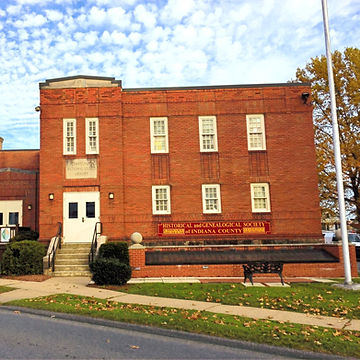
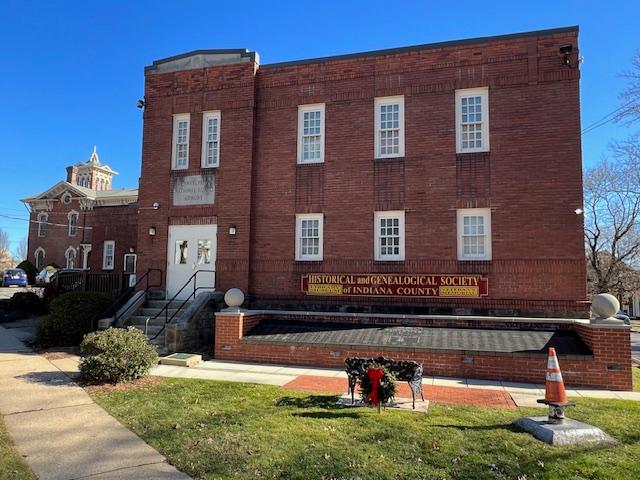
The Dennisville Historical Society at 681 Petersburg Road

I have been wanting to see this charming little museum for several months. This is one of the featured historical museums in Southern New Jersey. The museum is representing the local farming and manufacturing industries as well as life in a farming community at the turn of the last century.

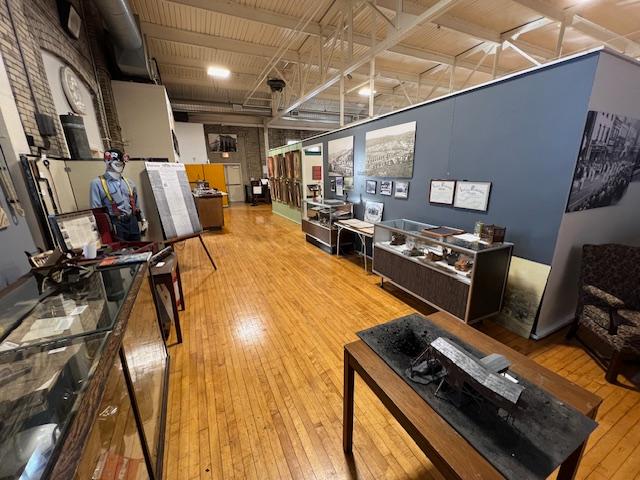
The Main Gallery at the Dennisville Historical Society.

The museum was started in 1994 in a partnership with the town of Woodbine, NJ and houses the history of Dennis Township. It is an all-volunteer museum, and the docents were really helpful describing all the displays that surround this small former schoolhouse. Their Friends of the Dennis Township Museum group does a nice job walking you around the museum and describing the displays.

The artifacts that are on display at the museum.
The museum tells the story of a small-town farming community with a history of different local businesses, the Dennisville School district from 1874-1948 and the Methodist colony that was a big part of the community in the early 1800’s. The shipping industry was very important to any small town that used to supply its fruits, vegetables and fish to Philadelphia.

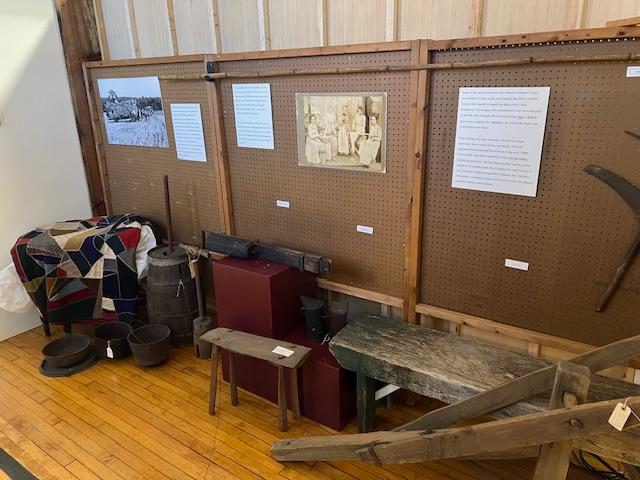
The Farming display at the museum.

Some of the displays were dedicated to the local family businesses with the small cranberry industry that used to be in the area with equipment and packaging. The Mason Basket Company used to make the small and large wooden baskets for fruits and vegetables used to ship these items to both New York City and Philadelphia. These baskets are a staple at any farmers marker today.

The Basket making business for fruits and vegetables was a big business.

The other big business in town was the shingle making business that prided itself on supplying the shingles for Independence Hall in Philadelphia.

The history of the Basket making business in Dennisville.

The basket and shingle businesses in Dennisville.

The building had been the local one room schoolhouse for the surrounding community from 1874-1948 until the new schools were built in the 1950’s. There was a display on the school’s history as well as lots of pictures of the students at the turn of the last century with their period clothing and proper manners taking pictures with their schoolteachers. There were displays of desks, clothing and items that would have been in the school room.

The school display

The school display.

The town had once been a Methodist community with a large meeting house and surrounding homes for parishioners to stay. They showed the meetings and how the group would spend their summers in the area.

The summer community in Dennisville, NJ (from their archives)

The museum showcased live in a small-town farming community with all sorts of farm and farmhouse equipment. There were all sorts of home making items like cooking utensils to make meals from scratch, baking and serving in homes where being a housewife took a lot of strength. The farm equipment included hoes, racks and seeders that kept the farms going.

The Post Office display

There were pictures of the renovations of the Ludlam family cemetery that had gone through a renovation by the Boy Scouts and showcased it beauty. The members did a nice job renovating the tombstones and landscaping.

The Civil War display

The Clothing display

The Children’s display

There were lots of interesting items to see in the Children’s display.

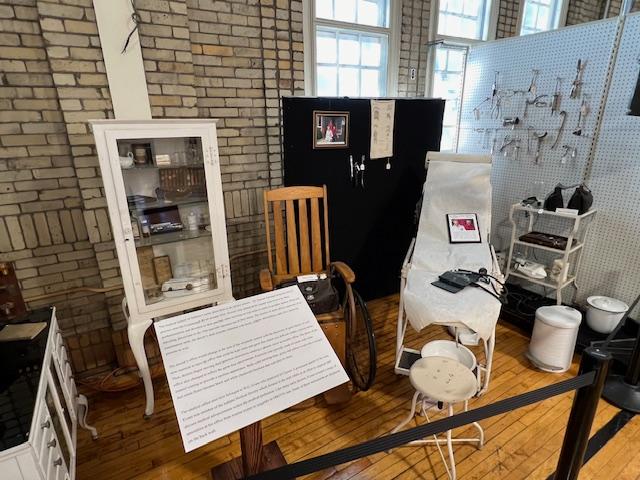
In the corners of the museum, there is period clothing from the Civil War to the 1930’s with hats, gloves and dressing plus accessories. There is a small display to the local veterans of war. Near the entrance there is a working pipe organ and more information about the town from the early 1900’s.

The Household items at the museum.

The docents told me that they have the old town records and that people come to the museum to research their families that used to live in the area. They have had people come from all over the country to find their family roots.

The Shipping Industry

The Ship Building industry

For a small museum, it is chock full of small displays offering a glimpse into a community of time past and how it has grown over the future and changed.

The Military display

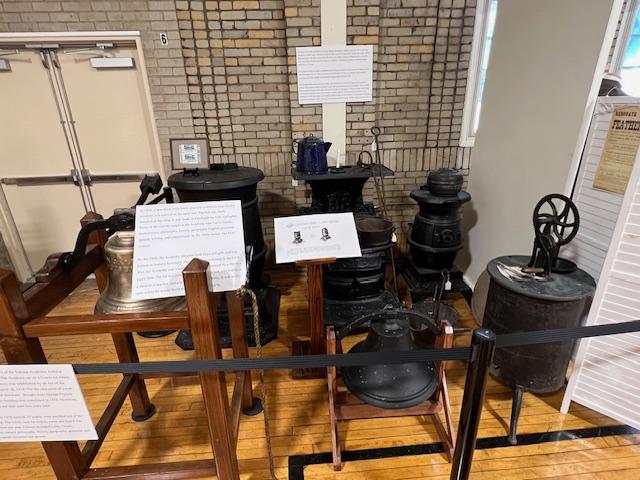
Take time also to drive around this small town loaded with historical homes that have been beautifully maintained and labeled with the year that they were built. Some looked like they had the family names on them. All of the homes are painted bright colors and each has been brought back to life. I was amazed in how in one year how many of these homes had been bought and repaired and painted. The whole town was brought back to life.
Downtown Dennisville has a quaintness to it.

The Purple House in Downtown Dennisville, NJ.

The light Green House in Dennisville, NJ

The gardens of the Green House

The Pink House is a known landmark to local law enforcement as a marker in the town.

There is a tiny gift shop selling jewelry behind the house which just opened. I thought it would make a nice Tea House.

The Town of Dennisville has it charms to it and it totally being redone. Too bad the only restaurant in the area is a Wawa. Still it is a nice place to visit and drive around in.