Category: Exploring New York City

Day Three Hundred and One: Seeing the Solar Eclipse at the Brooklyn Botanic Garden            April 8th, 2023.

Day Three Hundred and One: Seeing the Solar Eclipse at the Brooklyn Botanic Garden April 8th, 2023.

The Solar Eclipse at its full extent from our location in Brooklyn.

Daffodil Hill at its peak of blooming.
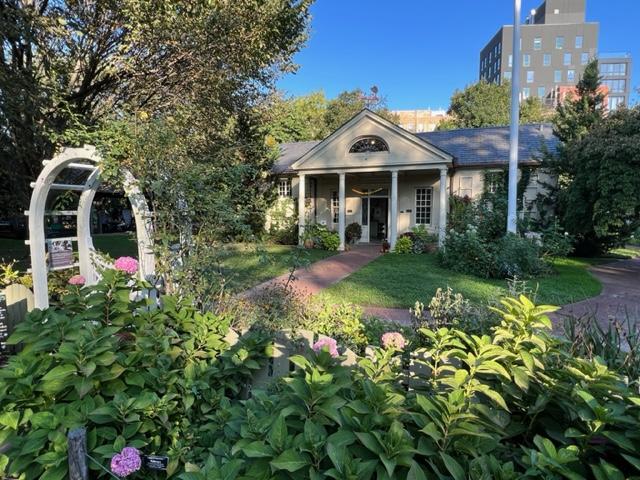
The Children’s Garden in bloom during the Eclipse.

Merchant’s House Museum                                                         29 East 4th Street                                                                     New York, NY 10003

Merchant’s House Museum 29 East 4th Street New York, NY 10003

Merchant’s House Museum

29 East 4th Street

New York, NY 10003

(212) 777-1089

Open: Sunday 12:00pm-5:00pm/Monday-Wednesday Closed/Thursday-Saturday 12:00pm-5:00pm

Admission: Adults $15.00/Seniors (over 65) and Students $10.00/Members are free/ Special Guided tours are $20.00

My review on TripAdvisor:

https://www.tripadvisor.com/Attraction_Review-g60763-d285699-Reviews-Merchant_s_House_Museum-New_York_City_New_York.html

The Merchant House at 29 East 4th Street in NoHo

The Historic Plaque

The house is part of the NYCParks system

(from the museum’s pamphlet):

The Merchant House Museum, the former home to four generations of the Treadwell family, was built in 1832 and is designed in the late Federal style of brick and marble. When the house was built, elegant Greek Revival style rowhouses of red brick and white marble flanked the tree lined streets of this fashionable residential enclave, known then as the Bond Street Area.

The house was the home of wealthy merchant, Seabury Tredwell, his family and their four servants. Over the next 98 years, the family lived there and saw the neighborhood and the city grow, change and prosper. In 1936, after the death of the last living relative, the house opened as a museum, complete with Tredwell family’s original furnishings and personal possessions.

At the Midcentury, cast iron made its first appearance and commercial buildings and factories came to dominate the area. By the century’s end, it would be a commercial district with the Tredwell’s being the last holdouts of the area. The house was saved by the last relative’s grand nephew who bought the home to preserve it as a museum.

The home is now part of the NoHo Historic District that includes about 160 buildings, 11 of which are distinguished as individual NYC landmarks

The Entrance Hallway where you would be greeted when you enter the house

The Merchant House Kitchen ready for dinner to be prepared

the Dining Room was set for the Dutch New Year gathering

The Christmas holidays were not a big tradition in the early 1830’s when the house was built. The Dutch tradition of visiting on New Year’s Day and making calls to your friends was what many fashionable families would do to socialize with their neighbors. Tea, Coffee and punch would be served along with cakes, sweets and savories. These calls would only last about ten to fifteen minutes before you would move onto the next house. This tradition continued until Victorian times when homes were spread further apart and the family Christmas celebrations with gift giving and a Christmas tree came into fashion due to Queen Victoria and the spread of English and German traditions.

The punchbowl ready for guests on New Year’s Day

Refreshments ready for the New Year’s Day gathering

The broken pieces of the china collection of the Treadwell family. There is not a full collection of china that the family had to entertain with for formal affairs. They also did not have any china or silver of the family’s. I think that this might have been passed down to the heirs.

The Parlor of the Merchant House Museum

The piano in the Parlor of the home

The fireplace in the Parlor

The Parlor is where the family would gather after meals for entertainment and to converse with guests. This would be the main part of the house for socializing as the formal dining room and living rooms would be used for more formal affairs.

The Living Room in the Merchant House

The stairs are rather narrow and steep when you are heading upstairs to the bedrooms so you have to hold on to the rails. The bedrooms are normal size by today’s standards but back then they were pretty big plus people had their own rooms. They were nicely furnished with family heirlooms and antiques.

Mr. Treadwell’s bedroom

The portrait of Mr. Treadwell in his bedroom

Mrs. Treadwell’s bedroom

In Victorian times, the wealthy would have separate bedrooms for the husband and wife. Bedrooms would not just be a place to sleep but they were also a place of business where the family members would do their paperwork, write correspondence and arrange social events. Also, in the case of birthing, the child would be in the bedroom with their mother.

The “Valentine’s Day Card” exhibition “19th Century Valentines: Confections of Affection” on the second floor is part of the house’s extensive collection. ‘Delicate and lacy, these expressions of love celebrate the whimsy and romance of the Golden Age of Valentines’ (from the pamphlet).

The Children’s bedrooms on the third floor were closed off and used as offices for the staff so I made my way up to the Servant’s Quarters on the top floor. These people really got their exercise climbing those stairs up and down every day. The stairs seemed to get more narrow as you headed higher and God forbid there ever be a fire. You would be trapped up there with no way out.

The Servants Room on the fourth floor

The Servants Room on the fourth floor was pretty spare

Looking for the paranormal

Looking for a ghost on the fourth floor

During October, the museum hosts “Gaslight Ghost Tours”, where you tour the home by candlelight. There have been strange noises in the house ever since Gertrude Tredwell passed in 1934. She had been born in the house in 1840 and lived here until she was 93. She had never married and now it is said that her spirit is still part of the home (museum pamphlet).

After viewing the Servants Quarters and not finding any ghosts, I headed back downstairs to the main hallway leading into the house. There I saw the timeline of the family and all the family members that had lived in the house. It seemed that the last living relative, Gertrude, died in the house in 1934 and her grand-nephew bought the house and all its debts at the height of the Depression to preserve the home as a museum. Talk about insight! The nephew knew how important this home would be one day.

The Treadwell family tree in the hallway downstairs

The last part of the tour was the gardens in the back of the home. It was not a formal yard but a well landscaped walled in garden with a small fountain in the back of the gardens. The flowers were just starting to come up and there were crocuses and daffodils One of the curators was the Master Gardener for the property and did a nice job landscaping the property.

The back of the Merchant House Museum in the late Winter in the Gardens

The Gardens of the Treadwell house in the late Winter

The fountain at the gardens was off but now means to come back in the late Spring

There is a more formal tour a couple of times a day of the home but that is by reservation only and there is a separate fee. The holidays offer more themed tours on Halloween and Christmas. The Candlelight tour of the hour for Halloween is really intriguing.

The Merchant House Museum at night before Halloween

I recently went on the Haunted House tour at the Merchants House for Halloween in 2023 and that was interesting. We walked the first two floors of the house in the dark by candlelight hearing stories about the family.

Costumed characters greeted us in every room but none of us saw a ghost. Still the house had a creepy feeling to it as we walked room by room discussing the lives and deaths of the Treadwell family. We started off in the Parlor on the first floor with displays of seances and ghost pictures dotting the displays.

The display of seances and ghost pictures.

It can be a bit spooky walking through a house by flashlight, but the docents made the conversation interesting and fun. We got to hear about all the haunted tales of the house. A highly suggestive tour around Halloween.

The Parlor at night on the Candlelight tour of the house on Halloween.

The home is very engaging at Christmas time as well as you are welcomed into the Treadwell Home for the Christmas holidays with their annual Christmas Eve Reception and preparations for Christmas lunch. The house was decked out in garland and bows with several Christmas trees in the room. The house was very festive for the holidays and you were welcomed into the world of 19th century New York City at the holidays.

The Merchant House at the Christmas Holidays.

The outside of the house decked out for the holidays.

You are welcomed to the home at Christmas time.

We started our tour in the gardens which had gone dormant for the season but still you could see the greens in the bushes and the pine trees. It had been a warm morning in the low 50’s with a treat of rain but later that afternoon. For now, it had just been gloomy. We had a nice conversation about the house and its history even though we could barely hear the tour guide as he talked so softly.

We next toured the kitchen where the cooks were busy cooking and baking for the Christmas holidays. The 19th Century was all about manners, traditions mostly Dutch and entertaining. The Treadwell’s were people who both entertained the neighbors and their family as well. So there would be teas, receptions, open houses and then the formal Christmas Eve festivities and then Christmas lunch after church service the next day.

The holiday meal being cooked in the downstairs kitchen.

Christmas dinner with the Treadwell’s must have been special.

We moved next to the upstairs parlor that was set for receiving guests from the neighborhood. The Treadwell’s like most families at that time received guests for New Year’s Day punch and refreshments as the men of the neighborhood made their social calls during the holiday season. This tradition stopped around the time of the Civil War when families during the Industrial Revolution acquired money and people did not want to ‘entertain just anyone’.

The Parlor by the front door ready to received guests for the holiday season.

The Parlor on the first floor receiving guests for New Year’s Day.

The mantle was beautifully decorated for the holidays.

We next toured the formal Dining Room and Living Room on the second level where the family entertained relatives and friends for the holidays. It must have been some celebration as the Dutch traditions disappeared and the Victorian rules and elaborate traditions started some still practiced today. Now we call it the “Norman Rockwell” and “Martha Stewart” standards.

The formal Living Room with the Table Tree decorated for the holidays. The Table Tree was the precursor for the modern Christmas tree.

The tree is the focal part of the room.

The fireplace was decked out for the holidays as well.

The Dining Room was set for the Christmas Eve Open House and in preparation for receiving guests in the formal room. The finest silver, china and crystal would have been used to show off the family position in the neighborhood and was meant to impress.

The Dining Room was set for receiving guests for the Open House.

The Dining Room set for a feast.

The family would receive guests all day, replenishing foods so that there was plenty for everyone who visited. Women would be busy all day entertaining neighborhood men who would be calling all day long.

The bannisters were beautifully decorated with garland.

During the Victorian Age gift giving during the holidays became very important.

Christmas presents of the Victorian Age.

Gifts of the Victorian Age.

We then toured the upstairs bedrooms and saw how they decorated. The rooms were nicely decorated for Christmas. I have never seen rooms decorated like this for the holidays.

Mrs. Treadwell’s bedroom

Mrs. Treadwell’s Bedroom

Mr. Treadwell’s bedroom

Mr. Treadwell’s portrait in the bedroom standing guard.

It was an interesting look at both Edwardian and Victorian times in New York City.

The New Year video on celebrations on the “New Year’s Day Visiting” day

During the Summer months, the Merchant House Museum is hosting a series of “Music in the Garden” concerts. The first one I attended was in June 2024 with Flutist Cheryl Pyle. What a nice relaxing evening in the gardens that were all in bloom.

The gardens were in full bloom that June evening

Flutist Cheryl Pyle performing in the gardens that evening

https://cherylpyle.bandcamp.com/

The Concert that evening for everyone to enjoy too!

The gardens are this hidden gem in the neighborhood. The volunteers have done such a beautiful job taking care of this marvelous historic site.

The gardens looking at the back of the house with the wine and snacks and information table

The gardens closer to the back entrance of the house

The left side of the back garden

The right side of the gardens

The entrance to the gardens from the park next door

The fountain staring back at us in the gardens

This little bird even joined us in the garden for the concert and stayed and listened contently

The museum is currently having a fight to keep construction away from the home. The ten-year battle to keep a hotel from being built has been a problem for the museum. The foundation and structure of the home are in danger due to the fragile state of the building. The Landmark Preservation Commission of New York is researching and looking over the proposal.

The museum now has to defend itself from building next door

The museum is a perfect way to see how residents of a Upper Middle Class family lived in Pre-Victorian times and show the last vestiges of the neighborhood when it was a fashionable section of the City.

Art & Design Gallery at FIT                                                    227 West 27th Street                                                               New York City, NY 10001

Art & Design Gallery at FIT 227 West 27th Street New York City, NY 10001

Art & Design Gallery at FIT

227 West 27th Street

New York City, NY 10001

(212) 217-4683/4570

https://www.fitnyc.edu/life-at-fit/campus/gallery/index.php

https://www.fitnyc.edu/academics/academic-divisions/art-and-design/index.php

Open: Sunday-Saturday 9:00am-5:00pm

Admission: Free Donations Accepted

My review on TripAdvisor:

The entrance to the Art & Design Gallery at FIT at 227 West 27th Street

The exhibition space showcases the work of students, faculty, and distinguished alumni, as well as invited guest artists. This new gallery space is located at the entrance of the Pomerantz main building and the back room exhibition space. This features smallers theme shows and showcases the talents of the FIT professors, professionals and Alumni. The shows are constantly rotating offering a fresh approach to contemporary art.

The Current Exhibition:

Creative Industry: 
The Alumni Journey
Lobby and Gallery

Diverse in medium, this exhibition spotlights the career trajectories of several illustrious FIT alumni, highlighting their innovations and interesting journeys through the creative industries. Co-curated by Troy Richards, dean for the School of Art and Design, and Alumni Relations’ Kseniya Baranova, the work on display features photography, fashion, video, weaving, wallpaper, graphic design, and painting.

“Unconventional Minds at Work: 15 Years of HUE, The FIT Alumni Magazine

The showcased art designs

Artwork “Matter 2008” by artist Susanne Tick

The sign of artist Susanne Tick’s work

Artwork from “Unconventional Minds at Work”

Artwork from “Unconventional Minds at Work”

Artwork from “Unconventional Minds at Work”

Resurgence: 
The Ingenuity of Artisan Work and 
Hand-crafted Objects
Lobby and Gallery

‘Resurgence’ showcases the ingenuity of artisan work and hand-crafted objects from textiles, jewelry, and decorative accessories. Contributors to this show include FIT alumni, faculty, and students, as well as finalists from the 2022 Global Eco Artisan Awards, a recognition given by the AGAATI Foundation.

Artwork of “Resurgence”

The Gallery at FIT during one of the current exhibitions

The latest exhibition is on the A. Beller & Company clothing line. The designs on display are from 1900-1930 and many of the designs are from the ‘flapper’ era.

The A. Beller & Company exhibition

The A. Beller & Company designs.

The Bio on the manufacturer

The A. Beller & Company designs from 1910-1930.

The A. Beller & Company designs from 1910-1930.

The A. Beller & Company designs from 1910-1930.

The A. Beller & Company designs from 1910-1930.

The museum also did a piece on how Generation Z is reworking vintage clothing designs and reworking them into modern clothing.

The Generation Z gallery of designs.

The write up on reworking of vintage clothing.

Some of the clothing designs.

The new exhibition in September 2023 was “The Unwearable Art” exhibition:

With the tag line “A fashion line no one would dare wear.”

The fashions were very unusual to say the least but unique in every way.

The entrance to the gallery.

“Today-I’m Wearing Uncertainty”

the “Today-I’m Wearing Uncertainty” design sign.

“Today-I’m Wearing Flare Intensity”

The “Today-I’m Wearing Flare Intensity” sign.

“Today-I’m Wearing Something Life Threatening.”

The sign “Today-I’m Wearing Something Life Threatening”

“Today-I’m Wearing Physical Pain”

The sign for “Today-I’m Wearing Physical Pain”

The “Wearing Uncertainty” exhibition offers a different look at fashion, and it’s influences on costumes.

The new “Squishables” exhibition at the Gallery at FIT focuses on therapeutic stuffed animals with themes that the students created as teams. Each one has several colorful soft animals and figures with it. It is a colorful and whimsical display. The exhibition shows how plush toys become an essential tool in coping with anxiety, stress, grief and isolation a person might feel at a time of their lives. This exhibition opened in May of 2024.

The sign on the new exhibition “Squishable”.

The “Unicorn Cafe” display.

The “Under the Sea” display.

The “Graveyard” Halloween display.

The “Alchemy Lab” display.

The “Farm” display.

The “Squishables” Gallery exhibition.

The new exhibition “Squishables” is based on a therapeutic stuffed animal that is created by the students.

The “Denim Devine” exhibition is the Senior Project of the graduates.

The “Denim Devine” exhibition in 2024. This exhibition was created by graduating students to design a wardrobe that was made of entirely of denim. These are their original designs and creations.

The “Denim Devine” entrance.

The winners of the “Denim Devine” exhibition.

The “Denim Devine” display.

The back gallery of “Denim Devine”.

I loved this Disney inspired dress in the exhibition.

One of my favorite dresses from the exhibition.

Another very original design in the exhibition.

Another original design that I liked in the exhibition.

The picture boards for the exhibition and other exhibitions.

The Gallery is free and open to the public.

Poster House                                                         119 West 23rd Street                                          New York, NY 10011

Poster House 119 West 23rd Street New York, NY 10011

Poster House

119 West 23rd Street

New York, NY 10011

(917) 722-2439

https://www.facebook.com/posterhousenyc/

Open: Sunday 10:00am-6:00pm/Monday-Wednesday Closed/ Thursday-Saturday 10:00am-6:00pm

Admission: Adults $12.00/Children Over 18/People with Disabilities/Students & Educators/Veterans $8.00. Children under 18 and Members are free (please check website for changes)

My review on TripAdvisor:

https://www.tripadvisor.com/Attraction_Review-g60763-d17794247-Reviews-Poster_House-New_York_City_New_York.html

The Poster House Museum at 119 West 23rd Street.

The Poster House is a little gem of a museum that I must have passed many times and never knew it was a museum. I had never heard of this museum before. The Poster House is dedicated to the history and art of posters and how they impact our lives as a way of communication. I got a chance to see the whole museum in about two hours.

The first exhibition on the first floor of the museum was “Utopian Avant-Guard: Soviet Film Posters of the 1920’s”, a retrospect on the film industry during the Silent Era. It was a time with the fall of the Czar and the coming of Communism where artists tried to shape the new face of Communism before the rigidity of the party controlled the whole film industry from the end of Silents until the Fall of Communism in the early 1990’s.

“The Utopian Avant-Guard: Soviet Film Posters of the 1920’s” exhibition

During the early years of the Communism, the country was going through radical changes that were not facing the rigid standards of the future Communist Party. Artists and film makers were getting their creativity from the West from countries in Europe and the United States. The creative class got to experiment with film and adapted what they saw to their own markets. This did not last long as Communism took hold and then started to control the content that was shown in the country. This continued from the Silent Era until the mid 1990’s when Communism fell.

Movie Poster from the 1920’s: ‘Six Girls Seeking Shelter’ from 1928

There were two interesting exhibitions on the lower level on artist and poster maker Ethel Reed. The exhibition was a collection of her work for magazines, books and film. She handled all sorts of mediums and was prominent for many years in the industry until her work fell out of fashion and her behavior became erratic with addiction.

“Ethel Reed: I am my own Woman”

The last exhibition that I toured was “Experimental Marriage: Women in Early Hollywood”, women whose role in in the film industry included writers, directors and producers. It showed how the influential women were in the industry before it became corporate. It also showed how actors had a lot of say in their films and the themes of the films were more female based. As things got concentrated in California and became more unionized, it became more of ‘Good Old Boys’ network as the industry became more streamlined.

“Experimental Marriage: Women in Early Hollywood” exhibition

What I liked about the museum is that it showed the politics from all angles and explained its progression and future in these industries.

The museum also has a nice gift shop and bookstore and a small restaurant, Café des Affiches.

History & Mission of the Poster House:

(From the Museum website)

The Poster House is dedicated to presenting the impact, culture and design of posters, both as historical documents and contemporary visual communication.

Through temporary exhibitions, a growing permanent collection and educational events, Poster House explores the enormous impact of posters on society and culture and how they have been adapted to contemporary use. As the first poster museum in the United States, The Poster House provides a space for inquiry for all those interested in design, advertising and public interventions with an aim to improve design literacy among the general public.

Posters explore:

*Mass communication and persuasion

*the intersection of art and commerce

*control of the public domain

Poster House was founded in 2015 with an eye towards filling a long-acknowledged gap in the New York cultural landscape for accessible art and design. After several years of planning and construction, Poster House opened its doors on June 20th, 2019.

Poster House is proud to receive support from the New York State Council of the Arts. Poster House is an affiliate member of the International Vintage Poster Dealers Association.