Category: Exploring Manhattan Block by Block

Bergenfield Museum Society                                                    100 Cooper Street                                                       Bergenfield, NJ 07621

Bergenfield Museum Society 100 Cooper Street Bergenfield, NJ 07621

Bergenfield Museum Society

100 Cooper Street

Bergenfield, NJ 07621

(201)

https://www.facebook.com/bergenfieldmuseum/

https://bergenfield.com/boards/museum-society

https://sites.google.com/site/bergenfieldmuseumsocietypage/

Open: Sunday (Last day of the month)/Monday Closed/Tuesday 1:00pm-3:00pm/Wednesday-Friday Closed/Saturday 1:00pm-3:00pm

Admission: Free but donations are accepted

My review on TripAdvisor:

https://www.tripadvisor.com/Attraction_Review-g46301-d24838399-Reviews-Bergenfield_Museum-Bergenfield_New_Jersey.html

I visited the Bergenfield Museum recently, a museum that I have to admit I never knew existed and I know almost all the museum in Bergen County and was surprised what an informative museum it was not just showcasing the history of Bergenfield but of Bergen County. Room by room the museum is filled with displays on the history of the town, and it has progressed through the last two hundred years.

The Bergenfield Museum at 100 Cooper Street

The museum is located in the back of Cooper Park towards the back of the pond. The museum is part of a complex of barns that were once small manufacturing companies owned by the families that owned the house. The grounds have the three barns that are not in use now and the home that overlooks the pond. This beautiful park was created during the Great Depression and is a wonderful place to just walk around in and relax from everyday life.
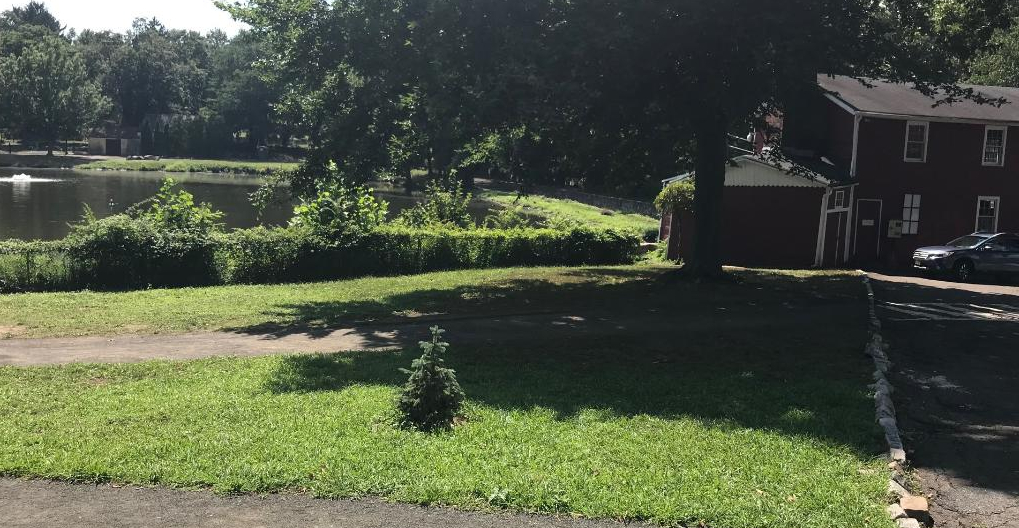
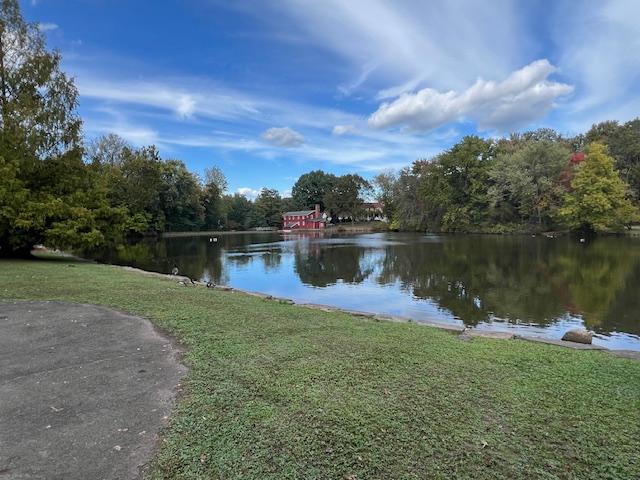
The view of Coopers Park and Pond from the museum front porch

Coopers Pond Park and the museum from the other side of the park

The history of the house and grounds of the Bergenfield Museum

Please note getting to the museum can be confusing as Google Maps and the museum diagram to get there are wrong. You will need to go down Ralph Road and then park before entering the complex. It is hard with the turnaround in the site to drive out with your car.

The entrance to the Bergenfield Museum at 100 Cooper Street

The entrance to the museum off Ralph Street. Please follow the signs.

I was met with a very enthusiastic group of volunteers who are so proud of the house and the way it is presented to the public. When you enter the house, you are met in the foyer of the home which is filled with pictures and small displays and then led to what was the parlor room where the family would have all their entertainment and socializing. Inside the room there is a very interesting portrait of a mysterious woman, who even the museum docents do not who she is, located above the fireplace.

The woman of mystery who holds a prominent place over the fireplace mantle

The room is decorated in period furnishings and even has one of the original phonographs. My docent, David, showed me how it worked and how you were able to get the volume up on the record player by opening one of the small doors in the cabinet.
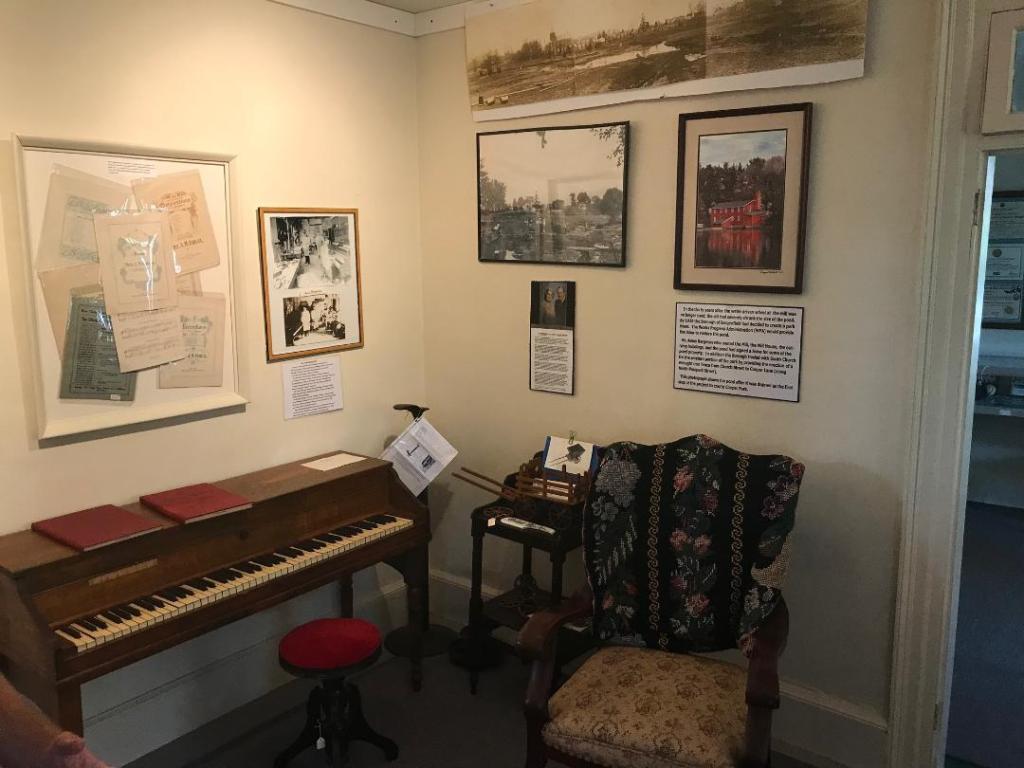
The ‘starter’ organ in the Living Room
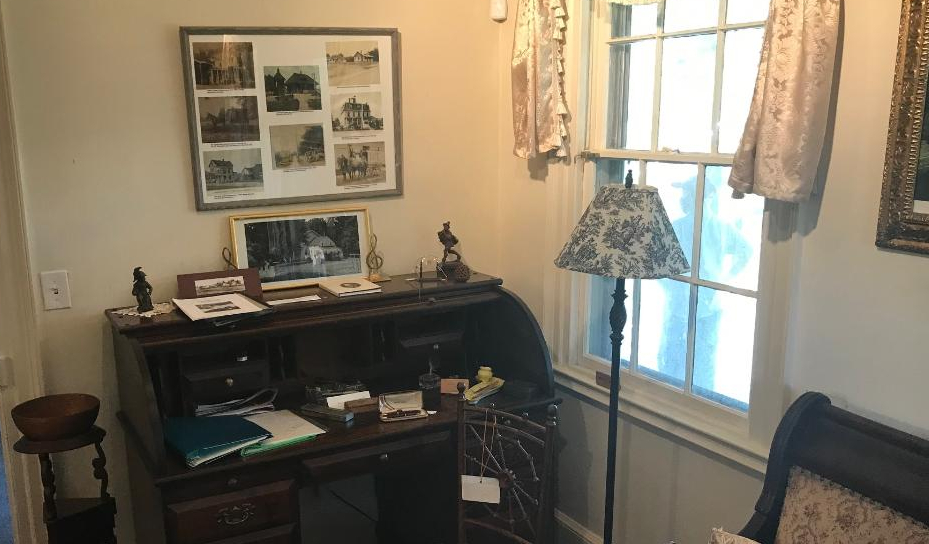
The home was once a working farm/business

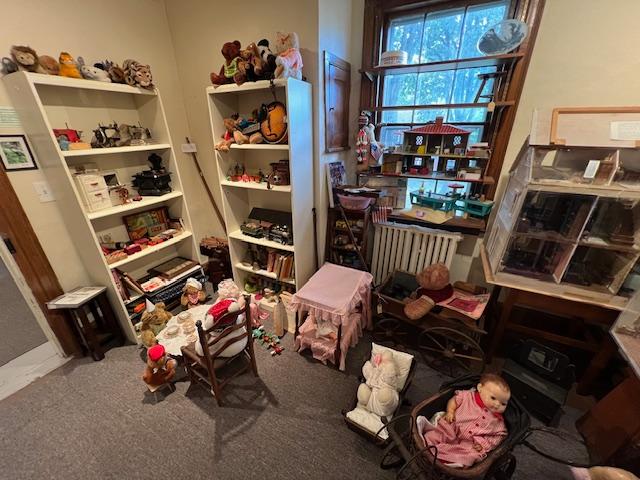
The room towards the back has an extensive collection of toys from the last one hundred years. There were several toys such a china dolls and metal ovens that were popular in the late 1800’s and early 1900’s to modern Fisher Price toys of the 1970’s that I remember growing up with as a kid. The site had once been a toy factory before the turn of the last century and these displays honor that history.

The Toy Room at the Bergenfield Museum is quite extensive
The museum is very much dedicated to the history of the Borough of Bergenfield, NJ. There are nice displays of the town’s school district and its history. The old school system pictures feature items from elementary school to high school and items that students would have used at the school. The elementary school featured in many of the pictures is still used by the town today according to my tour guide, David that afternoon. He told me he had attended the school growing up.

There was a small display of both the Bergenfield Fire and Police Departments and their progression through the years in the town. It is funny how much has changed cosmetically about the look of the job but the job itself is still the same. Helping people and keeping the town safe.

The Fire and Police Department display at the Bergenfield Museum

When you enter what was once the dining room, is the Chair Collection of Tunis Richard Cooper, whose factory was one of the barns on the property.
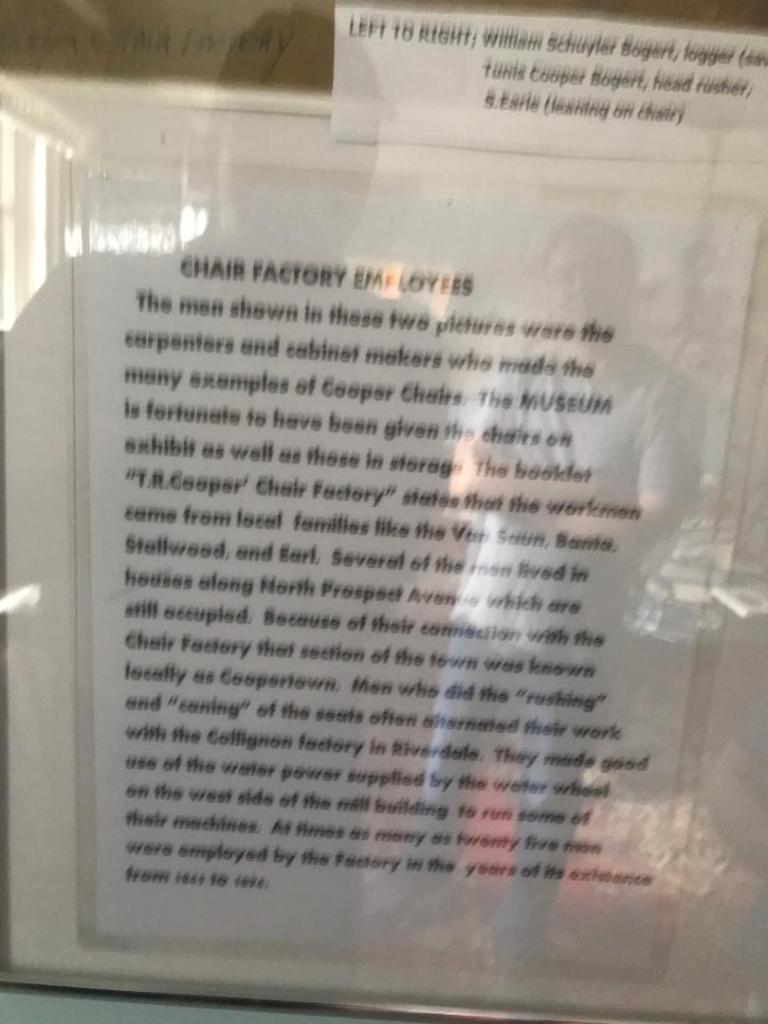
The Chair Factory rules

Some of the samples of the chairs manufactured at the barn factory

There were all sorts of makes and kinds of chairs throughout the room as well as many decorative pieces. The museum has an extensive collection of all the decorative furnishings that were made on the property including what the factory looked like and the rules and conduct of the employees working there.
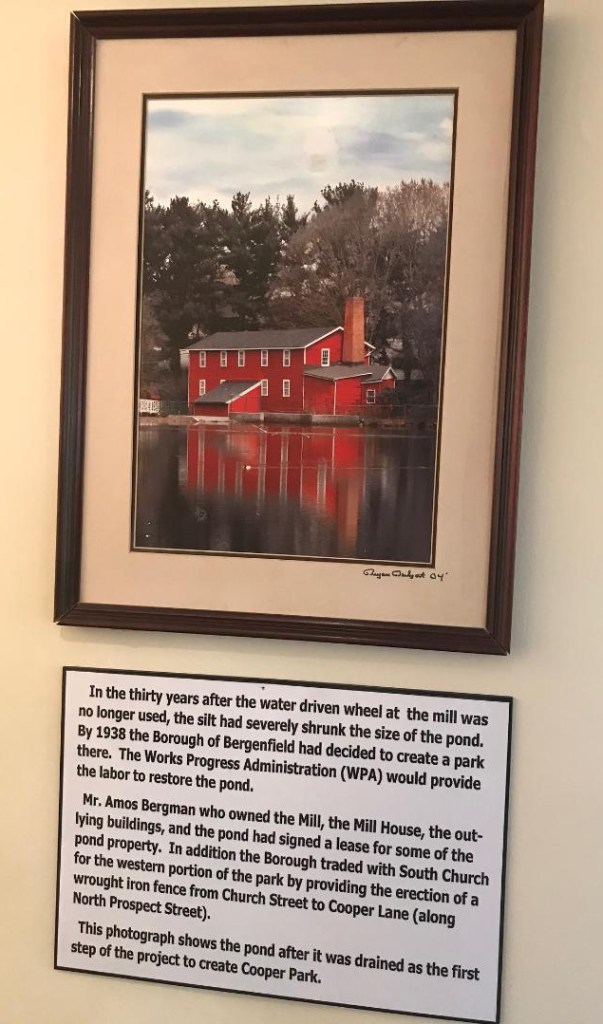
The working mill building on the property

The next room is the working kitchen of the original house with all sorts of kitchen equipment through the ages including a collection of toasters. There is also a working heart where the volunteers do some cooking.
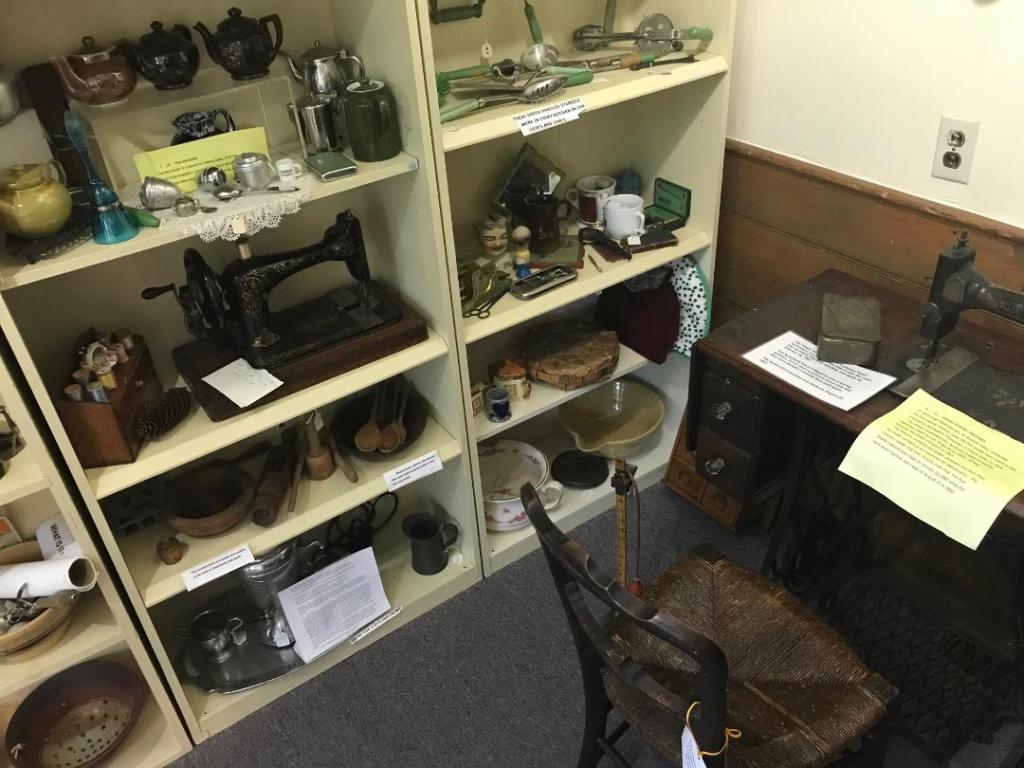
Everything to keep a kitchen running

The hearth of the kitchen is where all the action was in the kitchen

The back room of the house has a large military display that includes local heroes of the Revolutionary War, Civil War, WWI and the Vietnam War. There are all sorts of memorabilia from the soldiers and their families.
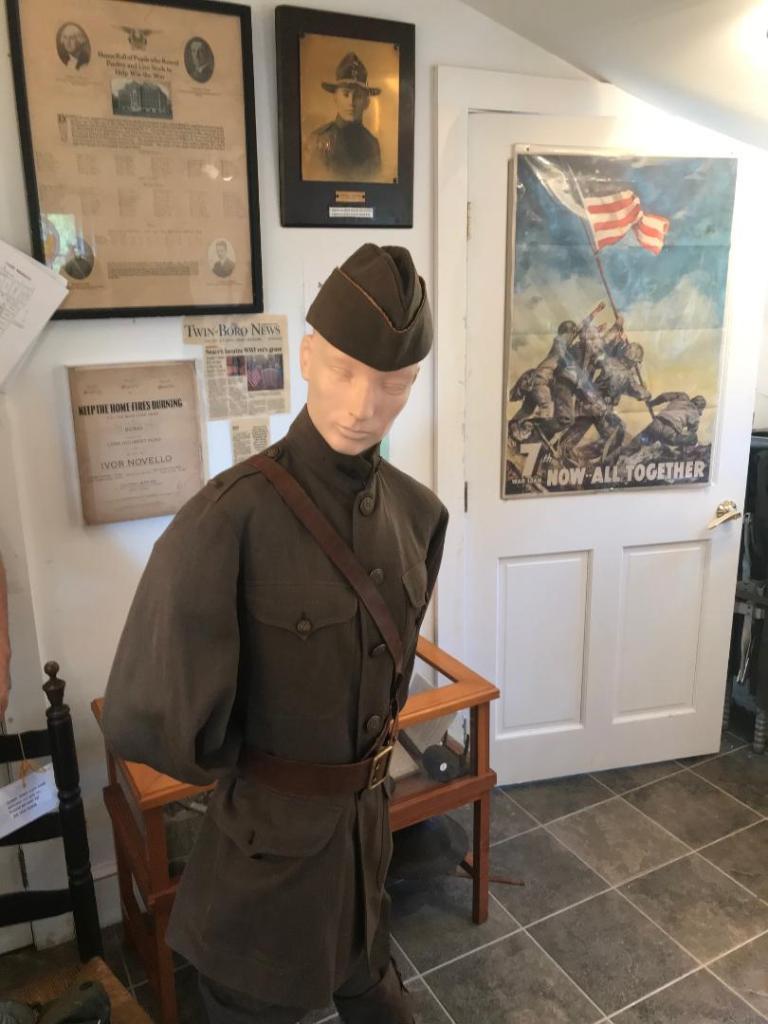
The Military display describes Bergenfield’s contribution to military battle from the Revolutionary War to Vietnam

The Military Room showcases our contributions on freedom
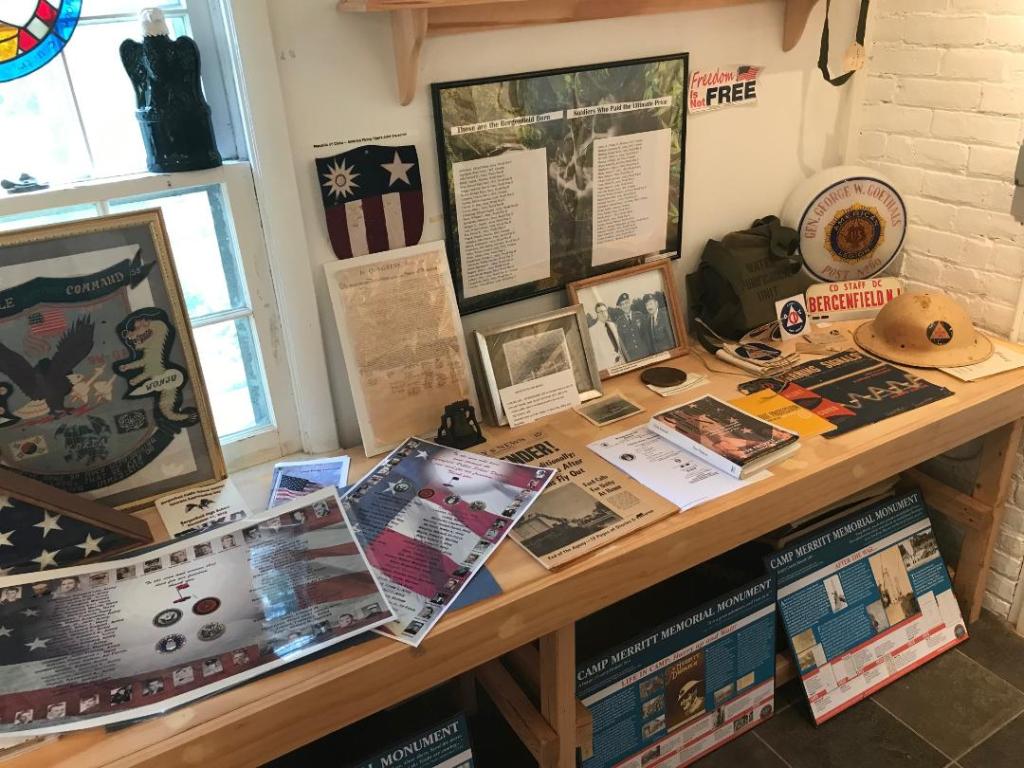
The patriotic duties of the town of Bergenfield, NJ
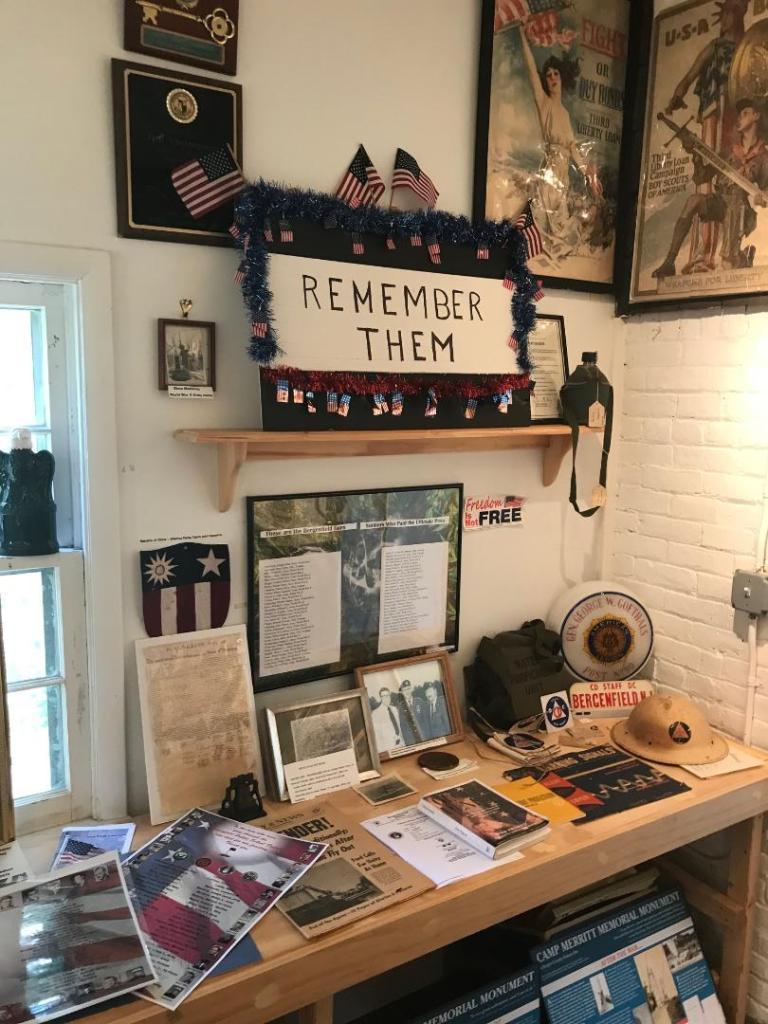
The museum has a 9/11 Memorial to the town and its contributions to that horrible day

Take time to walk the grounds and admire the park. This beautiful green space was built by the WPA during the Depression and the landscaped park includes Cooper’s pond, extensive gardens and paths of green lawn.
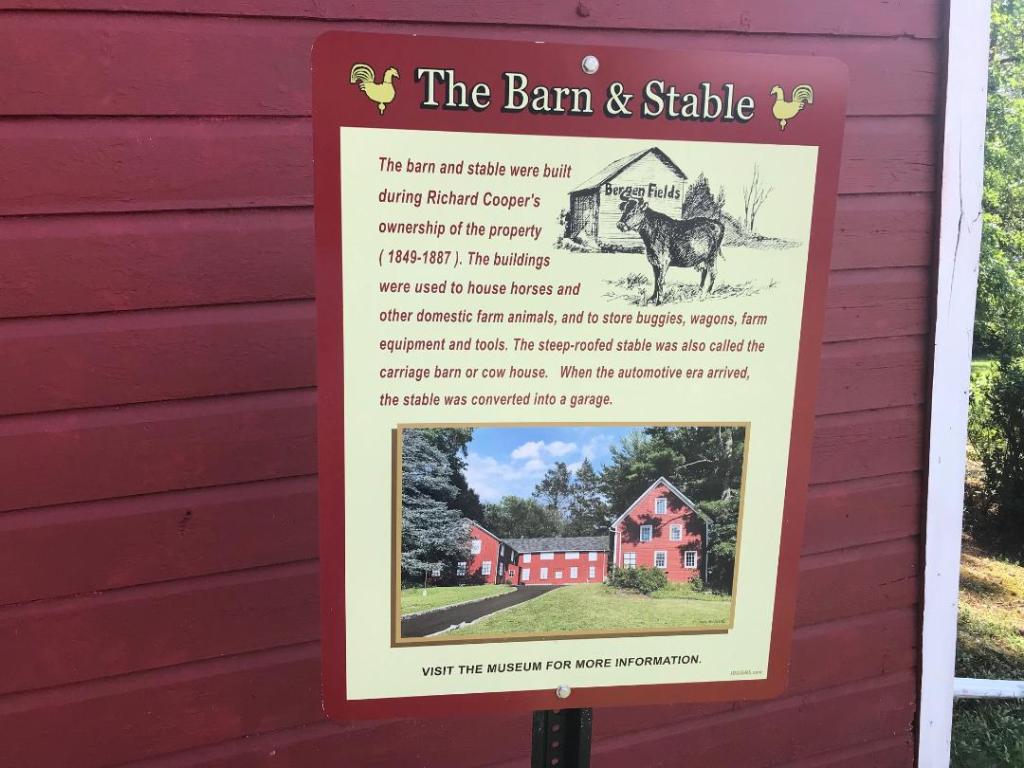
The grounds of the museum were once a farm and a working factory environment
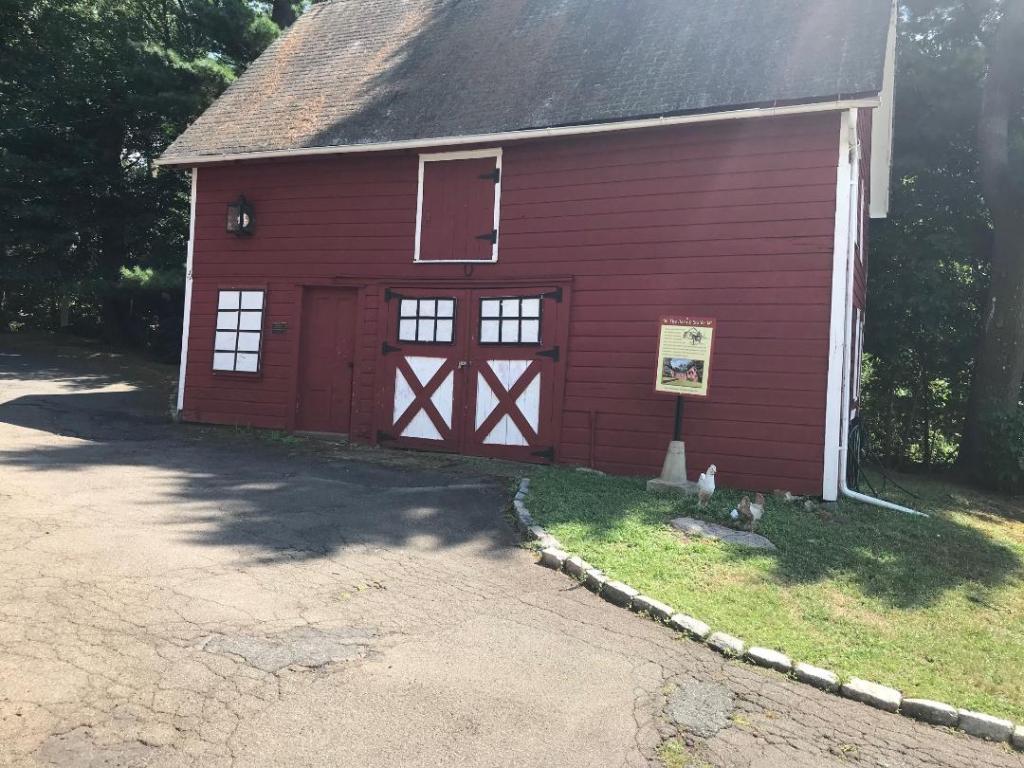
The factory/barn on the Bergenfield Museum property

The grounds of the Bergenfield Museum in Cooper’s Pond Park
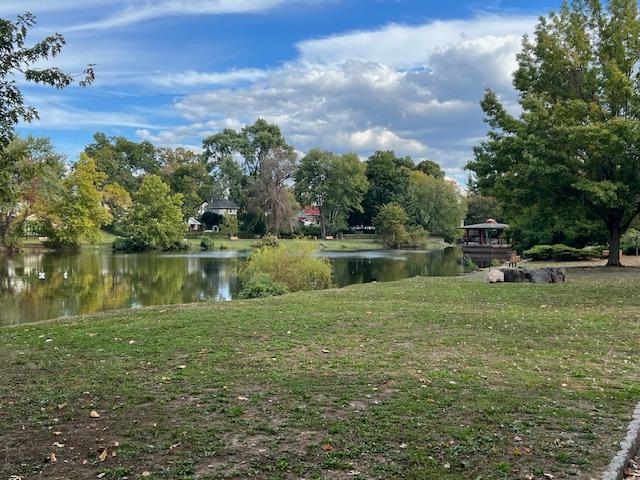
The park from the museum site in the early fall months of 2024

Cooper’s Pond Park is a quiet and very green oasis from the distractions of today. It is a nice patch of nature to just walk around in and relax and enjoy the beautiful sunny weather.

The History of the Bergenfield Museum:

(from the museum website)

Two Hundred years after the founding of the United States, local historian, Betty Schmelz began collecting artifacts that were essential for telling Bergenfield’s story. By 1988, her small collection had blossomed into full museum displays comprised of a century’s worth of wedding dresses, Camp Merritt and WWI memorabilia and testaments to the Bergenfield Music Department.

The Bergenfield Music Department display

From 2002 to 2014, the museum closed, and the collection was moved to storage until negotiations were settled with the Borough of Bergenfield. In July of 2013, volunteers reassembled the items for public viewing and began rehabilitation efforts.

The Museum House Timeline:

(From the museum’s pamphlet)

The tools to create those wonderful and decorative chairs

The Tunis R. Cooper property was originally owned by French Huguenot immigrants, the Demarest family. After years of changed ownership and purpose, the legacy of the property is now protected by the Bergenfield Museum Society:

The timeline of the town and its development:

*1677-1693: The Demarest family negotiates a deed for the Cooper Property with local Native Americans and settles throughout Schraalenburgh (now known as Bergen County).

*1840: Richard Tunis Cooper purchases the property and begins hiring local farmers to manufacture chairs.

*1849-1890’s: Richard’s son, Tunis Richard Cooper, purchases the property and establishes a successful chair factory. A major warehouse is opened in New York City.

*1897-1997: Ownership of the estate changes several more times:

-1897: Toymaker Oskar Martin, purchased the property.

-1908: Amos Bergman holds ownership until his death.

-1949: Bergman housekeeper, Daisy Coringrato, sells the property to wool importers, Alec and Catherine Marchbank.

*1997: Marchbank family initiates efforts to preserve the remaining Cooper Chair Factory and surrounding land.

*2004: The Borough of Bergenfield purchases the property with the four remaining buildings and solidifies preservation efforts.

*2013: The Bergenfield Museum successfully opens with a collection of authentic Bergen County artifacts.

My Team Project with my Marketing students at Bergen Community College promoting the Bergenfield Museum for Destination Tourism in November 2024:

The blog on the project:

This is when I got the idea of doing the same project in a larger form. I saw the Bergenfield Museum, a small gem on the other side of Coopers Pond Park, that did not much traffic considering the museum is open both during the week and the weekend. The building was an original Demarest homestead and the family had their family plot in the South Church which is located right next to the park. So I approached both the museum and the church to partner with me in creating a project to promote this corner of Bergenfield, NJ for tourism.

Cooper’s Pond Park during the Summer months

So I set up the next series of tours for my students that encompassed the Bergenfield Museum, Coopers Pond Park and the historical South Church graveyard where the Demarest family plot was located. The Bergenfield Museum building is the original Demarest family homestead so it tied in nicely to the project.

Walking through Coopers Pond Park inspired this fascinating project

https://bergenfield.com/notices-announcements/oem-notices/cooper-s-pond-update

Two weeks after the Behnke Museum project, I introduced this project and the next week we took a walking tour of all three sites starting with walking through Cooper Pond Park, a WPA project and one of the most beautiful and underrated parks in Bergen County.
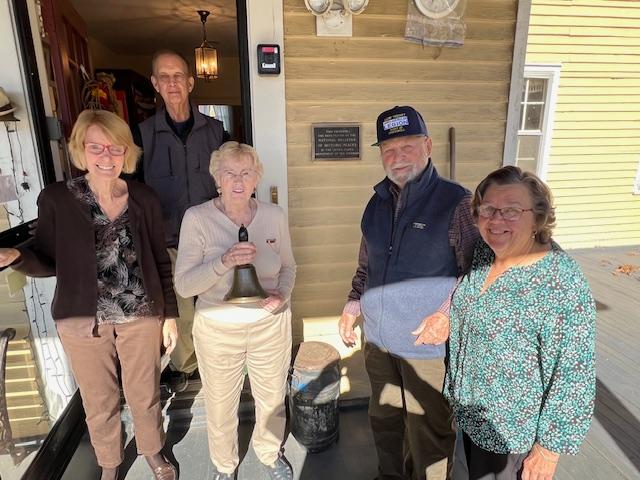
We met with the Bergenfield Volunteer Board at the museum to start the tour

The Bergenfield Museum at 100 Cooper Street in Bergenfield, NJ

https://bergenfield.com/museum-society

https://www.facebook.com/bergenfieldmuseum/

My review on TripAdvisor:

https://www.tripadvisor.com/Profile/R4960NKjustinw/photo/776032151?m=19905

My review on VisitingaMuseum.com:

The President of the Bergenfield Museum Board, Joanne, helped me organize the Team Field Trip of the museum. She had four other docents from the Board helping in four different rooms so each Team would follow each other through the rooms. Each Team had about ten minutes in each room for the docent to explain the collection to them. The Student Consultants got to visit the museum on their own time as well.

Our class being greeted by the President of the Bergenfield Museum, Joanne

Touring the Living Room of the old Demarest Homestead

Touring the old Dining Room and the Chair Factory display in the museum
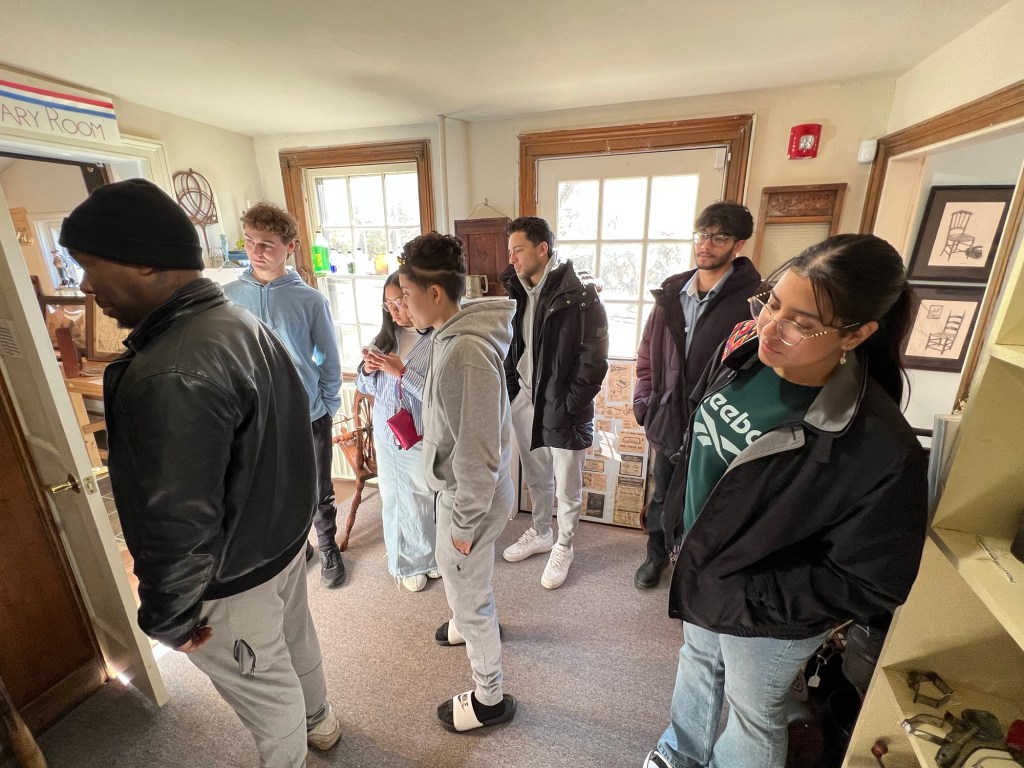
Touring the Kitchen area of the old homestead
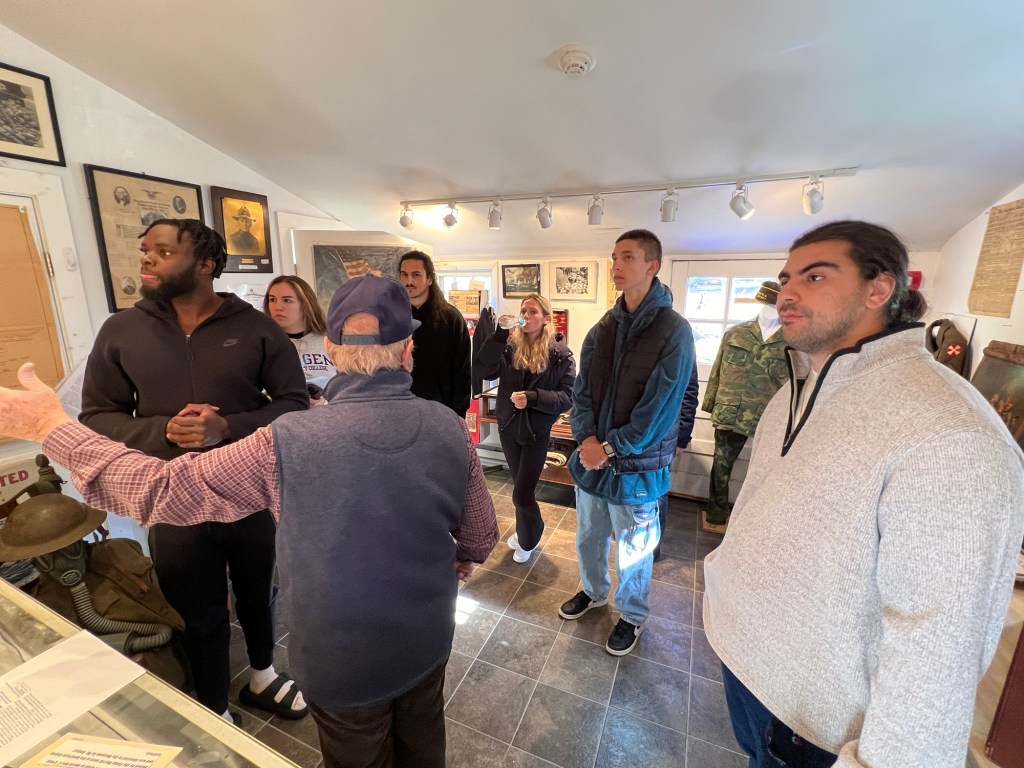
Touring the Military Room of the museum
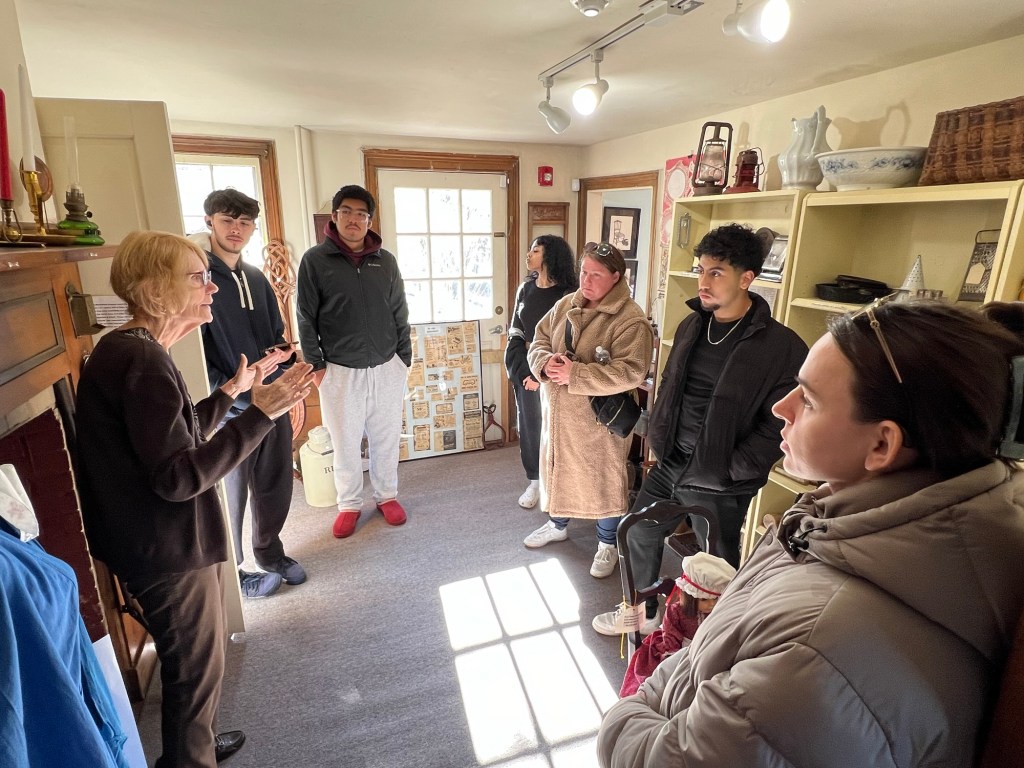
Discussions of the function of the kitchen on the farm
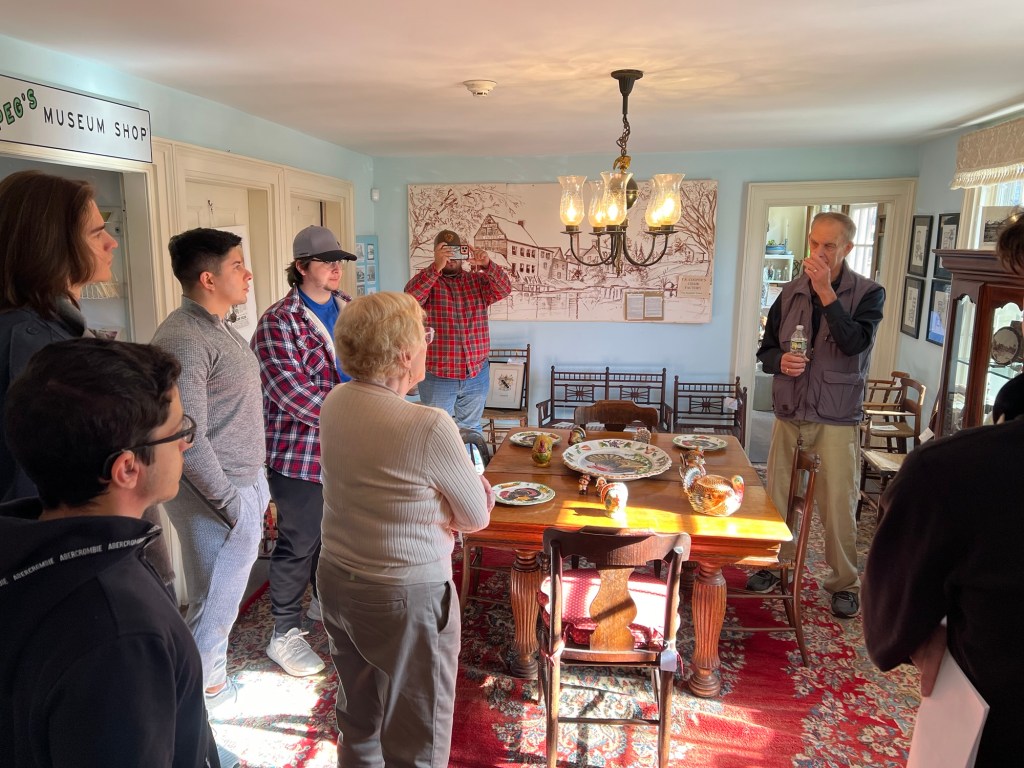
Discussing the Chair manufacturing in Bergenfield, NJ

The Student Consultants touring the Living Room
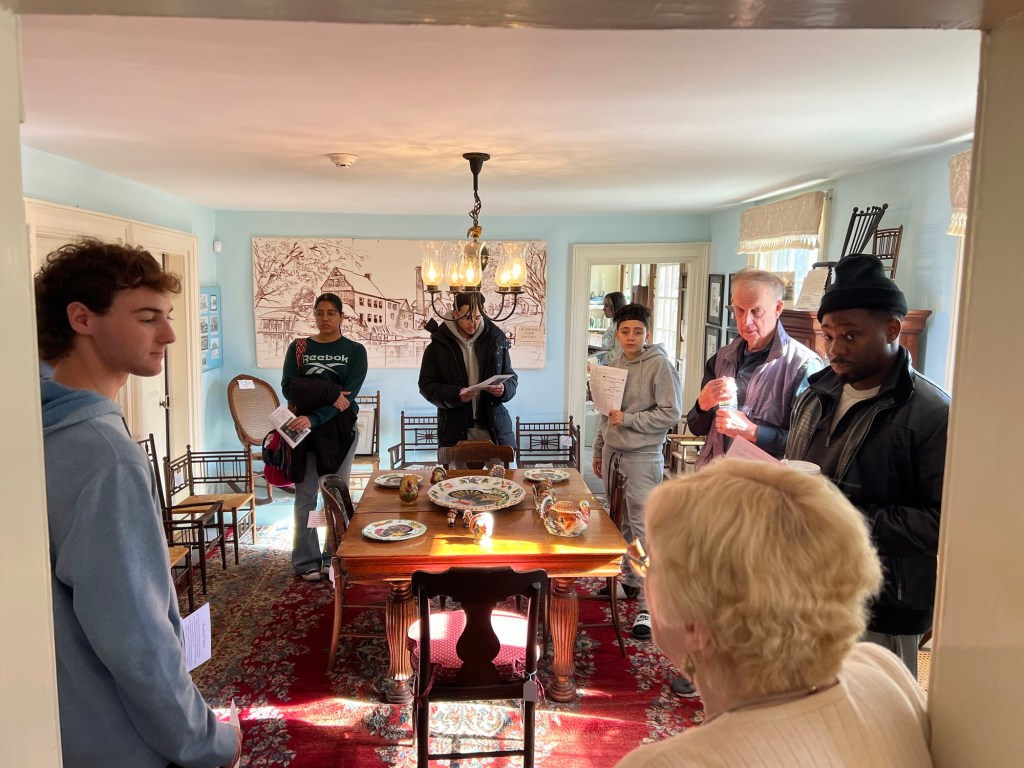
The Teams taking notes during the tour

After our tour of the museum was over, we took a group picture outside of the museum with the Board of the museum.
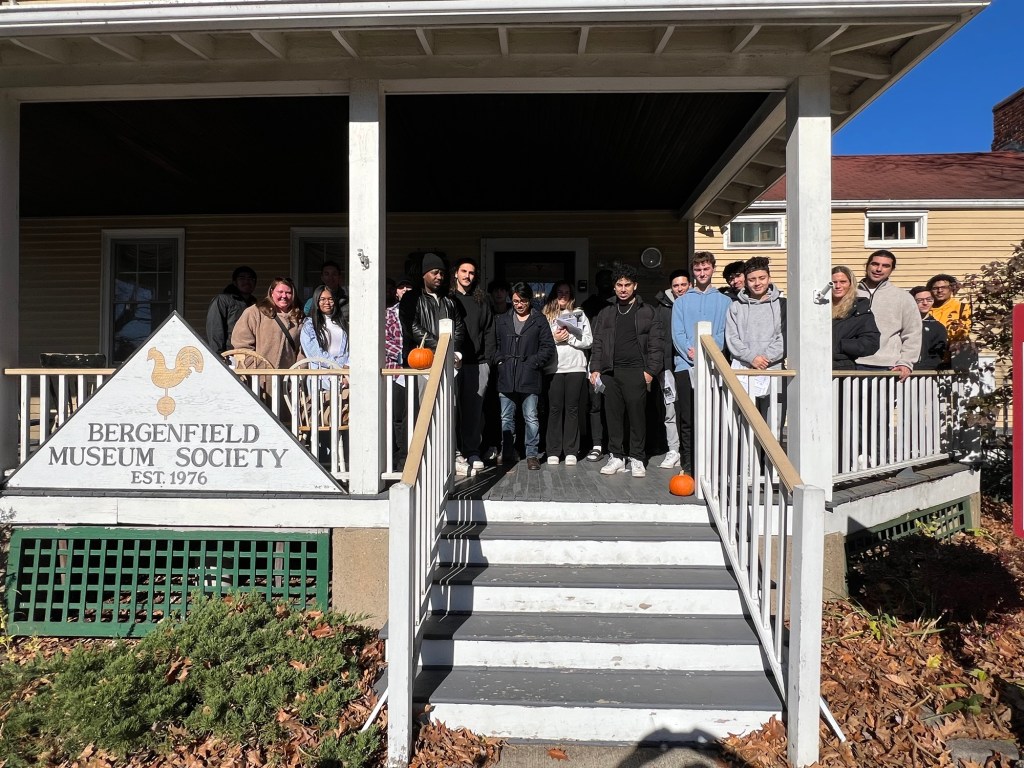
The Student Consultants from Bergecco-Parc Consultants Inc. visiting the Bergenfield museum

Here is the Presentation and Commercials:

The whole idea of the Bergenfield Project was not just to promote the museums, parks and historic churches but to create Destination Marketing Project to promote the Town of Bergenfield as a place to visit for both domestic and foreign tourism. This is the project that promotes that vision:

The Bergenfield Team website for Bergecco-Parc Consulting Inc:

https://bergeccoparcconsultinginc4.wordpress.com/

The presentation on the Bergenfield Museum

The day of the presentation the students had to be in professional dress with men expected to be in Jacket and tie or a suit and the ladies in blouses, slacks, suits and dresses. We presented this project to the Board and members of the Bergenfield Museum and to the Communications director of Bergenfield, NJ, which really gave the students a stamp of approval.

Video of the Presentation:

Part One:

Part Two:

PowerPoint of the Presentation:

https://docs.google.com/presentation/d/1VUbI7TwxcOVTjXf-Ra-7GbC7fErs0-VU2JSHVMDX9rc/edit?usp=sharing

I thought the commercials the students came up with were very clever.

The Commercials of the Bergenfield Museum:

Team One:

Team Two:

Team Three:

Team Four:

The Children’s Walking Tour of the Bergenfield Museum:

Team One:

Team Two:

Team Three:

Team Four:

It was a great Marketing project and the students did an excellent job helping the museum with their Digital Marketing. They also created pamphlets in English and Spanish, a new webpage and a Instagram account for them.

It was a very successful project and the students did an excellent job on it.
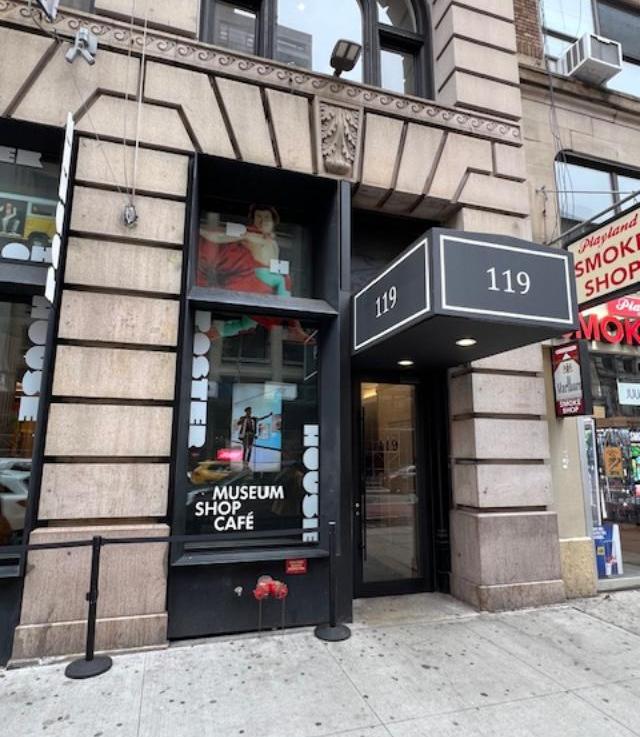
Poster House                                                         119 West 23rd Street                                          New York, NY 10011

Poster House 119 West 23rd Street New York, NY 10011

Poster House

119 West 23rd Street

New York, NY 10011

(917) 722-2439

https://www.facebook.com/posterhousenyc/

Open: Sunday 10:00am-6:00pm/Monday-Wednesday Closed/ Thursday-Saturday 10:00am-6:00pm

Admission: Adults $12.00/Children Over 18/People with Disabilities/Students & Educators/Veterans $8.00. Children under 18 and Members are free (please check website for changes)

My review on TripAdvisor:

https://www.tripadvisor.com/Attraction_Review-g60763-d17794247-Reviews-Poster_House-New_York_City_New_York.html

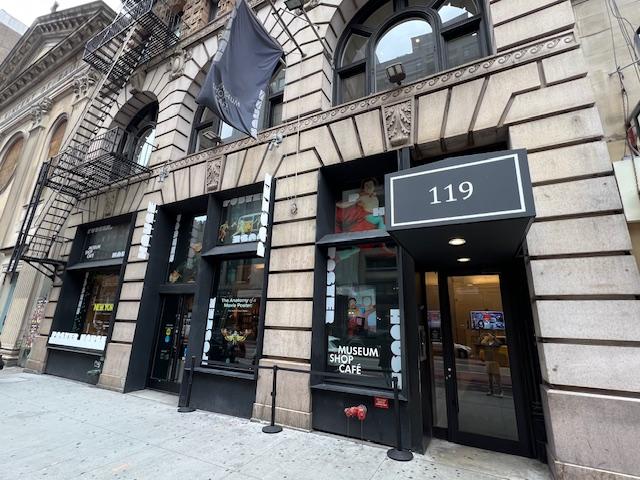
The Poster House Museum at 119 West 23rd Street.

The Poster House is a little gem of a museum that I must have passed many times and never knew it was a museum. I had never heard of this museum before. The Poster House is dedicated to the history and art of posters and how they impact our lives as a way of communication. I got a chance to see the whole museum in about two hours.

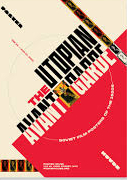
The first exhibition on the first floor of the museum was “Utopian Avant-Guard: Soviet Film Posters of the 1920’s”, a retrospect on the film industry during the Silent Era. It was a time with the fall of the Czar and the coming of Communism where artists tried to shape the new face of Communism before the rigidity of the party controlled the whole film industry from the end of Silents until the Fall of Communism in the early 1990’s.

“The Utopian Avant-Guard: Soviet Film Posters of the 1920’s” exhibition

During the early years of the Communism, the country was going through radical changes that were not facing the rigid standards of the future Communist Party. Artists and film makers were getting their creativity from the West from countries in Europe and the United States. The creative class got to experiment with film and adapted what they saw to their own markets. This did not last long as Communism took hold and then started to control the content that was shown in the country. This continued from the Silent Era until the mid 1990’s when Communism fell.

Movie Poster from the 1920’s: ‘Six Girls Seeking Shelter’ from 1928

There were two interesting exhibitions on the lower level on artist and poster maker Ethel Reed. The exhibition was a collection of her work for magazines, books and film. She handled all sorts of mediums and was prominent for many years in the industry until her work fell out of fashion and her behavior became erratic with addiction.

“Ethel Reed: I am my own Woman”

The last exhibition that I toured was “Experimental Marriage: Women in Early Hollywood”, women whose role in in the film industry included writers, directors and producers. It showed how the influential women were in the industry before it became corporate. It also showed how actors had a lot of say in their films and the themes of the films were more female based. As things got concentrated in California and became more unionized, it became more of ‘Good Old Boys’ network as the industry became more streamlined.

“Experimental Marriage: Women in Early Hollywood” exhibition

What I liked about the museum is that it showed the politics from all angles and explained its progression and future in these industries.

The museum also has a nice gift shop and bookstore and a small restaurant, Café des Affiches.

History & Mission of the Poster House:

(From the Museum website)

The Poster House is dedicated to presenting the impact, culture and design of posters, both as historical documents and contemporary visual communication.

Through temporary exhibitions, a growing permanent collection and educational events, Poster House explores the enormous impact of posters on society and culture and how they have been adapted to contemporary use. As the first poster museum in the United States, The Poster House provides a space for inquiry for all those interested in design, advertising and public interventions with an aim to improve design literacy among the general public.

Posters explore:

*Mass communication and persuasion

*the intersection of art and commerce

*control of the public domain

Poster House was founded in 2015 with an eye towards filling a long-acknowledged gap in the New York cultural landscape for accessible art and design. After several years of planning and construction, Poster House opened its doors on June 20th, 2019.

Poster House is proud to receive support from the New York State Council of the Arts. Poster House is an affiliate member of the International Vintage Poster Dealers Association.

Day Two Hundred and Forty Visiting the Historical Sites of Southern New Jersey in Cumberland, Cape May and Salem Counties-A Local Journey on Father’s Day Weekend                                                             June 18th-19th, 2022

Day Two Hundred and Forty Visiting the Historical Sites of Southern New Jersey in Cumberland, Cape May and Salem Counties-A Local Journey on Father’s Day Weekend June 18th-19th, 2022

Grab your tour book and get in the car to visit all these wonderful sites. There is so much to see and do in Historical Southern New Jersey!

The Salem Historical Society

The Salem Fire Museum

jwatrel's avatarmywalkinmanhattan

The one thing I refuse to do on Father’s Day is to spend the day at the cemetery. I know that is some people’s idea of honoring one’s family members but it is not mine. I went on Friday and paid my respects to my father (whom this blog is dedicated to) and spent time remembering some of the good times we had in past. I dropped some cut flowers from our gardens (some of which he planted) and said a small prayer. Then I left.

My idea of honoring my father and spending Father’s Day with him is to do something that we would have shared together. We were always running around somewhere and exploring something new and doing something fun. That is how I wanted to honor him. By being active and giving him a toast at Sunday dinner.

I had gotten a pamphlet on the historical sites…

View original post 8,238 more words

Mauricetown Historical Society                         1229 Front Street                                Mauricetown, NJ 08329

Mauricetown Historical Society 1229 Front Street Mauricetown, NJ 08329

Mauricetown Historical Society

1229 Front Street

Mauricetown, NJ 08329

(859) 785-0457

http://mauricetownhistoricalsociety.org/

https://www.facebook.com/pages/category/History-Museum/Mauricetown-Historical-Society-178475328895206/

Open: The first and third Sunday’s of each month/Check their website 1:00pm-4:00pm

Admission: Free but donation suggested. See website

My review on TripAdvisor:

https://www.tripadvisor.com/ShowUserReviews-g46606-d24137792-r844173042-Mauricetown_Historical_Society-Mauricetown_New_Jersey.html?m=19905

Mauricetown Historical Society

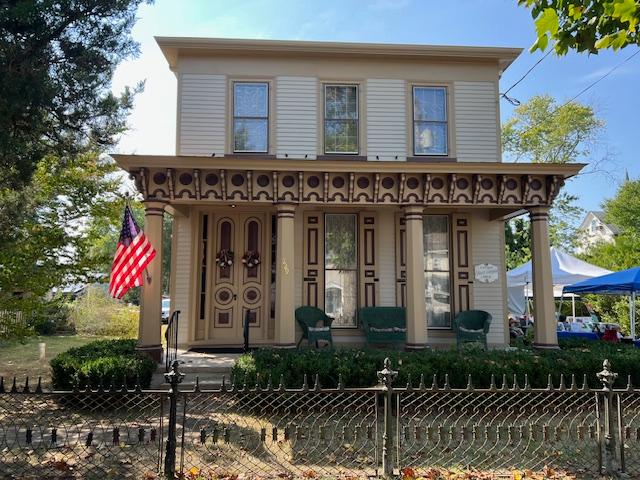
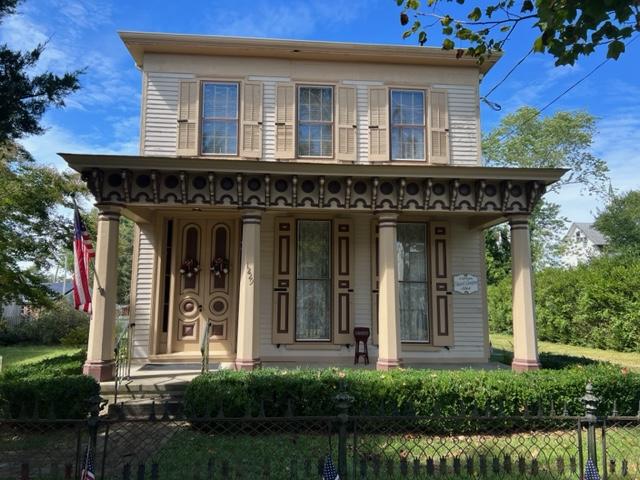
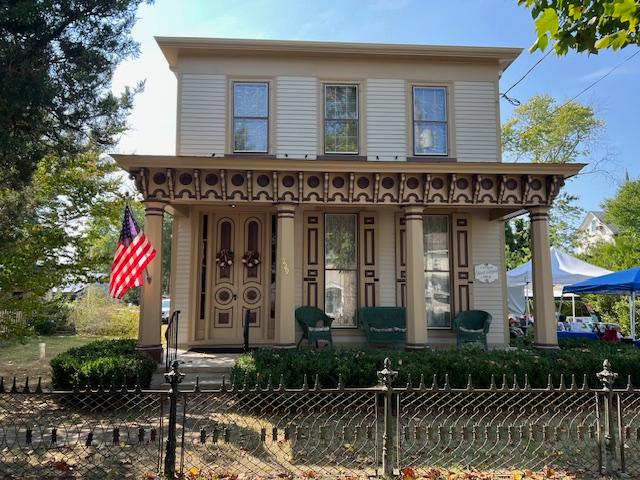
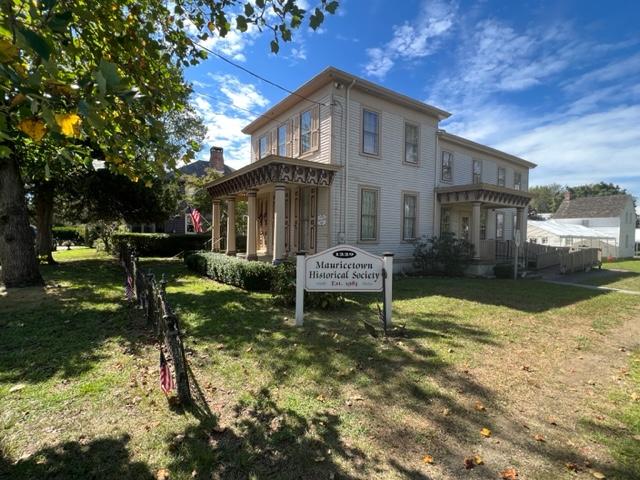
The Mauricetown Historical Society at 1229 Front Street

I visited the Mauricetown (pronounced ‘Morristown’ like its northern neighbor) on a trip to visit historical societies in southern New Jersey. Mauricetown comes from the Dutch word ‘Mauritius’ for the Mauritus River that flowed through the town. “Maurice’ is the English version of the word.

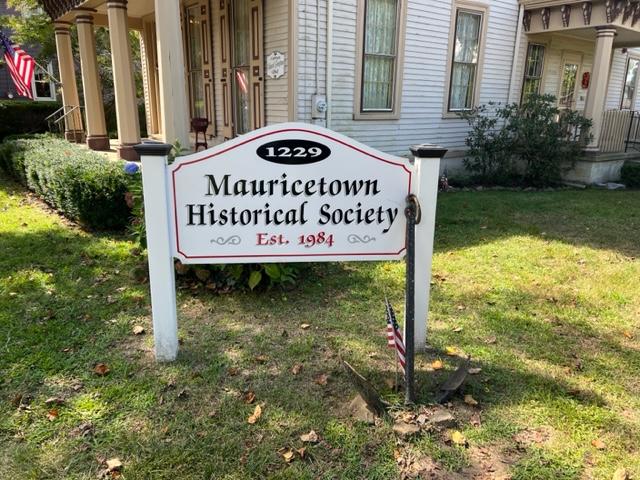
The Society’s welcoming sign

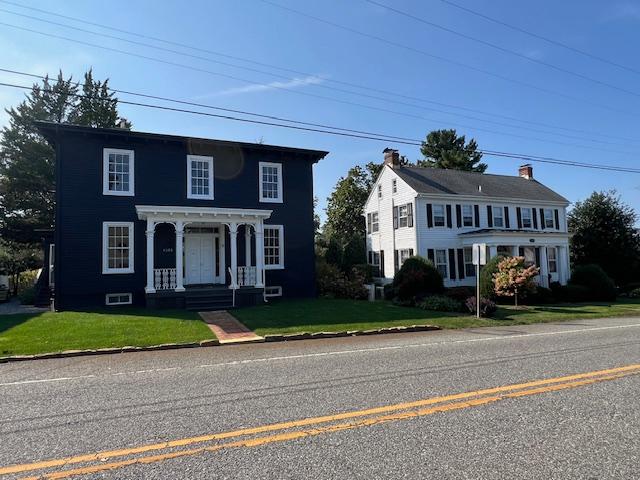
The town itself was used for shipping and trade up and down the East Coast and between 1830 and 1902, 61 ships were built in the boatyard in the village. The town itself is very historic and the walking tour of the early American architecture of the town shows many Federalist and Victorian homes of the former ship captains. Today these homes are in much demand for their beauty and beautiful gardens. The care the homes are getting adds to their beauty. Take time to walk around before you get to the museum.

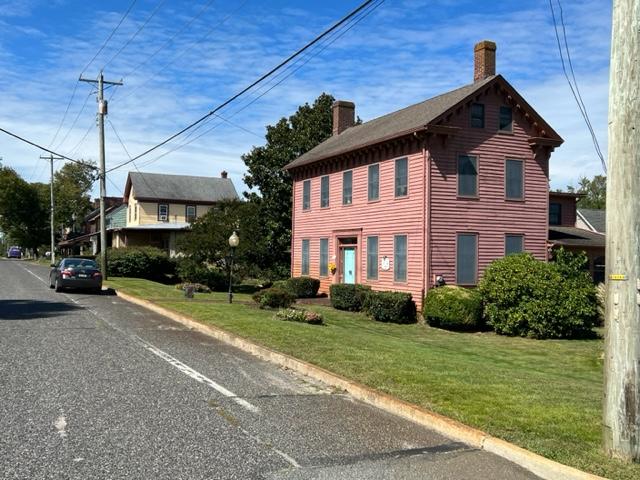
Downtown Mauricetown with the Ship Captain’s homes along the river

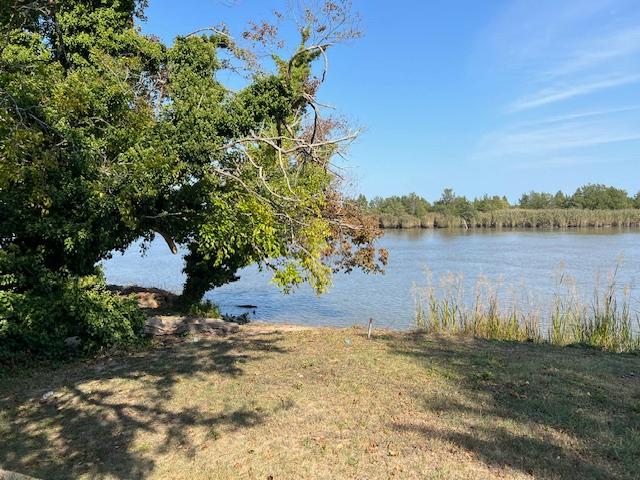
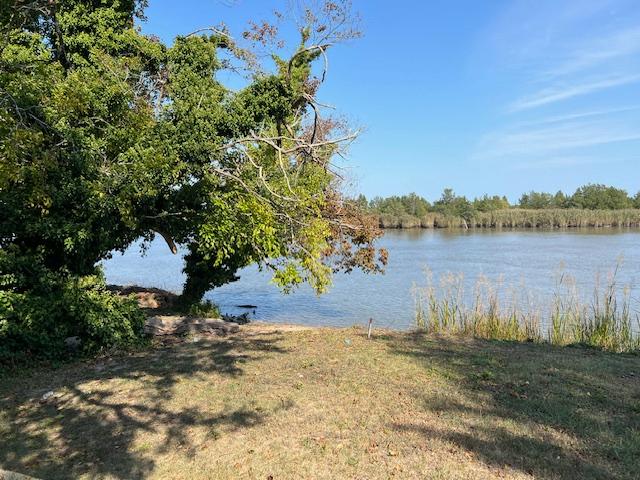
The Mauricetown River in the Summer of 2024

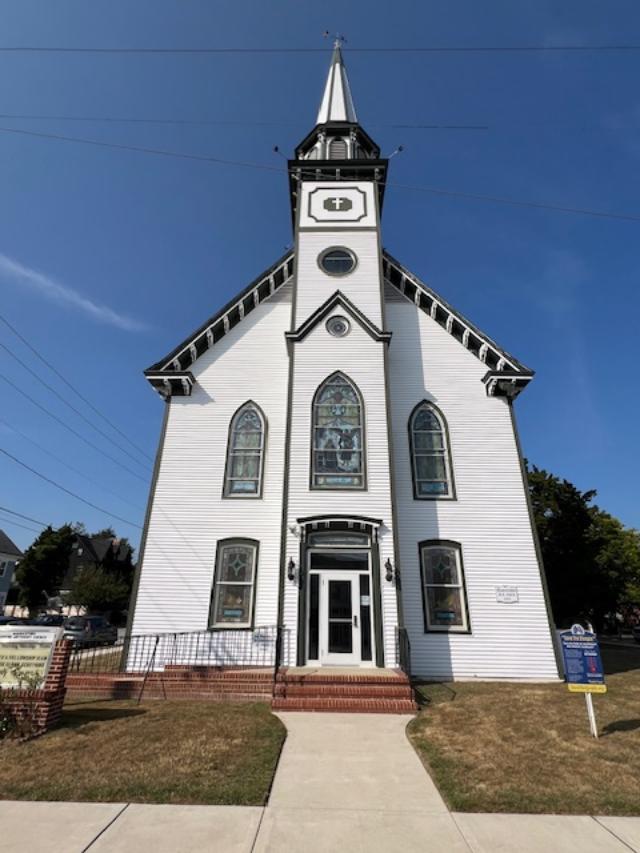
The Mauricetown Historical Methodist Church

The historical homes of Mauricetown, NJ

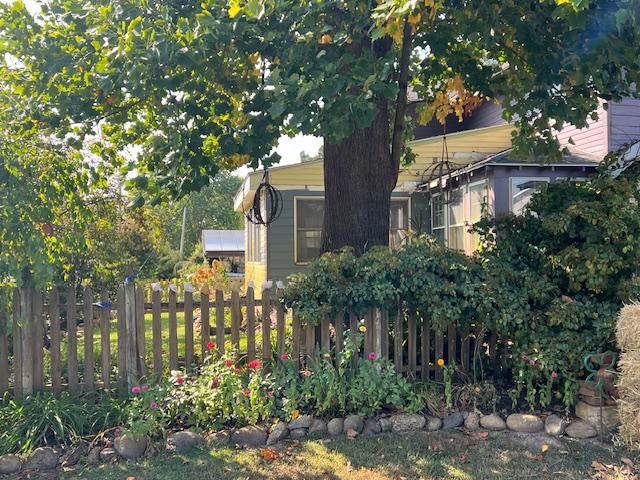
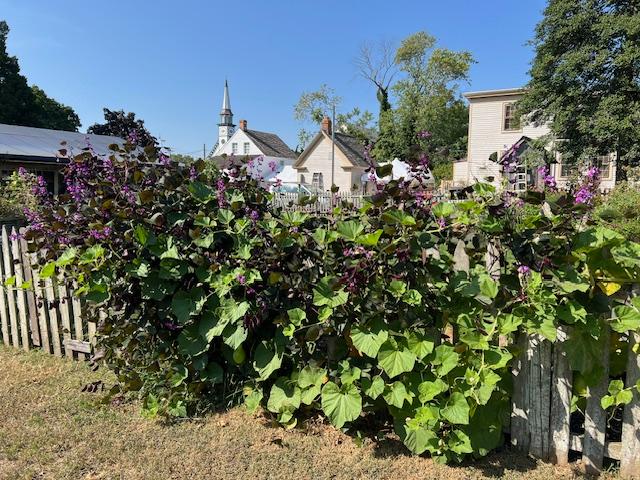
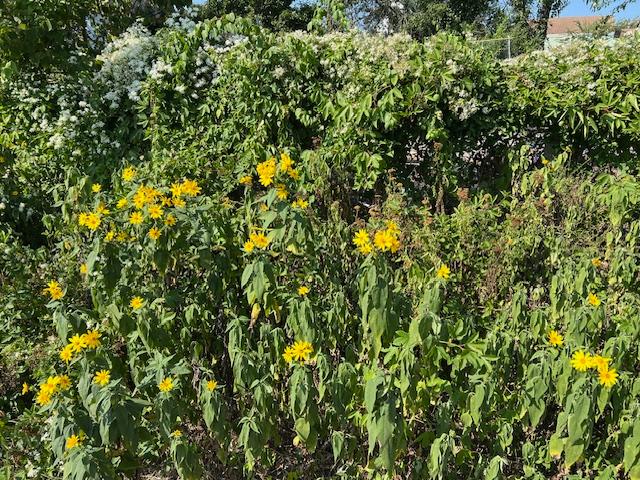
Some of the beautiful gardens in the neighborhood

The neighborhoods gardens in the Summer of 2024

The gardens near the Historical Society

The home that the Society is housed in is one of many ship captains’ homes that was built on this side of town being closer to the river for the other ship captains. Founded in 1984, the Society has taken it upon themselves to start collecting artifacts from the town.

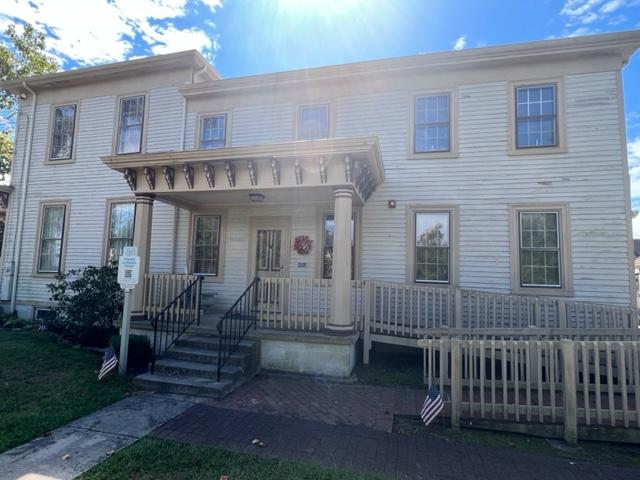
The front of the Historical Society in the Summer of 2024

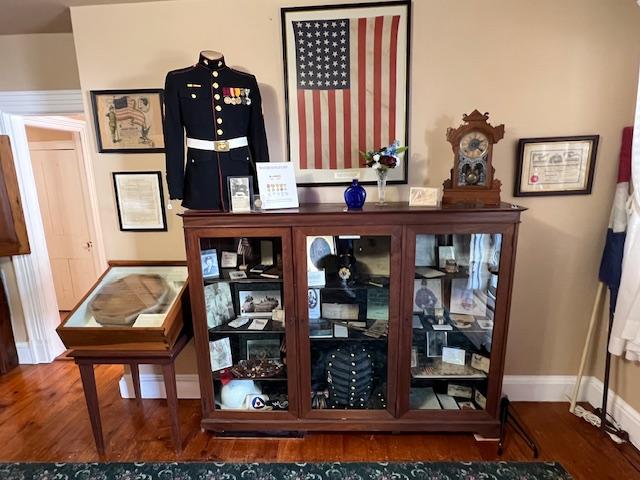
When you first enter the museum to the right, there is an extensive collection of seafaring items and military artifacts. This includes many items from the Civil War and WWI. There was even a rare pair of original sharp shoot glasses.

The Military Collection at the Mauricetown Historical Society (MHS Picture)

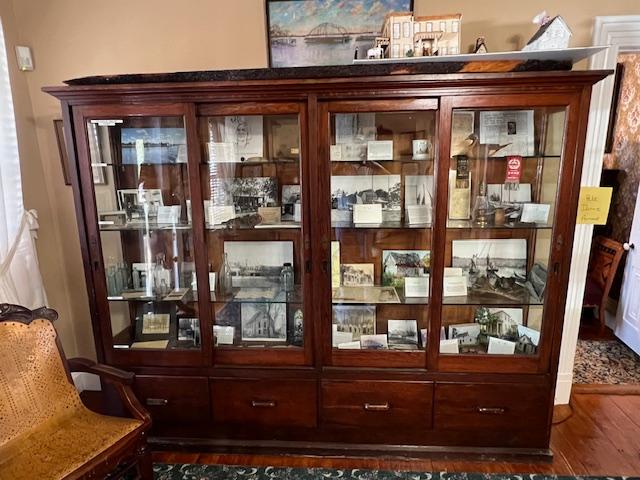
On the other side of the front foyer, is a case line of artifacts from the history of the town from the Lenape Indians to former shipbuilding businesses and local history.

Historical artifacts from the town of Mauricetown, NJ

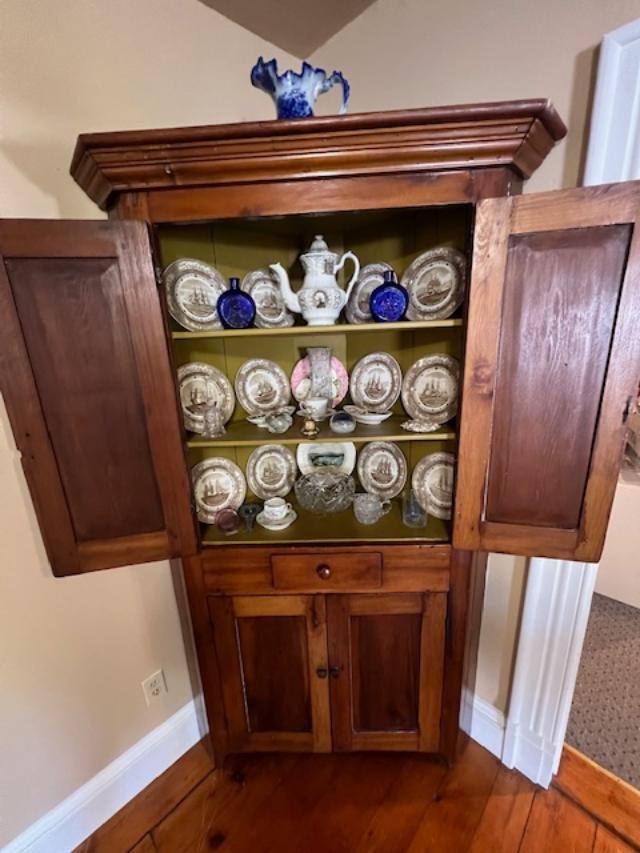
The China Collection in the Main foyer

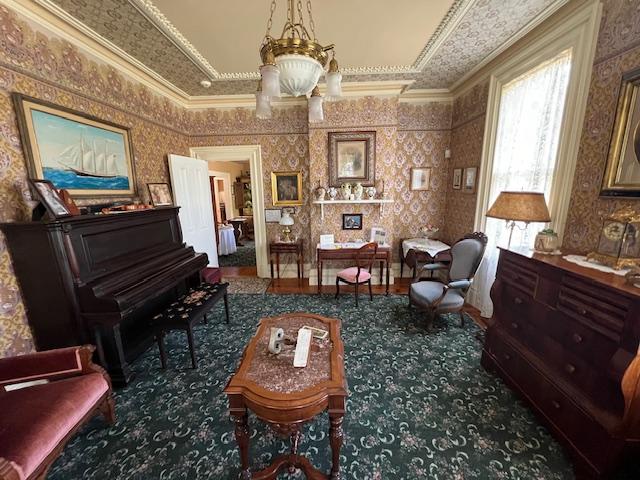
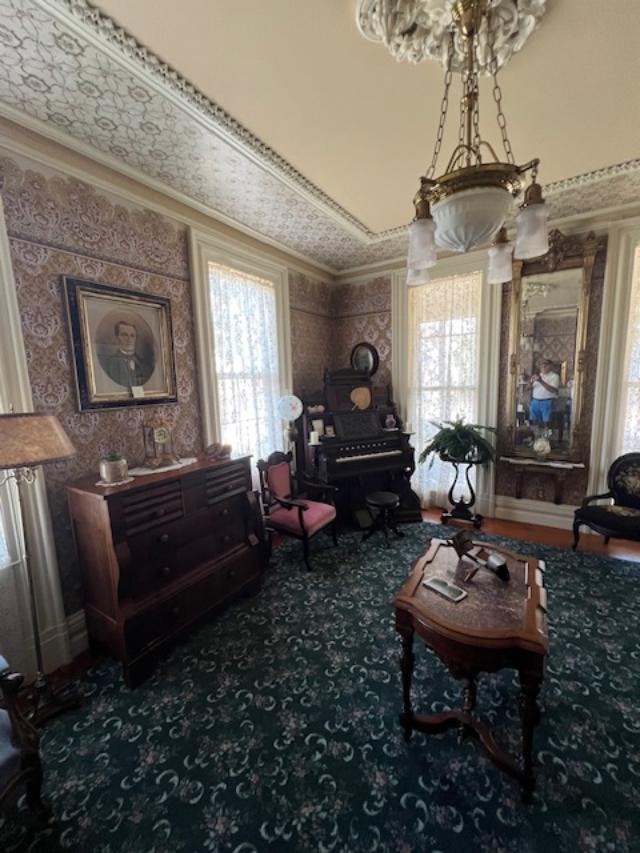
In the Formal Parlor, the room was designed with original molding from decor of the house and a copy of the wallpaper that had been found behind paneling that had been put up in the 1970’s. The room was furnished in period furniture that was a mixture of late 1890’s to the 1920’s.

The Mauricetown Historical Society ‘Parlor Room’ with the original molding and copy of wall paper

The Parlor on the first floor

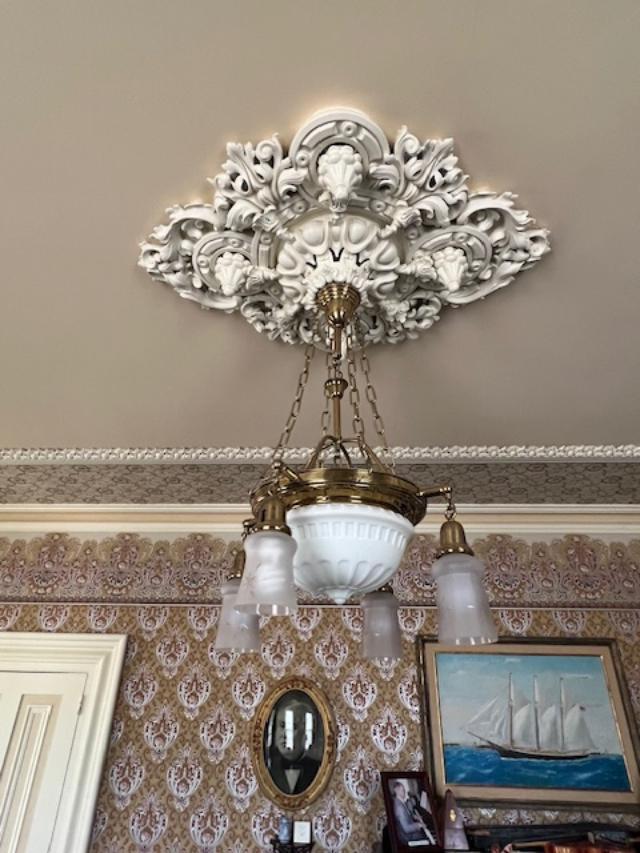
The Chandelier in the Parlor is original to the house

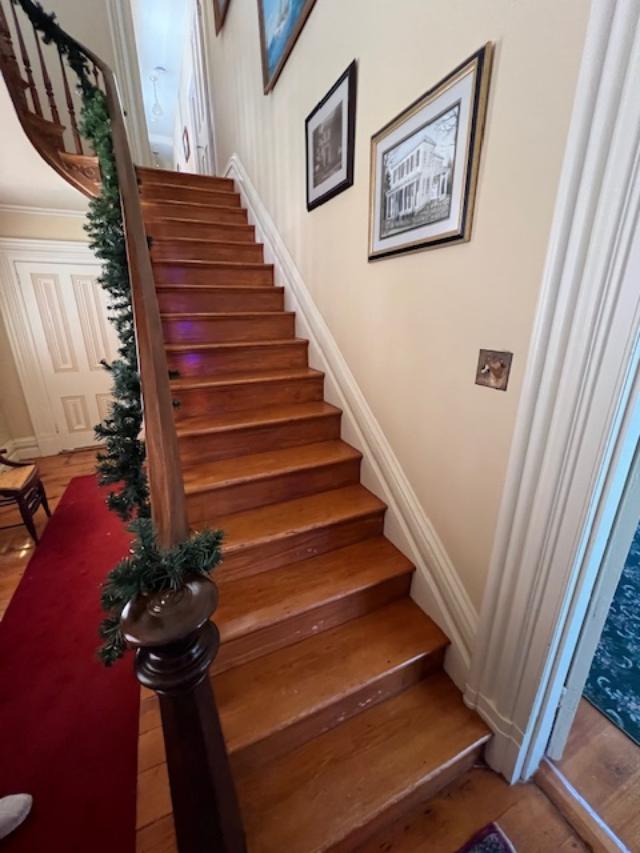
The beautiful back stairs to the second floor

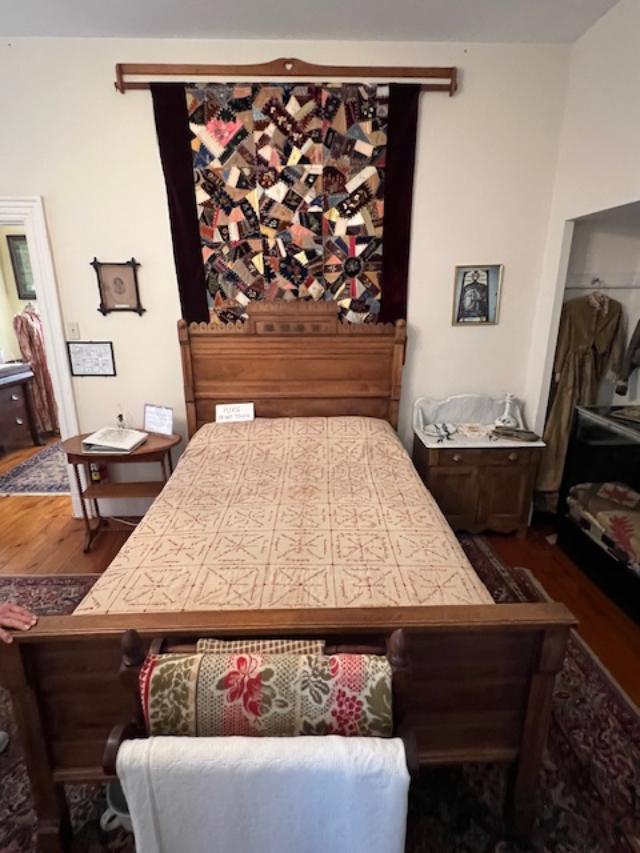
On the second floor, one room was dedicated to a Captain Bacon and his wife, Carolyn, another was full of pictures of the town of Mauricetown through the times, there was a collection of clothing through the ages and a quilt collection that was very impressive.

The beautiful quilt with pieces from everyone in the community

There was one quilt on display that had the names of all the sea captains and their families. Many of the descendants of the town come here to research their families and look at this quilt. There is also another quilt with items native to the area.

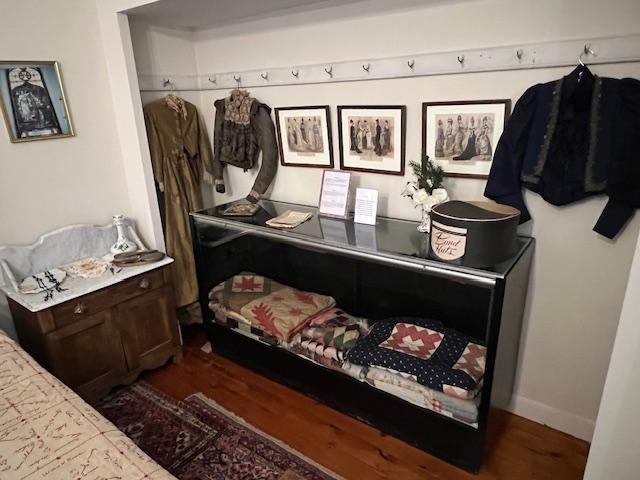
The museum’s collection of quilts and clothing on display

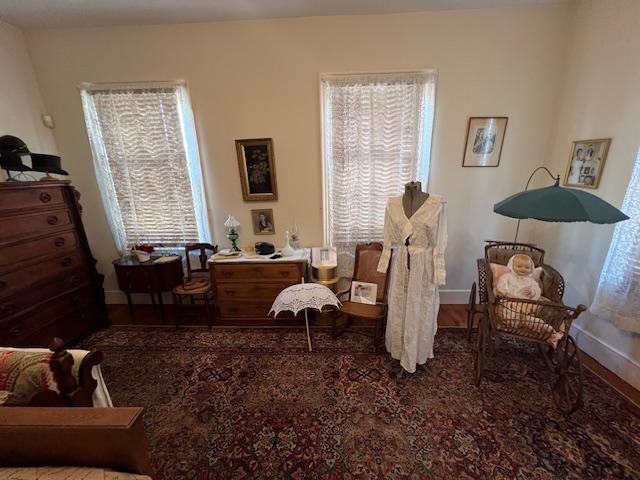
The Second Floor bedroom

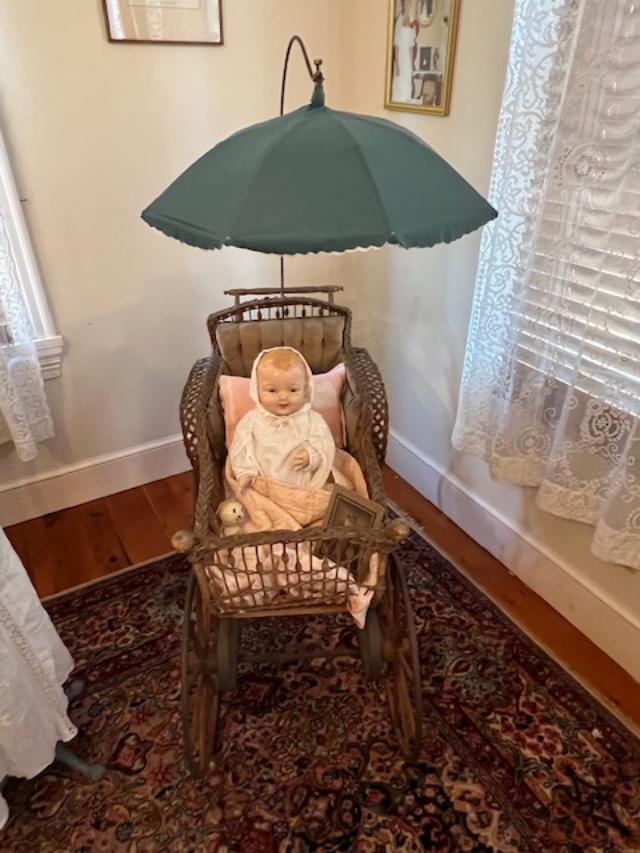
The Emma Hunter Baby Carriage

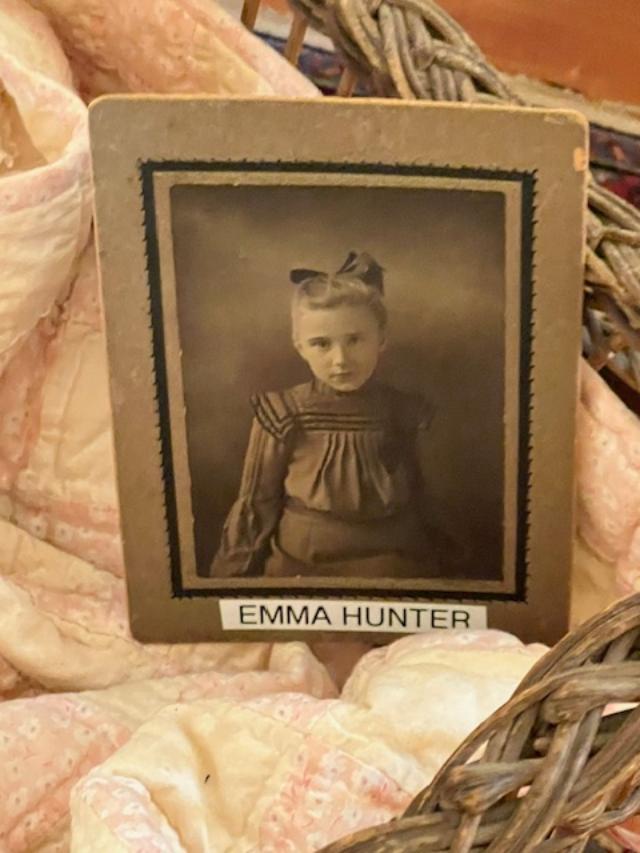
Resident Emma Hunter as a young girl

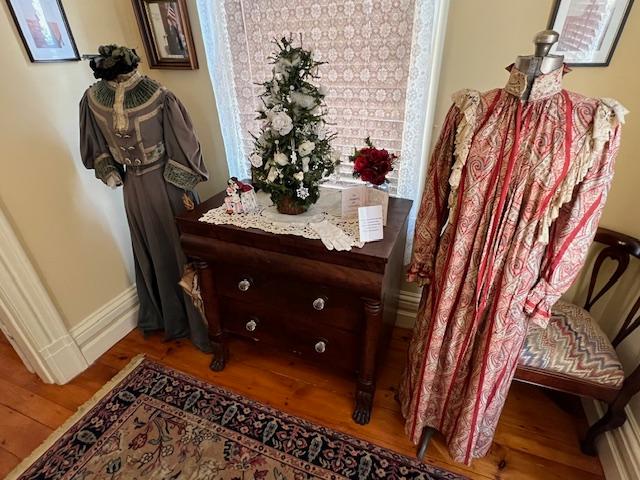
The costumes and clothing of the collection

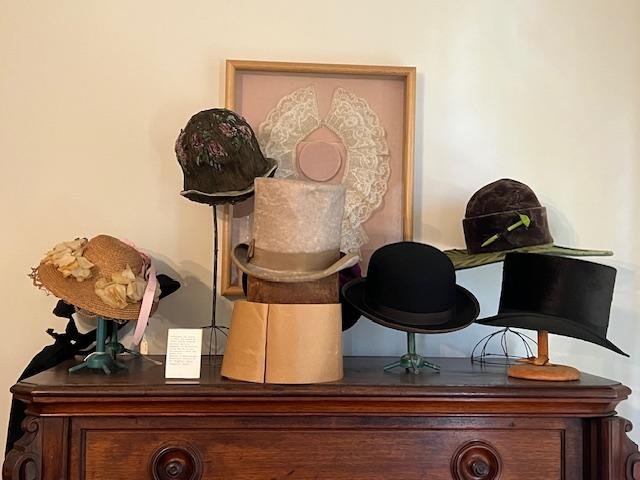
Hats on display

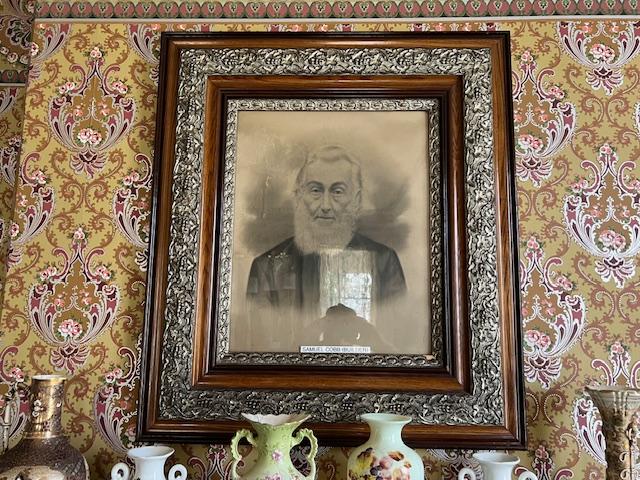
The builder of the house who built many of the homes in Mauricetown, NJ

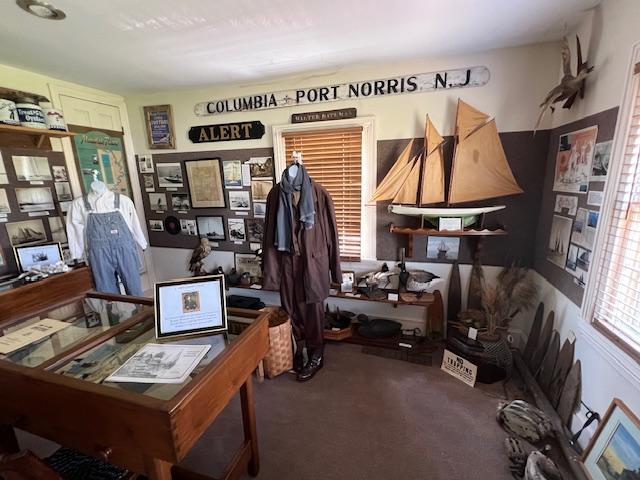
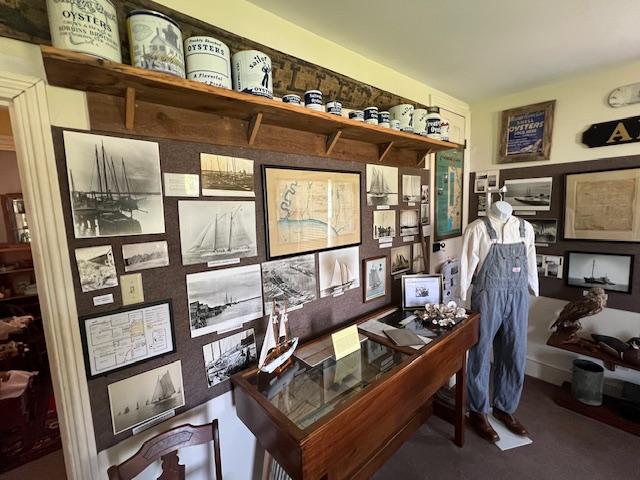
One of the rooms discusses the Mauricetown Shipping and Fishing industry with all sorts of photos and equipment. There was even a display of the ‘Bridge Key’ from the original bridge that lead into town. There was also an interesting display on the town’s Oyster Industry.

The Oyster and Fishing Business in this area of the state

The Fishing and Oyster industry

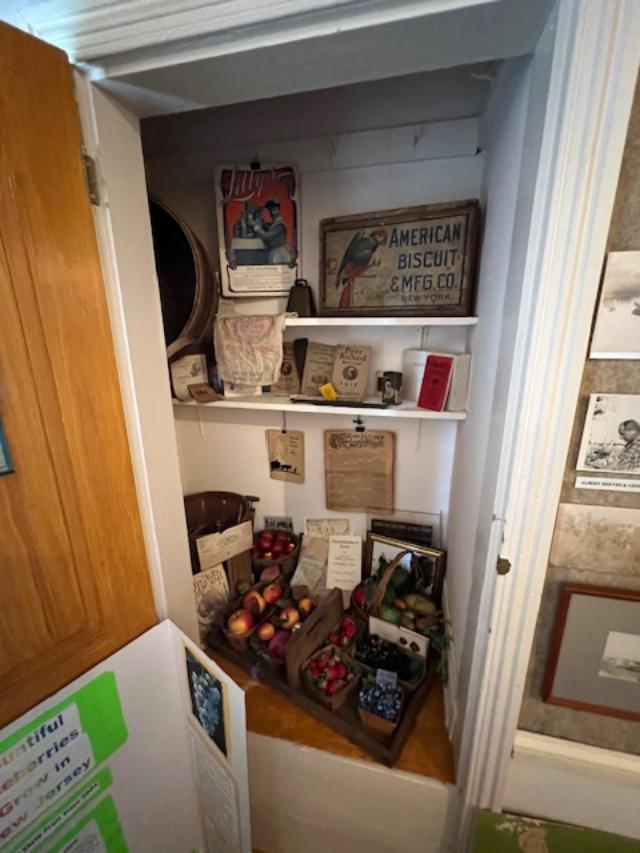
The Grocery industry

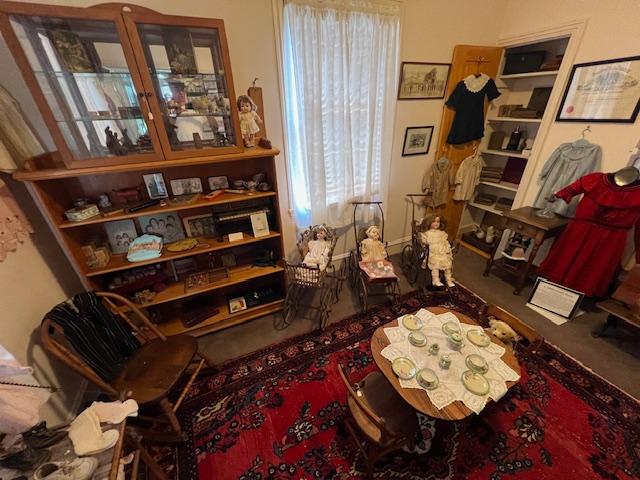
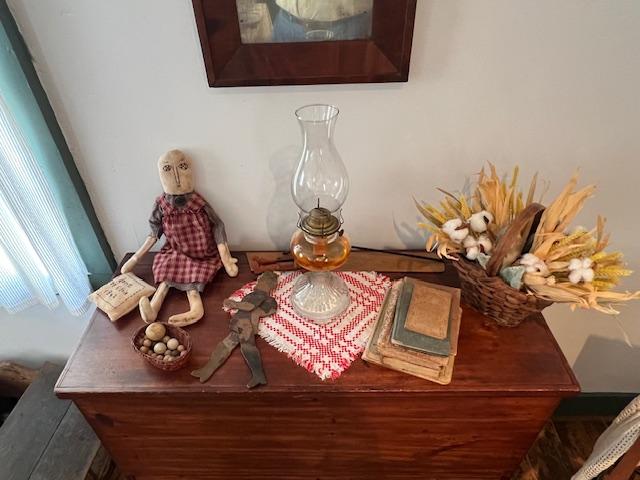
In the Children’s Room, there was an extensive collection of dolls, children’s playthings through the ages, clothing and school pictures of the town through the years.

The Children’s Room is my favorite room in the house. I love the interactive toys that promote imagination. This is lacking in children today.

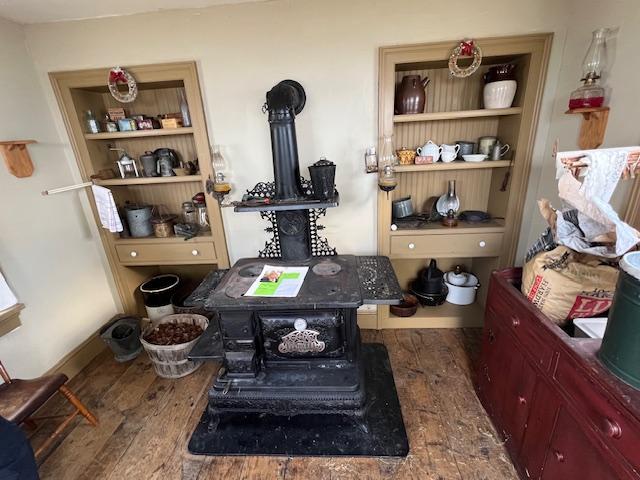
On the outside grounds, there is a Cookhouse that was separate from the main house in the era of when cooking could start a house fire so the rooms were kept separate from the main house. There was a 1880’s cookstove that still works.

The Cookhouse on the grounds of the Mauricetown Historical Society

The inside of the Cookhouse at the museum

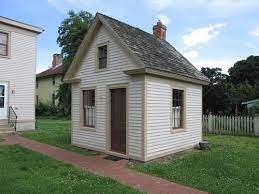
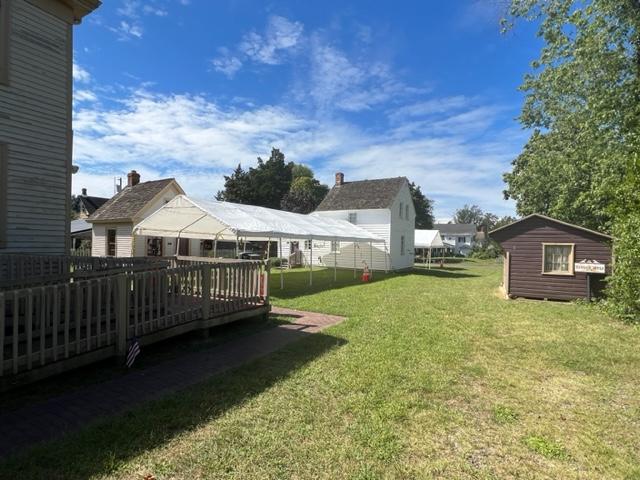
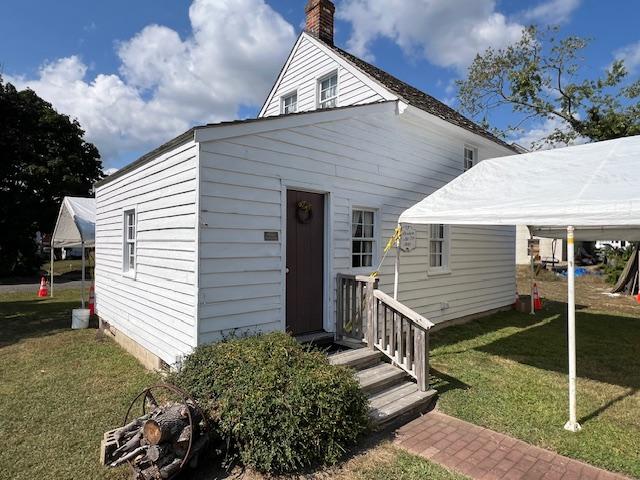
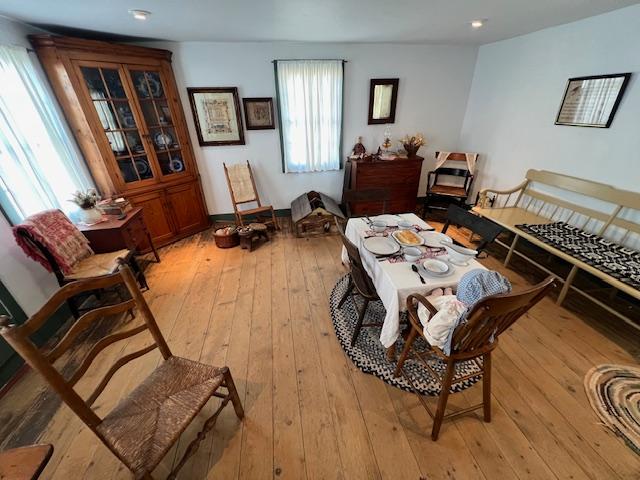
On the back of the ground is the Abraham and Ann Hoy House, a small home from 1840 that had recently been lived in by an elderly couple. The house had two small levels with the main rooms designed around the fireplace and heating unit.
The Mauricetown Historical Society’s backyard of buildings

The Hoy House on the back grounds of the museum

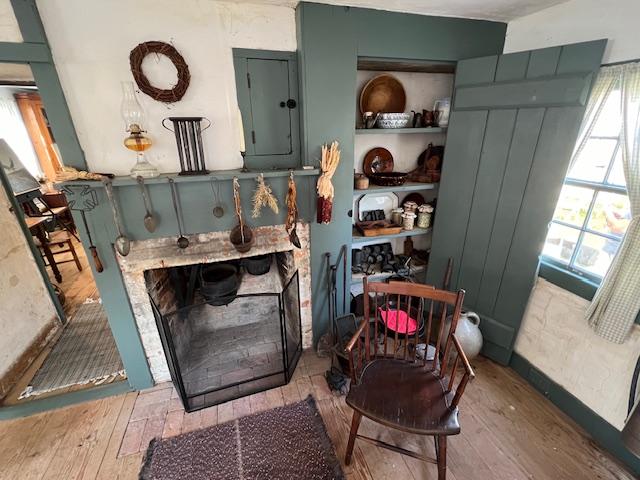
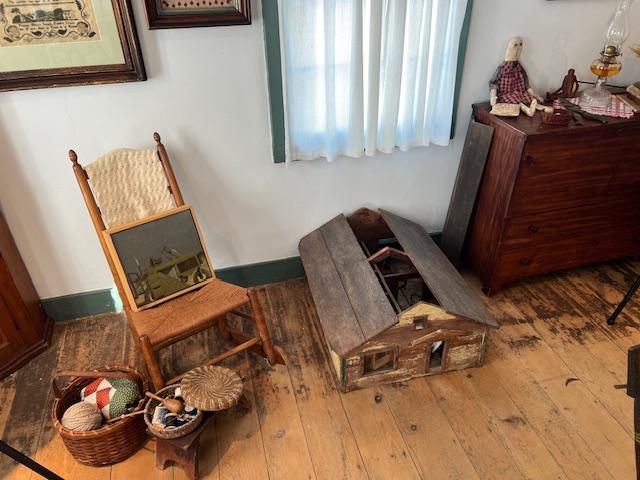
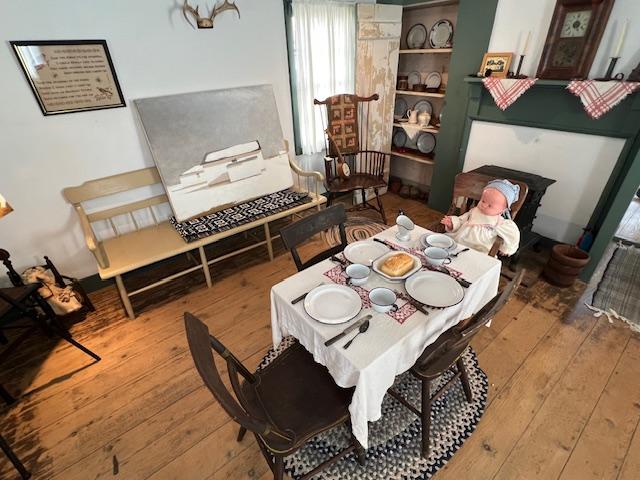
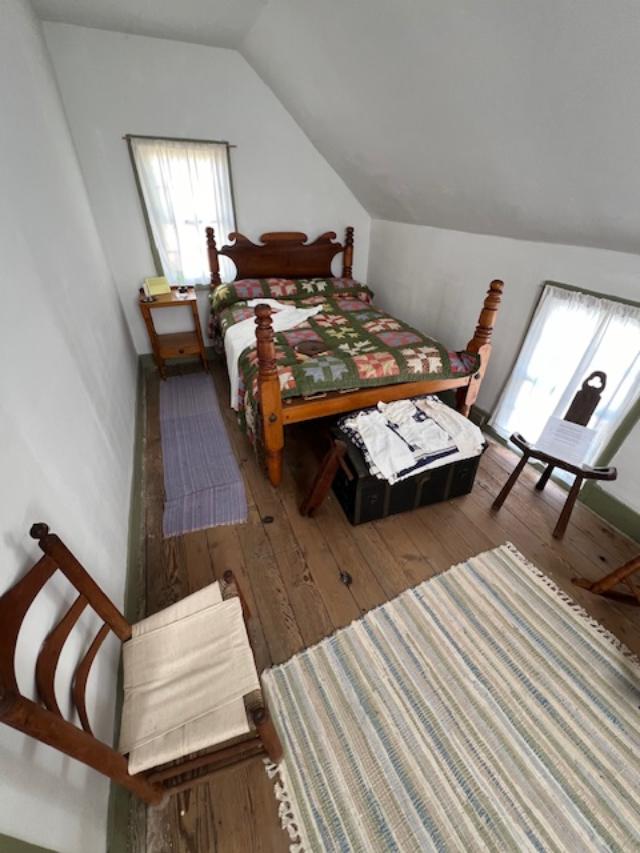
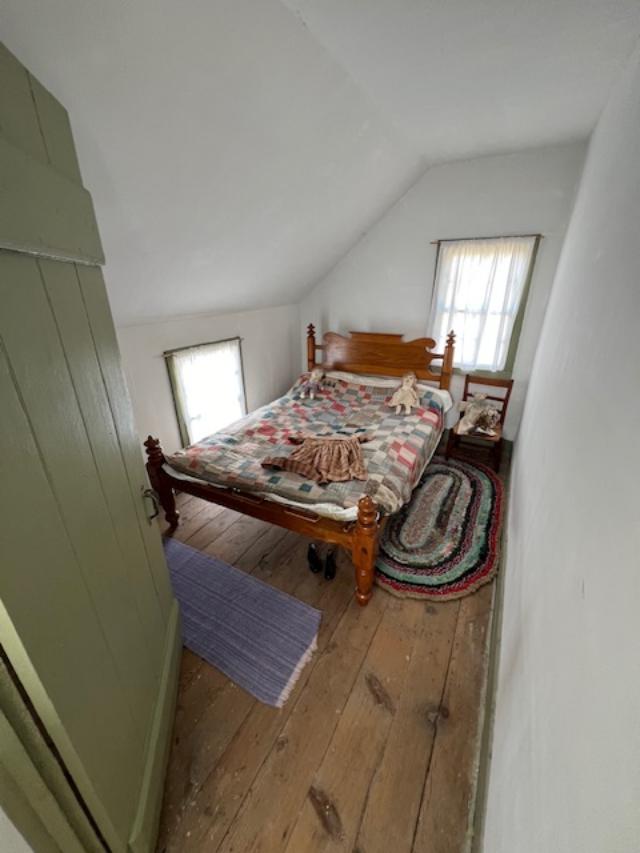
The Hoy House had been stripped of the modern add ons and they Society wanted it to look like it had when it was originally built. The upstairs had two loft bedrooms and even a small loft above the downstairs fireplace where the kids would sleep when it was cold outside.
The kitchen in the Hoy House

The kitchen area

The Living area

The Living area

The main room

The Upstairs

The bedrooms

It really showed how the working people of the town lived in a stark comparison to the sea captains who were running trade for the town. The Society’s members have taken great care in restoring these homes.

The Mauricetown Historical Society at 1229 Front Street

The History of the Mauricetown Historical Society:

(From the Mauricetown Historical Society website):

The Mission of the Mauricetown Historical Society:

It is the mission of the Mauricetown Historical Society to collect, preserve and exhibit artifacts and documentation significant to Mauricetown and the surrounding communities.

The Mauricetown Historical Society is housed in the former home of Captain Edward Compton, who was a local sea captain. This Italianate Victorian structure was built in 1864 by Mauricetown carpender Griffith Pritchard and Samuel Cobb.

The home was purchased in 1984 by the society. At the time, the property was in poor condition and required work inside and outside. Over the past 25 years it has been carefully restored to its present condition by volunteer efforts of society members and others. The restoration is an on-going project and there are still areas of work that are needing completion.

The side entrance of the home where people enter.

Situated directly across Front Street from the location of the old shipyard where sea-going vessels were built in the 19th and 20th centuries, occupants of this house were able to view the activities of the shipyard and the traffic of the river.

The Mauricetown River