Category: Exploring Historic Kingston, NY

Bannerman Island Castle                                     POB 843                                                       Glenham, NY 12527

Bannerman Island Castle POB 843 Glenham, NY 12527

Bannerman Island Castle

POB 843

Glenham, NY 12527

(845) 831-1001

https://en.wikipedia.org/wiki/Pollepel_Island

Open: Please check the website as this is a seasonal location

Admission: Adults and Children 11 and Up $45.00/Children 11 and under $35.00

My review on TripAdvisor:
https://www.tripadvisor.com/ShowUserReviews-g47508-d2252346-r967185184-Bannerman_Castle-Cold_Spring_New_York.html?m=19905

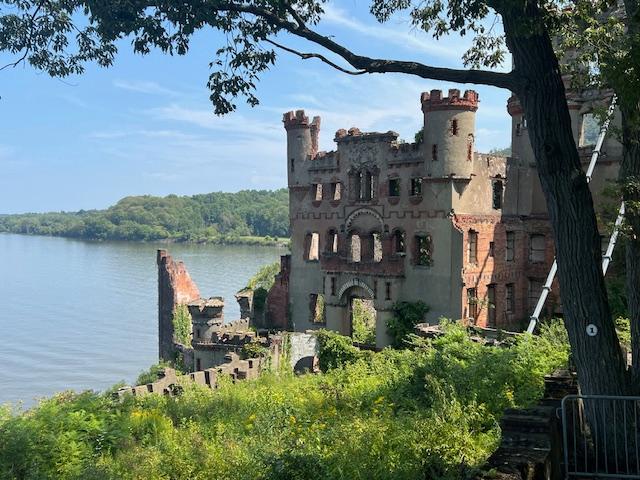
The mysterious Bannerman Castle sits on an island in the middle of the Hudson River
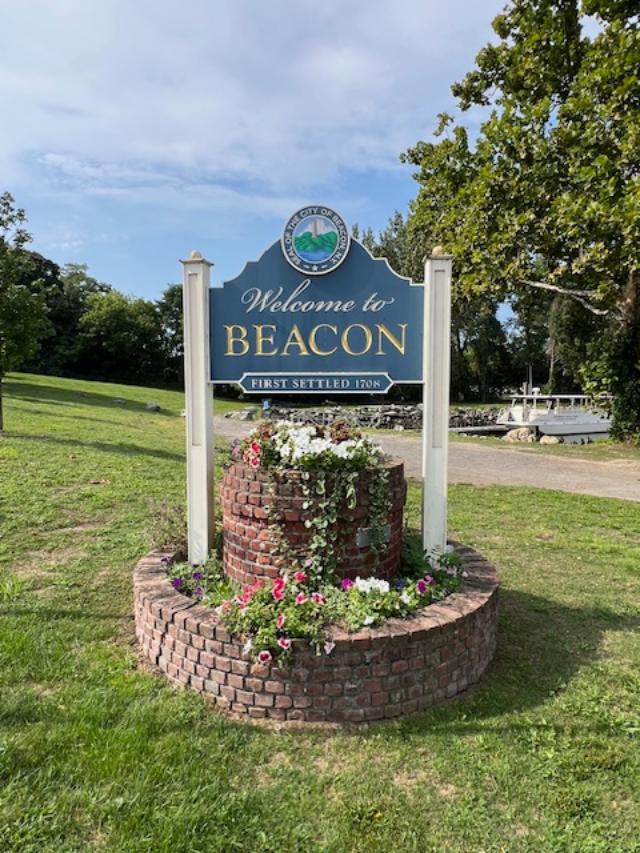
The welcoming sign by the riverfront

I recently visited Bannerman Island (Pollepel Island) just outside of Beacon, New York on a cool cloudy day and I highly recommend the twenty minute boat trip to this mysterious and scenic island. The only way to visit the island is by boat or kayak and the ride is very quick depending on the weather and the waves on the Hudson River.

The dock at the Beacon Railroad station at the beginning of the tour

The dockside and park at the Beacon park

The view of the docks before the tour

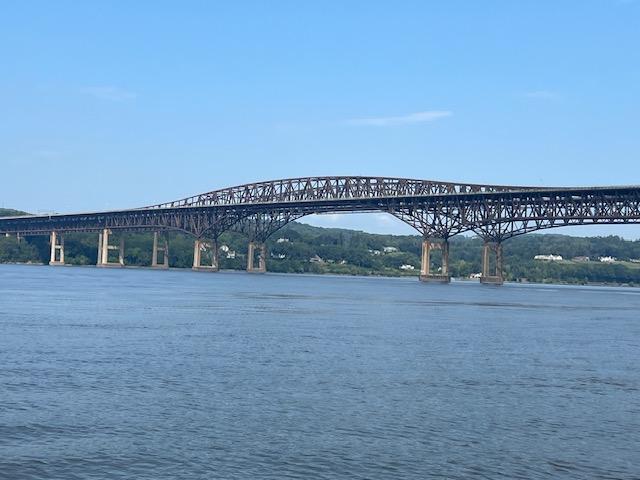
The view of the bridge near the park and part of the boat tour

Video of the boat ride out to the island:

Video of the boat ride out to the island:

Video of the boat ride out to the island:
Video of the boat ride out to the island:

Video of the boat ride out to the island:

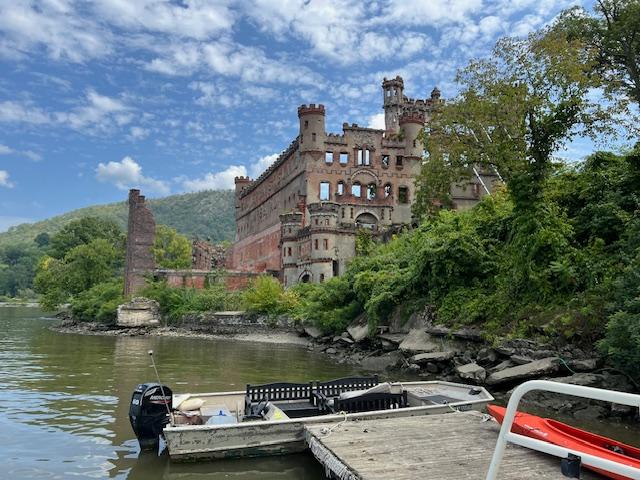
Arriving at the dock on Bannerman Island after your boat ride

The historic sign of General Lafayette’s landing at this site in 1824

Once you get to the island, you are greeted by the tour guide and then have to walk up 74 steps from the harbor to the ridge of the island so this is NOT ADA compliant.  At the top of the stairs starts the path around the island. Our tour guide that lead the tour had been there since the tours started in 2004 and gave us many insights on the history of the island and its purpose to the Bannerman family.

The gardens at the hillside as you walk up the stairs at Bannerman Island in the Summer of 2024
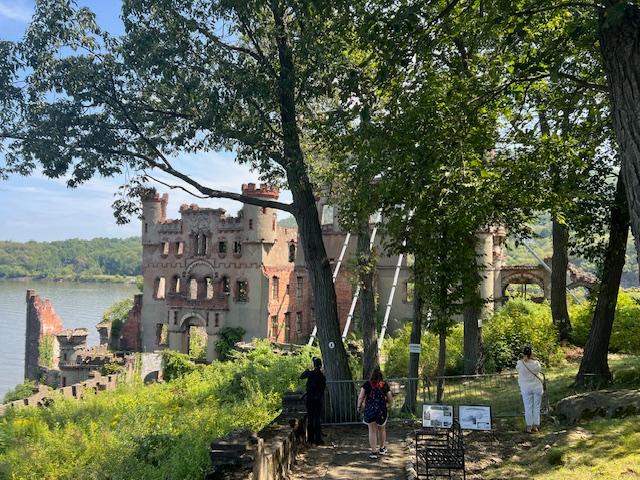
The first stop on the tour is the view of the ruins of the old Munitions Storage building

Our first stop was the Bannerman Munitions Storage facilities that were in the form of a castle that can be seen from the rail system up to Poughkeepsie, NY. For years I thought (as most people do) that this was a home but it was the Bannerman Munitions Warehouse for all the Army surplus items that Mr. Bannerman had brought up here from New York City. All the Military items were stored up here and the orders were fulfilled from this island.

Walking by the ruins of the old castle

Walking by the castle on the pathway
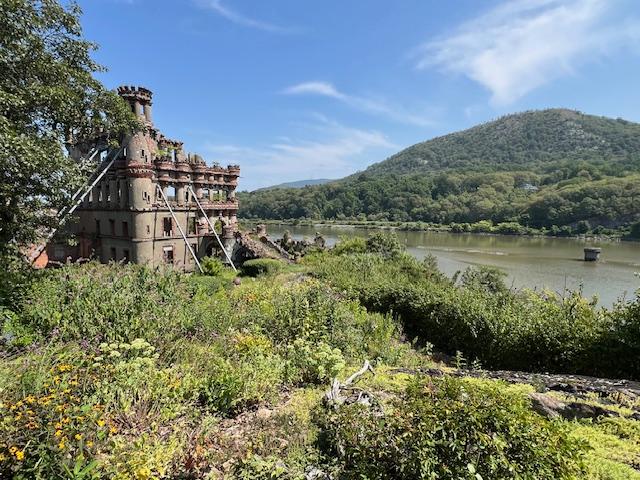
The pathway by the river

Walking the pathway by the river

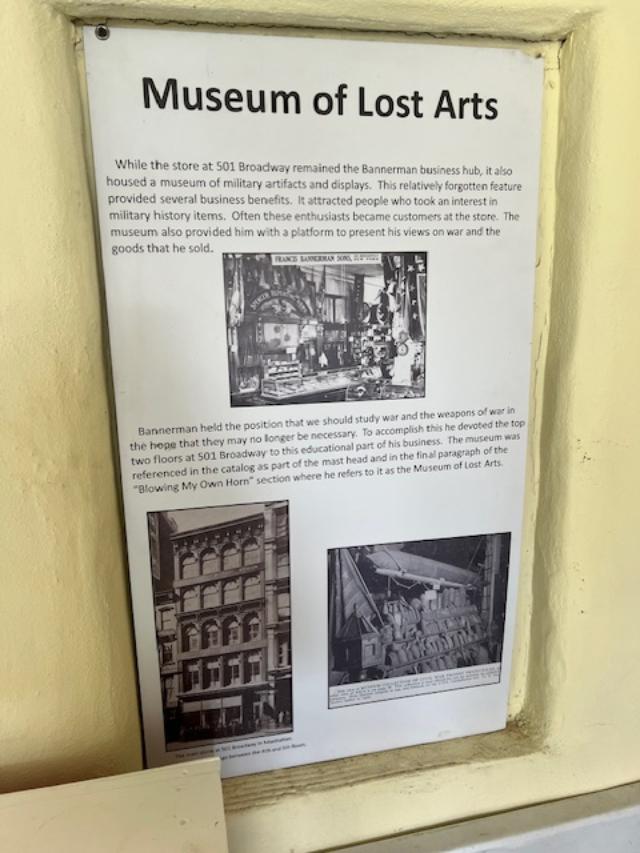
The company has not been in business since the early 60’s and when the children of the founder closed the company after the laws in the Federal Government changed to where private citizens could not sell explosive, it put a damper into operations. In 1967, the storage buildings were destroyed by fire and the compound was a shell of the former factory. The home was also abandoned at the top of the ridge when the family sold the island.
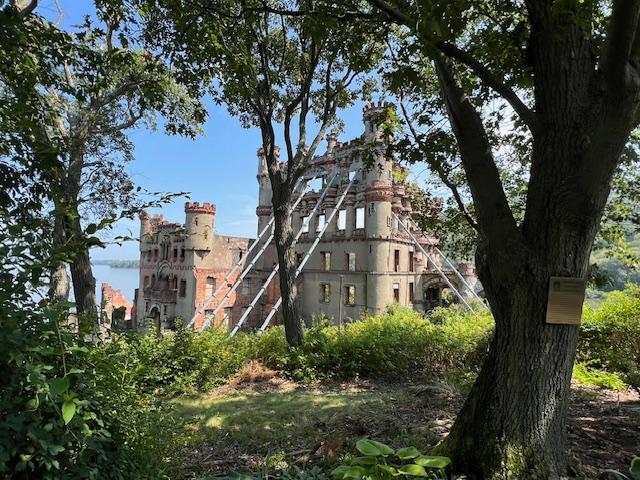
The Bannerman Island Munitions Storage Facility

Once you leave the former storage facility which is now being held up by stilts because the structure is so weak, you will proceed up the path past the formal gardens that are planted along the trail. The local garden clubs now come to the island to replant Mrs. Bannerman’s formal gardens and beautify the island.

The gardens on the pathway to the house
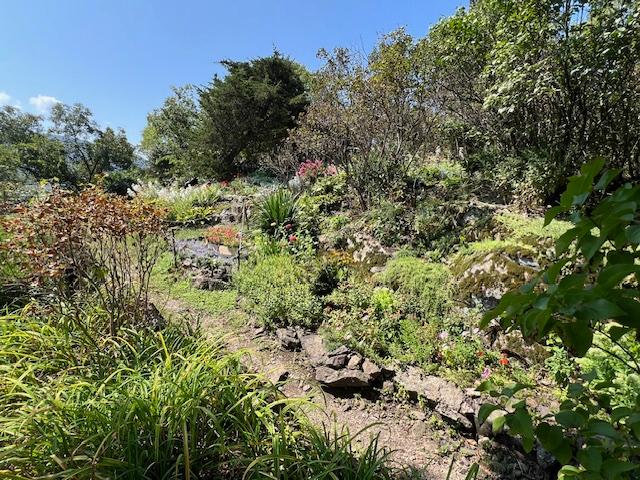
The gardens along the pathway

The gardens
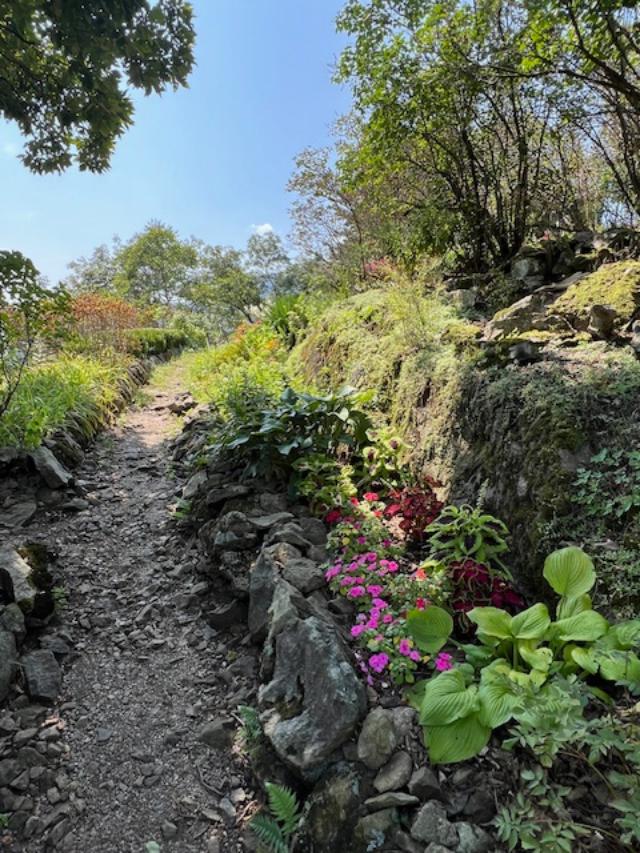
The gardens along the pathway to the house

The gardens by the front of the house
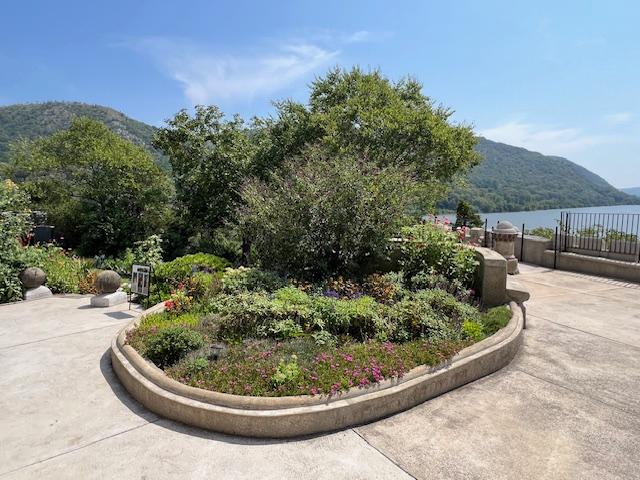
The gardens by the front door of the Bannerman Mansion

At the top of the point, there is the former home of the Bannerman family that is currently under renovation. It houses a quick tour of the family and there is a small gift shop inside. The porch area has the most amazing views of the Hudson River and the surrounding mountains. Here the Friends of Bannerman Island show movies in the warmer months and hold plays just outside the home. The last movie had been “Abbott and Costello Meet the Frankenstein”, which had been sold out according to the tour guide.
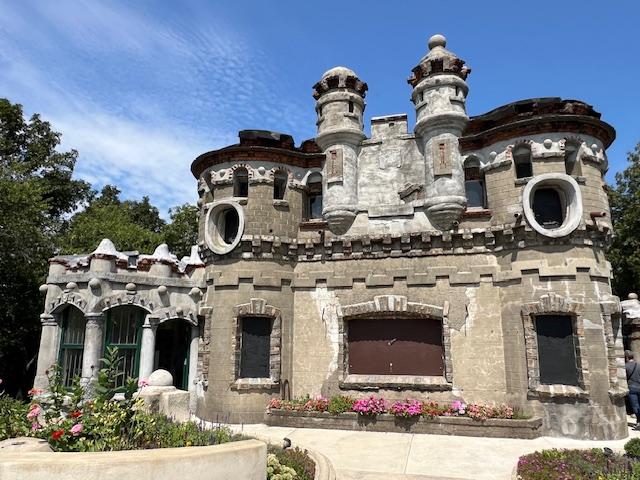
The Bannerman House and Gardens

The main room in the house
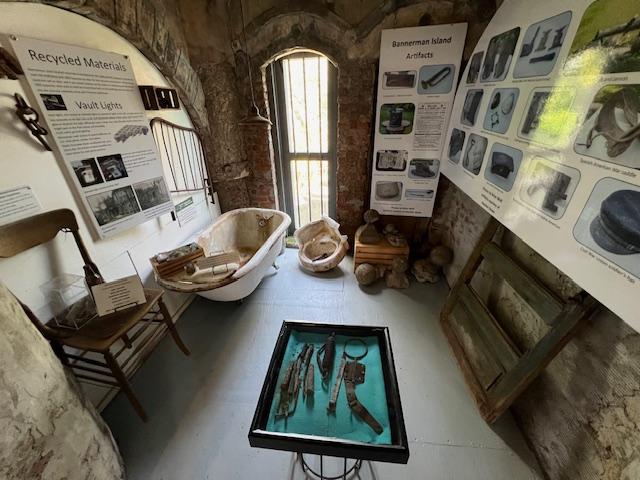
The old kitchen in the Bannerman home
The restoration of the house

The house restoration

When you leave the house, there are two paths that you can follow around, one to Wee Bay at the bottom of the hill where you can see the beach and some of the river buildings. The other is the Red Trail around the hill of the island that takes you to the top of the hill to see spectacular views and back to the dock where you will pick up the boat. I suggest good walking shoes and patience. The Wee Bay trail is past the gardens. You take the trail down to the beach.

The pathway to the beach

The Bannerman sign before you head down the hill

The signs to Wee Bay Beach

The Wee Bay path tour

The Wee Bay path tour

The Wee Bay path tour
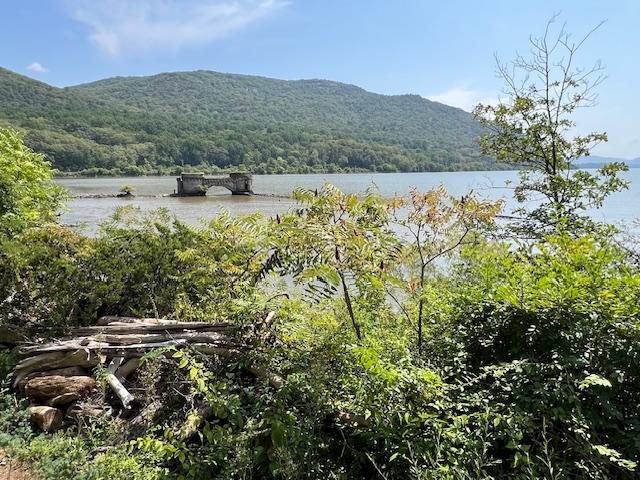
The views of the river from the Wee Path tour

The Wee Bay beach at the bottom of the trail
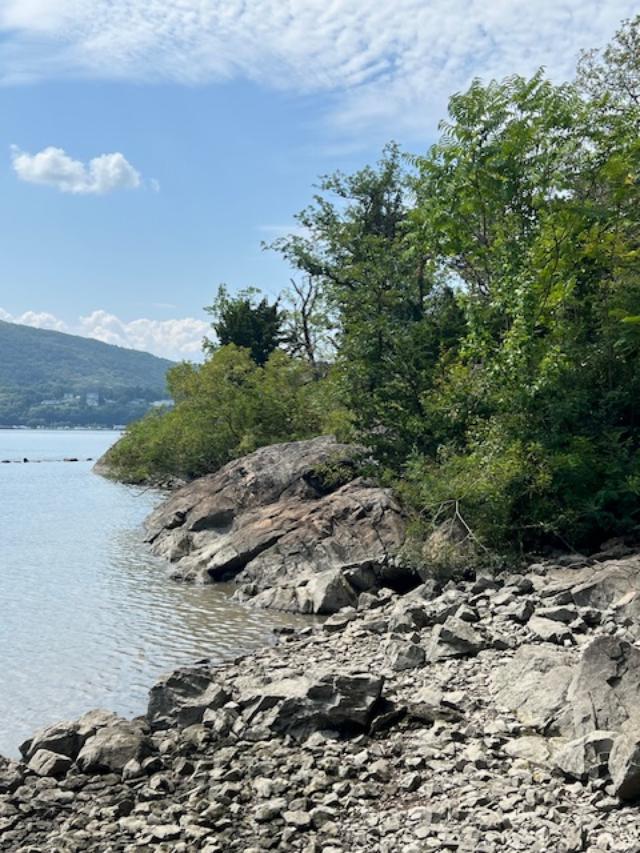
The beauty of the beach at the bottom of the hill

The docking buildings by the beach

Wee Bay Beach
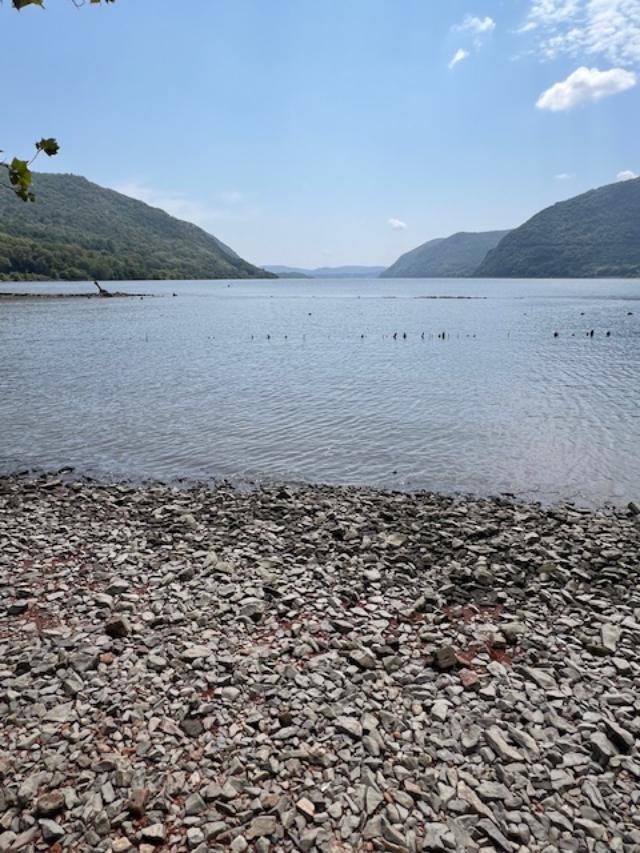
The view from the beach

The view of the River buildings

I headed back to the top of the trail by the house and continued the walk around the house to walk the Red Trail on the other side of the house. I have to admit this is not for the faint hearted and you had better like hiking because it is not easy.
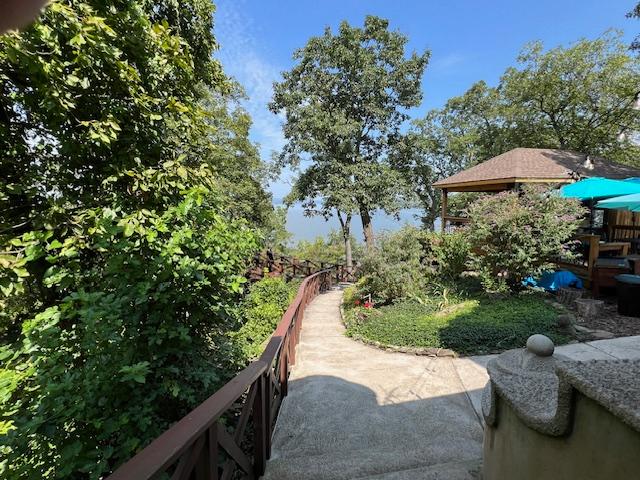
The beginning of the trails by the main house

The Red Trail gardens

The Red Trail by the house

The trail at the highest point on the Red Trail

The end of the Red Trail

The end of the trail by the castle

As you exit the tour, you will be heading down another flight of stairs to go back to the harbor. Please watch out for poison ivy! It is all over the place. Then it is back on the boat to the Beacon harbor. The tour guide gives you plenty of time to take pictures.

The view of Mount Beacon on the Hudson River

Finishing the tour and back to the boat

The tours are finished at the end of October and will reopen again in the Spring. You must book on line for the tours through the State website and the boats only hold 44 people so be sure to book in advance of when you want to go.

In 2019, I had lucked out in that three people did not show up for the 2:00pm tour and I was able to pay cash for the trip. In 2024 I booked online which is what I suggest.
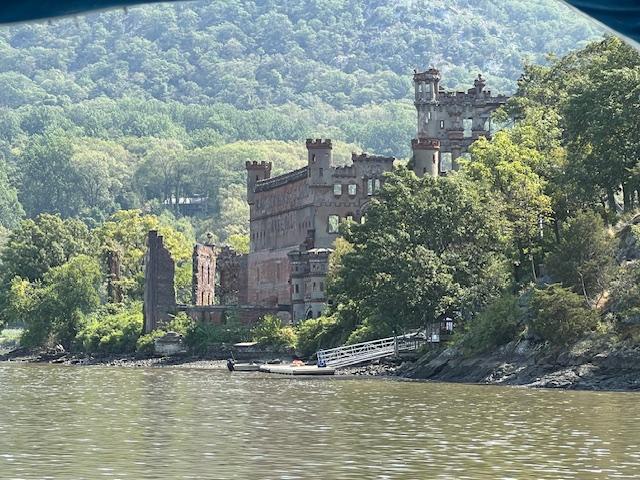
For the views alone it is well worth the trip

 The view of Downtown Beacon when you return to the dock

The boat awaited the next group who were at the dock when we returned

The view of the parks when you return

History of Bannerman Castle on Pollepel Island:

Bannerman Castle was built from 1901-1918 by Frank Bannerman IV as a warehouse to store his collection of antique military equipment from the Spanish American and Civil Wars. Bannerman was the father of the Army Navy Store. His  world famous catalogue of military equipment became the “go to” source for collectors.

The ruins of the Bannerman Castle

The island housed seven structures that formed the Scottish baronial castle, including workers apartments, a summer residence and beautiful trails and gardens. A great fire in 1969 destroyed the interiors and left the shells you see today. Bannerman island opened for tours in 2004.


History of Francis Bannerman VI:

(from the parks website)

Francis Bannerman VI was born on March 24th, 1851 in Northern Ireland and emigrated to the United States in 1854. The family moved to Brooklyn, NY and began a military surplus business by the Brooklyn Navy Yard purchasing army surplus after the Civil War. The family continued to grow the business by buying weapons directly from the Spanish Government before it evacuated Cuba and then purchased 90% of the munitions auctioned off by the Federal Government that had been capture by American forces at the close of the Spanish-American War.

The family bought the island in 1900 to store the surplus items to their growing business. The warehouse in New York was too small and too dangerous to keep in the City anymore and they could keep their inventory isolated on the island.
Frank Bannerman IV

https://www.electricscotland.com/history/descendants/chap36.htm

https://www.findagrave.com/memorial/8048322/francis-bannerman

The castle was visible from the water and had a giant advertisement sign right on the arsenal “Bannerman’s Island Arsenal” created into the wall of the building. With the change in federal and state laws on selling military weapons and the sinking of the ferryboat that served the island by 1950, the island was abandoned. The island and its buildings were bought by New York State in 1967 and is now run by the New York State Office of Parks, Recreation and Historic Preservation.

(This information is a combination from Wiki and the island pamphlet)

I visited Downtown Beacon, NY when I was finished with the tour. I highly recommend the town to shop and eat lunch or dinner. Maybe just a drink by the river. It is really a nice town.

 Downtown Beacon in Summer 2024

Downtown Beacon, NY in the Summer of 2024

Downtown Beacon by the falls in the Summer of 2024

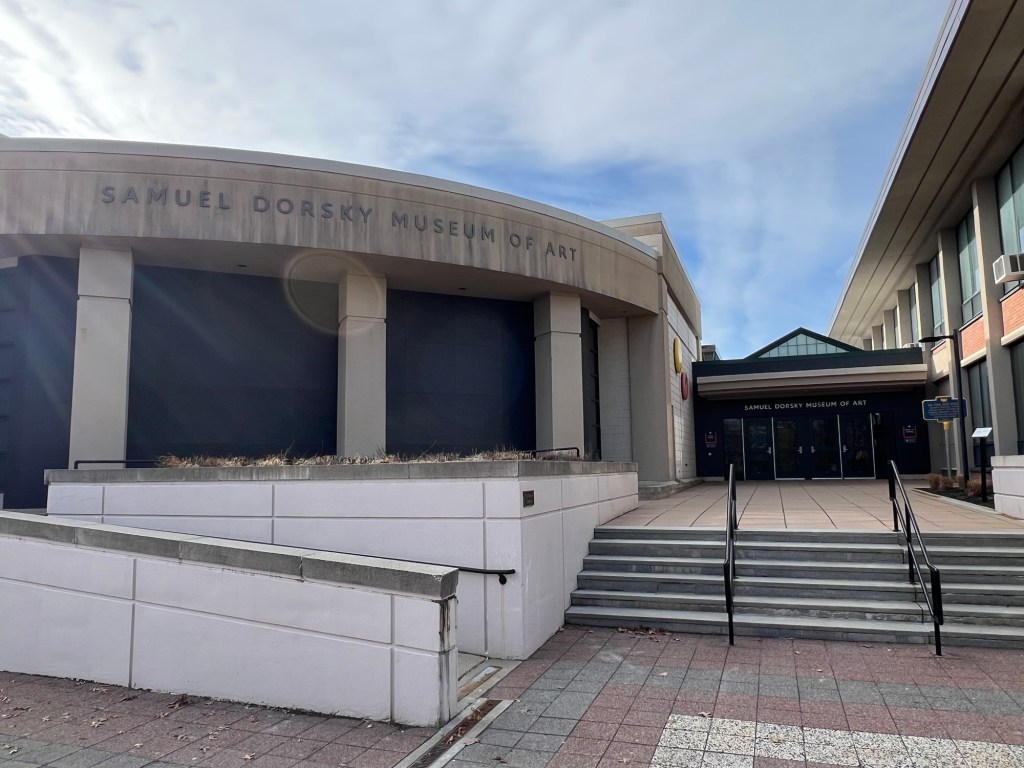
Samuel Dorsky Museum of Art State University of New York at New Paltz                                         1 Hawk Drive                                                        New Paltz, NY 12561

Samuel Dorsky Museum of Art State University of New York at New Paltz 1 Hawk Drive New Paltz, NY 12561

Samuel Dorsky Museum of Art

State University of New York at New Paltz

1 Hawk Drive

New Paltz, NY  12561

(845) 257-3844

http://www.newpaltz.edu/museum

Open: Wednesday-Sunday 11:00am-5:00pm/Closed on Monday & Tuesday

Fee: Suggested fee is $5.00

My review on TripAdvisor:

https://www.tripadvisor.com/Attraction_Review-g48245-d10130343-Reviews-Samuel_Dorsky_Museum_of_Art-New_Paltz_New_York.html?m=19905

The Arts Center at SUNY New Paltz in New Paltz, NY

The Samuel Dorsky Museum on the SUNY Campus

The entrance to the museum

The entrance to the Dorsky Museum

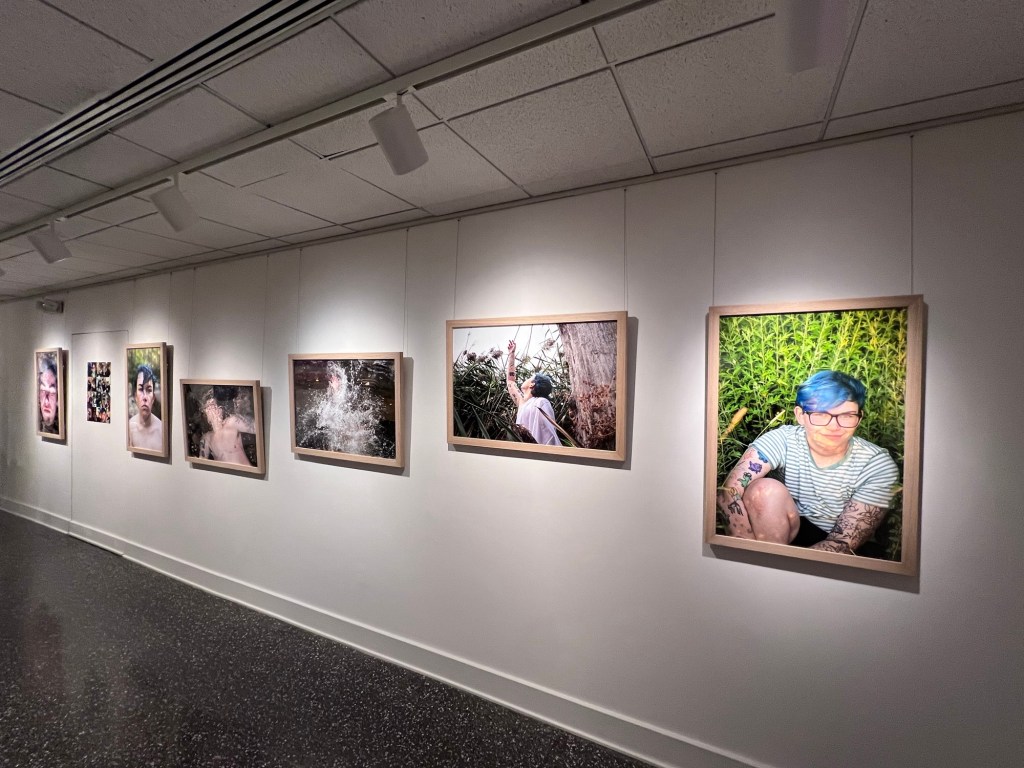
I visited the Samuel Dorsky Museum of Art in New Paltz, NY in 2019 and found it to be an interesting little museum that covers a lot of fields of art from ancient art to paintings and photography. The current exhibitions include “Just my Type: Angela Dufresne” and “In Celebration: A Recent Gift from the Photography Collections of Marcuse Pfeifer”. There is also a exhibition of a local institution “Mohonk Mountain House at 150”, which is on the history and progression of the development of the Mohonk Mountain House Hotel.

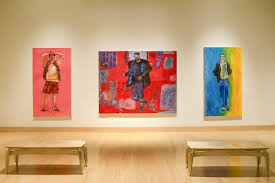
The Angela Dufresne exhibition was created by the artist of people who are the artist’s friends, family and of her community which are colorful and somewhat exaggerated views of people and their expressions. These giant colorful paintings had different expressions on their faces where you can only guess what the sitters were thinking.

Dorsky Museum III

The Angela Dufresne Exhibition

The photo collection of former gallery owner Marcuse Pfeifer, who has now relocated to the Hudson River Valley addresses the 19th and 20th Century that explore celebrity, location and life in the City. It has some interesting looks of life at a different time as well the expression of the subjects.

I went to the museum recently to see both the “Collecting Local: Twelve years of the Hudson Valley Artists Annual Purchase Awards” and “Jan Sawka: The Place of Memory” which were both interesting exhibitions both extended because of the campus being closed for the COVID-19 pandemic.

The “Collecting Local: Twelve Year’s of the Hudson Valley Artists” exhibition

The nice thing about the Dorsky Museum is its dedication to the Hudson River artist. “Collecting Local” is an exhibition that highlights the accomplishments and collections of the current artists from the Hudson Valley region and showcases their interpretations of art. It is nice to see not just local artists shine but what is being shown at the local galleries around the area.

Jan Sawka is a Polish born artist who was exiled from the county and settled into the Hudson River Valley with his family. His works were taken from the context of being a stranger in a new country.

Jan Sawka’s painting dedicated to his mother in law

Jan Sawka’s painting from his time living in Asbury Park, NJ

The museum offers also objects from the permanent collection and showing the areas in which the museum has collected in the past and currently. There is anything from a Warhol photo to ancient Chinese and Japanese statuary.

The Museum’s permanent collection

The collections rotate every season. The museum was closed when the college was closed during COVID from 2020-2021. It reopened when the campus fully opened in 2022. I finally got back to the museum in 2025 and saw the show “Movement” featuring New York City and State artists.

The exhibit ‘Movement’

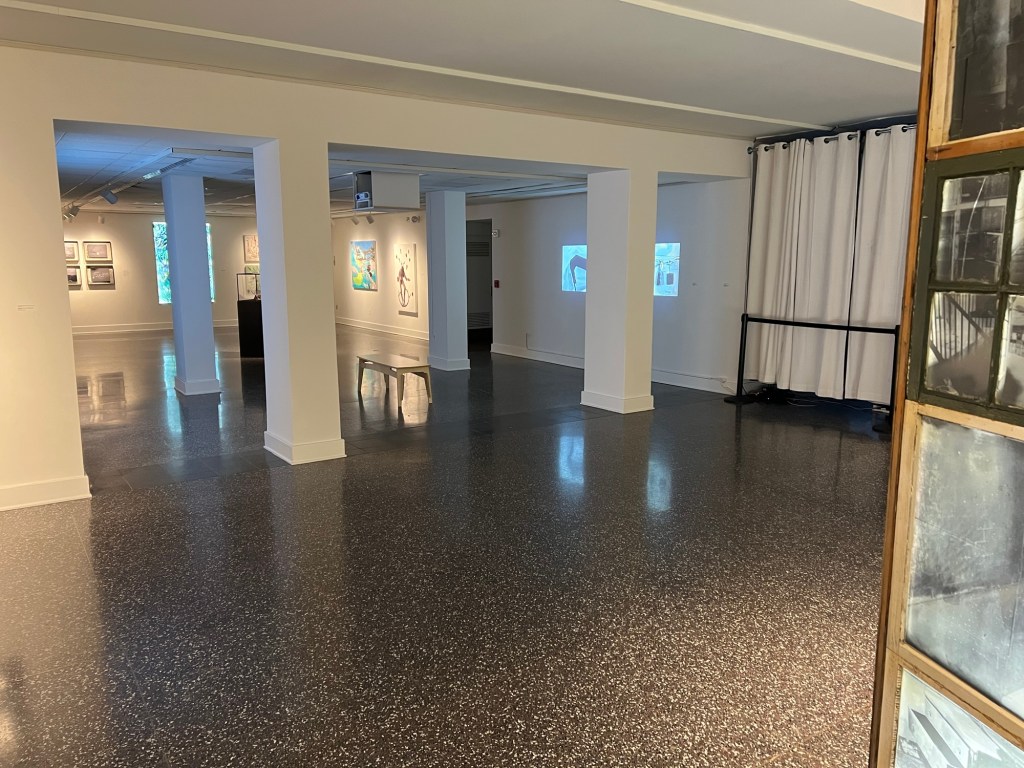
The galley for the exhibition for ‘Movement’

This year’s theme, “Movement,” prompts viewers to consider the profound impact of physical journeys, both personal and collective. Reflecting on what compels people to leave their homes, the exhibition examines migration as a transformative force that shapes communities, melds cultures, and redefines societal landscapes. Through various mediums, including painting, sculpture, video and mixed media, selected artists explore themes of resilience, change and the legacies of movement that resonate across generations (from the Dorsky website).

I picked out the three pieces that really stood out in the show to share with everyone.

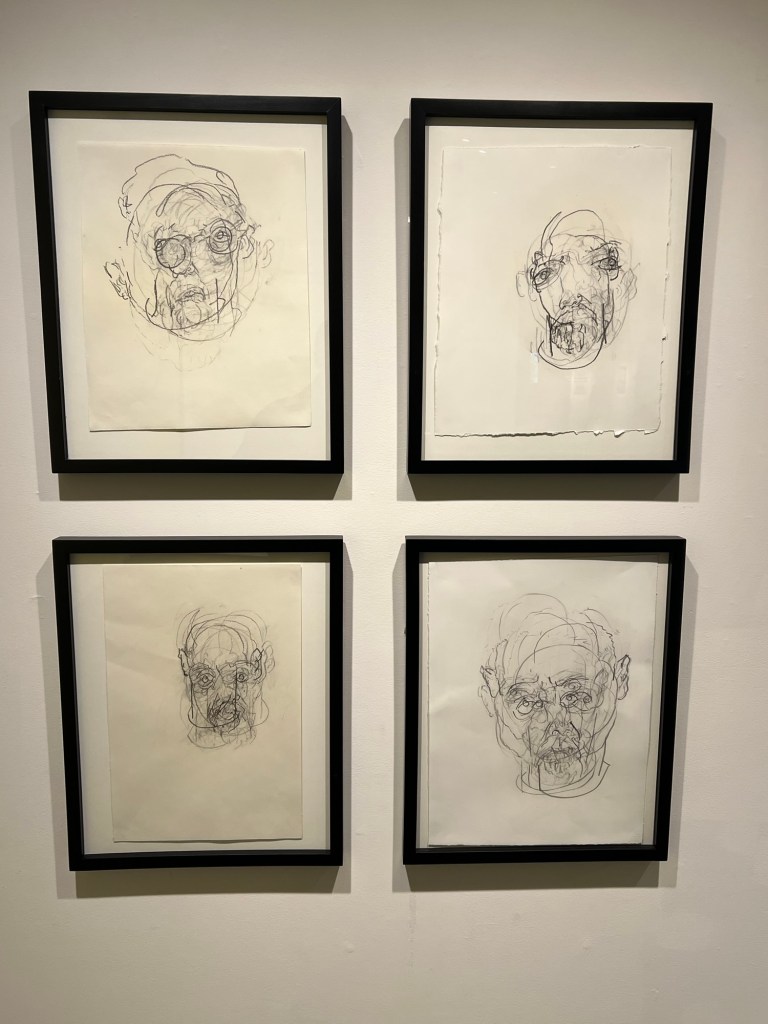
The Self Portrait

The artists of the Self Portraits

“The Dinner Guests” by Aaron Hauck

I loved the colorful look of guests at a dinner party.

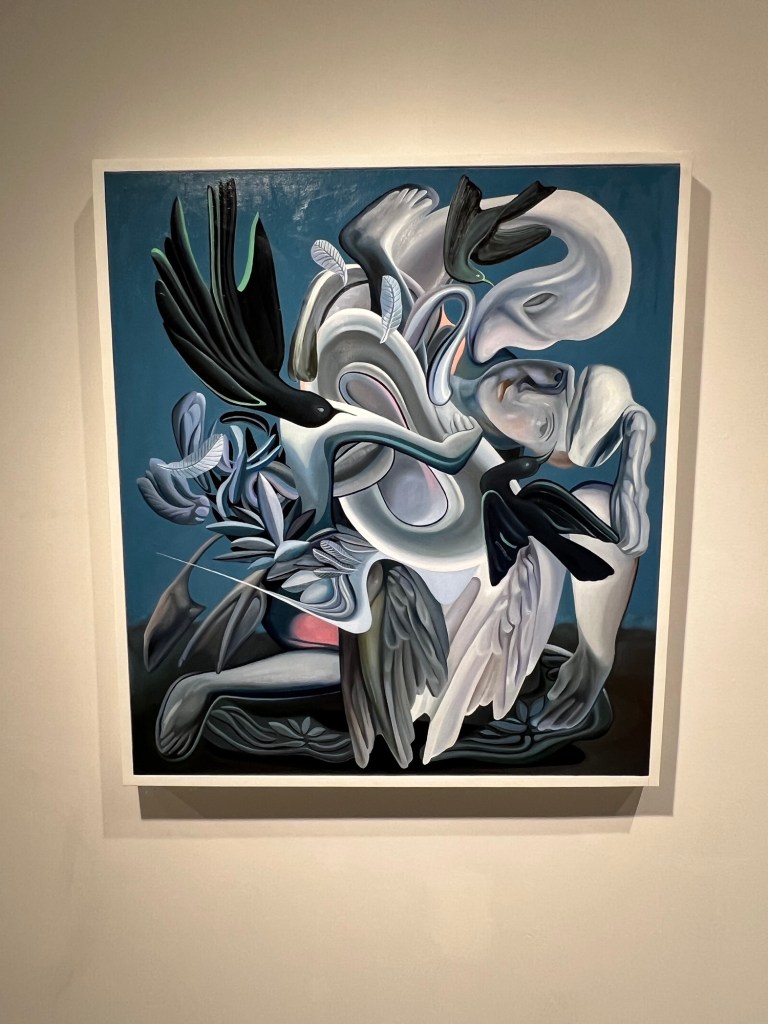
The ‘Witnesses’

“Witnesses” was the one piece that stood out to me in the show. I loved the playfulness of the painting and that it looked whimsical and fun. It looked like something you would see in “Alice in Wonderland”.

The gallery for ‘Movement’

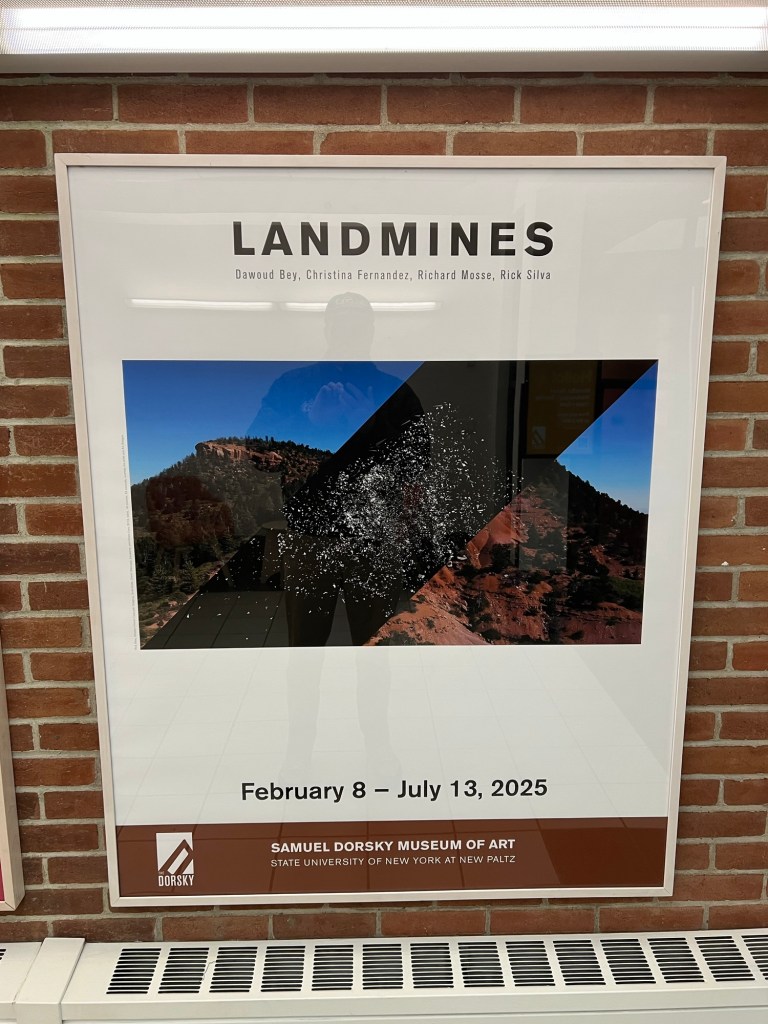
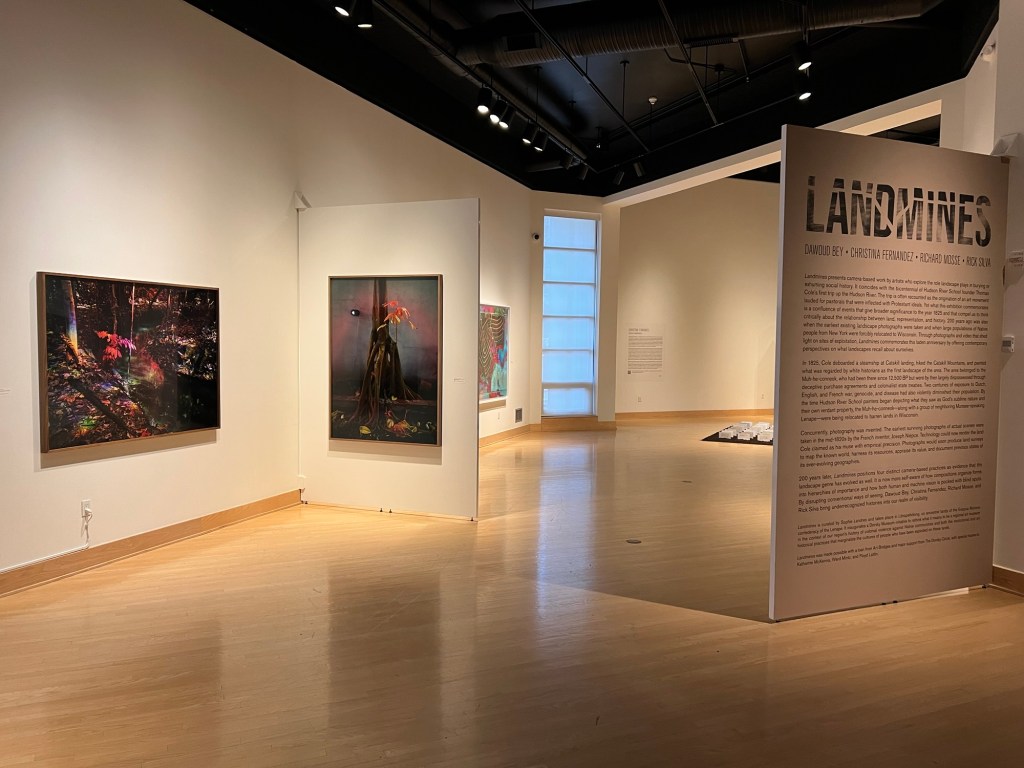
The exhibition ‘Landmines’

Coinciding with the bicentennial of the earliest existing landscape photographs, the founding of the Hudson River School, and a concentrated period in which Native people from New York were forcibly relocated to Wisconsin, Landmines presents camera-based work by artists who explore the role landscape plays in burying or exhuming social history (from the Dorsky Museum website). 

The exhibition ‘Landmines’

The permanent collection

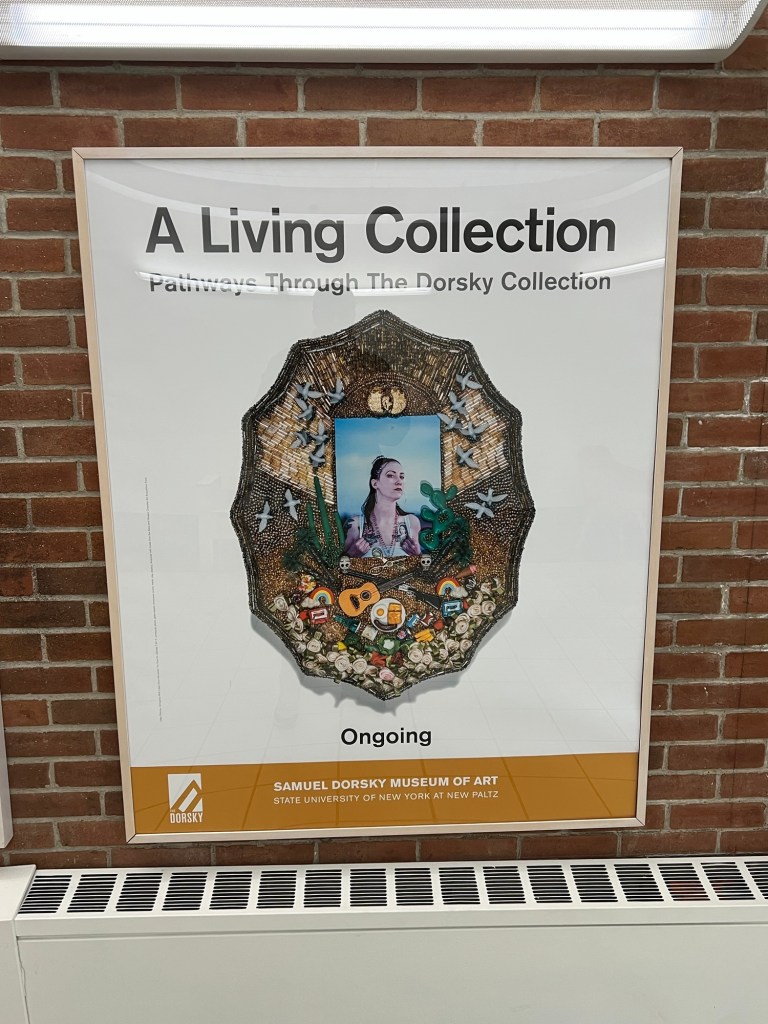
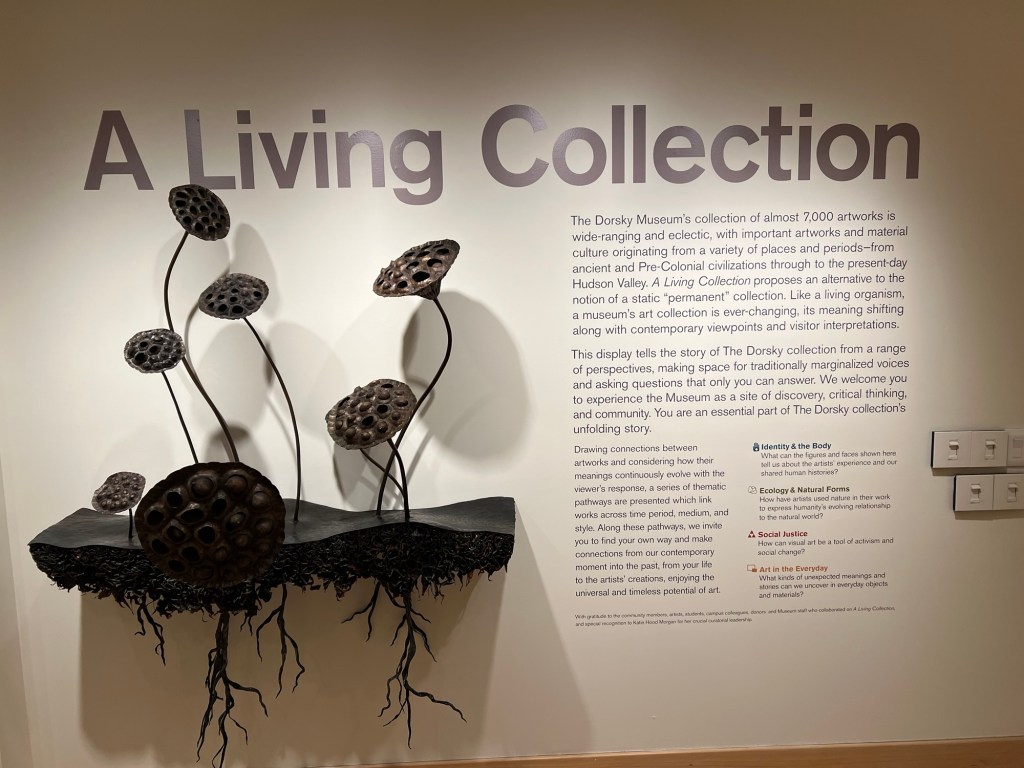
‘The Living Collection’ in the permanent collection

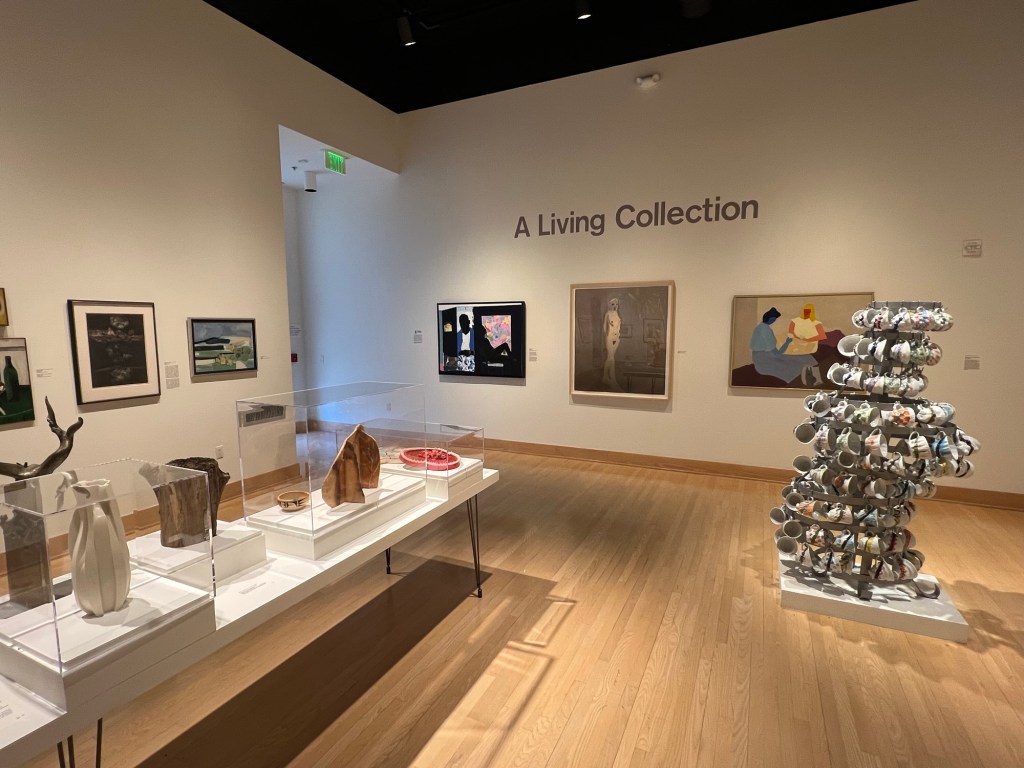
This new display of the Museum’s collection tells the story of The Dorsky from a variety of perspectives, making space for traditionally marginalized voices. Exhibiting collection highlights and audience favorites alongside new acquisitions and commissions, A Living Collection presents the collection as a living entity, continuously evolving and shaped by the viewer’s interpretation (from the Dorsky Museum website).

The entrance to ‘A Living Collection’

The gallery for ‘A-Living Collection’

A Living Collection:

The ‘A Living Collection’ Gallery

The ‘A Living Collection’ gallery

‘Shaky’s Meadow’ by Beverly Paterson

A video on the art:

A clip of the art display

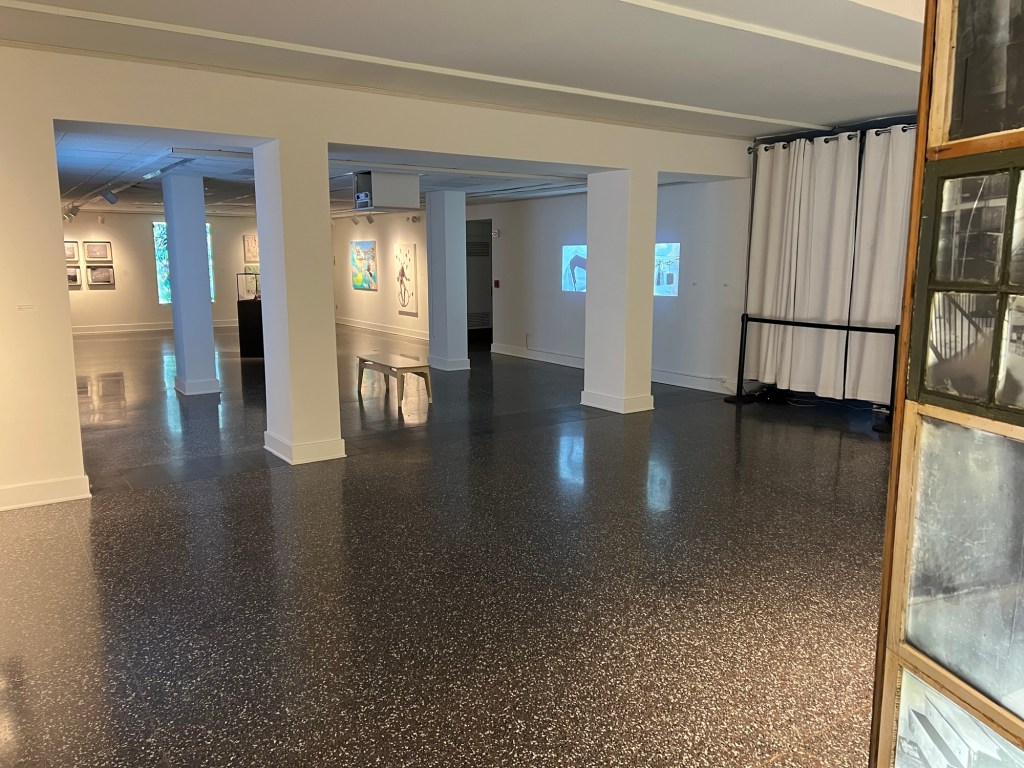
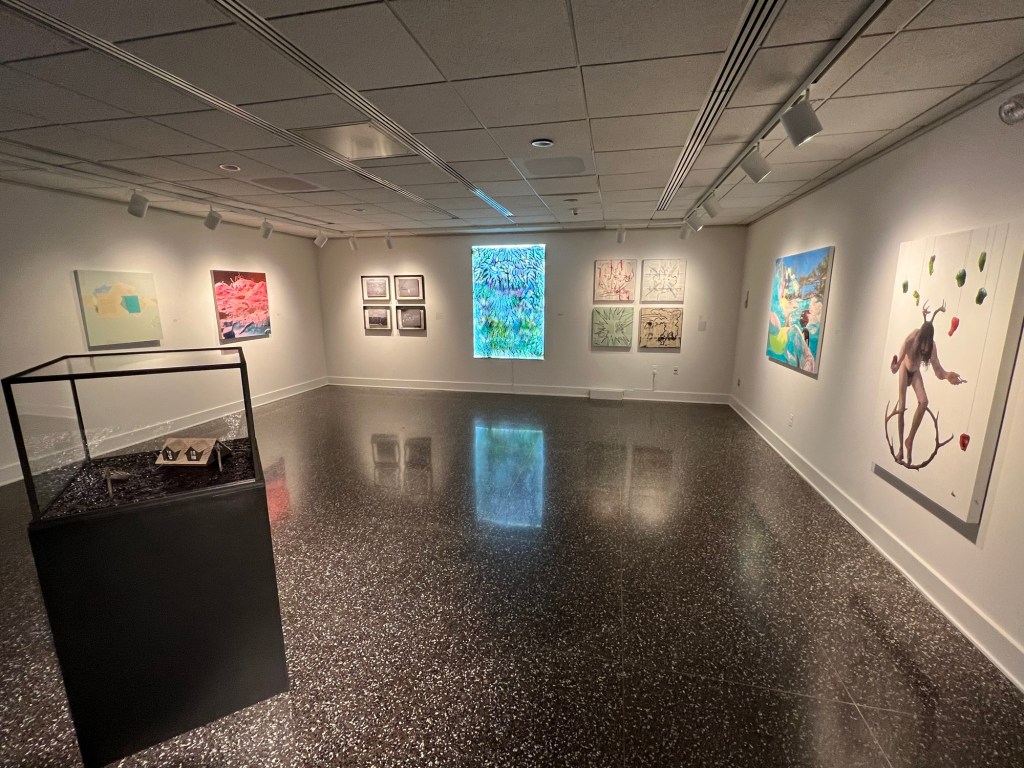
The full gallery on display at the Dorsky Museum

The museum does a lot in a small area and does a nice job promoting up and coming artists. It also does a lot for its in-house artists especially when I attended the opening of the Student Show for the BFA/MFA art students in December 2025.

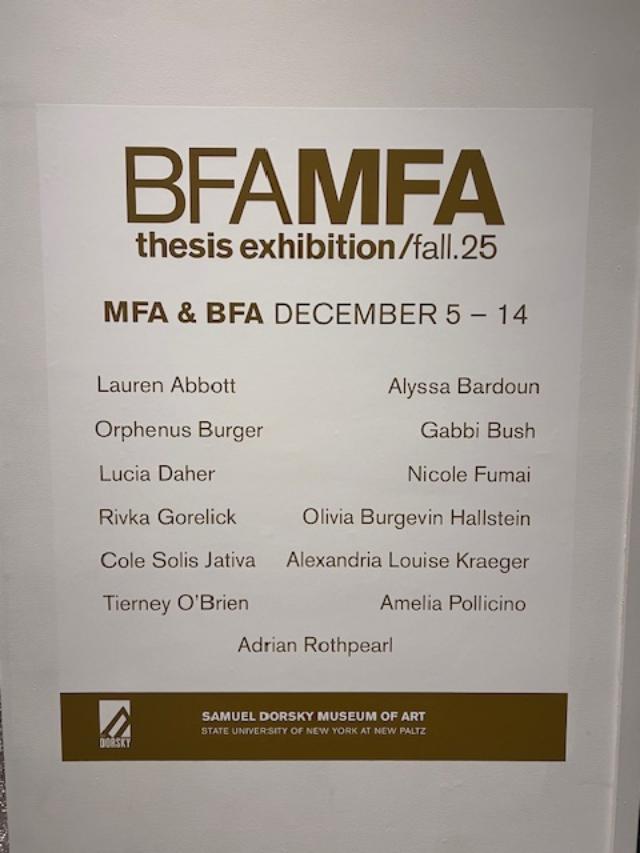
The BFA/MFA Thesis Exhibition/fall.25 Show:

https://www.newpaltz.edu/fpa/art/events/bfa-mfa/

The Opening of the Student Show

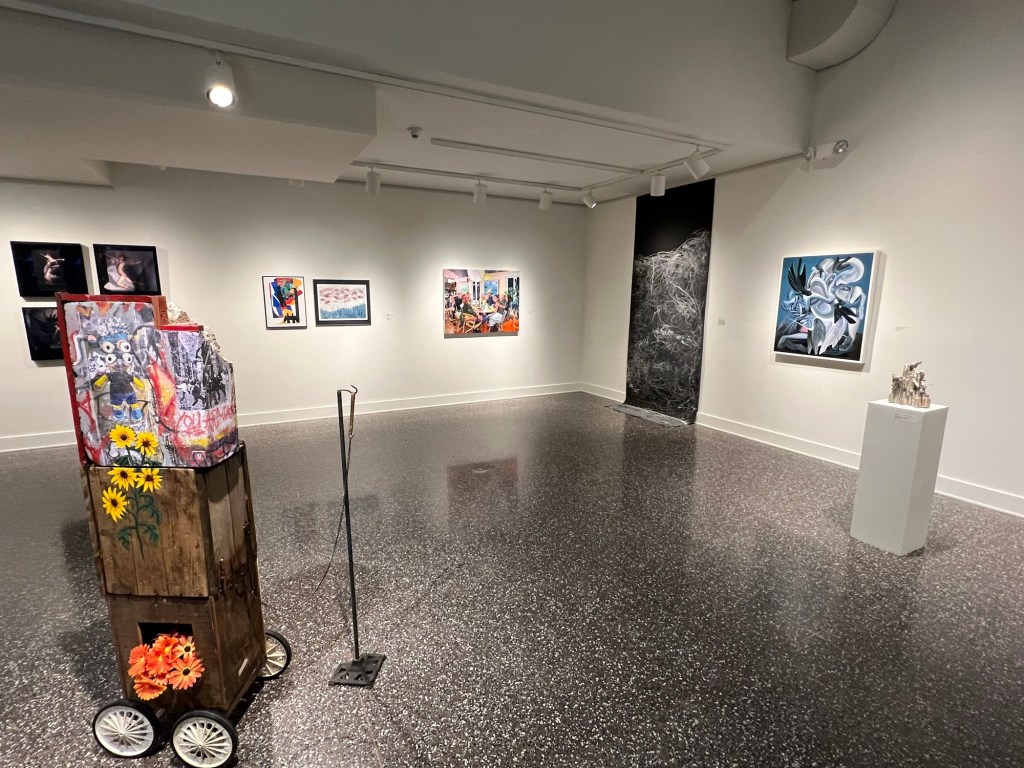
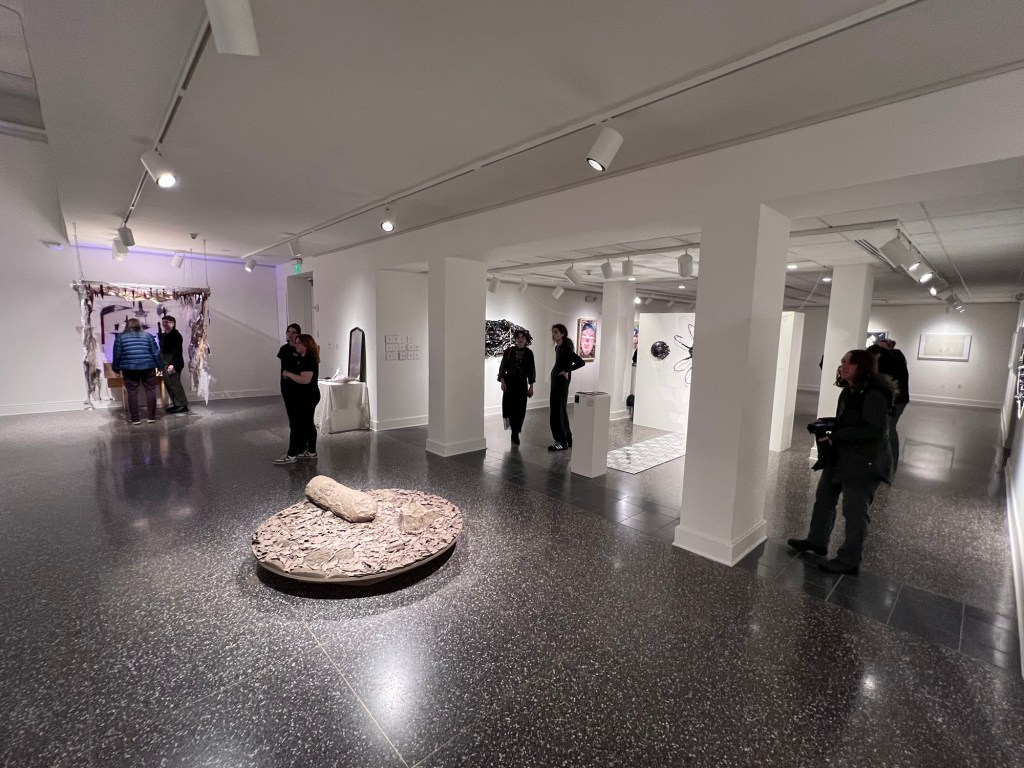
As it got darker, I made my way to the SUNY campus and to the art museum. It really was a good show with a nice reception and interesting art. While the students were devouring the food at reception, I had the whole gallery to myself to look at the art. I have to admit that some of the art was quite unusual. The students did have a streak of creativity to them.

The Dorsky Museum Gallery

Some of the unique pieces

Once the students devoured the Reception buffet, everyone came in to see the exhibition

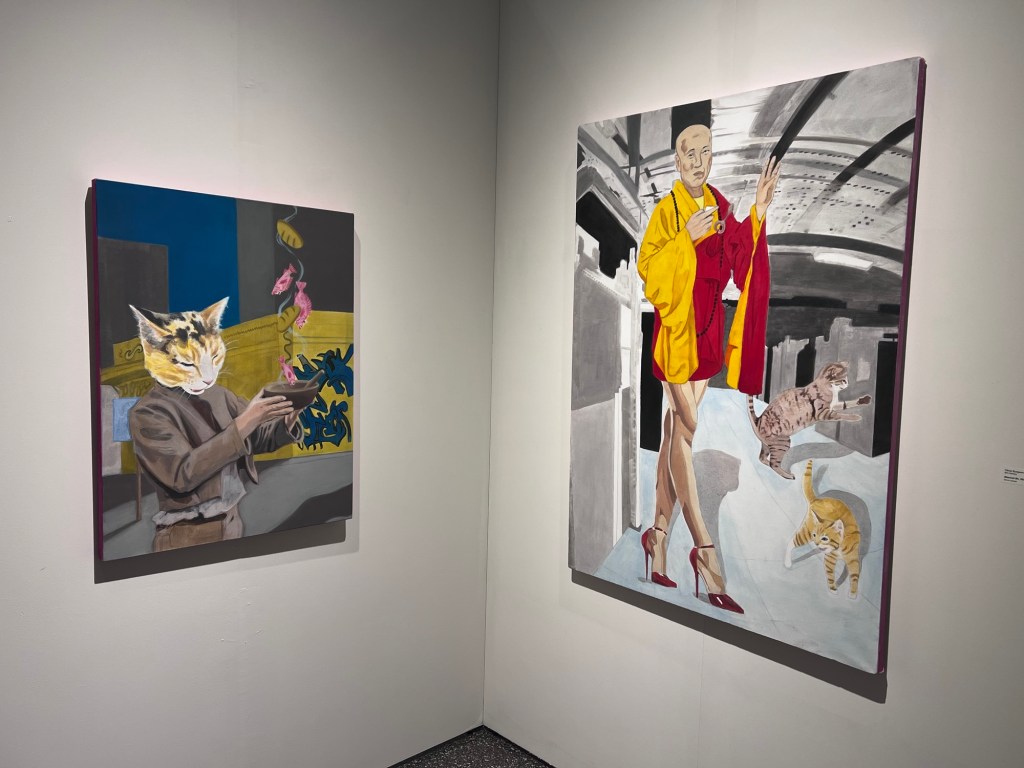
This is the one piece that really stuck with me at the show

Some of the pieces were rather unusual

The unique student works

The students got very creative on the material

The back room of the gallery

The patrons admiring one of the student works

Some of the works of the undergraduate students

Some of the unusual works in the show

More works by the student artists

The gallery at the museum is rather small do I got through the whole show in less than an hour. I had a quick snack with what was left on the buffet table, which was not much. The food was really good and a snared the final meatball.

Just enough of a snack to get through the next two hours

It was a nice opening for the show and my first on the campus. It just happened to fall at the same time I was attending the Snowflake Festival in Kingston on the same night so I was able to do both. I was glad I could support their students.

History of the Samuel Dorsky Museum of Art:

Mission of the Museum:

(from the museum website)

Through its collections, exhibitions and public programs. The Samuel Dorsky Museum of Art supports and enriches the academic programs at the university presents a broad range of national and international art for study and enjoyment and serves as a center for the arts and culture of the Hudson Valley.

About the Museum:

(from the museum website)

Located at the State University of New York at New Paltz. The Dorsky Museum comprises more than 9,000 square feet of exhibition space distributed over six galleries. The museum was launched more than 65 years ago by a dedicated committee of faculty members to enhance the teaching mission of the university. Originally known as the College Art Gallery, The Dorsky Museum was dedicated in 2001. The opening of The Dorsky Museum transformed the original College Art Gallery into one of the leading art museums in the region.

The Dorsky Museum’s permanent collection comprises more than 5,500 works of art from around the world and spans over a 4,000 year time period. While encyclopedic in nature, areas of focus include American art, with an emphasis on the Hudson Valley and Catskill Mountain region, 19th century American prints, photography and contemporary metals. The museum also has a strong World Collection that includes outstanding examples of both two and three-dimensional objects from diverse cultures, dating from classical to modern times.

The museum’s temporary exhibition program has been hailed as one of the best in the region and features exhibitions, installations and projects by internationally recognized artists as well as annual thematic exhibitions of work by regional artists. “The Hudson Valley Masters Series” is one of the unique exhibitions that the museum periodically hosts which focuses specifically on a body of work by an internationally acclaimed artist who resides in the area.

Samuel Dorsky Museum

A painting by Angela Dufresne

Samuel Dorsky:

(from the museum website):

Samuel Dorsky was a self made and self realized individual who came to the art world relatively late after achieving success in the garment business. Emerging from the Great Depression, World War II and the post war boom years with the desire and the where withal to pursue both art and philanthropic, he opened a art gallery in 1963. Until his death in 1994, his gallery presented hundreds of exhibitions featuring such well-known artists as Henry Moor, about whom Dorsky was a recognized authority, Richard Hunt, Willem De Kooing, Larry Rivers and Robert Rauschenberg. Sam also generously championed the work of numerous lesser-known artists who he often befriended. The Dorsky gallery closed its doors to the public in 2001 after which Sam’s children, David, Noah, Karen and Sara established the Dorsky Gallery Curatorial Programs (DGCP) in Long Island City, a not for profit organization dedicated to promoting contemporary visual arts.

The dedication of the Dorsky Museum brought to fruition a project that had dominated the last decade of Sam Dorsky’s life. Sam’s lead gift to the SUNY New Paltz Foundation provided the impetus for the construction of the new museum building as well as the complete renovation of the former College Art Gallery to become part of the museum. The Dorsky Museum now comprises six galleries, offices and a small teaching space.

The Dorsky family continues to be a major supporter of The Dorsky Museum and SUNY New Paltz. David, Karen and Noah Dorsky serve on the Advisory Board of The Dorsky Museum. Karen and Noah also serve as trustees of the SUNY New Paltz Foundation.

(SUNY New Paltz History)

Historic Old Dutch Church                                                      272 Wall Street                                                               Kingston, New York 12401

Historic Old Dutch Church 272 Wall Street Kingston, New York 12401

The Historic Old Dutch Church

272 Wall Street

Kingston, New York  12401

(845) 338-6759

Church office Hours 10:00am-3:00pm weekdays (845) 338-6759

http://www.olddutchchurch.org

info@olddutchchurch.org

*Note from the Blogger: this church is where every year the ‘Sinterklaas Committee’ has there annual fundraiser. The inside is beautifully decorated for the holidays and the food is wonderful. Check out the Sinterklaas Rhinebeck, NY website for more special events.

TripAdvisor Review:

https://www.tripadvisor.com/Attraction_Review-g48003-d7232701-Reviews-Old_Dutch_Church-Kingston_New_York.html?m=19905

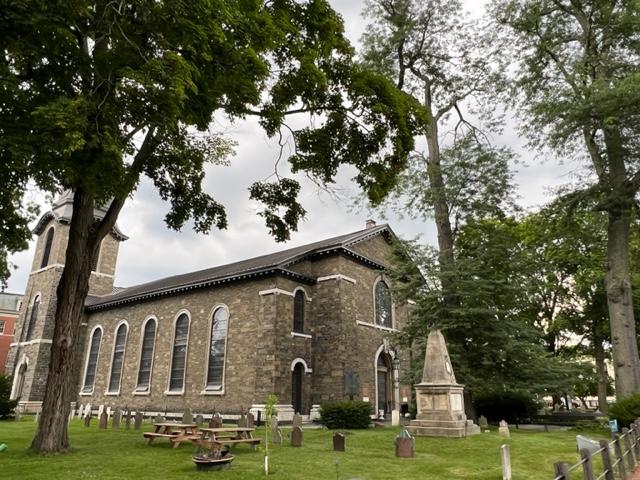
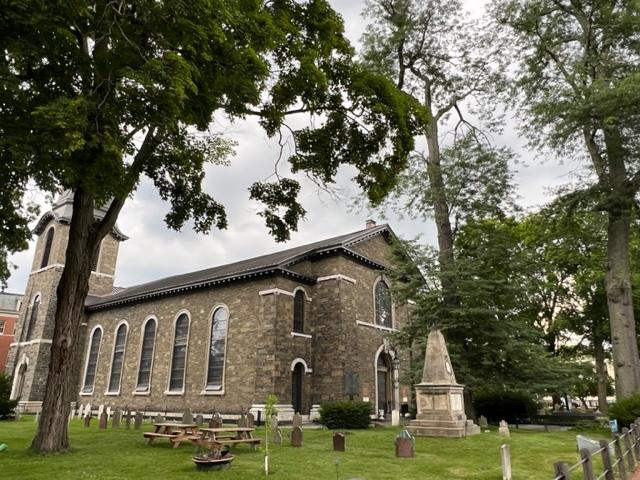
The Church during the Summer months

The Old Dutch Church cemetery during the day.

I recently attended the Annual “Cemetery Walk” of the Old Dutch Church in Kingston, NY, where they have actors playing famous people who are buried at the church.

The cemetery during the day

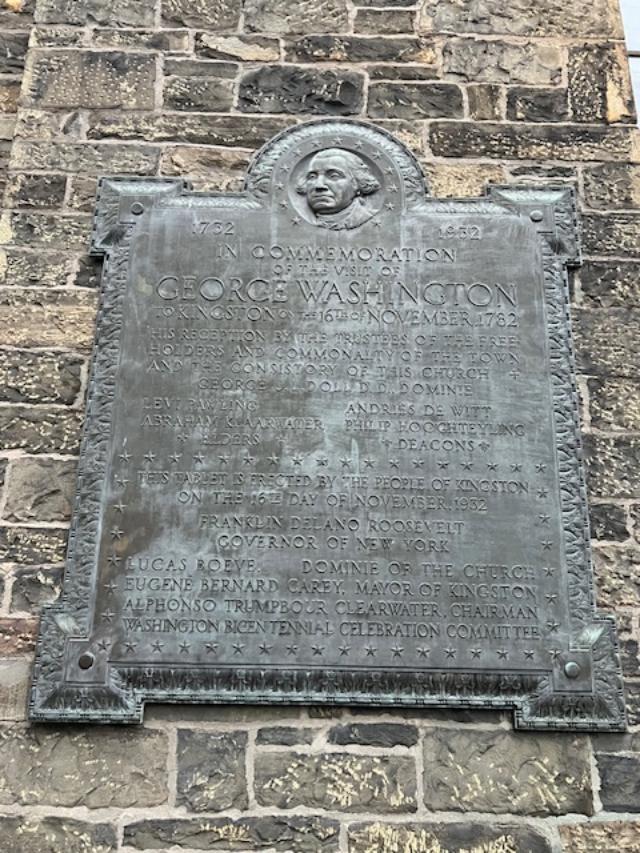
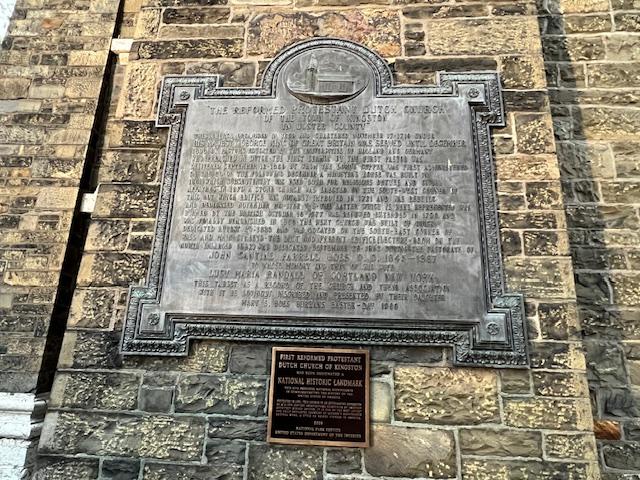
The historic plaques outside the entrance to the church

The historic plaque outside the entrance of the church

The Cemetery Walks during Halloween:

We went through the cemetery and one by one we met actors who played the roles of Sadie and Elsie Reher, whose family owned the bakery in the Kingston Roundout, Jenny, slave who was living in Upstate New York at the time of slavery in New York, Calvert Vaux, the famous landscape artist of Central and Prospect Park fame, who also designed many homes and buildings, Emily Chadbourne, the art collector, philanthropist and socialite. To round off the cast there was Rachel Hasbrouck, the landowners and Father Devine, a spiritual leader of the 1930’s.

The Cemetery Walk at the Old Dutch Church in Kingston, NY

We spent about fifteen minutes with each character and than would hear the cow bell and move onto the next character. It is a lot of walking around a cemetery in the dark and a few people could not handle it.

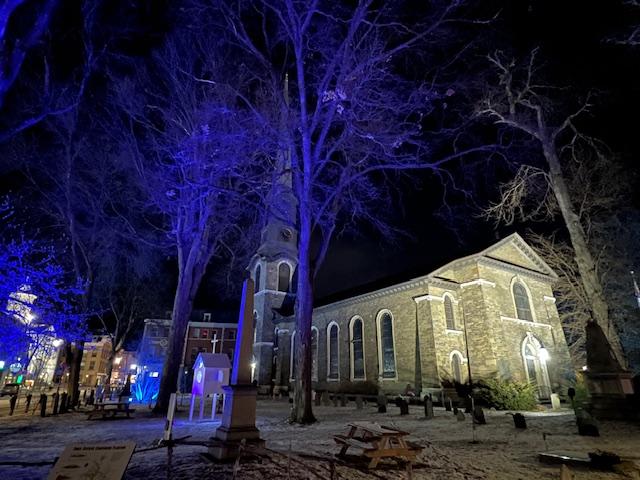
The graveyard is scary but inviting at night

The only problem with the event was that the actors took it upon themselves to relate their characters to modern times and what is going on in the world today and I did not take a tour to hear their political views. That put a damper on the evening. They are supposed to stay in the era their character was born into. The tour covered three centuries of residents of Kingston, NY.

The graveyard at night

Sinterklaas Fundraisers:

Take some time to come to the church during daylight hours and see the cemetery on your own time. It is very interesting and gives you a perspective on the role of the church from colonial to modern times.

I also had been up to the church many times for Sinterklaas fundraisers, where we were treated to Dutch “Sweets & Treats” along with a visit from Sinterklaas (Santa Claus). It was always a nice night of music and entertainment.

The Sinterklaas fundraiser “Sweets & Treats” used to be held at the Old Dutch Church in Kingston, NY.

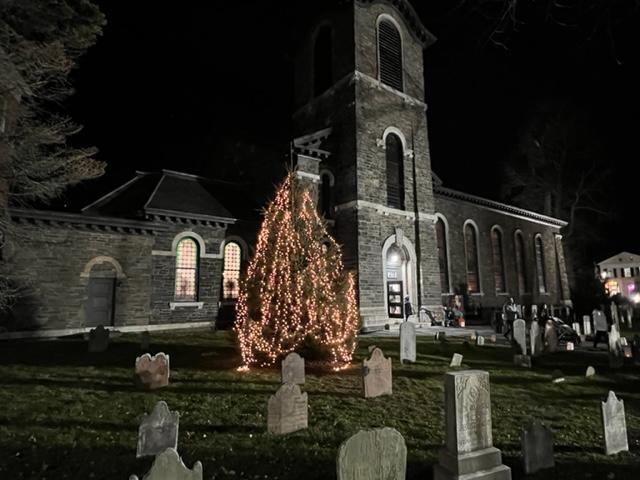
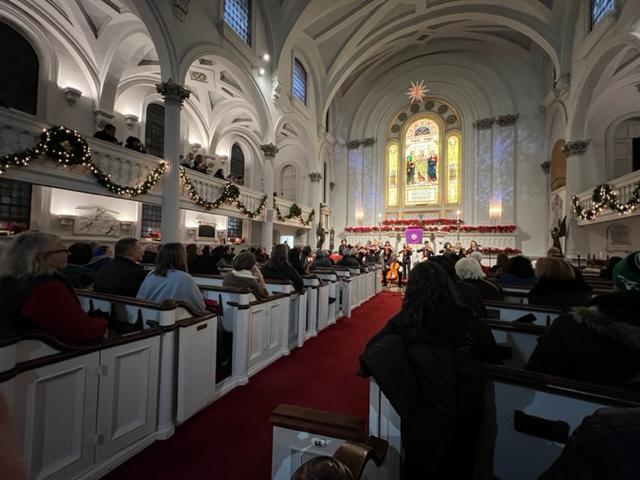
During the recent “Snowflake Festival” in 2022, the church was the host to many groups of fiddlers. The whole church was decked out for the Christmas holidays. Both inside and outside the church was decorated for the Christmas holiday season. It was just gorgeous.

The front of the church during the Kingston Snowflake Festival in 2022

The Dutch Reformed Church’s Christmas tree was very traditional at the Snowflake Festival.

The fiddlers packed the church for the concert. It was nice to see the church during the Christmas holiday season which was decked out with traditional holiday decorations. The concerts were a lot of fun and the groups were excellent.

The fiddler groups entertained us that night

The History of the Old Dutch Church of Kingston, NY:

(from the church website)

The Front of the Old Dutch Church

Founded in 1659, the Old Dutch Church is often referred to as “Kingston’s Cathedral”. The present structure was designed by Minard LeFever and built in 1852. Architect Calvert Vaux said of this design, “I cannot change a thing without impairing the exquisite unity. It’s ideally perfect.”

The church and the cemetery

Organized in 1659:

*Sixth Oldest Reformed Church in North America.

The Old Dutch Church from the front

*Archives containing Baptism and Marriage Records dating back from 1660 to present.

*The Land on which the church stands was a gift from Peter Stuyvesant.

*Fifty Reformed Churches in the Hudson Valley, New Jersey and Pennsylvania trace their roots to Old Dutch Church, Kingston.

The War Memorial at the Old Dutch Church

*The ancient churchyard is the resting place of 1400 early settlers, including 77 Revolutionary War veterans and first New York Governor and two-time Vice-President, George Clinton.

The churchyard and the George Clinton grave

*Inside in the church: the magnificent Tiffany Window above the pulpit; bronze angels and the spectacular Moeller Organ.

*Visitation site of both Queen Juliana and Queen Beatrix of the Netherlands.

Tours and information talks given by Old Dutch Church guides are available by appointment.

Sunday Morning Worship: 10:30am

Old Dutch Church Kingston NY II

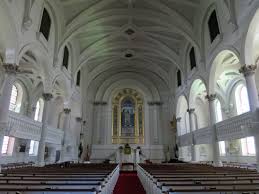
The inside of the church

The church during the recent ‘Kingston Snowflake Festival”

The Church during Christmas in 2024:

The church on a quiet evening during December 2024
The church decorated at Christmas time

The front of the church at night

*Disclaimer: this information was taken from the Old Dutch Church pamphlet. The church is the site of the annual fundraiser for the Sinterklaas festival every November. Please check out the Sinterklaas festival calendar every year for updates. The church cemetery is worth the visit alone with all the unique and historical people buried here.

Olana State Historic Site                                    5720 Route 9G                                               Hudson, NY 12534

Olana State Historic Site 5720 Route 9G Hudson, NY 12534

Olana State Historic Site

5720 Route 9G

Hudson, NY  12534

(518) 828-0135

Open: 11:00am-3:00pm (check the website for seasonality)

Directions: Located on Route 9G, five miles south of Hudson. Take NYS I-87 to Exit 21, Catskill. Take Route 23 over Rip Van Winkle Bridge. Bear right on Route 9G south. Olana is one mile on the left. Or visit our websites at http://www.Olana.org and http://www.nysparks.com.

Hours: House available by guided tour only. Call for days and hours or visit http://www.olana.org. Reservations suggested; group tours by advance reservation only. Grounds open 8:00am-sunset year around.

http://www.nyparks.com

http://www.olana.org

Admission: $10.00 Adults (Tickets depend on the type of tour you are taking)

TripAdvisor Review:

https://www.tripadvisor.com/Attraction_Review-g47931-d263717-Reviews-Olana_State_Historic_Site-Hudson_New_York.html?m=19905

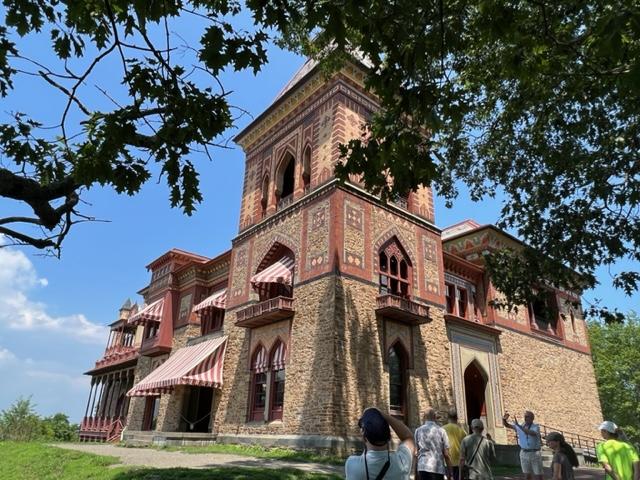
The front of Olana when we toured the house.

I had not been to the Olana Mansion since 2014 and it was finally nice to see it during the summer when everything was in bloom. The tours were every hour of the day during the warmer months with several types of tours available at different prices. There was a house and garden tour for two hours which I had just missed so I took the house tour.

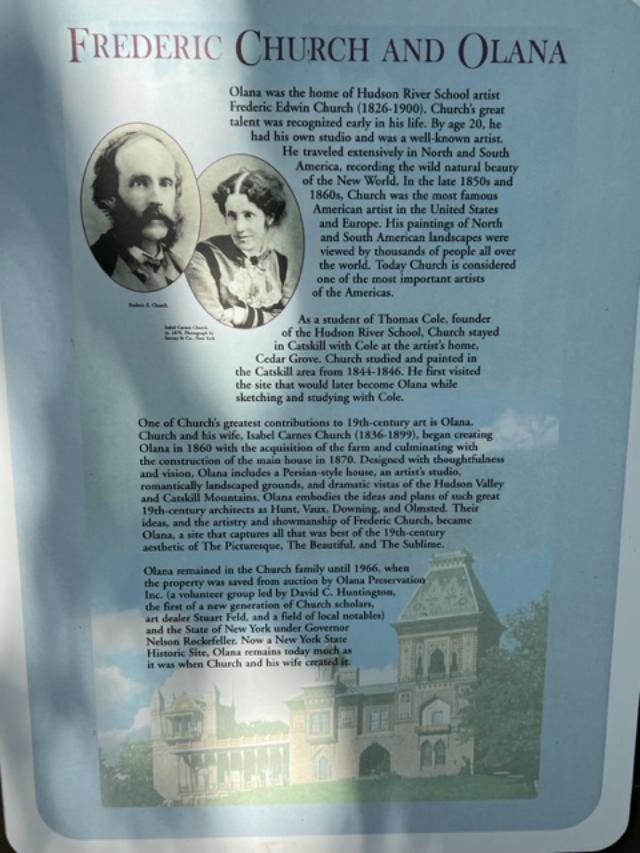
The story board of Olana pf the family

The house is filled with original family furnishings from when the house was almost sold off in the 1960’s. An industrialist saw a reason to save the house for future generations and raised the money to keep everything intact. It gave us a glimpse into the life of artist Fredrick Church and his family. The tour consists of all the bottom floors of the house and the garden. The unique part of the tour is that the man who was our tour guide partner was the last Mrs. Church’s grandnephew. So, he remembered visiting the house as a child.

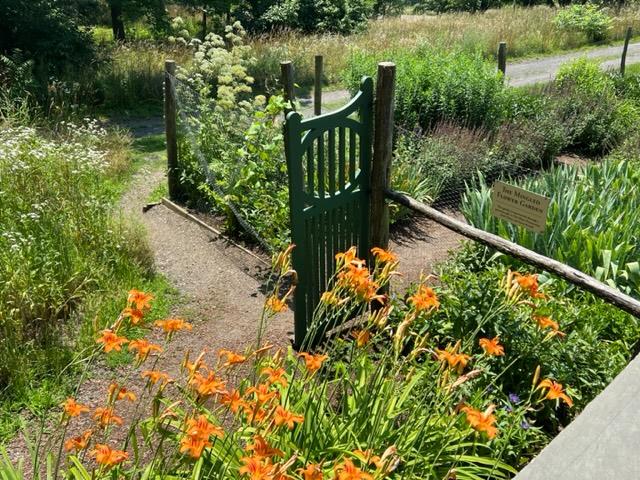
We started the tour in the formal gardens that have been replanted. They were in full bloom giving us insight to how the grounds were once landscaped. The gardens were made up of mostly local flowers that were native to the area.

The formal gardens of Olana

The Olana gardens leading to the house.

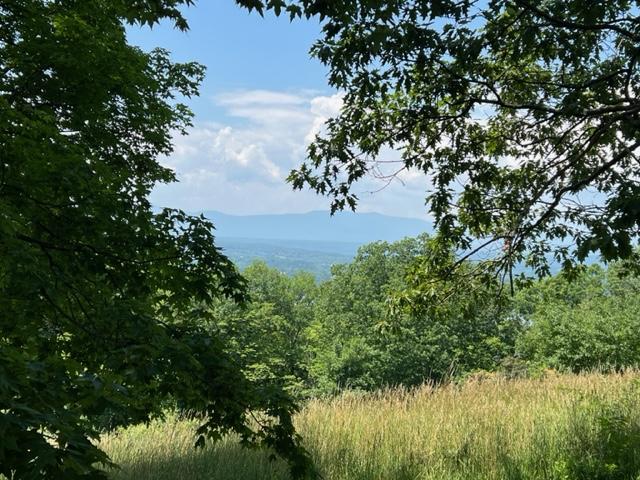
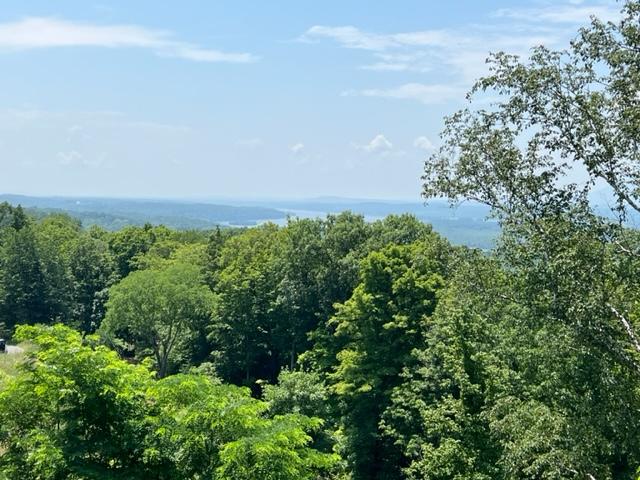
We explored the views from the porch to see what the family would have experienced when they were at the house in season. There are breathtaking views of the Hudson River and the surrounding Catskill Mountains from the porch of the house. Things have grown in since the family’s time, but it still offers amazing vistas.

The views are beautiful from the porch.

We then toured the house’s first floor where the family did their receiving of guests, their social rooms and the offices of both Mr. & Mrs. Church. Each of the rooms still contained family heirlooms and original furnishings. We started with the Receiving Room where guests would wait to be welcomed by the family or leave a calling card that they were making a visit.

The Receiving Room in the front of Olana

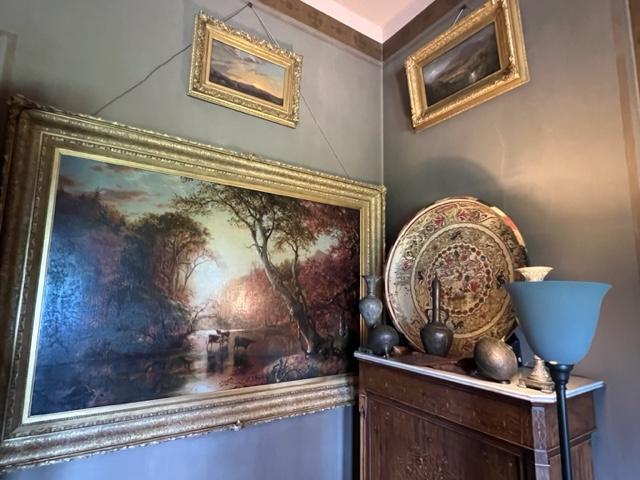
When you look at the walls of the room, it is decorated with Fredrick Church’s artwork. The tour guide told us that the house had the largest collection of Fredrick Church’s paintings in the country. I took this attribute as these were the pieces that he did not sell at the time. The works of the Hudson River School and of his travels abroad were very interesting and lively.

Fredrick Church paintings that line the house.

We toured the house room by room admiring the furnishings and all the artwork of Fredrick Church that lined the walls of the house. This included family members including his wife, Isabel Carnes Church, his partner for the rest of his life.

Isabel Carnes Church, the mistress of the house

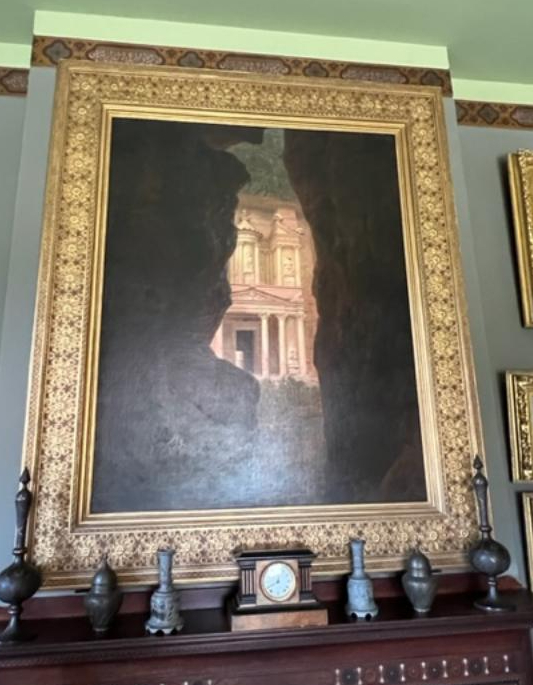
On his many trips abroad, Fredrick Church painted many of the sites he had visited that included the Far and Middle East.

Fredrick Church’s painting of “Petra” in the Middle East.

Both Mr. and Mrs. Church kept up social appearances on top of their work. They had a steady stream of guests visit the house and there was a lot of entertaining here.

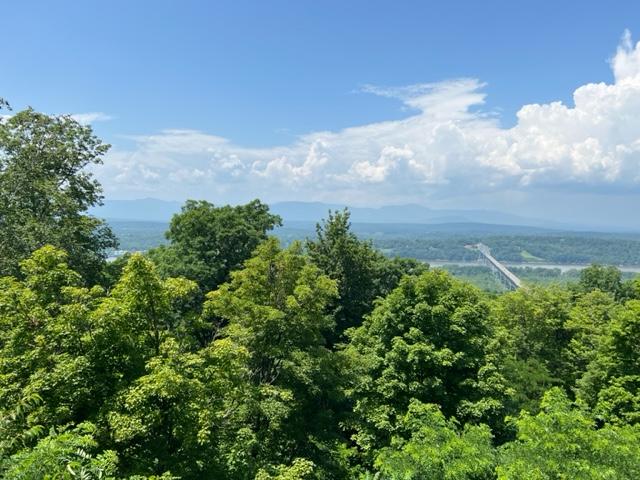
The view from the porch

The view from the other side of the porch

We next visited the parlor, where the family would gather when they were staying at the house. There were many exotic furnishings from their trips on top of the personal family items. There were musical instruments to keep the family entertained when they were home.

The family piano in the Parlor

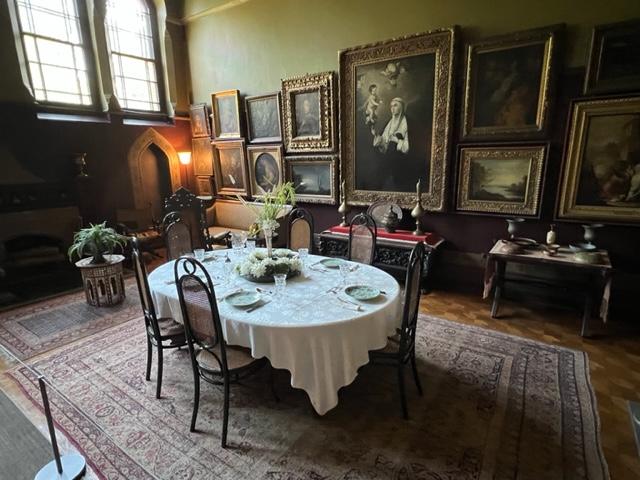
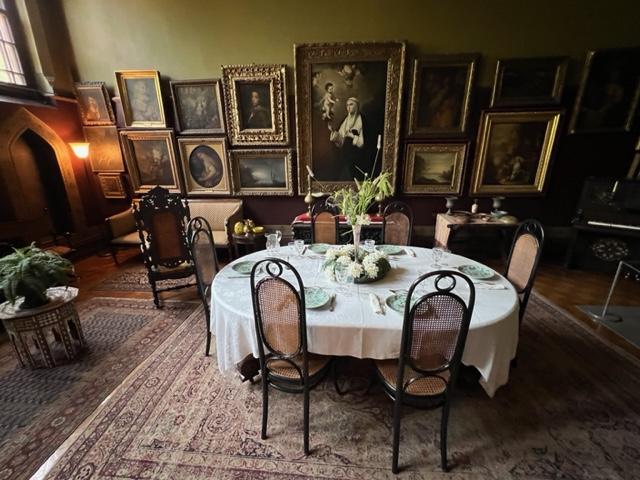
The formal Dining Room was more personal with a dining table that extended out for twenty people or open enough for the family to diner in this room.

The formal Dining Room

The formal Dining Room with the collection of painting that the family acquired when they were aboard.

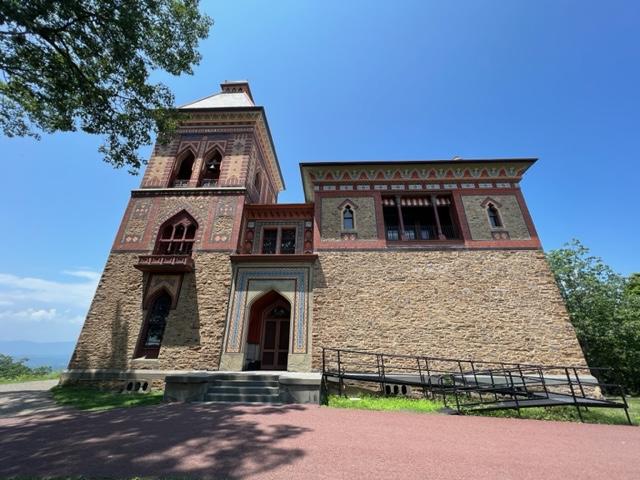
As we finished the visit to the public rooms of the home, we toured the outside of the home as well as we exited out the side door.

The side view of Olana

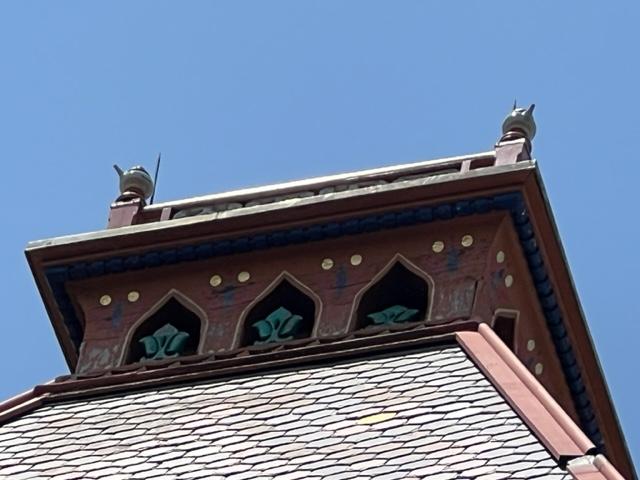
When we looked up at the home with its combination of Morrish and Arabic design we saw four teapots at the top of the tower. When asked what they meant and why they were there, no one including the tour guide knew. It was figured by a group of landscape architects that it may have something to do with longevity or renewal. This secret died with the family.

The teapots line the roof.

The tour is very interesting and gives you a view on the house and on the family who lived there and how they lived when they were in residence here. They entertained, they worked, they traveled, and they made great art. The location on the hill in the Hudson River Valley shows their investment in the location. This was all kept intact after the 1960’s for us to enjoy.

The views of the Hudson River Valley

History of Olana:

Olana, one of the most important artistic residences and planned landscapes in the United States, is the last and perhaps greatest masterpiece created by Hudson River School artist Fredrick Edwin Church (1826-1900). Church designed the landscape and his Persian style home on and around the same hilltop where, as an eighteen year old student, he sketched spectacular views of the Catskills and the river alongside his mentor Thomas Cole.

The view of the house from the back.

Even in an era defined by personal architectural statements, the home of Fredric and Isabel Church was unique. Delight in the Moorish details of the building and each room. View the original furnishings of the house and walk or jog along the paths and carriage drives of the surrounding landscape, also designed by Church. A designated National Historic Landmark, Olana State Historic Site opened to the public in 1967. The house, its contents and the landscape still look very much as they did in Church’s day.

The inside of Olana in the main rooms

The views of the Hudson River from the porch of the house

Decorations in the historic garden

The story of the grounds and the estate