Category: Exploring Historic Cumberland County, NJ

Potter’s Tavern                                                      49-51 West Broad Street                                  Bridgetown, NJ 08302

Potter’s Tavern 49-51 West Broad Street Bridgetown, NJ 08302

Potter’s Tavern

49-51 West Broad Street

Bridgeton, NJ 08302

(856) 453-2175

https://en.wikipedia.org/wiki/Potter%27s_Tavern

https://explorecumberlandnj.com/cumberland-historic-sites/potters-tavern/

Open: Sunday 1:00pm-4:00pm/Monday-Saturday Closed-Seasonal please check the website

Admission: Free but donations are accepted

My review on TripAdvisor:

The Potter’s Tavern in Downtown Bridgeton, NJ
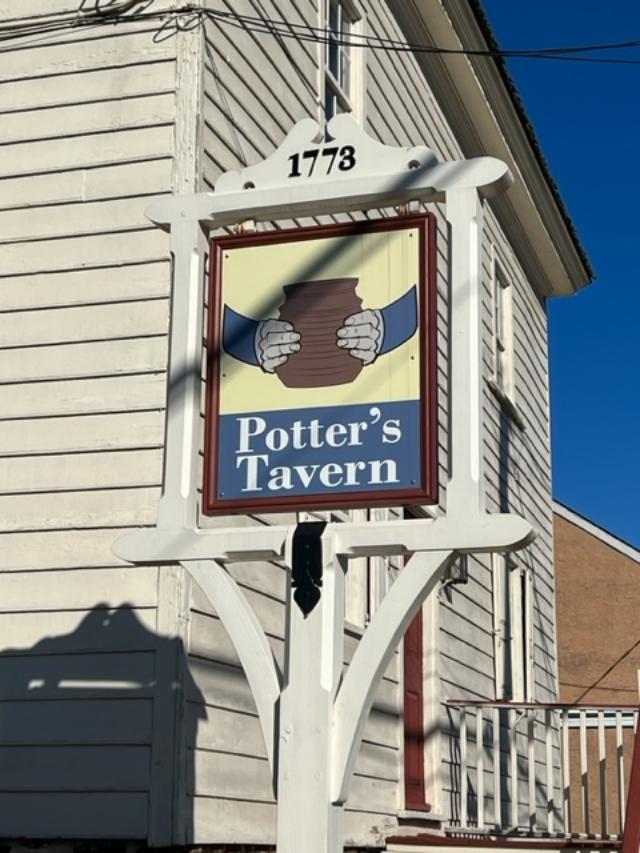
The historic sign that welcomes you
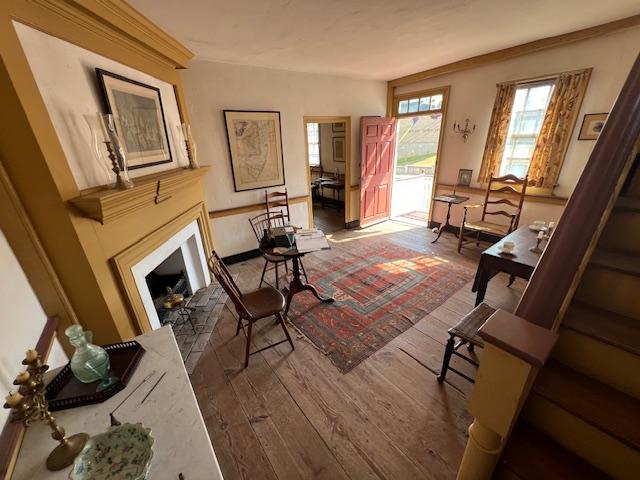
The Greeting Room at the entrance of the tavern

I finally got into the Potter’s Tavern Historical site one weekend that I was in South Jersey and it is a fascinating look at how a building and its location and purpose changed the outlook of the Revolutionary War and how we almost loss it to neglect.

The Tavern tour leads into several rooms. When you enter the building, you enter the Greeting Room or the main foyer where guests would arrive at the Tavern for the evening. To the right of the room is the main tavern where the bar was located, where issues of the day would have been debated.

The Tavern area by the main entrance

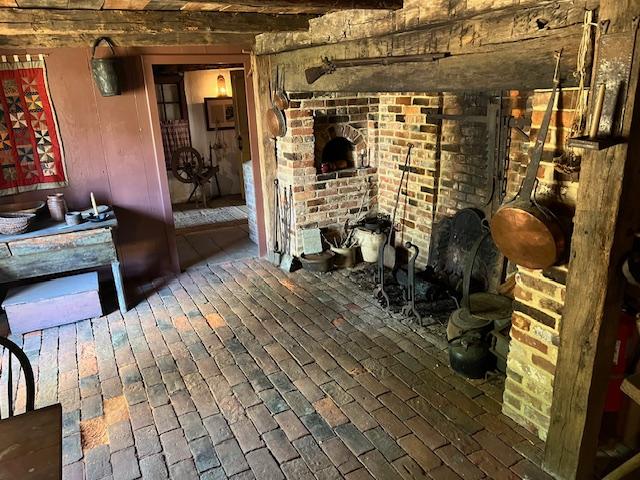
Down the stairs leads to the kitchen and to where the hearth for cooking would have been done. This was the interesting part of the tour as this had been covered up when this became a home. The hearth really shows the efforts that were made in cooking during the period.
The upstairs rooms had been decorated for overnight stays. I am not sure if they would have been this nicely decorated but Bridgeton was in an isolated area at the time and coming here by carriage must have taken several days by carriage or stage coach, so spending the night was a good idea.
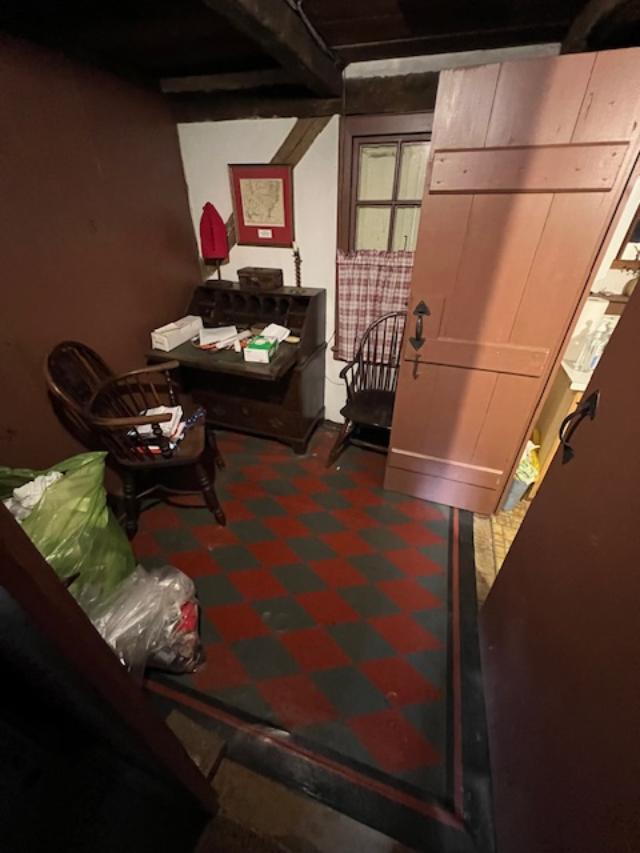
The tour did not take that long as the building is small but its ties to the American Revolution is what makes it so fascinating. Its role in the war and as a meeting place that may have turned the tides of the war is what makes such a interesting place to visit.

Artifacts on the second floor
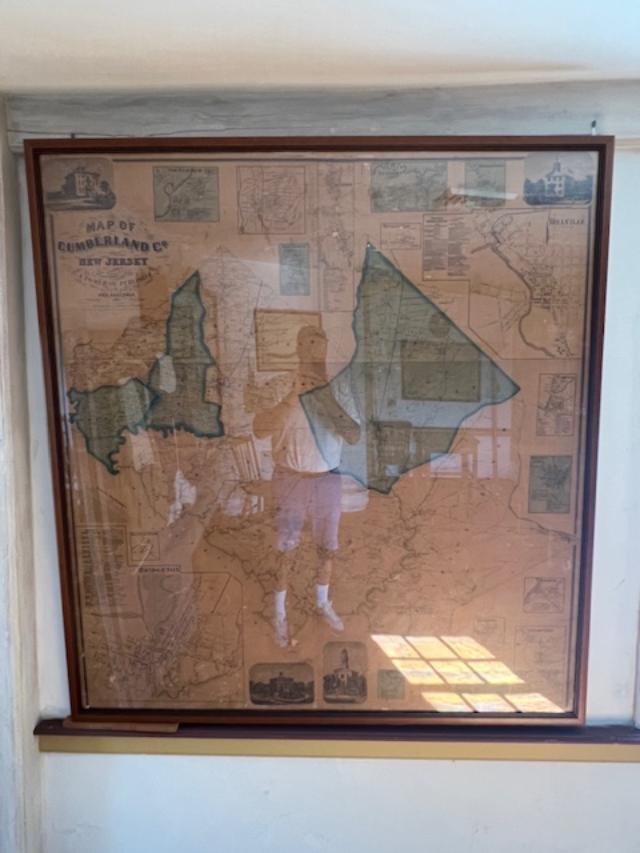
A Map of Old Bridgeton, NJ

A map of the City of Bridgeton, NJ

The History of Potter’s Tavern:

(From the Cumberland County Website)

Cohansey Bridge, the village which would become Bridgetown in 1765 and eventually Bridgeton, was a small community of less than 150 residents in the early 1700s. Cohansey Bridge was home to several taverns, which back then were places for more than food and drink. They were the social hotspots of town, the place where residents could learn about the latest local news and where travelers would pass on news from other communities. Matthew Potter, born in 1734 in Ireland, moved to Connecticut in 1740 with his mother, father and two brothers. The family soon moved to Philadelphia and not long thereafter, Matthew and his brother David moved to Cohansey Bridge where Matthew set up a blacksmith shop and tavern.

The Potter family tree in the museum

Matthew Potter’s tavern, which also served as his home, was built around 1767 and located on the north side of Broad Street. Constructed in a “salt box” design, with two stories in the front and only one in the rear with a long sloping rear roof, the tavern catered to mostly young gentlemen doing business at the courthouse, which was directly across the street.

The ‘Salt Box’ designed Potter’s Tavern

In December 1775 a weekly hand-written newspaper started appearing in Potter’s Tavern which included articles critical of British rule and supportive of independence. The Revolutionary War had begun earlier in the year, and this hand-written newspaper, known as the “Plain Dealer,” called for open revolution months before the Declaration of Independence was drafted in Philadelphia.

The inside of the Greeting Room as you walk inside the tavern

Despite efforts by local British Loyalists to identify and prosecute the contributors to the “Plain Dealer,” none of the writers, who were anonymous, were ever discovered or arrested. Writings such as those found in the “Plain Dealer” were considered treasonous and those who wrote them could be punished with public execution.

The Potter family sword collection

At least thirteen editions of the “Plain Dealer” were produced, and today scholars attribute a portion of the success of the American Revolution to the creation of powerful communication among colonists through newspapers and leaflets like the “Plain Dealer.” By reaching out to one another, colonists built bonds of sympathy and unified and by reading about local acts of resistance and stories of suffering under British rule the colonists came to realize they were fighting for each other.

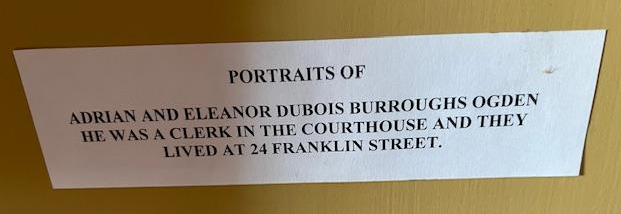
The Dubois Family Portraits of Adrian and Eleanor Dubois Burroughs Ogden
After the Revolutionary War concluded several of the writers of the “Plain Dealer” came forward and became leaders in the new nation of the United States of America. These included Joseph Bloomfield and Richard Howell, who served as governors of New Jersey.
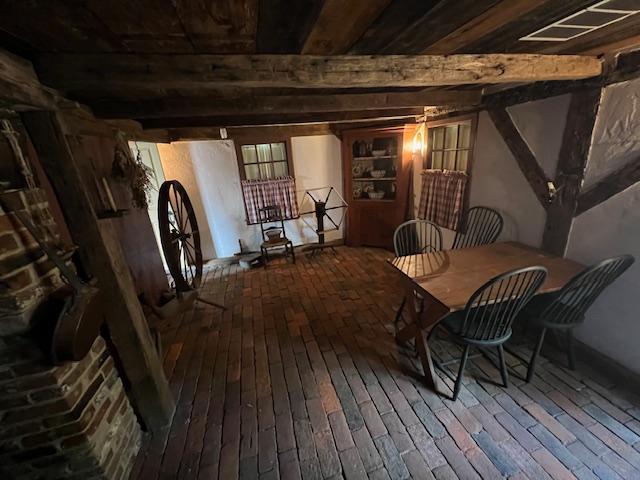
The Tavern’s Kitchen and Hearth

Potter’s Tavern remained a tavern until around 1788 when it was converted into a two-family dwelling. It then is abandoned and nearly collapsed before being purchased by the City of Bridgeton in 1958. In the 1970’s it was placed on the State and National Registers of Historic Places and is now owned by the County of Cumberland and leased to the Cumberland County Historical Society. It is open on July 4th and other special occasions and by reservation. The only known surviving copies of the “Plain Dealer” are held in the Rare Book Collection of Rutgers University Library.

The Beehive oven in the kitchen

The John DuBois Maritime Museum                   949 Ye Greate Street                                Greenwich, NJ 08323

The John DuBois Maritime Museum 949 Ye Greate Street Greenwich, NJ 08323

The John DuBois Maritime Museum

949 Ye Greate Street

Greenwich, NJ 08323

(609) 444-1774

https://www.americanheritage.com/content/john-dubois-maritime-museum

Open: Sunday 12:00pm-4:00pm/Monday-Friday Closed/Saturday 12:00pm-4:00pm

Admission: Free but donations are accepted.

My review on TripAdvisor:

https://www.tripadvisor.com/Profile/R4960NKjustinw/mediabatch/12221179?m=19905

The Museum:

The John DuBois Maritime Museum at 949 Ye Greate Street in Greenwich, NJ.

I visited the John DuBois Maritime Museum when I was visiting the Gibbon House and the Carman Prehistoric Museum when I was visiting Greenwich, NJ. What a nice little museum explaining the maritime history of not just New Jersey but the local area as well.

The museum is one large gallery broken down into sections of the history of the area. The main gallery is well organized by section to explain the shipping history of the region.

The decoys and rafts that are part of the collection.

The nautical instruments to guide your way through the stars. These were part of the long voyage.

The Shipping display

The sign for the Oyster Dredge display

The Oyster Dredge display

The Oyster Dredge display explores the important of the oyster industry in the area’s waters and what an important source of food they were to the local population. It also showed their role in keeping the waterways clean and the water well circulated.

The Ship Building display

Ship building and the creation of the shipping industry’s planning on future boat was another important part of the economy before the Civil War.

The Ship’s Mascot greets all of her guests at the front of the museum.

The History of the Museum:

The John DuBois Maritime Museum houses a large collection of Southern New Jersey Maritime related items from the 19th and early 20th centuries. A large and unique collection of builders models of local craft, show the plans used to build a new ship from the model itself.

The anchor outside the museum

Exhibited are tools used to carve ribs, planking, masts and booms. Also displayed are many blocks, ‘deadlines’ and ‘rigging’. The museum is proud to have one of the largest collections on the East Coast of caulking tools. Videos are available to view by the New Jersey network on oyster schooners including an interview with John DuBois who donated most of the artifacts in the museum.

Also exhibited are early maritime engine parts, most from the Hettinger’s of Bridgeton, one of the first manufacturers in America of marine motors.

The Shipping displays in the heart of the collection.

Old Town Hall Museum/Harrison Township Historical Society Inc.                                                                                      P.O. Box 4                                                                              Mullica Hill, NJ 08062

Old Town Hall Museum/Harrison Township Historical Society Inc. P.O. Box 4 Mullica Hill, NJ 08062

Old Town Hall Museum/Harrison Township Historical Society Inc.

P.O. Box

Mullica Hill, NJ. 08062

(856) 478-4949

https://www.harrisonhistorical.com/

https://m.facebook.com/Harrison-Township-Historical-Society-310499278053/

Open: Sunday 1:00pm-4:00pm/Monday-Friday Closed/Saturday 1:00pm-4:00pm

Admission: Free but a donation would be appreciated.

My review on TripAdvisor:

https://www.tripadvisor.com/ShowUserReviews-g46655-d25105321-r866773005-Harrison_Township_Historical_Society-Mullica_Hill_New_Jersey.html?m=19905

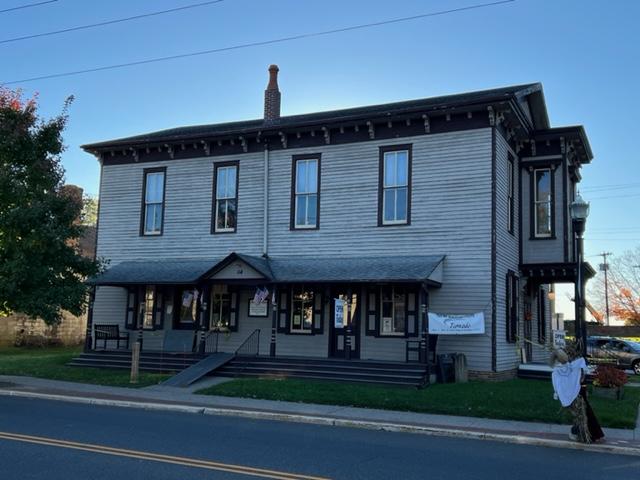
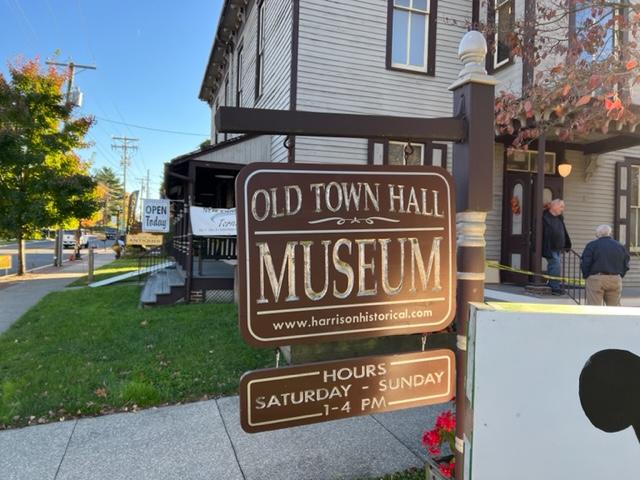
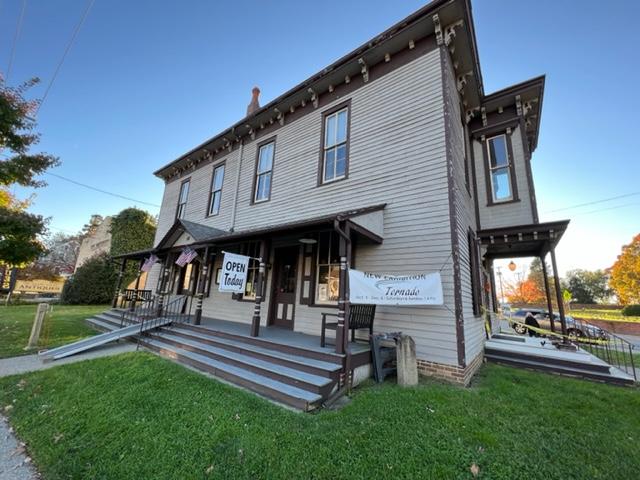
The Old Town Hall Museum/Harrison County Historical Society

The Harrison Township Historical Society/Old Town Hall Museum

Former Exhibition in 2023:

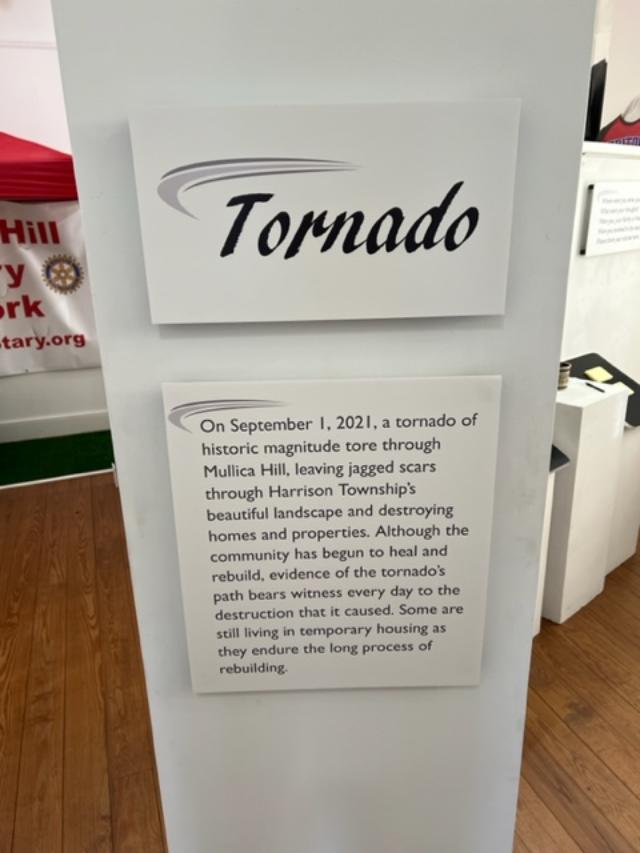
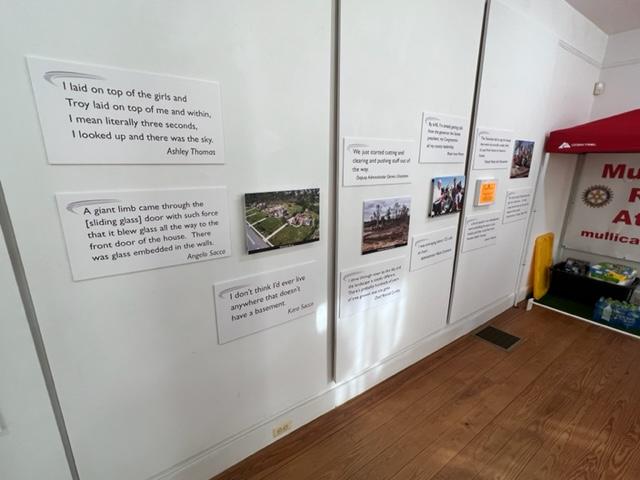
TORNADO 

This new exhibition commemorates the 2021 Hurricane Ida Tornado through first-person narratives, artifacts, video and photography. 

The Mission of the Old Town Hall Museum/Harrison Township Historical Society Inc.:

(from the Museum pamphlet)

Since its founding in 1971, the Harrison Township Historical Society has presented exhibitions, events, programs and publications focusing on the heritage of South Jersey in Mullica Hill’s Old Town Hall that was built in 1871.

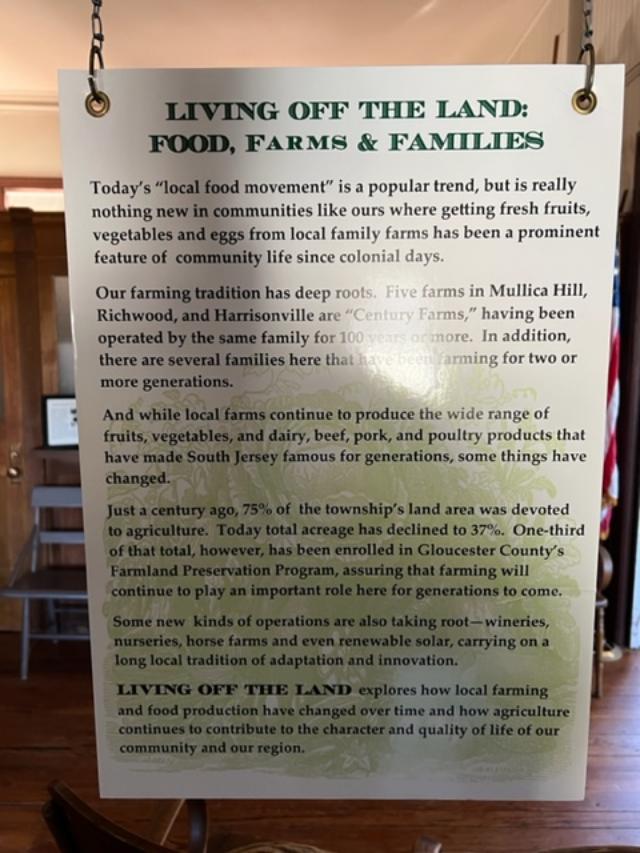
The Stone Age in Harrison Township and Living Off the Land: Food, Farms and Families, explore the region’s Paleo-Indian heritage and our local foodway and farming traditions. The Raccoon Valley General Store and the Harrison Academy Schoolroom recreate two rural institutions.

We also present seasonally changing special exhibitions, student programs and unique special events like the annual Groundhog Dinner (featuring local sausage-“ground” hog!) and the popular Mullica Hill Ghost Walk in October. Visit https://www.harrisonhistorical.com/ for news and information.

Come and experience our Heritage!

Our History:

(from the Museum website)

In 1971 the Township Committee of Harrison Township under the leadership of Mayor Philip J. Reuter, appointed a committee whose purpose was to form a historical society that would lead a community effort to preserve and provide a new purpose for Mullica Hill’s historic Old Town Hall.

Since that time the Harrison Township Historical Society has successfully met this initial charge, not only preserving the building (a key contributing structure in the Mullica Hill National Register Historic District), but also establishing a museum that has won state and national awards for its exhibitions, programs and publications.

The “Living off the Land” exhibition shows life on the farm in Southern New Jersey. This exhibition shows life on a South Jersey farm from the late 1600’s to today with some of the equipment, commercial items and furniture showing the lifestyle on the farm. This first floor exhibition gives us a peek at what life is like in the day of a farming family.

The main room on the first floor of the museum is broken down into sections. In the special gallery space is the exhibition “Tornado” about the tornado that hit the surrounding area during Hurricane Ida in 2021. The exhibition gives first hand accounts of what happened and people’s experiences and the clean up.

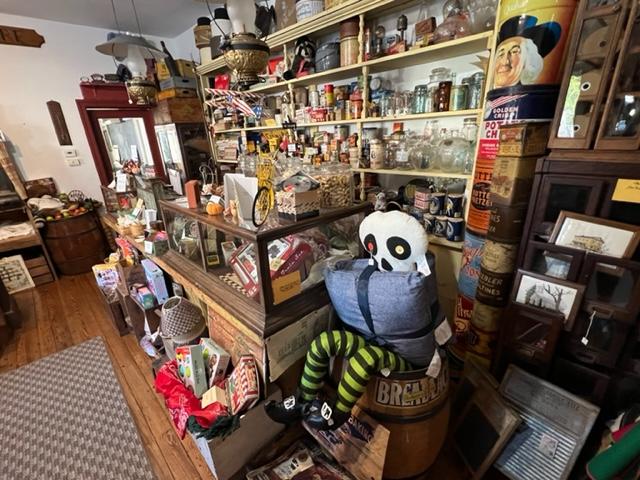
In the Main Room when you enter is the Raccoon General Store and the Harrison Academy schoolroom showing what life was like in rural Southern New Jersey.

Raccoon General Store:

All sorts of everyday items were sold in the General Store which was also a gathering place for the town’s citizens. This is where you would catch up with your neighbors at a time before telephones.

Everyday items would be found in the General Store

Everything could be bought at the General Store for the house with special trips into the City during the holidays or for special occasions

Household items at the General Store

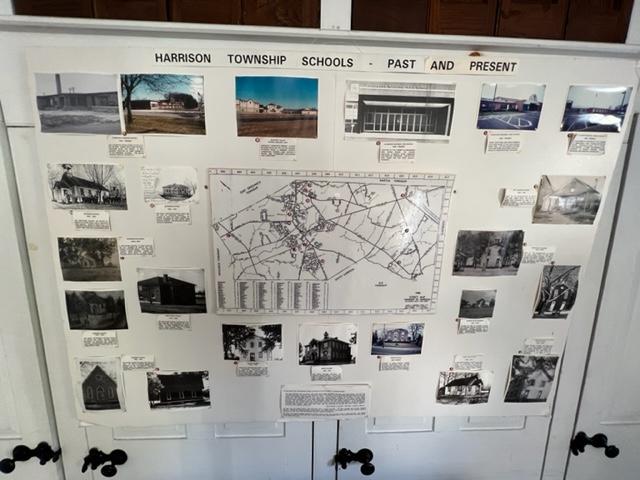
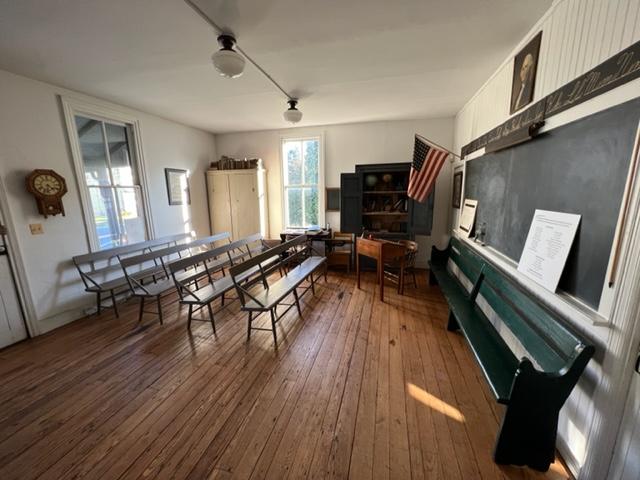
In the back of the General Store is the exhibition of the Harrison Academy Schoolhouse showing teaching in rural New Jersey up until about 60 years ago. These rural communities had the one room school in some cases up until WWII. As the areas developed, the regionalized school system came into play and these small schools became of thing of the past.

The schoolroom set up has not changed much over the last 100 years

The room was still heated by the potbelly stove

The Teacher’s Desk, the globe and picture of the President still exists in the classroom today

In the center room is the old Post Office, another fixture of the town’s social life. This was located in Mullica Hill up until fifty years ago.

The Mullica Hill Post Office

The entrance to the hall with the Post Office and Farm Equipment

The facade of the old Post Office

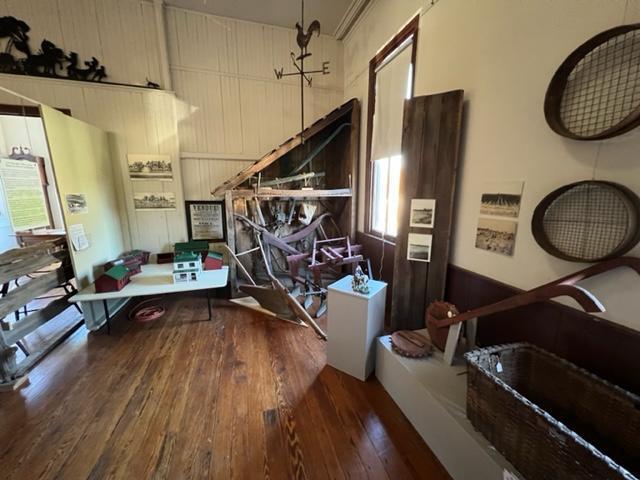
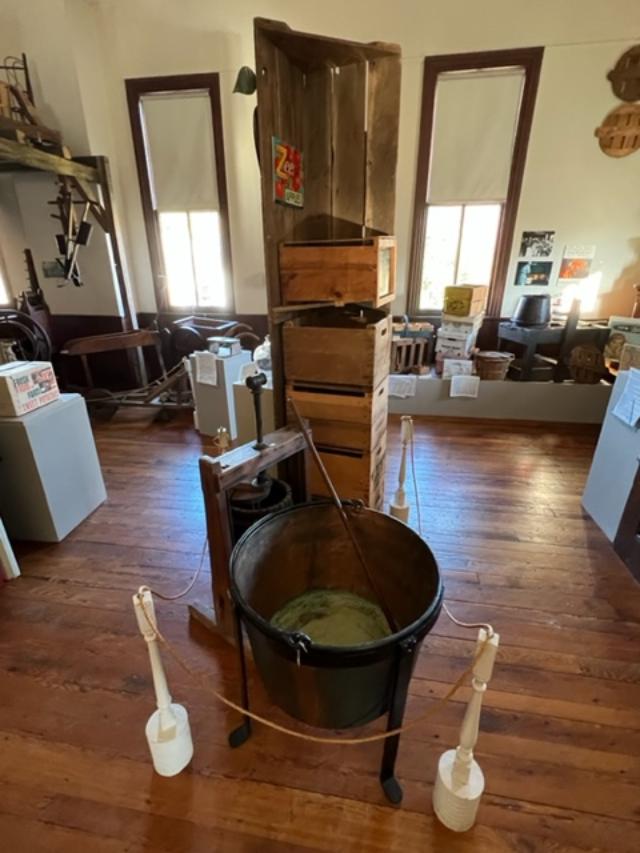
The back part of the exhibition is the farm equipment that would be used in commercial farming. The processing and packaging of fruits and vegetables would have been done when the harvest was being picked and getting ready for markets in New York, Philadelphia and Newark. Fruits and vegetables were packaged on the farm and readied for market.

Life on the farm was not always easy

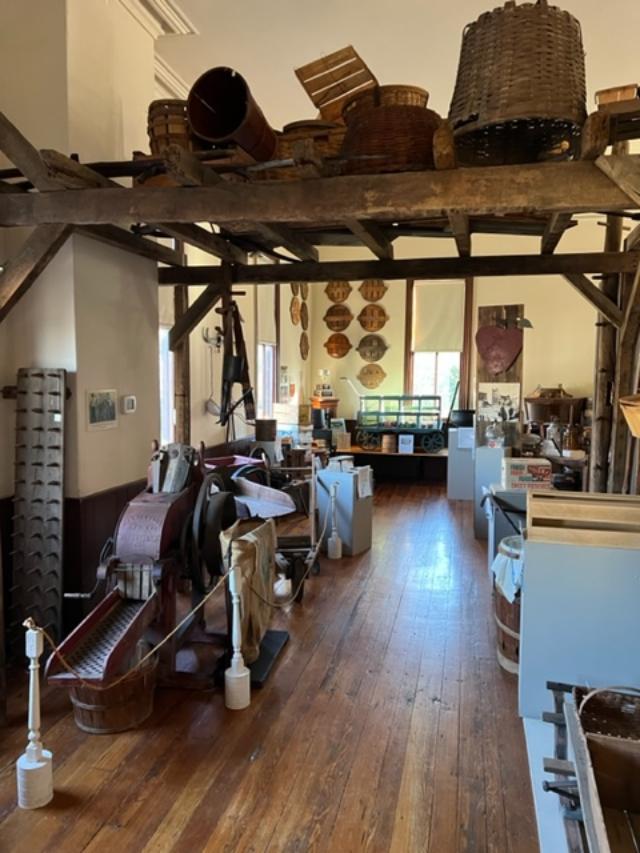
All sorts of equipment for processing fruits and vegetables is on display

All the bailing and shifting equipment needed on a farm

Business advertising

Packaging fruits and vegetables for the market

Life on the Farm

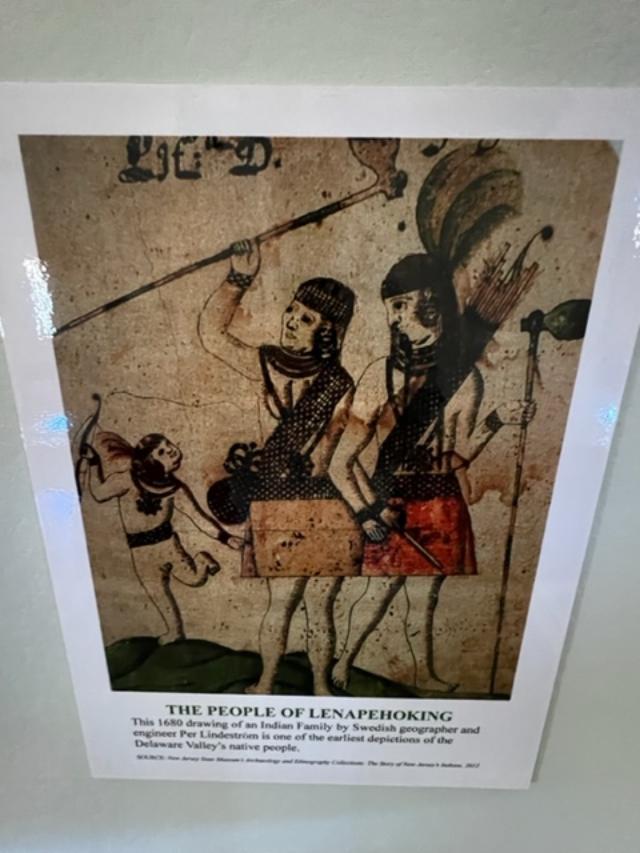
The second floor also provides not just a look into the life of the farming family but at the Native American’s life in the area before the colonist settlement.

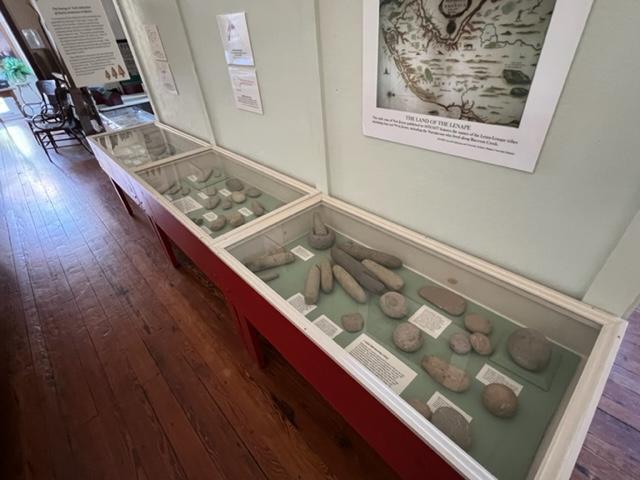
The artifacts of the Native American Lenape Indians

The local Native Americans the Lenapehoking

Day to day equipment and home products of the Native Americans

Arrowheads from New Jersey and beyond

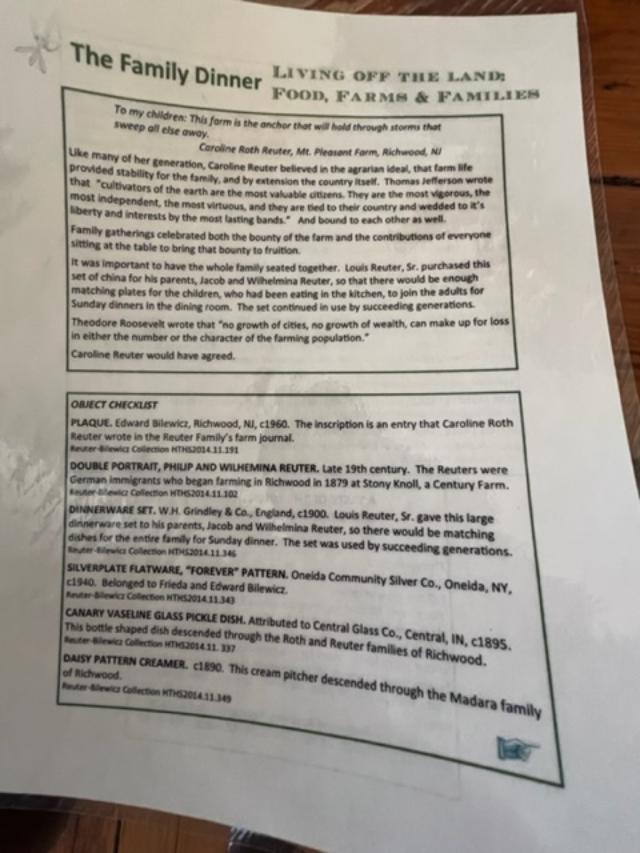
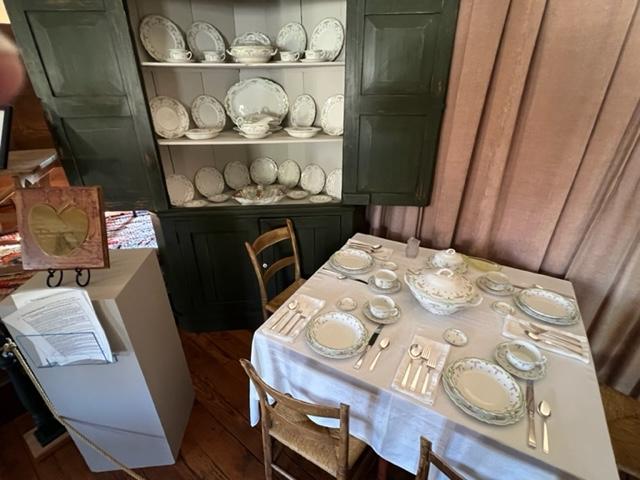
Family life on the farm included the family dinner

Meals would have included churning butter, gathering eggs, milking cows, processing apples for cider, baking and pickling.

Preparing for a meal would have meant the best linens and china would come out of storage and placed on the table.

Families sat down together on Sundays to eat and enjoy each others company.

More processing of household items

The museum shows that not much has changed over the years but with the advent of modern technology with cars, the telephone and electricity, life on the farm changed but not by much. Traditions and processing crops still had to be done just differently. Life in America was going to change by the beginning of the Twentieth Century and this way of life would be part of the ‘myth’ of small town living. This still does exist in some parts of the rural country.

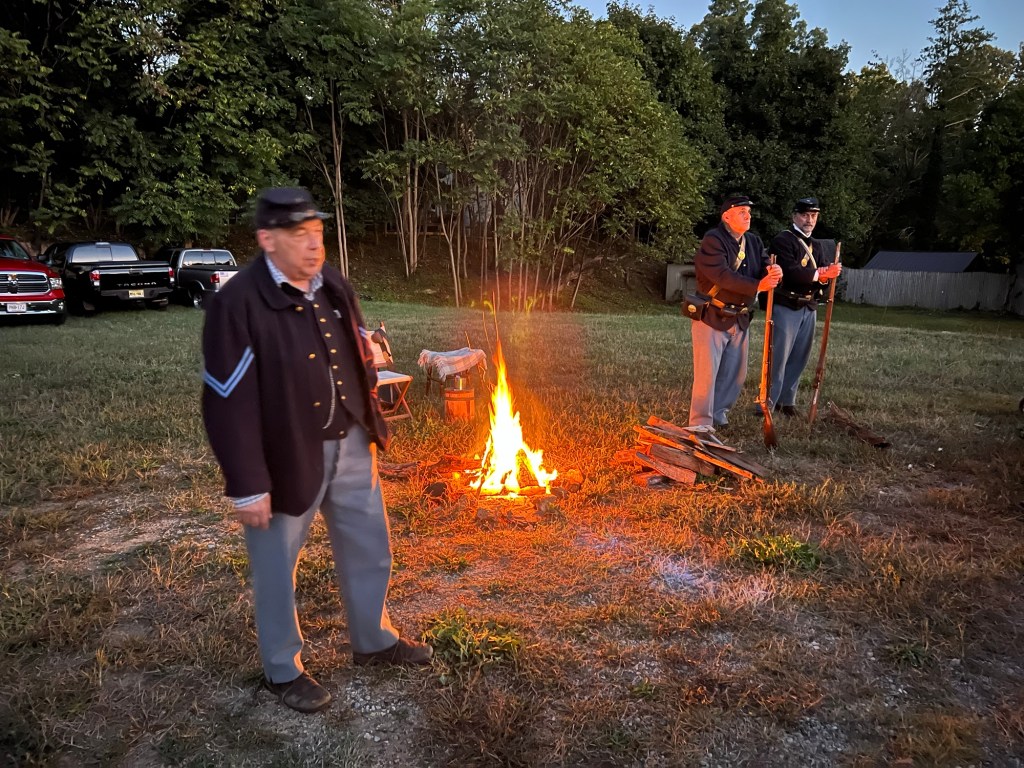
In early October of 2024, I came across the sign for the Ghost Haunted Walk that the Historical Society was sponsoring in Mullica Hill and decided to take an early holiday break and drive down to South Jersey for this event. I made the day of it visiting other sites around the area. Then I drove into Mullica Hill and joined everyone on a very interesting look back on the community’s past. It seems there’s a lot of haunted spots in town.

Downtown Mullica Hill the night of the walk

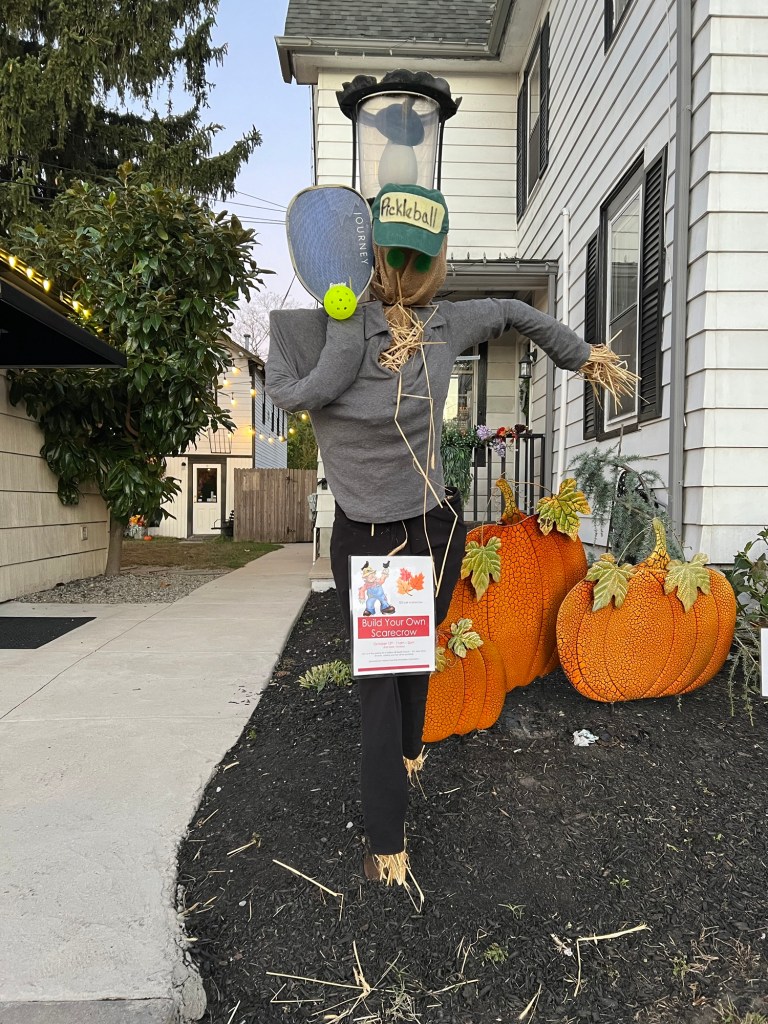
The downtown was dotted with scarecrows

The foliage was just starting to change but like Octobers in the past five years it has been warmer and greener further into the month.

The tee shirts of the event being sold at the start of the tour

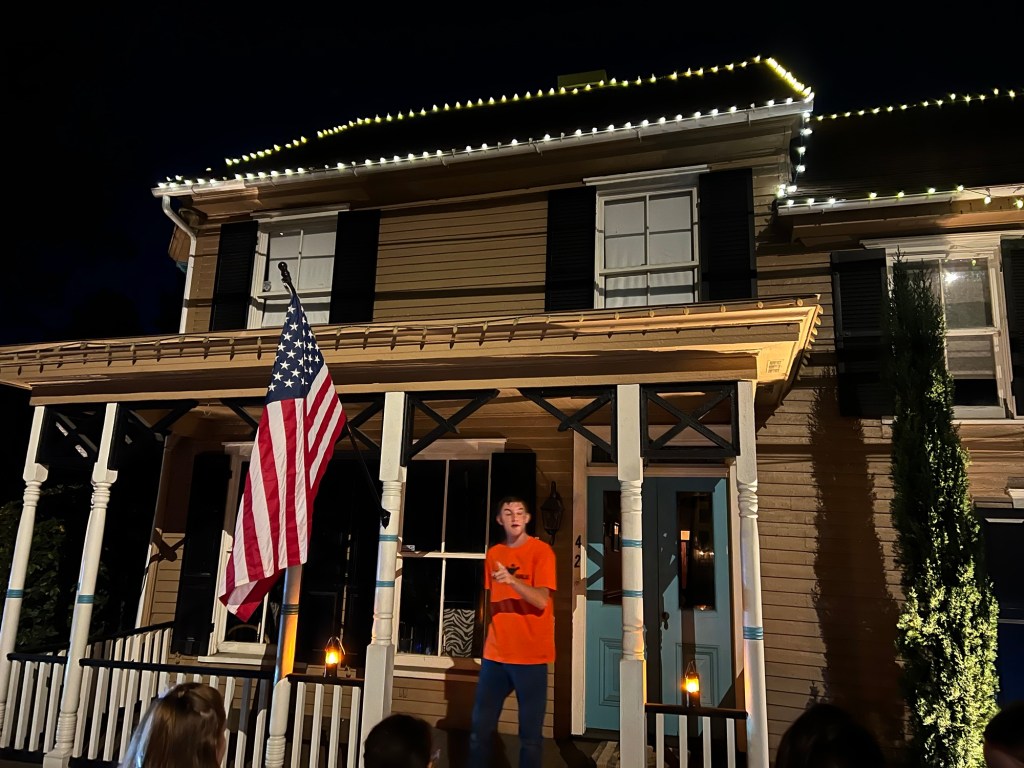
Our tour guide at the start of the tour

The scarecrows on the tour

We walked many stops in the downtown that was steeped in history even before the Revolutionary War.

The Hanging Barn where a worker hung himself

The history of the 12th Infantry some buried in the town

The Haunted St. Stephen’s Church downtown

The inside of the church where angels were seen

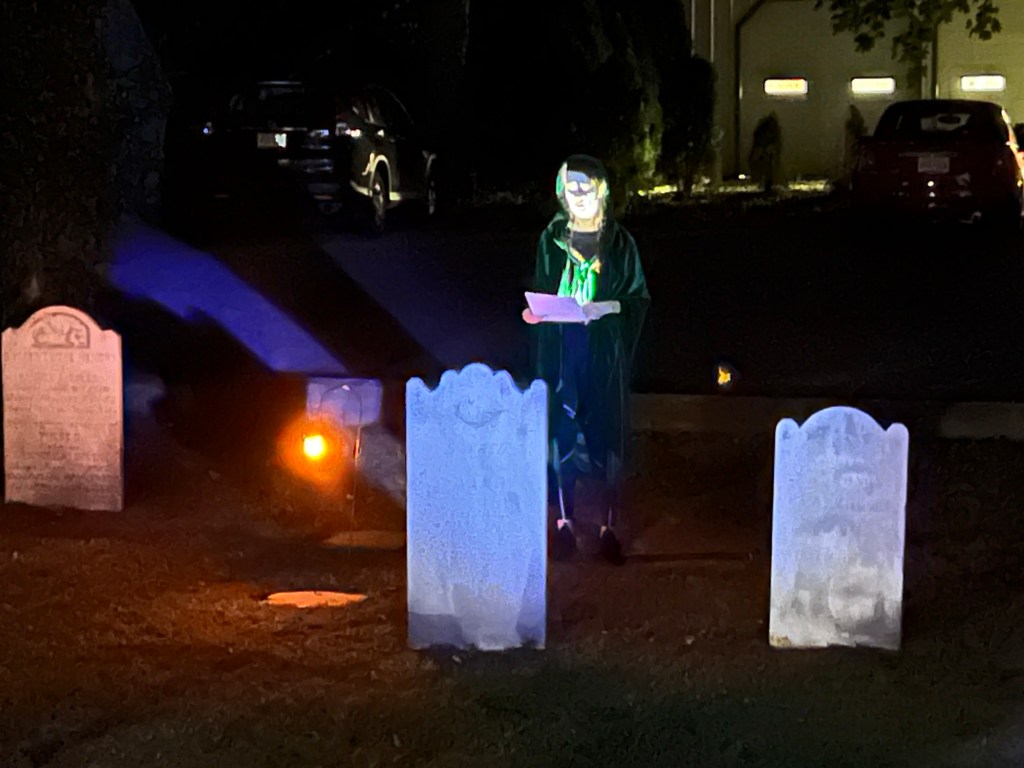
The graveyard talk in the back of the church

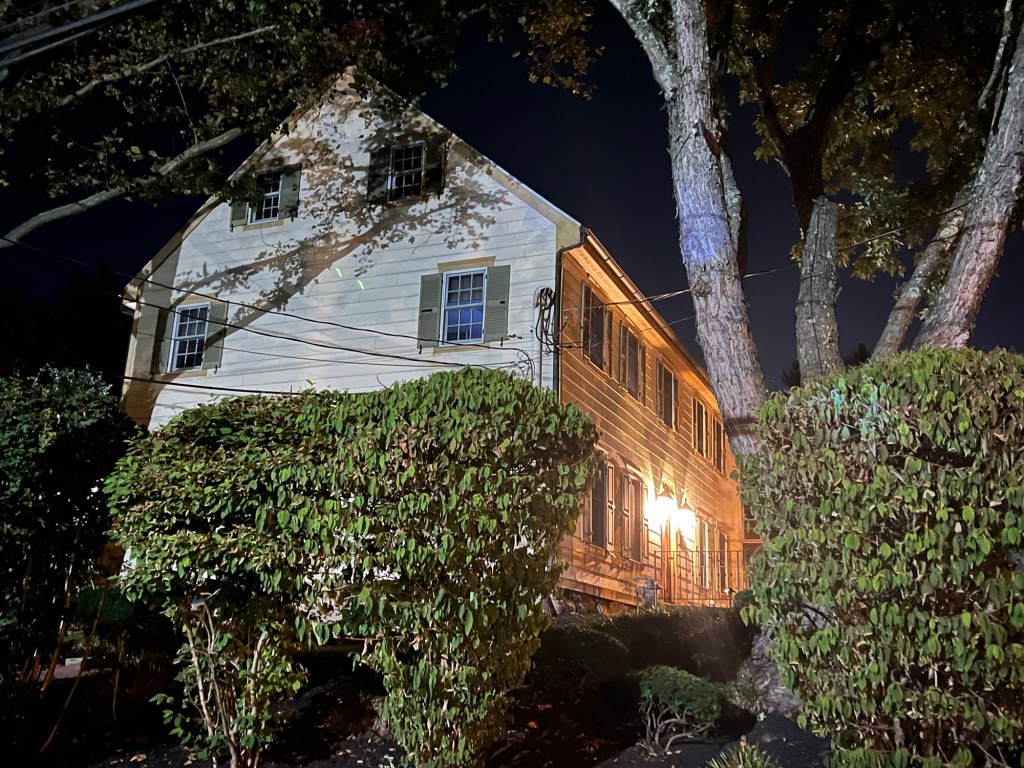
The Haunted House where multiple ghosts have been seen

Another haunted house

The Mullica family home is haunted

Another haunted house in town

After the tour was over, I toured the Mullica Hill Historical Society after the tour to see the new ‘Taverns and Temperance’ exhibition in 2024 on the local watering holes of the 18th and 19th centuries of which only two exist.

The Last Call exhibition

The history of taverns and their purpose

The interesting artifacts from the exhibit

The ‘Last Call’ exhibition was a look on how taverns were such an important part of socialization at a time when there were no movies, internet, phones and newspapers were limited. Still there was a strong resistance to people drinking which still reflects to our Puritan past.

There was nothing wrong with having a drink but there was a sense of taking it too far. Still this attitude is reflected today. It is still interesting though how one or two of these taverns have carried over into the Twenty First century. They are still welcoming guests today and that proves the socialization of these establishments and how important they are in our lives.

After the Haunted Tour:

After the tour was over and I had a nice visit with the museum, it was almost 9:00pm and I wanted to eat something. Two small tacos and two doughnuts are hardly a proper lunch for someone. By 9:00pm though, the whole town had rolled up its sleeves. Even the restaurant where the tour started was closing at 9:00pm. I was shocked as there were people inside still ordering. The host said the kitchen was closing and if I knew what I wanted I could sit down.
That was not much of an offer especially at their prices and I made my way down to Naples, the pizzeria and Italian restaurant where I had parked. They were open until a normal 11:00pm on a Friday night (I still do not understand restaurants that close at 9:00pm on a Friday or Saturday night. This part of the COVID scare is over and things are pretty much back to normal).

I went to the host stand and they seated me quickly. Tours were still going on and as I ate my dinner, the place really filled up when I finished because there was no place left to eat in town. (Not a good business decision). I really enjoyed Naples. Not only was it a lively environment with the games going on and a very active bar scene but the food was really good as well and very reasonable.

Naples at the Warehouse at 1 South Main Street in Mullica Hill, NJ

https://www.nj.com/dining/2014/05/dining_out_naples_pizza_in_mul.html

My review on TripAdvisor:

https://www.tripadvisor.com/Restaurant_Review-g46655-d421347-Reviews-Naples_Pizza-Mullica_Hill_New_Jersey.html?m=19905

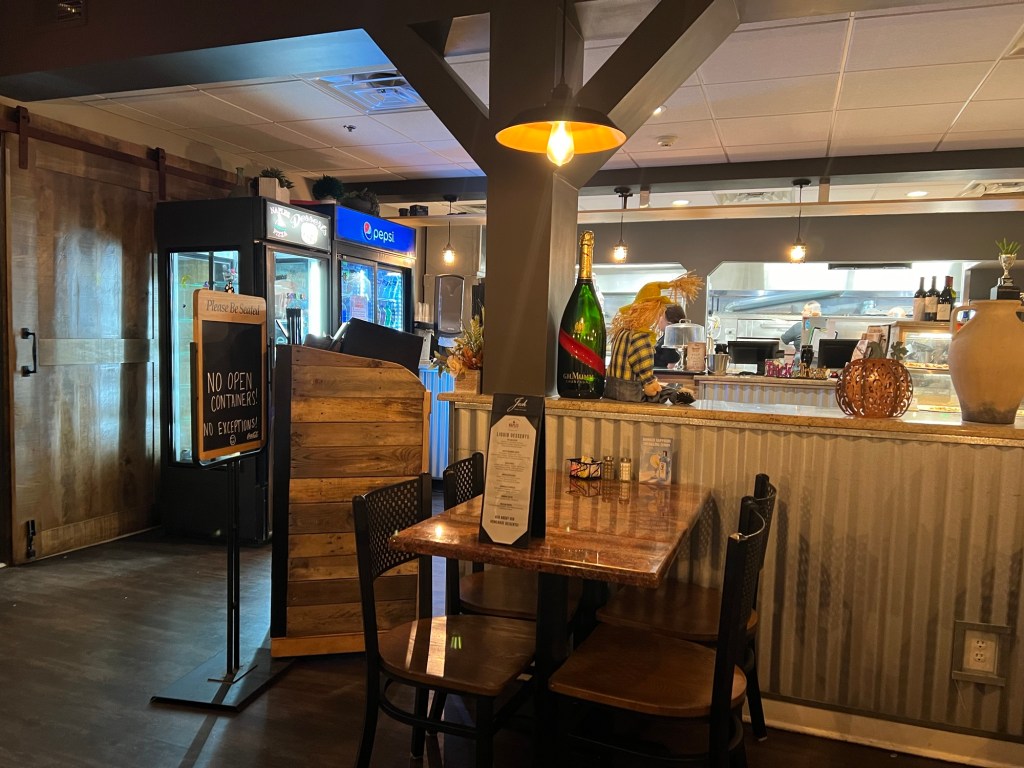
The inside of Naples the night of the walk

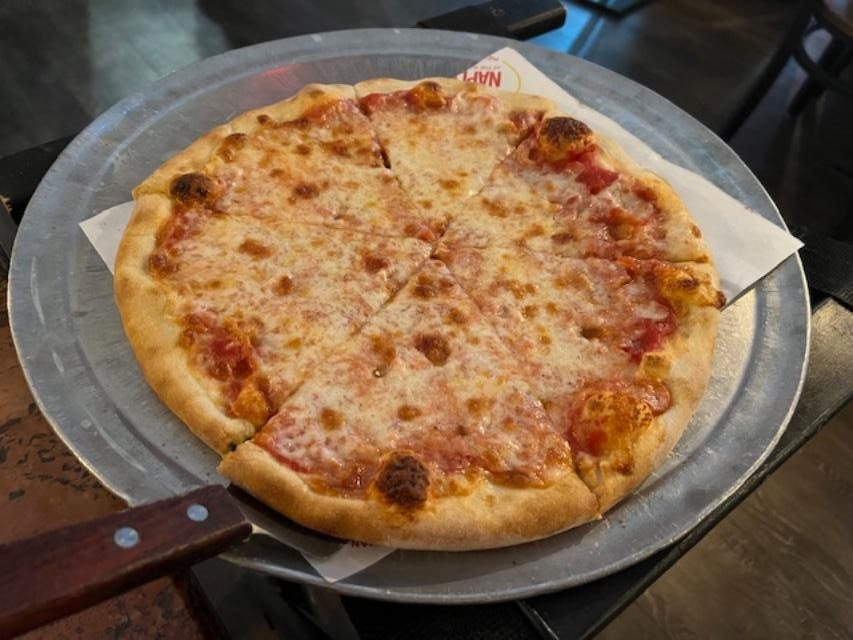
The pizza was so good that night

Between the Haunted Walk through town and the interesting discussions at each stop to the trip to the museum after the tour, the Haunted Walking Tour of Mullica Hill, NJ was well worth the trip down to South Jersey. It was such an interesting look at the town I would not have known from the many times I have visited the town. The Volunteers did a great job with this event.

It is a great little museum with a lot to see on two floors.

History of the Museum:

Fun Facts:

*People have been living in present day Harrison Township for over 10,000 years.

*Harrison Township originally included South Harrison and the western edge of Elk.

*The Township was named after President William Henry Harrison.

*There is a village called Mullica Hill in Finland.

*The first air shipment of fresh produce in the US took off from here.

Lower Alloways Creek Historical Society                              736 Smick Road                                                                     Salem, NJ 08079

Lower Alloways Creek Historical Society 736 Smick Road Salem, NJ 08079

Lower Alloways Creek Historical Society

736 Smick Road

Hancocks Bridge, NJ. 08079

(856) 935-3666

https://www.facebook.com/LacHistoricalMuseum/

https://www.lowerallowayscreek-nj.gov/about/pages/historic-log-cabin

Open: Sunday 1:00pm-4:00pm (Third Sunday of the Month)/Monday-Saturday Closed-Open Six times a year for special events

Admission: Free but donations are accepted

My review on TripAdvisor:

https://www.tripadvisor.com/Profile/R4960NKjustinw/mediabatch/12228970?m=19905

The Historical Society:

Situated in a beautiful rural setting, the Log Cabin is restored in the same manner as the local Quakers lived in the 1700’s. The site houses a barn full of antique farm implements as well as many items used in the local industries of Lower Alloways Creek.

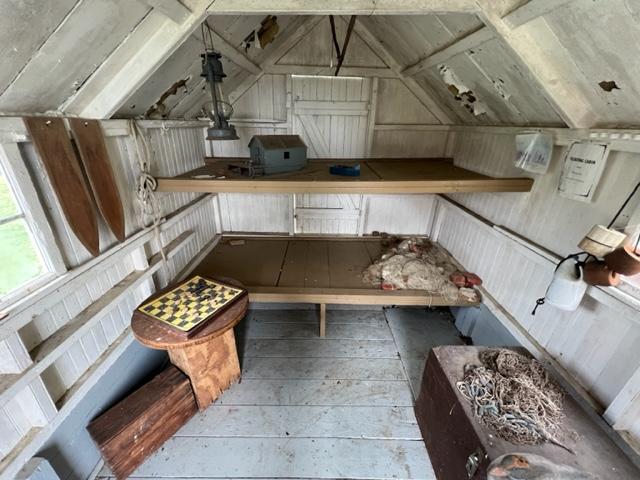
Salem’s County’s maritime history is documented in a unique floating cabin which is complimented with a collection of fishing and trapping memorabilia. The site also features an outhouse, carriage shed and the last canning house that was left in the Township.

The buildings on the grounds and the outhouse

History of the house:

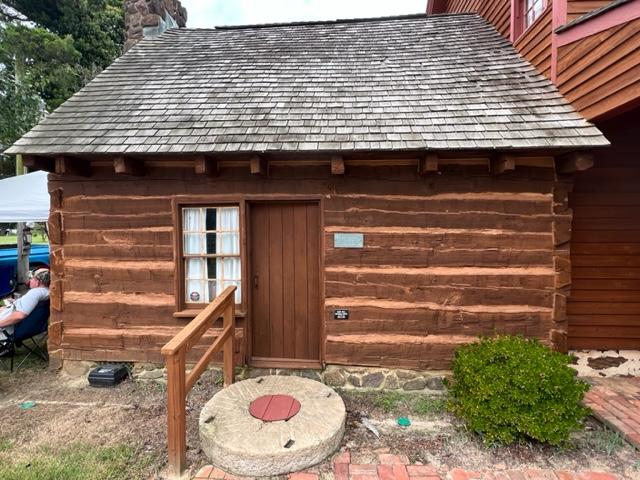
The main house is very unique. The addition to the house was built in the mid 1800’s and is furnished from that time period. This was added to the log cabin that has been reconstructed on the site. The early parts of the log cabin date back to before the Revolutionary War.

The first-floor parlor

The Kitchen in the main house

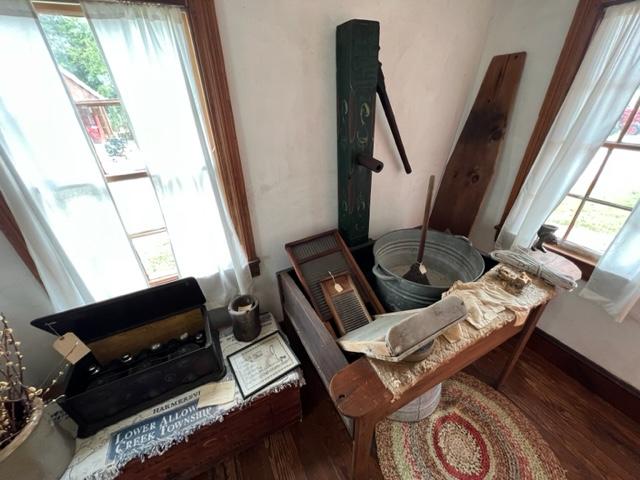
Washing clothes in the house

How to wash clothes until WWII

The second-floor bedroom

The Bonnet collection

The second floor bedroom

The Attic Room

The toys and playthings of the Attic Room

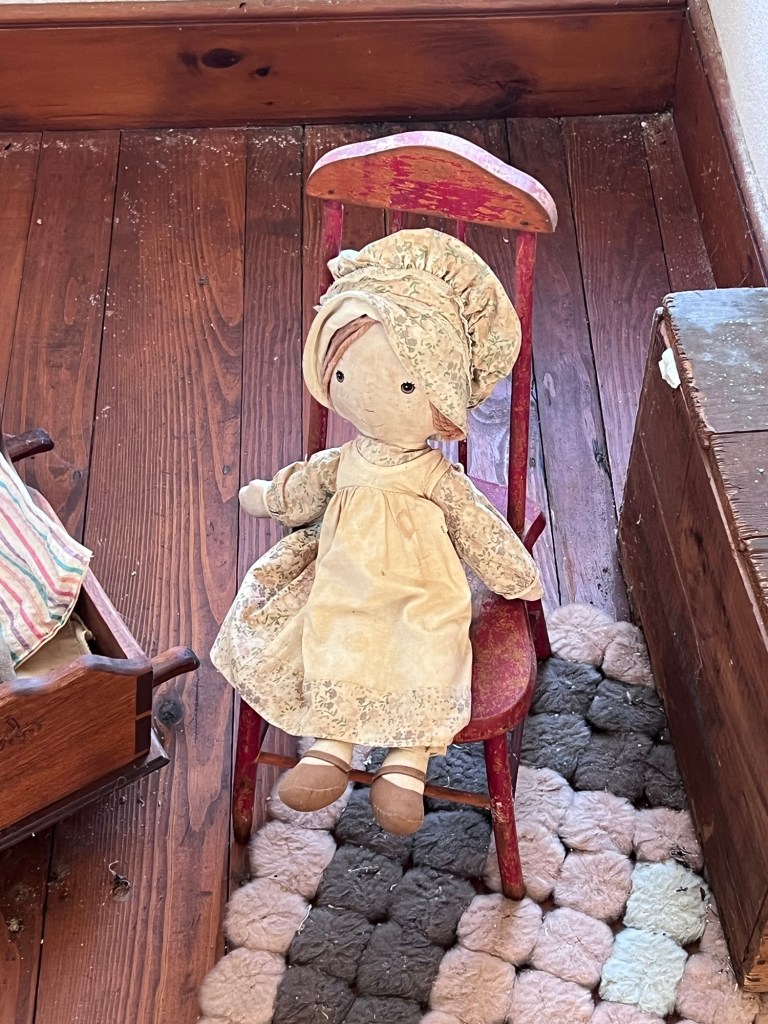
The house has an extensive collection of antique toys and dolls and furniture.

The dolls

The dolls

The Hat collection at the home.

(Information from the museum website):

Part of the house is an old log cabin with an addition added on later. Although the date of the original construction is unknown, the cabin has been restored and reconstructed in much the same manner as local Quakers would have lived in the 1700’s. Because the air had deteriorated so many of the logs, it was impossible to save the entire original structure.

The log cabin section of the house.

The log cabin and the later addition.

All the wood used in the reconstruction of this cabin came from the woods in Lower Alloways Creek that are owned by the Township. The hand-hewn logs are white oak. The wide floorboards are pine The fireplace and foundation were built from Jersey sandstone that had been donated by John Hassler.

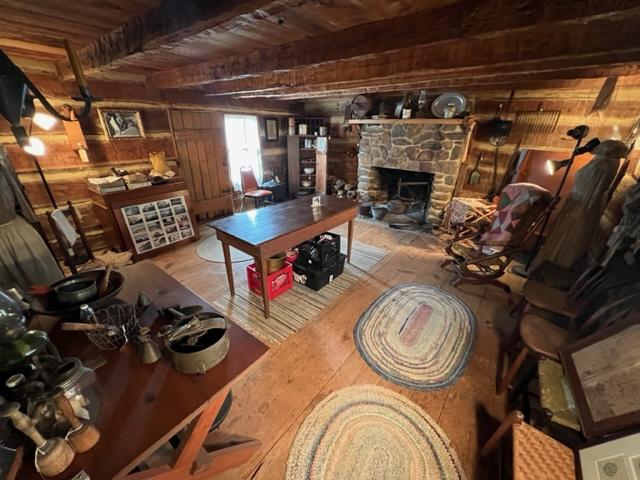
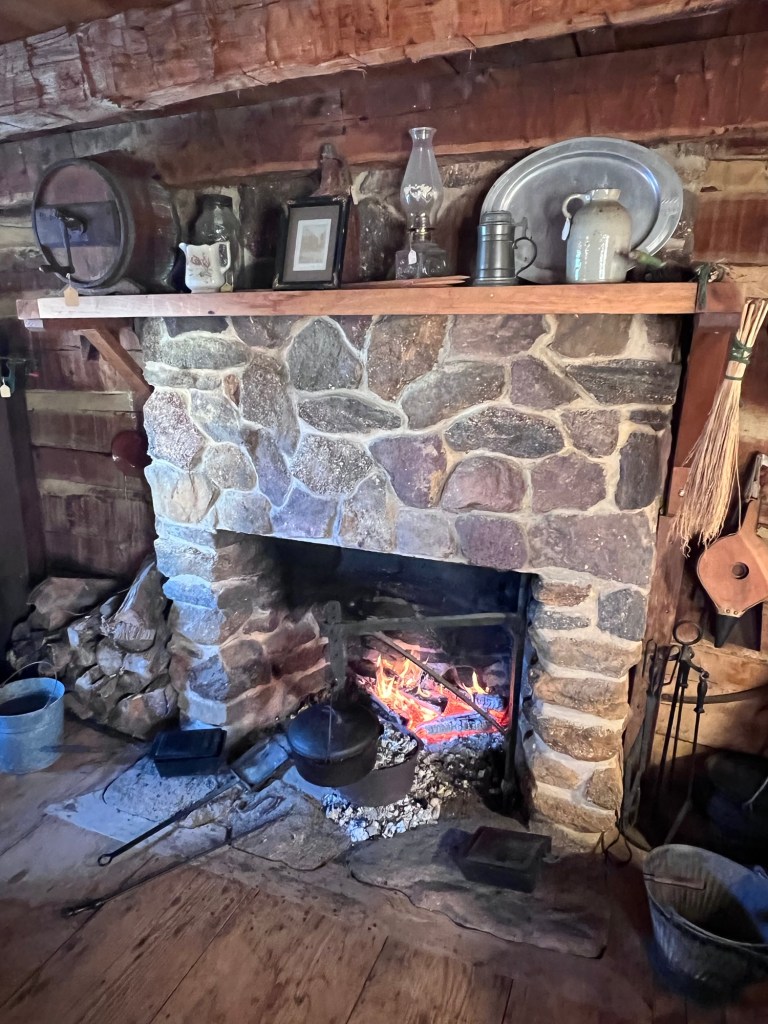
The inside of the log cabin and hearth.

The Hearth during the event

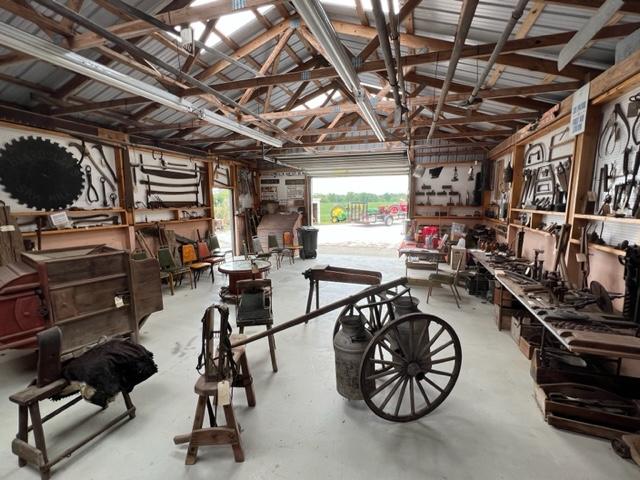
The Historical site also features a log cabin, carriage shed and barn, many antique farm implements, a two-seater “outhouse” and an old fashion hand water pump.

The Outhouse

The hearth of the log cabin

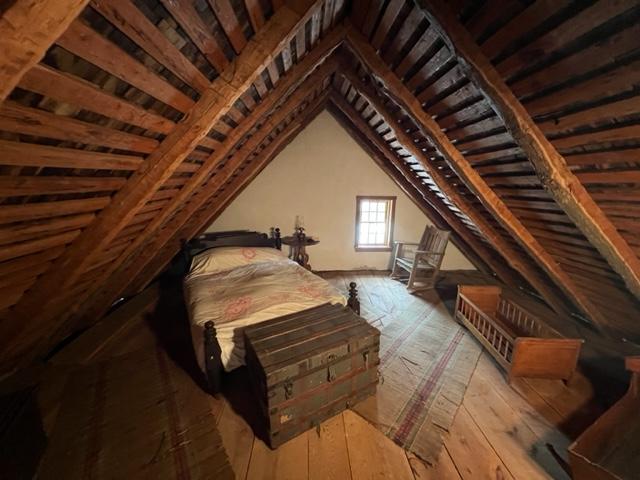
The loft section of the log cabin on the second floor of the home.

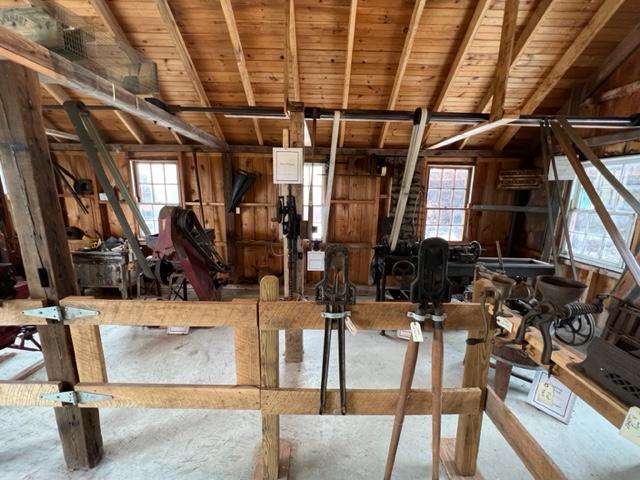
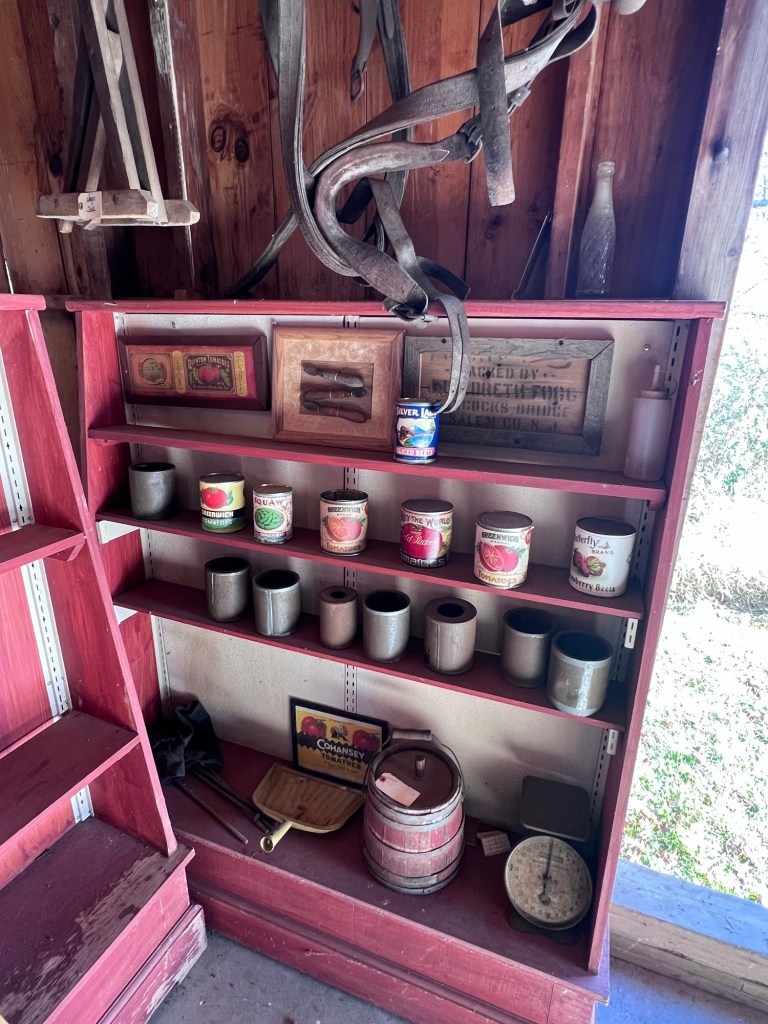
There is also an original Can House, with a working line shaft, a floating cabin, both of which were originally built in Lower Alloways Creek.

The historic Can House.

The historic Can House

Some of the interesting programs that the society hosts:

Line Shaft: the historic line shaft in action as it powers a variety of machines.

Outdoor sportsmen: view displays of fishing and trapping, hunting gear, decoys, floating cabins and turkey call demonstrations.

Model Trains: all aboard an exciting display of model trains.

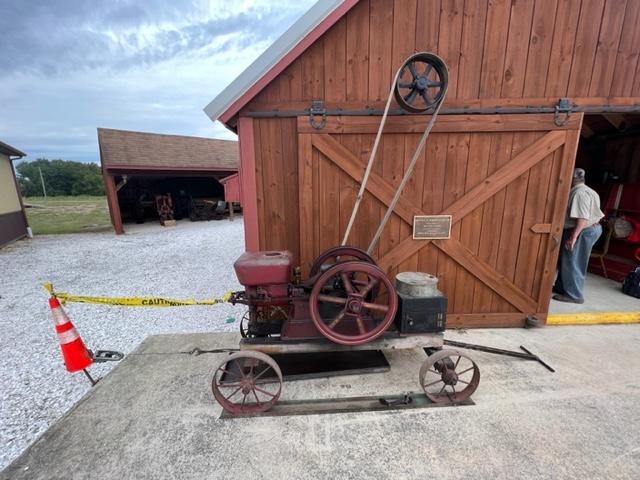
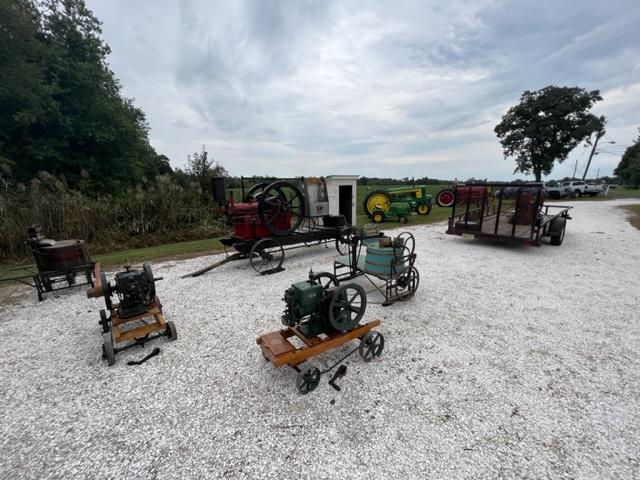
Old time engines: South Jersey Gas Engine Club proudly presents their collection of “Hit or Miss” engines.

The Farm equipment and working engines at the “Old Time Engine Day” in September 2023 was an interesting mix of old farm equipment, household equipment and everyday items run by an engine in the early 1900’s. It was a very interesting display on how we have come in manufacturing and the museum did a nice job on the displays.

The working farm equipment at the Lower Alloways Creek Historical Society

The Farm Engine equipment

The Farm Engine equipment

The Farm Engine equipment

The Farm Engine equipment

Video on the display:

The Farm Engine equipment

Farm Day: Come and see antique tractors and a variety of farm equipment. See the progression of farm equipment throughout the centuries.

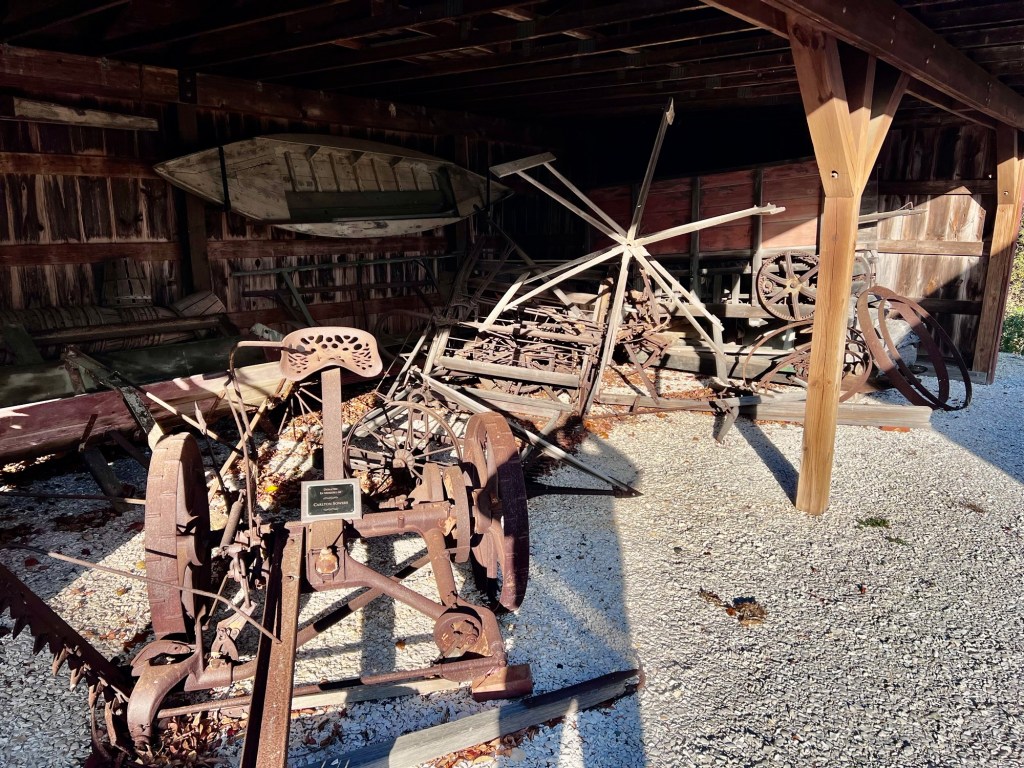
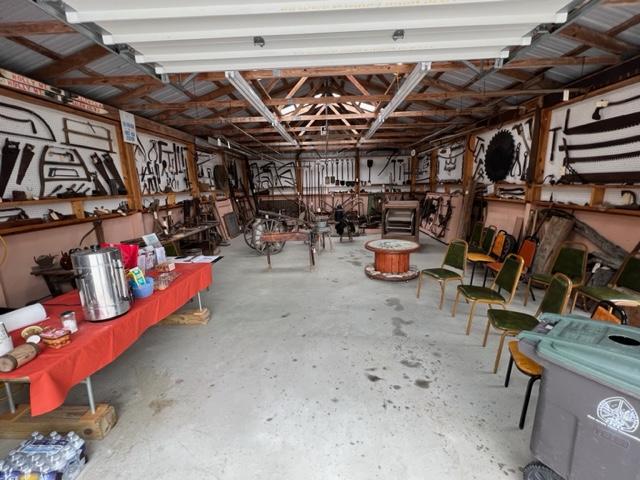
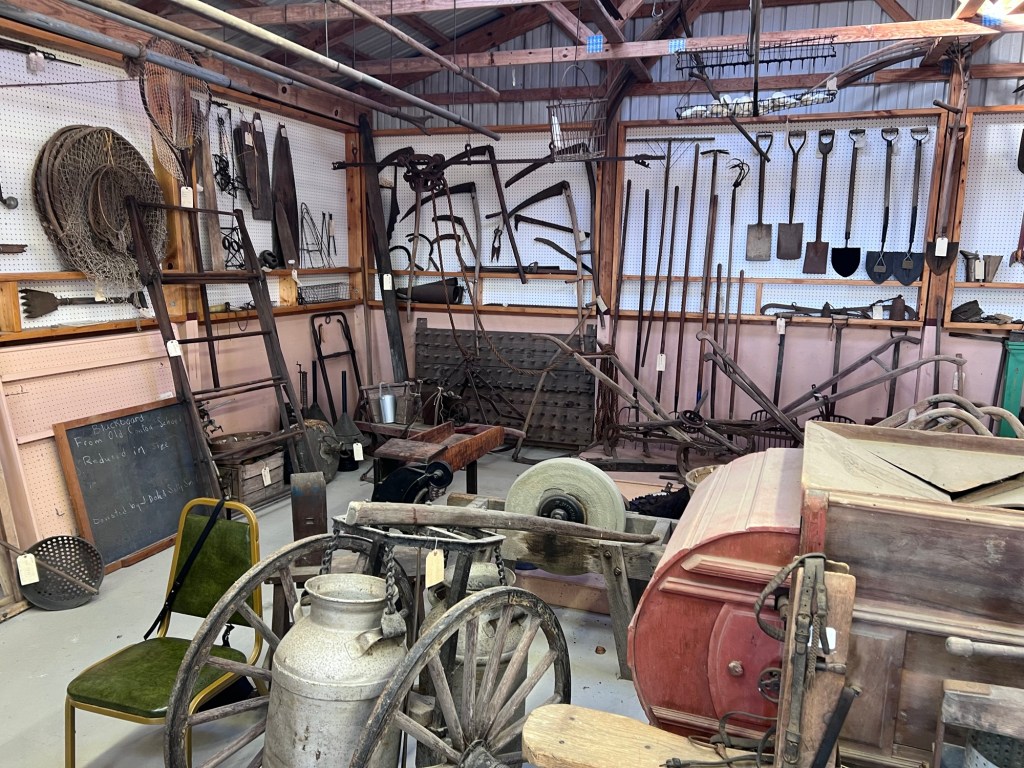
Retired farm equipment in the barn

The barn

Farm Equipment in the barn.

Some of the equipment and refreshments in the barn.

The barn equipment during my visit in 2025

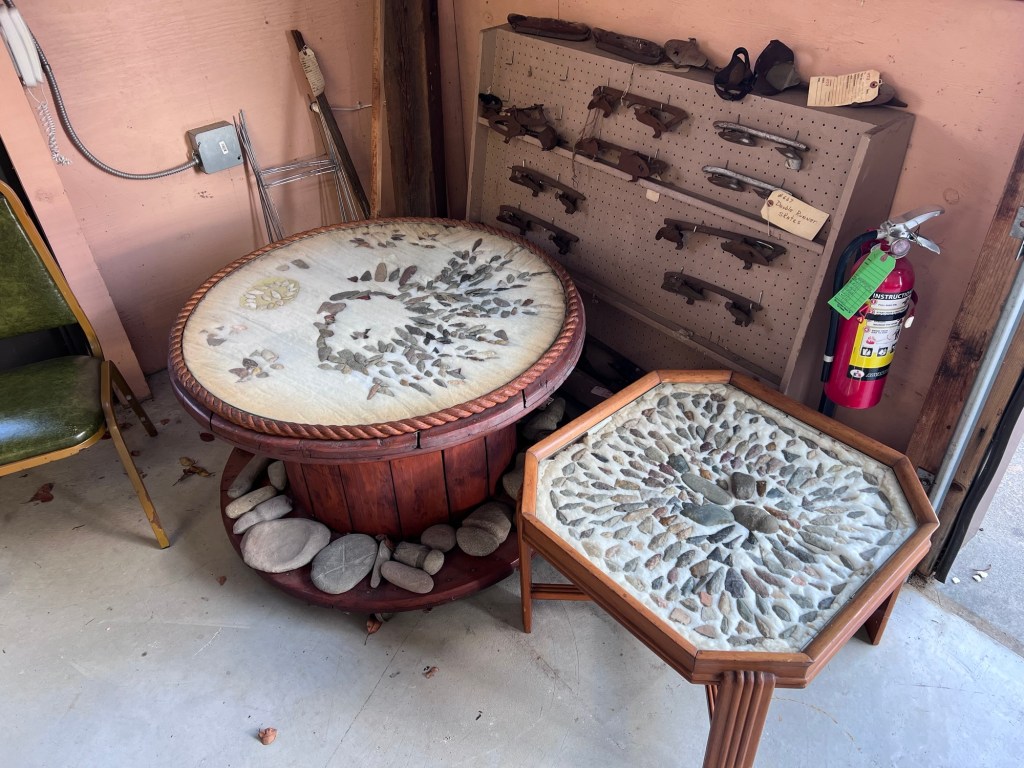
Indian Arrowheads on display in the barn

Cabin Cooked Pie Day:

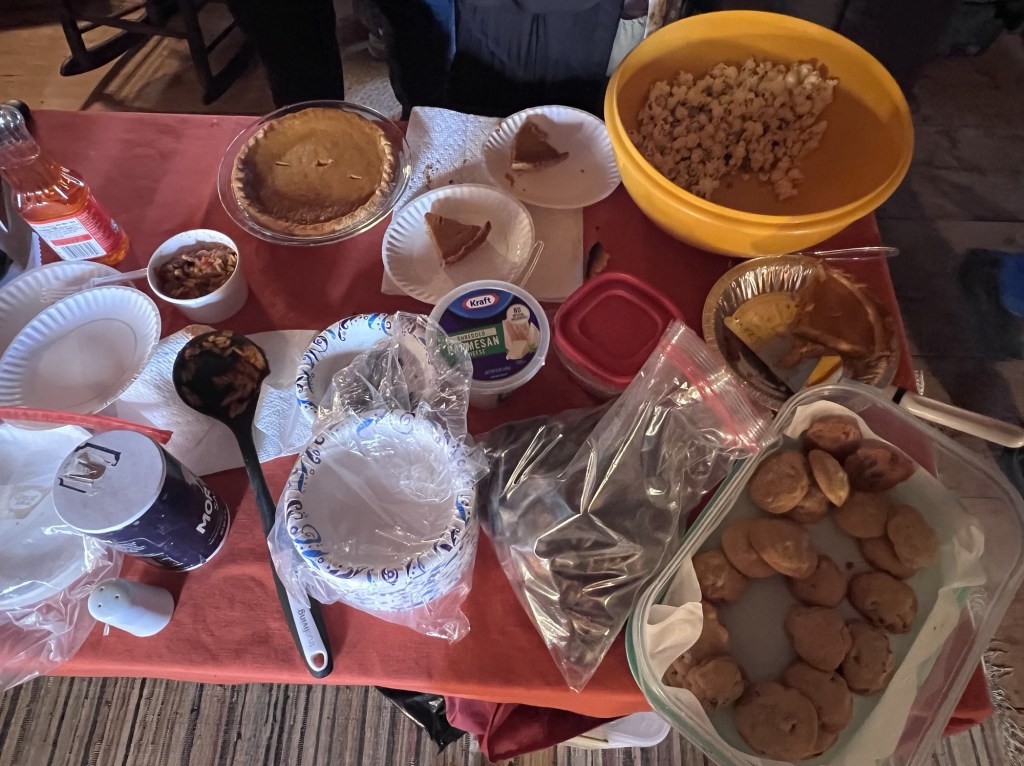
There is nothing better than a freshly baked pie in a fireplace. In November 2025, I returned to the museum for ‘Pie Day’. There were various pies, chestnuts and soup being cooked in the log cabin fire place that afternoon. It was interesting to see cooking procedures from a hundred years ago.

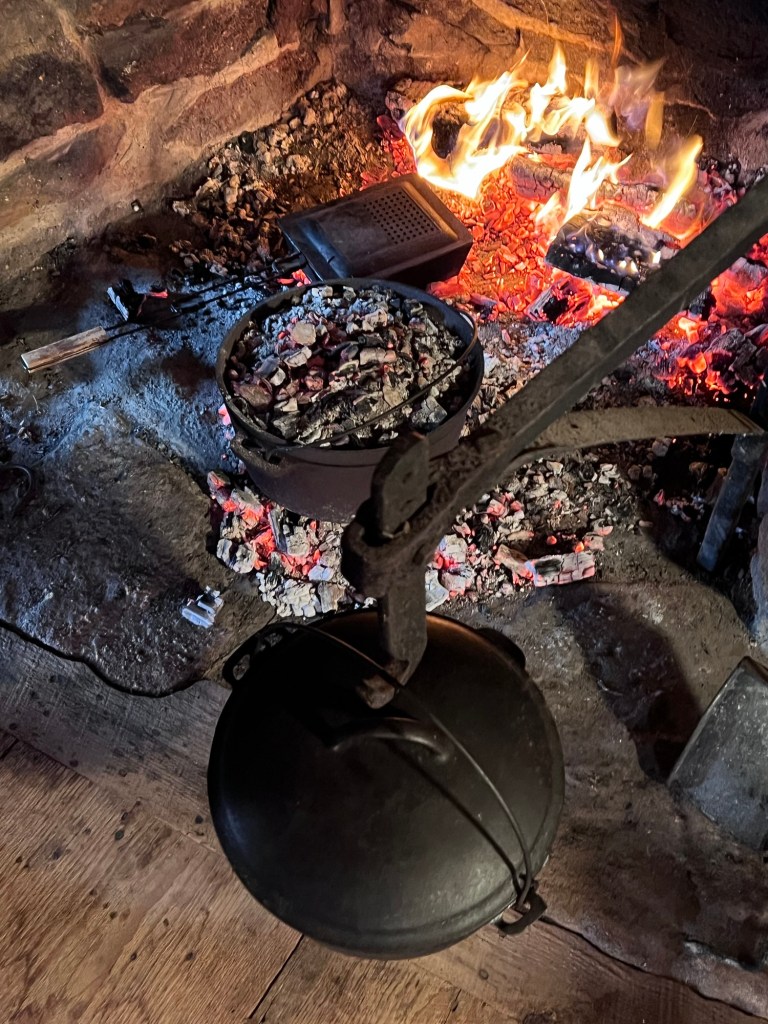
I visited the museum and got to watch the volunteers cook all sorts of goodies in the fire. It is interesting how foods were cooked and tested for doness over a wooden fire. The coordination of cooking times and temperatures.

The Log Cabin goodies that afternoon

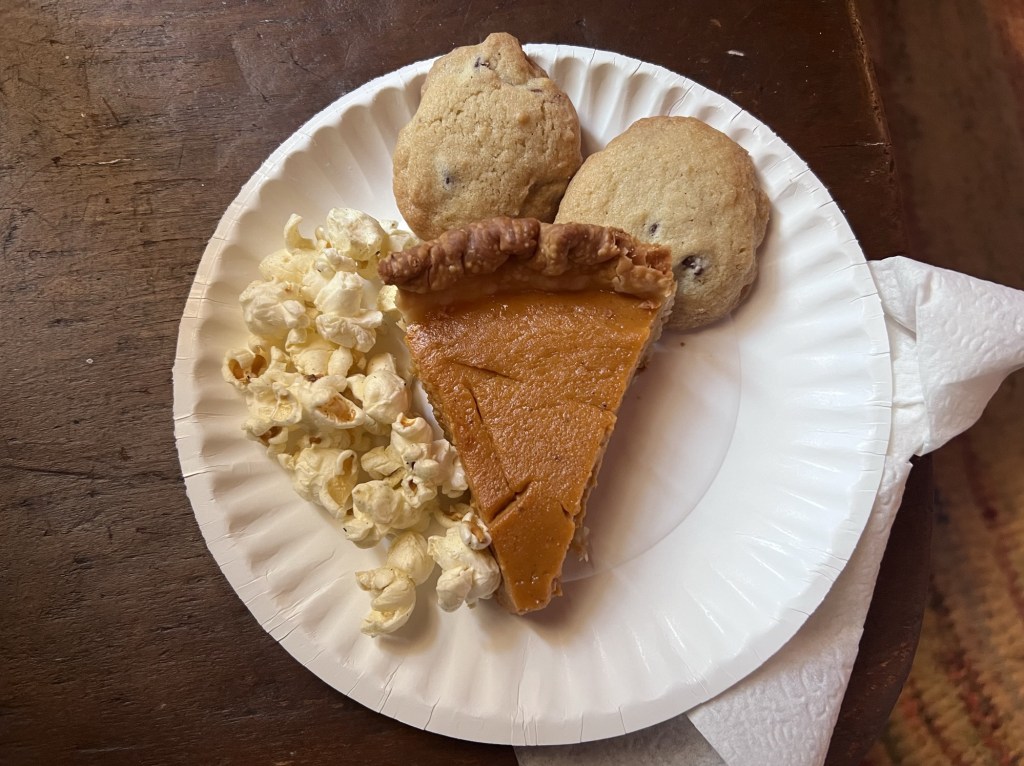
Visitors choose from Apple or Pumpkin pies, Roasted Chestnuts, Buttery Popcorn, Chocolate Chip cookies or Stuffed Cabbage Soup, all cooked fresh in the pots on the open fire hearth which also warmed the house on a cool afternoon. The museum was even selling a cookbook, Down Jersey Cookbook on some of the recipes being used in this part of New Jersey.

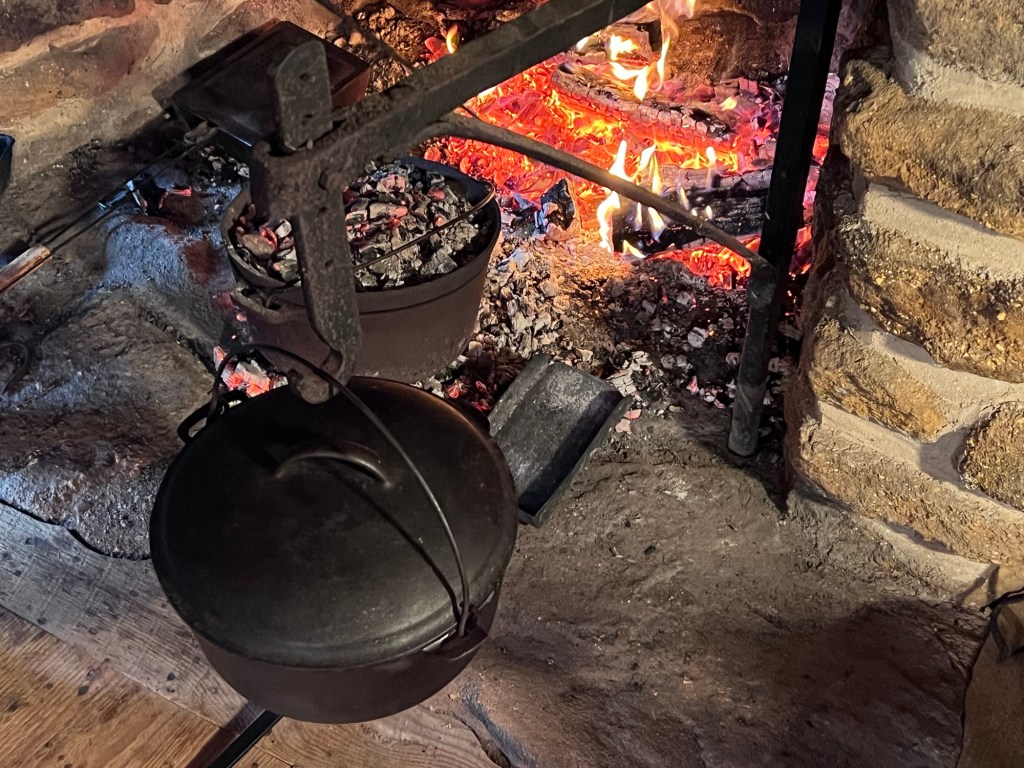
Cooking pies, soup, chestnuts and popcorn in the fireplace

The pies, Chestnuts and soups being cooked in the Open Hearth

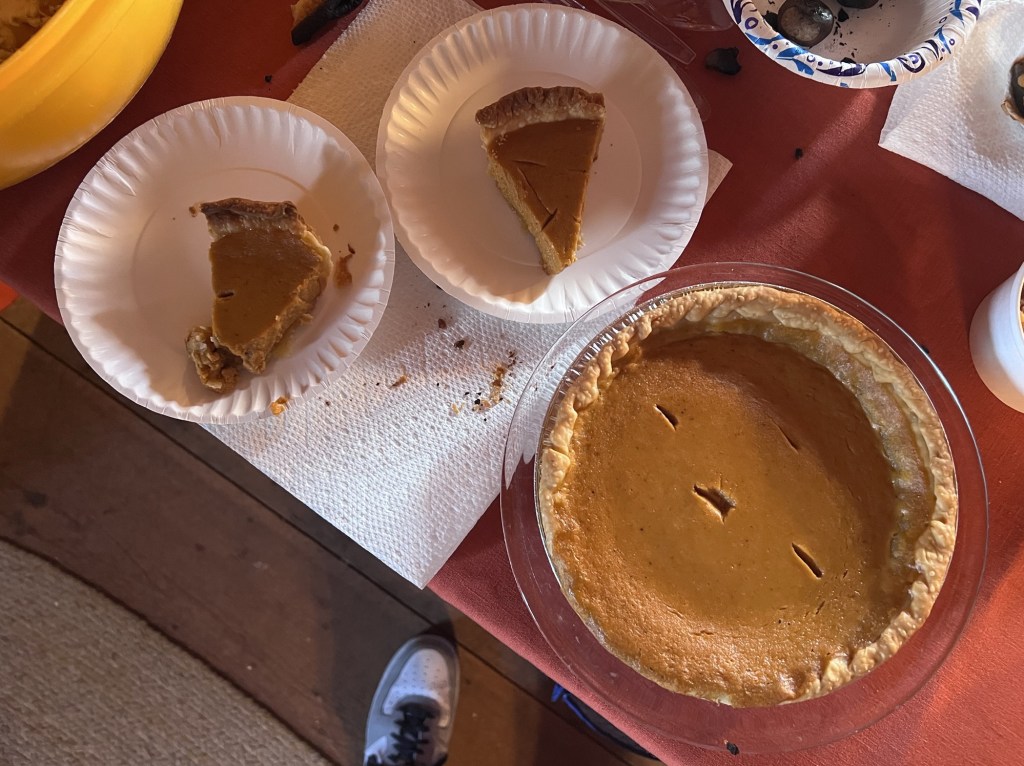
It was interesting how the pies were cooked in the cast iron equipment and then laid out to cool. They came out of the oven steaming hot and sat to cool before being sliced.

The freshly baked Pumpkin pie

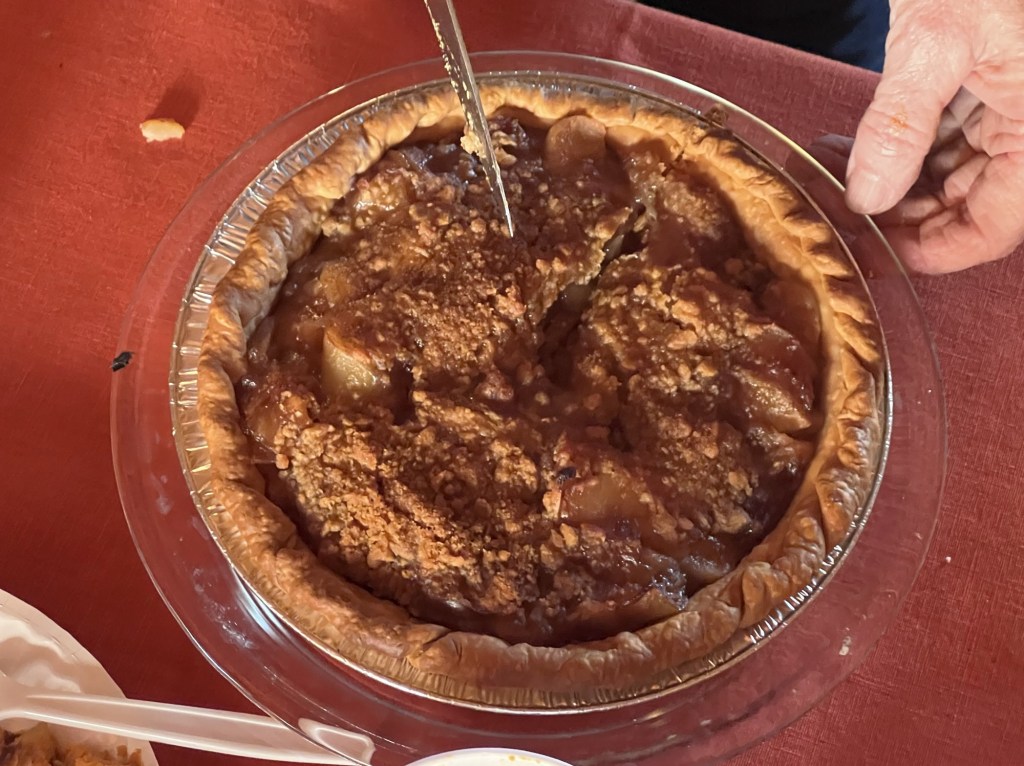
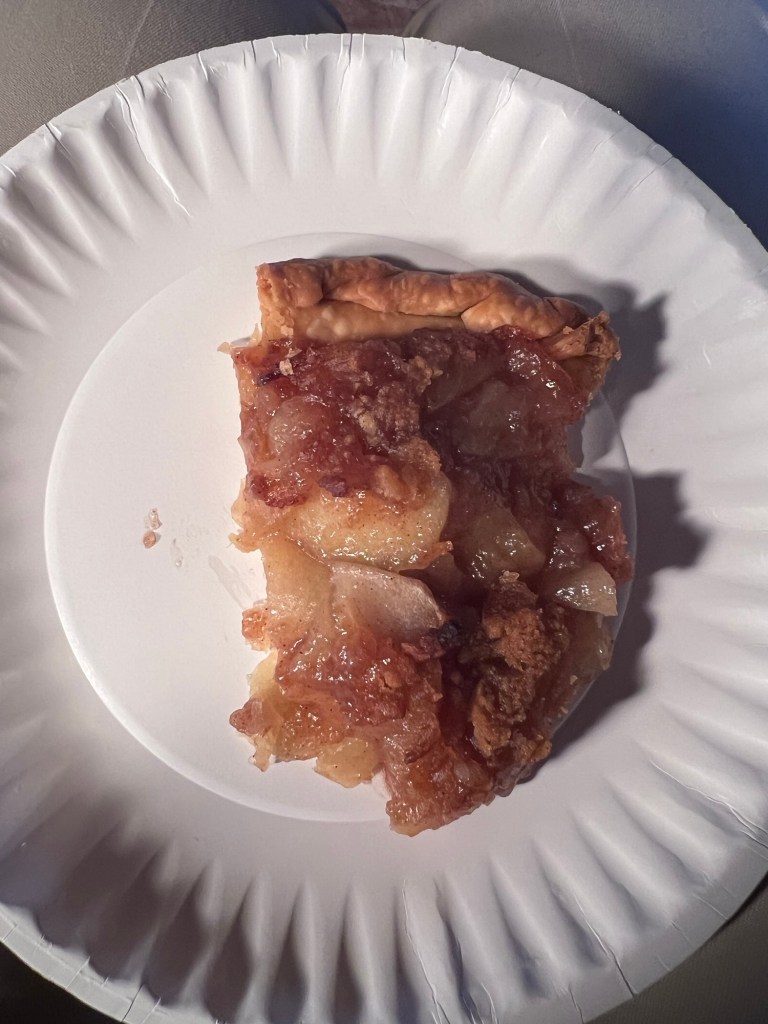
Freshly baked Apple pie

Freshly baked Apple pie. Yum!

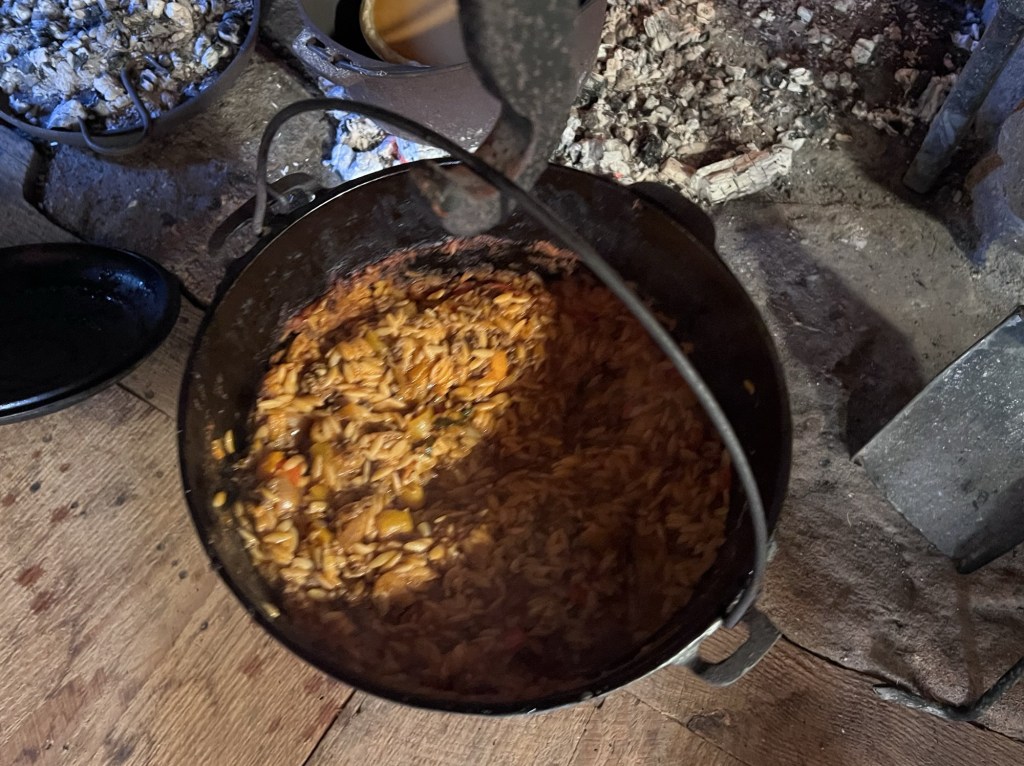
Stuffed Cabbage Soup in a cast iron pot

The thick Stuffed Pepper Soup

Freshly Roasted Chestnuts from the fireplace

The pots and pans in the fire

It was fun watching the foods being cooked right on the spot they way they would have over a hundred years ago. It was even more fun to eat them. I learned a thing or two about the culinary arts this afternoon and it was so nice to sit in a warm kitchen by the fire on a cool November afternoon.

The delicious Fall goodies cooked in the hearth

Farm supplies kept cool in the barn

It was really a homey event at the museum, with good food and wonderful conversation with residents of the community. All in a room warmed by a fire in a working fireplace. I love it when museums do such great events and using the historical cooking instruments was very unique.

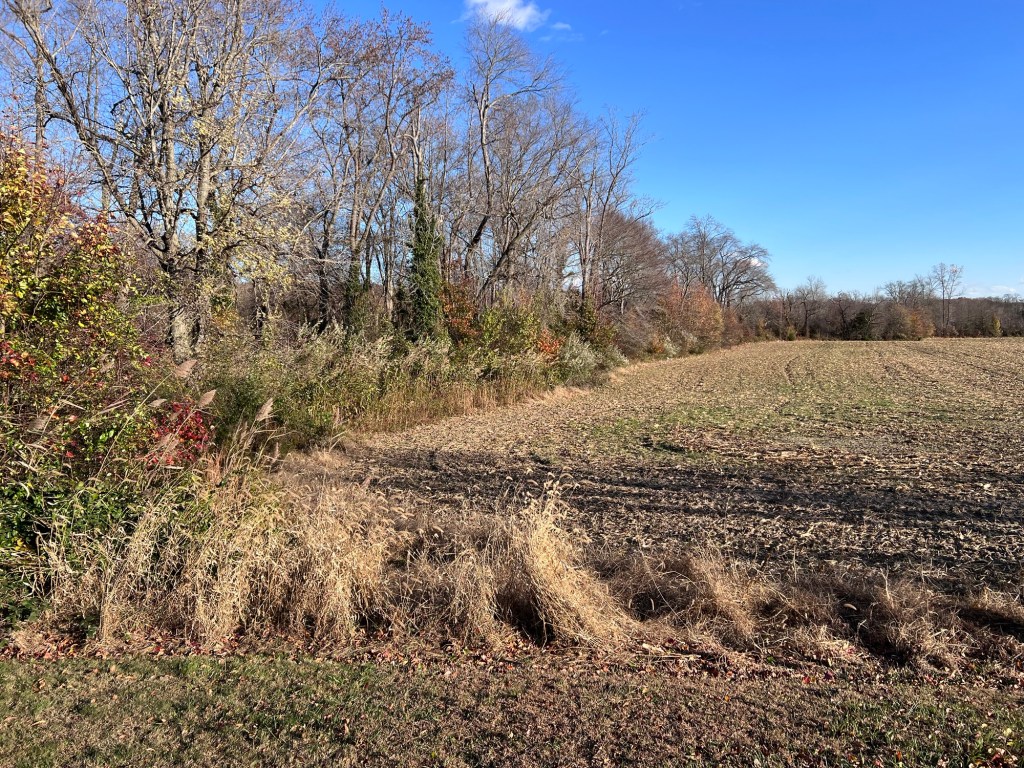
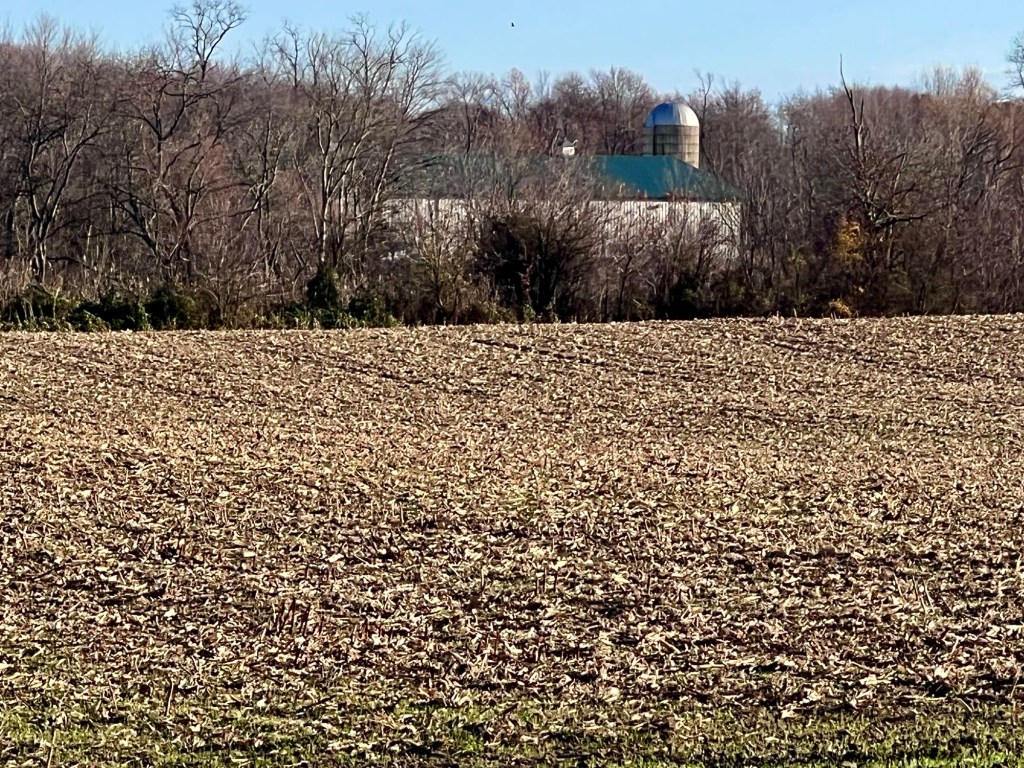
The Museum is in a rural location so the farmland that surrounds the house is really beautiful. The views in the fall were just gorgeous when the leaves were turning colors.

The beautiful farmland that surrounds the historical society.

The view on a late Fall day

The view of the local farm

The fields

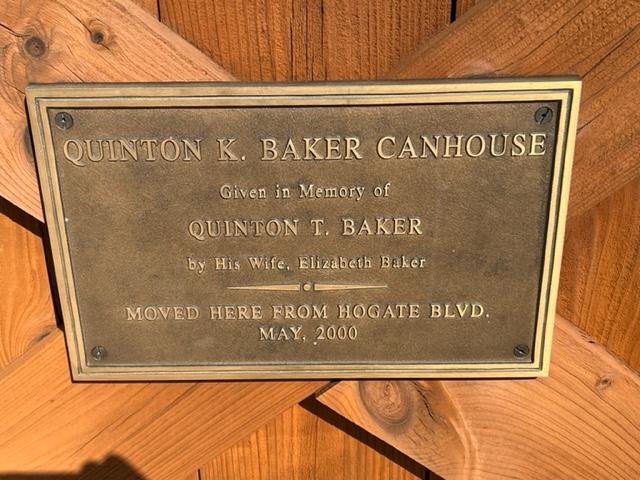
The plaque of the “Quinton K. Baker Canhouse, the last one left.

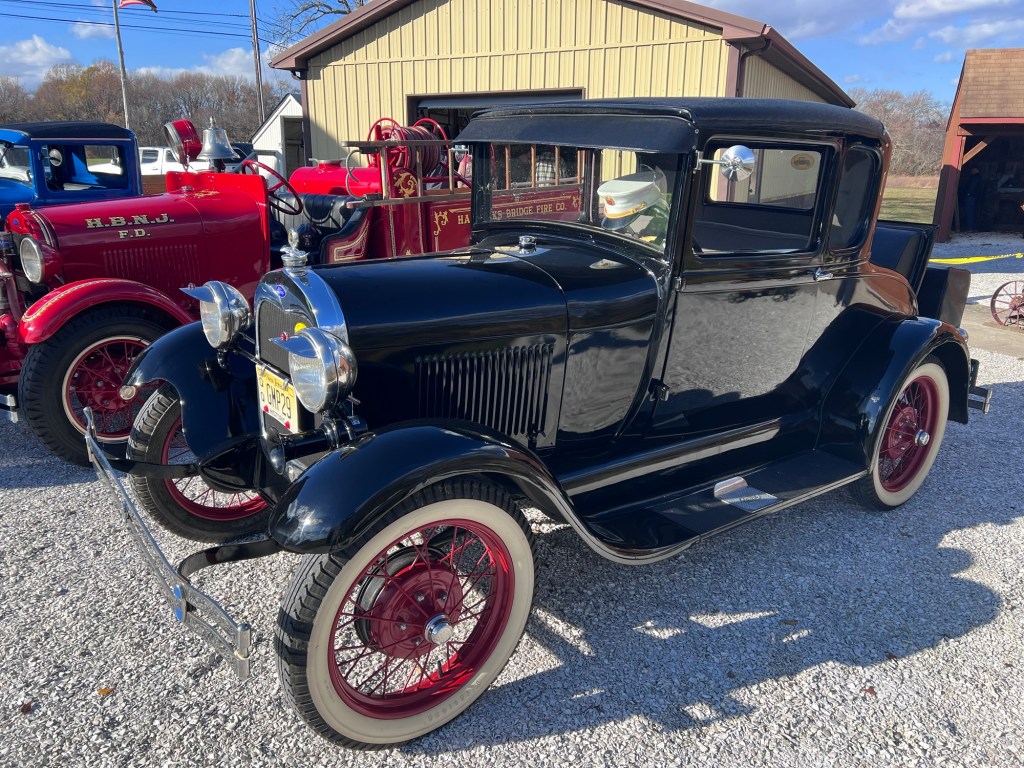
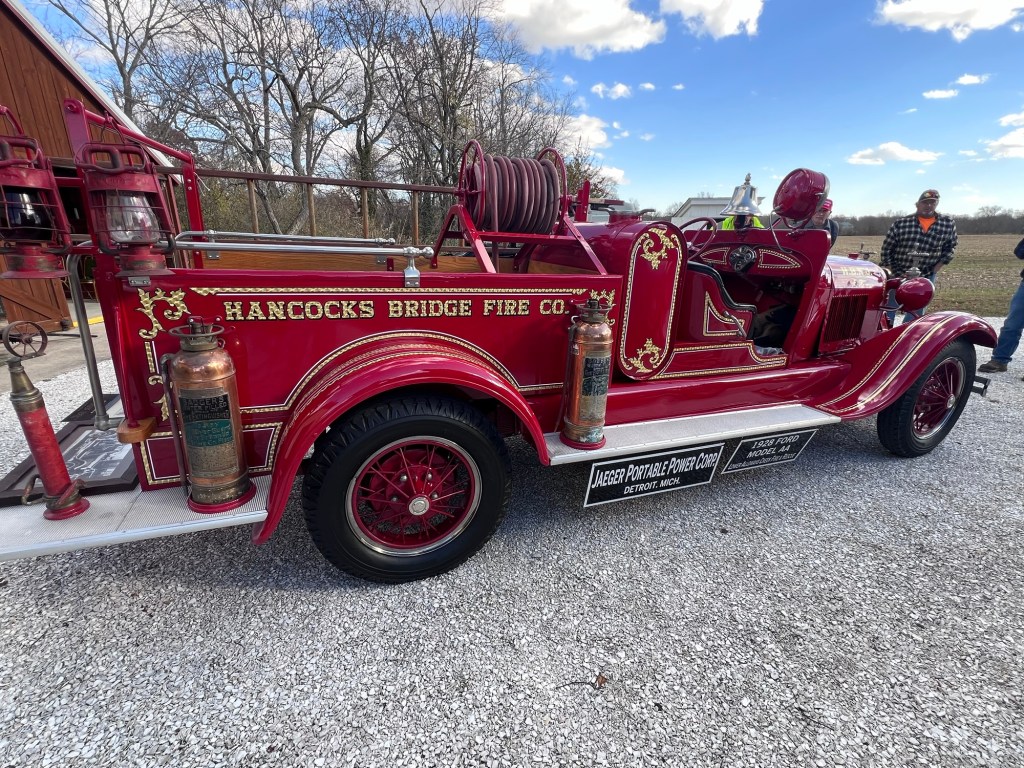
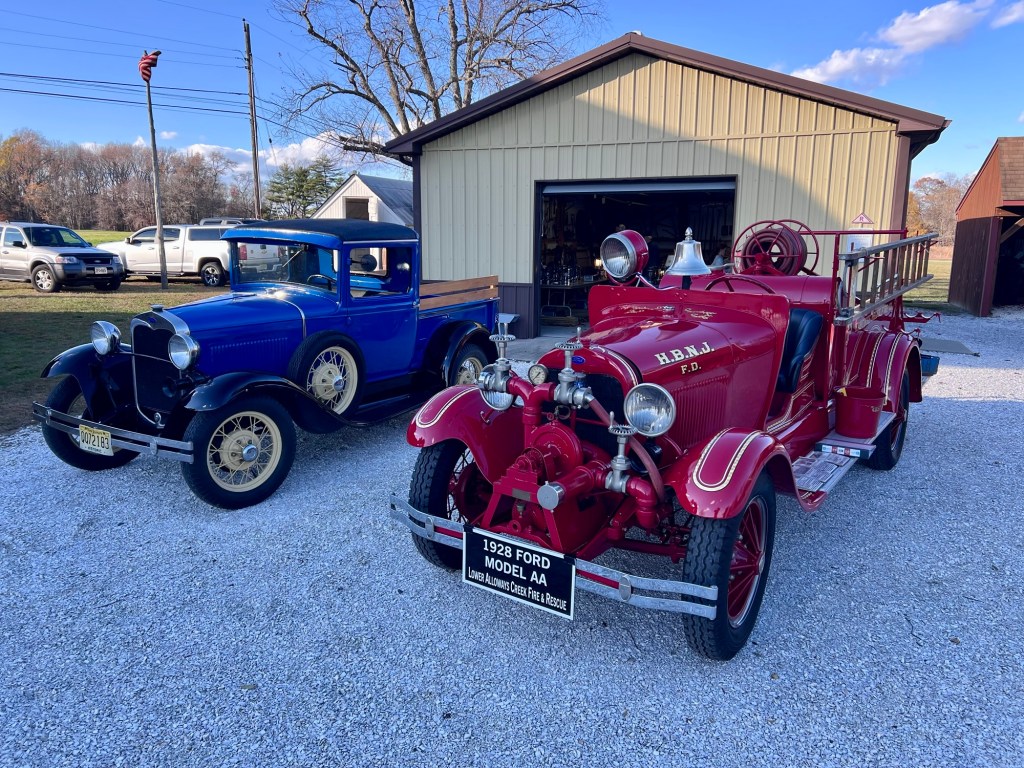
The historic cars and fire trucks on display at the museum that day:

The Model T

The Hancock Bridge’s 1928 Hose truck

The cars on display that day

The front of the museum on my visit in November 2025

The back of museum during my visit in November 2025

The museum is open six times a year for special events. Please check out their website and their Facebook page for details. The Pie event was the last event for the season until the Spring.