Category: Educational Museums

D & H Canal Historical Society and Museum       23 Mohonk Road                                                 High Falls, NY 12440

D & H Canal Historical Society and Museum 23 Mohonk Road High Falls, NY 12440

D & H Canal Historical Society and Museum

23 Mohonk Road

High Falls, NY 12440

(845) 687-9311

https://www.canalmuseum.org/museum-and-visitor-center

https://www.facebook.com/DHCanalMuseum/

Open: Summer Hours (May 1st-September 30th) Sunday-Saturday 10:00am-5:00pm

Admission: Suggested donation $12.00/Pay as you wish.

My review on TripAdvisor:
https://www.tripadvisor.com/Attraction_Review-g47891-d3535614-Reviews-The_D_H_Canal_Historical_Society_and_Museum-High_Falls_Catskill_Region_New_York.html

The D & H Canal Museum at 23 Mohonk Road

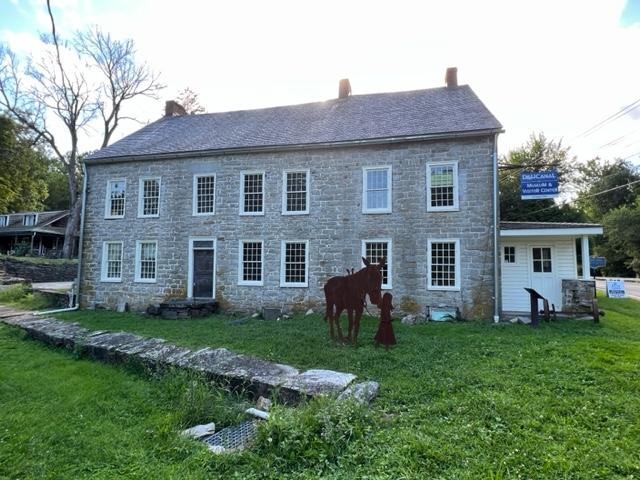
The D & H Canal Museum is an interesting mix of history of transportation, commerce and growth in this part of New York State. The museum is housed in the old DePuy Canal House at Lock 16 on the canal route (which is located just outside with weeds and over-growth hiding it), which was built in 1797 and was enlarged in 1820 to serve workers and travelers on the D & H Canal. The museum itself had gone through many transitions from tavern to canal offices to a high-end restaurant and then to the current status as a museum.

Lock 16 on the canal route sits just outside of the museum.
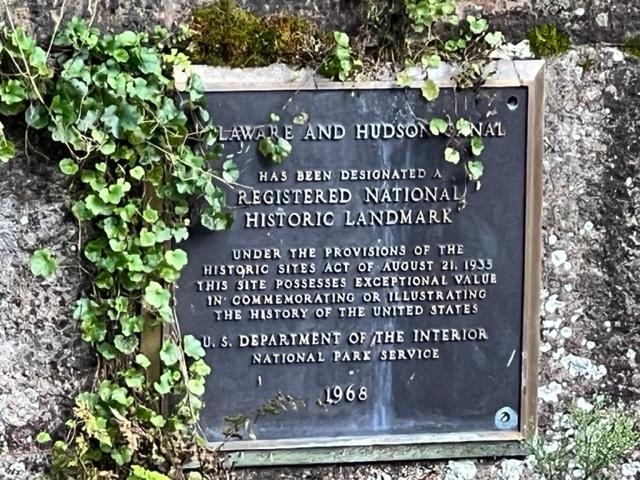
The canal historical marker.

The museum is interesting in that it shows the progress of how the canal was built and how the area opened up to commerce of both people and merchandise. It also shows the importance in shipping coal from its source to its end destination in New York City and how it helped grow that city as well.

The front gallery as you enter.

The entrance of the museum gives a romanced view of the canal and transportation along the route. Artist William Rickarby’s painting “High Falls on the Rondout” is the theme of the room with the painting blown up to show life on the canal. It gives a view of how the canal’s played a part in everyday life.

The original watercolor painting “High Falls on the Rondout Creek” by artist William Rickarby.

The painting’s description

The museum is broken down into four separate galleries explaining the canal development, Transporation and shipping, the types of products being shipped along the route. Coal being mined in Pennsylvania could now be shipped to New York City more quickly than before and the connections to other lines of the canal brought in other produce.

The main gallery tells the story of the development of the cabling system that helped develop the bridges of the canal route.

The D & H Canal route for shipping.
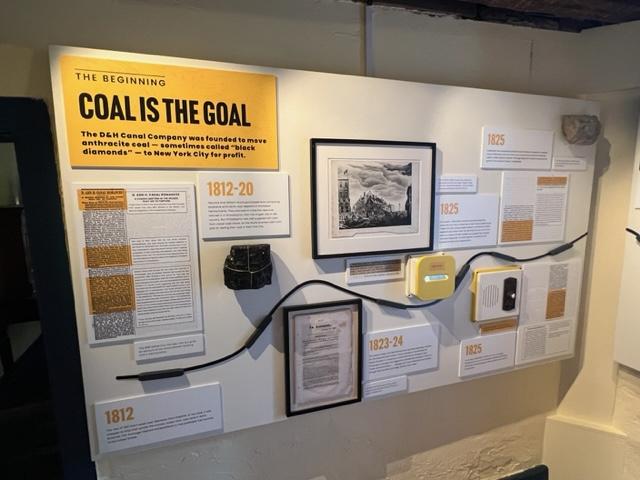
The movement of coal from Pennsylvania to New York City.

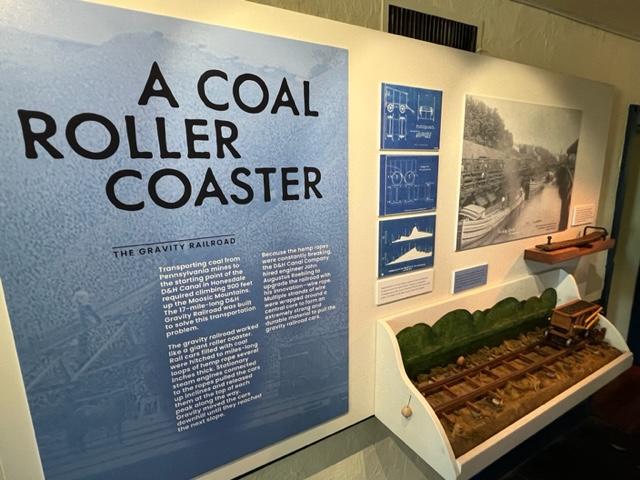
The new Robling cable system changes everything.
Coal mining and its role in the growth and use in cities.
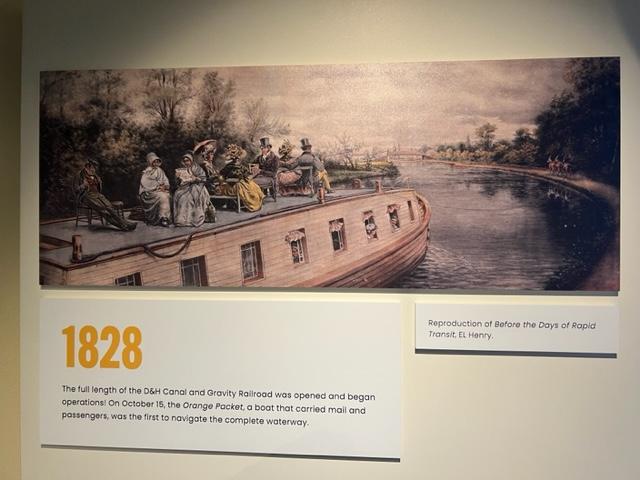
Before the railroads, the canals also began a source of leisure travel.

The second gallery explains coal mining manufacturing. The finding of the ore and its use in a modern society. This shows its importance at that time in our history.

The shipping of coal.

The second gallery on the development of the canal.

John Augustus Roebling and his creation of the wire rope cable.

Items for the use of mules that were used along the canal route.

Items used for canal safety while in transport.

The last gallery was the part of the building that the family had used for a tavern for travelers along the canal route. This room still has that feel of a restaurant and along the tables you can see the old menus and a description of entertainment at the time.
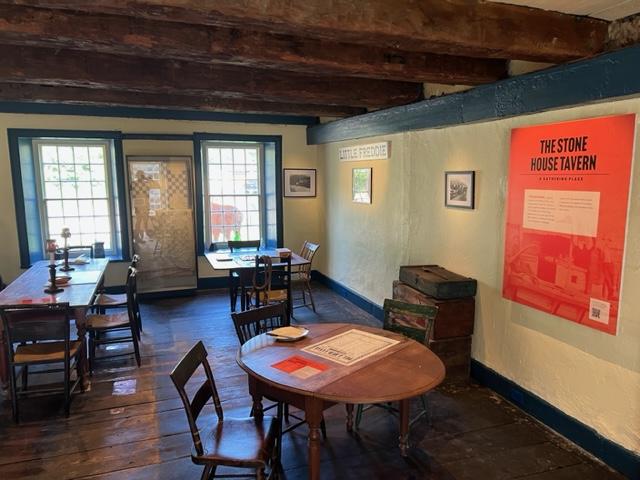
The use of the building as a pub for travelers along the canal route.

The pub description of the DePuy family. They used this building to entertain visitors who worked and traveled along the canal route. The building was later used as a four-star restaurant until 2017 when the building was turned into the museum.

The outside of the old restaurant extension.

The old Lock 16 that is now covered with weeds, but you can still hear the water underneath.

There are still traces of the glory days of the canal covered by weeds, trees and bush. The canal is long gone but its development, growth and final demise and rebirths as an attraction are shown in different stages of the galleries. For those who have interest in the growth of New York State in both mining and farming and transport to New York City, the museum tells that story not just in story boards but by experiencing it with props and pictures.

The History of the D & H Canal (The Delaware & Hudson Canal):

(from the D & H Canal Museum pamphlet)

This 108 mile, 108 lock waterway carried anthracite coal from Pennsylvania mines to the Hudson River at Kingston, NY between 1828 and 1898. Conceived by the Wurts brothers, it served as a means to market their coal in New York City. Associated with feats of civil engineering, the D & H Canal transformed the mid-Hudson River Valley in size and economic development.

The D & H Canal Company was privately financed by investors after seeing a Wall Street demonstration of the hot burning anthracite coal in January 1825. Benjamin Wright and John B. Jervis were hired to survey the route and engineer this canal, which started in Honesdale, followed the Lackawaxen and Delaware Rivers to what is currently Port Jervis. It then headed northeastern through the valley between the Shawangunk Ridge and the Catskill Mountains and ran alongside the Roundout Creek to the Hudson River.

The canal was constructed in less than three years by an estimated 10,000 workers, using only picks, shovels, draft animals and blasting powder. Industries developed along the canal route to exploit local resources such as lumber, agricultural products and bluestone. Natural cement, which hardened well under water was discovered near High Falls in 1825 and would later be used to construct structures such as the Brooklyn Bridge, the Statue of Liberty and the Washington Monument.

Another innovation was the wire suspension bridge designed by John Roebling (of Brooklyn Bridge fame). He built four suspension aqueducts for the D & H Canal during the 1840’s.

The gravity railroad was devised to transport coal from the fields near Carbondale to the canal terminals at Honesdale and Hawley. Railcars were pulled up the mountains using mules and ropes and descended by gravity. Although attempts to use steam locomotives proved unsuccessful, the trial run of the Stourbridge Lion is considered the first commercial use of a locomotive in the US.

One of the largest firms of its era, the Delaware & Hudson Canal Corporation pioneered corporate management practices and built one of the first US railroads. Railroads led to the end of the canal era and most of the D & H Canal was drained after the 1898 season.

The remnants of the D & H Canal.

Madam Brett Homestead                                        50 Van Nydeck Avenue                                  Beacon, NY 12508

Madam Brett Homestead 50 Van Nydeck Avenue Beacon, NY 12508

Madam Brett Homestead

50 Van Nydeck Avenue

Beacon, NY 12508

(845) 831-6533

https://www.hudsonrivervalley.com/sites/Madam-Brett-Homestead-/details

https://en.wikipedia.org/wiki/Madam_Brett_Homestead

Admission: Adults $10.00

Open: Sunday-Friday Closed/Saturday (Every Second Saturday) 1:00pm-4:00pm

My review on TripAdvisor:

https://www.tripadvisor.com/Attraction_Review-g47291-d263800-Reviews-Madam_Brett_Homestead-Beacon_New_York.html

The Madam Brett Homestead at 50 Van Nydeck Avenue in Beacon, NY.

The Brett Homestead marker

The sign that welcomes visitors

I recently visited the Madam Brett Homestead on a walking tour and discovered that the family had a lot to do with the growth of not just Dutchess County but New York State as well. The house was the homestead for five generations of family members each who added to the home.

The homestead’s historic plaque

Since the family practiced thrift in the home and decor, we get to see the house with period furniture that has been donated back to the house from the family. Also, period pieces have been donated by other members of the community to show the home at different periods of time. It gave us a look into the home life of a prosperous farming and milling family.

The entrance of the Brett Homestead

The tour starts with a short video on the family and how Madam Brett got her inheritance from her father and built on the wealth that he had created. She leased out land with water and mineral rights thus adding to her wealth and had a grist mill that was the only one on the patent, so everyone had to go through her for grain processing.

The china cabinet with family related items.

The homestead was built by Roger Brett and Catherine Rombout Brett on land inherited by her father, which was part of the Rombout Patent (which covered much of lower Dutchess County). The couple had been married in 1703 and had originally moved in with her mother in the family’s manor home in Manhattan. Upon the death of her mother, Catherine inherited the land and the manor house in Manhattan. Land rich and cash poor, she and her husband mortgaged the manor house in Manhattan and built a small home and gristmill. They moved into their Dutch style home on Christmas Day 1709. The house was expanded in 1715. The home was later added on again in the 1800’s to the present house (Brett Homestead Pamphlet).

In the hallway on display is the original Rombout Patent, which everyone on our tour thought was very impressive. It had been found and was given back to the house. It shows the land deal that the settlers made with the Native Americans.

A copy of the Rombout Patent

We next headed to the Dining Room, where the family entertained guests. The room is full of period furniture and silver both family owned and donated to the homestead. The formality of entertaining is shown in the room set up.

The Dining Room at the Brett Homestead

Hannah Brett’s (Madam Brett’s granddaughter) bridesmaid dress was on display as well. This had been worn when she danced the Minuet with Marquis de Lafayette. I thought this was interesting in that she had this altered for the occasion and that it had lasted all these years. She had worn this for the wedding of Cornelia DePeyster, whose wedding dress in the New York Historical Society (Brett Homestead pamphlet). It was donated back to the house by the family descendants for display.

Hannah Brett-Schenck’s bridesmaid dress

Period furniture and decorations adorn the Brett Homestead

The decorative pieces in the Dining Room

The Dining Room fireplace

The kitchen was very interesting because when you walk through it you will see the modern kitchen in the front of the room that was put in around the late 1950’s and early 1960’s compared to the other side of the room which has the original fireplace and kitchen equipment. It shows the contrast in cooking and entertaining over the last two centuries.

The old versus the new in the Brett Homestead kitchen.

The house was constructed in three sections. The original section of the house from 1709, the addition in 1715 and then the grander addition in the 1800’s that gives the house the look it has now. You can see how the house evolved from a small residence to a grand showplace and you can see this in the way it was designed.

The upstairs hallway shows the contrast between the old home and the additions.

Each of the rooms were decorated with period pieces and some of the rooms has themes to them such as one was a Children’s Room, another was the family office and one contained farm equipment. All the items represented a different time in the home’s history.

The Children’s Room with a collection of dolls that creeped visitors out.

The upstairs bedrooms

The period farm equipment display.

The other bedrooms showed guest rooms for visitors to the area, the office where the Brett’s would have conducted business and rooms would have housed many family members.

The Master Bedroom with canopy bed and bedwarmer

The Guest Bedroom

The home office of the family.

The house stayed in the family until the death of Alice Sutcliffe Crary at 85 in 1953. The Melzingah Chapter of the Daughters of the American Revolution purchase the homestead to save it from becoming a supermarket. They have been lovingly restoring and holding events at the homestead as well as contributing to the community at large and promoting Historic Preservation, Education and Patriotism (Madam Brett Homestead pamphlet).

I recently visited the house with a group of people on a tour and we visited the house for Christmas and the local garden club had decorated part of the house for holidays with garland on the bannisters and on some of the mantels. The outside of the house was quite festive.

The house during the holiday season.

The house adorned with wreaths and garland on the holiday tour.

The welcoming entrance to the house during the holiday season.

The docent tours are very interesting and really give you a view of what life was like in the house for the families that lived here. They only take place on the second Saturday of the month so you need to plan ahead.

Hopewell Depot Museum                                                                                 36 Railroad Avenue                                                                 Hopewell Junction, NY 12533

Hopewell Depot Museum 36 Railroad Avenue Hopewell Junction, NY 12533

Hopewell Depot Museum

36 Railroad Avenue

Hopewell Junction, NY 12533

(845) 226-7003

Home

Open: Please check website for hours (right now every Saturday 10:00am-2:00pm)

Admission: Free but donations are accepted

My review on TripAdvisor:

https://www.tripadvisor.com/Attraction_Review-g47922-d13000900-Reviews-Hopewell_Depot-Hopewell_Junction_New_York.html

The Hopewell Depot at 36 Railroad Avenue

The Hopewell Depot and grounds

I visited the Hopewell Depot one weekend and found it to be a very interesting look at the rail service during its development in the Hudson River Valley. The rail service changed the way business was done in the valley for farmers and opened the whole area up for development.

The rival commuter lines than merged together to make a better lines of transportation and bring people not just through the area but to help build the communities and their businesses that they are today. Each section of this small museum tells the story of that development.

The front gallery of the museum

The potbelly stove that warmed riders before their rides.

The community gallery

The front section of the museum which houses the gift shop and welcome area once served as the waiting room for the train station. This had been a smaller line once serving between Poughkeepsie and Connecticut and then later on to the rest of New York State and as a line to transport agricultural products between the Valley and the growing market in New York City.

The tops of telephone poles

The middle section of the museum houses the Train Manager’s office and an office for communication to outside communities. Here the train depot manager would run the day in day out services of the trains and their functions with the bigger lines and the Western Union communications area would service the community with messages and services to the outside.

The Train Station Manager’s office

The Western Union/Communications office

The back section is where you could buy your tickets and converse with other people taking the railroad. Here are displays on the railroad lines, the products that were serviced through the rails like the big Borden Foods display, whose factory was located right next to the train station and had serviced all the dairy farmers in the community bringing fresh milk to New York City and beyond.

The back gallery of the museum

The back gallery

The Train Lamp display

The Borden Milk display in honor of the dairy industry locally owned Borden plant.

The museum also has displays on the workings of the railroads and how they functioned, how the community was formed and grew around the railroads and all sorts of equipment and items that made the operation work. The museum volunteers have done an excellent job telling the story of how Hopewell Junction and the surrounding towns developed and grew.

The Community Development display

The “Working” display of the growth of trains

Outside the building, the museum volunteers are working on renovating a donated caboose that was once used on another line. Here I saw the Train conductors operation area, the sleeping quarters and a small kitchen. I thought that was fascinating because I never knew what this car contained and never knew it was living quarters for the conductor. I can see the potential of kids wanted to climb all over this and want to know what life was like on the trains.

The Caboose on the back of the property

The inside sleeping quarters of the caboose

The overall sleeping area

The kitchen area

History of the Hopewell Depot:

The Hopewell Depot was built in 1873 by a Millbrook-led rail investment group that changed names several times between 1869 and 1873. Originally, the Dutchess & Columbia RR established a north-south short-haul coal route to Connecticut also serving the communities in the center of the country. The Hopewell community grew up around the Depot.

The grounds of the museum

In 1888, after Poughkeepsie’s great railroad bridge (now the “Walkway Over the Hudson) was built, the Dutchess County RR pushed southeastward and arrived in Hopewell Junction in 1892, creating a 4 way hub. In the next decade, the lines through Hopewell became part of the Central New England Railway system. In 1927, they came under full control of the New Haven RR until it failed in 1968. The Poughkeepsie RR Bridge burned in 1974 and the local rail service ended here in 1982.

The Hopewell Depot Mission:

Privately owned and operated since 1996, Hopewell Depot has progressed entirely through the work of volunteers from all walks of life.

The old baggage cart

The Visitor Center offers a variety of information on the local area and items for sale. The interior museum rooms present a host of interactive displays and artifacts about the region and the great era of railroads in general. The grounds contain the Interlocking Signal Tower with a special exhibit loft and public restrooms and the Rudberg Pavilion is open to visitor as a rest area.

Hopewell Depot Museum is on the National Register of Historic Places and is a fully chartered NYS museum. Its mission is to present the complex as a historical and educational experience for the regional community and provide an informative, recreational venue the public can enjoy with pride.

The Depot in the summer months.

The tiny caboose

Getting to know the museum on YouTube

The Reher Center                                                        99-101 Broadway                                               Kingston, NY 12401

The Reher Center 99-101 Broadway Kingston, NY 12401

The Reher Center

99-101 Broadway

Kingston, NY 12401

(845) 481-3738

Reher Center for Immigrant Culture and History | Kingston NY | Ulster County

Open: Sunday 1:00pm-6:00pm/Monday-Thursday Closed/Friday-Saturday 1:00pm-6:00pm

Admission:

$12.50 Seniors/Students/Children/$17.50 for Adults and Combination tickets

The History of the Reher Center:

(From the museum website)

I recently went to the Roundout section of Kingston to tour the Reher Center and what an interesting tour not just of the exhibit, I recently went to the Roundout section of Kingston to tour the Reher Center and what an interesting tour not just of the exhibit, “Taking Root: Immigrant stories of the Hudson River Valley” but also the historic baking tour. The tour guides really explained how the Reher Bakery, which closed its doors in 1980 was not just a bakery. It was a staple in the community where people got to together not just over bread but community affairs and interaction with other immigrant groups of people.

‘Taking Root: Immigrant stories from the Hudson River Valley’

Our first part of the tour started in the bakery on the first floor of the museum. when Hymie Reher closed the doors of the bakery for good in 1980, he shut the door and created a time capsule that would become the museum. It seemed that the family did not want another business in the space so it just stayed empty all those years. This led to the creation of the museum dedicated to a family whose roots were in Kingston for several generations (it seemed that family members still lived upstairs until the early 2000’s).

The start of the Bakery tour

The tour starts in the front of the bakery where the family would have standing orders ready for customers and this is where the community would come together. Over their orders. Some of the shelves are still stocked with supplies that would have been on the shelves in the 1950’s. The tour guide said that it was not just a bakery but a small grocer as well.

The Grocery display

The Grocery display

The bakery display section

The tour continued in the bakery section where the oven was located and where all the magic took place to produce all the breads, rolls and challah was made. The oven, which is still functional today but can not be used, takes up most of the room. It was a coal and wood burning oven that was used from the turn of the last century until the bakery closed in 1980. The oven was impressive not just for the amount of bread items that needed to be produced each week but the fact that people would come with their food for the sader to cook in the cooling oven.

The oven in the kitchen where the breads and rolls were made

On the other side of the kitchen is the flour bins and the dough mixer where the dough was produced and all the product was portion sized. The storage areas where supplies came in and were held each week to produce what needed to be made for the customers were off to the side. On the tour, you will hear talks from former employees and customers about what life was like in the bakery.

The shared oven where meals were cooked in the cooling oven

The tour would end with a few more conversations with former customers and a quick wrap up in the grocery area. Then each of us got a fresh roll in a bag that was baked by a restaurant in the neighborhood. That was really good. The roll was chewy on the outside and soft on the inside.

The dough mixing machine is to the right and the supply area to the left.

The dough machine

The kitchen storage area

Baking sheets from years and years of making rolls

The last part of the tour was in the new upstairs gallery where the “Taking Root: Immigrant stories of the Hudson River Valley” is on view. This is where immigrants from the United States from the World Wars until today tell their stories in video recording and you can hear how they came to this country. Their lives before they arrived and after they settled in the region. Some of the stories I heard were fascinating.

The timeline of the stories told

The pictures of the immigrant stories told

Pictures and stories from the exhibition

Brief History of the Reher Center:

2002-2007: The idea for the Reher Center was hatched in 2002 when Geoffrey Miller peered into the window of 101 Broadway and observed a time capsule: the space was left untouched since Hymie Reher closed his family’s bakery in the early 1980’s. Geoff describes it as “Falling down a rabbit hole,” as he envisioned preserving and opening the site as a museum. Through a conversation with his friend, Barbara Blas in 2004. Geoff learned that the Rehers and the Blases were long time members of Kingston’s Orthodox synagogue. Agudas Achim and old family friends. Hymie was pleased with Geoff’s vision (Barbara remembers him singing “Happy Days are Here”) and arranged to deed the Reher’s property at 99-101 Broadway to the Jewish Federation of Ulster County.

The front of the bakery

A core committee quickly formed to develop plans to preserve the buildings and expand on Geoff’s initial vision for the site as a museum and cultural center that would honor the Reher family’s legacy and the broader immigrant history of Rondout neighborhood. Its tagline became “Building community by celebrating multiculturalism and our immigrant past.”

2008-2016: Geoff led the all-volunteer Reher Center Committee to restore the storefront and raise $750,000 in funding to stabilize the property under the guidance of preservation architect Marilyn Kaplan. Working with a variety of local organizations and partners, the Reher Center also spearheaded a series of popular programs including an annual Kingston Multicultural Festival, Deli Dinner and Immigrant Gifts to America series.

2016-2018: The Reher Center Committee expanded its Steering Committee and hired its first professional staff to leverage a range of new expertise and develop an interpretive plan for the site. In 2017, Sarah Litvin, Interpretive Planner, and Samantha Gomez-Ferrer, archivist, were hired to inventory, catalog, preserve, research, and digitize the Reher Center’s collection and expand it through conducting oral histories.

The outside displays of the Reher Center

In 2018, thanks to a generous matching donation from the Norman I. Krug family and our committed funders, the Reher Center was able to hire our first Director, Sarah Litvin, to open the site for public programming during summer, 2018. From May to August, the Reher Center was abuzz of activity as we created a new window display featuring historic photos from our collection; created a gallery and mounted our first exhibit, “The Story Continues” and shared the site and our vision for its future on Preview Tours of our historic bakery. Our July 7th “Open House” marked the first time the Reher Center was open for regular on-site programs.

The “Big Night” event in 2025:

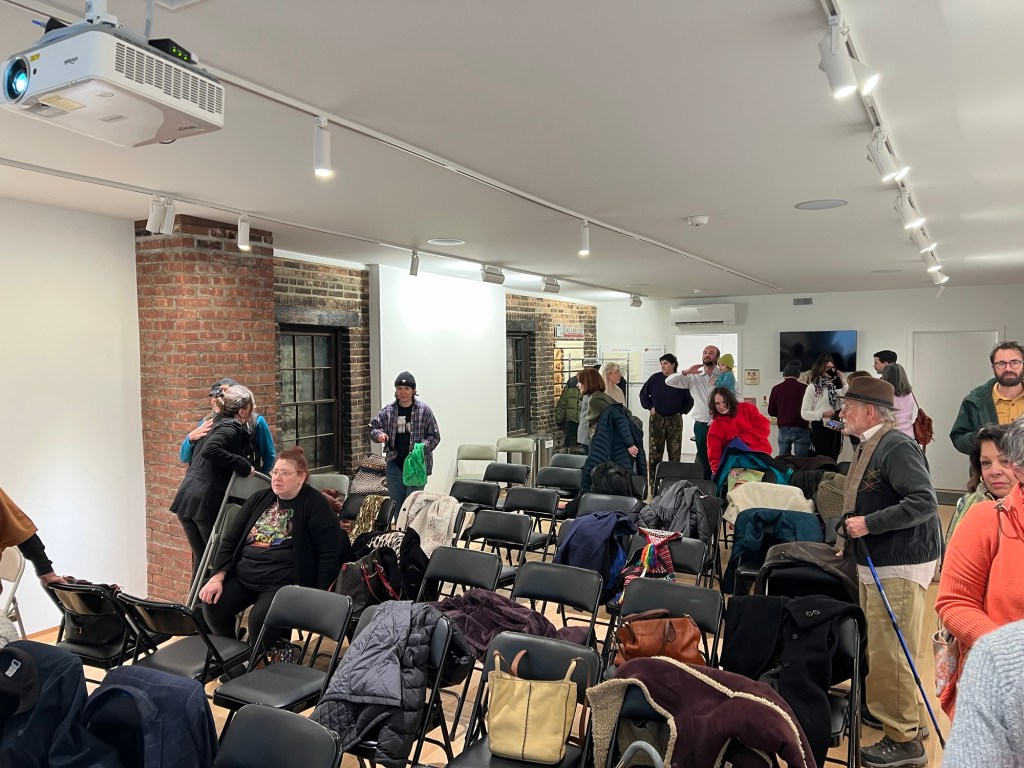
In February 2025, I was invited to a very successful special event sponsored by both the Kingston Film Foundation and the Reher Center, a screening of the film, ‘Big Night’ and a sampling of Italian food. Needless to say the event far exceeded what the planners thought and they were completely full and sold out by 6:00pm. The organizer said they were turning people away. They had never seen anything like this. When you mix free Italian food, free wine and an excellent movie, you have a recipe for an excellent event. It was so much fun.

The organizer from the Kingston Film Foundation was explaining the success of the evening to the crowd

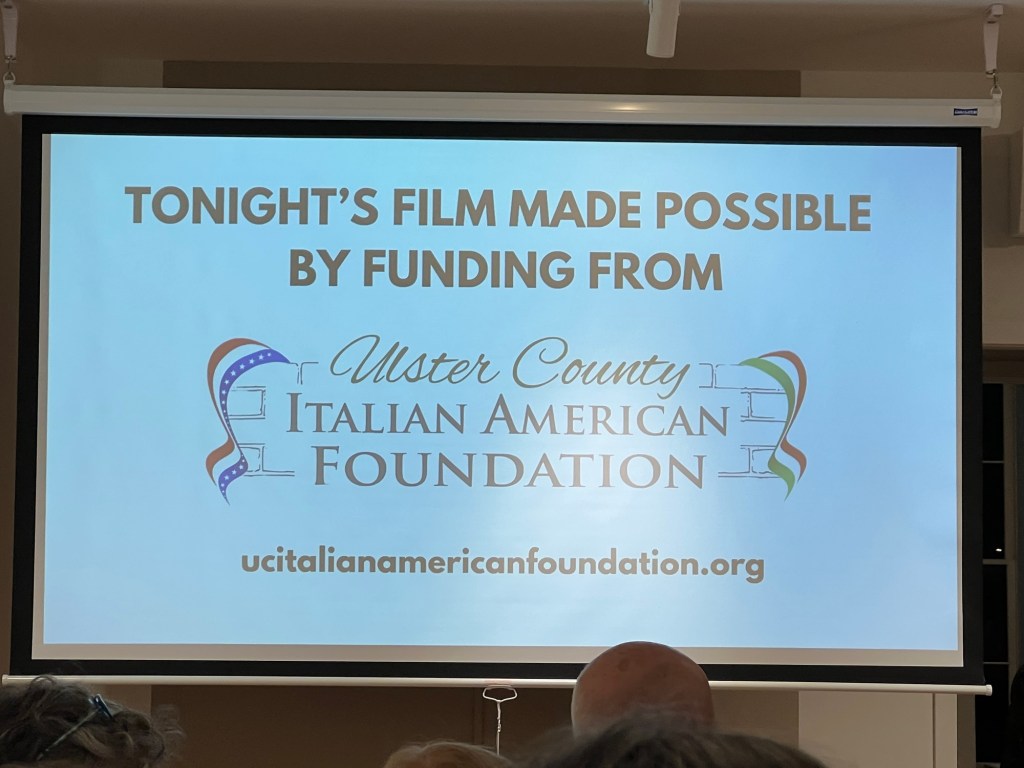
The event was funded by the Ulster County Italian American Foundation

I am convinced that it was the food that brought the people in coupled with a very popular film. The caterer who was there that night from Mass Midtown made two versions of the Tripoli, the noodle and meat dish in the film. Trust me when I say, the lines never stopped for that.

The two versions of the Timpano, the Vegetarian and the Meat versions, which were delicious was donated by Masa Midtown in Kingston, NY and the wines were donated by Kingston Wine Company.

Masa Midtown

https://www.masamidtown.com/

My review on TripAdvisor:

https://www.tripadvisor.com/Profile/R4960NKjustinw/mediabatch/13365543?m=19905

Trust me they were very generous with the slices of Timpano

God, it was delicious

The screening room was beyond packed that evening. Put free Italian food and a popular film in front of people and you will get a crowd

This very popular event people in the area will be talking about for a long time. This is what gets you a lot of attention. It really was an excellent event and I had a lot of fun that night. I love the movie ‘Big Night’.

The Timpano in the “Big Night”

The Trailer for the “Big Night”:

The evening was night of good food, wonderful conversation and an excellent movie.