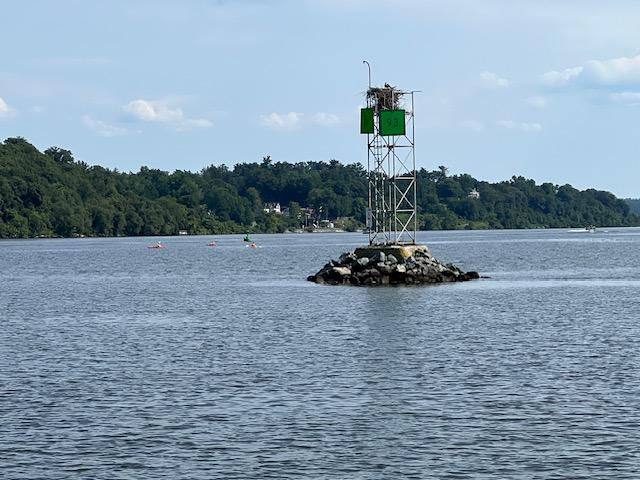
Category: Dedicated to Warren Watrel

Saugerties Lighthouse                                         168 Lighthouse Drive                               Saugerties, NY 12477

Saugerties Lighthouse 168 Lighthouse Drive Saugerties, NY 12477

Saugerties Lighthouse

168 Lighthouse Drive

Saugerties, NY 12477

(845) 247-0656

https://www.facebook.com/SaugertiesLighthouse/

Open: Please check the website for hours/Seasonal

Admission: Free for the Grounds/Check the website for the B & B availability

https://www.saugertieslighthouse.com/

https://www.lighthousefriends.com/light.asp?ID=678

My review on TripAdvisor:

https://www.tripadvisor.com/Attraction_Review-g48564-d4214114-Reviews-Lighthouse-Saugerties_Catskill_Region_New_York.html

I was recently travelling through Saugerties, New York recently and saw the small sign for the historical Saugerties Lighthouse and decided to take the road path down to the river. This interesting little site is hidden behind a wetlands area and neighborhood of homes and a Coast Guard station.

The Historical Saugerties Lighthouse in Saugerties, NY

I walked through the wetlands park through a pathway of bridges and paths and suggest by the walk do not go after it has just rained. Also do not go after dark as the path is not lite. Still it is fascinating walk through the wetlands passing streams and patches of beautiful flowers and trees.

In the summer the path is full of wildflowers, birds, dragonfly’s and the sounds of the Hudson River swaying across the shore. The views are just beautiful.

Take your time to admire the flowers and plants along the paths and look at the views of the river as you exit the paths.

The pathway to the lighthouse

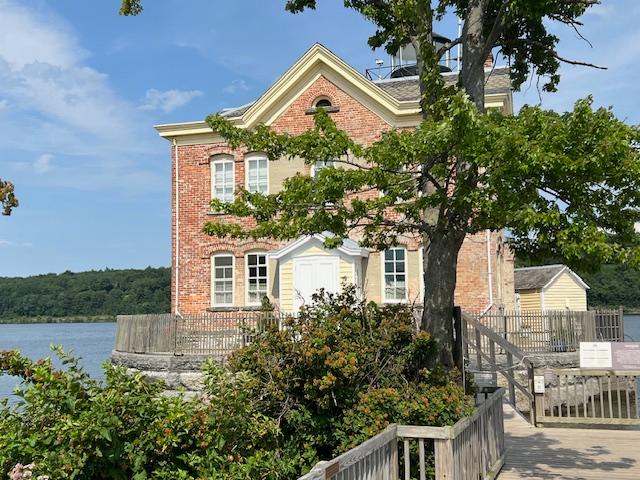
The lighthouse itself needs some work but it is elegant old building that sits stately against the mountain views. In the middle of the summer, all the colors are bright and vibrant. You can walk around most of the building but the walkway in the front offers a nice view of the whole structure.

Pathway to the lighthouse

The pathway to the lighthouse

The only way to go inside is to book a room at the B & B so check the website out.

https://www.saugertieslighthouse.com/availability

The wildflowers on the pathway to the lighthouse

The views of the Hudson River from the pathway

The beautiful views of the Hudson River along the pathway and the tiny beaches

The History of the Saugerties Lighthouse:

(From the Friends of the Saugerties Lighthouse)

The Saugerties Lighthouse on a sunny afternoon in July

Looking down the Hudson River

The lighthouse was practically a pile of crumbling bricks poised to tumble into the Hudson River, the Saugerties Lighthouse barely escaped the demolition ball in the 1960’s. Today, completely renovated and delighting B & B guests, it stands as a testament to the perseverance and hard work of many dedicated individuals.

The historic sign for the 1896 Lighthouse

The name Saugerties is derived from the Dutch “Zager’s Killetje”, meaning a sawmill on a creek and in fact, there was a mill built on Esopus Creek to harness the creek’s waterpower. The mill formed the cornerstone of a thriving paper industry, which produced as much as eight tons of paper daily, making it one of the leading producers of paper in the 1800’s.

The walkway to the lighthouse from the road near the Hudson River

On June 30, 1834, Congress appropriated $5000 for the construction of a lighthouse at the mouth of the creek to guide mariners past the nearby shallows and into Esopus Creek and the busy port of Saugerties. Charles Hooster built the lighthouse on a forty by fifty foot timber-framed pier and its light, produced by five whale oil lamps set in parabolic reflectors, commenced operation in 1835 with Abraham Persons as its first keeper.

The historic sign at the lighthouse

A fire in 1848 destroyed the original lighthouse but it was rebuilt on the old site by 1850 at which time four lamps were being displayed from atop the two-story structure. Light lists described the second lighthouse as a “light on keeper’s house.” A sixth-order Fresnel lens replaced the array of lamps and reflectors in the lantern room in 1854.

Ice floes and tidal currents took their toll on the foundation pier and on March 2, 1867, Congress appropriated $25,000 to build a replacement lighthouse just a few yards closer to the shore. This structure, still standing today, was built on a circular granite crib, with a depth of twelve foot and a diameter of sixty feet that rests on fifty-six pilings sunk into the riverbed and topped with three layers of six-inch timbers. The two story lighthouse has twenty-inch thick natural colored brick cavity walls and a sixth-order Fresnel lens cast its beacon from the lantern room. No longer needed, the old wooden lighthouse was sold.

Saugerties Lighthouse was considered a plum assignment due to its proximity to town. In 1888, Saugtegies Harbor was enlarged through the construction of jetties and the keeper’s jaunt to town was made easier when a small road was built along the north jetty to the lighthouse.

The lightkeepers were friendly with their neighbors and even enlisted their help. A neighbor downriver would hand a bed sheet out their window whenever they saw the lighthouse tender coming upriver, giving the lightkeeper about a half-hour notice before the inspector arrived.

Daniel Crowley was serving as keeper of the light when the current brick lighthouse was built. He had been placed in charge of the light in 1865, replacing his father Dennis, who was removed from service after just three months. Daniel’s sister, Katie, grew up at the lighthouse and seemed to be amphibious. She would often venture out into the river along in a skiff and when her little craft was upset, there were no worries as she could swim like a duck. Katie was made the official keeper of the light in 1873 and her lack of fear of the water lead to some remarkable rescues.

Around the turn of the century, the boathouse, located atop the foundation of the first lighthouse, a small island east of the current lighthouse was moved to the circular lighthouse pier. In 1910, a wooden platform was extended from the top of the tower to support a fog bell and an enclosed shaft was mounted below the platform to protect the suspended weights that powered the bell striking mechanism.

Conrad Hawk’s twenty-six year stint as keeper, lasting from 1914 to 1940 was far longer than that of any other keeper of Saugerties Lighthouse. In 1916, his son Earl and daughter Ilal were playing with a small battery and brought it into contact with the large battery used for the station’s fog bell. The resulting short-circuit caused an explosion that blew the battery to pieces, cutting Ilal’s face and produced a current that burned Earl’s arms. Earl nearly lost a big toe in 1922 when his foot came into contact with a boat’s propeller as he tried to climb aboard while swimming near the lighthouse.

Through they both had a few scars, Earl and Ilah survived at Saugerties Lighthouse. Earl Hawk graduated from the Navy’s school at Annapolis and entered the submarine service, while Ilal attended Cortland State teacher’s College and became a physical education instructor. Just before Christmas in 1939, Keeper Hawk’s went to the hospital to receive treatment for stomach ulcers but the treatments failed and he passed away on January 8th, 1940.

When electricity was extended to the lighthouse in the 1940’s, the dwelling was “modernized” with steam heat, plumbing and a telephone. In February 1954, Keeper Ed Pastorini was informed his light would be automated come spring. Wanting to leave the station in tip-top shape, he lovingly painted the three large upstairs bedrooms. Tears flooded his eyes when he closed the door and left the lighthouse for the last time.

The Historic Saugerties Lighthouse in all its beauty

The lighthouse tender soon arrived and its crew tore out the plumbing, furnace and fixtures. In stark contrast to Keeper Pastorini’s care, gallons of water were drained out on the floors and left to soak through the floorboards. The building was sealed up and left to deteriorate which it did quickly.

A decade later, the Coast Guard planned to demolish the vandalized and dilapidated lighthouse, when it stepped Ruth Reynolds Glunt, wife of Chester B. Glunt, a former Coast Guard light attendant stationed at Turkey Point near Saugerties. Mrs. Glunt a longtime friend of many lighthouse keepers along the Hudson River, carried a passion for saving lighthouse and mounted a campaign to halt the demolition. Through her efforts and those of architect Elise Barry, the structure was placed on the National Register of Historic Places in 1978.

The Saugerties Lighthouse Conservancy was established in 1985 with the mission to restore and maintain the lighthouse and the following year the conservancy was able to purchase the lighthouse and surrounding wetlands for $1.00. The conservancy received a building on the verge of tumbling down but managed in just a few years to turn it into a beautifully restored lighthouse.

Roughly 10,000 old bricks, which had crumbling after being penetrated by moisture, were replaced. The lantern room was removed and refurbished. Stairs, handrails, floors and walls were completely reconstructed. To top of the transformation, a solar powered light installed in the lantern room by the Coast Guard was activated on August 4th, 1990.

Saugerties Lighthouse furnished in 1920’s decor is now open to the public and welcomes overnight guests as a bed and breakfast. Visitors can walk to the lighthouse along a one half mile long through the Ruth Reynolds Glunt Nature Preserve, where they will be greeted by a modern day resident keeper who runs the bed and breakfast and maintains the lighthouse.

The pathway to the lighthouse

A big thank you to the Friends of the Saugerties Lighthouse for their dedication in this important site

*This is just a portion of the blog from the Friends of Saugerties Lighthouse. Please see the attached website for more information.

Barnegat Light Museum/The Edith Duff Gwinn Gardens                                                                   501 Central Avenue                                                        Barnegat Light, NJ 08006

Barnegat Light Museum/The Edith Duff Gwinn Gardens 501 Central Avenue Barnegat Light, NJ 08006

Barnegat Light Museum/The Edith Duff Gwinn Gardens

501 Central Avenue

Barnegat Light, NJ 08006

(609) 494-8578

Open: July and August Sunday-Saturday 10:00am-4:00pm/June-October 10:00am-4:00pm/Seasonal

Fee: Donation to the museum

https://barnegatlightmuseum.org

My review on TripAdvisor:

https://www.tripadvisor.com/Attraction_Review-g46285-d8548161-Reviews-Barnegat_Light_Museum-Barnegat_Light_Long_Beach_Island_New_Jersey.html?m=19905

The Barnegat Light Museum at 501 Central Avenue

I was on Long Beach Island for the afternoon and had wanted to visit the Barnegat Light Museum on my last trip to the island but it was closed for the afternoon. When I checked the site to see if it was open this weekend, I found that it was and since I had to be in Beach Haven that afternoon I made it my first trip.

The Barnegat Light Museum sign in the off season.

The museum is now open ‘by appointment only’ in the off season, so I called the number provided and the President of the Museum Board opened the museum up for me and gave me a personal tour. What an interesting little museum packed with information and artifacts.

The Barnegat Light Museum main gallery

The museum is a former one room school house that was built in 1903 and used by island school children until 1954. The building still houses the original heating unit, a coal burning furnace and books of the children’s notes from school that had been handwritten (now typed) of current events and school notes.

The main gallery of the Barnegat Light Museum

The main gallery of the museum

The main attraction is the original light, a 1052 prism lens, for the Barnegat Lighthouse on display since 1927. The glass panels and sheer size and beauty of light shows how it was once the beacon for ships along the New Jersey coast. It had been brought to museum after moving around to various places over the years.

The original Barnegat Light for the Lighthouse

The Lighthouse and light display in the museum

Along the walls are all sorts of local artifacts such as dinosaur bones that had been found in the bay and donated to the museum (the president of the museum said today there are certain laws on this), local housewares from families that lived on the island and various types of fishing equipment.

Display cases filled with local fishing artifacts and net configuration for ‘Pound Fishing’

Shark Teeth, Native American Artifacts and prehistoric fossils

There is even a mini display of ‘Pound Fishing”, which is a series of poles and nets are used to catch the fisherman’s prey. This small display shows how it is constructed and used to catch the fish. There is an extensive display of Duck decoys, showing the island’s past and present as a hunting ground for water fowl. The displays come in all colors and types of ducks. There is also an interesting display of whale vertebrae and other fishing displays.

The Whale Vertebrae exhibit

There is an extensive history of the resort hotels that used to be on this part of the island that had been effected by the changing tides of the island. Like the old lighthouse and lighthouse keepers home, one of the hotels just gave way to erosion. This part of the island just keeps shifting.

The Resort and Hotels display of menus

The Resort and Hotels display-The former hotels

The Resort and Hotels display-Dishware and resort artifacts

Hotels disappeared because of shifting tides

Water sports and fishing displays

Since the building was once home to Barnegat Light’s School house, the original furnace is still in the building along with a display of items from old schools in the area.

The School gallery

The Schoolhouse Gallery

The schoolhouse furnace

The retail trade in the early part of the century leading from the old railroad track to the island was the local General Store. The railroads were a big part of the growth of this area until automobiles to the shore became the preferred mode of transportation.

The railroad display

The General Store exhibit

The General Store exhibit

The Edith Duff Gwinn Gardens behind the museum in all seasons:

One beautiful benefit of the museum is the beautiful gardens that surround the museum, The Edith Duff Gwinn Gardens. The pathways are maintained by the Long Beach Island Garden Club. These wondering paths surround the property and especially elegant looking in the back of the building.

The Gardens from the back of the museum

The Garden plaque to Edith Duff Gwinn

The Edith Duff Gwinn Gardens are on the side and behind the museum

The Edith Duff Gwinn Gardens that surround the museum are maintained by the Long Beach Island Garden Club. The gardens are at their peak in the late Spring and early Summer months. The paths are filled with seasonal flowers and shrubs.

In the off season, you can visit the museum by calling ahead and you can schedule an appointment with the staff of volunteers that work at the museum.

The Gardens in the late Summer of 2024

The Beehive

The Gardens in the late Summer of 2024

The Gardens in the late Summer

The Gardens in the late summer

The Garden paths are filled with colorful flowers and plants

The back of the Gardens and the seating area

The back of the Gardens

The Gardens also looked beautiful in the late fall when I arrived for the early holiday activities in Viking Village. I was able to walk around when the museum was closed for the season.

The Gardens during the late fall:

The Gardens during the late fall:

The Gardens during the late fall:

The Gardens during the late fall:

The gardens around Halloween time

The gardens in the Spring and Summer are quite spectacular and the volunteers do a nice job with the landscaping around the museum.

The gardens in the early Summer of 2024

The Gardens in the Summer of 2024

The Gardens in the Summer of 2024

The Gardens in the Summer of 2024

The gardens are really nice in the summer months

Both on the personal tour and when the museum is open during the summer months, the museum is a real treat both inside and out. This small museum is chock full of information not just on Barnegat Light but on the areas development for tourism and business.

It is such an interesting piece of Jersey Shore history.

New Jersey Maritime Museum                                   528 Dock Road                                                 Beach Haven, NJ 08008

New Jersey Maritime Museum 528 Dock Road Beach Haven, NJ 08008

New Jersey Maritime Museum

528 Dock Road

Beach Haven, NJ 08008

(609) 492-0202

https://www.facebook.com/NJMaritimeMuseum/

Open: Sunday-Saturday 10:00am-4:00pm (Check by season)

My review on TripAdvisor:

https://www.tripadvisor.com/Attraction_Review-g46292-d1881647-Reviews-Museum_of_NJ_Maritime_History-Beach_Haven_Long_Beach_Island_New_Jersey.html?m=19905

I made a special trip to Beach Haven, NJ recently to visit the NJ Maritime Museum which had gotten some interesting write ups online. The museum covers many aspects of the maritime history of Long Beach Island and the surrounding Jersey Shore and the State of New Jersey.

The NJ Maritime Museum at 528 Dock Road in Beach Haven, NJ.

Each of the rooms are packed with pictures, artifacts and explanations of all the events. The front room has a lot of information of ship wrecks, both local and from all over the state.

The Front Galleries of the NJ Maritime Museum.

There is a large story board of the 1916 Shark attacks that inspired the book and movie, “Jaws” including the clippings from the paper and pictures of the cemetery where the victims were buried. It was a very detailed display of the incident.

The front section of the museum has the display of the “Morro Castle” fire.

In the back room of the first floor the room is dedicated to the 1934 “Morro Castle” luxury liner disaster where incompetence from the crew and staff lead to the burning of the ocean liner on its way back from Havana to New York at the height of the Depression and twenty years after the Titanic Disaster. The displays included menus, artifacts from the ship, witness accounts and a movie on the disaster being shown in a loop.

The Morro Castle Fire exhibition.

Natural disasters are covered as well with storms that have reeked havoc to the Jersey Shore over the last hundred years including the recent Hurricane Sandy which was the perfect storm. The pictures show the disaster that have hit Long Beach Island and the rebuilding over the years.

The history of Diving exhibition on the second floor.

There is a lot of local history with pictures of the all the luxury resorts that used to be on the island and its role in the development of the area as an early resort town through the railroads as well as the history of the local “Women’s Surf Fishing Club” and pictures of the club members over the years.

The second floor galleries.

The second floor is dedicated to the local Coast Guard history and rooms full of artifacts from local shipwrecks and the history of the local maritime history and fishing industry.

The Andrea Dora exhibition on the second floor.

The New Jersey Maritime history is in full display here

For such a small museum, the museum is packed with all sorts of interesting information on the New Jersey Shore line.

The History of the NJ Maritime Museum:

On a 1983 episode of the television program “Prime Time”, Jim O’Brien did a segment on New Jersey Shipwreck Diving, interviewing Bob Yates and Deb Whitecraft. During that interview, Deb spoke of her quest for knowledge about different wrecks and New Jersey maritime disasters. She also stated that she had started collecting this information and other items pertaining to New Jersey Maritime History and that she hope to one day have a place to display her collection. On July, 3rd, 2007, Deb’s lifelong ambition came to fruition when the Museum of New Jersey Maritime History opened its doors.

In the years between the program and the museum opening, Deb actively pursued her quest, working with other New Jersey maritime historians and amassing a sizable collection of shipwreck files and artifacts. This collection comprised almost all of the museum’s material when it opened. In the years since it opened, the museum has grown at amazing rate, thanks to the donations and loans from the diving community and the public in general.

The second floor galleries.

Although the museum was built entirely with private funds, it is now a registered non-profit entity and deed restricted to remain so. It operates entirely on donations and is staffed by a small group of dedicated volunteers. The museum is open all year long, Friday through Sunday in the off-season and seven days a week during the summer.

(NJ Maritime Website History)

The NJ Maritime Museum Mission:

The Museum of New Jersey Maritime History Inc. is a museum and research facility organized exclusively for educational purposes within the meaning of Section 501(c)(3) of the Internal Revenue Code. The corporation’s educational purposes include, among other things, providing a facility for the public display of historic maritime artifacts, books and documents. The display of such collections, preserved and exhibited under professional museum standards will encourage maritime research and promote the education of the public about New Jersey’s rich maritime history.

The museum is really interesting.

(NJ Maritime Museum pamphlet)

Barnegat Lighthouse State Park                                           208 Broadway                                             Barnegat, NJ 08006

Barnegat Lighthouse State Park 208 Broadway Barnegat, NJ 08006

Barnegat Lighthouse State Park

208 Broadway

Barnegat, NJ 08006

(609) 494-2016
https://www.state.nj.us/dep/parksandforests/parks/barnlig.html

Open: Sunday-Saturday 8:00am-8:00pm

Fee: Free off season/ Check Website

My review on TripAdvisor:

https://www.tripadvisor.com/Attraction_Review-g46285-d286497-Reviews-Barnegat_Lighthouse_State_Park-Barnegat_Light_Long_Beach_Island_New_Jersey.html?m=19905

I was able to visit the Barnegat Lighthouse State Park on a recent trip to Long Beach and what a beautiful park with wonderful views of the inlet and of the Atlantic Ocean.

The Barnegat Lighthouse in the fall 2023.

The view of the lighthouse from the parking lot in the summer months

The lighthouse through the woods in the Summer of 2024

In 2020, the lighthouse was closed because of COVID so I had to wait in the future to climb the stairs which is noted for people who like to explore lighthouses but still you are able to admire the building from the outside. In the fall of 2023, the lighthouse was opened for limited hours during the fall after Labor Day weekend and I was able to climb all 216 stairs in ten minutes.

The Barnegat Lighthouse on the inlet side of the park

The paths around the dunes in the summer months

The beginning of the dunes in the winter months

The dunes in the summer months

The dunes in the fall

The beginning of the dunes path as you leave the lighthouse.

The start of the path in the summer months

The start of the path in the Summer of 2024

The pathway through the dunes

There is a walking path through the bush areas of dunes. In all season, you can admire the trees and what is left at this point of the season of flowering plants. It was interesting to read how these species survive the ocean and salt air. It is amazing how these plants can survive the storms and how they keep the beach from eroding.

The pathway through the Dunes

Path through the Dunes woods

The turn by the beaches

The Maritime Forest Trail is a 1/5 mile long, self-guided loop through one of the last remnants of maritime forest in New Jersey. The forest, which is dominated by black cherry, sassafras, eastern red cedar and American Holly, which is an important resting and feeding area for migratory birds on their long journey to and from their breeding areas (Park Literature).

The pathway through the dunes

The path in the summer months

Walking through the pathway

It is also the home for migrating birds. There were all sorts of ducks swimming around and there a a bird that looked like a crane who looked like it was getting vain from all the pictures that people were taking of it.

The pathway leading back to the lighthouse.

Walking through the pathways

The pathway from a distance

The Dunes woods at its thickest point

The Inlet Movement sign on the pathway

Exiting the woods

Exiting the woods near the entrance of the light house path

The park has a 1033 foot concrete walkway that the fisherman use and people were sitting along the benches watching people fish and boaters come and go from the inlet. The walkway was a nice place to see the waves crash along the sides of the park.

The lighthouse and the walkway.

The pathway out to the bunker

The pathway during the Summer of 2024

The bunker that protects the shoreline and the lighthouse.

The bunker and the lighthouse

Following the pathway to the bunker head

I just saw a lot of dumb people walking along the wet rocks with waves crashing by which is not smart. Still you got great views of Seaside Park and the Atlantic Ocean from this part of the park. It is fun watching the fisherman casting lines, sharing stories and the fishing boats in the distance go out to sea close to the beach.

The view of the Barnegat inlet from the top of the lighthouse.

The boats on the inlet on a cool December day

The boats passing by

On a nice day take the time to walk through the nature trails and the dunes that face the ocean. It is a small but interesting trail with all sorts of native plants and a very nice description that the park gives you about each and their place at the shore. Each has a place with the wild life and the migration patterns for birds on their way to their next home. It shows what an important place that New Jersey serves for wildlife.

The inlet and dunes from the top of the lighthouse.

I revisited the park in November of 2021 and on a very windy day, the lighthouse was open and I finally made my way to the top. It was quite a hike up those narrow stairs on a extremely windy day but I made it to the top in about fifteen minutes. Along the way, there was small landings with sweeping views of the ocean.

The view of Barnegat Light from the Barnegat lighthouse in 2023.

Once to the top, there was a landing that surrounded the top of the lighthouse with views of the park and lagoon areas and the surrounding tip of the island. The strong winds prevented me from staying there too long plus there was not much space to move around and you felt like you were caged in but the views were spectacular. I made it down in ten minutes since there were only six other people there.

The view of all of Long Beach Island from the Barnegat Lighthouse in November 2023.

I finally got back to Long Beach Island in November of 2023 and was able to tour the lighthouse and the grounds again with time on my hands. The COVID restrictions had been long lifted and even in the off season the lighthouse was busy with people climbing to the top of it and taking pictures and then admiring the grounds.

The Barnegat Lighthouse from the approach.

It gave me a chance to really spend time inside the lighthouse, walking through the dunes pathway, exploring the bunker and the surrounding park. I also took time to admire the statuary and read the signs. During COVID when the lighthouse was open, you felt rushed not to be around anyone. Now I was able to converse with people as I walked up and down the stairs and in the park. Walking through the dunes you can just relax and enjoy nature in the quiet sense. It was nice of them to finally open the lighthouse where we could just enjoy it again.

The History of Barnegat Lighthouse State Park:

Barnegat Lighthouse State Park, located on the northern tip of Long Beach Island along the New Jersey Atlantic coastline, is one of New Jersey’s most recognized landmarks and a veteran of service to seafarers for 68 years. The park is easily accessible from the Garden State Parkway by taking exit 63 and following Route 72 east to Long Beach Boulevard northbound.

The Barnegat Lighthouse in the fall of 2023.

Park visitors can picnic, sunbathe, fish, bird watch, climb the historic lighthouse (post COVID), walk the Interpretive Center (post COVID) and enjoy the seashore. Swimming, however is not permitted. Barnegat Lighthouse is included as a maritime site on the New Jersey Heritage Trail Route (Barnegat Lighthouse State Park Pamphlet).

The Massacre of Long Beach during the Revolutionary War.

Barnegat Lighthouse stands on the south side of Barnegat Inlet, The inlet was named “Barendegat” or “Breakers Inlet” by early Dutch explorers because of the large cresting waves that made navigation difficult. The site of the lighthouse was considered on of the most important “change of course” points along the eastern seacoast for vessels sailing to New York from Europe. Sailors depended on Barnegat Lighthouse as a navigational aide to assist them in reaching their posts and to avoid the dangerous shoals that extended from the shore.

The historic marker at the lighthouse.

In 1834, the U.S. Congress appropriated $6,000 to establish a lighthouse as Barnegat Inlet. The lighthouse was completed and placed into service in July of 1835. At only 40 feet tall with a non-blinking light, the first lighthouse at Barnegat Inlet was a miserable failure doing little to reduce the number of shipwrecks. In 1856, guided by recommendations from then Lieutenant George G. Meade of the U.S. Army Bureau of Topographical Engineers, Congress appropriated another $60,000 to construct a “first class light” at Barnegat Inlet.

The Lieutenant George Meade statue outside the lighthouse.

Lieutenant Meade drew up the plans and Lieutenant W.S. Raynolds supervised the construction of the new lighthouse. On the night of January 1, 1859, the majestic new Barnegat Lighthouse was lit for the first time. Its first order Fresnel lens, at 175 feet above sea level was so powerful that it could be seen for 19 nautical miles.

The Lighthouse keeper statute.

The Lighthouse keeper listing

The maritime plaque outside the pathways

The lens was made in 1856 by Henri Le Paute of Paris, France from glass produced at the famous furnace at St. Gobian. The beehive-shaped Fresnel lens is six feet in diameter, ten feet high and is formed from over 1,000 separate glass prisms and twenty four bull’s eye lenses mounted in a brass frame.

The lens frame at the top of the lighthouse.

It weighs nearly five tons. Today the lens is on display in the Barnegat Light Historical Museum on Central Avenue and 5th Street in Barnegat Light, New Jersey. For hours of operation, please call the museum at (609) 494-8578.

The lens at the Barnegat Light Museum around the corner from the lighthouse.

Turned by a clockwork mechanism, the lens rotated once every four minutes. The speed of the rotation and the 24 individual beams of light from the 24 bull’s eye lens gave Barnegat Lighthouse it’s characteristic” of one flash every ten seconds.

The old light is on display at the Barnegat Light Museum down the road

At the turn of the century, due to the encroaching sea and seemingly inevitable collapse, the Lighthouse Board considered abandoning Barnegat Lighthouse and replacing it with a lightship anchored off the coast. The popularity of the lighthouse as a landmark caused the Lighthouse Board to reconsider their plan and to erect temporary measures to hold back the sea. Later, local residents raised two thousand dollars to construct permanent jetties to protect the lighthouse.

In 1926, Barnegat Lighthouse and surrounding property were transferred from the Federal government to the State of New Jersey… to maintain this reservation for historical purposes and for the preservation of the lighthouse tower. The lighthouse was decommissioned and replaced by the Barnegat Lightship in 1927. Barnegat Lighthouse State Park opened to the public in 1957.

A bust of General George G. Meade was unveiled at the dedication ceremony in honor of his distinguished service during the Civil War as the Commanding General of Federal troops at the Battle of Gettysburg and for his role at Barnegat Lighthouse.

The sign that welcomes you to the park all year round.

Today, the beloved Barnegat Lighthouse is shining again thanks to the Friends of Barnegat Lighthouse State Park who purchased a new lens that casts a single beam visible up to 22 nautical miles. The new light was illuminated at a ceremony on January 1, 2009 exactly 150 years to the day that it was originally lit in 1859 with over 1200 people witnessing the lighthouse becoming an official aid to navigation once again.

The lighthouse and the park in its glory

Sunset at the lighthouse

Sunset at the lighthouse

(This information comes from a combination of the Barnegat Lighthouse State Park pamphlet and website/Wiki-I give them full credit for the information provided).