
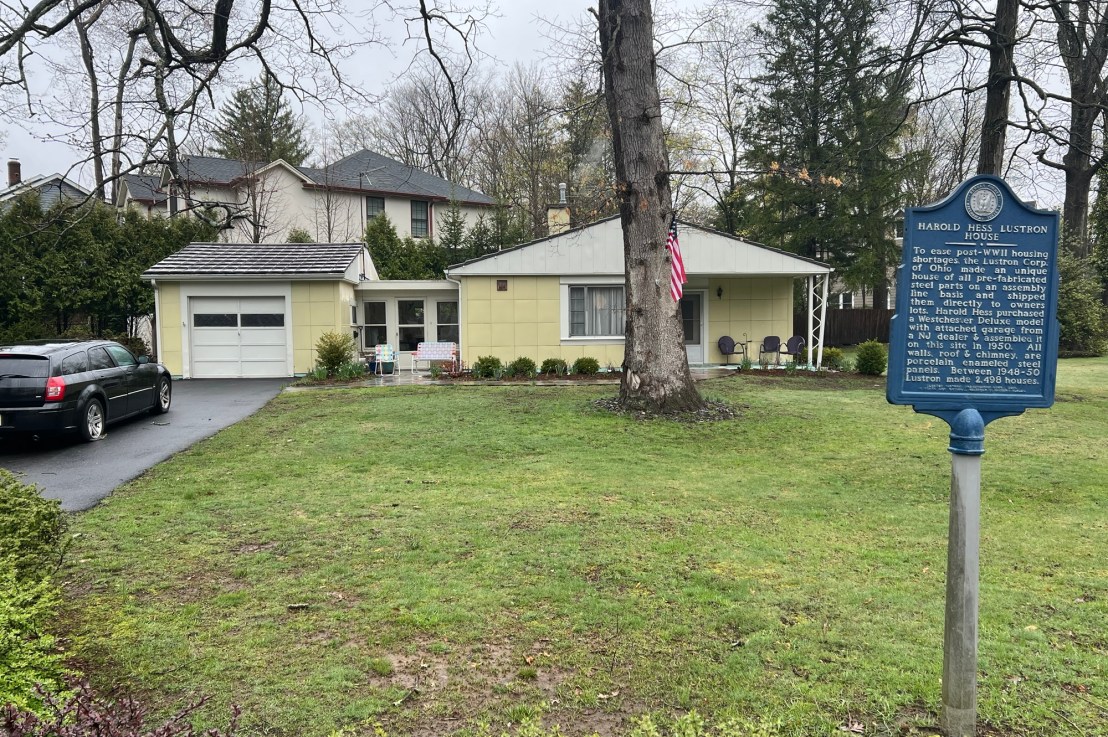
The Harold Hess Lustron House
421 Durie Avenue
Closter, NJ 07624
(201) 784-0600
https://en.wikipedia.org/wiki/Harold_Hess_Lustron_House
https://www.facebook.com/Lustronhouse/
https://closterhistory.com/properties/lustron/index.html
Open: Sunday-Friday Closed/ Second Saturday of the Month 12:00pm-2:00pm
Admission: Free but donations are accepted
My review on TripAdvisor:
https://www.tripadvisor.com/Profile/R4960NKjustinw/photo/798682171?m=19905
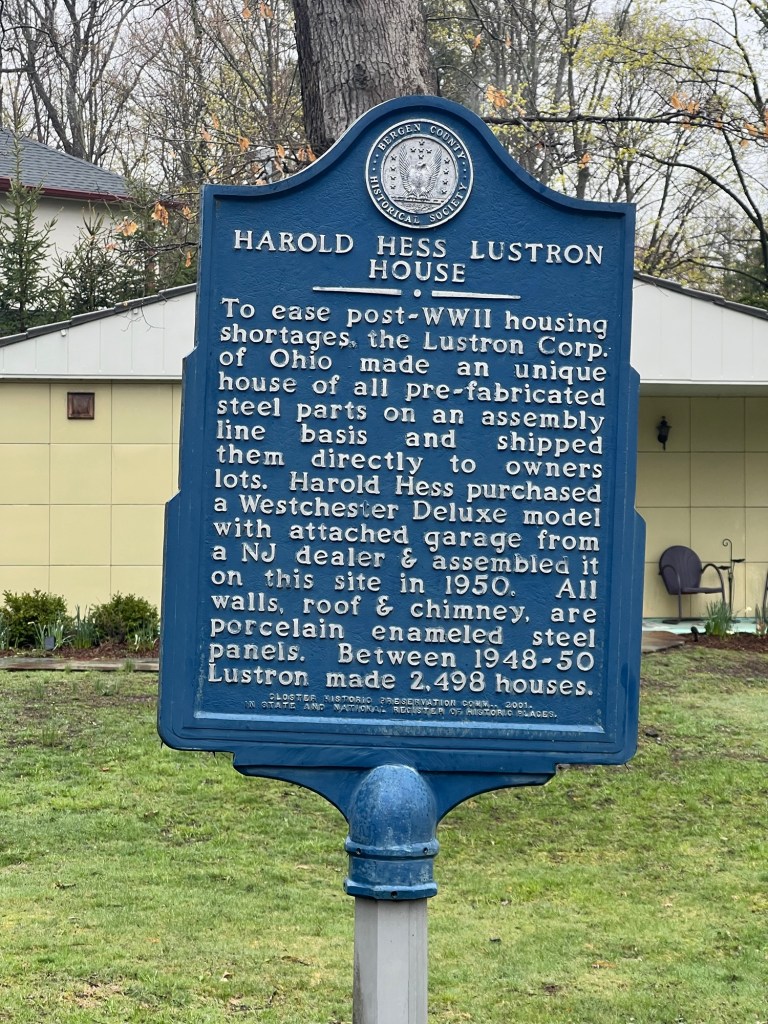
The historic marker outside the Lustron House
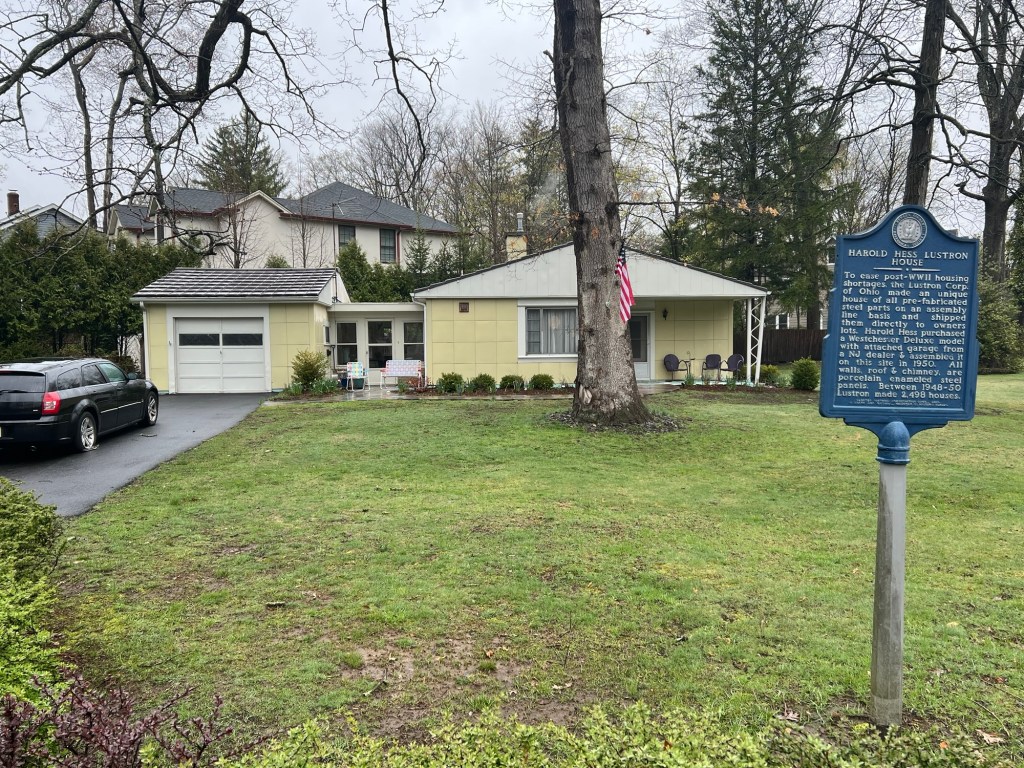
The outside the home
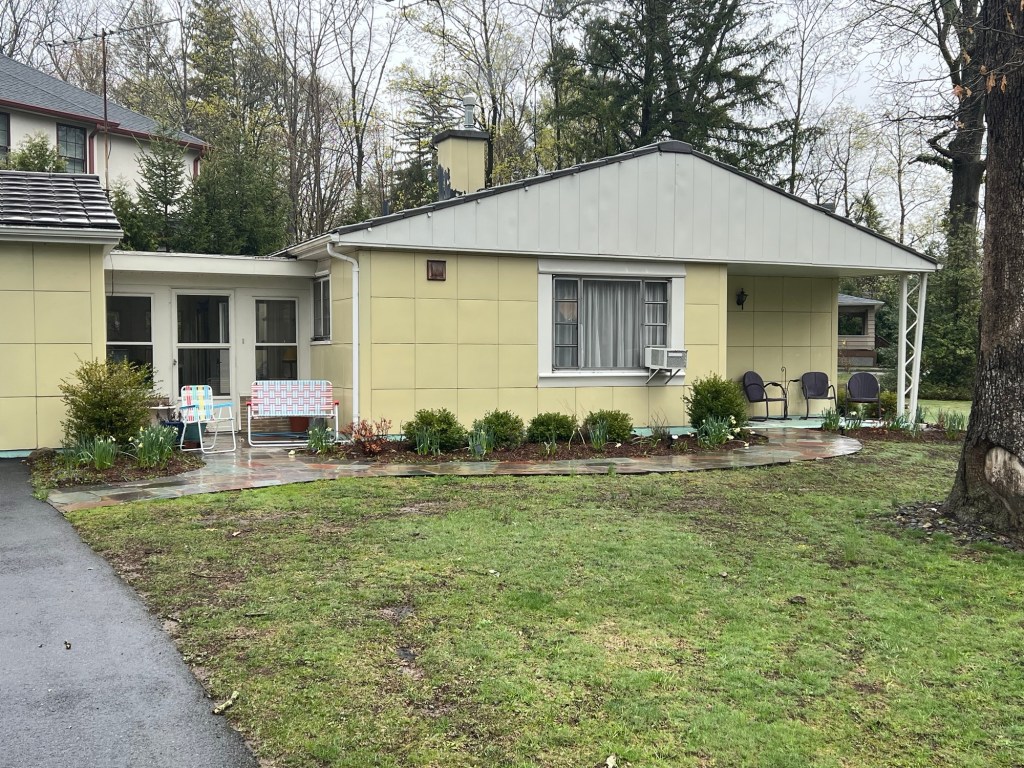
The breezeway and the outside of the house
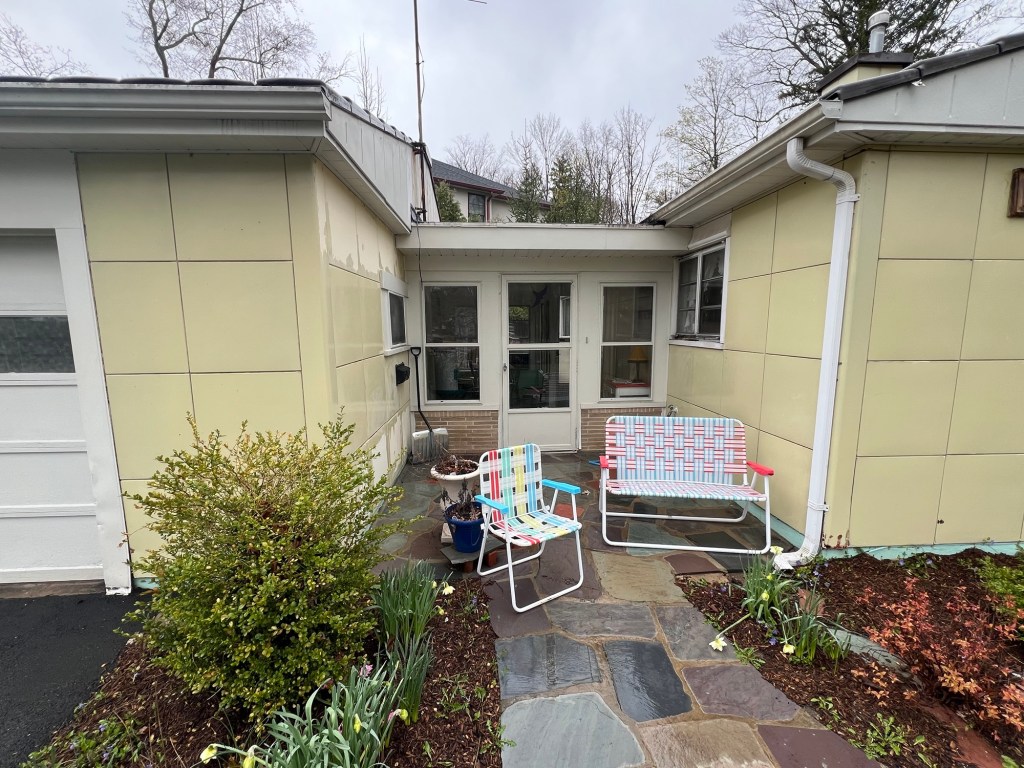
The breezeway of the home. This was for entrance of the home
Location of the house:
(from the Borough of Closter, NJ website)
The Harold Hess Lustron House, located at 421 Durie Avenue, Closter NJ 07624, is currently owned by the Borough of Closter and is operated as a house museum by the Friends of the Lustron Committee of the Closter Historic Society. It is open to the public on the second Saturday of each month from noon to 2 p.m. (Boro of Closter, NJ website).
History of the Harold Hess Lustron House:
(from the Borough of Closter, NJ website)
In 1949, Harold Hess, a recently married returning WWII veteran saw a sample Lustron House displayed at Palisades Amusement Park. In 1950, he purchased the Westchester Deluxe model with attached breezeway and one car garage. Originally he wanted the 3 bedroom, two car garage model but felt fortunate to receive what he got as the company was already heading into bankruptcy. Mr. Hess faced six months of planning and zoning board meetings in Fort Lee. He failed to get a permit to erect the modern metal house and turned to the Closter area where more relaxed building codes provided an opportunity to build the novel construction of the all-steel prefabricated house.
World War II vet Hess never lost faith in his house of tomorrow and was the proud owner till his death in 2004. He raised his family here and remained pleased with the house until the end, noting that there were some adjustments such as finding repairmen with enough problem solving creativity to make repairs to a steel house with a combination dishwasher/clothes washing machine next to and filled by the kitchen sink faucet. Other minor matters were hanging pictures with large industrial magnets and interior spring cleaning with automobile wax. The attractive steel walls never need painting or wallpapering so the color scheme never changed.
Closter’s Harold Hess Lustron House, listed on both the state and national registers of historic places, was scheduled for demolition in 2014. Thanks to advocacy by then-mayor Sophie Heymann and positive action by the Zoning Board, an unusual compromise was reached with the developer-owner of the property to donate the historic house to the Borough of Closter. The Borough of Closter applied for a $25,000 grant in 2016 to have a Preservation Plan written for the Lustron House. The grant was awarded by the New Jersey State Historic Preservation Office with monies provided by the National Park Service and did not require any local matching funds. The plan was completed in 2017, work has begun and will be implemented fully over time.
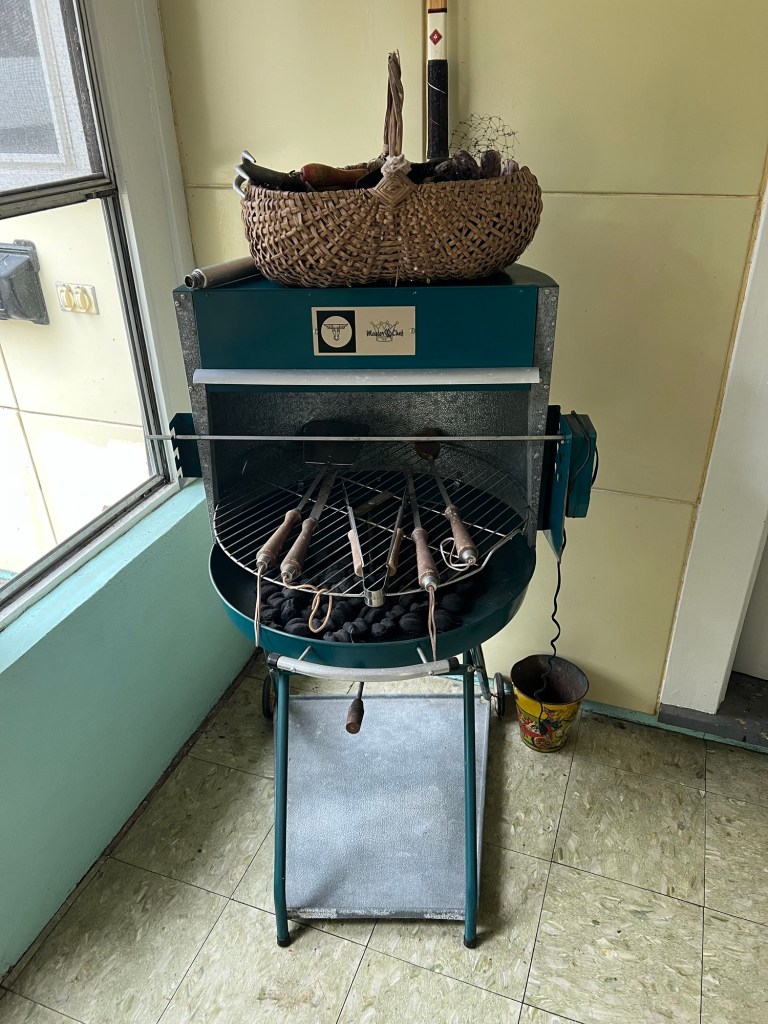
The barbecue grill in the breezeway
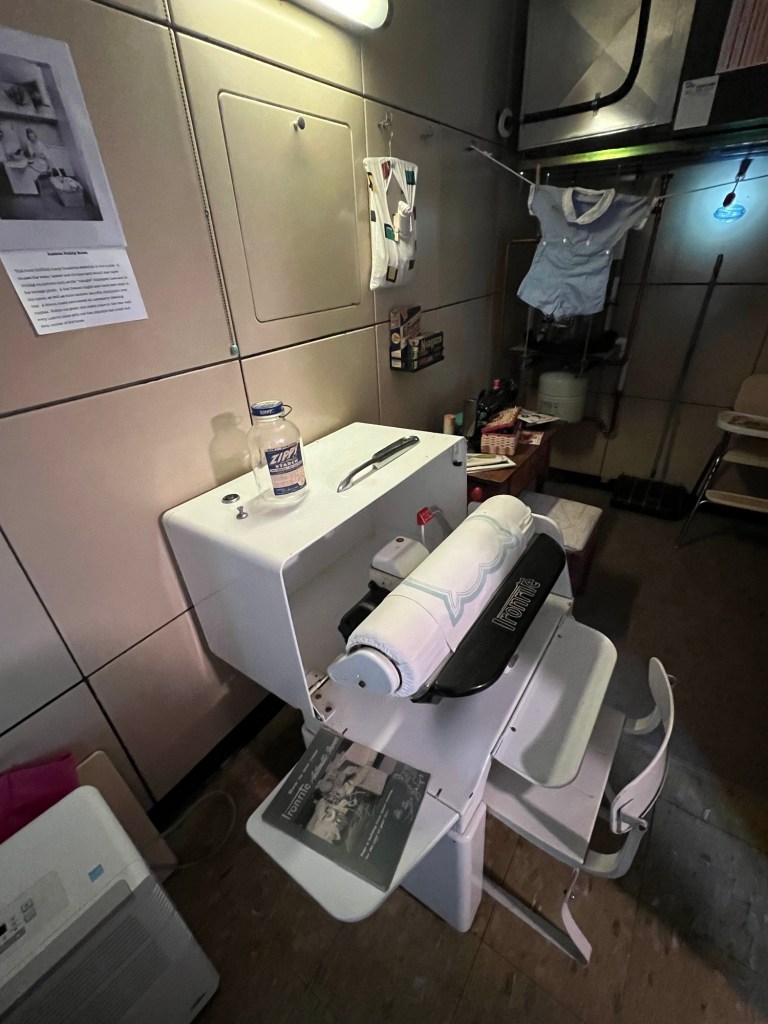
The Laundry Room as you walk into the house
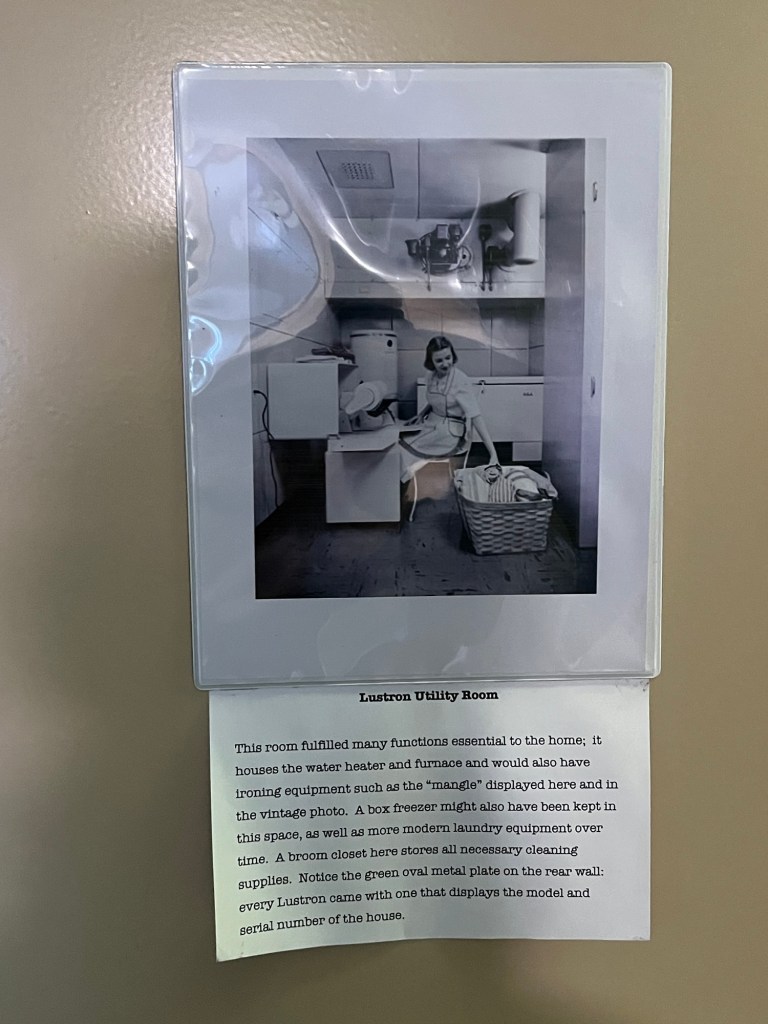
The display on Laundry room
History of the Lustron House: Current day
(from the Borough of Closter, NJ website)
There are only two Lustron houses remaining in Bergen County. The other is located in Alpine and has no local historic preservation protection. Approximately nine have survived statewide and an estimated 1500 remain nationwide.
“Lustron” is a trademarked name that stands for “Luster on Steel.” The shiny efficiency of these homes mirrors the optimism that was felt by this country as its GI’s re- turned home triumphant from the Great War. Lustron homes are one-story ranch-style houses built on concrete slabs. They are very modest in size, averaging 1000 square feet of living space. Most of the Lustrons built were two- bedroom models, although a three-bedroom model did be- come available towards the end of production.
The Lustron house was the brainchild of Carl G. Strandlund, who saw the possibilities of utilizing steel left behind from the war effort to create needed housing. Strandlund had previously worked for the Chicago Vitreous Enamel Products Company that manufactured steel enamelware for refrigerators, stoves, and other household appliances. Connecting this technology to the housing industry was the ticket to success in securing federal funding necessary to start production. The Lustron Corporation opened a one-million-square-foot plant in Columbus, Ohio in 1947. But just as quickly as the company’s star rose, it plummeted, and the Lustron Corporation closed in 1950 due to overwhelming debt.
Elements of streamline design abound in Lustron homes, which feature built-in vanities, bookshelves and dining room/kitchen cabinetry, as well as pocket doors and sliding closet doors – all made of porcelain-enameled steel. Lustron homes were marketed as having “cheerful convenience” and “easy-to-keep-clean brightness.” They cost approximately $10,000 each and came in four colors: maize yellow, surf blue, desert tan and dove gray. All of the pieces of a Lustron home could be carried to the building site in one specially designed truck, and construction could be completed in as little as one week.
Interesting features of the Lustron house included the “Thor” dishwasher-clothes washing machine that was located in the cabinetry next to the kitchen sink. Another unique aspect of these homes was the heating system, which supplied radiant heat through a plenum chamber in the space above the metal ceiling panels. Each Lustron house came fitted with a metal identification tag stamped with the model and serial numbers and located on the back wall of the utility room.
The kitchen looked like a complete replica of my grandmother’s and my aunt and mother’s houses in the late 1960’s and early 70’s.
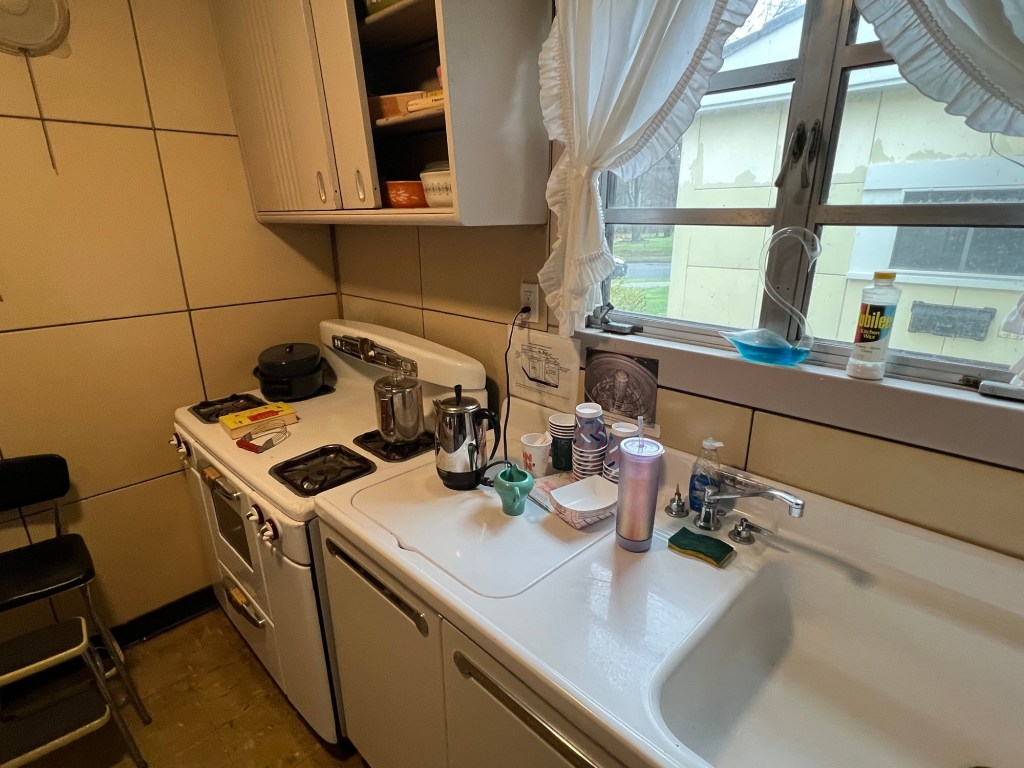
The late 1950’s kitchen
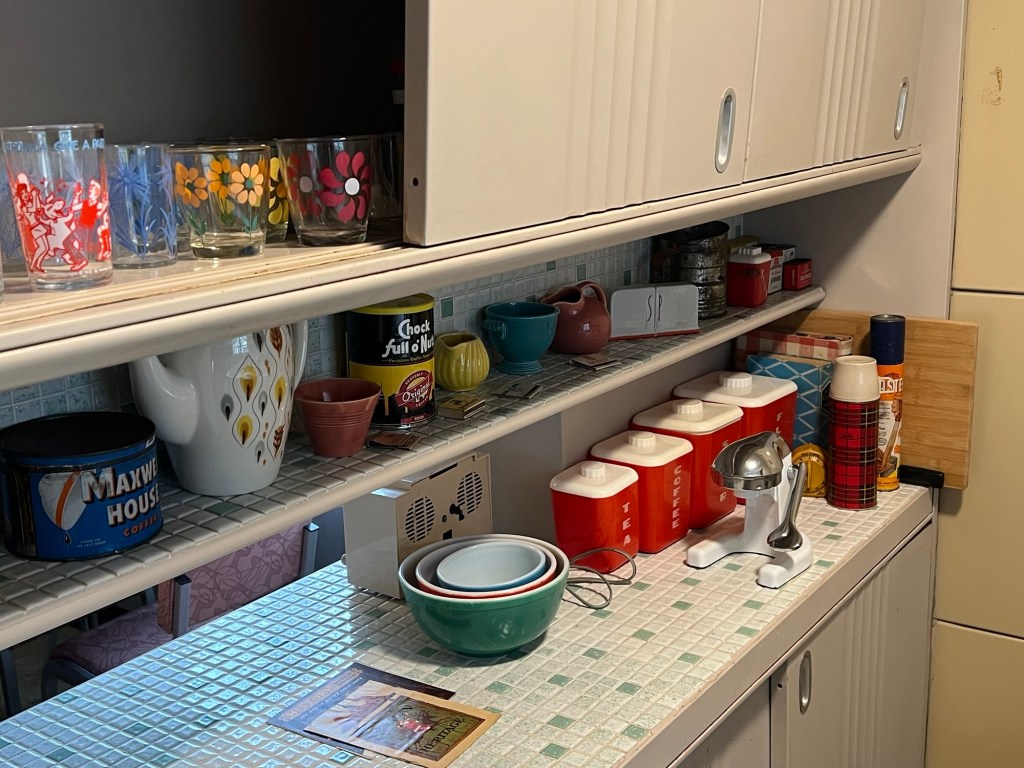
The kitchen of the past
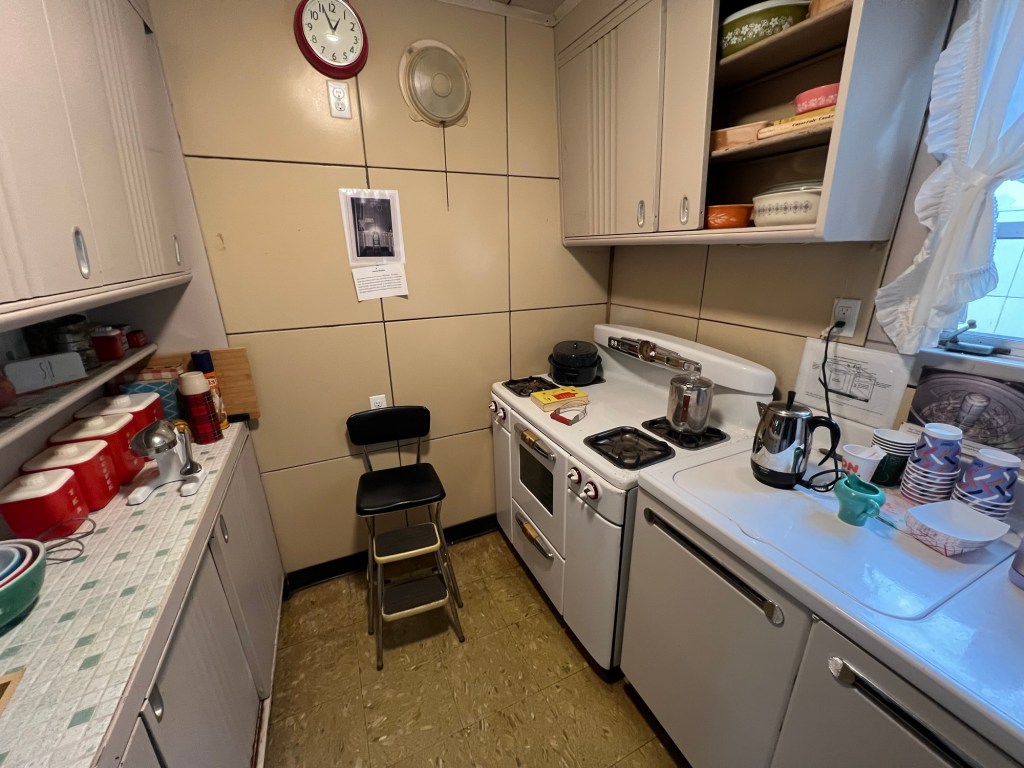
A closer look to the kitchen of the past
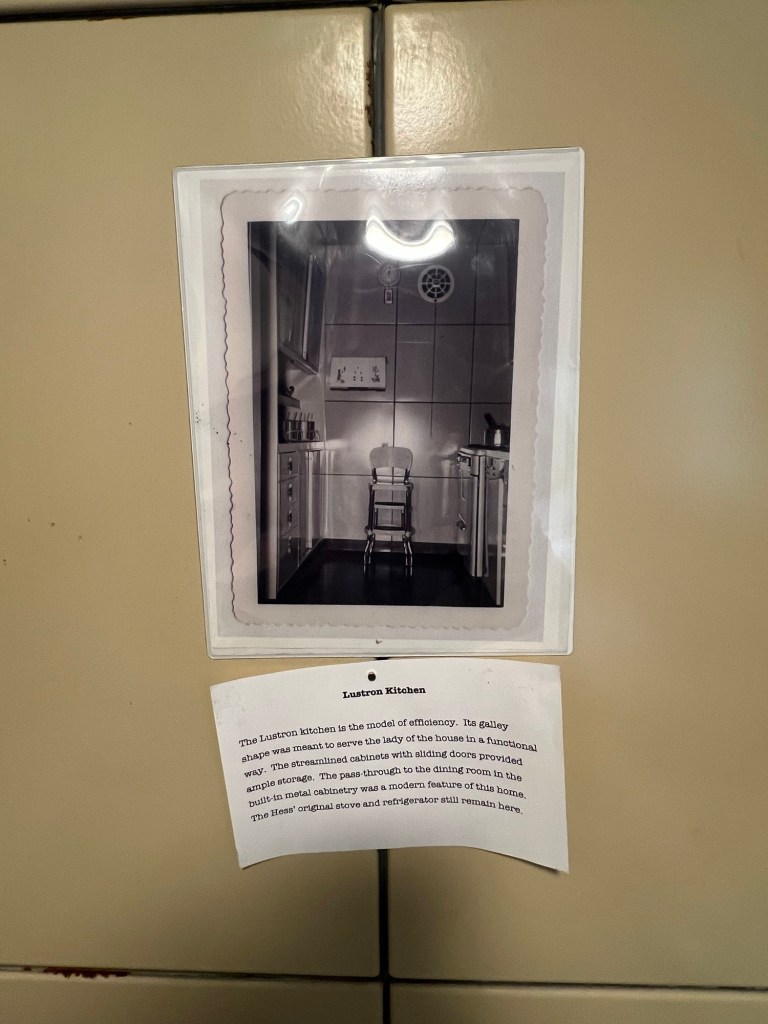
The kitchen’s of the past were designed for efficiency but not for socialization. This is why kitchens have grown over the last seventy years to accommodate socialization of everyone ending up in the kitchen.
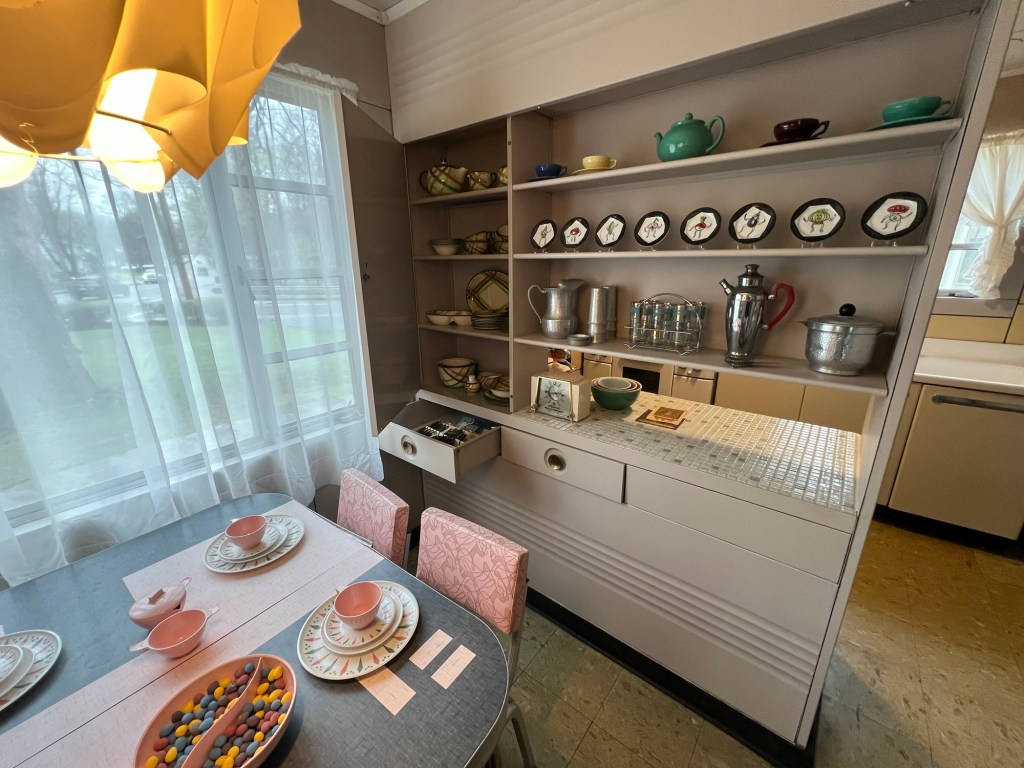
The Dining Room area off the kitchen
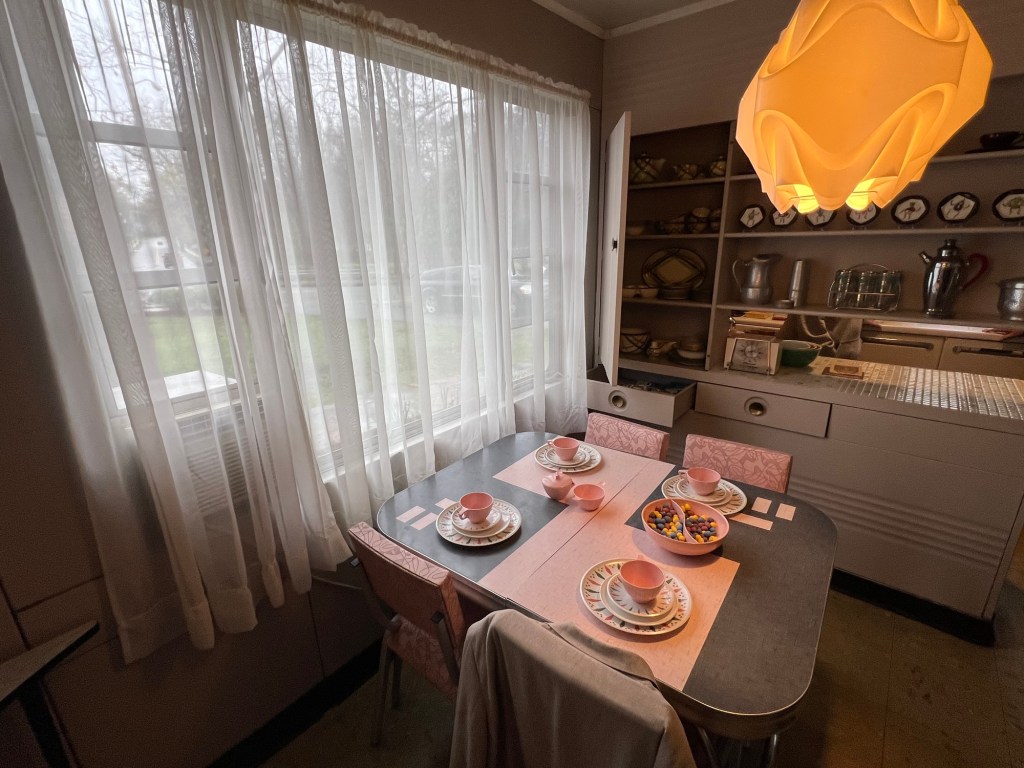
The seating area for the family had lots of light but could be quite tight
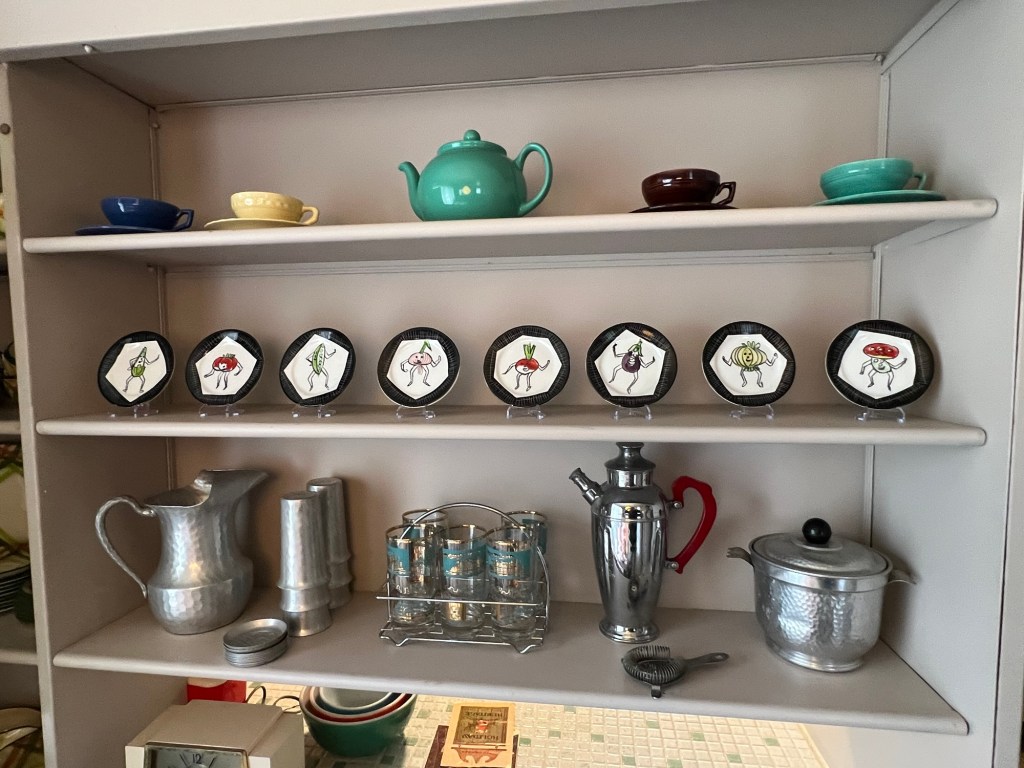
Everything was in its place on the shelves
The next part of the tour was the bedrooms which were off to the back of the house. Each was decorated with period clothing, furniture and other Knick knacks.
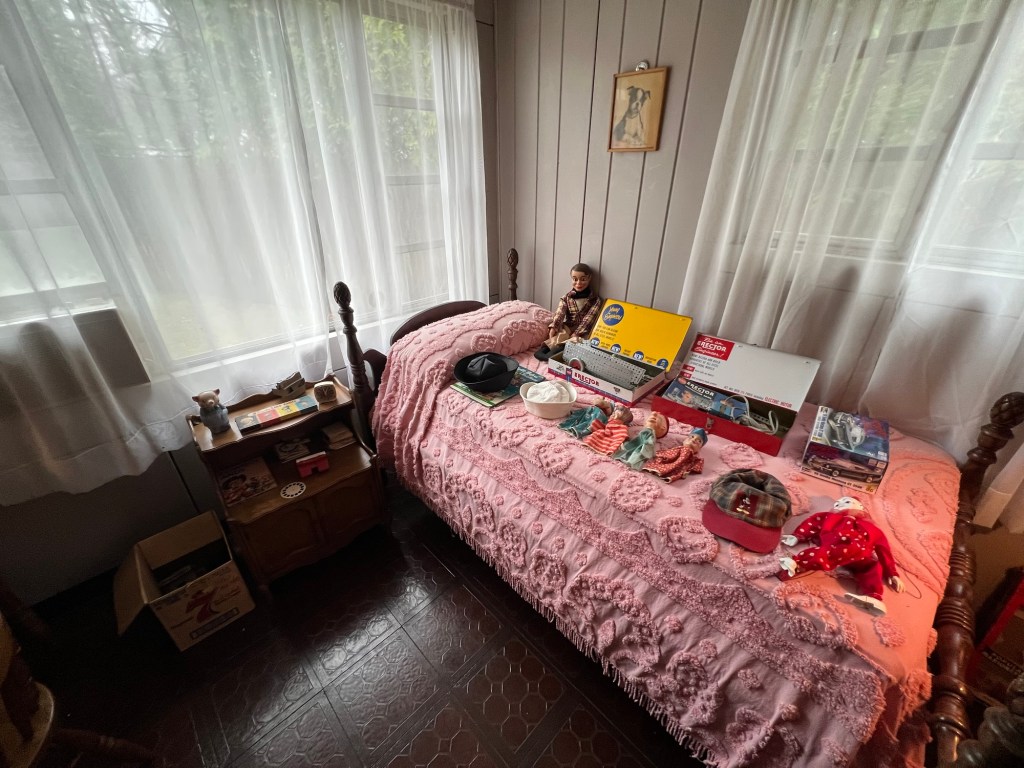
The Children’s bedroom was the first stop. I saw many toys from my childhood.
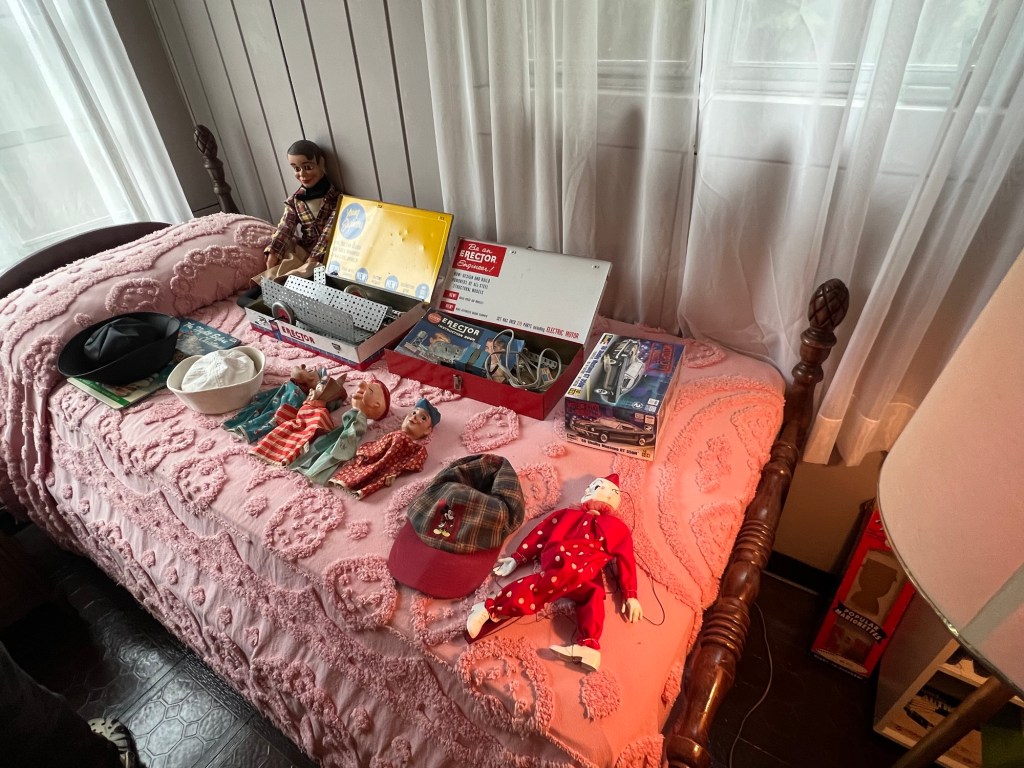
The bed had all sorts of puppets and games on it
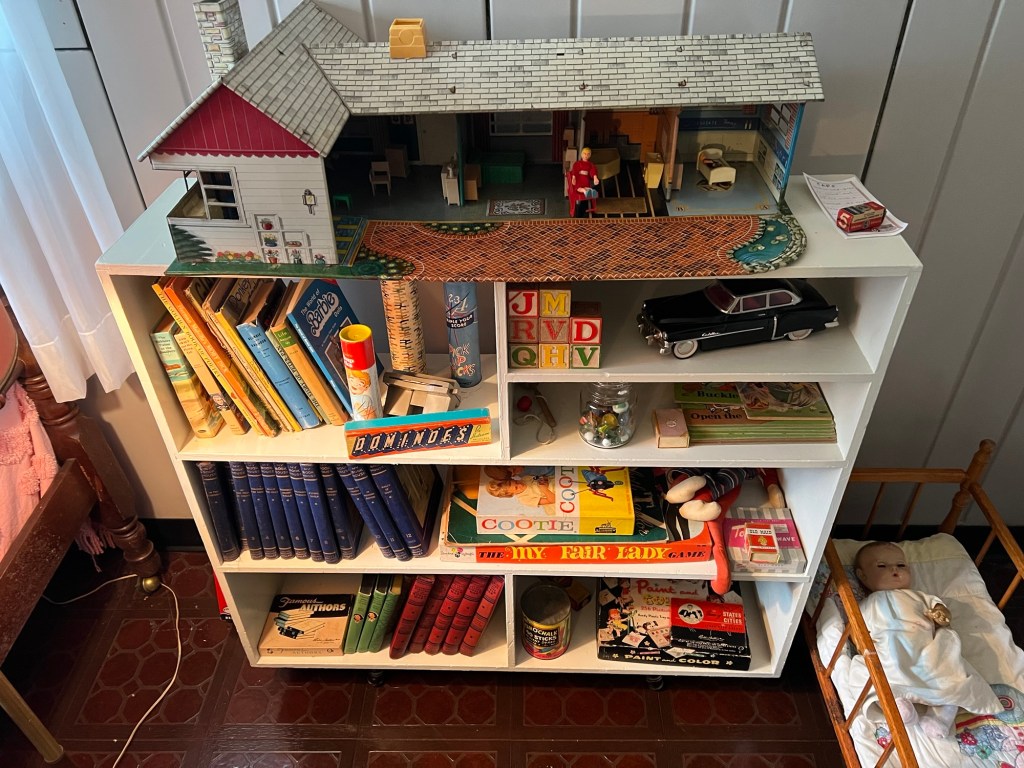
The shelves were lined with books and board games from the era of the late 50’s and 60’s
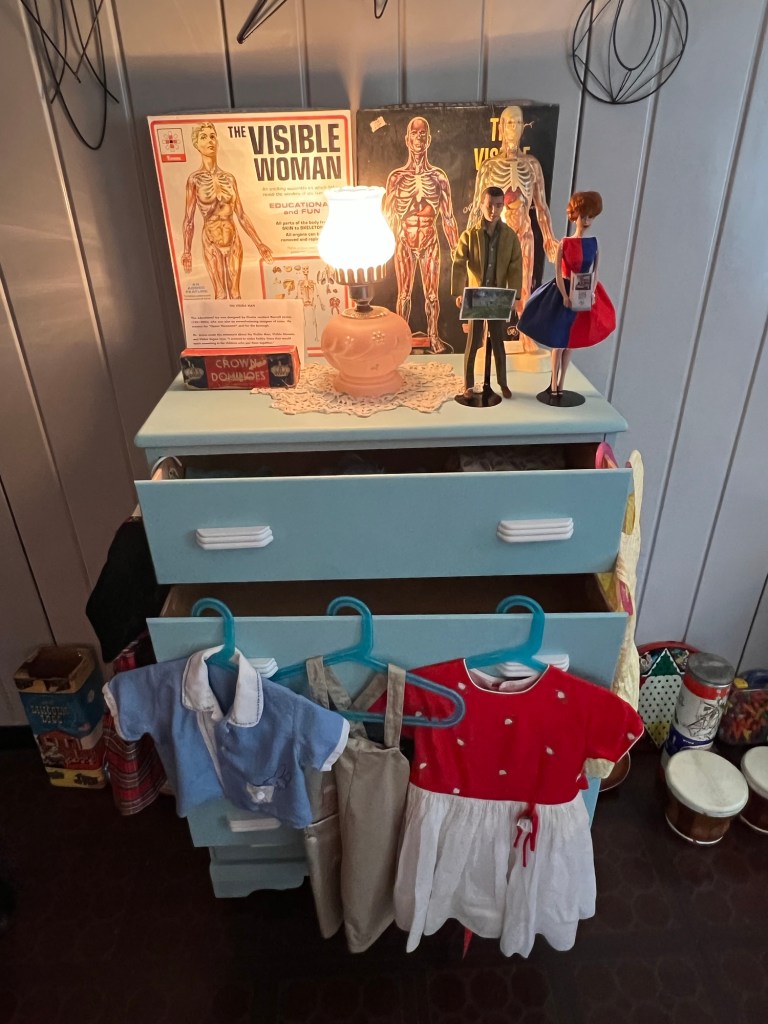
Vintage science sets and clothing were on display in the Children’s room
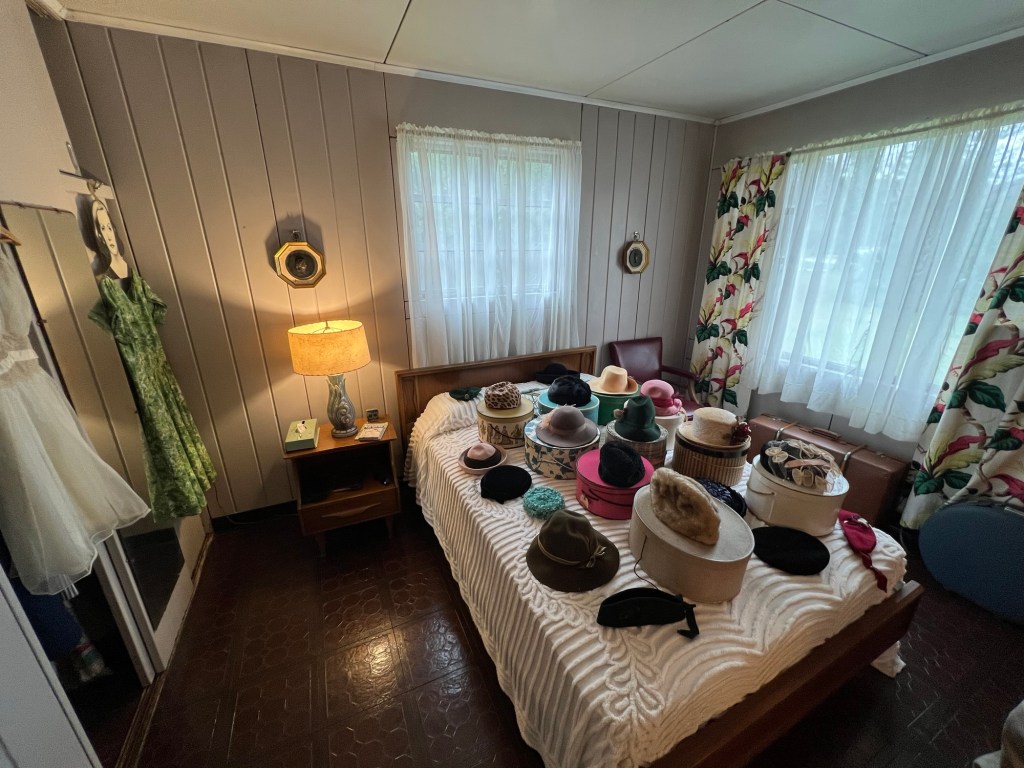
The Master Bedroom had a display of Easter hats
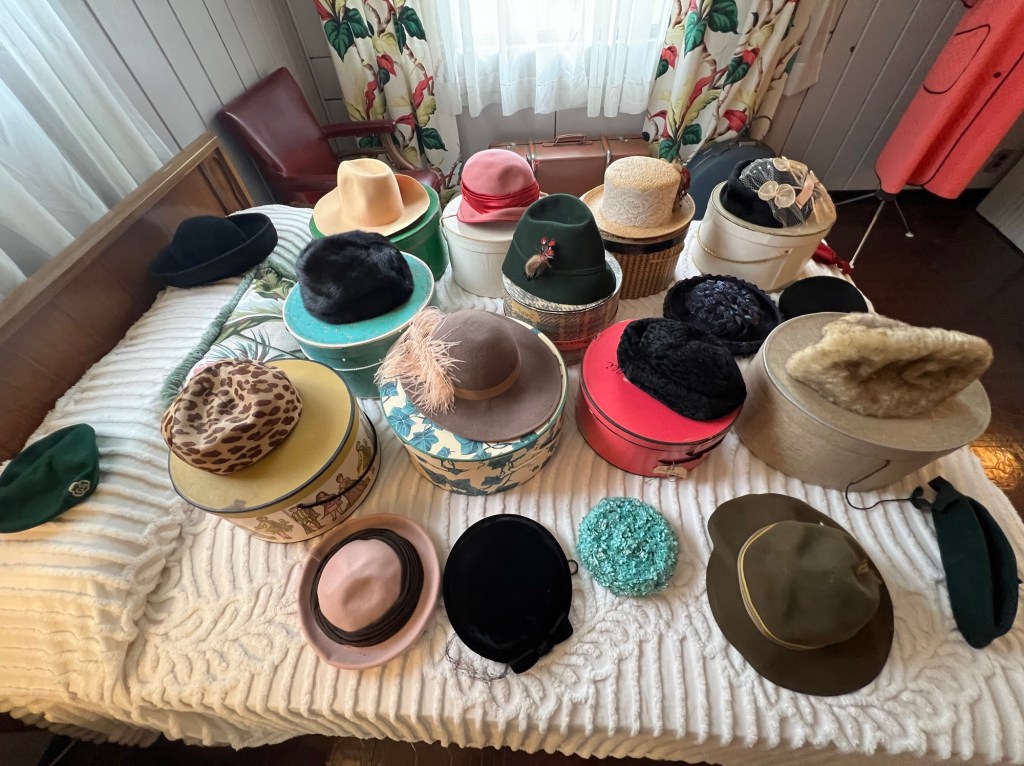
The selection of hats from the 1950’s and 60’s
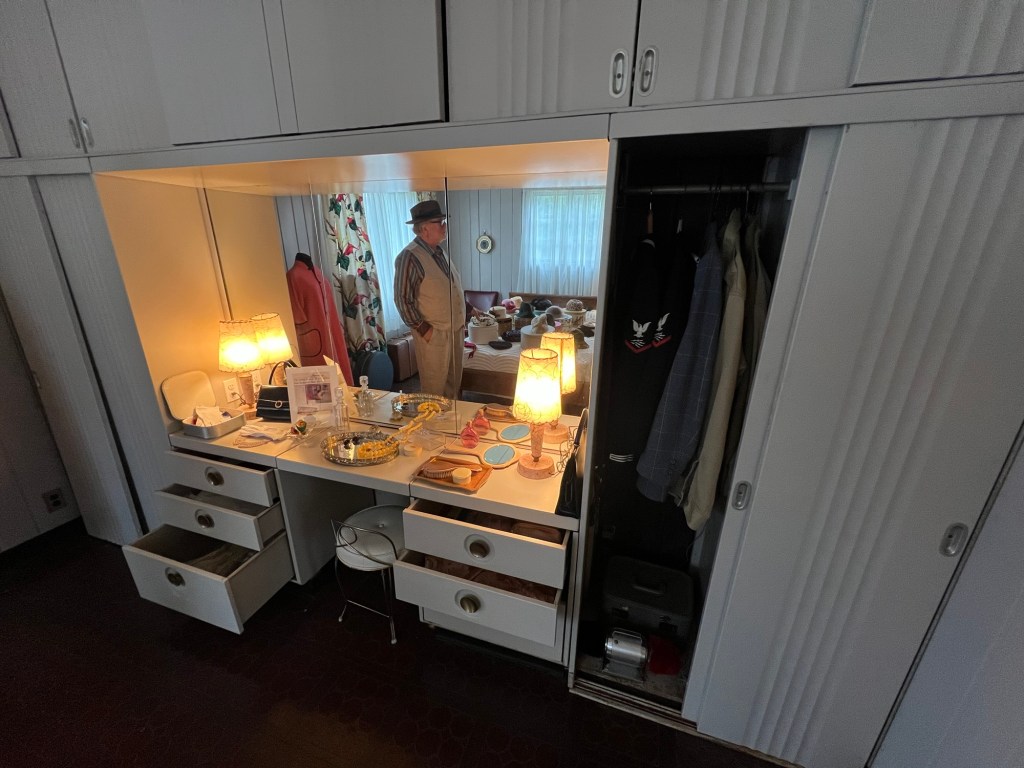
The Vanity was stocked with jewelry and perfume while the drawers were filled with girdles, white gloves and corsets
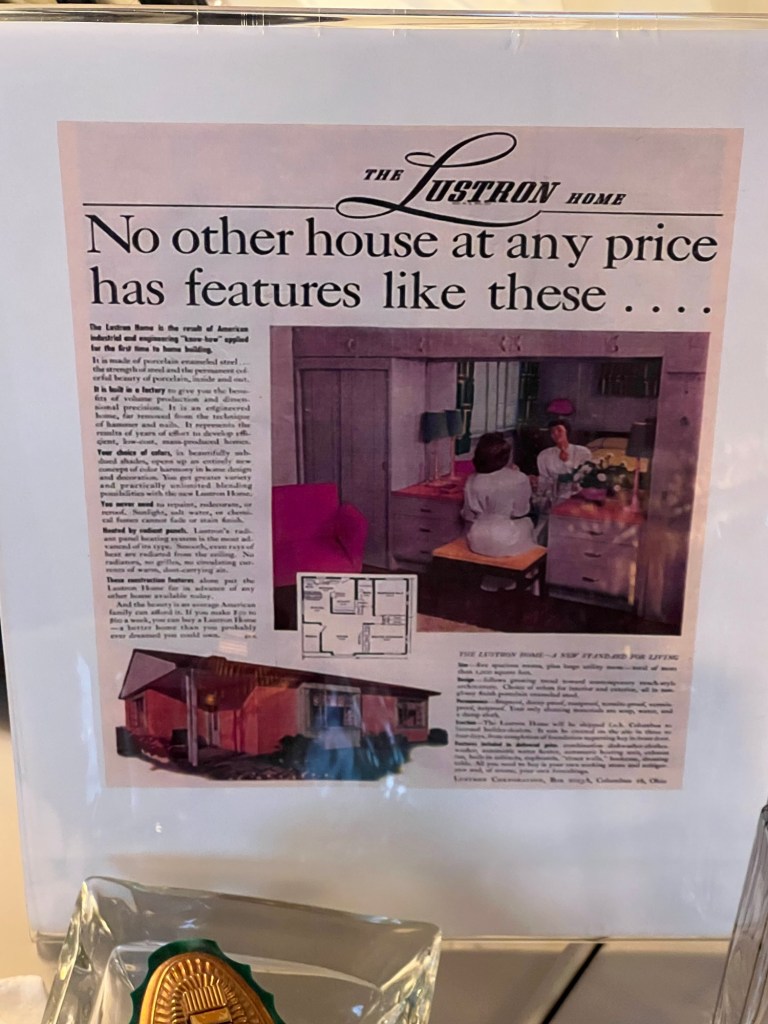
The advertising for this home offered all the wonderful amenities
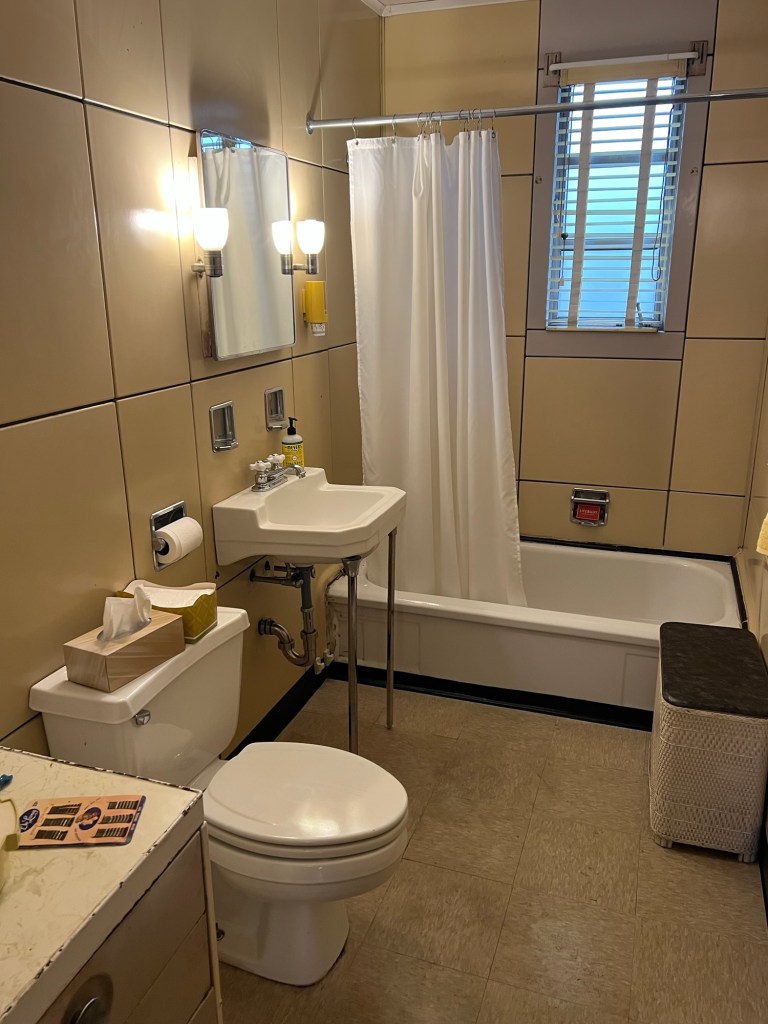
We next moved onto the bathroom which looked like my old bathroom before the renovation
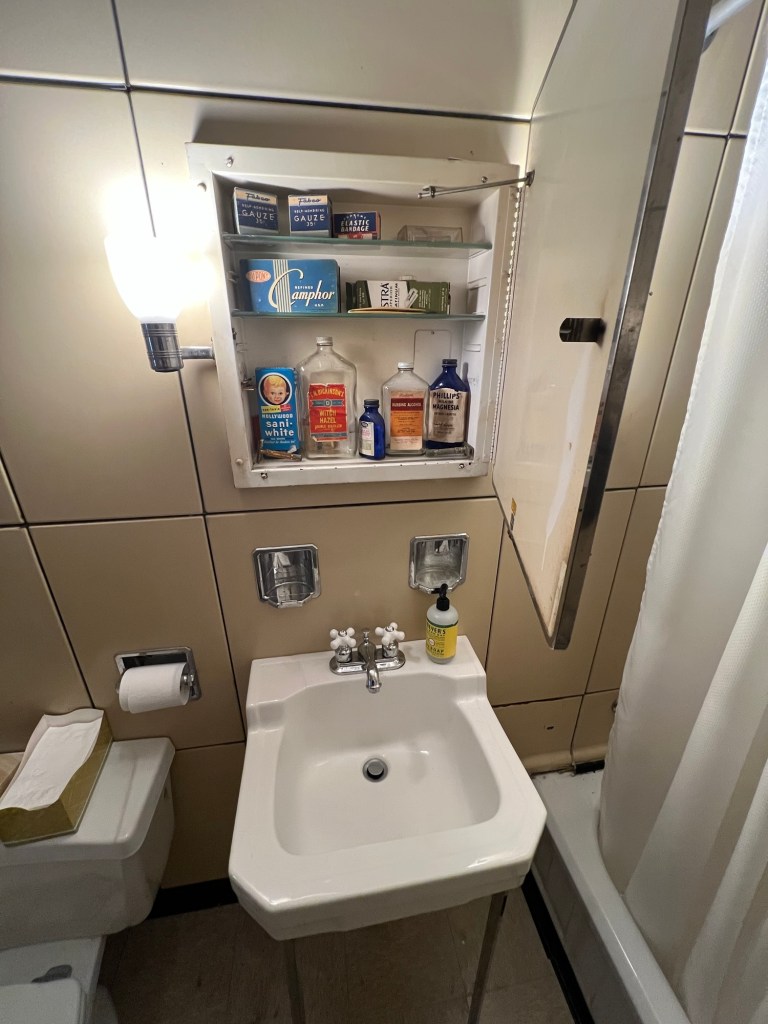
The bathroom
The last room we toured was the Living Room. The room was designed with Danish inspired furniture and clean lines. The room is full of furnishings and decorations from the 1960’s and 70’s done in the Modern Danish look. The room has a very early 1970’s feel about it.
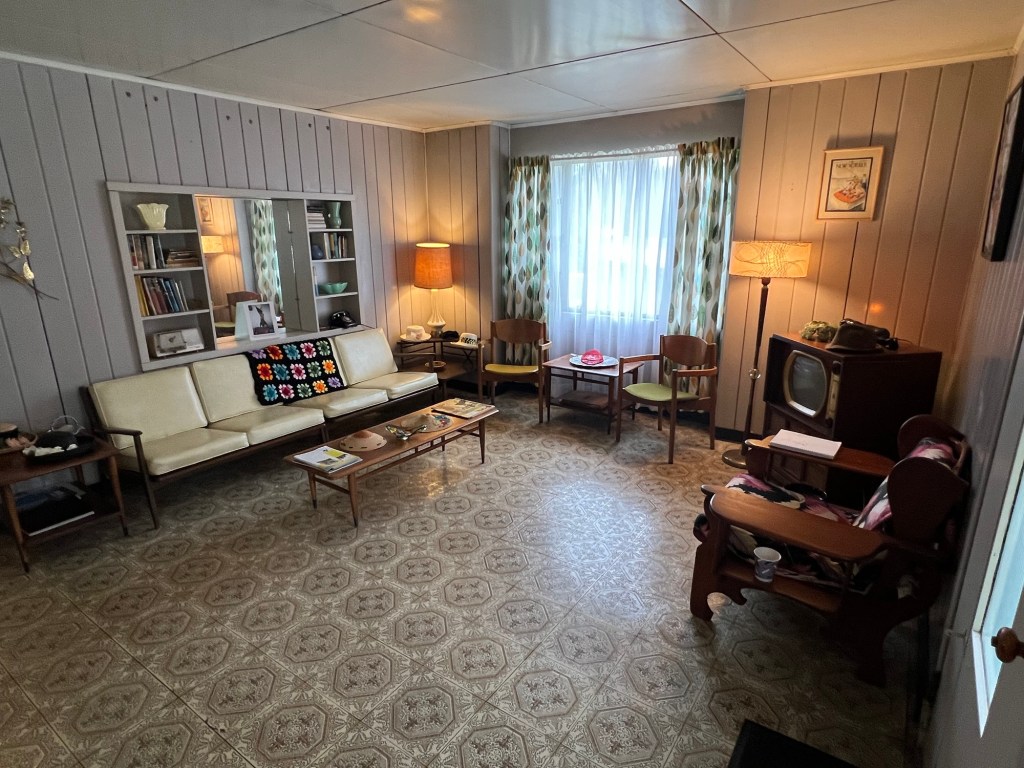
The Living Room
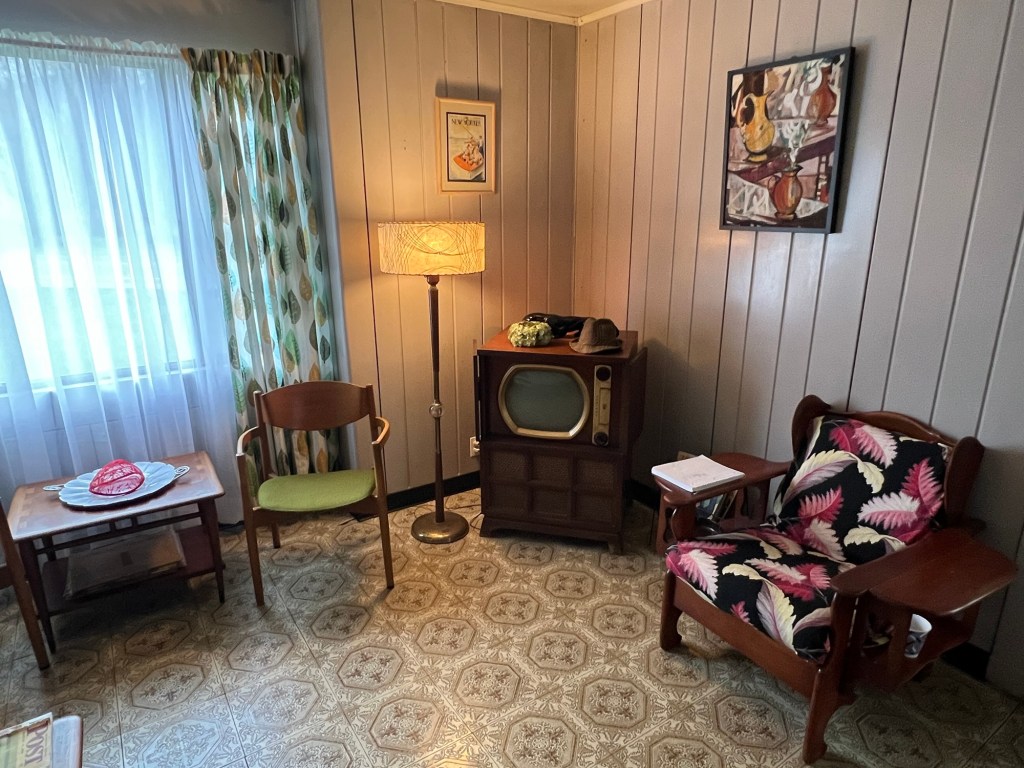
The Living Room
As we finished our tour of the house, we passed through the breezeway again and the patio area. There was an outdoor seating area on the patio.

The Patio just outside the breezeway
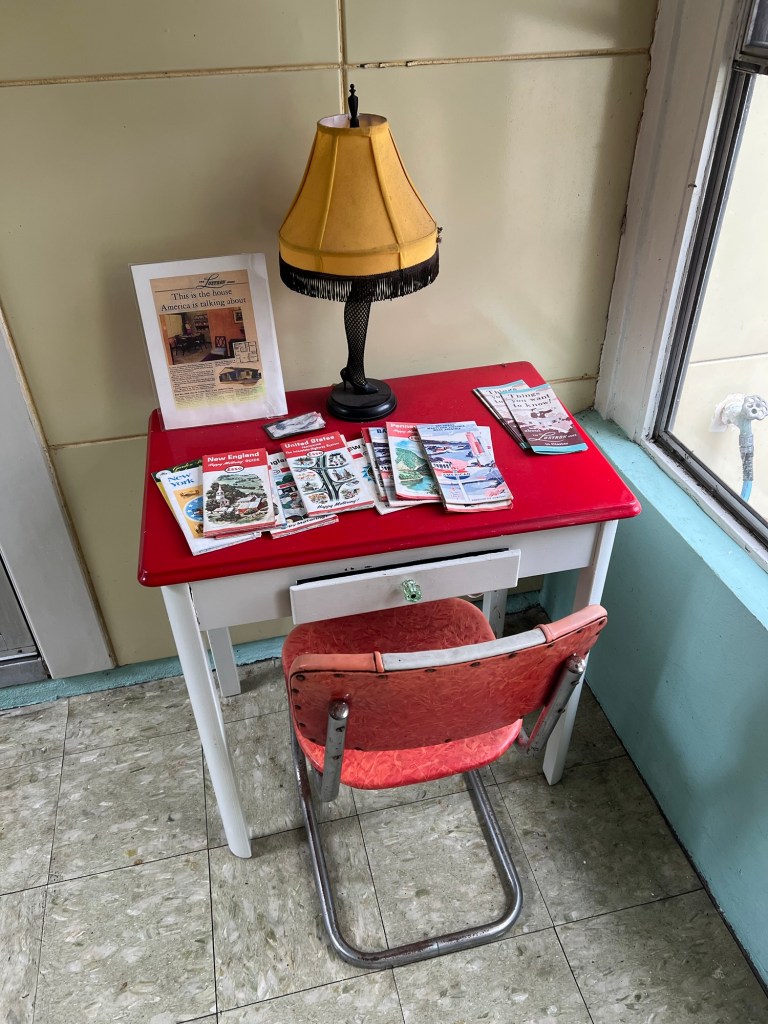
The private desk just outside the breezeway
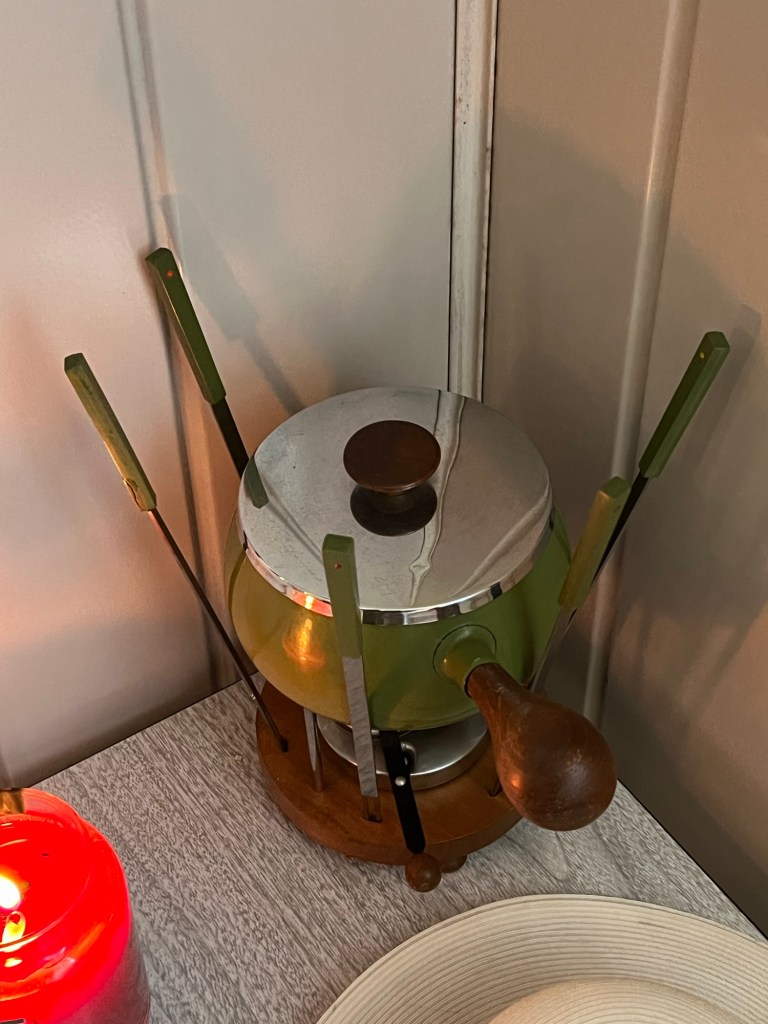
The fondue pot in the corner
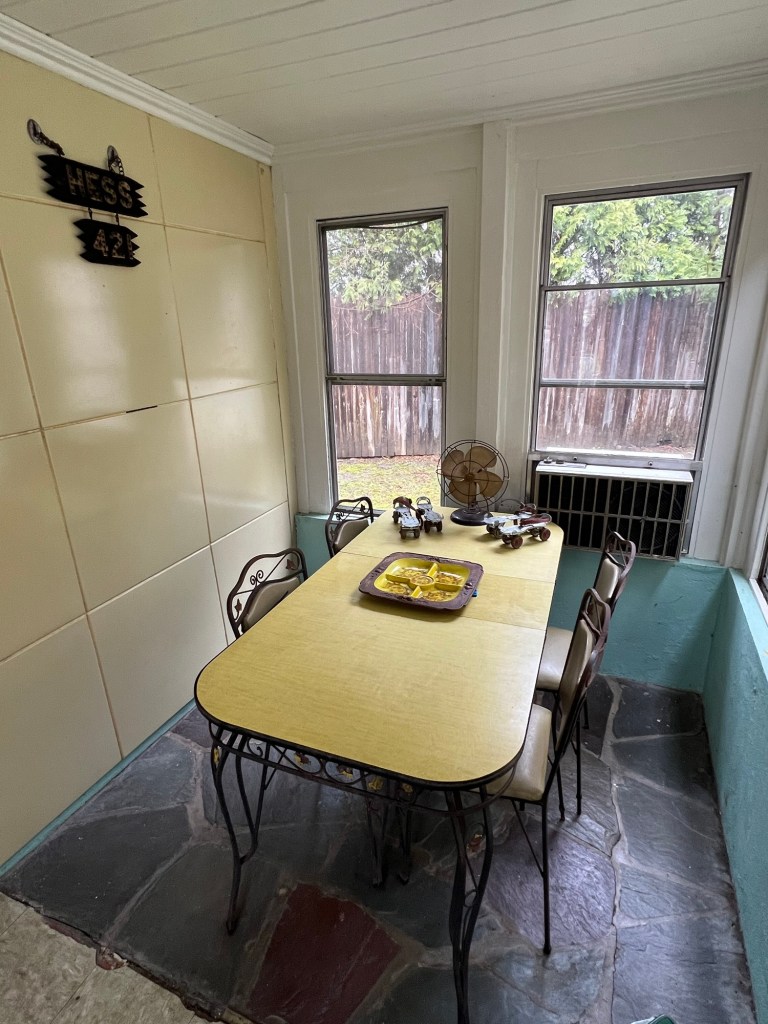
The table on the breezeway
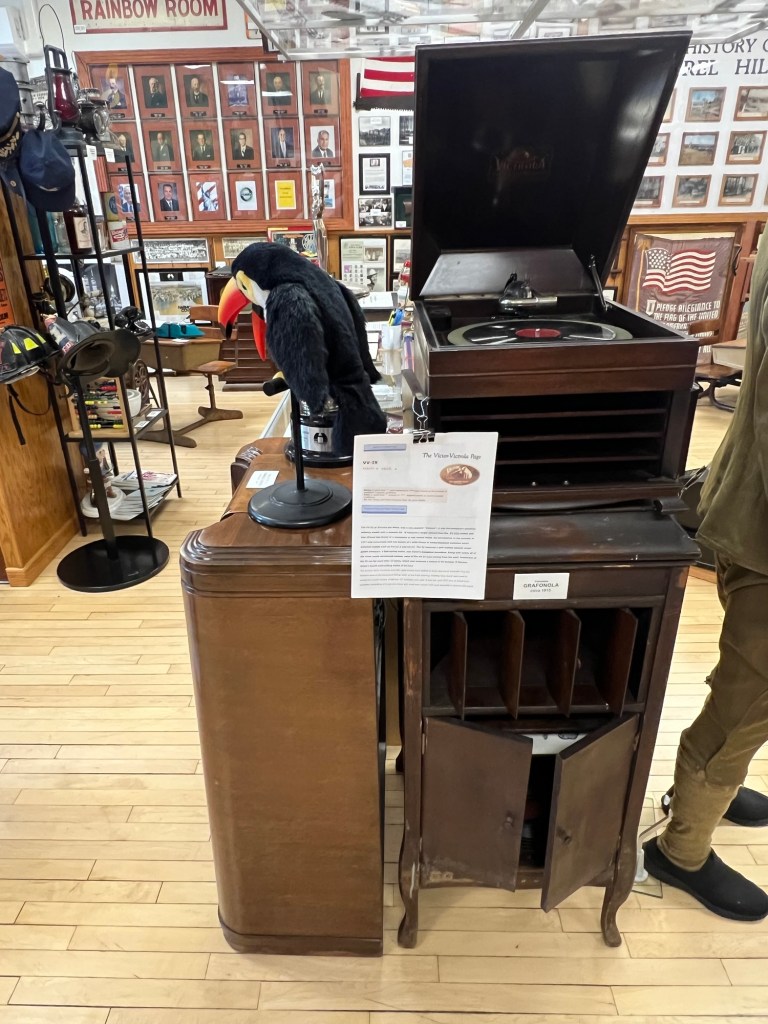
When I got back into the house from the outside, I toured one more time and walked around the Living Room. That’s when they showed us the record player.
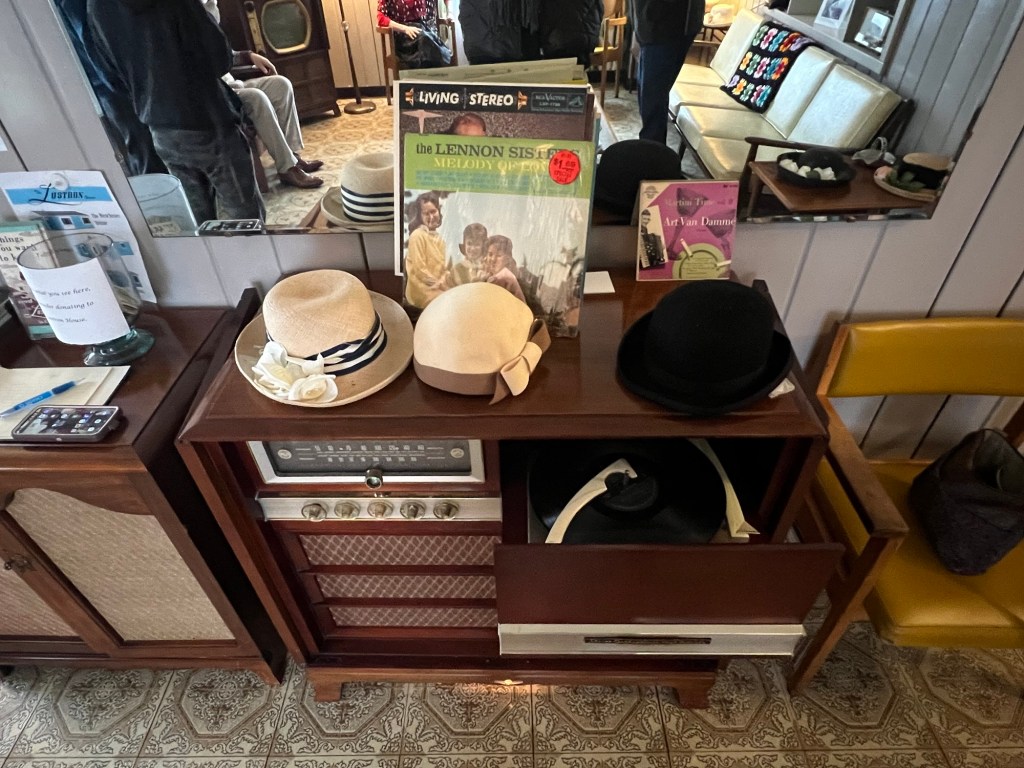
Seemed like a good place to hide the household’s records
It really was like walking through a time capsule of my past. As I walked through every room, I felt like I was going to see my Grandmother and Great Aunt walking through the door and my mother in her early 30’s yelling at us again to get off her furniture. For a Gen X visitor, it is a step back into our past. What a unique museum.
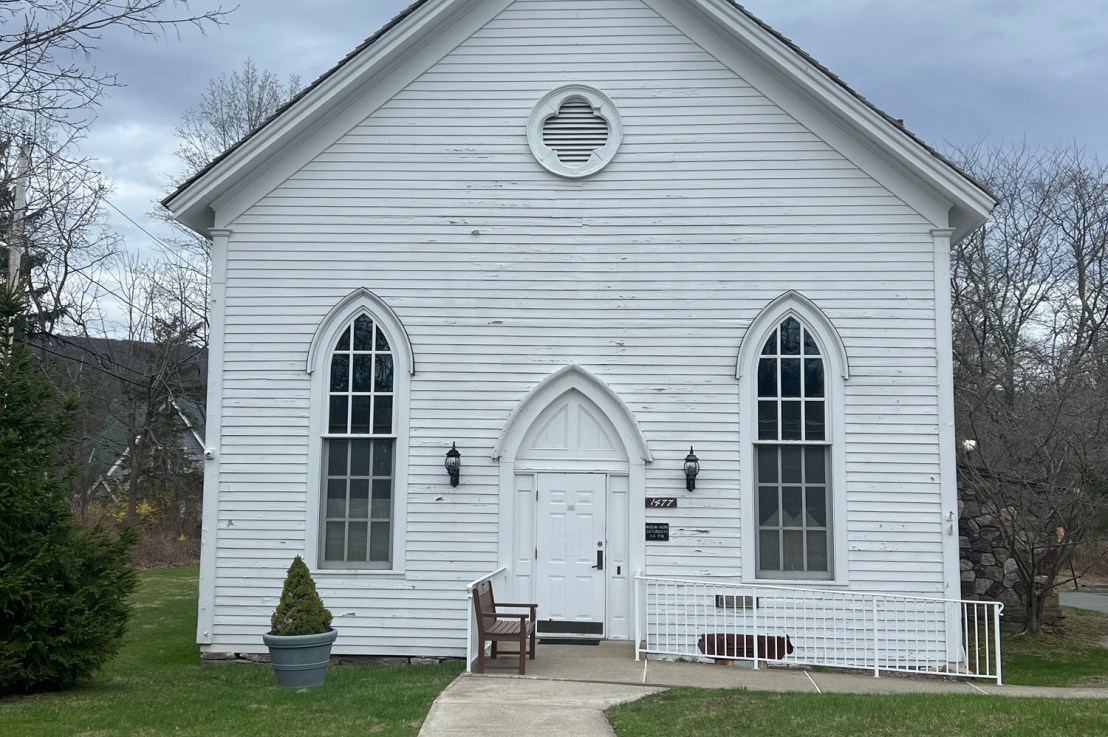














































 Visiting a Museum: The Unique, Unusual, Obscure and Historical