Admission: Free but donations are accepted. Groups, Scouts and Organizations are $5.00 individuals per person and $7.00 for special events per person. Please call to make arrangements on this.
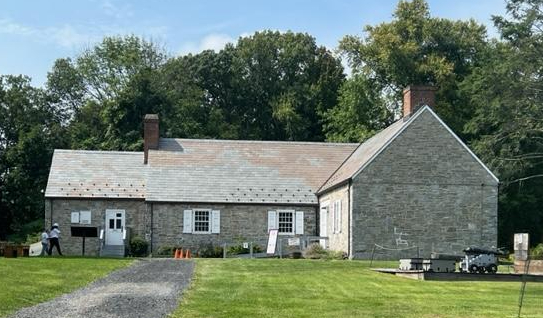
We visited the Stony Point Battlefield one afternoon and it is a very interesting and historical fort in the Hudson River Valley. We were able to tour the battle site and explore the grounds of this historical site. Then we toured the museum which gave us a view of the battle and what happened that night through a series of displays of the artifacts.
The Gallery
The Gallery
The gallery was filled with all sorts of weaponry and items needed by the troops for battle.
The battlefield site.
The museum has displays of the weapons used, the structure of the fort, utensils used the time that the troops were defending this area and what life was like on a day-to-day basis. The museum also offers a glimpse of artifacts of both the fort and of the battle with docents assisting you in telling the story of what happened at that time and after the battle and the war were over.
The Stoney Point Battlefield tent set up.
Outside the fort, there was a set-up of tents to show what the troops life was like in battle as well as General Wallace’s tent that he lived in and used during the battle. At the end of the day, the park does a demonstration of lighting the cannon that would have been used in battle. That was interesting. It was a lot more work than people think.
The cannon set up.
There is lot to do and see along the pathways of the fort and its grounds with amazing views of the Hudson River.
The story of the battle.
The History of the park and battlegrounds:
(from the NYS Parks Division website)
Visit the site of the Battle of Stony Point, one of the last Revolutionary War battles in the northeastern colonies. This is where Brigadier General Anthony Wayne led his corps of Continental Light Infantry in a daring midnight attack on the British, seizing the site’s fortifications and taking the soldiers and camp followers at the British garrison as prisoners on July 16, 1779.
The map of the fort at Stony Point, NY.
By May 1779 the war had been raging for four years and both sides were eager for a conclusion. Sir Henry Clinton, Commander-In-Chief of the British forces in America, attempted to coerce General George Washington into one decisive battle to control the Hudson River. As part of his strategy, Clinton fortified Stony Point. Washington devised a plan for Wayne to lead an attack on the garrison. Armed with bayonets only, the infantry captured the fort in short order, ending British control of the river.
The weapons of battle on display at the museum.
The Stony Point Lighthouse, built in 1826, is the oldest lighthouse on the Hudson River. De-commissioned in 1925, it now stands as a historical reminder of the importance of lighthouses to commerce on the Hudson River. The opening of the Erie Canal in 1825 unleashed a surge of commercial navigation along the Hudson River, by linking New York city to America’s heartland.
Within a year, the first of the Hudson’s fourteen lights shone at Stony Point and others soon followed, designed to safely guide maritime travel along the river. Many light keepers, including several remarkable women such as Nancy and Melinda Rose at Stony Point, made their homes in the lighthouse complexes, and ensured that these important navigational signals never failed to shine.
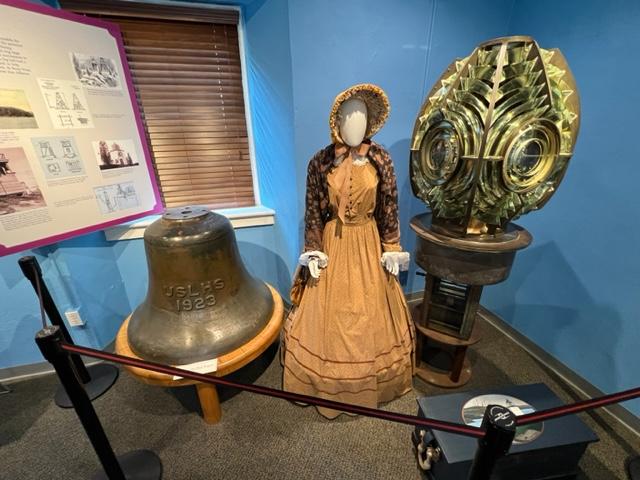
The lighthouse light on display at the museum.
The site features a museum, which offers exhibits on the battle and the Stony Point Lighthouse, as well as interpretive programs, such as reenactments highlighting 18th century military life, cannon and musket firings, cooking demonstrations, and children’s activities and blacksmith demonstrations.
The cannon demonstration that we saw at the end of our visit to the battlefields.
If you want to see some of the most beautiful sites in New York City during the Spring months when Mother Nature truly works her magic then I would suggest going to the Brooklyn Botanic Garden to see Daffodil Hill and Magnolia Plaza.
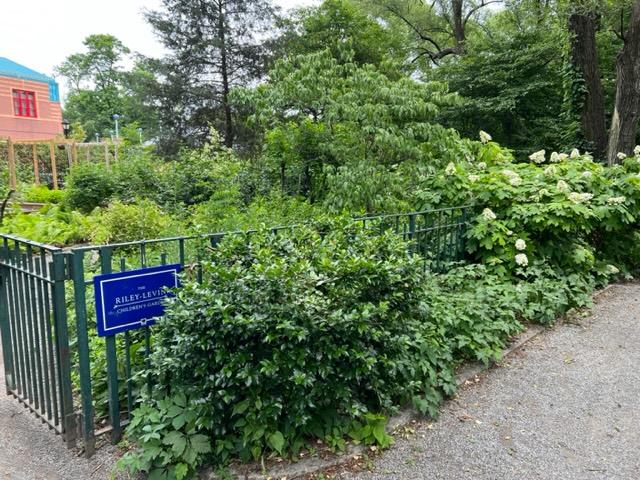
The sign when entering Daffodil Hill in the Brooklyn Botanic Gardens
This is when everything is in full bloom during the early Spring. There is nothing like it and it is so breathtaking with a quiet elegance. On this clear and sunny Thursday afternoon, the gardens were quiet so I had plenty of time to take pictures and enjoy the beautiful views.
I finally got the gardens in the early Spring to see the crocuses, the Snowdrops and the Ironweed flowers that come in the early Spring just as the Daffodils were just coming out. These sensitive flowers are only in bloom a short time and I wanted to see them. They are just beautiful when you see them up close.
The Garden was ablaze with the colors of almost a thousand purple crocuses that lined the hills on the Prospect Park side of the lawns in 2024. Beautiful purple and while colors were in full bloom and Mother Nature shined in the COVID era with all of us socially distanced but still enjoying the park.
Crocus Hills ablaze in purple in 2024
The purple crocuses in full bloom in 2024.
The beautiful purple crocuses in full bloom.
While I was taking pictures of the crocuses, I walked around the gardens and came across the Snowdrops and the Ironweed flowers were also in bloom. These sensitive flowers are only in bloom for just about two weeks. To see them in the gardens in the late Winter is a real treat. They sometimes are in bloom in early and you have to see them quickly before they disappear in the ground.
The Snowdrops in full bloom in the gardens in 2024.
The Snowdrops up close.
The Ironweed just as beautiful. To see these graceful flowers in bloom are a real treat.
The Ironweed flowers in bloom right by the stream.
The Ironweed flowers in full bloom.
An Azalea that was early blooming in the garden in 2024.
Daffodil Hill at the Brooklyn Botanic Garden
Hundreds of Trumpet Daffodils are in bloom on a hill just off the Japanese Gardens flanked by hundred-year-old trees and it just plays into the backdrop of the greens and browns of the trees and lawns. I can’t tell you on a beautiful sunny day how breathtaking it is just to sit and admire these elegant flowers. It really is a site to see.
Daffodil Hill in full bloom
I love the way these hundreds of flowers make such a beautiful statement and there is such a burst of colors between the yellows and oranges of the daffodil flowers. This only lasts for about two weeks and then the flowers hibernate again.
The side view of Daffodil Hill from the walkway
Daffodil Hill just off the Japanese Gardens
Daffodil Hill is right next to the Magnolia Plaza that was also in peak bloom when I was at the gardens. The trees of the Magnolia Plaza bloom the last week of March and these delicate trees petals do not last more than a week. When I got close enough to them to take pictures, I noticed that some of them were starting to curl already.
The area between Magnolia Plaza and Daffodil Hill
Not all the trees were in bloom yet but these delicate trees are very sensitive to the weather and I have noticed that the petals don’t last as long. Most of the trees were in full bloom but there was not much a smell to the trees. Still everyone was taking pictures in every direction between the Magnolia trees and Daffodil flowers.
The Magnolia Plaza in full bloom
The sign in the Magnolia Plaza
The edge of the Magnolia Plaza
The pathways in the afternoon
The Magnolia trees make such a bold and colorful statement
The array of colors in the Magnolia Plaza
The Magnolia Plaza facing Daffodil Hill in the distance
The Sundial in the middle of the Magnolia Plaza
After taking dozens of pictures of the Magnolia Plaza and Daffodil Hill, I walked over to the Rock Garden. There were not many flowers in bloom there yet as they come out later in the month. There was still an array of daffodils and a few crocuses still in bloom. The Rock Garden was quiet and perfect to walk around in as I had this part of the garden to myself.
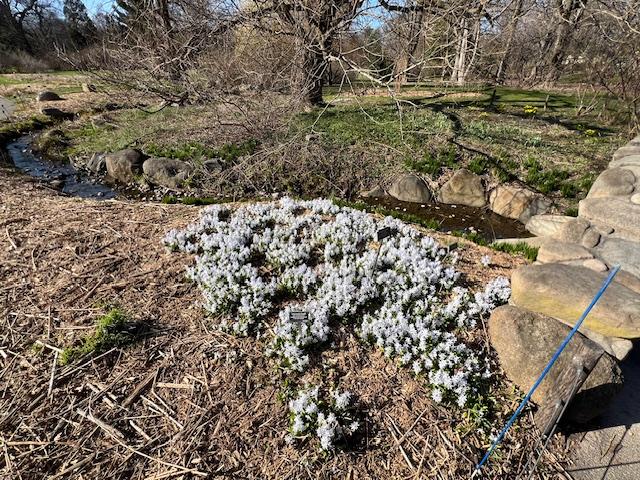
The Rock Garden in the early Spring
The Rock Garden in the early afternoon
I headed to the northern part of the garden and visited the Japanese Gardens, where the cherry blooms started to bloom. These graciously landscaped gardens were created in the traditional Japanese form with a combination of trees and shrubs to balance the garden.
Entering the Japanese gardens from the path
The Japanese Gardens pool with traditional buildings
The Japanese Gardens in the early Spring
Returning at the height of the Cherry Blooms was just breathtaking. This view only rivals the beauty of Newark, NJ and Washington DC.
The magnificent Cherry Blossom lawn in April 2024.
People relaxing and enjoying the beautiful afternoon under the Cherry trees.
The beauty of the trees.
The Cherry Blossom at peak form.
I came back after the Cherry Blossoms had fully bloomed and were now gone and the Bluebells were in full bloom. It had been a cold and rainy Spring and it had been miserable to be outside. Not on the May weekend in 2025. The weather was spectacular and sunny. The Gardens were packed on Mother’s Day weekend and these beautiful blue flowers were the star of the day.
The sign welcoming you to the gardens
The flowers were just amazing
The seas of purple and green
They have really expanded their space over the years
The flowers put on quite a show that day
There is a real beauty to the gardens
The flowers were at the peak of bloom
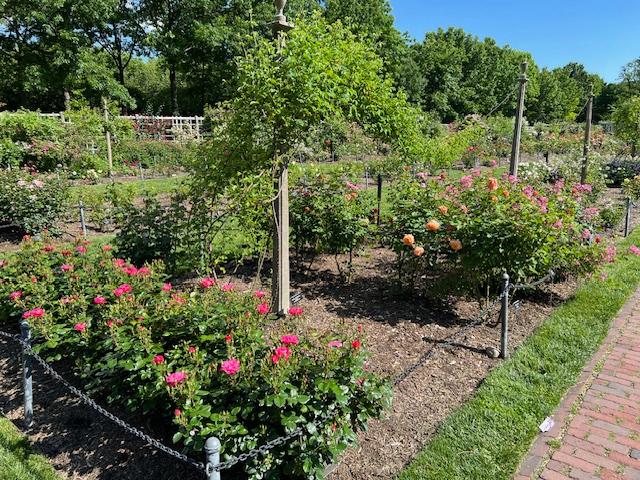
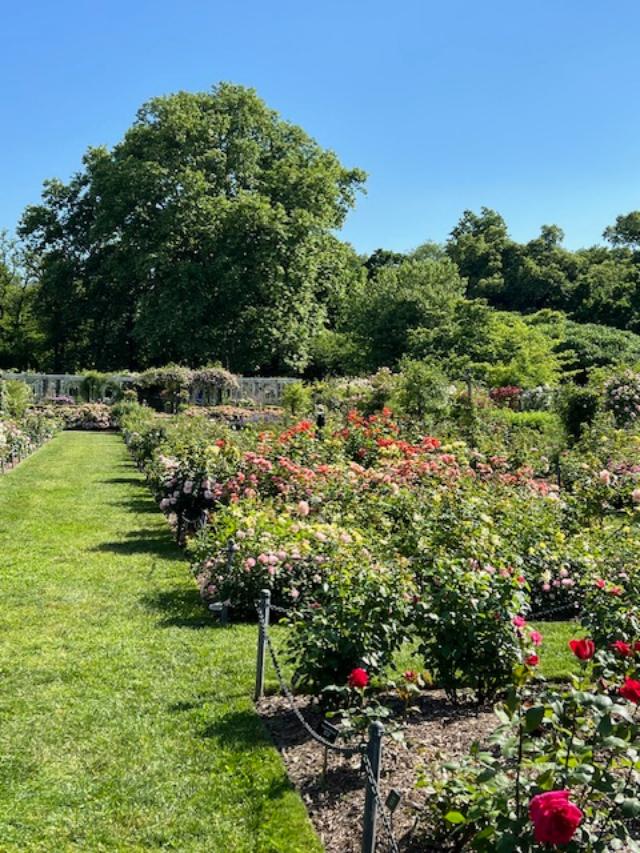
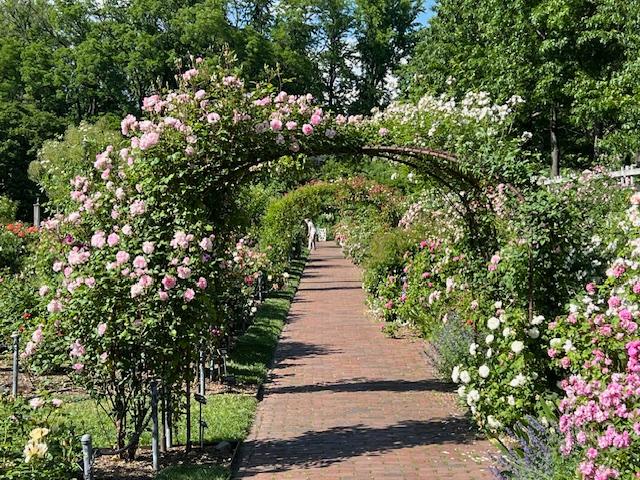
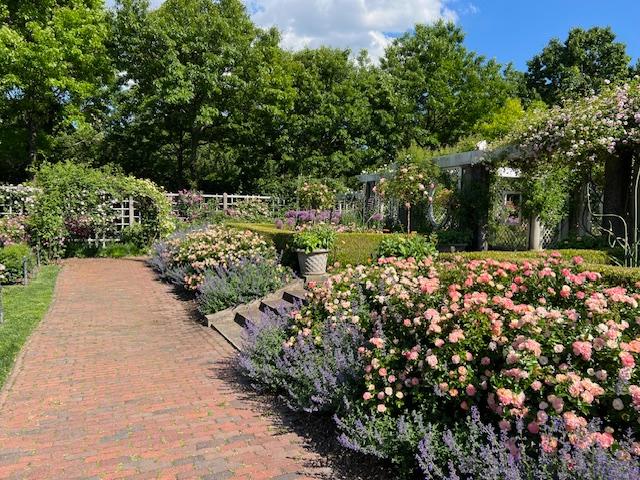
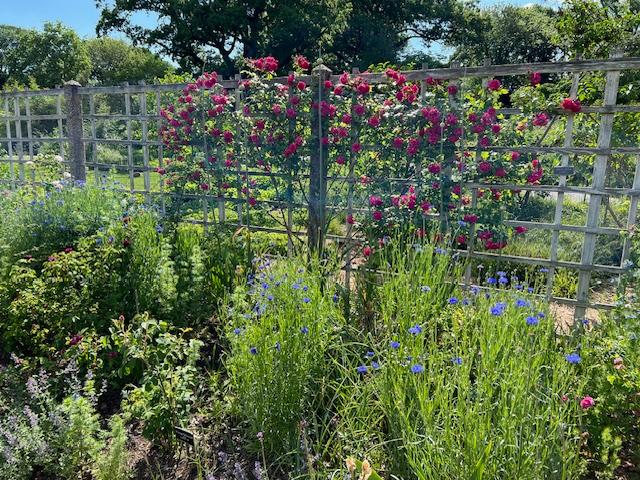
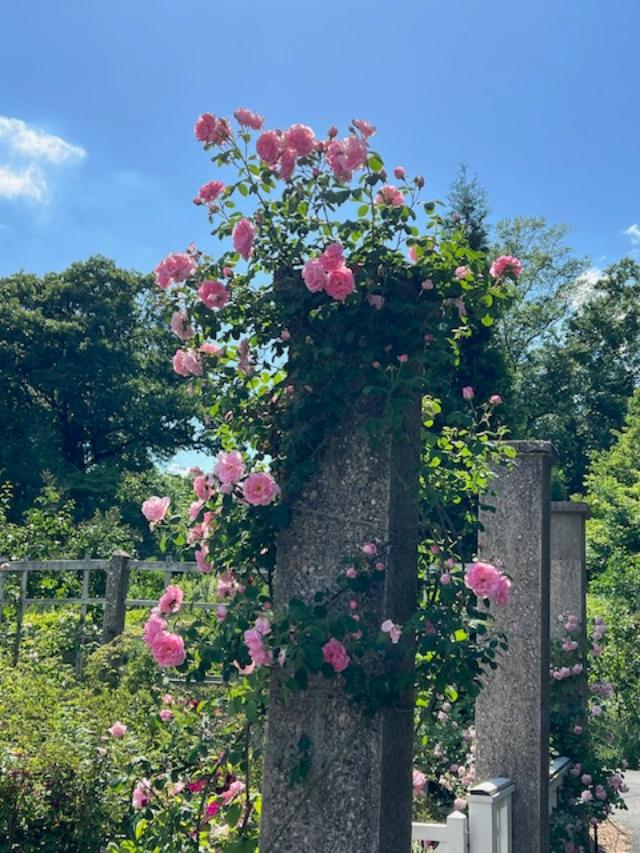
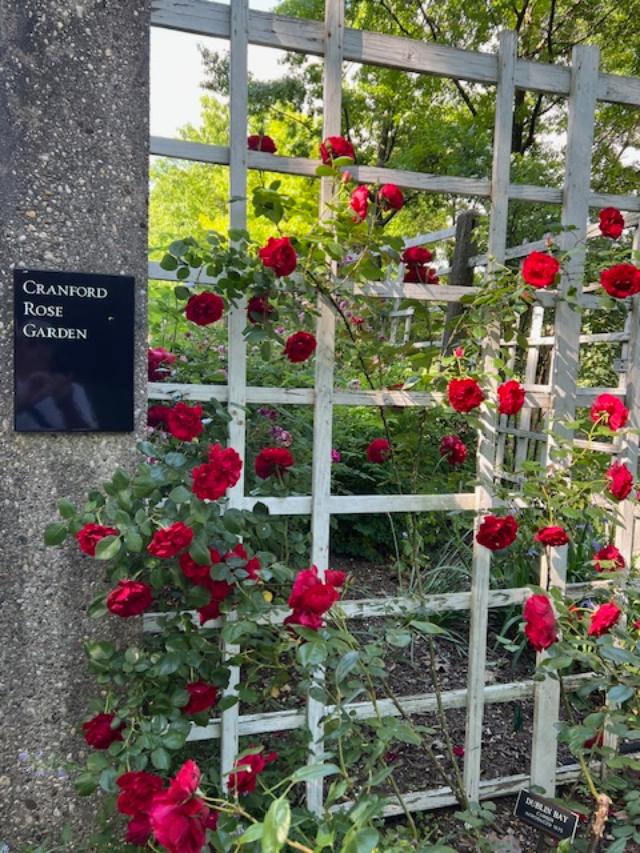
The Cranford Rose Garden was in full bloom two and a weeks before the Annual “Rose Night” that celebrates the blooms of the roses in the gardens. By the time the event would happen, most of the blossoms would be gone. So I visited the gardens again in late May after college had ended and I was in between classes. The roses were glorious to say the least and the colors, smells and the way they grew all over the trellises and fences made quite the effect. I was lucky that I went during a week day and the gardens were quiet.
There is nothing like the Cranford Rose Garden when it is in full bloom. The smells and colors are fantastic and the beauty is something timed by Mother Nature. The roses grow at different stages and it looks so gorgeous during the late Spring.
Entering the Rose Gardens in the Spring of 2024
The front of the gardens in bloom
The front beds of the Rose Garden
The front of the Cranford Rose Garden in full bloom
The trellises in full bloom
The trellis in full bloom
Walking along the paths to the back part of the gardens.
The back part of the gardens
Roses along the trellises
Exiting the back of the gardens into the Cherry Blossom Lawn
The back entrance to the Cranford Rose Garden.
If you can get to the gardens in early June, I would suggest a special trip to see the roses. This special time of the year only lasts about three weeks and then like the rest of the flower displays in the gardens are gone until the next year. The gardens are now maturing for the summer months with lots of greenery and are still a nice place to relax and walk around or just sit and enjoy the views.
The Cherry Blossom Lawn after the cherry blooms are gone.
The flowers of the garden’s Marsh area.
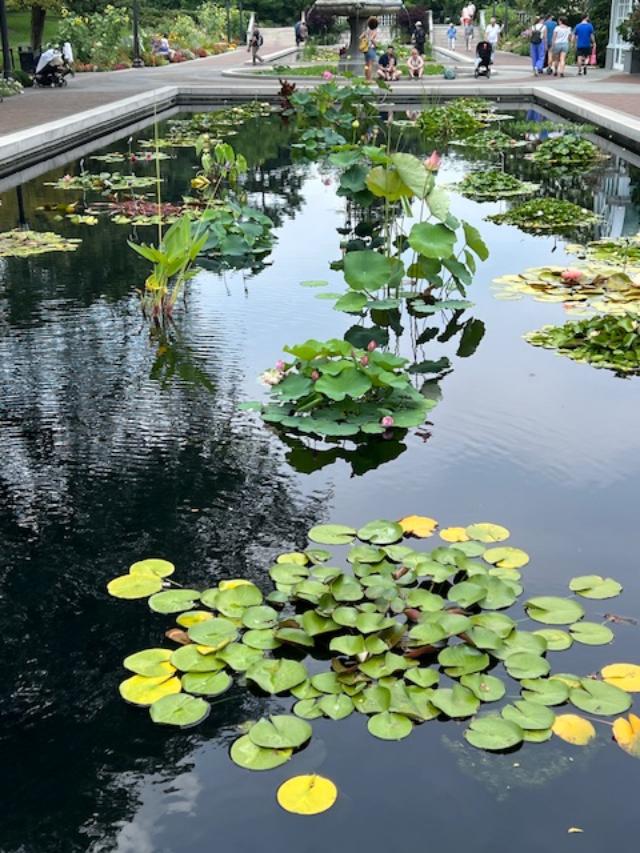
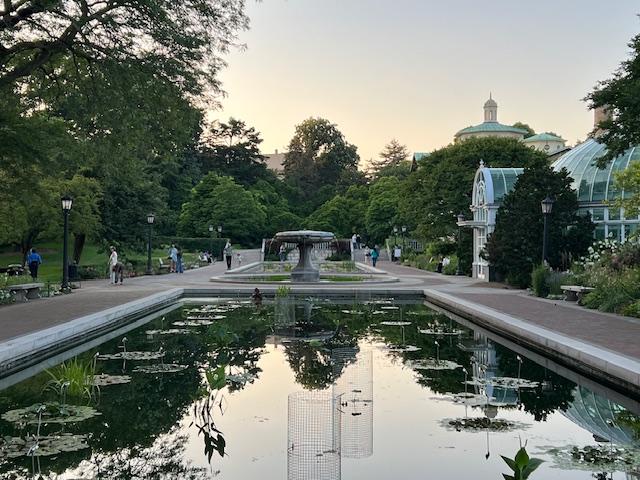
I came to the gardens in late July to see the Lotuses in the Lotus Pools when they were in bloom and when they are at their peak, they are so colorful and elegant. I now know why the Egyptians worshipped them.
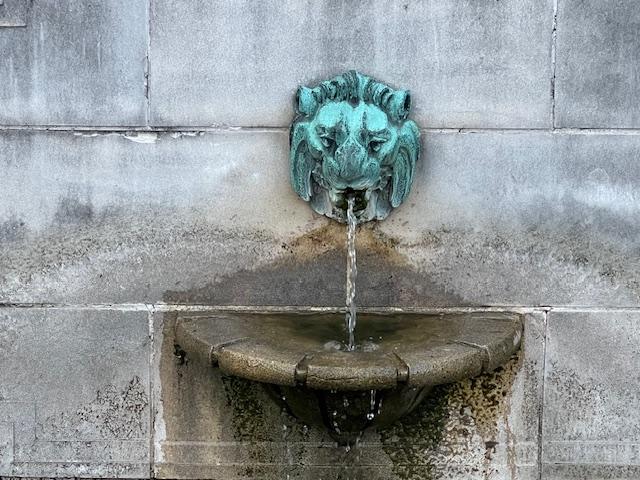
The Lion Fountain greets you as you enter the pools
Before I left the gardens for the afternoon, I stopped in the gift shop and looked around. They have some wonderful things to buy including a section of Brooklyn made products. There is also an array of plants, books and decorative products to buy.
The Gift Shop at the Brooklyn Botanic Gardens
The Brooklyn made products and book selection at the Brooklyn Botanic Gardens
After my visit to the gardens, I stopped at Bahn Mi Place at 824 Washington Avenue for lunch. I had one of their classic Bahn Mi sandwiches with ham and pate on a chewy hard roll. The food here is consistently good and their sandwiches are excellent.
You have to order the sandwich with a Medium spicy sauce. It adds to the complexity
The sandwiches are excellent. The flavors of the fresh vegetables and meats with the spicy sauce makes complex flavor. The bread is fresh and chewy and don’t be fooled by the size of the sandwich. It is larger than I thought and very filling. See my review on both TripAdvisor and DiningonaShoeStringinNYC@Wordpress.com.
I took my lunch and ate on the steps near the Brooklyn Museum and just enjoyed the afternoon. I people watched and enjoyed the cool, sunny weather. It was nice to escape from classes for a couple of hours and just relax and not think about school or work. It has again become a bit stressful between the two but I will handle everything.
I look forward to this time in the gardens and is one of the reasons why I keep my membership. I love to look at the hundreds of daffodils in bloom and watching as they sway in the wind and just want to look beautiful. It is the most amazing site every Spring.
You do have to time your visits so that you see all these beautiful flowers at each time.
Well after seven years of trying to get to DC for the Cherry Blossom Festival I finally got down to the city to get to the tidal basin to see the display. It looks like it will be eight years as almost all the cherry blossoms disappeared almost two weeks earlier. All the leaves were long gone and as I overheard another tourist say to a friend that she was disappointed that she had not known and most of the trees were bare.
The Tidal Basin in April 2023
The festival was in its second week and most of the trees had gone green. I found out later from the Internet that they peaked on March 21st and right after that we had all that rain. It probably knocked the petals off after that.
The festival ran through April 16th, 2022 (the peak of the blooms was March 21st)
After touring Finns Point Lighthouse in the front of the park, I drove to the back of Fort Mott State Park to tour the rest of the park and explore the old fort. Talk about a real surprise and a a real treat. Talk about views of the Delaware River. On a sunny afternoon, the sun really reflects off the water and makes the most amazing light show.
I walked up the Parapet, the massive concrete wall that used conceal the guns that protected the bay and the river. It was a impressive piece of construction and you could see where the guns had been mounted. You could climb up and down the stairs to get from one part to the other and enjoy the views.
The gunnery
I passed the old Western Fire Control tower that was closed for the day and open by appointment only. That must have offered some spectacular views.
The Western Fire Control Tower
I then toured the Visitors Center and saw all the artifacts from the war, a timeline of the Fort and the history of the fort. Take time to look at each case and you will see how the fort developed, the types of things used at the fort and the people who were stationed here and their stories. It also offers bathrooms.
The best part of the Fort Mott State Park is just walking around the lawn and enjoying the sunshine and river breezes on a hot day. The blue skies with the sunshine gives you a sense that it was not just a place of protection but Mother Nature lending her hand to offer a spectacular location to just stop and wonder what would it been like if something happened here during the war. Would it withstood the assault?
The best part of the park is just to walk around the lawns and enjoy the river views.
Map of Fort Mott State Park (NJ State Parks.org)
The History of Fort Mott:
(From the Fort Mott State Park Pamphlet-New Jersey Division of Parks and Forestry State Park Division)
Fort Mott, an Endicott-era fortification was built as part of the federal government’s late 19th century plan to defend the Delaware River. Today it serves as a state park where visitors can tour the remains of the historic fort. The cultural and historic features of this park and its recreational facilities provide a unique blend of activities for the park visitors.
The views from Fort Mott of the Delaware River
Fort Mott State Park is included as a point of interest on the New Jersey Coastal Heritage Trail. A Welcome Center for the trail accommodates displays defining Fort Mott’s place in history and the maritime environment. Fort Mott State Park is on the Delaware River at Finn’s Point in Salem County, New Jersey. This 104-acre park is six miles south of the Delaware River Memorial Bridge, off New Jersey Route 49.
The Finn’s Point Reservation was purchased by the United States Government in the late 1830’s. Originally called “The Battery At Finn’s Point”, the proposed fortification was one of a three-fort plan to protect growing industries and shipping along the Delaware River. Plans for Finn’s Pint specified eleven-gun emplacements with twenty guns and a mortar battery with six complacements. With Fort Delaware on Pea Patch Island in operation since the early 1820’s and the nation involved in the Civil War, the construction of the Battery at Finn’s Point was delayed until 1872. At that time, only two-gun emplacements and five magazines in the mortar battery were completed before construction was halted due to budgetary constraints.
The headquarters buildings
With advancements in military technology made during and after the Civil War, the United States defenses were dangerously inadequate. In 1885, President Grover Cleveland, at the request of Congress, appointed the Endicott Board, named after its Chairman William Endicott, the Secretary of War. The board, which consisted of both military men and private citizens, studied the existing coastal defenses and developed a coastal defense plan for the United States. This plan determined where defenses and developed a coastal defense plan for the United States. This plan determined where defenses should be built or improved, the order in which the work would proceed, the quantity and type of guns that would be placed at each fort and other considerations.
The signage
The main defense concept of the Delaware River was dispersion of armaments into three separate fortifications. The original plan for the Battery at Finn’s Point was abandoned and construction of new fortifications began in 1896 in anticipation of war with Spain, the Spanish-American War. This fortification was officially renamed Fort Mott on December 16th, 1897, to honor Major General Gershom Mott. Mott, a native of Bordentown, NJ was a decorated veteran of the Mexican American and Civil Wars. Fort Delaware was upgraded, and construction of Fort DuPont began during this same time period.
The signage
At Fort Mott, large caliber weapons, three 10 inch and three 12-inch guns were installed on disappearing carriages. The gun emplacements were located behind a 750 foot long and 35-foot-thick concrete and earthen embankment, which was sloped to form the ‘parapet’ wall. These guns had an effective range of seven to eight miles and shot projectiles that weighed 617 and 1000 pounds respectively. Beneath the six-gun platforms were powder and shell magazines, ammunition hoists, a telecommunications system and an electric generating station. Two batteries each with 5-inch rapid fire guns and one battery with two 3-inch rapid fire guns were also part of the defenses, designed to counter fast moving smaller warships which might evade the large caliber guns. They also protected the fort from potential land attack. Fort Mott was a completely modern installation for its time period.
The Fort Mott headquarters
Two steel control towers were later built to improve aiming of the guns. Observers stationed in the towers, in conjunction with plotting room personnel, directed the gunfire of the 10 inch and 12 inch guns. The tower near the river on the northern end of the emplacement was built in 1902 and was used to aim the 12 inch guns of Battery Arnold. The tower near the park office was built in 1903 to help aim the 10 inch guns of Battery Harker.
Behind the main emplacement are the parados and the moat. ‘Parados’ is Spanish for rear door. These provided the rear defenses for the fort. The parados was constructed using the fill from the moat. Landscaping around the military reservation helped camouflage Fort Mott from attack by potential enemy ships.
Fort Mott was self-contained military community. The post had over 30 buildings, including two large barracks, non-commissioned and officer’s housing, a hospital, a post exchange, a library, a guard house, a stable, YMCA and a school for the soldier’s children. The Delaware River was the main transporation infrastructure for Fort Mott; munitions, supplies and construction materials arrived at the fort by barge.
WIth the construction of Fort Salisbury near Milford, Delaware shortly before WWI, Fort Mott, Fort Delaware and Fort DuPont became obsolete. The three forts remained active defense installations until after WWII, when they were phased out. Troops were regularly stationed at Fort Mott from 1897 to 1922. The federal government maintained a caretaking detrachment at the fort from 1922 to 1943. During this time, Fort Mott’s guns were dismantled and sent to various locations.
Visiting Fort Mott
Fort Mott was declared “surplus property” in 1943. Finn’s Point National Cemetery (dedicated a National Cemetery on October 3rd, 1873 because of the Confederate prisoners of war buried there) was separated from Fort Mott at that time. In 1947, the State of New Jersey purchased Fort Mott, as a historic site from the federal government. On June 24th, 1951, it was opened to the public as Fort Mott State Park.