Category: Botanical Gardens and Parks

Sherman Creek Park                                                                           3725 Tenth Avenue                                                                             New York, NY 10034

Sherman Creek Park 3725 Tenth Avenue New York, NY 10034

Sherman Creek Park

3725 Tenth Avenue

New York, NY 10034

(212) 720-3480

https://www.nyrp.org/en/gardens-and-parks/sherman-creek-park

Open: Sunday-Saturday 24 hours

My review on TripAdvisor:

https://www.tripadvisor.com/ShowUserReviews-g60763-d28168553-r1062346026-Sherman_Creek_Park-New_York_City_New_York.html?m=19905

When I was recently walking around Washington Heights for the “Great Saunter” perimeter walk around the coast line of Manhattan over the summer, I revisited this little park that is tucked away inside Highbridge Park that lines the eastern side of Upper Manhattan. This is the Sherman Creek Park and Swindler Cove. I just thought it was a small extension of the park but it is way more.

The is a once dumping ground for garbage and waste that has been reclaimed and given a rebirth as a ecologically created watershed that is not only helping clean the East River with its plantings but also a sanctuary for birds, butterfly’s and other small creatures when they are migrating.

The paths are well landscaped and offer a sense of quiet and relaxation from the noise of the neighborhood especially in the summer when families are barbecuing and having parties in the small strip of part that is Highbridge Park. Small streams, a waterfall and river plantings plus a boathouse for canoes and Kayaks gives a different more relaxing view of the park.
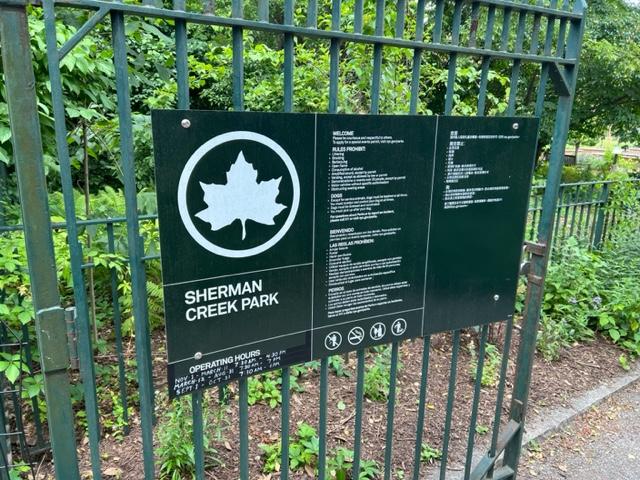
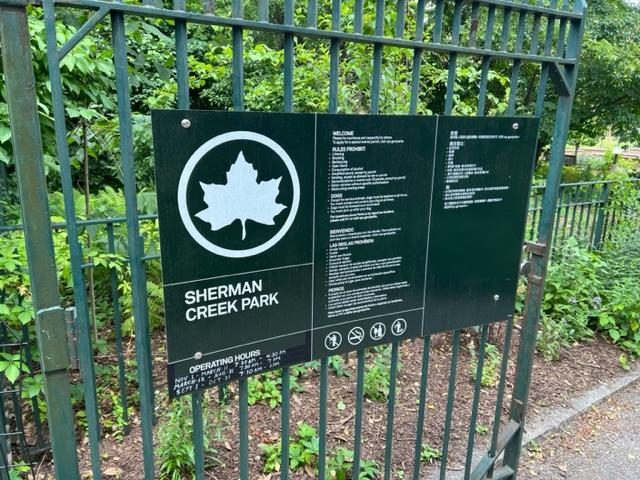
The entrance to Sherman Creek Park.

Sherman Creek Park

(from the park website)

Sherman Creek Park, a former illegal dumping site, began as a shore cleanup and now encompasses 15 beautifully reclaimed acres along the Harlem River including Swindler Cove, Riley-Levin Children’s Garden, and a living shoreline installation. The neighboring Harlem River Greenway includes a sprawling esplanade, bike path, and a cherry tree planting framing the Harlem River Drive.
The pathways in Sherman Creek Park.

The park serves to demonstrate sustainable management of public lands in an underserved neighborhood, from hosting a major community green space in Northern Manhattan, to implementing organic gardening techniques and best horticultural practices on a daily basis.

The waterfall in Sherman Creek Park

NYRP’s work in Sherman Creek and the surrounding landscape recognizes the remarkable value of natural resources found in Northern Manhattan and works to improve and support public access to Manhattan’s largest remaining wetland complex.

The pathways through Swindler Cove Park.

SWINDLER COVE

(from the park website)

NYRP is responsible for conceiving, developing, executing and maintaining the vibrant and versatile Swindler Cove at Sherman Creek Park, a former illegal dumping site transformed by NYRP into a gorgeous green space. The 5-acre space is home to the Riley-Levin Children’s Garden.

Swindler Cove represents the crown jewel of New York Restoration Project’s public park projects. Opened to the public in August 2003, Swindler Cove represents the full spectrum of NYRP’s mission to restore open space as a catalyst for community revitalization and environmental conservation.

The restoration of the Manhattan coastline.

In 1999, in partnership with the State of New York Department of Transportation and acclaimed landscape designer Billie Cohen, NYRP transformed the land into an oasis of native natural habitats with a lush array of restored woodlands, wetlands, native plantings and a freshwater pond, accented by a gracious pathway.

LIVING SHORELINE

(from the park website)

Sherman Creek Park is threatened by climate change-induced erosion and sea level rise and in 2020 we introduced an ecosystem-based solution called a living shoreline.

Replanting and renovating the coastline.

Integrating native plantings and an artificial oyster reef, our living shoreline design aims to not only attenuate waves that wash away sediment but also enhance the native wetland habitat—one of the last of its kind in all of Manhattan. By stacking specialized concrete blocks called Oyster Castles, its design helps build new habitat for marine species that, over time, could transform the dynamics of a park that we might otherwise lose.

We continue to monitor the shoreline’s evolution to better understand and quantify the ecosystem services that urban wetland restoration projects like ours might offer. “We know that, acre per acre, wetlands are better than forests at fighting climate change,” says Director of Northern Manhattan Parks Jason Smith. “It just requires shifting our relationship with the landscape and realizing it’s not about building a big project and walking away; it’s about staying engaged, stewarding it, and learning from it.”

Video on the New York Restoration Project: Rebuilding parks and gardens.

Revisiting the park in 2026 for The Great Saunter (unofficially):

When I was walking The Great Saunter on my own in 2026, I took my lunch and walked over to Sherman Creek Park and relaxed under one of the trees on a bench where it was nice and cool in the shade. There was no one there that afternoon and I had this section of the park all to myself. Classes had just let out for the Summer so there were no school groups in the park at this time.

Sherman Creek Park at 3725 Tenth Avenue

https://www.nycgovparks.org/parks/sherman-creek-park

https://www.nyrp.org/en/gardens-and-parks/sherman-creek-park

My review on TripAdvisor:

https://www.tripadvisor.com/ShowUserReviews-g60763-d28168553-r1062346026-Sherman_Creek_Park-New_York_City_New_York.html?m=19905

Walking through the lawn By the start o go the East River

Sherman Creek was a former garbage dump that has been turned into parkland that has become a place of relaxation where birds, butterflies and aquatic life that is changing this area into a natural habitat for wildlife.

The pond in Sherman Creek Park

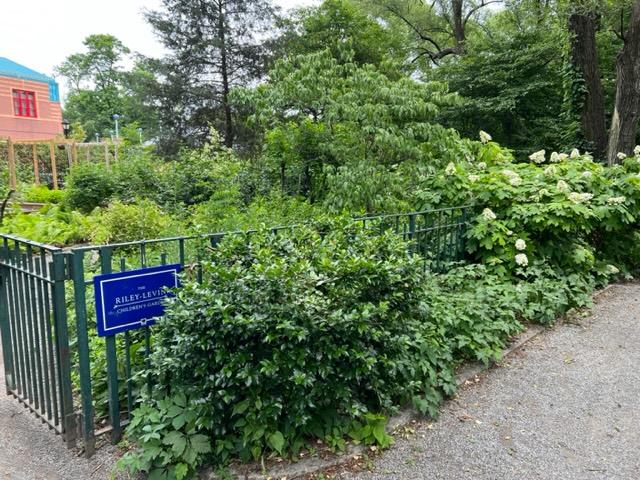
The Riley-Levin Children’s Garden

The Vegetable Garden

The front of the Riley-Levin Children’s Garden

The marsh area by the East River is all reclaimed land that was once a dumping ground for garbage. The views are beautiful and the breezes are amazing.

The pathways through the marsh area which serves as an aquifer for the East River

Looking south down on the marsh land

The water must be getting cleaner because a white Heron was looking for food in the marshland water.

The white Heron

The park was so beautiful and relaxing that afternoon.
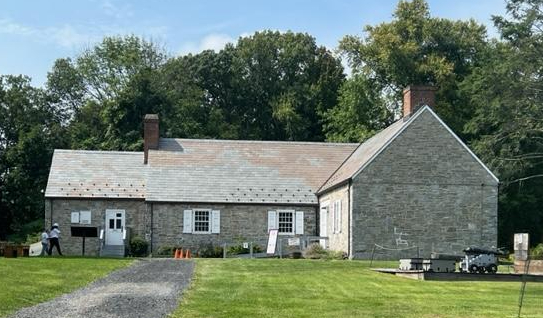
Stony Point Battlefield State Historic Park            44 Battlefield Road                                           Stony Point, NY 10980

Stony Point Battlefield State Historic Park 44 Battlefield Road Stony Point, NY 10980

Stony Point Battlefield State Historic Park

44 Battlefield Road

Stony Point, NY 10980

(845) 786-2521

https://parks.ny.gov/historic-sites/stonypointbattlefield/maps.aspx

https://en.wikipedia.org/wiki/Stony_Point_Battlefield

Open: Sunday (Grounds) 12:00pm-5:00pm (Museum) 12:00pm-4:30pm /Monday-Tuesday Closed/Wednesday-Saturday (Grounds) 9:00am-5:00pm/(Museum) 10:00am-4:30pm

Admission: Free but donations are accepted. Groups, Scouts and Organizations are $5.00 individuals per person and $7.00 for special events per person. Please call to make arrangements on this.

My review on TripAdvisor:

https://www.tripadvisor.com/Attraction_Review-g48694-d263715-Reviews-The_Stony_Point_Battlefield_Lighthouse-Stony_Point_New_York.html

The Stony Point Battlefield Museum

The General’s tent on the battlefield.

We visited the Stony Point Battlefield one afternoon and it is a very interesting and historical fort in the Hudson River Valley. We were able to tour the battle site and explore the grounds of this historical site. Then we toured the museum which gave us a view of the battle and what happened that night through a series of displays of the artifacts.

The Gallery

The Gallery

The gallery was filled with all sorts of weaponry and items needed by the troops for battle.

The battlefield site.

The museum has displays of the weapons used, the structure of the fort, utensils used the time that the troops were defending this area and what life was like on a day-to-day basis. The museum also offers a glimpse of artifacts of both the fort and of the battle with docents assisting you in telling the story of what happened at that time and after the battle and the war were over.

The Stoney Point Battlefield tent set up.

Outside the fort, there was a set-up of tents to show what the troops life was like in battle as well as General Wallace’s tent that he lived in and used during the battle. At the end of the day, the park does a demonstration of lighting the cannon that would have been used in battle. That was interesting. It was a lot more work than people think.

The cannon set up.

There is lot to do and see along the pathways of the fort and its grounds with amazing views of the Hudson River.

The story of the battle.

The History of the park and battlegrounds:

(from the NYS Parks Division website)

Visit the site of the Battle of Stony Point, one of the last Revolutionary War battles in the northeastern colonies. This is where Brigadier General Anthony Wayne led his corps of Continental Light Infantry in a daring midnight attack on the British, seizing the site’s fortifications and taking the soldiers and camp followers at the British garrison as prisoners on July 16, 1779.

The map of the fort at Stony Point, NY.

By May 1779 the war had been raging for four years and both sides were eager for a conclusion. Sir Henry Clinton, Commander-In-Chief of the British forces in America, attempted to coerce General George Washington into one decisive battle to control the Hudson River. As part of his strategy, Clinton fortified Stony Point. Washington devised a plan for Wayne to lead an attack on the garrison. Armed with bayonets only, the infantry captured the fort in short order, ending British control of the river.

The weapons of battle on display at the museum.

The Stony Point Lighthouse, built in 1826, is the oldest lighthouse on the Hudson River. De-commissioned in 1925, it now stands as a historical reminder of the importance of lighthouses to commerce on the Hudson River. The opening of the Erie Canal in 1825 unleashed a surge of commercial navigation along the Hudson River, by linking New York city to America’s heartland.

Within a year, the first of the Hudson’s fourteen lights shone at Stony Point and others soon followed, designed to safely guide maritime travel along the river. Many light keepers, including several remarkable women such as Nancy and Melinda Rose at Stony Point, made their homes in the lighthouse complexes, and ensured that these important navigational signals never failed to shine.

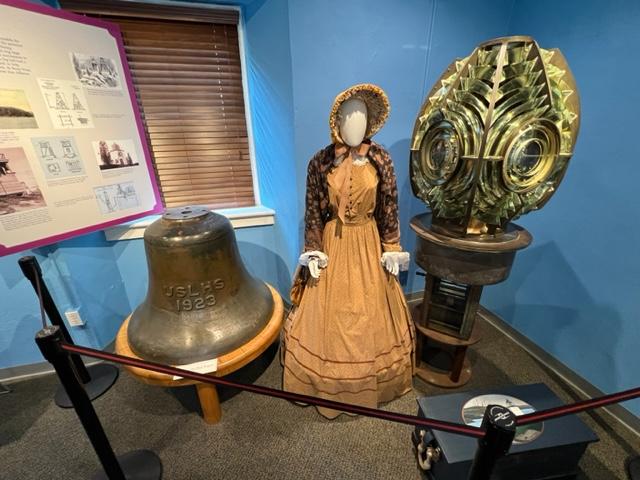
The lighthouse light on display at the museum.

The site features a museum, which offers exhibits on the battle and the Stony Point Lighthouse, as well as interpretive programs, such as reenactments highlighting 18th century military life, cannon and musket firings, cooking demonstrations, and children’s activities and blacksmith demonstrations.

The cannon demonstration that we saw at the end of our visit to the battlefields.

Day Two Hundred and Sixty-Two: Traveling to the Brooklyn Botanic Garden to see the Crocuses on the Hill, Snowdrops, Ironweed flowers and other flowering plants, Daffodil Hill, the Magnolia Plaza, the Cherry Blossoms, the Cranford Rose Garden and the Lotus Pools                                                      March 30th, 2023 (again in March 12th & 22nd,  May 29th, August 6th, 2024 and May 10th, 2025 and April 12th, 2026)

Day Two Hundred and Sixty-Two: Traveling to the Brooklyn Botanic Garden to see the Crocuses on the Hill, Snowdrops, Ironweed flowers and other flowering plants, Daffodil Hill, the Magnolia Plaza, the Cherry Blossoms, the Cranford Rose Garden and the Lotus Pools March 30th, 2023 (again in March 12th & 22nd, May 29th, August 6th, 2024 and May 10th, 2025 and April 12th, 2026)

The entrance to the gardens in the Summer of 2022

If you want to see some of the most beautiful sites in New York City during the Spring months when Mother Nature truly works her magic then I would suggest going to the Brooklyn Botanic Garden to see Daffodil Hill and Magnolia Plaza.

The sign when entering Daffodil Hill in the Brooklyn Botanic Gardens

https://www.bbg.org/

My review on TripAdvisor:

https://www.tripadvisor.com/ShowUserReviews-g60827-d103900-r884200309-Brooklyn_Botanic_Garden-Brooklyn_New_York.html?m=19905

My review on VisitingaMuseum.com:

https://wordpress.com/post/visitingamuseum.com/2785

This is when everything is in full bloom during the early Spring. There is nothing like it and it is so breathtaking with a quiet elegance. On this clear and sunny Thursday afternoon, the gardens were quiet so I had plenty of time to take pictures and enjoy the beautiful views.

I finally got the gardens in the early Spring to see the crocuses, the Snowdrops and the Ironweed flowers that come in the early Spring just as the Daffodils were just coming out. These sensitive flowers are only in bloom a short time and I wanted to see them. They are just beautiful when you see them up close.

The Garden was ablaze with the colors of almost a thousand purple crocuses that lined the hills on the Prospect Park side of the lawns in 2024. Beautiful purple and while colors were in full bloom and Mother Nature shined in the COVID era with all of us socially distanced but still enjoying the park.

Crocus Hills ablaze in purple in 2024

The purple crocuses in full bloom in 2024.

The beautiful purple crocuses in full bloom.

While I was taking pictures of the crocuses, I walked around the gardens and came across the Snowdrops and the Ironweed flowers were also in bloom. These sensitive flowers are only in bloom for just about two weeks. To see them in the gardens in the late Winter is a real treat. They sometimes are in bloom in early and you have to see them quickly before they disappear in the ground.

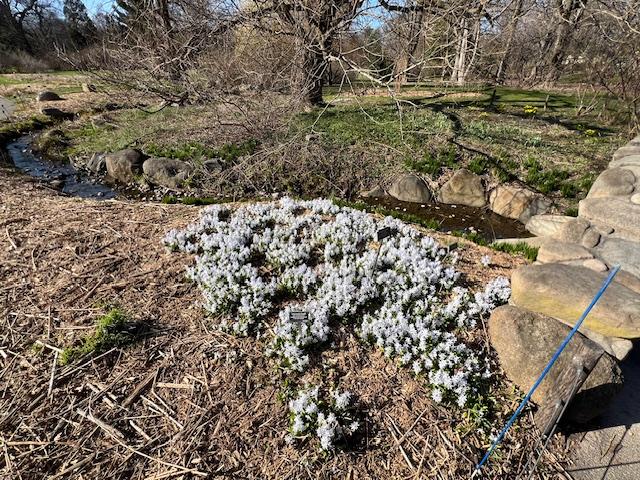
The Snowdrops in full bloom in the gardens in 2024.

The Snowdrops up close.

The Ironweed just as beautiful. To see these graceful flowers in bloom are a real treat.

The Ironweed flowers in bloom right by the stream.

The Ironweed flowers in full bloom.

An Azalea that was early blooming in the garden in 2024.

Daffodil Hill at the Brooklyn Botanic Garden

Hundreds of Trumpet Daffodils are in bloom on a hill just off the Japanese Gardens flanked by hundred-year-old trees and it just plays into the backdrop of the greens and browns of the trees and lawns. I can’t tell you on a beautiful sunny day how breathtaking it is just to sit and admire these elegant flowers. It really is a site to see.

Daffodil Hill in full bloom

I love the way these hundreds of flowers make such a beautiful statement and there is such a burst of colors between the yellows and oranges of the daffodil flowers. This only lasts for about two weeks and then the flowers hibernate again.

The side view of Daffodil Hill from the walkway

Daffodil Hill just off the Japanese Gardens

Daffodil Hill in the Spring

Daffodil Hill in full bloom

Daffodil Hill at its peak

The video tour of Daffodil Hill at its peak

Daffodil Hill in full bloom

Daffodil Hill is right next to the Magnolia Plaza that was also in peak bloom when I was at the gardens. The trees of the Magnolia Plaza bloom the last week of March and these delicate trees petals do not last more than a week. When I got close enough to them to take pictures, I noticed that some of them were starting to curl already.

The area between Magnolia Plaza and Daffodil Hill

Not all the trees were in bloom yet but these delicate trees are very sensitive to the weather and I have noticed that the petals don’t last as long. Most of the trees were in full bloom but there was not much a smell to the trees. Still everyone was taking pictures in every direction between the Magnolia trees and Daffodil flowers.

The Magnolia Plaza in full bloom

The sign in the Magnolia Plaza

The edge of the Magnolia Plaza

The pathways in the afternoon

The Magnolia trees make such a bold and colorful statement

The array of colors in the Magnolia Plaza

The Magnolia Plaza facing Daffodil Hill in the distance

The Sundial in the middle of the Magnolia Plaza

After taking dozens of pictures of the Magnolia Plaza and Daffodil Hill, I walked over to the Rock Garden. There were not many flowers in bloom there yet as they come out later in the month. There was still an array of daffodils and a few crocuses still in bloom. The Rock Garden was quiet and perfect to walk around in as I had this part of the garden to myself.

The Rock Garden in the early Spring

The Rock Garden in the early afternoon

I headed to the northern part of the garden and visited the Japanese Gardens, where the cherry blooms started to bloom. These graciously landscaped gardens were created in the traditional Japanese form with a combination of trees and shrubs to balance the garden.

Entering the Japanese gardens from the path

The Japanese Gardens pool with traditional buildings

The Japanese Gardens in the early Spring

Returning at the height of the Cherry Blooms was just breathtaking. This view only rivals the beauty of Newark, NJ and Washington DC.

The magnificent Cherry Blossom lawn in April 2024.

People relaxing and enjoying the beautiful afternoon under the Cherry trees.

The beauty of the trees.

The Cherry Blossom at peak form.

I came back after the Cherry Blossoms had fully bloomed and were now gone and the Bluebells were in full bloom. It had been a cold and rainy Spring and it had been miserable to be outside. Not on the May weekend in 2025. The weather was spectacular and sunny. The Gardens were packed on Mother’s Day weekend and these beautiful blue flowers were the star of the day.

The sign welcoming you to the gardens

The flowers were just amazing

The seas of purple and green

They have really expanded their space over the years

The flowers put on quite a show that day

There is a real beauty to the gardens

The flowers were at the peak of bloom

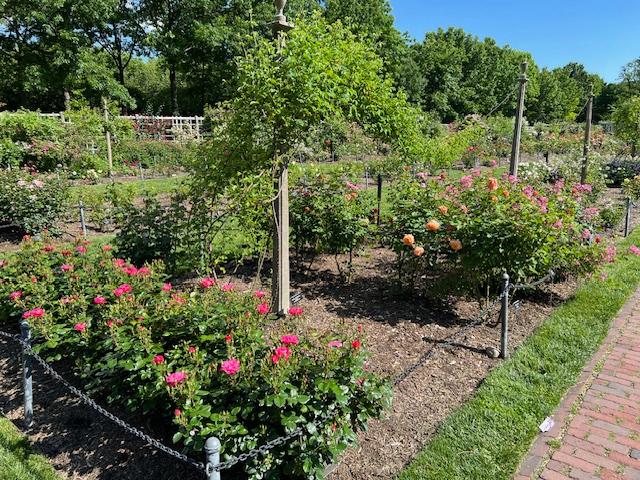
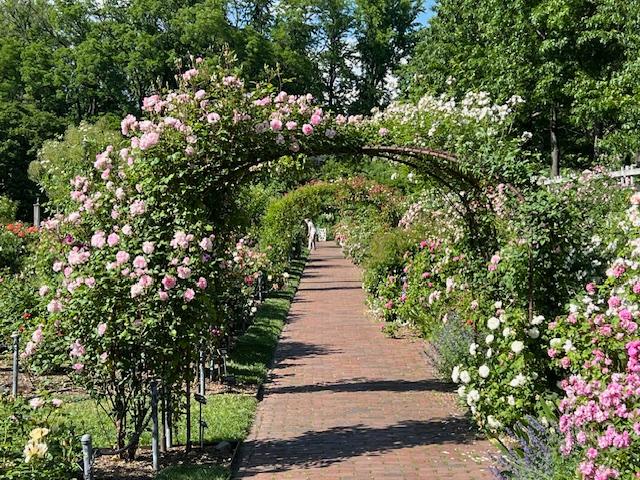
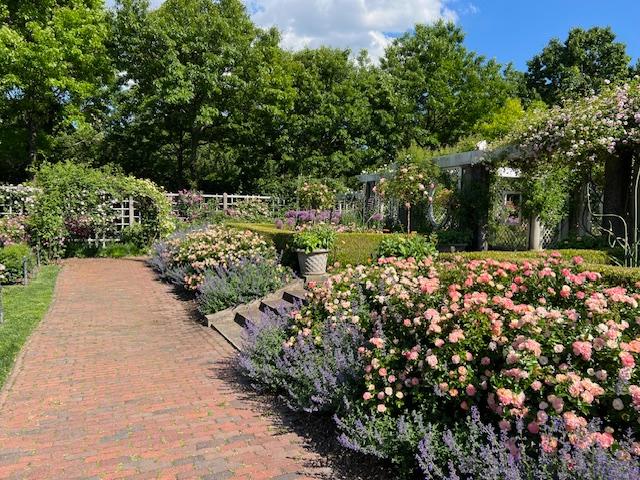
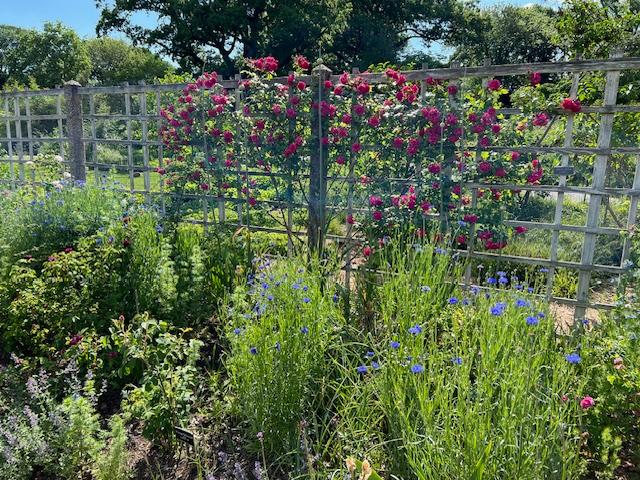
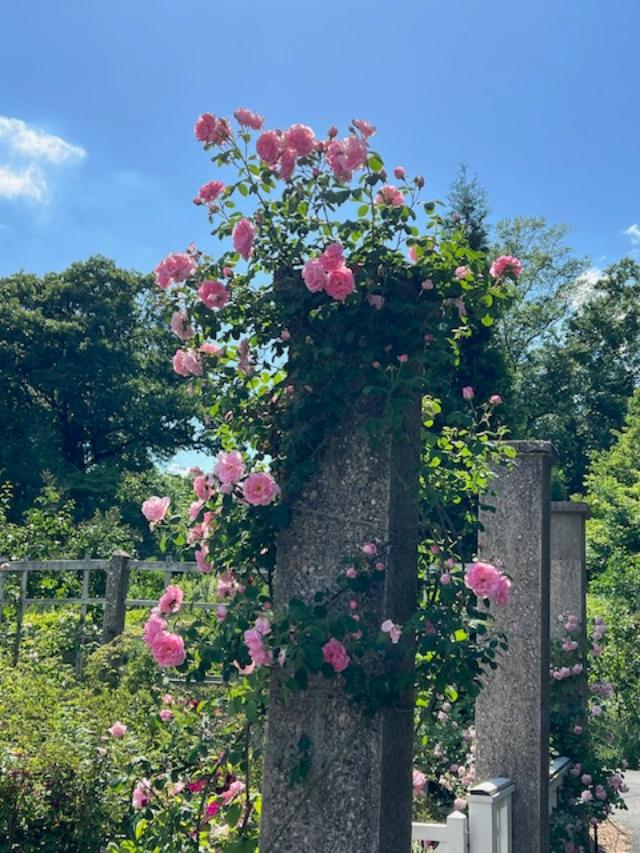
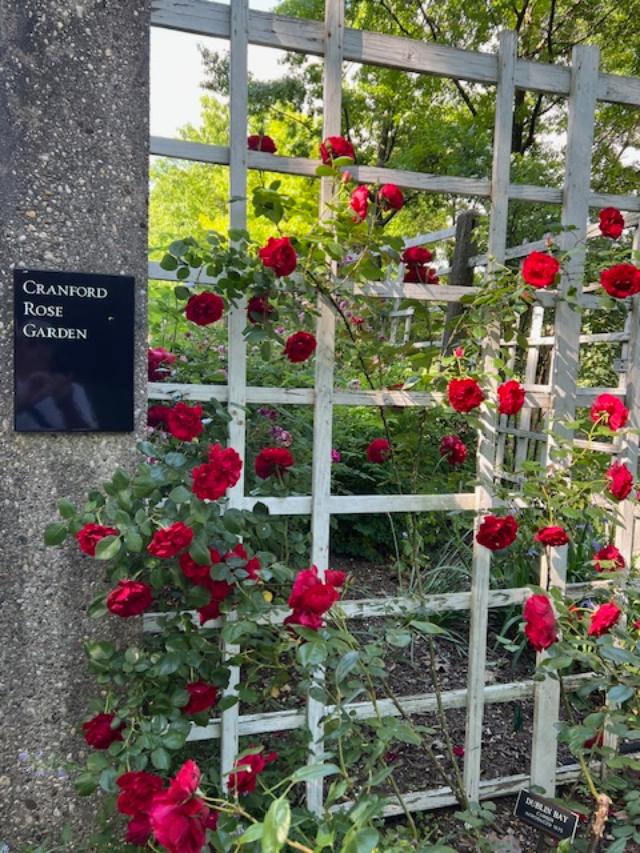
The Cranford Rose Garden was in full bloom two and a weeks before the Annual “Rose Night” that celebrates the blooms of the roses in the gardens. By the time the event would happen, most of the blossoms would be gone. So I visited the gardens again in late May after college had ended and I was in between classes. The roses were glorious to say the least and the colors, smells and the way they grew all over the trellises and fences made quite the effect. I was lucky that I went during a week day and the gardens were quiet.

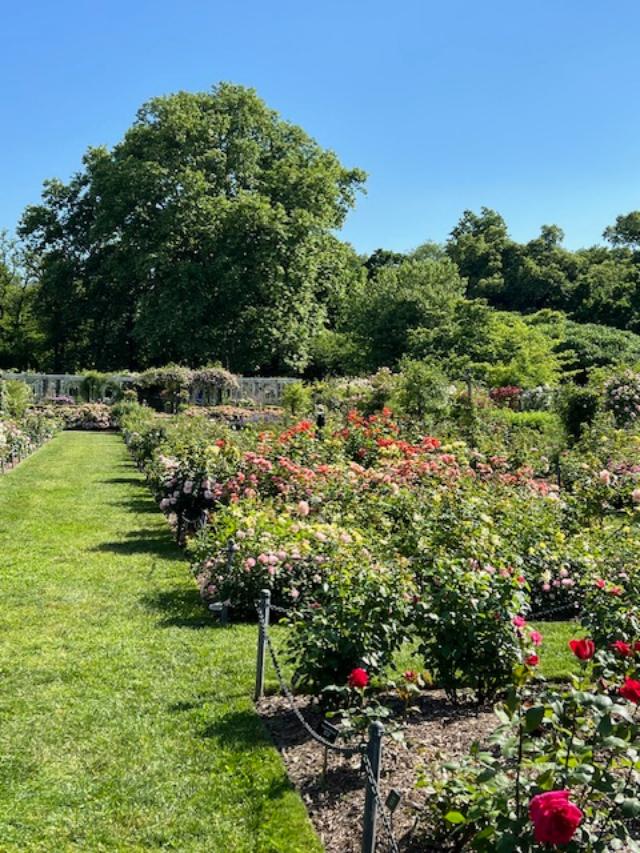
There is nothing like the Cranford Rose Garden when it is in full bloom. The smells and colors are fantastic and the beauty is something timed by Mother Nature. The roses grow at different stages and it looks so gorgeous during the late Spring.

Entering the Rose Gardens in the Spring of 2024

The front of the gardens in bloom

The front beds of the Rose Garden

The front of the Cranford Rose Garden in full bloom

The trellises in full bloom

The trellis in full bloom

Walking along the paths to the back part of the gardens.

The back part of the gardens

Roses along the trellises

Exiting the back of the gardens into the Cherry Blossom Lawn

The back entrance to the Cranford Rose Garden.

If you can get to the gardens in early June, I would suggest a special trip to see the roses. This special time of the year only lasts about three weeks and then like the rest of the flower displays in the gardens are gone until the next year. The gardens are now maturing for the summer months with lots of greenery and are still a nice place to relax and walk around or just sit and enjoy the views.

The Cherry Blossom Lawn after the cherry blooms are gone.

The flowers of the garden’s Marsh area.

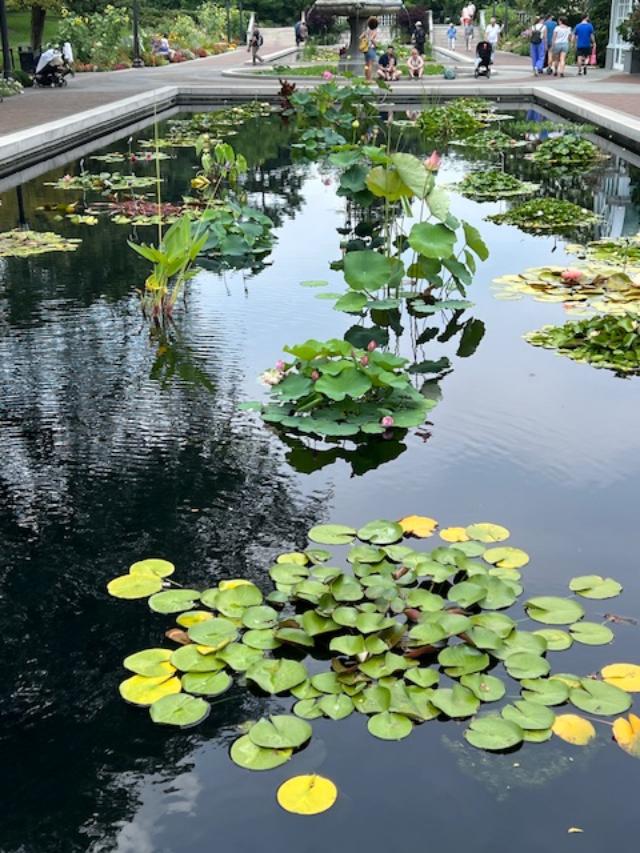
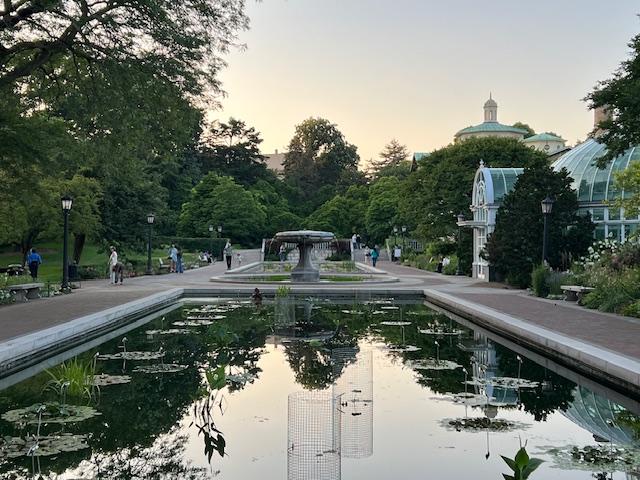
I came to the gardens in late July to see the Lotuses in the Lotus Pools when they were in bloom and when they are at their peak, they are so colorful and elegant. I now know why the Egyptians worshipped them.

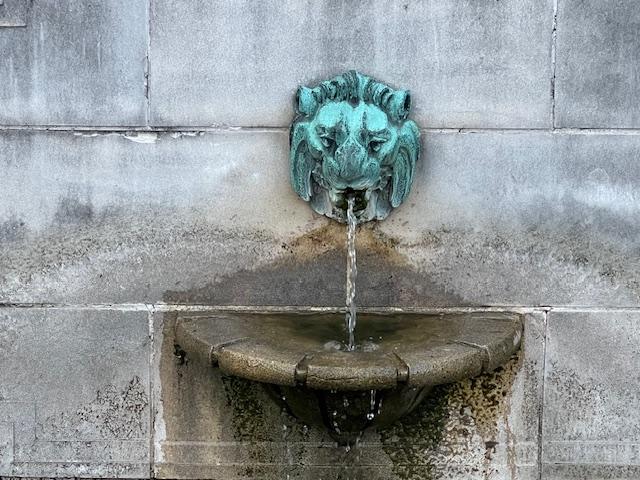
The Lion Fountain greets you as you enter the pools

The video on the fountain:

The Lotus Pools

The Lotus Pools

The Lotus Pools

The Yellow Lotus in the pools

The Pink Lotus in the pools

The Cherry Blossom Fountain in bloom

The Cherry Blossom Fountain in bloom

Before I left the gardens for the afternoon, I stopped in the gift shop and looked around. They have some wonderful things to buy including a section of Brooklyn made products. There is also an array of plants, books and decorative products to buy.

The Gift Shop at the Brooklyn Botanic Gardens

The Brooklyn made products and book selection at the Brooklyn Botanic Gardens

After my visit to the gardens, I stopped at Bahn Mi Place at 824 Washington Avenue for lunch. I had one of their classic Bahn Mi sandwiches with ham and pate on a chewy hard roll. The food here is consistently good and their sandwiches are excellent.

Bahn Mi Place at 824 Washington Avenue

https://banhmiplacebklyn.com/

My review on TripAdvisor:

https://www.tripadvisor.com/Restaurant_Review-g60827-d8530850-Reviews-Banh_Mi_Place-Brooklyn_New_York.html?m=19905

My review on DiningonaShoeStringinNYC@Wordpress.com:

https://wordpress.com/post/diningonashoestringinnyc.wordpress.com/2187

The Classic Banh Mi sandwich at Banh Mi Place

You have to order the sandwich with a Medium spicy sauce. It adds to the complexity

The sandwiches are excellent. The flavors of the fresh vegetables and meats with the spicy sauce makes complex flavor. The bread is fresh and chewy and don’t be fooled by the size of the sandwich. It is larger than I thought and very filling. See my review on both TripAdvisor and DiningonaShoeStringinNYC@Wordpress.com.

I took my lunch and ate on the steps near the Brooklyn Museum and just enjoyed the afternoon. I people watched and enjoyed the cool, sunny weather. It was nice to escape from classes for a couple of hours and just relax and not think about school or work. It has again become a bit stressful between the two but I will handle everything.

I look forward to this time in the gardens and is one of the reasons why I keep my membership. I love to look at the hundreds of daffodils in bloom and watching as they sway in the wind and just want to look beautiful. It is the most amazing site every Spring.

You do have to time your visits so that you see all these beautiful flowers at each time.

Happy Easter!

Day Two-Hundred and Thirty-Two Visiting Washington DC for the Cherry Blossom Festival April 15th and 16th, 2022 (Again on April 2nd, 2023)

Day Two-Hundred and Thirty-Two Visiting Washington DC for the Cherry Blossom Festival April 15th and 16th, 2022 (Again on April 2nd, 2023)

Visiting the Cherry Blossoms and museums in Washington DC.

The Cherry Blossoms finally bloomed in 2023

jwatrel's avatarmywalkinmanhattan

Well after seven years of trying to get to DC for the Cherry Blossom Festival I finally got down to the city to get to the tidal basin to see the display. It looks like it will be eight years as almost all the cherry blossoms disappeared almost two weeks earlier. All the leaves were long gone and as I overheard another tourist say to a friend that she was disappointed that she had not known and most of the trees were bare.

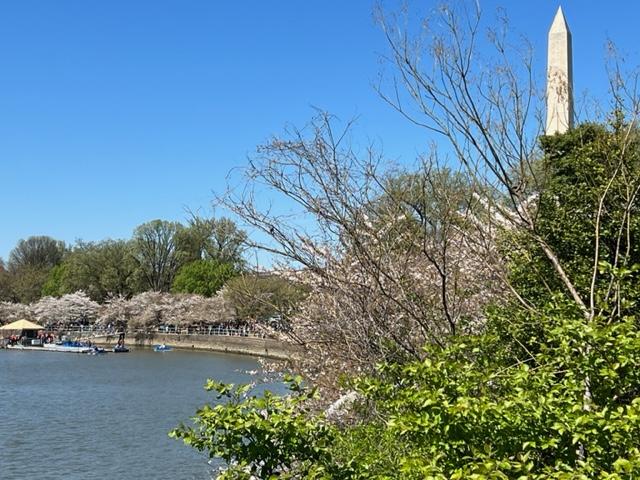
The Tidal Basin in April 2023

The festival was in its second week and most of the trees had gone green. I found out later from the Internet that they peaked on March 21st and right after that we had all that rain. It probably knocked the petals off after that.

The festival ran through April 16th, 2022 (the peak of the blooms was March 21st)

View original post 6,628 more words