

D & H Canal Historical Society and Museum
23 Mohonk Road
High Falls, NY 12440
(845) 687-9311
https://www.canalmuseum.org/museum-and-visitor-center
https://www.facebook.com/DHCanalMuseum/
Open: Summer Hours (May 1st-September 30th) Sunday-Saturday 10:00am-5:00pm
Admission: Suggested donation $12.00/Pay as you wish.
My review on TripAdvisor:
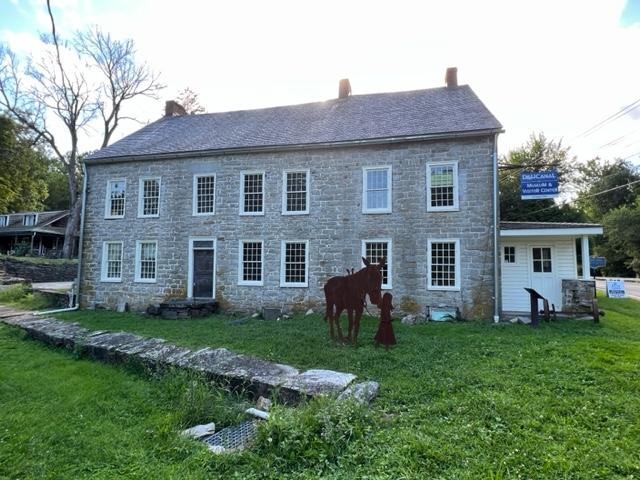
The D & H Canal Museum at 23 Mohonk Road
The D & H Canal Museum is an interesting mix of history of transportation, commerce and growth in this part of New York State. The museum is housed in the old DePuy Canal House at Lock 16 on the canal route (which is located just outside with weeds and over-growth hiding it), which was built in 1797 and was enlarged in 1820 to serve workers and travelers on the D & H Canal. The museum itself had gone through many transitions from tavern to canal offices to a high-end restaurant and then to the current status as a museum.

Lock 16 on the canal route sits just outside of the museum.
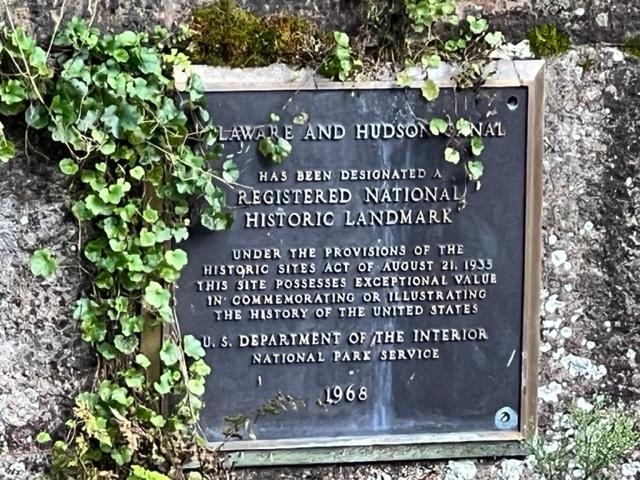
The canal historical marker.
The museum is interesting in that it shows the progress of how the canal was built and how the area opened up to commerce of both people and merchandise. It also shows the importance in shipping coal from its source to its end destination in New York City and how it helped grow that city as well.
The front gallery as you enter.

The entrance of the museum gives a romanced view of the canal and transportation along the route. Artist William Rickarby’s painting “High Falls on the Rondout” is the theme of the room with the painting blown up to show life on the canal. It gives a view of how the canal’s played a part in everyday life.

The original watercolor painting “High Falls on the Rondout Creek” by artist William Rickarby.

The painting’s description
The museum is broken down into four separate galleries explaining the canal development, Transporation and shipping, the types of products being shipped along the route. Coal being mined in Pennsylvania could now be shipped to New York City more quickly than before and the connections to other lines of the canal brought in other produce.

The main gallery tells the story of the development of the cabling system that helped develop the bridges of the canal route.

The D & H Canal route for shipping.
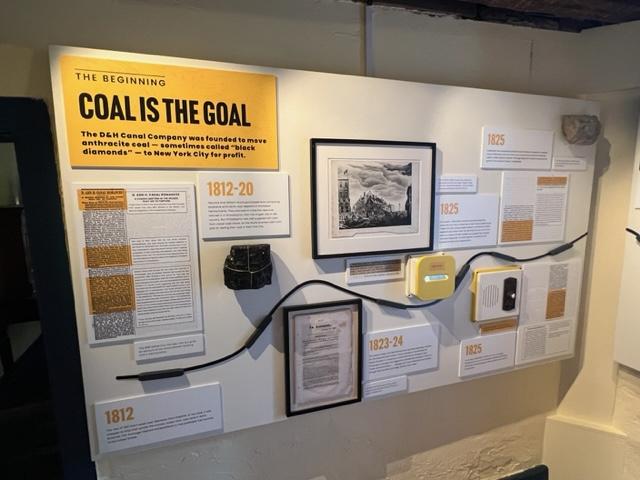
The movement of coal from Pennsylvania to New York City.

The new Robling cable system changes everything.
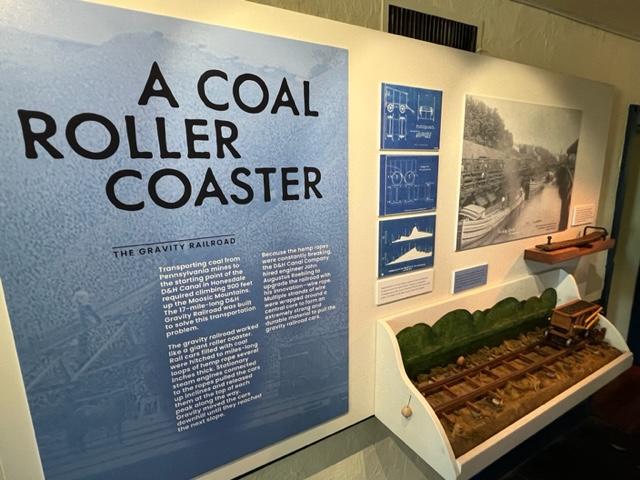
Coal mining and its role in the growth and use in cities.
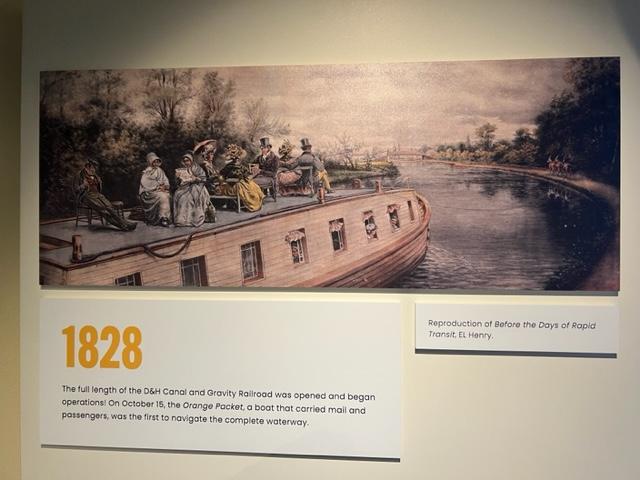
Before the railroads, the canals also began a source of leisure travel.
The second gallery explains coal mining manufacturing. The finding of the ore and its use in a modern society. This shows its importance at that time in our history.

The shipping of coal.

The second gallery on the development of the canal.

John Augustus Roebling and his creation of the wire rope cable.

Items for the use of mules that were used along the canal route.

Items used for canal safety while in transport.
The last gallery was the part of the building that the family had used for a tavern for travelers along the canal route. This room still has that feel of a restaurant and along the tables you can see the old menus and a description of entertainment at the time.
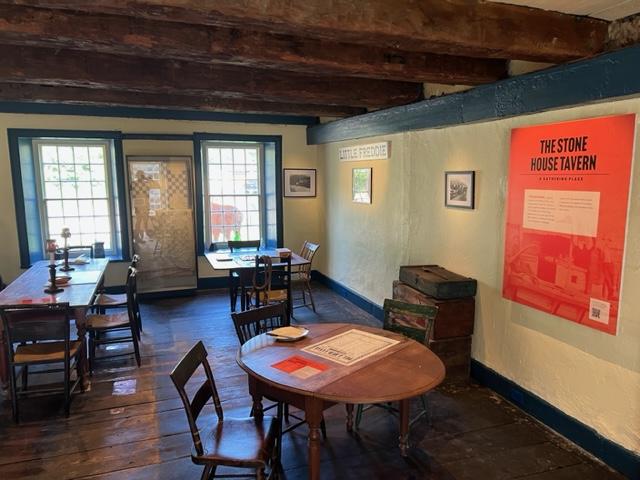
The use of the building as a pub for travelers along the canal route.

The pub description of the DePuy family. They used this building to entertain visitors who worked and traveled along the canal route. The building was later used as a four-star restaurant until 2017 when the building was turned into the museum.

The outside of the old restaurant extension.

The old Lock 16 that is now covered with weeds, but you can still hear the water underneath.
There are still traces of the glory days of the canal covered by weeds, trees and bush. The canal is long gone but its development, growth and final demise and rebirths as an attraction are shown in different stages of the galleries. For those who have interest in the growth of New York State in both mining and farming and transport to New York City, the museum tells that story not just in story boards but by experiencing it with props and pictures.
The History of the D & H Canal (The Delaware & Hudson Canal):
(from the D & H Canal Museum pamphlet)
This 108 mile, 108 lock waterway carried anthracite coal from Pennsylvania mines to the Hudson River at Kingston, NY between 1828 and 1898. Conceived by the Wurts brothers, it served as a means to market their coal in New York City. Associated with feats of civil engineering, the D & H Canal transformed the mid-Hudson River Valley in size and economic development.
The D & H Canal Company was privately financed by investors after seeing a Wall Street demonstration of the hot burning anthracite coal in January 1825. Benjamin Wright and John B. Jervis were hired to survey the route and engineer this canal, which started in Honesdale, followed the Lackawaxen and Delaware Rivers to what is currently Port Jervis. It then headed northeastern through the valley between the Shawangunk Ridge and the Catskill Mountains and ran alongside the Roundout Creek to the Hudson River.
The canal was constructed in less than three years by an estimated 10,000 workers, using only picks, shovels, draft animals and blasting powder. Industries developed along the canal route to exploit local resources such as lumber, agricultural products and bluestone. Natural cement, which hardened well under water was discovered near High Falls in 1825 and would later be used to construct structures such as the Brooklyn Bridge, the Statue of Liberty and the Washington Monument.
Another innovation was the wire suspension bridge designed by John Roebling (of Brooklyn Bridge fame). He built four suspension aqueducts for the D & H Canal during the 1840’s.
The gravity railroad was devised to transport coal from the fields near Carbondale to the canal terminals at Honesdale and Hawley. Railcars were pulled up the mountains using mules and ropes and descended by gravity. Although attempts to use steam locomotives proved unsuccessful, the trial run of the Stourbridge Lion is considered the first commercial use of a locomotive in the US.
One of the largest firms of its era, the Delaware & Hudson Canal Corporation pioneered corporate management practices and built one of the first US railroads. Railroads led to the end of the canal era and most of the D & H Canal was drained after the 1898 season.
The remnants of the D & H Canal.
- A Local Journey out of Manhattan
- Dedicated to Warren Watrel
- Educational Museums
- Experiences and Tours
- Exploring High Falls NY
- Exploring Historic Ulster County NY
- Exploring the Historical Hudson River Valley
- Exploring the Hudson River Valley
- Historic Sites of New York State
- Railroad Museums of New York
- Small Historical Societies in New York State
- Uncategorized
- VisitingaMuseum.com


The D & H Canal Museum explains the rapid growth and transport of Upstate New York and the surrounding area.
LikeLiked by 1 person