Tag: warren george watrel

Hackettstown Historical Society                         106 Church Street                               Hackettstown, NJ 07840

Hackettstown Historical Society 106 Church Street Hackettstown, NJ 07840

Hackettstown Historical Society

106 Church Street

Hackettstown, NJ 07840

(908) 852-8797

http://www.hackettstownhistory.com/

https://www.facebook.com/HackettstownHistoricalsociety/

Open: Sunday 2:00pm-4:00pm/Monday-Tuesday/Closed/Wednesday 2:00pm-4:00pm/Thursday Closed/Friday 2:00pm-4:00pm/Saturday/Closed (check the website for additional open hours)

My review on TripAdvisor:

https://www.tripadvisor.com/Profile/R4960NKjustinw/mediabatch/12142803?m=19905
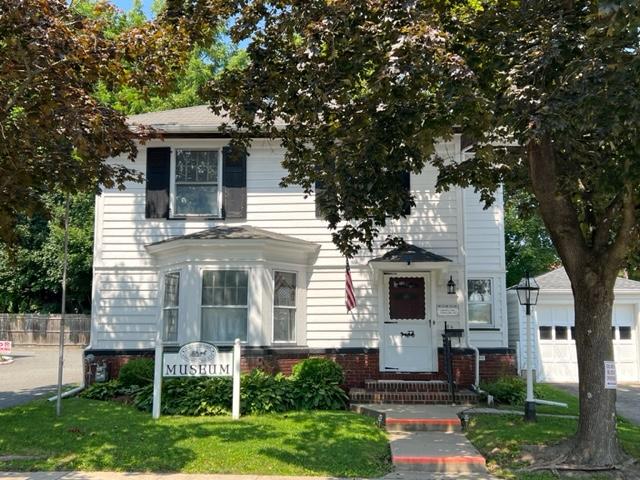
The Hackettstown Historical Society at 106 Church Street.
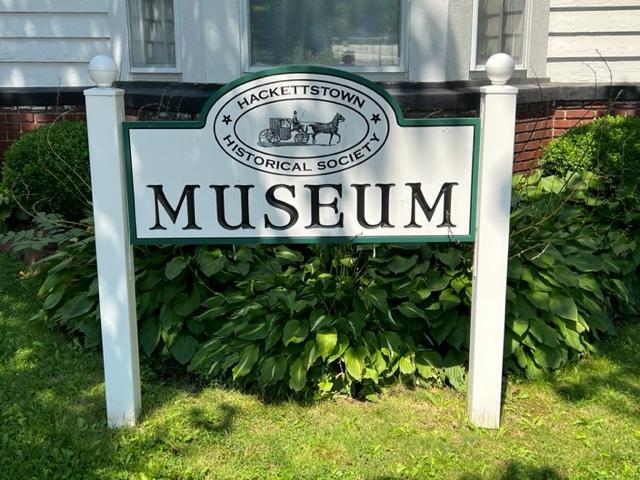
The welcome sign of the Historical Society

I visited the Hackettstown Historical Society on a recent trip to Downtown Hackettstown and this small historical society is packed with interesting information on the history of the town and the local town of Mansfield, NJ that has more information but they do not have their own building for a society of their own.
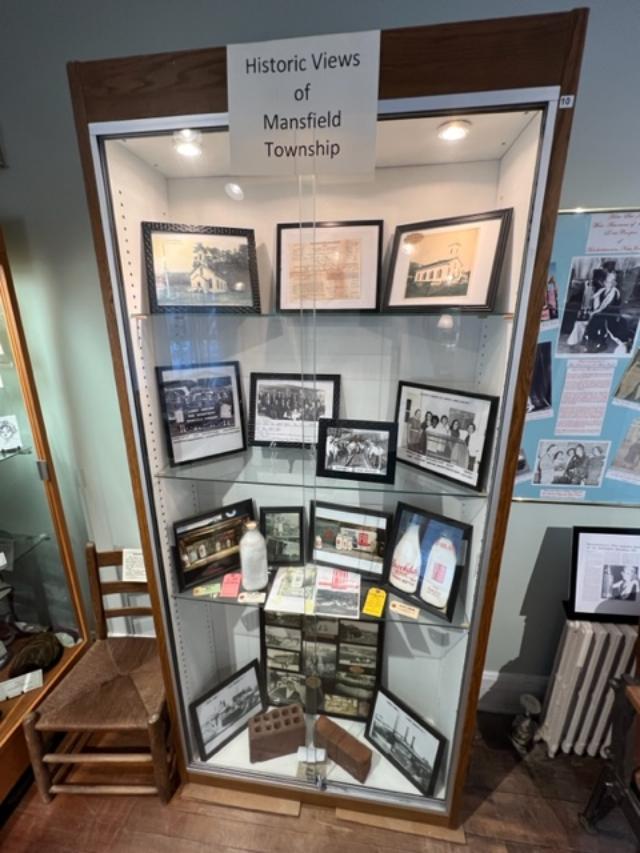
The historical information on Mansfield Township, NJ

The other exhibits on the first floor are on the history and clothing of the “Gibson Girl”. It shows how women were progressing in society during the late 1800’s after the Civil War. It shows how women gained more independence after the war years and showed it in their clothing, physical activities and schooling.
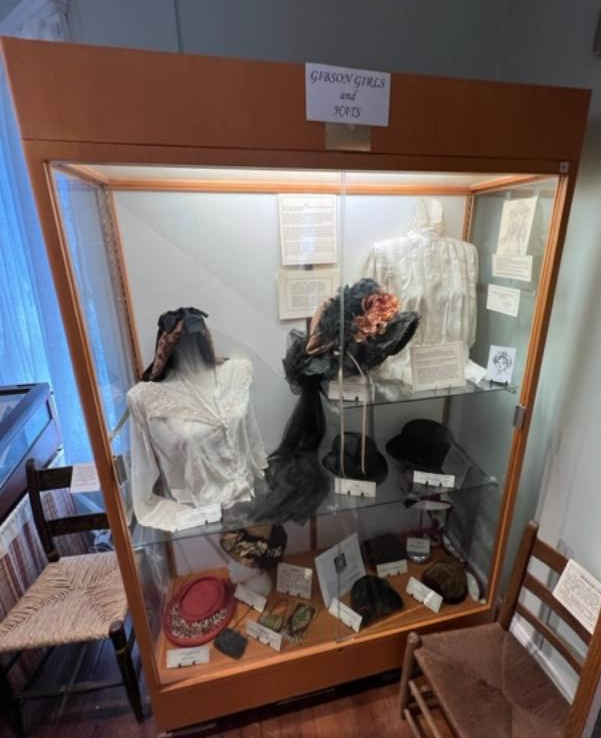
The “Gibson Girl” exhibit

The first-floor exhibition also had a display on the first Miss America from New Jersey, Bette Cooper, who was Miss Bertrand Island. She won the award and then ran away from the award. She never wanted to participate in the Miss America Foundation and because of her, there was a contract put together for future winners to participate in activities for the organizations. The Cooper family resided in Hackettstown, NJ at the time of her being a winner.
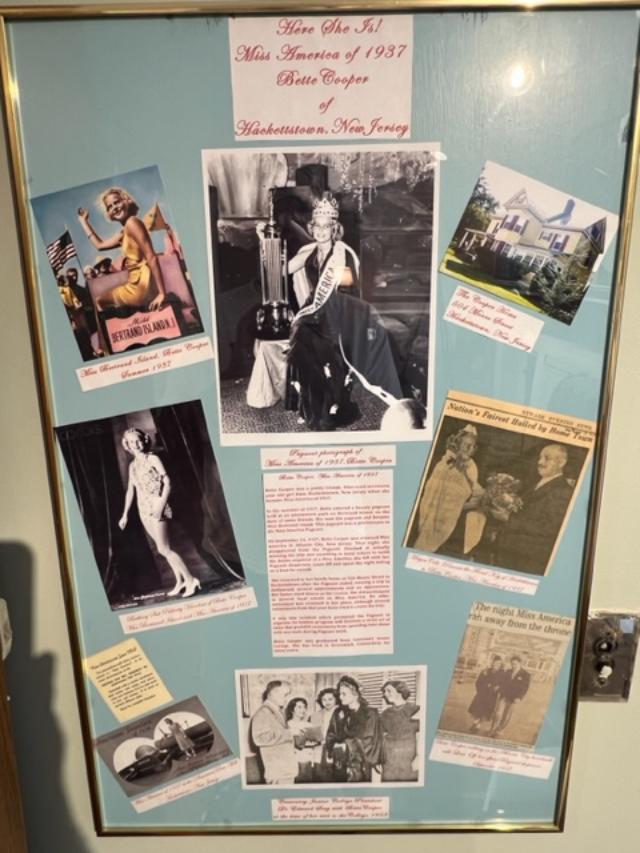
Miss America winner Bette Cooper

Another exhibit explained the transportation for Hackettstown and its influence in the outside community.

The Transportation exhibit in Hackettstown, NJ.

Another popular exhibit especially with the kids is the toy manufacturing displays. Toys were based on careers as girls played with tea sets, dollhouses and dolls while boys played with trucks, cars and sporting goods. This set of displays showed the items that were made in the area of Hackettstown, NJ.
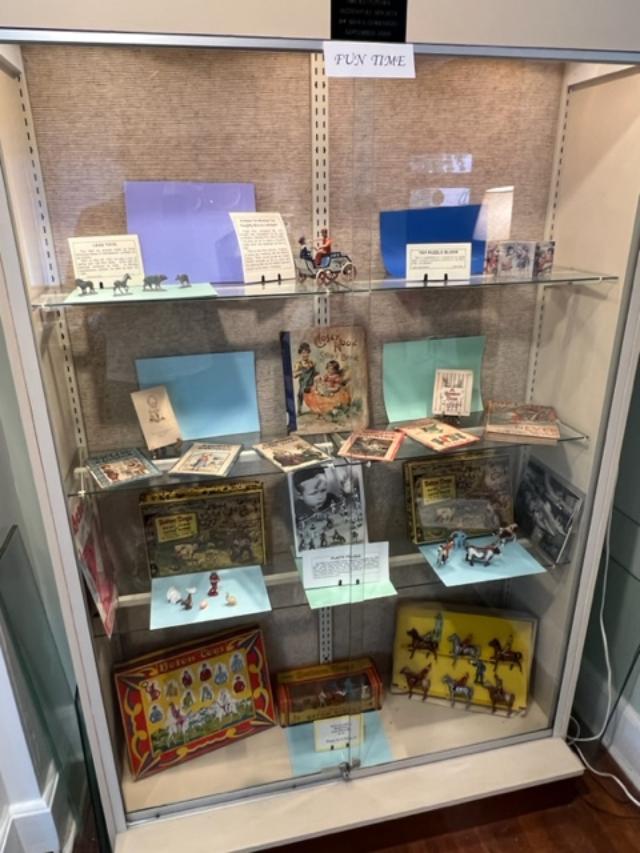
The Toy Company exhibition on the first floor.

The Beton (Bergen Toy and Novelty) Manufacturing Company display. The company manufactured at the turn of the century in Hackettstown, NJ.

On the second floor, the museum has displays on the businesses of the community. There were many manufacturers of items such as carriages, farm equipment and of course the M & M/Mars Company.
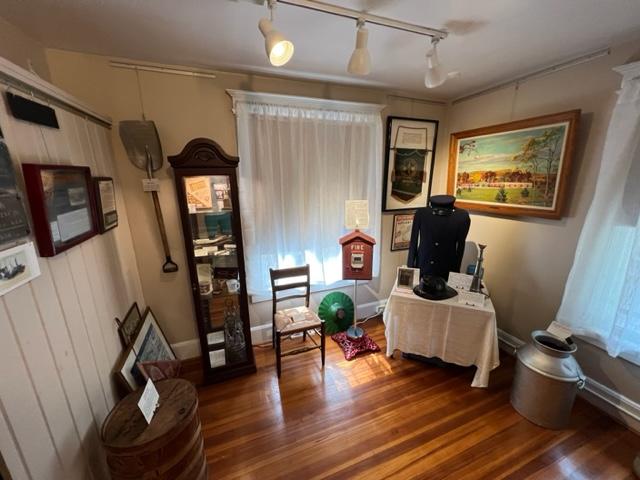
The Business display on the second floor.

Another exhibit was on how a households were run at the turn of the last century and what went into keeping house in those days. From equipment to clothing you could see how a woman’s time was taken up on a daily basis.

The Household Exhibit on the second floor
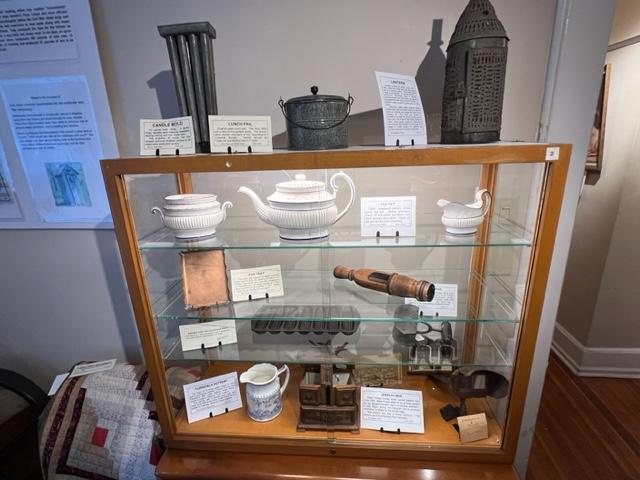
The Kitchen exhibit on the second floor.

The attitudes towards children after the Civil War and during the Victorian period changed as well as more affluence and change of attitude wanting children to be in school and out of the workplace. There was also more time for children’s play as we see in the sophistication of playthings. Things have not changed that much in that time.

The Children’s Exhibit on the second floor.

The Children’s display of games, toys and dolls.

Life in Hackettstown was also on display with a Civil War exhibit and the Hackettstown Fire Department. How people added to their communities and supported causes has not changed much to today.
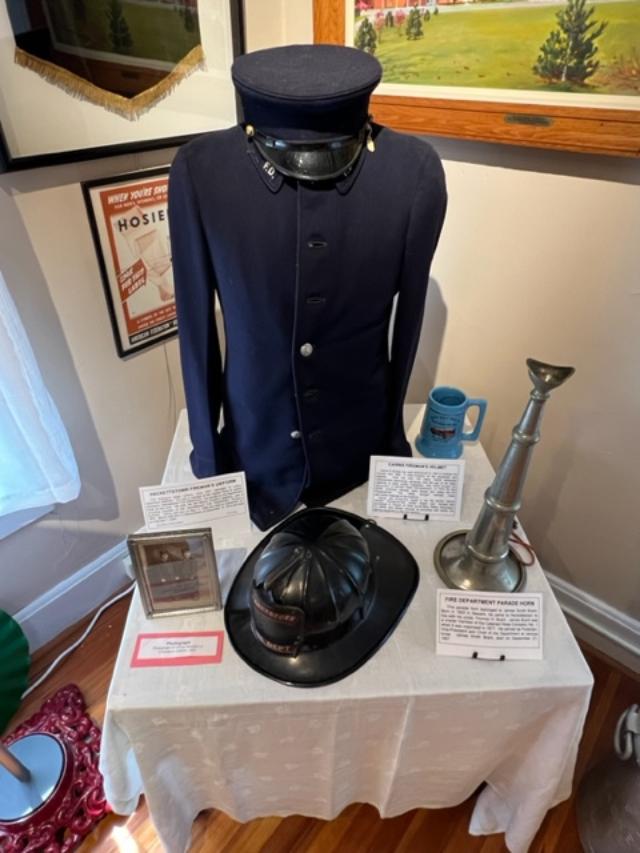
The Hackettstown Fire Department display

The Civil War display on the second floor.

Life was not simpler in the turn of the last century but productive in a different way. People lived and contributed to their communities. Hackettstown citizens took a lot of pride in their community and you can see in the business development and the investment in town activities.

The Hackettstown Historical Society does a nice job telling the story of the town and its progress in building the community over the years.

The History of the Hackettstown Historical Society:

The main gallery of the first floor of the society.

The Hackettstown Historical Society was organized on March 6th, 1975. The chapter members, numbering 72 signed the incorporation papers on September 4th, 1975. In December of 1975, permission to use a vacant town-owned building was procured from Hackettstown Common Council. It is currently leased from the town. This building located at 106 Church Street and built in 1915 for the Theodore G. Plate family is the Society’s museum and headquarters.

The Miss America exhibit of first New Jersey winner, Bette Cooper, who ran away from the crown.

The Hackettstown Historical Society is dedicated to the preservation of this area’s historic heritage. The objectives of the Society are to collect, catalog, preserve and display these artifacts, mementos and memorabilia for present and future generations and to hold meetings and exhibits that will inform members and interested persons of the Hackettstown area’s proud past.

The Centenary University exhibit (the local univerity) at the society.

It is a great little museum.

Washington’s Headquarters State Historic Site                                  84 Liberty Street                                                     Newburgh, NY 12551

Washington’s Headquarters State Historic Site 84 Liberty Street Newburgh, NY 12551

Washington’s Headquarters State Historic Site

84 Liberty Street

Newburgh, NY 12551

(845) 562-1195

https://parks.ny.gov/historic-sites/17/details.aspx

https://www.hudsonrivervalley.com/sites/Washington-s-Headquarters-State-Historic-Site-/details

Open: Sunday 1:00pm-4:00pm/Monday-Tuesday Closed/Wednesday-Saturday 11:00am-4:00pm

Admission: Adults $7.00/Senior/Student $5.00/Children 12 and Under Free

My review on TripAdvisor:

https://www.tripadvisor.com/Attraction_Review-g48254-d1798458-Reviews-Washington_s_Headquarters_State_Historic_Site-Newburgh_New_York.html

The Washington’s Headquarters State Historic Site in Newburgh, NY

I spent an afternoon exploring the Beacon/Newburgh area with all its historical sites and homes and my last stop was the Washington’s Headquarters State Historical Site in Newburgh, NY. Surrounded by a quickly gentrifying neighborhood it really showed me the progress this area has made and how the site keeps reinventing itself. It shows this site’s resilience.

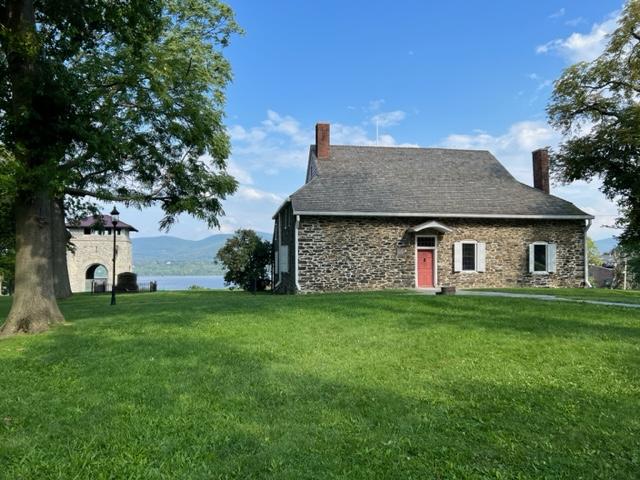
The Hasbrouck family farmhouse was General George and his wife, Martha’s home for over sixteen months.

For sixteen and a half months, the site was used by General George Washington, along with his wife Martha, his aides, guards and free and enslaved servants. They used the Hasbrouck family’s Dutch-style farmhouse as their home and headquarters. It was the longest time they spend at any military headquarters beginning in April of 1782 and ending in August of 1783 as the Revolutionary War was drawing to a close (Palisade Interstate Park Commission).

I was able to take the last tour of the day at 4:00pm and our tour guide was excellent. She really knew the history of the site and gave us a comprehensive tour of the home and the time before and after the war. We went room by room in the Hasbrouck family farmhouse and she described how the family had utilized the house and then how General Washington and his wife and staff used the home during the war years.

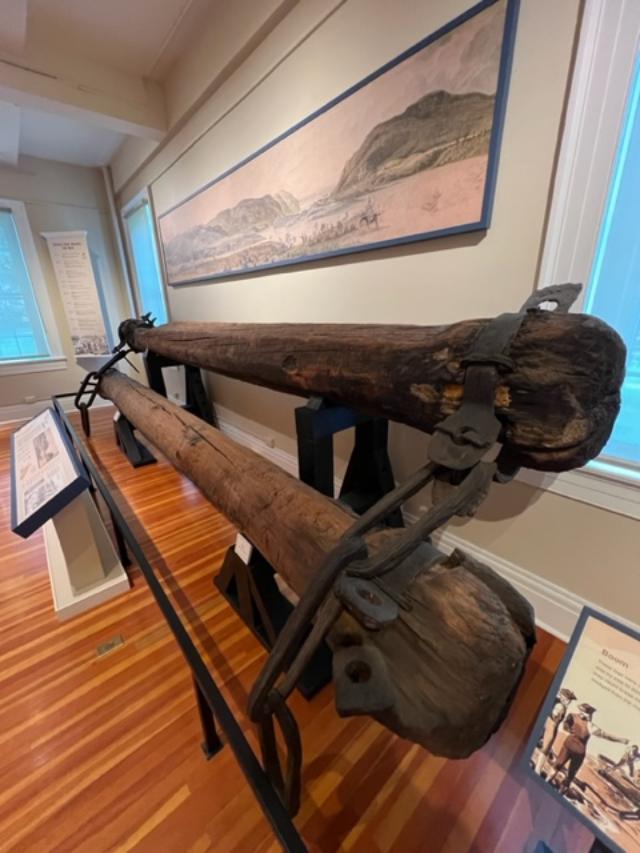
I started the tour in the Museum Building, which is a Federal style building that was erected in 1910 to house the collection of artifacts from that period. The collection includes the only surviving section of the boom that stretched across the Hudson River at West Point (Palisade Interstate Park Commission).

The main gallery housing equipment and the surviving piece of the boom.

The Boom that protected the Hudson River

The piece of the boom that survived and was dredged from the river in the late 1800’s.

The second gallery had the video history of the site and how Washington’s troops advanced in the area. It also went over the last years of the war and the progress American troops made.

The Video Gallery at the Washington Headquarters site.

The sign of the historic site.

After the tour of the museum on my own, we started the tour of the Hasbrouck family homestead. When we approached the house, you could see where the house was added onto from the original footprint. At the top of the doorway, we could see the cornerstone where the family name and year of the building of the house was built.

The cornerstone to the home with the family name and date.

Jonathan and Tryntje Hasbrouck built this Dutch style farmhouse between 1750 and 1770. They raised their family and ran their business here. The property stretched from the banks of the Hudson River to about two miles inland for a total of almost 200 acres. After his passing in 1780, his wife ran the home and the business successfully for the rest of her life (Palisades Interstate Park Commission).

The outside of the Hasbrouck family home. Notice the addition to the home.

The house itself has none of the original family furnishings but many period pieces including General George Washington’s desk from another location.

George Washington’s desk from another location that was brought here.

We started off the tour in the family kitchen and dining room which was one big room with a walk-in fireplace. The room was broken into sections as the food would be cooked in the giant fireplace and served at the family table off to the side. As more people visited the home, an area off to the side was used for plating and serving.

The Hasbrouck’s and Washington’s Dining Room

The walk-in fireplace for cooking and the dining space.

The plating area of the dining room that would be used by the Washington’s.

We next entered the battle room, where all the enlisted men would be doing all the General’s office work, correspondence and paying bills. Everything was done by hand and if multiple copies needed to be made, it was more work for the men working there.

The War Room where the enlisted men did all their work and corresponded with the troops and other officers.

General Washington’s office was off to the back. This is where all the strategic work of the war was performed and where General Washington worked with his staff.

General Washington’s office during the end of the war.

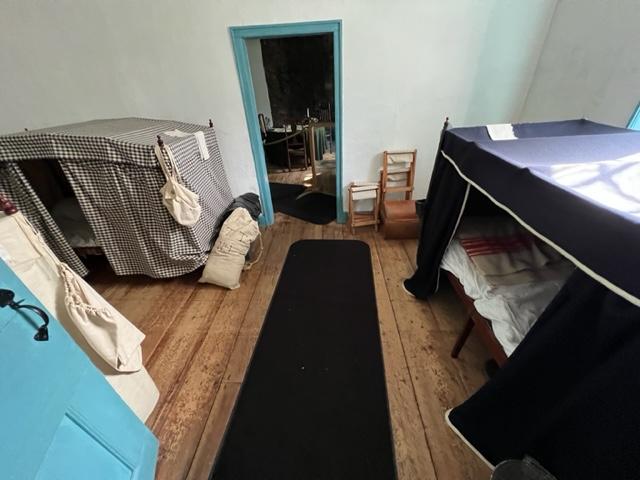
Once you passed through the front foyer again is where the enlisted men slept, two per bed which the tour guide said was uncomfortable for the men. Only in the summer months when half the staff was on leave could they sleep one per bed.

The enlisted officers sleeping chambers during the war years.

The three rooms on the other side of the house were used as the Parlor, where the Washington’s would entertain visiting dignitaries and guests. This was right off the main kitchen area.

The Parlor where the Washington’s entertained visitors and dignitaries.

The next two rooms were used as the Washington’s bedroom where we all noticed that the bed was so short. The guide informed us that even though George Washington was over six feet, people slept sitting up at that time as they considered it healthier.

The Washington’s bedroom

The next room over was the servant’s room where the free and enslaved servants would sleep and attend to the needs of the Washington’s. It looked to me that Martha contributed more than just entertaining the troops. She must have been the ear that her husband needed at wartime.

The Servant’s room

What I thought was interesting is the stairs going up did not lead to a second floor. The tour guide said that this was in the Dutch tradition of not having a second floor considering the Hasbrouck’s had ten children. She said only later on did families finish the house and construct the upstairs. Once the house tour was over and the tour guide answered all our questions, we were able to tour the grounds for the last hour before the park closed.

The property looking down the Hudson River to Bannerman Castle.

On the property was the Tower of Victory, which President Lincoln’s son built in honor of the Hundredth anniversary of the war. It was closed for touring. The details of the tower were really beautiful with the eagles adorning the sides of the building and the beautiful stonework.

The Tower of Victory sign

The “Tower of Victory”

The views of the Hudson River were breathtaking. On this beautiful sunny afternoon, you can see all the way into Beacon across the river and look as far down river as Bannerman Castle. Everything was so clear and beautiful from this site and you could see all the surrounding area. You could see why they picked this spot as the strategic headquarters for this part of the war.

The Minuteman statue on the property.

Artist Henry Hudson Kitson sculpted this statue and the Minute Man statue on the town green in Lexington, MA. These monuments commemorate the citizen-soldiers whose selfless bravery and sacrifice made this country possible (Palisades Interstate Park Commission).

Artist Henry Hudson Kitson was a British born artist who was educated at the Ecole des Beaux Arts. He was known for his military statues (Wiki).

Artist Henry Hudson Kitson

https://en.wikipedia.org/wiki/Henry_Hudson_Kitson

It was so interesting to spend the afternoon at the and realize it’s importance in American history. It is almost a humbling experience.

Madam Brett Homestead                                        50 Van Nydeck Avenue                                  Beacon, NY 12508

Madam Brett Homestead 50 Van Nydeck Avenue Beacon, NY 12508

Madam Brett Homestead

50 Van Nydeck Avenue

Beacon, NY 12508

(845) 831-6533

https://www.hudsonrivervalley.com/sites/Madam-Brett-Homestead-/details

https://en.wikipedia.org/wiki/Madam_Brett_Homestead

Admission: Adults $10.00

Open: Sunday-Friday Closed/Saturday (Every Second Saturday) 1:00pm-4:00pm

My review on TripAdvisor:

https://www.tripadvisor.com/Attraction_Review-g47291-d263800-Reviews-Madam_Brett_Homestead-Beacon_New_York.html

The Madam Brett Homestead at 50 Van Nydeck Avenue in Beacon, NY.

The Brett Homestead marker

The sign that welcomes visitors

I recently visited the Madam Brett Homestead on a walking tour and discovered that the family had a lot to do with the growth of not just Dutchess County but New York State as well. The house was the homestead for five generations of family members each who added to the home.

The homestead’s historic plaque

Since the family practiced thrift in the home and decor, we get to see the house with period furniture that has been donated back to the house from the family. Also, period pieces have been donated by other members of the community to show the home at different periods of time. It gave us a look into the home life of a prosperous farming and milling family.

The entrance of the Brett Homestead

The tour starts with a short video on the family and how Madam Brett got her inheritance from her father and built on the wealth that he had created. She leased out land with water and mineral rights thus adding to her wealth and had a grist mill that was the only one on the patent, so everyone had to go through her for grain processing.

The china cabinet with family related items.

The homestead was built by Roger Brett and Catherine Rombout Brett on land inherited by her father, which was part of the Rombout Patent (which covered much of lower Dutchess County). The couple had been married in 1703 and had originally moved in with her mother in the family’s manor home in Manhattan. Upon the death of her mother, Catherine inherited the land and the manor house in Manhattan. Land rich and cash poor, she and her husband mortgaged the manor house in Manhattan and built a small home and gristmill. They moved into their Dutch style home on Christmas Day 1709. The house was expanded in 1715. The home was later added on again in the 1800’s to the present house (Brett Homestead Pamphlet).

In the hallway on display is the original Rombout Patent, which everyone on our tour thought was very impressive. It had been found and was given back to the house. It shows the land deal that the settlers made with the Native Americans.

A copy of the Rombout Patent

We next headed to the Dining Room, where the family entertained guests. The room is full of period furniture and silver both family owned and donated to the homestead. The formality of entertaining is shown in the room set up.

The Dining Room at the Brett Homestead

Hannah Brett’s (Madam Brett’s granddaughter) bridesmaid dress was on display as well. This had been worn when she danced the Minuet with Marquis de Lafayette. I thought this was interesting in that she had this altered for the occasion and that it had lasted all these years. She had worn this for the wedding of Cornelia DePeyster, whose wedding dress in the New York Historical Society (Brett Homestead pamphlet). It was donated back to the house by the family descendants for display.

Hannah Brett-Schenck’s bridesmaid dress

Period furniture and decorations adorn the Brett Homestead

The decorative pieces in the Dining Room

The Dining Room fireplace

The kitchen was very interesting because when you walk through it you will see the modern kitchen in the front of the room that was put in around the late 1950’s and early 1960’s compared to the other side of the room which has the original fireplace and kitchen equipment. It shows the contrast in cooking and entertaining over the last two centuries.

The old versus the new in the Brett Homestead kitchen.

The house was constructed in three sections. The original section of the house from 1709, the addition in 1715 and then the grander addition in the 1800’s that gives the house the look it has now. You can see how the house evolved from a small residence to a grand showplace and you can see this in the way it was designed.

The upstairs hallway shows the contrast between the old home and the additions.

Each of the rooms were decorated with period pieces and some of the rooms has themes to them such as one was a Children’s Room, another was the family office and one contained farm equipment. All the items represented a different time in the home’s history.

The Children’s Room with a collection of dolls that creeped visitors out.

The upstairs bedrooms

The period farm equipment display.

The other bedrooms showed guest rooms for visitors to the area, the office where the Brett’s would have conducted business and rooms would have housed many family members.

The Master Bedroom with canopy bed and bedwarmer

The Guest Bedroom

The home office of the family.

The house stayed in the family until the death of Alice Sutcliffe Crary at 85 in 1953. The Melzingah Chapter of the Daughters of the American Revolution purchase the homestead to save it from becoming a supermarket. They have been lovingly restoring and holding events at the homestead as well as contributing to the community at large and promoting Historic Preservation, Education and Patriotism (Madam Brett Homestead pamphlet).

I recently visited the house with a group of people on a tour and we visited the house for Christmas and the local garden club had decorated part of the house for holidays with garland on the bannisters and on some of the mantels. The outside of the house was quite festive.

The house during the holiday season.

The house adorned with wreaths and garland on the holiday tour.

The welcoming entrance to the house during the holiday season.

The docent tours are very interesting and really give you a view of what life was like in the house for the families that lived here. They only take place on the second Saturday of the month so you need to plan ahead.

Hopewell Depot Museum                                                                                 36 Railroad Avenue                                                                 Hopewell Junction, NY 12533

Hopewell Depot Museum 36 Railroad Avenue Hopewell Junction, NY 12533

Hopewell Depot Museum

36 Railroad Avenue

Hopewell Junction, NY 12533

(845) 226-7003

Home

Open: Please check website for hours (right now every Saturday 10:00am-2:00pm)

Admission: Free but donations are accepted

My review on TripAdvisor:

https://www.tripadvisor.com/Attraction_Review-g47922-d13000900-Reviews-Hopewell_Depot-Hopewell_Junction_New_York.html

The Hopewell Depot at 36 Railroad Avenue

The Hopewell Depot and grounds

I visited the Hopewell Depot one weekend and found it to be a very interesting look at the rail service during its development in the Hudson River Valley. The rail service changed the way business was done in the valley for farmers and opened the whole area up for development.

The rival commuter lines than merged together to make a better lines of transportation and bring people not just through the area but to help build the communities and their businesses that they are today. Each section of this small museum tells the story of that development.

The front gallery of the museum

The potbelly stove that warmed riders before their rides.

The community gallery

The front section of the museum which houses the gift shop and welcome area once served as the waiting room for the train station. This had been a smaller line once serving between Poughkeepsie and Connecticut and then later on to the rest of New York State and as a line to transport agricultural products between the Valley and the growing market in New York City.

The tops of telephone poles

The middle section of the museum houses the Train Manager’s office and an office for communication to outside communities. Here the train depot manager would run the day in day out services of the trains and their functions with the bigger lines and the Western Union communications area would service the community with messages and services to the outside.

The Train Station Manager’s office

The Western Union/Communications office

The back section is where you could buy your tickets and converse with other people taking the railroad. Here are displays on the railroad lines, the products that were serviced through the rails like the big Borden Foods display, whose factory was located right next to the train station and had serviced all the dairy farmers in the community bringing fresh milk to New York City and beyond.

The back gallery of the museum

The back gallery

The Train Lamp display

The Borden Milk display in honor of the dairy industry locally owned Borden plant.

The museum also has displays on the workings of the railroads and how they functioned, how the community was formed and grew around the railroads and all sorts of equipment and items that made the operation work. The museum volunteers have done an excellent job telling the story of how Hopewell Junction and the surrounding towns developed and grew.

The Community Development display

The “Working” display of the growth of trains

Outside the building, the museum volunteers are working on renovating a donated caboose that was once used on another line. Here I saw the Train conductors operation area, the sleeping quarters and a small kitchen. I thought that was fascinating because I never knew what this car contained and never knew it was living quarters for the conductor. I can see the potential of kids wanted to climb all over this and want to know what life was like on the trains.

The Caboose on the back of the property

The inside sleeping quarters of the caboose

The overall sleeping area

The kitchen area

History of the Hopewell Depot:

The Hopewell Depot was built in 1873 by a Millbrook-led rail investment group that changed names several times between 1869 and 1873. Originally, the Dutchess & Columbia RR established a north-south short-haul coal route to Connecticut also serving the communities in the center of the country. The Hopewell community grew up around the Depot.

The grounds of the museum

In 1888, after Poughkeepsie’s great railroad bridge (now the “Walkway Over the Hudson) was built, the Dutchess County RR pushed southeastward and arrived in Hopewell Junction in 1892, creating a 4 way hub. In the next decade, the lines through Hopewell became part of the Central New England Railway system. In 1927, they came under full control of the New Haven RR until it failed in 1968. The Poughkeepsie RR Bridge burned in 1974 and the local rail service ended here in 1982.

The Hopewell Depot Mission:

Privately owned and operated since 1996, Hopewell Depot has progressed entirely through the work of volunteers from all walks of life.

The old baggage cart

The Visitor Center offers a variety of information on the local area and items for sale. The interior museum rooms present a host of interactive displays and artifacts about the region and the great era of railroads in general. The grounds contain the Interlocking Signal Tower with a special exhibit loft and public restrooms and the Rudberg Pavilion is open to visitor as a rest area.

Hopewell Depot Museum is on the National Register of Historic Places and is a fully chartered NYS museum. Its mission is to present the complex as a historical and educational experience for the regional community and provide an informative, recreational venue the public can enjoy with pride.

The Depot in the summer months.

The tiny caboose

Getting to know the museum on YouTube