

(Plus a walk around Downtown Rockaway, NJ)
Rockaway Borough Historical Museum
199 West Main Street
Rockaway, NJ 07866
(973) 983-1491
https://www.rockawayborough.org/HistoricalCommittee/
https://www.facebook.com/groups/145768595507253/posts/6933225160094862/?_rdr
Open: Only on the last Sunday of the month from 1:00pm-3:00pm/Monday-Saturday Closed
Admission: Free but donations are suggested and recommended to help operate the museum
My review on TripAdvisor:

The Borough of Rockaway Historical Museum at 199 West Main Street

The sign that welcomes you to the museum
When I visited the Borough of Rockaway Historical Museum, I like probably everyone else got the Rockaway Township Historical Society and Museum mixed up with the Borough of Rockaway Historical Committee and Museum. One is in the Township of Rockaway and one is in the Borough of Rockaway which are two different towns.
That was confusing enough and the fact that Google had them as closed on the Google website (which I changed). I was lucky to get there with just over an hour to visit the museum.
The museum was worth the trip. Located in Downtown Rockaway, NJ, the museum was near all the restaurants and shops downtown plus a historic cemetery at the Presbyterian Church. The whole museum you can see in an hour so it was just perfect.

The front gallery of the museum
The front gallery is dedicated to town history and the Morris Canal. The Morris Canal was the reason for the growth in this area of New Jersey and was built on the wealth of the farmers crops, coal and light manufacturing. Items were then sent to New York City and Philadelphia.
The railroads would change this later but would be where the early growth of this area would come from.

Pictures of the Morris Canal in the area

Pictures of the early Morris Canal in Rockaway, NJ

Artifacts of early Rockaway history including bottles and newspapers

WWII listing of Veterans lost in the war
The second small gallery showcased former businesses of the Town of Rockaway, NJ from the Downtown merchants to the larger, more commercial businesses. Most do not exist anymore.

The businesses of old Rockaway and the surrounding area

Artifacts from the McKinnon Axe Factory

The businesses with high school memorabilia

The McKinnon Axe Factory
The McKinnon Ace factory was once a major employer and manufacturer in the town. Long out of business, the museum has lots of pictures and artifacts from the company.

Artifacts from the McKinnon Axe Factory

Artifacts from the McKinnon Axe Factory

Old businesses from Downtown Rockaway
Most of these old businesses do not exist anymore but their memories live on in these displays with artifacts from a lot of these businesses.

Old businesses in the Rockaway

The Beaver Brook Dairy Farm
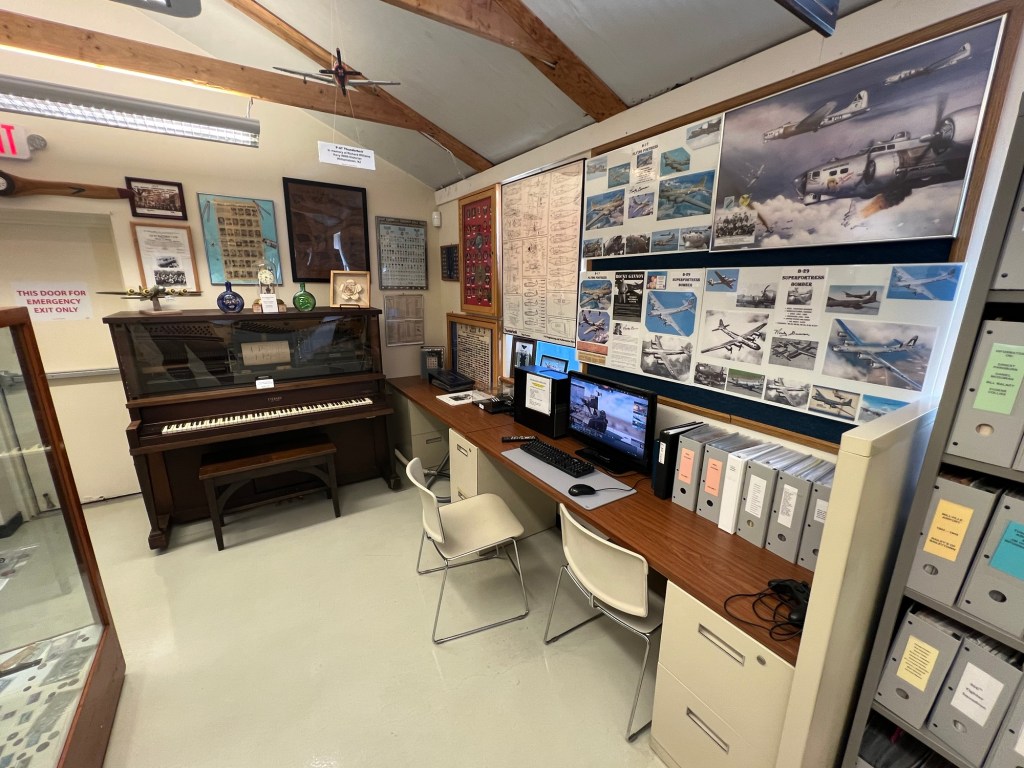
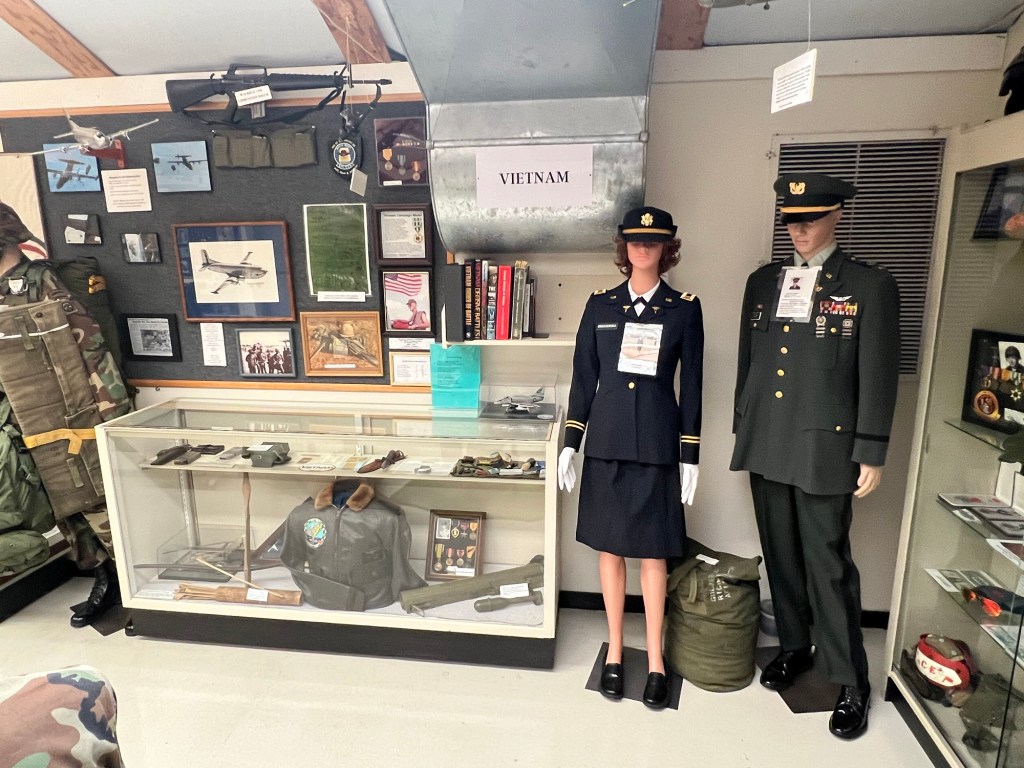
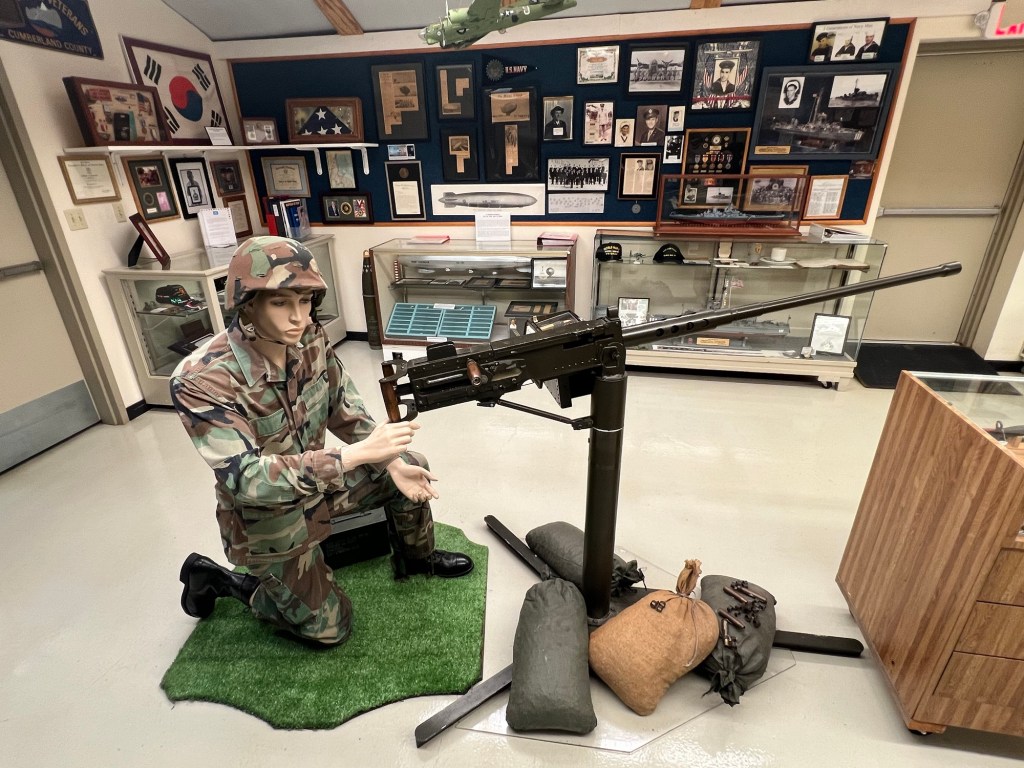
In the back gallery, the museum had more displays of the high school and displays on the history of the Rockaway Police and Fire Department. There was historical maps of the area and a small Military display. They even had an original land deed from one of the earliest settlers living in the area.
There were even pictures of the old quarry of the town that once sat behind the museum. It shows how the town keeps changing.

The display of Rockaway High School memorabilia

Graduation and Washington trip photos

The Military display and historic maps of Rockaway

A closer look at the Military display and the local hero’s of the town. The display showcased some of the residents in town who made important contributions to the military effort including a Four Star General.

The historic map of early Rockaway Village

The Military, Fire and Police Department displays

Artifacts and memorabilia from the Fire and Police Departments of Rockaway

The display of Rockaway schools and pictures of the City Fathers who ran the Borough of Rockaway

The old quarry that sat behind the historical society that is now Recreational space and ball fields showing how the town keeps changing
This little hidden gem is located just off the main downtown and should not be confused with the Historical Society of the Township of Rockaway, which is another town with it’s own Society.
There is a lot to see at the museum and is a nice way to get to know a little about the history of the area. This includes local family history as well.

The Jackson Family land deed of one of the old families of Rockaway
Walking around Downtown Rockaway, NJ after the tour of the museum:
Around the corner in Downtown Rockaway is the First Presbyterian Church of Rockaway at 35 Church Street, where members of three Jackson family members and many original settlers were buried.
https://fpcrockaway.org/our-cemetery-1

The old cemetery behind the church were many original families are buried
The history of the First Presbyterian Church of Rockaway’s Historical Cemetery:
(from the church website)
Part of the present-day cemetery was believed to be an old Native American burial ground. Colonial settlement took hold here in Rockaway, Morris County New Jersey, around the year 1720, and considerable business formed around 1730 with the building of the Job Allen Sr. Iron Works. Tradition states that this particular spot was selected as a burial ground by the earliest families. On March 2, 1758, the Presbyterian Church was founded and organized. The first Meeting House constructed of wood, was built in 1758-60, primarily by Job Allen Sr. Job Allen Jr. would complete the construction of the Meeting House some 36 years later in 1794. The present church sanctuary was built in 1832.
The original church property consisted of 10 acres and 30 perch, which used to cover property west of Wall Street, and also included property across the street from the present church. Some of the earliest settlers whose grave sites are unknown and forgotten can be under the large church parking lot or even under some of the cemetery roads.
On September 27th, 1773, David Beaman: a founding member, deacon, chorister, elder of the Rockaway Presbyterian Church, was voted “to take care of the burying yard, to tell people where to bury their dead, and to advertise it through the parish.” This makes him the first sexton at the Rockaway Presbyterian Church. Ironically, David Beaman is buried in a grave that was never marked. He passed away in 1802 and has a cenotaph in the cemetery. Thomas Conger became sexton in 1797. Revolutionary War veteran, David Gordon, became sexton in 1802. People used to call him “the old sexton.” His broken tombstone bears the same inscription. He held the position as sexton for over 30 years. He died in 1852 at the age of 92 years and 10 months. In 1832 William Wear became the sexton for the “new church”, having “the privilege of tilling and pasturing the graveyard.” After his service there was Silvanus Howell in 1840, in 1845 Samuel Garrigus, then John B. Kelsey and Fredrick Star, then David Hamilton in 1858, Joseph H. Beach in 1864, then John Gordon Mott (David Gordon’s grandson) in 1875, who held the position for an astounding 47 years! He was also the first sexton who kept accurate records. He was assisted by William Rogers and Peter Beatty in the last few years of his tenure. Peter Carlyon followed John Gordon Mott in 1923 retiring in 1955. The oldest gravestone is dated April 8th, 1762. David Estill lost his beloved wife Mary at the age of 24 years.
There are estimated to be 47 Revolutionary War veterans buried here, including a Hessian Soldier named Leopold Zindle (d. 1821), some accounts say around 100 people buried here participated in the conflict. The Morris County- New Jersey Militia’s highest ranking officer, Brigadier General William Winds is buried in the small knoll behind the church. He was also elected as one of three delegates from Morris County to the New Jersey Convention which ratified the Constitution of the United States for the state of New Jersey in 1788. He died in 1789.
There are 16 War of 1812 veterans interred in the cemetery, 6 War of 1812 “peace time era” service members of the Morris County N.J. Militia, 132 Civil War veterans, 13 Spanish American War veterans, 89 WWI veterans, as of December 2021 there are 168 WWII veterans, 41 Korean War veterans, 20 Vietnam War veterans resting in peace. There are approximately 7,000 people interred in the cemetery.
In 1861 – 1865 the cemetery was surveyed and plotted, and walkways and roads were constructed. In 1933 part of George W. Stickle’s will was bequeathed to the cemetery. Part of the money was used to erect the iron spiked fence that surrounds half of the property (from the church website).

The section of the Jackson family plots

The Jackson family plot in the cemetery
The museum is a treasure trove of information of Rockaway’s and central New Jersey’s past. It is interesting to see how the area had changed and how it will continue to progress in the future.
On the recommendation of the head of the museum, who was also a town Councilman, I walked down into the downtown area to have lunch. I stopped at Anthony’s Pizzeria at 51 West Main Street for lunch. I just wanted a slice of pizza.

The historic building at the crossroads of Downtown Rockaway at 51 West Main Street

Anthony’s Pizzeria at 51 West Main Street has been in business for 45 years and a town staple.
https://anthonyspizzarockaway.com/
My review on TripAdvisor:

The inside of Anthony’s Pizzeria
I ordered a slice of pizza and a Coke and while I was talking to the owner, I looked into the pizza case and saw an unusually large slice of Cheese pizza. He explained it was their specialty stuffed pizza and it had everything in it from ham, pepperoni, sliced meatballs, onions, peppers and olives etc.
When I told him I was not thrilled with cooked vegetables on pizza, he insisted I try a slice and cut me a piece to try complimentary. He was a good salesman. He warmed it up and I have to say that I was pretty impressed by it. The layers of ingredients give it its complex and combination of spicy and tangy flavors

There is a lot in that slice of pizza
I have to say that I was impressed by it. I would have left out the olives but still it had a unique flavor and with a small side of their homemade red sauce makes a perfect meal onto itself. The pizza here is excellent, the service is really friendly and the prices are really reasonable.
It was almost like COVID never happened. It’s nice to know that some restaurant owners are not gouging. My lunch here was excellent.
It really was a nice afternoon in Downtown Rockaway, NJ even on a gloomy afternoon.














 Visiting a Museum: The Unique, Unusual, Obscure and Historical