Tag: Small Historical Societies of New York State

The Museum of Cape May County                      504 US. 9                                                             Cape May Court House, NJ 08210

The Museum of Cape May County 504 US. 9 Cape May Court House, NJ 08210

The Museum of Cape May County

504 US 9

Cape May Court House, NJ 08210

(609) 465-3535

https://www.cmcmuseum.org/

https://www.facebook.com/Museumofcmc/

Hours: Seasonal Hours Sunday-Monday-Tuesday/Wednesday 10:00am-2:30pm/Thursday Closed/Friday 10:00am-2:30pm/Saturday Closed. Tours are at 10:00am and 12:00pm.

Admission: Donations Accepted/ (I paid $5.00 for the hour tour)

My review on TripAdvisor:
https://www.tripadvisor.com/Attraction_Review-g46342-d286393-Reviews-The_Museum_of_Cape_May_County-Cape_May_Court_House_Middle_Township_Cape_May_County_.html

The Museum of Cape May County at 504 US 9
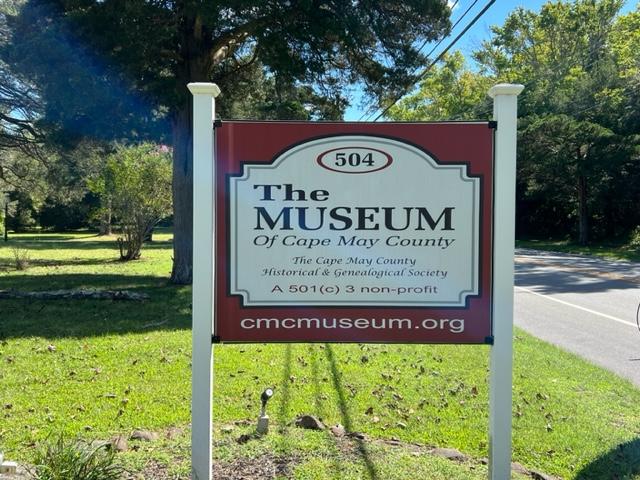
The Museum of Cape May County sign welcoming you.

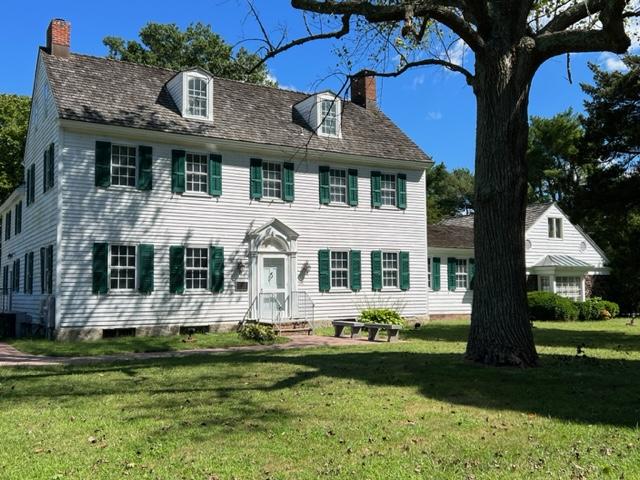
The Museum of Cape May Country museum complex

The Museum grounds in the back.

After three years of trying to visit the museum, I finally got on a last minute walking tour of the Museum of Cape May County and have to say that it was well worth the wait. What an interesting set of buildings that have a fascinating set of artifacts and so nicely displayed in a series of buildings.

The museum campus is broken up in a series of buildings on a two acre site. There is the main office which has an art exhibition, the family homestead of the family, who lived here for several generations, the carriage house which displays several carriages and stage coaches that were used in the area.
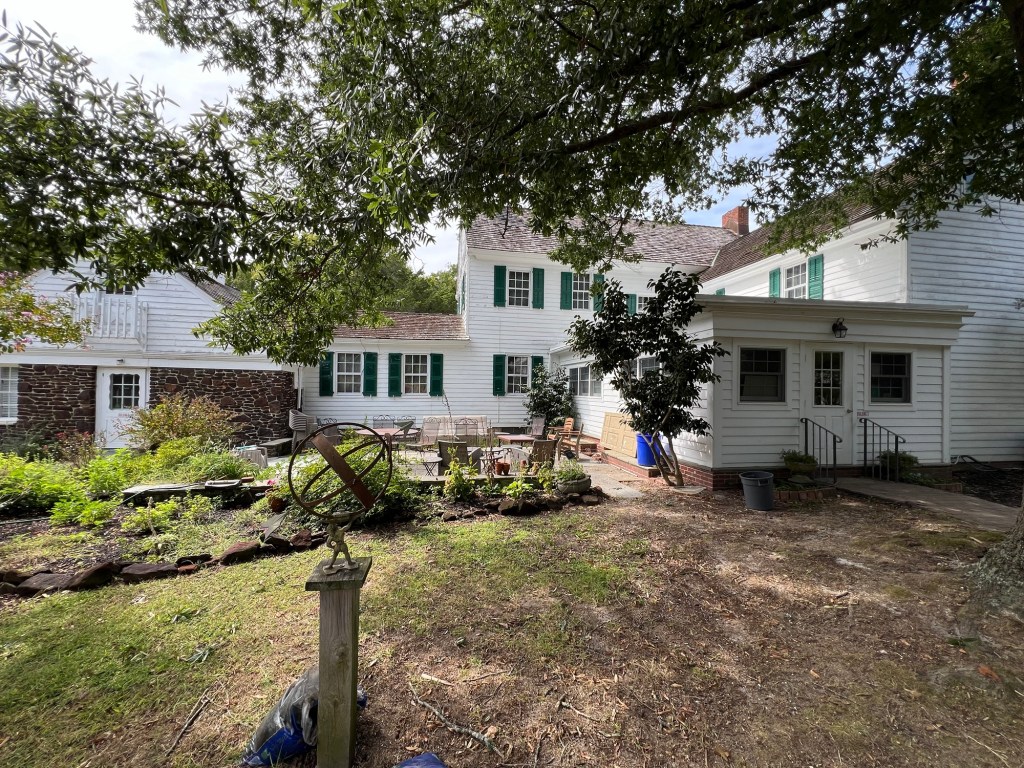
The back of the main house where you can see the three additions to the house

The barn where the Military, Native American and Farming displays are showcased

The Carriage House is to the left and the barn is to the right

The Carriage House on the property

The History of the House and of the Cape May County Museum site:

(from the museum website)

Housed in a building that dates back to 1704, the Cresse House, and its 1830 Holmes addition, as well as a historic 1780 barn and carriage house have rooms devoted to a subject or time that will hold you spellbound as you make your way through the past. The 11 room Cresse Holmes house treats you to a glimpse of life as it was in Cape May County from colonial to modern times. From the 1704 colonial kitchen and loft bedroom to the Victorian dining and sitting rooms all are decorated and furnished with period pieces. Special exhibit rooms include a children’s playroom teeming with toys, a doctor’s room with instruments, glassware and vials filled with a colorful array of pharmaceuticals and a Victorian music room with dozens of fascinating players and instruments (Cape May County Museum website).

Our first part of the tour was the family home which had been lived in for generations. The first part of the house was built in 1740 and you could tell by the open hearth and the flooring.

The hearth of the original section of the Cresse home

The kitchen was set up and furnished as the main part of the house. Because of the heat, this was the main part of the house that habituated. Here the family would gather, eat and socialize.
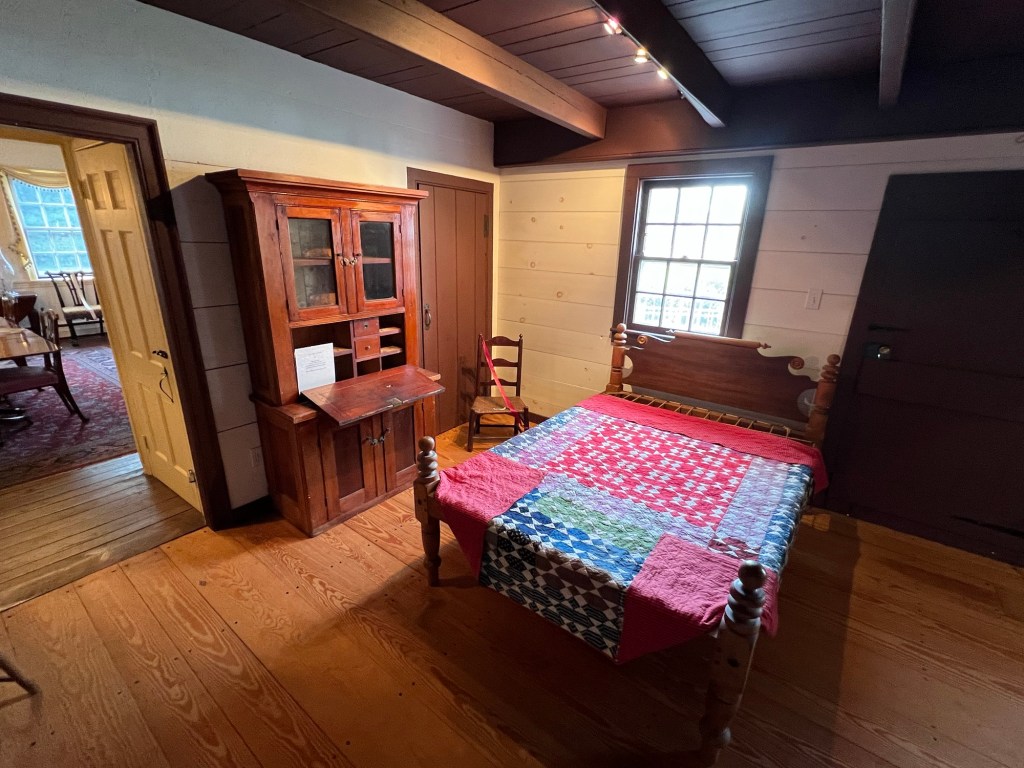
The back bedroom shows the families affluence in the late 1700’s

Having a separate room for sleeping was considered quite extravagant. The heat would circulated through the home and warmed this room next door. The main part of the house was built in 1840 in the Federalist design.
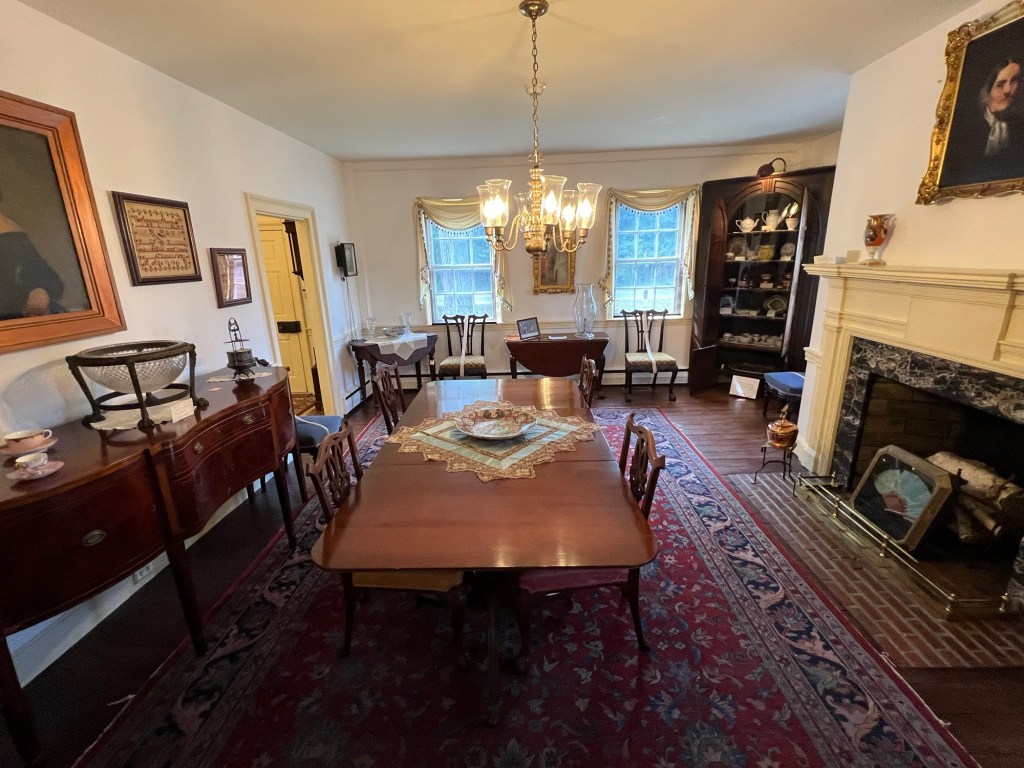
The main dining room showed the affluence of the Holmes family in the early pre-Civil war era

The main part of the house that faced the road was the 1840 Holmes family addition with the Federalist design. This part of the house was the main part house that was used for every day living and entertaining. The house was furnished in a combination of family heirlooms and donated period pieces..

The house well furnished with period pieces

The beautiful side table of the Dining Room

Both the Living Room, Dining Room and the Parlor were all tastefully furnished and what I thought were interesting parts of their collection. It was like someone had just left the room.

The Parlor of a Victorian house held its finest pieces

The furnishings in the Parlor
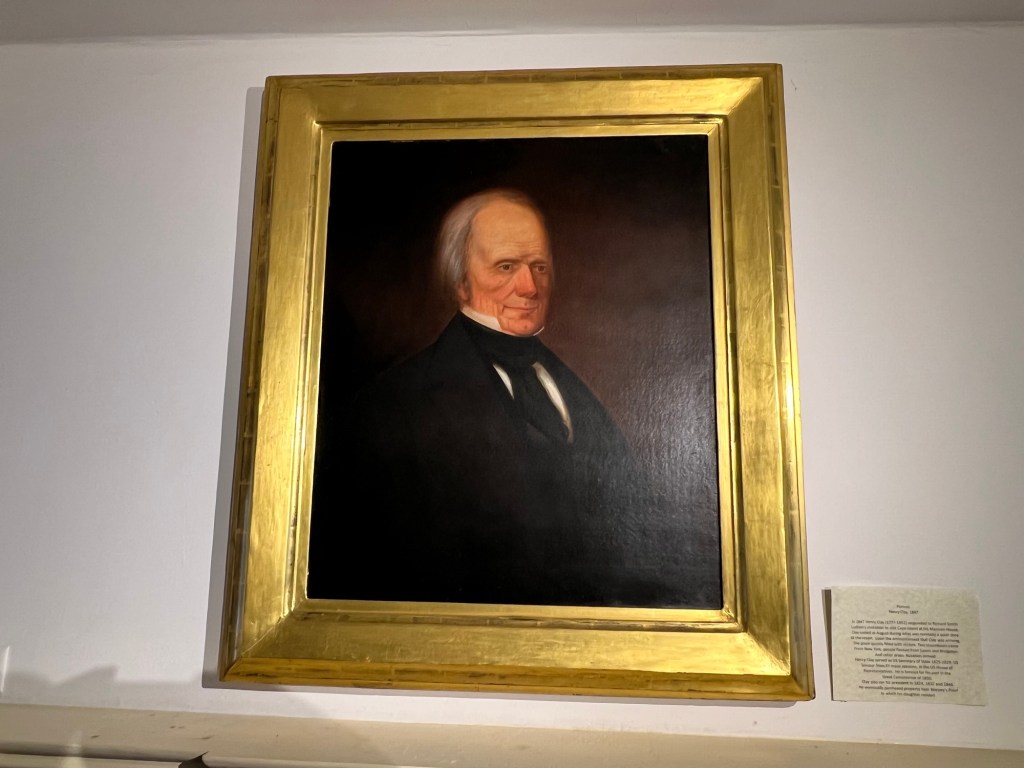
The painting of Henry Clay stood above the fireplace

Since I joined the tour late, I had seen just the first floor of the home before we continued on to see the rest of the building.
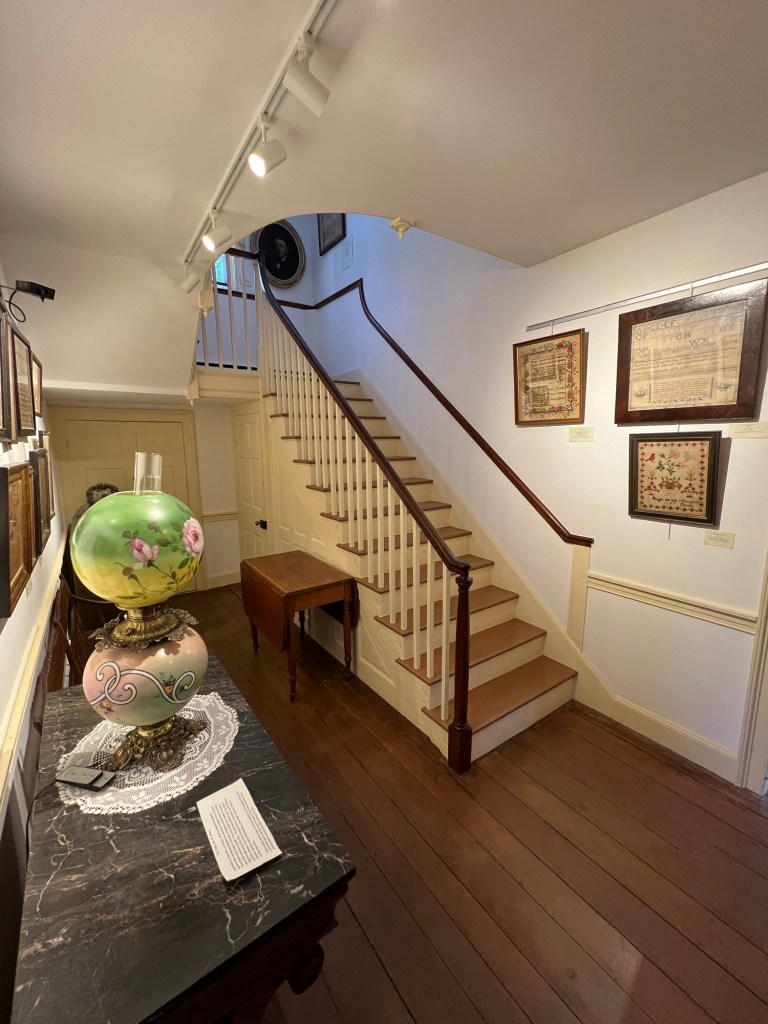
The front entrance room of the house

As we exited the house, we moved on to the most important room of the house, the outhouse which was located behind the main home.
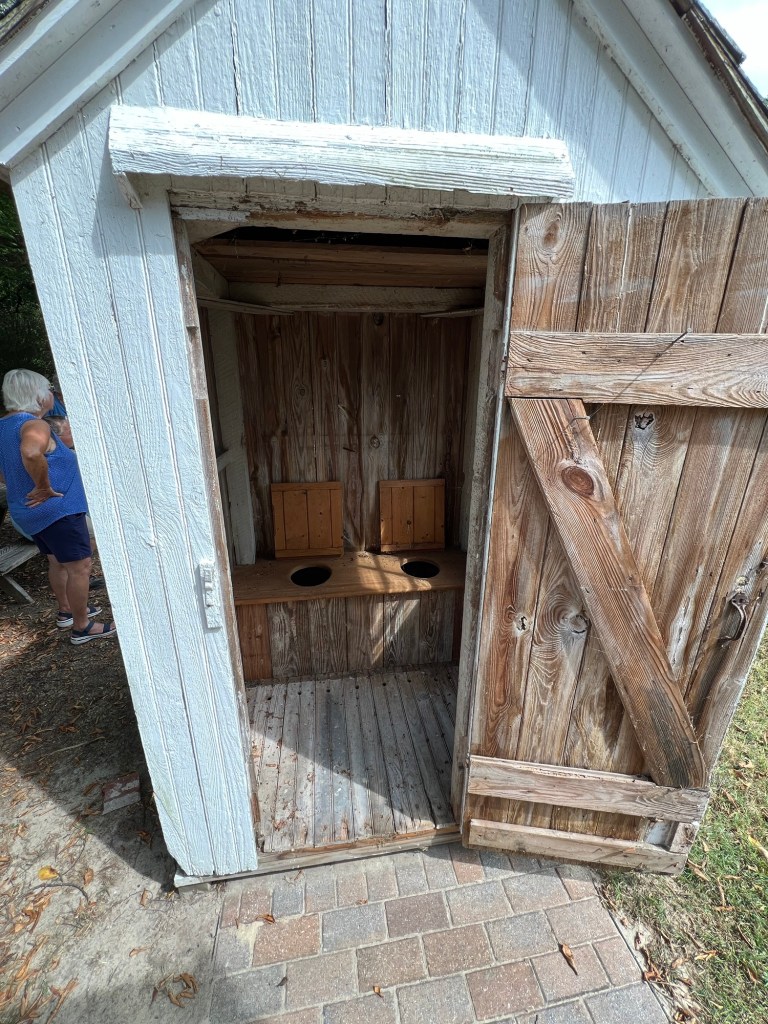
The outhouse in the back of the home

We next moved on to one of the galleries of the Nautical collections.
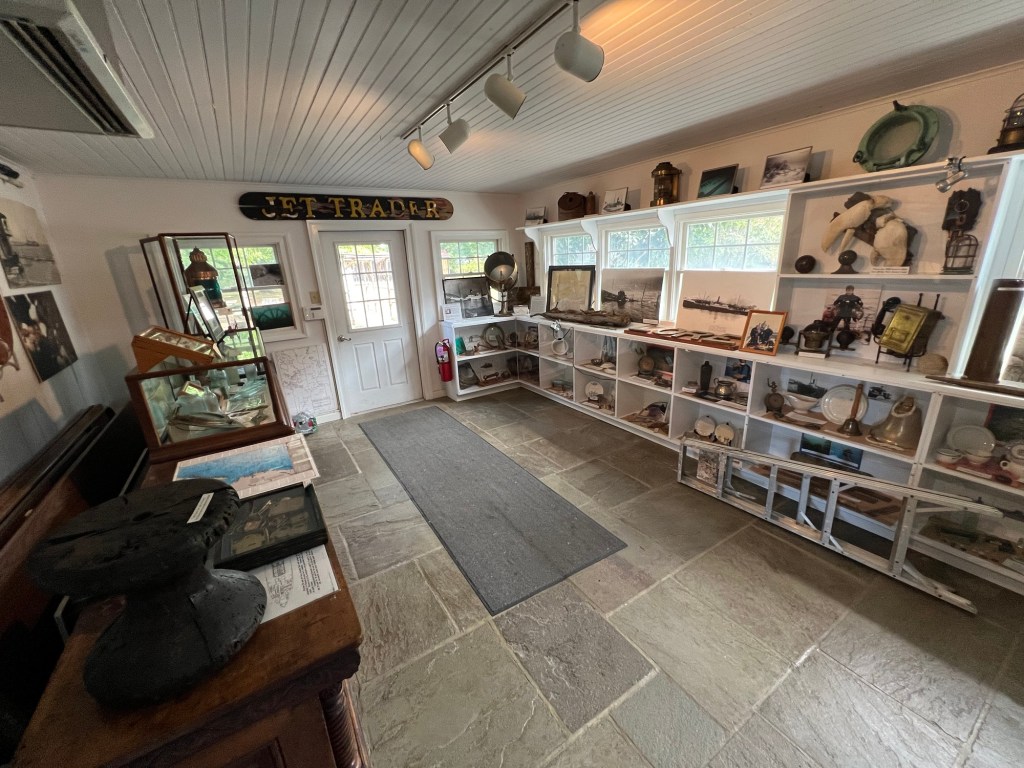
The collection of nautical artifacts

Mantel’s for navigation
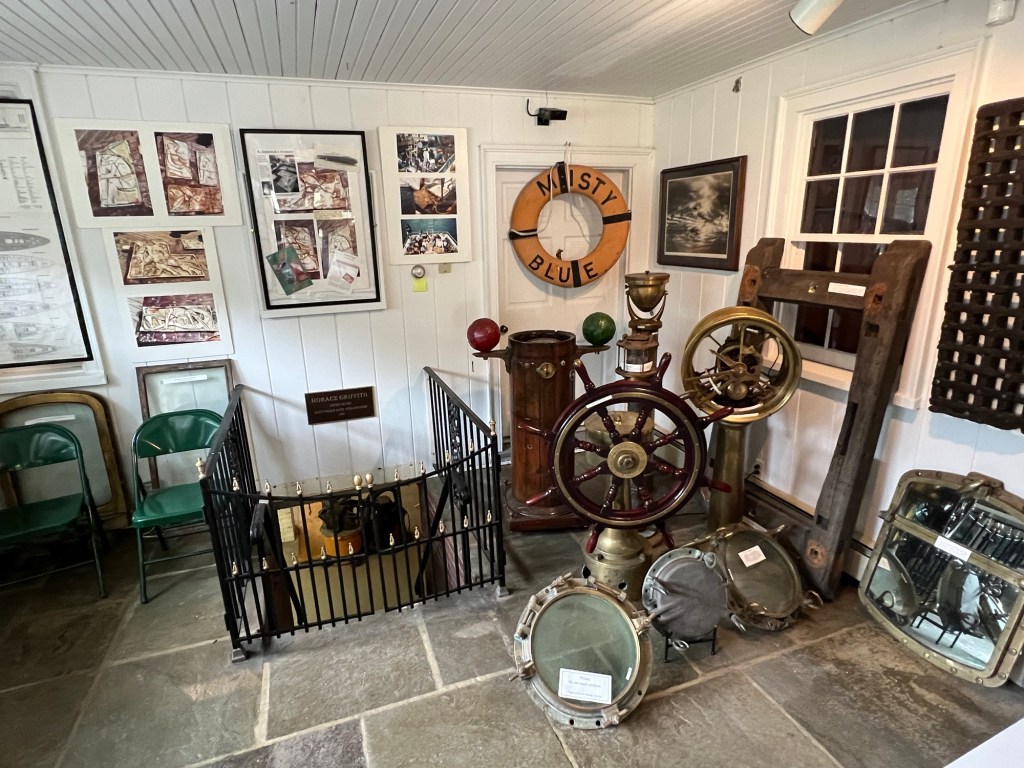
Items from the shipping industry

What beautiful items

Our next part of the tour was of the Carriage House and its collection of buggies and carriages owned by by local residents.

The Barn and Carriage exhibits:

(from the Cape May County Museum website)

Our barn is home to a maritime exhibit including Cape May County’s crown jewel, the original first-order Fresnel lens from Cape May Light House. In addition to our collection of farm implements the barn is also the site of our recently dedicated military room that pays homage to those who served our nation in time of war.

Period pieces range from the Revolutionary War to our country’s most recent involvement in Iraq and Afghanistan.  Of special interest is the American flag that was carried by soldiers who hailed from Cape May County during the Civil War. The flag survived numerous battles, including Gettysburg, Spotsylvania, Bull Run and was at Lee’s surrender at Appomattox. The Carriage Shed houses items related to transportation – a vintage horse-drawn market wagon, a doctor’s sulky and an early stagecoach that ran between Bridgeton and Pennsville (from the museum website).

The collection of carriages and buggies

A local buggy from a member of the community

The history of the Cape May Stagecoach
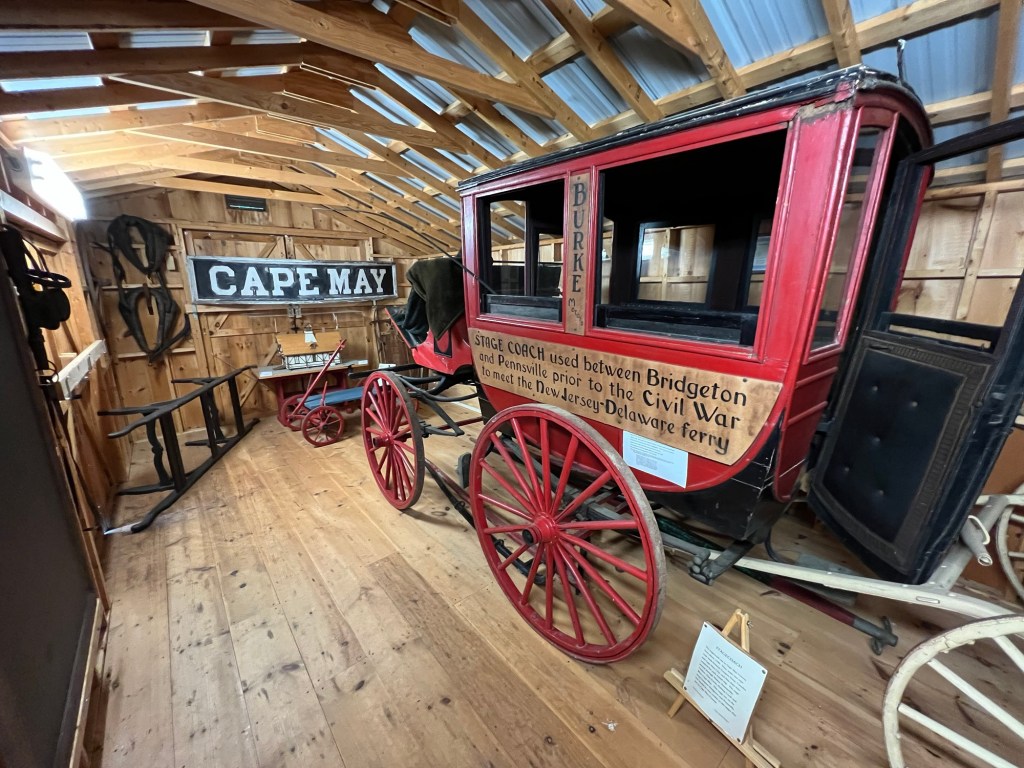
The Cape May Stagecoach

This stagecoach was used on the route between Bridgeton and Pennsville

The funeral cart used to transport bodies once people die to their last destination

The last building on the museum’s property housed military artifacts, farm equipment and artifacts from what would shape the local community

The Maritime History of Cape May and of the Museum:

(from the museum website)

Since its earliest days the area we now call Cape May County has been linked to the water.  With the tumultuous Atlantic Ocean on one side, the Delaware Bay on the other and lush forest and field between it served its residents well.  Early Native Americans thrived, whalers found whales in the ocean and refuge in the bay. All worked the shores and tributaries for birds and shellfish.  As the population grew, shipbuilding and coastal trade took on greater importance.  Come visit us and explore this aspect of our museum (from the museum website).

Many of the artifacts, photographs and manuscripts associated with maritime activities have found their way our museum collection.  From the original first-order Fresnel lens that sat atop the Cape May light to whaling implements, marine skeletons, ship parts and Native American exhibits there is something for everyone.  Of special interest is our recently acquired Cresse Journal, an original manuscript by Lewis Cresse detailing the life of a whaler in the mid-eighteenth century (from the museum website)

Hunting and military items from around the turn of the last century
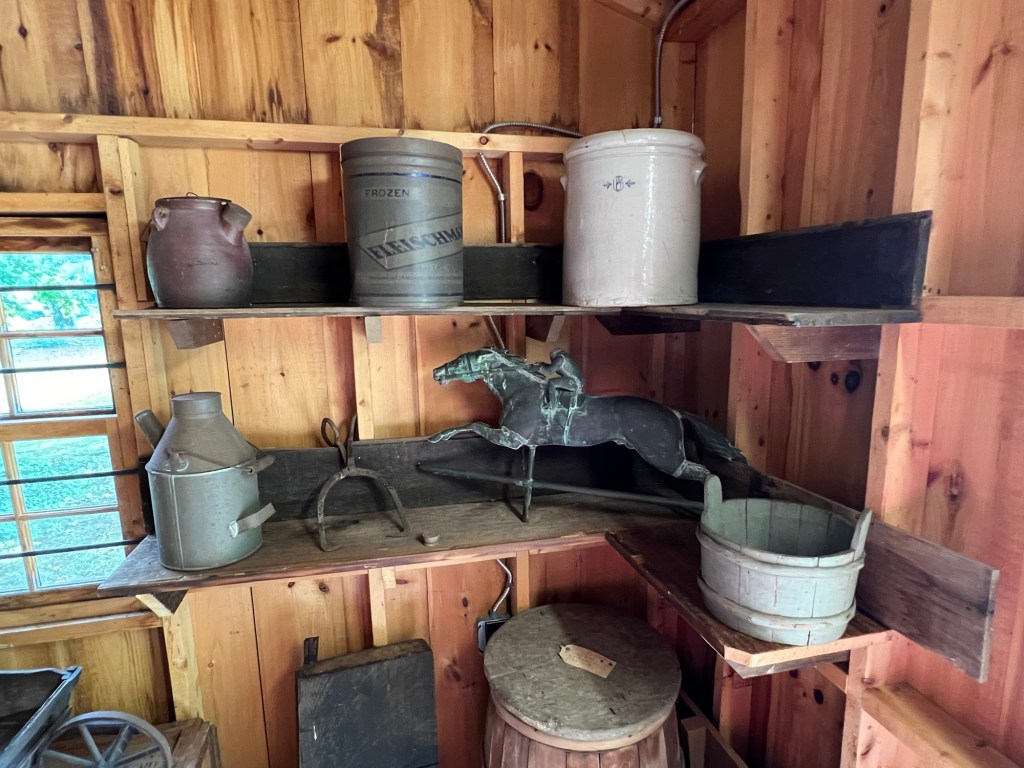
Household and farming items

Artifacts from the Shipping industry

Artifacts from the Counties Ship Building past

Items from the Whaling Industry in Cape May
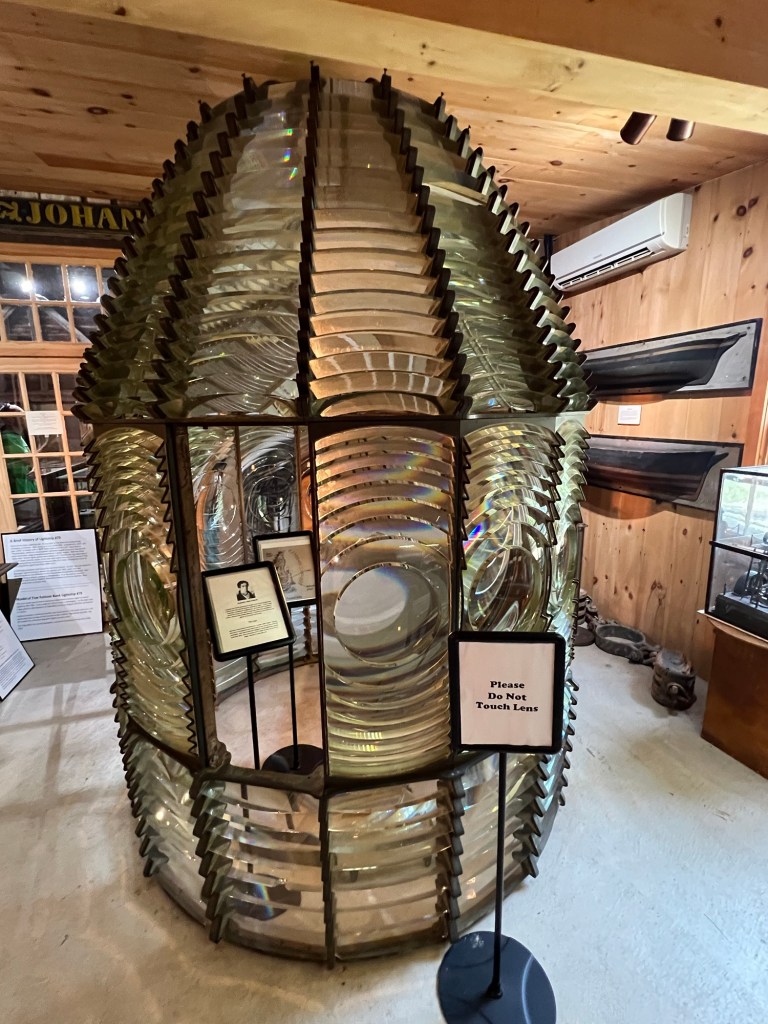
The museum also houses the original Cape May Lighthouse light

The history of burial and old cemeteries in Cape May
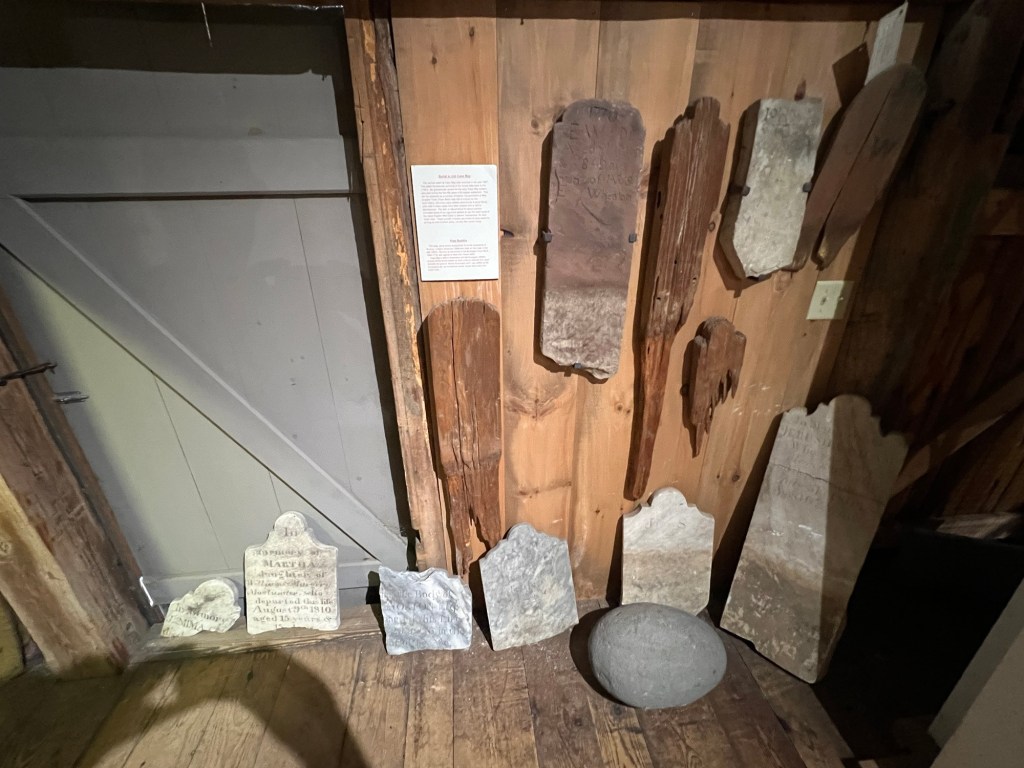
Old tombstones from Cape May cemeteries
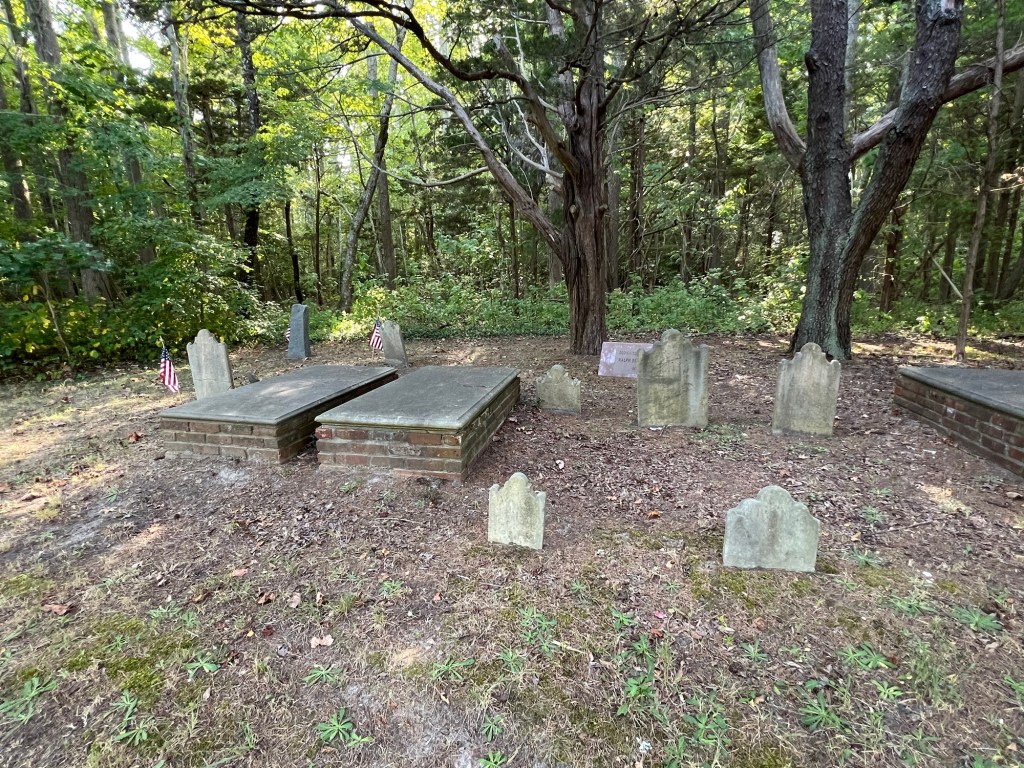
The family cemetery on what was once the family farm that now sits down the road and across the street

The family plot

The museum’s extensive collection of arrowheads and other Native American artifacts

The Cape May Civil War flag is most of the most interesting pieces in the museum’s military collection
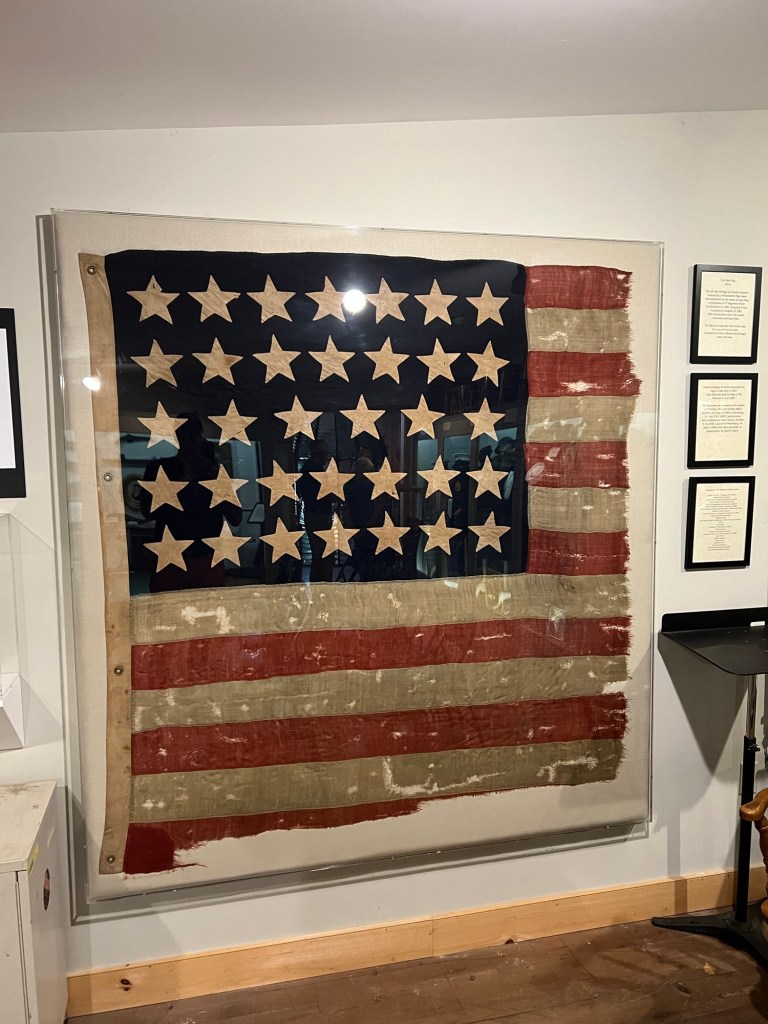
The Cape May Civil War flag
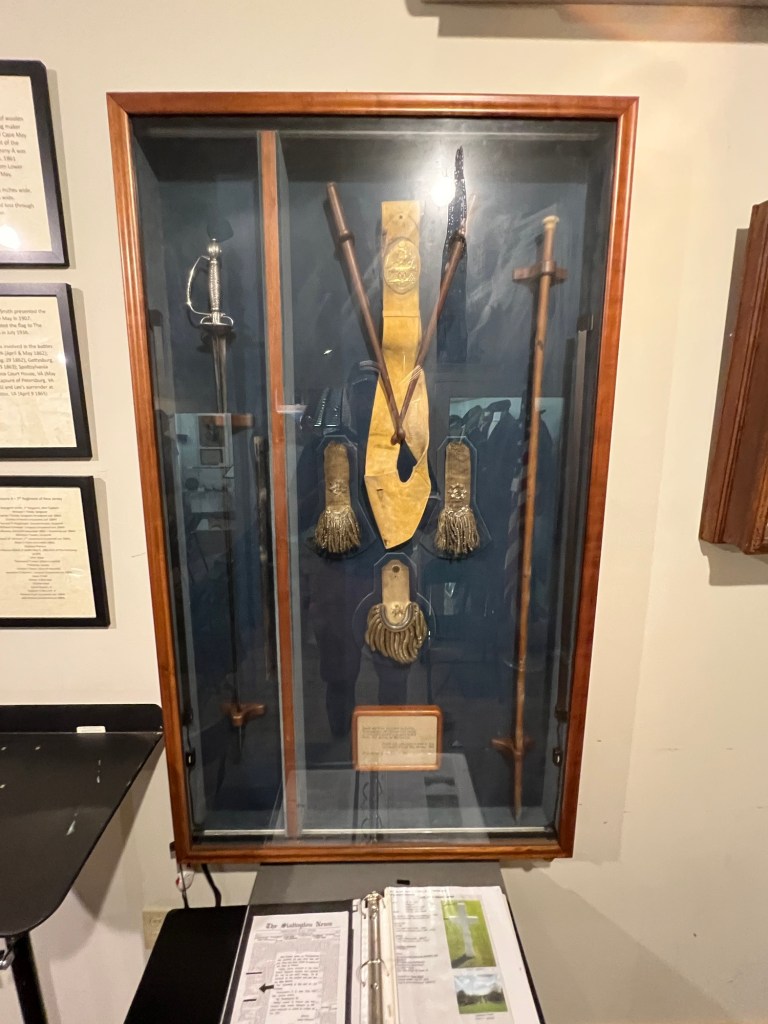
Military artifacts from the war years
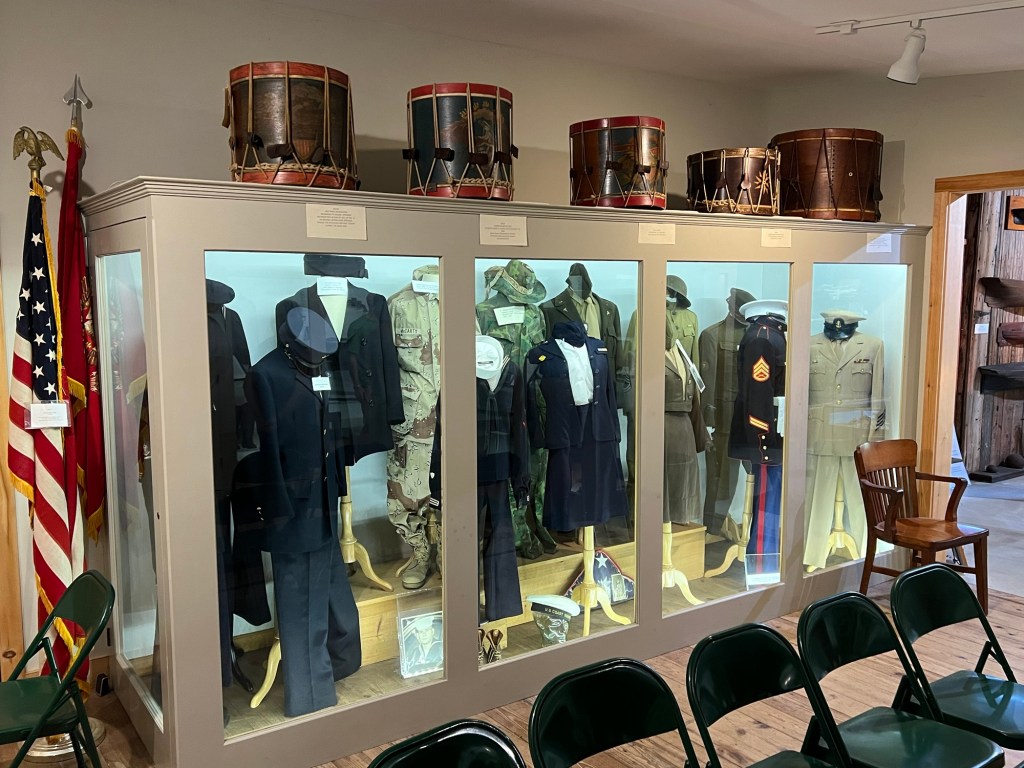
The extensive collection of military uniforms from the different wars in the museum collection with ceremonial drums on display on the top of the case

The gun and pistol collection at the museum

The Pistol collection at the museum
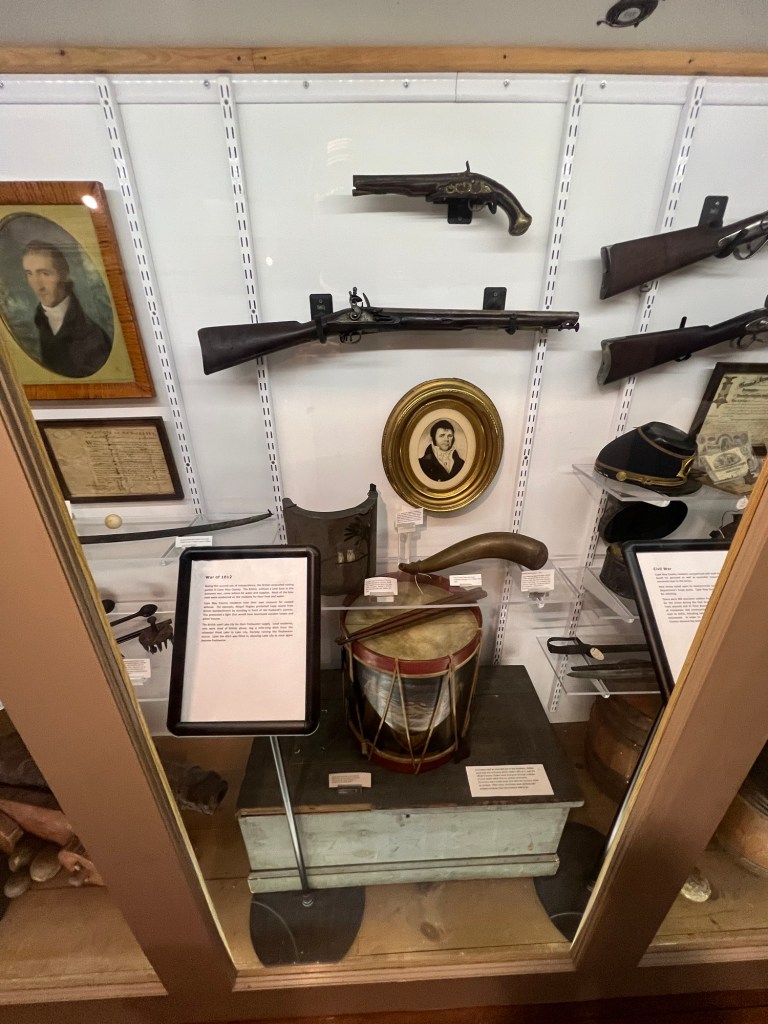
The collection of military items in the collection
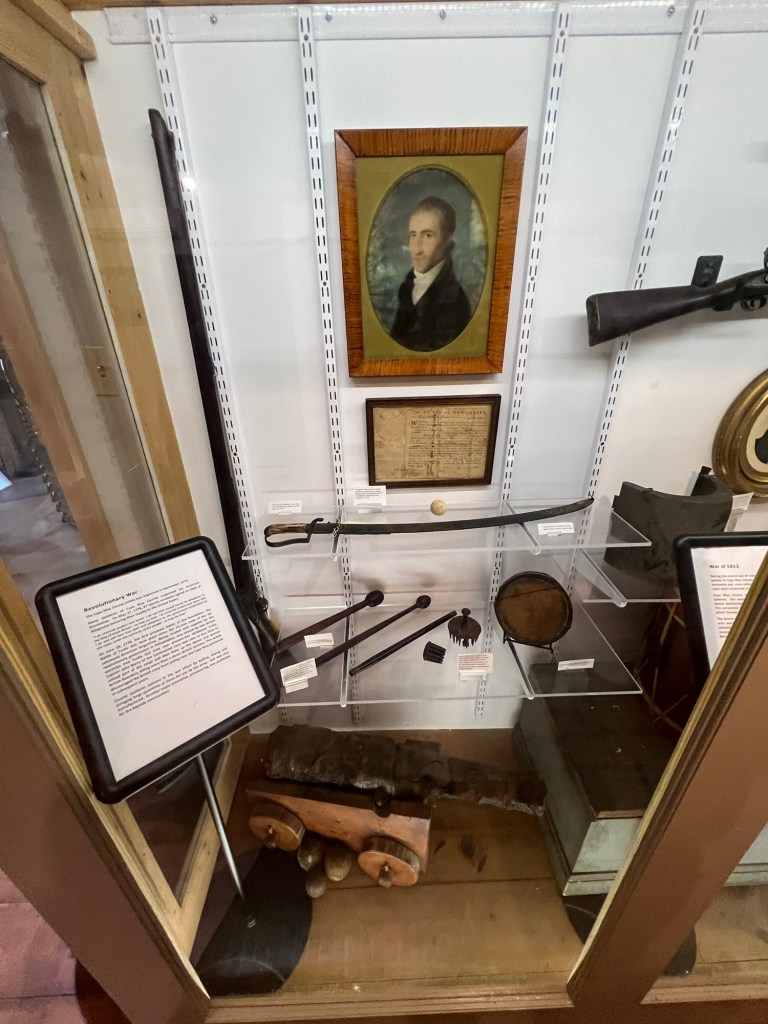
The early military collection at the museum

The grounds of the museum before I left for the day

The family home that faces the Highway

The museum is not just an extensive collection of City of Cape May but the history of the County as a whole and its rich development from a farming, whaling and shipping town to a major tourist hub and recreation community.

It also shows it has never lost it nautical or farming past as well as this legacy still carries on in Cape May. The development of the community and the progress it has made over the years is showcased in the galleries and buildings on the museum property.

The Development of the Cape May County Museum:

(from the museum website)

The Cape May County Historical & Genealogical Society (CMCHGS), doing business as The Museum of Cape May County, was founded in 1927 as a private, non-profit organization by a number of local families who wanted to ensure the history of Cape May County was preserved and documented. In 1930 the CMCHGS established a museum and genealogical library which were housed in the basement of the County Court House building for 45 years.

In 1976, the current facility, the Cresse-Holmes House containing eleven rooms along with a five-room barn was purchased to accommodate the growing collection. By 1988 the construction and dedication of the genealogical library and administrative offices had taken place. In the last 90 years, thanks to the generosity of many individuals and families with a connection to Cape May County. the collections have grown to contain many thousands of Cape May County artifacts and documents.

Today the museum and library are run by full time, part time and seasonal staff members along with an enthusiastic group of active volunteers to assist with greeting visitors, guiding tours, researching, assisting with programs, and staffing events.

Wawarsing Historical Society and Knife Museum  3 Irish Cape Road                                      Napanoch, NY 12458

Wawarsing Historical Society and Knife Museum 3 Irish Cape Road Napanoch, NY 12458

Wawarsing Historical Society and Knife Museum

3 Irish Cape Road

Napanoch, NY 12458

(845) 626-5028

https://www.facebook.com/theknifemuseum/

Open: Sunday 12:00pm-4:00pm/Monday-Friday Closed/Saturday 10:00am-4:00pm (Seasonal)

Admission: Free but donations are accepted

My review on TripAdvisor

I visited the Wawarsing Historical Society and Knife Museum on a whim the other week when I was visiting museums in the region. What I found was a very interesting local museum dedicated to history and marketing of the former Knife industry of the region. I had never realized that this was the major industry of the region.

The Mission Statement of the Museum:

Our mission is to develop a museum to serve as both a repository of artifacts and informational conservatory as well as a place where memorabilia and examples may be accessed so that this rich heritage and a viable segment of American History will not be lost.

The front of the museum.

The History of the Museum

The Founder of the museum

Madam Brett Homestead                                        50 Van Nydeck Avenue                                  Beacon, NY 12508

Madam Brett Homestead 50 Van Nydeck Avenue Beacon, NY 12508

Madam Brett Homestead

50 Van Nydeck Avenue

Beacon, NY 12508

(845) 831-6533

https://www.hudsonrivervalley.com/sites/Madam-Brett-Homestead-/details

https://en.wikipedia.org/wiki/Madam_Brett_Homestead

Admission: Adults $10.00

Open: Sunday-Friday Closed/Saturday (Every Second Saturday) 1:00pm-4:00pm

My review on TripAdvisor:

https://www.tripadvisor.com/Attraction_Review-g47291-d263800-Reviews-Madam_Brett_Homestead-Beacon_New_York.html

The Madam Brett Homestead at 50 Van Nydeck Avenue in Beacon, NY.

The Brett Homestead marker

The sign that welcomes visitors

I recently visited the Madam Brett Homestead on a walking tour and discovered that the family had a lot to do with the growth of not just Dutchess County but New York State as well. The house was the homestead for five generations of family members each who added to the home.

The homestead’s historic plaque

Since the family practiced thrift in the home and decor, we get to see the house with period furniture that has been donated back to the house from the family. Also, period pieces have been donated by other members of the community to show the home at different periods of time. It gave us a look into the home life of a prosperous farming and milling family.

The entrance of the Brett Homestead

The tour starts with a short video on the family and how Madam Brett got her inheritance from her father and built on the wealth that he had created. She leased out land with water and mineral rights thus adding to her wealth and had a grist mill that was the only one on the patent, so everyone had to go through her for grain processing.

The china cabinet with family related items.

The homestead was built by Roger Brett and Catherine Rombout Brett on land inherited by her father, which was part of the Rombout Patent (which covered much of lower Dutchess County). The couple had been married in 1703 and had originally moved in with her mother in the family’s manor home in Manhattan. Upon the death of her mother, Catherine inherited the land and the manor house in Manhattan. Land rich and cash poor, she and her husband mortgaged the manor house in Manhattan and built a small home and gristmill. They moved into their Dutch style home on Christmas Day 1709. The house was expanded in 1715. The home was later added on again in the 1800’s to the present house (Brett Homestead Pamphlet).

In the hallway on display is the original Rombout Patent, which everyone on our tour thought was very impressive. It had been found and was given back to the house. It shows the land deal that the settlers made with the Native Americans.

A copy of the Rombout Patent

We next headed to the Dining Room, where the family entertained guests. The room is full of period furniture and silver both family owned and donated to the homestead. The formality of entertaining is shown in the room set up.

The Dining Room at the Brett Homestead

Hannah Brett’s (Madam Brett’s granddaughter) bridesmaid dress was on display as well. This had been worn when she danced the Minuet with Marquis de Lafayette. I thought this was interesting in that she had this altered for the occasion and that it had lasted all these years. She had worn this for the wedding of Cornelia DePeyster, whose wedding dress in the New York Historical Society (Brett Homestead pamphlet). It was donated back to the house by the family descendants for display.

Hannah Brett-Schenck’s bridesmaid dress

Period furniture and decorations adorn the Brett Homestead

The decorative pieces in the Dining Room

The Dining Room fireplace

The kitchen was very interesting because when you walk through it you will see the modern kitchen in the front of the room that was put in around the late 1950’s and early 1960’s compared to the other side of the room which has the original fireplace and kitchen equipment. It shows the contrast in cooking and entertaining over the last two centuries.

The old versus the new in the Brett Homestead kitchen.

The house was constructed in three sections. The original section of the house from 1709, the addition in 1715 and then the grander addition in the 1800’s that gives the house the look it has now. You can see how the house evolved from a small residence to a grand showplace and you can see this in the way it was designed.

The upstairs hallway shows the contrast between the old home and the additions.

Each of the rooms were decorated with period pieces and some of the rooms has themes to them such as one was a Children’s Room, another was the family office and one contained farm equipment. All the items represented a different time in the home’s history.

The Children’s Room with a collection of dolls that creeped visitors out.

The upstairs bedrooms

The period farm equipment display.

The other bedrooms showed guest rooms for visitors to the area, the office where the Brett’s would have conducted business and rooms would have housed many family members.

The Master Bedroom with canopy bed and bedwarmer

The Guest Bedroom

The home office of the family.

The house stayed in the family until the death of Alice Sutcliffe Crary at 85 in 1953. The Melzingah Chapter of the Daughters of the American Revolution purchase the homestead to save it from becoming a supermarket. They have been lovingly restoring and holding events at the homestead as well as contributing to the community at large and promoting Historic Preservation, Education and Patriotism (Madam Brett Homestead pamphlet).

I recently visited the house with a group of people on a tour and we visited the house for Christmas and the local garden club had decorated part of the house for holidays with garland on the bannisters and on some of the mantels. The outside of the house was quite festive.

The house during the holiday season.

The house adorned with wreaths and garland on the holiday tour.

The welcoming entrance to the house during the holiday season.

The docent tours are very interesting and really give you a view of what life was like in the house for the families that lived here. They only take place on the second Saturday of the month so you need to plan ahead.

Hopewell Depot Museum                                                                                 36 Railroad Avenue                                                                 Hopewell Junction, NY 12533

Hopewell Depot Museum 36 Railroad Avenue Hopewell Junction, NY 12533

Hopewell Depot Museum

36 Railroad Avenue

Hopewell Junction, NY 12533

(845) 226-7003

Home

Open: Please check website for hours (right now every Saturday 10:00am-2:00pm)

Admission: Free but donations are accepted

My review on TripAdvisor:

https://www.tripadvisor.com/Attraction_Review-g47922-d13000900-Reviews-Hopewell_Depot-Hopewell_Junction_New_York.html

The Hopewell Depot at 36 Railroad Avenue

The Hopewell Depot and grounds

I visited the Hopewell Depot one weekend and found it to be a very interesting look at the rail service during its development in the Hudson River Valley. The rail service changed the way business was done in the valley for farmers and opened the whole area up for development.

The rival commuter lines than merged together to make a better lines of transportation and bring people not just through the area but to help build the communities and their businesses that they are today. Each section of this small museum tells the story of that development.

The front gallery of the museum

The potbelly stove that warmed riders before their rides.

The community gallery

The front section of the museum which houses the gift shop and welcome area once served as the waiting room for the train station. This had been a smaller line once serving between Poughkeepsie and Connecticut and then later on to the rest of New York State and as a line to transport agricultural products between the Valley and the growing market in New York City.

The tops of telephone poles

The middle section of the museum houses the Train Manager’s office and an office for communication to outside communities. Here the train depot manager would run the day in day out services of the trains and their functions with the bigger lines and the Western Union communications area would service the community with messages and services to the outside.

The Train Station Manager’s office

The Western Union/Communications office

The back section is where you could buy your tickets and converse with other people taking the railroad. Here are displays on the railroad lines, the products that were serviced through the rails like the big Borden Foods display, whose factory was located right next to the train station and had serviced all the dairy farmers in the community bringing fresh milk to New York City and beyond.

The back gallery of the museum

The back gallery

The Train Lamp display

The Borden Milk display in honor of the dairy industry locally owned Borden plant.

The museum also has displays on the workings of the railroads and how they functioned, how the community was formed and grew around the railroads and all sorts of equipment and items that made the operation work. The museum volunteers have done an excellent job telling the story of how Hopewell Junction and the surrounding towns developed and grew.

The Community Development display

The “Working” display of the growth of trains

Outside the building, the museum volunteers are working on renovating a donated caboose that was once used on another line. Here I saw the Train conductors operation area, the sleeping quarters and a small kitchen. I thought that was fascinating because I never knew what this car contained and never knew it was living quarters for the conductor. I can see the potential of kids wanted to climb all over this and want to know what life was like on the trains.

The Caboose on the back of the property

The inside sleeping quarters of the caboose

The overall sleeping area

The kitchen area

History of the Hopewell Depot:

The Hopewell Depot was built in 1873 by a Millbrook-led rail investment group that changed names several times between 1869 and 1873. Originally, the Dutchess & Columbia RR established a north-south short-haul coal route to Connecticut also serving the communities in the center of the country. The Hopewell community grew up around the Depot.

The grounds of the museum

In 1888, after Poughkeepsie’s great railroad bridge (now the “Walkway Over the Hudson) was built, the Dutchess County RR pushed southeastward and arrived in Hopewell Junction in 1892, creating a 4 way hub. In the next decade, the lines through Hopewell became part of the Central New England Railway system. In 1927, they came under full control of the New Haven RR until it failed in 1968. The Poughkeepsie RR Bridge burned in 1974 and the local rail service ended here in 1982.

The Hopewell Depot Mission:

Privately owned and operated since 1996, Hopewell Depot has progressed entirely through the work of volunteers from all walks of life.

The old baggage cart

The Visitor Center offers a variety of information on the local area and items for sale. The interior museum rooms present a host of interactive displays and artifacts about the region and the great era of railroads in general. The grounds contain the Interlocking Signal Tower with a special exhibit loft and public restrooms and the Rudberg Pavilion is open to visitor as a rest area.

Hopewell Depot Museum is on the National Register of Historic Places and is a fully chartered NYS museum. Its mission is to present the complex as a historical and educational experience for the regional community and provide an informative, recreational venue the public can enjoy with pride.

The Depot in the summer months.

The tiny caboose

Getting to know the museum on YouTube