The Sturr Family Cemetery sits on a bend of the driveway of the Chabad Jewish Center of Northwest Bergen County and is a small cemetery that once sat on the edge of the J.H, Sturr farm.
The Sturr Family Cemetery
The farmhouse of the Sturr Family sits on the lot across the street from the cemetery property. This is located on a small buff on what was the edge of the farm.
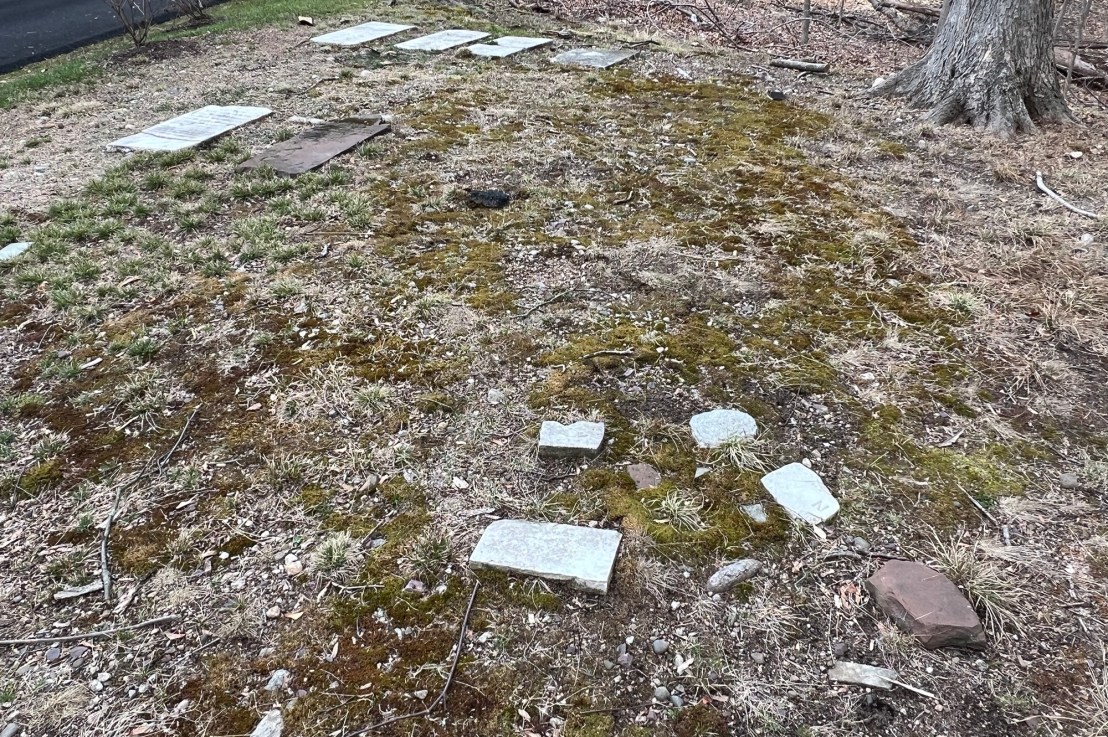
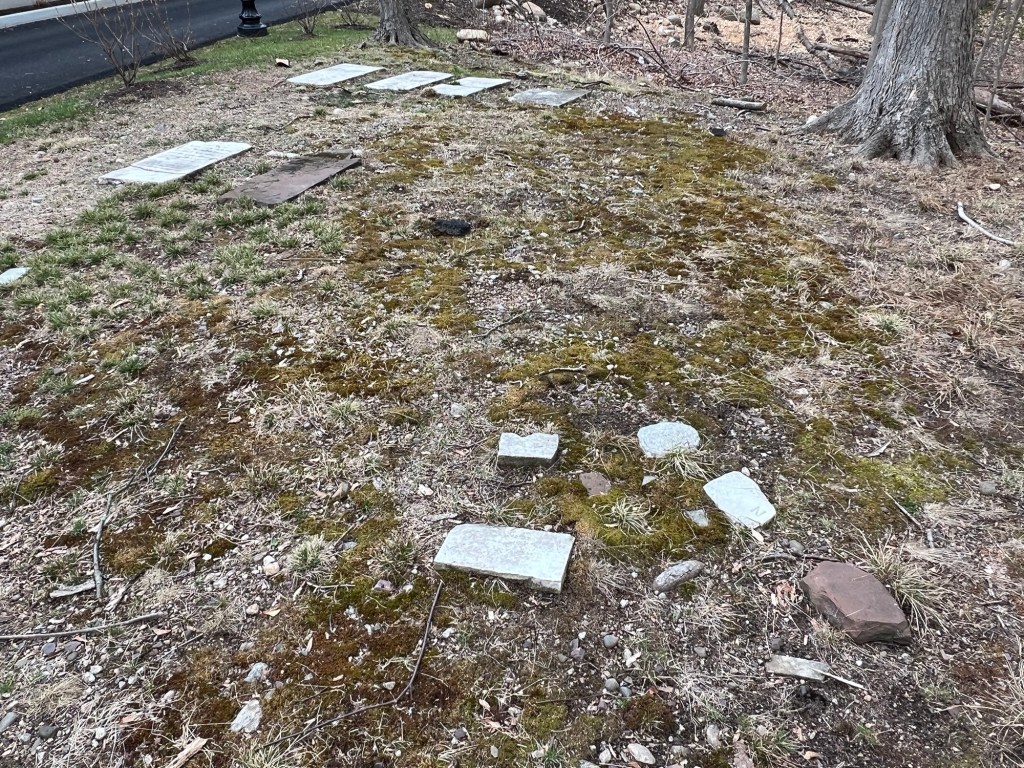
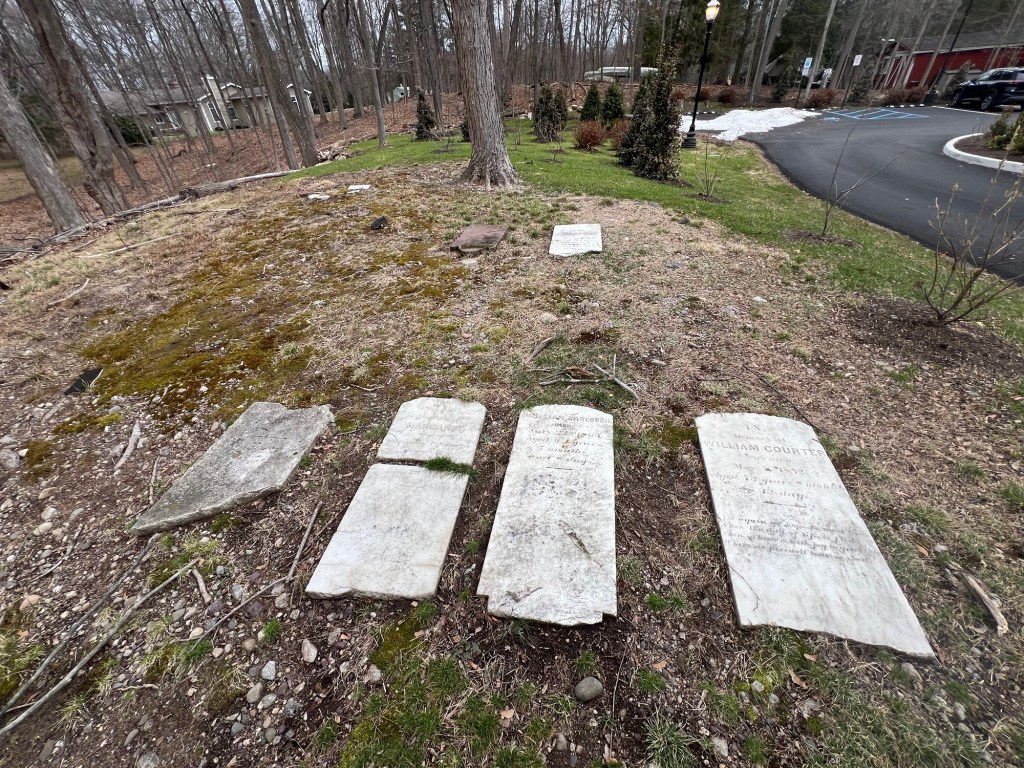
The Sturr Family cemetery tombstones
The tombstones of the Courter and Carlouch family members
The grave of William Courter
The only visible tombstones that are left in the cemetery are an Ackerman family member, Anny Ackerman and members of the Courter and the Carlouch family’s (who must have married into the family).
The Ackerman family tombstones (the one to the right was unreadable)
The other tombstones are broken and no one is sure who is buried where in the cemetery.
The History of the Cemetery:
(From Find a Grave website)
The cemetery is located in Franklin Township, Bergen County, New Jersey, on what was once the family farm of J.H. Sturr. As of October 1991 only 6 markers were still remaining.
The Sturr Family Cemetery in full view
History of the House:
(From the Franklin Lakes Municipal Website)
H. Sturr House or Blue Meadow Farm Built 1860 378 Pulis Avenue, Block 1510, Lot 8 Franklin Lakes, New Jersey 07417
The Sturr House – also known as Blue Meadow Farm -is a handsome and little altered example of mid 19th century vernacular architecture which incorporates several stylistic elements such as gable returns and frieze area of the early 19th century Greek Revival style. The Borough of Franklin Lakes lists the erection year of the house as 1860.
The façade of this 2 ½ story house consists of clapboard. The front porch has five bays with square posts and a rectangular entrance door with rectangular sidelights. Two tall 1st story windows are on one side of the porch. A single hitching post with iron rings sits in front of the porch stairs. The building has a frieze area with linear design. Semi-circular headed louvered vents are in all gable ends. The rear of the house has a one story wing. There is a detached garage to the west side of the house as well as a round frame well. Further west of the house is a stable which has been extensively remodeled and converted into a residence in recent times. The house combined with associated structures is a significant remnant of the large farmsteads which ones dotted the Borough’s landscape prior to the recent suburban housing boom.
History of the Family:
(From the Franklin Lakes Municipal website)
This Sturr house and the nearby more altered house at 402 Pulis Avenue were duplicate structures and were probably built around the same time by members of the Sturr family. The 19th century Sturr family was descended from Conraedt Sturr who purchased 190 acres of land in this area with John Coeter from Robert Livingston in 1793.
The non-extant homestead and mill was located at present-day 930 Old Mill Road. It is known that Henry Sturr, the son of Conraedt, had a fanning mill at this location in 1850. In a will dated 1852 he bequeathed his property and mill to his grandsons John, Henry, and Daniel (Maria Braun – 1976 page 26 & 27).
The property along Pulis Avenue upon which these houses are situated was probably included in this will since the homes were built around the mid-19th century. Future deed research is recommended to identify the original builder and the construction date of the house (1861: H. Sturr, 1876 Estate of H.M. Sturr). Presently the house is privately owned and occupied.
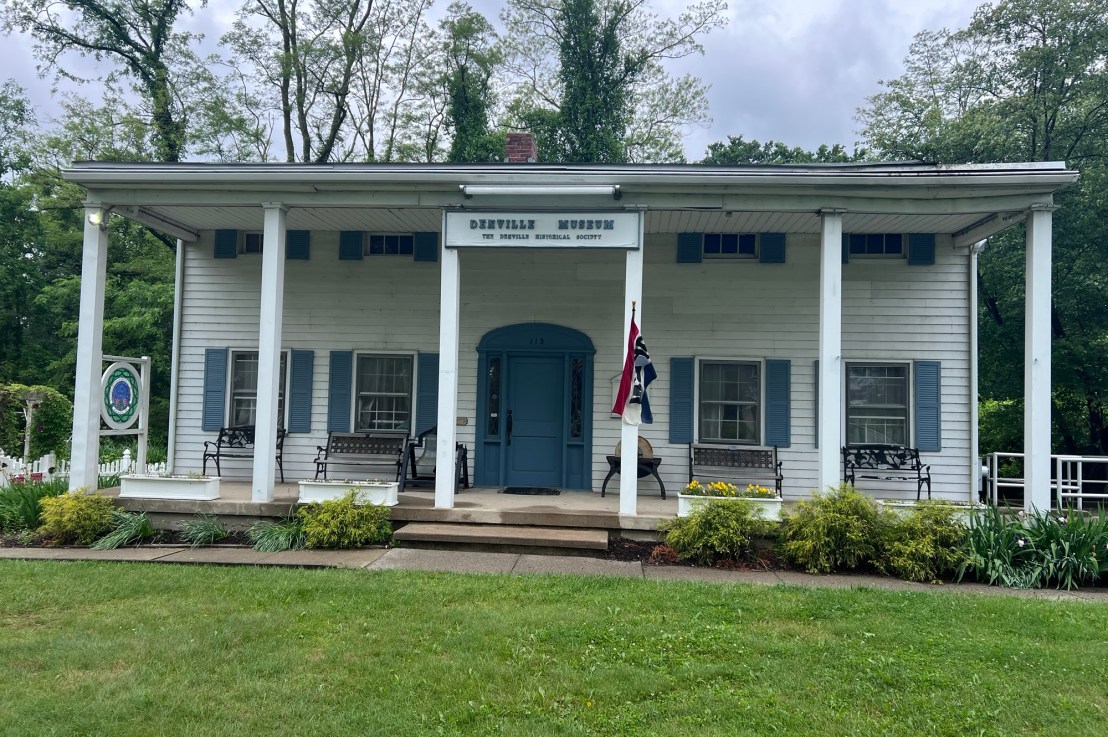
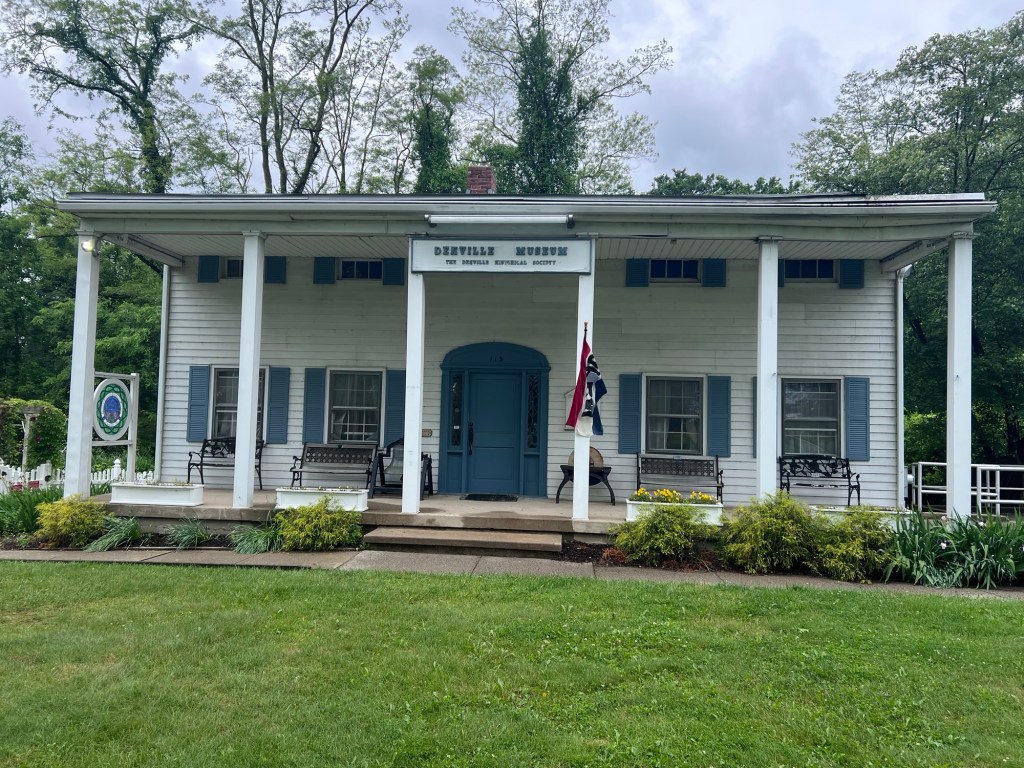
The front of the Denville Museum at Diamond Spring Road
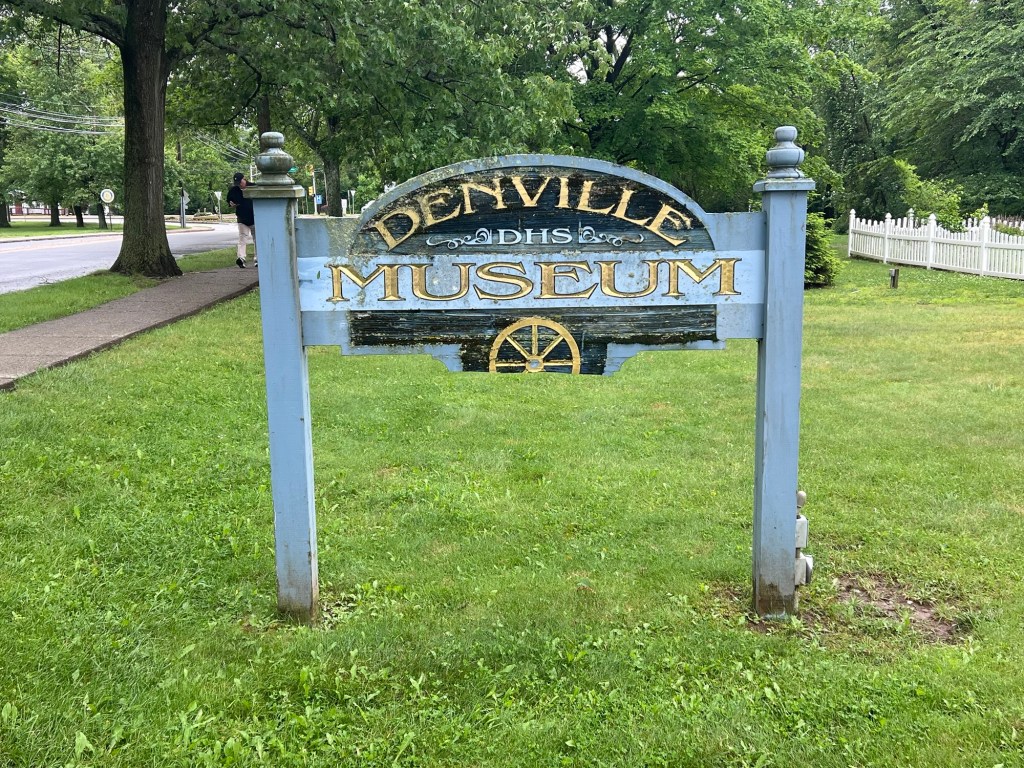
The front sign for the Denville Museum
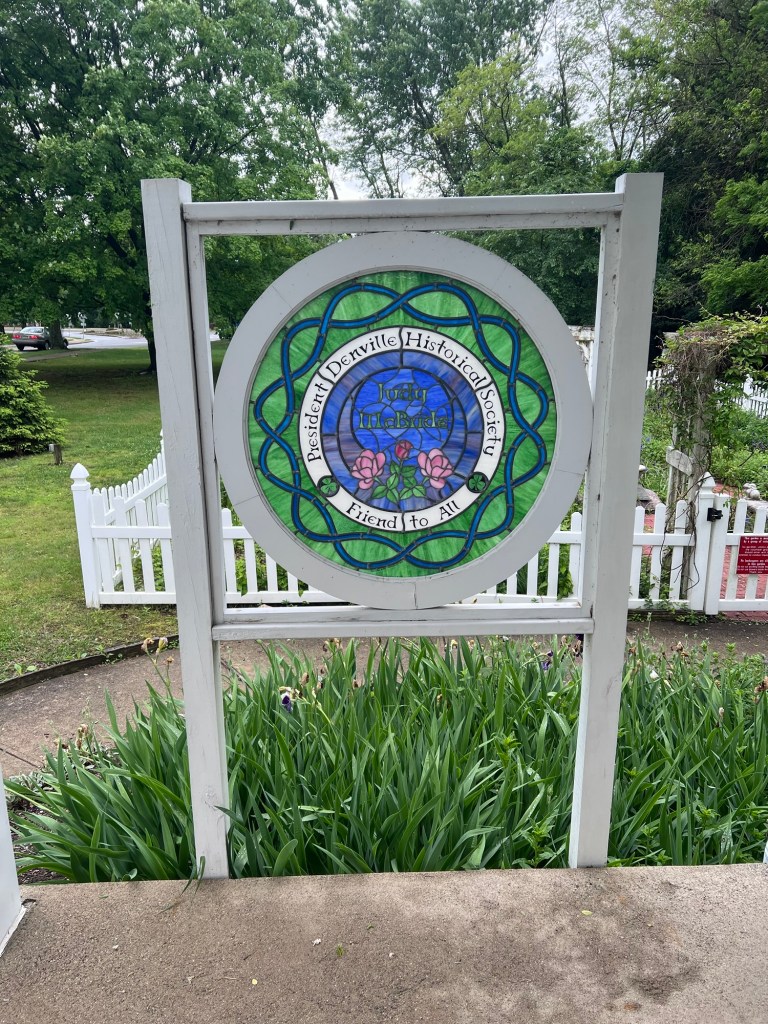
The beautiful stained glass sign outside
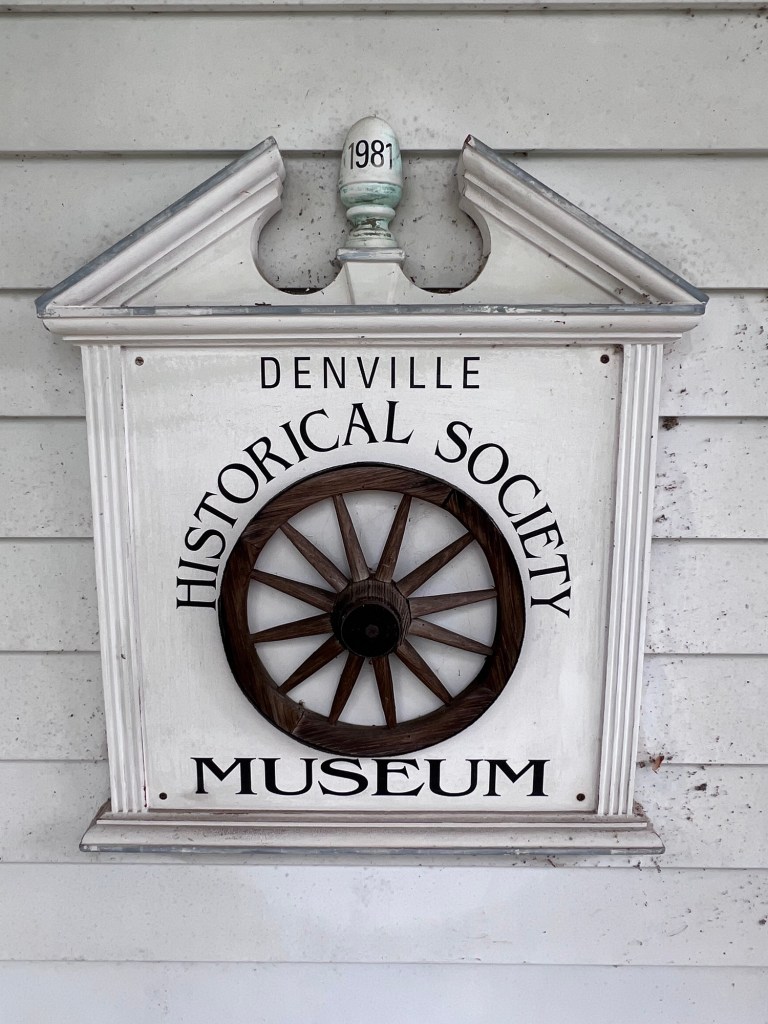
The front sign of the museum
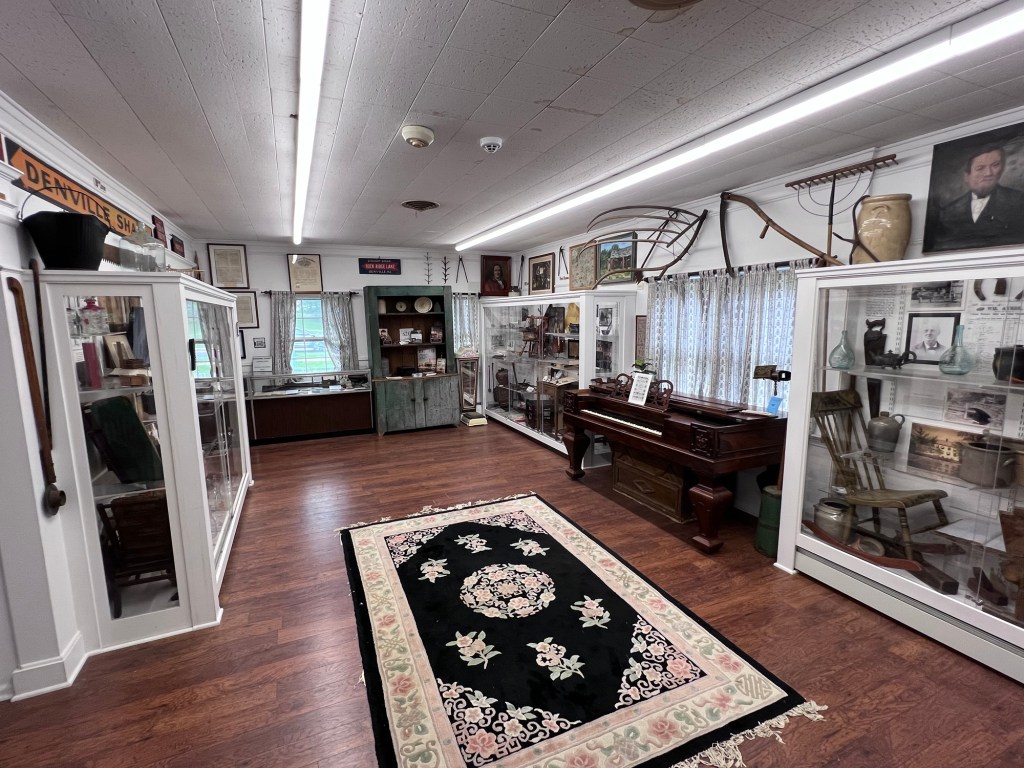
The front gallery of the museum
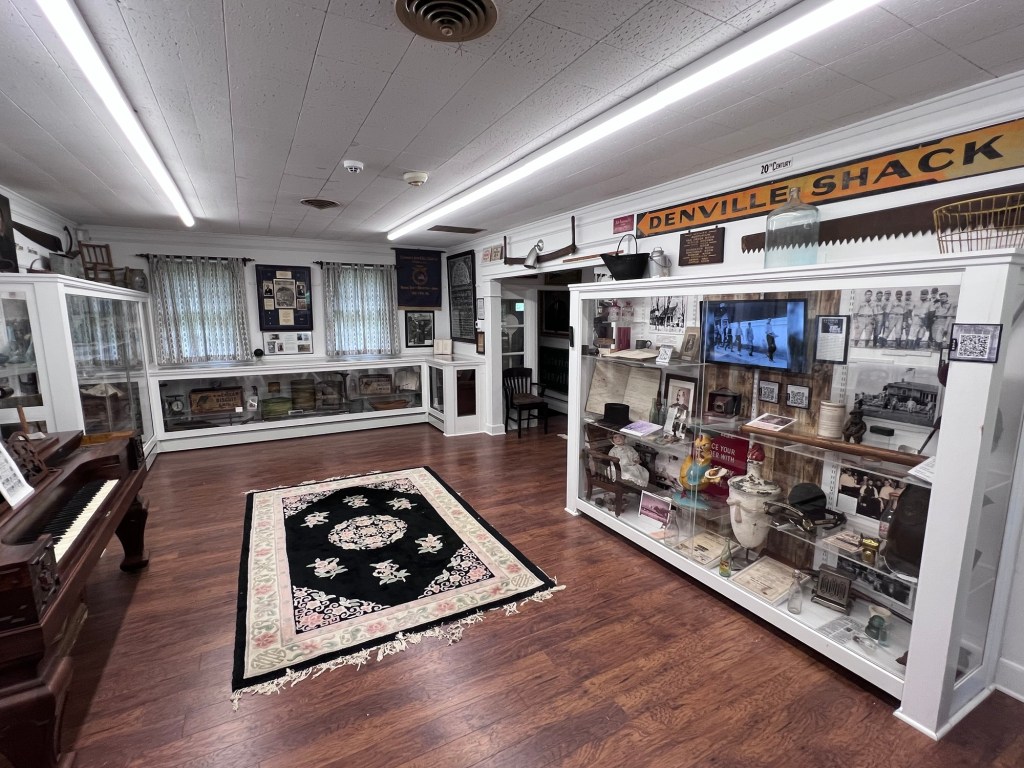
The back part of the front gallery of the museum
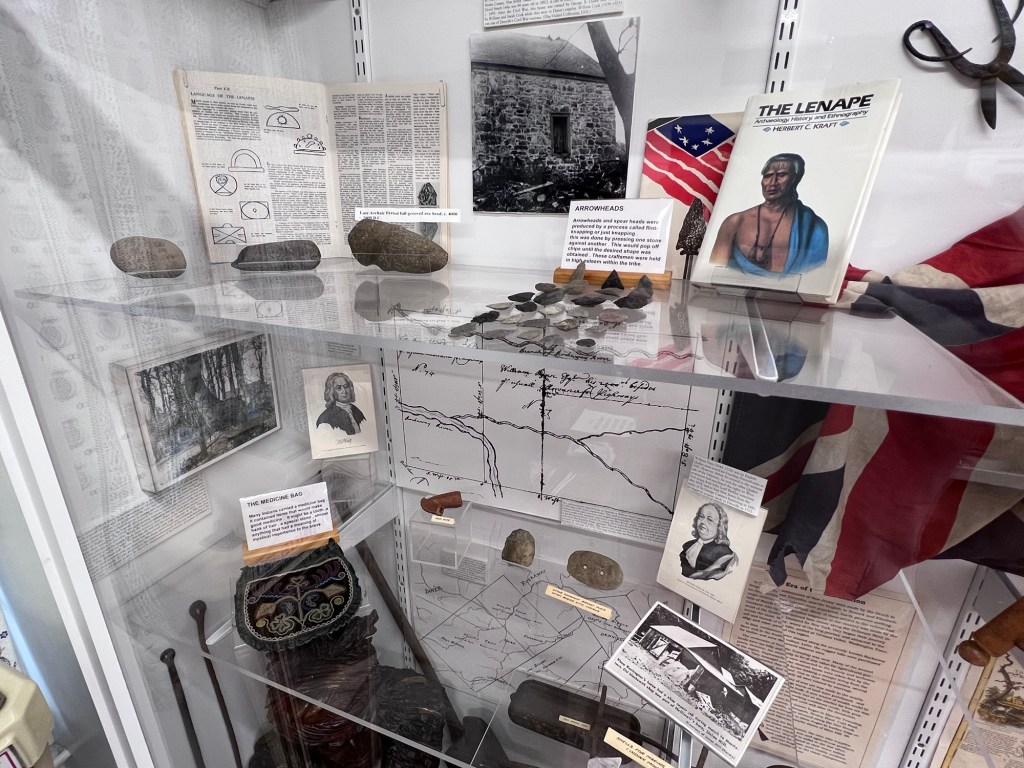
The Denville Museum is an interesting and beautifully organized museum in Downtown Denville, NJ that tells the history of Denville and the surrounding communities. The collection starts with a collection of Native American artifacts and Revolutionary era household objects.
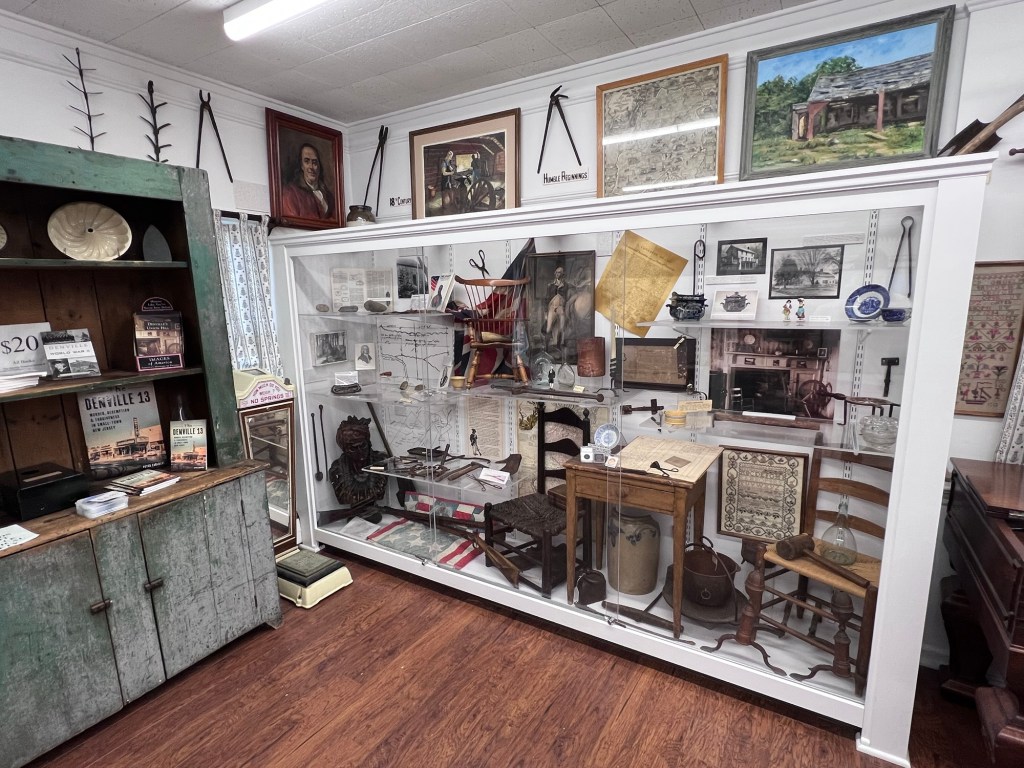
The early foundation of the Denville community is displayed in the front case
The Native American artifacts in the collection
The museum has an extensive amount of artifacts from the progression of the area from the Native Americans to the Dutch settlers who then populated the area leading to the progression of modern farming and commercial trade in the area.
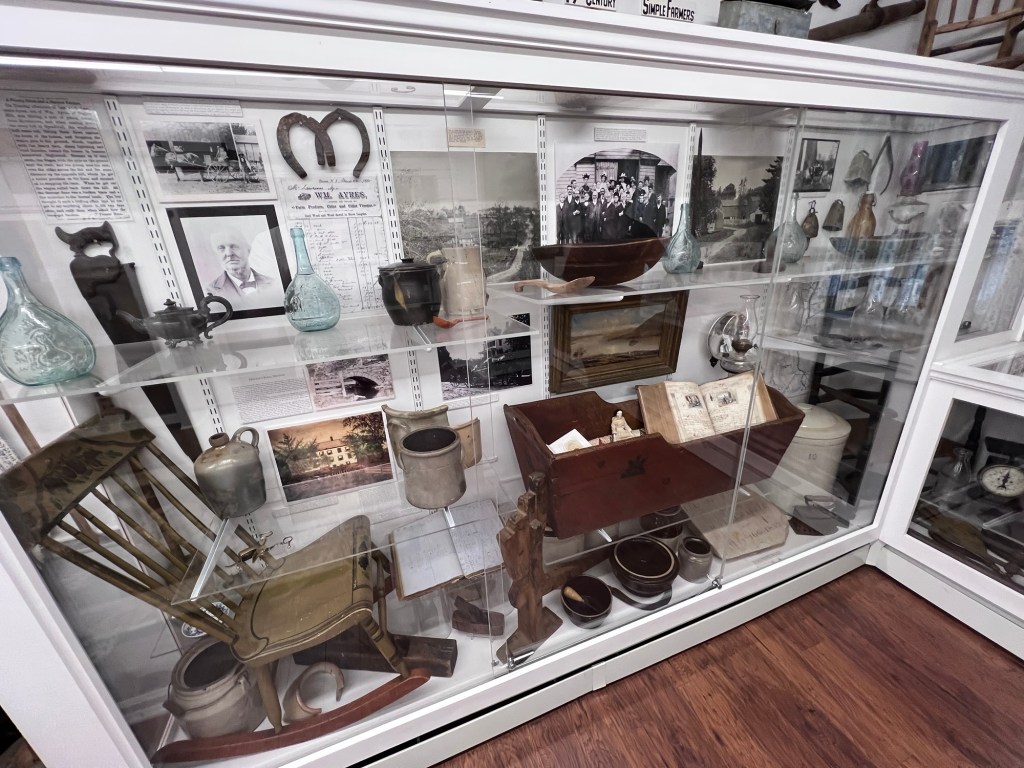
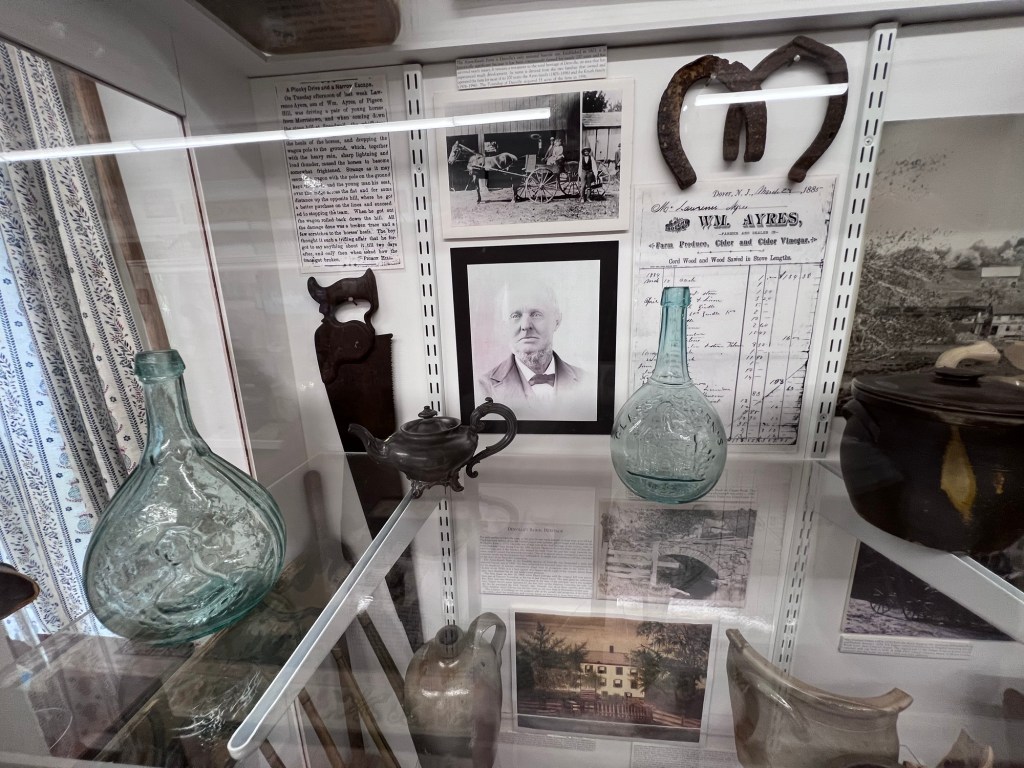
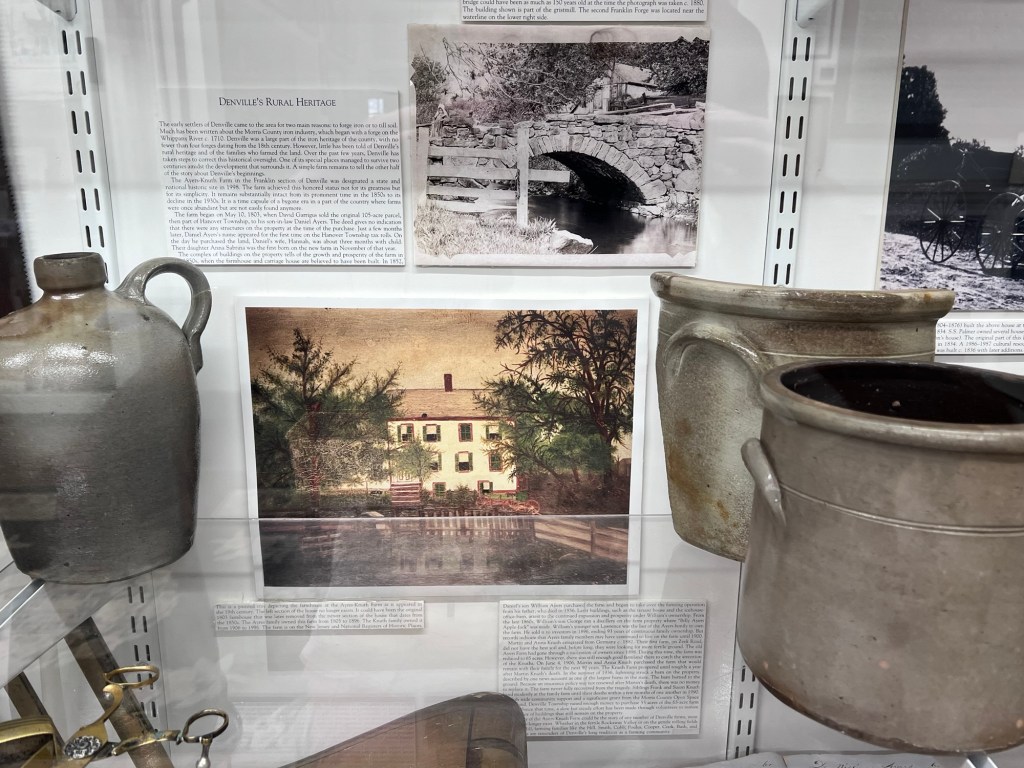
The farming display with many items from the Ayres Farm
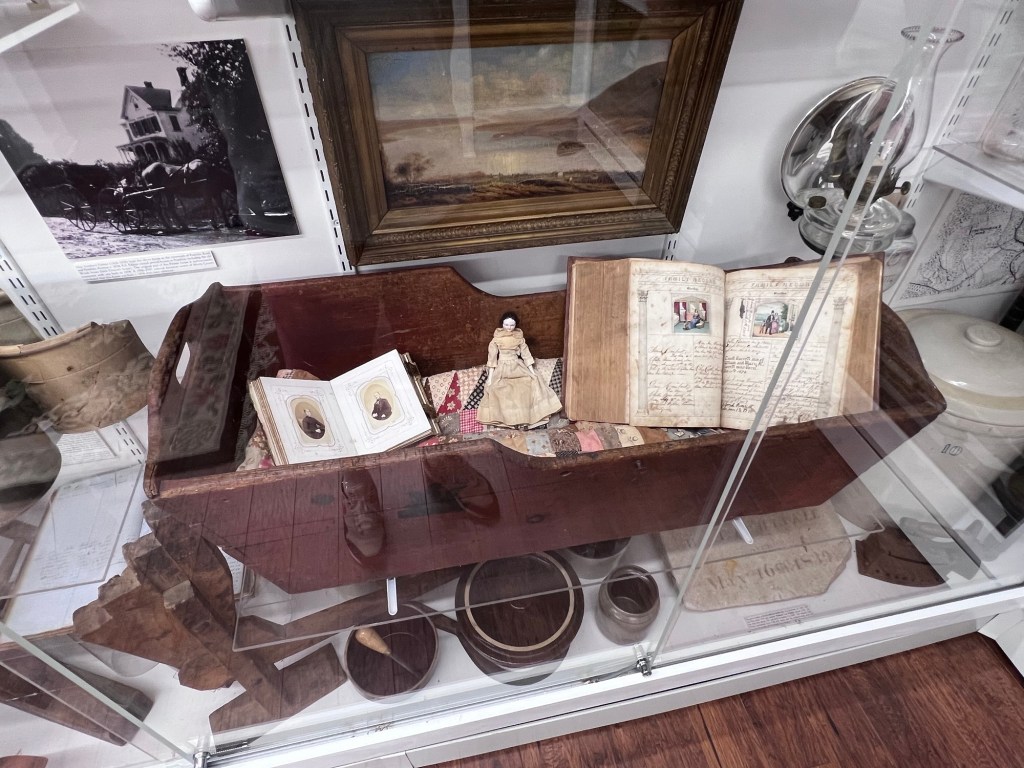
Children’s items from both the Ayres Farm and from the community including a handmade cradle
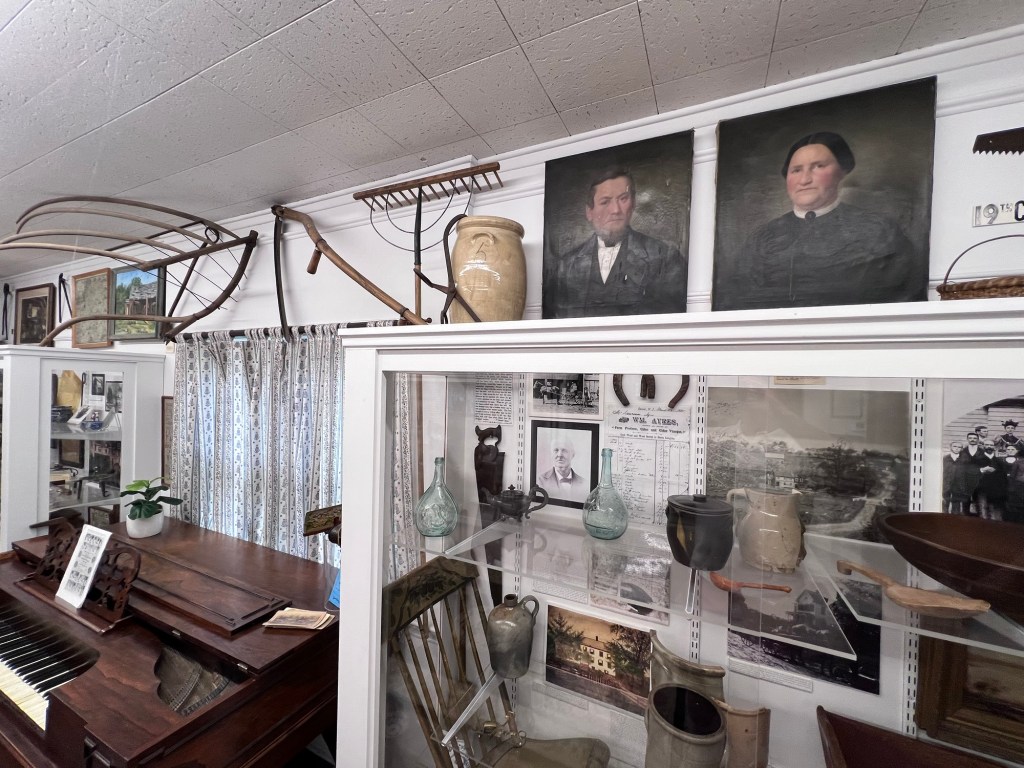
Farm equipment and home furnishings and portraits of Ayres family members
Items from the Ayres Farm
As the community entered the post-Revolutionary War era to the Civil War era, the area entered both its agricultural and industrial boom period.
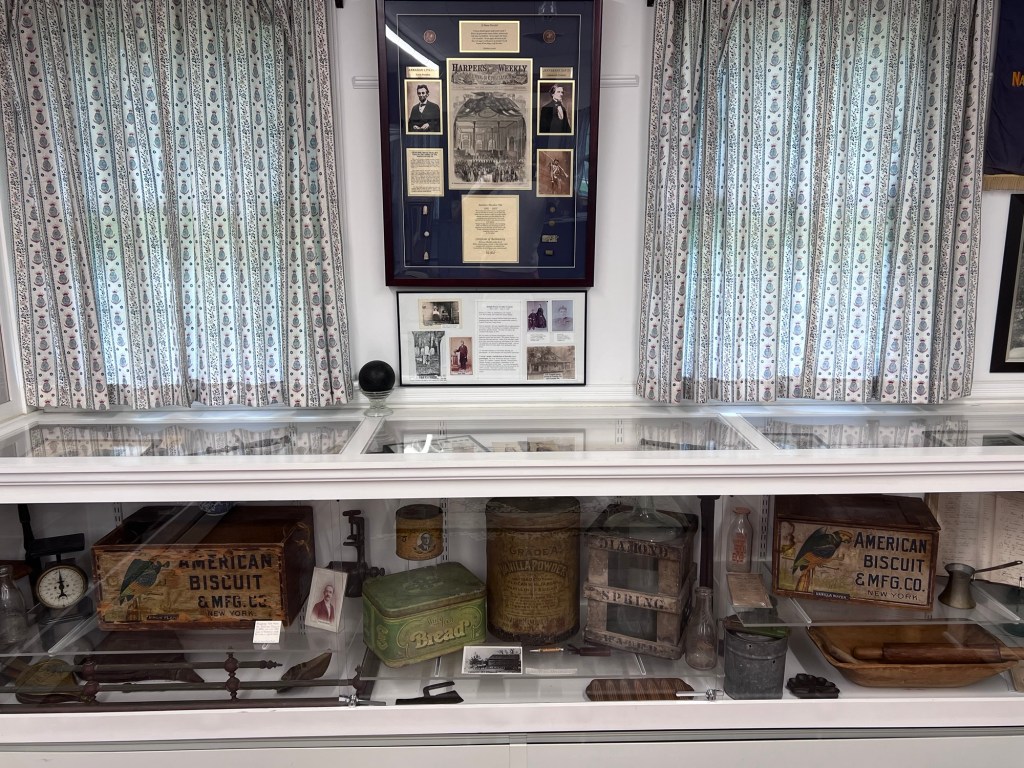
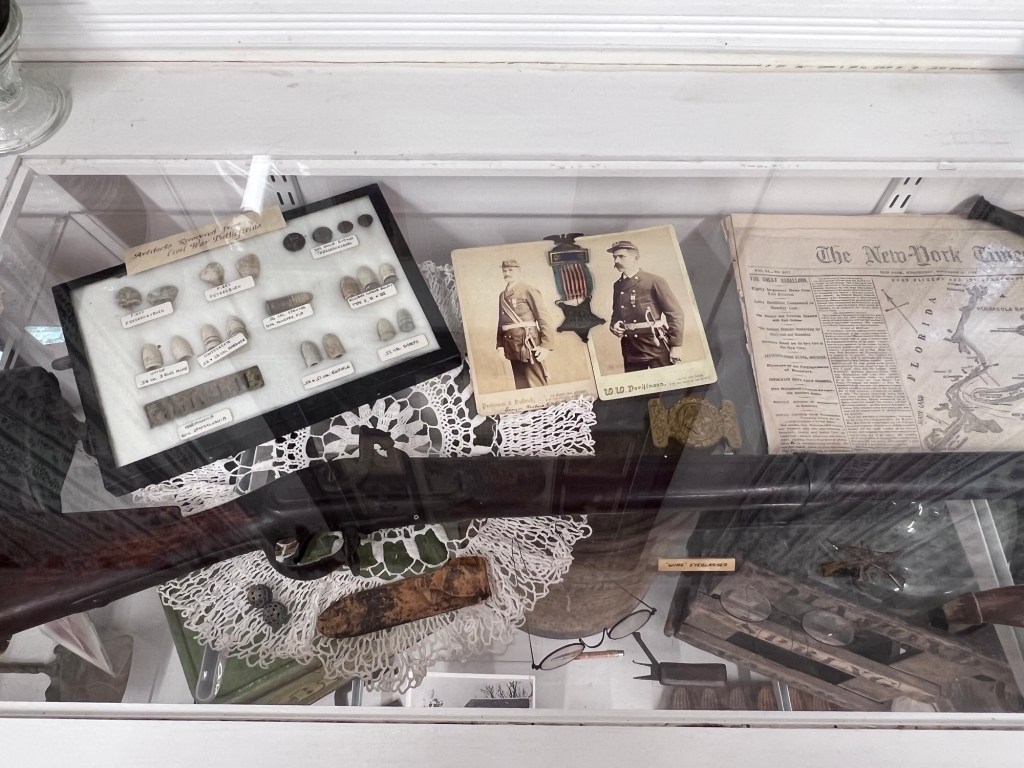
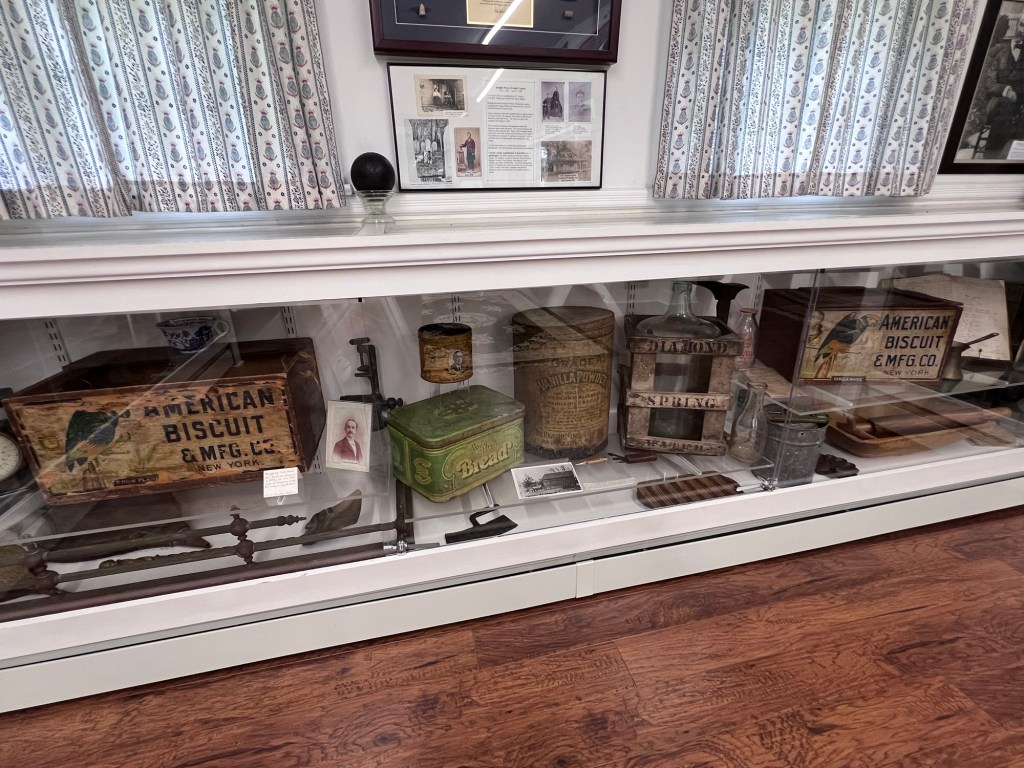
Artifacts from the Civil War and post war commercial era. Many of the artifacts are an early example of companies that still exist today.
Civil War era items of residents of the community
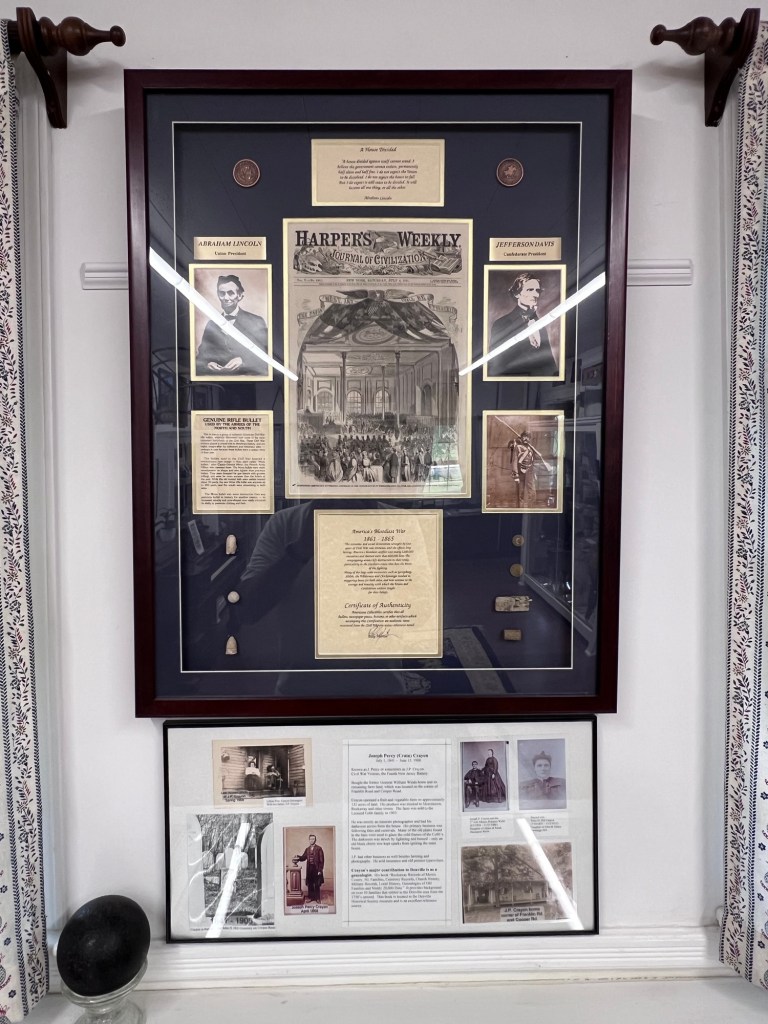
Presidential items from the Civil War period of both President’s Lincoln and Davis
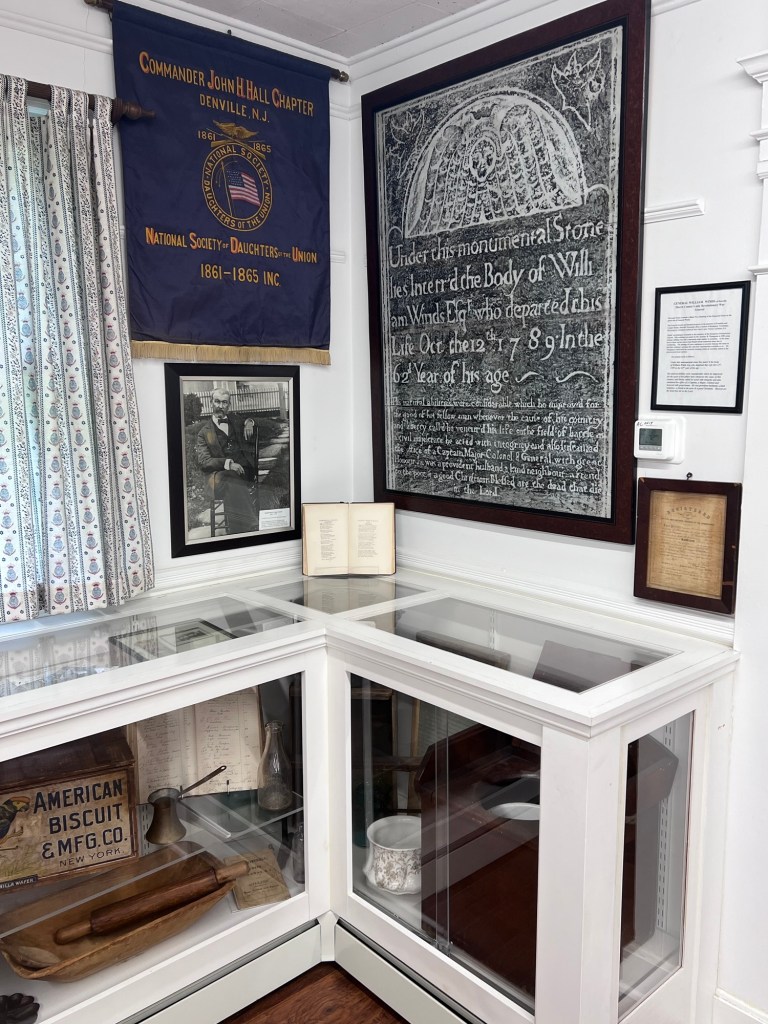
Commercial items and tombstone etchings of the period
The manufactures of commercial products of that era. Many of these items are early examples from the modern Nabisco company. These were some of the original tea biscuit containers.
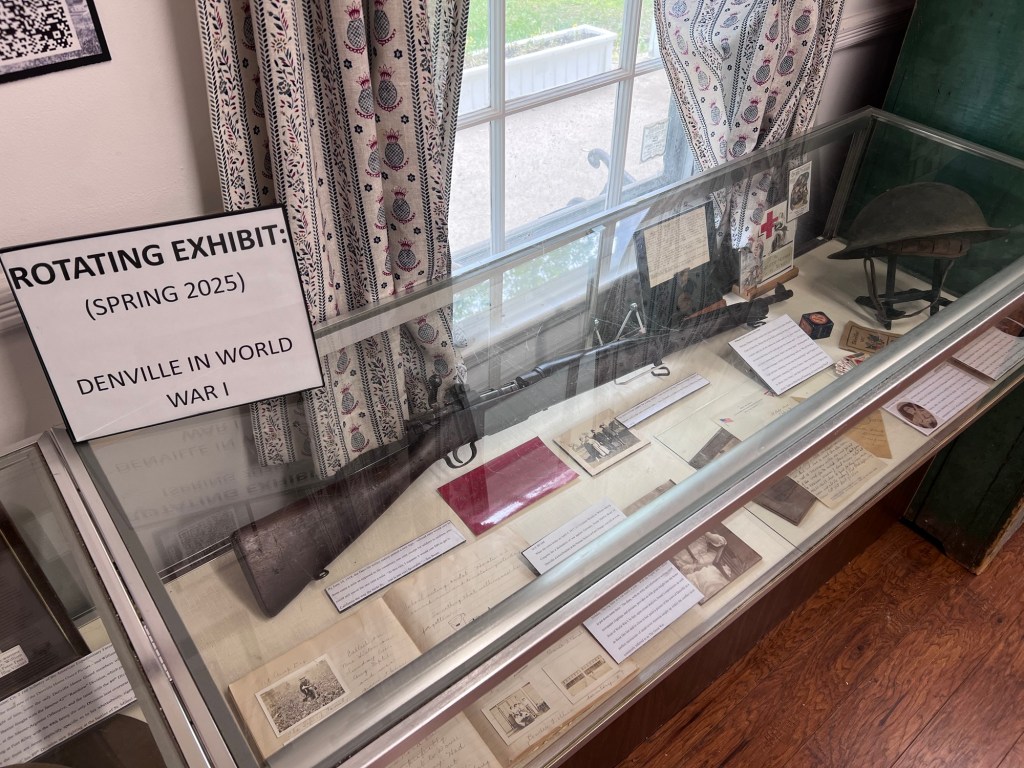
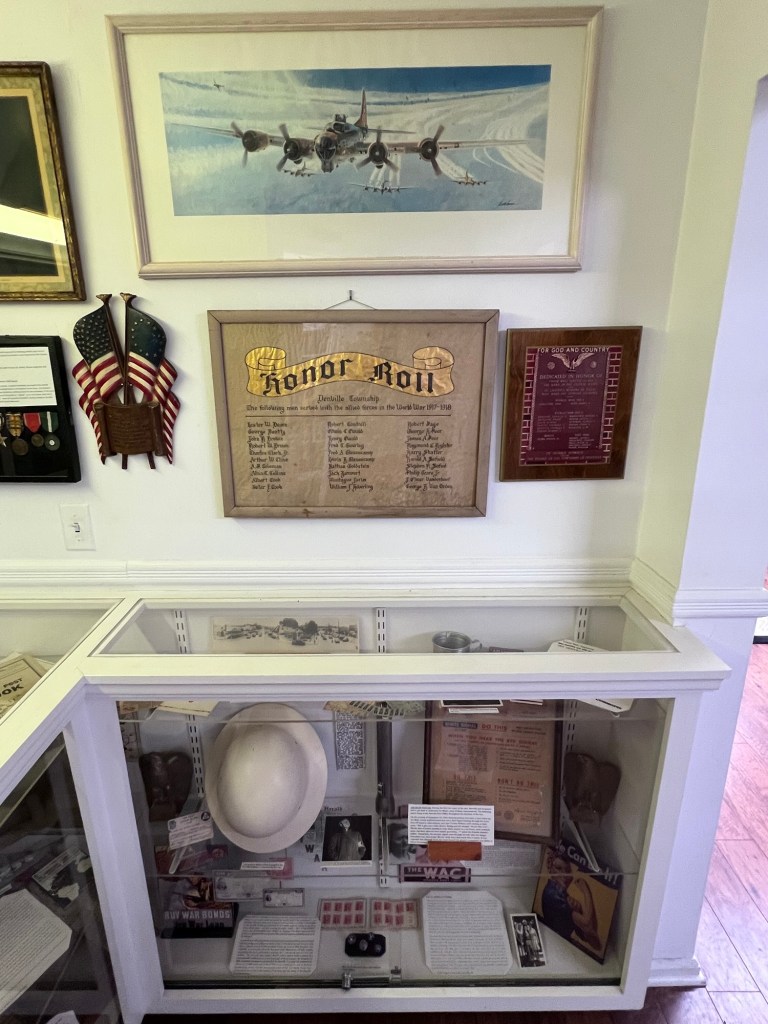
The exhibition of World War One artifacts on display
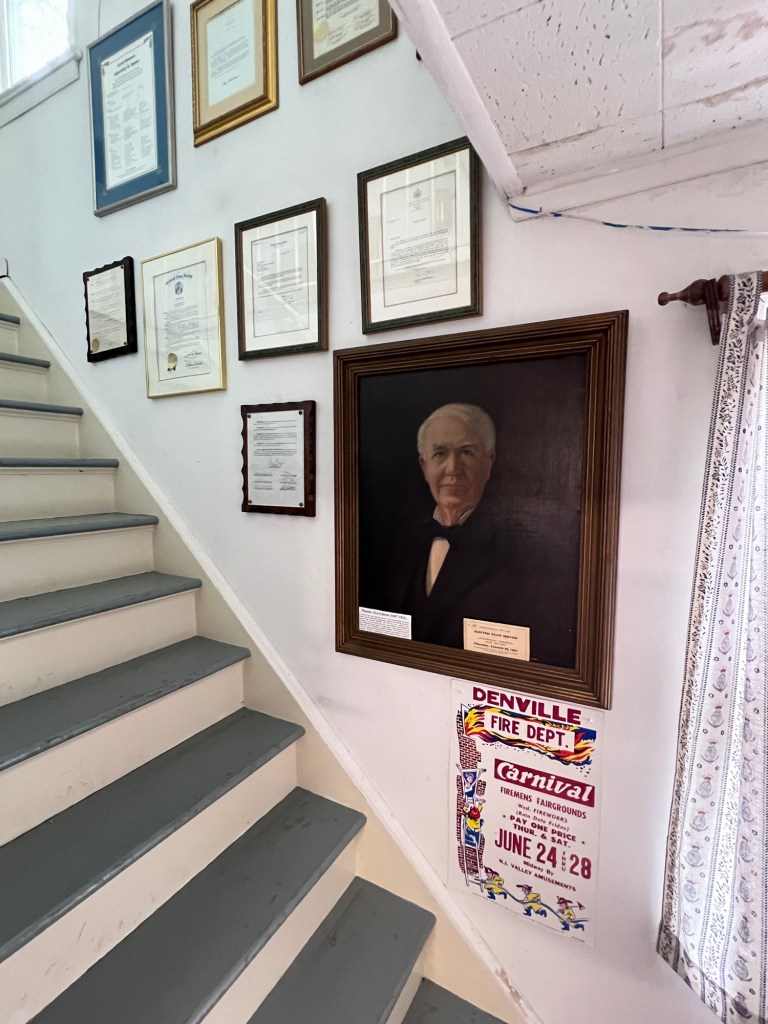
School and town events
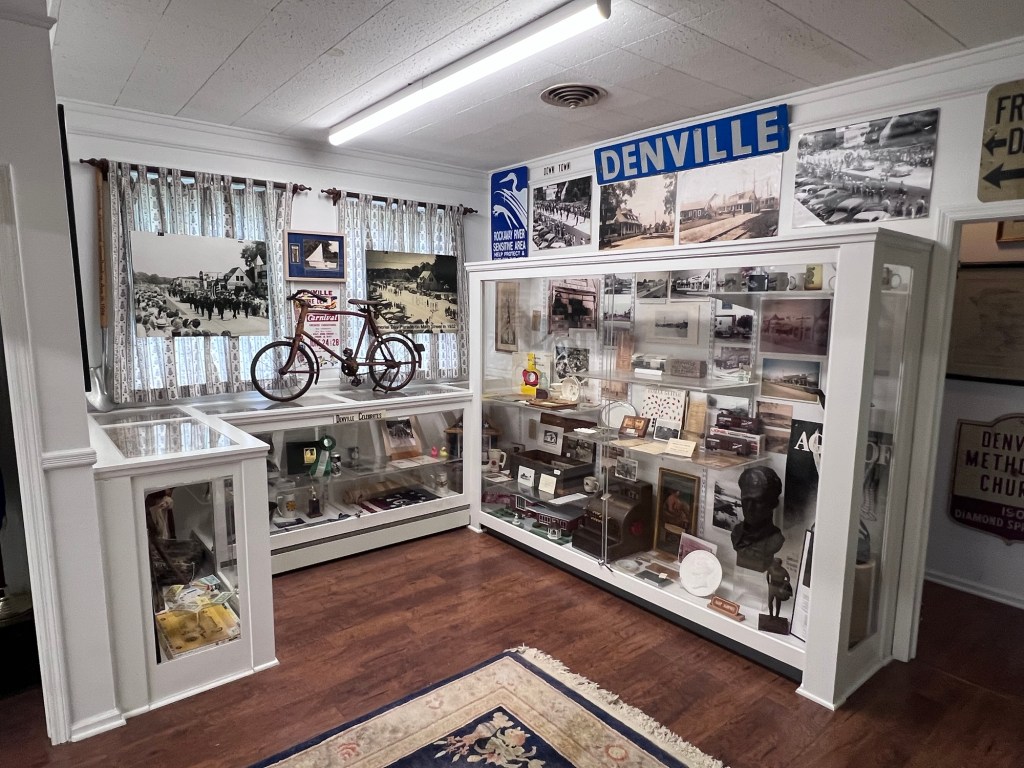
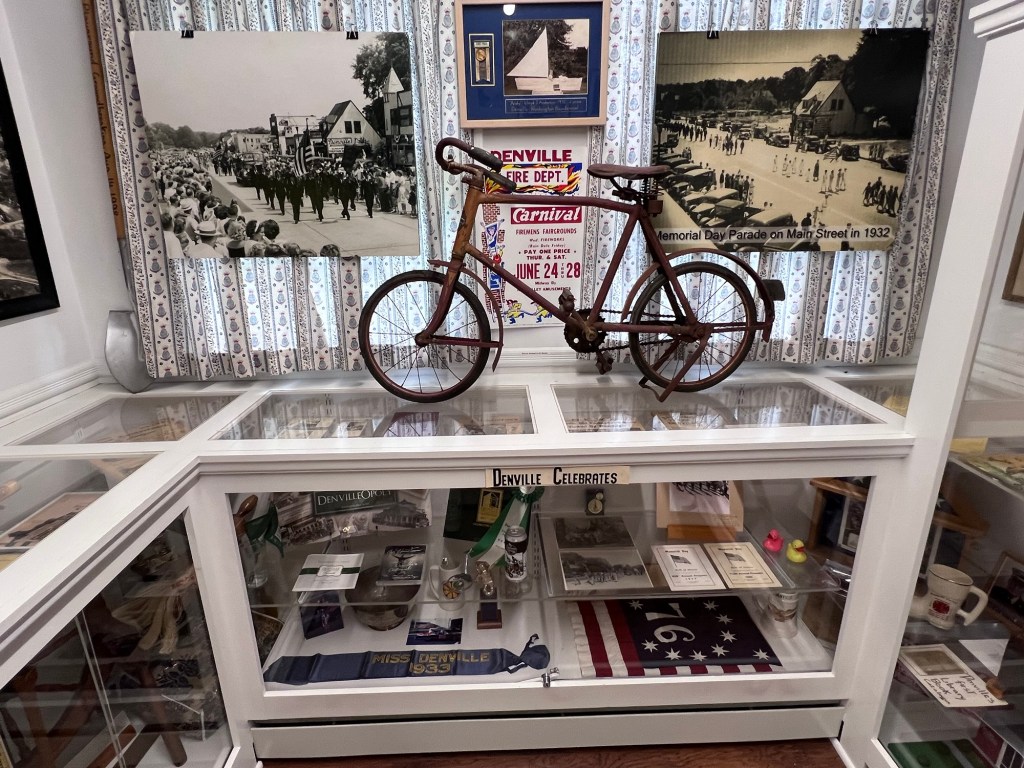
The town parades and artifacts from the town
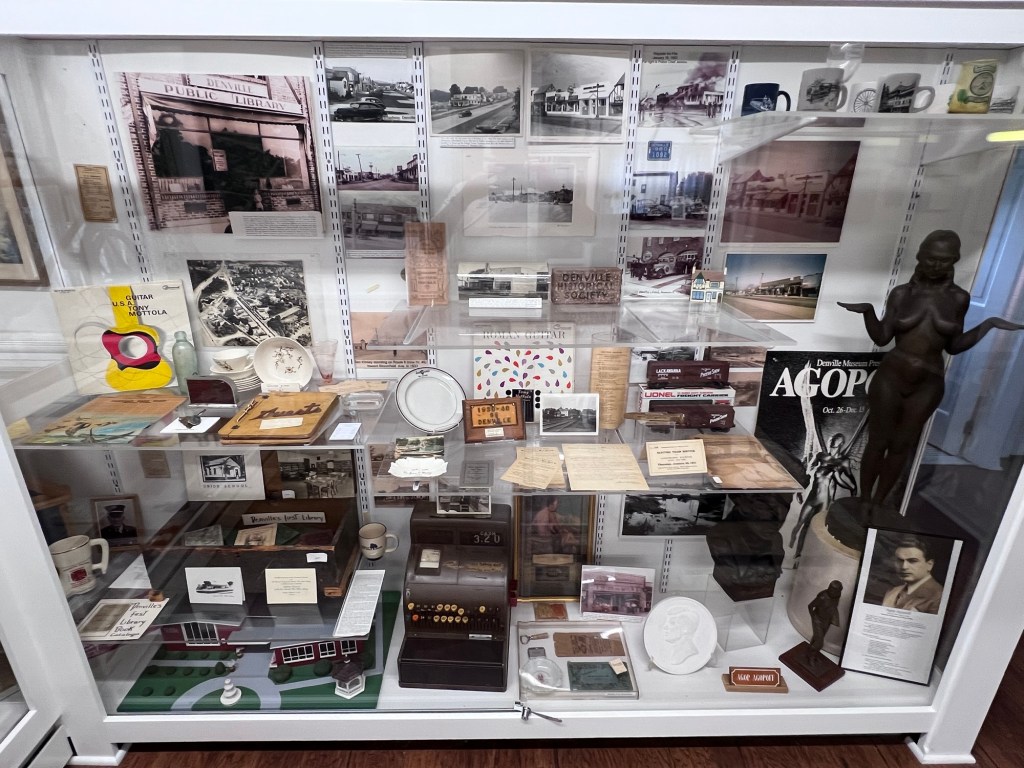
The display of town merchant items
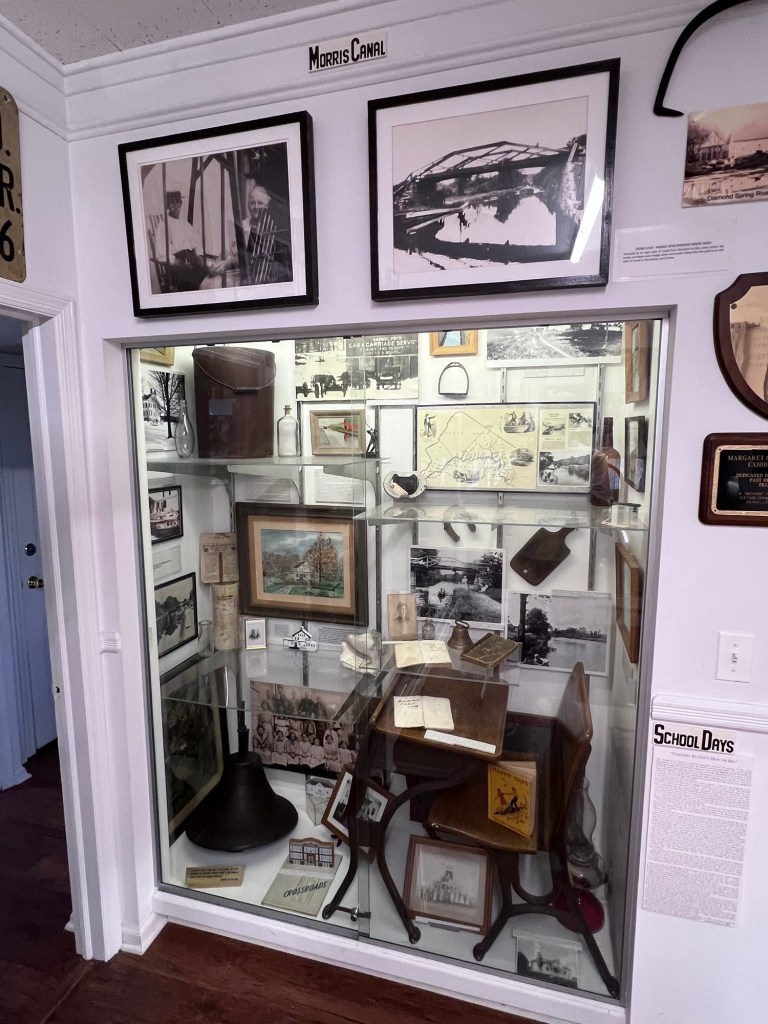
The creation of and growth of trade on the Morris Canal that once ran through the town is on display as well with pictures and artifacts.
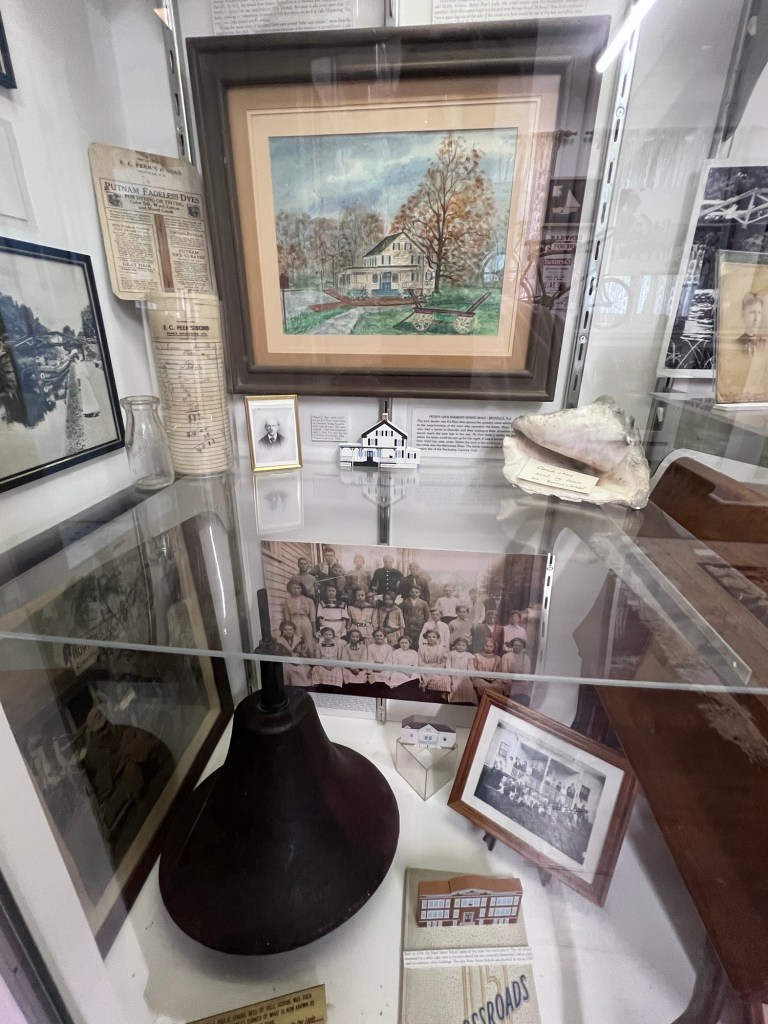
The Morris Canal display and some school house artifacts as well
More town artifacts
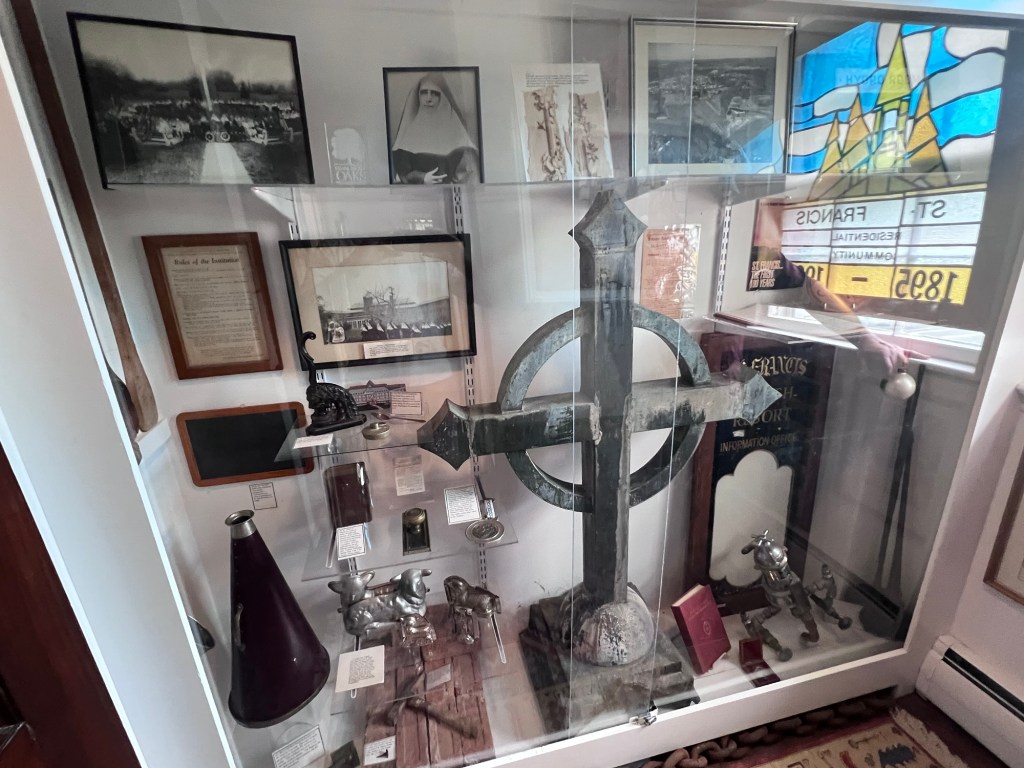
The order of St. Francis once had a building with a school here and as the order died out, they sold the building in town
These are some of the artifacts from that time
Some more of the artifacts from St. Francis
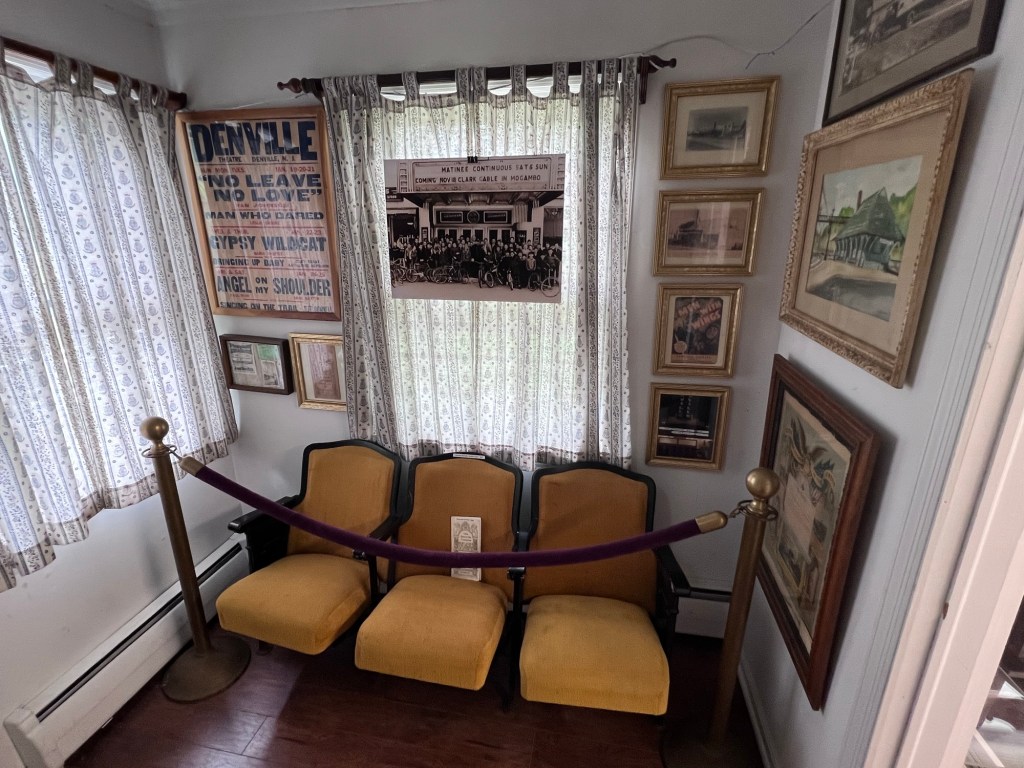
A display on the old Denville Theater
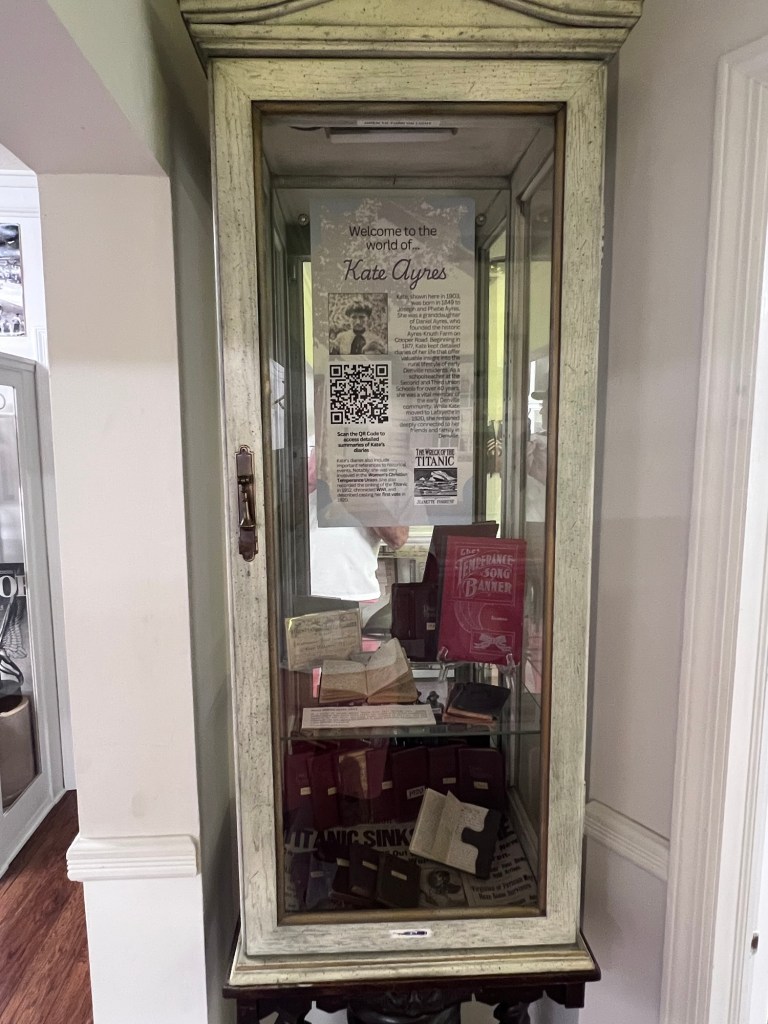
Another Ayres Family display
Historical items from the town
Military items from the community
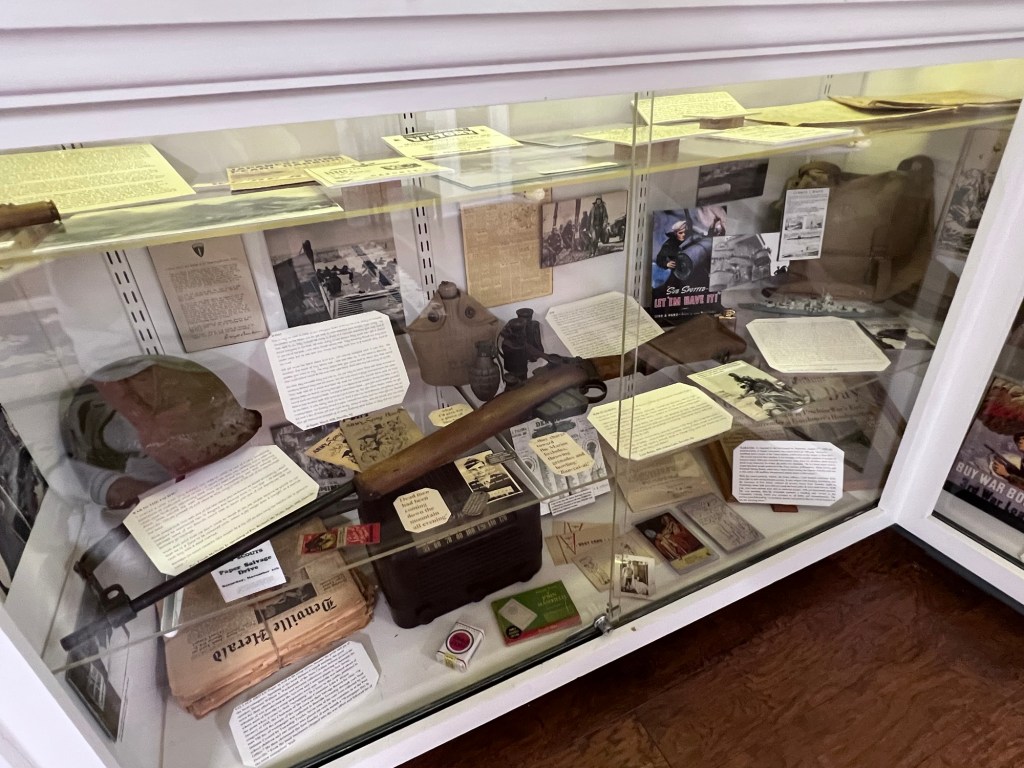
More Military items
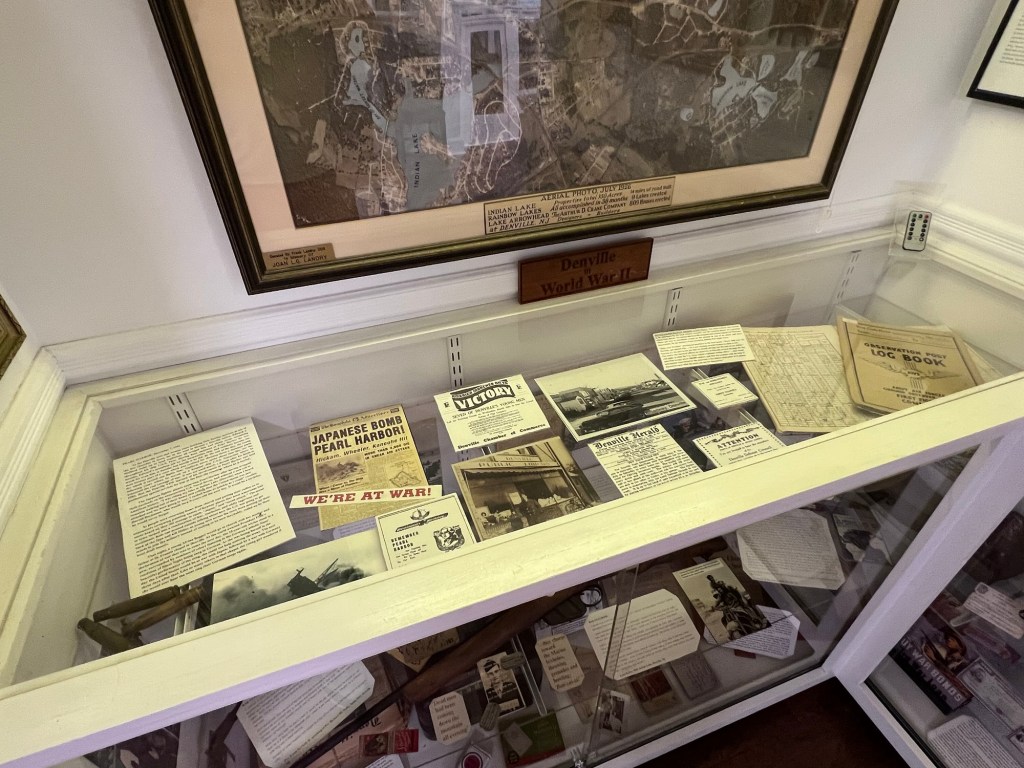
More Military items from the War years
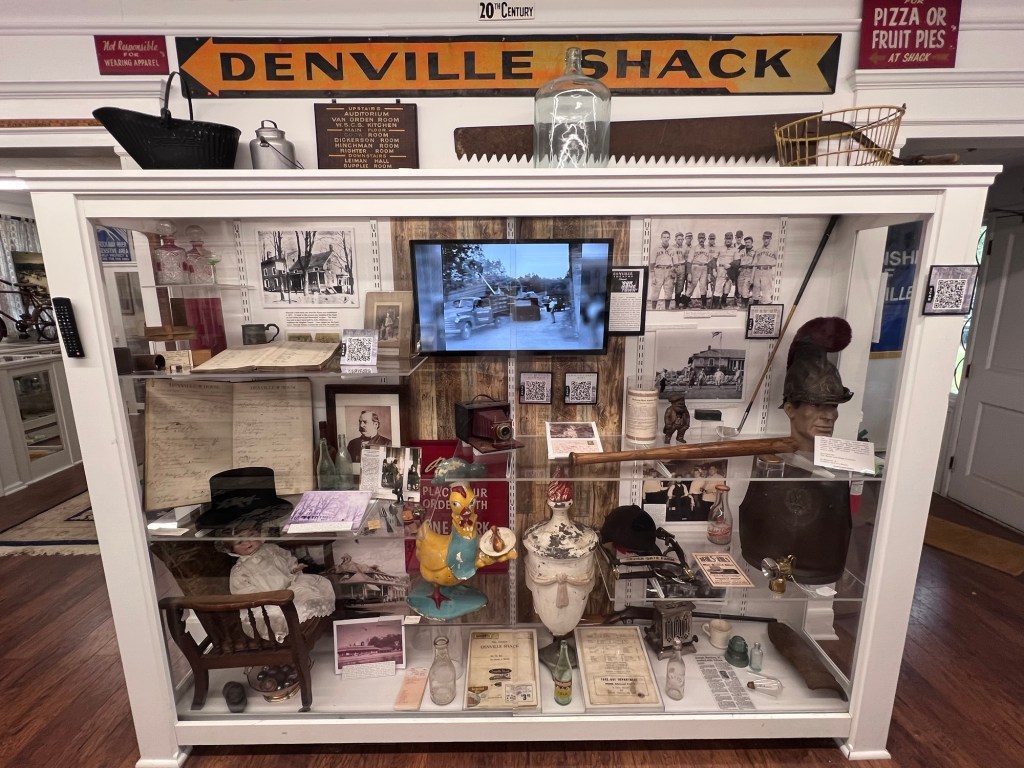
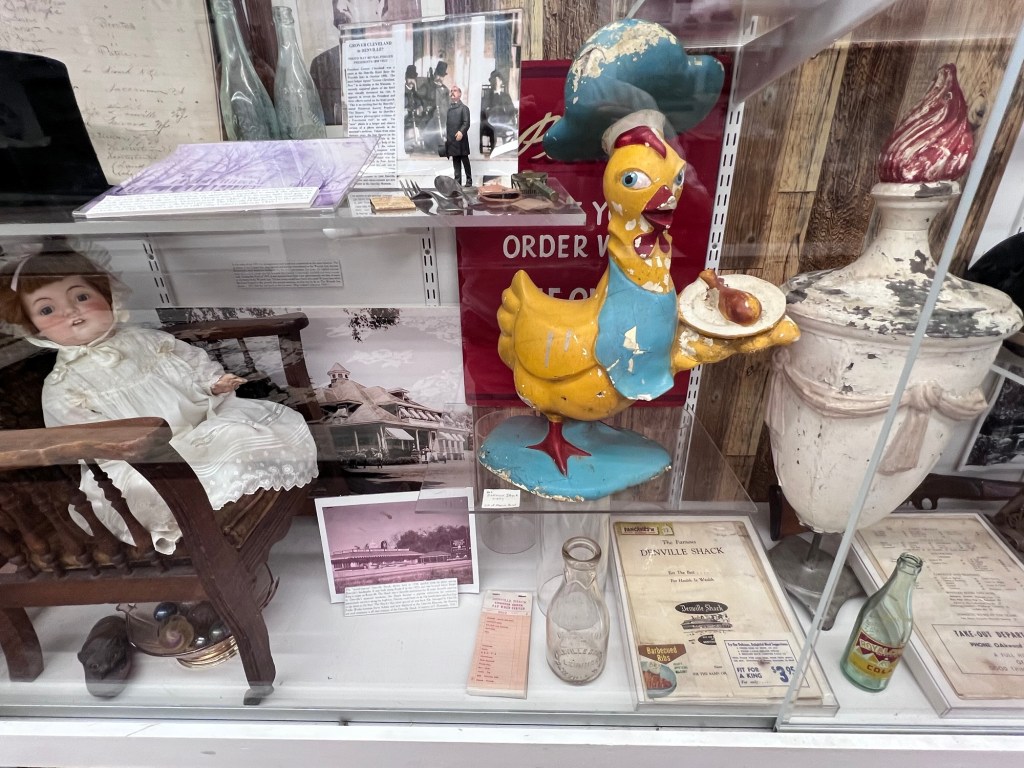
The last display I admired before I left for the afternoon was the Denville Shack display on a popular restaurant that was once in town. These popular restaurants used the dot the sides of local highways from the early 1960’s through the early 1980’s.
The display from the Denville Shack
Some of the items from the old restaurant plus other artifacts
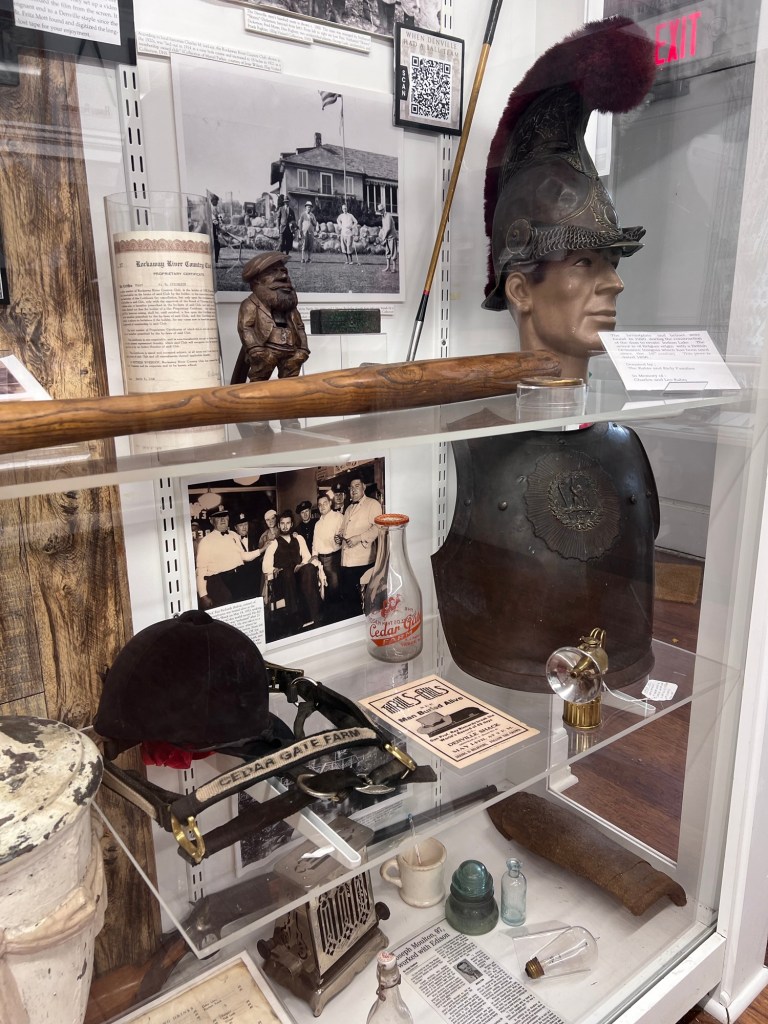
Some other town artifacts with a set of armor that was found in town.
The Denville Museum was a delight to visit. It was loaded with interesting displays and town artifacts that not only talk about the founding of the town but how it has come into its own as a modern town and a bedroom community of New York City.
The Town Museum is Secaucus sits in the former Municipal Building shared with the Secaucus Fire Department and the Community Recreation Center.
The colorful bicycle sculpture outside the museum
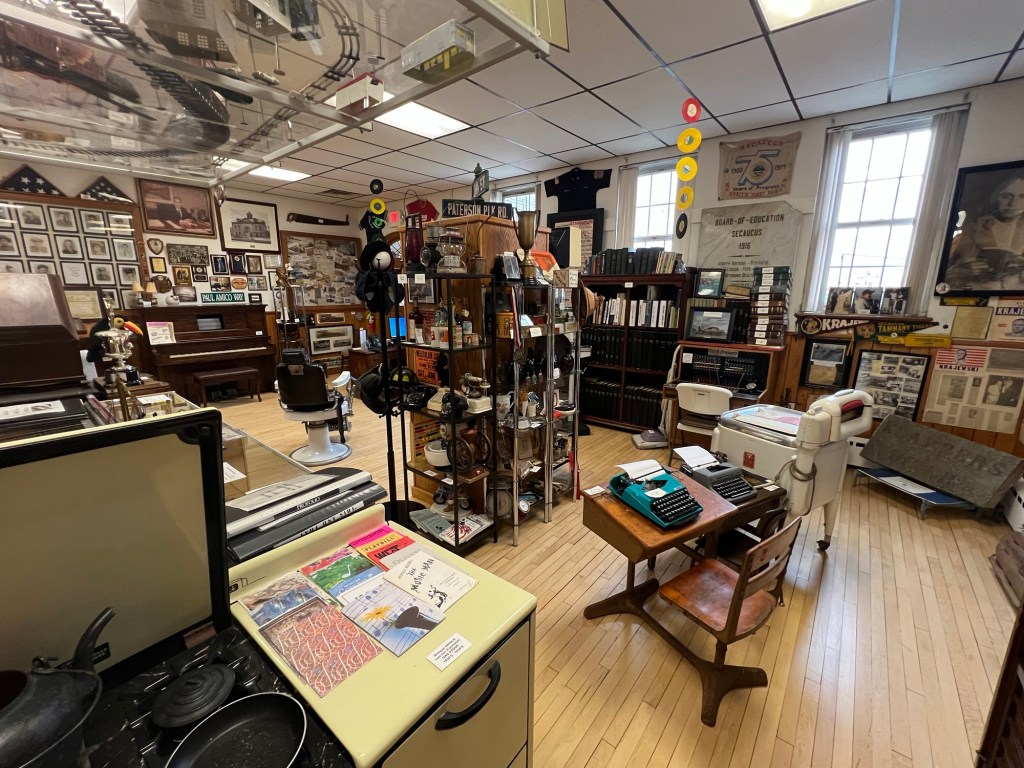
The inside of the museum has a large collection of artifacts and memorabilia from the Town of Secaucus and the surrounding community. Each section of the room has a different theme to it.
The main gallery of the one room museum
The Town Museum of Secaucus used to be the old library space and has now been converted into a town history museum displaying all aspects of life past and present in Secaucus, NJ. There is a wide array of displays in the museum.
The main gallery of the museum with old electronics and housewares
The museum has a very extensive collection of artifacts from the Secaucus Fire Department next door. There is a lot of old and current equipment on display and a very detailed account of the events on 9/11 in New York City.
The 9/11 display from the Secaucus Fire Department
Fire apparatus and bunker gear from the former Mayor of Secaucus
The full Secaucus’s Fire Department display
Being so close to New York City, the community was affected by the events of 9/11. There are many artifacts and pictures from that day displayed here.
Next to the fire department display was an exhibit of the military contributions in town.
The Military and Town history display
The museum has a lot of artifacts of electronic equipment of the past. From rotary phones to old typewriters, the museum showcases items from the 1950’s to the 1970’s.
The electronics of the past
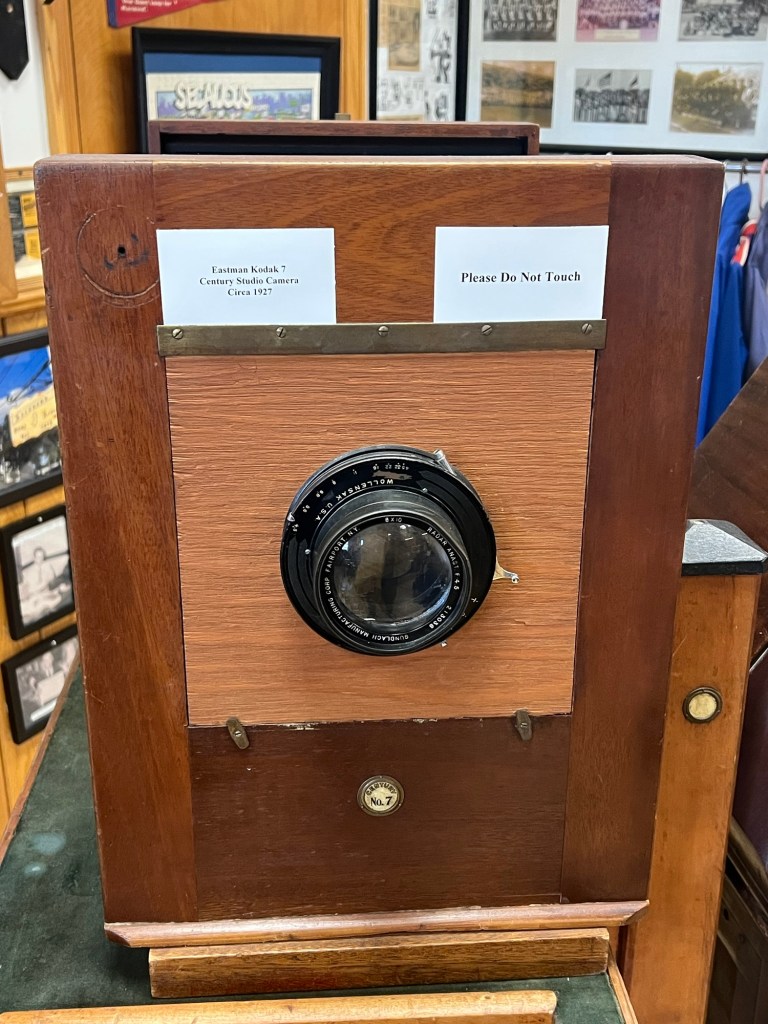
A collection of cameras from a local collector
A movie camera from early picture days
The back part of the museum
The museum’s covered the history of the town and events of different time periods. You could visit important dates in time.
The historical collection
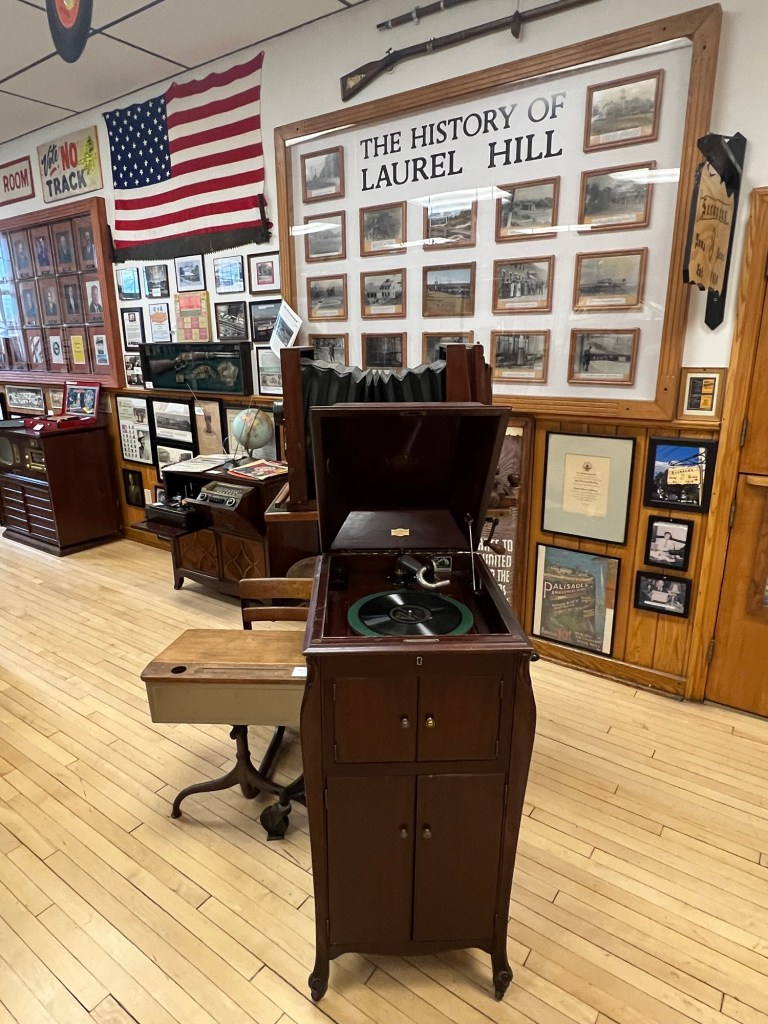
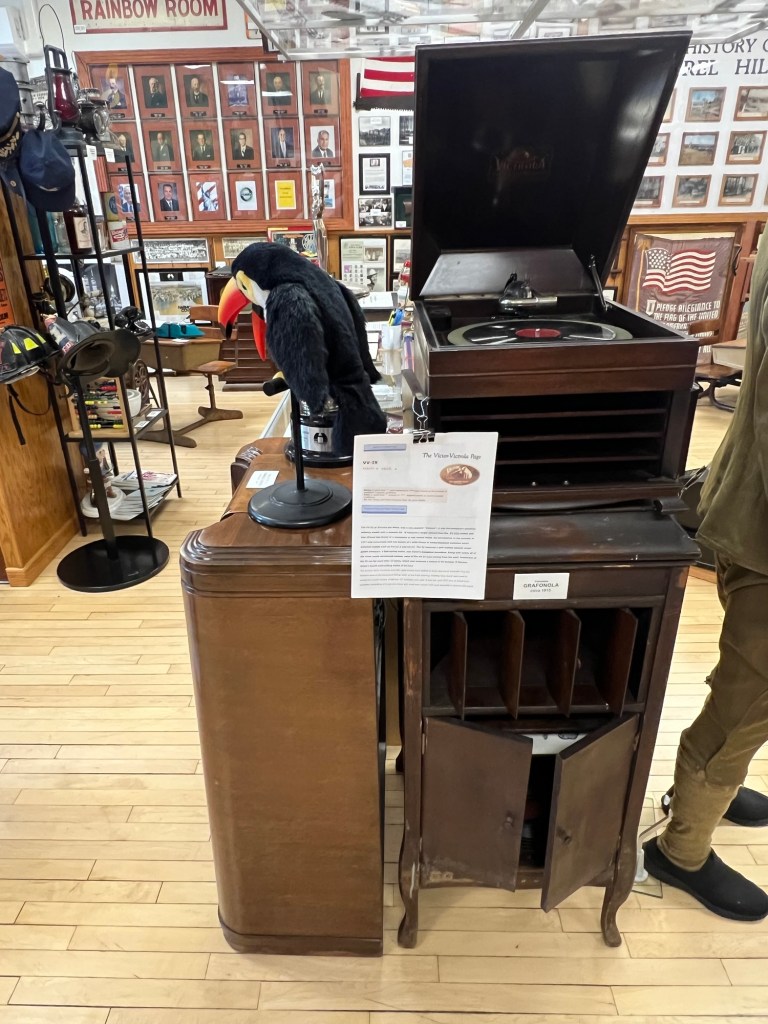
An old Victrola with records was playing
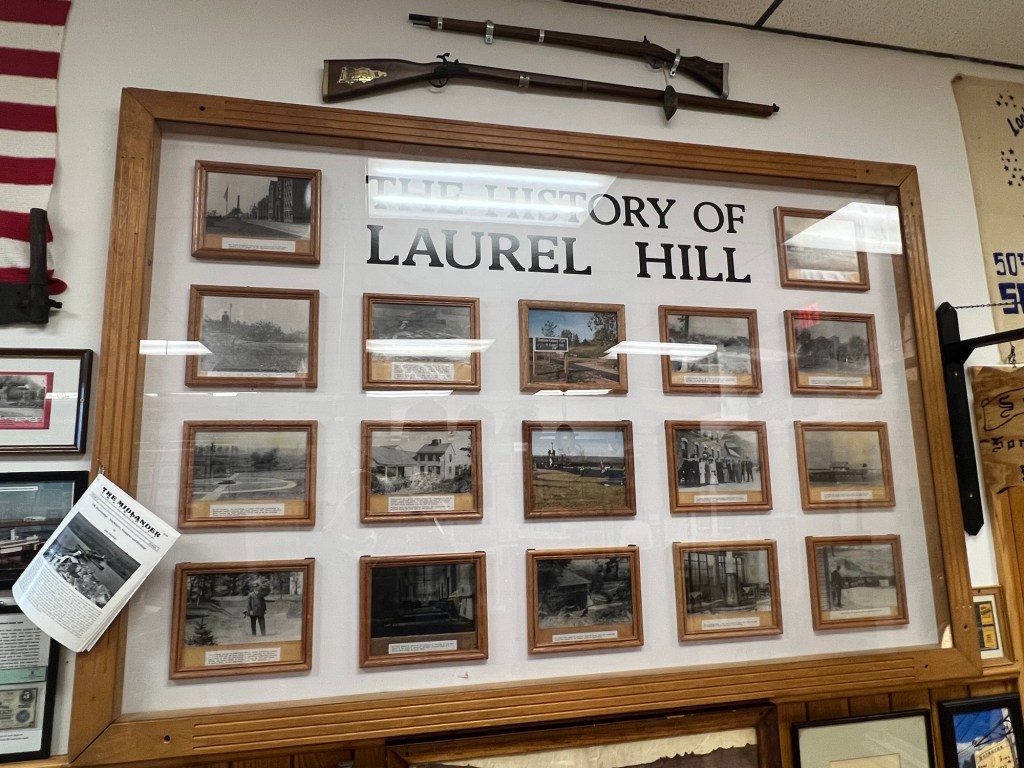
The history of Laurel Hill on display
Laurel Hill was a section of town the used to house several hospitals including an Insane Asylum. These hospitals used to treat all illnesses.
The museum has a collection of household appliances
The progression of the American household is shown in the museum as well. Home furnishings, decorative items and every day equipment like telephones and typewriters, once a big part of our lives have been reduced to relics of the past yet show how they educated us and grew our lives.
This includes an old washing machine
Other pieces of household decor
Local artifacts
An old switch board from the local company
There was even a selection of children’s toys in the cases and a 1950’s Lionel train running overhead.
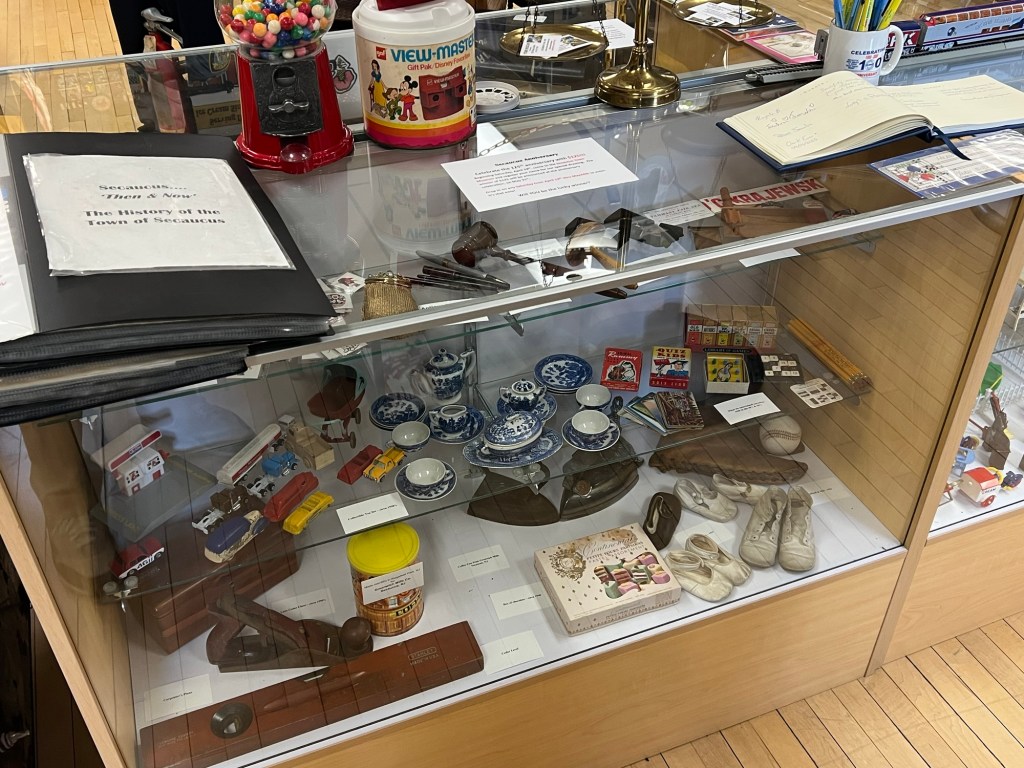
Children’s toys of the past
Children’s toys of the past
The Children’s playthings of the past show that not much has changed in child development. The use of these items to train children for their futures in commerce and homemaking have been part of our lives since before the Industrial Revolution.
The most interesting display and it is tucked in the corner of the museum is the exhibit of Presidential candidate Henry Krajewski.
Presidential Candidate Henry Krajewski
From tavern owner to Presidential candidate, we see the rise of a local politician. Though he campaign was not a success, there is a lot to be said of the spirit of this man’s political campaigns.
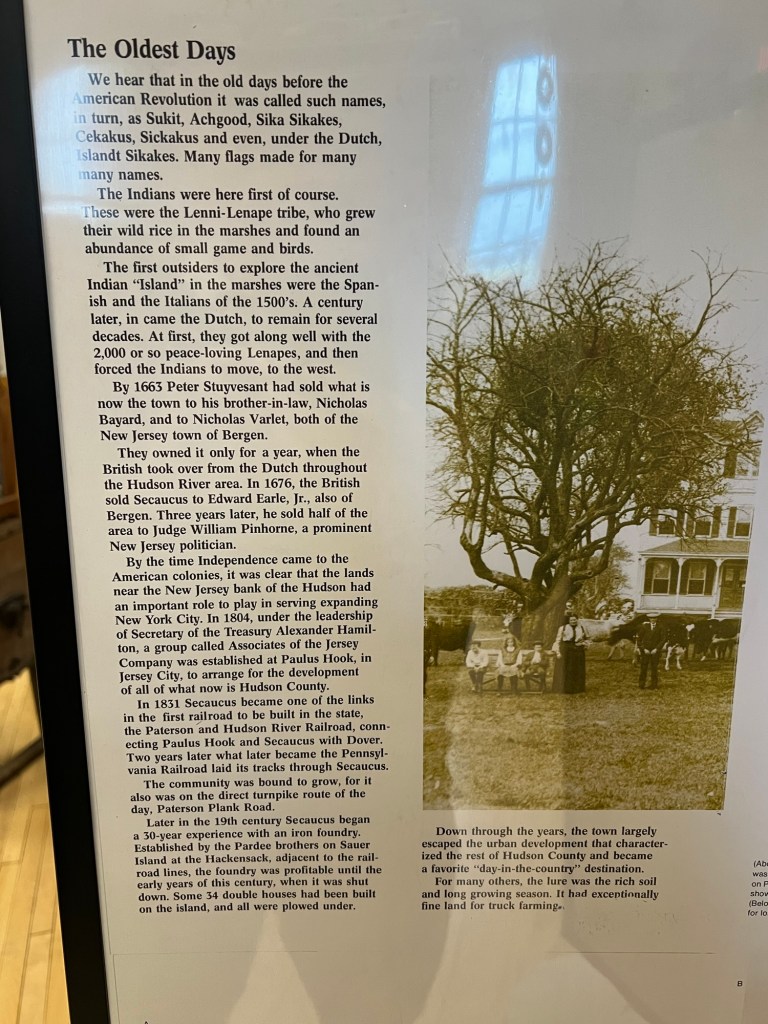
There is a lot to see and do at the Town of Secaucus Museum. There is everything from the history of the beginnings of the town from the Dutch to modern times to where the town will grow. There is a rich collection at the museum and a lot to see.
Some of the history of the town
The museum is situated in Downtown Secaucus where a lot of local shops and restaurants are located. As I walked around the downtown in search of a place for lunch, I weaved through the series of local businesses. There is a nice selection of places to eat.
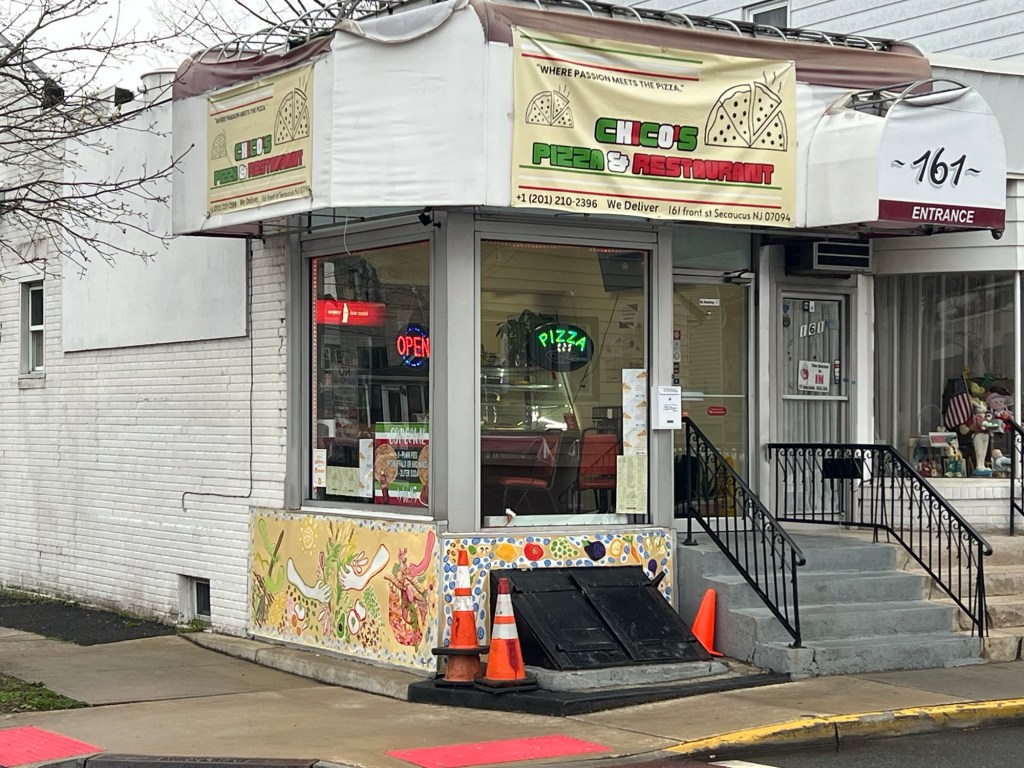
I ate at Chico’s Pizza and Restaurant at 161 Front Street and had the most delicious lunch at this Mexican/Italian restaurant.
The lunch was excellent. I started my meal with a slice of Cheese pizza which seemed to call to me. It was crisp, gooey and the sauce was packed with flavor.
The start to my lunch
After this excellent slice of pizza, I ordered a Sausage Calzone. The calzone filled two plates and was loaded with chopped sausage and three different types of cheese.
The Sausage and Cheese Calzone
The calzone was beyond delicious. When I cut it open, the cheese and sausage oozed out with a wonderful combination of flavors. The red sauce for dipping was so well spiced.
The small restaurant sits at the edge of the downtown and serves the most wonderful food at such reasonable prices.
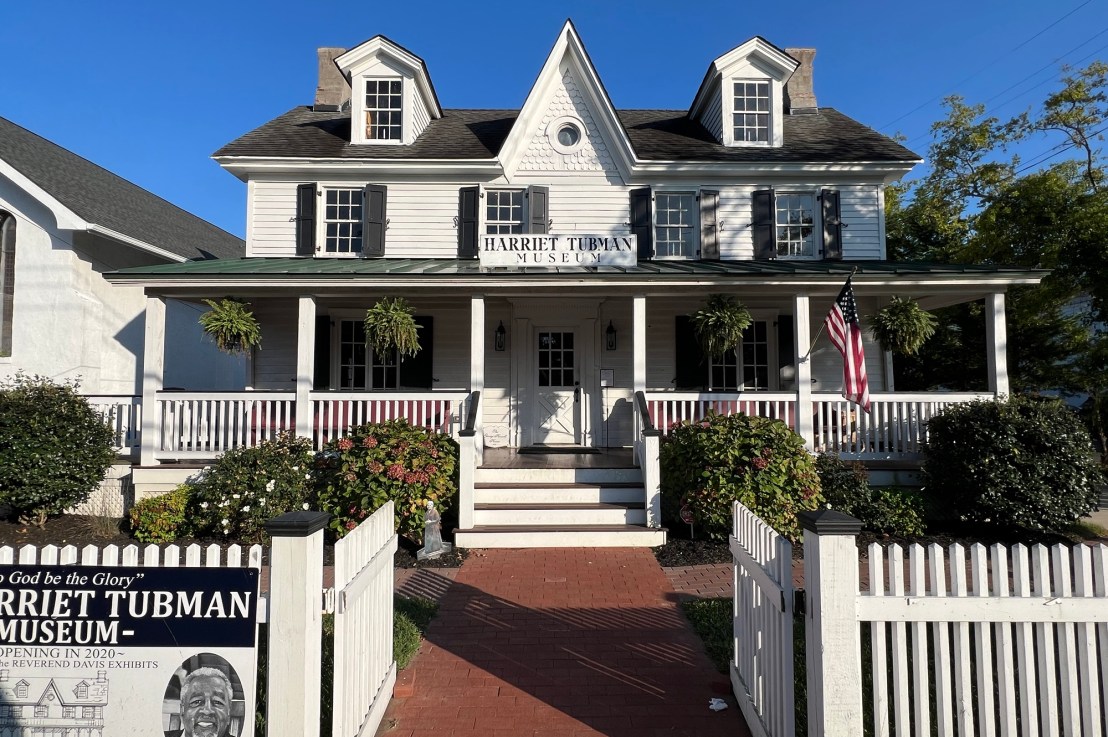
The entrance to the Harriet Tubman Museum of New Jersey
The History of the Museum and House it is located in:
(From the Museum website):
Lafayette street and Franklin Street: the center of abolitionist activism in Cape May
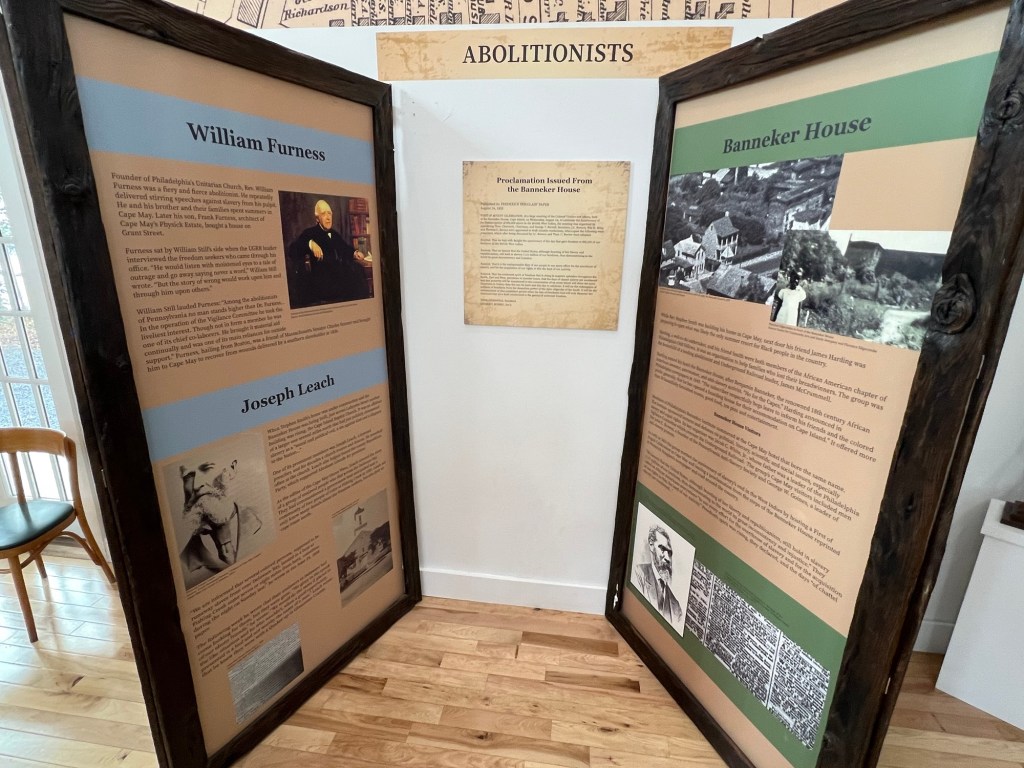
The Harriet Tubman Museum building is located on a block that anti-slavery activists called home in Cape May. Lafayette Street and Franklin Street became a center of abolitionist activity centered around three important buildings developed in 1846.
The Stephen Smith House stands at 645 Lafayette Street, across from the site of the Harriet Tubman Museum, where Stephen Smith built his summer home in 1846. Smith was a founder of the Pennsylvania Anti-Slavery Society.
The Banneker House was next to the Stephen Smith House. The Banneker House became a first-class hotel and one of the only summer resorts for free Black people in the country and was developed by James Harding, a friend of Stephen Smith.
The white Baptist Church was located directly across the street from the Stephen Smith House and Joseph Leach frequently preached there. Leach was a political leader and editor of the Ocean Wave newspaper, where he often wrote accounts of enslaved people that fled to Cape May. The congregation of the church issued a strong condemnation of slavery.
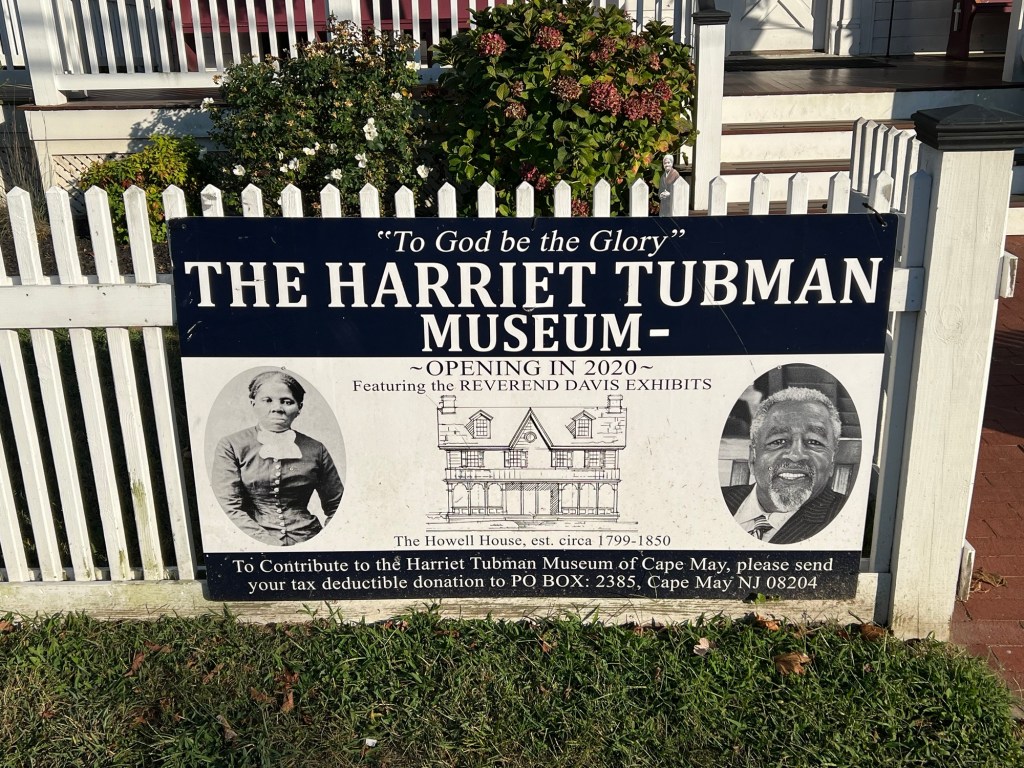
The sign that welcomes you
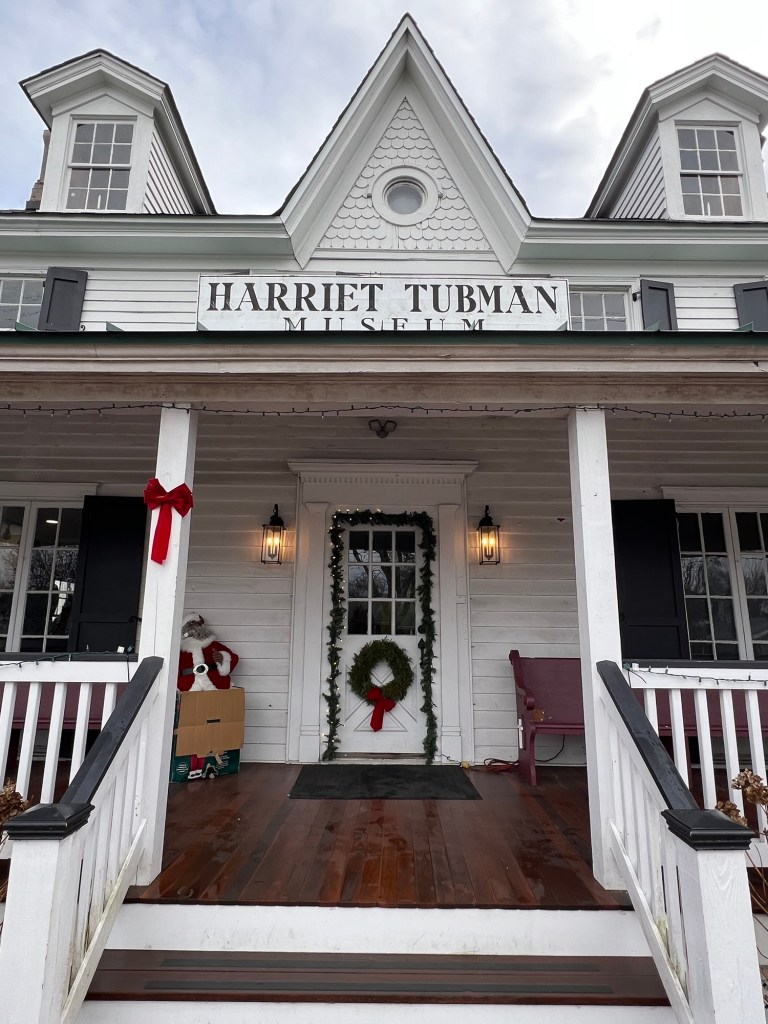
The Museum at Christmas time
Santa greets you at the door
Cape May: A nexus between North and South
(from the museum website):
Cape May played a pivotal role in the fight to end slavery. Several historic figures critical to the fight against slavery spent their summers in Cape May.
The children’s dolls at the entrance
I visited the Harriet Tubman Museum when I was in Cape May and this small museum tells two different stories. It tells of Harriet Tubman’s time living in Cape May as a cook before her return down South and about the Free Black community in Cape May that built their own Society within the community. Their businesses catered to both Black and White residents of Cape May.
The museum tackles several different topics including the life of Harriet Tubman in Cape May when she lived here as a cook, earning money and probably developing a strategy for helping enslaved people reach their freedom through the Underground Railroad. It discusses the success many Black residents found as business owners in Cape May and the surrounding towns.
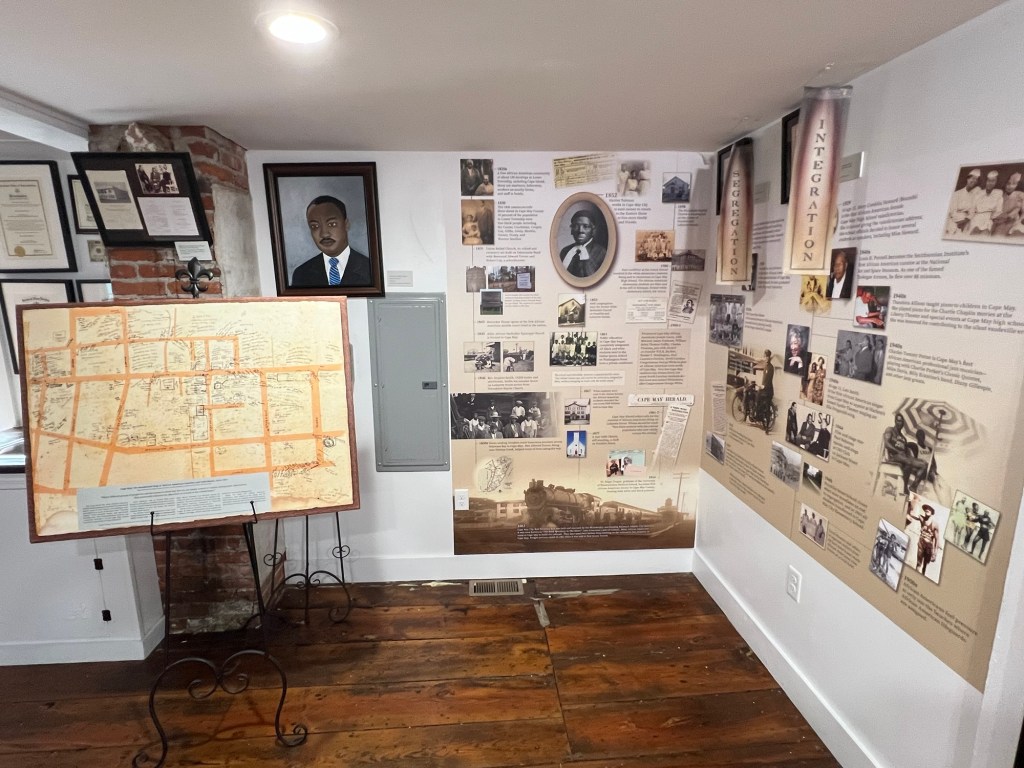
The last topic the museum discusses in the affects of Integration and Segregation on society in general and its causes and results. There is no one solution to this as we as a society cause this by our own actions.
The History of Business’s owned by Blacks in that era of Cape May
The freed black population settled in the Cape May area and opened many businesses that contributed to the whole population. This developed into many successfully run businesses by Free Slaves and residents of New Jersey.
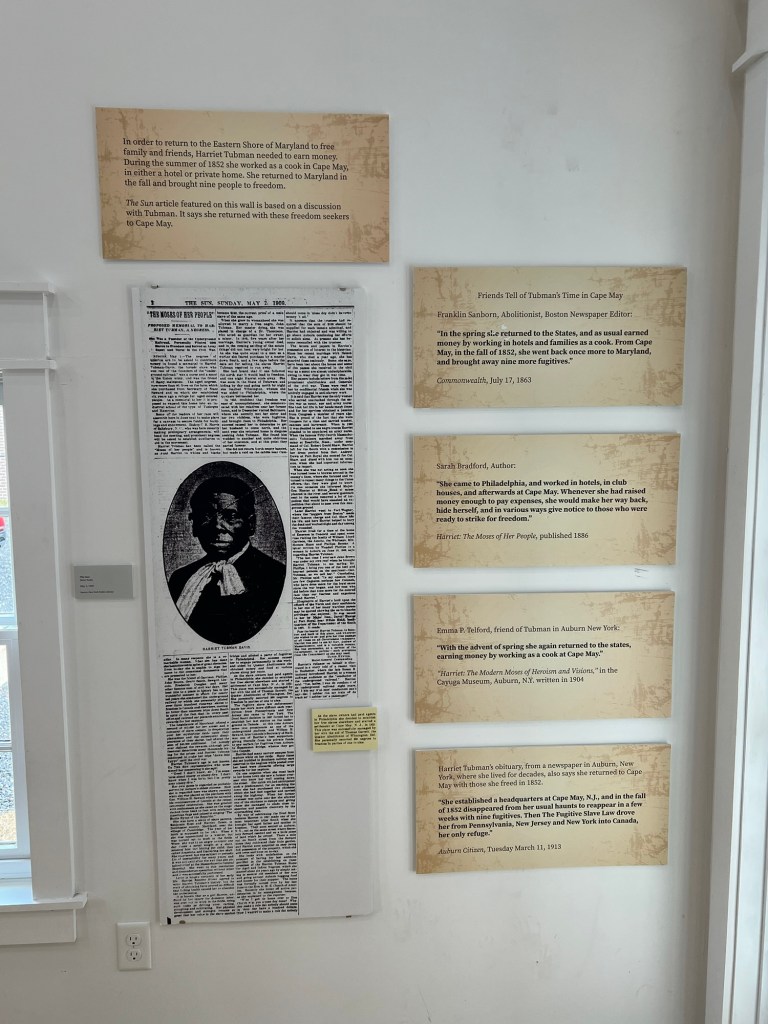
The history of Harriet Tubman in Cape May
(From the museum website):
Harriet Tubman’s life and work in Cape May
Harriet Tubman lived in Cape May in the early 1850s, working to help fund her missions to guide enslaved people to freedom. After her initial journeys conducting freedom seekers to Canada, her friend and abolitionist leader Franklin Sanborn wrote, “She returned to the states, and as usual earned money by working in hotels and families as a cook. From Cape May, in the fall of 1852, she went back once more to Maryland, and brought away nine more fugitives.” The New Jersey Historical Commission says she spent two other summers in Cape May.
The history of Abolitionists in Cape May and in New Jersey. Being so close to the border, New Jersey was a big part of the Slavery Underground. Even during the Civil War, Delaware was a more neutral state of the South.
The story of the Abolitionist Movement and William Furness
History of the war years and the people who shaped it
The progressions of Blacks in that era
The affects of Segregation and Integration in a society that does not always see eye to eye. This attitude unfortunately still survives into today. There is the history of Harriet Tubman’s life as a child into adulthood.
The stories of Integration and Segregation in that era
The museum offers many voices and stories about life before, during and after slavery and its part in the shaping of New Jersey. Since New Jersey was the last Northern state to abolish slavery on January 23rd, 1866.
The History and End of Slavery in New Jersey:
(From the website of the New Jersey Department of State-Historical Commission website)
New Jersey, The Last Northern State to End Slavery
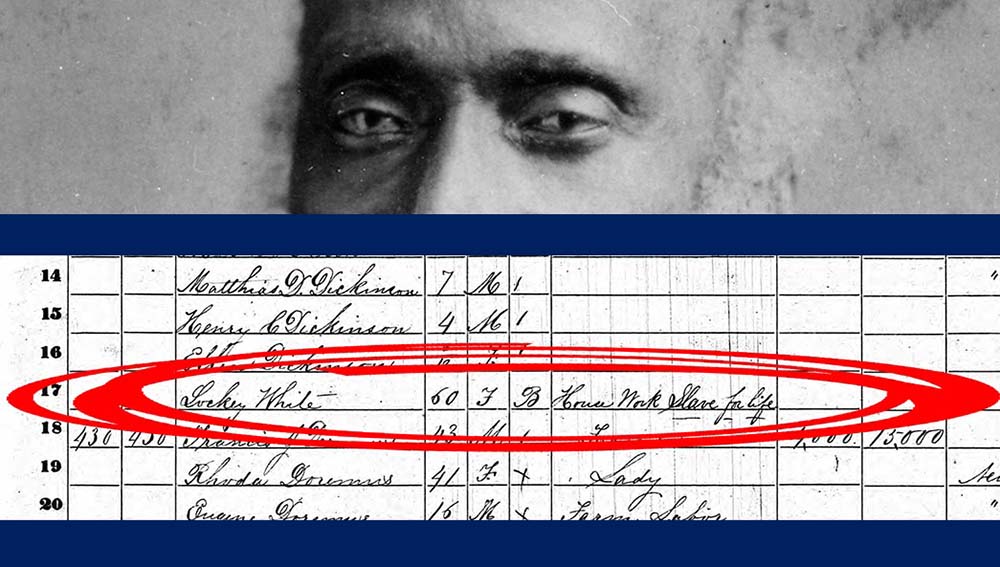
Image collage: Peter Lee who may have been illegally enslaved as a young man by the Stevens Family in Hoboken, NJ, and Lockey White’s 1860 census entry indicating that she was a “slave for life.”
By Noelle Lorraine Williams, Director, African American History Program The New Jersey Historical Commission
This year forty-seven states including New Jersey will observe Juneteenth (also known as Freedom Day or Emancipation Day) as a state holiday—a holiday that commemorates when enslaved Blacks in Galveston, Texas learned that they were, in fact, freed by President Abraham Lincoln’s Emancipation Proclamation two and half years earlier. The date was June 19, 1865. Juneteenth then is a holiday of celebration and a mournful remembrance of deep injustice and loss. It reveals the injustice of slavery and the legal repression of African American freedom, extending beyond the nineteenth century.
But we must remember that there were still enslaved Black men and women in New Jersey even after Juneteenth. Imagine, New Jersey’s death grip on slavery meant that until December 1865, six months after enslaved men, women, and children in Texas found out they were cheated of their freedom, approximately 16 African Americans were still technically enslaved in New Jersey.
But Why and How?
While there were many Black, mixed-race, and white people in New Jersey who fought against slavery, most legislators refused to condemn the institution. Profits from slaveholding organizations had built and maintained the state’s major cities and regional centers like Newark and those in Bergen County.
Lincoln’s 1863 Emancipation Proclamation did not free enslaved African Americans in the Northern States; it freed only those in the mostly southern “rebellious states.” Two years later, New Jersey bitterly refused to ratify the Thirteenth Amendment, the United States Constitutional Amendment that abolished slavery and involuntary servitude across the country.
Slavery’s final legal death in New Jersey occurred on January 23, 1866, when in his first official act as governor, Marcus L. Ward of Newark signed a state Constitutional Amendment that brought about an absolute end to slavery in the state. In other words, the institution of slavery in New Jersey survived for months following the declaration of freedom in Texas.
To understand this historical development, one needs to take a step back to 1804 when New Jersey passed its Gradual Abolition of Slavery law—an act that delayed the end of slavery in the state for decades. It allowed for the children of enslaved Blacks born after July 4, 1804 to be free, only after they attained the age of 21 years for women and 25 for men. Their family and everyone else near and dear to them, however, remained enslaved until they died or attained freedom by running away or waiting to be freed.
In a period when the average life expectancy was 40 years old, the 1804 law essentially took more than half of these people’s lives to satisfy the economic and political demands of New Jersey enslavers.
In essence, Juneteenth, not only marks the day African Americans in Texas realized that they had been robbed of two years of their freedom, following the Emancipation Proclamation. It also commemorates all of our ancestors here in New Jersey who were the last Blacks in the North to be ensnared in that bloody institution.
The New Jersey Historical Commission (NJHC), a division of the New Jersey Department of State, is a state agency dedicated to the advancement of public knowledge and preservation of New Jersey history.


























 Visiting a Museum: The Unique, Unusual, Obscure and Historical