Tag: Small Historical Societies in New York State

Irvington Historical Society                                           131 Main Street                                                            Irvington, NY 10533

Irvington Historical Society 131 Main Street Irvington, NY 10533

Irvington Historical Society

131 Main Street

Irvington, NY 10533

(914) 591-1020

https://www.instagram.com/irvingtonhistoricalsociety/

https://www.facebook.com/IrvingtonHistoricalSociety/

Open: Sunday-Wednesday Closed/Thursday 1:00pm-4:00pm/Friday Closed/Saturday 1:00pm-4:00pm

Admission: Free but donations are accepted

My review on TripAdvisor:
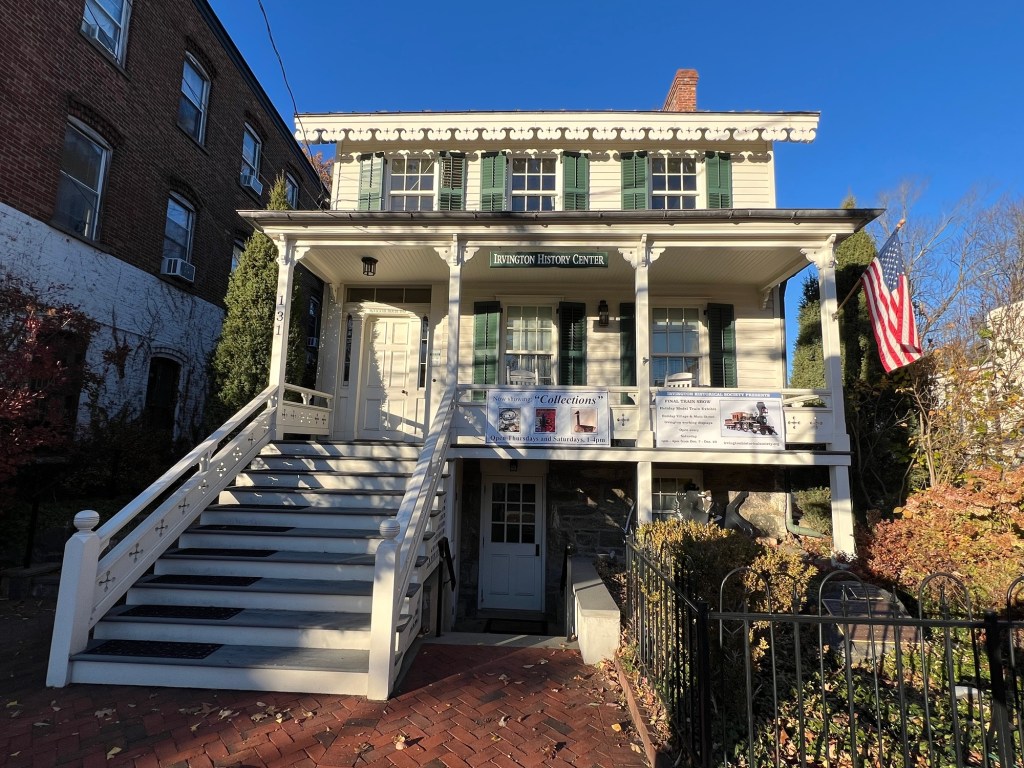
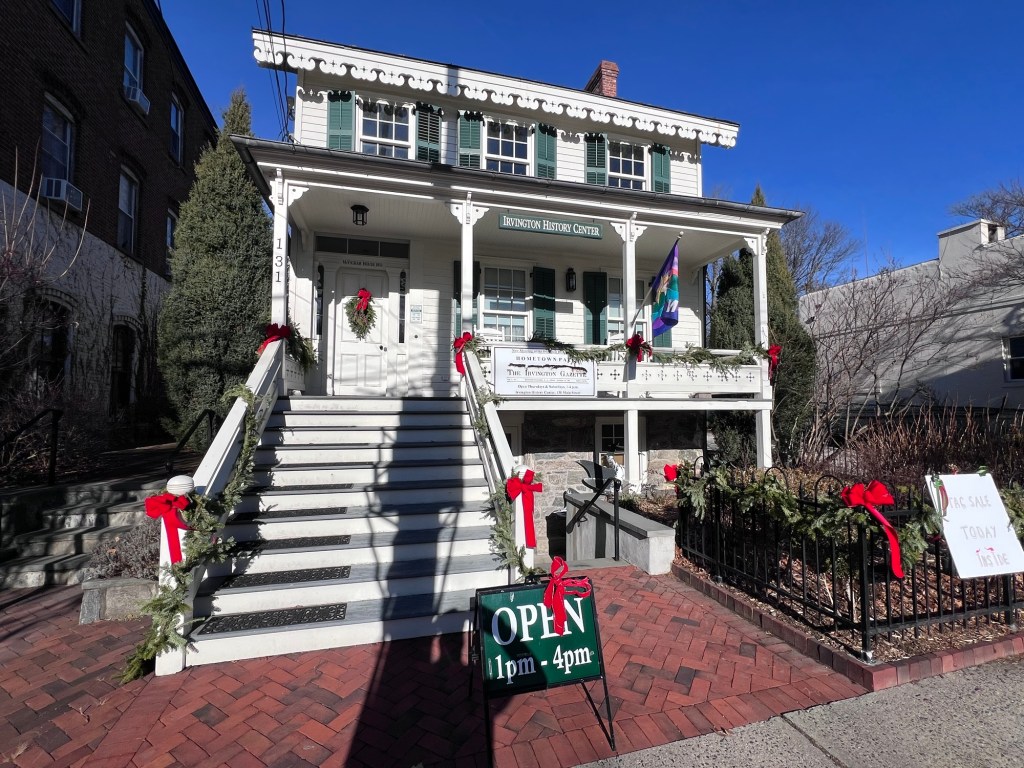
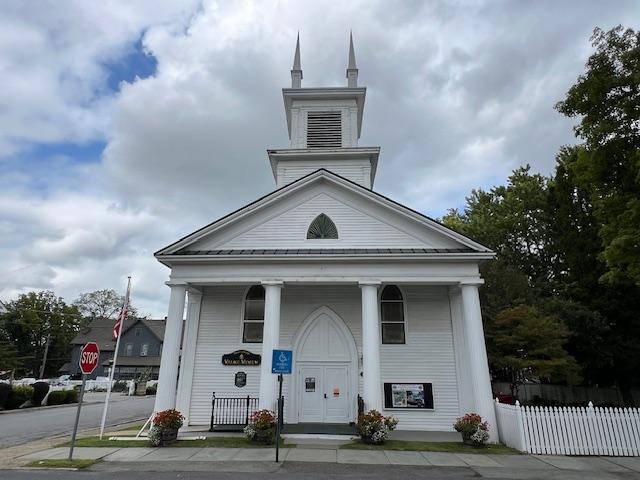
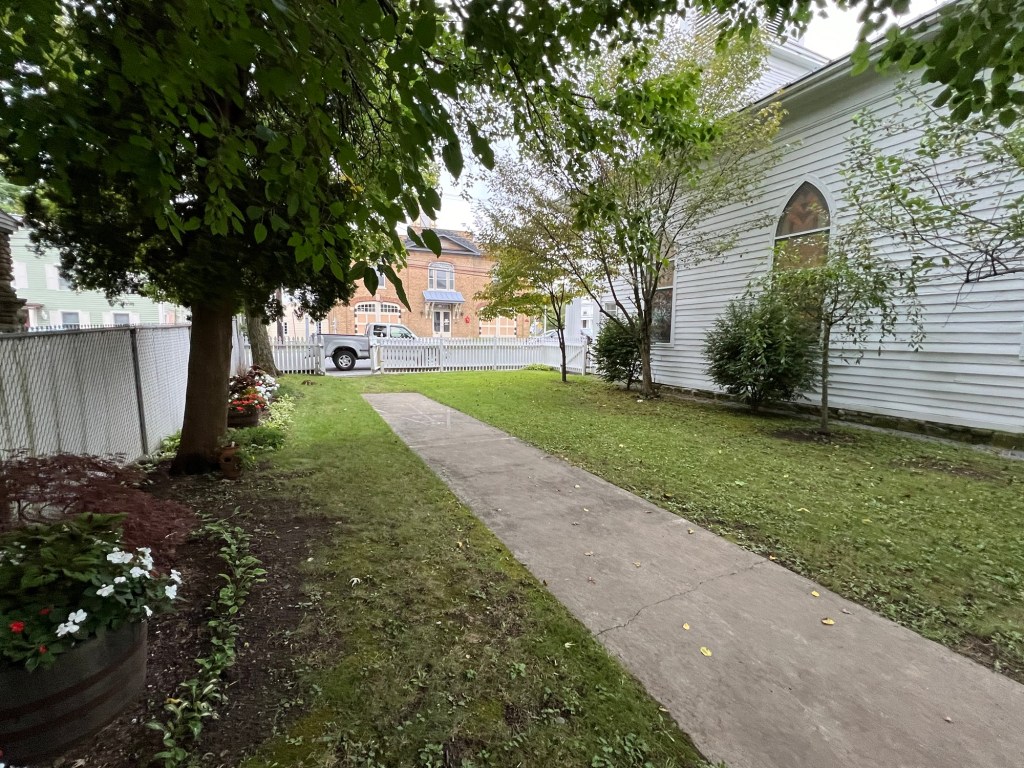
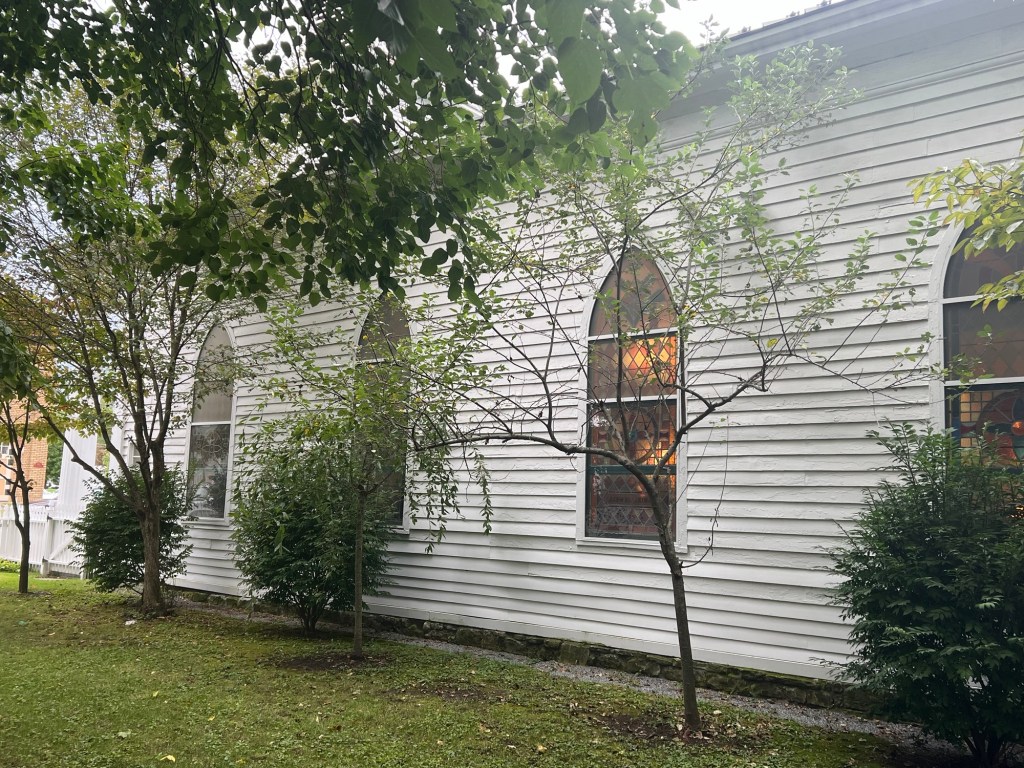
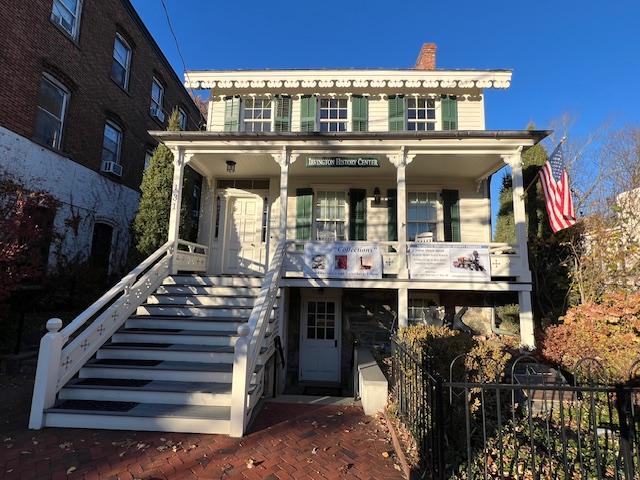
The Irvington Historical Society at 131 Main Street
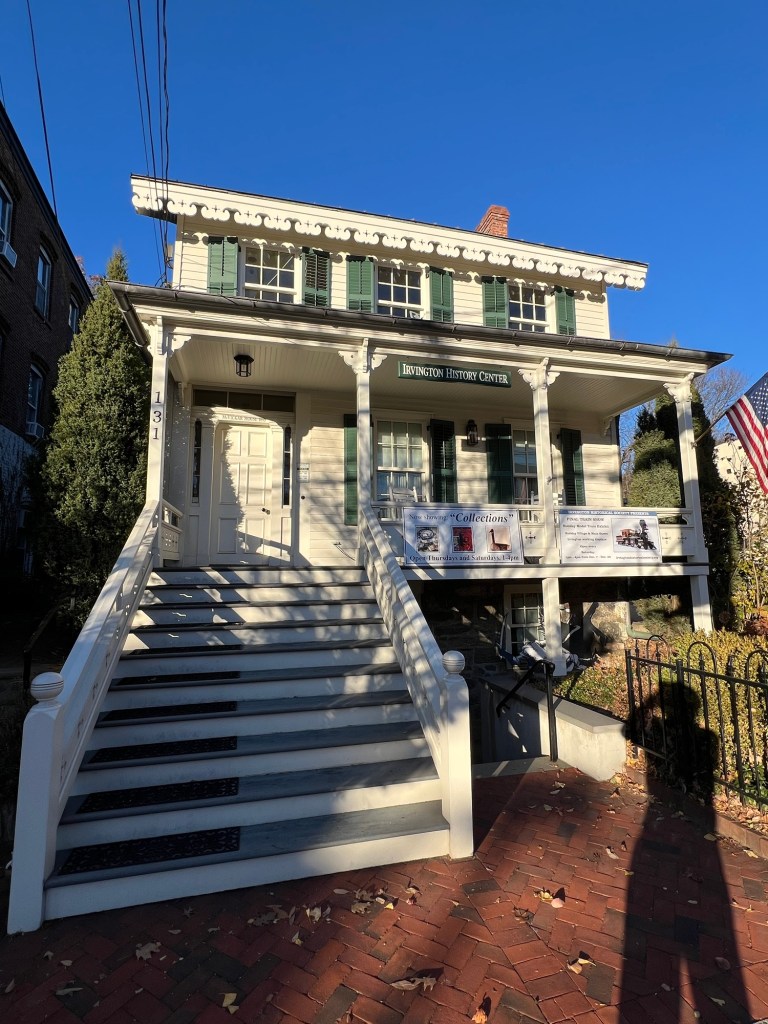
The Society building in the Fall

The Mission Statement of the Irvington Historical Society:

(From the Society website)

The Irvington Historical Society was founded in 1972 as a direct result of renewed interest in the history of our village during the Irvington Centennial Celebration. The mission of the society is to discover, collect, organize, preserve and make accessible all variety of material which serves to illustrate and explain the history of the village and its people. Through lectures, programs, publications, and exhibits, we attempt to share that history with residents and friends. The Society is also dedicated to the preservation of the historical, architectural, and cultural heritage of the Village.
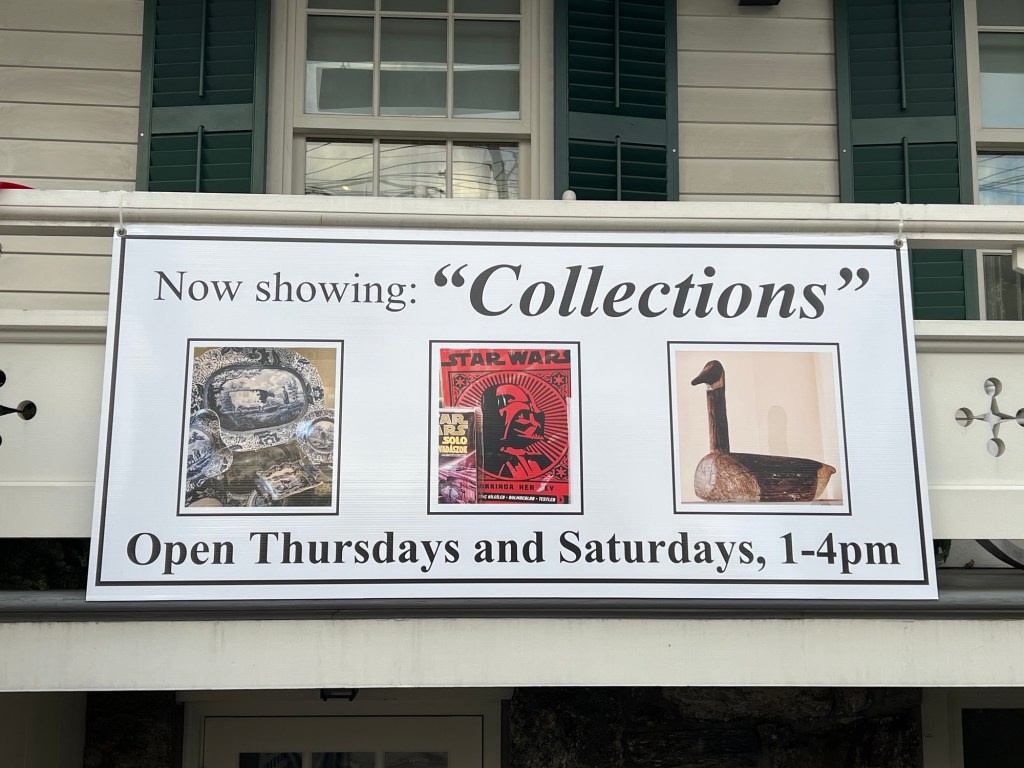
The ‘Collections’ exhibition on residents of Irvington, NY personal collections shown at the museum
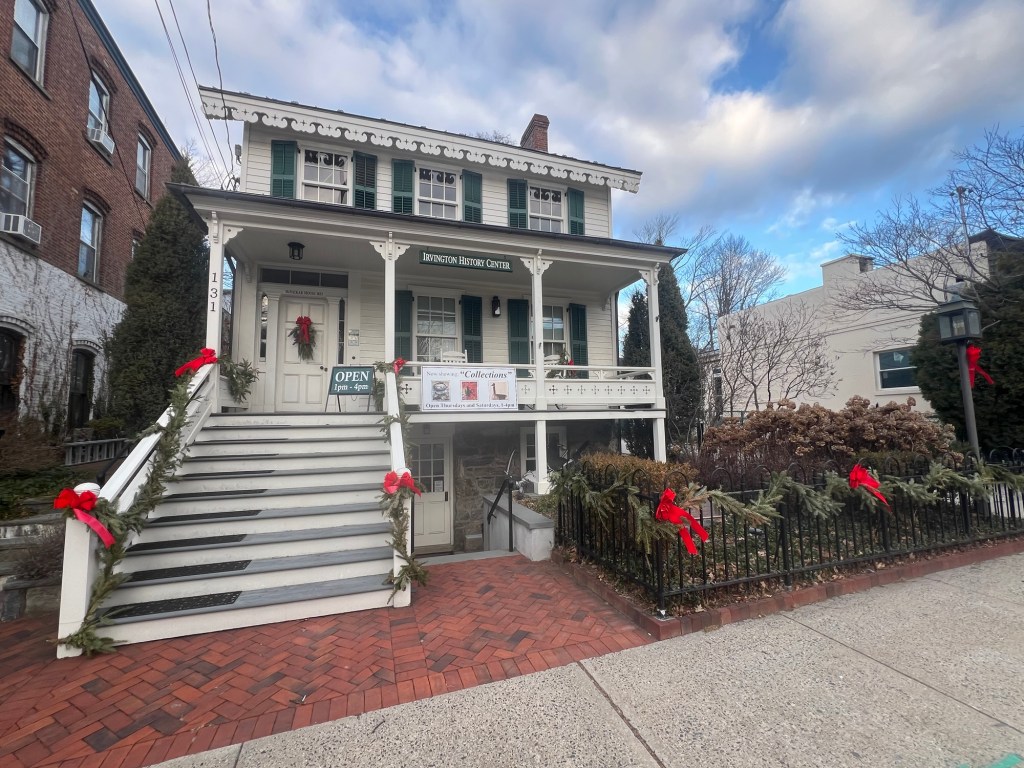
The museum decorated for the holidays

The History of the Museum’s McVickar House headquarters:

(from the Society website)

The McVickar House, a Greek Revival frame house, stands on land that was originally part of the farm of William Dutcher.  In 1812, Justus Dearman, a New York City merchant, purchased the southern half of the Dutcher farm, 144 acres extending eastward from the Hudson River.  In 1849, Dearman sold his property to Gustavis Sacchi for $26,000.  Sacchi immediately resold the property to Franklin C. Field, a partner in the firm Jay and Field in New York City. Field had the property sub-divided into individual building lots establishing the village of Dearman.  On April 25, 1850, these lots were publicly auctioned at the Merchant’s Exchange in New York City. 
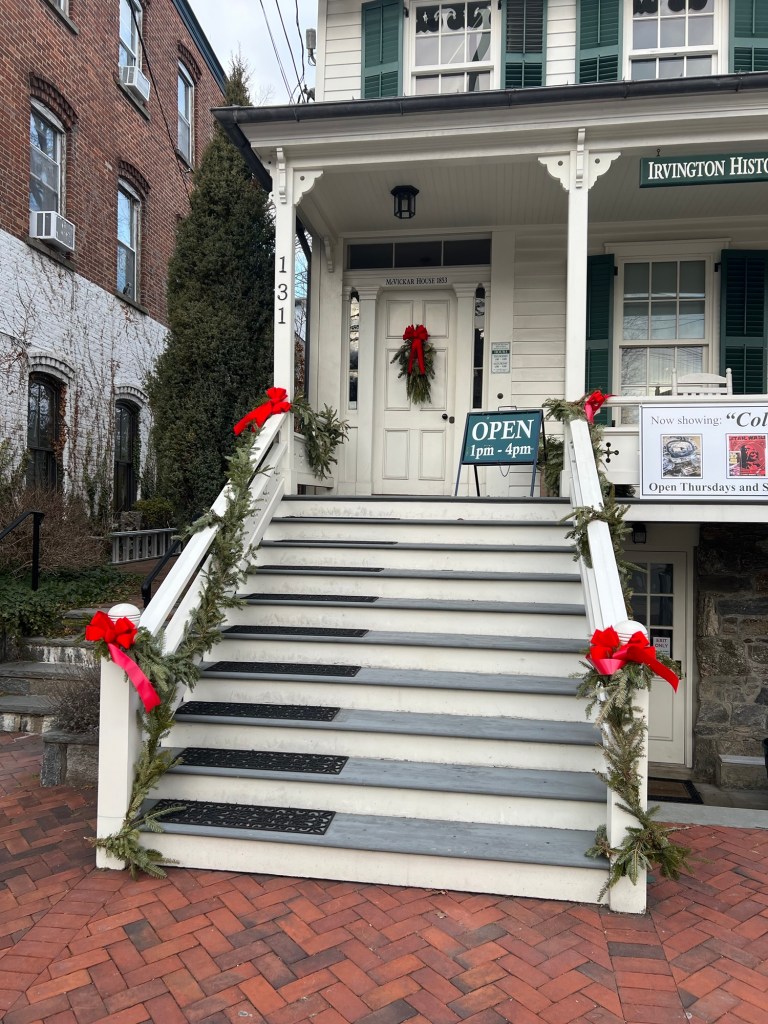
The museum decorated for the holidays

(From the Society website)

Building Lot #246, along with several others, was ultimately sold to the Rev. John McVickar.  McVickar was born in New York City on August 10, 1787, into a wealthy merchant family.  He was considered a brilliant student, graduating from King’s College (now Columbia) at the age of 17 in 1804. 

In 1811, he took orders in the Protestant Episcopal Church and became a dynamic leader in the Episcopal Diocese of New York for over fifty years.  He married Eliza Bard in 1809, and they had nine children, only three of whom survived McVickar’s death in 1868.

In 1817, McVickar was appointed professor of moral philosophy, rhetoric and belles-lettres at Columbia.  He was superintendent of the Society for Promoting Religion and Learning in New York, served twice as acting president of Columbia, authored several books, and served as chaplain to the United States forces at Fort Columbus, Governor’s Island from 1844 to 1862.  McVickar moved to Irvington in 1852 becoming a neighbor to his good friend Washington Irving.

Two of the lots McVickar purchased, along with several lots donated by McVickar’s cousin, John Jay, were to serve as the site of a chapel school, later to become St. Barnabas Episcopal Church.  McVickar’s son, William Augustus McVickar, was appointed Missionary to Dearman in August of 1852, and on the August 17, 1852, the cornerstone was laid for the chapel school. 

The Church of St. Barnabas was incorporated in 1858, and Reverend William A. McVickar served as the Rector of the Church until 1867.  In 1870, William A. McVickar, who had inherited Building Lot #246 after the death of his father, sold the property to John Dinkel, a local merchant.

Dinkel was a grocer who in the 1870’s had a store on the corner of Main Street and Broadway.  Dinkel sold the McVickar property in 1872 to Patrick Cannon whose daughter Mary later owned the property.  Mary married Chester R. Doremus who owned Doremus Carriage Factory located next door to the McVickar house.  In 1935, Mary sold the McVickar House property to John Fallon who in turn sold the property to Con Edison in 1957 so that they could build a small substation behind the house.  The house was rented until 1992, but after the last tenant moved out, it fell into disrepair. 

In 2002, the Village of Irvington acquired the property for the home of the Irvington Historical Society.  A major fundraising effort was undertaken by the Society to support the renovation and restoration project.  The Irvington History Center at the McVickar House opened in November 2005, and the McVickar House is listed on the National Register of Historic Places.
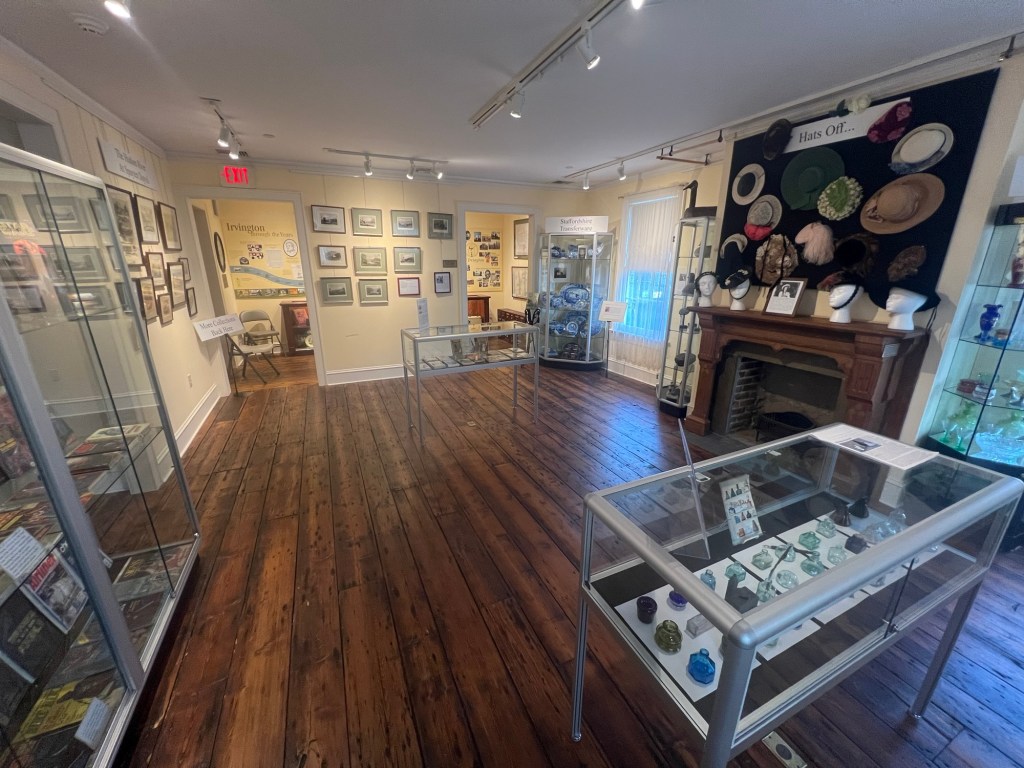
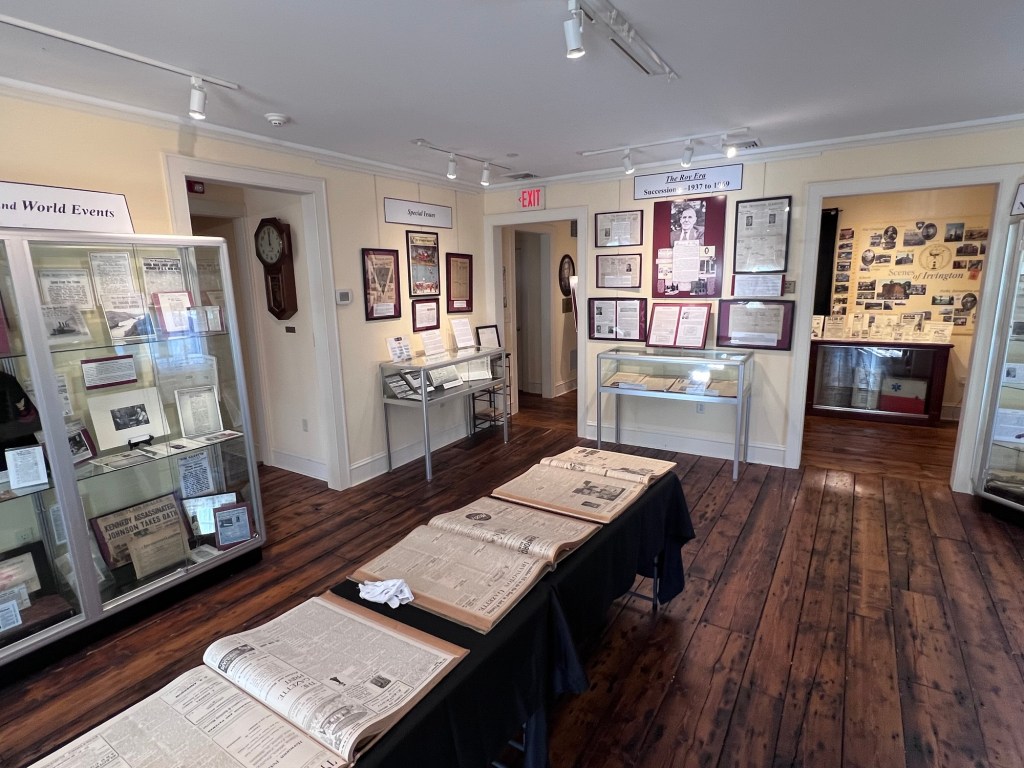
The main gallery of the Irvington Historical Society . The ‘Collections ‘ exhibition is to the front and the small permanent collection is towards the back.

The “Collections” exhibition was very interesting exhibition. Each display is unique to each of the residents who donated their collections for the exhibition. There was sets of china, artwork from the Hudson River Valley, items like duck decoys, a collection of hats, a collection of minerals and a selection of books. There was even a collection of Star Wars items. It was a nice exhibition of unique items. The exhibition will be rotating with other collections.
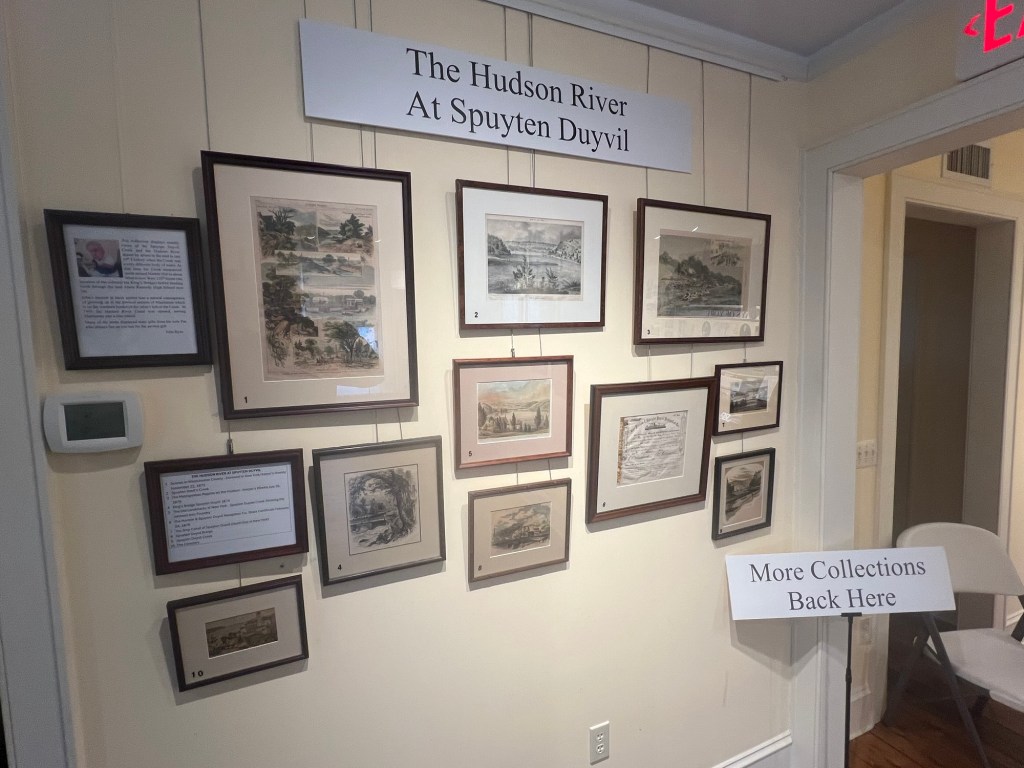
The collection of Hudson River art by a local resident gives a glimpse of the romantic side of the Hudson River Valley before development
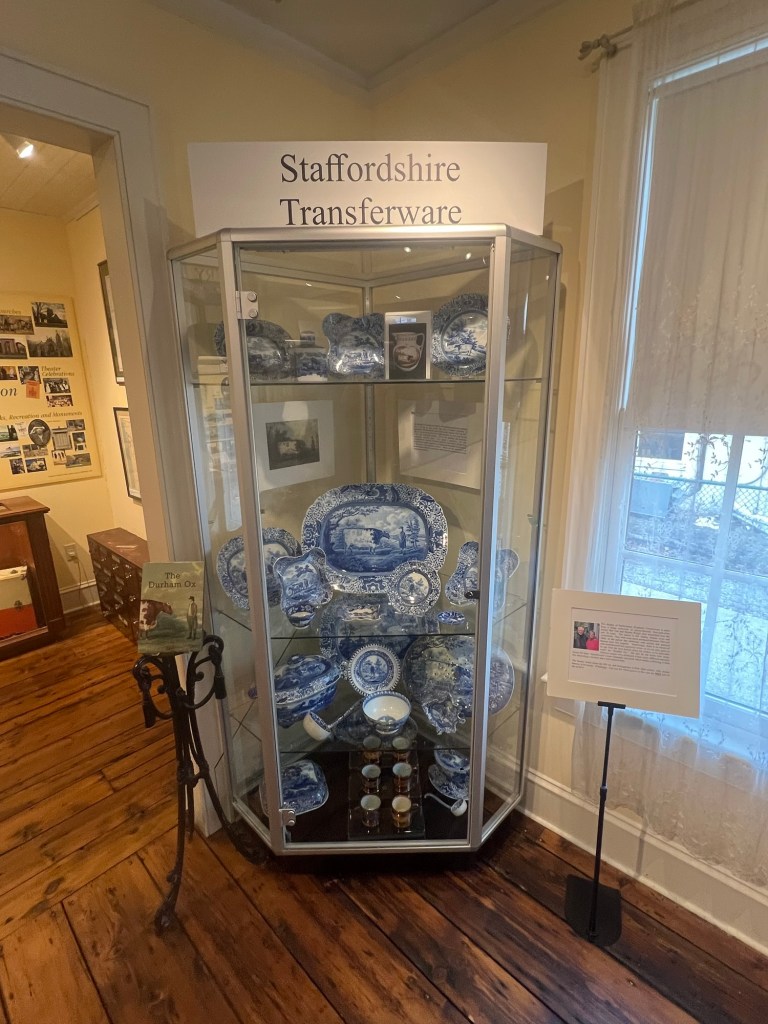
A collection of English Staffordshire China
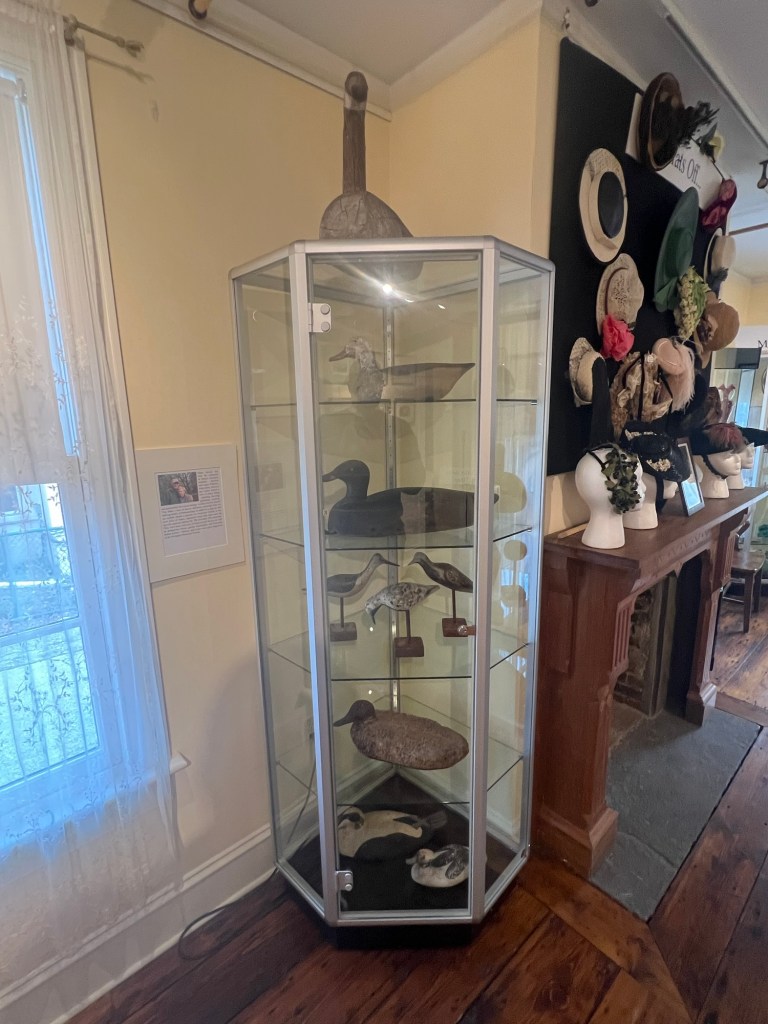
A collection of Duck Decoys
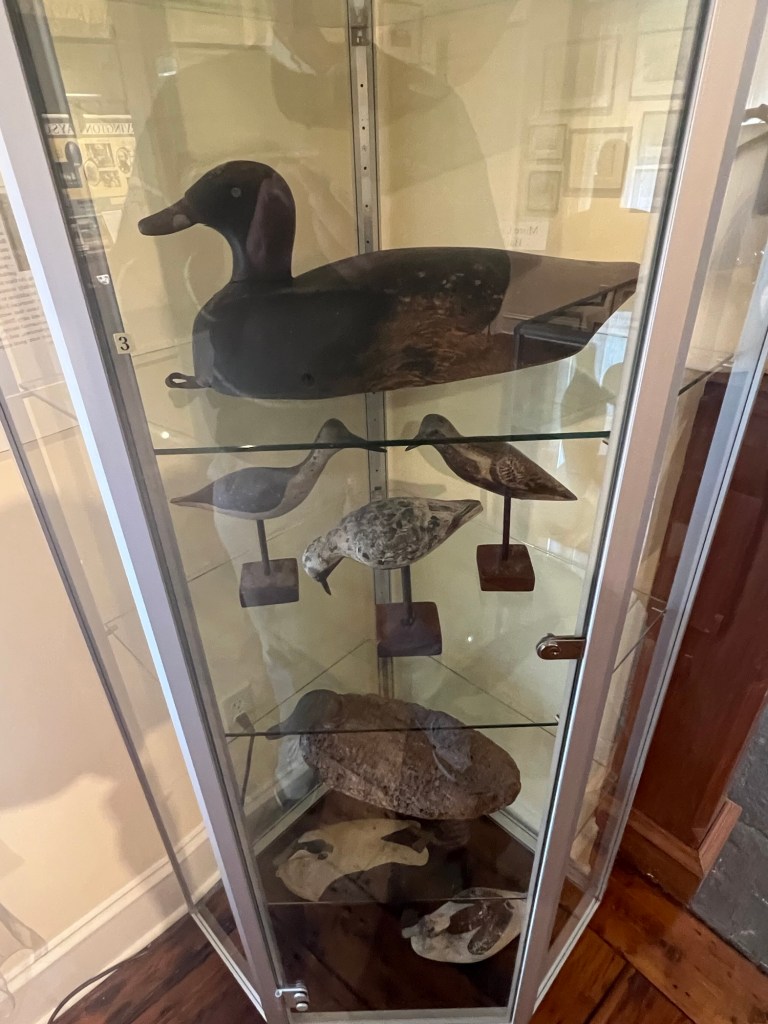
The Duck Decoys are from all eras
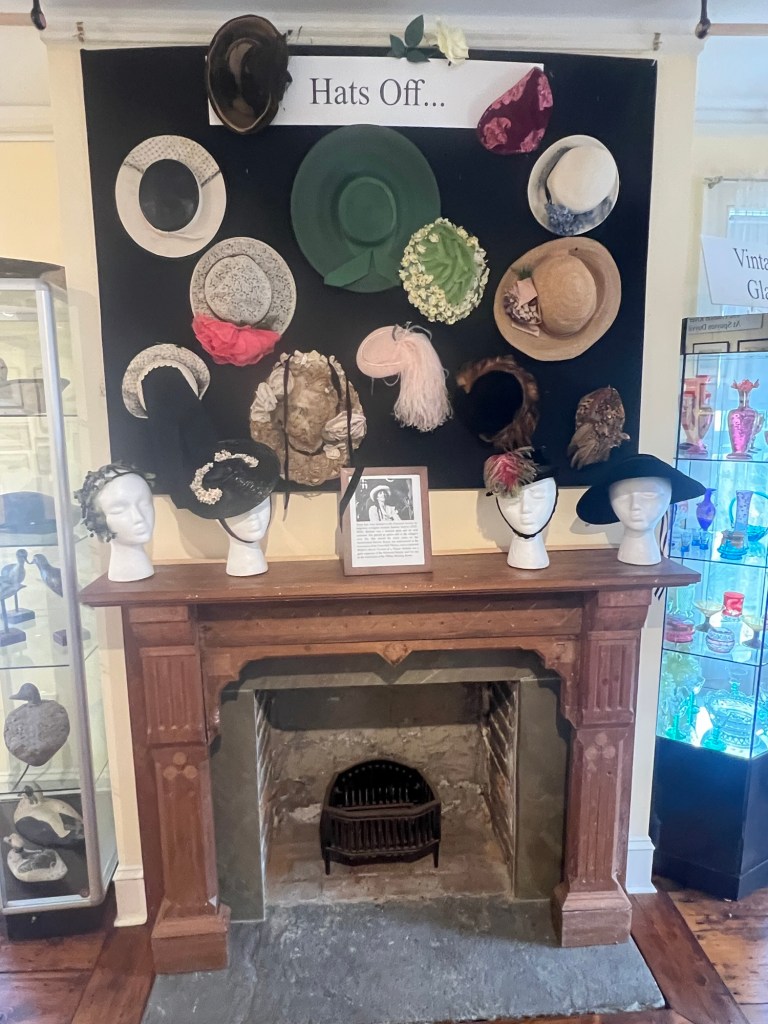
One resident’s Hat Collection which represents many different eras of style and change of function
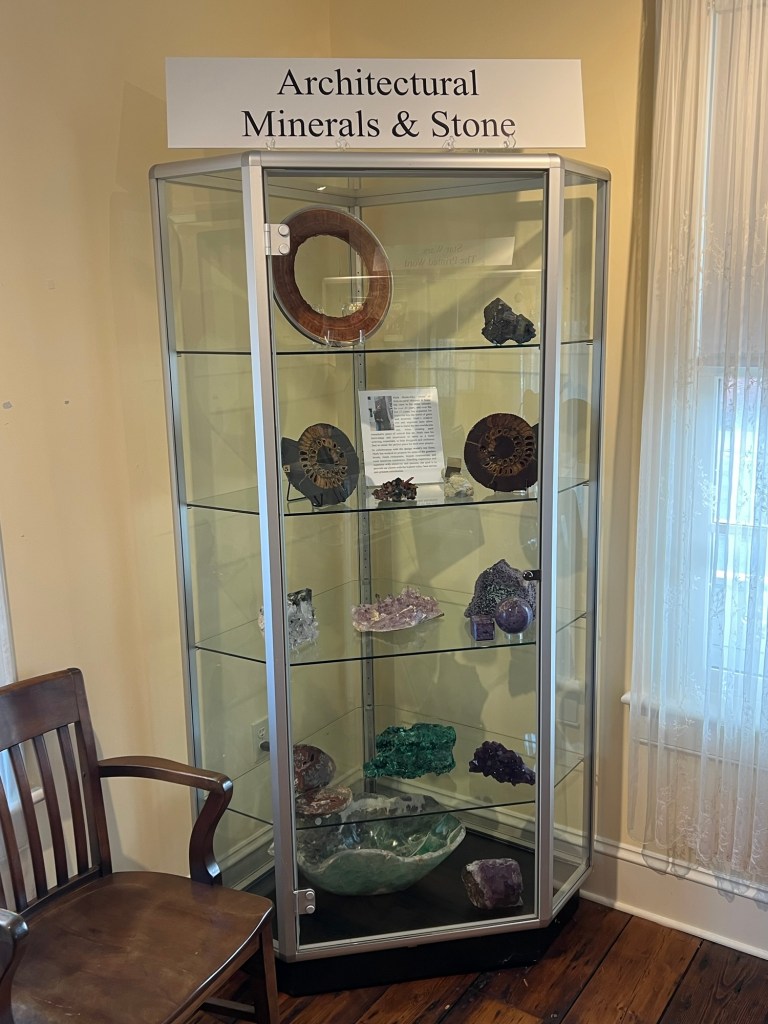
One resident’s collection of Minerals and Stones
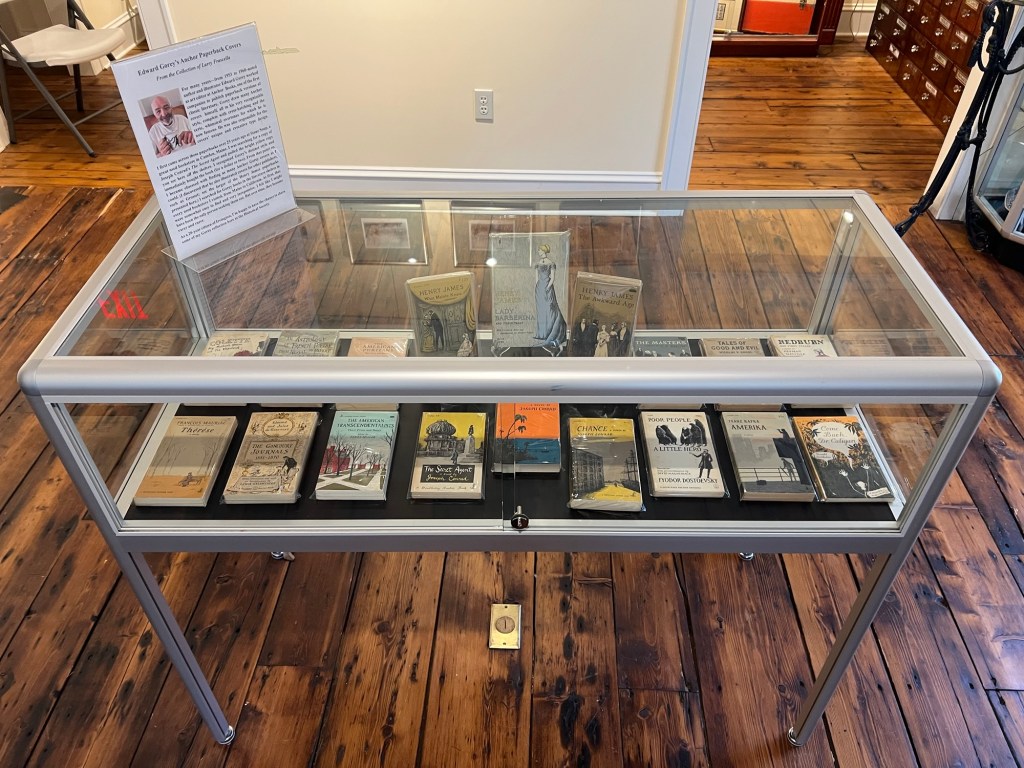
One resident’s collection of Anchor paperback covers
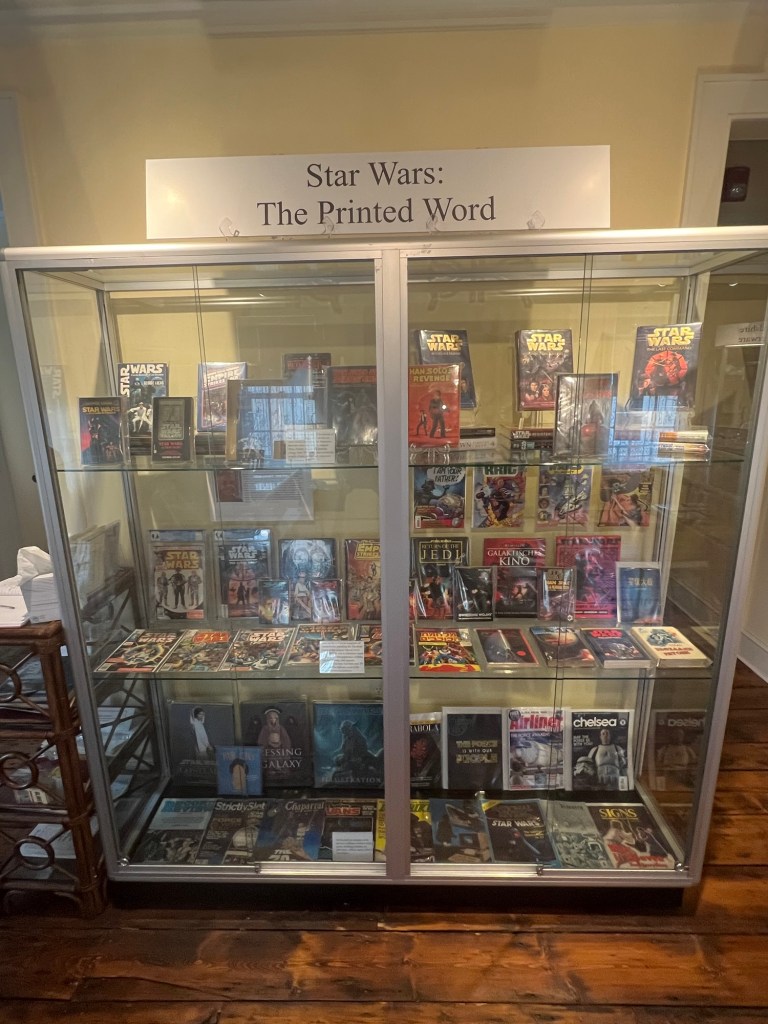
An extensive collection of ‘StarWars’ memorabilia
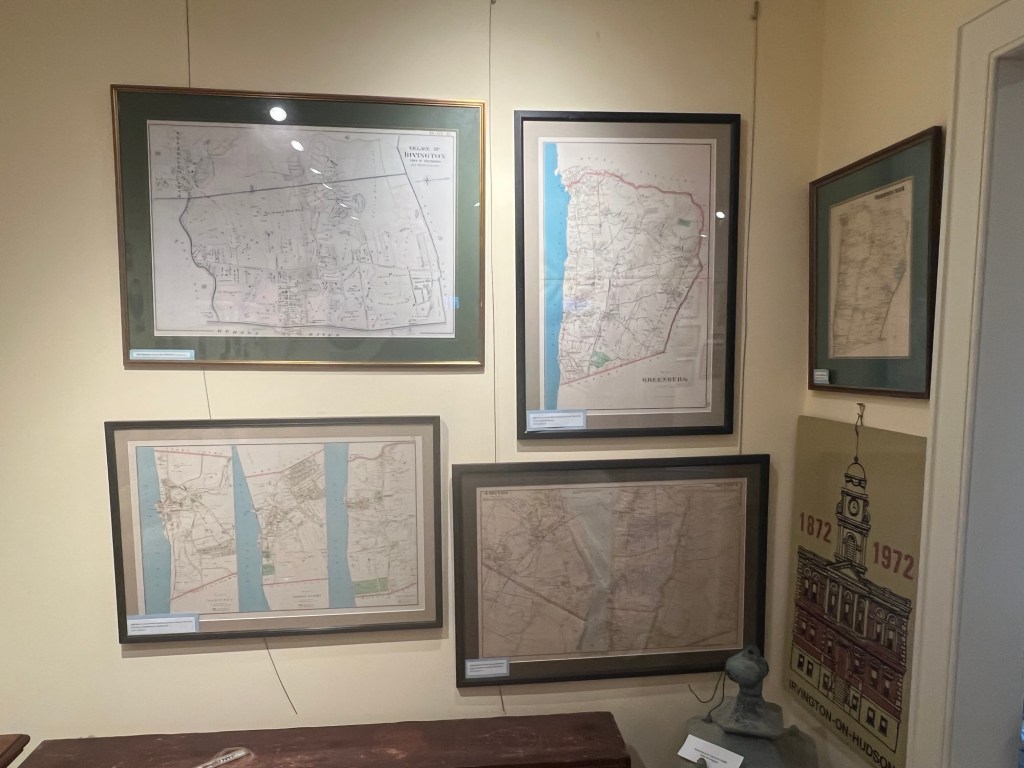
A collection of area Maps
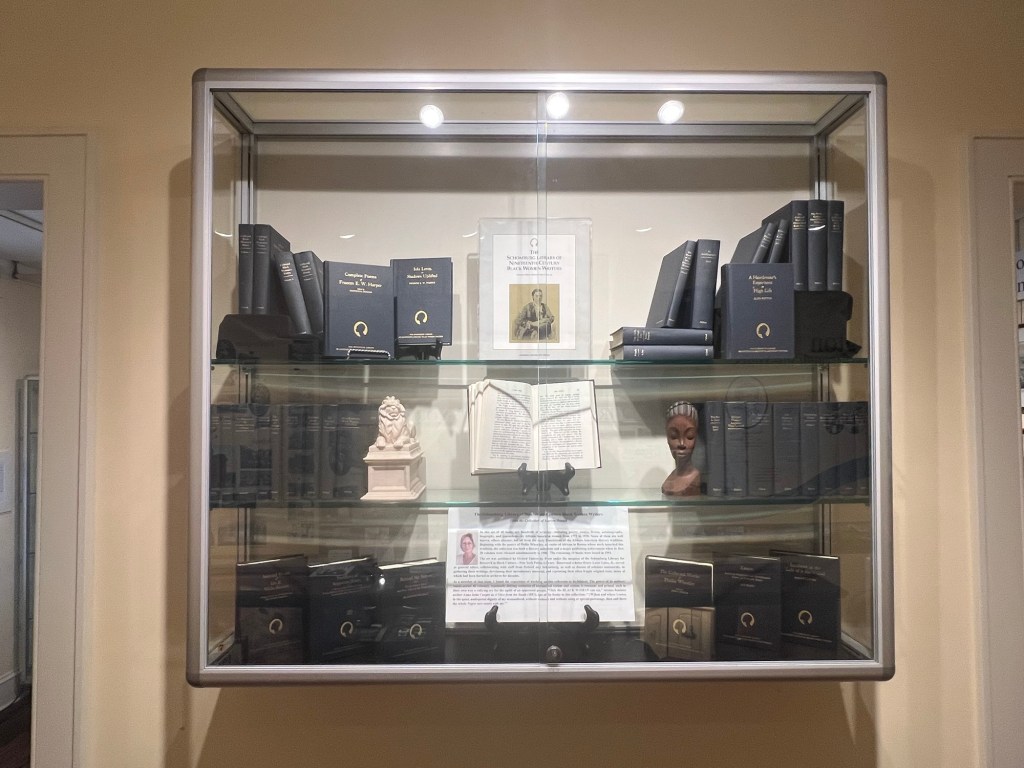
A collection of the works of Black Women Writers

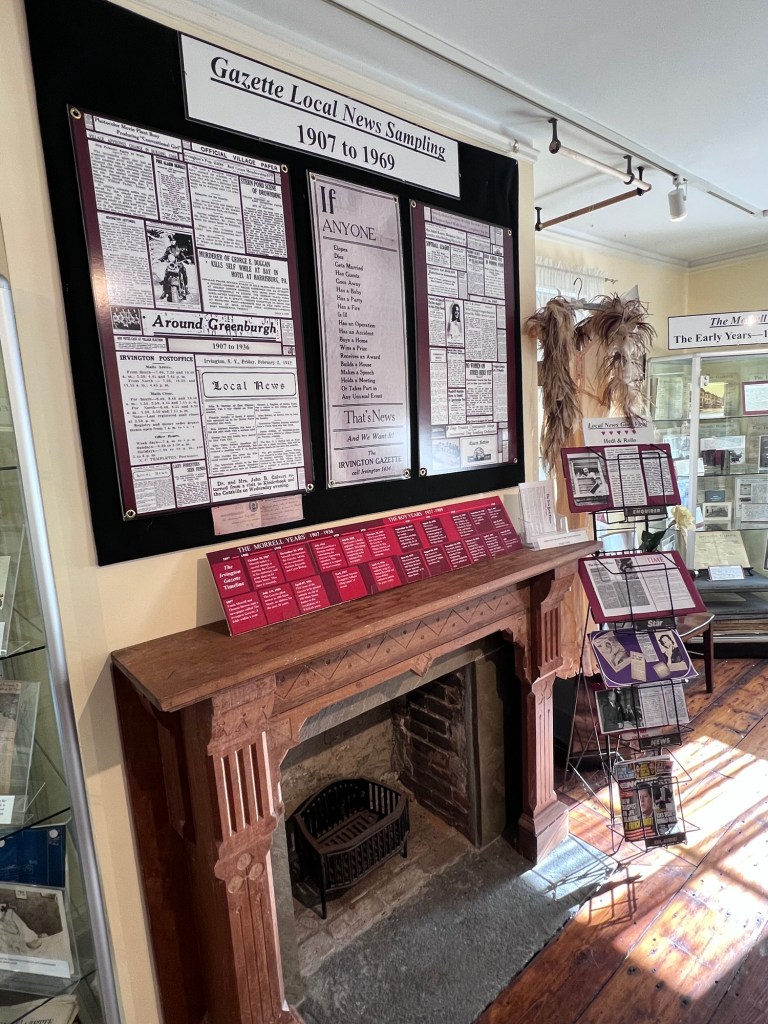
The back part of the Gallery holds the Permanent collection of artifacts on display. This is a road map of the development and the colonialization of Irvington. It has from its place as home to the Lenape Indians to the Dutch trade settlements and then the prominent residents who have lived in the area. It is a fascinating look at the community and how it is evolving.
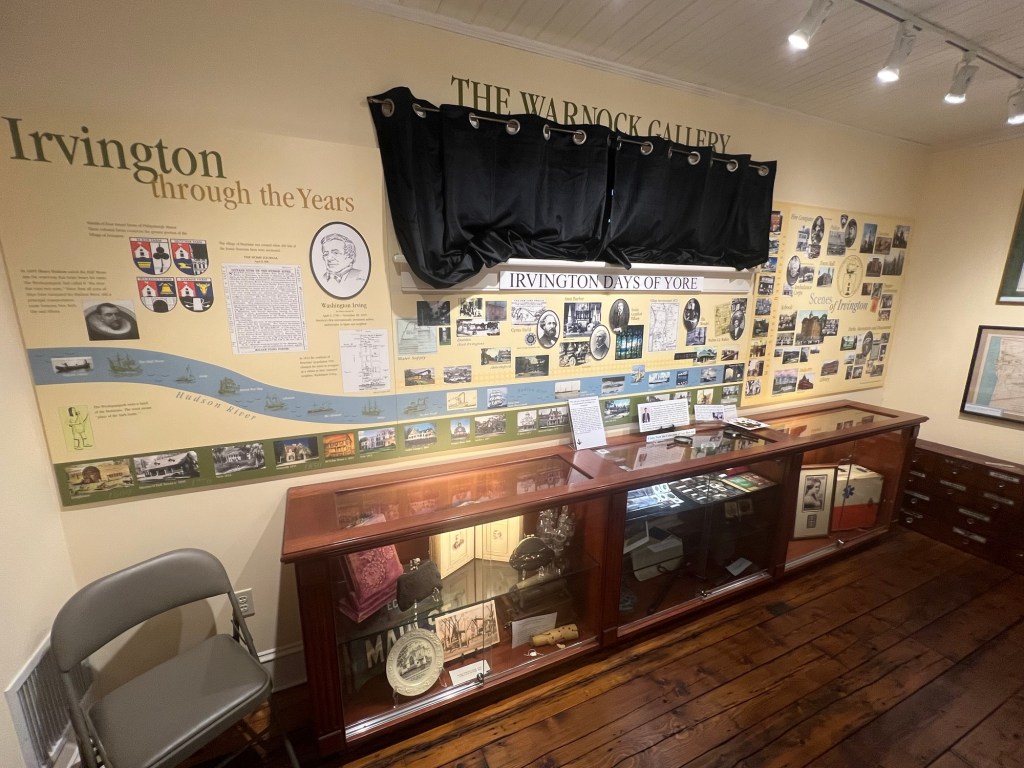
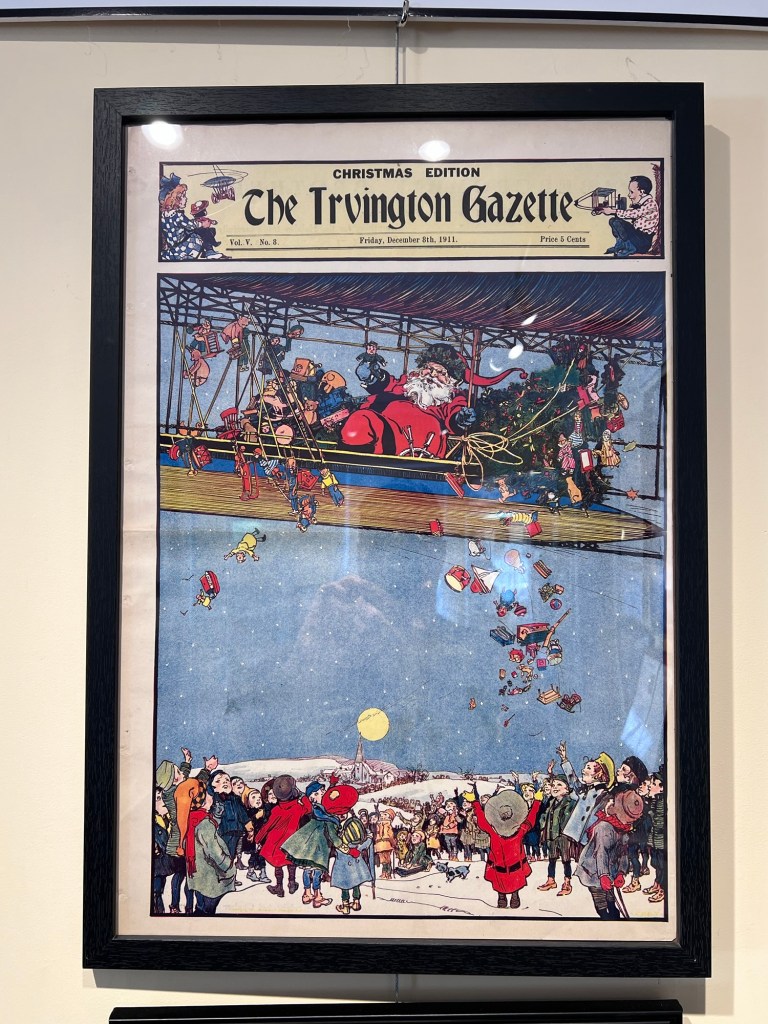
The Permanent Collection of the Irving Historical Society

The History of the Town of Irvington, NY:

(from the Society website)

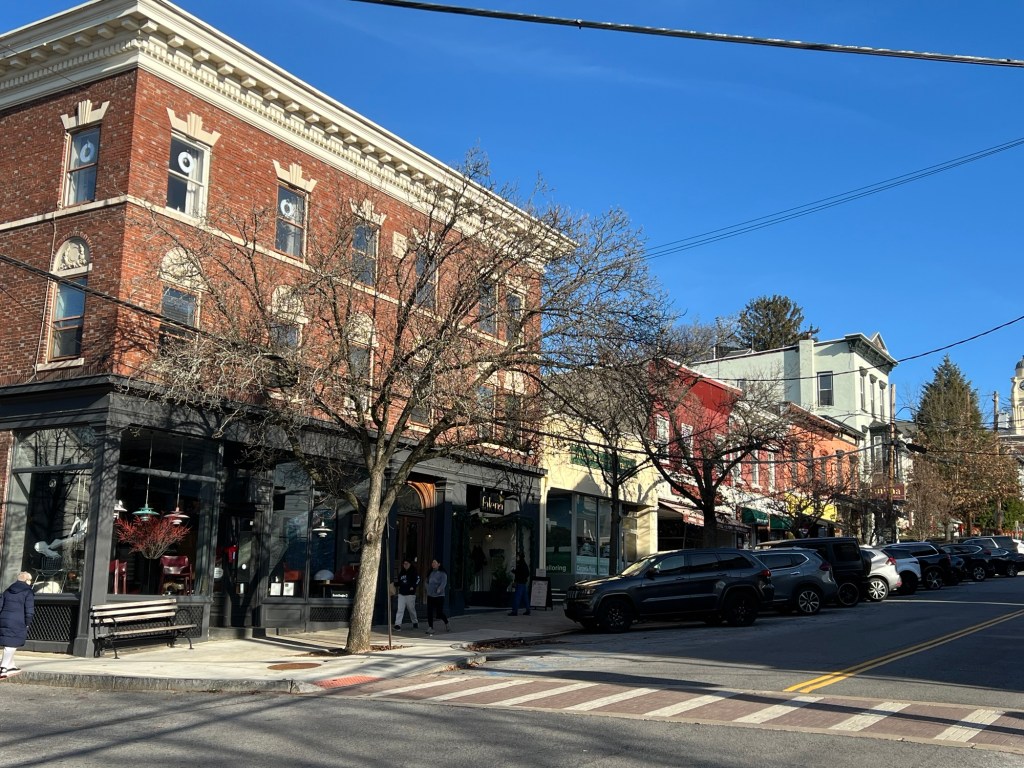
I took these pictures of the Irvington when I visited around both Halloween and Christmas. People in the downtown area love to decorate for the holidays.
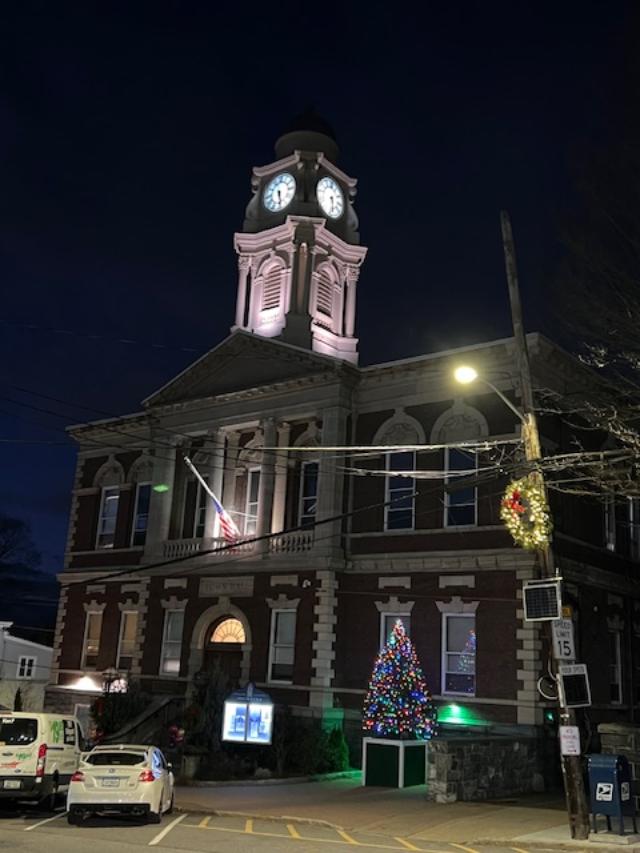
The Town of Irvington, NY during the Christmas holiday season
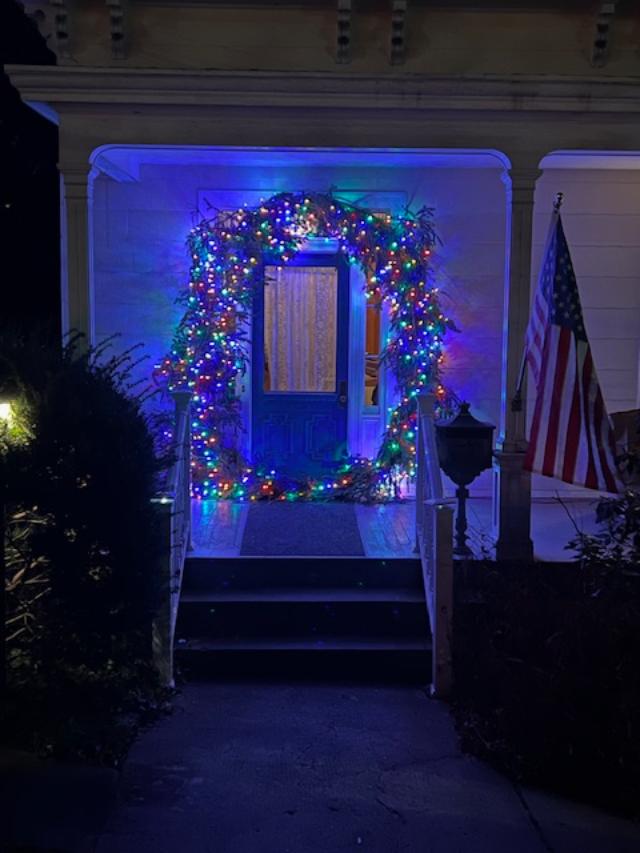
The beautiful decorations of the residents of the Downtown in Irvington, NY
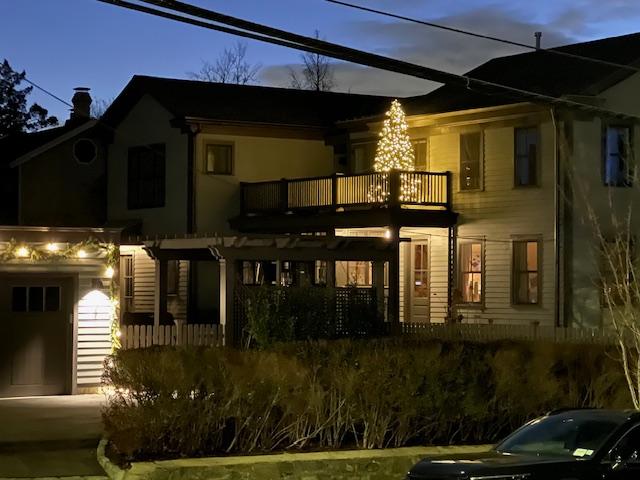
Downtown Irvington NY during Christmas
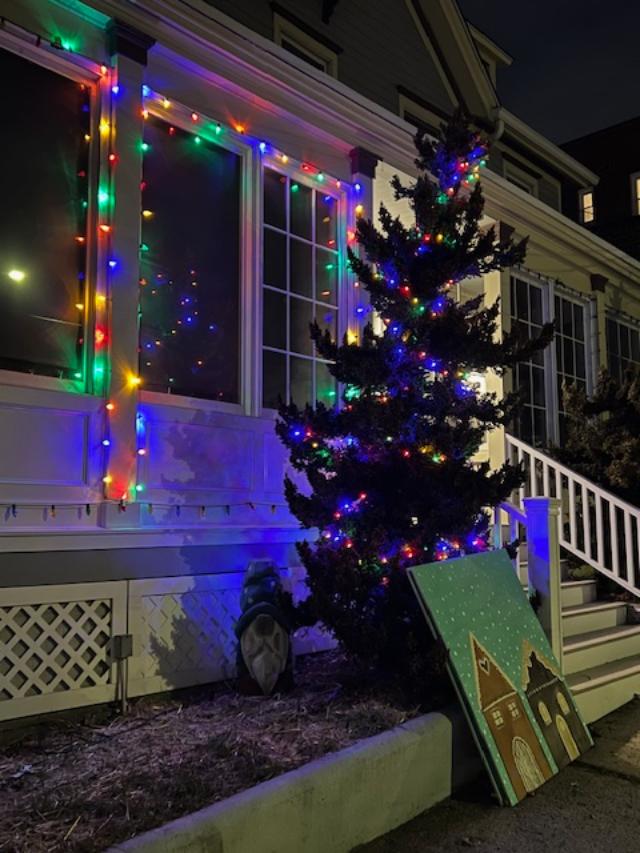
The houses decorated for the Christmas holidays
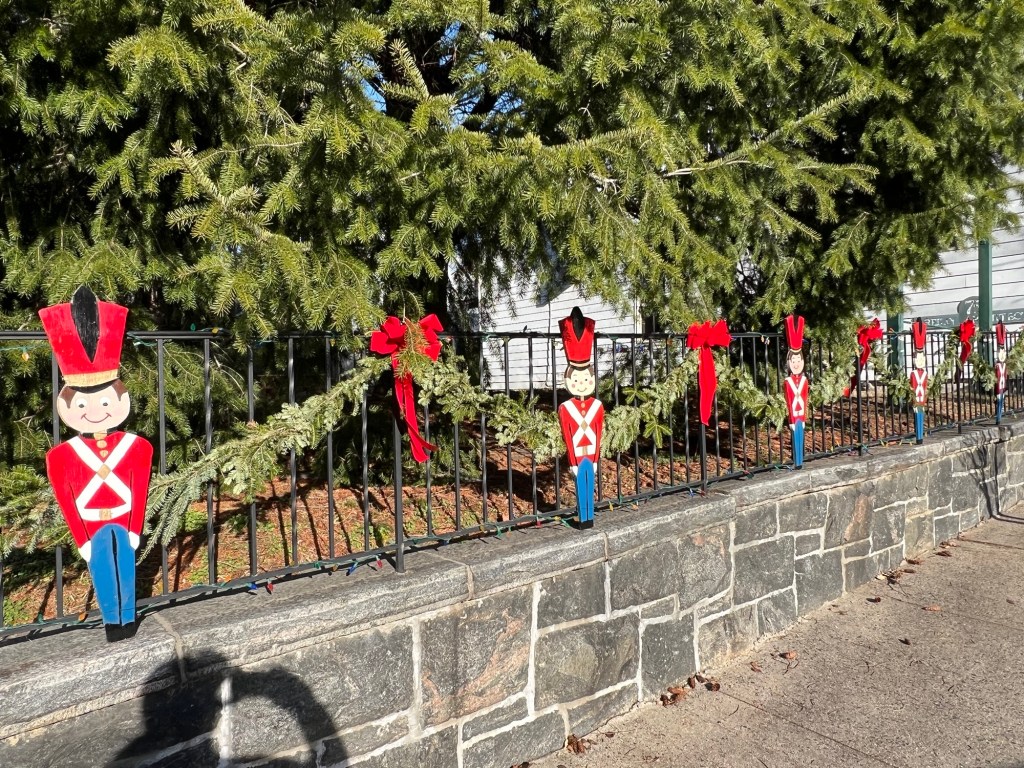
The Village of Irvington, resting on the Eastern Shore of the Hudson River twenty-two miles north of New York City, has a rich history. Originally the home of the Wecquaesgeek, an Indigenous people of the Wappinger Tribes, it later became farmland during periods of Dutch and English control. Irvington and its local residents played a critical role in the Revolutionary War as part of the Neutral Grounds between English and Colonial forces.
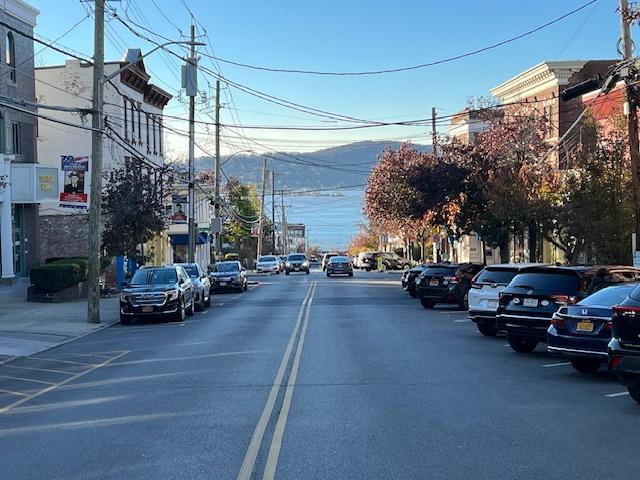
The beauty of Downtown Irvington, NY during the Fall
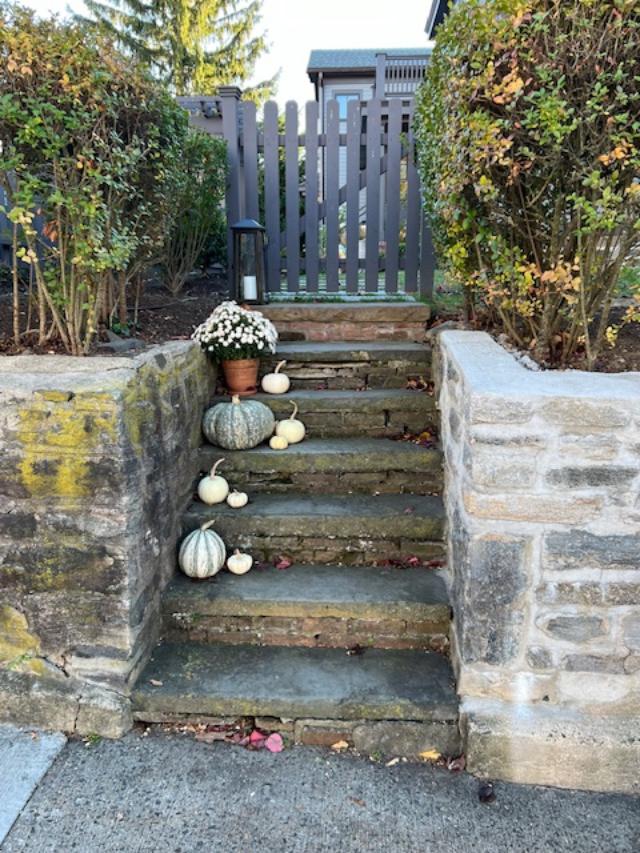
The decorations for the Halloween holidays

The arrival of the Hudson River Rail Road in 1847 led to the founding of the Village, the breakup of the traditional tenant farms, and a growing population. Because of its physical beauty and proximity to New York City, Irvington became a favored place for country estates in the latter half of the 19th Century and the beginning of the 20th Century. As those estates began to be sold off for development before World War II, Irvington evolved into the scenic, beautiful, and vibrant residential community it remains today.
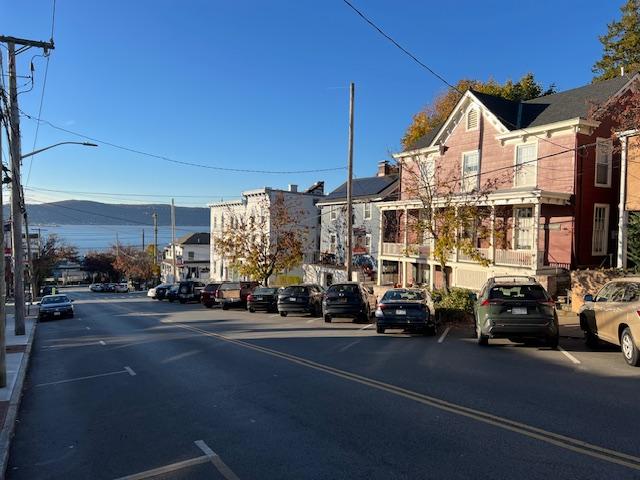
Downtown Irvington, NY in the Fall looking over the Hudson River
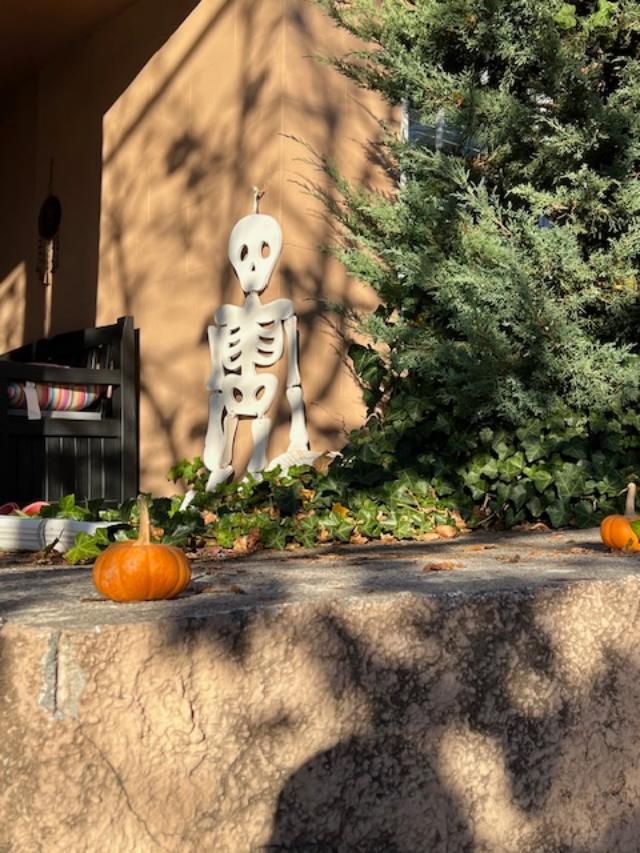
Downtown Irvington, NY during Halloween
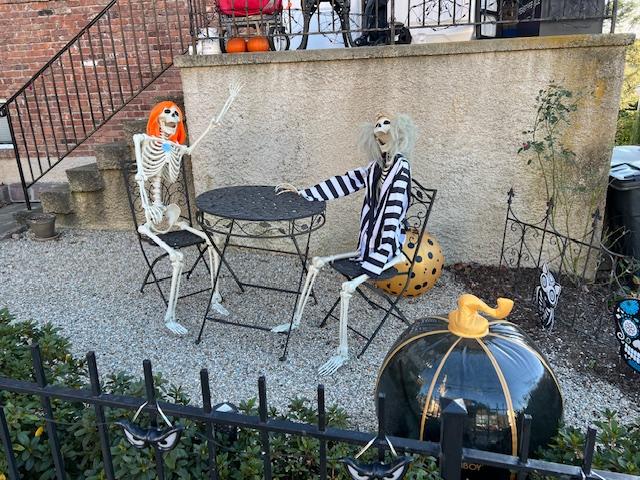
Halloween decorations in Downtown Irvington, NY

Montgomery Village Museum                             142 Clinton Street                               Montgomery, NY 12549

Montgomery Village Museum 142 Clinton Street Montgomery, NY 12549

Montgomery Village Museum

142 Clinton Street

Montgomery, NY 12549

(845) 457-7576

https://www.facebook.com/MontgomeryVillageMuseum/

https://www.villageofmontgomery.org/our-community/village-history/523-museum-hours.html

Open: Sunday 3:00pm-6:00pm/Monday-Saturday Closed

Admission: Free but donations are accepted

My review on TripAdvisor:

https://www.tripadvisor.com/ShowUserReviews-g48196-d27005812-r967710754-Montgomery_Village_Museum-Montgomery_New_York.html?m=19905

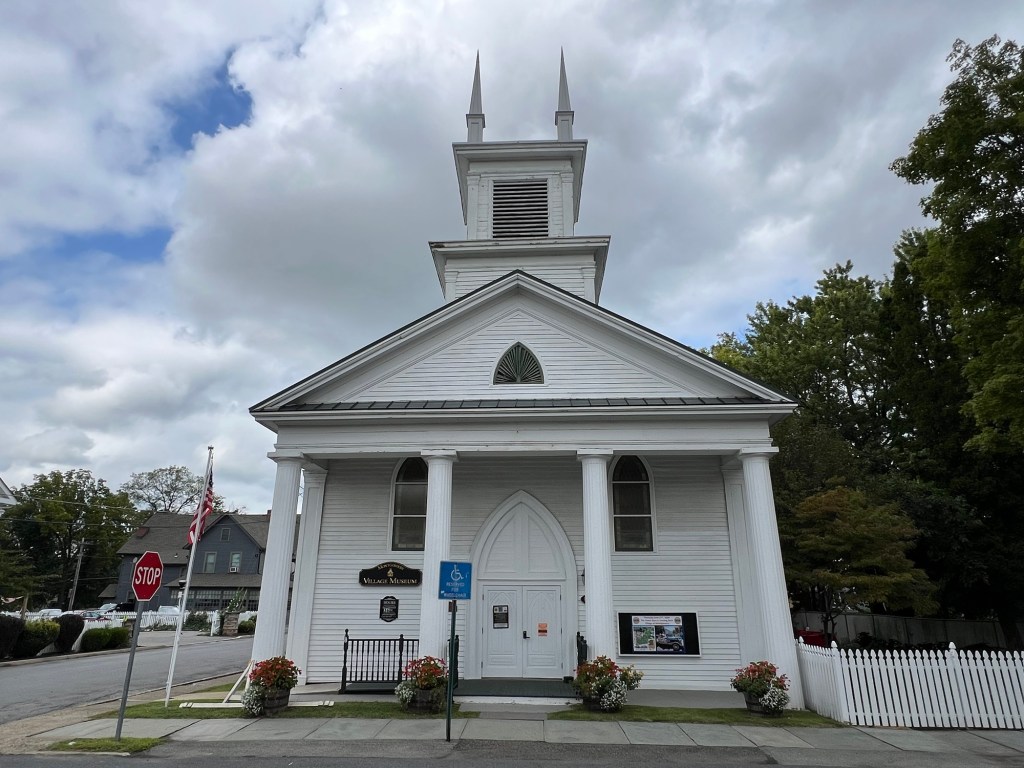
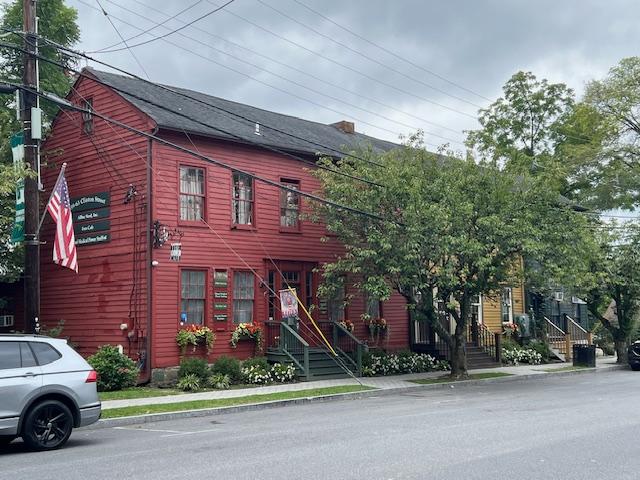
The Montgomery Village Museum at 142 Clinton Street

The Museum in the front of the museum

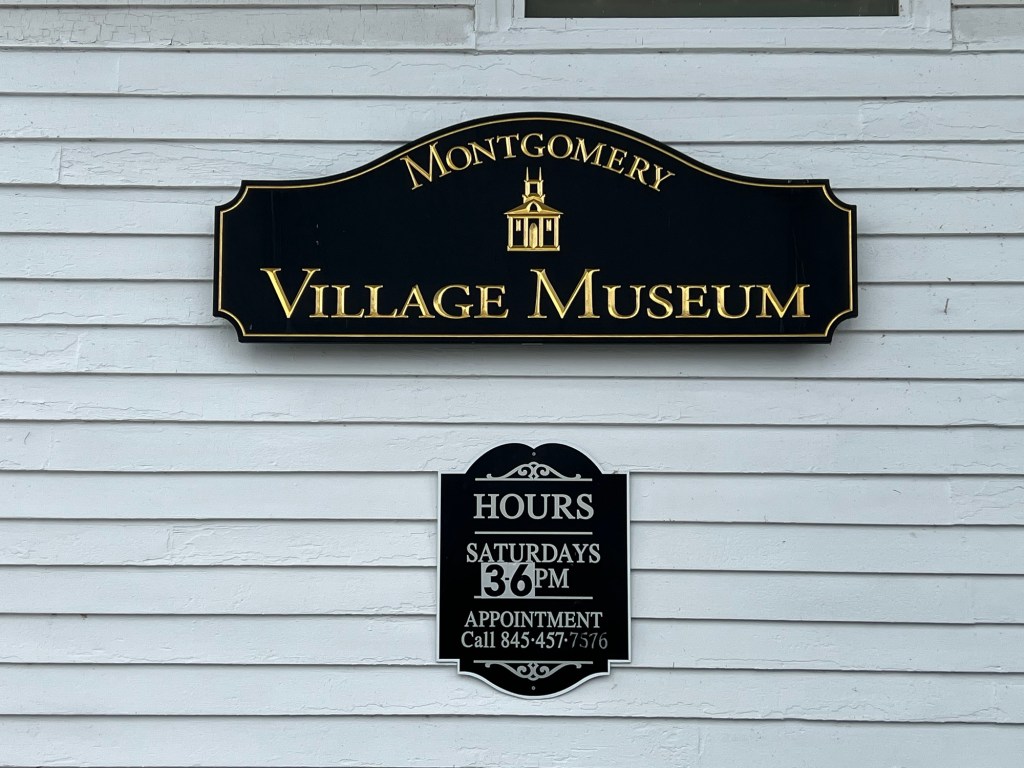
The museum sign welcomes you

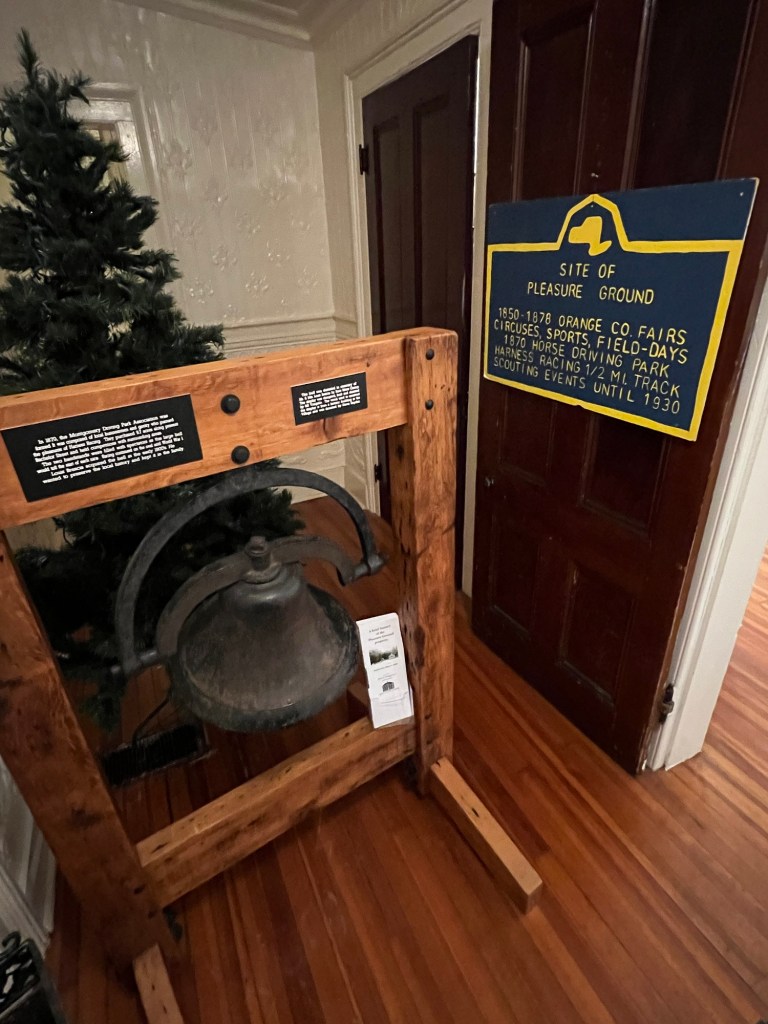
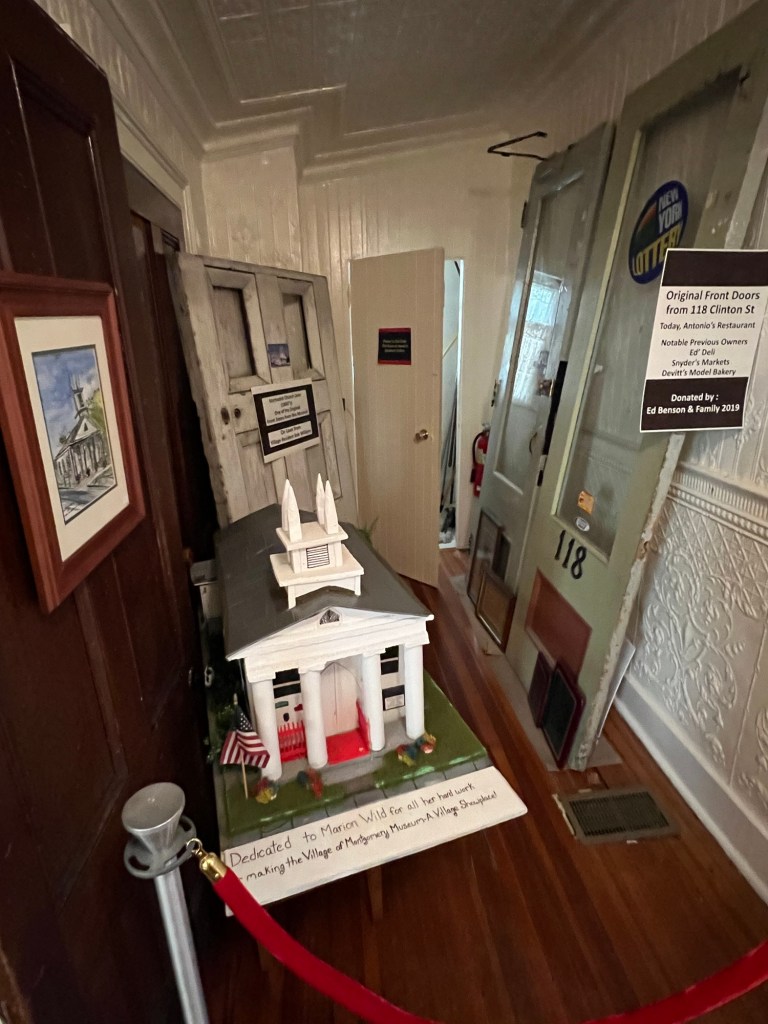
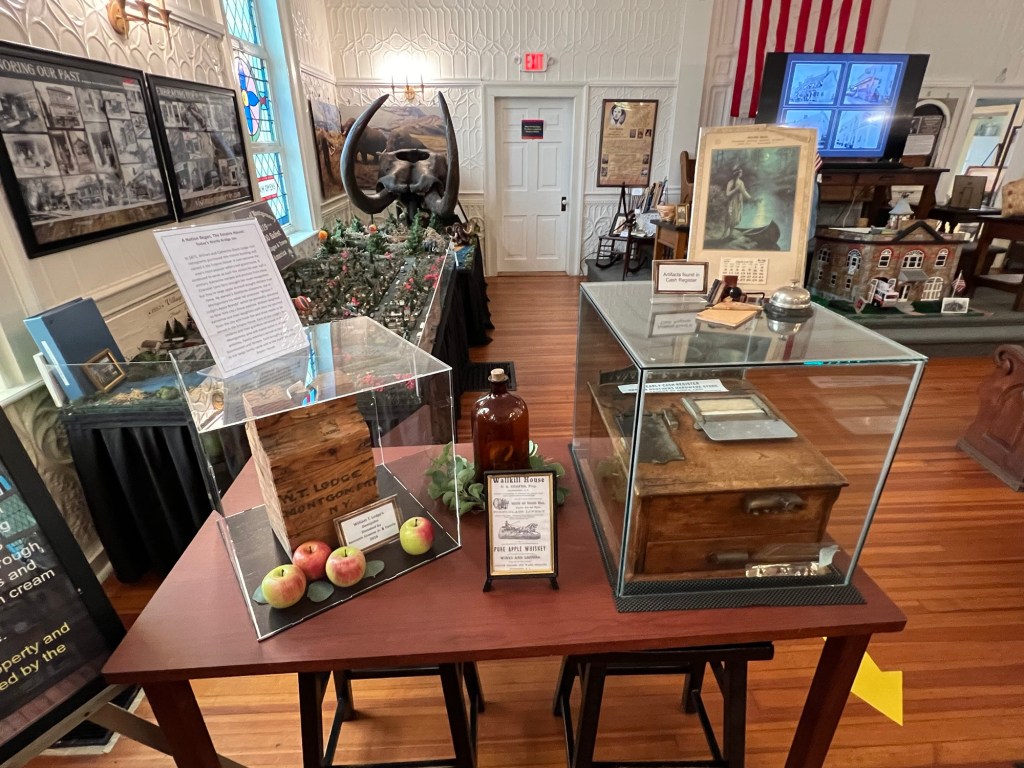
Village memorabilia on display

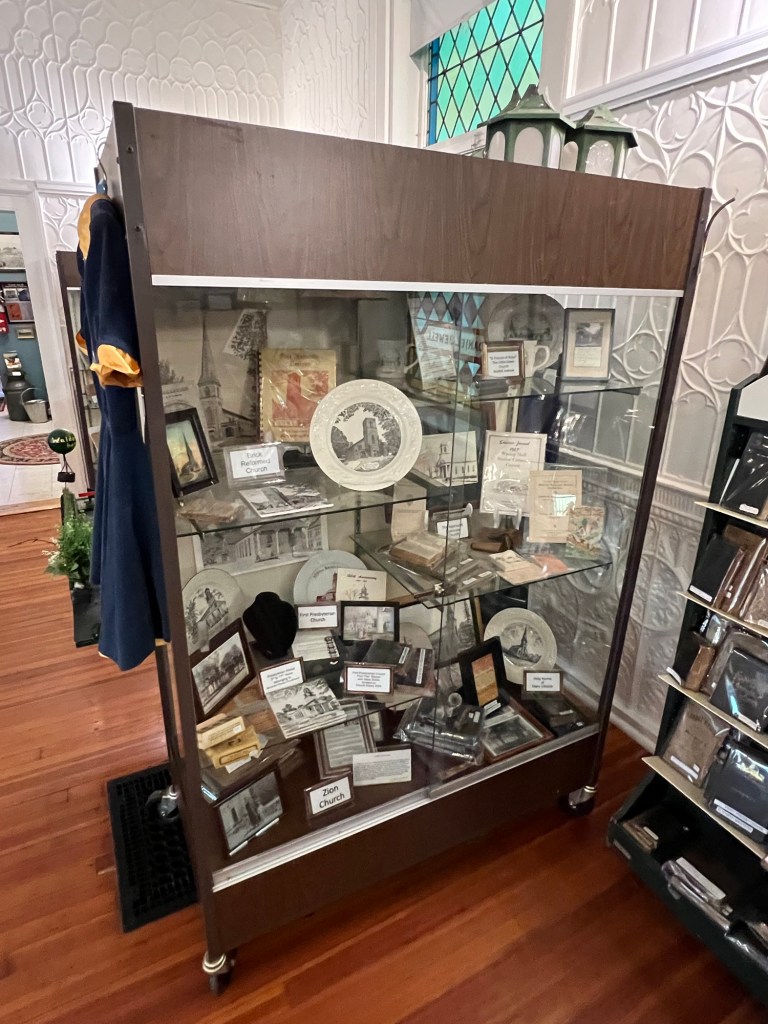
The display on the local church’s

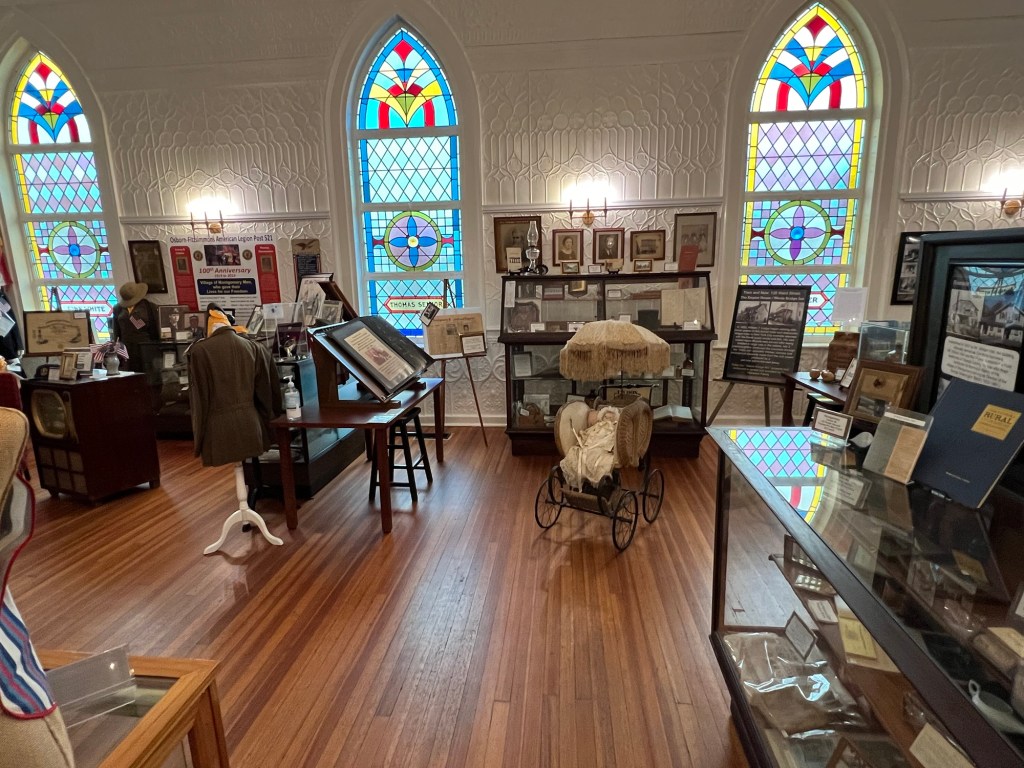
The Montgomery Village Museum in Montgomery, NY is a village run museum that tells of story of the town and its development. The museum of filled with wonderful displays of all aspects of the town. The history of the town is displayed in an organized way display by display with plenty of signage and docents to explain things to you if you want more information. You can tour the museum at your own pace.

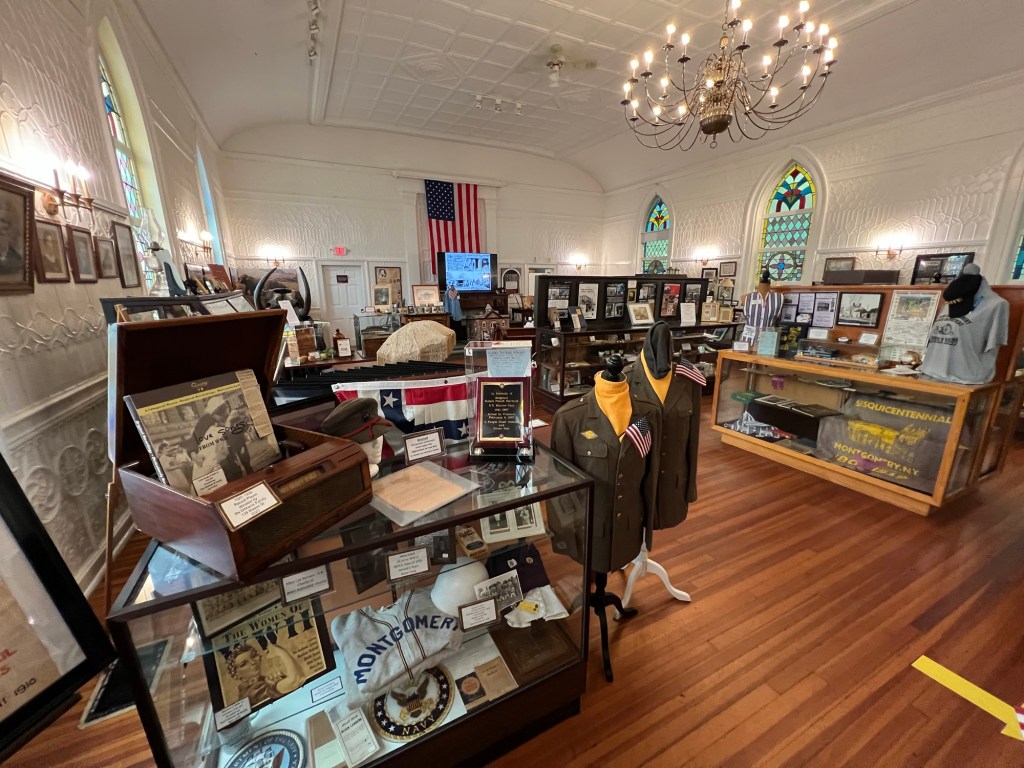
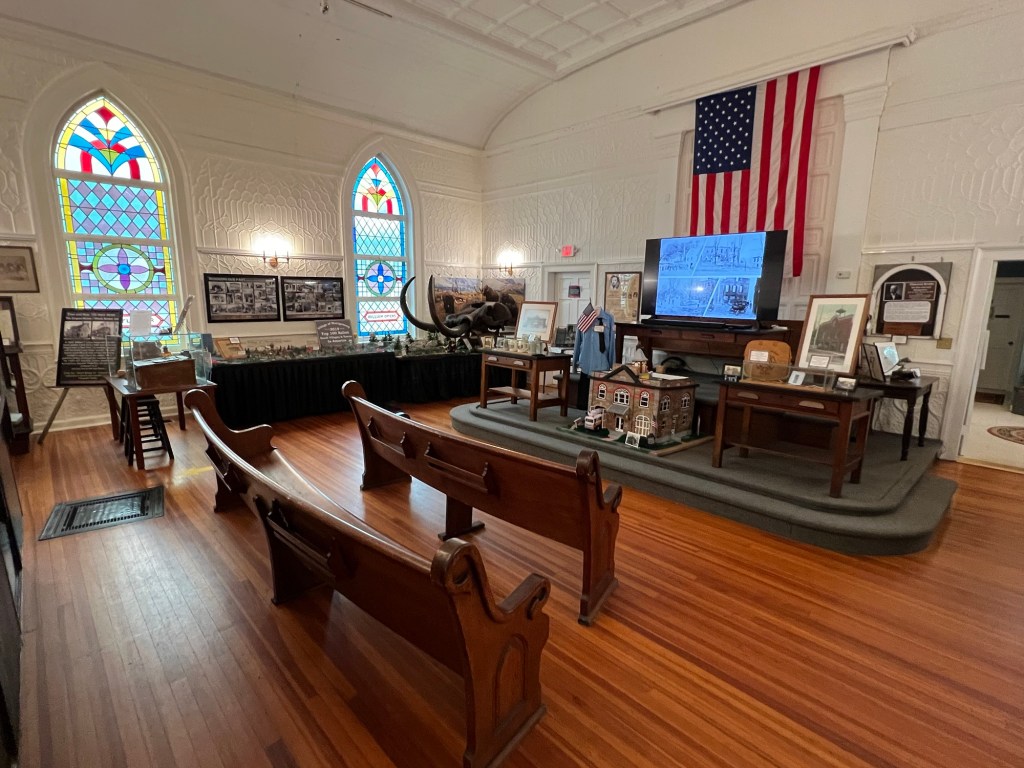
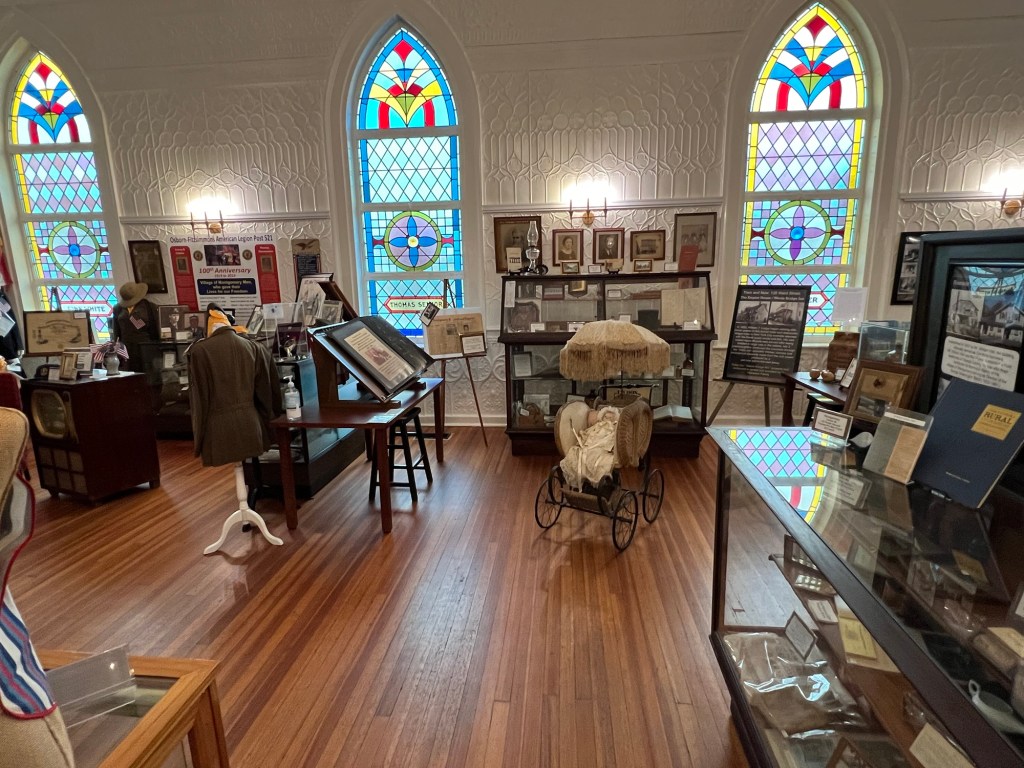
The front gallery of the museum

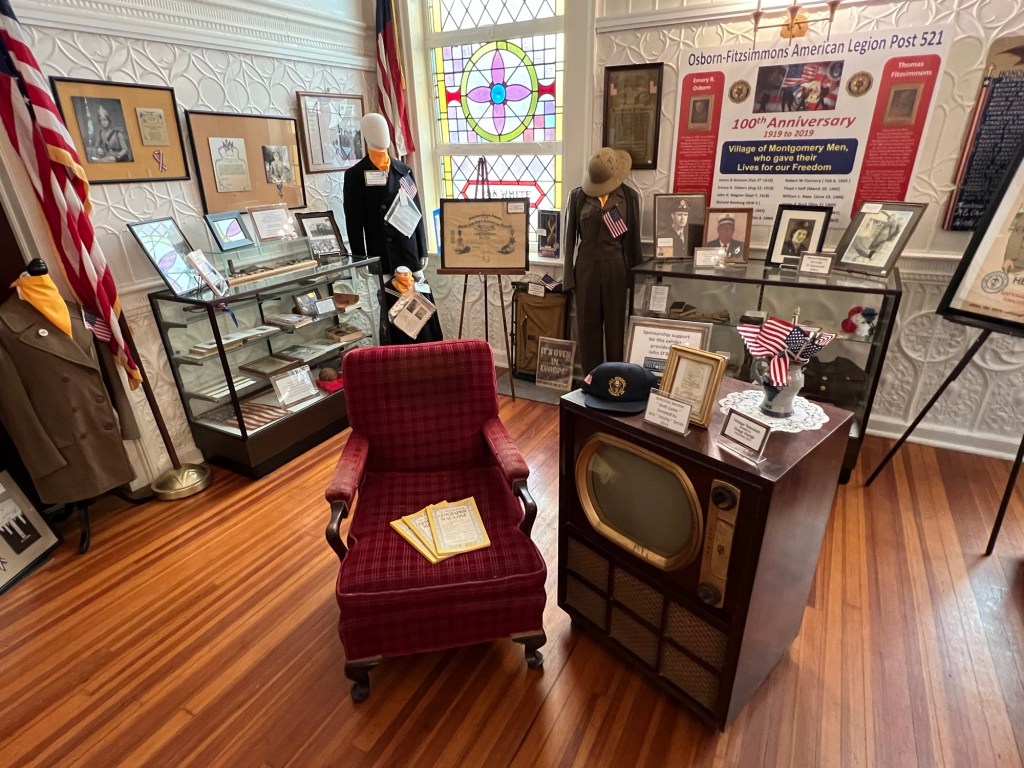
The front display of the Veterans and the VFW of the Village of Montgomery, NY

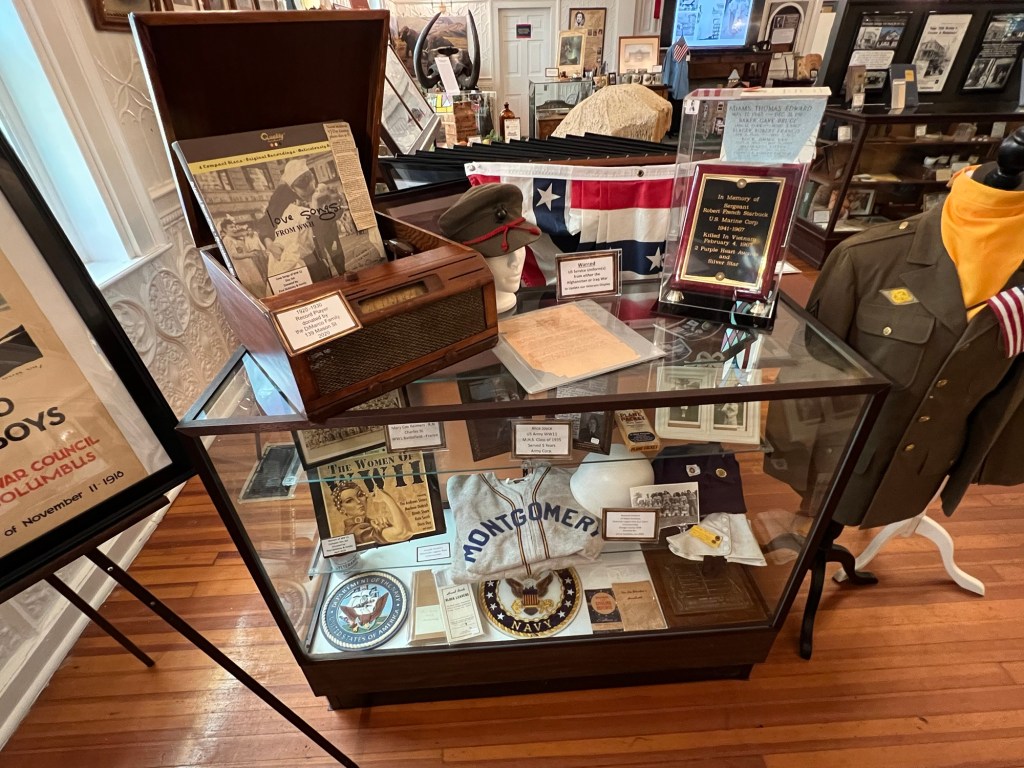
Display of Armed Forces memorabilia

The gallery of Town Council, Downtown merchants and Veterans items

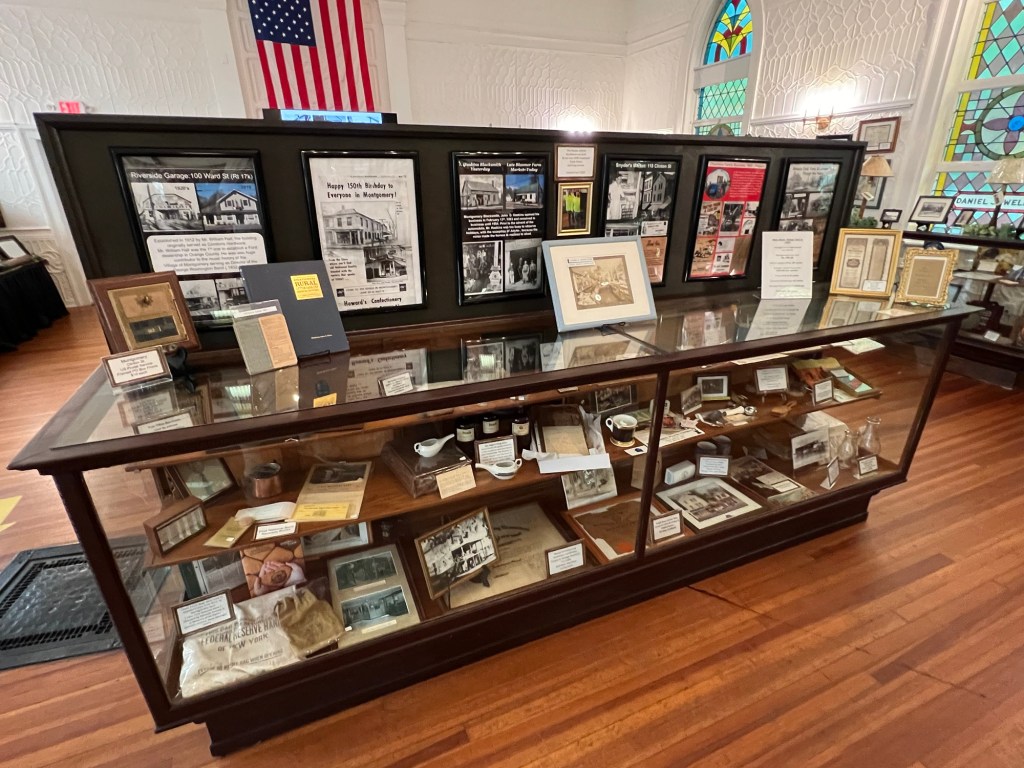
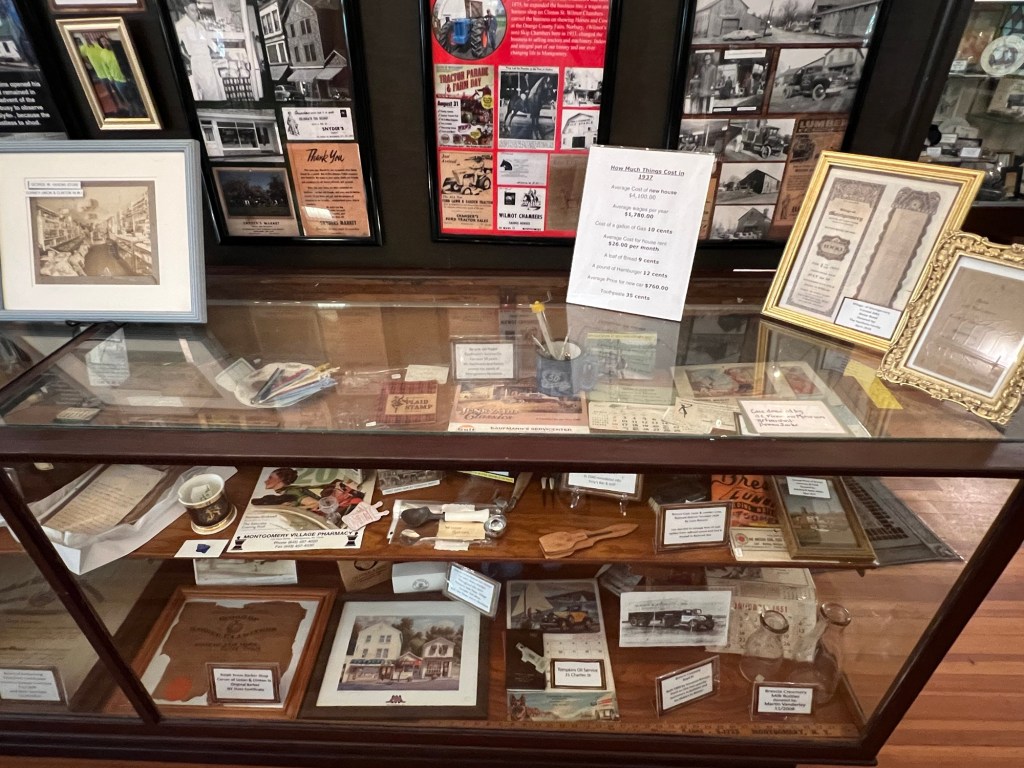
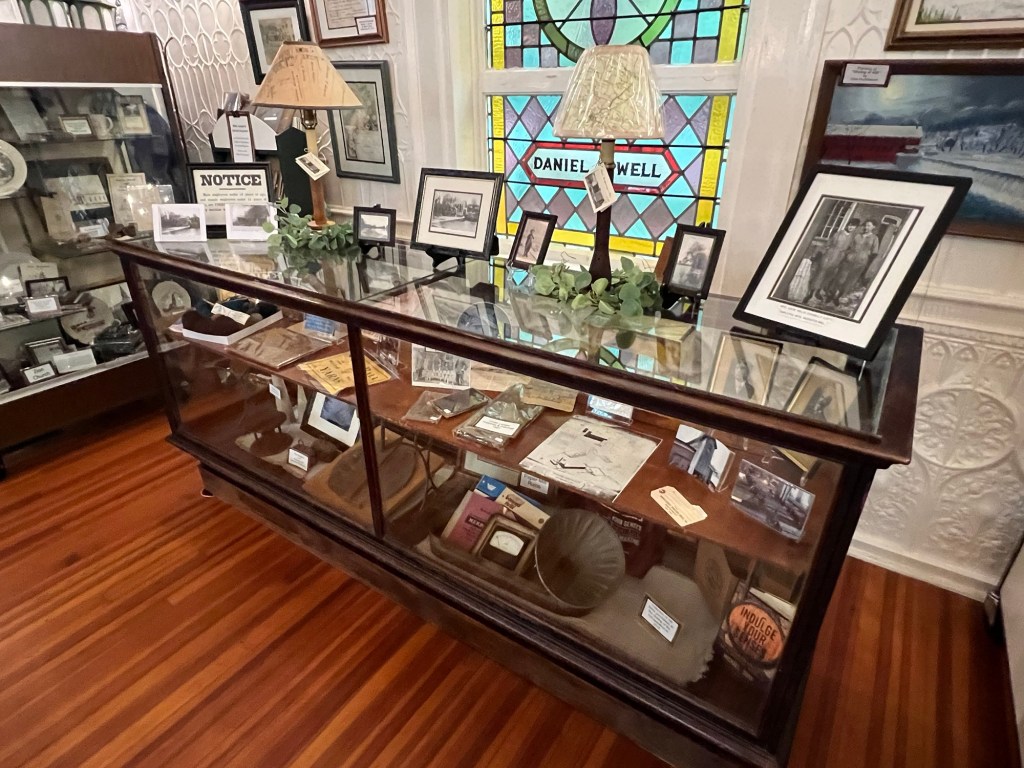
The Downtown Merchant’s display

Some of the local merchants have been in town for over a hundred years

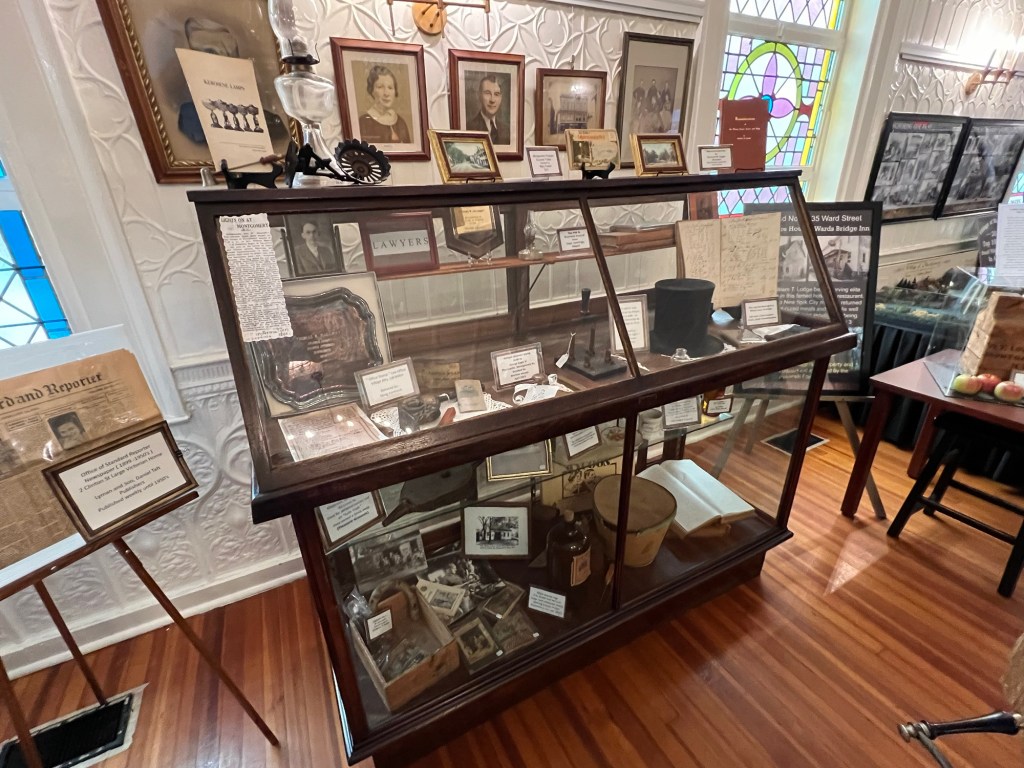
The artifacts on the Town Council and the Chamber

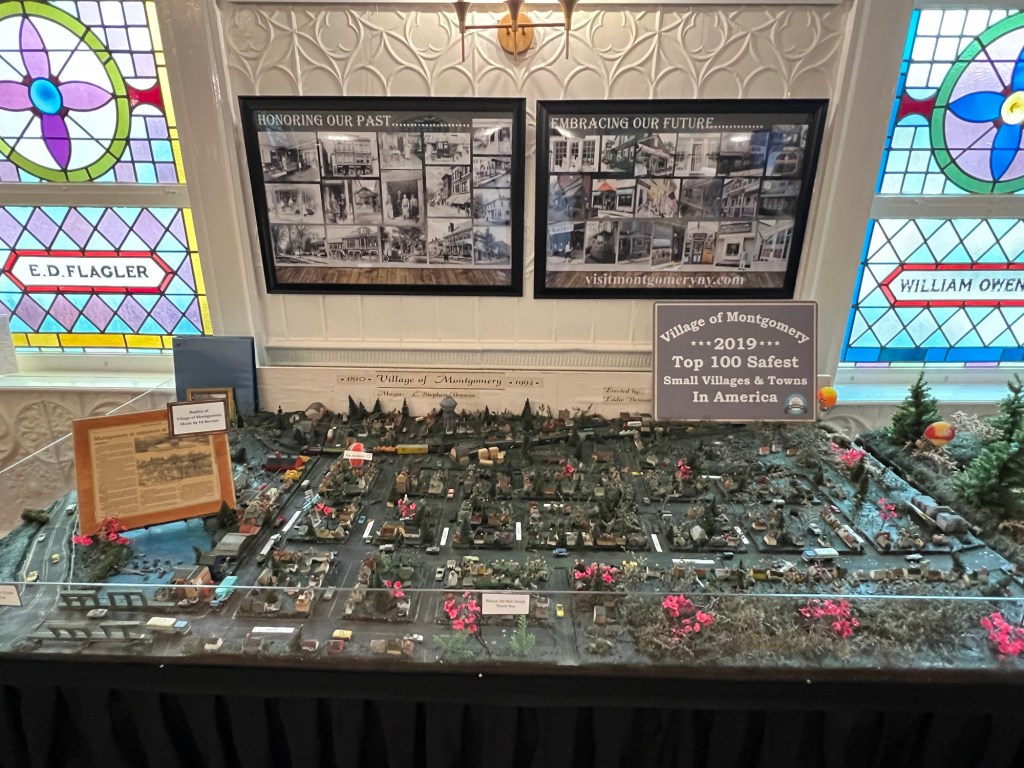
The 100th Anniversary of the Town of Montgomery, NY shows a diagram of the town and its historical past

Some of the items of the rural home past

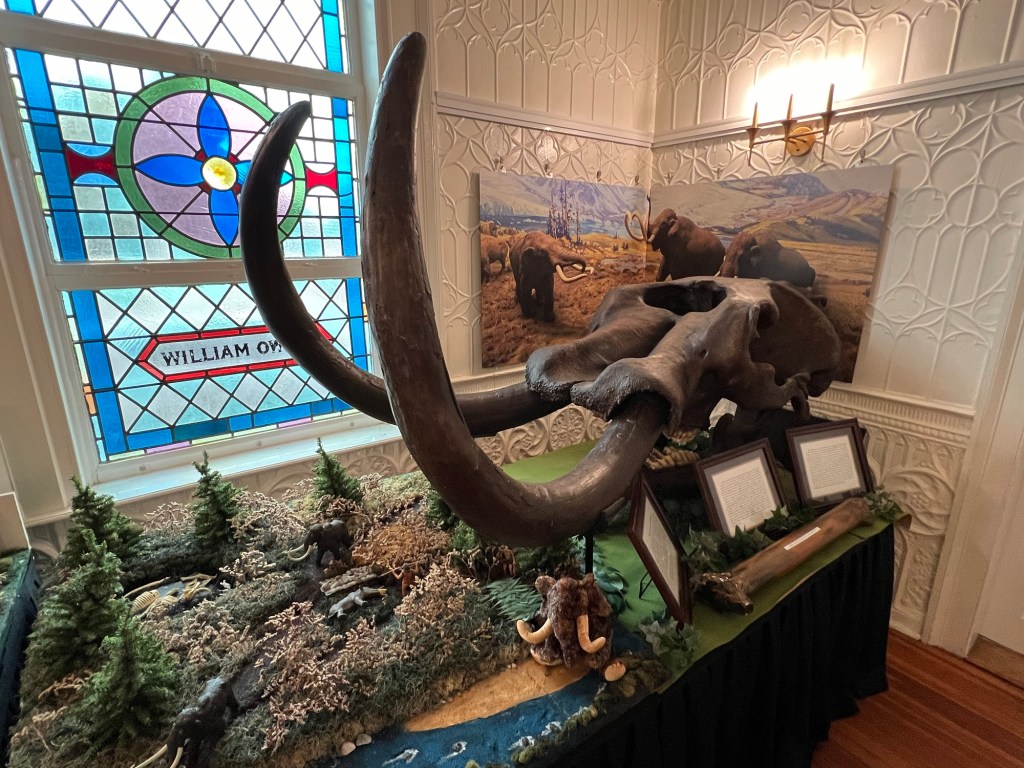
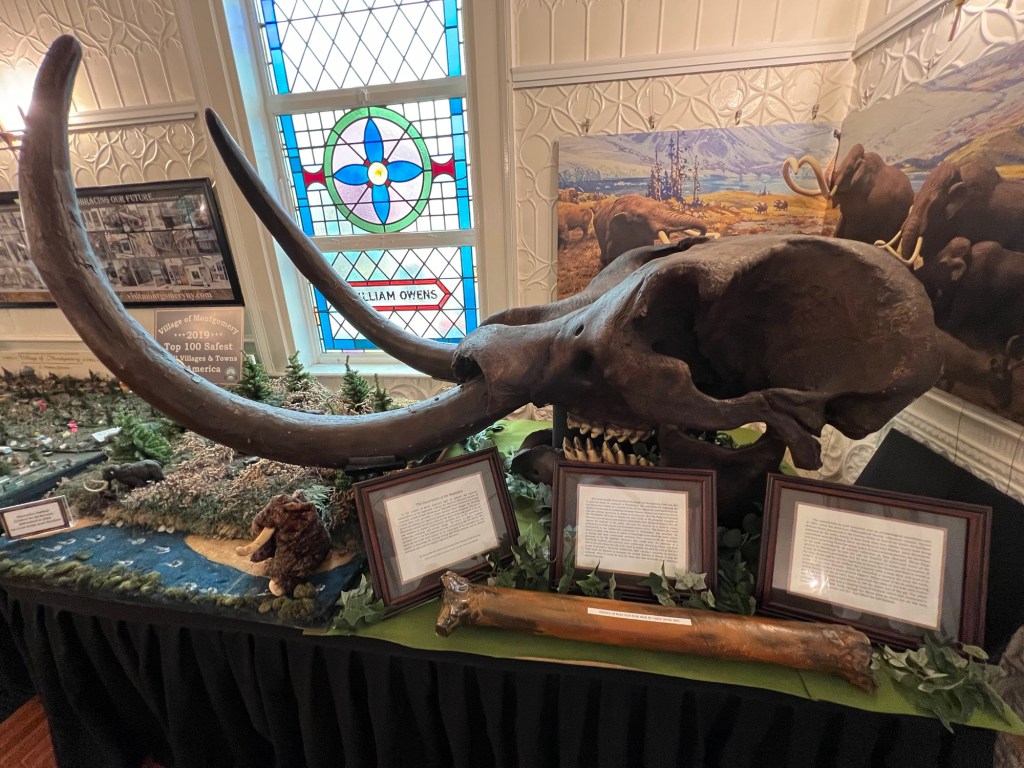
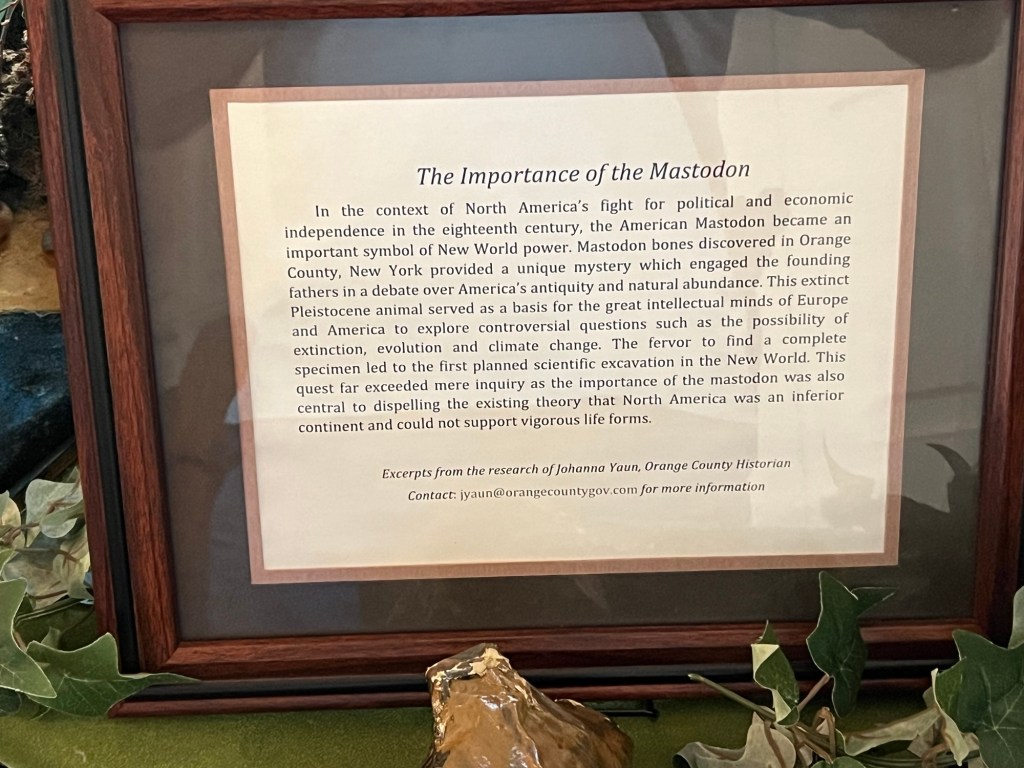
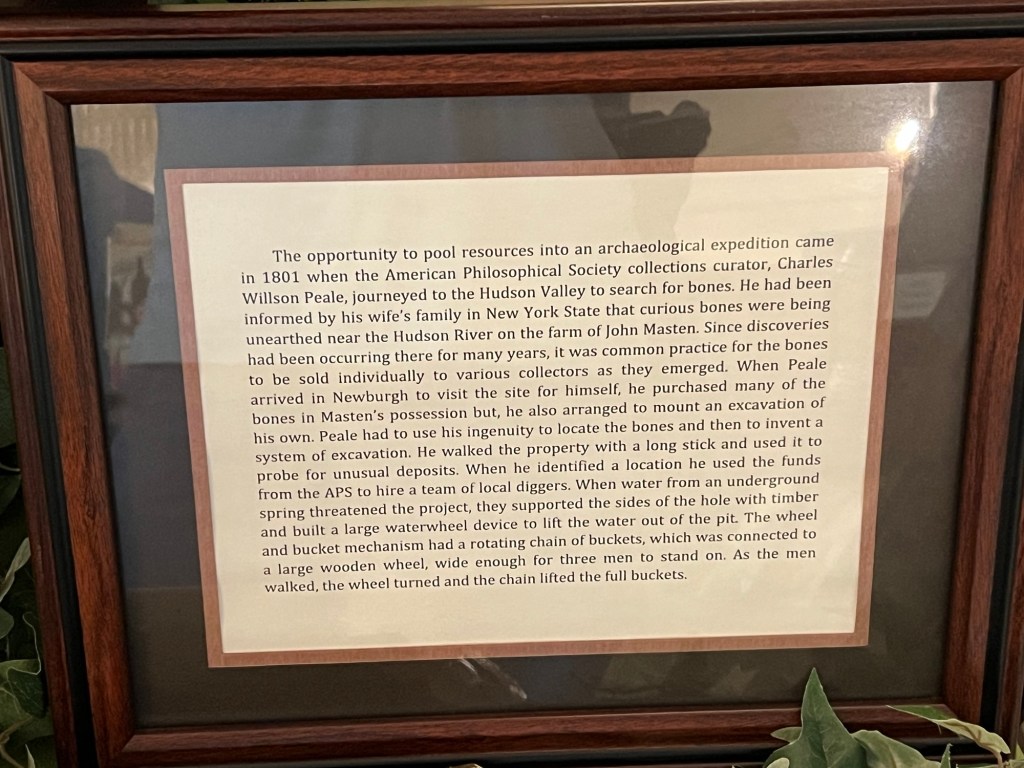
What I thought was interesting about the museum was the discovery of dinosaur bones in the area. The skull of a Mastodon and other bones were found in digs between here and Newburgh.
The Mastodon skull at the museum

The skull and bones and the site

The Importance of the Mastodon story

The write up on dinosaur bones

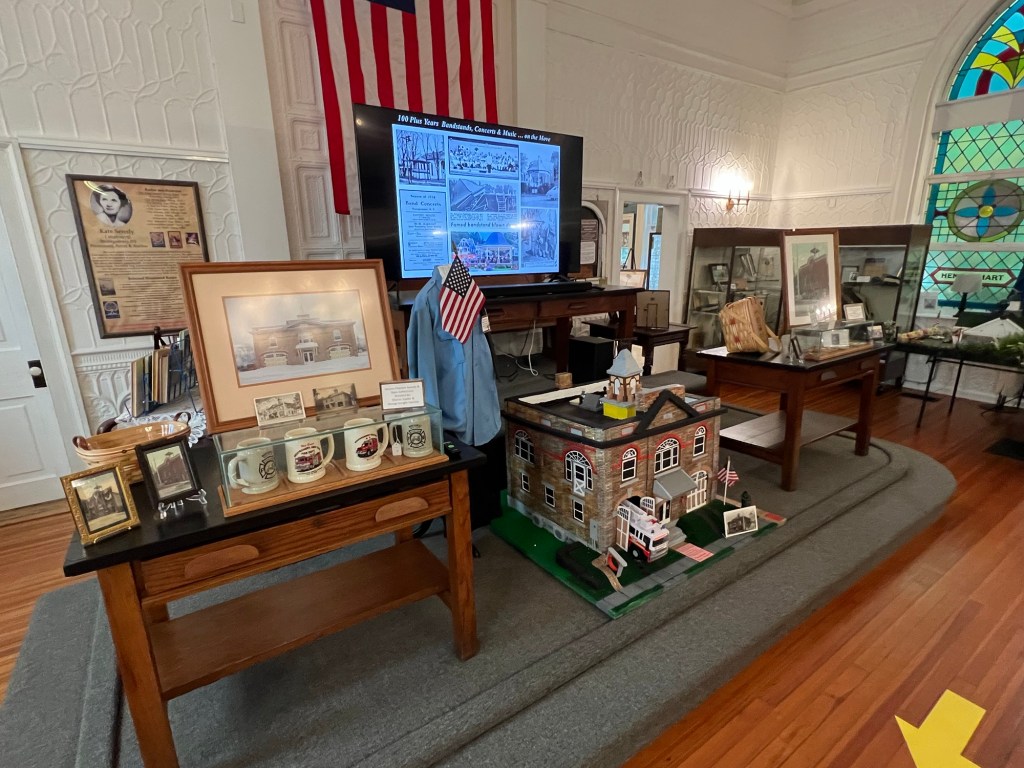
The display on the Montgomery Fire Department

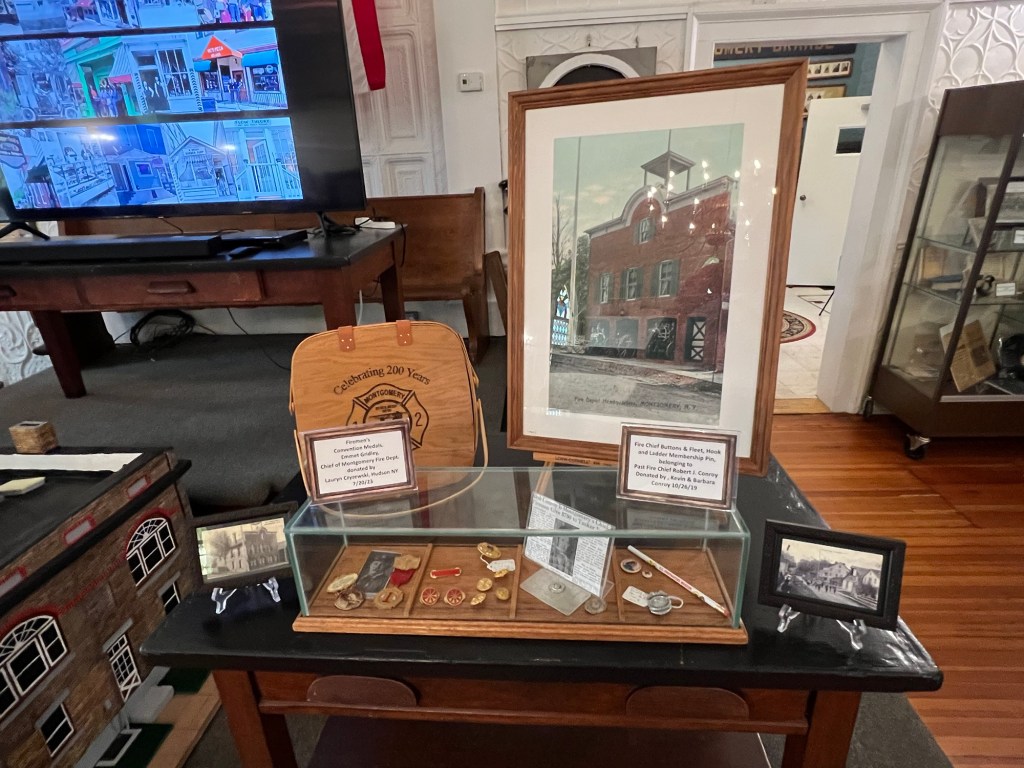
The museum has an extensive collection of items from the County Fire department telling its own story of the fire service in this community. The Orange County Firefighters Museum is right across the street with all the larger equipment and gear but here we get to see the pictures of the department over the years and some of the small artifacts.

Display on the Montgomery Fire Department

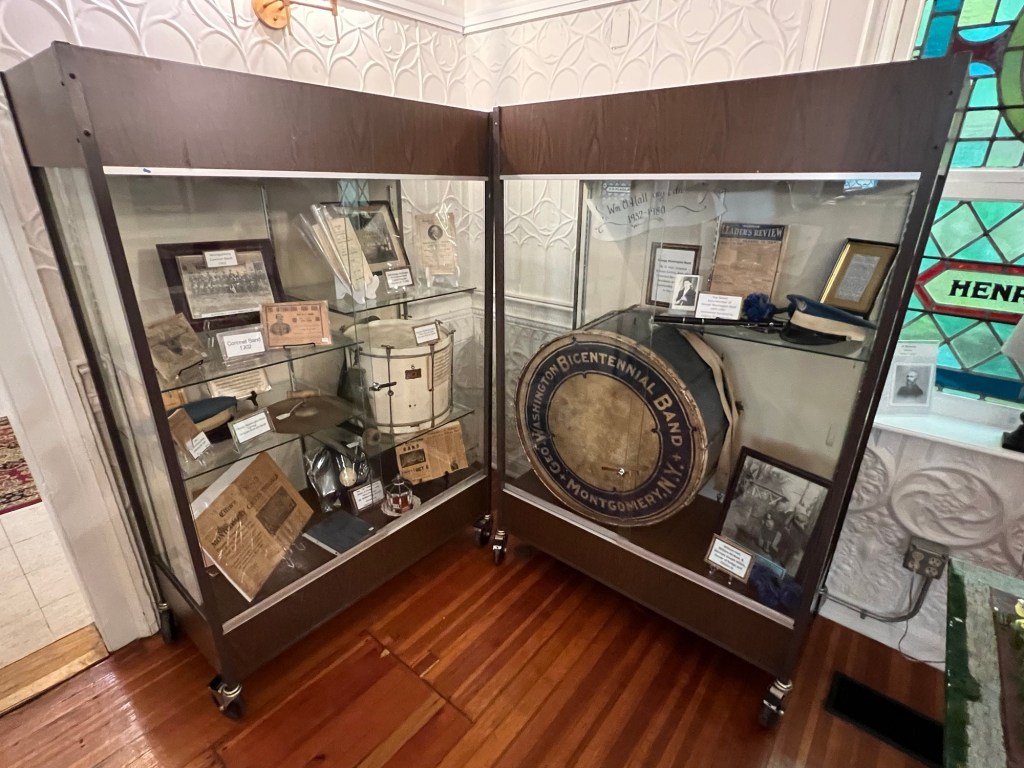
The display on the Montgomery Coronet Band display

The Textiles industry in Montgomery

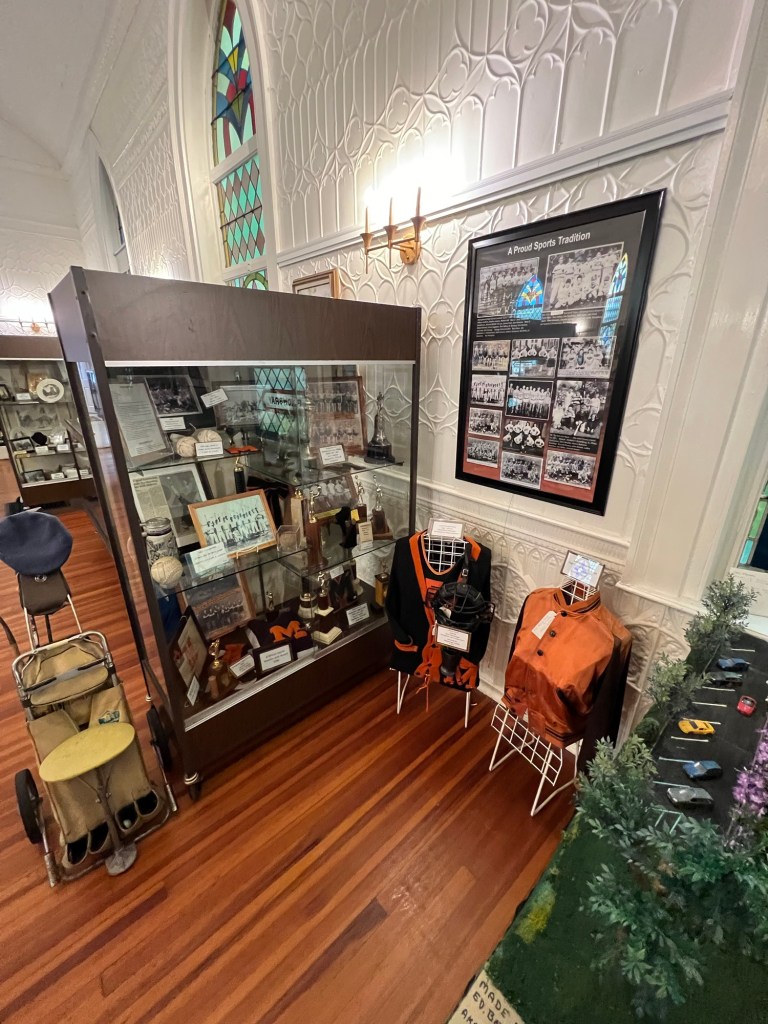
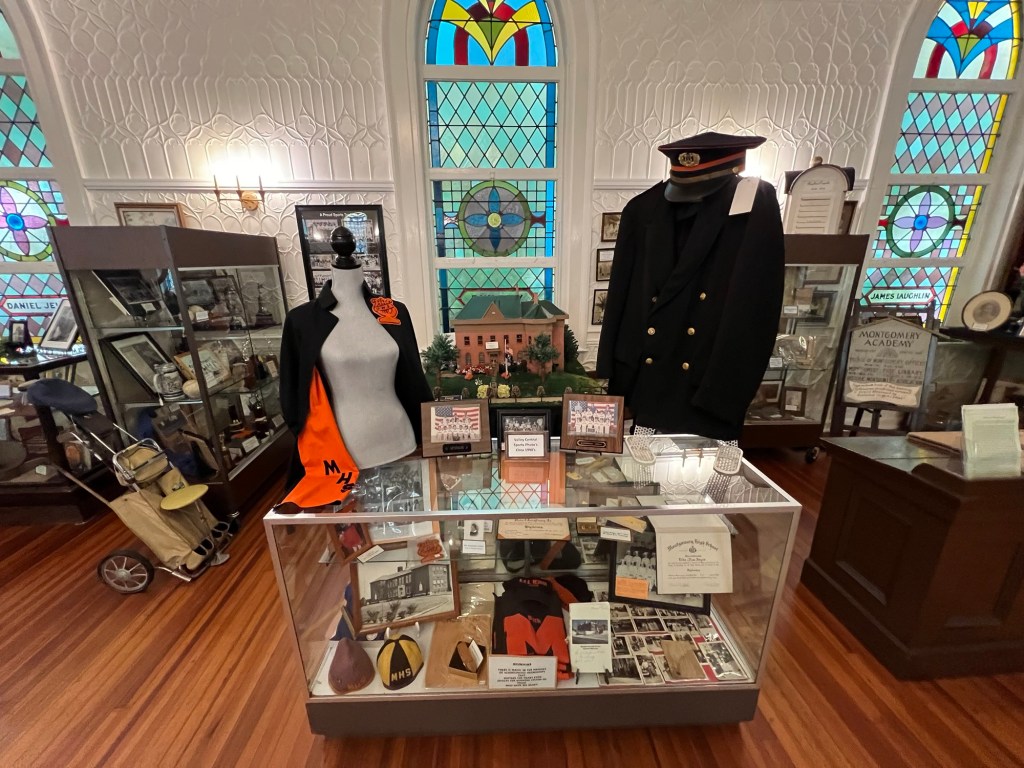
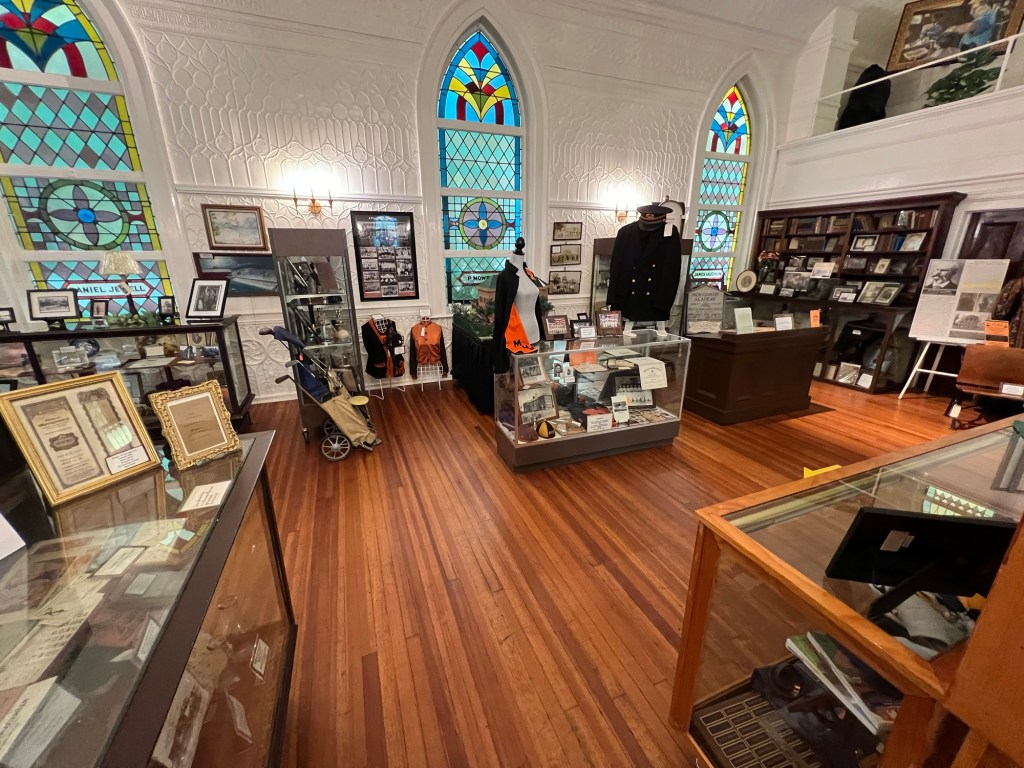
The display from Montgomery High School from sports to the marching band

The museum has an extensive collection of memorabilia from Montgomery High School over the past one hundred years that include marching band and sports to the way the school teaches. It is amazing that in many ways it does not change much.

More artifacts from the schools

Displays of the schools and libraries in the county

The Montgomery High School band and sports

A old school house display

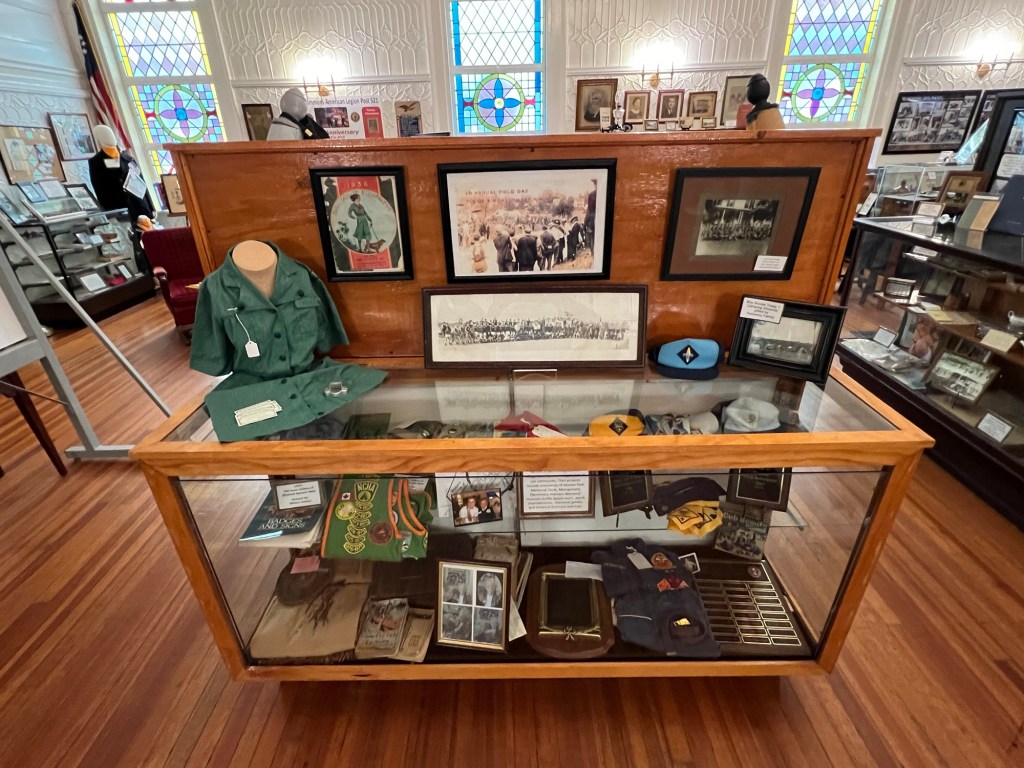
The Girl Scout and Boy Scout display

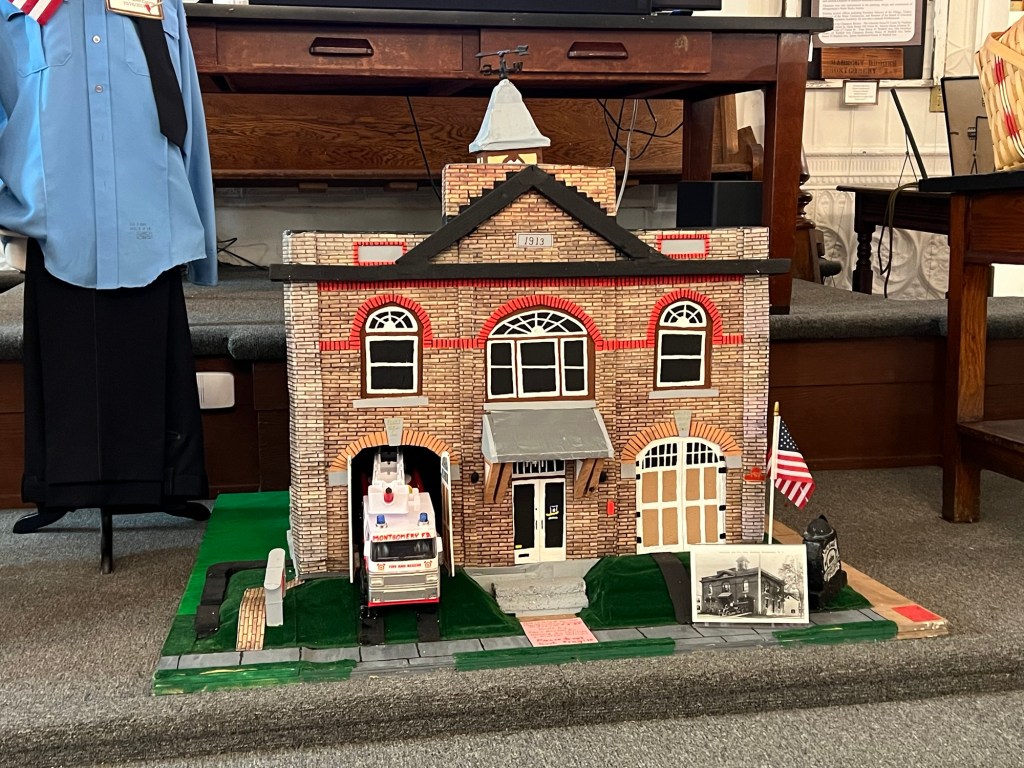
The original fire department display that sits across the street

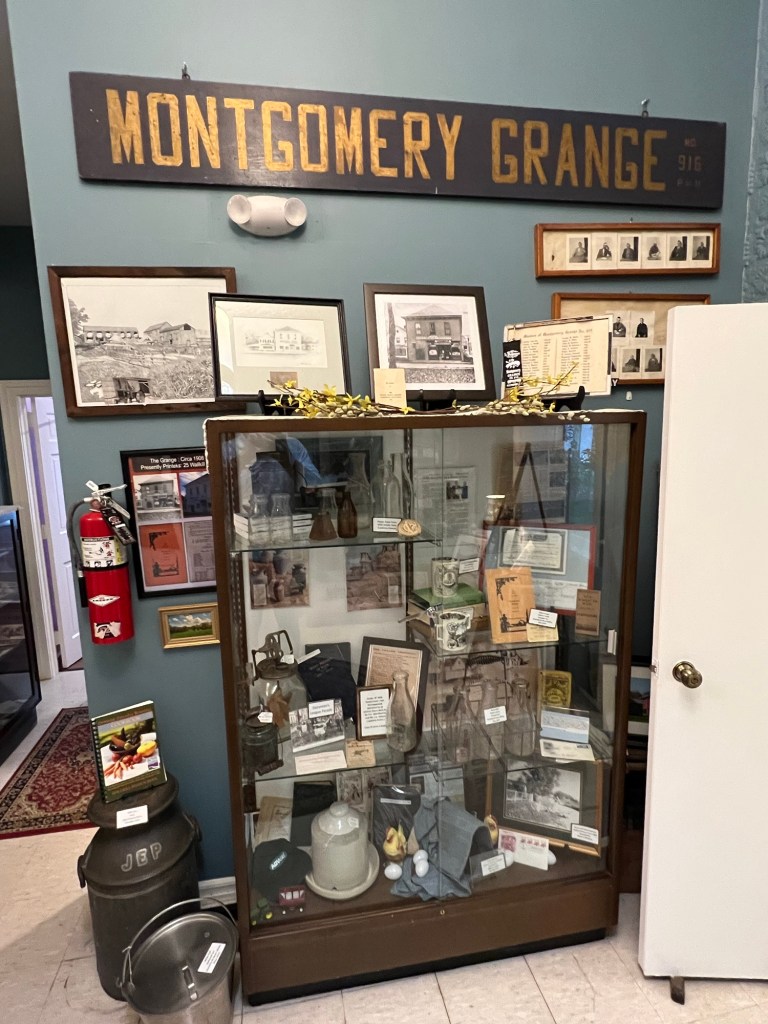
The Montgomery Grange display

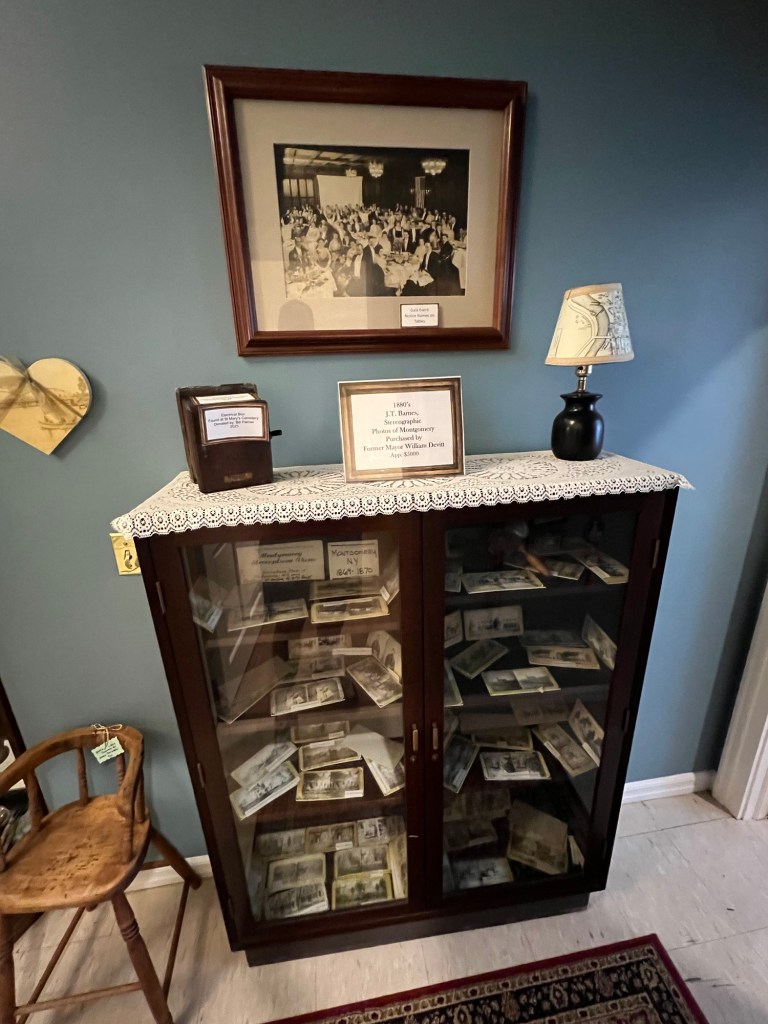
The Picture Display of old photos of the past of the Village of Montgomery, NY

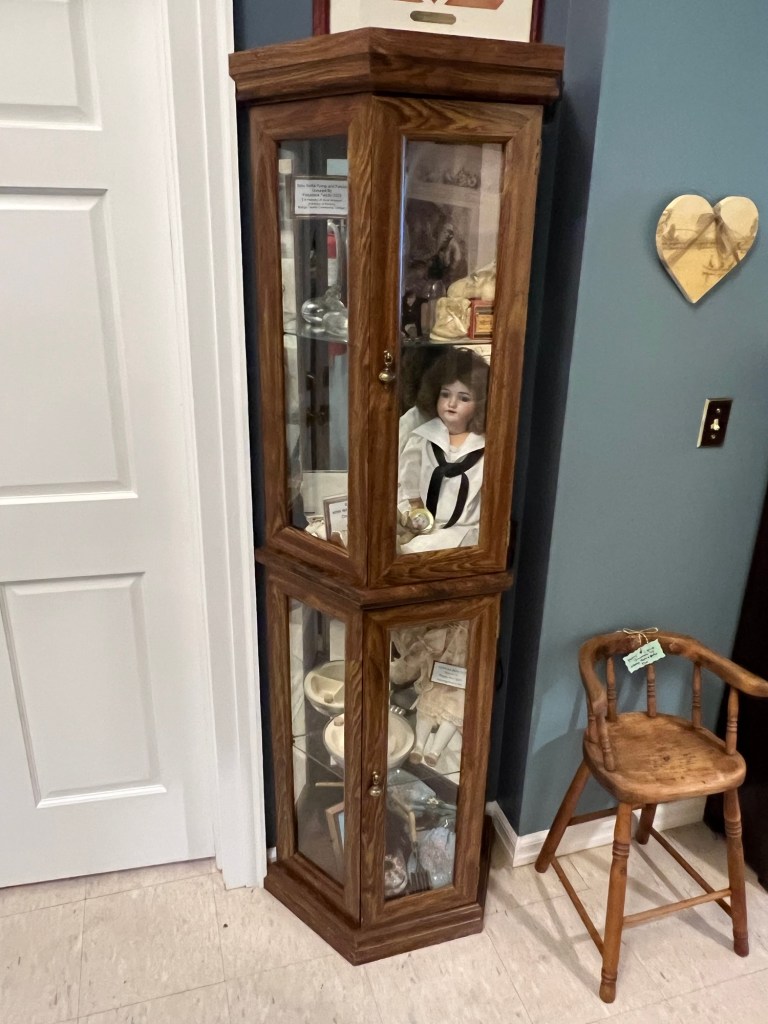
The Toy and Doll Display will delight any young child

The Art display in the back part of the museum

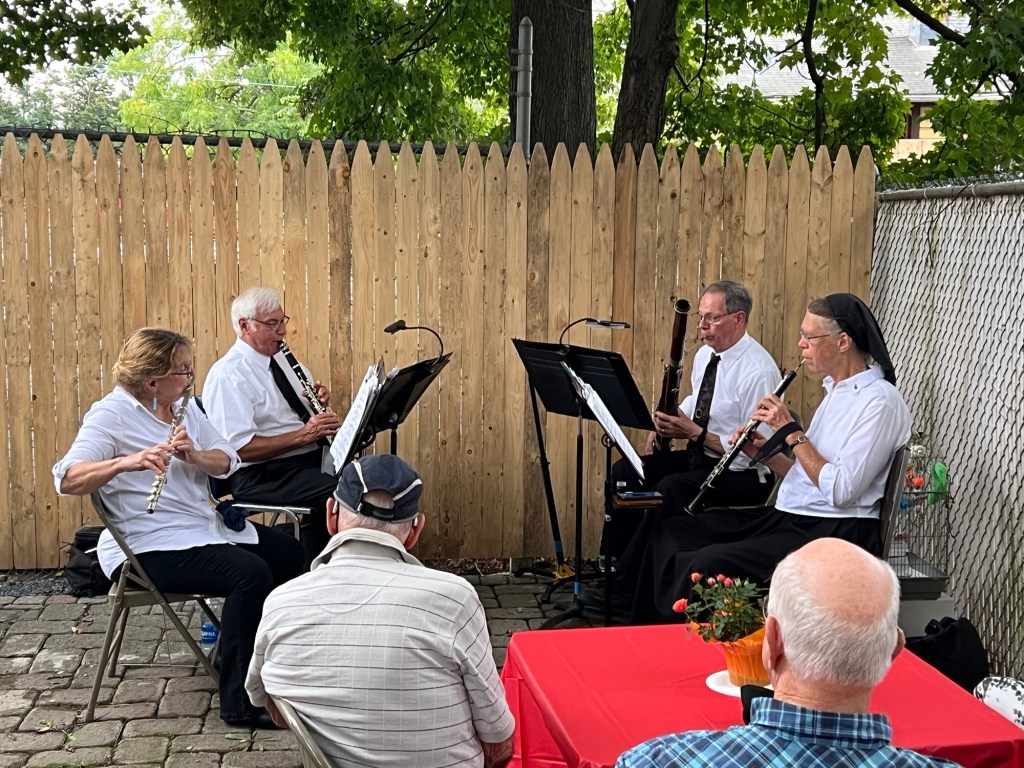
The afternoon I was at the museum, they had an outdoor concert in the garden of the museum. It was warm night so sitting outside enjoying the music was really nice.

The museum’s well tended gardens

The gardens by the side of the museum

The gardens in bloom by the fence

The musical performance of the quartet

The video of the concert:

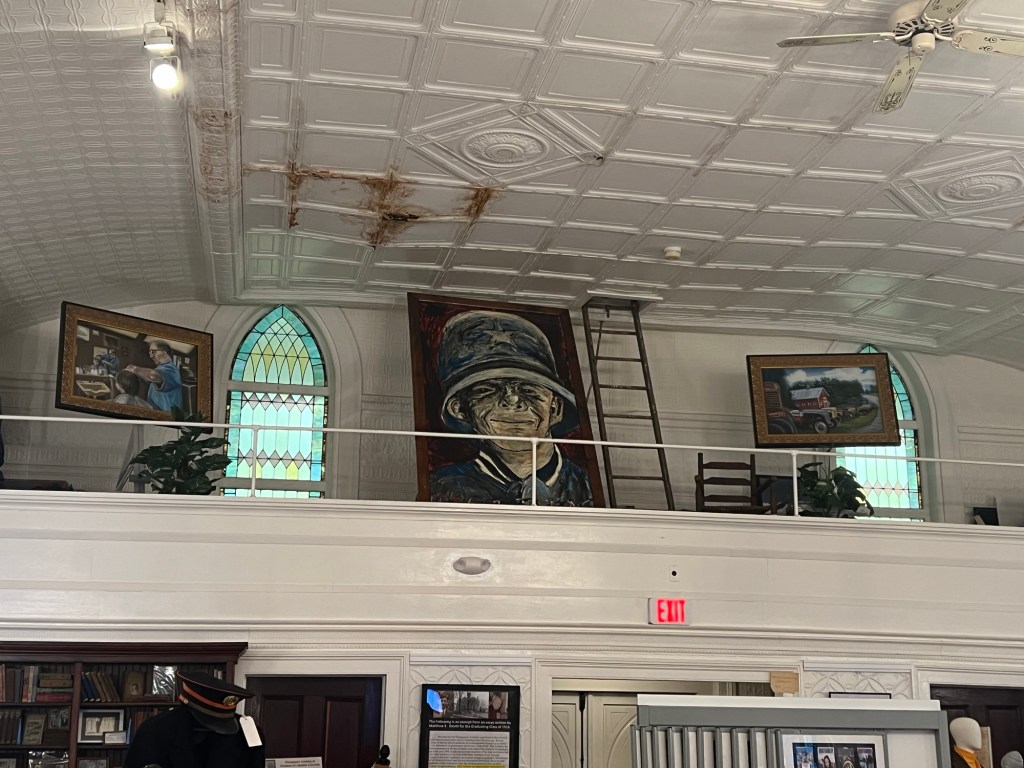
The large paintings above the front door as I was leaving that evening.

One last look at all the galleries at the museum gave me a glimpse of the extensive collection of artifacts at the museum and the story they tell of the community of Montgomery, NY.

The back gallery

The front gallery

The side gallery

For such a small museum, the displays really give an interesting look at the county and how it has progressed over the years. What have been new to us in the 1950’s, 60’s, 70’s , 80’s and forward has now become the past to newer generations. The Montgomery Village Museum tells that story in detail.

A visit here is a nice way to spend the afternoon. Then take a tour of Historic Montgomery, NY. There is a lot to do and see.

Exploring historic Downtown Montgomery, NY

Exploring historic Downtown Montgomery, NY

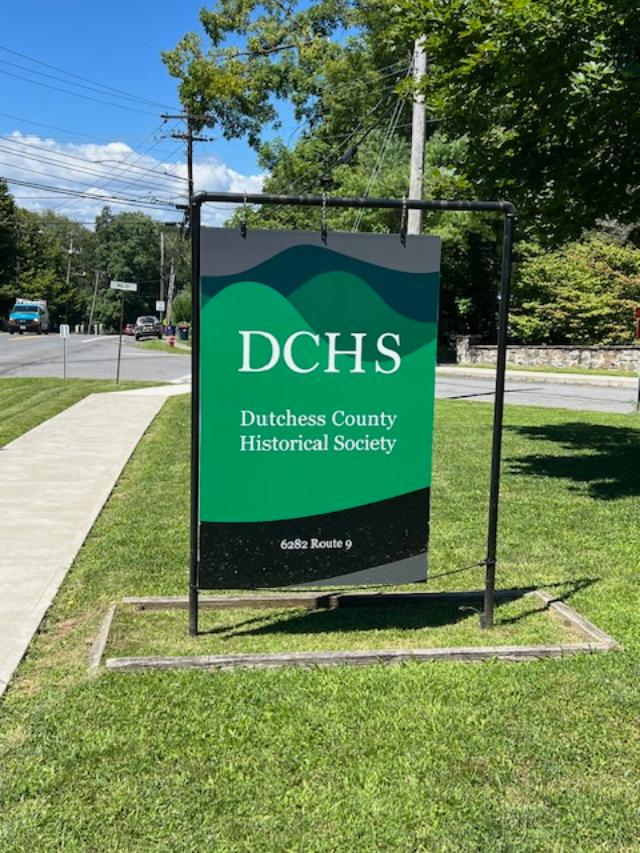
Dutchess County Historical Society                  6282 Route US 9                                                             Rhinebeck, NY 12572

Dutchess County Historical Society 6282 Route US 9 Rhinebeck, NY 12572

Dutchess County Historical Society

6282 US-Route 9

Rhinebeck, NY 12572

(845) 471-1630

https://www.facebook.com/DCHSNY/

Open: Sunday-Monday Closed/Tuesday-Thursday 10:00am-3:00pm/Friday-Saturday Closed

Admission: Free but donations are accepted

My review on TripAdvisor:

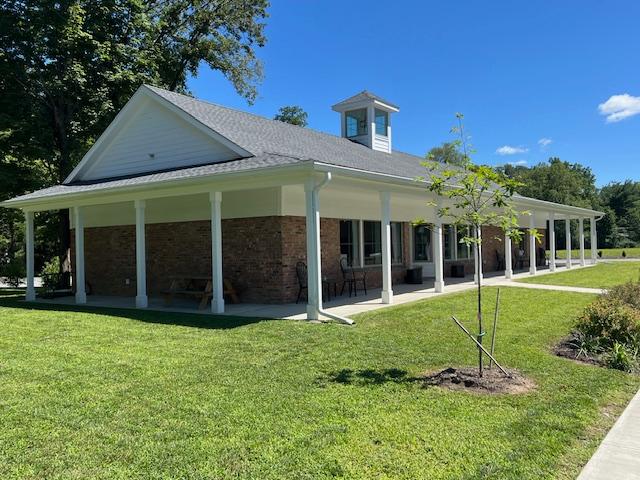
The Dutchess County Historical Society at 6282 Route US 9 in Rhinebeck, NY

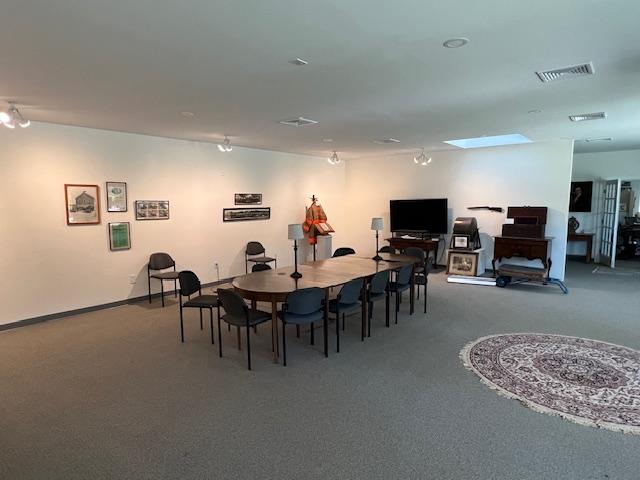
I recently visited the new Dutchess County Historical Society in Rhinebeck from its old home in Downtown Poughkeepsie. The new museum has a light and airy feel about it with new exhibitions being mounted and a new library being set up for research. The museum just opened for viewing so it is still in its early stages for displaying artifacts.

The Dutchess County Historical Society

The Main Gallery at the museum

The Mission of the Dutchess County Historical Society:

The Dutchess County Historical Society is committed to being the most meaningful source of Dutchess County history, a commitment in place since its 1914 founding.

We do this through the responsible archival stewardship of tangible objects and the energetic interpretation and presentation of local history to the public.

We are proud to be known for our community outreach through a wide range of publications, awards, exhibits, programs, talks, writings, videos and oral histories.

Online and traditional exhibitions, lectures, awards, conferences and special presentations round out Dutchess County Historical Society programming for members and our local communities.

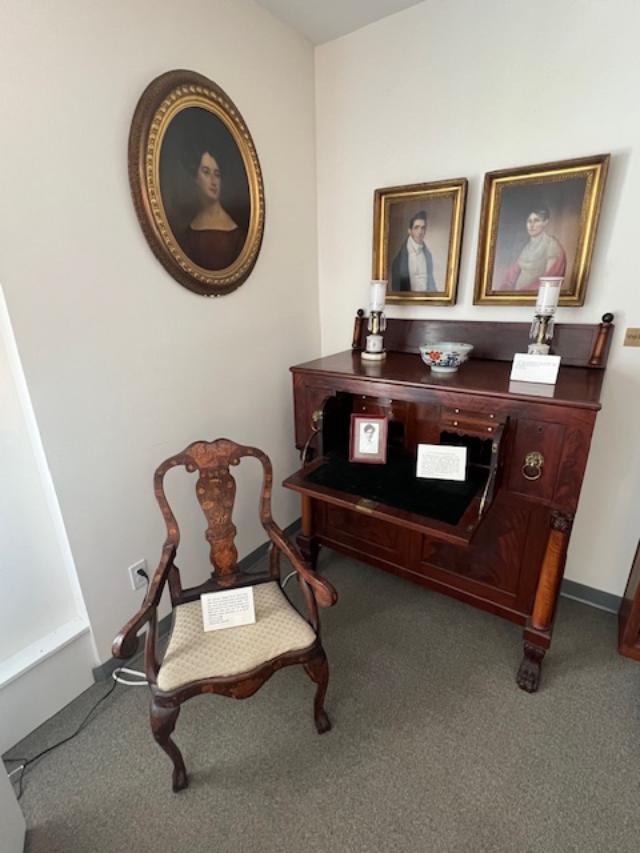
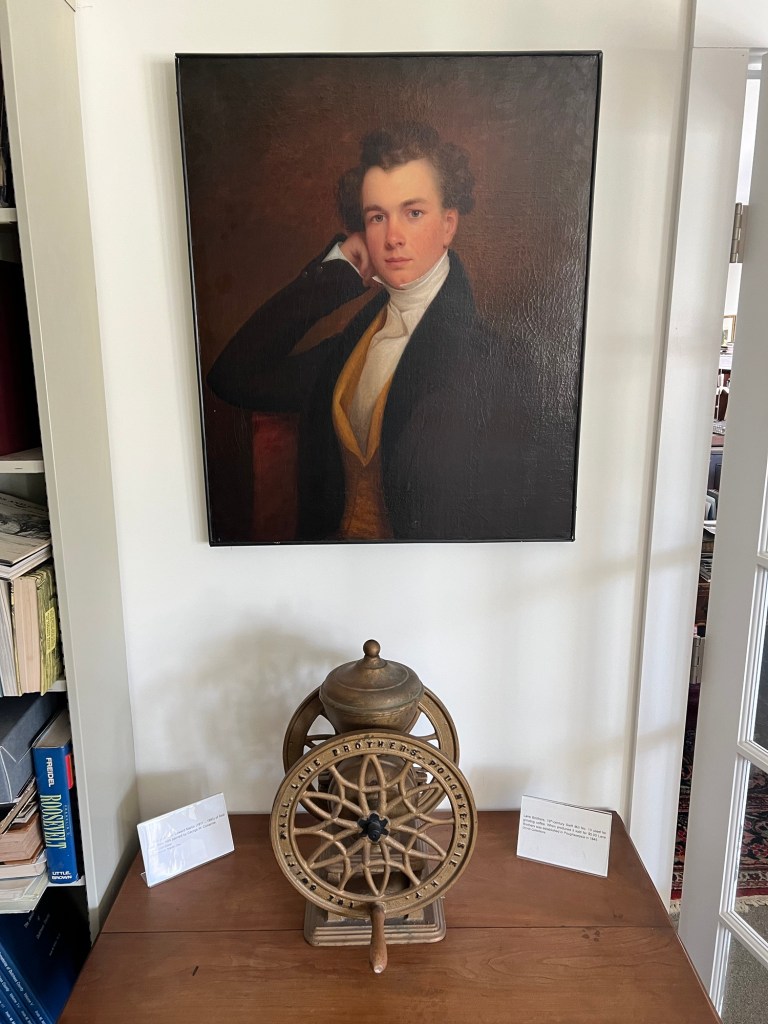
Portraits of local residents and antique furniture

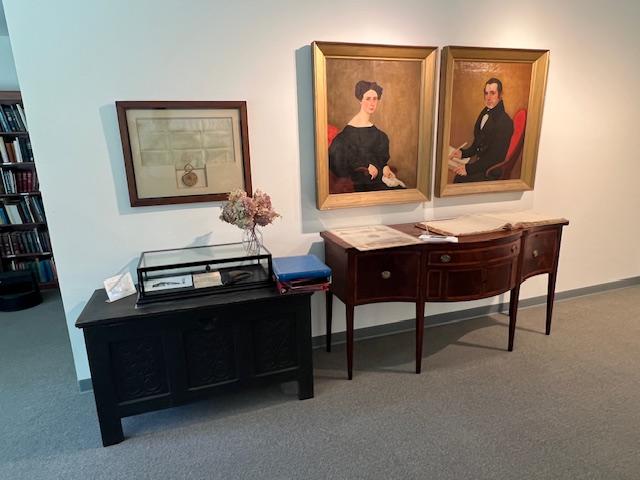
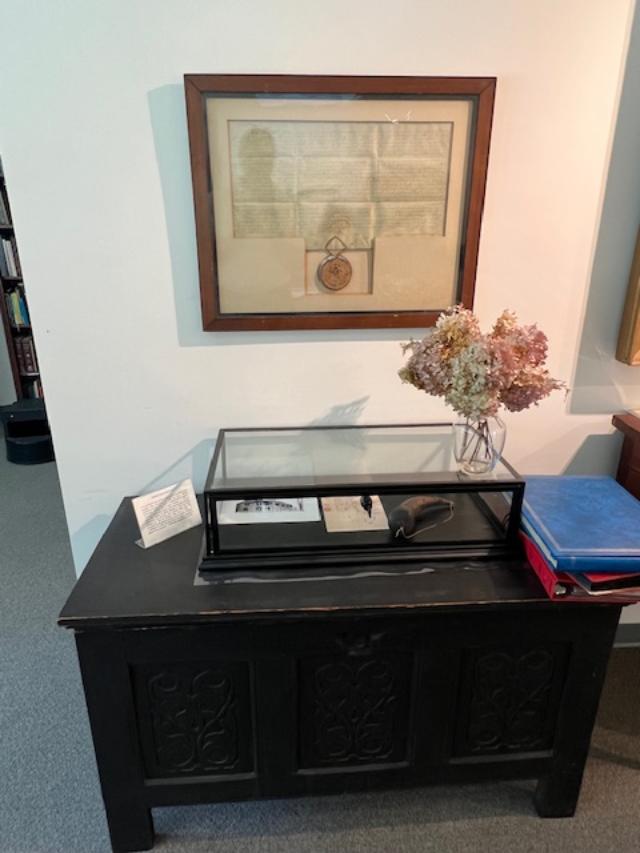
Some of the new permanent collection on display are family portraits, antique furniture, historic documents and local artifacts from towns all over Dutchess County. Much of these items were donated by the families that live in the area.

The portraits of local residents and historical documents in the collection

Historical Documents of Dutchess County with the original seals

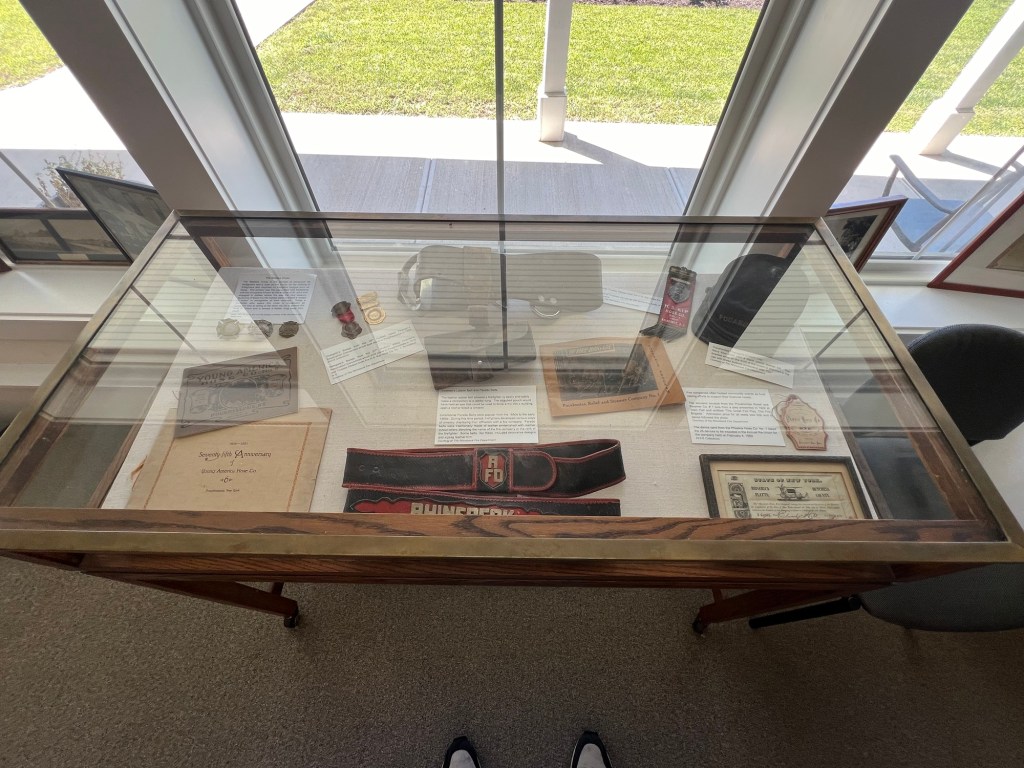
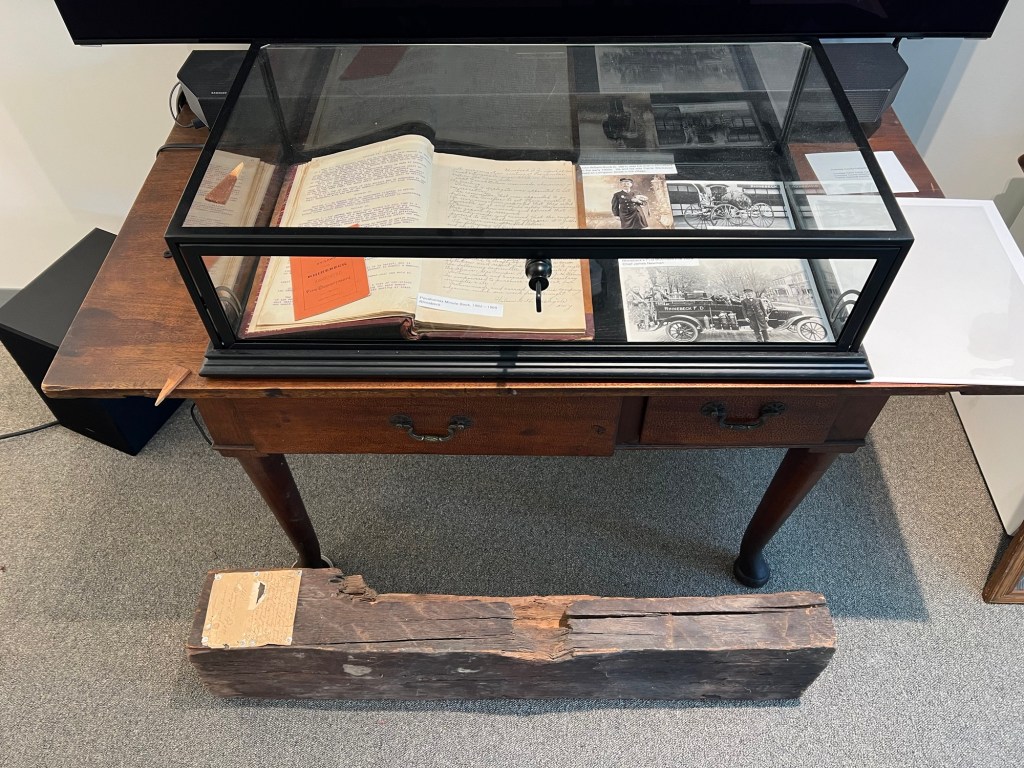
The first exhibition that is being mounted in partnership with the Rhinebeck Fire Department is the history of the fire service in Dutchess County. Since part of the exhibition was being moved to the new fire museum at the Dutchess County Fair Grounds for the upcoming Dutchess County Fair, I got to see only a portion of it at the museum.

The exhibition “The History of the Dutchess County Fire Service”:

The exhibition shows the progression and growth of the fire service in Dutchess County since the time the Dutch lived in this region. The collection reflects the direction of these departments since the end of the Civil War and how much and how little the equipment has changed.

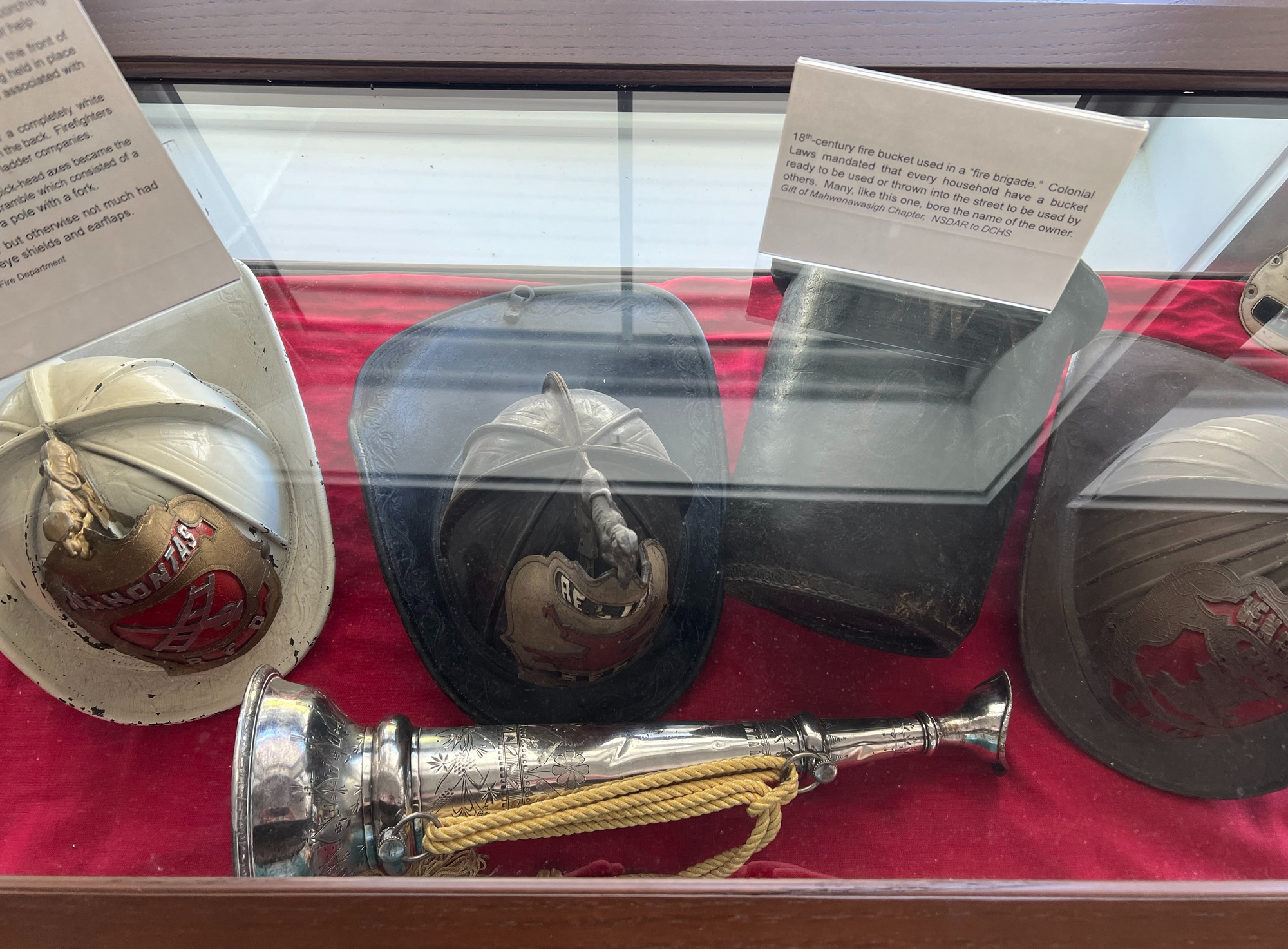
Fire department artifacts including documents and equipment

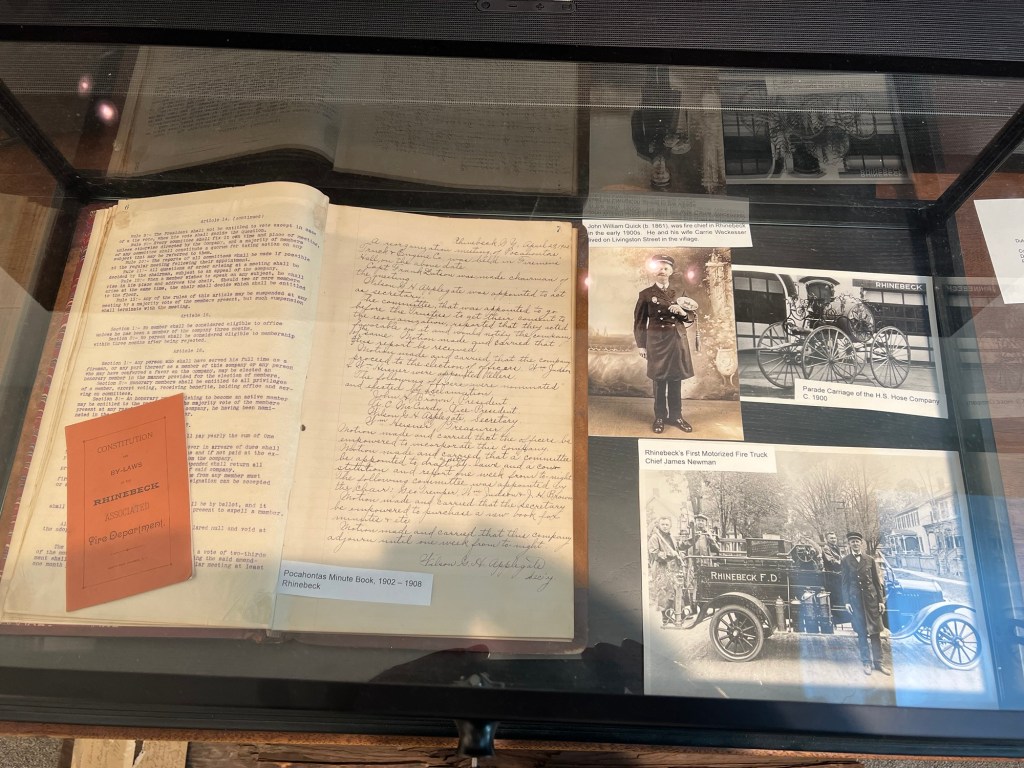
Fire service pictures and documents and a beam from Henry Livingston’s mansion that got shelled by the British (this sits below the display case)
The pictures and documents on display

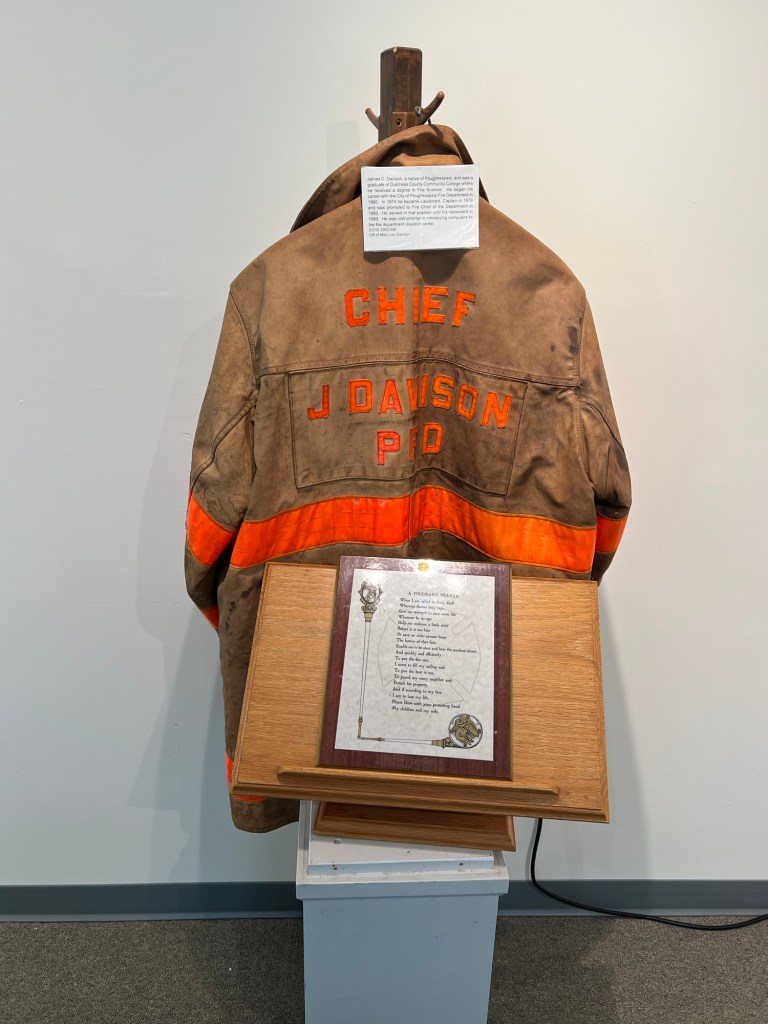
Fire Department jacket

Helmets and trumpets used by fire departments in the past

What was interesting about the exhibit was the depth of items of the past that each firefighting and the story they tell.

The Permanent Collection:

The remaining displays along the walls of the museum as set up continues tell the story of Dutchess Counties past and the families that lived here.

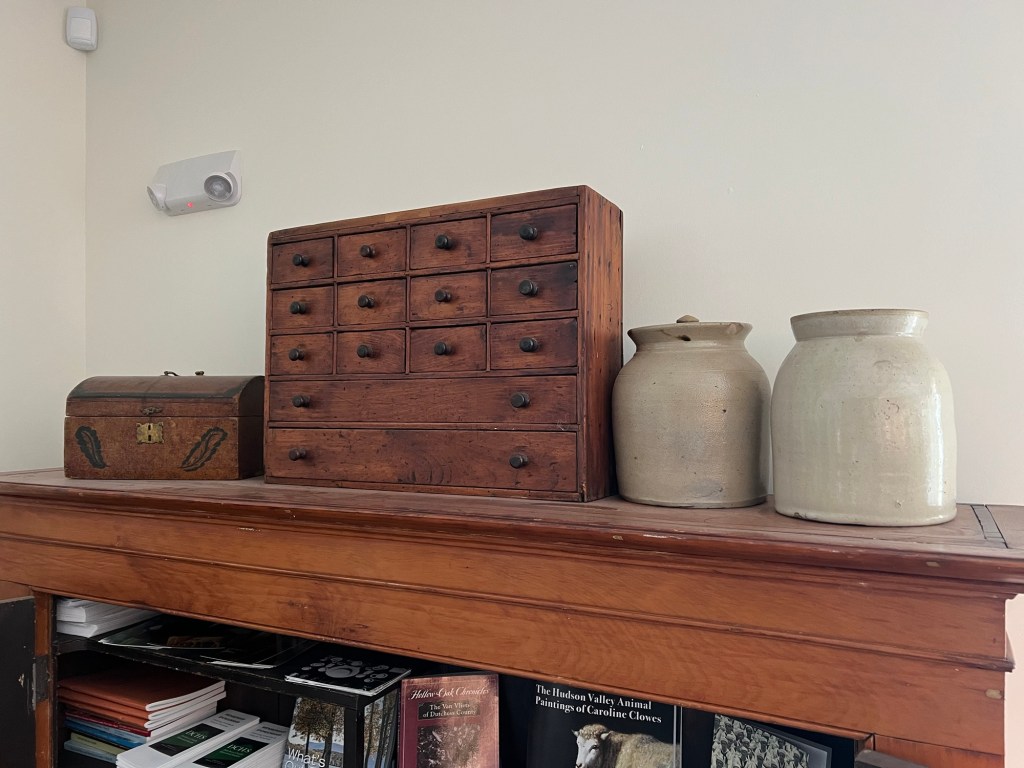
Family heirlooms

Household and Business items

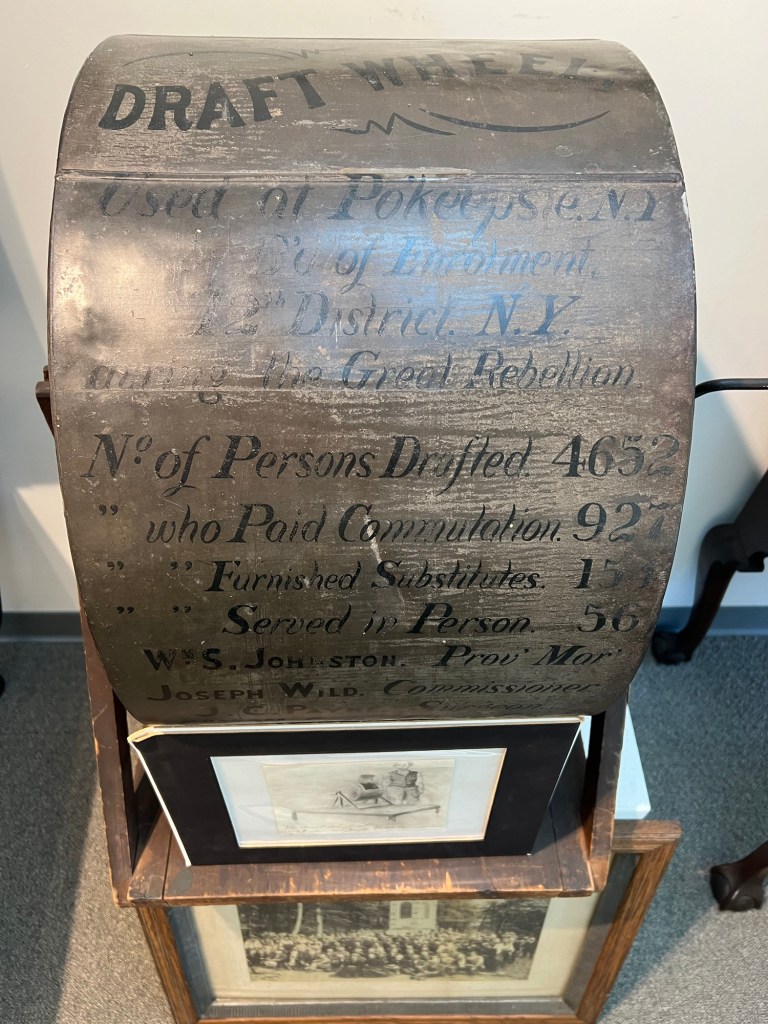
An old Draft card machine

There will be more displayed of the treasure trove of items in the museum’s collection, so it gives people a chance to see the past of the County on display and how it differs from current life to playing its part in the County’s future. There will be a lot more to do and see in the museum going forward.

Putnam History Museum                                       63 Chestnut Street                                               Cold Spring, NY 10516

Putnam History Museum 63 Chestnut Street Cold Spring, NY 10516

Putnam History Museum

63 Chestnut Street

Cold Spring, NY 10516

(845) 265-4010

https://www.putnamhistorymuseum.org/

My review on TripAdvisor:

https://www.tripadvisor.co.uk/Attraction_Review-g47508-d2252339-Reviews-Putnam_History_Museum-Cold_Spring_New_York.html

The Putnam History Museum at 63 Chestnut Street in Cold Spring, NY.

Don’t underestimate the size of the this museum packed with interesting exhibitions and information. It is really a terrific local museum that tells the story of the local community. I was very impressed.

The Putnam History Museum sign on Route 9.

The Mission of the Museum:

(From the Museum website)

The mission of the Putnam History Museum is to collect, preserve, interpret, and present the history of Putnam County, Philipstown, the West Point Foundry, and the Hudson Highlands. Through exhibitions, programs, and events, the museum uses its collections to engage the community with the vibrant history of our region, and to foster greater understanding of the role it has played in the growth of our nation.

The Current Exhibitions:

December 2023:

Indigenous Peoples in Putnam County

This exhibition explores Lenape and Wappinger culture in Putnam County, with a special focus on the Woodland period when these cultures flourished in the Hudson Valley. In addition to sharing Lenape stories—past and present—the exhibition features important artifacts and replicas including stone tools, stone points, pottery sherds, and a dugout canoe.

The Indigenous Peoples Exhibition:

(Funded in part by the Community Foundations of the Hudson Valley, American Historical Association, and the Cold Spring Lions Club. Image courtesy of the Staten Island Museum).

This exhibition was interesting in that it explained the local tribe of Lenape Indians who lived in the area before the Dutch and the contribution that they made to the community and their history in the area. The day to day lives of the tribes was shown in the various displays from the way they fished and hunted in the community. The dug out canoe the museum found out recently was a reproduction of the original. For years the curator explained to me the museum thought it was the real thing. Very detailed and very interesting exhibition.

Locally found Arrowhead Collection

The history of Indigenous people in the Hudson River Valley.

History of the Lenape Indians

The reproduction of the Lenape Canoe on display.

West Point Foundry

There is a permanent Foundry exhibition on display at PHM. It includes photographs, artifacts, paintings, maps, and videos highlighting the Foundry related objects within the PHM collection, including a fully restored 10-pounder Parrott Rifle.

The Foundry Exhibition is a permanent exhibition in the museum.

The map of the former foundry’s in the area.

I never realized that the Town of Cold Springs, NY was such a productive foundry area between all the wars. Many ironworks dotted the community which is now an upscale community just outside New York City. The foundry’s created many items that helped the ‘war machine’ such as train parts and cannon balls along with many modes of transportation.

The Foundry exhibition.

The objects of the Foundry.

The various sizes of cannon balls created by the local foundry’s.

The Foundry Painting “Foundry”

The “Foundry” painting sign.

The West Point Foundry part of the exhibit.

The West Foundry sign of the exhibition.

The West Point Foundry during the war.

A Brief History of Julia Butterfield

Born in 1823, at age 18 Julia Lorillard Safford married Frederick James, a broker and banker in New York City. They lived on Fifth Avenue and in 1852 built a magnificent stone village house in Cold Spring that was named Cragside because it had been constructed on a hillside strewn with rocks. It was surrounded by elaborate gardens, lawns, orchards and fields, according to Trudie Grace, author of “Around Cold Spring”. Haldane High School now occupies the site of Cragside, and a gatehouse built in 1866 still stands at the foot of Cragside Drive as a private residence.

The Julia Butterfield Exhibition

Frederick James died in 1884. Two years later, Julia married Daniel Butterfield, a Civil War general who is credited with composing “Taps” and whose father co-founded American Express. He lived until 1901. When Julia died in 1913, her estate (was) estimated to be worth $3 million, or about $75 million today. 

This permanent exhibition of a local woman who supported her community and deserves much respect and admiration for the contributions to Cold Springs showed her immense generosity. I wish there was more people like her in every community.

Bequests by Julia Butterfield in her 1913 will, with current values:

YMCA – $2.32 million ($62M)
Julia L. Butterfield Memorial Hospital – $150K ($4.6M)
Union College, Schenectady – $100K ($3M)
Julia L. Butterfield Memorial Library – $60K ($1.85M)
Home for the Relief of Respectable Aged Indigent Females – $20K ($616K)
Association for the Aid of Crippled Children – $10K ($308K)
St. Mary’s Episcopal Church (for parsonage) – $10K ($308K)
Association of New York Day Nurseries – $5K ($154K)  

The library, a Georgian Revival building, was constructed on the foundation of the old Dutch Reformed Church and dedicated in 1925. The hospital, finished the same year, was built, many believed, because one of Julia’s sons had died after a fall from a horse and she felt he might have survived if a hospital had been closer.

(Adapted from a 2018 Highlands Current article)