Tag: NJ Historical Sites

Somers Mansion                                                                                   1000 Shore Road                                                                            Somers Point, NJ 08244

Somers Mansion 1000 Shore Road Somers Point, NJ 08244

Somers Mansion

1000 Shore Road

Somers Point, NJ 08244

(609) 927-2212

https://www.nj.gov/dep/parksandforests/historic/somersmansion.html

Somers Mansion

Open: Sunday 9:30am-3:30pm/Monday-Friday Closed/Saturday 9:30am-3:30pm

Admission: Free

My review on TripAdvisor:

https://www.tripadvisor.com/ShowUserReviews-g46825-d5970174-r844645596-Somers_Mansion-Somers_Point_New_Jersey.html?m=19905

The Somers Mansion at 1000 Shore Road

(There is no indoor picture taking allowed)

The mansion from the front

I visited the Somers Mansion, the three story former home to five generations of the Somers Family. The mansion sits on a buff overlooking the bay and the bridge to the barrier island where Ocean City is located. The original part of the house was built in 1725 and in 1920 the last family members moved from the home and deeded it to the town. The modern additions of the home have been stripped off so you see the original house.

The historic marker of the home when it was donated by the family

I have to say that I was very disappointed with the condition of both the house and of the rooms and displays inside the house. There was not much to see. The lower level of the home has the main room with the hearth known in most early homes as the “Keeping” or “Everything” room where all the cooking, household chores and socializing was done because of the warmth of the fire.

Here and there were pieces of furniture but nothing labeled or decorated to make the room look ‘period’. Just old furniture here and there to fill the space. Some of the original family china was in the cupboards built into the walls.

The upstairs which must be reached by a rope bannister lead up a narrow stairs to two upstairs bedrooms. The home is not handicapped safe. The front bedroom had a fireplace with a small side room that held spinning wheels and some children’s furniture. There was not much to see in the upstairs.

The tour guide did not offer much in the way of information on the house and the only period pieces of the Somers family that were left inside the house were a chest, a clock, some of the china that was in the side cabinents and a bedwarmer.

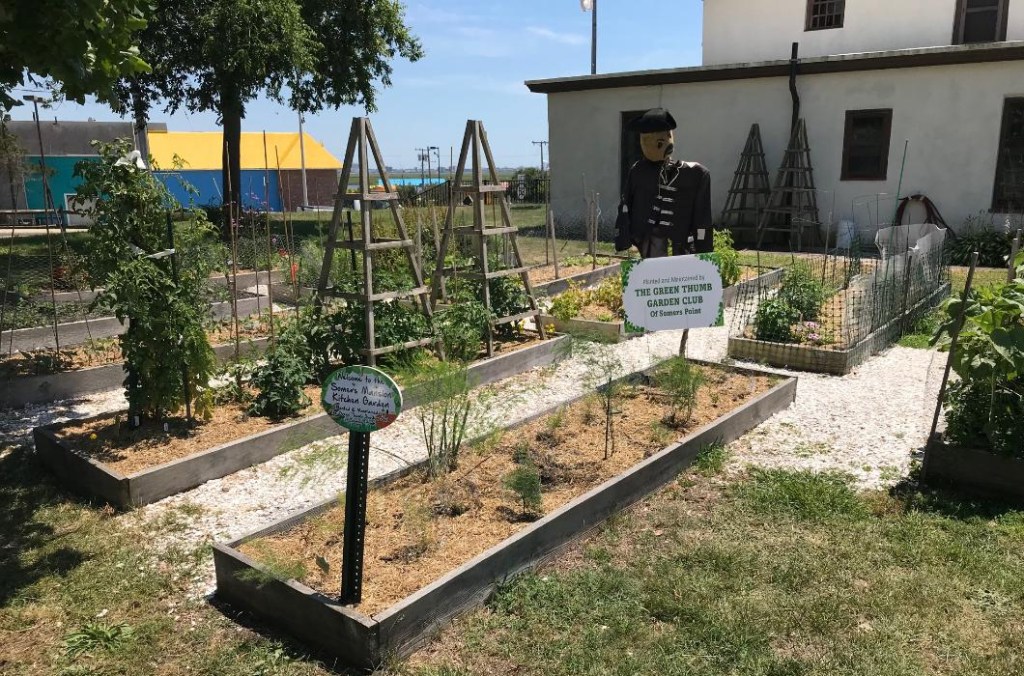
Outside the house the Somers Point Garden Club planted a period garden of fruits and vegetables on the back lawn and lead tours of the gardens.

The Somers Mansion Kitchen Garden

The Garden Club planted fruits and vegetables that would have been grown in the time periods of the late 1700’s to early 1800’s. You can walk amongst the beds to see the plantings.

Somers Mansion Kitchen Garden planted by the Garden Club

The whole tour takes less than a half hour and it is more impressive from the outside. You are also not allowed to take pictures of the house for security reasons.

The back of the mansion

The History of the Somers Mansion:

(From the NJ State Historical Site.com):

The mansion and surrounding city bear the name of the family who owned and occupied the house for 200 years.

The Somers Mansion, a three story home constructed of brick in the Flemish bond pattern, sits overlooking the Great Egg Harbor Bay at Somers Point. In the late 1600’s, the property which surrounds the mansion was acquired by John Somers, who operated a ferry service across The Great Egg Harbor Bay to Cape May. He referred to it as Somers Plantation and Somers Ferry and the surrounding settlement, the olders in what became Altantic County and then Somers Point in the mid-18th Century.

Master Commandant Richard Somers

https://en.wikipedia.org/wiki/Richard_Somers

http://www.richardsomers.org/

The mansion is considered to be the oldest existing house in Atlantic County, predating the County itself. His son, Richard, the first of the family to be born in New Jersey, built what is now referred to as the mansion by 1726. That year the local Society of Friends (Quakers) used the home for a meeting and memorialized it in their minutes, making the earliest recorded date of the home’s existence.

By the end of the 19th century, the mansion’s architecture had been added to and changed to reflect a Victorian style. The house remained in the Somers Family until 1937 when it was deeded by Florence Hayday Brooks and Lulu Hayday Smith, daughters of Hannah Hayday Somers to the Atlantic County Historical Society for the purpose of creating a permanent memorial to the Somers family.

In 1941, it was transferred to the State of New Jersey, dedicated on September 26th, 1942 and in the early 1940’s was restored to its colonial appearance as a Works Progress Administration (WPA) project. Laborers for the WPA both renovated the surviving furnishings and conducted a historical restoration, including the elimination of rooms and architectural details dating to the 19th century. The site was added to the National Register of Historic Places in 1970 and is now a State Historic site.

The Somers Family burial ground further down off Shore Avenue off New York Avenue

A Short History of Somers Point:

(From the Trail of Richard Somers pamphlet)

https://en.wikipedia.org/wiki/Somers_Point,_New_Jersey

Somers Point was originally settled by John Somers, an Englishman and practicing Quaker, who bought the land from Thomas Budd. Early names for the area were Somerset Plantation, Somers Ferry and Somers Plantation named after the first settlers in 1693. The land purchased originally covered all of Somers Point, part of Linwood and went into Egg Harbor Township. In the early years, it was part of Gloucester County, because Atlantic COunt had not yet been named.

The name “Somers Point” was adopted in 1750. It was a seafaring town and sloops, schooners and barges were built in the many shipyards located along the Greate Egg Harbor Bay, Greate Egg Harbor River and Patcong Creek.

The estate overlooking the bay

The back of the mansion and gardens

The Sooy Boatworks was located on Shore Road and the completed ships were rolled on logs down Shore Road to Delaware Avenue and then down to the bay. Shipbuilding and life along the waterways was a very important part of life in early Somers Point.

The statue of Robert Somers in Robert Somers Park

The Greenwich Tea Burning Monument               Ye Greate Street and Market Lane          Greenwich, NJ 08323

The Greenwich Tea Burning Monument Ye Greate Street and Market Lane Greenwich, NJ 08323

The Greenwich Tea Burning Monument

Ye Greate Street and Market Lane

Greenwich, NJ 08323

http://www.co.cumberland.nj.us/greenwich-tea-burning

Open: 24 Hours/Outdoor Monument

Admission: Free

My review on TripAdvisor:

https://www.tripadvisor.com/ShowUserReviews-g46477-d24137215-r844112153-The_Greenwich_Tea_Burning_Monument-Greenwich_New_Jersey.html?m=19905

The Greenwich Tea Burning Monument in Greenwich, NJ

I am a firm believer in that you learn something new everyday and on a recent trip to visit historical sites of Southern New Jersey I came across this one in a guide book. I never even knew this monument existed let alone that we had our own version of the Boston Tea Party right here in New Jersey. It really showed me the significance of the Revolutionary War and how people from the past fought for the freedoms that we have today.

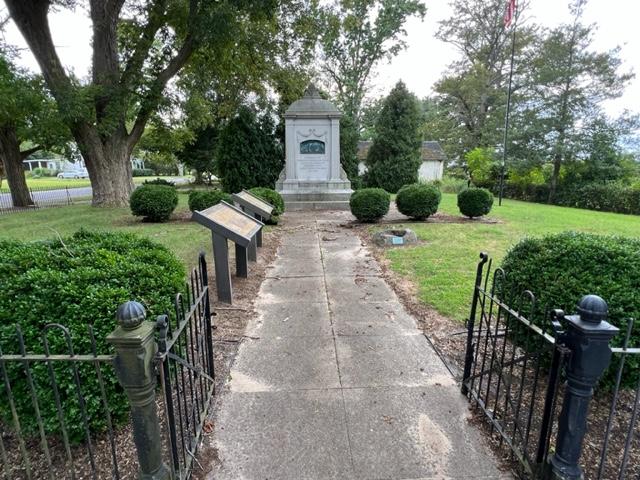
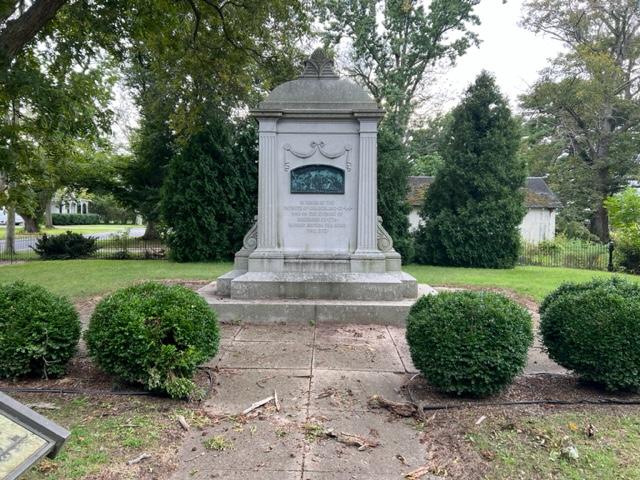
The monument in its glory.

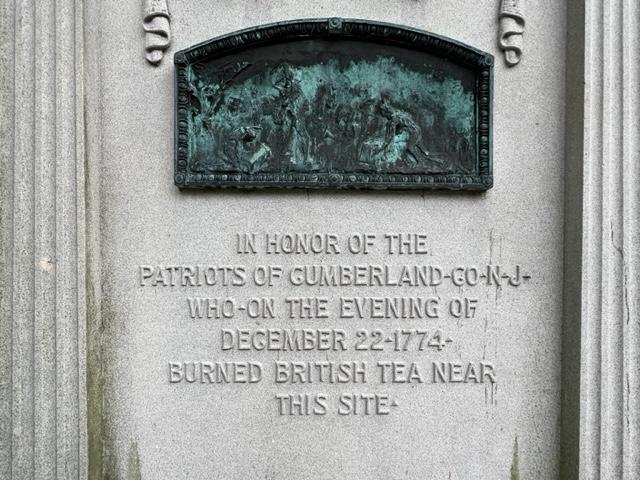
On the night of December 22nd, 1774 forty people from the community took possession of tea chests and piling them together burnt them in protest of the Tea Tax that had been imposed on the residents of New Jersey. This act of defiance was a reaction to the actions of the British Rule.

The monument honorarium.

This beautiful and graceful monument lies now at the end of a sleepy country road in Greenwich, NJ which is still surrounded by farmland. It is hard to miss the monument in its location in the middle of a small park surrounded by a small fence. The monument was dedicated in 1908 and then again in 2008 there was a second ceremony to honor the 100th anniversary of the monument (Wiki).

The moument sits down the road from the Museum of Prehistoric History and from the Gibbon House so there are many things to see in Greenwich, NJ on this quiet country road.

The History of the Greenwich Tea Burning in 1774:

(From the Cumberland County, NJ website):

Liberty was not cradled in Philadelphia alone. The spirit was also alive in the inhabitants of Cumberland County when they destroyed a cargo of tea in 1774.

On the evening of Thursday, December 22nd, 1774, a company of about forty young Whigs, disguised as Indians, entered the cellar of Bowen’s house. They took possession of the whole cargo, conveyed the tea chests from the cellar into an adjoining field and piling them together, burnt them in one general conflagration. Forty miles from Philadelphia, was (and still is) the little town of Greenwich, the principal settlement of Cumberland County in 1774.

The Greenwich Tea Burning of 1774 (NJ Historical Society)

It was founded in 1675 by John Fenwick and is older than Philadelphia, which was not founded until 1682. The hand of time has hardly touched Greenwich. It is much the same today as it was three hundred years ago, when the British flag flew high over it. Today you will still find a wide street, which they still call “Ye Greate Street.” It was laid out in 1684 and its course has never been changed.

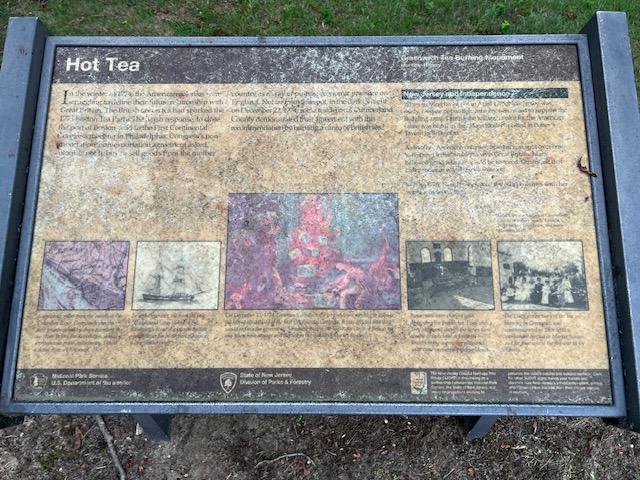
The storyboard on the event.

The Cohansey Creek is a navigable stream of some size running through the county of Cumberland and emptying into the Delaware Bay. In the autumn of 1774, the quiet inhabitants along the banks of the creek were startled by the appearance of a British brig called called the “Greyhound.” Sailing about four miles up the Cohansey, the brig stopped at the village of Greenwich, which was the first landing from its mouth.

She was laden with a cargo of tea sent out by the East India Tea Company, which was undoubtedly under the impression that the conservative feelings and principals of the people of New Jersey would induce them to submit quietly to a small tax. The result showed that the temper of the people was little understood by the East India Tea Company (Similar to the Toilet Paper Tax of the Governor Florio in the 1990’s).

The storyboard on the event.

Having found an English sympathizer, a Tory, as they were called, one Daniel Bowen, the Greyhound’s crew secretly stored the cargo of tea in the cellar of his house. However, this unusual procedure was noted by the citizens who immediately appointed a temporary committee of five to look after the matter until a county committee might be appointed.

A general committee of thirty-five was later appointed with representatives from Greenwich, Deerfield, Jericho, Shiloh, Bridgeton, Fairfield and perhaps other places.

Greenwich Tea Burning Monument News of the Boston Tea Party had already reached Greenwich and the defiant example was regarded by many of the local settlers as worthy of their own contempt for the British. Fate now presented them with a ready-made opportunity to duplicate the act.

On the evening of Thursday, December 22nd, 1774, a company of about forty young Whigs, disguised as Indians, entered the cellar of Bowen’s house. They took possession of the whole cargo, conveyed the tea chests from the cellar into an adjoining field and piling them together, burnt them in one general conflagration.

Thus, the patriots of Cumberland County living in Greenwich expressed their discontent by reacting to oppressive governmental measures. They had clearly taken a stand for independence and democracy.

Greenwich has been granted the distinction of being one of the five tea-party towns in America, the others being Charlestown, Annapolis, Princeton and Boston. In 1908, the monument seen above was erected in the old market place on Ye Greate Street to commorate the burning of a cargo of British tea on December 22nd, 1774.

Whippany Railway Museum                                    1 Railroad Plaza                                         Whippany, NJ 07981

Whippany Railway Museum 1 Railroad Plaza Whippany, NJ 07981

Whippany Railway Museum

1 Railroad Plaza

Whippany, NJ 07981

(973) 887-8177

Front Page

https://www.facebook.com/WhippanyRailwayMuseum/

Open: Sunday 12:00pm-4:00pm/Monday-Saturday Closed/Seasonal

Admission: Please check the website for seasonality

My review on TripAdvisor:

https://www.tripadvisor.com/Attraction_Review-g46925-d3395271-Reviews-Whippany_Railway_Museum-Whippany_Morris_County_New_Jersey.html

The Whippany Railway Museum

I have to say that I was very impressed by the Whippany Railway Museum. It was not one of those usual train museums with bric-a-brac and posters and a uniform here and there. The museum building itself is a highly organized history of the rail system not just in New Jersey but all over the country. It showcases how New Jersey played a big role in the growth of the rail system and how transportation has changed over the last 100 years.

The museum welcoming you to the museum

The museum displays were highly organized and well documented with all sorts of equipment of how a train functions, lighting equipment for the outdoors, and indoor dining, menus and manners for a time when rail was a form of luxury travel. It shows the progression from just transportation for the movement of product to a sleek way to travel from destination to destination.

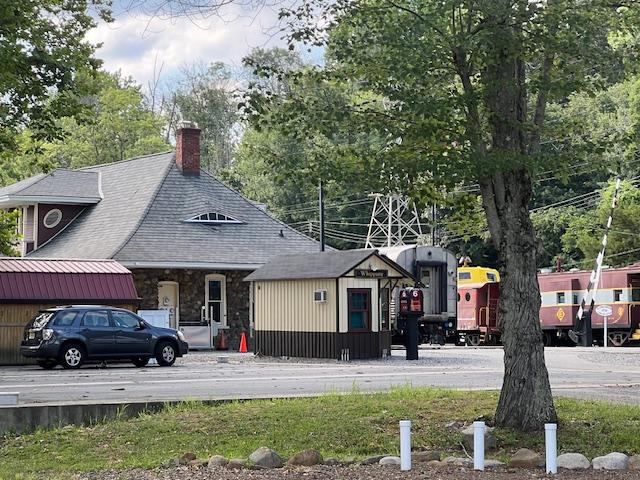
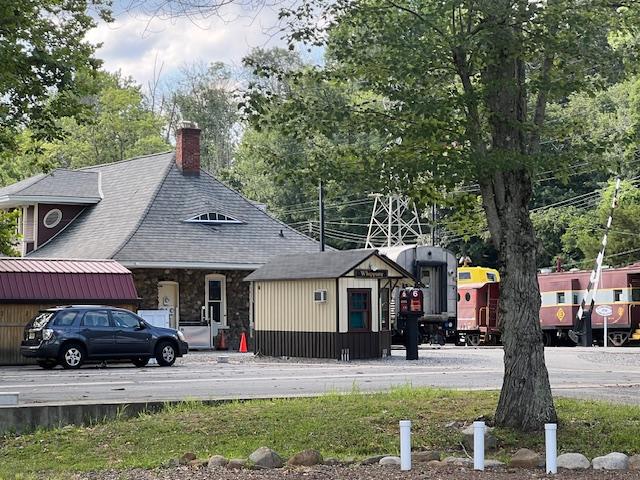
The Whippany Railway Museum at 1 Railroad Plaza

There are all sorts of everyday items that show how maintenance of the trains have changed over the years and the modernization of the railcars. They have a display on lighting that has changed over the years and the way that communication was done between the trains and the staff. Even the uniforms have not really changed too much over the years.

Race is touched on with the advancement of Blacks in the Pullman coaches as porters and later supervisors. There was even a discussion on the strikes for better pay and working conditions. I thought it was interesting about the discussion of being called a “George”, which was a term for George Pullman, the owner and developer of the luxury cars. It might have been meant as a compliment but came off as a slur. It showed a progression in the field that in some ways has not changed.

The historic railyard with all the cars you can visit

The museum also showed that rail life could be lonely and not the best in working conditions for anyone which is why the unions became so powerful in later years. It also showed the ingenuity of how the rails conquered the West and opened the country up for development. With each stop, towns developed, and populations have changed. You see how this has been affected even today as rail is not as popular as it once was, and these small towns are dying off.

The entrance to the museum

Where the museum really shines and where I saw the most pride is in the rail cars that have come to the yard over the years and have been carefully restored. The Southern Railway No. 385 built in 1907 for faster freight service, the Texaco Fireless Cooker No. 7240 built in 1937 for industrial switching duty and one of the newest steam locomotives still surviving, the U.S. Army No. 4039 built in 1942 for WWII service are just some of the cars on display (Whippany Railway Museum pamphlet).

The inside of the luxury car

The railcar that most impressed me was the Lackawanna Railroad Subscription Club Car No. 2454 that was once known as the “Millionaires Express” (Whippany Railway Museum). The mahogany paneled car carried businessmen from New York City through towns in the middle of New Jersey. What I thought was interesting was the people who rode it (Christie Todd Whitman’s father was a member) and the fact that you had to ‘buy’ the seat, which meant that no one could ever sit in ‘your chair’ if you were not there. This car ran for 72 years finally retiring out in 1984 (probably due to the recession and changing times).

The inside of the museum

I ended up spending about three hours at the museum due to a very detailed tour by one of the volunteers named Mike. He gave the most interesting hour-long tour of each car and how they were renovating it and carefully restoring each one to its historical integrity. He was so detailed and when the other volunteers chimed in with their stories as well, made it a fascinating tour of the whole yard.

When you are visiting the museum, allow time to take this every intensive and detailed tour of the museum grounds and just don’t concentrate on what’s inside the building. The museum spreads out all over the yards and take the time to explore each car and learn its history. It is an educating and fascinating way to spend the afternoon.

The museum modernizes:

The Whippany Museum under new directions

The History of the Whippany Museum:

(From the museum website)

The story of the Whippany Railway Museum began many years ago when the Morris County Central Railroad (MCC) first opened to the public on May 9th, 1965, at Whippany, NJ. On that exciting day a half-century ago, former Southern Railway steam locomotive No. 385 departed Whippany for Morristown, NJ with the MCC’s first trainload of over 400 passengers. At the end of the day over 1,500 people had traveled on a nostalgic trip into railroading’s colorful past. For the next 15 years until it ceased operations in 1980, the MCC would carry on this excellent tradition, leaving memories for untold hundreds of thousands of visitors that would last a lifetime.

The Morris County Central was founded by a New Jersey aerospace technician, the late Earle H. Gil, Sr. of Parsippany. His idea of running steam excursion trains was formed in the late 1950’s when conventional steam railroad operations were fading fast. Gil hoped that a financially successful heritage railroad would justify the great expense involved in keeping one of these magnificent machines alive.

Having acquired No. 385 in 1963 from the 16-mile-long Virginia Blue Ridge Railway (VBR) in rural Piney River, VA, the MCC ran an outstanding operation through the woodlands of suburban New Jersey. In 1966, Gil acquired another VBR steam locomotive, No. 4039 a former US Army 0-6-0 switcher that was soon added to the MCC’s roster of vintage steam-era equipment.

Threatened by development of the property alongside the Whippany Station, the Morris County Central RR saved the Whippany Freight House from demolition in June 1967 by having it moved across four sets of tracks to a site opposite the station building. Originally used by our predecessor organization, Morris County Central Railroad Museum, this classic railroad freight house is now the headquarters of the Whippany Railway Museum.

The Morris County Central was a fine example of what a conscientious group was able to accomplish, with moderate resources and good taste in the preservation of operating steam. It proved that trains, steam locomotives and haunting whistles continue to linger in the minds of the American public.

Fifty years on, the Whippany Railway Museum continues the tradition and proves that it is indeed possible to have a quality operation through much hard work by its dedicated group of volunteers and the tremendous support of the visiting public.

(From the Museum Pamphlet):

Here you can visit the restored, 1904 freight house with its outstanding collection of rail and transportation artifacts and memorabilia. There are dozens of historic railcars and exhibits on view. We are proud to feature the largest collection of American-built standard gauge steam locomotives displayed in New Jersey.

Marvel at one of the oldest steam locomotives in America, the Southern Railway No. 385 built in 1907 for fast freight service, Texaco Fireless Cooker No. 7240, built in 1937 for industrial switching duty and one of the newest stream locomotives still surviving, the U.S. Army No. 4039, built in 1942 for World War II service.

Obadiah La Tourette Grist and Sawmill/Washington Township Land Trust                 12 East Mill Road                                               Long Valley, NJ 07853

Obadiah La Tourette Grist and Sawmill/Washington Township Land Trust 12 East Mill Road Long Valley, NJ 07853

Obadiah La Tourette Grist and Sawmill/Washington Township Land Trust

12 East Mill Road

Long Valley, NJ 07853

(908) 876-5986

https://www.njskylands.com/hsmillob

Open: See their website/Seasonal

My review on TripAdvisor:

https://www.tripadvisor.com/ShowUserReviews-g46583-d24070163-r839124039-Obadiah_La_Tourette_Grist_Saw_Mill-Long_Valley_Morris_County_New_Jersey.html?m=19905

Video on the Obadiah La Tourette Grist & Sawmill

I visited the Obadiah La Tourette Grist & Sawmill during a visit to Long Valley, NJ for Morris County’s “Pathway to History” tour and this was one of the most unusual and interesting sites on the tour. The mill was once one of the most active businesses in the area. The Mill processed and packaged flour for the areas farmers making it one of the most profitable businesses in the region. By the end of WWII, the Mill was itself was becoming antiquated and larger producers could make the product for far less money and the business closed.

The Obadiah La Tourette Mill

The entrance of the Obadiah La Tourette Grist and Sawmill

The Mill itself it is getting a renovation, and, on the tour, I took, you could visit all three floors of the Mill and see how the product was made. On the first floor is where some of the processing took place.

The first floor now greets you where it once served as the Receiving area

The wheat was brought in, processed and milled. One of the machines is still in the building. This is where the raw product was brought in for processing into flour.

Processing the flour

The bottom level is where are all machinery is where the power source of the stream moved all the equipment along.

The power source of the stream below moved the wheels to process the flour

This was really interesting because the stream still lies underneath the mill and you can see the flow of water throughout the bottom of the building as it had over 100 years ago. This is how Mother Nature did her part before electricity.

History of the Obadiah La Tourette Mill Restoration:

(From the Washington Trust Pamphlet)

The Mill was built in circa 1750 and owned by Philip Weise. The Mill was essential to the economy and development of German Valley and the surrounding agricultural community. For much of its history, it was the most successful business in the village, grinding grain and producing flour and animal feed. A sawmill was located behind the grist mill during the 1800’s.

Originally powered by two water wheels, the mill was converted to turbine power by owner Obadiah La Tourette in the 1870’s. Milling operations continued until the early 1940’s. Most of the machinery remains, reflecting the history of milling over 200 years.

The stream is the power source of the Mill

In 1991, the Washington Township Land Trust purchased the condemned building and embarked upon its restoration with the aid of volunteers, grants and generous donations. The current scope of work is being funded by a grant from the Morris County Historic Preservation Trust Fund. It includes the restoration of structural framing, soffit trim, doors and siding of the street facade; restoration of some first-floor beams and joists and restoration of thirteen windows.

The Mill in 1993

The History of the Washington Township Land Trust:

(From the Washington Trust Pamphlet)

The Washington Township Land Trust of Morris County, NJ was organized in 1990 and incorporated in 1991 as a 501 (c) (3) non-profit corporation. It is exclusively for charitable, educational and scientific purposes, to protect and preserve the lands, watercourses, ponds, streams and structures which contribute to the natural beauty and rural character of Washington Township.

To achieve this, the Land Trust acquires interests in land through purchase or donation, manages land uses for the benefit of the public and makes itself available to the Township of Washington to assist in the stewardship of public lands and easements.

In 1991, the Land Trust acquired the Obadiah La Tourette Mill and the surrounding ten acres of land, now preserved as a wetlands park. A portion of the park has been set aside as a memorial garden for Helen Andrews, a longtime resident of Long Valley and wife of Stan Andrews. The Land Trust also administers the issuance of easement markers for Washington Township and may in the future expand its operation to the monitoring of easements.

The Land Trust provides education to the public on various preservation issues such as conservation easements and other topics of value. Lastly, the Land Trust works with other land trusts, open space groups and conservation organizations to provide an organized approach to meet our common goals.

Washington Township Land Trust

P.O. Box 4

Long Valley, NJ 07853-0004

Phone: (908) 876-5986

wtlandtrust@gmail.com