Tag: history

Kearny Museum at the Kearny Library                                   318 Kearny Avenue                                                   Kearny, NJ 07032

Kearny Museum at the Kearny Library 318 Kearny Avenue Kearny, NJ 07032

Kearny Museum at the Kearny Library

318 Kearny Avenue

Kearny, NJ 07032

(201) 998-2666

Open: Sunday-Tuesday Closed/Wednesday 5:00pm-6:30pm/Thursday-Friday Closed/Saturday 10:00am-12:30pm

My review on TripAdvisor:

https://www.tripadvisor.com/ShowUserReviews-g46536-d33058185-r1001224452-Kearny_Museum_At_The_Kearny_Library-Kearny_New_Jersey.html?m=19905

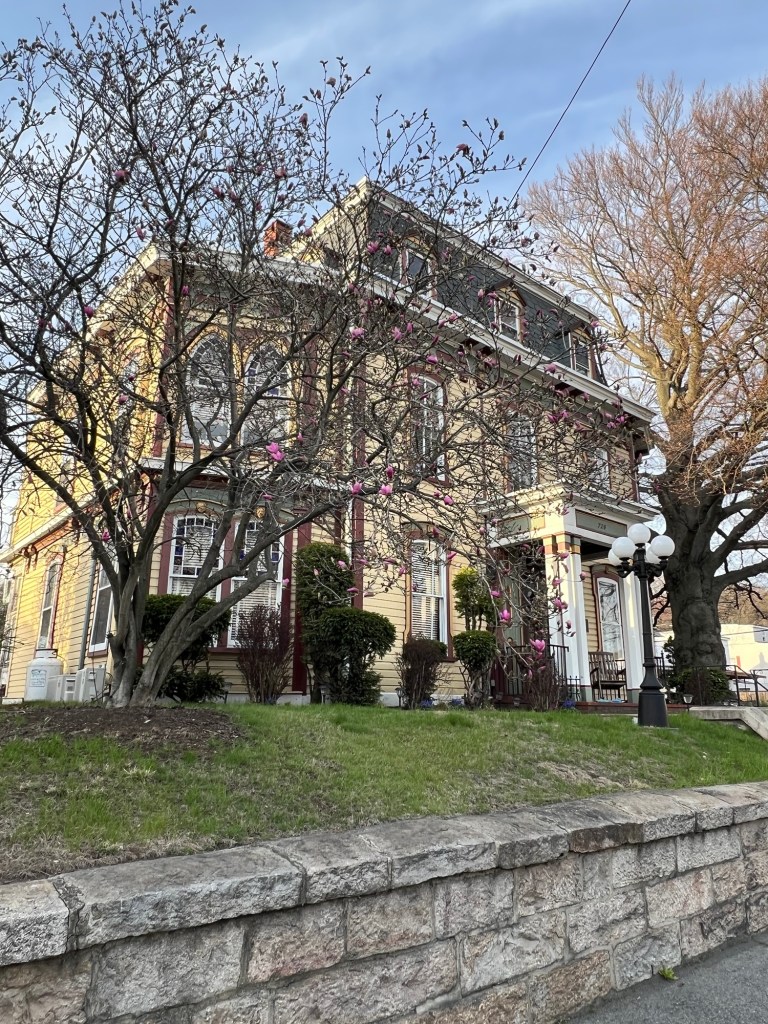
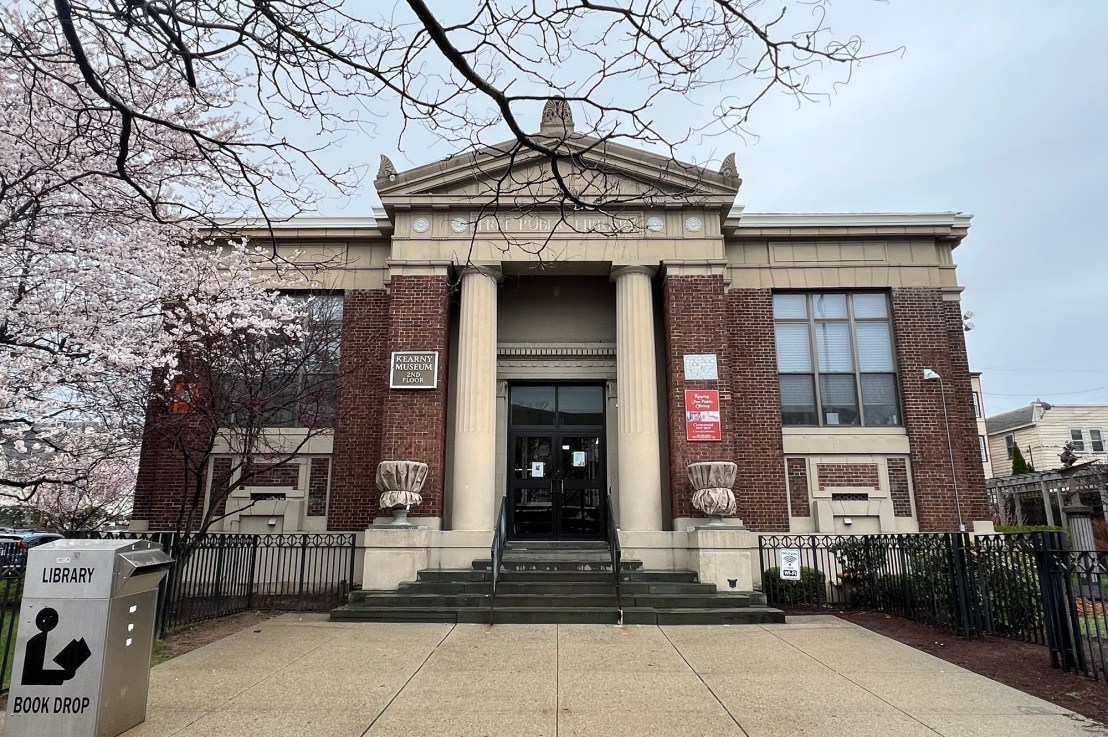
The front of the Kearny Library at 318 Kearny Avenue

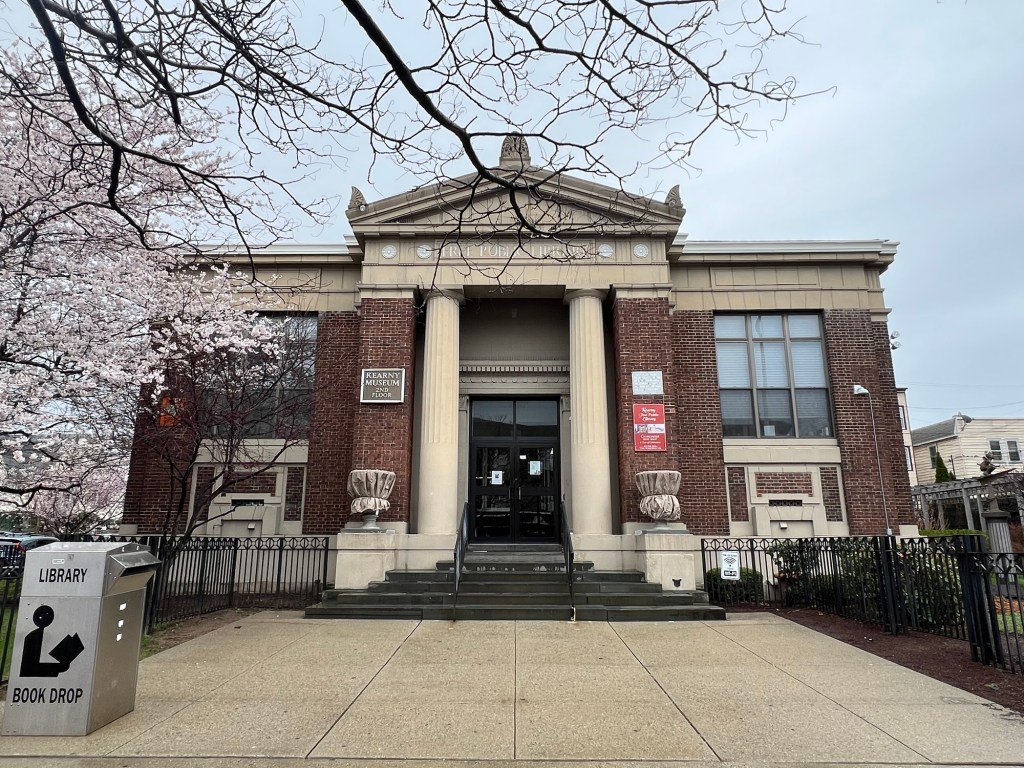
The library during the early spring

The historic marker of the library

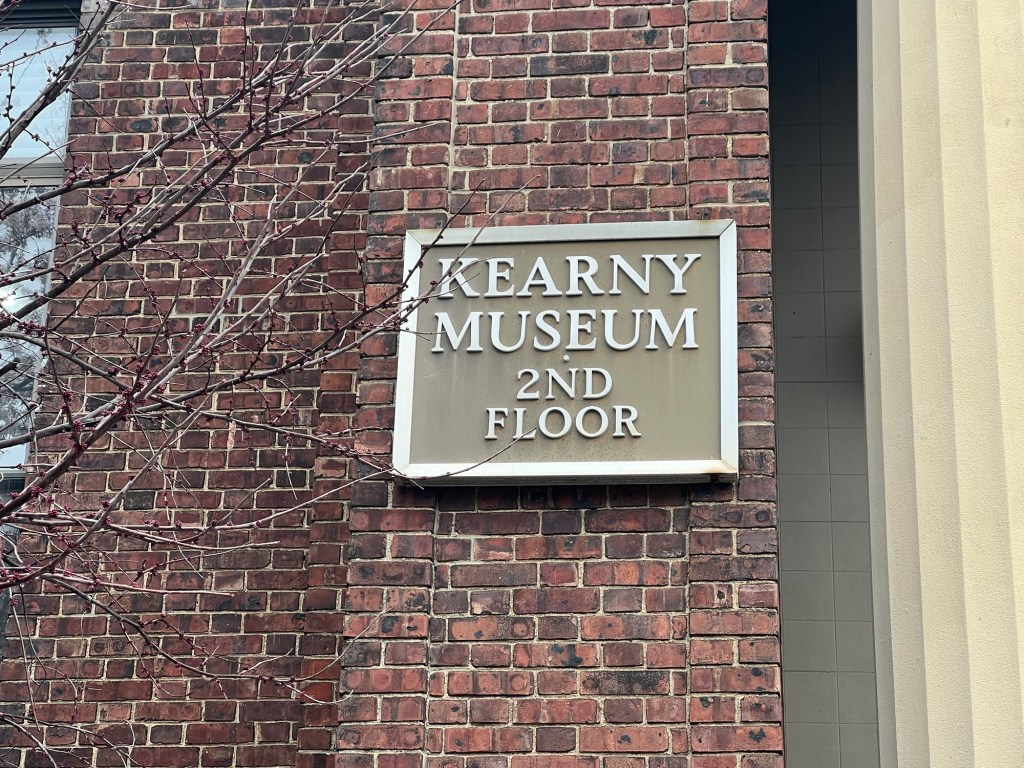
The outside sign of the museum

The History of the Museum and Mission:

(from the museum website)

The Kearny Museum, on the upper floor of the Kearny Public Library, is a history museum that houses local displays about the town. The collection includes photographs, articles of clothing, and war memorabilia from the town’s history.

Special attention is given to Civil War hero Major General Philip Kearny Jr. for whom the town is named.  This includes a display of furniture from his Belle Grove home, donated by his granddaughter and second wife. The museum also includes a full collection of Kearny High School yearbooks.

The museum has a collection of antique clothes and accessories, representing town life between 1850 and 1960, which were donated or are on loan by townspeople.

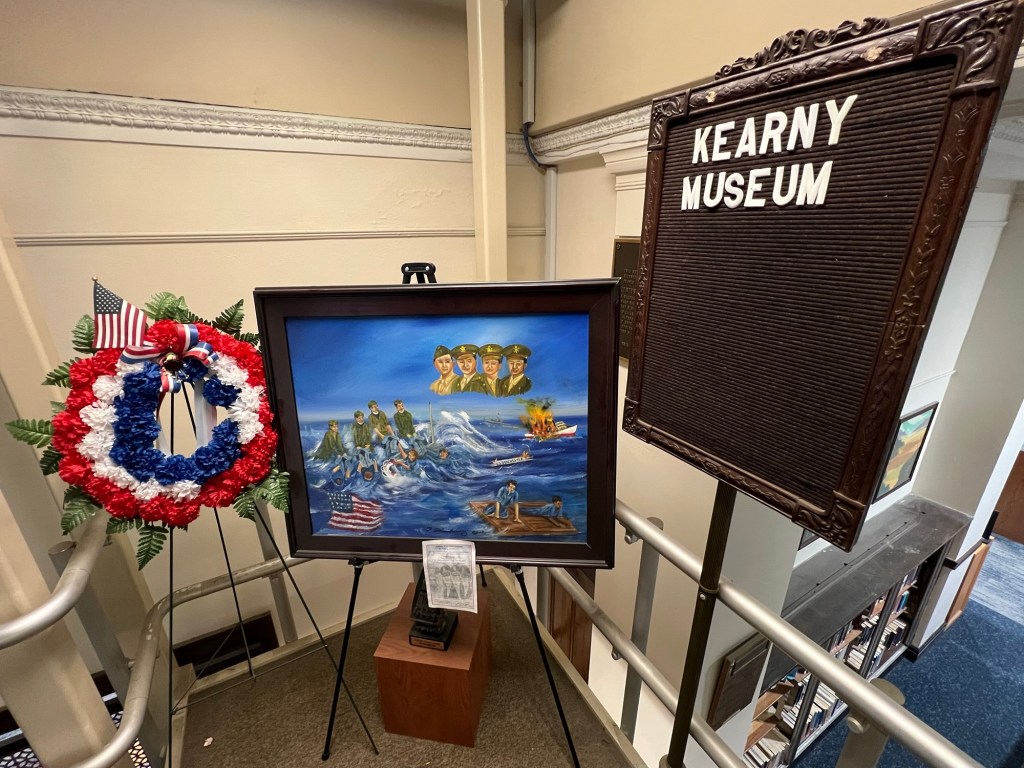
The entrance of the Kearny Museum on the second floor of the Kearny Library

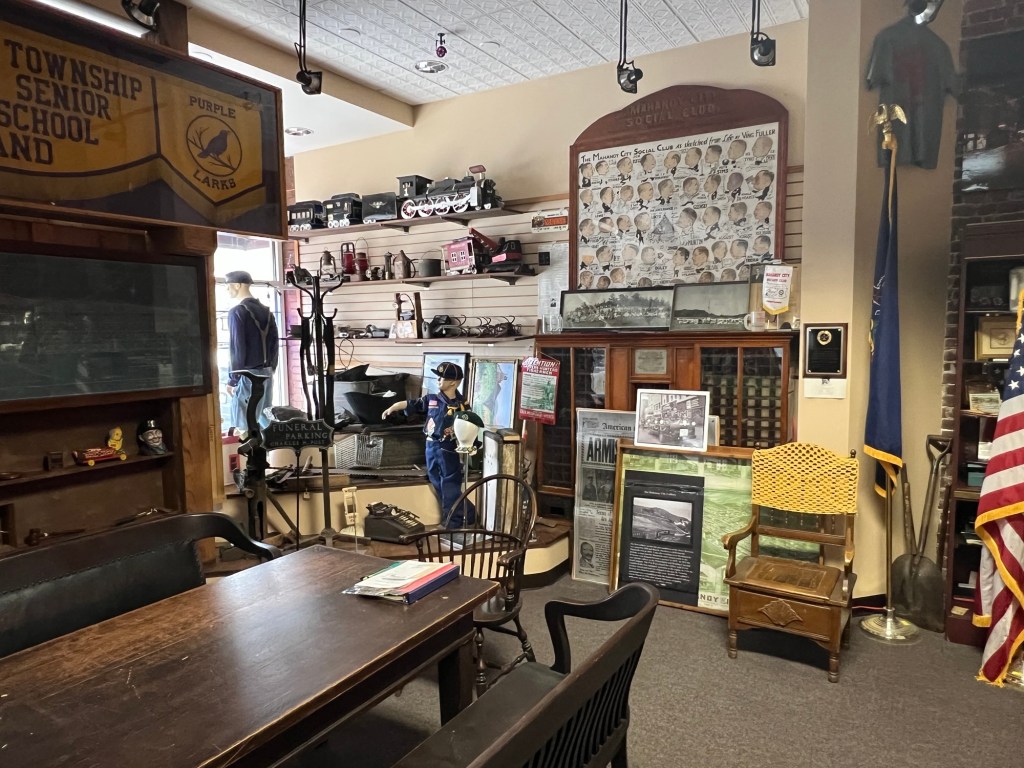
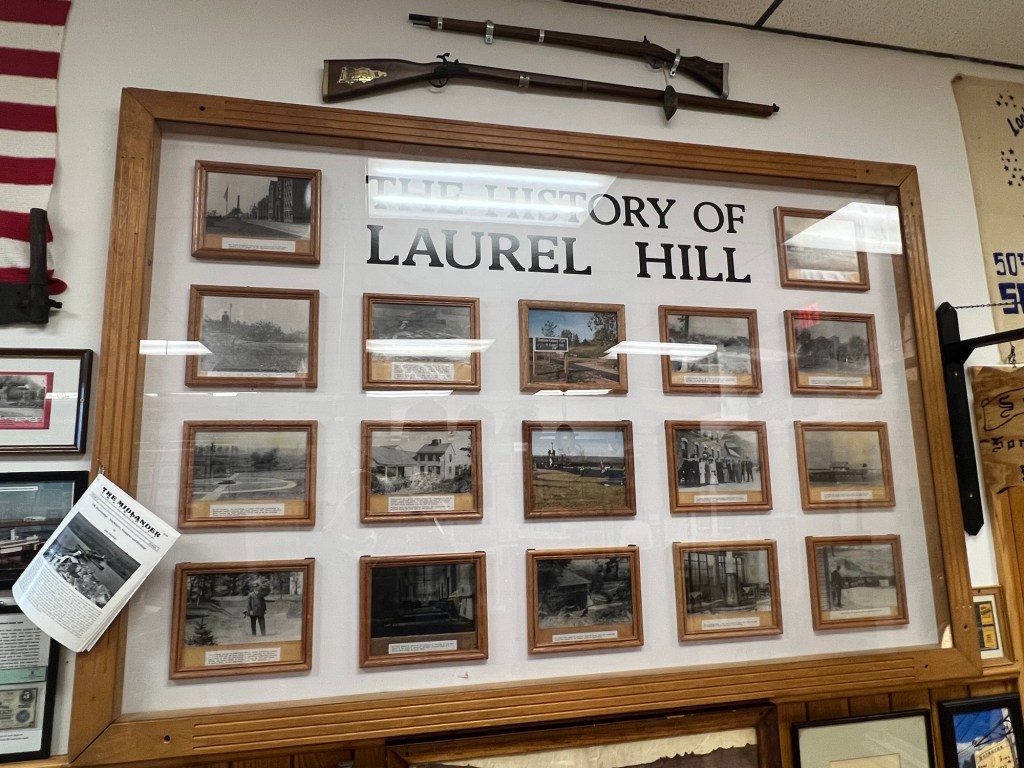
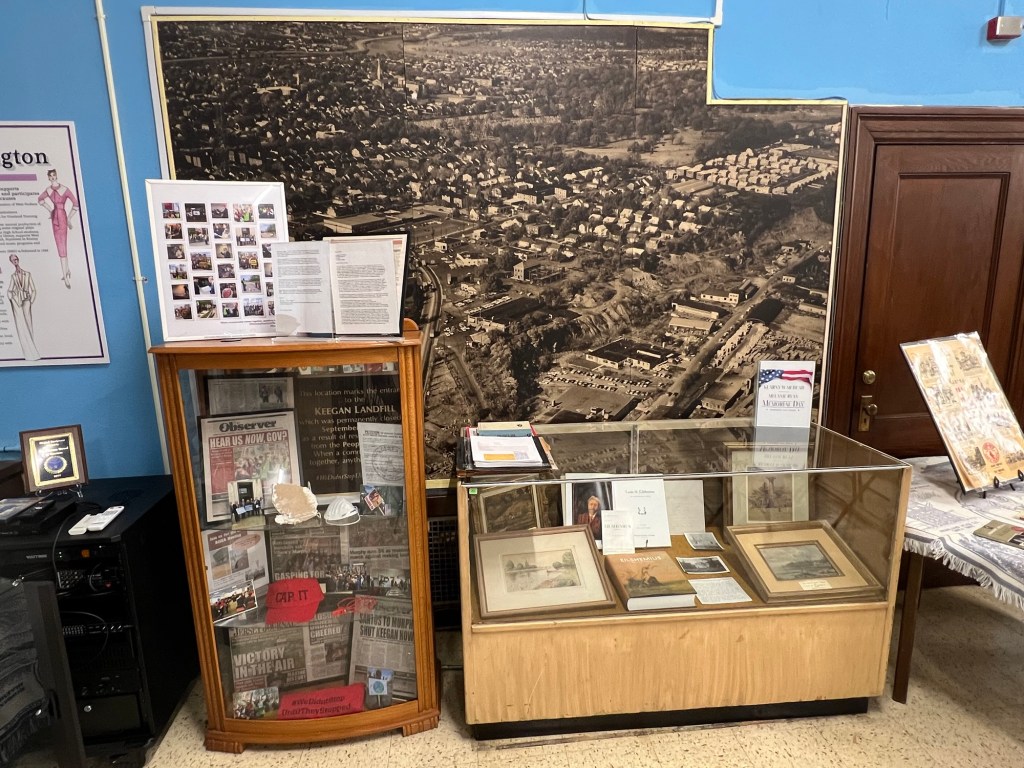
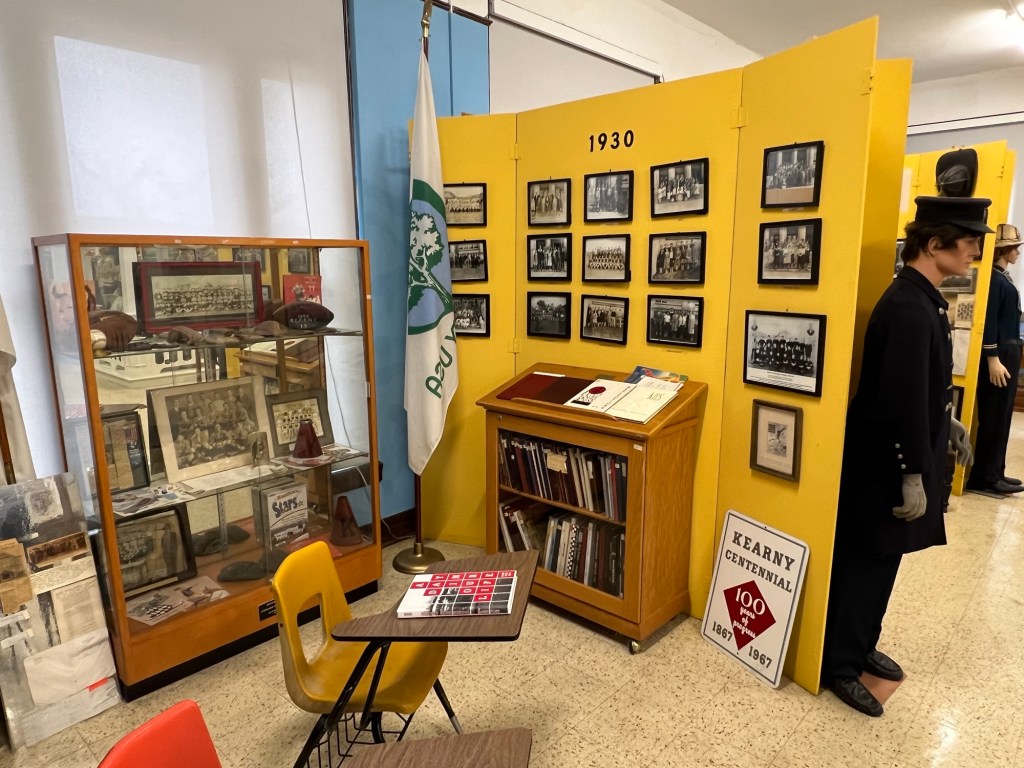
The main gallery of the museum with historical pictures of the town

The history of the community of businesses and organizations

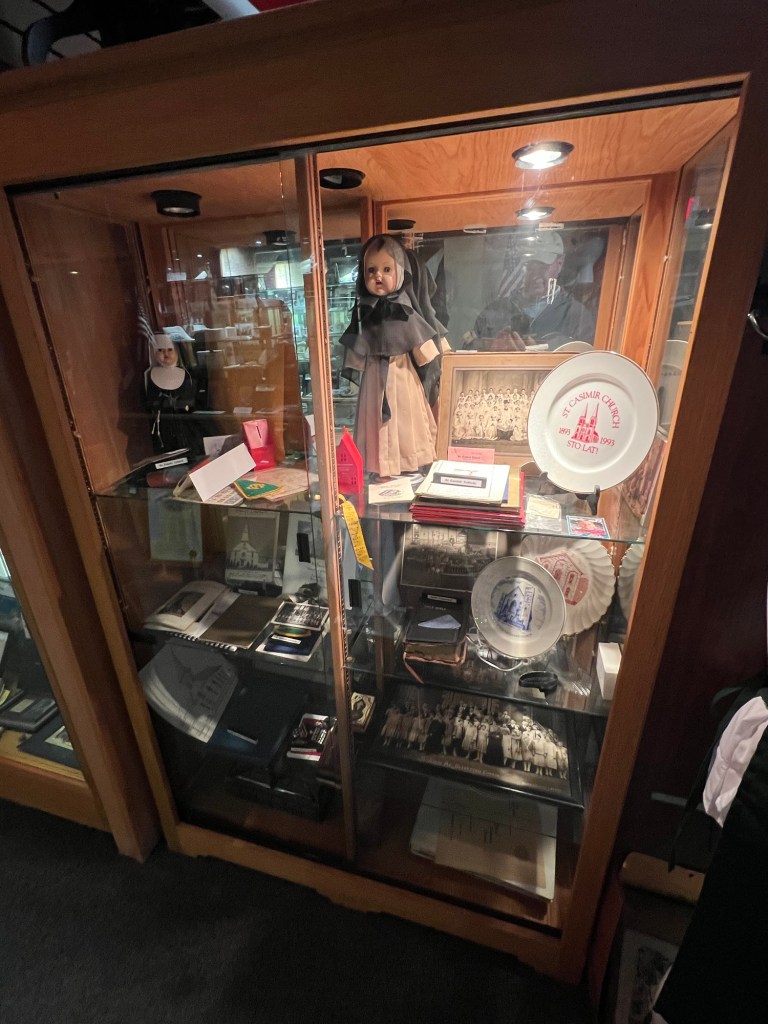
The history of St. Cecilia School

The library docent explained that this statue of a soldier had been boxed up and hidden for years

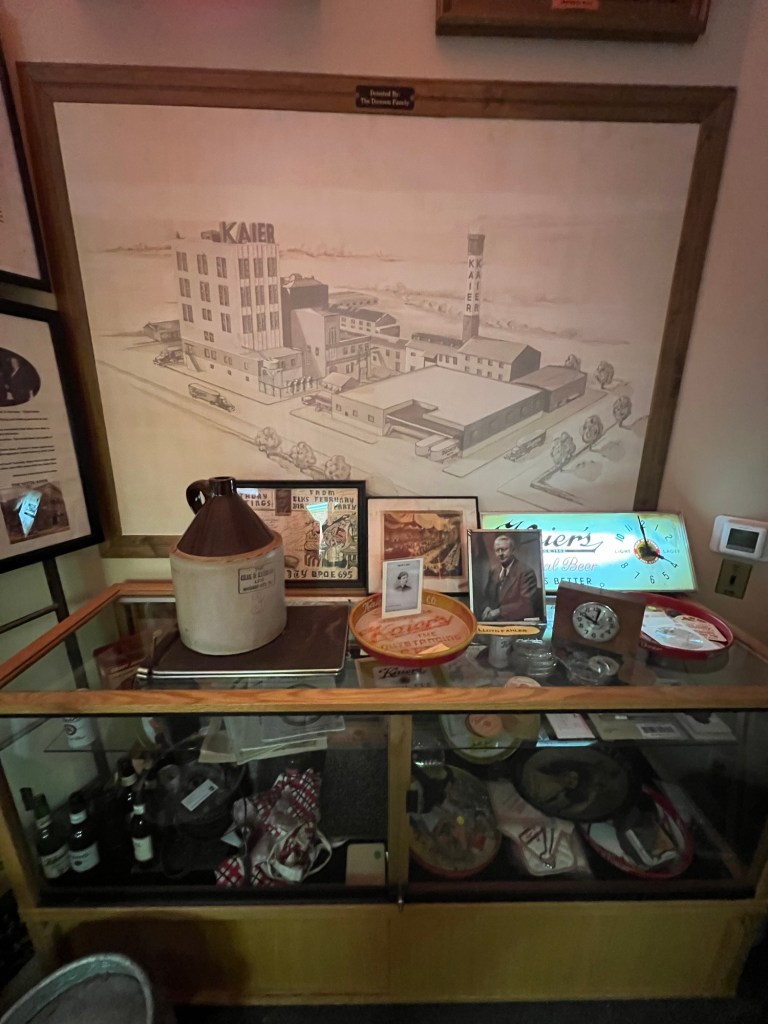
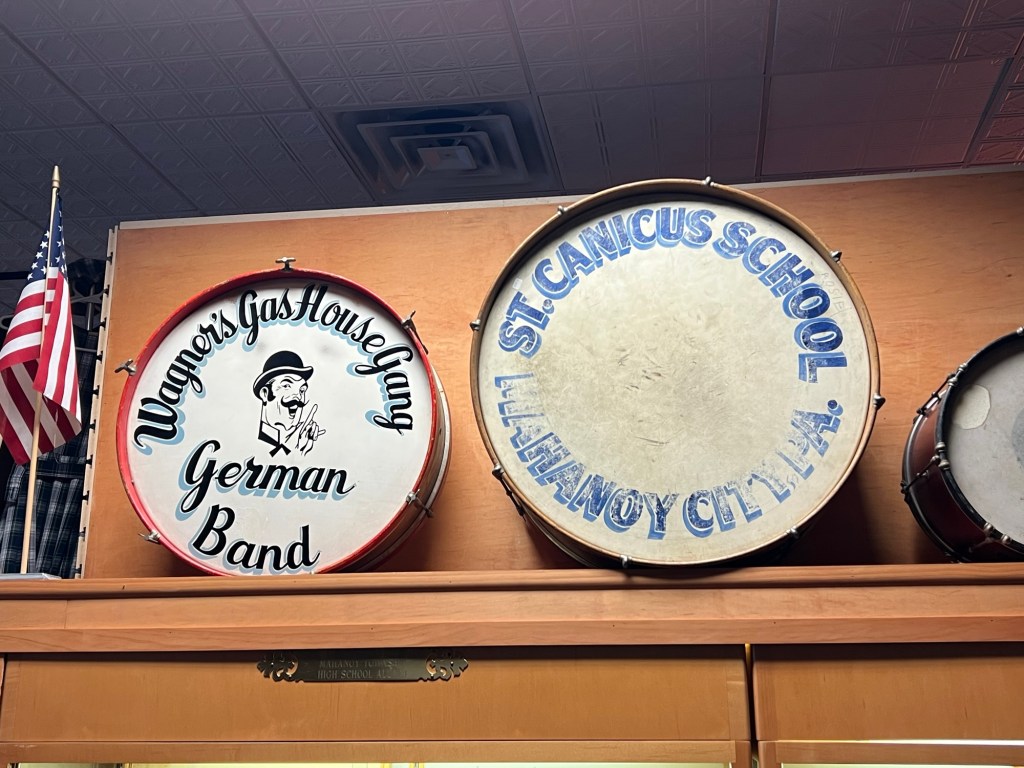
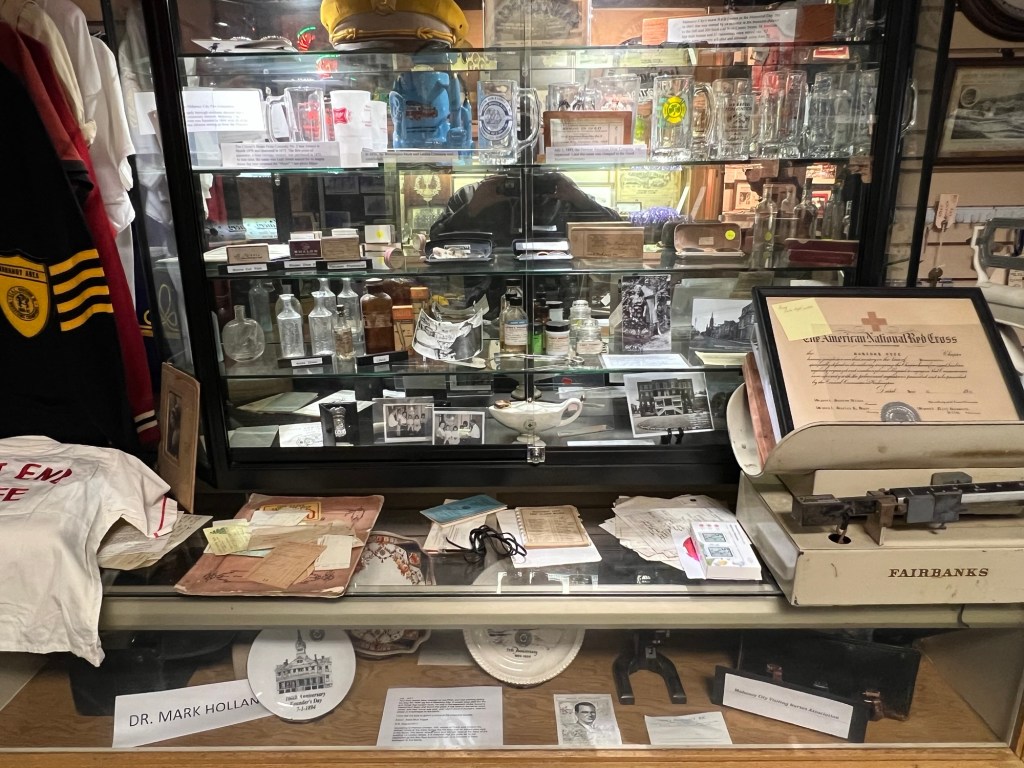
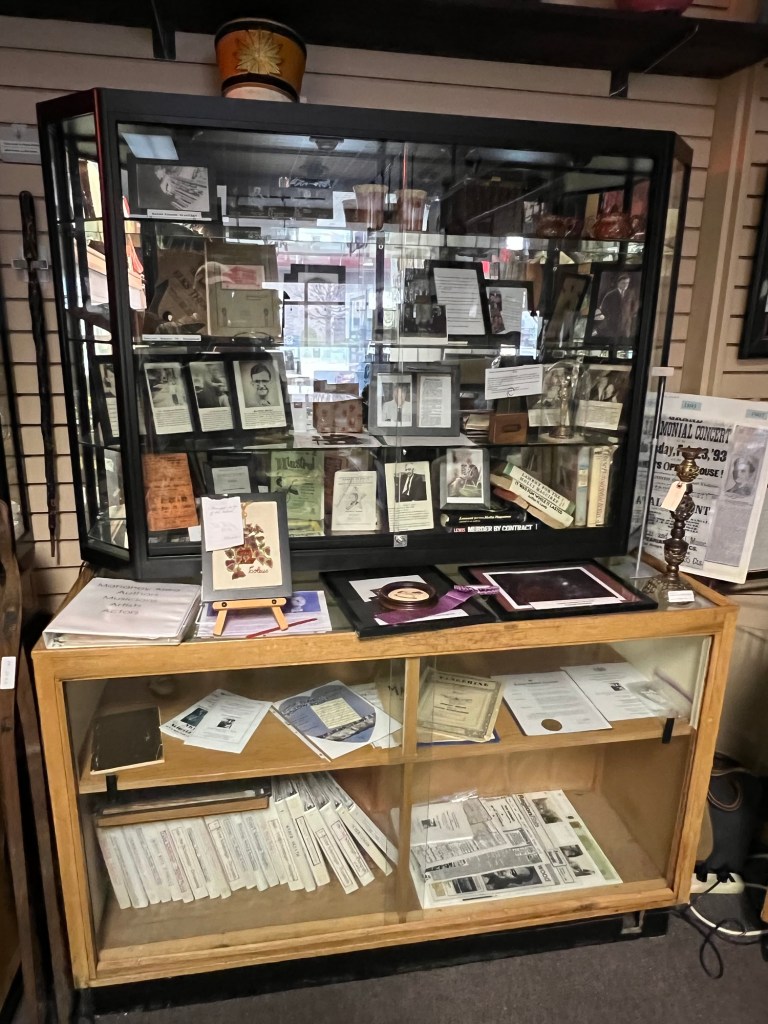
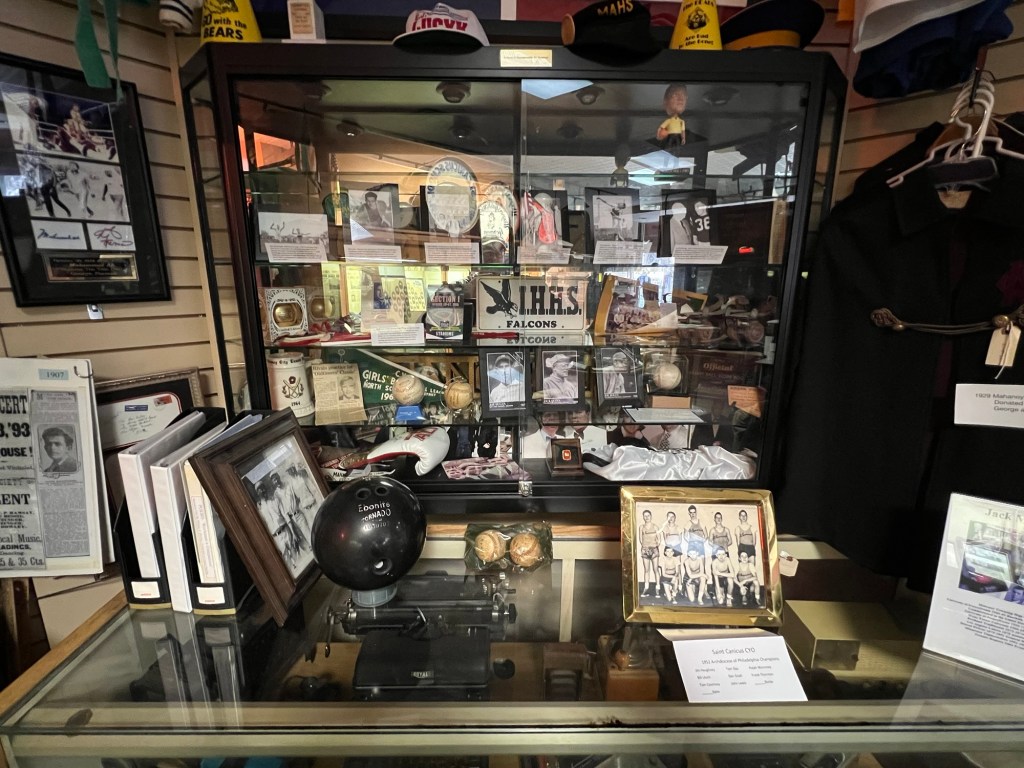
Town artifacts from the schools and town organizations

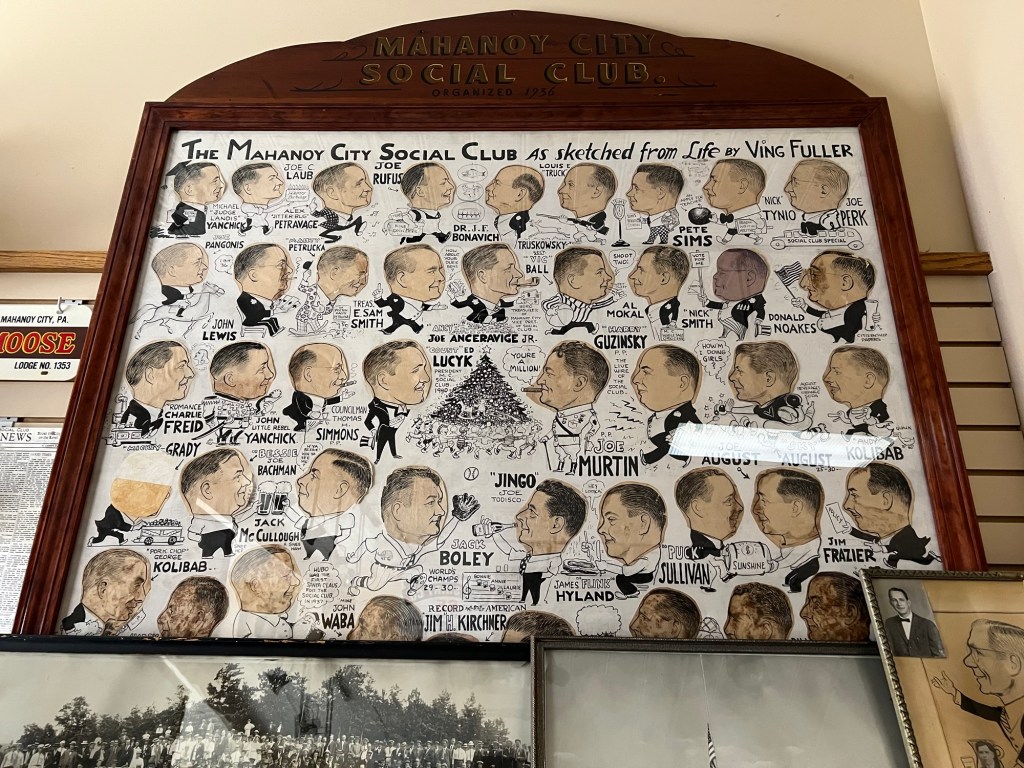
Memorabilia from town organizations

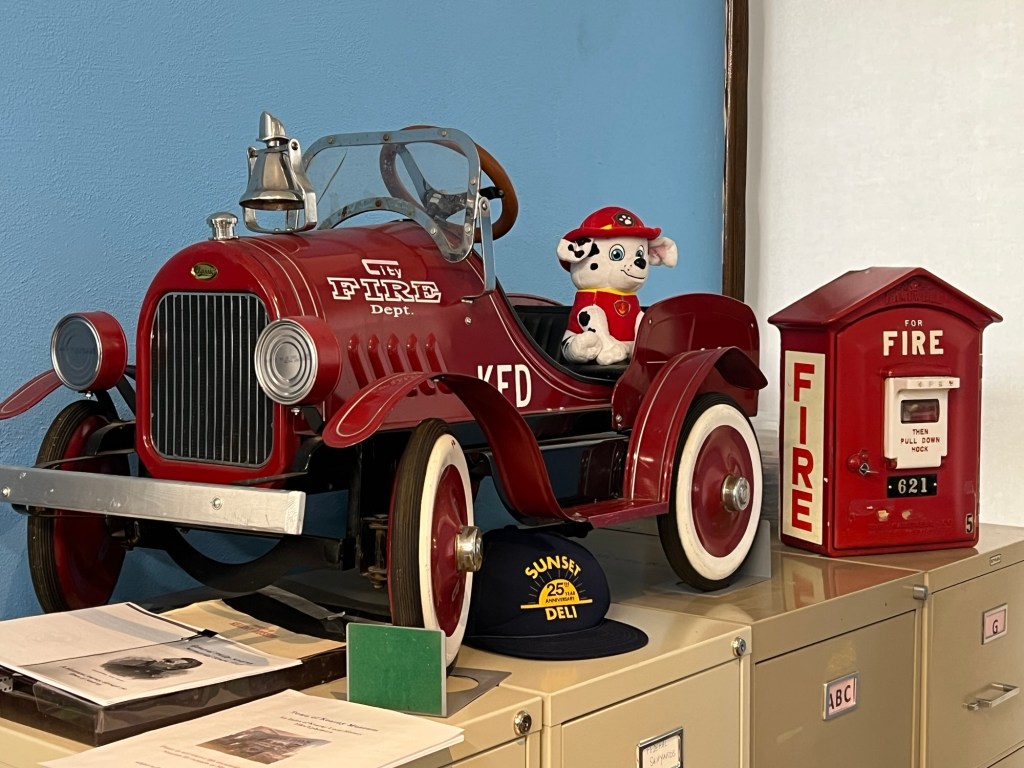
Display of firematic items

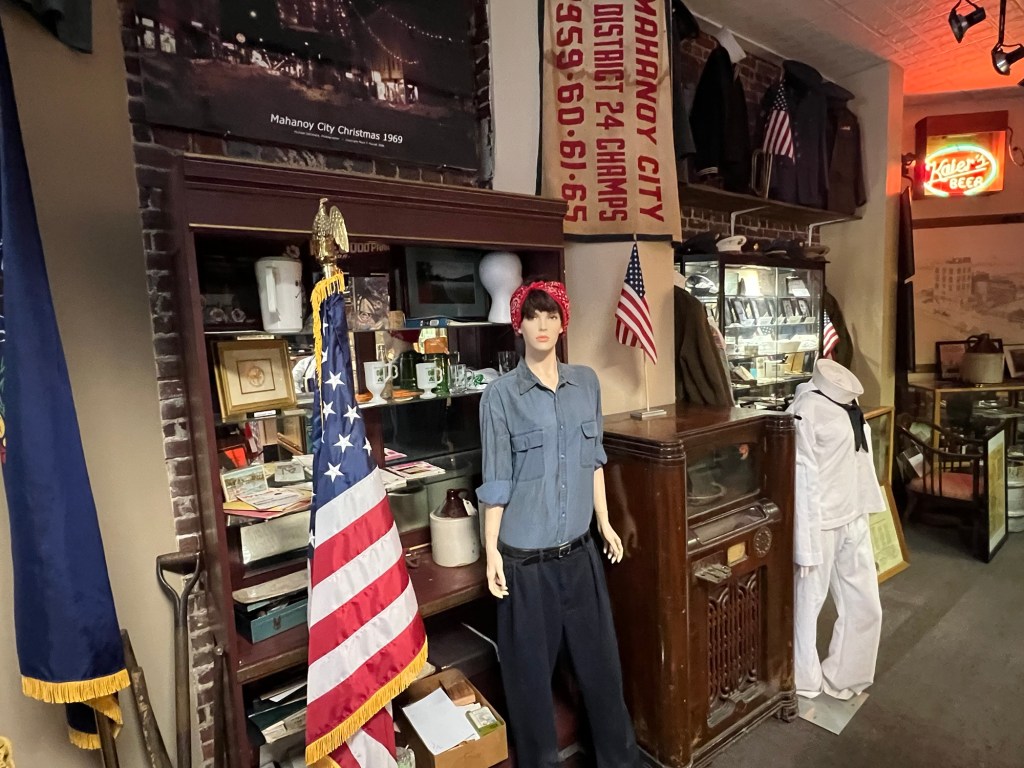
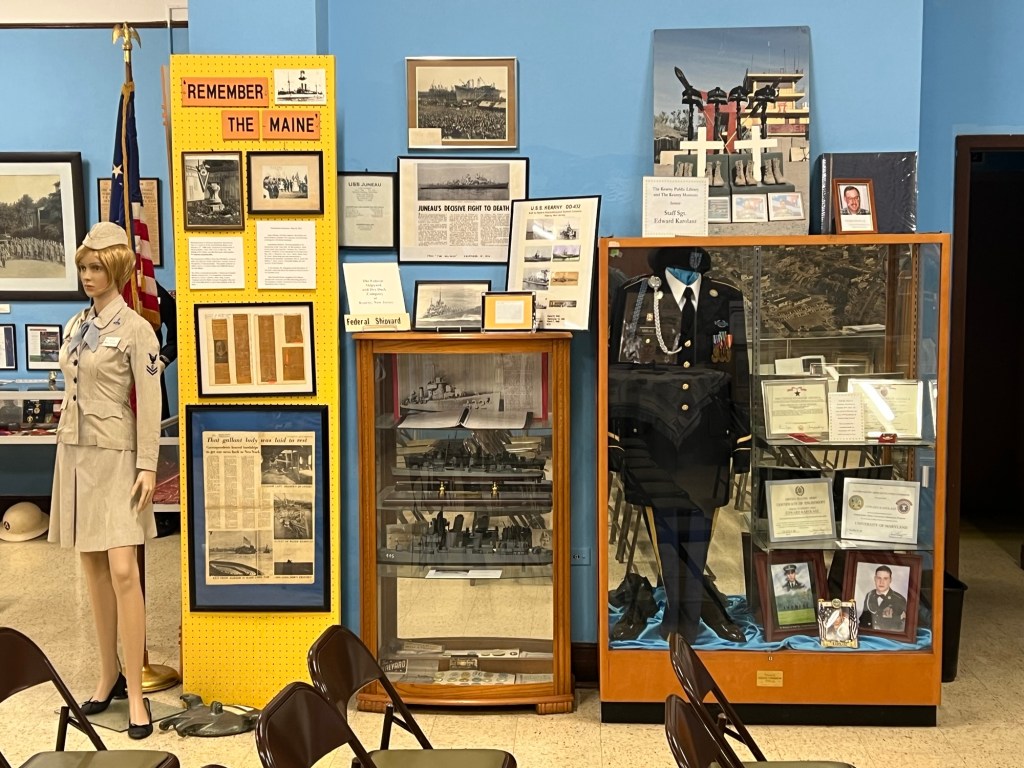
The displays included a large exhibit of military items, uniforms, artifacts donated from local veterans and newspaper clippings

The display covered all branches of the military

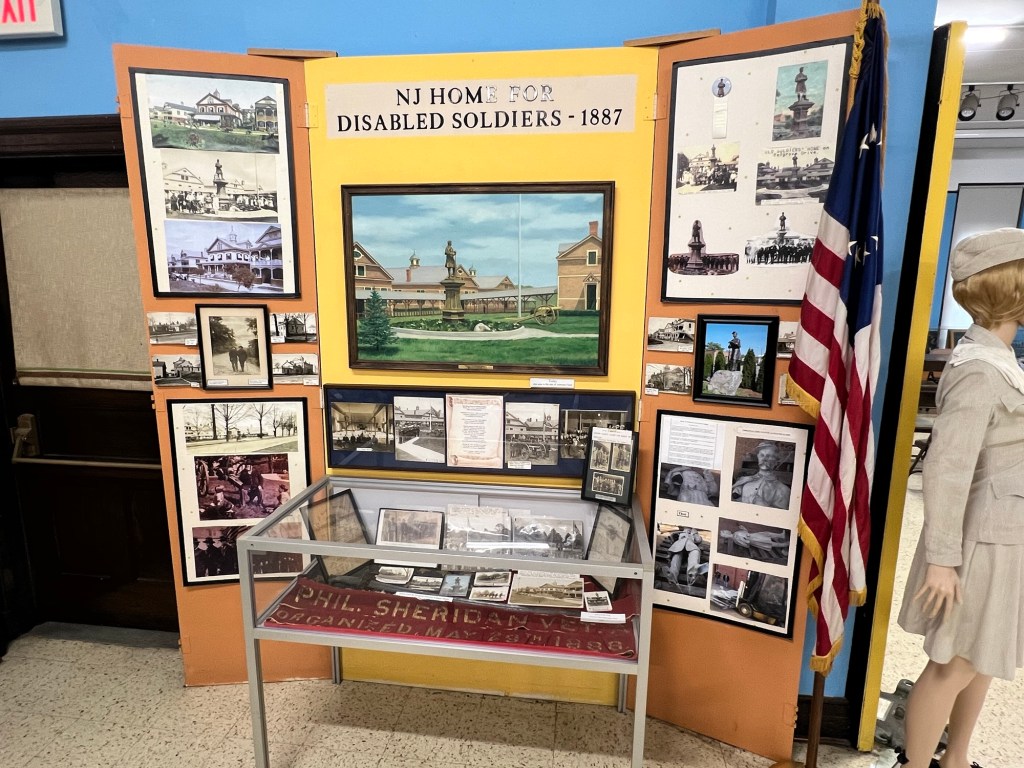
This exhibit was interesting of the old New Jersey home for Disabled Soldiers that no longer exists. This home for VFW was once located in the town.

The Library Directors video on the Disabled Home for Soldiers:

(from the museum website)

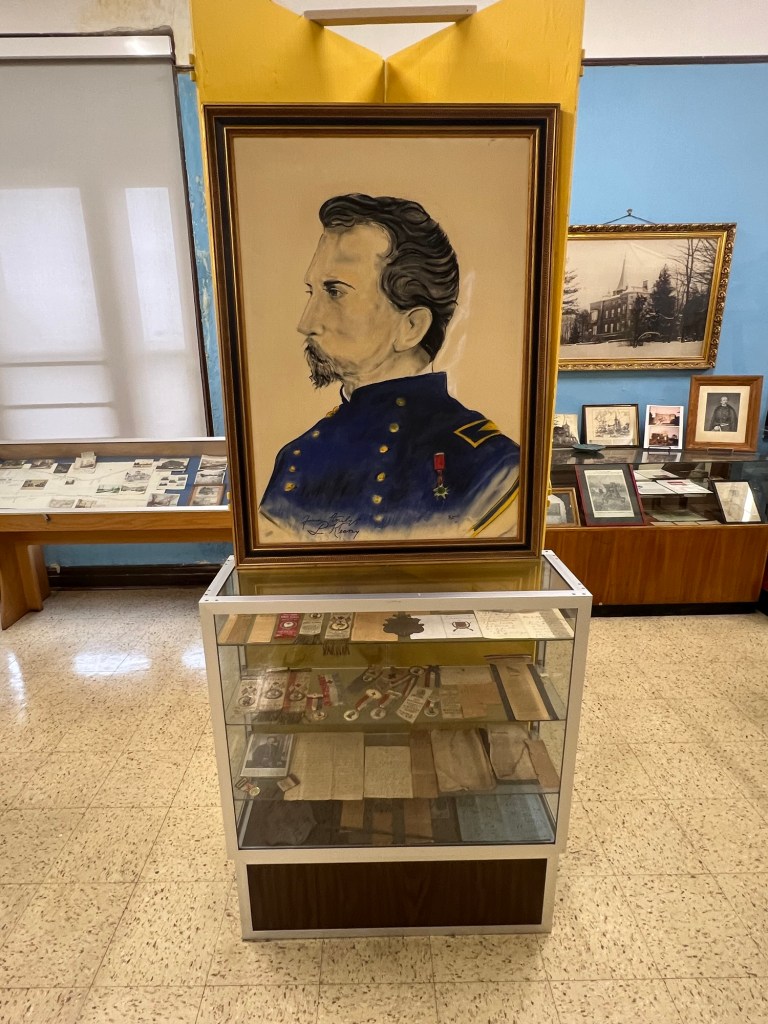
The next display on Major General Philip Kearny whom the town is named after

The General’s information

Major General Philip Kearny

https://en.wikipedia.org/wiki/Philip_Kearny

https://www.battlefields.org/learn/biographies/philip-kearny

The display on Major General Kearny was quite extensive and had many artifacts of his accomplishments including pictures and press clippings.

Library Director’s Video on the General:

(from the museum website)

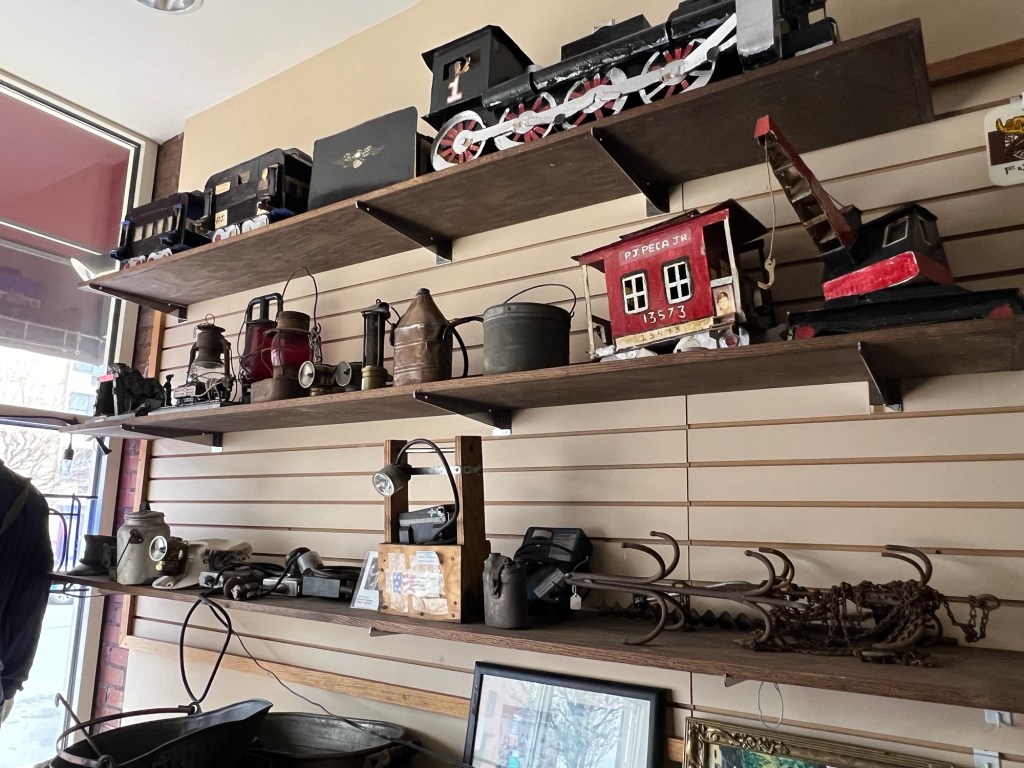
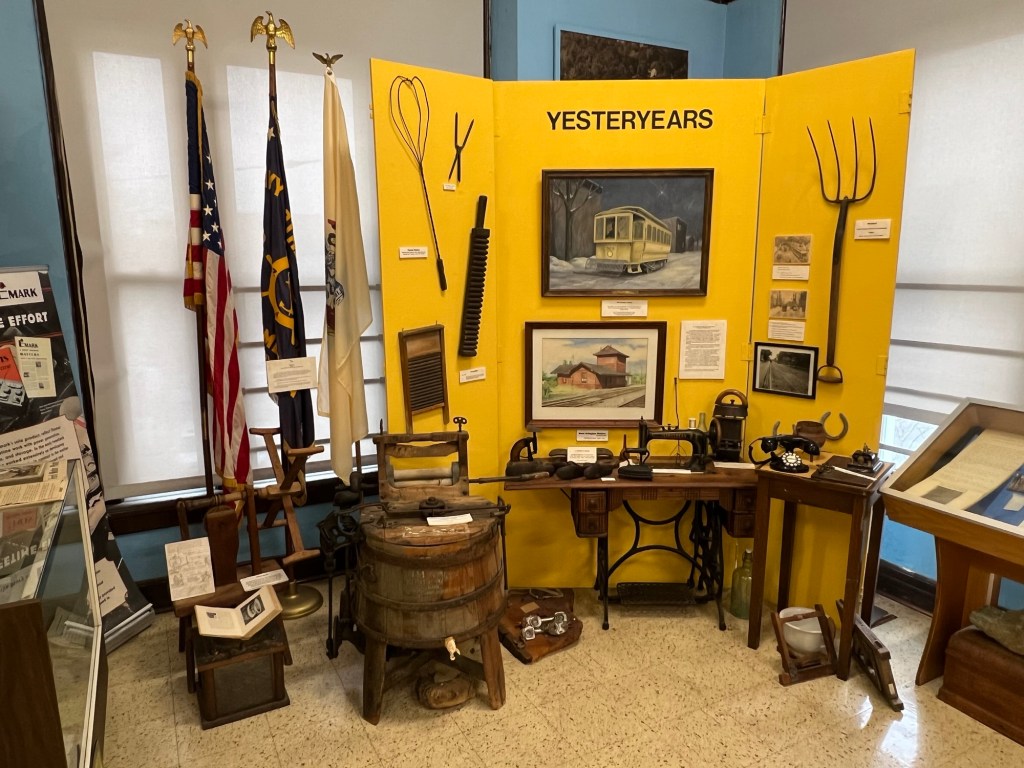
The next exhibit describes Kearny’s past as a rural farming community. This included farm equipment and household items found in a home in the turn of the last century.

Kearny’s past

A closer look at our rural past and how things have changed in the past 100 years

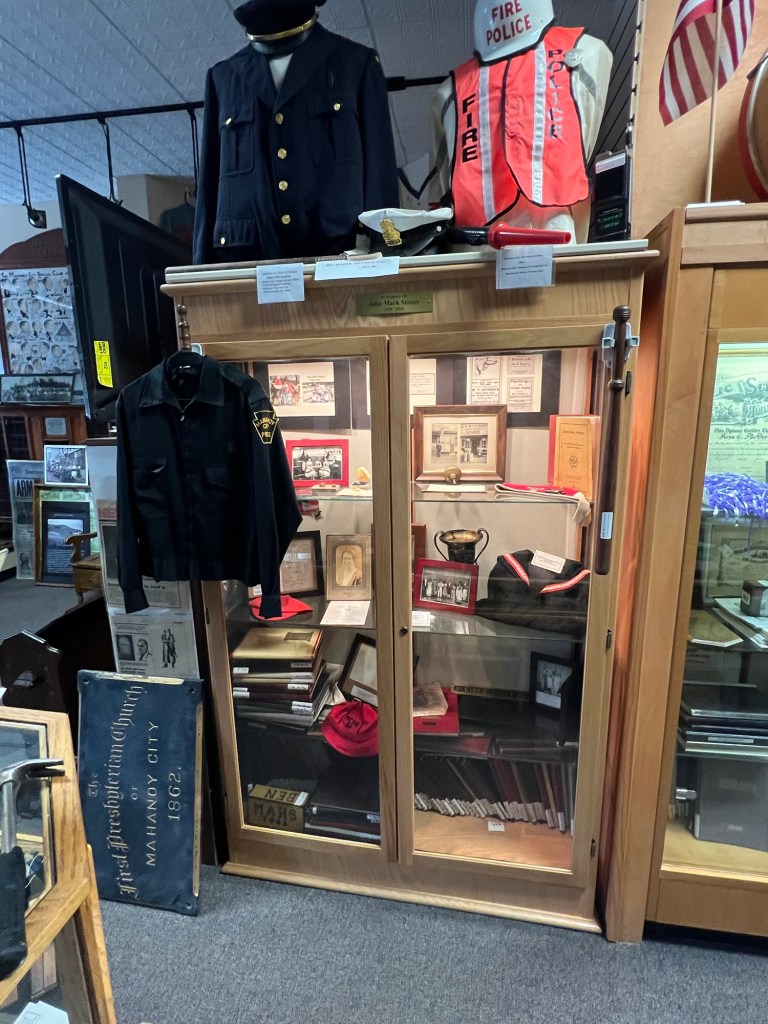
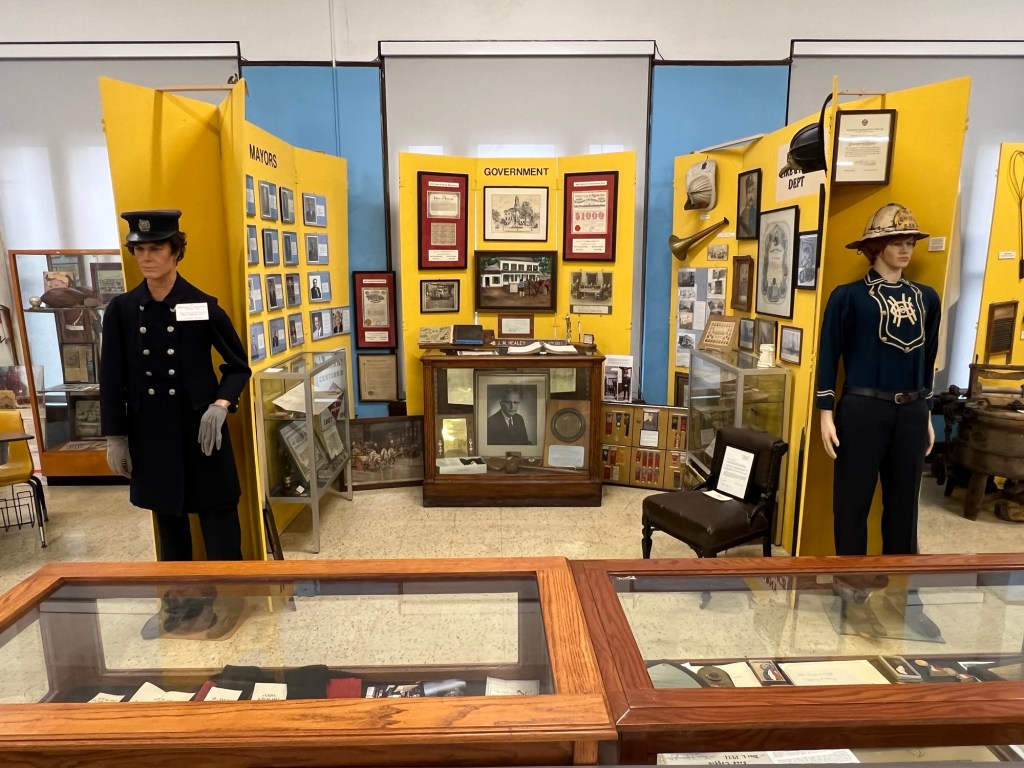
The town has a rich history in the fire and police services and the exhibits show the progress that these departments have made over the last several decades.

The display on the Kearny Fire and Police Departments

The artifacts in the Kearny Police and Fire exhibitio

The display of old Class A uniform

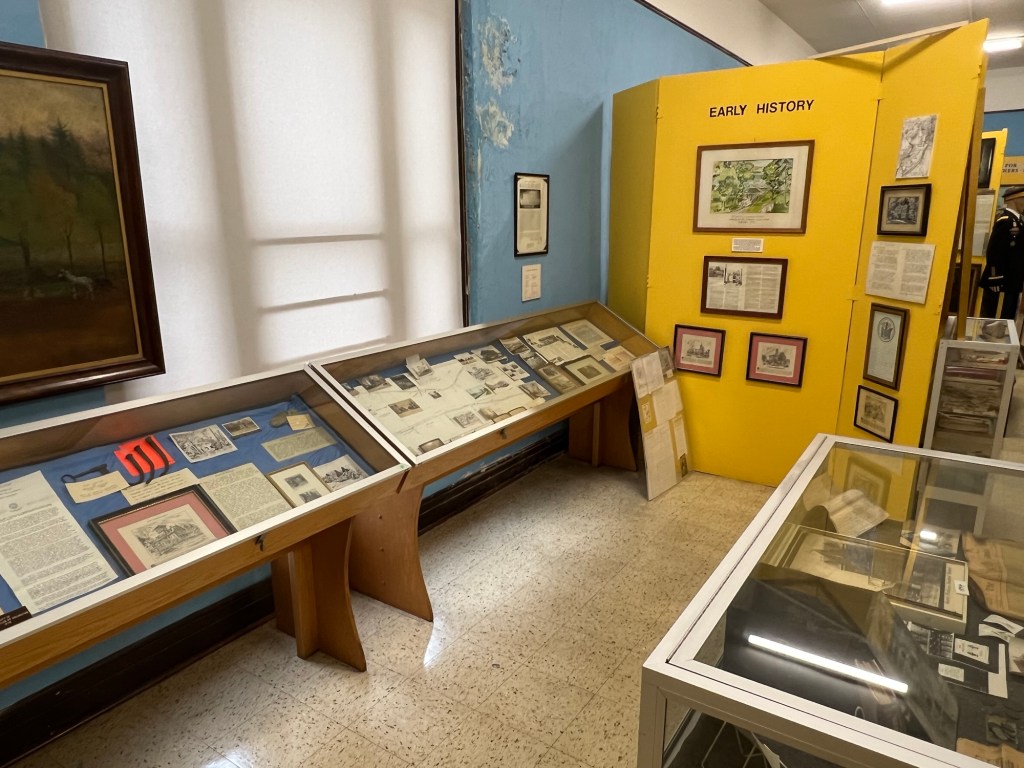
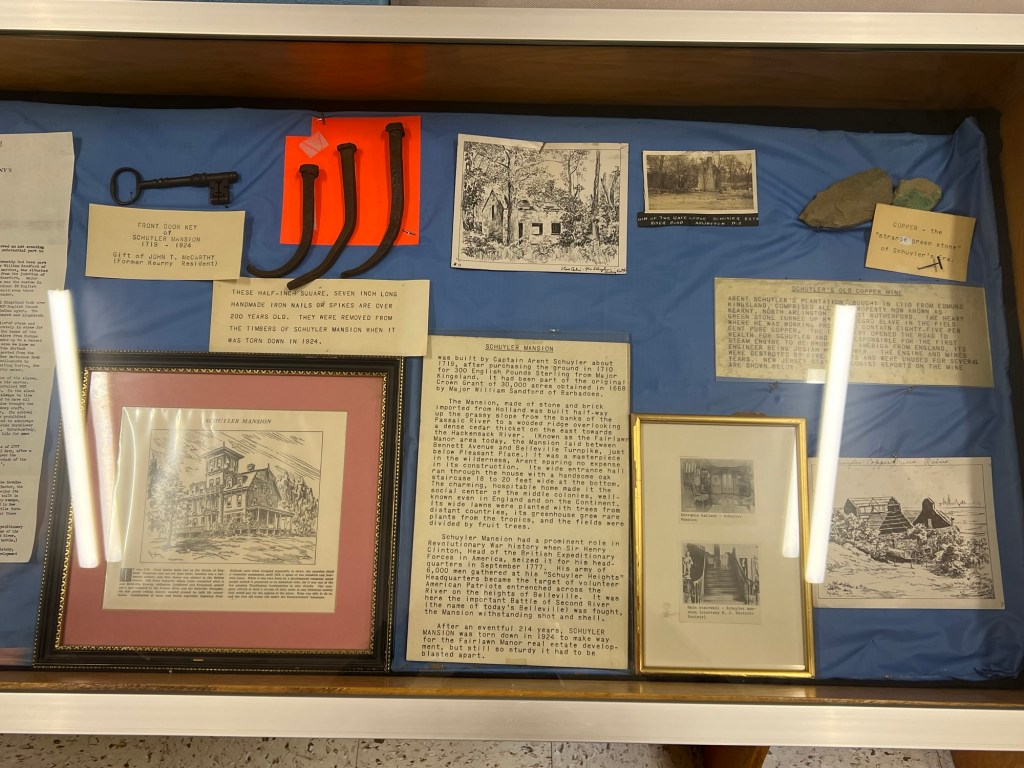
The early founding of the town was displayed in the next exhibit with artifacts and items from the early history before Kearny’s founding.

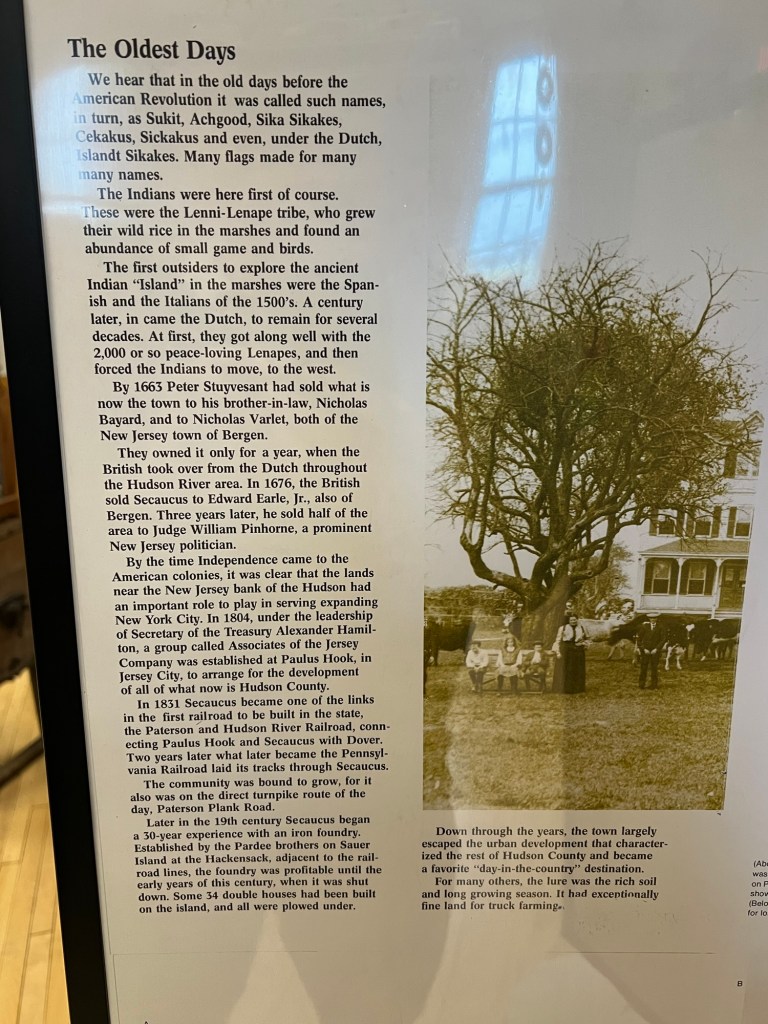
The Early History of the region

Items from early Lenape tribes to the founding of the railroads in the region

The role of the development of the early government to modern times was nicely displayed along with the history of each Mayor in the town’s history.

The history of the local government in Kearny, NJ

This lead back to the General’s role as a local hero and the founding name of the current town of Kearny, NJ.

A closer look at the General’s history

More history on General Kearny

The museum has a collection of items from local residents and town ‘hero’s’ whose collections are now part of the museum.

Stanley ‘Buck’ Brookes sports collection

There is also a collection of ‘old’ families of the Kearny region before the town was founded. This display is for early resident, William Sanford.

The artifacts from the William Sanford estate

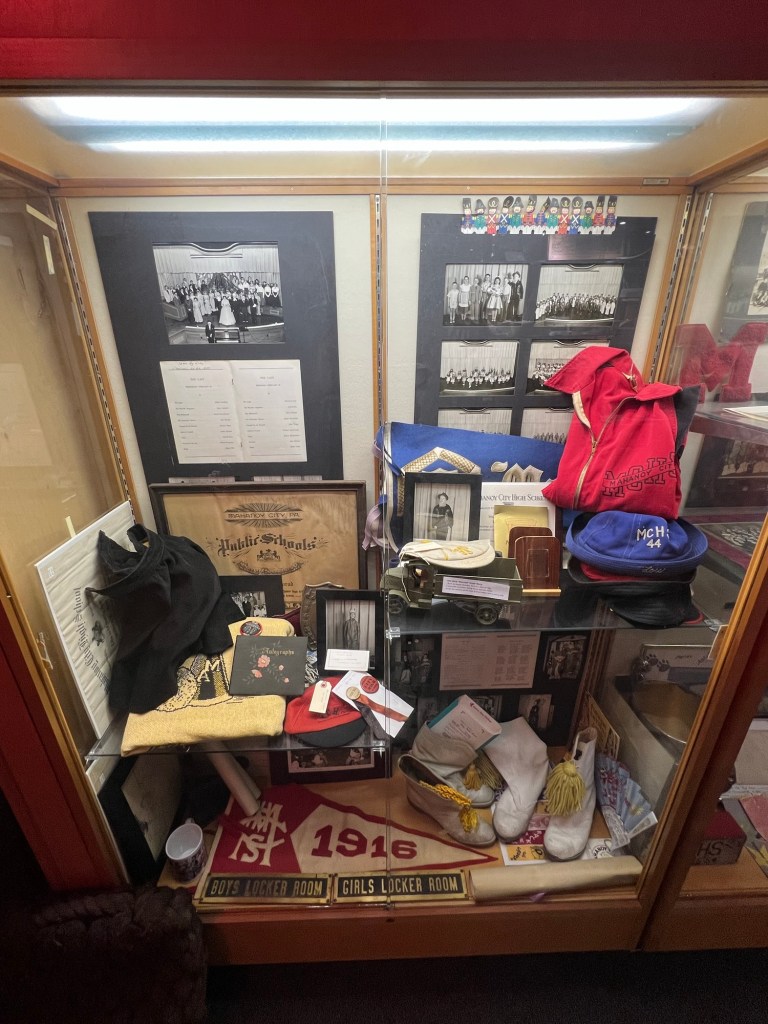
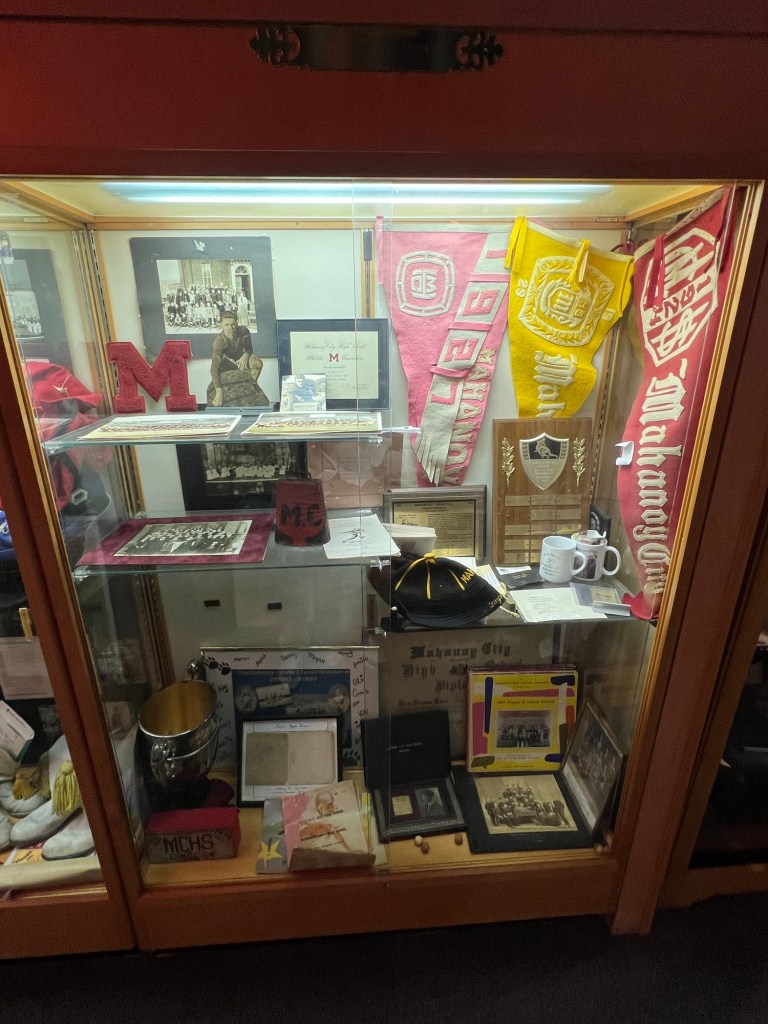
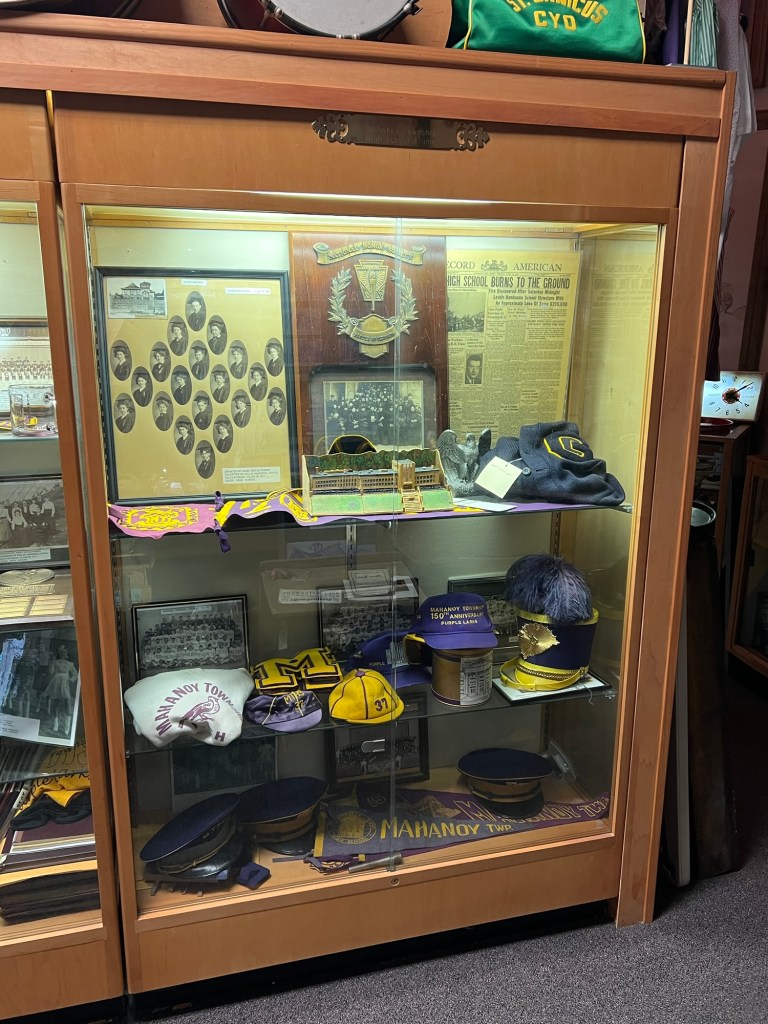
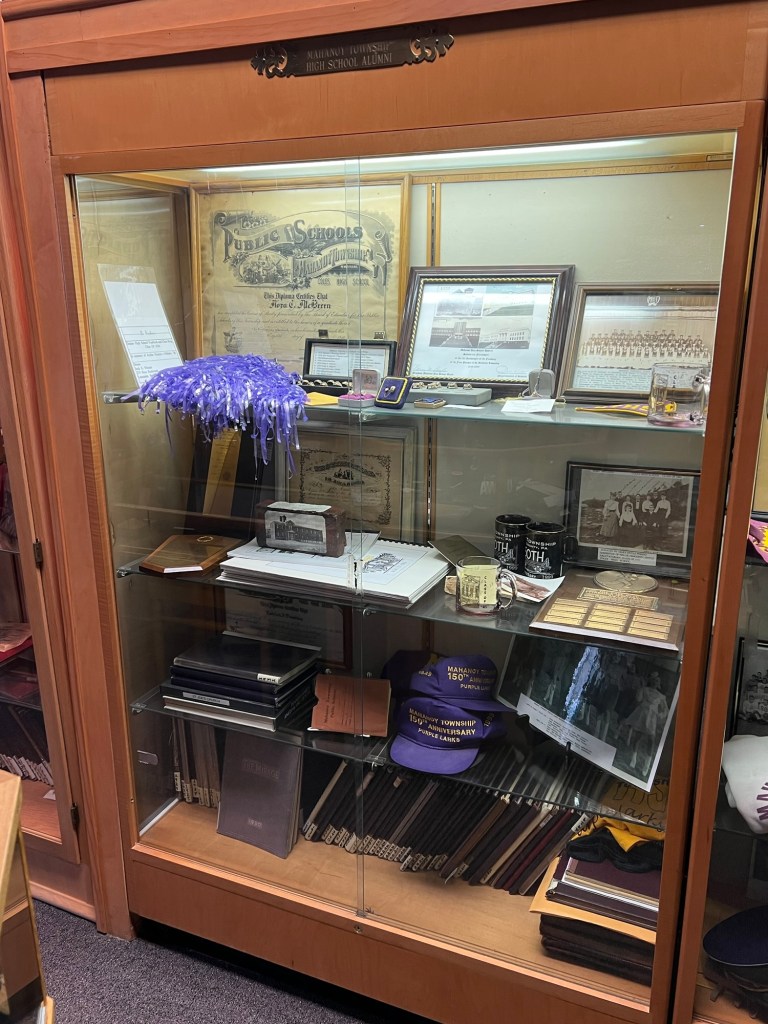
The museum has an extensive display on the town’s school system and the changes it gone through over the past hundred years.

The school system in the 1920’s and 1930’s

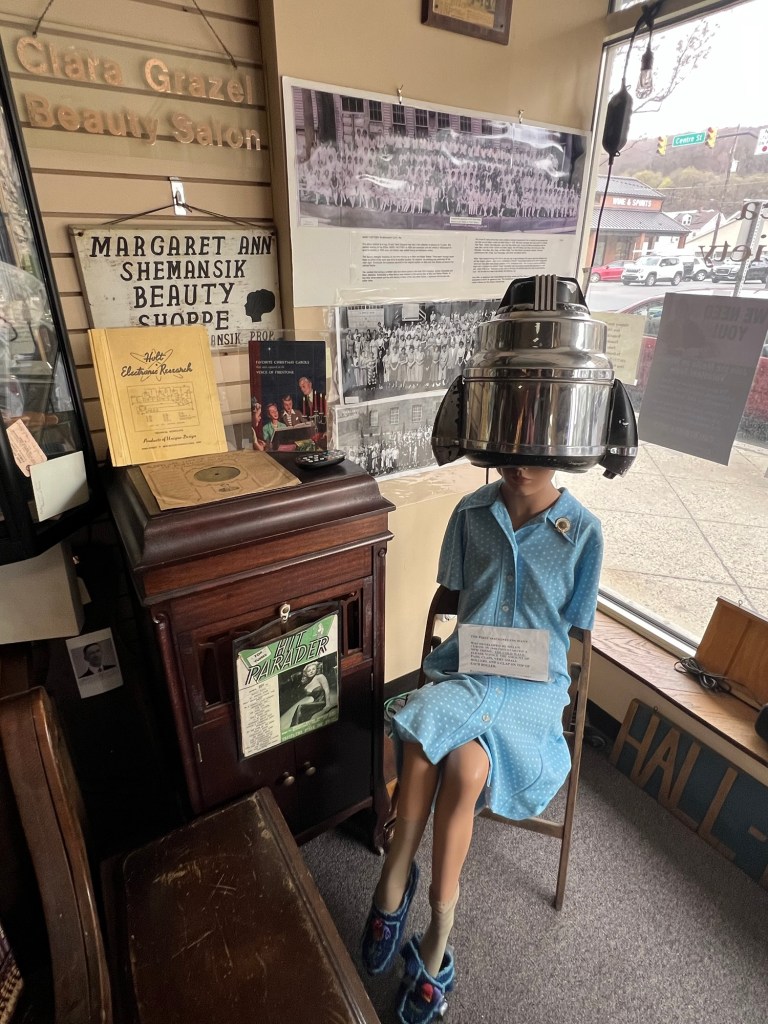
The history of the town’s schools with band uniforms and graduation dresses

The Library Director’s video on the Kearny School System:

(from the museum website)

Artifacts from ‘School Days’ at the Kearny Public Schools

With the formation of the town schools and department, the town’s role in the growth of this part of New Jersey led to new industries being developed.

The history and development of industry in town

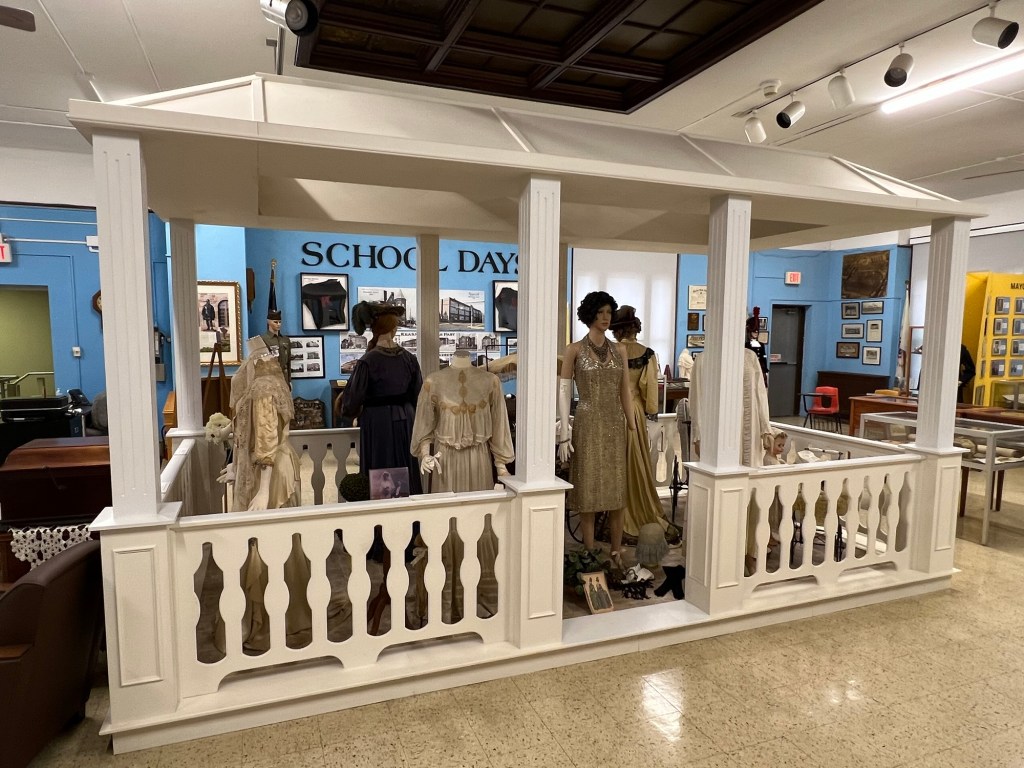
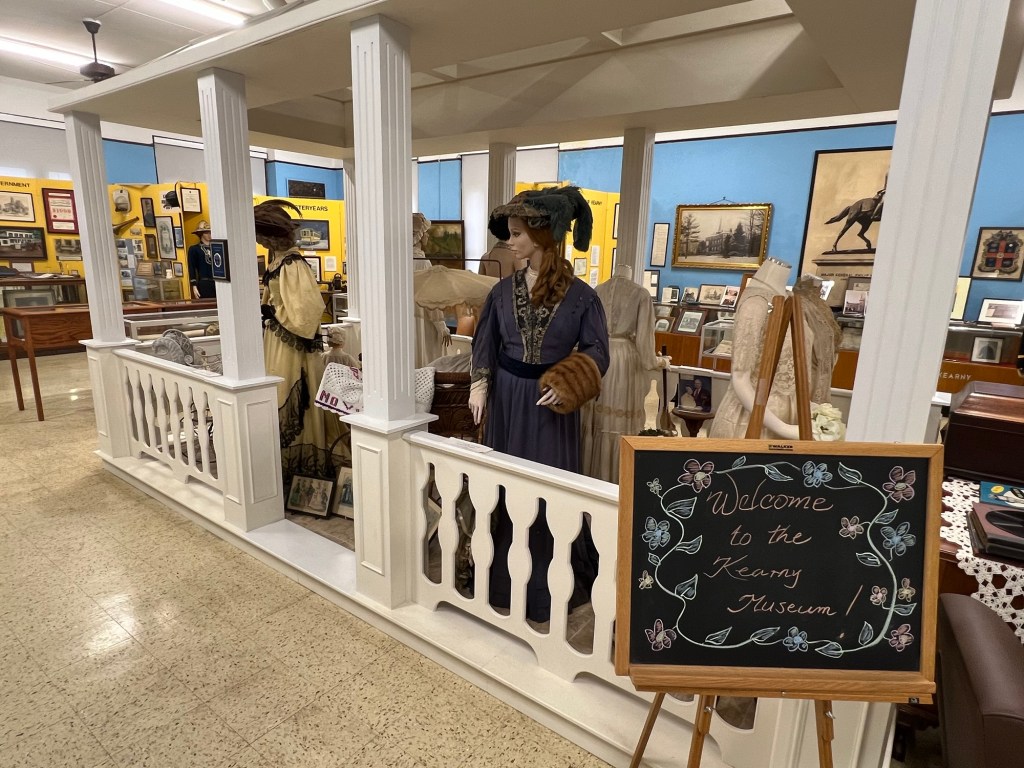
The center of the museum was reserved for a display of ‘Fashion’ through the ages. The display contains all sorts of gowns and wedding dresses through the last hundred and fifty years.

The ‘History of Fashion’ display

The various gowns, coats and tea dresses on display

Gowns from the 1920’s and 1930’s

Gowns from the 1920’s

Gowns from the turn of the last century

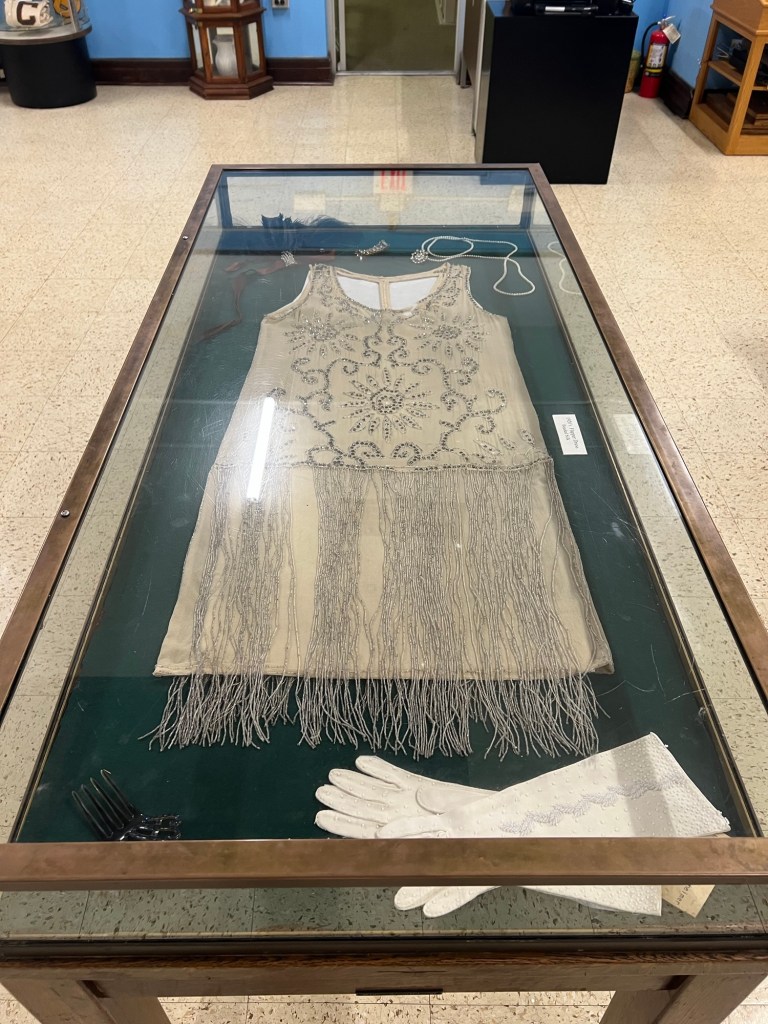
Flapper gown and accessories from the 1920’s

The museum has an extensive display of items that not just cover the history of the town and of its founding and development but of every day life of its citizens. This is all tucked away on the second floor of their local branch of the Kearny Library.

The Kearny Library is the home of the Kearny Museum

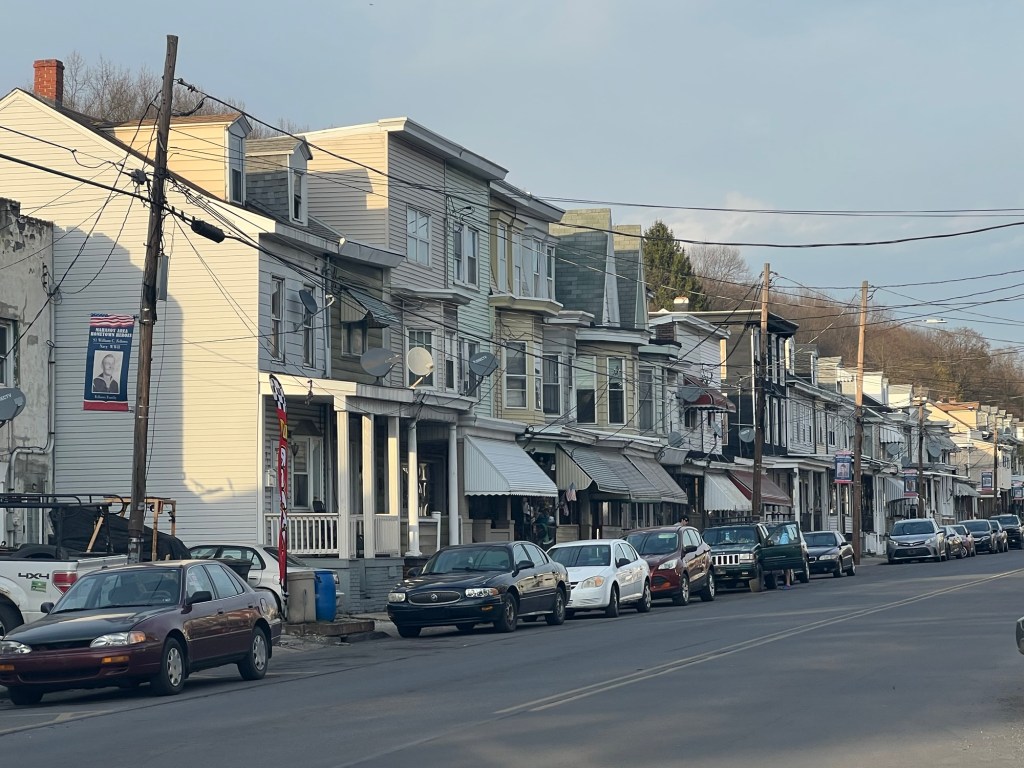
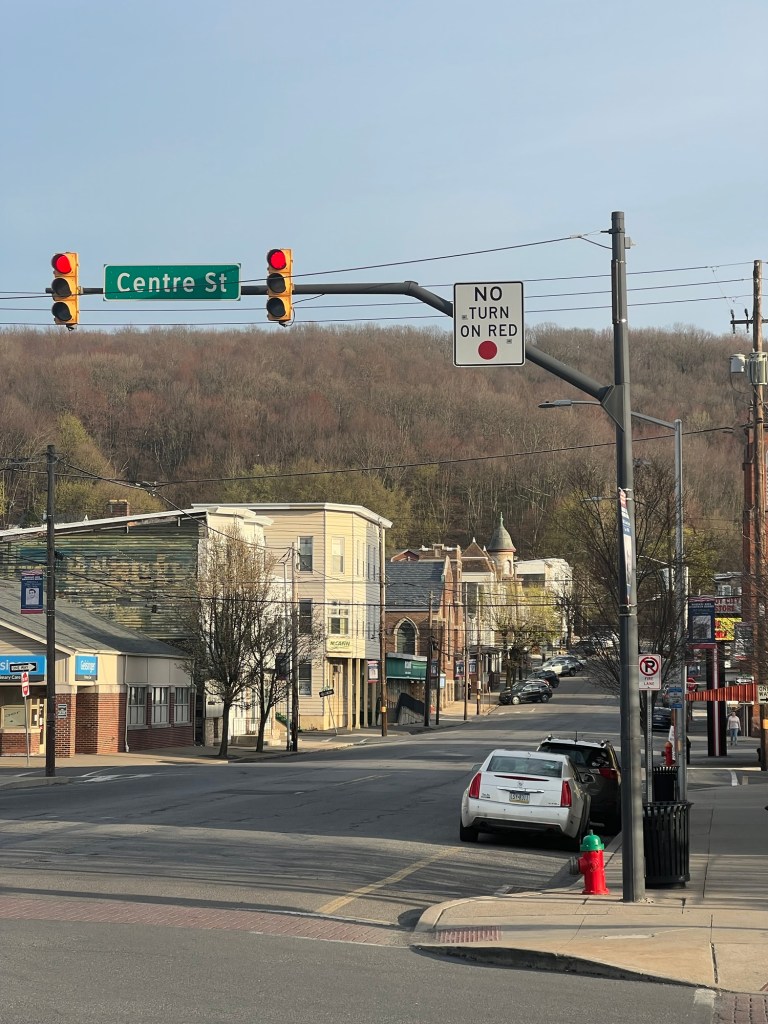
What is nice about the Kearny Library is that it sits in the middle of a very vibrant downtown filled with an array of restaurants and bakeries. I walked the downtown after my visit to the museum.

I came across O Pao Quente D’Avenida at 244 Kearny Avenue. This wonderful bakery had an assortment of Spanish and Italian pastries at very reasonable prices.

The bakery ‘O Pao Quente D’Avenida’ (Avenue of Warm Bread) at 244 Kearny Avenue

https://www.facebook.com/pages/O-Pao-Quente-D-Avenida/118731094806654

My review on TripAdvisor:

https://www.tripadvisor.com/ShowUserReviews-g46536-d33058168-r1001223975-O_Pao_Quente_D_avenida-Kearny_New_Jersey.html?m=19905

The selection of pastries were extensive and looked so delicious that I could barely choose between them.

The selection of pastries at the bakery included cakes, cream pastries and cream filled flips.

It was a tough choice but I chose the flip filled with Dulce Leche filling. Talk about delicious. I munched on it while exploring several blocks of the downtown.

The pastry flip with Dulce Leche filling and a sugary topping

It was a nice way to spend the afternoon. You have to explore the rest of the library and its beautiful historical building.

Haring Farm Cemetery                                                                       Old Haring Farm Court                                                                  River Vale, NJ 07675

Haring Farm Cemetery Old Haring Farm Court River Vale, NJ 07675

Haring Farm Cemetery

Old Haring Farm Court

River Vale, NJ 07675

https://www.northjersey.com/story/news/bergen/river-vale/2020/10/08/river-vale-nj-cemetery-refurbished-teen/5898284002/

https://www.findagrave.com/cemetery/1974293/haring-family-cemetery

http://files.usgwarchives.net/nj/bergen/cemeteries/haring.txt

My review on TripAdvisor:

https://www.tripadvisor.com/Attraction_Review-g46777-d33055554-Reviews-Haring_Farm_Cemetery-River_Vale_New_Jersey.html

The entrance to the Haring Farm Cemetery

One afternoon I took a trip into my very distant past. I visited the tiny Haring family Farm Cemetery, which is the resting place of Cornelius Haring and his family. The cemetery is what is left of what was once a several hundred acre farm owned by the extensive Haring family of Bergen County, NJ.

The burial site had been hidden for years and the site neglected until restored by Eagle Scout, Anakin Rybacki in 2020

https://www.northjersey.com/story/news/bergen/river-vale/2020/10/08/river-vale-nj-cemetery-refurbished-teen/5898284002/

The broken and delicate tombstones

The members of the family who are buried here

The History of the Cemetery:

(Shayla Brown article)

The history of the site extends back to the 17th century. “The immigrant ancestor was Jan Pieter Haring, who came from the Netherlands in the early 1660s. He was the leader of a group that purchased 16,000 acres in the Bergen/Rockland area, after living first in New Netherlands, now Manhattan,” said family descendant Regina Haring (Brown, NorthJersey.com).

Each of the historic tombstones are encased in a plastic box

The teen who renovated this cemetery encased each of the tombstones to preserve the place and history of each person buried on the site. Most of the tombstones were left in pieces by the time the renovation had started. This small cemetery is dedicated to the people who once lived here and passed away at the farm.

The grave site of Margaret Alyea

The grave of William Holdrum

The grave of Abraham Haring

Another simple tombstone of Elizabeth Haring

Some of the tombstones needed a serious cleaning

The grave of Elizabeth Blauvelt Haring

The cemetery from the entrance of the site

The sign on the site marking the fencing for the Haring Farm Cemetery

The cemetery is an interesting example of rural life in Bergen County when these early Dutch families would bury their loved ones on the family property rather than in the local churches.

My Class visit:

I stopped in at the Haring Farm Cemetery for a tour for their class project on Historical Cemeteries for the ‘Bergen 250’. This is for another Bergecco-Parc Consulting Inc. project.

So I got there early, raked the cemetery and tidied up the tombstones and cleaned and organized the signs. It looked so much better.

The Haring Farm Cemetery the morning of the tour. Much more respectable looking.

The class tour

The class group picture at the site

My International Marketing class at Bergen Community College recently did a complete study and marketing plan for the “Bergen250” on the Revolutionary War veterans buried at graveyards and cemeteries all over Bergen County, NJ:

The project:

For a Mapping of all the historic graveyards and cemeteries, I had the students visit all the sites that the Daughters of the American Revolution had researched and I had the students find all the locations, photo the tombstones and create a bio on each of the veterans. I enclosed a copy of their work above.

My blog on the historic graveyards and cemeteries of Bergen County:

https://visitingamuseum.com/tag/historic-cemeteries-of-bergen-county

My Team Project “The Graveyards and Cemeteries of the Veterans of the Revolutionary War” Team Project in Spring 2026:

We toured the Haring Family Cemetery down the road on Old Haring Farm Road. This was one of the many examples of small family cemeteries that used to be placed at the edge of family farms, who wanted loved ones buried close by or the distance to the family church was too far away at that time.

Touring the Haring Family Cemetery

The Haring family is one of the most important and prominent Colonial families in New Jersey (and are very distantly related to me by marriage), so I felt this site was very important to visit to show the family dynamic of that era.

Our Team at the Haring Farm Cemetery at Old Haring Farm Court

The cemetery is tucked in between two large McMansions whose residents are probably wondering who all these people are walking around their neighborhood.

Fort Lee Historic Park                                               Hudson Terrace                                                                  Fort Lee, NJ 07024

Fort Lee Historic Park Hudson Terrace Fort Lee, NJ 07024

Fort Lee Historic Park

Hudson Terrace

Fort Lee, NJ 07024

(291) 461-1776

https://www.njpalisades.org/fortlee.html

My review on TripAdvisor:

https://www.tripadvisor.com/ShowUserReviews-g46446-d6899671-r995868317-Fort_Lee_Historic_Park-Fort_Lee_New_Jersey.html?m=19905

The Visitors Center offers a very interesting and thorough display of the Revolutionary and of the War effort by ordinary citizens.

The Main Gallery of the Visitors Center

About the park:

Fort Lee Historic Park is set on 33 landscaped acres atop the Palisades just south of the George Washington Bridge, with spectacular overlooks of the Hudson, Manhattan, and the George Washington Bridge. There are a Visitor Center and Museum, reconstructed 18th Century soldier hut and campsite, and reconstructed gun batteries.

Fort Lee has been named as a significant stop on the Hudson River Valley National Heritage Area Revolutionary War trail (The Fort Lee Historic Park website).

The History of the Park:

https://en.wikipedia.org/wiki/Fort_Lee_Historic_Park

The Battle of Fort Lee:

https://www.battlefields.org/learn/maps/fort-lee-nov-20-1776

The Hessian soldier display

The Battleships

The Soldiers display

The ‘Fall of Fort Washington’ display

The Visitor’s Center and Museum of the site tells the story of the battles fought, the retreats done and the important role that Fort Lee played in the history and foundation of this country. Each display shows the life and times of these brave men and women who survived famine and war to help build a nation.

Artifacts of the soldiers equipment

Artifacts of American soldiers

Washington returns to Fort Lee

Washington Returns to Fort Lee

The battles and triumphs of General Washington, his fellow generals and the troops during the war effort.

The American defenses

American Women’s display

Women’s accessories during the Revolutionary War

Women’s clothing

The Patriot display in the back gallery

The Patriot display

Spying on the British

The Battle of the Palisades

Cannonballs from the War

The second floor galleries at the Visitors Center better describe the people involved with the war effort

The Muskets & Rifles

Display of British, German & Loyalist troops

The American Troops display on the second floor

The British Generals’s display

The Generals on the American side of the Battle

The housing during the War

American War equipment

Harriet Tubman Museum of New Jersey            632 Lafayette Street                                                       Cape May, NJ 08204

Harriet Tubman Museum of New Jersey 632 Lafayette Street Cape May, NJ 08204

Harriet Tubman Museum of New Jersey

632 Lafayette Street

Cape May, NJ 08204

Open: Sunday 2:00pm-4:00pm/Monday-Tuesday Closed/Wednesday-Saturday 11:00am-4:00pm (Check the website for the seasons)

My Review on TripAdvisor:

https://www.tripadvisor.com/Attraction_Review-g46341-d23550005-Reviews-Harriet_Tubman_Museum-Cape_May_Cape_May_County_New_Jersey.html

The entrance to the Harriet Tubman Museum of New Jersey

The History of the Museum and House it is located in:

(From the Museum website):

Lafayette street and Franklin Street: the center of abolitionist activism in Cape May

The Harriet Tubman Museum building is located on a block that anti-slavery activists called home in Cape May. Lafayette Street and Franklin Street became a center of abolitionist activity centered around three important buildings developed in 1846.

The Stephen Smith House stands at 645 Lafayette Street, across from the site of the Harriet Tubman Museum, where Stephen Smith built his summer home in 1846. Smith was a founder of the Pennsylvania Anti-Slavery Society.

The Banneker House was next to the Stephen Smith House. The Banneker House became a first-class hotel and one of the only summer resorts for free Black people in the country and was developed by James Harding, a friend of Stephen Smith.

The white Baptist Church was located directly across the street from the Stephen Smith House and Joseph Leach frequently preached there. Leach was a political leader and editor of the Ocean Wave newspaper, where he often wrote accounts of enslaved people that fled to Cape May. The congregation of the church issued a strong condemnation of slavery.

The sign that welcomes you

The Museum at Christmas time

Santa greets you at the door

Cape May: A nexus between North and South

(from the museum website):

Cape May played a pivotal role in the fight to end slavery. Several historic figures critical to the fight against slavery spent their summers in Cape May.

The children’s dolls at the entrance

I visited the Harriet Tubman Museum when I was in Cape May and this small museum tells two different stories. It tells of Harriet Tubman’s time living in Cape May as a cook before her return down South and about the Free Black community in Cape May that built their own Society within the community. Their businesses catered to both Black and White residents of Cape May.

The museum tackles several different topics including the life of Harriet Tubman in Cape May when she lived here as a cook, earning money and probably developing a strategy for helping enslaved people reach their freedom through the Underground Railroad. It discusses the success many Black residents found as business owners in Cape May and the surrounding towns.

The last topic the museum discusses in the affects of Integration and Segregation on society in general and its causes and results. There is no one solution to this as we as a society cause this by our own actions.

The History of Business’s owned by Blacks in that era of Cape May

The freed black population settled in the Cape May area and opened many businesses that contributed to the whole population. This developed into many successfully run businesses by Free Slaves and residents of New Jersey.

The history of Harriet Tubman in Cape May

(From the museum website):

Harriet Tubman’s life and work in Cape May

Harriet Tubman lived in Cape May in the early 1850s, working to help fund her missions to guide enslaved people to freedom. After her initial journeys conducting freedom seekers to Canada, her friend and abolitionist leader Franklin Sanborn wrote, “She returned to the states, and as usual earned money by working in hotels and families as a cook. From Cape May, in the fall of 1852, she went back once more to Maryland, and brought away nine more fugitives.” The New Jersey Historical Commission says she spent two other summers in Cape May.
Life of Charles Sumner in Cape May, NJ

https://en.wikipedia.org/wiki/Charles_Sumner

https://www.britannica.com/biography/Charles-Sumner

The history of Abolitionists in Cape May and in New Jersey. Being so close to the border, New Jersey was a big part of the Slavery Underground. Even during the Civil War, Delaware was a more neutral state of the South.

The story of the Abolitionist Movement and William Furness

https://en.wikipedia.org/wiki/William_Henry_Furness

History of the war years and the people who shaped it

The progressions of Blacks in that era

The affects of Segregation and Integration in a society that does not always see eye to eye. This attitude unfortunately still survives into today. There is the history of Harriet Tubman’s life as a child into adulthood.

The stories of Integration and Segregation in that era

Harriet Tubman, Activist and Transporter

https://en.wikipedia.org/wiki/Harriet_Tubman

Many voices told at the museum

The museum offers many voices and stories about life before, during and after slavery and its part in the shaping of New Jersey. Since New Jersey was the last Northern state to abolish slavery on January 23rd, 1866.

The History and End of Slavery in New Jersey:

(From the website of the New Jersey Department of State-Historical Commission website)

New Jersey, The Last Northern State to End Slavery

Image collage: Peter Lee who may have been illegally enslaved as a young man by the Stevens Family in Hoboken, NJ, and Lockey White’s 1860 census entry indicating that she was a 'slave for life'.
Image collage: Peter Lee who may have been illegally enslaved as a young man by the Stevens Family in Hoboken, NJ, and Lockey White’s 1860 census entry indicating that she was a “slave for life.”

By Noelle Lorraine Williams,
Director, African American History Program
The New Jersey Historical Commission

This year forty-seven states including New Jersey will observe Juneteenth (also known as Freedom Day or Emancipation Day) as a state holiday—a holiday that commemorates when enslaved Blacks in Galveston, Texas learned that they were, in fact, freed by President Abraham Lincoln’s Emancipation Proclamation two and half years earlier. The date was June 19, 1865. Juneteenth then is a holiday of celebration and a mournful remembrance of deep injustice and loss. It reveals the injustice of slavery and the legal repression of African American freedom, extending beyond the nineteenth century.

But we must remember that there were still enslaved Black men and women in New Jersey even after Juneteenth. Imagine, New Jersey’s death grip on slavery meant that until December 1865, six months after enslaved men, women, and children in Texas found out they were cheated of their freedom, approximately 16 African Americans were still technically enslaved in New Jersey.

But Why and How?

While there were many Black, mixed-race, and white people in New Jersey who fought against slavery, most legislators refused to condemn the institution. Profits from slaveholding organizations had built and maintained the state’s major cities and regional centers like Newark and those in Bergen County.

Lincoln’s 1863 Emancipation Proclamation did not free enslaved African Americans in the Northern States; it freed only those in the mostly southern “rebellious states.” Two years later, New Jersey bitterly refused to ratify the Thirteenth Amendment, the United States Constitutional Amendment that abolished slavery and involuntary servitude across the country.

Slavery’s final legal death in New Jersey occurred on January 23, 1866, when in his first official act as governor, Marcus L. Ward of Newark signed a state Constitutional Amendment that brought about an absolute end to slavery in the state. In other words, the institution of slavery in New Jersey survived for months following the declaration of freedom in Texas.

To understand this historical development, one needs to take a step back to 1804 when New Jersey passed its Gradual Abolition of Slavery law—an act that delayed the end of slavery in the state for decades. It allowed for the children of enslaved Blacks born after July 4, 1804 to be free, only after they attained the age of 21 years for women and 25 for men. Their family and everyone else near and dear to them, however, remained enslaved until they died or attained freedom by running away or waiting to be freed.

In a period when the average life expectancy was 40 years old, the 1804 law essentially took more than half of these people’s lives to satisfy the economic and political demands of New Jersey enslavers.

In essence, Juneteenth, not only marks the day African Americans in Texas realized that they had been robbed of two years of their freedom, following the Emancipation Proclamation. It also commemorates all of our ancestors here in New Jersey who were the last Blacks in the North to be ensnared in that bloody institution.


The New Jersey Historical Commission (NJHC), a division of the New Jersey Department of State, is a state agency dedicated to the advancement of public knowledge and preservation of New Jersey history.

The creation of the Harriet Tubman Museum