Tag: Historic Homes of New York State

Madam Brett Homestead                                        50 Van Nydeck Avenue                                  Beacon, NY 12508

Madam Brett Homestead 50 Van Nydeck Avenue Beacon, NY 12508

Madam Brett Homestead

50 Van Nydeck Avenue

Beacon, NY 12508

(845) 831-6533

https://www.hudsonrivervalley.com/sites/Madam-Brett-Homestead-/details

https://en.wikipedia.org/wiki/Madam_Brett_Homestead

Admission: Adults $10.00

Open: Sunday-Friday Closed/Saturday (Every Second Saturday) 1:00pm-4:00pm

My review on TripAdvisor:

https://www.tripadvisor.com/Attraction_Review-g47291-d263800-Reviews-Madam_Brett_Homestead-Beacon_New_York.html

The Madam Brett Homestead at 50 Van Nydeck Avenue in Beacon, NY.

The Brett Homestead marker

The sign that welcomes visitors

I recently visited the Madam Brett Homestead on a walking tour and discovered that the family had a lot to do with the growth of not just Dutchess County but New York State as well. The house was the homestead for five generations of family members each who added to the home.

The homestead’s historic plaque

Since the family practiced thrift in the home and decor, we get to see the house with period furniture that has been donated back to the house from the family. Also, period pieces have been donated by other members of the community to show the home at different periods of time. It gave us a look into the home life of a prosperous farming and milling family.

The entrance of the Brett Homestead

The tour starts with a short video on the family and how Madam Brett got her inheritance from her father and built on the wealth that he had created. She leased out land with water and mineral rights thus adding to her wealth and had a grist mill that was the only one on the patent, so everyone had to go through her for grain processing.

The china cabinet with family related items.

The homestead was built by Roger Brett and Catherine Rombout Brett on land inherited by her father, which was part of the Rombout Patent (which covered much of lower Dutchess County). The couple had been married in 1703 and had originally moved in with her mother in the family’s manor home in Manhattan. Upon the death of her mother, Catherine inherited the land and the manor house in Manhattan. Land rich and cash poor, she and her husband mortgaged the manor house in Manhattan and built a small home and gristmill. They moved into their Dutch style home on Christmas Day 1709. The house was expanded in 1715. The home was later added on again in the 1800’s to the present house (Brett Homestead Pamphlet).

In the hallway on display is the original Rombout Patent, which everyone on our tour thought was very impressive. It had been found and was given back to the house. It shows the land deal that the settlers made with the Native Americans.

A copy of the Rombout Patent

We next headed to the Dining Room, where the family entertained guests. The room is full of period furniture and silver both family owned and donated to the homestead. The formality of entertaining is shown in the room set up.

The Dining Room at the Brett Homestead

Hannah Brett’s (Madam Brett’s granddaughter) bridesmaid dress was on display as well. This had been worn when she danced the Minuet with Marquis de Lafayette. I thought this was interesting in that she had this altered for the occasion and that it had lasted all these years. She had worn this for the wedding of Cornelia DePeyster, whose wedding dress in the New York Historical Society (Brett Homestead pamphlet). It was donated back to the house by the family descendants for display.

Hannah Brett-Schenck’s bridesmaid dress

Period furniture and decorations adorn the Brett Homestead

The decorative pieces in the Dining Room

The Dining Room fireplace

The kitchen was very interesting because when you walk through it you will see the modern kitchen in the front of the room that was put in around the late 1950’s and early 1960’s compared to the other side of the room which has the original fireplace and kitchen equipment. It shows the contrast in cooking and entertaining over the last two centuries.

The old versus the new in the Brett Homestead kitchen.

The house was constructed in three sections. The original section of the house from 1709, the addition in 1715 and then the grander addition in the 1800’s that gives the house the look it has now. You can see how the house evolved from a small residence to a grand showplace and you can see this in the way it was designed.

The upstairs hallway shows the contrast between the old home and the additions.

Each of the rooms were decorated with period pieces and some of the rooms has themes to them such as one was a Children’s Room, another was the family office and one contained farm equipment. All the items represented a different time in the home’s history.

The Children’s Room with a collection of dolls that creeped visitors out.

The upstairs bedrooms

The period farm equipment display.

The other bedrooms showed guest rooms for visitors to the area, the office where the Brett’s would have conducted business and rooms would have housed many family members.

The Master Bedroom with canopy bed and bedwarmer

The Guest Bedroom

The home office of the family.

The house stayed in the family until the death of Alice Sutcliffe Crary at 85 in 1953. The Melzingah Chapter of the Daughters of the American Revolution purchase the homestead to save it from becoming a supermarket. They have been lovingly restoring and holding events at the homestead as well as contributing to the community at large and promoting Historic Preservation, Education and Patriotism (Madam Brett Homestead pamphlet).

I recently visited the house with a group of people on a tour and we visited the house for Christmas and the local garden club had decorated part of the house for holidays with garland on the bannisters and on some of the mantels. The outside of the house was quite festive.

The house during the holiday season.

The house adorned with wreaths and garland on the holiday tour.

The welcoming entrance to the house during the holiday season.

The docent tours are very interesting and really give you a view of what life was like in the house for the families that lived here. They only take place on the second Saturday of the month so you need to plan ahead.
Van Wyck Homestead Museum                           504 U.S. 9                                                        Fishkill, NY 12524

Van Wyck Homestead Museum 504 U.S. 9 Fishkill, NY 12524

Van Wyck Homestead Museum

504 U.S. 9

Fishkill, NY 12524

(845) 896-0560

https://www.hudsonrivervalley.com/sites/Van-Wyck-Homestead-Museum-/details

https://en.wikipedia.org/wiki/Van_Wyck_Homestead_Museum

Admission: Free

Open: Sunday 1:00pm-4:00pm/Monday-Saturday Closed/June-October

My review on TripAdvisor:

https://www.tripadvisor.com/Attraction_Review-g47724-d263982-Reviews-Van_Wyck_Homestead_Museum-Fishkill_New_York.html

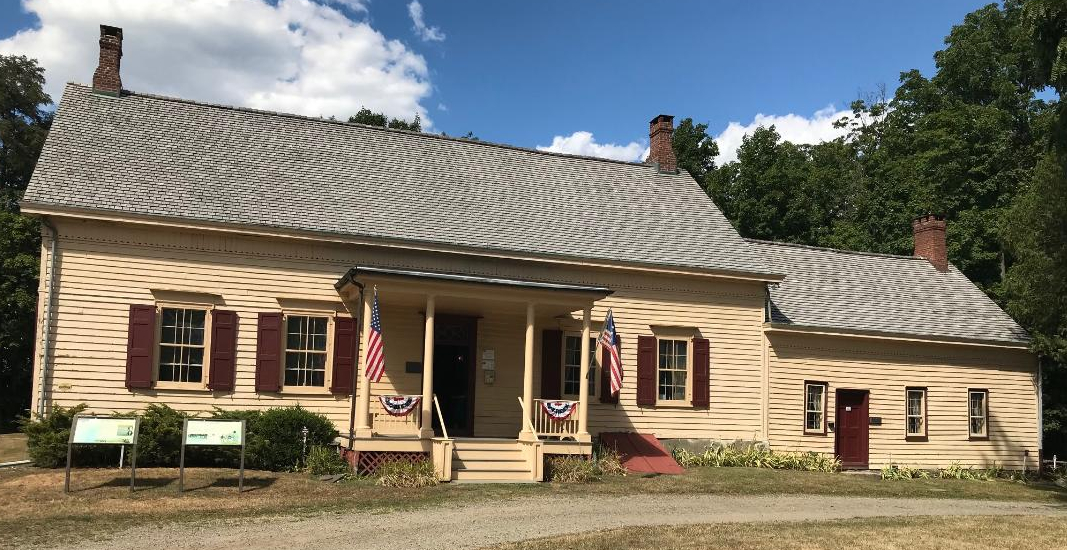
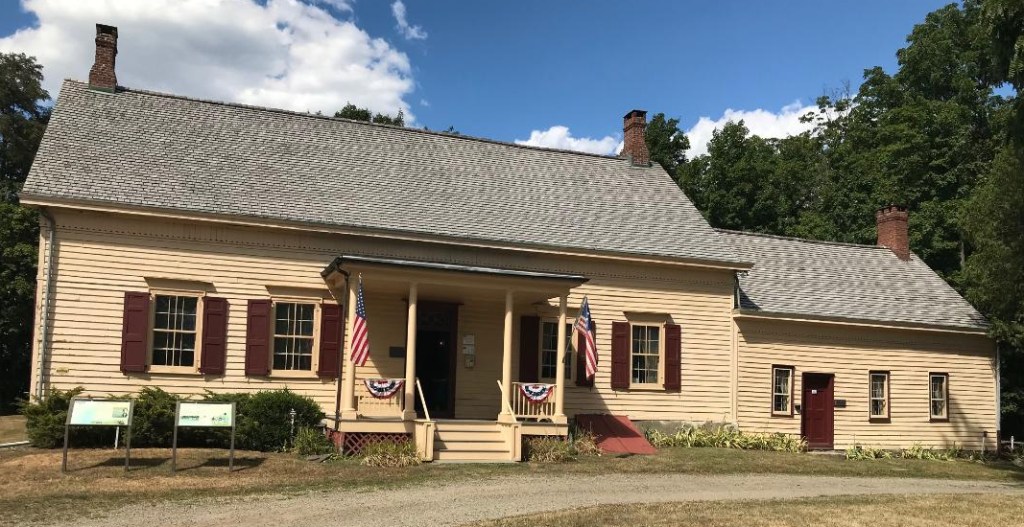
The Van Wyck Homestead at 504 U.S. 9

Visiting the Van Wyck Homestead is like stepping back into the past to see a part of our nation’s history. The homestead sits at a once pivotal point location in the Hudson River Valley and during the Revolutionary War, George Washington established his main northern supply depot here in October of 1776. After the war was over, the Van Wyck family returned to the home and lived here for five generations until the late 1800’s. The last member of the family, Sidney Van Wyck hung himself in the barn on the property (Van Wyck Homestead pamphlet).

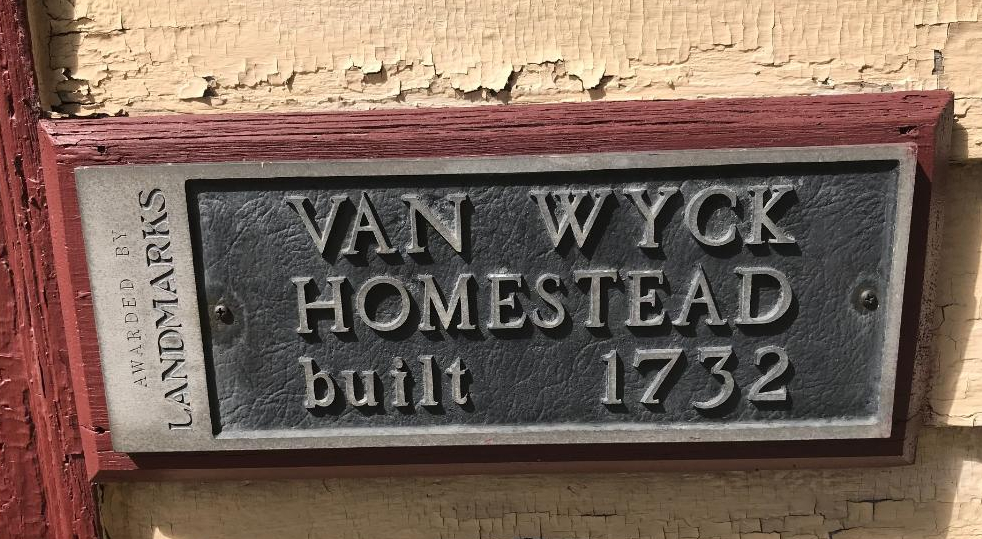
The house was built in two sections. The original section of the house off to the right of the building is the original section of the home that was built in 1732 and the larger section of the home was finished in the 1750’s.

The marker of the original home

When you enter the homestead, you are greeted in the hallway that runs the length of the main part of the home. To the right of the hallway is old living room and to the right of the hallway is the combination kitchen and dining room. The stairs leading to the upstairs, now serving as offices, are at the end of the hallway.

Another piece of Van Wyck furniture in the old Dining Room with the display case holding family heirlooms that have been donated over the years.

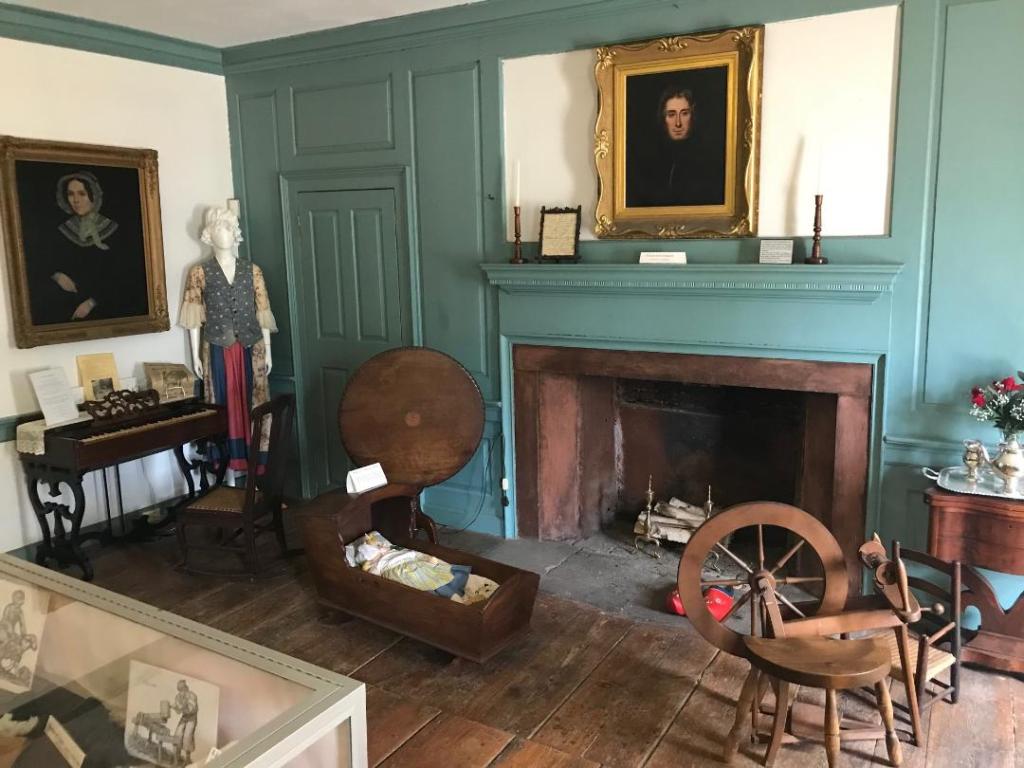
The former Dining Room of the Van Wyck home with the fireplace of the addition of the house. The crib in front of the fireplace is a recent donation from the Van Wyck family and had been used by the family for generations.

The family portrait above the fireplace was recently returned to the home and fit perfectly above the fireplace. The Spinning Wheel is another family heirloom donated to the house.

An original piece of Van Wyck furniture returned to its home

When you step down the stairs into the smaller part of the original part of the house, you will be greeted in by the original kitchen and living space. This was used by the family for all functions of work and social aspects of the farm.

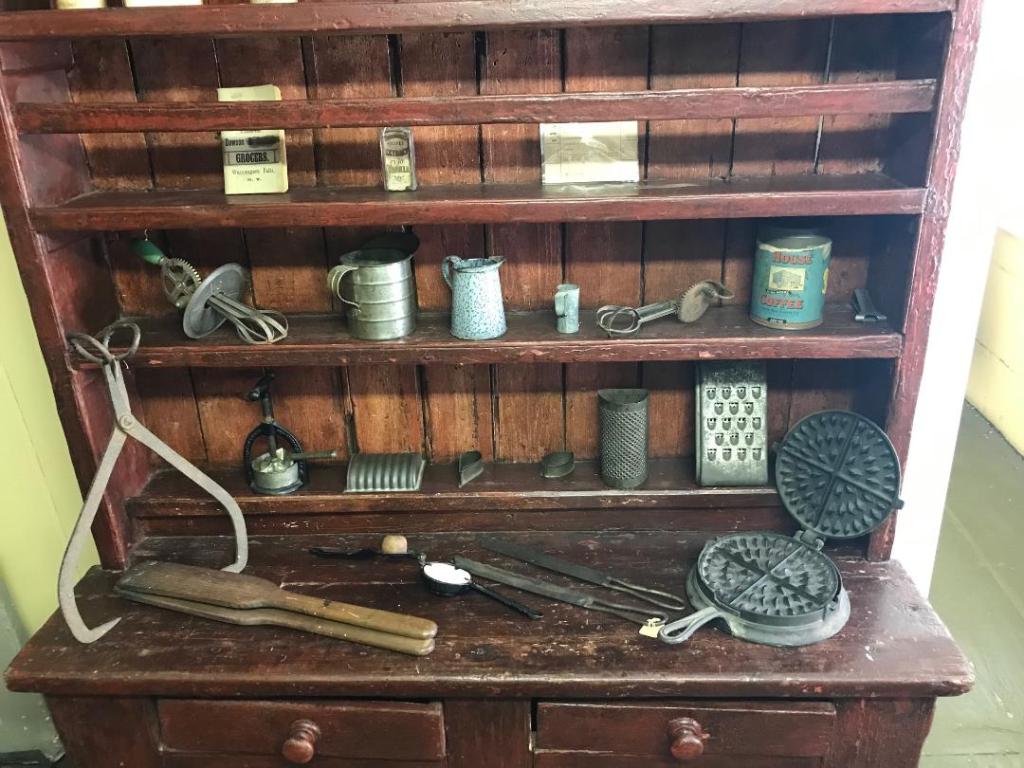
Items used in Colonial and Victorian kitchens

Items in the Colonial kitchen display which have not changed much over the years.

The Colonial Kitchen at the Van Wyck Homestead

To the right of the hallway is the old Living Room that is now used as a lecture hall and where meetings are held. The room was dedicated to George Washington for the service that he did for the area during the war.

The old Dining Room and lecture room

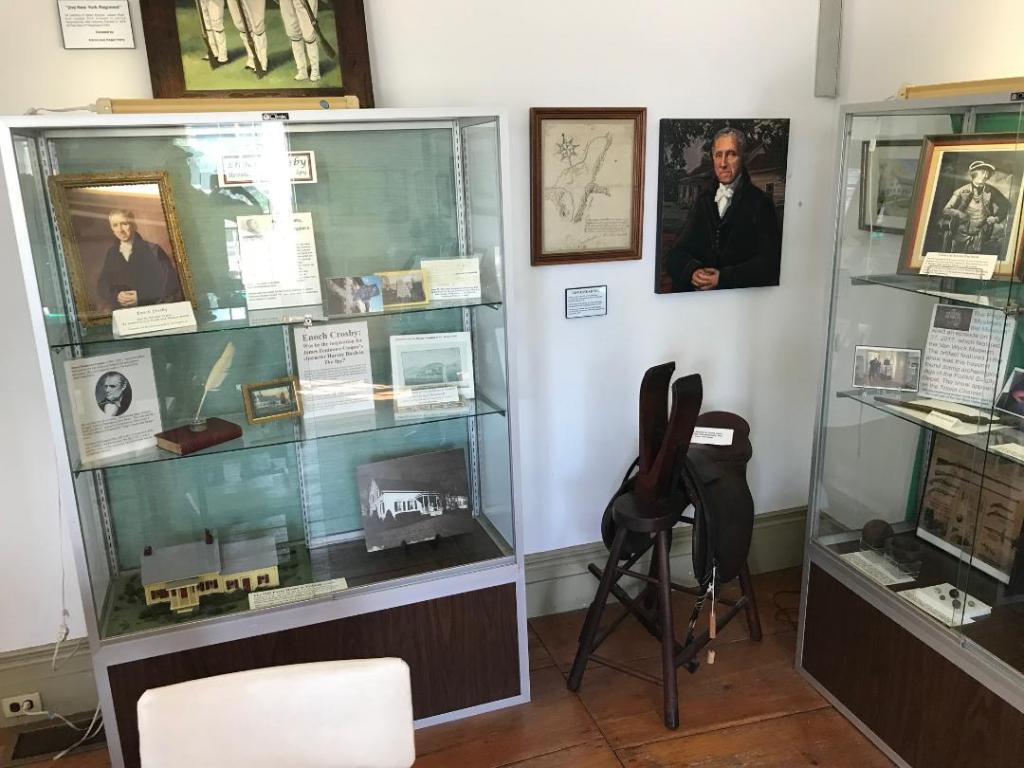
The Revolutionary War displays in the old Living Room

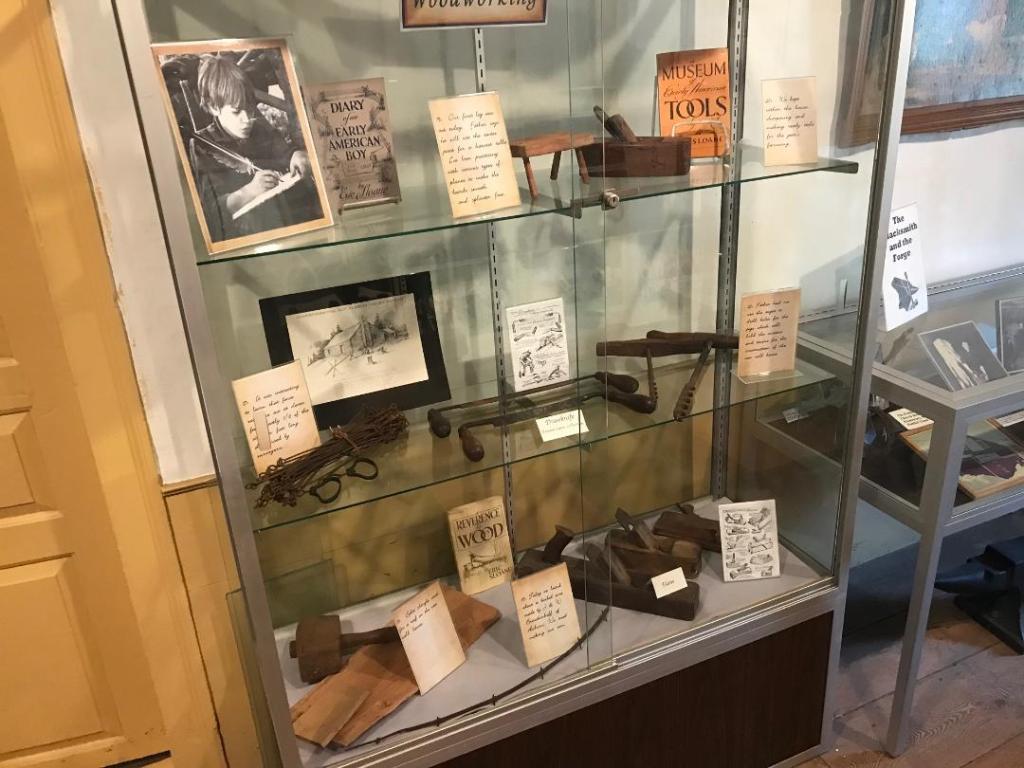
The room is lined with displays that are dedicated to the family and the war years. All sorts of artifacts and pictures are displayed here.

The display case in the old Dining Room

In the back of the home is the old Library that is now used a Research Library on the history of the area and of the Van Wyck family. Here you can research your roots in the community.

The Research Library at the Van Wyck Homestead

The Research Library at the Van Wyck Homestead

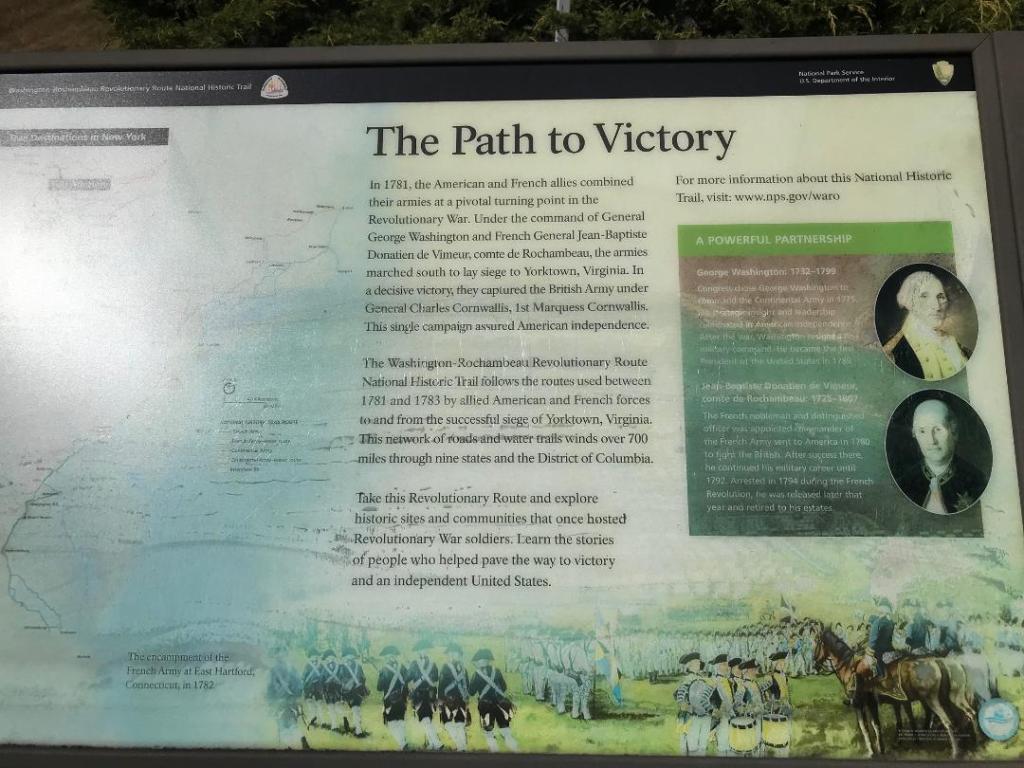
When you walk the grounds, the story boards tell the story of the home as it played a role in the history of the region and its place in the war years.

The Path to Victory

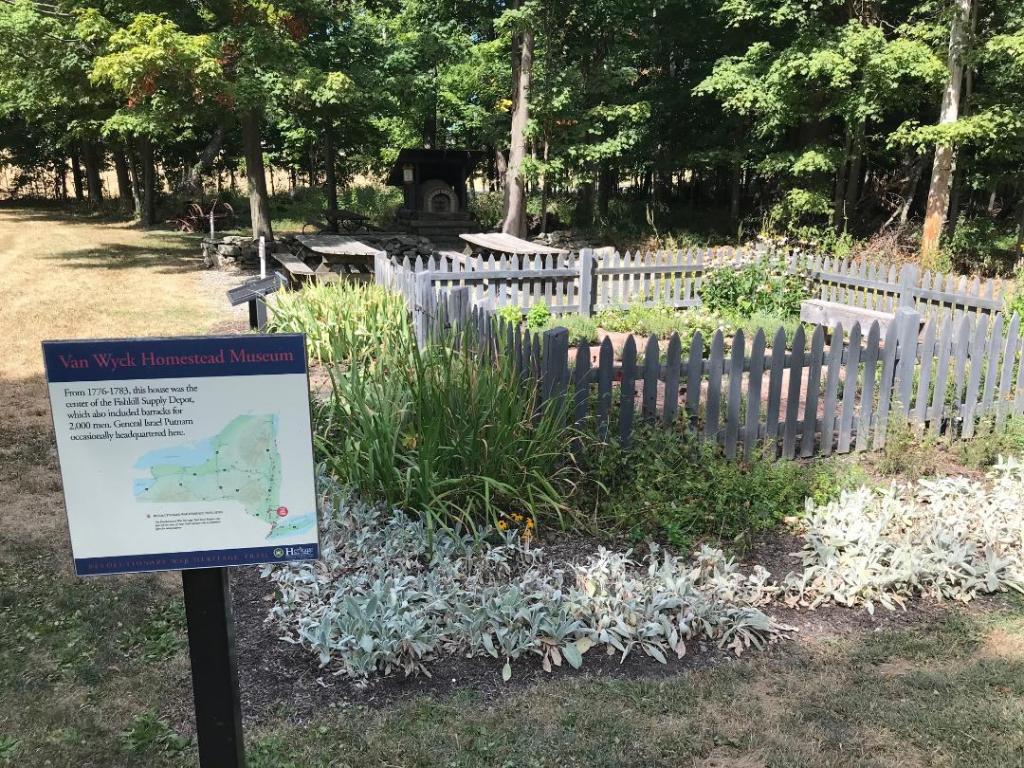
On the grounds of the home is also a working garden and the working beehive oven that is a recreation of the original that once stood on the property.

The Van Wyck Garden and outdoor over towards the back

History of the Van Wyck Homestead:

(From the Museum pamphlet)

In 1732, Cornelius Van Wyck from Hempstead, Long Island, acquired 959 acres from Madame Brett. He built the small east wing of the Van Wyck Homestead. By 1757, the larger west wing of the home had been added. During the Revolutionary War, George Washington established his main northern supply depot here in October of 1776. The Van Wyck house was requisitioned by the Continental Army to serve as the depot’s headquarters.
At the end of the Revolutionary War, the house reverted back to the owner, Issac Van Wyck. The old barracks and huts used for the war were torn down and the land went back to farming. The Van Wyck descendants lived in the house until the late 1800’s.

The original part of the house was built in 1732

By the mid-twentieth century, the house stood empty and was slated to be torn down for the new Interstate 84. The Fishkill Historical Society was formed in 1962 and after going to Albany, members were successful in getting the historical building saved and I-84’s plan changed. The Fishkill Historical Society was able to purchase the property and begin the restoration. This work is ongoing as we maintain this historical structure and grounds.

The Homestead is listed on the National Register and is part of the Hudson River Valley National Heritage Area. It is also part of the Rochambeau Trail which celebrates the French Alliance with the new United States.

The historic marker outside the house donated by the Daughters of the American Revolution. A cemetery for soldiers of the American Revolution were buried somewhere near the estate. When graves were discovered south of the museum, this could have been one of the resting places for them (Van Wyck pamphlet).

Montgomery Place-Bard College                                                26 Gardener Way & River Road                                            Red Hook, NY 12571

Montgomery Place-Bard College 26 Gardener Way & River Road Red Hook, NY 12571

Montgomery Place-Bard College

26 Gardener Way & River Road

Red Hook, NY 12571

https://www.bard.edu/montgomeryplace/

Open: Sunday-Saturday From Dawn to Dusk/Mansion is closed

My review on TripAdvisor:

https://www.tripadvisor.com/Attraction_Review-g29820-d209648-Reviews-Montgomery_Place-Annandale_on_Hudson_New_York.html

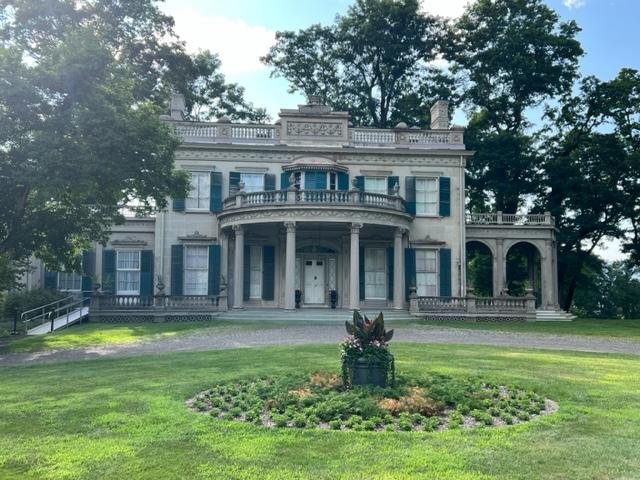
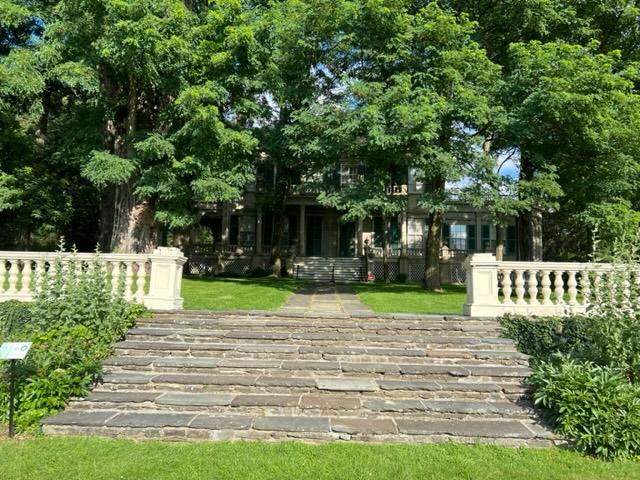
The front of Montgomery Place in the summer of 2023

On a recent trip to the Hudson River Valley for Fall events I took a tour of Bard Campus to visit their campus and tour Montgomery Place which the college bought from the Hudson River Historical Society in 2016. It is now part of the campus and you can tour the grounds but not the inside of the house.

The back of Montgomery Place

Montgomery Place on the Bard College Campus

Before 2016 when the house was owned by the Historic Hudson Valley Society, who used to have tours of the mansion. When the family sold the mansion and all its contents to the Society, they left the house untouched when they moved out you got to see how the Livingston family lived not just in current times but with all the historical furniture that came with the house.

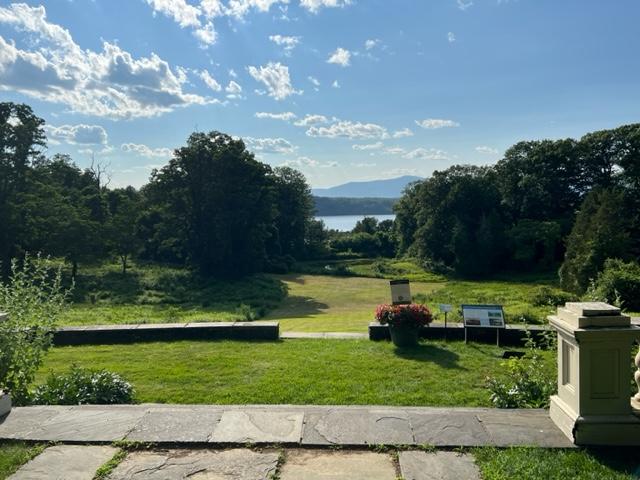
The view from the house to the Hudson River

The gardens from the back of the house

The former tour used to take you through each room that had antique furniture and decorations but much of the house had been modernized over the years. Older furnishings had either been conserved or slipcovered because of age. Since the house has been sold to Bard College, you can only tour the house by appointment only through the college.

The mansion’s portico overlooking the Hudson River

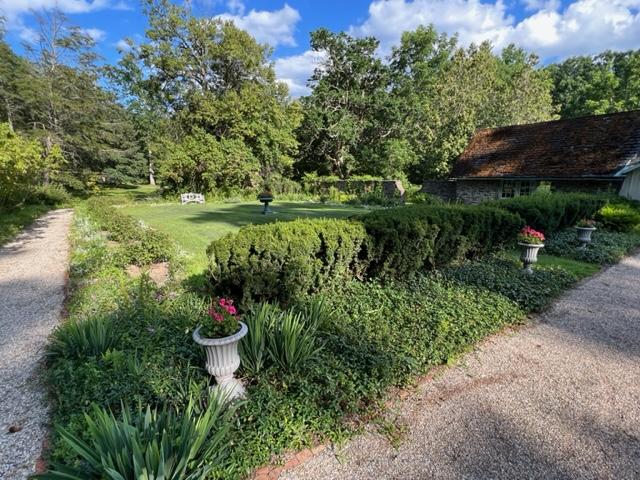
The grounds are still impressive. During the Spring, the formal gardens next to the house are in full bloom and the last time I had taken a tour there, the gardens were being maintained by a local garden club.

The entrance to the Montgomery Place gardens

There were flower beds, herb gardens and cutting gardens on top of the flowing lawns from the house to the river. The gardens are broken into three different sections: the Eclipse Gardens, the Wilderness Gardens and the Walled Gardens. Each of them connects to the other and some have returned to their natural state over time and care of them.

The Montgomery Place Gardens are changing from Summer to Fall

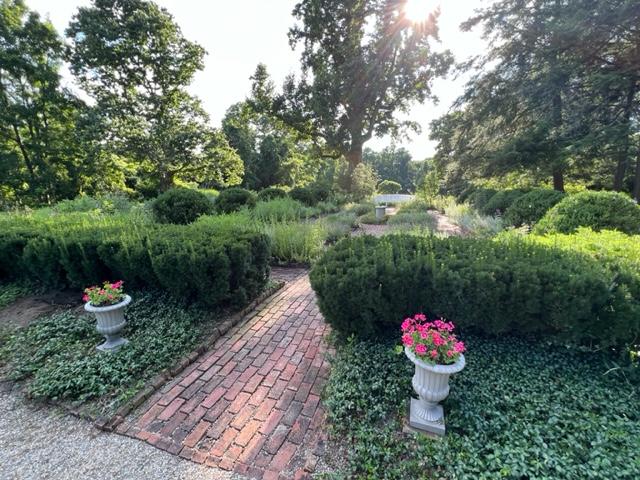
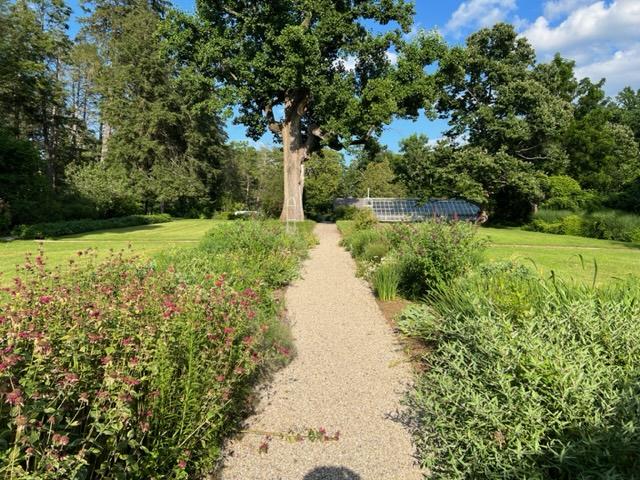
Pathways through the gardens

The gardens were developed over time from Louise Livingston’s day to her daughter, Clara Livingston Barton and her husband building on them the to Delafield family, who were the last owners of the house maintaining and adding to them.

The formal gardens

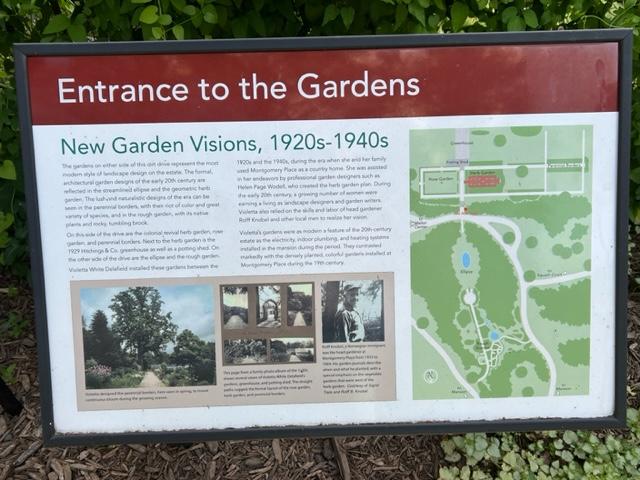
The Garden Sign of the Ellipse and Rough Gardens

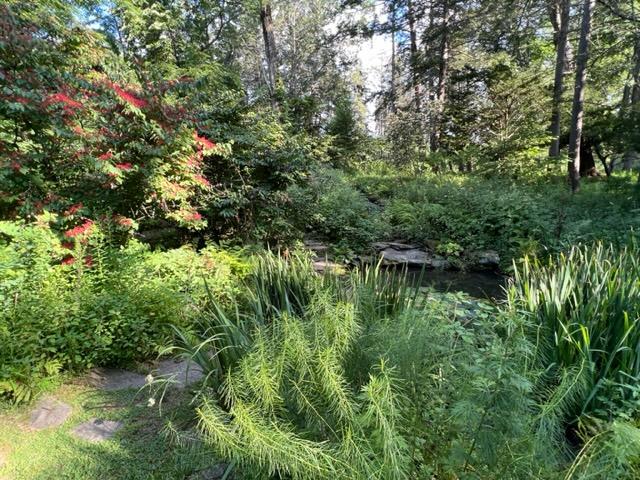
The Rough Garden

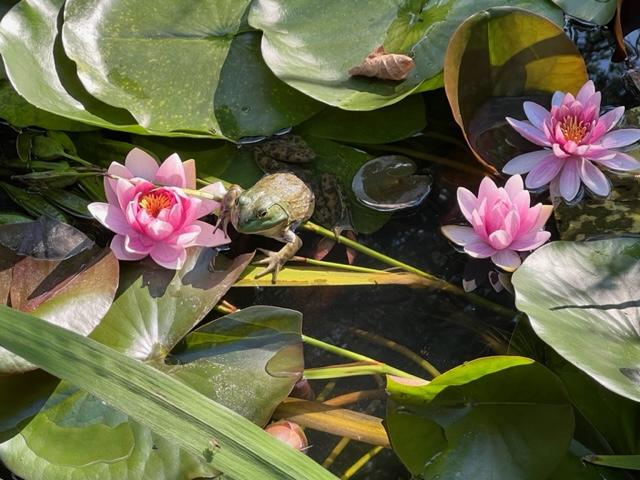
The Rough Garden was in full bloom with lotus and frogs all over the pond

The Ecllipse Garden has gone back to nature in comparison to the garden’s original plans

In the Fall on a recent visit, most of the gardens had been cut back with a few seasonal flowering bushes still showing color. The trees surrounding the house were turning a gold hue while the lawn that had been freshly cut was still emerald green. The house while a little worn from the outside still looked like it was ready to receive guests for the Fall season in the Hudson River Valley. The views from the back of the house are breathtaking from the window views of the Hudson River and the paths leading to it.

The Garden sign

In the Summer of 2023, the mansion grounds are open until dusk for people to walk around the estate and visit the gardens. The gardens were in bloom with summer flowers and plantings. The Rough Garden with it ponds were full of frogs who were making all sorts of noise. I had not seen a frog in the wild in many years and you just don’t see those and turtles anymore in the woods. The mansion is still not open except by appointment through the college.

The formal gardens in the summer of 2023

The grounds are well maintained but there is more detail in the maintenance of the gardens that are needed. They could use some weeding with all the crabgrass coming into the beds. Still the gardens are breathtaking on a warm sunny day and make quite an impression. They must have been something when the family maintained them with their gardeners.

the beauty of the formal gardens

There are all sorts of hiking trails to the Sawkill River and through the forests, a trail down to the Hudson River and tours of the property. The grounds are open from dawn to dusk and there is plenty of parking by the Visitor’s Center along with a history of the estate.

The History of the Estate:

(Taken from Wiki)

https://en.wikipedia.org/wiki/Montgomery_Place

The property had been home Native Americans for at least 5,000 years as a seasonal hunting ground. The Dutch settled in the area in the late 18th century using the Saw Kill River for various mills.

In the late 1770’s, Janet Livingston Montgomery purchased from Abraham Van Benthuysen 242 acres of land on the Hudson River after the death of her husband General Richard Montgomery at the Battle of Quebec. She moved into the home they built after the Revolutionary War. She later had plans made for a Federal style mansion on the riverfront property she bought and moved into her new home, Chateau de Montgomery, in 1805. She established a working farm with the help of friends who gave her tree samples (Wiki).

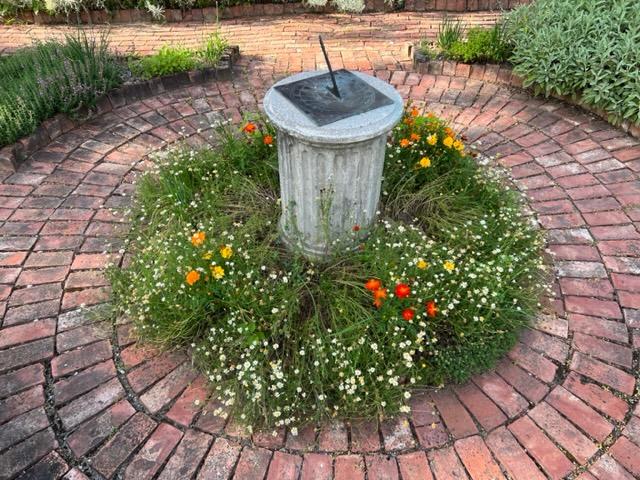
The Sun Dial in the Walled Garden during the summer of 2023.

Upon her death in 1828, the mansion was inherited by her brother, Edward Livingston. He had spent his summers vacationing here with his wife, Louise. They renamed the estate ‘Montgomery Place’. He died the next year and his wife, Louise hired Alexander Jackson Davis to convert the mansion into a more ornate villa. Two wings and exterior decoration were added at this time of the renovation. With the help of Andrew Jackson Downing, a friend of Louise’s and mentor to Davis, she developing the landscapes. Her daughter, Cora Barton worked with the architect on designing garden and conservatory (Wiki).

The front of the mansion

The back of the mansion from the grassy gardens facing the Hudson River

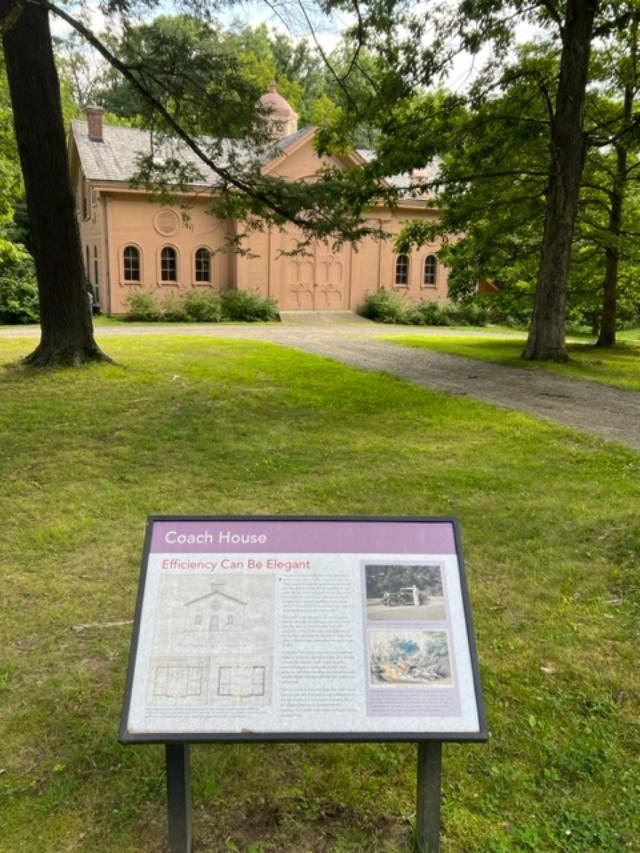
Upon Louise’s death in 1860, Cora and her husband hired Davis again to build some the earlier outbuildings including Coach House, Swiss Cottage and farmhouse and then extended the landscaping to turn the estate into more ‘pleasure grounds’ and have a separation from the farming operations.

The Coach House for Carriages and then cars

The house then passed on to another relative in 1921, John Ross Delafield who added heating and modern plumbing to the house. He and his wife also extended the gardens on the estate as well (Wiki). The gardens had more ornate features to them.

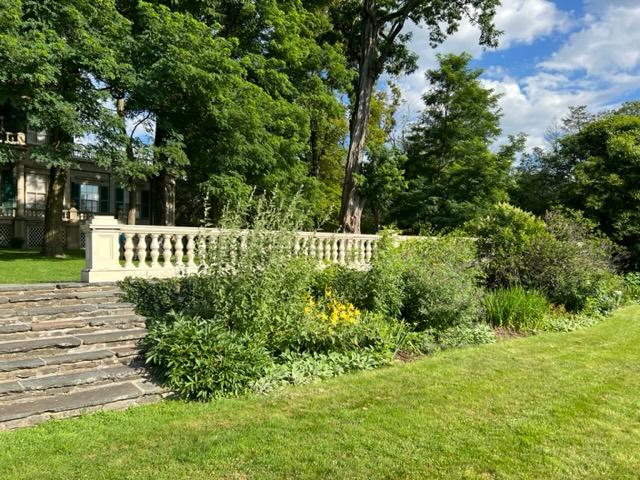
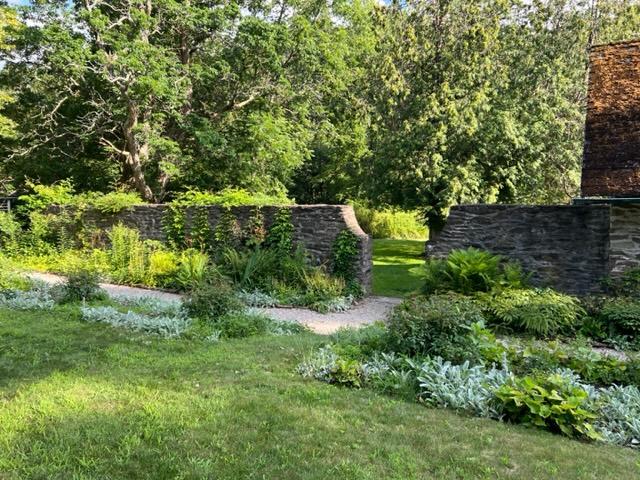
The “Walled Gardens” to the right of the mansion

Upon his death, his son John White Delafield inherited the house and they opened two corporations to own and operate the property.

The expansion of the gardens

In 1981, the estate was sold to the Historic Hudson Valley, the historical society. After an extensive renovation, the house was designated a National Historic Landmark in 1992 and it was bought by Bard College in 2016 who is its current owner (Wiki).

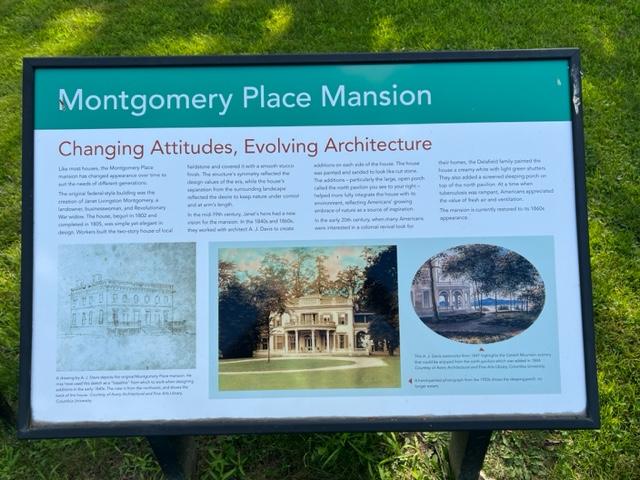
The Montgomery Place Mansion sign and the evolution of the home.