Tag: Historic Home of the Hudson River Valley

Montgomery Place-Bard College                                                26 Gardener Way & River Road                                            Red Hook, NY 12571

Montgomery Place-Bard College 26 Gardener Way & River Road Red Hook, NY 12571

Montgomery Place-Bard College

26 Gardener Way & River Road

Red Hook, NY 12571

https://www.bard.edu/montgomeryplace/

Open: Sunday-Saturday From Dawn to Dusk/Mansion is closed

My review on TripAdvisor:
https://www.tripadvisor.com/Attraction_Review-g29820-d209648-Reviews-Montgomery_Place-Annandale_on_Hudson_New_York.html

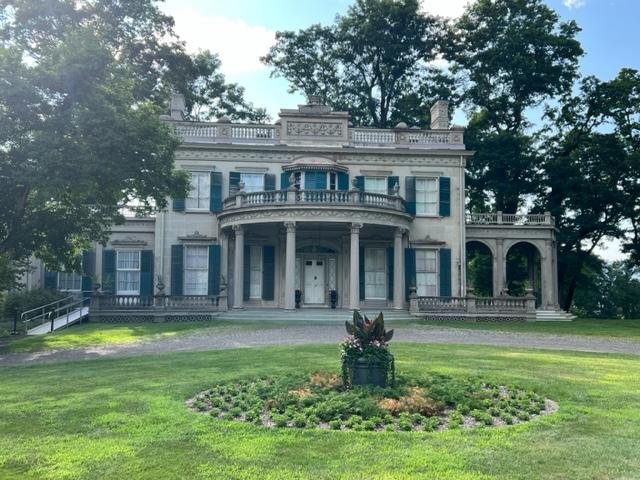
The front of Montgomery Place in the summer of 2023

On a recent trip to the Hudson River Valley for Fall events I took a tour of Bard Campus to visit their campus and tour Montgomery Place which the college bought from the Hudson River Historical Society in 2016. It is now part of the campus and you can tour the grounds but not the inside of the house.

The back of Montgomery Place

Montgomery Place on the Bard College Campus

Before 2016 when the house was owned by the Historic Hudson Valley Society, who used to have tours of the mansion. When the family sold the mansion and all its contents to the Society, they left the house untouched when they moved out you got to see how the Livingston family lived not just in current times but with all the historical furniture that came with the house.
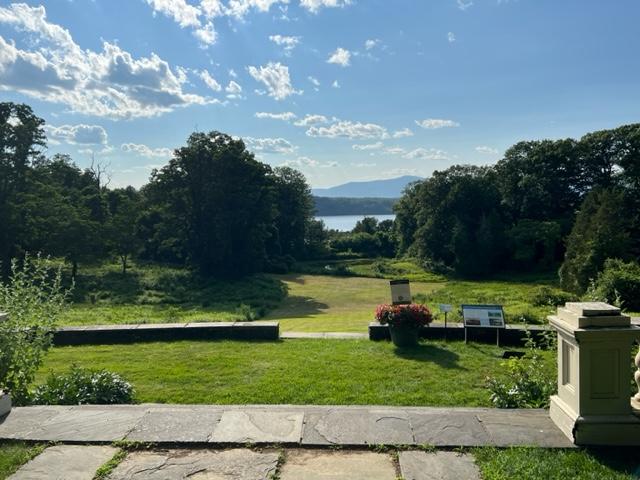
The view from the house to the Hudson River
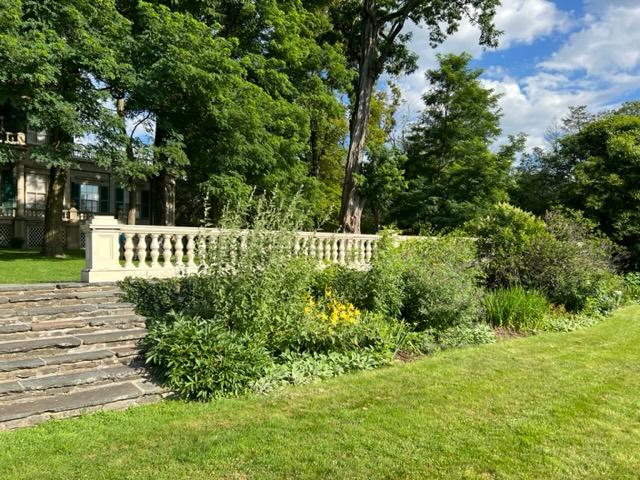
The gardens from the back of the house

The former tour used to take you through each room that had antique furniture and decorations but much of the house had been modernized over the years. Older furnishings had either been conserved or slipcovered because of age. Since the house has been sold to Bard College, you can only tour the house by appointment only through the college.

The mansion’s portico overlooking the Hudson River

The grounds are still impressive. During the Spring, the formal gardens next to the house are in full bloom and the last time I had taken a tour there, the gardens were being maintained by a local garden club.

The entrance to the Montgomery Place gardens

There were flower beds, herb gardens and cutting gardens on top of the flowing lawns from the house to the river. The gardens are broken into three different sections: the Eclipse Gardens, the Wilderness Gardens and the Walled Gardens. Each of them connects to the other and some have returned to their natural state over time and care of them.
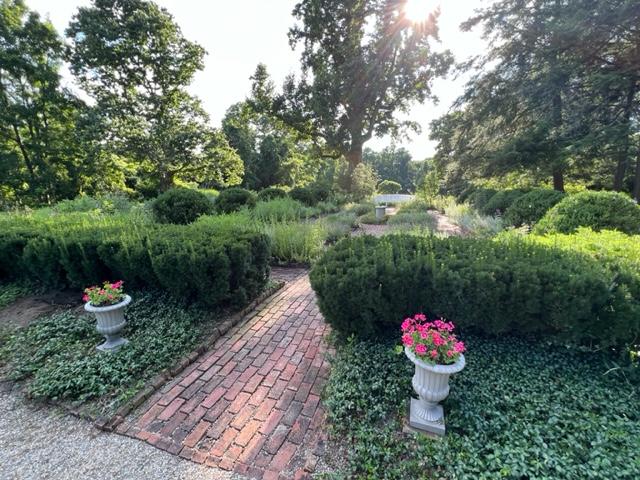
The Montgomery Place Gardens are changing from Summer to Fall
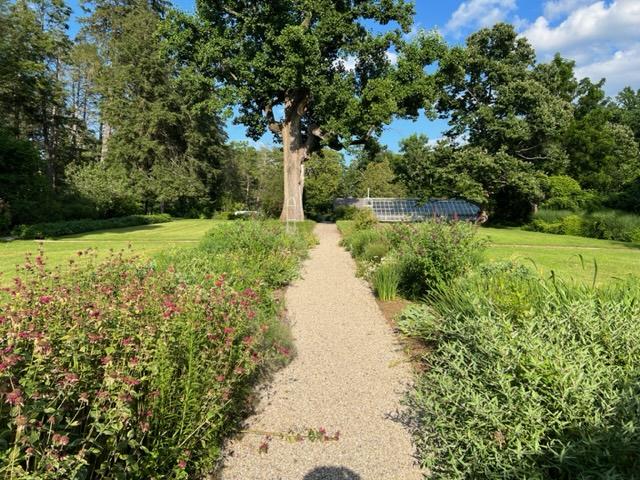
Pathways through the gardens

The gardens were developed over time from Louise Livingston’s day to her daughter, Clara Livingston Barton and her husband building on them the to Delafield family, who were the last owners of the house maintaining and adding to them.
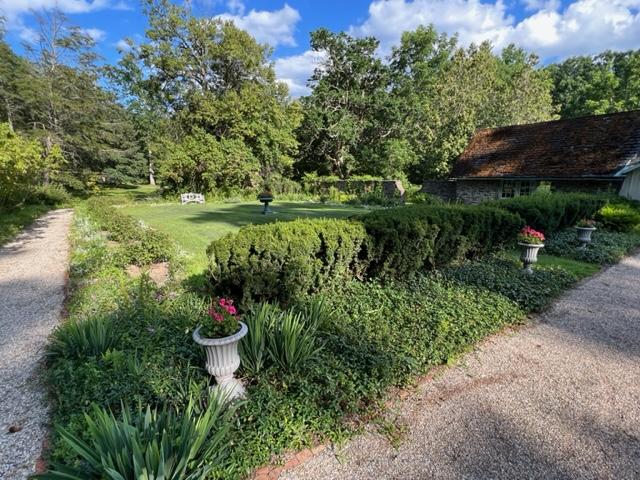
The formal gardens

The Garden Sign of the Ellipse and Rough Gardens
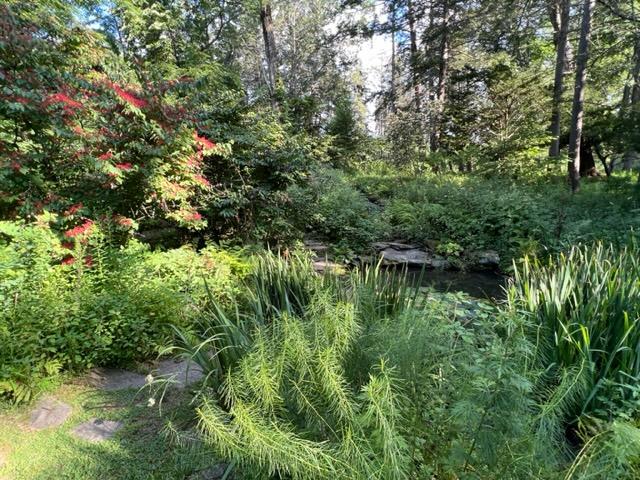
The Rough Garden
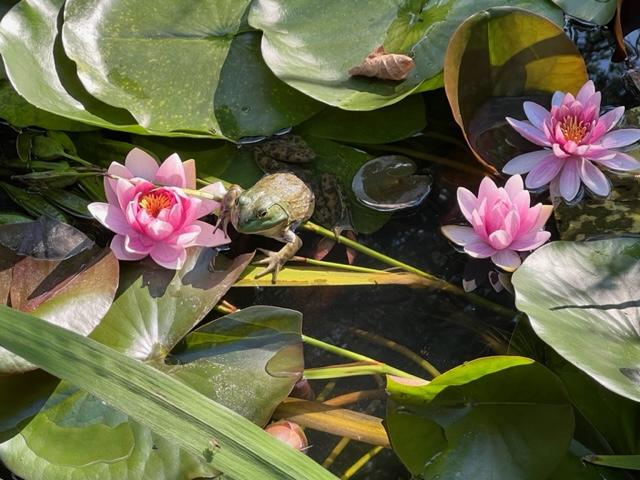
The Rough Garden was in full bloom with lotus and frogs all over the pond

The Ecllipse Garden has gone back to nature in comparison to the garden’s original plans

In the Fall on a recent visit, most of the gardens had been cut back with a few seasonal flowering bushes still showing color. The trees surrounding the house were turning a gold hue while the lawn that had been freshly cut was still emerald green. The house while a little worn from the outside still looked like it was ready to receive guests for the Fall season in the Hudson River Valley. The views from the back of the house are breathtaking from the window views of the Hudson River and the paths leading to it.
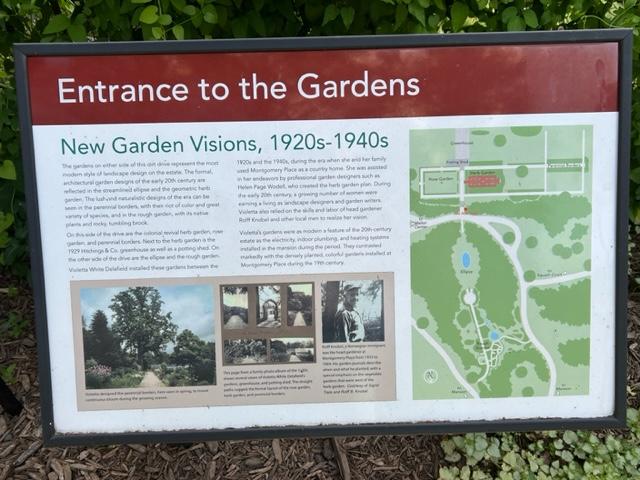
The Garden sign

In the Summer of 2023, the mansion grounds are open until dusk for people to walk around the estate and visit the gardens. The gardens were in bloom with summer flowers and plantings. The Rough Garden with it ponds were full of frogs who were making all sorts of noise. I had not seen a frog in the wild in many years and you just don’t see those and turtles anymore in the woods. The mansion is still not open except by appointment through the college.

The formal gardens in the summer of 2023

The grounds are well maintained but there is more detail in the maintenance of the gardens that are needed. They could use some weeding with all the crabgrass coming into the beds. Still the gardens are breathtaking on a warm sunny day and make quite an impression. They must have been something when the family maintained them with their gardeners.

the beauty of the formal gardens

There are all sorts of hiking trails to the Sawkill River and through the forests, a trail down to the Hudson River and tours of the property. The grounds are open from dawn to dusk and there is plenty of parking by the Visitor’s Center along with a history of the estate.

The History of the Estate:

(Taken from Wiki)

https://en.wikipedia.org/wiki/Montgomery_Place

The property had been home Native Americans for at least 5,000 years as a seasonal hunting ground. The Dutch settled in the area in the late 18th century using the Saw Kill River for various mills.

In the late 1770’s, Janet Livingston Montgomery purchased from Abraham Van Benthuysen 242 acres of land on the Hudson River after the death of her husband General Richard Montgomery at the Battle of Quebec. She moved into the home they built after the Revolutionary War. She later had plans made for a Federal style mansion on the riverfront property she bought and moved into her new home, Chateau de Montgomery, in 1805. She established a working farm with the help of friends who gave her tree samples (Wiki).
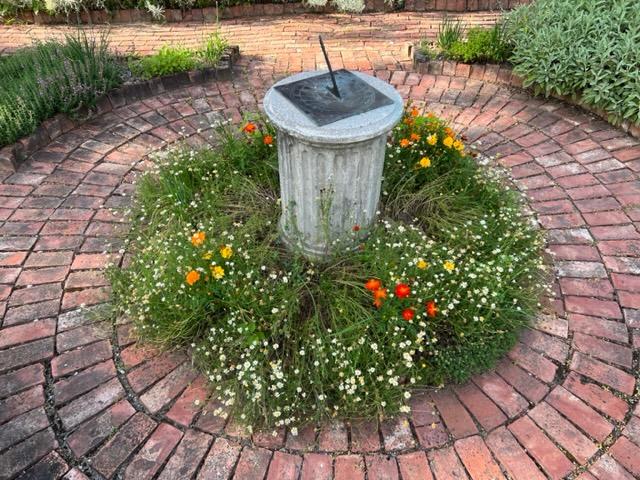
The Sun Dial in the Walled Garden during the summer of 2023.

Upon her death in 1828, the mansion was inherited by her brother, Edward Livingston. He had spent his summers vacationing here with his wife, Louise. They renamed the estate ‘Montgomery Place’. He died the next year and his wife, Louise hired Alexander Jackson Davis to convert the mansion into a more ornate villa. Two wings and exterior decoration were added at this time of the renovation. With the help of Andrew Jackson Downing, a friend of Louise’s and mentor to Davis, she developing the landscapes. Her daughter, Cora Barton worked with the architect on designing garden and conservatory (Wiki).

The front of the mansion
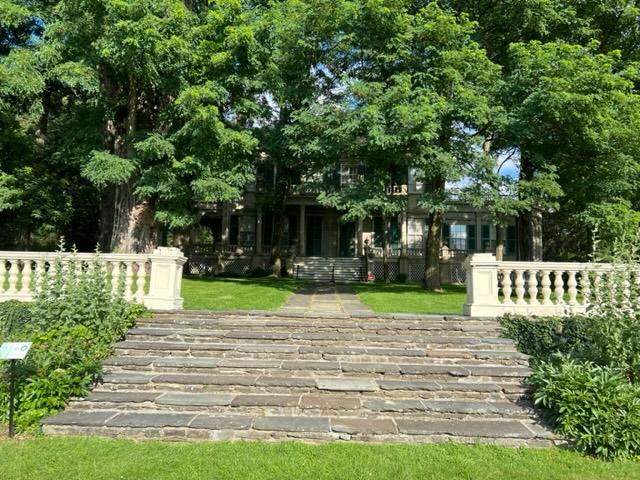
The back of the mansion from the grassy gardens facing the Hudson River

Upon Louise’s death in 1860, Cora and her husband hired Davis again to build some the earlier outbuildings including Coach House, Swiss Cottage and farmhouse and then extended the landscaping to turn the estate into more ‘pleasure grounds’ and have a separation from the farming operations.
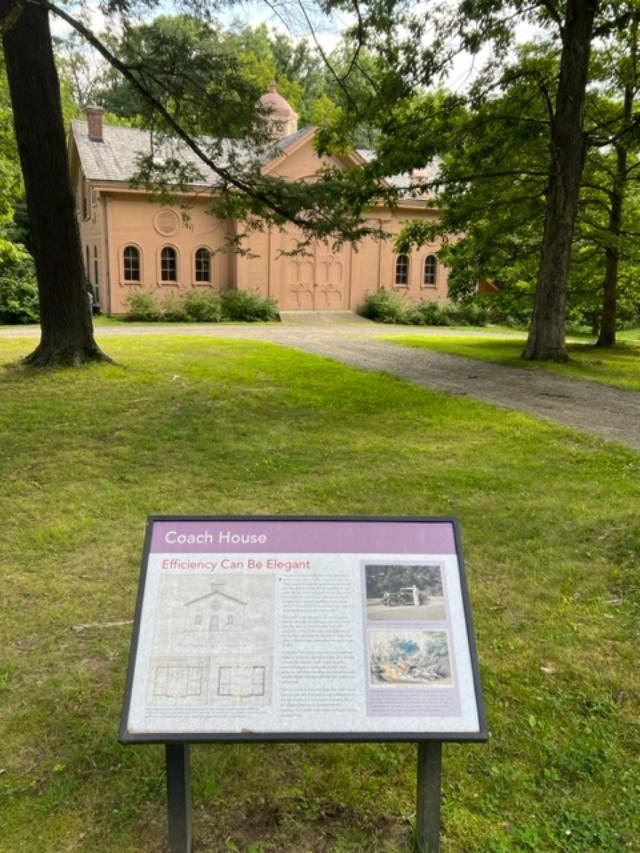
The Coach House for Carriages and then cars

The house then passed on to another relative in 1921, John Ross Delafield who added heating and modern plumbing to the house. He and his wife also extended the gardens on the estate as well (Wiki). The gardens had more ornate features to them.
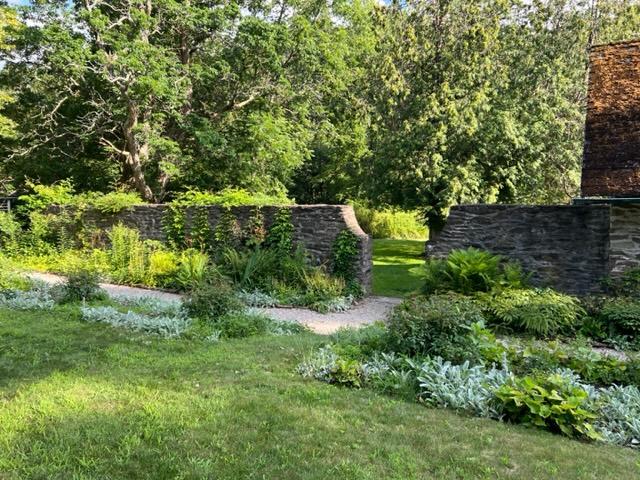
The “Walled Gardens” to the right of the mansion

Upon his death, his son John White Delafield inherited the house and they opened two corporations to own and operate the property.

The expansion of the gardens

In 1981, the estate was sold to the Historic Hudson Valley, the historical society. After an extensive renovation, the house was designated a National Historic Landmark in 1992 and it was bought by Bard College in 2016 who is its current owner (Wiki).
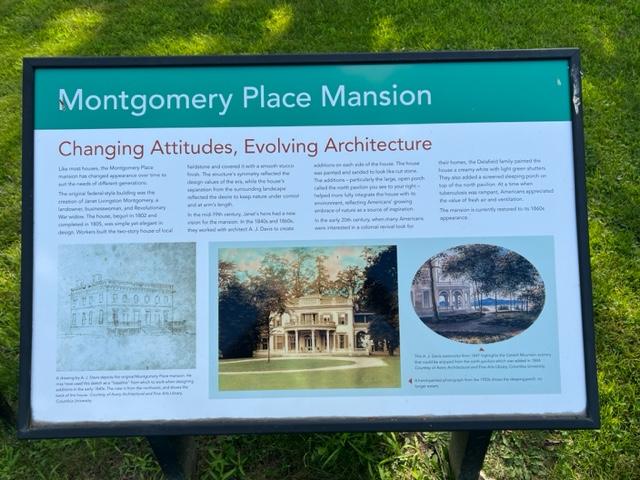
The Montgomery Place Mansion sign and the evolution of the home.

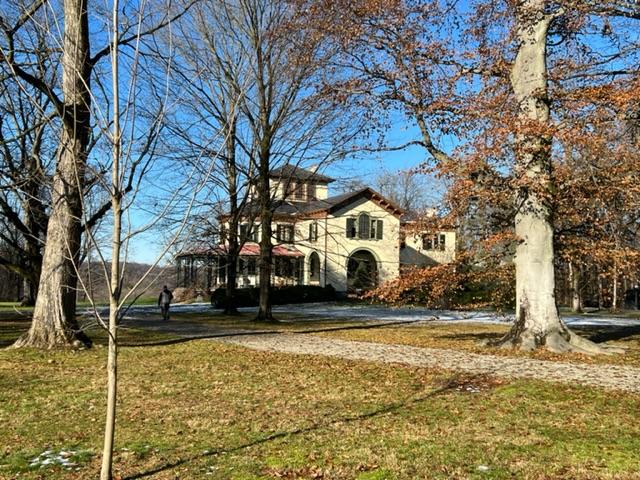
Locust Grove Estate                                                                 2683 South Road (Route 9)                                    Poughkeepsie, NY 12601

Locust Grove Estate 2683 South Road (Route 9) Poughkeepsie, NY 12601

Locust Grove: A National Historic Landmark

2683 South Road (Route 9)

Poughkeepsie, NY  12601

(845) 454-4500

http://www.lgny.org

https://www.lgny.org/

Open: Seasonal-See Below

Visitor Information: The gardens and grounds are open year round from 8:00am to dusk, weather permitting.

House Tours: Offered May through November, daily from 10:00am-5:00pm and weekends in April & December. Groups tours by appointment.

Visitor Center: Open January through March, weekdays from 10:00am-5:00pm. April through December daily from 10:00am-5:00pm.

Fee: Adults $12.00/Children (6-18) $6.00

TripAdvisor Review:

https://www.tripadvisor.com/Attraction_Review-g48443-d263920-Reviews-Locust_Grove_Estate-Poughkeepsie_New_York.html?m=19905

The Locus Grove Estate

Overlooking the Hudson River, the 180 acre Locust Grove Estate includes an Italianate villa designed in 1851 by architect Alexander Jackson Davis for artist and inventor Samuel F. B. Morse.
The Locus Grove additions of the tower and back rooms

The estate, with miles of carriage roads, landscaped grounds, historic gardens and Hudson River views, was preserved as a museum and nature preserve by the Young family, whose collection of art and antiques is exhibited in the mansion’s 25 rooms.
Entering Locus Grove for the Christmas holidays

I have visited the house twice for Christmas with the mansions elaborate but tasteful displays and once in the last fall when the foliage was in full peak. The house is an interesting example of turn of the century architecture and innovation of both the Morse and Young family’s love of Locust Grove. Each added their own touch to the house.

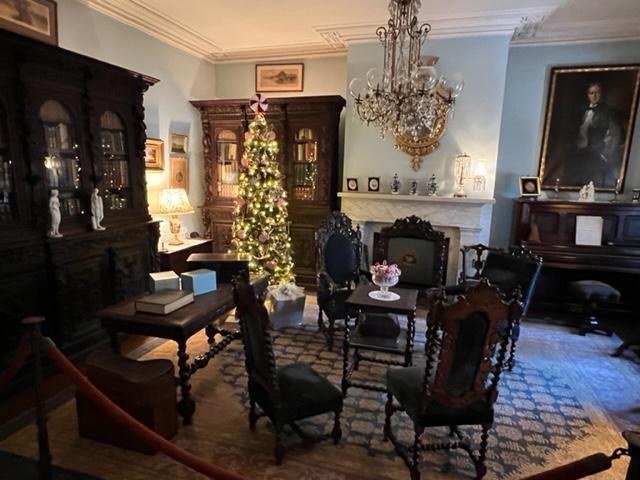
The Library right off the main hallway entrance used to be the original Dining Room when the Morse’s owned the house

The Christmas tree in the Library

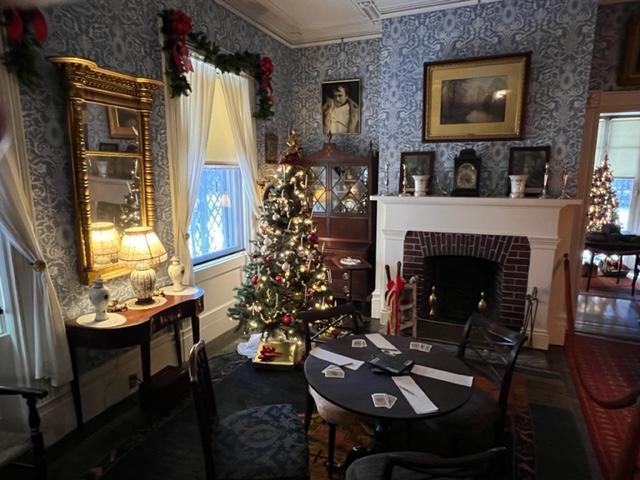
The Parlor across the hall from the Library

A closer look at the Christmas tree

During the Christmas holiday season, the house is beautifully decorated both inside and out for the holidays, with a formal tree in the back Living room, smaller trees and garland around the house on the first floor and smaller trees with presents in the bedrooms and in the Billiards room.

The Library at Locust Grove for the holidays

One of the rooms set for Afternoon Tea

One of the back offices

When the Young’s moved into the house, they needed more room for entertaining so they added the larger dining room (The Morse’s added the Tower to the home). So the old Dining Room became one of the reception rooms and a library. Some of the smaller rooms were used for social occasions so the first floor was reconfigured.

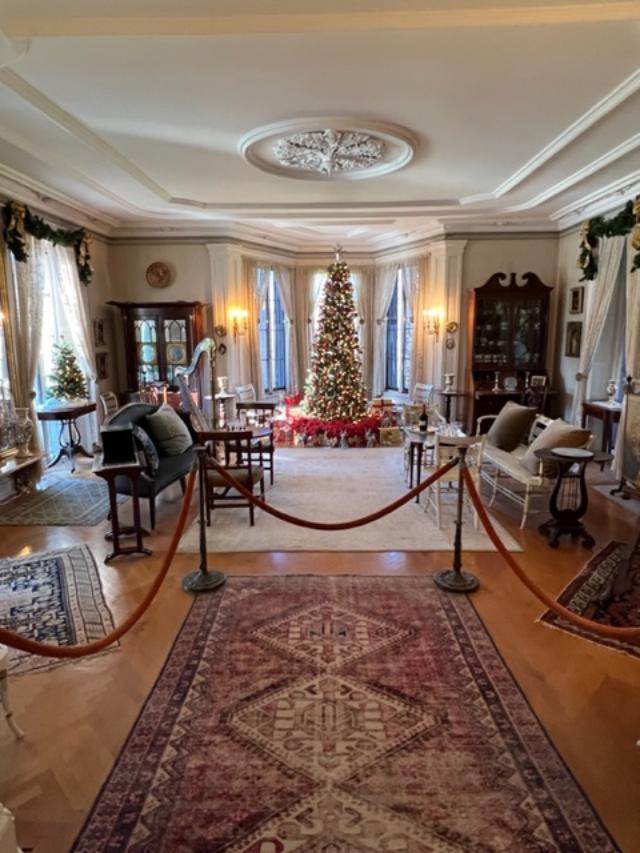
The Living Room in the Tower addition of the home

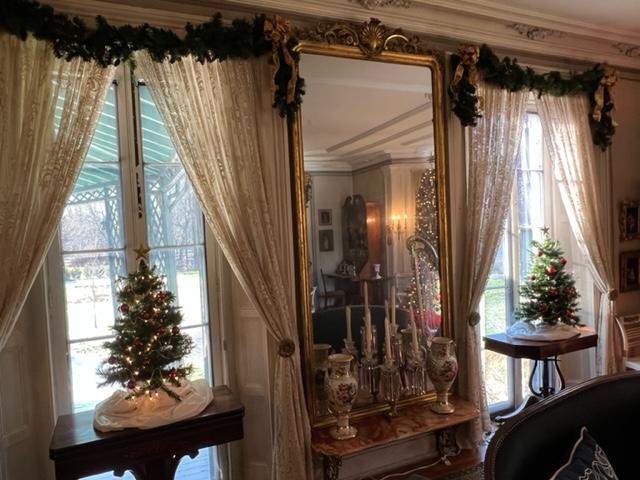
The mirror in the Living Room was the last thing left by the Morses

The larger Living Room held the most beautiful Christmas tree with a gorgeous view of the Hudson River from the back window. The room is elaborately decorated for the holidays and the volunteers created a very festive decor for the room. I do not know if the family would have decorated this much but still the halls were decked perfectly.

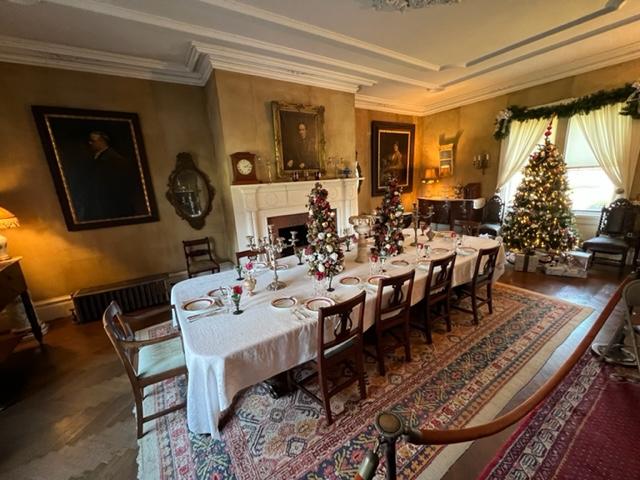
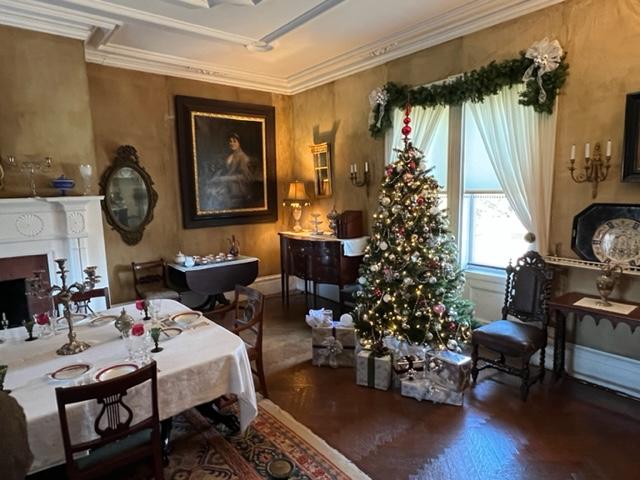
The Dining Room was set for an formal Christmas lunch with the family’s best china, crystal and silver and had displays of fruits and desserts that would have been served during the holidays. The Morse family spent their holidays in New York City so it would have been the Young’s who spent their holidays here.

The Dining Room set for Christmas lunch

The Christmas tree in the Dining Room

The Butler’s Pantry for the Dining Room

The upstairs to the bedrooms

The house had been added onto twice from the small cottage that had been built by the second owners, the Montgomery family. The back tower and wings were built by the Morse family and the formal dining room by the Young’s for their growing family.

The bedrooms were nicely decorated and the rooms had lots of Christmas decorations that you would not ordinarily see in a bedroom. Each room had its own Christmas tree.

The Master Bedroom with a breakfast nook overlooking the Hudson River

The paintings above the bed are of the Young family

The modern bathroom with hot and cold running water

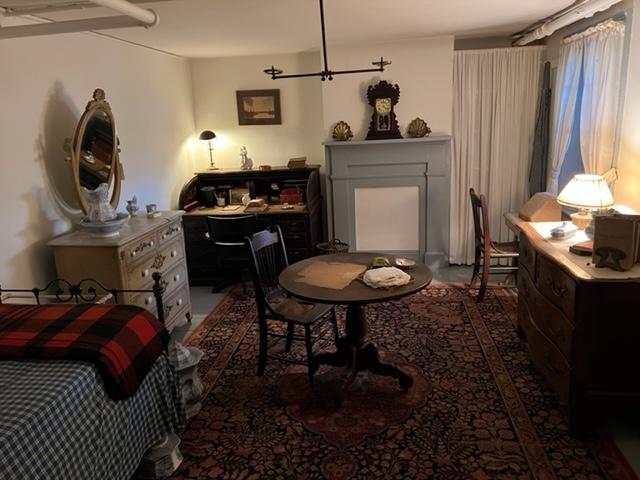
The Young’s son lived in this room until he died

The Young’s daughter lived in this room until her death

The guest rooms were also nicely decorated

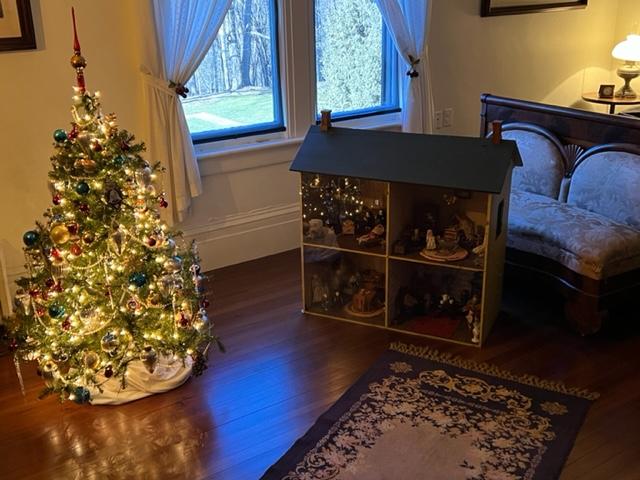
The dollhouse in the guest bedroom

Another guestroom

Guest room

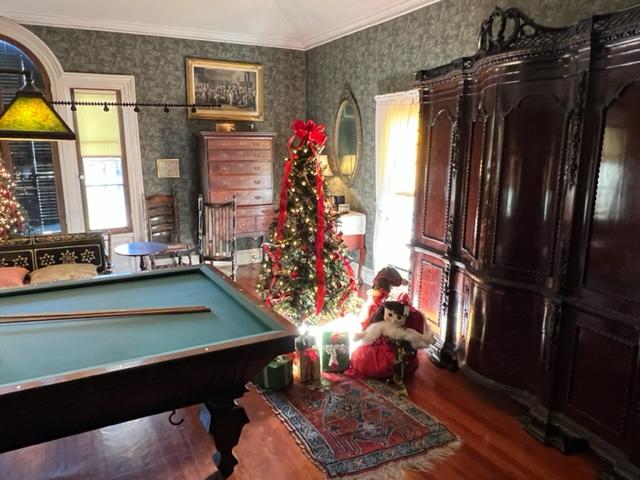
The tour guide told us that the second floor Billiards Room was once a very popular and engaging room in the house for everyone visiting. There was always a lot of action going on in this room.

The Second Floor Billiards Room

The Christmas decorations in the Billiards Room

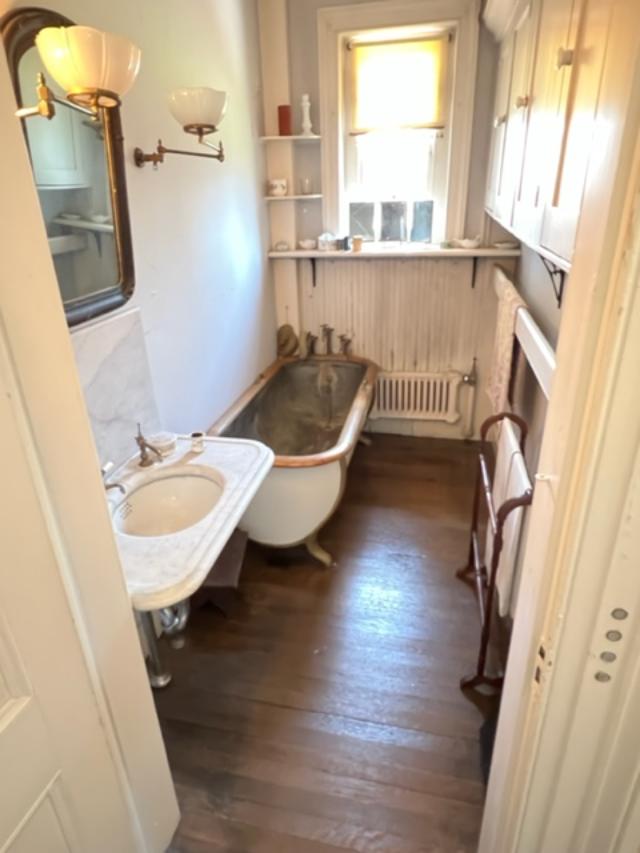
Our last stop on the second floor was the modern bathroom which was considered extremely innovative for its day. This was the most modern approach to plumbing.

The upstairs bathroom

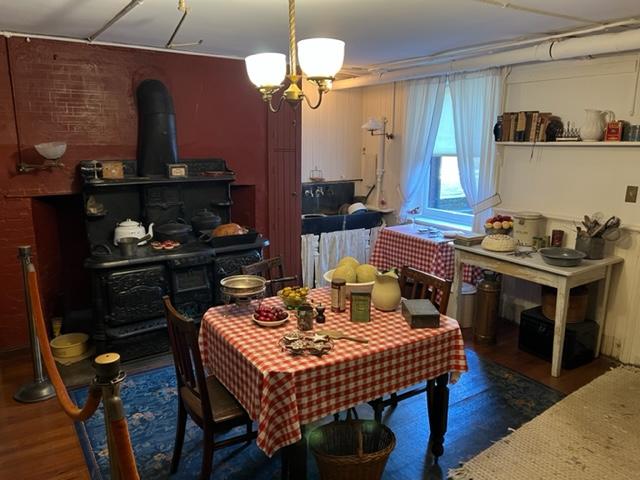
The last stop on the tour was the downstairs Servants Quarters which were also decorated for the holidays. It showed what the Servants of the household would have been doing on a daily basis to help keep the house running.

The Servants kitchen

The kitchen table in the Servants Quarters

The Servants Dining Room

Our tour guide, Ethel, did a nice job interpreting how each family would have used the house and for what occasions. The Young’s lived here full time until the last owner, Annette, died in 1975 and the Morse family used it as a summer retreat until Samuel Morse died in 1872.

locust-grove-ii.jpg

The view from the back of Locust Grove to the Hudson River during the early fall

The view to the Hudson River from the back of the house during Christmas 2022

The house is tastefully furnished both in turn of the last century decor and some more modern pieces. The grounds in the spring and summer months are in full bloom and in the fall awash with colors from the trees.

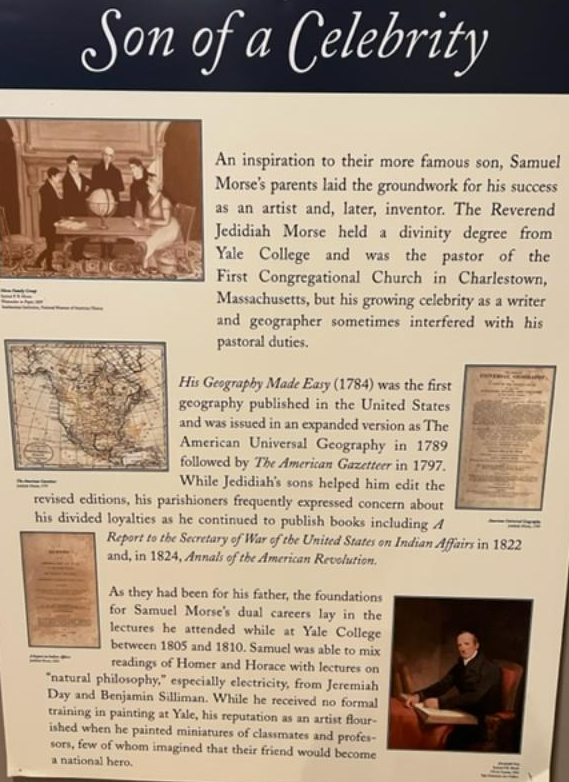
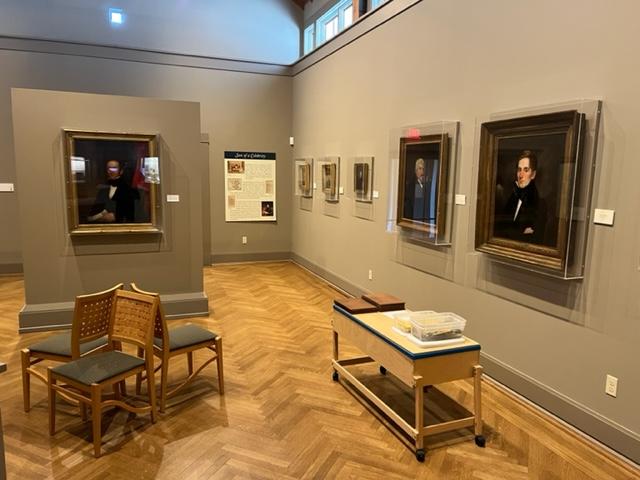
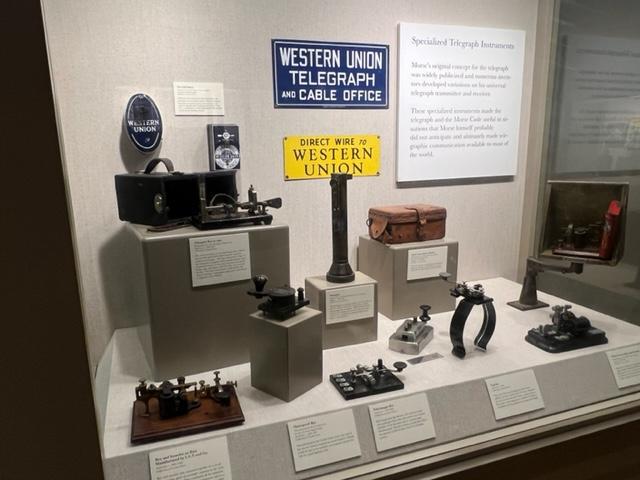
Also, don’t miss visiting the small museum of Samuel Morris’s paintings and his development of the telegraph system, where the patents is where most of the family fortune came from. Mr. Morse was an artist, educator and inventor and his life’s work is displayed in the galleries.

The Morse Family

Morse Museum: Samuel Morse family in the early Colonies

Samuel Morse with his career in portrait painting

Samuel Morse’s Portraits

Samuel Morse’s inventions and innovations with the telegraph

Samuel Morse’s innovations

The History of Locust Grove:

Locust Grove has an interesting history. The estate was first owned by Henry Livingston Jr. when he purchased the property from his father in 1771. The estate was such named because of the black locust trees that grew on the property. After his death, the estate was sold to John and Isabella Montgomery who built the original cottage on the estate. Mr. Livingston’s home had been torn down by this point.

The main house at Locust Grove is a villa in the Italianate style designed in 1850. Morse had recalled the elegant villas that he had visited years earlier in the Italian countryside and he sketched towers, windows and floor plans. Construction on the villa, sited on a dramatic bluff overlooking the Hudson River began in 1851 and was completed the following year.

He continued to expand the cottage and the gardens during his time and the family continued to use the house as a summer retreat and living in the winters in their brownstone in Gramercy Park. After Mr. Morse’s death, the family used the house occasionally and then sold it to one of their renters, the Young family.

William and Martha Young added modern amenities to the house like central heat and running water and updated the bathrooms. They added the new dining room and guest bedrooms in the new North Wing of the house. They also brought with the many family heirlooms and their decorative art collection which is still on display in the house.

After their deaths, the Young’s children, Annette and Ennis worked to preserved and restore their family’s homes in here, in New Haven, New York City and Ulster County. After the death of her brother in 1953, Annette Young continued to live at Locust Grove and began donating to museums the art, land and historic houses she inherited so that they would be protected. When she died in 1975, she established a not-for-profit foundation to ensure that Locust Grove with its collections and archives would be protected. The house is now available for touring and for weddings.

(Locust Grove History and Wiki: I give both organizations full credit for this information)

Location: Locust Grove is located on Route 9 in Poughkeepsie, NY, two miles south of the Mid-Hudson Bridge or 11 miles north of Interstate 84.

Locus Grove Gift Shop

Disclaimer: this information is taken from the Locust Grove Historic pamphlet. The site is very interesting and should be added to your list of ‘must sees’ in the area. Please call the site for more information.