Tag: Exploring Wildwood NJ

Stone Harbor Museum                                                           9410 Second Avenue                                                              Stone Harbor, NJ 08247

Stone Harbor Museum 9410 Second Avenue Stone Harbor, NJ 08247

Stone Harbor Museum

9410 Second Avenue

Stone Harbor, NJ 08247

(609) 368-7500

Home

https://www.facebook.com/stoneharbormuseum/

My review on TripAdvisor”
https://www.tripadvisor.com/Attraction_Review-g46850-d12832764-Reviews-Stone_Harbor_Museum-Stone_Harbor_Cape_May_County_New_Jersey.html

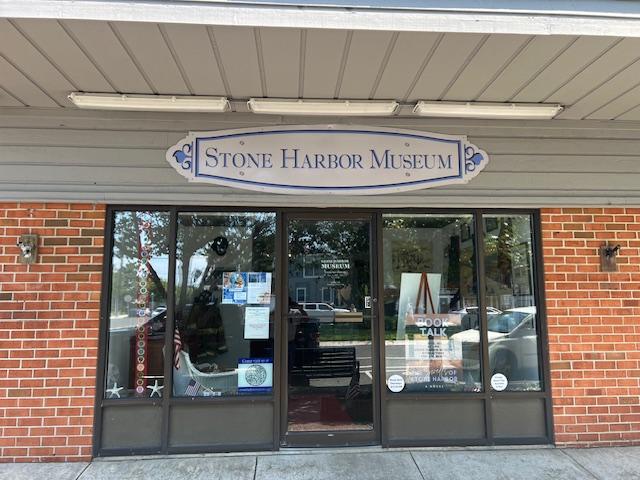
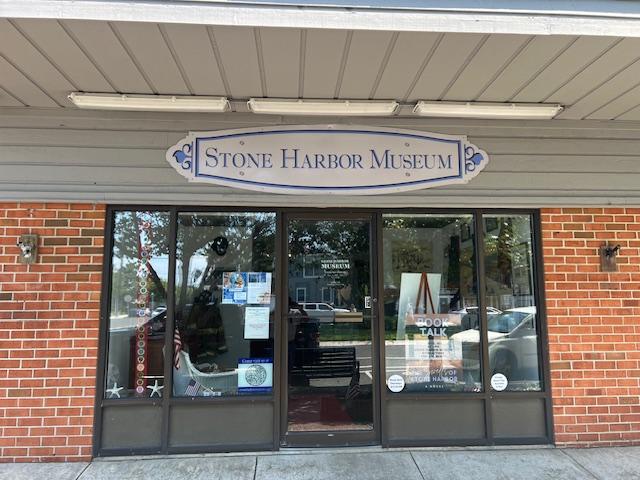
The entrance to the Stone Harbor Museum at 9410 Second Avenue

On a recent trip to the Jersey Shore, I took an long drive down the coastline visiting small historical museums of the shore towns and they gave me an interesting perspective of how these towns were developed from the time of Native American fishing and hunting villages to the advent of railroads and Victorian hotels to the modern development of the town today. Stone Harbor, NJ has had an interesting path since its development in the late 1800’s.
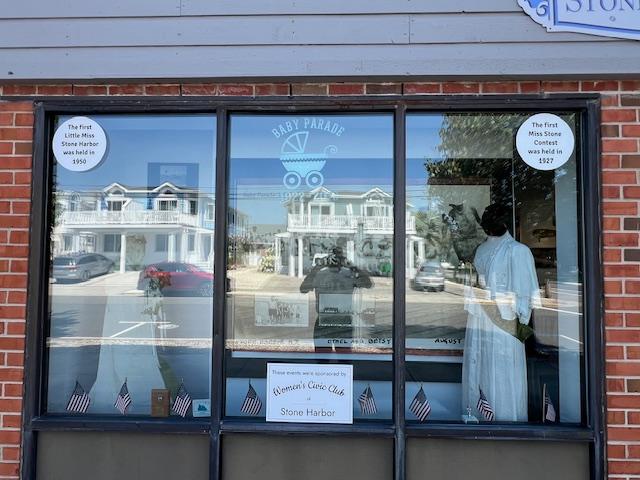
The Stone Harbor Museum display from the Women’s Civic Club of Stone Harbor

The Stone Harbor Museum was founded in 1996 by a group of involved residents who wanted to showcase their town’s history. The current museum was opened in 2016 and has many different exhibitions going on, some permanent and others are seasonal and keep rotating within the museum. When you walk in, the museum is divided by sections and displays of their museum.
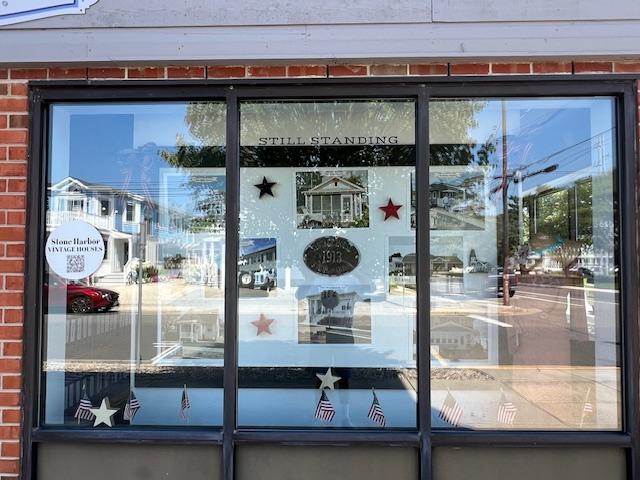
The Stone Harbor Museum Historical Window

Leading into the entrance, there was a very interesting exhibit on “9/11” for the Twentieth Anniversary of the event by a Chief from the Stone Harbor Fire Department. It was a series of articles from local and national papers, some artifacts and information on the fire service. It was a very touching reminder of what fire fighters did that horrible day.
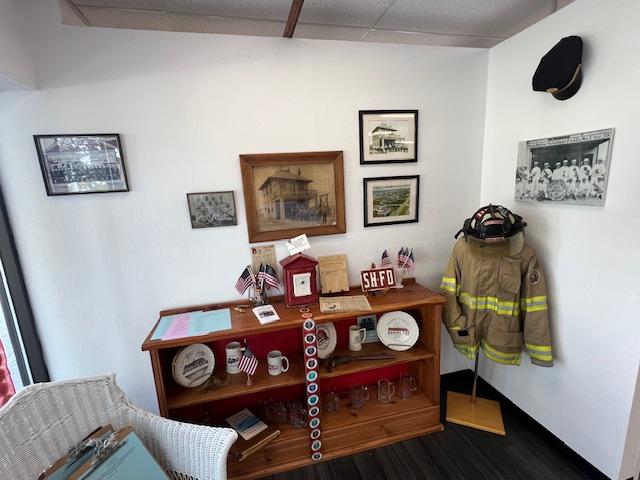
The Stone Harbor Fire Department display in 2024 (the 9/11 exhibit closed a year later)

There were many displays on the history of Stone Harbor with the Stone Harbor School System and the Borough of Stone Harbor exhibiting artifacts. Interesting pictures and items of the Stone Harbor Beach Patrol were proudly displayed which I noticed from my many stops at various historical societies on the Jersey Shore is very much a part of the town culture. These teams take their competitions amongst the towns very seriously with events like boating and swimming.
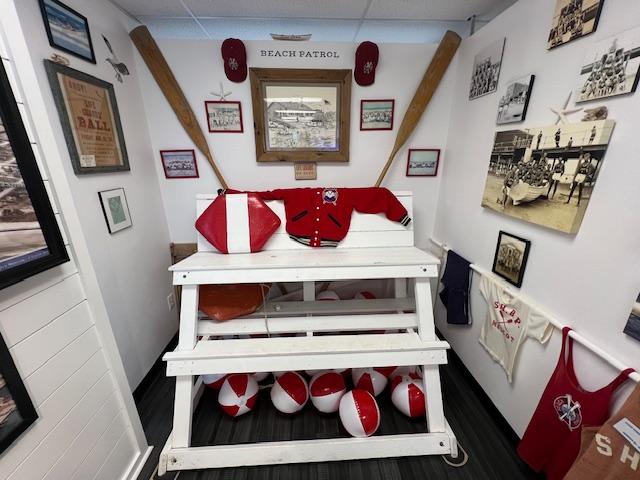
The Stone Harbor Beach Patrol display

There were many pictures of old homes at a time when the town was a Victorian beach resort and people came to the Jersey shore for extended vacations. You could see the progression of the town over a century from a seaside resort to a permanent residential town. The architecture has significantly changed over the years to slightly smaller homes but no less impressive all over the town.
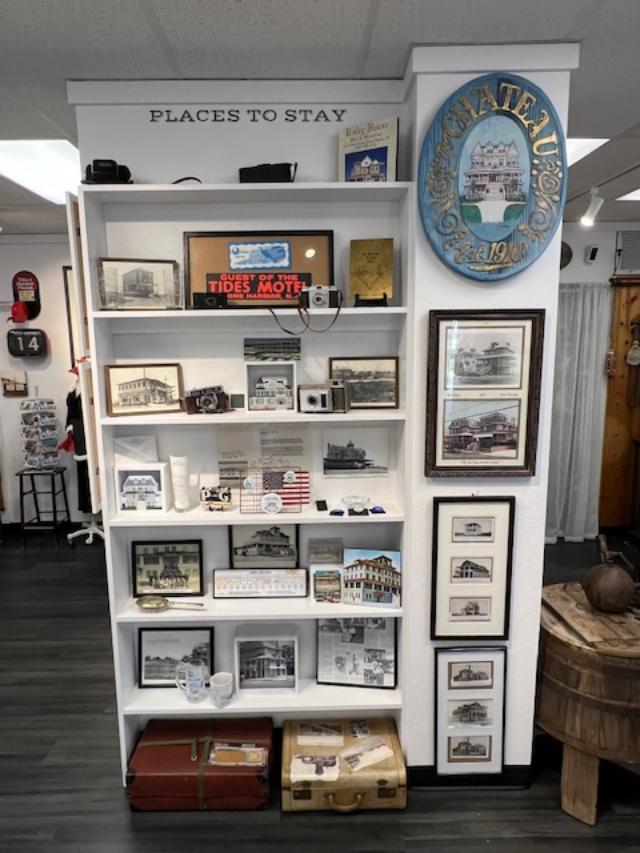
The Stone Harbor Hotels
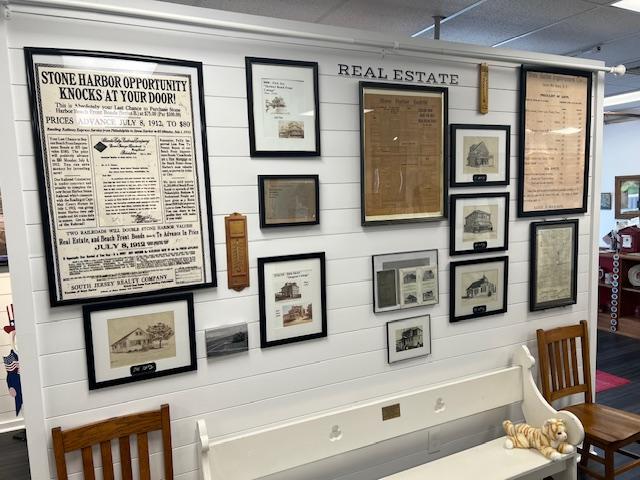
There were extensive pictures and displays of the importance of the rail system and the role it played in the growth of the area and to all shore communities. Its history pretty much ended with the advent of the Model T and the growth of cars to the Jersey shore. Soon the modern highways made the rail system obsolete.
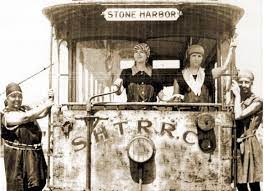
Ladies at the shore enjoying a ride

Still there are many displays of ‘fun in the sun’ and the growth of beach activities and recreation with the growth of sun bathing, swimming, boating and fishing. People’s leisure time was growing and the Jersey shore filled their time with sun bathing and swimming. The changes of attitude in swimwear have been tremendous especially from the one piece and hats to the modern bikini in just 80 years.
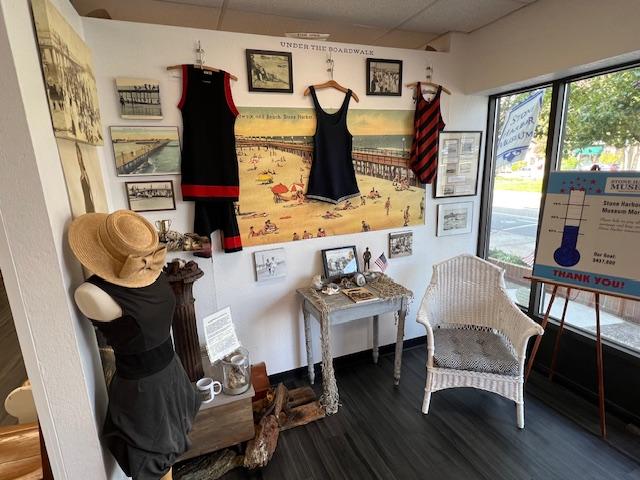
Swimwear at the turn of the last century

There were pictures and artifacts from various shipwrecks off the coast of the town. It showcased the maritime history of the town and of the Jersey shore in general. It showed the importance of the town in a era of trade that is long gone. This shipping lines too became obsolete as rail service replaced them.
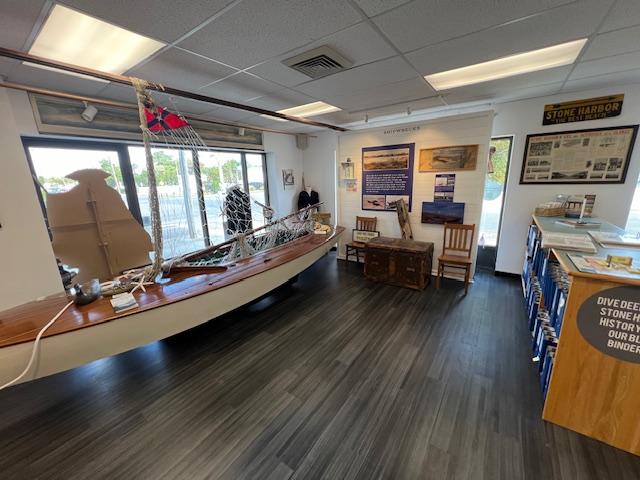
The main gallery of the museum

There was a interesting collection of items entitled Church and Faith of all the churches in the town that played such a important role in the social life of the turn of the last century. This was a time before TV, radio, the advent of movies and especially the Internet. This was at time when people’s social life revolved the social life of places of worship.
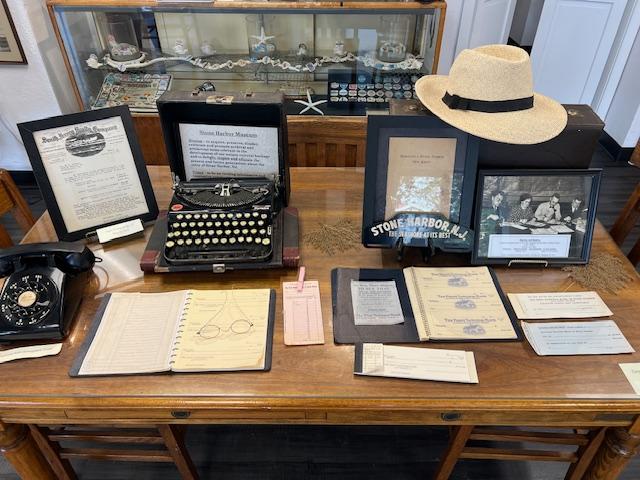
The Office Display

In the center of the museum there is an extensive library with shelves lined with notebooks full of pictures and historical details neatly bound. This is the records of the town and the citizens who have lived here over the years.
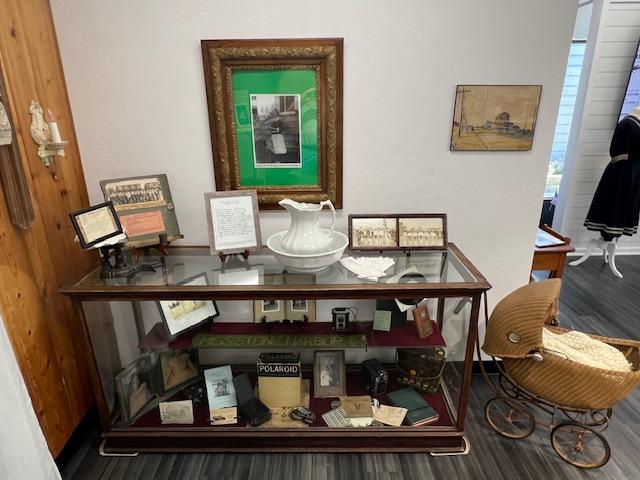
Artifacts from the town

The two big displays right now for kids has been the Taylor Swift, the famous singer, display of items that her family donated to the museum. It seems that she summered here as a child and played in the local clubs. The other was the dinosaur bone display of items found locally in the area and around New Jersey. The museum has a popular scavenger hunt for the kids where they have to find items on display.
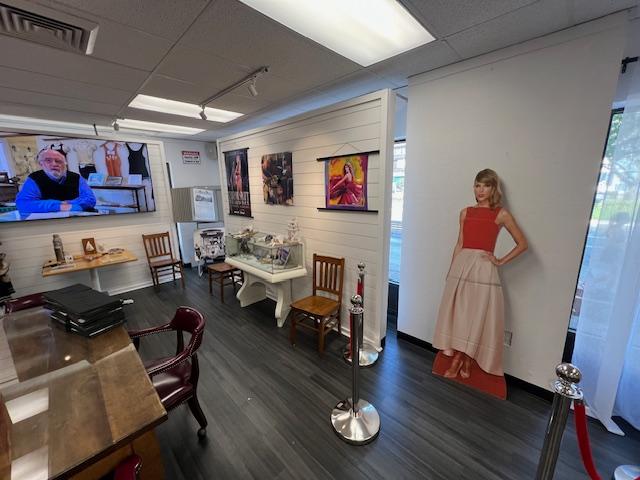
The new Taylor Swift display on the years she vacationed here
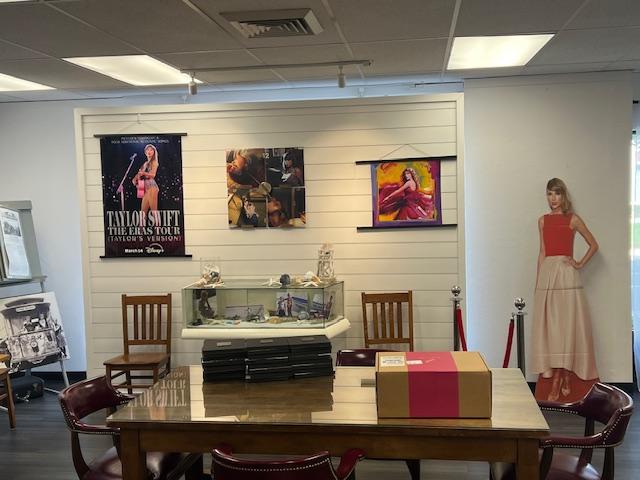
The Taylor Swift exhibition
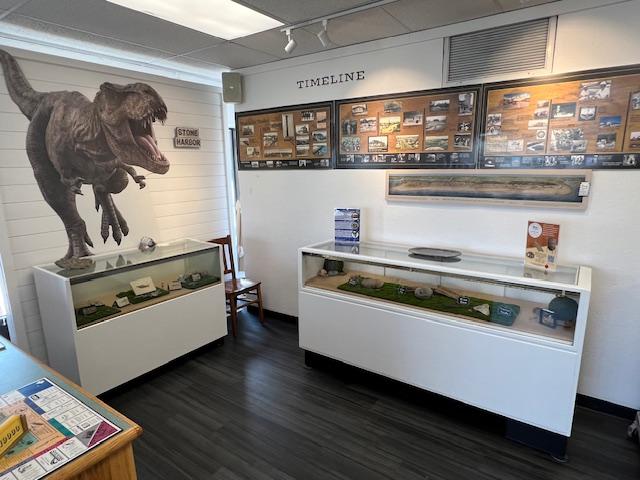
The Dinosaur Display
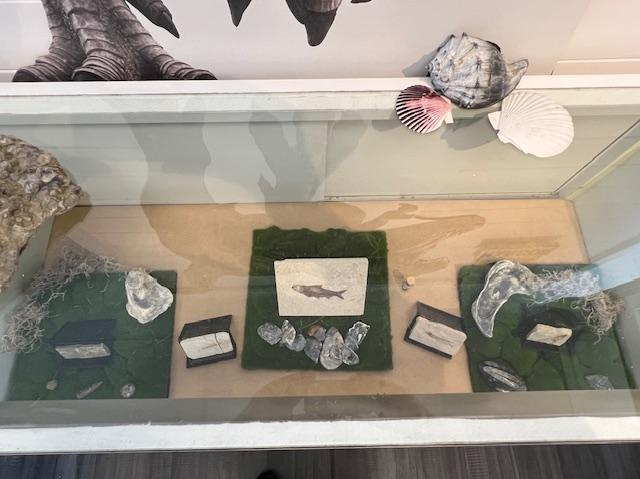
The Dinosaur display
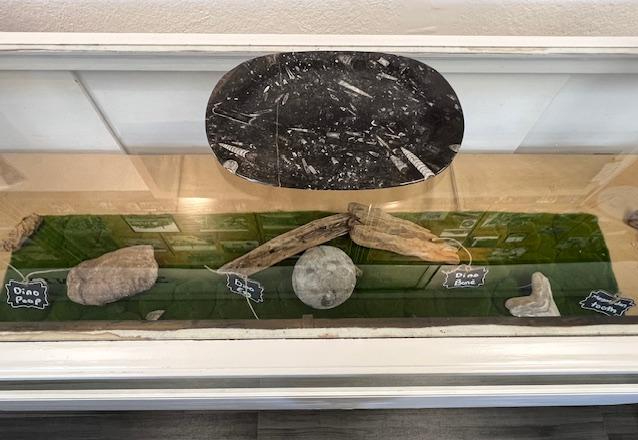
The Dinosaur display

The one thing I liked about the museum is that it does not overwhelm you when you are visiting. The exhibits are detailed but compact. You learn a lot about the town with enough information and artifacts but you can still enjoy the display in about twenty minutes to about a half hour. The whole museum takes about an hour to two hours to visit maybe more if you are really enjoying yourself.
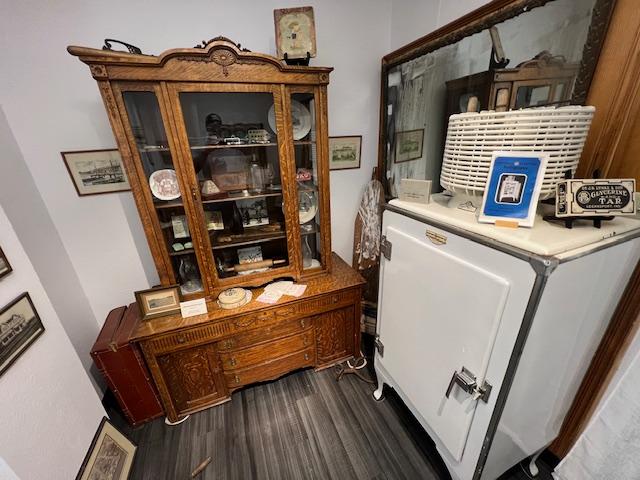
The staff could not have been nicer and take such pride in the museum. The afternoon I visited the museum one of the long time residents who volunteers at the museum was able to share her knowledge of the town. For a small town, it is chockful of interesting history.
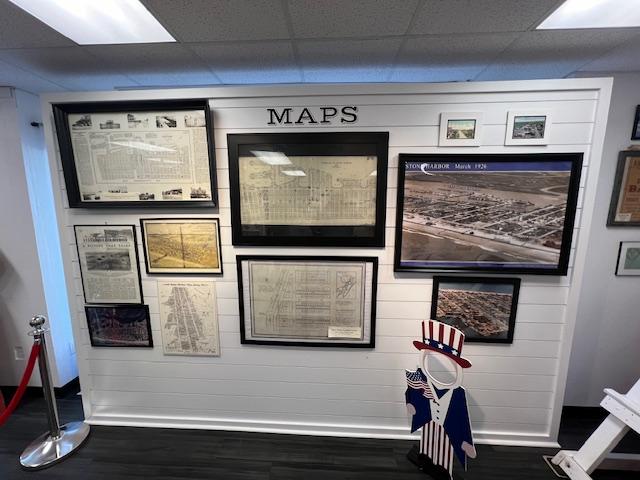
The Maps display

The Stone Harbor Museum History:

(from their website and pamphlets)

The Mission:

To acquire, preserve, display, celebrate and promote archival and artifact items relevant to the development of our unique cultural heritage and to delight, inspire and educate the present and future generations about the story of Stone Harbor, NJ.
The Vision:

To be inviting, informative and innovative community resource that is recognized and respected as the place for exploring and celebrating rich cultural heritage of Stone Harbor, NJ.
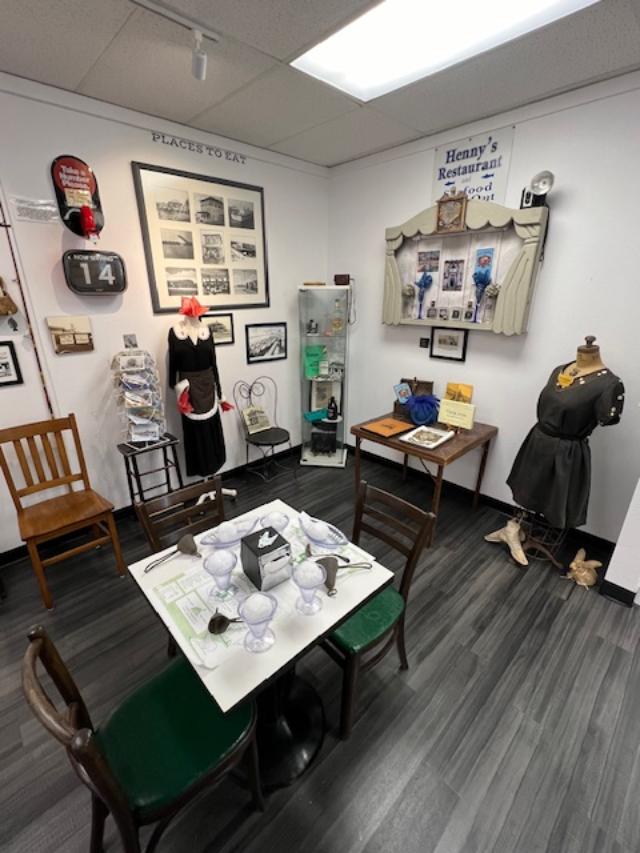
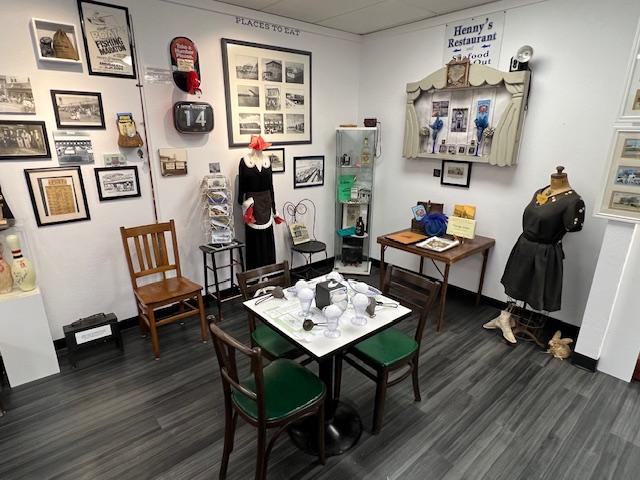
The Restaurant display

Doo Wop Preservation League Museum          4500 Ocean Avenue                                 Wildwood, NJ 08260

Doo Wop Preservation League Museum 4500 Ocean Avenue Wildwood, NJ 08260

Doo Wop Preservation League Museum

4500 Ocean Avenue

Wildwood, NJ  08260

(609) 523-1975

https://www.facebook.com/Doo-Wop-Preservation-League-The-Wildwoods-NJ-128130849267/

Open: Friday-Saturday 10:00am-2:00pm/ Closed Sunday-Thursday

Fee: Free but they ask for a donation

My review on TripAdvisor:

https://www.tripadvisor.com/Attraction_Review-g46931-d283304-Reviews-The_Doo_Wop_Preservation_League_Museum-Wildwood_Cape_May_County_New_Jersey.html?m=19905

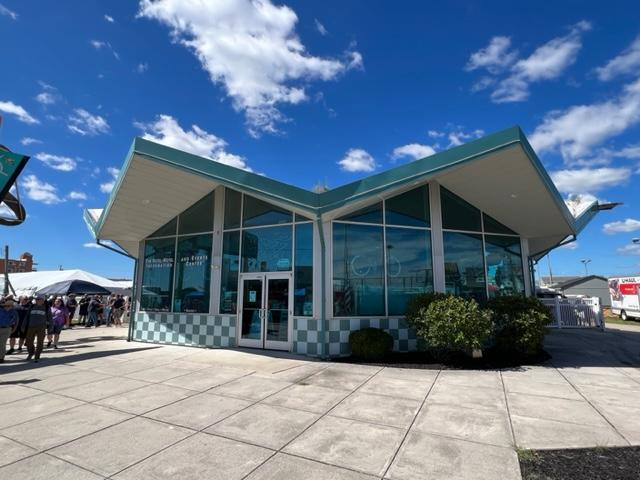
The Doo Wop Preservation League Museum at 4500 Ocean Avenue.

I visited the Doo Wop Preservation League Museum when I was visiting Wildwood, NJ for the Firemen’s Convention. They were sponsoring the DJ on the stage behind the museum. It was easy to miss the museum with all the fire equipment around it and hundreds of firemen milling around.

The neon signs in front of the Doo Wop Museum.

The old neon hotel signs outside the museum

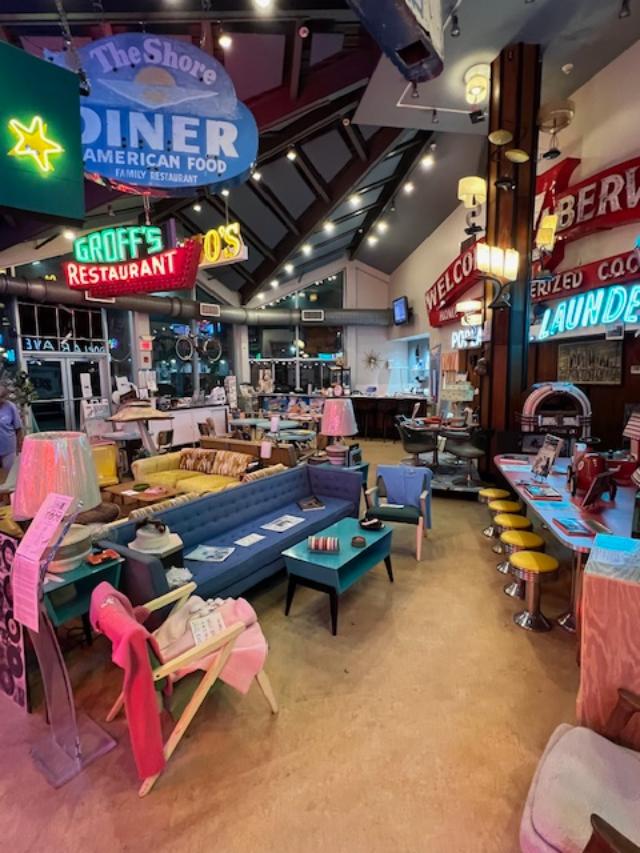
Once inside, this small museum is a treasure trove of history of the resort motels that once lined the beaches of Wildwood, Wildwood Crest and North Wildwood. As time rolls on, many of these old motels, hotels and restaurants are giving way to condos, newer homes and new chain hotels changing the landscape of Wildwood. It is bringing it into modern times with newer looks.

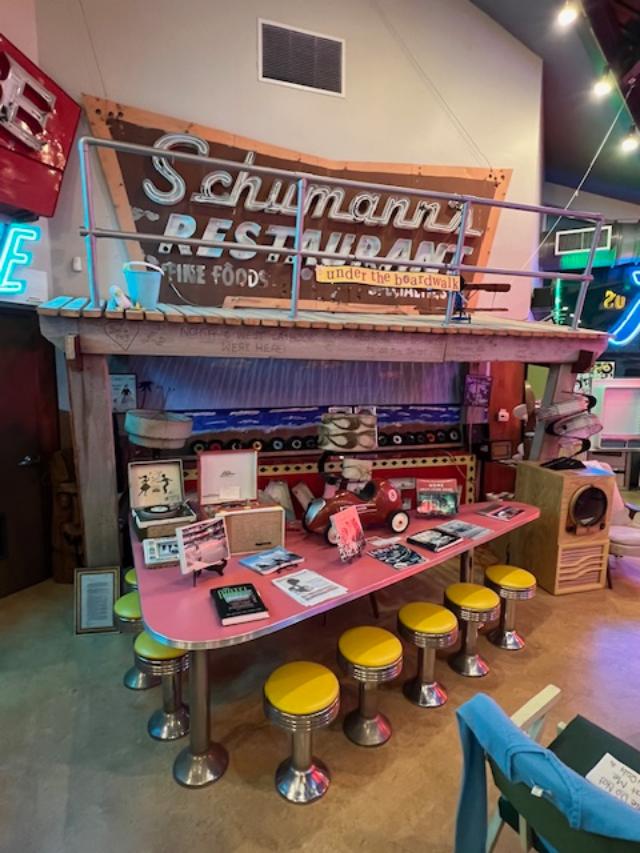
The restaurant section of the Doo Wop Museum

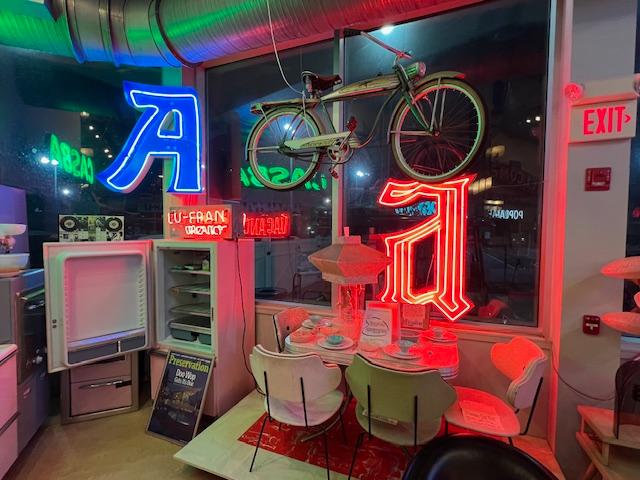
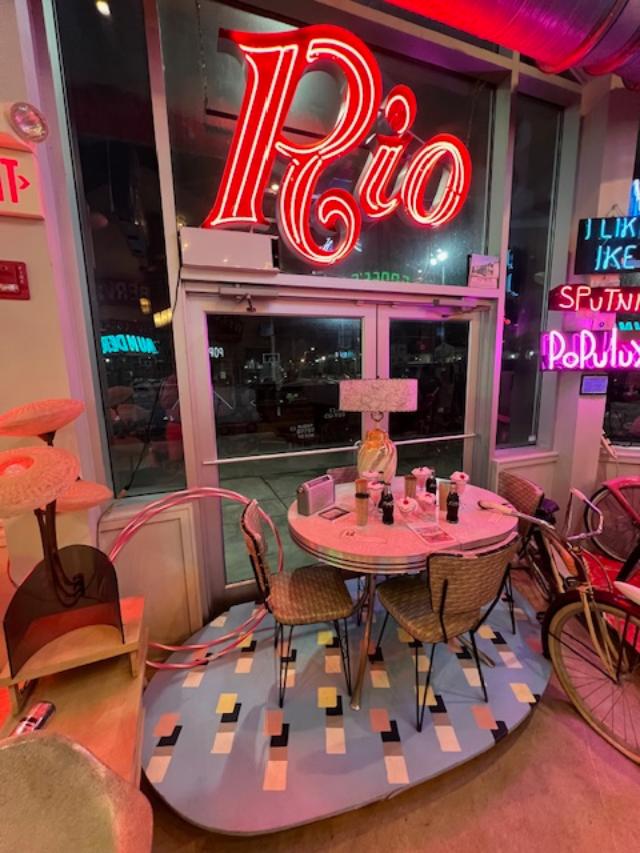
When many of these motels are torn down, the establishments donate old furnishes, decorative objects and signs from the outside to the museum. The outside of the museum is decorated with signs of businesses that are now closed, there neon lights still shining but for a different purpose. These somewhat gaudy and over-grandised signs and looks were of a time of great optimism and travel. Since the middle and working class families did not have the money to travel to these exotic places, something similar was created for them in the Wildwoods bringing that look to the Jersey shore.

The restaurant section of the Doo Wop Museum

The neon room of the 1950’s

When talking to the curators , a couple that ran the museum said that the museum represents the change in décor used after WWII when they used the neon lights and steel from the war into the signs and lighting of the new resorts. It was a unique style of the late 1950’s and 60’s, when these materials were plentiful and motel owners were getting creative to bring in the rising middle class tourists that could not afford the trips to Hawaii and Miami Beach. These owners brought these themes to Wildwood with a creative twist. Check out the signing and furniture that lines the walls and dining set ups of the museum.

The old neon signs of the hotels in Wildwood, NJ.

The museum is small and takes only about an hour to walk through. Each of the vignettes are designed as its own room with furnishings from old hotels and motels like tables, chairs, lamps and ashtrays in one corner, in another are stools, a jukebox and menus from a 50’s or 60’s style restaurant or items used at the time like bicycles or scooters.

The interesting preservation by the museum shows all over

The History of the Doo Wop Museum:

The Doo Wop Preservation League was founded in 1997 as a 501C3 to preserve  the 1950’s and 60’s architectural styles of the Wildwood’s. Doo Wop style is a combination of Space Age dreams of the late 60’s and the exotic seaside tropics of recently opened South Seas Islands  like Hawaii which became out 50th State in 1959.  The Polynesian look was very ‘in’ at this time as most people could not afford to go but wanted to replicated for them.

The signs of the museum beacon visitors.

The museum is housed in the 1960’s ‘Space Age’ restaurant “The Surfside” that was saved from the wrecking ball and moved to this spot right across the Convention Center and the Boardwalk. On Tuesdays and Thursdays when in season (i.e. Warmer Months), there are bus tours offered by the museum. The museum’s goal is catalogue the remaining businesses in town that still keep their look of the era (Museum website and The Wildwooder Newspaper).

Don’t miss the museum tours:

The best part is that the museum is free (donation suggested) and you can take your time for a self-guided tour of the museum.

YouTube videos on the museum

What a great little museum!

Hereford Inlet Lighthouse                                              111 North Central Avenue                                         North Wildwood, NJ 08260

Hereford Inlet Lighthouse 111 North Central Avenue North Wildwood, NJ 08260

Hereford Inlet Lighthouse

111 North Central Avenue

North Wildwood, NJ  08260

(609) 522-4520

http://www.herefordlighthouse.org

Open:

Mid May through October-Seven days a week: 9:00am-5:00pm

November through mid-May: Thursday-Sunday: 10:00am-1:00pm

*Days and hours may change without notice during these off-season months. Please call ahead to check on updates.

TripAdvisor Review:

https://www.tripadvisor.com/Attraction_Review-g46686-d532246-Reviews-Hereford_Inlet_Lighthouse-North_Wildwood_Cape_May_County_New_Jersey.html?m=19905

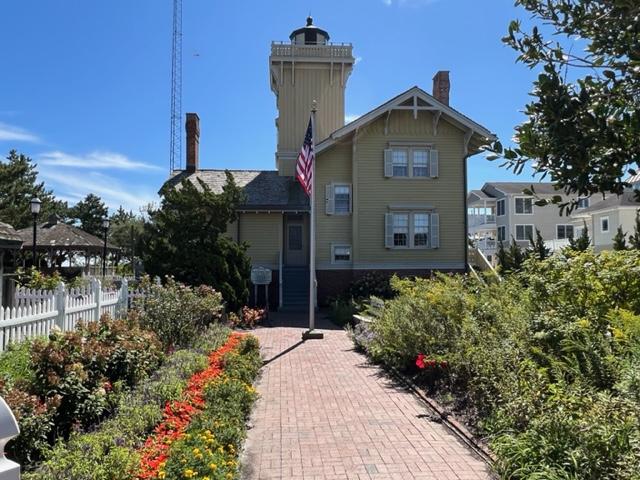
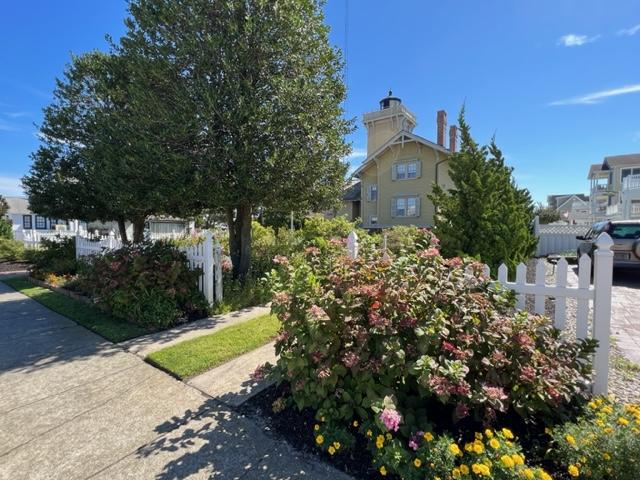
The Hereford Lighthouse in the summer of 2023.

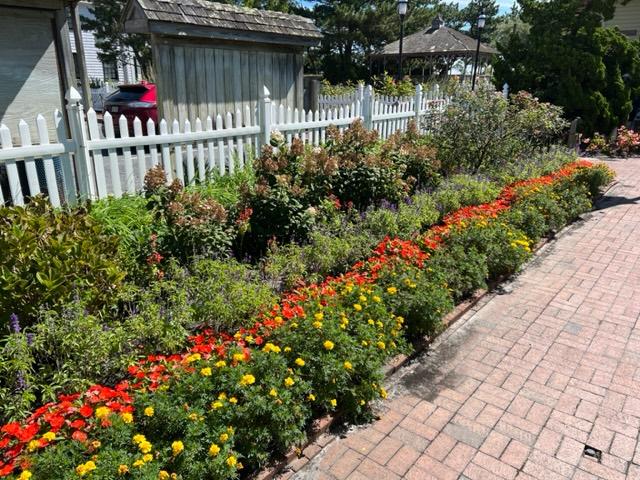
The front gardens of the lighthouse.

The front gardens of the lighthouse.

I visited the Hereford Lighthouse Museum recently (See my review on TripAdvisor) and toured the building and grounds. It was three floors of vintage furnishings, artifacts from the nautical era and the items from a working lighthouse, past and present.

The first floor meeting room.

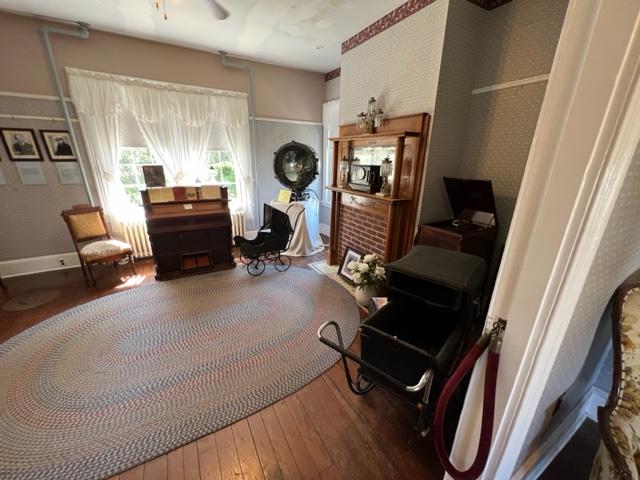
The Living Room of the Hereford Lighthouse.

The Living Room of the Hereford Lighthouse.

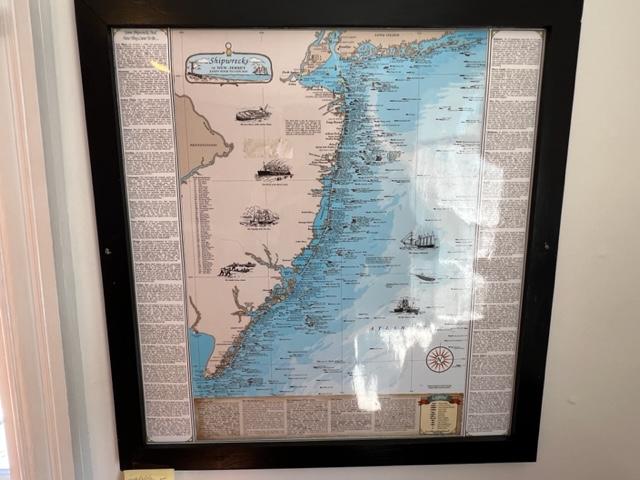
There was an interesting display of ship wrecks and their history, the role of lighthouses in New Jersey and their past and an interesting storyboard of the lighthouse keepers and the families that lived there at all stages of the history of the lighthouse.

The shipwrecks of the Jersey coastline

The shipwrecks off the coast of New Jersey.

The Hereford Victorian Lighthouse Museum and Gardens is a working lighthouse as well as a museum. Visitors will learn about the historic structure’s history and get a glimpse into the life of a lighthouse keeper in the late 19th and early 20th centuries (Hereford Lighthouse Museum).

The Children who lived in the Hereford Lighthouse.

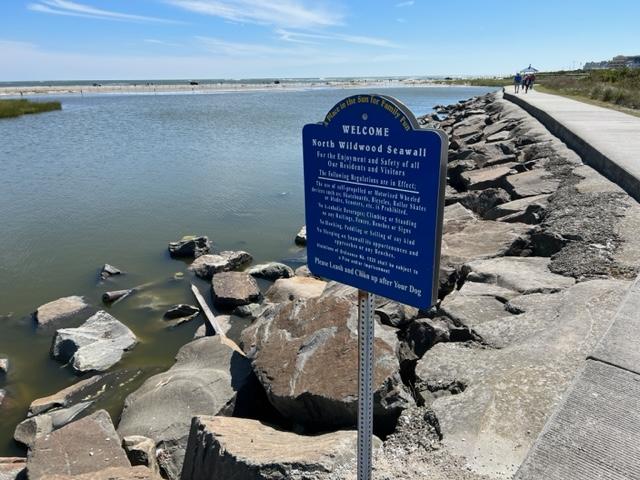
Nestled into one of the most scenic settings in the State, the lighthouse overlooks the picturesque Hereford Inlet and the Atlantic Ocean. A park surrounding the building overflows with numerous flower gardens that have won many awards. Benches, a gazebo and a seawall observation deck allow visitors to linger and take in all the beauty (Hereford Lighthouse Museum).

The seawall just outside the lighthouse.

There is a gift shop located on the first floor of the lighthouse.

History of the Lighthouse:

(from the museum website)

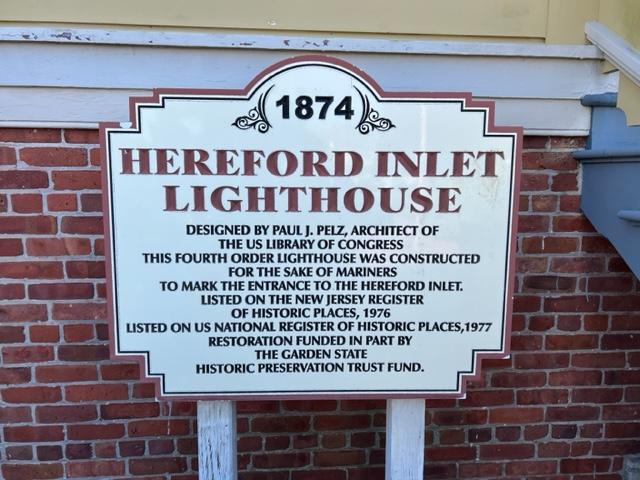
The Lighthouse sign welcomes you.

Historic and picturesque Hereford Inlet Lighthouse, a beacon of safety and assurance to the 19th century mariners, has become a cherished landmark for residents and visitors of this seashore resort community.

The Lighthouse is situated on the south side of the Hereford Inlet, which leads from the Atlantic Ocean to the famed Intra-Coastal Waterway linking Maine to Florida. First used by the 17th century whalers to haul in and butcher their catches, the Inlets use as a haven to mariners greatly increases as travel and shipping along the coast became more prevalent.

The front of the lighthouse and the front gardens.

Strong currents and shifting sandbars near the entrance to the Inlet caused frequent groundings and shipwrecks. Because of this, in 1849, a Life Saving Station was constructed along the south bank of the Hereford Inlet. A second, larger station replaced this in 1871, the time of the creation of the United States Life Saving Service. As the use of the Inlet and coastal shipping continued to increase, so did the number of shipwrecks. It became obvious that a Lighthouse was needed to mark the mouth of the Inlet.

On June 10th, 1872, Congress enacted legislation to finance the purchase of land and the construction of a fourth order Lighthouse. The site chosen held a prominent position on the dune area overlooking the approach to the Inlet.

The view from the top of the lighthouse.

Construction bean on the uninhabited barrier island on November 8, 1873 and was completed on March 30, 1874. This wood frame residential style Lighthouse was designed by the Lighthouse Boards Chief Draftsman, Paul J. Pelz. His Victorian era design is referred to as Swiss Carpenter Gothic and also Stick Style.

Hereford is the only Lighthouse like it on the East Coast although it had five sister lights on the West. Pelz designed Point Fermin, East Brother, Mare Island and Point Hueneme in California and Point Adams in Washington State. All of these were almost identical to Hereford and were built about the same time. Only Point Fermin and East Brother still exist. Paul Pelz would later garner world wide fame as the designer of the Library of Congress in Washington DC.

The view from the top of the lighthouse.

On May 11, 1874, a Notice to Mariners formally announced the start of operation of the Light. The fixed white light was located at latitude 39 degrees and longitude 74 degrees, 47 minutes. The tower height is 49 1/2 feet with the light elevation rising to 57 feet above sea level. The light is visible at a distance of 13 nautical miles.

John Marche was the first Lighthouse Keeper. He was in the post less than three months when he drowned when his boat capsized while returning to the mainland. He was replaced by a young man from Cape May Court House, Freeling Hysen Hewitt.

Freeling was a civil war veteran and a former merchant seaman. He would stay on as the keeper of the Light for the next 45 years. Freeling was considered a Pioneer of the island and among his many contributions, held the first formal religious services to occur in the Wildwood’s, in the Lighthouse parlor.

In 1888, a third larger Bibb#2 style Life Style Station was constructed three hundred feet Northwest of the Lighthouse. The Lighthouse Service and the Life Saving Service were both run by the Department of the Treasury but were separate organization. They were, however, both in the business of saving lives. The Lighthouse by warning and the Life Saving Service by rescue.

Hereford stood firm against the onslaught of the winds, rains and tides for 40 years at its original location. A severe storm in August of 1913 significantly damaged the foundation, requiring it to be moved westward 150 feet to where it sits today.

In 1915 the Coast Guard absorbed the duties of the U.S. Life Saving Service. A larger building was needed and in 1939 the modern Roosevelt Style Coast Guard Station was constructed. This Station also had a boathouse and a maintenance garage. These are the white buildings just north of the Lighthouse. 1939 was also the year that the Coast Guard took over control of the Lighthouse Service.

For the next 25 years the Hereford Lighthouse continue in operation. By the early 1960’s the Coast Guard began to automatize many of its many of its lighthouses. In 1964 this was the fate of Hereford when an automatic rotating modern optic was placed on an iron skeletal tower behind the Lighthouse. The Lighthouse was closed as was the Coast Guard Station next door. The entire property was transferred to the control of the New Jersey State Marine Police. The Police made use of the Coast Guard Buildings but the Lighthouse was boarded up and left to deteriorate for the next 18 years.

In 1982 through the long and painstaking efforts of Mayor Anthony Catanoso and his wife, Phyllis, a lease was signed Whereby the New Jersey Department of Environmental Protection turns over the stewardship of the Lighthouse to the City of North Wildwood.

The Children’s Room at the Hereford Lighthouse.

Restoration of the neglected building was immediately begun. After only ten months of intense work, on July 1, 1983, a portion of the restored building was opened to the public. Hundreds of public spirited citizens who helped raise funds for the restoration and contributed time, talent, energy and materials were on hand to celebrate the official reopening of the historic landmark for public use.

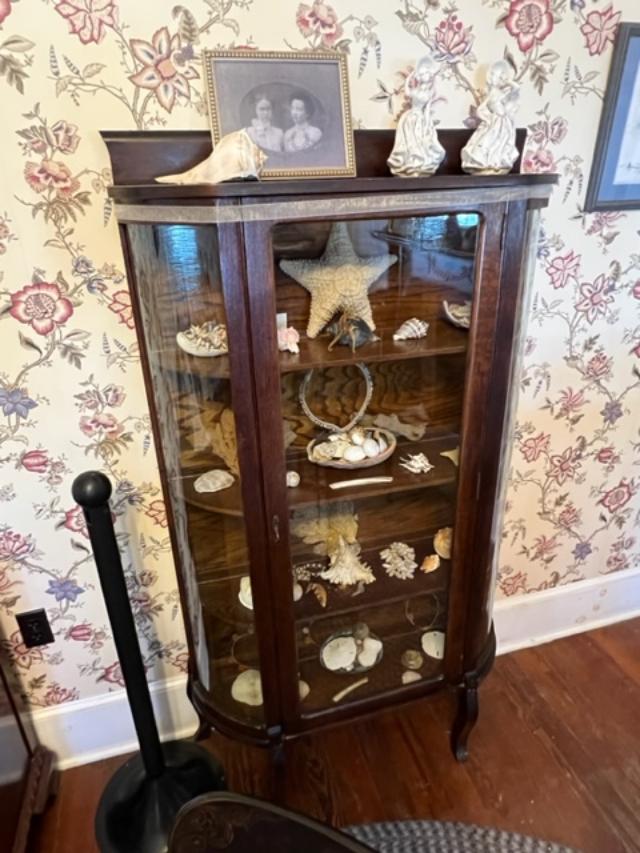
The Shell Collection in the Living Room of the Hereford Lighthouse.

In 1986, the modern automated light was removed from the iron tower and placed in the Lighthouse lantern room making it a fully functional aid to navigation once again.

Efforts were then begun to also create a museum in the Lighthouse. The interior of the building was furnished with period antiques, educational displays and lighthouse memorabilia. The 4th order Fresnel Lens was also restored and placed on display on the 2nd floor of the Lighthouse.

The Fresnel Lens at the Hereford Lighthouse

A project to improve the sandy, barren grounds into a park was undertaken by Superintendent of Parks Steve Murray, who designed the Park along with its many garden areas.

Finally an authentic restoration of the entire Lighthouse was begun in 1998 and as with many old, historic structures is always a work in progress. Grants awarded by the New Jersey Historic Trust and the N.J. Department of Transportation have helped finance this work.

The Hereford Lighthouse is listed on both the National and State Registers of Historic Places. It is also part of the New Jersey Coastal Heritage Trail.

The pictures of the Lighthouse Keepers over the years.

Keepers of The Hereford Inlet Lighthouse:

John Marche: 1874

John Nickerson: 1874

Freeling Hewitt: 1874-1919

William Hedges: 1919-1925

Laura Hedges: 1925-1926

Ferdinand Heizman: 1926-1939

Robert O’Neil: 1939-1942

George Baker: 1945-1955

Newman Bowden: 1955-1959

Bruce Bolon: 1960-1961

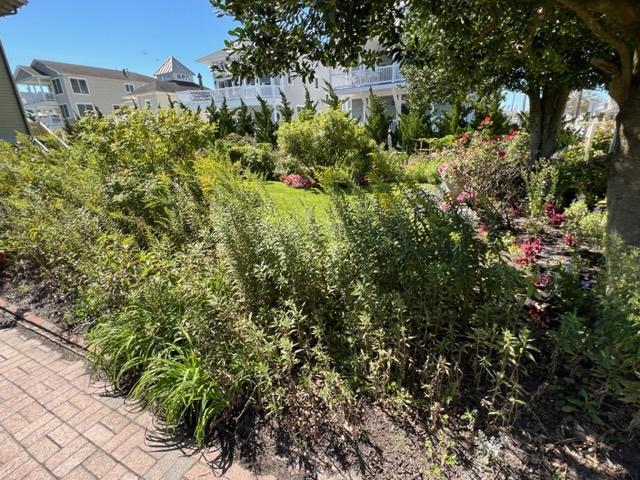
In the back of the Lighthouse is a wonderful set of gardens maintained by the local Garden Club.

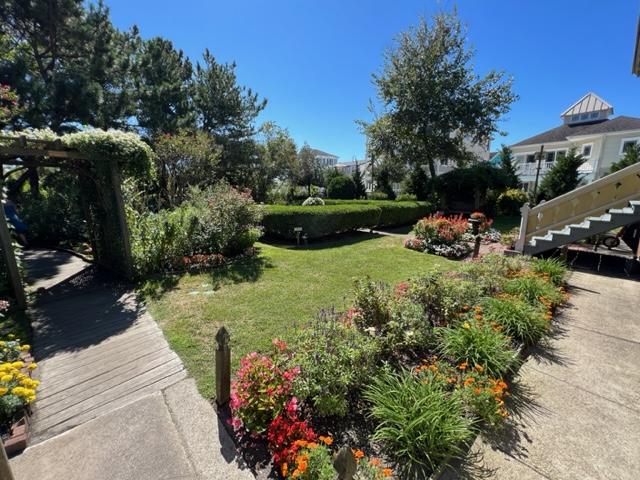
The back gardens are beautifully maintained.

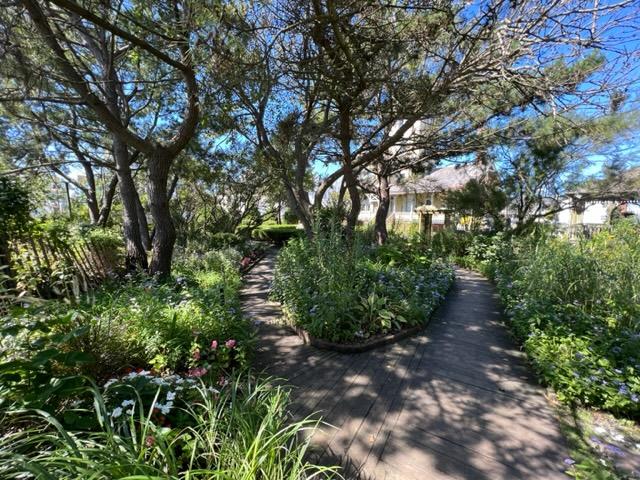
The back garden paths.

The back paths of the formal gardens in the back.

The paths leading to the seawall.

The lawns and gardens in the back of the lighthouse.

Disclaimer: This information was taken from the Hereford Lighthouse History website and I give the museum full credit for this information. Please call ahead before visiting in the off-season to see when the museum is open. It is a fascinating piece of New Jersey history.

Cape May County Park & Zoo                              707 Route 9                                                       North Cape May Court House, NJ 08210

Cape May County Park & Zoo 707 Route 9 North Cape May Court House, NJ 08210

Cape May County Park & Zoo

707 Route 9

North Cape May Court House, NJ  08210

(609) 465-5271

http://www.cmczoo.com

https://www.facebook.com/capemaycountyparkzoo/

https://www.capemaycountynj.gov/1008/Park-Zoo

http://www.capemaycountynj.gov/1008/ParkZoo

http://www.capemaycountynj.gov/1400/Virtual-Zoo-School

Open:

Park Hours: 9:00am-Dusk

Zoo Hours:

Summer Hours: 10:00am-4:30pm

Winter hours: 10:00am-3:30pm

*The park and zoo are open every day but Christmas (weather permitting) and may have extended hours for special events.

Fee: The zoo is free but they appreciate donations

TripAdvisor Review:

https://www.tripadvisor.com/Attraction_Review-g46342-d268949-Reviews-Cape_May_County_Park_Zoo-Cape_May_Court_House_Middle_Township_Cape_May_County_New_J.html?m=19905

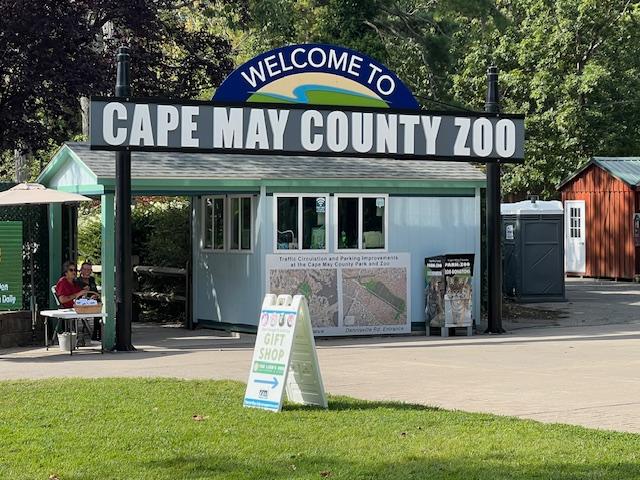
The entrance to the Cape May Zoo

In the Summer of 2024, I entered the zoo on a Sunday late afternoon and it was a nice visit as the zoo was quiet in a Friday afternoon near closing time. The animals were still outside, most being fed before they were taken inside for the evening (this is why so many animal pictures show them eating). Still I got a chance to walk around and enjoy the zoo.

The welcome sign of the Cape May Zoo

In Summer of 2022, I visited the zoo in late September on a very gloomy rainy day, which I do not recommend for visitors. The animals like the humans took cover in their sheds and would not come out until the sun peaked out at the end of my visit. It still is an interesting zoo.

The entrance of the Cape May Zoo

I have to admit that it is a little dated in that the philosophy of zoos continues to change and I think the zoo could use another updating to give the animals some more room and better stimulation in their respected areas. They just need more room to move around. The nice part of the Cape May Zoo is that there is room to move around. The larger animals do have more room here to spread out and live.

The entrance to the zoo and park

The Barnyard animals are in the first part of the zoo. There were pens for Potbellied Pigs and Dairy Cows and they were very content when I visited eating and smiling at the visitors.

The Potbellied Pig sign

The potbellied pigs

The pigs have a good time

The Dairy Cows eating when I was visiting

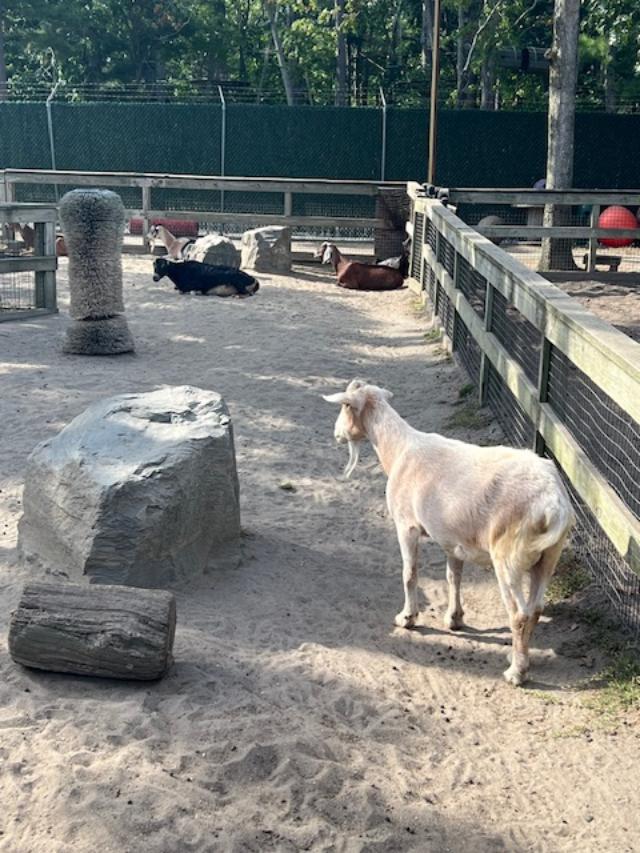
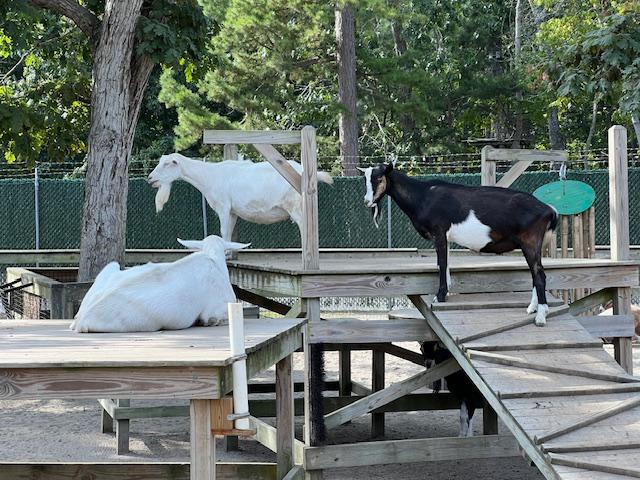
The Goat pens

The Goat pens at the end of the day

The Animal Safari Animals were towards the back of the park:

The entrance to the back of the zoo with the exotic animals

Inside the Safari walkway around this section of the zoo

This pristine zoo and park features more than 550 inhabitants representing 250 species. Over 200 acres of beautiful, natural wooded areas and open space. Winding trails for hikers, bikers, joggers and wildlife watchers. Picnic areas and a huge playground make the park and zoo your perfect place for a family adventure (Cape May County Zoo and Park).

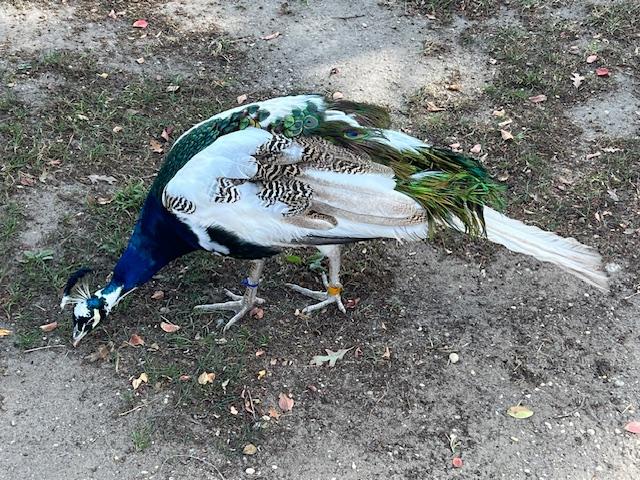
The Peacocks walk around the park and do their own thing

I finally got to revisit the zoo in 2022 and it was a much more pleasant experience to come to the zoo in the warm sunshine. It gives both me and the animals a different perspective. The place was also mobbed. It was Firemen’s Convention weekend, and the zoo was busy with families visiting the animals displays and taking pictures.

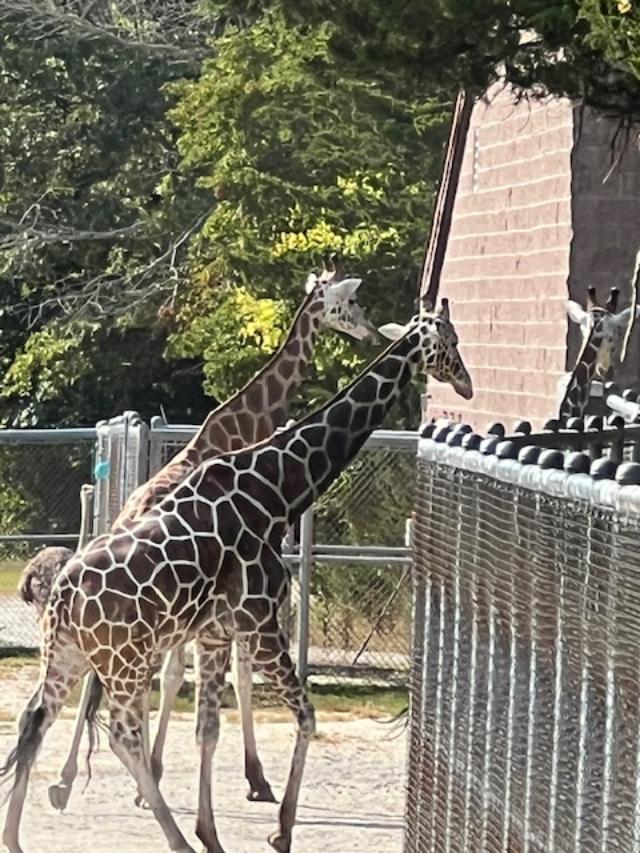
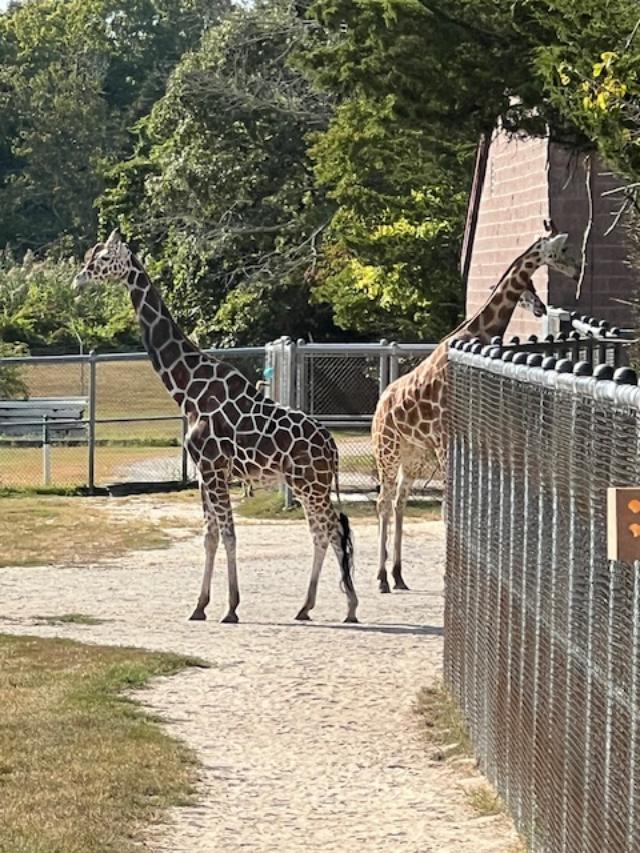
The Giraffe pens during the feeding

There were all sorts to tour guides working that day and docents explaining the animals and their habitats to the visitors. The sad part is that the animals look so bored. The giraffes I thought looked the most bored of all. There is not much land for them to room around and they get to see this area over and over. They have plenty of room to stretch out but not like in the wild.

Walking through the pathways in the African Safari

The weather was nice that afternoon but a little hot and that made the animals so sleepy. Most of them were sleeping when I visited the larger animals in their pens.  The heat must have gotten to them like many of the humans on the benches around the park.

Inside the African Safari

The small displays of reptiles, birds and the smaller monkey family were nice as those displays challenge both the animals and people to really look at the life of these animals. One of the displays that was interesting was the Red Panda display. The docent was talking about like the in the wild for these animals and how they have to breed them captivity as there are not many of the left.

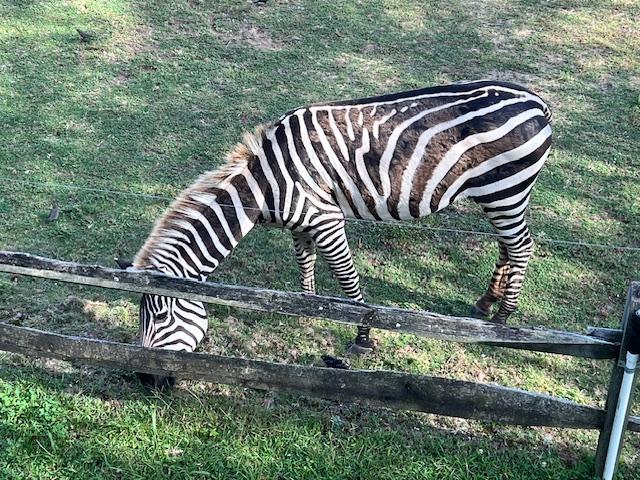
The Zebra pens and these guys are active

The zebras grazing at the zoo

What I also like about the museum is that they have a very nice gift shop with all sorts of stuffed animals and tee-shirts and a very cheery staff that is willing to help you. They also have a very engaging carousel that takes the kids and their older kid parents who enjoy the music and the ride as much as their kids do.

The Watusi eating at the zoo

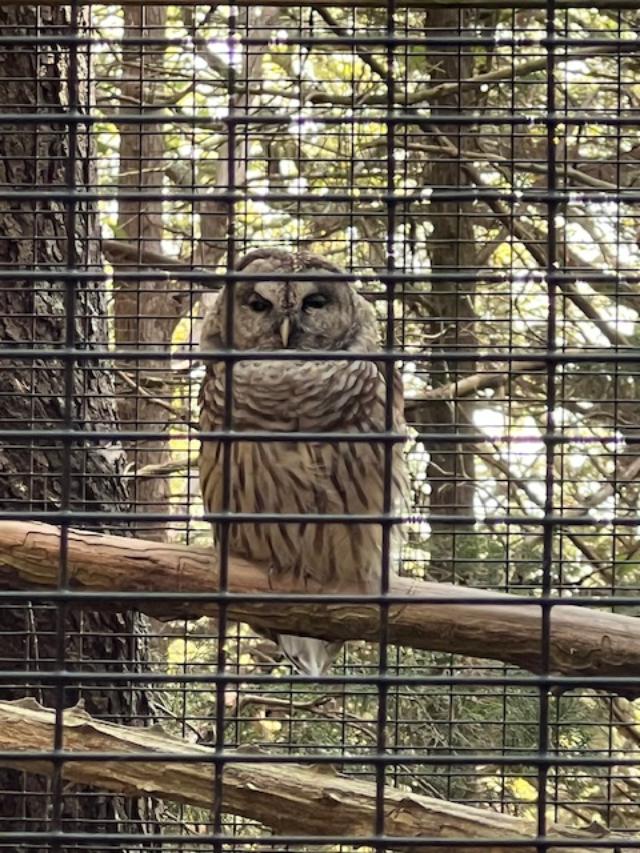
The Barred Owl sign

The Barred Owl in its home at the zoo

It is a really well maintained zoo where I can tell that the staff really cares and take very good care of the residents here.

The Safari Cafe at the end of the Safari pathway so that you can relax and have something to eat.

Cape May Park & Zoo History:

(History of Cape May Parks & Zoo; Parks System)

The Cape May County Park Central is located two miles north of the heart of Cape May Court House and occupies both the right and left side of Route 9. This site was originally a southern plantation of the Matthews family.

The sign that welcomes you to the zoo

Back in 1763, on Daniel Hand’s plantation in Middletown (now called Cape May Court House), the State Assembly petitioned erecting a courthouse and jail. The petition was granted and the cost was limited to 300 pounds. In 1764, Daniel Hand gave one acre to the county for the purpose of building a courthouse.

During the dame time, just north of the courthouse’s land, was the Matthew’s plantation. The main plantation was located below the lake and tributary waters. Just north of the tributary and small lake, the Matthews had an orchard that was set aside as a family cemetery and for the slaves of the plantation. This site still remains and is part of the park today. For a short period of time during the 1700s-1800s, this site was also used to bury the poor.

In “The 1942 Park Land Acquisition,” approximately forty acres of the Matthews plantation donated to the count to be used as a park and meeting place. Most of the land was wooded but some was lakes and tributary waters and also the cemetery. At this time, very little was done to the land. Later, a building used as a laundry at Crest Haven was moved from that location and converted into a maintenance and supply building with a comfort station and a six grill brick barbecue pit was constructed. It was during this time that the 4-H department, after holding its fair in Cold Springs or the riding club grounds, decided to ask permission to hold the fair at the county park.

The county road department and employees of Crest Haven cleared a section of the grounds of trees and brush, then seeded the ground for grass. This made a clearing for tents and booths, plus a horse ring to be used by the 4-H fair. The telephone company donated light fixtures and wire. Several years later, Pepsi-Cola donated a booth to be sued for refreshments. This was the extent of the county park for many years.

The County of Cape May was approved by referendum in November 1962. The State of New Jersey enabled an act for a park commission of nine residents of the county, which was established on February 5, 1963. The commissioners would serve terms of 1 to 5 years without compensation. A director was appointed in January 1966 and a solicitor was appointed in 1967.

The primary function of the park commission is to plan, acquire, develop, maintain and administer park land and the recreational facilities, thereon, which provide values for the benefit of the entire county. The Park Commission assumed complete responsibility of the County Park Systems on January 1, 1967. The County Park Facilities in 1967 were the same as they had been since the stat of the park! Facilities included maintenance and supply building with a comfort station, a band stand, 3 shelters, 1 six grill barbecue pit and a drinking fountain.

Cape May Zoo IV

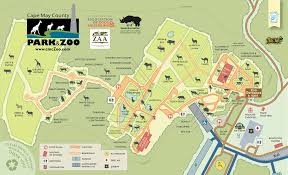
The Cape May Zoo layout

Parks facility developments under the commission in the year 1967 were: 2 ten car parking lots, 6 group and organization barbecue pits, 40 picnic tables, 13 picnic grills and 1 playground. In 1968, they added 1 manual pump with shelter, 2 shelter, 2 ten care parking lots, another playground, 10 picnic tables, 6 picnic grills, 2 shuffleboard courts, 3 horse pitching courts, 3 swinging par benches and 8 regular park benches. Also, they added 1 volleyball court, 1 badminton court, 1 croquet court plus a camping area for Boy Scouts and Girl Scout and a foot bridge.

In 1969, a large amount of recreation facilities were added along with some park equipment to better serve the park users. On the recreation additions: 1 horseshoe pitching court, 3 quoit pitching courts, 1 deck tennis court, 1 aerial tennis court, 1 archery range, 1 boccie court, 1 tether ball court, 1 tether tennis court, 1 hopscotch court, a natural trail, 3 swinging park benches, 2 entrance gates, 4 foot bridges, 5 parking lots and 24 shelter picnic tables. All available to the public to use. Also, during this period, the residence of Charles W. Allen was purchases and made into an office fro the Cape May County Park Commission.

It has been close to seventy years since the parks beginning but the facility is still expanding and remains open to the public year round.

History of the Cape May County Zoo:

(History of Cape May Parks & Zoo; Parks System)

The Cape May County Zoo was created in 1978 within the Cape May County Park. The dedication was on May 6, 1978.

At the opening of the zoo, it consisted of an African lion, primates (spider monkeys), various barnyards animals and New Jersey wildlife animals. In the early 1980’s, the zoo gradually incorporated into its displays more exotic animals such as black bears, bison, antelope, primates and birds. All exhibits were constructed by park personnel.

The Snow Leopard Exhibition at the Zoo

Beginning in 1986, a zoo renaissance began. Donations were solicited and major reconstruction was underway. Some of the projects that were completed consisted of a complete perimeter fence, a new lion exhibit, a Bengal tiger exhibit, a cougar exhibit, a giraffe and camel exhibit, a reptile house and a construction of a medical building and diet preparation building. In 1989, the zoo became AZA accredited and has remained an accredited zoo to this date.

Throughout the 1990’s, renovations and new exhibits continued with the construction of an African Savannah, which consisted of 57 acres that display giraffes, zebras, antelopes and ostriches. Reconstruction of a reptile house replaced the original reptile house that was destroyed by fire in 1998, also a “World of Birds” walk through Aviary was constructed.
From the zoo’s beginnings in 1978, the animal population was around 70 animals and today the zoo consists of 550 animals representing 250 species.

The Cape May County Zoo is home to 13 flamingos from Michael Jackson’s Neverland Ranch.
The zoo has recently improved traffic flow, parking and beautified the entrance to the zoo. The zoo is undergoing restroom renovations along with other amenities and necessities.

The Cape May Zoological Society added a train and added an animal themed carousel late in the summer of 2008. The Cape May County Zoo celebrated its 40th birthday in 2018.

Disclaimer: The information of the history of the Cape May County Park & Zoo was taken directly from the Park’s website and I give them full credit for the information. Please call ahead for weather and seasonal conditions to the park. In 2022, the day I visited it was raining and the animals just like the humans ran for cover. In 2024 when I visited again, the zoo was busy at the end of the day on a sunny day.

The Giraffes milling around after a long day